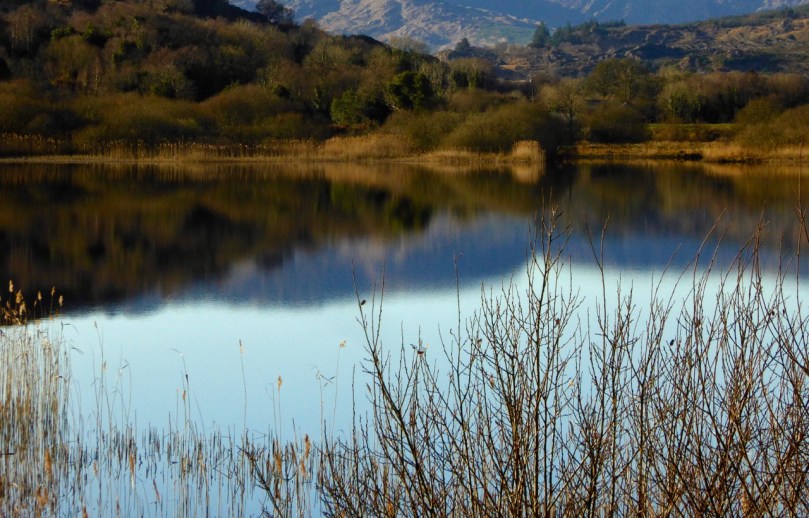
Stoned

It started on Friday in glorious sunshine and the West Cork Stone Symposium ended today in the same magnificent spring skies. All participants appear to be on a high, and that includes me.
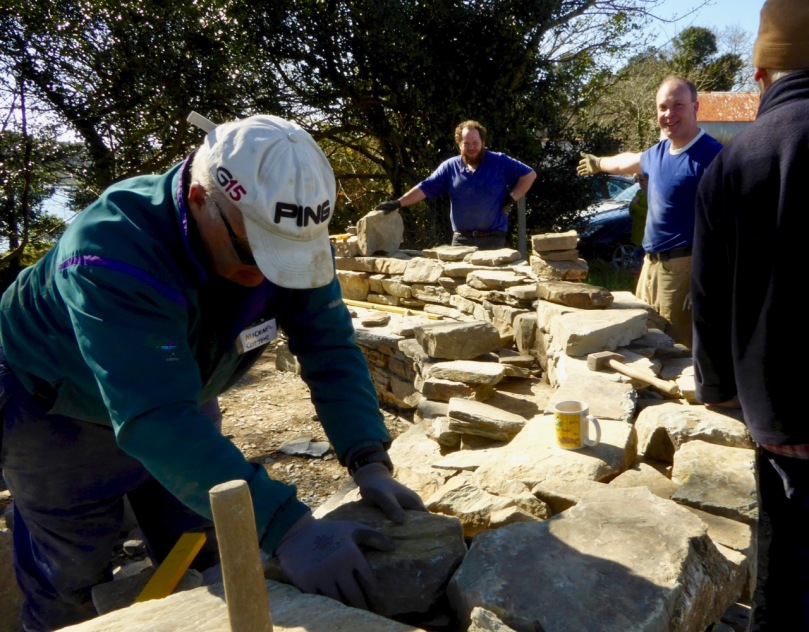
A barbecue pit for the community of Ahakista. Look what we built!

Anyone who lives in or has been to Ireland knows we’re all about stone. Stone walls, stone buildings, stone sculpture, stony landscapes…it’s in our DNA. Wicklow granite, Burren limestone, the basalts of the Giant’s Causeway, Connemara marble, the great slate quarries of Clare and the quartzite peaks of Donegal’s Errigal Mountain. And here, in West Cork, the old red sandstone, in use since prehistoric times to build field boundaries, stone circles and portal tombs, to erect standing stones, and to construct everything from the humble cottage to the big house.
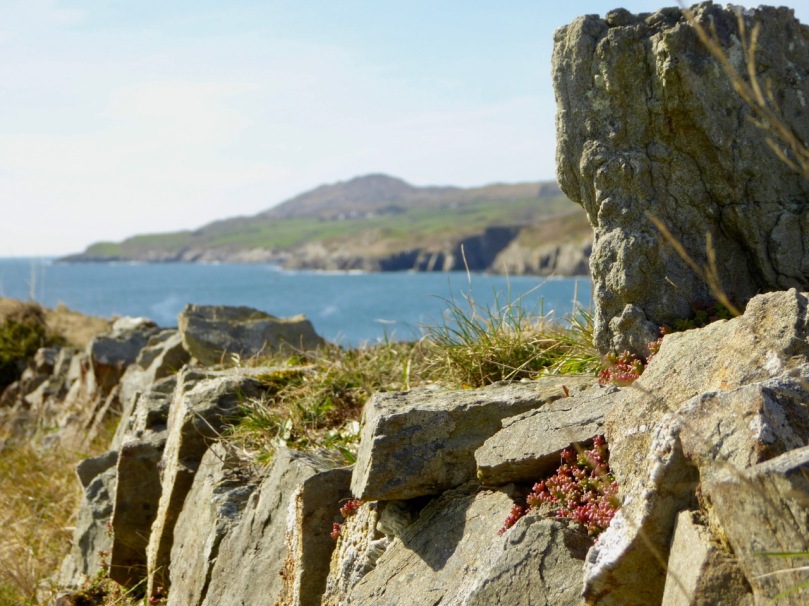
Light on Stone – the theme of the photography workshop led by Ben Russell. 

For us, of course, the old red sandstone is the canvas used for the prehistoric rock art we study. But as one of the organisers of the festival said – everyone who came to the Symposium came with their own experience of stone and their own plans for how they wanted to work with it. Thus, the two main events on the program revolved around stone carving and dry stone wall building, but there was lots more on offer too – guided hikes, a photography day, a whiskey-tasting walk around Whiddy Island, an evening with the Cork Astronomy Club talking about stone circles, a presentation on the dry stone walls of Cork, and more.

The photography workshop group, Ben is second from the left (Photograph by Ben Russell). Ben, camera close-ups

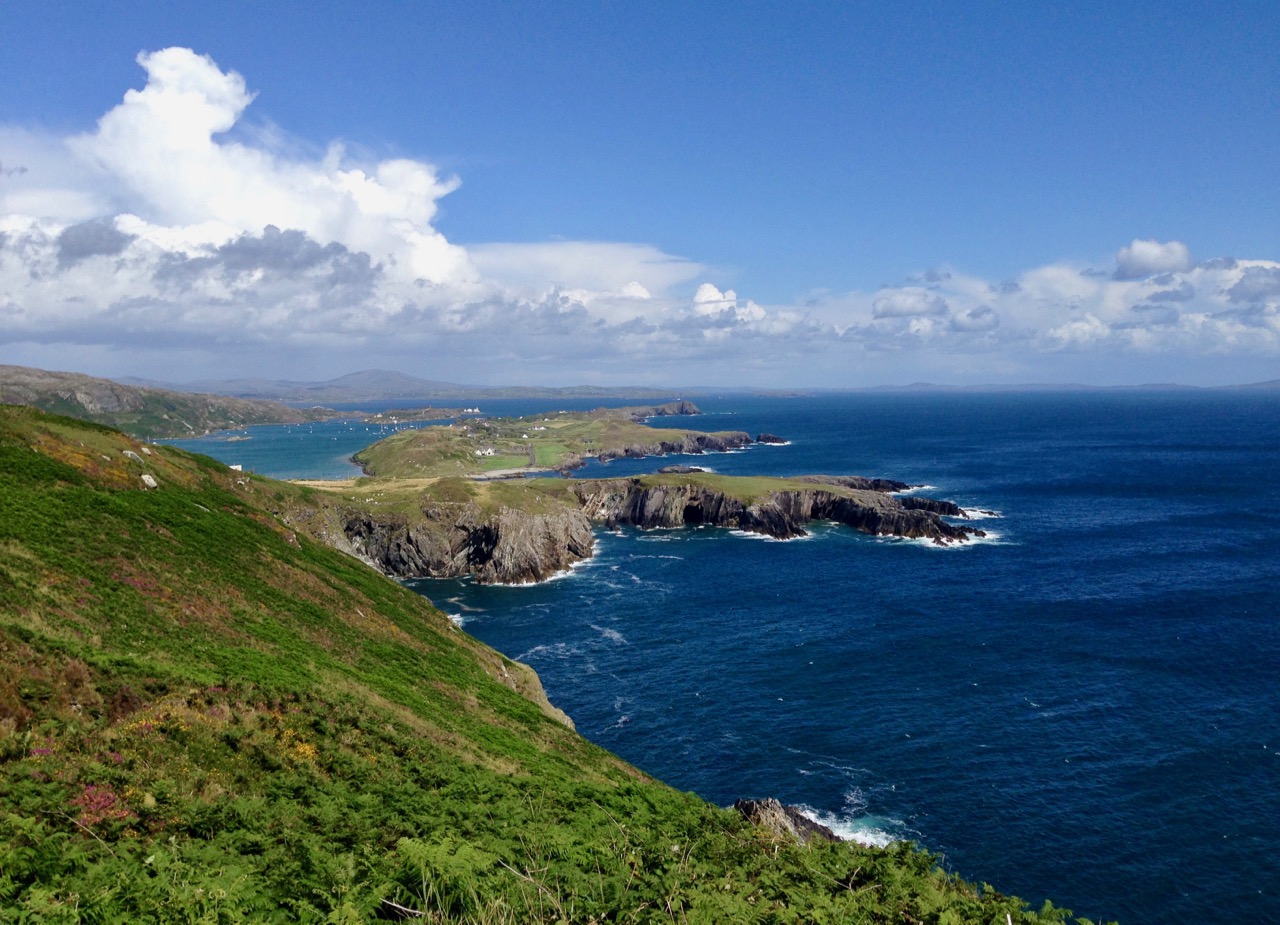
Robert and I participated in several ways: we mounted a pop-up version of our Rock Art Exhibition in Bantry, we gave a talk on rock art, and I enrolled in the all-day photography workshop, Light on Stone, with Ben Russell. This was a great learning experience, half in the classroom and half in the field. The morning outdoors session was spent at Dooneen on dramatic cliffs with the Caribbean blue sea below us.

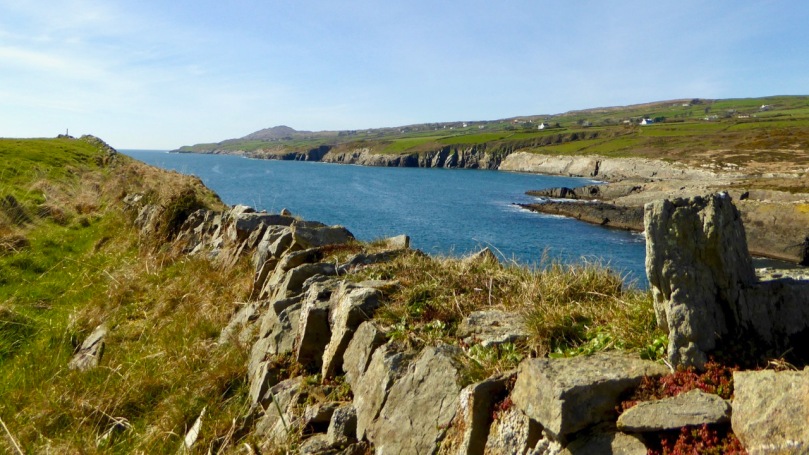
Practising composition: top, rule of thirds. Bottom, leading line
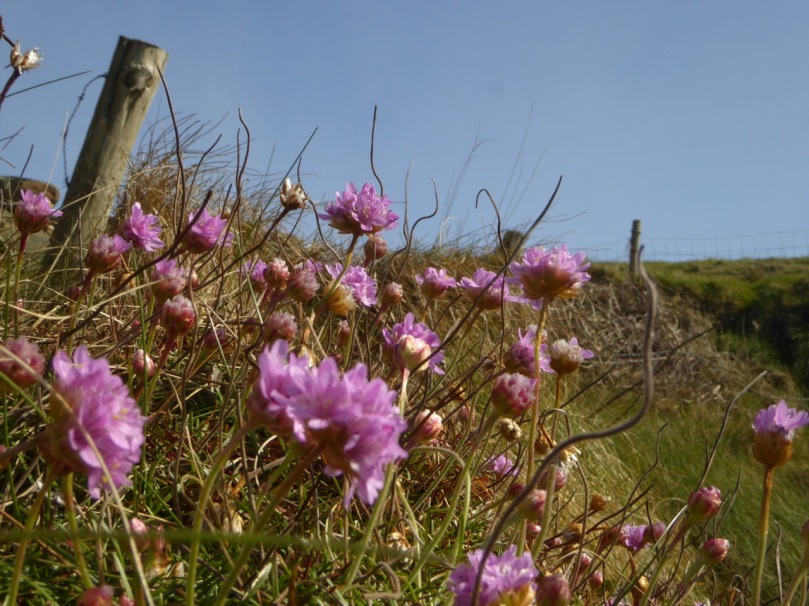
Working with depth of field – and with the first Sea Pinks of the season

In the afternoon Ben led us through taking close-ups and macro shots and then we headed off for the symposium site to photograph whatever we wanted.

Watching and talking to both the carvers and the wall-builders was marvellous. Of all ages and stages, the students were a study in concentration, discovery, and pride in achievement.

The wall-builders had undertaken a long dry-stone wall and a barbecue pit, both of complex and attractive design. Covered in dust, sweat, and broad smiles, they were delighted to talk to me about what they had learned and about their respect for the tutors and their skill.

Rita and her friend had worked on the wall. By the end of day three they were exhausted – but look at those grins!

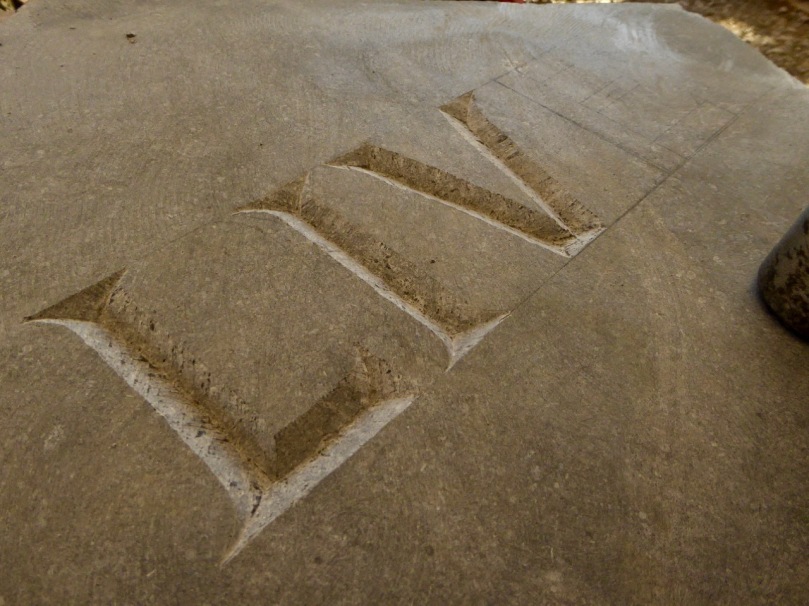
The carvers were all working on individually chosen pieces – words, animals, geometric designs. Few of them had done anything like this before and all were delighted with what they had accomplished. “I never thought I could actually do something like this” was a common refrain.

I was delighted to run into Cliodhna Ní Lionáin again – last time was at a talk she gave on rock art in Dublin. Here she is carving a deer from a Spanish rock art panel

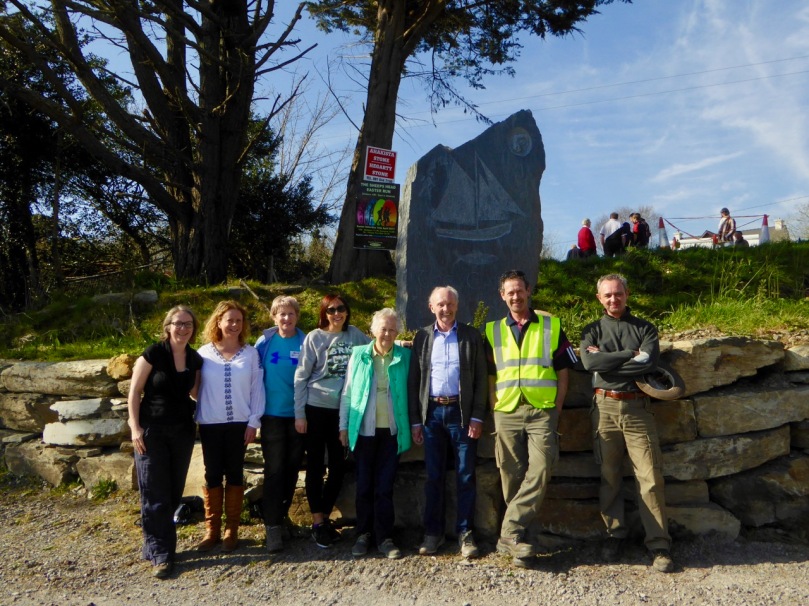
Today we were back to the Sheep’s Head – the Symposium was centred in Ahakista – to give our talk and watch the erection of the standing stone carved by participants.

Members of the organising committee. Second from the right is Victor Daly, our local stone carver and one of the Symposium’s tutors.

This is the inaugural symposium and it’s been an incredible success. There are plans for it to be annual. Have you ever wanted to carve something? Just want to know more about working with stone? Keep an eye on the website and next year come along and experience it for yourself – it will be one of the most unique and rewarding things you will have ever done.
Spring Green

Spring comes early this year – on the 20th of March instead of the 21st. It’s all to do with the precession of the equinoxes. But you might follow the old tradition (and why wouldn’t you?) that Spring begins on St Brigid’s Day – the 1st of February. We have been having many good, clear – and warm – days of sunshine since then, to balance out all the cool and wet ones, and the days are ‘drawing out’.

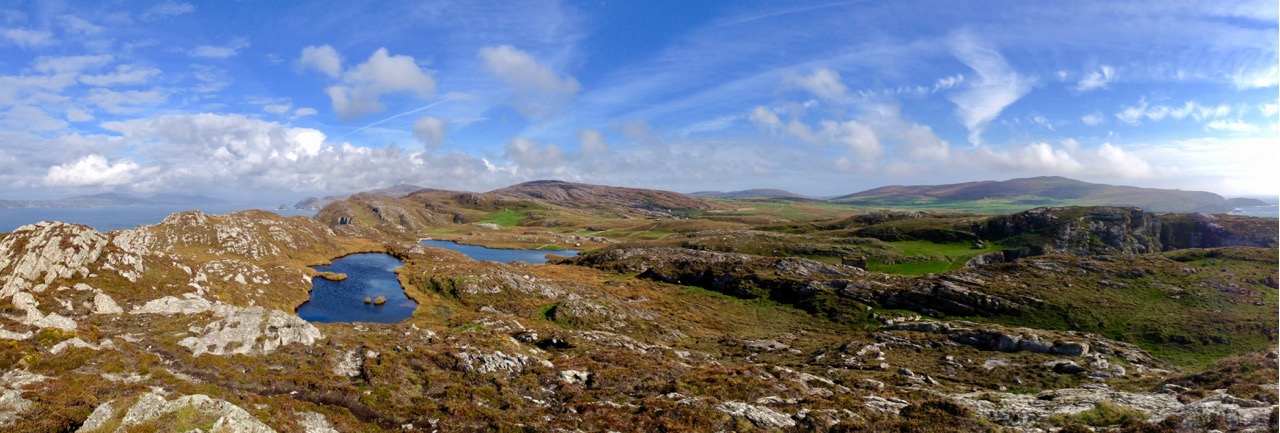
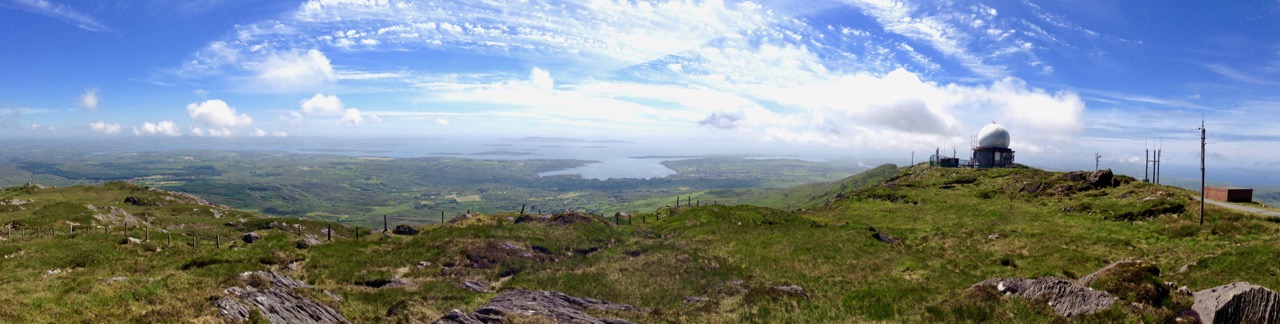
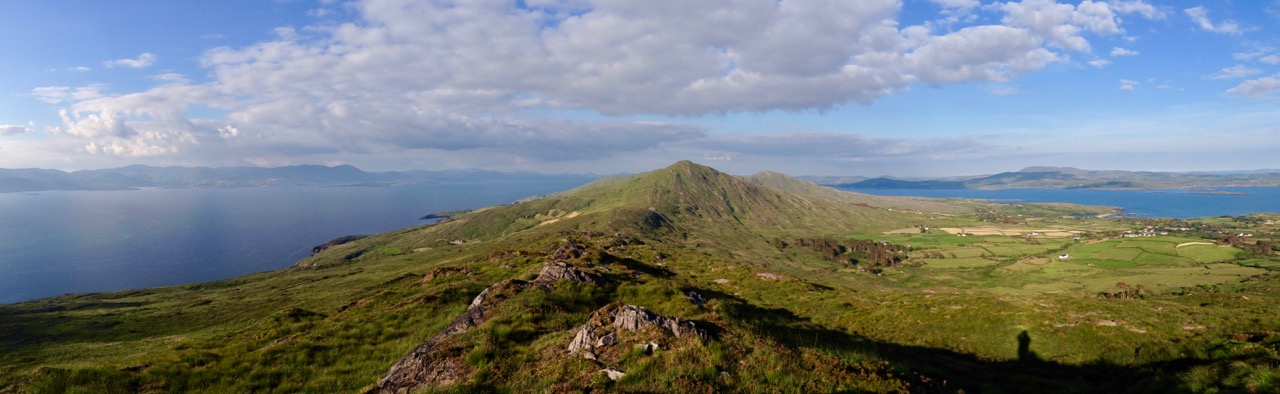
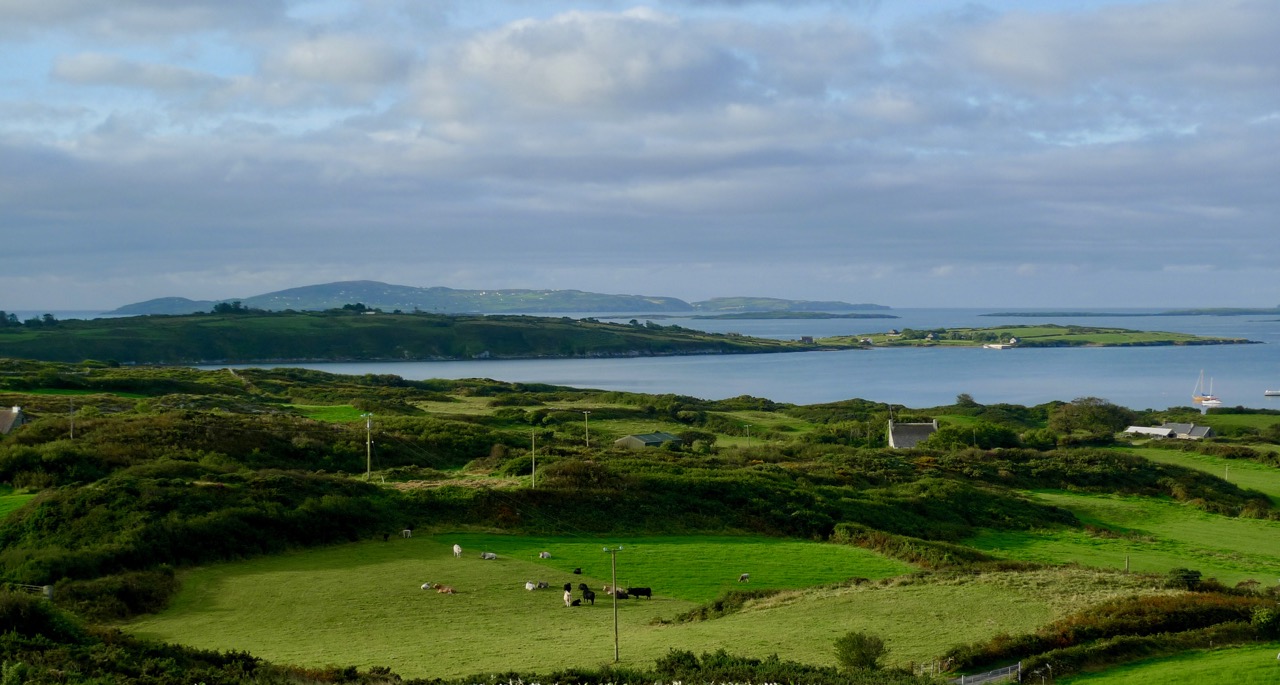
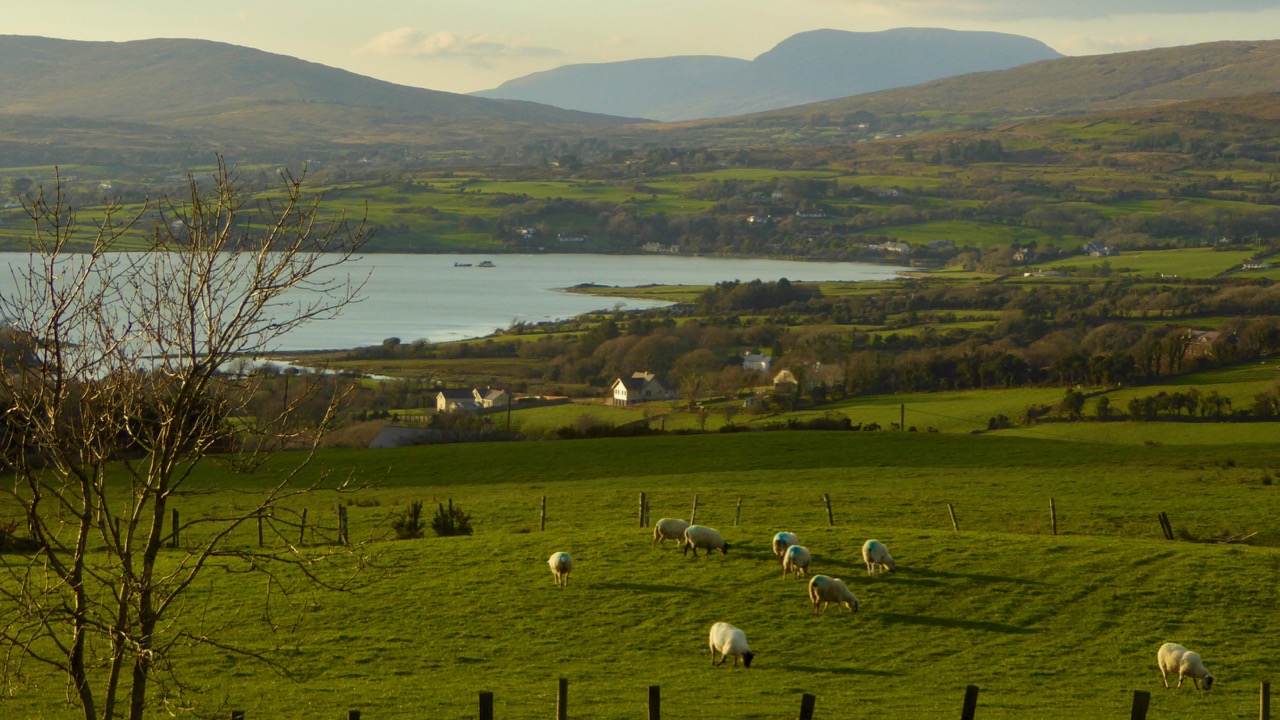
Ireland’s green landscapes presented using the panorama technology of a phone camera! Top – the two lakes at Dunlough, above Three Castle Head, Mizen Peninsula; centre – view across Roaringwater Bay from the top of Mount Gabriel; lower – Peekeen ridge, Sheep’s Head Peninsula

It’s the abundance of weather – in all its varieties – that makes Ireland’s landscapes so green, and so beautiful: as we are not so far from St Patrick’s Day (last week, when everything turned green!) today’s post is a celebration of the special colour as we find it around us. Finola mentions it today, but in a different context.

…When Erin first rose from the dark swelling flood,
God bless’d the green island and saw it was good;
The em’rald of Europe, it sparkled and shone,
In the ring of the world the most precious stone…

(William Drennan 1754 – 1820)

Where Ireland’s most westerly land mass dips into the Atlantic: looking east from Brow Head towards Crookhaven

…Ireland, it’s the one place on earth that heaven has kissed with melody, mirth, and meadow and mist…
(Old Irish Blessing)

Rossbrin Cove – with its ancient castle lost in the mist – seen from the green fields of Cappaghglass

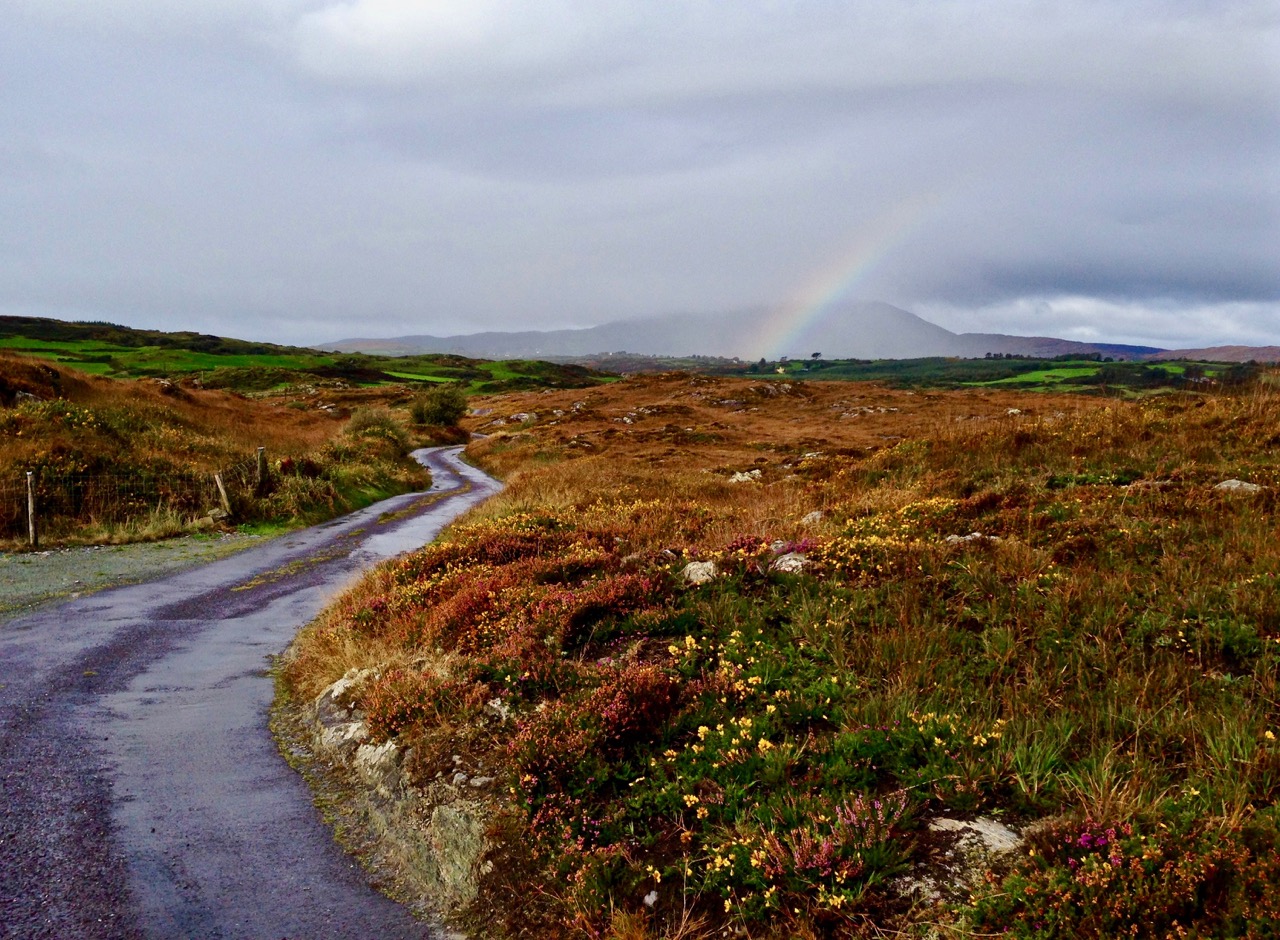
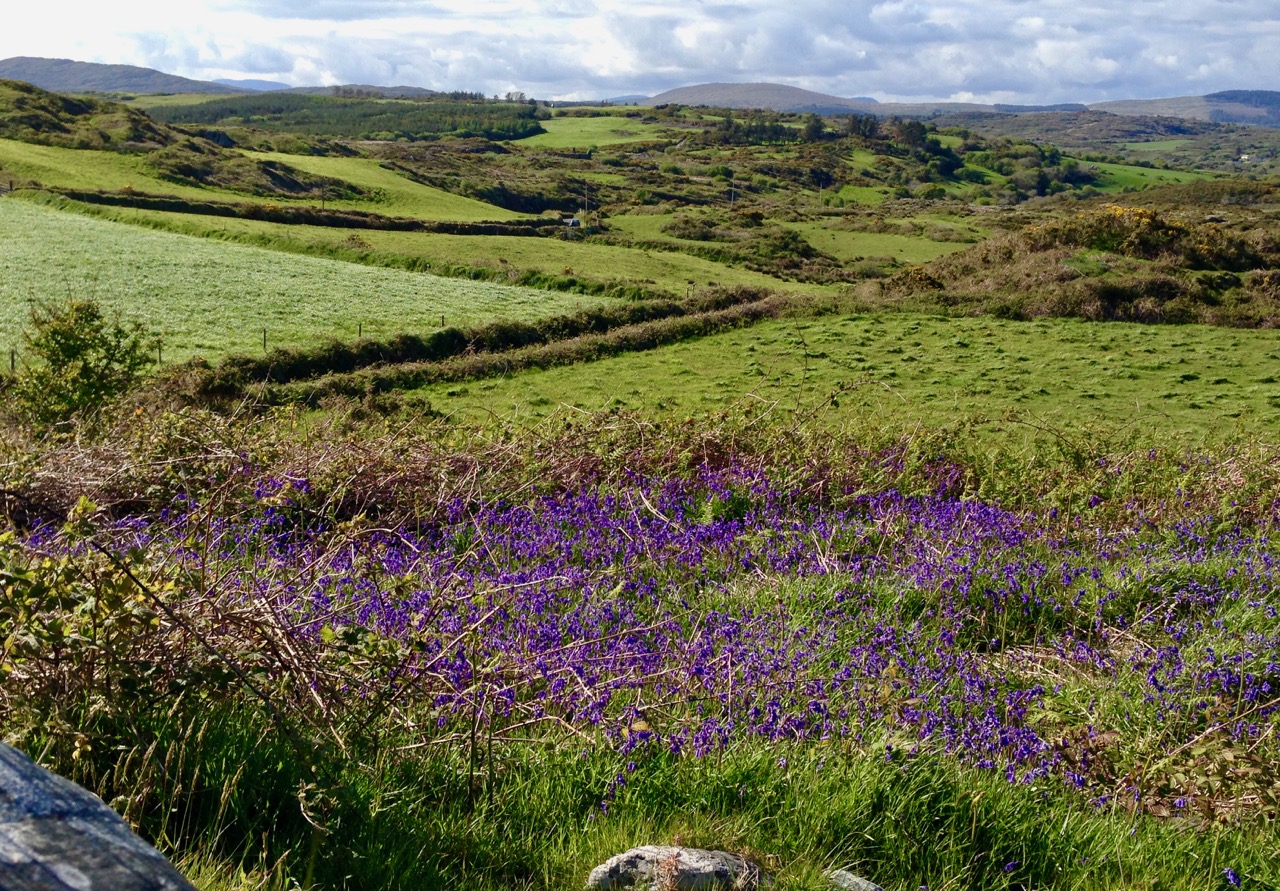
In our own townland of Cappaghglass we have vivid green pastures but also, up on the old mine road, colours that constantly change with the seasons. It’s too early yet for the abundance of wild blooms that will transform the hedgerows and verges – we’ll watch out for those.

Cappaghglass: upper – a kaleidoscope of colours along the mine road, waiting for the Spring; lower – the colour green proliferates when the wildflowers appear

…When I come out on the road of a morning, when I have had a night’s sleep and perhaps a breakfast, and the sun lights a hill on the distance, a hill I know I shall walk across an hour or two thence, and it is green and silken to my eye, and the clouds have begun their slow, fat rolling journey across the sky, no land in the world can inspire such love in a common man…

(Frank Delaney)

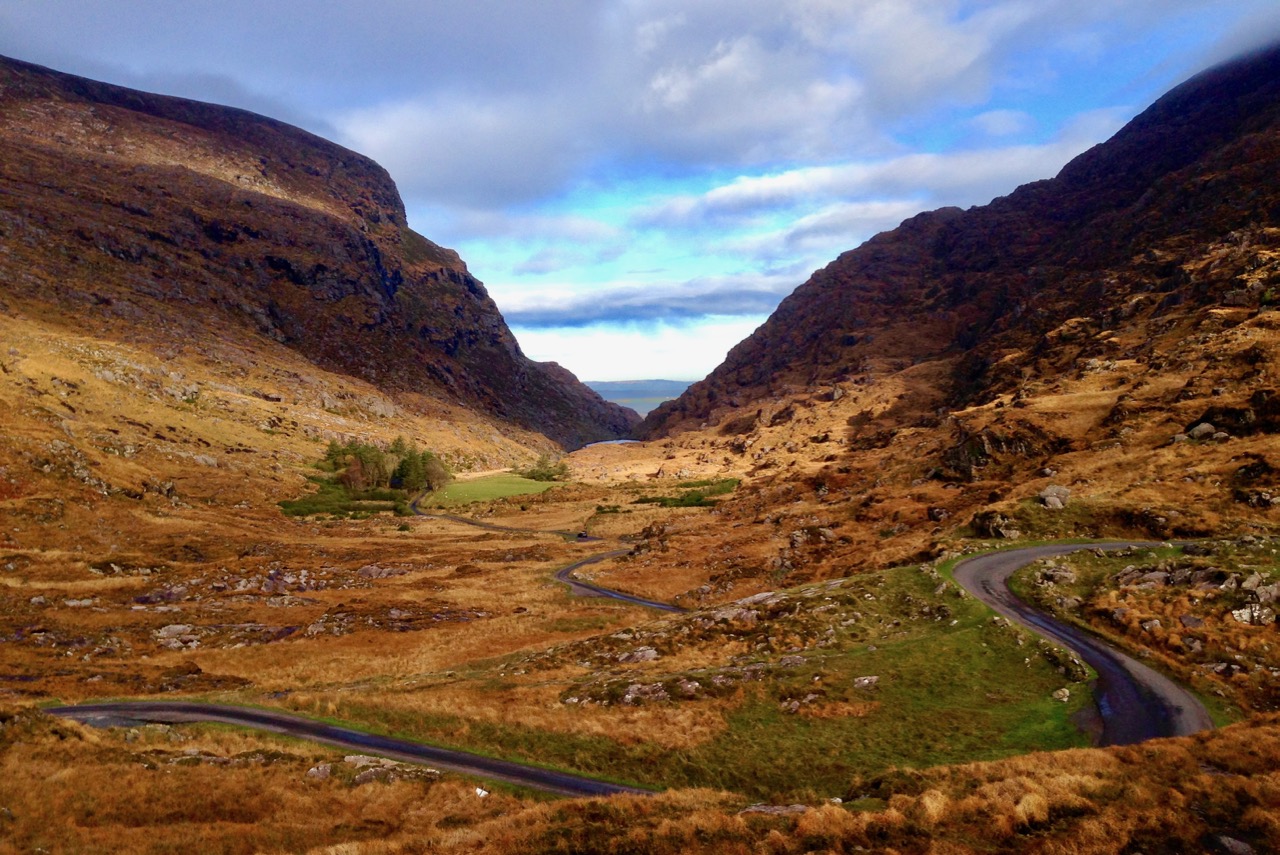
One of Ireland’s spectacular roads makes its way through the Kerry mountains

Her eyes were like two sparkling diamonds
Or the stars of a bright frosty night
Her cheeks were like two blooming roses
And her teeth of the ivory so white
She resembled the Goddess of Freedom
And green was the mantle she wore
Bound round with the shamrock and roses
As she strayed along Erin´s green shore

(Mick Moloney)

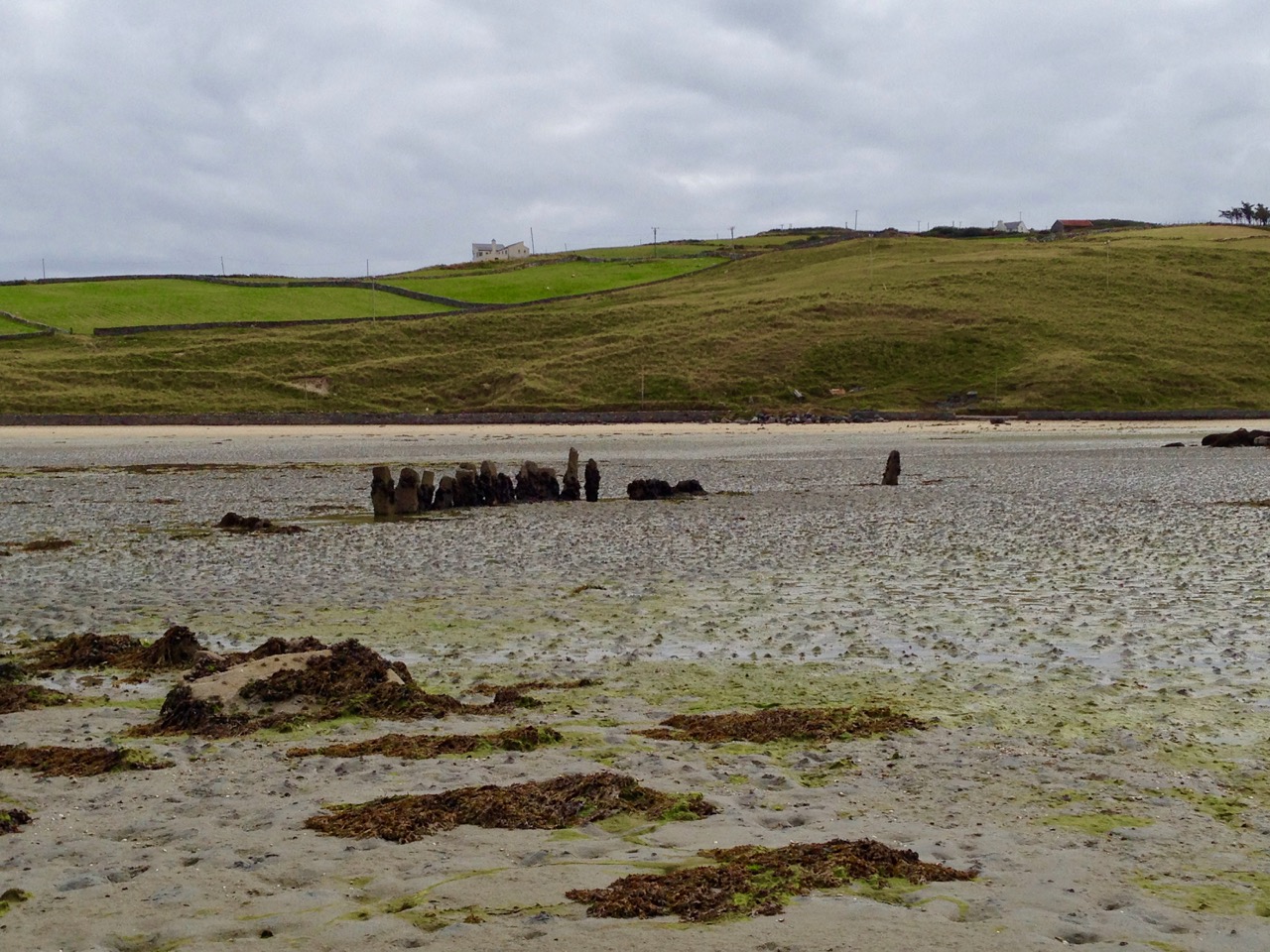
Erin’s green shore: upper – our own Roaringwater Bay: Horse Island just off the coast and Cape Clear beyond. Lower – the tide is out below Brow Head, Crookhaven, exposing an ancient stone row which has been drowned by rising sea levels

…The gorse was in bloom, the fuchsia hedges were already budding; wild green hills, mounds of peat; yes, Ireland is green, very green, but its green is not only the green of meadows, it is the green of moss – and moss is the plant of resignation, of forsakenenness. The country is forsaken, it is being slowly but steadily depopulated…

(Heinrich Böll – 1957)

…There is not in the wide world a valley so sweet
As that vale in whose bosom the bright waters meet;
Oh! the last rays of feeling and life must depart,
Ere the bloom of that valley shall fade from my heart…

(Thomas Moore)

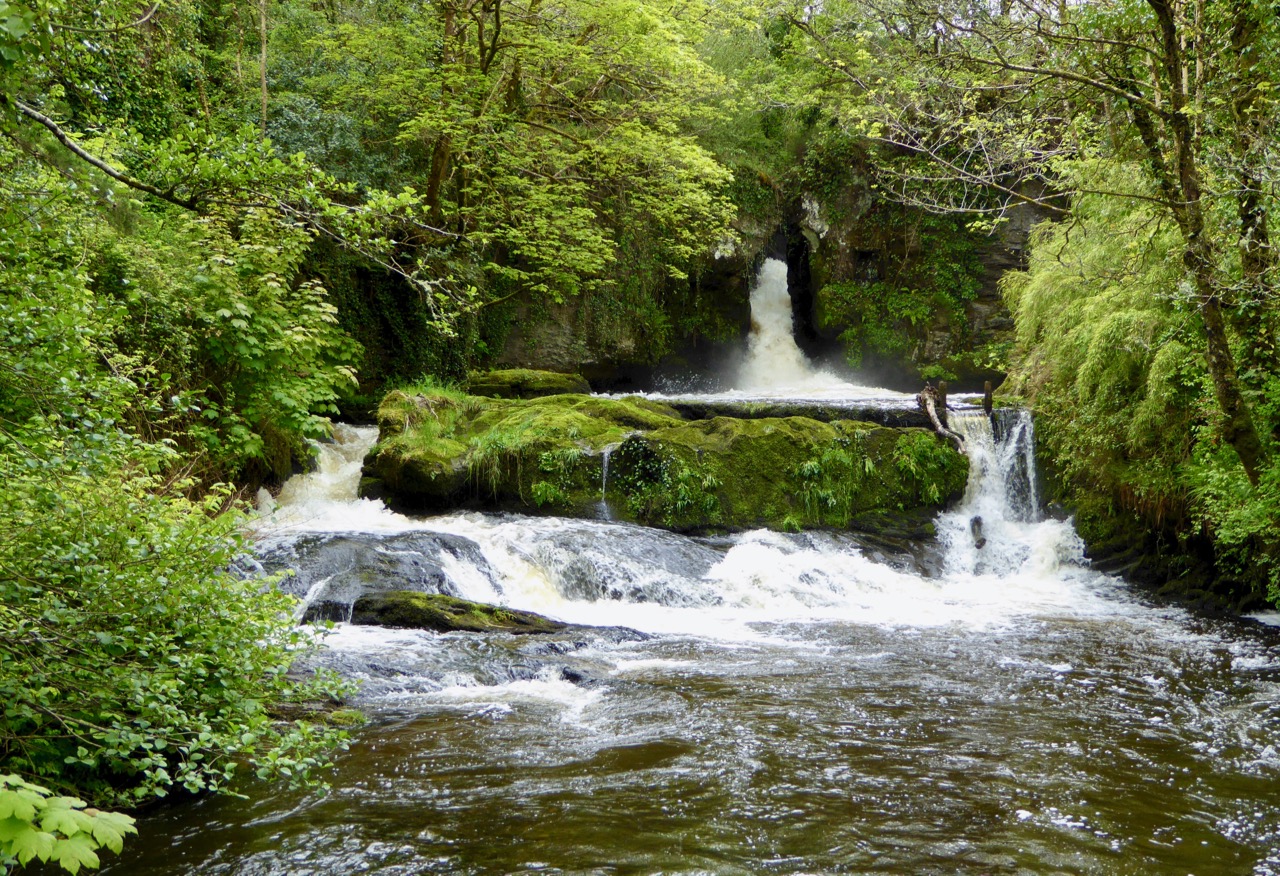
The meeting of several waters here at Donemark Falls, just north of Bantry

…Sure a little bit of Heaven fell from out the sky one day and it nestled on the ocean in a spot so far away. When the angels found it, sure it looked so sweet and fair, they said, “Suppose we leave it for it looks so peaceful there.”
So they sprinkled it with stardust just to make the shamrocks grow. ‘Tis the only place you’ll find them no matter where you go. Then they dotted it with silver to make its lakes so grand and when they had it finished, sure they called it Ireland…

(Linda Weaver Clarke)

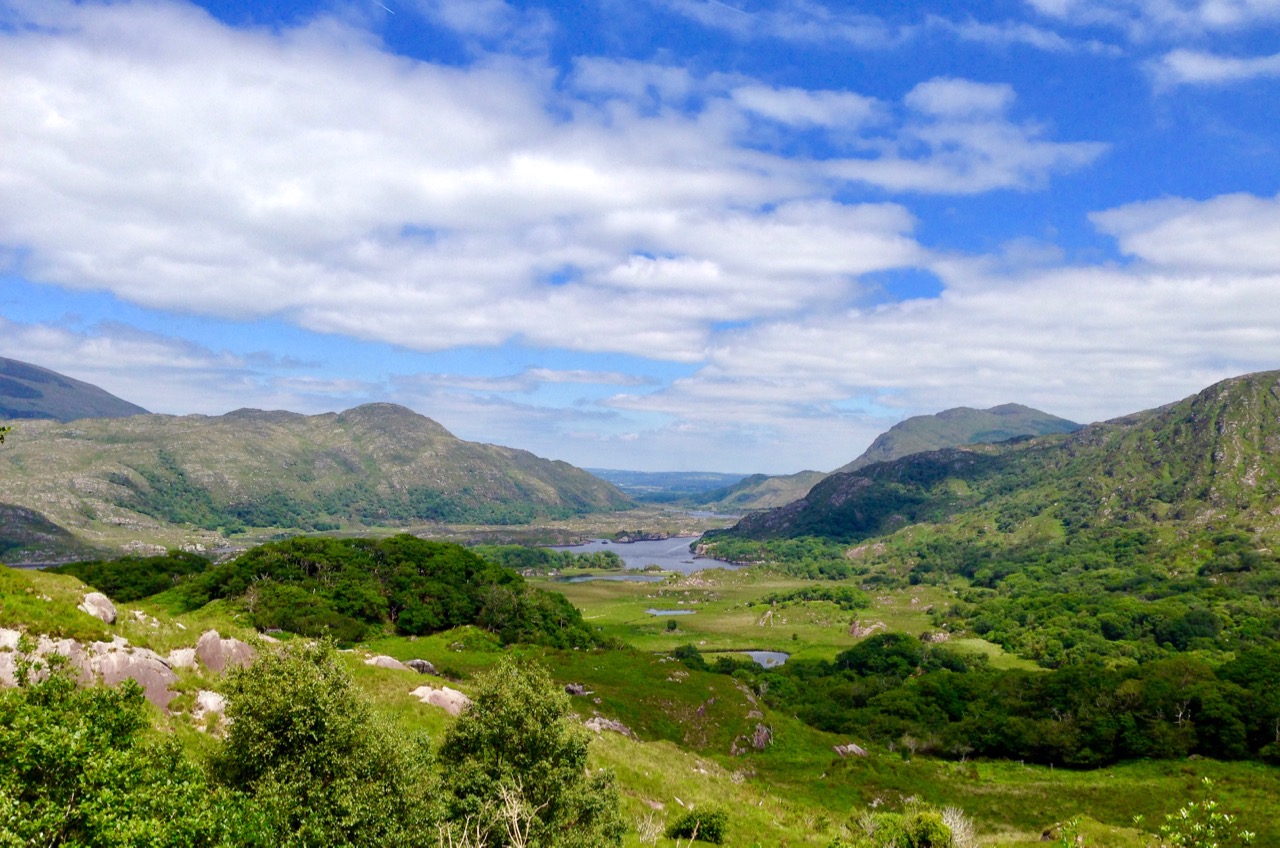
The Lakes of Killarney, Co Kerry

The seas in which Ireland floats are as variegated in colour and texture as the landscape itself. Should our last words on this go to James Joyce…?

…The sea, the snotgreen sea, the scrotumtightening sea…

(James Joyce – Ulysees)

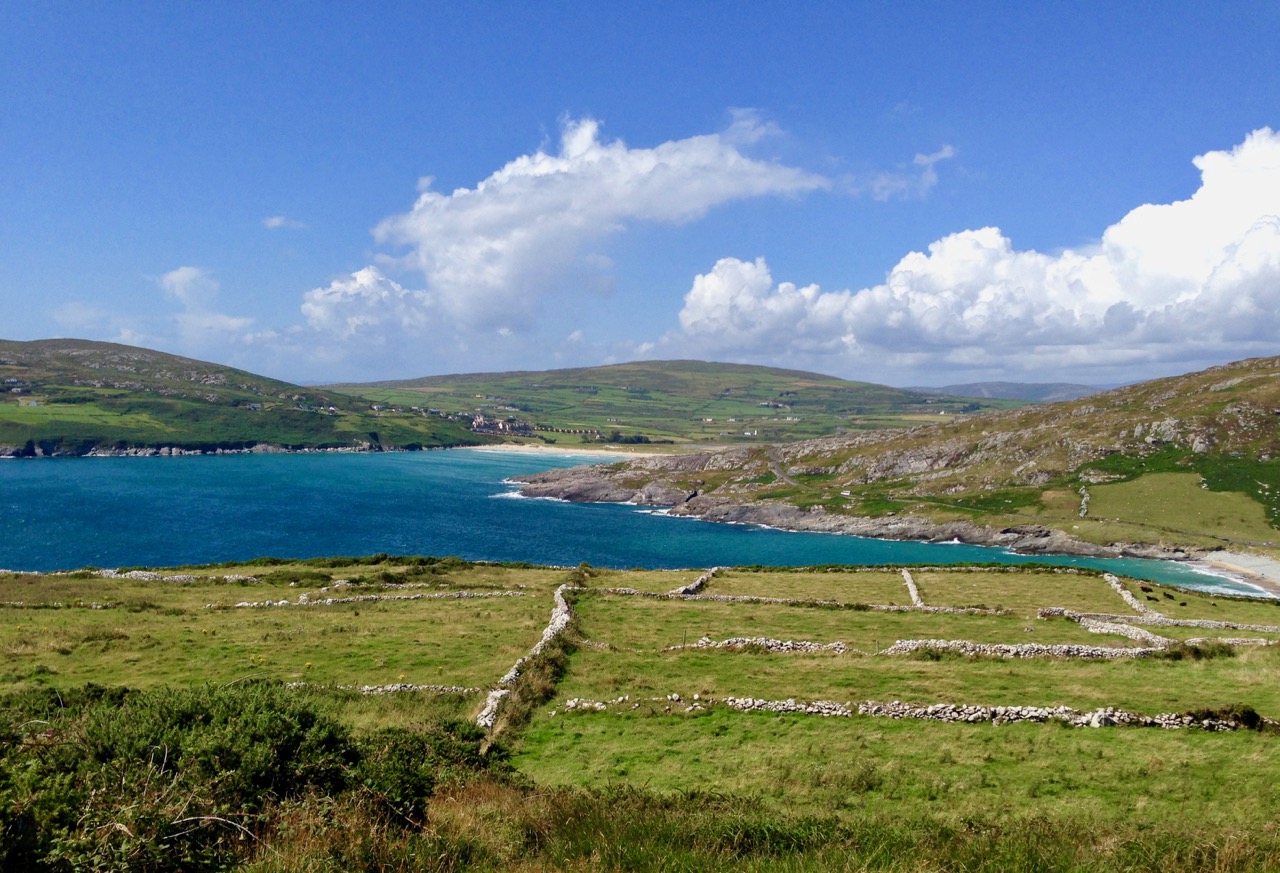
Ancient fields on Brow Head, Mizen Peninsula, looking towards Barleycove

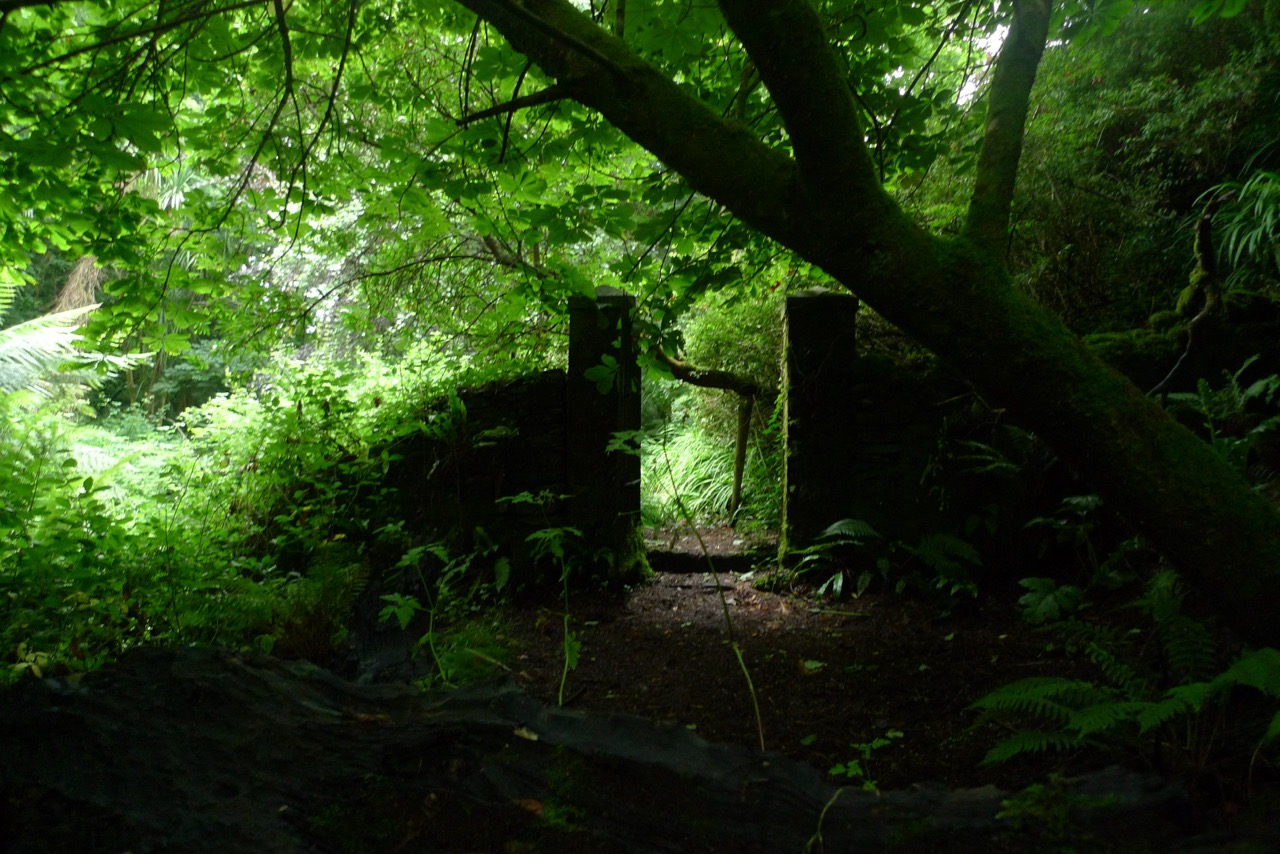
All beauty is in the fine detail, we are told. The panoramas, the wide views, the seascapes are unbeatable – but, sometimes, it’s just the simplicity of a gateway that invites you in to explore this verdant island…

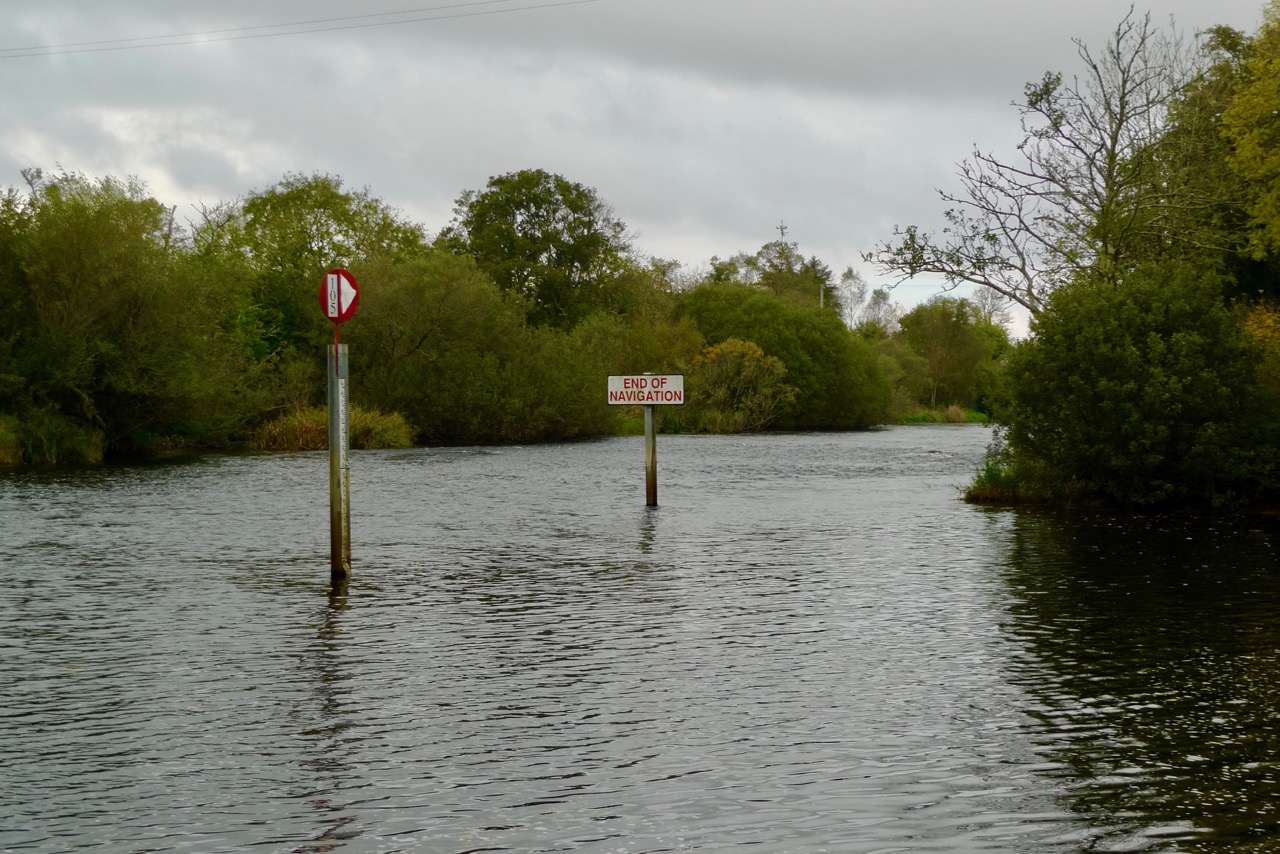
End of Navigation

end of navigation

In 1946, the Rolts travelled to the upper limit of the Shannon Navigation in their borrowed boat, Le Coq. In 2016, exactly seventy years later, we followed them and found ourselves in Battlebridge, Co Leitrim. The Rolts’ travels – and our journey retracing their steps – have been the subject of a series of posts on this blog, and there are still a few more to come!

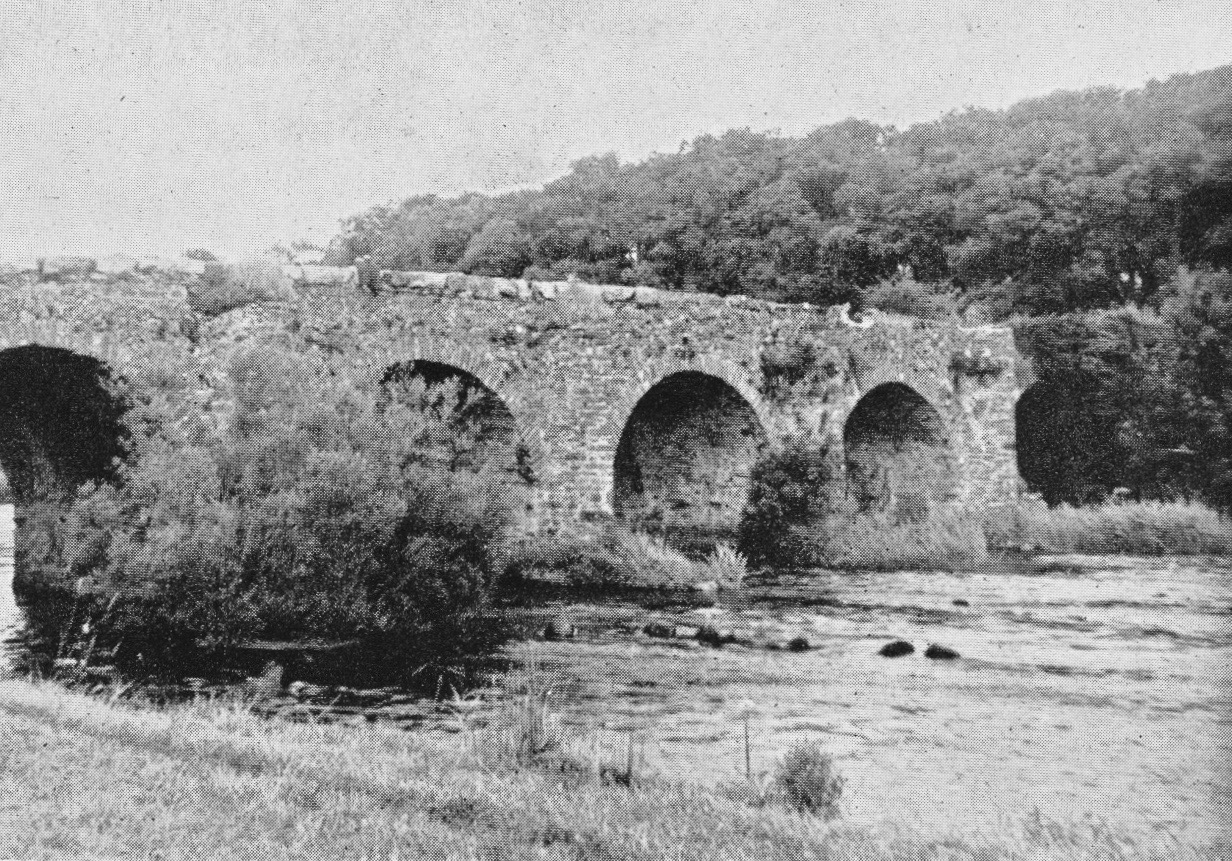
Battlebridge

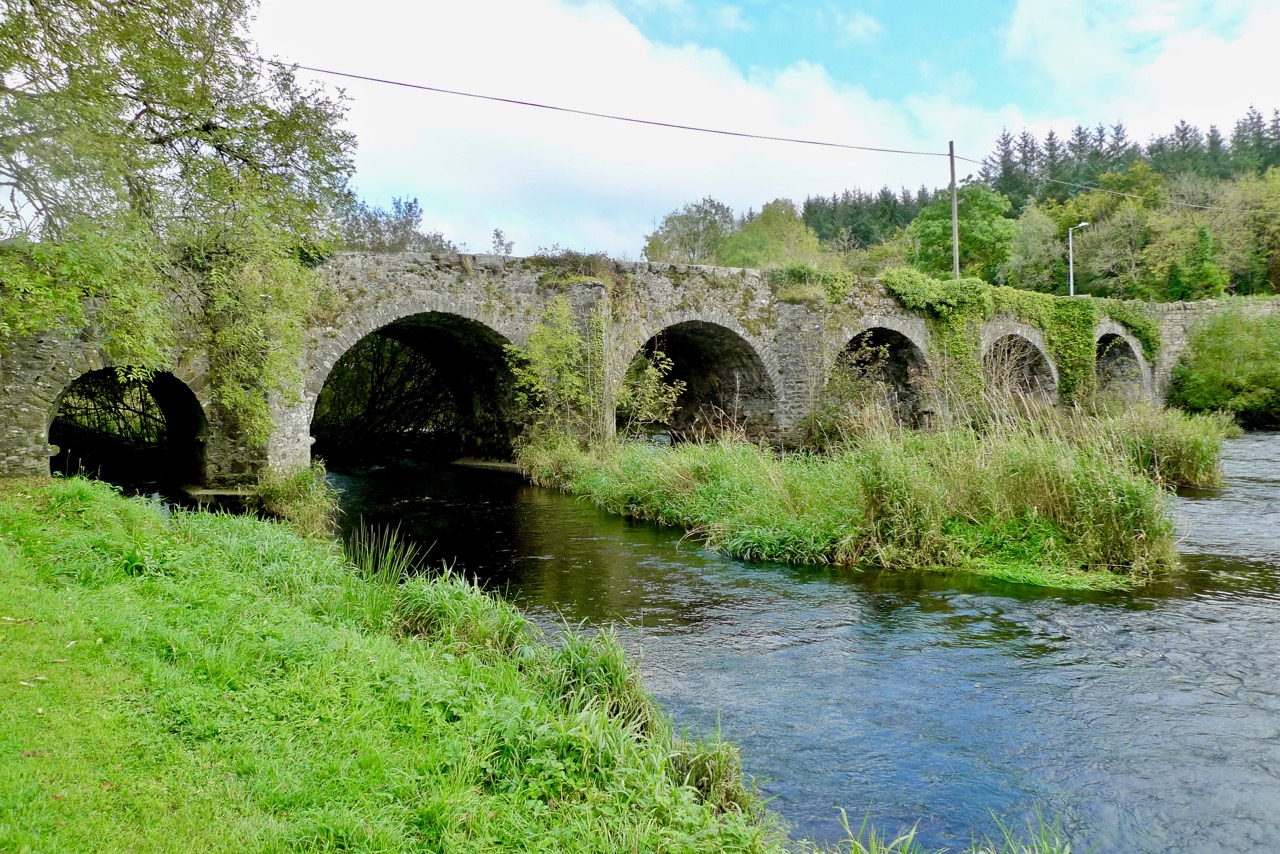
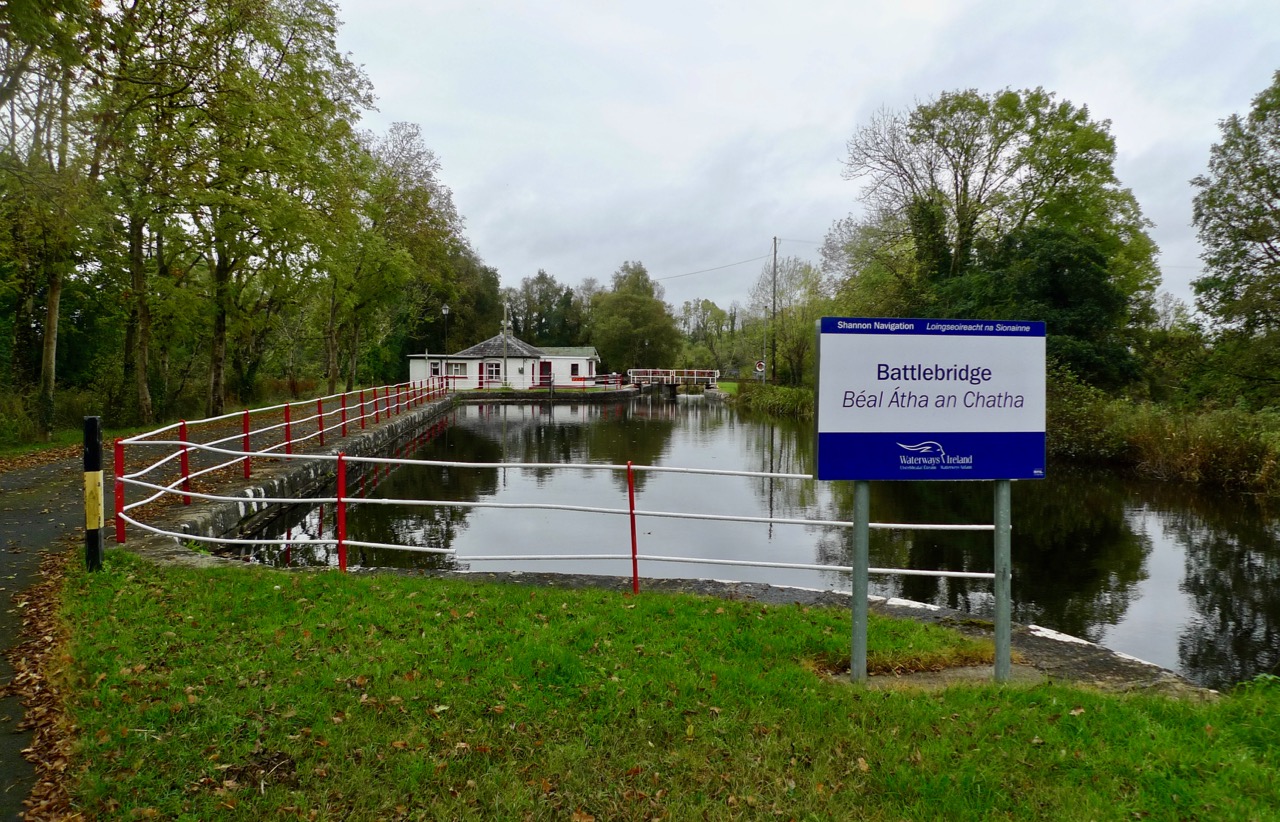
Battlebridge 2016

Upper picture: Angels Rolt’s photograph of the historic Battlebridge, taken in 1946. Lower picture: we revisited the site in 2016 – very little has changed

Battlebridge is still the ‘end of navigation’ on the Shannon itself. But, interestingly, it is now possible to travel by water much further north – something the Rolts were unable to do.

…It was but a brief journey to Battlebridge where the Shannon becomes a shallow stream brawling over boulder strewn rapids under the arches of the fine old bridge. Here, in the last few yards of deep water, we came about to moor to two trees beside the bank at the tail of the ruined entrance lock of the Lough Allen Canal. It was a delightful mooring, secure, secluded and sheltered, the country round being undulating and well-wooded, for we had now left the level plain for the fringe of the broken, lake-studded country of central Leitrim… (Green and Silver L T C Rolt, George Allen and Unwin 1949)

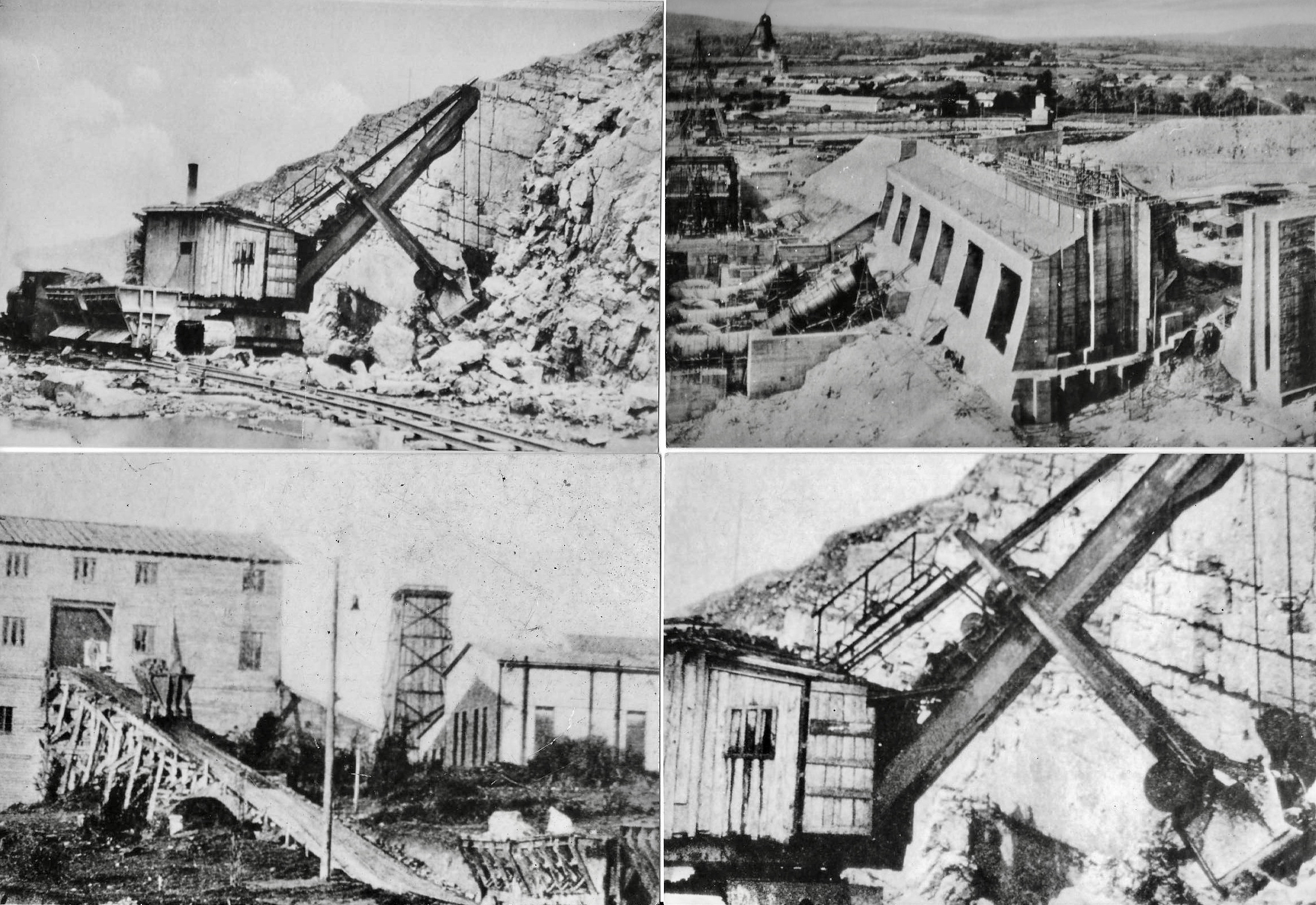
Ardnacrusha 1925

The huge Ardnacrusha power station – in its day the largest hydroelectric generating scheme in the world – under construction in 1925: it was completed and opened on 22 July 1929 and, by 1935, was producing 80% of all electricity in the Free State

The Lough Allen Canal connected the Shannon Navigation to the Lough: it was first opened in 1817. Boats would trade to quays on the lake with grain and return with sand or with coal from the Arigna mines. The fate of the canal was sealed when Lough Allen became a storage reservoir for the great hydro-electric station at Ardnacrusha. To increase its capacity, the level of the lake was raised by dam to a height above the old canal banks.

…The last trading boat left the Lough Allen Canal in 1927, while the last pleasure craft battled its way through the weeds in 1932. The lock-keeper, young Sean Nangle, still lived in the neat, freshly white-washed cottage beside the ruined entrance lock, but his duties were confined to bank ranging on the reach of the river below. Le Coq was the first craft to visit Battlebridge for seven years, so that our arrival was a minor sensation, and it was with a sense of newly discovered importance that Sean signed his name on our pass… (Green and Silver)

Battlebridge lock

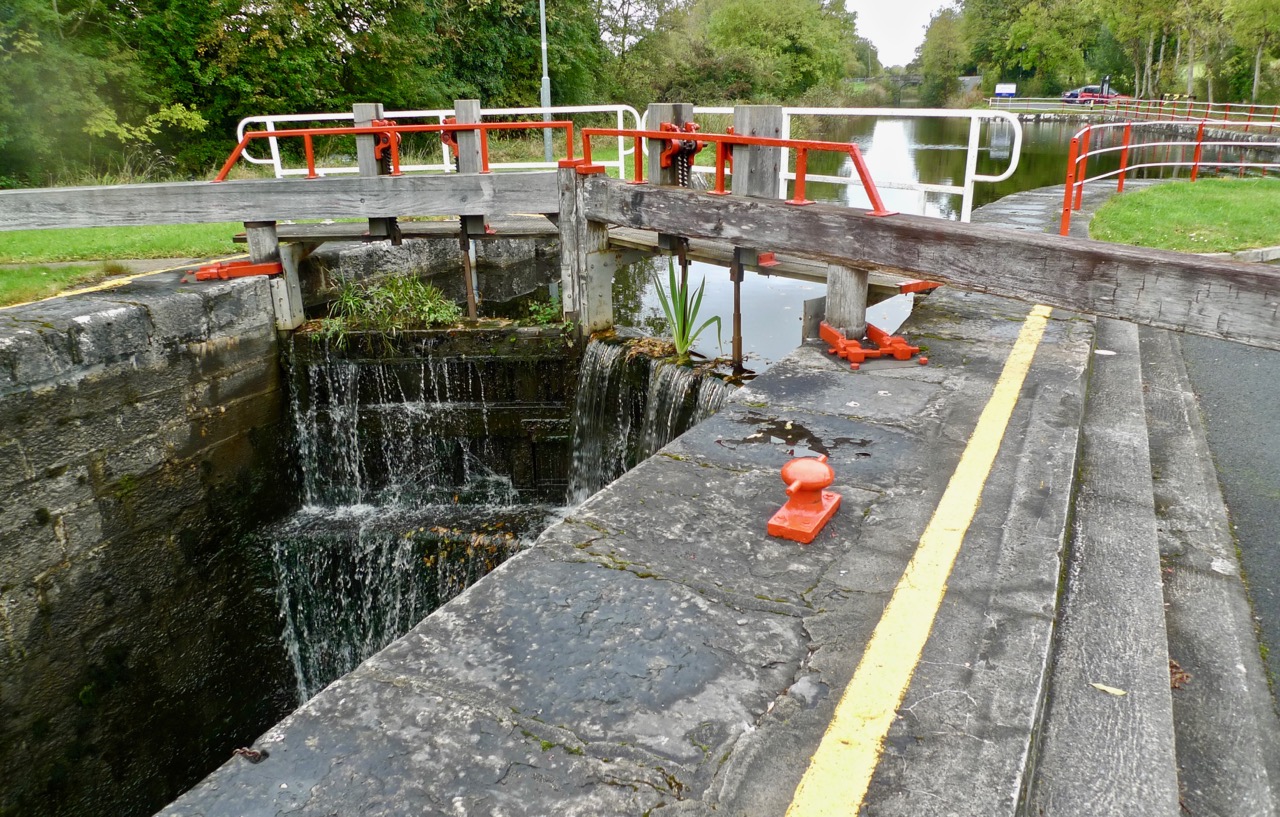
Battlebridge Lock, the first lock on the now restored Lough Allen Canal. The cottage in the distance was the home of ‘young’ Sean Nangle in 1946

One thing that the Rolts might never have anticipated was the revival of the Irish canals which has come about during the seventy years since their adventures, mainly during the economic boom of the decade or so from the mid 1990s. A cross-border authority – Waterways Ireland – is now responsible for a significant network of canal and river navigations within the island, including many that have been re-established. One is the Lough Allen Canal, now providing access from the Shannon to Upper Lough Erne in County Fermanagh, Northern Ireland.

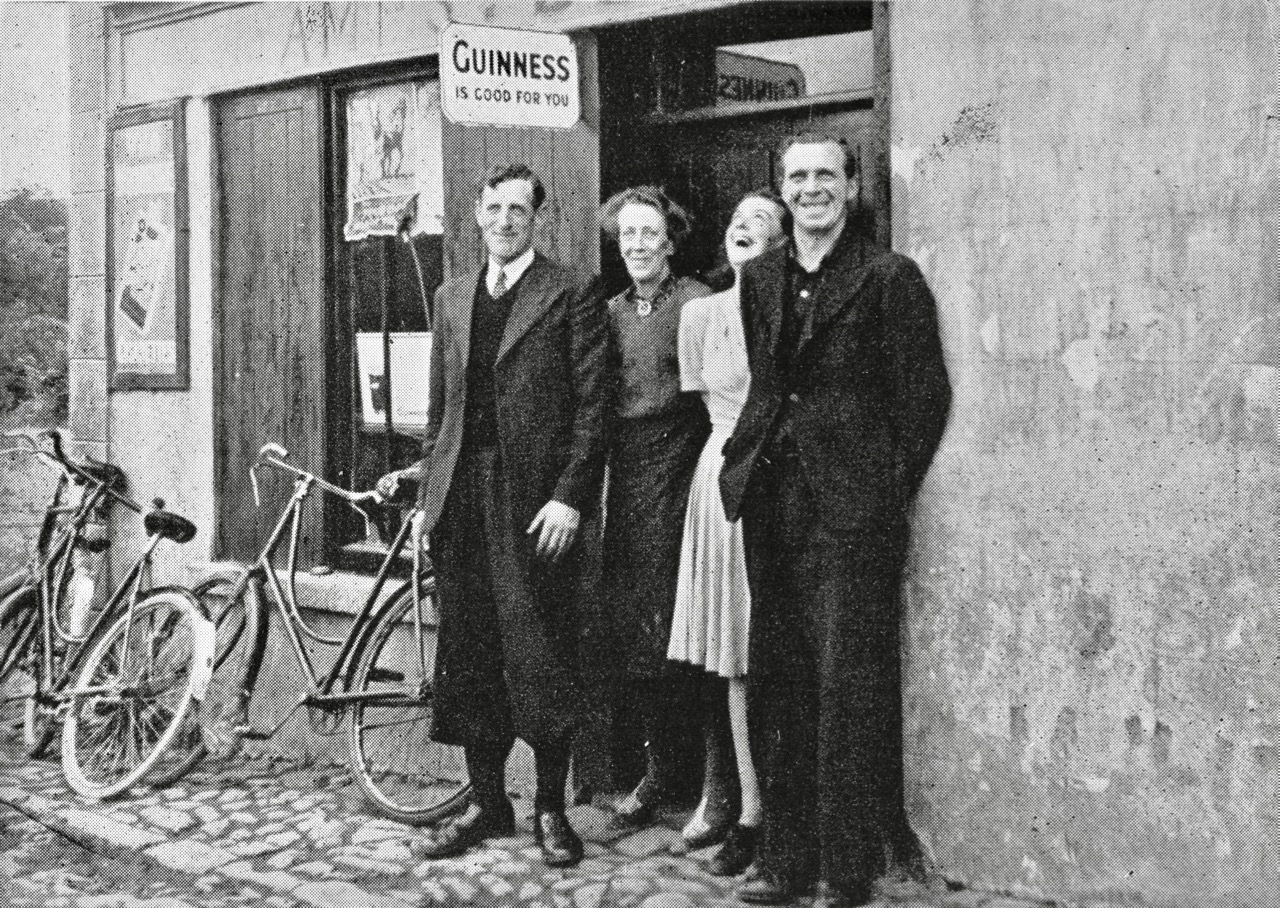
…That evening Sean accompanied us to the inn which stood by the road side just across the old bridge, and a grand friendly house it proved to be. Nowhere in rural Ireland did we find any lack of kindness, hospitality and friendship, but in these respects this little inn at Battlebridge is particularly memorable. For this, credit must go to the Beirne family, mother, daughter and son. I will not attempt to characterize them; they speak for themselves in their photograph. Leaning against the counter in the bare whitewashed bar we enjoyed the best glass of ‘single’ porter that we found on our travels, while intruding chickens pecked unconcerned about our feet. Through an open doorway a turf fire glowed in a wide open hearth equipped with crane and ratchet hook. Upon the fire reposed a squat, black pot-oven with more smouldering turf upon its lid… Conversation was interrupted when a drove of bullocks passed by with a soft patter of hooves. Everyone crowded to the door to comment and criticize and to speculate where they had come from and whither they were bound, an argument which was settled when the drover himself stepped in for a glass… (Green and Silver)

The Beirne Family

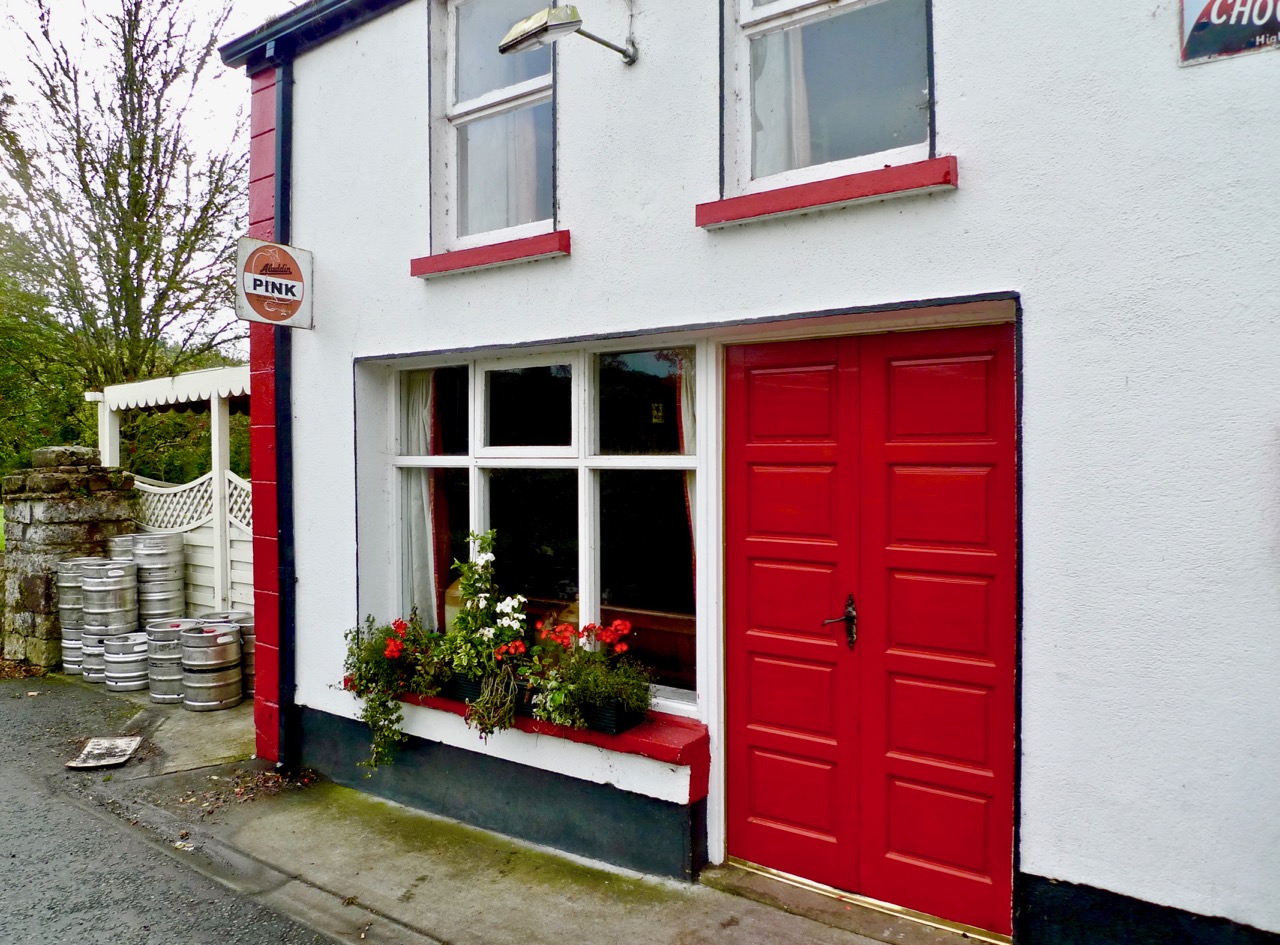
Biernes 2016

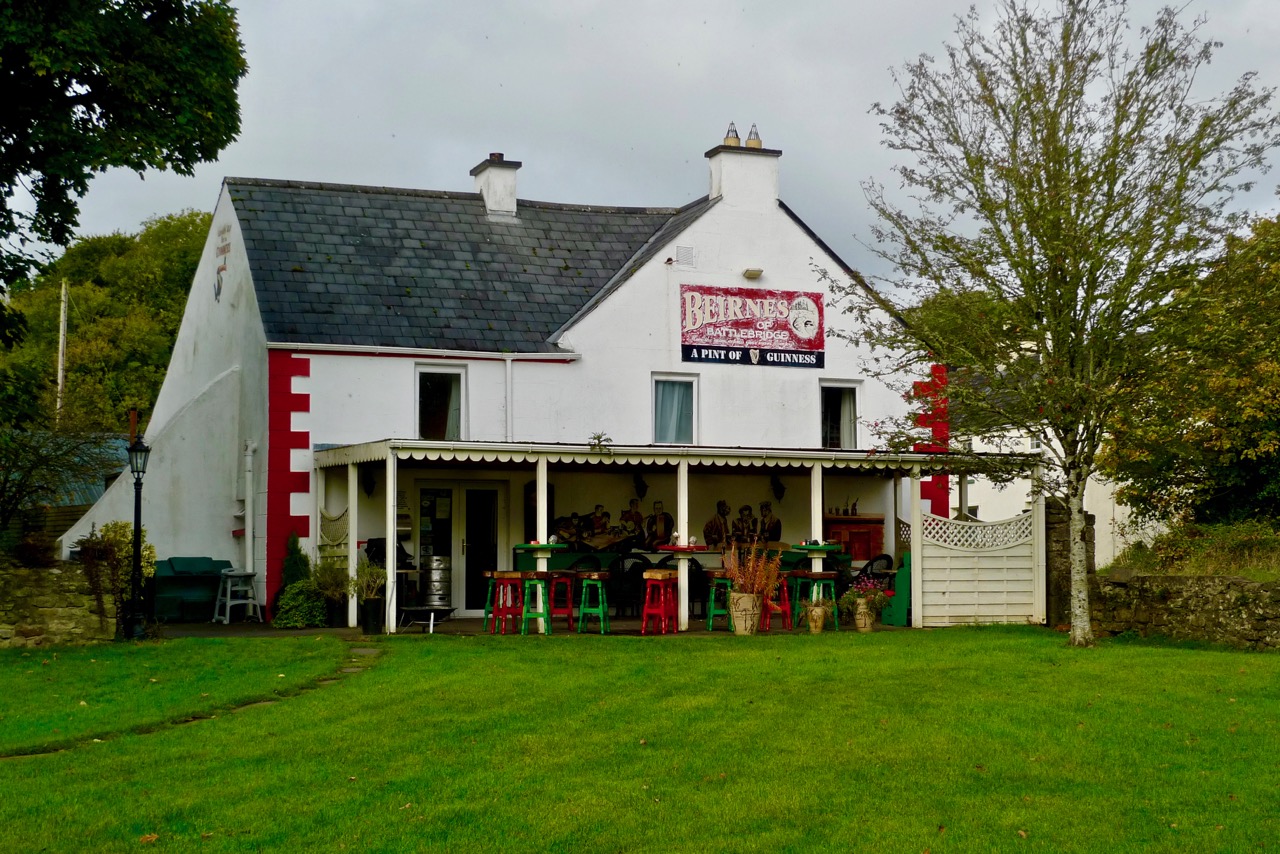
Beirnes

Upper picture: Angela Rolt’s photograph of the Beirne family in 1946. Lower pictures: Beirnes Bar is still trading in 2016

The re-opening of the Lough Allen Canal was heralded triumphantly in April 1996. I was pleased to find an archived RTE news report on that event. The official cutting of the tape was carried out by the Minister for Arts, Culture and the Gaeltacht – Michael D Higgins, now our President.

lock gates

Lough Allen

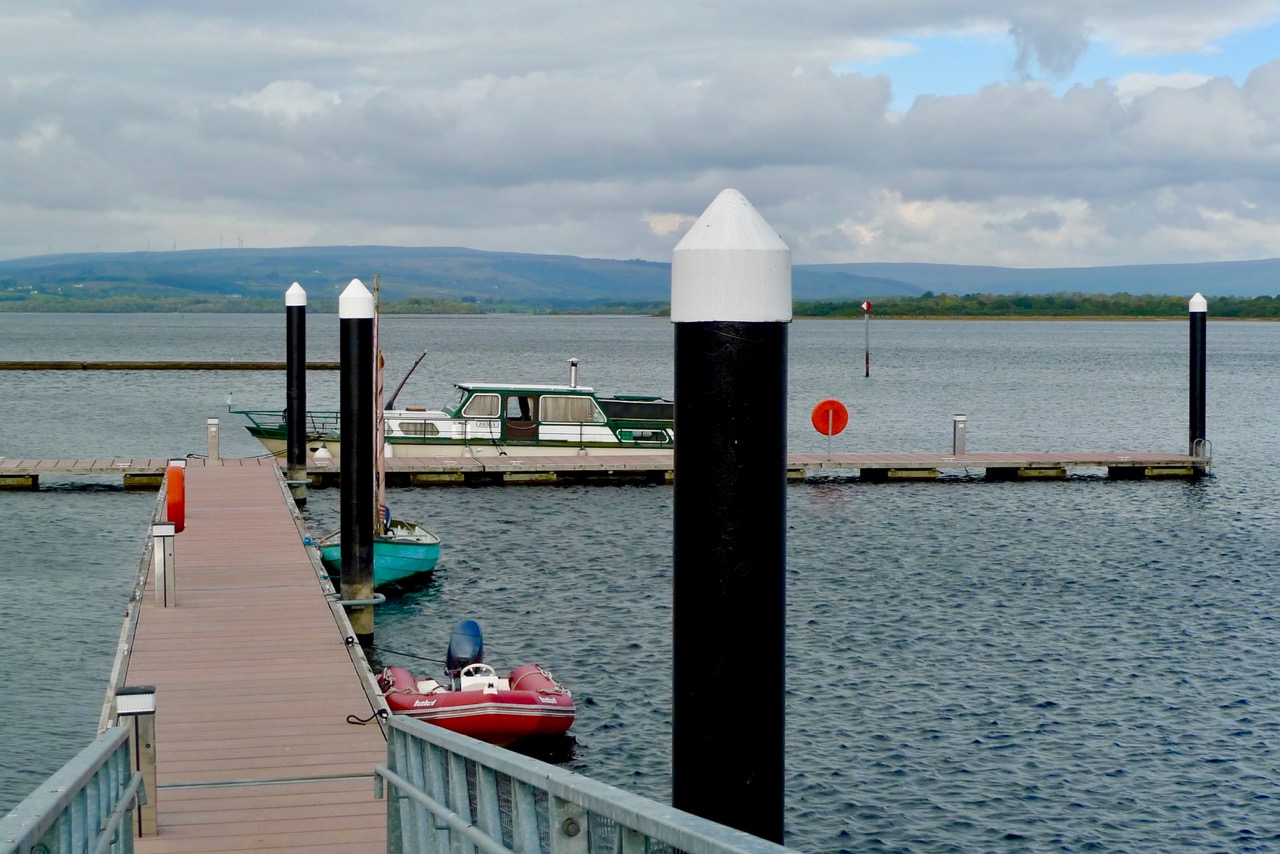
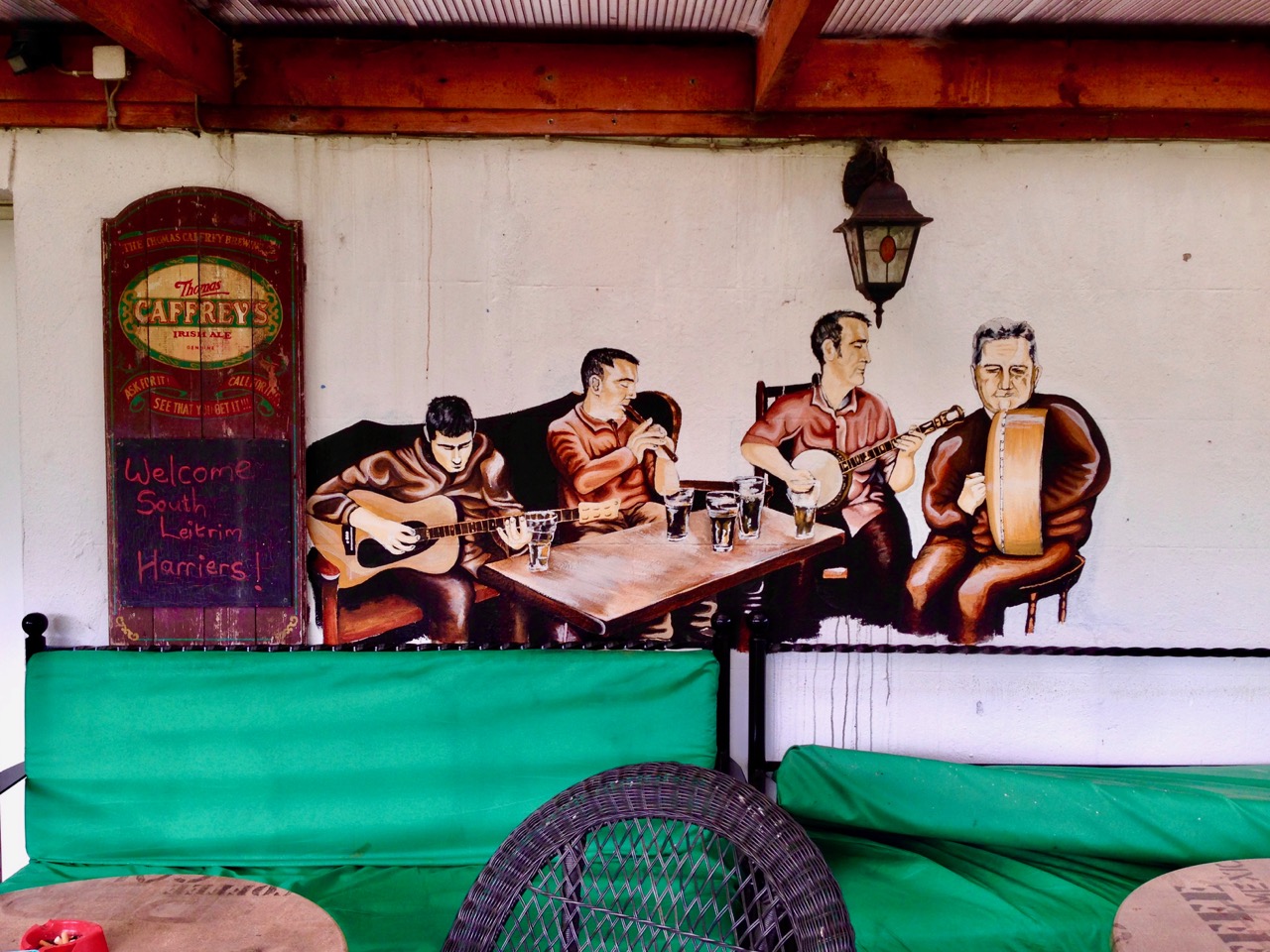
Upper picture: the lock at Battlebridge on the restored canal. Lower picture: Lough Allen today. Below: A mural on the garden terrace of Beirnes Bar

band playing

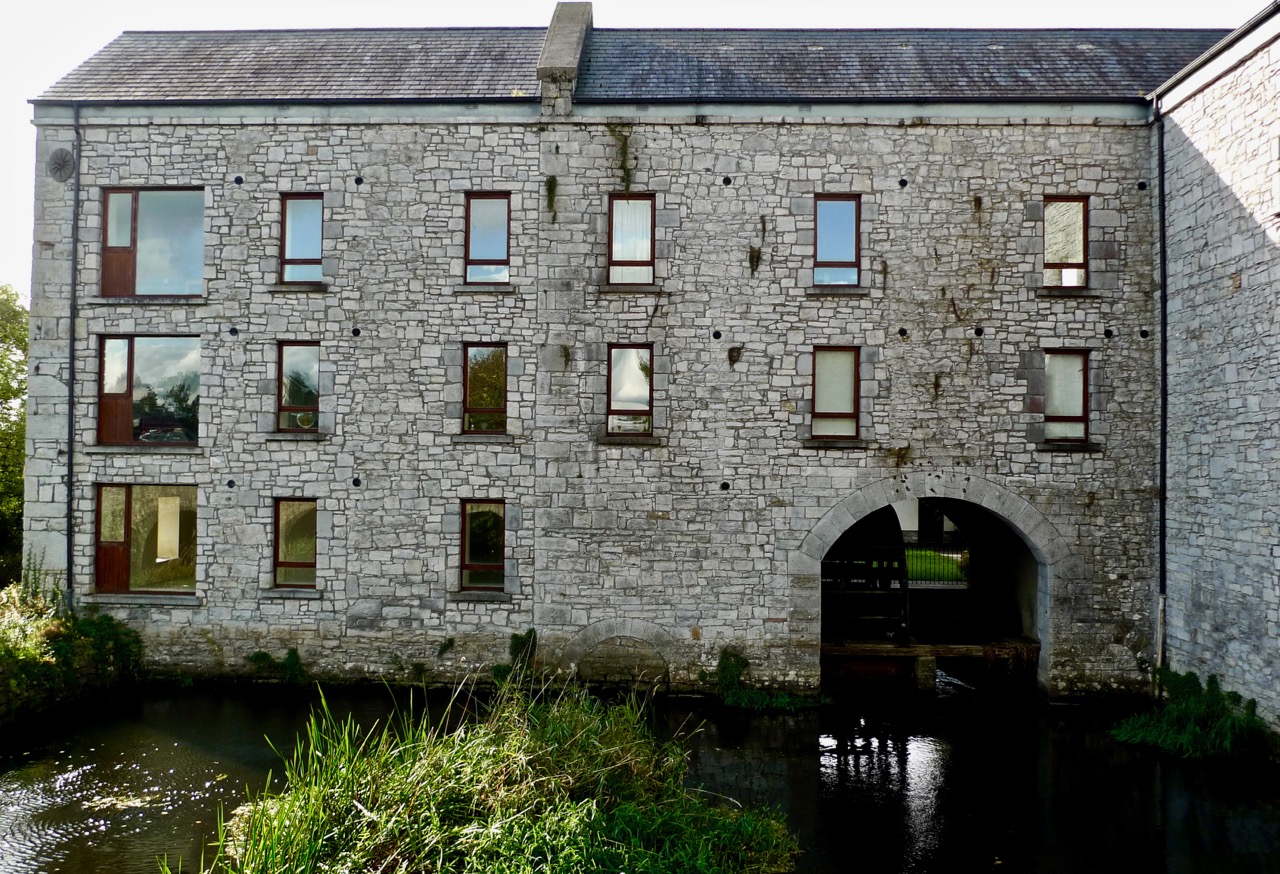
Cloondara Mill

The Mill apartments

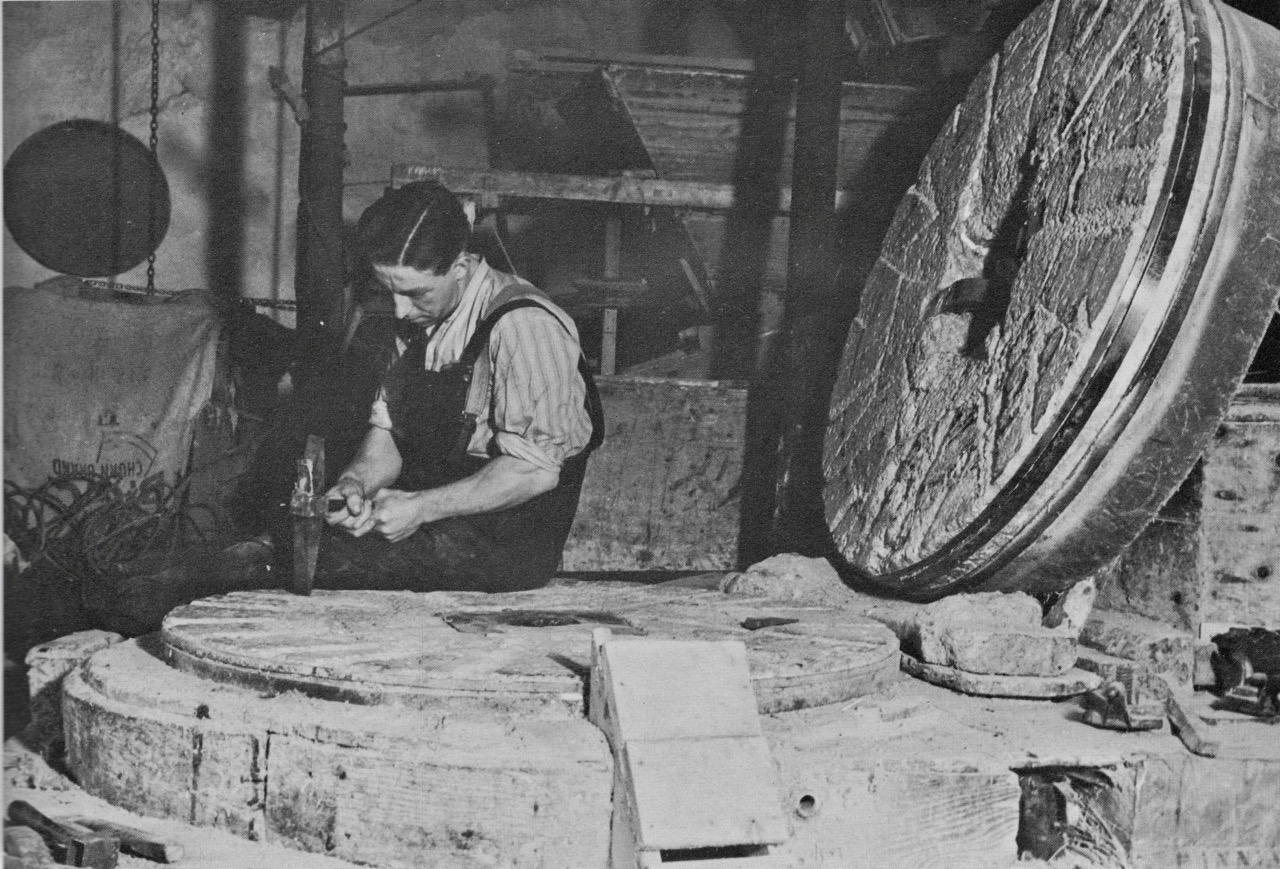
…Across the canal bridge there was a large corn mill which had seen better days but which I was pleased to see was still at work. Moreover it was not, as our few surviving [British] watermills are, relegated by the milling combine to grinding cattle meal. Cloondara Mill was grinding 100 per cent extraction flour for the village bakeries of the district. As we walked over the bridge a small water-turbine was churning merrily, driving the dynamo which provided electric light for the mill and the miller’s house. But the great undershot wheel which drove the mill from the waters of the Fallan River, a tributary of the Shannon, was still and silent. I knew why because, from somewhere in the dim recesses of the rambling stone building I could hear the chip chip of a mill-bill tapping away like some busy woodpecker. This Irish miller, like the English country millers who I have been fortunate enough to meet, was obviously proud of his mill and was delighted by our interest. Having assured himself that the stones being dressed were out of gear, he insisted upon opening the sluice for our benefit, setting the giant wheel revolving with a rumble and surge that wakened the mill and which, via a complex of wooden gearing, shafts and pulleys, set screens and sieves shaking and revolving to the very top of the building…

(L T C Rolt Green & Silver George Allen and Unwin, London 1949)

millstone dressing

…There were four pairs of stones, two sets of ‘Peaks’ for meal and two sets of French Burrs for wheat. The runner of one pair of Peaks had been swung off the bedstone, and the dresser sat on a sack, legs astraddle, as he tapped away at the worn furrows with his bill. I had expected to find that the language of the miller’s craft was different in Ireland, but this was not so. Thus the stirrup and shoe which feeds the grain into the eye of the runner stone and whose cheerful clink clack contrasts with the rumble of the stones, our miller, like his fellows in England, called the ‘damsel’. In an earlier book I described how the miller of Minshull Mill in Cheshire used apple wood to renew the teeth of the wooden mill gearing. Here beech wood was used for this purpose…

Header photograph: Cloondara Mill, Richmond Harbour, 2016; above, photographs from Windmills & Watermills (John Reynolds, Hugh Evelyn, London 1970) showing a miller and his bills, working much as Rolt described in his book

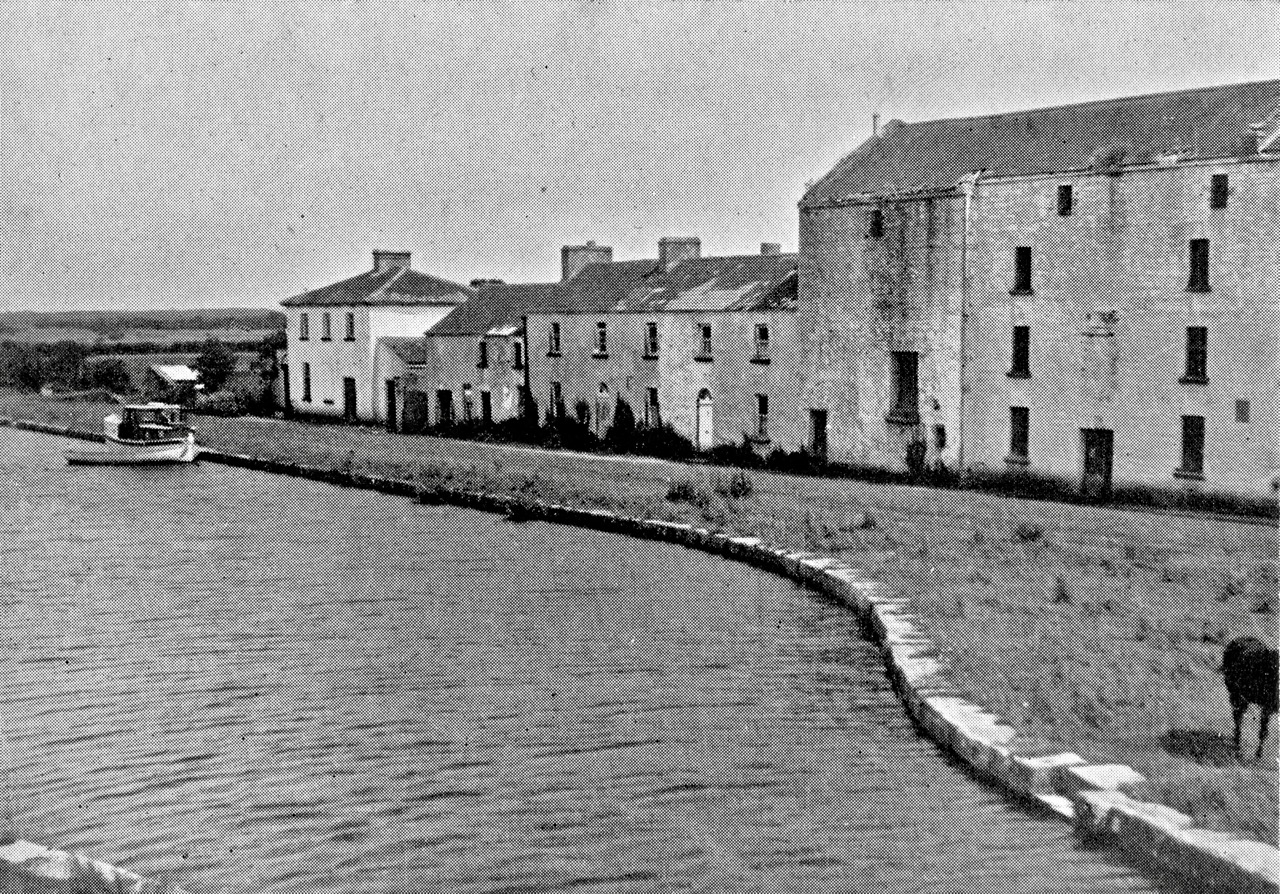
We spent some weeks in the summer exploring the waterways of Ireland, following in the wake of Tom and Angela Rolt who had made a pioneering voyage in 1946, when the canals were in a state of decline. In fact, the Rolt’s boat Le Coq was the last to make the complete journey through the Royal Canal, which became derelict and finally closed in 1961. When they passed through Richmond Harbour in County Longford – the junction of the Royal Canal with the River Shannon – they paused to visit the corn mill at Cloondara: this mill ceased operations in the 1950s, not long after the Rolts’ visit.
Cloondara Richmond Harbour 1946

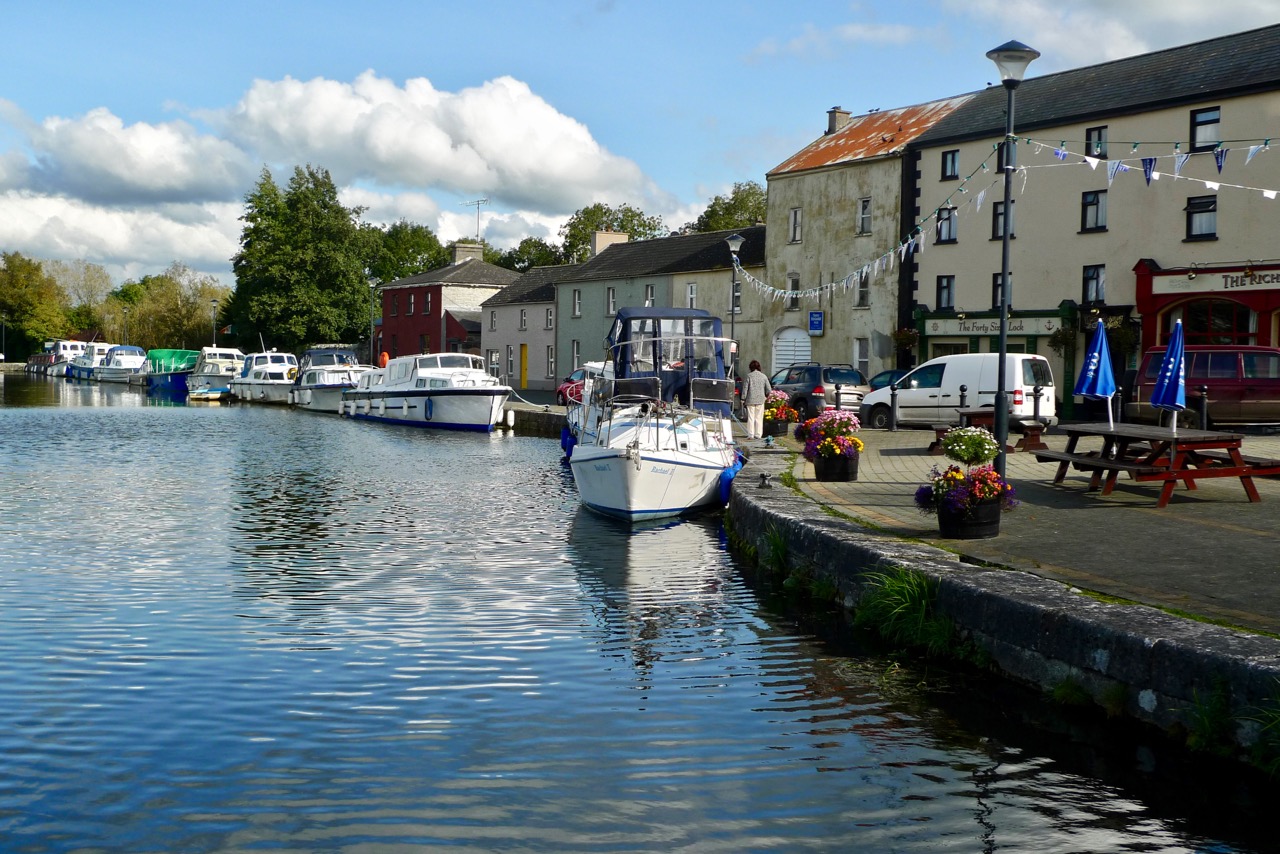
Richmond Harbour 2016

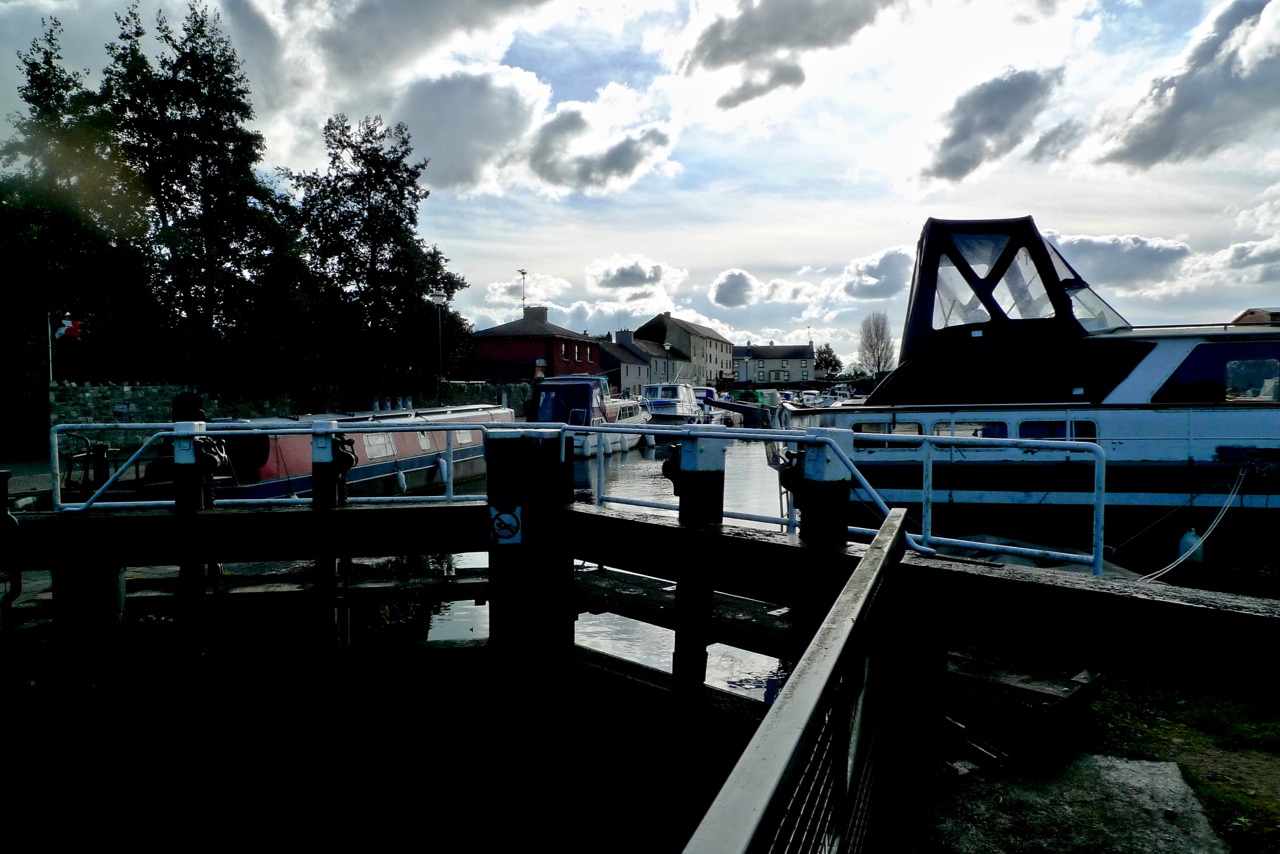
Upper photograph by Angela Rolt: Richmond Harbour in 1946 – the single boat is Le Coq. Lower photograph shows the same scene in 2016, seventy years later; the Royal Canal (which closed in 1961) has been fully restored, re-opening in 2010

We found Richmond Harbour to be a thriving small community; a boating centre which has benefitted from the restoration of its canal. Comparing the two pictures above – separated by a span of seventy years – the architecture of the place has hardly changed: only the buildings on the right seem to have been significantly updated, although they retain the structural form of their predecessors.

lock and mill

Forty Sixth Lock

The settlement retains its focus on the water, and there is evidence of some economic activity based around the canal harbour. I was particularly keen to see what had happened to the mill which Rolt describes in such detail; it remains, converted to an apartment complex. This seems to be an ambitious undertaking within such a small community: there are vacant apartments and signs that maintenance is falling behind in places, but it has to be a good thing that the project has respected and built on to the original industrial architecture. The impressive building is largely intact and continues to hold its original character, while some of the machinery has been retained to provide historical visual references.
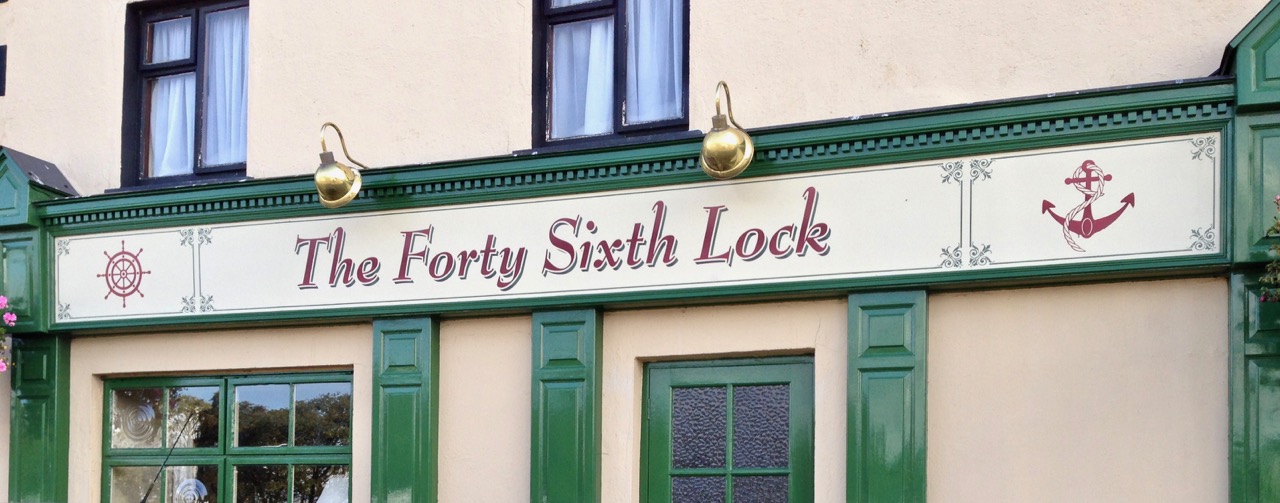
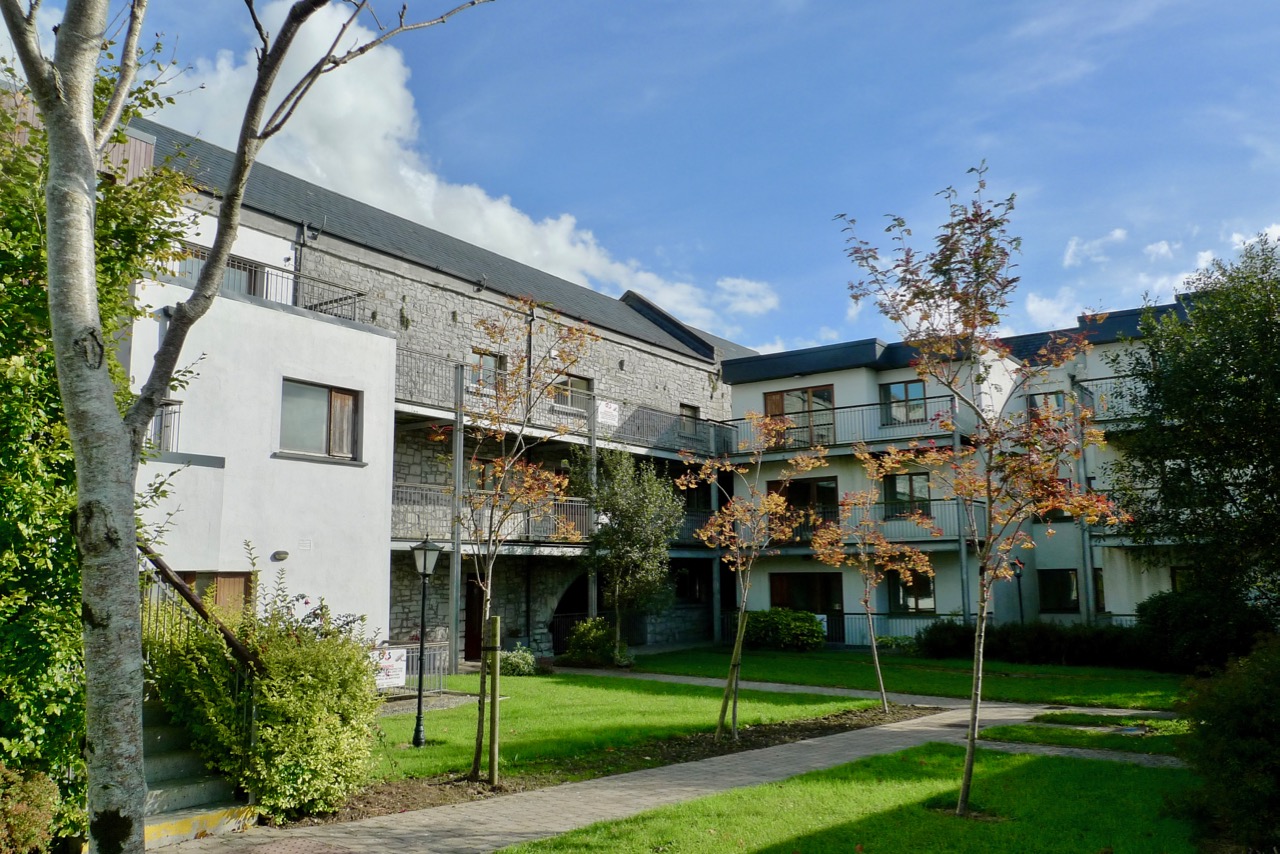
apartment complex

This series has given me a fascinating project to research and record (there’s more to come!). I only wish the Rolts were still around – I would like to discover their own reactions to the evolution of Ireland’s waterways system in the years since they travelled here.


Spioróg, the Sparrowhawk

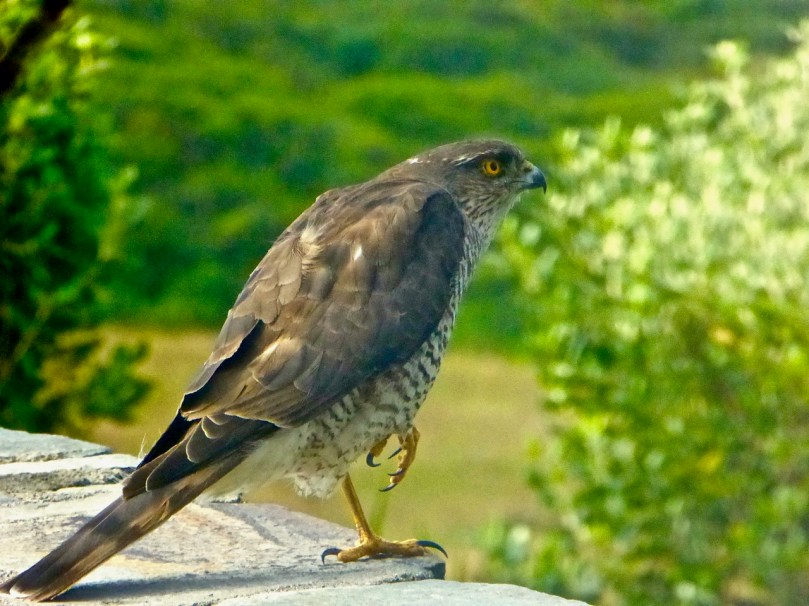
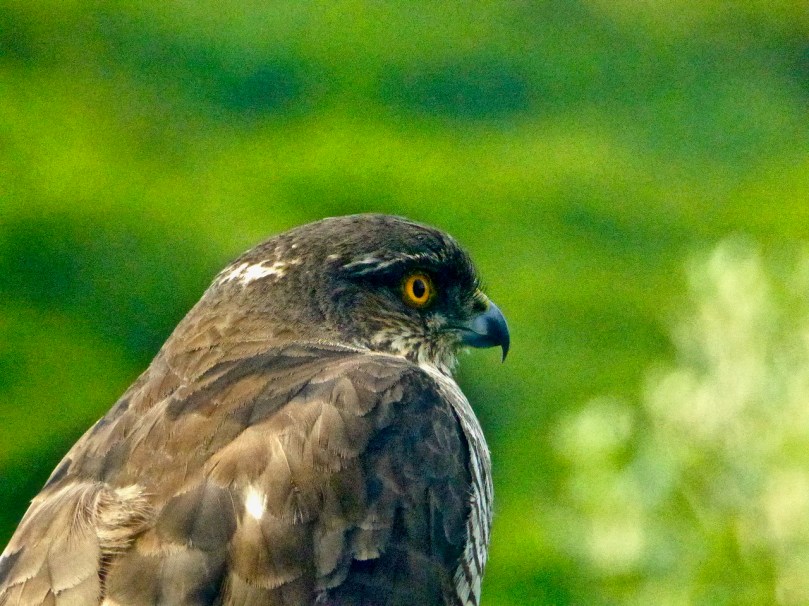
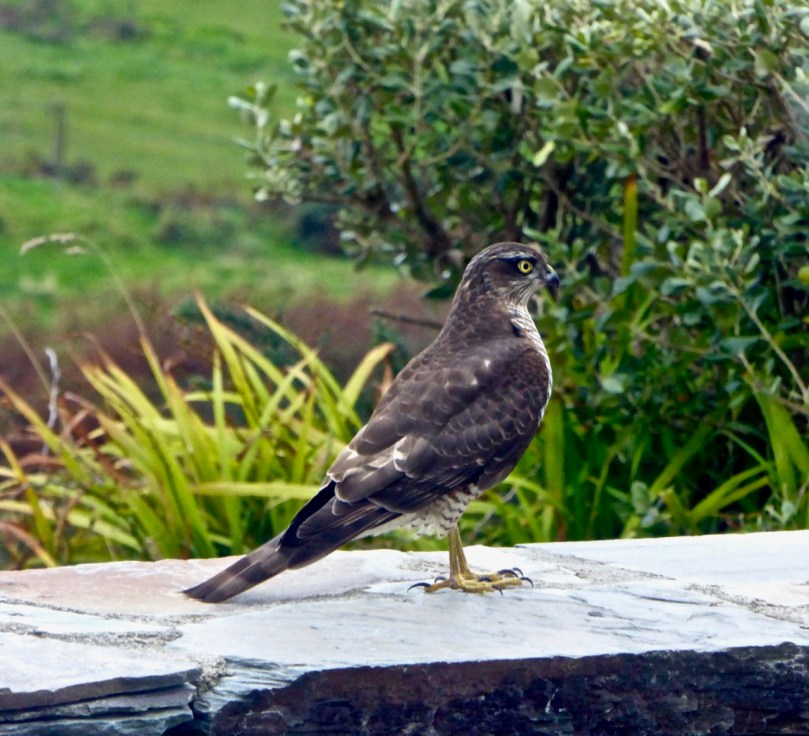
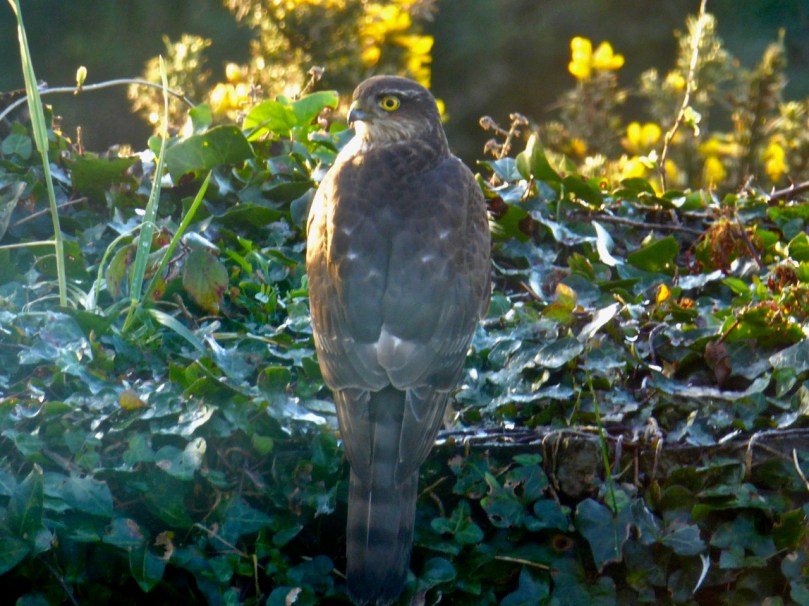
Spiro watchfulWe’ve been calling it Spiro from the Irish work for sparrowhawk – Spioróg (spuh-rogue). Ours is just one of the many sparrowhawks in West Cork – this is not a bird that is endangered in any way at the moment. They’ve been classed as secure. There was a decline back in the old DDT days, but the population has fully recovered since then.

Spiro head

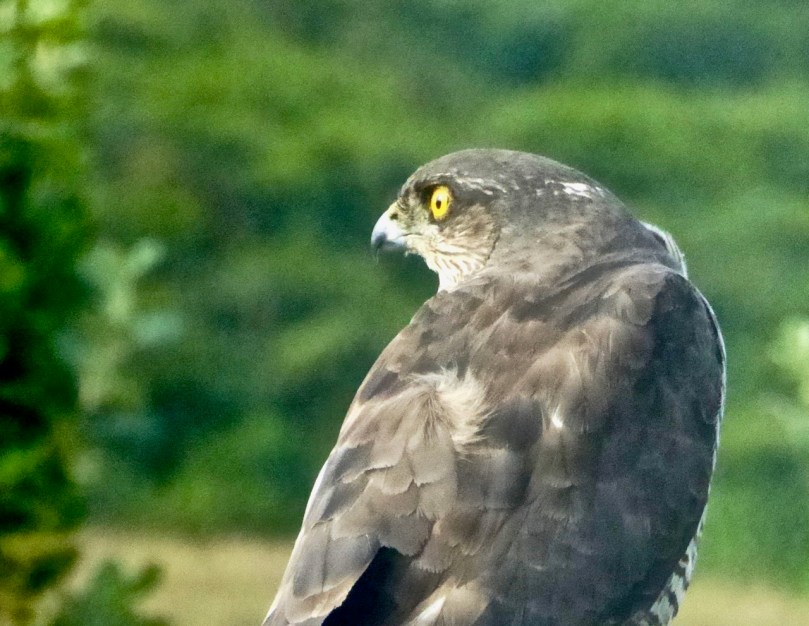
Look at that raptor face – the hooked beak and the piercing yellow eyes

This is one ferocious hunter; but efficient, not so much. In fact, it catches about one bird for every ten it chases. Exhausting! We have watched it plummet from the sky to land on or beside our bird feeder. We’ve watched it chase birds into the bushes only to emerge battered but empty handed. We’ve never seen it actually catch something, although no doubt that will happen in time. When we suddenly see every bird at the feeder or on the ground disappear, we know the signal has been given and Spiro is around.

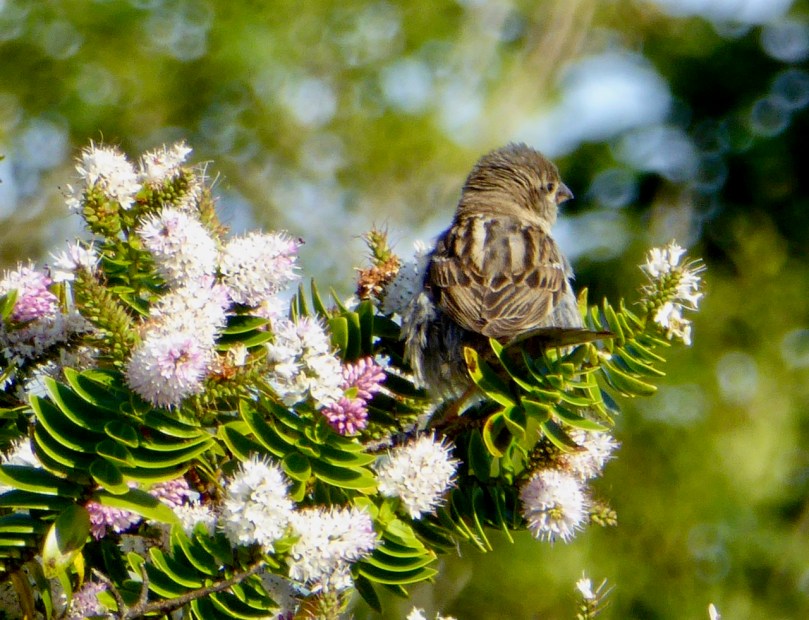
sparrow

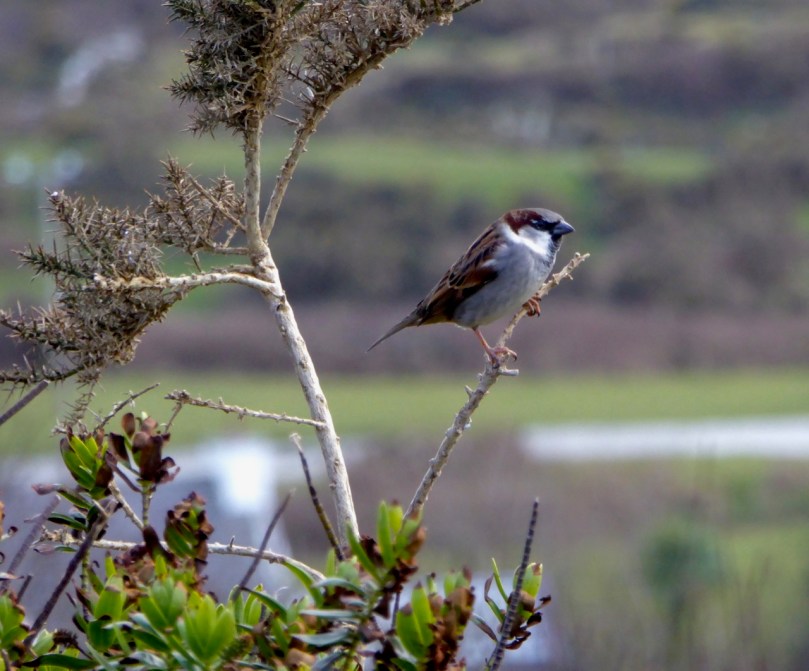
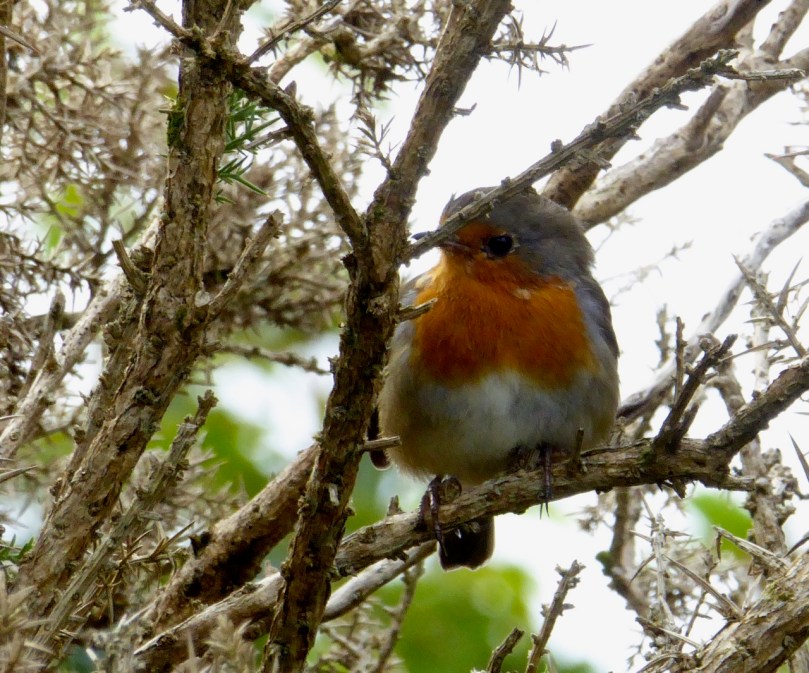
Robin among thornsTop: an adult male sparrow keeps watch for Spiro. Bottom: Small birds, like this robin, will take refuge in thorn bushes. Sparrowhawks will go after them but often damage themselves in the process

Sparrowhawks rely on their agility to create the element of surprise. They will fly low on the other side of a hedge and at the last moment swoop up and over it to where birds have gathered on a lawn. Or they will catch them in flight, having used trees to hide in until the bird gets close enough. They can weave through branches like Ninjas, ducking and swooping with supreme manoeuvrability. In the open they flap and glide and never hover – it’s one way of telling them from kestrels.

Spiro looking left

They nest in wooded areas and their eggs hatch in May and June – about the same time the smaller birds hatch too. This means that they rely on a diet of fledglings to feed their young, and of course fledglings are easier to catch than adult birds.

Spiro Oct 2015

This is the smaller, darker, sparrowhawk – we think it’s the male

But it’s the male who goes after the fledglings. The female is larger – almost twice as large – and she hunts bigger birds such as pigeons and even pheasants. Females are paler too, so we think Spiro is a female. But we’ve seen a smaller, darker one too – must be the husband. We’ll call him Spirogín.

Spiro neck swivel

Like owls, sparrowhawks can swivel their heads to look behind them

A backyard feeder, such as we have, provides a source of small birds for sparrowhawks. So here we have unwittingly colluded with Mother Nature to help out Spiro and her family. We console ourselves that the birds of prey are important too and need to eat – but in fact, as I said, we have yet to witness a successful kill.

fledging sparrow

This recently-fledged sparrow is a prime target

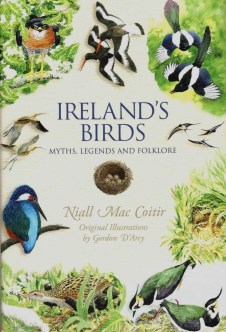
Ireland's Birds CoverThe sport of falconry was introduced in Ireland by the Anglo-Normans, who arrived in the 12th century. In his wonderful book Ireland’s Birds: Myths, Legends and Folklore (The Collins Press 2015), Niall Mac Coitir tells us that the

…male sparrowhawk was called the musket and was traditionally the hawk kept by priests. The word musket was later used for a crossbow bolt and later still for the new invention of the handgun. Kestrels were the lowliest of falcons, used only by naves or servants. Nevertheless, they had a use, as they were traditionally kept near dovecotes to scare sparrowhawks away, because they would not bother the doves themselves. It was even said that pigeons would seek out a kestrel for protection if a sparrowhawk was about.

Most of the references from Irish folklore and mythology don’t specify what hawk is being talked about. The word for hawk, seabhac (show-ock, where ‘show’ rhymes with ‘cow’), is used generically. But Mac Coitir looks to the behaviour of the bird for clues to find sparrowhawks in Ireland’s great sagas. For example, in the Táin Bó Cúailnge (The Cattle Raid of Cooley) the warrior Cúchulainn warned his rival Fergus to stand aside or he would ‘swoop on you as a hawk swoops on little birds.’ 

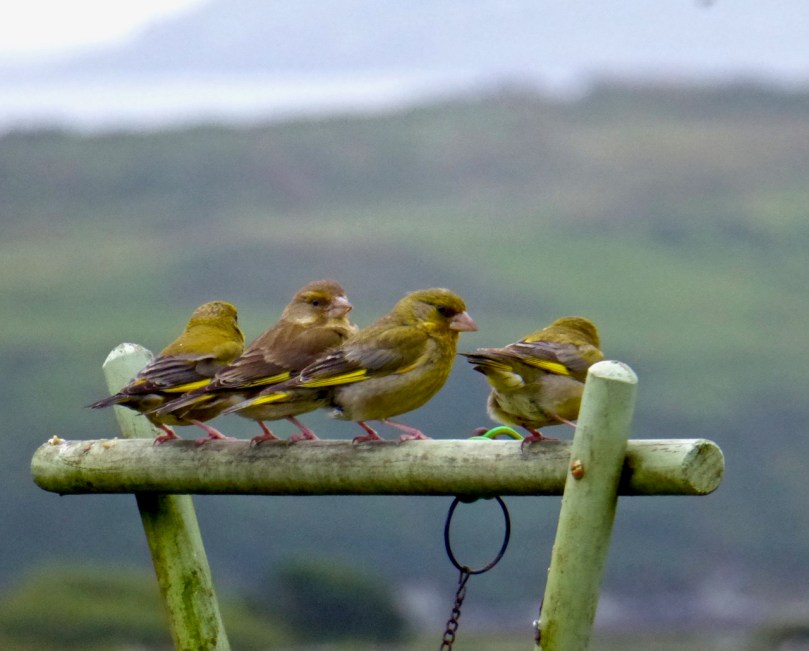
Yellow finches

Our ‘little birds’ (green finches) keeping a wary eye open for Spiro

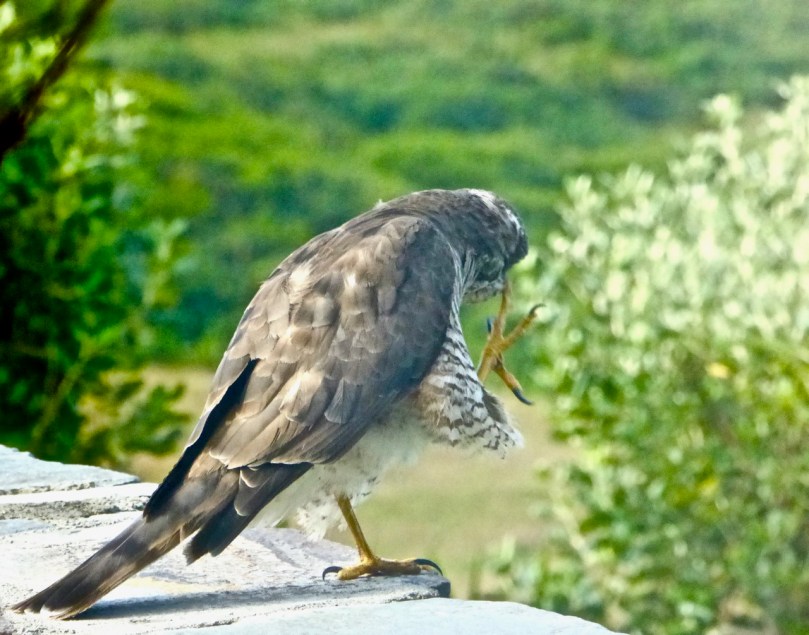
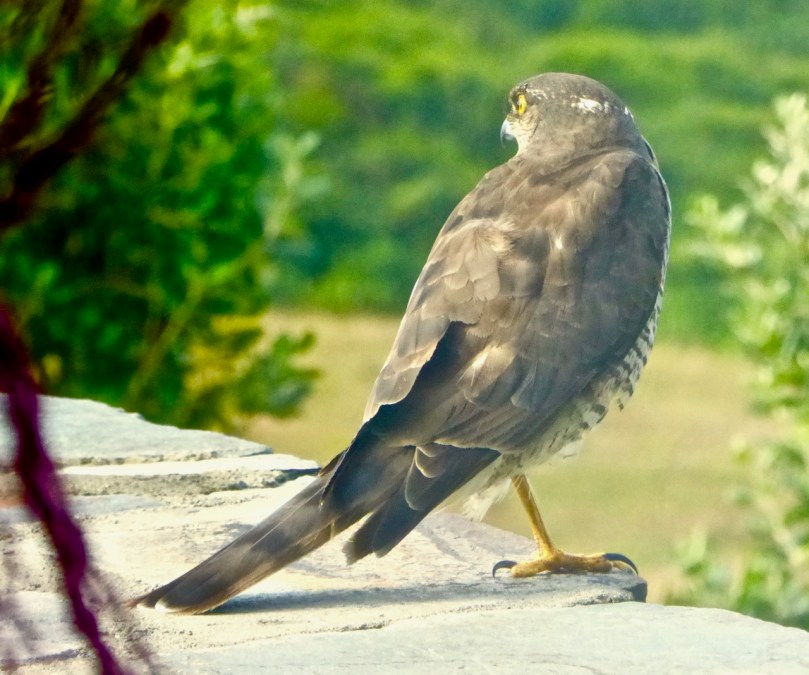
Robert talked about Spiro in his The Wild Side post, but we both thought she deserved a post of her own. Most of the photographs of the sparrowhawks in this post were taken, of necessity, very quickly and through a window, so I’ve had to work on them a bit. However, we were lucky enough to be lying in bed one Sunday morning when Spiro herself came and sat on the low terrace wall outside the bedroom window. She stayed for a while, alternately grooming and watchful.

Spiro Having a Scratch

We felt very privileged to be so close to such a fierce wild female.

Spiro on one foot

Landscaping – with Trish Punch

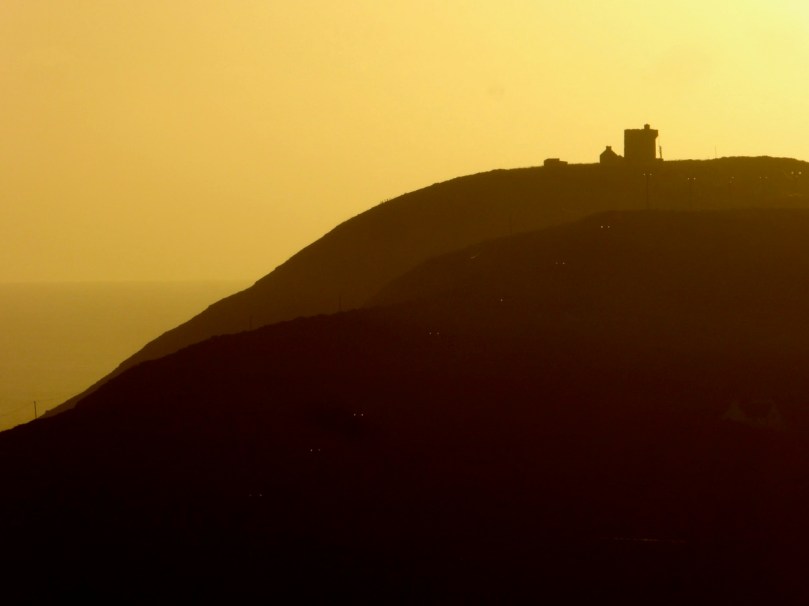
Brow Head

Brow Head silhouetted against the setting sun*

In our quest to bring you the best West Cork has to offer, we pepper our posts and our Facebook Page with photographs. After a great day-long course with Celia Bartlett (last year, highly recommended!) I managed to wean myself from the auto mode on my camera and have been taking pictures using the manual setting for more than a year now.

Rock Island

Rock Island and Crookhaven Inlet

And I’m hitting the wall again – knowing my camera is able to deliver so much more and that there’s a lot I need to learn about composition. So I signed up for a one-on-one workshop with Trish Punch and boy, am I glad I did!

Trish 4

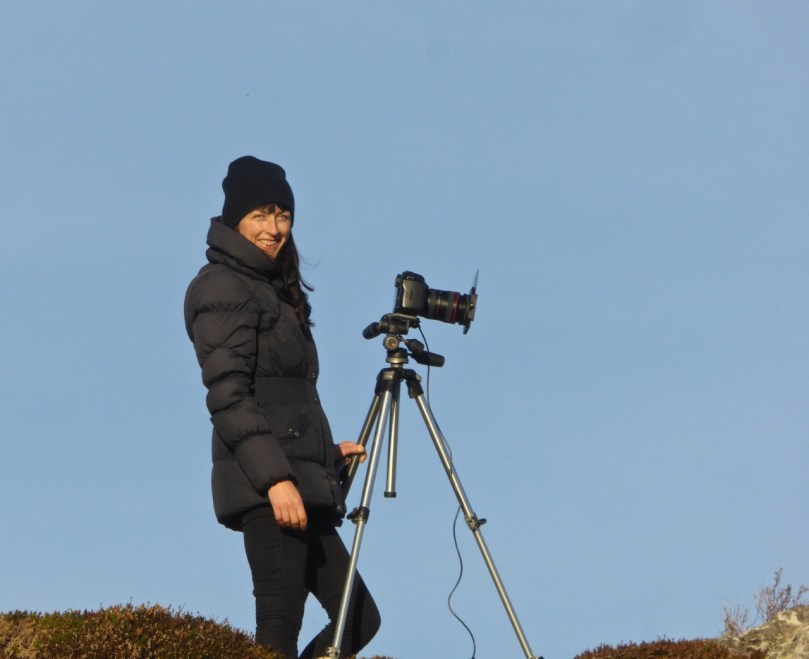
This is Trish – she’s a professional landscape photographer who supplies images to Lonely Planet (Lonely Planet!) among other prestigious publishers and travel sites. She specialises in the Wild Atlantic Way and is currently pursuing a project to capture the islands along the Way. Take a look at her website and be prepared to do some serious drooling.

Crescent sky

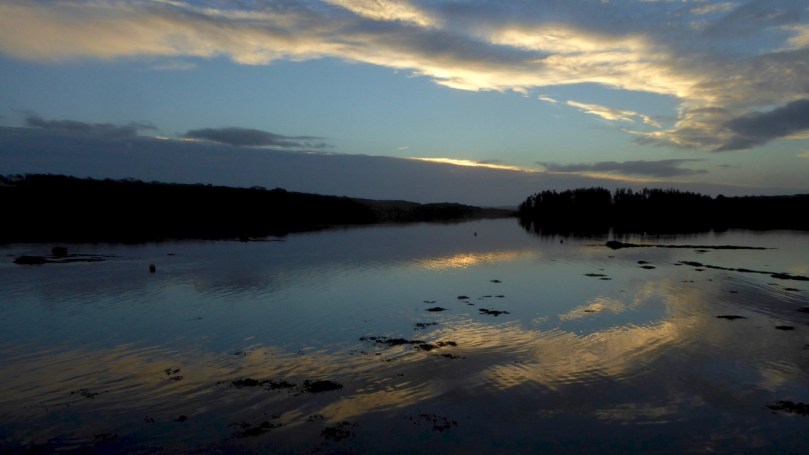
We started at dawn and watched the light appear over Ballydehob Bay

But Trish is also an inspiring, encouraging, and organised teacher – and a lot of fun to be with. We had a great day together, starting at dawn and ending when the sun set. Throughout the day she encouraged me constantly to slow down, think about my shots, use the principles of good composition, really examine where the eye was being led in the frame and check the light. 

Schull Pier

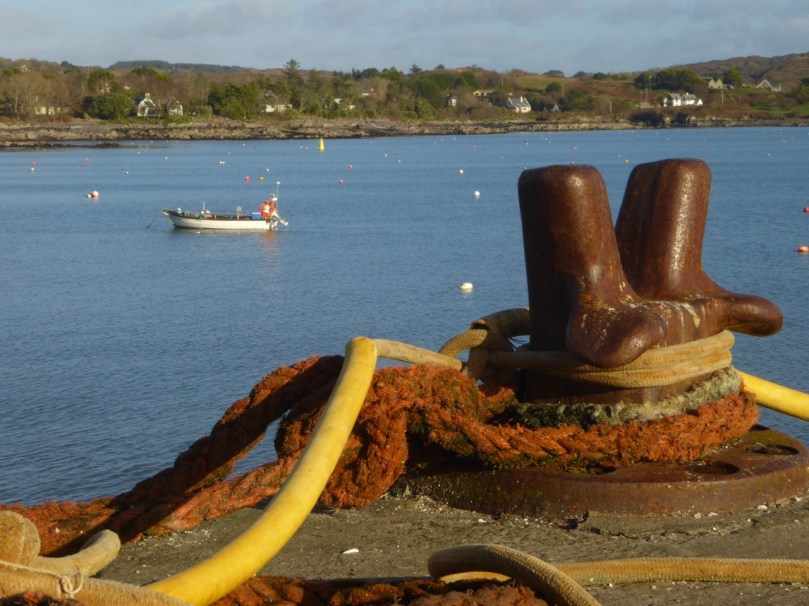
This was taken on Schull Pier – the mooring bollard takes on a sculptural quality in the right lighting

I’ve been making all the classic mistakes, chief of which is to plonk the main subject right in the middle of the frame. I have also struggled with sharp focus, especially in low light, and Trish insisted on me using my tripod (something I have been reluctant to do – I don’t want to lug it around) and showed me how to use my timer to take the shot, since my camera won’t accommodate a cable or remote shutter release.

Barleycove Wetlands

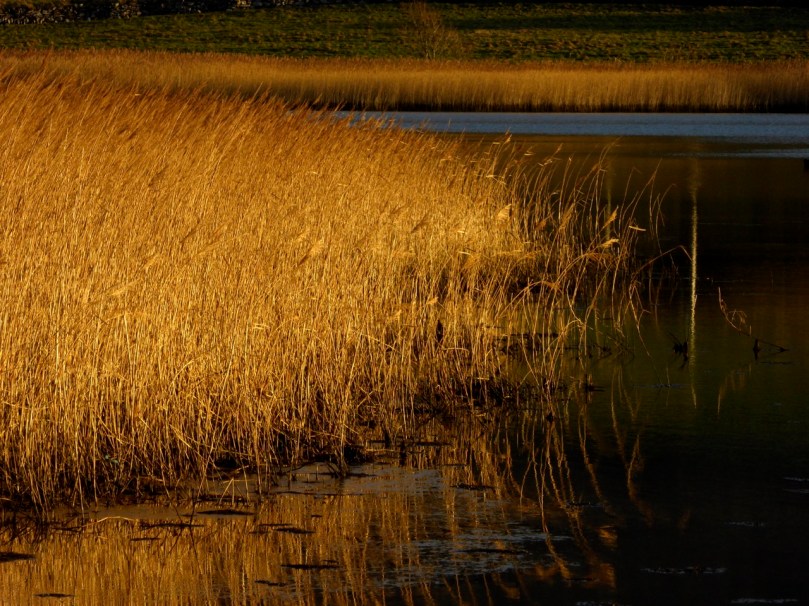
Watching where the light comes from – these marsh grasses at Barley Cove glow golden in the low evening light

We were fortunate to have a really great day in December, with a long Golden Hour at each end. I’ve been practising what she taught me since then and I feel a little more confident each day. I hope you, our dear readers, will see a difference too, over time.

River Lee near Ballingeary 2

The River Lee near Inchigeelagh

We took a trip to Macroom the other day and I used the opportunity to practise what I learned with Trish. Mostly I just tried to slow down and think more about the composition of the shot. It was another amazing day with clear blue skies – but this time very cold with lots of frost where the sun hadn’t managed to penetrate.

Sunshine and Frost, West Cork

Sunshine and shadow on a frosty day in West Cork

If you’ve been thinking you’d like to improve your photography skills, give Trish a call or drop her an email. You can take one of her planned workshops or she can customise a day, or a weekend, for you no matter what level you’re at.

Coral House

House in the Shehy Mountains

Don’t be intimidated if you’re operating on the automatic settings or if you don’t know the difference between shooting in RAW or JPEG (I didn’t) – you’ll come away knowing a lot more about how to move forward in your skills. And you’ll have time in the open with lots of laughter and surrounded by incredible landscape – now what could be better than that?

Pass of Keimaneigh

Heading up to the Pass of Keimaneigh

*I took the first five photographs above on the day of the workshop (Dec 16) and the next five in the last two weeks.