Perspectives on Irish History

Occasionally we review books that we think will interest our followers. Here are two which I recommend without reservation: Victorian Dublin Revealed and The Green Divide. Both are by Michael Barry, an engineer, writer and publisher who hales from Ballydehob and now lives in Dublin: he describes himself as an author and transport consultant and has spent much of his career with Ireland’s railways. Michael recently penned an article for the Irish Times in which he set out the highs and lows of producing books here: …There is the pleasure of receiving in one’s hand, a new book, straight from the press: perfectly laid out, high quality, the illustrations perfectly printed. It is the joy of creating something worthwhile – it is almost like seeing a child just born… and, balancing that, the frustrations of a literary world where British publishing dominates: …It is a hard world out there, one may have the best book in the world, but if you don’t have contacts in the press or radio, one doesn’t get reviewed or interviewed… Having read these two books from Michael I can confirm that he is a perfectionist: his writing is faultless and authoritative but, more than that, he generates an enthusiasm for his subjects. Pick up either of these volumes and I guarantee you will be hooked. If there is a word – unputdownable – then that perfectly describes them both. I didn’t know that I was so fascinated (as I now am) by the Irish Civil War: The Green Divide makes such a good job of describing that awful part of Irish history in all its perspectives. It is eminently readable and brilliantly illustrated – there are 400 pictures which include contemporary images, documents and posters as well as the author’s own high quality photographs.

Very different, but equally compelling, the book on Victorian Dublin is, indeed, a revelation. The architect in me immediately wants to go out and see all these places – houses, halls, churches, industrial archaeology – which I never knew existed. The level of research is breathtaking. Mary Leland, in an effusive review for the Irish Examiner, puts it well: …If modern life in Ireland began in the nineteenth century, so did modern architecture. Michael Barry makes this point time and time again in a book of sometimes startling illustrations . Here are pictures to remind us of what we have been ignoring because they seem so commonplace or constant. Barry is his own photographer and has a pleasing eye for detail. He also has a nice sense of historic irony…

I am including a few extracts from both of these volumes: in their brevity they cannot do the books justice. I am hoping you will be inspired to look out for these in your local bookshops (or to ask that they get them in – as we need to keep our bookshops going…!) Michael Barry has written much more: you will find full details on his Andalus Press website – there’s a lot to explore there too!

From: The Green Divide…
Left: two National Army soldiers billeted in a rural cottage – Barry comments ‘If they are city boys, this glimpse of how people in the countryside lived probably came as a shock’. Right: a propaganda poster by Constance Markievicz – ‘this one adopts a mystical theme, depicting male and female Republican fighters as The Bodyguard of the Republic’
Left: Republican activity – removal of two rails – led to this derailment on 15 August 1922 along the banks of the River Slaney on the Dublin & South Eastern Railway: the locomotive of the down Night Mail ran on the sleepers for over 150 metres before turning over. Right: in Lough Mahon, Upper Cork Harbour, Republicans scuppered a dredging barge (distant) and the steamer ‘Gorilla’ to impede passage upriver.
Left: In July 1922, the Irish republican Army published this newspaper advertisement warning Dublin public house proprietors that their premises could lose their licences for plying soldiers with (too much) drink! Right: the ‘schloss-style’ former RIC Barracks at Caherciveen, Co Kerry, now a museum: it was set on fire during the Republican retreat from the town in August 1922.
From: Victorian Dublin Revealed…
Left: ceramic door surround in the National Museum, with carved door by Carlo Cambi of Siena; Cambi’s carvings adorn a wide range of Dublin buildings. Centre: ‘poetry in stone and iron’ – entrance gates to Howth Castle and Demense. Right: ‘heroic engineering’ – a pipe bridge over the Dargle River.
Older times. Left: the tram-yard at Dalkey. Right: oak vats in Vathouse 4 at the Guiness Brewery, 1980s; at the end of the nineteenth century it was the largest brewery in the world. ‘…They garner the succulent berries of the hop and mass and sift and bruise and brew them and they mix therewith sour juices and bring the must to the sacred fire and cease not day or night from their toil…’ – James Joyce, Ulysses.
‘A Byzantine jewel in the heart of the city’ – The University Church on St Stephen’s Green, established by John Henry (later Cardinal) Newman and designed by John Hungerford Pollen. It opened in 1856.

masonic hall

My personal favourite so far… the astonishing Grand Chapter Room in the Freemason’s Hall, Molesworth Street. The building, by Edward Holmes, dates from 1866. Evidently there is, within, an array of exotic rooms designed around fantastical themes. I can’t wait to get to see them! Will they let me in?

observatory

The South telescope at Dunsink Observatory, dating from 1868. Its 12 inch lens was the largest in the world when it was cast in Paris in 1829. The telescope mounting and rotating dome enclosure was provided by the Grubb Optical and Mechanical Works in Rathmines: ‘…the Grubb Works was a thriving hub of advanced optical technology during the nineteenth century. It produced astronomical telescopes which were exported all over the world…’ This telescope is still in working order.
Below: Michael Barry is gifted with an eye for detail: he spotted these three monkeys playing billiards on the elevations of Deane and Woodward’s Kildare Street Club (1859-61) – and wonders if it was a comment by the stone carvers on the rich and leisured denizens of the club?
three monkeys


Images

looking out

Images: we take them so much for granted, because it’s easy for us to go out with a camera or phone and capture a place, an event or our friends and family. I’m sure we have now all got hard disks, memory sticks or ‘clouds’ full of hundreds of pictures – perhaps far too many for us to appreciate individually.

sheep may safely graze

Here are some images of Ireland, both old and new. The old ones are taken from the collection of Tomás Ó Muircheartaigh, who documented life in rural Ireland between the 1930s and the 1950s – that’s between sixty and eighty-something years ago. I was fortunate enough to pick up a copy of his book of photographs when it first came out: now it’s ‘rare as hen’s teeth’*… The new ones are taken locally by my favourite contemporary photographer – Finola.

nuns walking

The thing about a photograph is that you know it is an actual moment, a fraction of time, which has been captured and held forever. A painting is not the same – it can be very beautiful and emotional, but it is always a fantasy: it’s the artist that has made it live in the way that she or he chooses. Ó Muircheartaigh’s photographs affect me emotionally: they depict places and, more importantly, people that were once real – living landscapes, personalities… There’s a lot of nostalgia surrounding them because they show us the world – Ireland – as we want to think of it: halcyon, idyllically happy, peaceful, carefree. All the photos in Ó Muircheartaigh’s book picture this blissful state: that’s because he saw rural Ireland in that light, or because he wanted his audience to view it that way. In his work we never see hardship, rural deprivation, illness or pain – and we are completely unaware that there could be a terrible world war raging just over the waters.

Goleen

P1010179

Precious moments: how special that through the expert wielding of a camera lens Tomás Ó Muircheartaigh could use a negative to create a positive world! We can still do that: Finola’s photographs capture, digitally (and beautifully), a different world – our own modern Ireland – but also record the essence and enduring appeal of this place which we are pleased to call home. It’s all about the focus…

4 men 3

Not many of Tomás Ó Muircheartaigh’s photographs carry captions to indicate where they were taken. We know his travels encompassed the west coast, particularly the Aran Islands, Kerry, Galway and Mayo. We don’t know exactly where these three views are from (anyone who does, please comment) but it’s interesting that the wonderful portrait of four drinkers, above, has been turned into a painting now hanging on the walls of Levis’ Corner Bar – one of our local hostelries – in Ballydehob! Finola’s photos are all taken on our own Mizen Peninsula

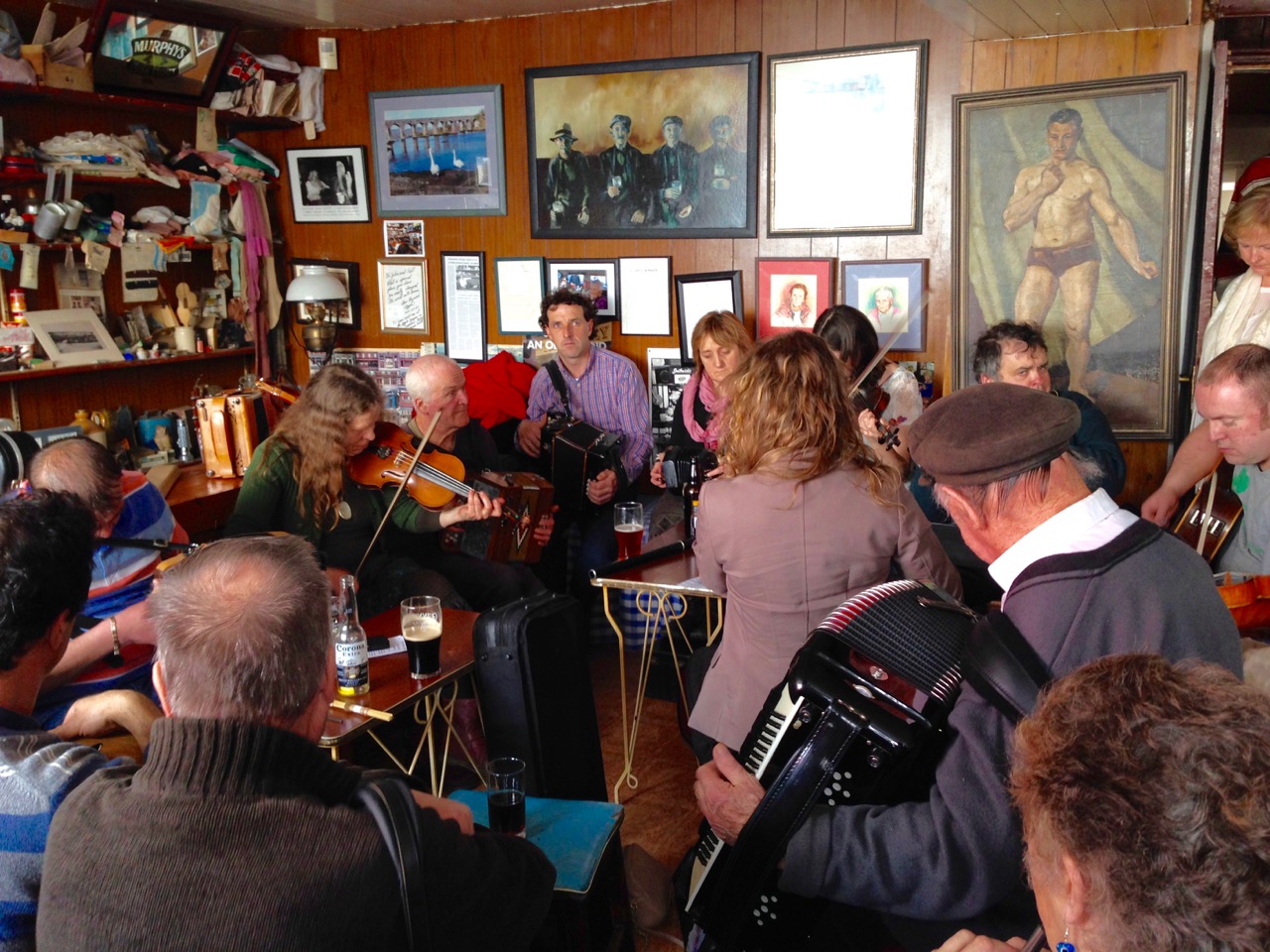
Session, Levis's of Ballydehob

*Birds did once have teeth – up until about 80 million years ago. Occasionally today, but very rarely, a ‘throwback’ bird is hatched with teeth!

Beyond the Mizen: Top 14 West Cork Pics of 2015

We were heading home from Hare Island after a Fit Up Theatre Performance, when this happened

We were heading home from Hare Island after a Fit Up Theatre Performance, when this happened

Many of our top Facebook photographs this year were from the Mizen, but not all. You also liked and shared photographs that captured the essence of other parts of West Cork.

Baltimore Bay and Ringarogy Island

Baltimore Bay and Ringarogy Island

I think the Baltimore Bay one was so popular because the colours are SO west Cork. When you get blue sky and clouds, the sea turns this amazing Caribbean blue and the contrast with the green fields and wilder high ground is gorgeous.

Lighthouse Loop, Sheep's Head

Lighthouse Loop, Sheep’s Head

This photograph of our friend Susan Byron of Ireland’s Hidden Gems is one of my favourites this year because of the impression it creates of sheer wildness.

Occasionally we get lucky with the local wildlife. Ferdia, the fox, used to be a regular around our place but has forsaken us recently for neighbours with higher quality leftovers.

Bantry House in winter

Bantry House

It’s possible to get good shots of Bantry House in winter, when the trees don’t obscure it from view.

Kilcoe Castle

Kilcoe Castle is such an icon on the landscape. This photograph shows the neighbourly way it interacts with the other houses around it.

Bardic School Loop, Sheep's Head

Bardic School Loop Walk, Sheep’s Head

This tiny abandoned cottage may have been part of the 17th Century Bardic School near Lake Faranamanagh on the Sheep’s Head. We’re looking across at the Mizen in this shot.

The Beara, from the Sheep's Head

The Beara, from the Sheep’s Head

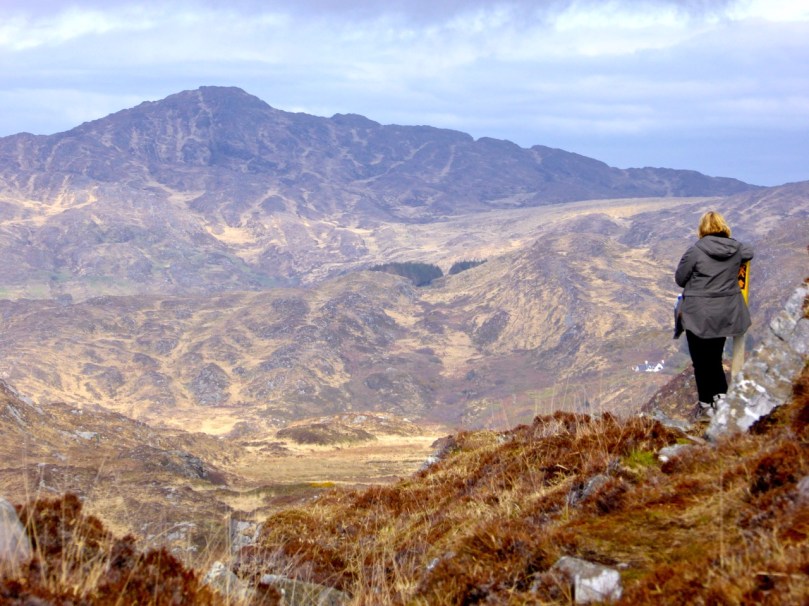
And here’s the view from the other side of the Sheep’s Head, across to the Beara Peninsula, with the instantly-recognisable bulk of Hungry Hill to the far right.

Priest's Leap Valley

Priest’s Leap Valley

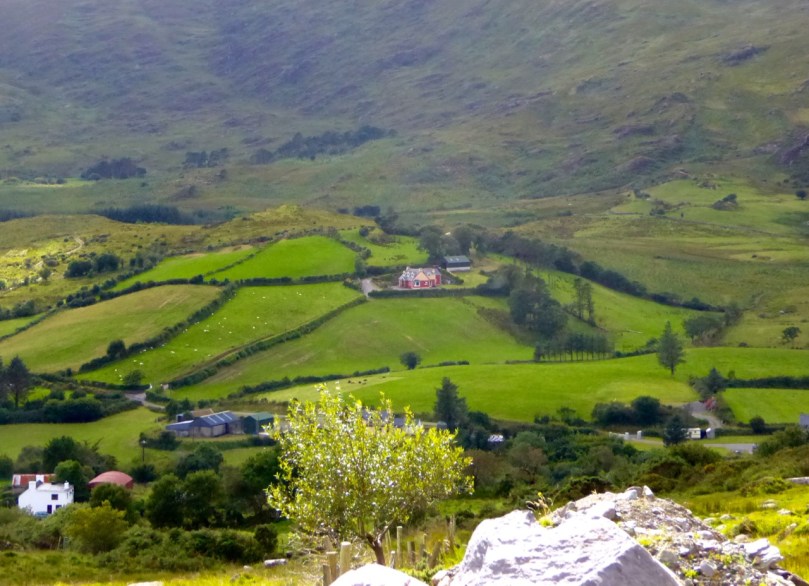
The long climb up to Priest’s Leap starts near Ballylickey and ends at a high mountain pass that separates Cork and Kerry. The views are spectacular from the top, but this shot of a colourful house and farms in the valley on the way up seemed to express something typical of West Cork.

Farm, Sheep's Head

Farm, Sheep’s Head

This farm appears to be carved out of the mountain land behind it.

Barloge Bay, at the entrance to Lough Hyne

Barloge Bay, at the entrance to Lough Hyne

This was taken in November. I love the contrast of the turquoise water with the autumn colours of the bracken-covered hillside.

F

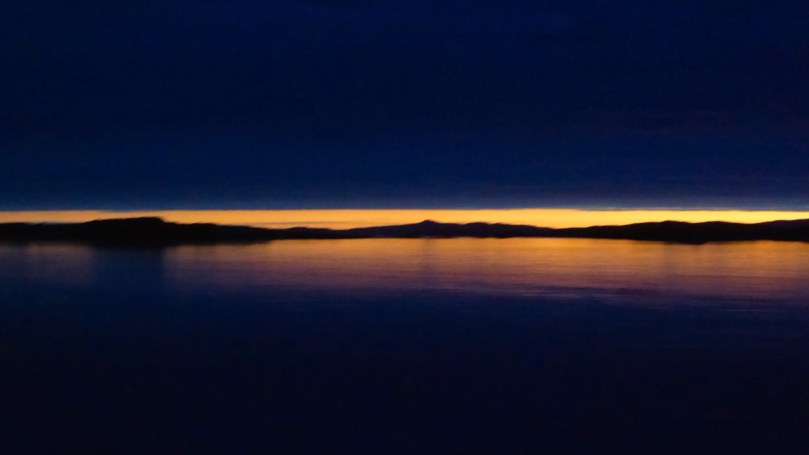
A final sunset to end this post. This was taken last February from the lay-by overlooking Roaringwater Bay on the N71. The light was extraordinary – a once in a blue moon kind of shot. The mussel beds make the water look like floating ice packs.

A big thanks to Celia Bartlett for helping us improve our photographic skills this year. We loved our workshop with her.

Happy New Year to all our faithful readers!

Mizen Magic 5: Top 14 Pics of 2015

Crookhaven in winter sunlight

Crookhaven in low winter sunlight

You love the Mizen! That’s all we can conclude when we look at which of our Facebook photographs resonated most with our readers and followers this year.

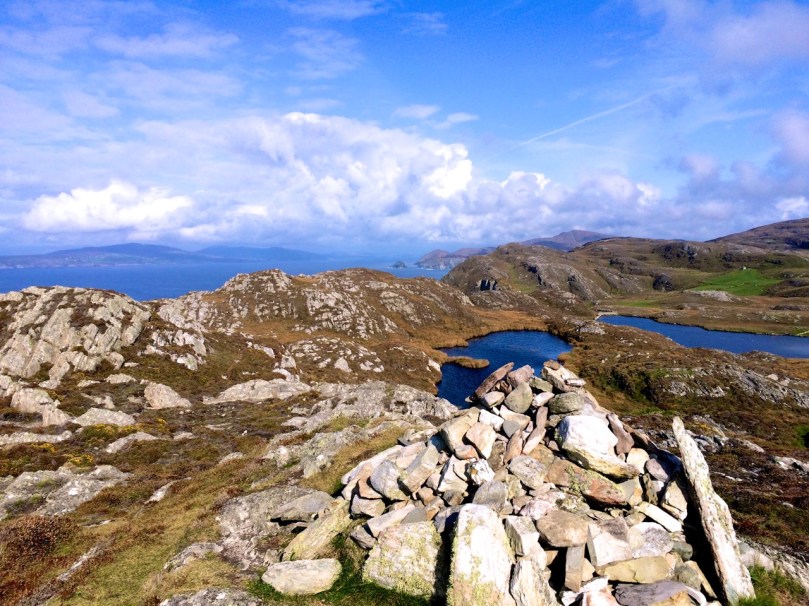
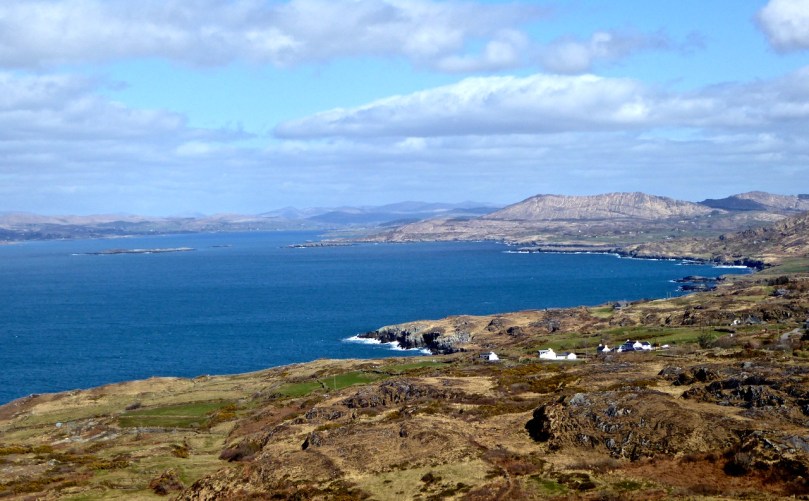
Cairn on Dunlough Head, looking east along the Mizen and Dunmanus Bay

Cairn on Dunlough Head, looking east along the Mizen and Dunmanus Bay

We post a couple of photographs each week on our Facebook page and we are always delighted when they are liked and shared. The vast majority of these images are from West Cork, and many are from our own Peninsula, the Mizen.

The tiny quay at Greenmount, outside Ballydehob. You pass this on the Rossbrin Loop Trail.

The tiny quay at Greenmount, outside Ballydehob. You pass this on the Rossbrin Loop Trail

So, as we look back over 2015, here are your top picks from the Mizen Peninsula, beginning with the most liked/shared. Next week, we will post the top West Cork (non-Mizen) Facebook photographs.

Near Dunlough Bay, on the way to Three Castle Head

Near Dunlough Bay, on the way to Three Castle Head

Not much text to plough through this week. Consider that your Christmas present from us!

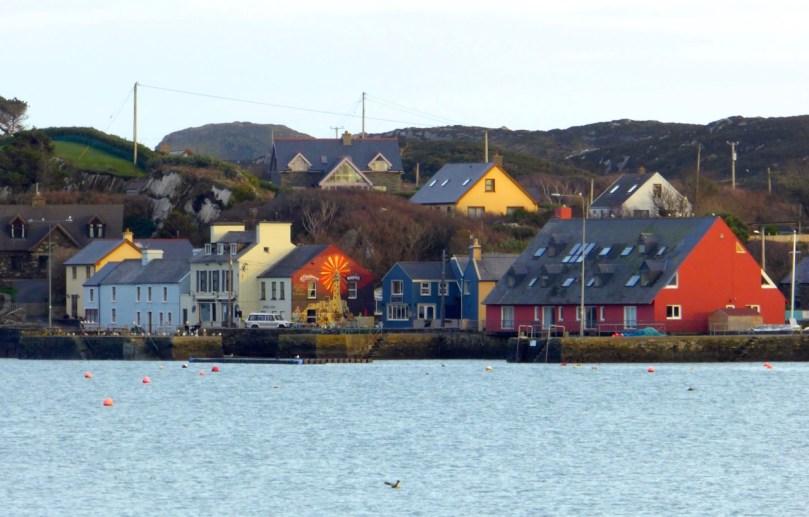
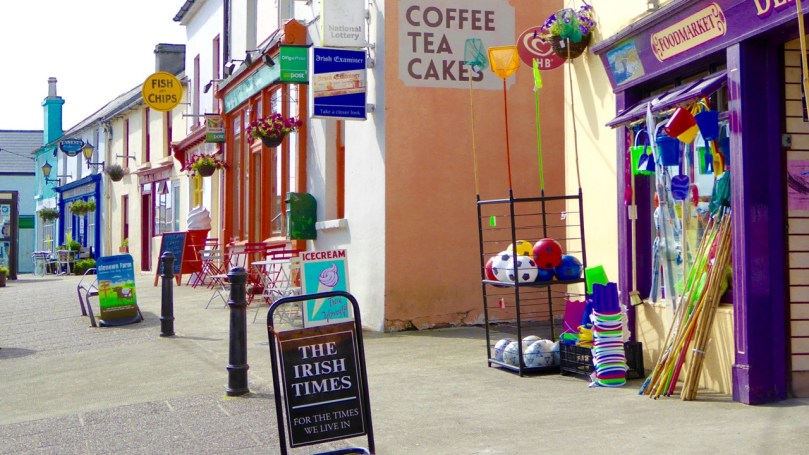
Goleen Village looks so colourful and inviting in the summer

Goleen Village looks so colourful and inviting in the summer

There’s nothing we like better than wandering around West Cork with our cameras – it’s an endless feast. Enjoy – and tell us which is your personal favourite!

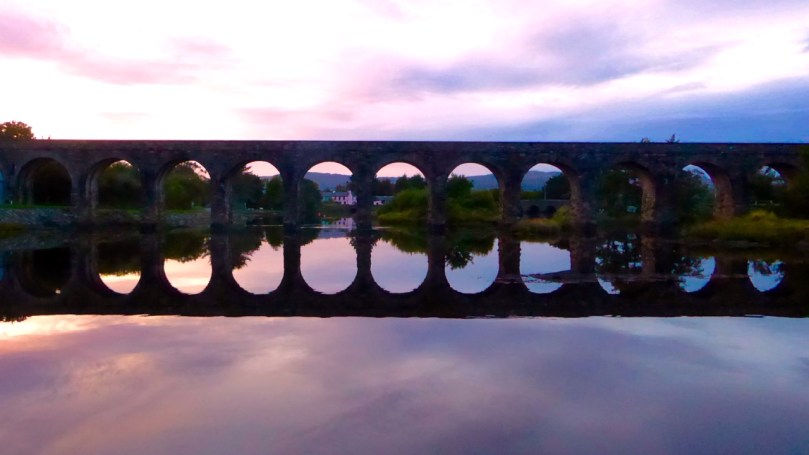
The famous 12 Arch Bridge at Ballydehob

The famous 12 Arch Bridge at Ballydehob

The Magnificent Mizen!

The Magnificent Mizen!

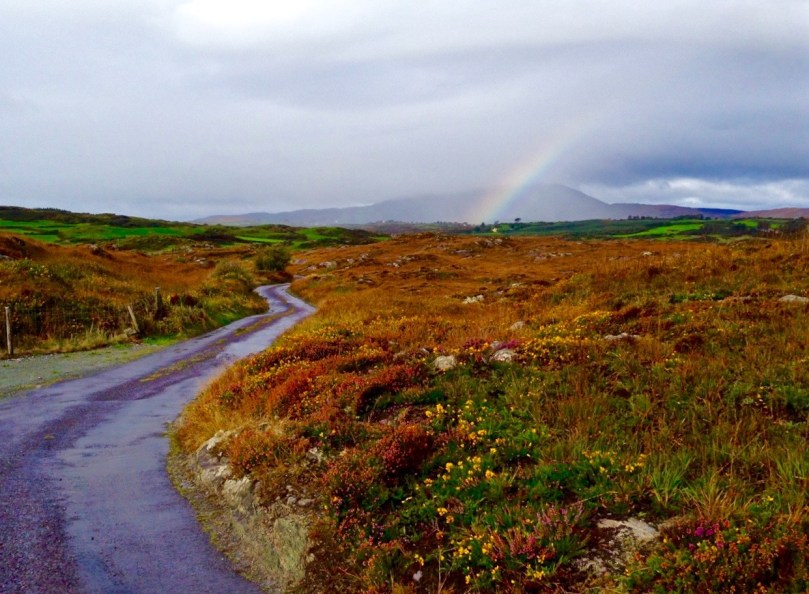
The Winding Road...the Cappaghglass high road in autumn

The Winding Road…the Cappaghglass high road in autumn

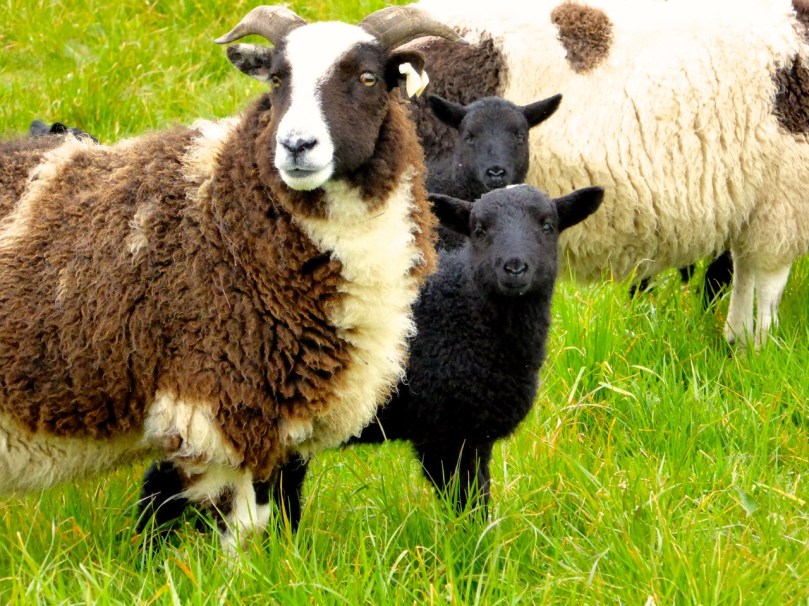
We saw these Jacob sheep on the slopes of Mount Corrin

We saw these Jacob sheep on the slopes of Mount Corrin

Sun and shadow - the quintessential West Cork lighting conditions

Sun and shadow – the quintessential West Cork lighting conditions

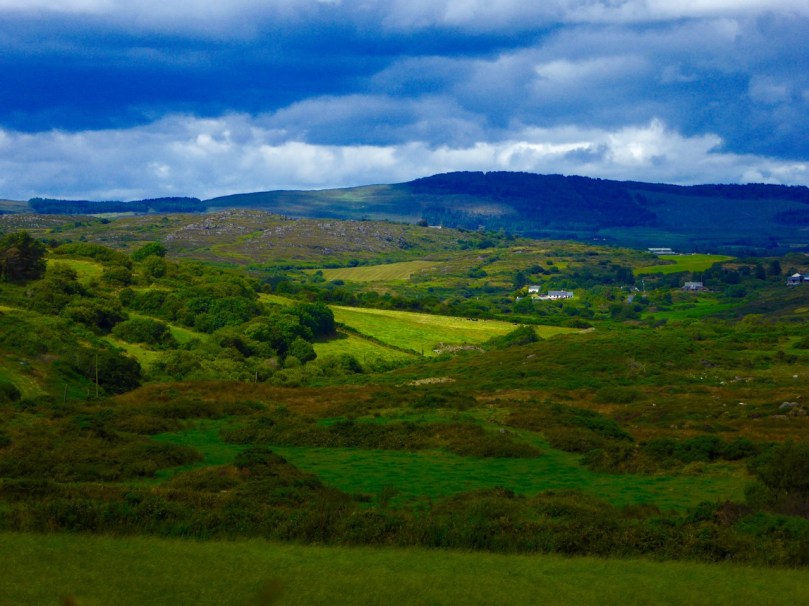
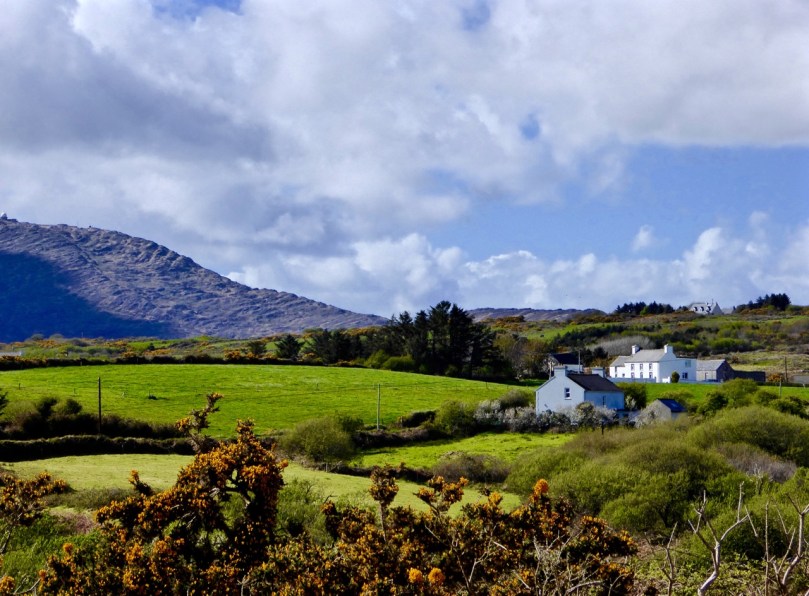
Farmhouses in the shadow of Mount Gabriel

Farmhouses in the shadow of Mount Gabriel

Ballydehob Bay. This one was taken close to the same place as The Winding Road, but facing the opposite direction, towards Foilnamuck

Ballydehob Bay. This one was taken close to the same place as The Winding Road, but facing the opposite direction, towards Foilnamuck

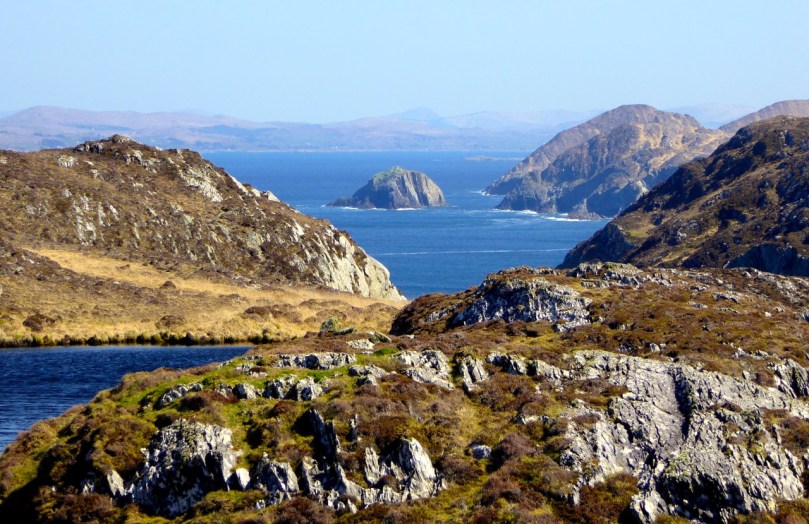
The North Side of the Mizen - so beautiful and so few people

The North Side of the Mizen – so beautiful and so few people

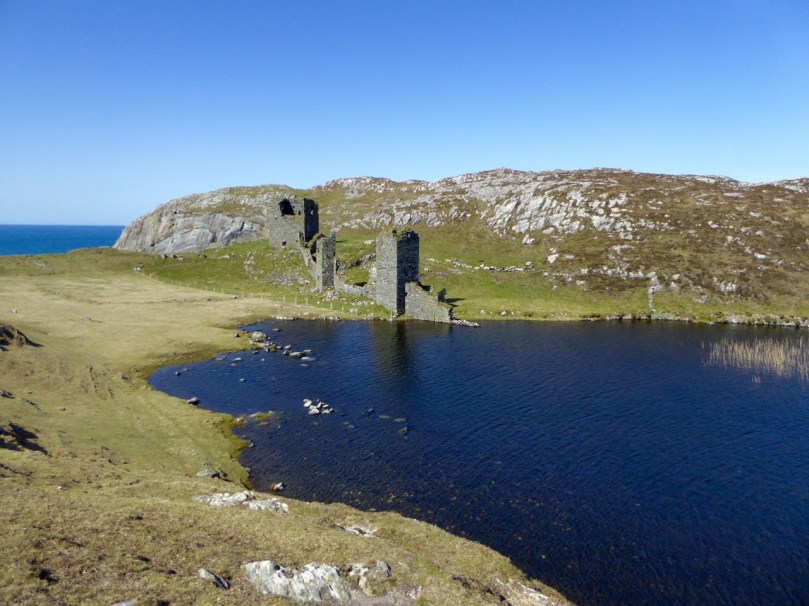
The Three Castles, from the lake

The Three Castles, from the lake. No Mizen post would be complete without at least one view of this iconic place

Atlantic Winter

Dingle Beach

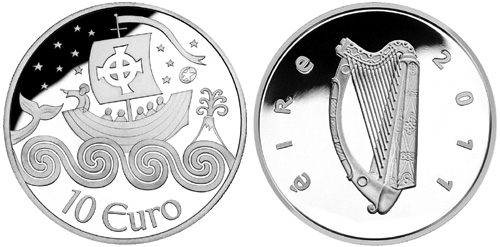
When St Brendan of Clonfert set out to discover America in 512 he and his fellow monks had to face the enormity of the Atlantic Ocean in tiny boats built out of wood and oxhides, sealed with animal fat. Up here in Nead an Iolair our view out to the islands of Roaringwater Bay and beyond is dominated by that same ocean and – sometimes – we feel just as small. This year the winter gales have started early, and spates of fierce westerlies have been throwing the Atlantic straight at our windows. The tiles rattle alarmingly while we are tucked up in bed at night. At these times I think of the Saint and what he had to face. But, like Brendan, we always survive the storms, and often wake up in the morning to a calm, clear day – except that you can hear the constant ‘roaring’ of the open sea out over the bay.

celebrating massOn their way to the New World – Saint Brendan and his companions take advantage of a passing Atlantic denizen to celebrate Mass…

The Atlantic has shaped Ireland. The sea is omnipresent: poets have written about it, storytellers have woven tales around it, and composers have tried to capture its spirit in music. Here’s a small section from the impressive ‘Brendan Voyage’ written by Shaun Davey for orchestra and Uillinn pipes – it’s the haunting second movement, played by Liam O’Flynn with the Irish National Youth Orchestra, at a performance in Cork City Hall. It makes me think of the wonderful sunrise on that calm day after the storm…

Brendan Voyage

Long Island Beacon

Brow Head

Mizen Head

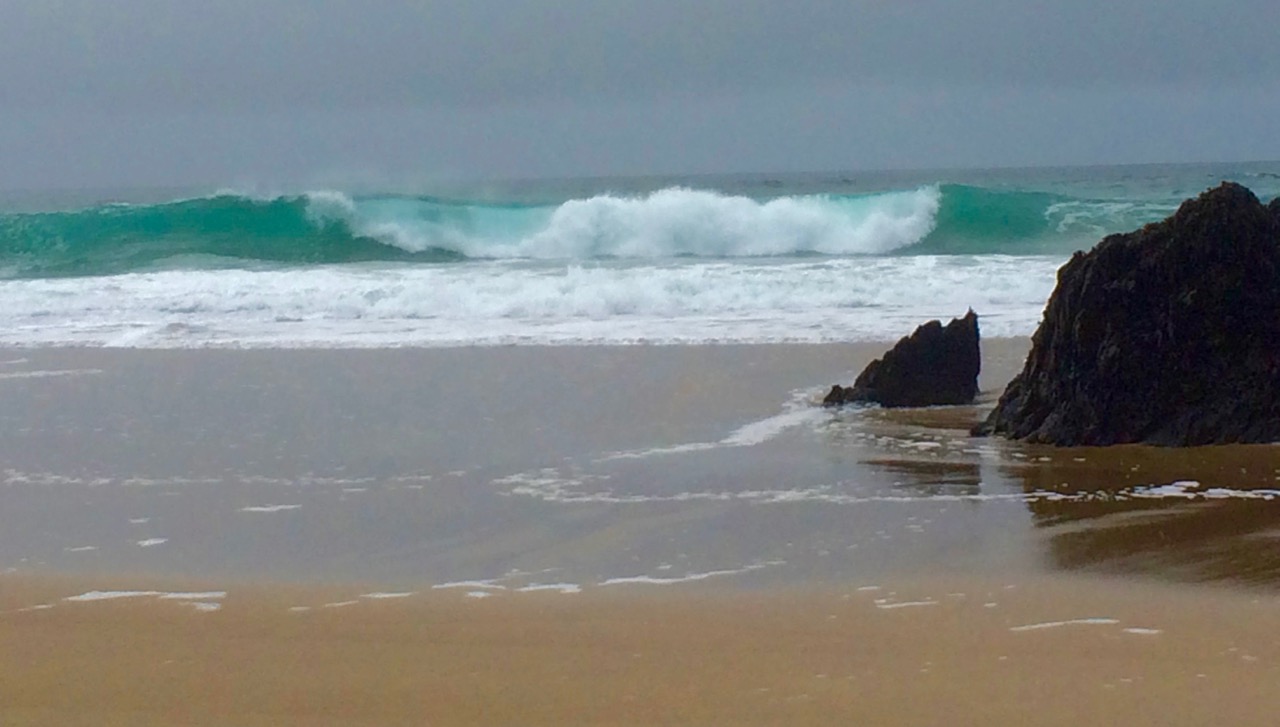
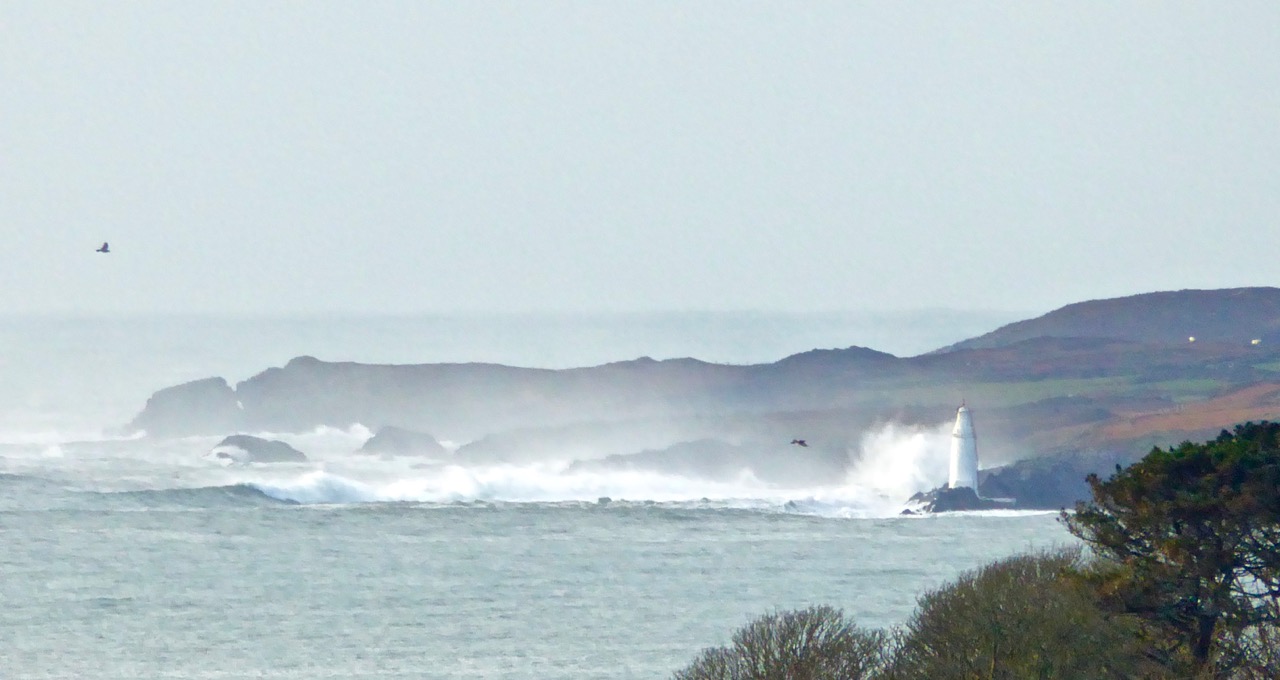
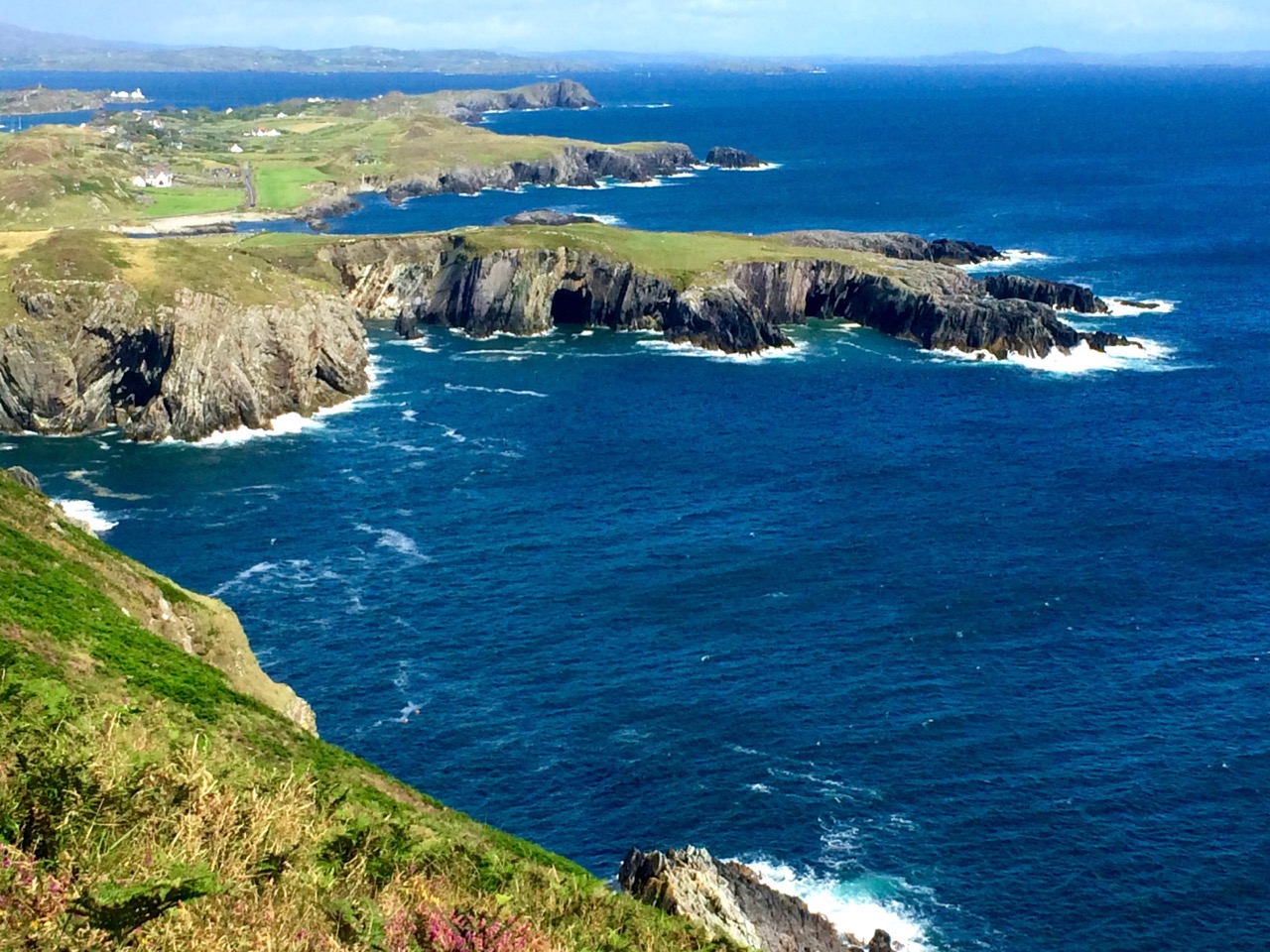
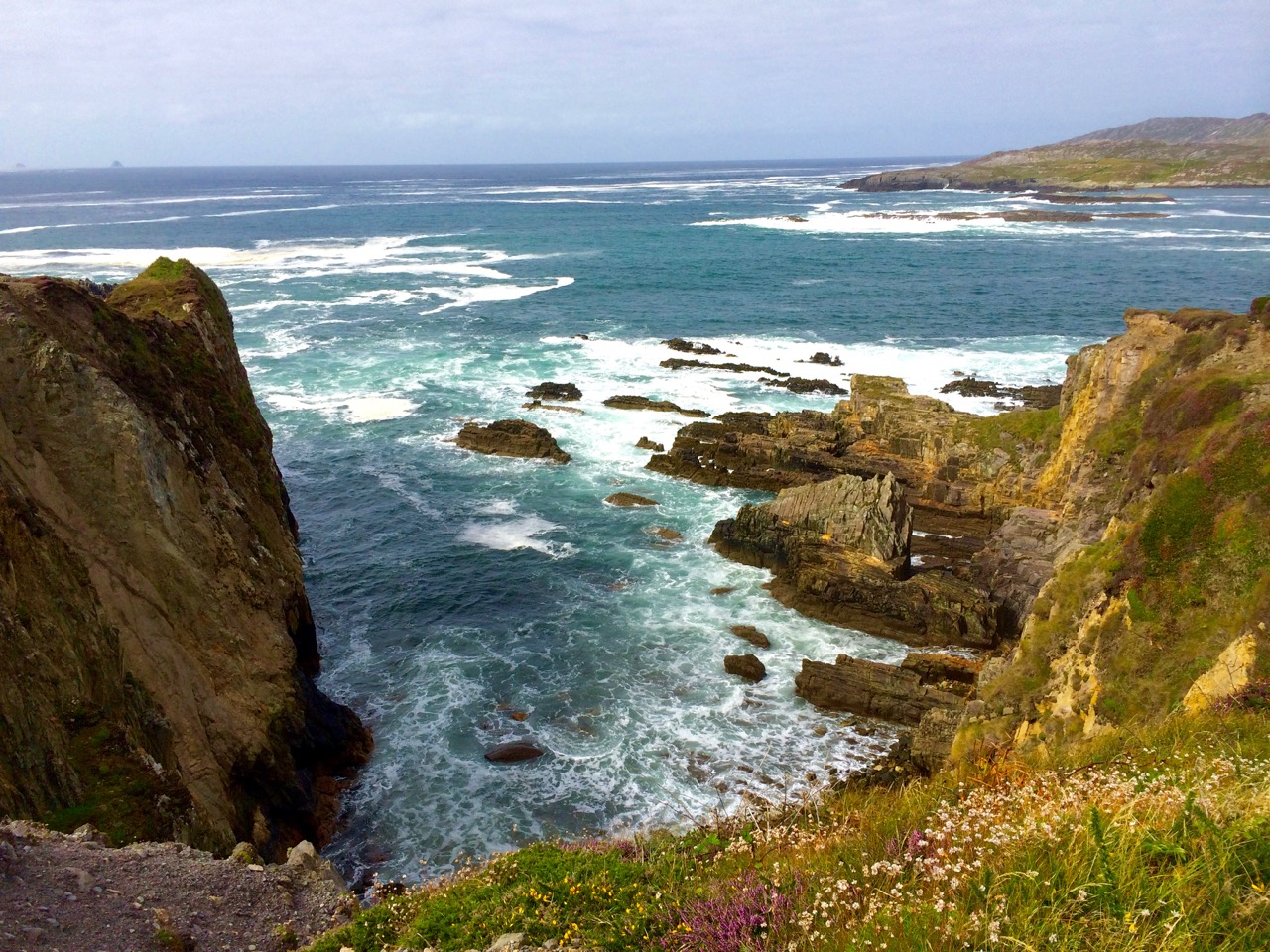
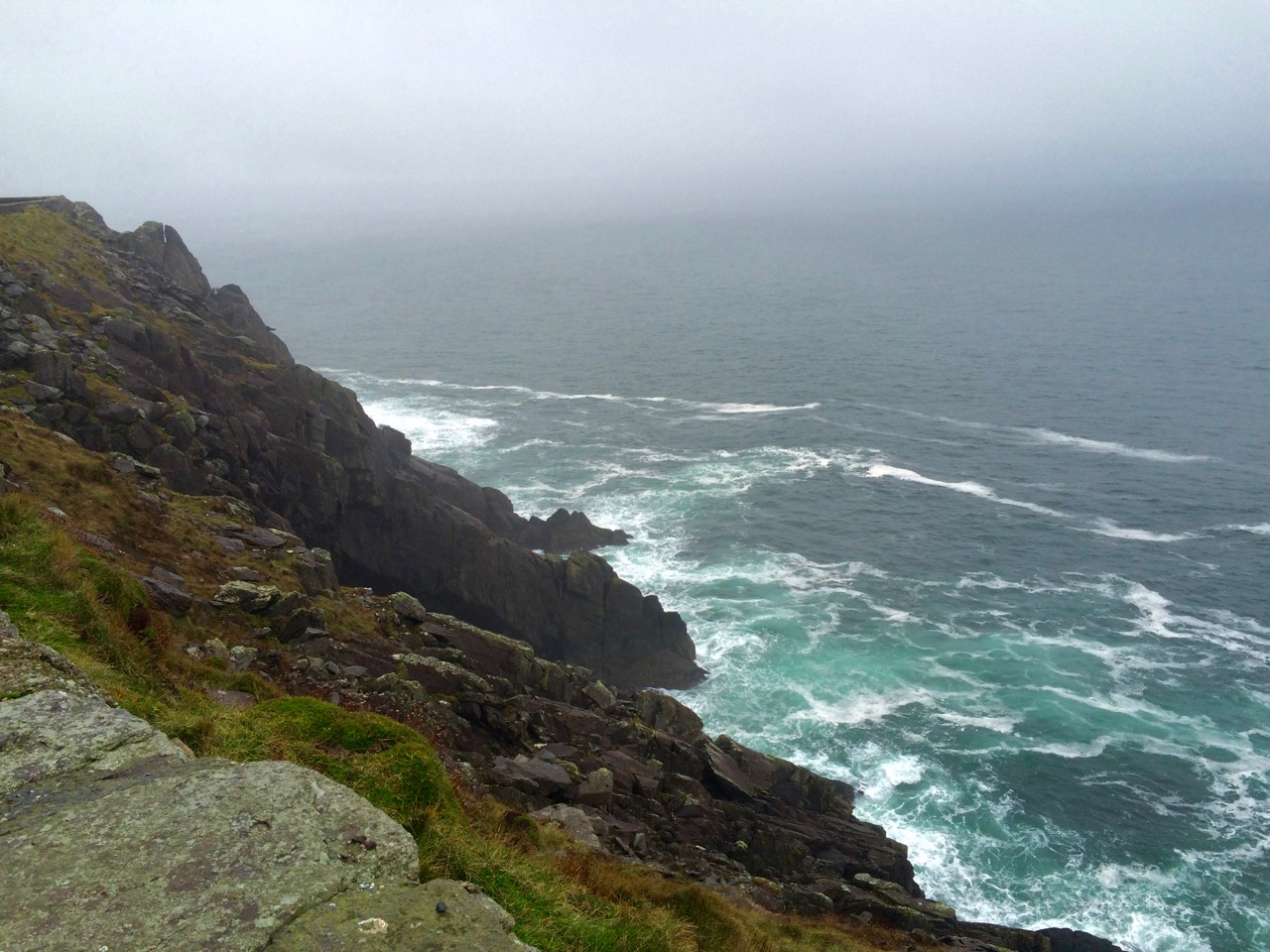
Our own Atlantic: telescopic view of a storm battering Long Island, taken from our garden at Nead an Iolair (top), Brow Head, near Crookhaven (centre), and the impressive land and seascape at Mizen Head – Ireland’s most south-westerly point (lower picture). At the head of this page you can see the huge rollers that come into Dingle Bay, Co Kerry

Dogger, Rockall, Malin, Irish Sea:
Green, swift upsurges, North Atlantic flux
Conjured by that strong gale-warning voice,
Collapse into a sibilant penumbra.
Midnight and closedown. Sirens of the tundra,
Of eel-road, seal-road, keel-road, whale-road, raise
Their wind-compounded keen behind the baize
And drive the trawlers to the lee of Wicklow.
L’Etoile, Le Guillemot, La Belle Hélène
Nursed their bright names this morning in the bay
That toiled like mortar. It was marvellous
And actual, I said out loud, “A haven,”
The word deepening, clearing, like the sky
Elsewhere on Minches, Cromarty, The Faroes.

Glanmore Sonnets VII, taken from Field Work by Seamus Heaney, published by Faber and Faber Ltd

Seamus Heaney was deeply affected by the seascape of his native Ireland. Anyone who works on or beside the sea is aware of the resonant names from the Shipping Forecasts, and the poet has used those names here to introduce his word-picture of the elemental Atlantic.

Near Malin Head 2

On the Beara

Donegal Beach

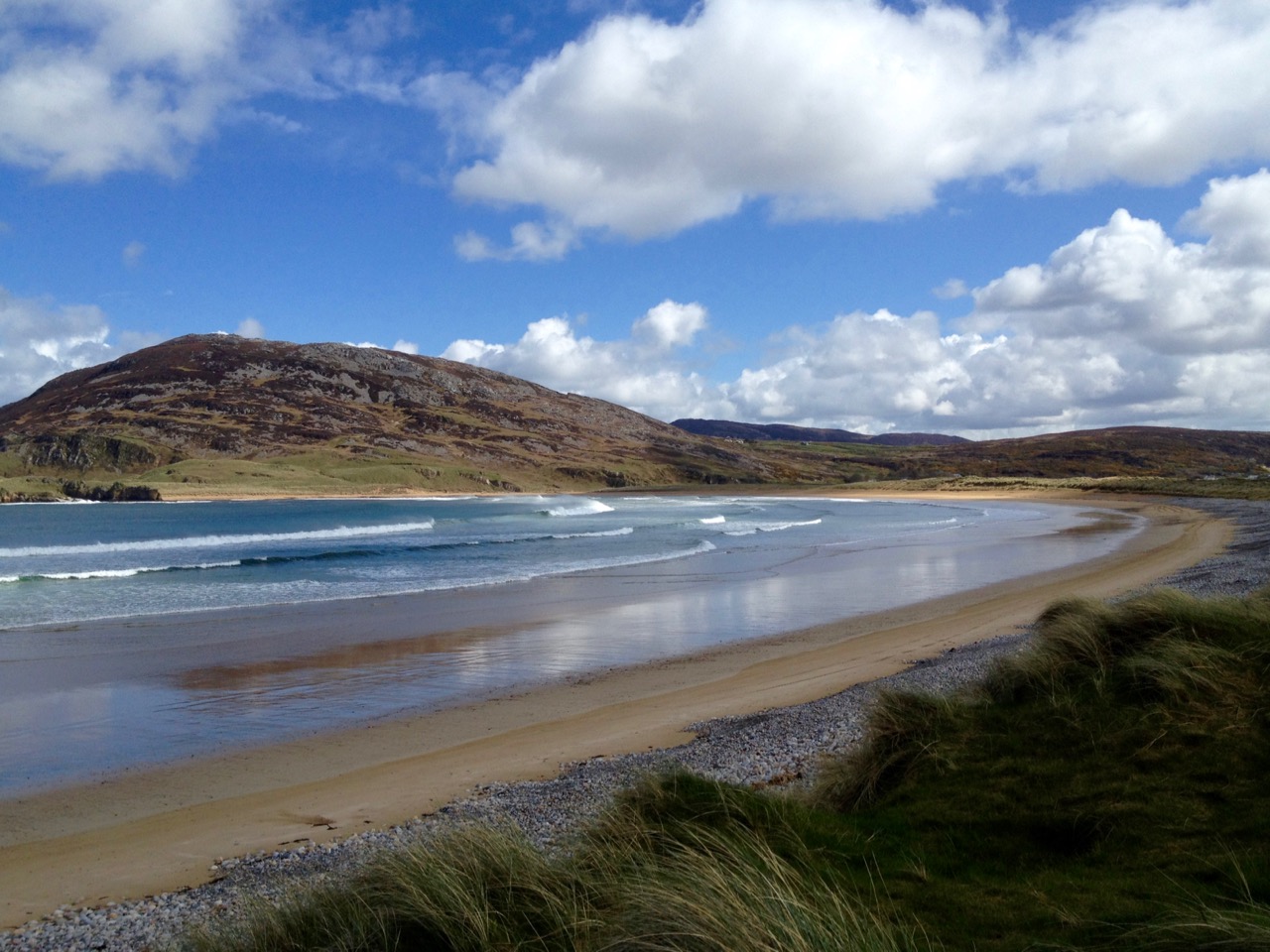
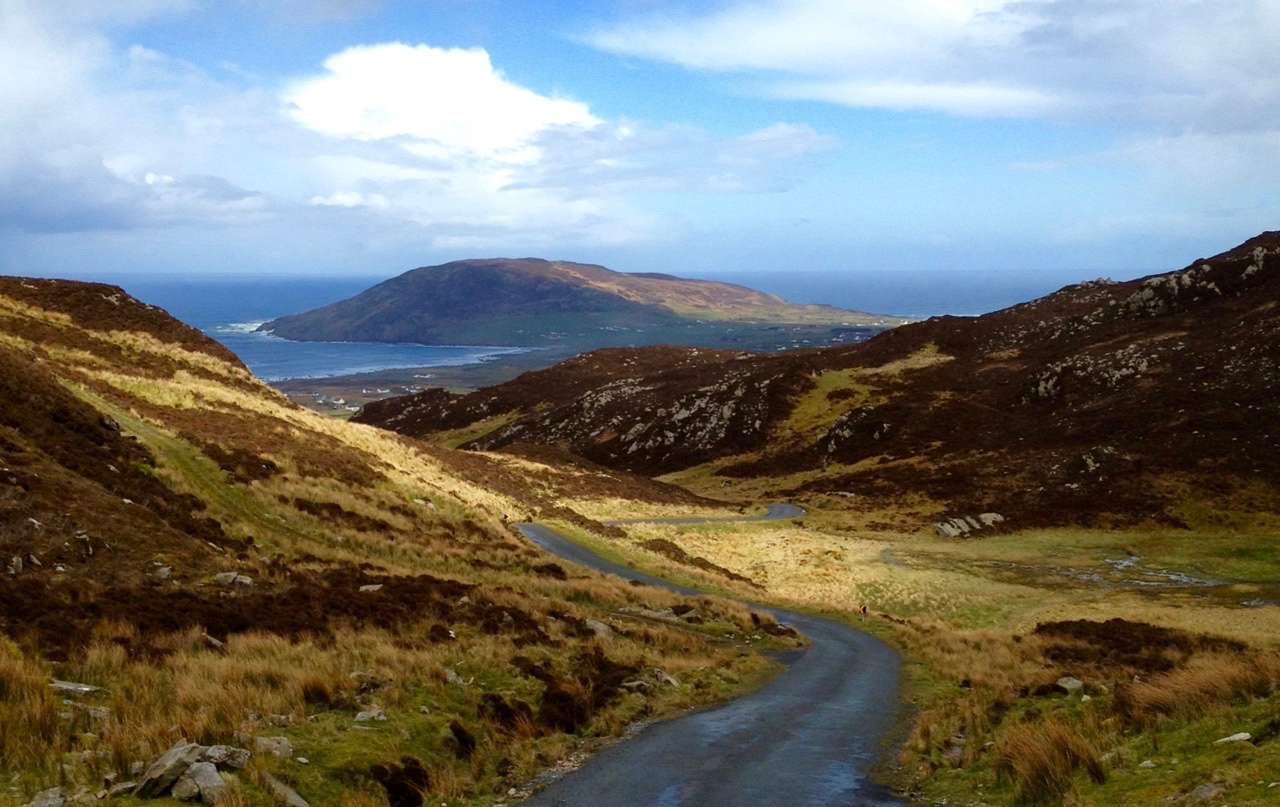
Atlantic contrasts from Mizen to Malin: near Malin Head – Ireland’s most northerly point (top), off the Beara (centre) and a beach in Donegal (lower)

A later traveller over the Atlantic waters was Chistopher Columbus in the 15th century. On the way he looked out for St Brendan’s Isle, a spectral island situated in the North Atlantic somewhere off the coast of Africa. It appeared on numerous maps in Columbus’ time, often referred to as La isla de SamborombónThe first mention of the island was in the ninth-century Latin text Navigatio Sancti Brendani Abatis (Voyage of Saint Brendan the Abbot), from whence it became firmly implanted into Irish mythology. St Brendan took a little party of monks to the island to say Mass: when they returned after a few days to the rest of the flotilla, they were told that they had been away for a year! The phantom island was seen on and off by mariners for years until in 1723 a priest performed the rite of exorcism towards it during one of its apparitions behind low cloud… You can see St Brendan’s Isle for yourselves, above the wonderful giant fish in the second picture down.

Dingle Peninsula

Coast Road

Dingle peninsula (top), and Coast Road in Donegal (lower)

I was pleased to find this Irish Times video made by Peter Cox when he was fundraising for his book Atlantic Light: spectacular photographs of the coastline on Ireland’s Wild Atlantic Way. The excellent aerial views in this film are all taken by a drone… Look out for places you will have seen in our blogs!

atlantic video

We are privileged that the Atlantic Ocean is the abiding but ever-changing feature in our daily lives. It must affect us in unknown ways: I do know that, wherever I go in this world, I will – like Saint Brendan – always be drawn back here to our wonderful safe haven…

St-Brendan-Coin1


Launched!

A joint post by Finola and Robert

Mingling

Hallowe’en (All Hallows – Samhain) was the perfect day to launch our Prehistoric Rock Art Exhibition at the Cork Public Museum. As Finola said in her remarks at the opening, it’s a time when the veil between two worlds is at its thinnest: in this case, it’s the veil between an ancient time and the present day. We hope the exhibition emphasises the work of our distant ancestors who have inscribed the landscape and given us the enigma that is Rock Art.

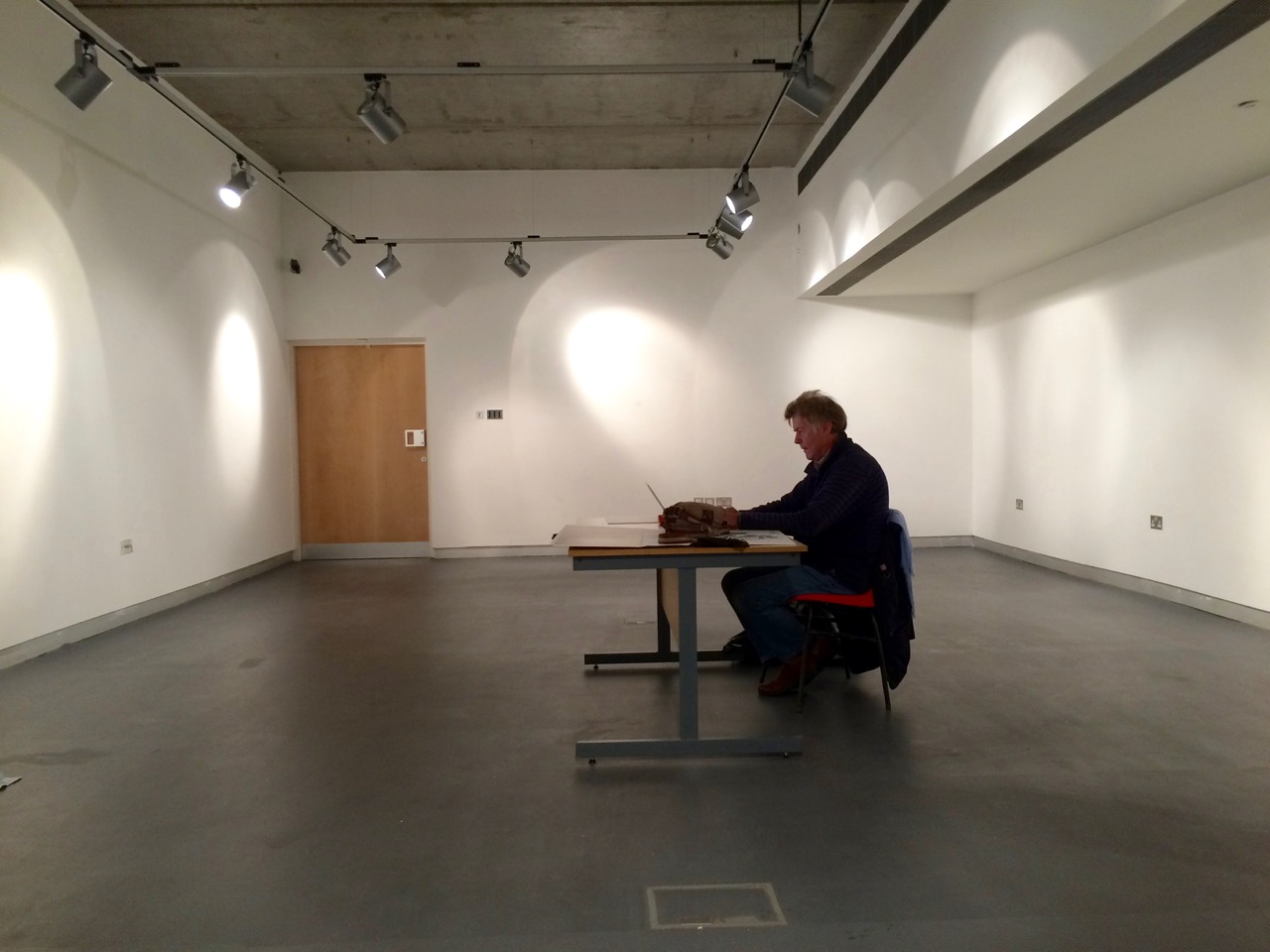
Blank Canvass

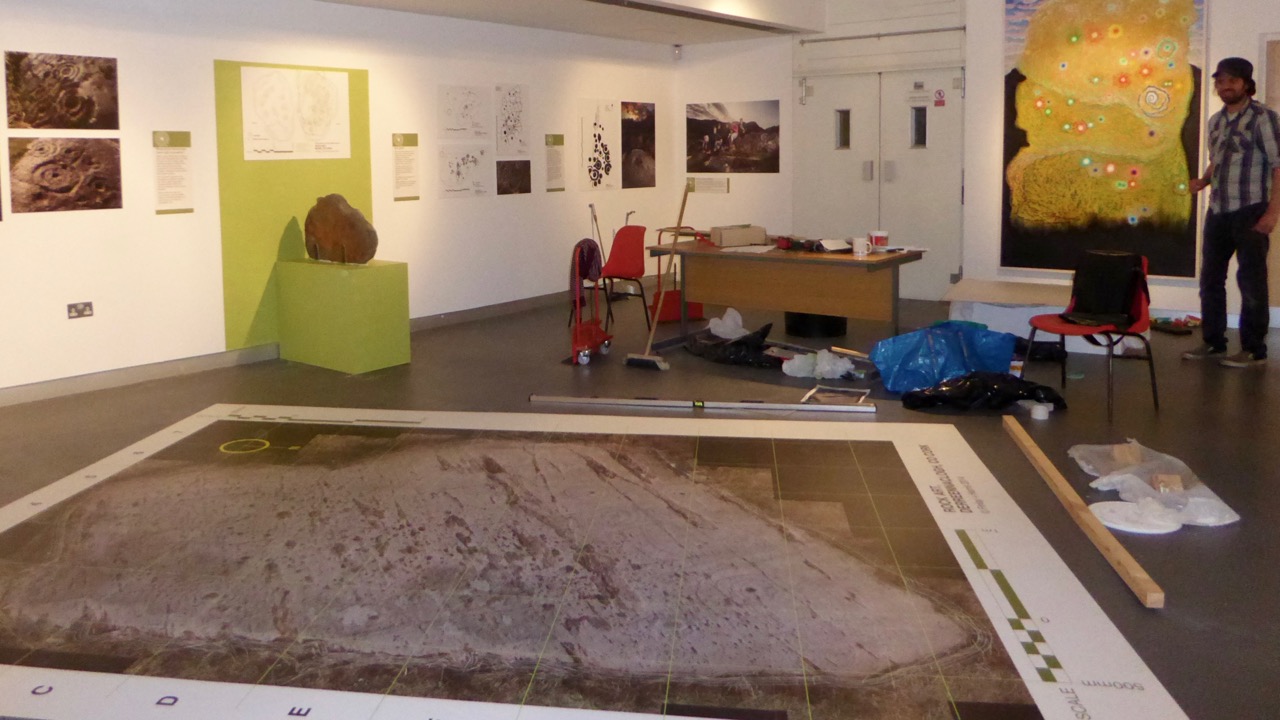
Almost there
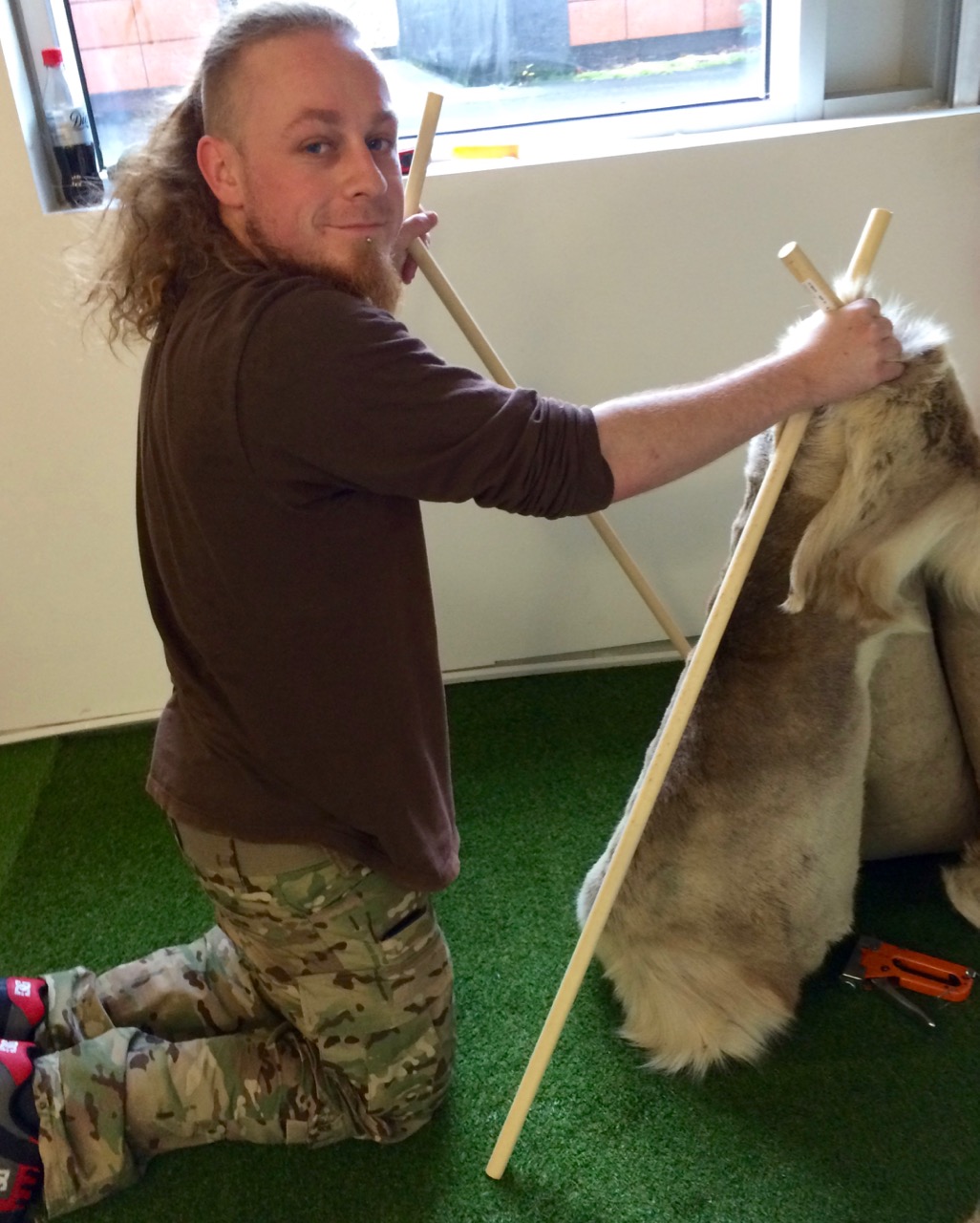
Before the Exhibition – Robert contemplates the blank canvas (top) and installation work in progress (below)

As our regular readers will know, the exhibition has been a very successful collaborative effort: Finola and Robert (providing drawings, explanations and the overall design); Keith Payne, a West Cork painter whose work is inspired by ancient art; Ken Williams, the excellent photographer of megaliths and monuments; the staff of Cork Public Museum, including intern Clare Busher O’Sullivan who came up with the idea and Dan Breen, Assistant Curator and his team, who made sure it all happened.

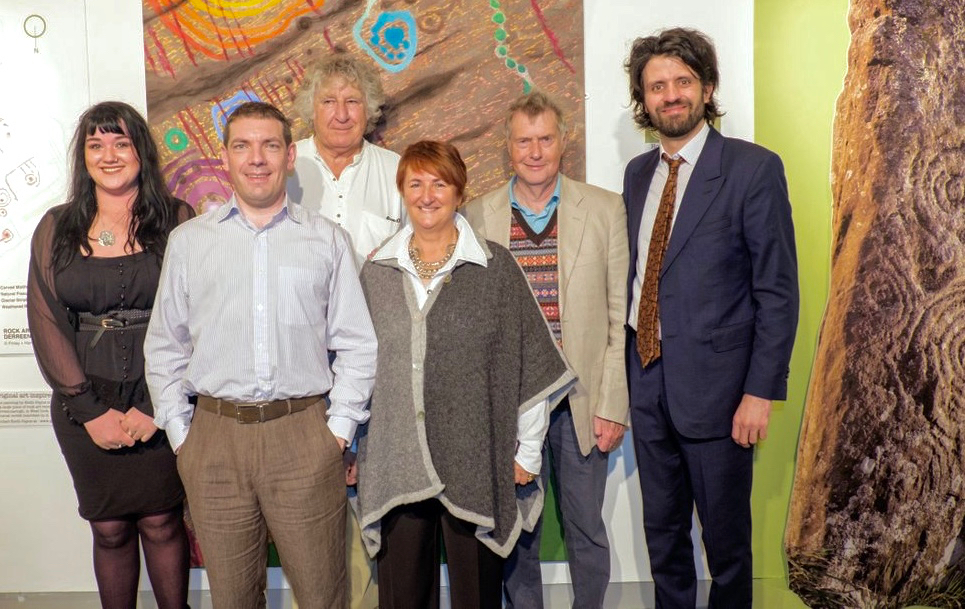
The Team

The Core Team: Clare Busher O’Sullivan, Ken Williams, Keith Payne, Finola Finlay, Robert Harris and Dan Breen

After some intensive days, on site and off, it has all come together and was launched yesterday. It was a grand launch: Firstly, William O’Brien – Professor of Archaeology at UCC – outlined a history of rock art studies and research which started back in the nineteenth century. He mentioned a predecessor in the department – Professor Michael J O’Kelly – who was born exactly 100 years ago and is best known for his excavations and restoration work at Newgrange, the Boyne Valley passage tomb: Finola worked on those excavations and it was Professor O’Kelly who suggested that she should carry out the research on rock art in Cork and Kerry which led to her Master’s thesis on the subject in 1973 – and, 42 years later, to the undertaking of this exhibition.

Professor Michael J O’Kelly (left) was renowned for his work at Newgrange (right)

Next up was Finola, who told us more about her expeditions back in the early 1970s. In those days when the boreens of rural Ireland were mostly populated by donkey carts her own travel was by means of her brother’s Honda 50 motorcycle, and we pictured her loaded down with compass, tapes, chains, chalk and tracing paper – a recording methodology now completely out of favour. But the result was a set of beautiful monochrome illustrations that form the core of the exhibition.

Coomasaharn

Rock Art: a detail of the picking technique (top left), and Finola’s drawings from 1973

In our modern days non-invasive recording methods have to be used: Ken Williams has developed a very effective method of photography using slave flash units to provide low angle lighting over the carved rocks, which brings the maximum level of detail out of the panels. The exhibition contains many fine examples of Ken’s work in this field.

Ken Williams in action: at the Bohonagh stone circle (left) and in the Derrynablaha townland, Kerry (right)

Finola also talked about Keith Payne’s work. He produces large and visually striking paintings based on particular rock art motifs. Two of these artworks are in the exhibition and will inevitably draw the eye, providing a good and colourful counterpart to Finola’s drawings.

Keith Payne at the hanging (left) and at the launch, in front of the remarkable Derreennaclogh stone (right)

The official launch was in the capable hands of Ann Lynch, now Chief Archaeologist at the Irish National Monuments Office. Ann and Finola were fellow students at UCC. Ann outlined the work of her department in recording Ireland’s monuments – and the difficulties involved in pursuing the preservation and protection of these monuments, including Rock Art – before formally declaring the exhibition open.

Ann declares it open

Ann Lynch, Chief Archaeologist at the National Monuments Office, declares the Exhibition open

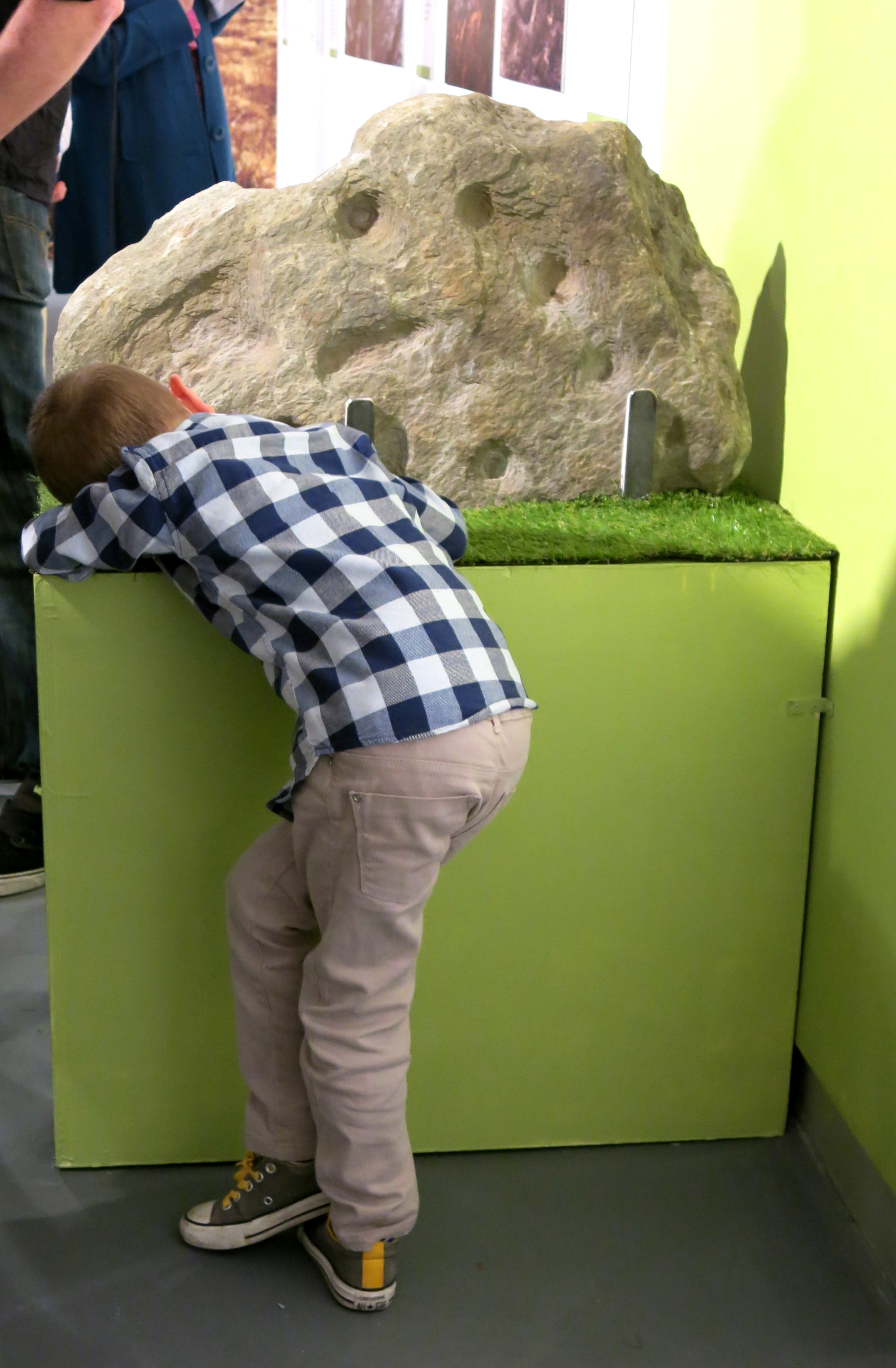
Noteworthy exhibits include one piece of Rock Art – the Bluid Stone from County Cork – which is in the safe keeping of the Museum, and will remain on permanent display after the exhibition closes at the end of February next year. The Museum also houses an example of passage grave art from Cape Clear island (prominent in our own view from Nead an Iolair).

Tired

Fine Detail: the Bluid Stone under close inspection

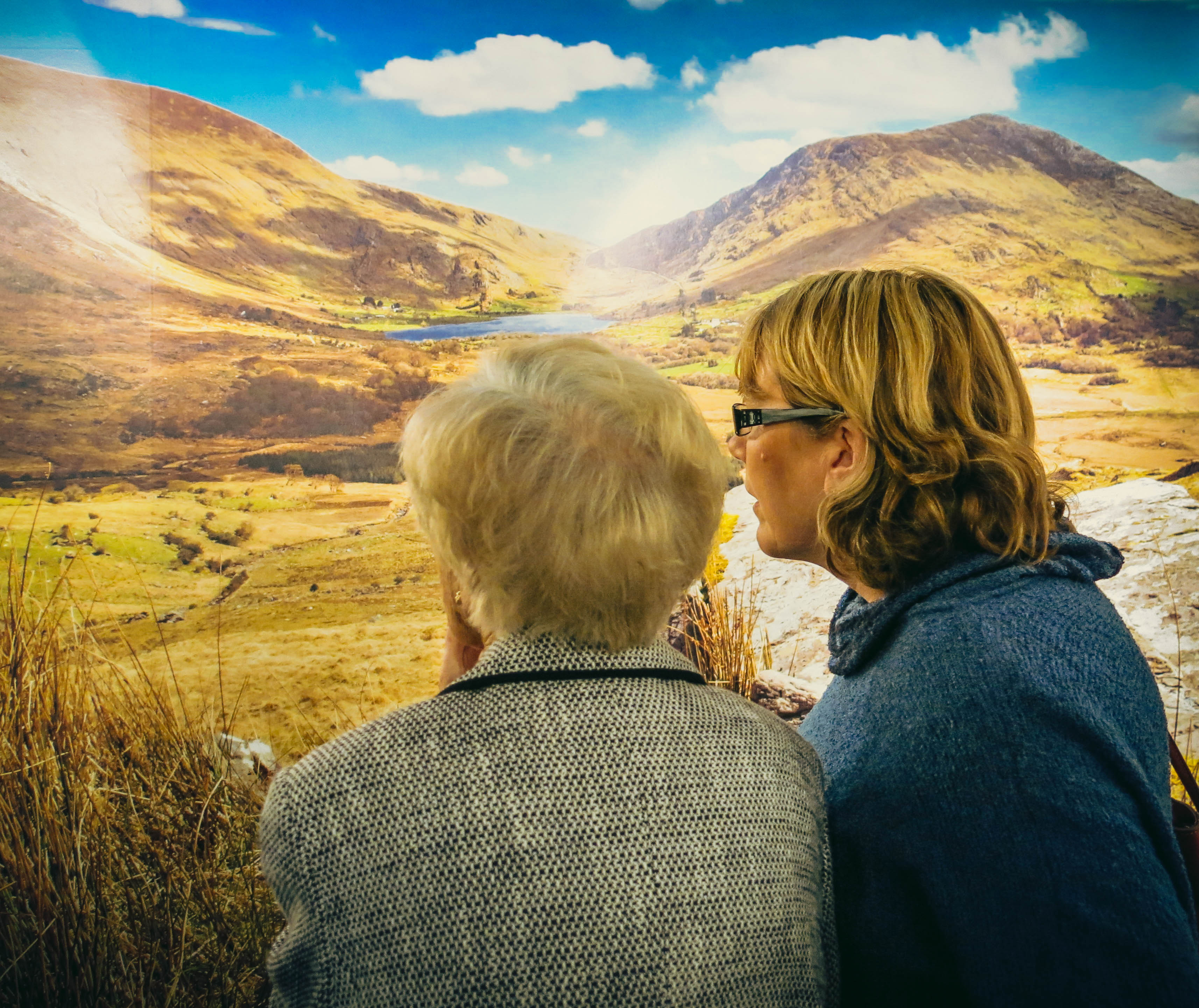
Other exhibits include Ken’s superb photo of the iconic stone at Derrynablaha, Co Kerry, in its panoramic setting of a Neolithic landscape. This occupies the whole of the end wall – and is simply beautiful.

Gazing

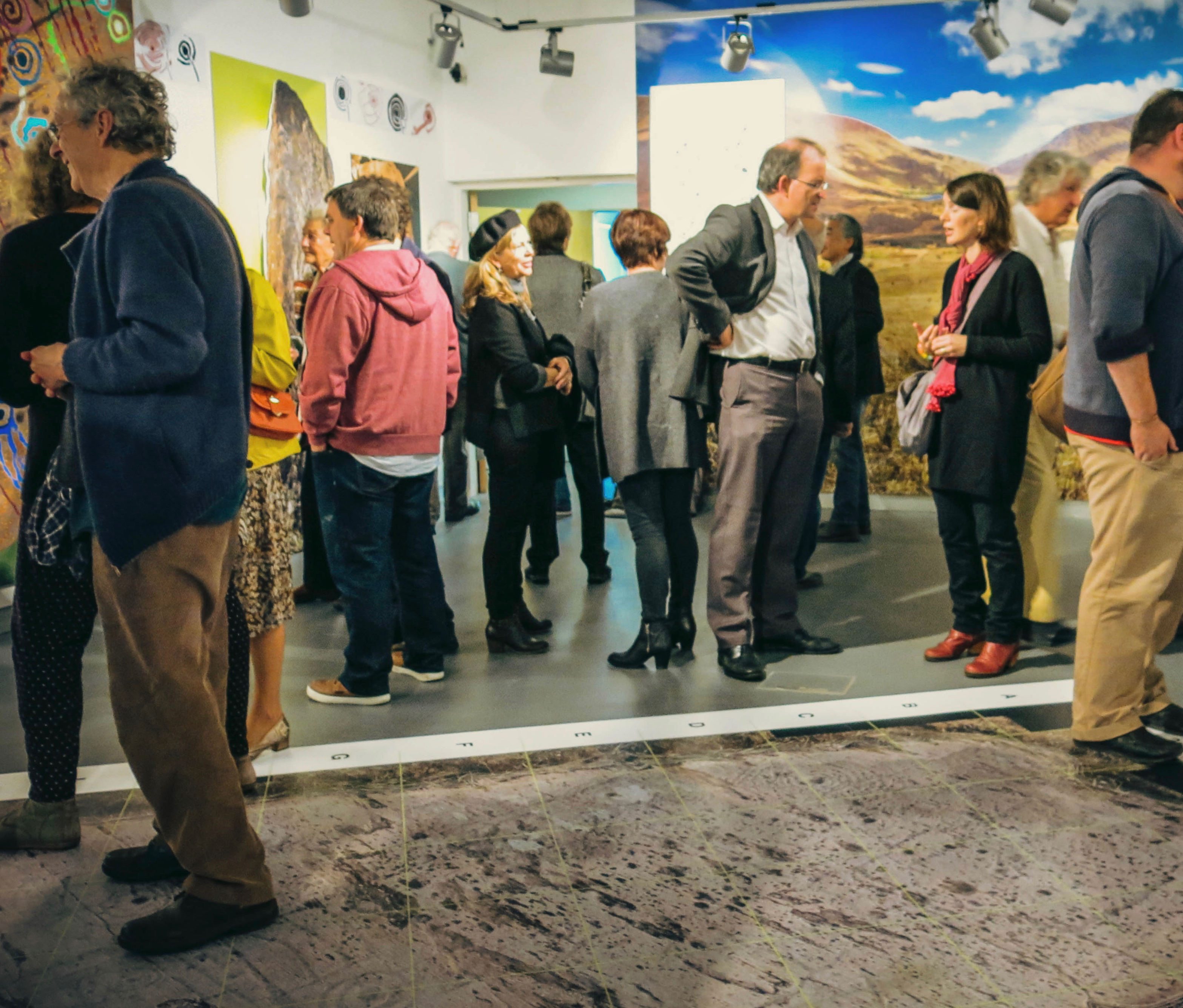
Visitors are surprised to see much of the floorspace taken up with a 70% life-sized image of the stone at Derreennaclogh: some hesitate to walk over it, but the printing is on hard-wearing vinyl, so feel free. The idea is to give you the feel of what it’s like to discover and explore the Rock Art out in the field. We have to mention how impressed we have been with the printing work carried out by Hacketts of Cork in the preparation of the exhibition – in particular, we were fascinated to watch the professionalism of their installation of the large items.

Yes – that floor can be walked on!

The timescale is set admirably by Alex Lee’s ‘Neolithic Settlement’ on the approach to the exhibition room. It’s well worth studying closely all the artefacts set out in this, and imagining what life must have been like for our artist ancestors in Ireland four or five thousand years ago.

Alex

Alex Lee at work on the Neolithic Settlement

We were delighted by how many of our friends from West Cork and beyond attended the opening, and gave us positive feedback. If you go during the next four months, please sign the visitors’ book. We are so grateful to our friends Amanda and Peter Clarke for being so supportive throughout – and for taking most of these photographs of the event: very many thanks.

Earnest discussions (left) and one of Ken’s superb photographs (right)

Our own day was rounded off by a visit to the Shandon Dragon festival, which processed through the centre of Cork in the evening – another unmissable event which reminds us of ancient times and long-held beliefs…

Shandon Dragon

Hallowe’en: The Shandon Dragon Procession makes its way through Cork City