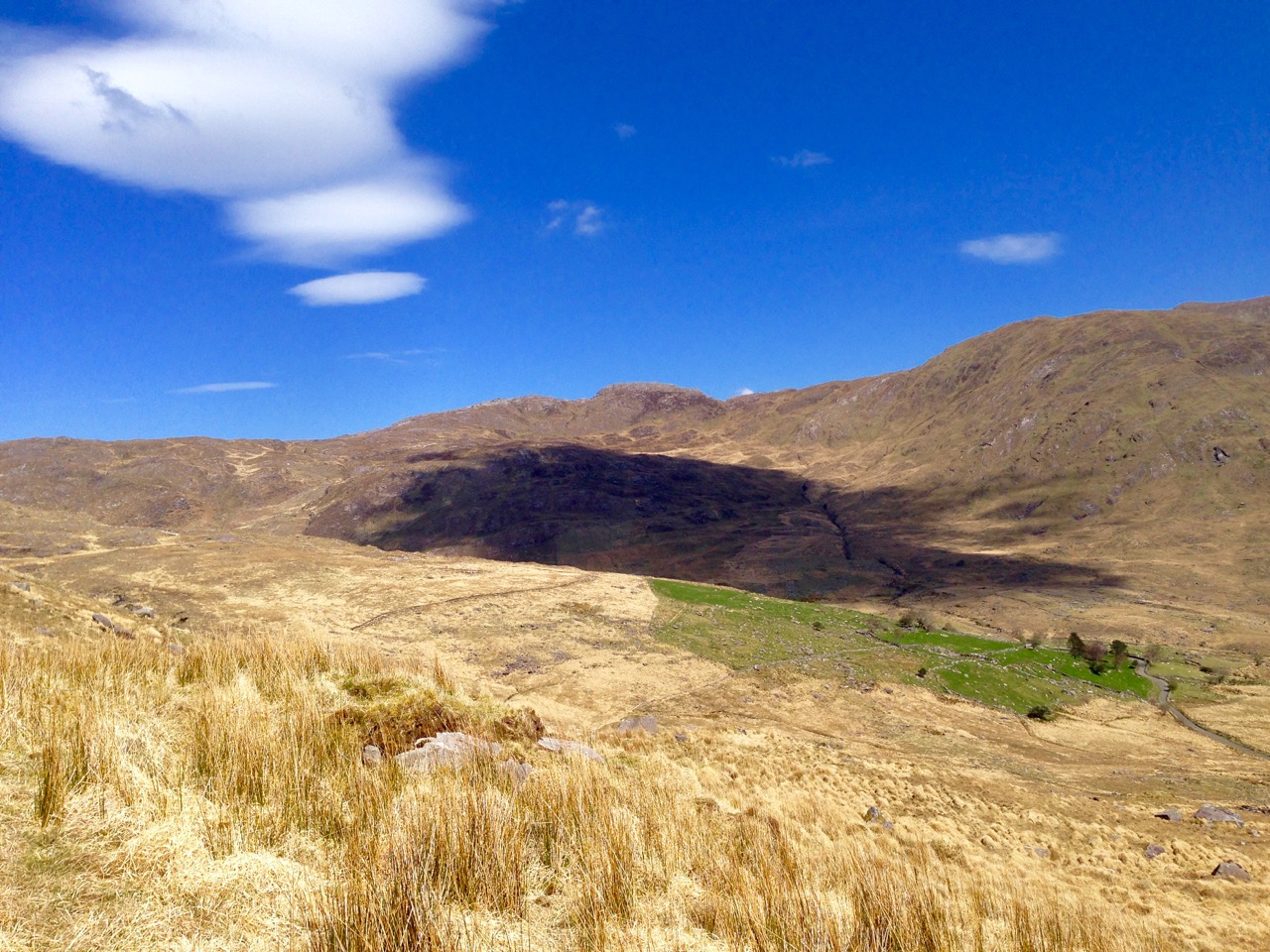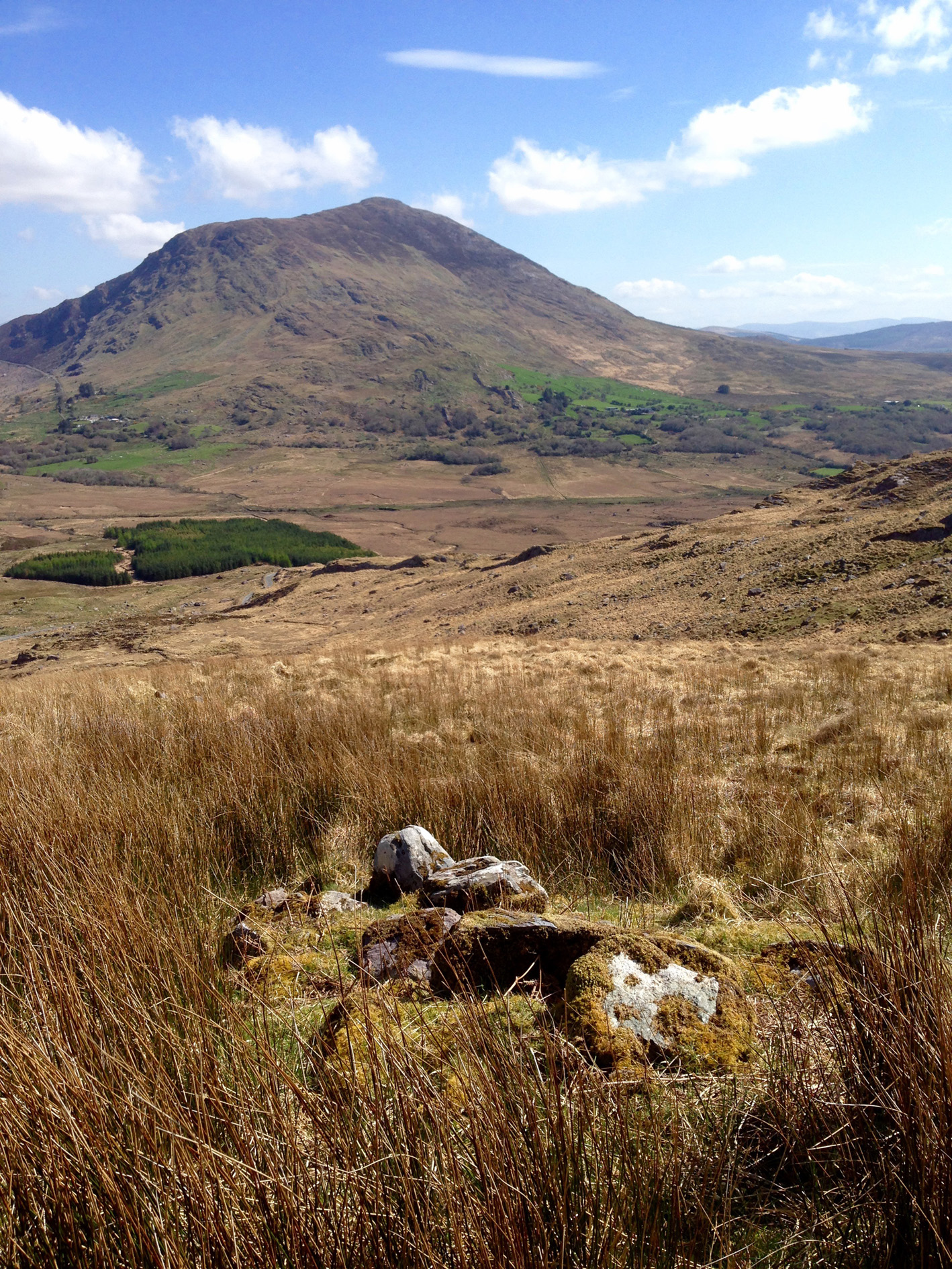
Showing Off West Cork

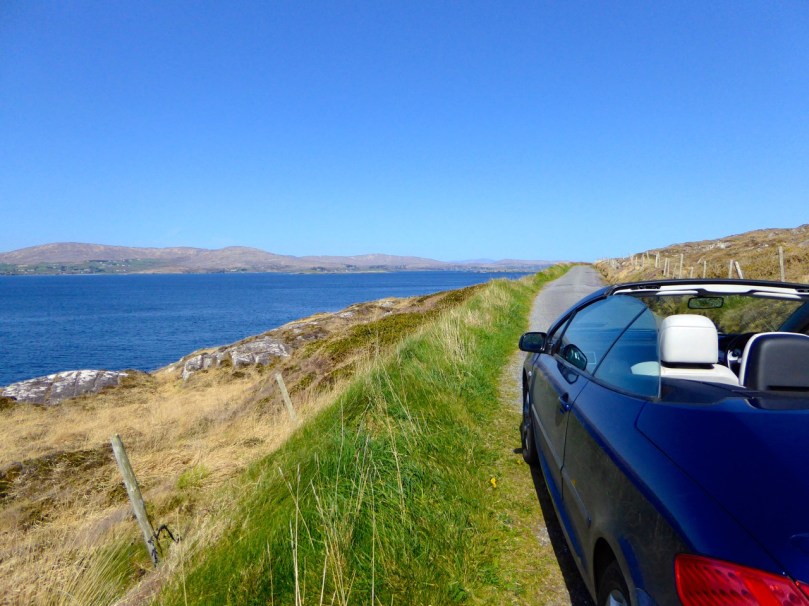
This is how you sightsee in West Cork!

This is how you sightsee in West Cork!

Ladies and Gentlemen, meet Susan Byron! Susan is the face behind Ireland’s Hidden Gems, a custom travel service for visitors to Ireland, and she and I met last year when Robert and I spent a week in Clare. Susan loves nothing better than to hop in her car and take off for a few days to some part of Ireland she wants to explore or re-explore. There are very few places she hasn’t seen, but I soon discovered that the Sheep’s Head was one of them. She has been to the Mizen before but hadn’t seen some our OUR hidden gems. In short order we decided that a visit must be organised, and a couple of weeks ago she arrived, bearing Burren lamb, bottles of wine, and an infectious enthusiasm to see everything.
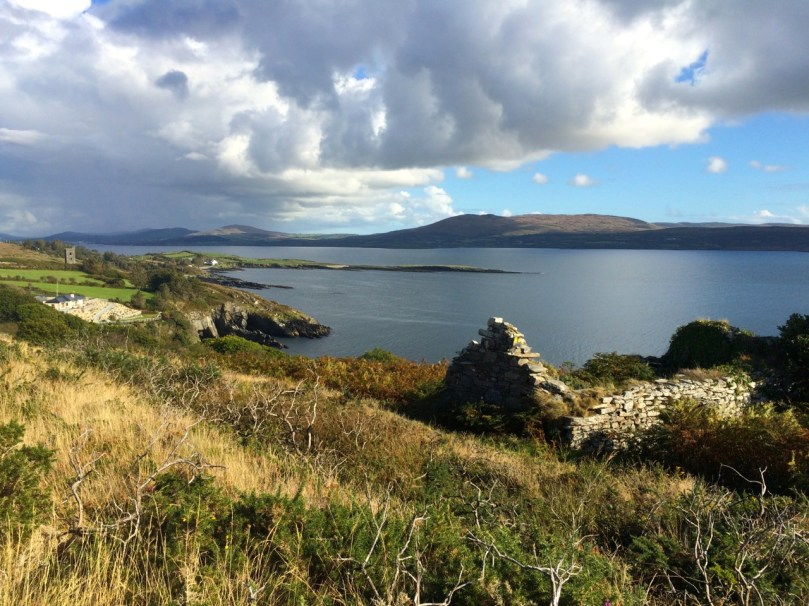
The 17th century Bardic School

The 17th century Bardic School on The Farranamagh Loop walk

Now if someone who runs a bespoke travel agency wants to see your piece of paradise, well, you’re going to put your best foot forward. Fortunately, this isn’t a problem in West Cork – it’s pretty well a fail-safe place to show off. Susan spent her first day whale watching (something we promise ourselves to do soon) and exploring the area east of Skibbereen. On day two and three she was all ours and we spent the first day on the Sheep’s Head and the second on the Mizen.
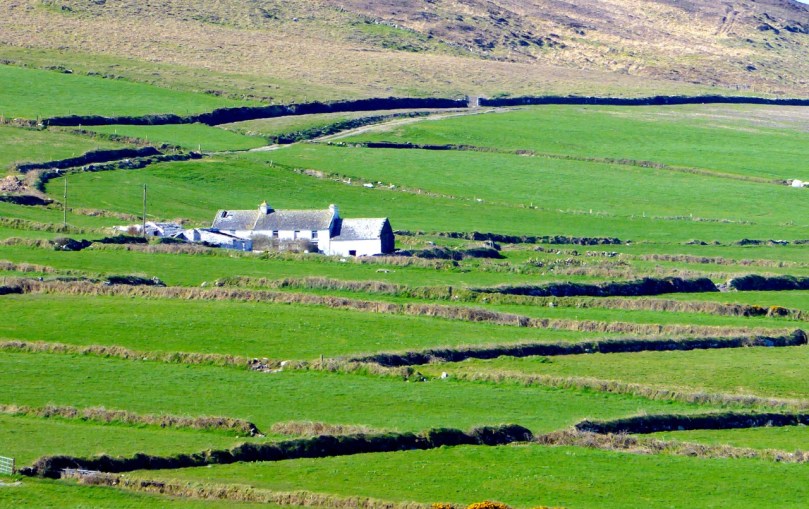
Mizen farm

Mizen farm

First of all, travelling with Susan is a hoot. She’s got a hot car, a ready laugh, an inexhaustible supply of stories, insatiable curiosity, and a real passion for Ireland. She is amazingly well-read – she knew the dates of the castles before I could tell her and was already familiar with what most tourists want to to see and do in West Cork. So this was a cheerful, companionable time of exploration, chatting, coffee and scones, hiking and sightseeing.

Our Sheep’s Head day took in two loop walks – the Farranamanagh loop and the lighthouse loop. We started off in drifting mist but the sun came out in the afternoon and soon we were shedding coats and applying the sunscreen. After a stroll around the lovely Farranamanagh walk (famous for its 17th century Bardic School) we had lunch in The Creamery in Kilcrohane and browsed in the Sheep’s Head Producers Market. We bought eggs from a farmyard, said hello to contented alpacas, and took innumerable photos of the killer views.

The Lighthouse Loop offers unparalleled vistas at the end of Sheep’s Head – south to Mizen Head and the sweep of the West Cork coastline, and then, as you round the end, north to the Beara and to the Iveragh Peninsula (Ring of Kerry) beyond it. The trail has some steep sections and clings to a cliff edge for part of the northern stretch. It, and the Farranamanagh Loop are but two of the many waymarked trails that crisscross the Sheep’s Head. Each is as rewarding as the next and you could easily spend several days exploring this one Peninsula.
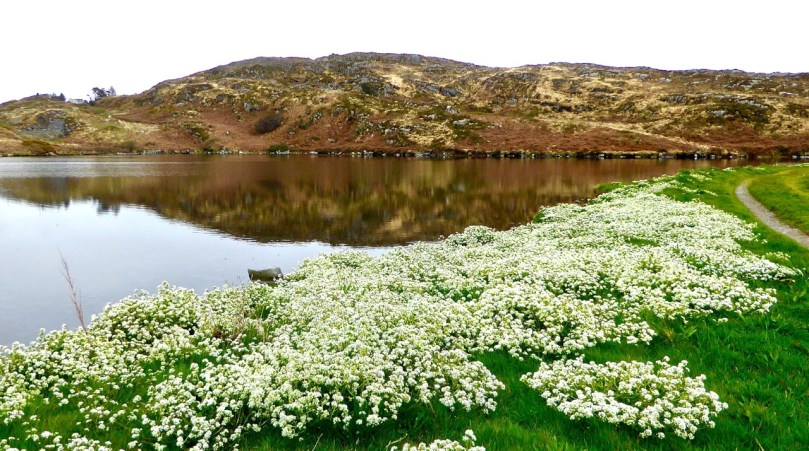
Lake Farranamanagh

Lake Farranamanagh

The Mizen, of course is OUR peninsula and we are always delighted to introduce it to friends. The weather was brilliant so we were able to drive in Susan’s cool car with the top down. (In my next life I want to come back as a blonde with a convertible.) Three Castle Head was at its most spectacular, with the water that deep azure blue that people who don’t live here have a hard time believing is real.
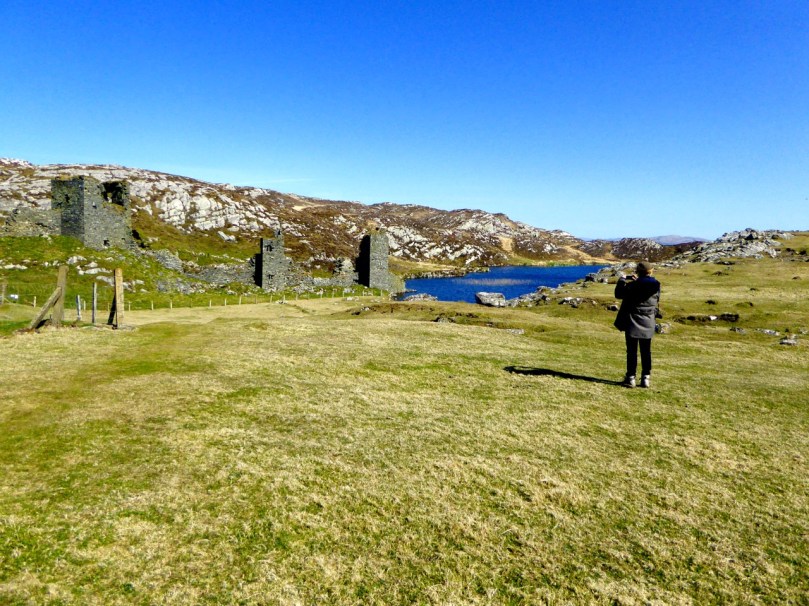
The Three Castles: it's love at first sight for Susan

The Three Castles: it’s love at first sight for Susan
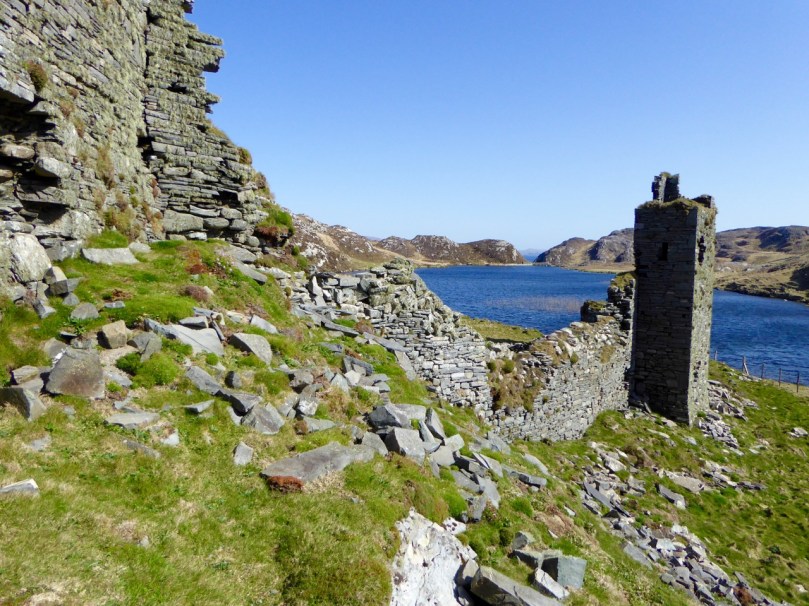
The curtain wall and the lake

The curtain wall and the lake

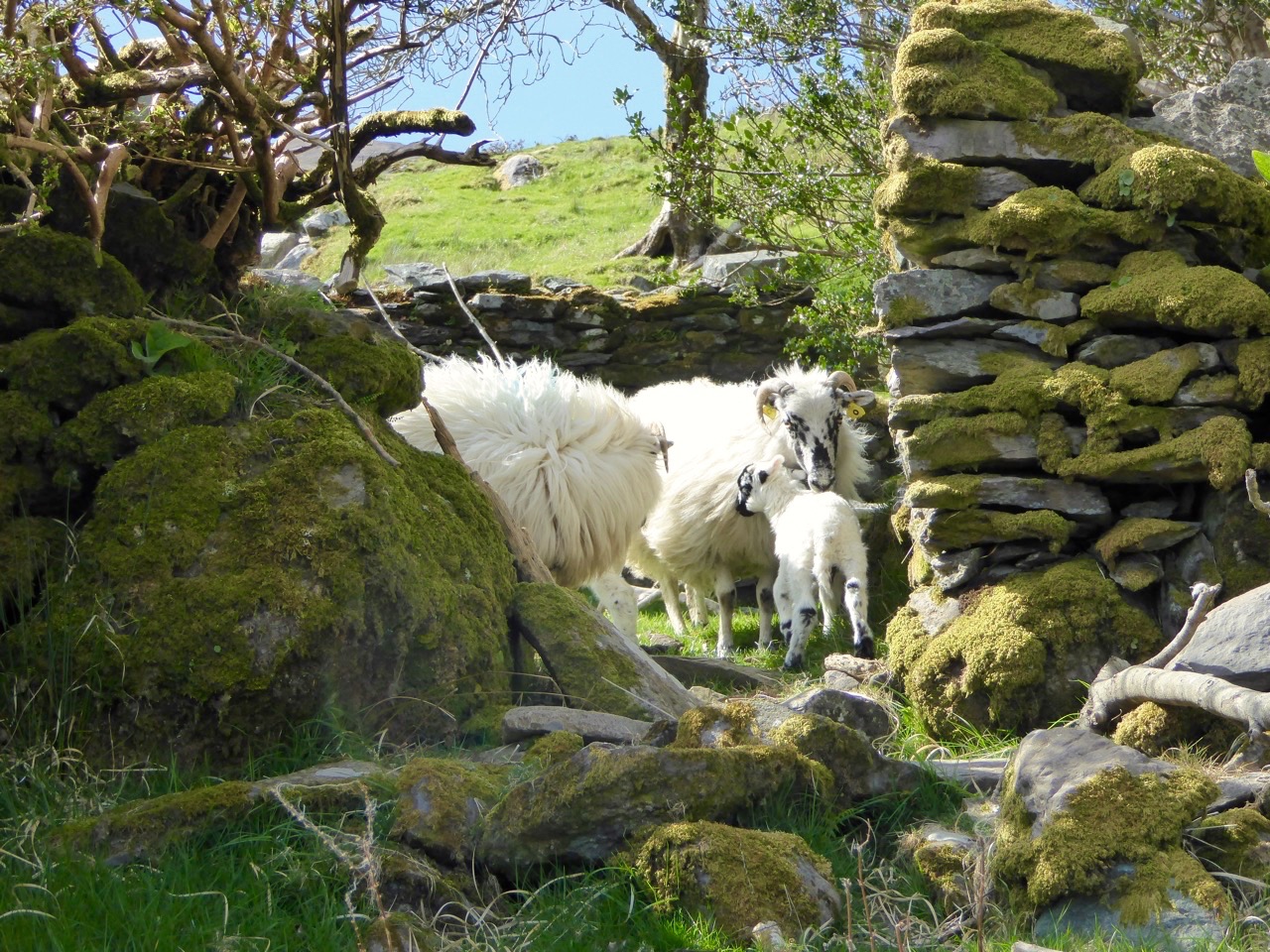
Spring was bustin’ out all over so the air was heady with wildflowers and the fields full of newborn lambs. The drive on the north side of the Mizen is as jaw-droppingly gorgeous as any stretch of road in Ireland – the only difference is that it’s empty. We met not a single car, which enabled us to stop where we pleased to survey the scenery or take photos.
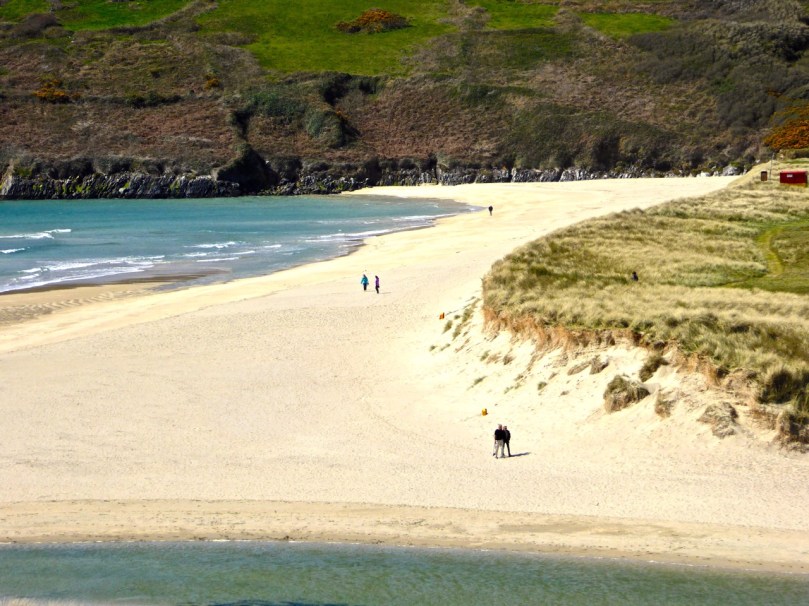
Barley Cove Beach

Barley Cove Beach

Susan wound up her time by conducting some retail therapy in Schull. No better place!
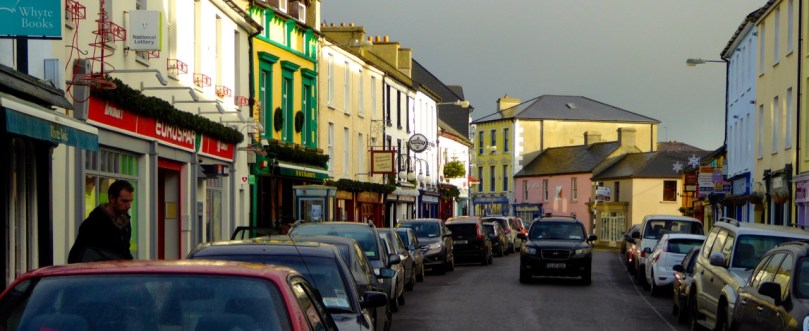
Schull, colourful village with great shopping

Schull, colourful village with great shopping

She has posted numerous photographs on her Facebook page and even used the phrase “possibly the most beautiful place I have ever been….” about Three Castle Head. That’s how I feel about that magical place – but when someone who has seen everything Ireland has to offer says it, maybe, just maybe, I’m not delusional after all.
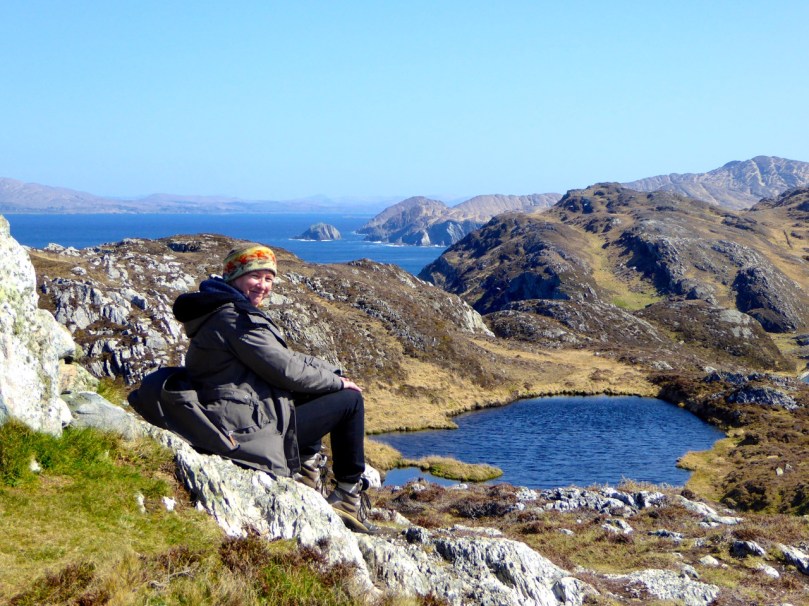
Susan at the cairn. Three Castle Head on the Mizen
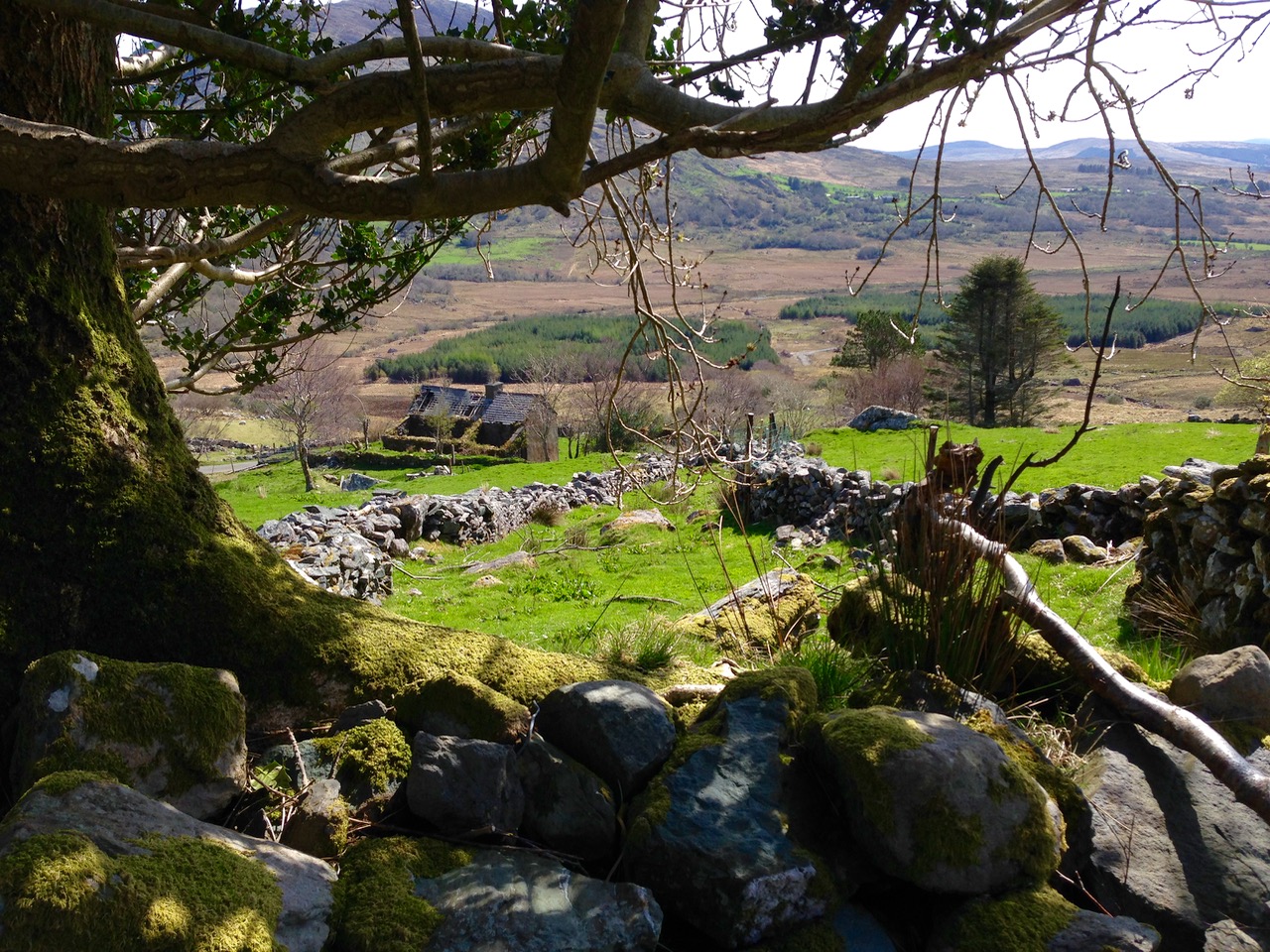
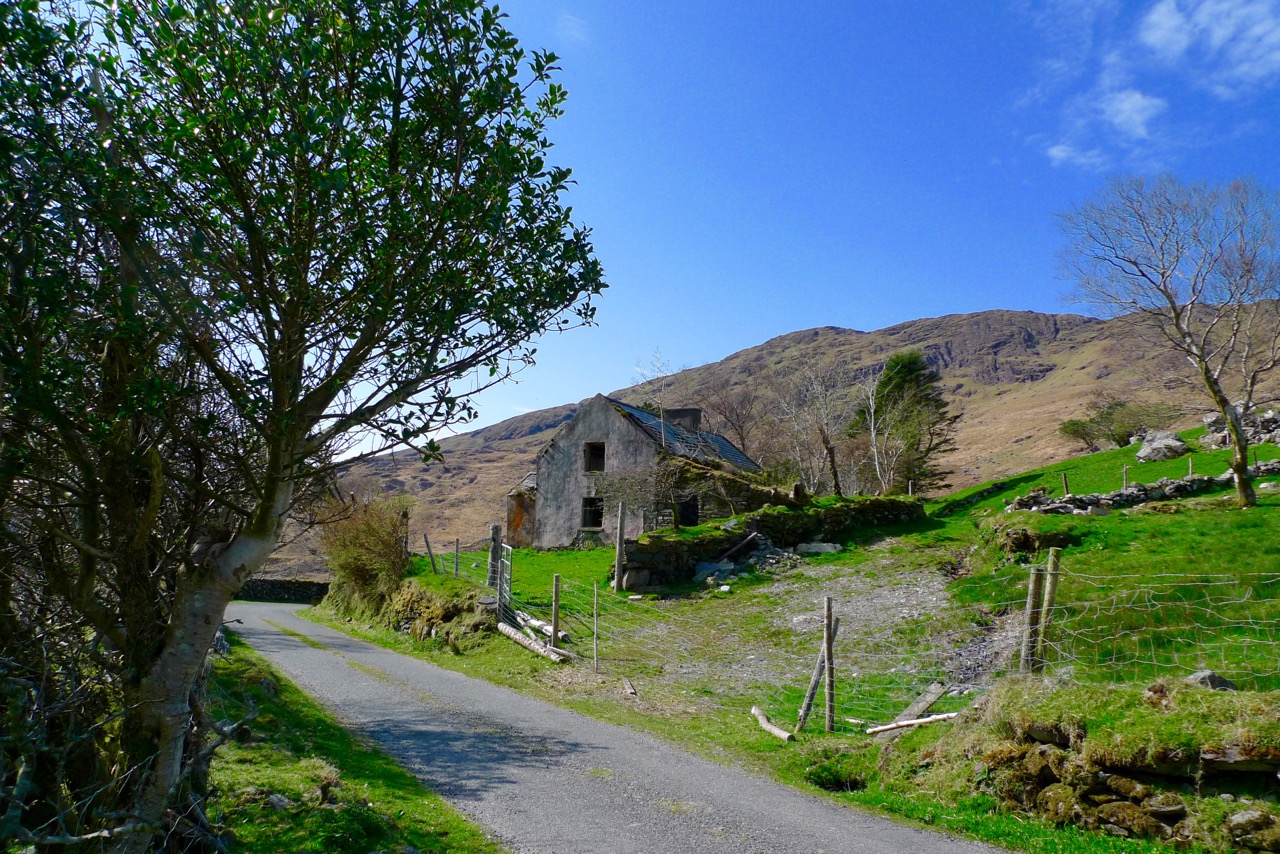
Susan at the cairn. Three Castle Head on the Mizen
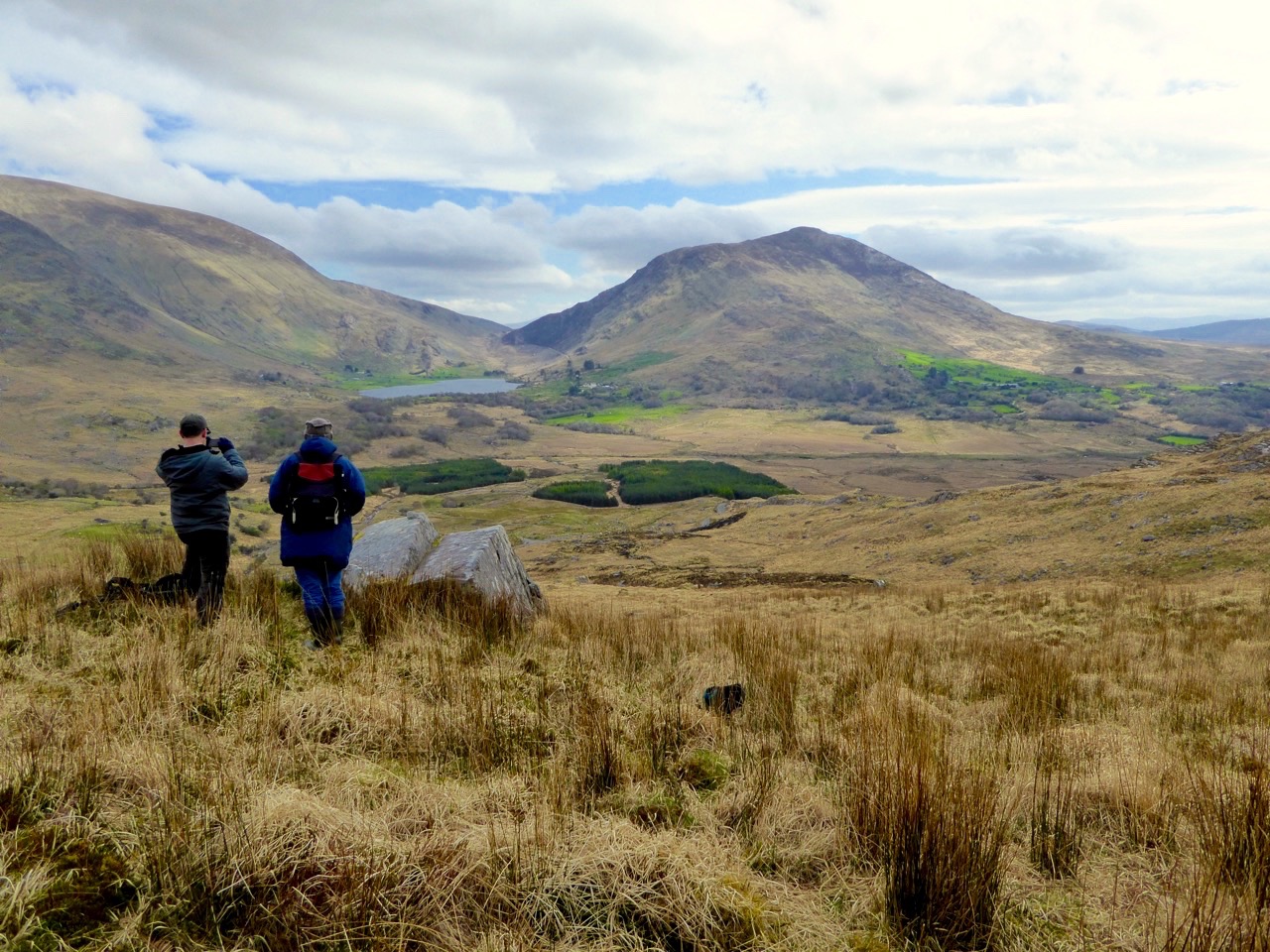
Glen of Ghosts

glen

There are some places in this world that touch you deeply in the soul. Derrynablaha has that affect on me. I first went there a few years ago and immediately felt that it was alive with ghosts. I was in search of Rock Art then, and Finola had told me about her experiences in the early 1970s – an intrepid young student on an old Honda 50 loaded down with sheets of cellophane and measuring rods. She had met the O’Sullivans who dwelt in the single farmstead there – they plied her with tea and directed her to the rocks above the house where treasures awaited. When I drove into that valley 40 years later I found only the ruins of the O’Sullivan cottage. It was a poignant moment – the mountains were empty: in some ways it felt like the loneliest place on earth, yet also one of the most beautiful.

The old O'Sullivan farmstead returning to nature

The old O’Sullivan farmstead returning to nature

What kind of a beauty is that? A mixtures of lives vanished and nature healing the wounds. Sheep still grazing on those rock-strewn fields: men from another valley tending them – O’Sullivans also, but – they claim – no relation to the last generation there.

New life among the old stones...

New life among old stones…

Those lives are recently gone but, as I first climbed the precipitous slopes to the west of the old farm, I felt the presence of other ghosts – from a more ancient time. It’s a long haul up to the iconic carved stone which commands the wide view across to Lough Brin but, each time I make that journey, I feel more strongly drawn to the people who made that place their home – or possibly their temple.

View from the 'very special' carved stone

View from the ‘very special’ carved stone

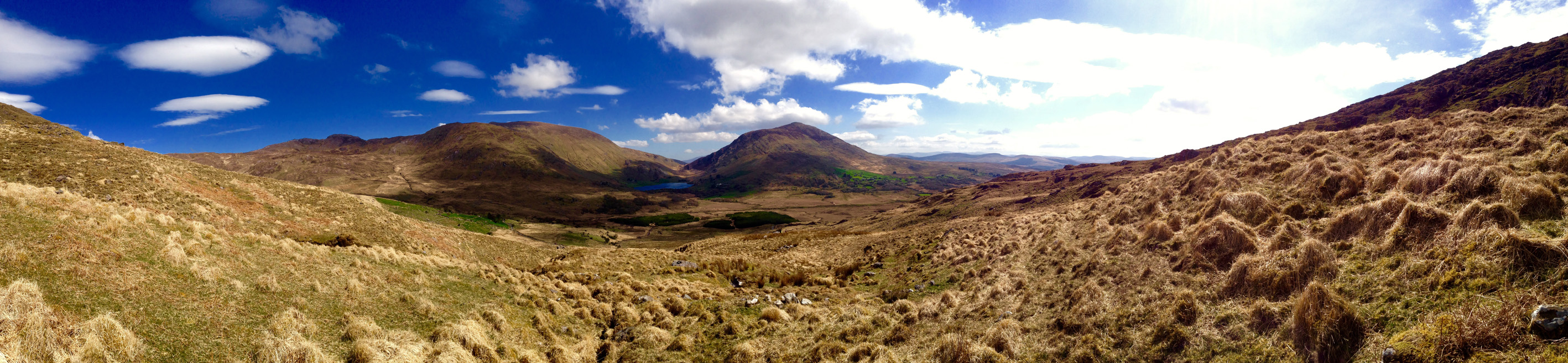
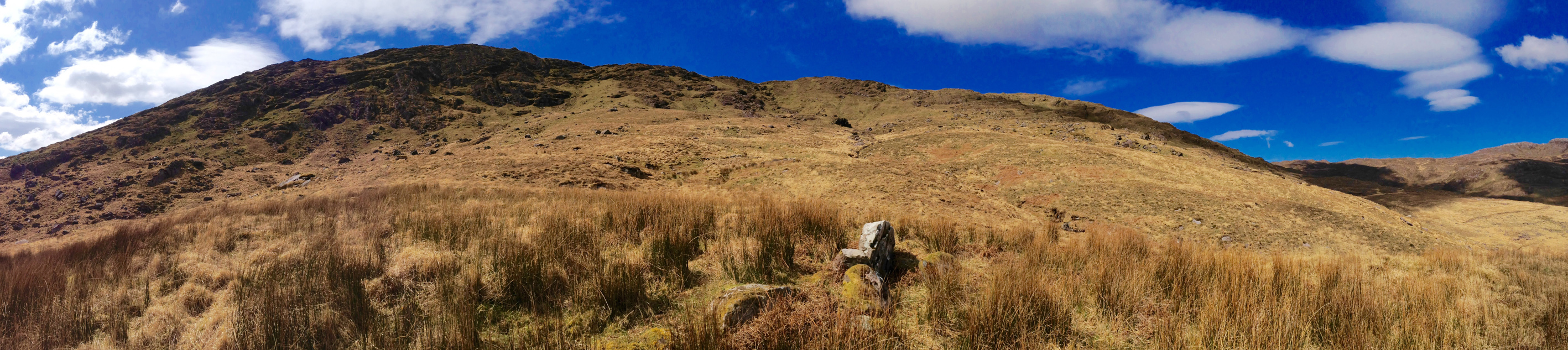
This expedition must have been my fourth visit to the hillside which commands such a magnificent view over the townlands of Derrynablaha and Derreeny and which takes in the lake on the valley floor – seemingly a mere puddle from that elevation yet  in fact covering several hectares. On each visit I find more evidence of prehistoric occupation: on this occasion it appeared to me that the carved stone is sited on the edge of a circular plateau; I could trace old retaining walls below, some circles which could have been hut walls half lost in the undergrowth and – above this site – a wall of boulders which might have dammed the stream which runs down the mountain here, to create a little reservoir. I also saw the vestiges of a wedge tomb – aligned east to west – and the base of a cairn… All this, of course, is my imagination at work, but it’s a place where the imagination can take wing.

sky pan

Panoramas from the plateau - east and west

Panoramas from the plateau – east and west

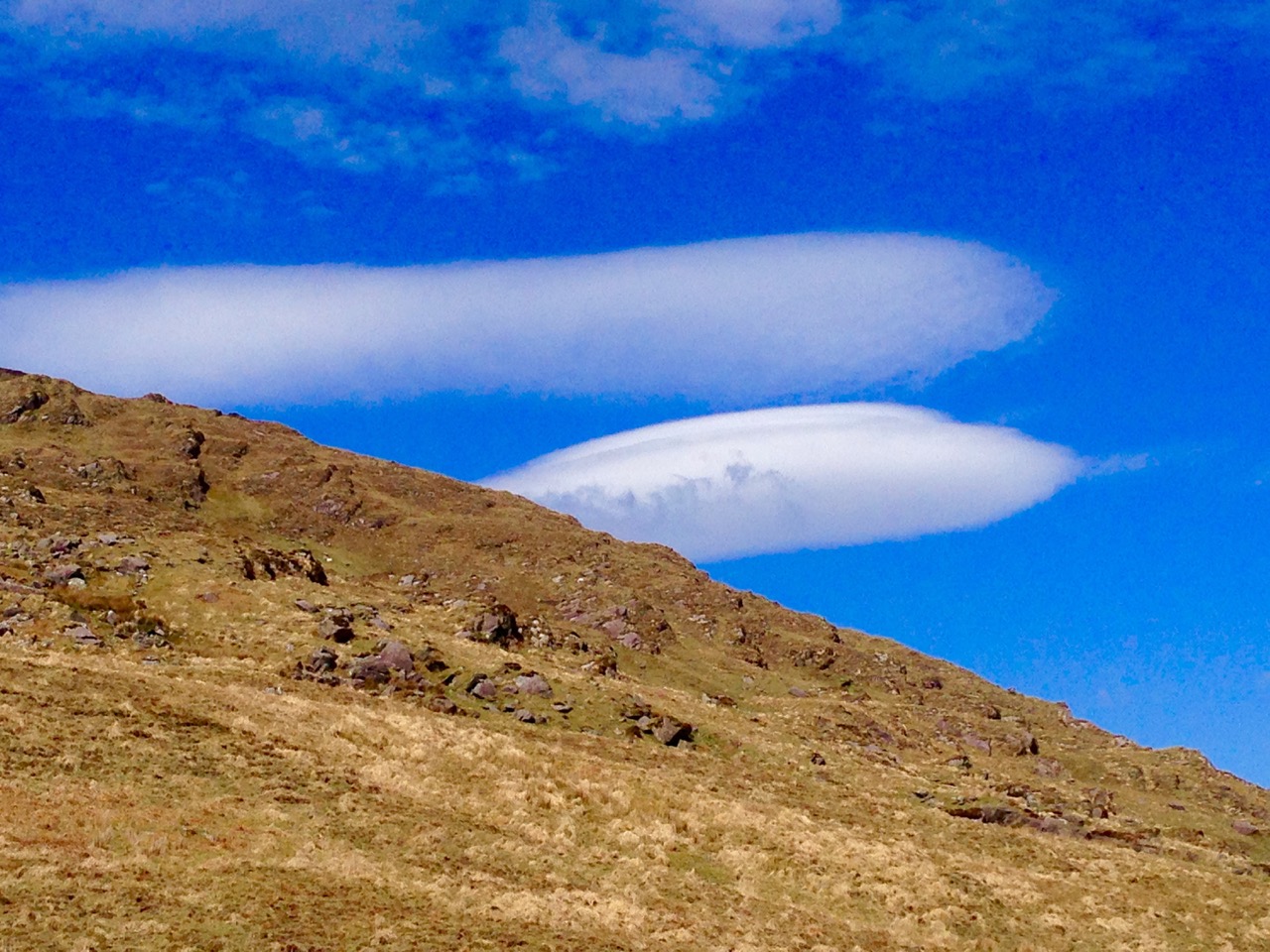
I have so many questions… Was there once tree growth at this level? Derrynablaha means ‘little oak wood of the flowers’ – I imagine something like the stunted oak forests on Dartmoor, where the ancient trees are gnarled and twisted from the ravages of a harsh climate, but which cling to the rocky terrain. But possibly the plateau was raised above this – a place where visibility over the whole landscape was important and visitors anticipated in advance. In my dreams I see fires burning up there in the night, figures dancing, songs being sung… Are they really Wolves and Deer I see moving around the fires, or are they my own ancestors wearing grotesque masks?

clouds

Dream clouds?

Why shouldn’t I have these thoughts? After all, technology might have changed over 5,000 years – but our minds haven’t. It’s not so hard to try and understand our forebears: I like to think they appreciated the power of the pristine landscapes which they inhabited – just as we are awed by the magnificence of their old haunts as we see them today.

Wedge tomb on the plateau?

Wedge tomb on the plateau?

And did those feet…

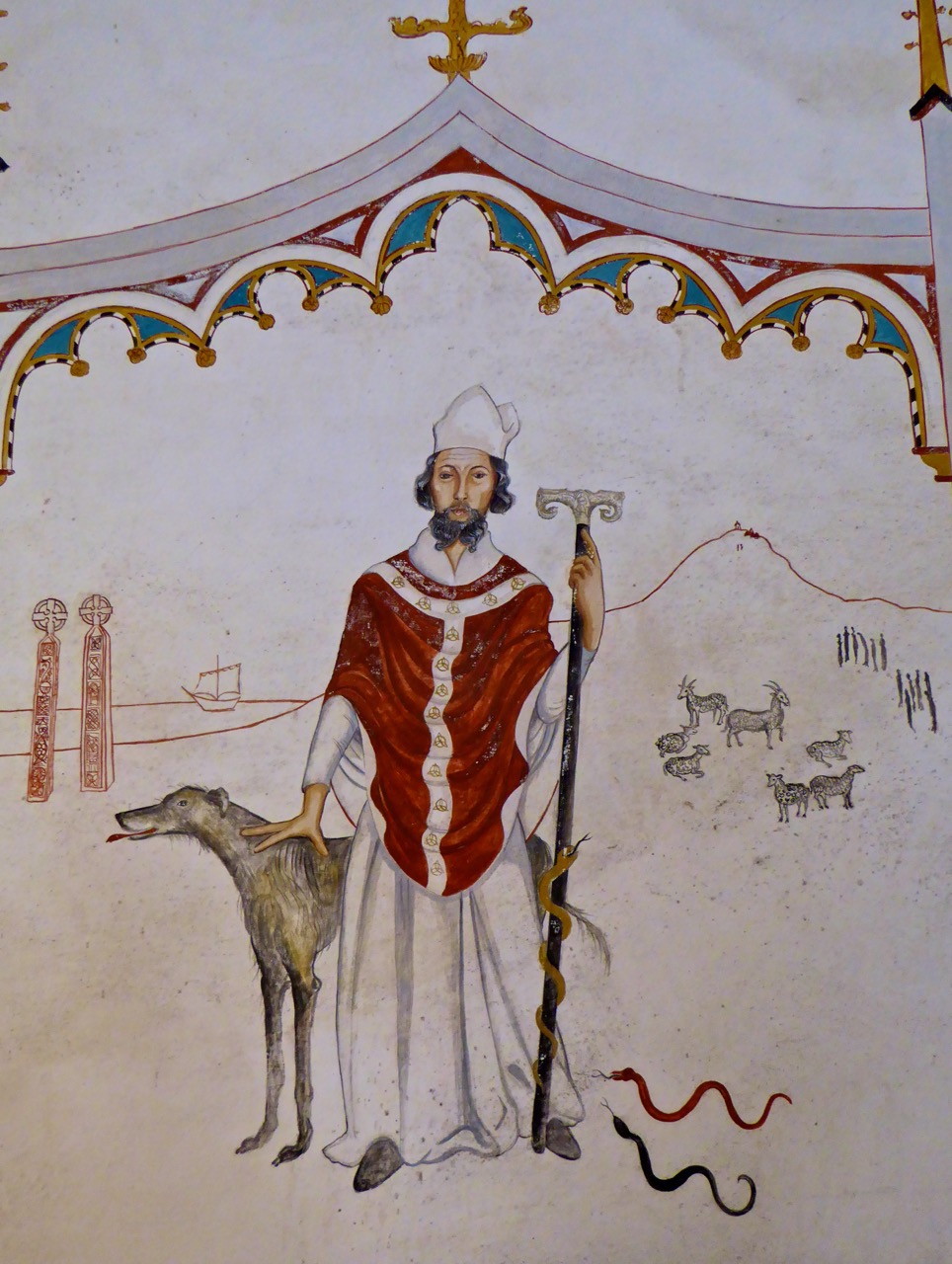
We discovered St Patrick in Glastonbury!

We discovered St Patrick in Somerset!

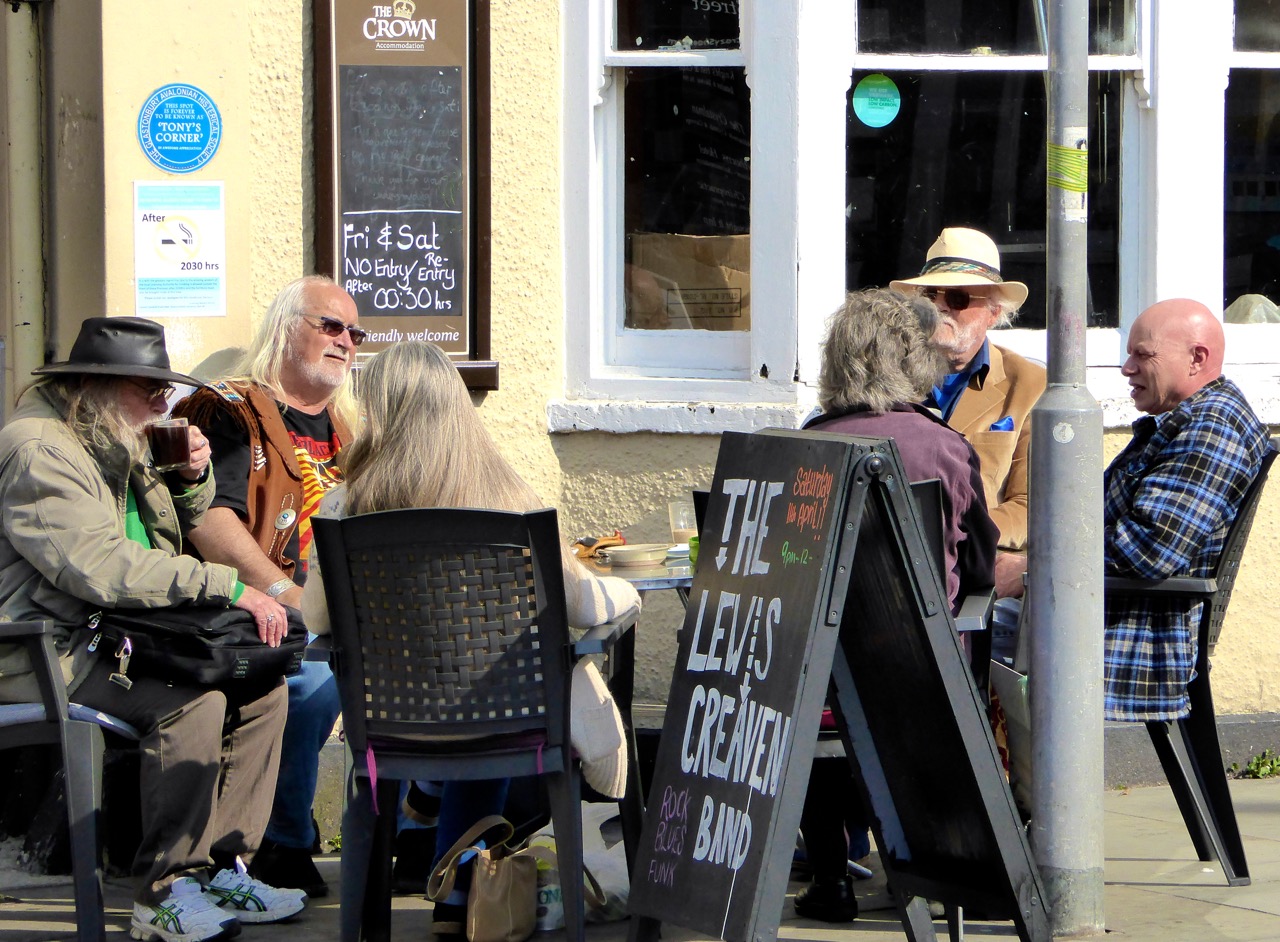
Finola had never been to Glastonbury, so I thought a visit on our way back home to Ireland was in order. Like me, she found the town itself fascinating: every shop seems to have a ‘mystic’ theme, and even the coffee is imbued with an otherworldly aura…

Coffee time in Glastonbury

Modern Pilgrims? Coffee time in Glastonbury

Why is this Somerset town so steeped in esoterica? It attracts ‘New Age’ adherents, pagans and Christians. Perhaps because it was a place of pilgrimage centuries ago – one of the most important in Britain. The biggest surprise for us was to find a chapel there dedicated to St Patrick!

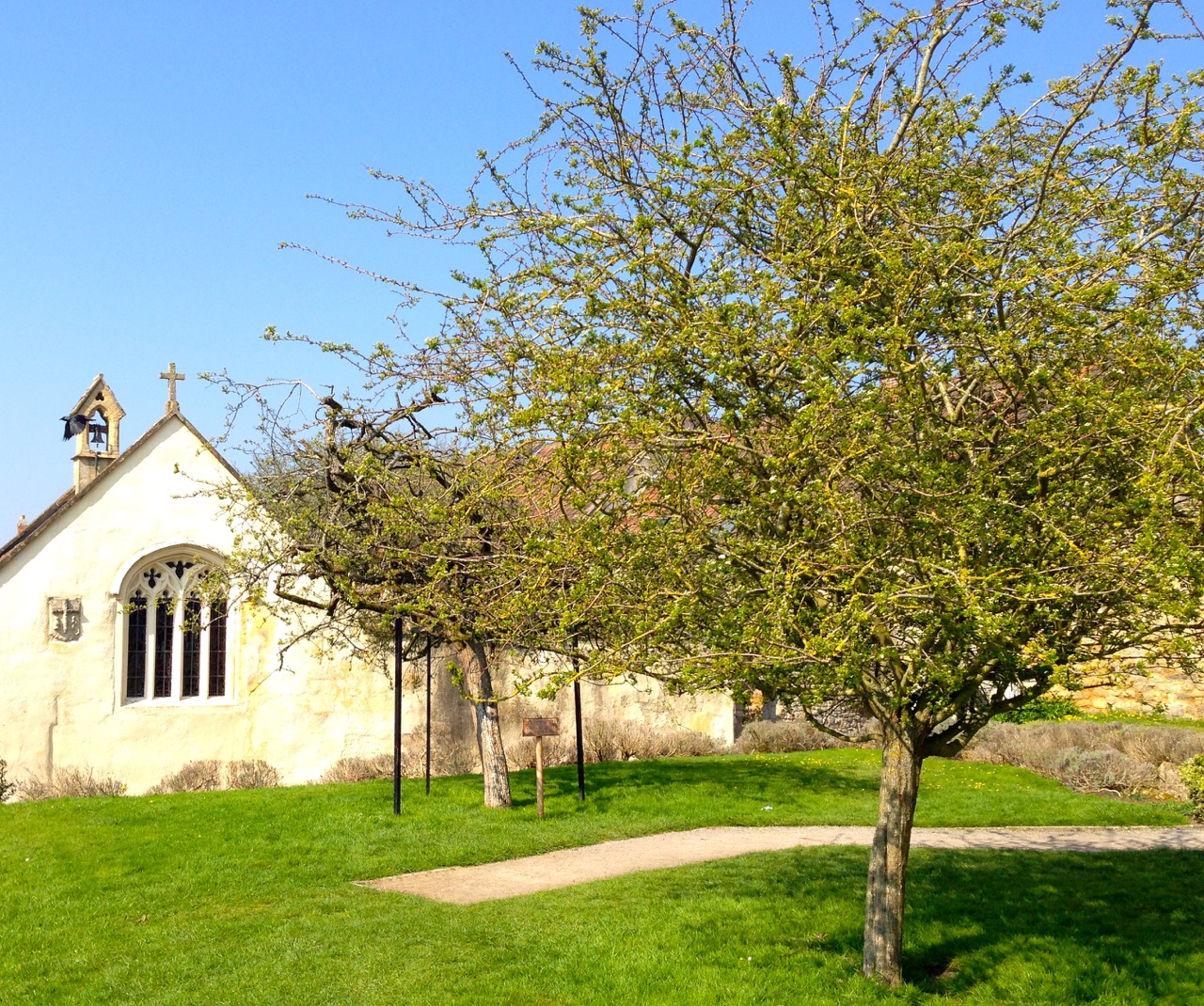
St Patrick's Chapel - one of the earliest buildings at Glastonbury

St Patrick’s Chapel – one of the earliest buildings at Glastonbury

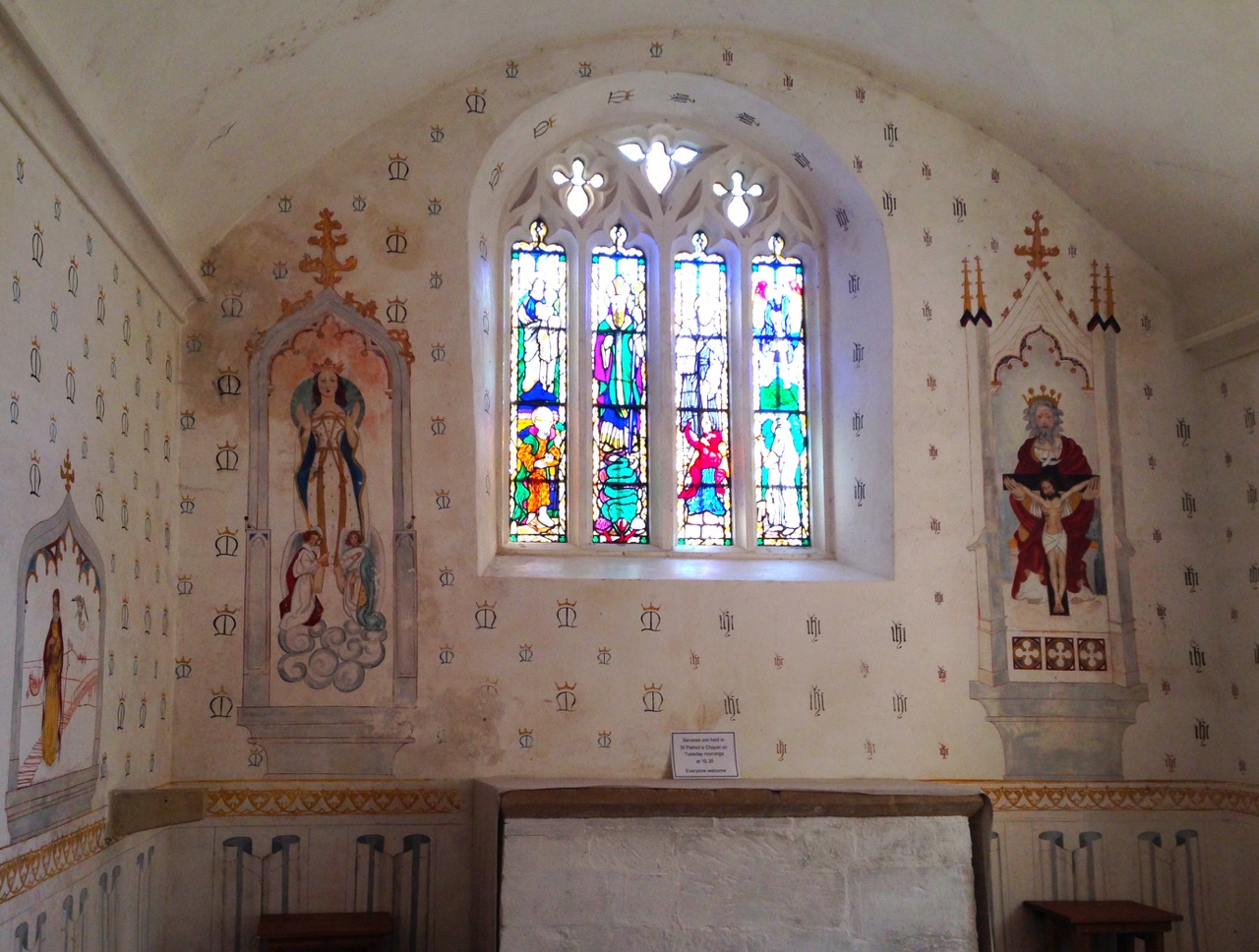
Inside St Patrick's Chapel

Inside St Patrick’s Chapel

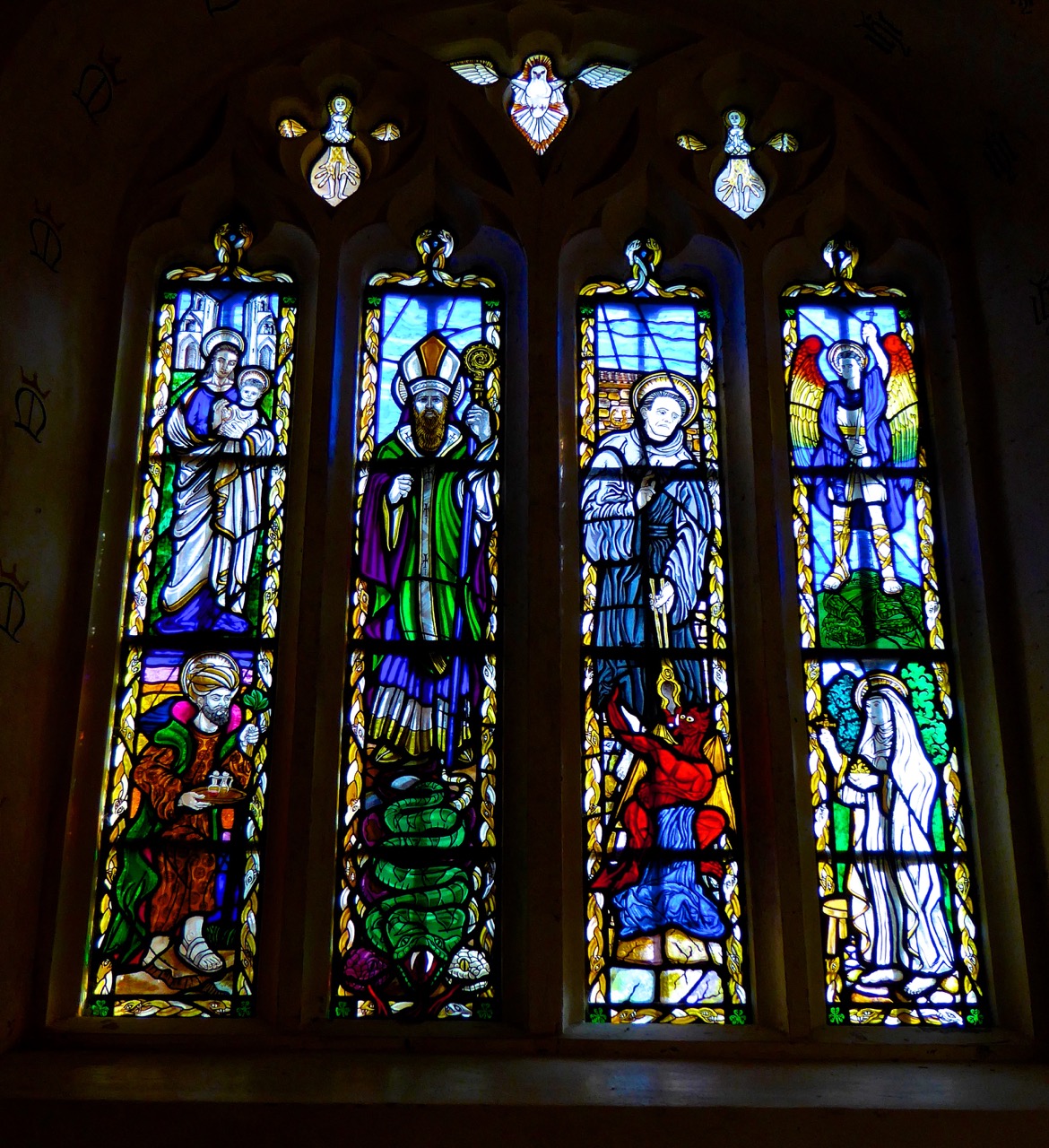
The chapel is in the grounds of Glastonbury Abbey and – like the Abbey itself – the little building has had a chequered history. It is well preserved, however, although the wall paintings and glass are from a modern renovation.

The chapel window - note St Patrick's wonderful snake!

The chapel window – note St Patrick’s wonderful snake!

Glastonbury is a place of history and of legend. The most important of these has to be the one that William Blake immortalised in his poem Jerusalem:

And did those feet in ancient time walk upon England’s mountains green…

‘Those feet’ are the feet of Jesus himself who – tradition insists – was brought to this site as a boy of twelve by his great-uncle, Joseph of Arimathea, a tin trader. Jesus in Britain? No wonder the Abbey was such a glorious place, and a rich and powerful one in medieval times. Even in ruins, the buildings have a presence and elegance which for me is unmatched in any of the other ancient monastic sites I have visited. With that history there couldn’t be anywhere more important outside of the Holy Land.

Back to the story – When Joseph landed on the islands that were Somerset in those days, he climbed to the top of Wearyall Hill and planted his staff there. It took root and grew into a thorn tree. Magically, that tree always flowered on Christmas Day. The original thorn has gone from the hill, but cuttings have been taken over time and they exist elsewhere: one such is within the Abbey grounds, just outside St Patrick’s Chapel. They still flower on Christmas Day, and the Queen is always sent one of the blooms.

Glastonbury's Holy Thorn, planted by Joseph of Arithamea

Glastonbury’s Holy Thorn, planted by Joseph of Arithamea

A tradition tells us that St Patrick grew weary of his work in Ireland and returned to Britain in old age. He went to Glastonbury because of its importance, and he was joined there by a band of monks who elected him their Abbot. After a few years he died and was buried in the Abbey grounds. Other important visitors here included St Brigid – who is pictured milking her cow on the wall of St Michael’s Tower on the Tor. St Brigid is also considered a Goddess – suitable for a town in which Paganism and Christianity seem to co-exist quite happily.

Typical Glastonbury shopfront

Typical Glastonbury shopfront

St Brigid - another Irish Saint in Glastonbury

St Brigid – another Irish Saint in Glastonbury

The stories go on and on: a multitude of Saints is buried around the Abbey evidently – and the Virgin Mary herself visited – with her Uncle Joseph – and (some say) is also buried there…

We musn’t forget another Glastonbury VIP – King Arthur. In the twelfth century the grave of Arthur and Guinever was found by monks when carrying out restoration works in the nave of the Abbey. This added to the notoriety – and the fortunes – of the monastic establishment…

sign

Missing Rossbrin


Roaringwater Journal is in England for a family wedding. No post this week. We are having a wonderful time but missing our favourite view. 

Time Warp

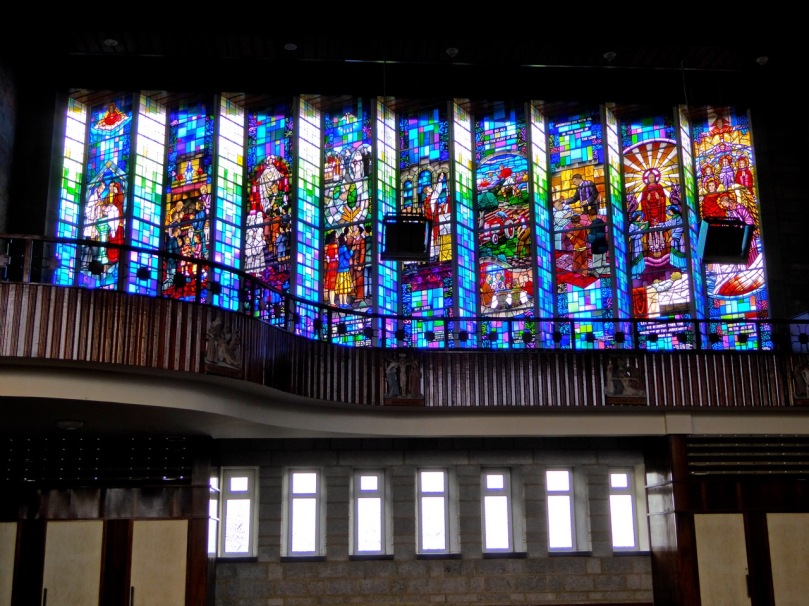
Stained Glass Wall in All Saints Church, Drimoleague

Stained Glass Wall in All Saints Church, Drimoleague

It was the early 1960s and I was sitting in class in my convent school while Mother Francisca explained the purpose of our education and gave us a glimpse of our futures. “What we want for you, girls,” she said, “is to be Good Wives or Nuns.” This week, I landed back in that classroom with a bang. Did I visit my old school? No – I strayed into a time warp. In doing so I rediscovered part of my heritage I had almost forgotten and I met a brilliant young scholar who helped me access those dim memories again.

All Saints, Drimoleague - 1950s modernist architecture

All Saints, Drimoleague – 1950s modernist architecture

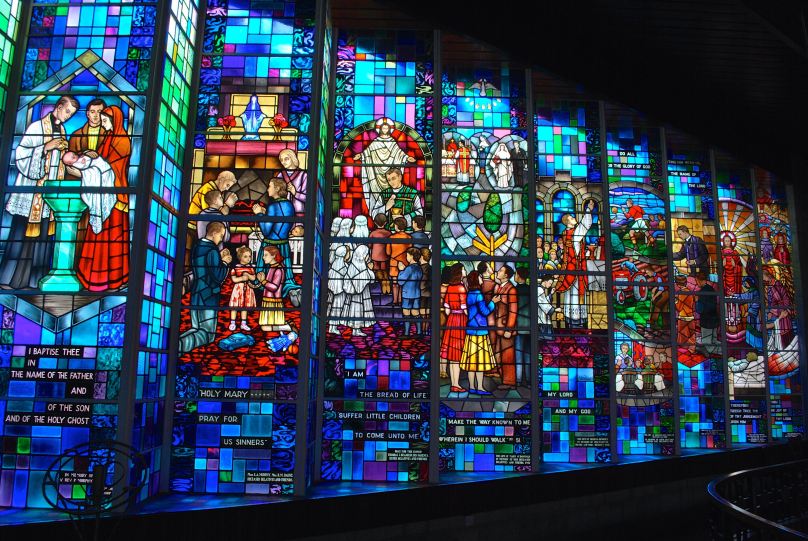
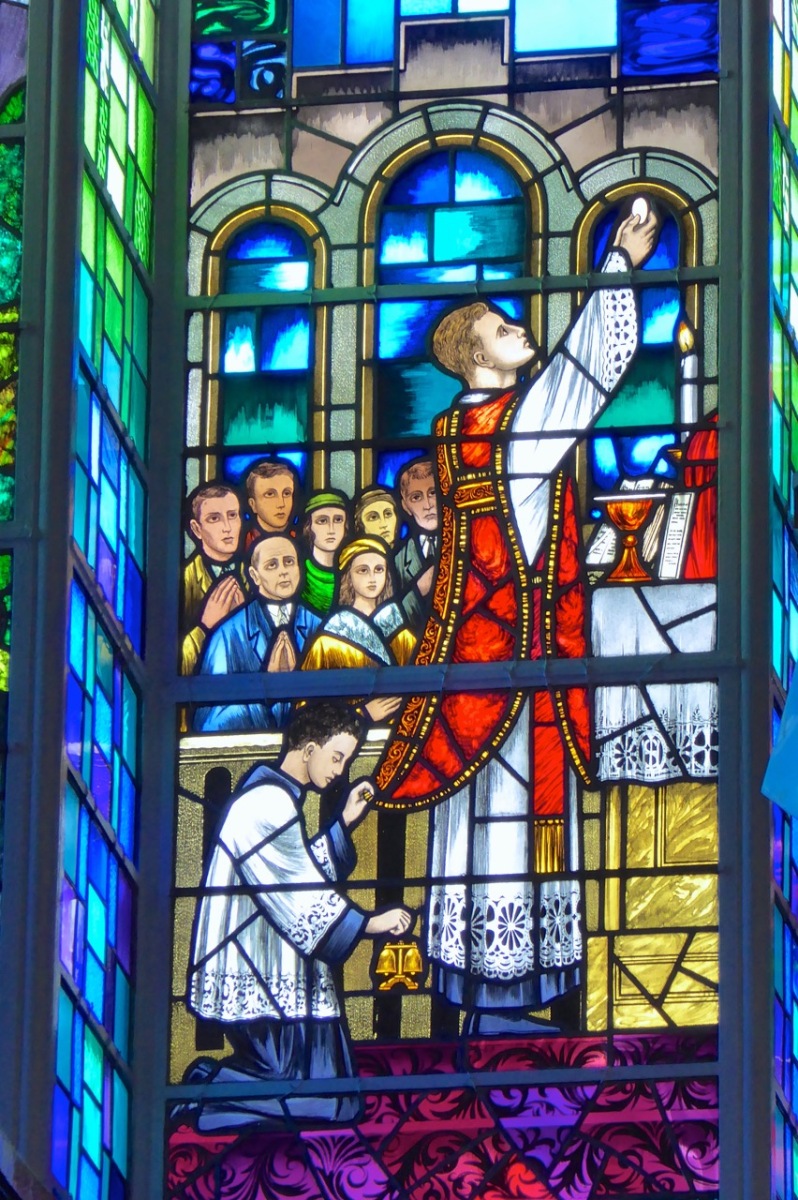
All Saints Catholic Church in Drimoleague is one of the most extraordinary buildings in West Cork. First of all, it’s a fine example of mid-century modern architecture (and there aren’t a lot of those in West Cork) and an engineering triumph. Built in the 1950s of concrete and limestone, its cavernous interior has no need for pillars: nothing intrudes between worshippers and altar. It’s like stepping into an enormous, curiously bright, almost empty box. Secondly, it has extraordinary artwork in the form of a giant mural behind the altar and a panel of stained glass windows above the balcony on the south wall. It was the stained glass that stopped me in my tracks.

All Saints, the interior

All Saints, the interior

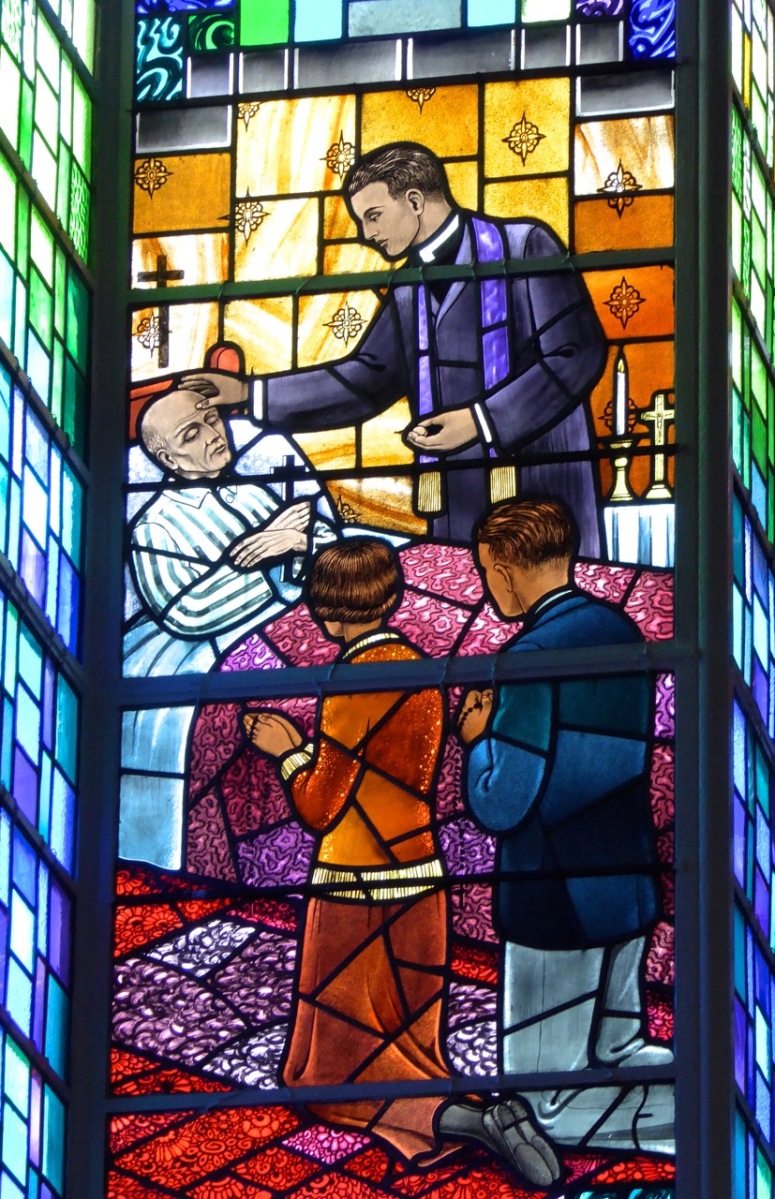
The glass is laid out in a series of frames that takes the viewer from birth to death – no, beyond death, to heaven. The church was built in the 1950s and each frame represents the values of rural Catholic Ireland of that time. In a strange way it reminded me of a High Cross, in that the illustrations that we see on High Crosses were meant to tell a story – a biblical one in that case – and to instruct the viewer in the tenets of the religion. The purpose of this wall of glass was also educational – to provide a primer to mass-goers on the aspirations and actions that should guide their lives.

The Stained Glass panel, image © Richard James Butler

The Stained Glass panel, image © Richard James Butler

My parents, imbued with the message that the family that prays together stays together, developed an intermittent enthusiasm for saying the rosary. We would gather in the kitchen after dinner, each with our beads, and kneeling on the hard tiles we would tell off the Sorrowful or the Glorious Mysteries. The second frame shows just such a family, and I particularly love the toys on the floor and the statue of Mary on the mantlepiece. There’s a grandmother and a baby in a cot, and a little girl being inducted into the Mysteries by her older sister.

The next frame shows First Communion, with the girls in miniature bride outfits (as they are to this day) and the boys in their Communion suits with the short trousers and knee socks that all boys wore at that time. Since my godson in Dublin is about to make his First Communion I have been hearing about the process and I understand that apart from the length of the boy’s trousers not a lot has changed in 60 years.

First Communion

First Communion

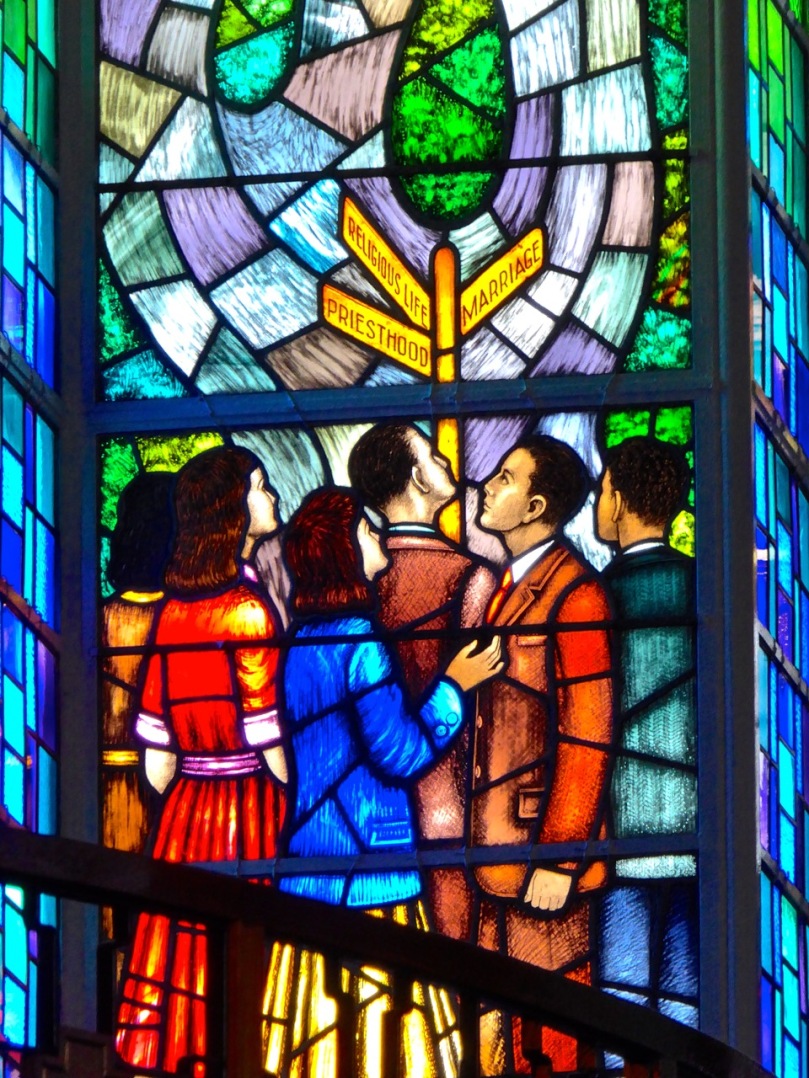
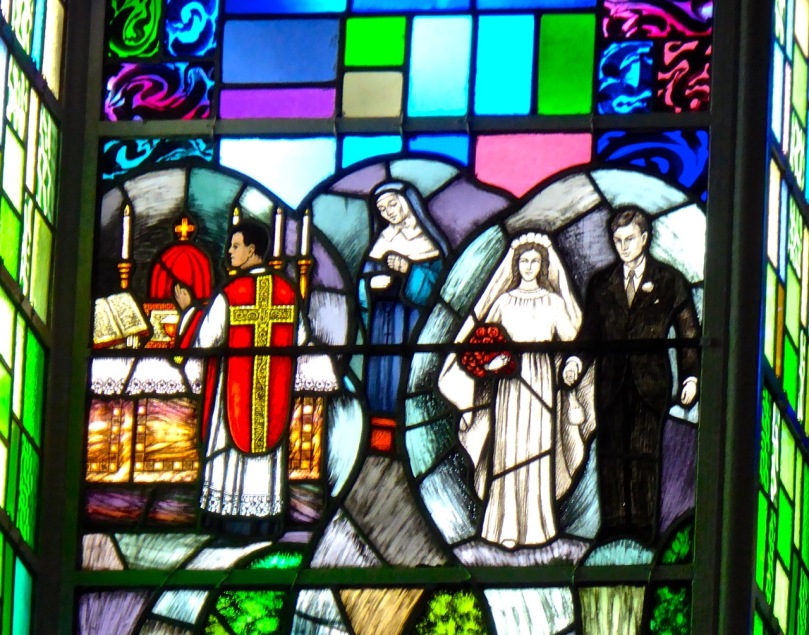
The one that brought me back to Mother Francisca shows earnest young men and women gazing at a directional sign which shows them their choices – marriage or the religious life. That was it! To hammer home the point the top of the panel shows a wedding, a priest and a nun. I’m casting my mind over the group of girls I went to school with – we didn’t produce any nuns and while most of us married I can’t think of a single one who hasn’t worked – we count among us an ambassador, teachers and principals, a town planner, an artist, a college dean, office administrators, a medical doctor, an international expert on child protection, a veterinary nurse, a parliamentary reporter, a lawyer…the list goes on. But none of this was discussed at school: we had no career guidance, no aptitude tests, no encouragement of any kind to think of ourselves as people who would work for a living. What’s curious is that we developed those careers in the complete absence of any kind of conscious preparation for them at the secondary school level.

Choices

Choices

Choices made

Choices made

The sixth frame might be my favourite. It’s the ‘work, rest and play’ lesson. At the bottom of the frame a happy family sits around the tea table. Above them men work on the fields and on top those men are playing Gaelic football while their wives sit on a bench on the sidelines and chat to each other. Men were to head the family, work and play hard, and women were to provide the supportive role. I doubt if anyone foresaw when that glass was designed in the 1950s that in the next century (only a few days ago in fact) two Irish rugby squads – the men AND the women – would bring home the Six Nations Cup for Ireland.

The last three frames deal with end of life, including Last Rights, death, and reception into heaven – the reward for living the exemplary life presented in the stained glass wall.

Last Rites

Last Rites

If you grew up like I did in 1950s Ireland, or if you are interested in the art and architecture or the social history of this period, the Church of All Saints in Drimoleague tells a fascinating story. There is little available online about this church – I couldn’t even find out who designed the windows. But my research revealed that one other person was as struck as I was by this church, although in a more scholarly way. Richard James Butler is a gifted young art historian from Bantry who is completing doctoral studies at the University of Cambridge. We were lucky to hear him speak at the Bantry Historical Society recently on the subject of the courthouses of West Cork – a topic we had no idea could be as interesting until we heard his erudite and engaging presentation. He has written a paper, All Saints, Drimoleague, and Catholic visual culture under Bishop Cornelius Lucey in Cork, 1952-9, which will be published in the next issue of the Journal of the Cork Historical and Archaeological Society. I’ve had a sneak peak, thanks to Richard’s generosity in sharing his findings with a fellow enthusiast. His paper deals with the Catholic ethos within which that era of church construction operated, with the role of the local community in commissioning such an unusual edifice, with the enormous mural, and with the windows. It was only after communicating with Richard that I learned that the windows were the work of the Harry Clarke Studios* and how unusual they were for their day in not being concerned solely with images of saints, the life of Christ, or Mary. If you get a chance to read his paper when it’s published, do so – it may make you take a fresh look at the legacies of 1950s Ireland by which we are still surrounded.

Devotion in 1950s West Cork

Devotion in 1950s West Cork

* For a discussion of the difference between Harry Clarke windows and Harry Clarke Studio windows, see this post.

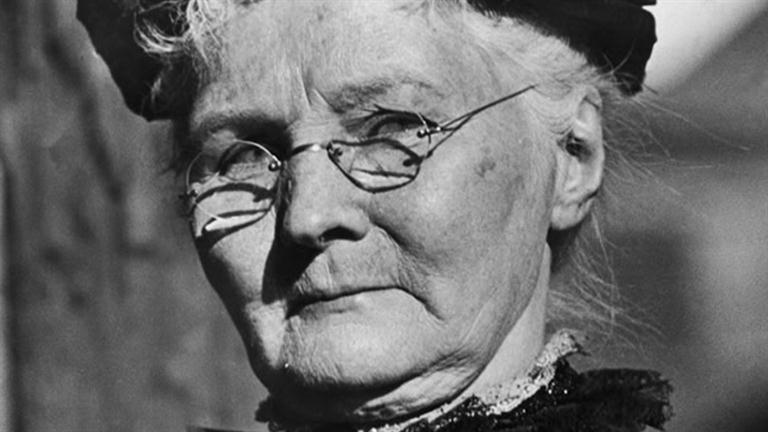
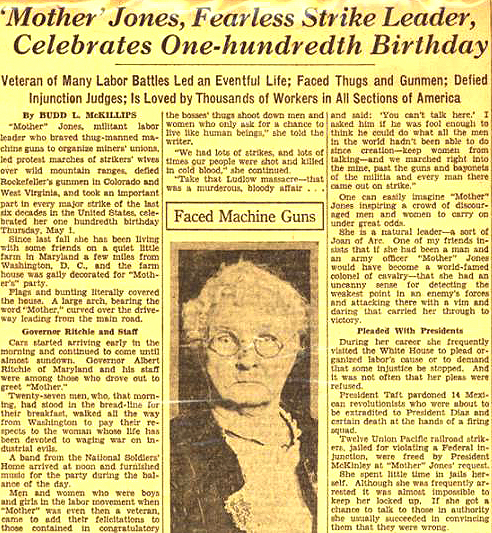
Cork’s Rebel Daughter

most dangerous

The Most Dangerous Woman in America

Mary Harris was born in Cork City in 1837. Like the lady herself, that’s a bit controversial: she claimed to have been born on 1st May 1830 – probably because that enabled her to celebrate her 100th birthday in 1930 – but also because the first day of May has always been associated with workers’ rights. She didn’t make a huge impact in Ireland, as she emigrated with her parents as a child. The first paragraph of her autobiography (published 1925 by C H Kerr + Co, Chicago) succinctly summarizes the early years of her life:

…I was born in the City of Cork, Ireland, in 1830. My people were poor. For generations they had fought for Ireland’s freedom. Many of my folks have died in that struggle. My father, Richard Harris, came to America in 1835, and as soon as he had become an American citizen he sent for his family. His work as a laborer with railway construction crews took him to Toronto, Canada. Here I was brought up but always as the child of an American citizen. Of that citizenship I have ever been proud…
Mary Harris – Mother Jones – remembered in Cork (left) and in the US (right)
Mary was a ferocious socialist – perhaps influenced initially by her husband George E Jones, a member of the Iron Molders Union in Memphis. She lost her husband and four young children to a yellow fever epidemic in 1867, and seemed to take the emerging Labor Movement as her family thereafter. She re-created herself as ‘Mother Jones’ and spent the rest of her life supporting the rights of workers in the railroad, steel, copper, brewing, textile, and mining industries. The five foot tall white-haired Irish lady participated in hundreds of strikes all over America, and attracted public attention by mobilising miners’ wives to march with brooms and mops in order to block strikebreakers from entering the mines.

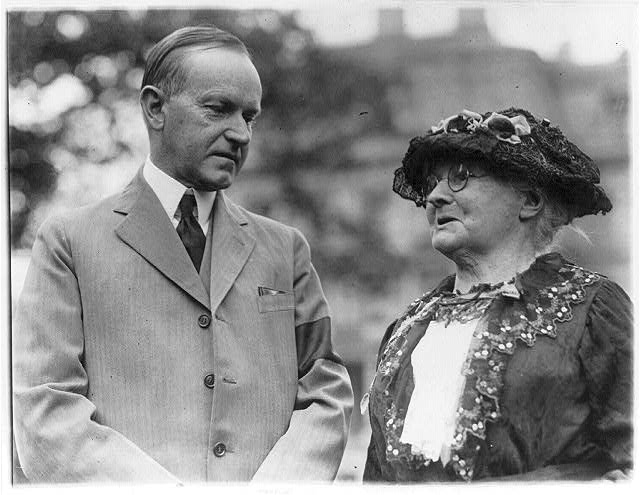
Mother Jones meets President Coolidge in 1924 (Library of Congress)

Mother Jones meets President Coolidge in 1924 (Library of Congress)

Mother Jones helped found the US Social Democratic Party (1898) and the Industrial Workers of the World (1905); she published articles in the International Socialist Review, met and lobbied (and gained the respect of) several Presidents and spent time in jail. On one occasion when violence broke out during a mine strike in West Virginia, a state military court convicted her of conspiracy to commit murder.  Nationwide protest led the Governor to commute her twenty-year sentence.

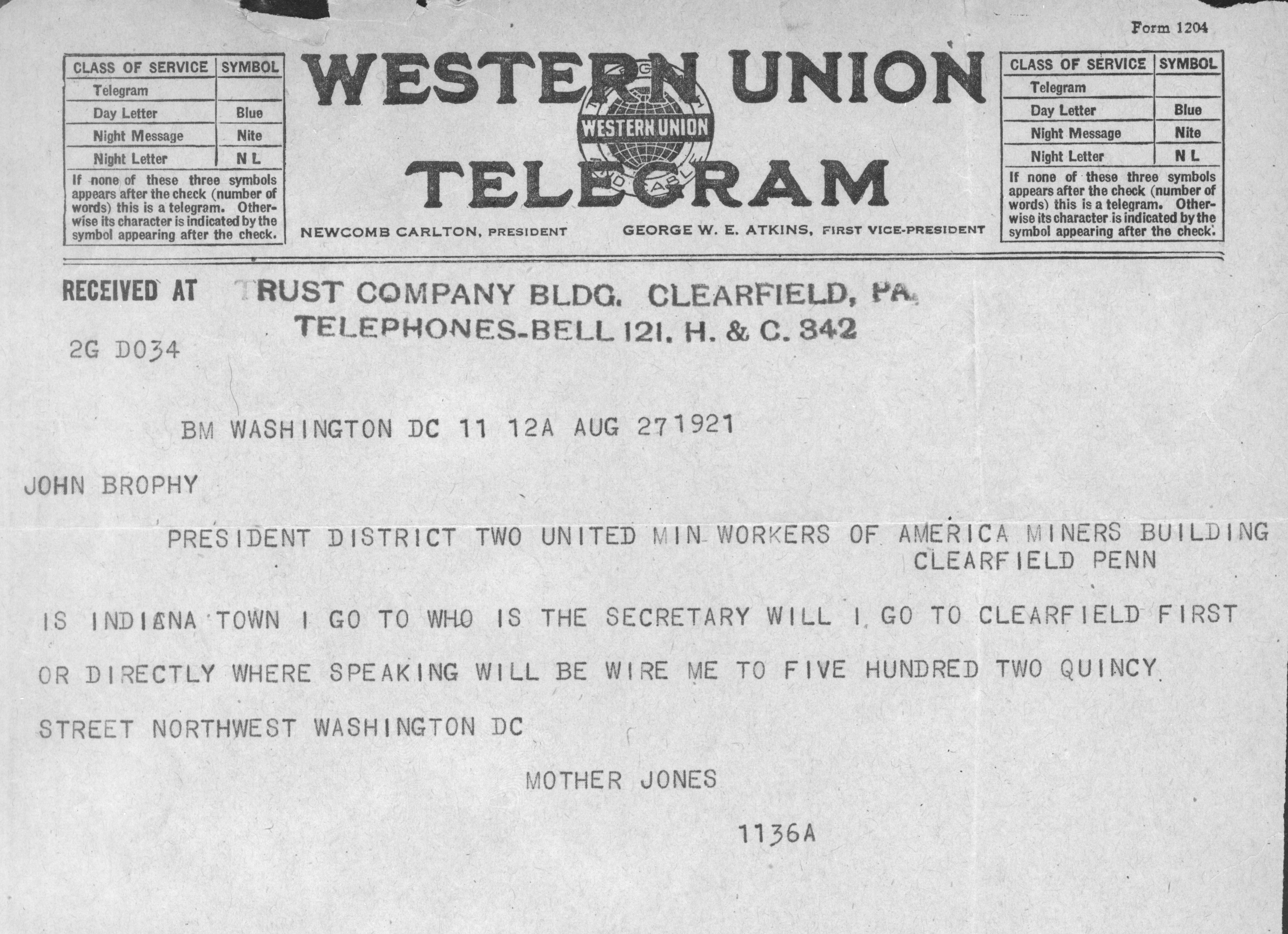
Mother Jones in action in 1921

Mother Jones in action in 1921

Some quotations ascribed to Mother Jones:

A lady is the last thing on earth I want to be.  Capitalists sidetrack the women into clubs and make ladies of them

Pray for the dead and fight like hell for the living

My address is like my shoes. It travels with me. I abide where there is a fight against wrong

No matter what the fight, don’t be ladylike! God almighty made women and the Rockefeller gang of thieves made the ladies

I asked a man in prison once how he happened to be there and he said he had stolen a pair of shoes. I told him if he had stolen a railroad he would be a United States Senator

The employment of children is doing more to fill prisons, insane asylums, almshouses, reformatories, slums, and gin shops than all the efforts of reformers are doing to improve society

I’m not a humanitarian, I’m a hell-raiser

memorial

Strangely, Mary did not support the women’s suffrage movement in the United States: she considered it a middle class diversion taking the focus away from the fight against social injustice and basic universal rights for all workers. In her eighties she was still actively supporting strikes involving streetcar, garment and steel workers.

Mary Harris Jones died on November 30, 1930.  After being celebrated by a mass in Washington DC, she was buried at the Union Miners’ Cemetery in Illinois, next to victims of the Virden, Illinois mine riot of 1898.  Her funeral was attended by thousands of labour supporters, mine workers and other mourners.

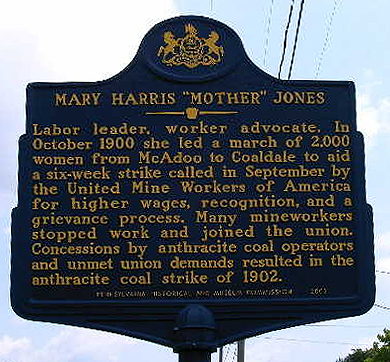
Cork remembers this daughter of revolution: we found a commemorative plaque in the Shandon district, close to the old Butter Market – historically the city’s most notable industry. In the States her name lives on also: Mother Jones is an independent, non-profit making magazine and website reporting on politics, the environment, human rights, and culture ‘…that in its power and reach informs and inspires a more just and democratic world…’

MoJo – the liberal Mother Jones Magazine

Bravo, Mary Harris of Cork, for being so committed to the fight for the basic rights of humanity in general and the working population in particular. And watch out, capitalists and oppressors – as she is reported as saying frequently ‘…the kaisers of this country are next, I tell ye…’

motherjones1