A Tale of Four Churches

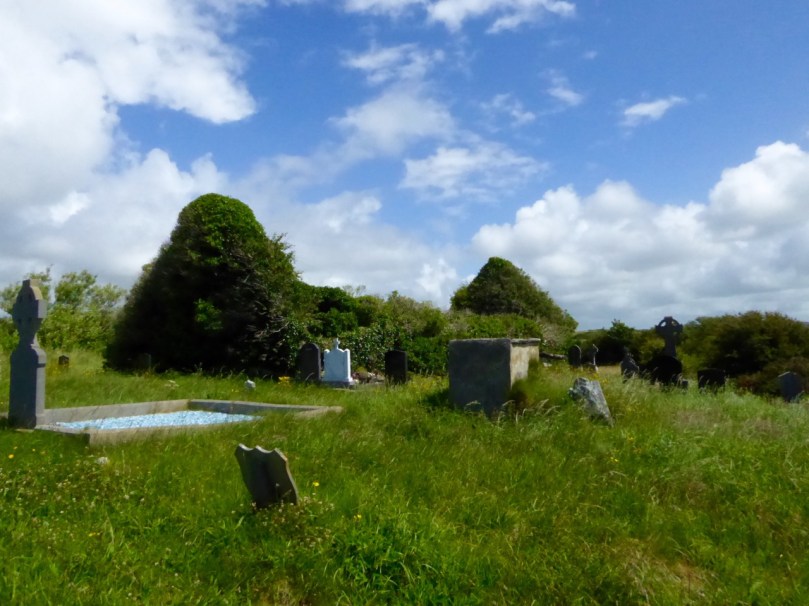
Kilcoe Medieval Church

Kilcoe Medieval Church

Kilcoe is a magical place. The story of its four churches leads us from the dawn of Christianity in Ireland through turbulent times and many centuries when religious differences and sectarian strife marked all aspects of life in Ireland.
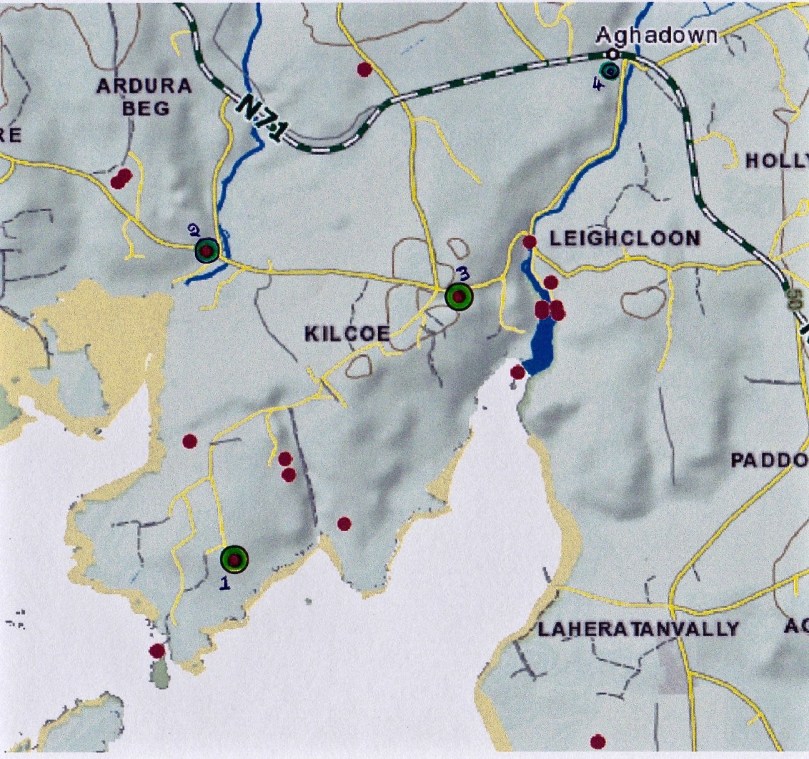
The four churches: 1, Kilcoe Medieval Church  2, Mass Rock 3, Kilcoe 19th Century Church 4, Kilcoe Modern Church of the Most Holy Rosary

The four churches: 1, Kilcoe Medieval Church. 2, Mass Rock. 3, Kilcoe 19th Century Church. 4. Kilcoe Modern Church of the Most Holy Rosary

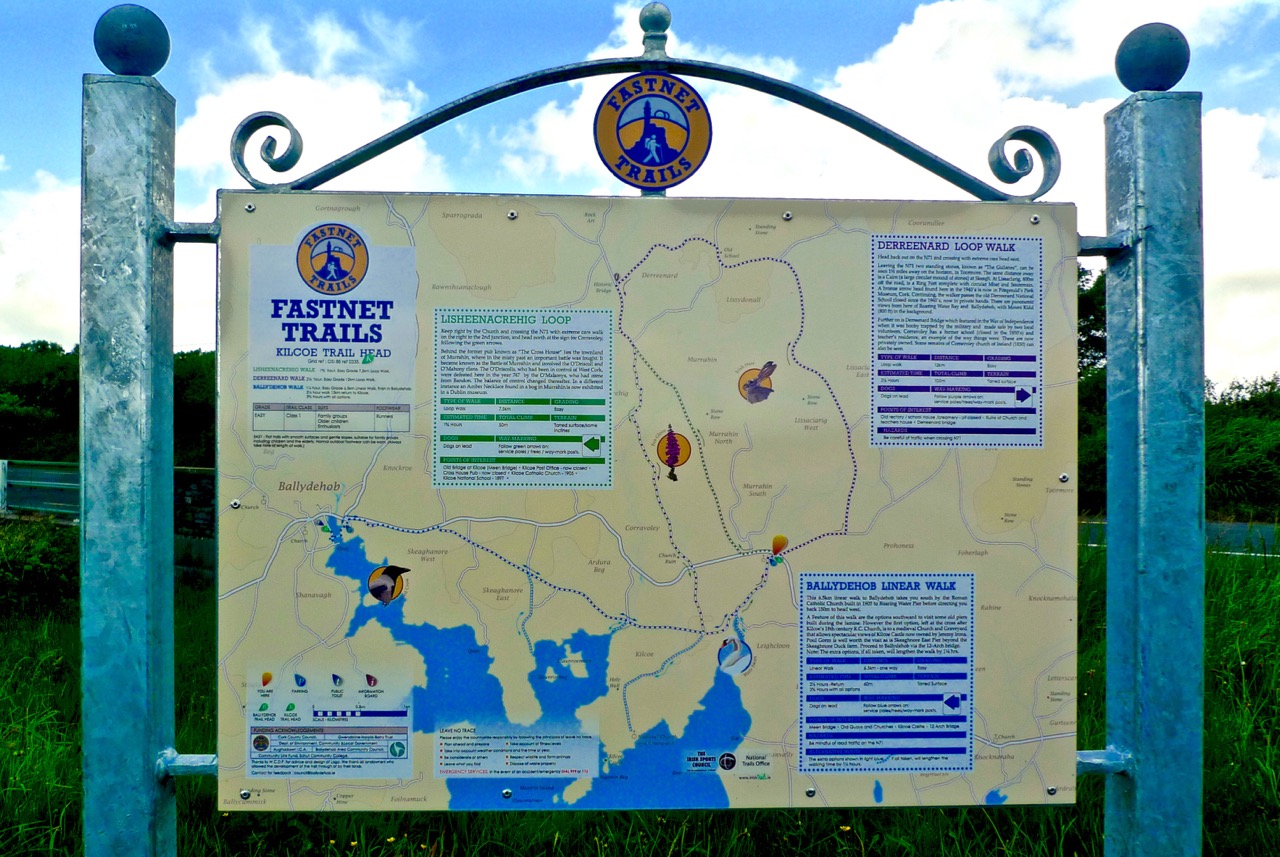
We love going down to the Medieval church at Kilcoe or wandering the boreens along the Roaringwater River. Those boreens are now part of the Fastnet Trail Network and last weekend, at the Launch, we were treated to a talk about the locality from Fr Patrick Hickey, Parish Priest of Timoleague and a noted scholar of West Cork History. This blog post was inspired by that talk – thank you, Fr Hickey!
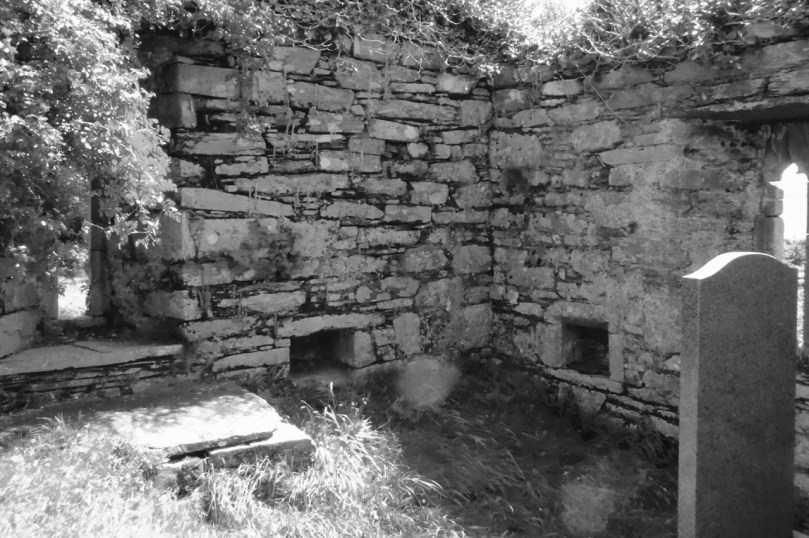
Inside the church, showing the ogival windows, the altar, piscina or stoup, and a small recessed cupboard

Inside the church, showing the ogival windows, the altar, piscina or stoup, and a small recessed cupboard

Kilcoe gets its name from St Coch, a nun said to be a colleague of St Ciarán of Cape Clear, who preached Christianity in Ireland before St Patrick, in the 5th Century. It is possible she founded a church here, but what we do know is that one was built in Medieval times – a building that still exists although the ivy is doing its best to take it over.

It’s a beautiful and atmospheric place, on the water, overlooking Roaringwater Bay. Two castles are in view: Kilcoe and Rincolisky, a McCarthy and an O’Driscoll Castle respectively. Each has a fascinating history that deserves a post of its own sometime. Some special features remain in this ruined church – windows with carved ogees, a lovely arched doorway, a piscina (for washing vessels) or stoup (for washing hands), a recess for storing vessels and the remains of a possible altar.

We don’t know exactly when this church was built or by whom, but we do know it was in ruins by 1615. Perhaps it was destroyed by the same forces that laid siege to Kilcoe Castle after the Battle of Kinsale in 1601 – a period that marked the end of the Old Gaelic Order in West Cork.
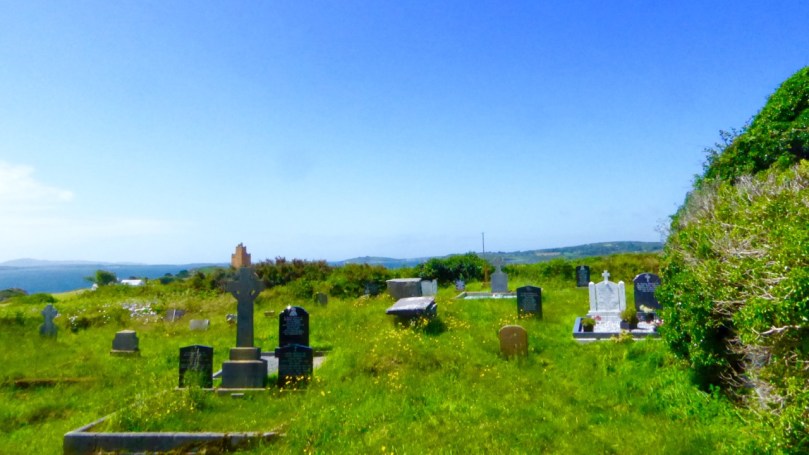
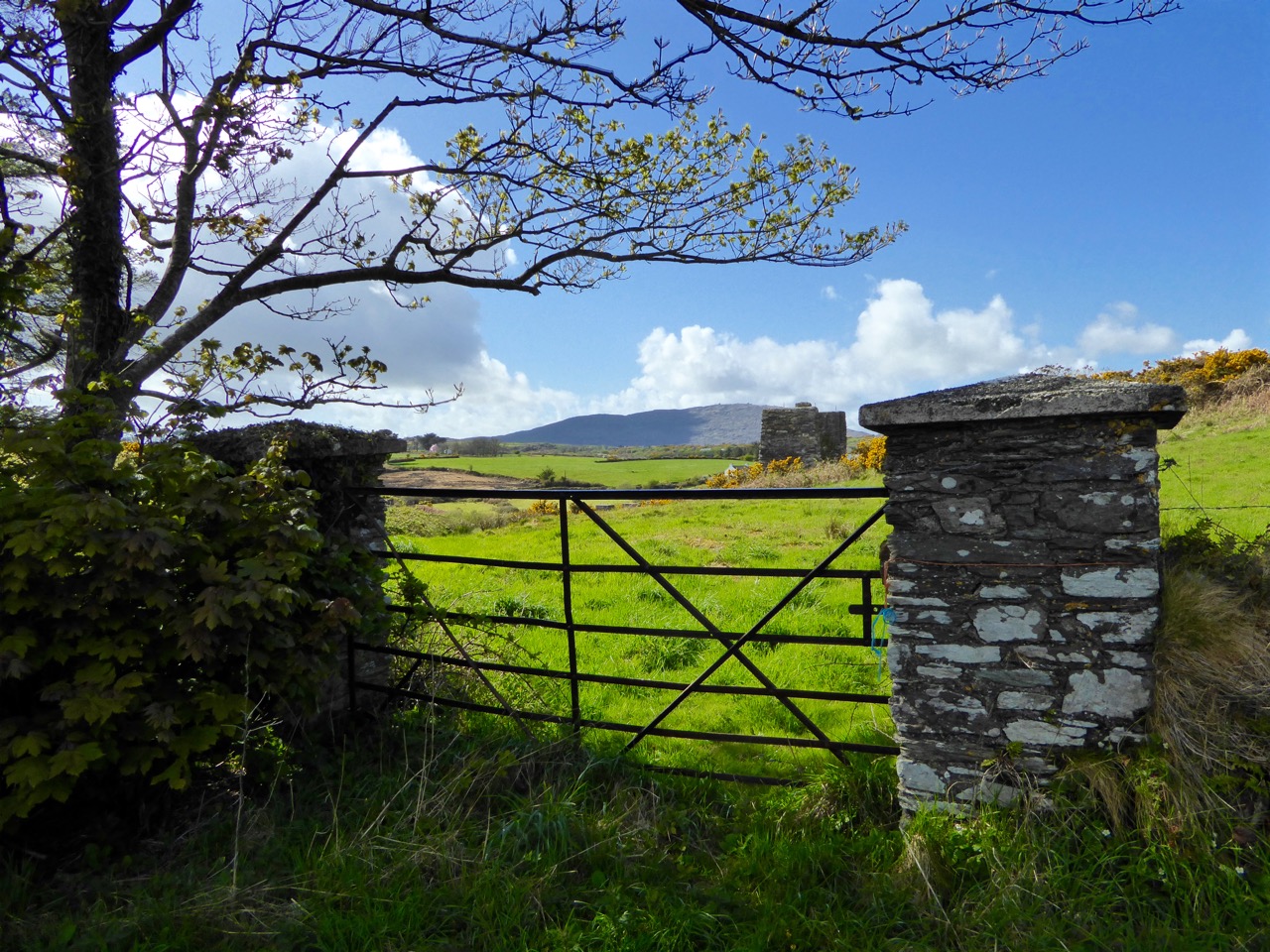
The Medieval church, with Kilcoe Castle in the background.

The Church, with Kilcoe Castle in the background

The rise of the Protestant Ascendancy class in the aftermath of that fateful battle privileged the Church of Ireland (transplanted Anglicanism) over the Catholic faith and a series of new laws, gradually getting harsher, were designed to suppress ‘Romanism’. This culminated in the enactment, in 1695, of the infamous Penal Laws. While attendance at mass was initially tolerated, churches could only be built from wood and away from roads. Eventually, priests were expelled from Ireland and after that mass had to be held in secret, with priests moving from hiding place to hiding place. At Roaringwater Pier Fr Hickey talked of the typical cargo of the smuggling ships that plied their trade from there: each ship to arrive from France would be carrying tobacco, brandy – and a priest!

From this period we find the Mass Rocks scattered around rural Ireland, identified on the basis of local tradition. The one at Ardura Beg is just up from a tiny pier that would have offered possibility of a quick escape. Many stories have come down of lookouts warning of the approach of the ‘red coats’ and the miraculous ways in which priests would make their escape. (See here and here for examples.)
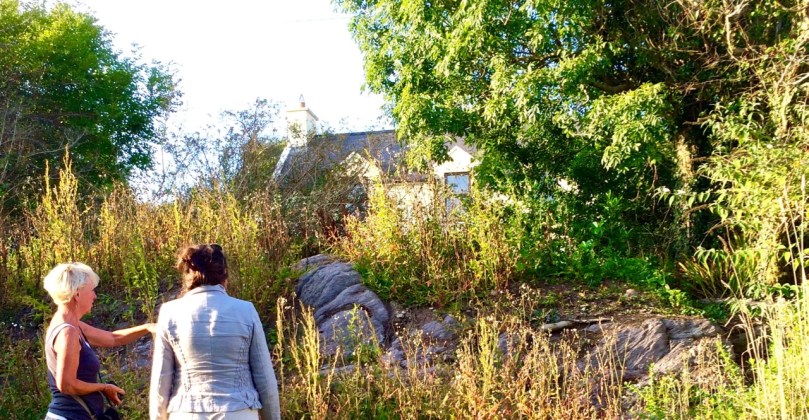
Sheona and Amanda examine the mass rock at Ardura Beg

Sheona and Amanda examine the mass rock at Ardura Beg

Places of worship must be located where they are accessible and the first two are close by the sea, which afforded the easiest travel routes in Ireland for most of its history. However, roads were constructed eventually and the next two churches were located along these new routes. The first one, we’ll call it the Old Church, was built along the new road that led from Skibbereen to the Beara Peninsula. After 1778 the anti-Catholic laws were gradually relaxed, although it was not until 1829 that full Catholic Emancipation was won by Daniel O’Connell. The Old Church was probably built around 1800 and was a simple ‘barn-style’ edifice which served an impoverished and famine-stricken populace for a hundred years.

Left, the Old Church near Roaringwater Pier. Right, an example of a simple ‘barn style’ church in West Cork

By the turn of the 20th Century it was deemed unfit for purpose. Nowadays it is a gentle green space, lovingly tended and in use as a grotto. Children were buried there – it was not a cillín, but a consecrated graveyard – and a memorial remembers them now.
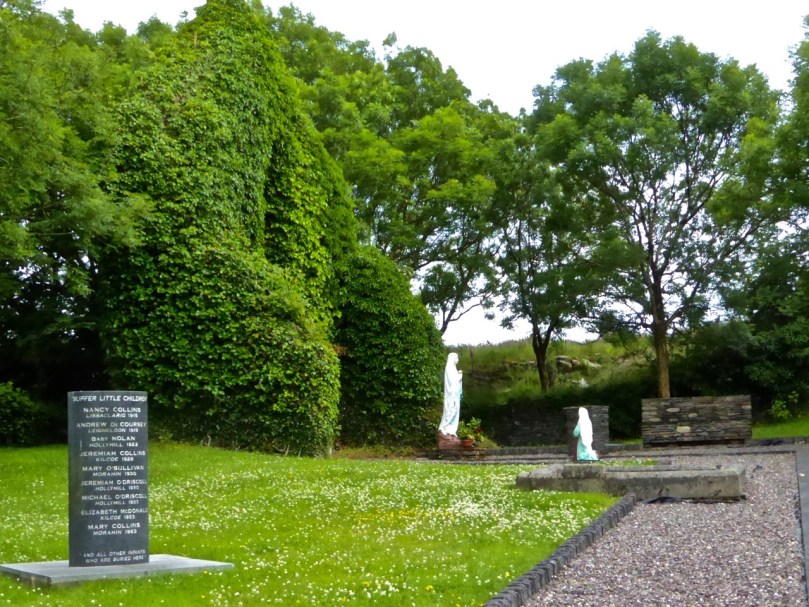
Grotto and Chirdren Memorial. A place for contemplation

Grotto and Children’s Memorial. A place for contemplation

Catholic Emancipation ushered in a long period of church building by the newly-confident Catholic majority. The new road from Skibbereen to Ballydehob was constructed at the end of the 19th century and the New Church was built there in 1905, right beside the bridge over the Roaringwater River.

Kilcoe Church and Bridge

Bridge over Roaringwater River

The two styles of churches common at the time were Neo-Gothic, Influenced by continental cathedrals, and Hiberno-Romanesque which took its inspiration from the Early Medieval Romanesque style of Old Ireland and featured wonderful doorways and round towers. The Kilcoe New Church, the Church of the Most Holy Rosary, was built in the Neo-Gothic style, with a large rose window at the eastern end.
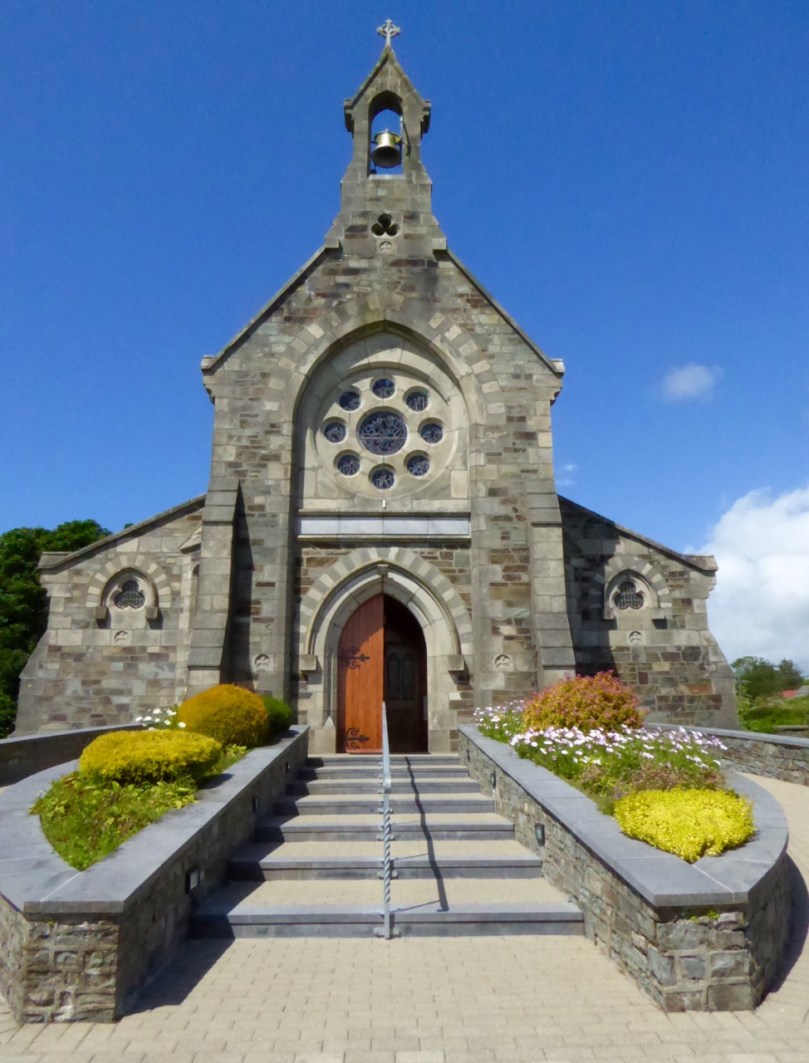
Kilcoe, Church of the Most Holy Rosary

Kilcoe, Church of the Most Holy Rosary

Originally the side-aisles did not have seats – poorer people could stand there for mass, while those who could afford a penny would occupy the pews. As the church fund grew, thought was put into ornamentation and stained glass was commissioned for several windows. The rose window was executed by the Harry Clarke Studios in 1943 and shows scenes from the life of Christ and of Mary.
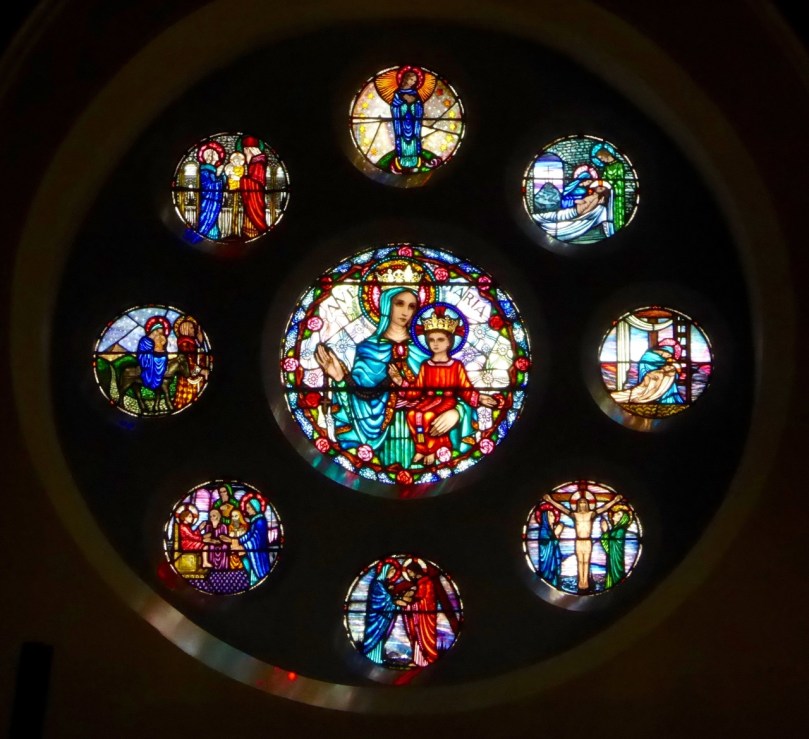
The Rose Window, by the Harry Clarke Studio

The Rose Window, by the Harry Clarke Studio

The Altar and side windows were the work of Sarah Purser’s Tower of Glass. The choice of stained glass – from Dublin-based Celtic Revival artists rather than the English or Continental firms that supplied most church glass at the time –  was a choice that demonstrates the nationalistic feelings that were rife in West Cork at the time.

Irish History is written large on her landscape. In this one small area – these sites are within a couple of kilometres of each other – we see encapsulated sixteen hundred years of history, starting with St Coch and ending with the latest incarnation of a church at Kilcoe. Their beauty and their peaceful settings have been hard won. They should serve to remind us that peace and tolerance must always be cherished and safeguarded.
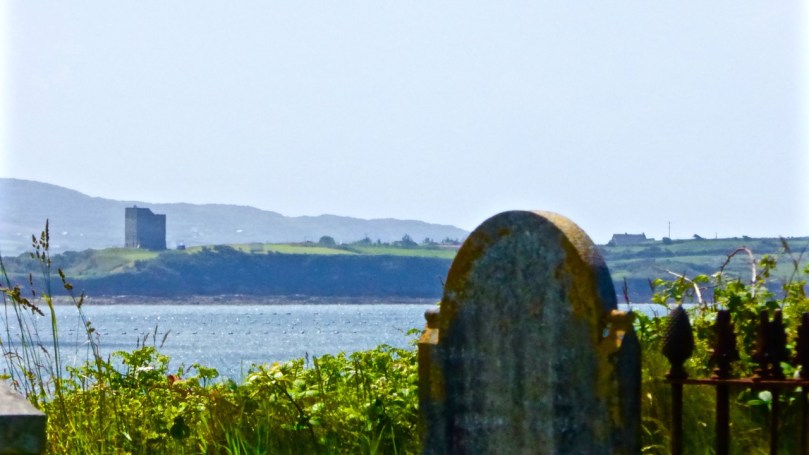
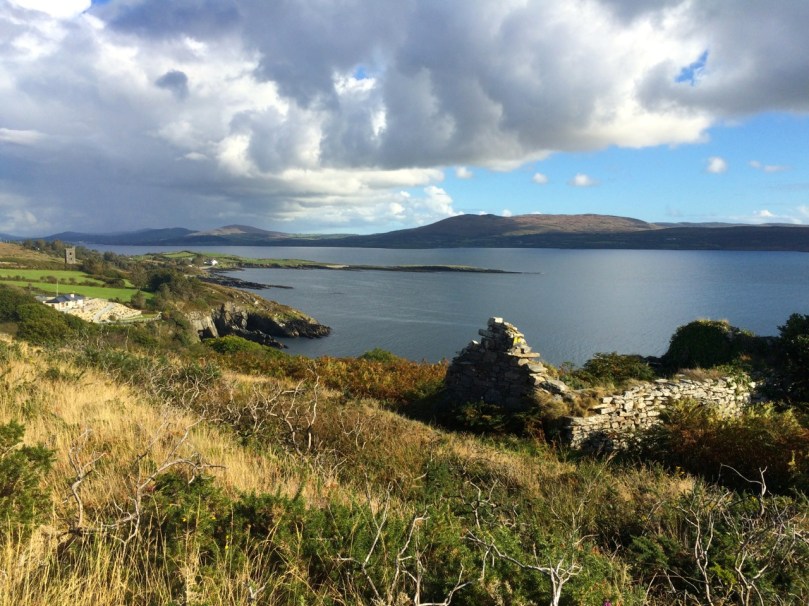
Rincolisky Castle from Kilcoe Medieval Church

Rincolisky Castle from Kilcoe Medieval Church

Closer Encounters – Fastnet Trails

The view from Cappaghglass, on the Rossbrin Walk

The view from Ballycummisk, on the Rossbrin Walk

Today (Sunday 28 June) a newly established system of walking trails was formally launched – by longstanding local TD (now retired) Jim O’Keefe – at Aughadown: we were part of the crowd

The Unveiling – from top left: mover and shaker Eugene McSweeney with Jim O’Keefe; Jim and the Fastnet Walk Trails Group Committee cutting the ribbon; on the inaugural walk – Fr Patrick Hickey giving us the low-down on smuggling at Roaringwater Pier; the wonderful Kilcoe National School Band
At Kilcoe Trailhead - the walks unveiled!

At Kilcoe Trailhead – the walks unveiled!

Rediscovering what we’ve only recently discovered… is that the best way of describing our experiences exploring the just launched Fastnet Trails? We have been traversing and driving around the boreens – local lanes and byways – that permeate this beautiful stretch of coastline and country on our own peninsula (Ballydehob is colloquially termed ‘the Gateway to the Mizen’) for the full two years that we have lived permanently here at Nead an Iolair. We have taken in the vistas – from the windows of our car – and appreciated the profuse combinations of sky, sea and mountain as we passed on our way; now, we are seeing everything anew, and in closer focus, because we have started to walk the trails.

Cornflowers

Old Copper Mine at Ballycummisk (Rossbrin Walk)

Old Copper Mine at Ballycummisk (Rossbrin Walk)

Towards Mount Gabriel - Butter Road Walk

Towards Mount Gabriel – Butter Road Walk

It may seem strange that many of these walks are along roads but don’t let that put you off! Remember that here in rural Ireland the old lanes were made to serve farmsteads and are little used today by anything more than very local traffic. I did the hike home from Ballydehob this morning (after my usual excellent coffee break in Budds) on the long route, passing by Ard Glas (Ballydehob Rossbrin Walk): I pootled along for well over an hour and didn’t see a single vehicle in the whole of that time! In fact, a passing car (or bicycle or tractor) is an event: invariably it involves a pause in walking while the time of day is passed in leisurely conversation during which acquaintances are made and news is passed on…
Have you time for a chat?

Have you time for a chat?

P1050062

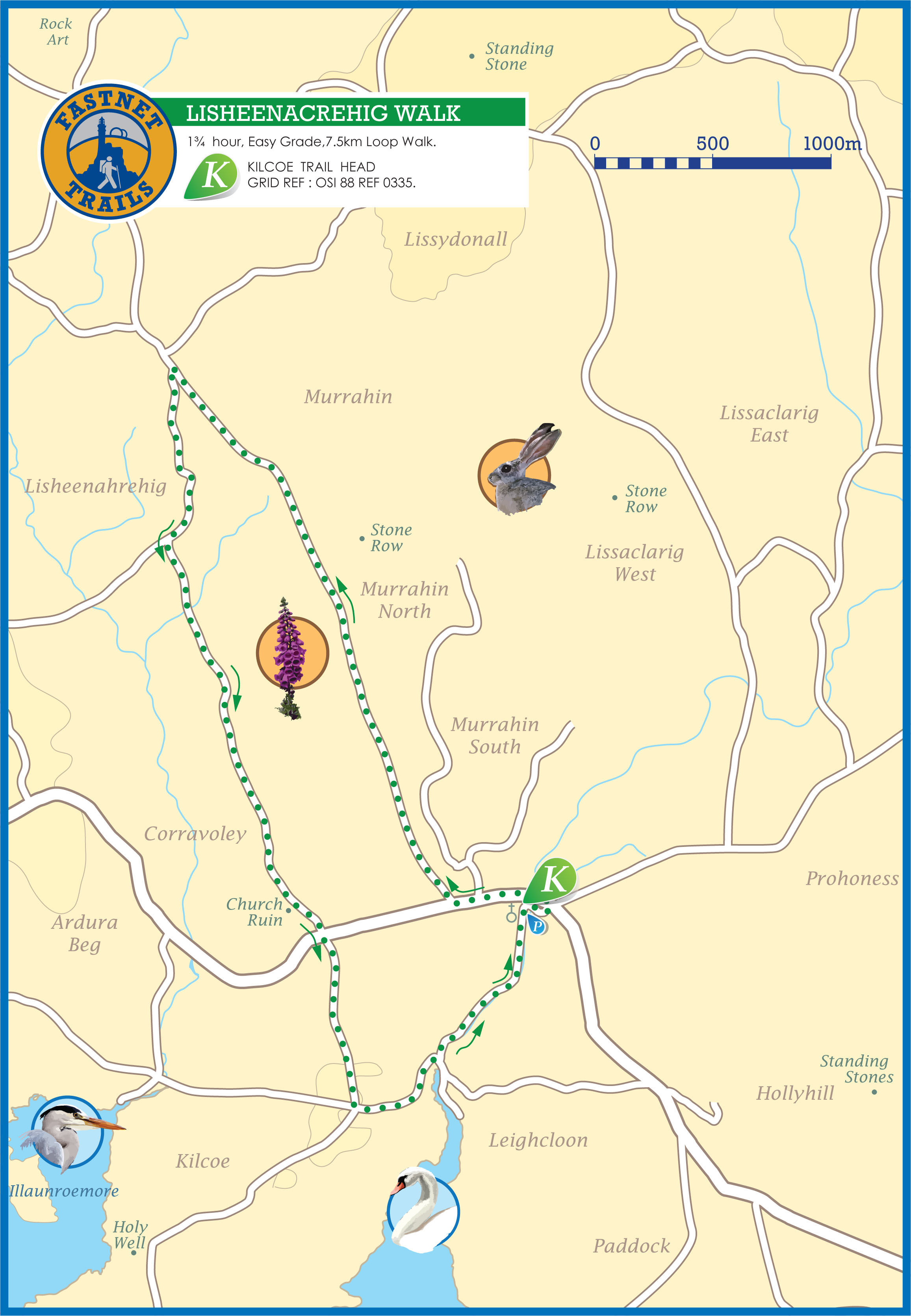
lisheenacrehig map

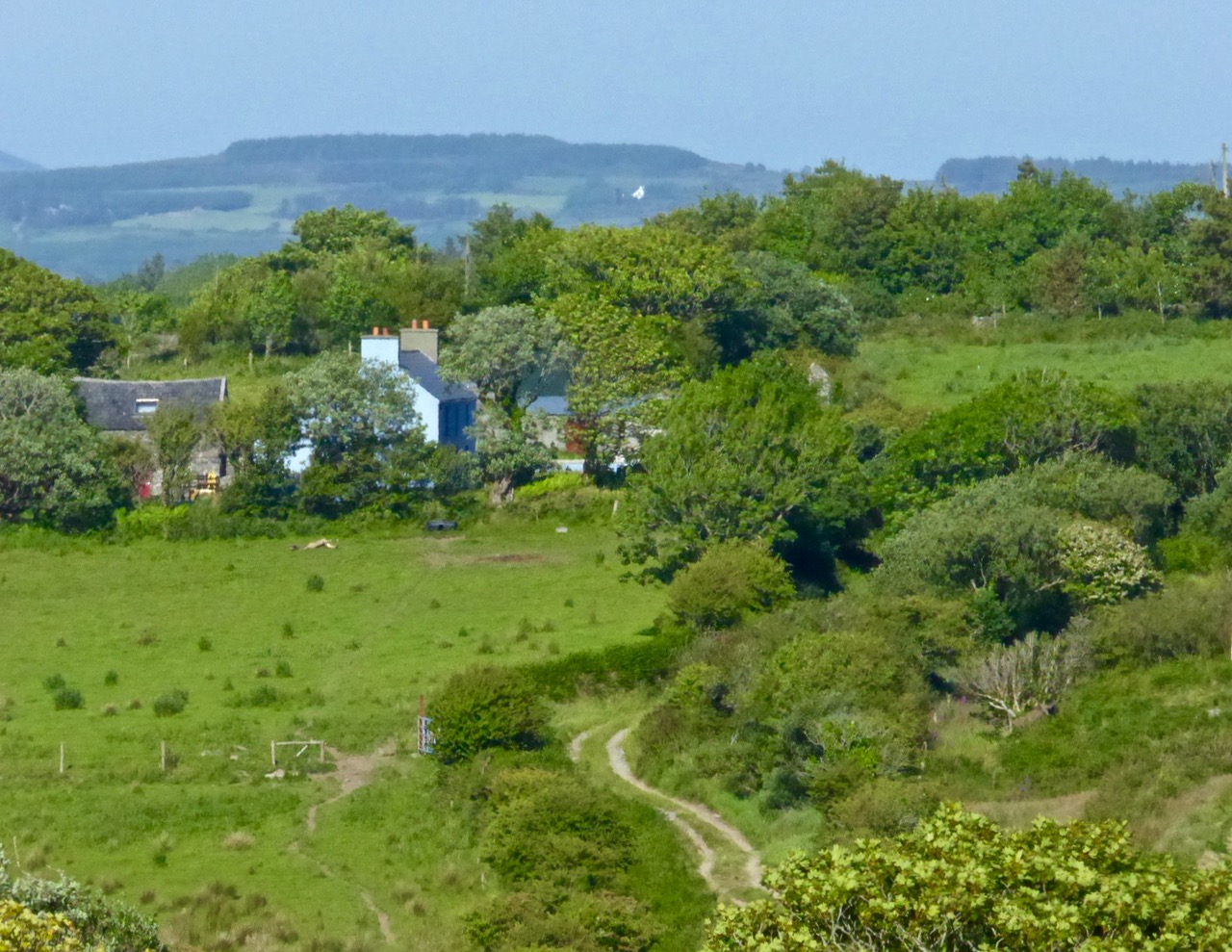
Before the official opening Finola and I undertook one of the walks (Lissheenacrehig Walk, starting at Kilcoe Trail Head): we deliberately chose the one that seemed perhaps the least interesting as it heads north inland and doesn’t pass directly by Roaringwater Bay. I’m not sure what we expected – after all, we had travelled all the little roads on this route by car previously – we are great explorers! In fact, our eyes were opened and we were surprised to be presented with wide views focussing on Mounts Gabriel, Kidd, Corrin and all the rugged uplands in between, and to be given the huge bonus of time to stop and scour inviting rock surfaces for new examples of Rock Art (we didn’t find any). But also it was the closer encounters which we really valued: a wealth (if that really is the right word?) of ruined sheds and cottages; wells, walls and wild flowers; an old burial ground with its memories of lives lived; the tumbling waters and green rocks of the Roaringwater River just before it empties itself into the Bay; archaeology (viewed from a distance on this occasion – the standing stones and ring forts are on private land and – as always – permission should be sought from the owners prior to visiting: that, of course, creating further opportunities for chat and dawdling).

View to Mount Kidd, Rossbrin Walk

View to Mount Kidd, Rossbrin Walk

Butter Road Walk

Butter Road Walk

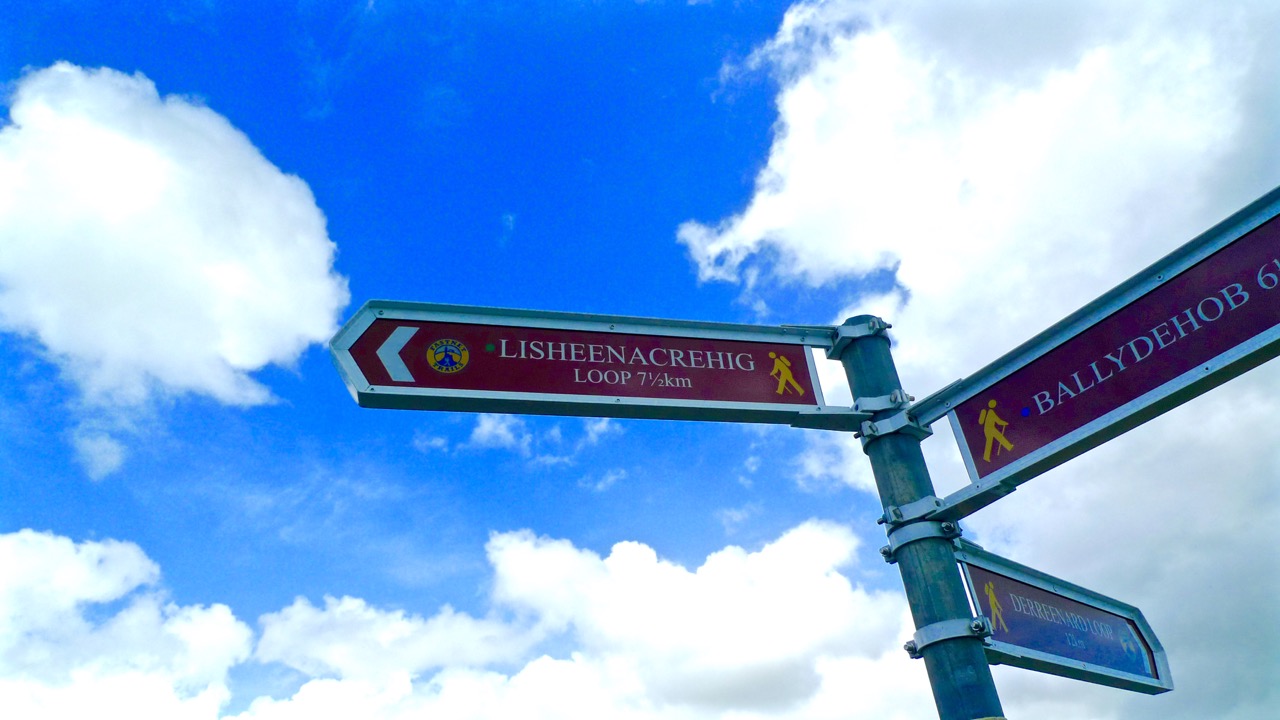
The signage on these walks is clear but discrete – you’d have to try very hard to lose your way. Very occasionally there are information boards: these have been well thought out and attractively drafted. At the end of our sample walk we realised we had taken three hours to do the 7.5 kilometres: the well produced trail information recommends allowing an hour and three quarters! I think that emphasises our predisposition to get diverted in every possible way…

pathsign

Discrete signage on the Butter Road

Signage on the Butter Road

Bucolic

Useful signs along the way…

In all there are 80km of walks set out, from Schull in the west to Lisheen in the east. They are easily accessible, and there is ample parking at all the Trailheads.

gatepost

The one trail which is largely away from surfaced roads is the Butter Walk, running between Ballydehob and Schull. This an ancient way – Finola has written about it and its fascinating history previously. It’s magical to get into the heart of rural Ireland and to immerse yourself in nature and a past writ so clearly on the landscape.

Along the Butter Road

Along the Butter Road

We really believe that West Cork is pulsating with an underlying energy! So much has happened (and is happening) during our time here. Much of it is, of course, down to people who have been working away for years – often behind the scenes and, therefore, unappreciated – but future generations will realise what a debt is owed to these innovators: West Cork has been steadily and deservedly building its reputation as good food capital of Ireland, for example – and the opening of Uillinn in Skibbereen will emphasise the equal importance and historical context of the arts in these remoter landscapes. For music, drama and literature, also, we are always spoilt for choice: the furthest we have to travel is half an hour to see and hear world class performers in all these genres.

Roaringwater River, Lisheenacrahig Walk

Roaringwater River, Lisheenacrehig Walk

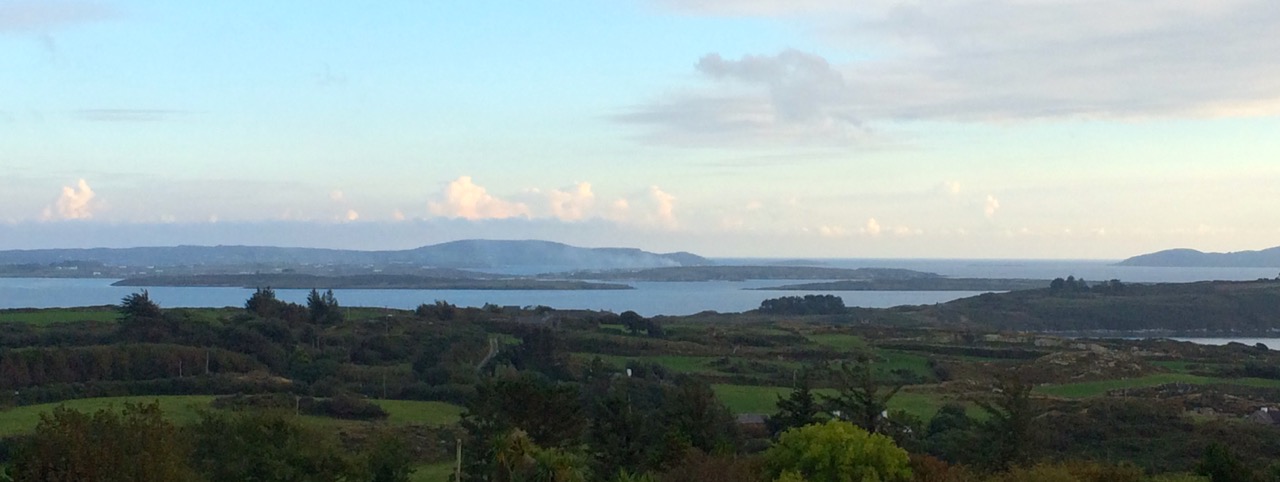
Roaringwater Bay Panorama

The latest asset to bring West Cork to the fore is this – literally – trailblazing one: the establishment of a network of walking routes along the coast, through the countryside and into the wild places. Fastnet Trails has been quietly gestating now for some time: the launch today shows how much work has been undertaken already – and what fruition has been attained. On behalf of everyone locally we thank the organisers for achieving the realisation of their dreams which benefit all of us and the generations to come. A grand start has been made: undoubtedly, more good works will follow.

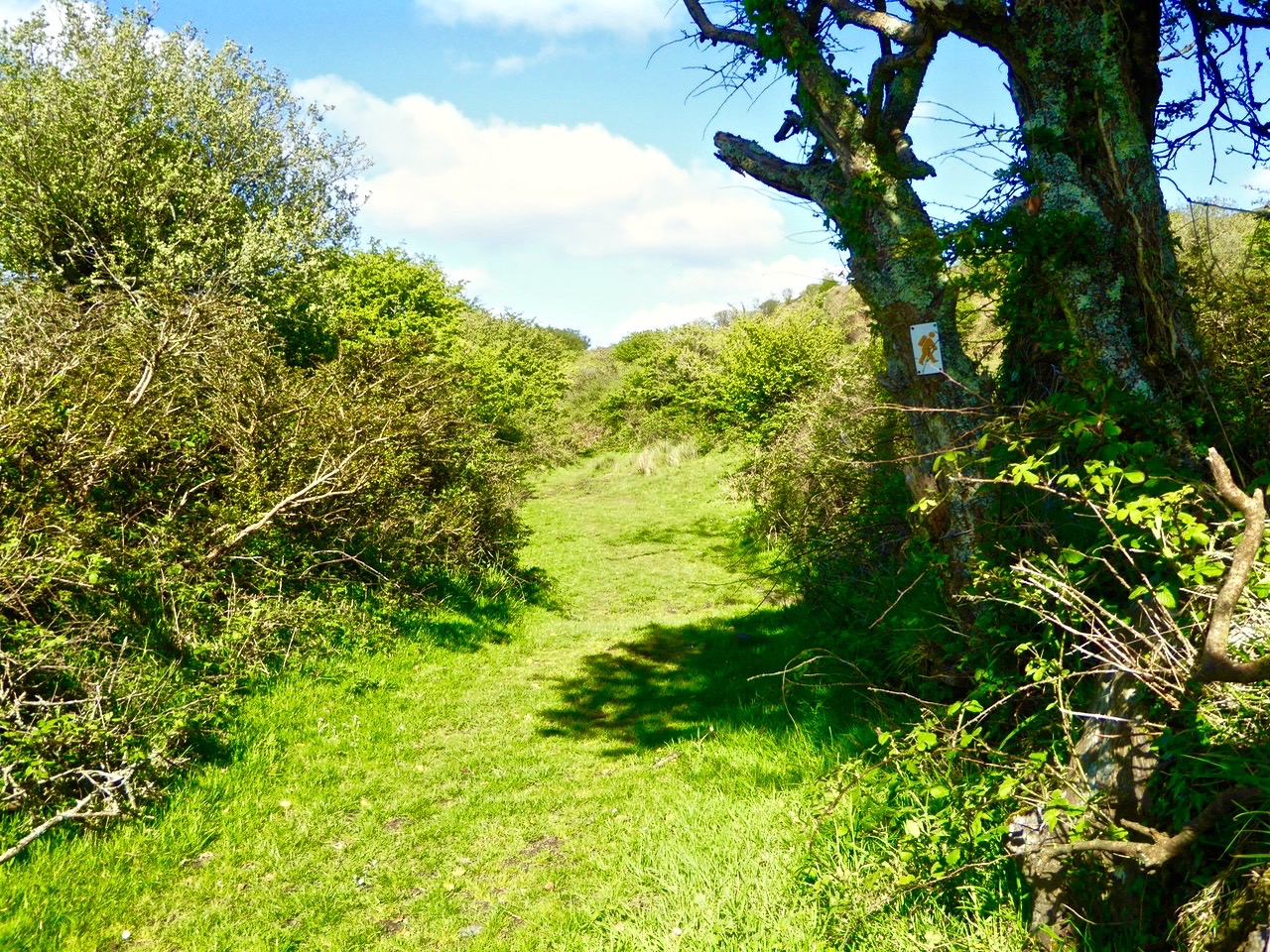
Light and shade: Lisheenacrahig Walk

Light and shade: Lisheenacrehig Walk

Lisheenacrehig Loop

Fastnet Trails are recognised by the National Trails Office and the Wild Atlantic Way: the venture has been organised by The Fastnet Walks Trails Group with the help of the Community Councils of Aughadown, Ballydehob and Schull

fastnet_trails_a3.indd

Impressions

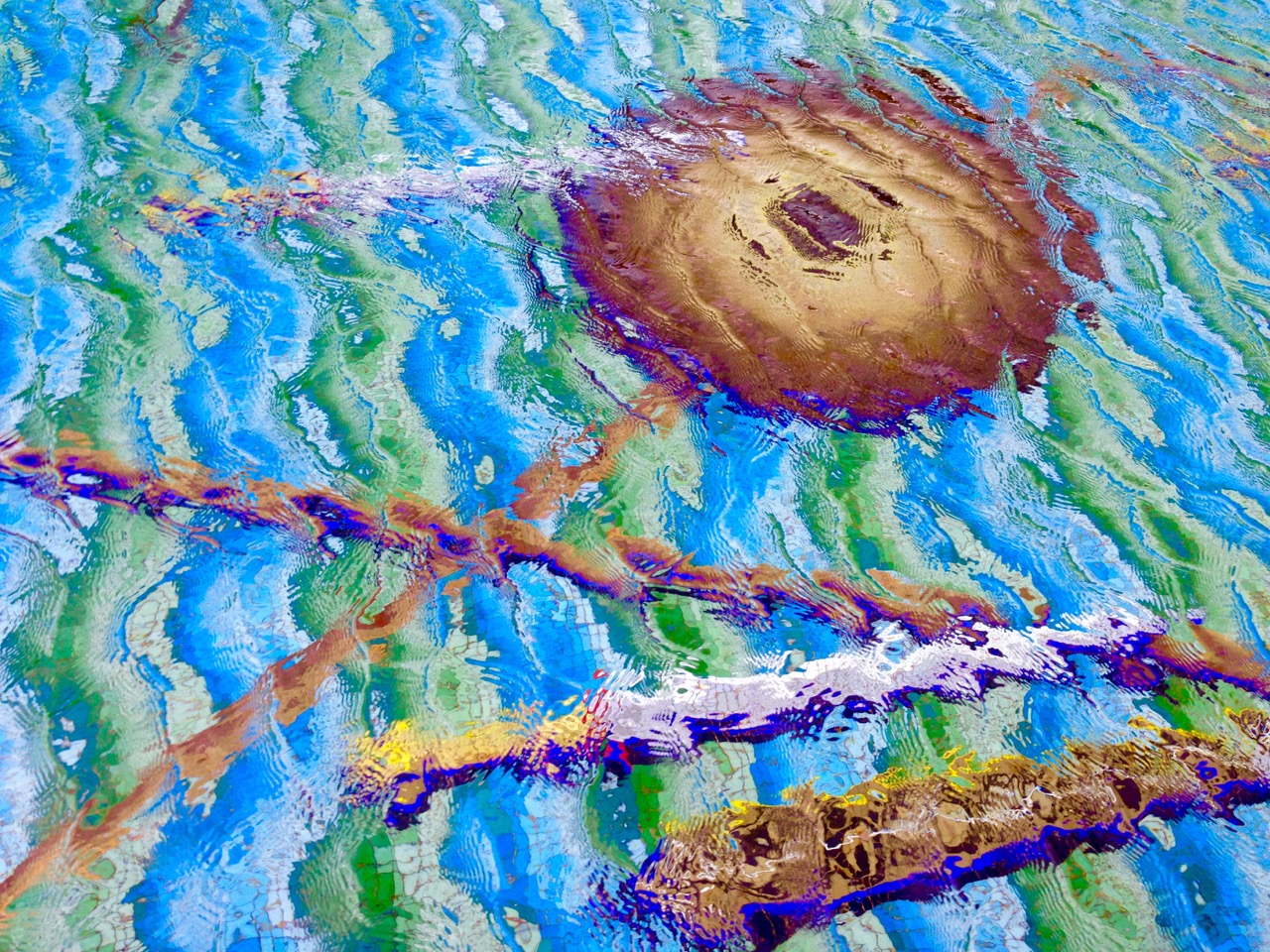
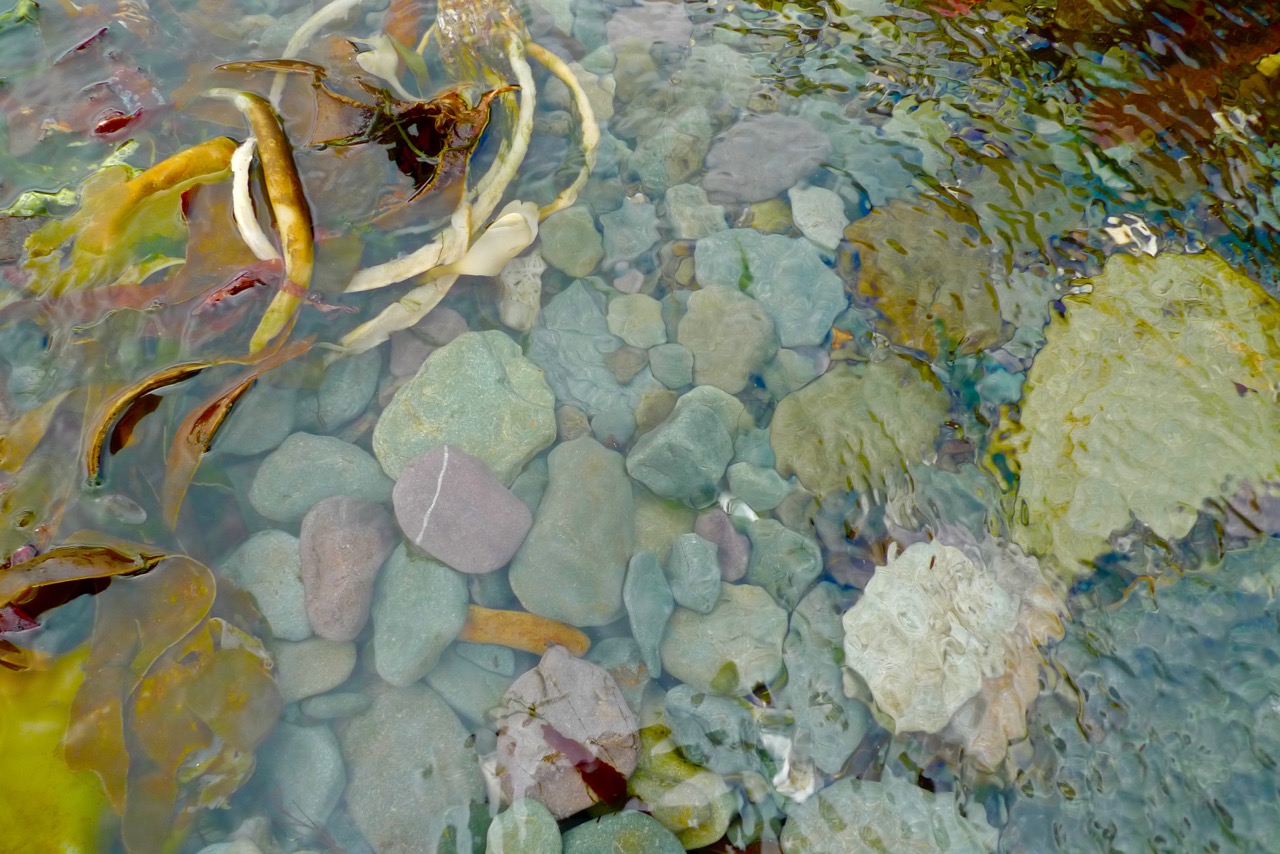
Water worlds - in a Dublin park, above and in the wilds of West Cork, below

Water worlds – in a Dublin park, above and in the wilds of West Cork, below

water 2

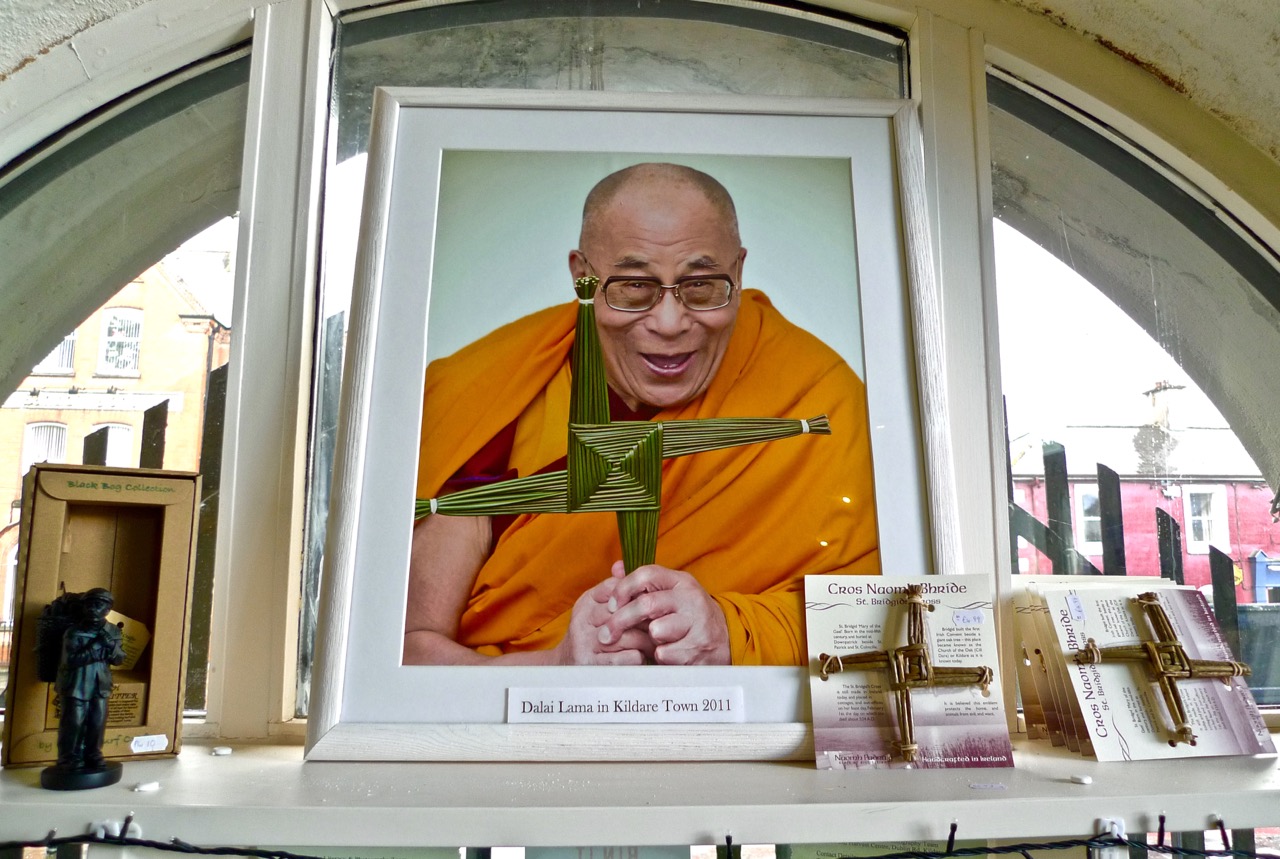
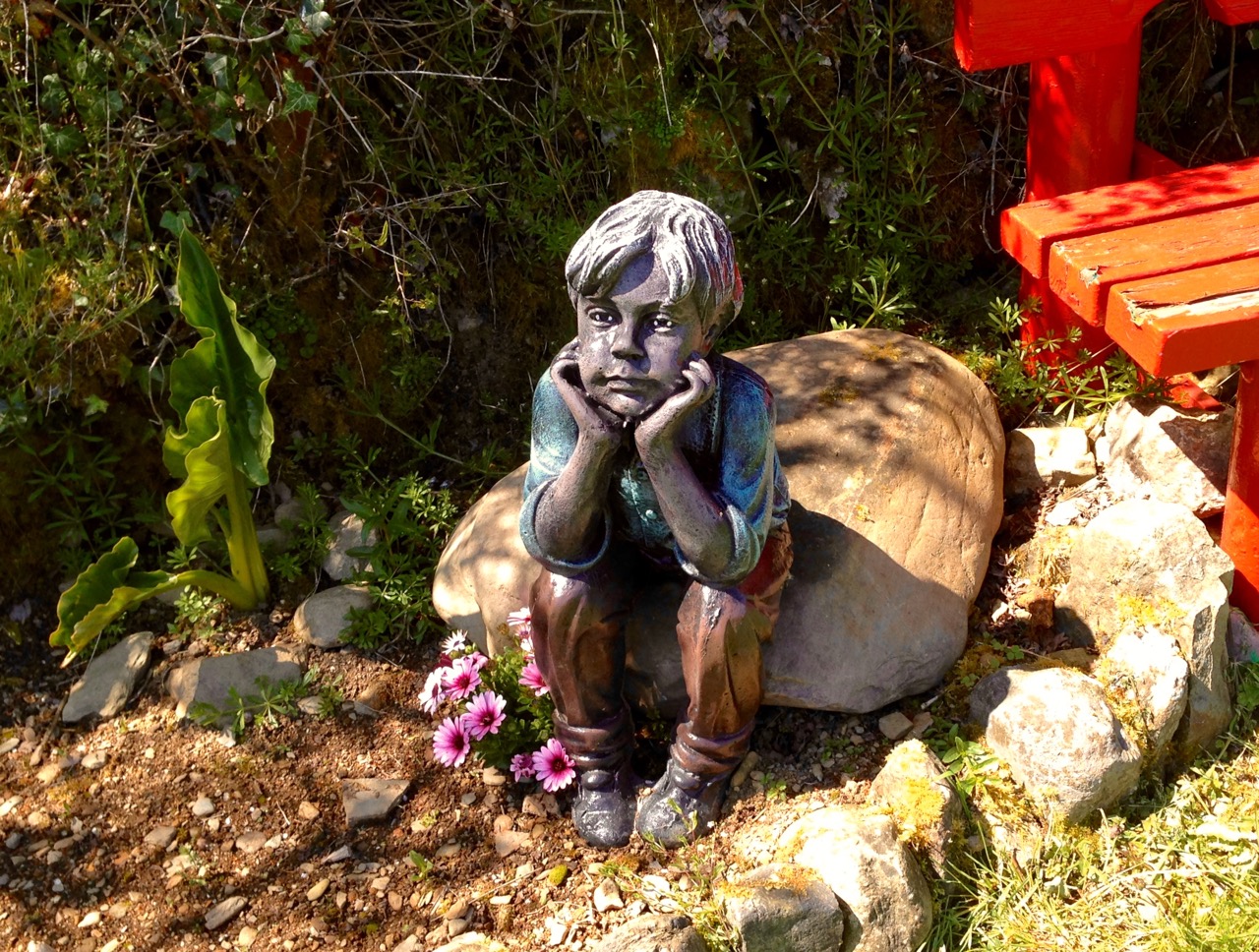
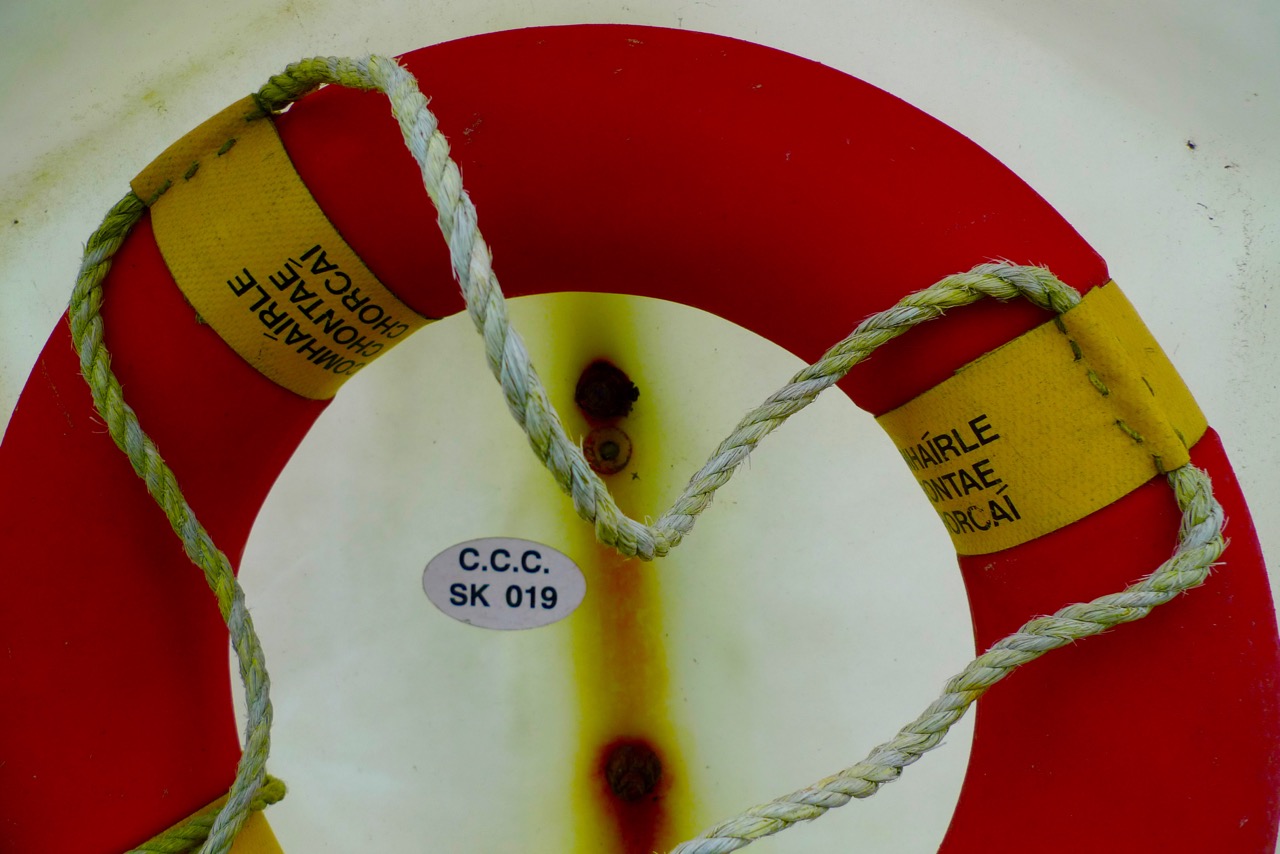
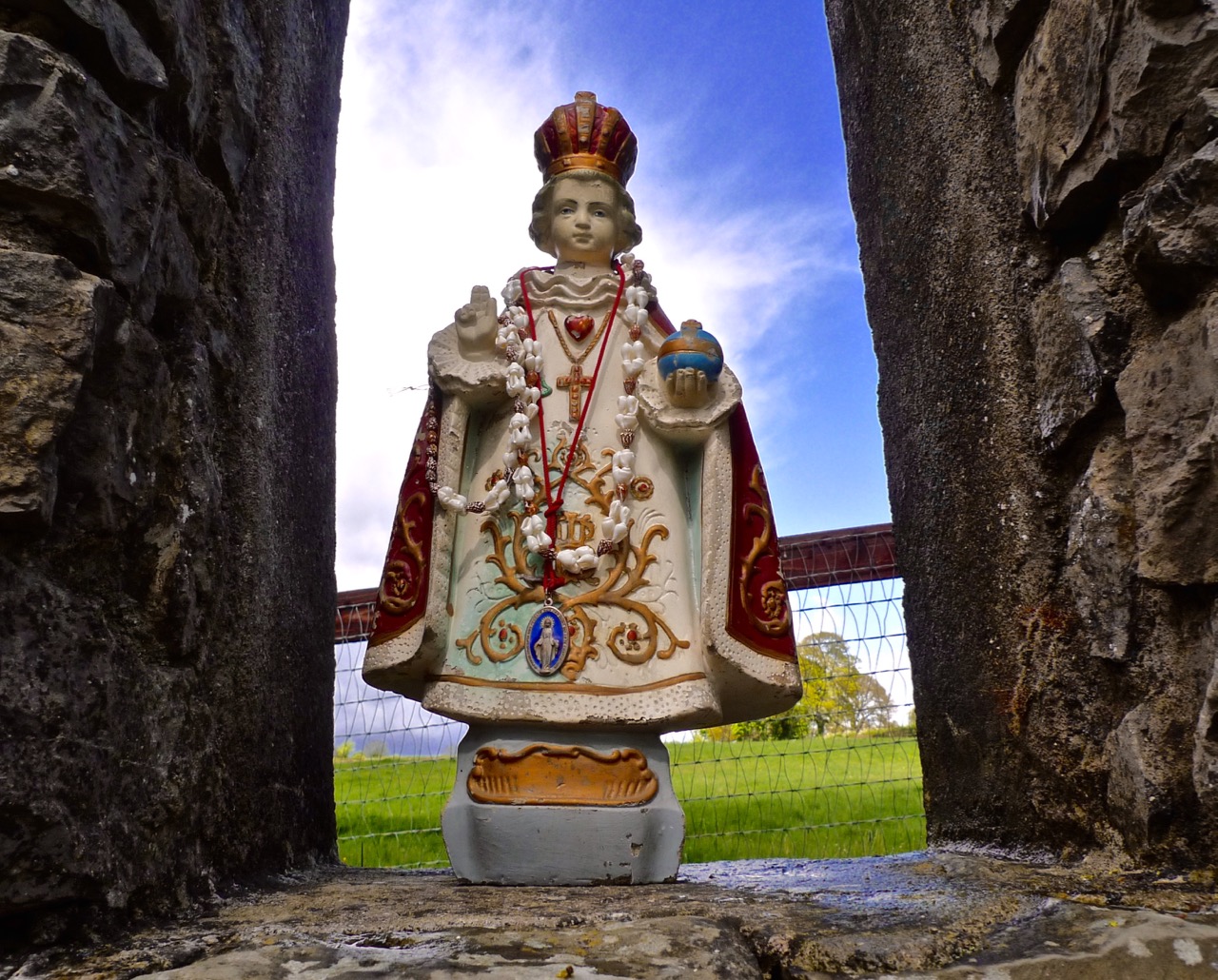
It’s over two years since I had a round up of the odd, quirky – or perhaps just very Irish – things that catch my eye during our travels. I called that post Juxtapositions. Here’s another collection of images that have fascinated me enough to record them with the camera. As in Juxtapositions, I have tried to show these pictures in context where it counts – or just let them speak for themselves. Sometimes I’ve added a little text, perhaps to amplify why I have been attracted by certain Impressions

lion

lions

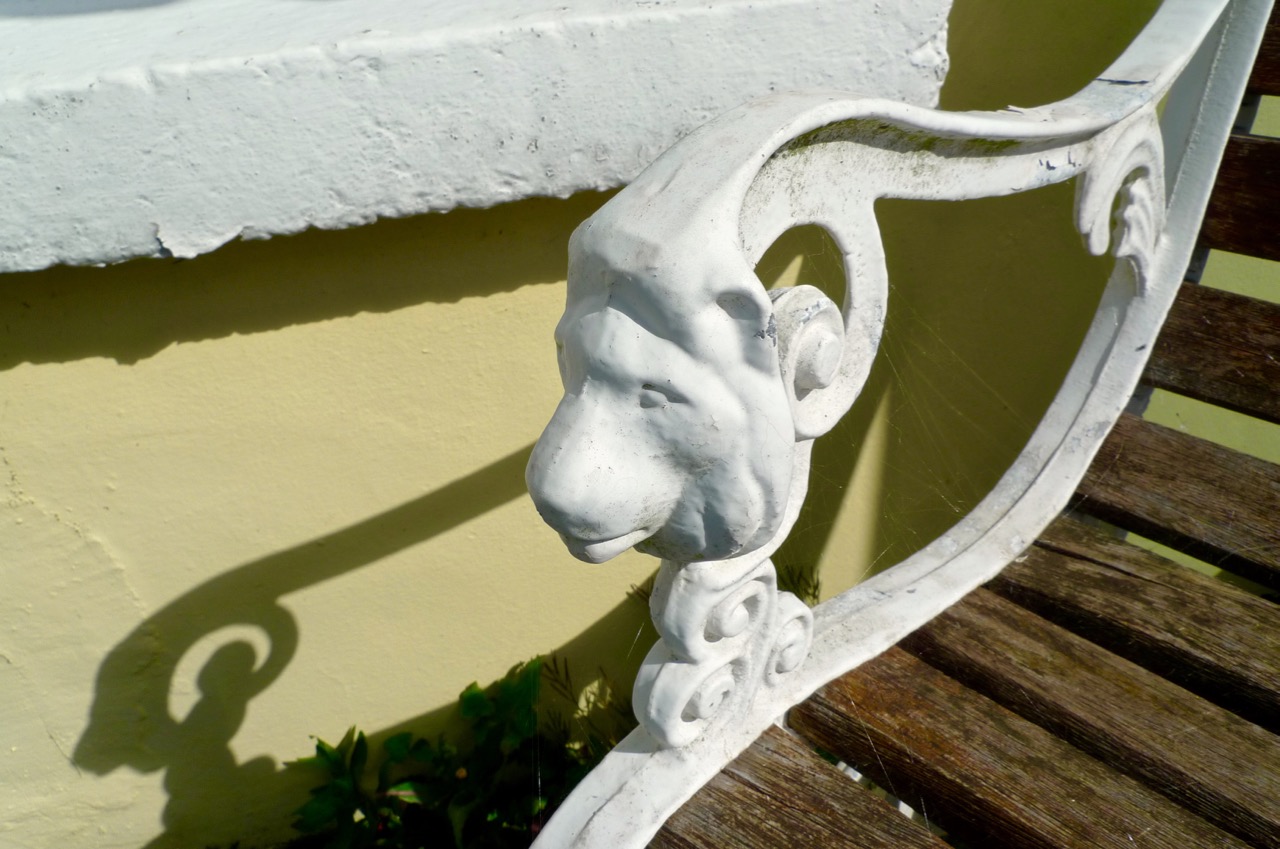
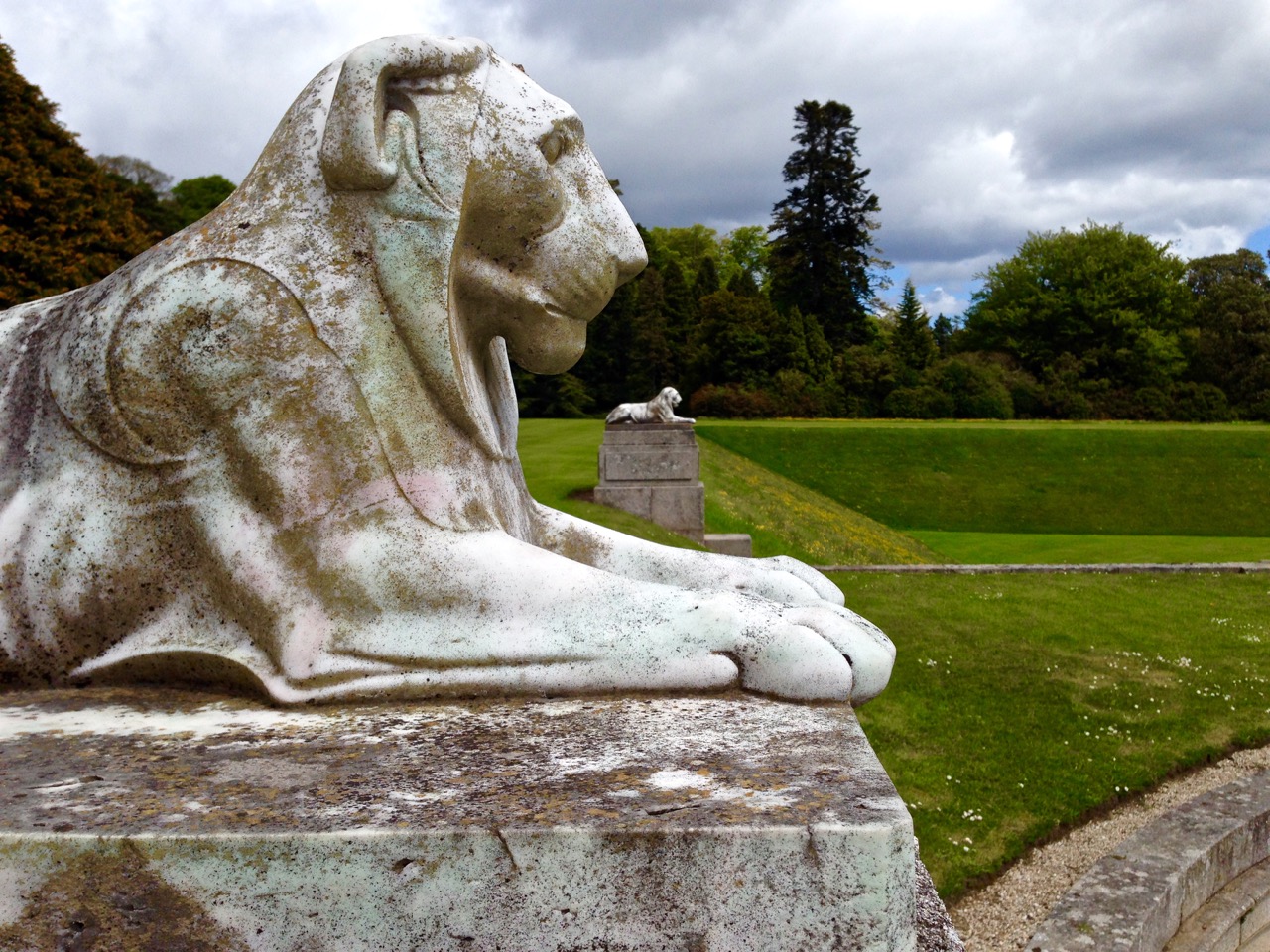
Gentrified Lions at Powerscourt, Co Wicklow, and a domesticated version, above

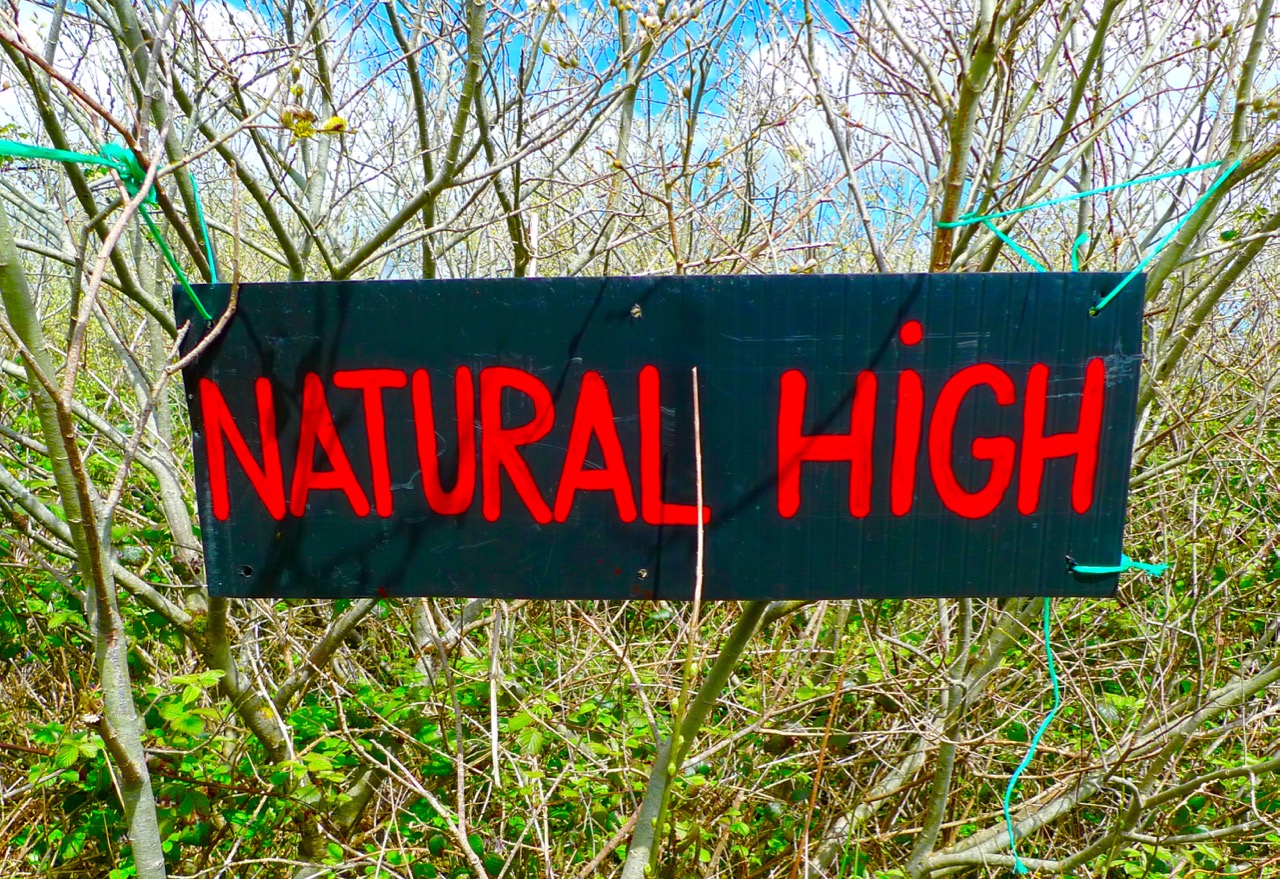
Some high things…

high

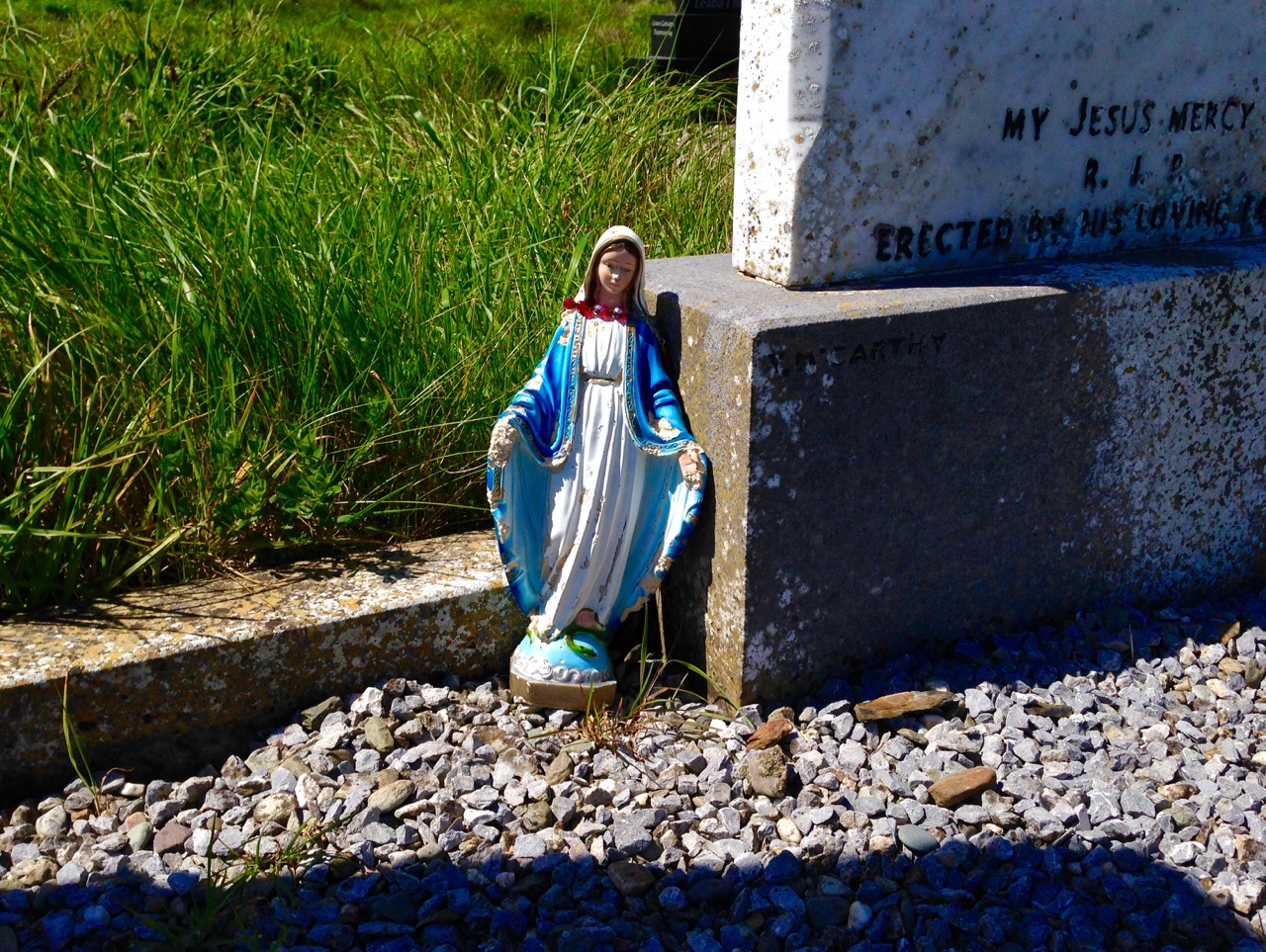
…and some little things…

little mary

pegs

fence

Startling Impressions…

Above left – an ancient stone cross in an urban setting, and – above right – the statue of Cúchulainn – a memorial to the 1916 uprising: an impossible-to-photograph icon in a poignant setting, the General Post Office building, Dublin. On the 24 of April (Easter Monday) 1916, about 2,000 Irish Volunteers and 200 from the Irish Citizen Army occupied the General Post Office as well as other important buildings in the city. They proclaimed the Irish Republic, read the Proclamation and raised the Irish flag for the first time. The British army shelled the GPO and other buildings. After a week’s fighting, the leaders of the rising surrendered: most suffered execution by firing squad. Many civilians died in the cross-fire. The guns and fires had destroyed much of the city and the GPO was in ruins. All this happened in Twentieth Century Great Britain…

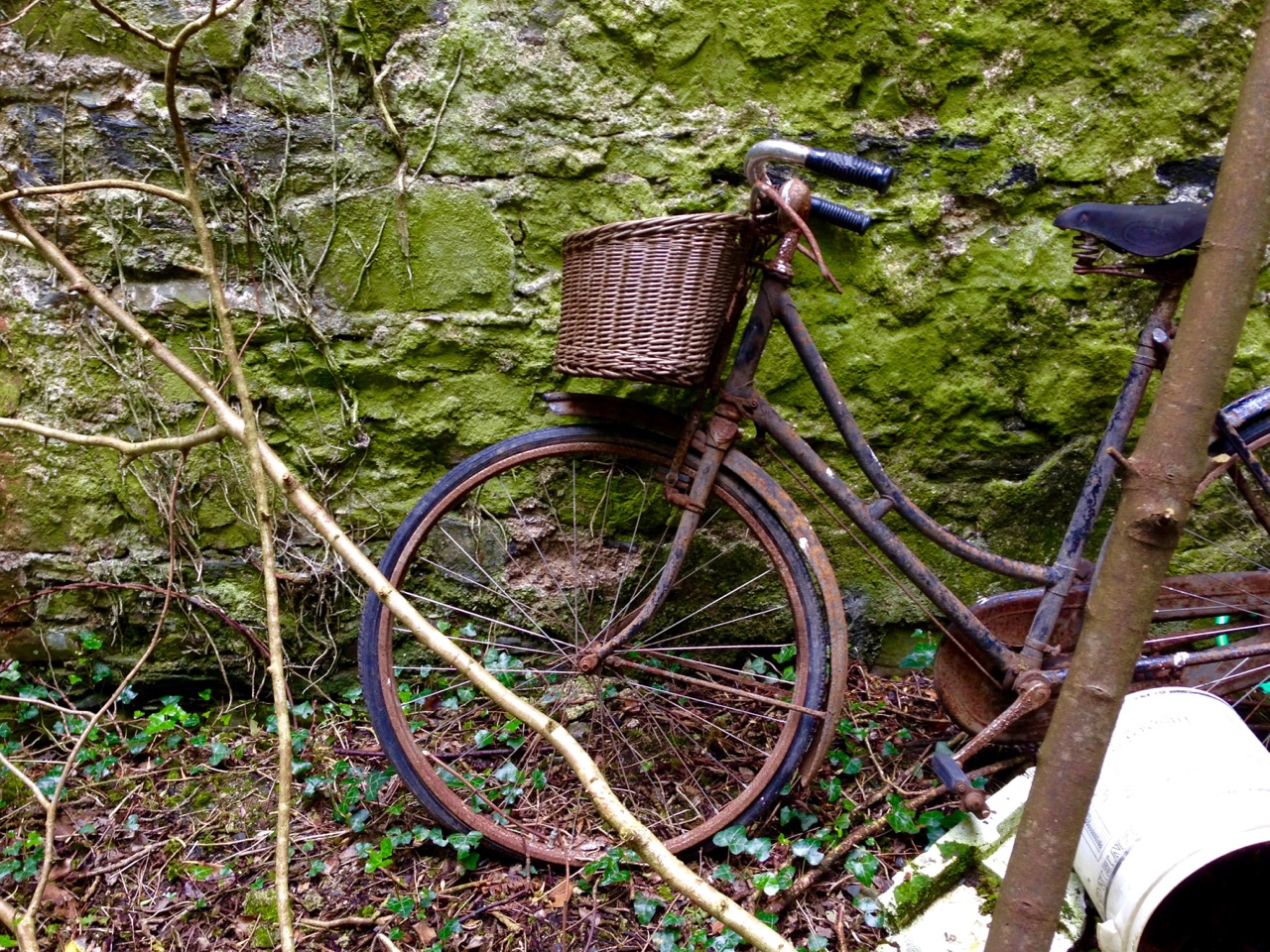
Rust and relics…

bike

corrugated

wavy line

Ancient and modern…

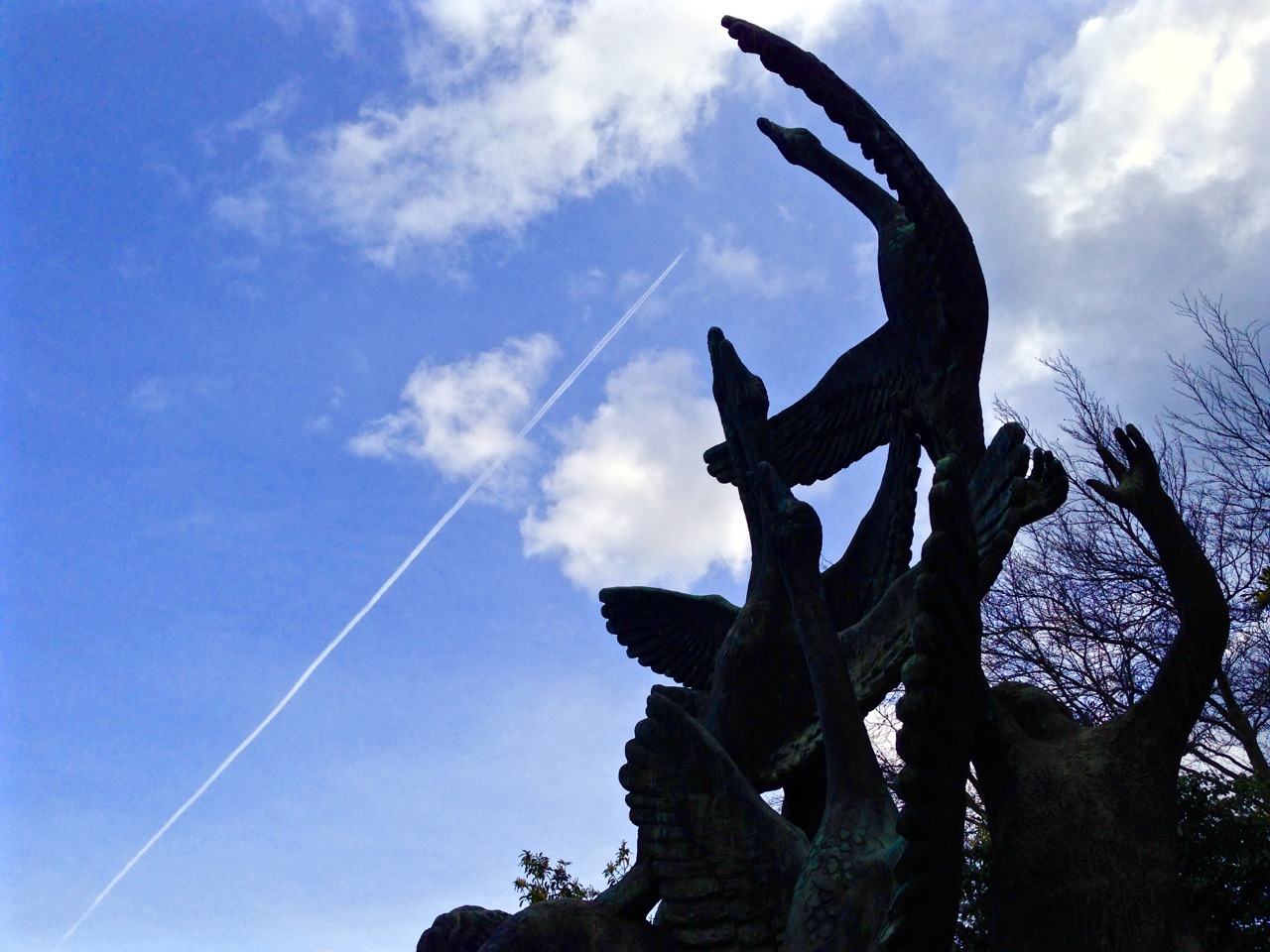
The Children of Lir - sculpture by Oisín Kelly in the Garden of Remembrance, Dubiln

The Children of Lir – sculpture by Oisín Kelly in the Garden of Remembrance, Dubiln

Emerald Isle greens…

Art and ‘Nature Art’…

Seekers…

dali lama

sitting

Lifeline…

ring

The last word…

little saint

Queen of the May

May Eve activity: setting up the May Bush

May Eve activity: setting up the May Bush

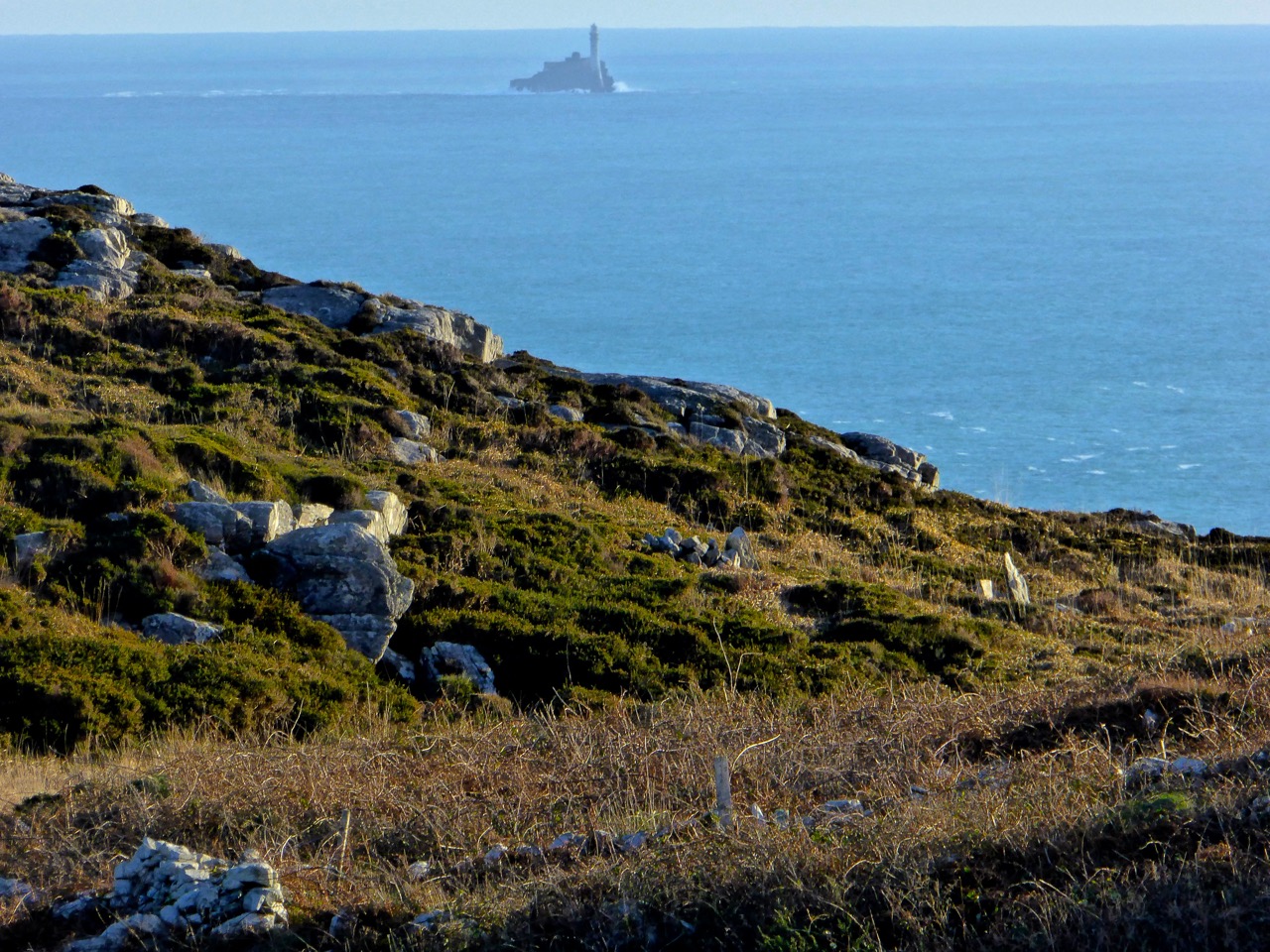
I was excited to learn – from one of my favourite and most faithful volumes on folklore: The Year in Ireland by Kevin Danaher (Mercier Press 1972) – that on May Day the Fastnet Rock weighs anchor, casts off her moorings and goes sailing about in Roaringwater Bay! I spent May Eve in a whirl of anticipation – and hot spring sunshine – awaiting the morrow which would present this wonderful spectacle to add to the feast to be seen from our window. The morrow that came, ostensibly the first day of summer, was a disappointment: the wind was in the east – and biting – and the whole bay was encased in damp, grey fog. The perambulations of the rock remained out of sight until nightfall, by which time the sweeping light had smugly returned to its rightful place twelve miles off shore.

Dancing Rock...

Dancing Rock…

My only consolation – again, according to Danaher – is that a cold, wet May morning heralds an excellent summer (and this certainly came about last year). I could write all day about Danaher’s observations on the subject of Mary’s month – in his book 42 pages are devoted to it: the longest section by far, indicating the importance given to this part of the year in the traditional calendar. But I’ll leave that for another time and concentrate on our own activity: putting up our May Bush.

When I lived in the west of England it was a toss-up between going to Minehead or Padstow on May Day – occasionally both. They were contrasting experiences: in Minehead, on the north coast of Somerset, you had to take pot luck – there was no fixed itinerary to the day and you never quite knew what you were going to see, or where or when. What you wanted to see was the Hobby Horse, sometimes known as the Ship-horse, or the Sailor’s Oss. I’ll refer you to another classic book – by chance also dating from 1972: A Year of Festivals – A Guide to British Calendar Customs by Geoffrey Palmer + Noel Lloyd (Frederick Warne):

…The head of the horse (or the mast and sails of the ship) is in the centre; and a long rope tail, once a real cow’s tail, is fastened to the ‘stern’. The man inside the contraption glides and sways through the streets, and sometimes swings his tail around anybody who refuses to contribute to the collecting-box… The ship form of the horse is said to date from 1772 when, on the evening before May Day, a ship sank in a storm off Dunster, three miles from Minehead. The only object to be washed ashore was a dead cow, the tail of which was used to decorate the horse…

Now, the early photograph below is one of my all-time favourites as an illustration of a folk custom: it’s optimistically captioned Hobby-horse Festival, Minehead, Somerset and says to me that such traditions will continue forever because ‘they have to be done’ – even if the rest of the world has lost all interest…

The First of May at Padstow is another matter altogether. It’s a huge gathering: all the roads are closed to traffic and at times it seems impossible that any more people could be fitted in to this modest Cornish fishing community. Here there are two ‘Obby Osses’: the Red Oss, sometimes known as the Original or Old Oss, is stabled in the Golden Lion, while the Blue Oss – or Temperance Oss has its headquarters in the (perhaps more temperance friendly) Public Library. Both horses come out in the morning of May Day, led by a ‘Teaser’ and accompanied by numerous dancers, drums and accordions, perambulate all around the town, and well beyond it, finally meeting in the evening at The Square, in the shadow of an elaborate and colourful May Pole.

Padstow taster… Photos from the 1960s and 2006:

Preparing the Maypole in Bavaria

Preparing the Maypole in Bavaria (Florian Schott, Ellbach)

While I was experiencing my first Padstow May Day in the 1960s, our Cappaghglass neighbour Dietrich was in Bavaria, watching the construction of an enormous Maypole: he also remembers all the children dancing around it holding up May Bushes. For our own May Bush we took our inspiration from Danaher:

…The children set up their May Bush in the same spirit in which we hang out our flags on a national holiday, to celebrate an occasion, but some – at least – of their parents were glad of the feeling of protection against unseen forces which the May Bush gave…

Oh yes! We have to be aware that…

…So powerful were the preternatural forces abroad in the night between sunset on May Eve and sunrise on May Day that almost anything might be expected to happen… (Danaher) while …The powers of evil, always on the alert to entangle and destroy souls, being most dangerous and powerful on May-Eve, on that day the maids were apt to be uneasy and rather sullen, watching us suspiciously lest we might, through our unbelief, frustrate their precautions against danger. They strewed primroses on the threshold of the front and back doors – no fairy can get over this defence – and in the cow-byres they hung branches of rowan while the head dairy-woman sprinkled holy water in mangers and stalls. The milkmaids, at the end of the evening milking, stood to make the sign of the cross with froth from the pails, signing themselves and making a cross in the air towards the cows… from The Farm by Lough Gur by Mary Carbery (Longmans, 1937).

Burning the land

Burning the land

We have had a long, dry spell and there have been a number of gorse fires recently in our neighbourhood: this one occurred on May Eve – traditionally a time in Ireland when bonfires were lit – although the gorse fires have nothing to do with that tradition. Here are the observations of William Wilde (father of Oscar) in Irish Popular Superstitions, Dublin, 1853

…Turf, coals, old bones, particularly slugs of cows’ horns from the tan-yards, and horses’ heads from the knackers, logs of wood etc were also collected, to which some of the merchants generally added a few pitch and tar-barrels. The ignitable materials were formed in depots, in back-yards, and cellars of old houses, long before the approaching festival; and several sorties were made by opposing factions to gain possession of these hoards, and lives have been lost in the skirmishes which ensued… With the exception of one ancient rite, that of throwing into it the May bush, there were but few Pagan ceremonies observed at the metropolitan fires. A vast crowd collected, whiskey was distributed galore… The entire population collected round the bush and the fire; the elder portion, men and women, bringing with them chairs or stools, to sit out the wake of the winter and spring, according to the olden usage… Fiddlers and pipers plied their fingers and elbows; and dancing, shouting, revelry and debauchery of every description succeeded, till, at an advanced hour of the night, the scene partook more of the nature of the ancient Saturnalia, than anything we can presently liken it to…

mass sign

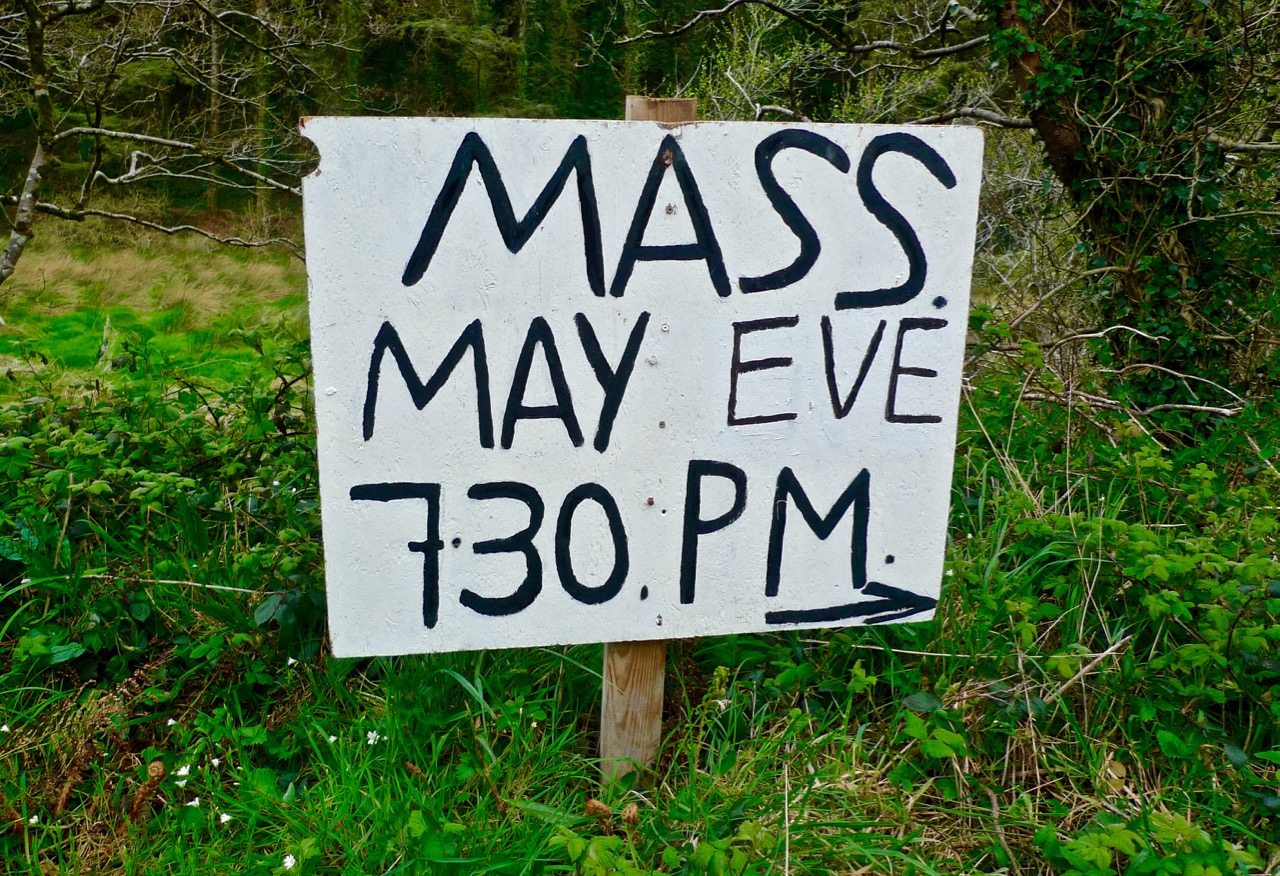
By contrast, our own rural activities were much more calm and constrained. I couldn’t miss out on an outdoor Mass celebrated at one of Lough Hyne’s Holy Wells – the Skour Well. On a beautiful evening – attractive to the midges – it felt the most natural thing in the world to be at a site which has been considered sacred for hundreds, if not for thousands of years, and to take part in a ceremony which is also ancient. I counted over eighty people, including a gentleman of 97, at this event – presided over by two priests and centred on a portable altar with cloth and candles, the revered well being the backdrop. Prayers were said and hymns were sung in English, Irish and Latin.

There’s a continuity here which defies any twenty first century rationale. I was very conscious that this was the way that faith was practiced in Ireland in the penal times (requiring that a watchful eye be kept out for the Redcoats) – but also it was an honouring of nature and a respect for the elements: earth, water, sun and rain – old ways carrying on regardless of new technologies.

A May garland – Hatherleigh, Devon:

Finola’s memory of May Day in her schooldays was of all the girls wearing veils and processing down to the grotto saying the Rosary; and, every day throughout Mary’s month, singing the refrain that was sung at the close of the Mass at Skour Well:

O Mary! we crown thee with blossoms today,
Queen of the Angels, Queen of the May.

9074db7eb01031a082d064758b8b18ba

Window on our World…

Our View to the Islands

Our view to the Islands

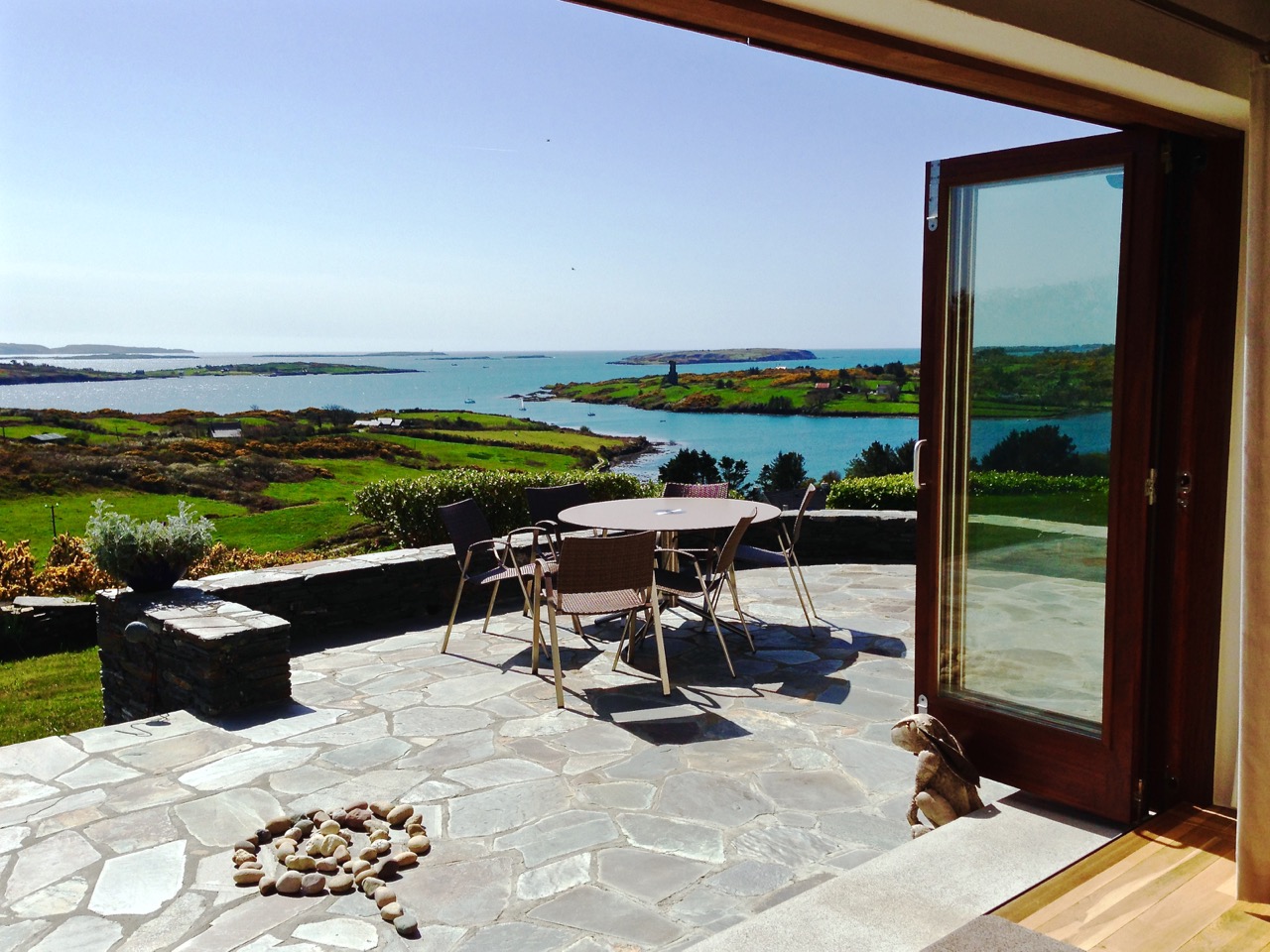
Sunlight and drama have been the key elements of the view from Nead an Iolair this week. The drama began at coffe time on Monday: whenever we are sitting having breakfast, lunch, tea, supper – or maybe just sitting – we are looking out over the scene you see above. Central in that prospect is our bird feeder, where we keep a constant eye on the comings and goings.

Suddenly, a bomb dropped out of the sky! It scattered the birds and there was such a twittering and chattering – squawks and alarm calls. The ‘bomb’ was a Kestrel – who had singled out a juicy victim from among the avian throng… I’m pleased to say that it missed its target and crashed ignominiously into the adjacent gorse bush. Seconds later it extricated itself and sloped off, trying not to look too foolish. I have to say I admire birds of prey, although I’d rather not see them lunching on our garden friends. In the past we have also had sight of a Sparrowhawk on our stone boundary wall.

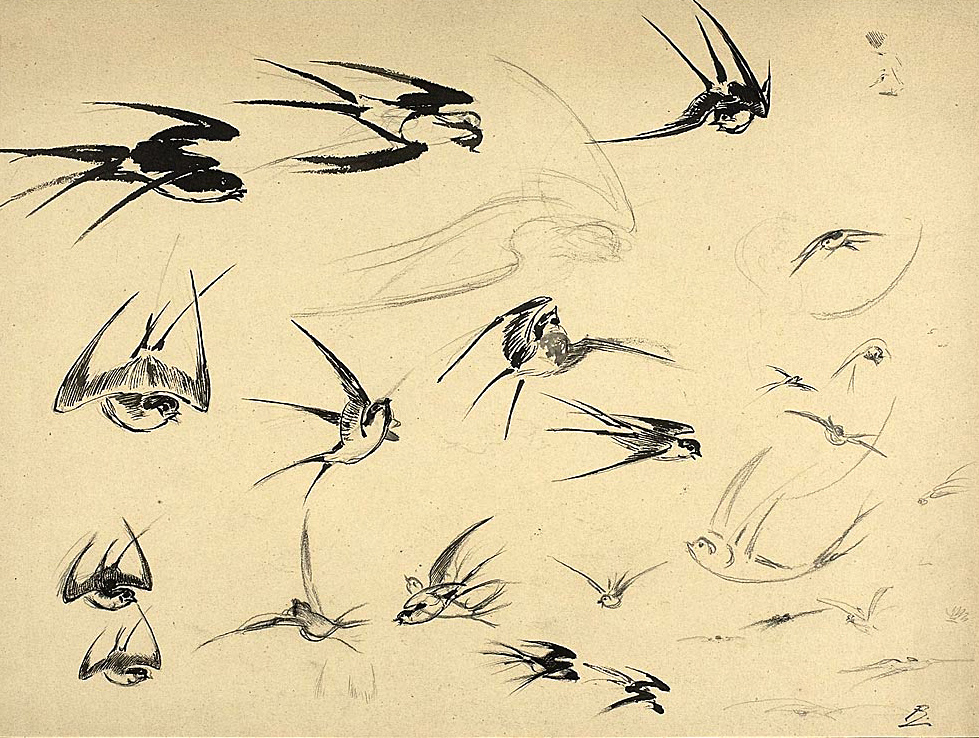
The Swallows: Felix Bracquemond, 1881

The Swallows: Felix Bracquemond, 1881

As I write this there are Swallows wheeling in the air above us: although we have had cloudless skies for several days the wind is in the east and it’s pretty chilly – however these harbingers of the Summer seem happy enough to have arrived on our shores in late April.

The Choughs are always with us!

The Choughs are always with us!

The Choughs are good friends of ours – they sit on the roof or tumble about in front of us, showing off their bright red bills and claws. At the moment they are foraging in the rocky land behind the house, pulling out roots and twigs for nest building. Another nester is the Starling family which inhabits the space in our eaves, creating a lot of noise and mess.

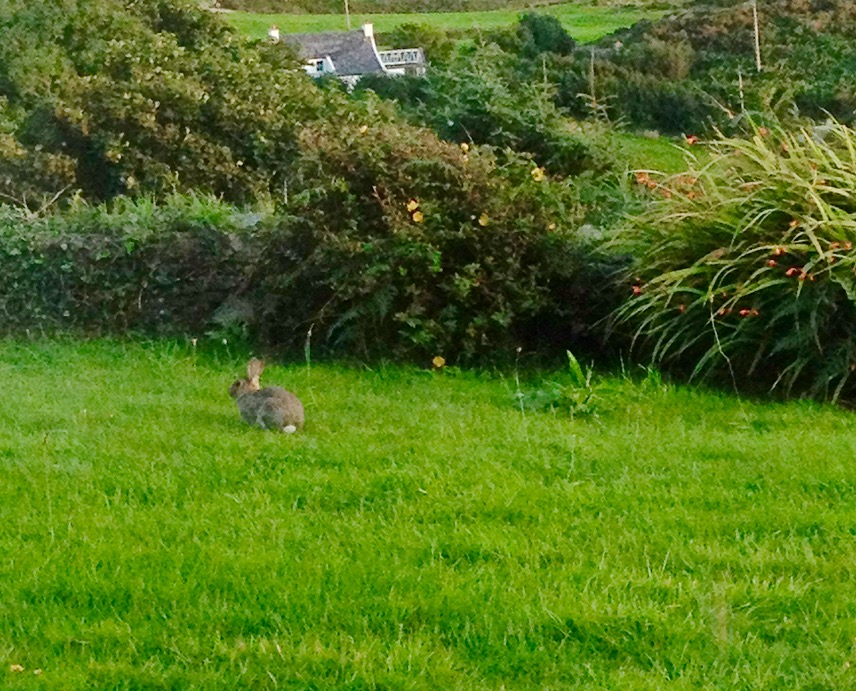
rabb

I was pleased to see a Rabbit in the garden: there has been an outbreak of mixomatosis in the surrounding countryside in recent times and over the last year we have hardly come across any of these mammals in the fields locally. Mixomatosis was introduced into the UK in the 1950s – apparently by accident – and then was used as a deliberate Rabbit control measure, by placing sick animals in burrows (then and now an illegal practice). By 1955 95% of Rabbits in the UK had been wiped out. I remember those days: seeing dead and dying animals every time I went out as a sensitive nine year old made me sickened and appalled, especially when I learned that we humans had initiated such cruelty. The virus recurs cyclically every few years, as has happened around here: I am still sickened and angered by it.

The next visitor was a female Pheasant. Although less colourful than her male counterpart she is nevertheless a handsome addition to our menagerie. The good weather has enabled us to have our doors open every day, but this does mean an influx of smaller guests, which have to be carefully rounded up and ejected before we go to sleep. They include spiders and flies, but also Native Irish Honeybees from our neighbour’s hives. Apis Mellifera Mellifera has evolved over thousands of years with a large body and long dark abdominal hairs which make it uniquely suited to survive in a harsh Irish climate. It will be found foraging early and late in the season and will fly in dull, drizzly and cold weather. I gleaned this information from the comprehensive website of the Native Irish Honeybee Society.

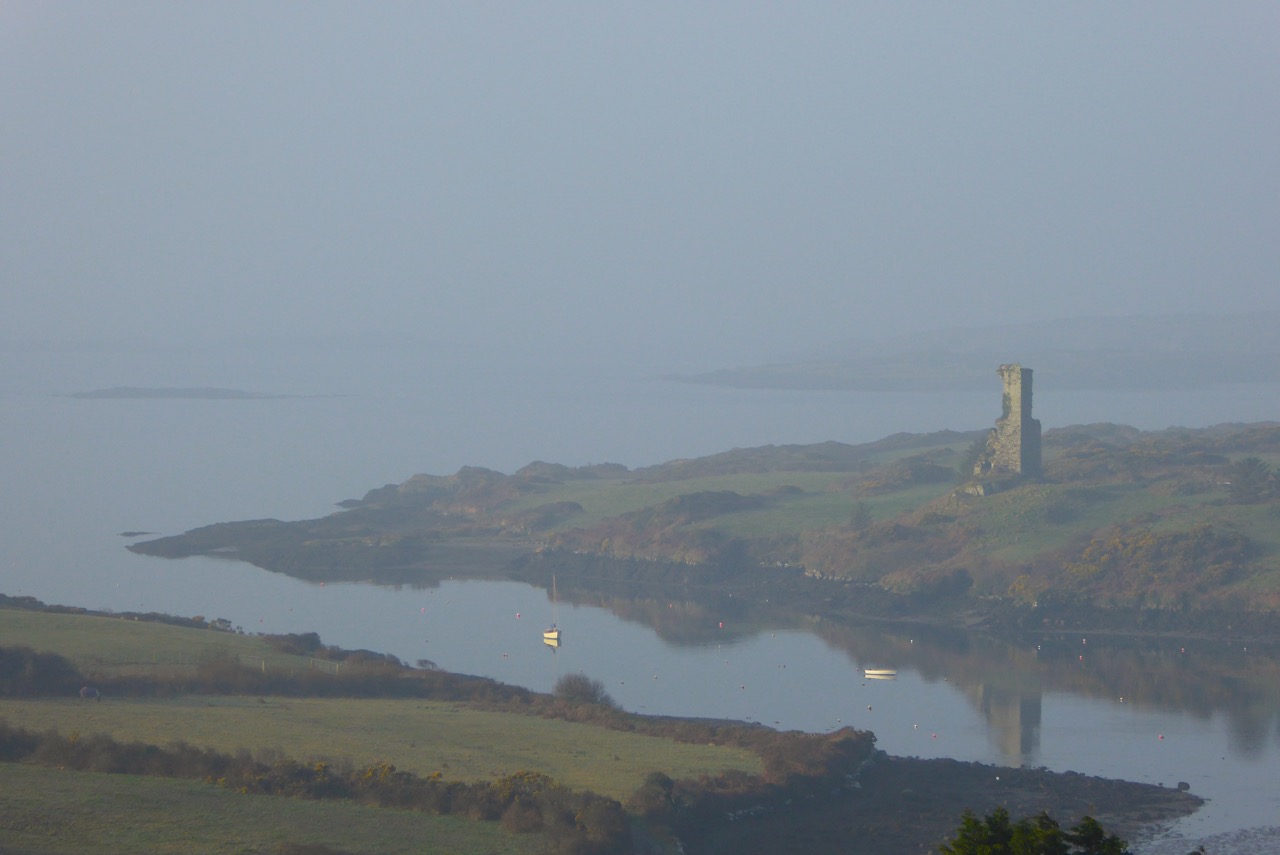
Castle in the Mist

Castle in the Mist

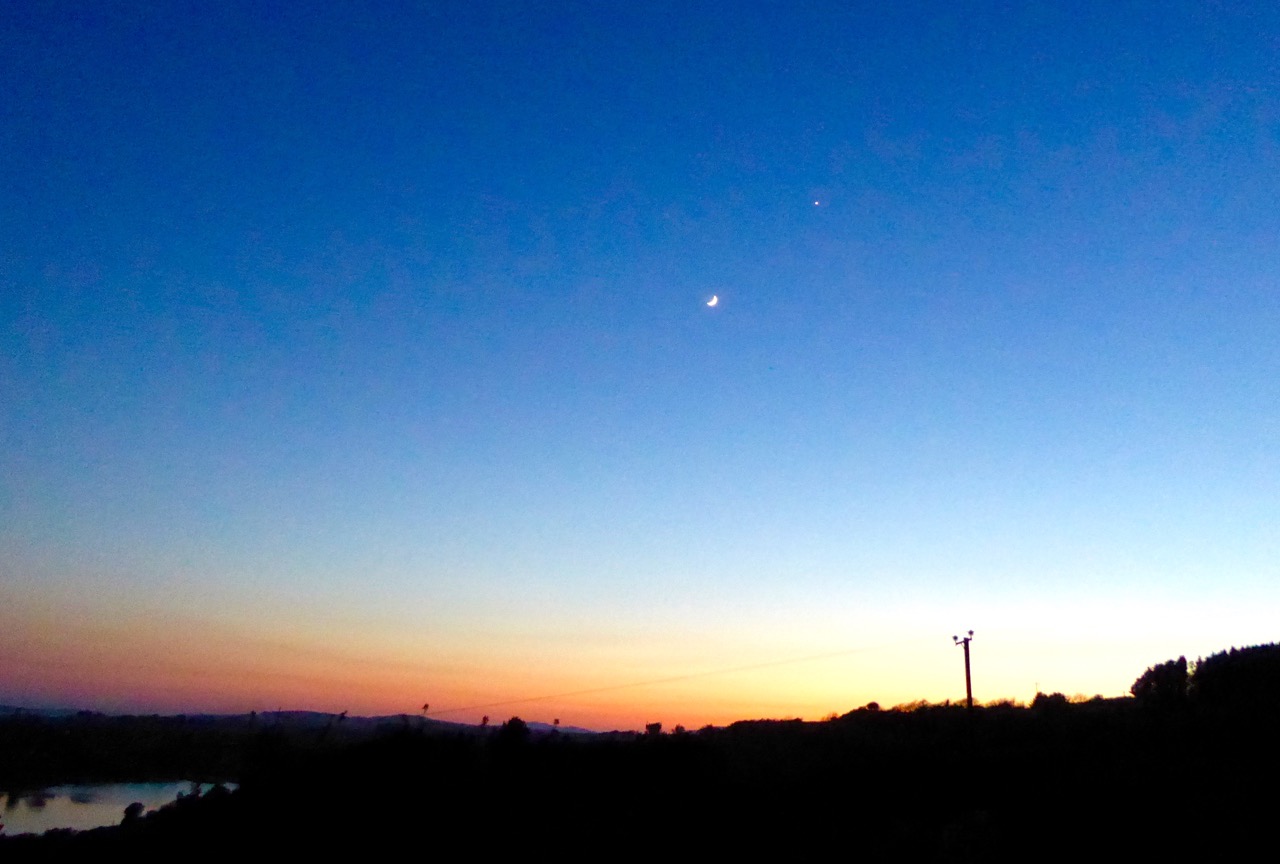
These wonderful spring days have been heralded by misty mornings. Evenings have been clear, with the crescent moon and Venus prominent over the western horizon. This is the time when we see our Bats. They might be either Common Pipistrelles or Soprano Pipistrelles: I’m sure you know that the former echolocates at a peak frequency of 45kHz while the latter echolocates at a higher frequency peaking at 55kHz. I keep listening out but can’t quite decide which is which… Anyway, they are both indigenous – and are probably sharing our eaves spaces with the Starlings.

crescent moon

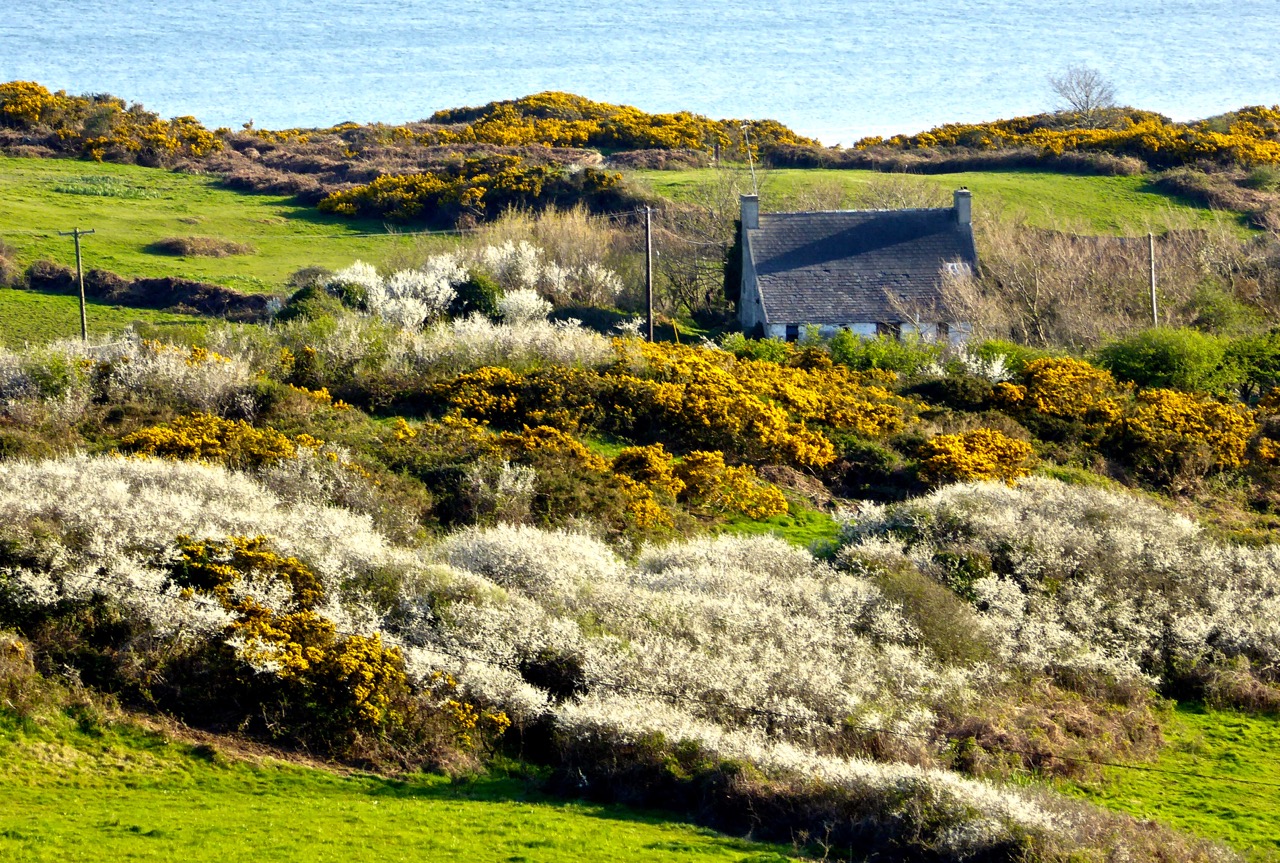
The gorse is in full bloom, as are the blackthorn hedges. Any picture of our surroundings at this time of the year has to show off the yellow and white – and, of course, the emerald green and azure blue.

looking out

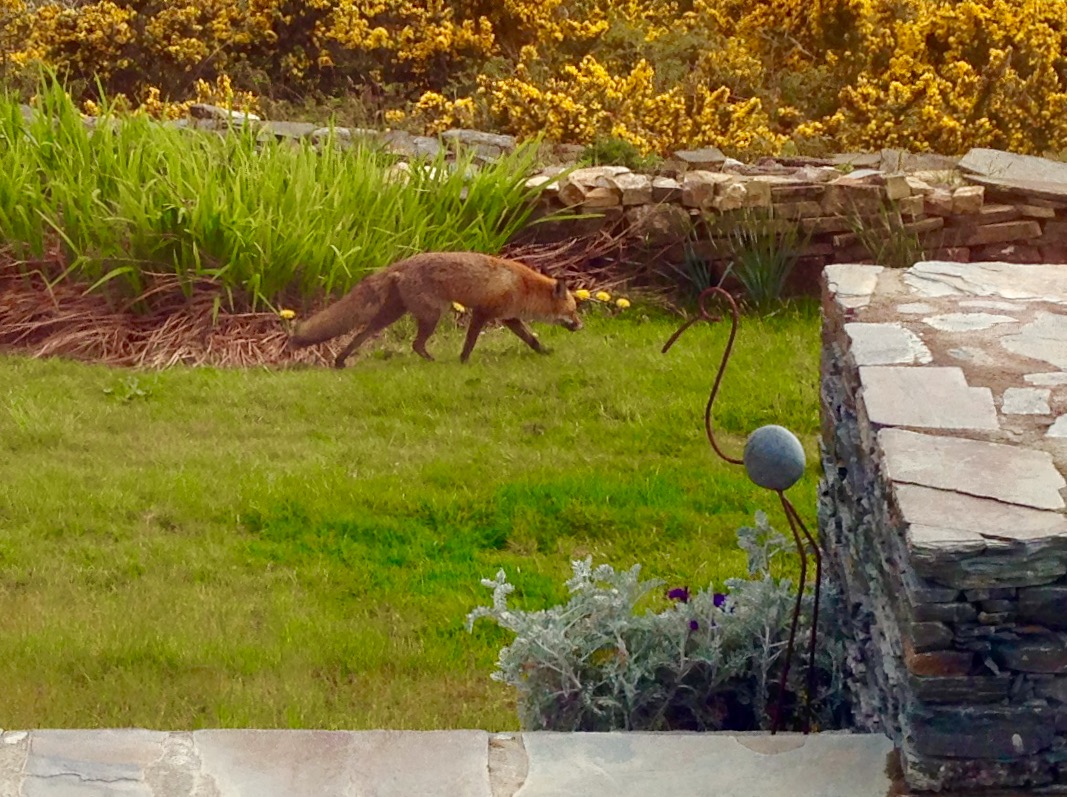
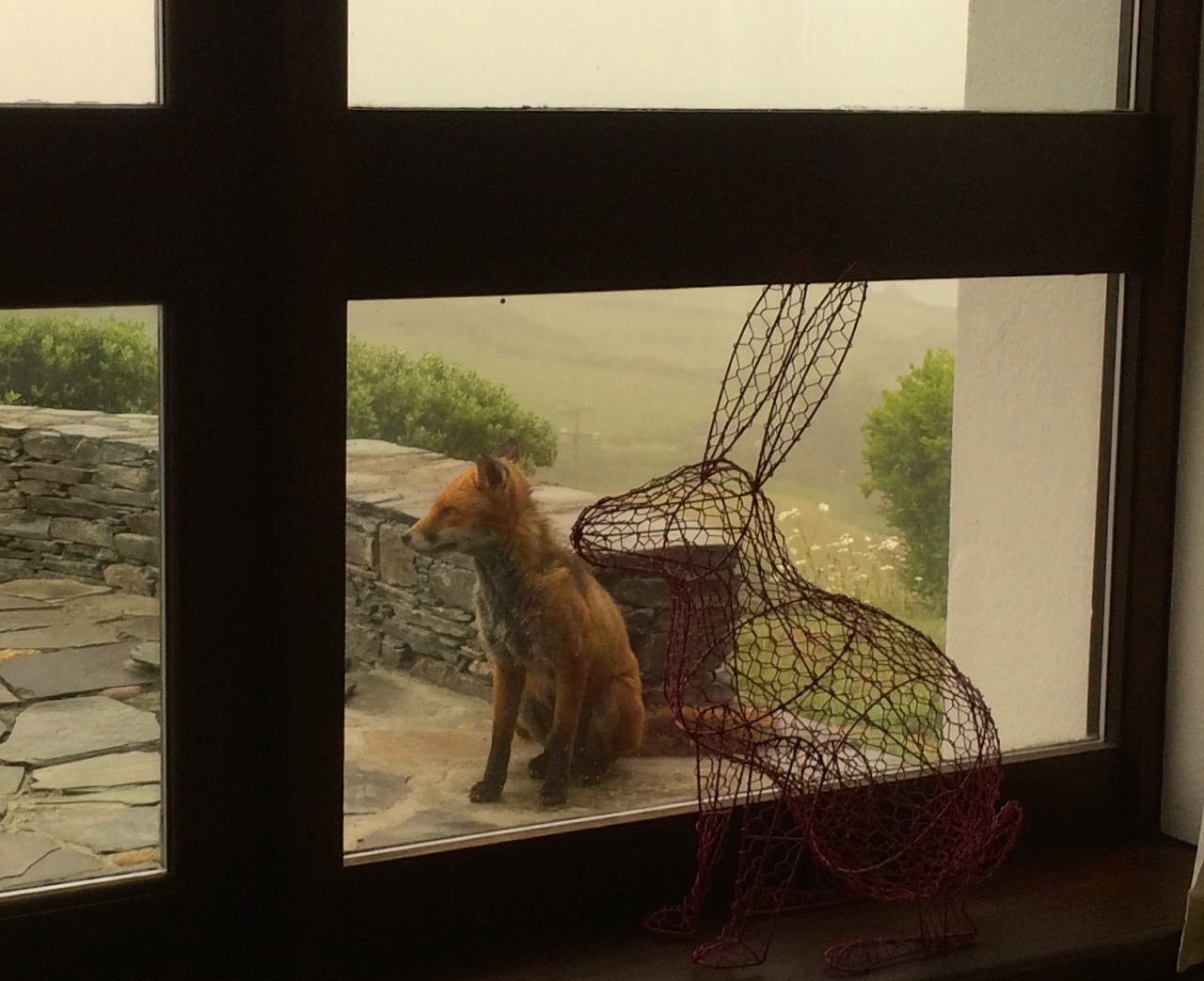
No ‘nature post’ here would be complete without mention of our own Red Fox, Ferdia. In fact, part of the drama of the week was the appearance of another Fox! As we hadn’t seen Ferdia for quite some time we worried that he might have gone the way of all Foxes: the average life of a Red Fox in the wild is only around five years – and our neighbours claim to have been hosting Ferdia for more like ten… The new Fox only made the briefest of appearances, just enough to be photographed. I think it is a Vixen – smaller and thinner – and very nervous. We couldn’t help thinking that she had come on to the scene because of Ferdia’s demise – but no! Yesterday evening, there was Ferdia knocking on the window, cocky as ever – although he does look a bit bedraggled at the moment, possibly because he’s beginning to lose his fine thick winter coat. Perhaps now we will have to find scraps for two foxes…

Fresh on the scene: a female Red Fox

Fresh on the scene: a female Red Fox

Seen through the window: a bedraggled Ferdia posing with one of our many household Hares!

Seen through the window: a bedraggled Ferdia posing with one of our many household Hares!

Finally, I was fascinated by another visitor to Nead an Iolair this week: a female Emperor Moth took up residence on our bedroom window cill. As you can see, her appearance is very striking. I wish I had been able to observe her all day, as evidently these Moths stretch themselves out in the sun waiting for a mate to arrive. The males are even more spectacular, but alas I didn’t see one. You’ll find this lady in an Irish folk tale: The Children of Lir.

Female Emperor Moth

Female Emperor Moth

I have to give a special word of thanks to Finola, who expertly took most of the photographs in this post with her excellent Leica-lensed camera

Showing Off West Cork

This is how you sightsee in West Cork!

This is how you sightsee in West Cork!

Ladies and Gentlemen, meet Susan Byron! Susan is the face behind Ireland’s Hidden Gems, a custom travel service for visitors to Ireland, and she and I met last year when Robert and I spent a week in Clare. Susan loves nothing better than to hop in her car and take off for a few days to some part of Ireland she wants to explore or re-explore. There are very few places she hasn’t seen, but I soon discovered that the Sheep’s Head was one of them. She has been to the Mizen before but hadn’t seen some our OUR hidden gems. In short order we decided that a visit must be organised, and a couple of weeks ago she arrived, bearing Burren lamb, bottles of wine, and an infectious enthusiasm to see everything.

The 17th century Bardic School

The 17th century Bardic School on The Farranamagh Loop walk

Now if someone who runs a bespoke travel agency wants to see your piece of paradise, well, you’re going to put your best foot forward. Fortunately, this isn’t a problem in West Cork – it’s pretty well a fail-safe place to show off. Susan spent her first day whale watching (something we promise ourselves to do soon) and exploring the area east of Skibbereen. On day two and three she was all ours and we spent the first day on the Sheep’s Head and the second on the Mizen.

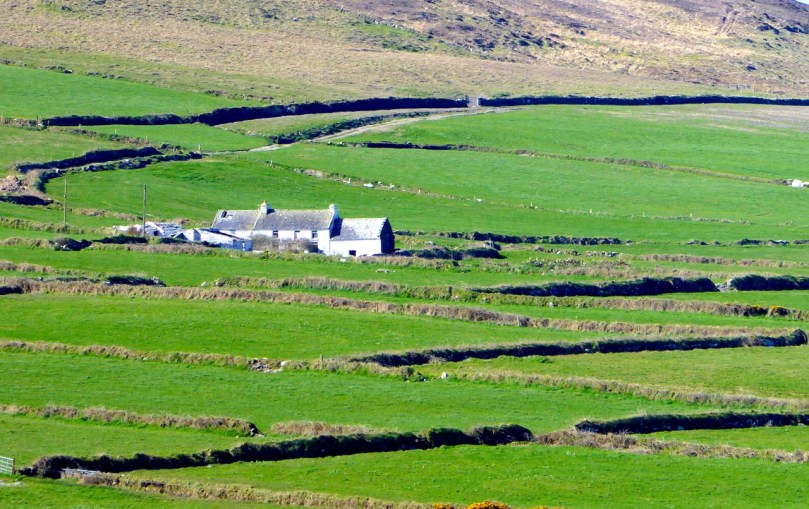
Mizen farm

Mizen farm

First of all, travelling with Susan is a hoot. She’s got a hot car, a ready laugh, an inexhaustible supply of stories, insatiable curiosity, and a real passion for Ireland. She is amazingly well-read – she knew the dates of the castles before I could tell her and was already familiar with what most tourists want to to see and do in West Cork. So this was a cheerful, companionable time of exploration, chatting, coffee and scones, hiking and sightseeing.

Our Sheep’s Head day took in two loop walks – the Farranamanagh loop and the lighthouse loop. We started off in drifting mist but the sun came out in the afternoon and soon we were shedding coats and applying the sunscreen. After a stroll around the lovely Farranamanagh walk (famous for its 17th century Bardic School) we had lunch in The Creamery in Kilcrohane and browsed in the Sheep’s Head Producers Market. We bought eggs from a farmyard, said hello to contented alpacas, and took innumerable photos of the killer views.

The Lighthouse Loop offers unparalleled vistas at the end of Sheep’s Head – south to Mizen Head and the sweep of the West Cork coastline, and then, as you round the end, north to the Beara and to the Iveragh Peninsula (Ring of Kerry) beyond it. The trail has some steep sections and clings to a cliff edge for part of the northern stretch. It, and the Farranamanagh Loop are but two of the many waymarked trails that crisscross the Sheep’s Head. Each is as rewarding as the next and you could easily spend several days exploring this one Peninsula.

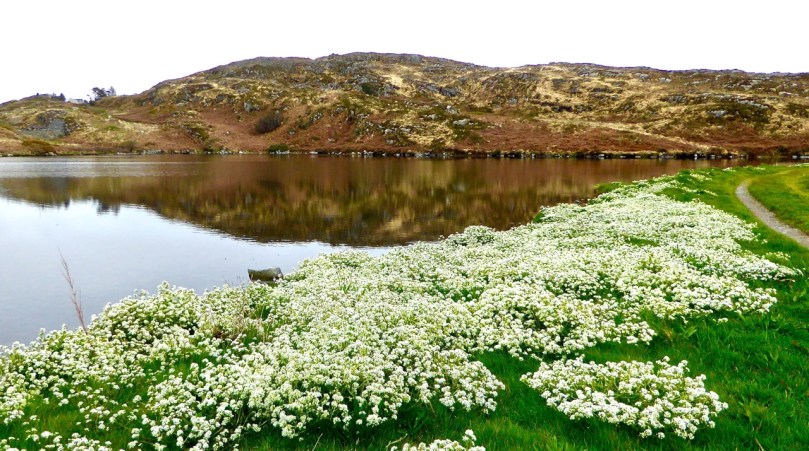
Lake Farranamanagh

Lake Farranamanagh

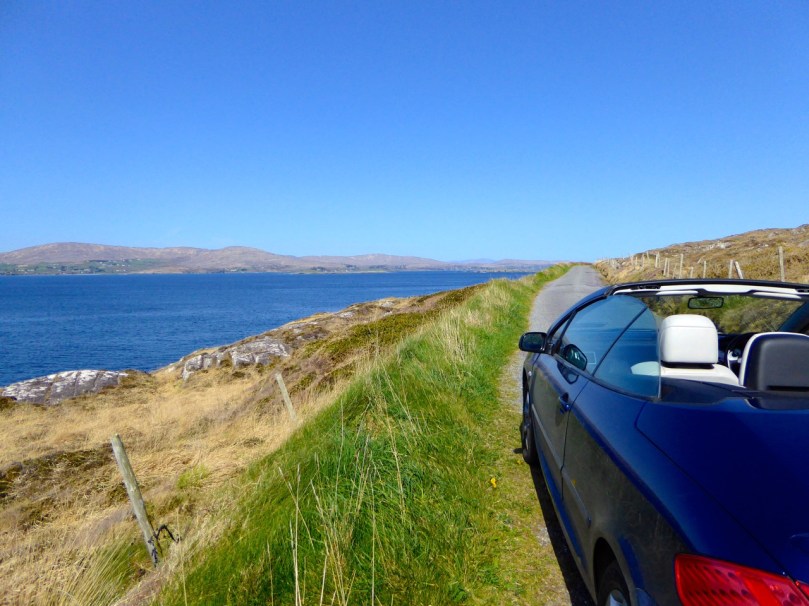
The Mizen, of course is OUR peninsula and we are always delighted to introduce it to friends. The weather was brilliant so we were able to drive in Susan’s cool car with the top down. (In my next life I want to come back as a blonde with a convertible.) Three Castle Head was at its most spectacular, with the water that deep azure blue that people who don’t live here have a hard time believing is real.

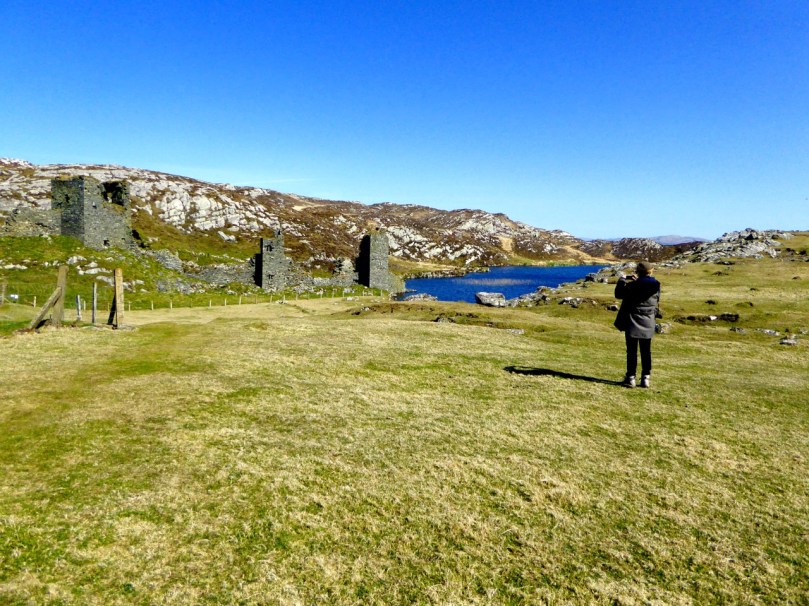
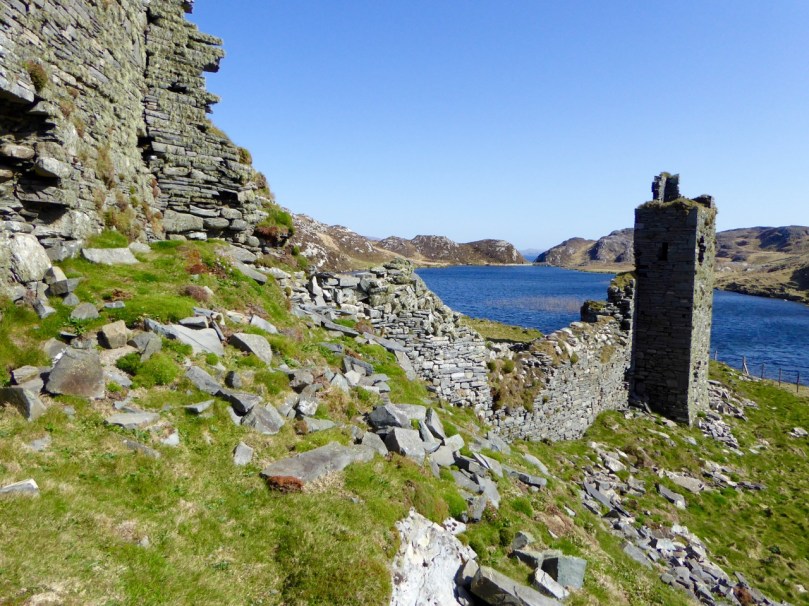
The Three Castles: it's love at first sight for Susan

The Three Castles: it’s love at first sight for Susan

The curtain wall and the lake

The curtain wall and the lake

Spring was bustin’ out all over so the air was heady with wildflowers and the fields full of newborn lambs. The drive on the north side of the Mizen is as jaw-droppingly gorgeous as any stretch of road in Ireland – the only difference is that it’s empty. We met not a single car, which enabled us to stop where we pleased to survey the scenery or take photos.

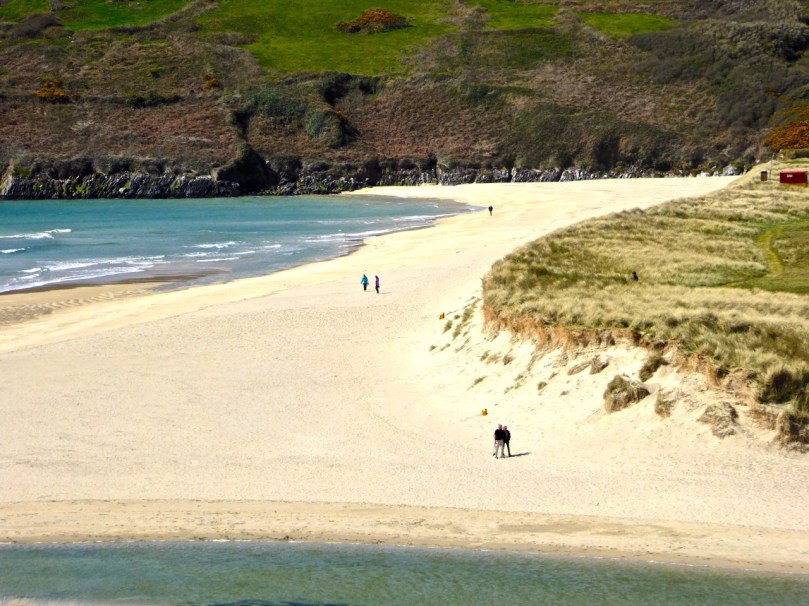
Barley Cove Beach

Barley Cove Beach

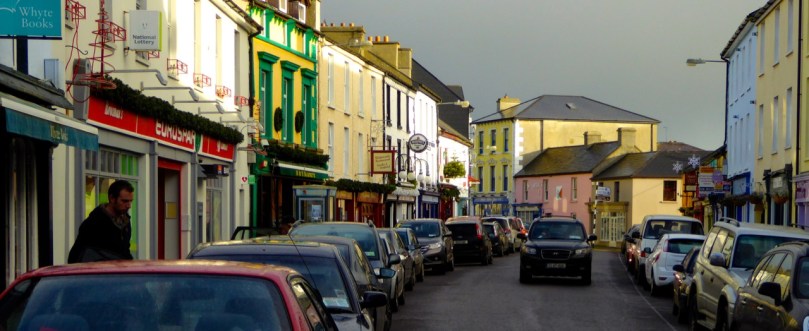
Susan wound up her time by conducting some retail therapy in Schull. No better place!

Schull, colourful village with great shopping

Schull, colourful village with great shopping

She has posted numerous photographs on her Facebook page and even used the phrase “possibly the most beautiful place I have ever been….” about Three Castle Head. That’s how I feel about that magical place – but when someone who has seen everything Ireland has to offer says it, maybe, just maybe, I’m not delusional after all.

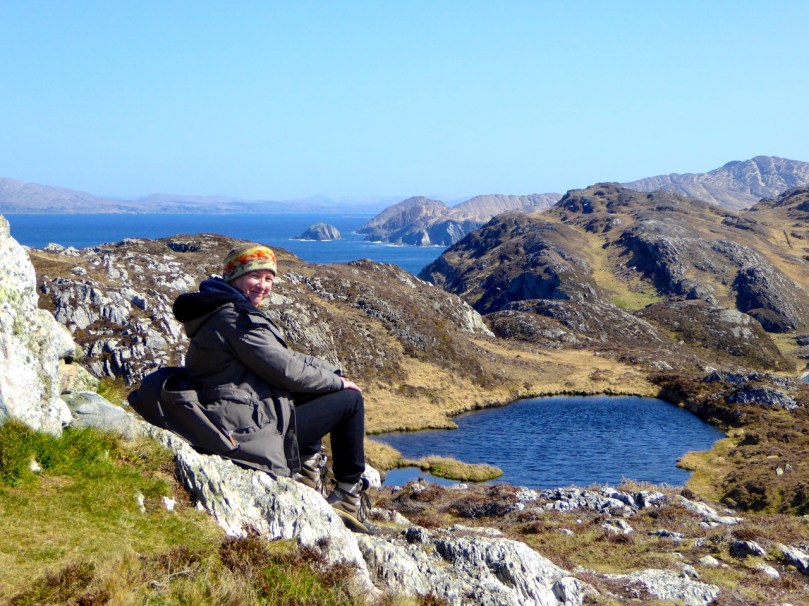
Susan at the cairn. Three Castle Head on the Mizen

Susan at the cairn. Three Castle Head on the Mizen