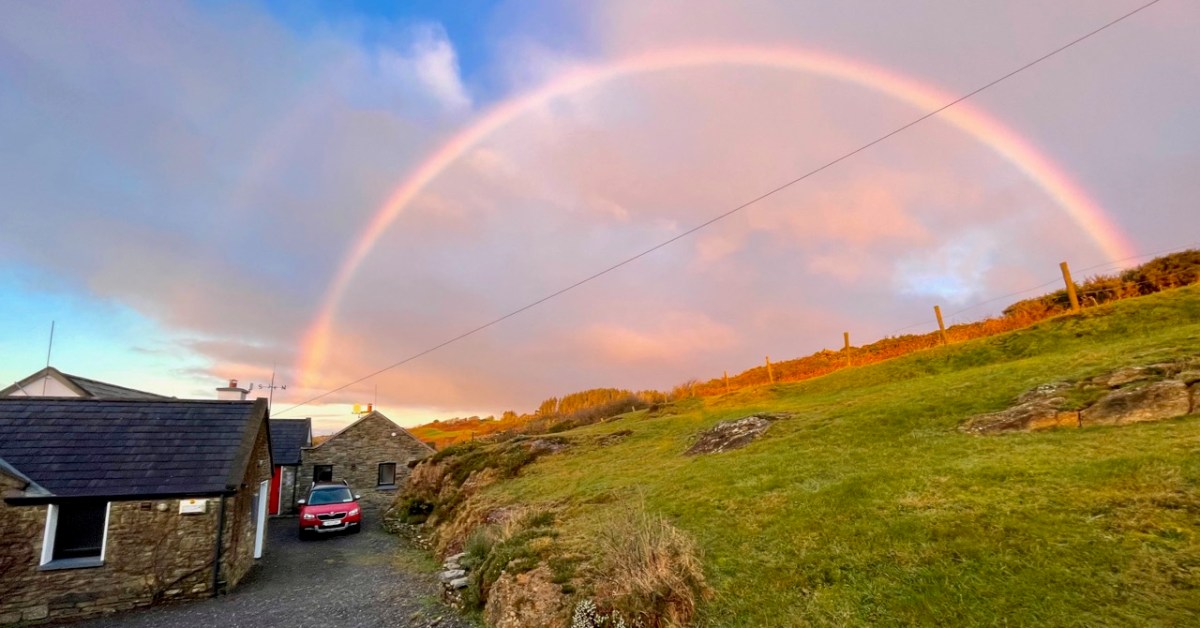
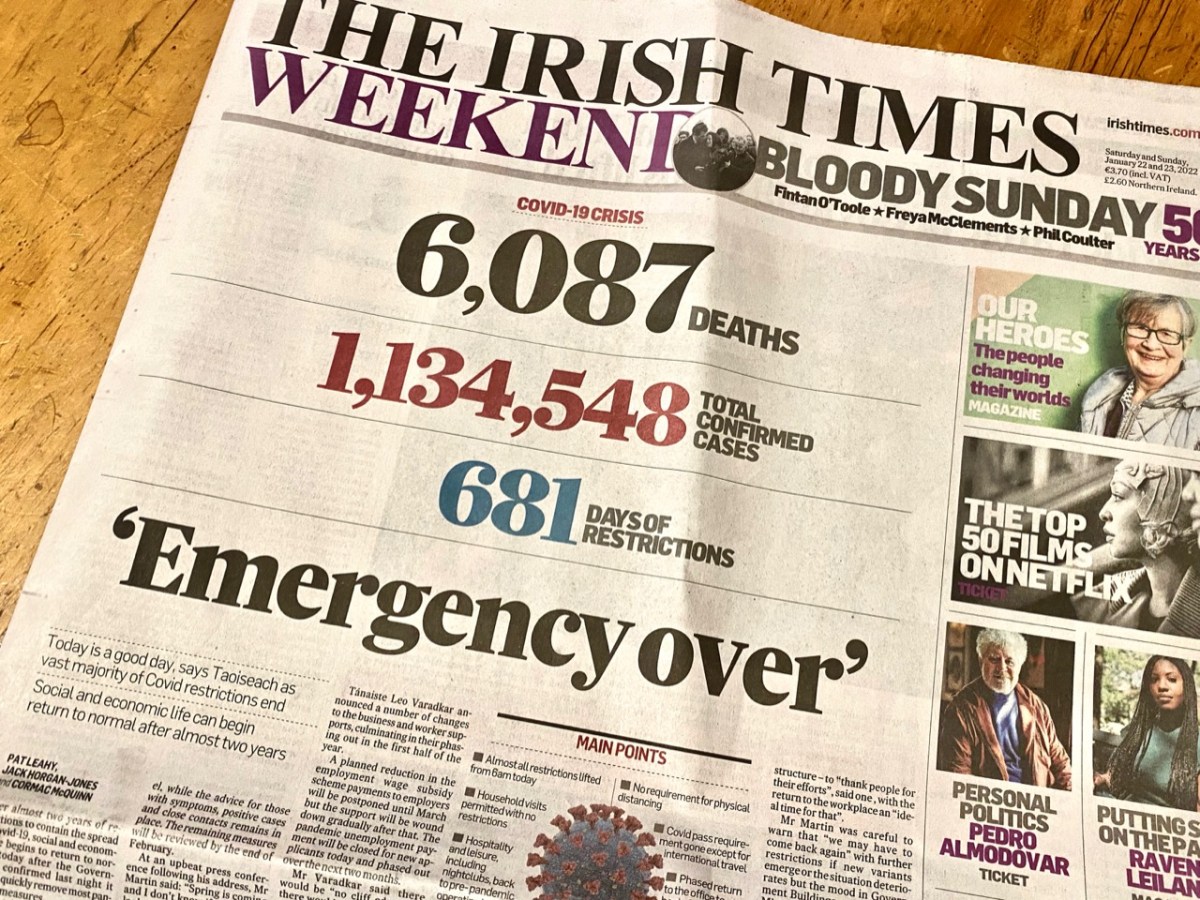
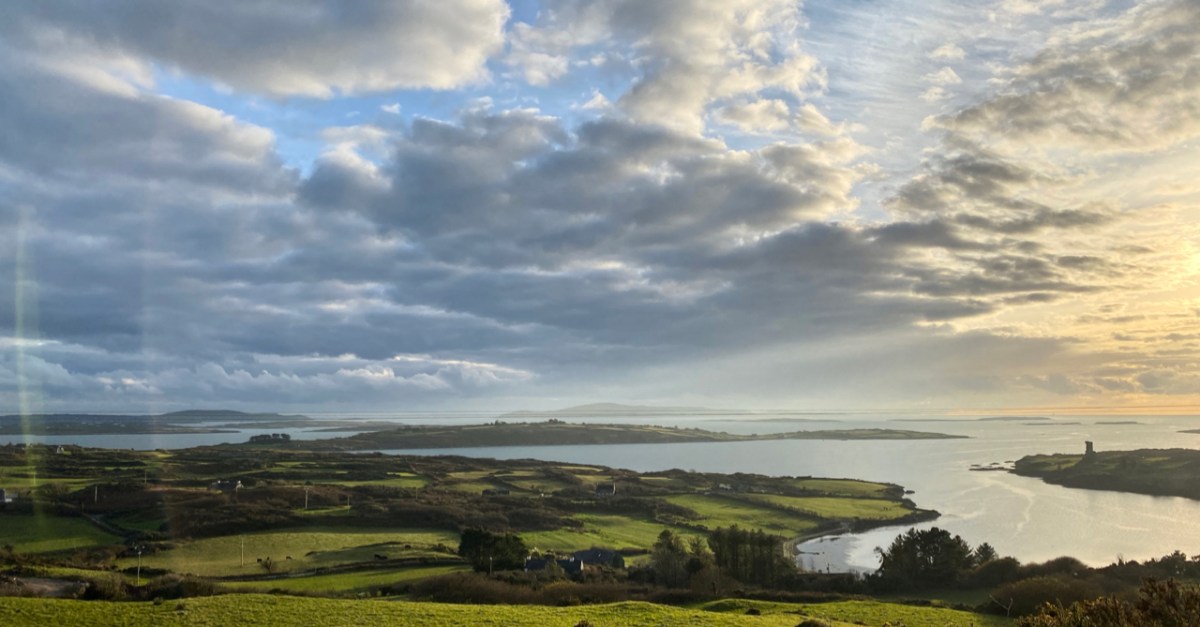
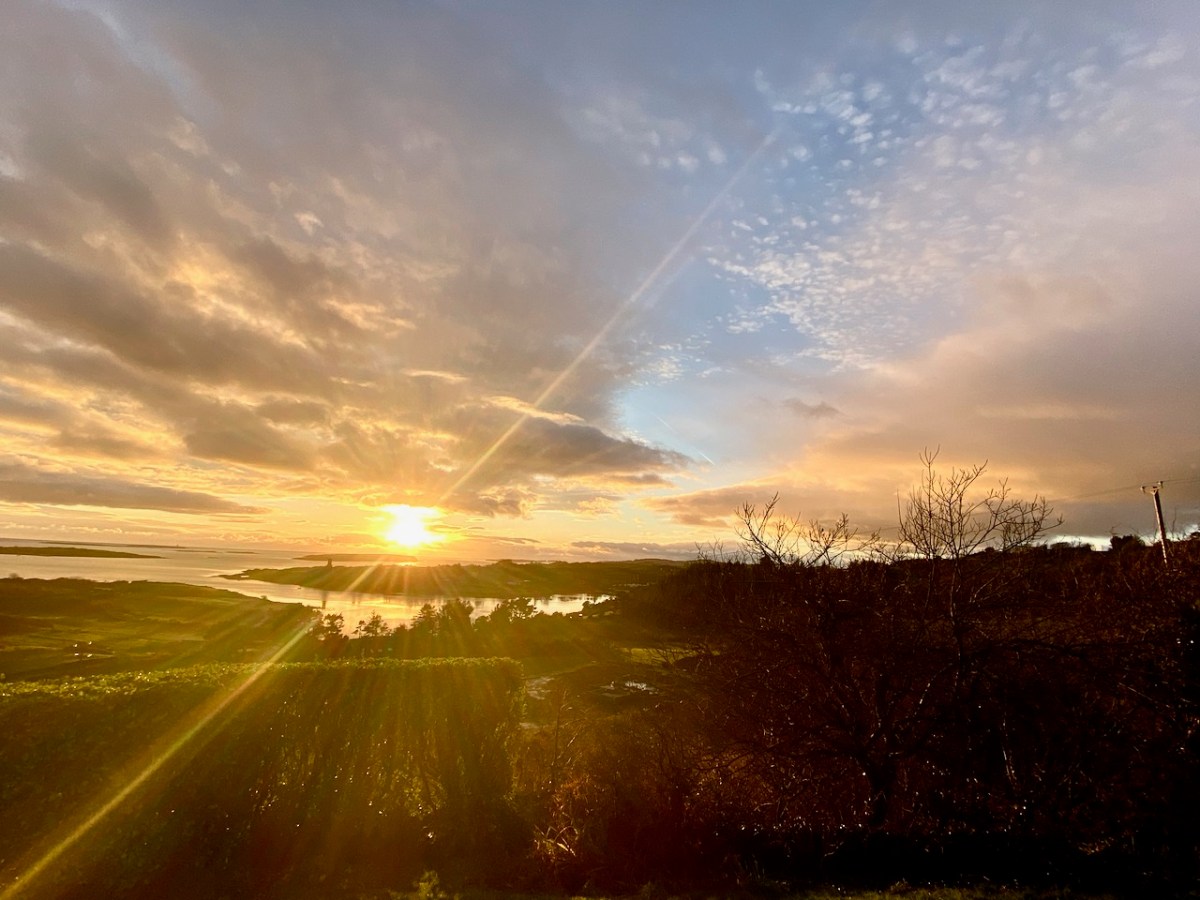
Yes – it has been 681 says since Covid-19 hit us and our world changed. From today, 22 January 2022, most restrictions in the state are gone, apart from the continuing need to wear masks in certain public places. Hopefully that West Cork sky over our house this morning, above, is a good omen for us. Today’s paper shows the stark tally:
The population of the Republic of Ireland as I write this is 5,023,337 (no doubt that is changing by the minute). That tells the story: 22.6% of the people here have had the virus. And of course it hasn’t gone away yet… But at least “social and economic life can begin to return to normal” says the Taoiseach. In order to mark the significance of the moment, my post looks back to our experiences over the last 681 days: in particular, how our lives changed at the beginning of the outbreak.
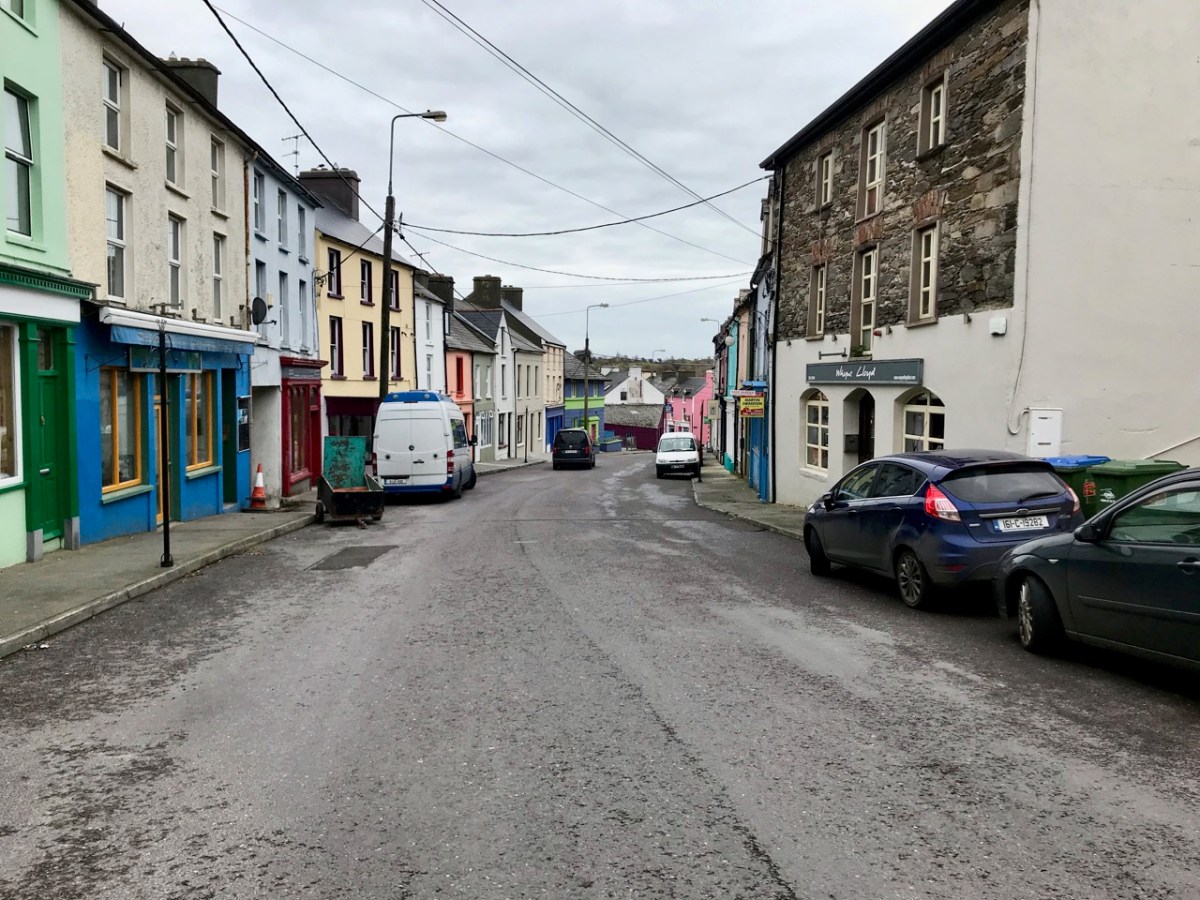
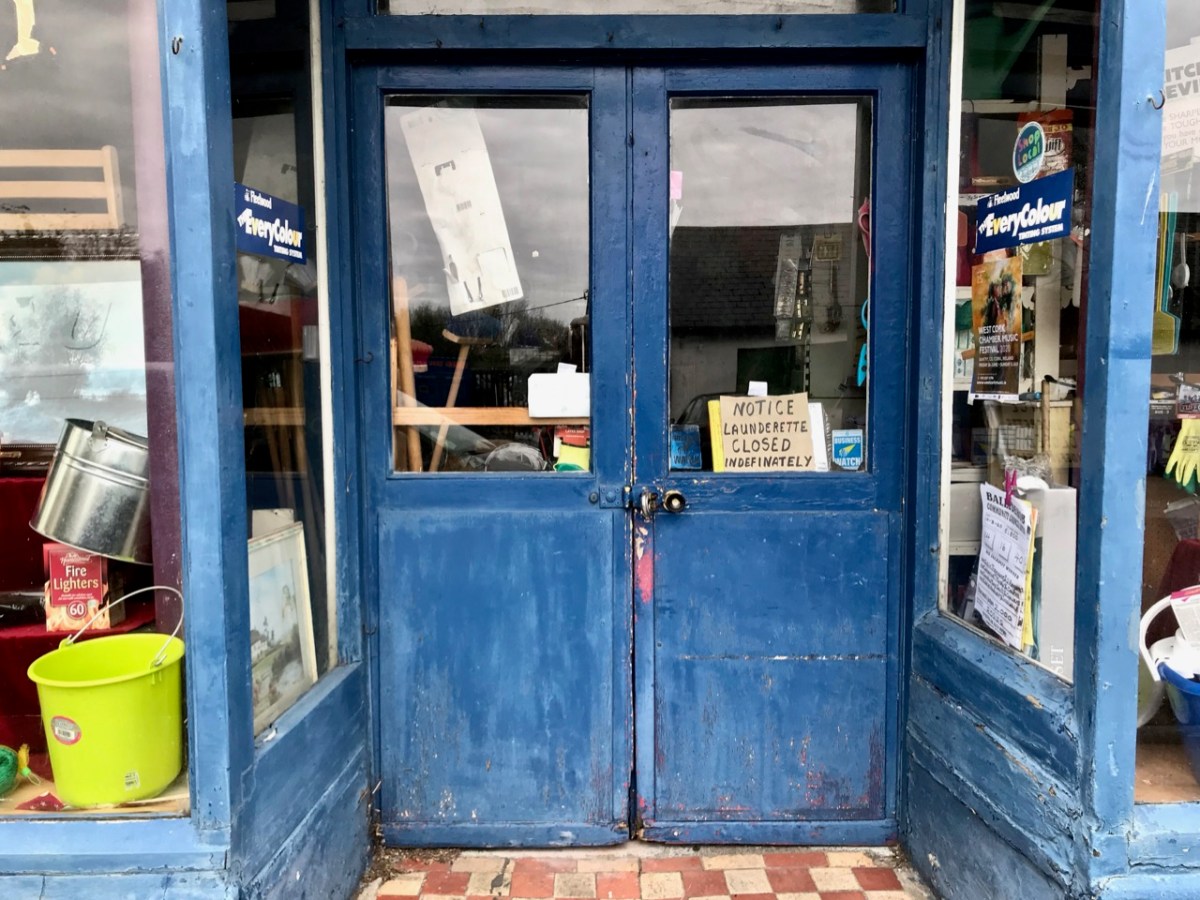
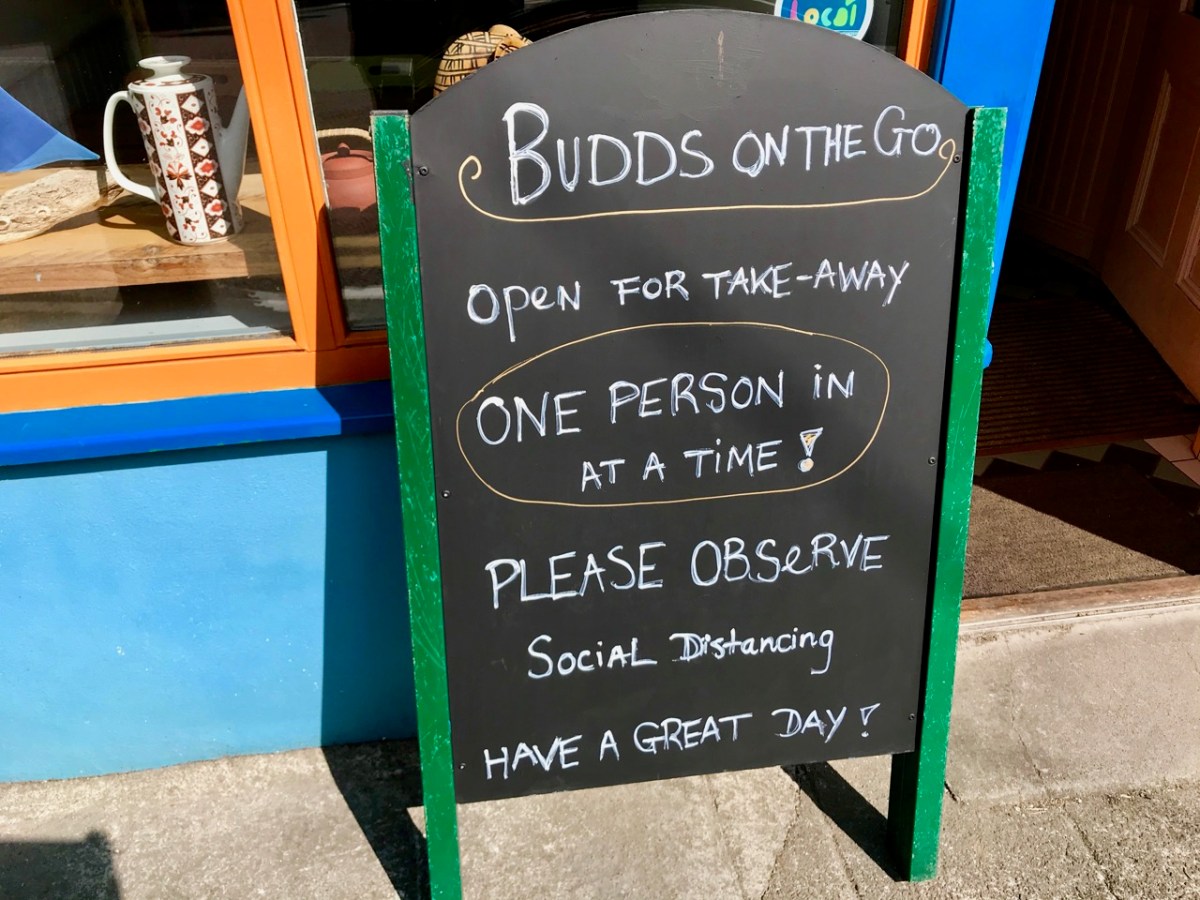
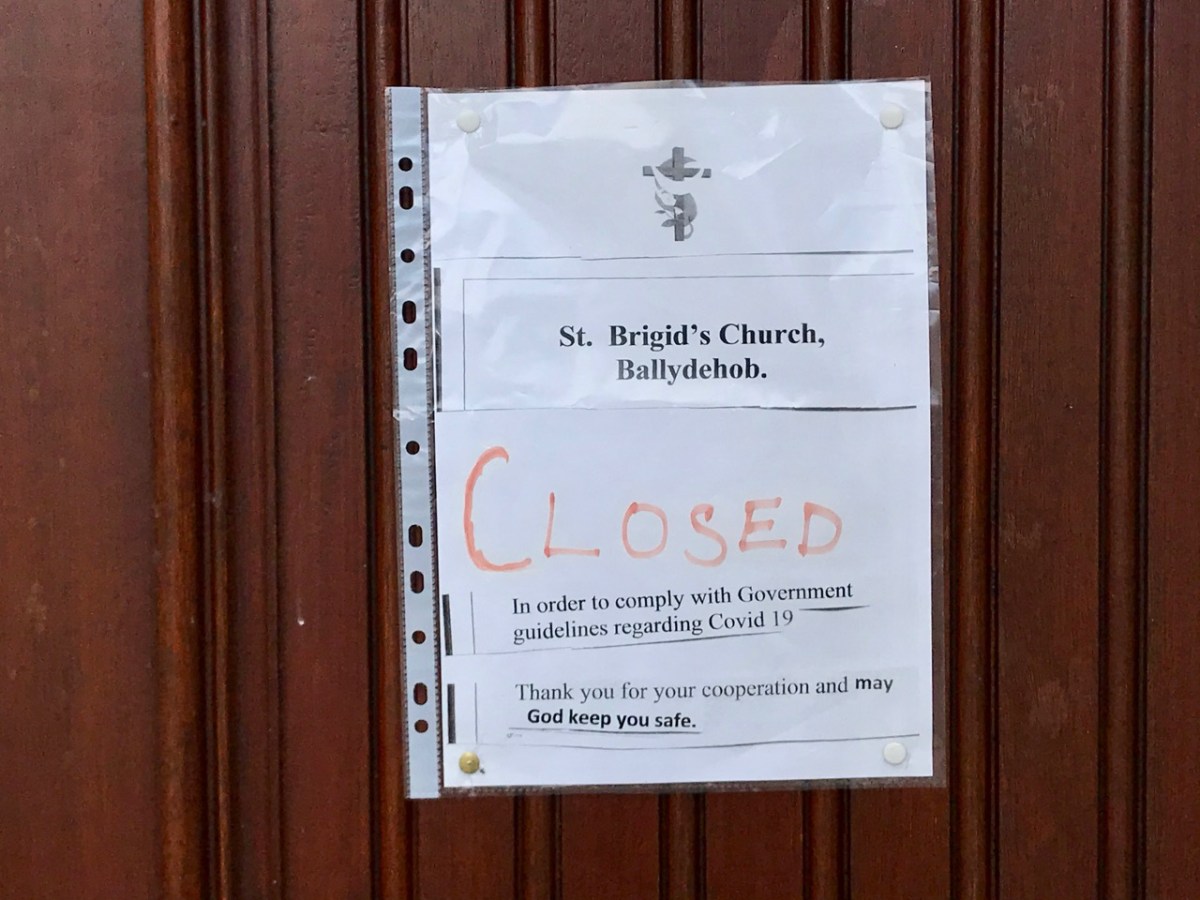
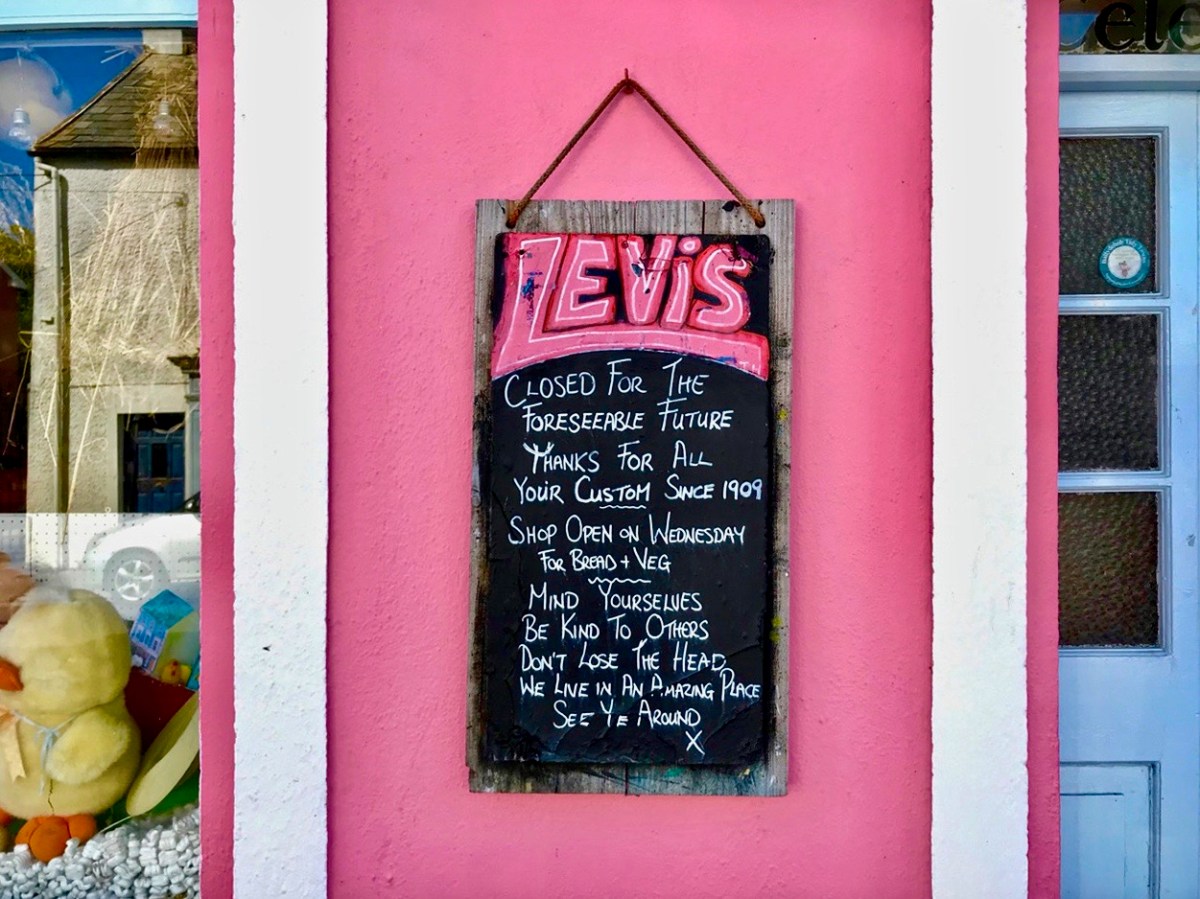
These two images of Ballydehob, taken at the beginning of April, 2020, sum up the shock of empty streets, closed businesses and everyone being advised to isolate. It all seemed very bleak: our movements were initially restricted to 2km from home, then that increased to a radius of 5km. If you lived in rural areas – as we do – you were permitted to travel beyond those distances if you needed to in order to shop or use essential services. We breached those rules on occasion – sometimes to get exercise in the deserted countryside all around us.
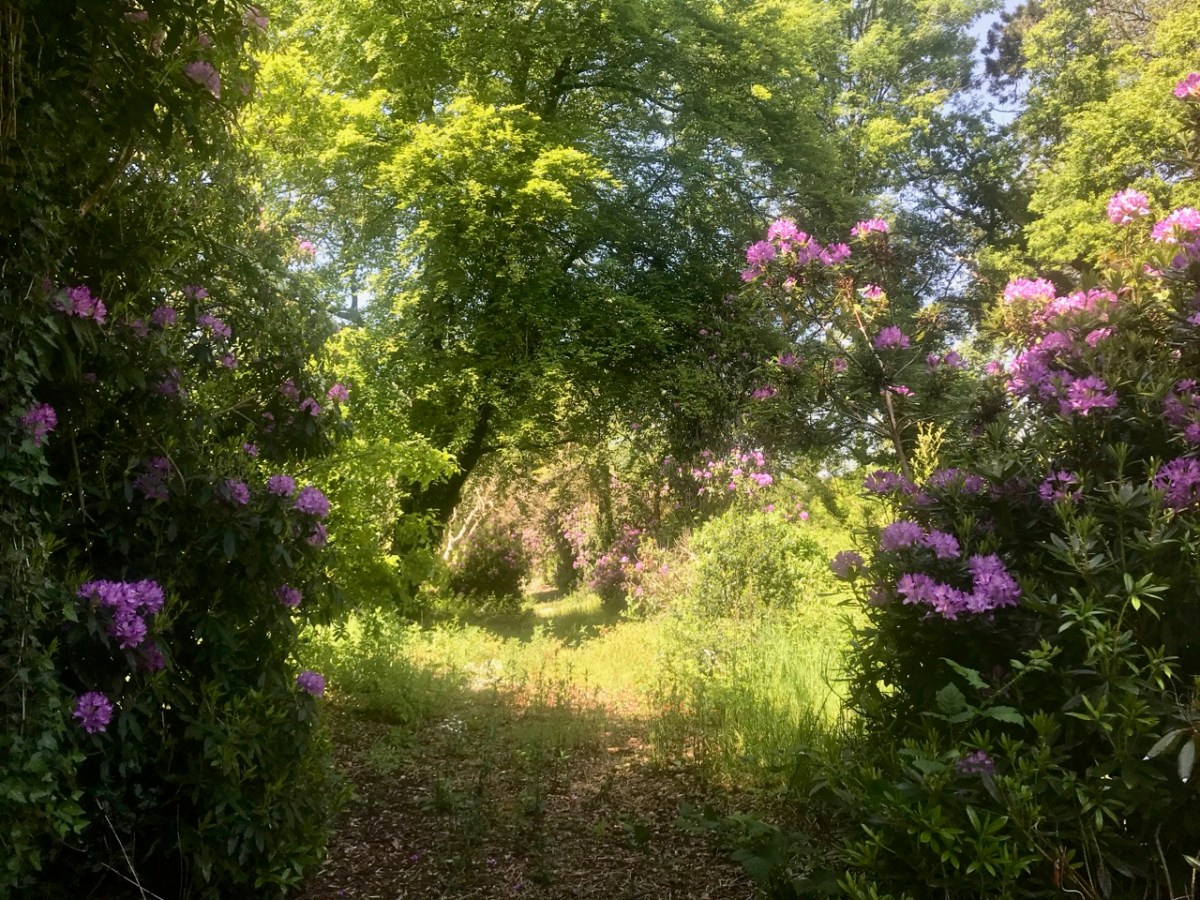
As the days went by, an amazing spring emerged, with day after day of beautiful weather. Human activity was curtailed, but the natural world continued along its course as though nothing was awry!
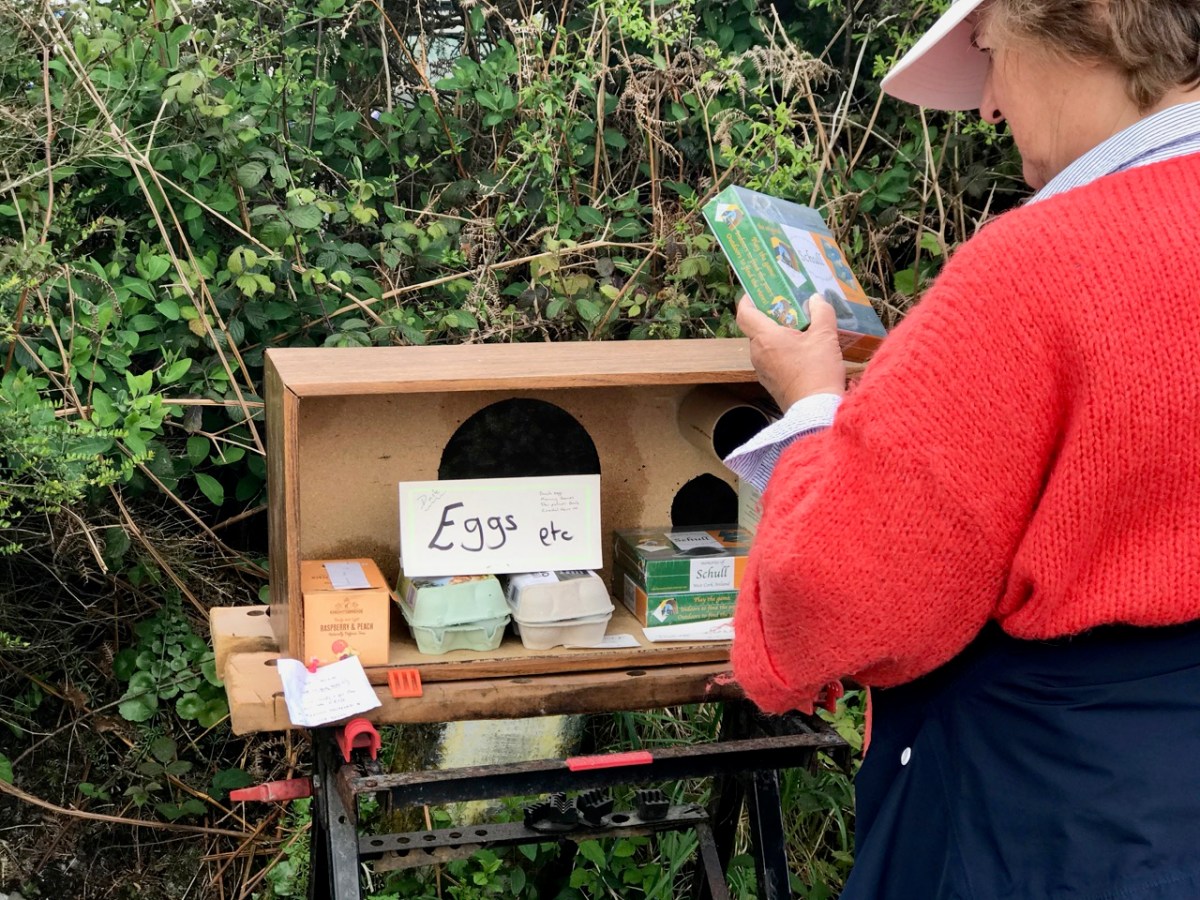
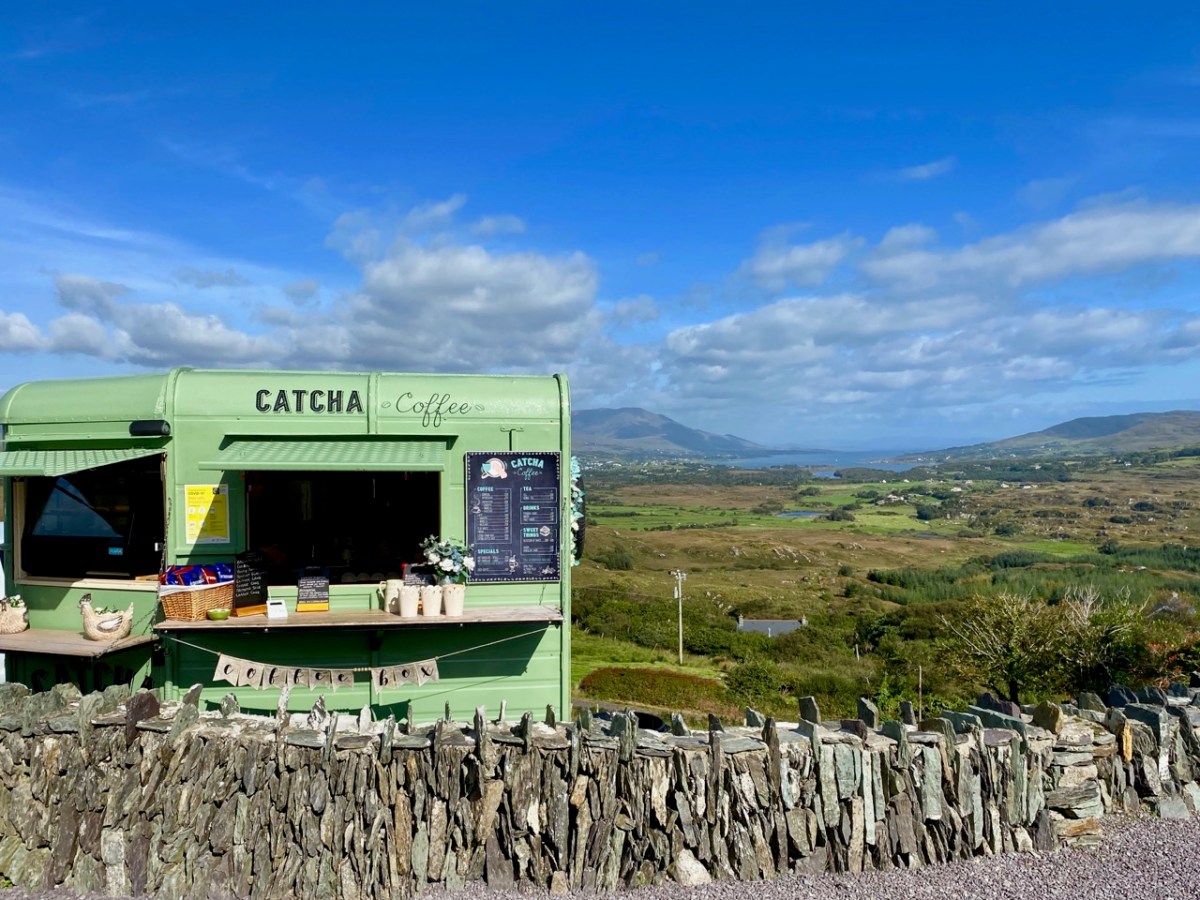
We humans are pretty adaptable. It was amazing to see the ingenuity of folks creating outlets for their energies without having to mix. Food-on-the-go blossomed as a craft industry: here are some examples.
We were very impressed with many of the examples we encountered – and which have survived over the months. Hopefully they will carry on, as casual coffee stalls in the middle of nowhere are welcome to us in our travelling. Pre-pandemic they were probably frowned upon by ‘the authorities’ – and they are certainly regulated – but ‘authority’ would have had to be very hard-hearted to close down these little lifelines. In our experience, every one we encountered was well-run, and spotless. It was an incidental opportunity to have a distanced ‘chat’: always a source of good local information on how others were coping.
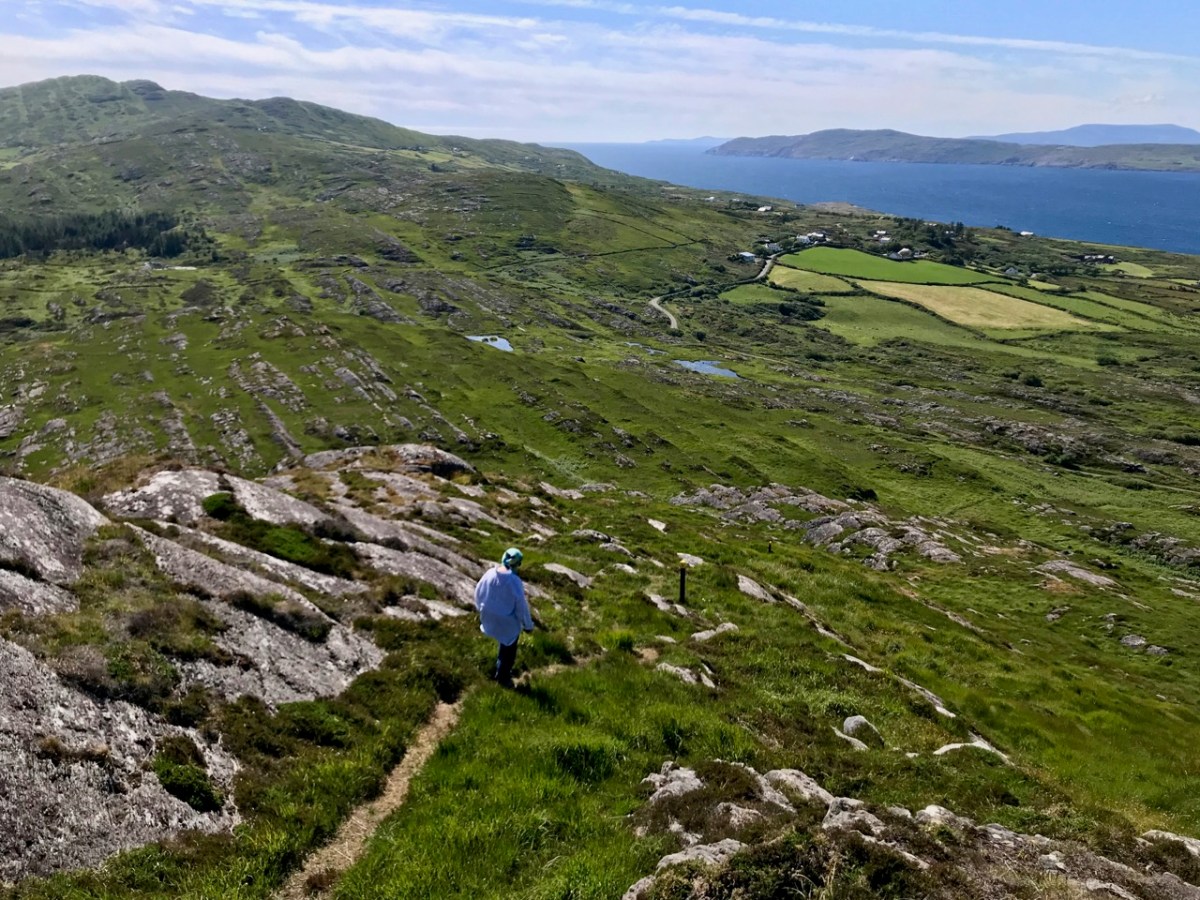
We took the opportunity to climb – and descend – Knockaphuka during the pandemic. It’s a mountain a short distance from Nead an Iolair, but a little outside the limit. No-one was watching! I suppose being restricted to our immediate environment for so long – day after day – made us re-assess it, and our lives. Certainly we have got to know the fine detail of the beautiful place we call home.
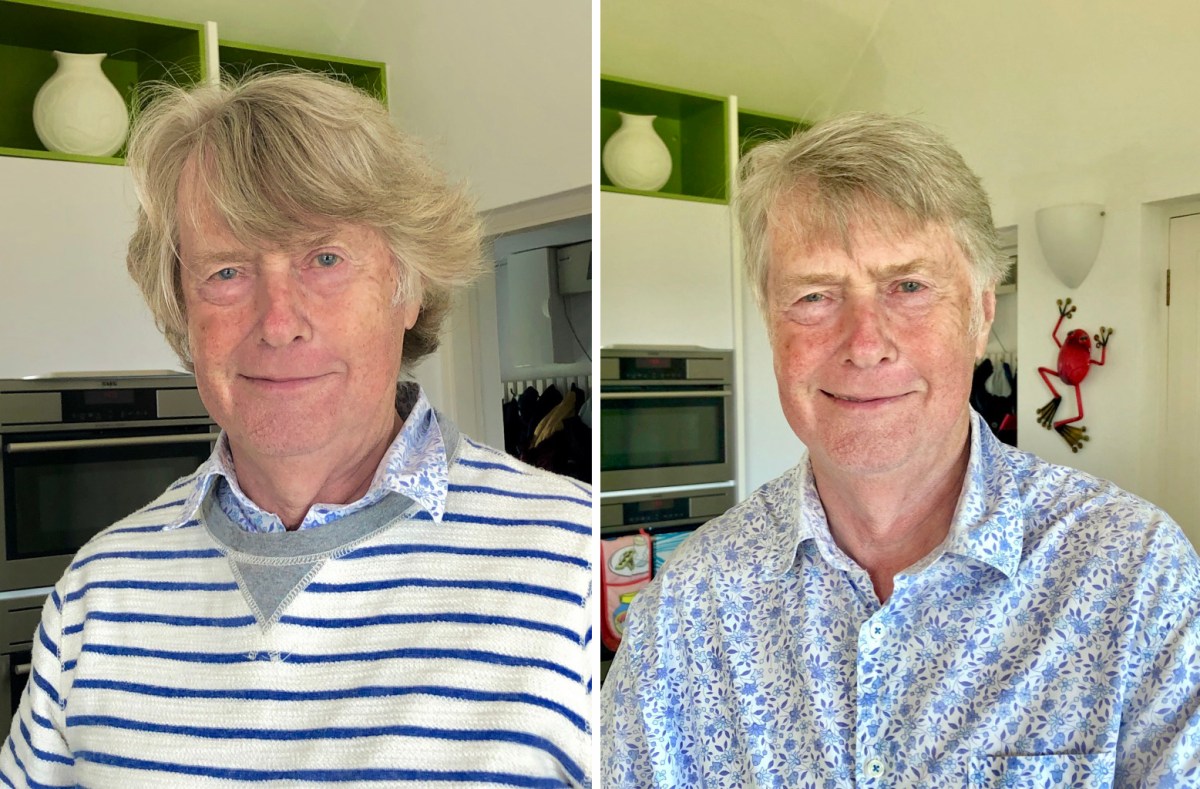
Here’s a social issue: we couldn’t get a haircut for months! Finola kept me in trim, but it was a relief when salons were once again allowed to operate, albeit with some restrictions.
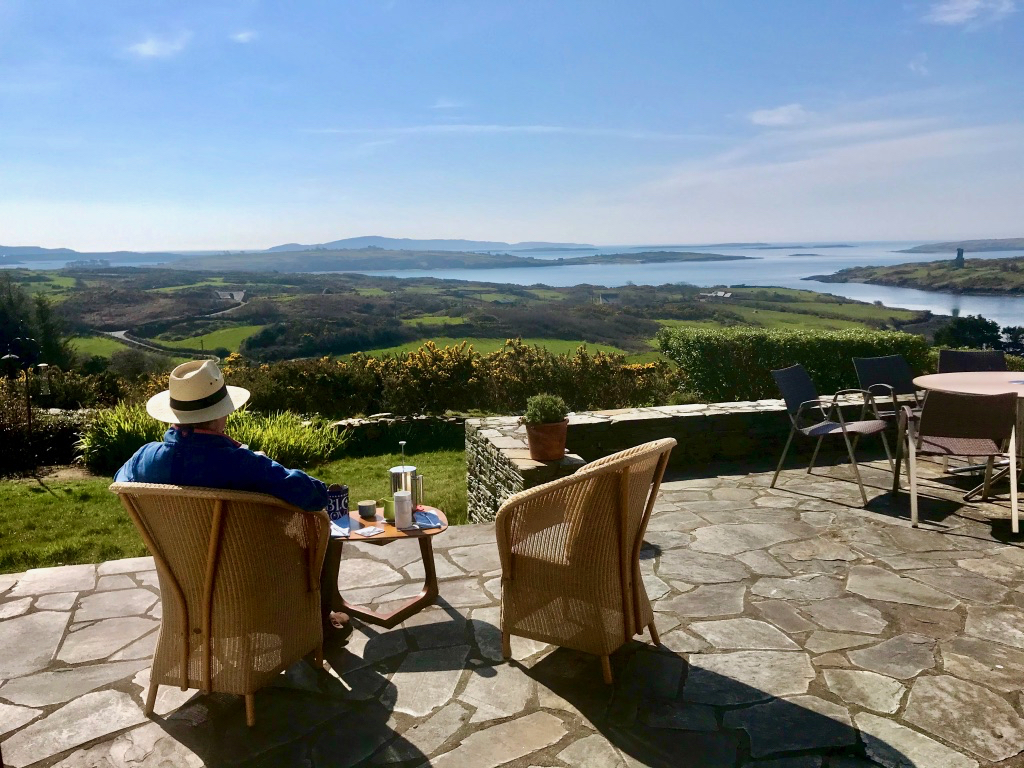
This is us having coffee on our own terrace, looking out over Roaringwater Bay in the wonderful spring of that first pandemic year. In fact, each of the two last years has been benign – with a few exceptional winter storms. We would have felt less relaxed if we had had persistent rain (which sometimes happens).
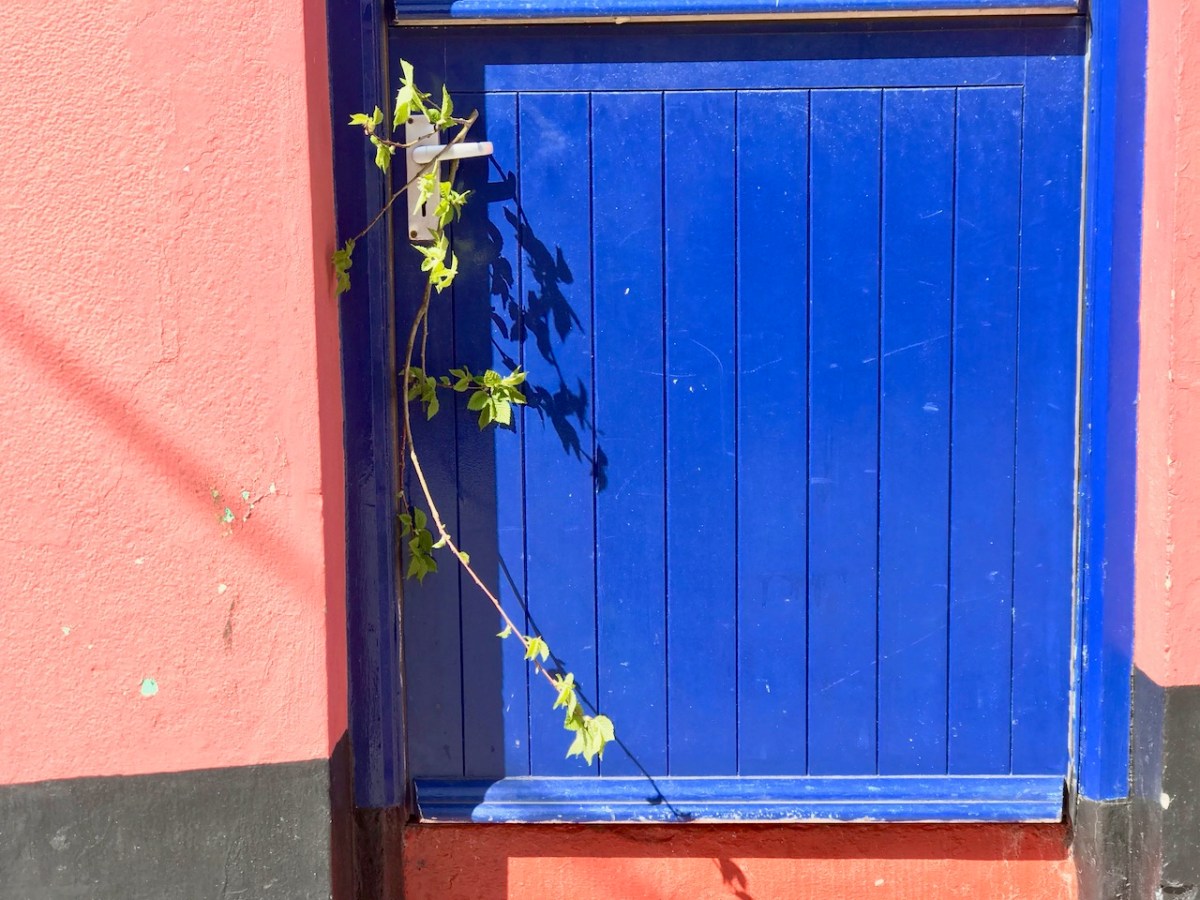
A sprig of green appears on a doorstep on May Day, 2020: a sign that we all still want to continue the old (perhaps ancient) traditions… There were ups and downs: things eased as the year went by and then the new variations came in. Numbers went down and we breathed out. Then they soared – especially with the Omicron variant, and everything went haywire again. Let’s hope that the present easing is here to stay. But the future can never be told…
. . . New Year’s Day saw the Wran coming out in our village of Ballydehob, County Cork. It’s an old tradition here. That time “the fool” accompanied the wren boys. He was mounted on a donkey and carried a bladder tied to a stick. I got the song from John Levis, Ballydehob, (34 years of age) who procured it from Jeremiah Driscoll, Ballydehob (age 64yrs) who was an old wren boy. “Wren” is pronounced wran locally in Ballydehob and surrounding districts . . .
Duchas Schools Folklore Collection : Collector J Barry
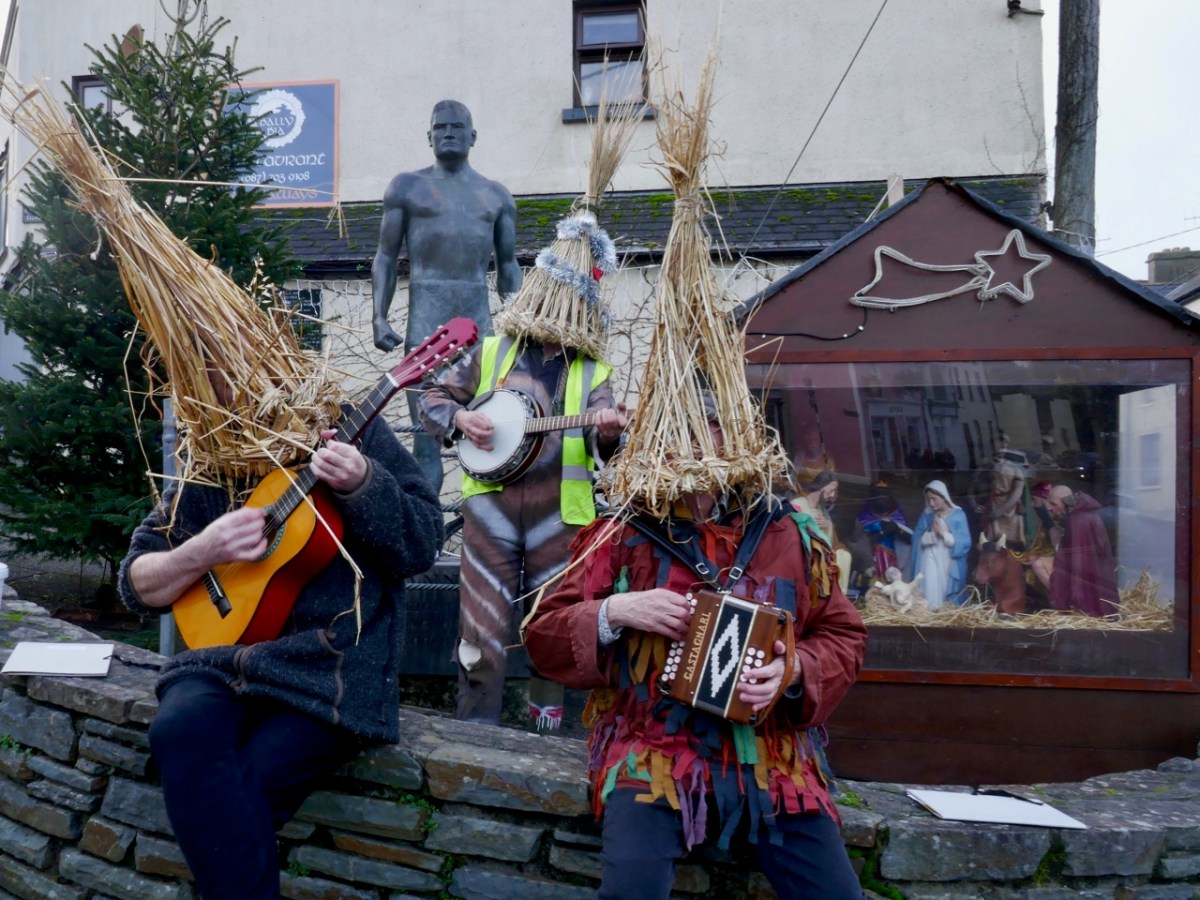
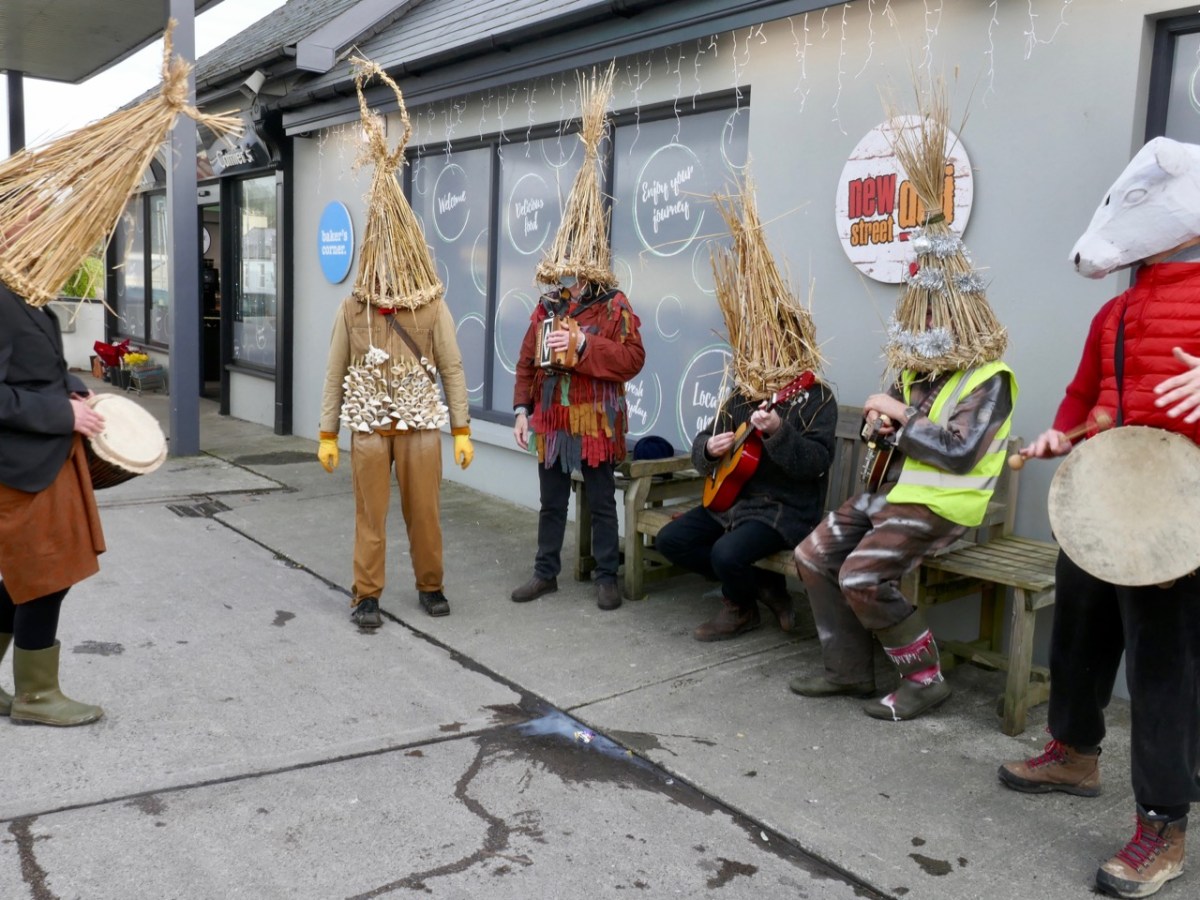
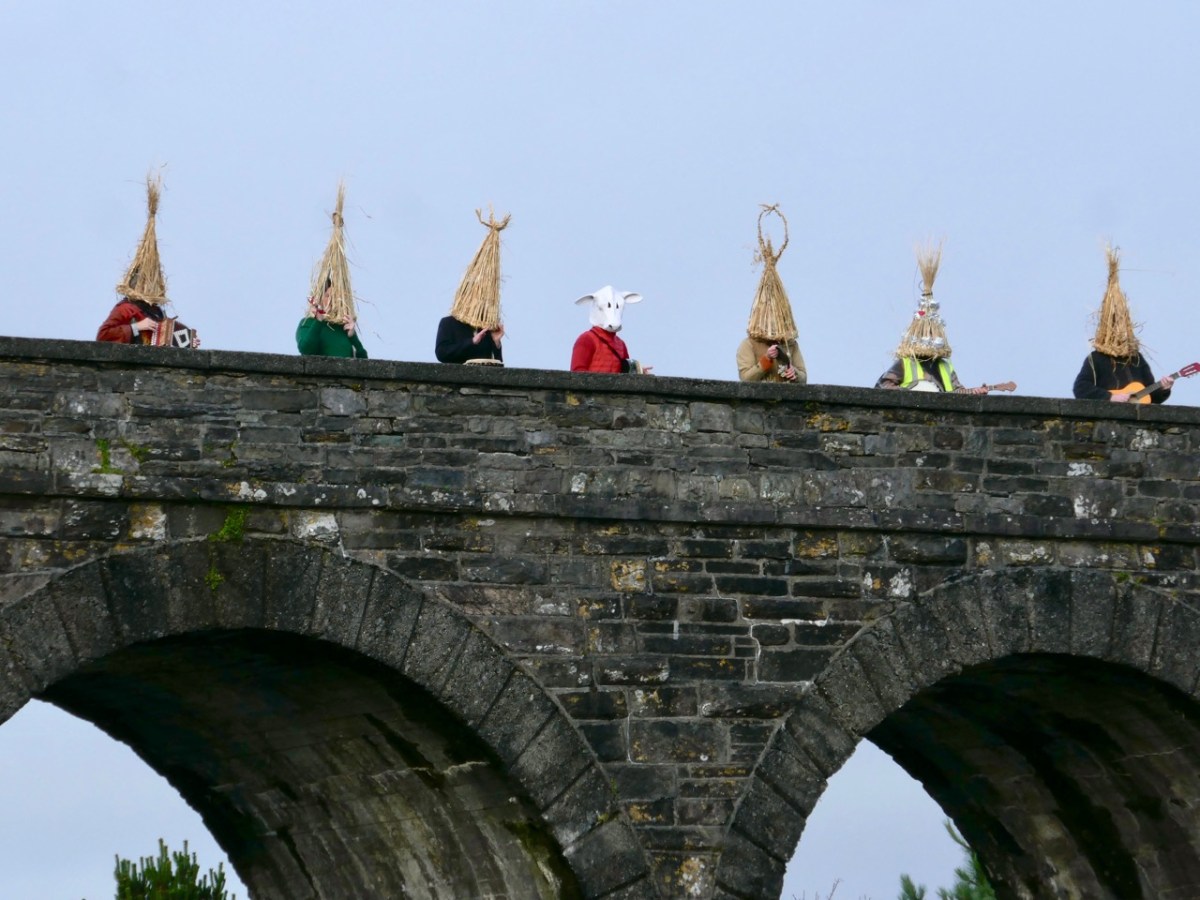
This account dates from around 1936. It’s referring, therefore, to something happening regularly in the late 1800s and, probably long before that. ‘The Wran’ is still active in Ballydehob, well over a century later. I have written about our own Wran Day preparations not so long ago – and included the song – and I’m pleased to report that the day went well. That’s me, above and below, playing the melodeon (although perhaps I shouldn’t be giving away the disguise)! I’m actually wearing ‘tatters’, which was my costume when I took part in Mummers’ plays in England from relatively early in my life: I was brought up on the Surrey / Hampshire borders, prime country for this English tradition. Mumming also takes place in parts of Ireland, have a look here.
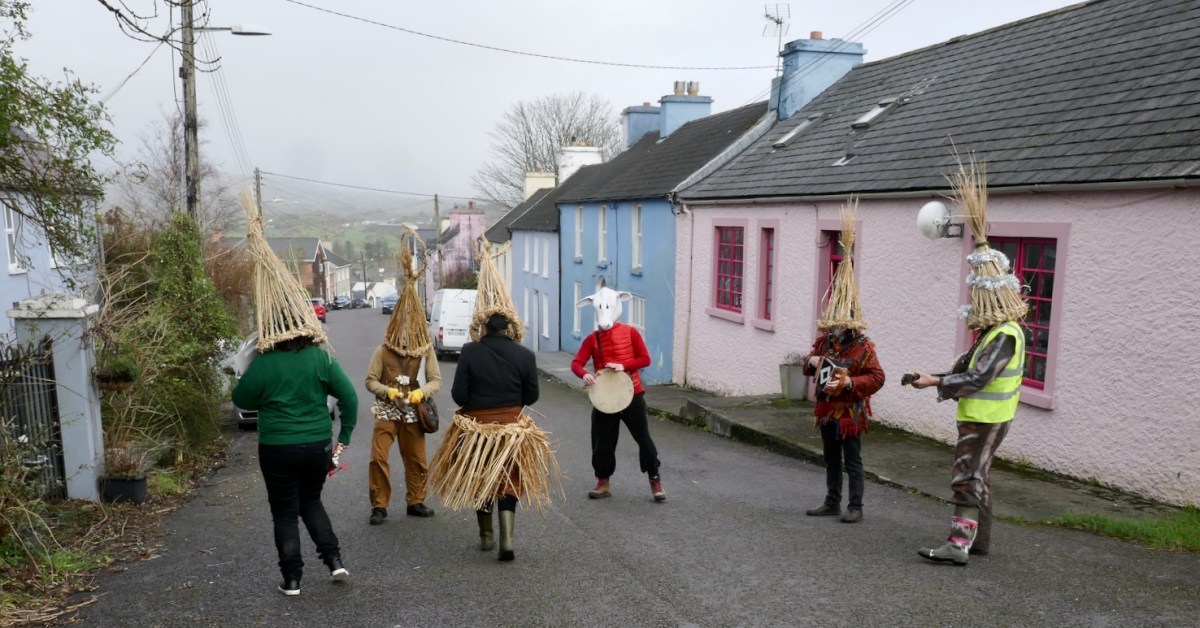
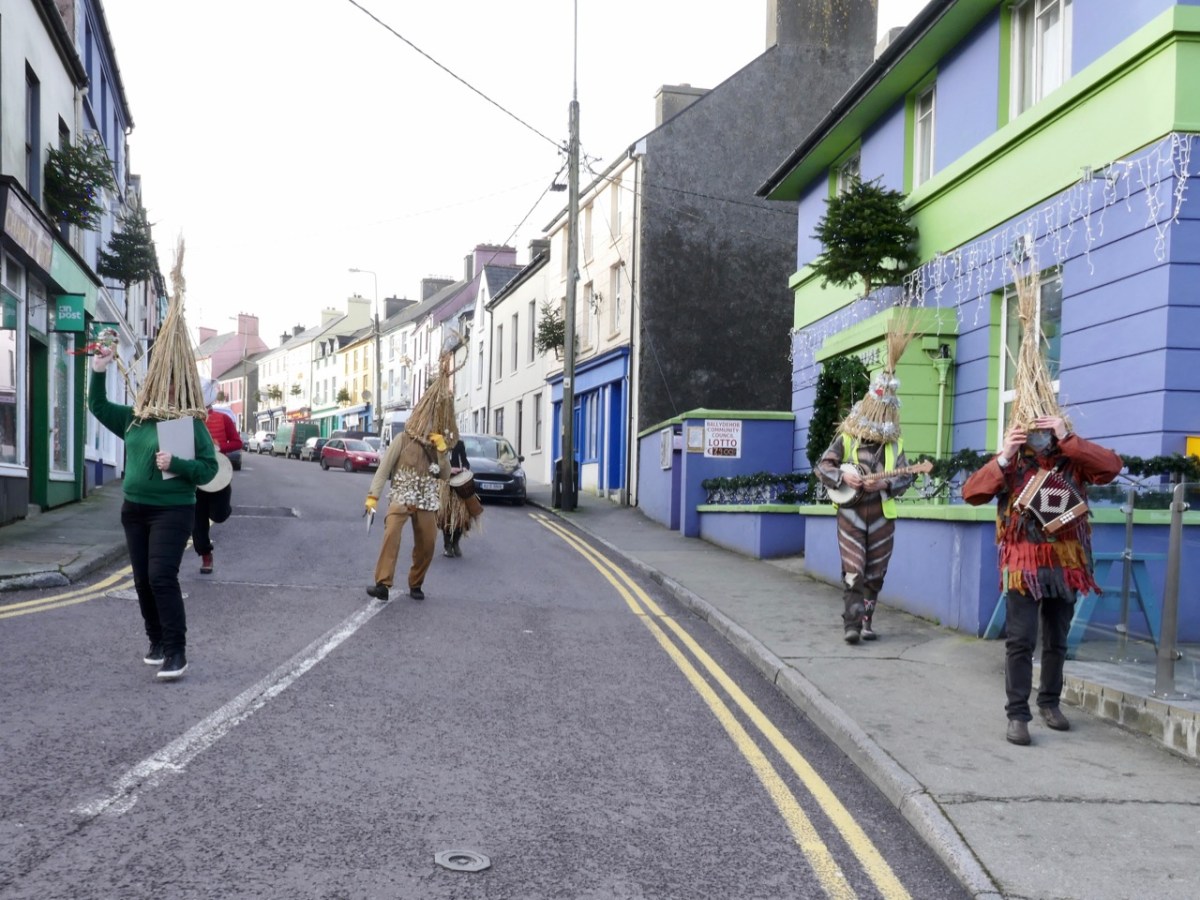
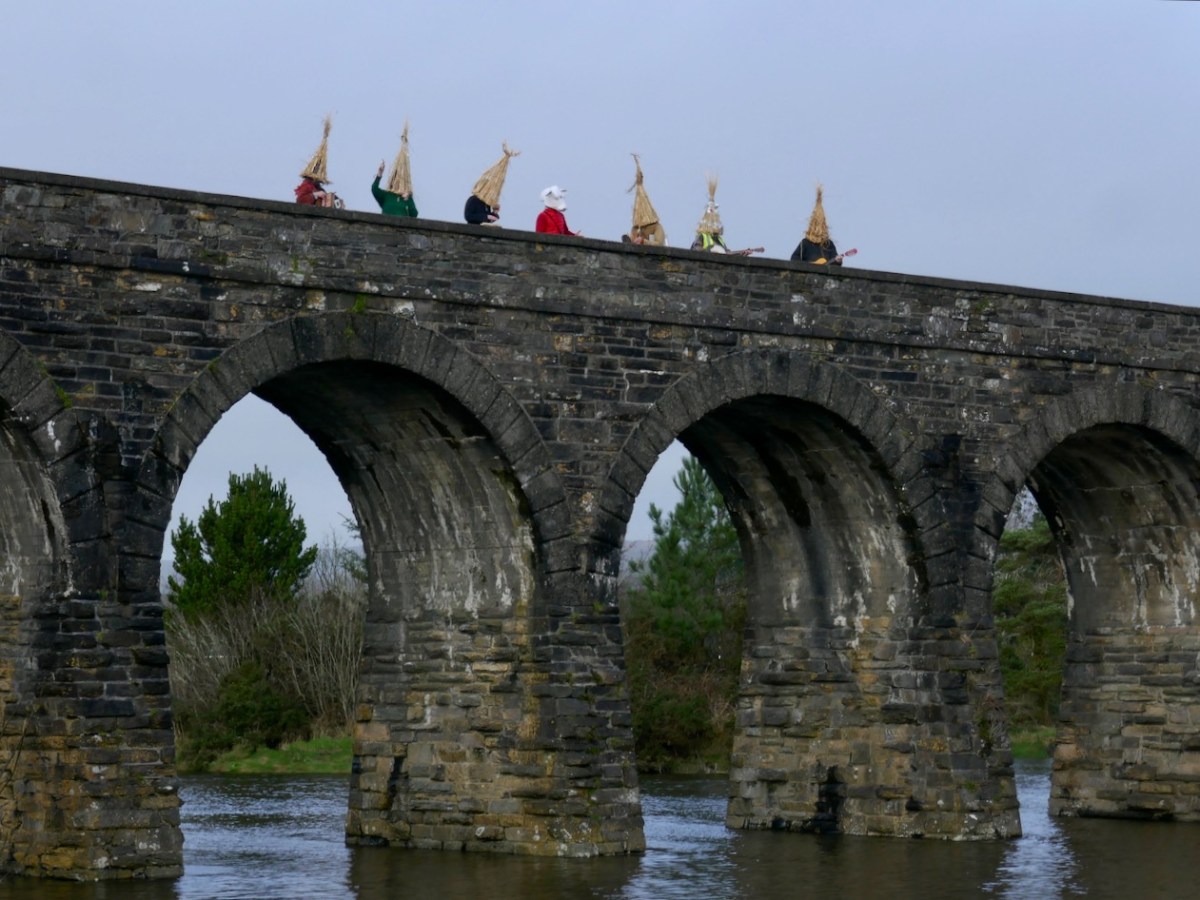
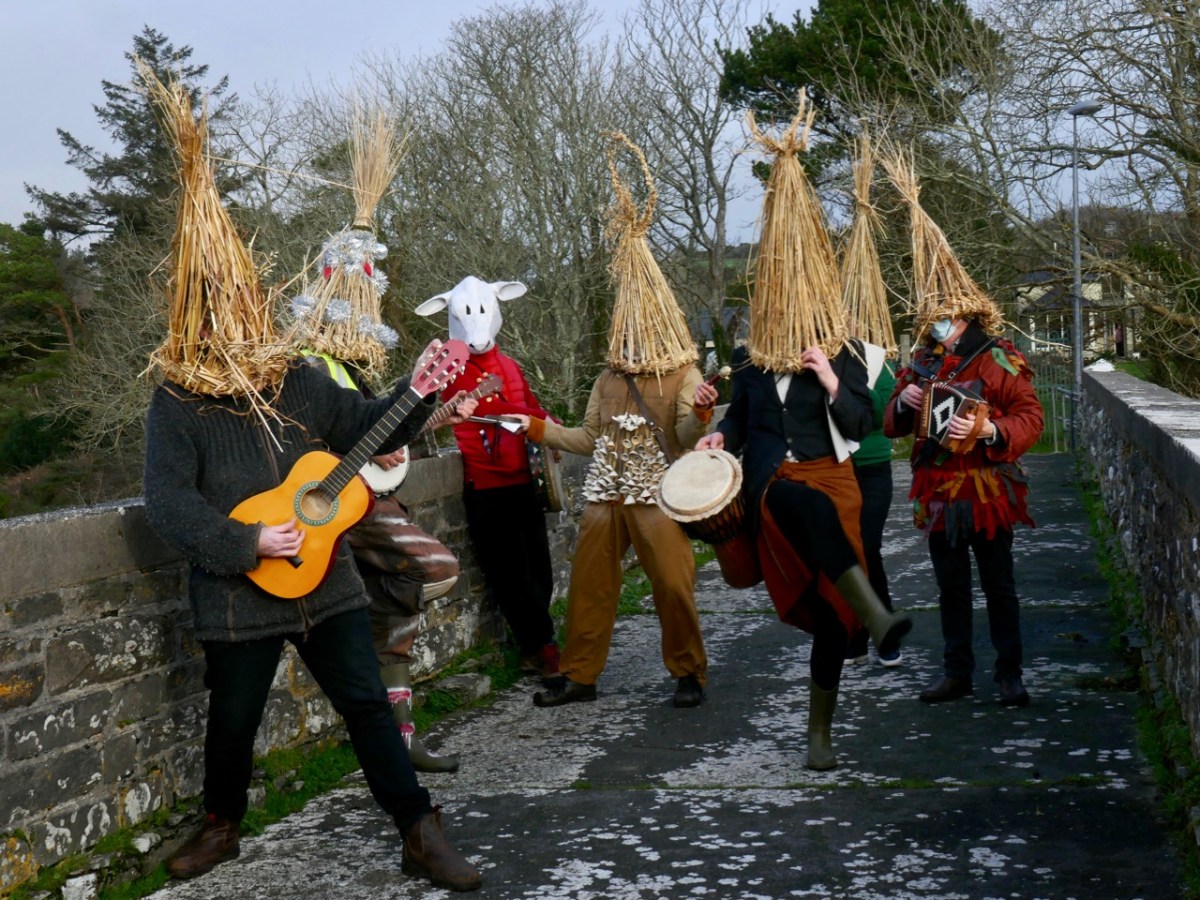
New Years’ Day was quiet day in the village – until we took to the streets! If you want to know the purpose of it all, I can’t really tell you. These are activities that happen around the natural turning point of the year – the change from the sun getting progressively lower in the sky, and weaker, to its returning strength: already we can sense the lengthening of each day. In the mumming on these islands you got a sense of it from a symbolic play where combatants fought and died, then were brought back to life by The Doctor who can apparently cure all illnesses. And, of course, we are always anxious to see the solstice in action!
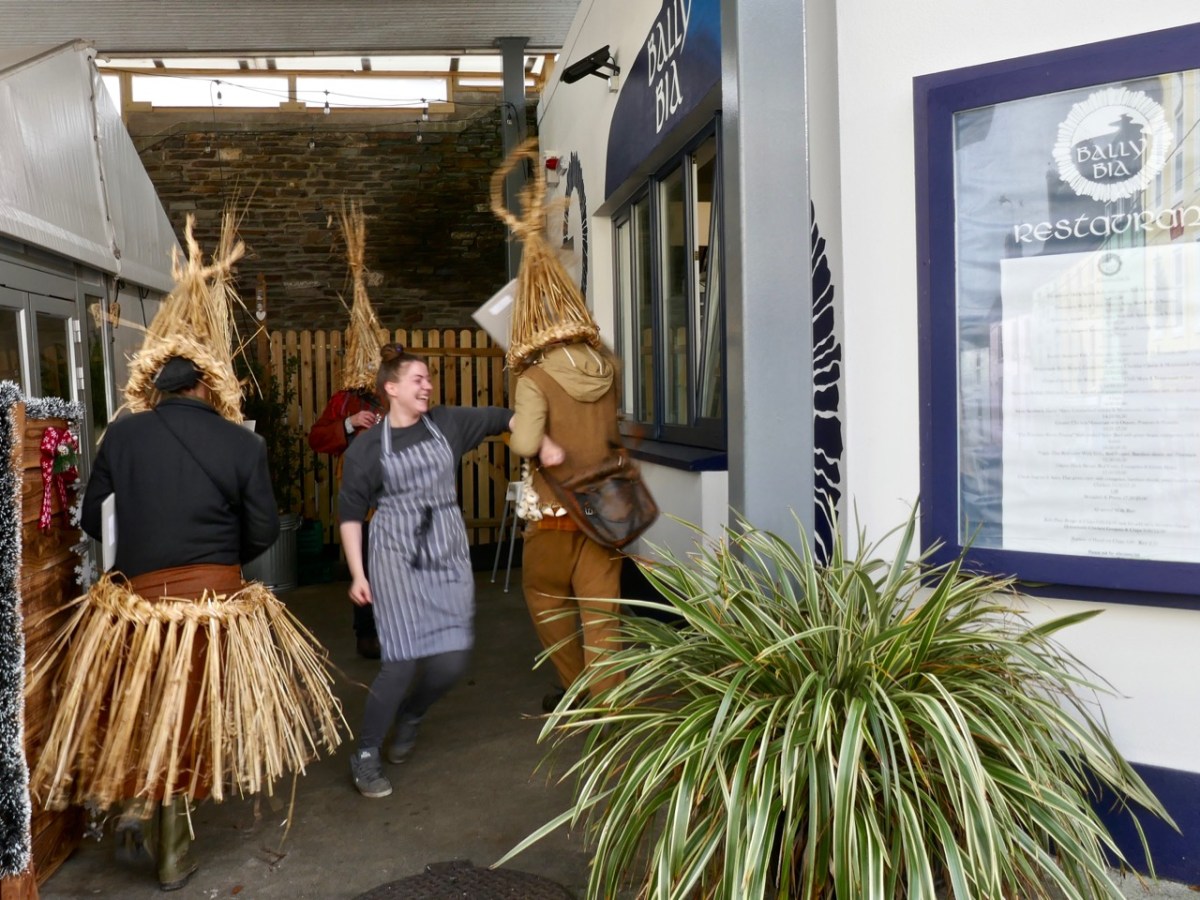
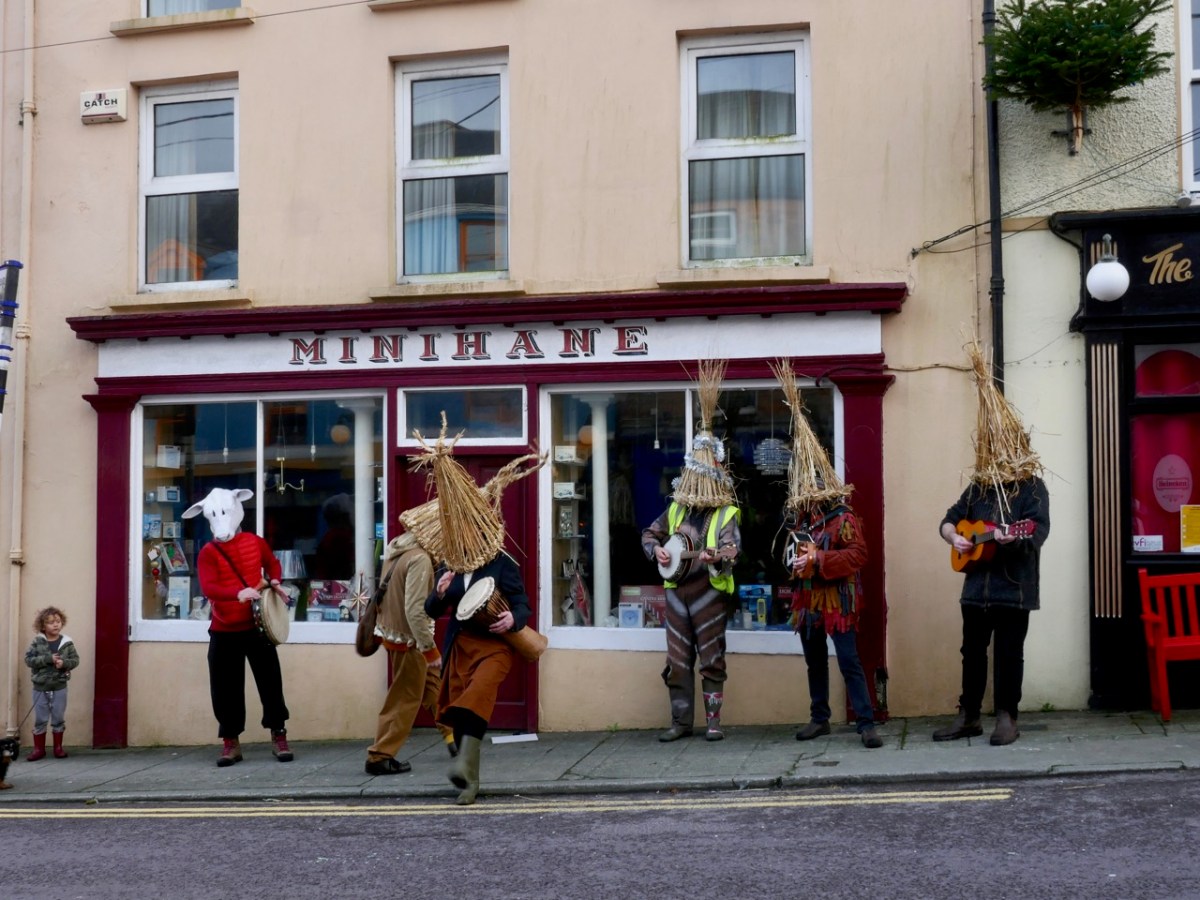
In Ireland, the Wran Day tradition is accompanied by a play in some places, but more usually it’s a procession through a community, involving interaction by going into houses and shops, making a lot of noise and generally stirring up the spirits with a bit of mischief-making. We were fairly passive this year because of Covid restrictions, but it felt good to be out and about. Let’s hope that this anomaly in the regularity of daily life can become more marked as things gets back to near normal in future years!
Thanks are due to Sonia Caldwell – who instigated proceedings, keeping us all focussed – andJoe and Caroline of Levis’s Bar who provided the venue for making the masks – and gave great moral support! Traditionally, the masks are ritually burned on the following St Patrick’s day. Finola kindly provided the pics.
Earlier in the year I went back to my childhood days, remembering when I first learned about Jonathan Swift from my Granma, and walked with her to the places associated with him in the town of my birth: Farnham, Surrey. Here is the post.
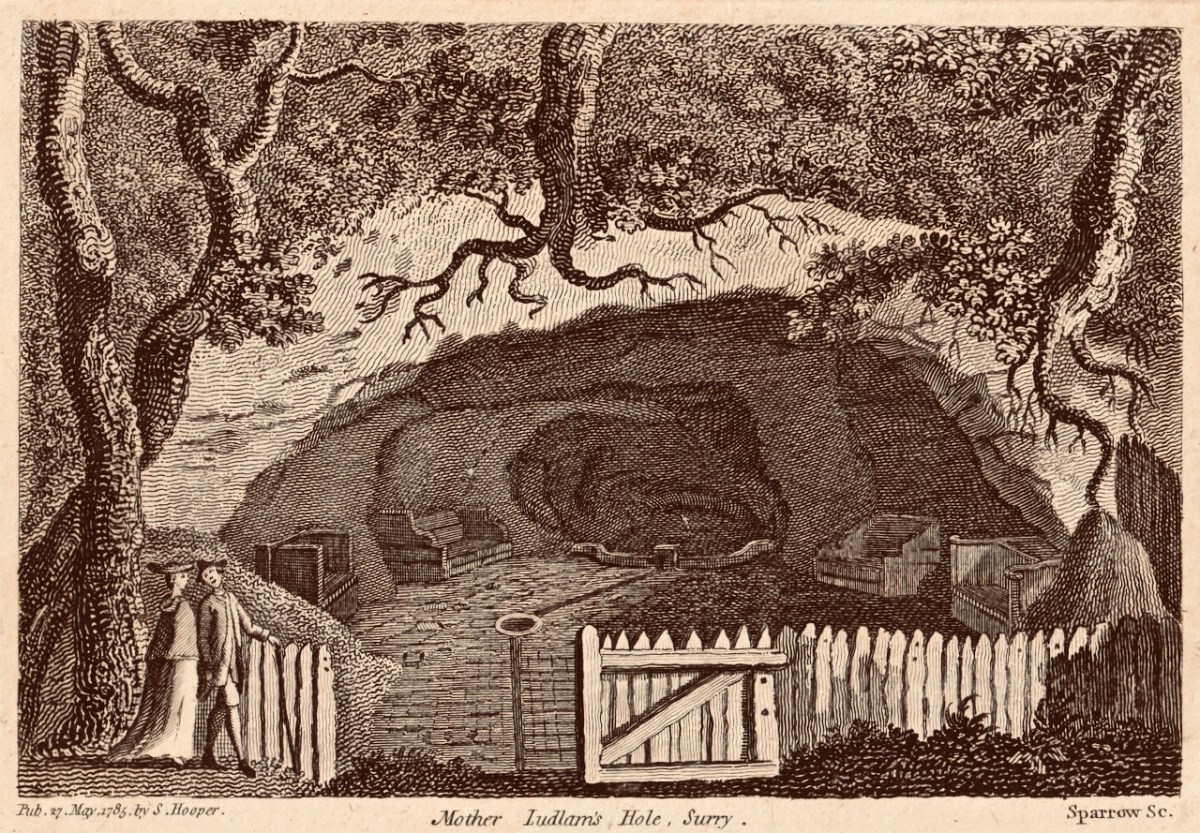
If you read my ‘Dean Swift and I’ post you will find this engraving of ‘Mother Ludlam’s Cave’ which was close to Stella’s Cottage, and must have been familiar to Jonathan Swift during his years living in Surrey. I came across this old print in a local bookshop when I was growing up in Farnham, and it has stayed with me ever since
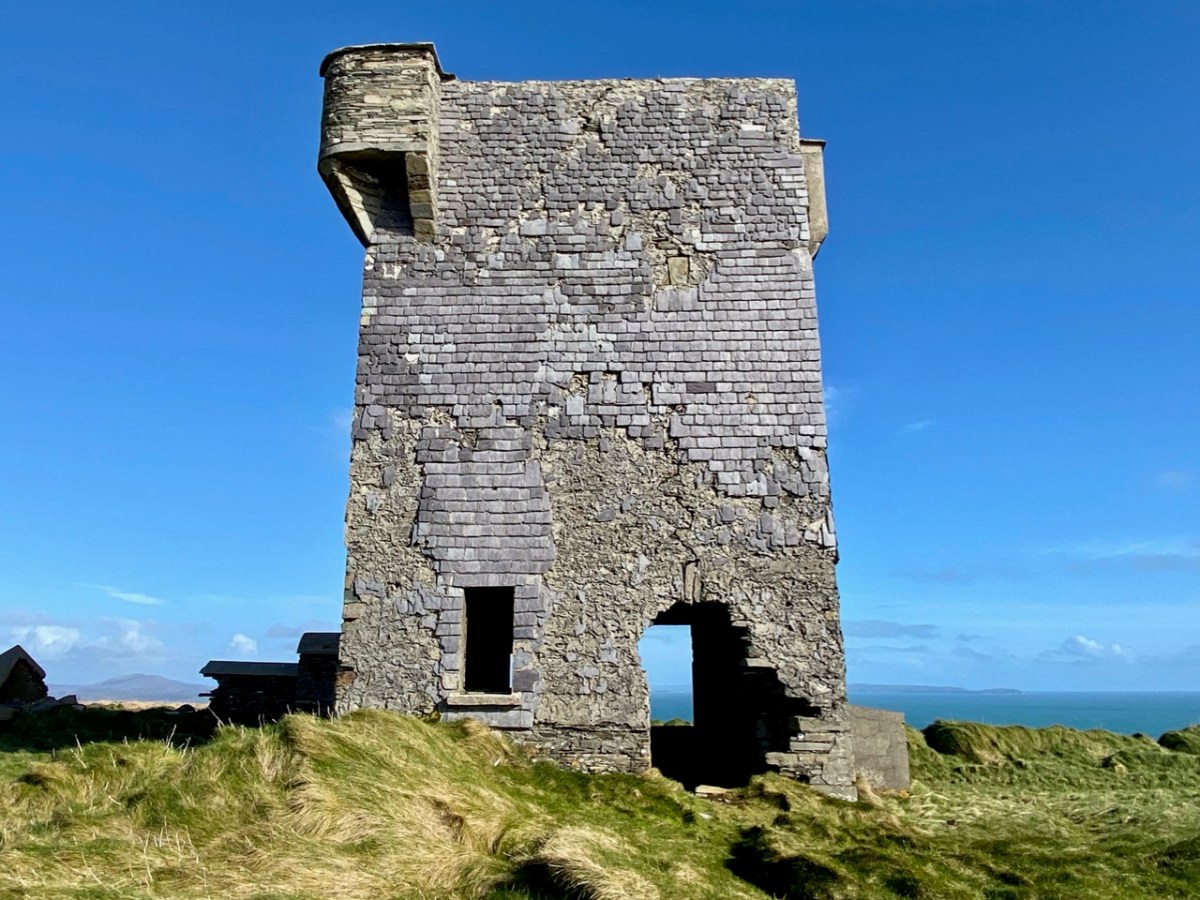
I have been keeping a few series of posts going through the year: one is about the Napoleonic signal towers that dot the coastline all around this island. I began the series in 2020 (do you remember how we thought the Covid restrictions would soon be over?). In 2021 I continued the posts with new episodes. This is one of my favourites.
The Napoleonic Signal Tower at Brow Head, West Cork
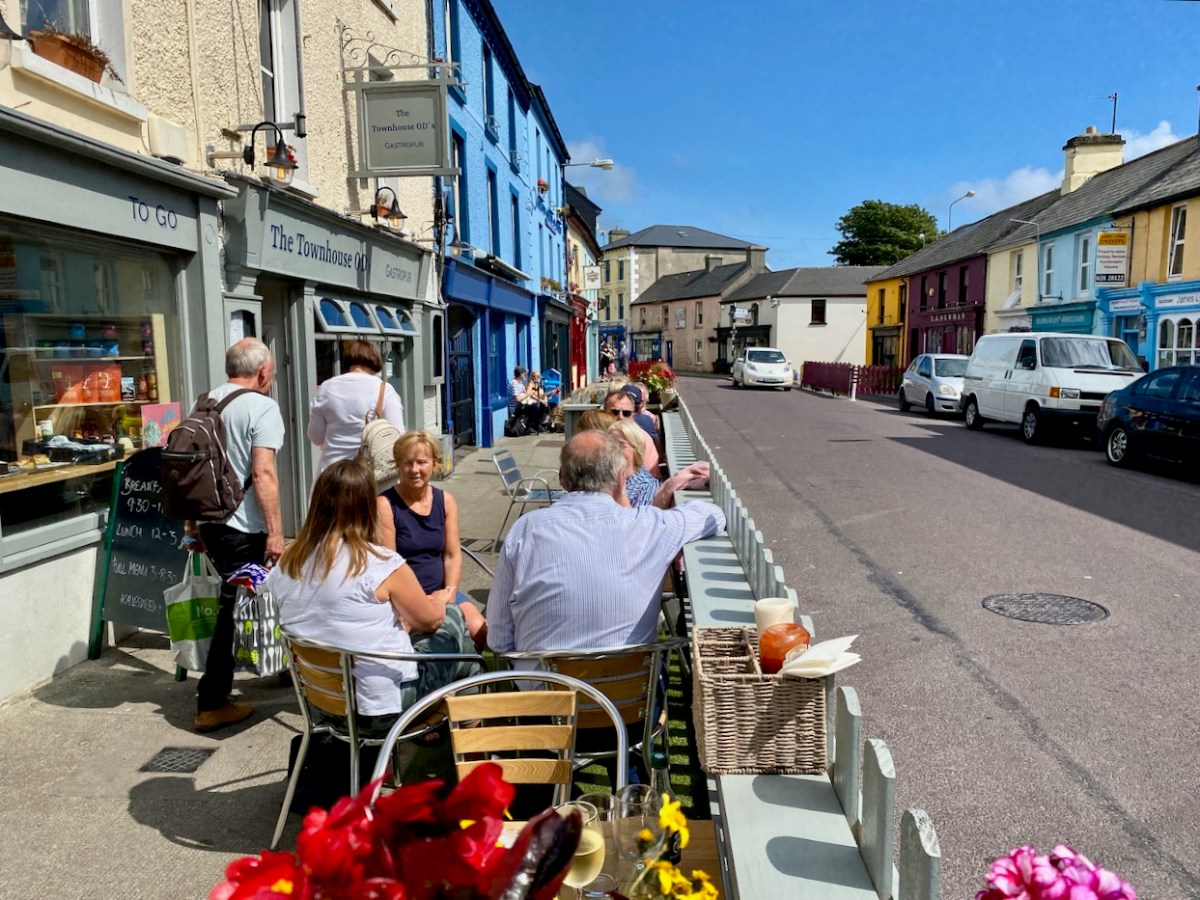
West Cork had good coverage from our blog during the year which has just ended. I began a series of posts about West Cork Villages and Towns. Perhaps it was an interesting time to concentrate on our local communities: hopefully it proved that we West Corkonians are not deterred from celebrating life as much as is possible in these strange times.
The communities of (top to bottom) Bantry, Schull and Skibbereen have been the subjects of posts in my West Cork Villages and Towns series in the past year. There are many more to come in the future, including the remarkable activities that take place in our ‘home’ village, Ballydehob (below).
It proved a remarkably popular post and I was forced to admit that it did come from my imagination, although all the background historical information can be verified. What really interested me was the interest and enthusiasm that everyone has about life here on our wild West Cork coastline all those centuries ago!
We are most fortunate to live overlooking Rossbrin Cove and the islands of Roaringwater Bay
It’s always a difficult task to choose just a few posts from the 50 or so each of us has written over the last twelve months. If I started all over again I would probably choose many different ones. But they are all still there to be read (dating back to 2012): you only have to search the archives! Our new year began – yesterday – with the enactment of an ancient Irish tradition in Ballydehob: the Wran Day. That will be my post next weekend, but here’s a taster. Happy New Year everybody…!
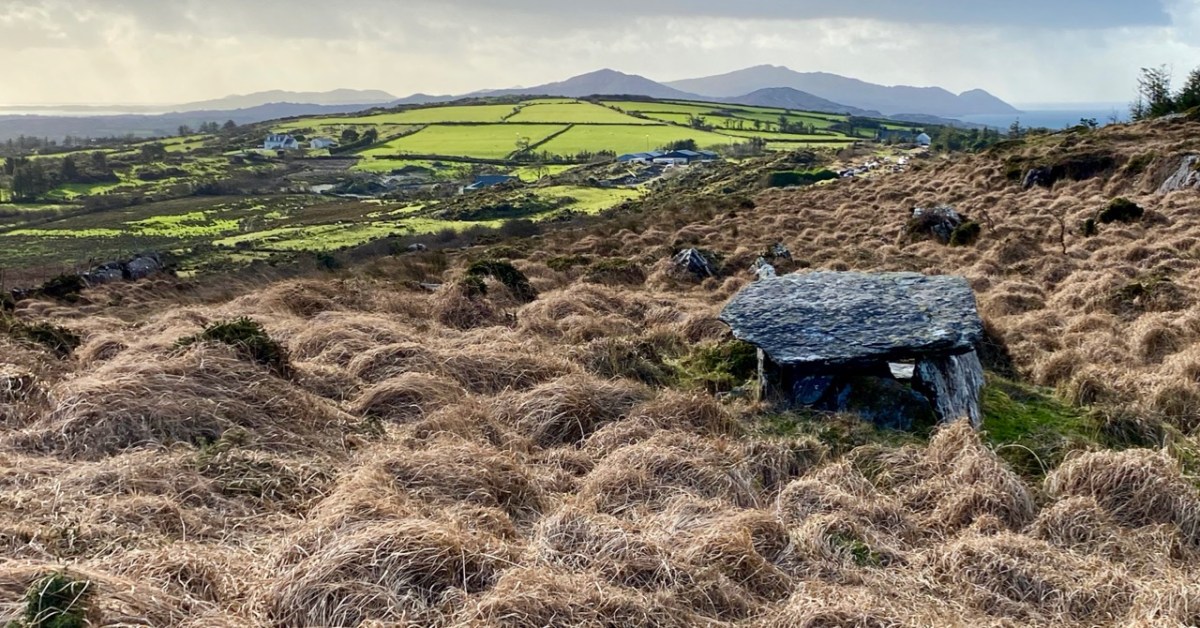
At this time we usually do a couple of ‘reviews’: looking back through the year and picking posts and photographs that jump out at us, asking to be shown again. Next week’s offering will be our selection of favourite Roaringwater Journal articles from 2021, but here, following on from Finola, is my choice of photographs that have never been published. We gave ourselves the stipulation that they have to be from West Cork, and they had to be taken this year. We are trying to have a minimum amount of commentary – and hope they will speak for themselves. First up – above – is Ratooragh Wedge Tomb, far down on the Mizen: we discovered it in February, and that exploration resulted in this article.
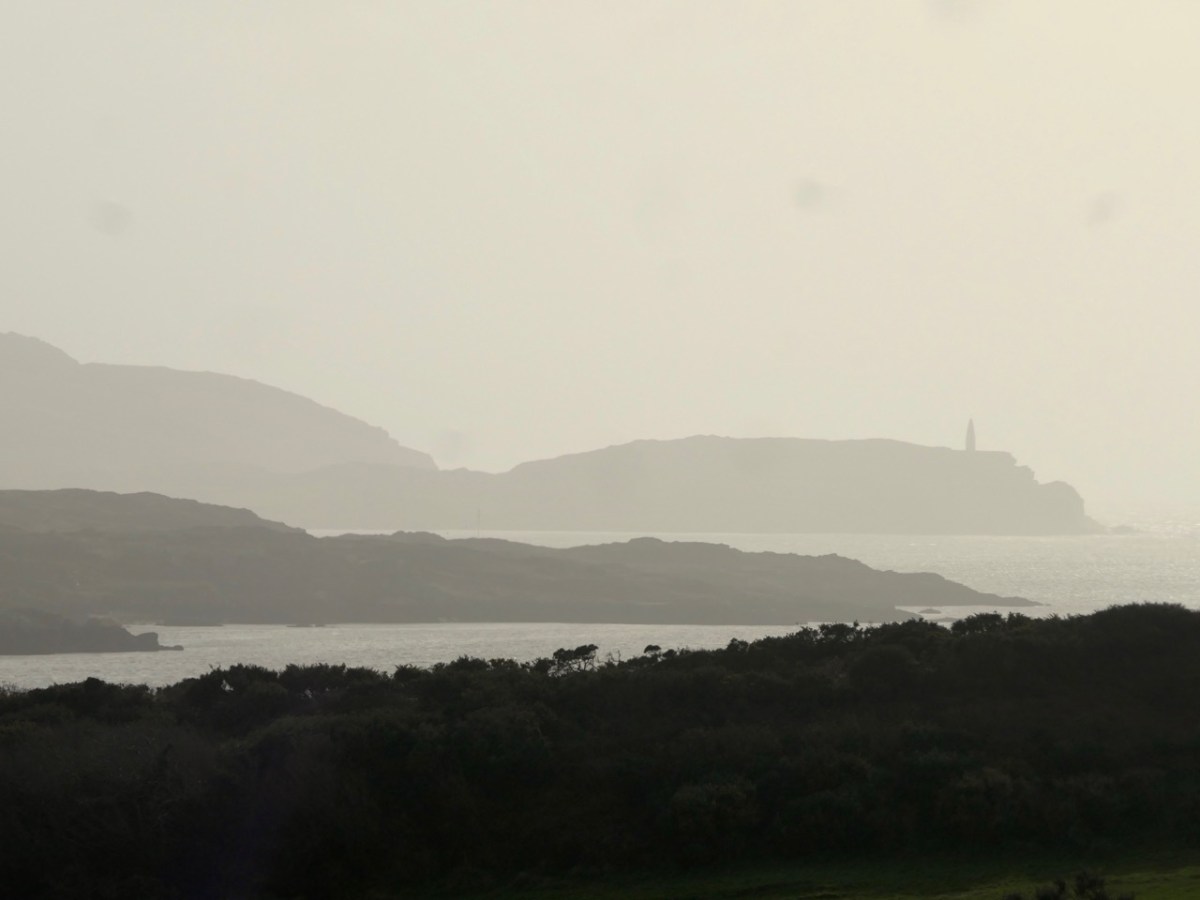
Baltimore Beacon has a recognisable profile: we can see it in the far distance from our home: Nead an Iolair
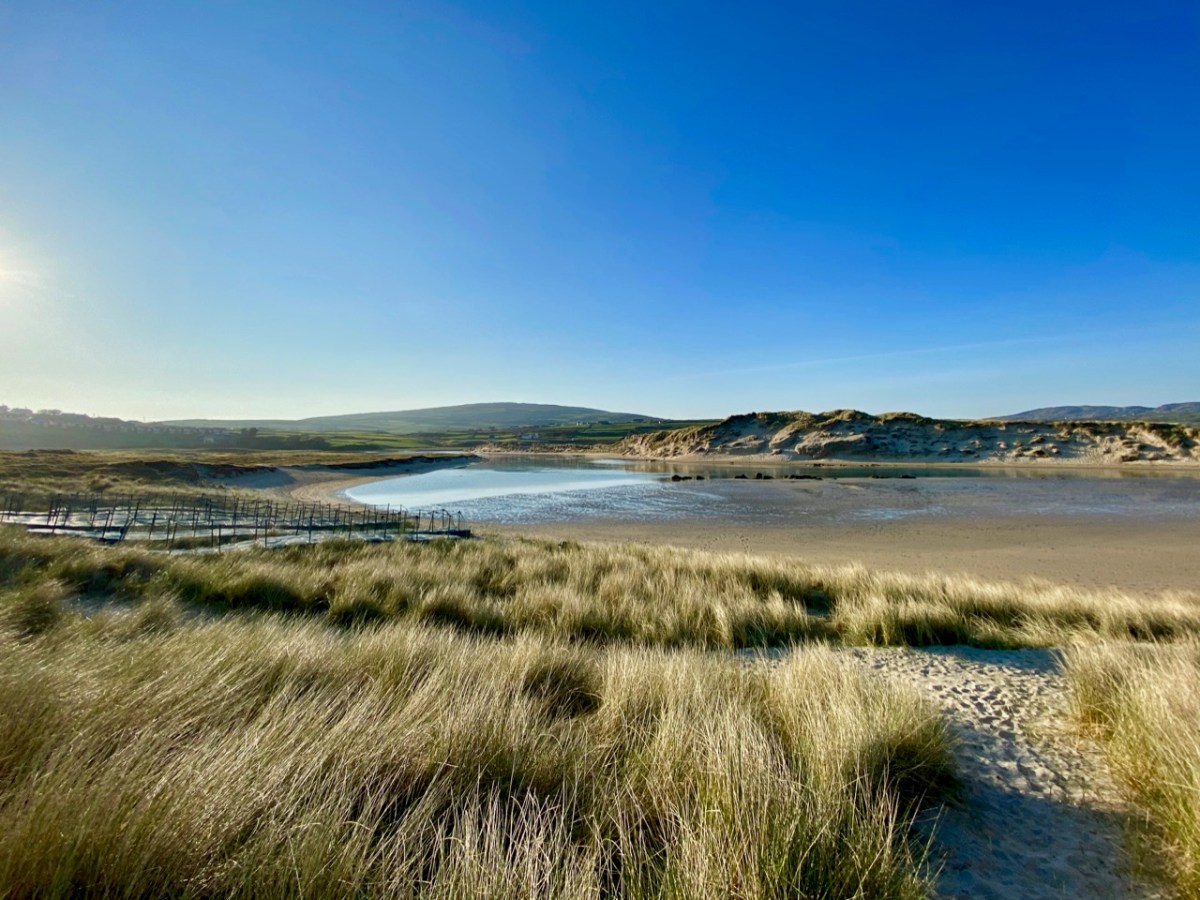
Barley Cove is a favourite place for us to walk – far enough away from the madding crowds: there are few of those in West Cork!
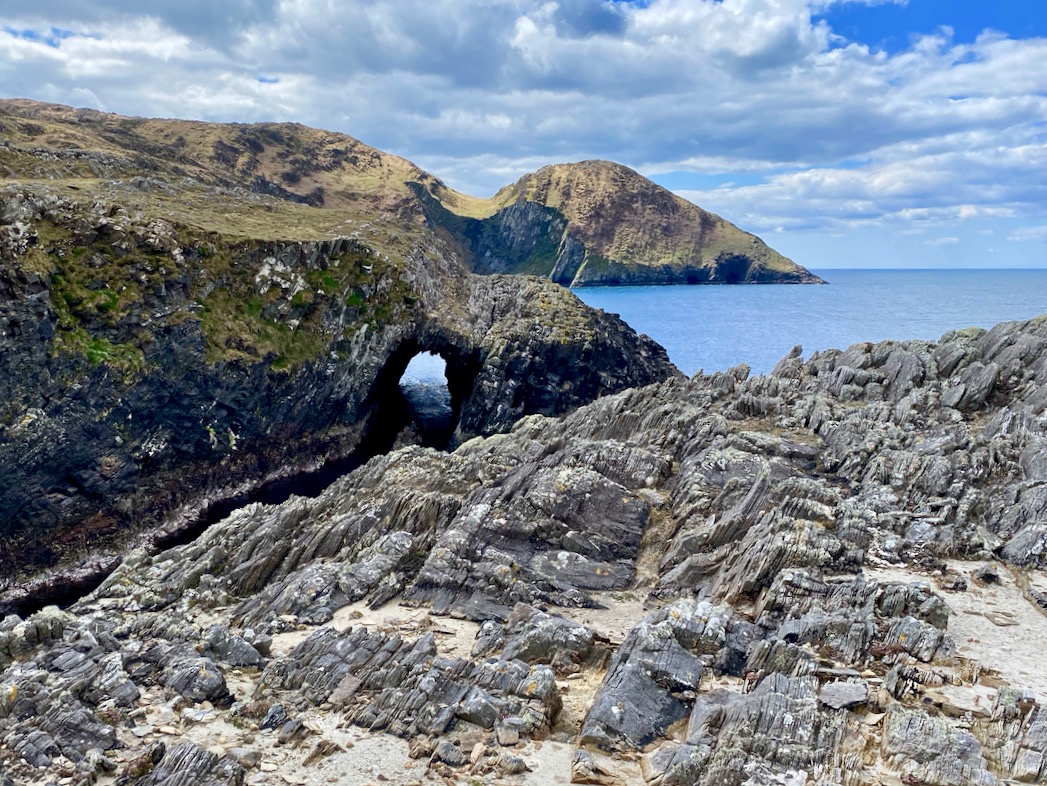
We like to explore the seascapes over by Dunkelly: here is a wonderful natural sea-arch
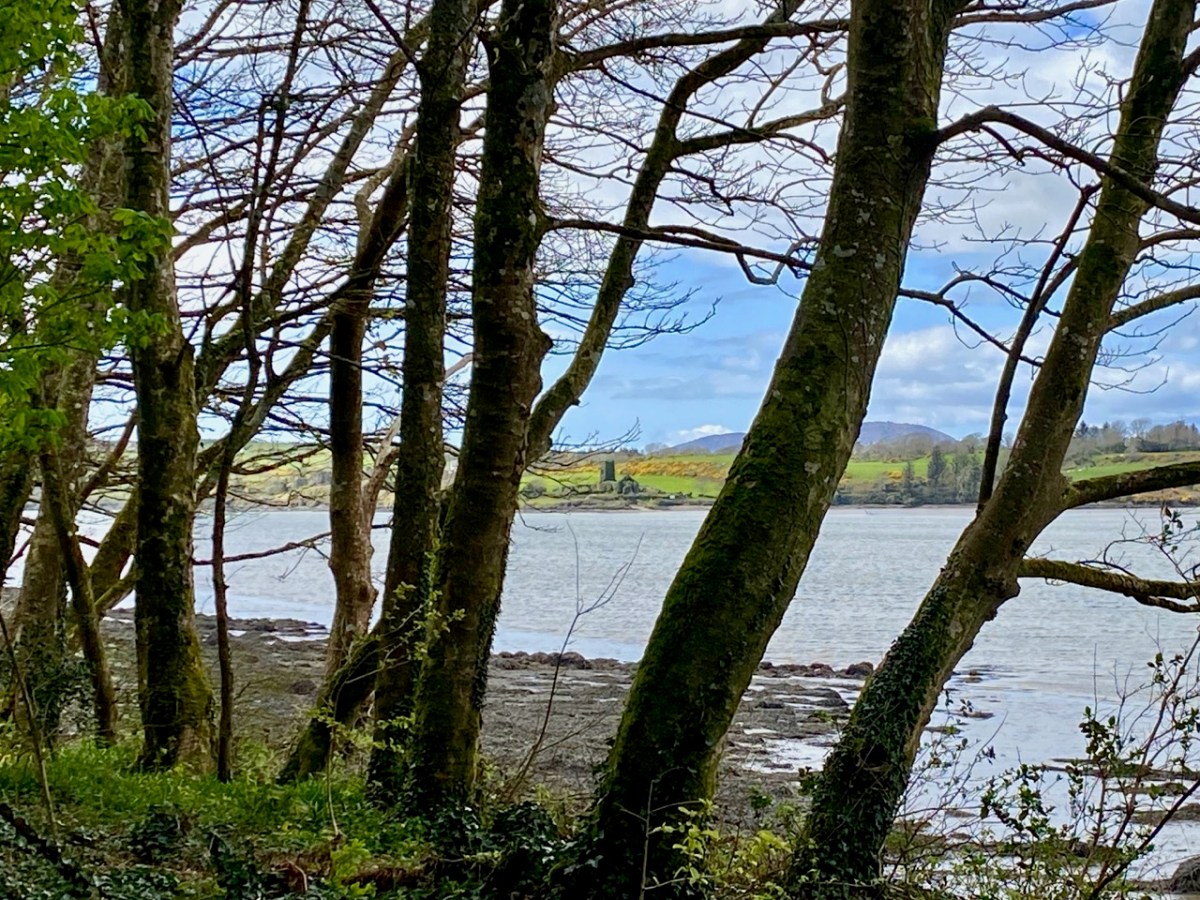
This view is from Inish Beg Estate, looking across the Ilen River towards the burial ground at Aughadown. In the background is Mount Gabriel
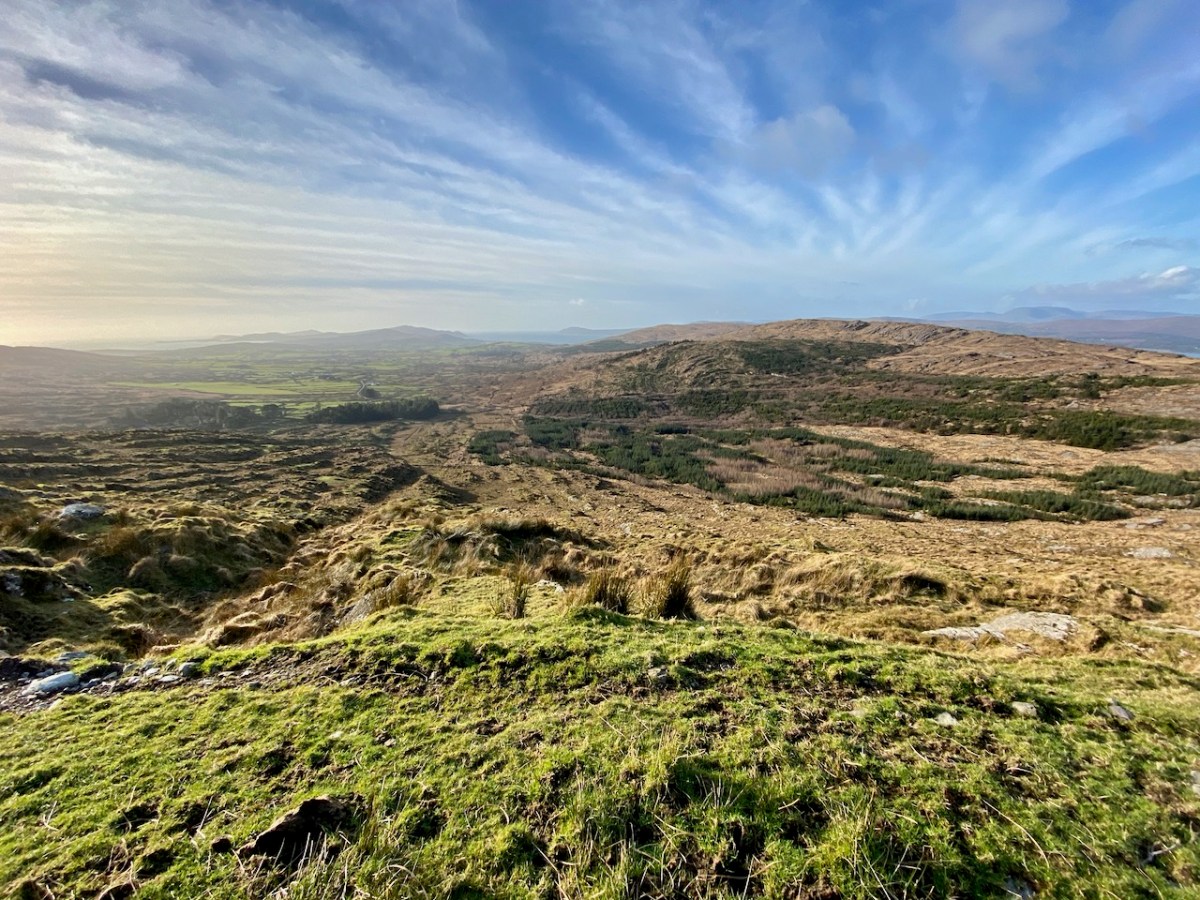
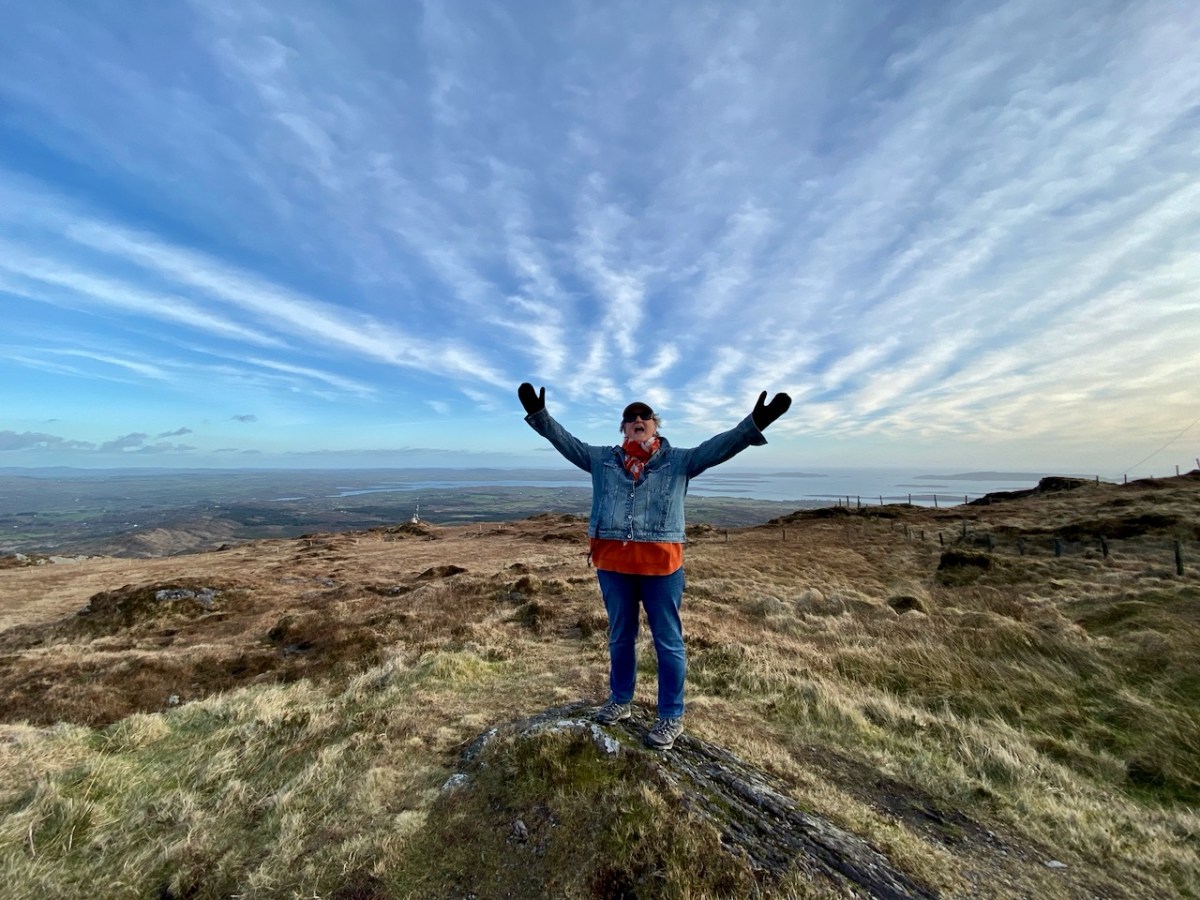
…And here is the view from the upper slopes of Mount Gabriel. Go up there on a good day and you are ensured the most scenic prospect from the top. During the year, Finola walked all the way up and – next – you can see her celebrating her achievement!
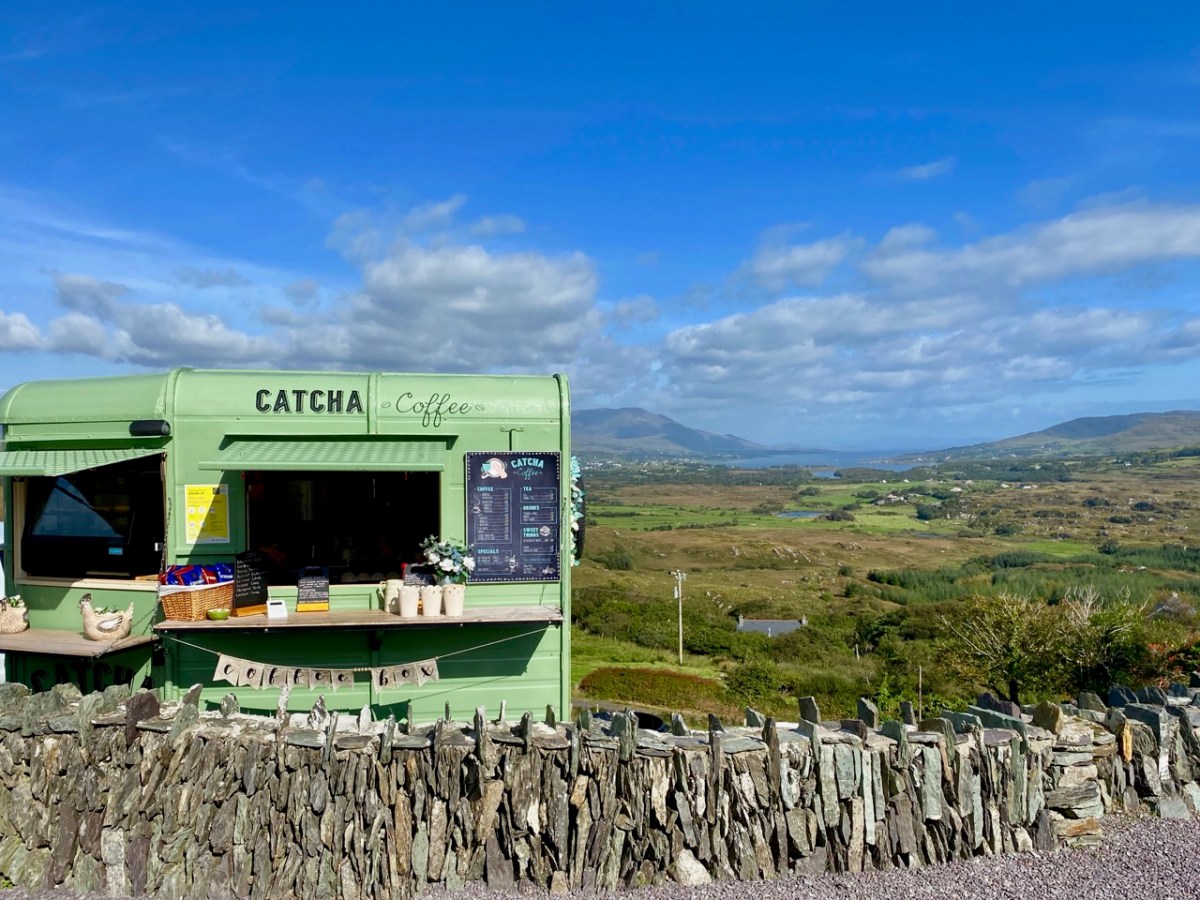
The strange times that we live in have seen an abundance of food and drink outlets springing up in town and country. I like the look of this oneon the Beara
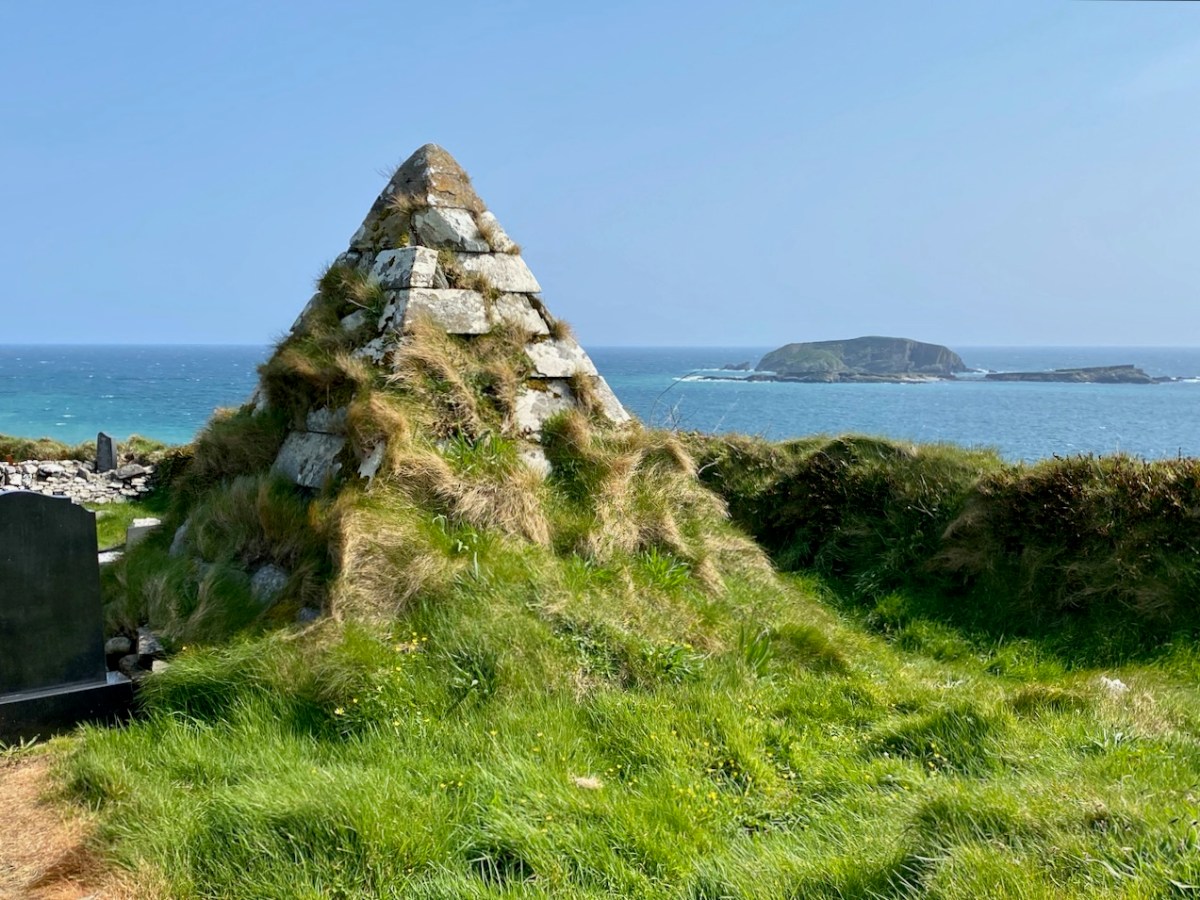
This pyramidical grave marker is one of a few in West Cork: it’s at Myross, and looks out over High Island and Low Island
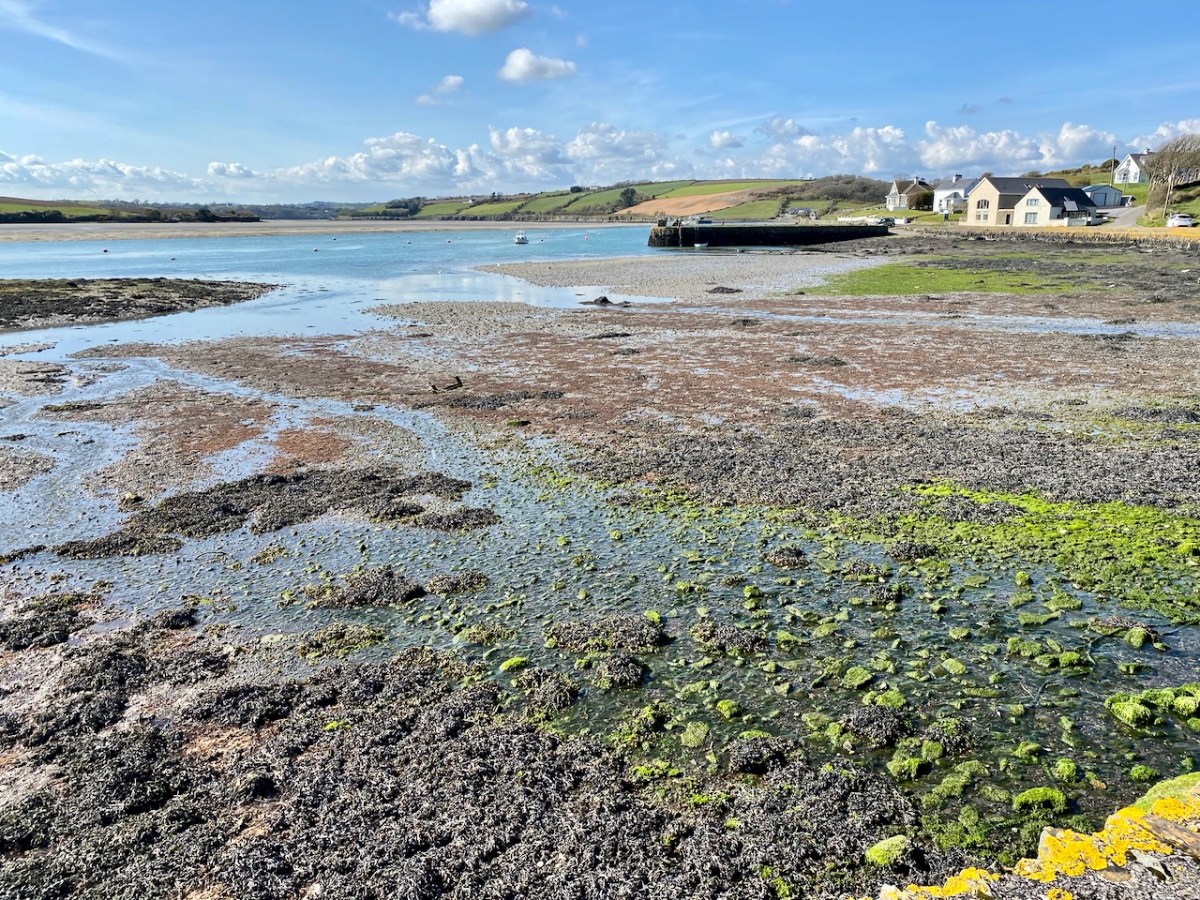
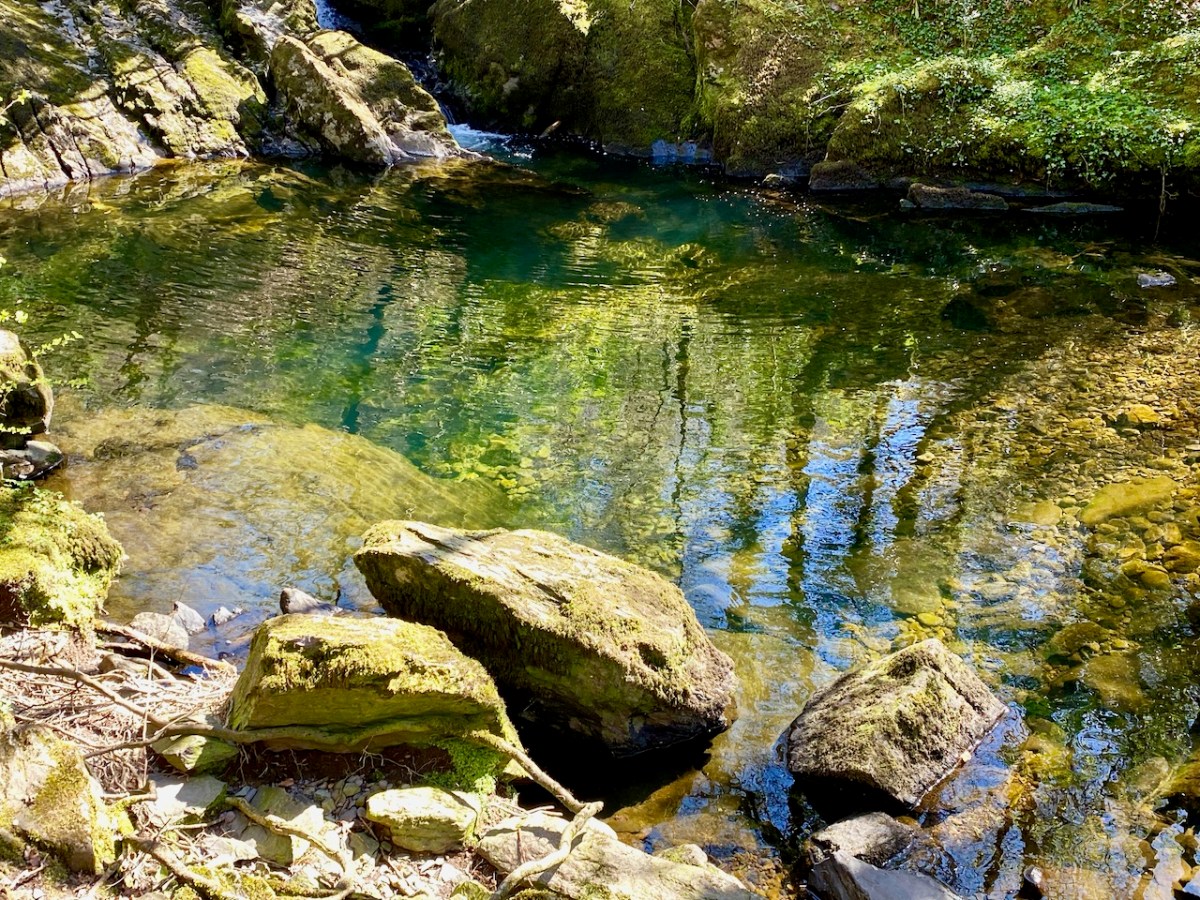
The West Cork landscapes offer an always changing mix of water and rock
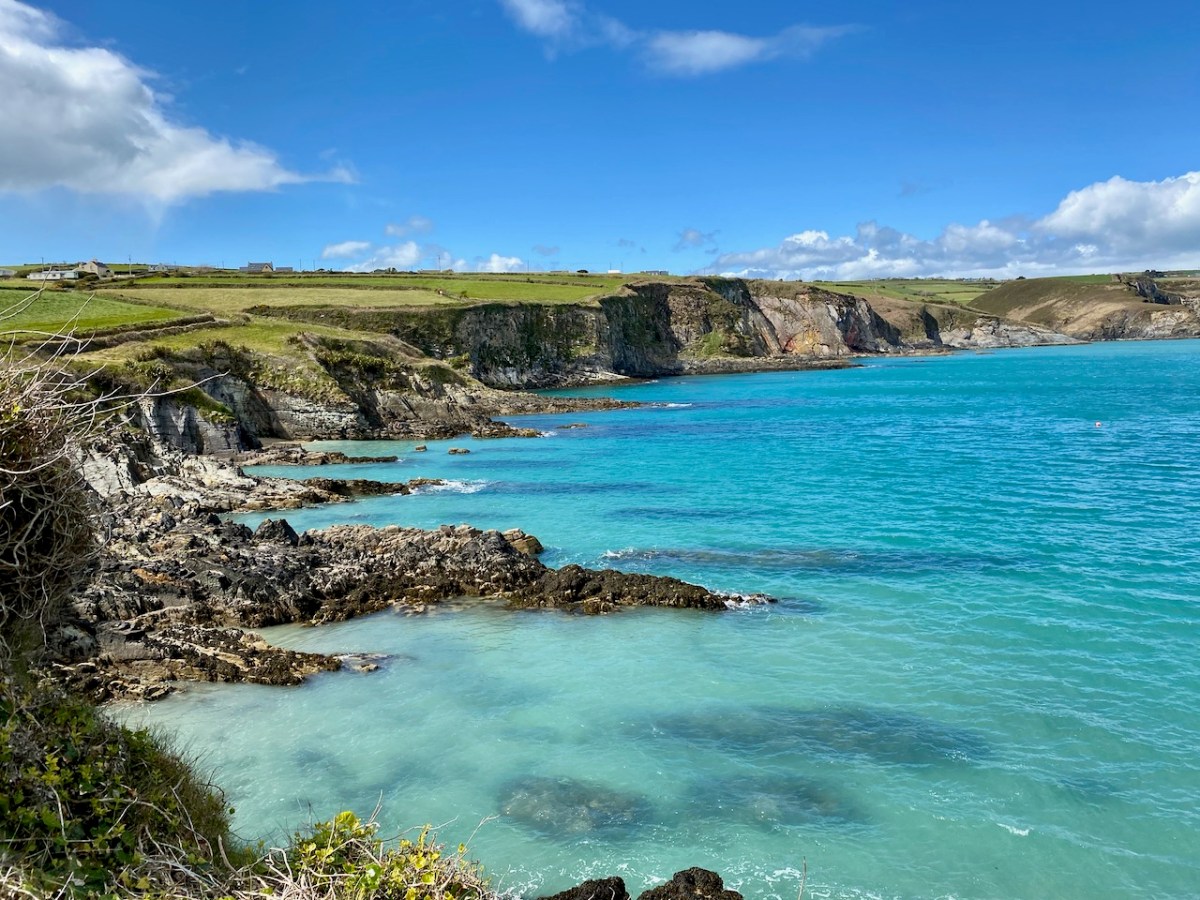
This is the coastline at Dirk, beyond Ring: it really is that colour under the summer sun!
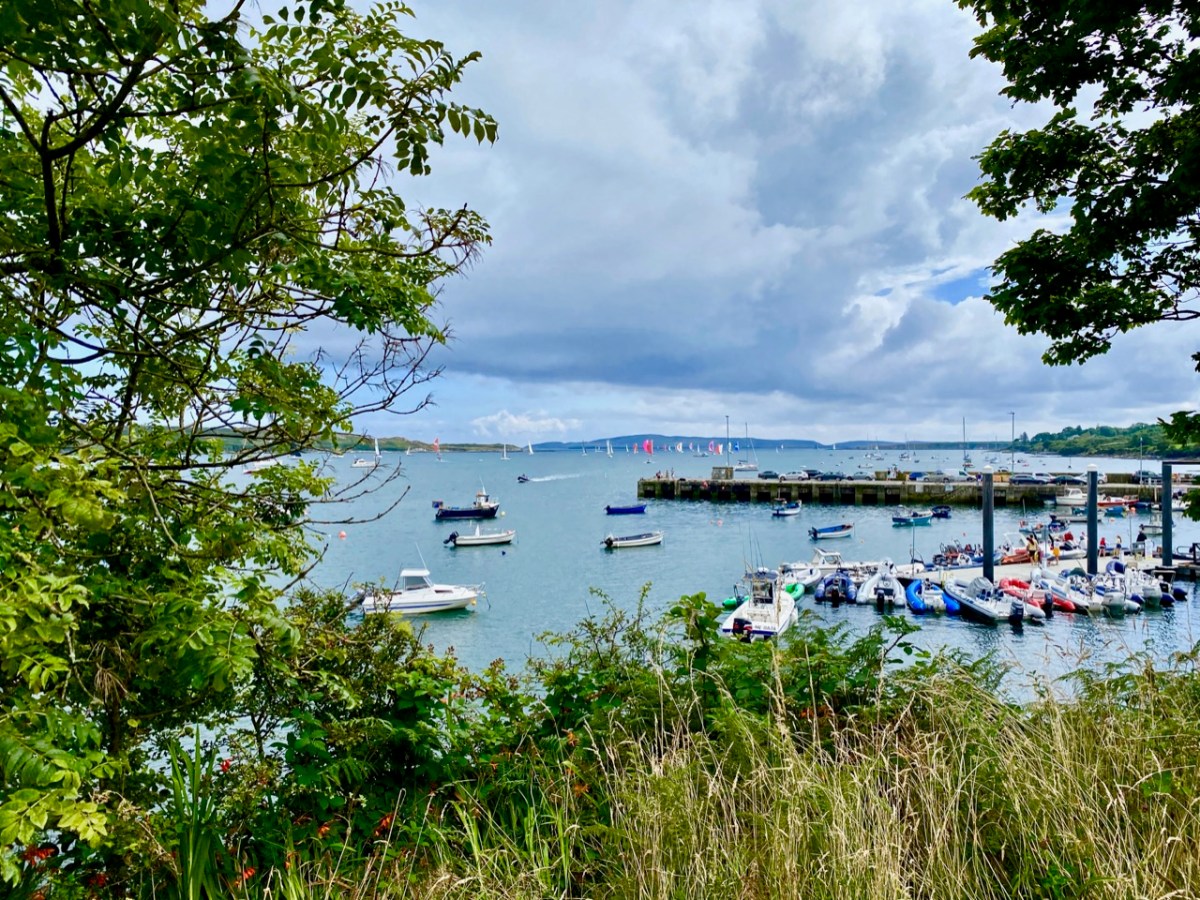
Our neighbouring town is Schull, which even in these Covid times was busy with seafarers in the summer holidays
We look down on Rossbrin Cove. Here is our view on a clear day in February
I asked Finola to take my picture next to this gentle giant – I couldn’t resist!
This may seem a surprising picture to finish off with, but Yay Burger has become our go-to on a Sunday night after a hard day on the Blog! Yay Burger has been a life-saver for us through the pandemic, and is one of a number of food outlets that have earned Ballydehob the title ‘centre of the culinary universe’
Do you remember pre-Covid days? Those times seem to bring out the nostalgia in me… It’s only two years ago that I wrote a post about our preparations – in Ballydehob – for the Wran Day celebrations that would take place on St Stephen’s Day – 26 December – following. Those festivities did happen, and we were then all in happy ignorance of how our lives were to be changed mightily by the pandemic that struck the world just a few weeks later. We’d like to think that, after all this time has passed, a level of normality will be returning. That’s not quite the case – but we are planning a ‘Wran’ this year, and today we gathered in Levis’s Corner House to make ready for it. Here’s a photo – kindly loaned by Pól Ó Colmáin – of the results of the workshop we held to prepare for the ‘Wran’ in 2019.
So firstly, here’s an abridged version of the post I put up after that workshop two years ago. I’ll follow it with an update of the equivalent [but socially distanced!] event which we held today . . .
* * * * * Back to 2019 * * * * *
Wran Hunting has featured before in Roaringwater Journal: that’s the way that St Stephen’s Day – 26 December – has been celebrated for generations in ‘Celtic’ parts of western Europe, specifically Ireland and The Isle of Man, but also in Cornwall – where it’s now only a memory – Brittany, Wales and Scotland. ‘The Wran’ is a very strong surviving tradition here, especially on the west side of the country. The Dingle Gaeltacht is the place to go if you want to see all the action (you may have to click on the bottom right of the window to turn on the sound):
In our own Ballyedhob community ‘The Wran’ is not forgotten. In fact you can even find a poem written about it in the Duchas folklore records. This was recorded in the 1930s by John Levis, aged 32, who took it down from Jeremiah Driscoll, aged 64 years. Jeremiah had been a Wren Boy in Ballydehob. Here’s the poem:
Come all you ladies and gentlemen,
For tis here we are with our famous wran
With a heart full of cheering for every man
To rise up a booze before the year is gone.
*
Mr O’Leary we came to see,
With our wran so weak and feeble,
The wran is poor and we can’t feed him,
So we hope your honour will relieve him
*
We’ve hunted our wran three miles and more
We’ve hunted this wran all around Glandore
Through hedges and ditches and fields so green,
And such fine sport was never seen.
*
As we copied our wran again
Which caused our wran-boys for to sing, She stood erect and wagged her tail, And swore she’d send our boys to jail.
*
As we went up through Leaca Bhuidhe
We met our wran upon a tree,
Up with a cubit and gave him a fall,
And we’ve brought him here to visit you all.
*
This the wran you may plainly see,
She is well mounted on a holly tree,
With a bunch of ribbons by his side
And the Ballydehob boys to be his guide.
*
The wran, the wran, the king of all birds,
St Stephen’s day he was caught in the furze,
Although he is little, his family is great,
So rise up landlady and fill us a treat.
*
And if you fill it of the best,
We hope in Heaven your soul will rest,
But if you fill it of the small,
It won’t agree with our boys at all.
*
To Mr O’Leary and his wife
We wish them both a happy life,
With their pockets full of money, and their cellars full of beer, We now wish a merry Christmas and a happy New Year.
*
And now, our song is ended, we have no more to say,
We hope you’re not offended for coming here today,
For coming here this morning we think it is not wrong,
So give us our answer and let us all be gone.
Traditional, DUCHAS
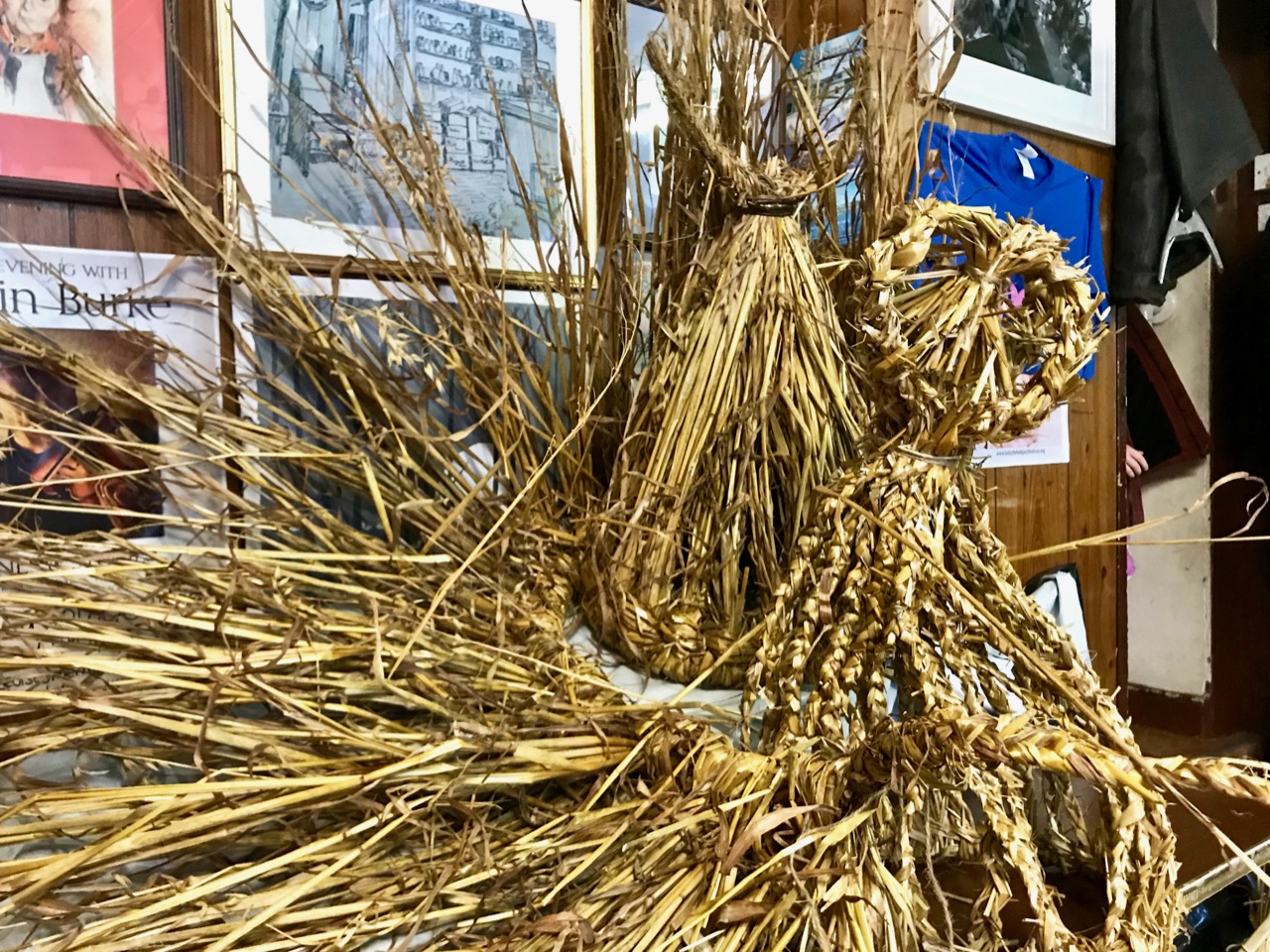
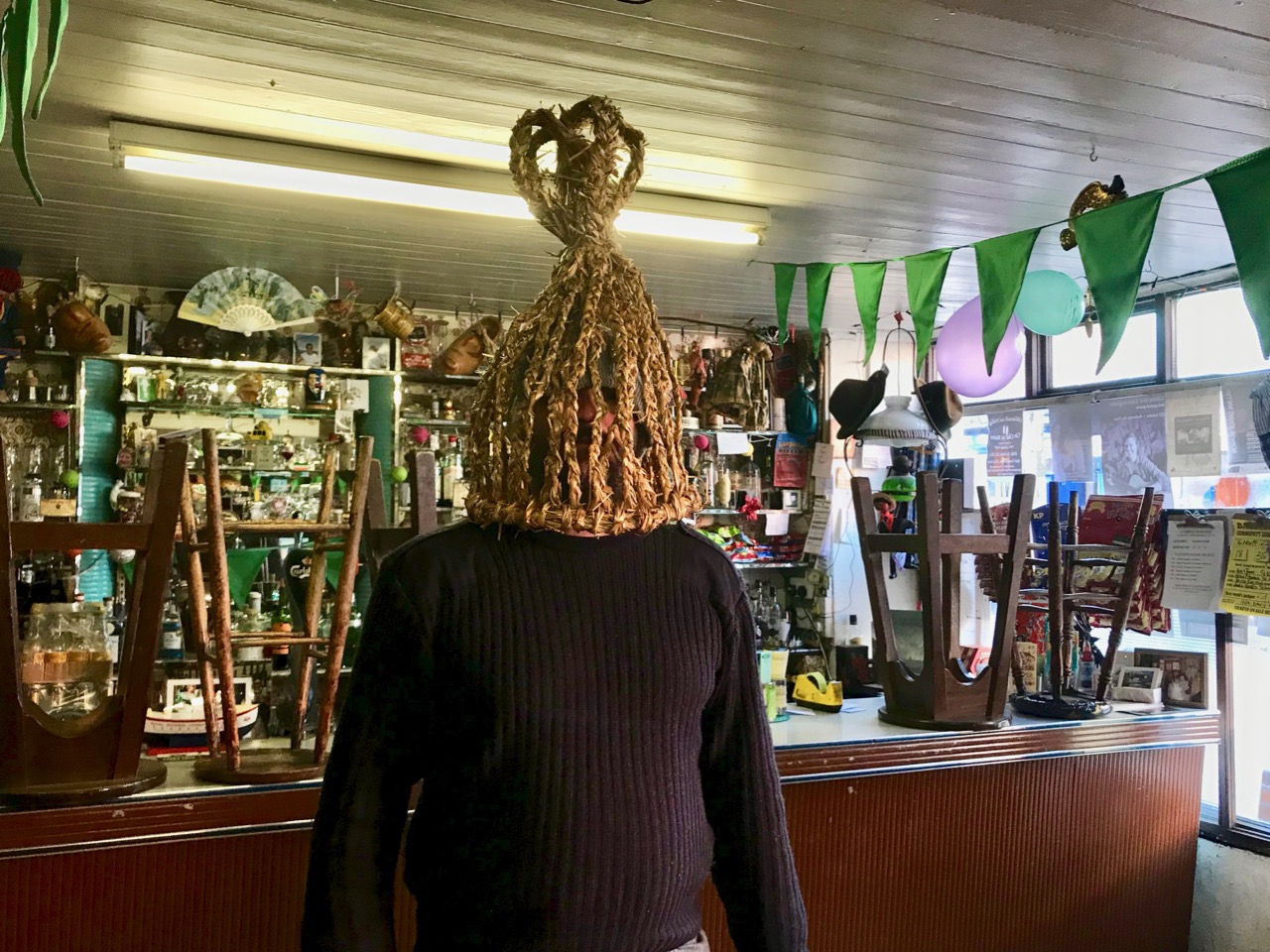
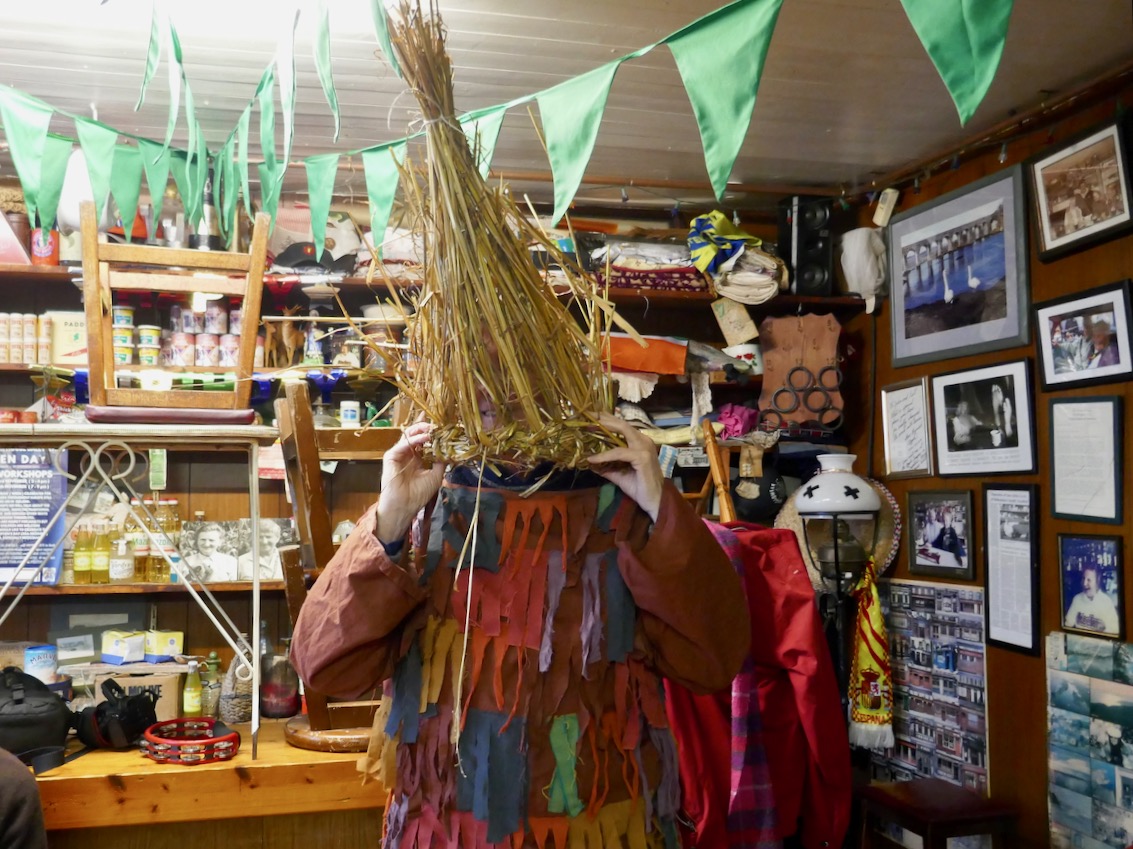
By good fortune there’s ‘Mr O’Leary’ above! He’s the landlord of Levis’ Corner House Bar in Ballydehob: he allowed the Wran workshop to take over his pub yesterday. Basically that involved covering the whole place in straw out of which, magically, appeared lots of wonderfully crafted Wran masks. Joe is wearing a fine example.
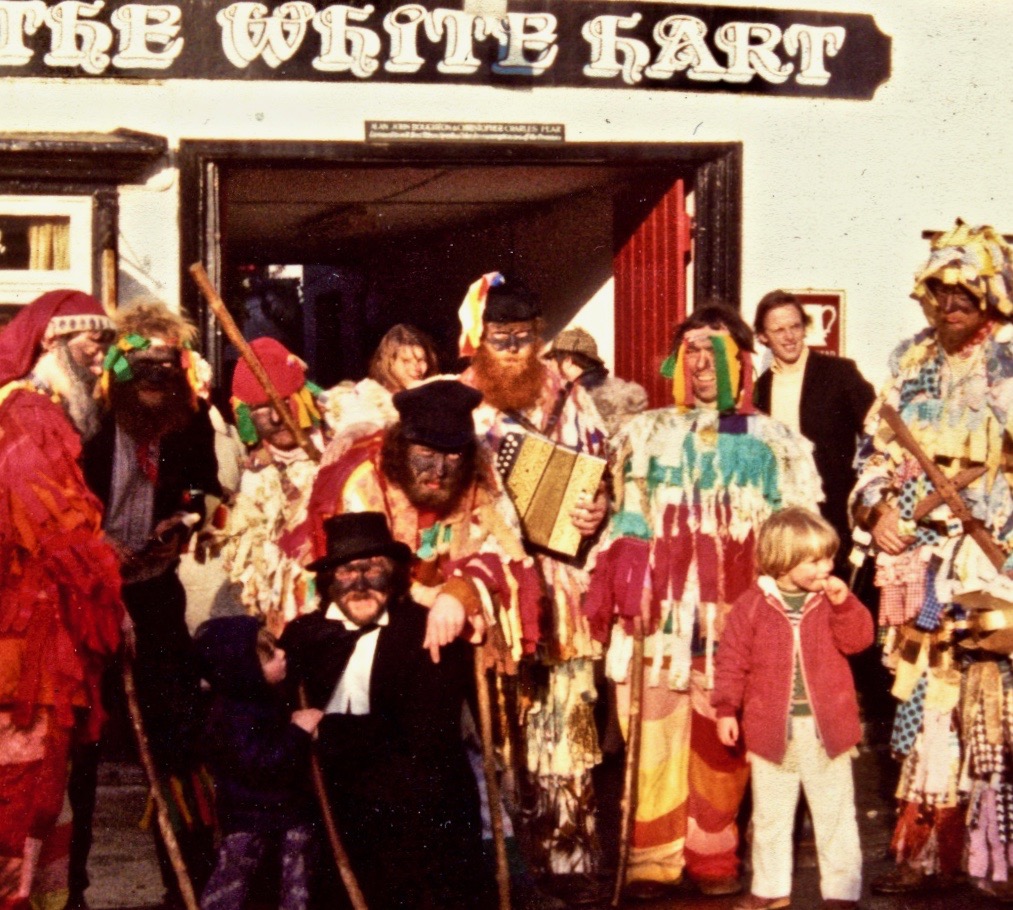
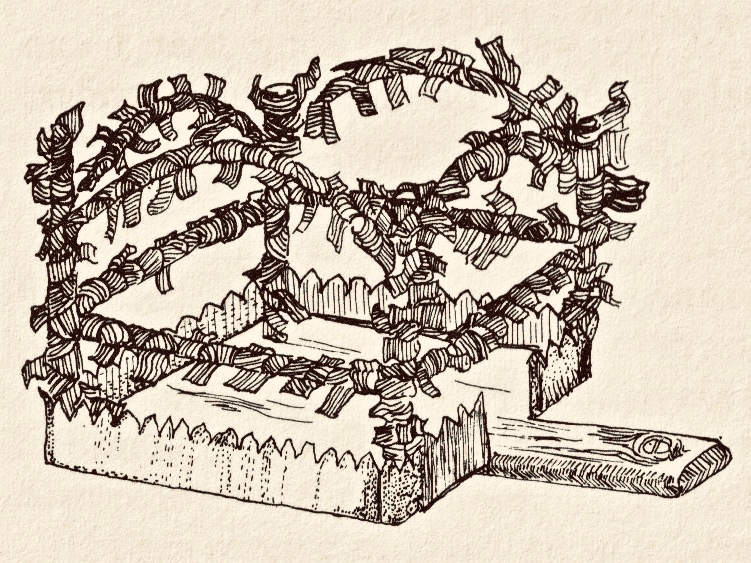
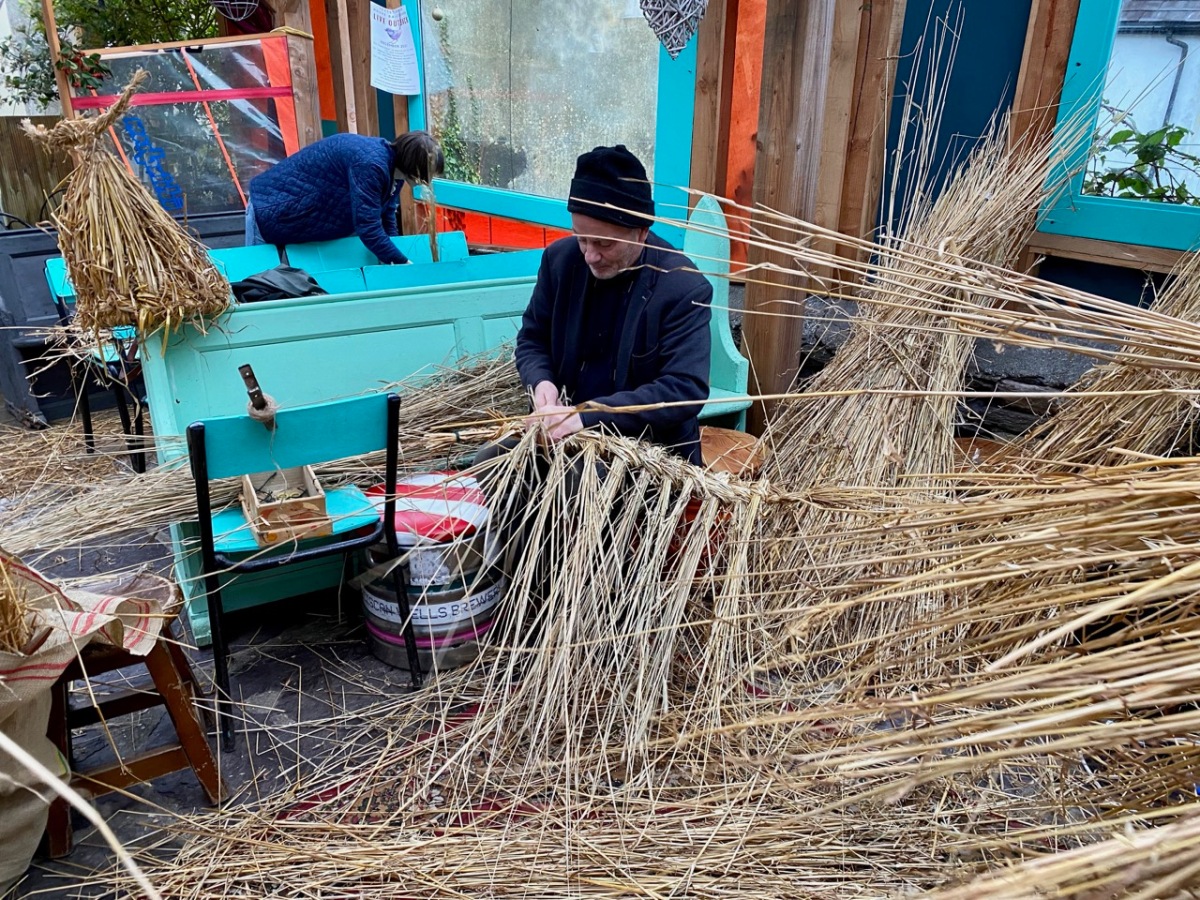
Finola and I were at the workshop, and there I am with work in progress on the straw mask which we made (upper picture). You’ll notice that I’m wearing ‘tatters’: I’ve had these for years, and I used to don them for our own mumming tradition in Devon which also happened on 26 December (that’s me with the squeezebox mumming in the 1970s! – lower picture). Over there we called St Stephen’s ‘Boxing Day’ because that was when ‘Christmas boxes’ were given to the postman, the milkman and anyone else who provided their services through the year. Interestingly, Kevin Danaher mentions the ‘Wran box’ which was taken around the houses by the wrenners (or Wran Boys) and used to collect money ‘for the Wran’. This illustration of a Wren box from County Galway is from Danaher’s book The Year in Ireland:
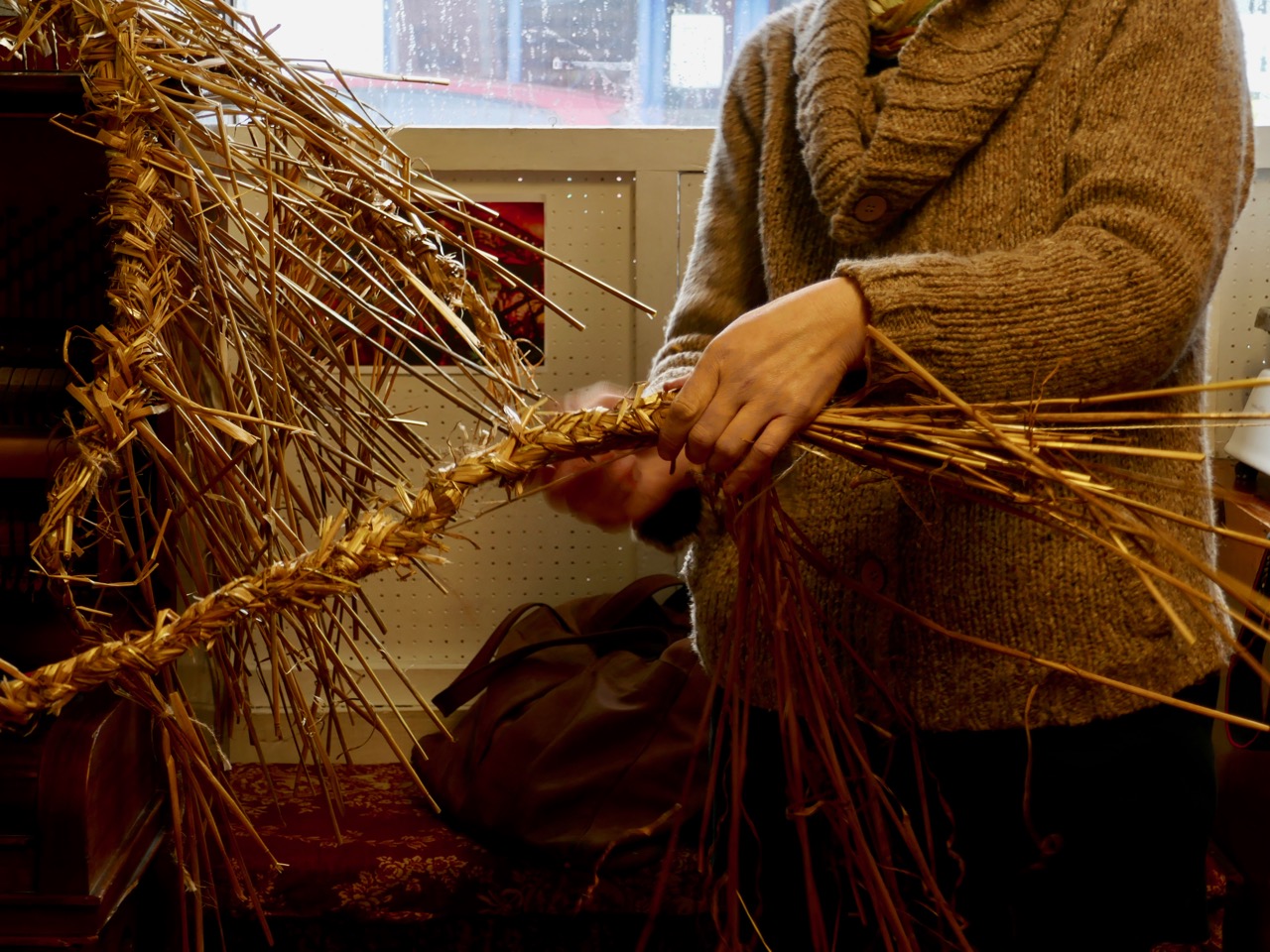
The workshop in Levis’ was very well attended, and there is clearly great enthusiasm for reviving this custom. Sonia collected the straw at the annual Thrashing in Ballydehob – which is a traditional harvest celebration. It’s not easy to find the right straw for making the masks nowadays: anything that has been through a combine harvester has been flattened and will not survive the plaiting.
It’s a complex process, but the group coped well in acquiring the new skills under Sonia’s tutelage. The making – every year – has always been part of the tradition where it’s still practised today. Sometimes the straw masks (which are only one part of the ‘disguise’) are destroyed after Stephen’s. In some of the Dingle traditions they are ritually burned on the following St Patrick’s Day.
* * * * * *Fast Forward to 2021 * * * * *
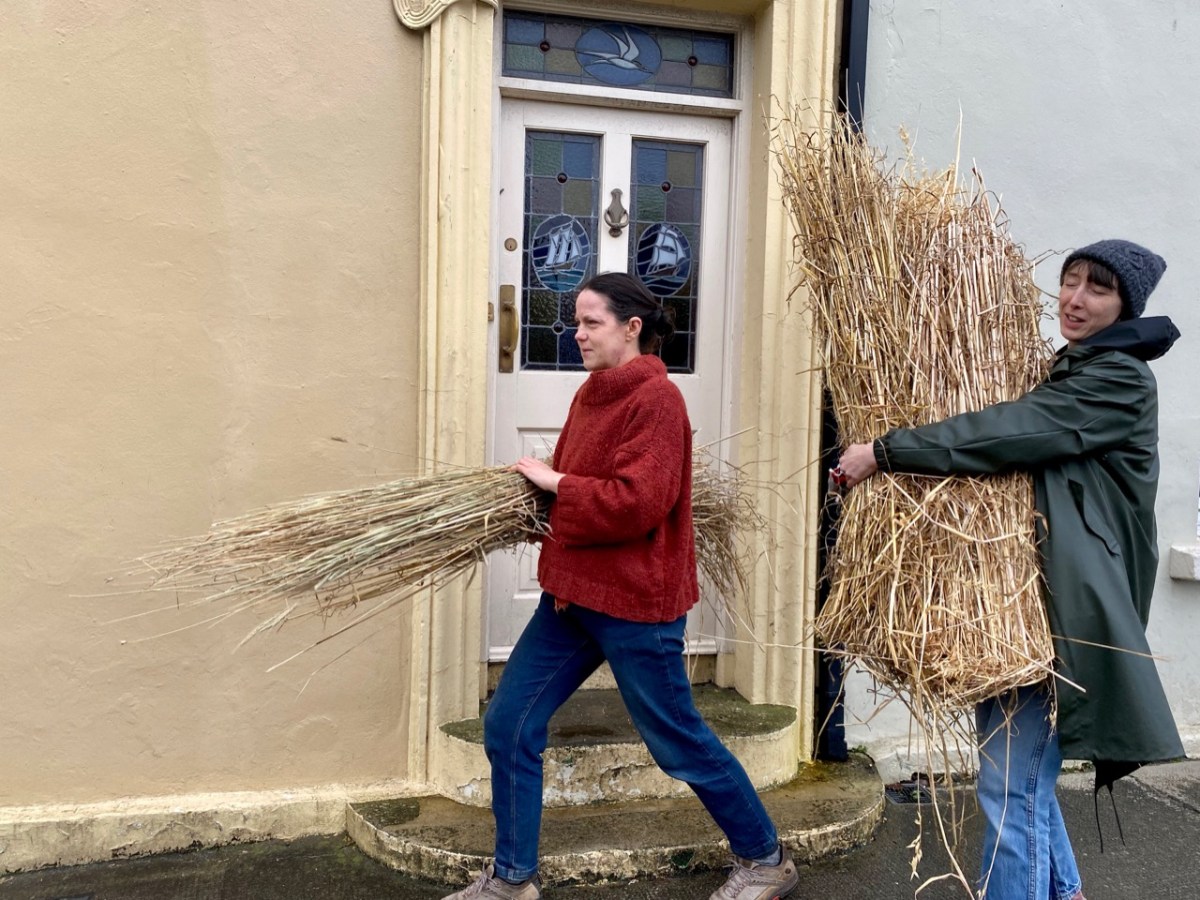
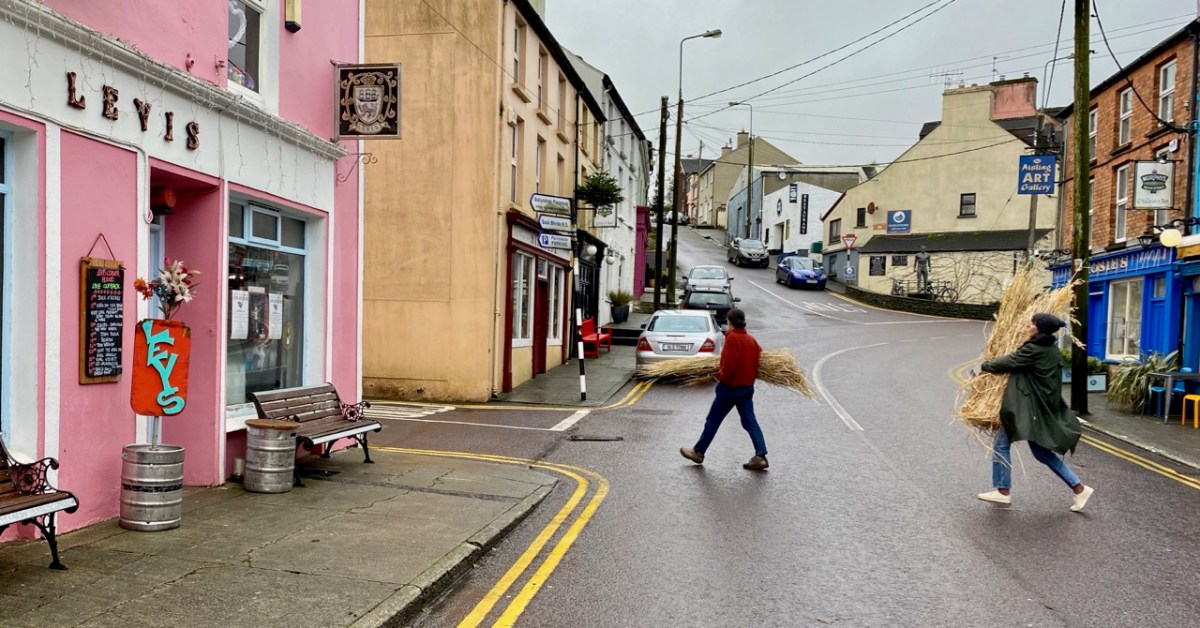
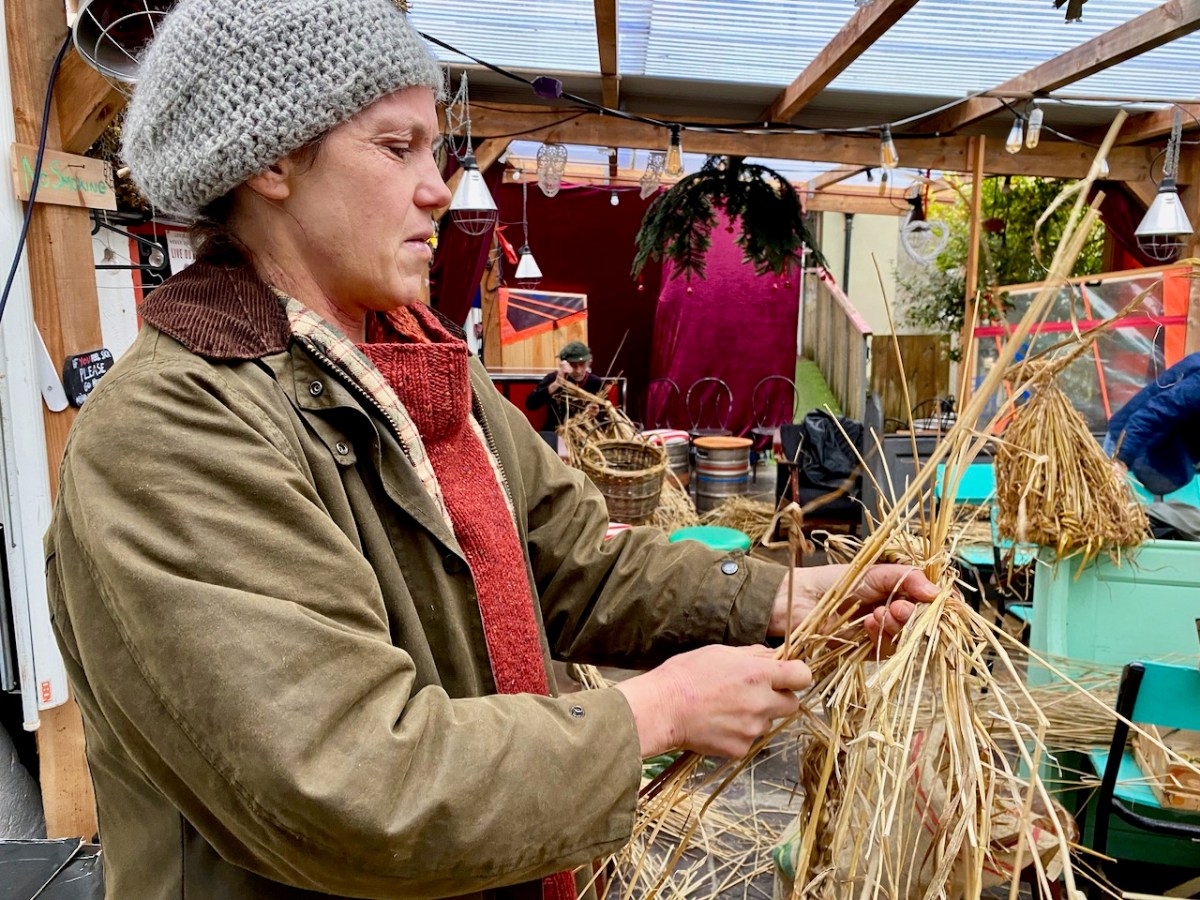
Two years later, on a damp Sunday in Ballydehob, you might have seen the strange sight of bundles of straw being transported across the road to Levis’, where the 2021 Wran Workshop is about to take place in the ‘outback’ area of the bar. That’s Sonia (on the left above) who is masterminding the whole proceedings, and also oversaw the growing of the straw.
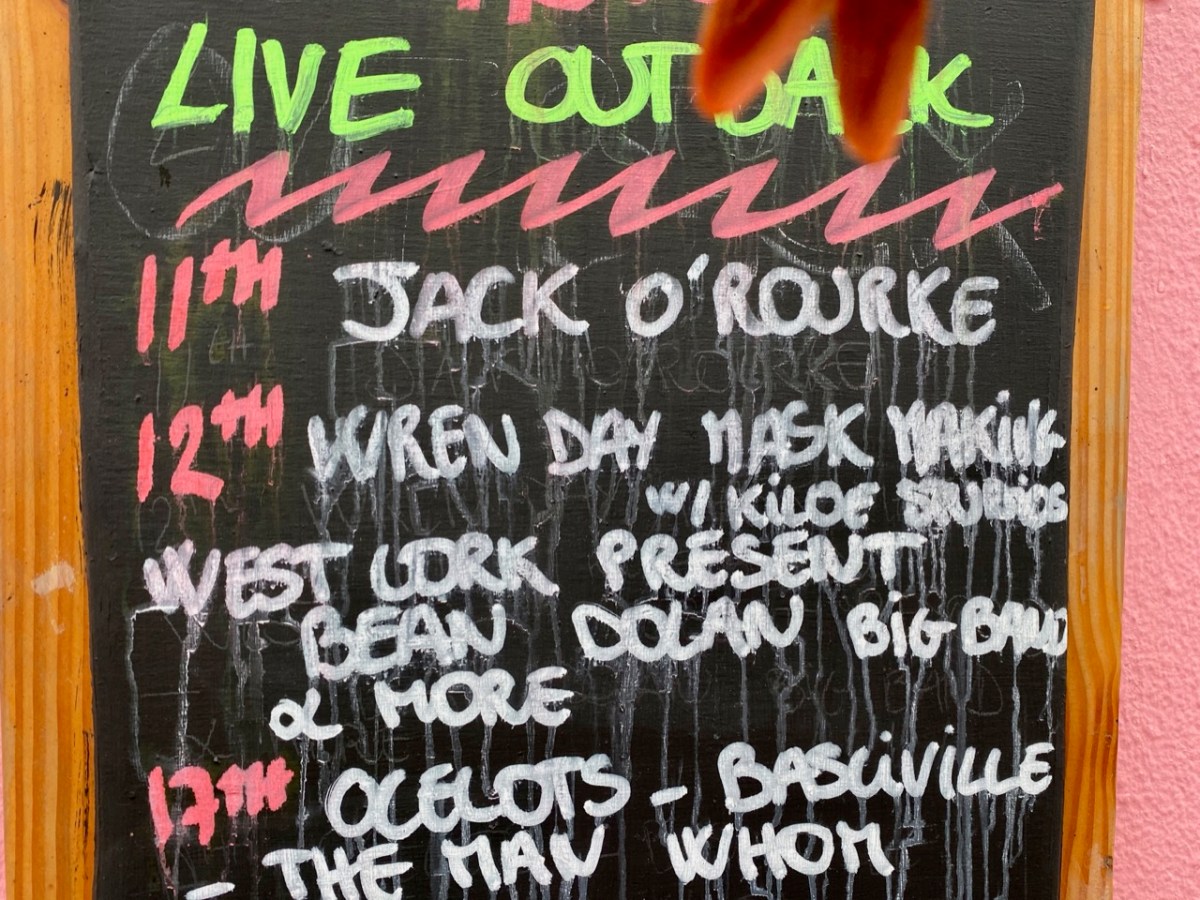
We all really appreciate Joe and Caroline – who run Levis’s – who are so supportive of community events and who, like everyone else, have had to struggle to keep business going through the ups and downs of Covid restrictions. The ‘Outback’ – formerly their yard – has been remarkably transformed into a comfortable outdoor venue, and live concerts and events are continuing through the winter season, helping to make our days seem as normal as possible.
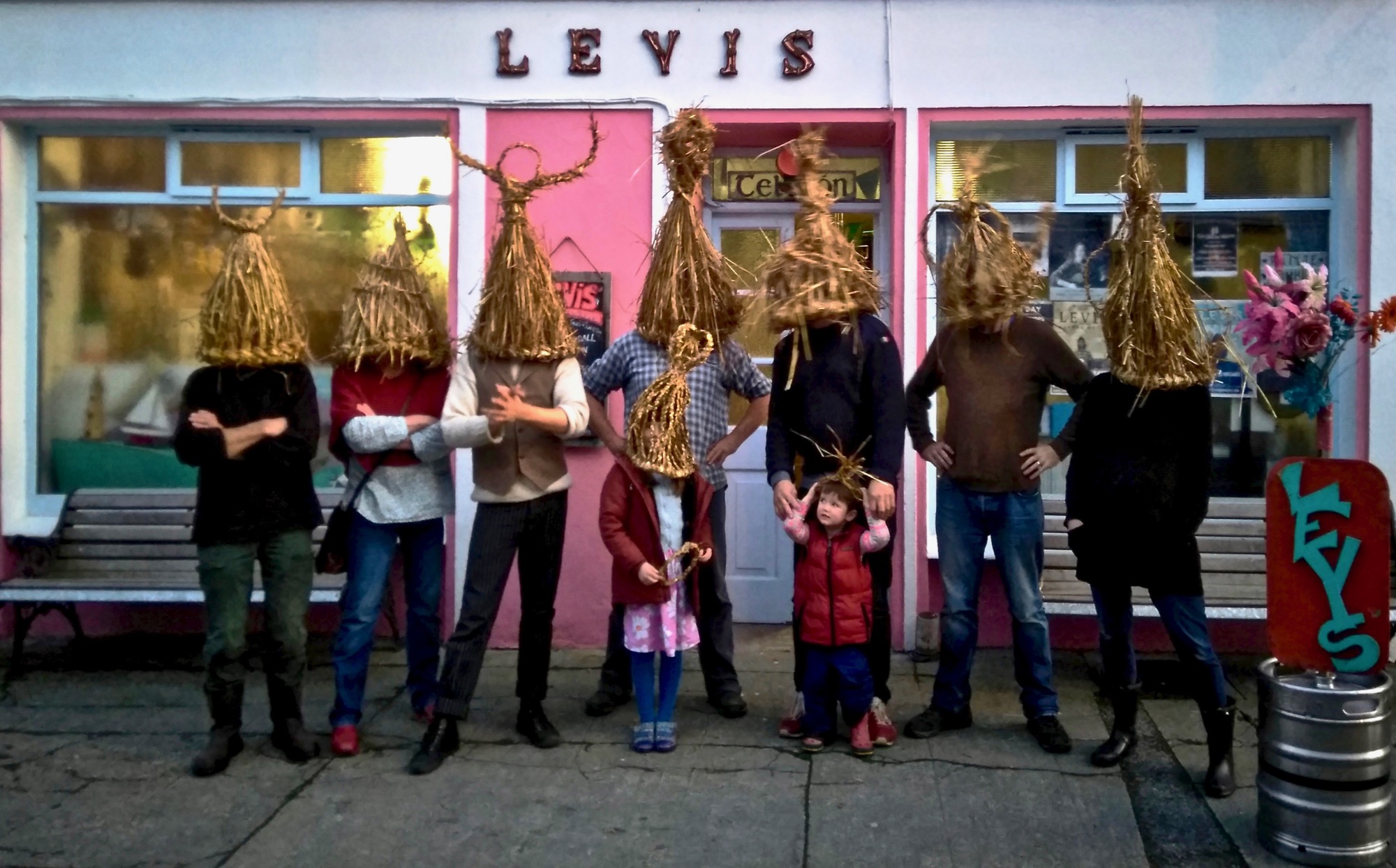
We were a small but dedicated group, determined to get the tradition going again in Ballydehob. We are not sure, yet, when it will happen. Traditionally it should be Stephen’s Day, but it all depends on how available the participants will be. We will keep all our readers fully informed! meanwhile, if you need encouragement, look at the work that has gone into the straw masks this year . . .
Here’s Sonia Caldwell again, above. We have featured her Kilcoe Studios in a previous post. She is undoubtedly the energy behind this project. Look out for us all shortly after Christmas – there is good entertainment to be had. But, also, essential traditions to be kept alive to ensure that our world keeps turning!
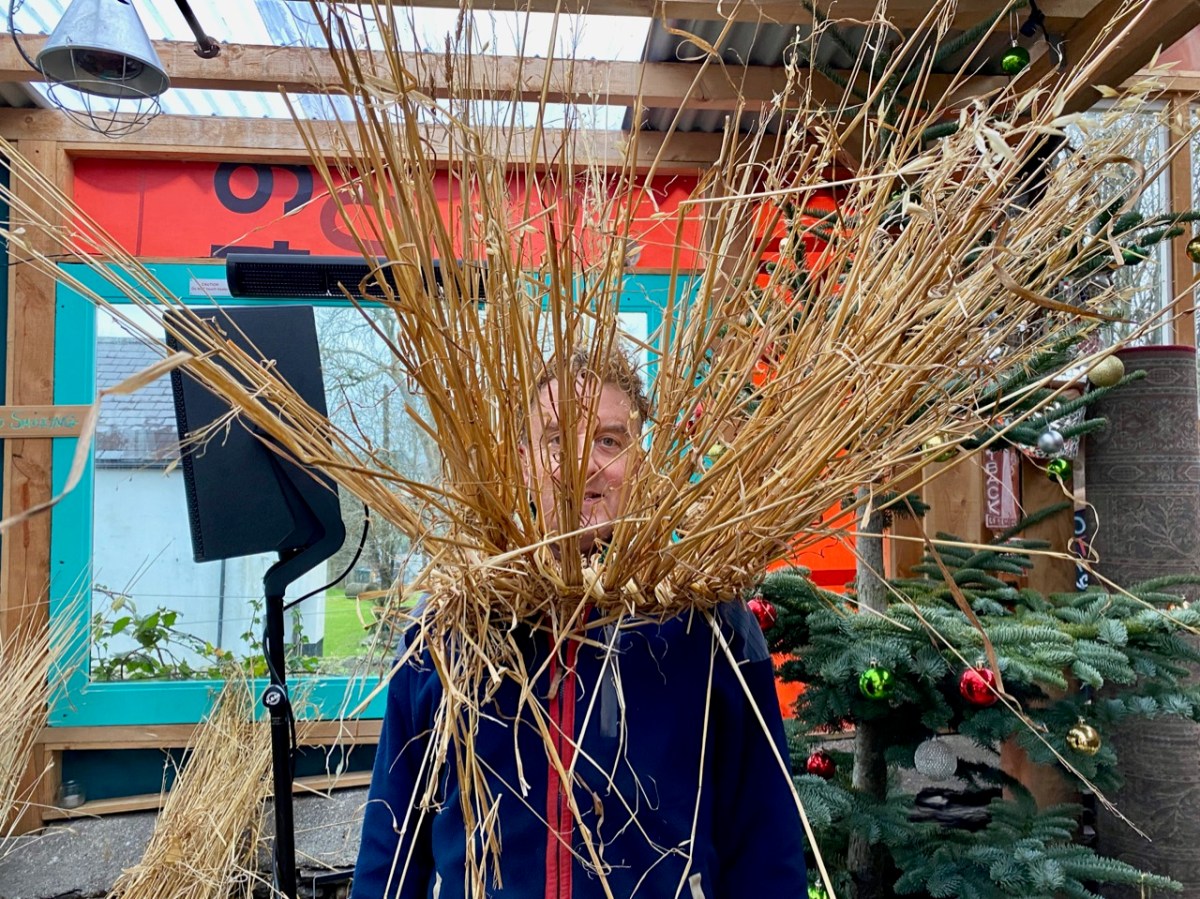
That’s Pól Ó Colmáin, above, testing out his mask for size before finishing off the conical headpiece. Marie and he run the Working Artist Studios in the main Street of Ballydehob – a wonderful addition to our village’s thriving assets. Pol also bravely works away at teaching the Irish language to a number of students, including me! Here are both of them this afternoon with their completed Wran Day pieces – and also my own mask back at home . . .
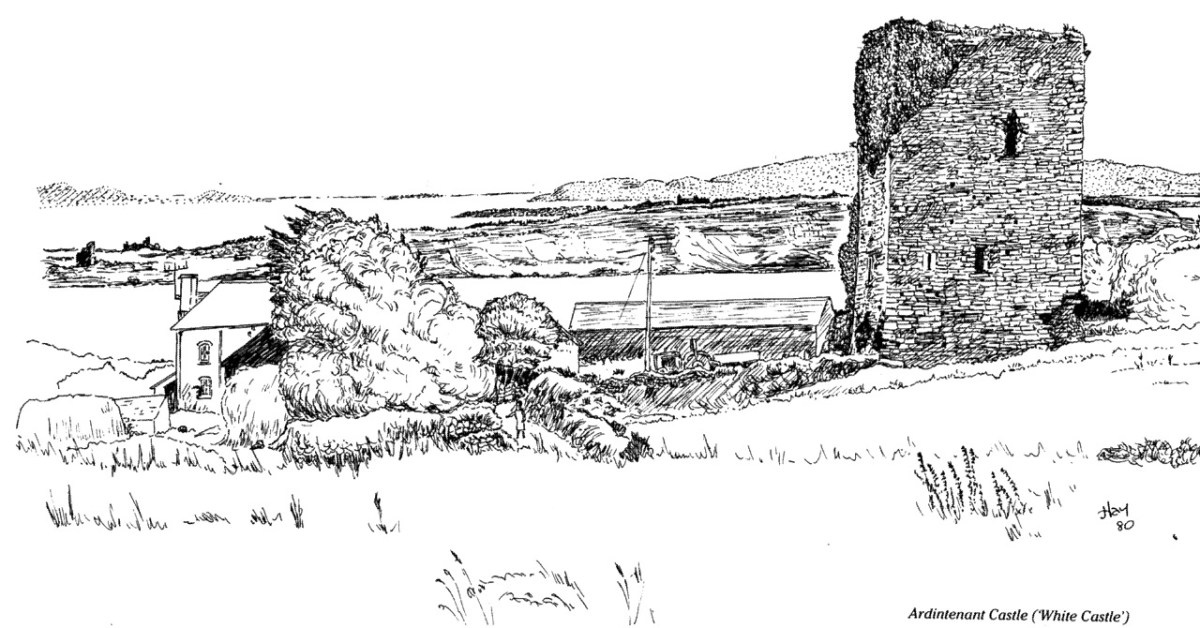
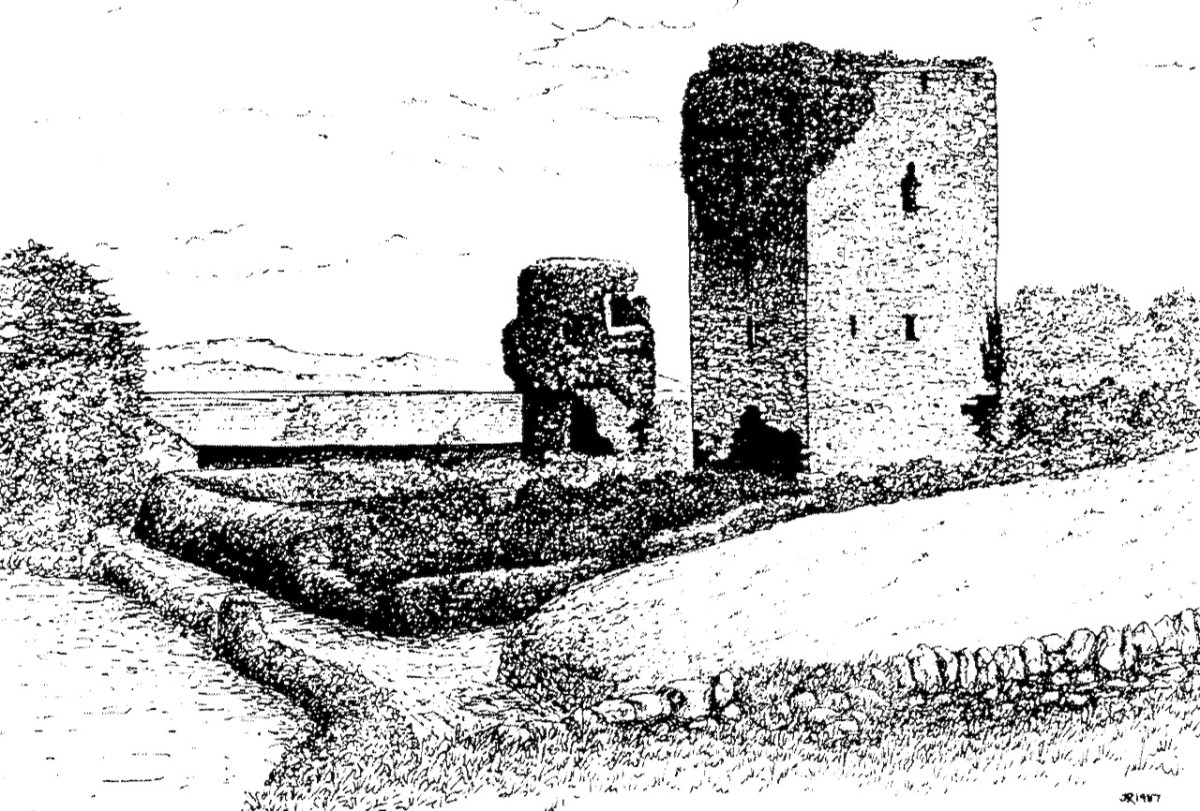
Home of the Taoiseach, or Head of the Clan, Ardintenant was one of the most important of the O’Mahony Castles of Ivaha (or what we now call The Mizen). Fortunately, it is relatively intact and we can observe and record much about it. The drawing above was done by James N Healy for his magnificent book on The Castles of County Cork. This post is another in my series on The Castles of Ivaha.
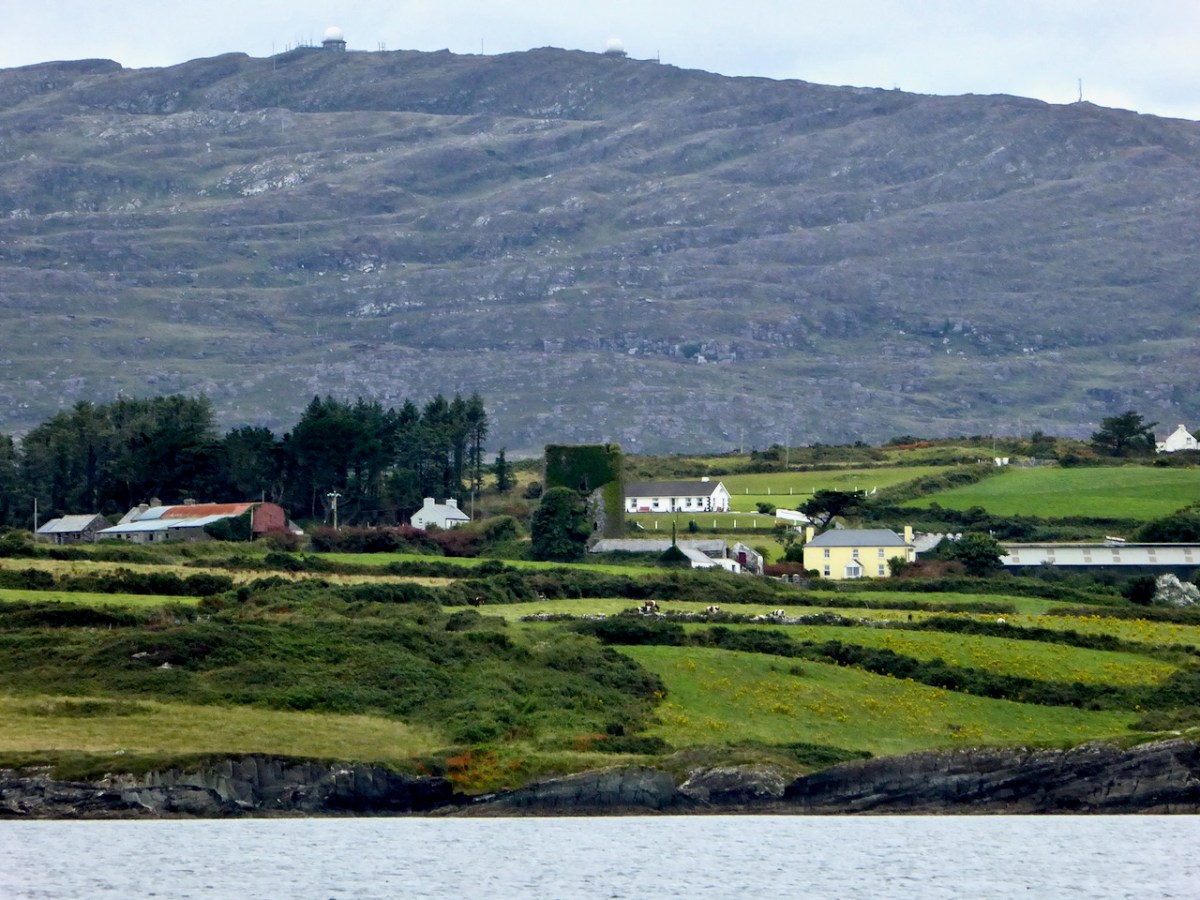
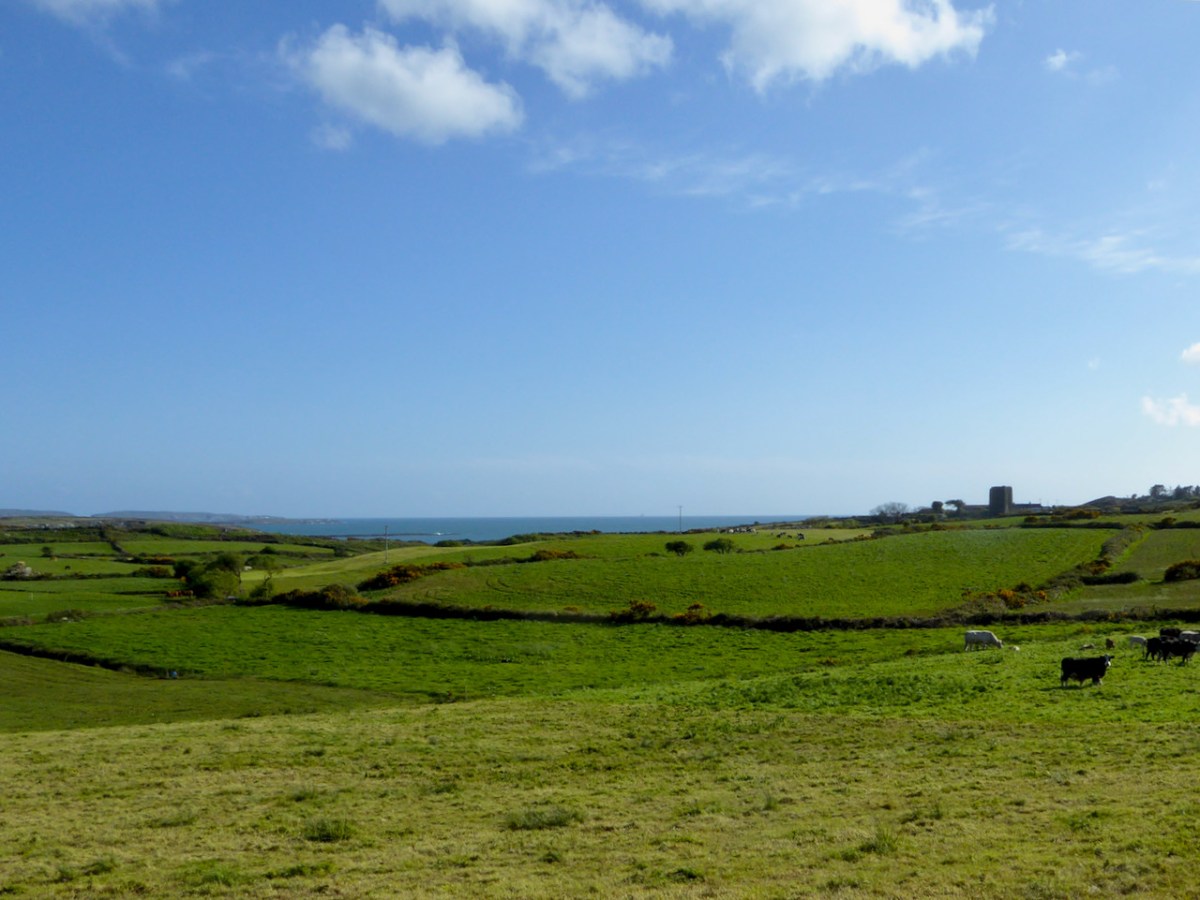
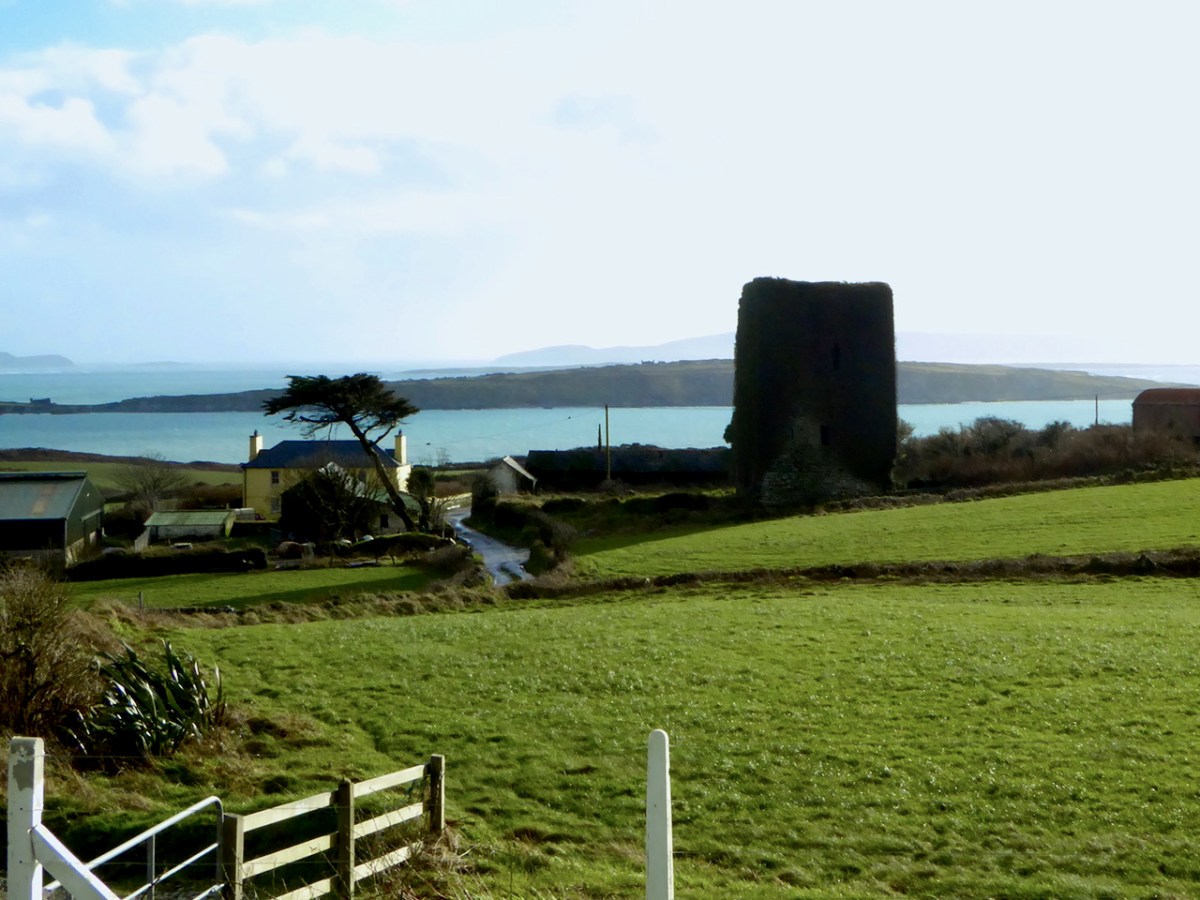
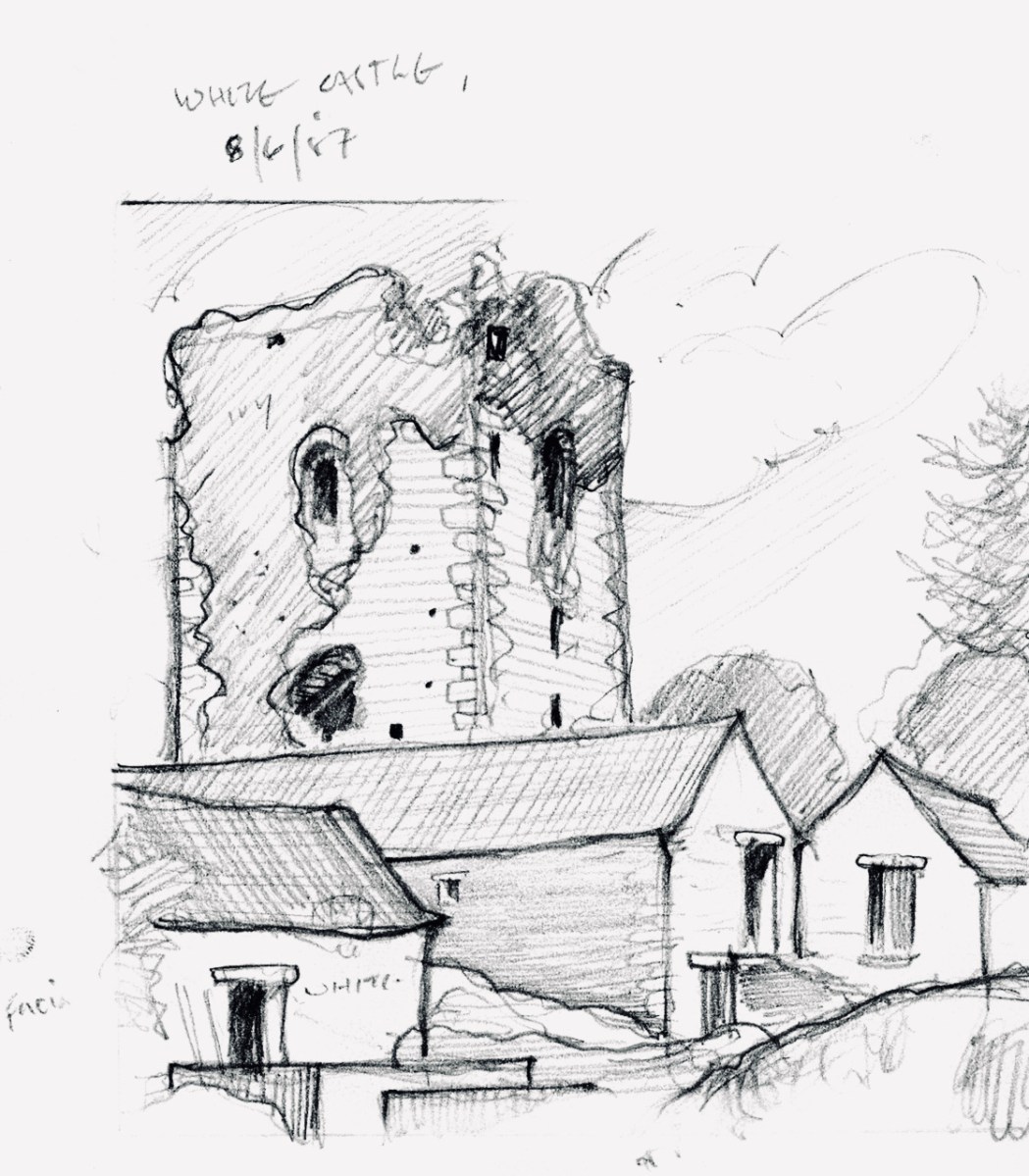
First the name – Ardintenant has been variously interpreted as coming from Árd an Tine (Ord on Tinneh, Height of the Fire), Árd an tSaighneáin (Ord on Tye-nawn Height of the Flash, or Beacon) or Árd an Tiarna (Ord on Teerna, Height of the High Chief). Any of these would be apt, since tower houses by the sea like this one (viewed from the sea, above) could be used as navigation beacons, possibly with a fire on the battlements. We also know that it was the residence of the head of the O’Mahony Clan, even though it was not the largest or most elaborate of the O’Mahony castles. Locally, it is also known as White Castle, which may refer to the white render that once made it stand out in the landscape (for more on render and castle colours, see the discussion on Kilcoe Castle). The photograph below demonstrates that it was prominent on the landscape and close to, although not right on, the sea.
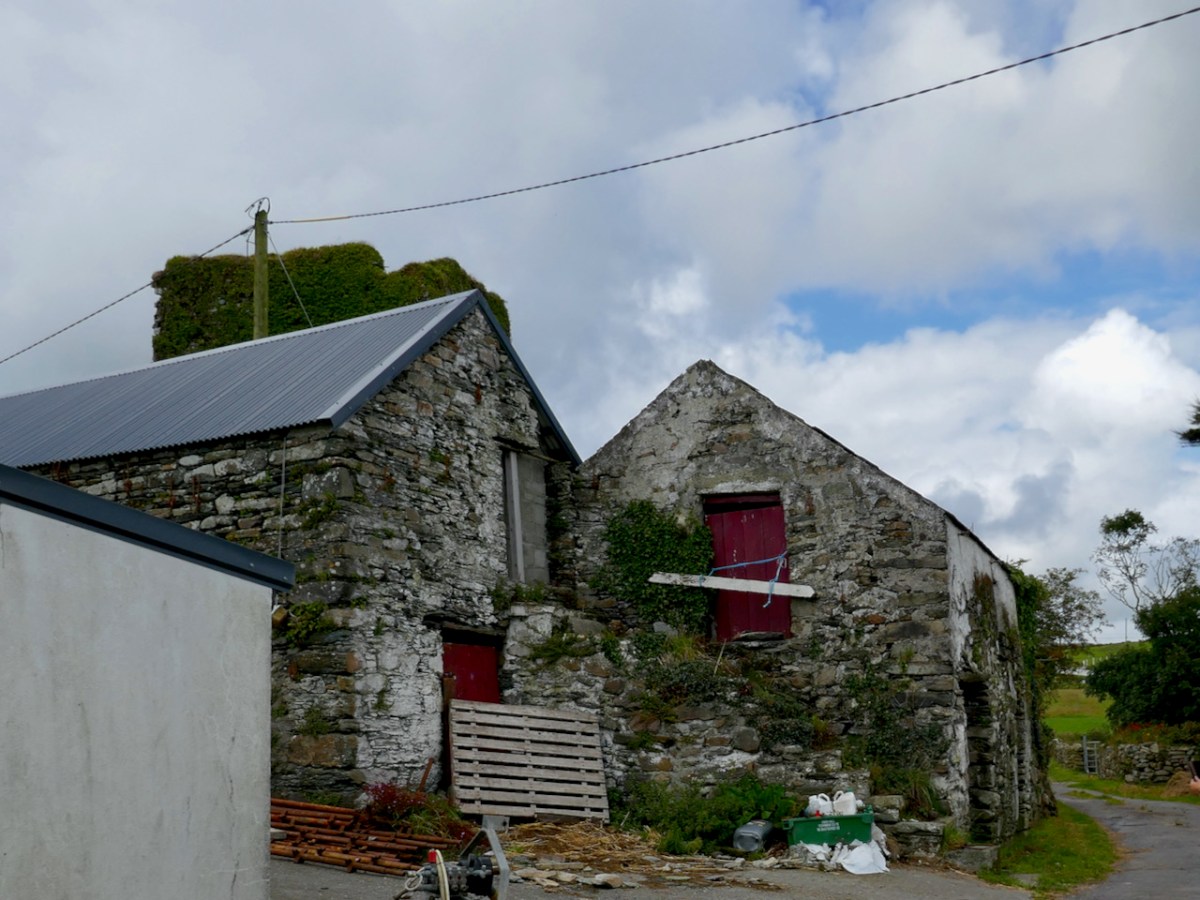
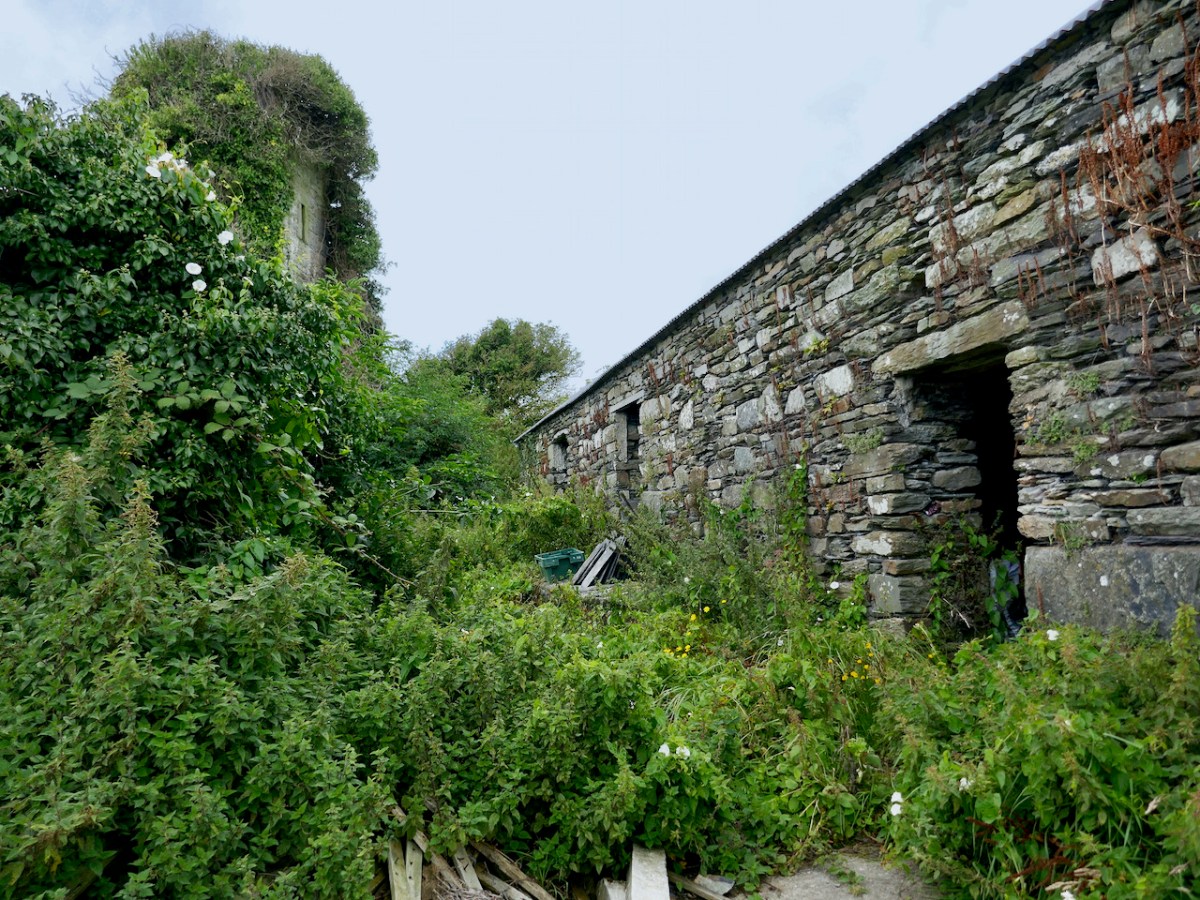
It now stands in the middle of a working farm, surrounded by stone buildings that are picturesque and notable in their own right.
Ardintenant is typical of castles built during the 15th century by Irish clan chiefs – wealthy and powerful and anxious to assert their claims on land and sea.
Dermot Runtach (the Reliable) succeeded in I400; his life and the lives of his sons spanned the Fifteenth Century. He was celebrated as a ‘truly hospitable man, who never refused to give anything to anyone’ . . . The period of 1400 -1500 was the most peaceful and prosperous period in the history of the clan. The Ivagha peninsula was protected by the sea on three sides and the family became wealthy from the exaction of dues from the continental fishing fleets; trade also enriched them, causing long-standing enmity with the citizens of Cork. Tradition relates that the majority of the O’Mahony tower houses in Ivagha were built by or for the sons of Dermod Runtach. The date of Dermod Runtach’s death is recorded in the Annals of Loch Cé as 1427.
THE TOWER HOUSES OF WEST CORK MARK WYCLIFFE SAMUEL, 1998
Dermot Runtach’s sons were the castle builders. Conor Cabaicc succeeded his father in 1427 and remained Taoiseach for 46 years, embarking on an ambitious program of construction to provide castles for his sons and brothers, beginning with Ardintenant. He died in 1473, by which time probably all of the castles of Ivaha were built and occupied by various members of his derbfine (extended family). Cabaicc means of the exactions (or forced tributes), although it is possible that Conor was more benignly known as Cabach – meaning talkative. His brother, Fineen, the Táiniste (heir-in-waiting) built Rossbrin Castle, about which Robert has written, and which is the castle in our view at Nead an Iolair. Rossbrin and the remains of a small tower on Castle Island are both visible from Ardintenant.
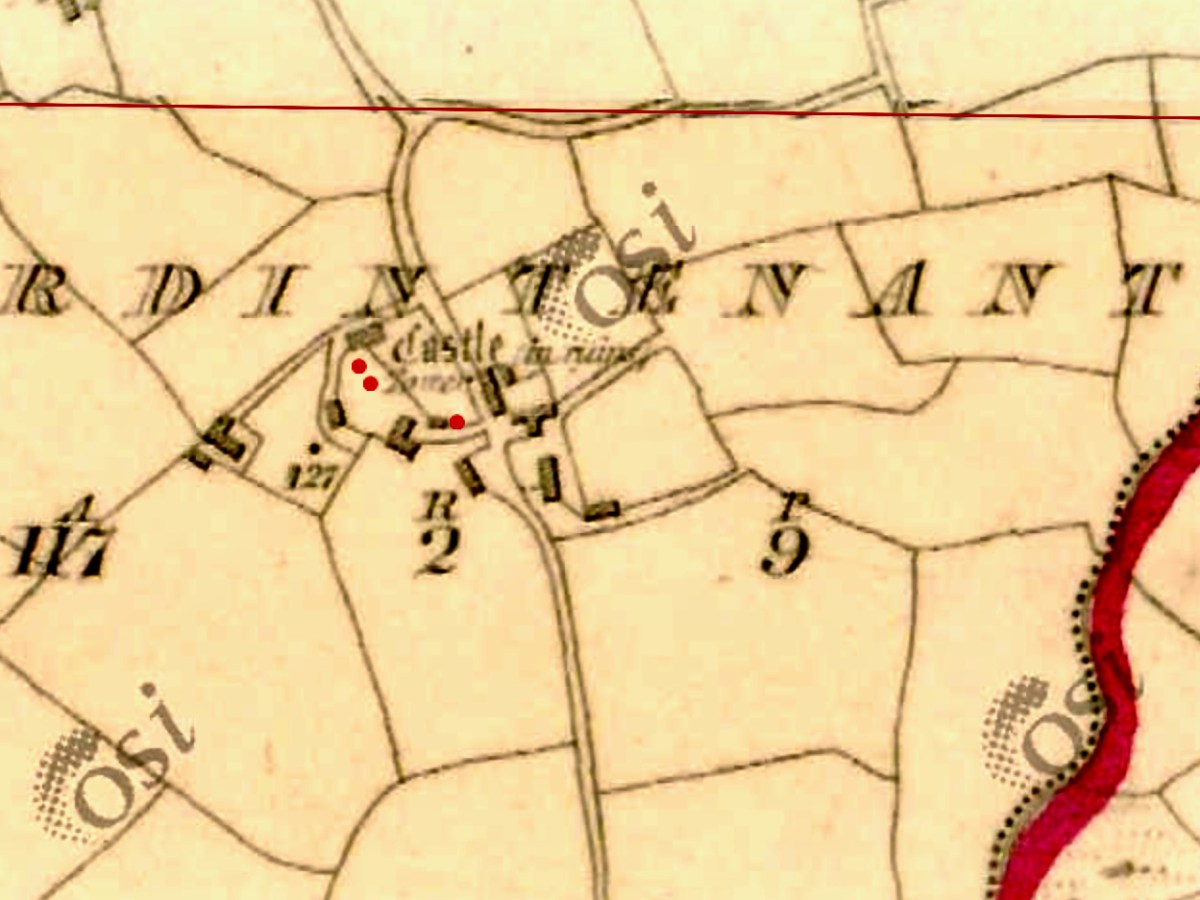
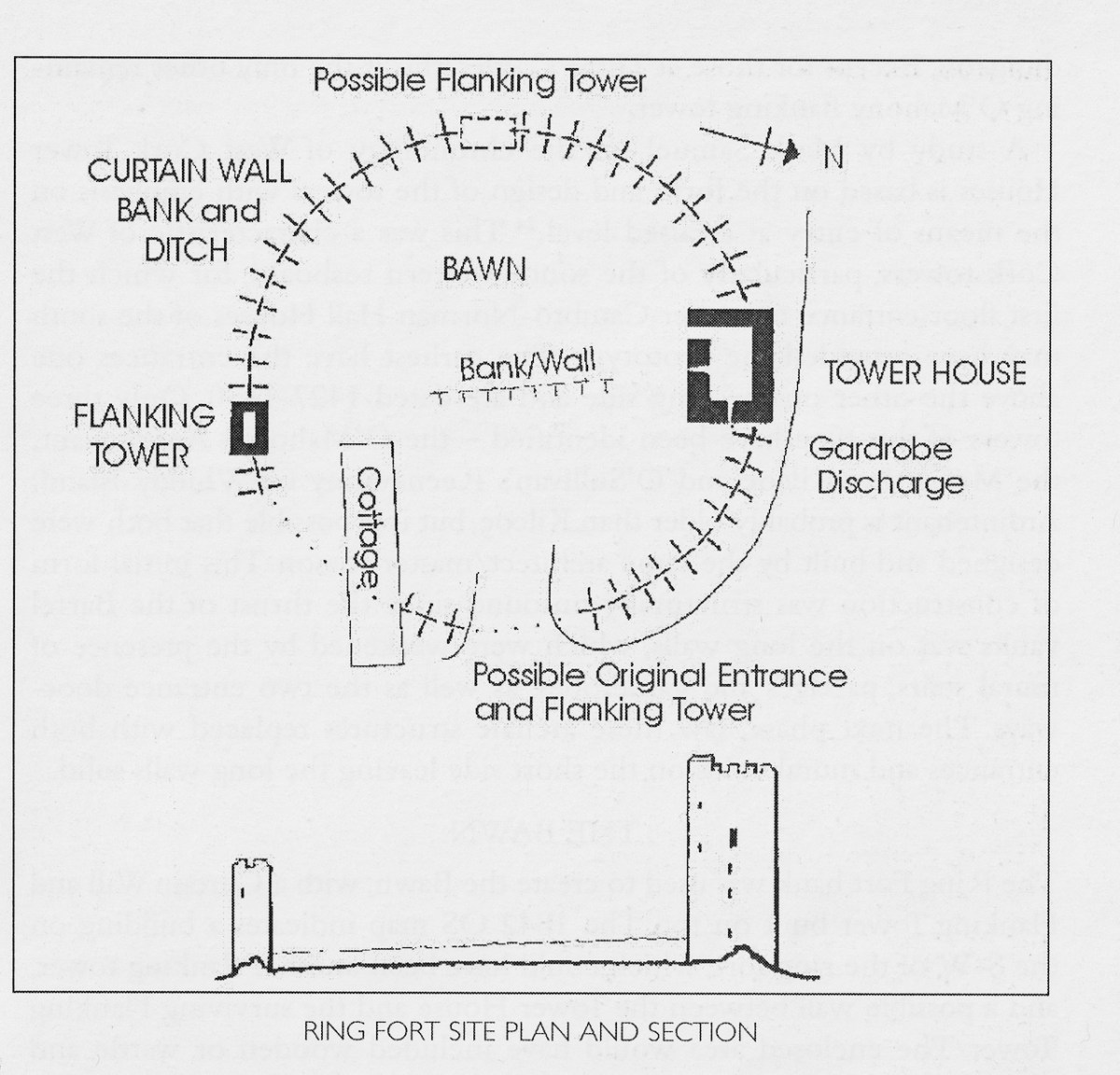
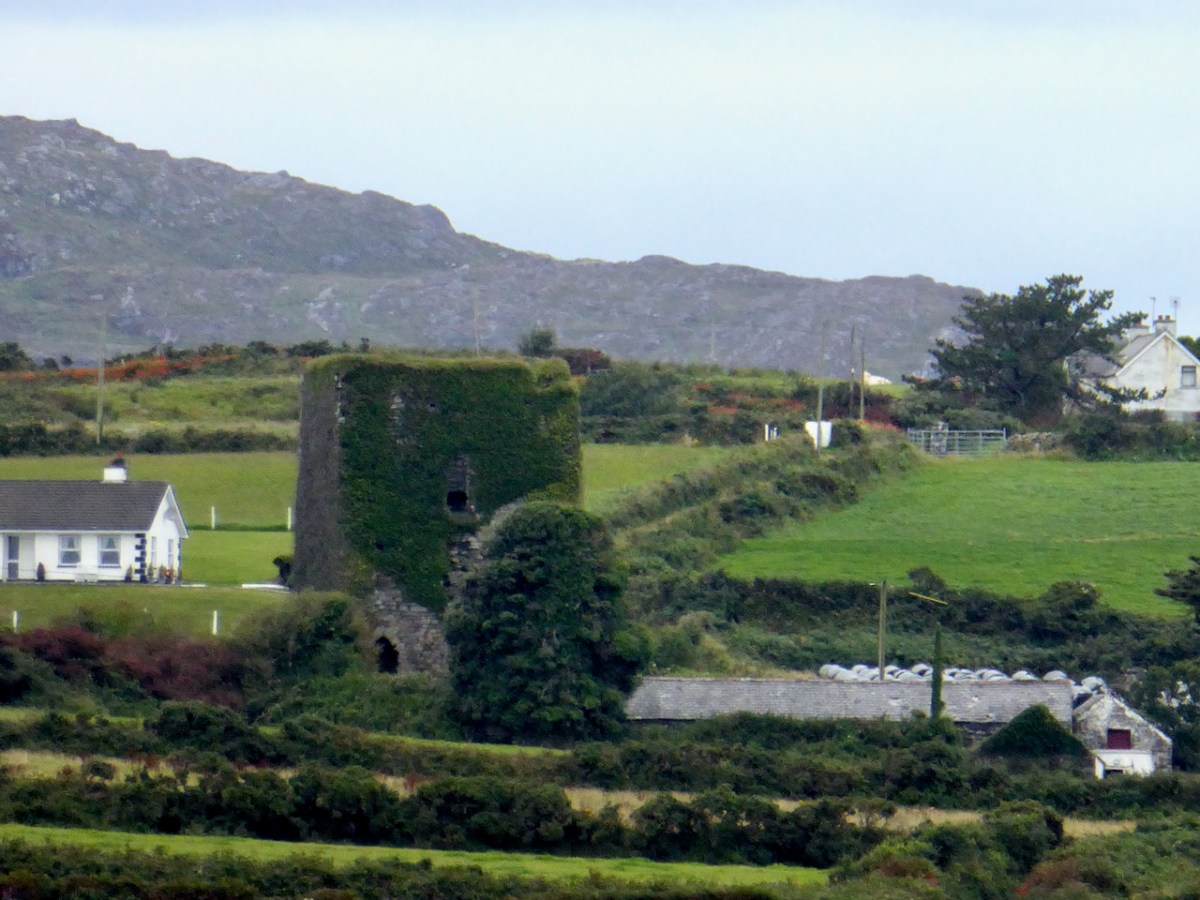
While there is evidence that other O’Mahony castles were built on pre-existing fortifications such as promontory forts (see Three Castle Head, for example) or ring forts, this is most visible at Ardintenant, where the ring fort can still be seen as a circular rampart around the tower house. You can make out part of it in the photo above. Another unusual feature is the survival of a single flanking tower, along the line of the ring fort and across from the tower house, although there may have been more than one originally, since the 1840s OS map shows what could be a second one – the leftmost building on the line of the ringfort below. Note that farm buildings also dot the site even at this early stage.
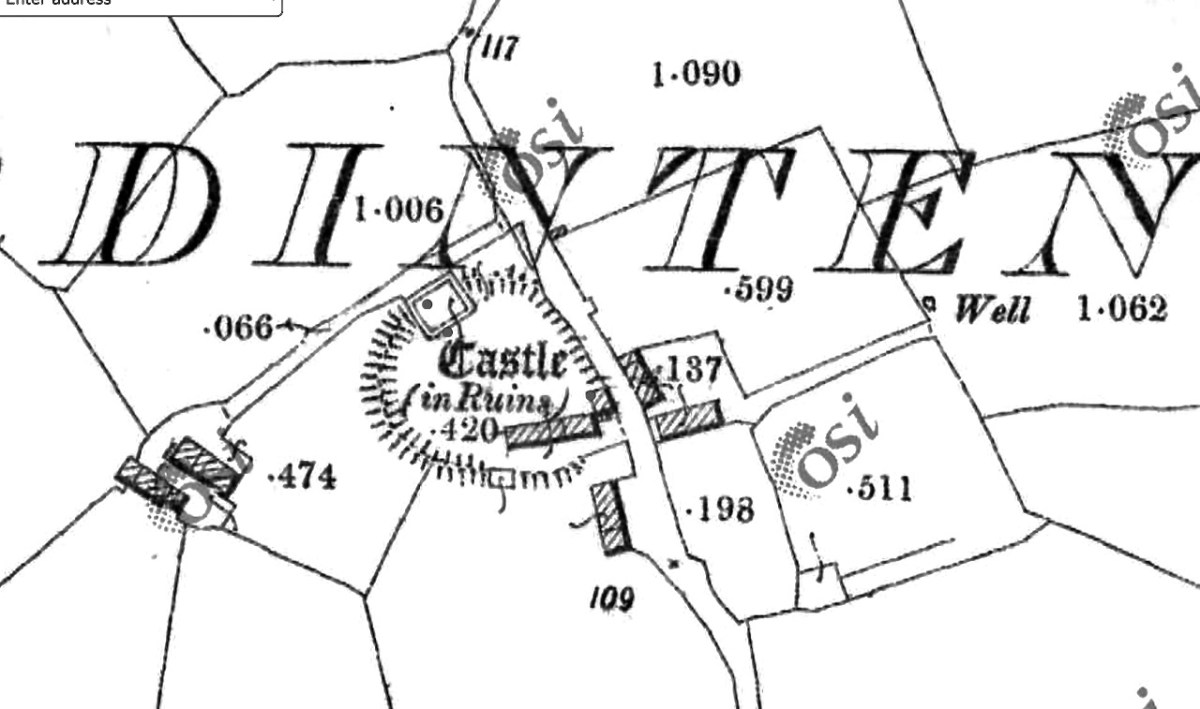
The possible second flanking tower had disappeared by the time the next series of maps were produced, around the 1890s. The farm buildings have changed as well.
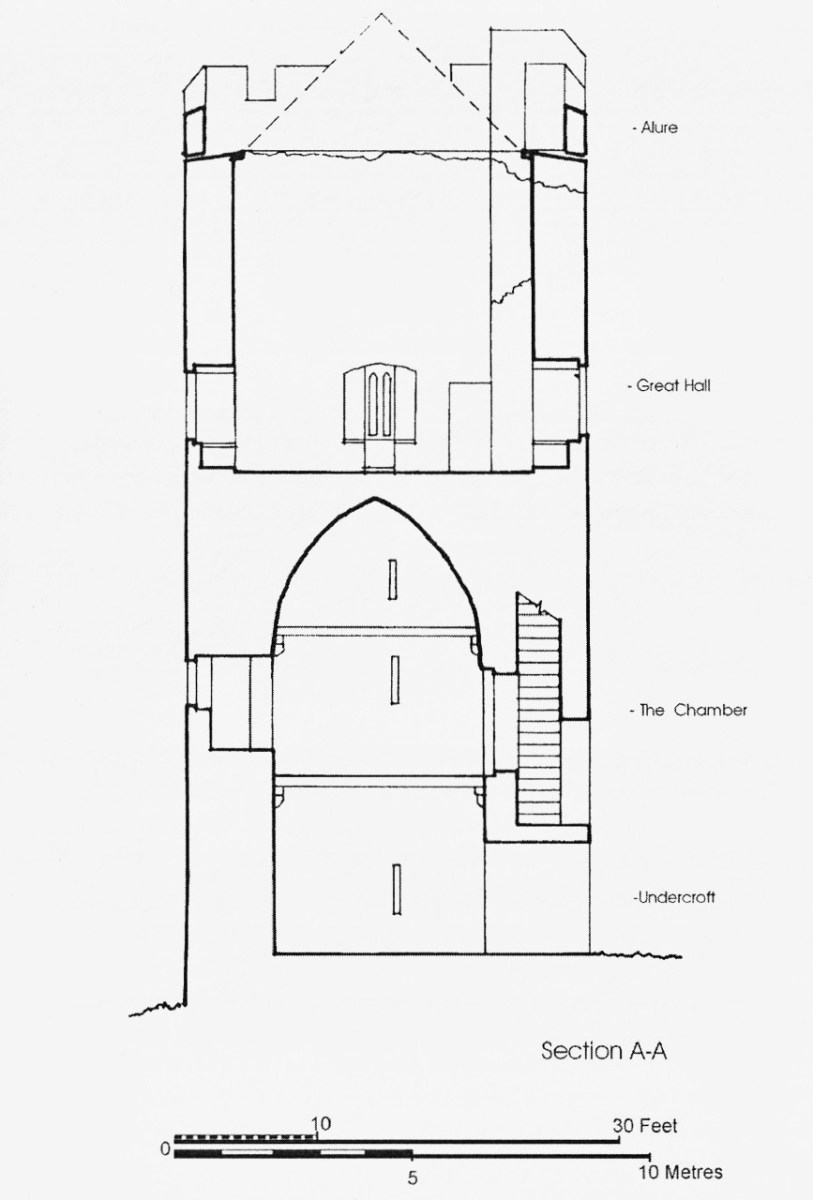
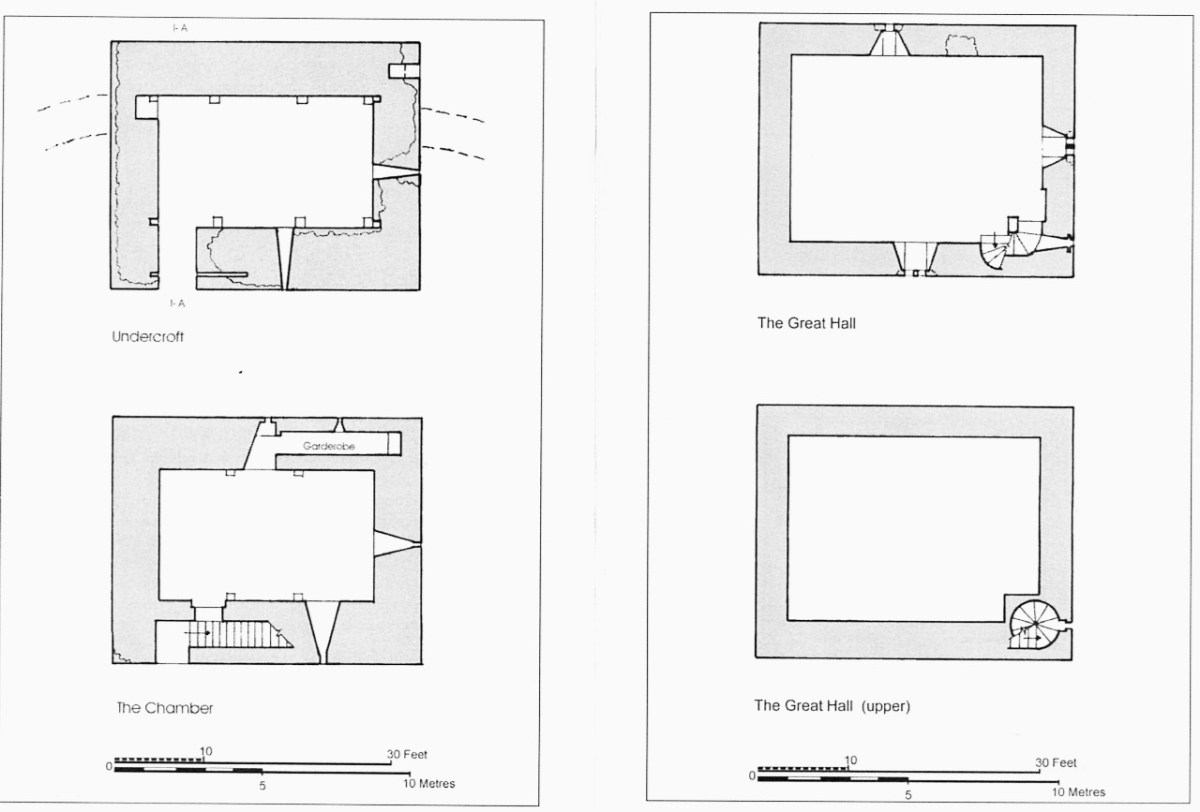
In his marvellous paper on Ardintenant Castle in Mizen Journal 11, 2003, John Hawkes investigates the history and construction of the castle and provides elevation and plan drawings. I am grateful for his scholarship and thoroughness, which has informed the following description of what is left at this site, as well as provided illustrations.
The presence of the ringfort raises an intriguing prospect since it appears that instead of the usual rectangular bawn, surrounded by a stone wall (see the illustration in this post), we have a round bawn, with the stone wall built on top of the bank of the ringfort. Although that stone wall is not obvious now, it is noted in the description of the ring fort in the National Monuments survey. Thus, what we have here is a hybrid ring fort/tower house – a sensible adaptation of a pre-existing fortification and a continuation of the site as a high-ranking residence. The National Monuments survey also refers to an external fosse, although traces of it are hard to see on the ground. If it was originally a substantial ditch, another possibility is that the bank was surrounded by a moat.
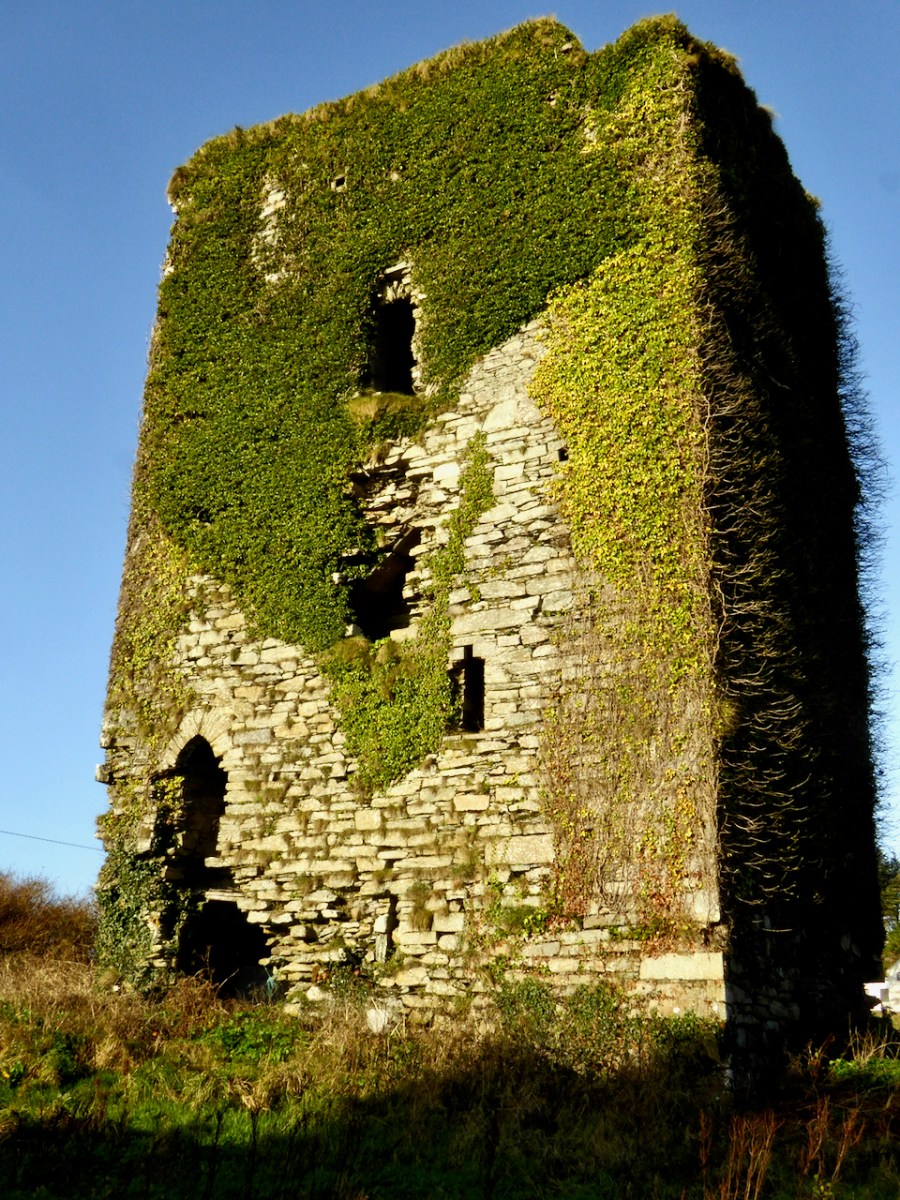
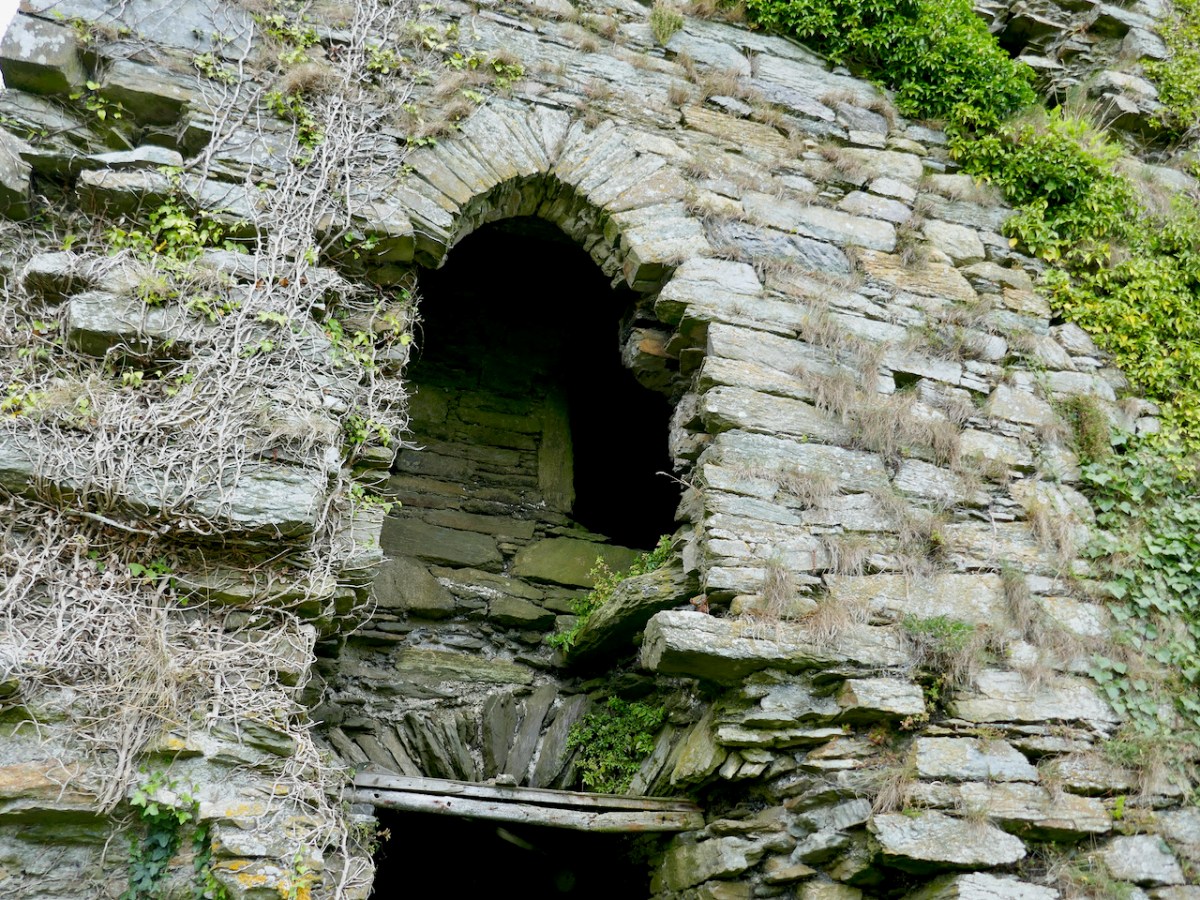
As with all of the O’Mahony Castles, Ardintenant is the type of tower house known as Raised Entry, that is, the ground floor door allows access to the public areas of the castle, while the door above it, originally accessed via a wooden stairway, gives on to a set of steps up to the private area.
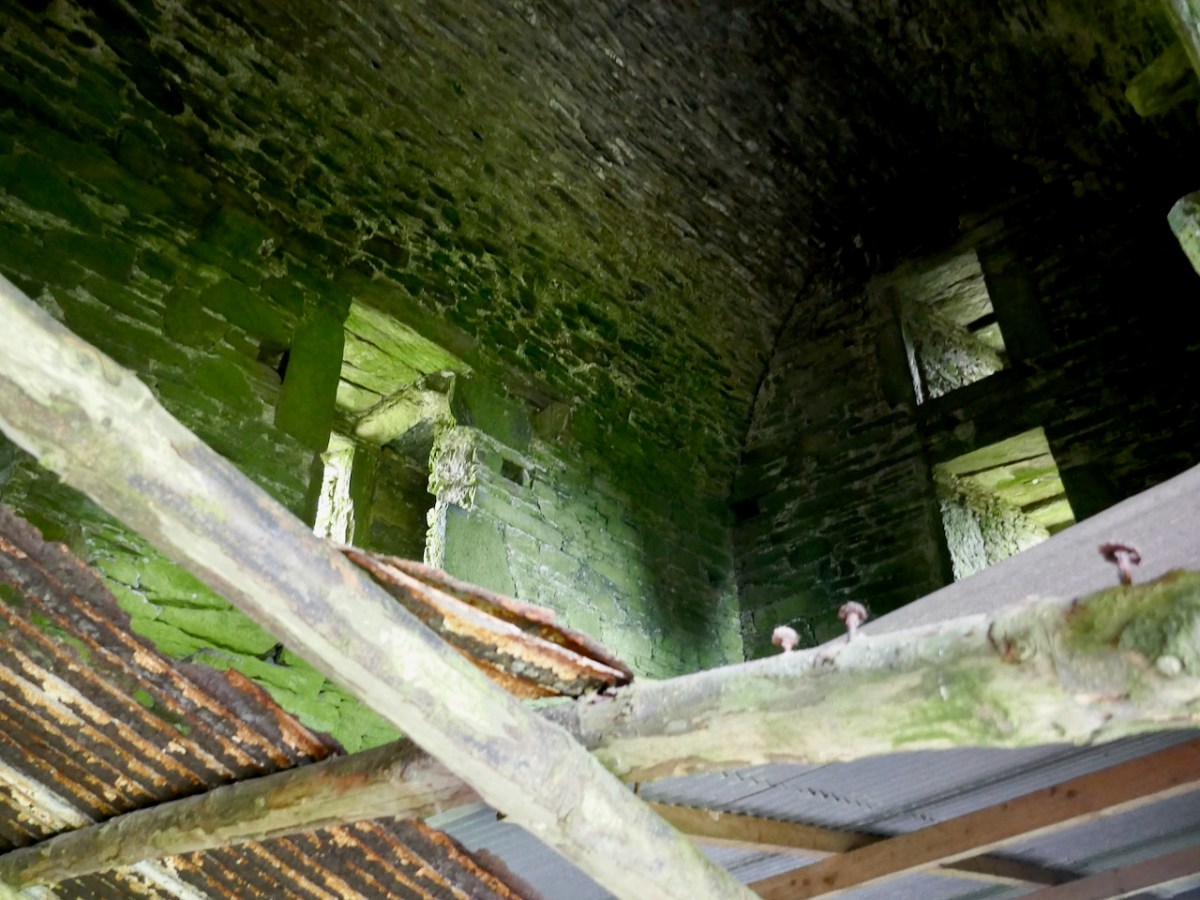
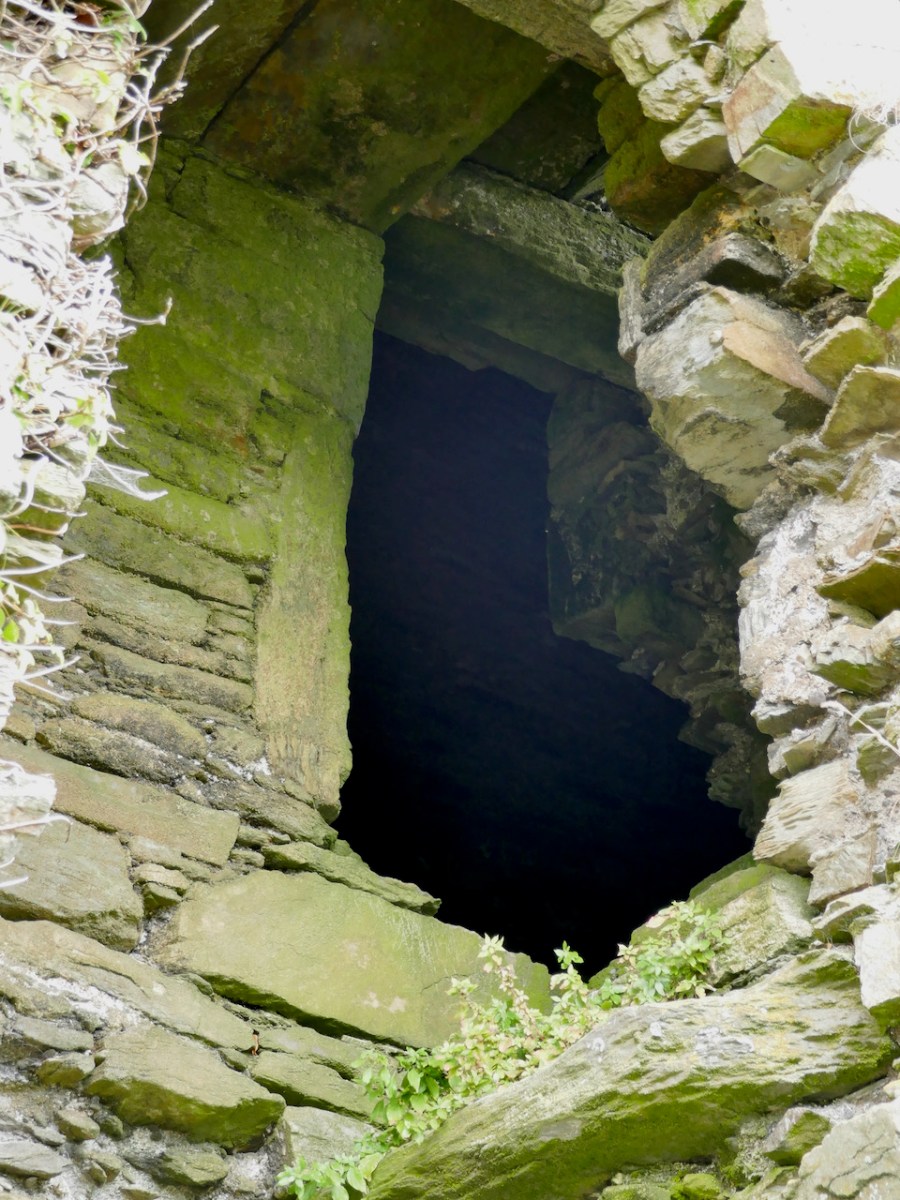
The first two-and-a-mezzanine floors are covered by a vault. This set-up was partly defensive – the upper floors could only be accessed through this raised doorway and staircase – and partly for security, in that the vault was a barrier should a fire break out on the lower floors. The doorway to the left leads to a garderobe, while on the right are two deeply splayed window embrasures.
At Ardintenant, as with Dunmanus, the ground floor has been in use as a cow byre. It is normally impossible to access the upper floors, although those who have done so report that it is in good condition. That floor is reached by means of a mural staircase that rises from the raised entry.
A second staircase, in this case a spiral, gives access from the upper floor to the wall walk. This was not a castle built for comfort – in common with the other 15th century O’Mahony castle it had no fireplaces and very few windows.
Above the vault was what Hawkes calls the Great Hall. One large room, accessed via the mural staircase, the only notable feature of which is are deeply splayed window with seats in the embrasure. Picture the Lady of the house seated here, trying to catch whatever light she could as she bent over her handwork.
In one corner of the Great Hall, the spiral staircase led up to the wall walk (what Hawkes calls the Allure). While nothing remains of these battlements now, we can assume that there was a walkway around the roof, perhaps with Irish crenellations and a sentry box.
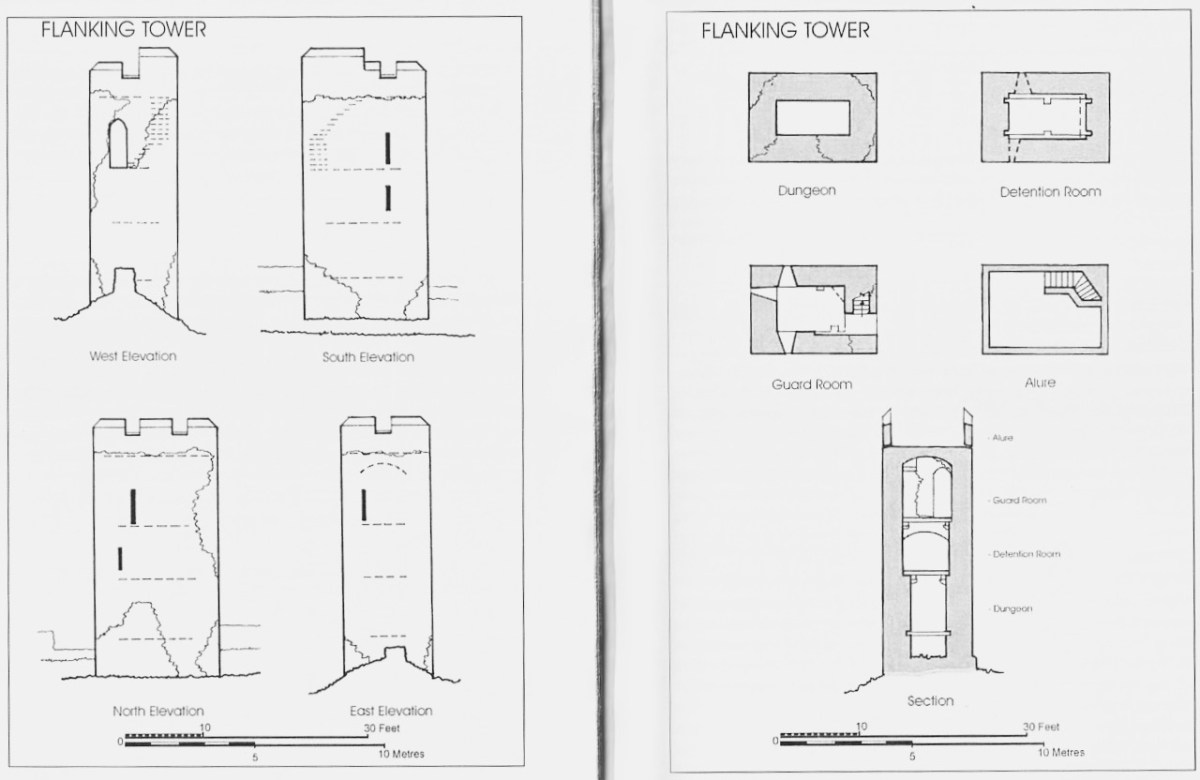
It’s much smaller than the castle, rectangular, and three stories high. The illustration above, by Jack Roberts, indicates the relative sizes. The way in was from the level of the curtain wall and each floor was connected by a ladder, except for the wall walk/allure, reached by a spiral stone stairs.
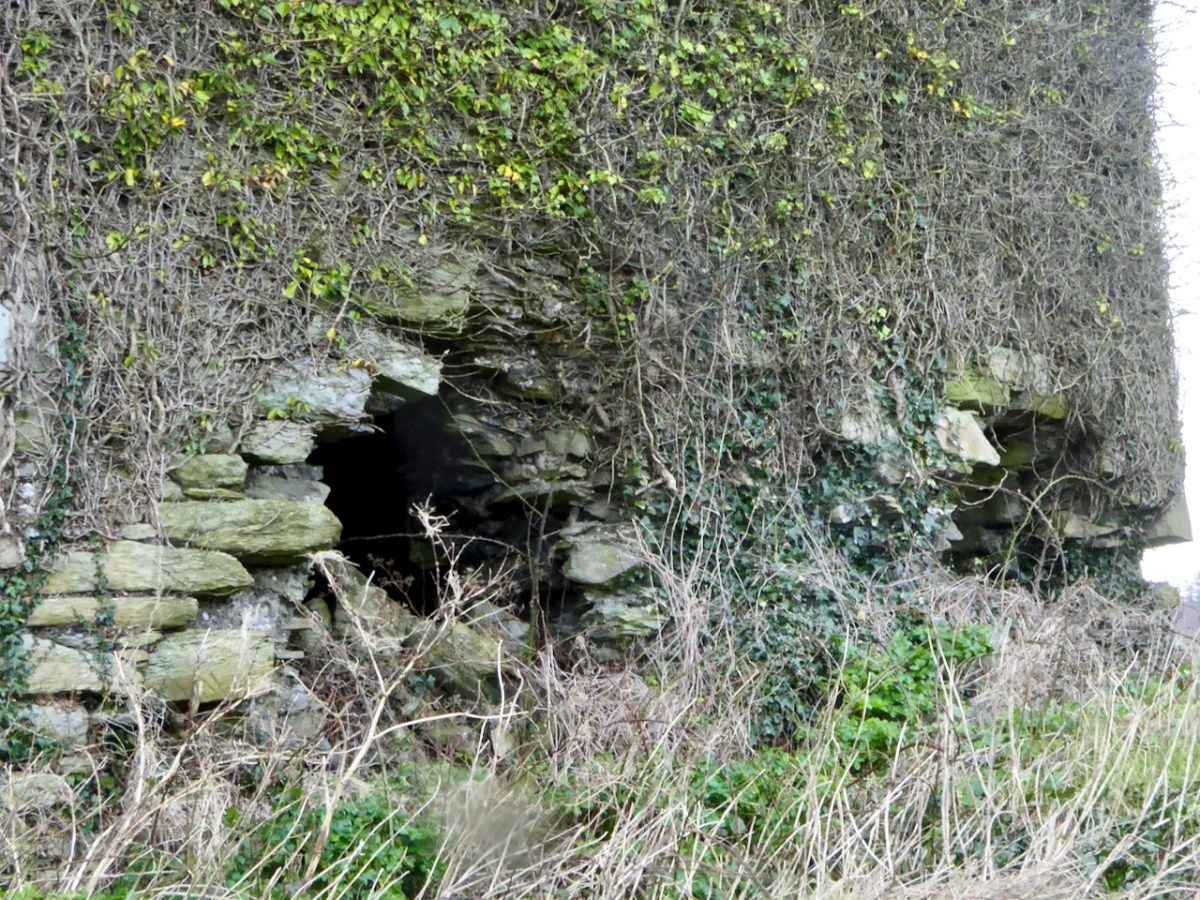
Hawkes tells us that “its function appears to have been to accommodate hostages.” He bases that on the absence of a ground level entry (the current hole on the ground level having been broken through in more recent times), so that the ‘dungeon’ was accessed through a trap door from the room above, which in turn he calls a ‘detention room.’ See my post on Dunmanus for a discussion of possible functions for rooms like the ‘dungeon.’
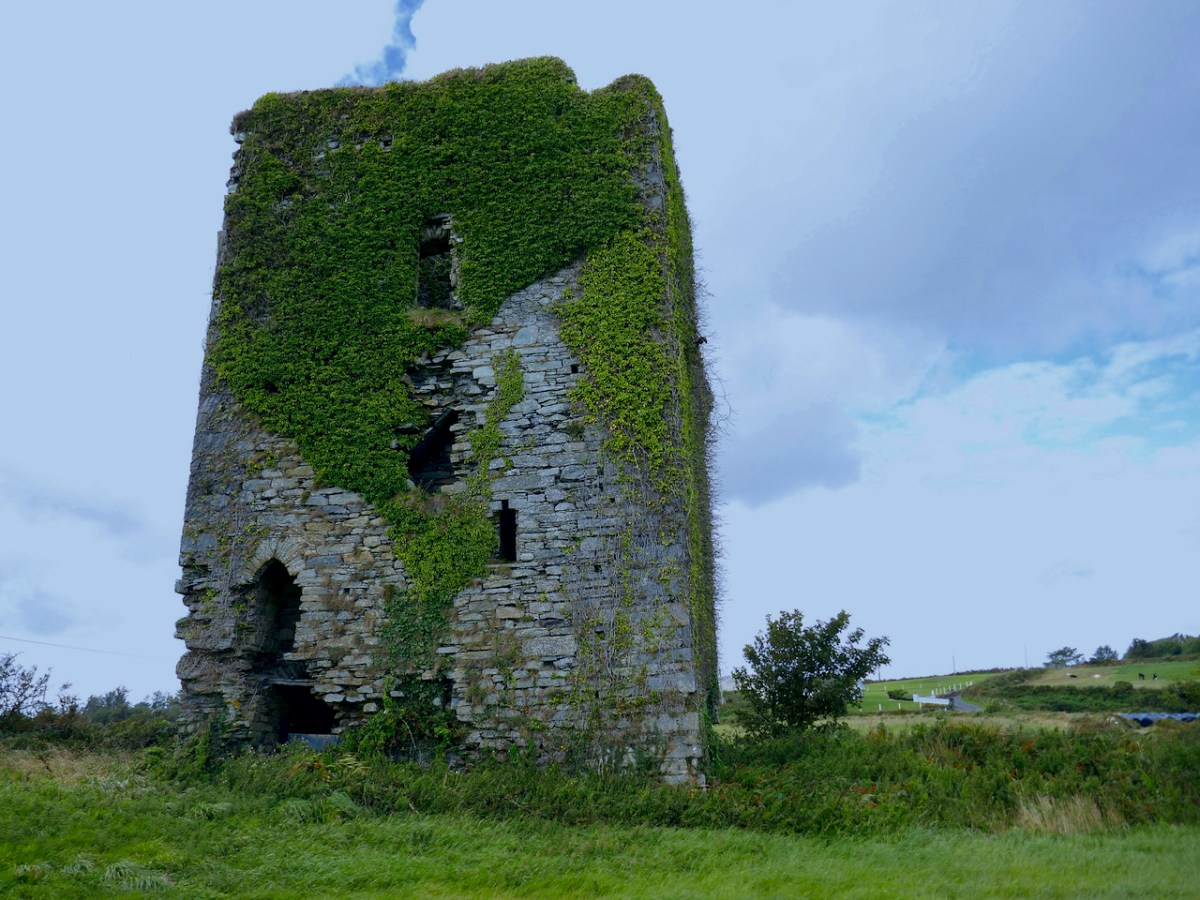
Ardintenant is still standing and intact, but a lot of the base batter – the broad stone base that gives it its strength and stability – is missing and holes have been punched through the walls in the past.
Along with the other extant O’Mahony castles, its continued survival cannot be taken for granted. It’s a listed monument on private land, and Ireland’s complicated heritage laws means that it can’t be deliberately damaged, but conversely, there is no onus on the landowners to conserve it at their own expense. All fingers crossed that it remains standing for ages to come.
Welcome to the UCD Library Cultural Heritage Collections blog. Discover and explore the historical treasures housed within our Archives, Special Collections, National Folklore Collection and Digital Library










 Roaringwater Journal