The Children of Lir

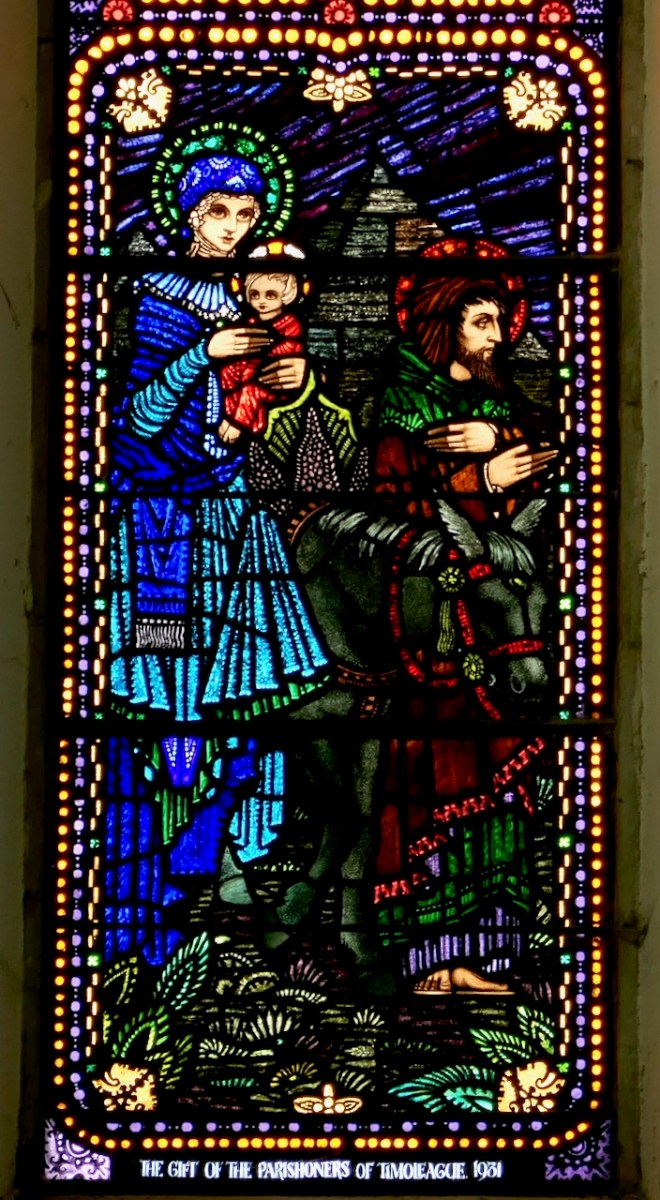
Artist Warren Osborne's depiction of the enchanted Swans

Artist Warren Osborne‘s depiction of the enchanted Swans

It was the mission of the Bards and the Seanchaí to keep alive the ancient stories of Ireland: I am always eager to hear these wonder tales: if they are well told, they will make the hairs stand up on the back of your neck. Your storyteller is being watched and listened to by a generation gone before, who in turn carried that story forward from their ancestors – a chain of continuity which for all we know could go back to the time of the Bronze Age rock carvers and Megalith builders – or even before that. History books are mere speculation and short lived; stories encompass the spirit of the people, and last forever.

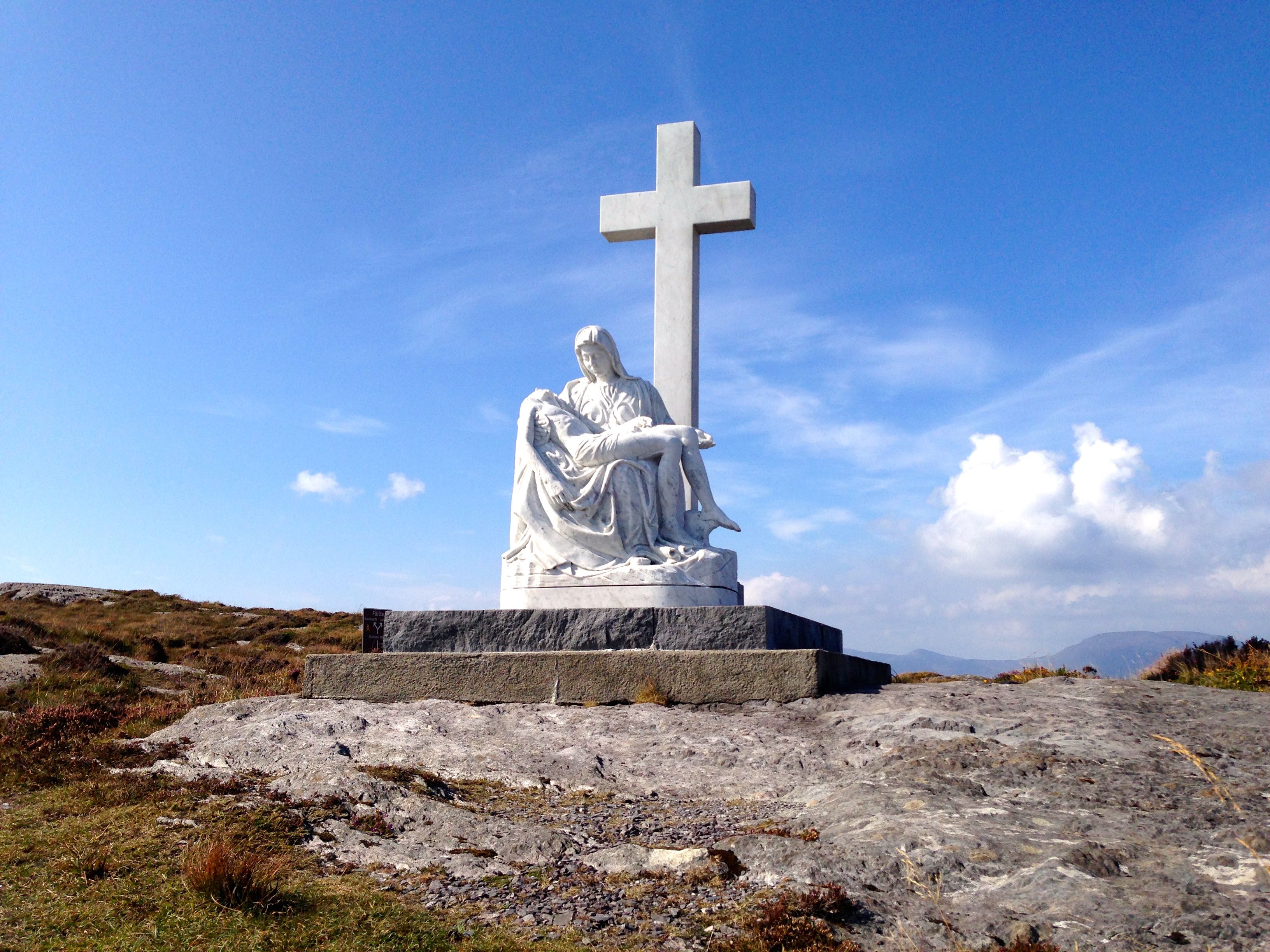
The story captured in sculpture at Ballycastle, County Mayo

A story captured in sculpture at Ballycastle, County Antrim

Have you ever wondered why Swans are such special birds? Did you know that in Ireland no-one can harm the Swan? Some say that law was made by the Milesians, who are said to have arrived in Ireland from Galicia (northern Spain) around four thousand years ago, and heard about The Children of Lir.
It’s a Wicked Step-Mother Tale. Finola is a Step-Mother and is sensitive to such stories, but interestingly she herself appears in this story – in fact she is its heroine! The twins Finola (…as beautiful as sunshine in blossomed branches…) and Hugo and the twins Fiachra and Conn were the children of King Lir and Queen Aoibh.

l_1069ca_20121008_1587912131

When the children were very young their mother died, and the King married Aoifa, a sister of Aoibh. All was well until Aoifa noticed that Lir was spoiling his children: each one of them was given a beautiful white horse and a pair of white hounds and the King spent most of his time in their company. In true step-mother fashion, Aoifa became jealous and determined to intervene. Just as in the story of Snow White, she planned a dire end for them: she took them off to the wild shores of Lake Derryvaragh and threw them into the waters. But her magical powers were not strong enough: Finola gathered her brothers around her and, as Aoifa looked on, the children were transformed into beautiful Swans. In a final curse their step-mother said that they would live out three hundred years on the lake, then three hundred years more in the Sea of Moyle (the narrowest part of the Atlantic Ocean between Ireland and Scotland), then a final three hundred years on Sruth Fada Conn or Irrus Domnann – Stream of the Long Hound – in County Mayo. The spell could only be broken when the sound of the first Christian bell was heard by the Swans.

Sruwaddacon Bay - also known as Sruth Fada Conn

Sruwaddacon Bay – also known as Sruth Fada Conn

Aoifa might have suffered some last minutes pangs of guilt, for she allowed the Swans to retain their human voices. They also had the gift of music and while they were on Lake Derryvaragh people flocked to hear them singing. In fact, it is said that all of Ireland’s great musical tradition originated from the Children of Lir.

Children of Lir by John Duncan, 1914

Children of Lir by John Duncan, 1914

When the King found out about Aoifa’s treachery he turned her into a ‘night demon’ – a Moth, and she’s still around: we see her frequently down here in Nead an Iolair.

Aoifa - the Emperor Moth

Aoifa – the Emperor Moth

One of the most poignant parts of the story (and I am telling only the briefest of versions here) pictures the Swan children revisiting their father’s tower house on their journey to the Sea of Moyle – only to find grass covered ruins and no traces of the family’s heritage:

…when they looked down they saw no light in the house, they heard no music, no sound of voices. The many-coloured house was desolate and all the beauty was gone from it; the white hounds and the brightmaned horses were gone, and all the beautiful glad-hearted folk of the Sidhe… (http://www.sacred-texts.com)

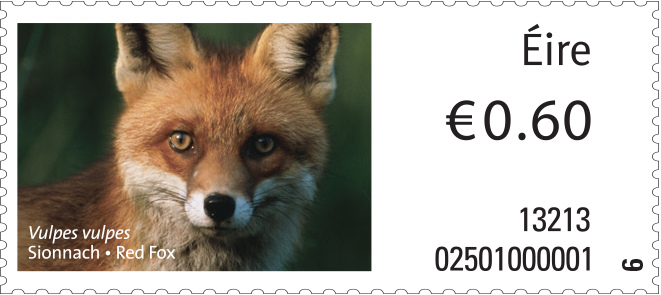
stamp children of lir

We watch the Swans in Rossbrin Cove. On occasion we are fortunate enough to see them taking off from or landing on the water – a noisy and energetic affair: it’s hard to believe that such large and heavy birds can actually take to the air, and migrate over huge distances. Swans appear in folktales all over the world: usually they are associated with light and beauty. A tradition that the Swan only sings when dying has been captured in a madrigal by Orlando Gibbons:

The Silver Swan who, living, had no note,
When death approach’d, unlock’d her silent throat.
Leaning her breast against the reedy shore,
Thus sung her first and last, And sung no more:
“Farewell all joys, O death come close mine eyes.
More geese than swans now live, more fools than wise”

children of lir

To return to our tale – the Children of Lir took their final journey to the far west of Ireland: to the Beara peninsula in West Cork. There they heard St Patrick’s bell and were transformed to human shape again. A hermit – Saint Kemoc – found them, four ancient, withered people. He baptised them just before they crumbled to dust. This place is marked now by a stone where offerings are made: their story is alive today.

The Lir Stone, near Allihies on the Beara

The Lir Stone, near Allihies on the Beara

patricks bell

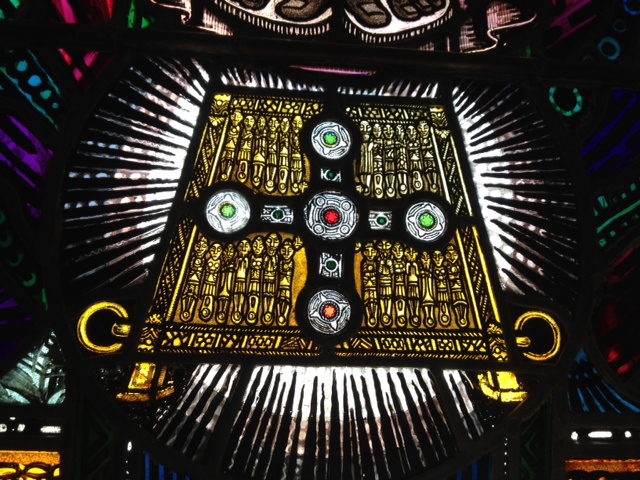
St Patrick’s Bell

Starlight Bliss

Lough Hyne twilight

Lough Hyne twilight

Have you ever had one of those experiences where you float home afterwards, totally blissed out, knowing that something very special just happened to lucky you? Yes, I suppose the day you meet The One would qualify, but here’s another one – kayaking under the stars on a West Cork lake to the strains of baroque music. Let me explain…

Lough Hyne is a unique ecosystem. A partially landlocked seawater lake, it is filled by the incoming tide and then empties twice a day, through a stretch of water called The Rapids. Aquatic marine plants and animals flourish in the warm protected waters – many not found elsewhere in Ireland. It’s also a beautiful and peaceful place, steeped in archaeology and history.

In a kayak for the first time in years!

In a kayak for the first time in years!

Jim Kennedy and his family run Atlantic Sea Kayaking and a couple of times a year, to coincide with local festivals, they offer a special kayaking trip on Lough Hyne called the Starlight Serenade. I was disappointed to have missed the first offering earlier in the summer so as soon as they announced a second one, during the Taste of West Cork Festival, I signed up to go with my friend Sheena Jolley.

We're off!

We’re off!

After a brief introduction to basic paddling techniques we were off, a group of about 20 of us, mostly local. Jim led us first to The Rapids, pointing out the birdlife along the way. It was an unusually high tide and the water was thundering in. We rafted up in a sheltering eddy, trying not to be too intimidated by the tidal surge. Jim explained the ecology of the constant filling and draining of the lake and then he pushed us out into the rushing water. Hanging  on to each other’s kayaks, we swirled giddily in the torrent, gradually swinging back into the calmer waters of the lake.

Loght Hyne with the islands. The Rapids are at the top right. Photo by 'Riekeshieldmaiden' at en.wikipedia

Lough Hyne with the islands. The Rapids are at the top left. (Photo by ‘Riekeshieldmaiden’ at en.wikipedia)

As dusk closed in the next stop was the island, and stories of an O’Driscoll warlord who once ruled supreme in Baltimore but who lived out his final days in this remote place. Then Jim told us to head ‘towards the light’ and pointed to the far shore. As we got closer the ‘light’ began to resolve itself. Several steps led down to a tiny quay and on each step and all over the quay were candles – dozens of them. Then we heard the music. Two violinists were playing Bach. One by one we drifted in, rafted up as silently as we could, and then lay back in the kayak seat and just listened. The Milky Way arced across the sky, the music floated to us from the little quay, we dangled fingers in the warm water and each of us felt in our own way that surely heaven couldn’t hold much better than this.

The Serenade

The Serenade

The concert continued – some Telemann, a song composed by Jessie (these were two members of the Vespertine Quintet I reported on at the beginning of August), something gentle and minimalistic, more Bach – and then it was ‘follow the light’ again: this time the light was on the helmet of the lead guide. But before we started, Jim asked us to look down into the water and to dip our hands in. Suddenly, the stars were beneath us: bioluminesence shimmered and shook from our fingers. As we paddled back every stroke of the blade struck sparks from the water: flash on the right, flash on the left, flash, flash, flash, flash.

Starlight repast

Starlight repast

It was hard to leave the magic that was happening on the water. Sheena and I walked back to where the cars were parked, breathless with the wonder of what we had just experienced. But wait…here were more candles and luminarias, and a table groaning with wonderful food, and grinning guides handing out cups of tea and glasses of wine, and Maria Kennedy presiding over a homemade feast of organic goodies: smoked salmon, seaweed scones (delicious!), salads from her garden, cheeses and biscuits and cake and chocolates. We sat or stood in the warm night air, munching contentedly, unable to utter much more than superlative heaped on superlative.

luminarios

Words are inadequate tools to fully convey the essence of an evening like this. I can’t tell you. You have to do it too.

Sail Away, Sail Away

Merlin heads for The Mizen

Merlin heads for The Mizen

Many years ago I did a lot of sailing in Vancouver but for various reasons I haven’t been sailing for years. This week I was thrilled to have the opportunity to take to the water again!

I went with Chris Forker of Carbery Sailing out of Ahakista. Chris has a beautiful yacht, Merlin, a 42 footer with room for eight. There were five of us – Chris, his wife Aideen, a young couple Conor and Ellie, and I. Robert decided that the better part of valour that day was dry land, but he took photos of us as we left and arrived and even drove up the Sheep’s Head mountains to capture us in full sail.

Ferrying out to Merlin

Ferrying out to Merlin

It was a fabulous day (but then, it always is, around here) and we got underway quickly after Chris had given us a tour of the boat and showed us on the charts where we would be going. He was an amazingly relaxed captain: once the safety instructions were over he invited us to do as much or as little hands-on as we liked.

Merlin on Dunmanus Bay

Merlin on Dunmanus Bay

We sailed almost to the mouth of Dunmanus Bay and back to Ahakista. There was a brisk little breeze, so the conditions were excellent and as soon as the main and the foresail were up the boat settled into a close haul, heeled over, and bowled along at a merry pace. Chris pointed out all the points of interest, introduced us to Henry the friendly seal and recounted the history of the bay. 

Great day for a sail!

Great day for a sail!

Chris is a born teacher (he does RYA training courses aboard Merlin) but in the most unobtrusive way, so I felt comfortable asking all the basic questions – stuff I had learned but forgotten. There’s so much vocabulary to sailing! Within an hour I felt emboldened enough to offer to take the helm – and there I was sailing a 42 foot yacht, calling the change of tack, adjusting the course to catch the wind. It was, in a word, heaven. The Sheep’s Head to the north, the Mizen Peninsula to the south,  incredible scenery, sunshine and a Caribbean blue sea skimming past our bow – what more can life hold on a warm September afternoon?

At the helm!

At the helm!

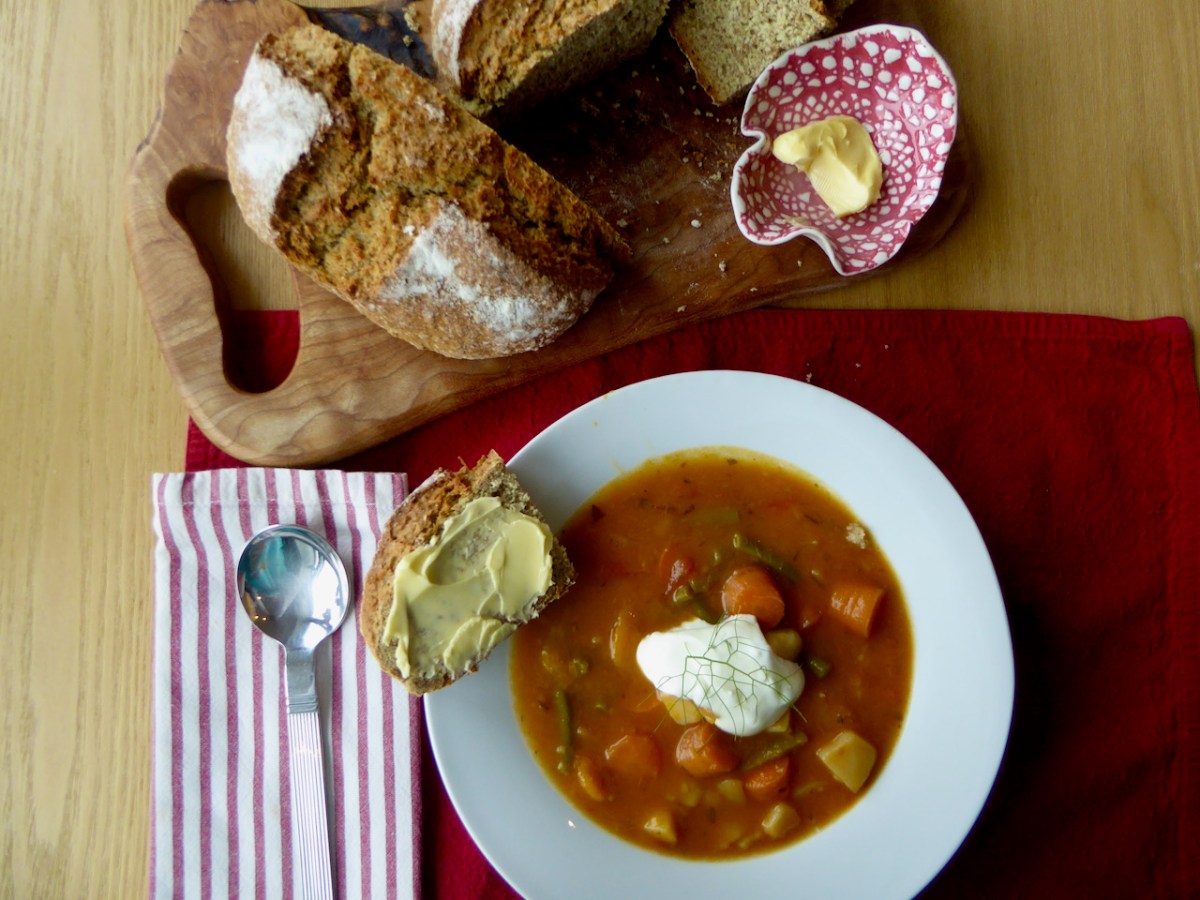
And just when I though it couldn’t possibly get any better, Aideen appeared with a cup of tea and a plate of Ummera smoked salmon on thinly sliced brown soda bread.

Robert and I have explored the Sheep’s Head and the Mizen extensively, but seeing it from this angle brings a new perspective. We were unaware, for example, that there are sea arches along the Mizen coast – dramatic bridges reaching out over the ocean, with the sea thundering underneath. There are several islands in the Bay. We sailed between Carbery and Furze Island. Rumour has it that the house on Carbery is owned by a wealthy Sultan who visits with his wives occasionally. Gannets plummeted into the water around us and, although we didn’t see any that day, dolphins often swim and play around the boat.

Conor, who had never sailed in his life, took the helm as we headed home, while Chris and Aideen dropped and stowed the sails.

Connor takes charge

Conor takes charge

As a re-introduction to sailing I couldn’t have had a more perfect experience. But even just lounging around the deck, soaking up the sunshine and the scenery, feeling the wind on my face and the gentle swell beneath, chatting in that companionable way that seems to happen like magic with shipmates – well, it all added up to a marvellous and memorable day that will ensure that I get out on the water again soon.

End of a perfect day

End of a perfect day

Equinox Adventure

equinox

September 21st – the Autumn Equinox. Day and night are exactly the same length. This event must have some significance for any society which watches the sky. We can never know for sure, but it does seem possible that the enigmatic stone structures we find out in the remote landscapes of Ireland: megaliths, circles, stone rows and – dear to us – Rock Art, could have been inspired by celestial observations.

the rock

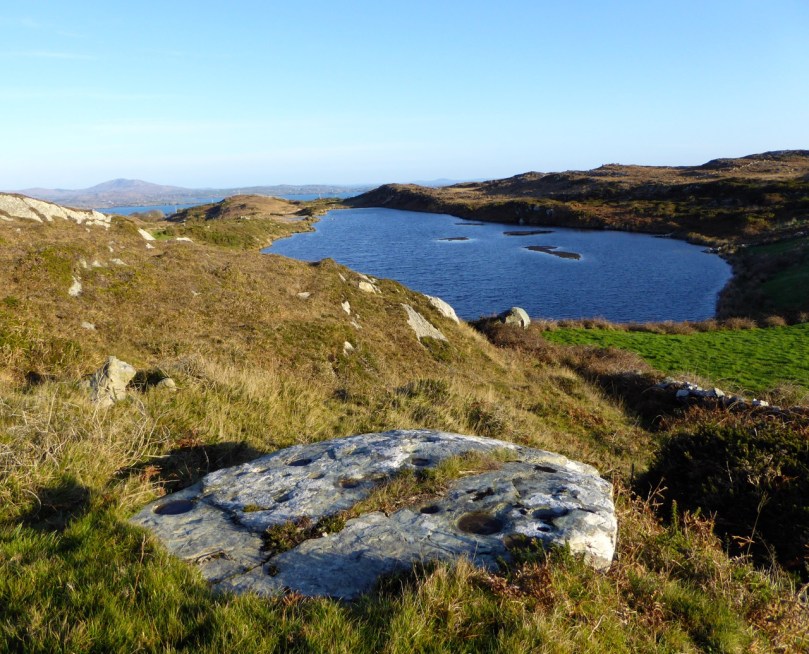
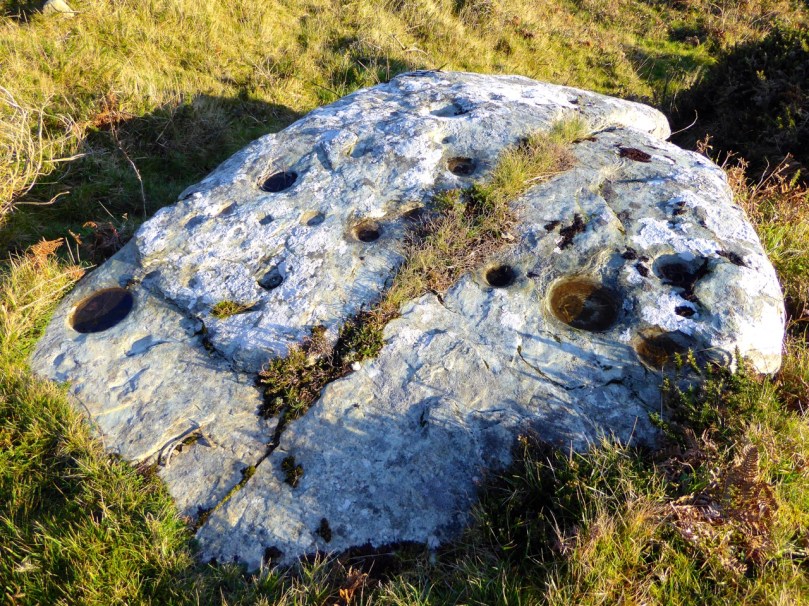
Bronze Age carvings at Derreenaclogh

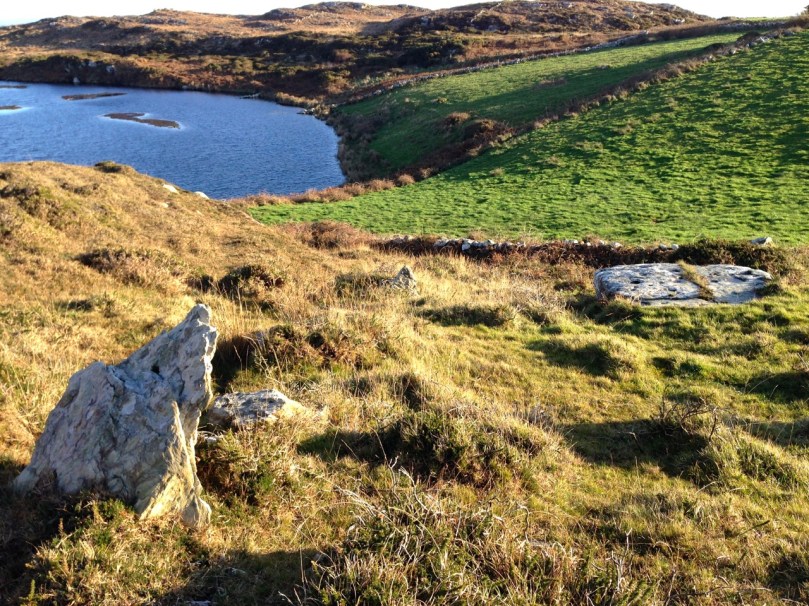
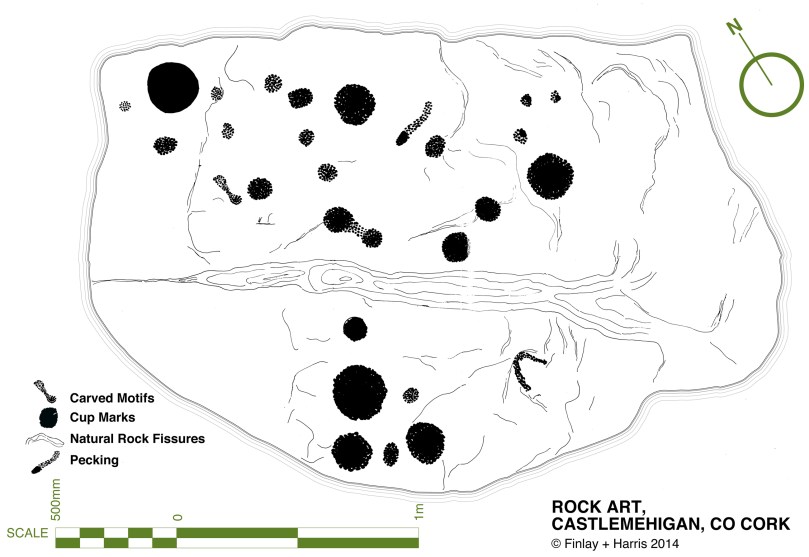
Finola put up a post on the Spring Equinox at Bohonagh, and we have written about the Spring Cross Quarter (Imbolc). We are fortunate that today’s weather has been idyllic – cloudless and with a clarity of light – so we headed out to Derreenaclogh to watch the sun setting. We have studied this rock in depth, throughout the year and in all conditions. Our work has produced a detailed measured drawing of the intricate markings on the surface, carved by our ancestors perhaps three or four thousand years ago.

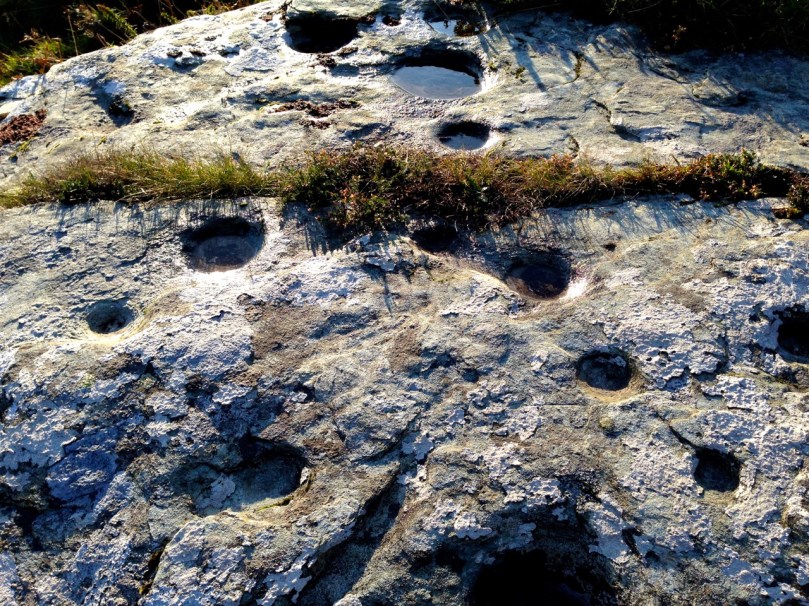
During our many visits we have noted – but perhaps neglected – the other carved rock at Derreenaclogh, which is situated only a few metres to the east. This has suffered considerable weathering and surface erosion which the first rock escaped, somehow or other, by being preserved for years – centuries – perhaps millennia – under a covering of soil and furze. Nevertheless, today the very faint markings seemed to be more alive – as if the low sunlight on this evening was exactly right for observation. We could see marks on this surface we had never made out before. Derreenaclogh Number 2 deserves a detailed study of its own – something else to keep us busy for a while!

Heavily weathered motifs on Derreenaclogh 2

Heavily weathered motifs on Derreenaclogh 2

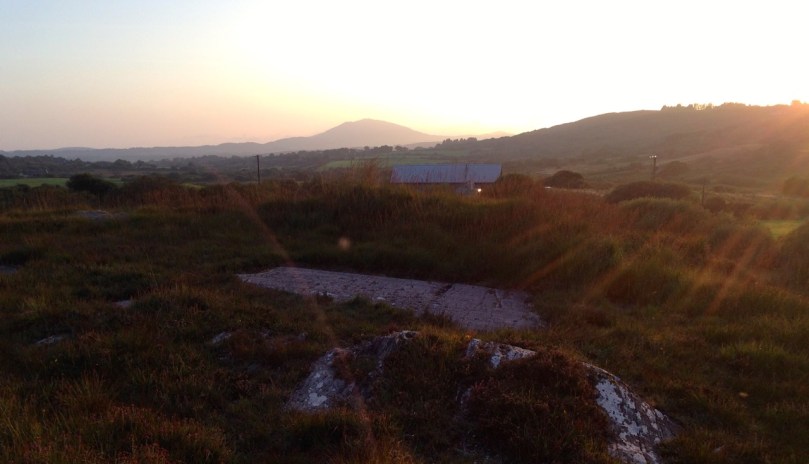
The sun duly sank below a hill – not a particularly significant part of the horizon. Mount Gabriel, meanwhile, further to the south, gathered some rather spectacular clouds around itself: it could be that this landscape profile is a sunset marker at another calendar point. We did see that the ‘ray’ on the large motif with eight concentric circles seemed to be aligned with the setting sun – could that have been important?

It was such a beautiful evening that wherever that sun had landed, or whatever alignments may or may not be visible, we would have been perfectly happy. As we made our way back to Nead an Iolair we said to ourselves – again – that this West Cork scenery is unbeatable: we are so fortunate to be immersed in it.

Mt Gabriel


Beara – the Lie of the Land

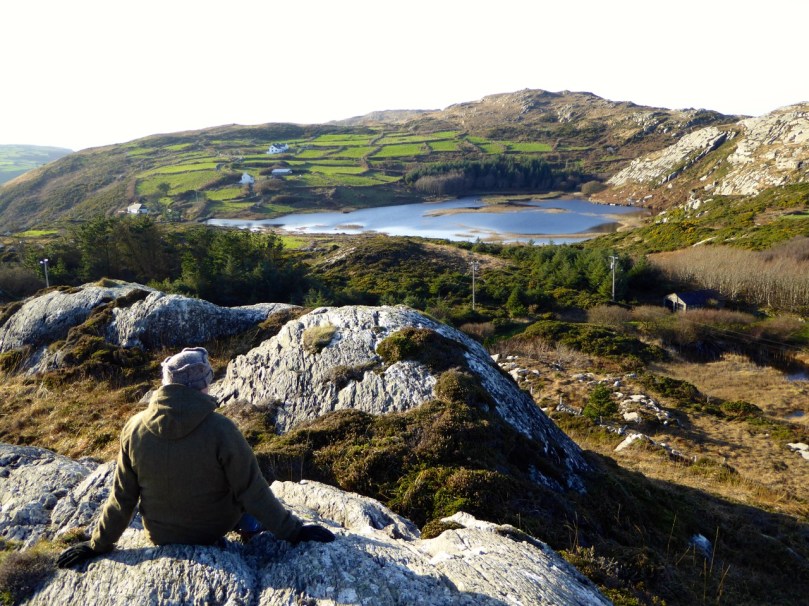
On the north side of the Beara, looking across to the Kerry Mountains.

On the north side of the Beara, looking across to the Kerry Mountains

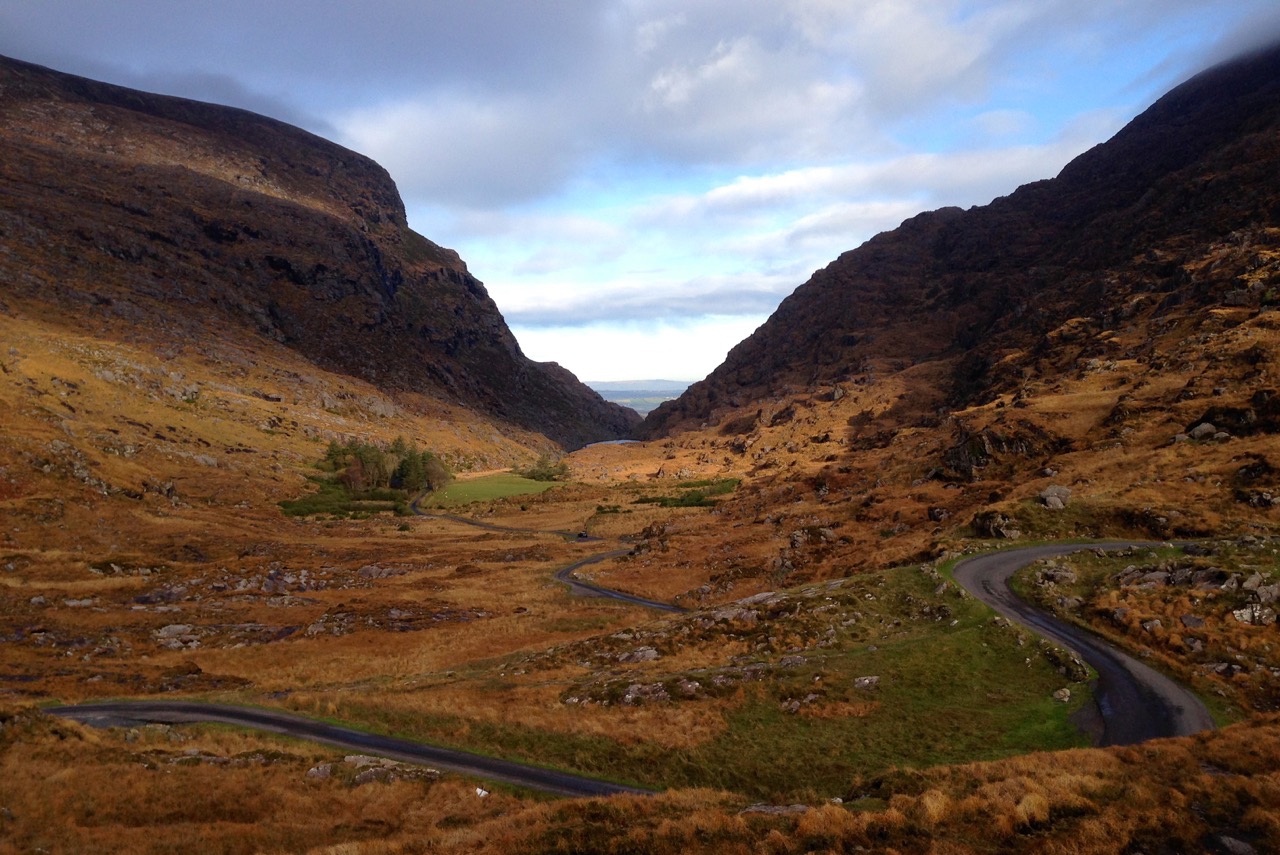
The Beara Peninsula is the largest and perhaps the wildest of the three West Cork Peninsulas. (See last week’s post for the map.) Two mountain chains, the Caha Mountains and the Slieve Miskish Mountains make up the spine of the Peninsula. You can traverse it via the spectacular Healy Pass, which runs from Adrigole north to Lauragh. On this occasion, because we had limited time, we confined ourselves to driving the main coastal route and to getting the general lie of the land. This meant we missed out on several landmarks – Bere Island, for example, and Dursey Island, besides the Healy Pass – so of course we must go back soon!

Near Cod's Head

Near Cod’s Head

After the inspiring piano recital by David Syme, described last week, we stayed overnight in Allihies and enjoyed an excellent dinner in O’Neill’s pub. The local Gaelic Football team had won a championship match that afternoon and the town was celebrating well into the night. Our first stop the next day was the Allihies Mining Museum. Housed in an impressively converted old Methodist Chapel, it tells the story of copper mining on the Beara, evidence of which can still be seen in the vicinity.

Note the green copper veins on the cliff face

Note the green copper veins on the cliff face

From there we carried on to the Cod’s Head, through a small pass which brought us out to a jaw-dropping vista across Coulagh Bay to Kilcatherine Point, and beyond to the Mountains of the Iveragh Peninsula in Kerry. We took the time here to hike up a waymarked trail that brought us up to breathtaking views high into the mountain slopes, home of purple heather, enormous boulders and curious sheep.

The sentinel

The sentinel

Eyries village is a pure delight: a riot of colourful houses and sleepy streets. We stopped at Ms Murphy’s traditional shop for tea and delicious sandwiches, strolled along the main street taking pictures and chatting to friendly residents, and finally by chance dropping into the startlingly beautiful St Kentigern’s church.

The north side of the Peninsula offers glorious vistas across the Kenmare River (an enormous sea inlet but called, oddly, a river). We took the coastal route from Kilcatherine to Dog’s Point and back to Ardgroom and on to Lauragh – lovely villages with seaside settings.

Mountain and sea

Mountain and sea

We stopped to visit the Cailleach Beara, the Hag of Beara. A powerfully symbolic site from Irish mythology, this rock is associated with many legends. People leave votive offerings – coins, rosary beads, a set of old glasses, shells and ribbons in honour of the spirit of the ancient goddess. Our next stop was the Ballycrovane Ogham Stone – the tallest in the world, and still in the wild, as Robert was glad to note.

Alright – so we have our bearings now and we’ve scratched the surface of this fascinating part of West Cork. Look out for future posts on the Beara – we can’t wait to return!

Beara mussel beds

Mussel beds, looking out to the Kenmare River

A Moment in Time

Beautiful Rossbrin Cove

Beautiful Rossbrin Cove

It happens so suddenly. One day you will go down to the Cove and the sounds of summer will be in the air: childrens’ voices and laughter from gardens and beach, excited dogs, perhaps a clop of ponies from the riding stable, the flap of sails getting under way and the whirr of outboards on ribs. Then, the end of August comes, and it’s as if a shutter drops mechanically. Gates are shut and blinds are drawn at the many holiday houses along the water; there’s a chill in the morning air and a haze hangs over everything. An ever so slight feeling of melancholy accompanies the Oystercatchers pieu-ing as they glide in.

fuschia

But there’s abundance all around: fat, luscious berries and hips dominate the hedgerows and wild fuschias are as rampant as ever. Bees are constantly in evidence. The sun still comes uninterrupted every day in this record-breaking year while, in the evening, the biggest moon of the season rises magnificently in the east, bringing with it a huge tidal variation: low water empties the Cove almost completely, providing a feasting ground for the little waders, while the Swans are compelled to sit on their single legs forlorn on a mud-bank, or to sail off out to the open water beyond the castle.

haze

On a day last week we perambulated the full rim of the Cove, pausing by Julian’s house at the very end, just before reaching the landmark of Finghin O’Mahony’s ruined tower. Like us, Julian is a year-round resident: there are just a few others. There is activity in the boatyard at the end: they are preparing to receive, over the coming month, all the sailing craft that are currently moored to buoys in the mouth of the inlet: upwards of thirty. Yacht insurance generally runs out at the end of October. Last winter – the stormiest in living memory – saw a single boat ride it all out undamaged on the water, while high and dry in the boatyard several fine yachts were toppled and broken by westerly gales. For some reason (perhaps its because of the now sleeping houses) the birds’ chattering and serenading seems to be louder and more insistent.

When I first came through Rossbrin Cove – many years ago – it didn’t make a positive impression on me. It seemed a bit of a scrappy place, with its huge, muddy slipway at the far end and rusting trailers and discarded dinghies growing in to the encroaching sedges. The shoreline itself, edged with home-hewn jetties and concrete landing places, seemed a little urban: I passed on, looking for a bit more in the way of West Cork scenery and character. Now, the Cove is our daily garden path: with familiarity it has elbowed its way into our hearts and we appreciate every detail. At low tides the rocks are a hunting ground for Mussels (although we have to wait for Good Friday), and sunlit pools are inhabited by scurrying crabs and bewildering varieties of seaweed.

misty

Before the haze burns off, sky and water merge and the islands drift in and out of view. The sea itself is a frontier of the untameable Atlantic but, here in this land of inlets, coastal hills and castles it mirrors the sunlight from its barely rippled surface, and our summer will never end.

Enjoying Rossbrin

Enjoying Rossbrin

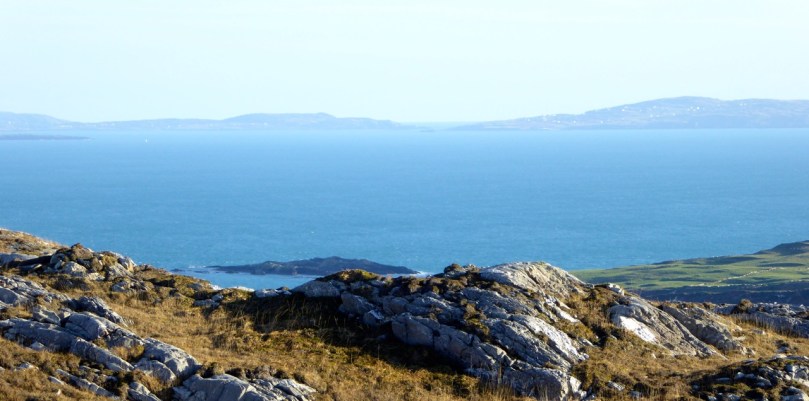
Nead an Iolair  - the view to RoaringwaterNead an Iolair – the view to Roaringwater