The Big Sing

Caz addresses

Doesn’t a Big Sing sound like the greatest thing ever?

And that’s what it is – a group singing experience that will leave you feeling lifted, restored, and – well, just plain happy. The Big Sing is the brainchild of Caz Jeffreys, the director of the choir I belong to, AcapellaBella. Caz is amazing – she has perfect pitch, she teaches us our parts without any requirement to read music (or even be a good singer), she can give us our notes on the fly if we’re wobbling, she plays several instruments and has great rhythm.

Sopranos

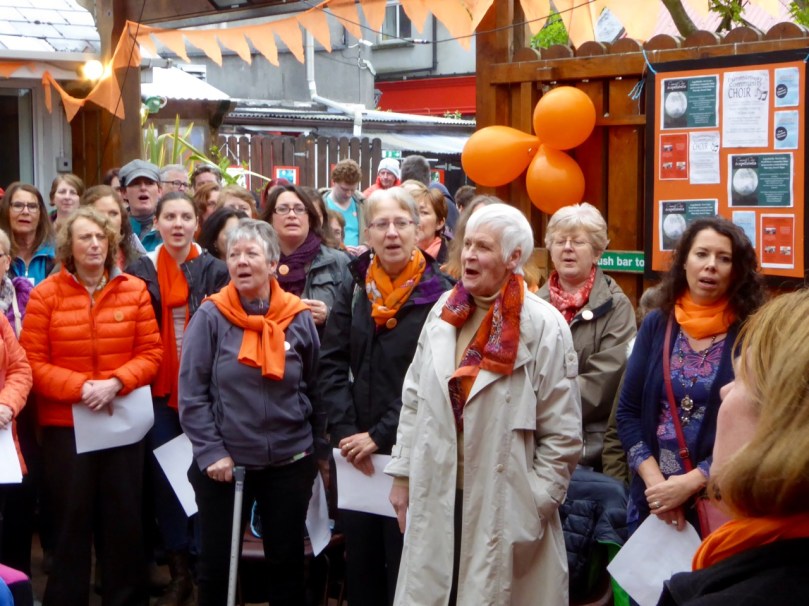
She also has a philosophy about singing and community – one that emphasises inclusivity and the joy of participating in a choir. As they say in West Cork – ah sure, you know yourself, like, you can’t come away in a bad mood from an evening’s singing. Caz directs several choirs around West Cork and last year she got the idea to bring them together for a community event she called The Big Sing. It took place in Bantry as part of the Feel Good Festival. You’ll get a good idea of how that went and see an interview with Caz by watching this videoThis one, the second Big Sing, was yesterday in Clonakilty – indoors because it was too wet for the scheduled town square – and it helped to wrap up Wellness Week.

Everybody’s getting in the spirit of the Big Sing

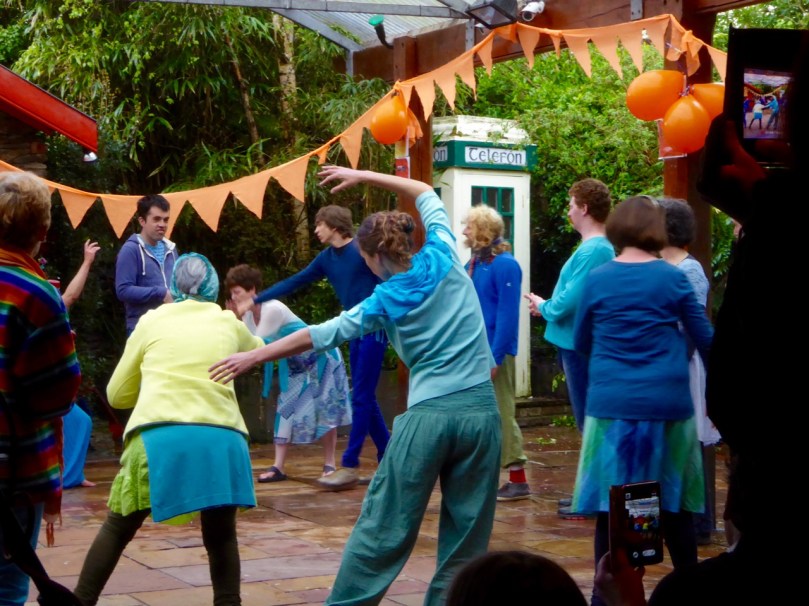
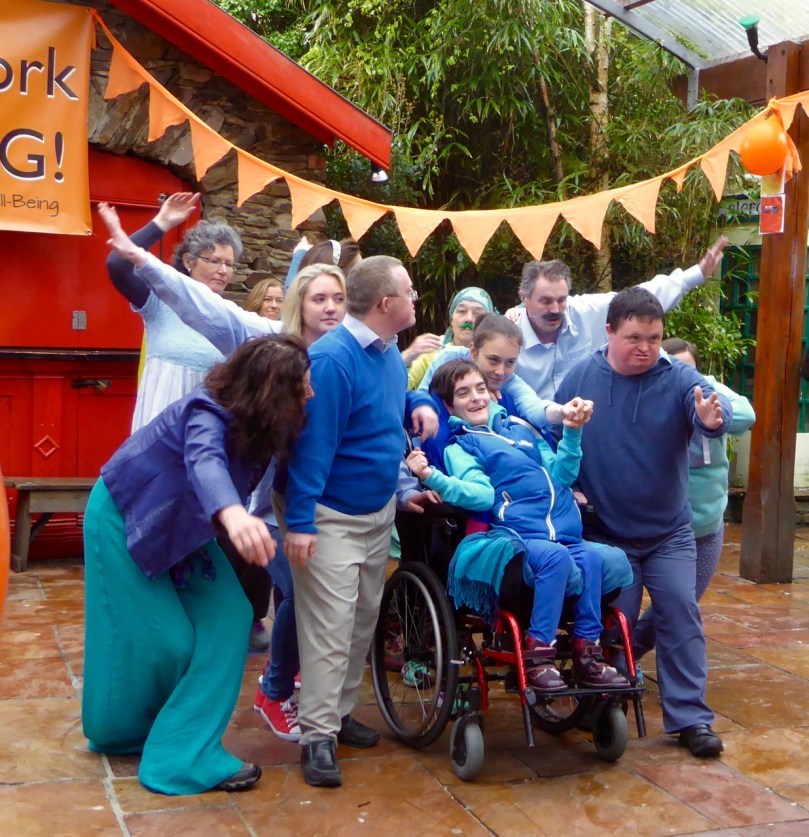
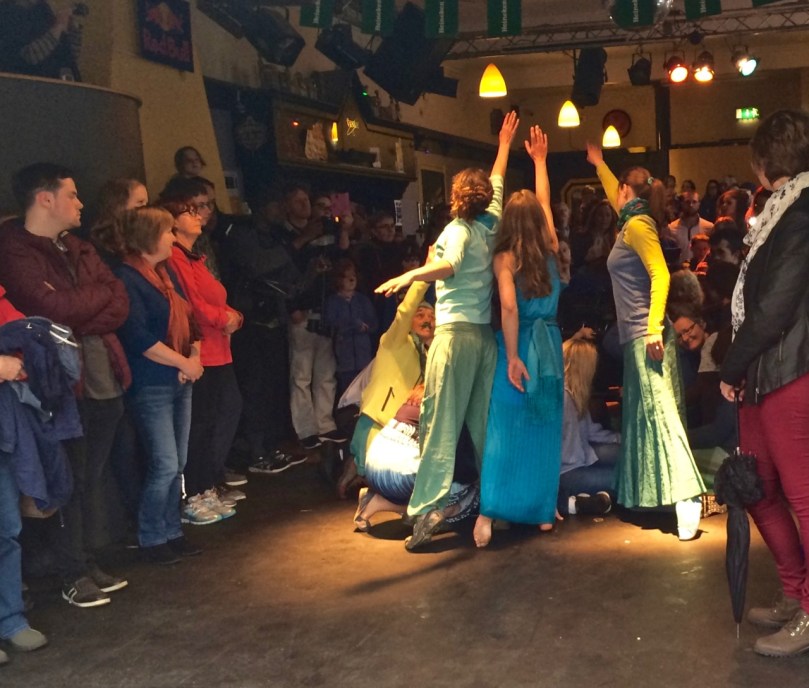
We started with a choreographed dance from West Cork Inclusive Dance. I’ve mentioned this group before, when I wrote about the moving and excellent performance of Bridge in Ballydehob. The WCID group includes both able-bodied dancers and those with intellectual or physical disabilities.

The dance begins

The dance started in a circle, with the dancers stirred to life by a breeze – breeze music was supplied by The Happiness EnsembleOne by one they came alive until the whole circle started to move in unison. Uniting in a tight group, except for three dancers, they moved forward into the audience, as if intent on a single purpose.

Dance movement forward

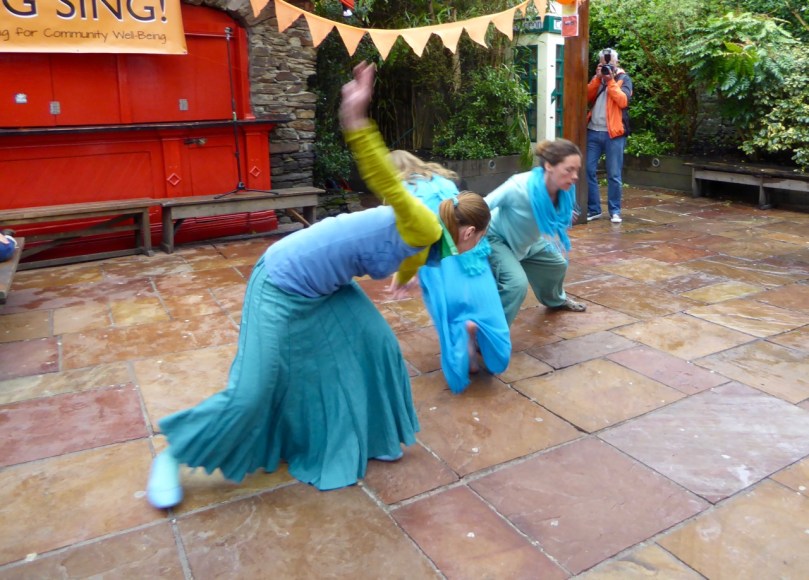
The three dancers left behind sought them out.

Three dancers

Finally the whole group came together, first low on the ground and then rising up to their final triumphant stance. It was beautiful and we hooted and hollered and applauded while the dancers hugged and high-fived.

Hands raised

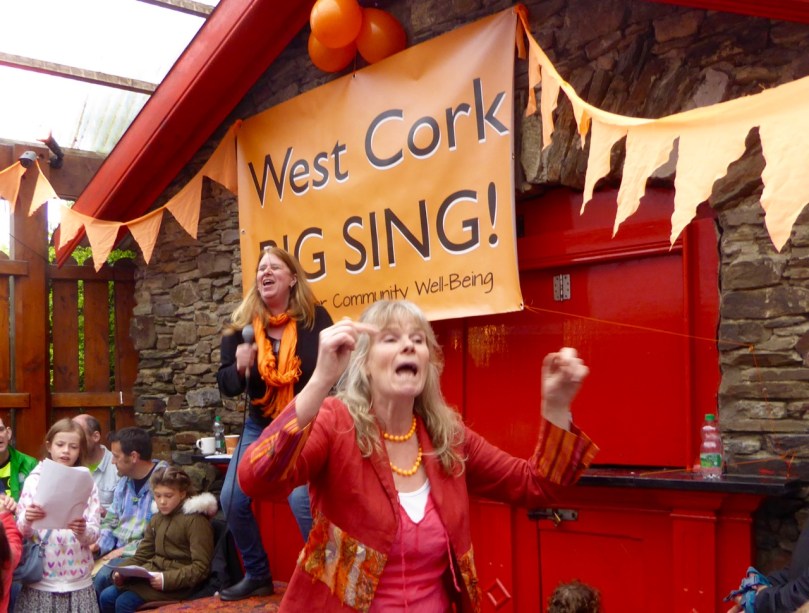
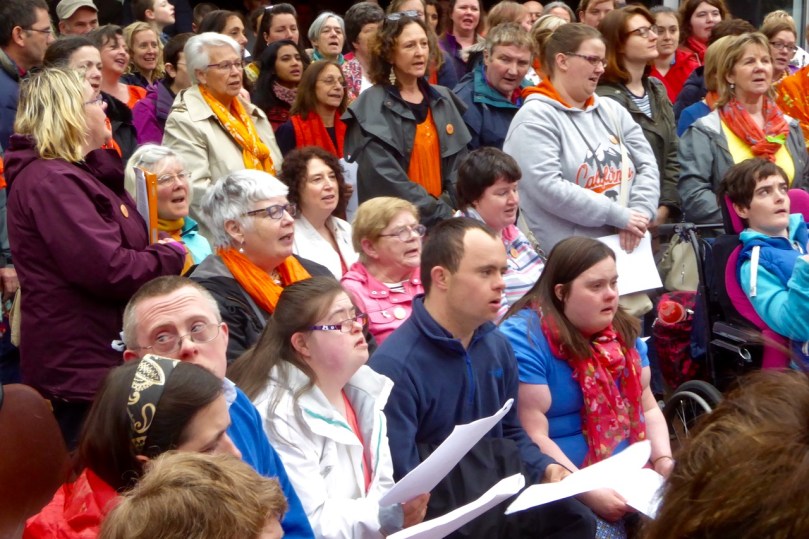
For the Big Sing that followed, several of Caz’s choirs had come from various communities – Ballydehob, Kinsale and Ballincollig, as well as the choirs from Dunmanway and Castletownbere with their leader, Jane Goss (another of the Big Sing project facilitators). But it wasn’t just the choirs – the dancers joined in and the audience too, and lots of people from the local community groups that Caz worked with to support their involvement in the project. It was uplifting and energising to be in such a large group with everyone singing their heart out and Caz up front encouraging us all and giving us our cues and keeping us on key and on the beat. The music for the Big Sing was provided by a drumming group from the National Learning Network.

Caz and Jane

Caz gives us our cue, with Jane Goss leading the singing from the stage

She had chosen the music well – several of the songs related to all our struggles to stay cheerful in the face of both everyday trouble and the huge challenges that face the world. It was emotional  – lots of tears by the time we’d finished Stand By Me – but ultimately inspiring and cheering.

Singing!

They LOVE to sing!We LOVE singing!

Read more about Caz and her approach to music on her website – and if you live in West Cork and love to sing, consider joining one of her choirs. There’ll be another Big Sing in October, so even if you don’t have the time for a regular commitment, you could come and learn the Big Sing songs with us before the event. Just get in touch with Caz. 

After a practice, I promise you that you’ll go home in a good mood!

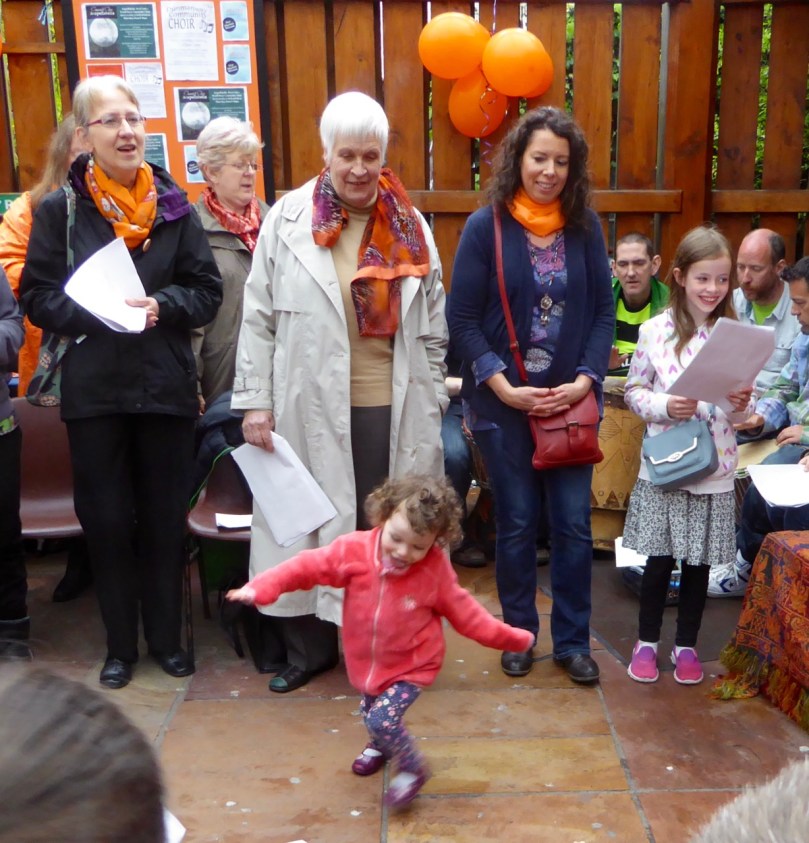
Young members

Just like this little dancer!

Tide’s Further Out!

cove gray day“Donn Fírinne was in the clouds last evening – today would be bad…” Donn Fírinne was a Munster fairy-king always connected with weather omens: …the people said that Donn collected the clouds on his hill (Cnoc Fírinne, Co Limerick) and held them there for a short while to warn of approaching rain, and from the reliability of this sign came his name, Donn of Truth… (from The Festival of Lughnasa, Máire MacNeill, University College Dublin 2008)

Only a month ago I wrote a post about a very low tide: I hadn’t realised that we were heading for an exceptional event, the lowest tide of the century! So I felt that our readers deserved to have this circumstance recorded as well, even though it involved braving what was probably the least hospitable weather that the spring has come up with so far! I should have taken notice of the omens from Donn, but instead I went out into the cold, pervading rain.

high road gray day

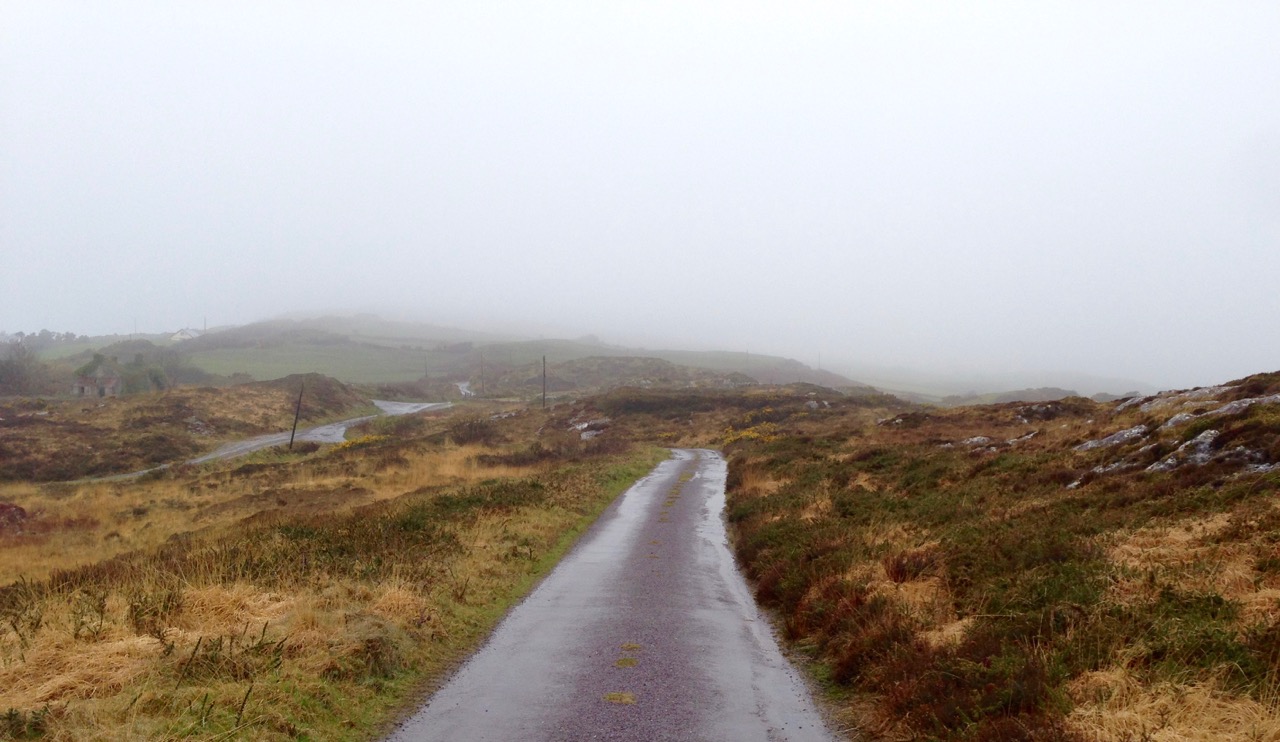
Out into the weather: the high road at Cappaghglass at its wettest

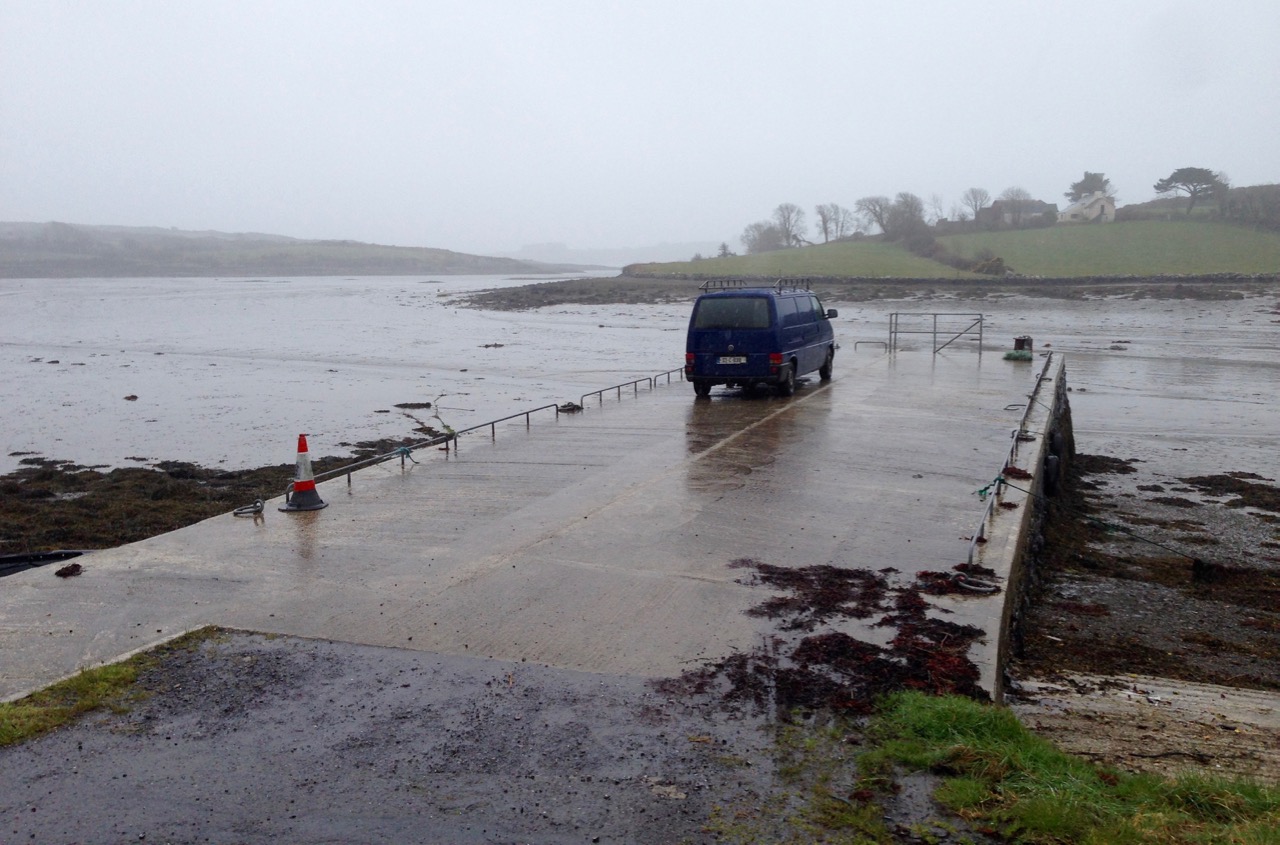
The day was last Thursday, 7th April, and the tide prediction was a low of 0.00, just after noon. 0.00! You can’t get much lower than that. But we have to remember that  tide predictions are just that – predictions. It’s a bit like weather forecasting – there are so many factors which can affect the outcome. Tides can vary from the predictions because of winds, atmospheric pressure, even the salinity and temperature of the sea, evidently. However, although I can’t vouch for the 0.00 (wouldn’t that mean that the sea was empty?) I can confidently state that the shoreline had receded further than I’ve ever seen it before.

ballydehob bay gray day

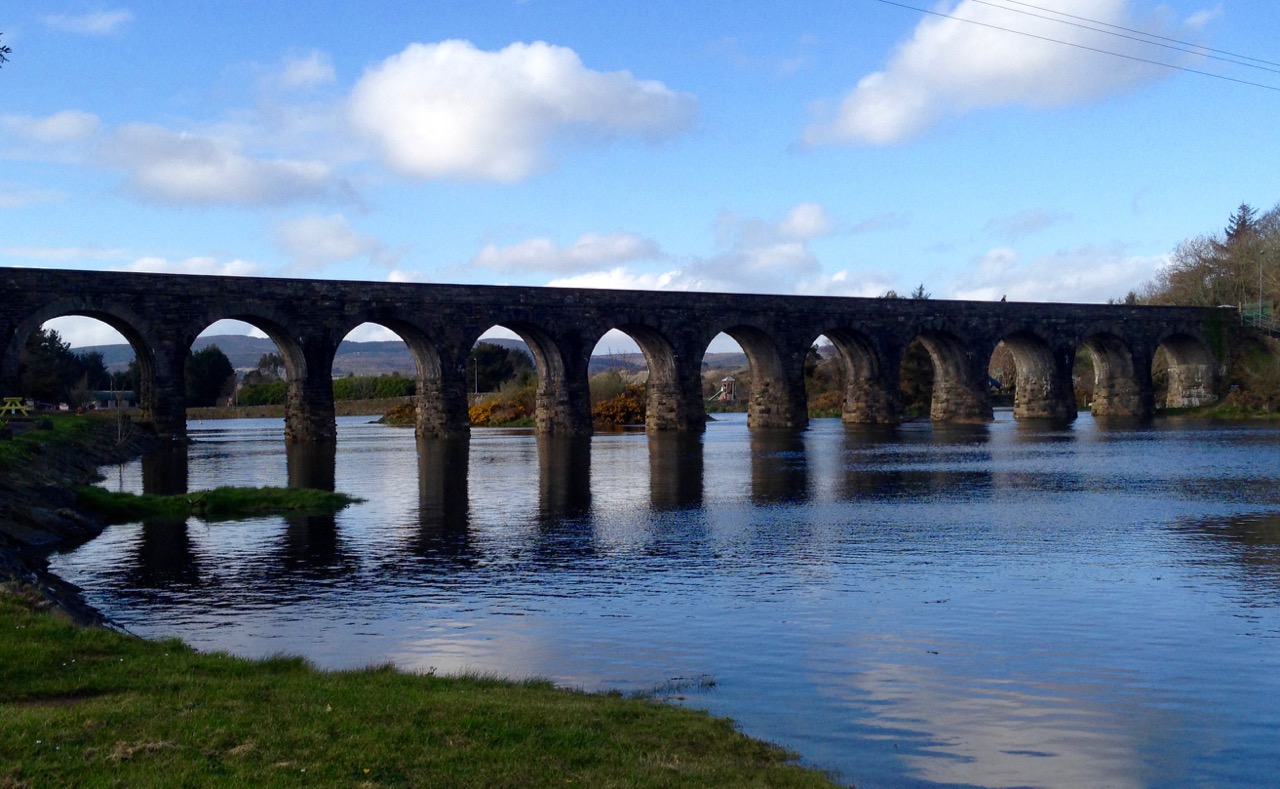
12 arch low tide 2

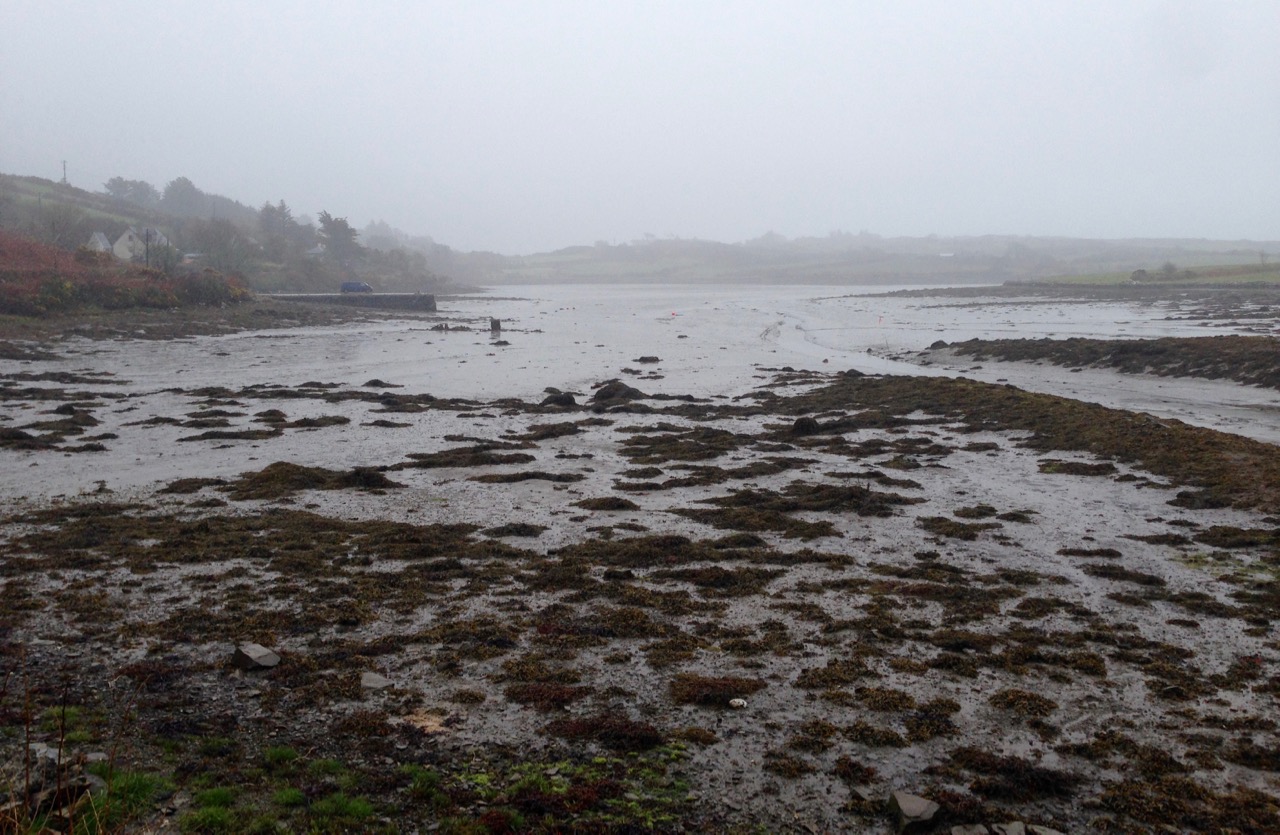
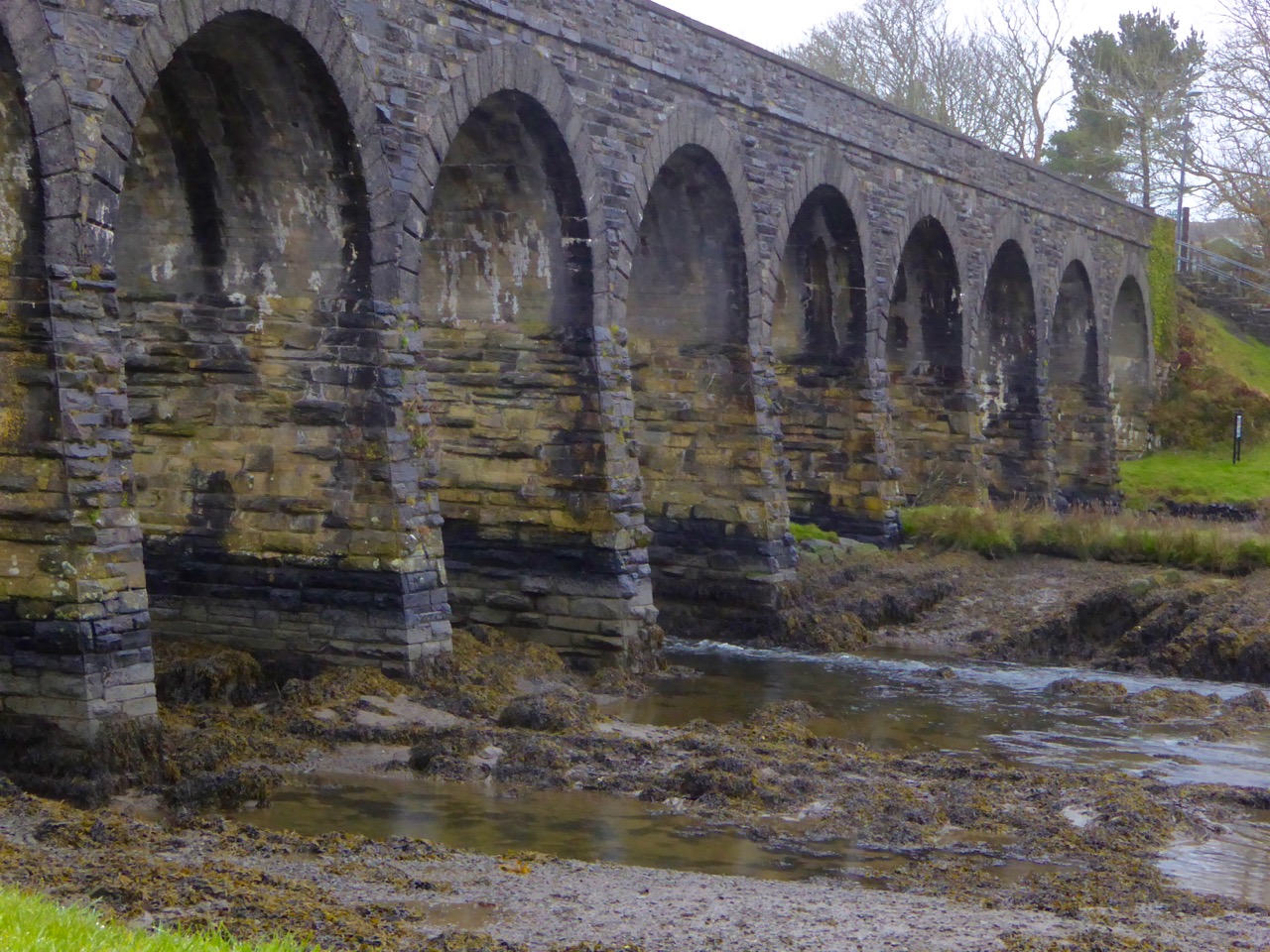
Top: Ballydehob Bay just a mud flat – Bottom: the 12-arched bridge has lost its river

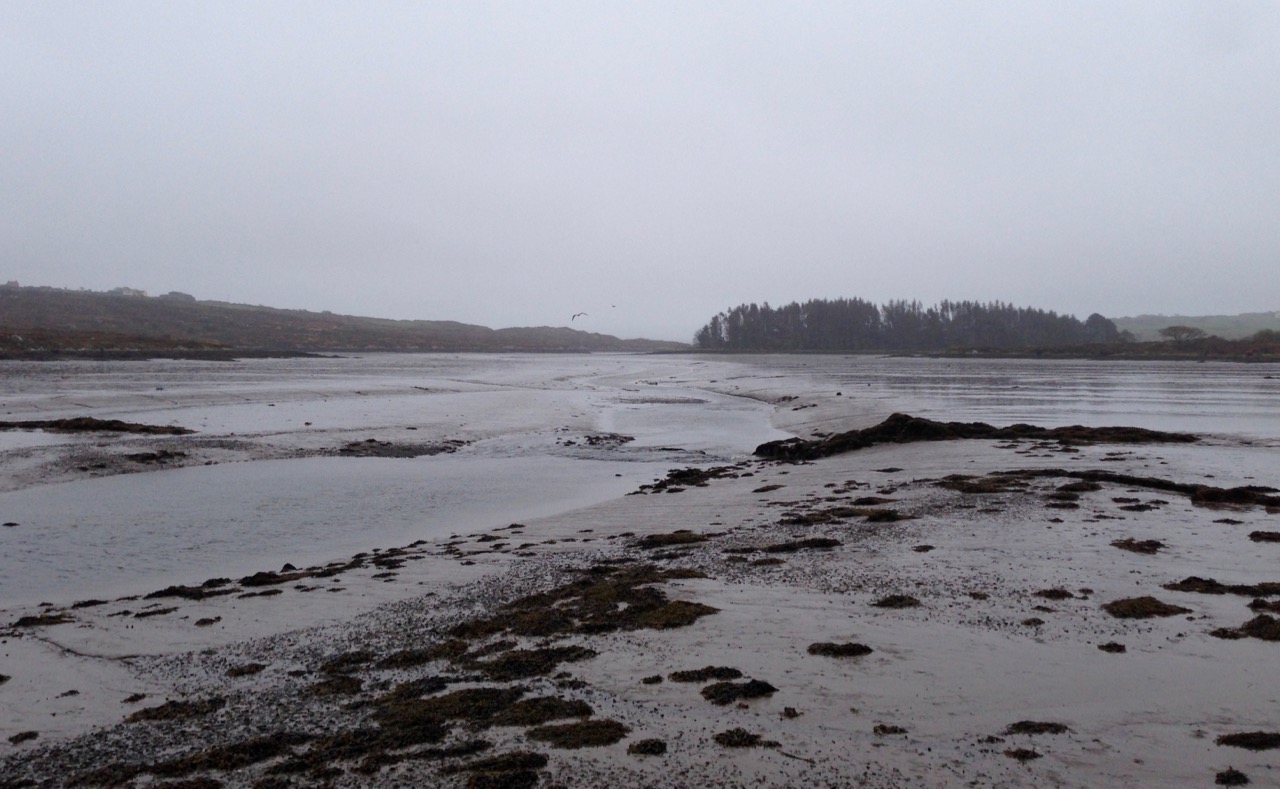
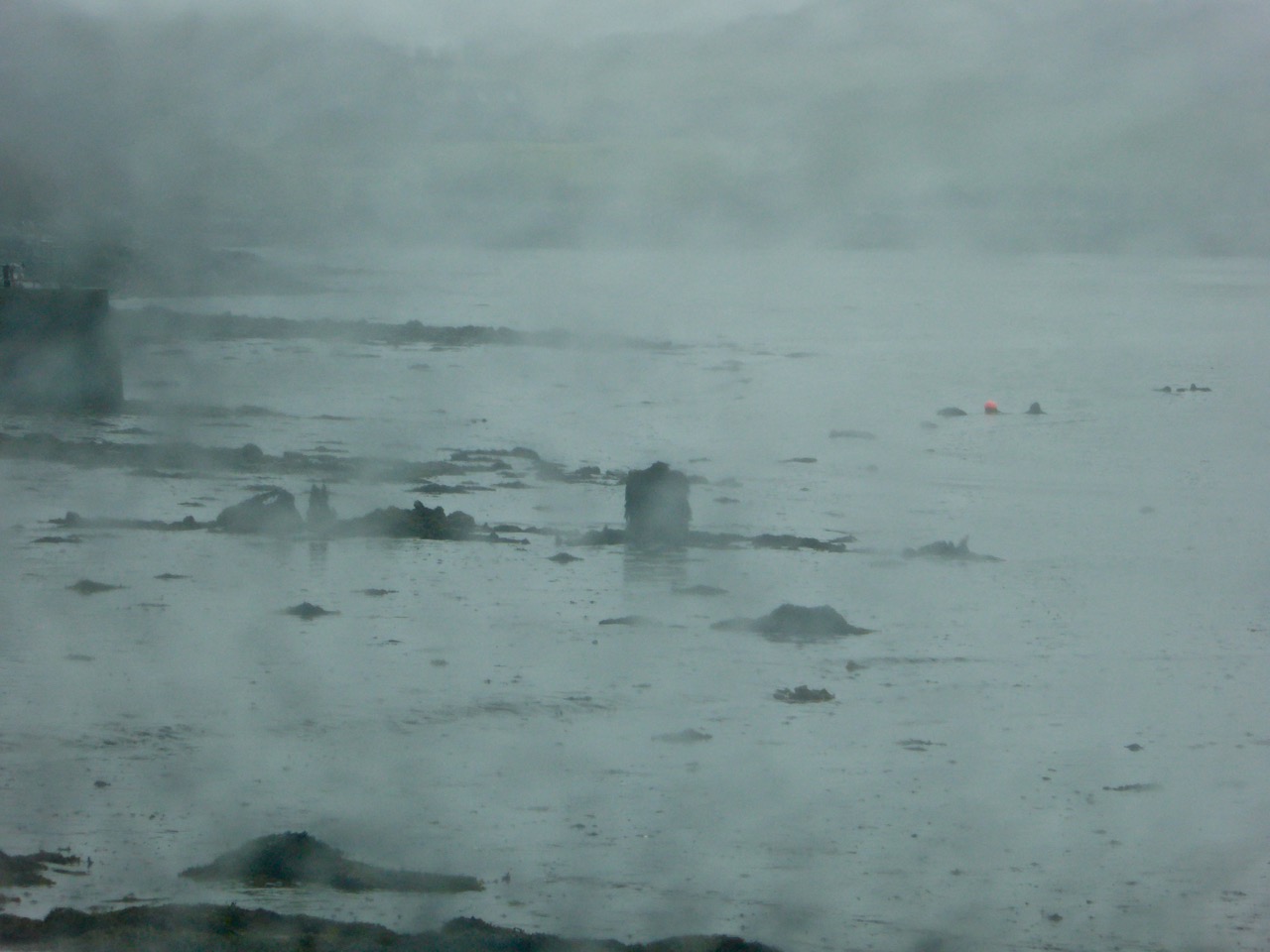
I followed the coastline all the way from Ballydehob Bay to our own Rossbrin Cove. Sure enough, whenever you could glimpse the sea, it wasn’t to be seen! But that might have had something to do with the all encompassing fog that had descended.

Sunken wreck

Is it a wreck? Or some debris discarded in the Cove?

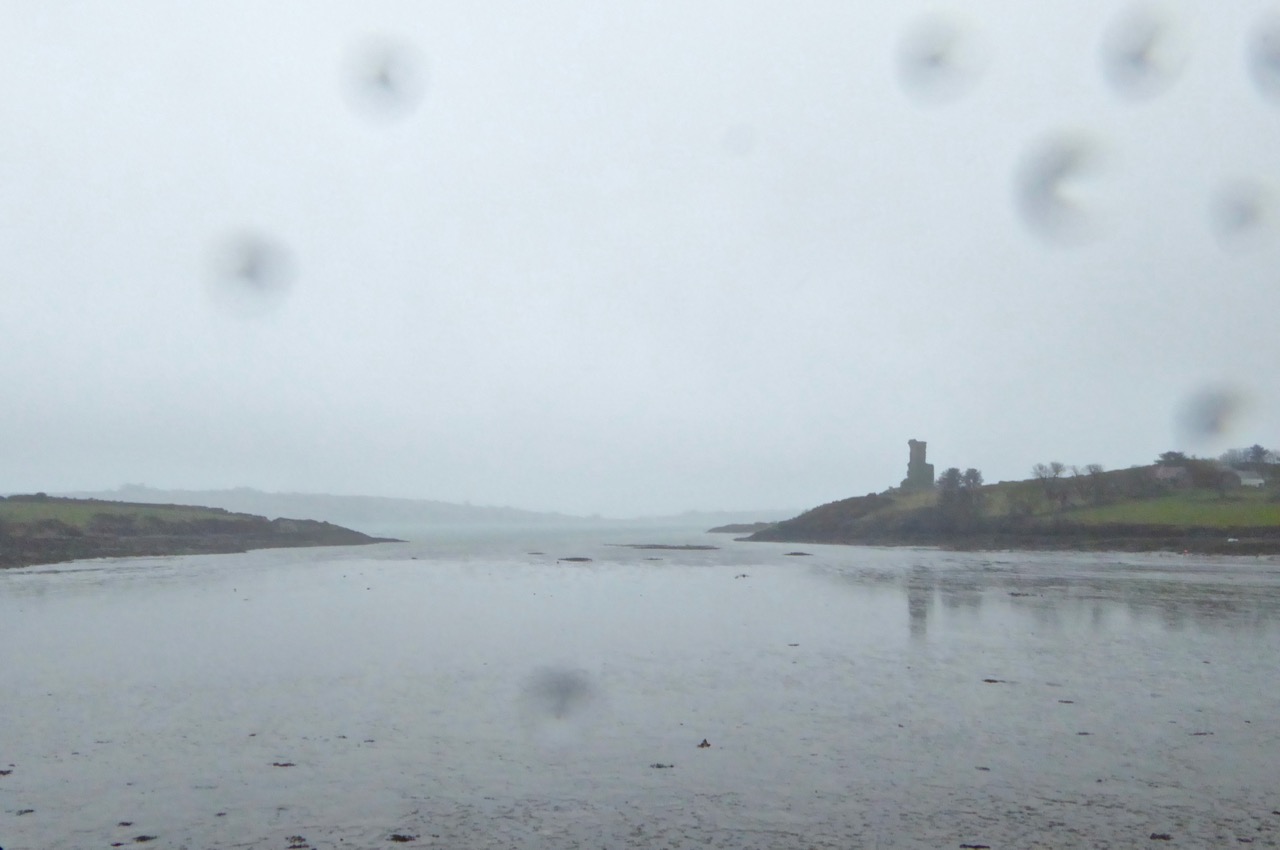
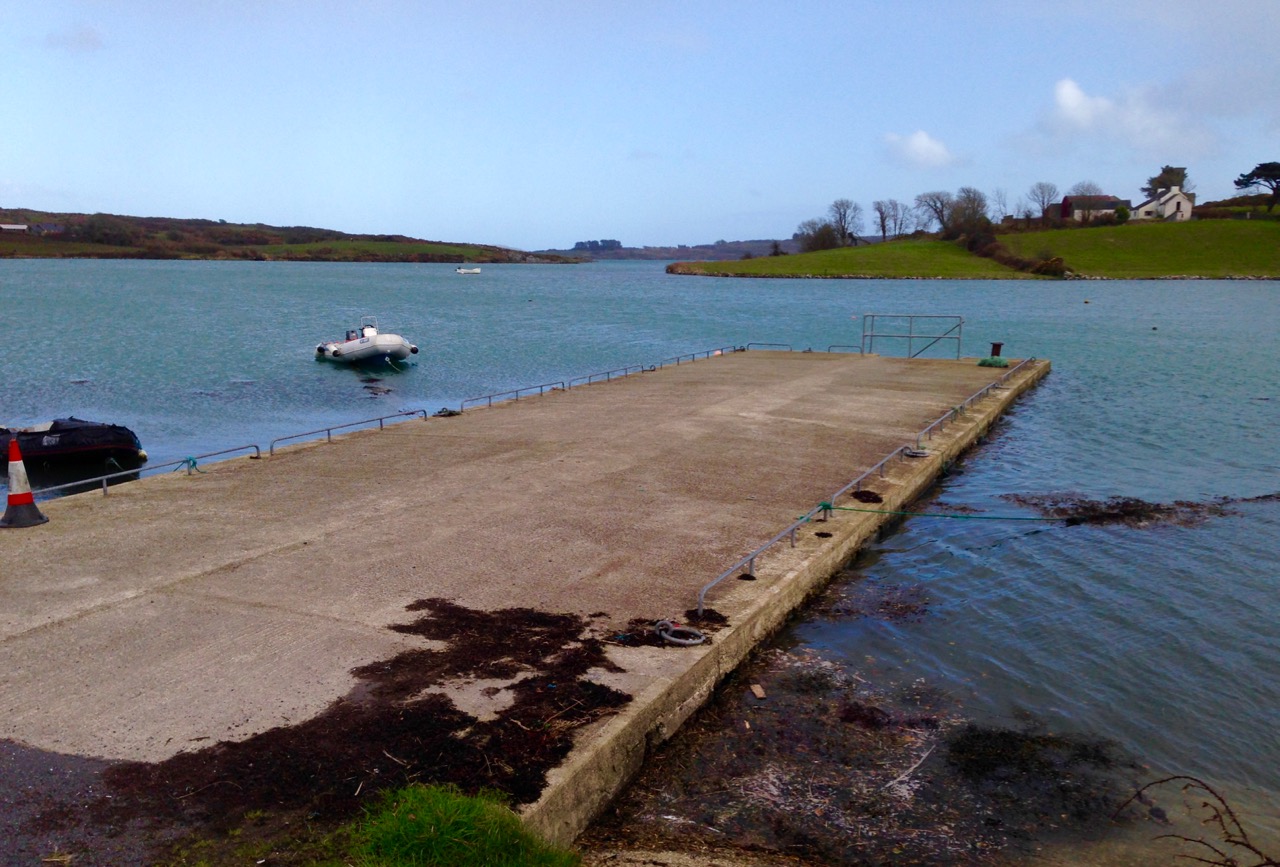
The modern quay in Rossbrin Cove seemed stranded and pointless, but Fineen O’Mahony’s tower house still managed to catch a reflection as the tide began to turn.

the quay gray day

Rossbring through rain

Rossbrin Castle – Fineen O’Mahony’s tower house – seen through a spotted lens

Of course, what goes down has to come up and – in the evening – I ventured out again to see the ‘high’ of 3.30.

high tide 12 arched bridge

rosbrin pier high tide
Evening high water in Ballydehob (top) and at the quay in Rossbrin (below) – note the improvement in the weather!

This is Ireland, so the day that was in it had changed completely with the tide: now we enjoyed clear blue skies and (watery) sunshine. Walking the shoreline was a pleasure! To be honest, you have to find your pleasure here from taking to the trails whatever the weather (as many of our occasionally bedraggled visitors might testify). It’s fine, as long as you have a good fire in the hearth to come home to…

the road to julian's house

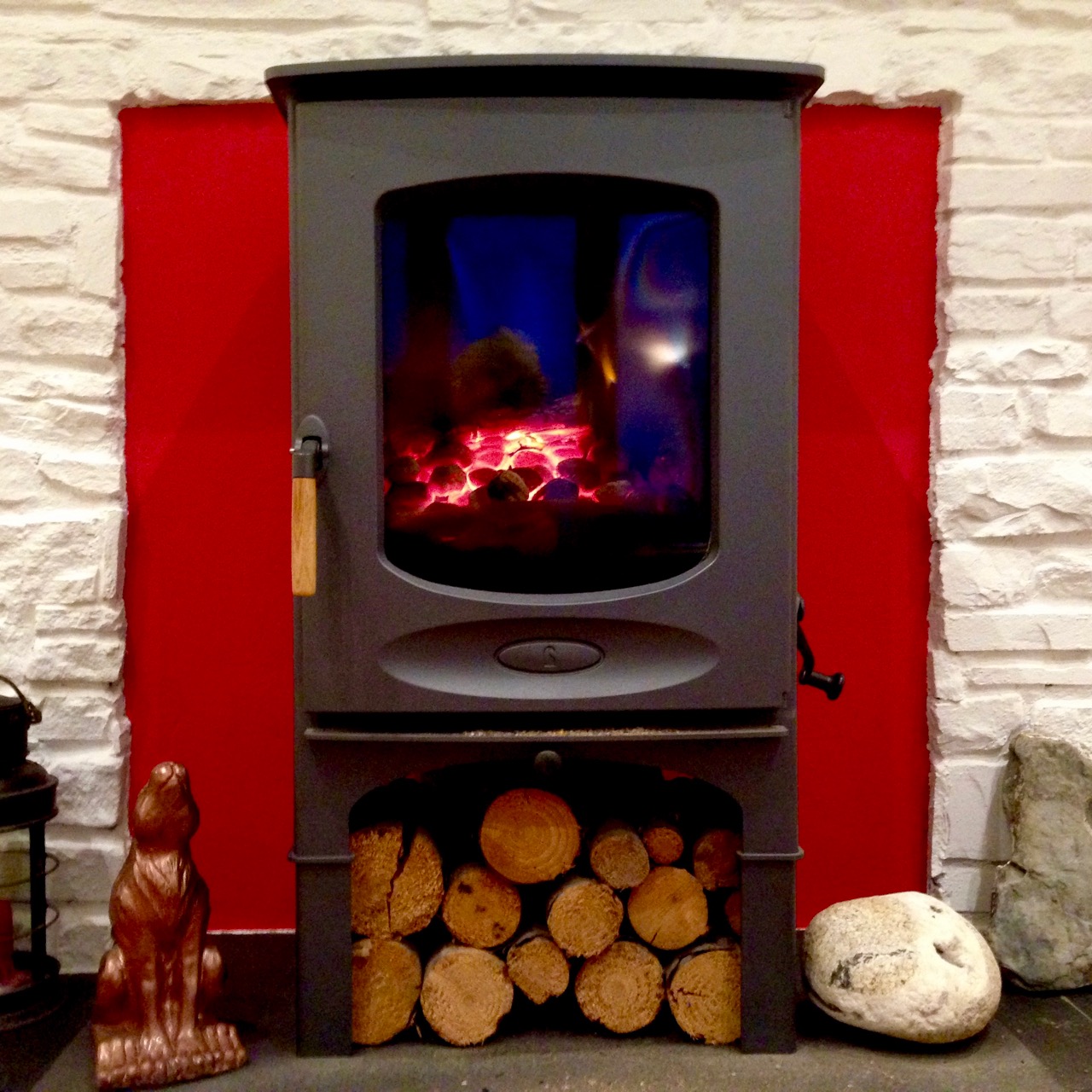
Above – when the tide goes up, the road to Julian’s house goes under! Below – a hot fire to come home to…

hot fire

Mizen Mud: Recipe for a February Exploration Day

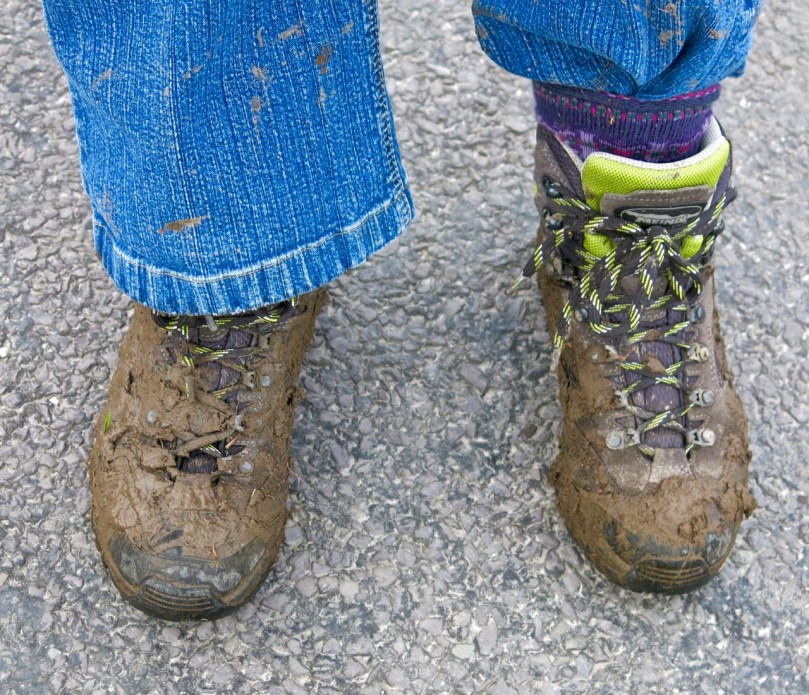
Muddy Boots

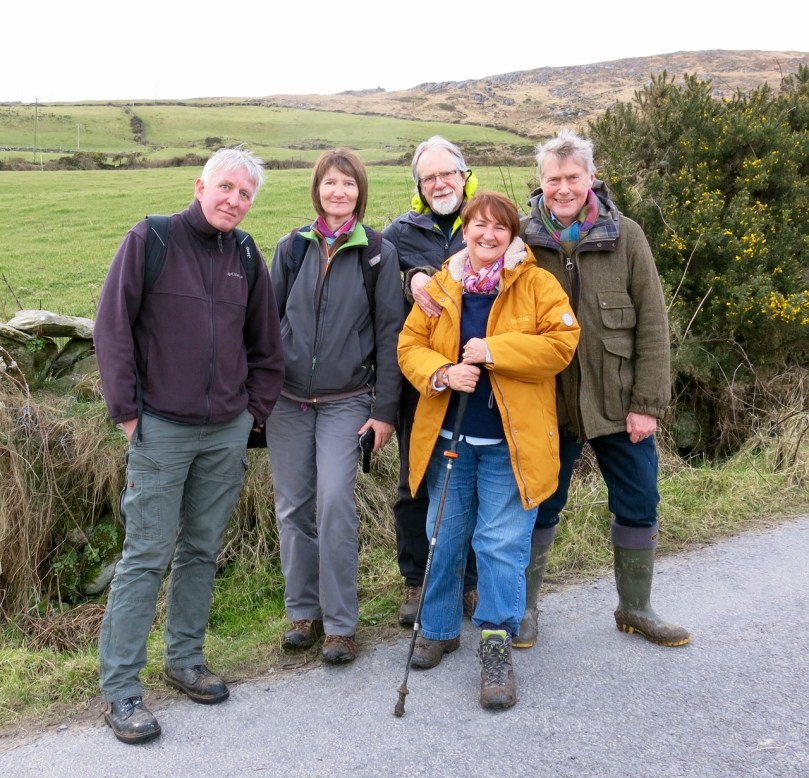
It’s been a wet, wet winter, but when the sun shines in February (which it does, honestly!), we are out exploring. This particular day our companions were Jessie, Brandon, Amanda and Peter and our accompaniment was MUD, and lots of it.

Explore Group

Amanda took the photo of the group, and the one of my muddy boots

We had goals – Amanda was after some elusive holy wells and Robert wanted to find the pirate steps at Canty’s Cove for his talk on William Hull and the Leamcon Pirates’ Nest, part of the Ballydehob spring lecture series, ’Talks at the Vaults.’ Jessie is a professional tour guide, wanting to learn more about the Mizen. Finally, I wanted us to swing by Dunmanus Castle so I could check out a few construction details.

Dunmanus Castle and bridge

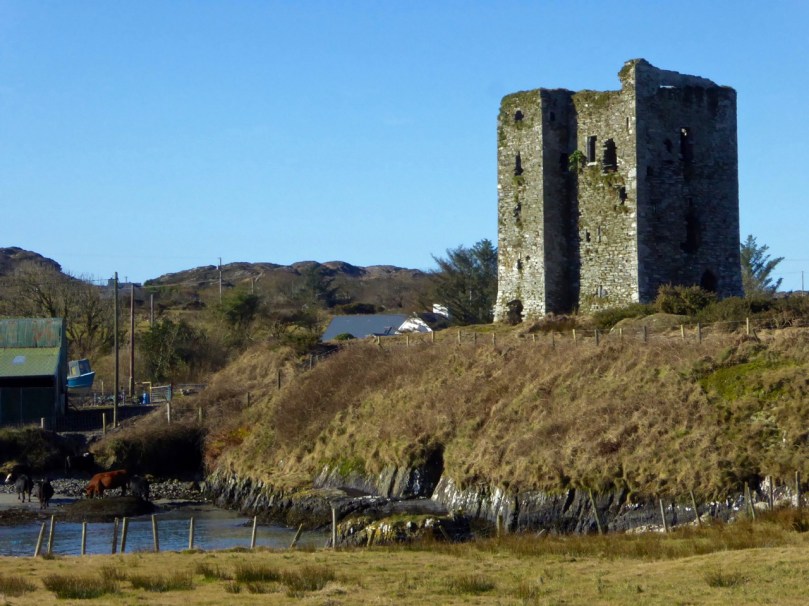
Dunmanus Castle on its knoll, surrounded by water

You don’t actually need goals like this to go out exploring, but it helps. It gets you into places you wouldn’t normally go, down tiny boreens, into farmyards and across fields. You end up knocking on doors and meeting people who know all about the well, or the old stones, or the legends of the place, or who owns what field and whether he minds people tramping through it. On this occasion we met, for the first time, the near-legendary Pat McCarthy, one of the writers of Northside of the Mizen, and a huge authority on this area. We’ve promised ourselves a return visit with him as we weren’t able to stay long enough for a good talk.

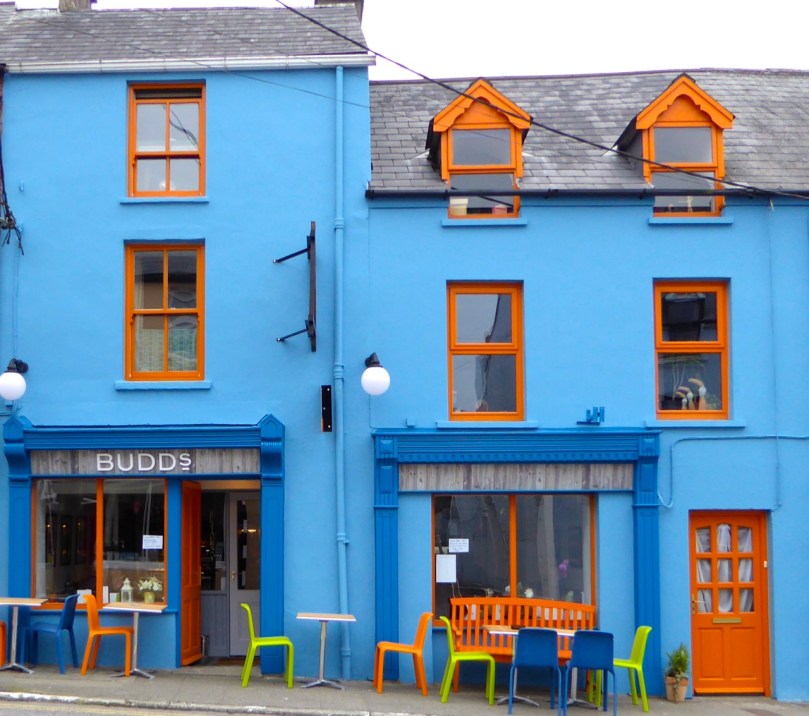
Budds

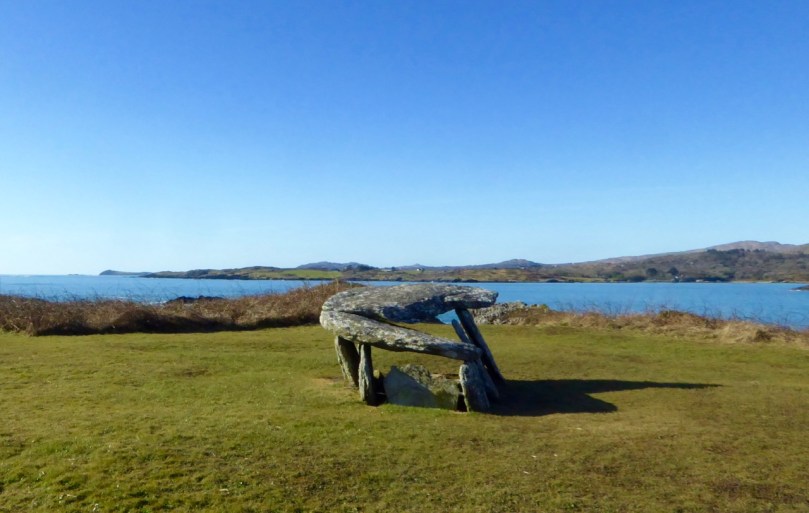
The best way to start a day like this is with excellent coffee, in Budds of Ballydehob, where we assembled with our map to plot our course. It was off then to Toormore and the Altar wedge tomb. On this occasion we weren’t actually after the wedge tomb (although I can never resist a photo of it) but the little holy well across the road.

Altar Wedge Tombe

Our next stop was Dunmanus, to take a good walk around the castle with the camera, looking for details I had missed on previous visits.

Dunmanus Castle ground floor entrance details: The bar-hole for barring the door once inside; the spud stone and the hanging eye. The hollows are for the pole that the door swings on

And then on to Canty’s Cove. You can read Robert’s post, Canty, for more about this place and its association with Canty the Pirate. Finding the steps wasn’t easy and it was a big thrill when we finally figured out where to look.

from Canty's House

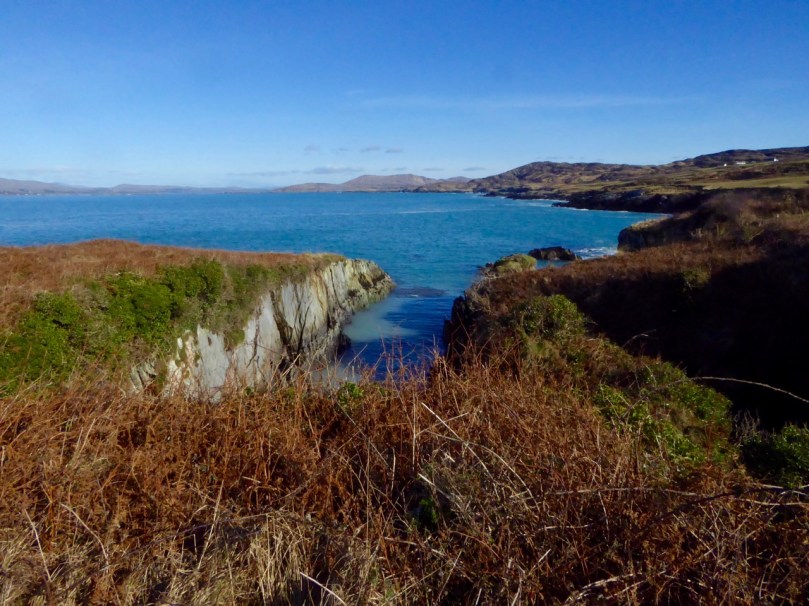
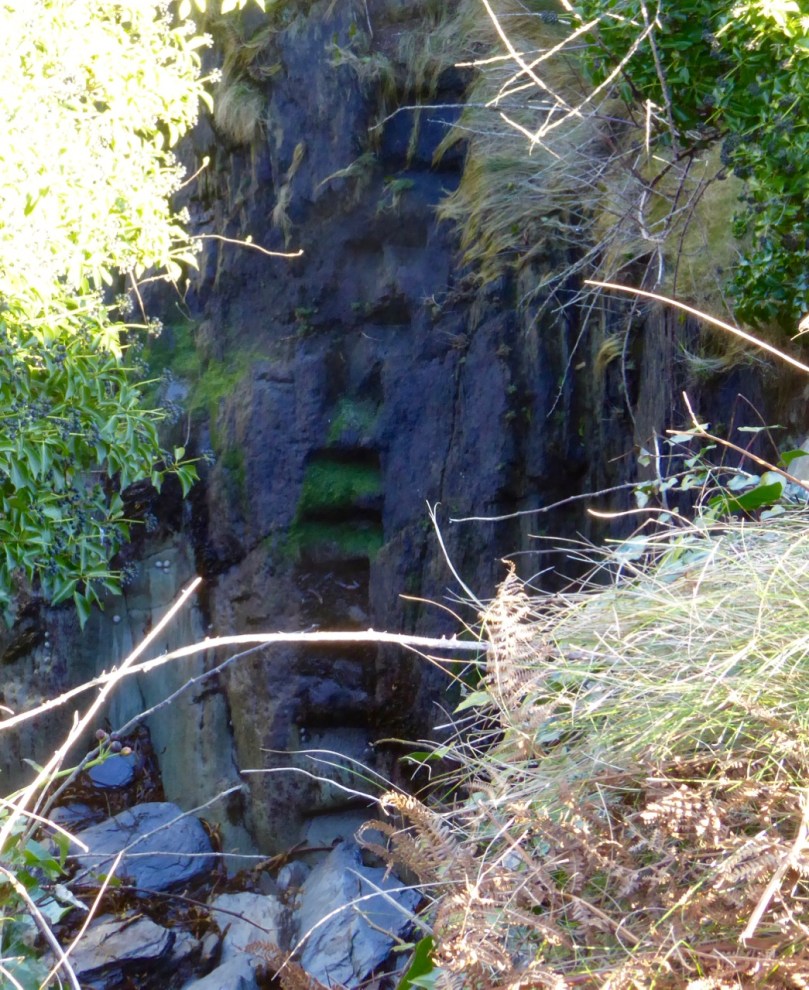
This is the inlet with the pirate steps. Photographing them involved hanging over the edge with someone holding on to your ankles

Pirate Steps

How would you like to climb up these with a keg on your back?

By then we were starving – this exploring is hungry work – so we repaired to O’Sullivan’s of Crookhaven for one of their famous crab sandwiches. Even at that early date the sunshine was so inviting that people were sitting outside with their sandwiches and their pints.

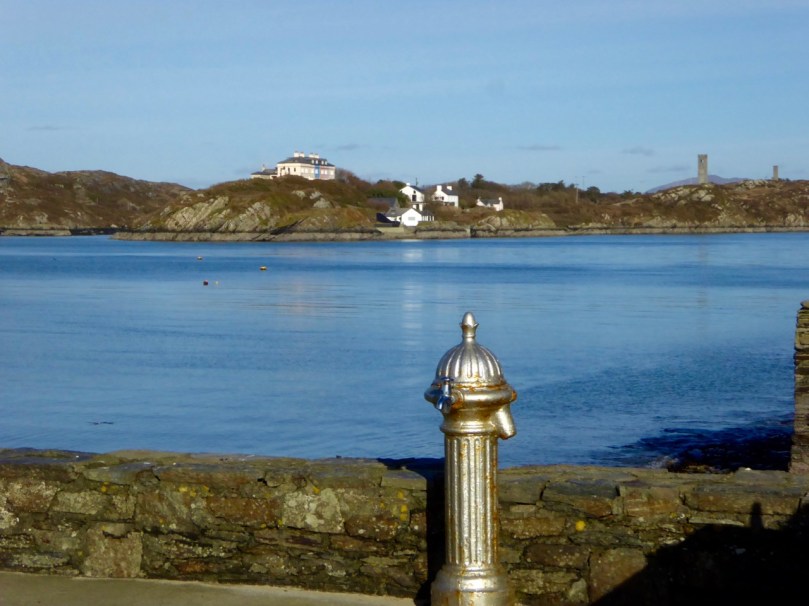
water pump at Crookhaven

Crookhaven Pier

From Crookhaven it’s a quick trip to Lissagriffin, where there’s a medieval church and a bullaun stone doing double duty as a holy well/wart well. The church has a panoramic view over the salt marshes behind Barley Cove Beach as well as interesting architectural features.

Lissagriffin Doorway

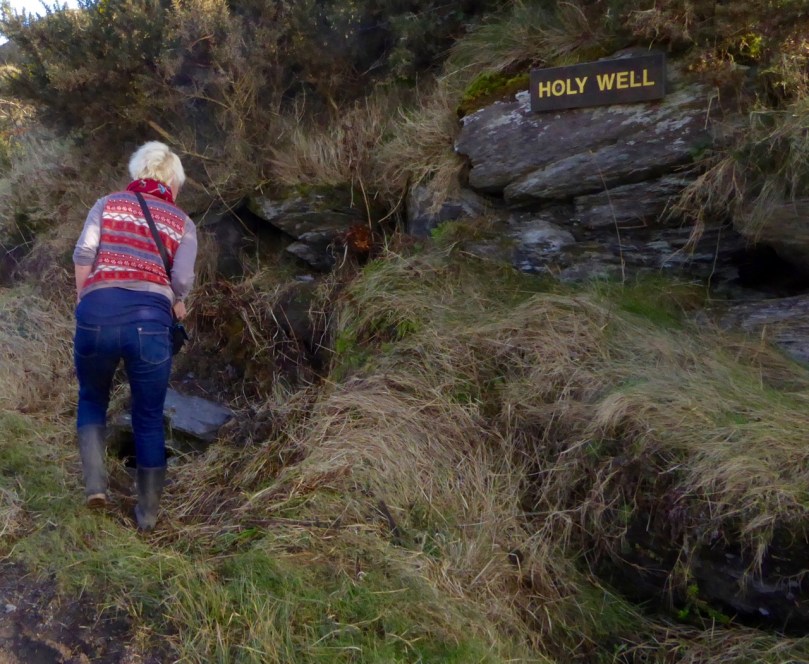
Our next holy well was right by the side of the road a couple of miles further east – labelled so we couldn’t mistake it.

Callorus Oughter

Amanda inspects Tobareenvohir – or Tobairín an Bhóthar, the Little Well of the Road

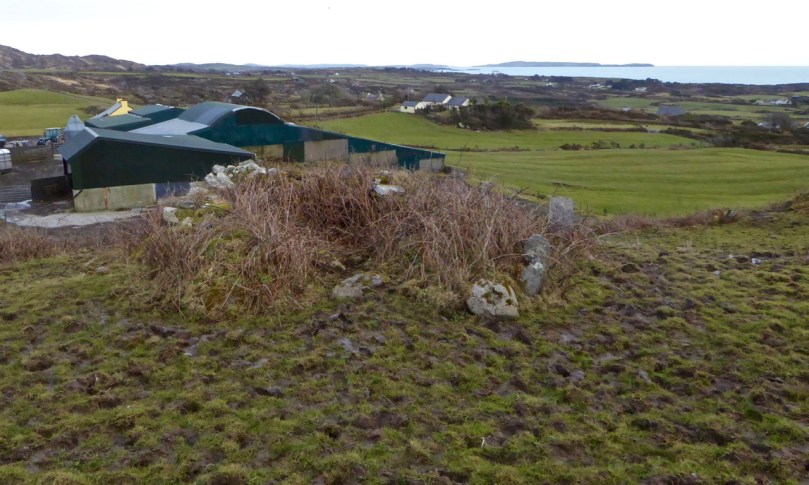
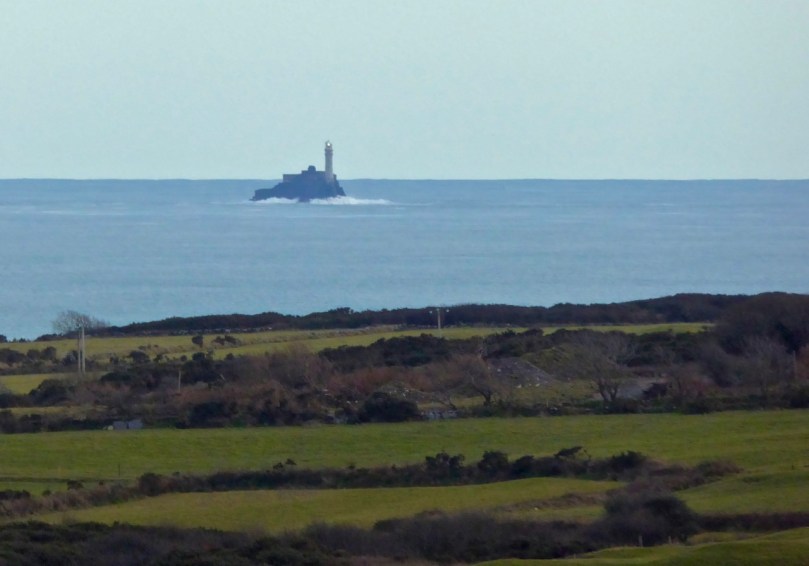
The final one was harder to find and necessitated negotiations of some seriously muddy fields. Tobairín Brón (Little Well of Brone) was in the general vicinity of where we ended up, along with a small monastic site – all very brambly and hard to decipher. But what a place – a view clear out to the Fastnet Rock, with Knockaphuca looming behind us. Cnoc an Phúca means the Hill of the Mischievous Spirit – it’s been tamed, presumably, by the large cross erected on its peak.

Monastic site

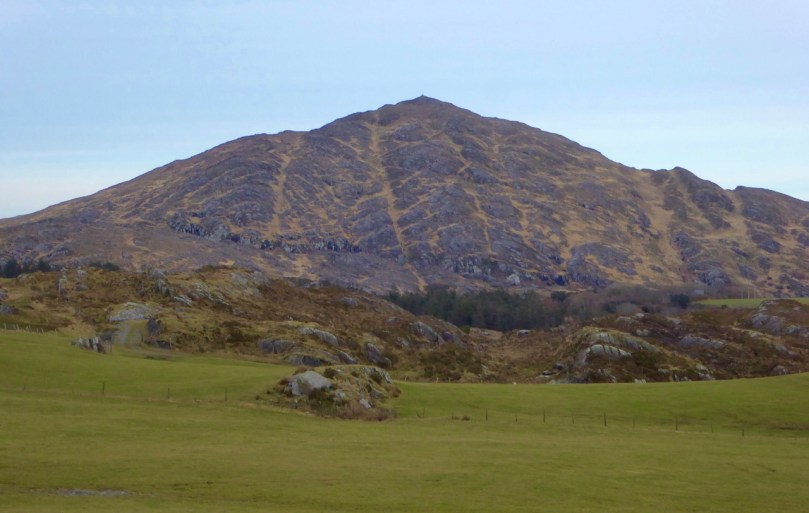
Knockaphuca

Fastnet Rock

Read Amanda’s post for her take on the four wells we visited that day.

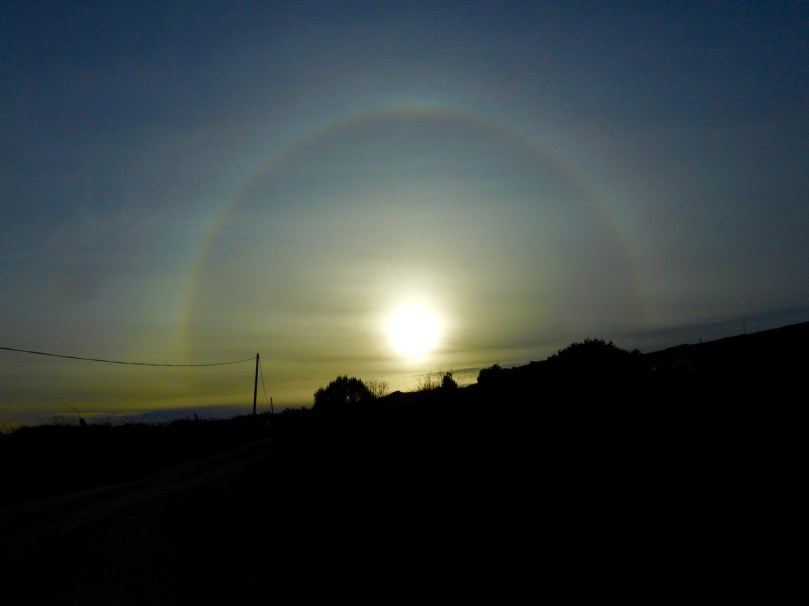
By then the sun, so warming earlier in the day, had been overtaken by high cirrus clouds, and we were donning jackets and gloves and remembering that it was only February after all. As if to make up for its lack of warmth, it treated us to a magnificent solar halo (I’ve always called them sun dogs)  as we made our way back to the cars.

Sun dog

We were never much more than 30 kms (or about 40 minutes) from home but in that distance we managed to see heritage sites dating from the bronze age through the medieval period up to the recent past, surrounded all the time by the magnificent scenery of the Mizen. You can do this anywhere in Ireland. Using the Historic Environment Viewer of the National Monuments Service, define the area you want to explore, pick your fancy (ring forts? medieval churches? cross slabs? megalithic tombs? castles? rock art?), and off you go.

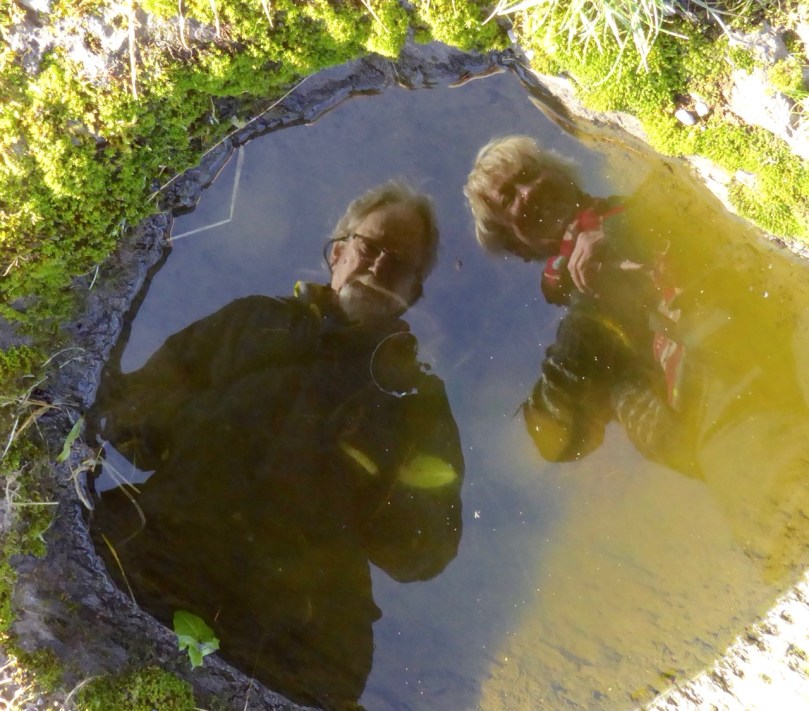
Peter and Amanda in a holy well

A holy well looks back at Amanda and Peter

Now, if you’ll excuse me, I’m off to buy some wellies…

Images

looking out

Images: we take them so much for granted, because it’s easy for us to go out with a camera or phone and capture a place, an event or our friends and family. I’m sure we have now all got hard disks, memory sticks or ‘clouds’ full of hundreds of pictures – perhaps far too many for us to appreciate individually.

sheep may safely graze

Here are some images of Ireland, both old and new. The old ones are taken from the collection of Tomás Ó Muircheartaigh, who documented life in rural Ireland between the 1930s and the 1950s – that’s between sixty and eighty-something years ago. I was fortunate enough to pick up a copy of his book of photographs when it first came out: now it’s ‘rare as hen’s teeth’*… The new ones are taken locally by my favourite contemporary photographer – Finola.

nuns walking

The thing about a photograph is that you know it is an actual moment, a fraction of time, which has been captured and held forever. A painting is not the same – it can be very beautiful and emotional, but it is always a fantasy: it’s the artist that has made it live in the way that she or he chooses. Ó Muircheartaigh’s photographs affect me emotionally: they depict places and, more importantly, people that were once real – living landscapes, personalities… There’s a lot of nostalgia surrounding them because they show us the world – Ireland – as we want to think of it: halcyon, idyllically happy, peaceful, carefree. All the photos in Ó Muircheartaigh’s book picture this blissful state: that’s because he saw rural Ireland in that light, or because he wanted his audience to view it that way. In his work we never see hardship, rural deprivation, illness or pain – and we are completely unaware that there could be a terrible world war raging just over the waters.

Goleen

P1010179

Precious moments: how special that through the expert wielding of a camera lens Tomás Ó Muircheartaigh could use a negative to create a positive world! We can still do that: Finola’s photographs capture, digitally (and beautifully), a different world – our own modern Ireland – but also record the essence and enduring appeal of this place which we are pleased to call home. It’s all about the focus…

4 men 3

Not many of Tomás Ó Muircheartaigh’s photographs carry captions to indicate where they were taken. We know his travels encompassed the west coast, particularly the Aran Islands, Kerry, Galway and Mayo. We don’t know exactly where these three views are from (anyone who does, please comment) but it’s interesting that the wonderful portrait of four drinkers, above, has been turned into a painting now hanging on the walls of Levis’ Corner Bar – one of our local hostelries – in Ballydehob! Finola’s photos are all taken on our own Mizen Peninsula

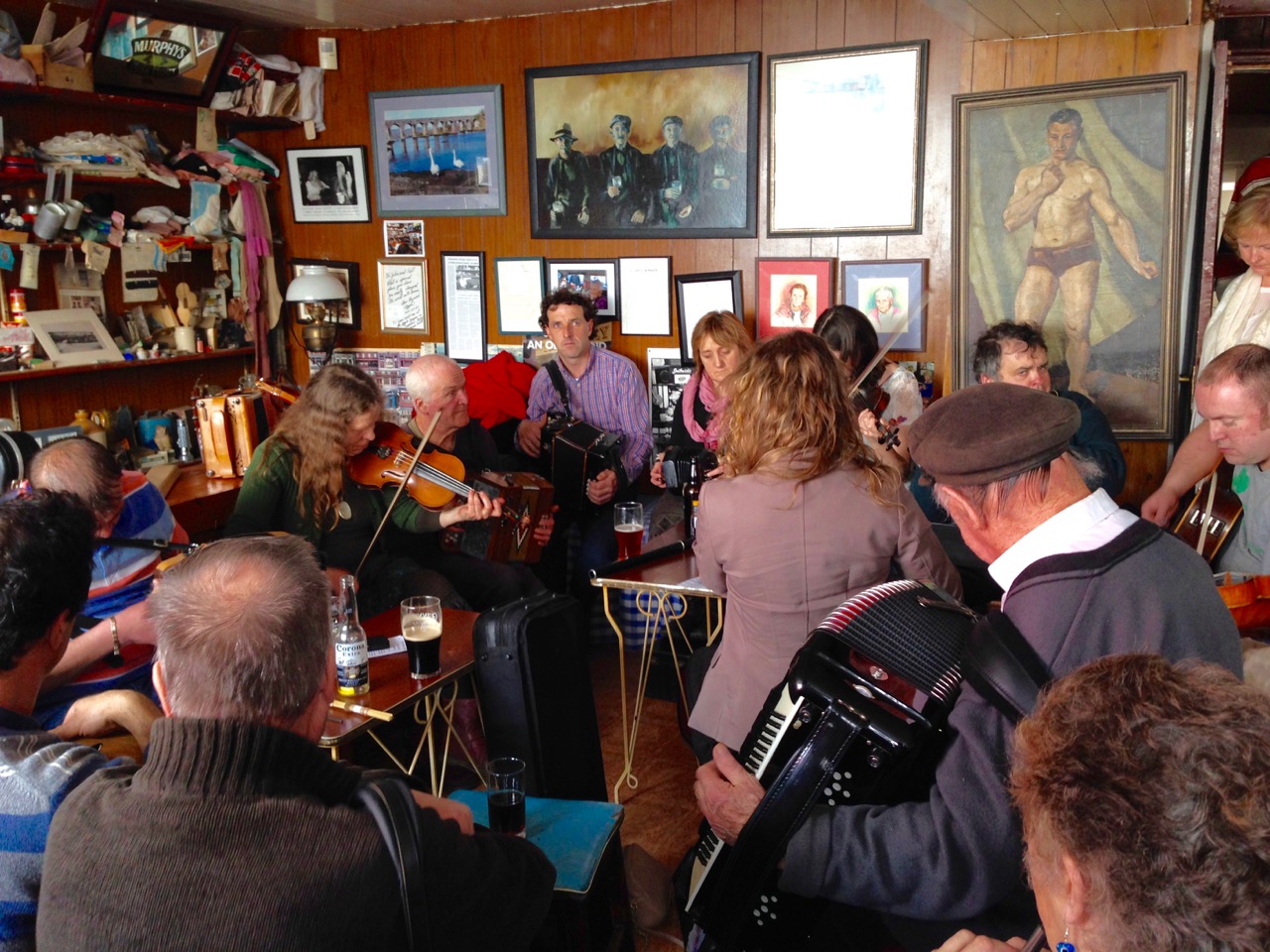
Session, Levis's of Ballydehob

*Birds did once have teeth – up until about 80 million years ago. Occasionally today, but very rarely, a ‘throwback’ bird is hatched with teeth!

Priests and Poets, Part 2

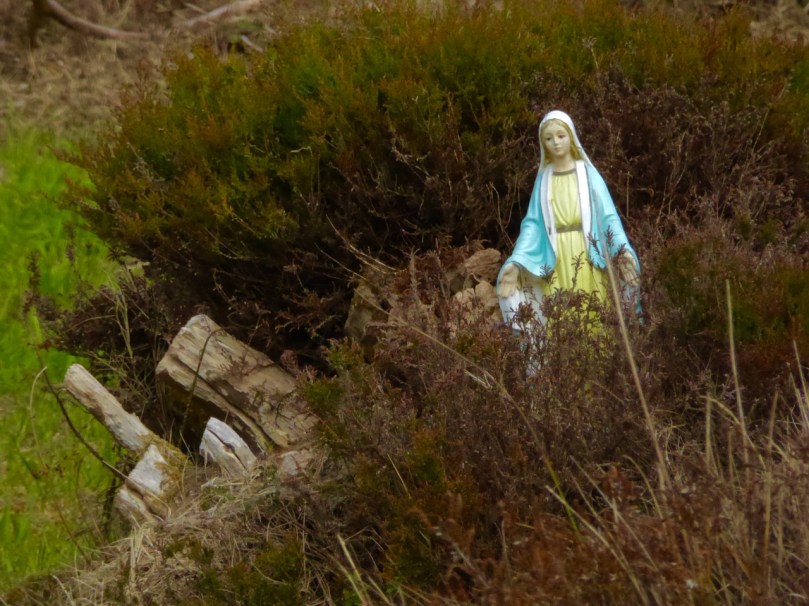
BVM

Last week we concentrated on Father James Barry and the poetry he could well have inspired. But there’s a lot more to Stouke graveyard and this post will cover some of the other history revealed  by a wander round this atmospheric place.

IMG_0988

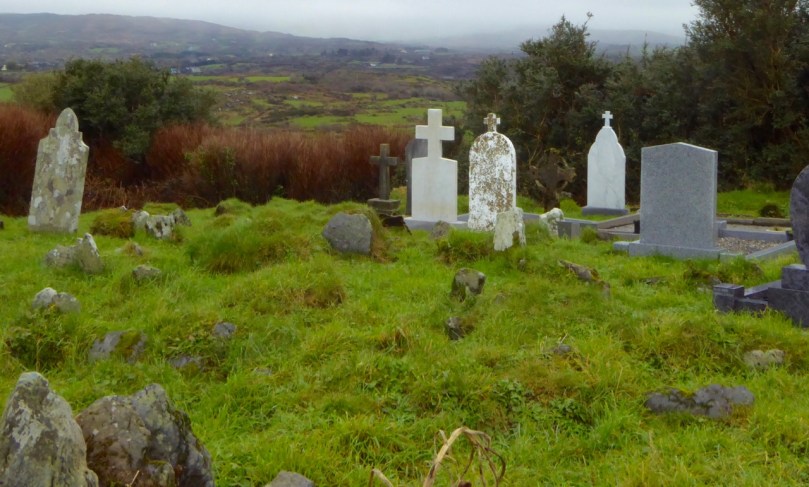
This graveyard is the traditional burial site of many from the islands of Roaringwater Bay. There’s a poignancy to the place names on the headstones – many of these islands are now uninhabited, so these are the last headstones that will bear such inscriptions. As with many West Cork graveyards, much of the ground is scattered with rough, uninscribed, stones, while other graves have modern memorials with full inscriptions. It is customary to visit graves on anniversaries, or at certain times of the year, and always you will find that a few graves still have fresh flowers or other evidence of recent visits.

IMG_0987

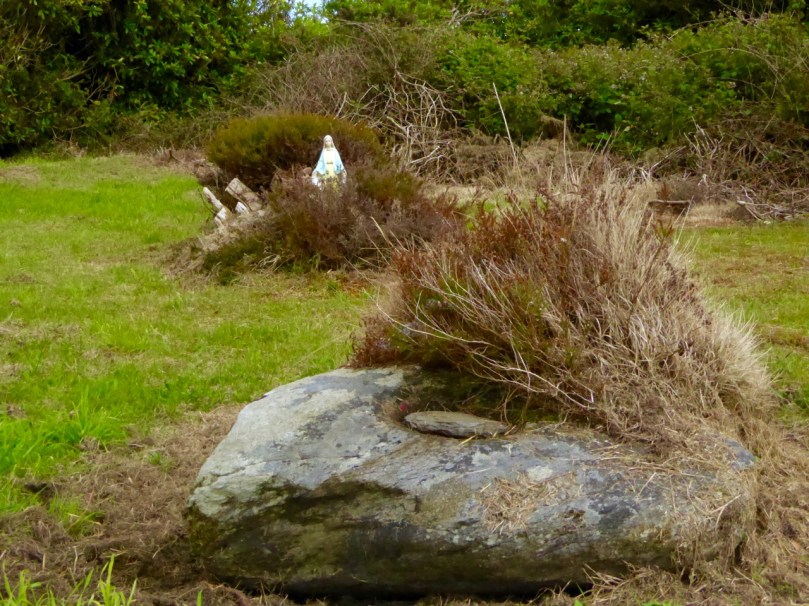
The old Irish name for this place is Cillín Stuaice, or Little Church of the HeightThere is a suggestion that somewhere in the graveyard is the site of an early church, but if it is here, there is no evidence of it. Except for one thing – a bullaun stone. Robert has written before about the folklore and beliefs associated with bullaun stones, but what exactly are they? Bullaun is an Irish word for bowl – these are bowl shaped depressions in rocks, sometimes portable, sometimes carved into rock outcrops. Although some may date to prehistoric times, many are believed to have originated in the medieval period for the purpose of grinding (acorns, for example) or for crushing ore. Whatever their origin, they are often found in association with medieval churches or other sacred sites such as holy wells, and have assumed their own sacred mantle of meaning. The water that collects in them is often believed to be curative.

P1110096

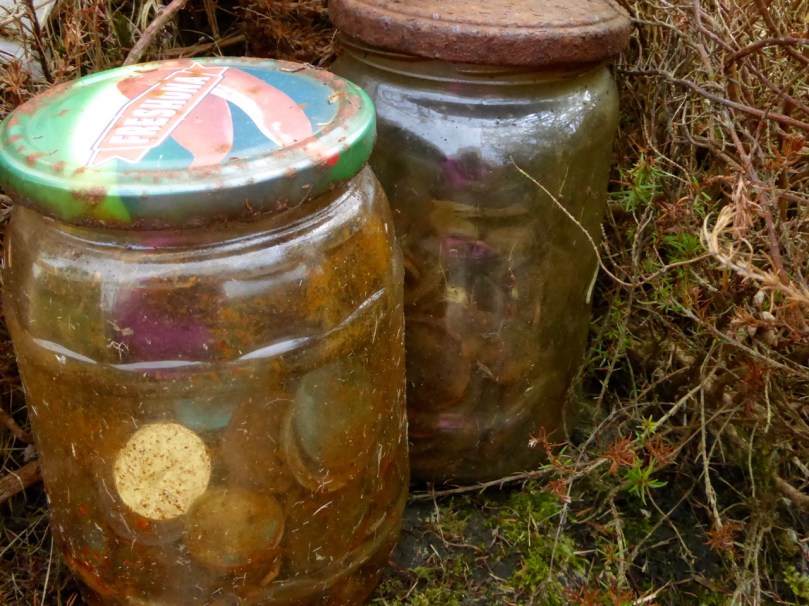
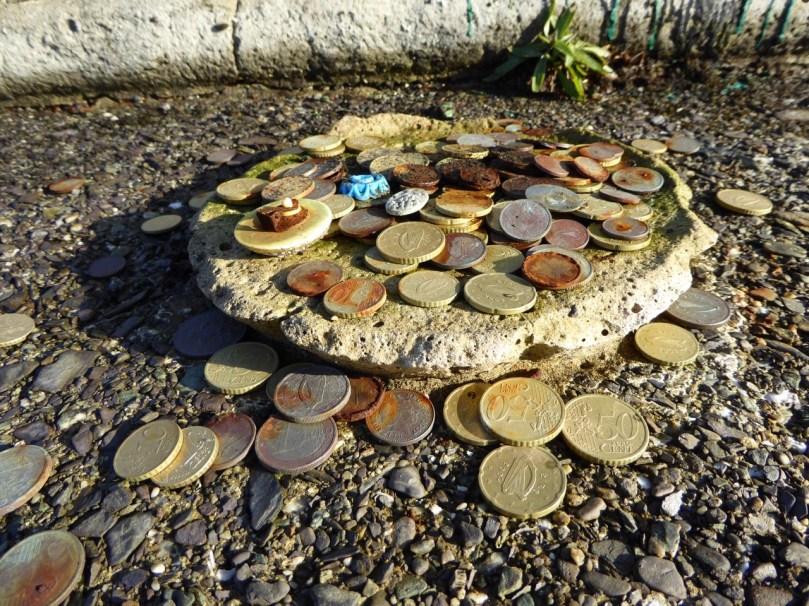
The bullaun stone in Stouke graveyard is known, according to the Historic Graves account, as the Bishop’s Head. The informative plaque erected by the Fastnet Trails folk tells us that an older name for the townland is Kilaspick Oen, meaning Church of Bishop John. Perhaps this was the Bishop for whom the bullaun stone is named. The story goes that during the time of the penal laws the Bishop was confirming children nearby when the redcoats got wind of his activities and came to arrest him. He was beheaded. The bullaun stone commemorates this act and has been a focus of devotion locally, with people leaving coins and tokens to pay respect and perhaps ask for consideration for special intentions. Additionally, rounds were performed here on St John’s Night – although I am not sure if this tradition has persisted.

Money jars

But last week I promised you more poetry! Inside the gate is a grave of the McGrath family, including the ashes of Liam McGrath who emigrated to Australia but never forgot growing up in Skeaghanore, near Ballydehob.

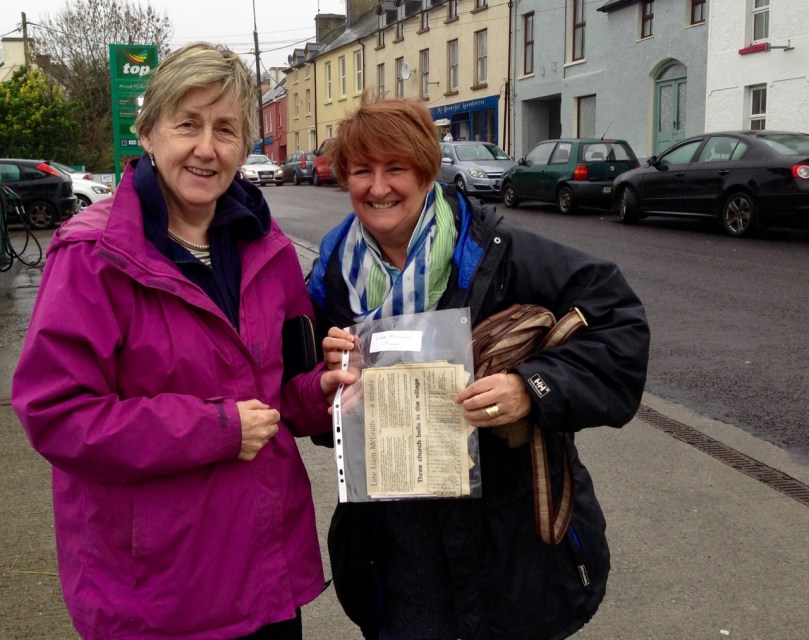
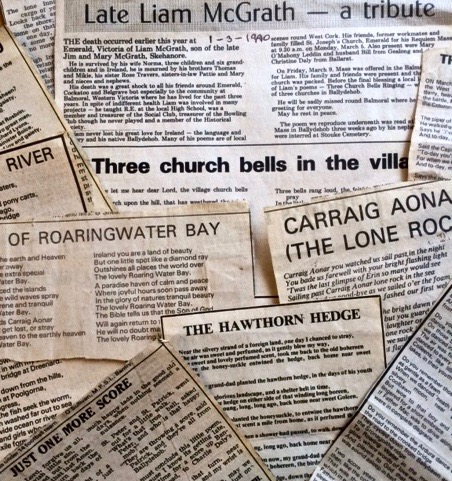
Although he was active on a number of fronts, his delight was to remember the old times and to capture his memories in verse. He was a true ‘folk poet’ – recalling the past with nostalgia and trying to capture what he saw as the golden scenes of his young life in rural West Cork. Over the years, several of his poems were published in the Southern Star. Local historian Teresa Hickey generously shared with me those she has collected over the years – a real treasure since they are not available online.

Teresa Hickey and poems

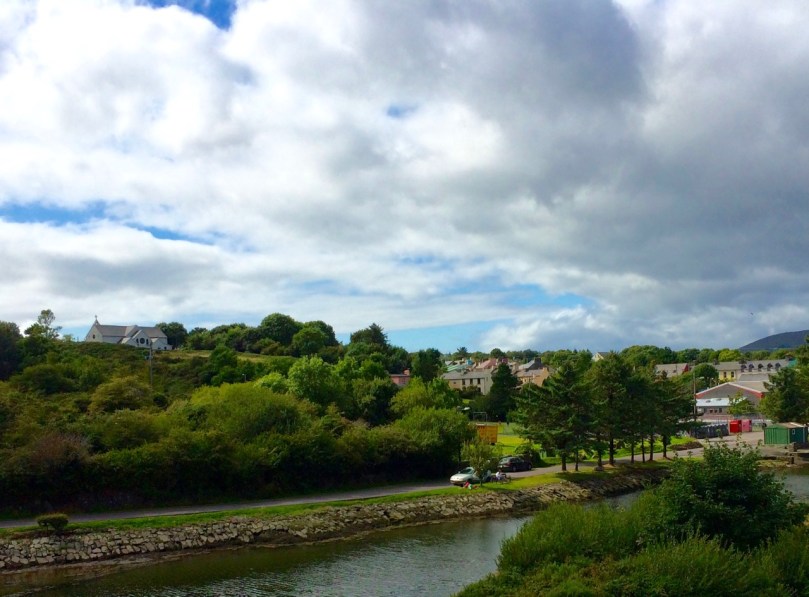
Liam McGrath cuttingsTeresa’s personal favourite is Three Bells. It describes the sound of the bells on Sunday morning from Ballydehob’s three churches – Catholic, Church of Ireland and Methodist. Sounds, of course, trigger deep memories, and this poem captures Liam’s recollections of traditional Sunday mornings in the village. Sadly, the Methodist Church has fallen into ruin, so those bells will never again peal over Ballydehob.

Ballydehob showing church on hill


St Matthias CoI Ballydehob

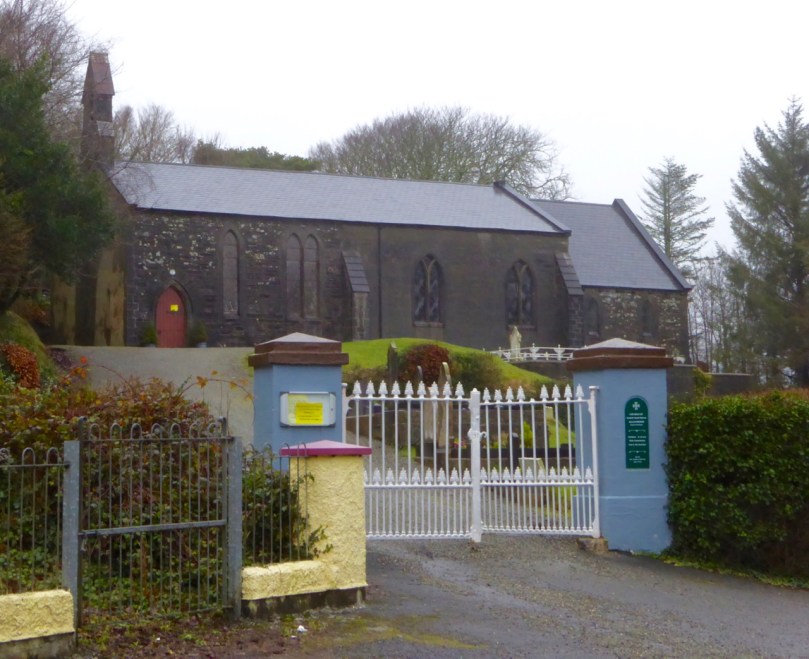
Above: The Catholic Church dominates the skyline of Ballydehob. Middle: St Matthias Church of Ireland. Below: The Ballydehob Methodist Church, gradually falling into dereliction

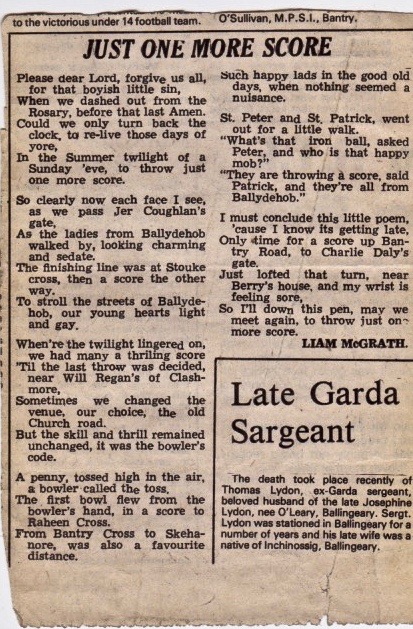
The one I’ve decided to reproduce here is called One more Score and it’s about the unique West Cork pastime of Road Bowling (rhyme bow with cow). For Liam, it was a precious memory, made all the sweeter by a recitation of the roads and locations where the game was played. 

McGrath Poem Just One More Score

The sport of Road Bowling – the object is to get the bowl down the road to the target in as few throws as possible

No doubt I will drop by Stouke Graveyard many more times in the future. I wonder what further history lessons will be revealed…

Priests and Poets, Part 1

outlookOften, while walking the Fastnet Trails, I stop to wander around the old graveyard at Stouke, near Ballydehob. I am struck each time by the lonely beauty of the site, on an elevated hillside with vistas of the countryside and distant hills. I have also come to realise that this one small place resounds with echoes of the past – a past that in Ireland seems always so intricately woven into our present that it can never be ignored or forgotten.
From the wall

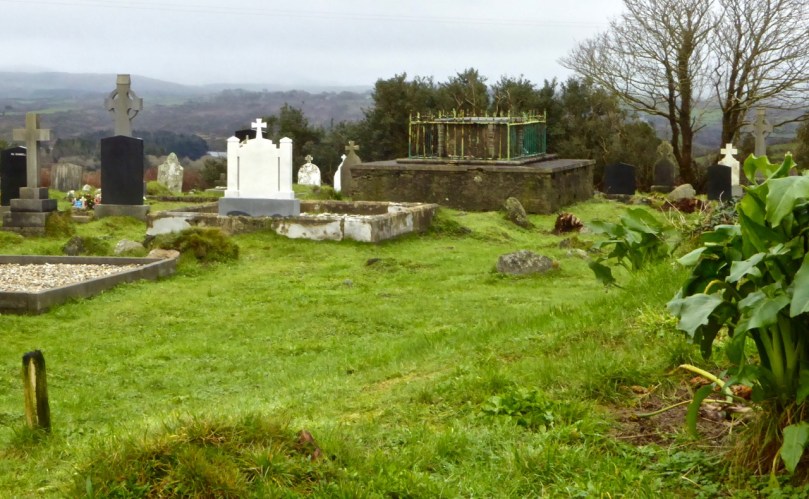
The Barry tomb dominates the graveyard

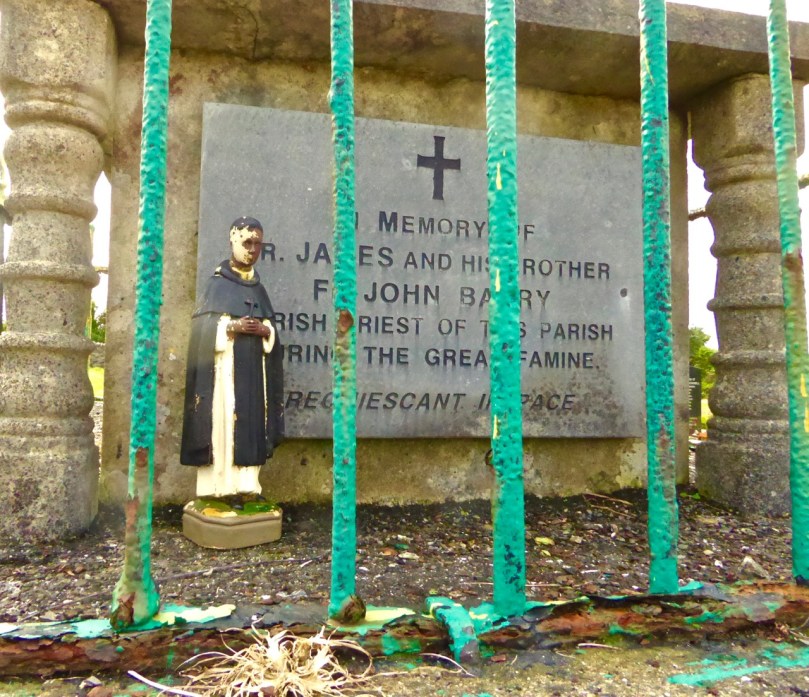
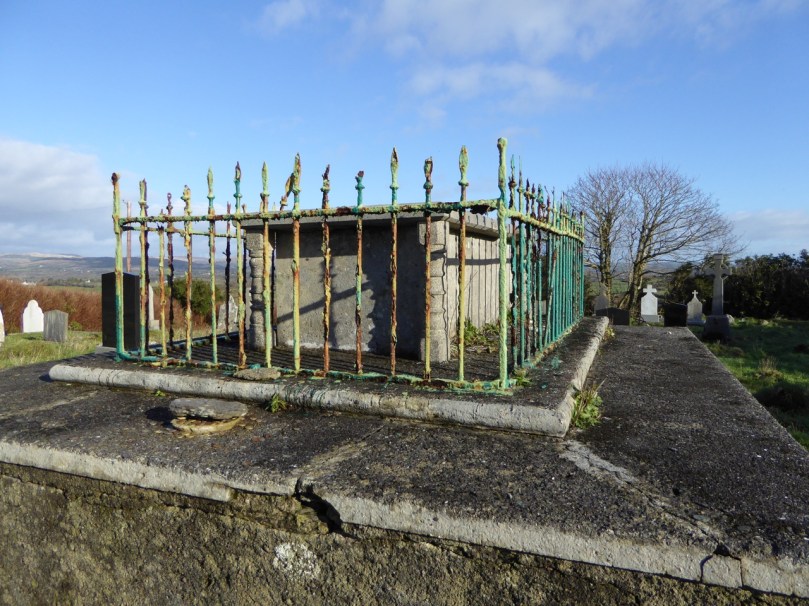
There is much to say about Stouke Graveyard and my theme of Priests and Poets but I will start with one grave in particular and leave the rest to a second post. This is the grave of Father James Barry, his brother, Father John Barry, their sister, Margaret, and their housekeeper, Julia Roberts. I have mentioned this grave before briefly, but I have now had an opportunity to look at it more closely.
offerings

Coins and tokens have been left on the tomb

Why does this large chest tomb occupy the most elevated and central place in the graveyard? Why are coins and tokens left as offerings on it? Why, according to notes made by the Historic Graves Project, do people come to pray here on St John’s Day (June 24th) every year? Although I didn’t find all the answers, researching the questions led me to Father James Barry, Parish Priest of Schull before and during the Great Famine.
Frs Barry, Stouke

James was obviously a man of learning and compassion, and one who was called upon locally to be a spokesperson and advocate for his flock. Even before the Famine he gave evidence to boards of inquiry about the conditions in West Cork, pointing out the miserable diet, lack of proper clothing and housing, poor prospects for employment, the uncertainty of a lease being continued, the lack of compensation to tenants when lands were taken to build new roads, the desire of many to emigrate and the good account they gave of their experiences in their new homes.  He would have read their letters to them, since many of his parishioners were illiterate – his remarks focused on the many advantages of the New World, including a pointed reference to the absence of tyranny. In what seems like a very modern concern with income inequality, he commented on how the rich got richer as their tenants’ lives became ever more difficult. (Reported in British Parliamentary Papers)
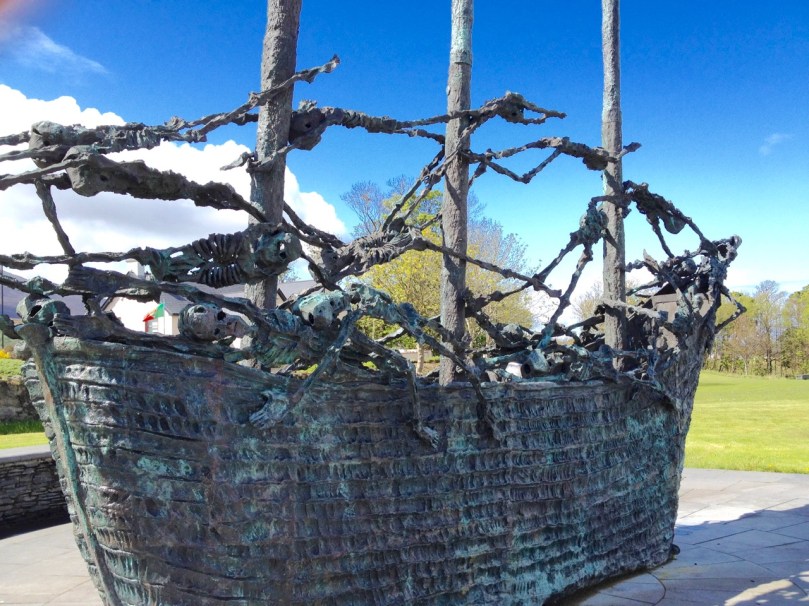
Famine Memorial at Murrisk

The Famine Memorial at Murrisk in Mayo. The ‘coffin ships’ that carried a generation of people to North America were notorious but for those who chose to go the voyage was preferable to the nightmare of famine at home

During the Famine, he and his brother, Father John, also of Schull parish, worked to help establish soup kitchens but insisted that more than soup be served, since the soup was not nutritious enough. Called eating houses, these places fed many people who would otherwise have died, and replaced the hated and ineffective Board of Works schemes that put weak and starving people to hard labour so they could buy their own corn, thus supposedly salvaging their dignity and rescuing them from the evils of pauperism.
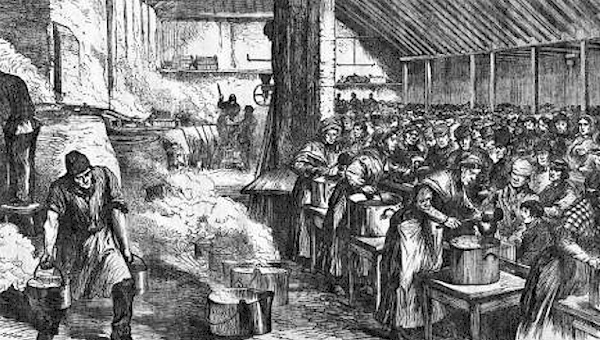
soup-kitchen1

Famine Soup Kitchen

The efforts of the eating house committees crossed religious boundaries and appear to have been effective in slowing the rates of starvation to such an extent that in one of his depositions James states that “deaths were now so few that the slide-bottomed coffins were no longer in use.”
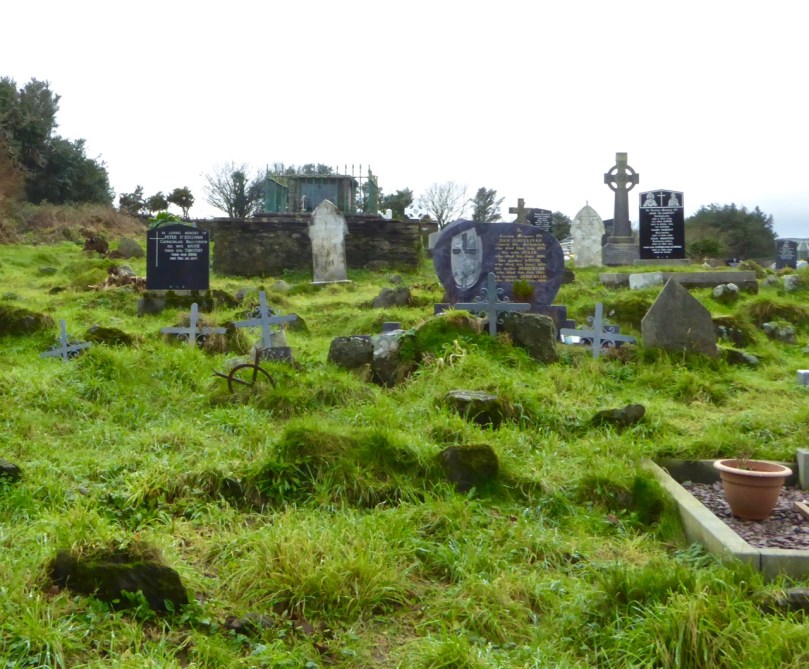
Among the unmarked graves

Many unmarked graves dot the Stouke graveyard, some no doubt dating to the Famine years

James advocated tirelessly for his parishioners, through giving information and evidence and through submissions to authorities. His anger is unconcealed when he describes his visit to the village of Kilbronogue near Ballydehob: Fever consequent upon starvation was spreading among the clusters of cabins…the townland  [will] soon be at the immediate disposal of the head landlord, Lord Bandon. There will be no need of extermination or of migration to thin the dense swarm of poor people…; this will take place without his lordship’s intervention or agency, I hope, to a better world. Indeed his words were prophetic – there is no longer a village in Kilbronogue.

Trench’s book, Realities of Irish Life, is available online. The illustration is of an incident in which tenants are down on their knees begging for a reduction in rent.

Fr Barry acted as a guide for William Steuart Trench, a controversial land agent who later described his visit to the famine-stricken area of Schull in the book Realities of Irish Life (available to read online). In cottage after cottage he found families sick, dying or dead. The account is heart-rending. It led me to wonder if James Barry could have been the model for Peter Gilligan in WB Yeats’ poem The Ballad of Father Gilligan.
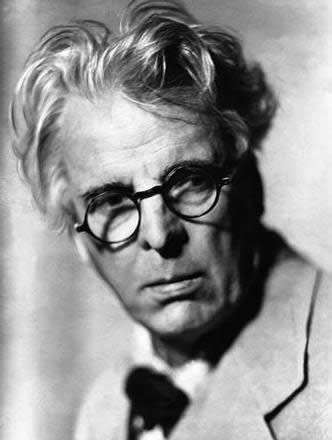
yeats2The old priest Peter Gilligan
Was weary night and day;
For half his flock were in their beds,
Or under green sods lay.

Once, while he nodded on a chair,
At the moth-hour of eve,
Another poor man sent for him,
And he began to grieve.

‘I have no rest, nor joy, nor peace,
For people die and die’;
And after cried he, ‘God forgive!
My body spake, not I!’

He knelt, and leaning on the chair
He prayed and fell asleep;
And the moth-hour went from the fields,
And stars began to peep.

They slowly into millions grew,
And leaves shook in the wind;
And God covered the world with shade,
And whispered to mankind.

Upon the time of sparrow-chirp
When the moths came once more.
The old priest Peter Gilligan
Stood upright on the floor.

‘Mavrone, mavrone! the man has died
While I slept on the chair’;
He roused his horse out of its sleep,
And rode with little care.

He rode now as he never rode,
By rocky lane and fen;
The sick man’s wife opened the door:
‘Father! you come again!’

‘And is the poor man dead?’ he cried.
‘He died an hour ago.’
The old priest Peter Gilligan
In grief swayed to and fro.

‘When you were gone, he turned and died
As merry as a bird.’
The old priest Peter Gilligan
He knelt him at that word.

‘He Who hath made the night of stars
For souls who tire and bleed,
Sent one of His great angels down
To help me in my need.’

‘He Who is wrapped in purple robes,
With planets in His care,
Had pity on the least of things
Asleep upon a chair.’

Although this is an unusual poem for Yeats (he was not a Catholic and he did not often publish simple quatrain-based ballads) it reflects his interest in the Irish stories he collected and loved. It was a favourite, as you can imagine, of the nuns who taught us English, combining as it did ease of memorisation,  the religious fervour they hoped to inculcate in their convent classrooms and the unassailable respectability of having been composed by Ireland’s Nobel Laureate.
Brothers' grave

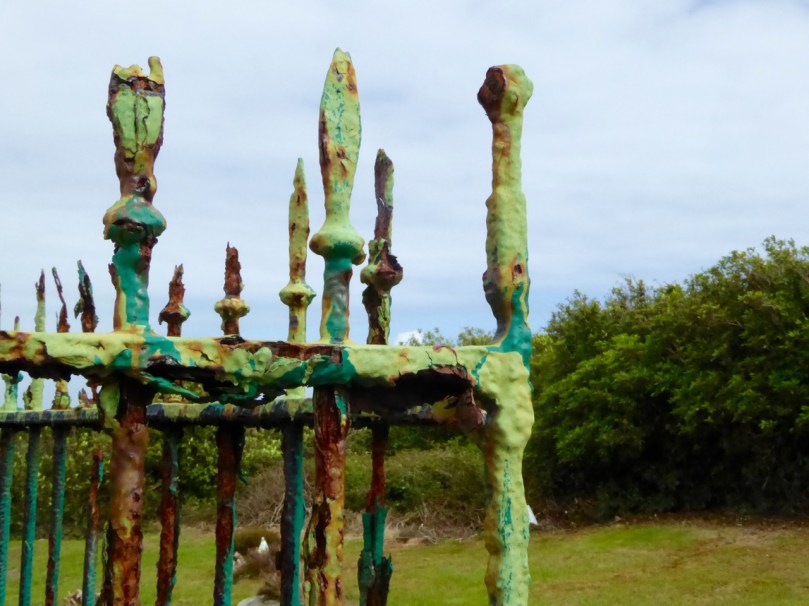
But back to the grave…the priests’ housekeeper, Julia Roberts, who died in 1838 was the first to be buried here. James and John’s sister, Margaret, died at the height of the Famine in 1848 (although we do not know if her death was in any way associated with this event). The Historic Graves record contains this intriguing note: When his sister died and was also buried here Sarah’s (should be ‘Julia’s’) coffin was in perfect condition. She was reburied with the parish priest even though she was not a Catholic.

James went on to serve as Parish Priest of Bantry and died in 1853. James’ brother, John was apparently similarly active but not much has survived recording his life. He took over from James as Parish Priest in Schull, where he served until his own death in 1863.
railings

Next week I will continue my tour of this wonderful spot – and we’ll have a little more poetry – although from a different source.