Fish Palaces – and How They Worked

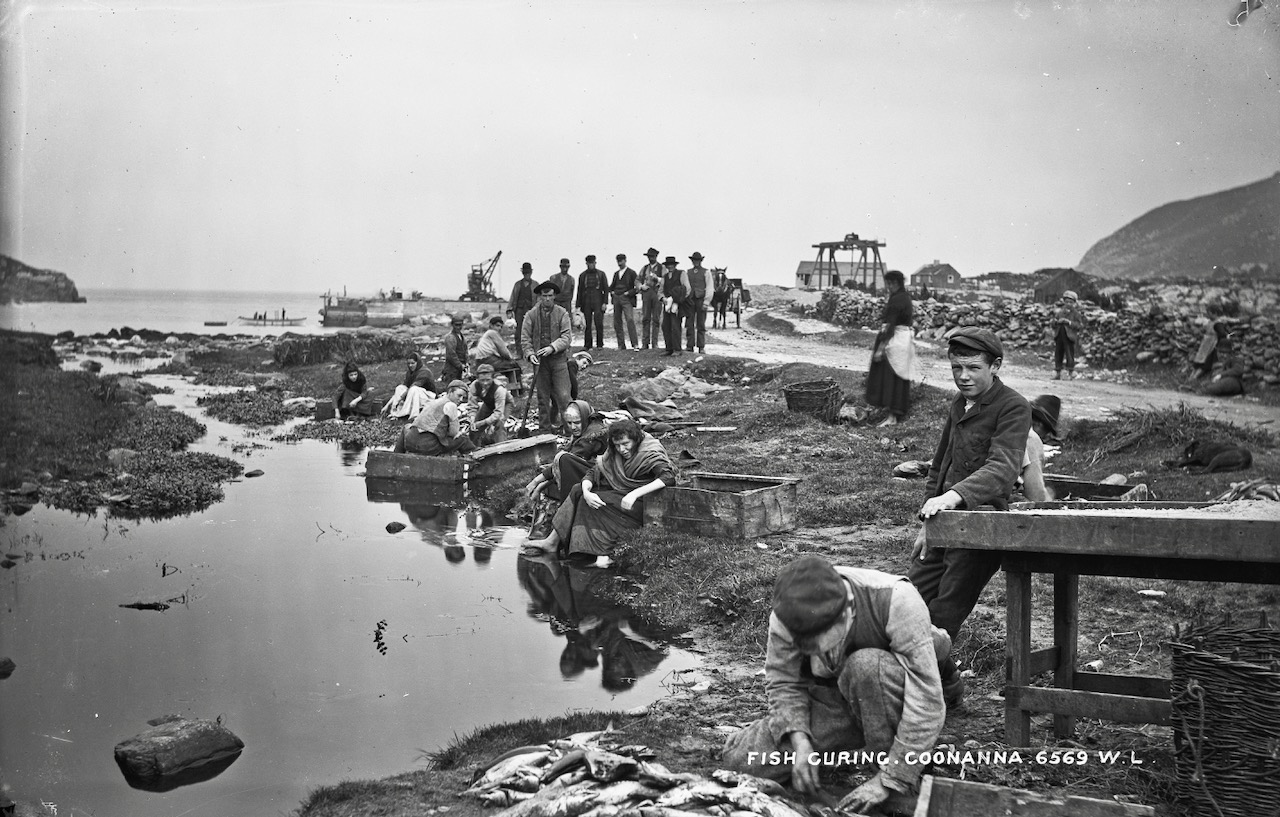
Four years ago I wrote about the fishing industry that once flourished on the shores of Roaringwater Bay (and around much of the west coast of Ireland): according to extant records it was active before 1500, and probably had its heyday in the seventeenth century, when it was heavily invested in by the Great Earl of Cork (Richard Boyle, sometimes described as ‘the richest man in the known world’). In those days, pilchards were the main catch: huge shoals of them came to the comparatively warm, sheltered waters of the islands during the summer months, along with other oily fish such as herring and mackerel. Seine boats were commonly used for this enterprise. Today, pilchards are rare: through a combination of overfishing and changing climate, the bountiful shoals no longer appear.
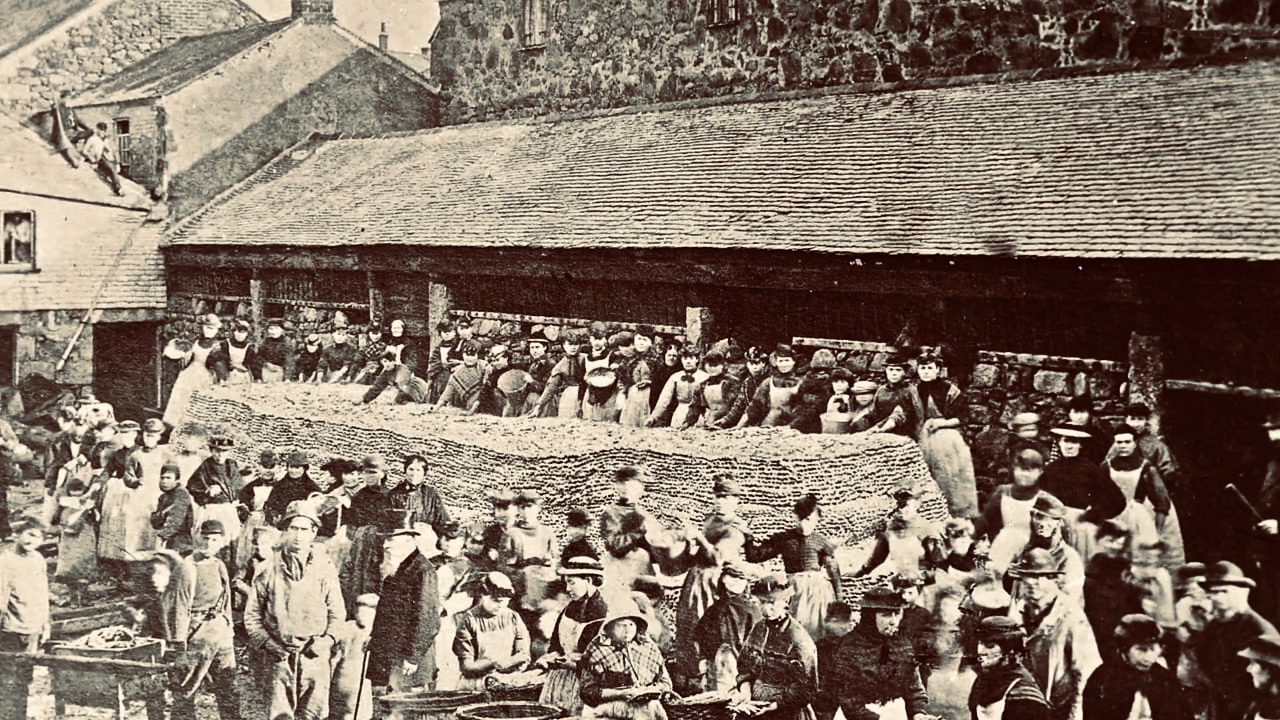
Header – pilchard curing in St Ives, Cornwall c1890: the pilchards are piled up in layers, forming the huge mound in the centre of the photograph. They are salted and weighted down. Above – curing the fish, Valencia Island, Co Kerry, early 20th century (Reddit / Ireland)

Shooting the Seine:

There were two boats per seine net, the seine and the faller. The seine boat was 27 foot long with a beam close to nine foot. The golden rule on the Northside was to never get into a boat whose beam was less than one third its length. The seine boat had five oars of about 17 foot (bow, Béal-tuile, aft, bloc and tiller oars). The crew of seven had to shoot the seine net; one man shooting the trip rope, another to feed out the bunt rope, four men rowing and the huer (master of the seine and captain of the boat) directing the operation. The faller (or bloc) boat was 24 foot long with a crew of five. Its job was stoning and to carry any fish caught. The largest load a faller could carry would be around 5,000 fish. All boats carried a Crucifix and a bottle of Holy Water.

(from Northside of the Mizen by Patrick McCarthy & Richard Hawkes, 1991)
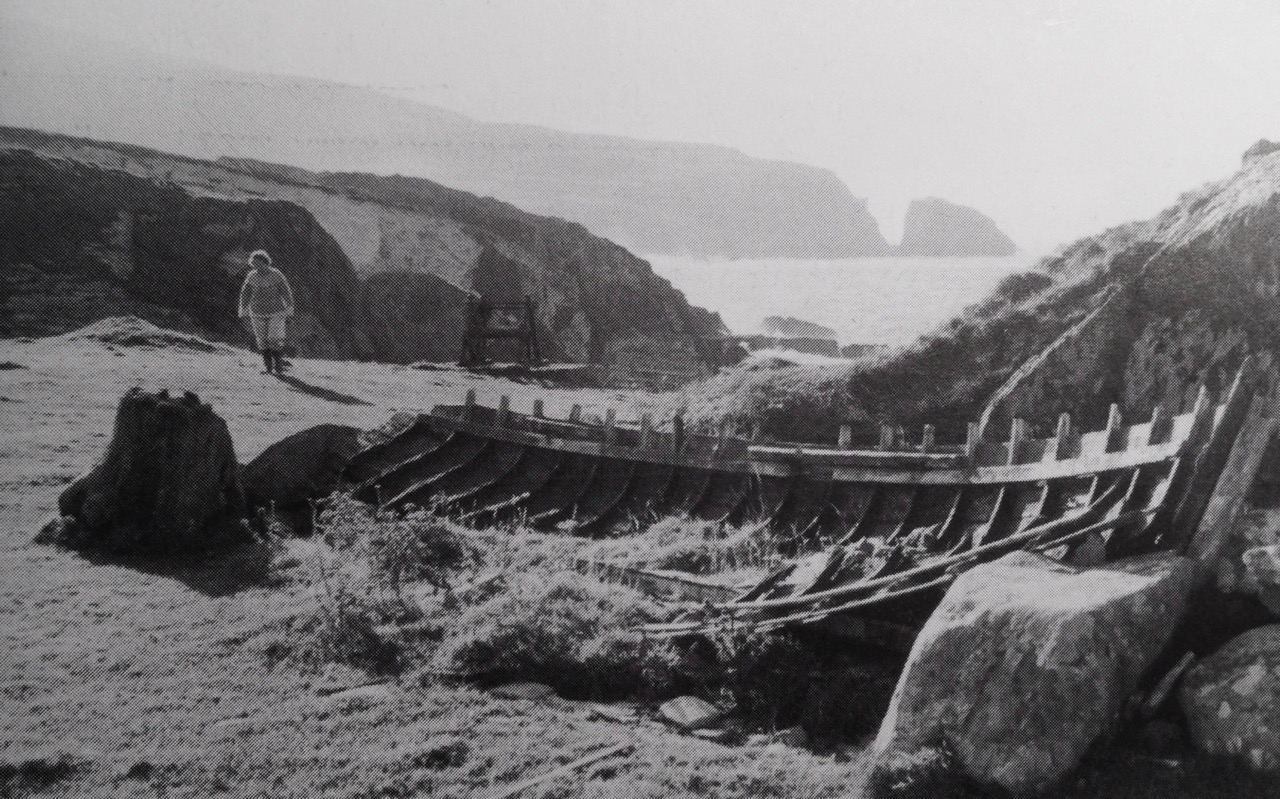
Twentieth century remains of a seine boat, from Northside of the Mizen

If the fish are gone, remains of the machinery of that industry are still to be seen. In particular, the sites of some of the curing stations – or Fish Palaces – are visible, and are recorded on the National Monuments Archaeological Survey Database. Take a look at the map below: I have drawn green pilchards to show the sites of fish palaces mentioned in the database – eleven in all on this section of the map. Also shown by red pilchards, however, are the sites of another six ‘curing stations’: these are mentioned in a long article by historian Arthur E J Went, Pilchards in the South of Ireland, published in the Journal of the Cork Historical and Archaeological Society in 1949: Volume 51, pages 137 – 157.
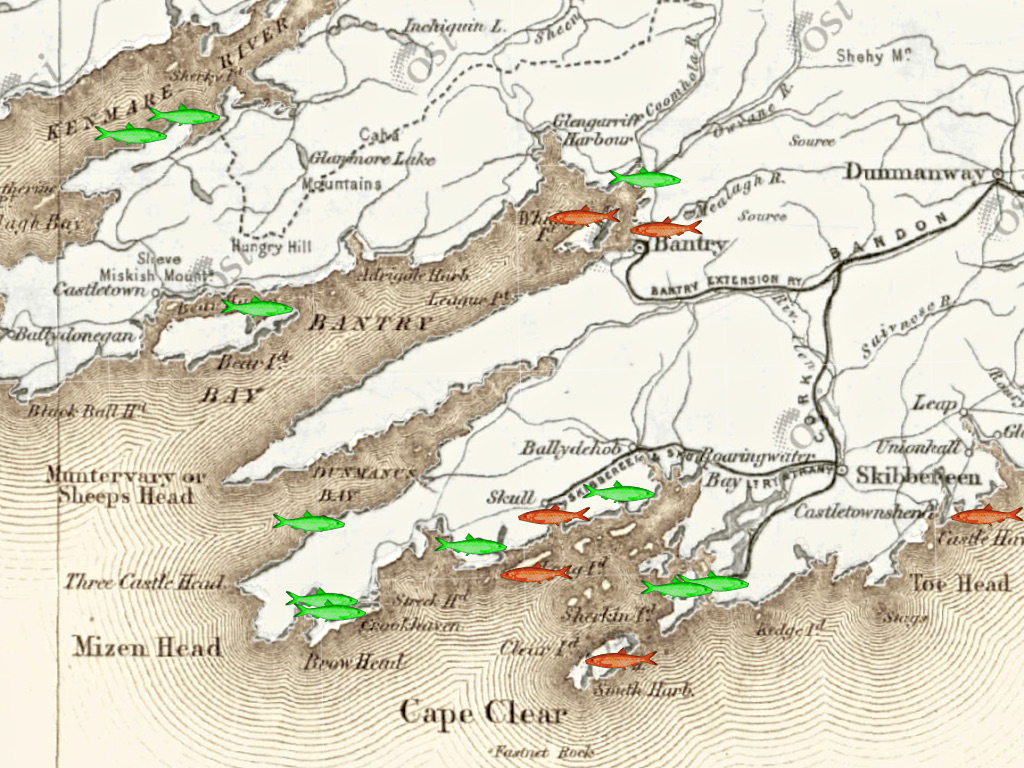
Known sites – or historical mention of – fish palaces (curing stations) in the South West of Ireland (information from  National Monuments database and  Arthur E J Went, Pilchards in the South of Ireland 1949)

The active fishing of pilchards on a large scale in Ireland has been discontinued for many years so that, unlike Cornwall, there is little left, apart from published records, to indicate its former importance. There is, however, published information as to the methods of fishing, and a few sites of old curing stations, frequently called pallices, can still be identified.

from Arthur E J Went, Pilchards in the South of Ireland, 1949
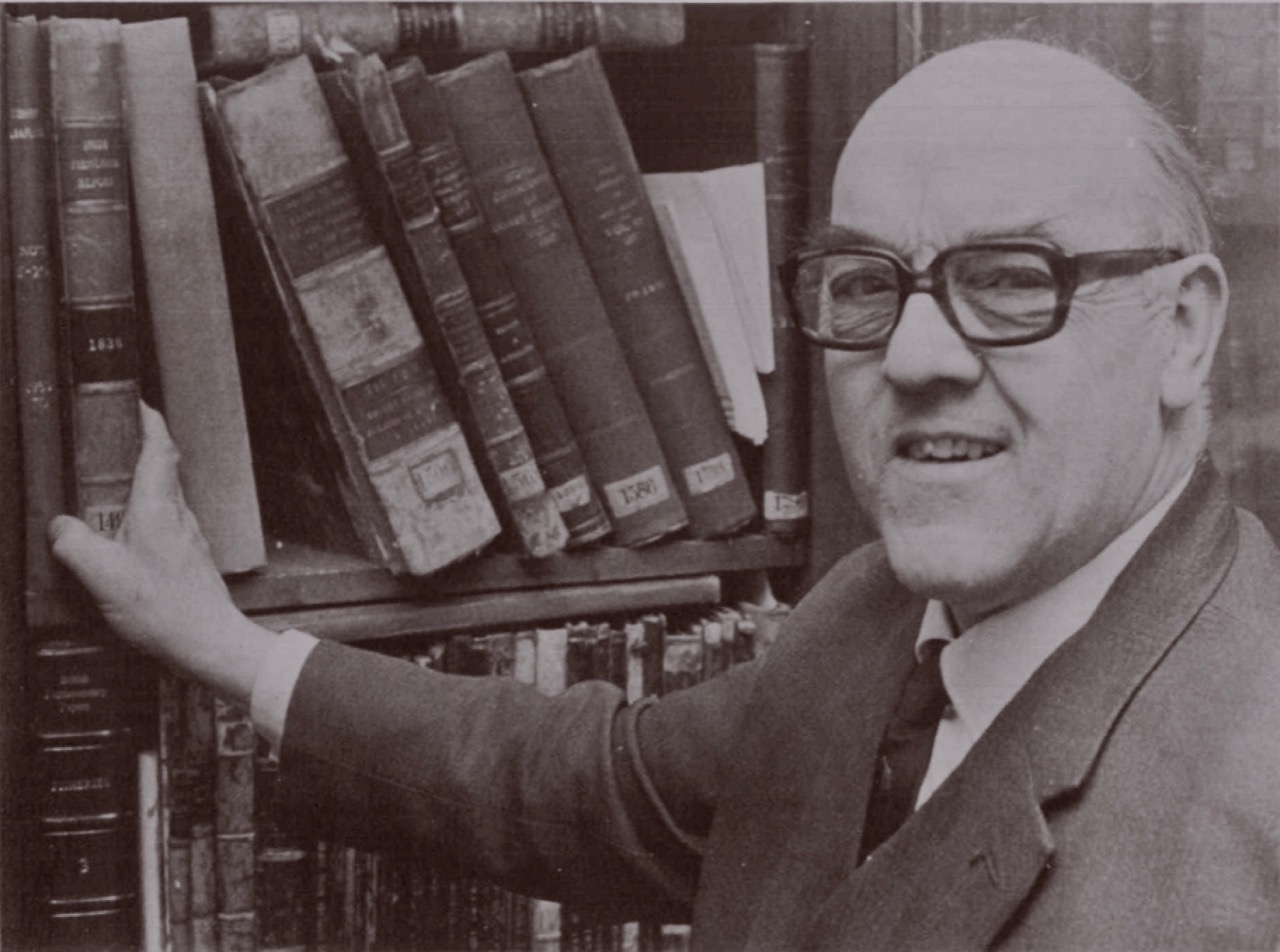
Arthur Edward James Went (1910–80), noted fisheries biologist and historian, lived at Sandycove, Co Dublin. In 1936 he was appointed Assistant Inspector of Fisheries in the Department of Agriculture, Dublin, and later was promoted to the position of Scientific Adviser and Chief Inspector of Fisheries

As explorers of all things historic and archaeological – particularly in West Cork – Finola and I couldn’t resist visiting some of the sites of Palaces – or Pallices – documented in these studies. We have always know about the one nearest to Nead an Iolair, in Rossbrin Cove – it’s just down the road: a perfect sheltered harbour, although it does dry out at very low tides. However, there seems to be some debate about exactly where this one is located. It would date from the time of William Hull and the Great Earl of Cork, so how much would be left after 500 years? There is a field on the north shore of the Cove with an old name: The Palleashes which, according to Arthur Went (quoting local tradition), was the site of a curing station for pilchards, operated by the ‘Spaniards’. There seems to be some difference of opinion locally as to which of the many small fields here is the actual site, although it is likely to be close to the large, now modernised quay, as this shows up on the earliest maps.
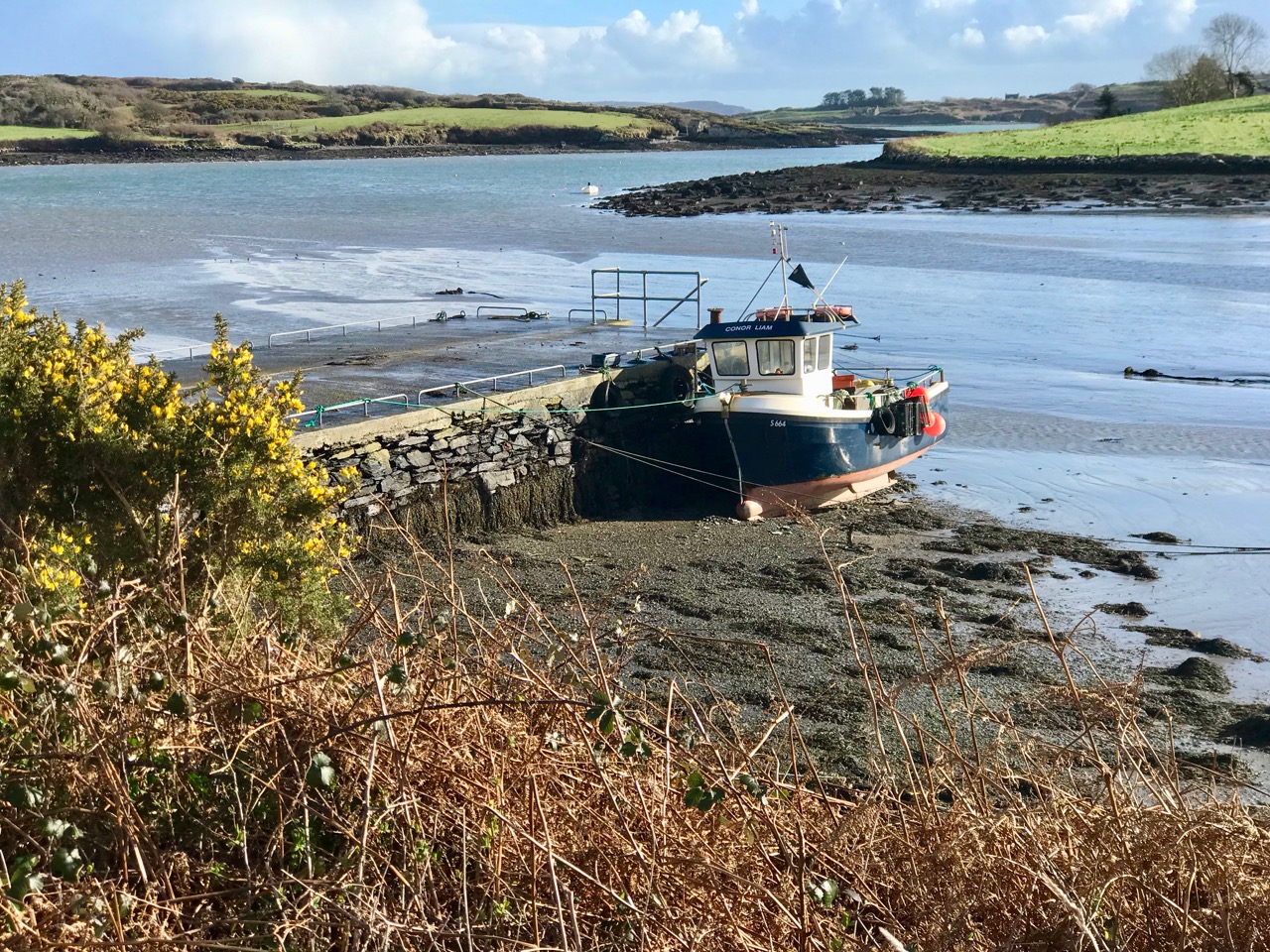
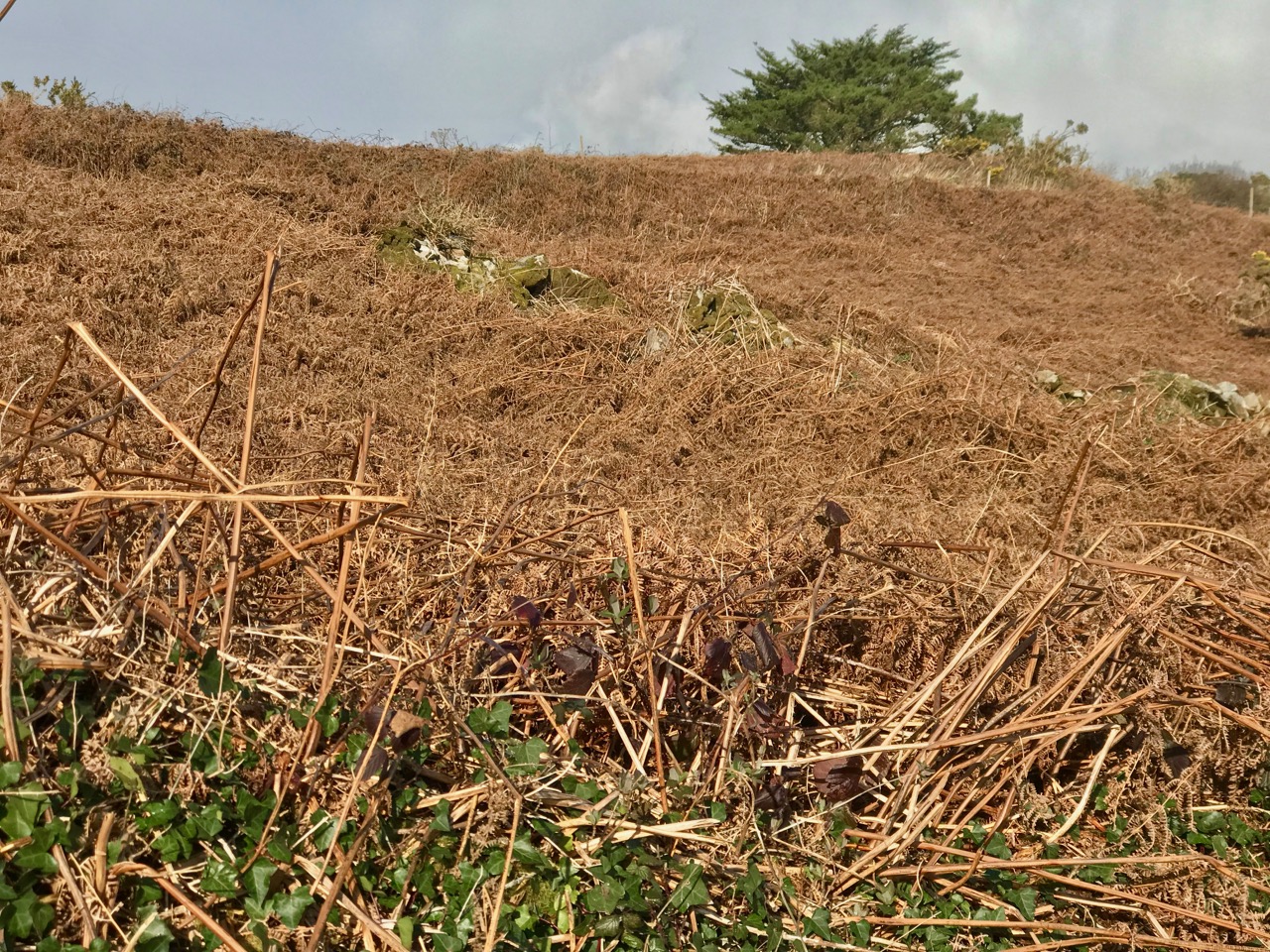
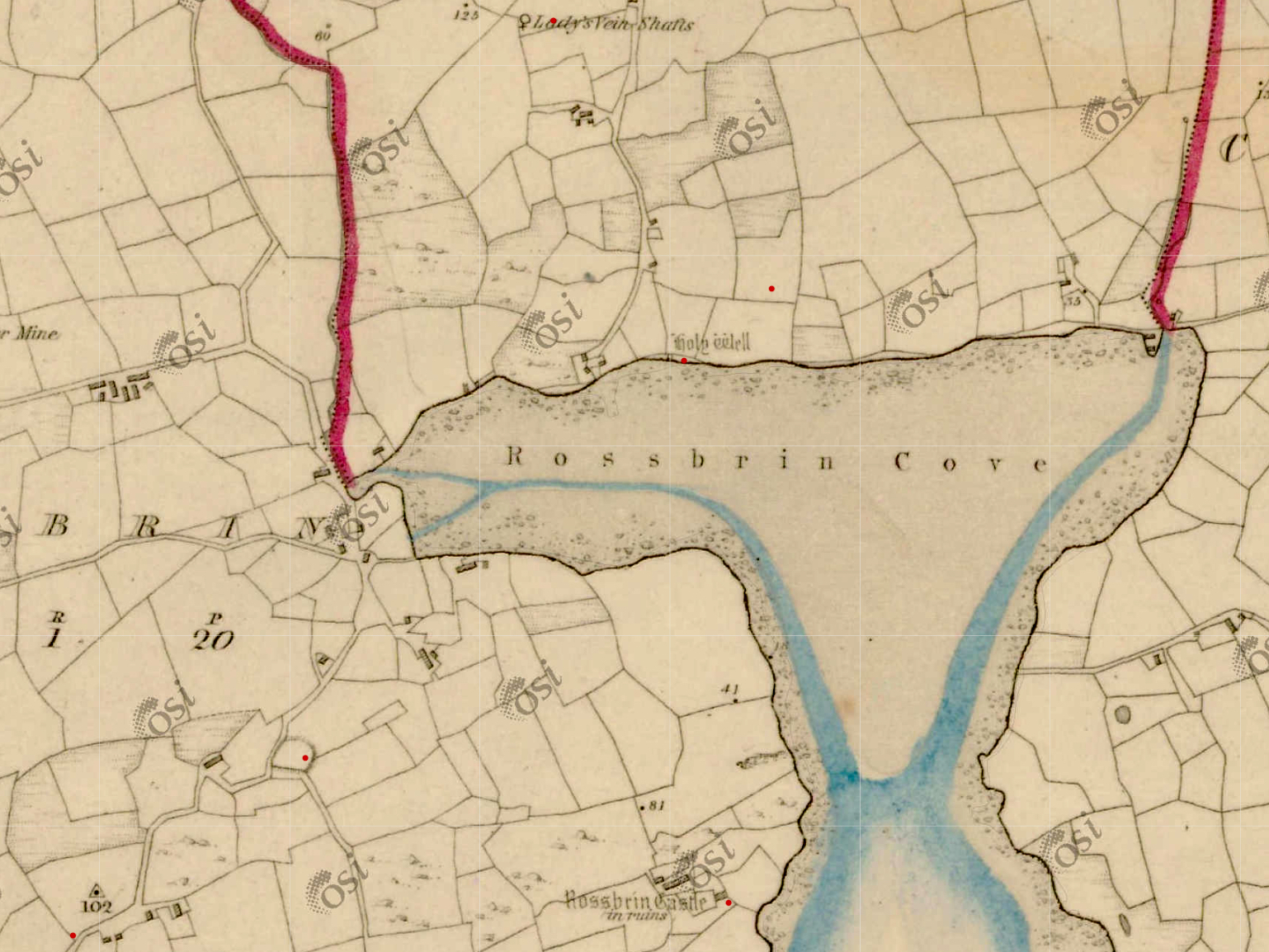
In the upper picture: the quay at Rossbrin is still used by small fishing boats today. Centre – the field above the present quay may be The Palleashes, and therefore could be the site of the medieval fish palace: there are very overgrown signs of stone walls here. Lower picture – the old 6″ OS map, surveyed around 1840, shows a lane accessing the area above the quay (to the left of the ‘Holy Well’ – that lane is no longer there today) and there are buildings close to the shore which could indicate the palace. In 1840 there was no road running along the north shore of the Cove, but the strand at low tide would have been used as a thoroughfare. Just above the ‘Holy Well’ indicated on the shoreline – and slightly to the right – is a small red dot. This is the area shown by Arthur Went as the possible site of the fish palace (and subsequently marked as such on the Archaeological Database); in my opinion it is more likely to have been directly accessed from the water.
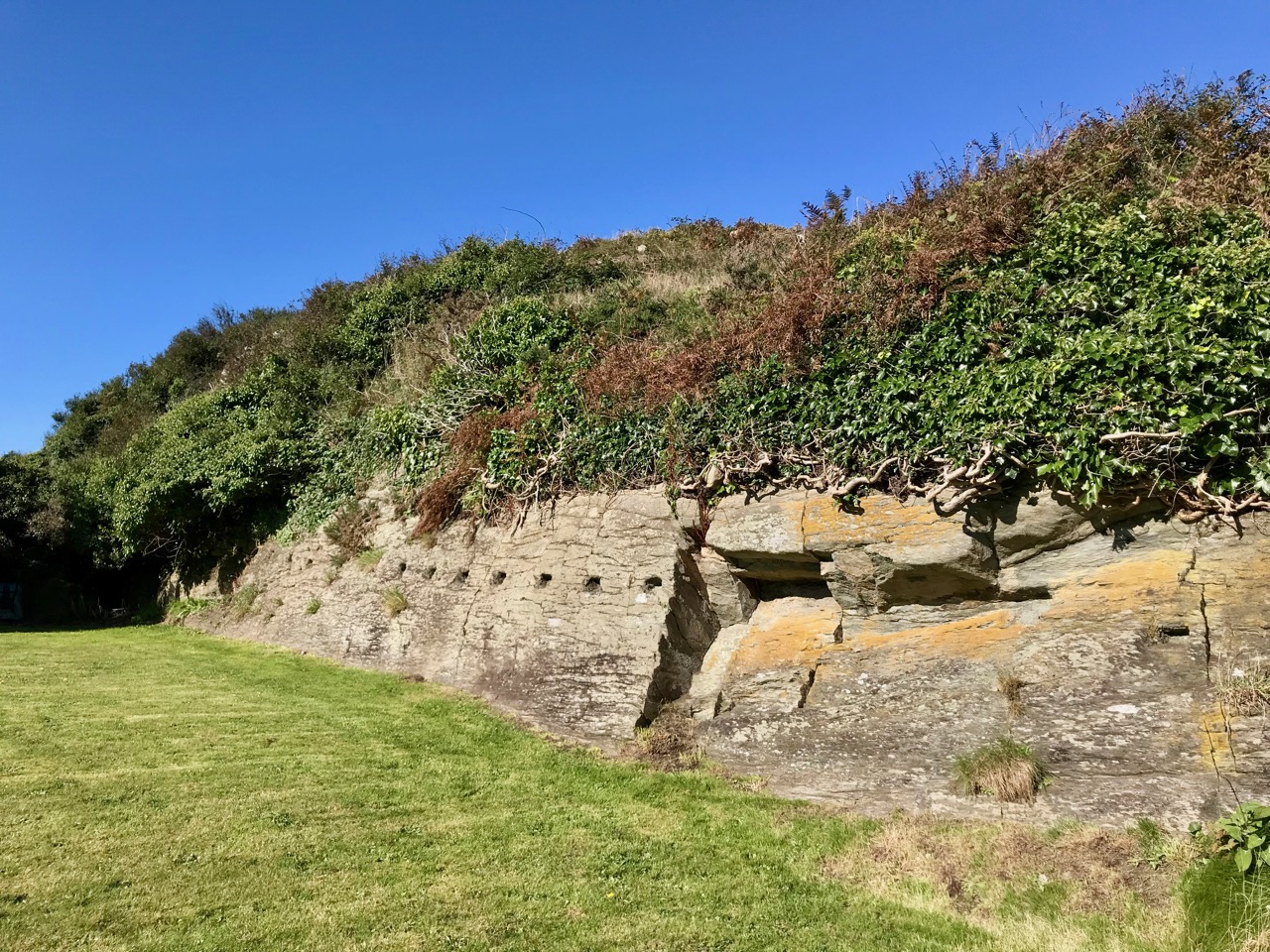
A sure sign of the site of a fish palace is a line of perforations or holes – as can be seen above at Baltimore, where a substantial curing station is recorded (although it may only date from the nineteenth century). Large timbers were inserted horizontally into these holes to form a ‘press beam’ to provide leverage for bucklers to squash out the oil from the salted pilchards, as shown in Arthur Went’s diagram, below:
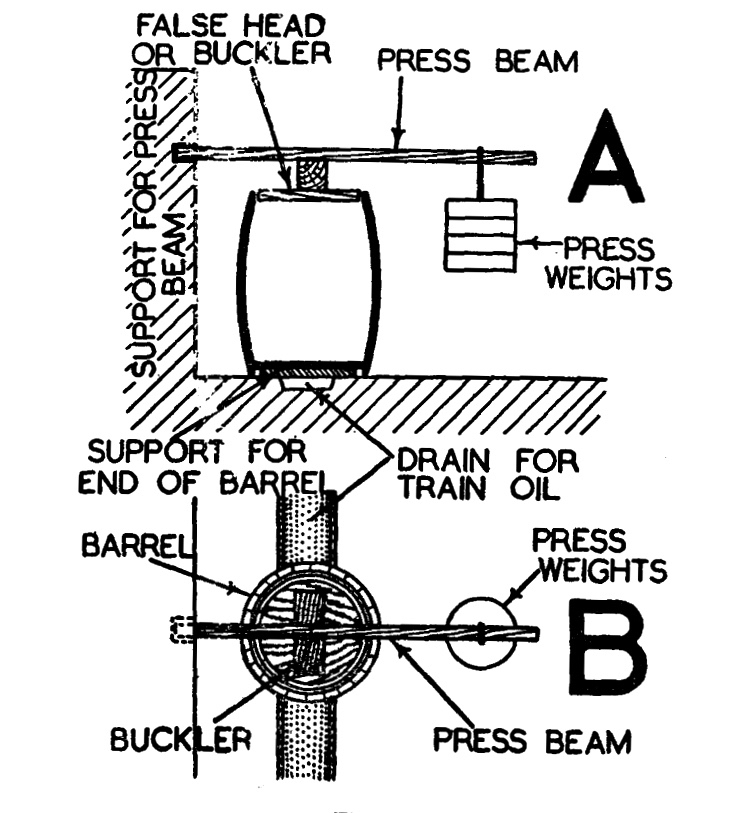
The ‘Train Oil’ – produced from the compressed pilchards – was a valuable commodity, and was collected to be stored and used for treating leather, and as fuel for lamps. As a by-product of the pilchard industry it was said to be as valuable as the fish themselves.
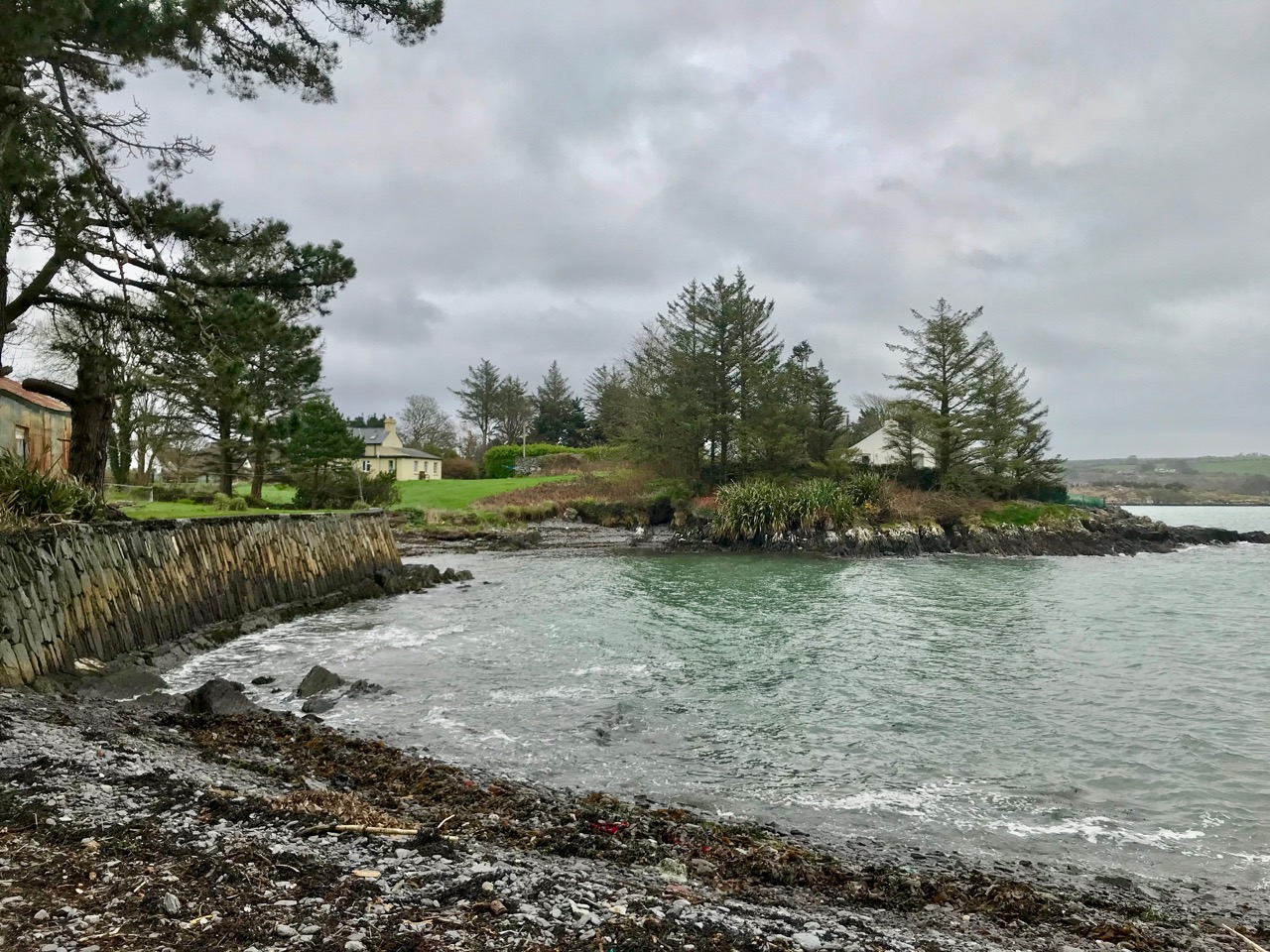
Palace Strand, in Schull

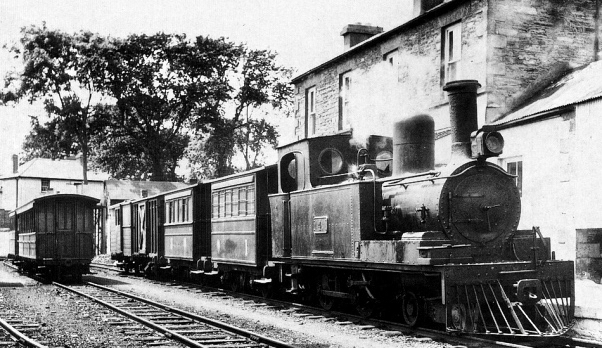
To continue my researches I went along to Schull, where Arthur Went mentions a ‘Palace House’ on ‘Palace Strand’ – an inlet just to the east of the main harbour. This is right beside the old railway station which was not quite the terminus of the Schull & Skibbereen Railway, as a spur went on from the station to serve the harbour itself. The station buildings and part of the platform are still there – now a private residence. I could not find anything in the area shown on Went’s map at the east end of the strand, but I did find something at the west end.
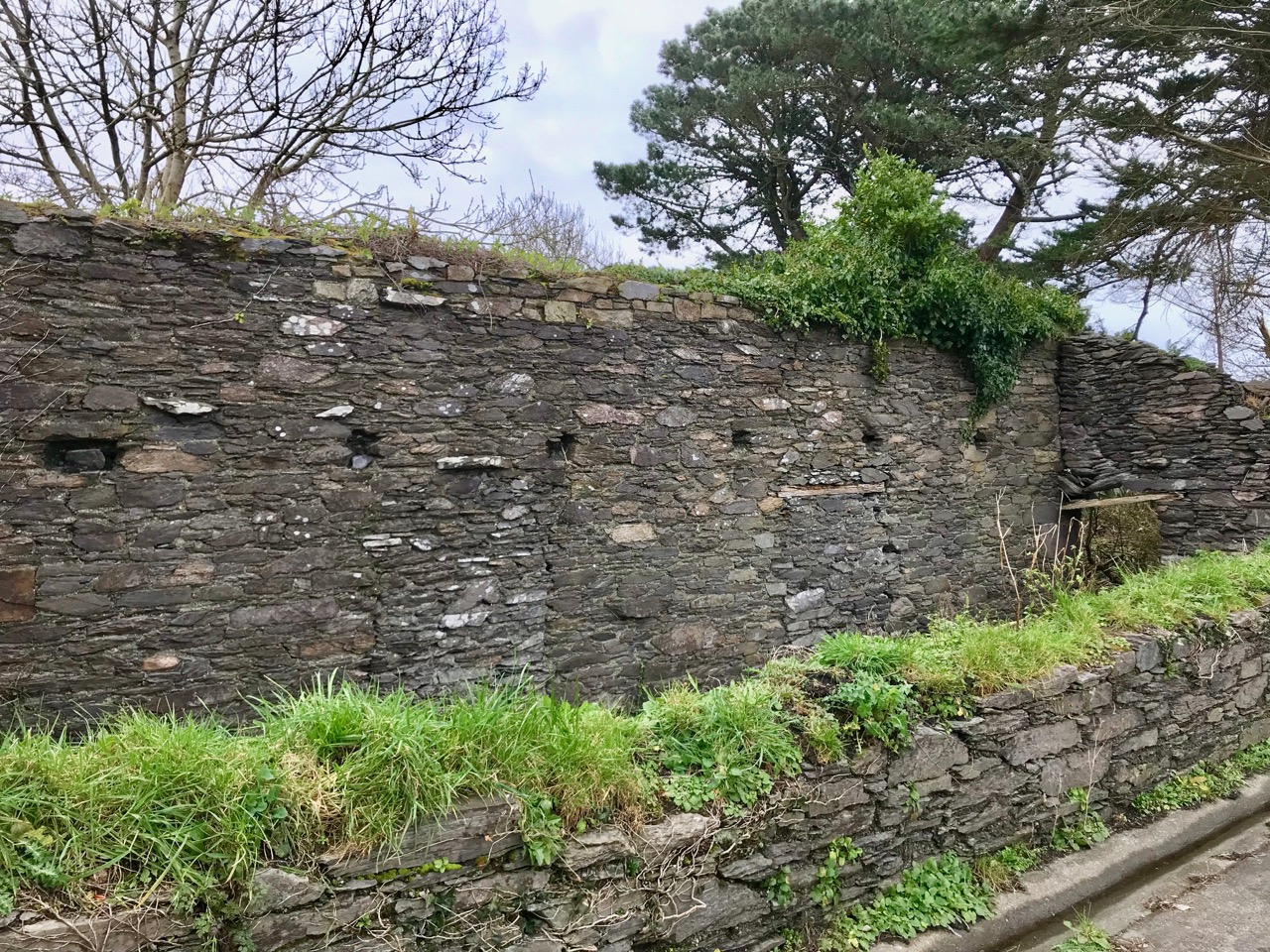
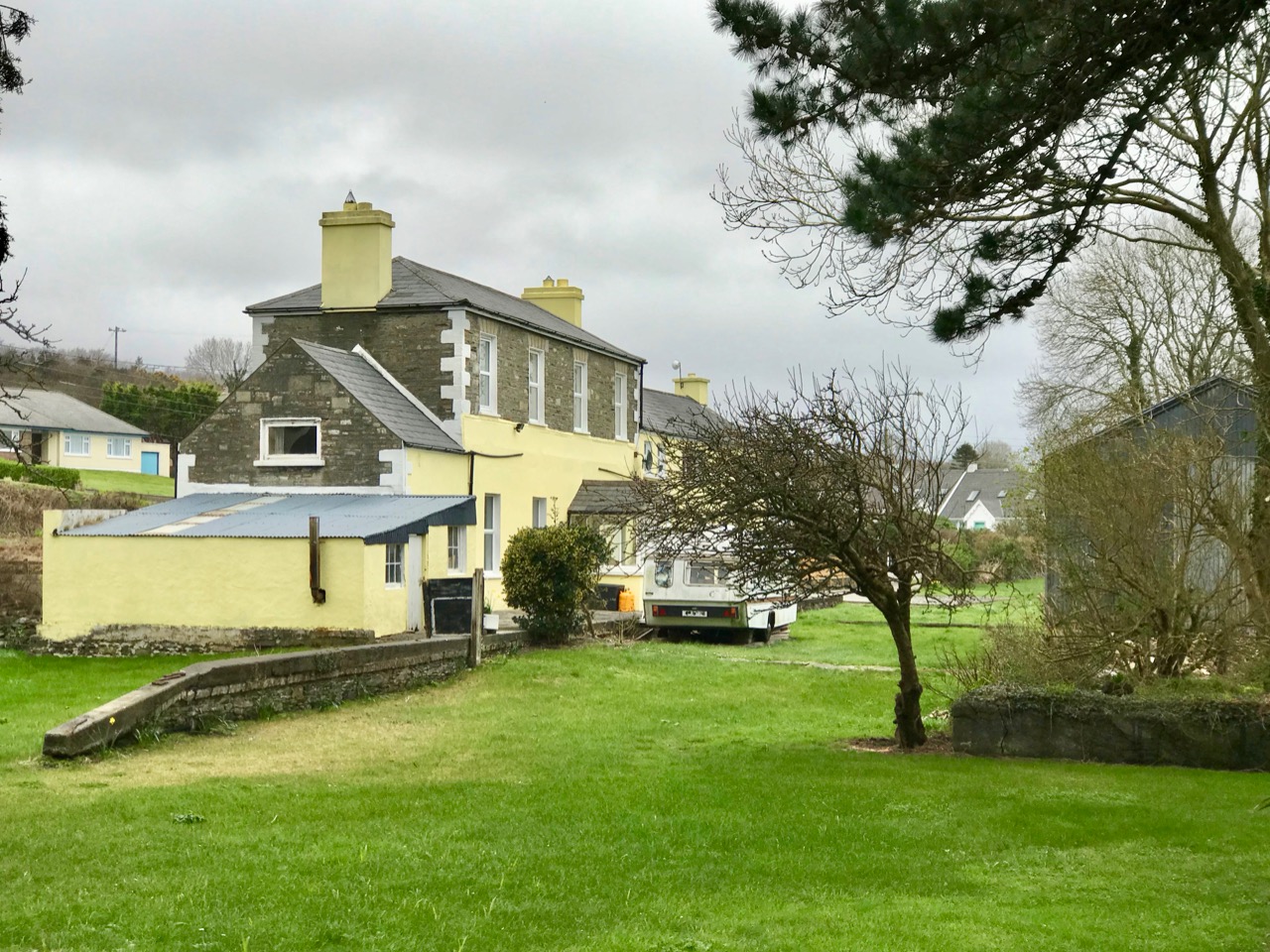
In the upper picture is a wall on the western boundary of the old station site in Schull. This contains beam holes very similar in size and spacing to those we have seen in fish palaces elsewhere: it’s very tempting to think that this wall – now part of a derelict building – may have had this purpose, as it is well situated close to the shoreline of Palace Strand. If this was a fish palace, it is also likely to date from the nineteenth century, as the early Ordnance Survey maps don’t indicate it. The centre picture shows the old station buildings today, and the lower picture taken at Schull Station in 1939 reminds us of past times: the railway closed in 1947.

This post is a ‘taster’ for a fully illustrated talk I’m giving at Bank House, Ballydehob, on Tuesday 26 February at 8pm: Pilchards & Palaces – 300 years of Fishing in South-West Ireland. It’s part of the Autumn series of Ballydehob’s ‘Talks at the Vaults’
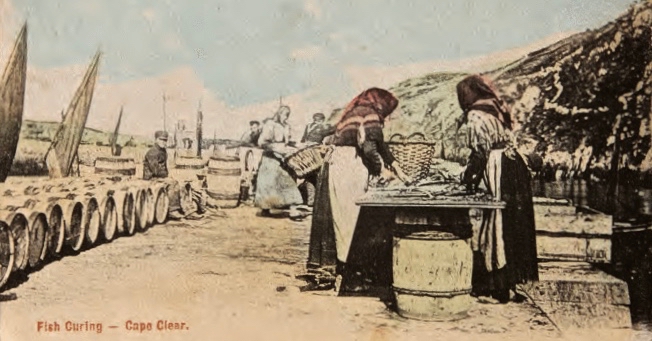
Below – a postcard showing fish curing on Cape Clear in 1906 (from Hely’s, Dublin)

A Watery Tale

Last year I got myself into trouble by saying how much I admired the new corten steel signs marking significant spots on the Wild Atlantic Way. My post – Showing the Way – produced howls of protest from many readers who had taken a dislike to them. I may well ruffle the same feathers again when I say that I’m impressed with the information boards which have now appeared to supplement those markers.

Wild Atlantic Way signage at Colla Pier, opposite Long Island

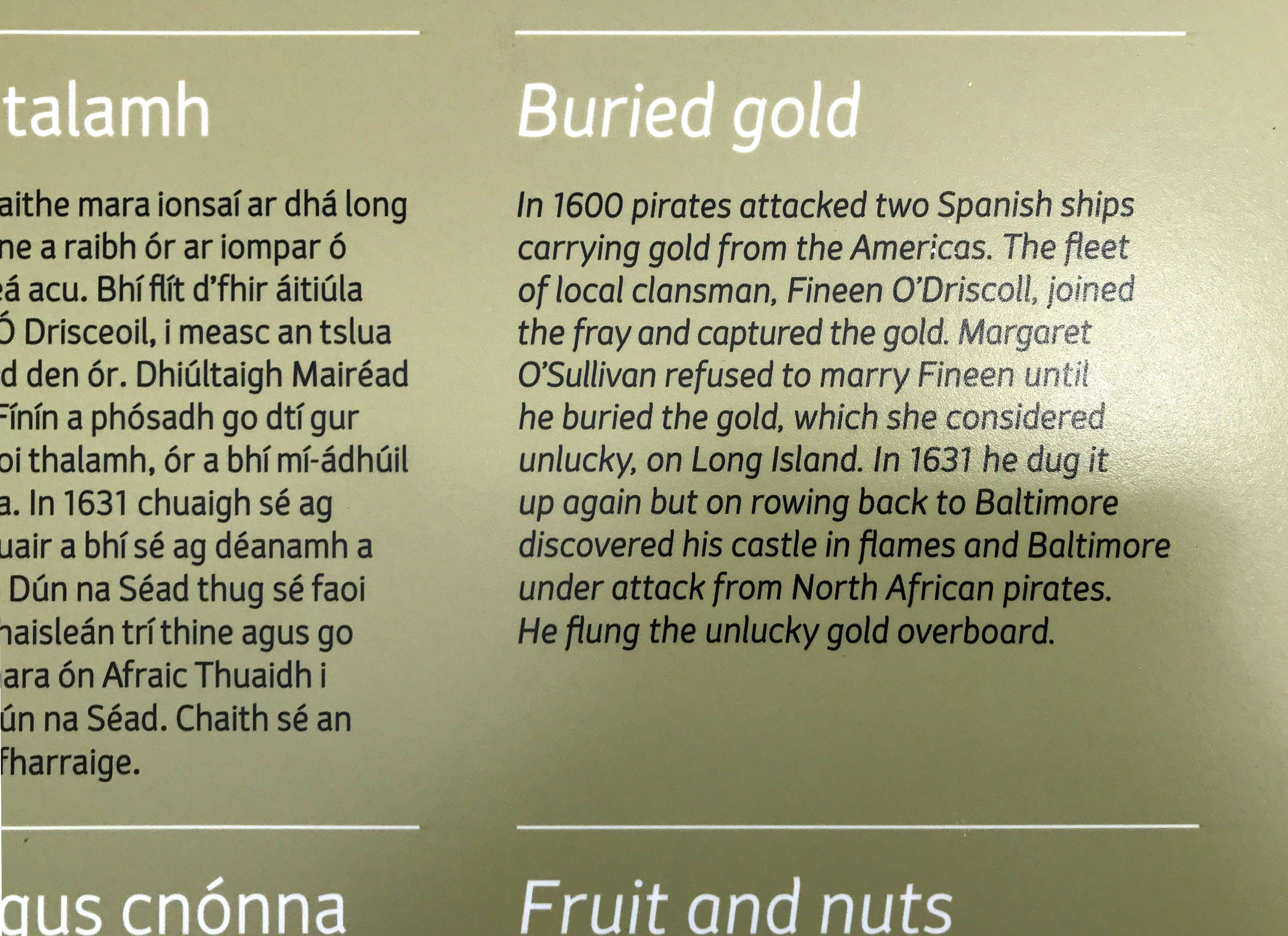
The example above, which we saw today, has appeared at Colla Pier, on the coast road running from Schull round to Crough Bay. The ferry serving Long Island sails from this pier. The board is mounted on a sturdy corten steel frame which should withstand all the elements. The illustration used on the new board (seen in our header picture) is by Sam Hunter and (to my eye, at least) is colourful and attractive. Overall, the panel manages to convey a significant amount of information in a compact design. There is a little Irish lesson (top picture, right-hand corner) and a local ‘story’ pared to the minimum. I was delighted, because I hadn’t come across this tale before. Here it is…

A more detailed version of this story can be read here

So in this short paragraph we find an unusual angle on a very well-known piece of local history: the sacking of Baltimore by Barbary Pirates, which took place 386 years ago, on June 20. Here in West Cork everyone talks about that incident as if it had happened yesterday: it resulted in the decimation of the population of the little fishing village overnight. A hundred and seven people were carried off to slavery in Algeria, and every house was burned.

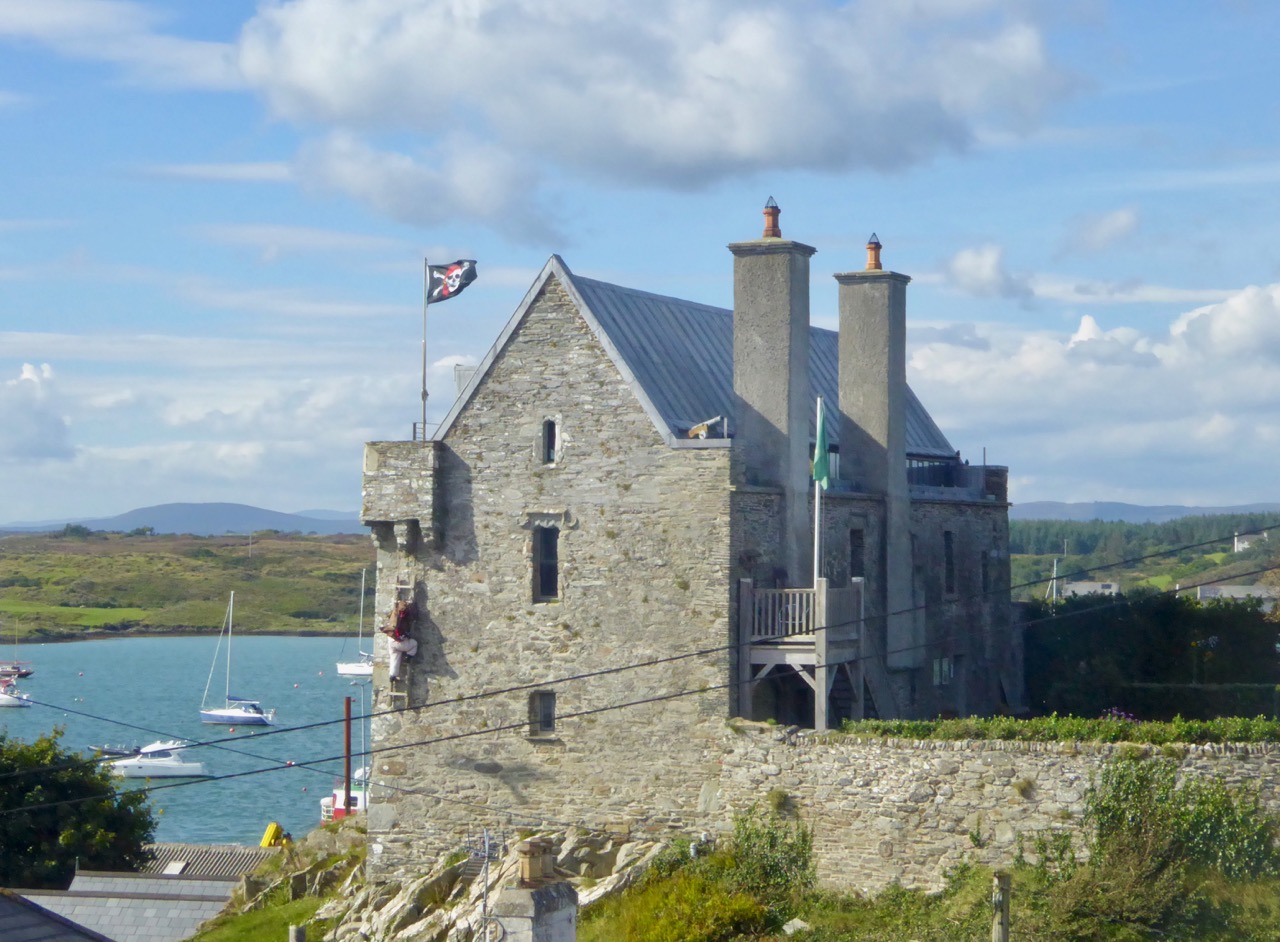
Upper picture: Long Island Sound, with the white houses of Long Island itself in the middle distance; Cape Clear is beyond. Lower picture: Fineen O’Driscoll’s castle at Baltimore – Dún na Séad (Fort of the Jewels). The clan chieftain was not at home to give help to the beleagured village when the Barbary pirates arrived because he was rowing across from Long Island with the ill-fated treasure stowed on board!

In one version of the story about Fineen O’Driscoll and his pirate treasure, the horde of gold is buried under a house on Long Island – a house where strange lights are seen at night! Presumably it’s still there – or under the sea out in Roaringwater Bay. It’s probably best left wherever it is!

Baltimore at dawn, seen in Finola’s beautiful picture above, reminds me that I have to tell you about another Irish – Cornish link. The village grew around a small settlement of religious dissenters from the west of England established around 1600 and led by Sir Thomas Crooke, a man with Calvanist and Puritan connections. Most of the settlers came from Cornwall and were seeking a haven where they could practice their religion unhindered. It was these people who were stolen away nearly 400 years ago, and ended their days in North Africa. Are you interested in the many historic links between the two westernmost counties of Britain and Ireland – Cornwall and Cork? You can find out much more at the exhibition coming up shortly: West meets West – the work of contemporary Cornish artists, at Uillinn, Skibbereen, from 3 June to 8 July

Into the Blue…

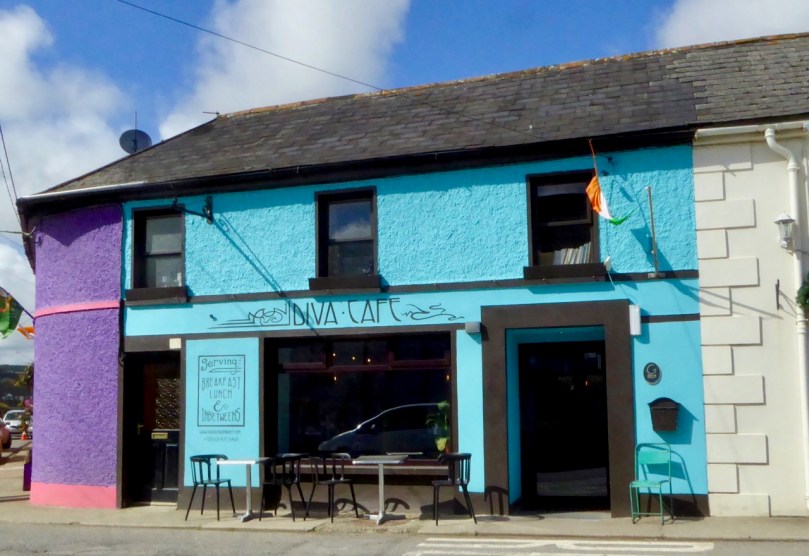
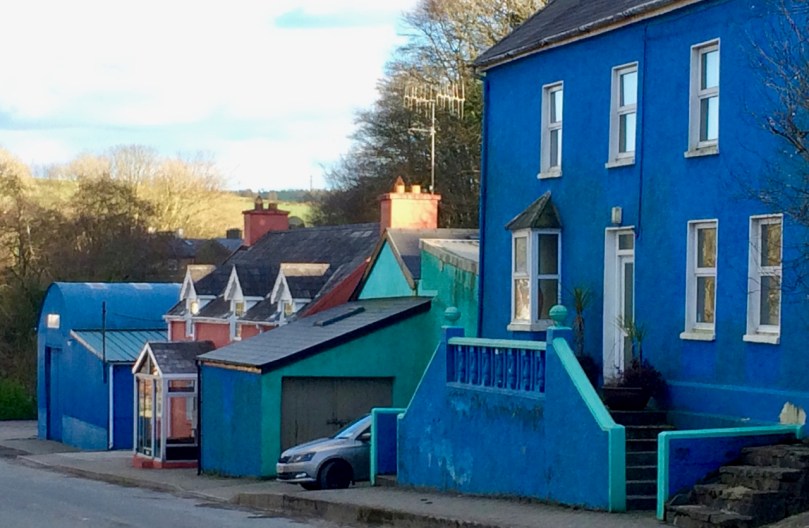
In this series on Ireland’s colourful buildings, we started off with purple and pink and proceeded through the colour wheel to the oranges and yellows and now we have arrived back on the cool side of the spectrum – the blues and greens. The Diva Cafe in Ballinspittle (above) has black trim that does nothing to tone down its exuberance, and it marries beautifully with the purple and pinks beside it, which were highlighted in our first post on this series.

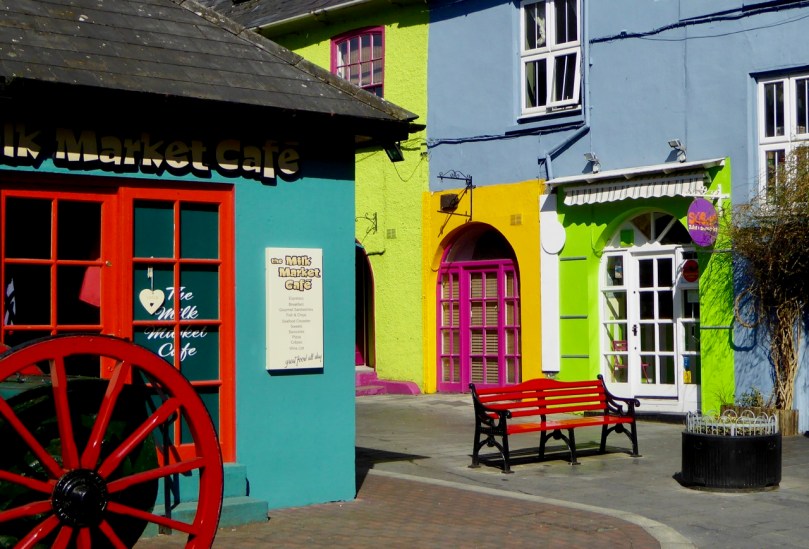
We left off the last post with a couple of lime greens, so here’s another, from Kinsale (above) to get us back in the swing of things.

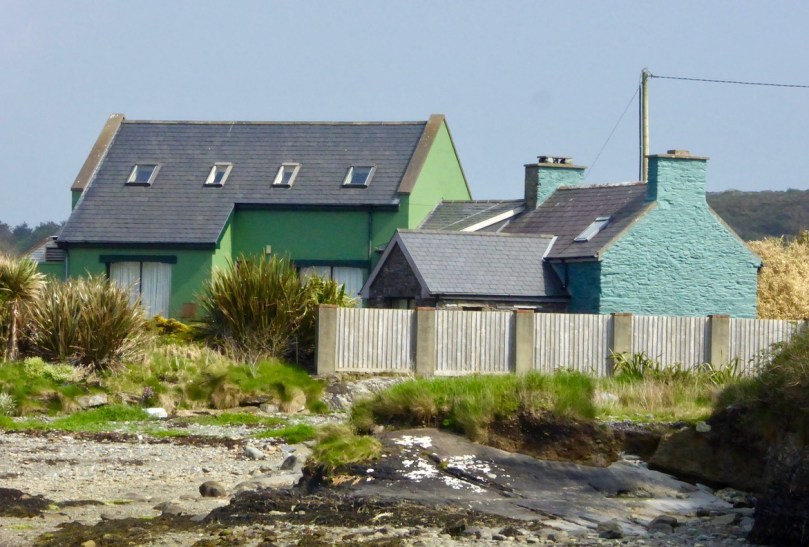
A bright green and a blue green are a great combination beside the sea – this house is at Dunmanus, on The Mizen

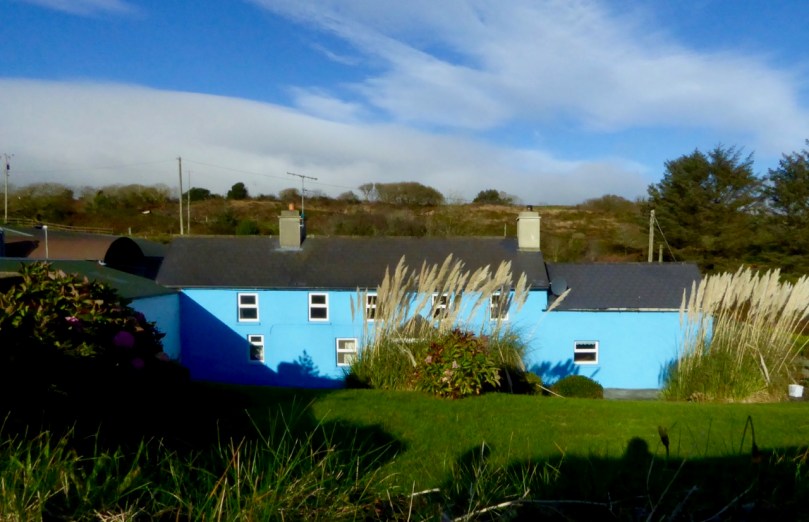
Blues and greens are the colours of the sky and the fields, so they don’t pop as much as the pinks and the oranges. In fact they can be quite subtle, when used in tones that blend in with their surroundings.

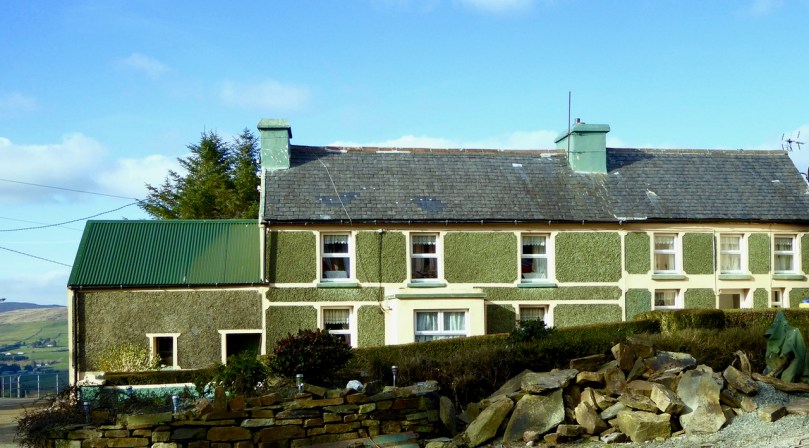
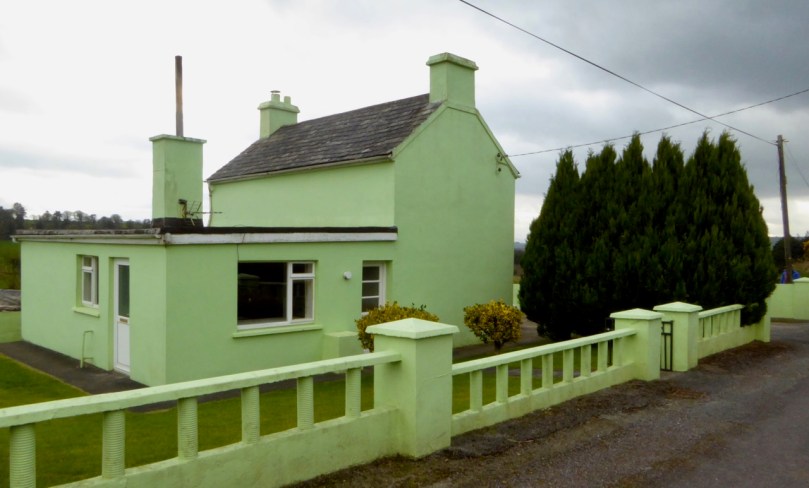
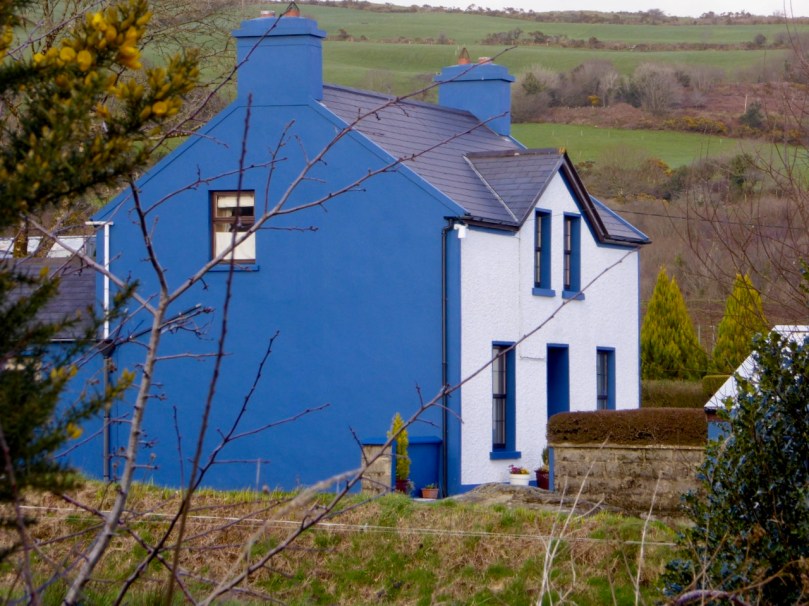
I love these two farmhouses, the first near Mount Kidd and the second near Coppeen

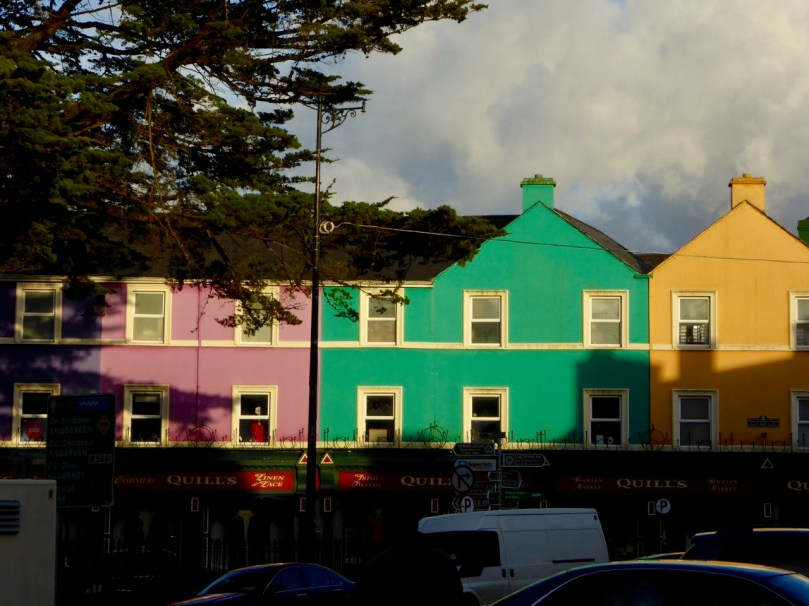
But in village streets, and especially when combined with the other colours of the streetscape, they can be as cheerful and arresting as the stronger hues around them.

Eyeries (top) and Kenmare (bottom)

There are shades of blue and green that people argue over – one will call it blue and another green.

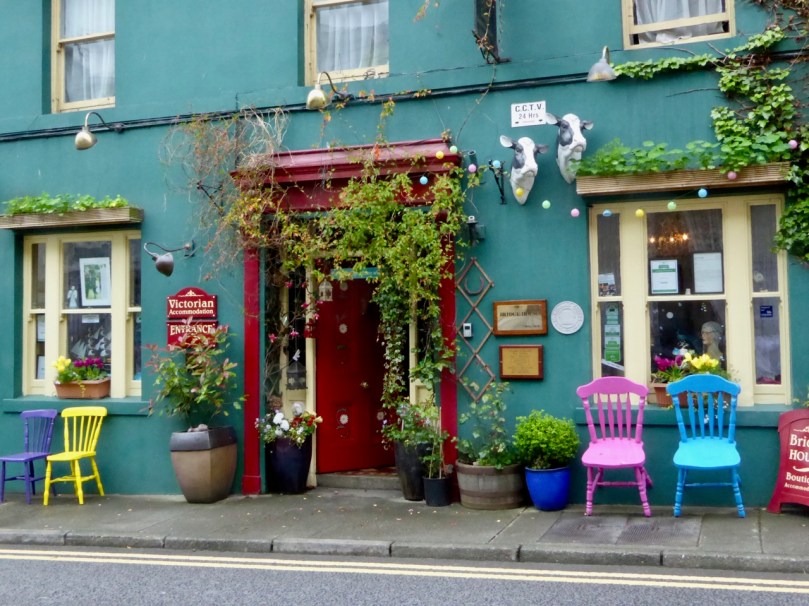
The fabulous Bridge House in Skibbereen – blue or green?

Those are the teals, ceruleans and turquoises, and St Patrick’s Blue, which is the colour of the Aer Lingus uniforms.

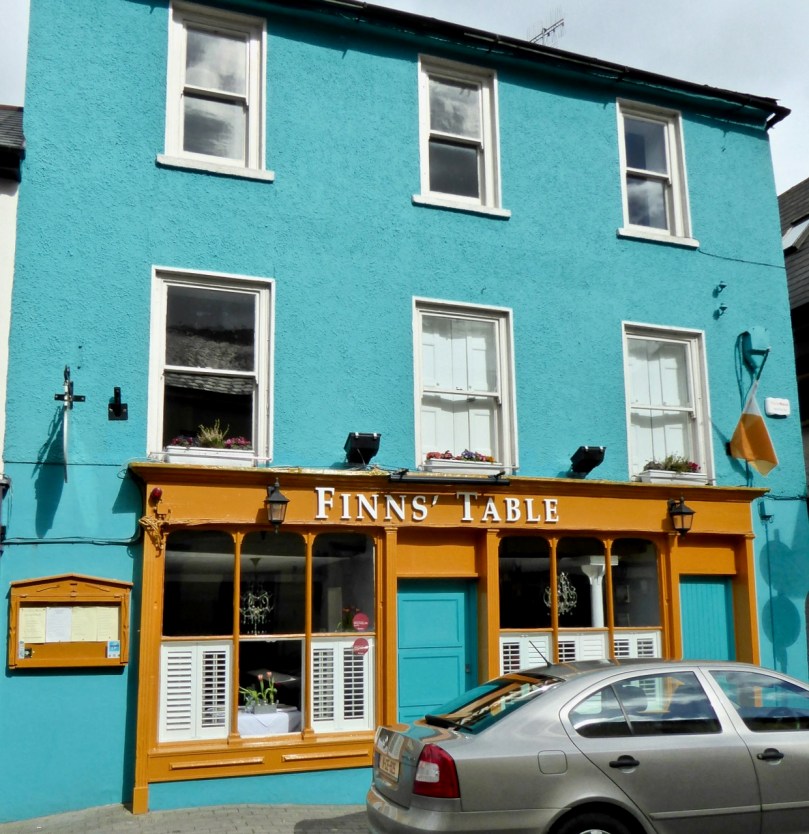
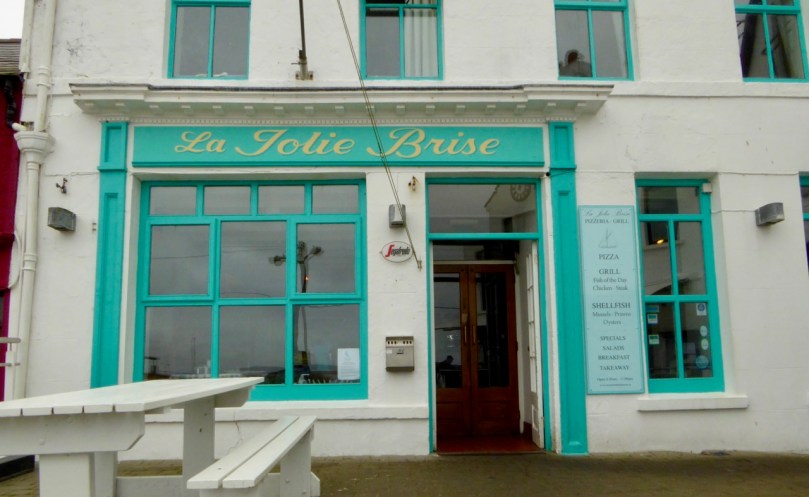
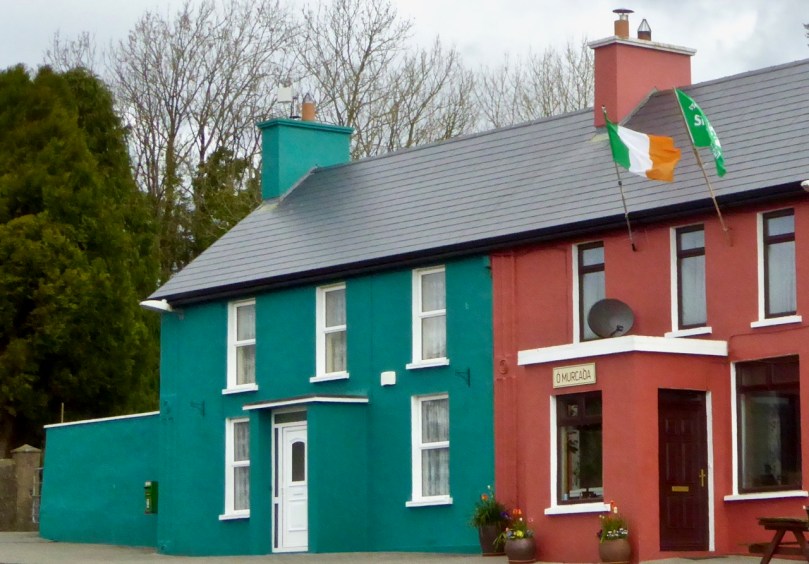
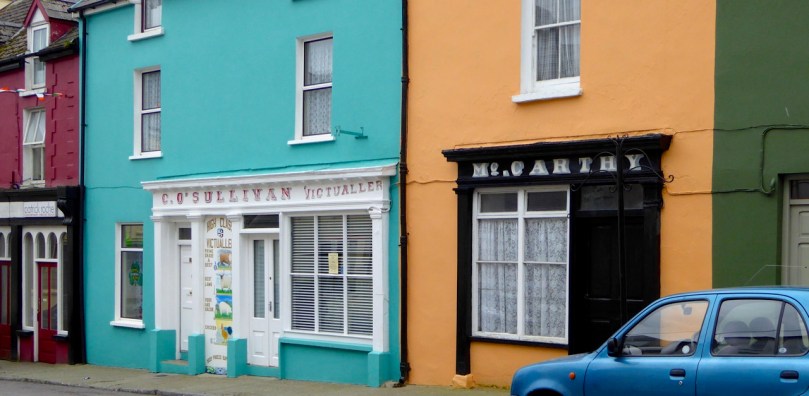
Finn’s Table in Kinsale, La Jolie Brise in Baltimore and a lovely brick and teal combo in North Cork

O’Sullivan’s butcher shop in Ballydehob has been closed for years, but it still retails its welcoming colours and graphics

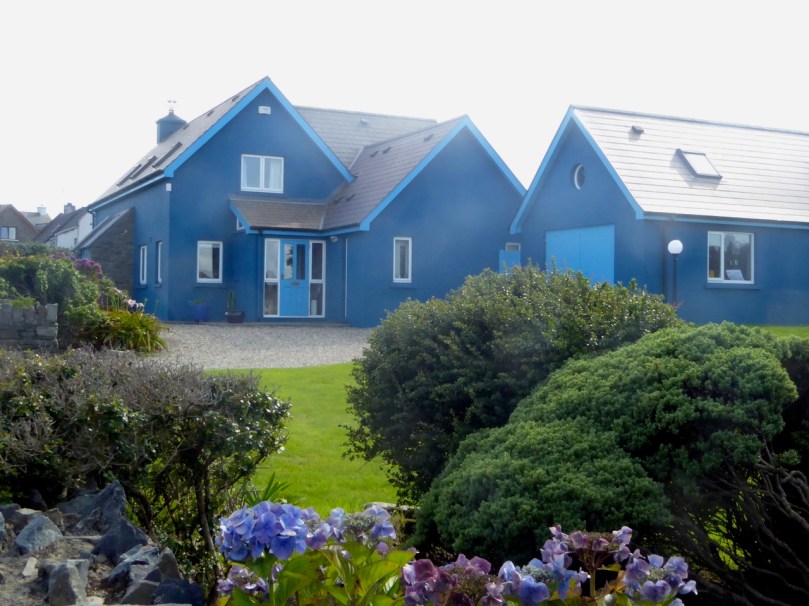
True blues vary from the strong dark ultramarines and navy blues through the denims, duck eggs, periwinkles, sky blues and on to the paler shades and baby blues.

The first house is in Baltimore, the one underneath it was glimpsed somewhere on our travels

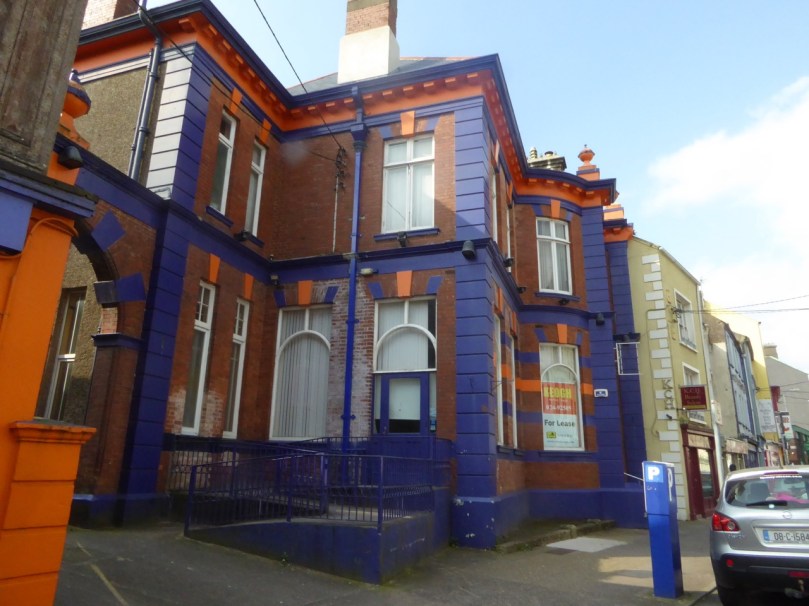
Blue matches well with other colours and is often used in combination. Some of the nicest buildings we’ve seen use blue with another colour to great effect.

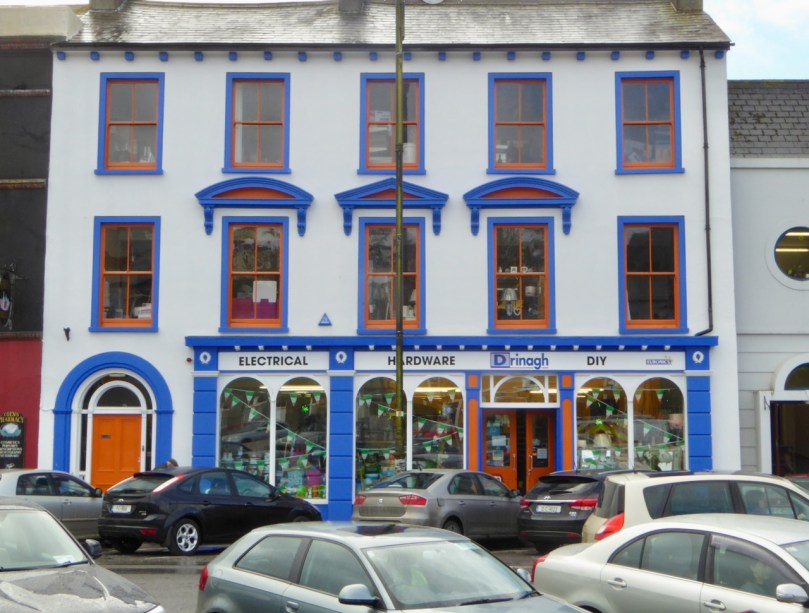
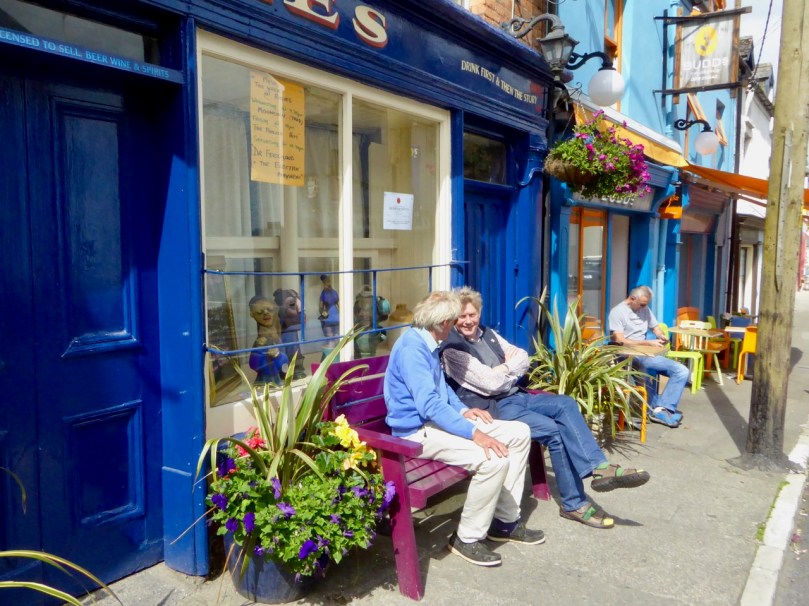
Three wonderful buildings that use blue in combination with orange tones – a bank in Youghal, a hardware store in Bantry and our own Budd’s Restaurant in Ballydehob (with Rosies pub for good measure)

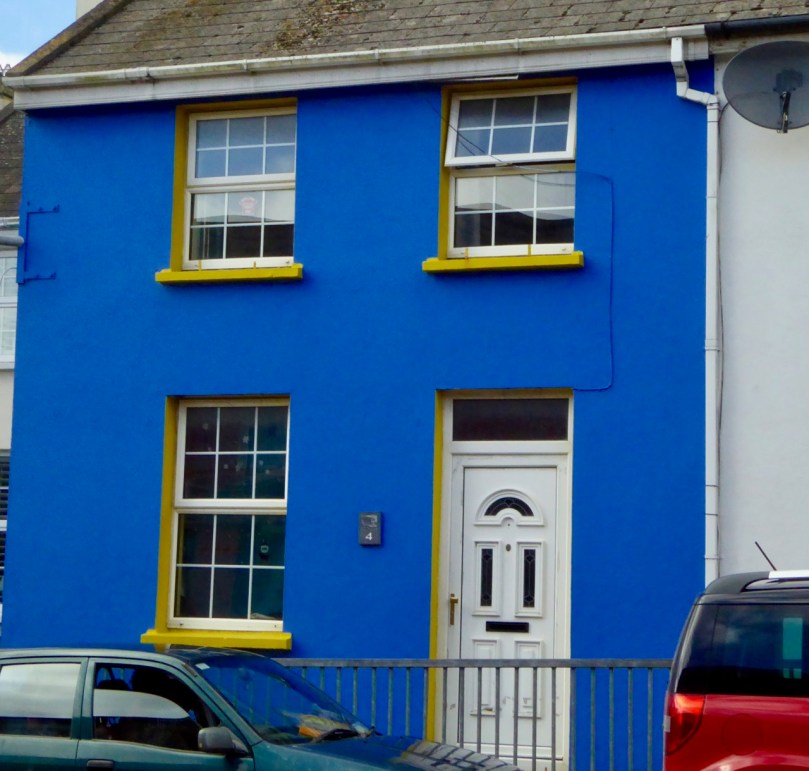
Yellow trim is a tried and true favourite
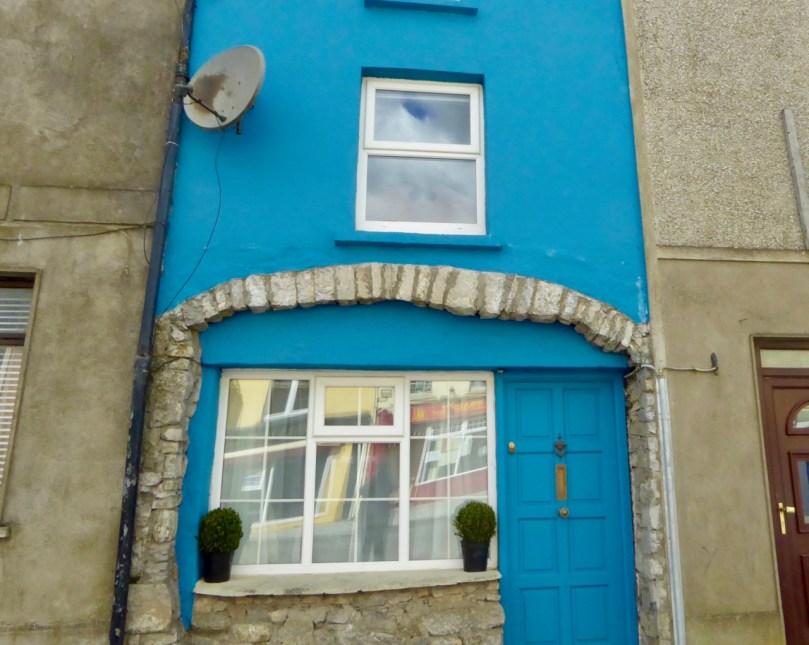
It might be one of the smallest houses I’ve seen, but it stands out when painted in blue
Blues and greens in Kilbrittain 
This one near Castle Donovan uses a strong blue cleverly as both a main and a trim colour

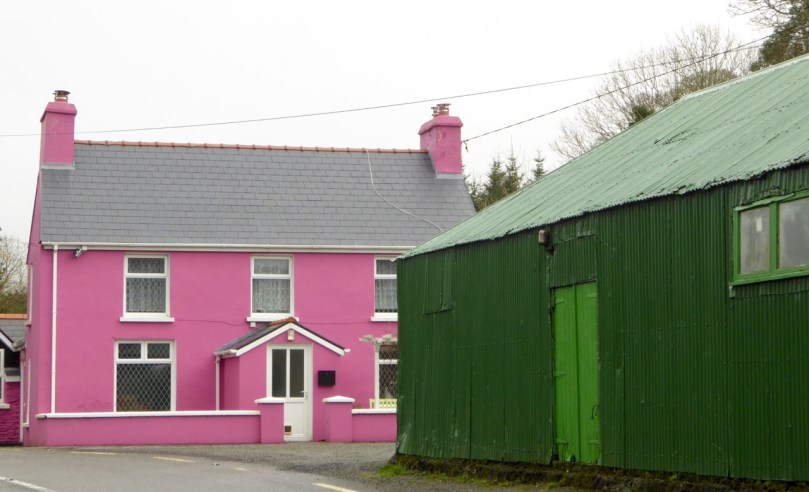
I’ve decided to end this series with this photograph of two side-by-side buildings in Adrigole on the Beara Peninsula.  The juxtaposition of the strong green and the vivid pink proves that when it comes to colour, anything can work!

Here Be Pirates!

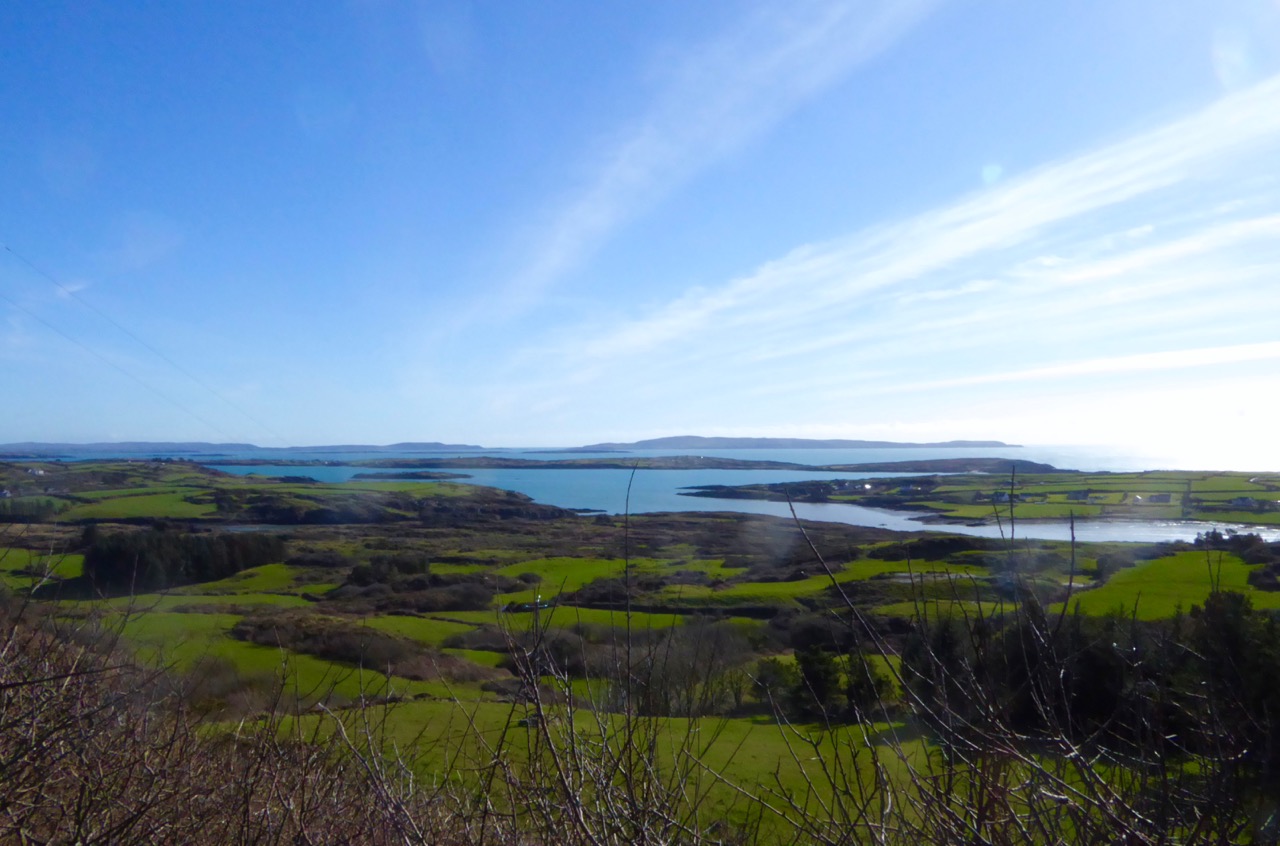
Crough Bay in the townland of Leamcon – one of the sheltered and hidden moorings which became known as a pirates’ nest in the late sixteenth and early seventeenth centuries. This is a view of part of the former estate of Sir William Hull who, as Vice Admiral of Munster, was charged with routing the pirates but in fact connived with them for his own financial gain

…Ireland may well be called the nursery and storehouse of pirates… wrote Sir Henry Mainwaring in a manuscript now in the British Museum (A Discourse of Pirates, on the suppression of piracy 1618). He had first-hand knowledge: this adventurer who was born in the time of Elizabeth spent most of his life at sea, survived the English Civil War – although on the losing side – and had been privateer, pirate and Royal Naval captain. He died at the age of 66 with his feet on dry land, although in poverty and exile in France.

map of baltimore

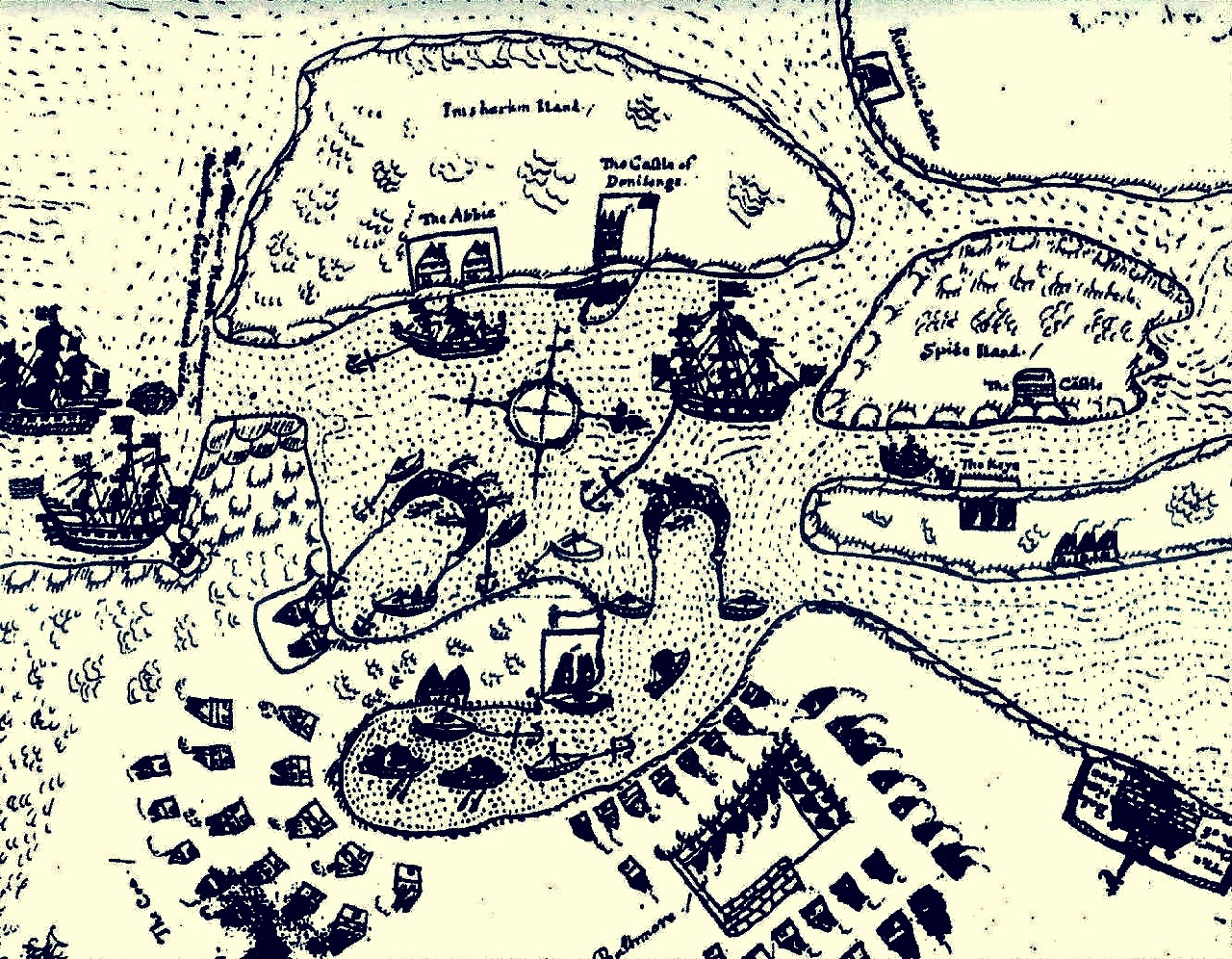
The Earl of Cork’s map of Baltimore,1628 –  following well-founded fears of ‘Turk’ raids he petitioned the Admiralty to fortify the coastal settlements. He was ignored and in 1631 the town was sacked and burned by Barbary pirates who carried away over 100 of the residents to the slave markets in Morroco

My possible ancestor Captain James Harris of Bristol died with his feet in the air: he was hanged at Wapping, in the estuary of the Thames, with 16 other pirates in December 1609. They had been captured in Baltimore, in sight of Roaringwater Bay. Why was it that Ireland – and, in particular, this coastline of west Cork was the notorious harbourer of pirates from all over Europe?

behold leamcon

According to Mainwaring, the west of Ireland was enticing because food and men were abundant; fewer naval ships patrolled the coast [than in England]; many of the local inhabitants were willing to trade with the pirates; and there was a …good store of English, Scottish, and Irish wenches which resort unto them… 

1611 John Speed map – Roaringwater

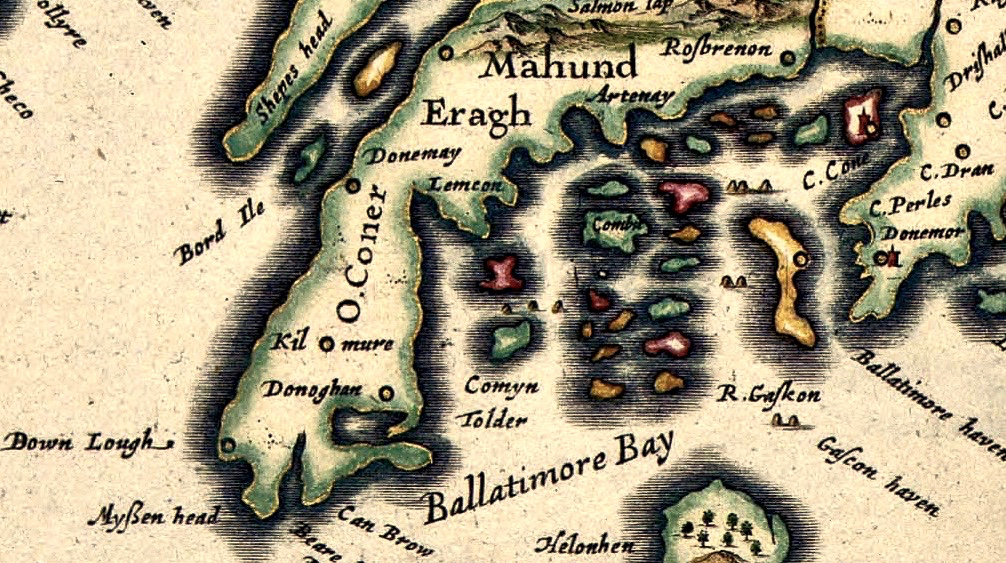
John Speed’s map of 1611 which portrays ‘Ballatimore Bay’ and Carbery’s Hundred Islands – ideal territory for concealing pirates. Note the curious geography, the names of the Irish clans and some of the places we recognise today: Rossbrenon (Rosbrin); Lemcon; Shepes Head and Myssen Head

The coast of west Cork, in particular, was eminently suitable for sheltering ships in need of careening and victualling: bays, coves, inlets and estuaries abound and Carbery’s Hundred Isles (in fact many more than a hundred but it depends on what you count as an island) offer refuges a-plenty. In Captain Harris’s time there was only one naval ship patrolling the whole area from Kinsale around to Bantry and beyond – and this was the Tremontane – an ancient leaky pinnace which could be easily outrun by any respectable pirate crew. All the more unfortunate, then, for my forebear and his band who fell into the hands of the authorities, no doubt through some act of treachery or double-dealing.

Captain Harris’s family paid to retrieve his body from the gallows at Execution Dock (above left) and gave him a Christian burial. It was more usual for the bodies to be immersed by ‘three high tides’ before being disposed of. In particularly notorious cases the corpses were tarred and then hung in gibbets (iron cages – above right) to remain in public view. Captain Kidd was displayed this way for at least forty years after his death in 1701.

pirate ship

…The Irish folk surreptitiously colluded with pirates. When a captain needed supplies, he sent word of his needs. The reply to his note told him where he might find “so many Beeves or other refreshments as he shall need” on a specific night. When he and his men came ashore, they were to fire upon those who tended the herd, which allowed the herders to claim that they had been forced to hand over the cattle. Later on, he secretly landed “the goods or money in exchange, which by custom, they expect must be 2 or 3 times the value” If the pirates desired arms and/or ammunition and the Irish had any, they traded those items, too… (from Pirates and Privateers – The History of Maritime Piracy – an excellent online resource compiled by Cindy Vallar).

If you would like to learn more about Pirates in west Cork (and to listen to some great music) come along to the Fastnet Maritime + Folk Festival in Ballydehob this weekend 17th – 19th June: Robert is giving an illustrated talk on William Hull and the Leamcon Pirates’ Nest on Saturday 18th at 2.30pm in the Old Bank Building

Slides or Jigs? Polkas or Reels?

young fiddler close

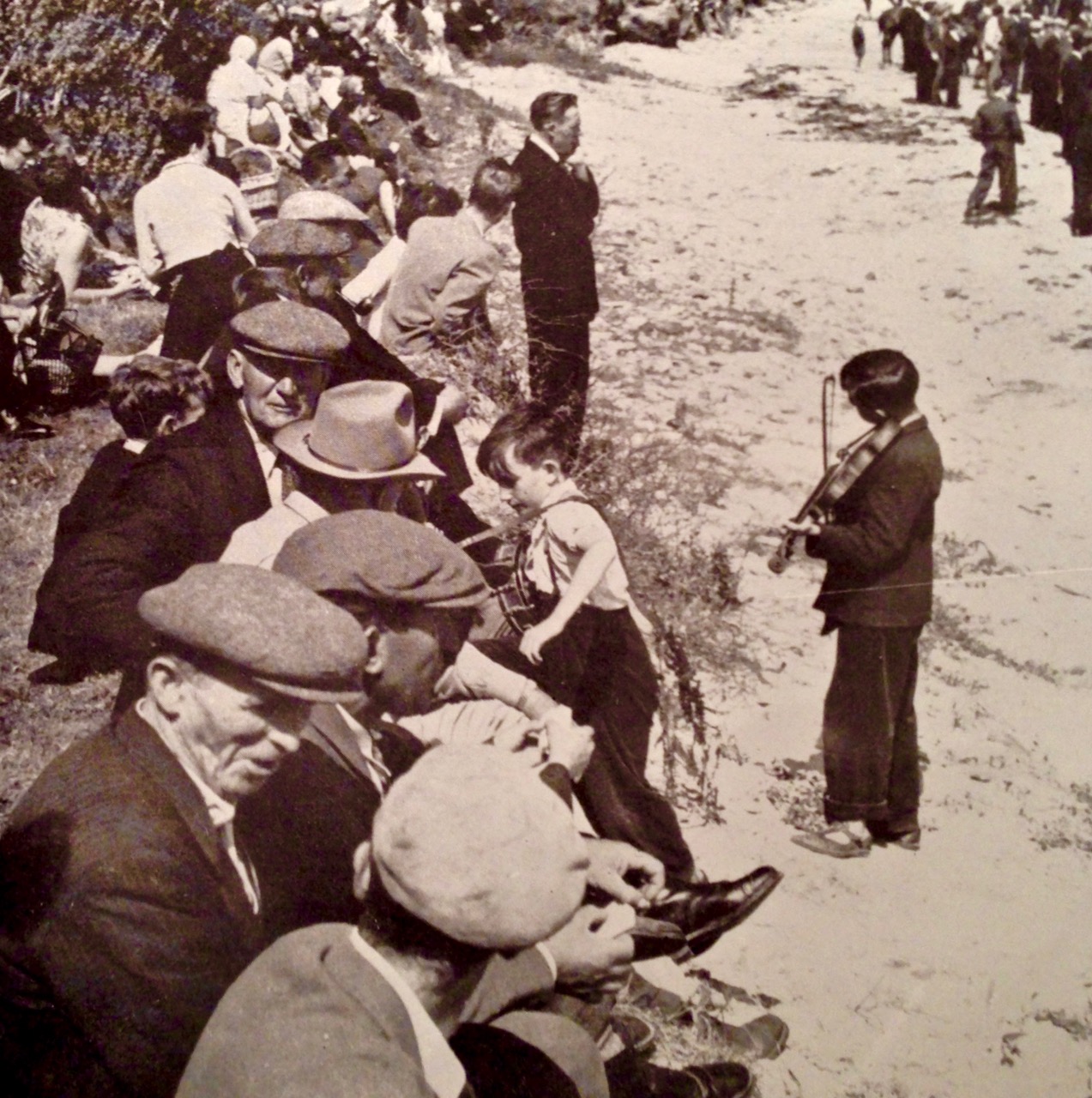
Two young musicians – from the collection of Tomás Ó Muircheartaigh, who documented life in rural Ireland between the 1930s and the 1950s. We do not know at what outdoor gathering this atmospheric picture was taken, but perhaps there is a polka or a slide being played there…

Way back in the last century (it was the nineteen seventies actually) I first came to Ireland in pursuit of traditional music. I found it a-plenty. At that time, the music of the Sliabh Luachra was very much in vogue: local sessions and Fleadh Ceols were full of polkas and slides…

Classic recordings of traditional music collected from the Sliabh Luachra during the sixties and seventies: The Star above the Garter is published by Claddagh, while the others are from the Topic Record catalogue

My post last week came to you from the City of Shrone, which is within this area, in the border country of Cork, Kerry and Limerick. The strong surviving music traditions here have an unmistakeable character – fast and lively. I was reminded of that tradition this week when I came to the wonderful Fiddle Fair in Baltimore and listened to Tony O’Connell from the Sliabh Luachra in recital with Brid Harper, a highly regarded Donegal fiddler. They are an excellent duo – here’s a little taster from that concert (Kerry Slides):

As an aspiring concertina player myself I was bowled over by Tony’s playing, especially of the quintessential Kerry slides. But what is a slide you might ask? And how do you tell a slide from a jig?

Saturday’s recital in Saint Matthew’s Church, Baltimore: Brid Harper and Tony O’Connell playing Kerry Slides

Here’s some help, extracted from discussion boards, specifically on the subject of slides and jigs:

…Uninitiated listeners and even some tune-book editors have mistaken slides as hornpipes, single jigs, polkas, or double jigs, since slides share various traits with each. Once you know a few, you realise they are distinct from any of those…

…Note that slides are peculiar to the Southwest of Ireland, and some are directly related to double jigs, single jigs, or hornpipes played elsewhere in Ireland. Musicians quite familiar with slides are generally unfamiliar with single jigs, and some otherwise respectable authorities on the slide have rashly pronounced that single jigs “are the same as slides.” We can have some sympathy with that by understanding that these musicians simply use the term “single jig” to mean “slide,” and are apparently unaware of the existence of the distinctive “single jig” rhythm in Irish music. Over the course of the 20th century the customary notation for slides shifted from 6/8 to 12/8, which I think is an improvement in accuracy…

Both these statements (from irishtune.info) tell us about the confusion between jigs and slides, but they don’t tell us exactly how you define either of them. Let’s try this, from the same source, regarding slides:

…The tempo is rather quick, often in the 150 bpm range, if you were to count each heavy-light pair as a beat. But in practice each beat of a slide (counting around 75 bpm now) gets two pulses, which is either a heavy-light pair (very close to an accurate “quarter note, eighth note” distribution) or a quite even triplet – not a jig pattern. Thus if all four group-halves in a bar were triplets – which is uncommon – you’d have a twelve-note bar. The ratio of heavy-light pairs to triplets in a slide is slightly in favour of the pairs, which again clearly distinguishes them from double jigs. Most slides break the pattern once or twice in a tune by delaying the strong note for a bar’s second group until that group’s second half, creating a cross-rhythm with respect to the foot taps. Other unique characteristics of slides are not necessary additional information for identifying them – only for playing them…!

I’ve puzzled over this (and other advice) for some time: I sort of understand it, but I think it’s impossible to describe a rhythm in words… However, I was pleased to find this mnemonic for slides by the poet Ciaran Carson – it says it all:

“blah dithery dump a doodle scattery idle fortunoodle”

gougane

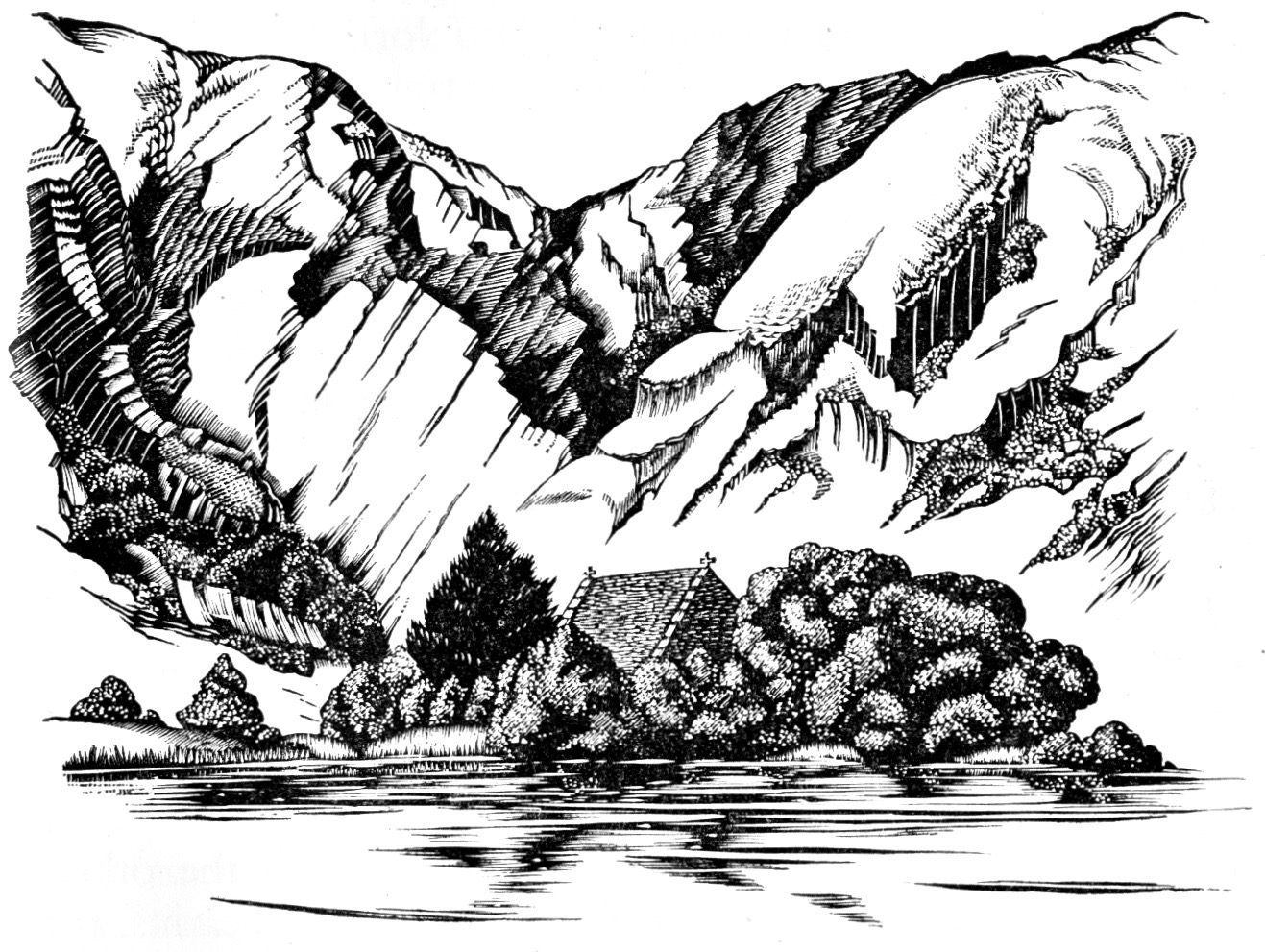
An evocative engraving of Gougane Barra, in the Sliabh Luachra, by artist and writer Robert Gibbings, taken from Lovely is the Lee, J M Dent, 1945

How about polkas and reels? Polkas, in particular, are popular in the Sliabh Luachra tradition:

…The polka is one of the most popular traditional folk dances in Ireland, particularly in Sliabh Luachra. Many of the figures of Irish set dances are danced to polkas. Introduced to Ireland in the late 19th century, there are today hundreds of Irish polka tunes, which are most frequently played on the fiddle or button accordion. The Irish polka is dance music form in 2/4, typically 32 bars in length and subdivided into four parts, each 8 bars in length and played AABB. Irish polkas are typically played fast, at over 130 bpm, usually with an off-beat accent… (Also from irishtune.info)

Reels are probably the most popular tune type within the Irish traditional dance music tradition:

…Reel music is notated in simple meter, either as 2/2 or 4/4. All reels have the same structure, consisting largely of quaver (eighth note) movement with an accent on the first and third beats of the bar…

fiddle fair outdoors

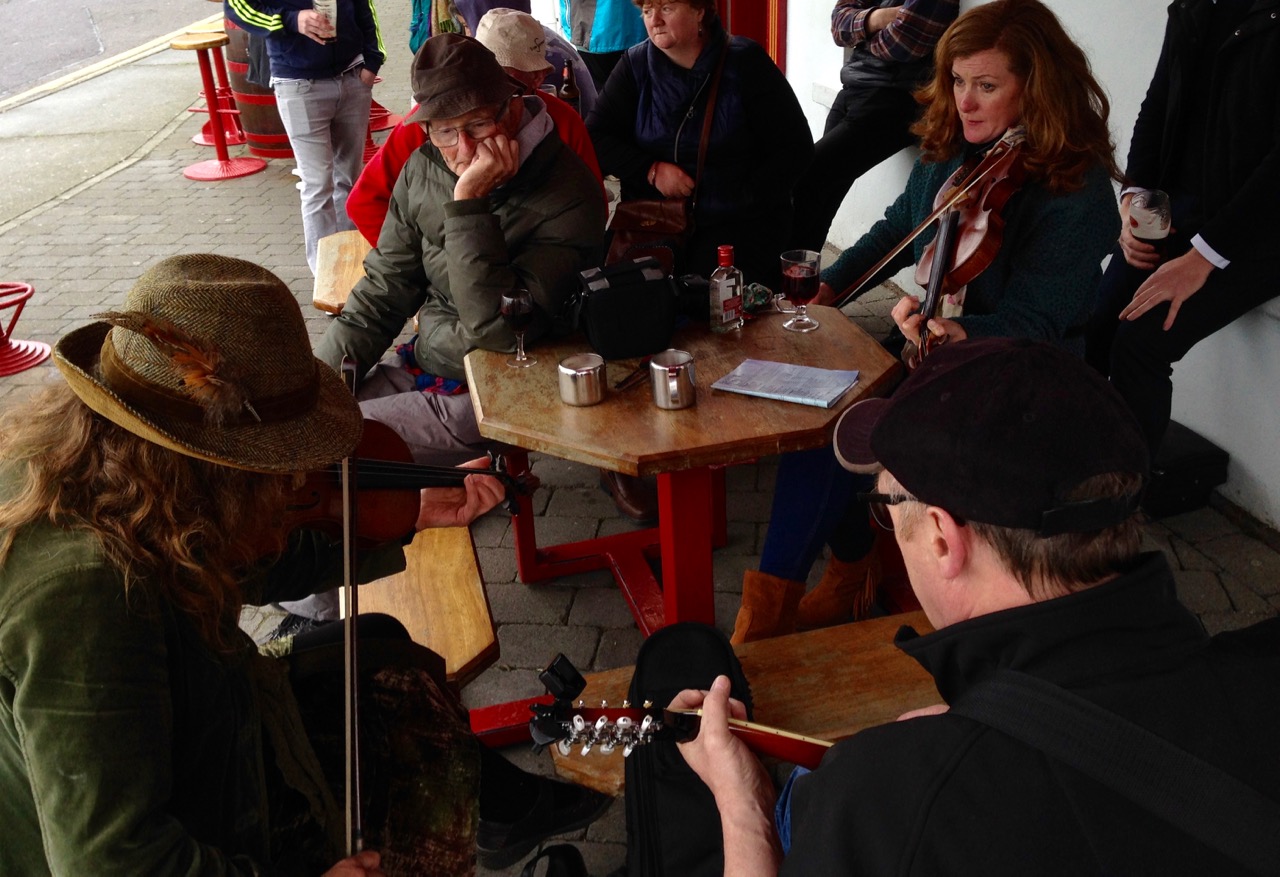
At the Baltimore Fiddle Fair, informal sessions are essential interludes

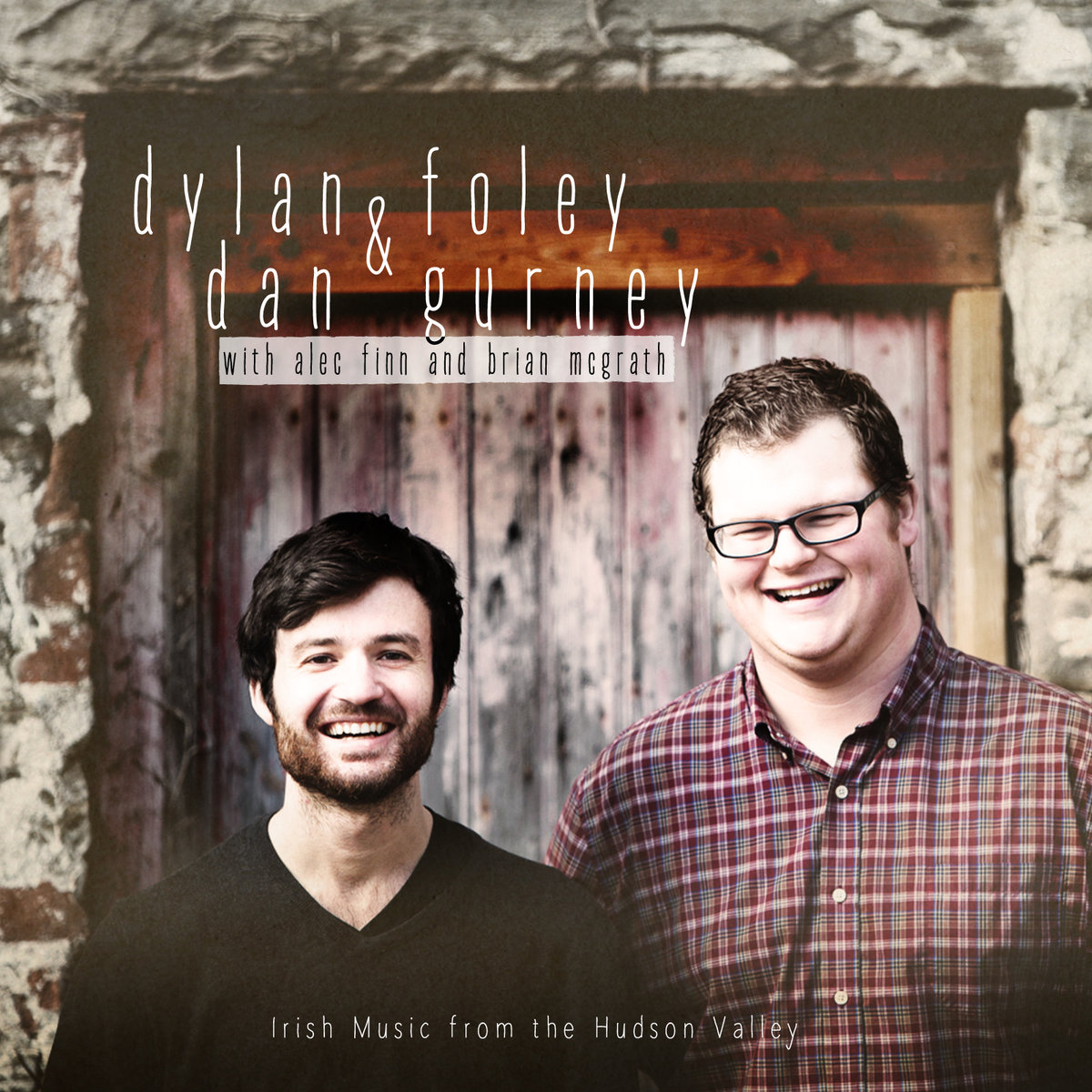
Definitions are all very well and these can only be generalisations. In the end it’s what is being played – and what you hear – that counts. For me, the music in Ireland is like history: it’s built into the landscape and the psyche. Irish people are survivors and have travelled all over the world and back. So has the music! This was emphasised today when we had another excellent recital in the church by Dylan Foley and Dan Gurney, fiddle and accordion.

foley gurney

They both come from the Southern Catskill Mountains in New York State. Much of the Irish music they play was learnt directly from Father Charlie Coen who emigrated to the United States from the village of Woodford in County Galway in 1955, bringing the music traditions from East Galway with him. Here’s an excellent example of the music travelling across the world and back again: Fr Coen played The Moving Cloud reel on his concertina, but his instrument had some buttons missing so he adapted it, and the adapted tune is what we heard Foley and Gurney playing in the church today. Listen first to another Fiddle Fair maestro, Noel Hill playing the reel from his 1988 album The Irish Concertina:

Now the same reel which has travelled from Ireland to Baltimore via the Catskill Mountains:

I hope you can hear those ‘odd’ notes! But there’s nothing so right or so wrong in Irish music: the grand finale for us today was a memorable concert with French Canadian fiddler Pierre Schryer, Donegal box player Dermot Byrne and Australian born guitarist Steve Cooney. They played music with an Irish bias but harvested from many traditions. It left us breathless…

Oldcourt

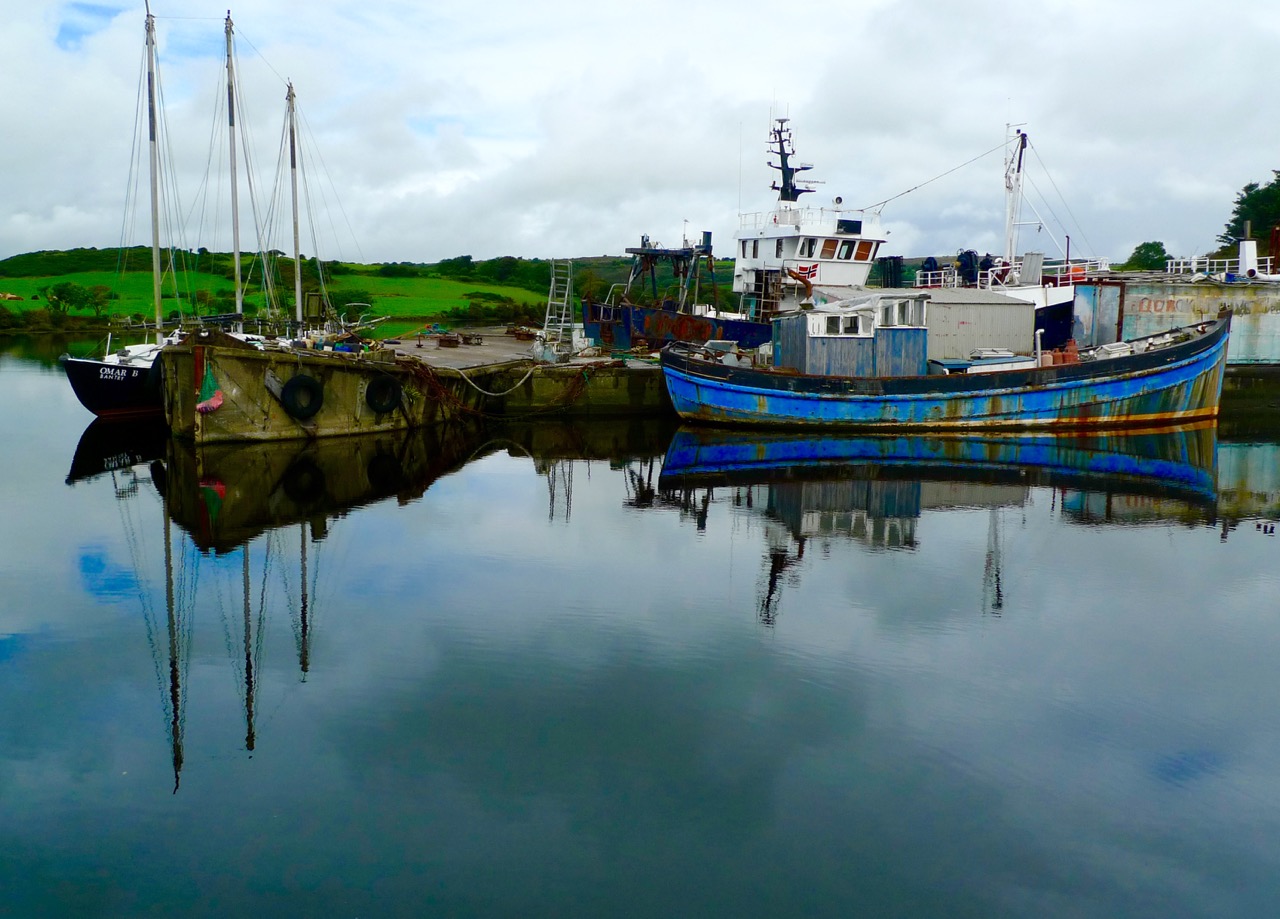
red hull

…At Oldcourt a boat-building yard flourished within the walls of an old O’Driscoll castle overlooking the pier and river. Schooners and steamships used to anchor at this spot, the highest point they could travel up the river. Here their cargoes of coal and other supplies were unloaded and placed on specially built lighters with a small draught that would be poled along a further sluggish turn or two upstream to the pier at Skibbereen. In this way cargoes of cattle were brought up by islanders to be sold at the market… (description of the townland of Oldcourt from The Coast of West Cork by Peter Somerville-Large 1974)

gentle Ilen

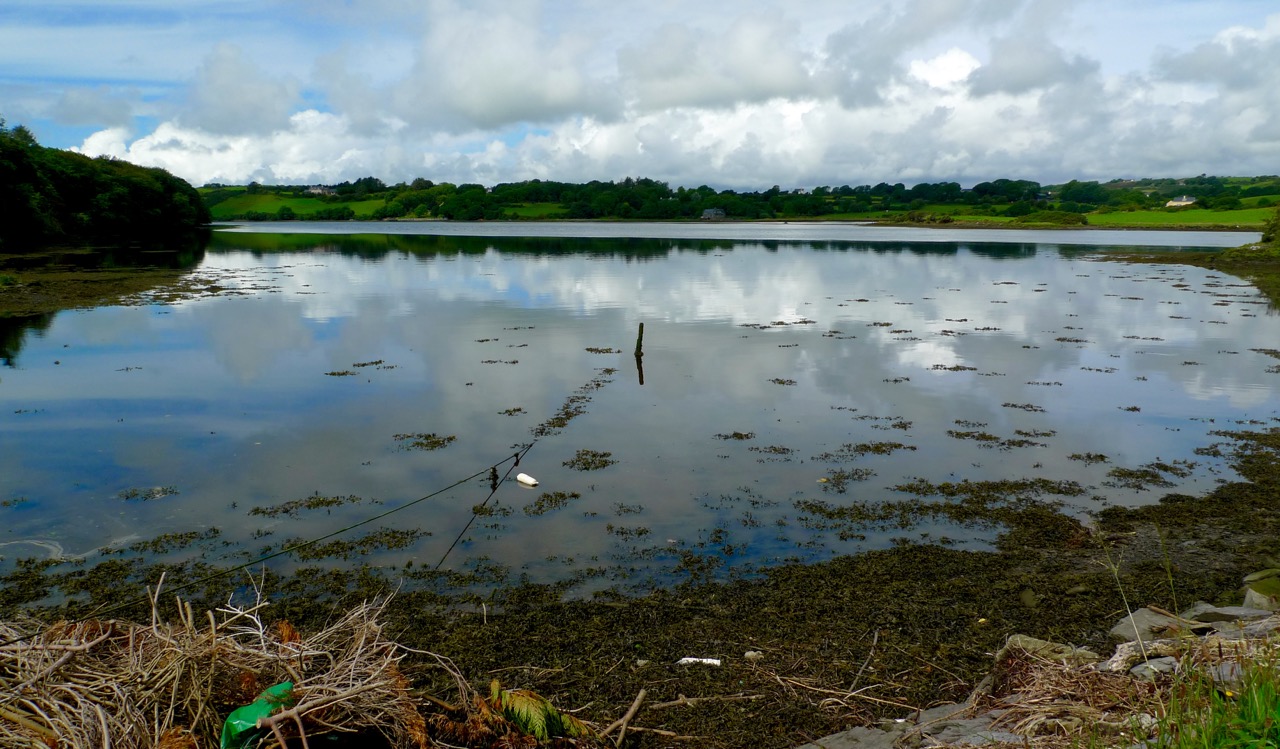
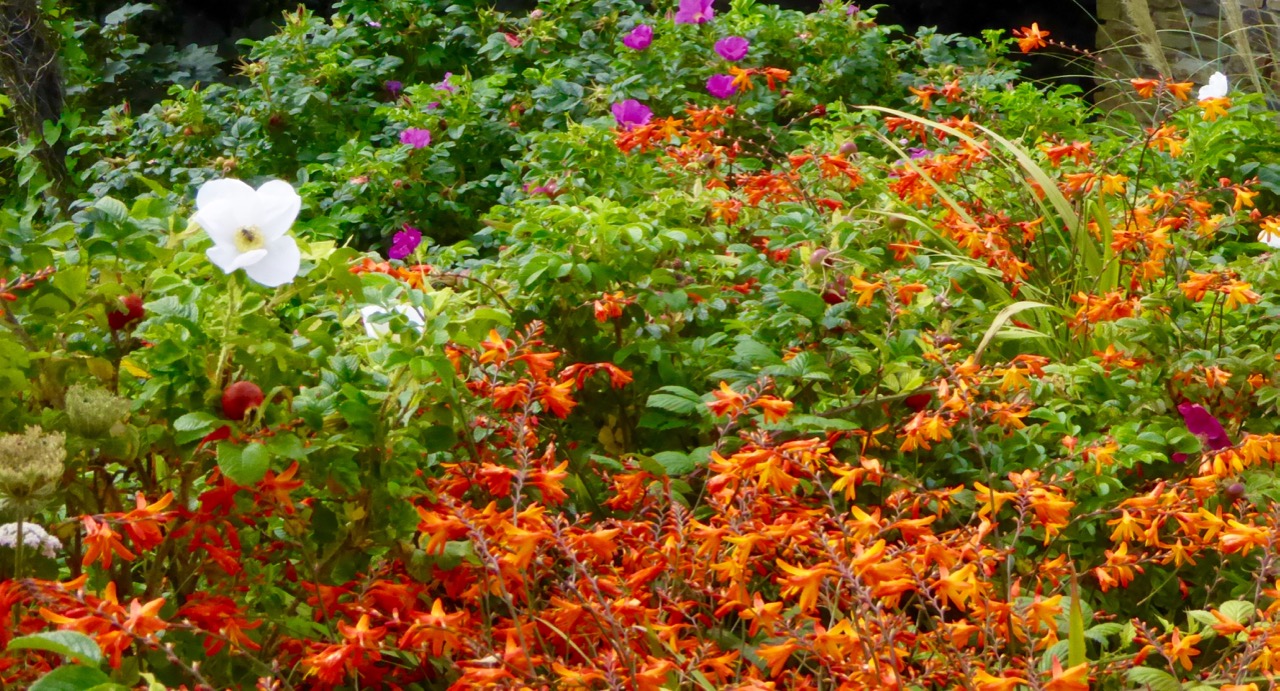
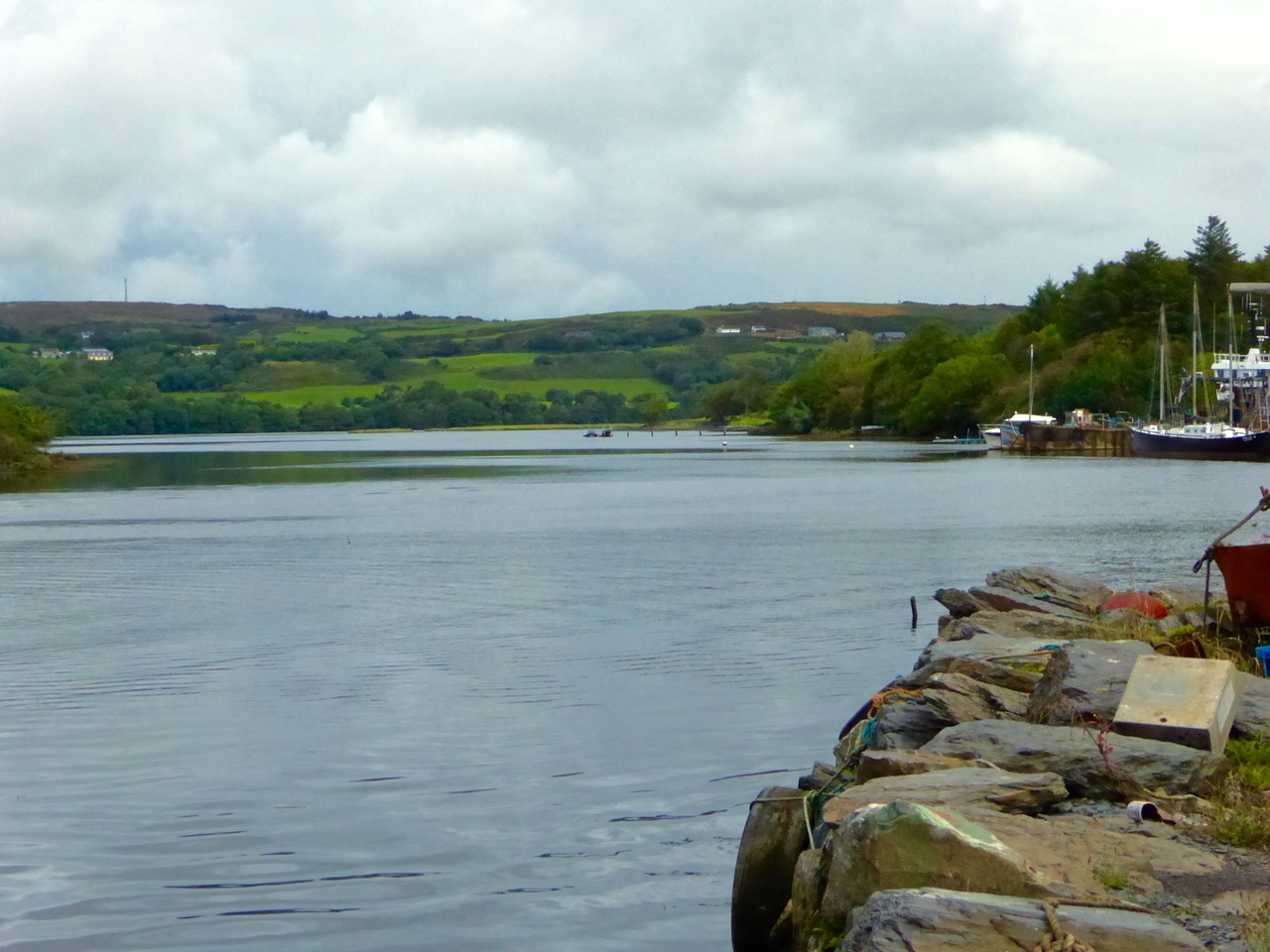
The tidal River Ilen making its lazy way out to Roaringwater Bay on a late summer evening has a melancholy beauty: it is wide and slow and – mid tide – is a perfect mirror to the sky. The sounds of Oystercatchers and Curlews coming over the water always bring thoughts of autumn: the harvest is ready to cut, the verges are brilliantly orange with the montbretia and the hedges purple-red and weighed down with fuscia.

Montbretia

wide river

We went down to Oldcourt to seek out history and atmosphere. We knew that it had once been a transport hub for the transhipments of goods and we wanted to see what might be visible from those earlier times. It was the river Ilen (pronounced eye-len) that gave birth to Skibbereen following a pirate raid on Baltimore in 1631. According to Skibbereen historian Gerald O’Brien …in the wake of the shock of that – the most daring pirate raid mounted against Britain or Ireland – a small number of survivors rowed upstream to resettle in the safety of the Ilen Valley. The role of this river-borne migration from Baltimore [was] a factor in the foundation of Skibbereen… (Journal of the Skibbereen and District Historical Society, Vol 7, p 91).

reflections

beyond the bridge

rust

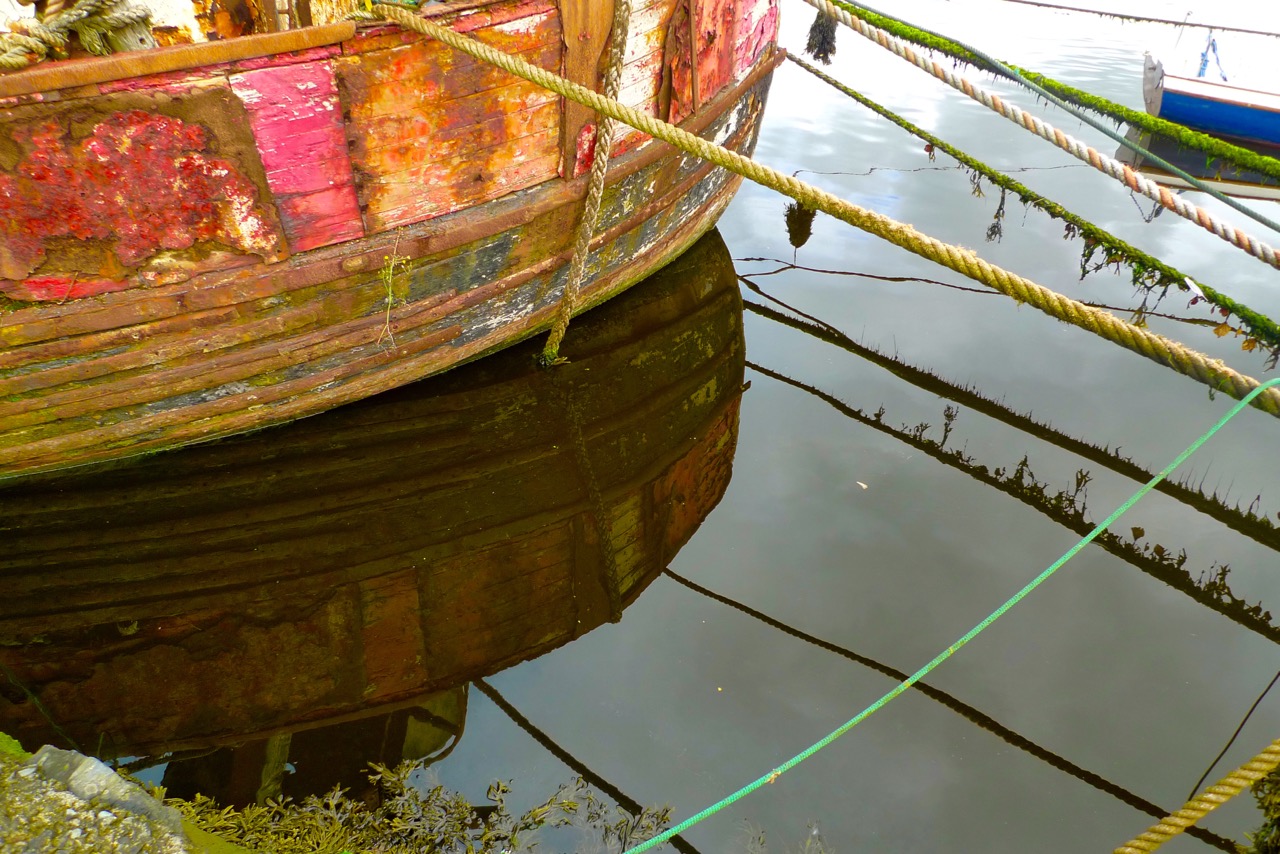
We found atmosphere a-plenty. On the upstream side of the wide inlet where the transhipment quays were sited is a streamlined modern boatyard where sleek yachts are wintered and serviced while, opposite and downstream, is a far more eclectic establishment surrounding and embracing the remains of the medieval castle and bawn: this is Hegarty’s – ‘…one of Ireland’s last surviving traditional boatyards…’

birdie in circle

Our aim was to search for the old quay and the medieval buildings which had been part of the castle demesne, but we were fascinated to pick our way through boats of all kinds – classic, sailing, fishing, ferrying – and boat paraphernalia: here an old decapitated wheelhouse, there a collection of masts, everywhere ropes and tackle…

green ropes

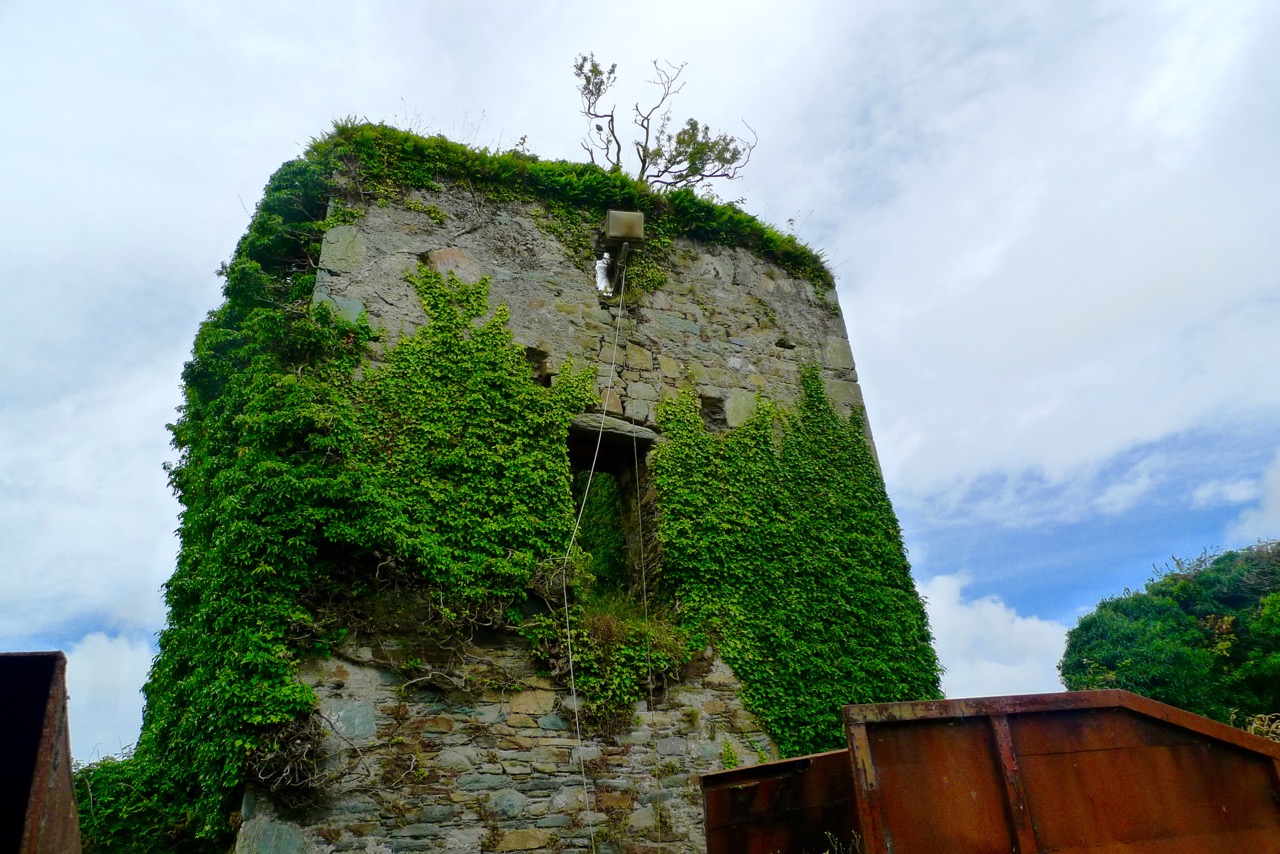
Oldcourt Castle is a tower house standing four storeys high but originally at least one storey higher, once surrounded by a bawn, some ruins of which remain. It was an O’Driscoll clan castle, probably dating from the 15th century, and was captured by English forces after the Battle of Kinsale in 1601.

Old Court Castle

Ilen and Castle

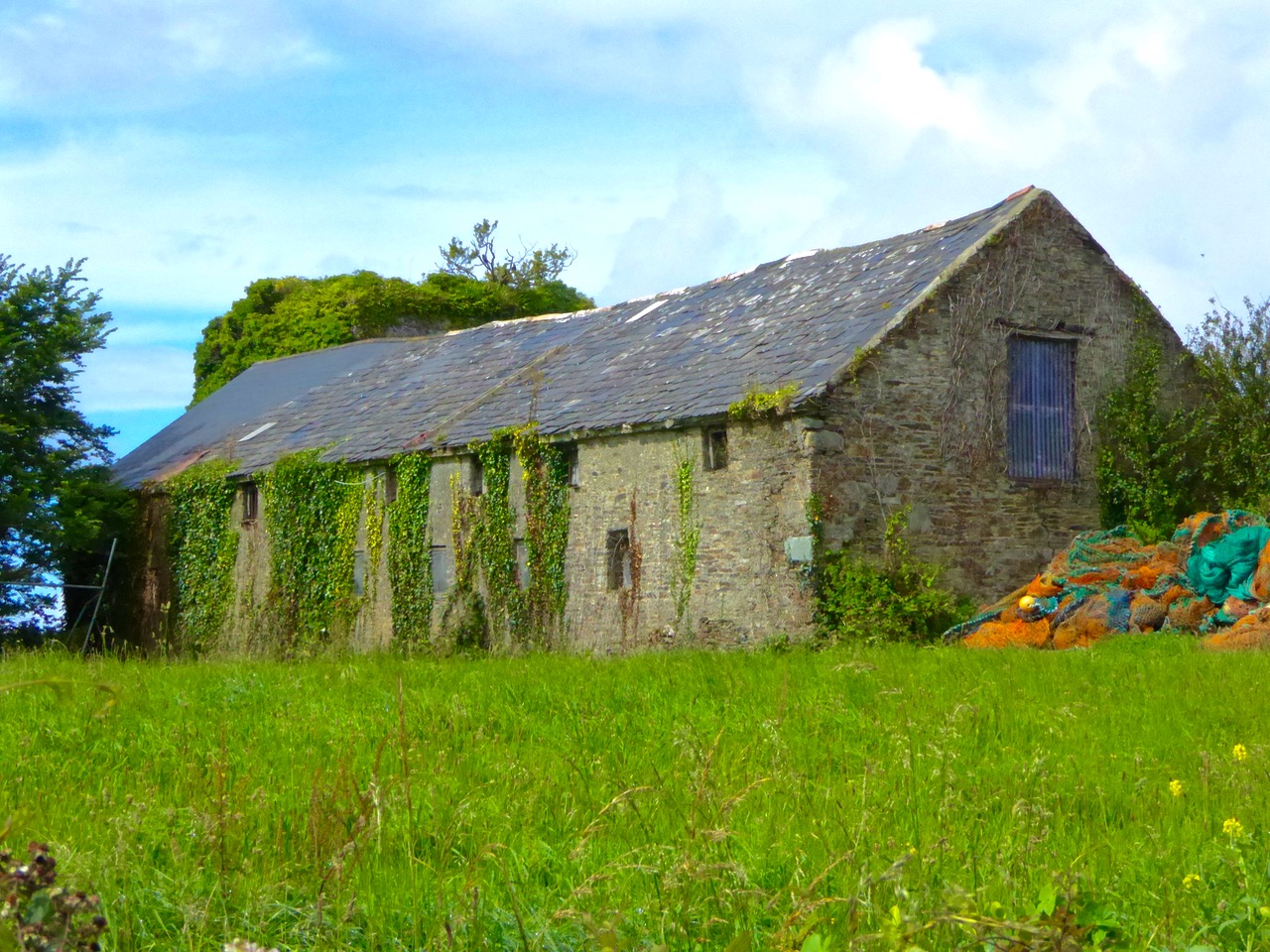
Part of the castle bawn was used as a grain store up to comparatively modern times: now it houses a fascinating boat restoration. The story begins with Connor O’Brien (1880-1952) whose ketch, the Saoirse, took him on a circumnavigation of the world between 1923 and 1925. On this journey he stopped off at Port Stanley in the Falkland Islands. The islanders were so impressed at the way the Saoirse rode the waves that they asked O’Brien to arrange the building of a similar boat. This was the Ilen, named after the river and estuary and registered at the port of Skibbereen in February 1926. She was 56 feet in length overall with a beam of 14 feet and a displacement of 45 tonnes. Connor set sail in August 1926 from Cape Clear, arriving at Port Stanley in January 1927 where he handed it over to the new owners, The Falkland Islands Company, in exchange for £1,500. There she remained until the early 1990s, carrying cargoes of stores, mail, passengers and sheep. Limerick man Gary McMahon found it abandoned on one of the islands and determined that it should return to its homeland for restoration. There was great excitement when he sailed the ketch back into Baltimore in 1998.  The refitting of this eighty-two year old vessel in the old bawn at Hegarty’s, Oldcourt, is now the centre of an educational project allowing people to experience first-hand the ancient skills of wooden boat building.grain store

ilenframesThe old grain store – formerly part of the Castle bawn – now houses the restoration project of the AK Ilen (above – courtesy of Roeboats)

Such a hive of activity at OIdcourt today… Echoes of busy days gone by when the schooners were arriving with their cargoes bound for the growing town of Skibbereen.

Ilen postage stamp