A Flying Priest, and Rolls of Butter

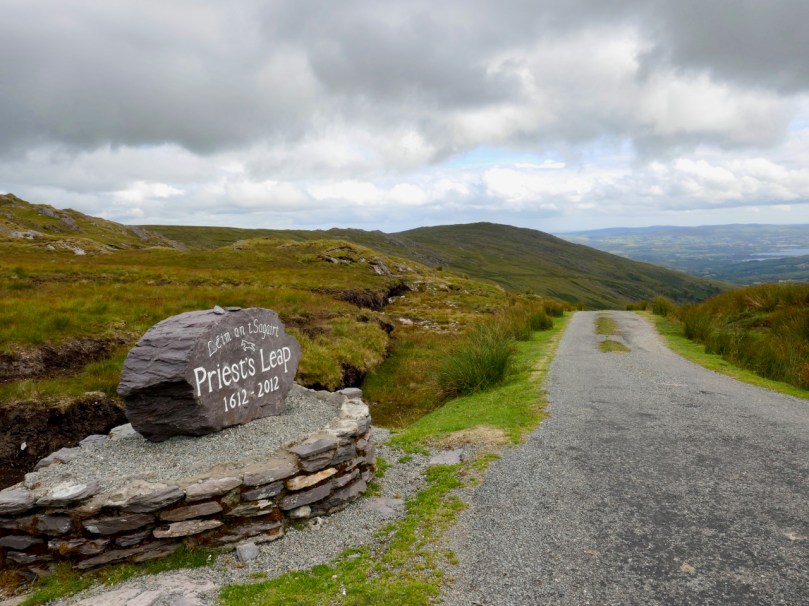
Last week Finola reported on a journey over the mountains on the ‘Priest’s Leap’ road from Kenmare, Co Kerry to Bantry, in West Cork. We received a fusilade of comments from readers who told us we hadn’t seen half of what there is to be found on this road so, on the very first day of September, we were off again, this time getting a different perspective by travelling the other way. Before we left Bantry we had to find the very spot where the priest – being pursued by soldiers – landed after he and his horse leapt off the highest summit of the road which has been named after him.
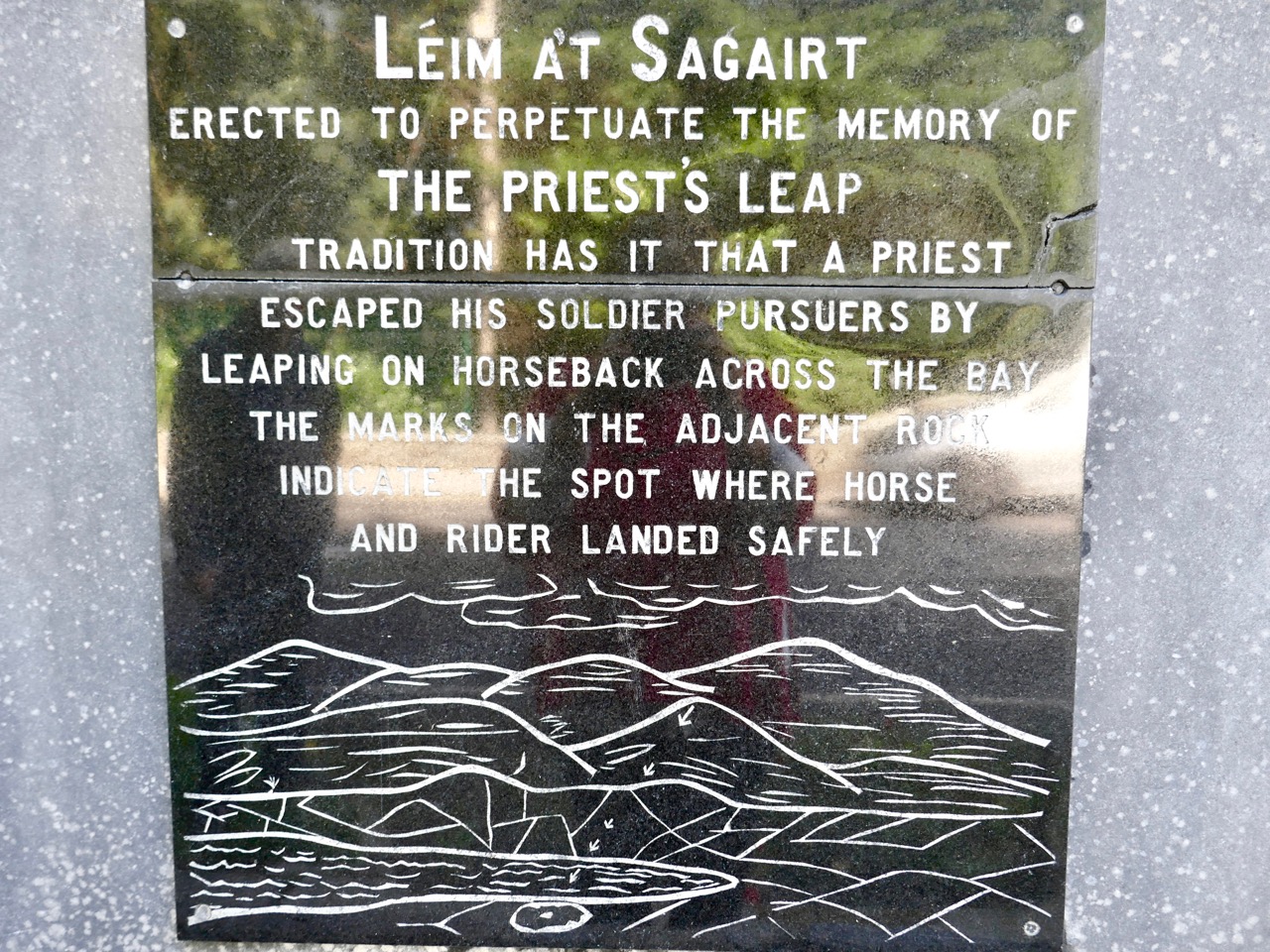
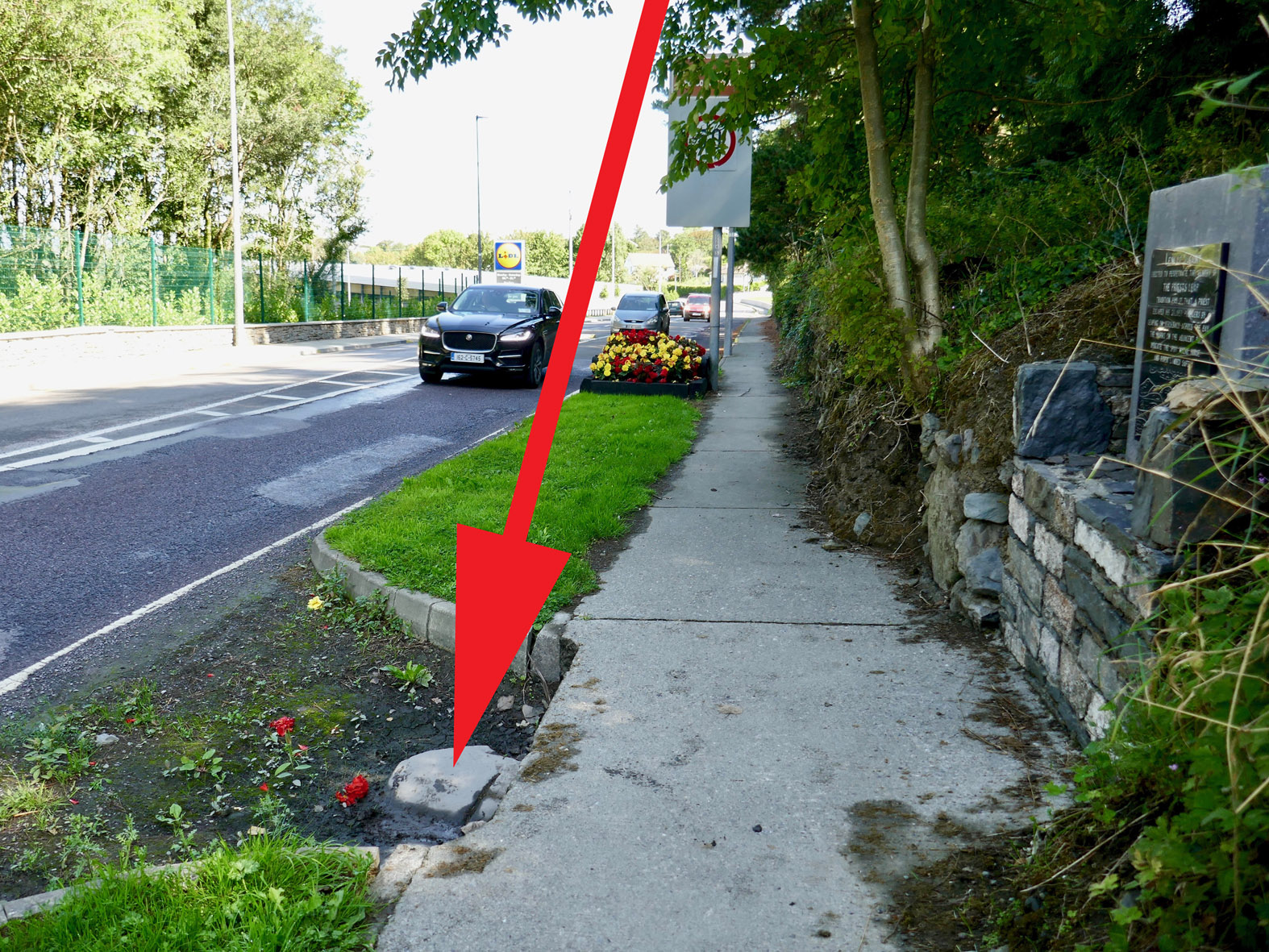
It’s great that this stone has been left untouched by the modern roadmakers, so that all can see the hoof marks to this day. I calculated that, 400 years ago, the priest was airborne for a distance of some 12 kilometres as the crow (or horse!) flies – considerably more than some of those early aviators of the 20th century were credited with!
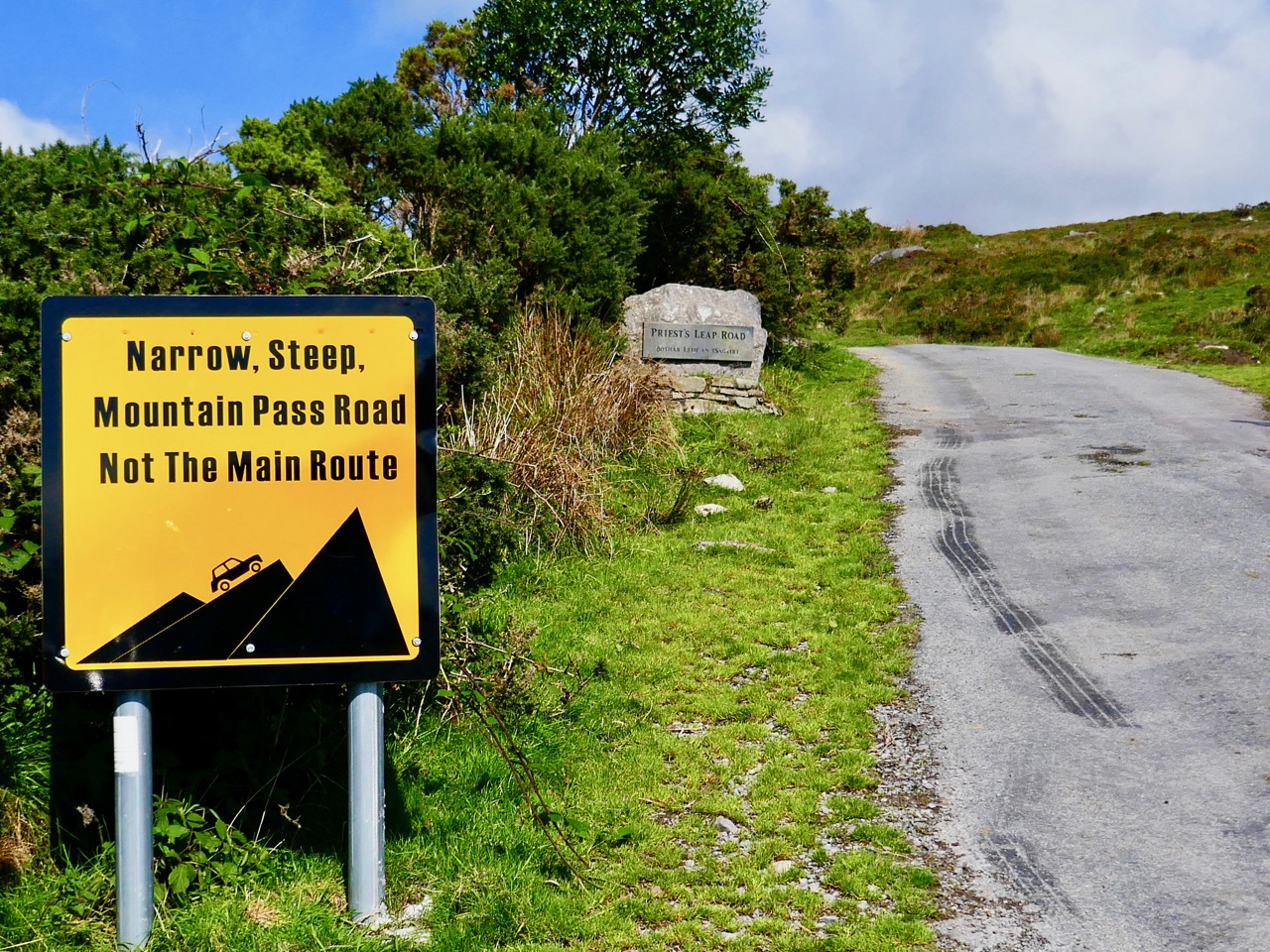
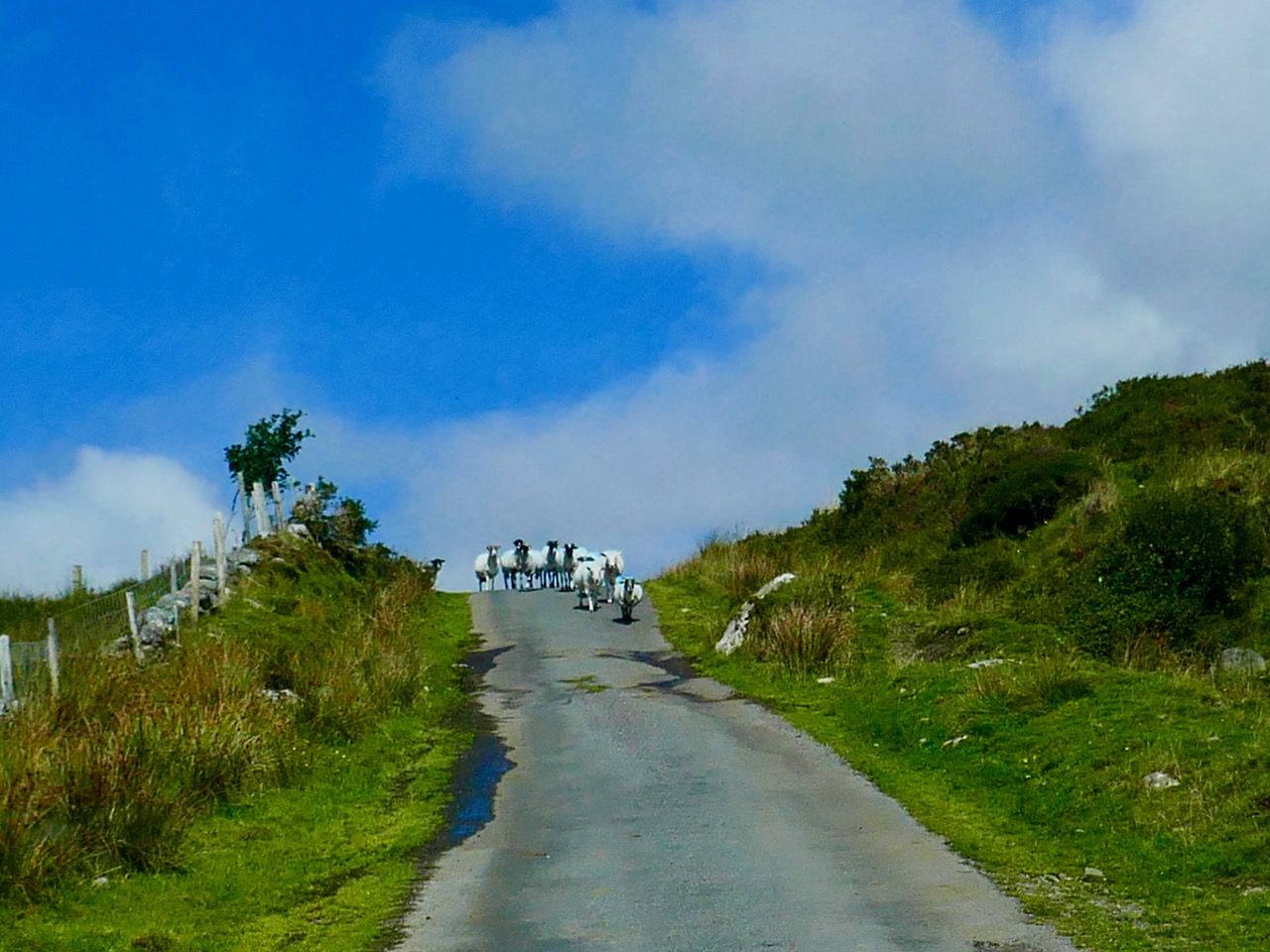
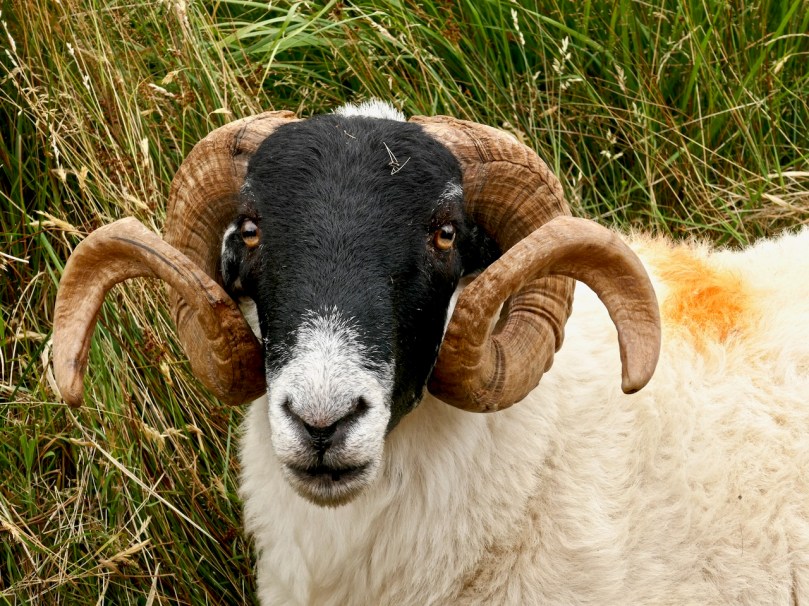
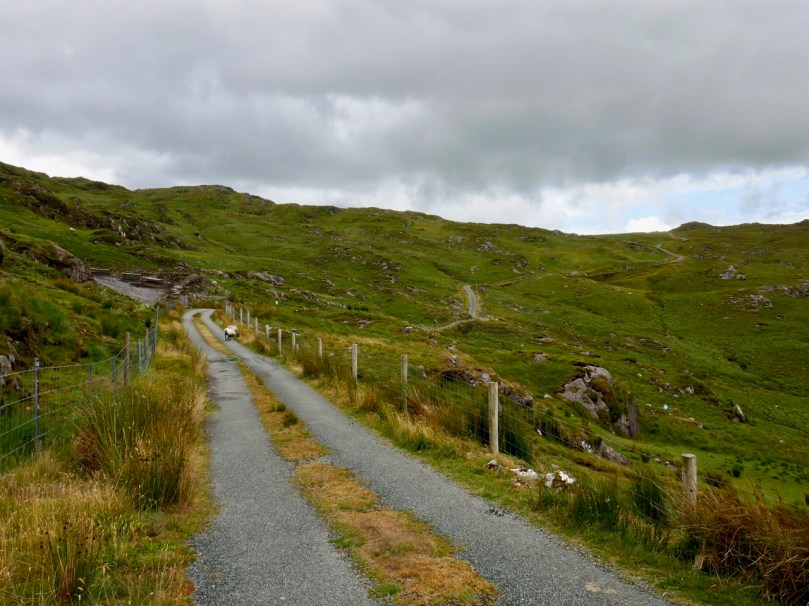
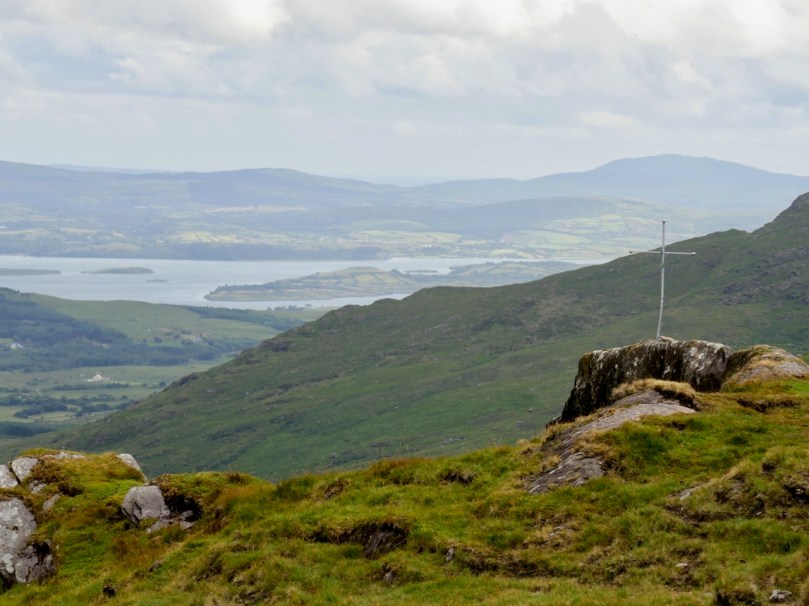
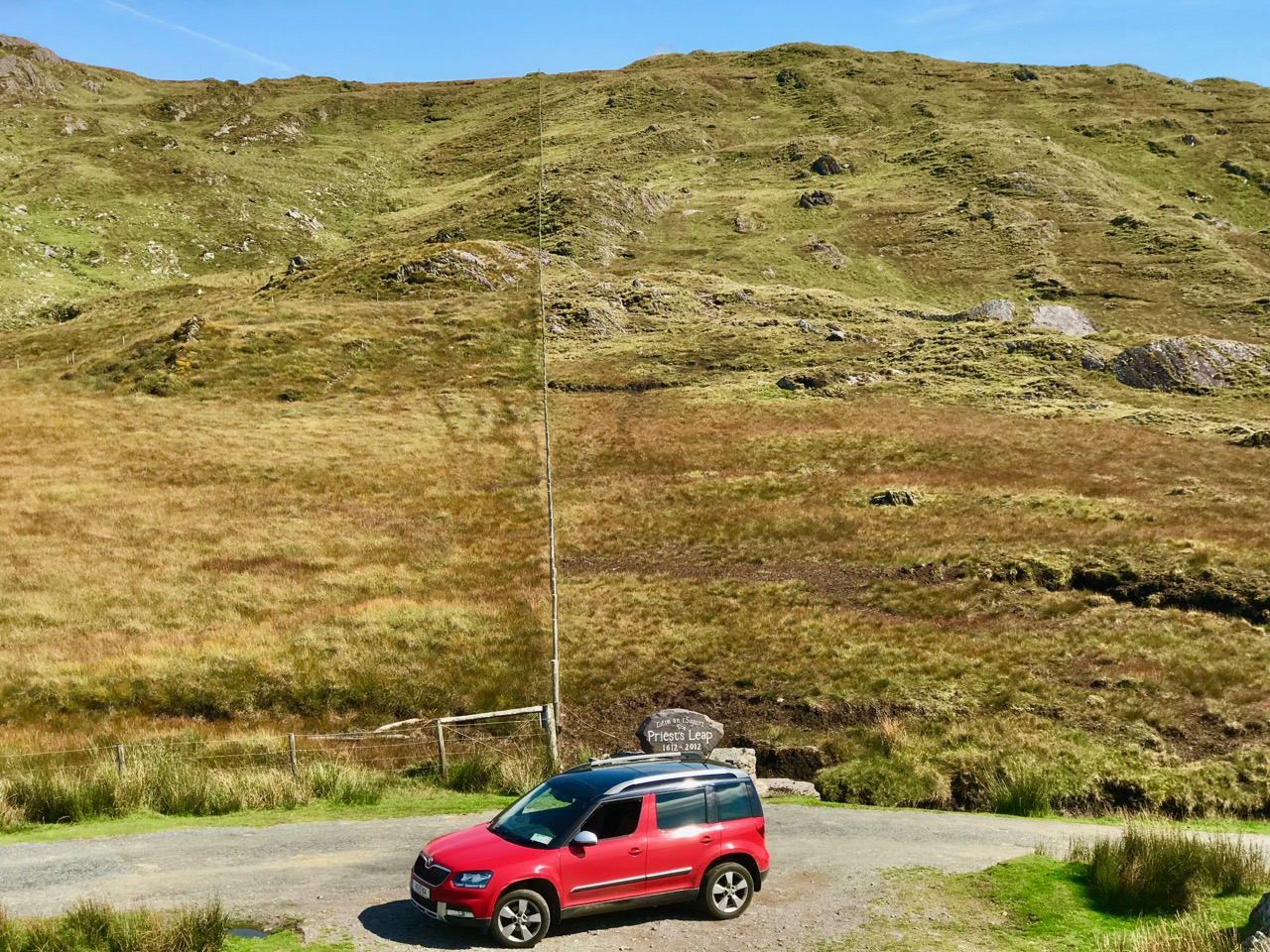
If you are not of a nervous disposition, and don’t mind travelling a narrow, single-track mountain road for some 15 kilometres, probably sharing it only with a few sheep, then to pass over this route is one of Ireland’s most spectacular experiences. Choose your day, though: we were lucky to have hot sun and clear views the whole way. If you survive it to the top, you are right on the Cork – Kerry border: in the photo below, the fence going on up the hill is exactly on that border line (and the point at which the priest and his horse took off is to the right of it at the peak). Stop and look around: the views in every direction are stunning.
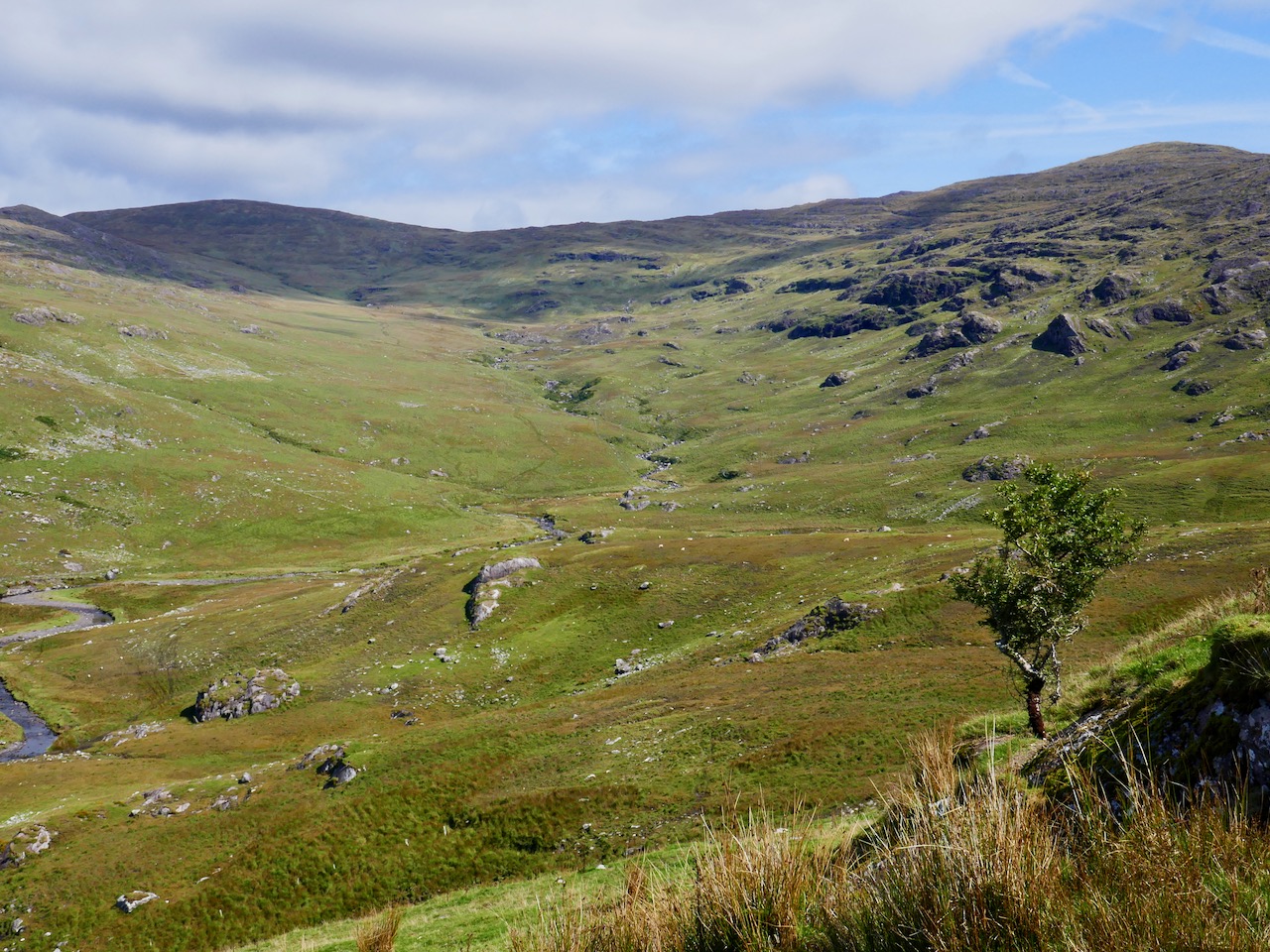
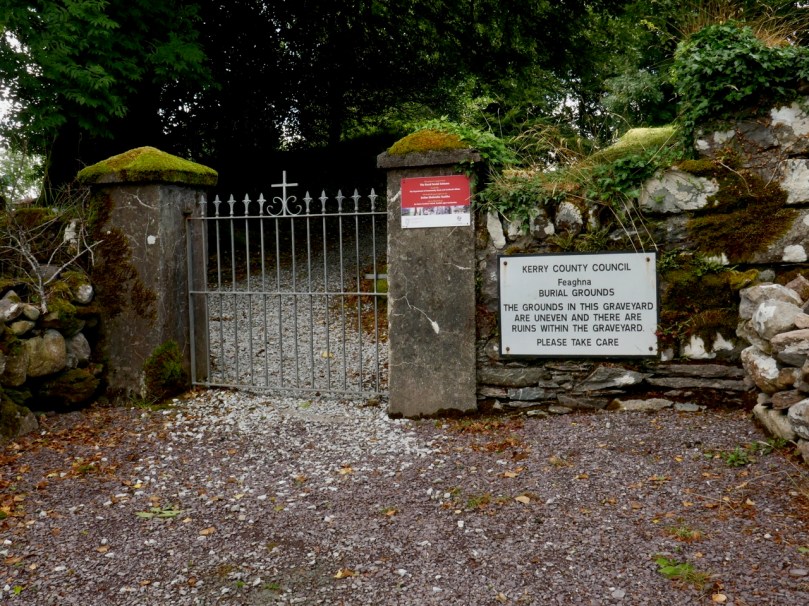
After we crossed the border into Kerry we came downhill and stopped again at the remote, picturesque Feaghna burial ground in the townland of Garranes. On our last visit we were completely unaware of the existence of an unusual archaeological site nearby – one which has a number of traditions associated with it.
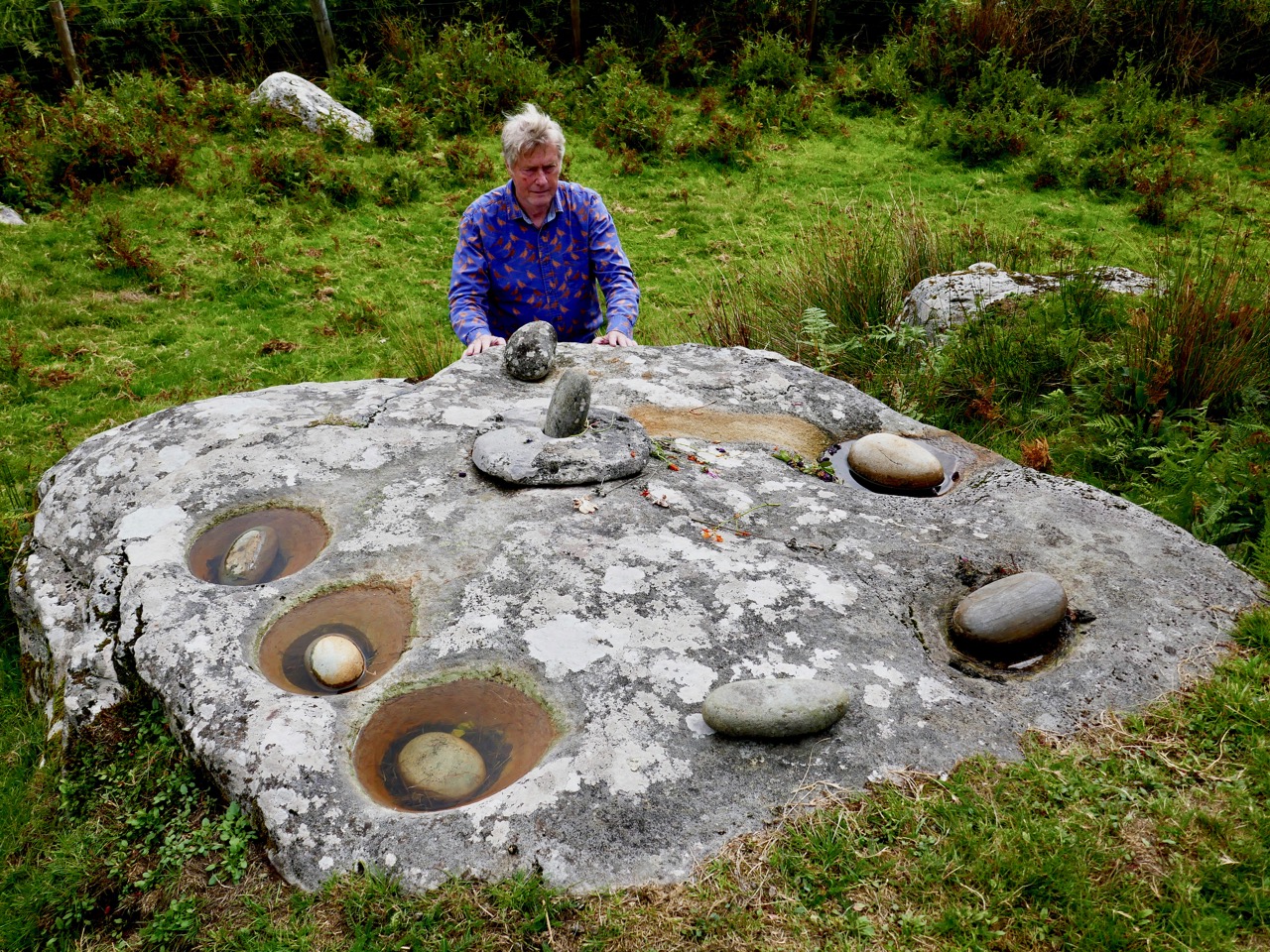
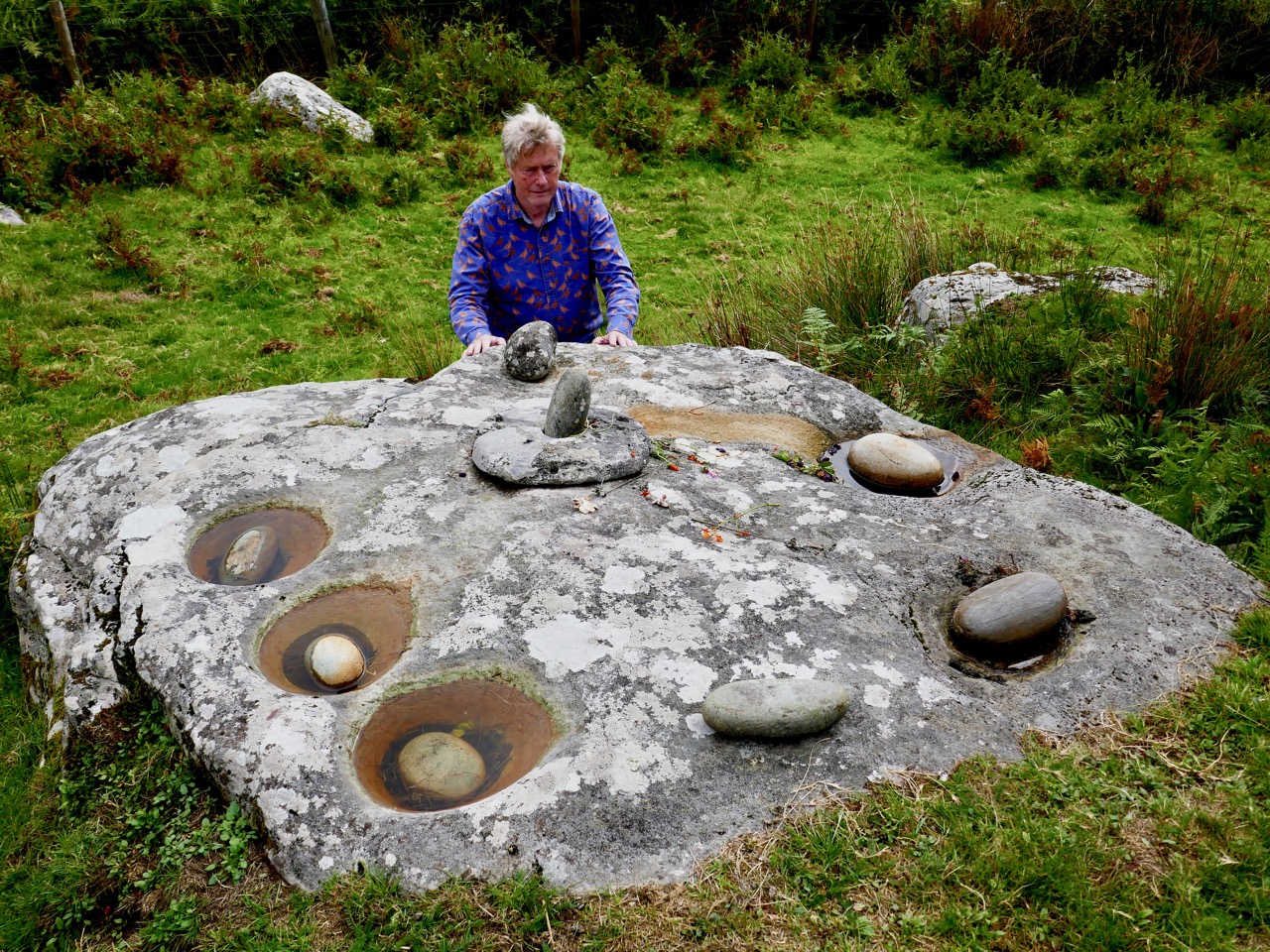
Popularly known as the ‘Rolls of Butter’ this site is technically a ‘Bullaun Stone’. These are fairly widespread over Ireland, but their original function is not known for sure. Here’s a summary from the National Monuments Service:

. . . The term ‘bullaun’ (from the Irish word ‘bullán’, which means a round hollow in a stone, or a bowl) is applied to boulders of stone or bedrock with hemispherical hollows or basin-like depressions, which may have functioned as mortars. They are frequently associated with ecclesiastical sites and holy wells and so may have been used for religious purposes. Other examples which do not appear to have ecclesiastical associations can be found in bedrock or outcrop in upland contexts, often under blanket bog, and are known as bedrock mortars. They date from the prehistoric period to the early medieval period  . . .
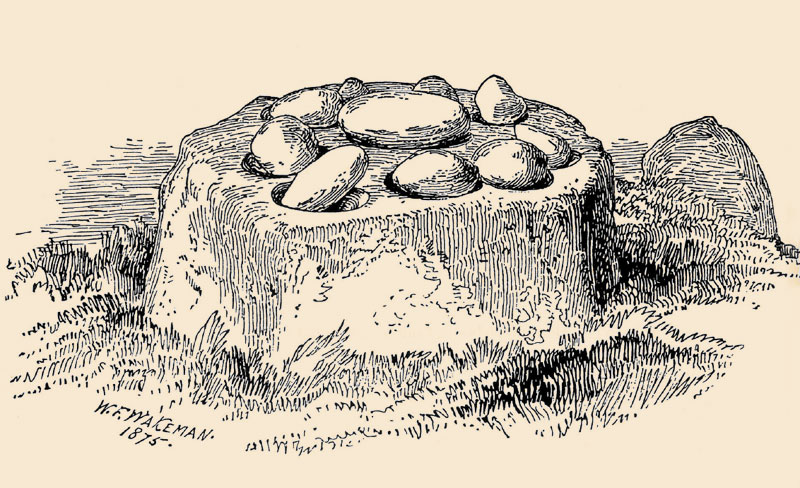
A drawing by the 19th century antiquarian W F Wakeman of a Bullaun Stone at Killinagh in Co Cavan. Here, the stones are known as ‘cursing stones’ – a term also applied by some commentators to the Feaghna site at Garranes. Interestingly, the Cavan site is also referred to as ‘St Brigid’s Stones’, while the Rolls of Butter are associated with the local saint, Fiachna. Beliefs – stories – are, of course, as fascinating as any archaeological evidence, and have to be investigated. Here, they abound – and are best learned from local sources: in this link folklorist Matt Sullivan has put together an entertaining selection of local opinion about the Rolls of Butter.

A few years ago I wrote a post covering some bullauns, ‘cursing stones’ and ‘curing stones’ – but at that time I wasn’t aware of these examples just a mere priest’s leap away from our own home.

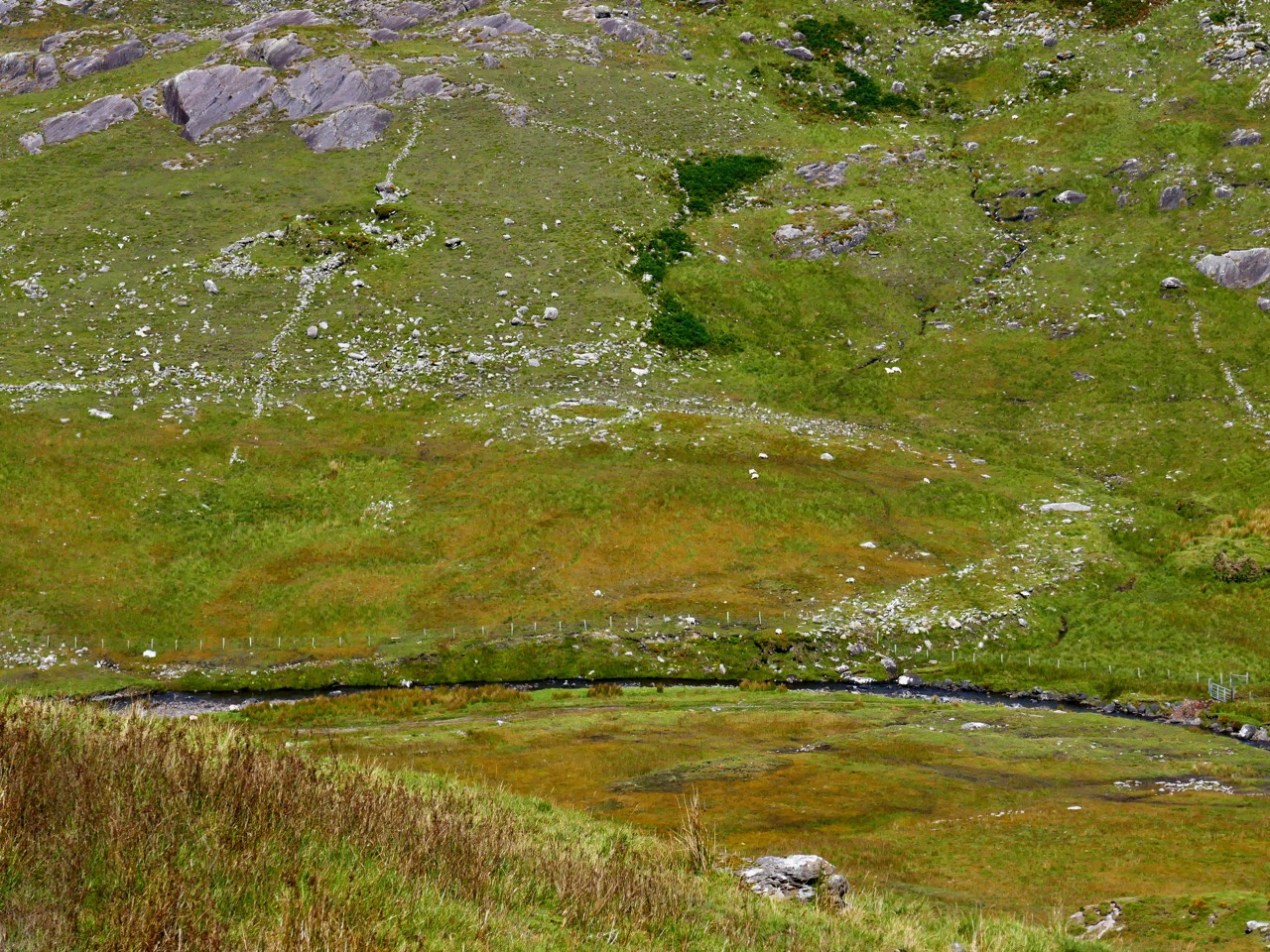
There is much more archaeology and history in this mountainous country: here (above) in the townland of Erneen, the view from the road across one of the many remote glens shows up former enclosures and ‘hut sites’, which the National Monuments Service describes thus:

. . . A structure, usually discernible as a low, stone foundation or earthen bank enclosing a circular, oval or subrectangular area, generally less then 5m in maximum dimension. The remains are generally too insubstantial to classify as a house but the majority probably functioned as dwellings. These may date to any period from prehistory (c. 8000 BC – AD 400) to the medieval period (5th-16th centuries AD) . . .

It’s intriguing to think that these beautiful natural landscapes which appear so lonely to us were occupied hundreds – perhaps thousands – of years ago. It’s likely that they have changed very little over all that time: history is clearly set out for us as we travel over this ancient way.
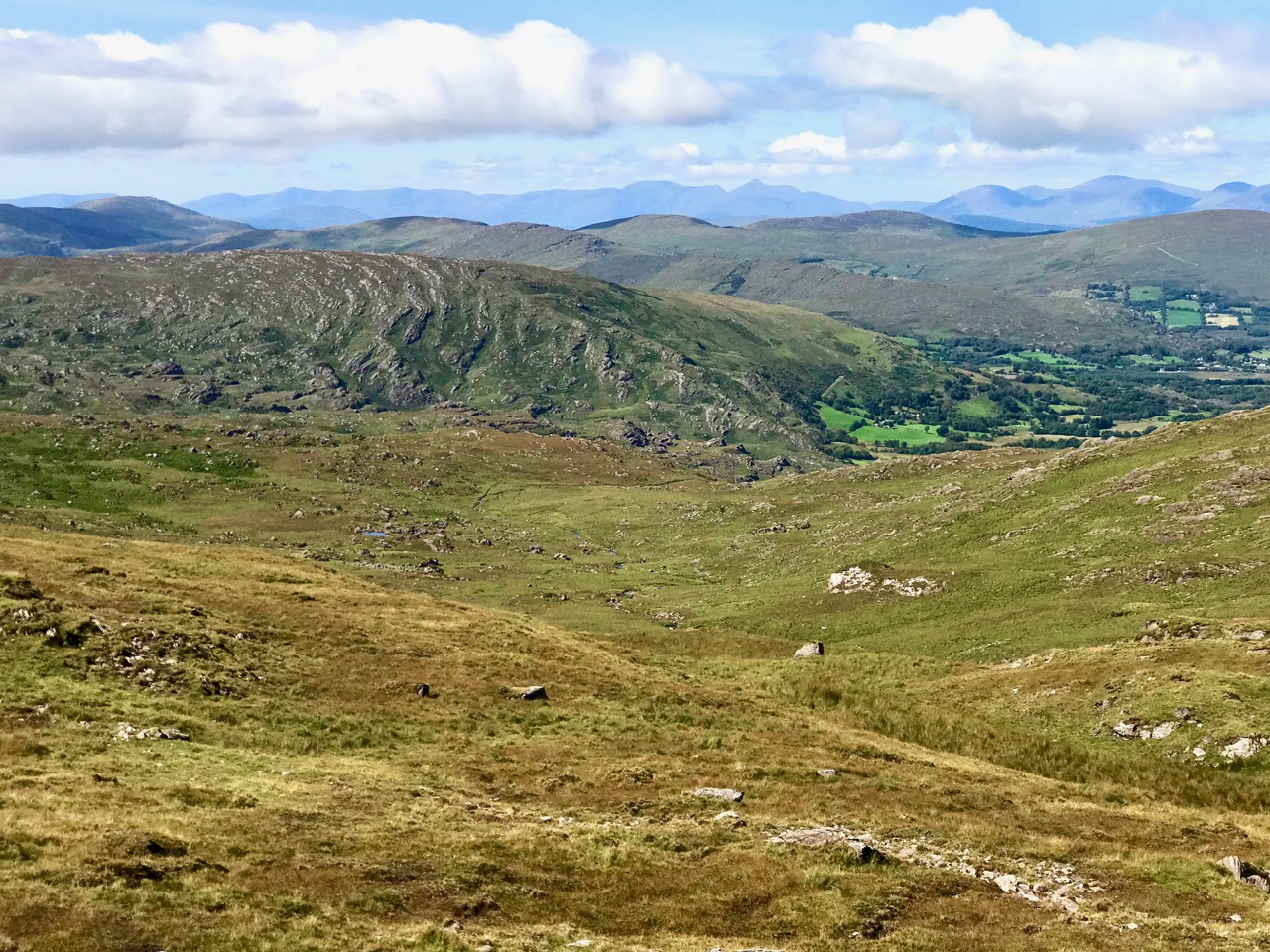
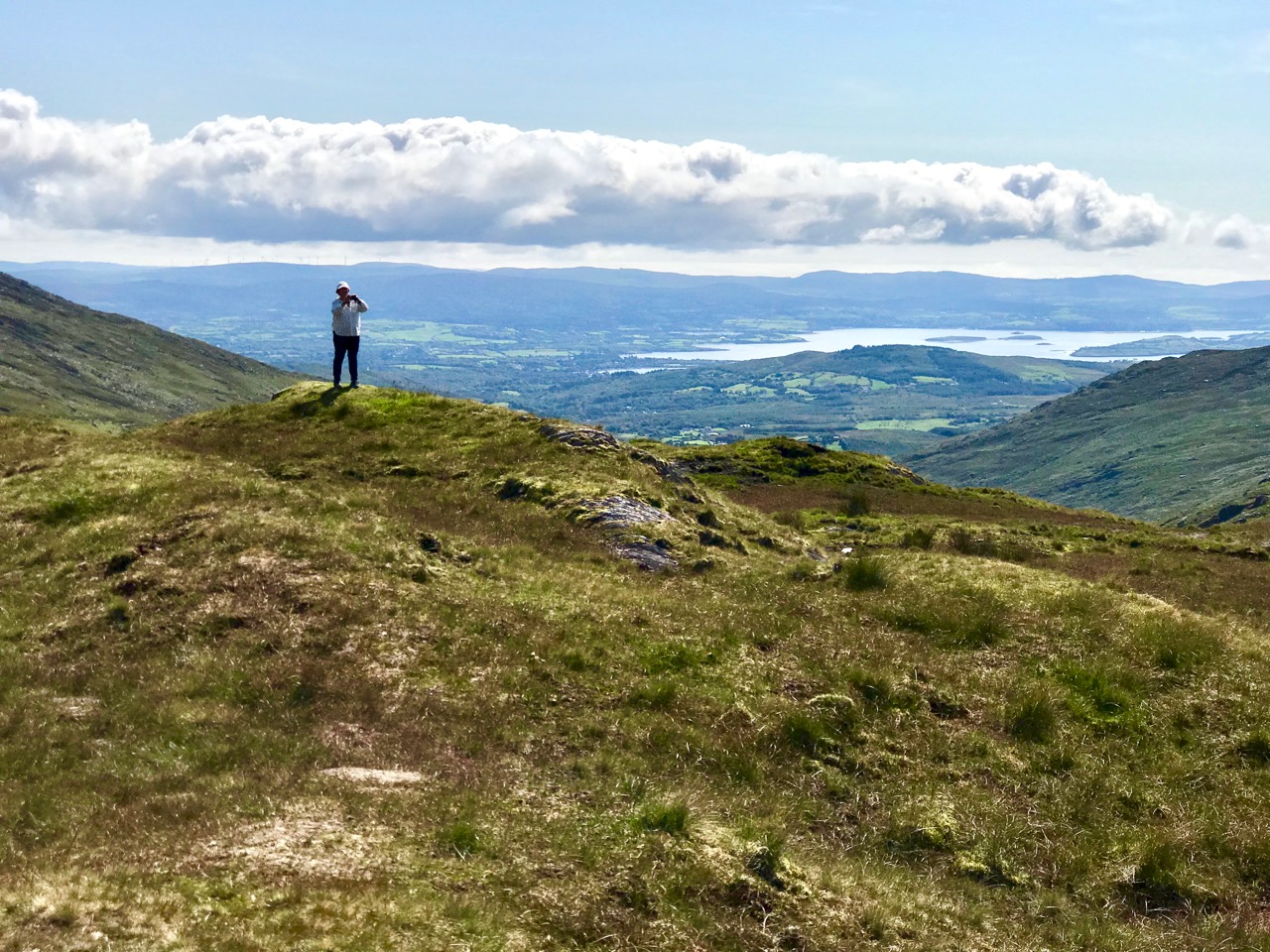
The days are shortening, and we still didn’t have time to explore everything the Priest’s Leap road has to reveal. We’ll be back again before too long – in search of more stories.

A Hare’s Tale

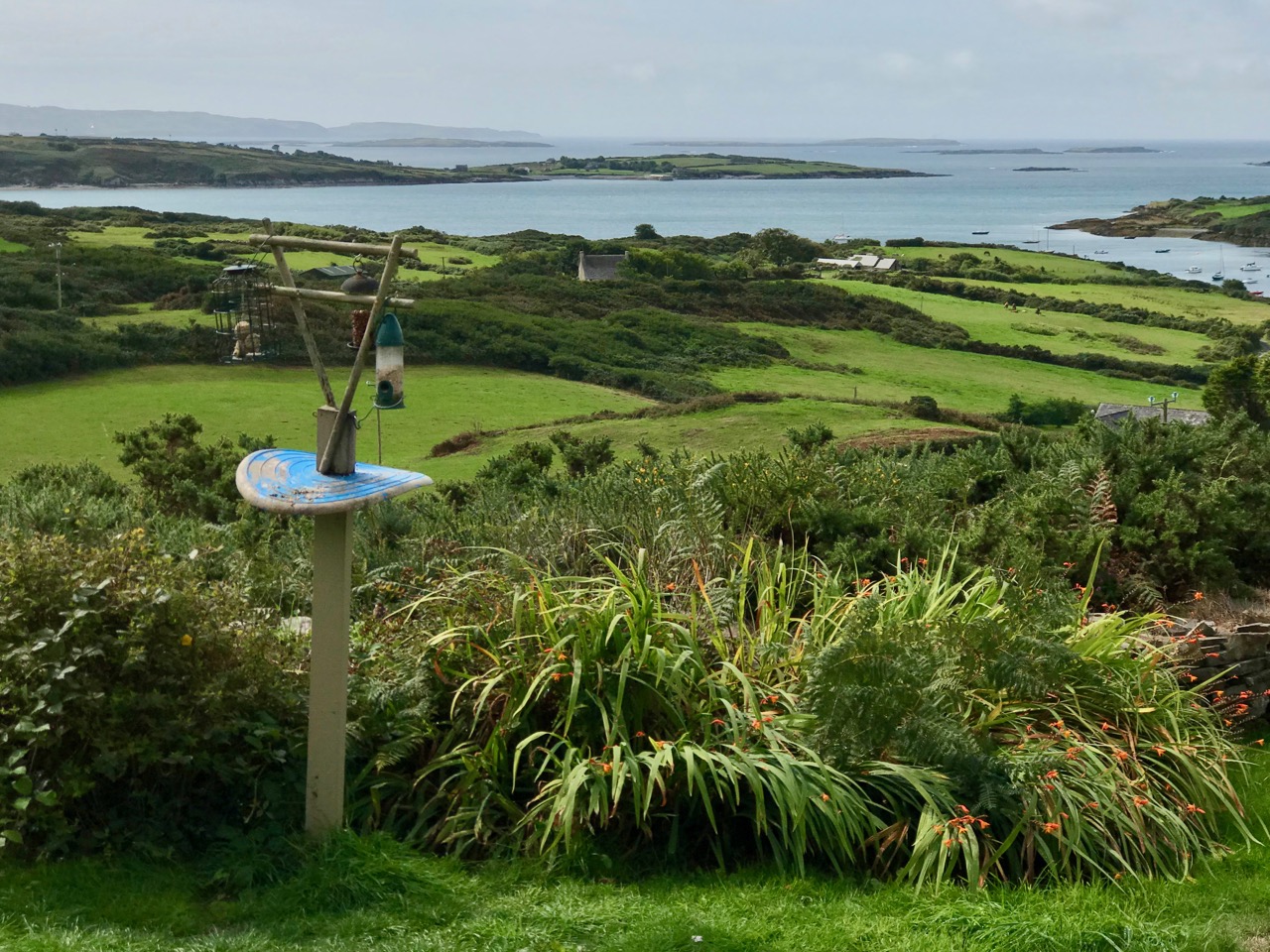
A country for hares . . . The idyllic landscape that surrounds us is a haven for Nature in all her moods and varieties, including the human intervention of agriculture (above). Regular non-human visitors to our garden at Nead an Iolair which is, after all, just a slightly tamed piece of the natural landscape, provide a constant source of interest and entertainment, as we have demonstrated in previous posts, including this one.

This summer of 2018 has been exceptionally dry – our usually green sward, and the view beyond (above), turned the colour of straw instead of verdant green. When the rains started a couple of weeks ago it didn’t take long for things to get back to normal (below), and the fresh green shoots of grass attracted an unusual, but most welcome, visitor.

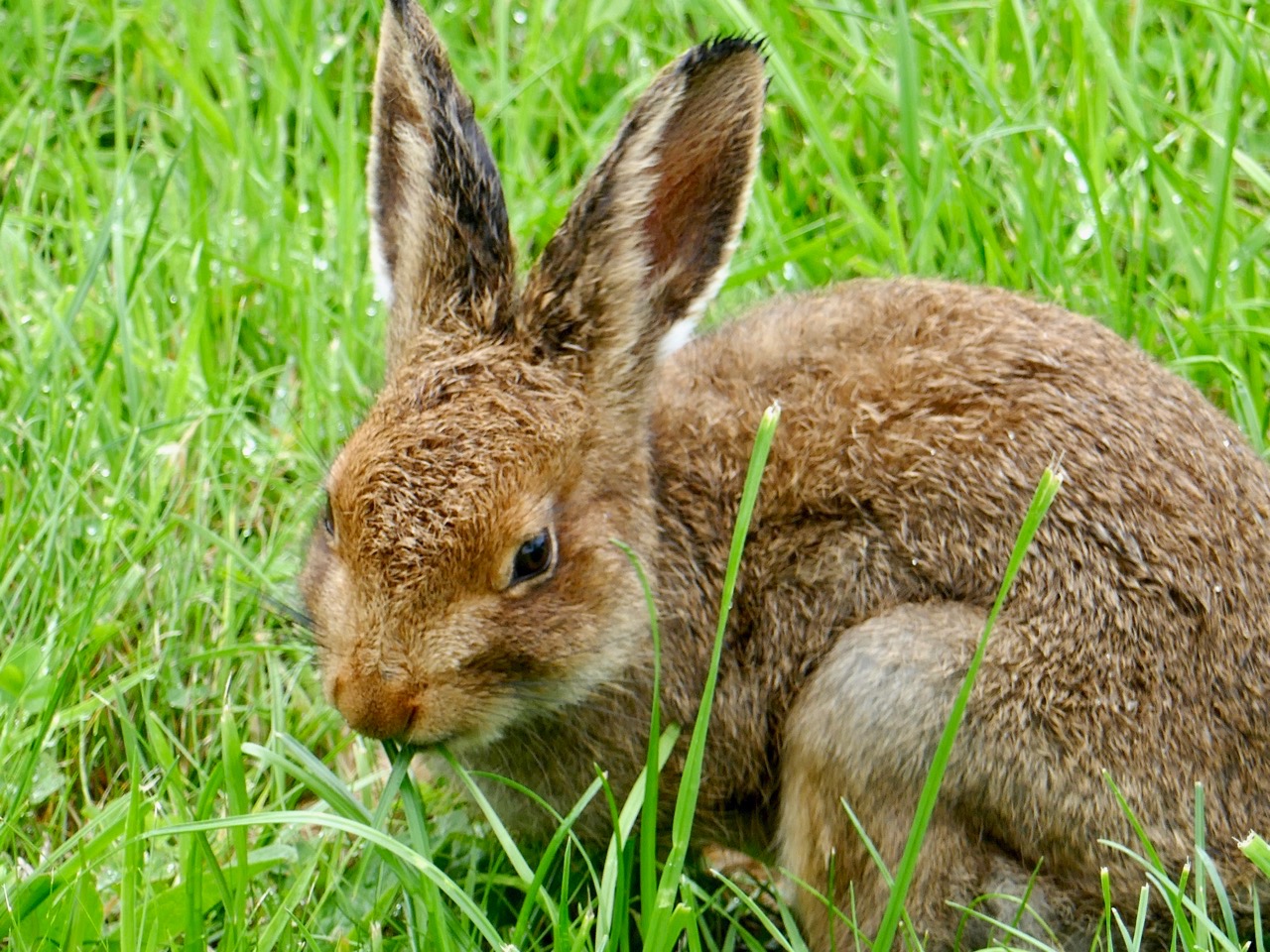
Here he is: Berehert the Hare. He’s young, probably about half adult size, but completely independent. Leverets are born fully developed – furred with open eyes, and lead a mainly solitary life. Hares can run faster than any other European land mammal – an amazing 37 body lengths a second. For comparison, Cheetahs can only manage 23 body lengths per second. It’s their speed that can keep them safe: they can easily outrun a single greyhound but, unfortunately, humankind makes the odds most unfair by setting two or more dogs against them in hunting and coursing which, unbelievably, are legal in Ireland, even though the conservation prospects of the Irish Hare are considered ‘very poor’ under the Berne Convention and EU Directive 92/43 Annex V see page 104. There have been attempts to change this bizarre situation – so far unsuccessful: you might like to tackle your own TD next time there’s an election coming up.

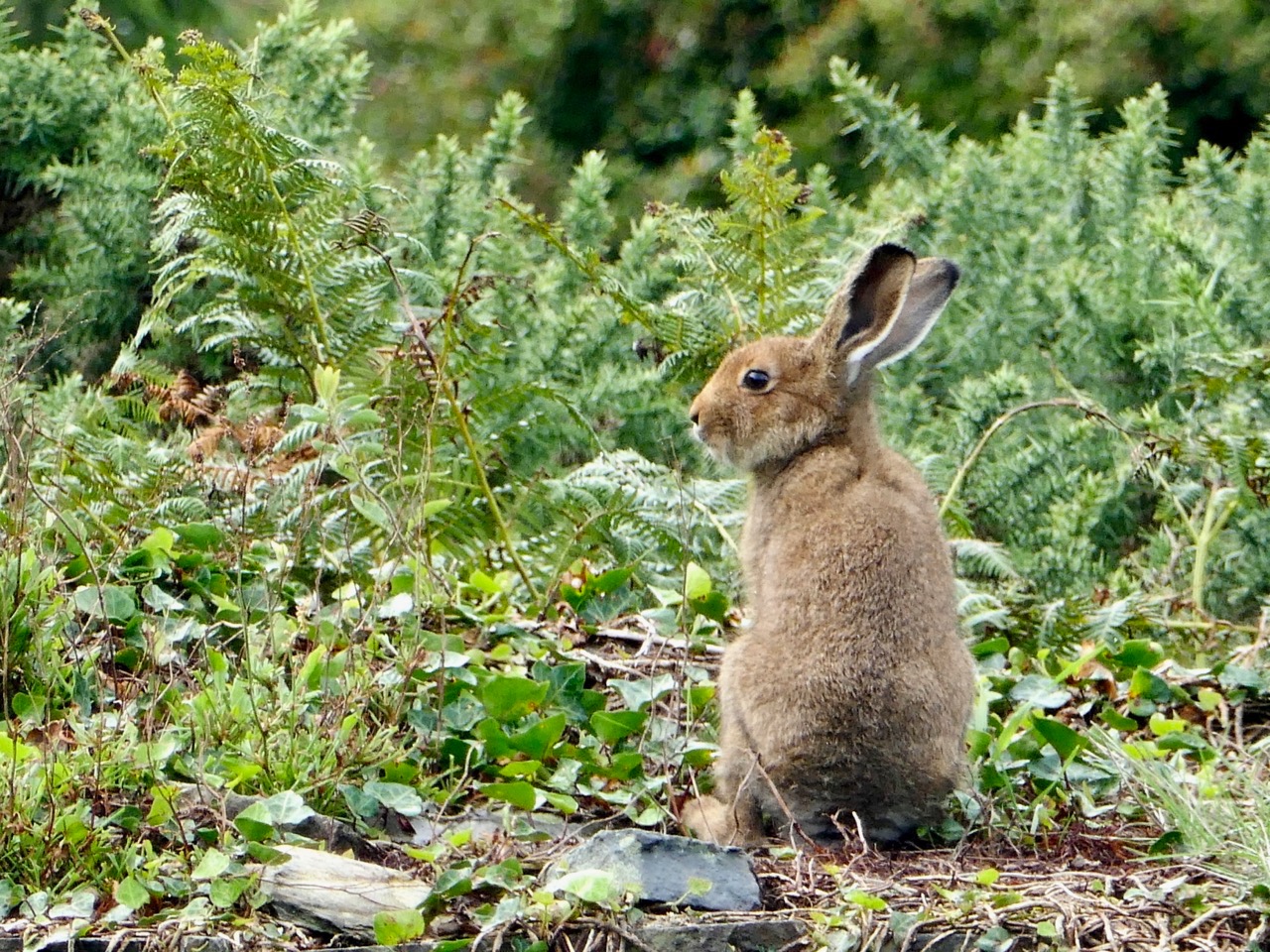
Berehert (have a look here to see where his name comes from) stayed around our garden for three days, and this provided an unprecedented opportunity (for me, anyway) to closely observe the animal’s characteristics and behaviour. In the picture above, where he’s looking a little glum on our terrace in the rain, you can see his wonderful russet colouring and his very long legs, particularly the hind ones. These enable him to take great leaps – fully grown he can jump four and a half metres from a standing start in any direction. This is another protection mechanism: if a hare is approached or surrounded by predators – usually dogs – he’ll wait until they close in on him and then jump that distance and run off. The dogs, which rely on scent more than sight, are completely confused and by the time they sort out where he’s gone, he has (hopefully) vanished.

Fortunately, Nead an Iolair’s resident greyhounds (which came with the house) wouldn’t be much use in the chase: they certainly didn’t seem to deter our visiting hare. Young Berehert did everything which was expected of him while I was watching. He allowed me to get quite close to him – and was perfectly aware that I was there, then suddenly he leapt up and was away, a gangly confusion of legs and ears. But he only went as far as the next patch of new green shoots. Here he is, nibbling away . . .
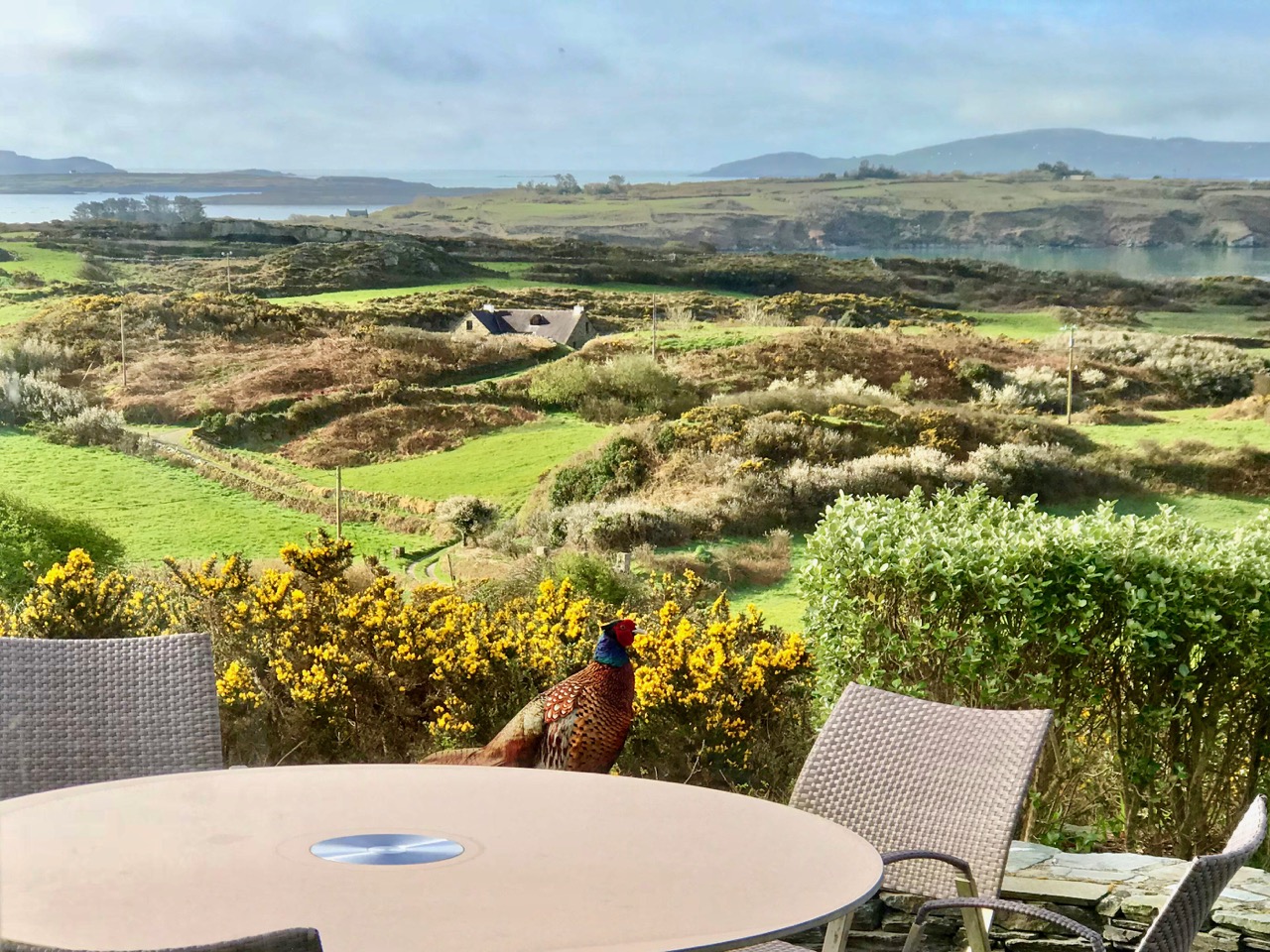
Hares are restless animals: they don’t stay in one place for very long, and it’s quite normal for them to range over 2km at a time when foraging. Berehert is still out there somewhere, and I’m hoping that he will revisit us occasionally. I’d rather not dwell on the fairly short average life span of hares in the wild (four to nine years) and the fact that only one in five leverets survives their first year. For our continuing education in the natural world of wild West Cork we will have to rely on our more regular and stable visitors: Finnbarr the Pheasant’s family and the myriad of small birds who populate our feeders, not to mention the wide variety of insect life and, in these shortening evenings, the colony of Common Pipistrelle Bats who are busily out hunting: if you think you don’t like bats, just bear in mind that each one can eat around 3,500 small insects, such as midges, in one night.

Thank you, Finola, for all those excellent photographs of Berehert: not the easiest of animals to capture on film!

The Priest’s Leap

Off the beaten track – that’s how to really see West Cork!

On a recent trip from Kerry we decided to take the road less travelled and ended up coming over the Priest’s Leap. It’s a little tricky to find from the Kenmare side, so Ordnance Survey map number 85 is your best friend here.

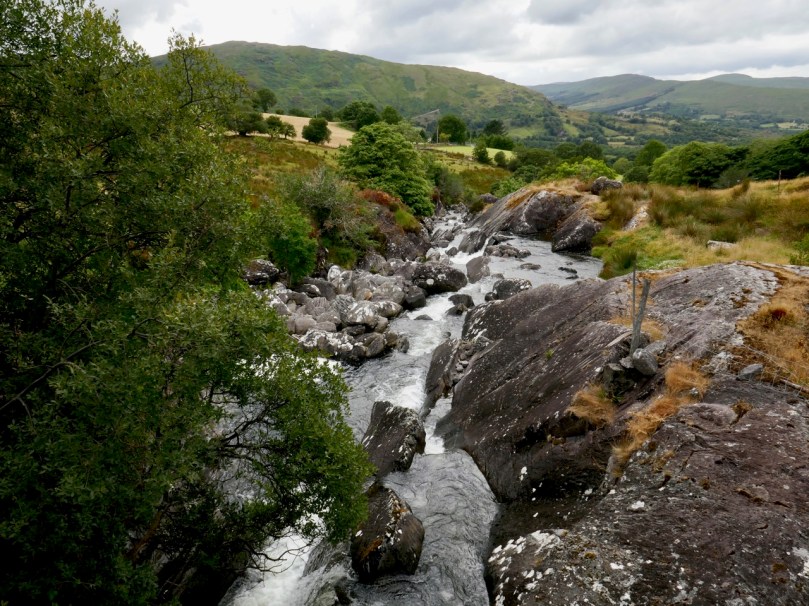
Along the way you come to Bonnane Heritage Park. We didn’t have time to stop but promise ourselves a return trip there soon to explore their archaeological sites and their trails. We also passed this ford and stepping stones – you don’t see those too often!

Because we are inveterate graveyard visitors we stopped at the Feaghna Burial Ground for a poke around. The graveyard contained several very old headstones and views to, er, die for (sorry).

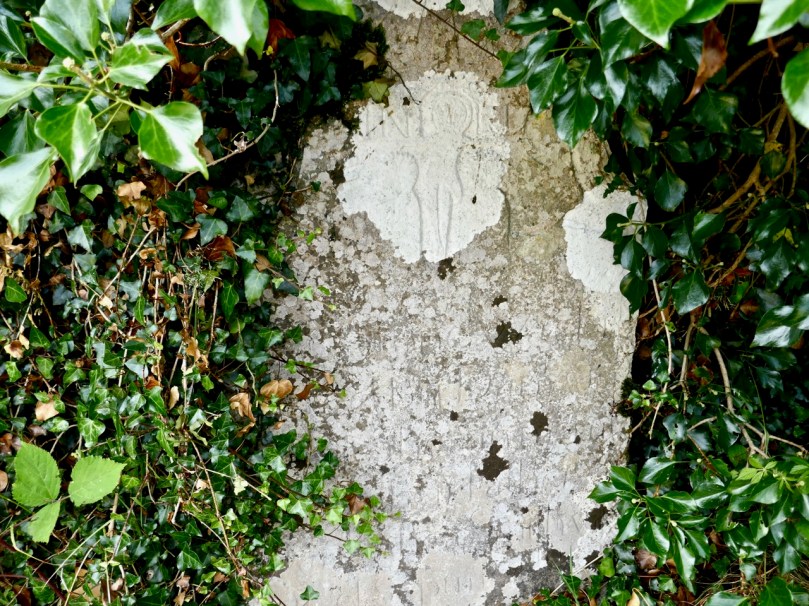
Headstones with crucifixion scenes are very rare in this part of Ireland

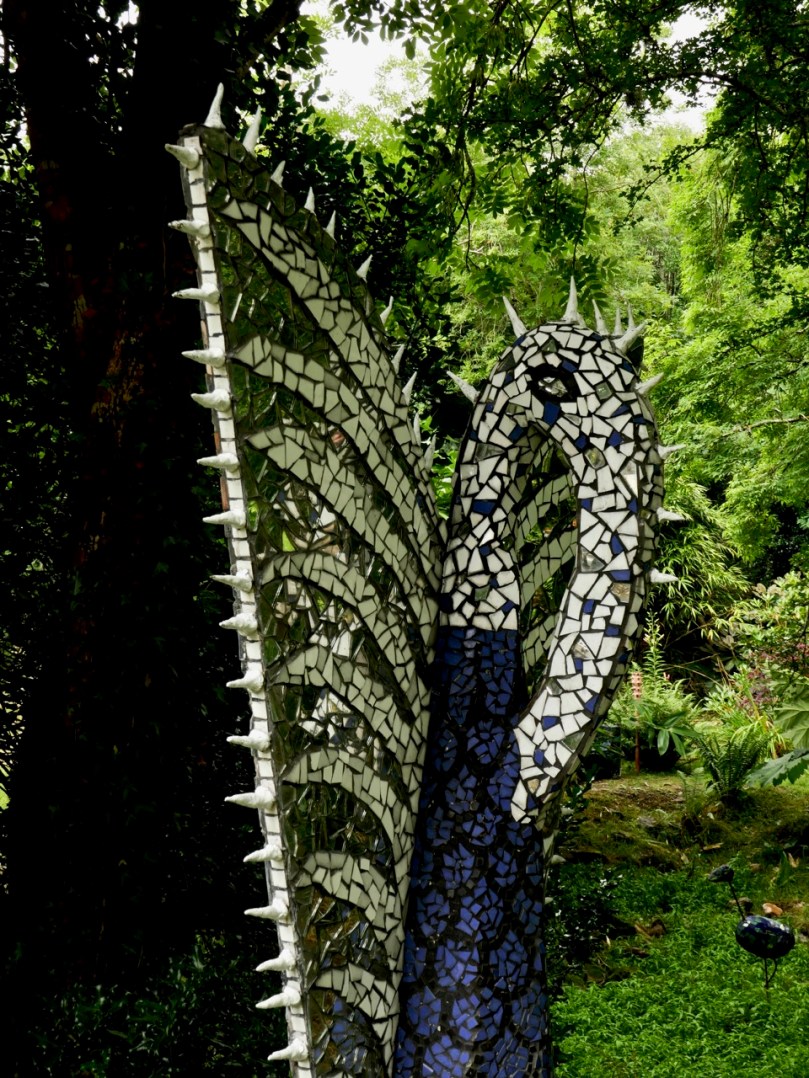
Shortly after Feanagh we were intrigued to see signs advertising VerArt Sculpture Garden and how could we not investigate that? Vera herself showed us around and the place is utterly charming! She’s from Germany but has been living here for many years and has slowly and steadily turned this remote spot into an enchanted garden.

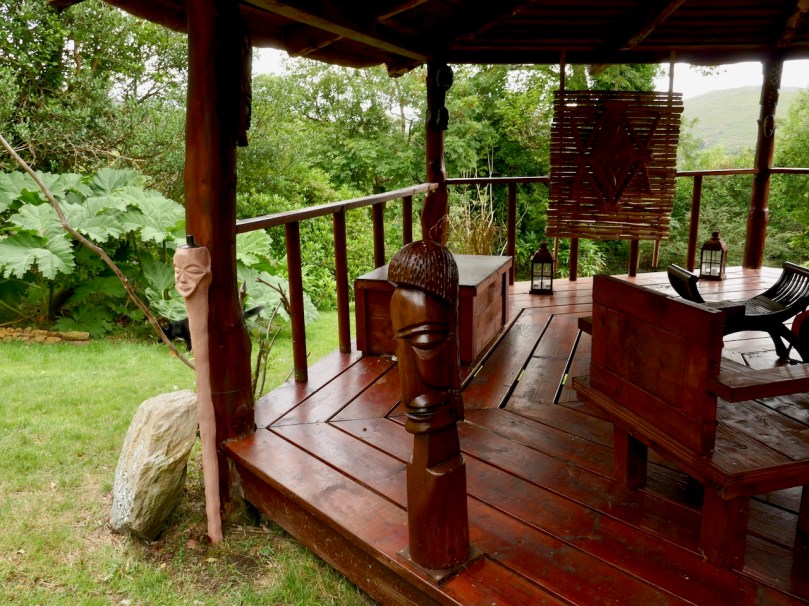
Around every bend is a quirky and amusing sculpture, fountain, stairway, figure, planter – all made using found and handmade materials. There was even a giant chess set (lead photograph) and an African veranda. We had never heard of this place before so it all goes to show there are lots of hidden gems left for us to discover. If you get a chance, do go – you will be hard pressed to find a more whimsical and enjoyable way to spend an hour or two.

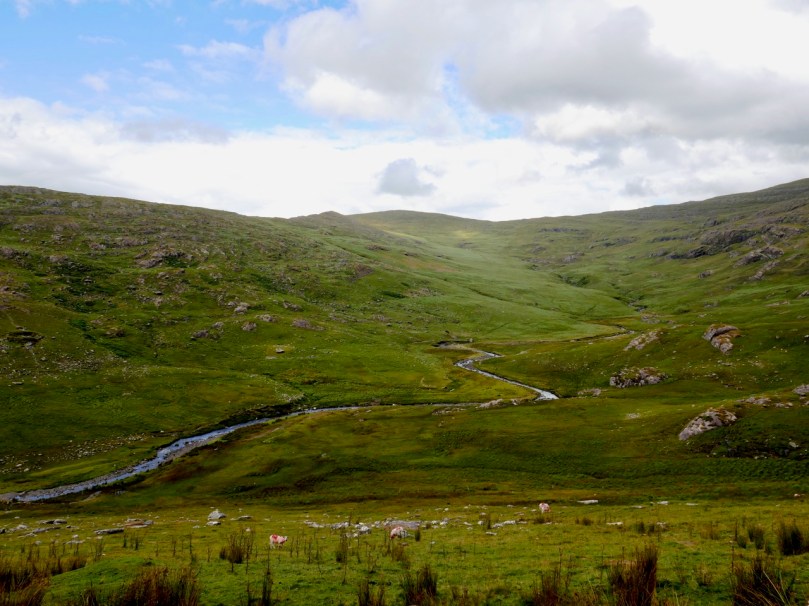
Leaving VerArt we headed up the mountain pass and into a remote a beautiful territory. There are whole valleys here where only sheep live.

It’s strictly single track and we were lucky not to meet any oncoming traffic but the drive is magnificent and well worth the occasional adrenaline spike where the road seems to disappear ahead.

The summit is where we enter Cork and it’s called the Priest’s Leap. According to distinguished historian Gerard Lyne*:

According to tradition in the locality it derives from an episode in which a priest pursued by soldiers escaped through having his horse make a miraculous leap from a mountain cliff in the townland of Cummeenshrule into the county Cork. The pursuit of the priest began in the townland of Killabunane where a rock, which miraculously melted under the pursuing hounds, is pointed out to this day. The rock, deeply pitted with what look like pawmarks, is situated close beside the main road from Kenmare. It is known locally as “Carraig na Gadharaigh” (i.e., Carraig na nGadhar or the Rock of the Dogs?). The present writer remembers his father often pointing it out to him as a child when driving past the spot. Marks of the priest’s knees and hands and of the horse’s hooves appear on another rock a few miles from Bantry where he is said to have landed after his miraculous leap.

Gerard goes on to say that heroic leaps have a long tradition in Irish Mythology and in folklore, Robert’s post Beyond Leap, Beyond the Law is one such example. But also, he says, Mad Sweeny, the Hag of Beara and Gormfhlaith, wife of Brian Boru, were credited with impossible leaps. Even St Moling, whom we encountered in Wexford had a name that meant, in Old Irish, Long Leap.

The foregoing evidence signifies what folklorists call “a recycling of motifs”, whereby, in the case under consideration, feats formerly attributed to mythological heroes are transferred to saints, secular heroes and (in Bonane’s case) a priest. We need not doubt that a priest actually did narrowly escape pursuing soldiers at The Lep. In the eyes of the people his escape would have seemed miraculous. From this it would have been but a short step to ascribe to him the conventional folk motif of the great leap – hence the legend and the placename.

He concludes with a poem:

Look up! Look up! a soldier shouts: oh, what a sight is there,
Behold the priest on a horseback still speeding through the air!
They looked, and lo, the words were true and trembling with fright,
They saw the vision pierce the blue and vanish from their sight!

And after that stirring thought, all that remained for us was to wind our way down to Bantry marvelling as we went at the fact that we could be the only ones driving on what is surely one of Ireland’s most scenic routes. Given that it’s also one of the steepest and narrowest, perhaps that’s not so surprising after all.

*The quotes from Gerard Lyne were found by following a link in the Wikipedia entry on Priest’s Leap: Gerard Lyne: The Priest’s Leap: An Intriguing Place Name. Archived 2016-05-28 at the Wayback Machine. Originally published in Bonane: A Centenary Celebration (1992).

Out in the Field

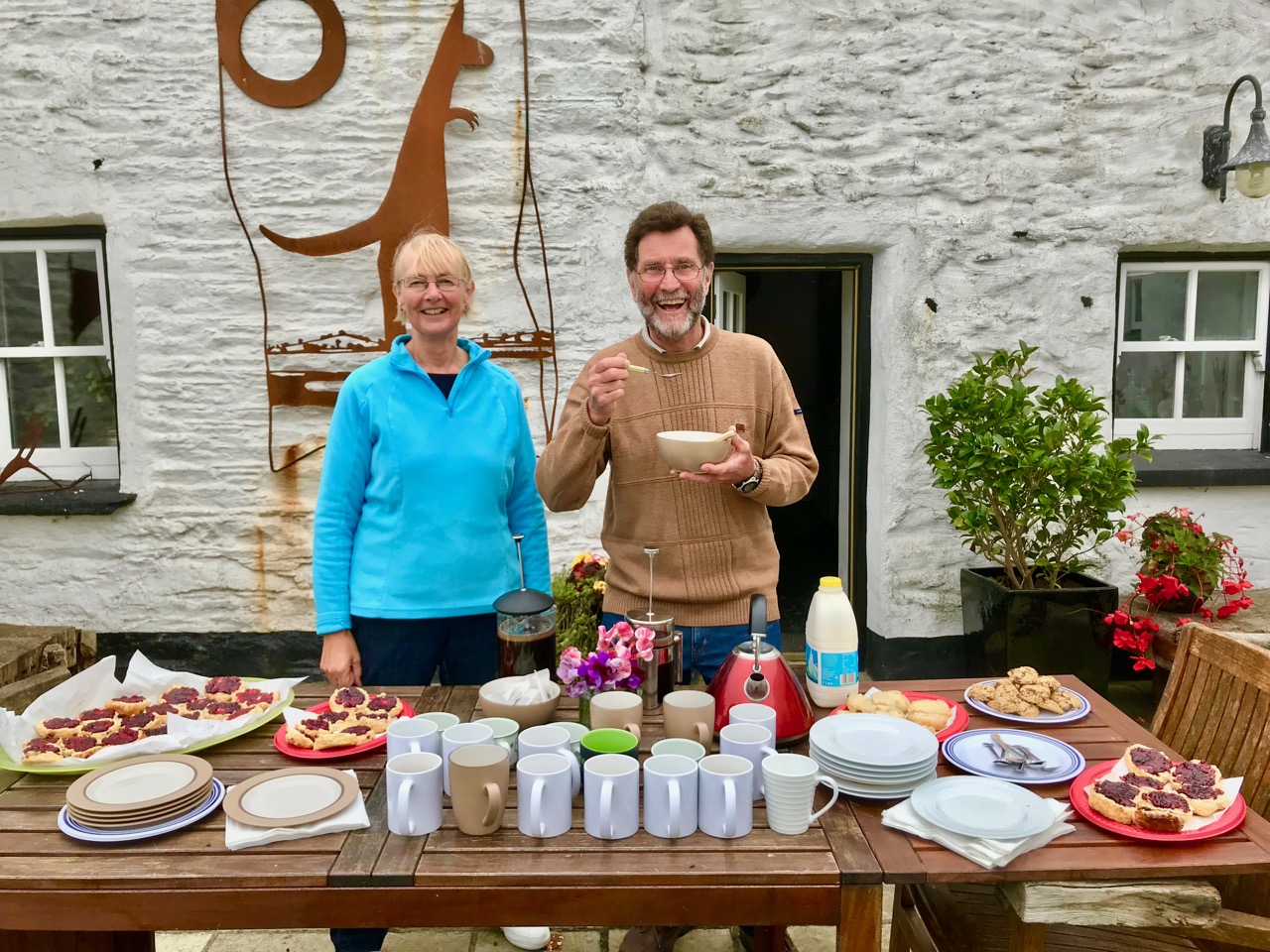
During the West Cork History Festival field trips, led by Roaringwater Journal last week, treats were in store. Many thanks to volunteers Jenny and Ray who worked hard to provide the refreshments (and who baked the scones!) on Friday’s ‘Art and The Great Famine’ excursion, which arrived at Reen Farm in time for tea.

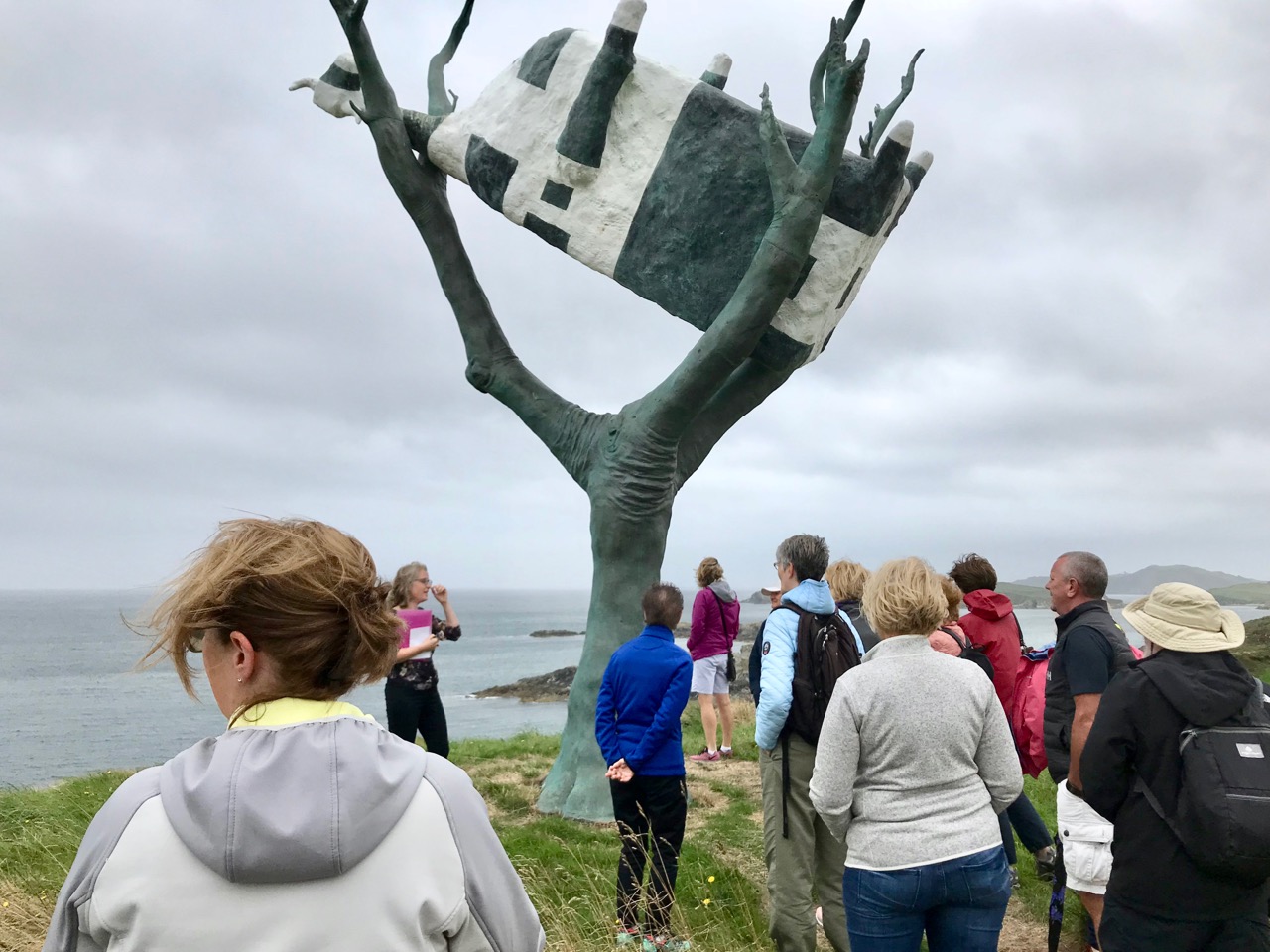
Artist John Kelly‘s cows are abundant at his home at Reen, and the experience of the connections with this unique place and Famine times were admirably and sensitively presented by Siobhan Burke of West Cork Experiences (she’s on the left, facing the bronze tree, below).

The day included organised visits to the 110 Skibbereen Girls project at the old workhouse site in Skibbereen – where we were given a presentation by artist Toma McCullim – and a guided tour by West Cork Arts Centre’s Zenda Williams of the Coming Home – Art and The Great Hunger exhibition at Uillinn, followed by a visit to the mass famine graves in Abbeystrewery, where Philip O’Reagan of the Skibbereen Heritage Centre explained the site’s enormous significance. Just as well we had those scones to bolster us up!

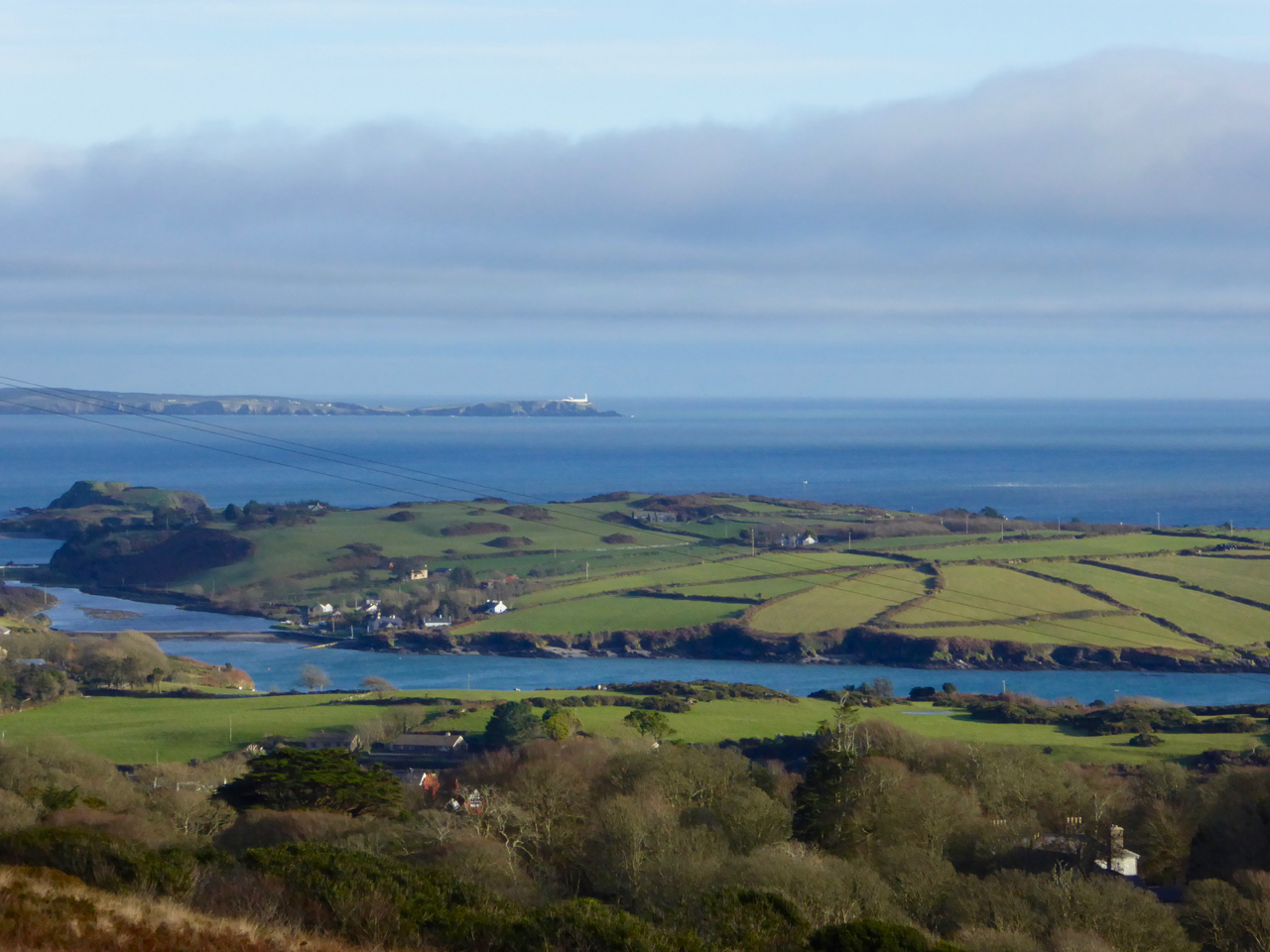
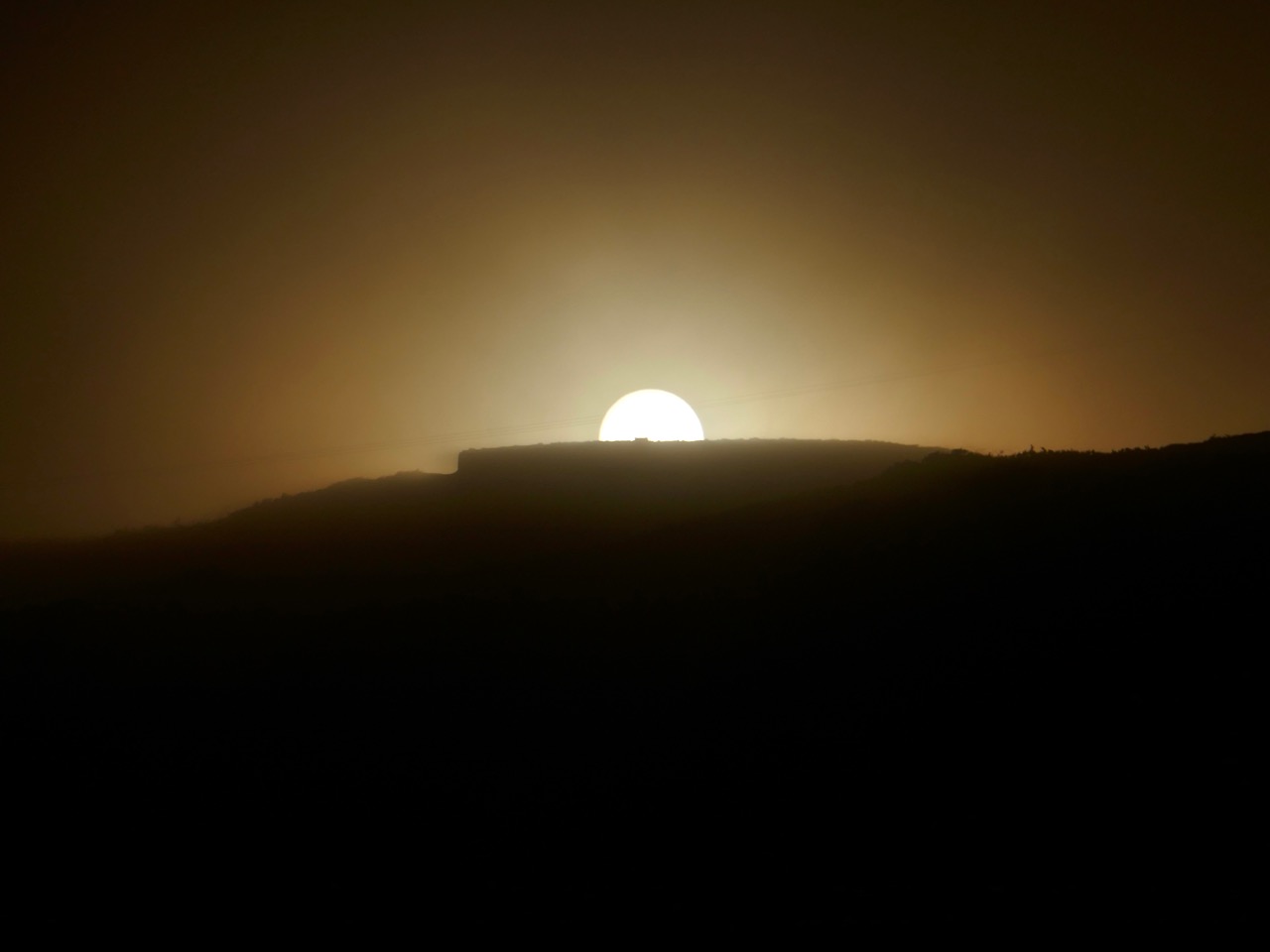
On the previous day we began the ‘West Cork Archaeology’ tour at Knockdrum Fort, where – in benevolent weather – you get the most spectacular views (above). Finola talked about the Rock Art on the site, which takes it back in time perhaps 5,000 years, and she also explained about the alignment with the Bealtaine sunset discovered by Boyle Somerville, described here – and which we witnessed ourselves earlier this year (below).

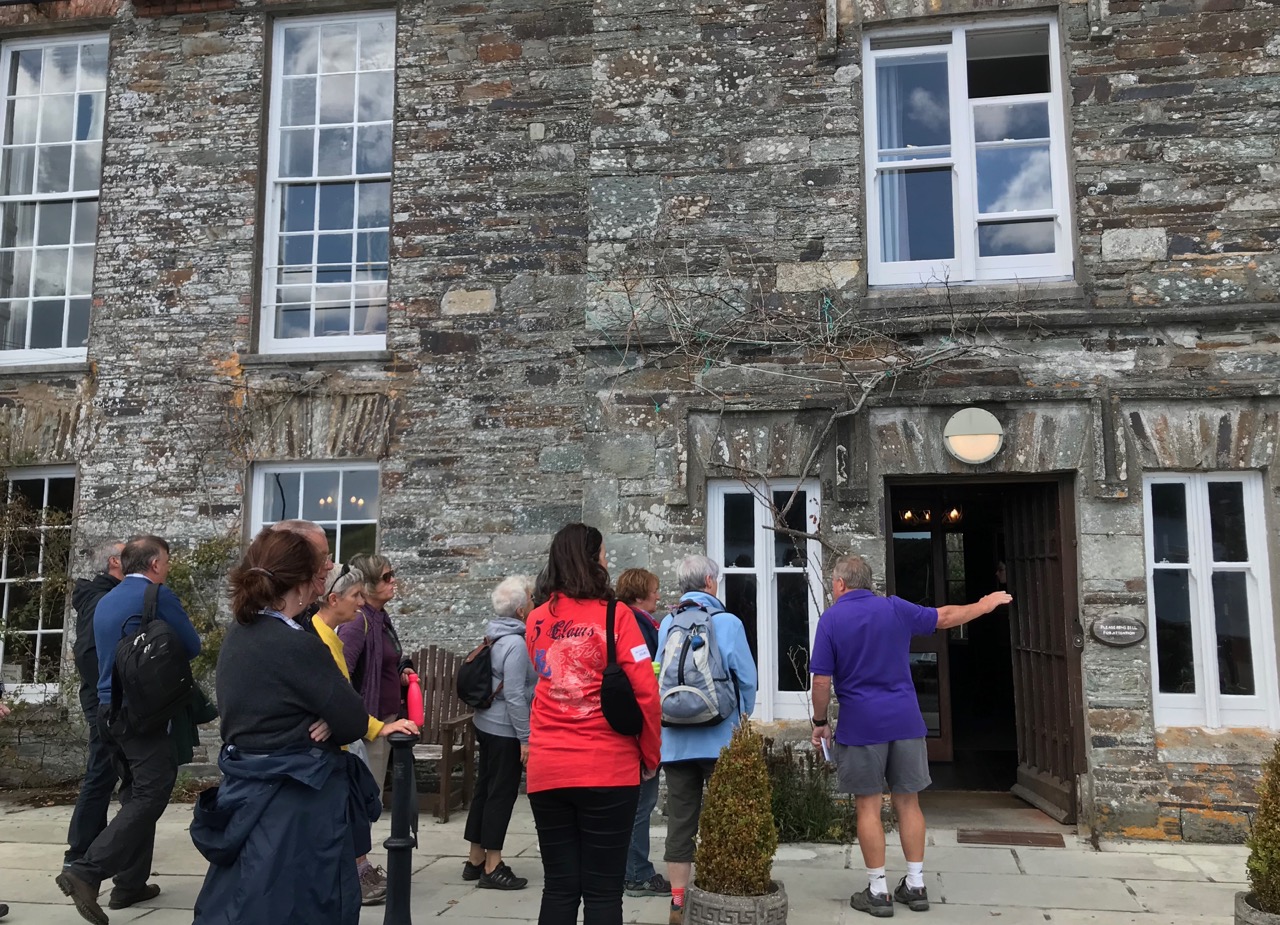
Highlights of that day’s expedition also included an entertaining time at Castletownshend hosted by George Salter-Townshend (below, he’s leading us into the Castle which has been owned by his family since medieval times).

After more on archeoastronomy from Finola, at Drombeg Stone Circle (above), a further treat was in store at Castle Salem, near Rosscarbery, where we were given a tour and talk by its owner Peter Daly (below).

We were delighted to be given the opportunity to provide this ‘lead-in’ to the History Festival weekend itself which – as last year – was a roaring success. If you didn’t go to it, take a look at the festival programme, and see what you missed!

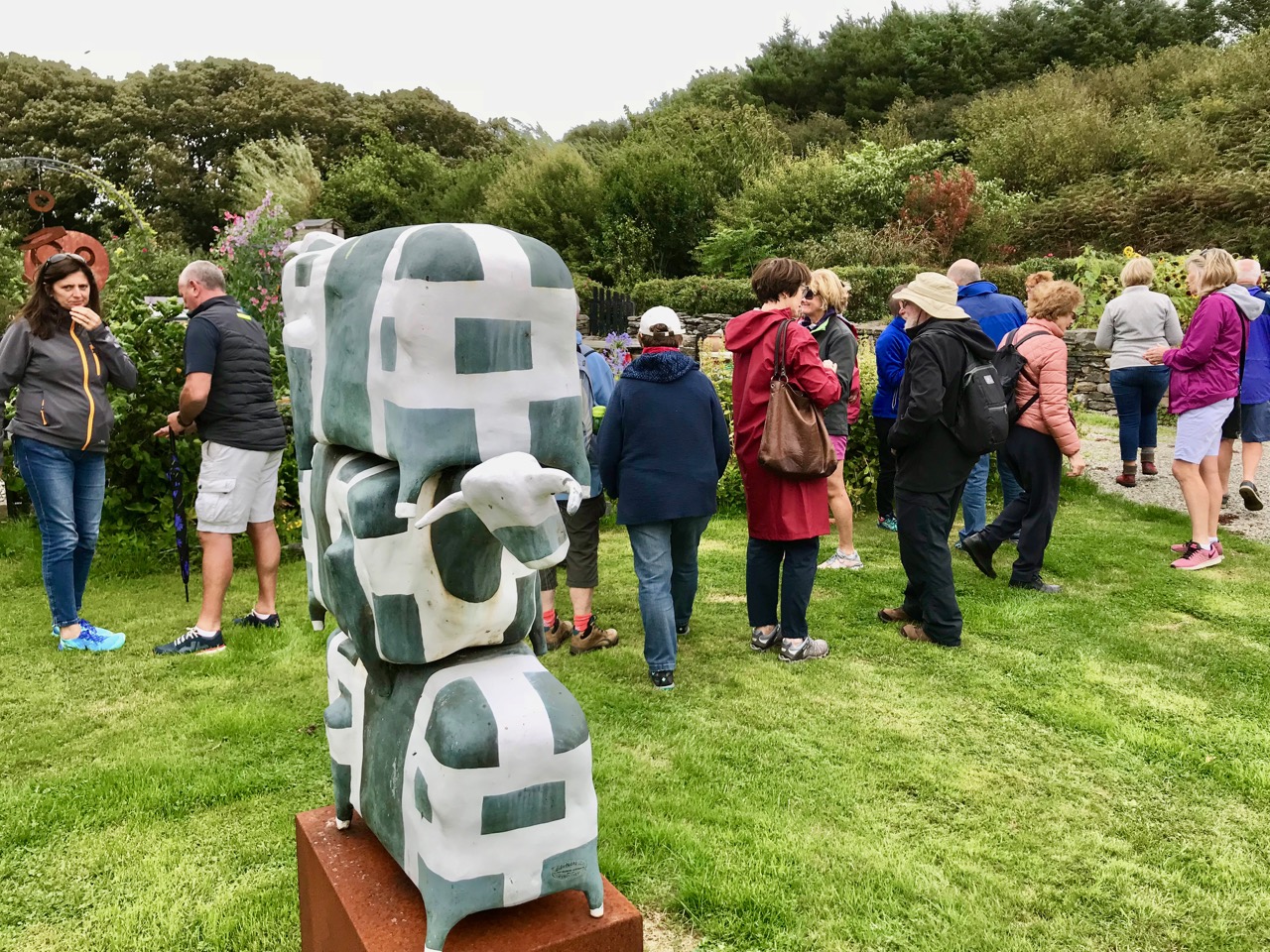
Because our time has been taken up with the festival we haven’t written any posts this weekend. Normal service will be resumed next week. I can’t resist finishing off with another look at John Kelly’s sculpture garden at Reen.

Countdown to West Cork History Festival 2018!

As last year, Roaringwater Journal is very involved in the marvellous upcoming West Cork History Festival. We are both on the organising committee and this year we are leading field trips and chairing sessions, and I am giving a paper (more on that below). The Festival will be held in Skibbereen this week – 16th to 19th of August.

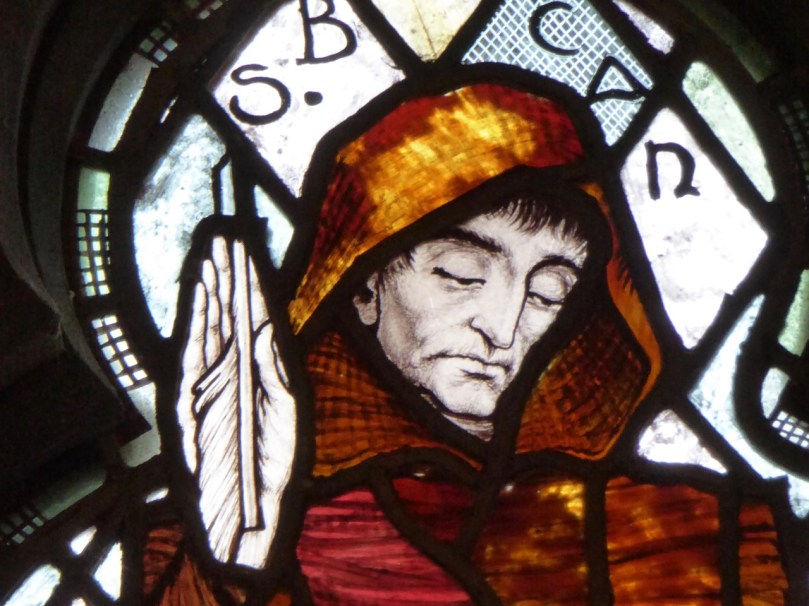
This is St Barrahane from Castletownshend. During the Thursday Field Trip we will be revealing his secret message

We haven’t had a lot to do with the detailed logistics or with the ultimate lineup of speakers – that is the purview of the Founders, Simon and Victoria Kingston. What a force they are! As you can imagine, organising a festival like this is an enormous amount of work and they do it while working full time, with two young children and a life lived between two countries – all while remaining cheerful, focussed, inventive and energetic. Here are Simon and Professor Roy Foster, our keynote speaker, talking last year about the upcoming festival.

Simon and Victoria are next door neighbours to the wonderful Liss Ard Estate. This place is dear to our heart as it’s where we were married, and they have been incredibly supportive of the festival, providing parking and accommodation.

While many of the speakers are academics and writers on the national scene, local historical societies are attending and volunteering and local experts have been persuaded to share their knowledge. The Skibbereen Heritage Centre is a big part of the festival this year, with both Terri Kearney and Philip O’Regan on the program, and William Casey giving a talk and launching a book.

Philip O’Regan of the Skibbereen Heritage Centre leads a walking tour of the historic town. Here he points out the building where O’Donovan Rossa founded his Phoenix Society, forerunner of the Fenians

We are looking forward to the field trips, a new addition this year and a popular one, given how quickly they booked up. Thursday’s focusses on archaeology and history and Friday’s on the Famine and Art.

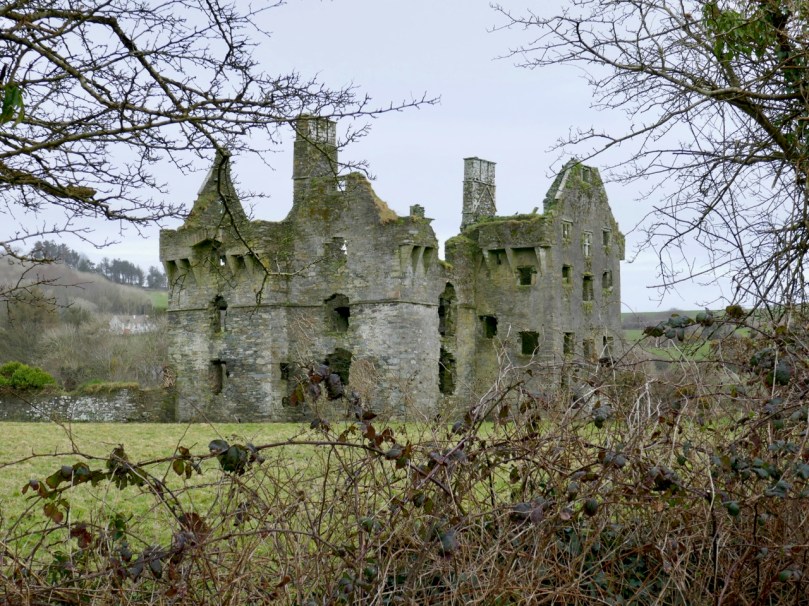
Coppinger’s Court – these fortified mansions gradually replaced tower houses in the seventeenth century, during of the series of changes from Irish to Planter land ownership

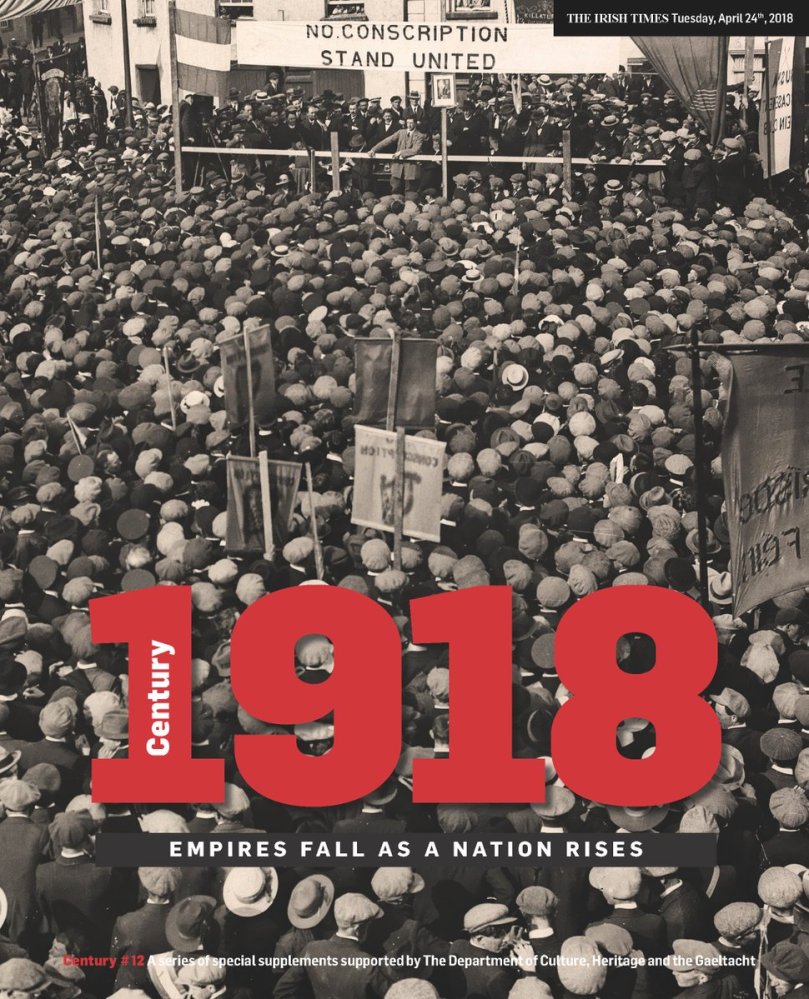
The Festival aims to cover international, national and local themes and this year will, of course, focus partly on the events of 1918, with talks on WWI, Carson and Redmond, Women’s Suffrage and the great Flu epidemic. The Irish Revolutionary Period is the subject of several talks, by both academics and non-professionals, ranging from the hot topic last year, Protestants in West Cork, to the violence suffered by some women during that period.

Inspired by the Coming Home: Art and the Great Hunger exhibition currently running at Uillinn/West Cork Arts Centre, there is also a thread that looks at the intersection of art and history. It will be the main focus of Friday’s field trip, and run through sessions on Margaret Clarke, on Gothic art, on George du Noyer and most pointedly in the talk by Niamh O’Sullivan on the Coming Home Exhibition itself.

Stone Circle by George Victor du Noyer

We’re not forgetting the Medieval and Early Modern periods either. Dr David Edwards from UCC is recognised as an expert on Richard Boyle and on this period and his talk on Gaelic politics in the later Middle Ages should be fascinating. But never mind all that politics – what did people actually do back then, and what did they eat, before the advent of the potato?  Dr Susan Flavin is going to tell us that when she talks about ‘Food, Drink & Society in 16th century Ireland’.

Richard Boyle, Great Earl of Cork

Lots of local history too – on Cillíní (children’s burial grounds), women in the fishing industry, Sam Maguire and his memorial bells in Dunmanway, Pirates and treasure of the Coast of West Cork, and my own talk on Agnes Mary Clerke who grew up in Skibbereen during the famine and went on to become the most successful science-writer of her day, with a moon crater named in her honour.

Agnes Mary Clerke

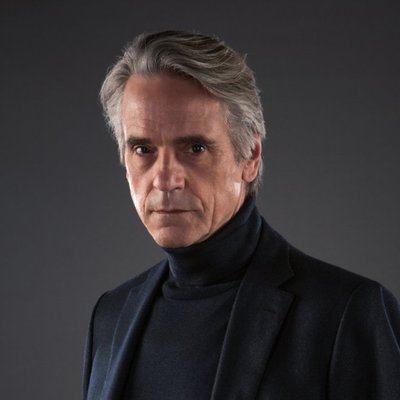
That’s just a taster of the talks – there are lots more. And if that wasn’t enough, there are also film screenings, a concert by Jessie Kennedy based on the life of Lady Mary Carbery of Castle Freke, and a poetry reading by none other than Jeremy Irons! How can you resist that voice?

So if you don’t have your tickets yet, get them now. Yes, you’ll still be able to get them at the gate, but if you want to secure them now, do it online at this link.

Bohemians in Ballydehob!

My first visit to Ballydehob wasn’t until around 1990. I remember being struck by how busy a place it was then – I only wish my memories from nearly 30 years ago were clearer. I now know, of course, that this vibrant little community has a history of being a cosmopolitan creative hub of the arts going right back to the middle of the last century. It’s a fascinating story, and Ballydehob is celebrating it by establishing an Arts Museum and permanent collection, with the first exhibition opening this week in Bank House: please come!

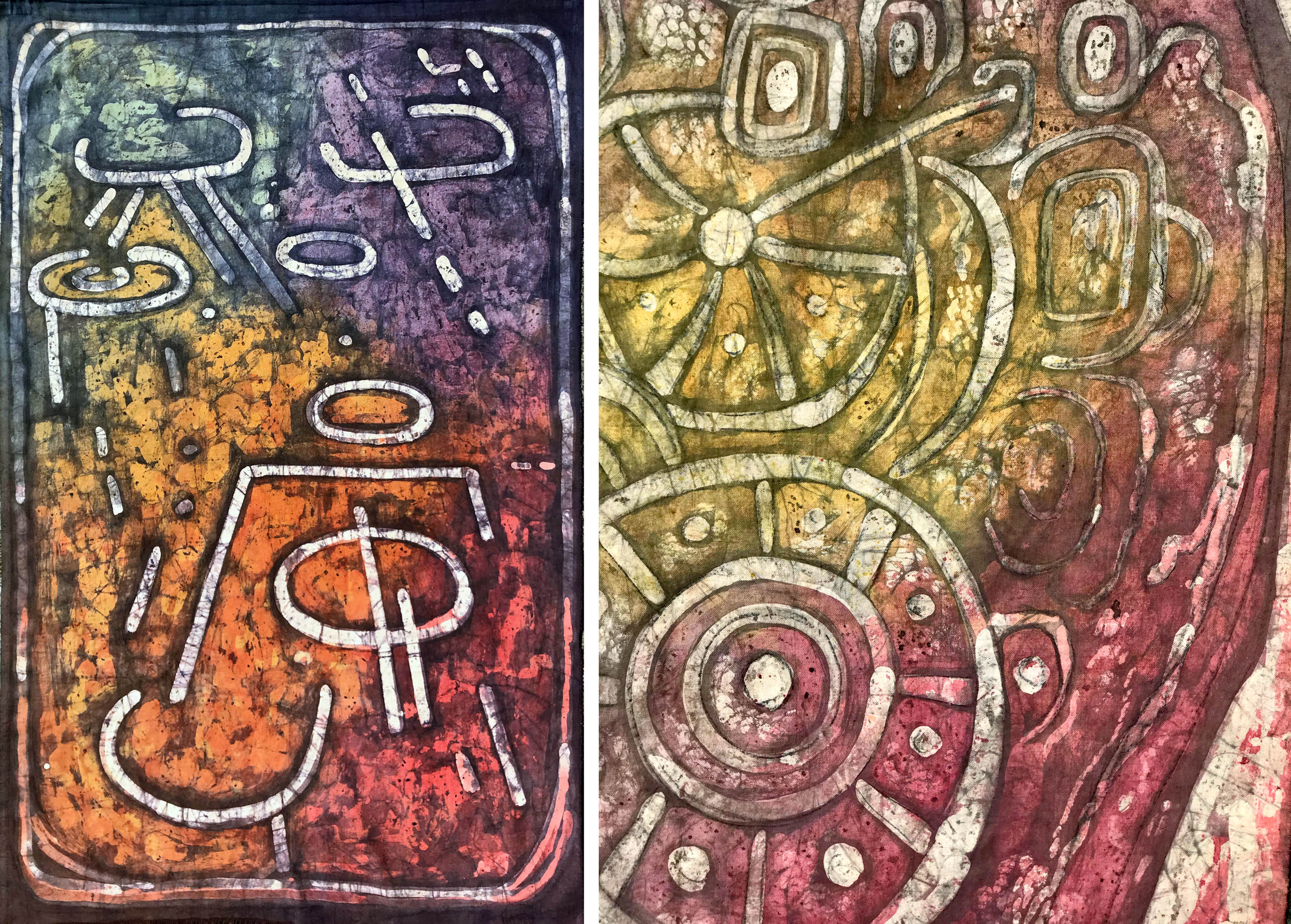
Above: two batiks by Nora Golden. Left – The Rock of the Rings (rock art at Ballybane West) and right – detail from a work depicting Loughcrew-type passage grave art. Nora and her partner, Christa Reichel were early arrivals on the arts scene in Ballydehob. In the 1960s Christa bought a farmhouse and set up the region’s first studio pottery in Gurteenakilla then, with Nora, opened the ‘Flower House’ in the centre of the town: you can see it illustrated in the exhibition flyer at the bottom of this post. All this is well documented in the excellent book by Alison Ospina (herself a talented furniture maker) ‘West Cork Inspires’ (Stobart Davies, 2011).

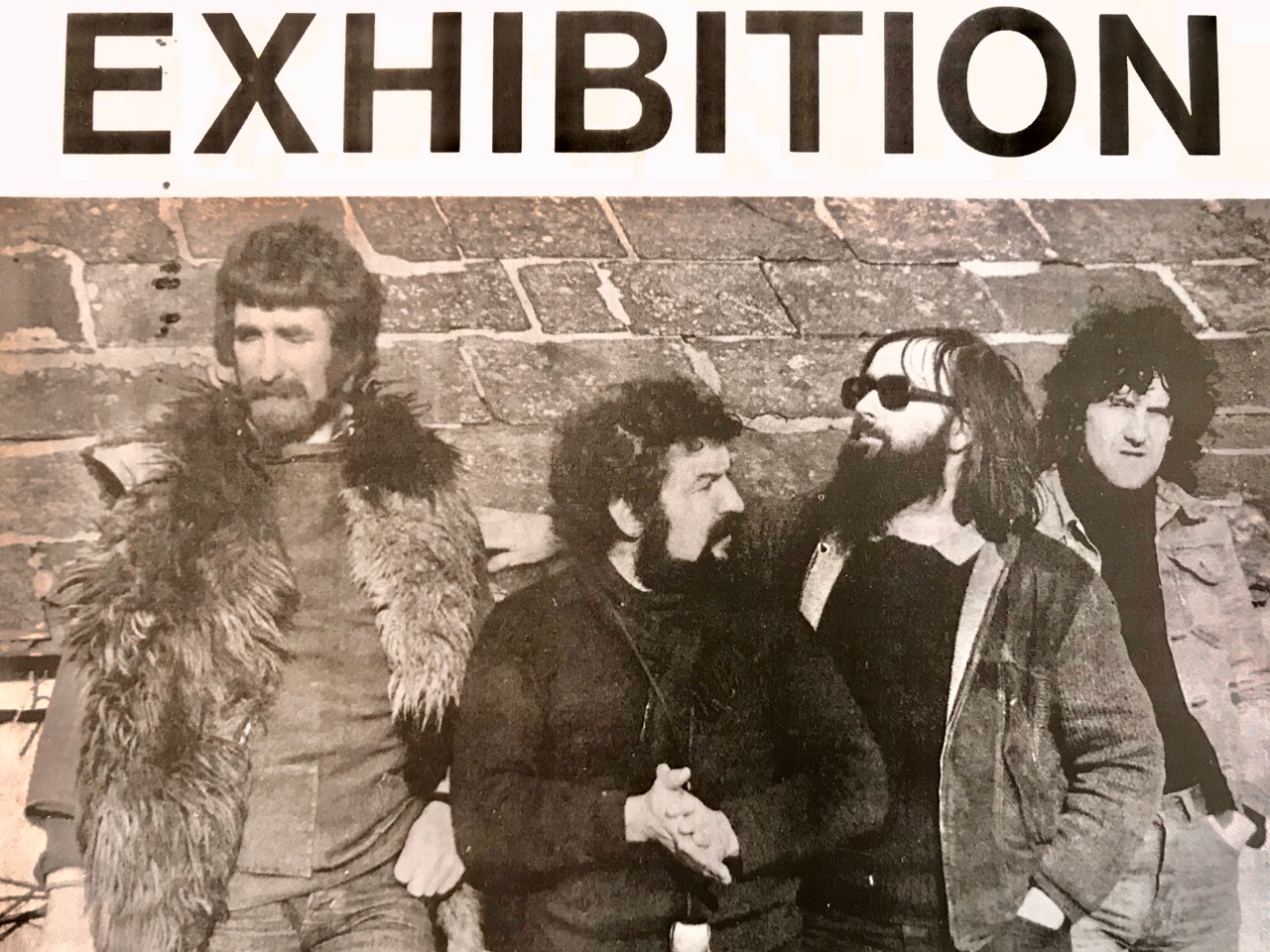
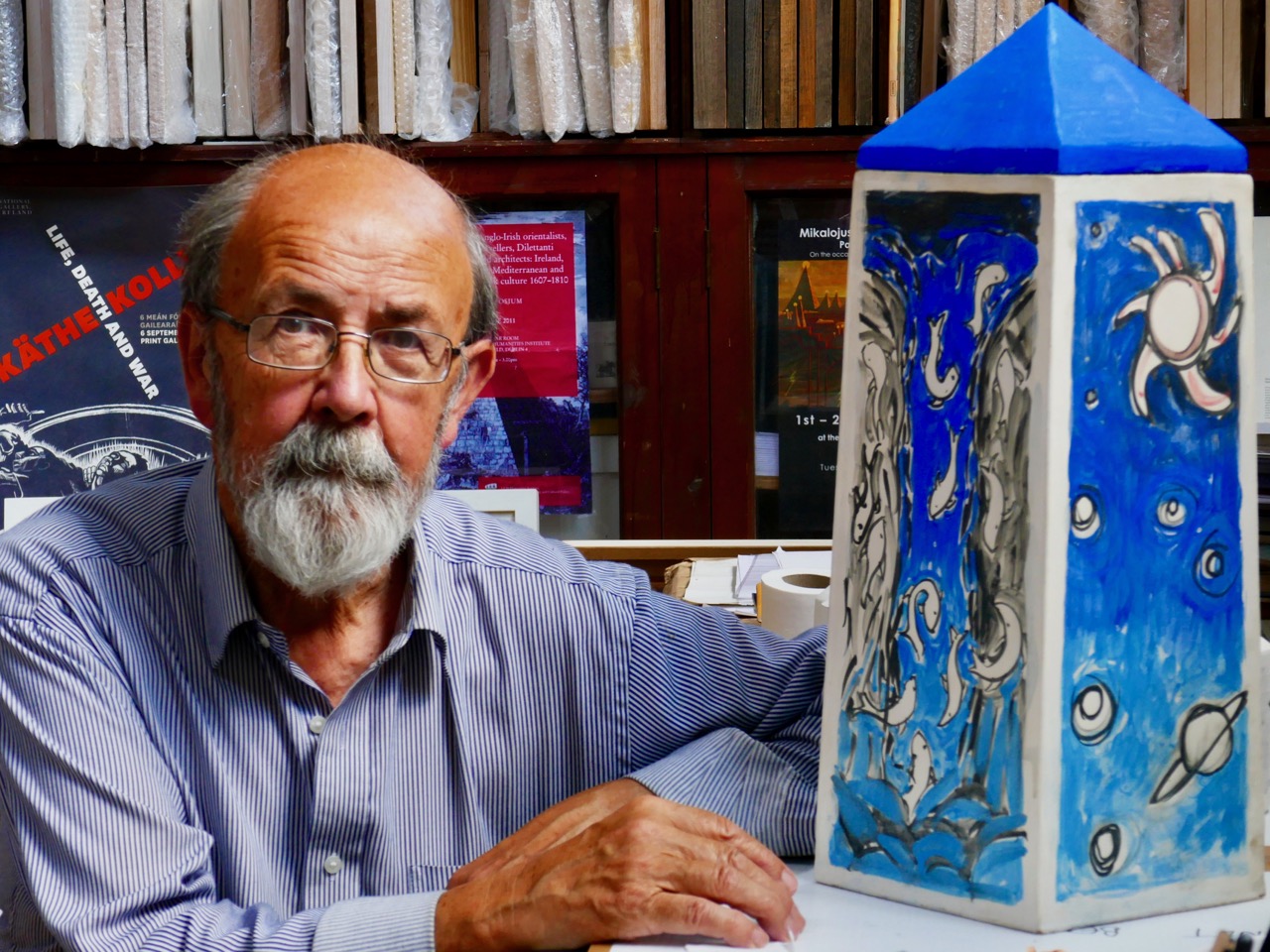
These denizens of 1970s Ballydehob are not a Heavy Metal band (to my knowledge) but in fact four important artists who had settled here: John Verling – artist, ceramicist and architect,  Pat Connor – ceramic sculptor, Brian Lalor – artist, writer and printmaker, and David Chechovich – watercolourist. They are wearing the uniform of the time. Here’s Brian Lalor in his studio today (photo by Finola) – you can certainly see the similarity . . .

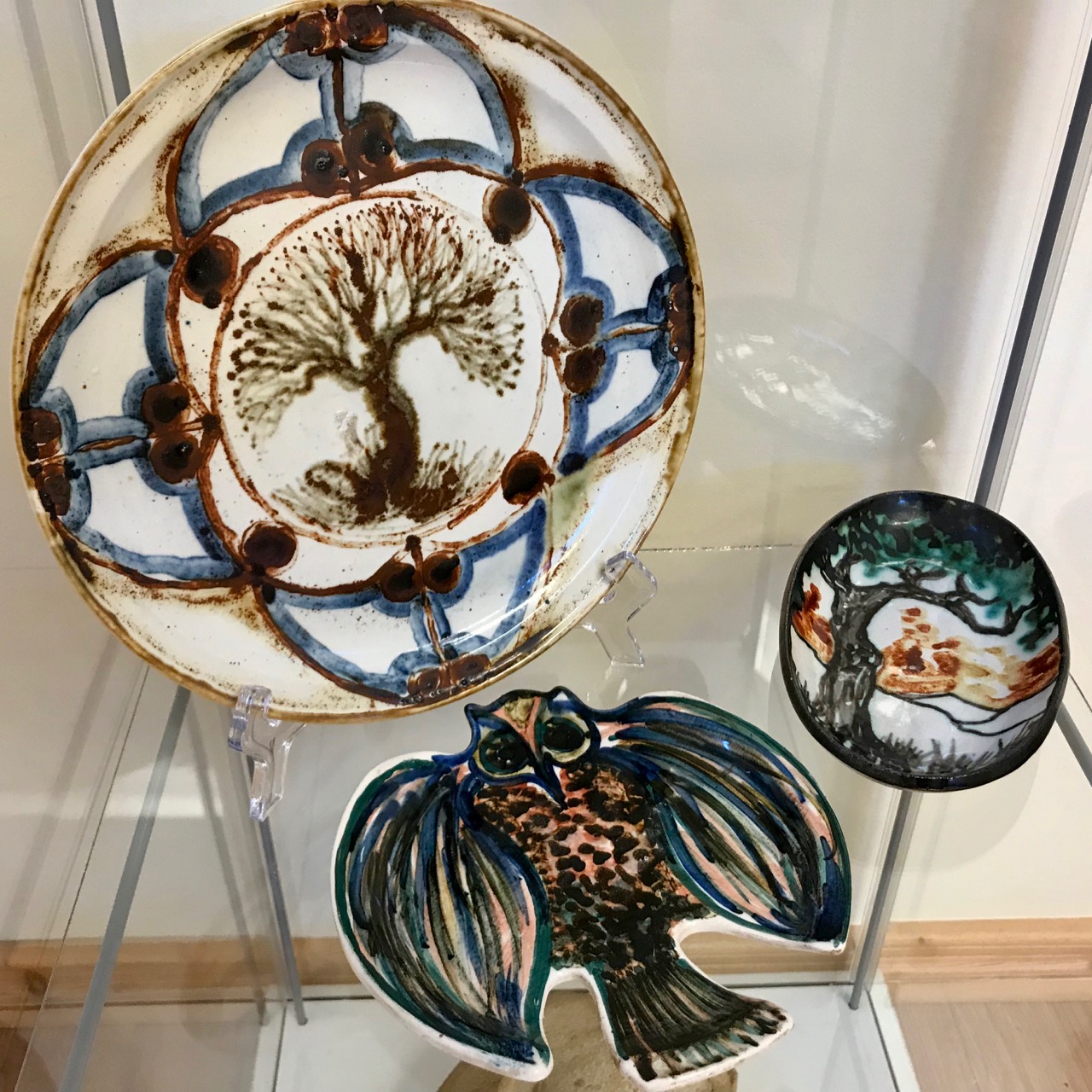
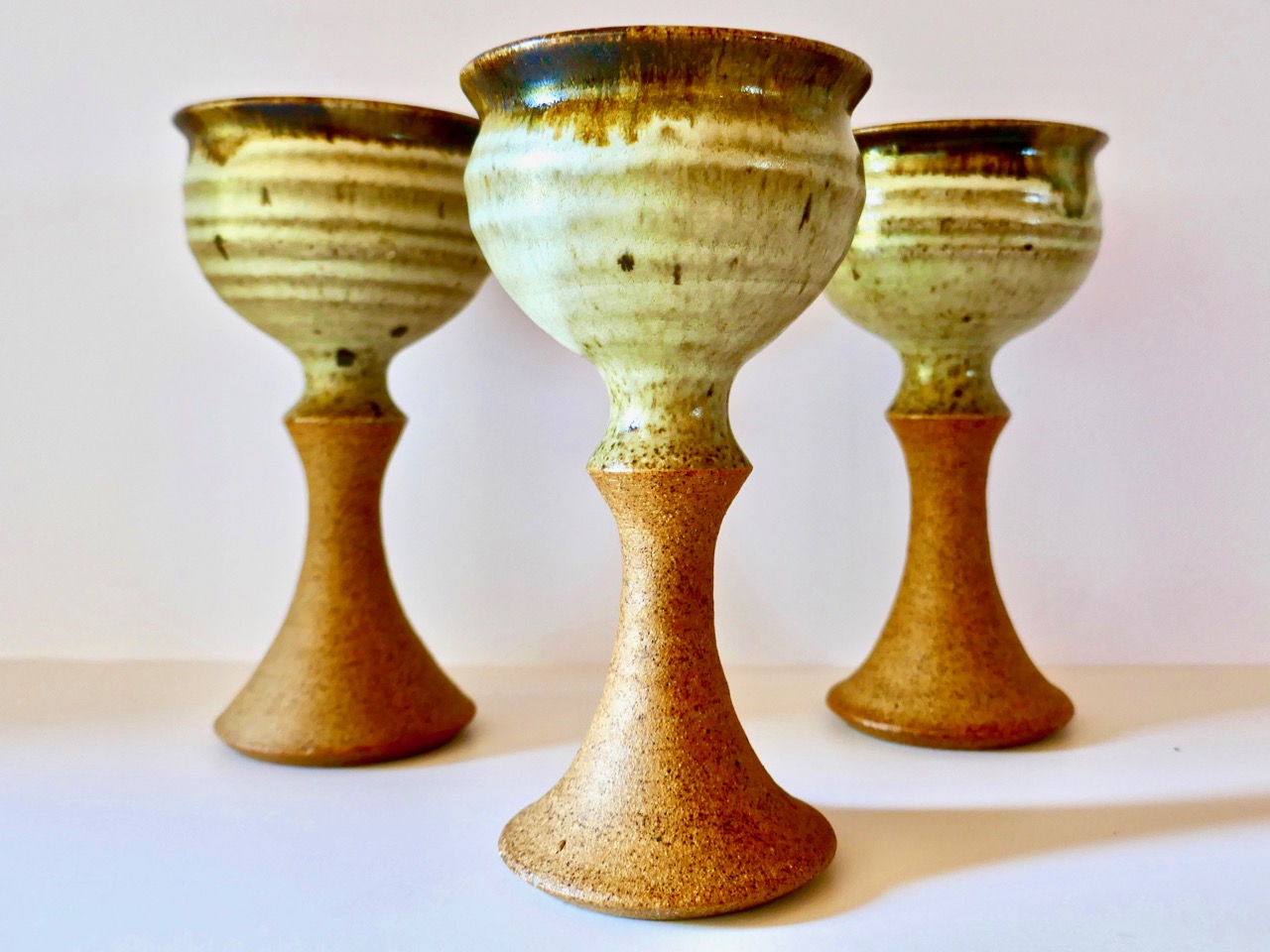
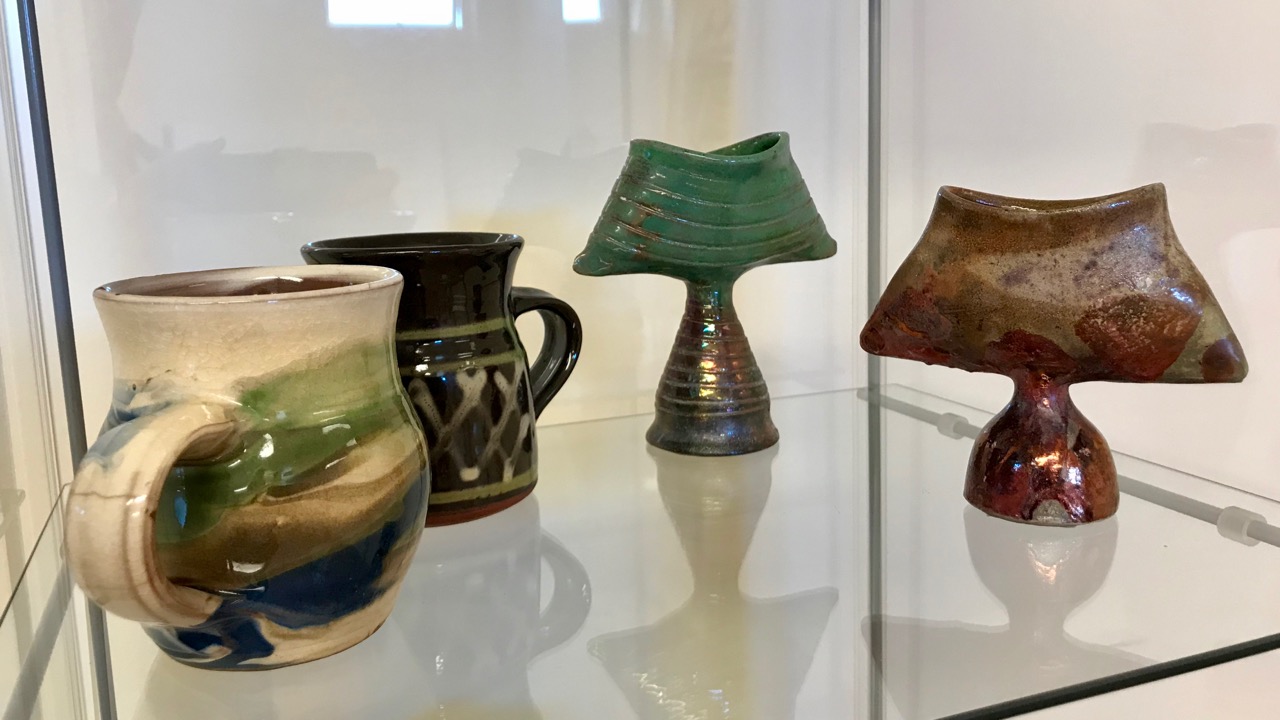
Brian still lives near Ballydehob, and is the mastermind and Curator of the new collection. And, if you can begin to see it all fitting together, John Verling (on the left in the exhibition poster above) took over the Gurteenakilla Pottery with his wife Noelle and together they produced striking ceramics, examples of which are in the header photograph.

Gurteenakilla is lived in today by Angela Brady, an artist who works with fused glass. She is also an architect. And – she’s performing the most important task of opening the first exhibition in our new Arts Museum on Friday. Finola wrote about Angela and other artists who contributed to the 7 Hands show on the pier in Ballydehob two years ago: have a look at her post and see if you recognise any other names.

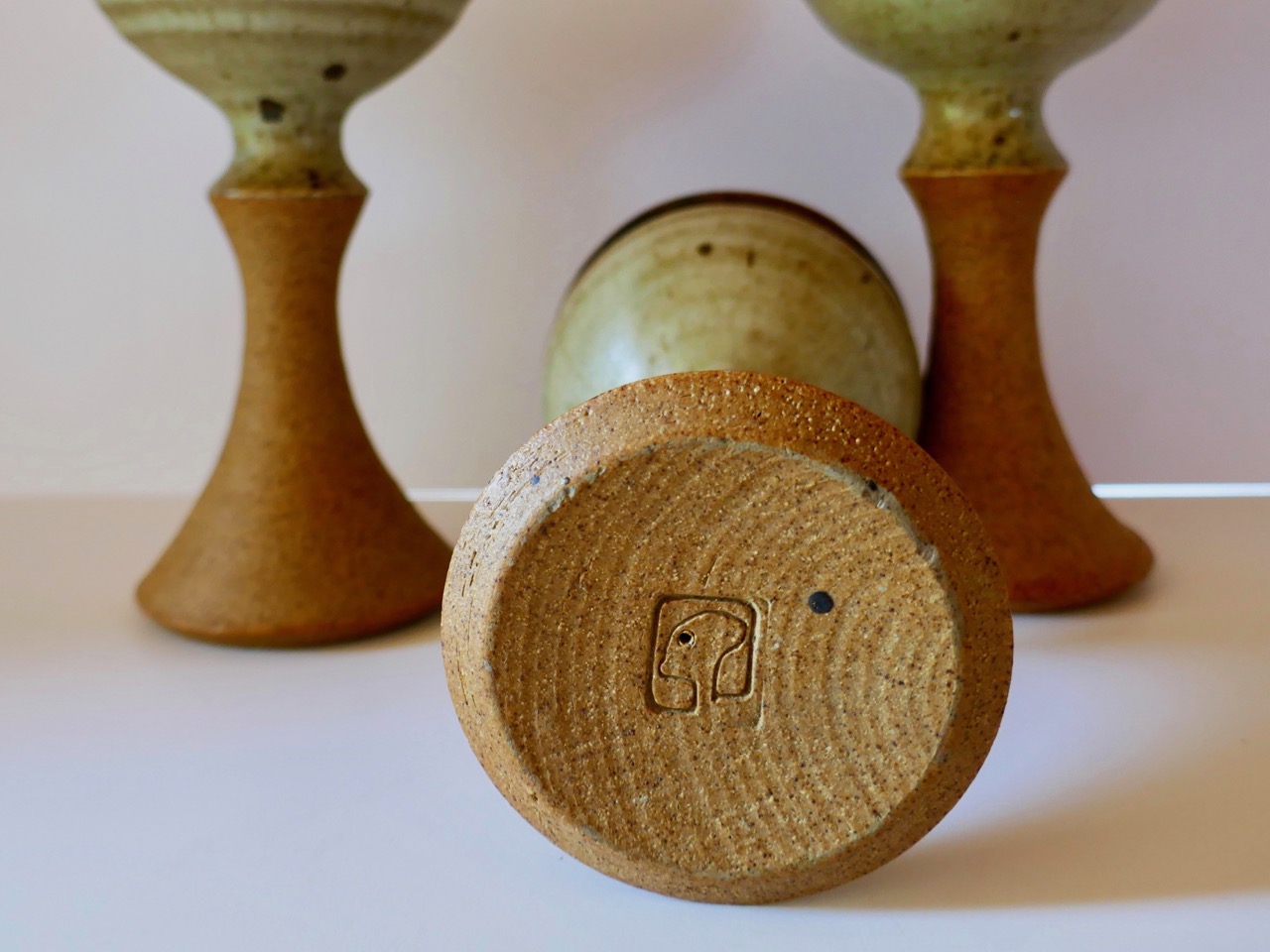
Beautiful stoneware goblets by Pat Connor, who is well represented in the collection. His maker’s mark is a memorable graphic. Another well known West Cork ceramicist represented here is Leda May, who with her husband Bob found Ballydehob in the late 1960s when they were invited by Christa Reichel to set up a pottery behind her own shop. Leda is still working in the area today, producing very fine painted porcelain ware (an example of which is shown below).

Above, from the exhibition – two earthenware mugs by Etain Hickey and Jim Turner, Rossmore Pottery 1983 and two Raku lustreware pieces by Jim Turner 1982. There are more stories to be told – to add to Alison’s comprehensive volume: the rise and fall of the Cork Craftsmans Guild, establishing the West Cork Arts Centre, exhibitions in far-flung places including Zurich, enigmatic repousee work – as yet we can’t trace its history . . . But all that is for another day, once the Ballydehob Arts Museum (BAM) is under way.

Below, posters by Brian Lalor and Repousee work by Shirley Day.

So here’s yet another reason to come to West Cork! This ‘taster’ exhibition starts on 10 August and continues through Heritage Week and Ballydehob’s Summer Festival until 26 August. We have to commend our Community Council in Ballydehob who are giving us the space in Bank House – right in the town centre (the former AIB Bank building) which they acquired for the permanent enjoyment of the local community. Also we have benefitted from Cork County Council who have given us a grant under the Creative Ireland Programme to help get the whole project off the ground. And most of all we have to thank local people who have freely donated pieces for the permanent collection – all will be acknowledged when the Museum is up and running.

Bohemians in Ballydehob! opens at 6pm on Friday 10th August at Bank House, Ballydehob