We Welcome the Hope That They Bring

Sea Campion

The flowers that bloom in the spring, Tra la,

Breathe promise of merry sunshine —

As we merrily dance and we sing, Tra la,

We welcome the hope that they bring, Tra la,

Of a summer of roses and wine,

Of a summer of roses and wine.

And that’s what we mean when we say that a thing

Is welcome as flowers that bloom in the spring.*

We’re officially in spring now. Throughout April (an unusually dry one) our West Cork fields and boreens have been greening and sprouting. Every day on our walks we welcome old friends to the hedgebanks, or discover new ones.

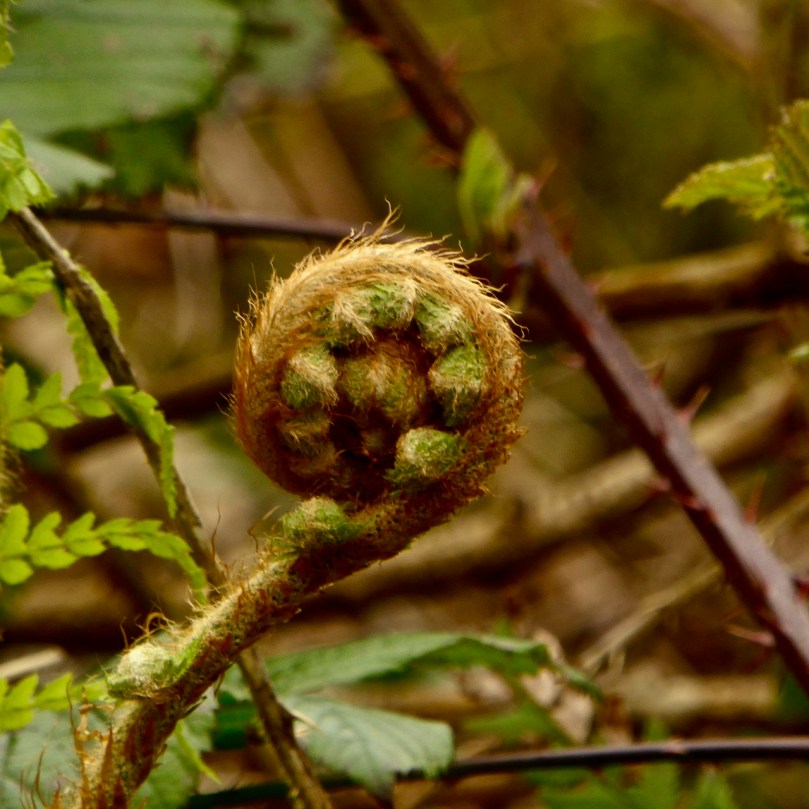
The photographs in this post were all taken in April. Above is Bitter Vetch, and below is a fern unfolding – a particularly fascinating process, almost mathematical.
The quintessential flower that we all look forward to at this time of year is, of course, the bluebell. How it cheers the spirits when you spot the first one, and then begin to see them carpet the floor in shady places or old graveyards, or even climbing up along the hedgebanks, so that you are walking between blue walls.
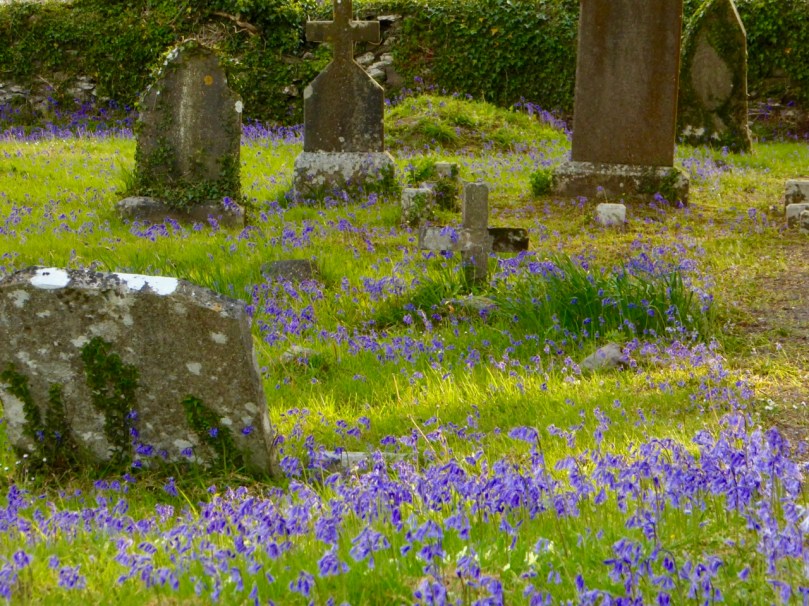
They mix so beautifully too, with the bright yellows of first the celandine, and then later the buttercup, the white of the wild garlic, or the intense bright green of spurge.

About that wild garlic – in the post for March wildflowers I wrote that what we mostly have around here is the non-native three-cornered garlic. I have been on the hunt for our native species, called Ramsons and I finally spotted a huge patch, growing right along the main road between Skibbereen and Ballydehob, at the gates of New Court (I wrote about New Court in my post about belvederes). Robert pulled over, at great jeopardy to life and limb as it’s a busy corner, and out I leapt with my camera.

But what was this? Every leaf was covered in bird droppings – every single one! I realised that there is a rookery in the trees above: perhaps it is this that provides the fertiliser for the garlic. I certainly didn’t linger to explore further, as I could hear the gregarious cawing overhead. I’m still on the hunt for a clean patch!

It seems to be a very good year for Cuckooflower, also known as Lady’s Smock. Interestingly, the colour of the petals vary from almost white to a delicate purple, depending on the composition of the soil and other aspects of the habitat. Up to this year I had seen isolated examples of Cuckooflower (so called because their arrival coincided with that of the cuckoo) but this year there were Cuckooflower “blooms” in many fields. At first, you’d think they were just daisies, but once your eye was attuned to their shape, they seemed to be everywhere. This is great, as it’s an important larval food source for the Orange-Tip Butterfly – it lays its eggs on the underneath of the petals.

If March belongs to the Blackthorn, in April the Hawthorn (sometimes called Whitethorn around here, and May Tree elsewhere) gradually moves in and takes over. Suddenly the hedges are full of green trees loaded with showy white blossoms (the opposite of the Blackthorn, in which the blossoms come first and are over by the time the trees green up).

I found my first Thrift, or Sea Pinks, last month, but it’s in April that they become commonplace around the coast. I was delighted to find a patch down by the Ilen River at the very beginning of their blooming, and could see the stages they go through on their journey to the delightful pink flowers we all love.

At the very beginning of the month I was fortunate to participate in a walk with Éanna Ní Lámhna, well-known naturalist and a frequent speaker on topics related to wildlife on Irish radio and television. It was a great experience, as she spoke mostly about trees, about which I know little.
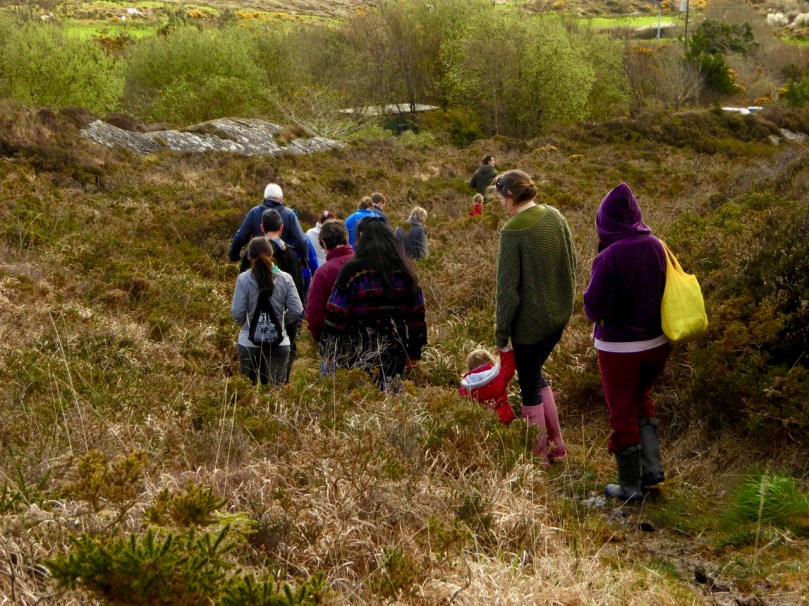
In the course of our marvellous walk I also observed several spurges, including this very rare example of a wood spurge. You just never know what you’ll find – this one was right outside a kindergarten!

There’s an exciting announcement about West Cork wildflowers coming soon! Stay tuned to this blog and all shall be revealed… Meanwhile, a few more flowers of April…

I featured Scarlet Pimpernel last month – this is his cousin, Yellow Pimpernel. On the right is Bilberry
Wavy Bittercress, found along the shore, consorting with thrift. On the right is Common Milkwort :it has a tiny white flower emerging from a deep blue one

Stream Water-crowfoot: at first I thought this was a weed choking a stream, but closer inspection revealed these lovely flowers

We’re not the only ones enjoying the bluebells

*OK, I know it dates me. It’s from The Mikado, by Gilbert and Sullivan

West meets West

Picturesque Newlyn, Cornwall – the fishing village was the centre of a major art movement in the late 19th and early 20th centuries

I have been working hard with Uillinn – West Cork Arts Centre‘s fantastic new gallery in Skibbereen – to bring over an exhibition of the work of contemporary Cornish artists, which opens in June. West meets West will be the launch of a continuing programme which sees the art and culture of Cork and Cornwall being shared, to the mutual benefit of all working artists and art lovers – and to residents and visitors.

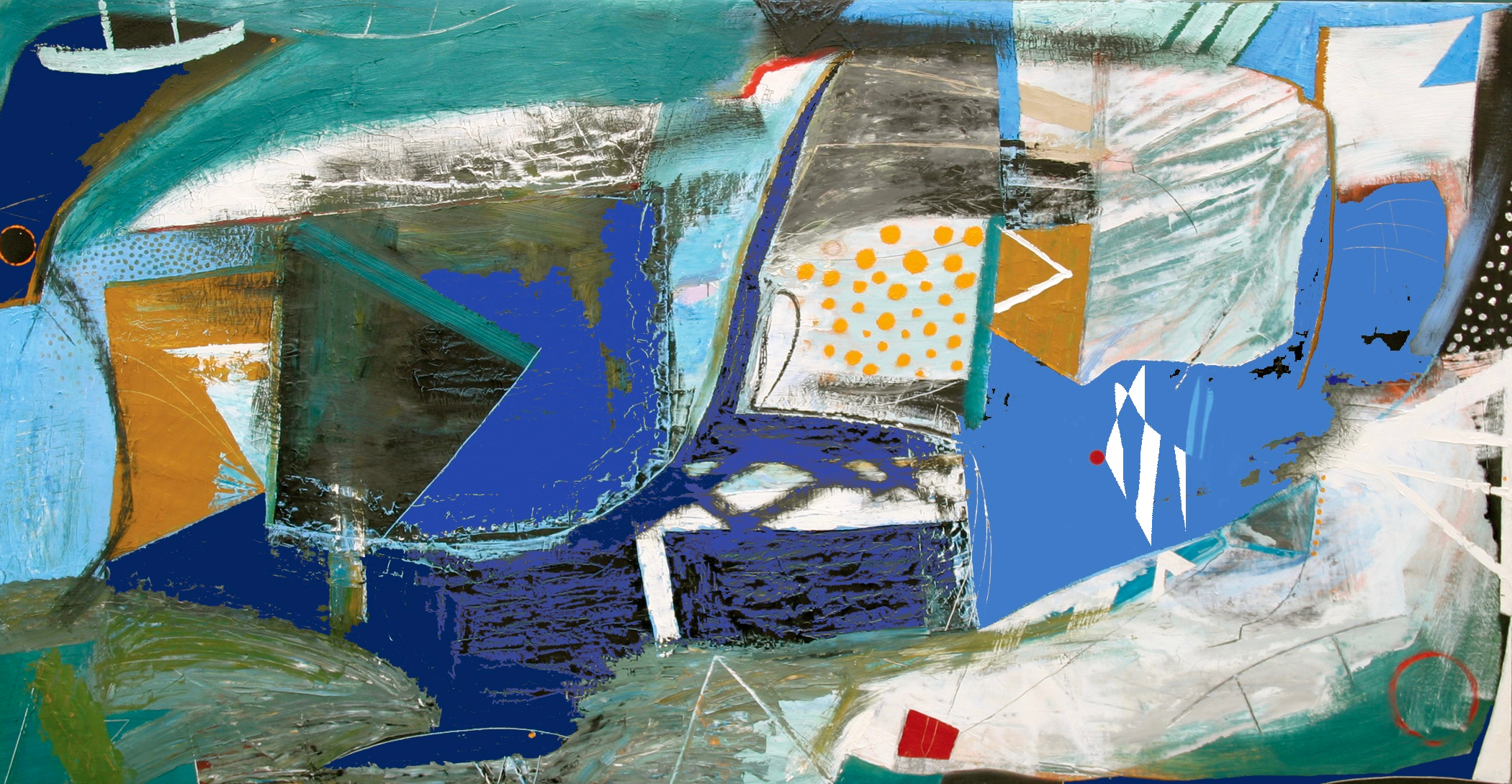
Greenstone – a canvas by the late Matthew Lanyon, one of Cornwall’s important contemporary artists whose work will be shown at Uillinn in June this year

Why Cornwall and Cork? And, particularly, why these westernmost peninsulas of Ireland and England? Well, as you may have noticed from past posts on this Journal, historic links between the two geographical areas go back a very long way. Starting between three and four thousand years ago copper was mined on Mount Gabriel and was mixed with tin from Cornwall to produce a revolutionary new metal – Bronze. This material was hard enough to make tools and weapons – therefore a practical commodity: also it does not rust. It has, too, been used to make bells for centuries, so its properties include sonority. In fact the word bronze probably originates from the Medieval Latin bronzium, in modern Italian bronzo, meaning ‘bell metal’. Regardless of all this, the important thing we know is that relations between the west of England and the west of Ireland were well enough advanced to set up regular trading between the two outposts in those far-off days.

Tony Lattimer, international award winning ceramic artist based near The Land’s End in Cornwall, whose large ceramic sculptures will be shown in West meets West, Skibbereen, June of this year

In a recent post I alluded to the incredible debt that Cornwall owes to us in West Cork because we gave them their patron saint – Saint Piran. The fact that the gift wasn’t intentional shouldn’t delay us too long: we tied Cape Clear’s Saint (whose Irish name was Ciarán) to a millstone and threw him over a cliff. Instead of meeting his doom he miraculously surfed the millstone across to the Cornish coast, where his landing place – Perranzabuloe – is named after him, and where he is royally celebrated on March 5th every year, with all the zeal that we show to our own St Patrick!

Apart from metal mining and saints, another important connection is shared fishing grounds. From medieval times onwards (and perhaps before) the Cornish fishing fleets put out from Mousehole and Newlyn to follow the pilchard and herring shoals across to Roaringwater Bay. This is really where art comes into our story, as it was the way of life of some of the Cornish fishing communities that attracted artists to that western County of England in the late nineteenth century, once the arrival of the Great Western Railway in Penzance had established the direct connection with London. Newlyn was an early focus, and a young man from Dublin, Stanhope Alexander Forbes, an up and coming young painter in the plein air tradition, made his home there in 1884 and stayed for life. Forbes found in Cornwall a true ‘rural idyll’: an unspoiled countryside where life was simply lived, and a rugged coastline with a magical quality of light. Known as the ‘Father of the Newlyn School’, he gathered around him like-minded artists who recorded (and perhaps romantically idealised) the way of life of the communities there, and that special quality of the light, in canvasses which are highly admired and respected today.

A preliminary sketch by Stanhope Alexander Forbes for a painting known as On Paul Hill (Paul is the name of a village between Newlyn and Mousehole in Cornwall). Forbes painted in the Plein Air style, out of doors and from real life

I made my home in Cornwall for a number of years, before I decided that I hadn’t come far enough to the west, and followed the pilchards and herring myself to Roaringwater Bay, where I now look down on them from my eyrie in Nead an Iolair (although the shoals are today much diminished). During my years in Cornwall I came to know and respect the stories of the artists from Victorian years up to the present day. The ‘Newlyn School’ which Forbes represented was only one piece of the jigsaw there: we will explore others later. Art is probably Cornwall’s biggest asset. Ever since the opening of the Tate Gallery in St Ives – established there because of that town’s historic links with artists and craftspeople of international repute – ‘art tourism’ has grown to become a major year-round driver of the local economy.

Newlyn old and new: left – Stanhope Alexander Forbes in 1900 painting outside Trelyn, Boase Street, Newlyn – my home for 25 years! Right – Newlyn today is Britain’s largest fishing port

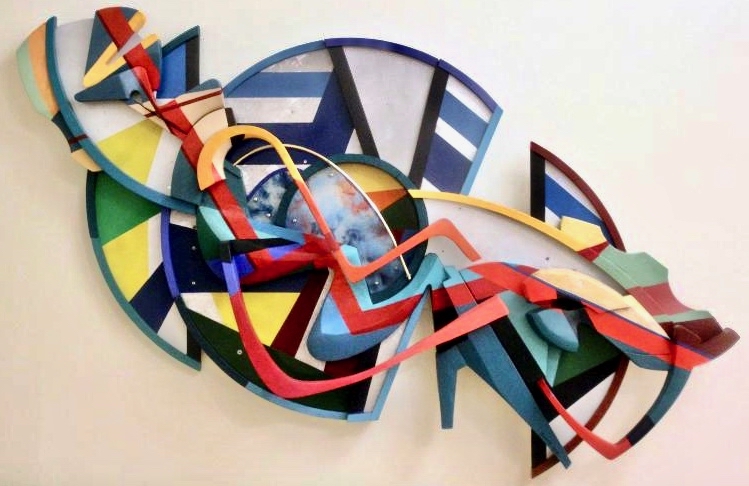
Cornwall is home to a number of artists renowned today in the British Isles. I got to know many of them when I lived in Newlyn. Three of them will be exhibiting in Uillinn from 3 June to 8 July this year: Philip Booth, Matthew Lanyon and Tony Lattimer. Their work is large scale, stimulating and mutually complementary: constructions, canvasses and ceramic sculptures. Please make a note of the dates now: this exhibition is important for West Cork and for Cornwall. Please don’t miss it!

Below: Philip Booth, from Lamorna, Cornwall, will be showing a number of his spectacular relief constructions at West meets West, Uillinn, Skibbereen, in June. This one is titled ‘Formed in Running Water’

Formed in Running Water

All That Jazz

The Ballydehob Jazz Festival gets better every year! There was a marvellous program this year – eclectic and varied, and our little village was buzzing with locals and out-of-towners.

The great thing about a festival like this is that there’s something for everyone. The Big Acts take place in the “Festival Hall” (AKA Community Hall) where there’s big band sounds and dancing till the wee hours. There are workshops for kids (this year’s line-up featured archery tag and circus skills) and a Sunday Market with a continuous bandstand of acts.

The East Coast Jazz Band are effortlessly cool

But a lot of the action takes place in the intimate venues. The pubs and restaurants all host entertainers so you can have lunch and dinner accompanied by soulful crooners, or crowd into one of the pubs to listen to a piano duo or a swing band or a funk quartet. There’s a good mix of West Cork and come-from-away groups and every venue is packed to the scuppers.

Above: Stephanie Nilles and Thomas Deakin were one of THE acts of the Festival. Their sound (and her lyrics!) left us gasping. Below: The Eileen and Marilyn Experience, perennial favourites in West Cork, and Grace Notes, a new vocal performance group under the direction of Caz Jeffreys 

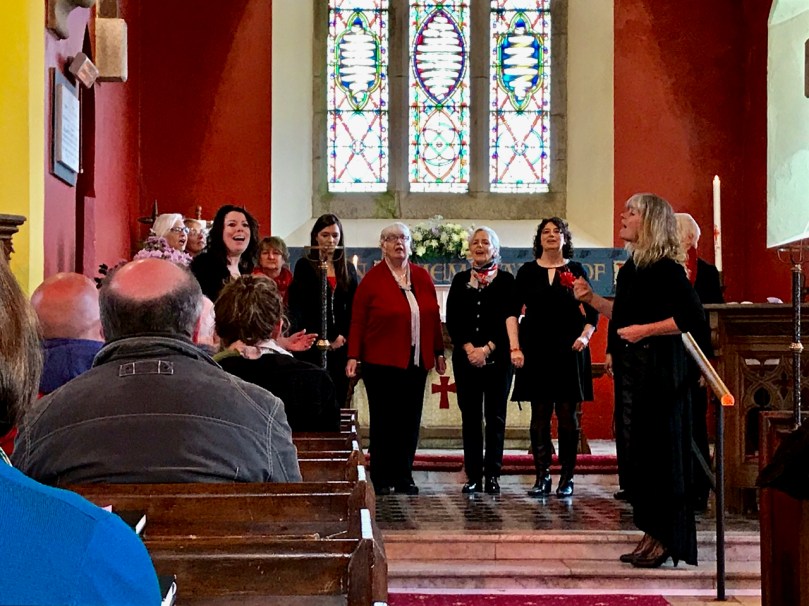
This year there was a first – a Jazz Mass. Actually it was a Church of Ireland Service, with gospel provided by the choir I (try to) sing with, Acapella Bella. Something tells me this could well become an annual event.

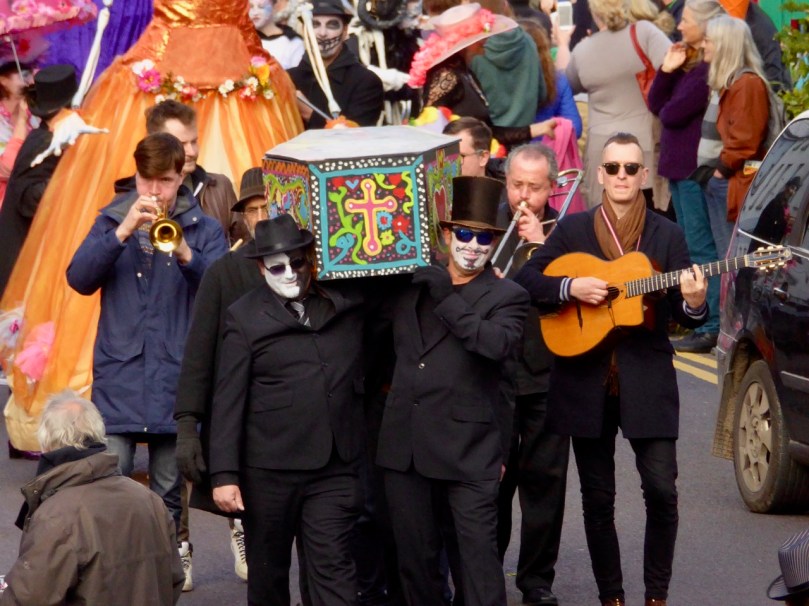
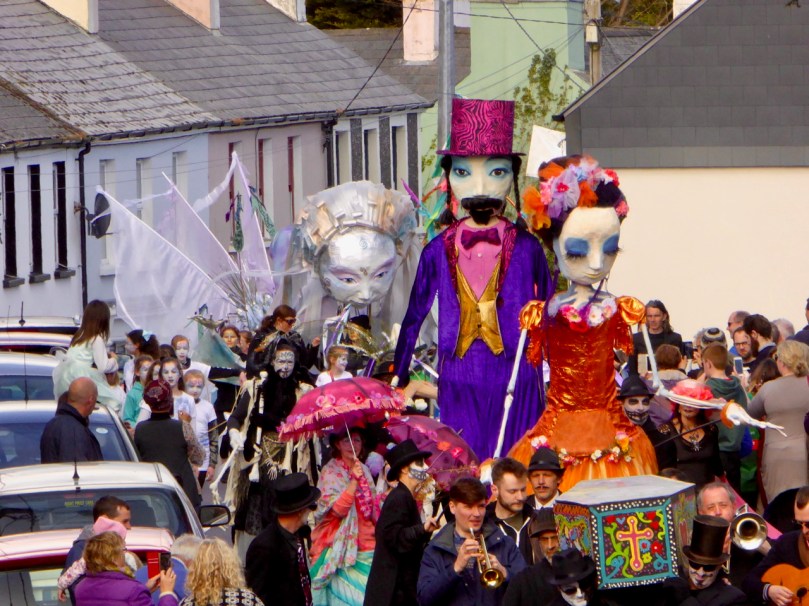
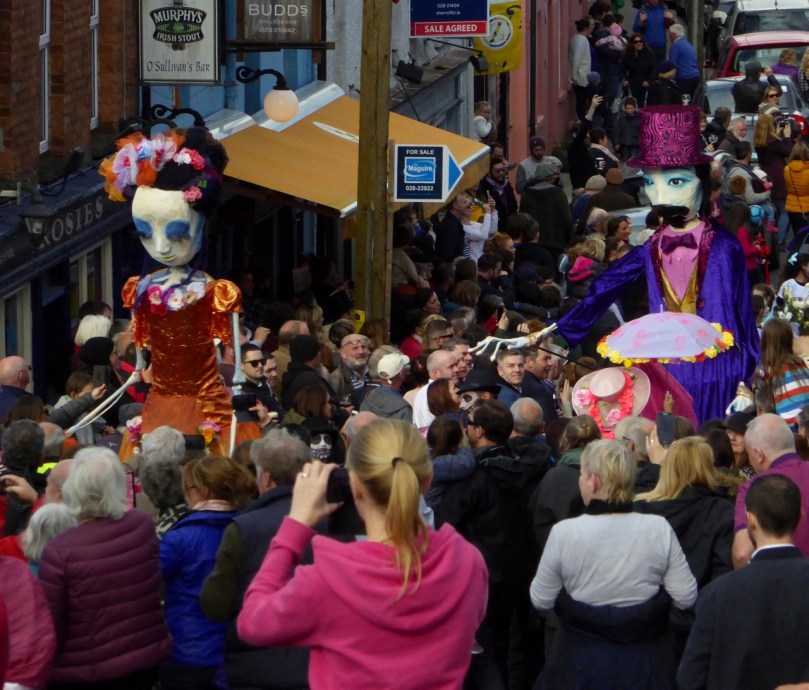
But the highlight of the festival for everyone is the New Orleans-style Jazz Funeral. Ballydehob is a hotbed of creativity at the best of times and the idea of a Jazz Funeral has galvanised the community. This is only the third year we’ve done it and it’s been improved and expanded every year.

Last year the giant puppet, Katrina, made her first appearance, and this time she was joined by a mate. Billed as Mexican Day of the Dead meets Bealtaine, the parade wound its way up the village, stopping along the way so the puppets could wow us with a dance. It was a marvellous spectacle.

Almost, you could forget you were watching dolls and feel the emotion flowing between them and they put their arms around each other and kept time to the music.

A stilt walker, a giant centipede, a pair of gangsters on a penny farthing, and a whole army of children in costume completed the parade of mourners. The weather held off (the Gods of Bealtaine must have been appeased) and the streets were thronged with cheerful festival-goers, all swearing to be back again next year and this time to bring all their friends.

Tara Brandel performed her dance Car at the end of the parade. Finola cosies up to a gangster

The tagline for the Festival is…drum roll, please…THE BOUTIQUE FESTIVAL IN THE BACK OF BEYOND PACKING A BOMBASTIC ARTISTIC PUNCH. Take a look at the program and see for yourself – great descriptor, or what!

Into the Blue…

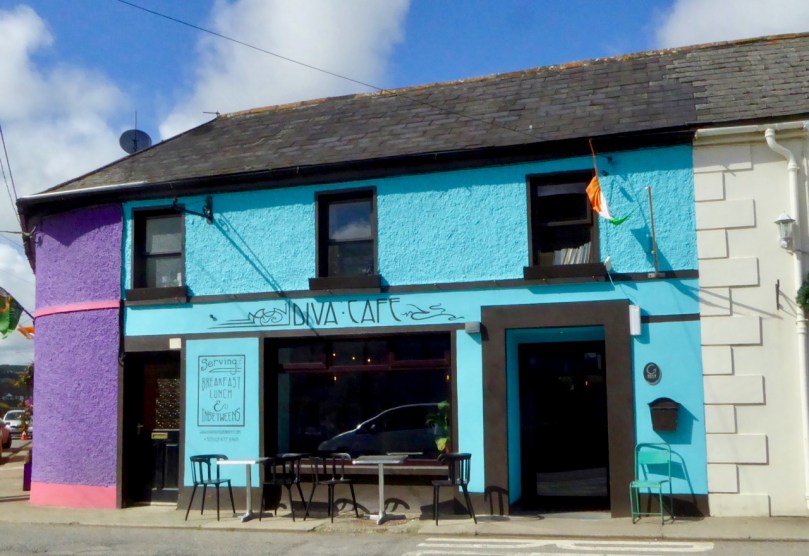
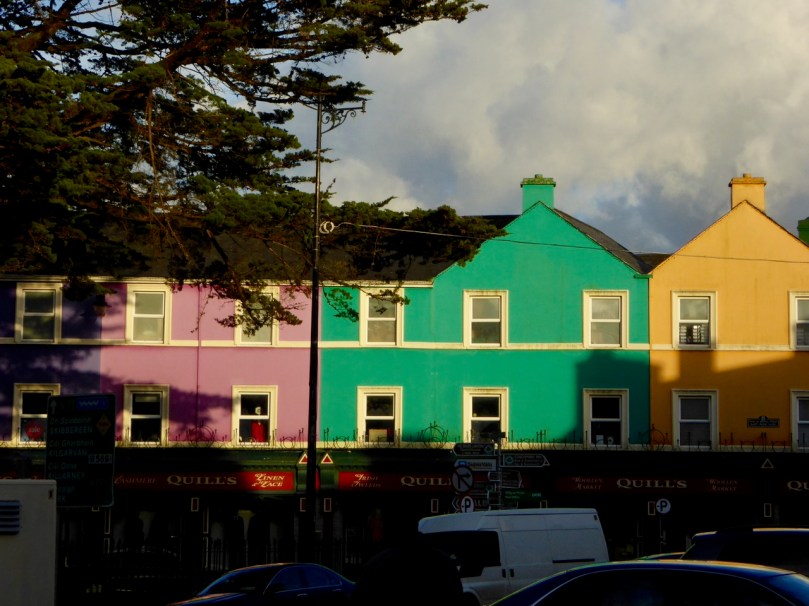
In this series on Ireland’s colourful buildings, we started off with purple and pink and proceeded through the colour wheel to the oranges and yellows and now we have arrived back on the cool side of the spectrum – the blues and greens. The Diva Cafe in Ballinspittle (above) has black trim that does nothing to tone down its exuberance, and it marries beautifully with the purple and pinks beside it, which were highlighted in our first post on this series.

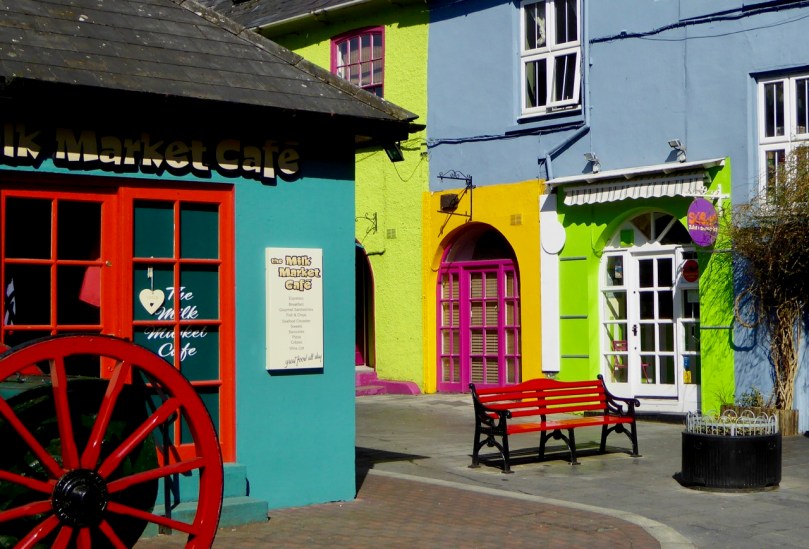
We left off the last post with a couple of lime greens, so here’s another, from Kinsale (above) to get us back in the swing of things.

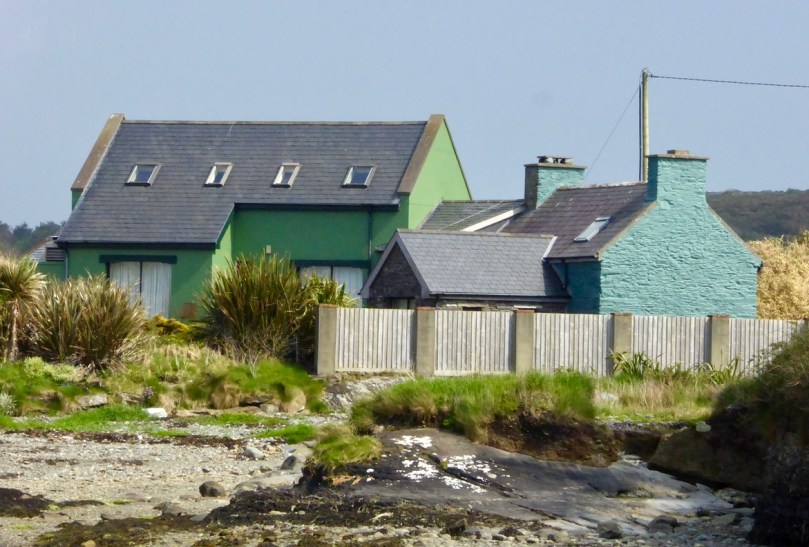
A bright green and a blue green are a great combination beside the sea – this house is at Dunmanus, on The Mizen

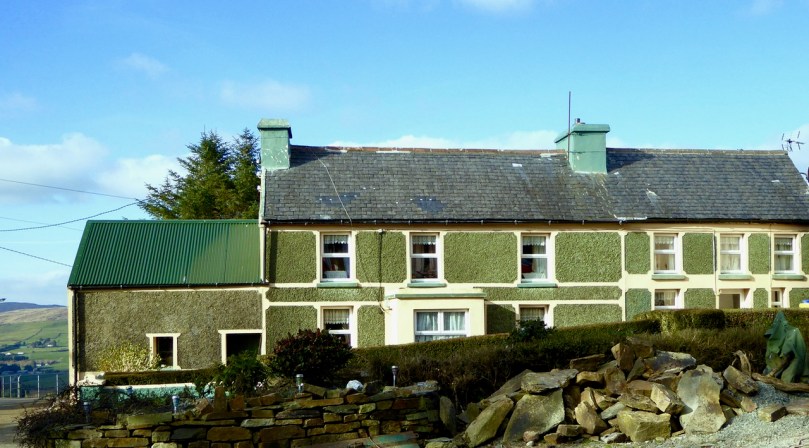
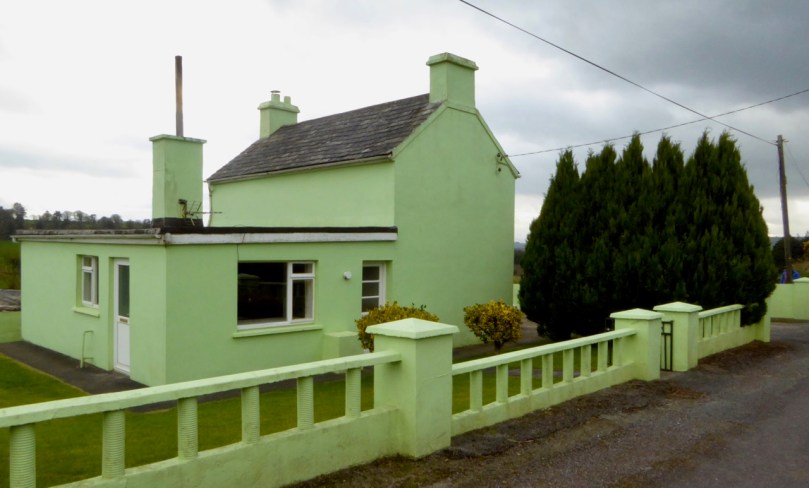
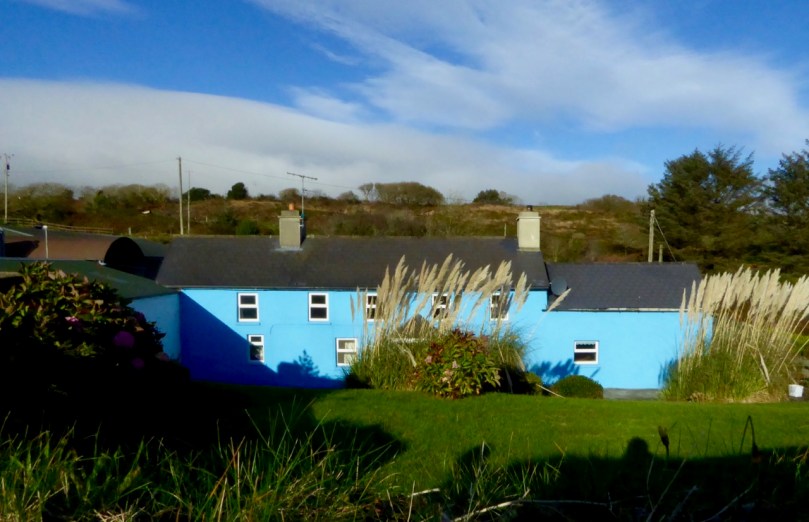
Blues and greens are the colours of the sky and the fields, so they don’t pop as much as the pinks and the oranges. In fact they can be quite subtle, when used in tones that blend in with their surroundings.

I love these two farmhouses, the first near Mount Kidd and the second near Coppeen

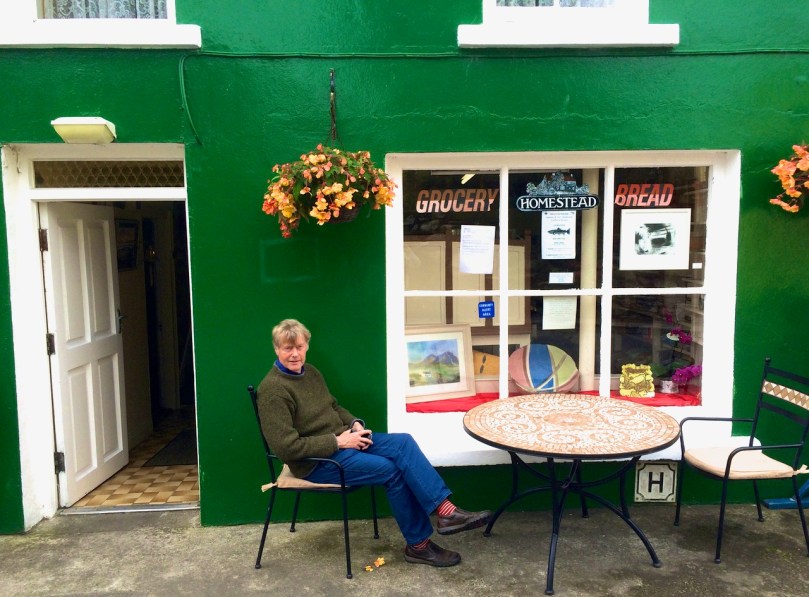
But in village streets, and especially when combined with the other colours of the streetscape, they can be as cheerful and arresting as the stronger hues around them.

Eyeries (top) and Kenmare (bottom)

There are shades of blue and green that people argue over – one will call it blue and another green.

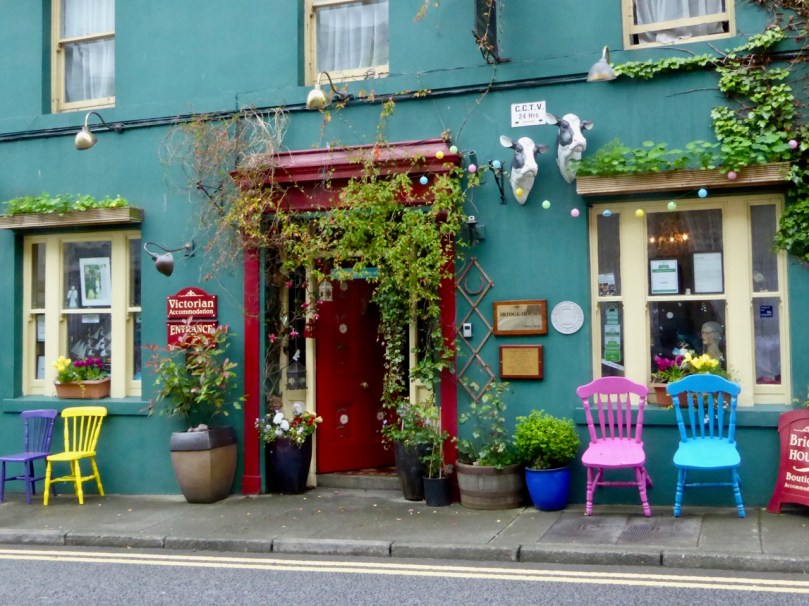
The fabulous Bridge House in Skibbereen – blue or green?

Those are the teals, ceruleans and turquoises, and St Patrick’s Blue, which is the colour of the Aer Lingus uniforms.

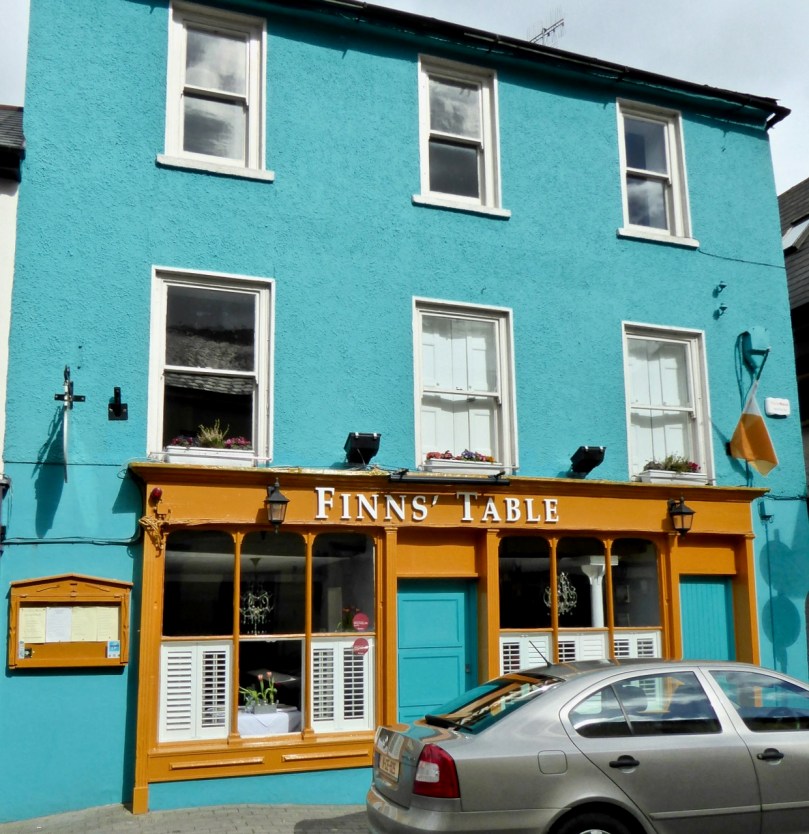
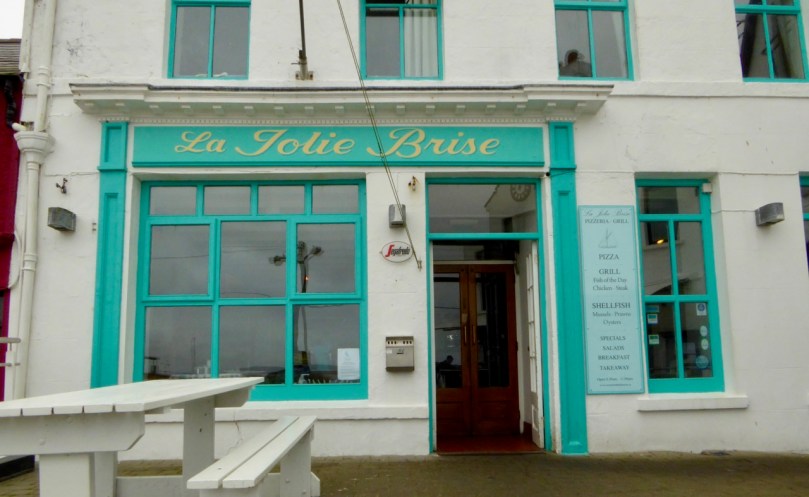
Finn’s Table in Kinsale, La Jolie Brise in Baltimore and a lovely brick and teal combo in North Cork

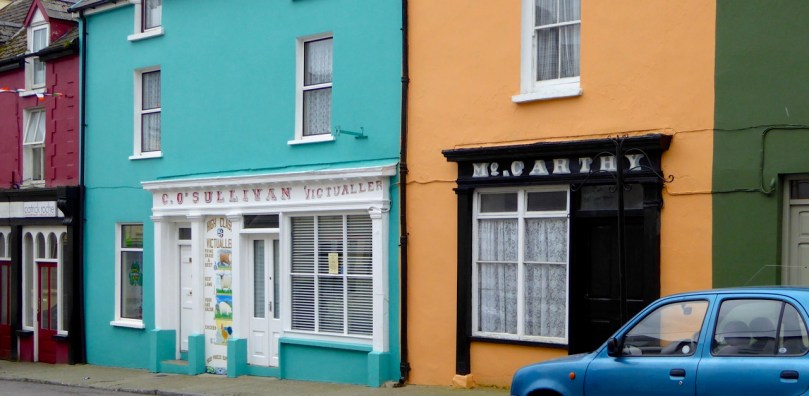
O’Sullivan’s butcher shop in Ballydehob has been closed for years, but it still retails its welcoming colours and graphics

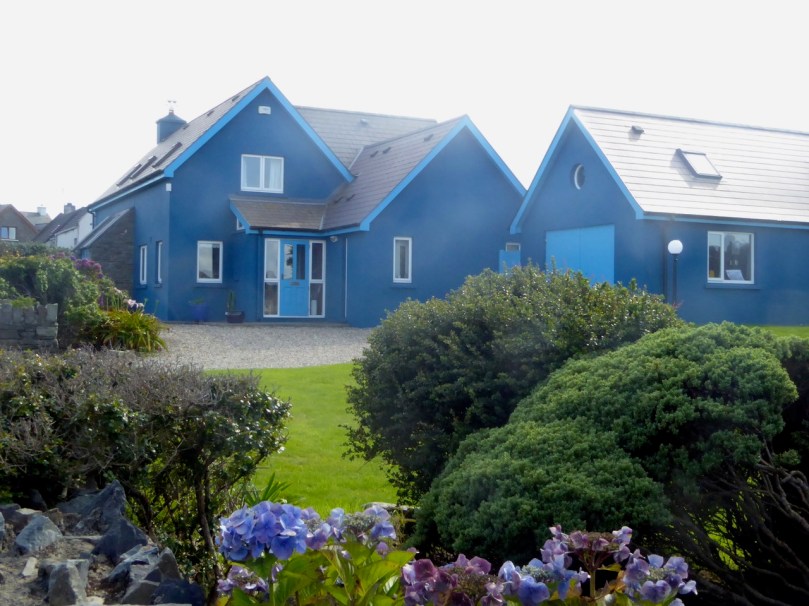
True blues vary from the strong dark ultramarines and navy blues through the denims, duck eggs, periwinkles, sky blues and on to the paler shades and baby blues.

The first house is in Baltimore, the one underneath it was glimpsed somewhere on our travels

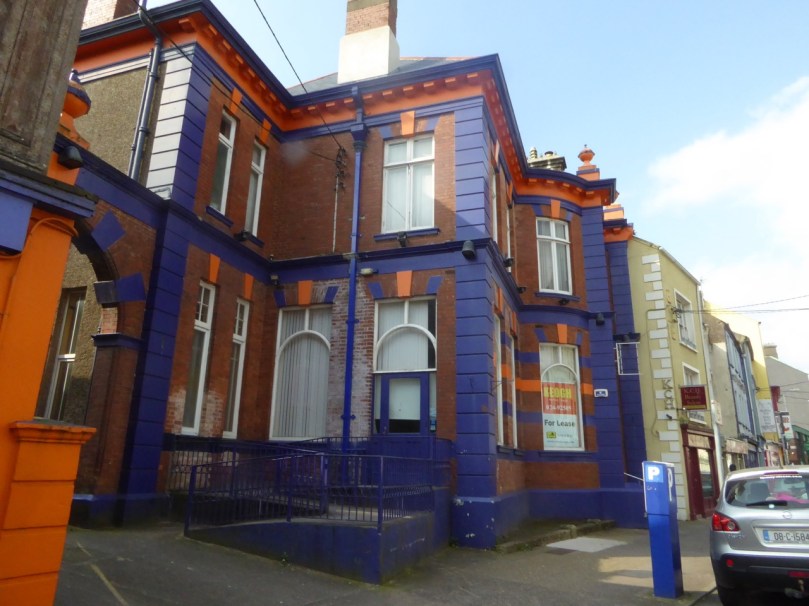
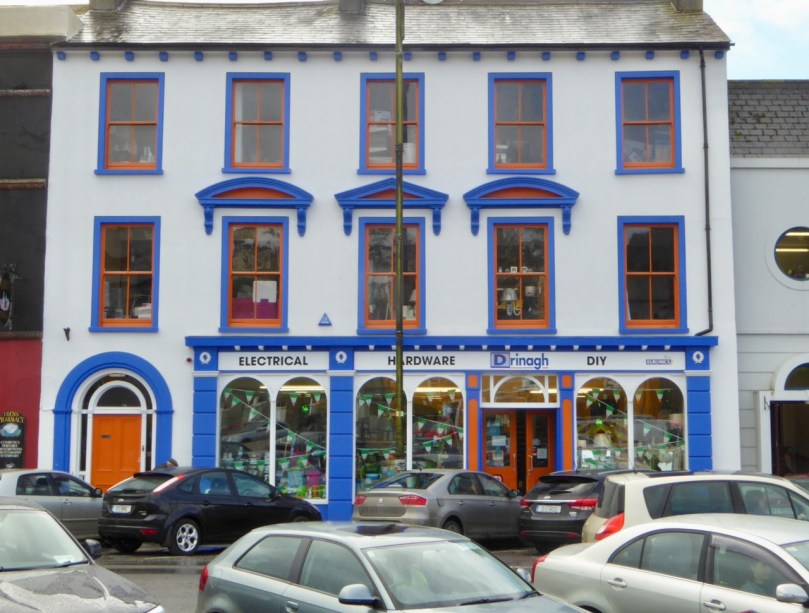
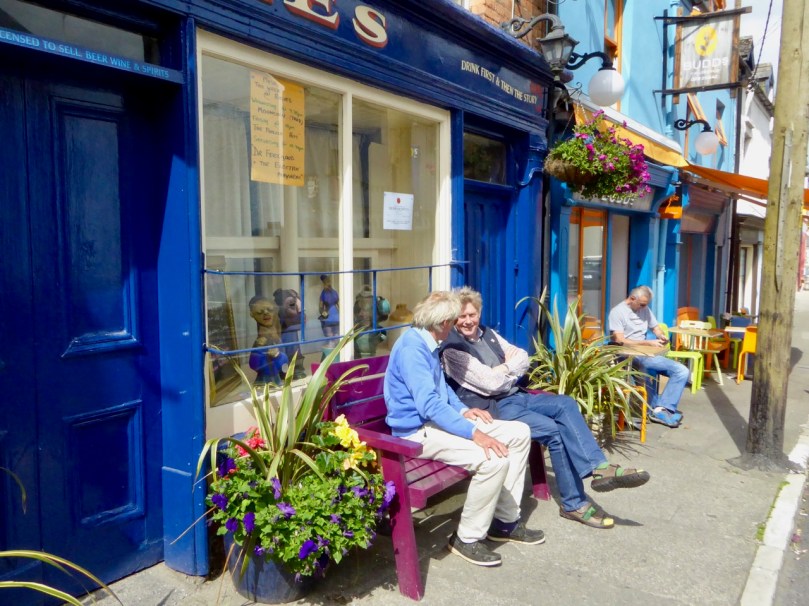
Blue matches well with other colours and is often used in combination. Some of the nicest buildings we’ve seen use blue with another colour to great effect.

Three wonderful buildings that use blue in combination with orange tones – a bank in Youghal, a hardware store in Bantry and our own Budd’s Restaurant in Ballydehob (with Rosies pub for good measure)

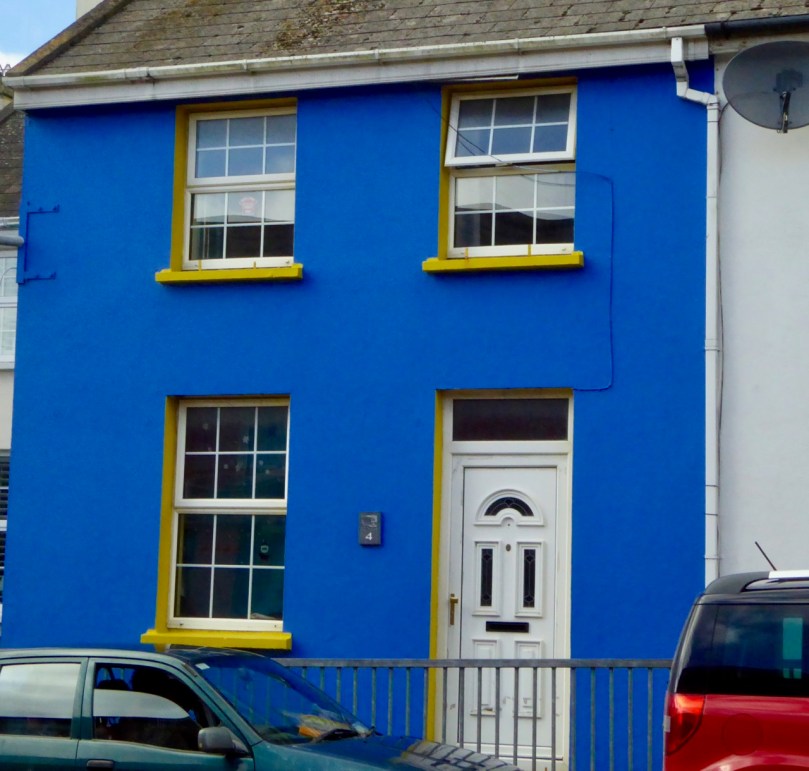
Yellow trim is a tried and true favourite
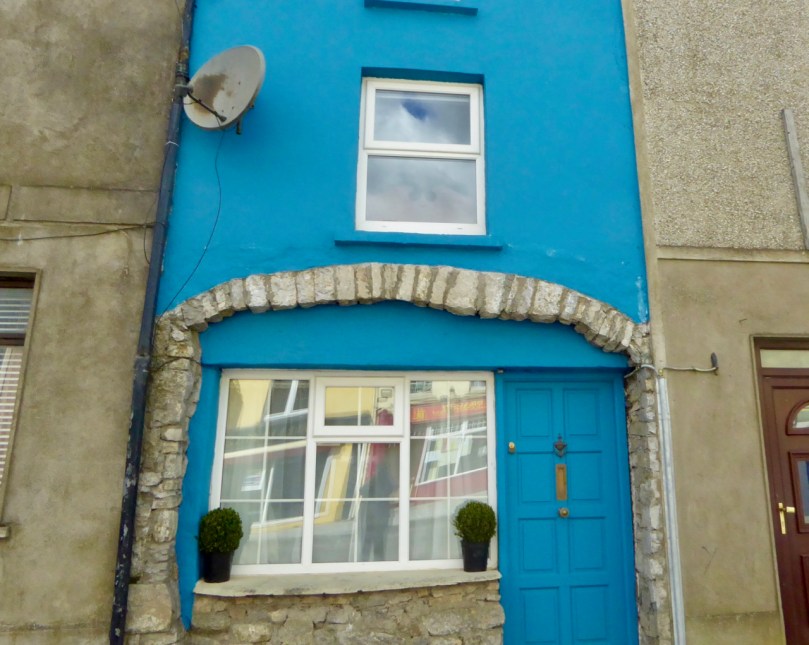
It might be one of the smallest houses I’ve seen, but it stands out when painted in blue
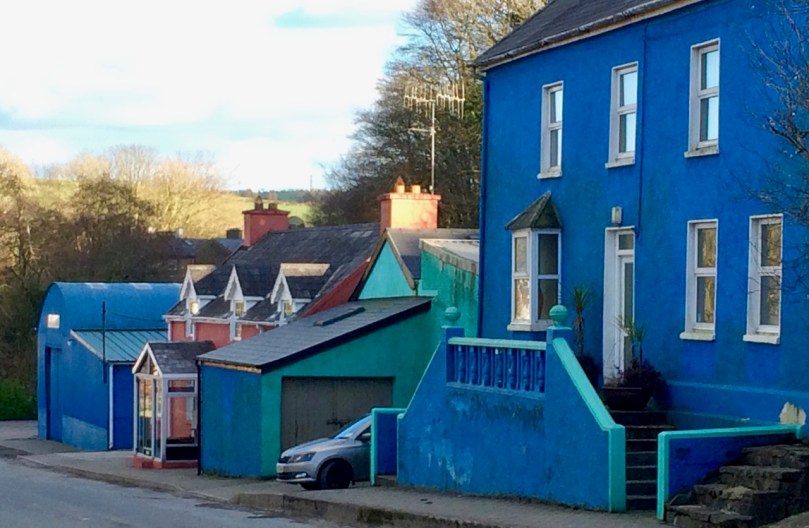
Blues and greens in Kilbrittain 
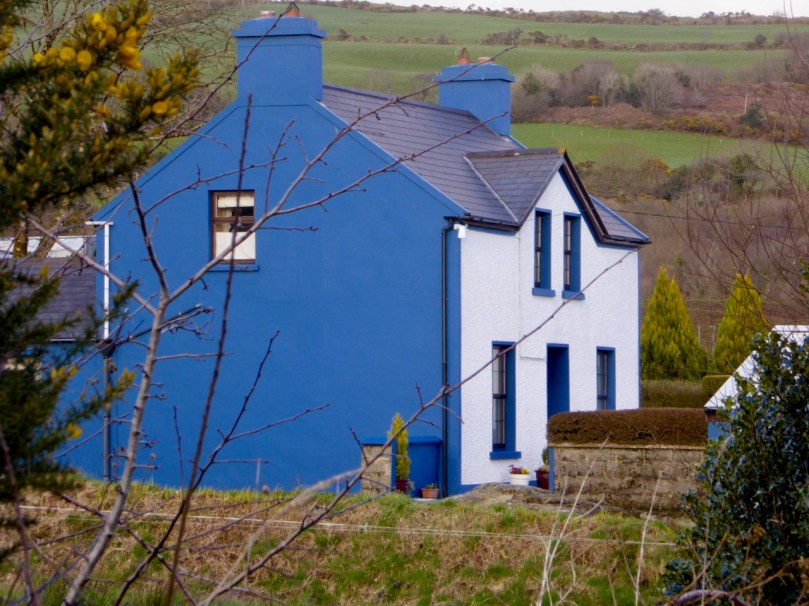
This one near Castle Donovan uses a strong blue cleverly as both a main and a trim colour
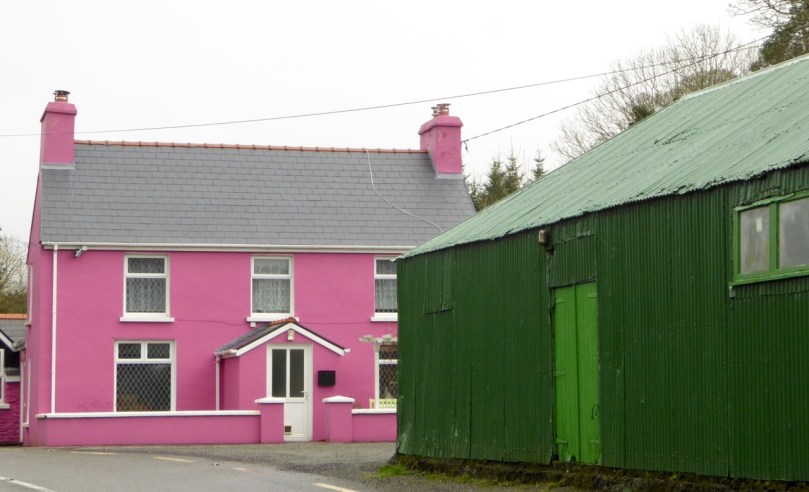
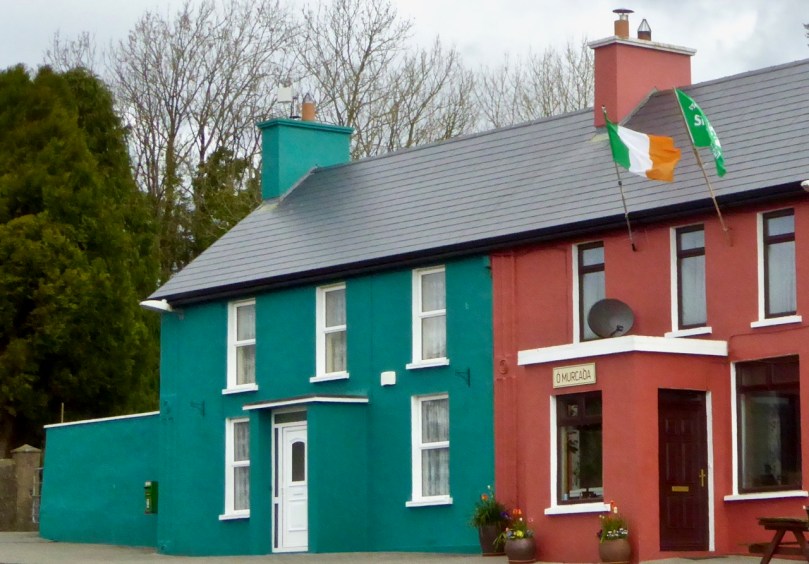
I’ve decided to end this series with this photograph of two side-by-side buildings in Adrigole on the Beara Peninsula.  The juxtaposition of the strong green and the vivid pink proves that when it comes to colour, anything can work!
Wild Atlantic Light – the West Cork Winter Edition
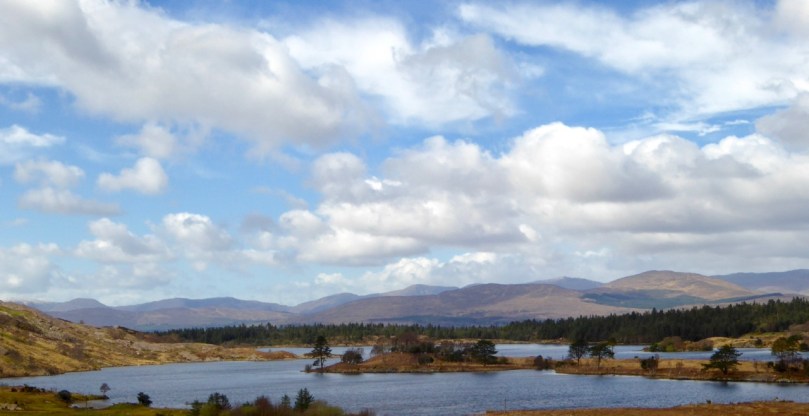
We are a maritime county and that affects our weather. It means that clouds are plentiful at all times of the year and that the weather can be highly variable and unpredictable. But the ocean, and the Gulf Stream it carries all the way from the Gulf of Mexico, also means that we have a slightly milder climate than the rest of Ireland. Beside the sea, the air is full of negative ions. That’s a good thing. Negative ions stimulate our senses and lead to a heightened sense of wellbeing.

Sure, we can have rainy days and bitter winds in the winter, but there are lots of sunny days too. When the sun shines in the winter, it is filtered through those drifting clouds to produce those marvellous effects of light and shade that lend such drama to the landscape.

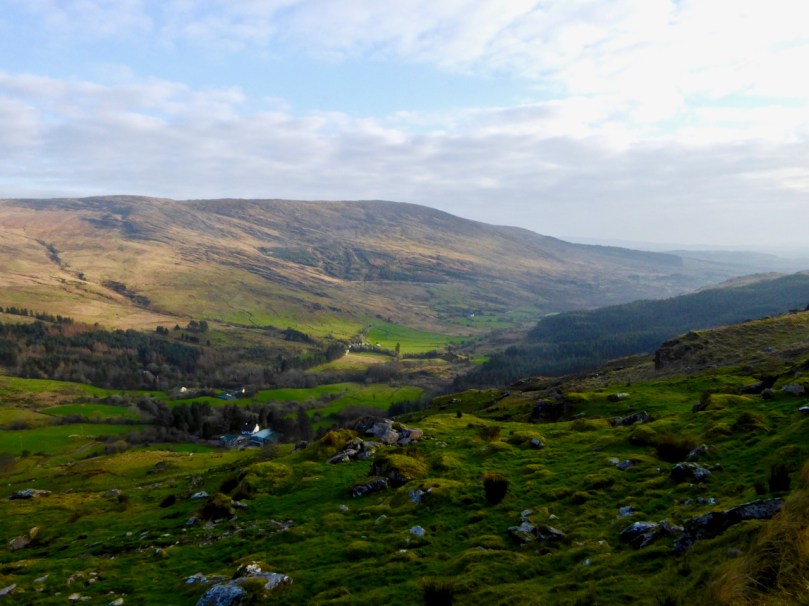
In winter too, the colours are highly contrasting – the green of the fields change abruptly to the blondes and golds of the higher mountains. The bracken turns the colour of amber and the fionán grasses provide an expansive sea of rippling heath on higher ground. Snow caps the highest ridges, although it rarely descends to us mortals in the valleys.

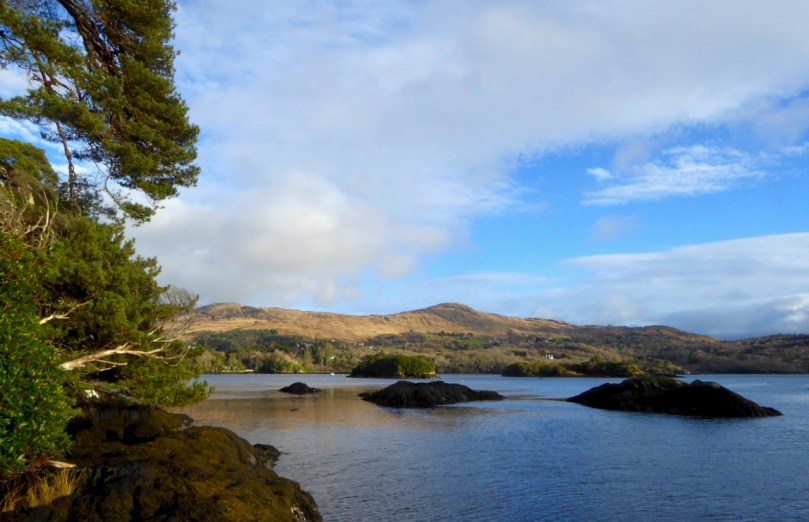
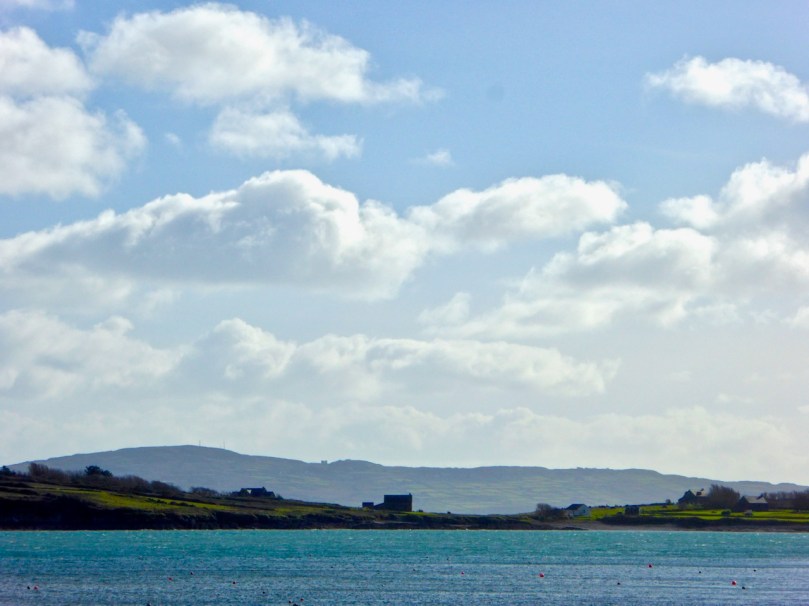
Under a blue sky the sea in West Cork turns the colour of the Mediterranean or the Caribbean. They tell me that has to do with having a sandy bottom and I am sure there are other scientific explanations, but really, you have to see it yourself to believe it.

Our underlying geology provides the ruggedness, the exposed sandstone ridges, and the deep coastal indentations that characterise the landscape.

The end result of it all – the sunshine, the clouds, the mountains, the sea, the contours and colours of the land – is the kind of light that artists dream of. The sheer clarity of it is startling – you can see from one end of the peninsula to the other in a way that city dwellers have forgotten it’s possible to do. That clarity brings out every hue and allows all the colours to sparkle against each other.

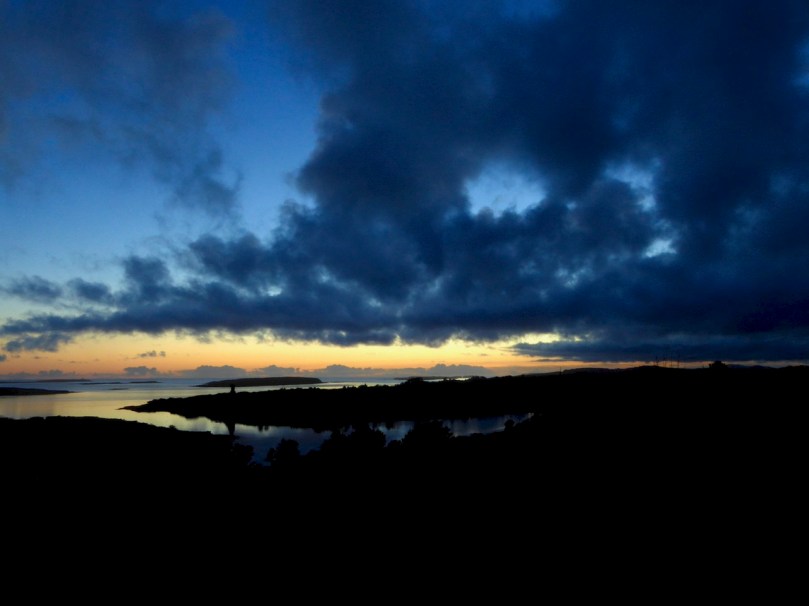
The photographs in this post were all taken in the first three months of 2017 – from the depths of winter to the first glimmerings of spring. We think you’ll agree that our Wild Atlantic Light is pretty special.

Even in the evening…

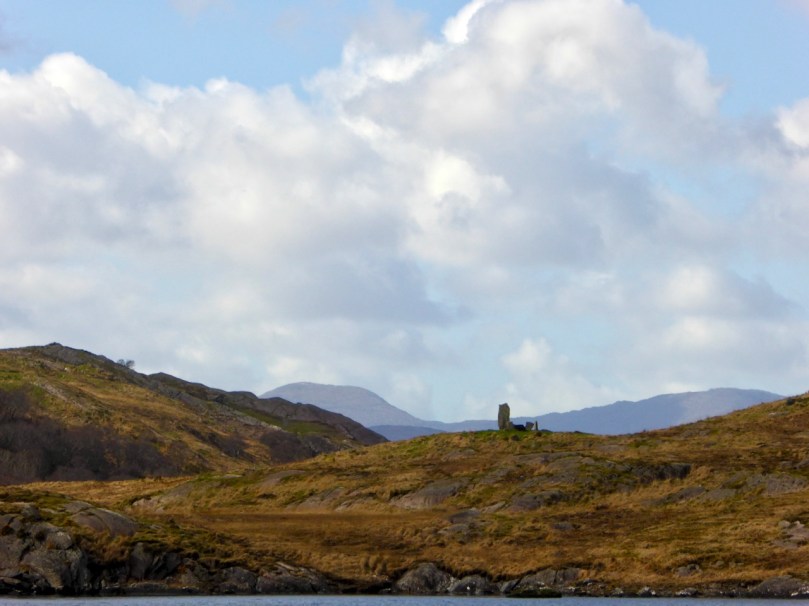
And especially when there’s a chunk of archaeology from our deep past in the landscape.

Tracking the Trains: Railway Reminiscence

…Like all children, the boys of Ballydehob found the platelayers’ trollies irresistible. A lady in Cambridge, Massachusetts wrote about her father (born in The Skames in 1900). Her father and some small boys recalled a ‘small hand-cart’ which was kept near the station and used by the platelayers. “When Mr Crocker, the station master, was not alert the small boys, led by Connie Sullivan, the acknowledged leader of the group because his father, Jack, worked on the railway, were able to steal off the cart. They would push it by hand towards Schull, getting the cart about one mile above the station. Then the boys would pile in and off they’d go down the hill past the station and up the hill on the far side until, caught by gravity, back would come the cart again at such breathtaking speed that it would rocket across the viaduct, then run back through the station. Mr Crocker would come out to see the speeding cart and sometimes shoot with a gun, always in the air and never to do any harm. He was a good chap, and we took advantage of him at the time…”

Last week I wrote about an exploration we had made of the old railway line that had served Ballydehob until 1947 – exactly 70 years ago. I was delighted – and excited – this week to discover a rare copy of a detailed history of the line in that Aladdin’s Cave of bookshops: The Time Traveller, in Skibbereen. The book The Schull & Skibbereen Railway was published  by The Oakwood Press in 1999, and has long been out of print. Although a modest volume, it is a monumental, detailed work which took half a century to write!

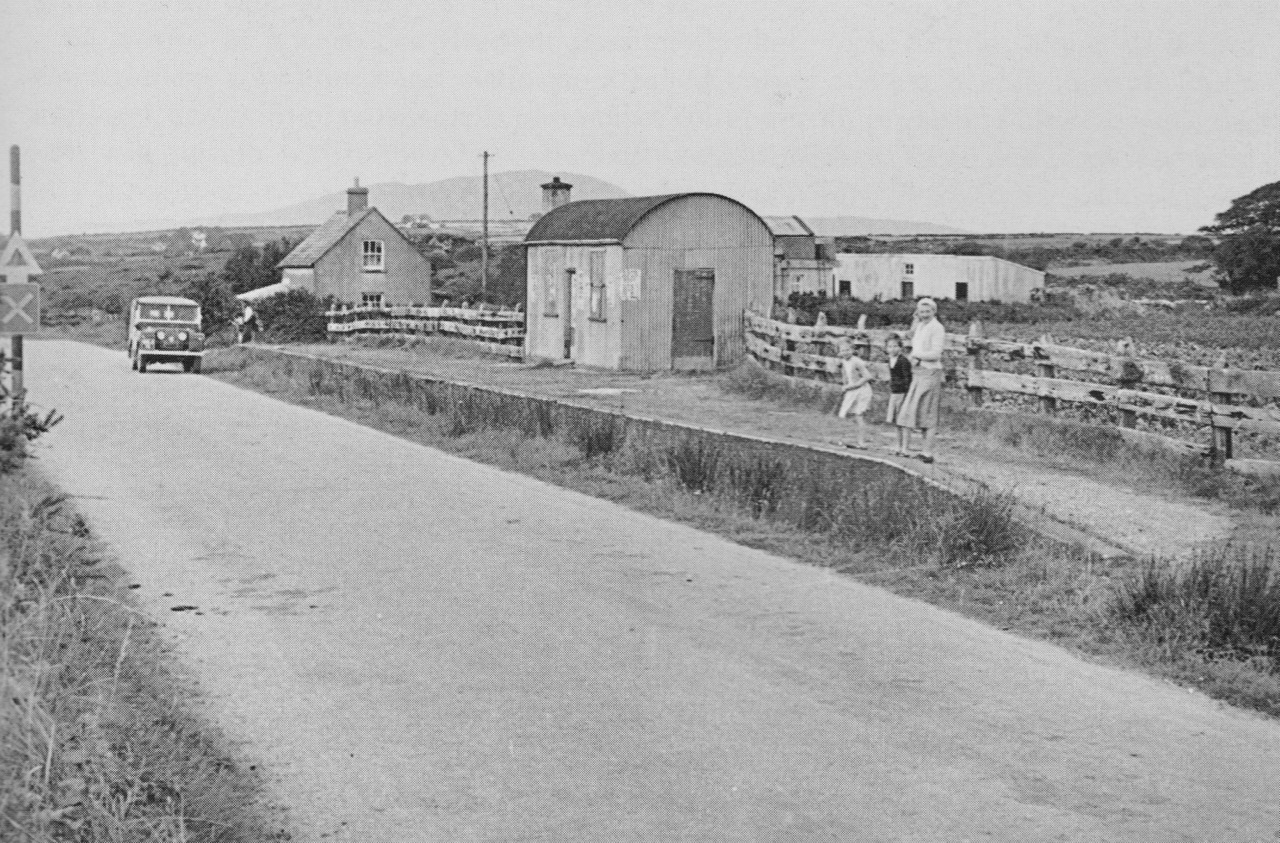
This is a view of Kilcoe Halt, taken in 1953 by the author of The Schull & Skibbereen Railway, James I C Boyd. At this time the line had recently closed, and the track had been taken up. The author’s wife and two daughters are in the photograph

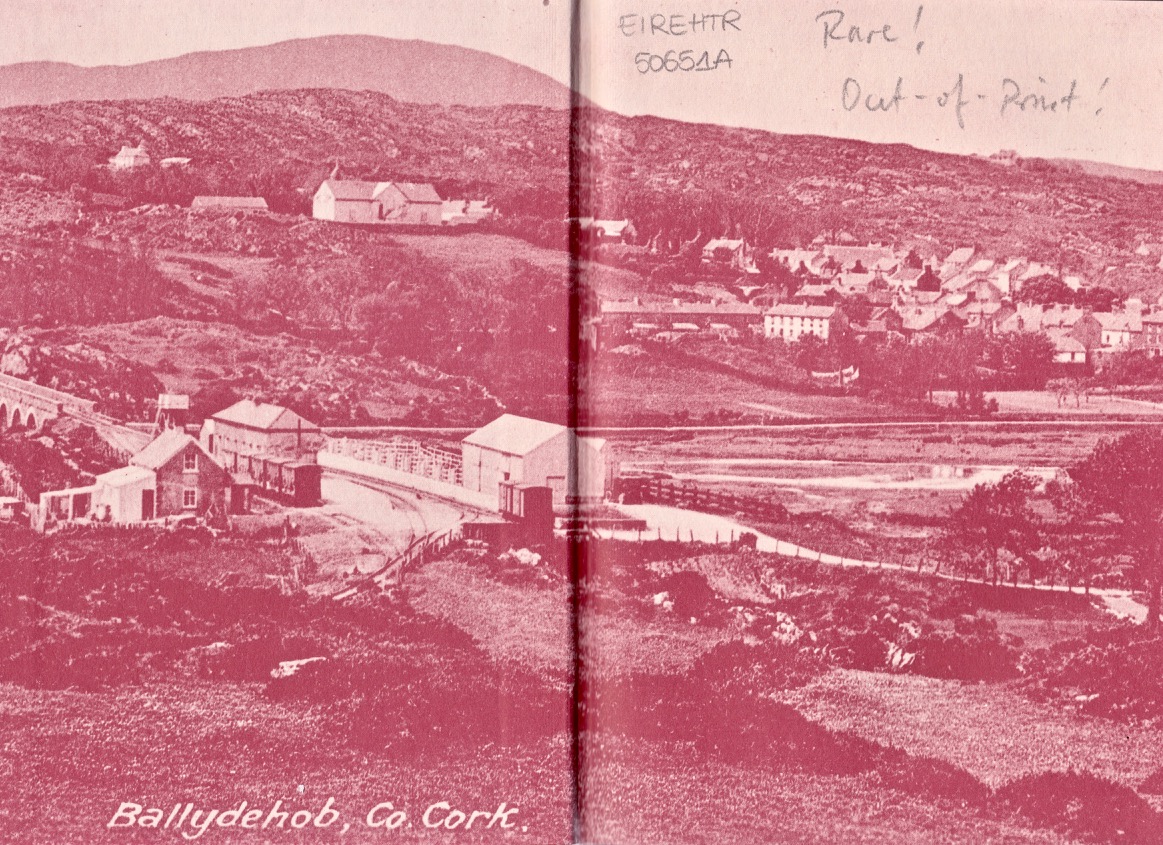
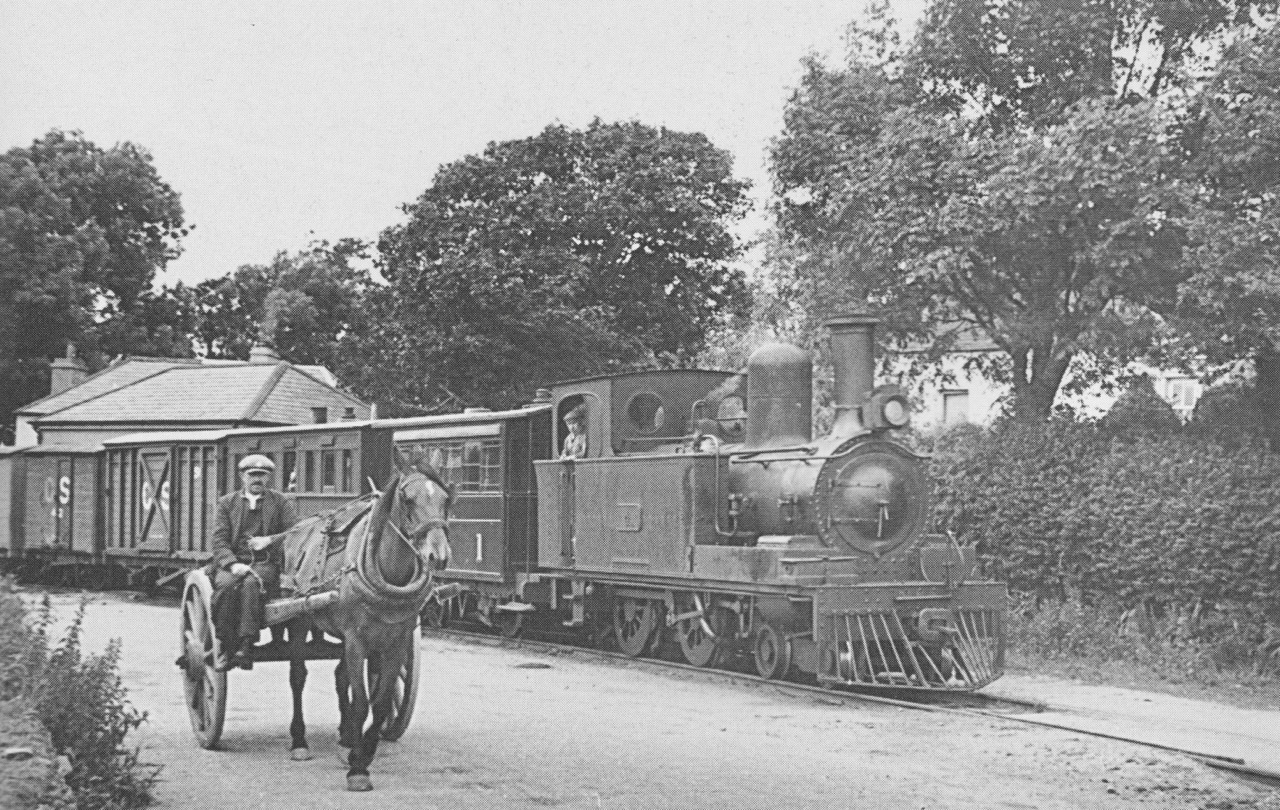
The header picture shows the endpaper of the book – a postcard photo of Ballydehob taken from the east of the station around 1910, when the railway was still in use. The 12 arched viaduct – mentioned in the extract given in the first paragraph – can just be seen to the left: that account doesn’t really make geographic sense, but – remember – it’s a story, told from a distance both in time and place.

It is Chapter 18 of the book, entitled Miscellanea, which has given me the most pleasure to read, although this is not to decry any of the highly informative data and history contained in the rest of it. The book’s author, James I C Boyd, explains the context of the chapter:

…Over the half century during which I have formed close associations with West Cork, there have been many reminiscences, conversations and situations surrounding this subject which were noted down at the time in the hope of further attention. Some were legendary, others biased, a valuable few were personal but all gave me an insight as to the ethos of the local people in relation to their railway. Bearing in mind that during those fifty year the line has closed completely and many of my informants have passed away, their memories have been set down here… Such recollections do not fall neatly into the pattern of the previous pages, so form a chapter entitled Miscellanea…

Left – James Boyd and his family; right – from the 25″ 1901 Ordnance Survey Map: Ballydehob, with the station and the viaduct

Born in 1921, Boyd went to school in Colwall, Herefordshire. There he encountered two influences: the first was W H Auden, who taught him English, and the second was a miniature railway line which was attached to the school: the Downs Light Railway. This venture is the world’s oldest private miniature railway – which can carry human passengers. It has a track gauge of 912” (241 mm). Set up in 1925 for the principal purpose of education, the Downs Light Railway is today the only railway in the world to be operated solely by children aged between 7 and 13 years. These two significant experiences in his life set Boyd on his own track: to become a writer and a specialist in railway history. His opus includes over 20 highly detailed accounts of narrow-gauge lines in Britain, Ireland and The Isle of Man (including this definitive work on The Schull & Skibbereen Railway) and countless articles, photographs and other collected information.

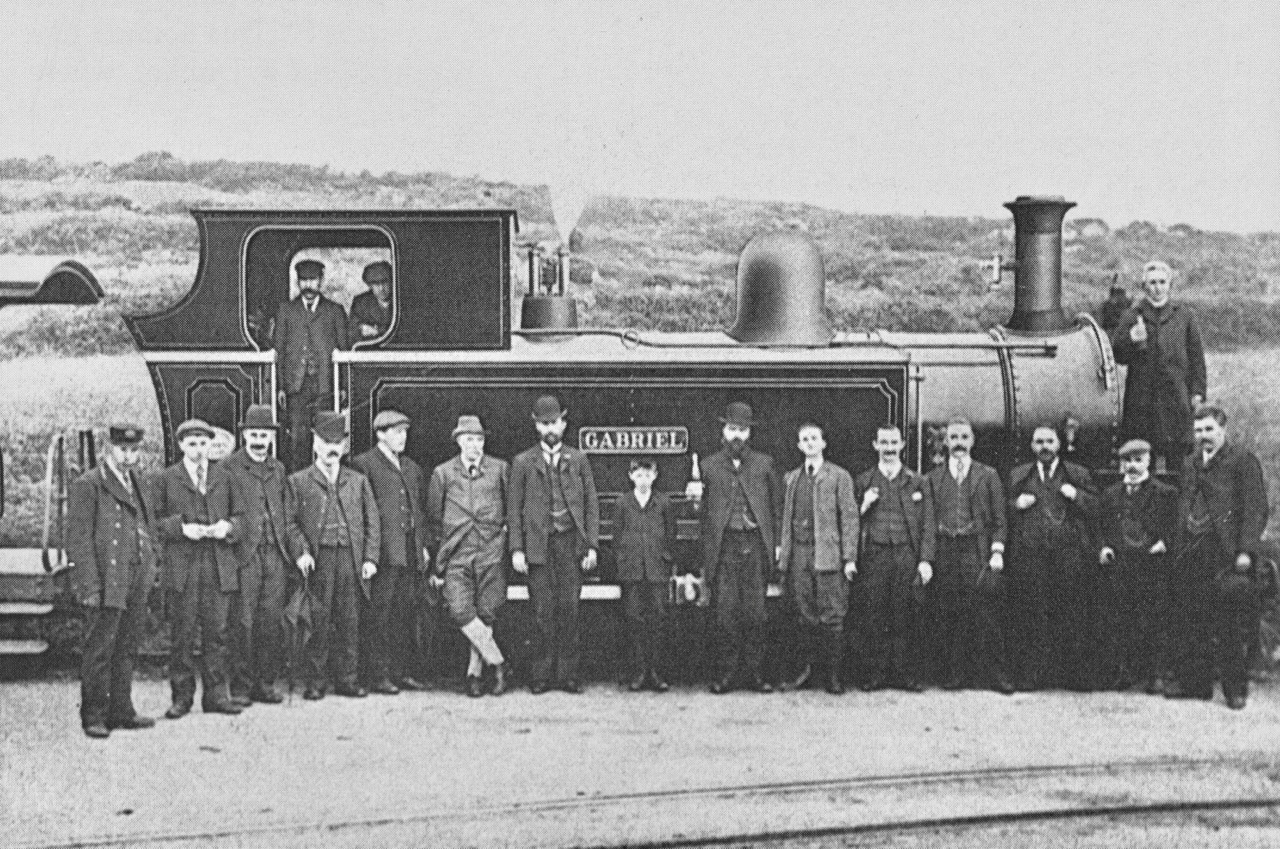
A photograph which Boyd found in a collection by G R Thomson: it shows the ‘naming ceremony’ which took place in 1906 on the Schull Pier extension line of a new locomotive ordered from Peckett & Sons of Bristol. Father John O’Connor, the Parish Priest of Schull, broke a bottle of champagne over the engine and christened it GABRIEL – after the mountain, not the Archangel!

From Mrs P McCarthy of Schull – recorded in Miscellanea:

…You were asking me about the men who worked on the track, and who lived in the crossing houses? There were two sets of men: one between Skibbereen and Ballydehob and the other went from Ballydehob to here. Denis McCarthy (or ‘Foxey Din’ as we called him on account of his red hair), his son Mick (he went on the broad gauge when the S & S closed), and Batty Harrington. Sometimes Paddy O’Donovan would help them… From Ballydehob we had Connie O’Sullivan, Jackie Daly (who was the Foreman for the whole line) and Gerry McCarthy, who was known as ‘Vanderbilt’ from the careful way he had with money. Then at the Skibbereen workshops there was Charlie Murphy the chargehand / fitter and Willie Cottam, the carpenter… I don’t remember about all the gatehouses – Mrs Connor was in Kilcoe and Hollyhill was occupied by two men; they may have been gangers. When the railway closed, the occupants were given the first opportunity to buy…

The Company Offices in Skibbereen, taken by James I C Boyd in the 1950s, after closure

From Miscellanea – an anonymous contributor:

…In the long school holidays, mother used to send us children out with a large tin bath of the sort we used in front of the open fire in winter. On reaching Schull station we, and the bath, would ride the first train, to drop off at the best places and comb the fields for mushrooms, only stopping when the bath was full. Then, dragging the unwilling receptacle behind us, we would bring it to the road alongside the railway, and so back to Schull again on the returning train…

The line at Hollyhill, 1938: ‘Curly’ Hegarty is the driver. Photo by H C Casserly

From John Browne of Creagh:

…The Secretary of the Company [William Goggin] owned a bar at the corner of the main street [of Skibbereen] and that to the station – it was very convenient for those going by train… When the Directors wished to visit Skibbereen they ignored the Railway and used a converted Lancia armoured car, the property of one of their number. On alighting at the Skibbereen office, there would be fussing and genuflection akin to a royal visit…

…The curb-stone margin which divided the Railway from the highway in numerous places, was a considerable barrier. A party of my friends attended the Ballydehob Fair in an open car. On the return journey the driver was ‘very happy’, misjudged a bend and struck the kerb. The damaged vehicle had to be abandoned. The revellers walked back to Skibbereen, leaving the car to block the passage of the first Up train from Schull. However, the combined efforts of all the crew and passengers were needed to drag the wreck back on the road…

…Willie Salter of Castletownsend said that a pony and trap from Skibbereen often reached Ballydehob before the train; it was better that way if you were in a hurry. He would see passengers getting out near Crooked Bridge or Church Cross to give the train a push…

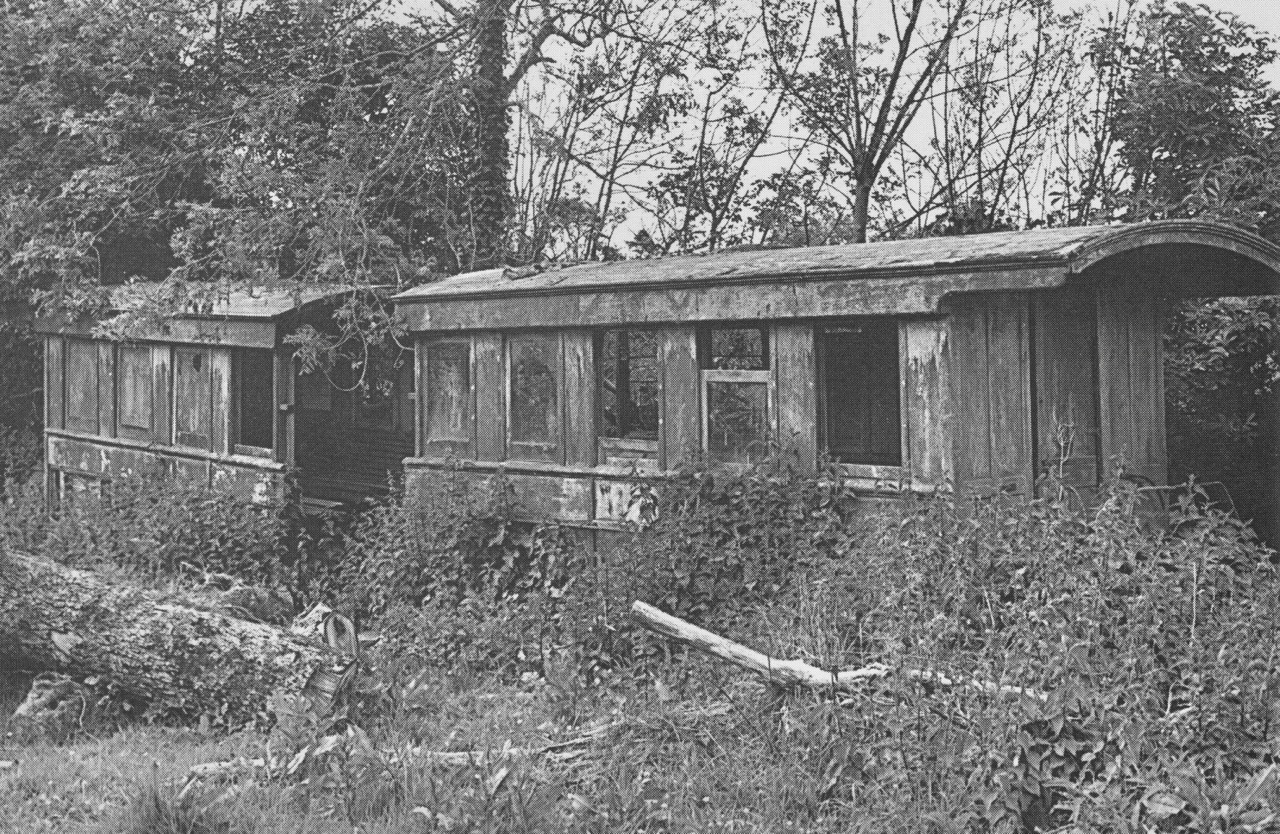
Sad days: James I C Boyd located and photographed this ‘Gloucester’ carriage from the S & S line in a field beside Bantry Bay in 1967. It had been sawn in half before final abandonment; is it still there today?

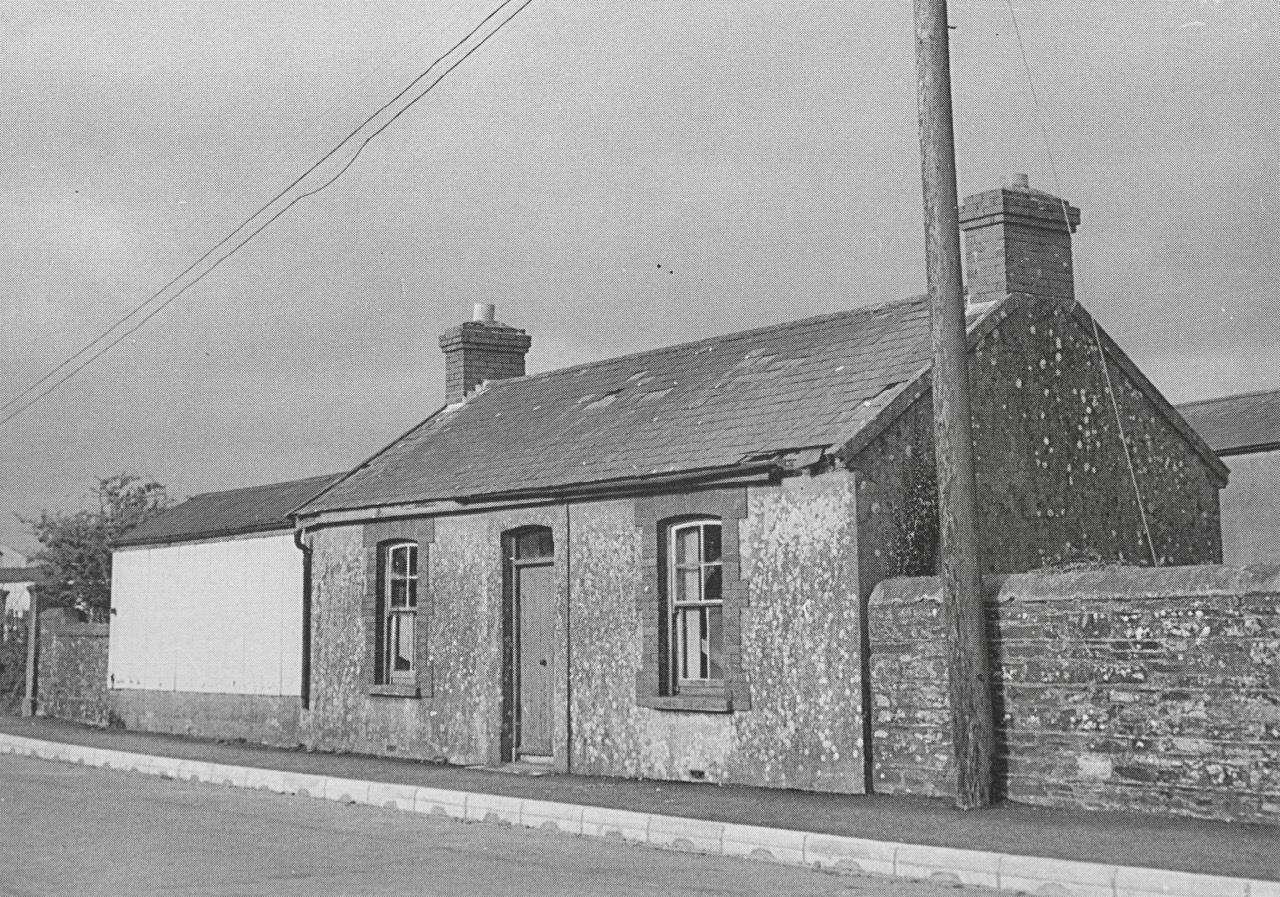
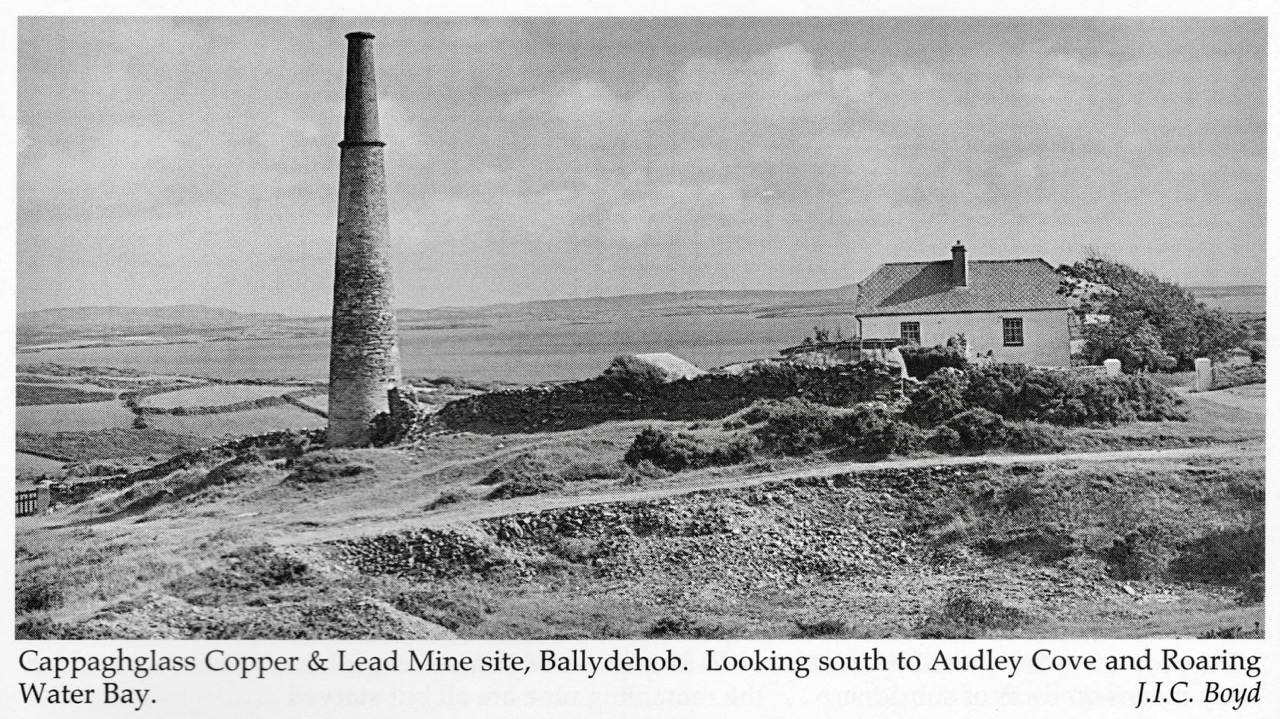
This post is a short taster of the treasures that this volume holds. A fuller review – and more Miscellanea – will appear in future posts. To finish today, we were delighted to find this photo taken by the author just around the corner from us. Finola’s article, here, tells the story of this Lost Landmark.