The Best of Five

It’s been five years! That’s a long time to have kept up a journal, with original pieces appearing every week – usually two, each of us writing a post. It keeps us busy: 464 posts to date. We thought we should do a review of the posts which have been most popular: viewed by the most people. These are not necessarily the ones we would consider to be our own favourites: we’ll let you know what we feel our ‘finest hour’ has been next week – while you are all preparing the Christmas lunch!
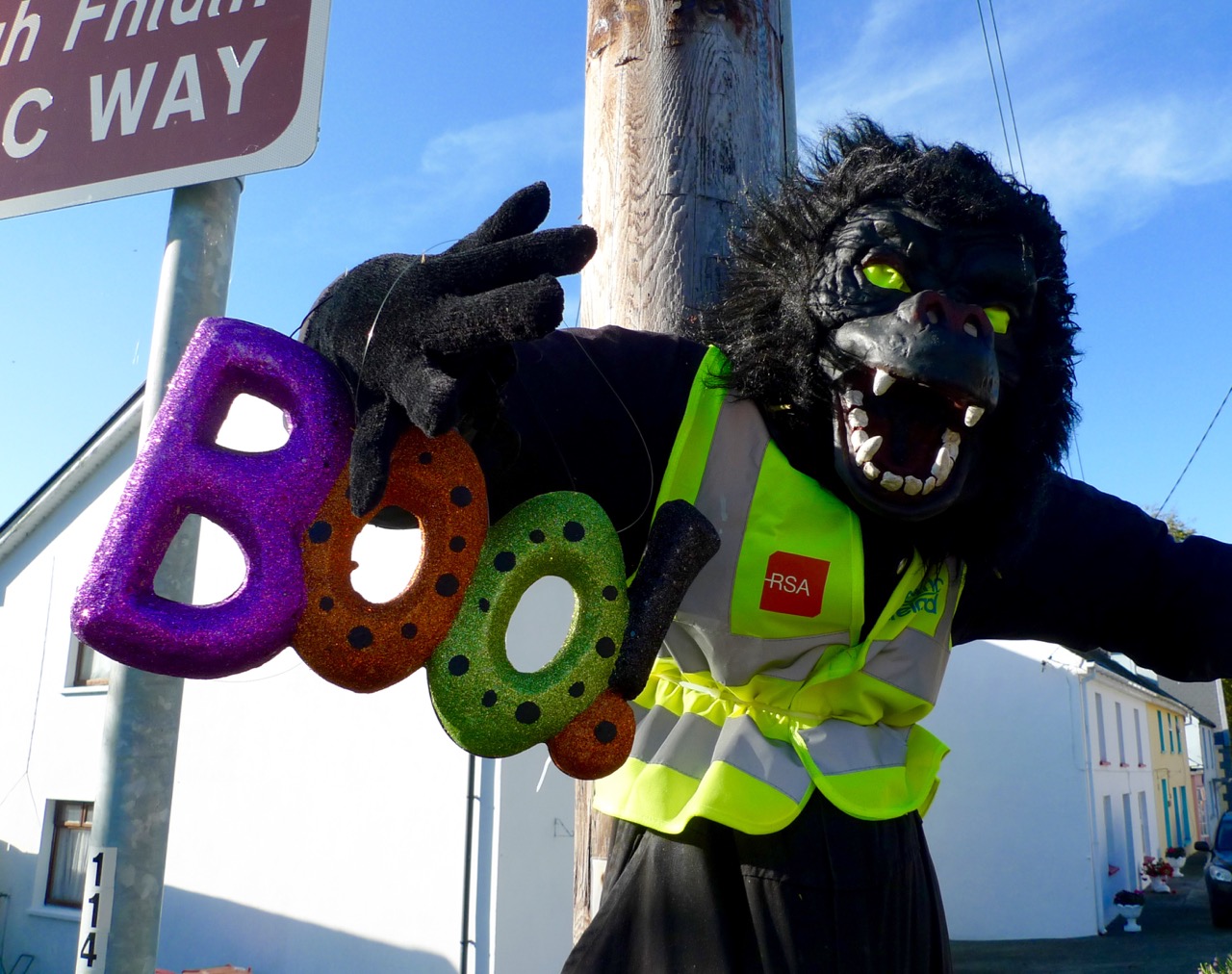
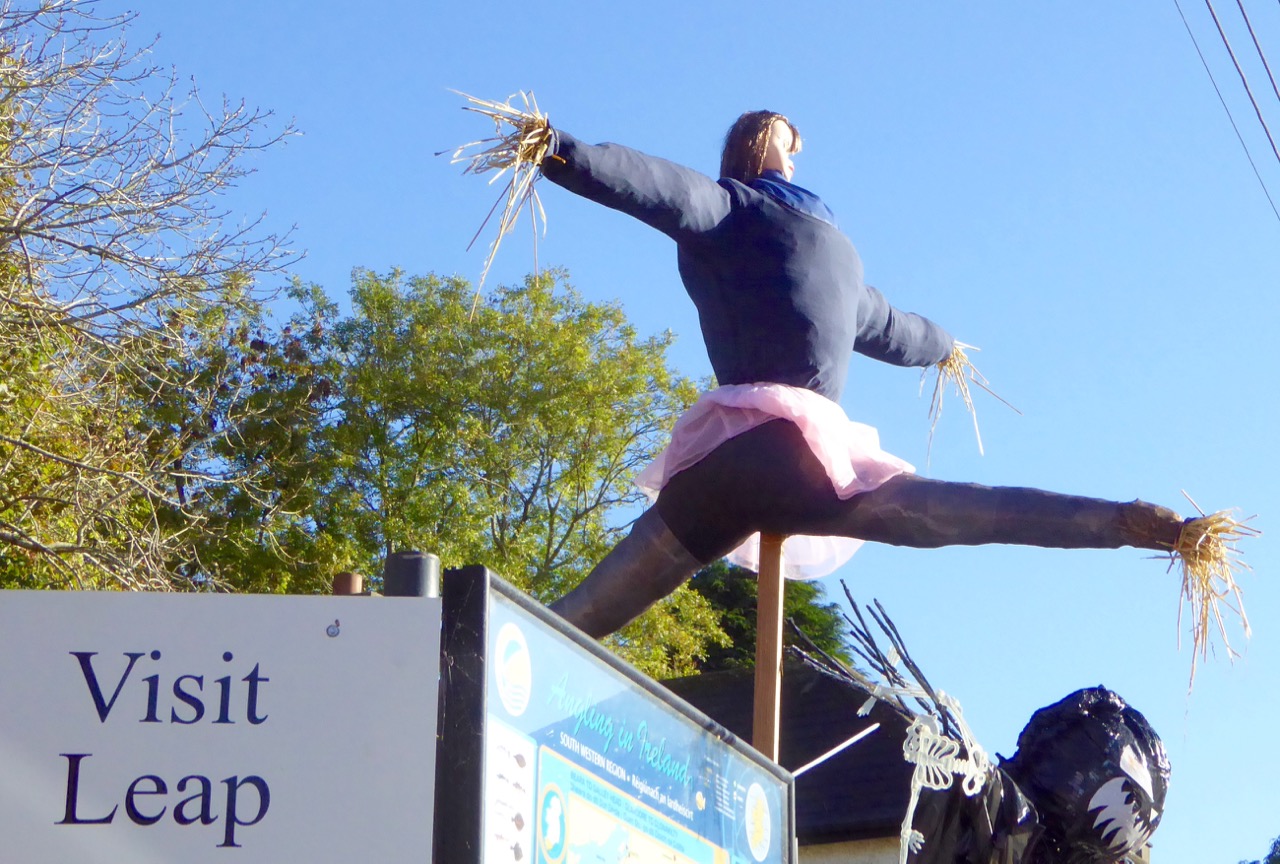
We never quite understood the all-time popularity of Beyond Leap, Beyond the Law, my post which was simply a collection of photos taken at the West Cork village’s 2015 Scarecrow Festival – with a little bit of history about the place added in. It was certainly a wonderful display of the imagination of the people of Leap. Have a look at the post: just one or two photographs don’t do it justice.
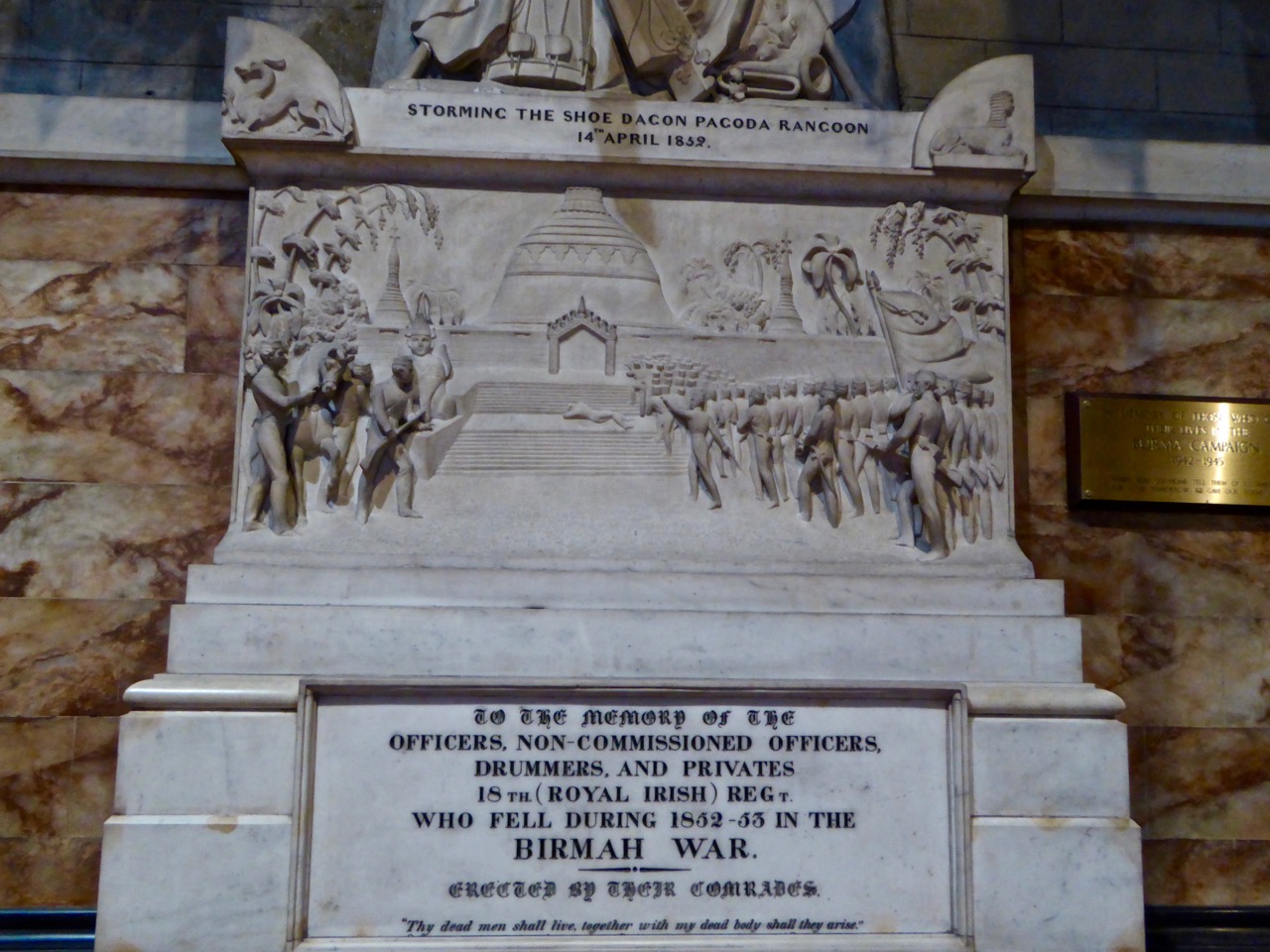
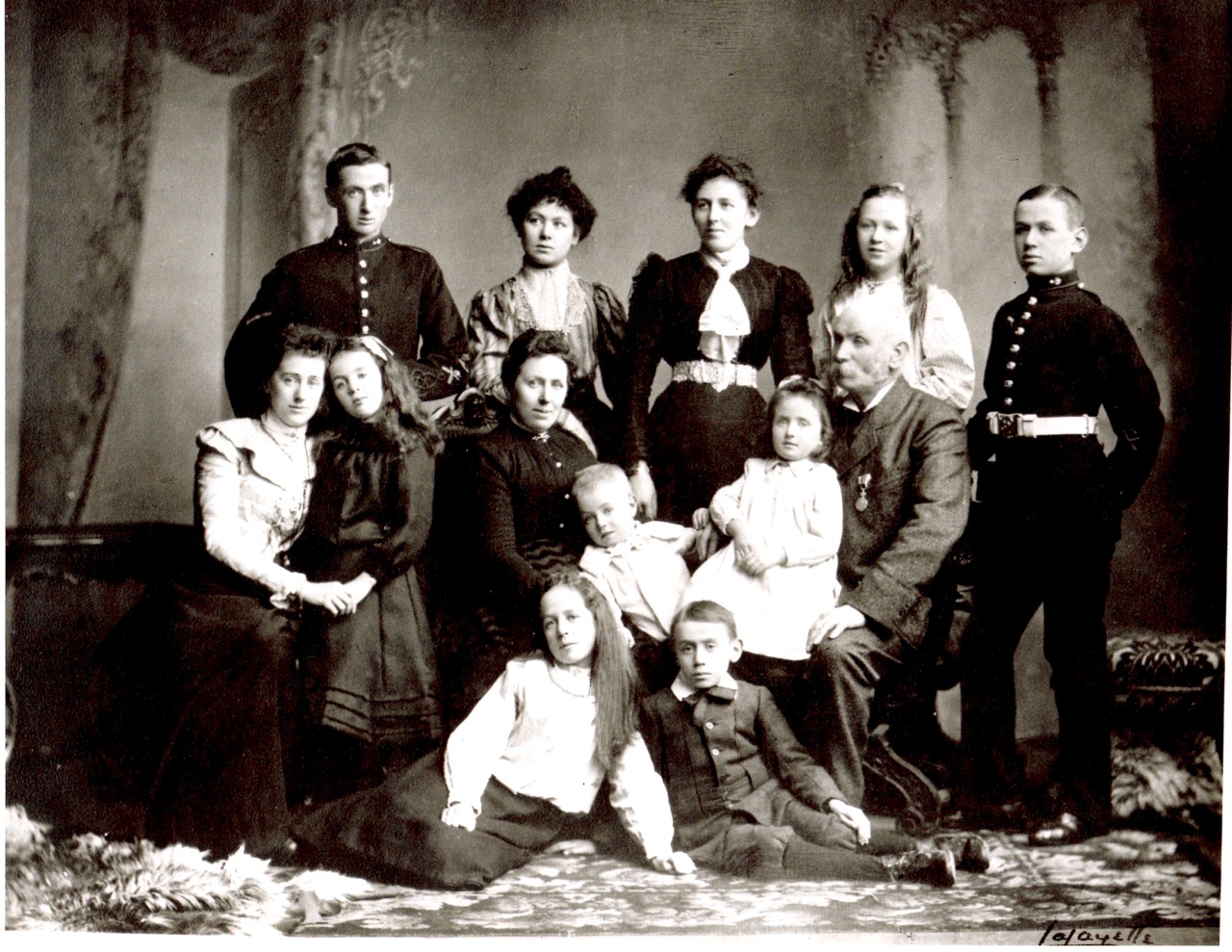
Up next is Finola’s piece from 2016 – Outposts of Empire. This was a much more scholarly article, and involved a lot of research. As you must know, we never pass a church or a burial ground without a full investigation: they provide a wealth of local history. Finola became fascinated by the memorials – mainly military – which appear in Protestant churches around the country. This led her down the path of her own ancestors, many of whom served in the Irish regiments of the British forces. She found this wonderful photo from around 1900 of her Brabazon forebears. Her grandmother Marie is in the centre of the back row, while her great grandfather John Edward Brabazon, who had served in India and Afghanistan, wears a military medal. The two younger men are Finola’s great uncles Michael and James, and they are wearing the uniform of the Royal Hibernian Military School.
Finola’s series on ‘how to speak like a West Cork person’ was a winner, the most popular being her fifth episode: How Are You Keeping? Here is a link to all of them. They make amusing reading, but at the same time they give a lot of insights as to how the Irish language has coloured the way English is spoken here. And here is Finola’s great picture from that post: two Skibbereen gentlemen who might well be asking how are you keeping?

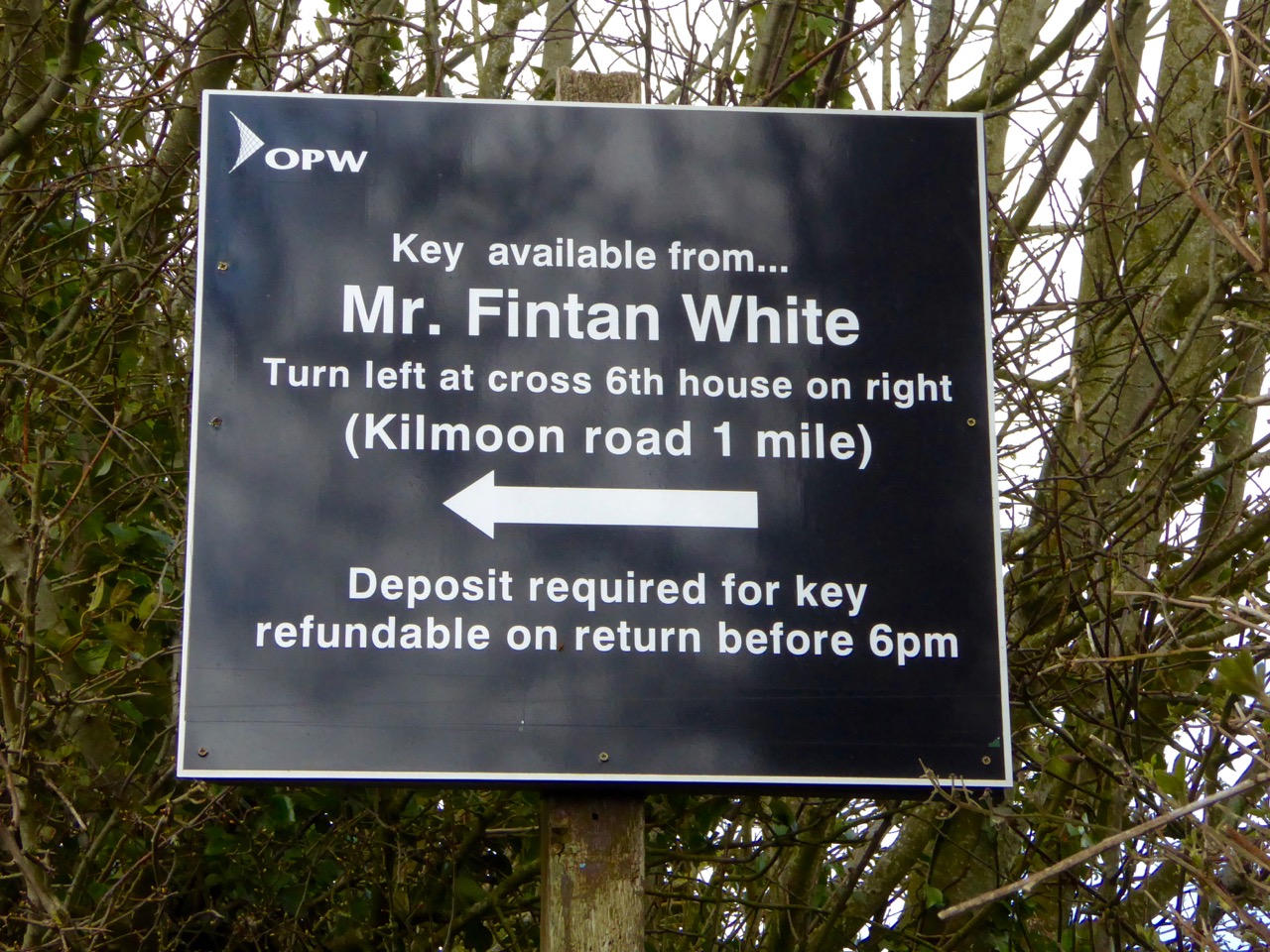
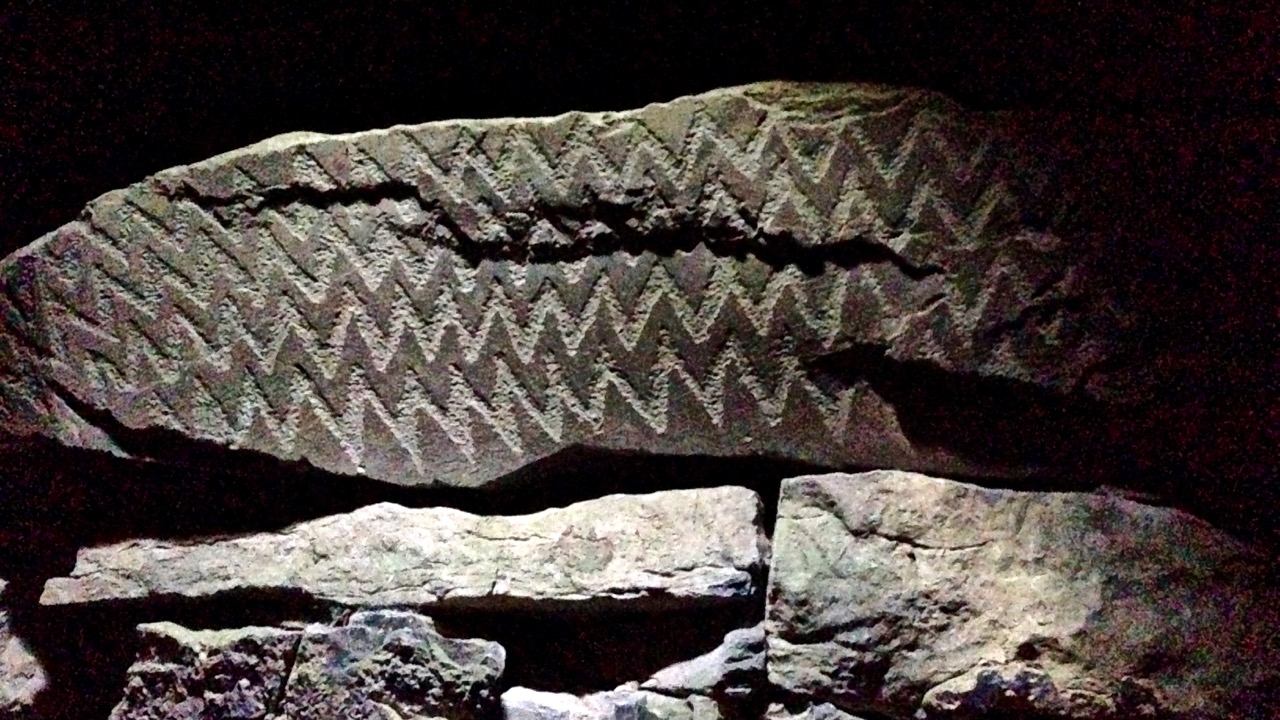
Archaeology comes next, with my account of a most eccentric decorated chambered cairn within the Boyne Valley complex: Fourknocks – the Little Giant. I was particularly taken with the adventure of visiting this tomb, from the first moment of having to collect the key from a farm a mile away in order to let ourselves in, to the experience of being inside with the door shut behind us: total darkness at first, but gradually becoming aware of the remarkable 5,000 year-old zigzag carvings on the rock surfaces within.
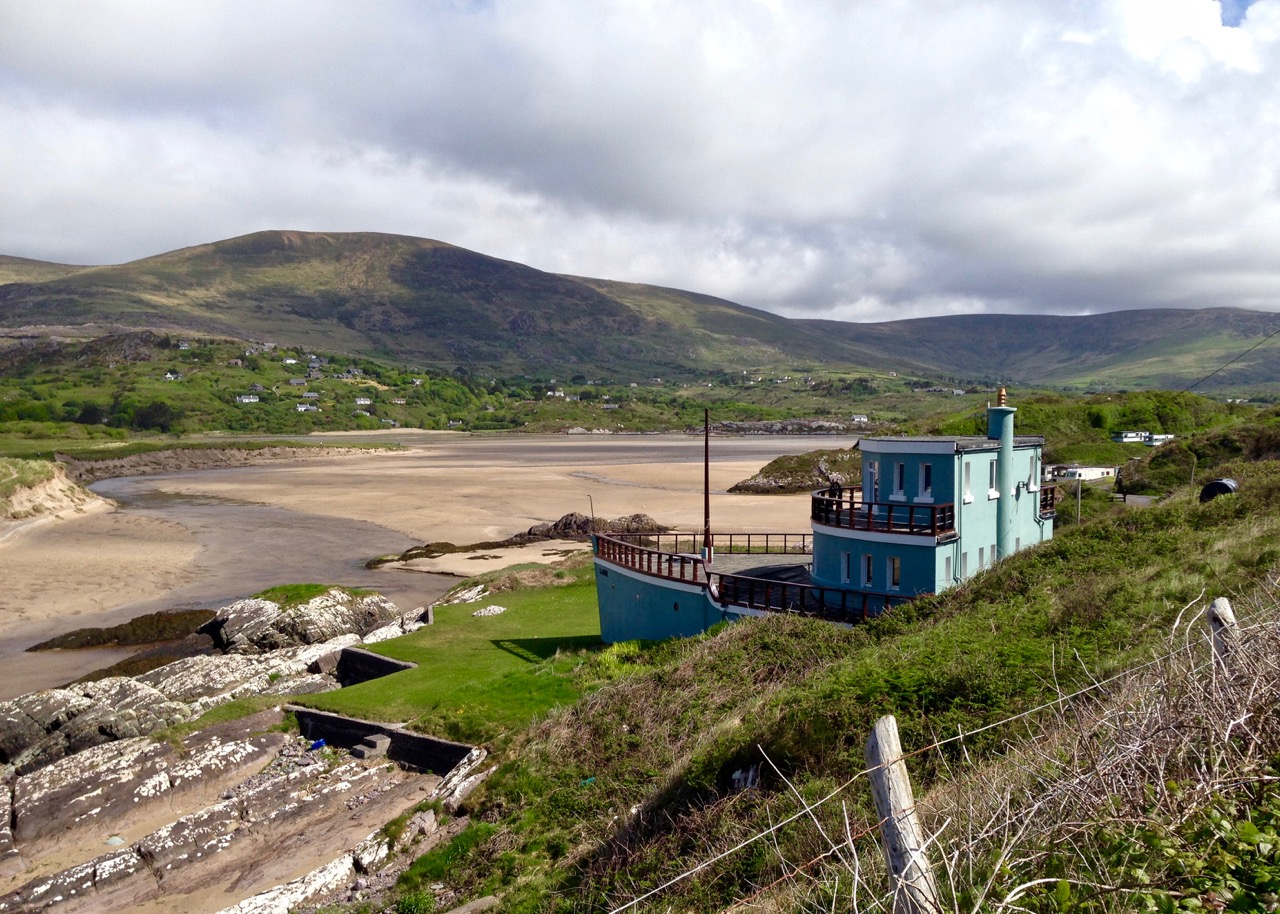
I’m pleased that the fifth most popular post of all time is also the one I most enjoyed writing: Aweigh in Kerry. This was all about a very unusual piece of architecture which we found while travelling in Kerry – a house shaped like a ship, sitting in the sand dunes on the shoreline of Ballycarnahan townland, facing a most spectacular view across to Derrynane, the home of ‘Ireland’s Liberator’ Daniel O’Connell. I was an architect in a former life, and I would have welcomed a commission such as this. It was built in the early 1950s.
Sixth and last in this little review is a post from Finola (happily, we had three each in this list of the top most popular posts!): Castle Haven. Such an account of a place in magical West Cork – which typically offers everything anyone could want in beautiful landscape, village architecture, archaeology, history, literary heritage, art and the omnipresent Atlantic coastline – is exactly what we aspired to for the foundation stone of Roaringwater Journal when we set out, in 2012 on this happy, continuing journey.


Top Ten West Cork Photographs of 2017

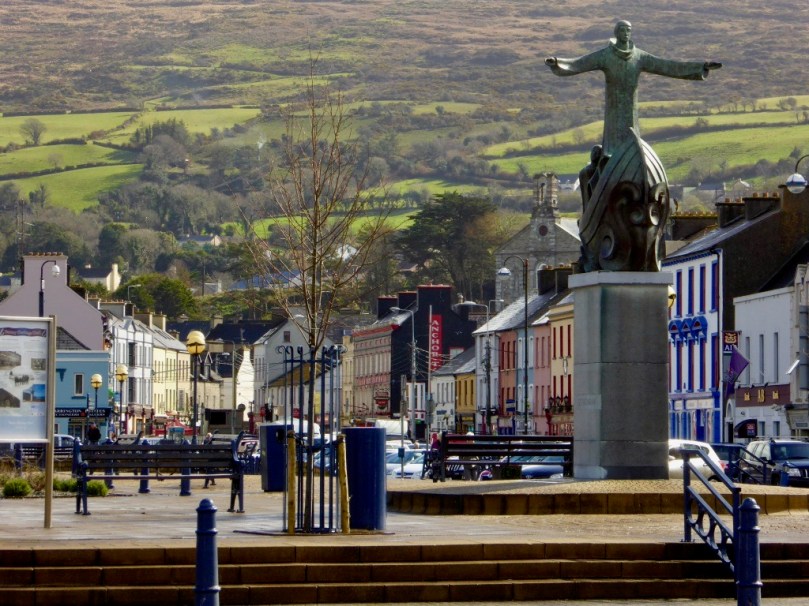
Every year we take a look at the Facebook photographs that you’ve liked or viewed or shared the most, and then edit them down to manageable proportions. Here’s our final selection for this year – we decided to stick to West Cork, and we’re starting off with Bantry, with that wonderful statue of Brendan the Navigator blessing us and inviting us into the town.

The photo this year that was most viewed and exclaimed over was our shot of Dunboy Castle (above), just outside Castletownbere. It’s a dramatic sight and an extraordinary story of the dream to build Ireland’s first six star hotel – a dream that came crashing down with the collapse of the Celtic Tiger economy in 2008. Perhaps one day a new team will take it on: meantime it sits forlornly behind barbed wire, a reminder of optimistic times.

We were surprised by the instant appeal of our stained glass St Gobnait. Although a familiar saint her in West Cork, she is not universally known elsewhere. Perhaps it is her association with the bees that resonates with people now that bees everywhere are in danger. The image is of a window in Bantry Catholic church, probably the work of William Dowling.

Kilcoe Castle seems to feature each year as it’s a firm favourite with us in West Cork. We were lucky to capture it at dusk on a hazy evening in March. It has been lovingly and magnificently restored by Jeremy Irons and if you’re curious to see inside, there are some interior images here.

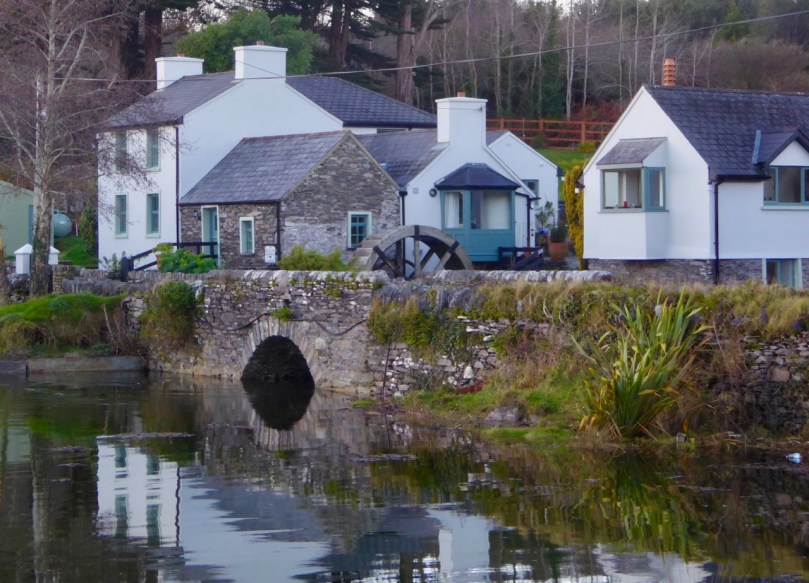
Our friend, and professional wildlife photographer, Sheena Jolley lives in this impossibly romantic old mill just outside of Schull. Her studio occupies the building on the right, while some of the workings of the old mill are still intact and conserved by Sheena. I suspect this photograph was so popular because many of us have a dream to dwell in a piece of living history like this.

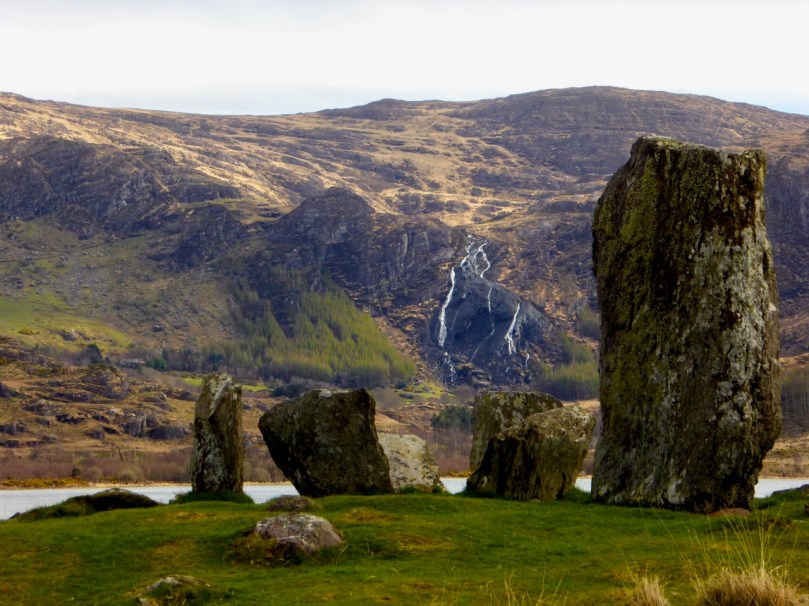
Uragh Stone Circle on the Beara Peninsula – I think we can all agree now it’s the stone circle with the best setting in Ireland. But it’s only one of the many feature of Gleninchaquin that makes this remote but accessible valley so richly enjoyable to visit.

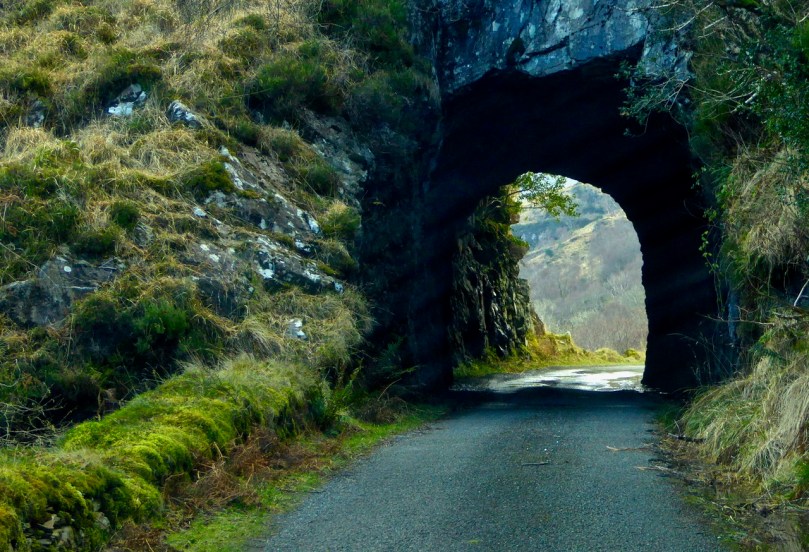
Everyone loves driving through the Caha Pass between Glengarriff and Kenmare – the scenery is spectacular and includes several tunnels

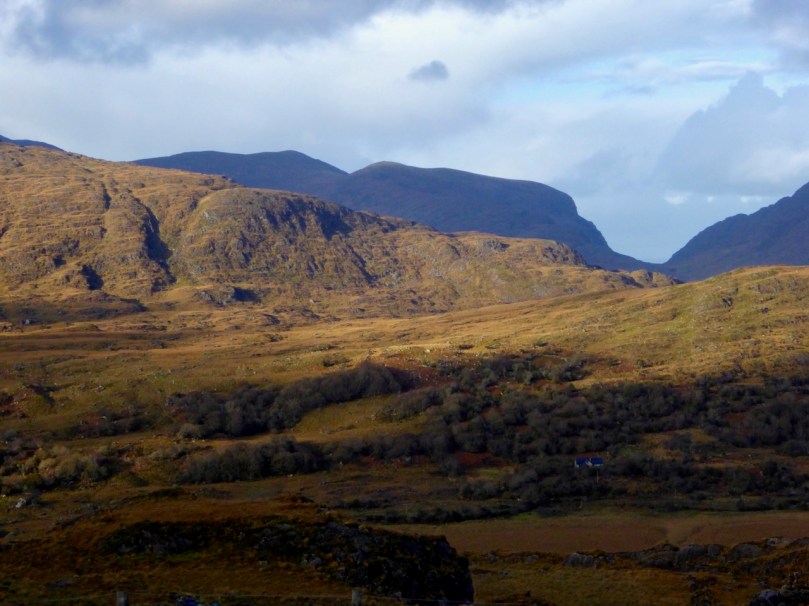
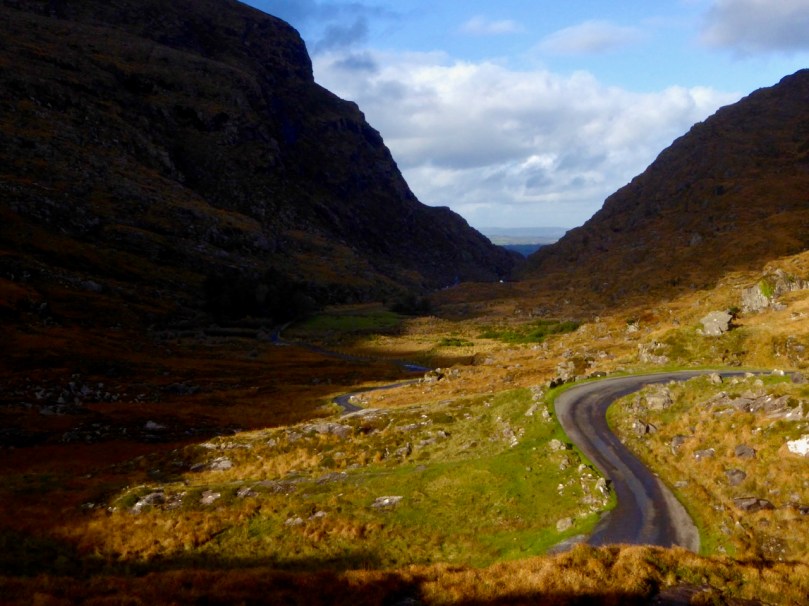
This image, of the Barnacleeve Gap above Schull, illustrates well the colours of West Cork in winter, when the bracken turns dark amber and the Purple Moor Grass (not purple at all) earns its Irish name of Fionnán, meaning blonde, while the grasses and mosses keep the lowest growth green.

Another winter view, this time from across Reendonagan Lake, near Ballylickey, to the Sugarloaf Mountain on the Beara Peninsula.

And finally a photograph that manages to capture much of the Mizen Peninsula, taken on Brow Head and looking towards Mount Gabriel in the distance, with the village of Crookhaven and the Rock Island lighthouse on the left. And yes, you’re right – another winter photograph.

Own a Piece of Ireland (Best Christmas Present EVER!)

Have you dreamed of owning a little slice of heaven in Ireland? Here’s your chance! Buy a tiny plot on Cape Clear Island for yourself or for someone else and when you do, you’ll know that not only are you giving someone possibly the best Christmas present ever but you’re also doing your part to conserve an important chunk of the natural world.

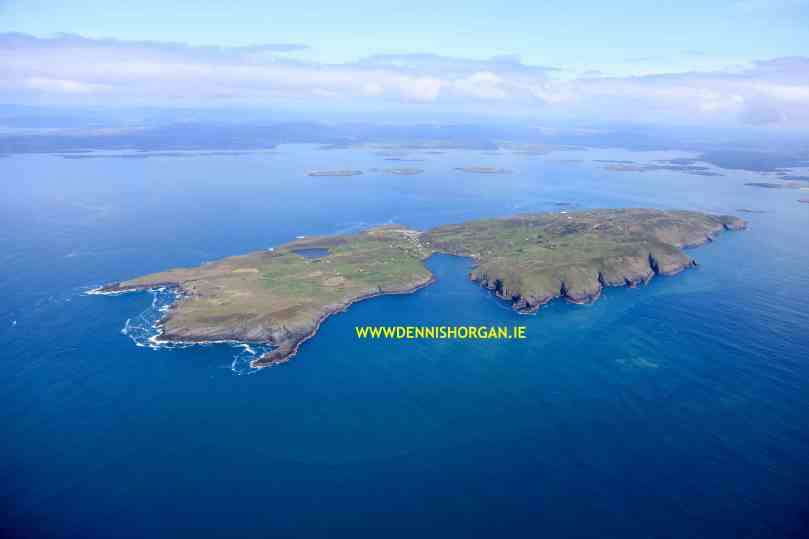
Dennis Horgan’s incredible photograph of Cape Clear Island from the air showing the whole of the Island, and its relationship to Roaringwater Bay. The land the Trust is purchasing lies on the east (right) side of South Harbor, in the centre of the picture. For more on Dennis’s photography and his latest book, see the end of this post

Chuck Kruger and his wife Nell recently left Cape Clear after half a lifetime there. An iconic figure, he wrote and told stories about the land he adopted and came to love. He founded the marvellous Cape Clear International Story Telling Festival and his leaving to return to the US leaves a huge hole in island life.

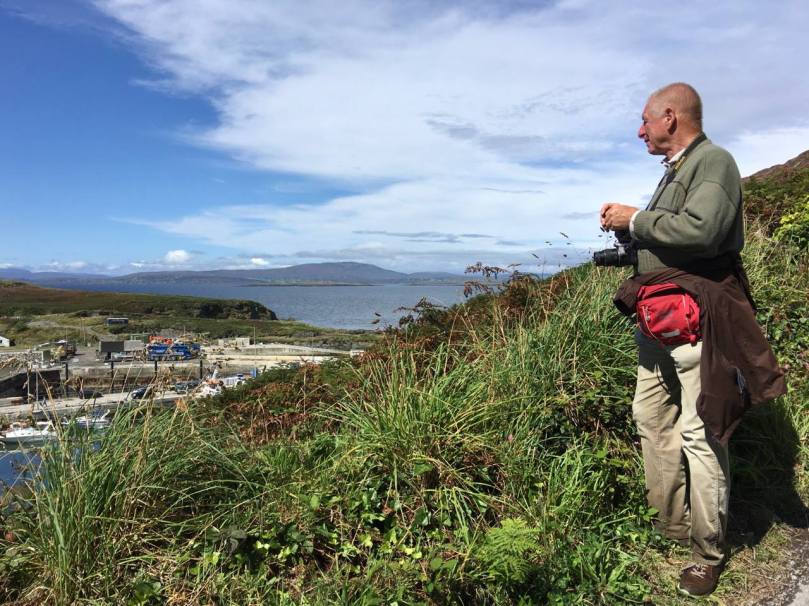
The photograph above is, poignantly, of Chuck on his last guided walk on the Island and was taken by Sandra Bottcher. Have a look at Chuck’s website for more about his writing and broadcast work.

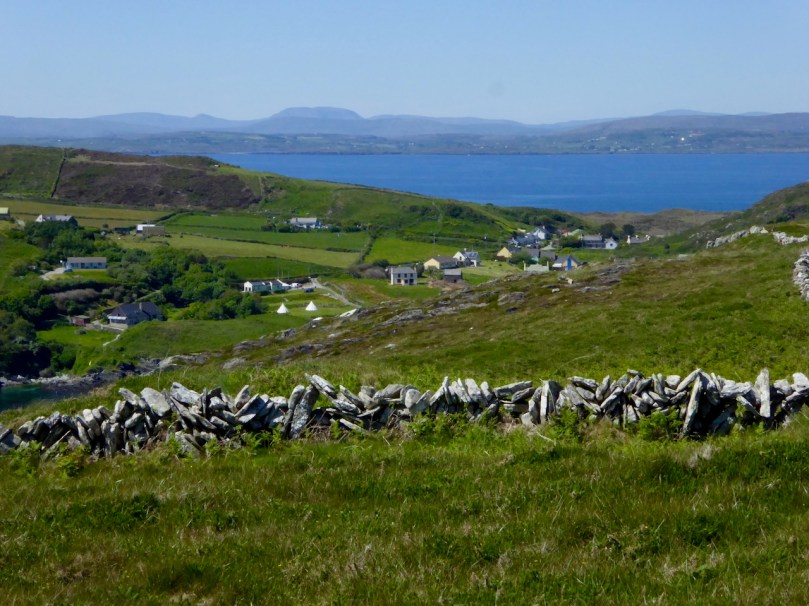
One of the ancient stone walls that define the fields along the South Harbour

Chuck and Nell’s farm bordered the South Harbour and the Islanders, rather than let it go into private hands, have formed a trust to purchase it. The plan is to provide open access to all, and to ensure that no future development can intrude upon this pristine area.

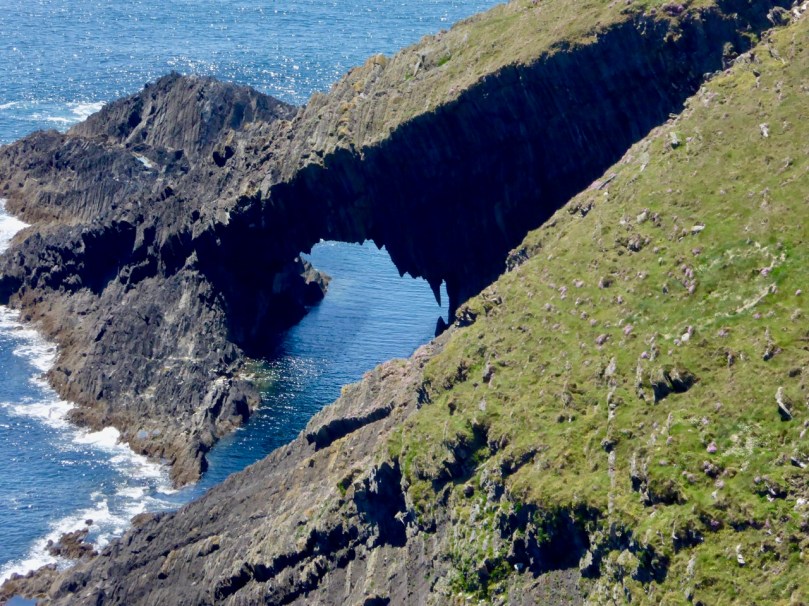
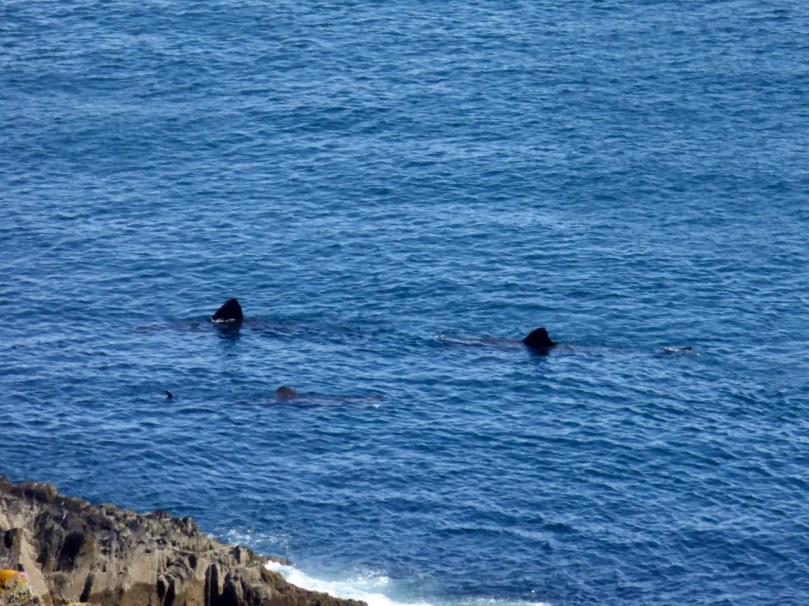
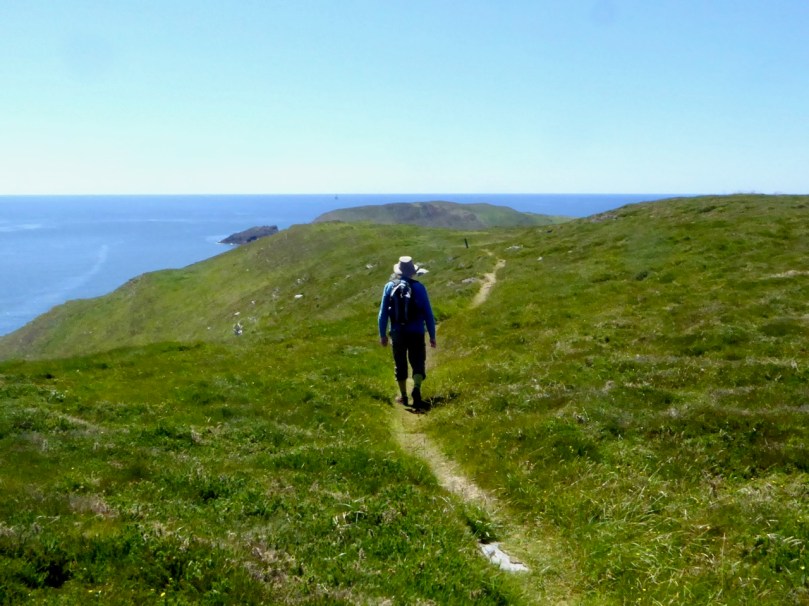
The Red Trail leads you around the southeast side of South Harbour – here, last June we viewed wildflowers, immense sea views, a dramatic sea arch and an abundance of Basking Sharks

You can purchase a five square metre piece of Trust land for €50 (currently that’s about $60US, $75CAN, or £45) or a ten square metre plot for €100 ($120US, $150CAN or £90). Just pop along to the Trust Website and choose the SHOP tab. Join Robert and me in making open access to this little patch of paradise in perpetuity a reality – it will be the best money you have ever spent!

Walking the Red Trail

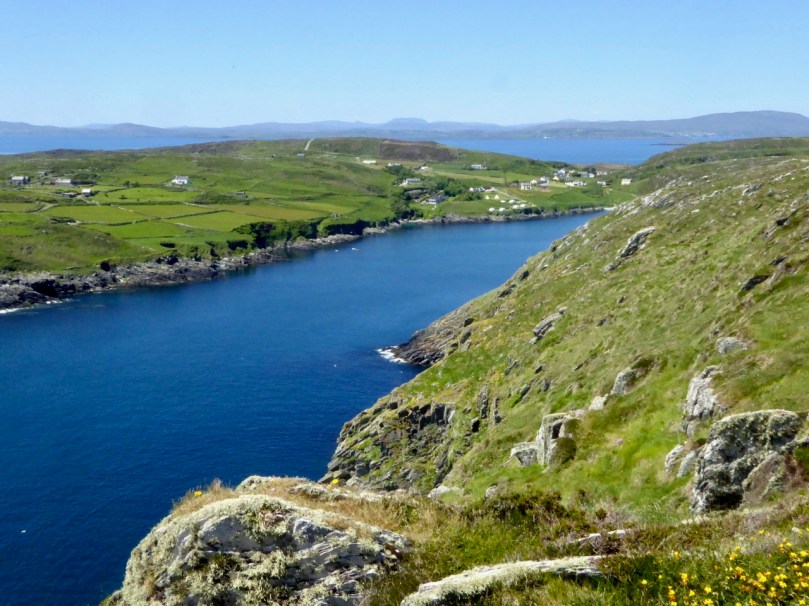
Cape Clear is a very special place – an Irish speaking area (or Gaeltacht) accessible only by ferry, rich in tradition and history, and an important habitat for wild plants and creatures. We’ve written about Cape Clear in this post, and in this one, and we are fortunate indeed to enjoy a view of it from our home.

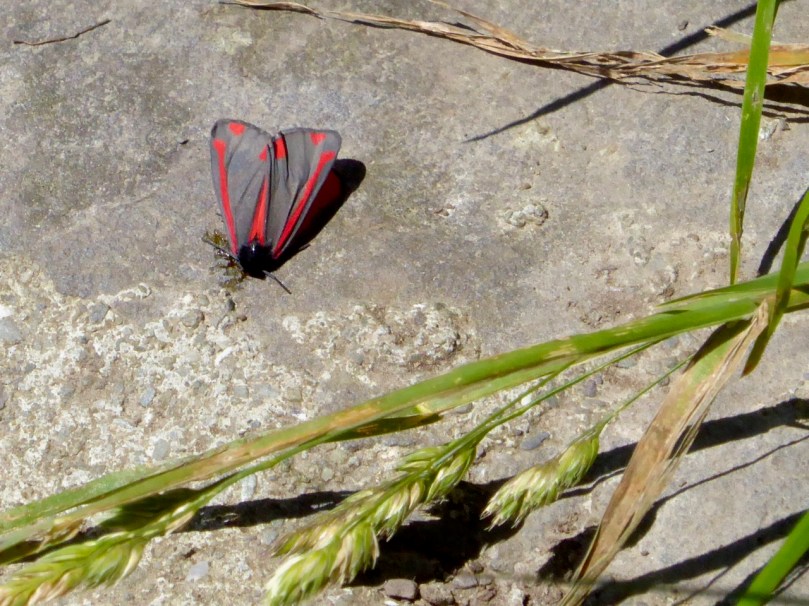
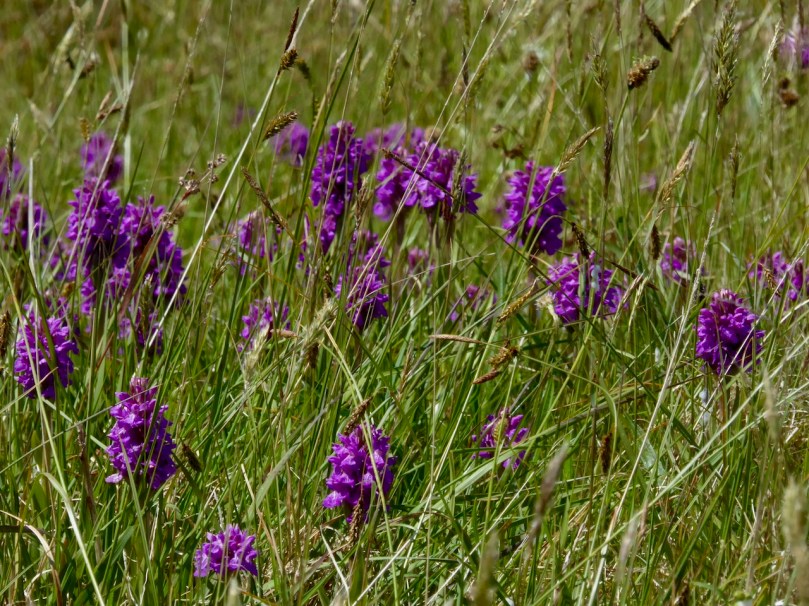
Above, Cinnabar Moth; Below, Marsh Orchids

It’s also very beautiful. Robert and I have enjoyed our trips there very much: in fact, last year my birthday present from him was a two-night break in Cape Clear. We spent our time exploring and hiking the Island, observing the Basking Sharks, and visiting the remains of the Neolithic Passage Grave, original home of the Cape Clear Stone. One of our walks was along the Red Trail – the very area that is now in the Trust.

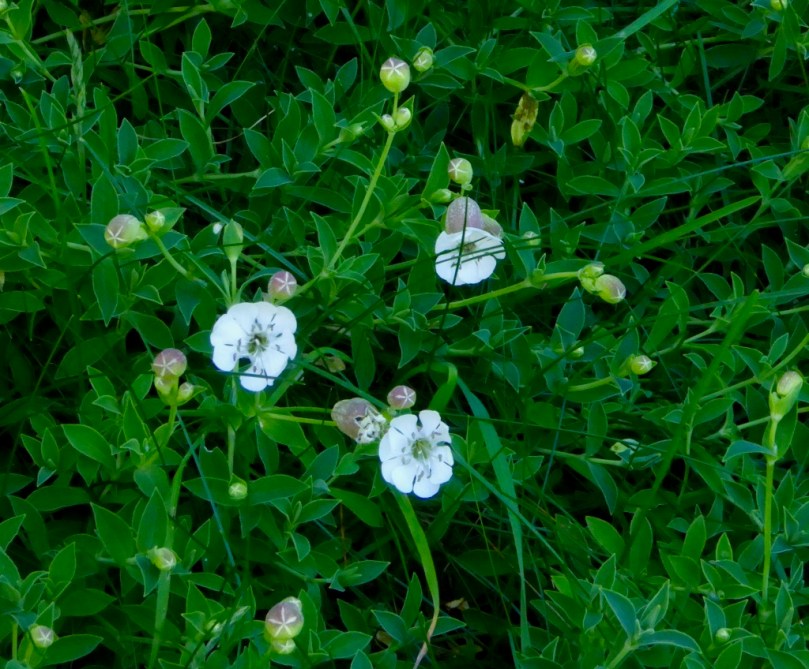
Sea Campion

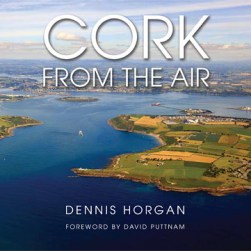
If you’re hankering after your own piece of Ireland in other ways too, allow us to highly recommend Cork from the Air by Dennis Horgan. Dennis is one of Ireland’s supremely talented aerial photographers and his latest book captures Cork as you have never seen it. He very kindly permitted me to use his incredible photograph of Cape Clear from the air – thank you, Dennis! The book is available on his website, or if you’re in Ireland already, in all good bookshops.

Go on, head over to the Cape Clear Island Trust website now – you’re just in time for Christmas!

Falconry Fantasy

I’ve waited a whole life for this – the chance to be a falconer, if only for a moment.

Ever since I read T H White’s The Once and Future King, it’s been a fantasy of mine to interact with one of those magnificent hunting birds that he described so well. A couple of weeks ago, at Adare Manor, Robert and I got a chance to finally live that dream – yes, he read the same book and loved it just as much as I had. T H White was a falconer himself, although not a very successful one. The treat was part of a couple of days stay at Adare Manor – Robert’s post describes this fascinating place in wonderful detail.

This falcon is happier and calmer with his hood on

Our falconer at Adare Manor was Susan Kirwan, one of the team at Adare Country Pursuits. What she doesn’t know about birds would fit on a postcard. She trained her first bird, a jackdaw, at the age of nine, and was hooked. Now she shares her knowledge and her love of birds with those of us who have admired from afar but have never had an opportunity to get up close.

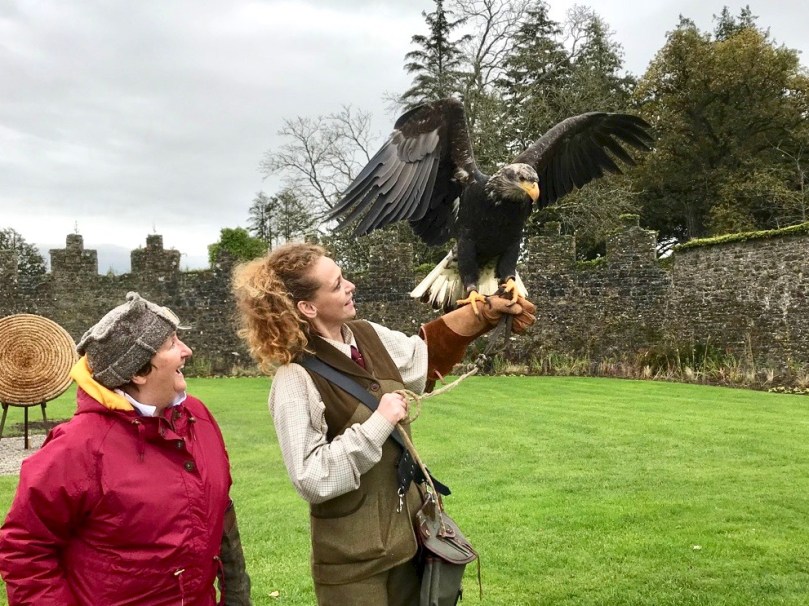
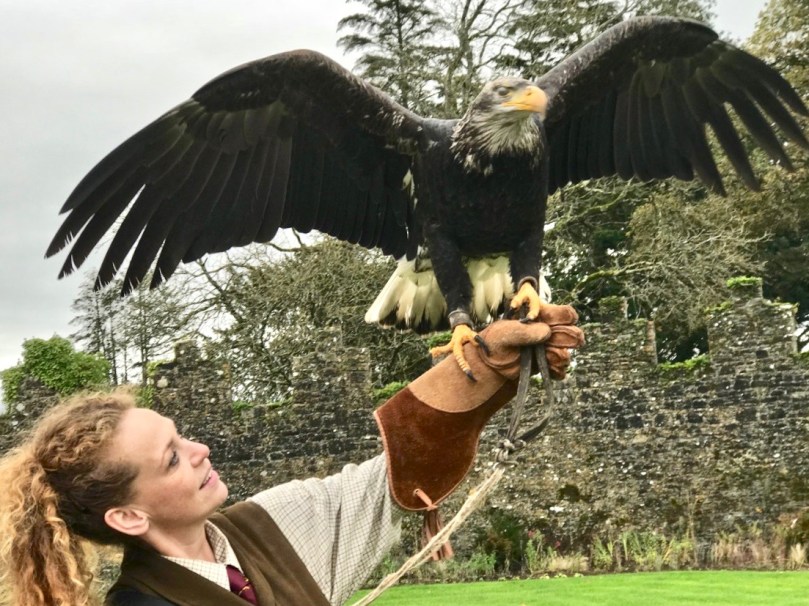
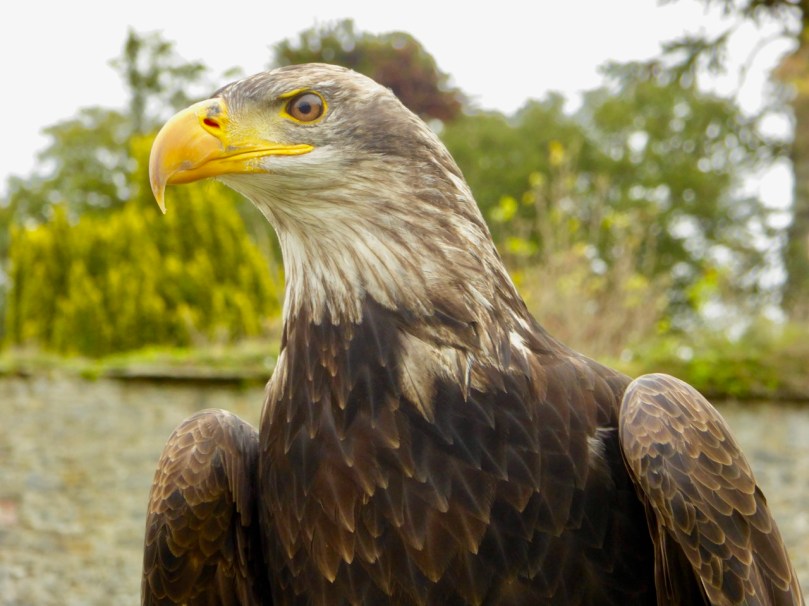
Susan has Saoirse, the American Bald Eagle, show off her wings

She spent the morning with us, handling each bird in turn and giving us an education on each one – habitat, habits, hunting style, personality, peculiarities, nutrition, feathers, weight – it was in-depth and fascinating. There wasn’t a question we asked that she couldn’t answer. She has spent her life studying and living with these birds.

All of the birds wore jesses (ankle leathers) and Susan showed us how to hold our gauntlets and our fingers to secure a bird once on the glove. She encouraged us to speak in a calm voice and not to betray nervousness – birds are excellent at picking up on human emotions.

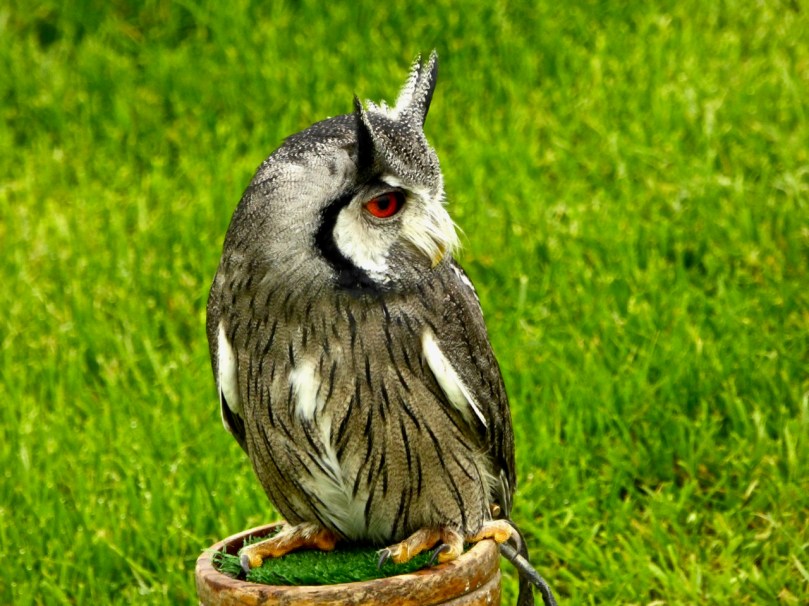
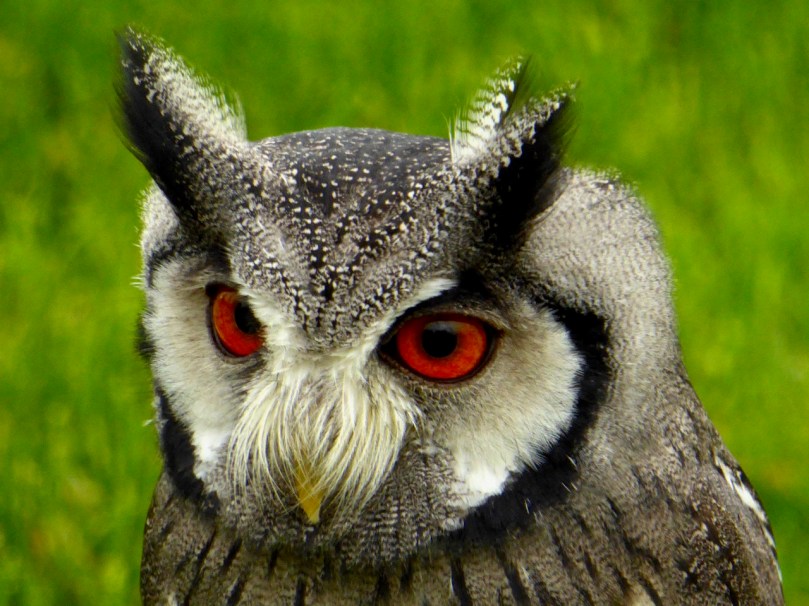
Tiny, the White Faced Scopes Owl, awaits her turn with us

Some of the birds were trained to fly from perch to perch, attached to a ‘creance’ or long line. Each has a optimal weight for flying and it’s essential to keep it there, so weighing and inspecting is part of the daily routine. Food must be as close as possible to what they would eat in the wild, to preserve the level of roughage and protein. Falconry, especially when you keep several birds, is a full-time job.

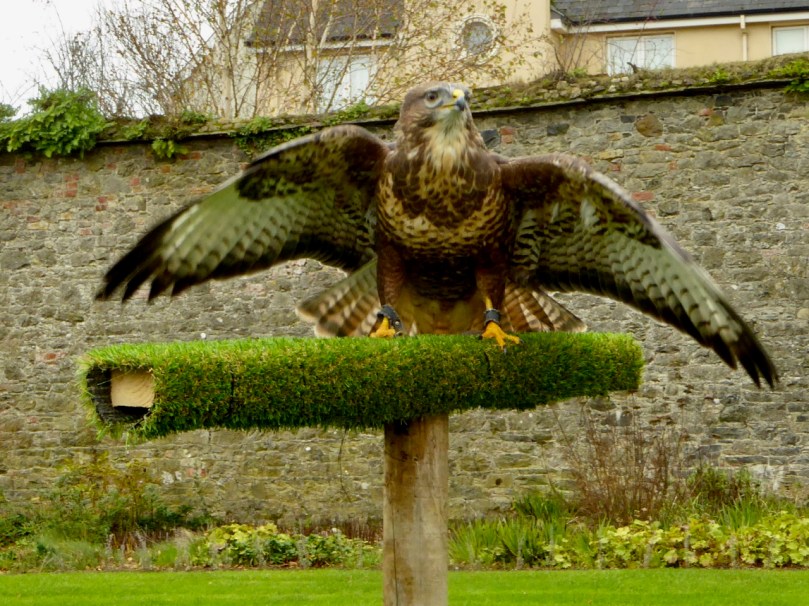
Caesar is a Common Buzzard, which is a native species in Ireland

Owls, although excellent hunters for themselves, don’t make the greatest falconry hunters. However, they are often brought to Susan as motherless chicks and she becomes their parent, as they imprint readily on a human. Susan told us that the Harry Potter series started a trend among some young people of capturing owls ‘to train’ but of course this is almost impossible for an amateur, so that is how some birds have come to her aviary.

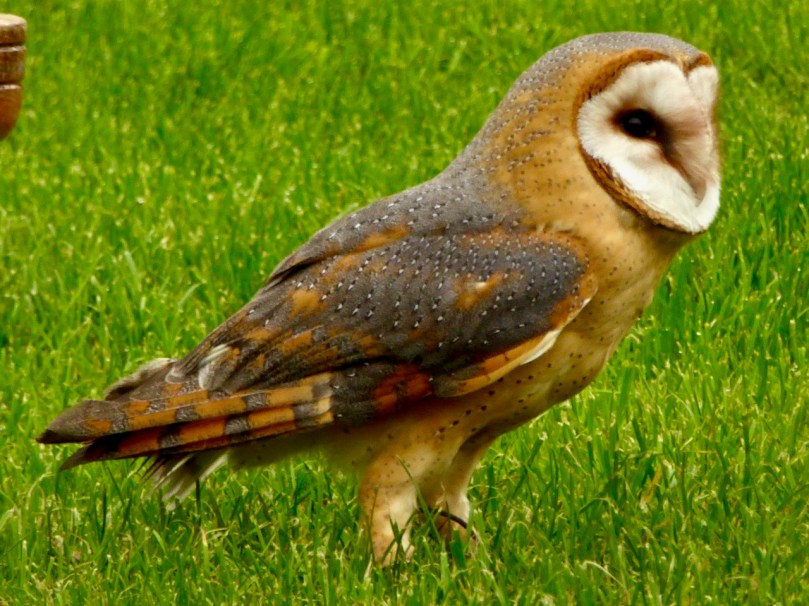
Noddy, a Dark Breasted Barn Own, has beautiful feathers and colouring

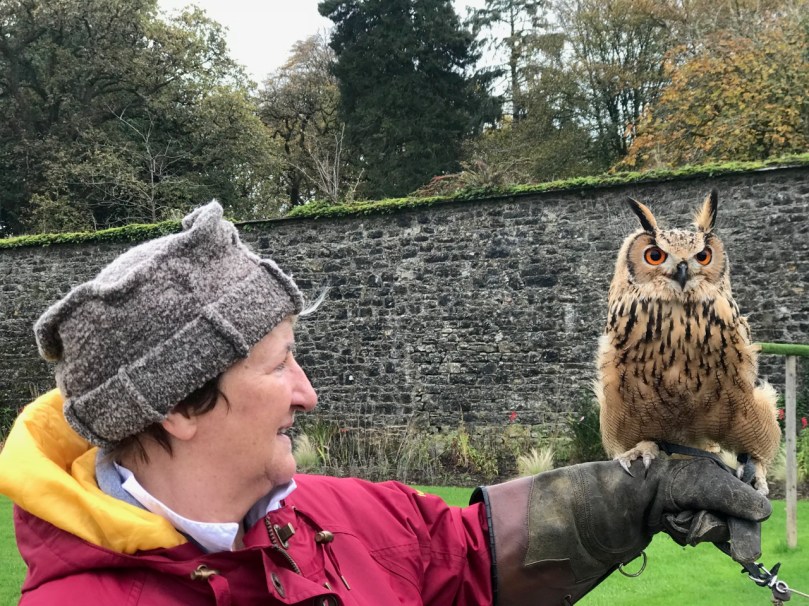
Oscar, a Eurasian Eagle Owl, has a good old ruffle

Raising an imprinted bird involves a particular set of skills and deep knowledge of the species. Susan is a certified falconer and has taken all the courses she can find to develop her skills. It was obvious, in the way she talked to and handled her birds how much she loved them.

Top: I’m obviously a ‘natural’ at this! Bottom: Well, maybe not quite yet

It was a thrill to be so close to a bald eagle. Living in Canada, I had many opportunities to observe these magnificent creatures in the wild, but I had never seen one as close up as I did at Adare. Saoirse is not quite four yet, and it takes a full four years for a bald eagle to mature and to grow both the white head and the white tail. Saoirse’s tail was there, but her head was at the salt-and-pepper stage that women of my age can relate to.

The Harris Hawk – ours was called Felix – is considered the easiest hunting bird to train because of its laid-back attitude to life and its natural ability to interact with humans. The highlight of our session came when Susan let Felix loose to fly to a high perch, and then called him down to land on our glove.

What a feeling! This IS a wild bird – Susan affixed a locator transmitter to its leg before we started so that if Felix took it into his head to fly away she could track him through the woods. She described how a falconer would track a bird before locators were used – it involved standing very still and tuning in to the sounds of the forest. Other birds would react to the sudden appearance of a hawk or falcon and the falconer would follow the sound-clues to his bird.

I learned that Oscar’s tufts aren’t his ears and that they don’t always stand up like this

We were extremely lucky to have Susan and her birds all to ourselves that morning – not sure how often that happens! But if you get a chance, don’t pass up an opportunity like this. It’s a once-in-a-lifetime experience. Thank you, Susan – you’ve made some old T H White fans very happy!

See you again, Tiny!

The Gap of Dunloe

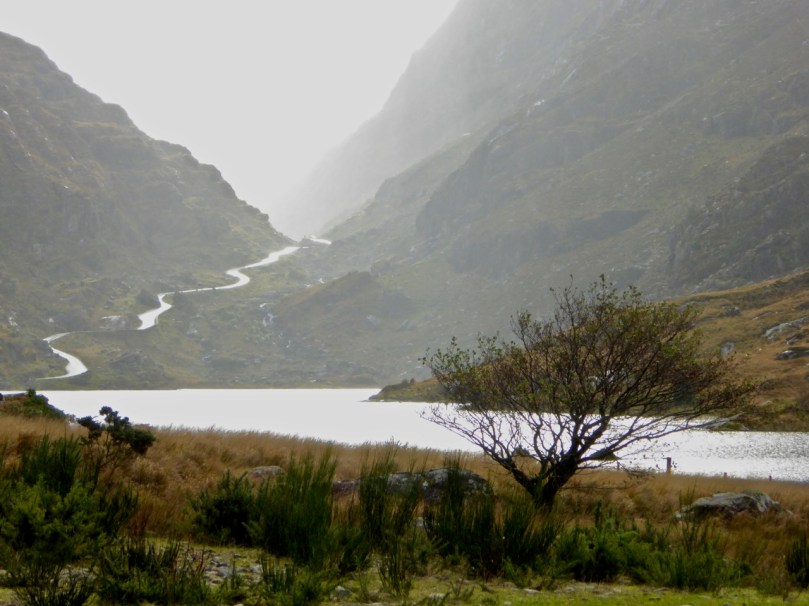
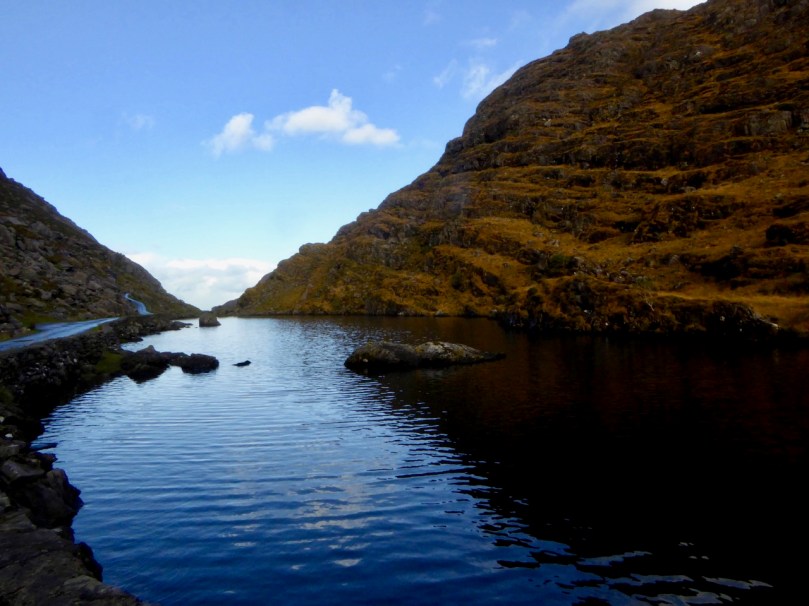
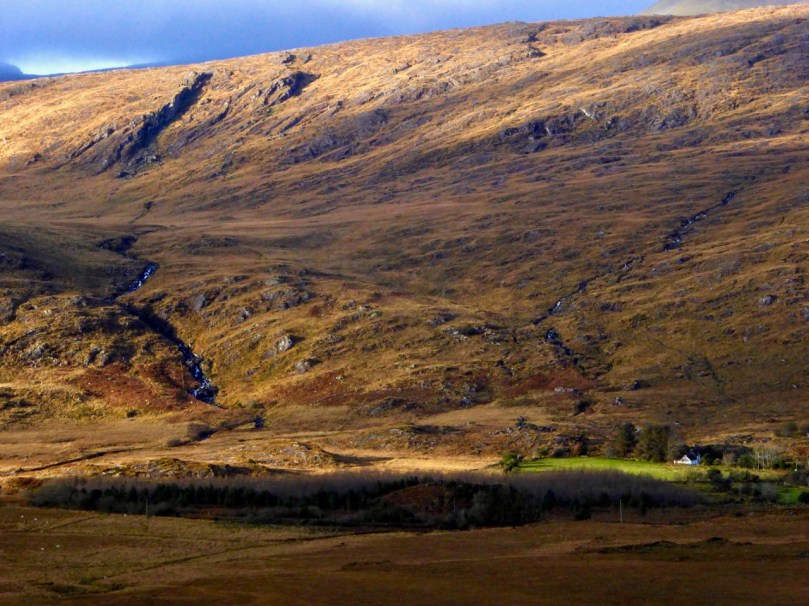
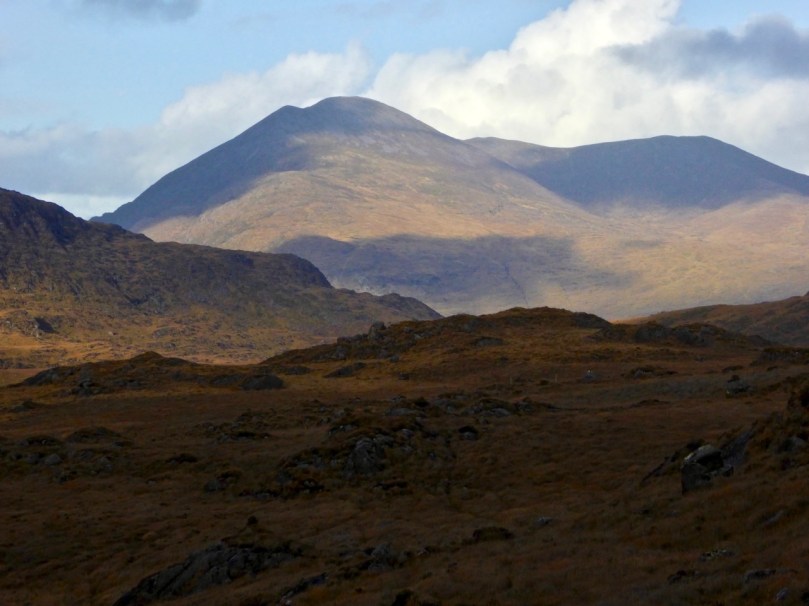
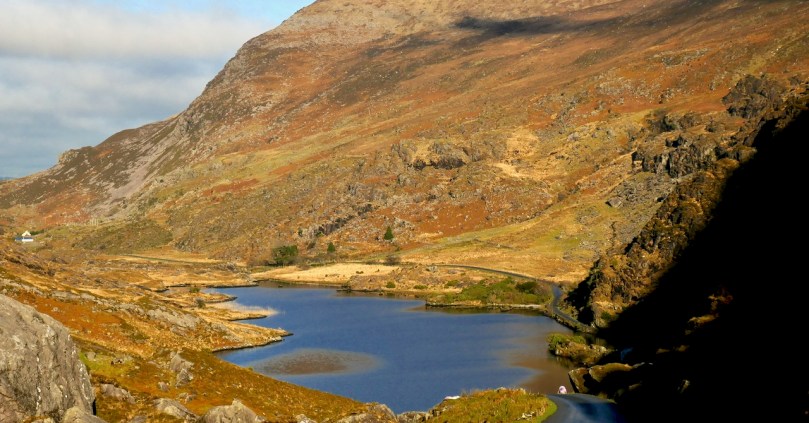
It’s one of Ireland’s, and Kerry’s, premier tourist experiences, but I think it’s at its best when tourist season is over and winter foliage dominates the landscape. Pure winter light mixed with the occasional shower – that combination brings out the the kind of colours that stop me in my tracks. From Killarney, the way to the Gap is west from the town on the N72 to Killorglin – just look for the signs.

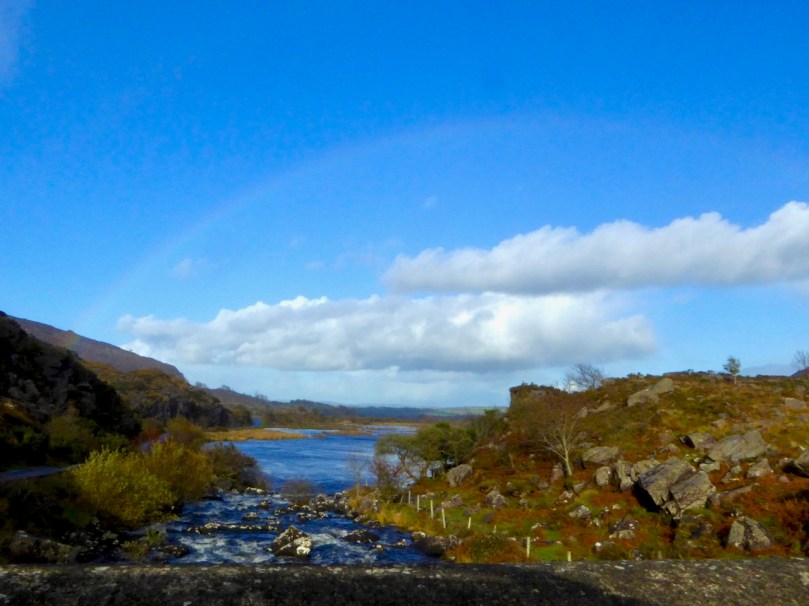
From the Wishing Bridge

Driving through the Gap of Dunloe is not recommended at any time except winter, and even then caution is advised. That’s because the traditional way of travelling through the gap is by jaunting car, on horseback, on foot, or by bicycle and cars can be a dangerous and unwanted addition. And those – the on-foot or by horseback options – are the best ways of seeing it. If you have a hankering to experience it for yourself, just Google Gap of Dunloe and all the options will present themselves.

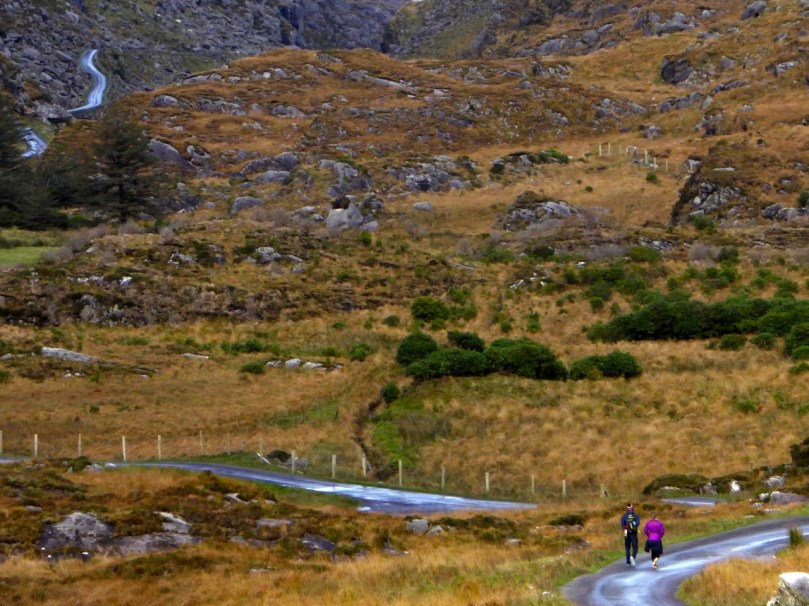
This couple from Germany had walked from the Black Valley

Robert and I have driven it twice now, each time in winter, and each time he has dropped me off to walk at my own pace, camera in hand, and picked me up where he can find a lay-by.  We did it earlier this week, having ascertained that sunshine was a possibility (about the best that can be forecast this time of year), and we hit it lucky.

A river runs through it

The Gap is a deep glaciated valley, running north/south between MacGillycuddy’s Reeks and the Purple Mountain – can’t lose with a description that starts off like that! The road runs along the Loe River, which empties eventually into the Laune and thence into Lough Leane, the largest of the Lakes of Killarney.

Auger Lake

Several lakes lie along the course of the river – Black Lake, Cushvally, Auger Lake and Black Lough. The road switches from the west side of the lakes to the east side as you go along, and then back again. The first bridge you cross is the Wishing Bridge – tradition has it that wishes made on this bridge always come true. My highly scientific testing of this assertion confirms the truth of it.

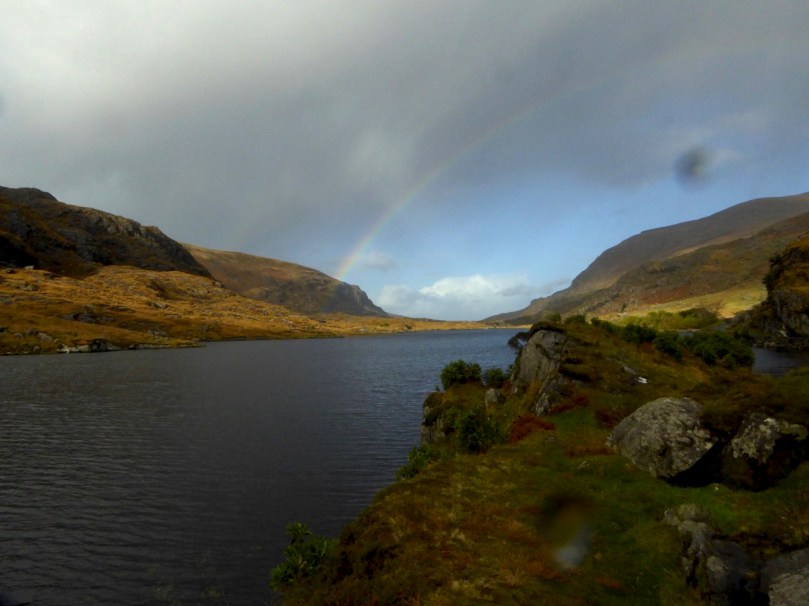
This is Ireland, of course, so no matter how blue the sky you have to expect that it can rain at any moment. True to form, the top of the valley filled with cloud and before I could blink I, and my camera, were being, er, moisturised. The compensation? A rainbow to the north, spanning the Gap.

Is there a hint of a second rainbow? And oops – drops on the lens

The rain didn’t last long – just enough to ensure the air was filled with lots of droplets and vapour to lend extra luminescence to the air – the colours always seem at their most sparkly after a shower.

Black Lough – no need to wonder how that name was earned

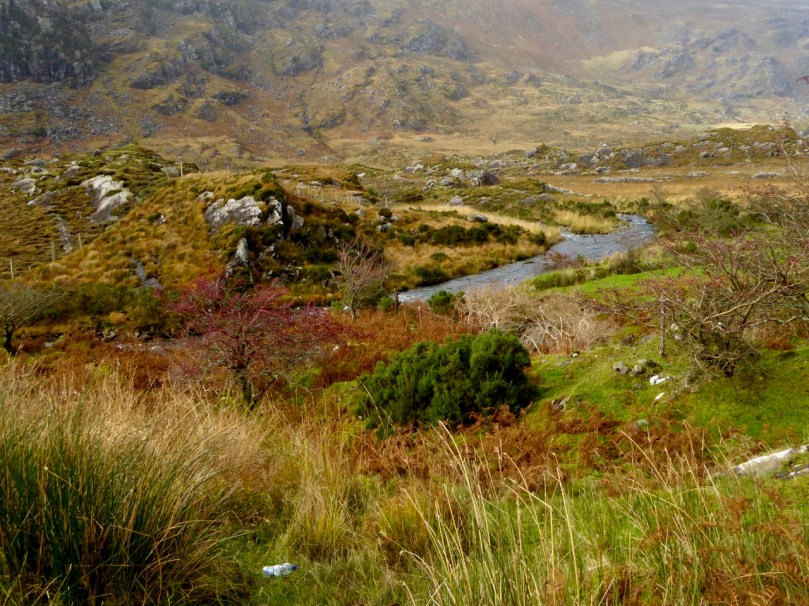
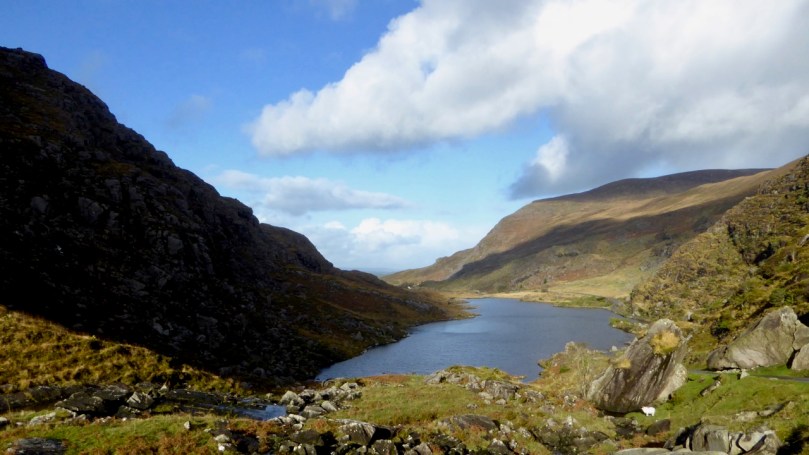
It was a steep walk to the top of the Gap, and it was hard to keep going when every bend brought fresh temptation to stop and take more photographs as the light shifted and shimmered. The photograph at the top of this post was taken from the highest point.

The Black Valley

Once over the top, the Black Valley opens up before you. This is a walker’s paradise, but also a community, with small farms dotted here and there, a church and a school – surely one of the remotest in Ireland. The landscape softens slightly from the craggy steepness of Dunloe to more rounded valleys and mountains.

You have a choice now to carry on West along the interior of the Iveragh Peninsula, but we had to head for home so we joined the N71 at Moll’s Gap where a welcome coffee awaited in the excellent Avoca Cafe.

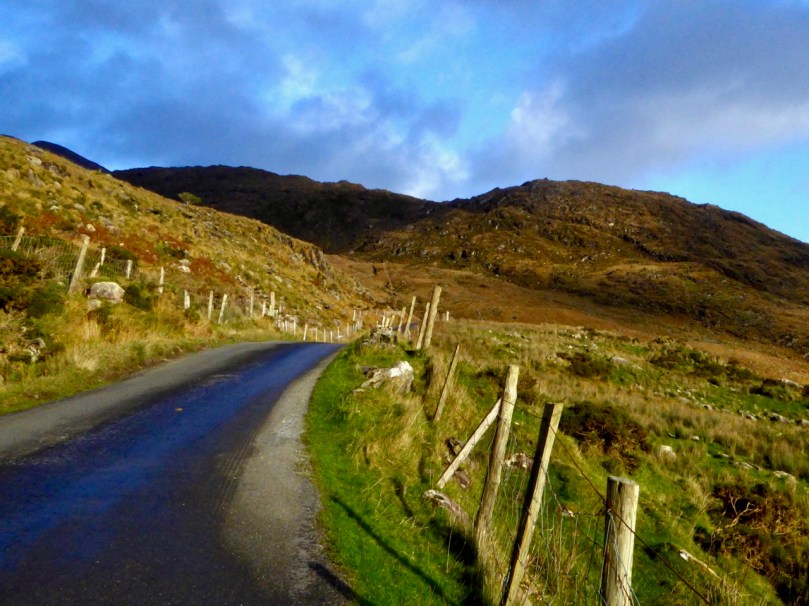
A road through the Black Valley

Next time, I think we will do this by the traditional horse-drawn method, and return to Killarney by boat from Lord Bandon’s Cottage. Perhaps even in the summer – I wonder how it will look then.

Looking back at the Gap of Dunloe from Moll’s Gap

Update: We did it again in January 2020 and once again were blessed with a great day for it:

Mizen Magic 6: Schull to Castlepoint

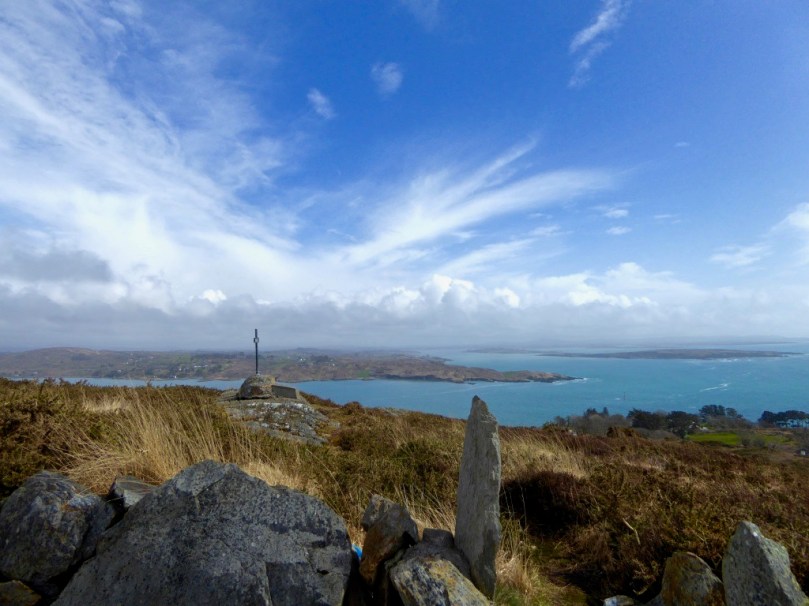
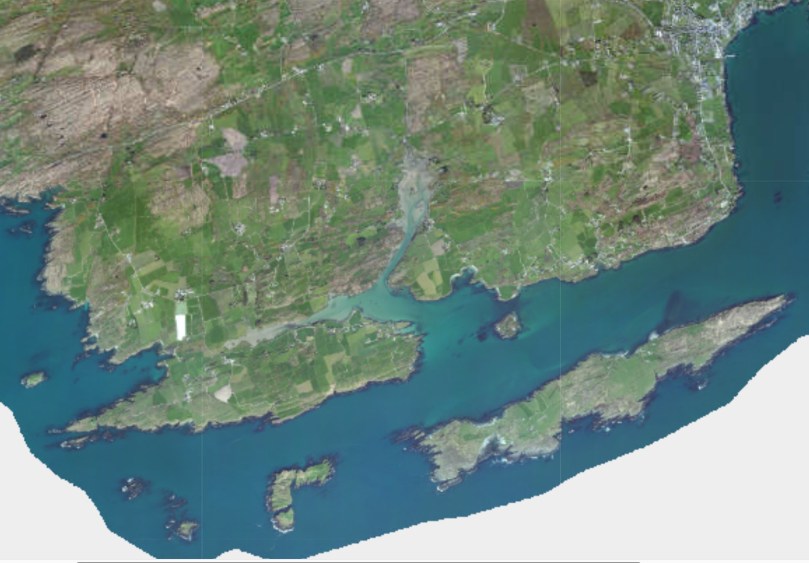
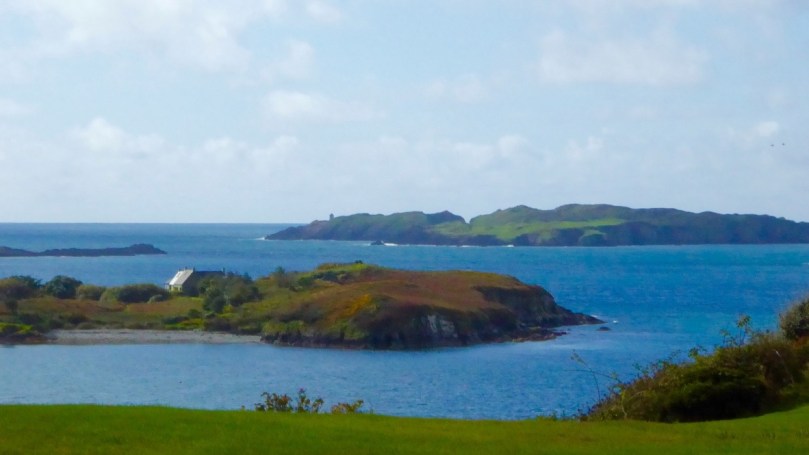
The Mizen is the Peninsula we live on, and of course we think it’s the most beautiful part of West Cork, and of Ireland. In previous Mizen Magic posts I’ve been exploring different aspects and areas, such as the Northside, or Brow Head, or our excellent beaches. This time I’m concentrating on the stretch from Schull to Castlepoint. The map below shows the area, with the village of Schull, our starting point, on the top right. The photograph above was taken from the top of Sailor’s Hill.

A winter view of Long Island Sound – Coney Island, Long Island,  the Calves, Cape Clear and Sherkin, with the entrance to Croagh Bay in the foreground

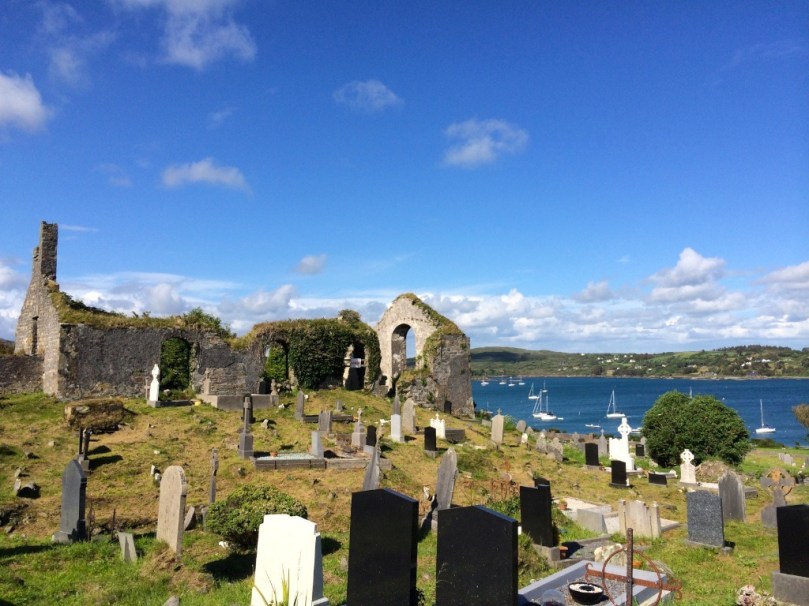
It’s only a few kilometres, and it would take you about ten minutes to drive straight to Castlepoint from Schull. But where’s the fun in that? No- let’s start by driving (or walking if you’d rather) out to St Mary’s Church on the Colla Road. It’s largely an eighteenth century church, although there are hints of a medieval structure here and there, and it stands in what must be one of the most scenic graveyards in West Cork.

Intriguing depictions of boats are inscribed into the render inside the church. How old are they? Who did them and for what purpose?

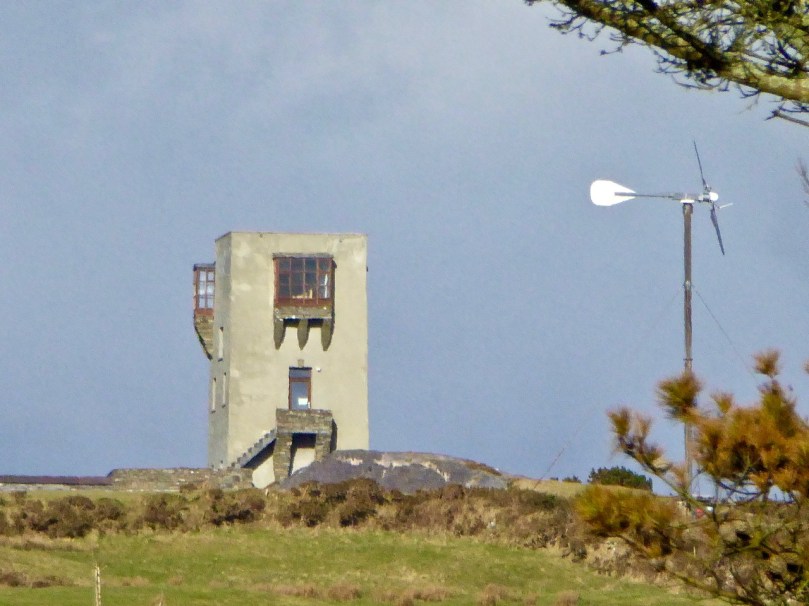
From there, I suggest you drive to the lookout on Sailor Hill – the trail arrows for the new extension of the Fastnet Trails will show you the way. We discovered Sailor’s Hill ourselves when I was researching belvederes – the redoubtable Connie Griffin has built his own modern version of a belvedere and there is no better place to get a view of Long Island Sound and the south side of the Mizen. Here’s the viewing house Connie built  – perfect for contemplation.
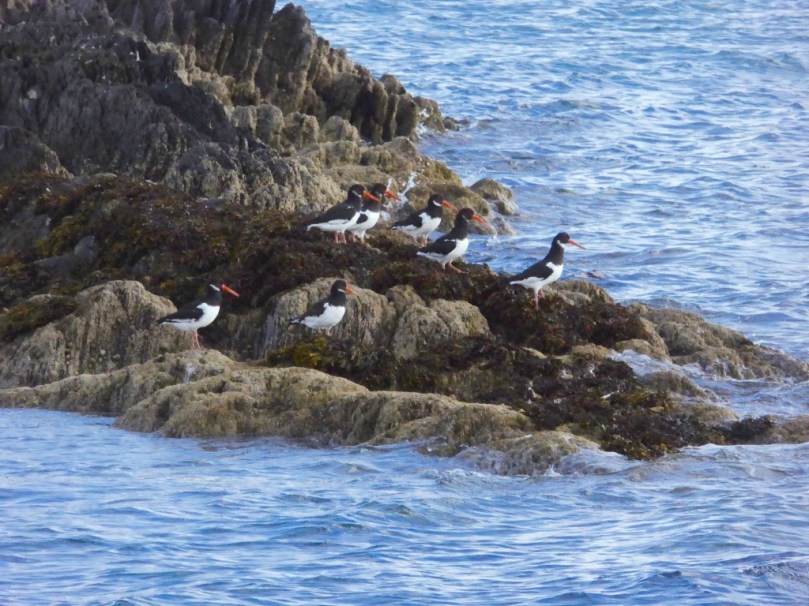
Back down to the Colla Road, continue to the scenic little Colla Pier, where you can take the ferry to Long Island. Robert and I do this every year as part of the Fastnet Film Festival. The ferry runs every day but you can also book special trips – it is, as they say here, a great day out. Pack a picnic and your camera – there’s lots of birdlife, including these oystercatchers on the rocks at Colla Pier.

The ferry leaves Long Island for the return trip to Colla Pier

From the Pier the road winds across country, overlooking the sea here and there, and always with Mount Gabriel looming in the background. From here you can see tiny Coney Island, privately owned, and with one house which is rented out to holiday makers.

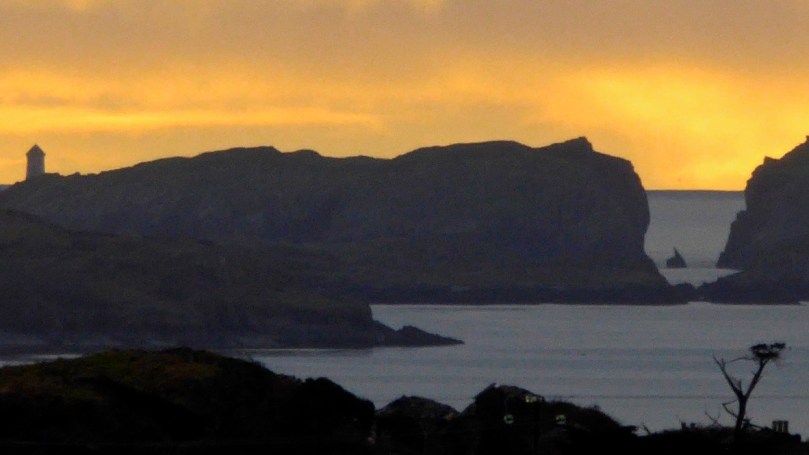
Beyond Coney Island are the Goat Islands – Goat Island and Goat Island Little – probably once one island, but now split into two, with a narrow passage between. There are feral goats on these islands, but not much else. They appear to be completely inaccessible, with craggy shores that are impossible to land on. That, of course, only makes them all the more mysterious. I’d love to hear from anyone who knows more about the Goat Islands.

The narrow and treacherous channel that divides the Goat Islands, and the beacon on the smaller of the two islands

The road now winds down to Croagh Bay (locally pronounced ‘Crew’), a lovely tidal sheltered inlet with the romantically named Gunpoint at its head. On the higher ground to the right you will see that an enterprising individual has converted one of the old signal stations into a unique residence. It must have the best view – but all those stairs!

We are now in the territory described by Robert in Here Be Pirates and in Pilchards and PalacesCroagh Bay, or more correctly Leamcon House, was the site of William Hull’s house and a hotbed of piratical activity.

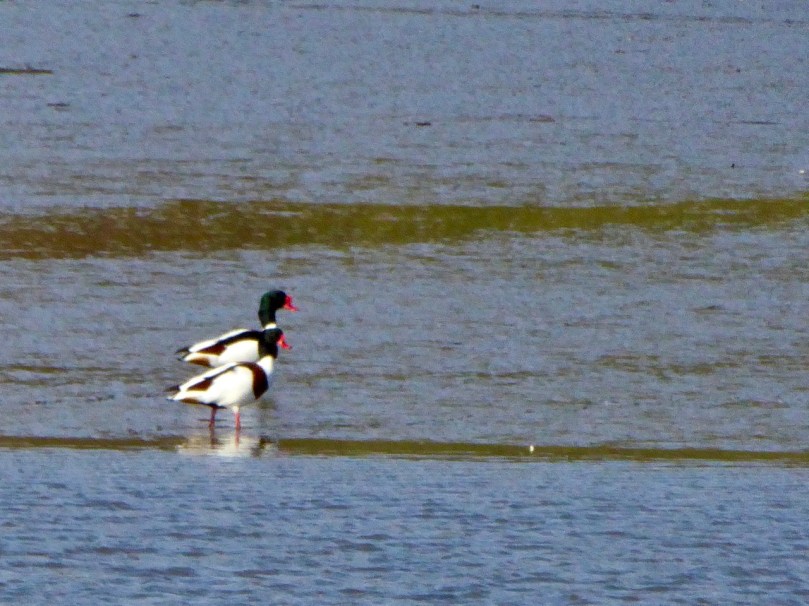
Nowadays it’s downright idyllic and the shallow waters of Gunpoint inlet provide sanctuary to wintering birds such as these shelducks.

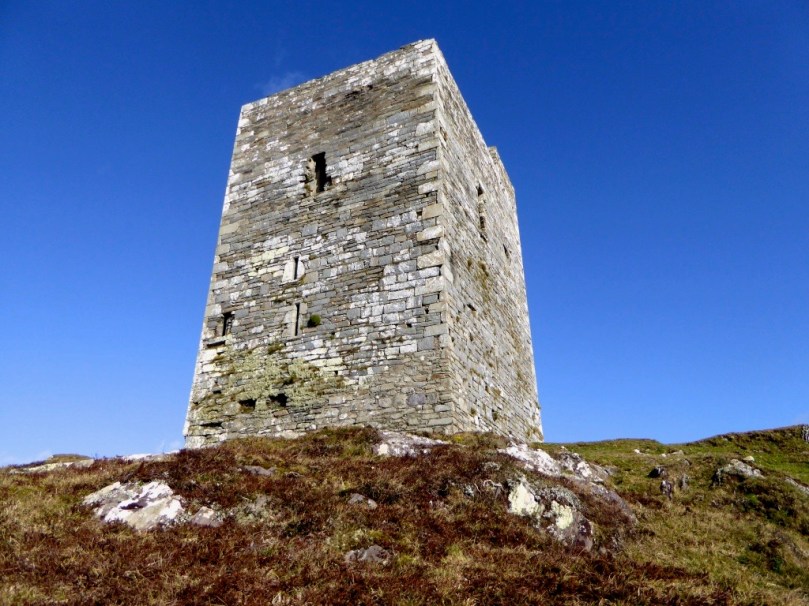
Our last stop is the little pier at Castlepoint, offering a dramatic view of Black Castle, one of the O’Mahony Tower Houses that dotted the coast of West Cork in the fifteenth and sixteenth centuries. This one is privately owned and the owner has stabilised and largely restored the castle, saving it for future generations from the all-too normal fate of dereliction that befalls West Cork Castles.

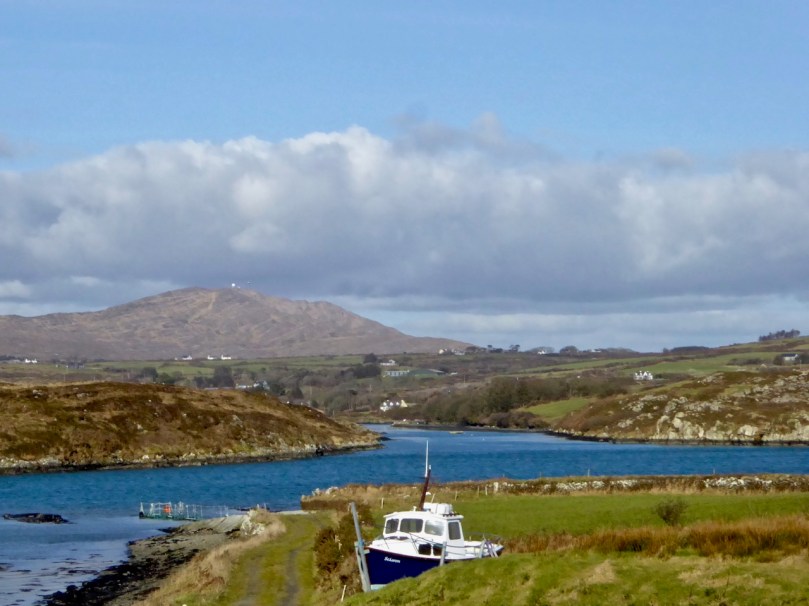
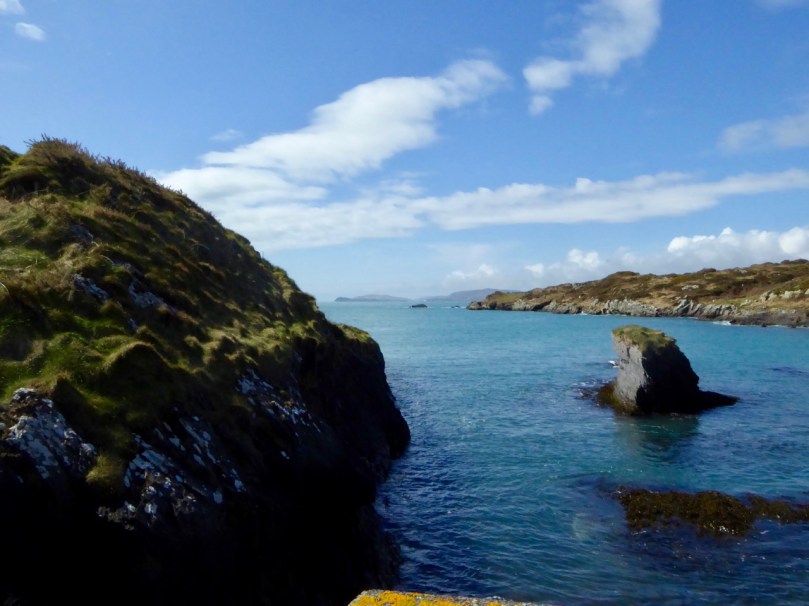
Robert looks across to Black Castle in the photograph above. The castle as the owner has stabilised it is shown below – he has done a first-rate job and we should all be grateful for his care of this important monument. The final photograph is of a small inlet by Castlepoint Pier.