Ah! Sweet Fiddler…

paddysmoke

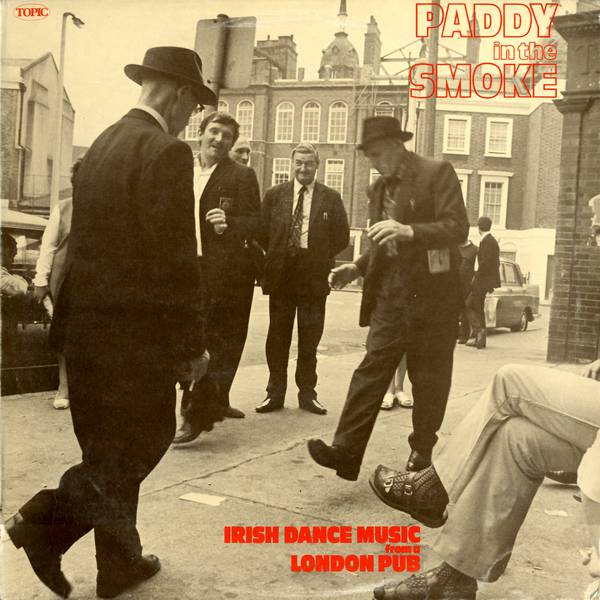
How did I first become aware of Irish Traditional Music? Probably through this Long Player (remember those?) released by Topic Records in 1968. Paddy in the Smoke was – still is – central to my collection of folk music on vinyl and is available today as a CD or a download.  The recordings were made during the mid 1960s in a London pub, The Favourite, in Holloway. Irish musicians gathered there every Sunday between noon and 2pm (such were the licensing laws of the day!) and those sessions are now legendary, probably representing the epitome of ‘folk music to aspire to’ – certainly that was the case for this wet-behind-the-ears 22 year old attempting to play along with these wonderful tunes on an ancient single-row Hohner melodeon. Here’s a sample of one of the tracks on YouTube: you can hear how the atmosphere of the occasions has been wonderfully captured.

More from my collection of fiddle recordings

Jump forward a few years and in the mid 1970s I was making my first trip to Ireland, visiting Cork, Clare and Longford – looking for The Music: I found it in abundance. By then I was playing an Anglo Concertina, but I was very aware that wherever you went to in Ireland – or whatever you listened to from the Irish tradition – it was above all else the fiddle that seemed to be the king-pin.
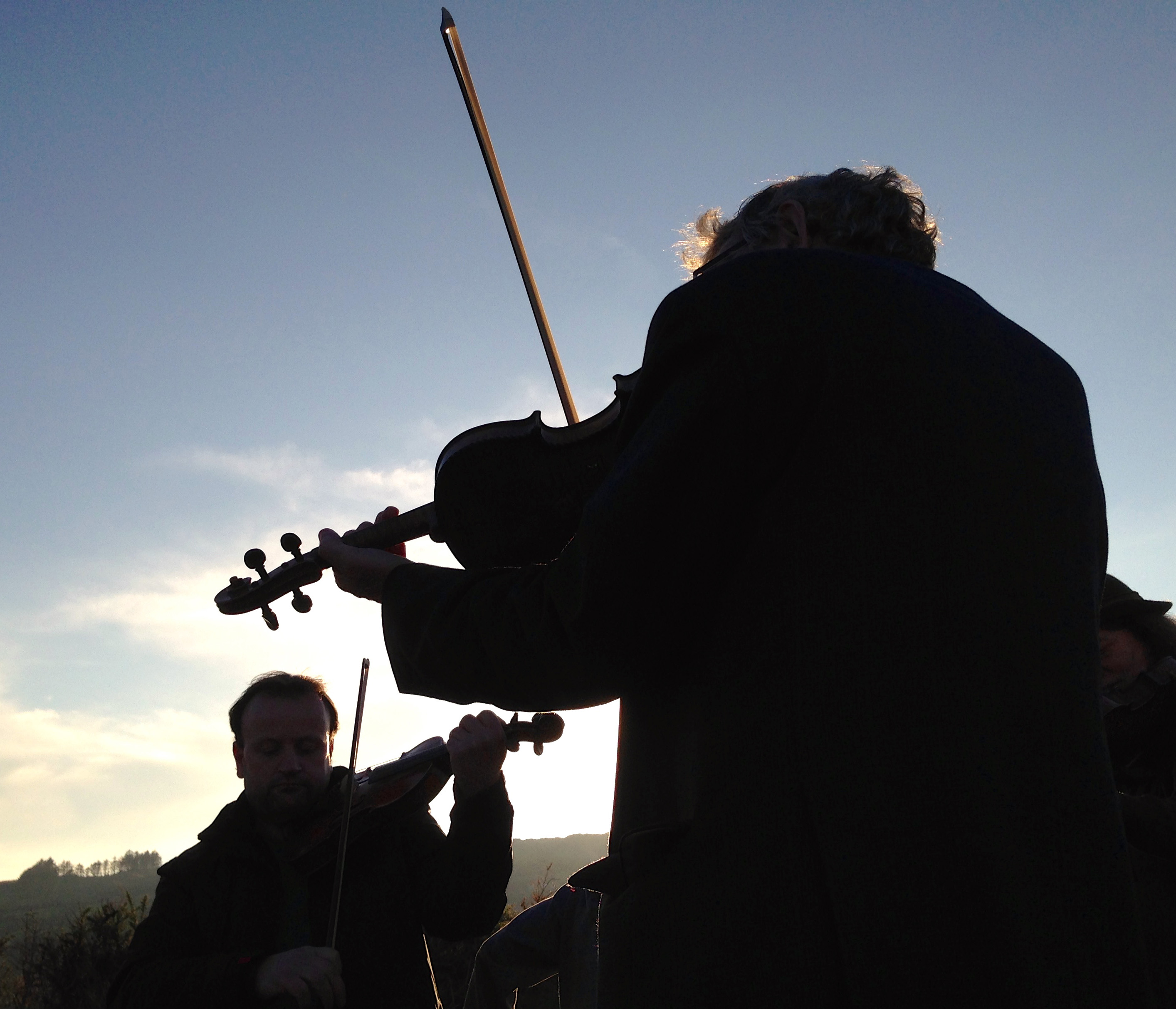
Fiddles at the Chief O'Neill's Festival, Tralibane

Fiddles at the Chief O’Neill’s Festival, Tralibane

Now – dare I say it – almost 50 years on from hearing those first notes, here I am living on the shores of Roaringwater Bay and I am more than ever immersed in the music. Still it’s the fiddle that’s ubiquitous, wherever I go and whatever I listen to.

Fiddles to the fore: Friday night session in Ballydehob

I started to learn the ‘violin’ when I was 11 years old. It wasn’t a fruitful venture – I had given it up within the year and moved on to the piano. I suppose I have just always been happiest with an instrument that only requires you to press a key or a button to get exactly the right note. But I am filled with admiration for anyone who plays the fiddle – who is able to perfectly pitch the notes, and then ‘bend’ the music when the mood requires it. You can’t ‘bend’ steel reeds!

The Rakes dance band, founded in 1956 – Reg Hall, Michael Plunkett and Paul Gross. They introduced me to Irish dance music back in the day… They are still going strong! Reg Hall was responsible for the Paddy in the Smoke recordings, together with Bill Leader

A fiddle is a violin – it’s the same instrument. Generally, classical players of the violin call it by either name, but traditional music players invariably call it a fiddle. It’s a beautifully constructed instrument with a feminine, flowing shape – a piece of craftsmanship which has been made the same way for 500 years. A seventh century Irish poem The Fair of Carman describes ‘…Pipes, fiddles, chainmen, Bone-men and tube players…’ but we don’t know what the fiddle was at that time. An excavation in Dublin during the 18th century uncovered a fiddle and bow dating from the 11th century: this is the oldest bow known in Europe – the bow is of dogwood and has an animal head carved on the tip.
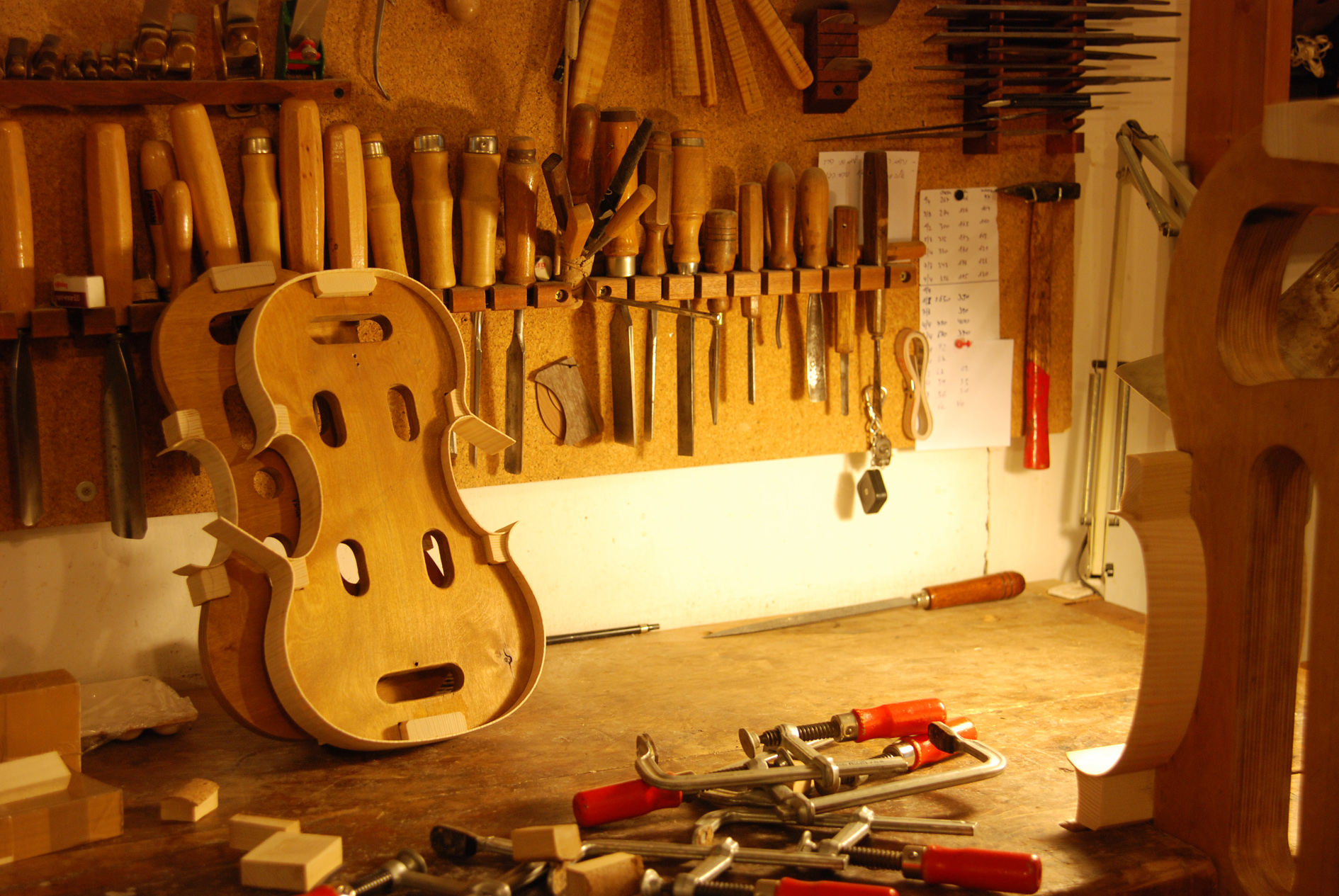
workshop

The violin maker’s workshop (www.violinist.com)

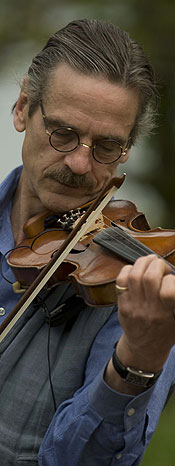
Can anyone learn to play the fiddle? Probably – with sufficient patience and perseverance – and a bit of musicality. But it takes very particular skills to put The Music into the instrument. We are immersed in good fiddling around here: we have so many music festivals – Baltimore Fiddle Fair, Masters of Tradition, Chief O’Neill’s, Ballydehob Trad Fest – right on the doorstep. The whole gamut of different regional styles and techniques is here for us to take in. If you have half an hour or so to spare, it’s well worth looking at this YouTube video dating from 2008: firstly, you’ll see Jeremy Irons learning to play traditional Irish fiddle, and you’ll see his mentors, including maestro Martin Hayes. But Jeremy lives in Kilcoe Castle, just over the hill from us – so you can also get a flavour of life down here in Roaringwater Bay – immersed in the sweet fiddle music…
left


Shadows and Stone in Action

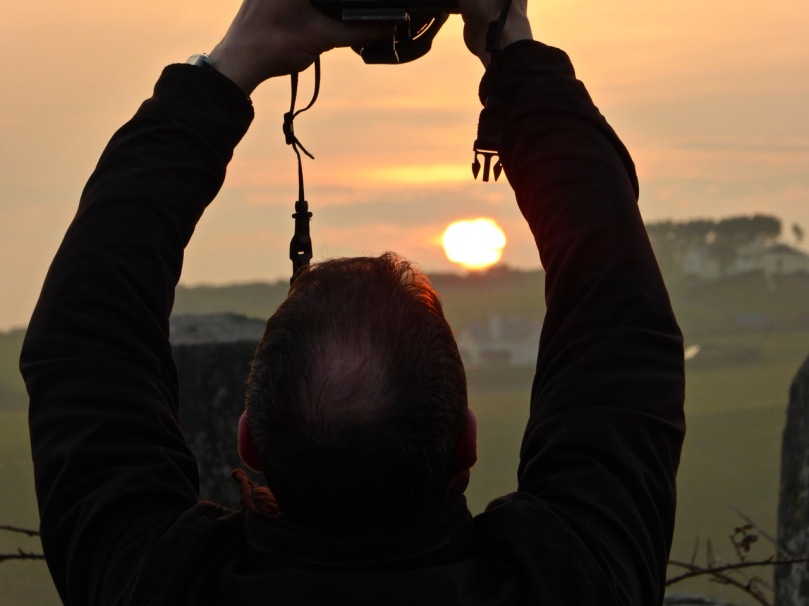
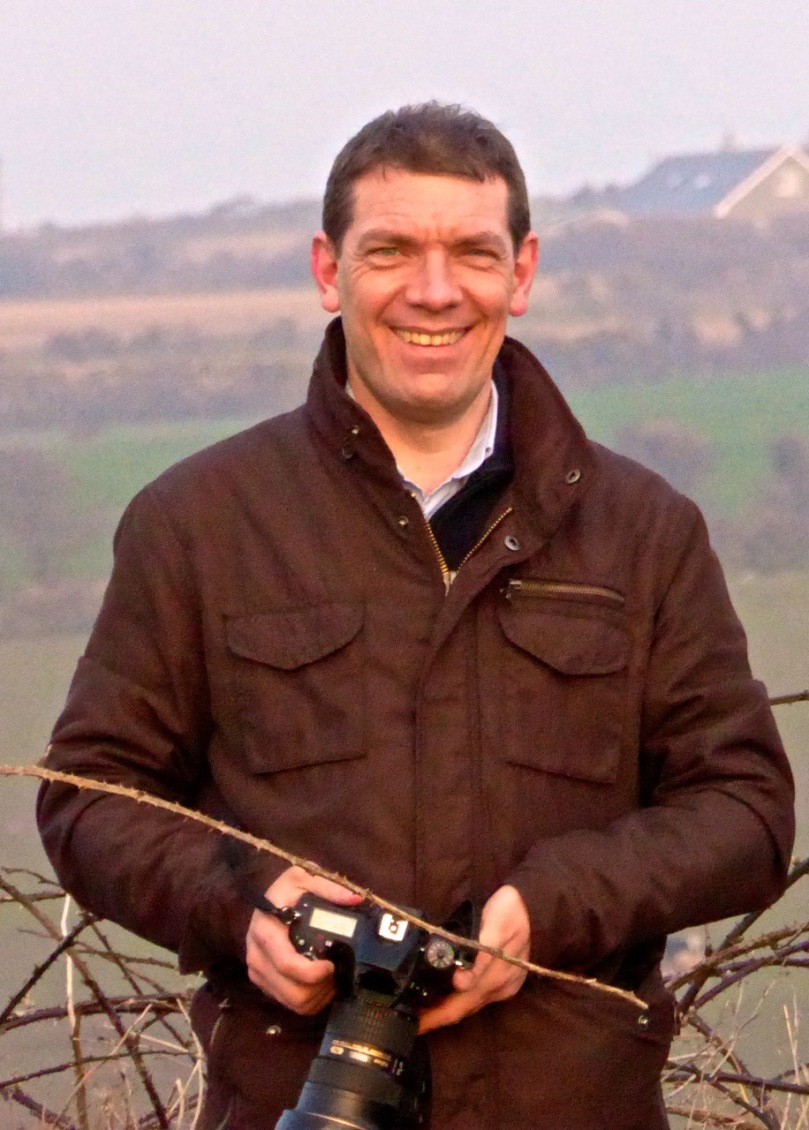
Ken Williams - capturing the moment

Ken Williams – capturing the moment

Shadows and Stone is the undisputed champion of prehistoric photography sites in Ireland. The work of photographer Ken Williams, it contains an enormous number of high-quality images from Ireland, England and Wales, and Portugal. Within Ireland, the site is organised by the various types of monuments (passage graves, stone circles, rock art, etc) and there are also galleries devoted to solar phenomena such as the Equinox at Loughcrew.

Ken and Robert: getting ready for sunset at Bohonagh

Ken and Robert: getting ready for sunset at Bohonagh

Ken’s work on rock art is astounding. We know first hand how difficult it is to get good photographs of the carvings. Many of them are covered in lichen, obscuring all the detail, and can really only be discerned in long slanting light, such as at sunrise or sunset. Ken uses artificial lighting to capture his excellent images and when we first met him a couple of years ago we asked him how he packed all those lights up to the remote locations in which a lot of rock art is found. He grinned and opened his backpack. “This is my equipment,” he said, “It’s all I use.” Essentially his gear consists of a camera, flashes, and tripods.

flashes strategically deployed

flashes strategically deployed

If you want to see the difference between what Ken captures and what us ordinary mortals manage to do, take a look at our photograph below of the highly carved panels at Derrynablaha in Kerry. Hard to see anything on them, right? Now click here for Ken’s version!

Derrynablaha Panels 5 and 6. Probably most highly carved pieces of rock art in Ireland. Can you see it?

Derrynablaha Panels 5 and 6. Probably the most highly decorated pieces of rock art in Ireland. Can you see the carvings?

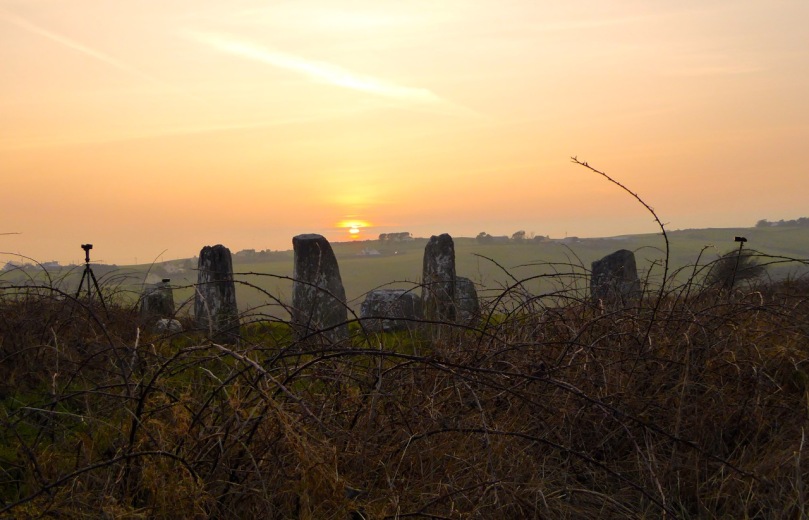
We met Ken this week at the Bohonagh Stone Circle: he was there to photograph the equinoctial sunset. It was a beautiful evening – perfect conditions to see the sun sink behind the recumbent stone, as it does in these axial stone circles at either the equinox or solstice.

Looking over the recumbent

Looking over the recumbent

It was a treat to see a master photographer at work and to have Ken explain how he gets those amazing shots. Since we had already had the opportunity to shoot the sunset last March, I knew how difficult it was to portray a scene when you’re aiming directly into the glare of the setting sun. It took a lot of processing afterwards before I could see both the sun and the stones in my shot, and by that time the sky was competely washed out. This time I concentrated on capturing the photographer at work. Ken, meanwhile, worked his usual magic – and here’s the result, included with his permission. Not only can you see everything, including the still blue sky, but his picture captures the mysterious ambiance of the setting and the occasion.

BohonaghEquinox15-12

We hope to tag along with Ken again in the future. Meanwhile – our thanks to him for an inspirational day and the great rock art chat.

Thanks, Ken!

Thanks, Ken!

By the way, it’s been a week of sky photography here in West Cork – first the equinox and then an eclipse! My neck hurts now.

Solar eclipse, West Cork, March 20, 2015

Solar eclipse, West Cork, March 20, 2015

An Extra Lick of Paint

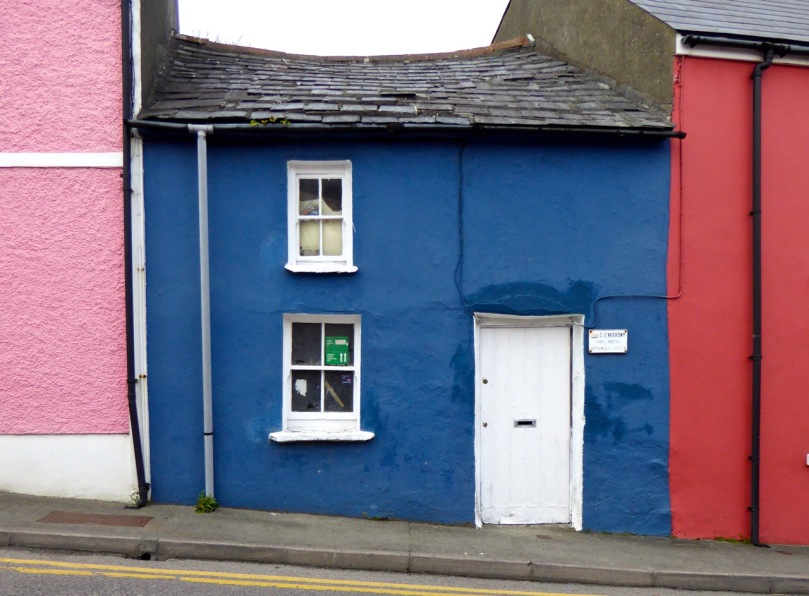
Old vet clinic, Schull

Old vet clinic, Schull

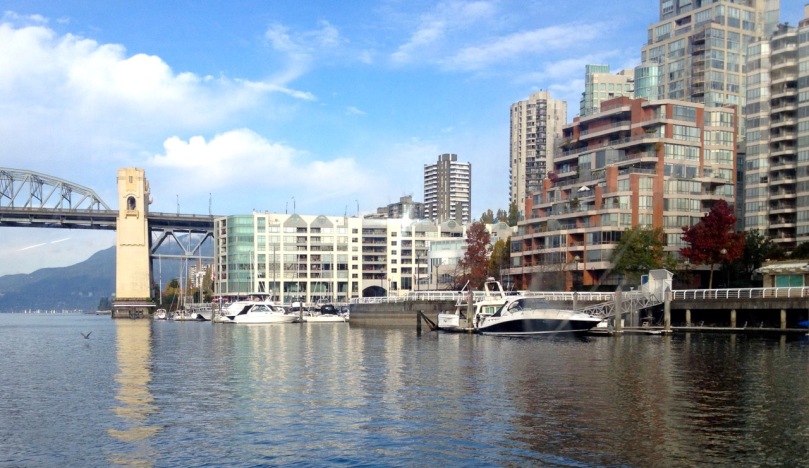
I used to live in Vancouver, on Canada’s west coast. It’s a beautiful city by any standards: gleaming high-rises, miles of seaside walkway, and snow-capped mountains lending a dramatic backdrop. I loved it, but when I looked through my window mostly what I saw was concrete and steel – and no colour! I had to escape up into the mountains or out to the Fraser Valley to get in contact with nature and feed my soul.

Where I used to live

Where I used to live

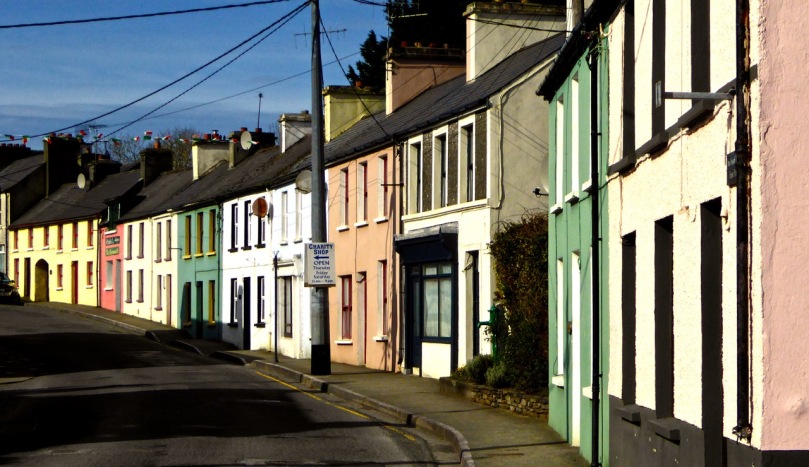
Where I live now

Where I live now

In West Cork, my soul is fed every day, every time I look out the window of our house, every time I stroll through our village of Ballydehob. That’s down to our rural setting, of course, and the magnificent scenery, but a huge part of it is about colour. I’m a colour person, I guess: I respond to it and crave it. I can certainly appreciate a quiet tasteful palate of greys or beiges, or any of the million variations of off-white when I see them. But left to my own devices I’d quickly have a chunk of candy apple red in there, or chairs the colour of daffodils, or a wall in a vivid pink. As Lady Gaga says, I was born that way.

Why is that woman taking my picture?

Why is that woman taking my picture?

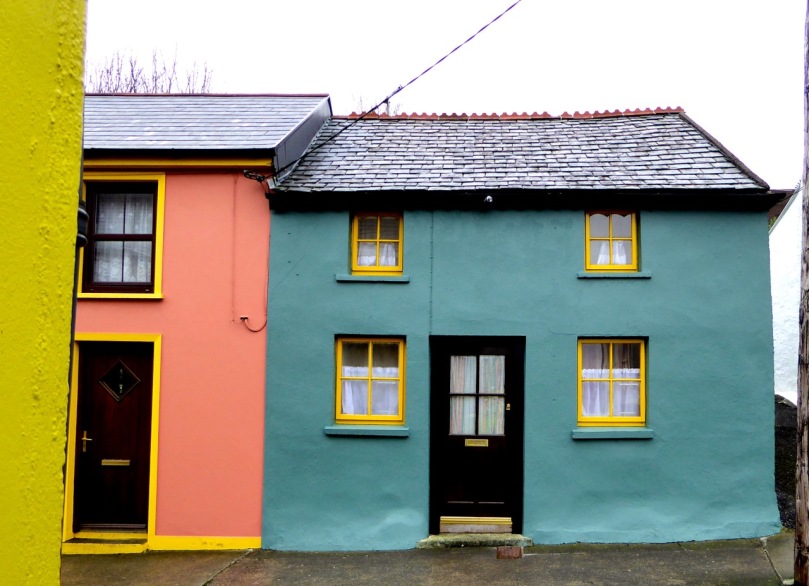
And so I find living in rural Ireland a constant source of delight and inspiration. No country was ever this green, surely! Now the gorse is starting to bloom, turning the hillsides into a blaze of yellow. And every few kilometres along the road is another village or town full of colourful houses competing with each other for my attention. But before we get to the villages, here are some glimpses of houses just off the main roads as you drive those kilometres.

A Lick of Paint mainly featured houses out in the countryside, but for this post I wanted to show you some of my favourite houses in our nearby towns and villages: Ballydehob, Bantry, Skibbereen and Schull.

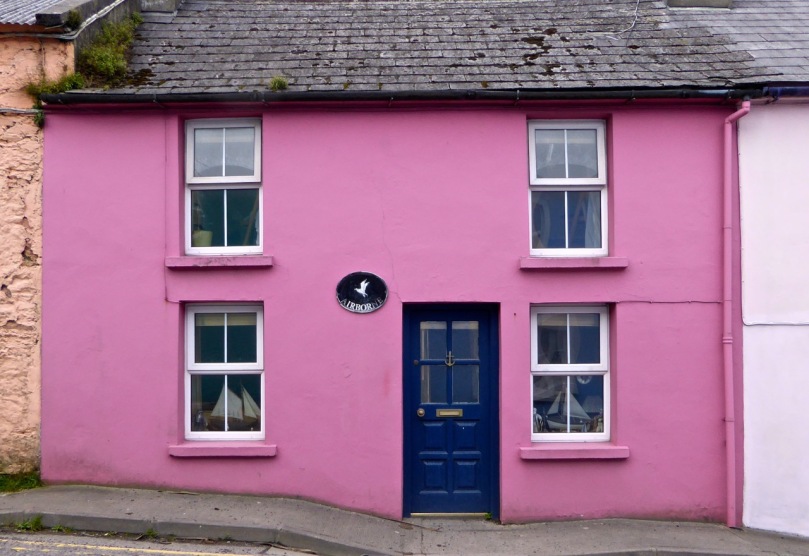
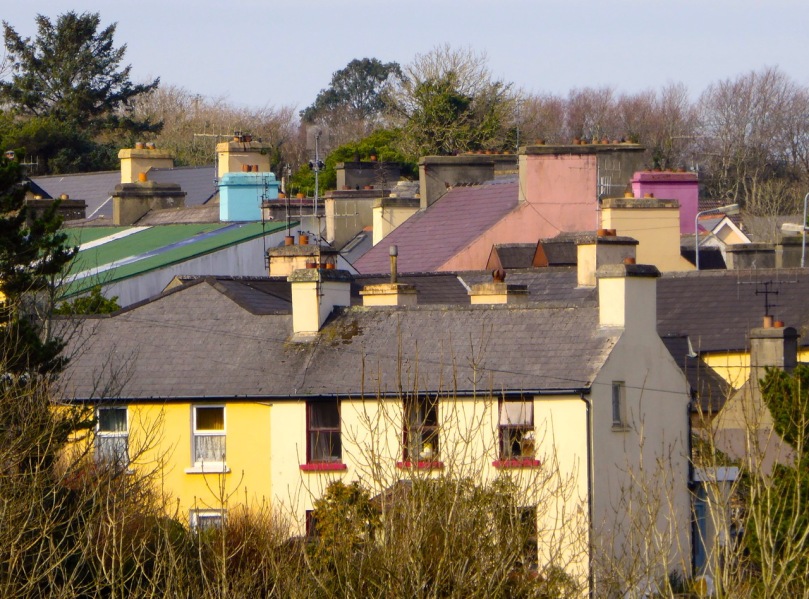
On the outskirts there are new estates of identical houses, of course, all painted in identical shades of cream. But in the steep and windy streets behind the shops you find little old terraced houses lovingly done up, the walls, doors and windows all in contrasting hues and with knife-edge divisions of colour between neighbours.

Skibb town house 2

Skibbereen townhouse

It can be like walking through a giant Rubik’s Cube (ok, that dates me) or one of those kaleidoscope tubes.

In his book, West of West, published in 1990, Brian Lalor captures my own experience growing up in a sea of grey. He says:

The nineteenth-century photographs of villages and farms show an unrelieved grimness of stone, cement and clay. Whitewash relieves this picture, though frequently this rendering has degenerated into a leprous greyness indicative of neither hope no prosperity. Colour has a symbolic relationship with the state of economics in rural Ireland. The last 20 years have seen the introduction of modern synthetics, bringing vivid tones not previously to be found here. Affluence and the EC have brought, as to the Aegean, a flight from the spartan virtues of white and cream…
Whatever the reason – prosperity, a sense of fun, a wish to lighten the spirits, the influence of the Tidy Towns Competition, an affinity with the colours of the wildflowers in the hedgerows, competition with the neighbours, the need to describe how to identify a house when street numbers are confusing or absent – I am grateful for it. It’s one of the things that makes rural Ireland unique and charming – and it feeds my soul.

Airborne, Schull

Airborne, Schull

The Gables of Ballydehob

The Gables of Ballydehob


New Archaeology

Unexpected Discovery...

Unexpected Discovery…

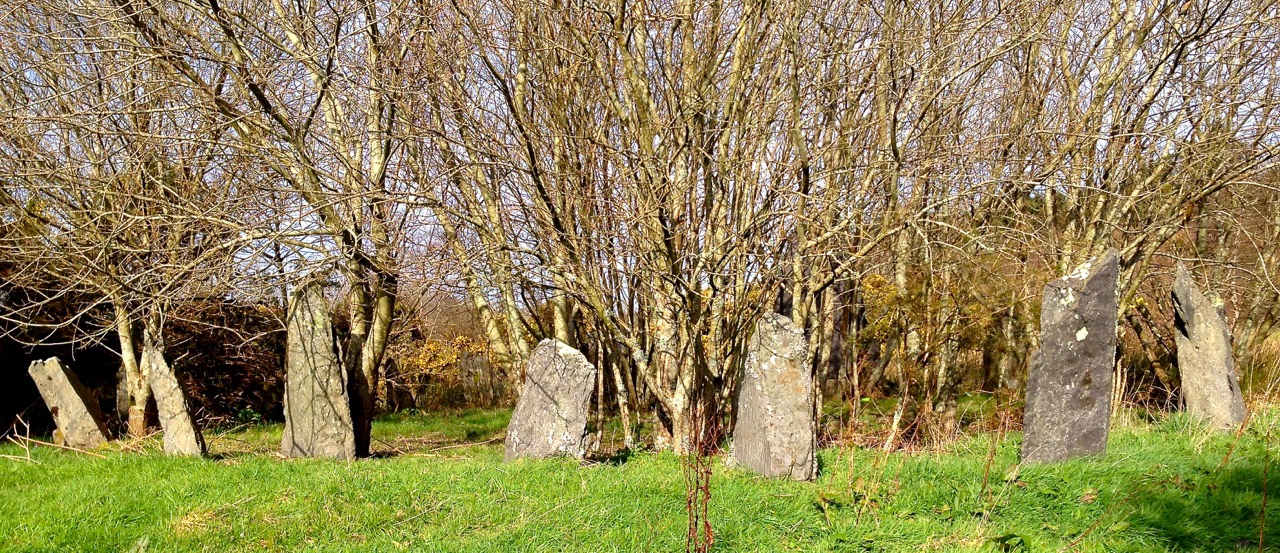
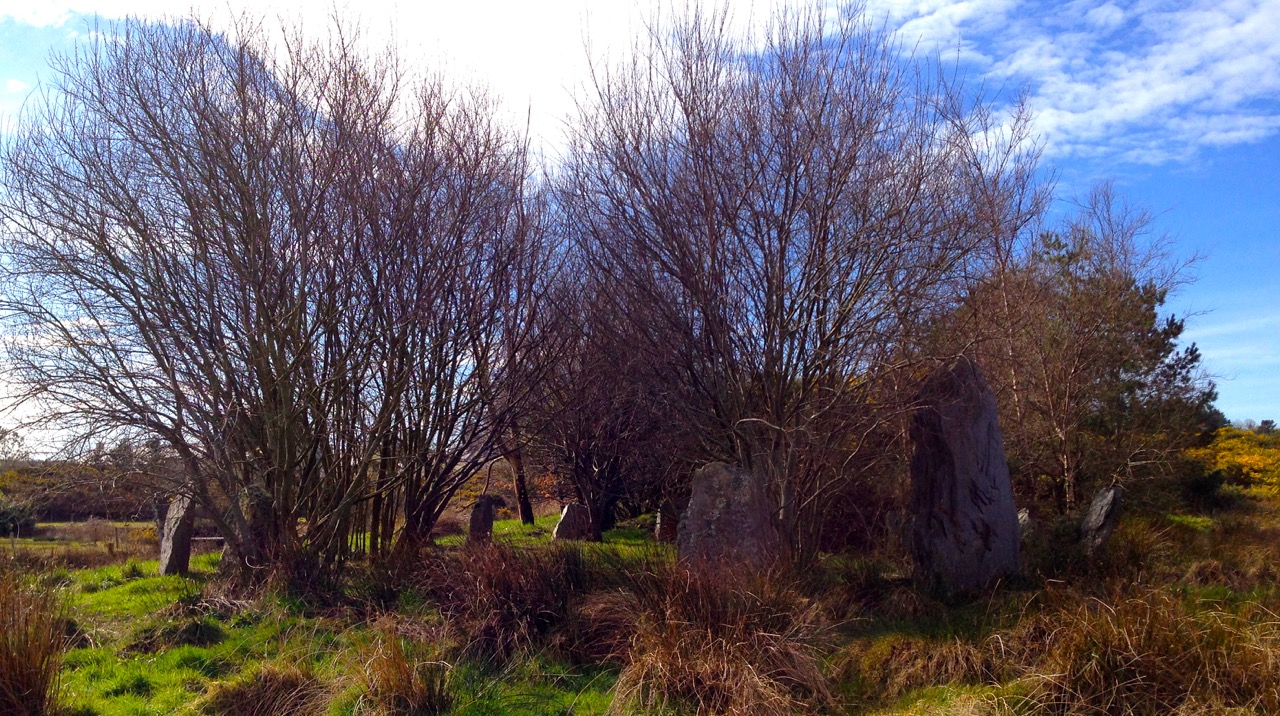
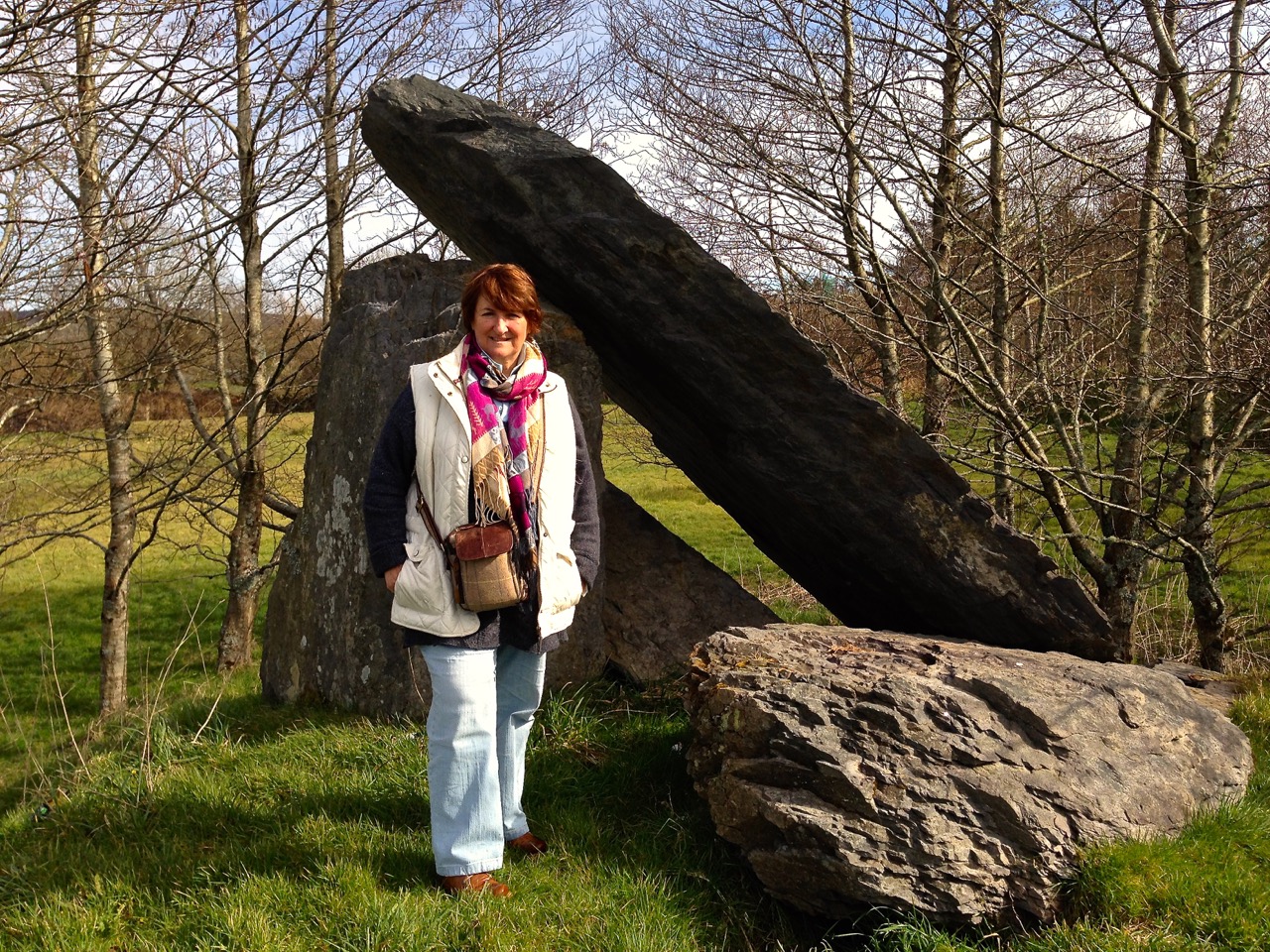
Wow! A hitherto unrecorded stone circle, a boulder burial, a gigantic standing stone and a dolmen… all found on a Saturday morning walk.

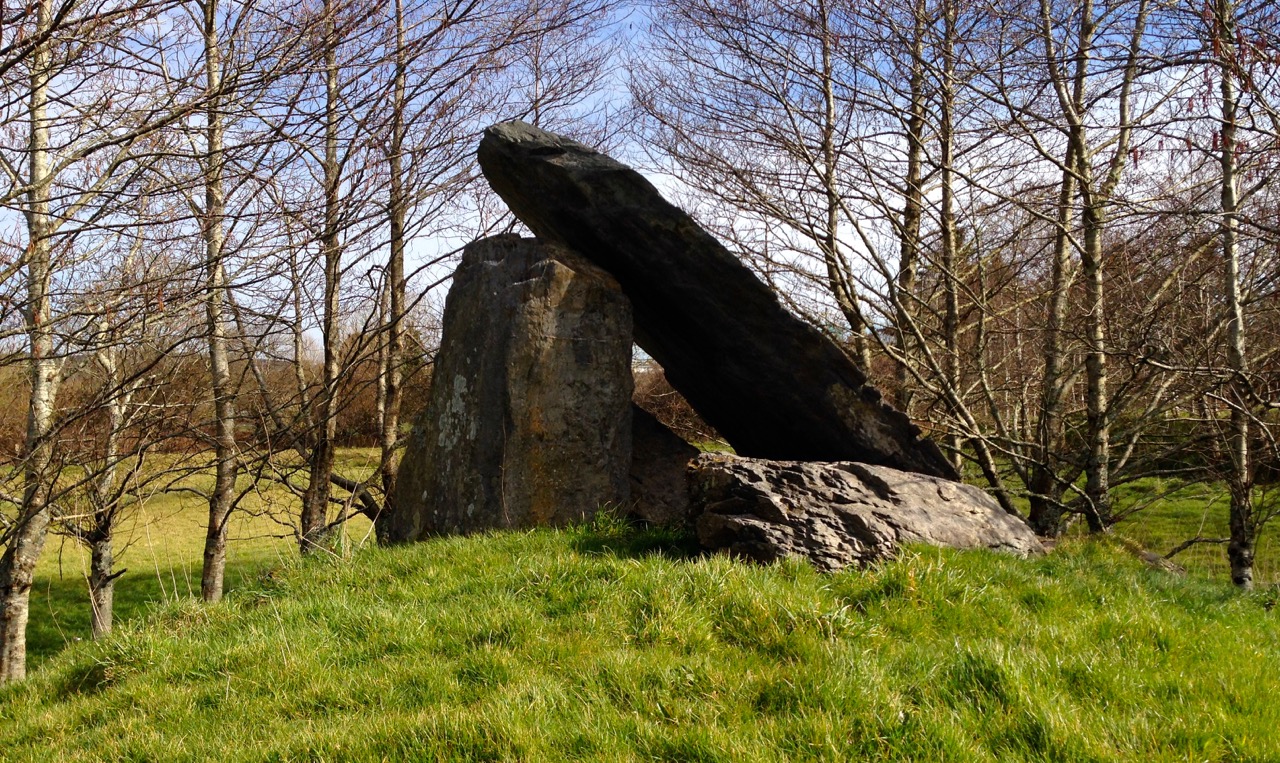
Ballydehob's Dolmen

Ballydehob’s Dolmen

Budds

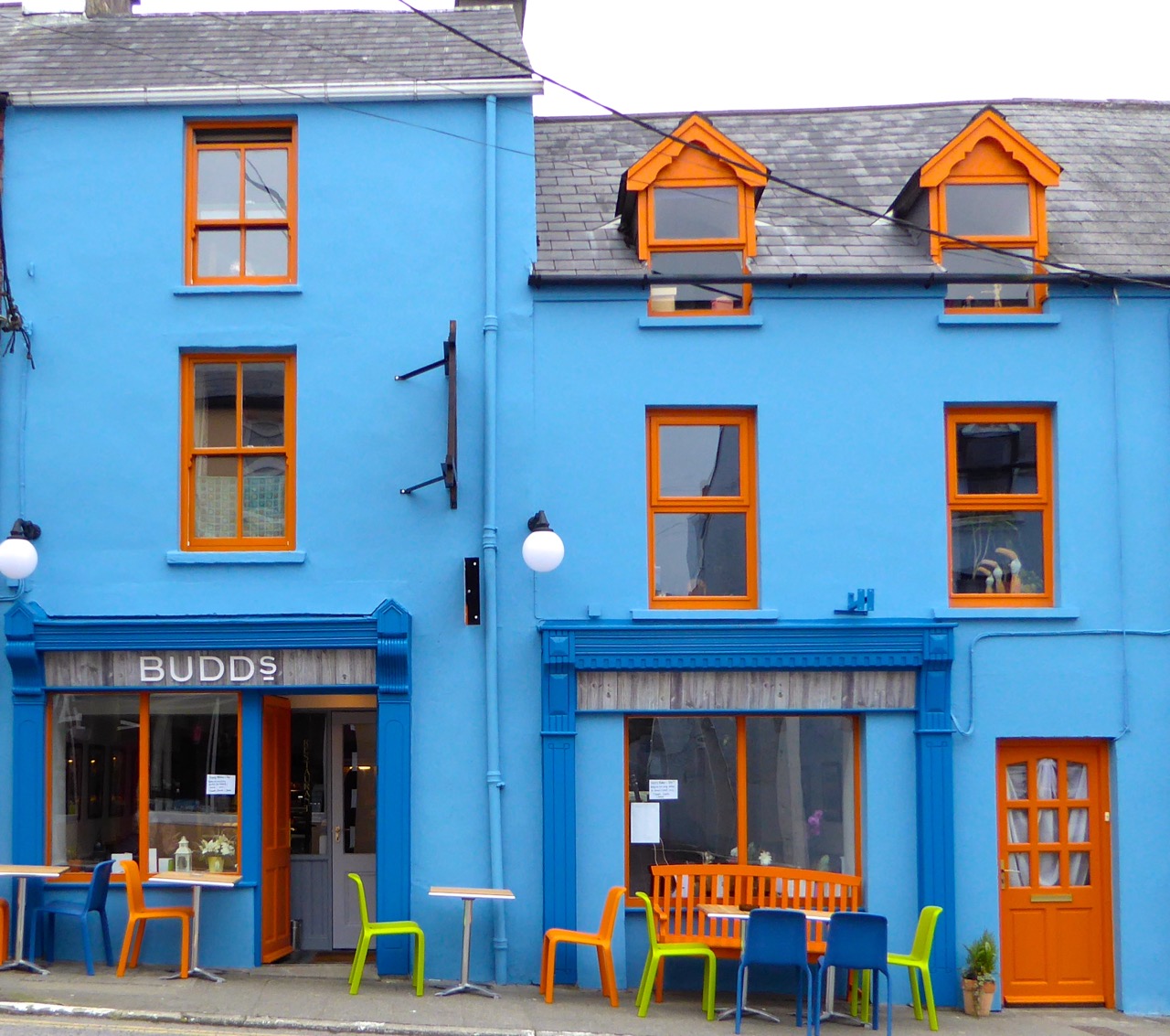
Our expedition began after a great breakfast in Budds – Ballydehob’s newest eating venue: try it out – it has an attractive cheerful atmosphere and the food is excellent. After this sustenance we set out to explore – for us – uncharted territory. Did we travel miles out into the wild hills of West Cork to find these remarkable pieces of archaeology? No, we walked a few metres down the road…

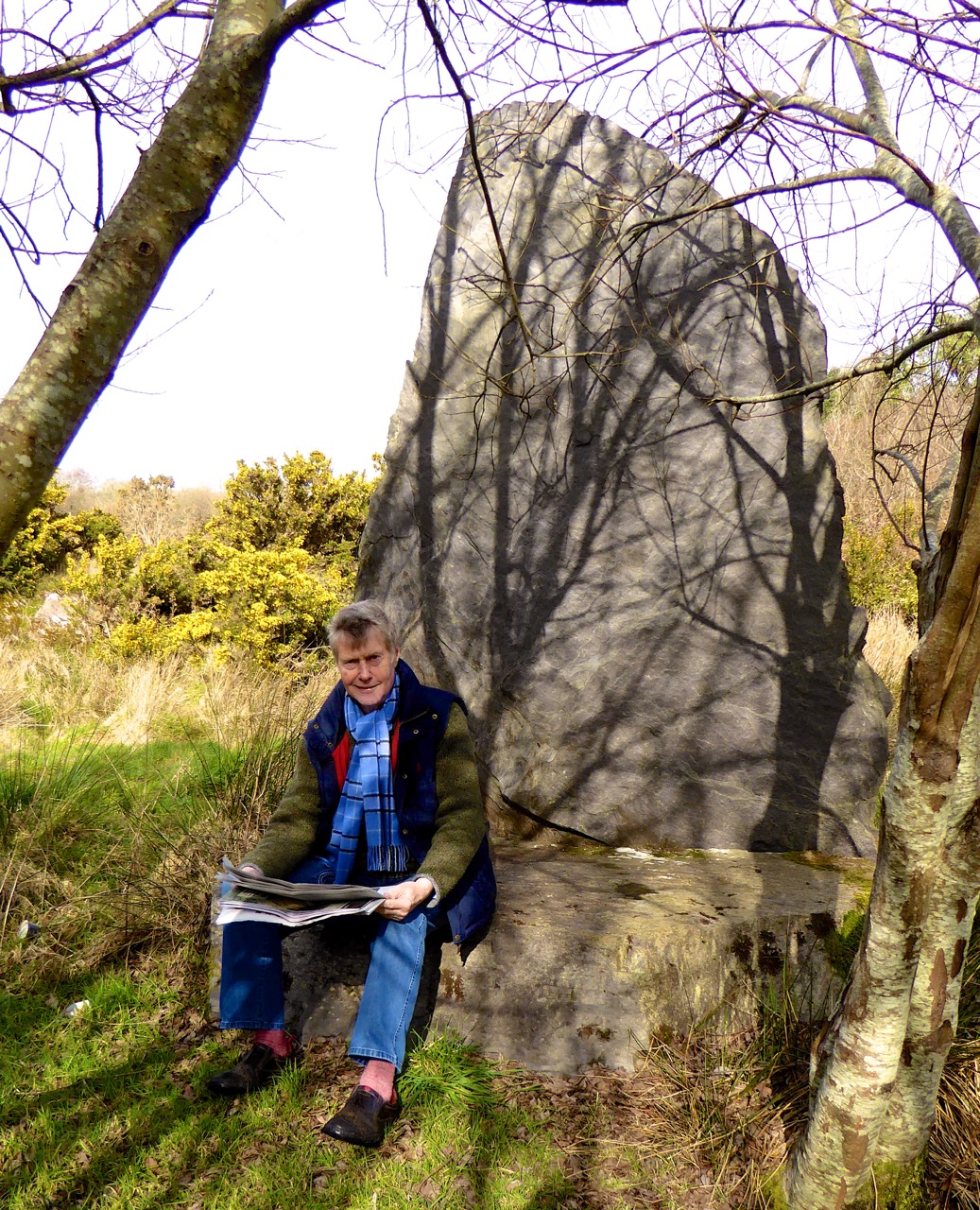
Time for the weekend paper - Robert takes to the Druid's Chair

Time for the weekend paper – Robert takes to the Druid’s Chair

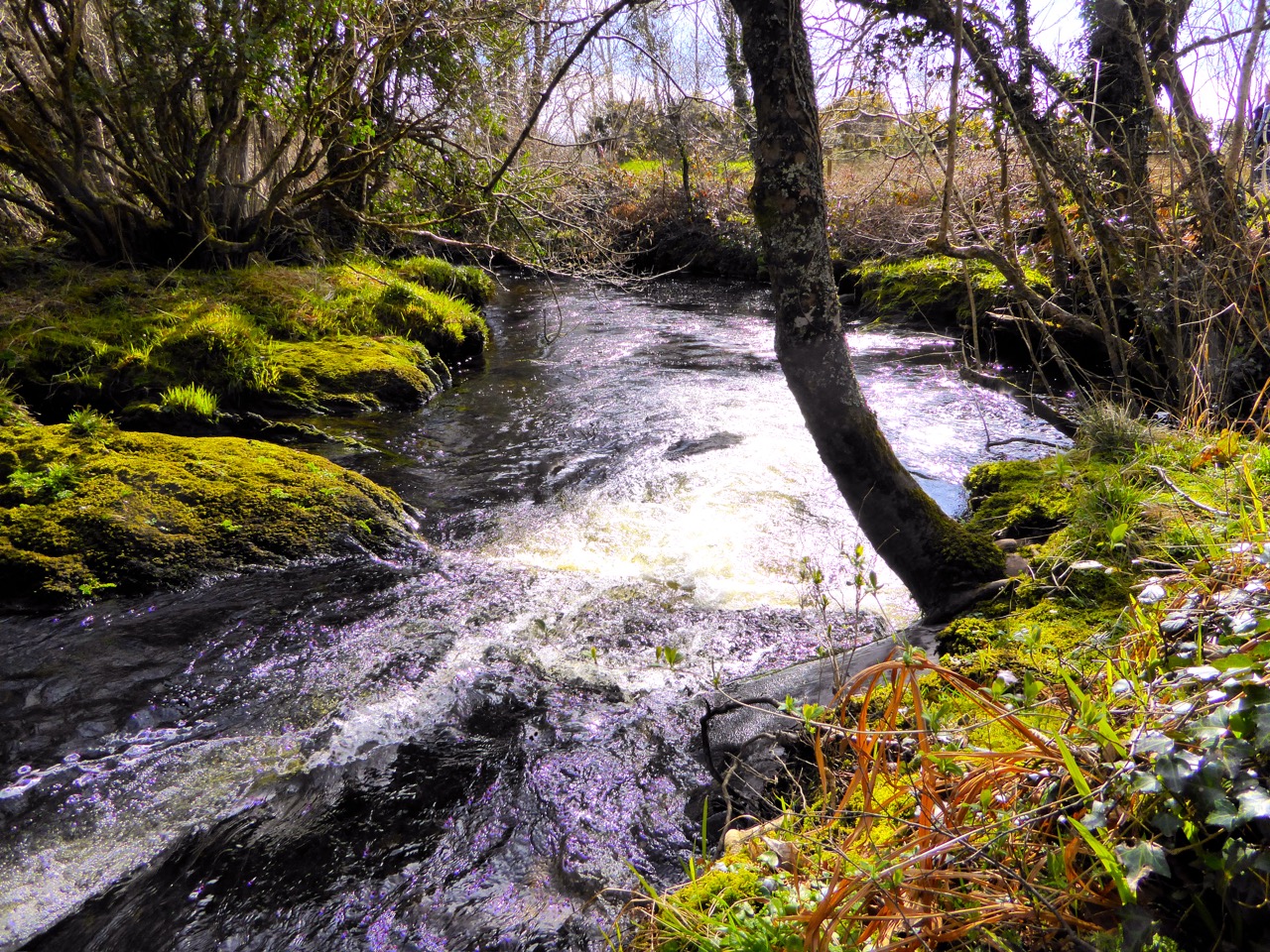
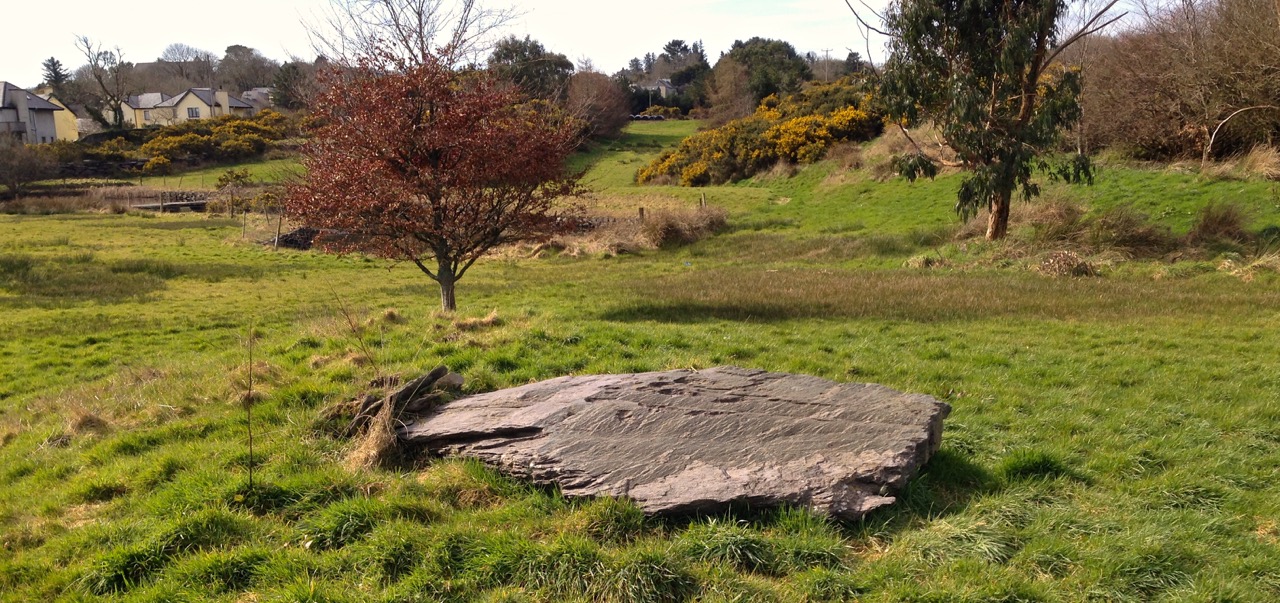
Right behind the main village street in Ballydehob is a spectacular example of twentieth century Irish history: a golf driving range with a prehistoric theme!

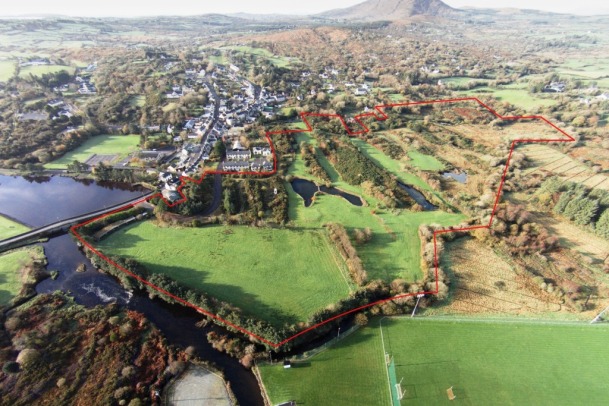
Aerial view of the site

Aerial view of the site

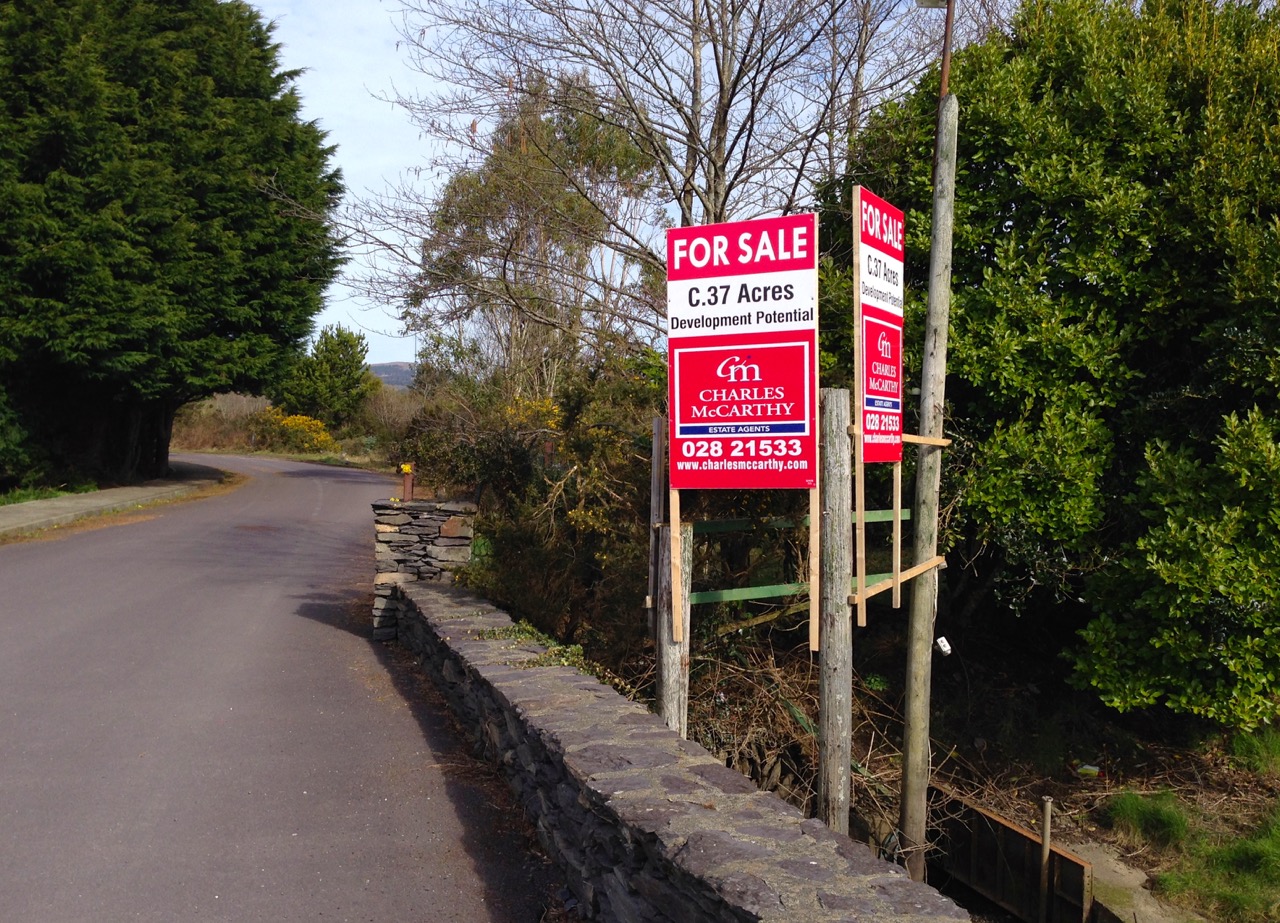
Ballydehob’s Golf enterprise came with the Celtic Tiger – and went when the Tiger collapsed. It’s now a site looking for a buyer – you could have it!

for sale

But we do hope that if someone does buy the site, then they keep all the features: the winding paths by the river, the parkland which feels so rural and secluded, yet is within a stone’s throw of the main N71 highway – and all the New Archaeology...

Riverside Walk...

Riverside Walk…

Boulder Burial...

Boulder Burial…

Circle within an 'ancient grove'...

Circle within an ‘ancient grove’…

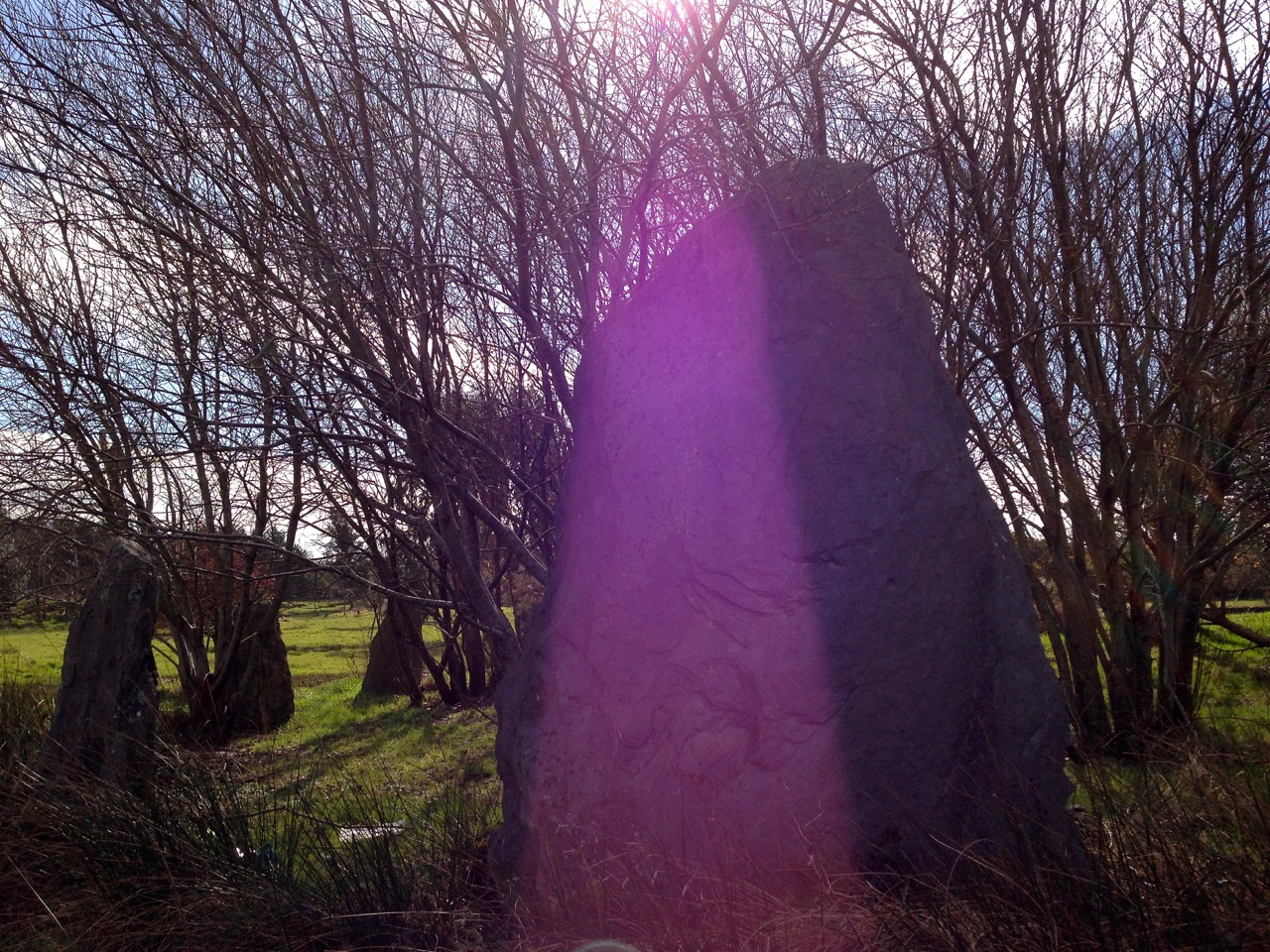
Megalith, enjoying a trick of the sun...

Megalith, enjoying a trick of the sun…

The unfortunate demise of the West Cork Golf Academy has left Ballydehob with an unofficial ‘town park’ – a very pleasant place to walk on a balmy spring morning. If only there was a way that this could become a permanent amenity for the community. But the land has a value and – presumably – potential for some worthwhile development. Who knows what the future holds? Meanwhile, we enjoyed our chance discovery of New Archaeology right on our doorstep!

PS – since publishing this post earlier today, I realise from comments received that some readers have been puzzled by it: rest assured that all this ‘new’ archaeology dates from the twentieth century – and was constructed as part of the golf project! They made such a good job of it that it could just prove very confusing for archaeologists of the future…

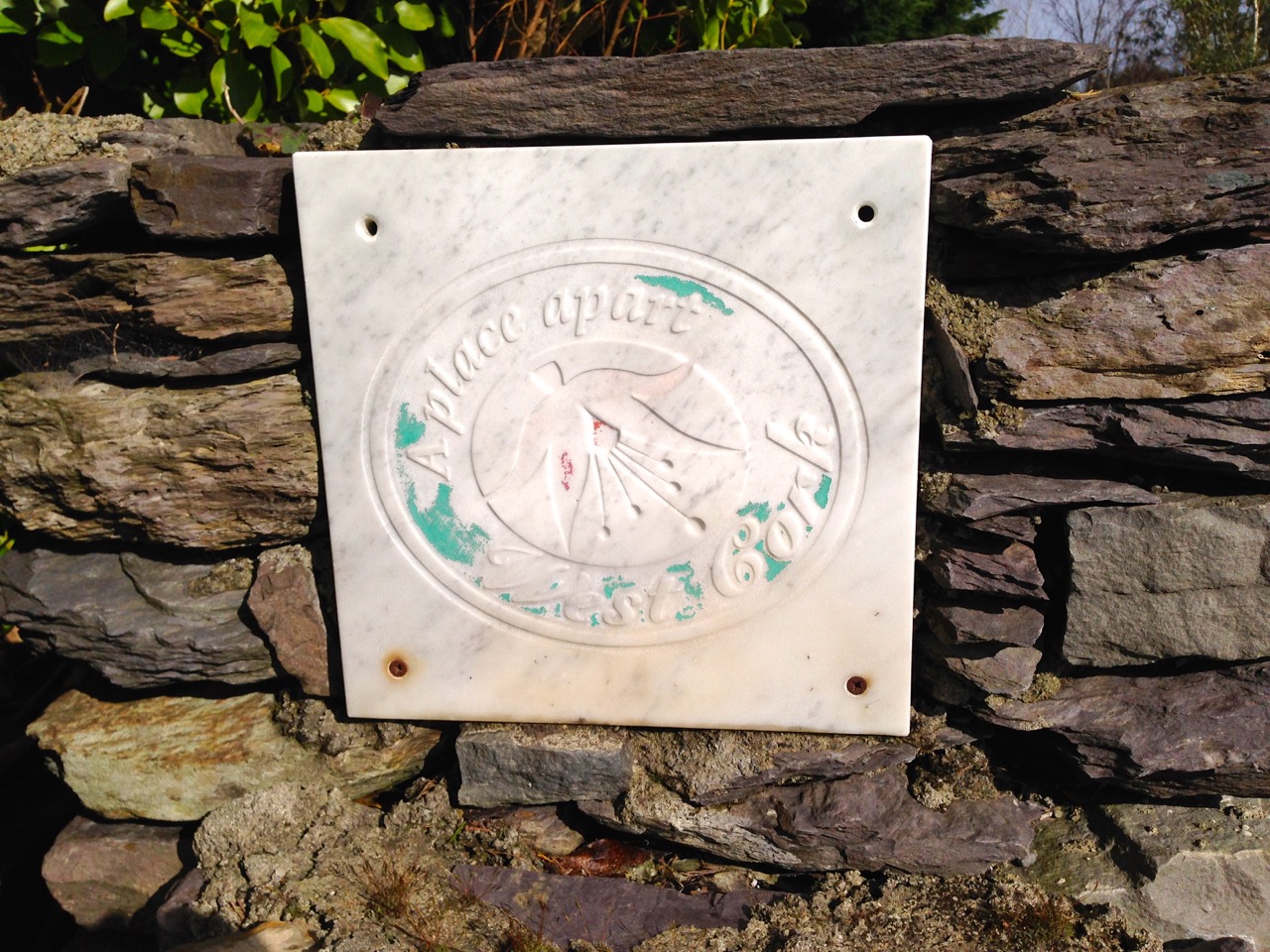
A Place Apart certainly - the Fuscia Brand labelling dating from better times

A Place Apart certainly – the Fuschia Brand labelling dating from vanished times

Finola enjoys the spirit of 'A Place Apart'

Finola enjoys the spirit of ‘A Place Apart’


Field Trip – with Jack Roberts

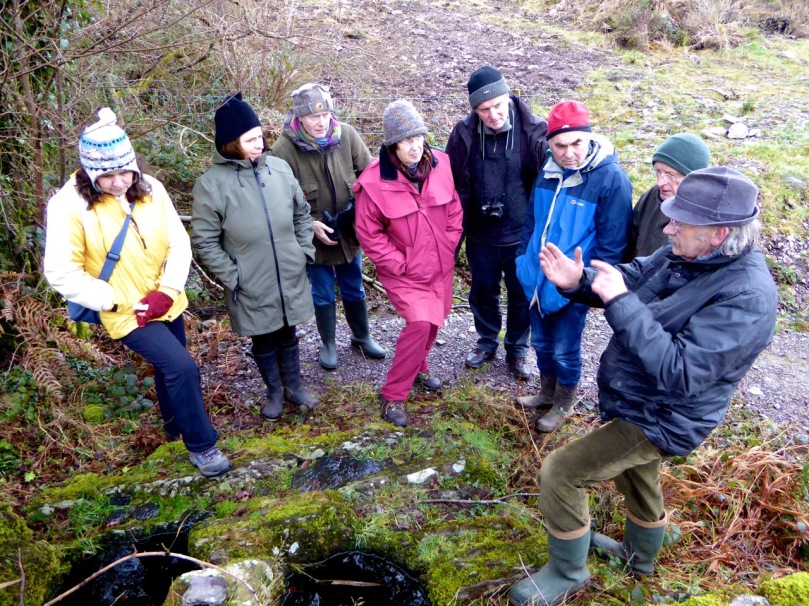
Jack Roberts expounds on holy wells

Jack Roberts expounds on holy wells

Anybody interested in exploring West Cork will have copies of Jack Robert’s books in their libraries. We have several but until this weekend we hadn’t really known the man himself. We were fortunate to be invited along on a field trip organised by old friends of his, on the occasion of one of his visits to West Cork.

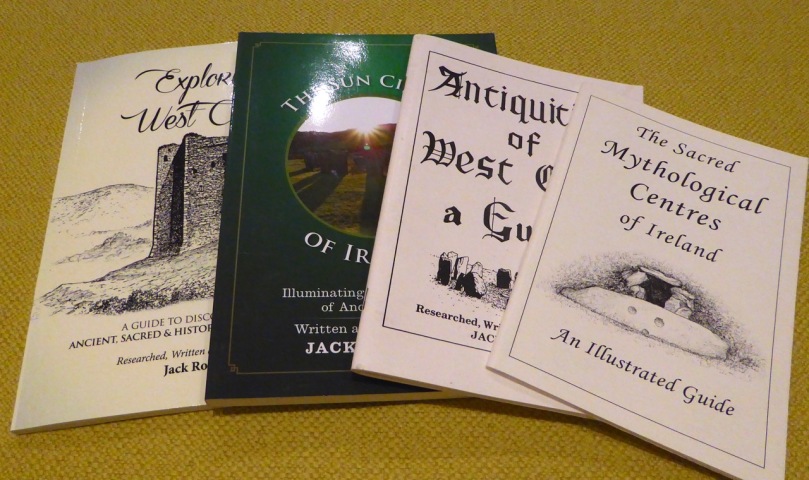
Some of Jack's books

Some of Jack’s books

Jack arrived from England in 1975 as a fisherman. As he describes it, he was immediately intrigued with the landscape and the deep sense of history he saw all around him. He worked with Martin Brennan at Newgrange and Loughcrew, learning about the ancient monuments and observing first hand the astronomical alignments of passage graves and stone circles. Eventually returning to West Cork, he started to write guides to the ancient and spiritual sites of the area, illustrating them with his own charming and highly accurate pen and ink drawings. Well researched, delightfully succinct and displaying his vast knowledge of the area, these guides came to be prized possessions of those who purchased them. They’re still available, from Jack’s website, from Whyte Books in Schull and other bookstores, and on Amazon.

Jack lives in Galway now and has branched out. His latest book, The Sun Circles of Ireland, covers the whole country, as does his research into Sheela-na-Gigs. He makes jewellery based on prehistoric, Celtic and Early Christian motifs and has a stall in the Galway market.

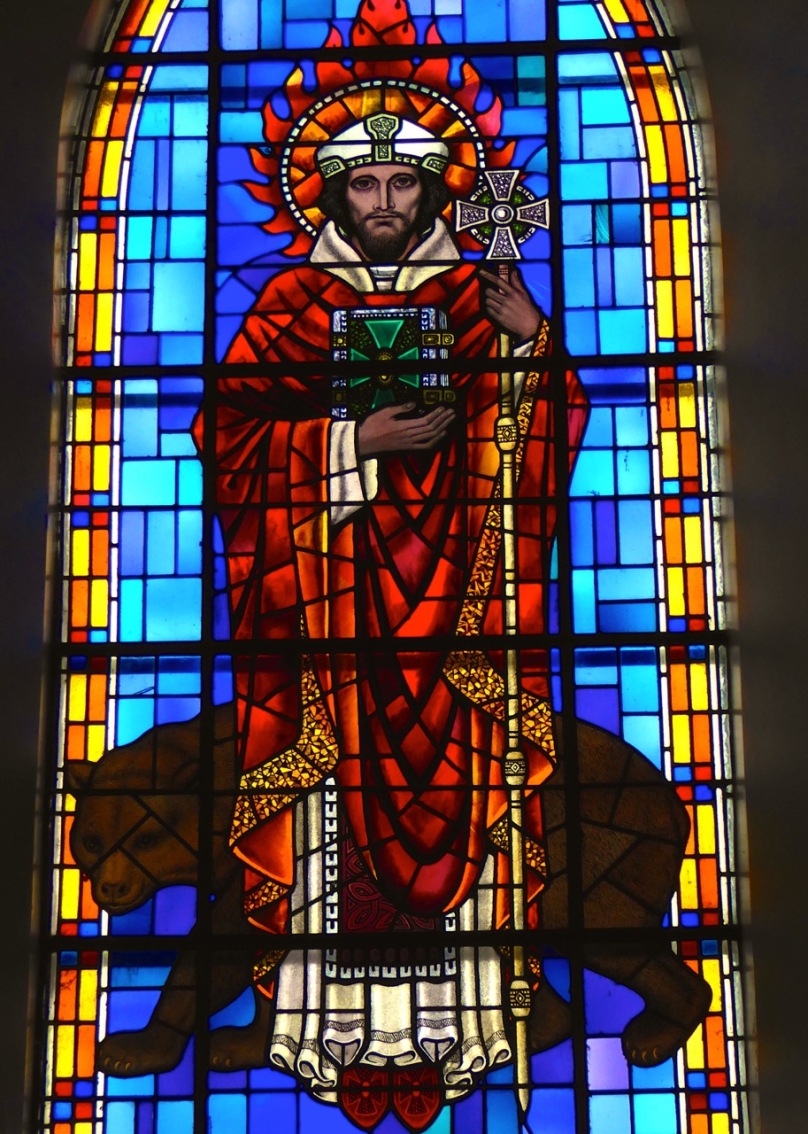
Our field trip took us into parts of West Cork unfamiliar to Robert and me, to visit a wide variety of monuments. In Inchigeelagh we stopped to examine a strange stone built into a grotto in the grounds of the Catholic church. Listed under Rock Art in the National Monuments site inventory, it is an anomalous piece of carving that is as mysterious as it is interesting. Of course Robert and I can never resist a peek inside churches, and this one contained some very fine stained glass. Lots of lovely windows but my favourite was this one of St Columbanus, an early Irish missionary who founded monastic houses throughout Europe. One of his miracles was to tame a bear – and somehow he ended up as the patron saint of motorcyclists! 

Saint Columbanus

Saint Columbanus

A couple of holy wells followed, the first dedicated to St Lachtan had two stone bowls and a large concrete cross. The second was the complete opposite – a quiet little spot in a wood with a simple bullaun stone (more about bullaun stones in a future post), white quartz pebbles, and two cups to use for drinking. It was part of an ancient monastic site of which little remains.

We stopped to walk over an old clapper bridge, recently restored, and tramped through a field to where a standing stone loomed over us, standing guard in the landscape, and ended the day with a visit to a cross slab.

Restored clapper bridge

Restored clapper bridge

The next day Jack came to us for lunch followed by a trip to the Derreennaclogh and the Ballybane West rock art sites. At Derreennaclogh Gary, the discoverer of this spectacular site, showed us the lines of ancient field fences he is tracing through the bog. 

While Derreennaclogh was new to Jack, he had visited the Ballybane site many times and had cleared away scrub there, to reveal hitherto hidden carvings. We were particularly interested to hear this, as my drawings of the site, done in the early 70s, were missing some of the motifs that are now obvious and we had long wondered why.

Jack shows us where he cleared away the undergrowth

Jack shows us where he cleared away the undergrowth

It’s always a treat to put a face to a well-known name and with Jack it was a rare privilege. We enjoyed very much continuing our education into the wonders of West Cork, through his eyes. We highly recommend his books to anyone who wants to do the same.

Jack Roberts, author, artist, and one man encyclopedia of West Cork

Jack Roberts, author, artist, and one man encyclopedia of West Cork

Celtic Cousins

Jonathan Ball (right) - Architect, Co-Founder of the Eden Project - and Chorus Master

Jonathan Ball (right) – Architect, Co-Founder of the Eden Project – and Chorus Master

This weekend, West Cork was invaded by Celtic Cousins from Cornwall! By longstanding tradition, a group from Bude and its environs visits Courtmacsherry and the area surrounding it to join Irish neighbours in a feast of music and song: the hospitality is reciprocated when the Irish contingent goes over to Cornwall. The reason? The lifeboat based in Courtmacsherry has long been ‘twinned’ with the lifeboat based in Bude.

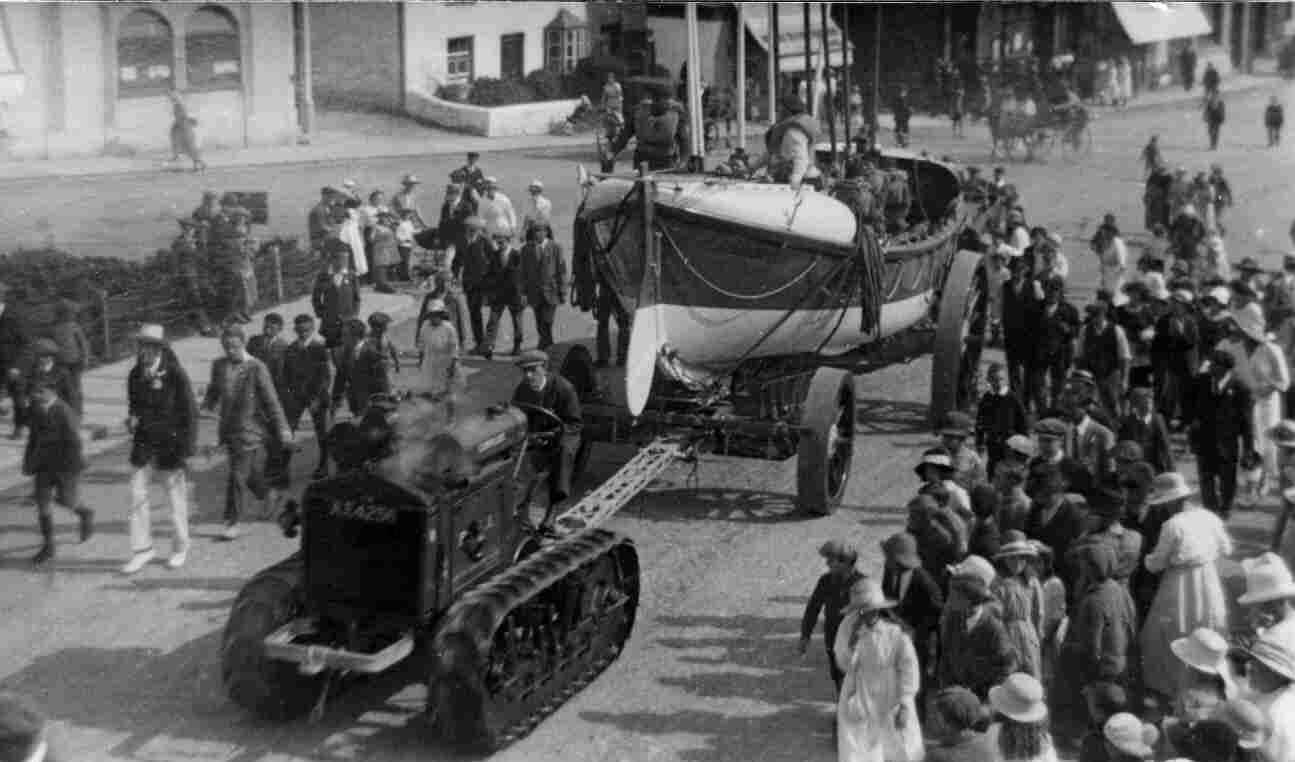
Images from the past: Bude’s Lifeboat in earlier years

Images from the past: Bude’s Lifeboat in earlier years (historic images courtesy of Bude RNLI)

The event is becoming an annual treat for us – because I worked in Bude for many years, with the Jonathan Ball Practice. The group that comes over is overseen by Jonathan himself, who won’t mind me saying that he is a Cornishman born and bred who believes that Bude is the centre of the Universe. I know, of course, that it’s actually West Cork that’s the centre of the Universe – so we have to have an annual get-together to sort out our differences…

logo-rnli

First, a bit of background. There are 236 lifeboat stations around the coasts of these islands, and 43 of these are in Ireland. The RNLI has operated life saving facilities in the Republic and the UK since 1824, when the National Institution for the Preservation of Life from Shipwreck was founded as a charity by Sir William Hillary, a soldier who lived on the Isle of Man. The Institution today is supported almost entirely by donations and legacies, and the crews are unpaid volunteers.

Bude, on the north coast of Cornwall, had its first lifeboat as early as 1837. This boat was presented to the town by King William IV and paid for by the Duchy of Cornwall: the cost was 100 guineas. The lifeboat at Bude was withdrawn in 1923, and not reinstated until 1966. At the same time the Bude Lifeboat Singers came into being: this was conducted by crew member Jonathan Ball, and over the next 25 years was much in demand across Britain and into West Cork, and during that time many thousands of pounds were raised for the RNLI and other charities.

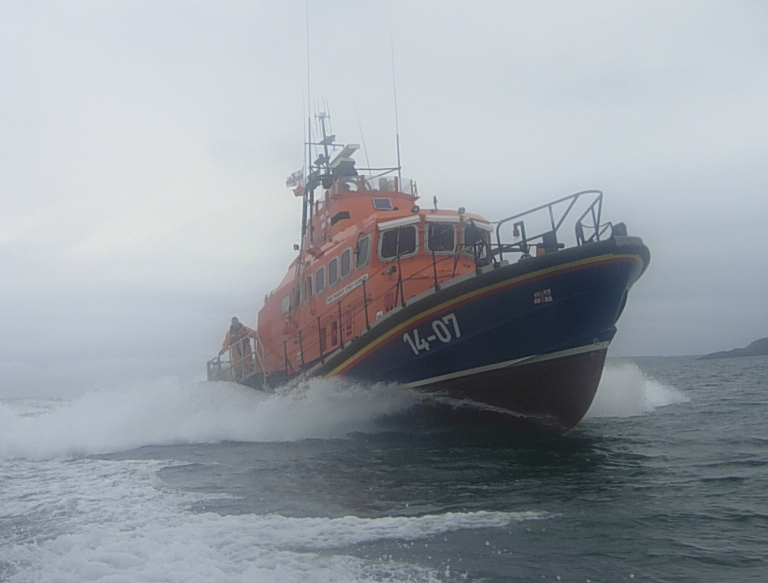
Meanwhile, the lifeboat station at Courtmacsherry was established in 1825 – one of the first to be founded in Ireland – and has been active ever since, its Trent class Lifeboat being on hand at all times to save lives and rescue mariners in trouble. The Trent lifeboats are true all-weather vessels in the RNLI fleet, and are exclusively designed to operate in Europe’s most hostile waters.

Courtmacsherry 'Trent' class Lifeboat: Frederick Storey Cockburn

Courtmacsherry ‘Trent’ Class Lifeboat: Frederick Storey Cockburn

As you know, West Cork is also home to many people steeped in music and tradition, so it was only natural that Bude and Courtmacsherry should get together to share tunes and songs – and hospitality.

four alls

For us the ‘getting together’ happened on Friday, when we travelled up to Sam’s Cross: Michael Collins country. We had to visit his birthplace, of course – have a look at our previous post on this great Irish folk-hero. Collins’ local pub was the Four Alls, and that’s where the singers and musicians settled down for a lively session, joined by some of the pub regulars, who added their own contributions.

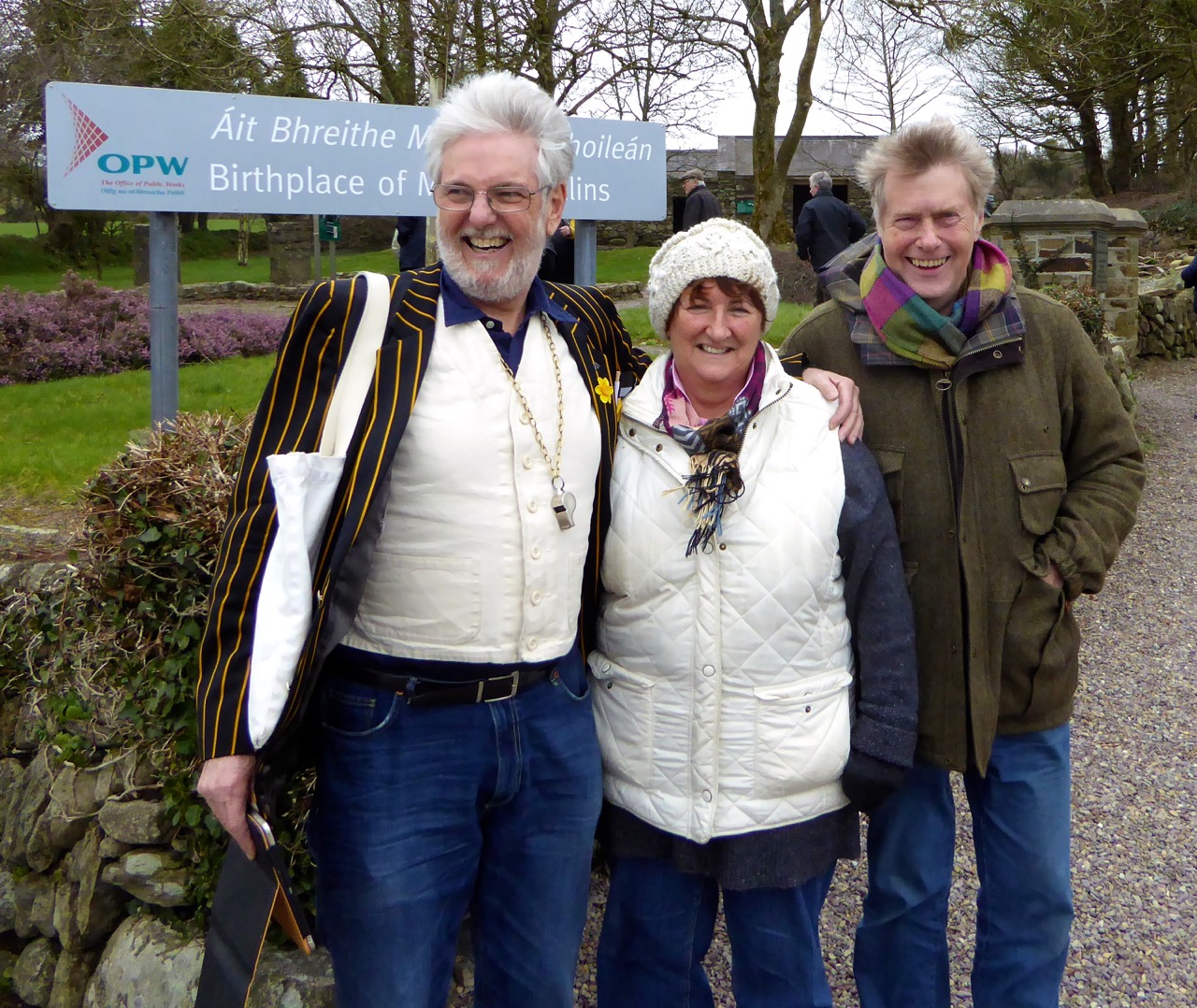
Jonathan, Finola and myself, having a Michael Collins moment...

Jonathan, Finola and myself, having a Michael Collins moment…

Although a little hoarse from the previous night’s revels, Cornwall gave of its best, with Jonathan himself still conducting – 48 years on! West Cork was well represented by Dan O’Donovan and colleagues – former show band members – and the locals. I felt privileged to be allowed to join in with my own European mixture of English / Irish / French dance tunes.

As dusk began to settle, the next venue beckoned, and we became part of a convoy snaking its way through the most remote parts of County Cork: we had no idea where we would end up! When we finally arrived at Hickey’s Bar in the fine village of Aherla we were completely disorientated.

hickeys

But at Hickey’s we were welcomed with open arms and led into a back room full to the brim with musicians! I counted well over twenty from the Irish contingent and, as the evening progressed into night and then morning, more locals came in to add to the entertainment with songs and recitations.

Somehow, we found our way back to Nead an Iolair – it was a drive of an hour and a half – exhausted, but thoroughly elevated by all the music and conviviality. Only in Ireland (and Cornwall) could you find such a sharing: we are all Celtic Cousins, of course…

RNLI1