West Cork Winter Walk

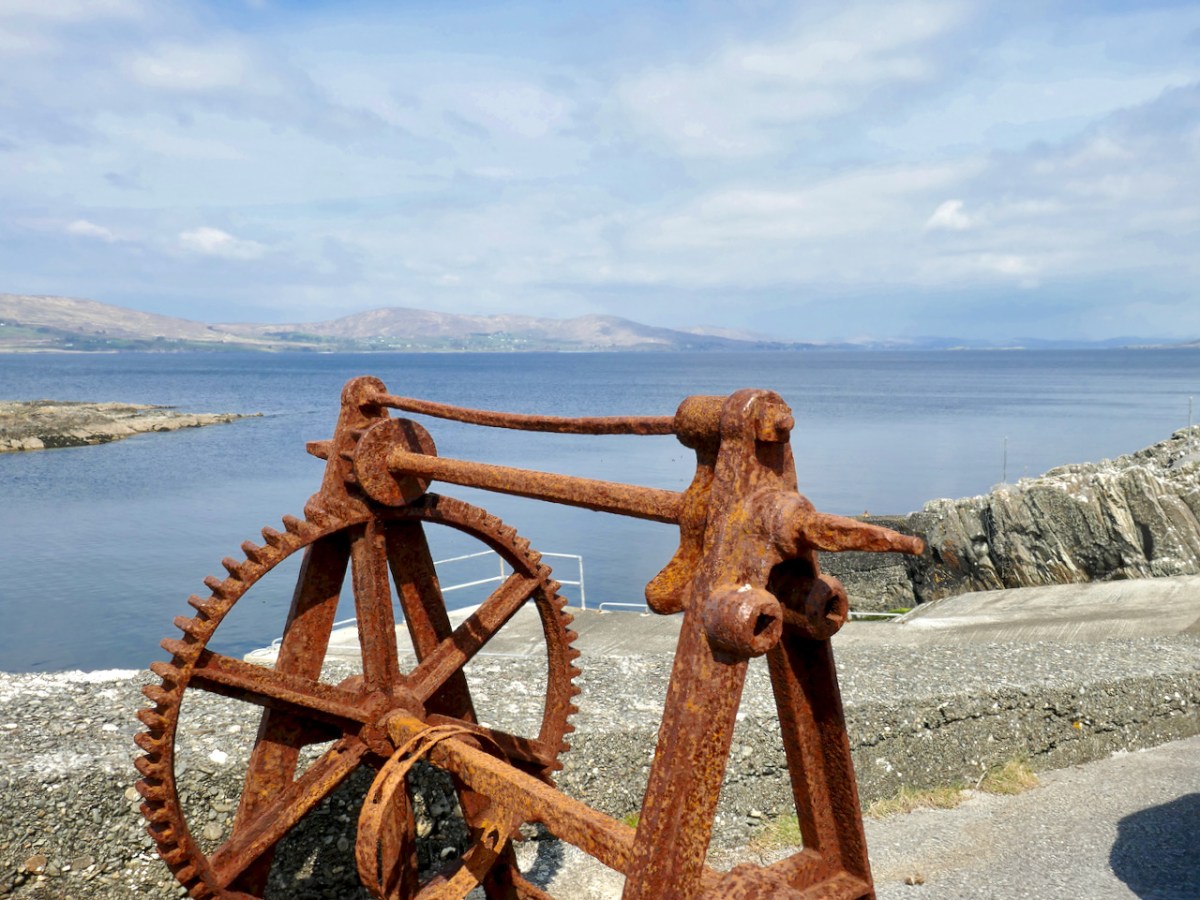
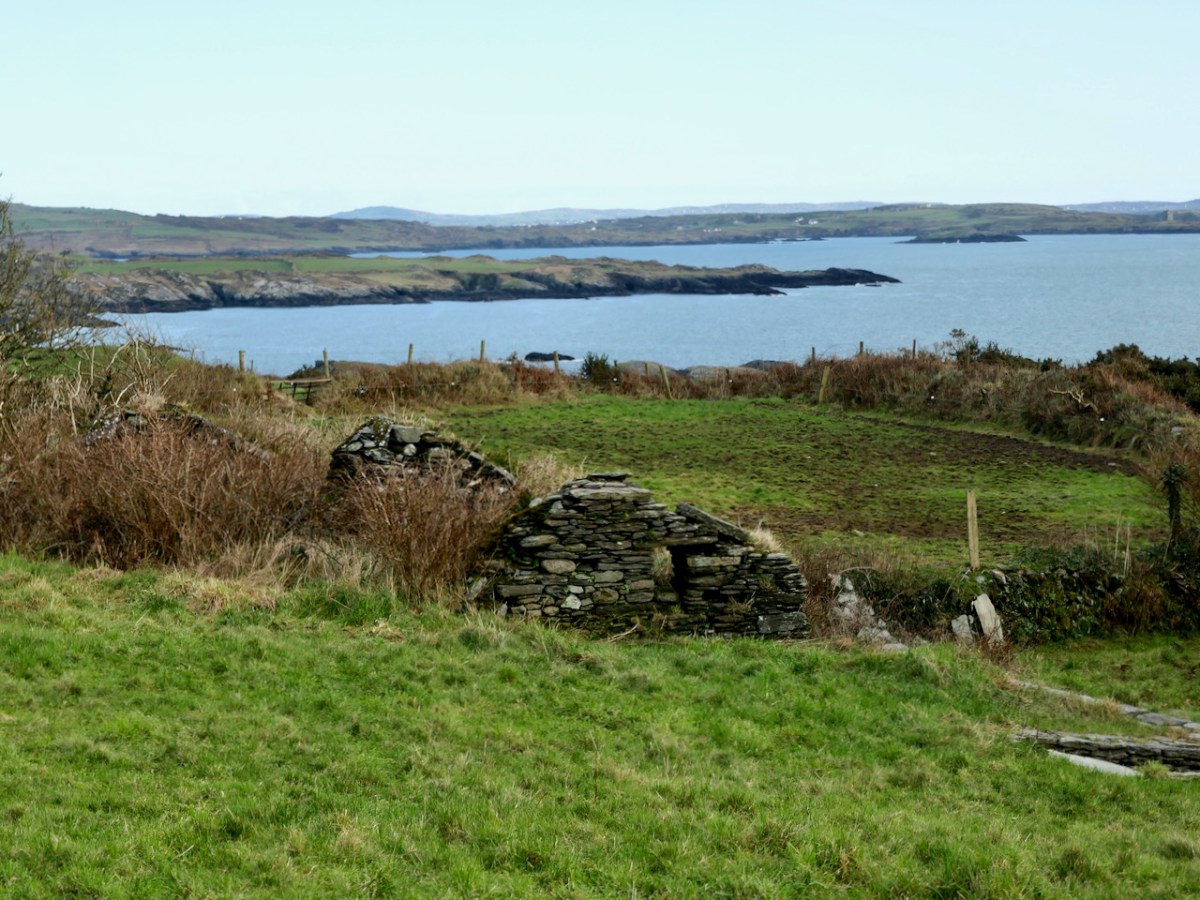
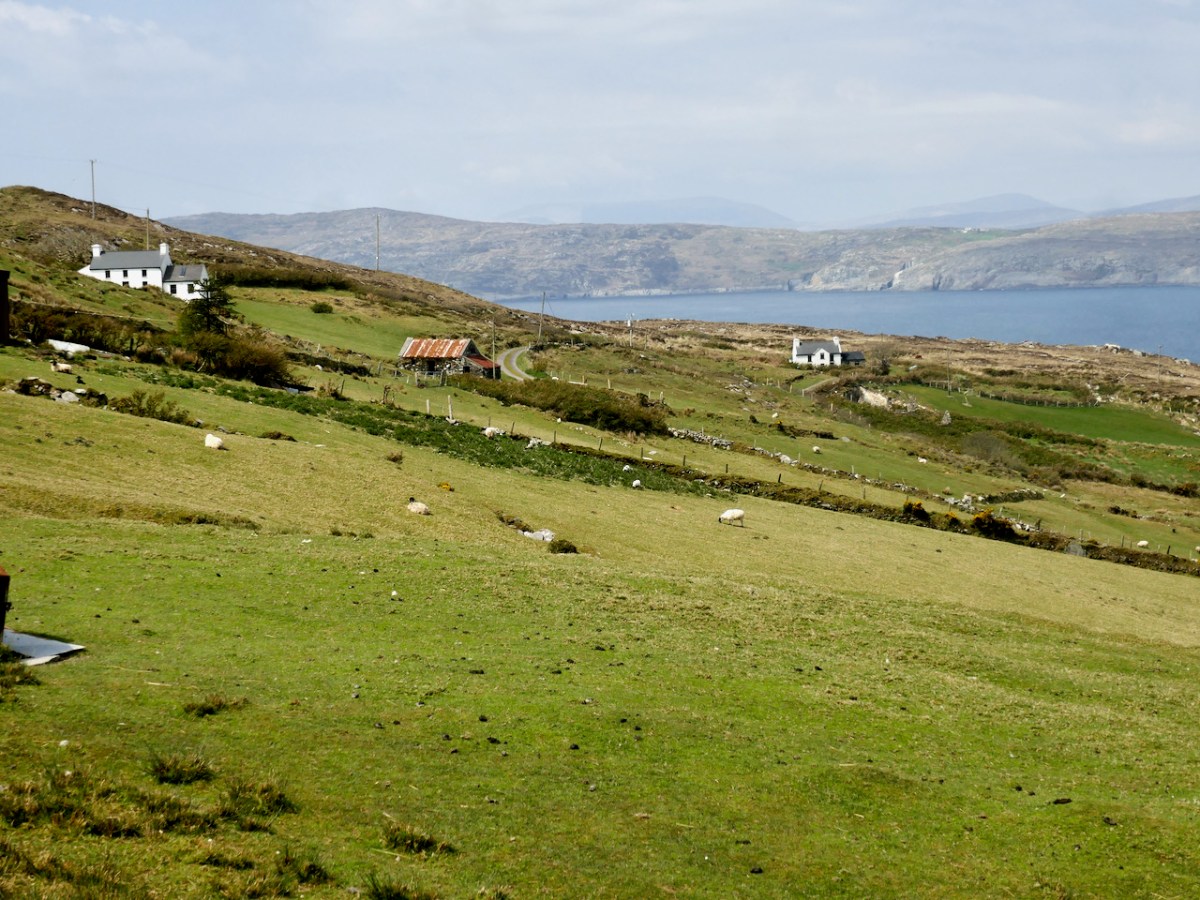
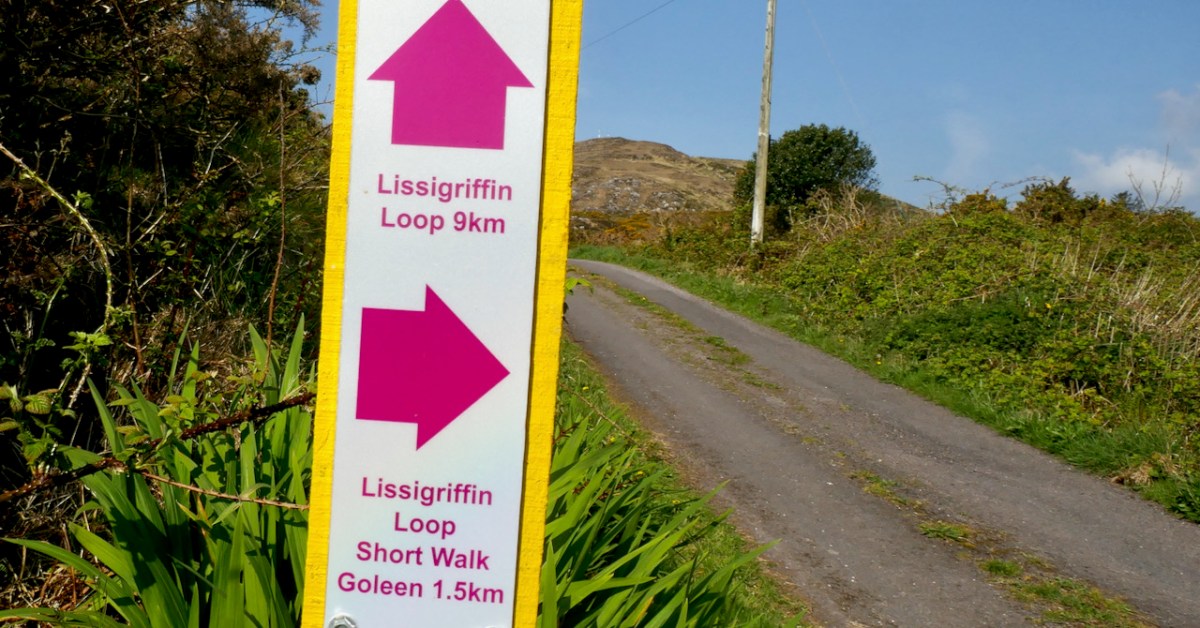
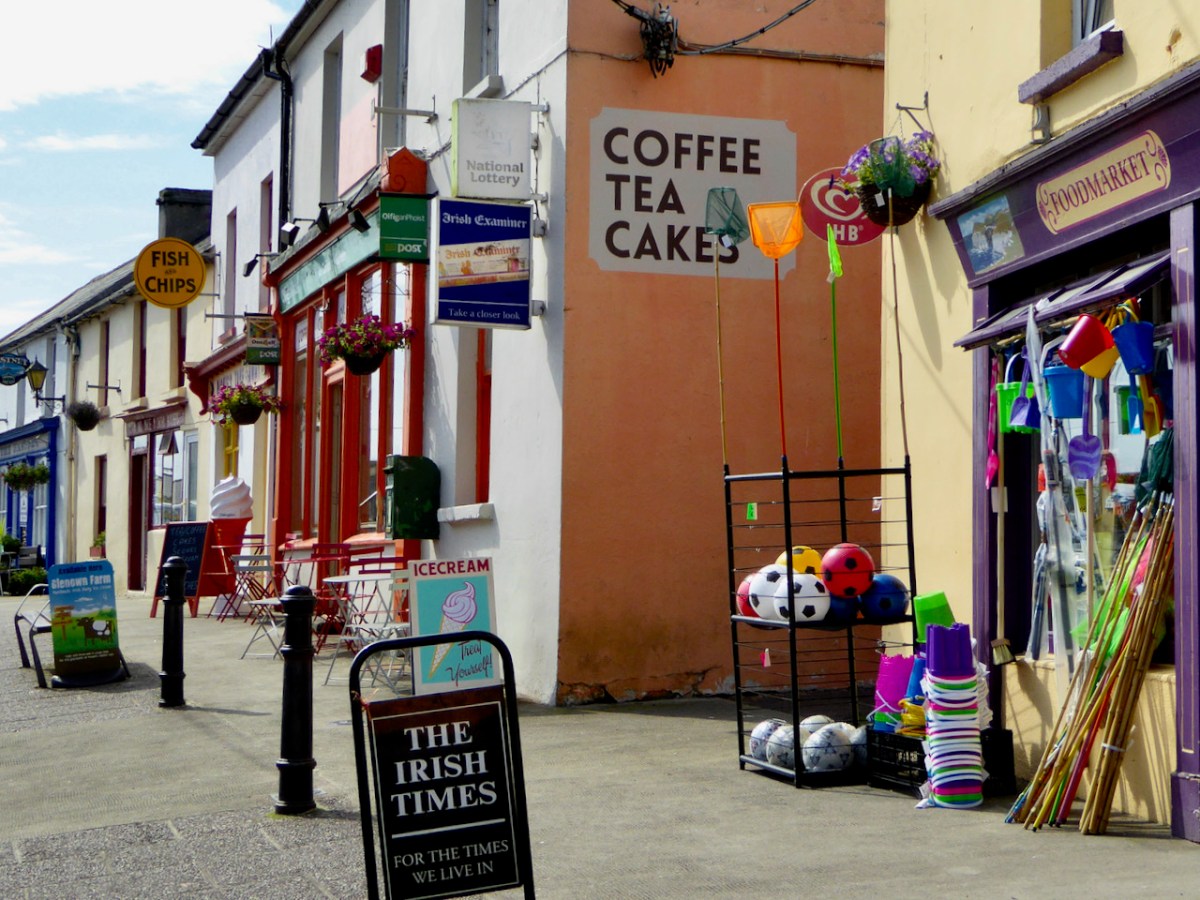
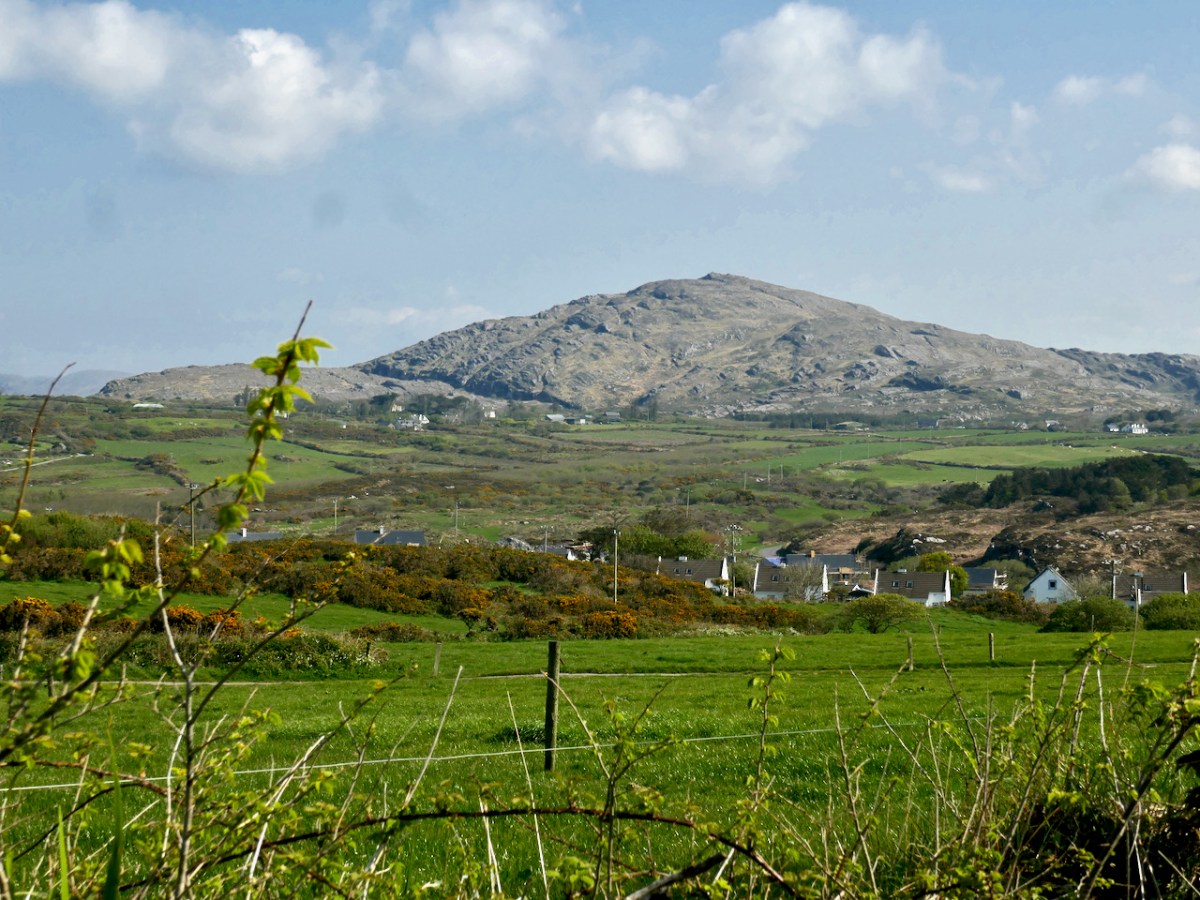
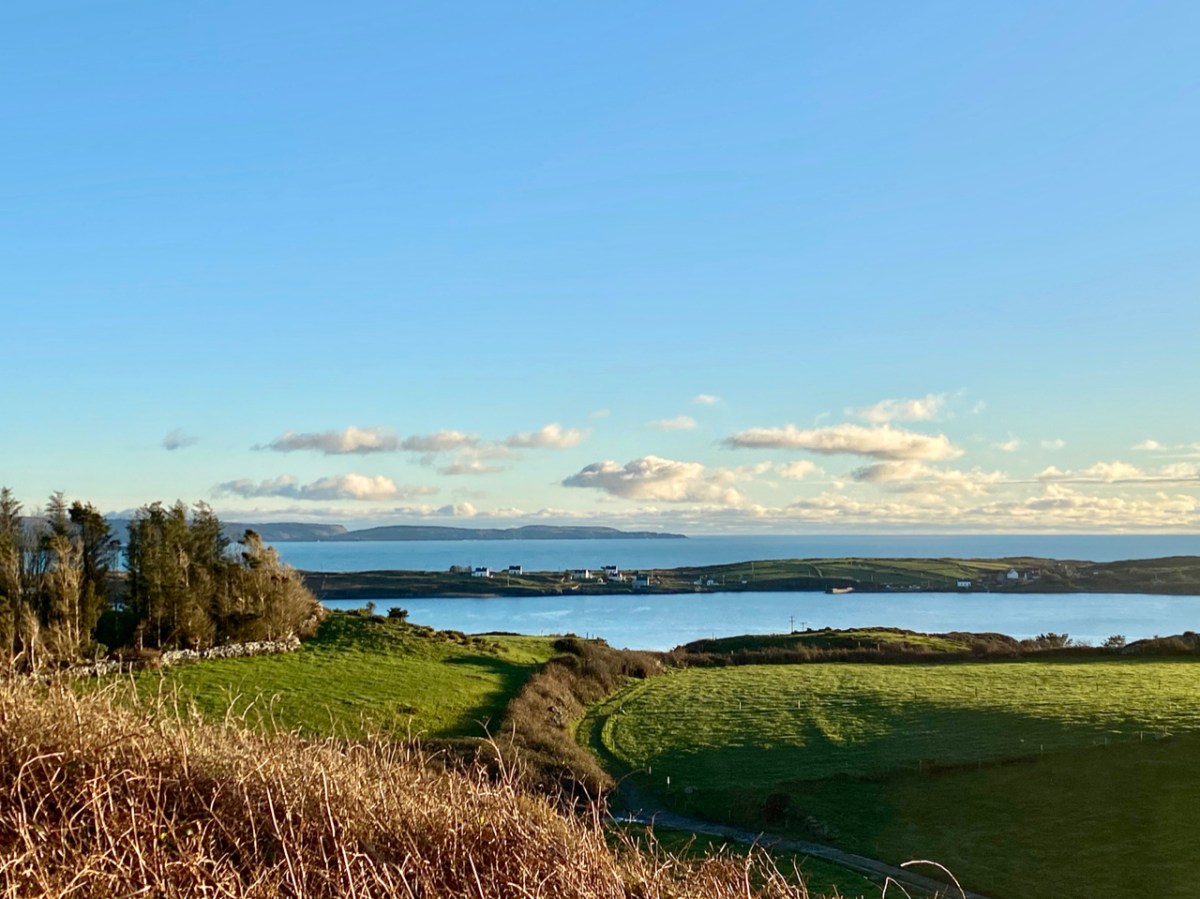
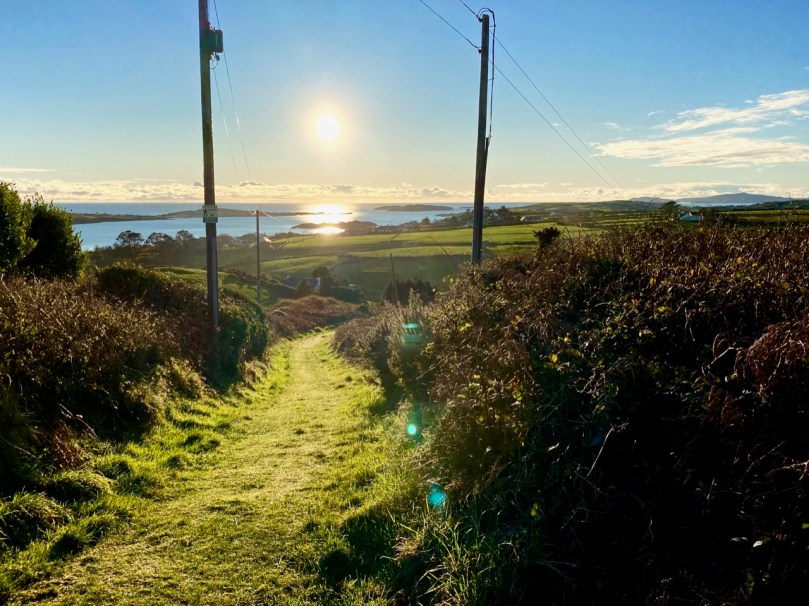
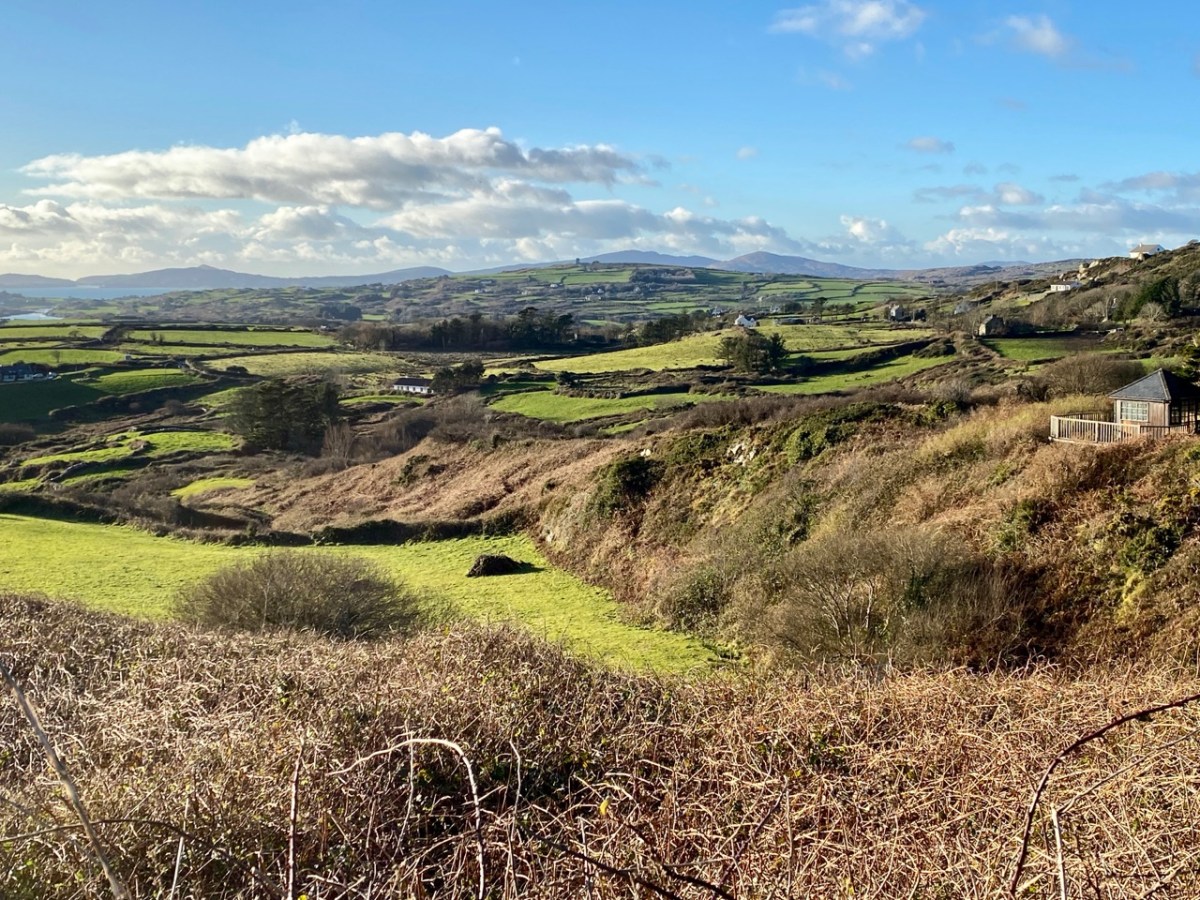
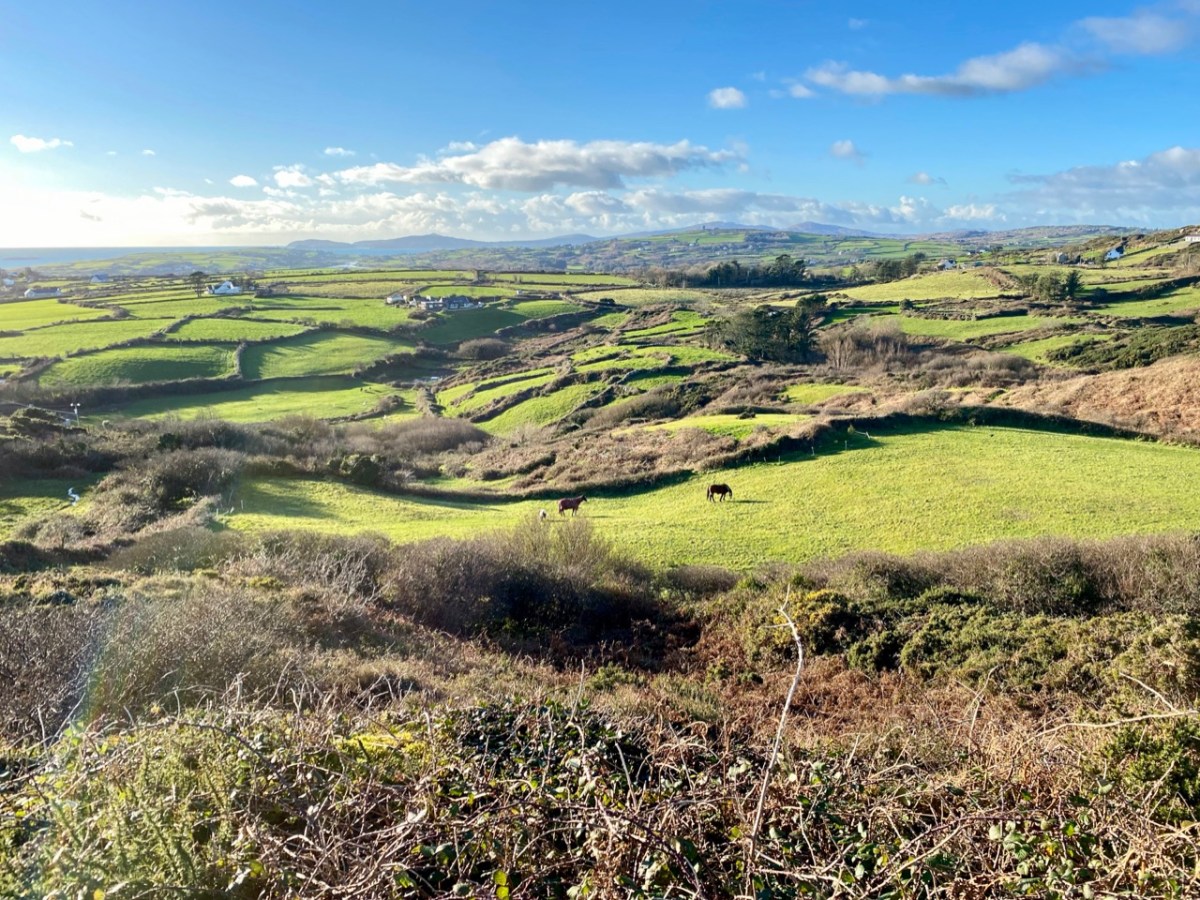
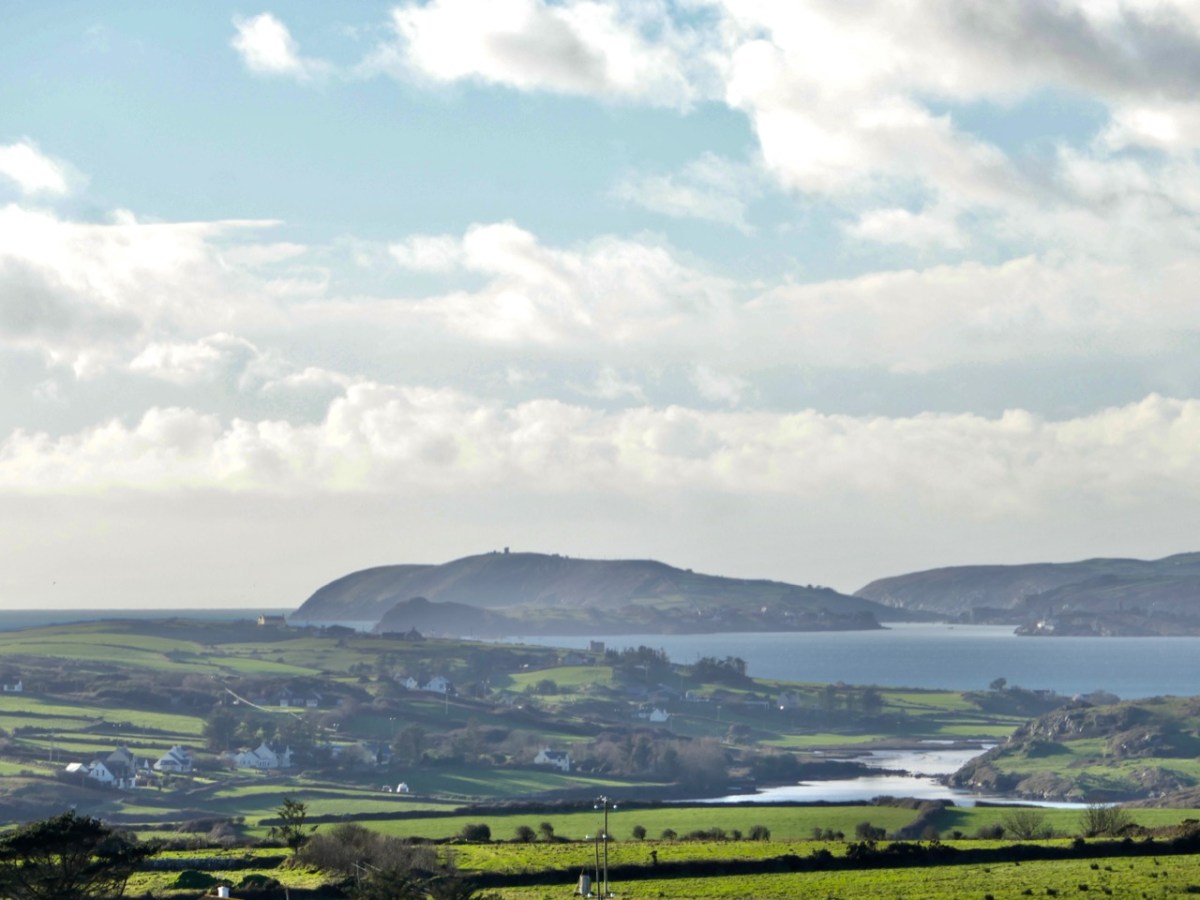
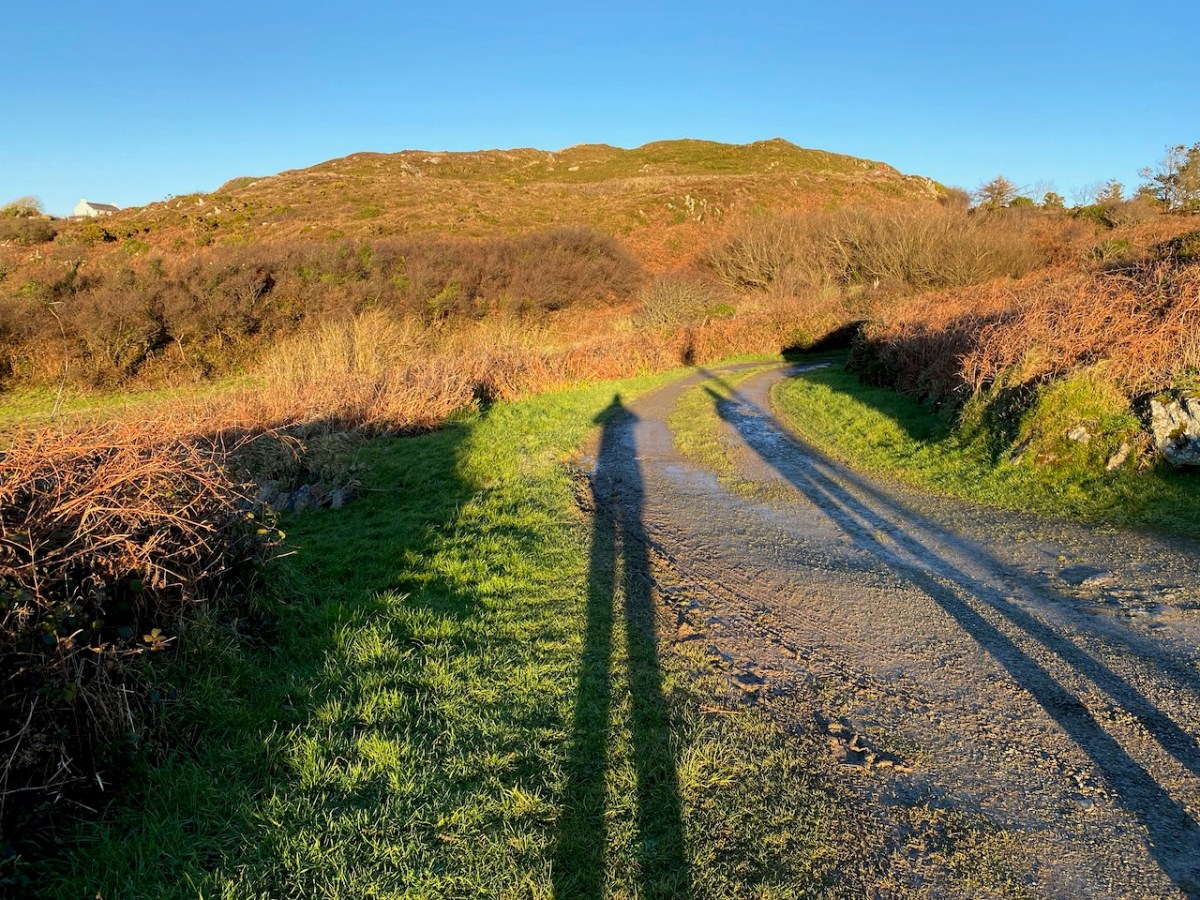
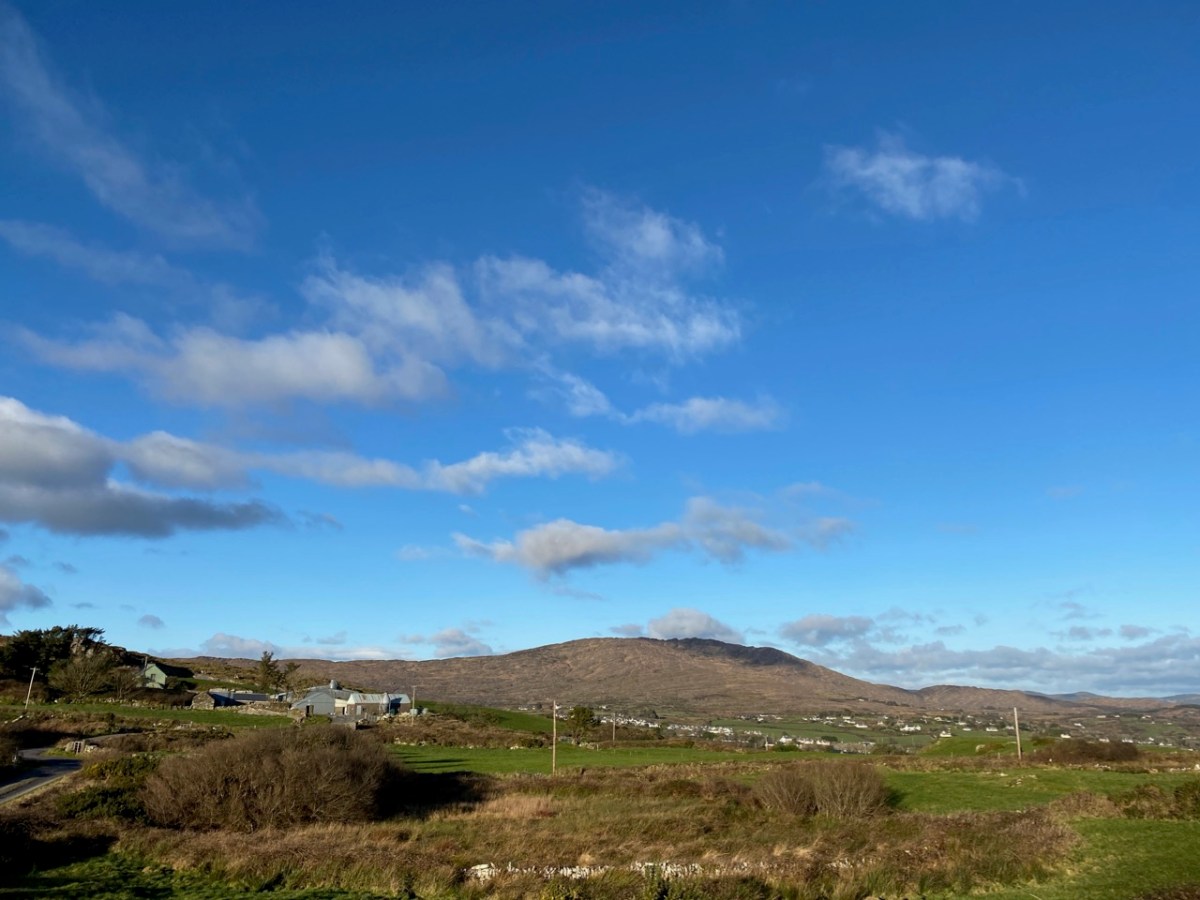
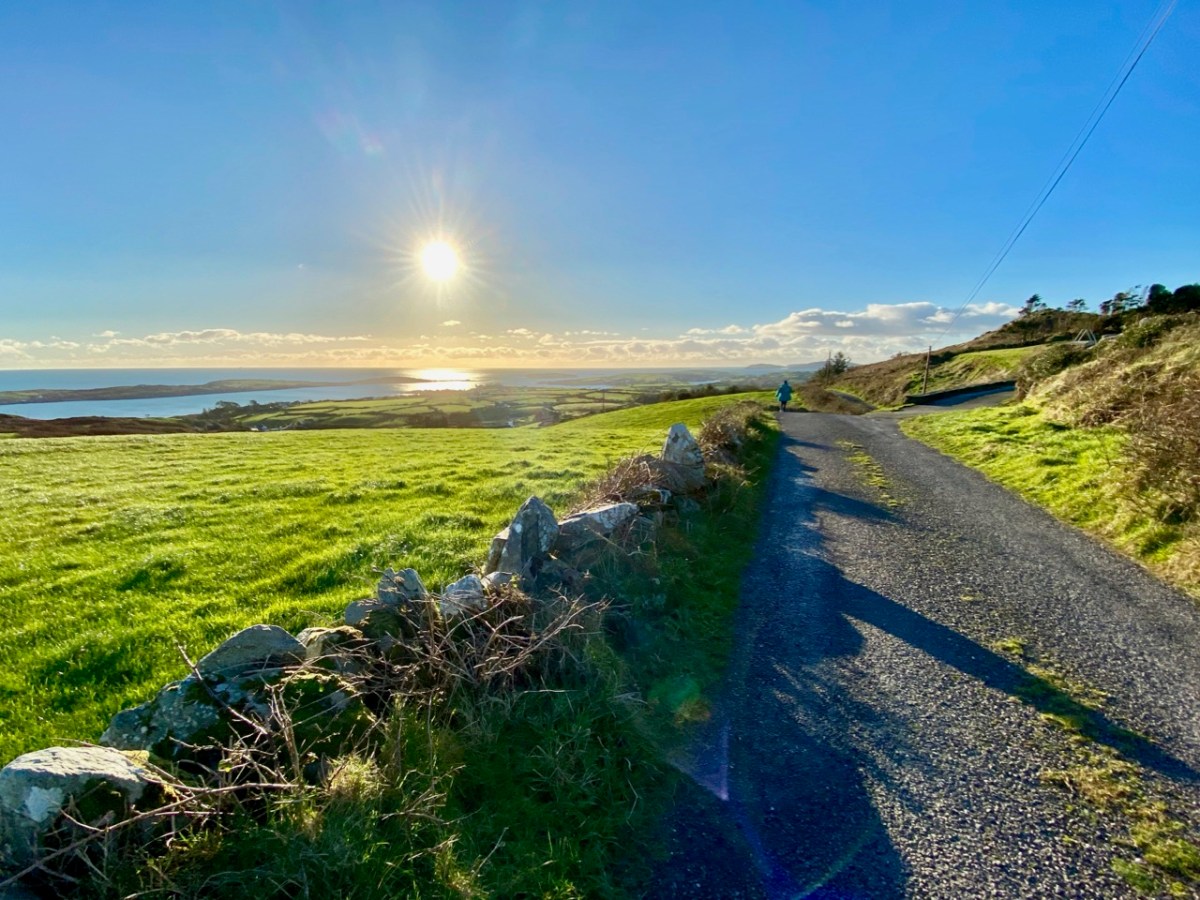
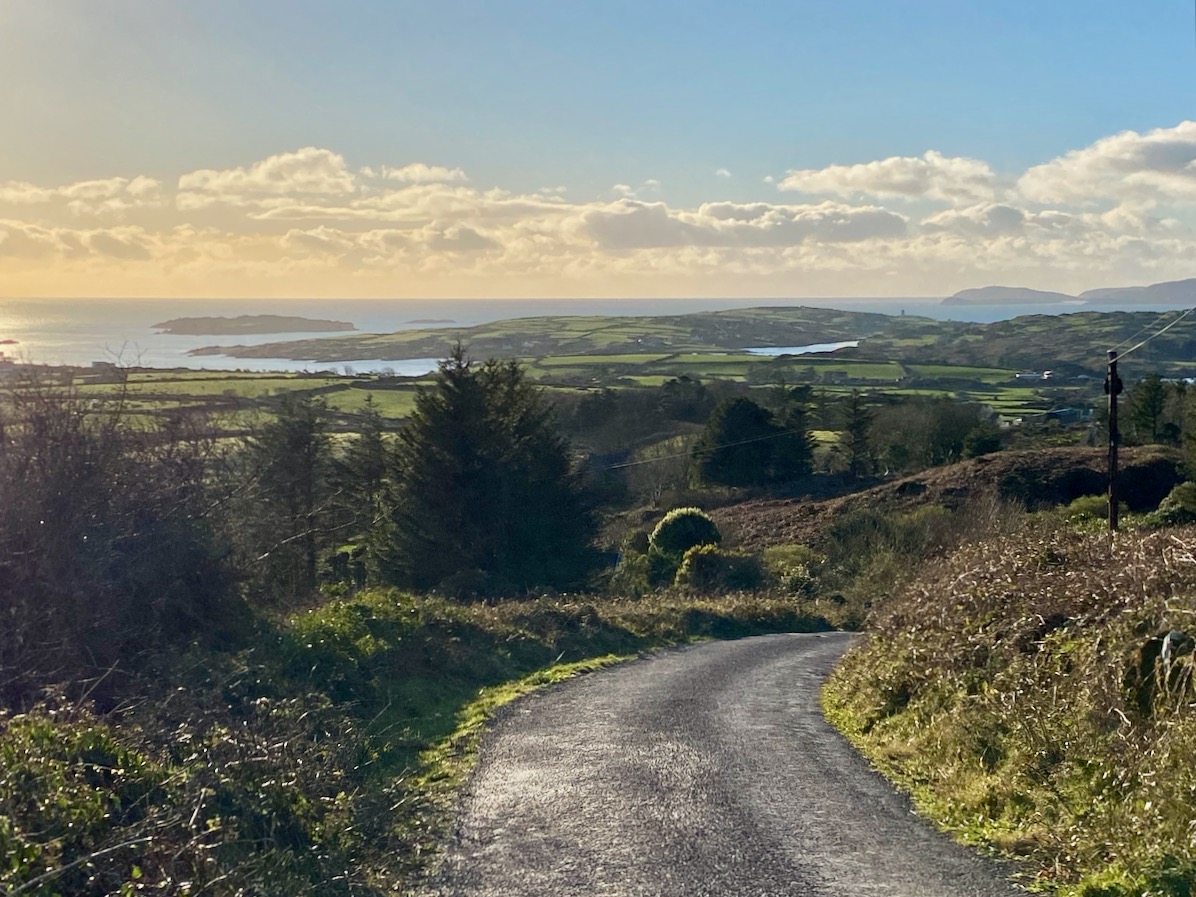
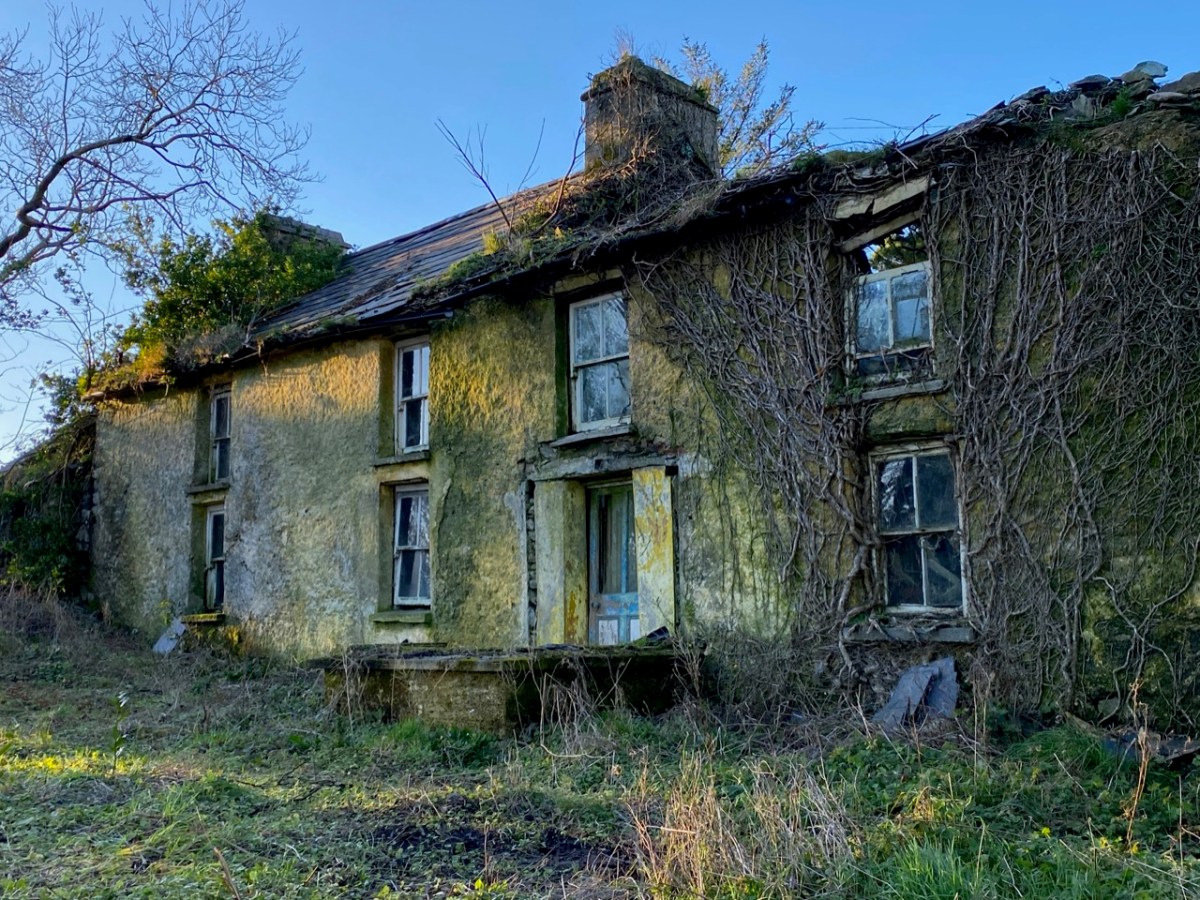
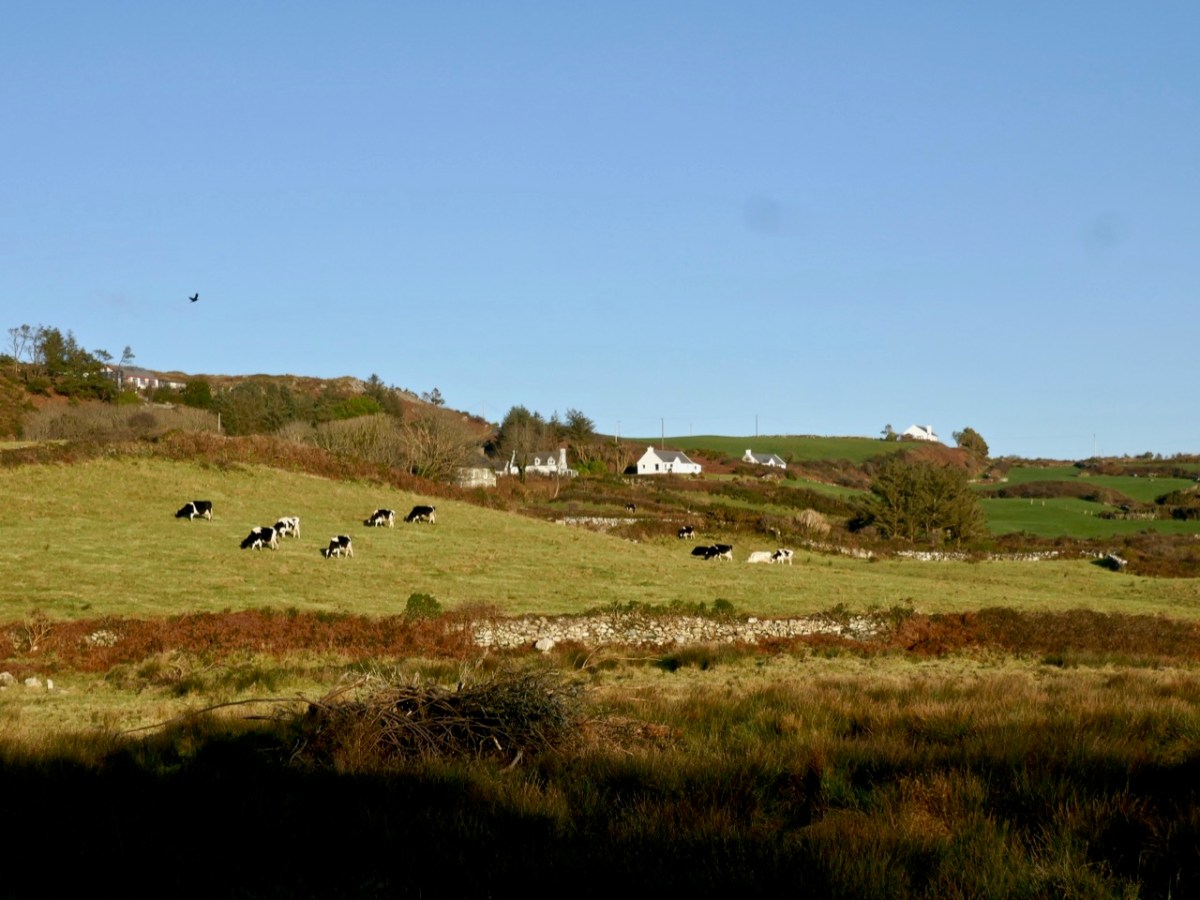
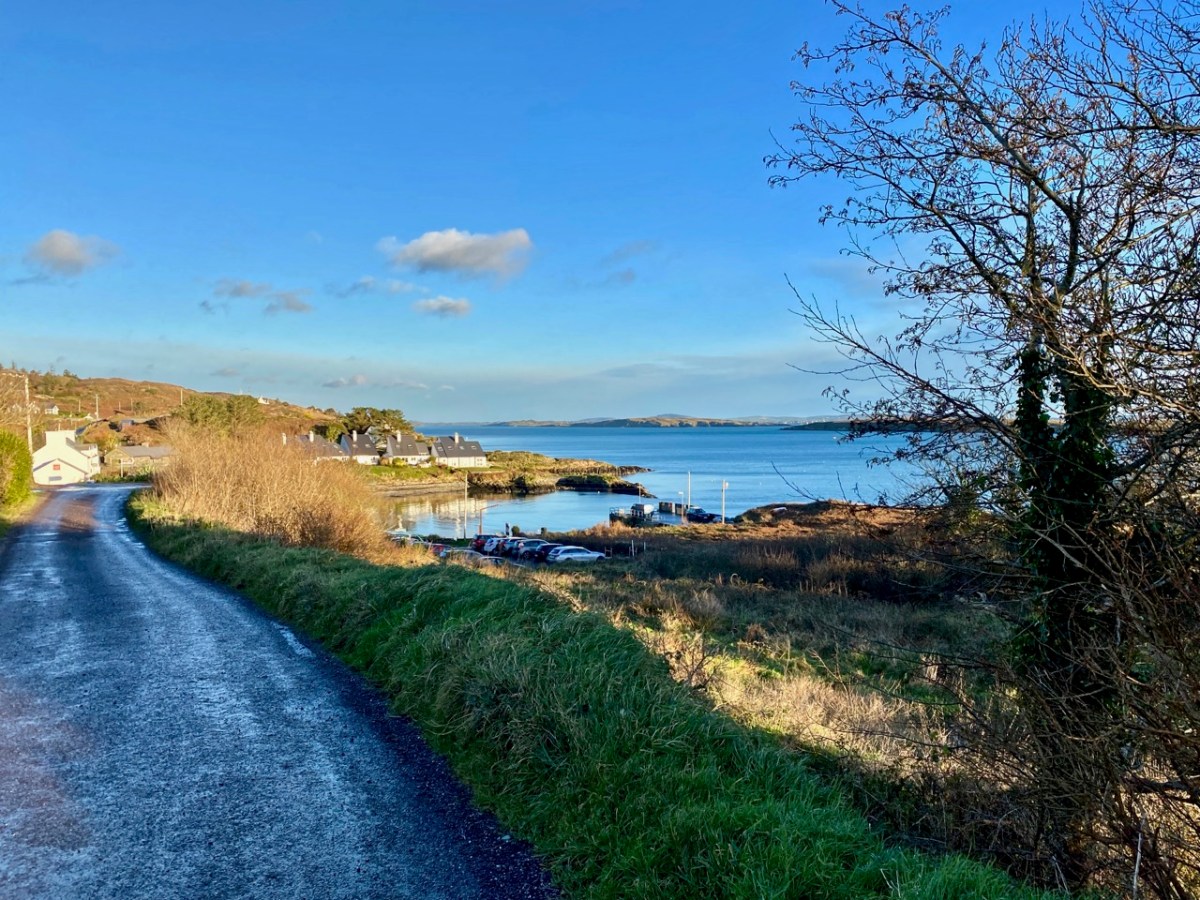
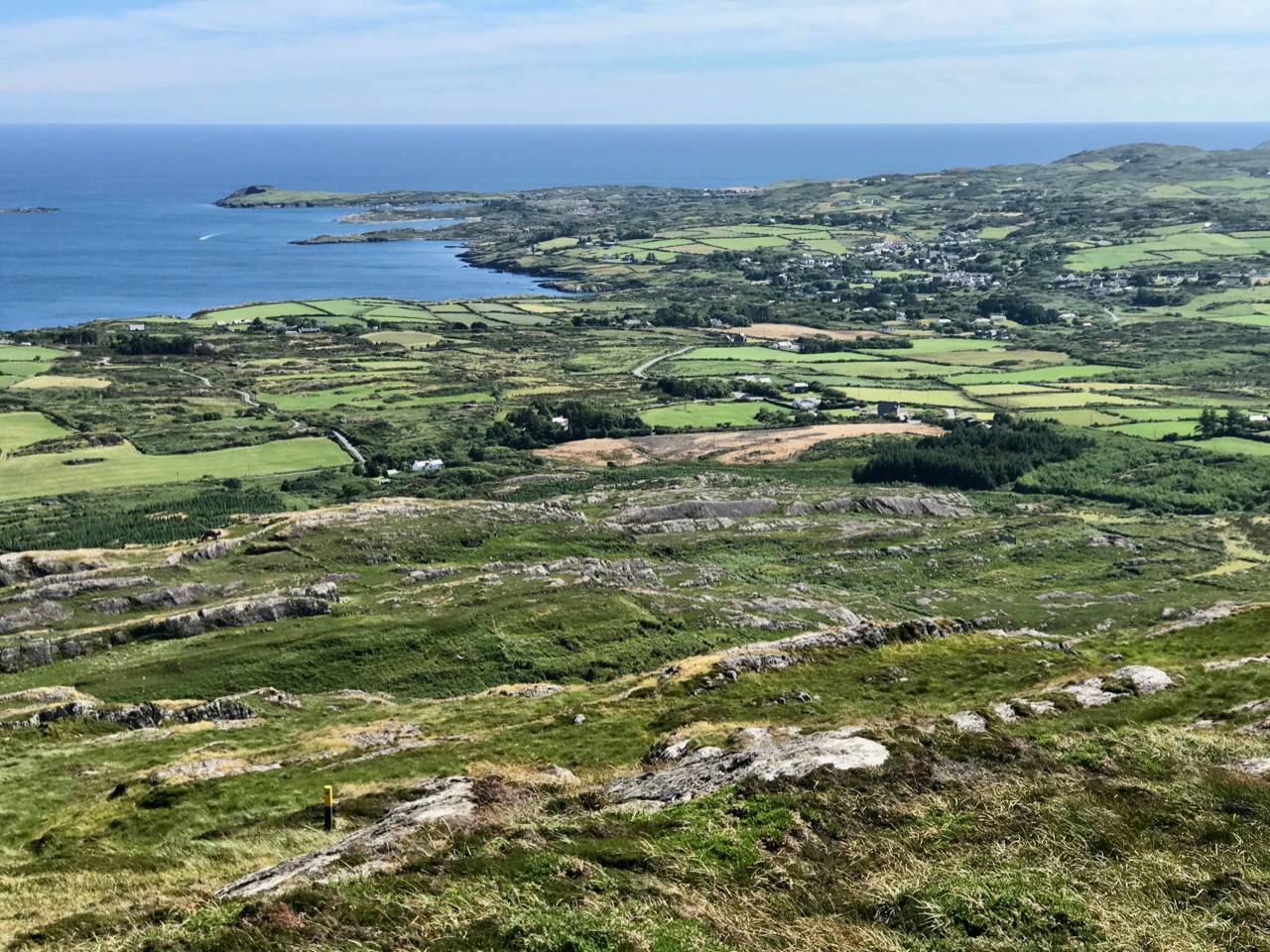
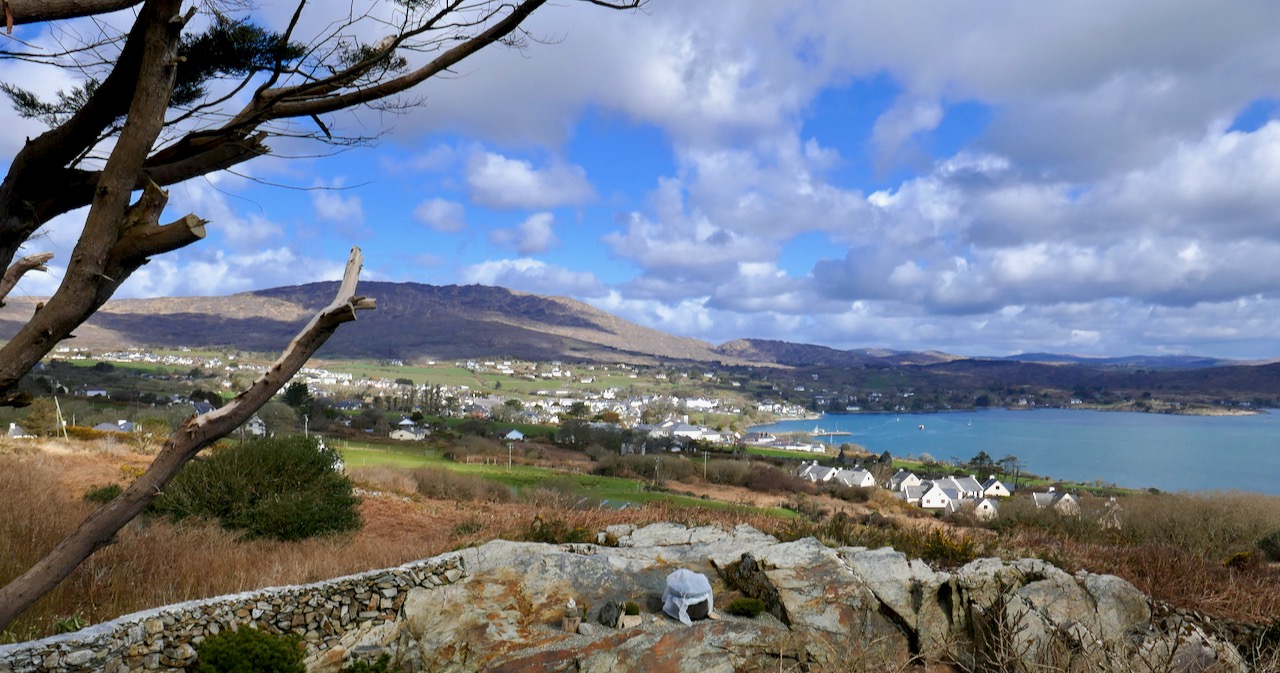
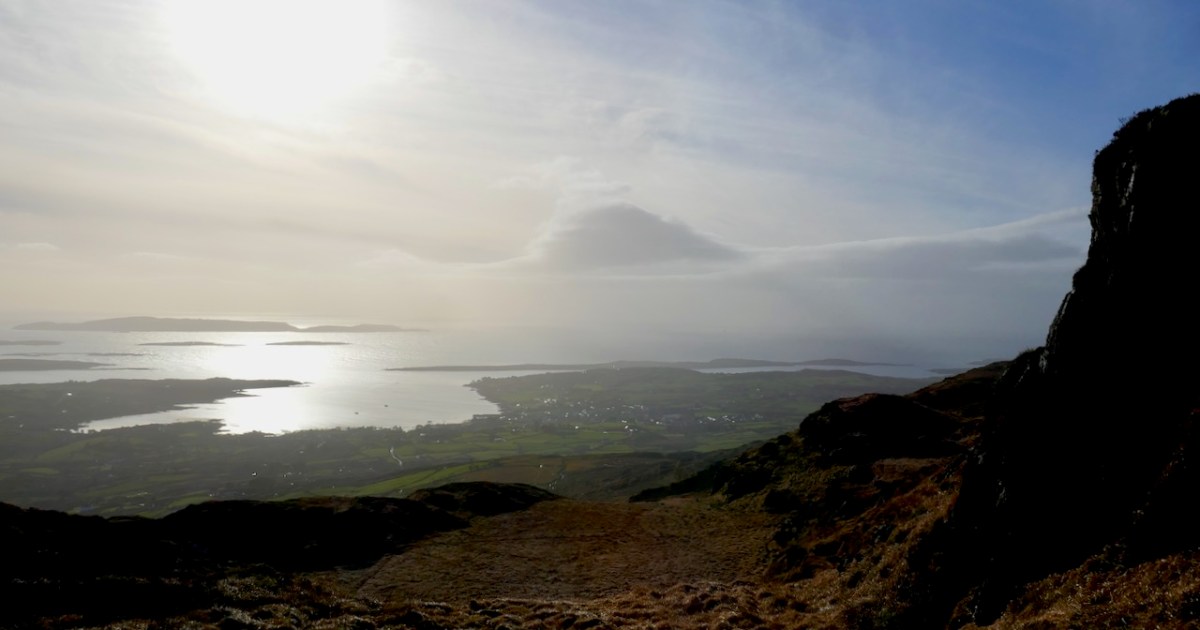
Christmas, New Year and Nollaig na mBan have come and gone – and so has the endless rain! Like hibernating bears in spring, we long to get out and stretch our limbs with a good walk. This little slideshow captures a sense of the sights and colours encountered in the last couple of days at Turk Head and on the Fastnet Trails Rossbrin Loop, Part 1

I hope this gentle stroll eases your way into the New Year. The Music is As Baile (meaning Away from Home) by Enya, from her Shepherd’s Moon album, used with permission.

The bright pink and orange fruits, by the way, are Spindle berries. Spindle is a native Irish tree.

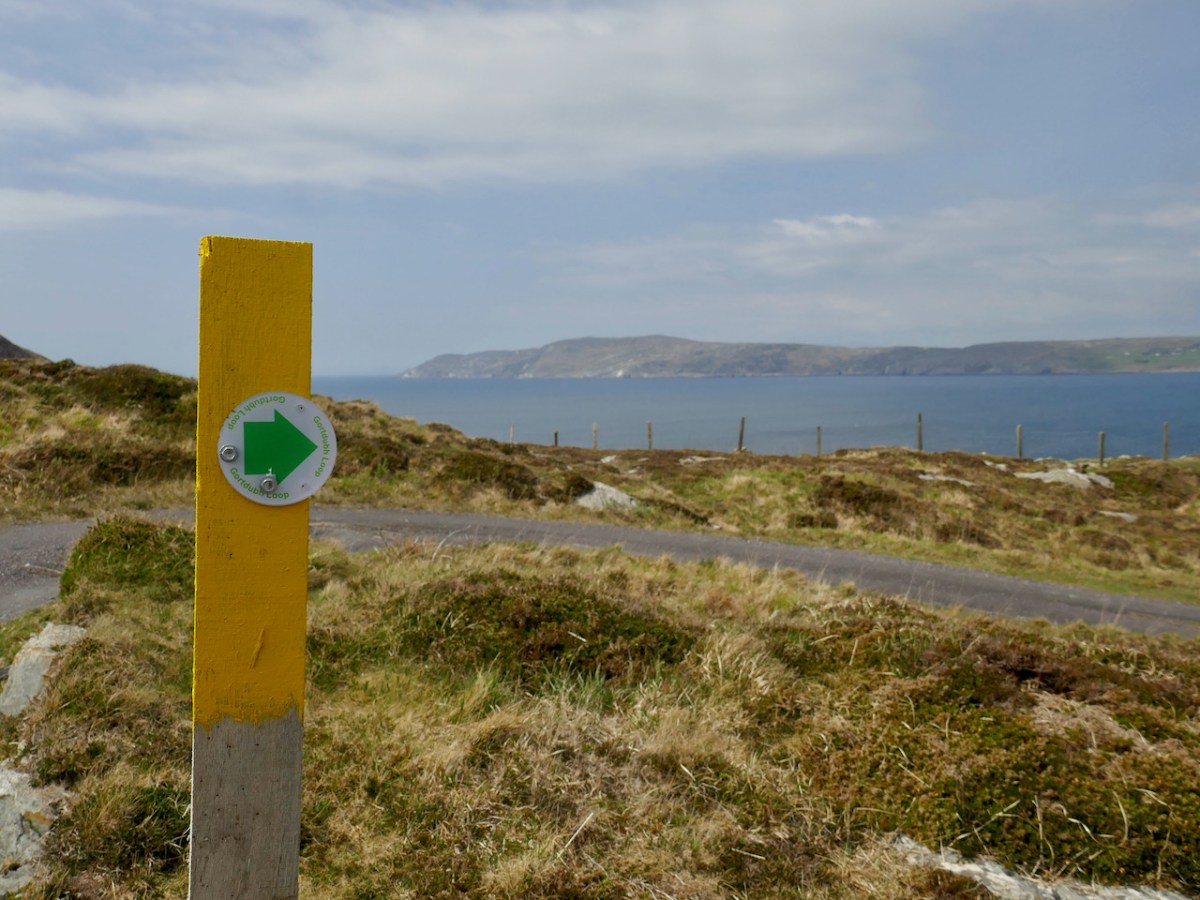
Mizen Magic 25: Gortduv Loop (Fastnet Trails)

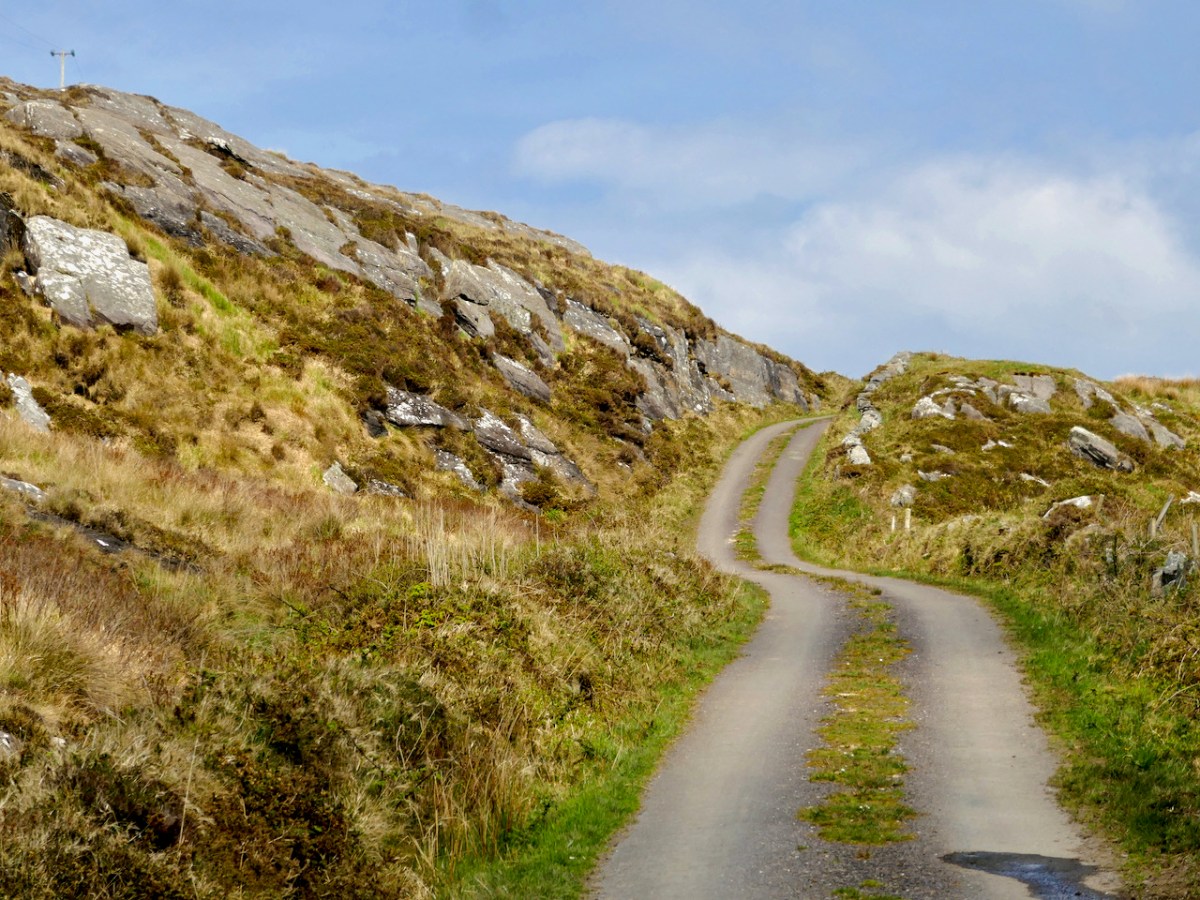
Ready for a longer walk? If yes – this one is 13.5km and has strenuous stretches. If not, don’t worry – there are lots of possibilities for doing parts of the walk, or for going with friends and leaving a car at strategic spots. We didn’t do it all at once, in case you get to thinking we are super-fit hikers. (The sad truth is we can’t be too far from a coffee shop.) As with all the Fastnet walks, keep dogs on leads – we did encounter both cattle and sheep on this walk, right on the road. There is a short stretch of ‘green road’ and although it’s well maintained, it might be muddy after rains, so good shoes are essential.

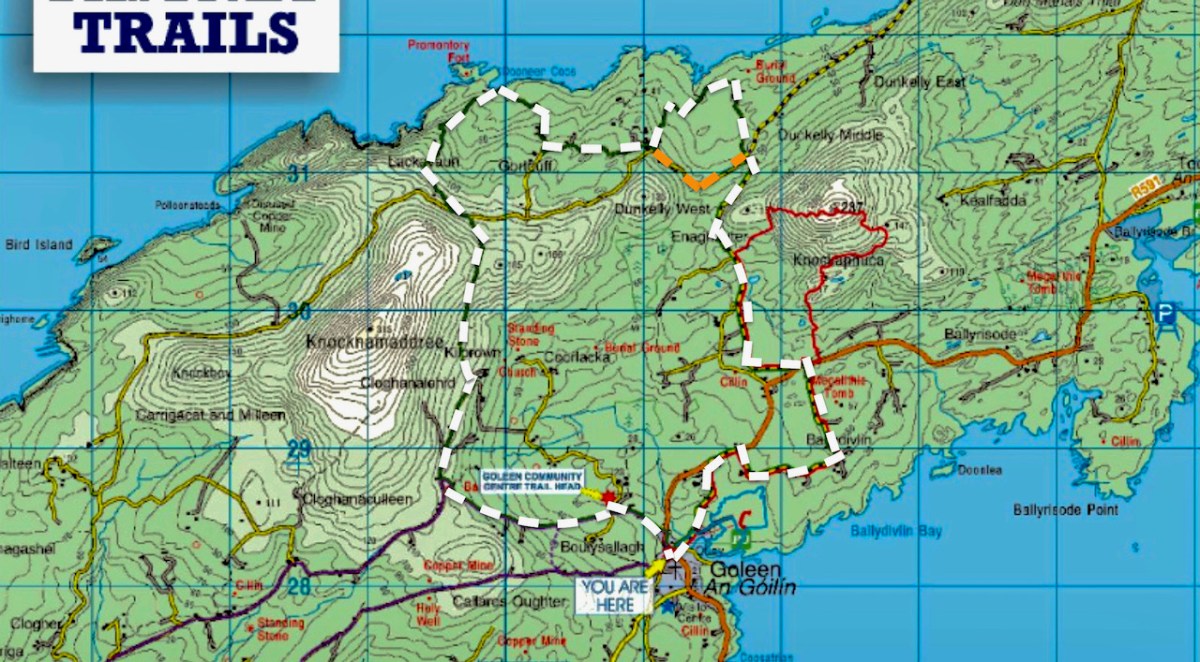
This loop takes you from Goleen on the south side of the Mizen right across the peninsula to the fabulously scenic north side. It skirts along the edges of the valley that runs between Knocknamaddree (Hill of the Dogs) to the west, and Knockaphuca (Hill of the Pooka, or Mischievous Spirit) to the east, rising to a maximum altitude of 180m (or about 600 feet). Most of the altitude is gained in the first half of the walk – so a packed lunch and water will be both welcome and needed if you’re doing the whole walk.

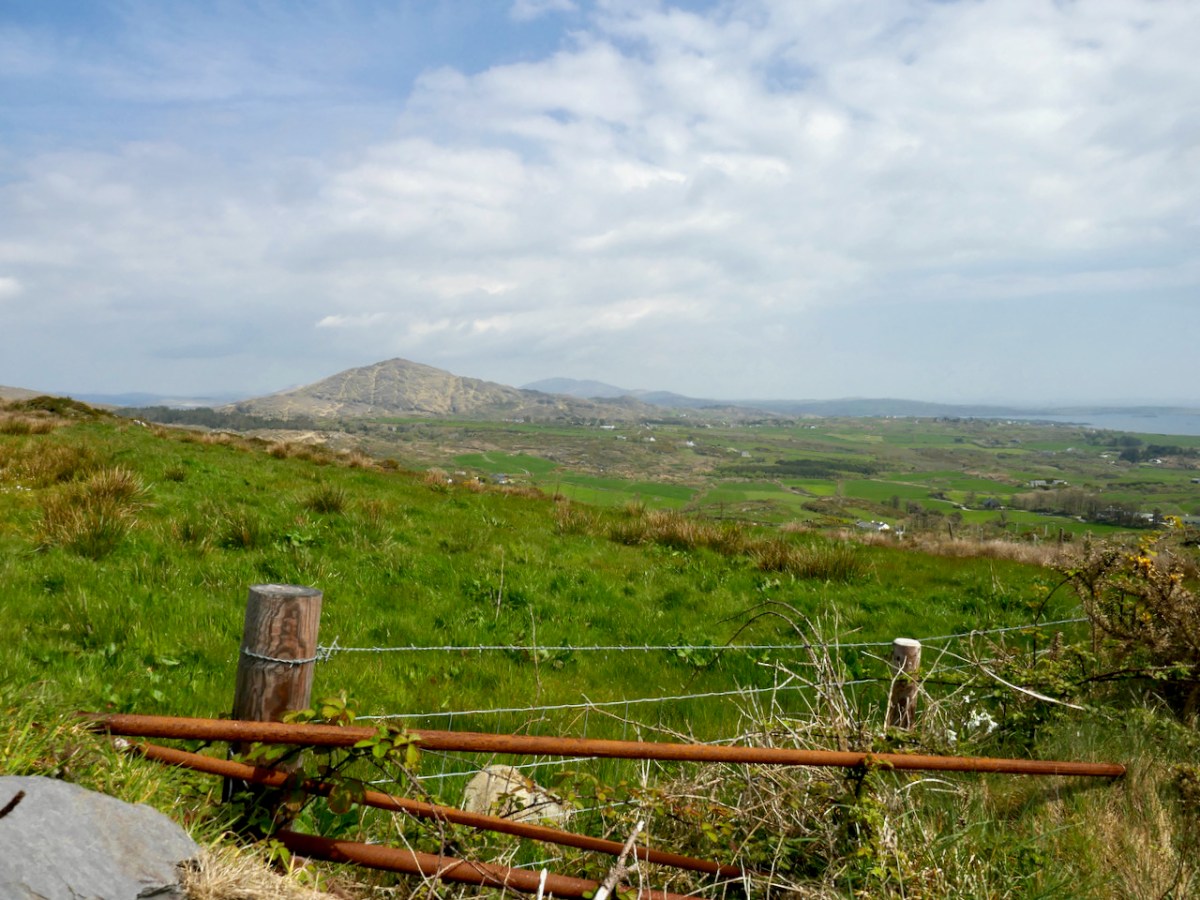
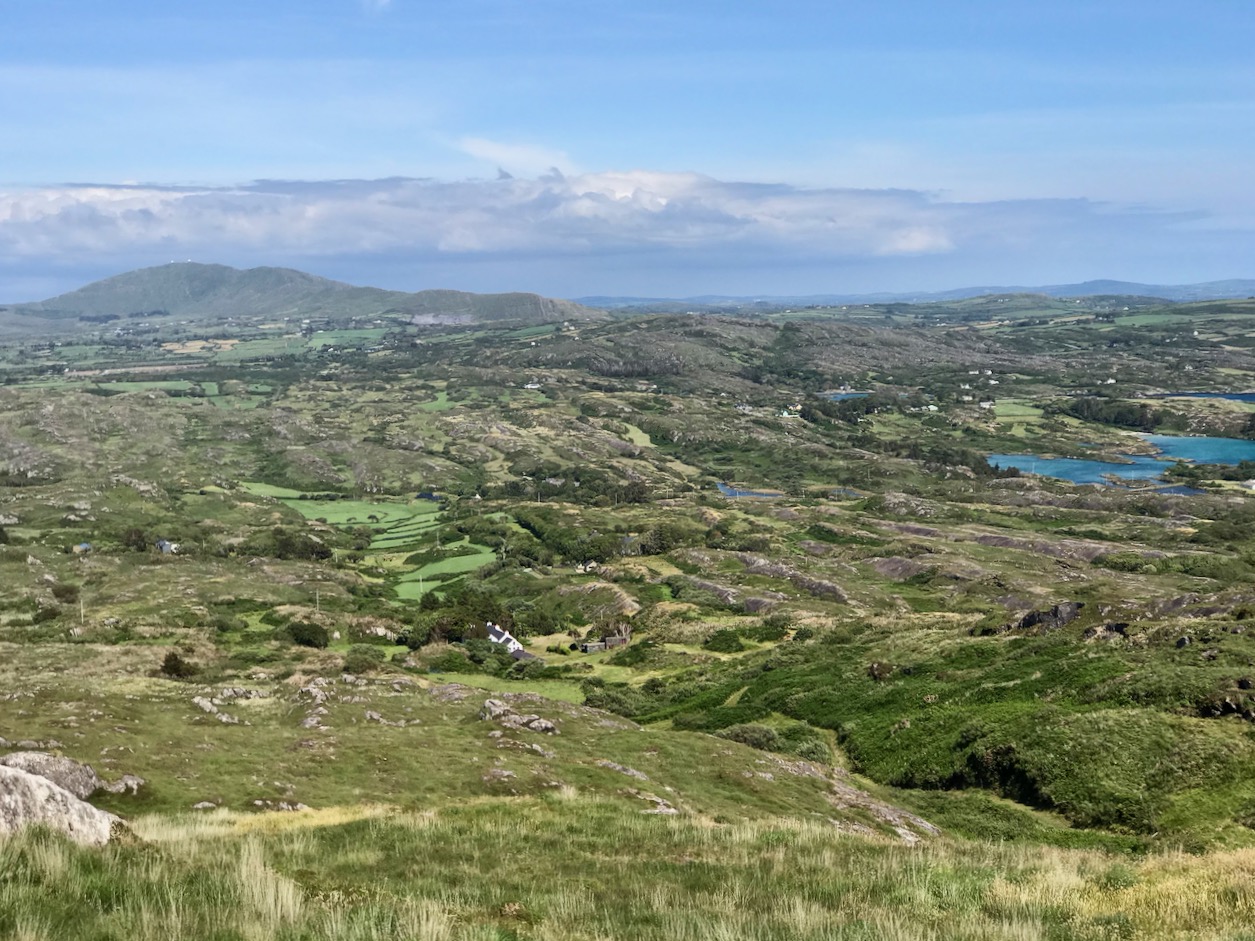
Set out from the Goleen Community Centre and the first part of the walk is shared with the Lissagriffin Loop – see our recent post on that walk. As you ascend, the views are immense – back to Goleen and across to Knockaphuca and Mount Gabriel beyond it.

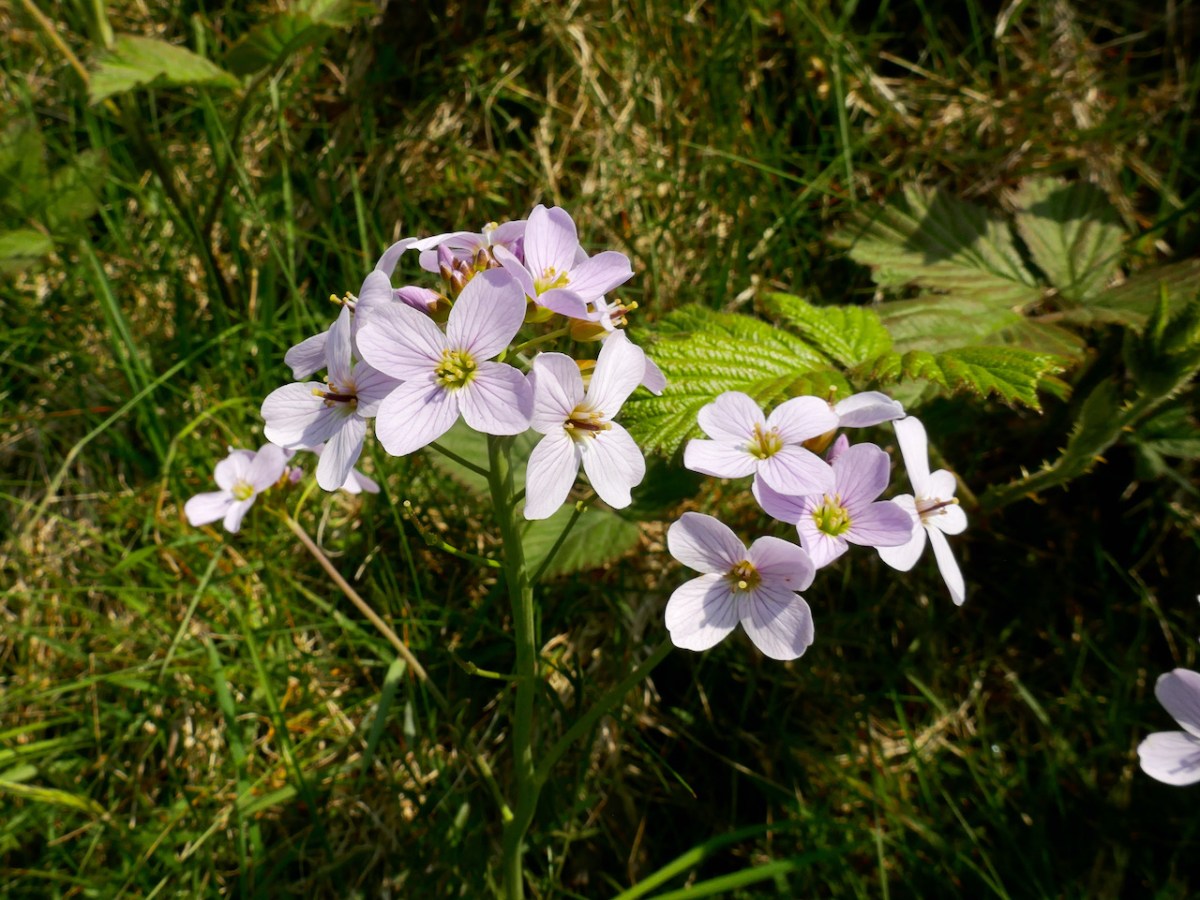
You’ll have to dig into your reserves of energy (or maybe have some chocolate) as you continue the climb. You are in true mountainy heathland now – look out for orchids in the spring and early summer, or Cuckooflower (below) in damp ditches.

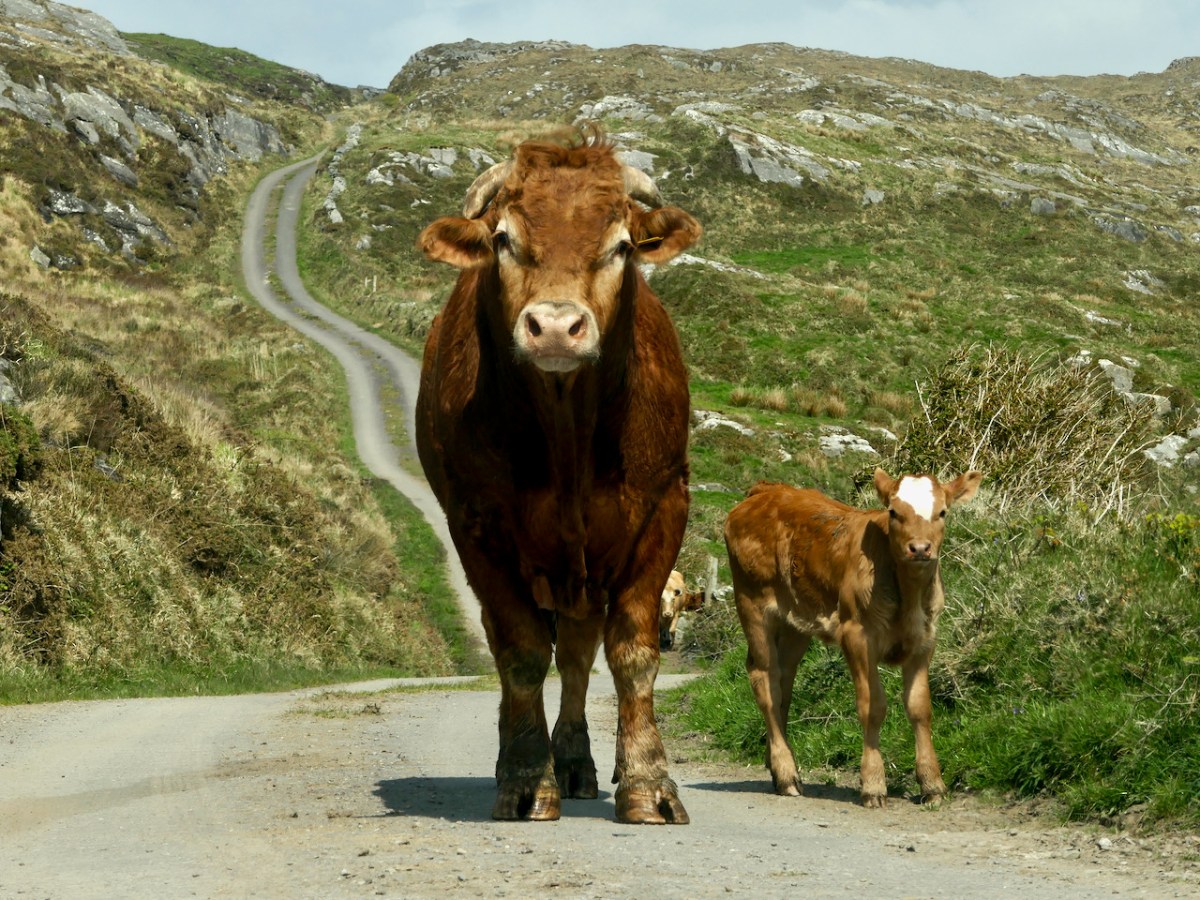
Watch out also for cattle on the road – we were startled by a line of plodding cattle coming towards us, and even more startled when we realised that one was a mighty fine bull. Fortunately, they turned into a field before we reached that spot, but there was no human around and the gates were open, so we can only assume we were simply in the wrong place at the wrong time as it is very unusual (although not unknown) to see cattle wandering like this.

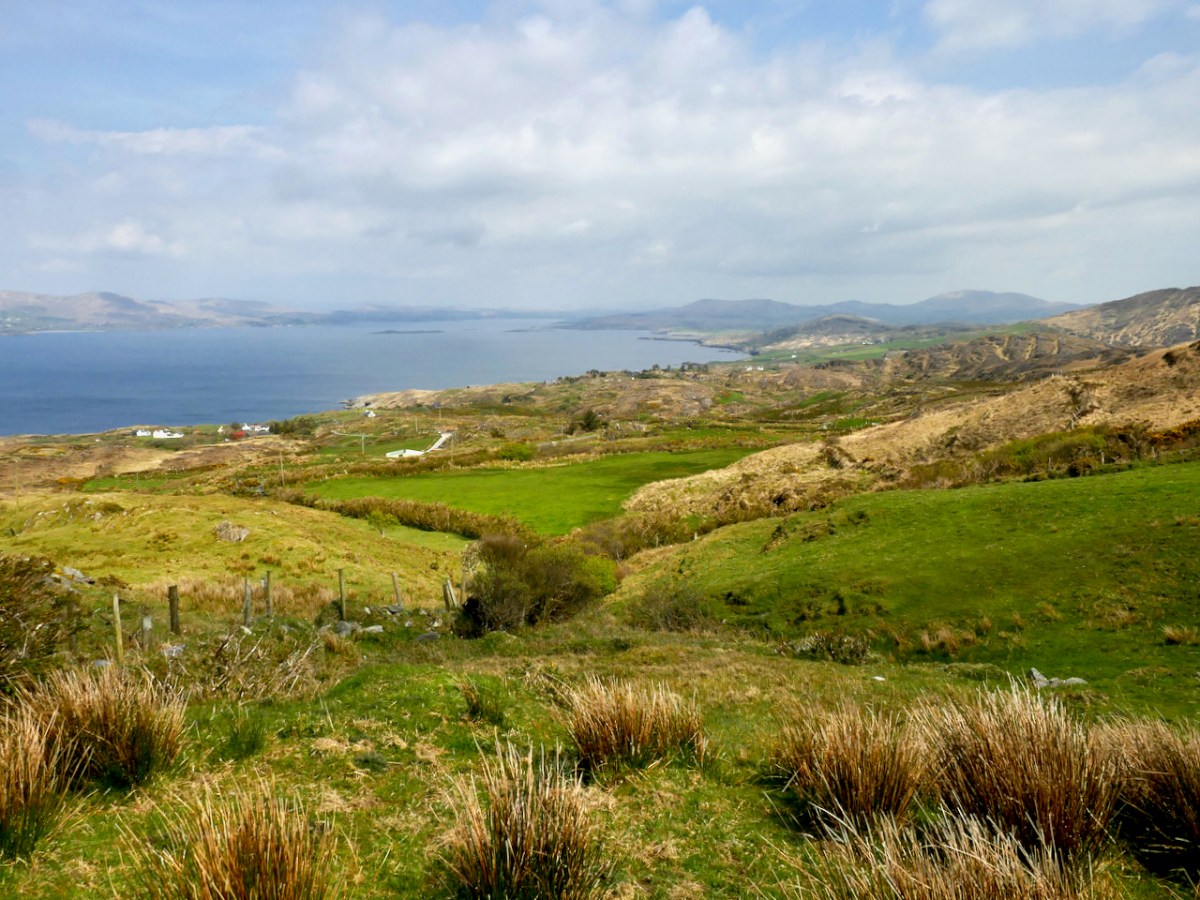
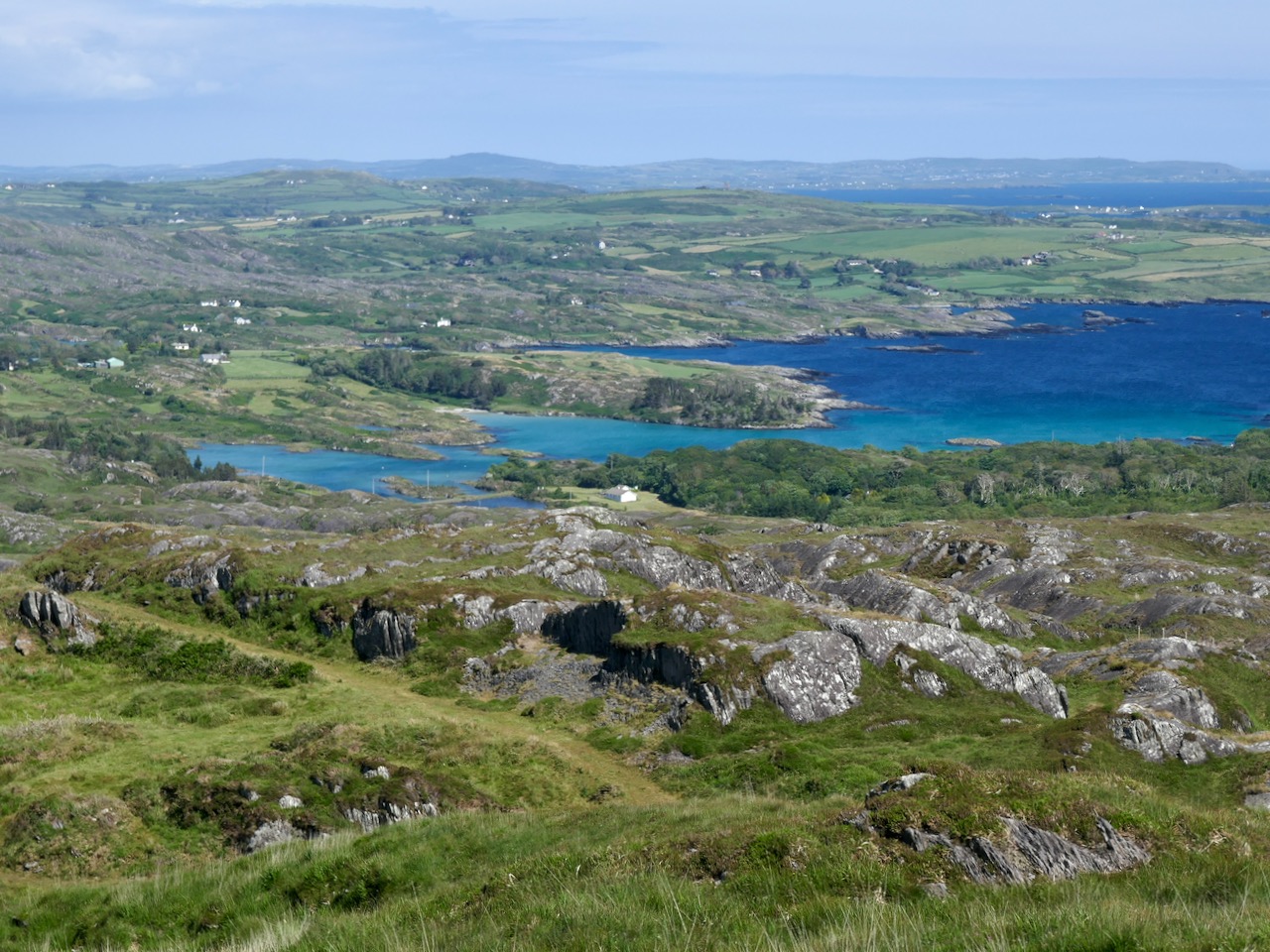
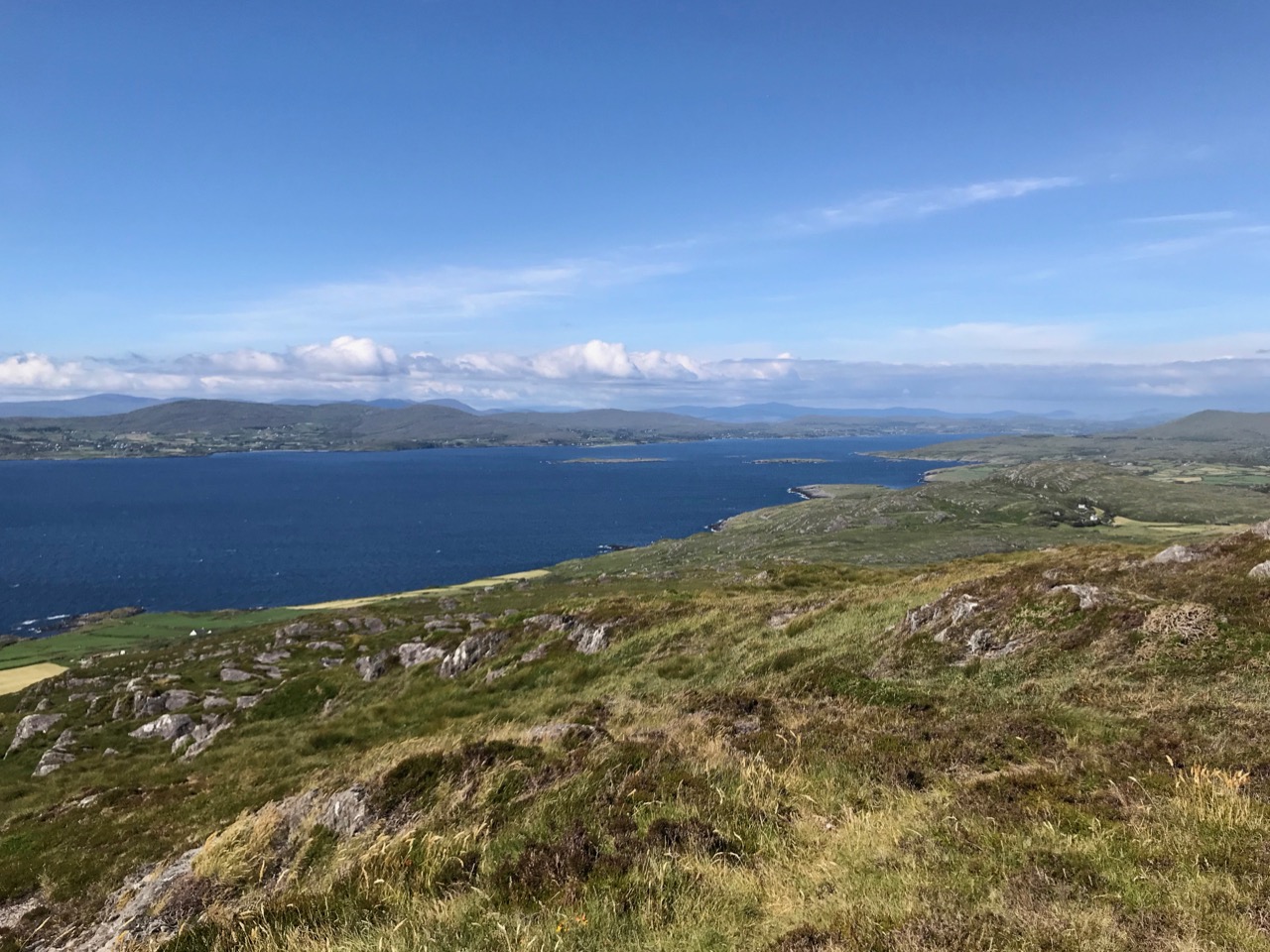
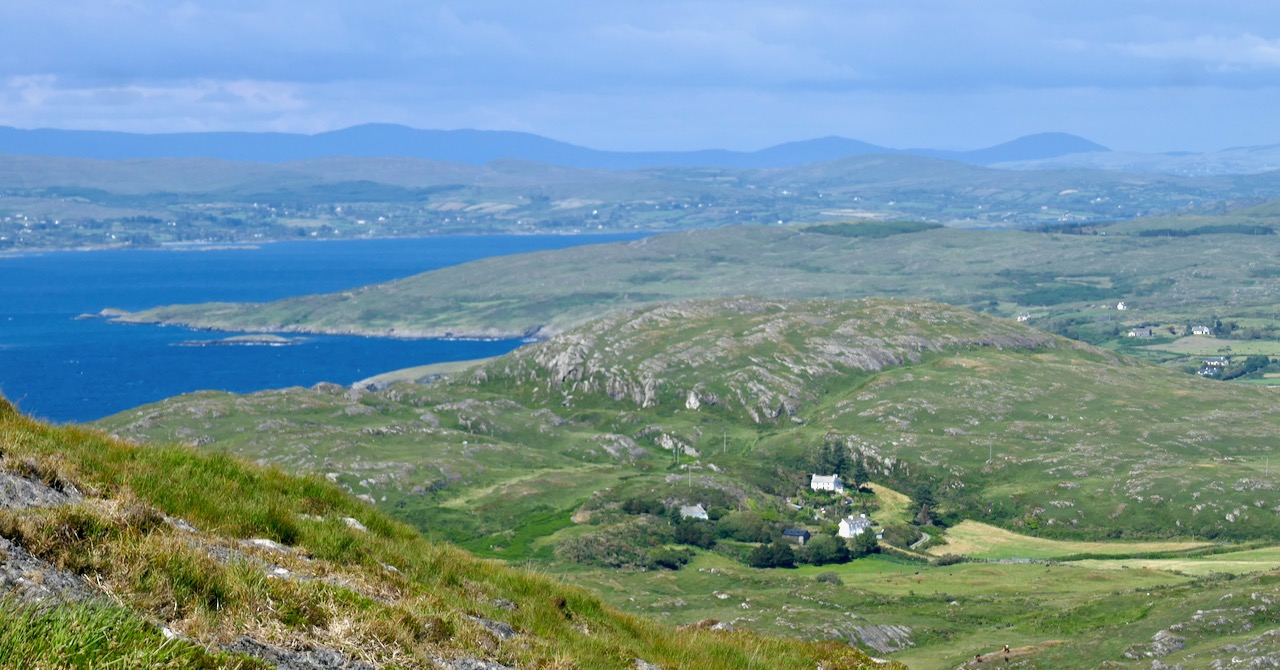
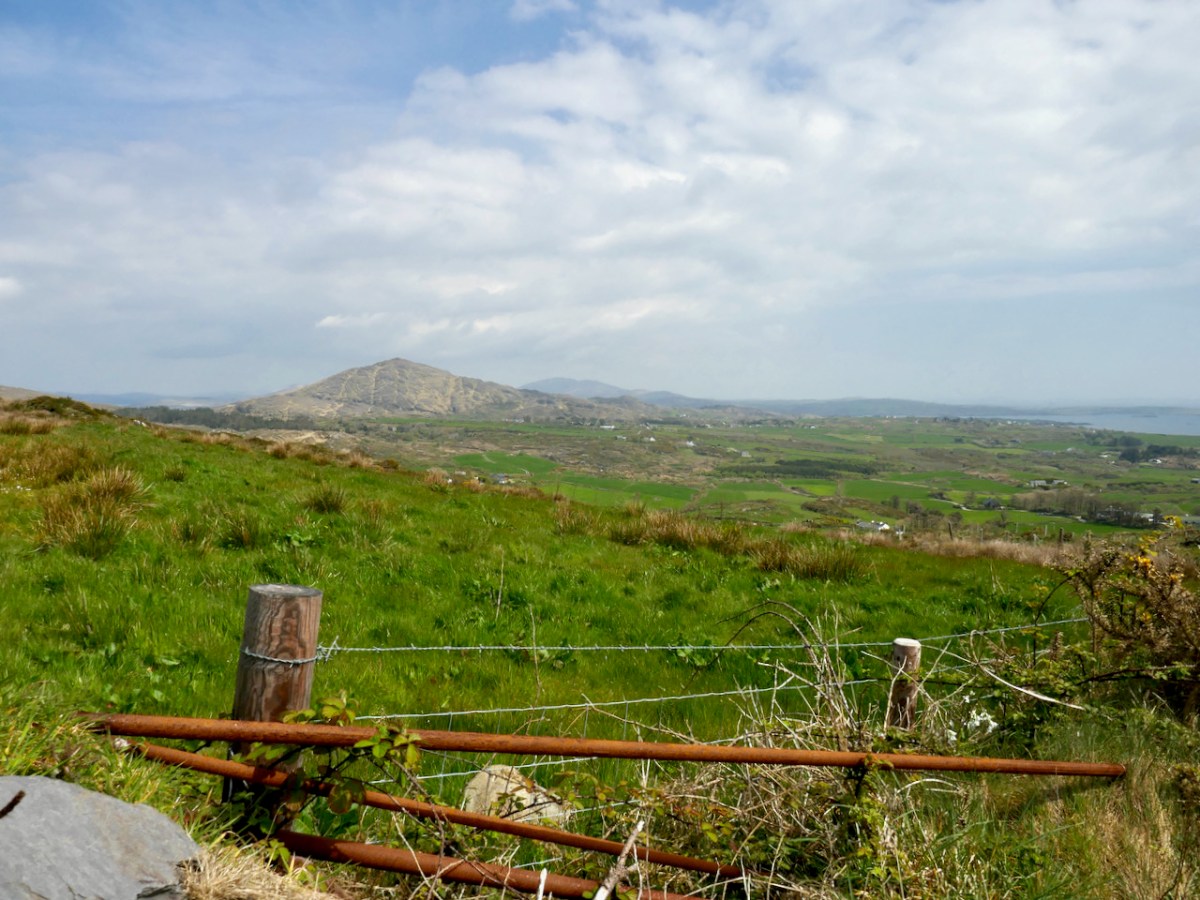
Coming over the top of the hill you have the whole of Dunmanus Bay in front of you and you can see clear up to the head of the bay, across to the Sheep’s Head, and to the Mountains of the Beara behind that. Have a nice sit down on some convenient boulder here – you deserve it – and just absorb that breathtaking sweep of land and sea.

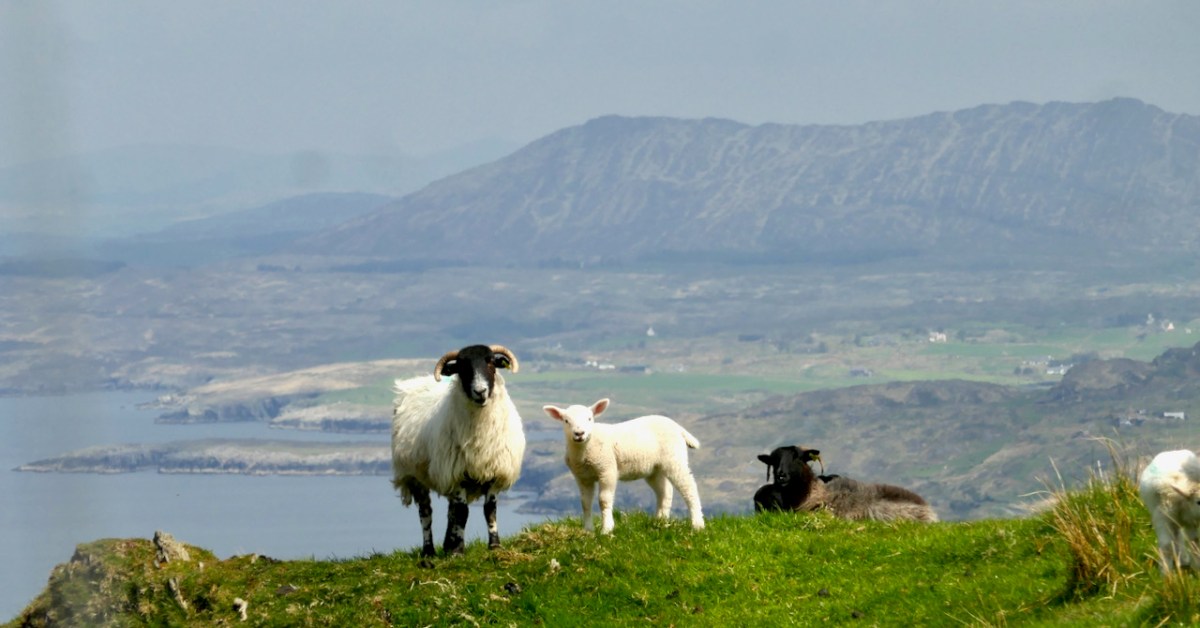
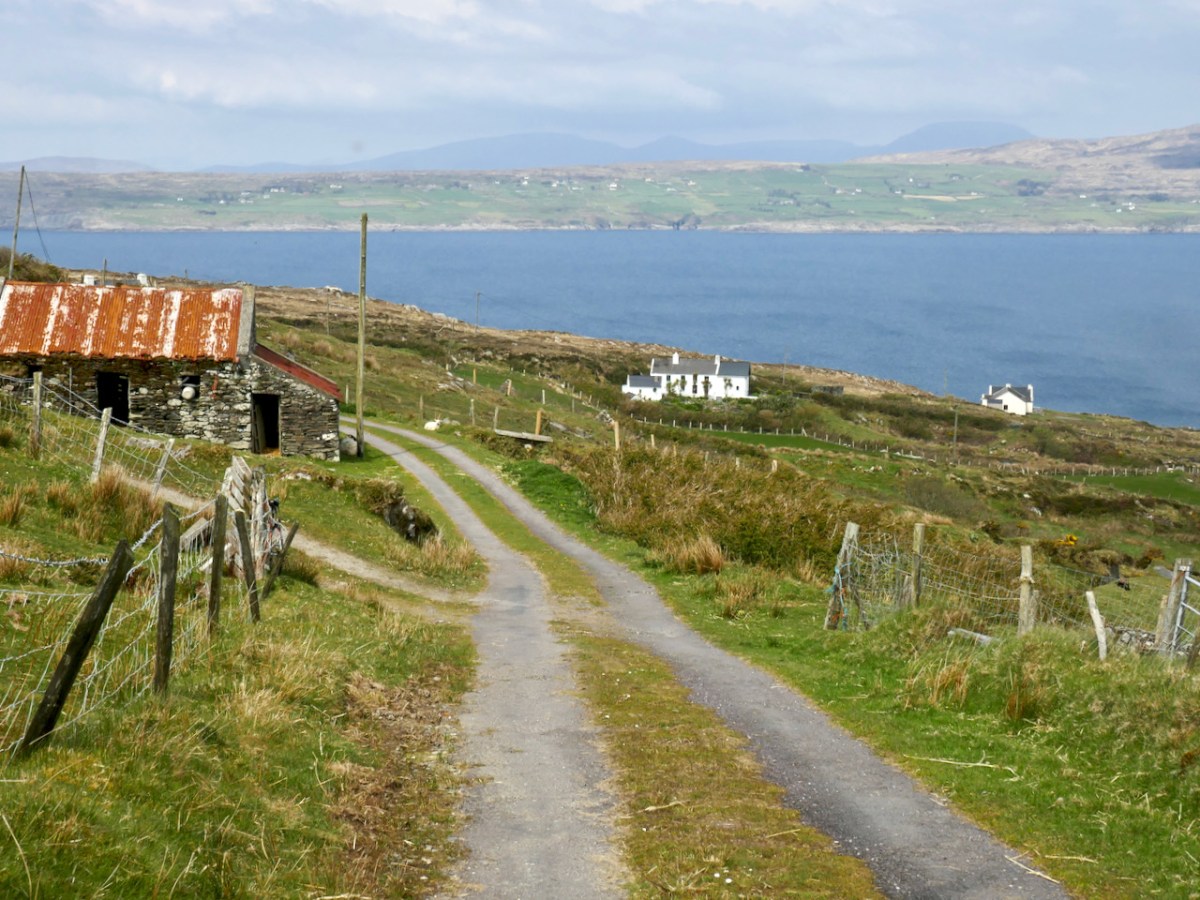
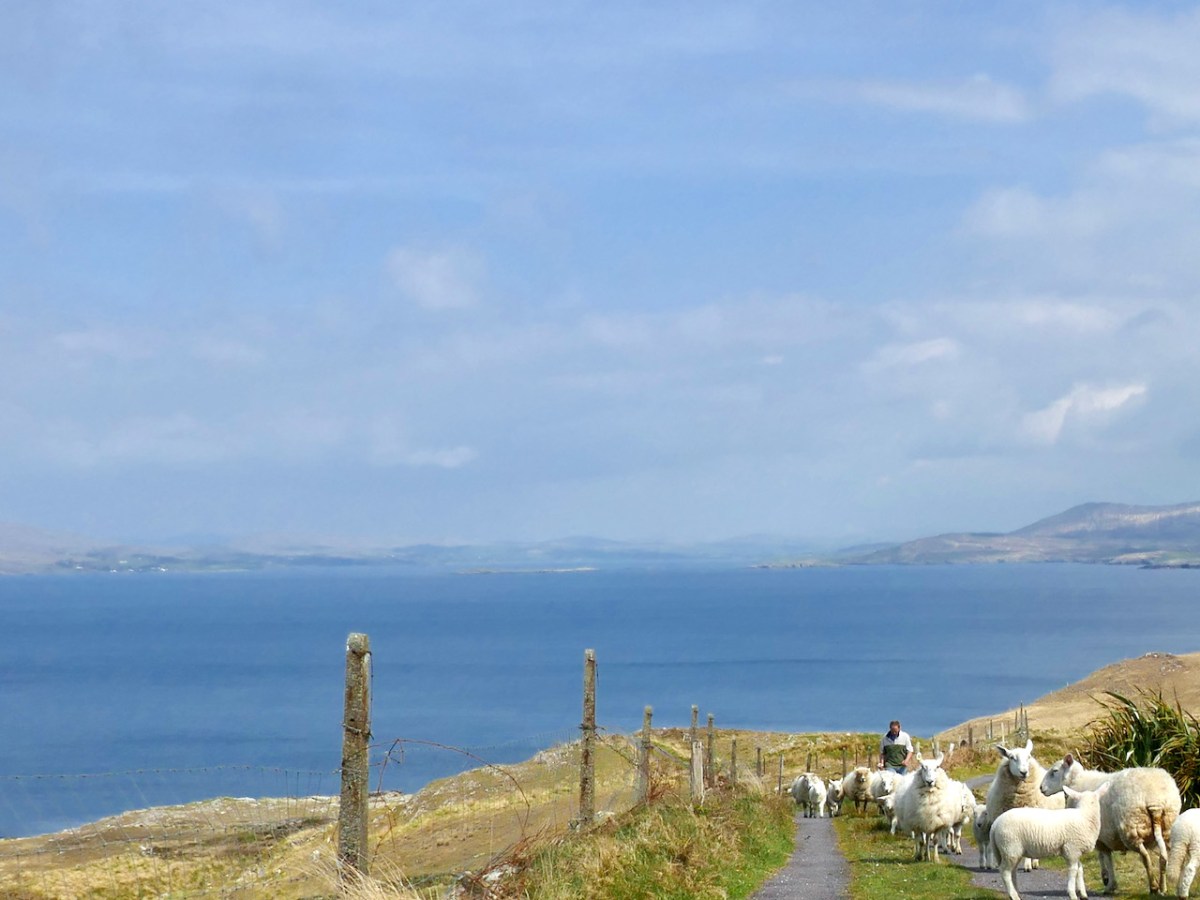
And talking of sea – you’re heading down now towards it, past picturesque stone farm buildings and beautifully renovated cottages until you arrive at Dooneen Coos (the Cove of the Little Fort). Along the way we ran into a shepherd moving his sheep up into higher ground, with the aid of the marvellously well-trained dogs that attend to their business but also like a good pat.

Dooneen Coos is a good spot for lunch – or even a swim if you’re that way inclined. it’s close to the peninsula we wrote about in our post Mizen Magic 23: Lackavaun and The Meallán so you can always take a side trip there if you wish. This might also be a good spot to leave a car if you’re not doing the whole loop on this occasion.

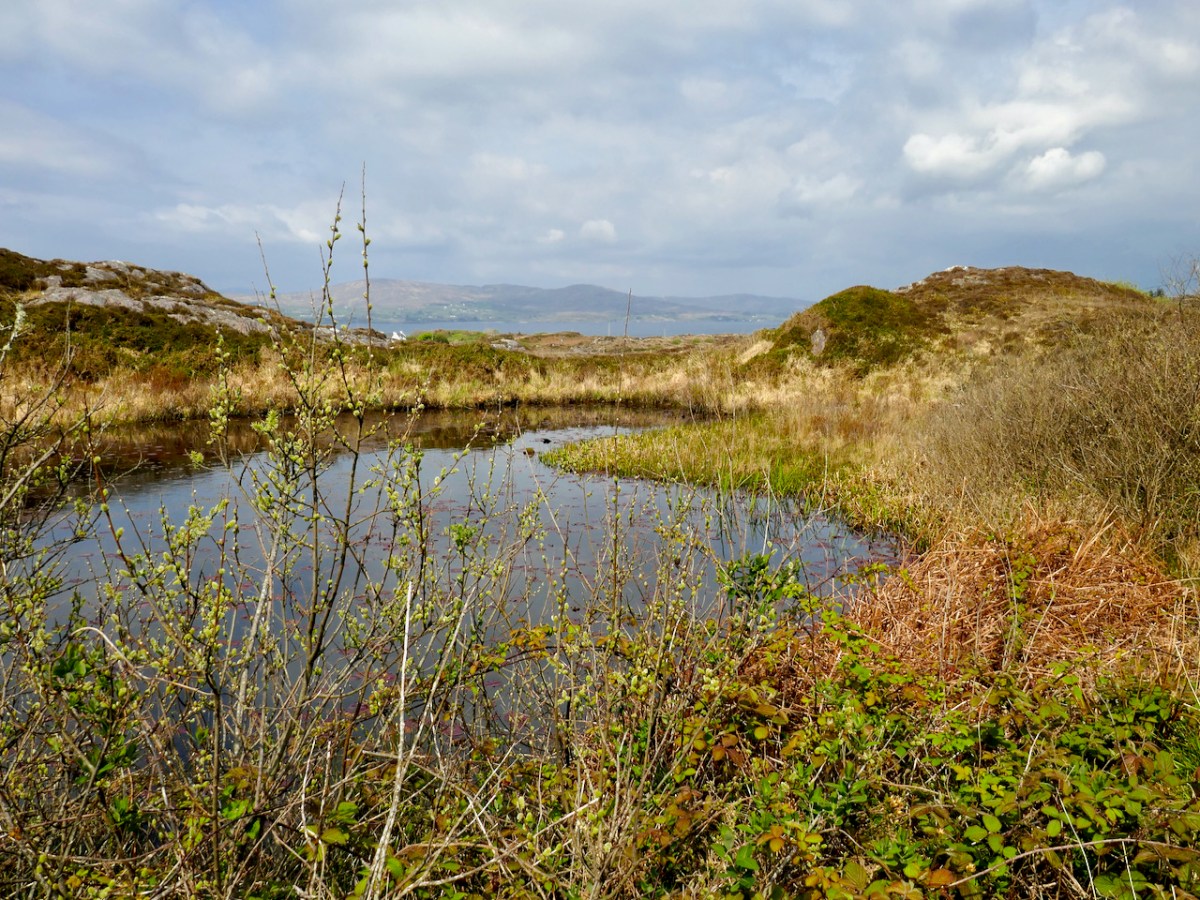
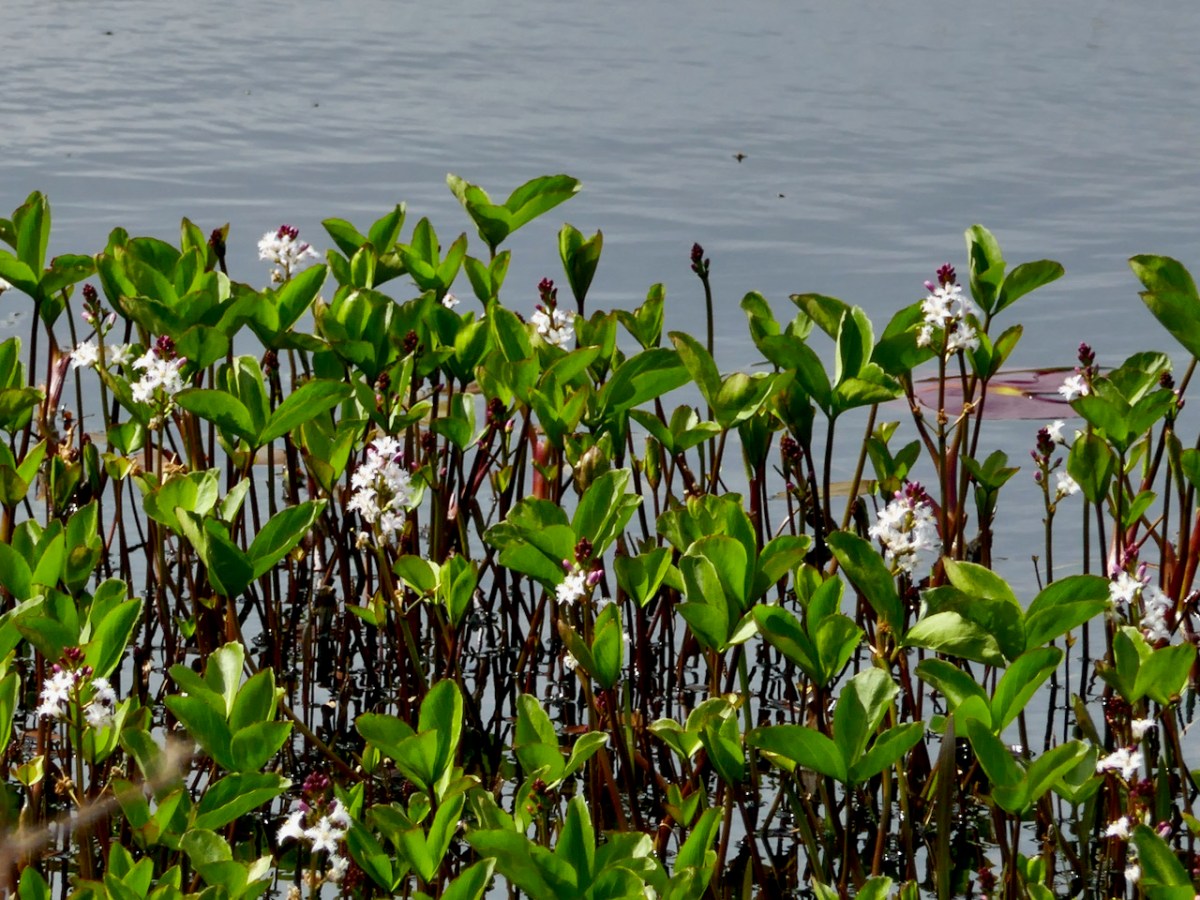
But if you’re carrying on, you’re now heading towards Dunkelly and the storied inlet known as Canty’s Cove. Read all about it here. Here, because we have been to Canty’s Cove lots, we took the short cut – marked in orange on the map. The compensation is that this stretch contains the remains of old ruined cabins and clacháns (hamlets) along the road, as well as a beautiful pond which, at the time of our visit was full of flowering Bogbean. 

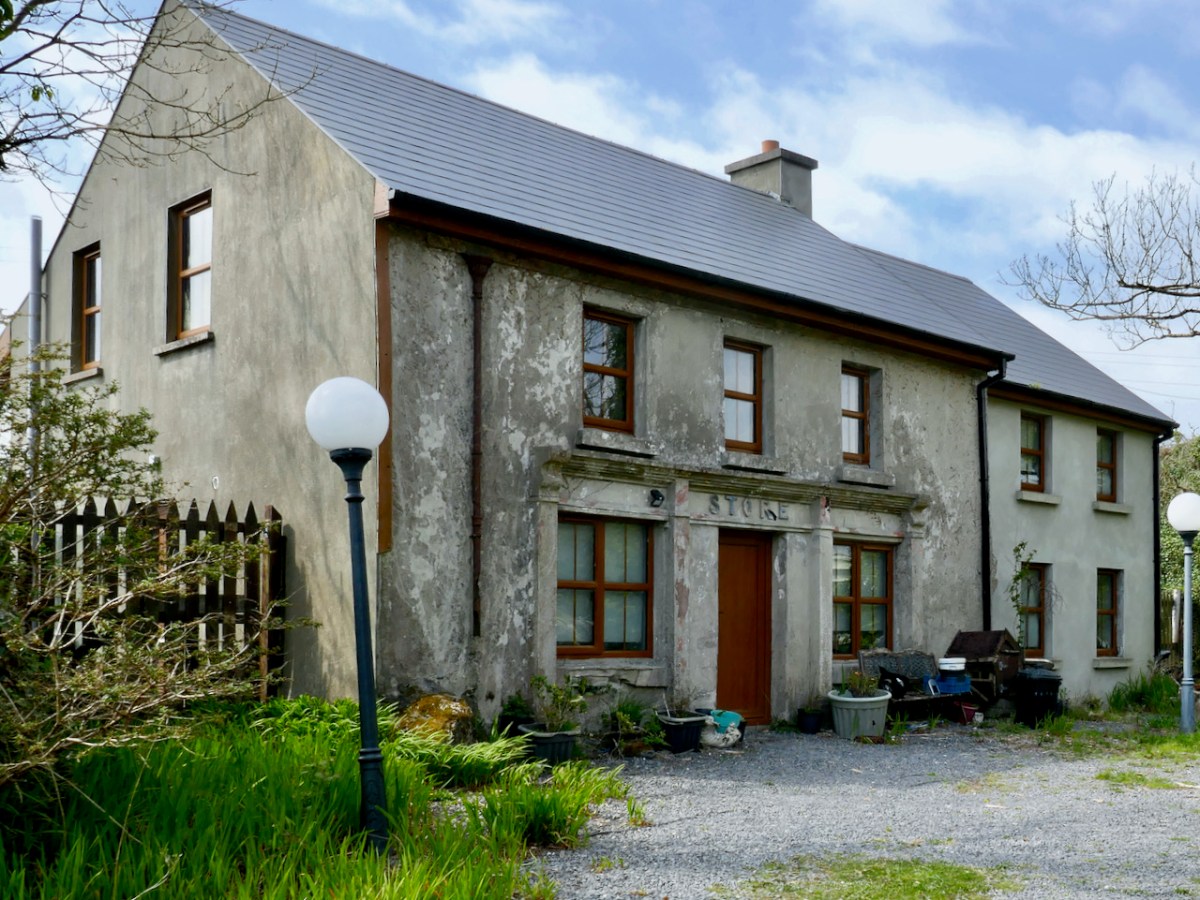
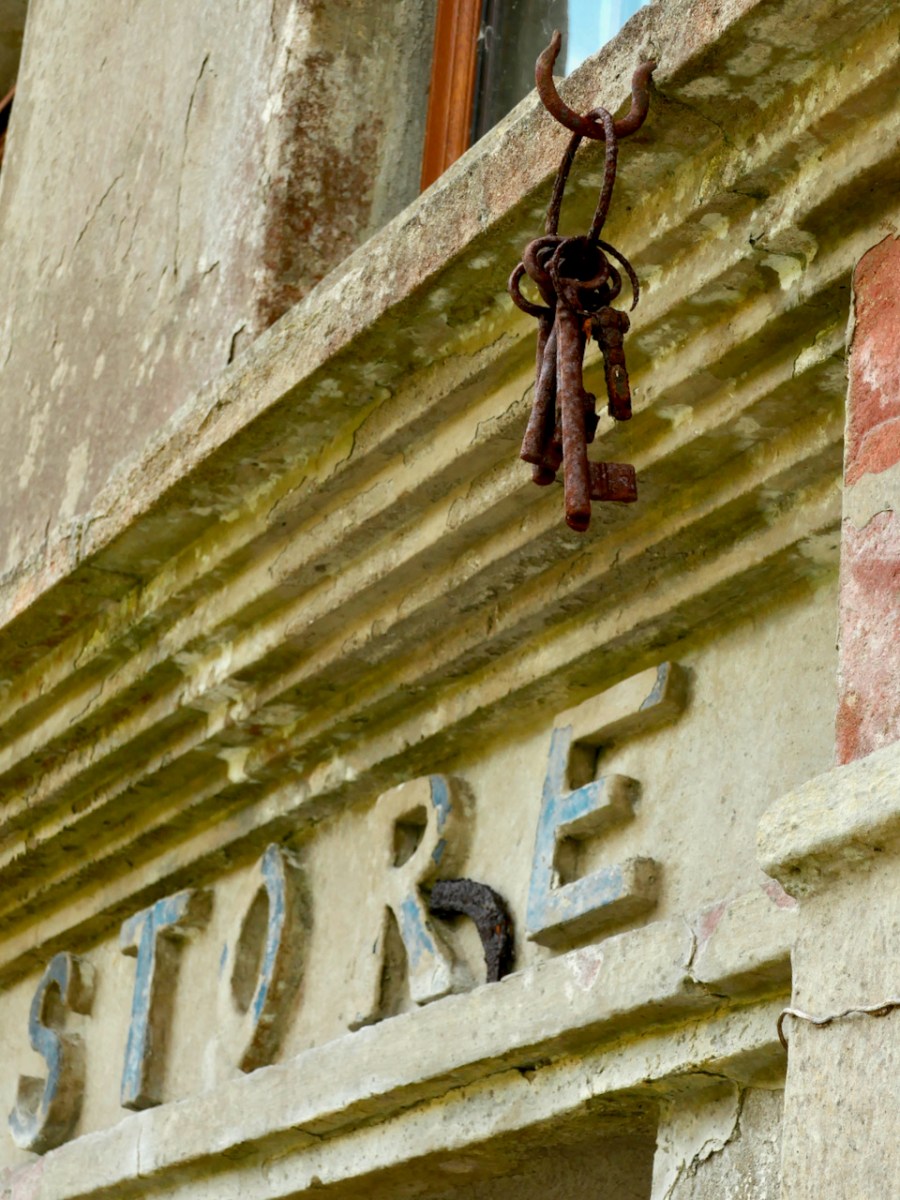
From Dunkelly the road turns back along the slopes of Knockaphuca  and along the way there’s a  bit of a surprise – an old store that once supplied necessities for the population of this area but which has not been viable for many years. No doubt local people have all kinds of memories and stories about this one. I was taken by the keys, still hanging above the door!

By now we were on the stretch of road that this loop shares with the Knockaphuca Walk and that’s a walk you HAVE to do, if you haven’t already. Possibly the jewel in the Fastnet Trails crown. Crossing the main Schull-Goleen road we head down to Ballydivlin. 

We’re at the sea again now, back on the south side of the peninsula, looking across to Castlepoint (and Leamcon Castle) and out to the Fastnet Rock with its iconic lighthouse

It’s been a long haul but SO worth it – wouldn’t you agree?

The Fastnet Trails website is coming soon. We will update this post with that link once it’s finalised and active.

Mizen Magic 24: Lissagriffin Loop (Fastnet Trails)

The energetic Fastnet Trails team is marching westward along the Mizen, developing new trails. They do this on a purely volunteer basis and we are all the beneficiaries – so a huge thank you to them! Work on their website is ongoing, and it should be up and running soon. This week we explored one of their recent additions – the Lissagriffin Loop. I have written a previous LIssagriffin post in the Mizen Magic series (number 14), but that one was mainly about the medieval church and the graveyard around it, as well as the history and archaeology in its vicinity. 

This walk starts and ends in Goleen and is a 10k walk with lots of ups and downs. You’re climbing100m (about 320’) on the first half of the loop and 120m (about 400’) on the second half, so this is a good workout. As with any of these walks, it’s possible to do stretches of them by leaving a car at one point and walking back and forth, or go with friends and leave a car at either end. Wear good shoes and bring water and snacks. It’s all on quiet back roads, so the dog is welcome too, but use the lead if you encounter cattle or sheep (we met both). And there are a couple of surprises along the way.

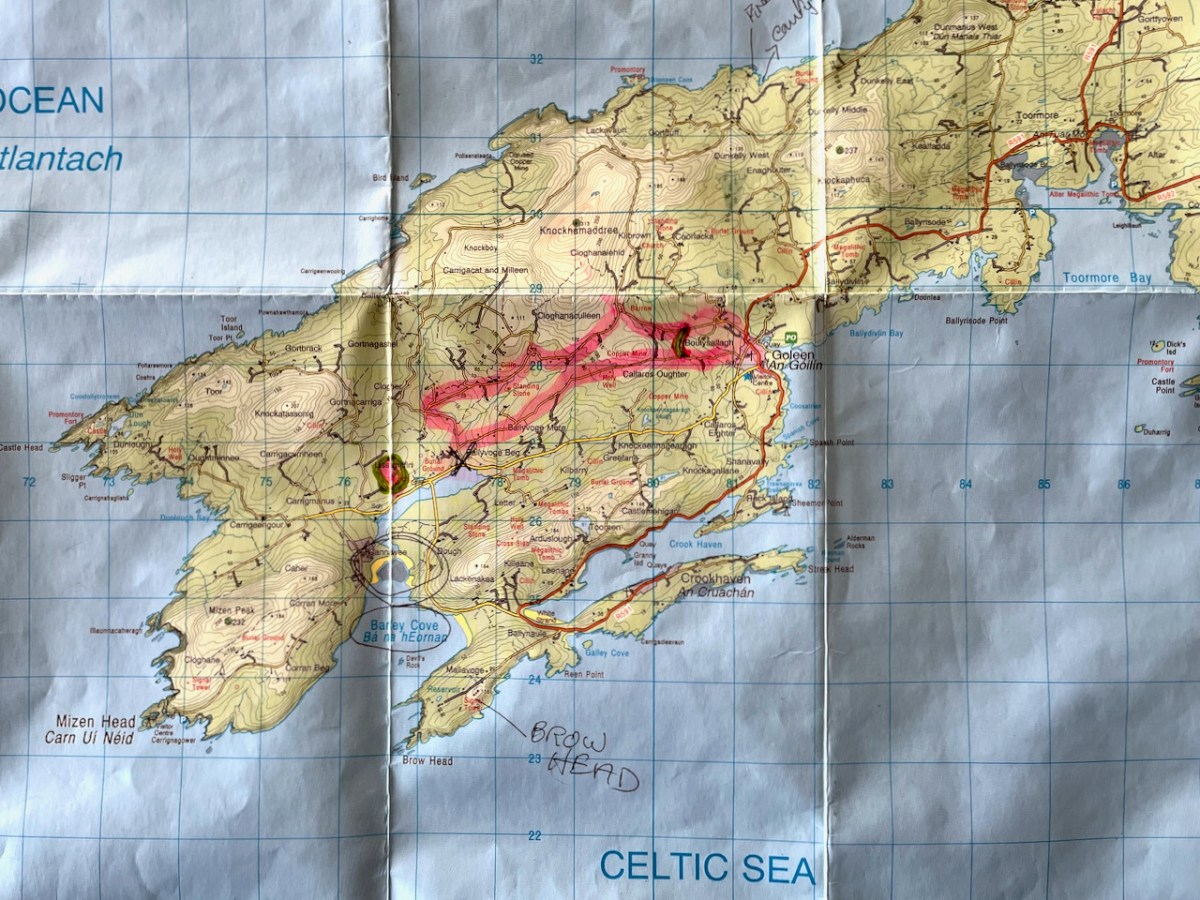
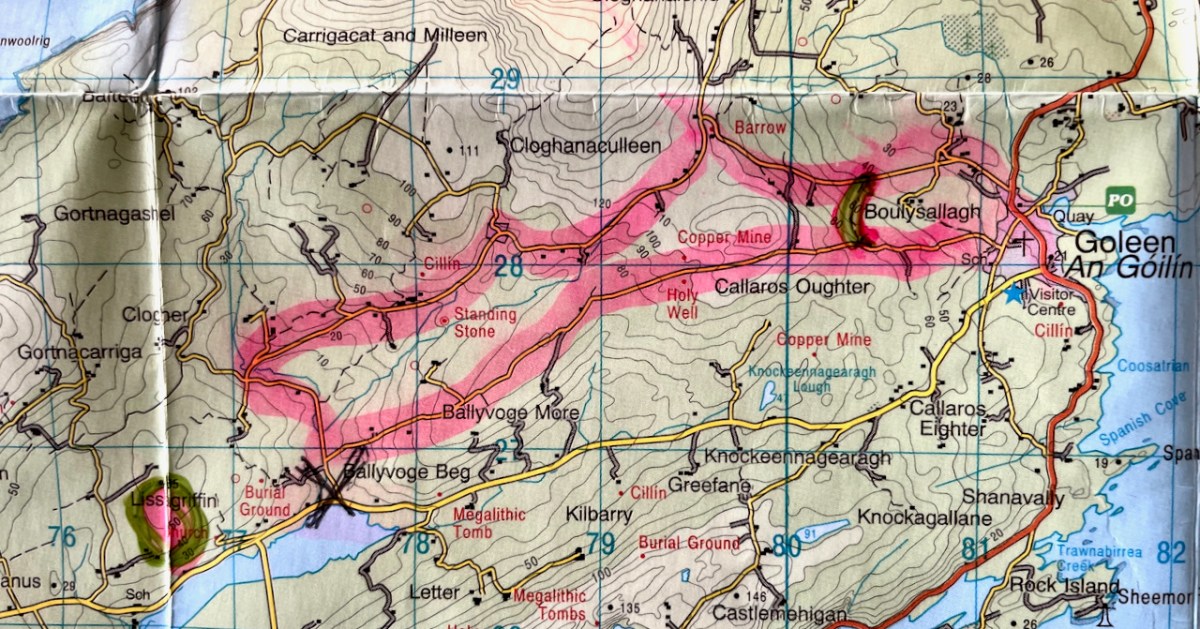
I’ve included a map (above) to show you where you are on the Mizen Peninsula, and a close-up (below) to show the route you’re following. The pink blob within the green circle at the lower left is Lissagriffin Medieval Church in case you have the inclination for a little side trip.

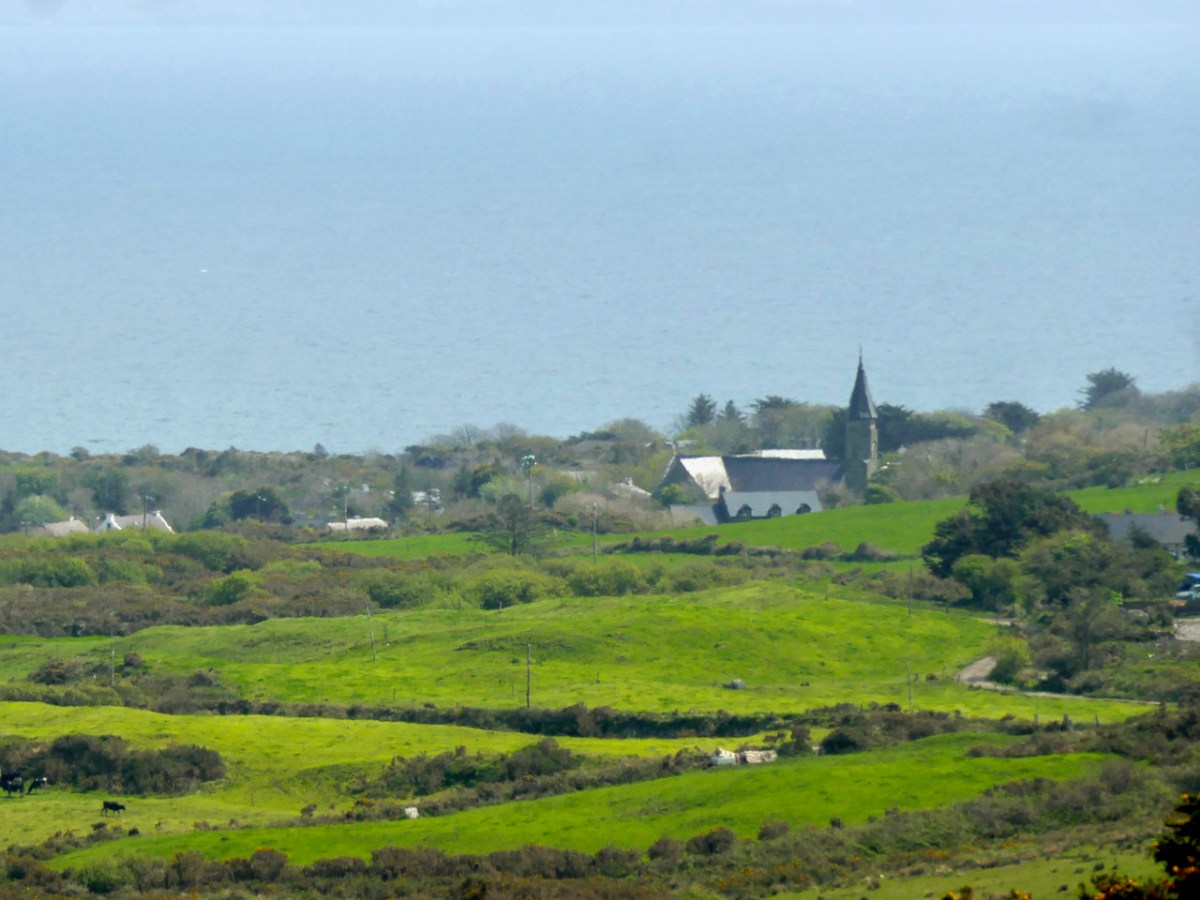
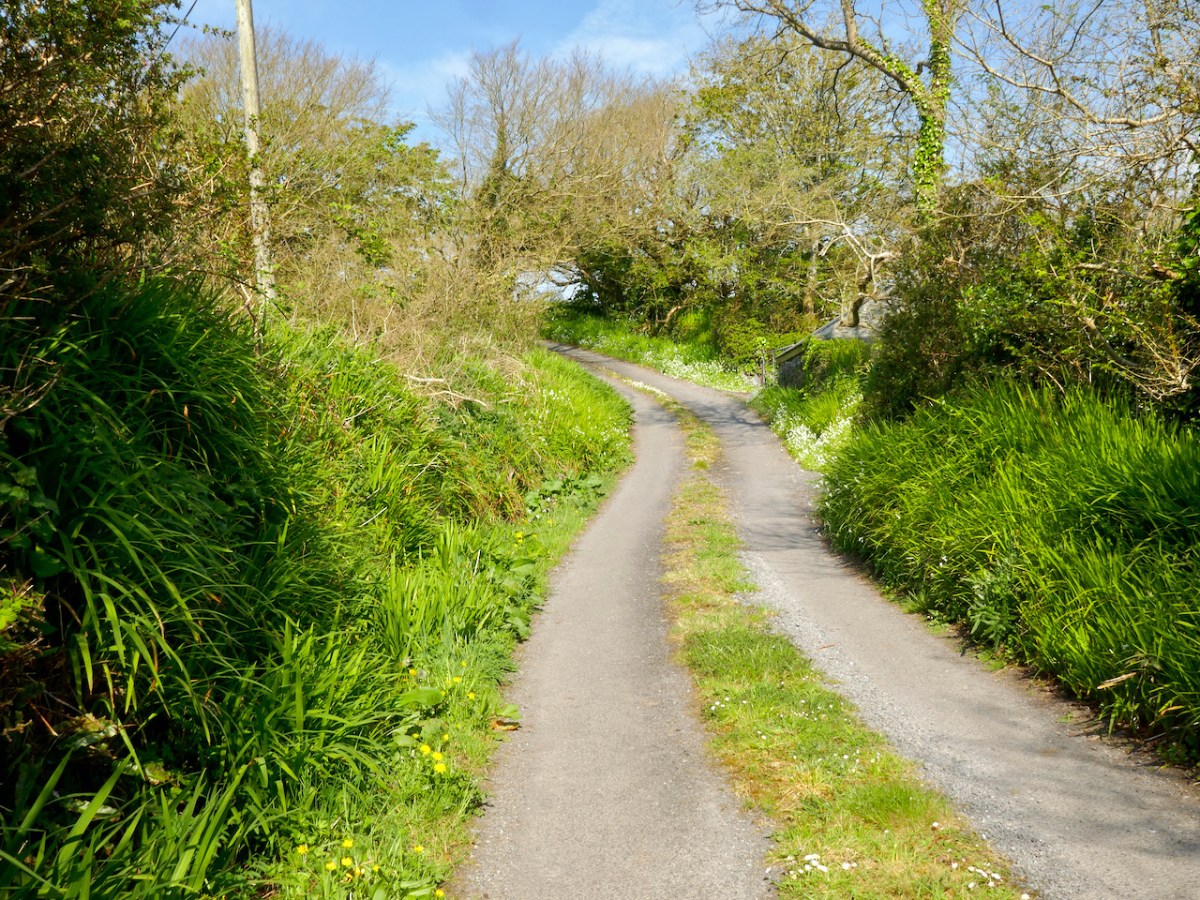
Walk up to Goleen Catholic Church, take a sharp right and you’re on your way. This first part will involve some huffing and puffing, but you’re on a country boreen fringed with wildflowers (wild garlic at this time of year) and with expansive views back to the sea and across a valley to Knockaphuca Mountain (another brilliant trail!) and to Mount Gabriel beyond.

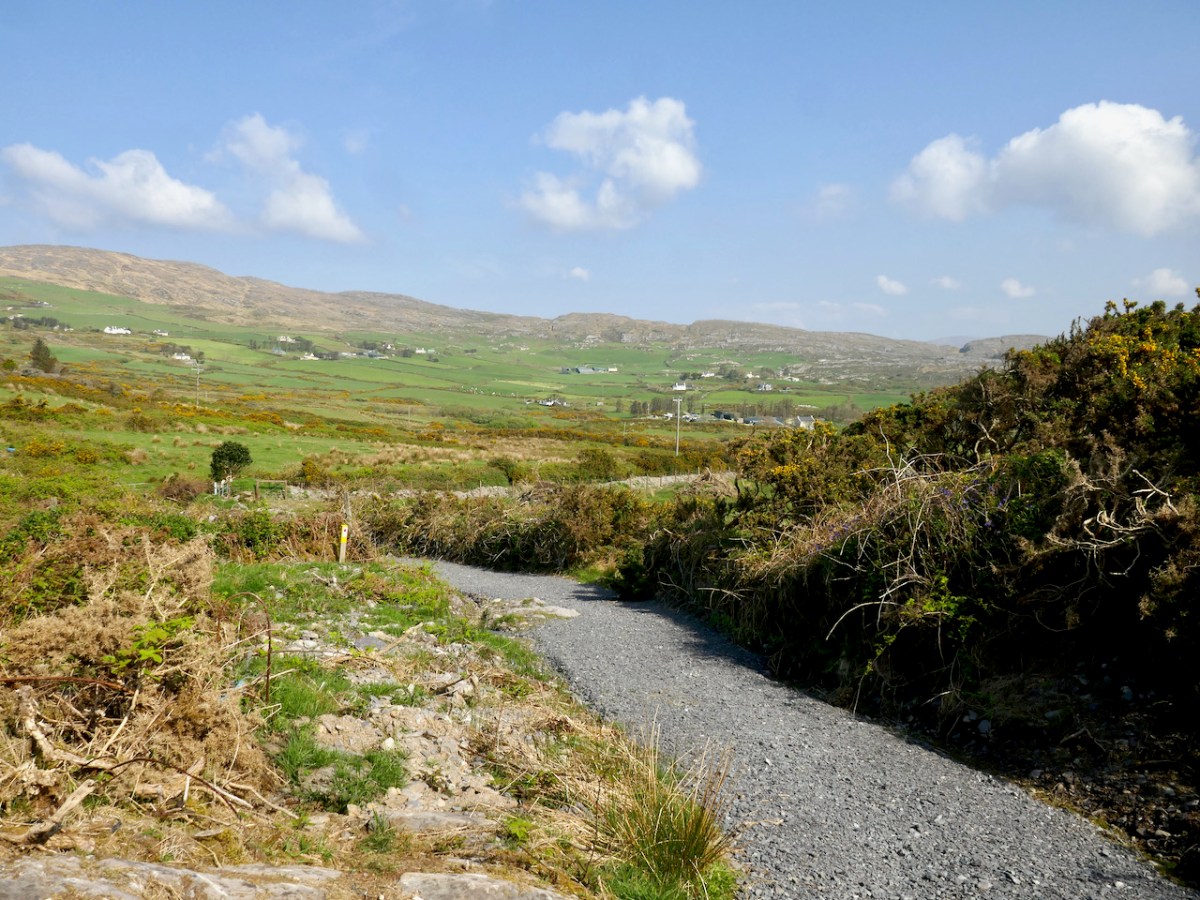
If you don’t have the time or inclination for a long walk, look out for a sign to the shortcut. It’s the curved green line on the lower of the two maps above. It will bring you back to the village, initially via a well-maintained gravel path (below), and then by road, for a 2km walk in all. 

If you decide to carry on, it’s uphill now for quite a stretch, but the views across to Knocknamadree and to Knockaphuca are worth the effort. Later in the year, the route will be dripping with Fuchsia and Montbretia, but right now the Navelwort is starting to sprout and stitchwort is rampant. 

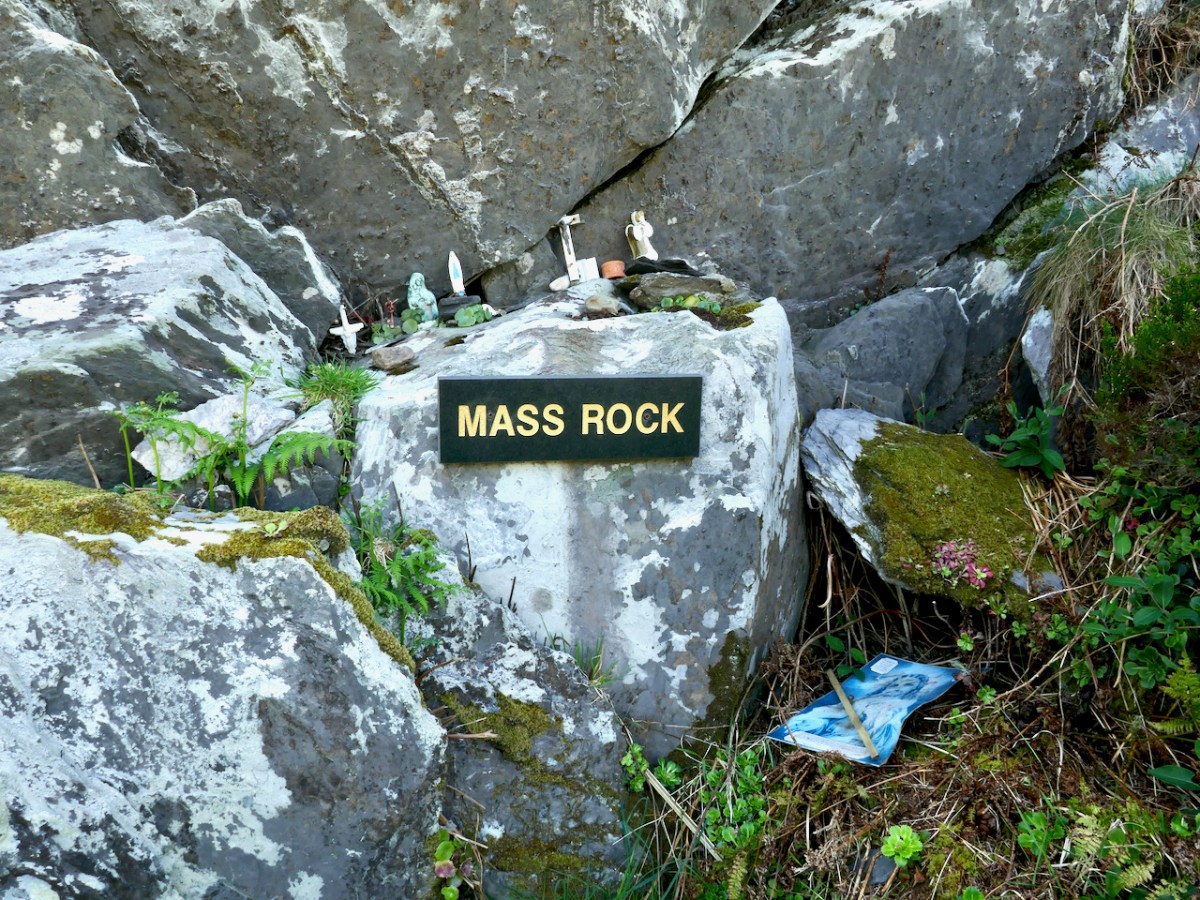
Once you’re up the hill the road levels out, the going is easy, and the views are now to the sea on your left and towards the distant Mizen Peak. And here’s the first surprise for you – a mass rock. Mass rocks, of course, were used in Penal times, when the saying of mass was outlawed and people met with their priest in faraway locations.

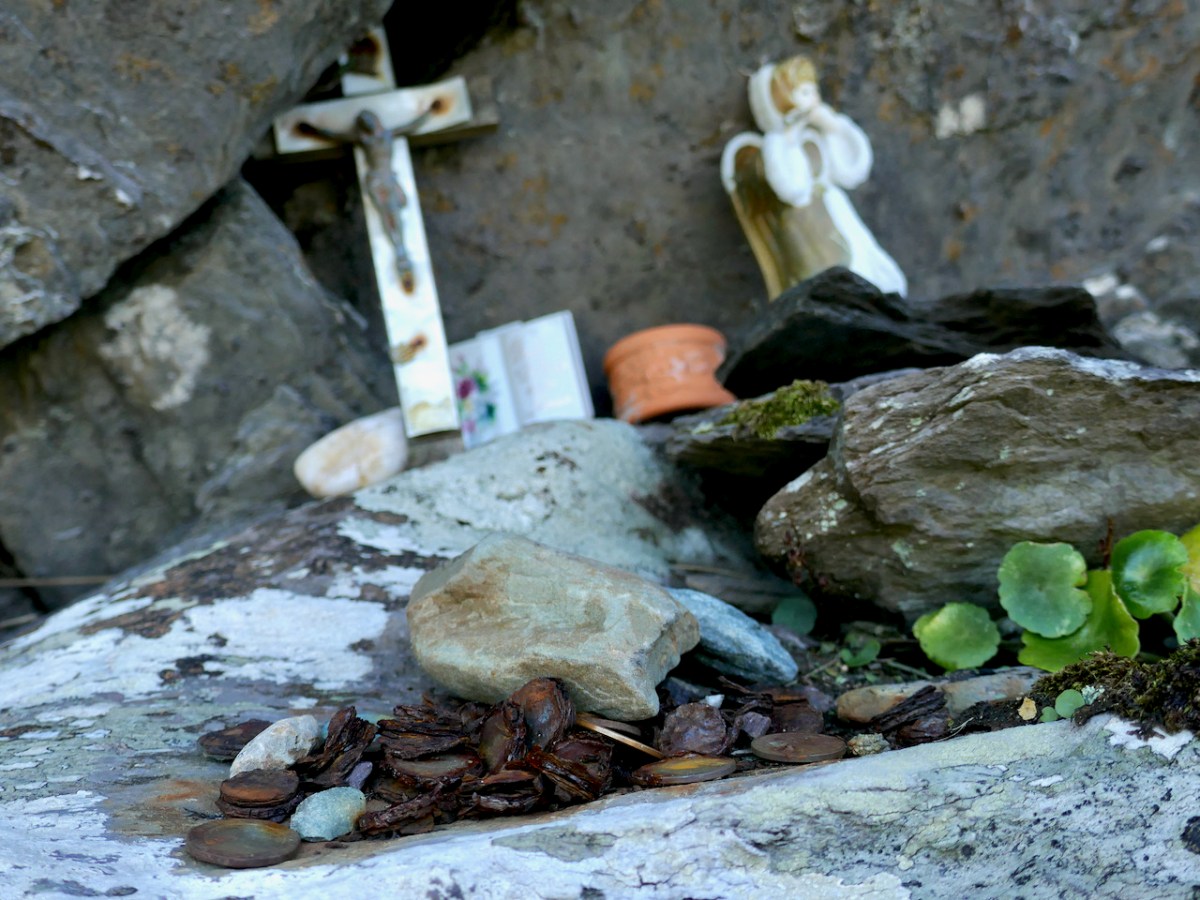
This one still lives in folk memory, and is still visited, by the evidence of various offerings left on the ledge. Some of the coins are so old they are peeling apart, while others look of more recent vintage.

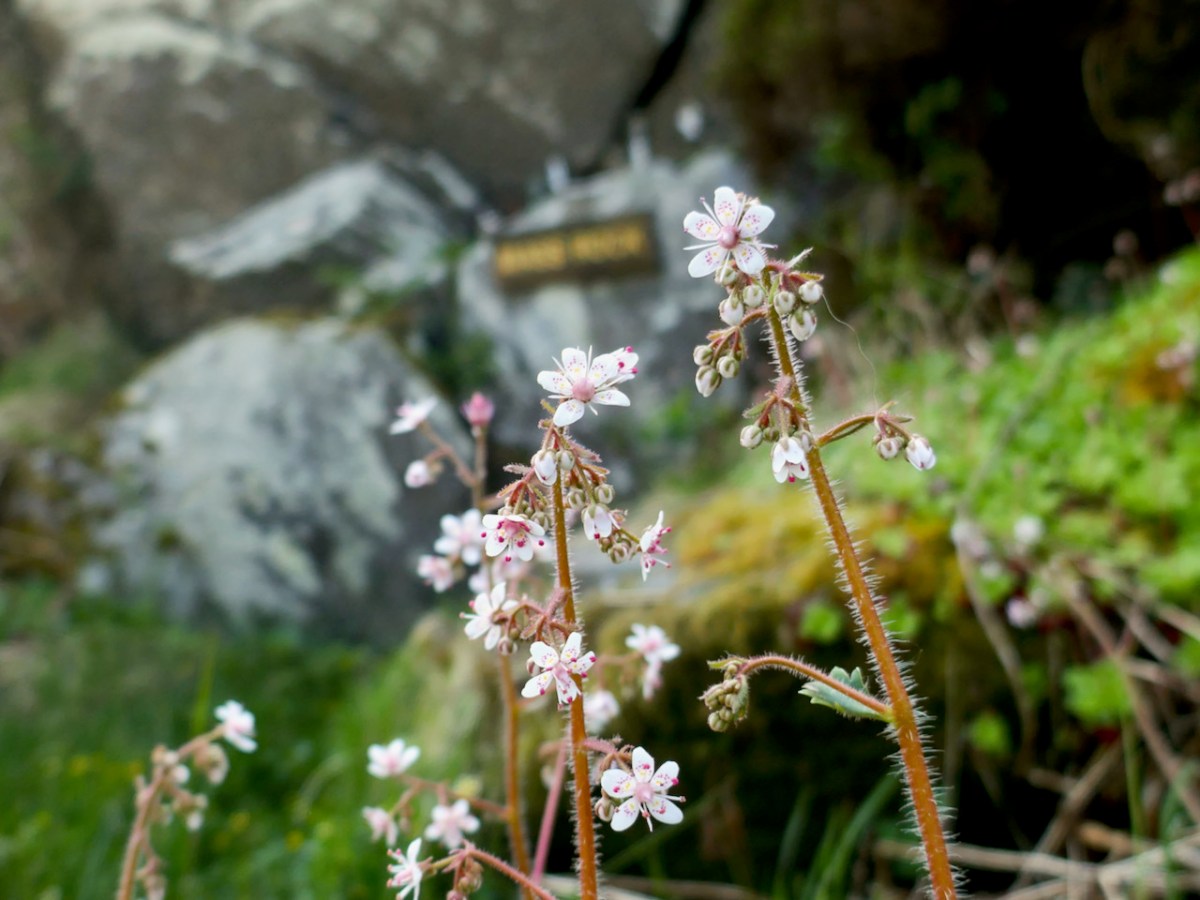
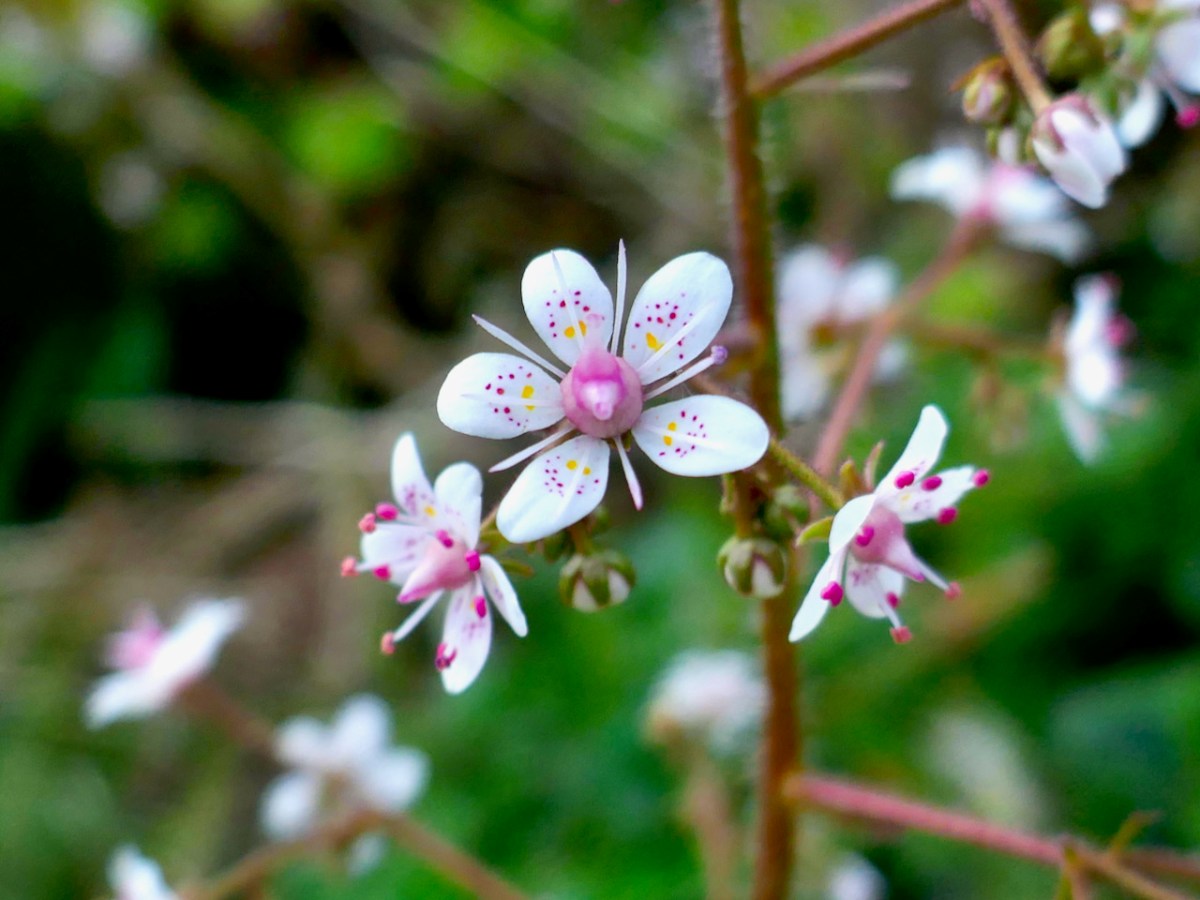
St Patrick’s Cabbage Is just starting to bloom. This is a native plant and part of a curious set known as the Lusitanian Flora which only occur in southwestern and western Ireland and in the Iberian Peninsula.

This one rewards a close look – the flowers are white but the petals have pink and yellow dots and the anthers are a startling deep rose colour. A domestic hybrid known as London Pride is grown in many gardens.

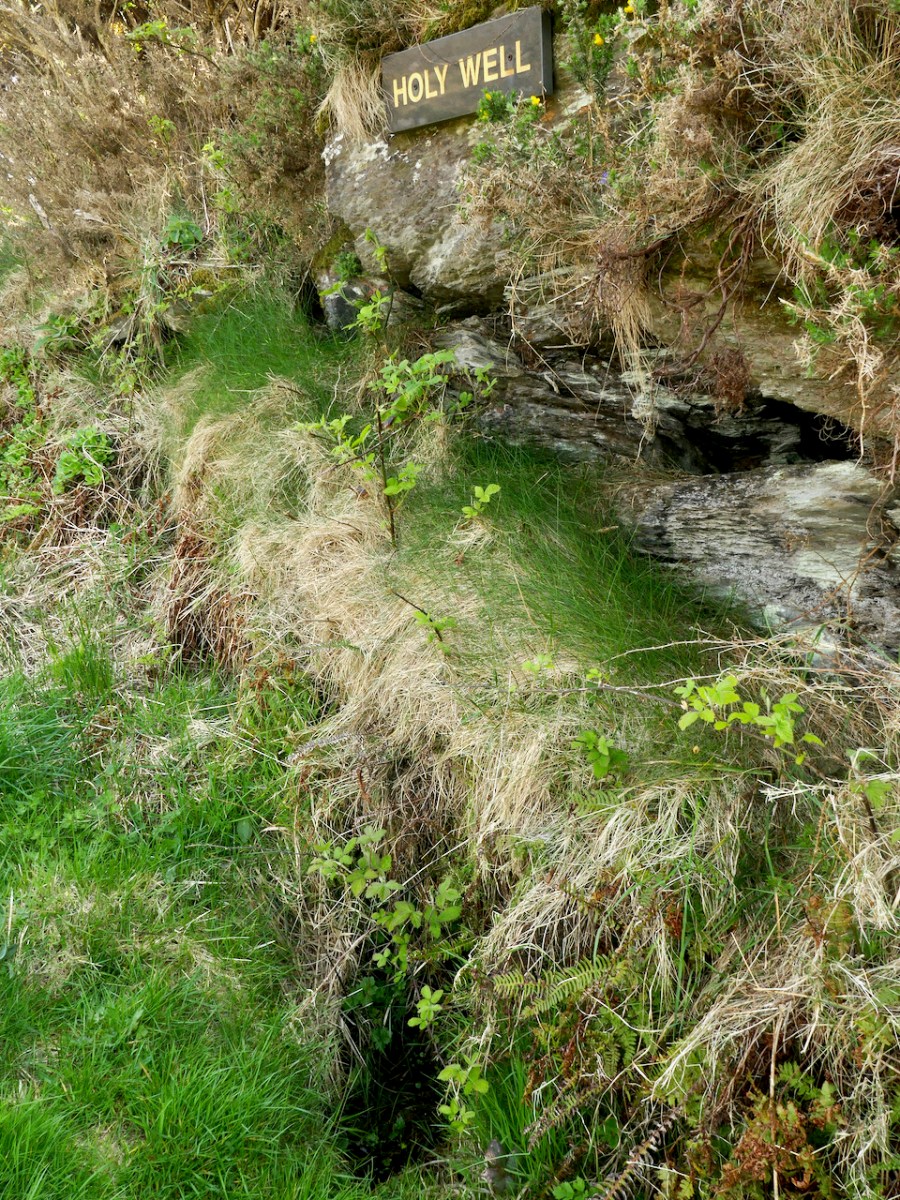
The second surprise is a holy well, just a little further along. It’s not a very impressive sight – looks like a ditch, in fact, although there’s a bit more going on under all that grass and brambles. The location is marked but there are no indications that anyone has visited in many years. No offerings here, no cups or rag trees, no statues or prayer cards. But nothing deters Amanda, and she has written about the well here, including the fact that its name is Tobairin a ‘Bhothair – small well of the road – and that it was once revered.

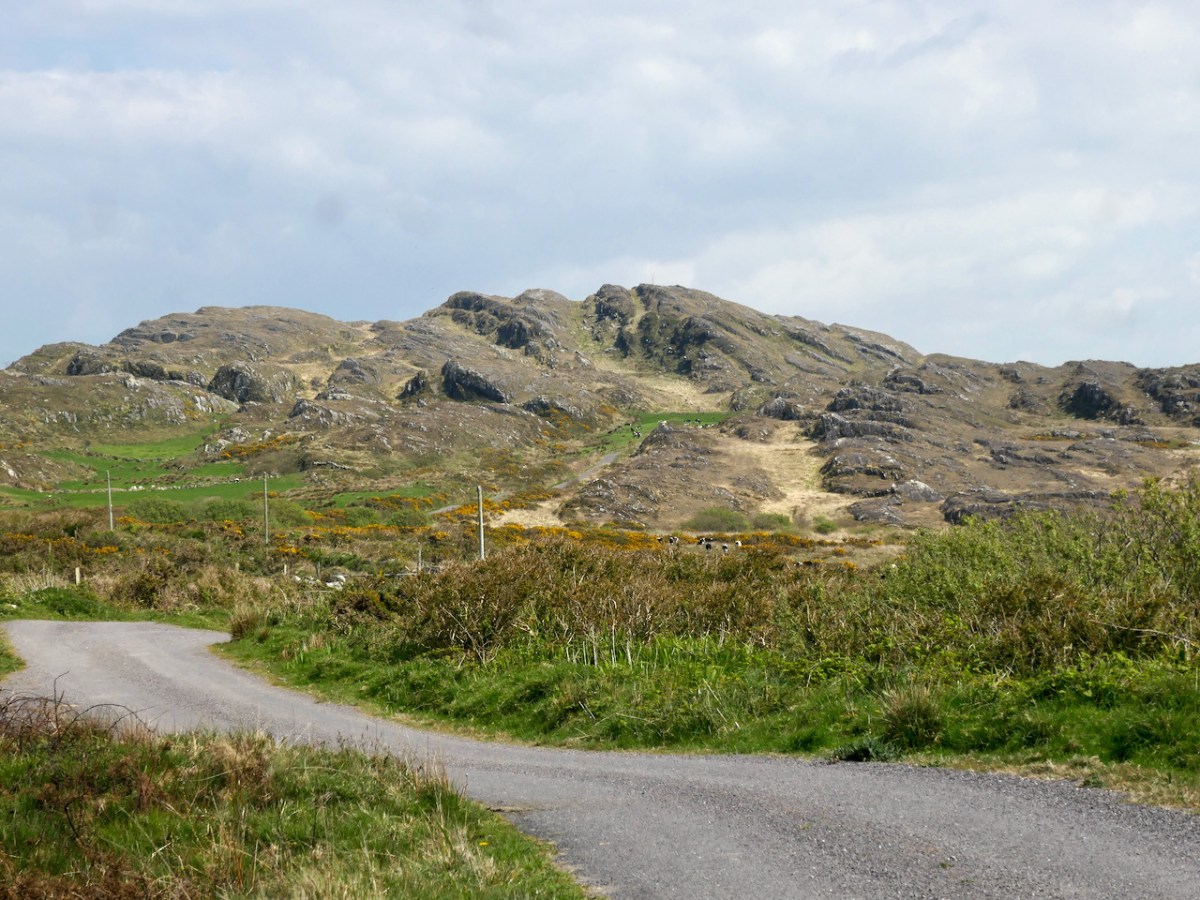
From the holy well keep going westwards and the reward is an immense view to the end of the Peninsula and the Mizen Peak (below). It’s a gentle downhill all the way until you get close to the main Goleen – Crookhaven road.

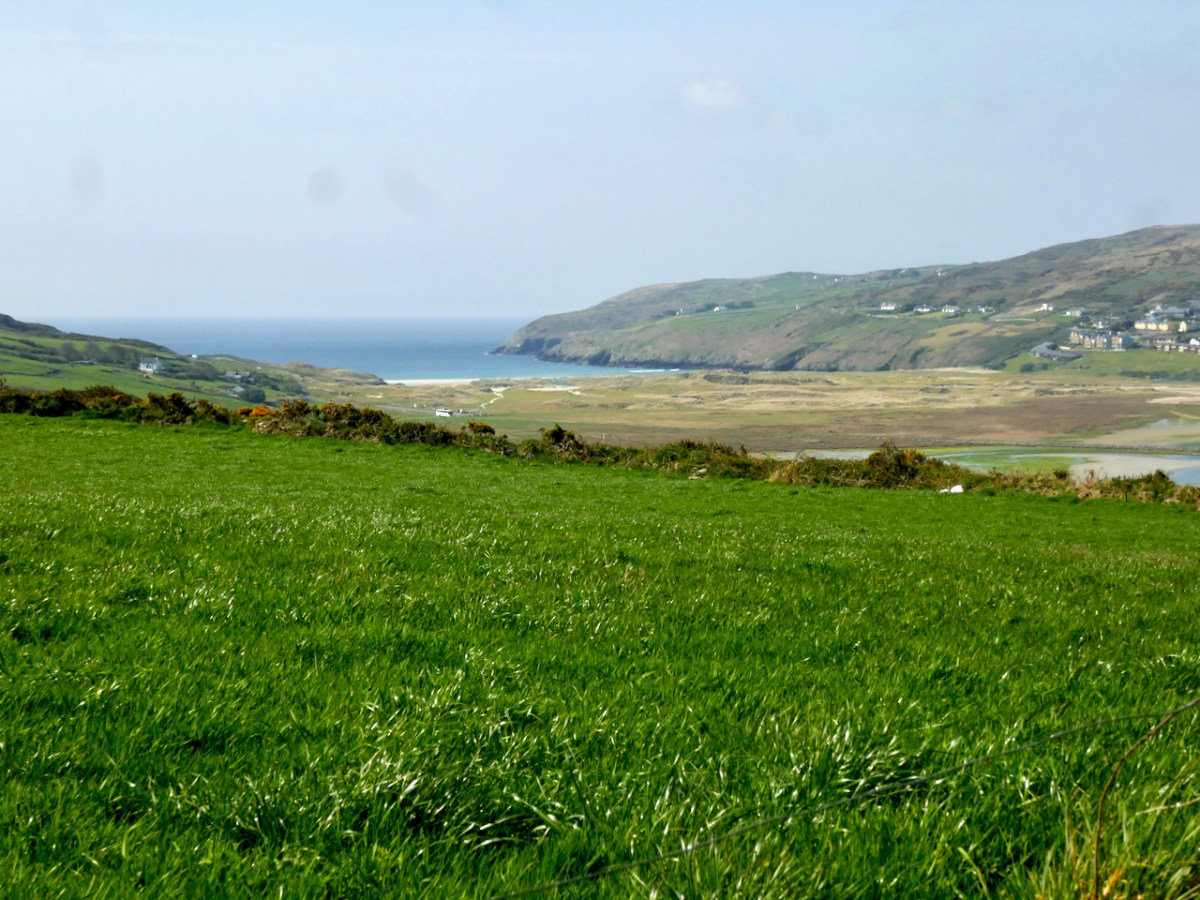
At this point, nobody could blame you for retreating to the snug at O’Sullivan’s Bar in Crookhaven for a pint coffee and a crab sandwich, but of course you are only half way through the walk if you want to do the full loop. So turn right and then right again, and start climbing as the road heads back to Goleen over the hills and away from Barley Cove (below)

The views don’t really start until you’re quite high up, but the road is peaceful and rural – a good time for contemplation, perhaps.

Once you’re on the downhill stretch you are facing east and once again have those glorious views across to Knockaphuca, with Mount Gabriel behind.

And when you hit Goleen – go on, you deserve it, have some ice cream!

Walking West Cork – Half the Colla Loop!

The first post of 2021…

I never expected to live in plague-ridden times, but that’s where we find ourselves – at the start of a new year. And – because of the plague – our travels are restricted once again. On the very last day of 2020, keeping things as local as possible, we hastened to Schull and explored half of the Colla Loop on the Fastnet Trails.

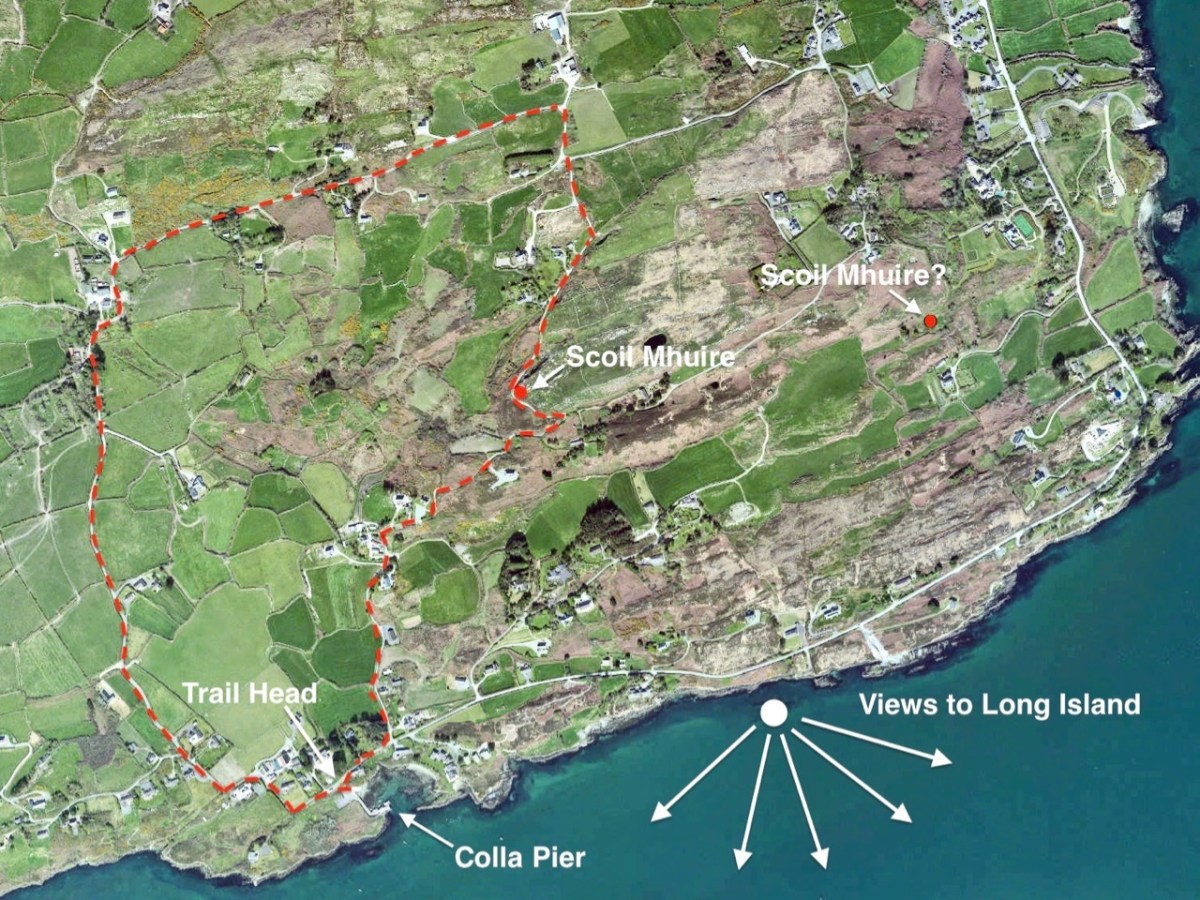
We started at the Trailhead by the pier at Colla (header picture). I have drawn our route as a dotted red line on the aerial view, above: we walked ‘widdershins’ – anti-clockwise. You will find the whole of the Colla Loop on the leaflet here. The full trail from Schull and back is 9km: by my calculation our own version carried us a mere 4km: there was a lot of uphill, though, and it was very satisfying with great views to the south, over Long Island Sound, and then to the west: it’s always good to be following the setting sun.

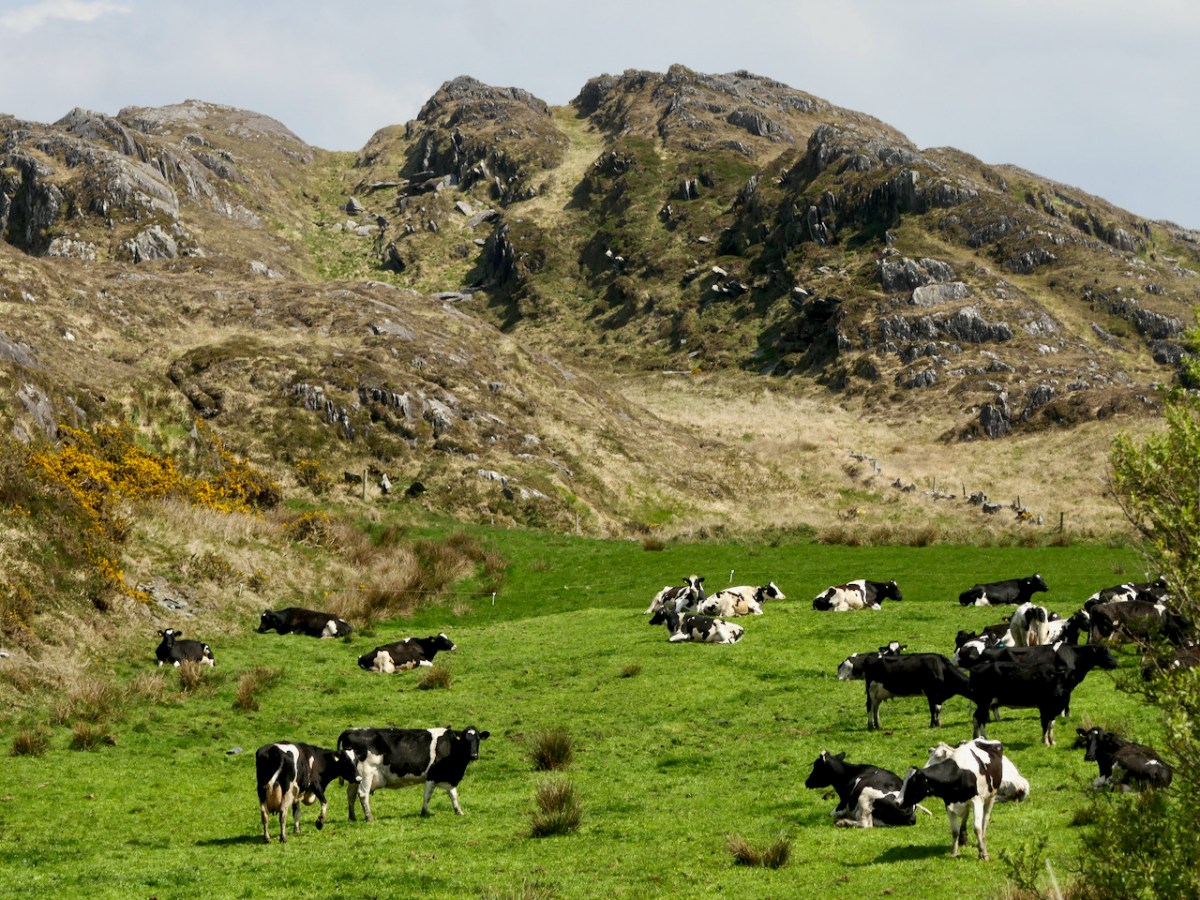
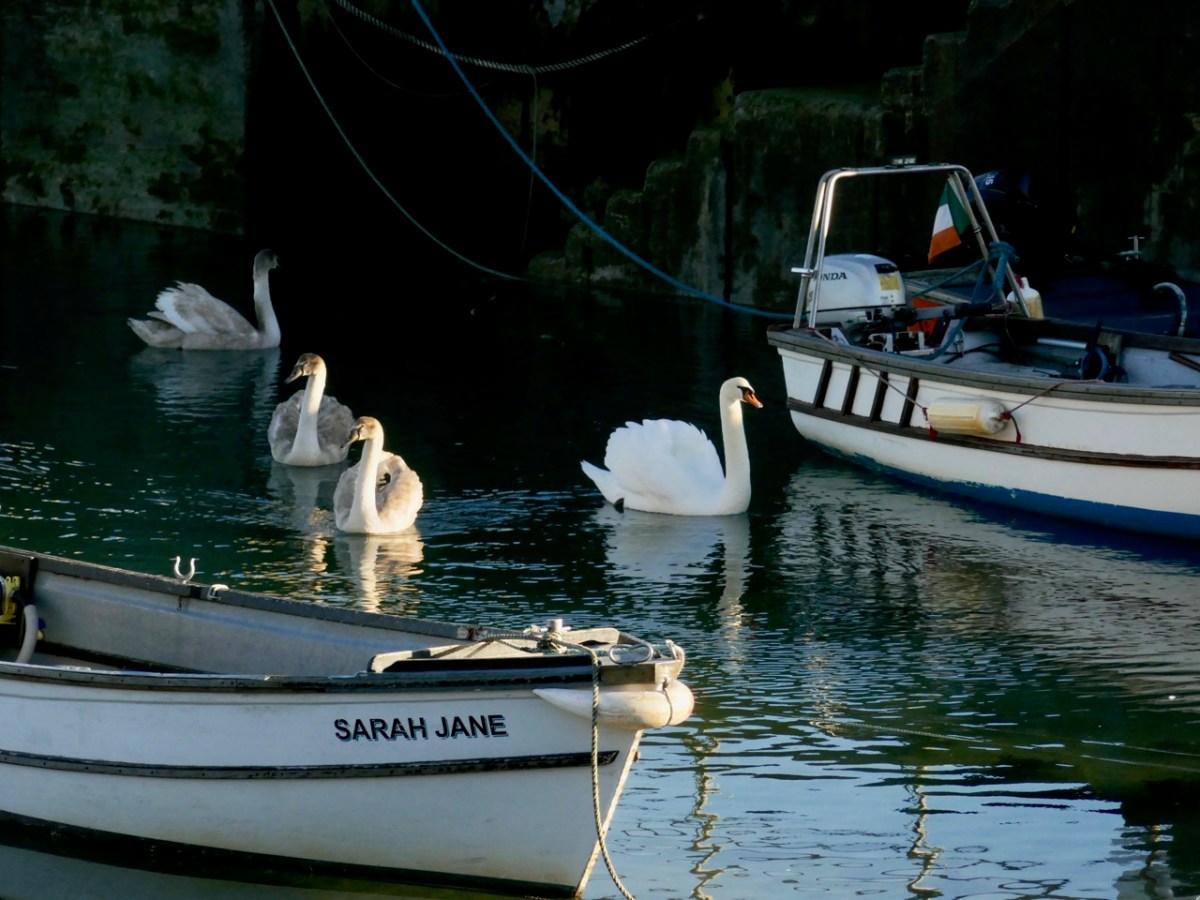
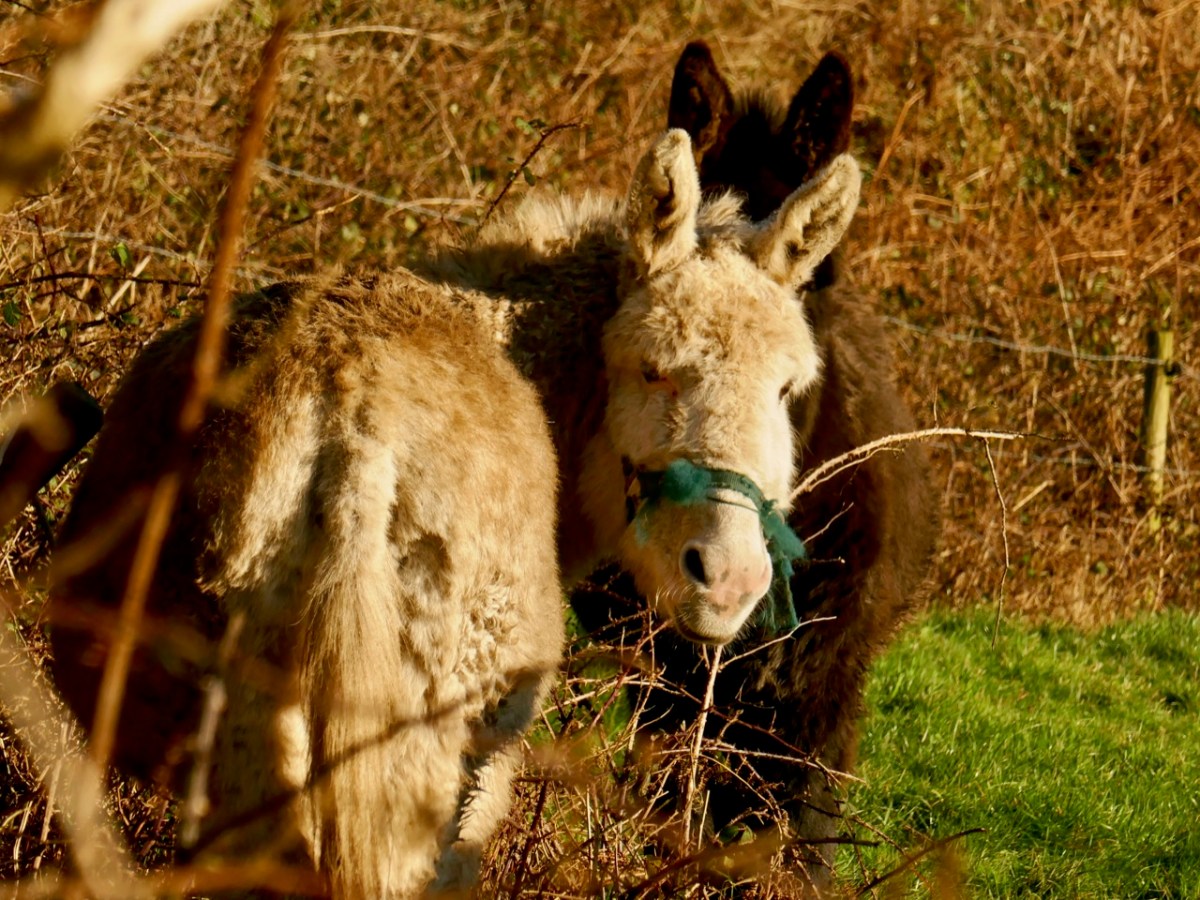
Colla had been taken over by a swan family, who wished us well on our journey. Their sentiment was echoed by some four-legged friends on the steep way up the hill:

As we left the small boreen, following a green path through a signed gate, we began a climb which opened up a panorama behind us, encompassing Long Island and Cape Clear. The day was perfect, a few scudding clouds giving perspective to a a vivid blue sky which seemed to have been borrowed from the summer:

In fact, the views in every direction get even more rewarding as this walk progresses: we were surprised that we had never ‘discovered’ this little corner of West Cork before! Every rise, and each bend in the track, opens up a new prospect.

A ‘telephoto’ view towards the end of the Mizen (above) reveals the inlet of Croagh Bay in the foreground, with Crookhaven beyond. You can just make out the top of ‘Black Castle’ at Castlepoint in the centre of the picture and a Napoleonic-era signal tower at the summit of the highest ground at Brow Head.

At the highest point of the walk we are back on a partly metalled boreen. I was particularly keen to find the site of . . . the ancient school of Sancta Maria de Scholia, ‘a place known in early times as a centre of learning’. . . which is indicated on the Archaeological Monuments Survey just to the right of the bend in the trackway, above. However, this record has been superseded by another site further to the west (indicated with a question mark on my aerial view) where it is noted:

. . . In rough grazing, on a S-facing slope overlooking Long Island to the S and Skull Harbour to the E. Recent reclamation work exposed a level earthen platform-like area faced externally on its curving S side by a roughly constructed drystone revetment. According to local information, this is the site of Scoil Mhuire or Sancta Maria de Scala, a medieval church and school that gave its name to this townland and to Skull village . . .
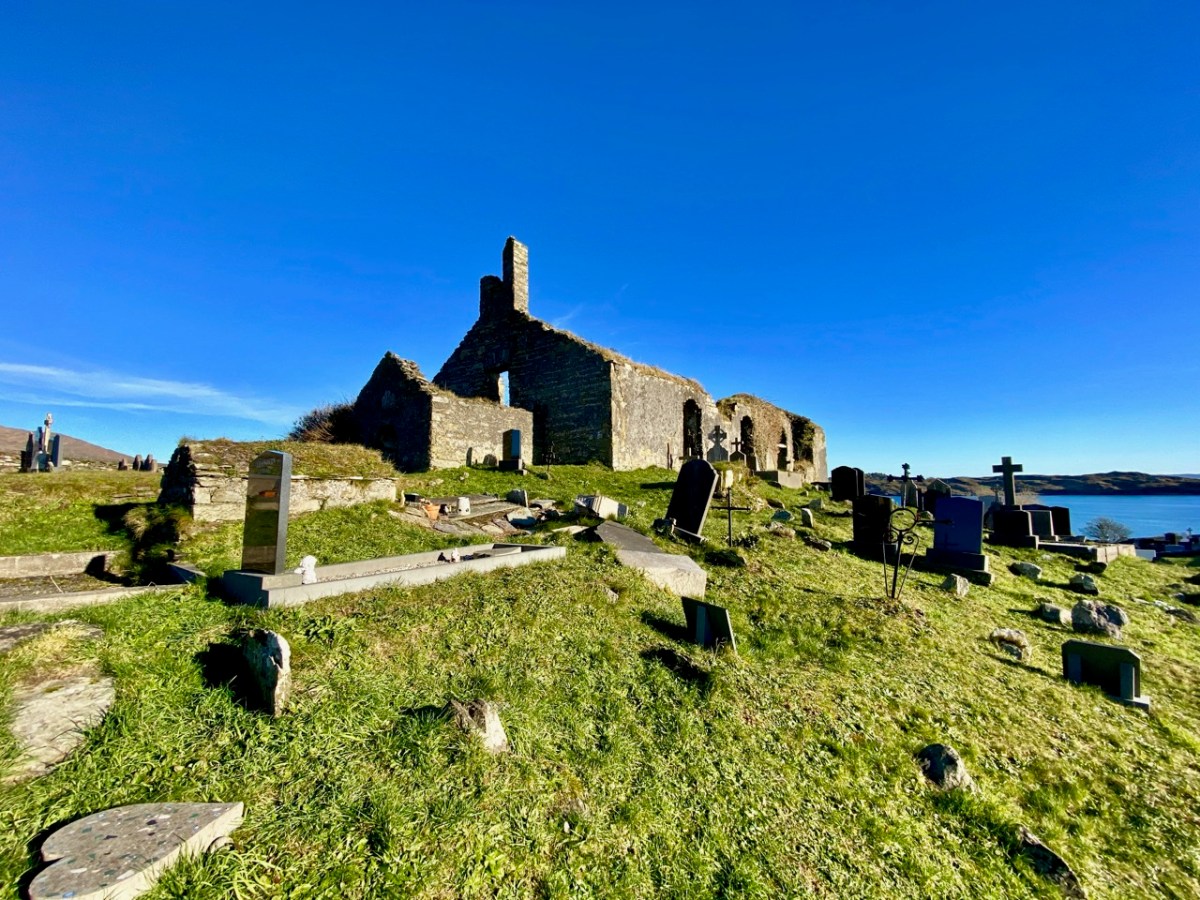
National Monuments Record 2009 – CO148-040

I suppose we can make up our own minds as to which of these two sites claiming to have given Schull its name is the most likely candidate. If it’s about having a good view, for me it has to be the first.

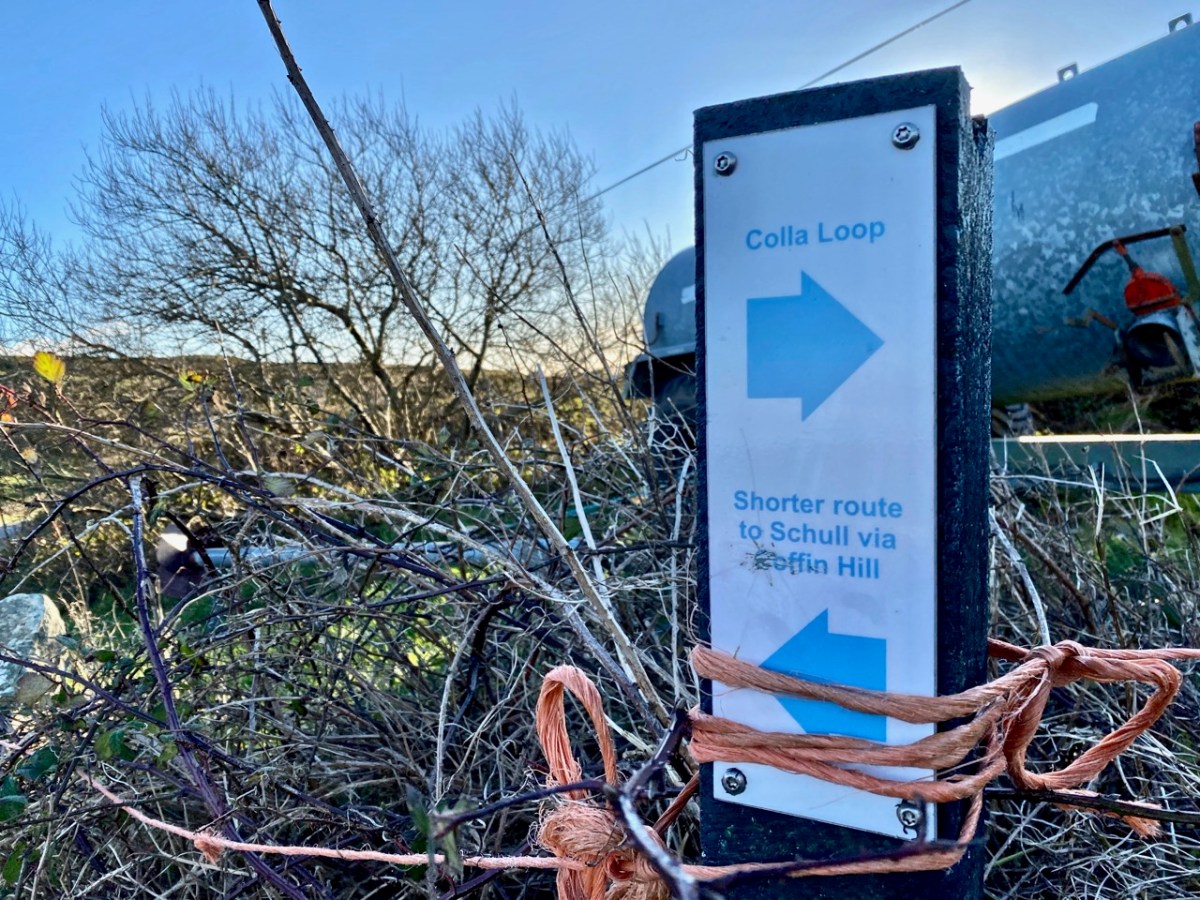
As shadows lengthen, a trail marker (above) tells us we have been walking on Coffin Hill. I can find no specific reference to this name and can only assume it was the route used to reach the burial ground just outside Schull village when coming from settlements to the north.

From the high ground we had clear views of Schull set below Mount Gabriel (upper picture); our route turned west along the ridge and followed the sun. We wanted the idyll to go on forever . . .

The road began to descend, and we found ourselves approaching a neighbourhood of scattered houses that heralded the way back to Colla. On our half-a-trail we passed half an abandoned house: the other half still shows signs of occupation:

We could not have celebrated the close of such a momentous year in a better way! We are determined to rise to the challenge of the restrictions we are currently faced with and discover all of our beautiful byways. We are so fortunate to live in this wonderful land, and we look forward to heading out with you on many more voyages during 2021!

Mizen Mountains 5 – Knockaphuca

Perhaps one of the most satisfying mountains on the Mizen, the 237m high Knockaphuca provides a well maintained waymarked trail best tackled as it is laid out – in a counter clockwise direction. You will go up the east side and down the steep west face. If you are lucky with the weather, as we were just before the longest day, you will have an experience which is hard to rival in this corner of Ireland. The loop walk is one of the latest sections of the Fastnet Trails which have been established to the west of Schull during 2019. All credit is due to the team which has so successfully organised and laid out these trails: this has involved much behind-the-scenes hard work.

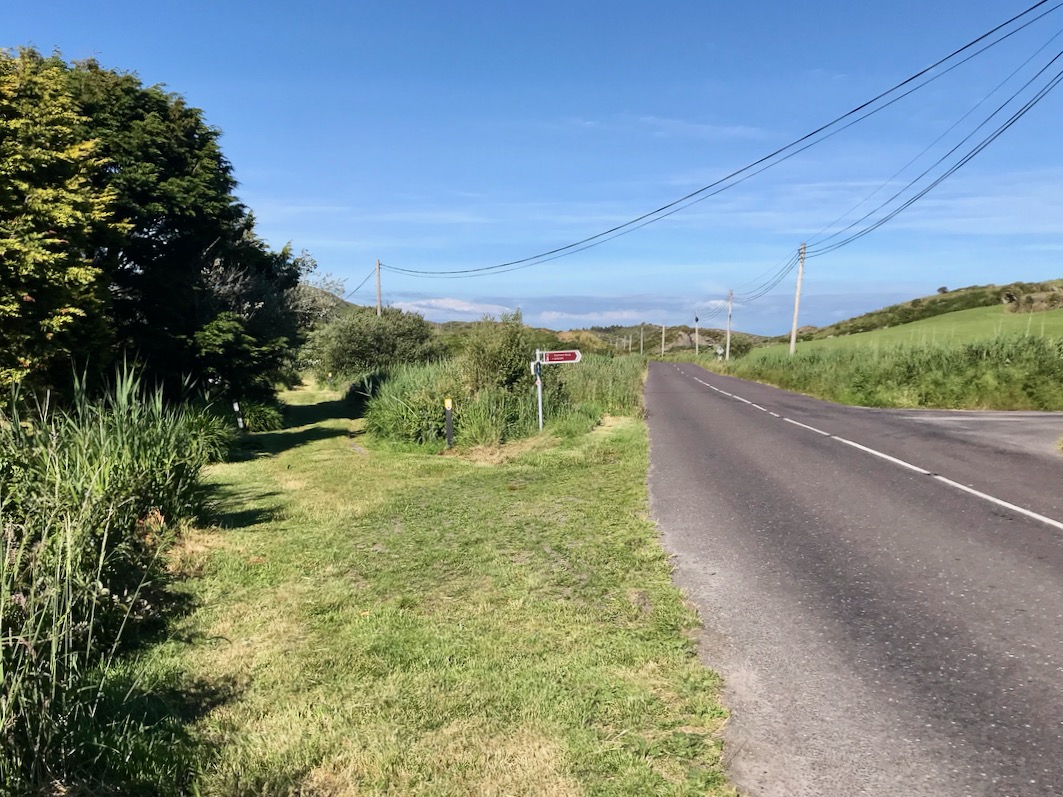
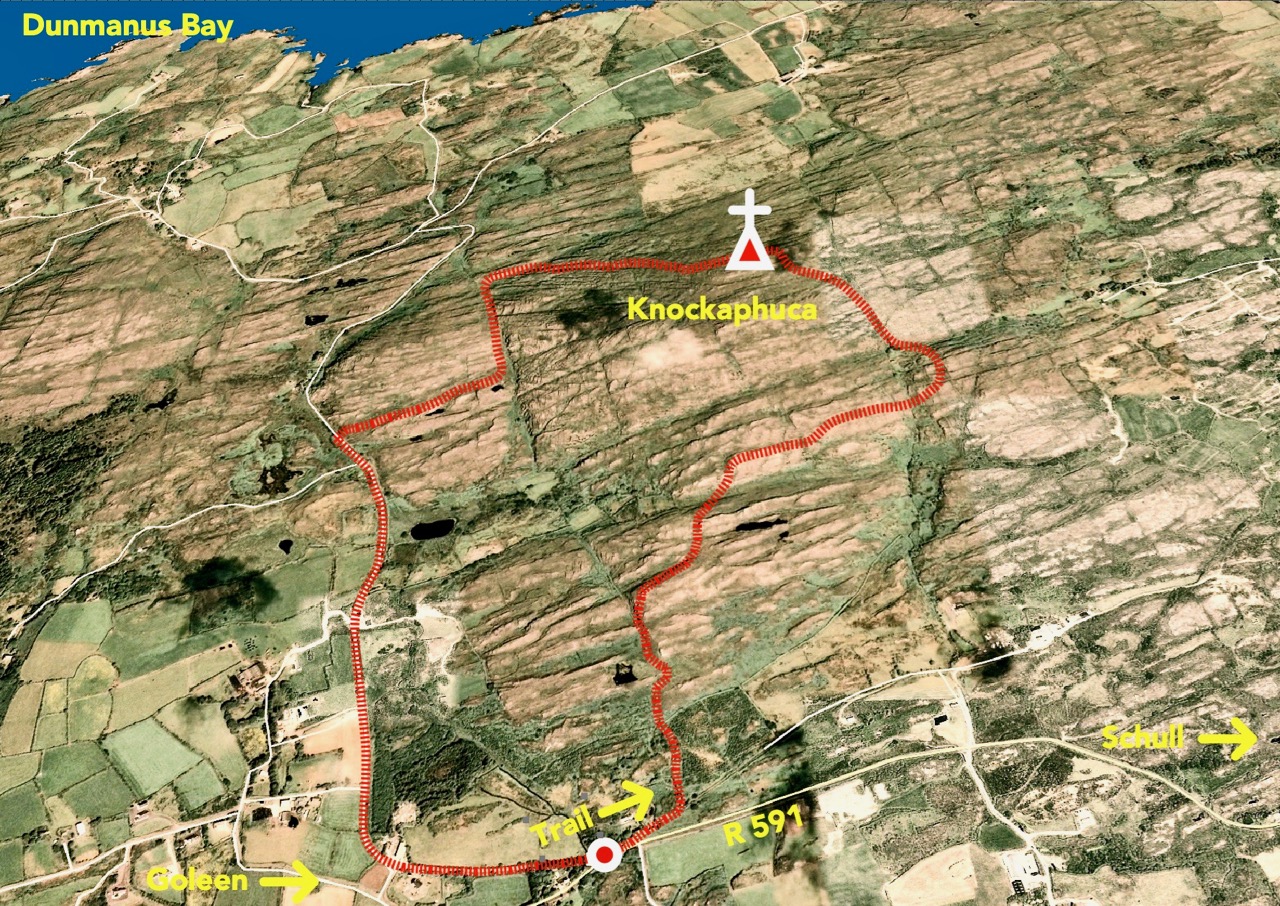
In fact the full Knockaphucka Loop trail starts in Goleen, and is 10km long. We joined it as it leaves the R591 road north of the village (upper picture – the route goes off to the left). The map above has the mountain section (which we followed) superimposed on the Google Earth contour information. The section we walked is 6.6km long, and climbs about 200 metres.

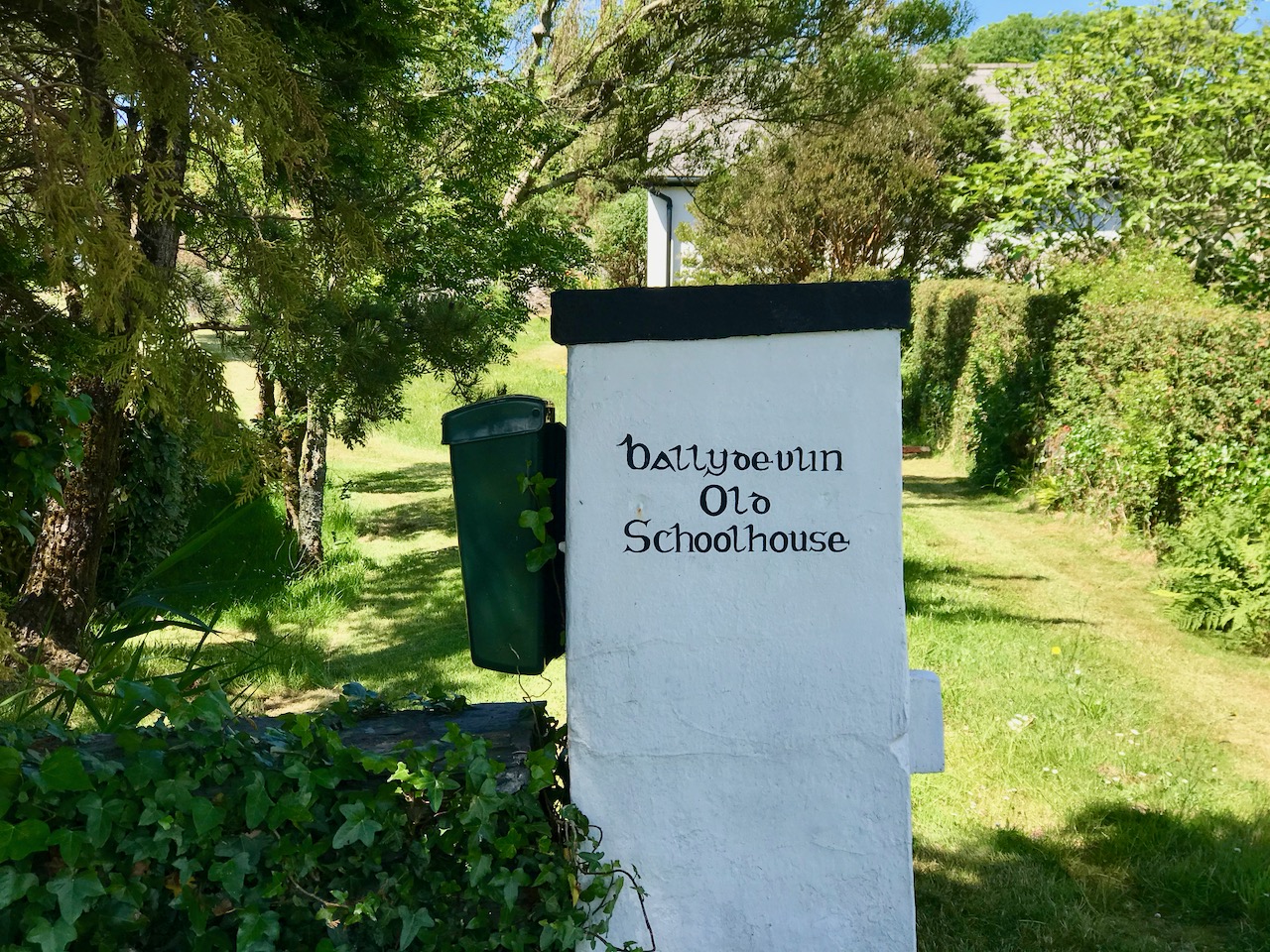
One of the first landmarks on the way is right at the point where the marked track to the mountain leaves the main road: Ballydevlin Old School House (above). There is another ‘Ballydevlin Old School’ nearer to Goleen; presumably one was the National School (established c1831) and the other may have been a denominational Church of Ireland school. This peculiar Irish duality still exists today in many places.

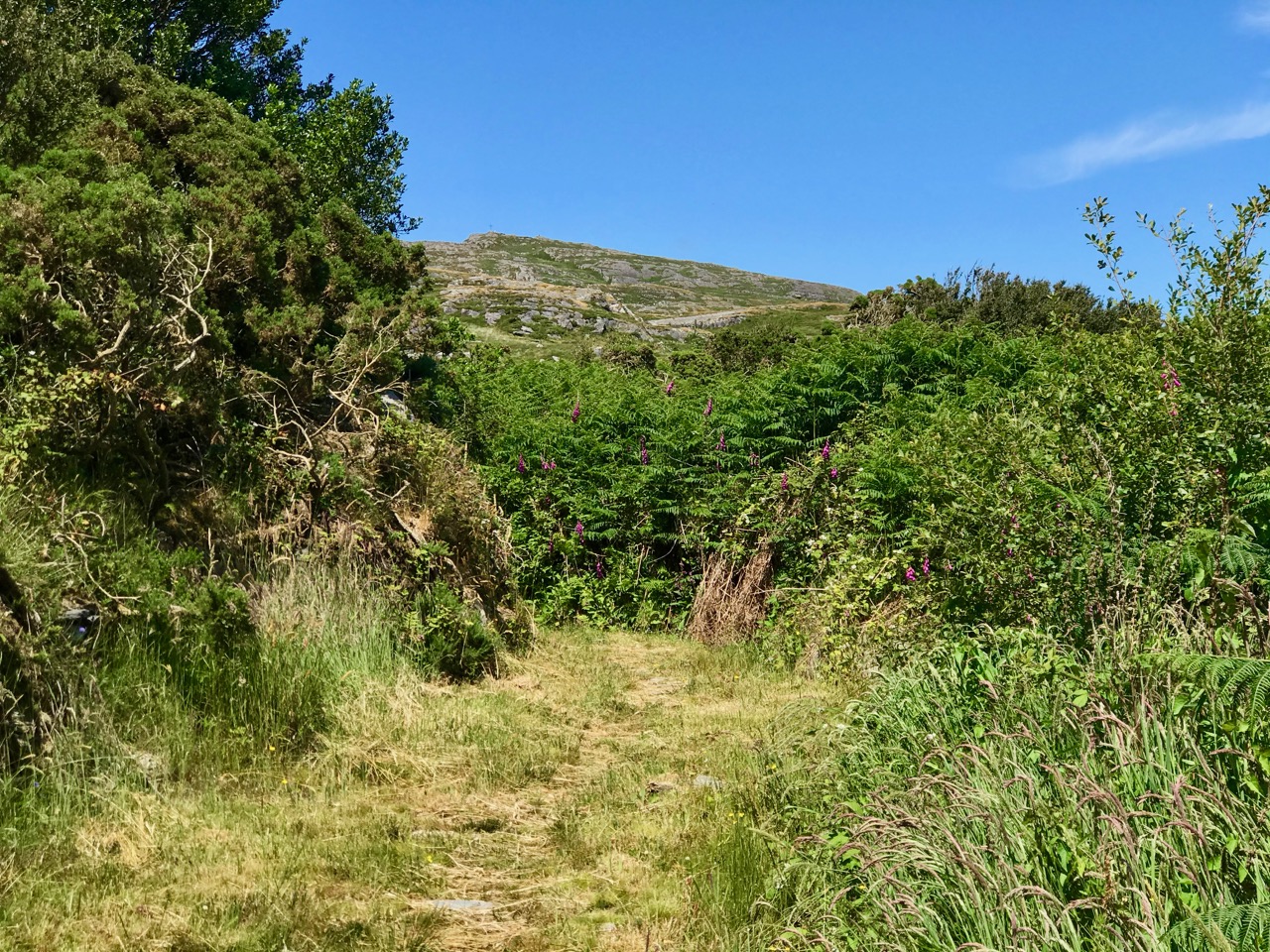
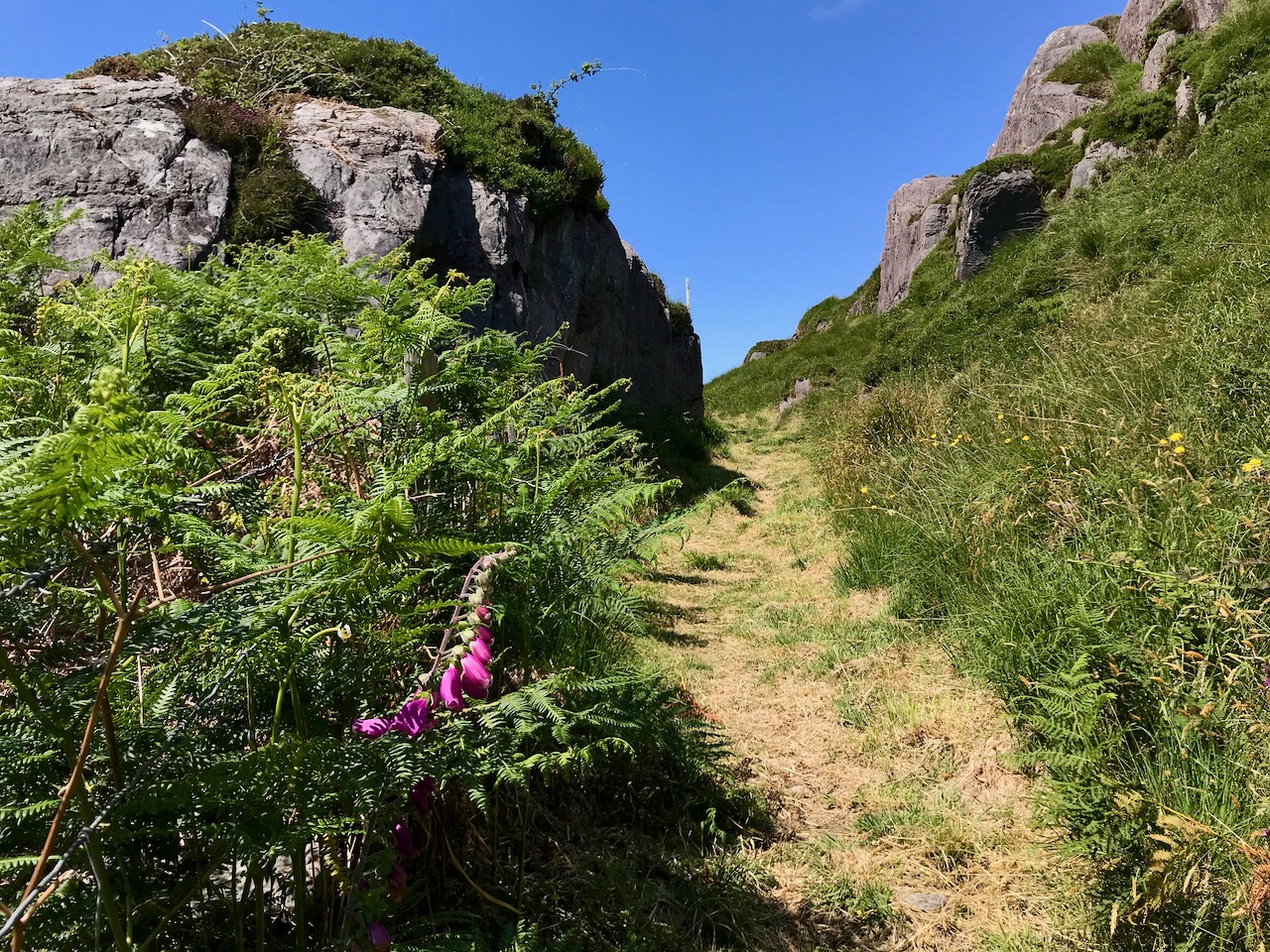
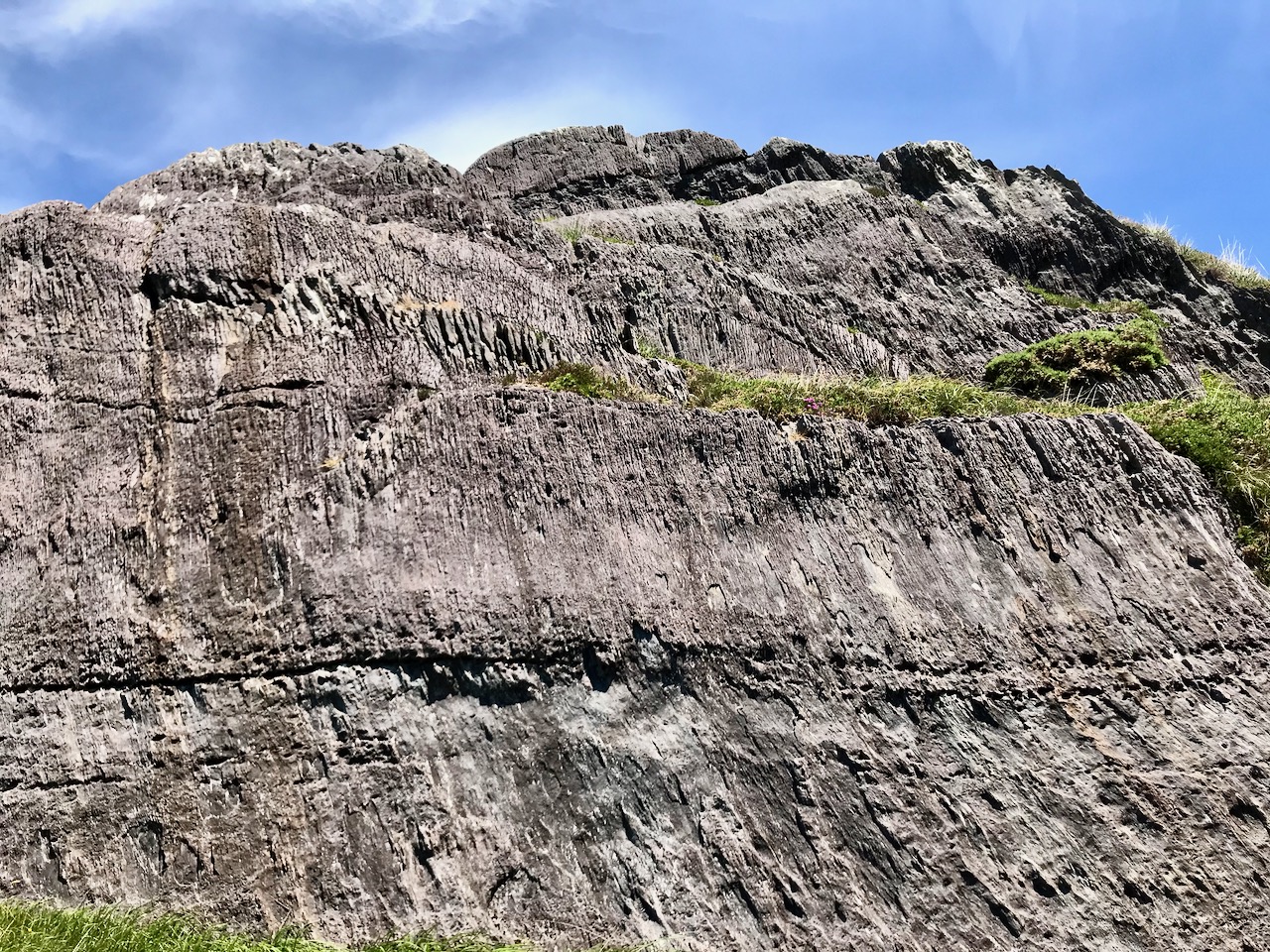
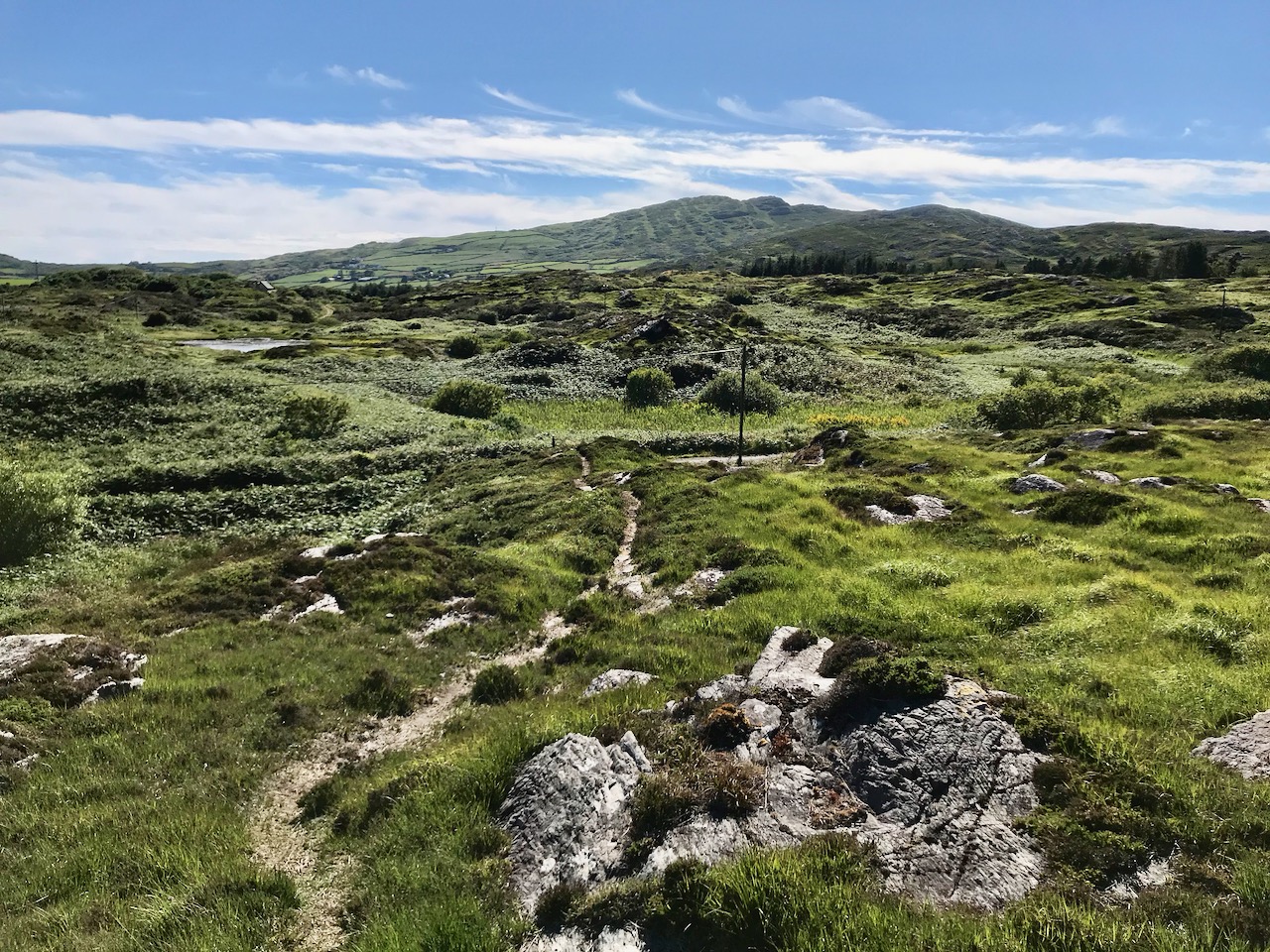
Once on the marked track you are in a paradise! An ancient green road takes you part-way up the mountain, passing through small gorges which must have been cut out long ago: even if you are not a geologist you can’t help being impressed by the rock formations – they could be works of art.

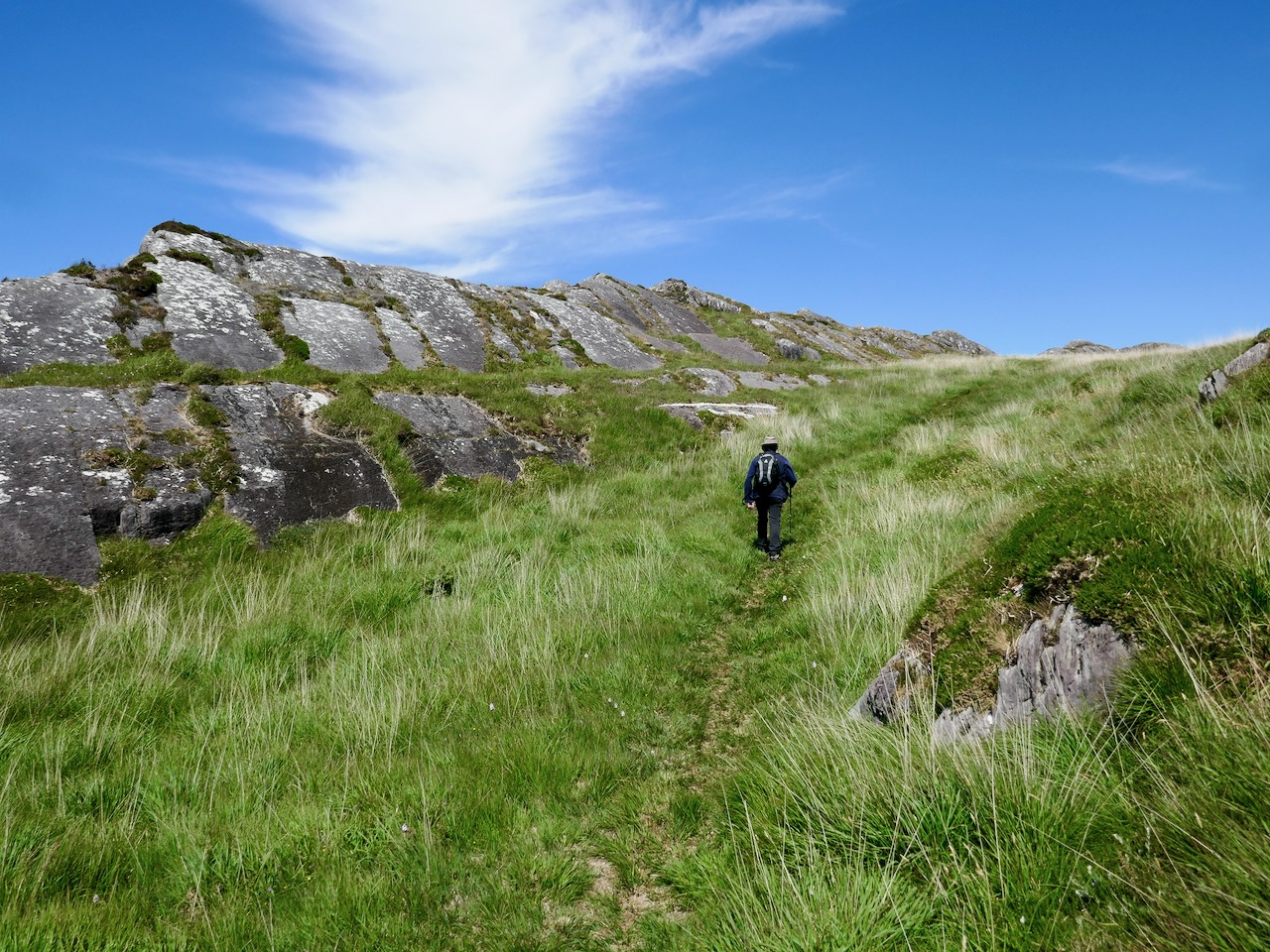
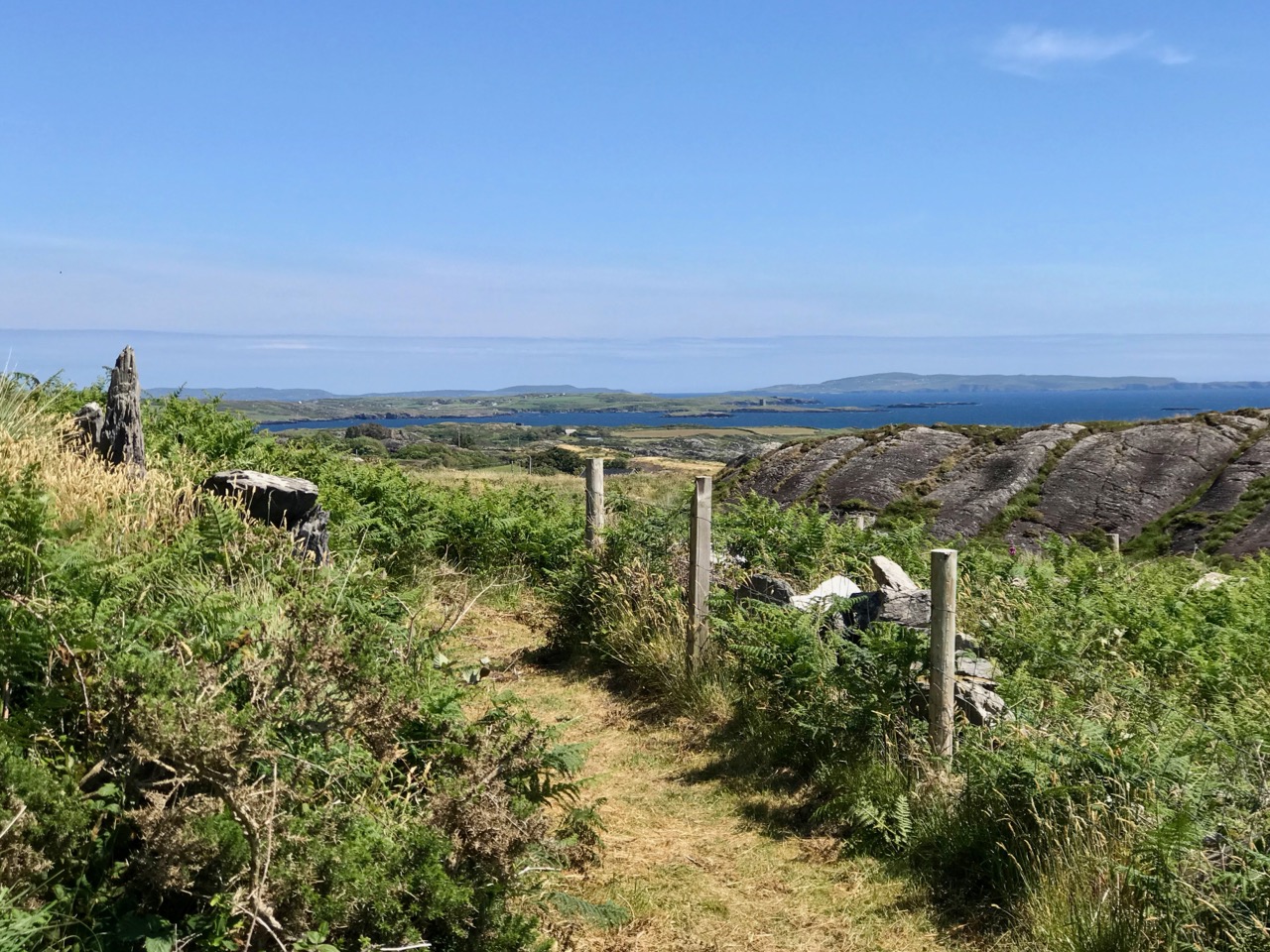
After a while the path turns to the east and follows narrow, grassy glens bordered by majestic, serpent-like outcrops. It’s here that the views begin to open out, particularly to the south. Always you think that there couldn’t be a finer prospect over the Mizen and across the islands of Roaringwater Bay, and always – as you climb higher – you are surprised by the next, which is even better.

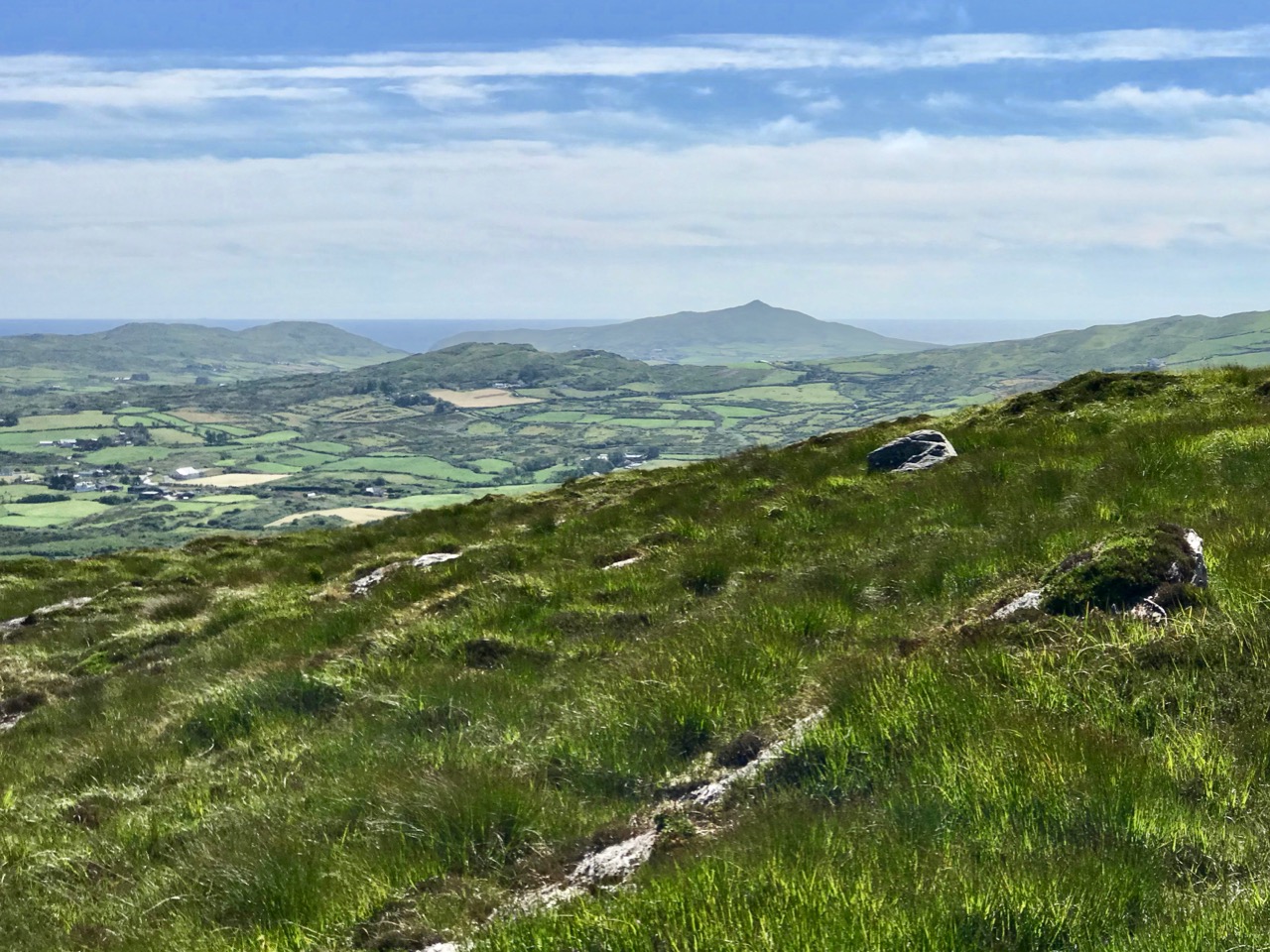
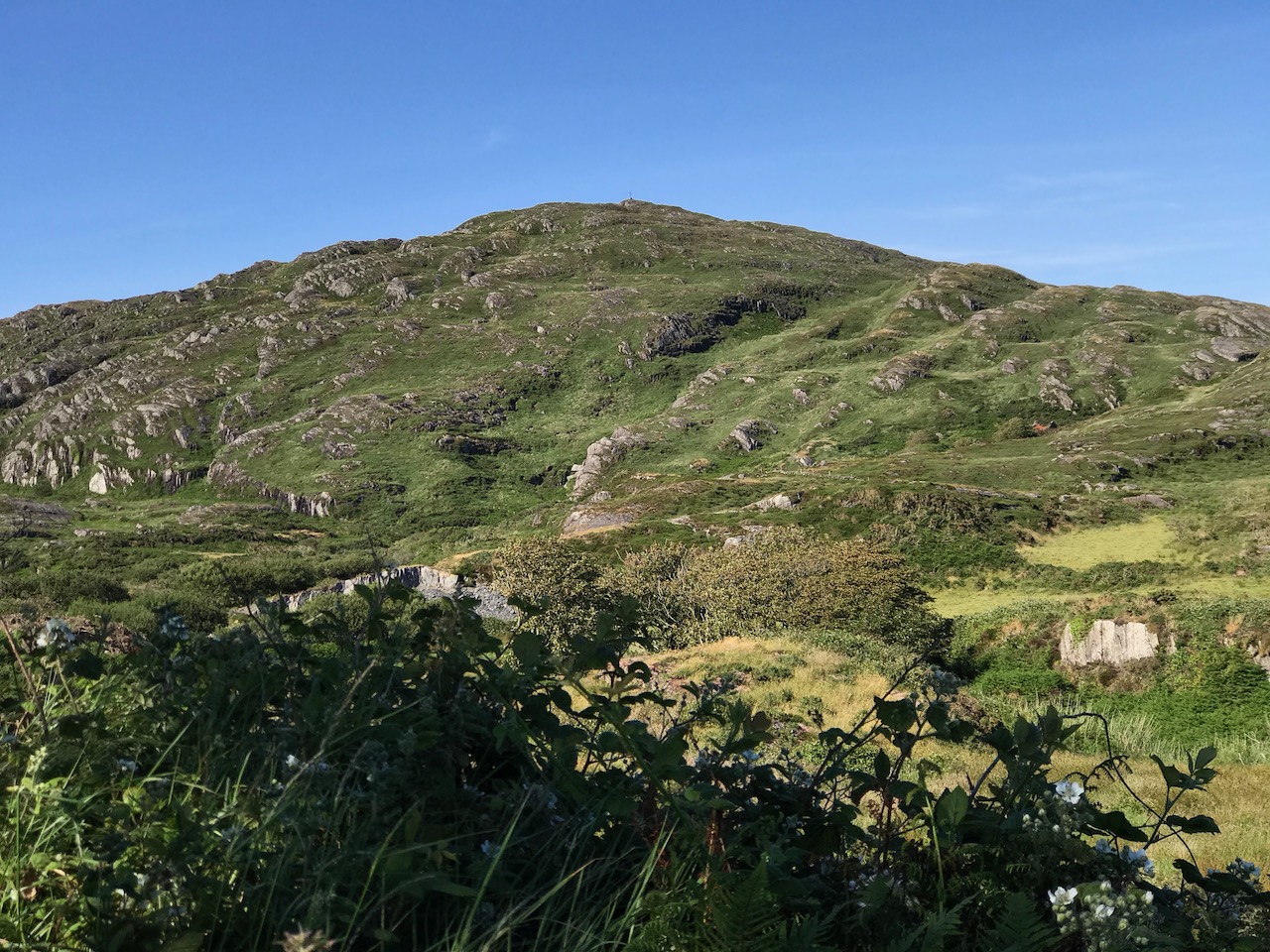
Twists and turns take you more steeply across the contours and swing round towards the summit. Only then is the full picture revealed: the whole landscape set out below you – every rift, valley and glacial glen with the higher land beyond culminating in the crests of Gabriel, 407m high, to the east, and the ‘little’ Mizen Peak, 232m high, to the west.

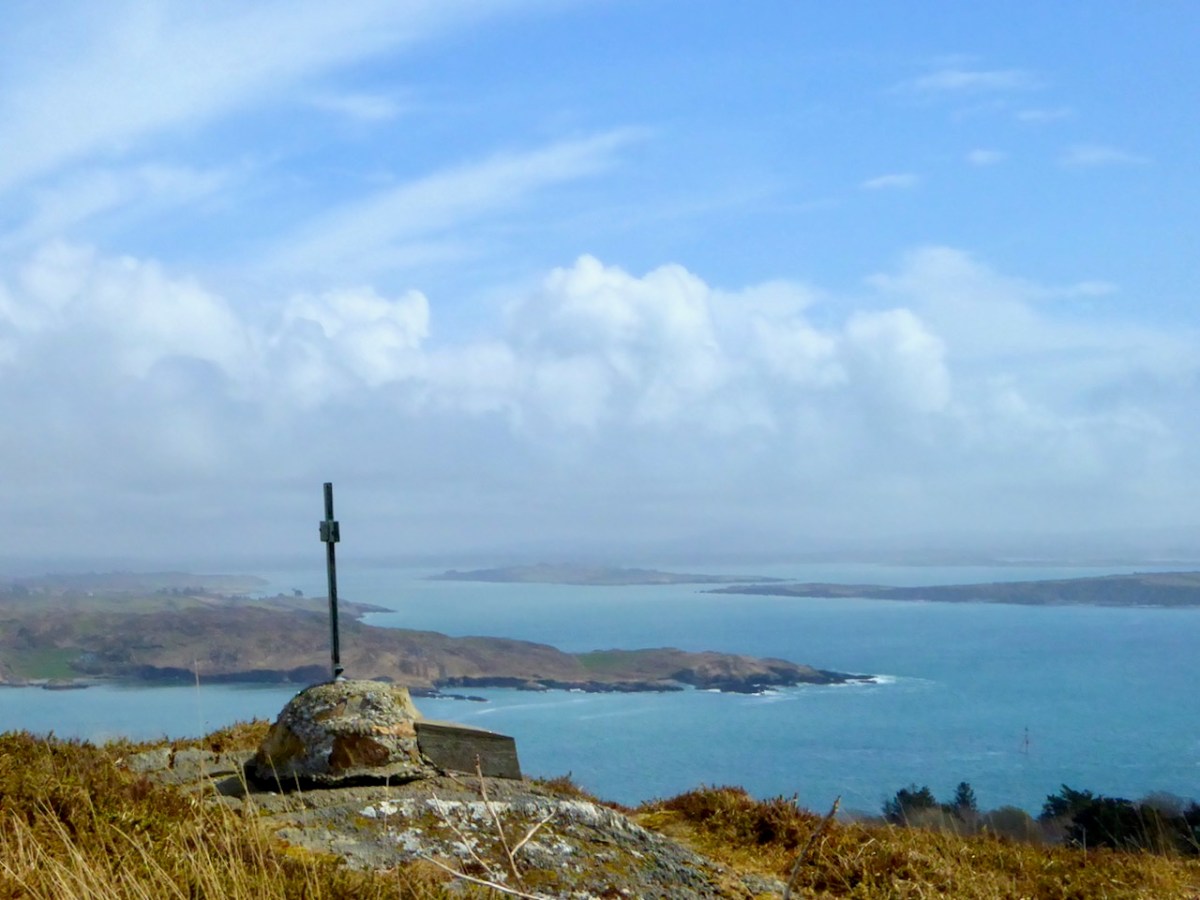
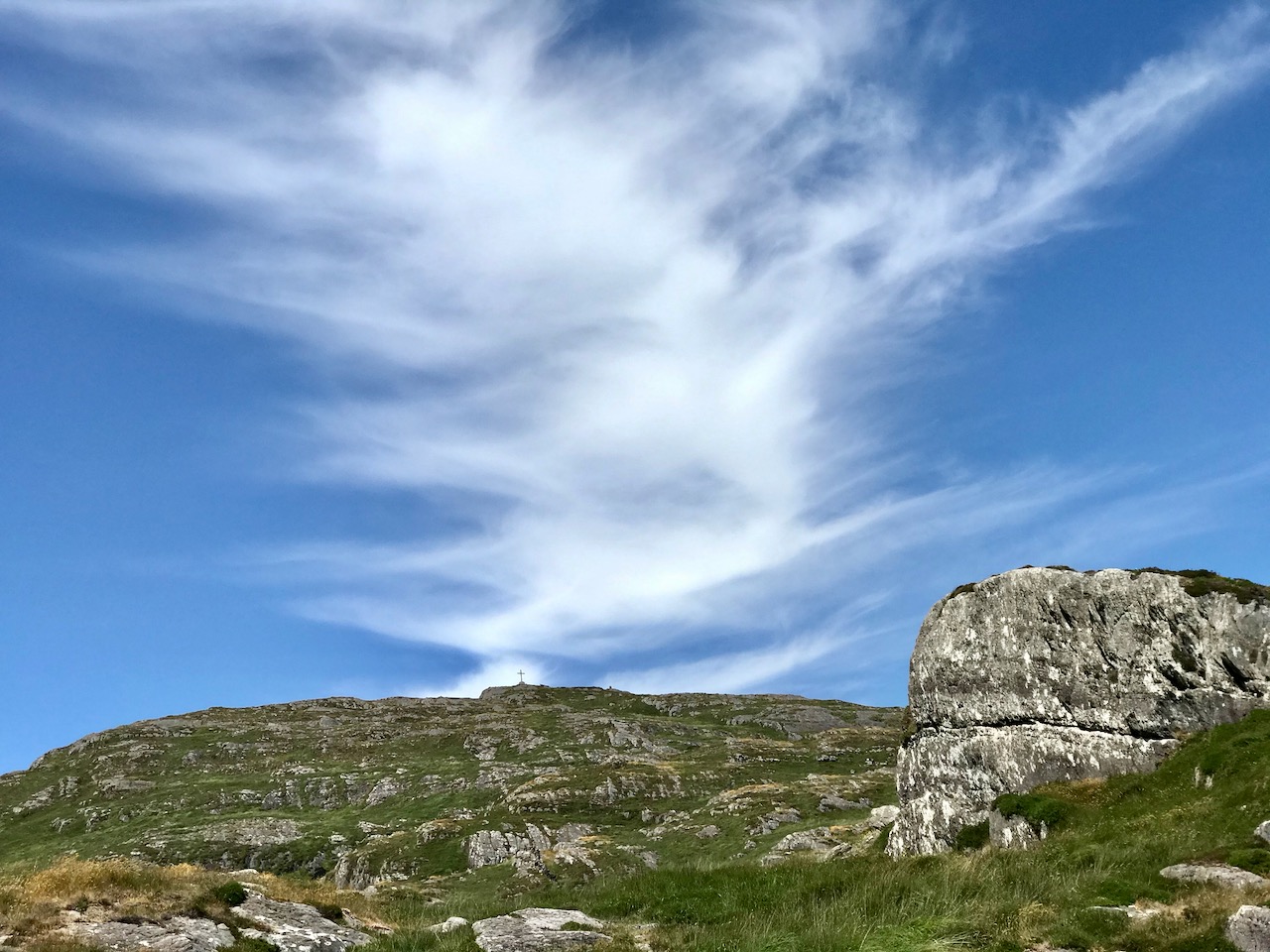
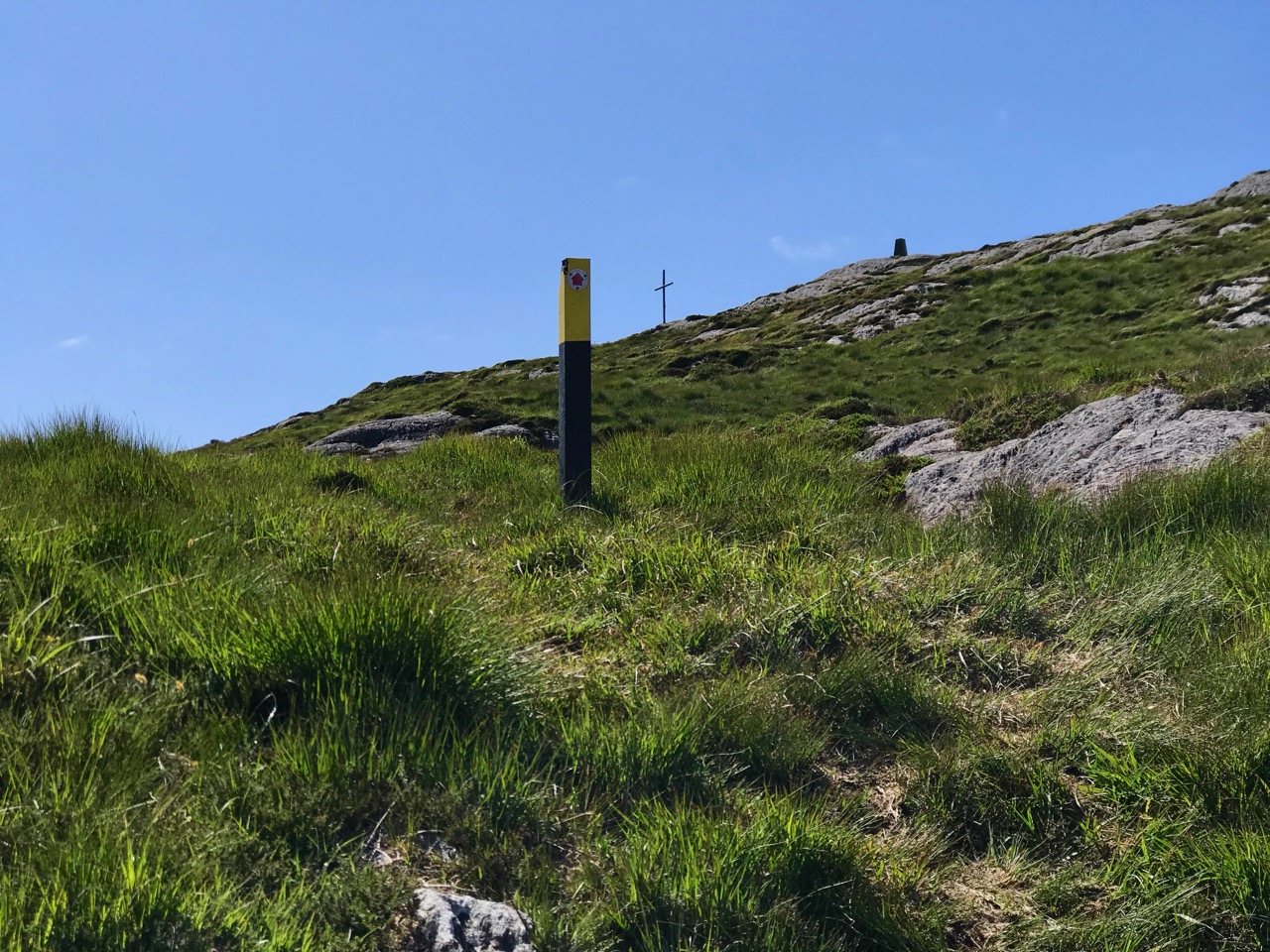
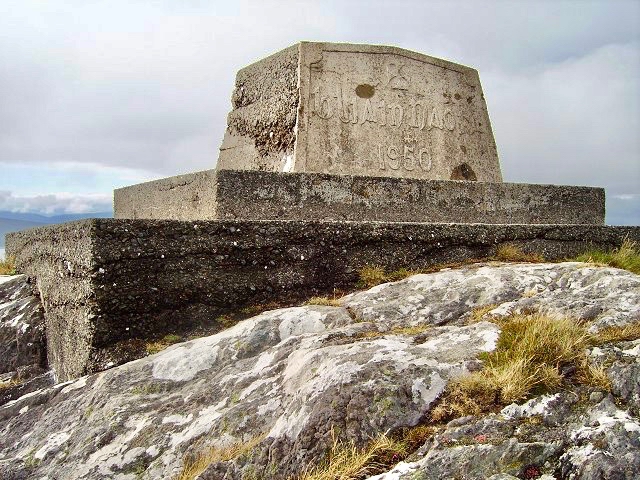
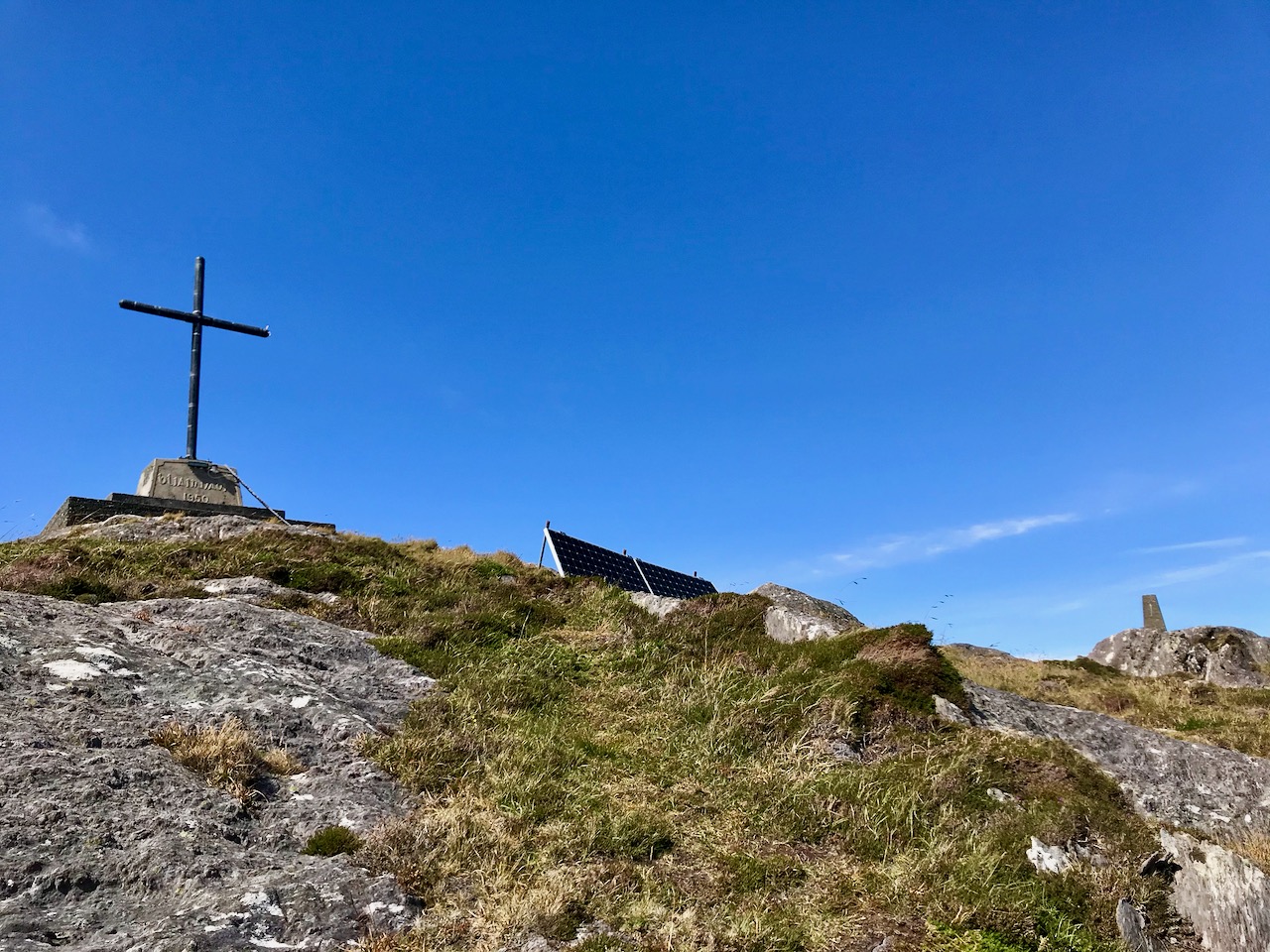
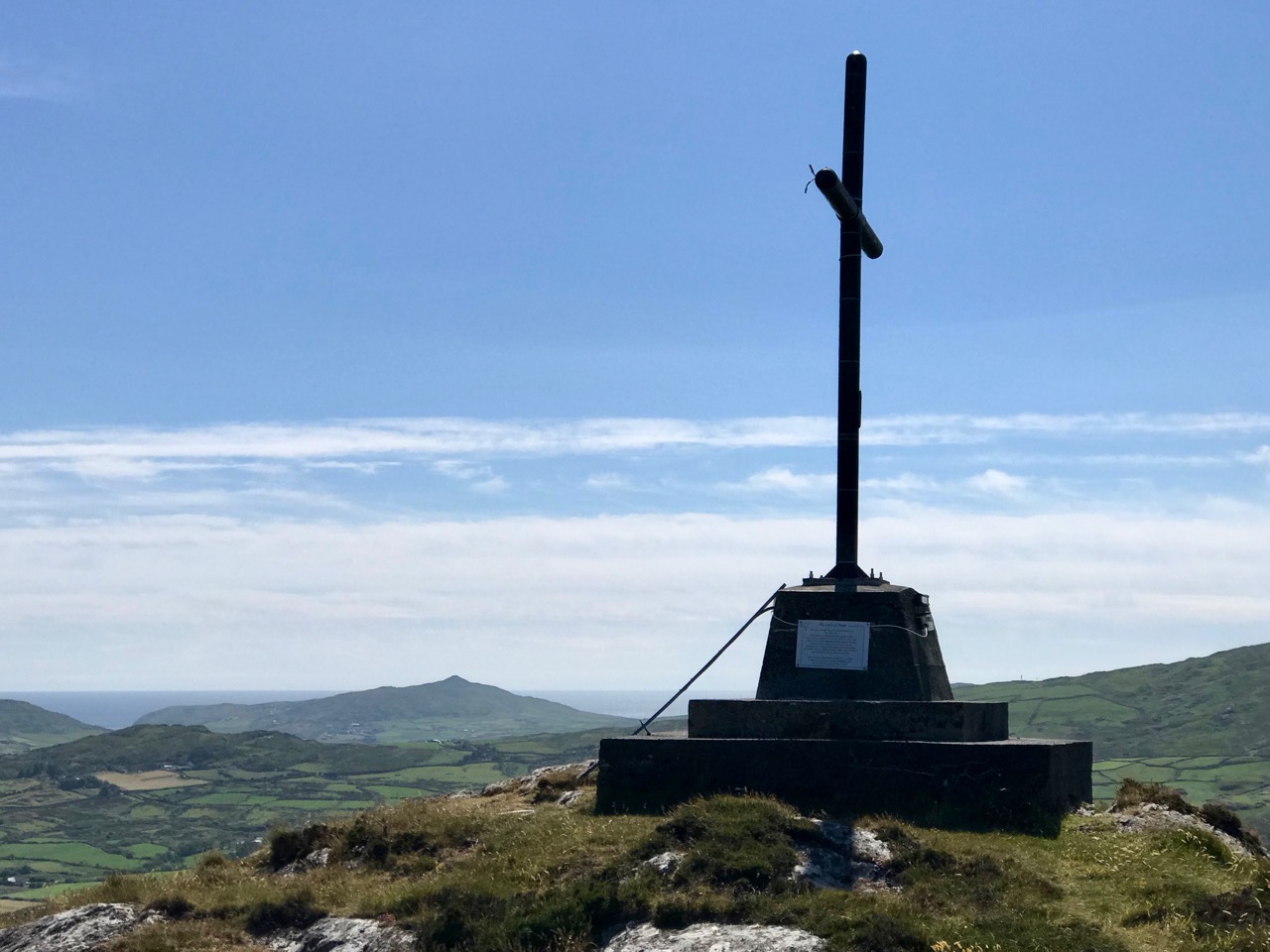
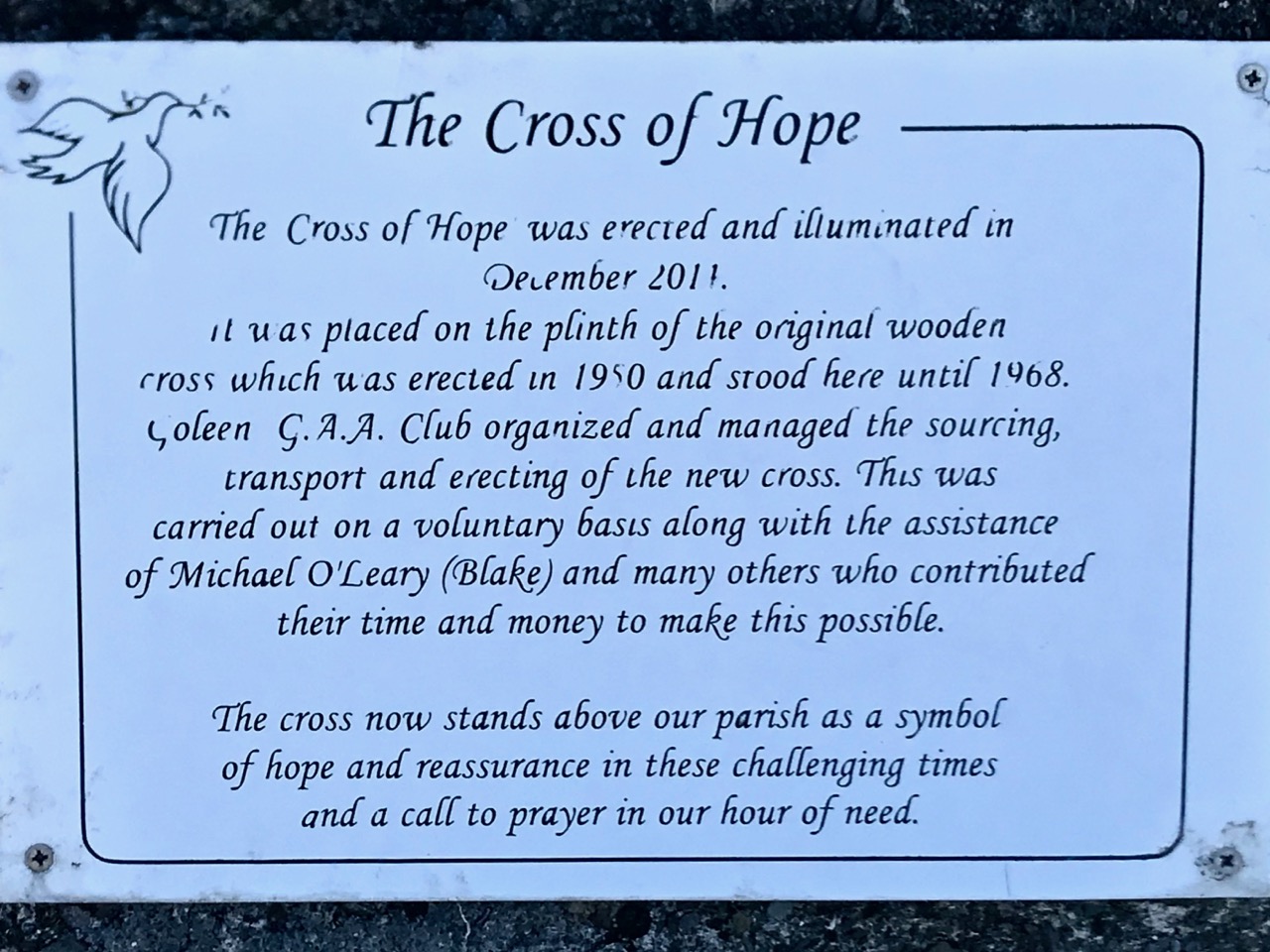
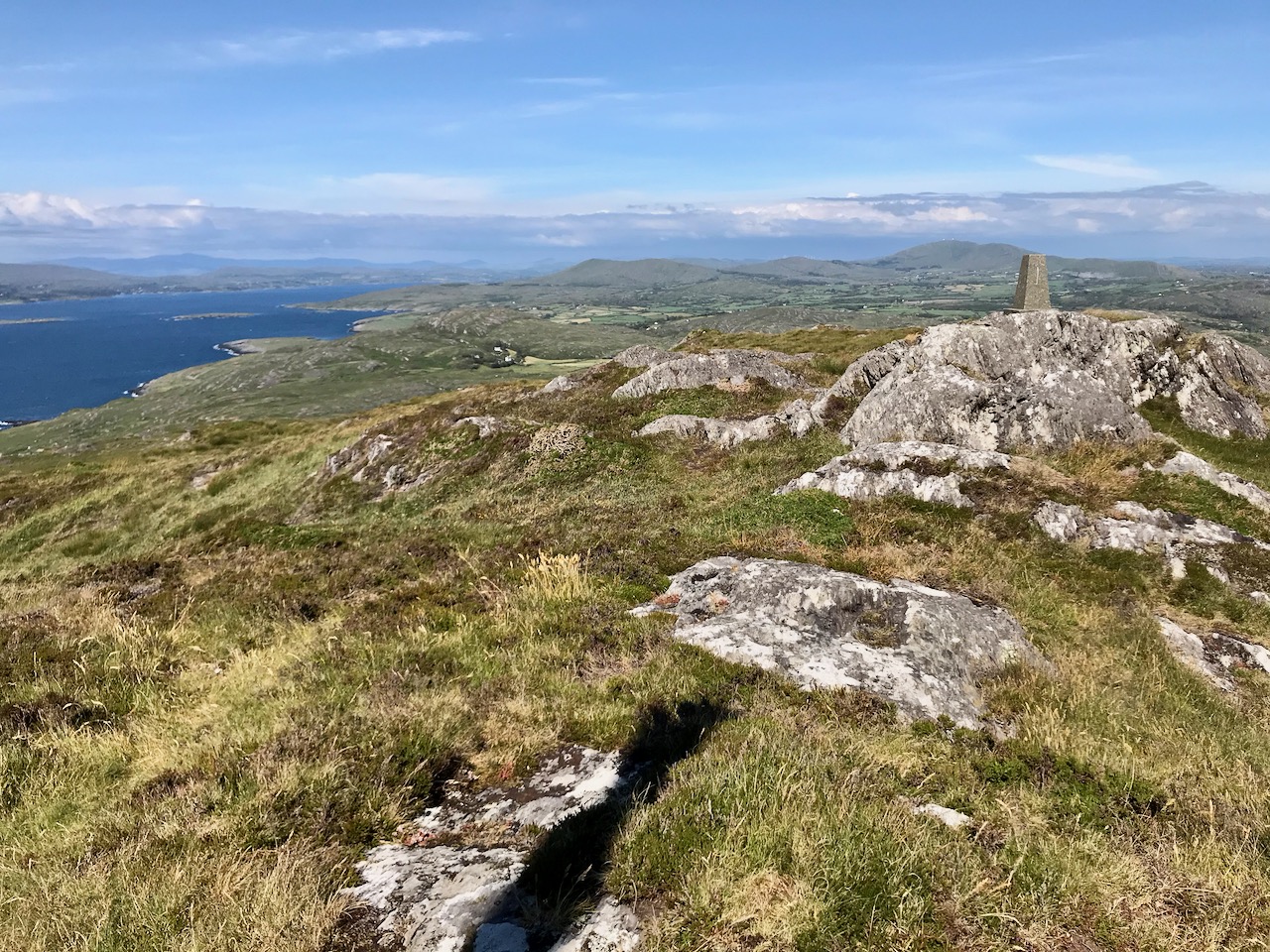
You won’t get lost as you head for the summit: this mountain had a distinctive cross placed at its highest point in the Holy Year of 1950, which reportedly fell in 1968, leaving the inscribed concrete plinth intact. The photo below shows the plinth in 2006 – courtesy Richard Webb. A new cross was installed in 2011 by a community effort led by the local GAA: this is now visible from much of the trail. The plaque mentions ‘…these challenging times…’, referring to the financial crash that hit Ireland so badly around that time. Illumination of the cross today is provided by photo-voltaic cells.

When you get to the top – pause… Now is the opportunity to appreciate the spectacular views in every direction. On our outing the south wind had been building up all day and was at its strongest in the late afternoon, when we gained the summit. It was pretty hard to remain upright! In fact, I wondered if we were being given a message by the resident Púca whose domain this is, after all?

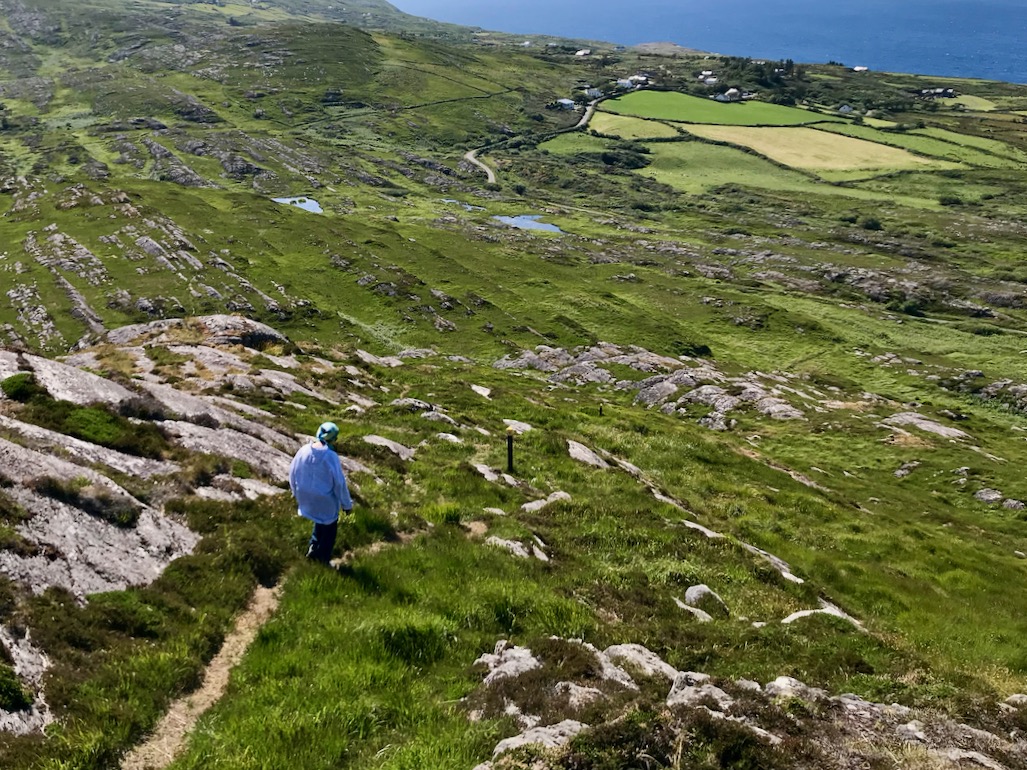
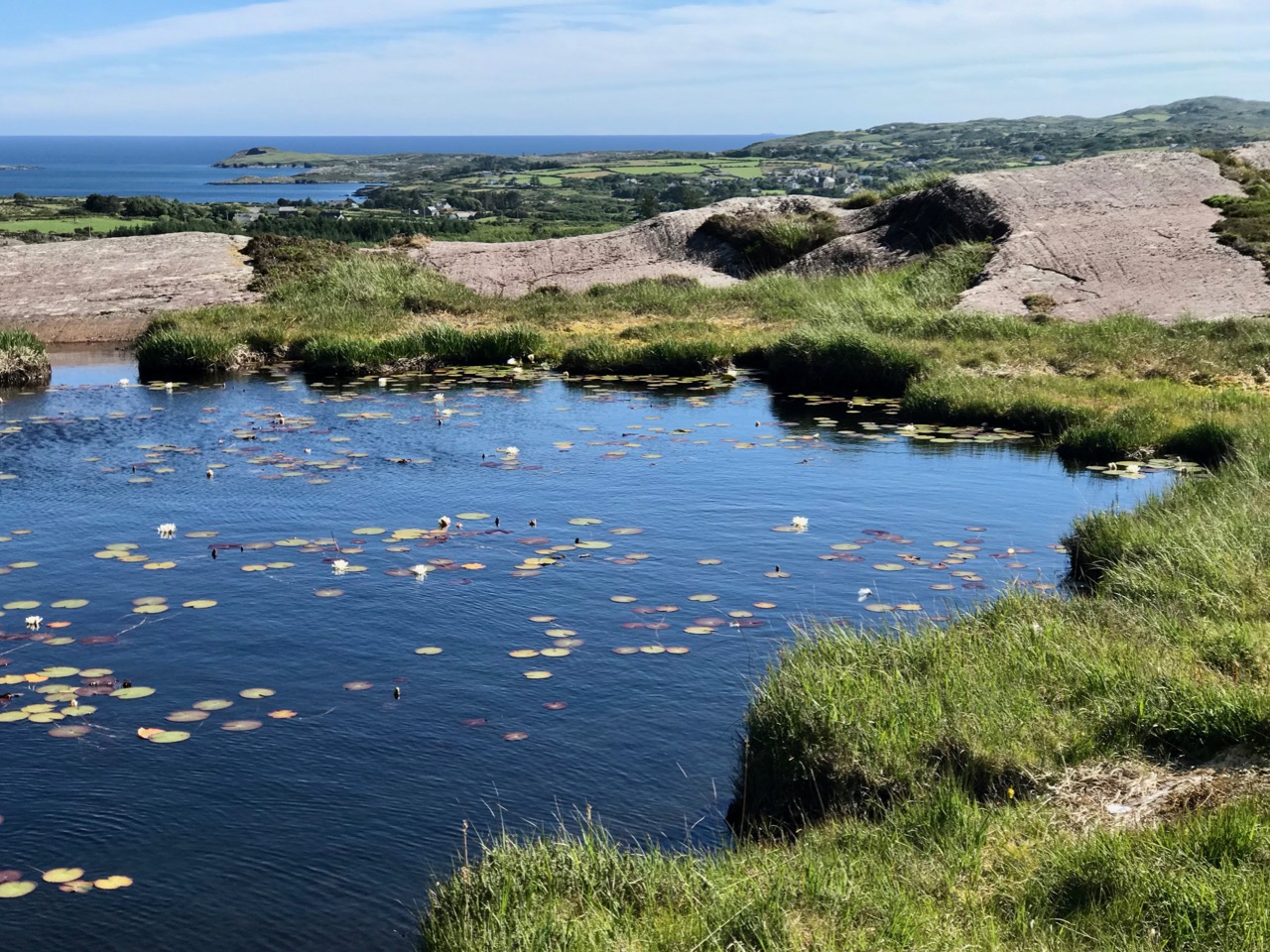
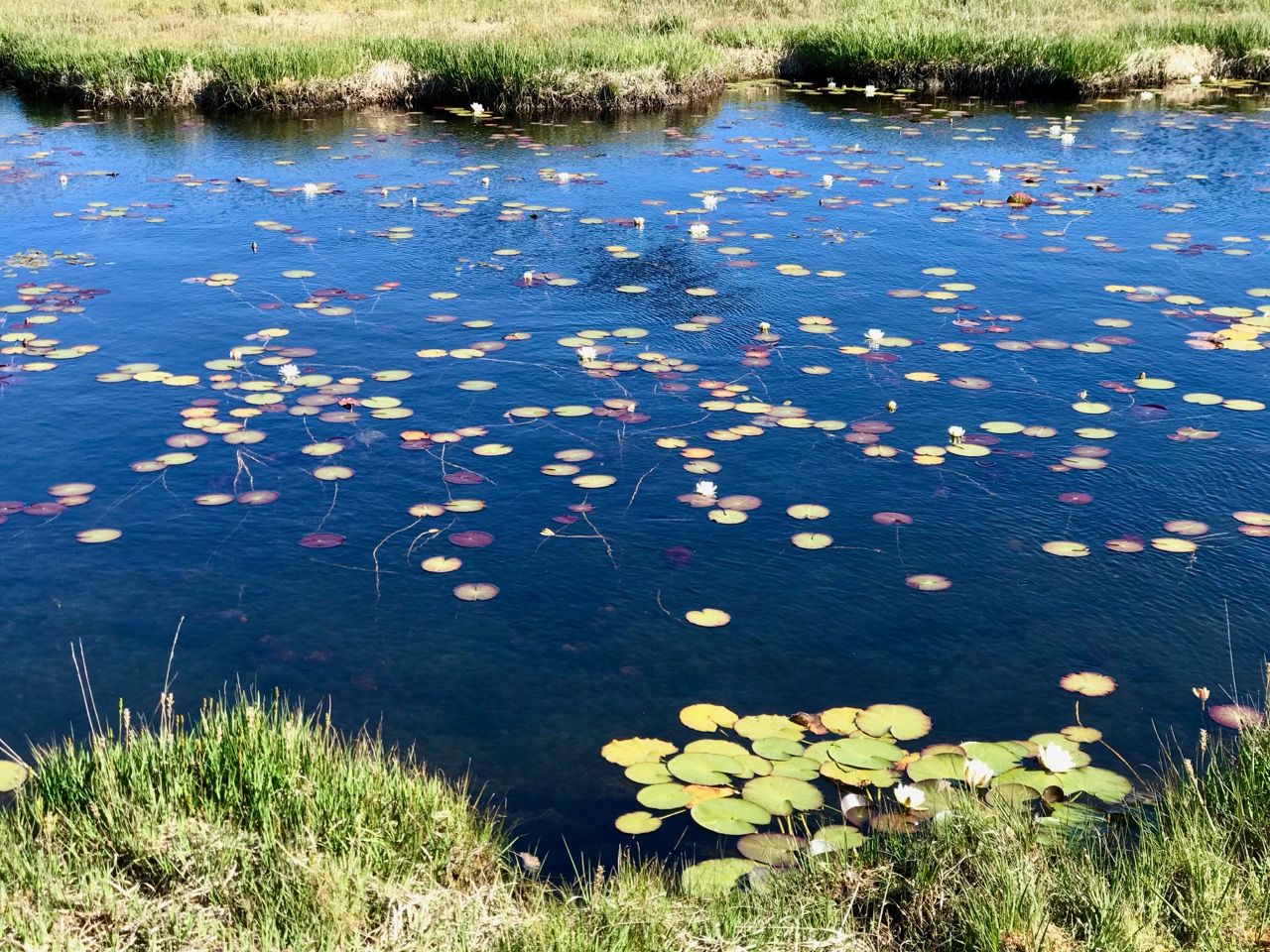
The path down descends quite steeply: make sure you are well shod and vigilant. But you are in for further treats: the marked way passes by some peaty mountain tarns which are exquisite in their pristine beauty. Finola was in her element finding undisturbed native species such as water-lilies and sundews.

The mountain trail section ends on the small boreen running to the west of Knockaphuca, but the waymarkers will lead you back to the starting point, and there are still views up to the summit to enjoy, along with some landscape features on the way to continue to stimulate the senses.

What more could anyone want from a day’s outing in West Cork? Well – a bit of local history, perhaps. I searched for stories about the hill, particularly about the Púca – but only turned up this one told by Jerry McCarthy and included in Northside of the Mizen, the invaluable collection of Tales, Customs and History produced by Patrick McCarthy and Richard Hawkes in 1999:

The Púca of Knocnaphuca


The old people would feed the Púca of Knocnaphuca on ‘Snap-apple Night’, or indeed, whenever one had call to travel up the hill. It was the wise person that fed the Púca the night before going up. Milk and cake would be put on a plate and left outside the house and by the next morning the food had always gone!


The Púca of Knocnaphuca was half horse and half human. One late Snap-apple Night there was a young lad out walking the road when he heard a strange, sweet music coming from the hill. He went up and saw the Púca playing on a whistle. As soon as the lad had put eyes on it, it stopped playing and caught him. Away the Púca went to the top of the hill, where a crack opened up in the rock. In they went. They were twisting and turning down through tunnels until they entered a chamber full of gold. “Now,” said the Púca, “you are mine!”…


The next morning the boy was found on the road by the Long Bog. His hair had turned white and he could not speak a word ever after.

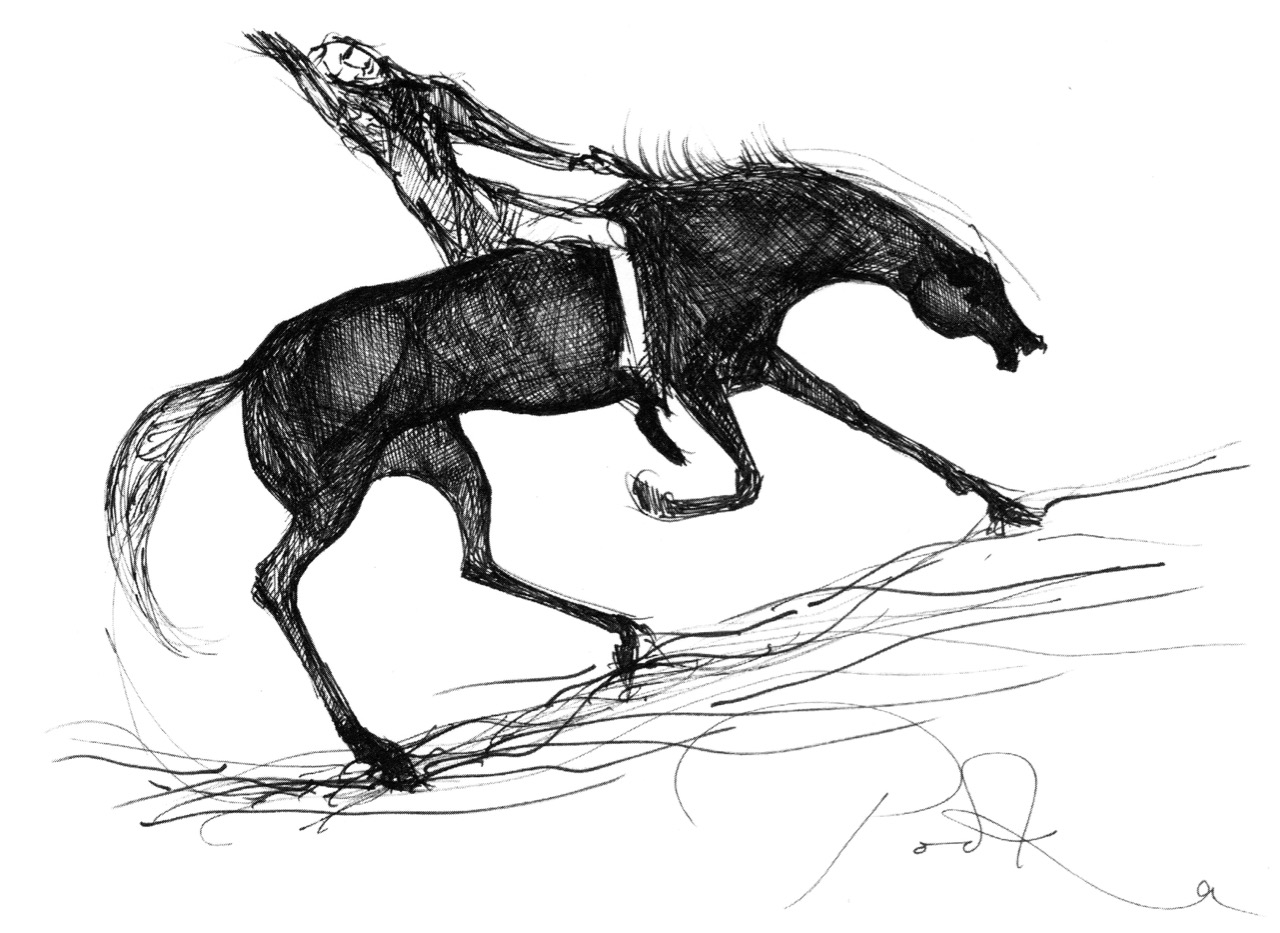
Thank you to our artist friend Hammond Journeaux of Ballydehob for this wonderful drawing of ‘Pooka’, included in The Little People of Ireland by Aine Connor, illustrated by Hammond, The Somerville Press, 2008. Púca in Ireland has counterparts in Cornwall (Bucca), Wales (Pwca), The Channel Islands (Pouque) and Brittany (Pouquelée). A shape-shifter (Flan O’Brien’s character from At Swim-Two-Birds, the Pooka MacPhellimey, changes his appearance by smoking from a magic pipe), the Púca most often appears in Ireland as a fine black stallion with red eyes. If you meet him, you have to mount him and he will take you on a journey far across the sea. It will seem to you as though you had been away for only a few hours, but the world will have moved on several weeks, perhaps months, during your absence. We saw no trace of the creature in June but, perhaps, if we climbed this mountain in the November Dark, we would have more chance of an encounter.

Seeking Calm Now

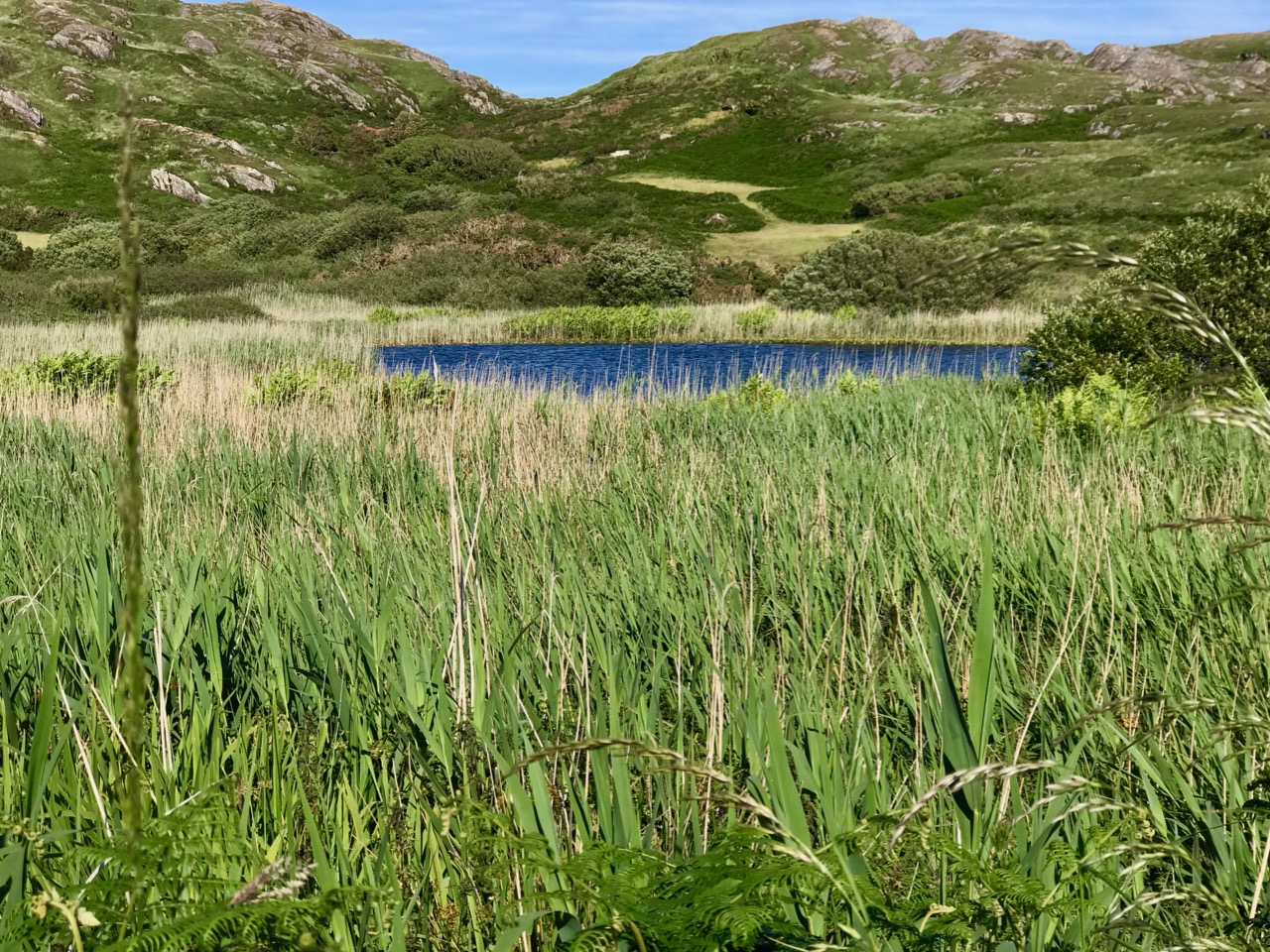
What a week it’s been in our part of West Cork! Only the gentlest of images will help to bring me back to earth – hence the somewhat random collection of photographs today, some taken along the Toormore Loop Trail or in my own garden.

Along the Toormore Loop Trail

The highlight of the week was the opening of Coming Home: Art and the Great Hunger – Robert has given you some sneak peaks into this incredible exhibition in his post. If you do nothing else in West Cork this summer, take in this experience.
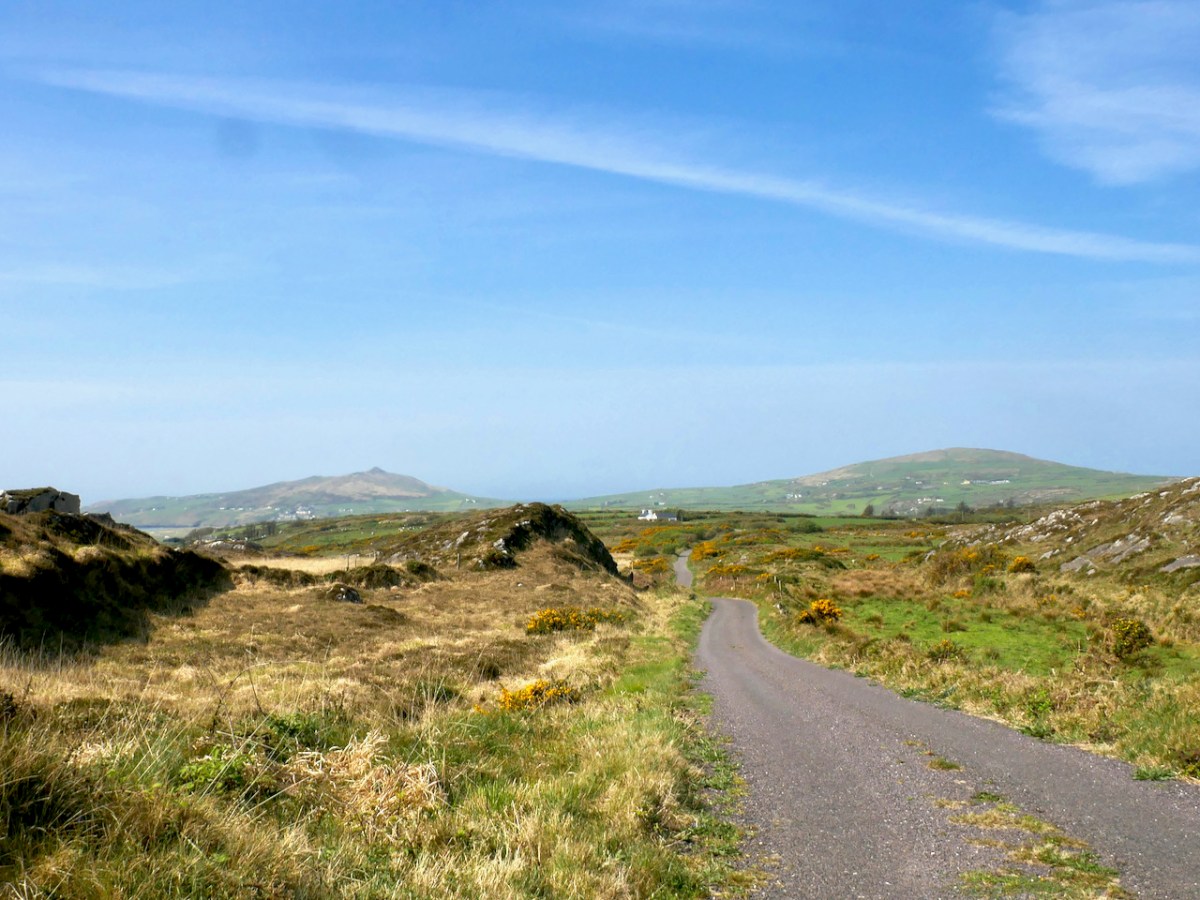
Eyebright, along the trail

But that’s not all – we also attended the unveiling of the memorial to the 110 Skibbereen Girls, which I wrote about last week. Most movingly, the ceremony was attended by Judith Constable, the Great, Great Granddaughter (and her daughter) of one of those girls. This is a story of hope, of the bravery of those adventurous girls who accepted the passage to Australia and went on to have full lives in their adopted land. It reminds us that it is possible for individuals to transcend the wretchedness of their circumstances.

Above, Judith Constable – her Great Great Grandmother, Jean Leary, was pictured in my previous post on the occasion of her 50th wedding anniversary. Below, the commemmorative spoons, finally installed, and the block of Australian stone.

And on Saturday night there was the long-anticipated performance of Anáil na Beatha (Breath of Life) at the ruins of the Schull Workhouse. We found ourselves seated outside the former hospital on the Workhouse grounds, listening to the unearthly lament of a chorus of voices, chanting the names of places stricken by famine, and then walking silently in a torchlight (well, lightstick) procession through the place where so many had come to die. It felt cathartic, respectful, important.
There was a memorial for Seamus Hogan too this week. He was one of us blow-ins to Ballydehob, a poet and raconteur and he will be much missed. His portrait was one of Shay Hunston’s finest and is reproduced here from Shay’s Wild Atlantic People series. It’s in a shop window in Ballydehob, across from his favourite hangout, Ina Daly’s pub.
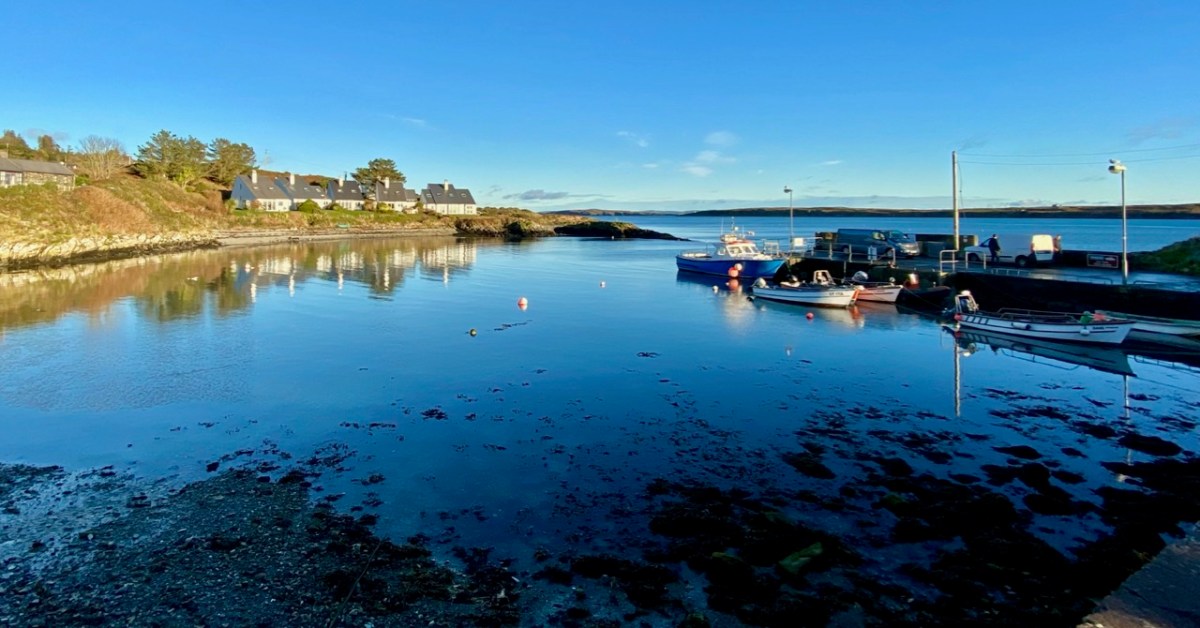
Photo courtesy of Shay Hunston

And in between we had the launch of the marvellous Skibbereen Arts Festival, which goes from strength to strength each year and which will keep us busy from July 27th to Aug 5th. The program includes many concerts, the world premier of the Asenath Nicholson play, poetry, art exhibitions, movie screenings, walking tours.

Finally, today, was the opening of the new Toormore Loop walk. I helped out by leading a wildflower walk around the small looped trail with a happy group of a dozen lovely people. The greatest reward – a mother telling me that even the kids enjoyed it!

I’m wiped! All this stimulation is wearing me out. I need to take up meditation so all together now. . . om. . .om. . .