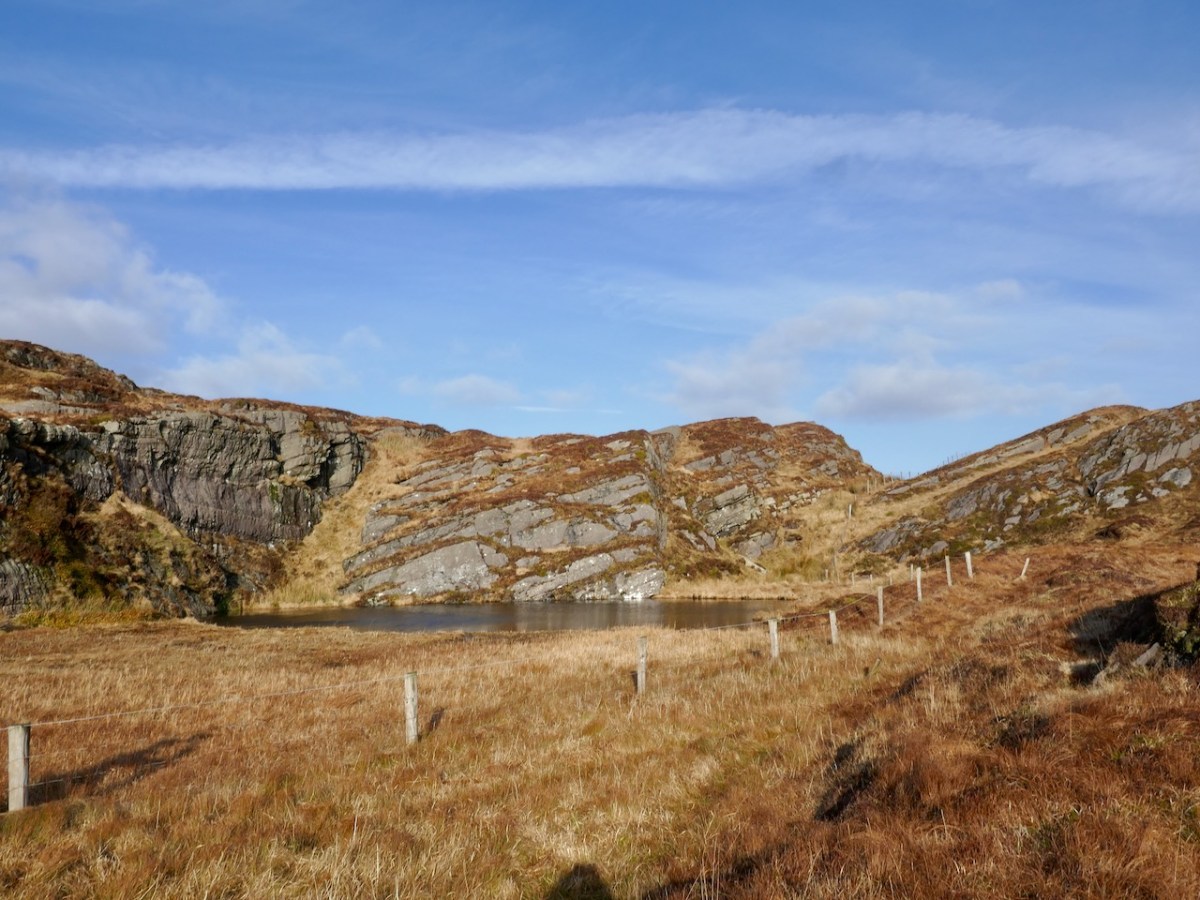
Mizen Magic 12: Autumn Colour (Reposted)

I’m reposting this, written six years ago, for the season that’s in it.

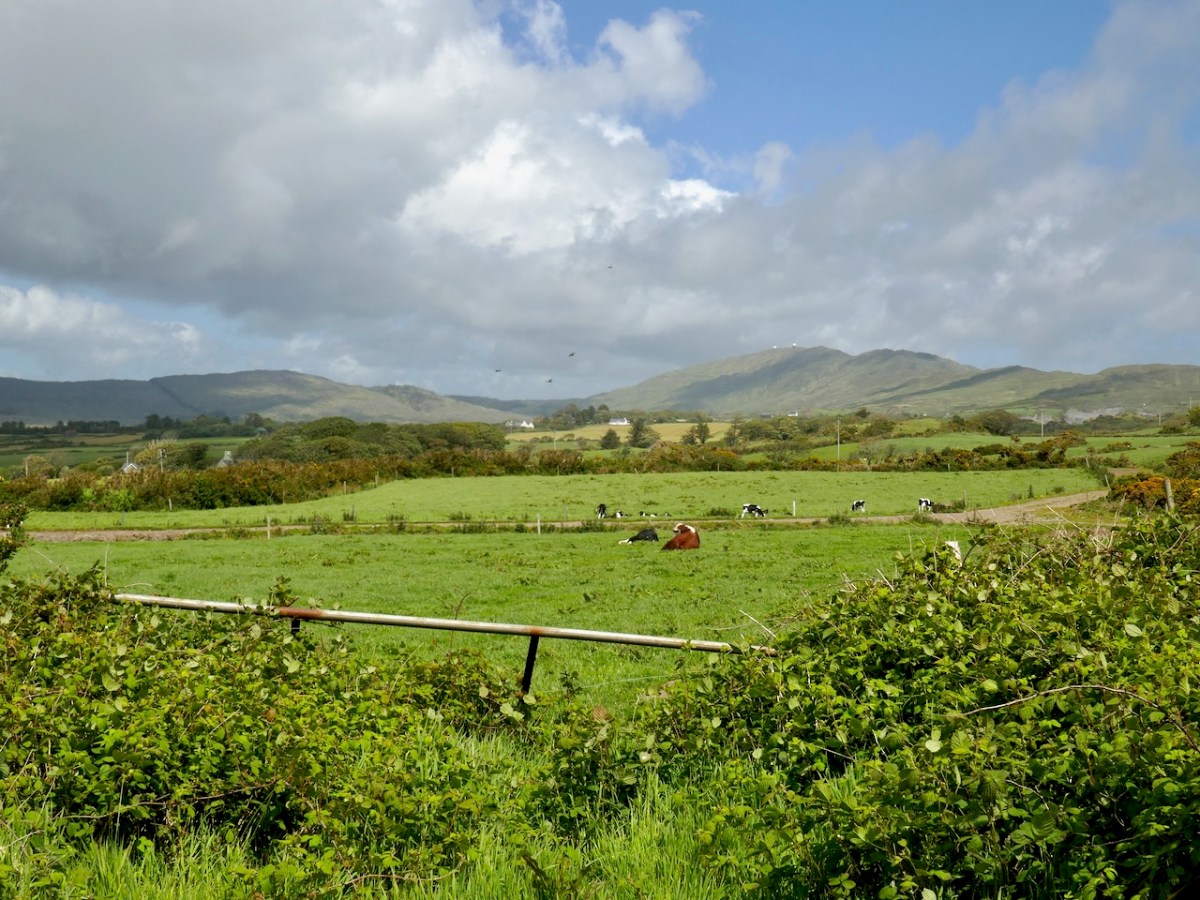
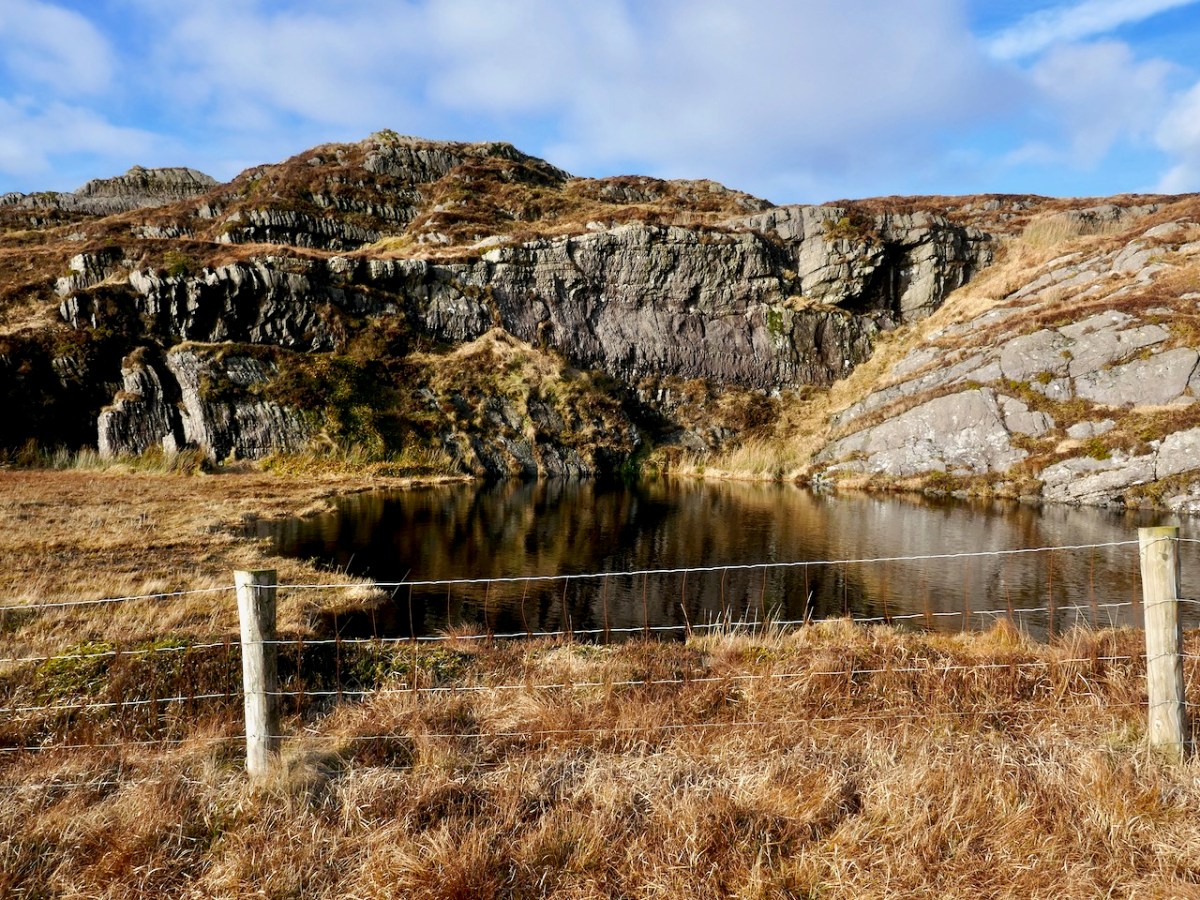
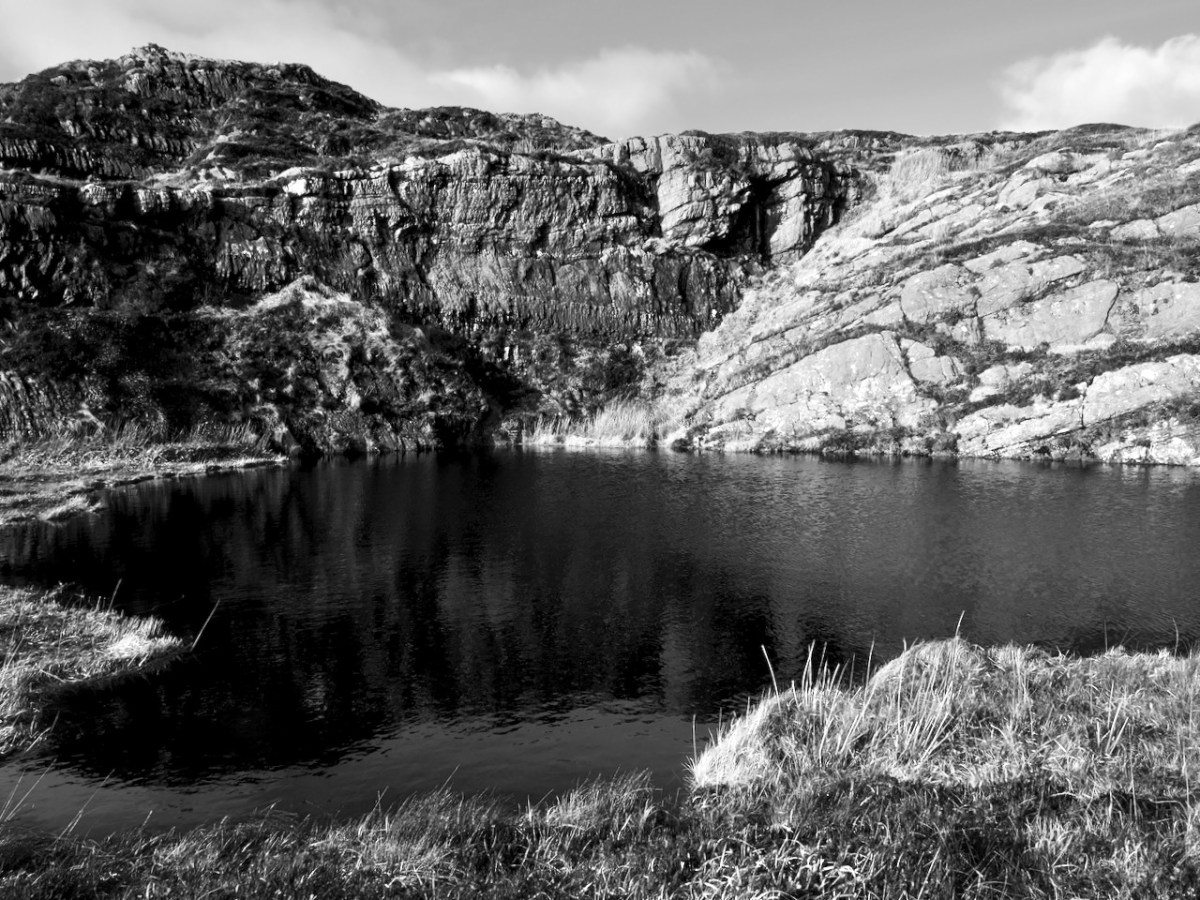
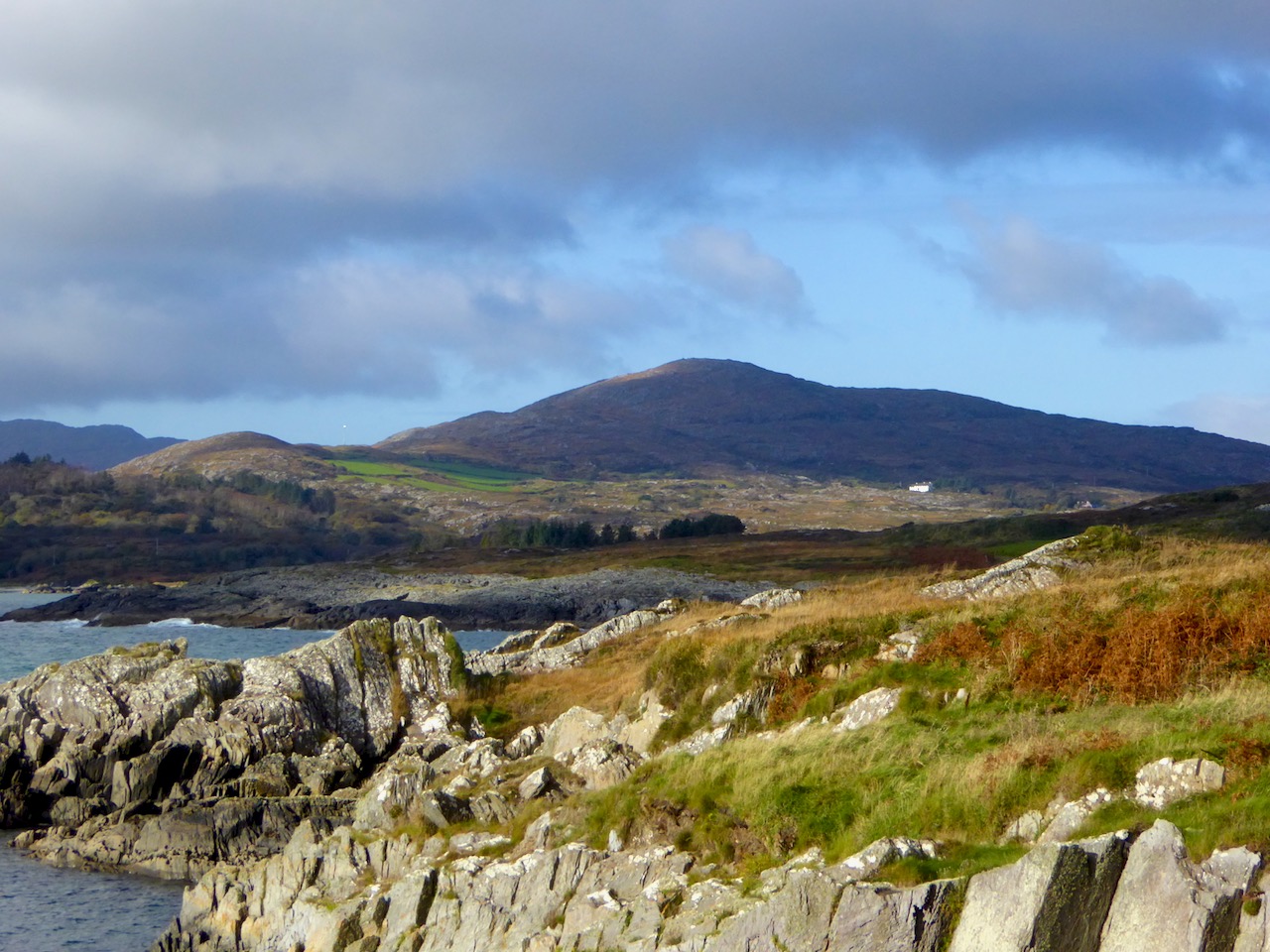
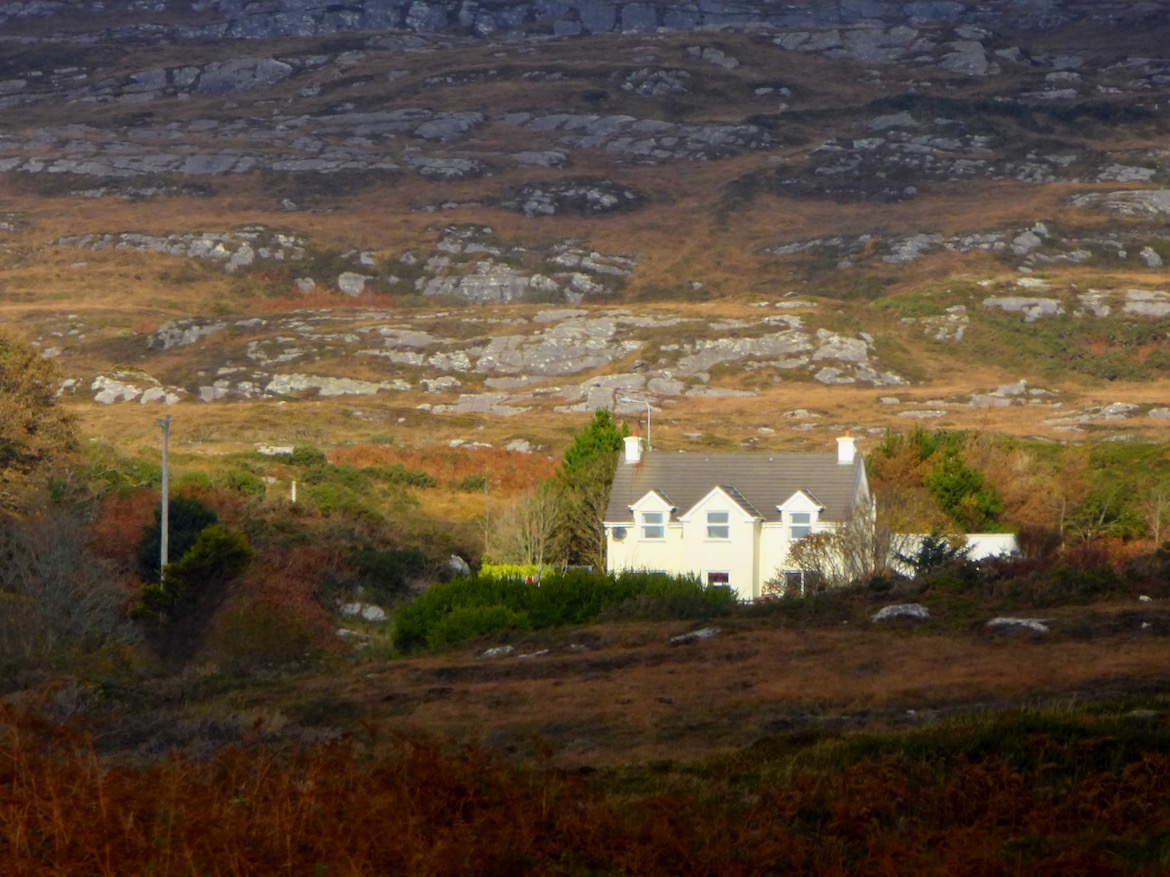
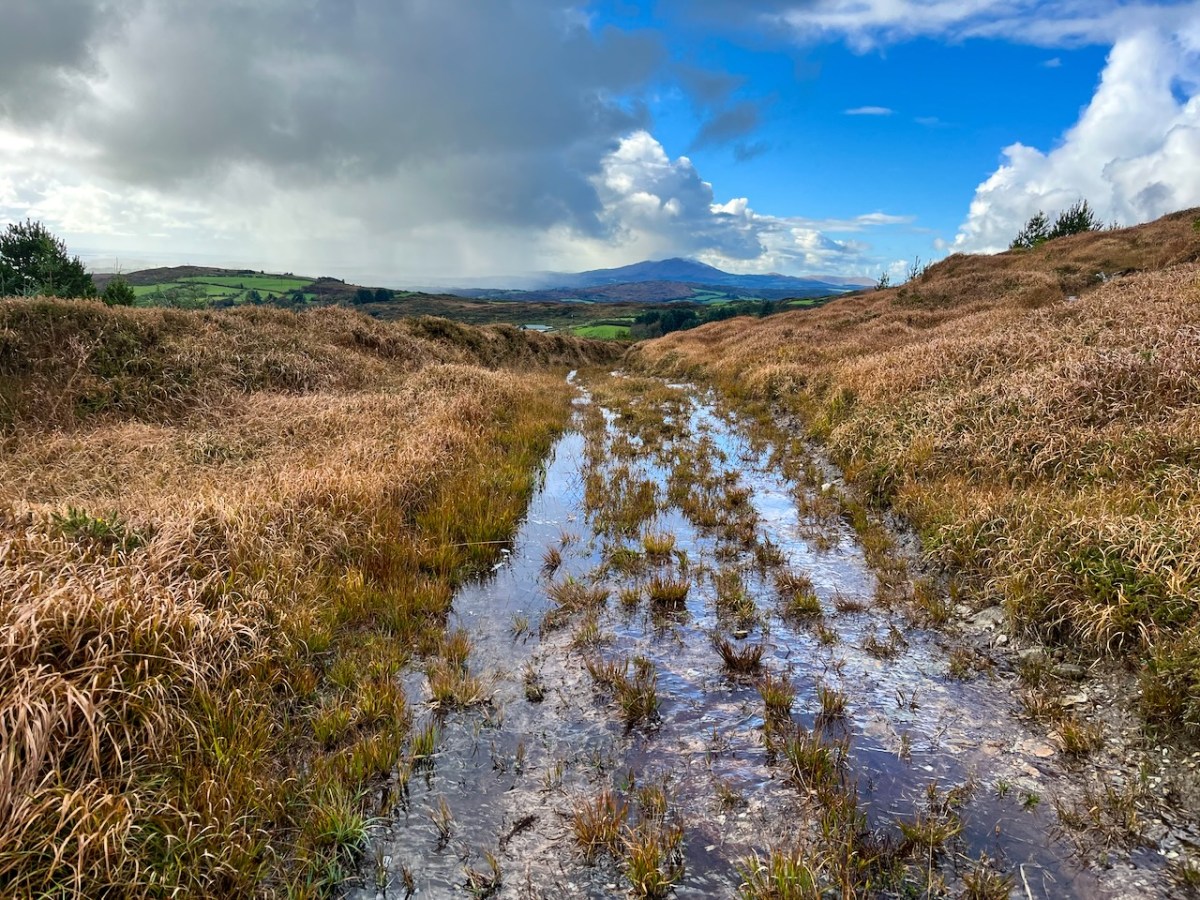
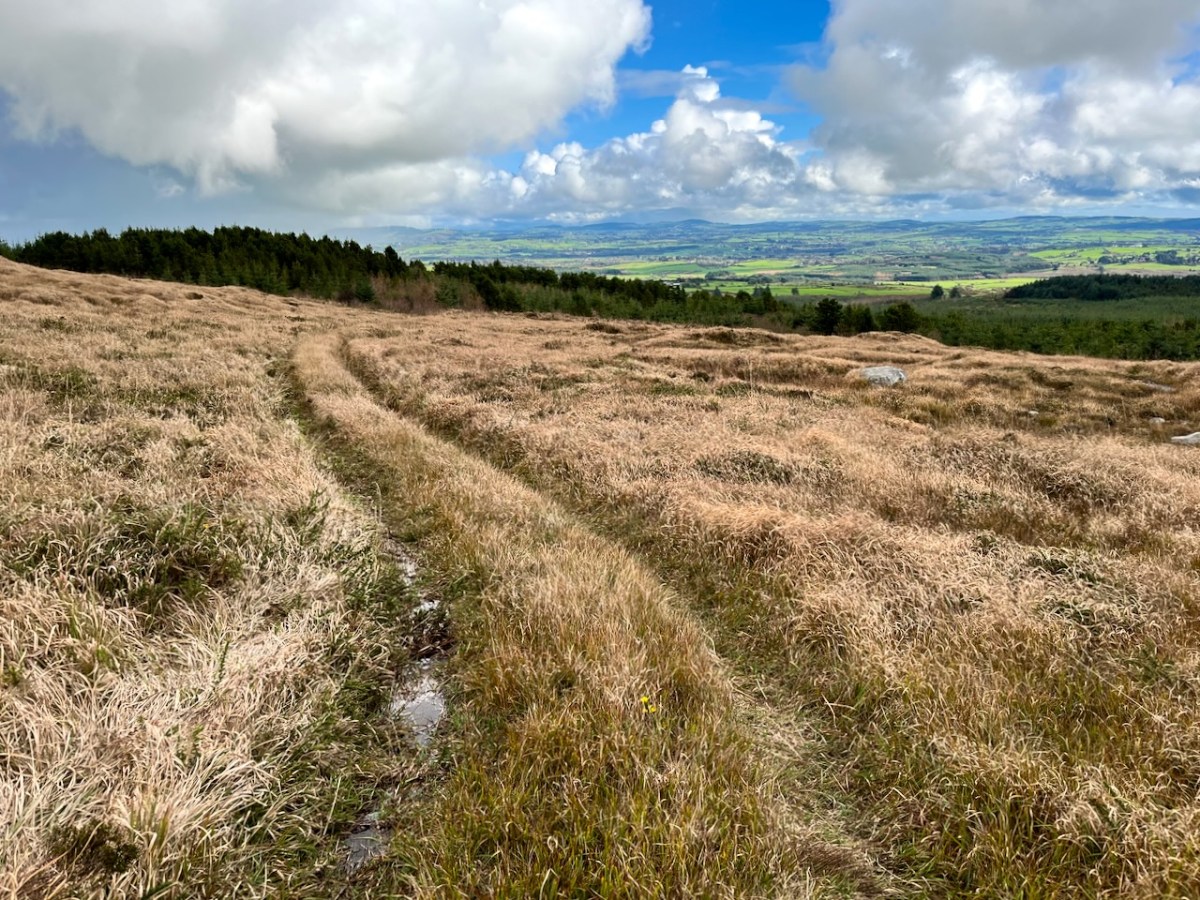
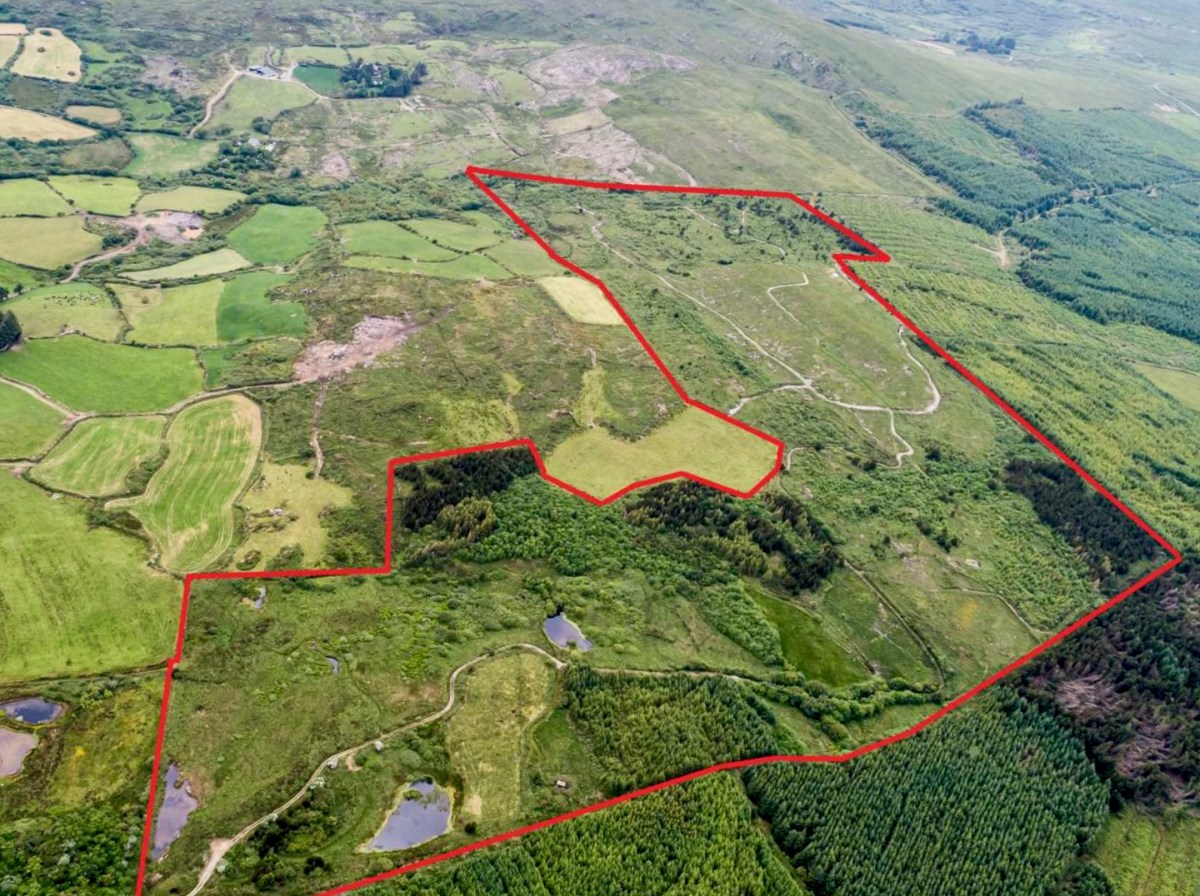
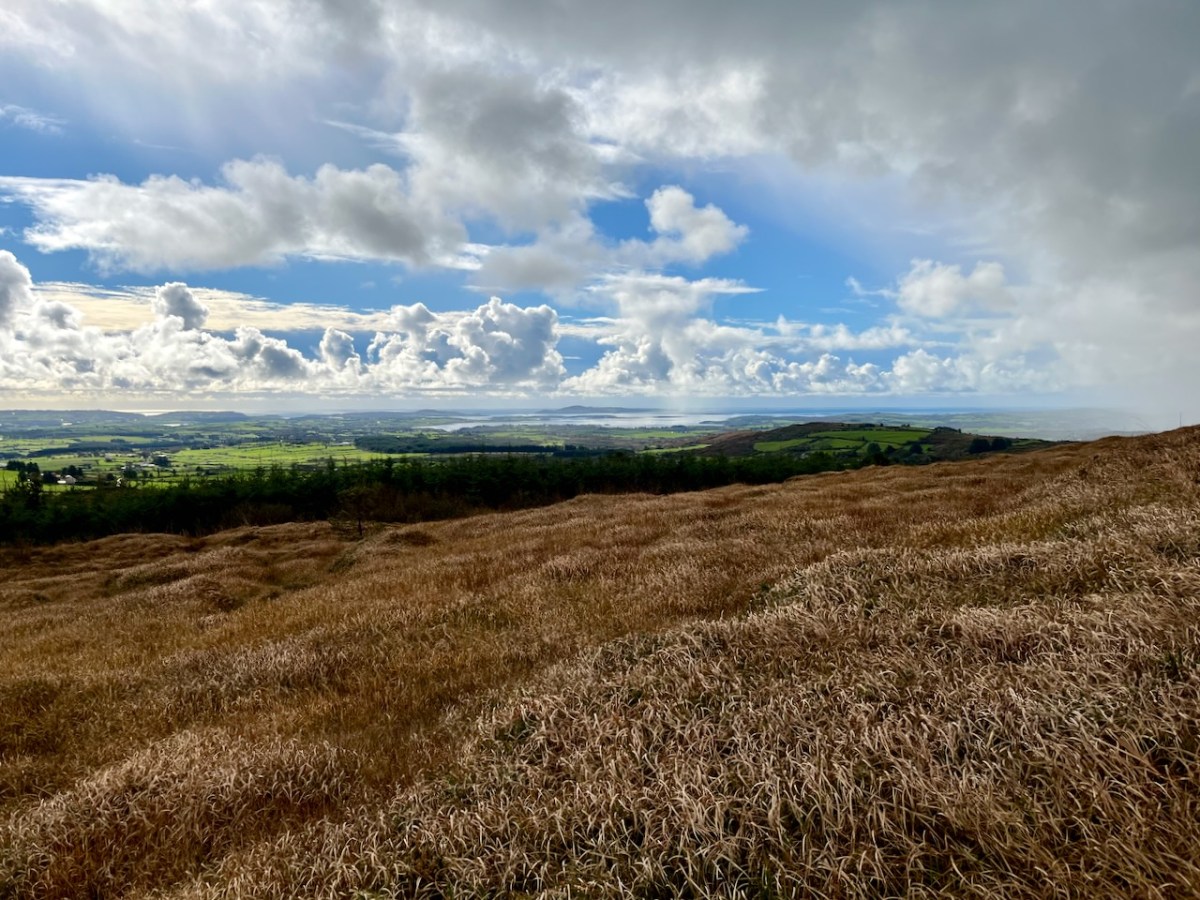
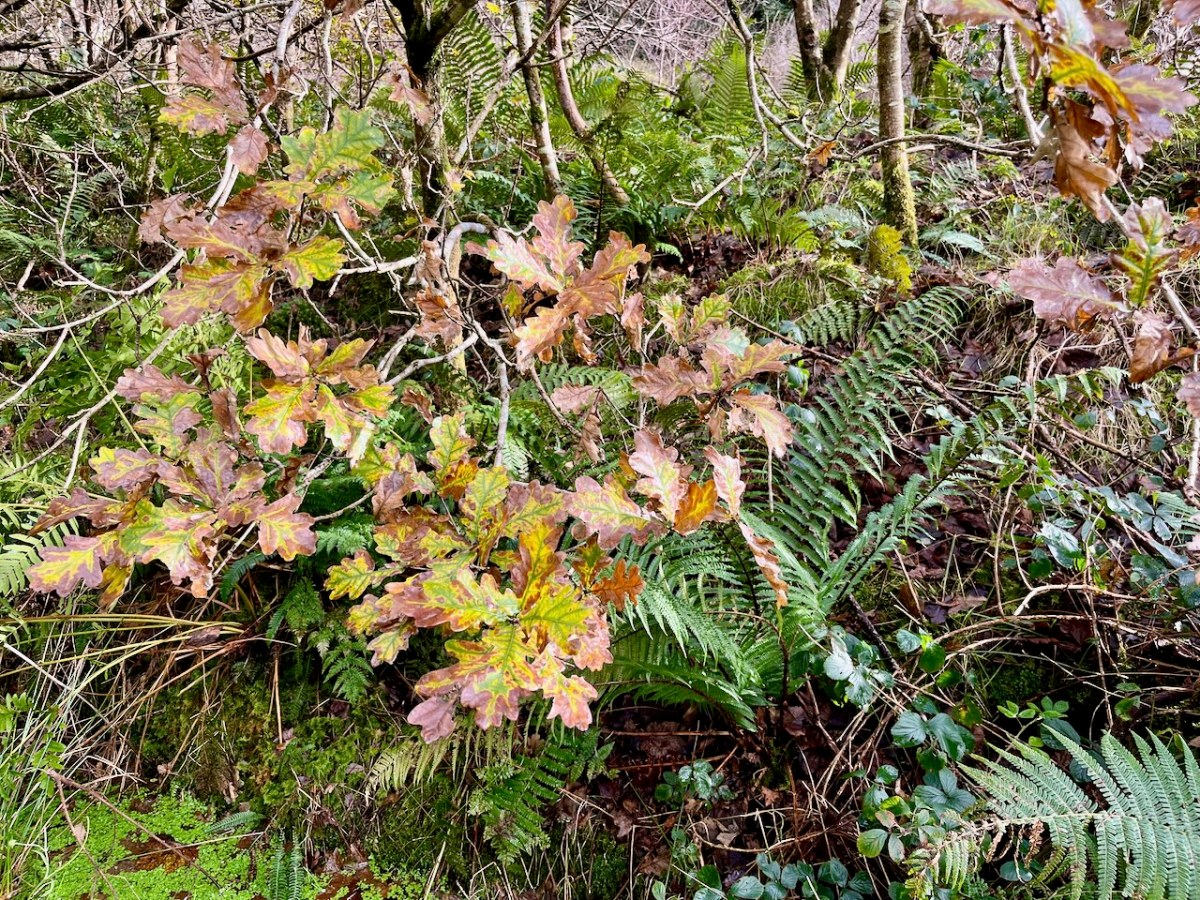
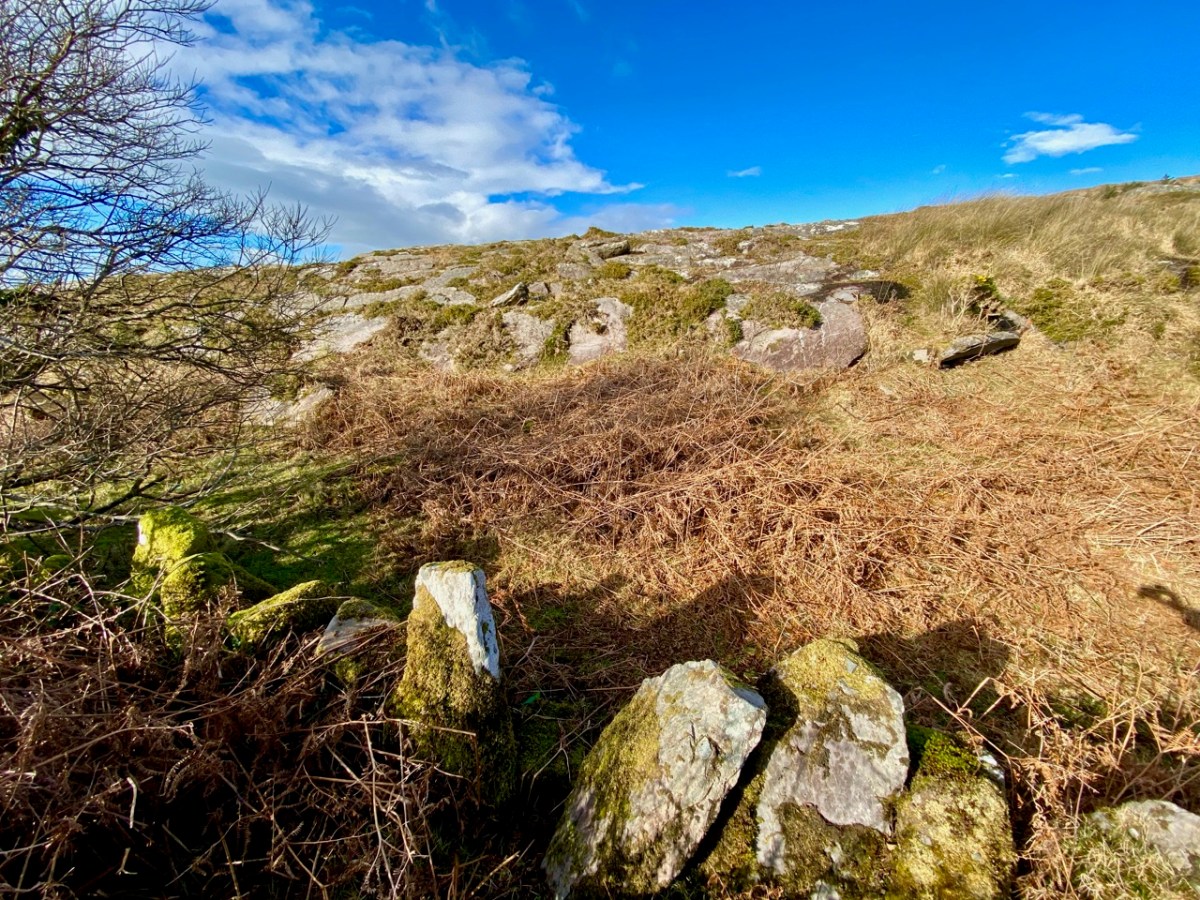
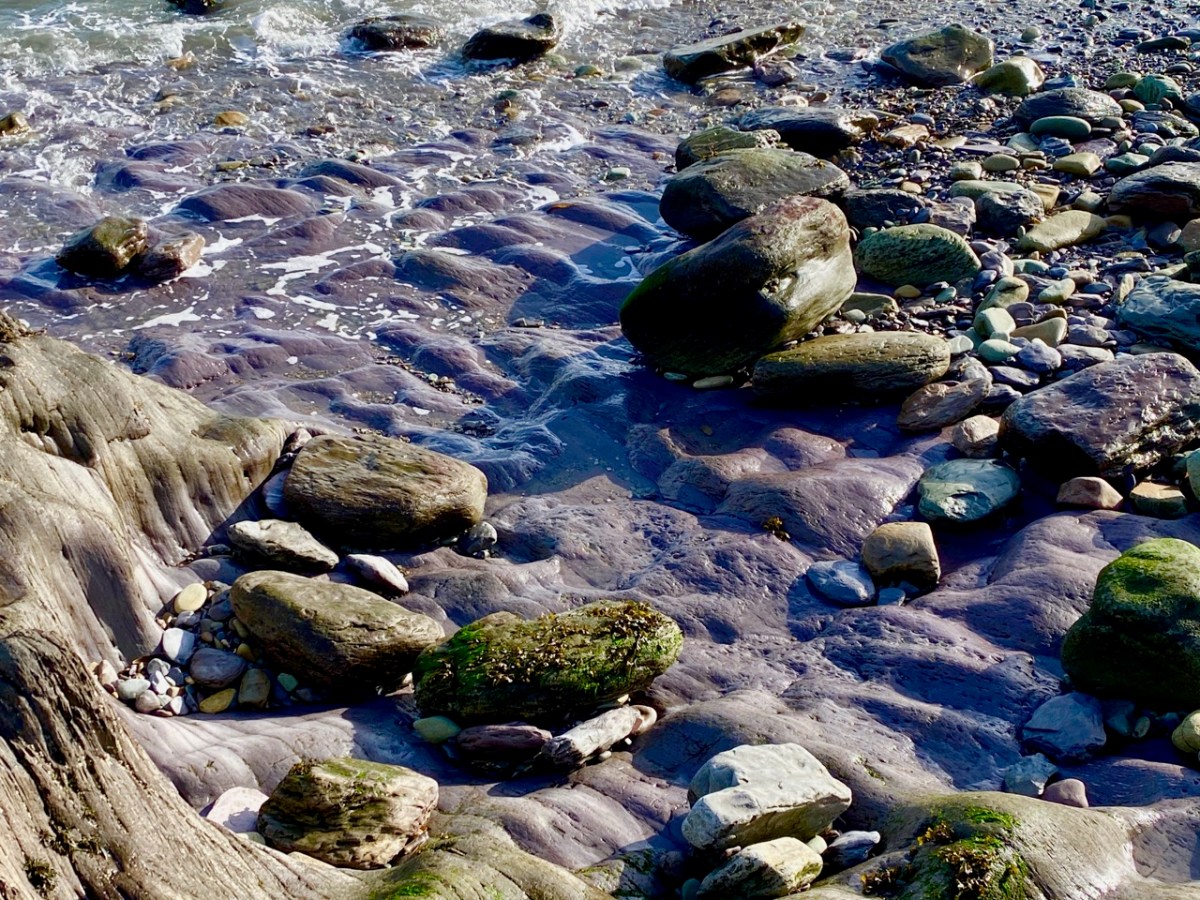
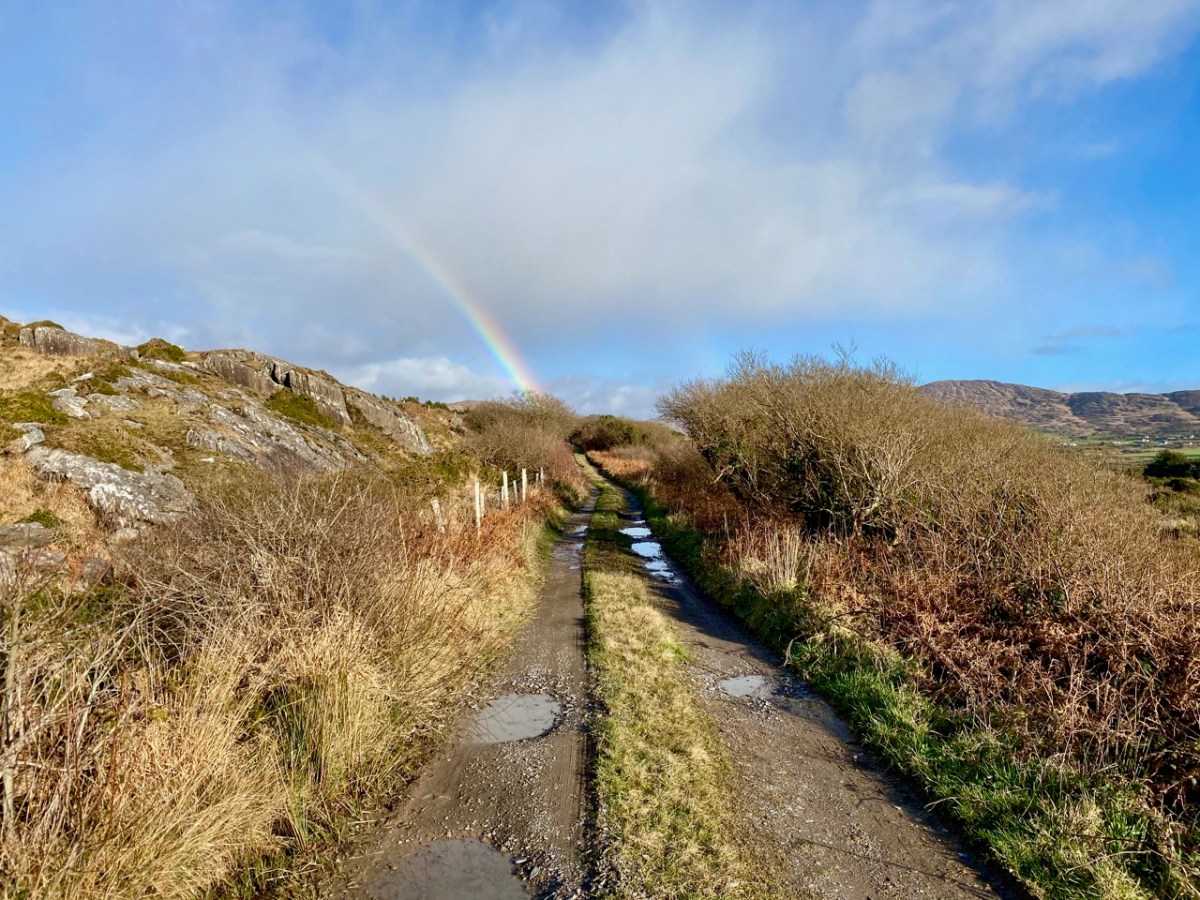
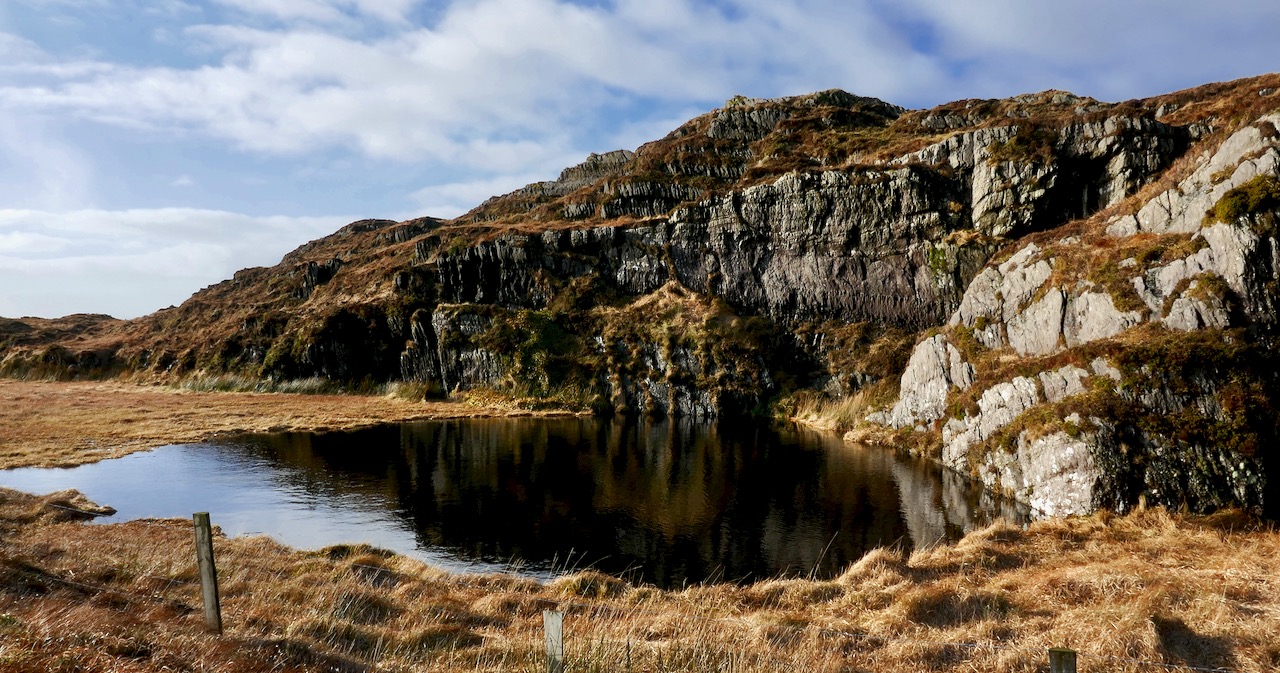
It’s not the trees that lend autumnal hues to the Mizen, as they do elsewhere. It’s the whole landscape – that combination of rock, heather, bracken, moor grass, brambles, filtered through the light and shade of our notoriously changeable climate – that creates the special colour palette we associate with autumn. It’s my favourite time of year.

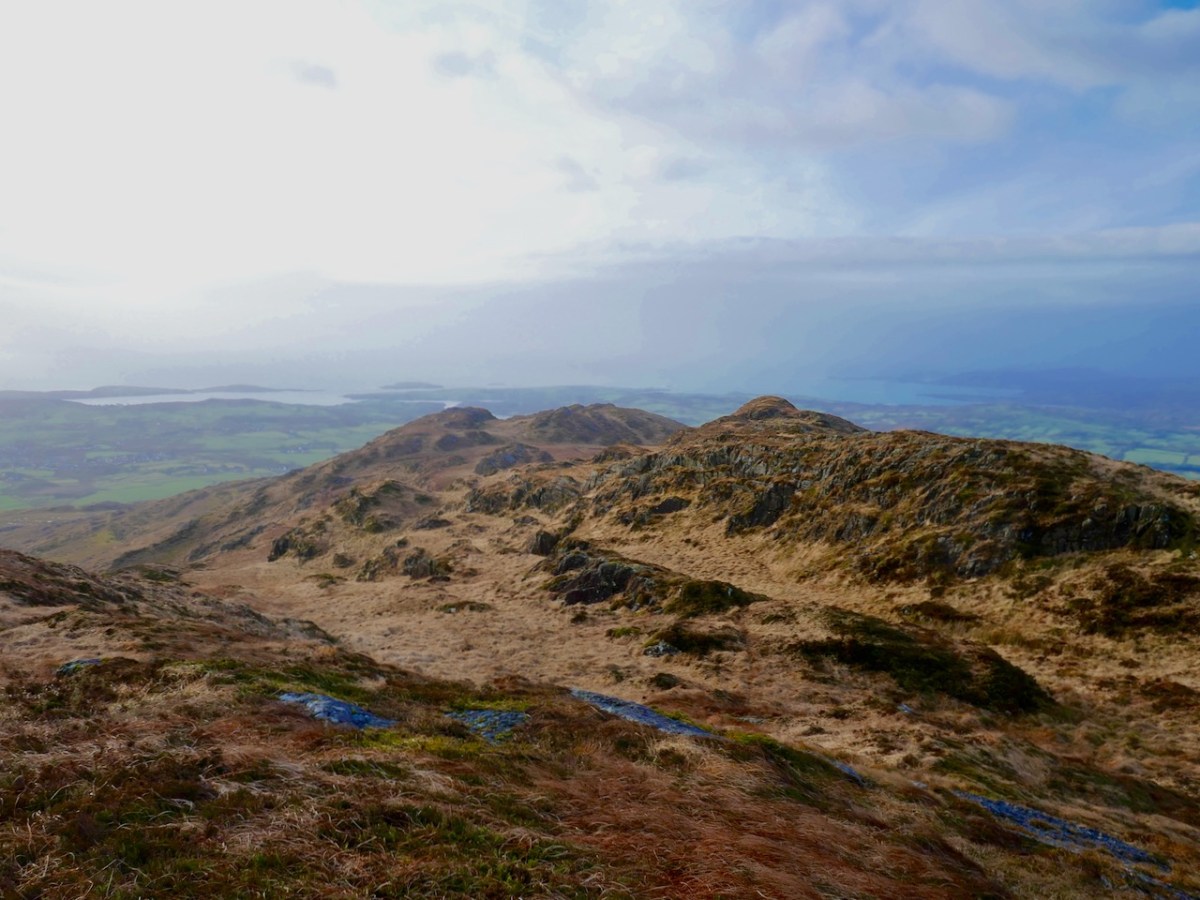
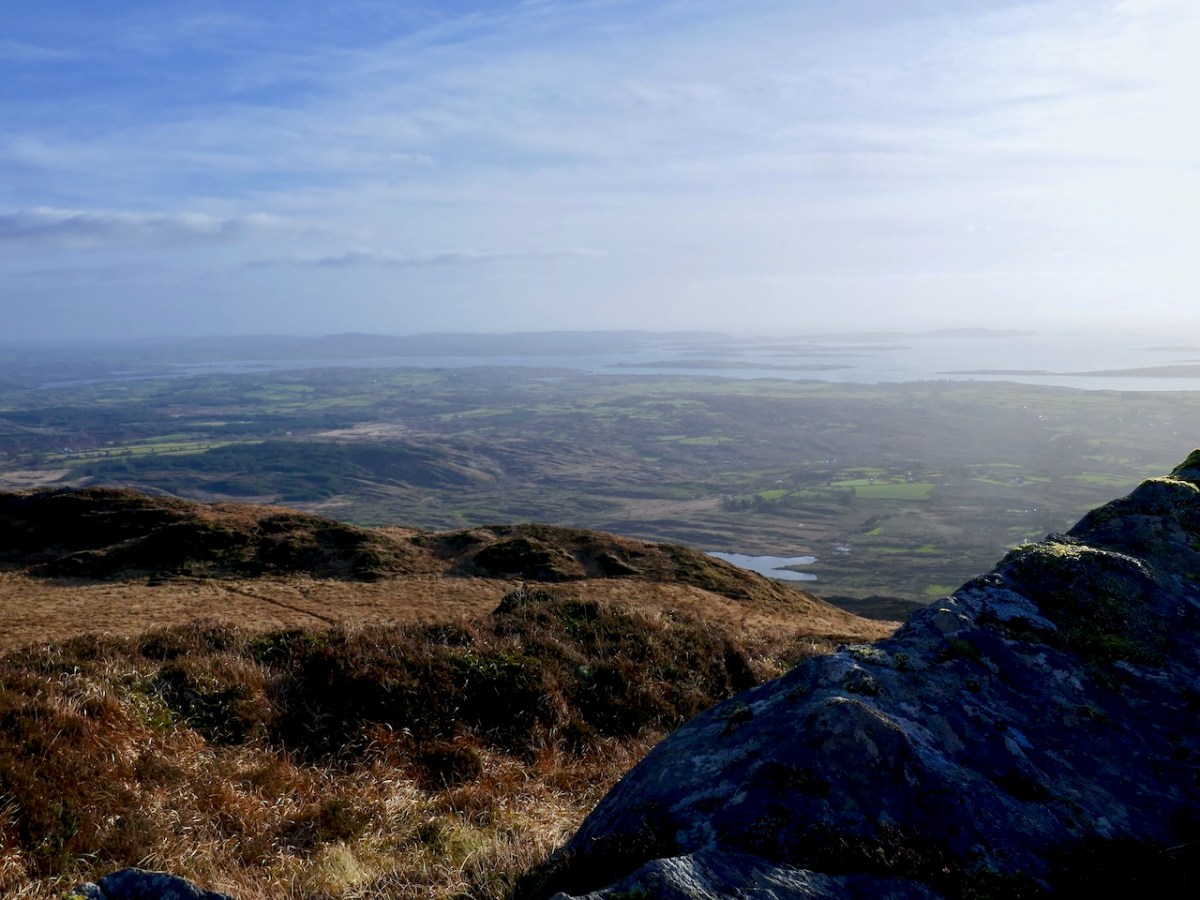
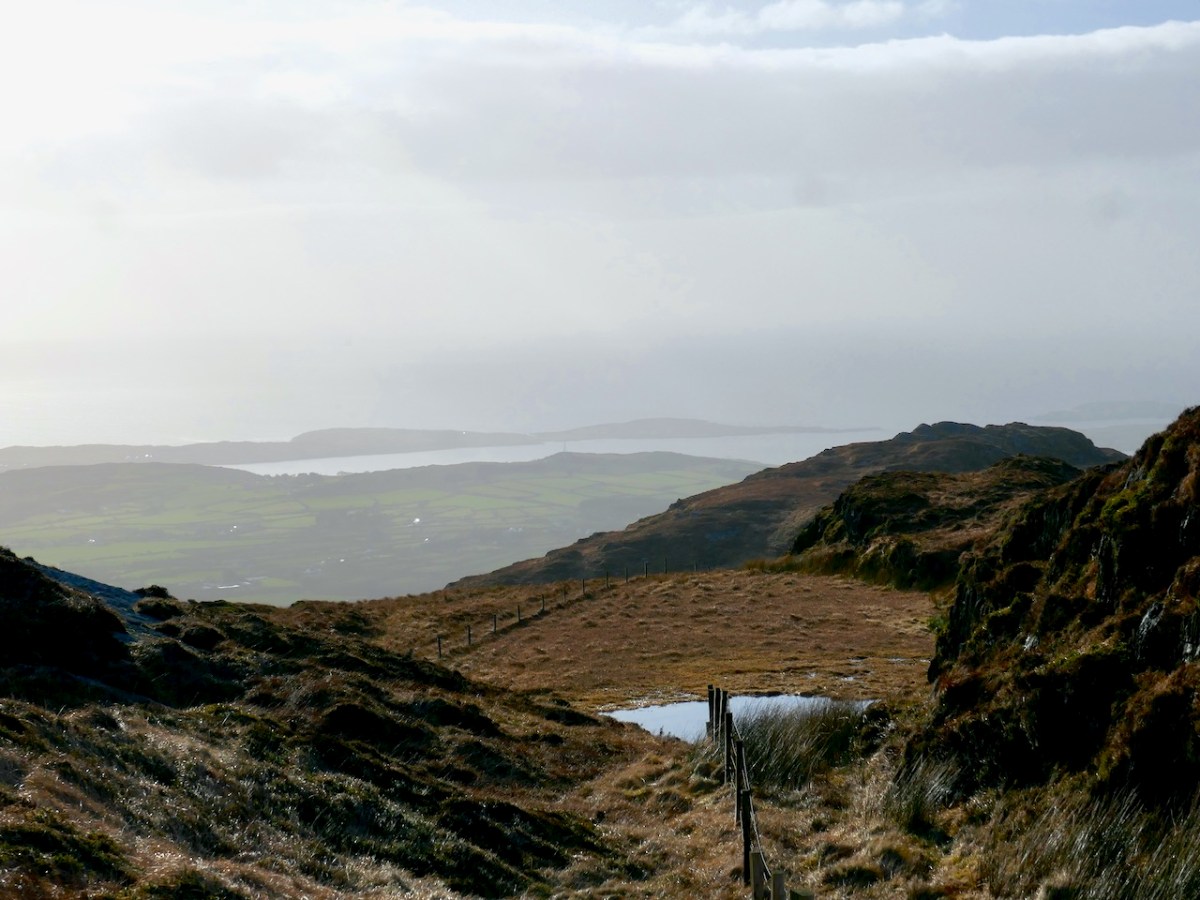
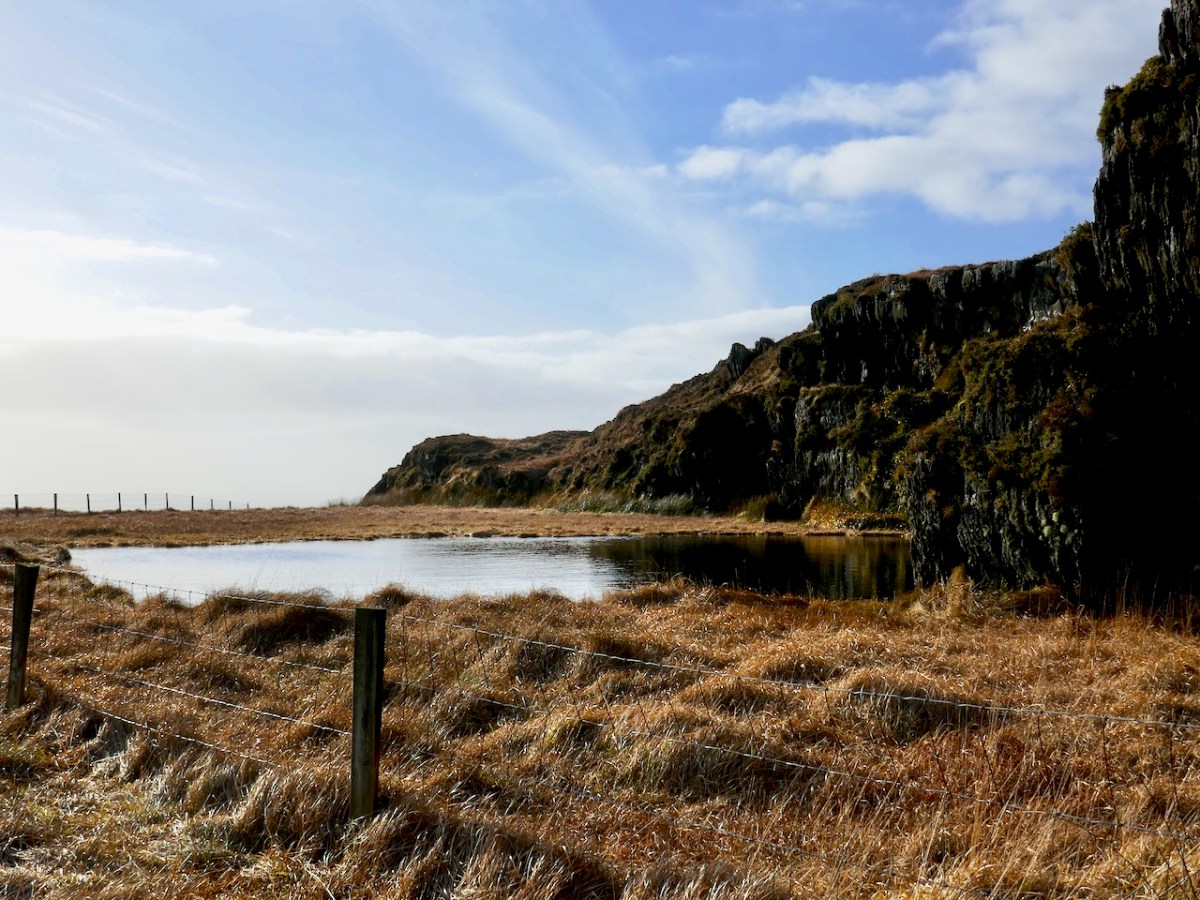
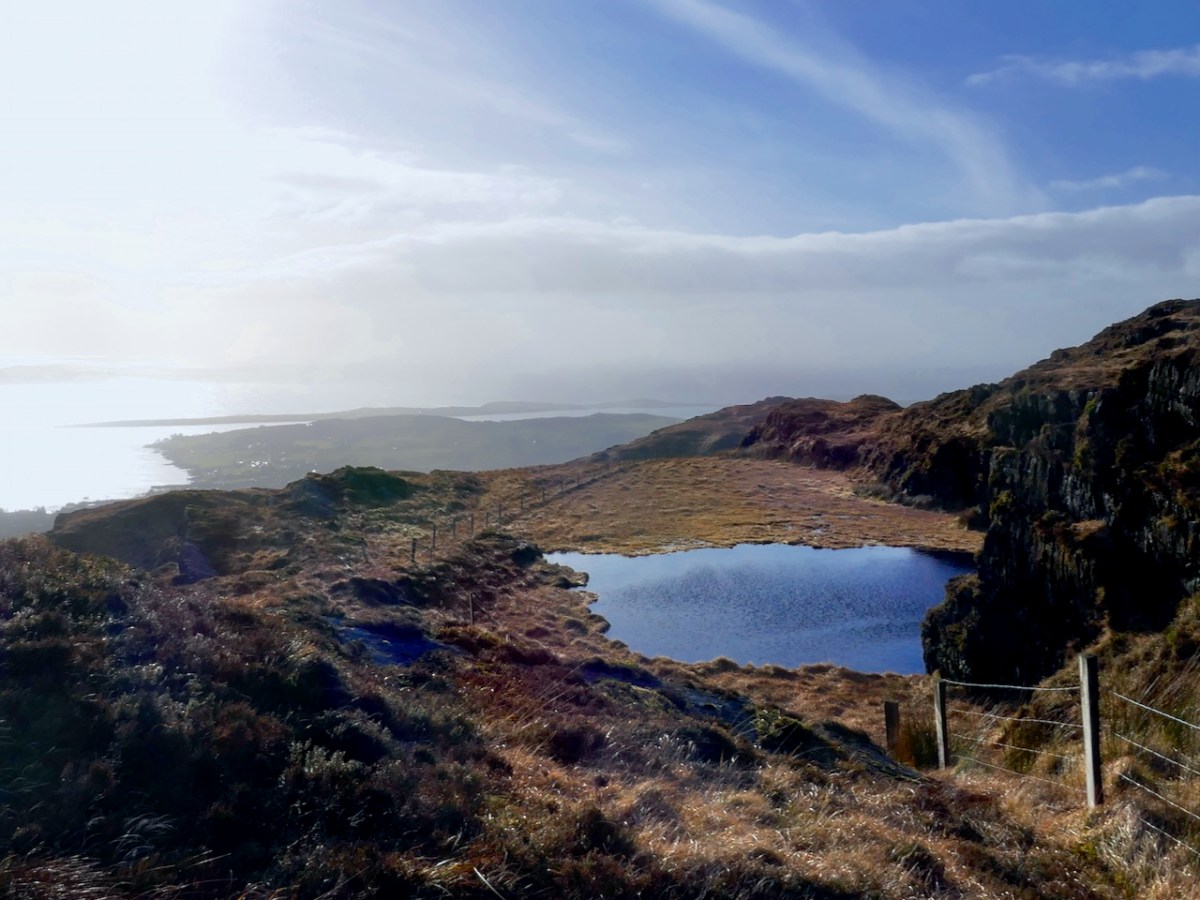
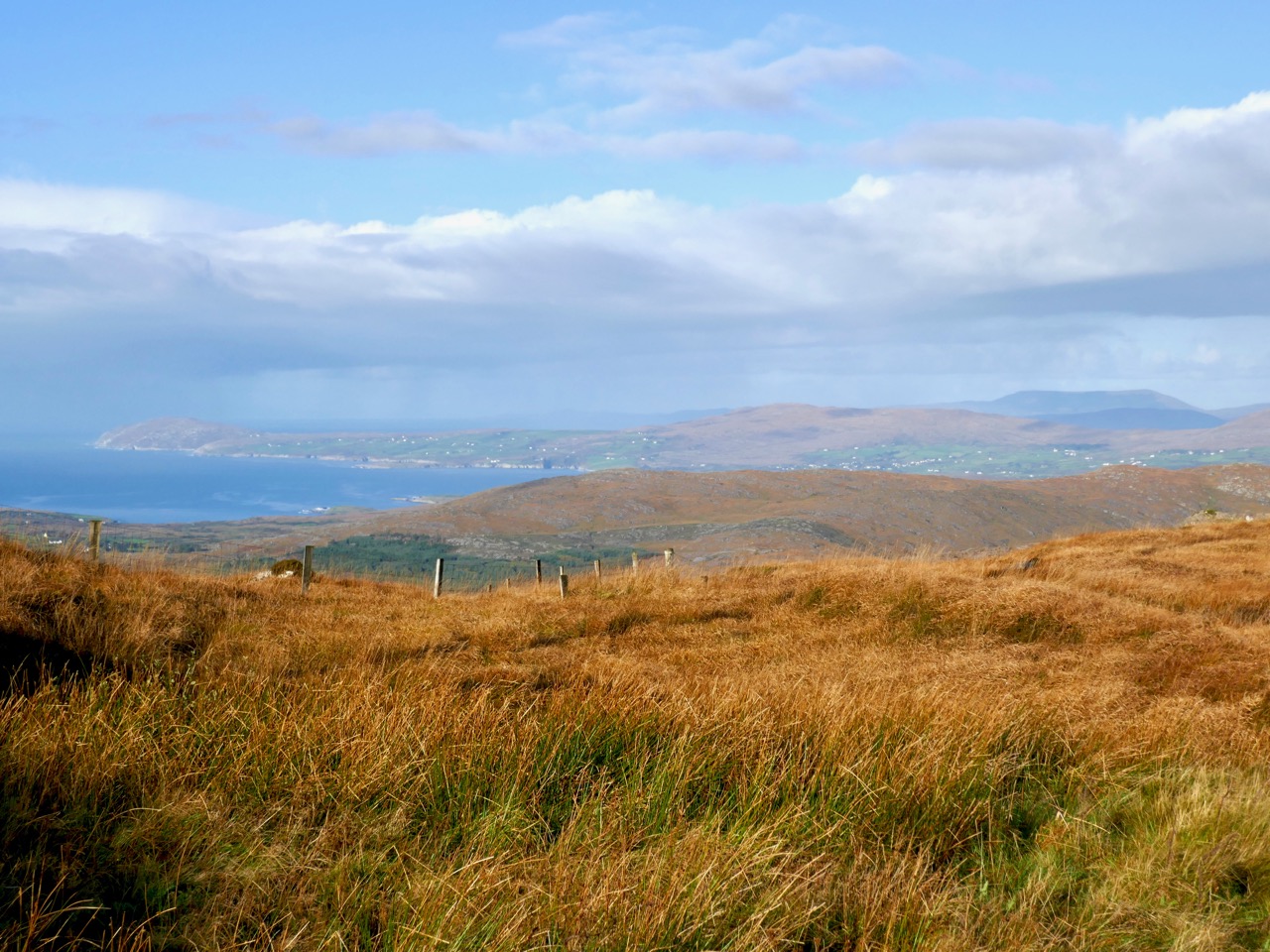
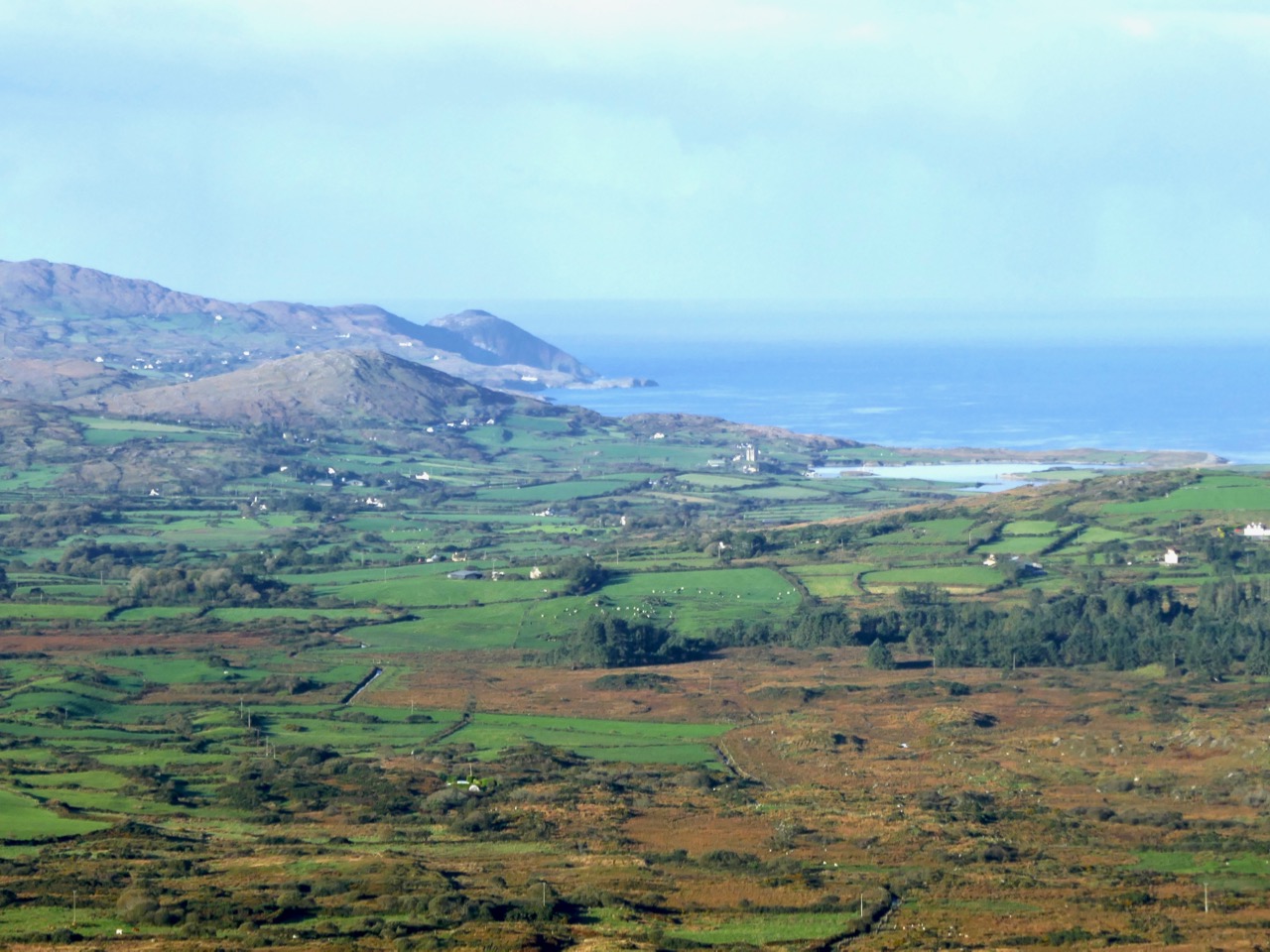
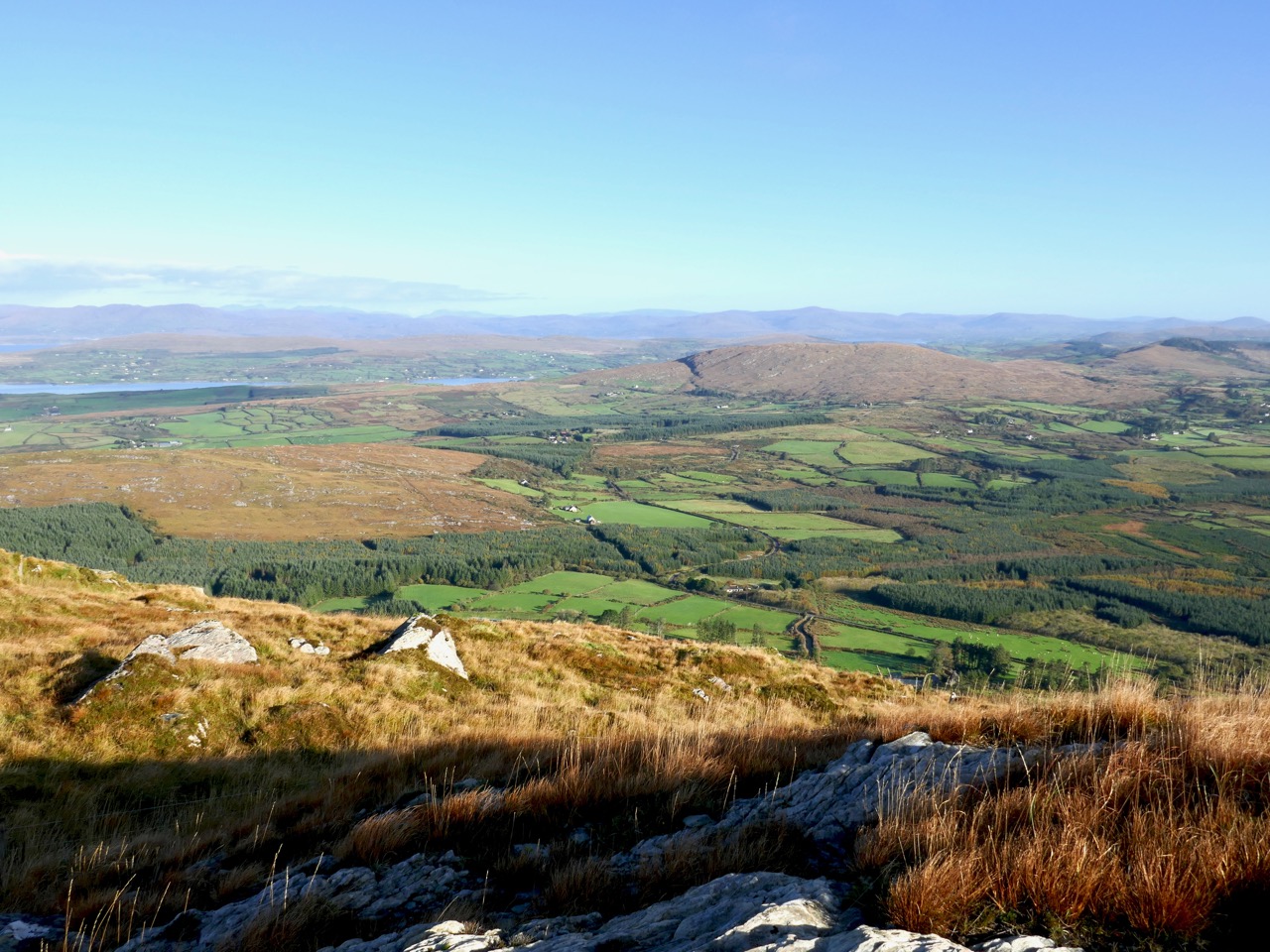
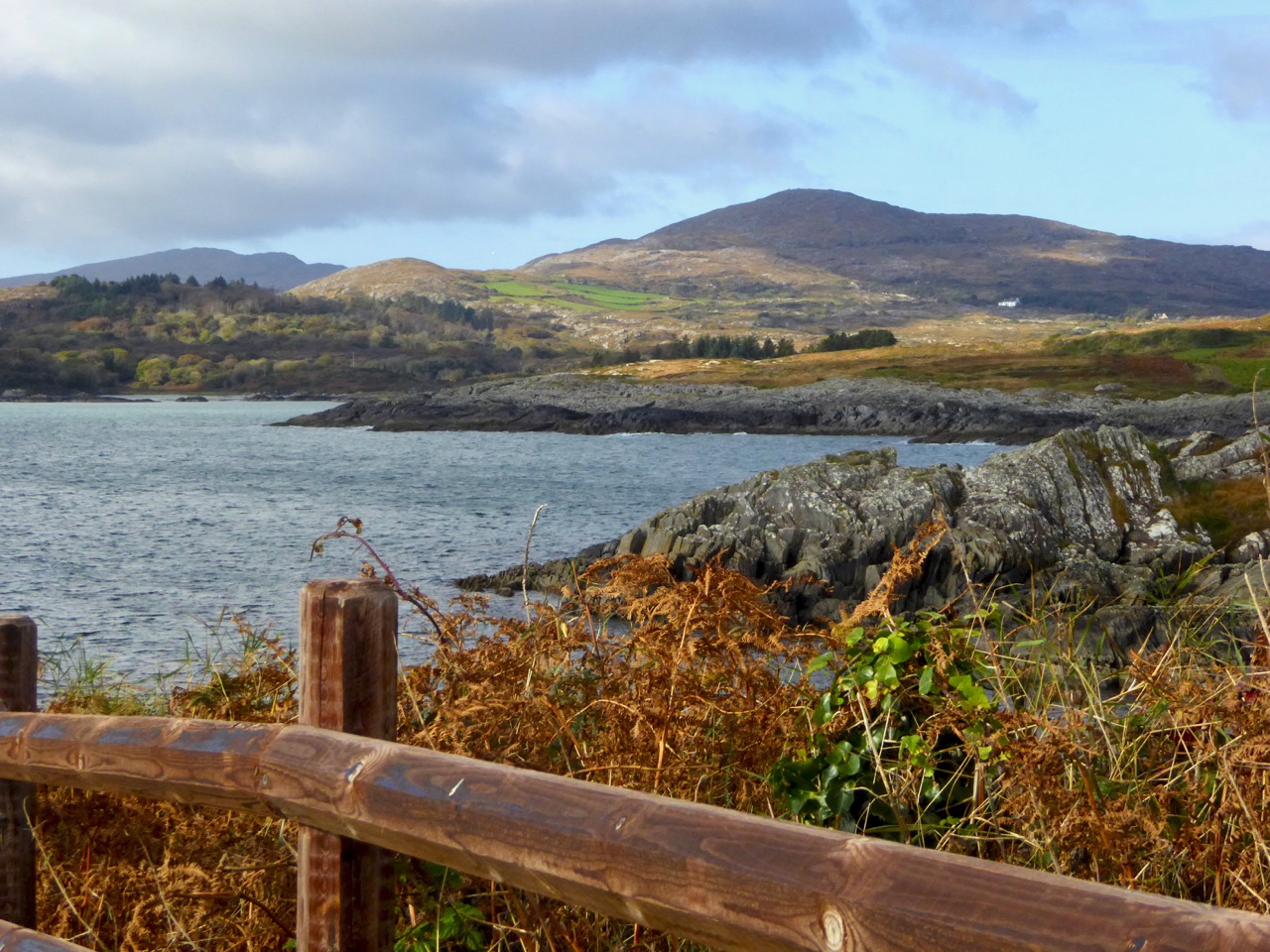
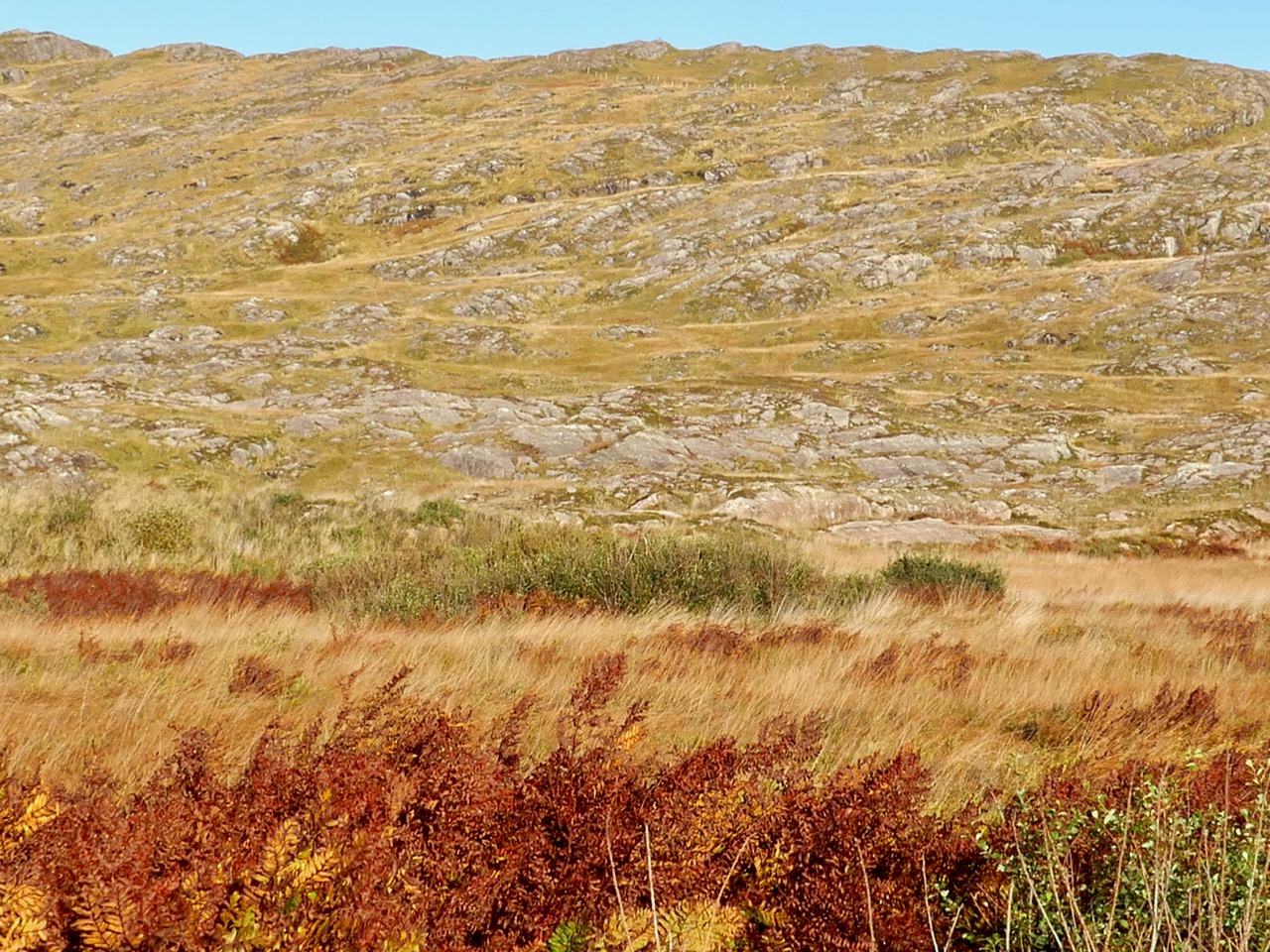
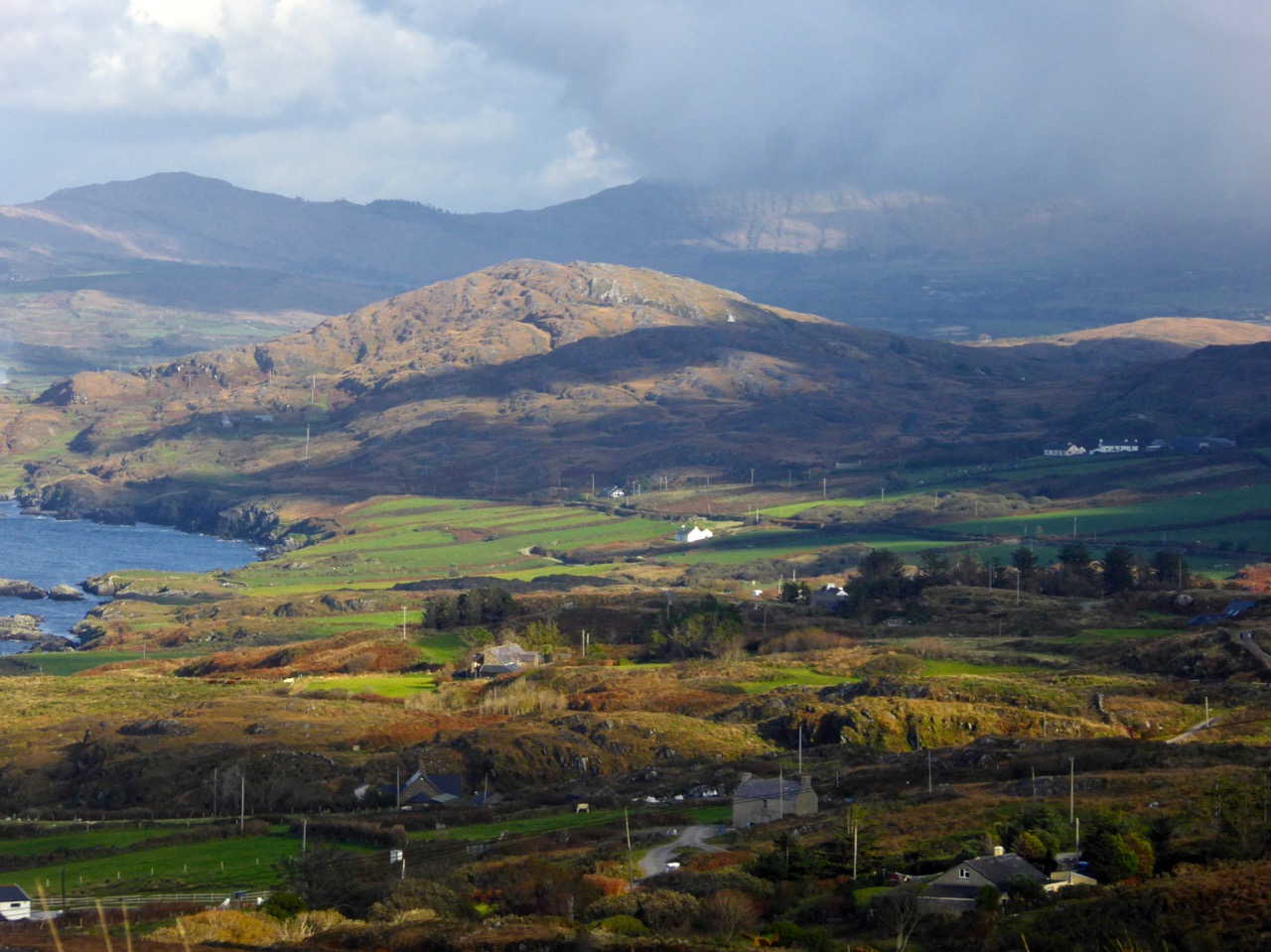
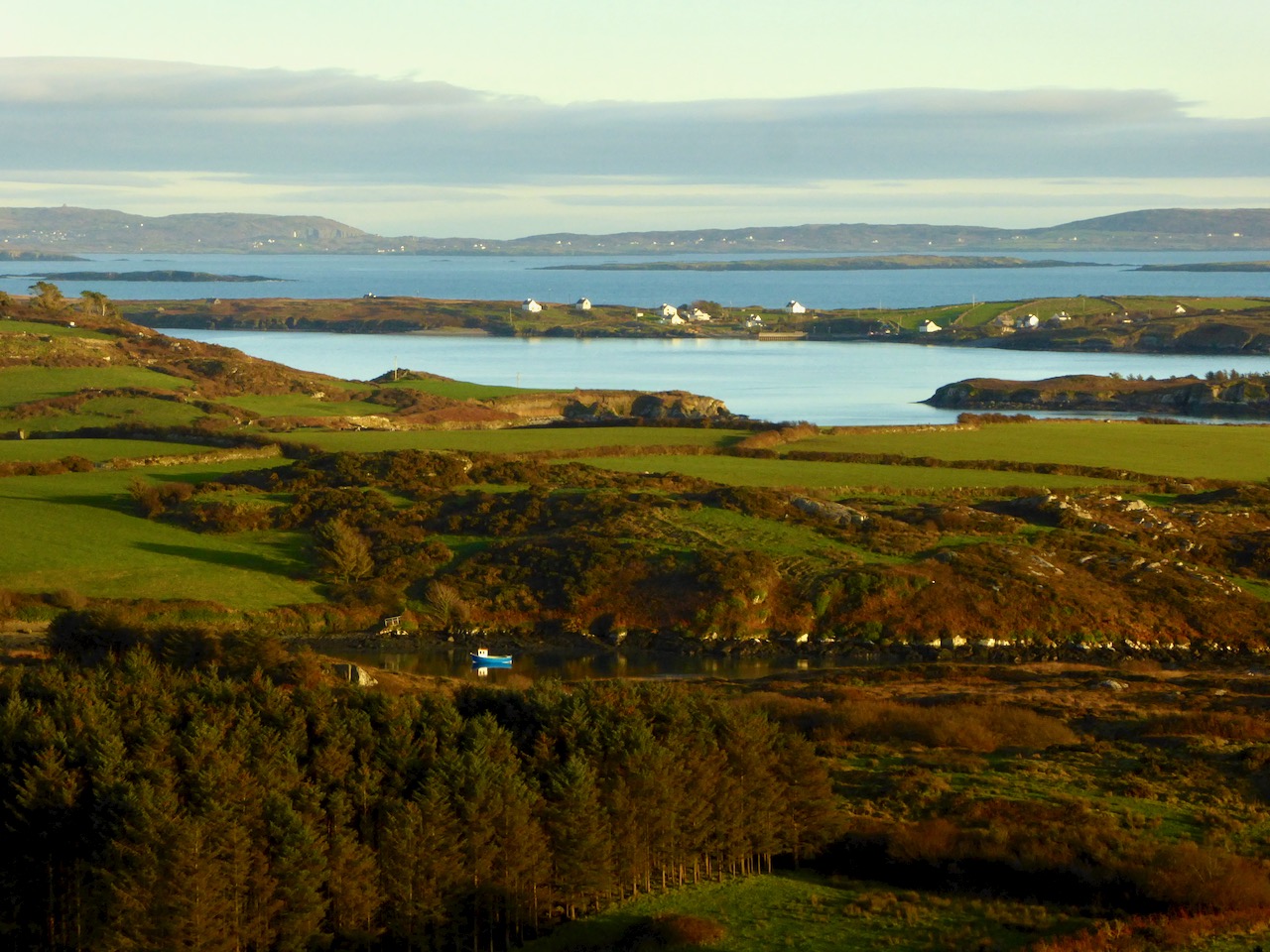
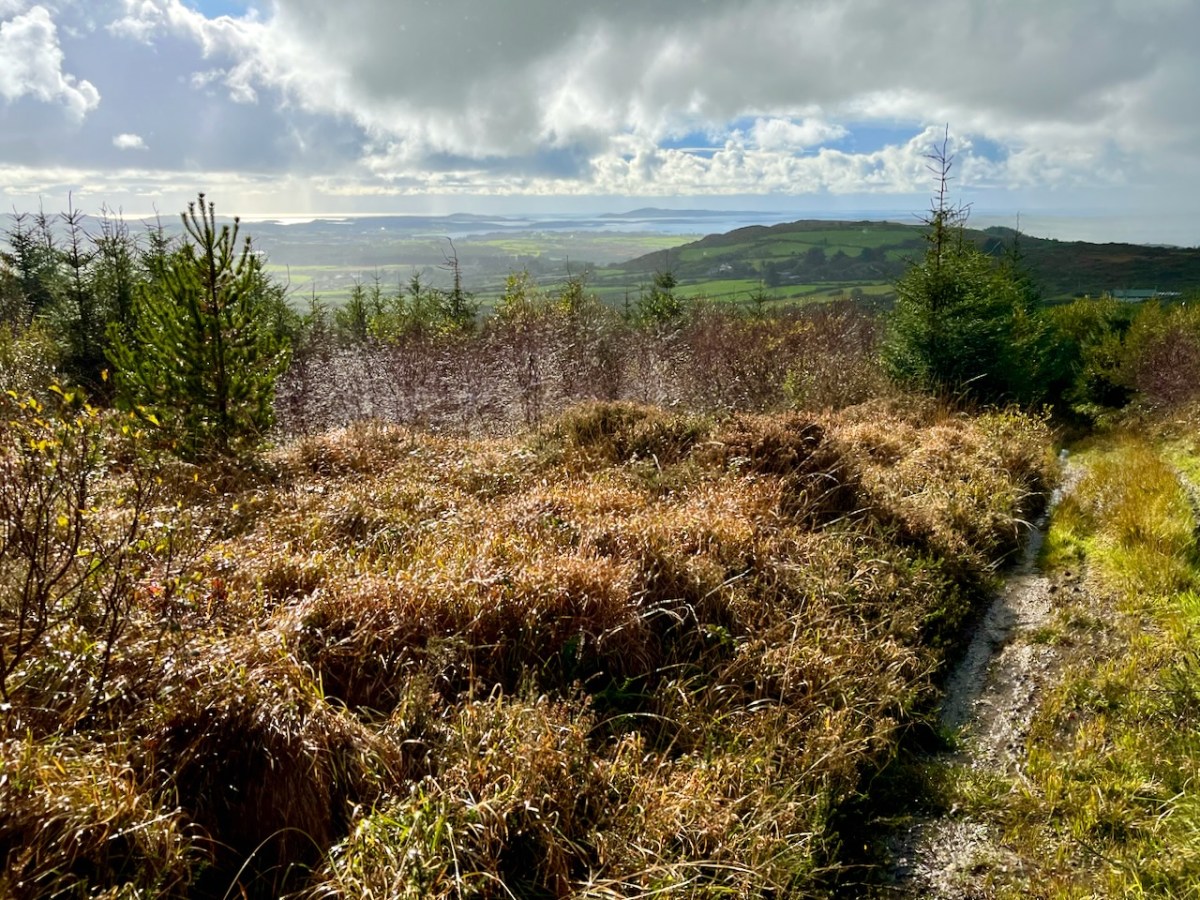
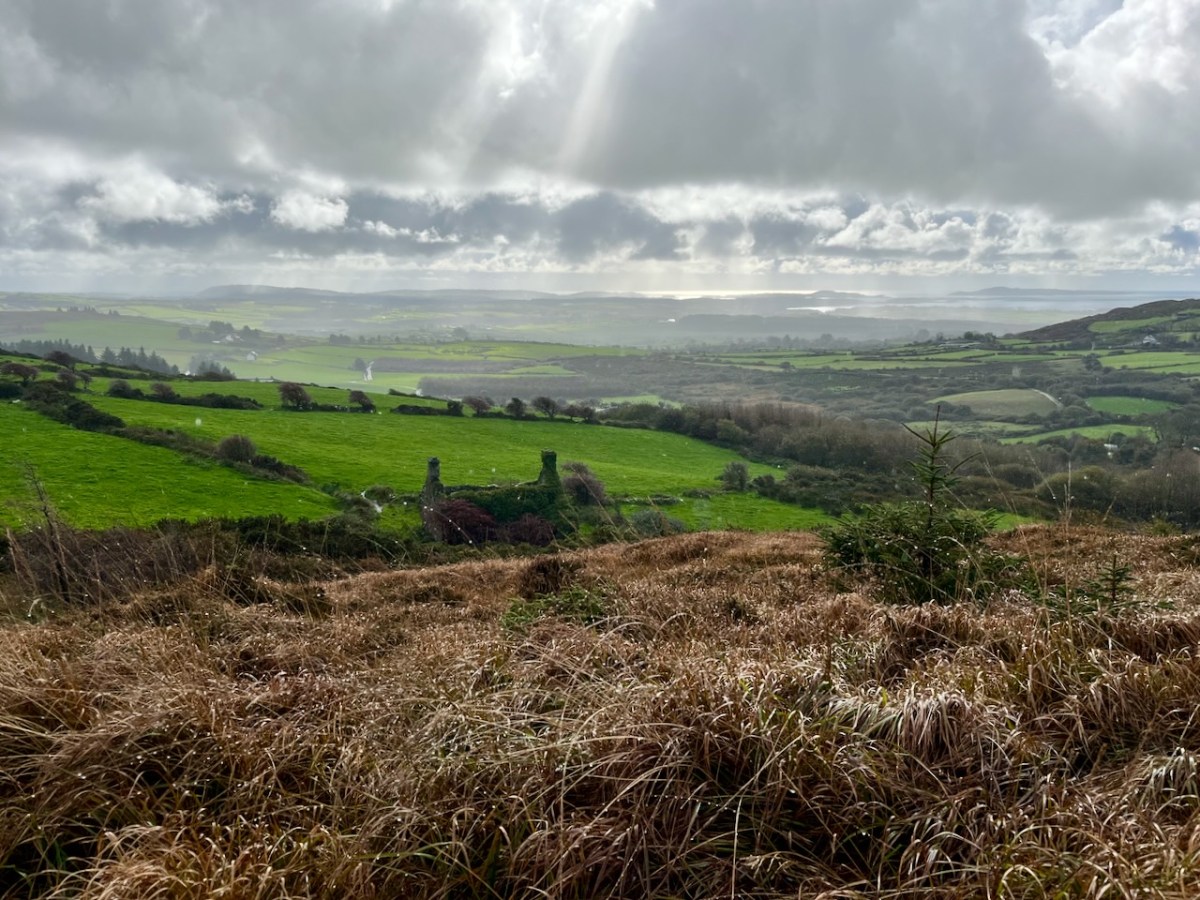
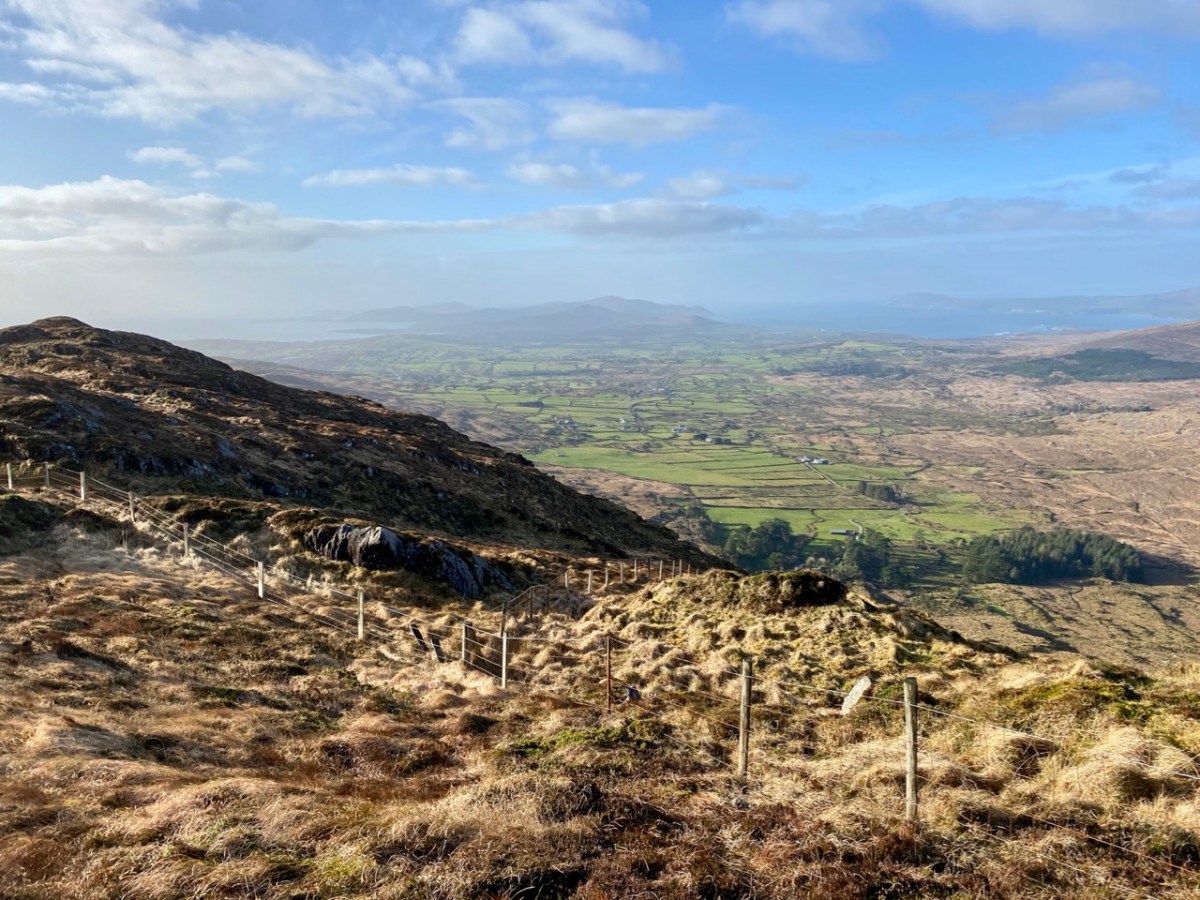
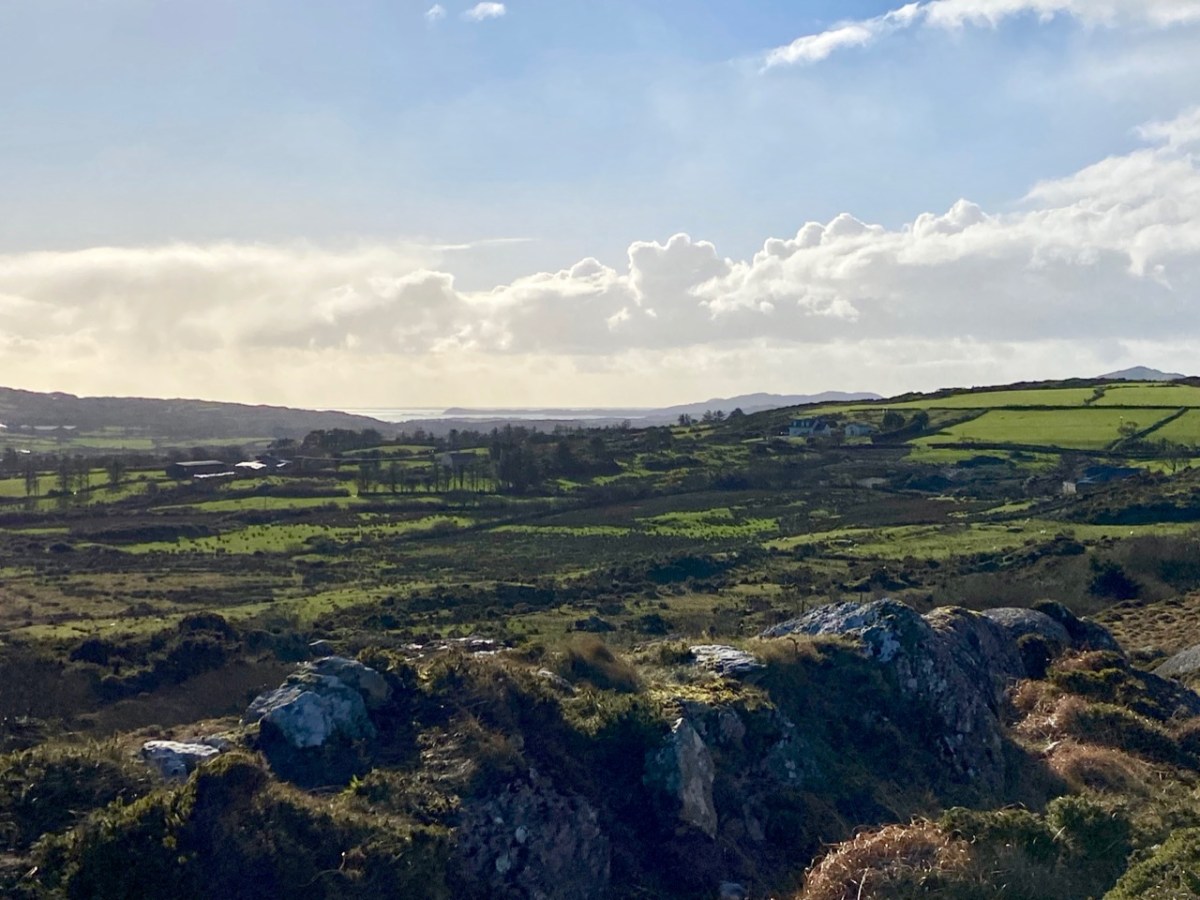
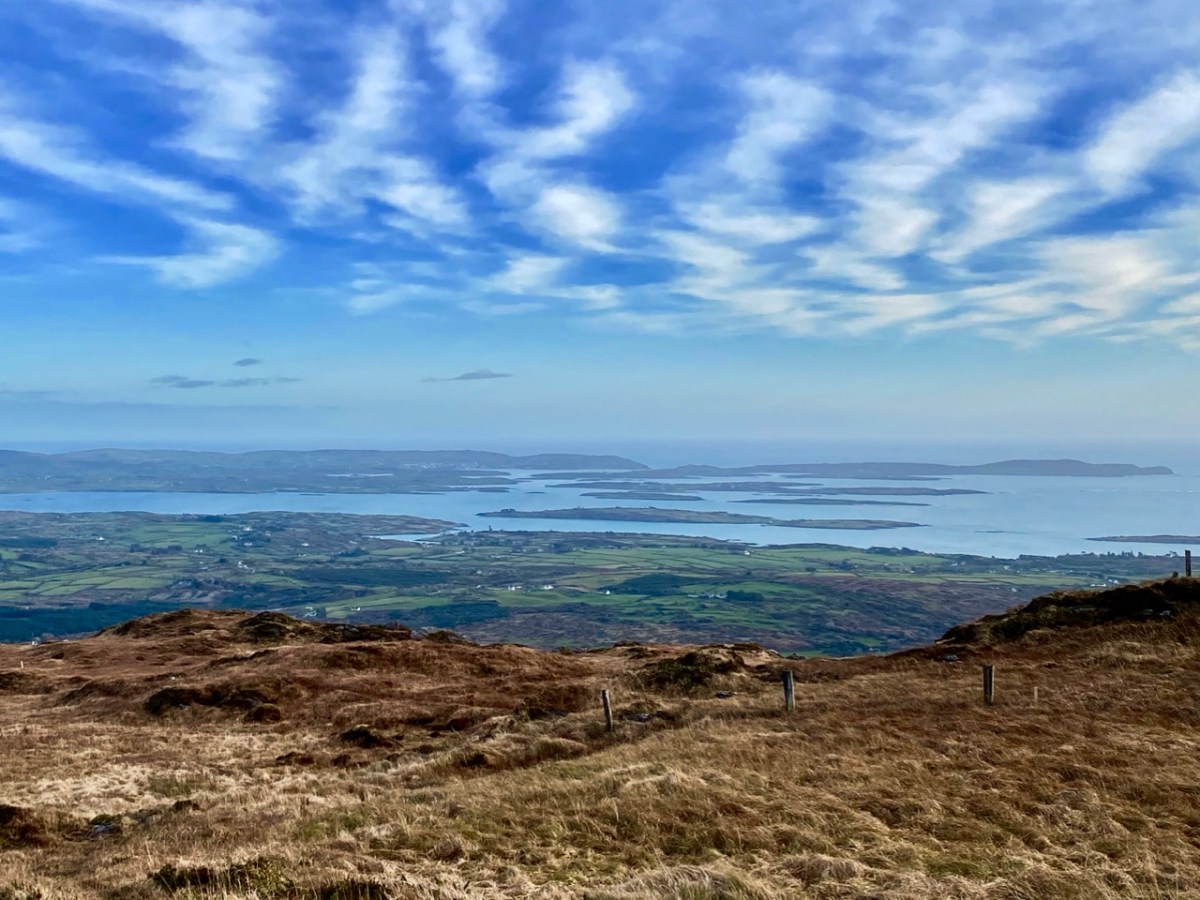
Today, early, we drove up Mount Gabriel and looked over the whole of the Mizen, back to Mount Corrin and Mount Kidd, and across to the Sheep’s Head, the Beara, and away to the mountains of Kerry.

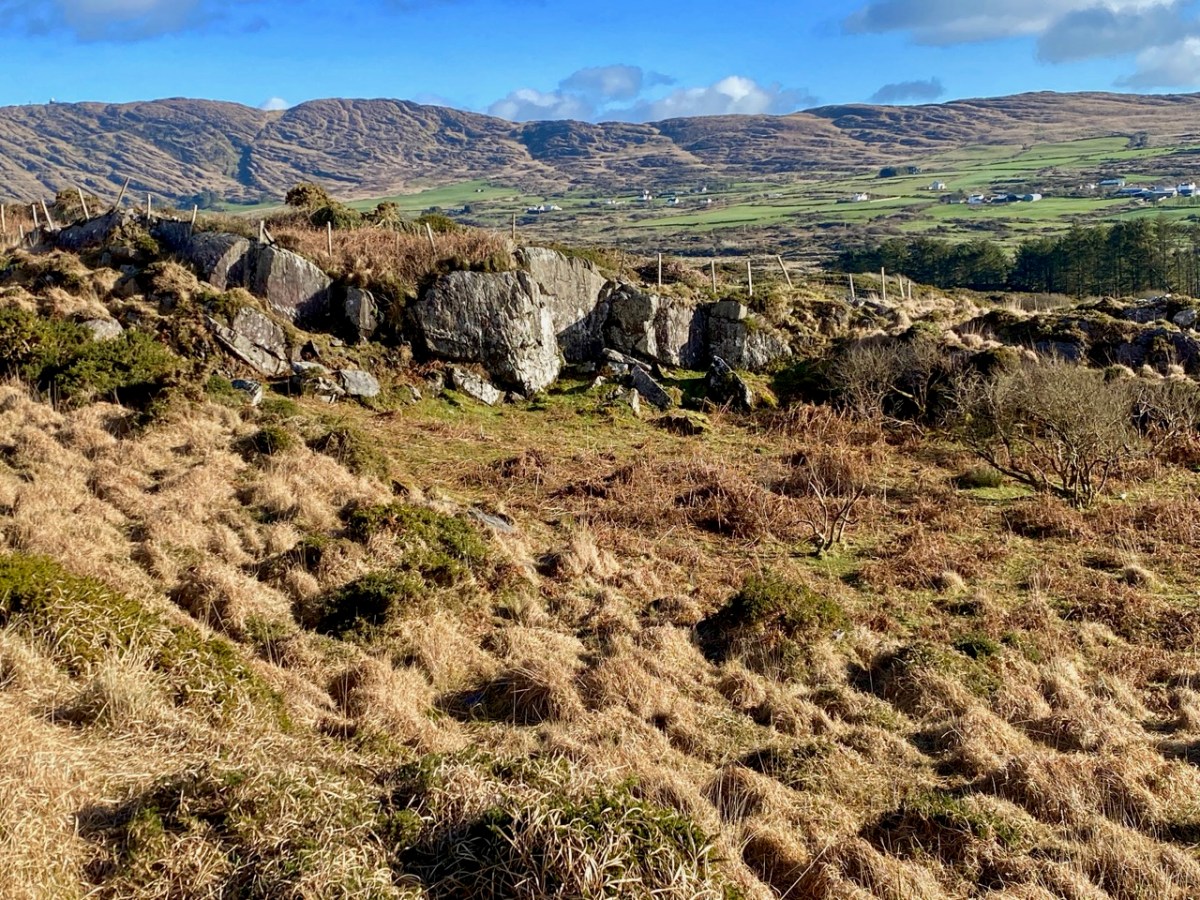
Upper: looking down to Dunmanus Bay from Mount Gabriel; Lower: looking across to Mount Corrin

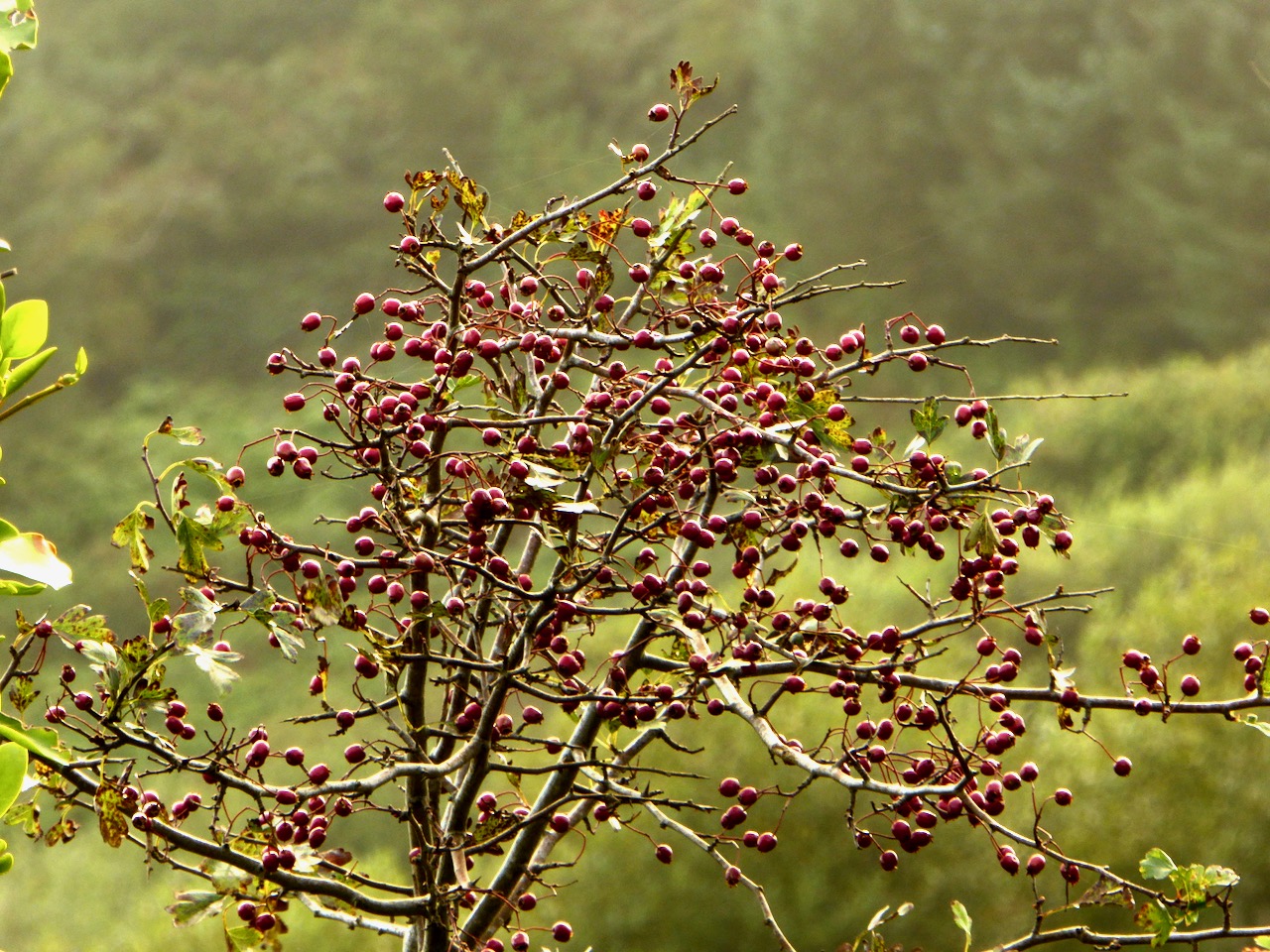
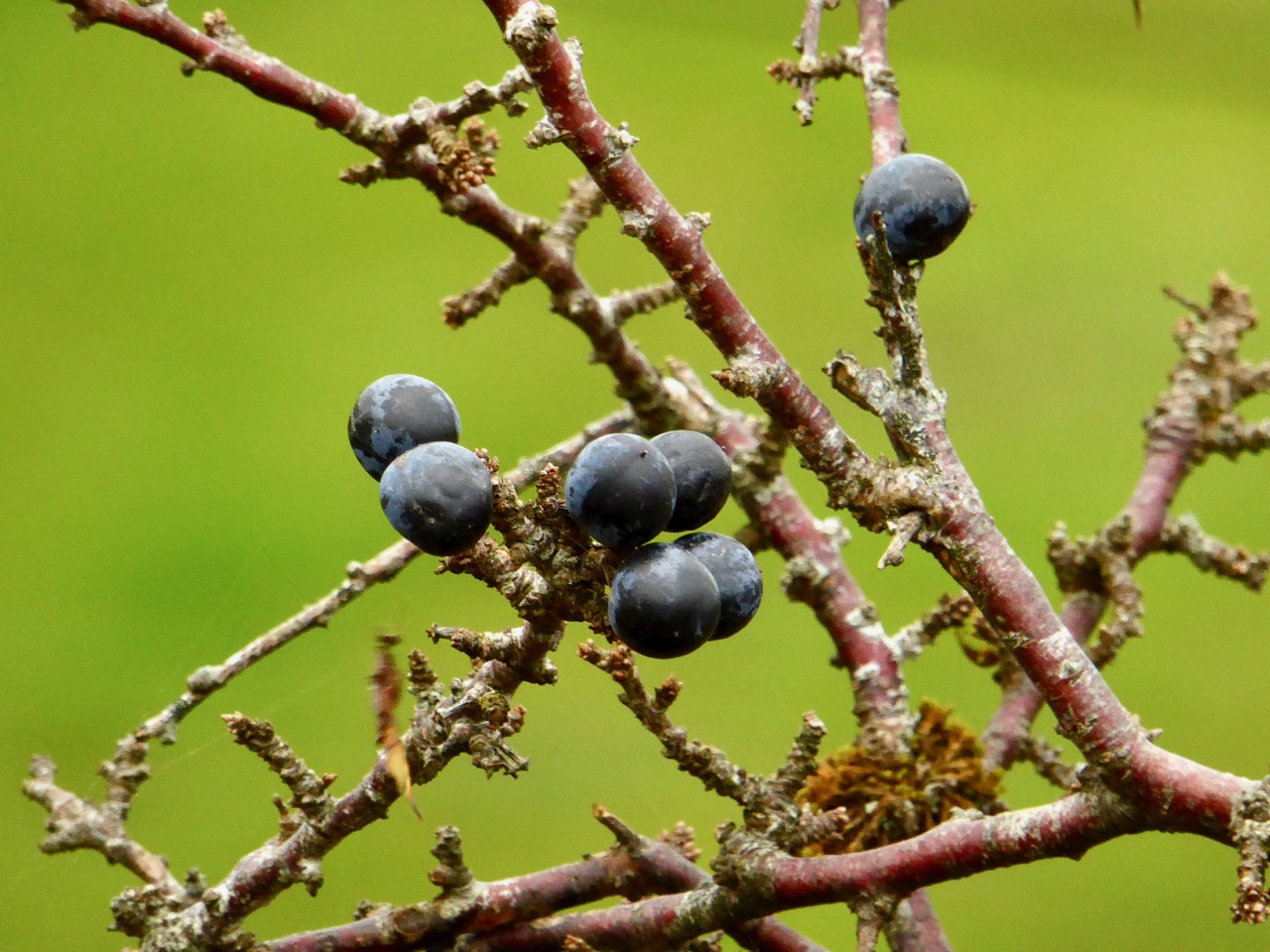
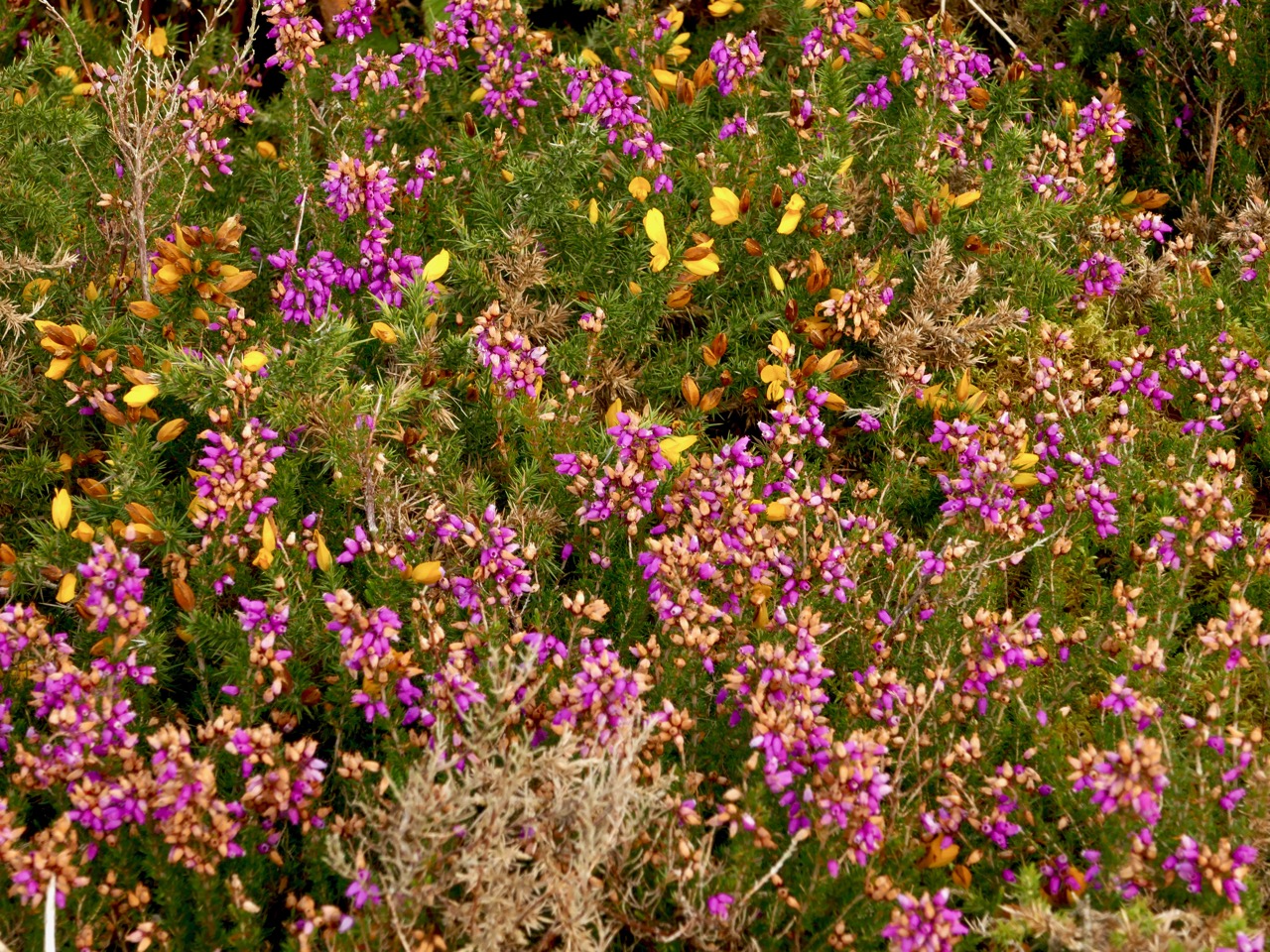
But every day brings changes. What trees we have are not yet bare. The thorns, blackthorn and whitethorn are loaded with berries. The heather is hanging on here and there, providing a wonderful contrast to the yellow gorse.

Haws, Sloes, Heather and Gorse

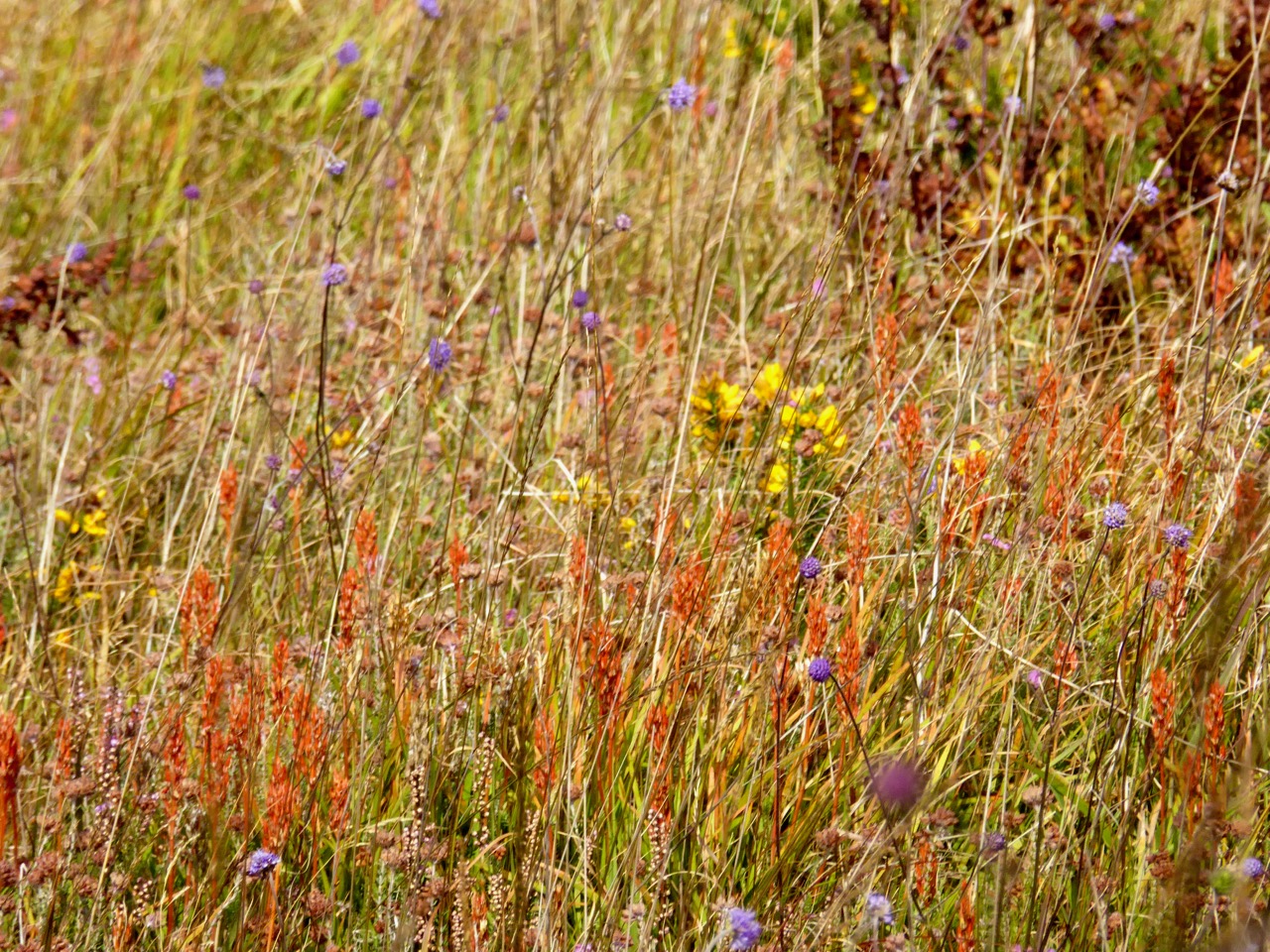
The bog asphodel is fading now, but earlier in the month it had reached its peak orange state and looked spectacular consorting with the other bog and mountain flowers that were still blooming.

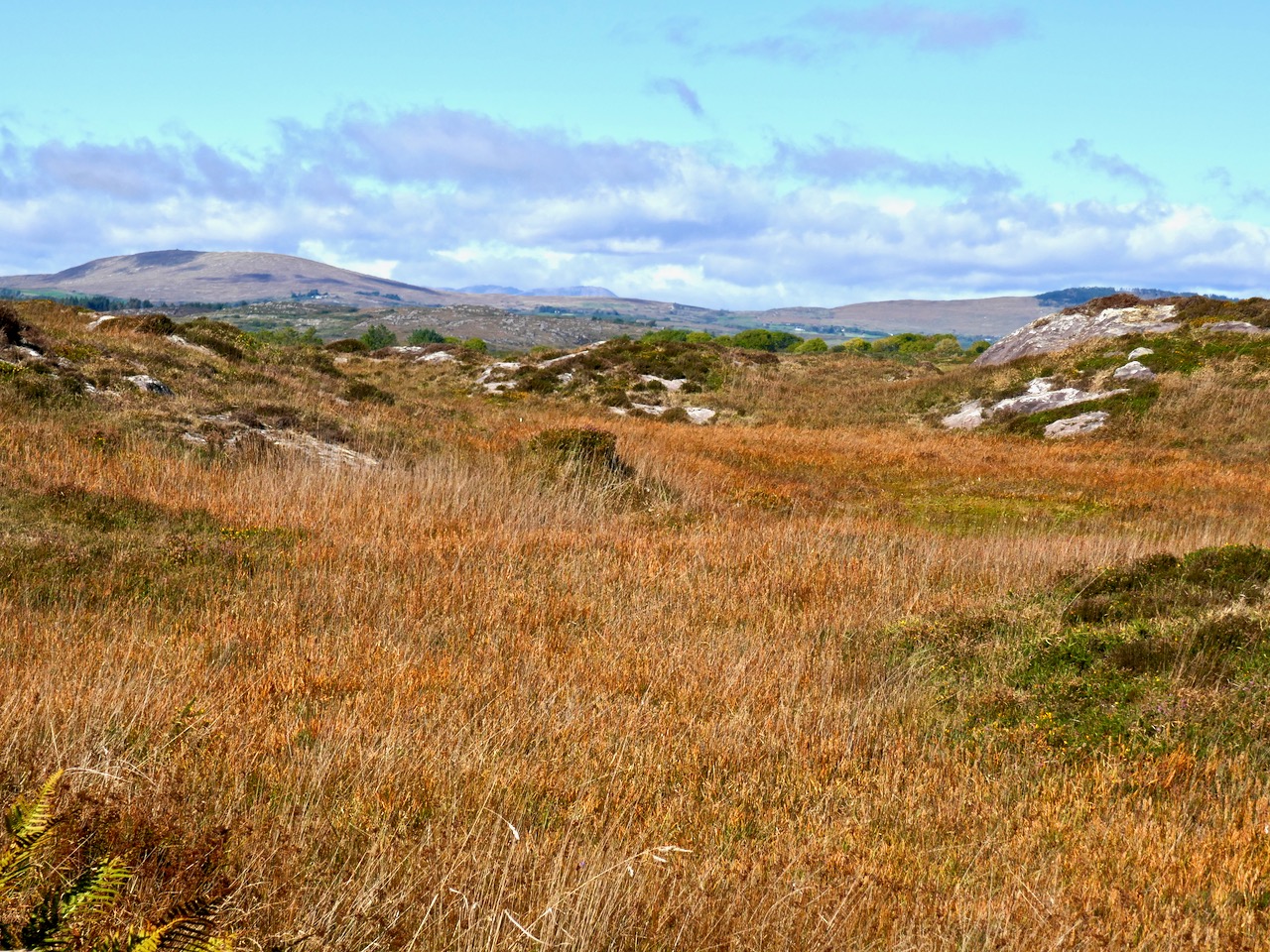
Upper: Bog Asphodel, Gorse, Scabious; Lower: Cappaghglass Bog

When you get a clear day, like today, there is nothing on earth like a walk on the West Cork hills, drinking in the colours and trying to store them in the memory. Or perhaps, in a blog!

Upper: Toormore; Lower: Derryconnell 

Upper: North Side of the Mizen; Lower: Crough Bay and Long Island

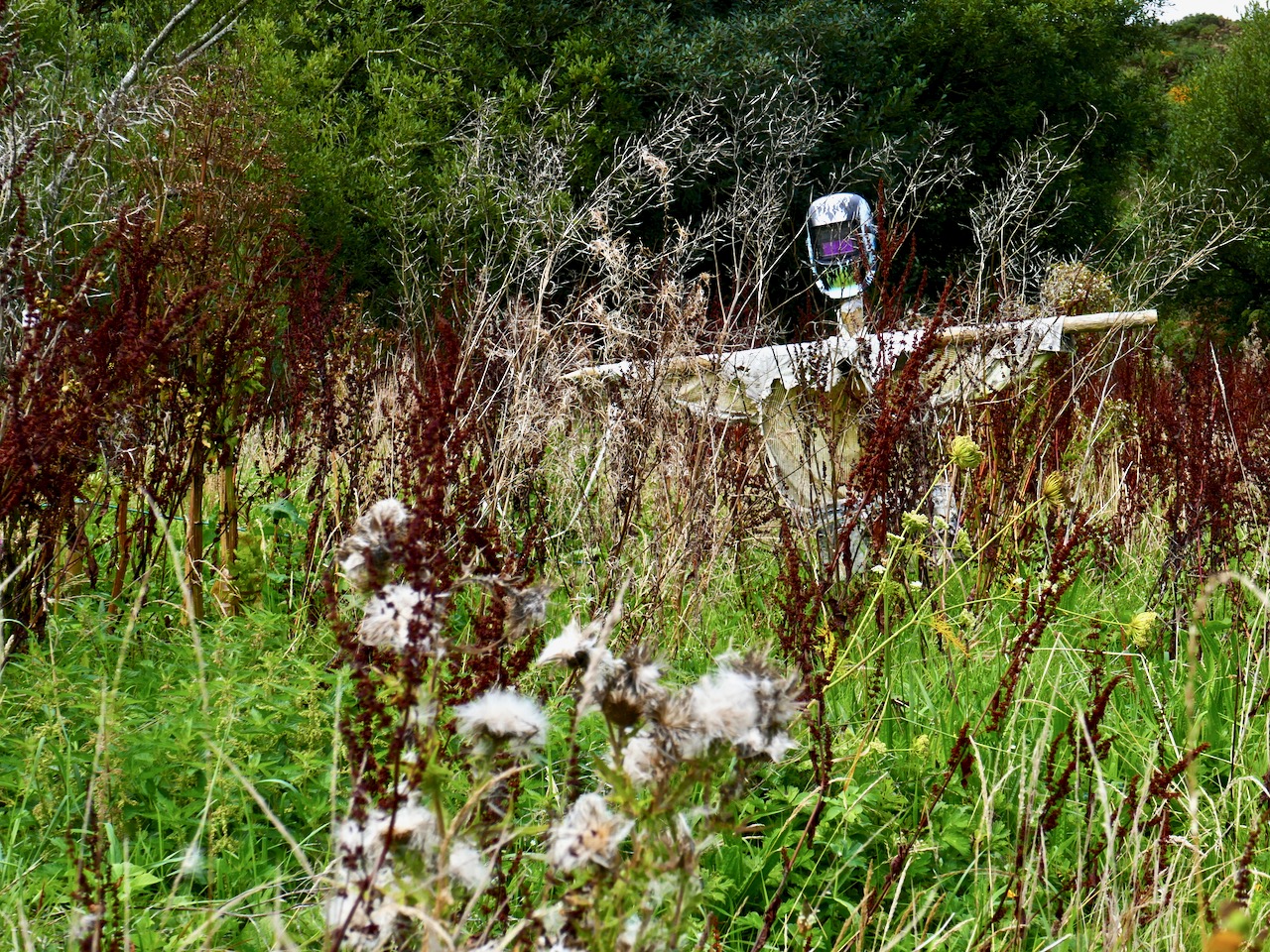
Scarecrow in an abandoned garden – quintessential autumn image!

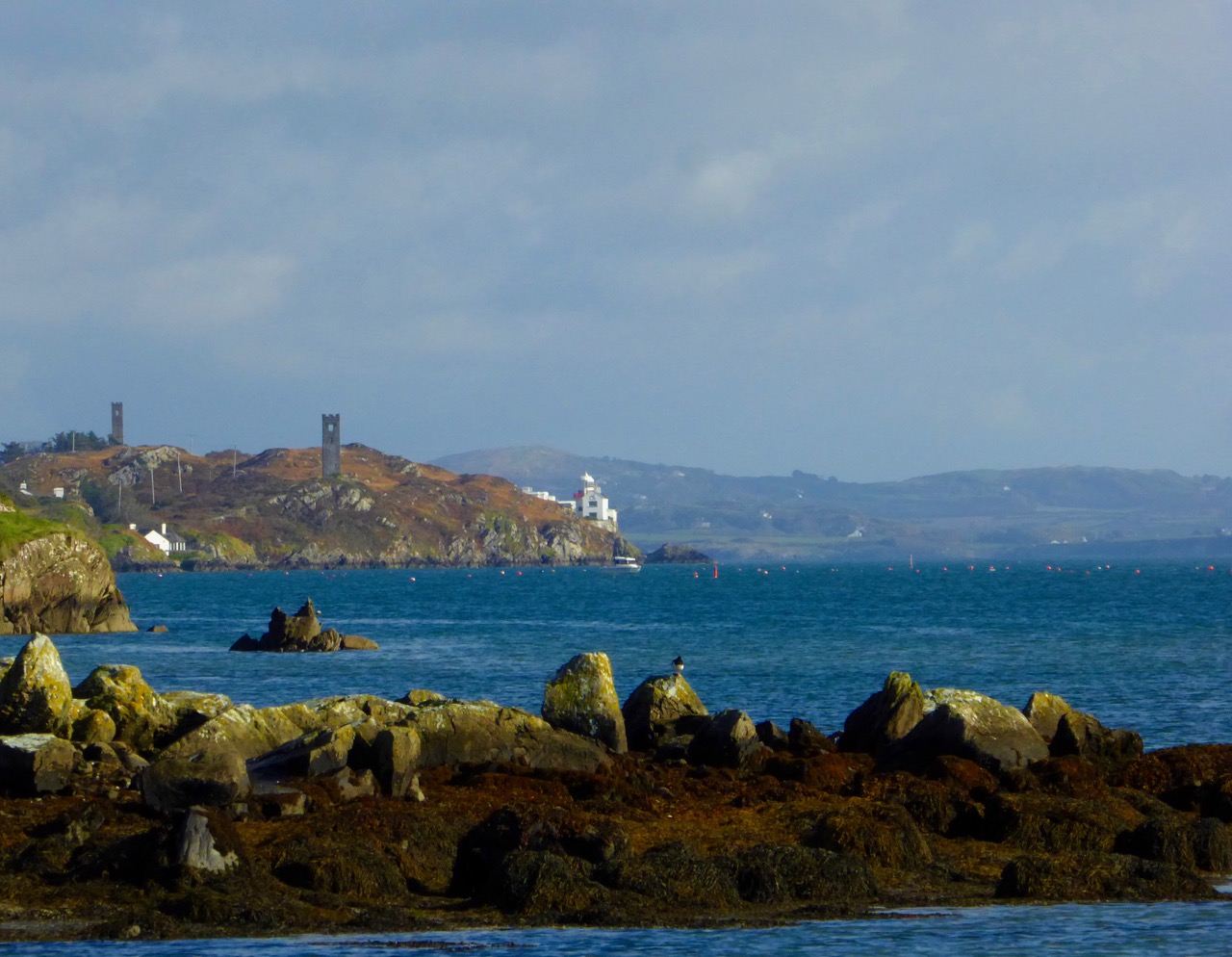
Rock Island

‘The Mountain’

We spent a day on ‘The Mountain’. It’s a West Cork location, not too far away from us. The land has a history that touches on many of our interests covered here in Roaringwater Journal – and some of the West Cork people we have written about over the years – so it’s pretty special. We were delighted to be welcomed to it by its present owner, Oliver Farrell: that’s himself, in the pic below. You have met him before, here. Thank you, Oliver, for allowing us to experience this special site, and for letting us put out this post about it.

Previously, the 70 acre ‘Mountain’ site was owned by the Wrights – Lynne and Ian (above): you saw them in the 2022 Ballydehob Arts Museum exhibition, here. When they purchased it – in 1997 – it was rough pasture and bog. They aimed to develop an environmentally and economically sustainable forest using existing grants, and successfully challenged the decision of the Forest Service (through the EU) to only grant aid the planting of alien conifers. They set about transforming it: they had a vision of a ‘pure’ West Cork landscape supporting an ecosystem of native species. Now – many years later – it’s possible to see that the Wrights’ vision was fully justified – and realised. Today Oliver is undertaking essential maintenance work, and is committed to expanding on the inherent sustainable qualities that the site embodies. In fact, ‘The Mountain’ is largely in excellent environmental order.

Interestingly, Ian told us that when they made the decision to buy the site they had only seen it under cloud: the spectacular view wasn’t revealed until later on. We were fortunate on the day of our visit to see the full panorama of Roaringwater Bay stretched out before us.

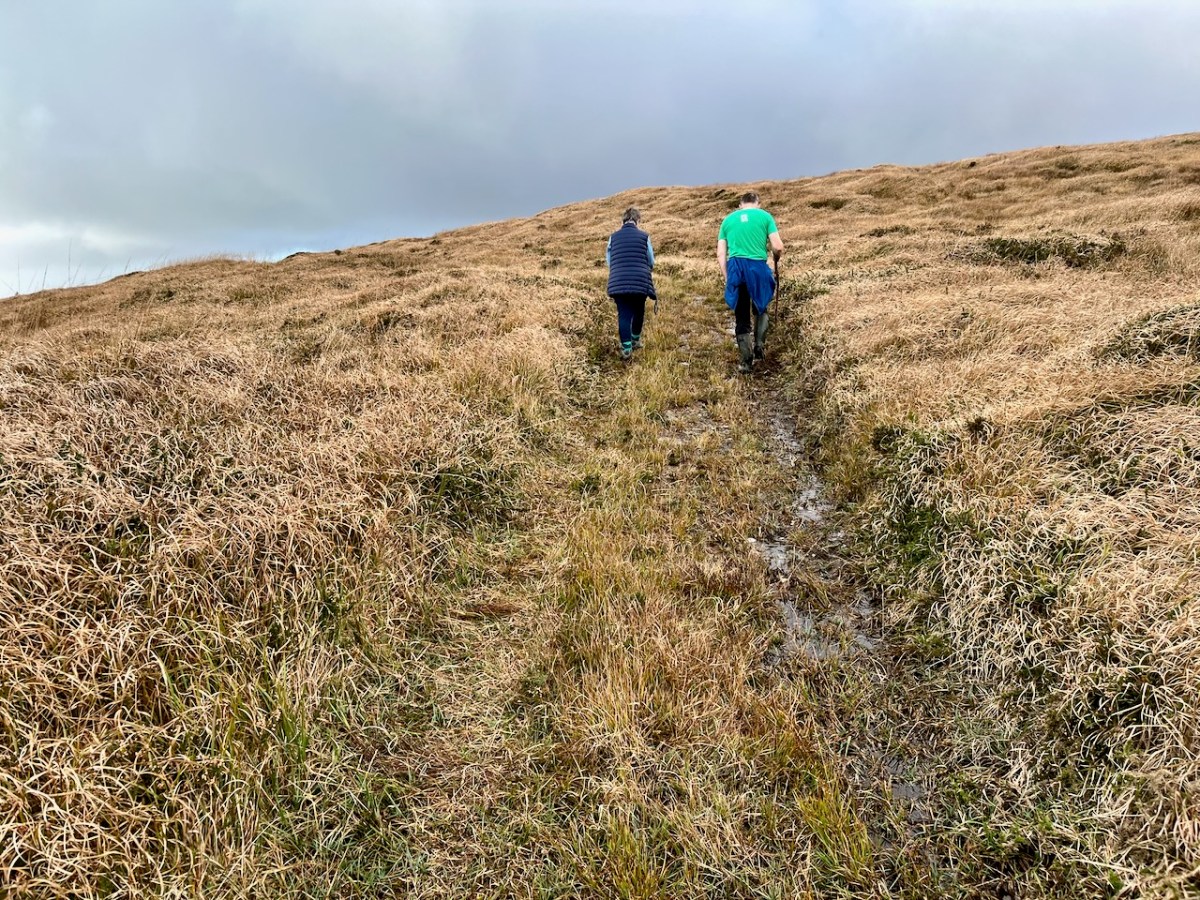
This dramatic view towards Mount Gabriel is a reward for climbing ‘The Mountain’. The ground was waterlogged on the day of our visit as this autumn has been a time of relentless rainfall, but always interspersed with brief dry patches: it’s great to be out to catch these. Springs rise on the high ground here, and I’m working out that they either feed the Roaringwater River – the water that gives its name to the whole Bay and islands that are central to our view from up here in Nead an Iolair, or another of the many streams that drain the West Cork hills below us.

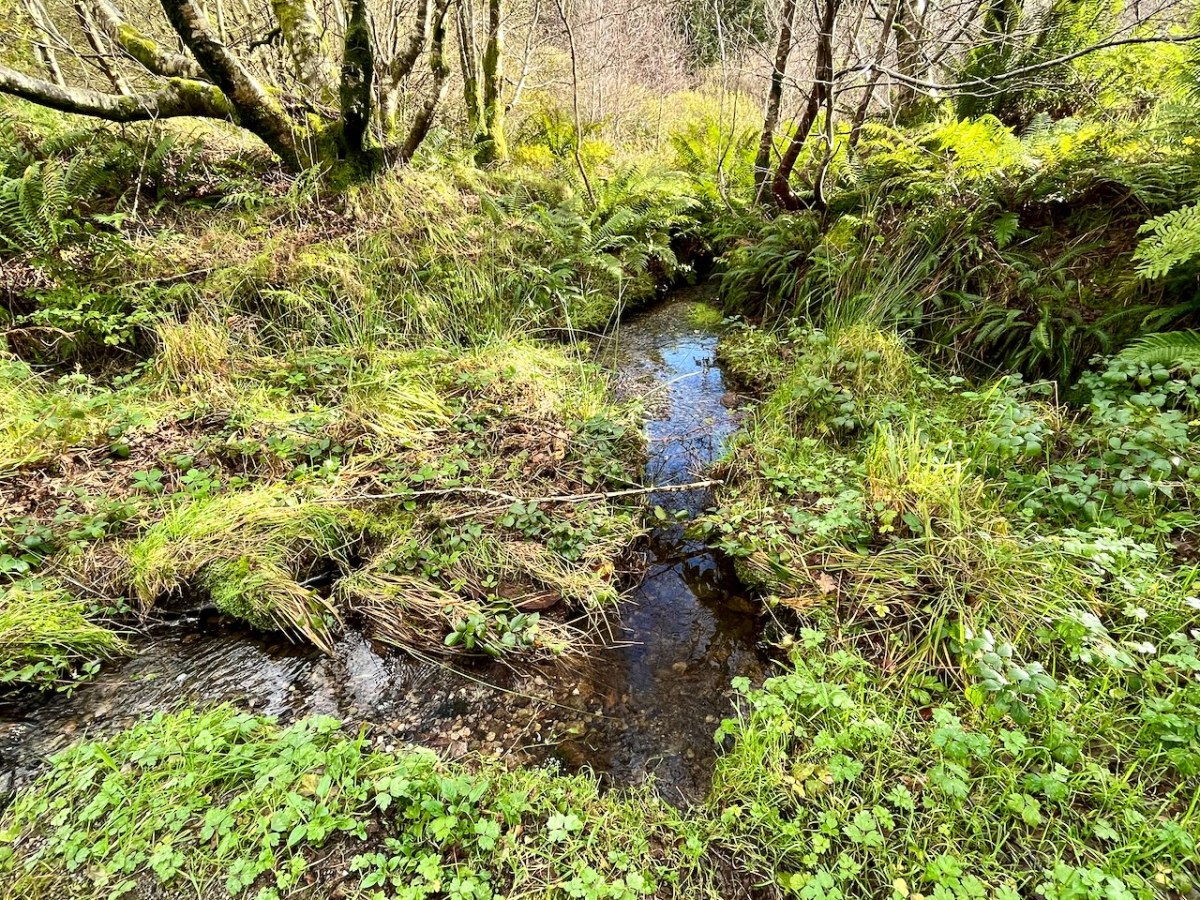
Oliver stands above one of the spring outlets that form the infant waterway (top), while the stream matures as it flows on down through his land (lower). Below – Oliver and Finola inspect one of the lakes which has been created within the site.

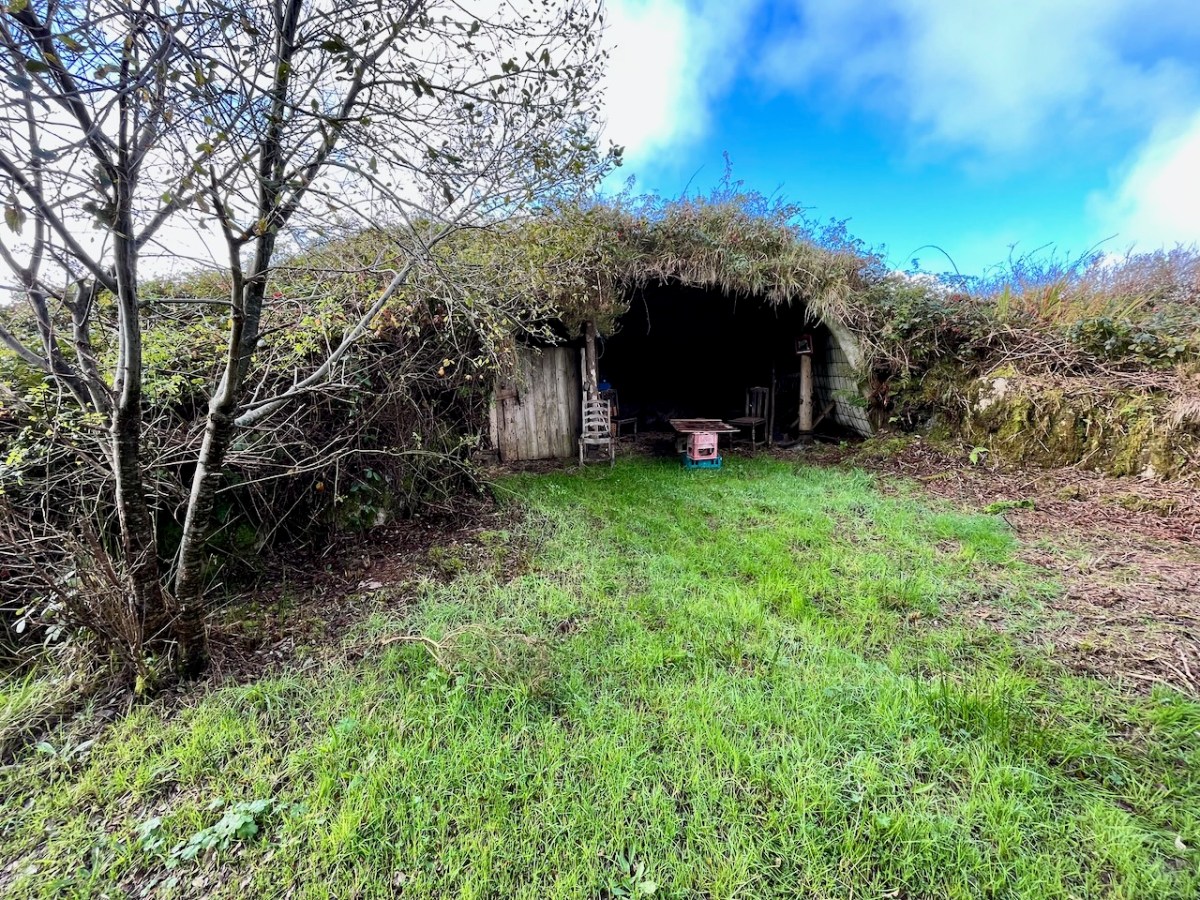
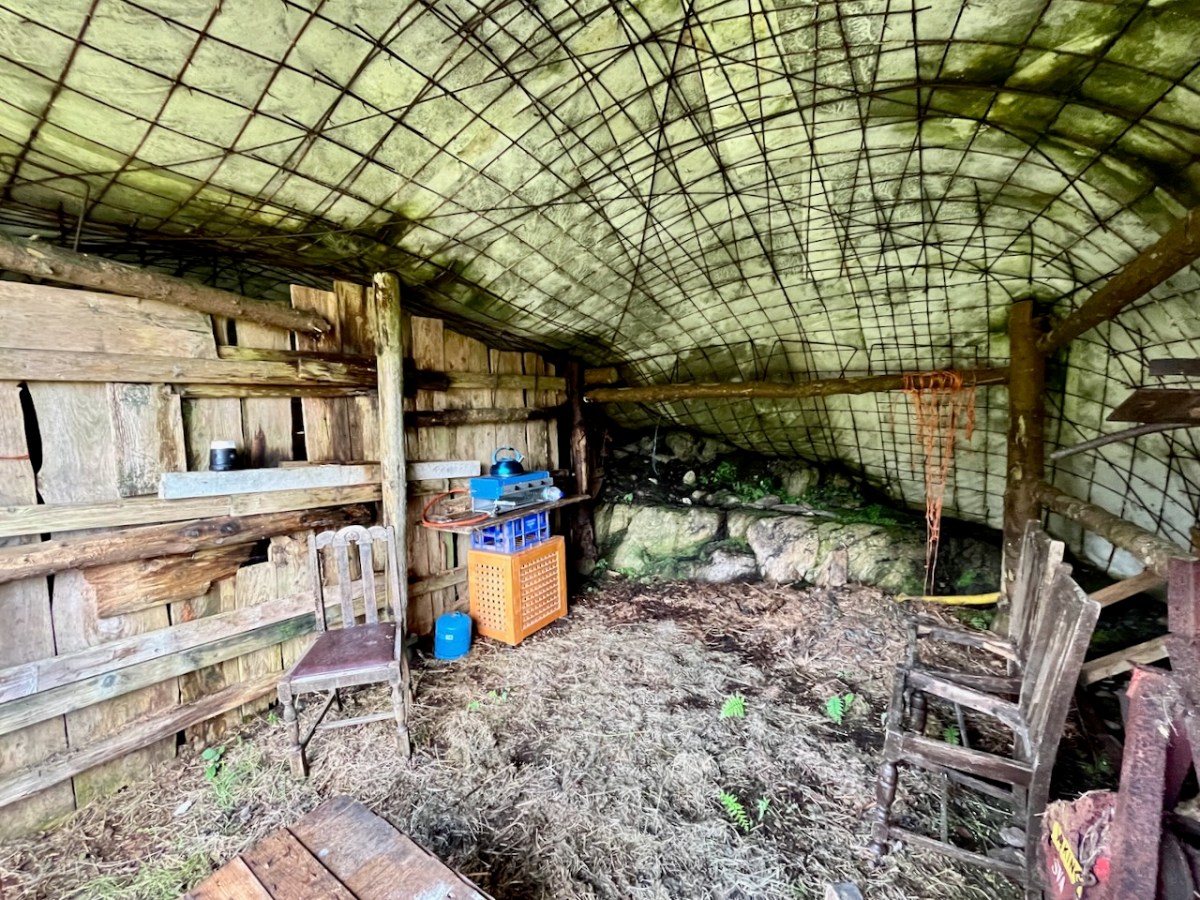
At one stage in his life Ian researched, developed and introduced the building of low–tech ferro–cement boats as a cottage industry on Lake Malawi to help address the problem of unsustainable fishing practices there. At the ‘Mountain’ site he experimented with ferro-cement as a material for establishing a well blended-in shelter and store.

Straddling two townlands, ‘The Mountain’ is an impressive example of how an area of West Cork wilderness has been perfectly moulded into its natural setting. It is an out of the ordinary place which demands exploration.

I’ll be visiting the site, and writing about it more in the future. Oliver will be keen to allow access: keep watching this space.

In High Places

Here is a collection of photographs taken in West Cork from some of the high places: ridges, peaks, mountain paths. The pics were all taken around ten years ago, and haven’t been used in our blog posts previously. They serve to show stunning landscapes, of course, and hopefully illustrate the variety of the country which surrounds us here. The header is taken from the peak above Three Castle Head.

The upper pic is looking down on Bantry town from the high ground to the south, while the lower one reminds you of the evening view from Bantry at sea level.

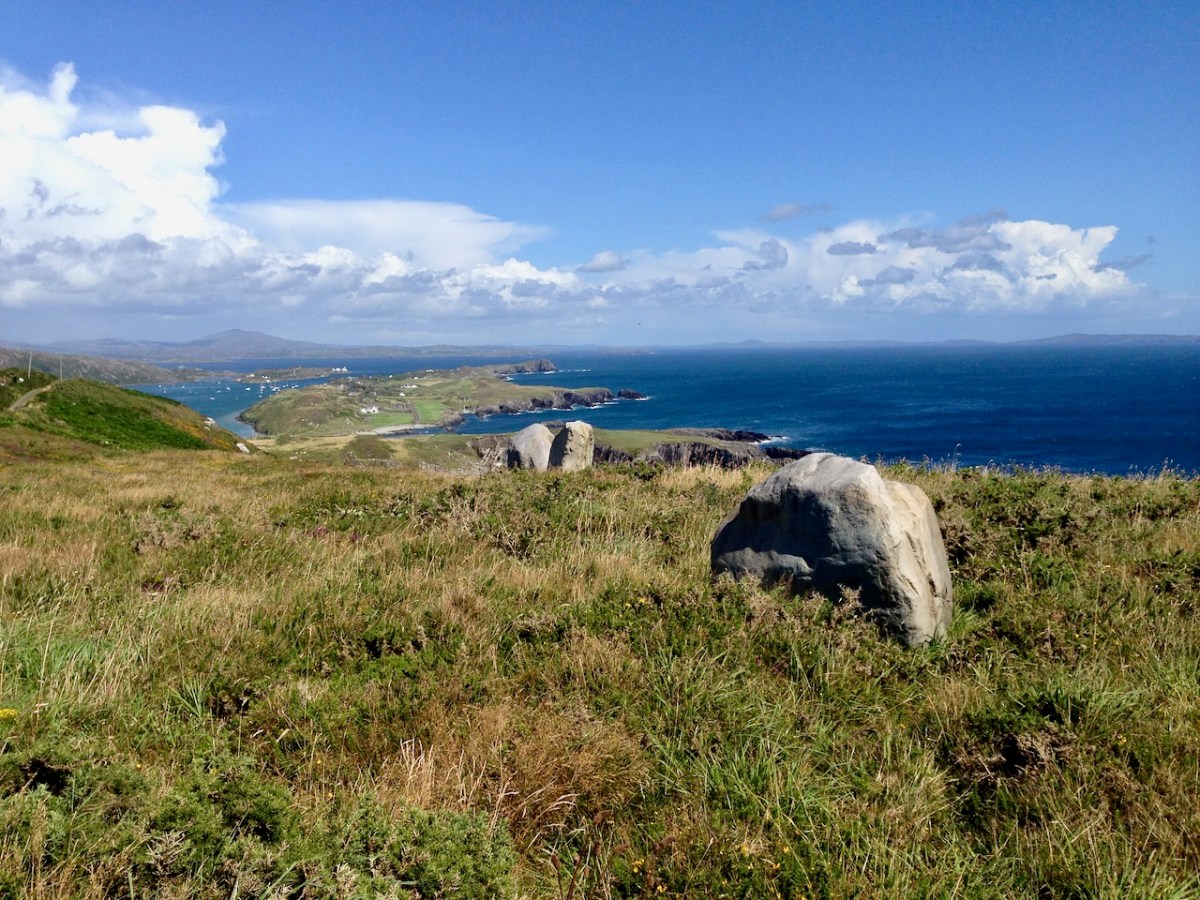
If you leave your car at Galley Cove Beach and walk up the steep track towards Brow Head you will come across this enormous stone row – and you will look back to the peninsula of Crookhaven. Don’t be fooled by the stones: they have been placed on this site fairly recently. They are impressive, nevertheless.

And here is a closer view of Crookhaven.

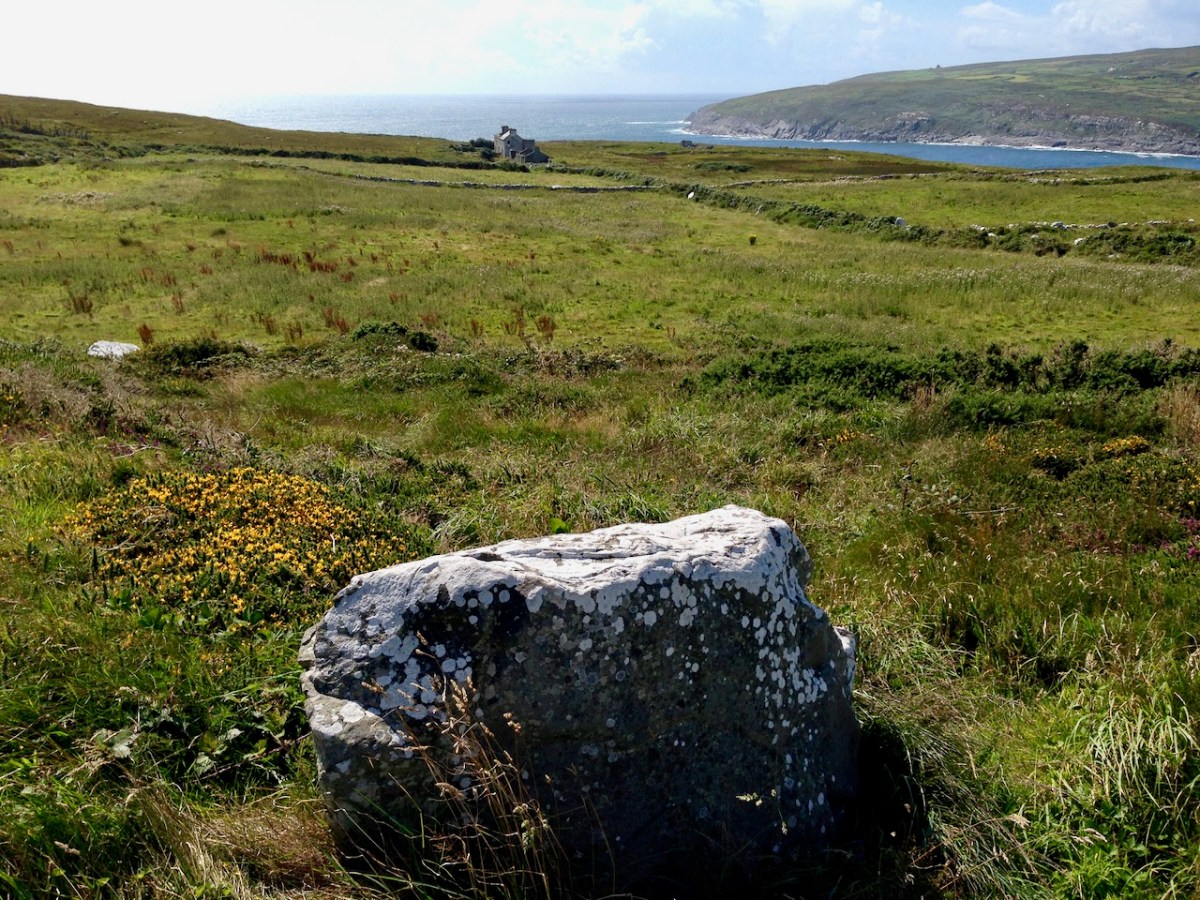
While turning from this spot and looking west, you will see the end of the coastline at Brow Head. This stone is likely to be more anciently placed. In the distance is Mizen Head with its Napoleonic era signal tower at Cloghane.

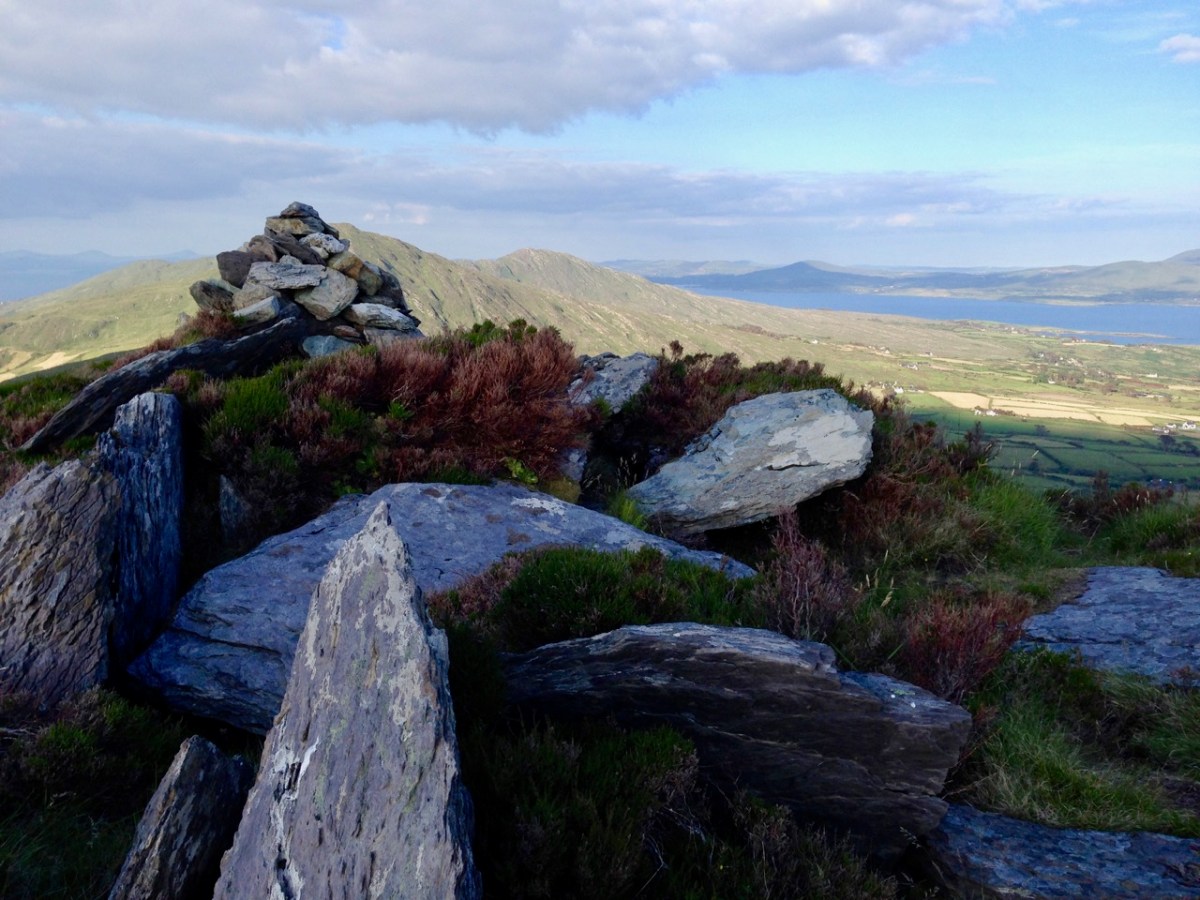
Contrasting light effects seen on the footpath that follows the ridge on the Sheep’s Head Way. That’s the spit of land that runs from east to west between the Mizen Head and the Beara Peninsula. There are cairns on the summits, with the remains of a wedge tomb and a Marriage Stone to be seen along the way.

The view north from the heights of the Sheep’s Head takes in the Beara Peninsula and – seen above – the high point of Hungry Hill dominating the distant rugged landscape.

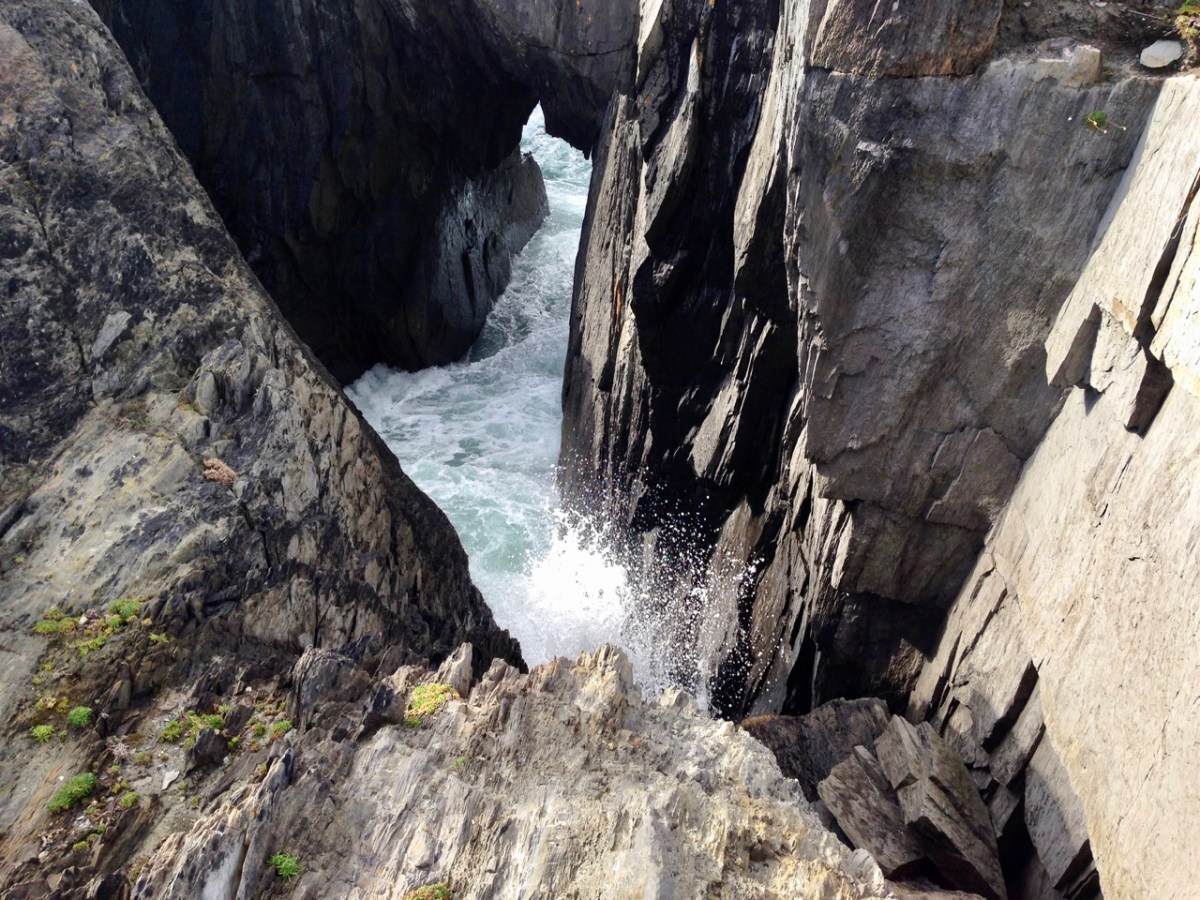
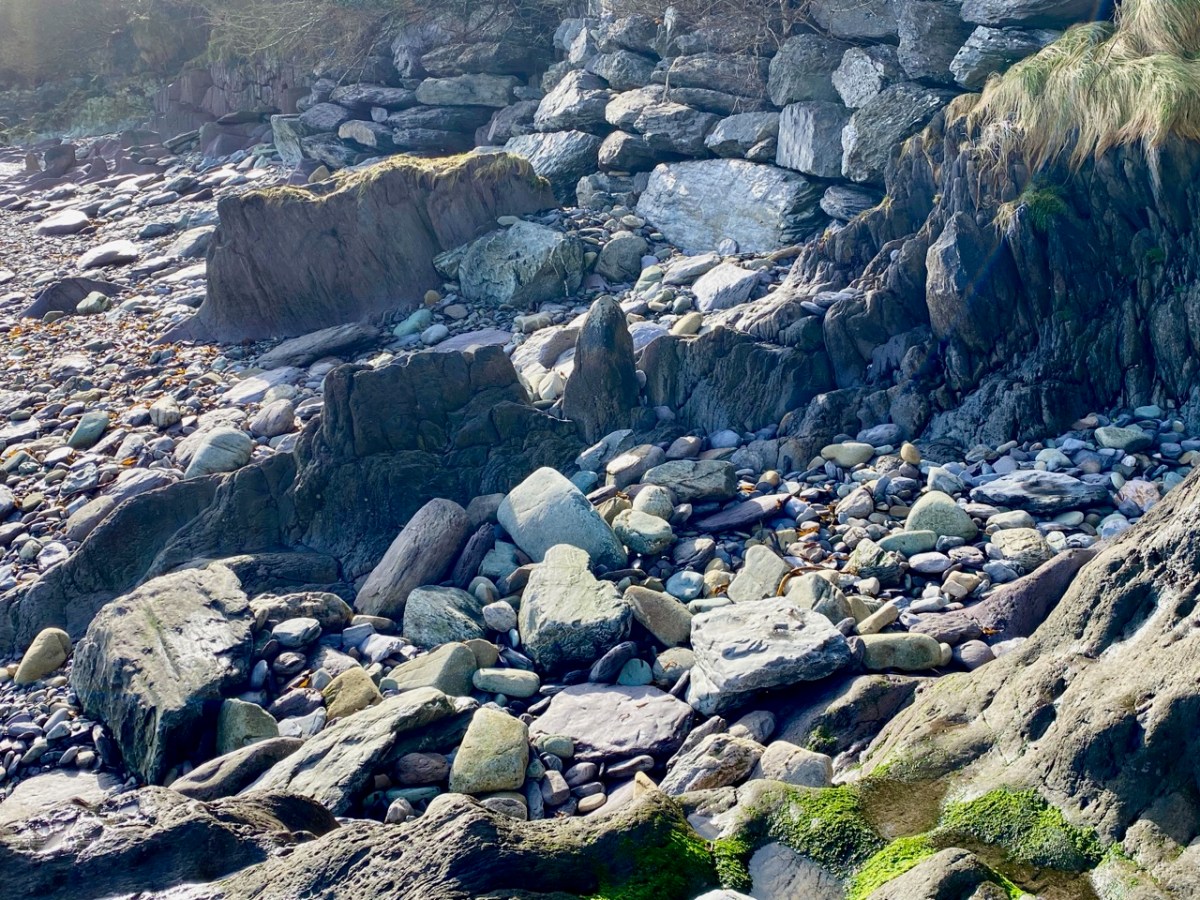
You are never far from the coastline in West Cork. Look out for wild seas constantly sculpting the rocks over millennia.

From our home in Cappaghglass we look out to our own ‘high place’ – Mount Gabriel. This enigmatic tract of land dominates the area and is imbued with legends and folklore. It is also one of the most atmospheric of our peaks at all times of the year.

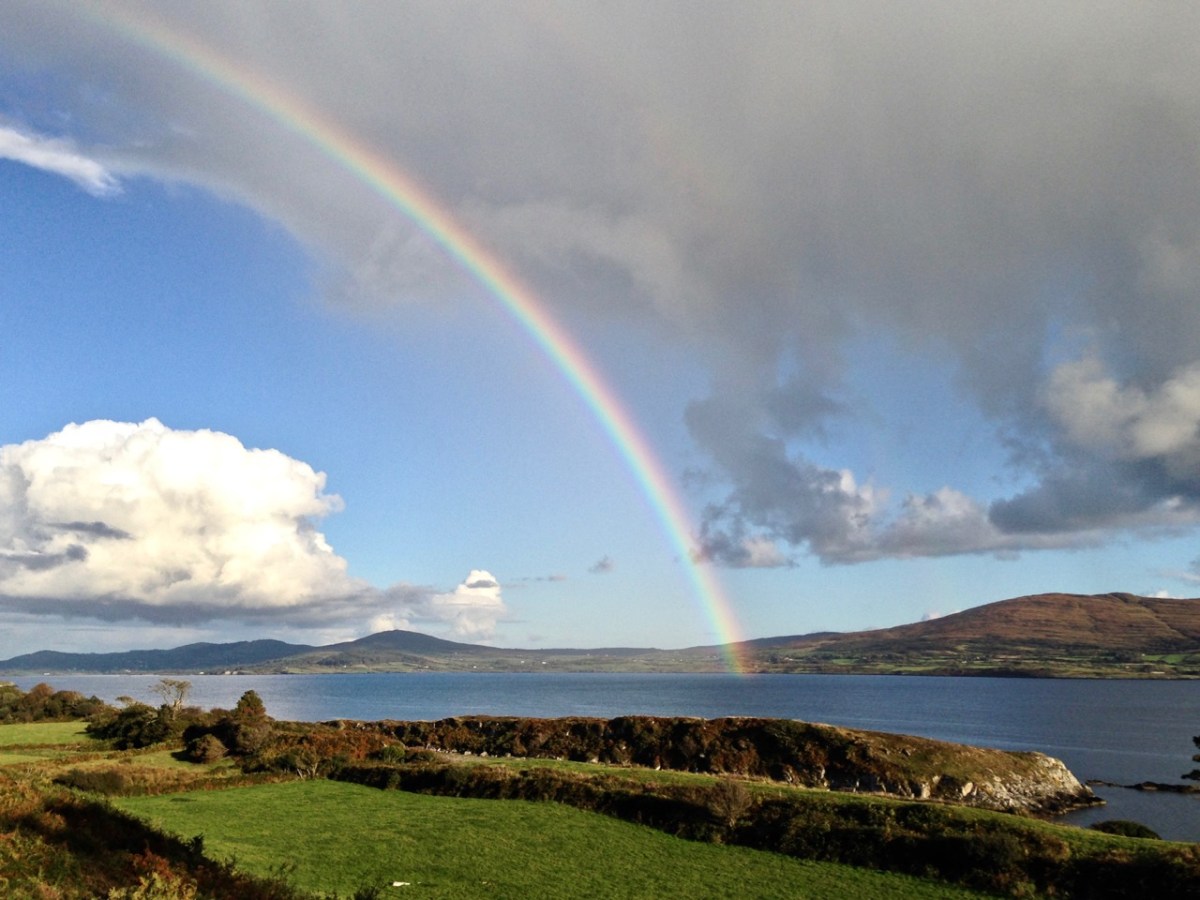
Another local view for us (above): we face out to Rossbrin Cove on the Mizen Peninsula. Finally, the celestial spectacle (below) finds its pot of gold on the shores of the Mizen.

Thirty-Six Views of Mount Gabriel

Mount Gabriel is, I believe, a rarely regarded topographical prominence on the Mizen. Yet it is impossible to ignore: the summit can be seen from most parts of this western peninsula. And, for those visitors who do notice it – and make the effort to scale its heights, it presents the most spectacular of views over rugged landscapes to the oceans beyond.

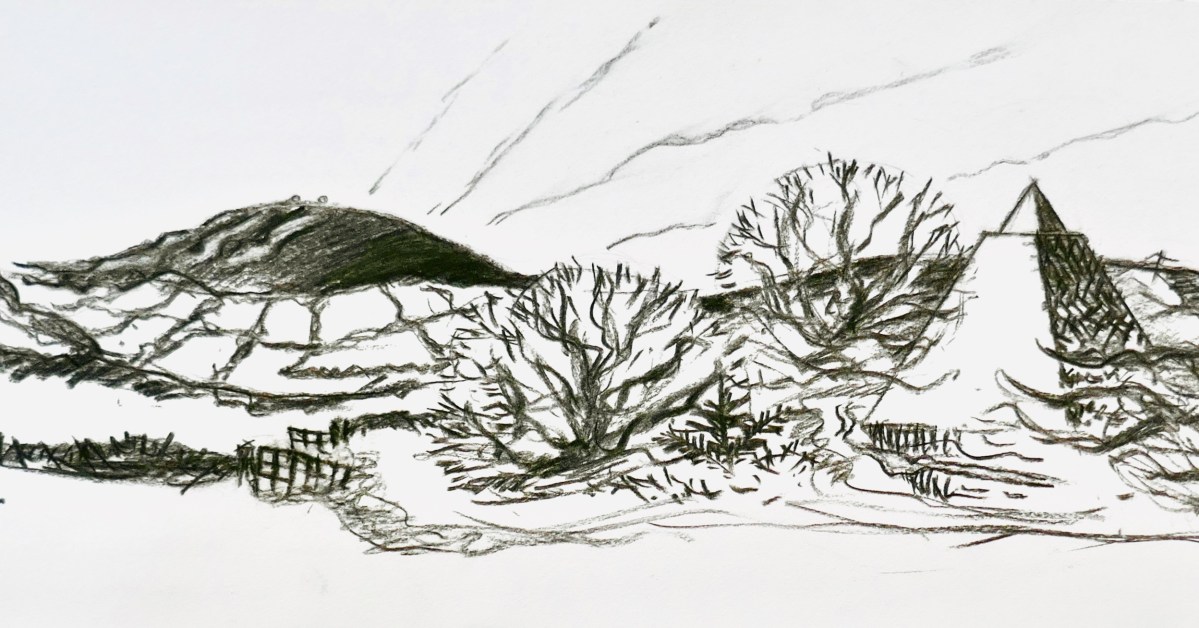
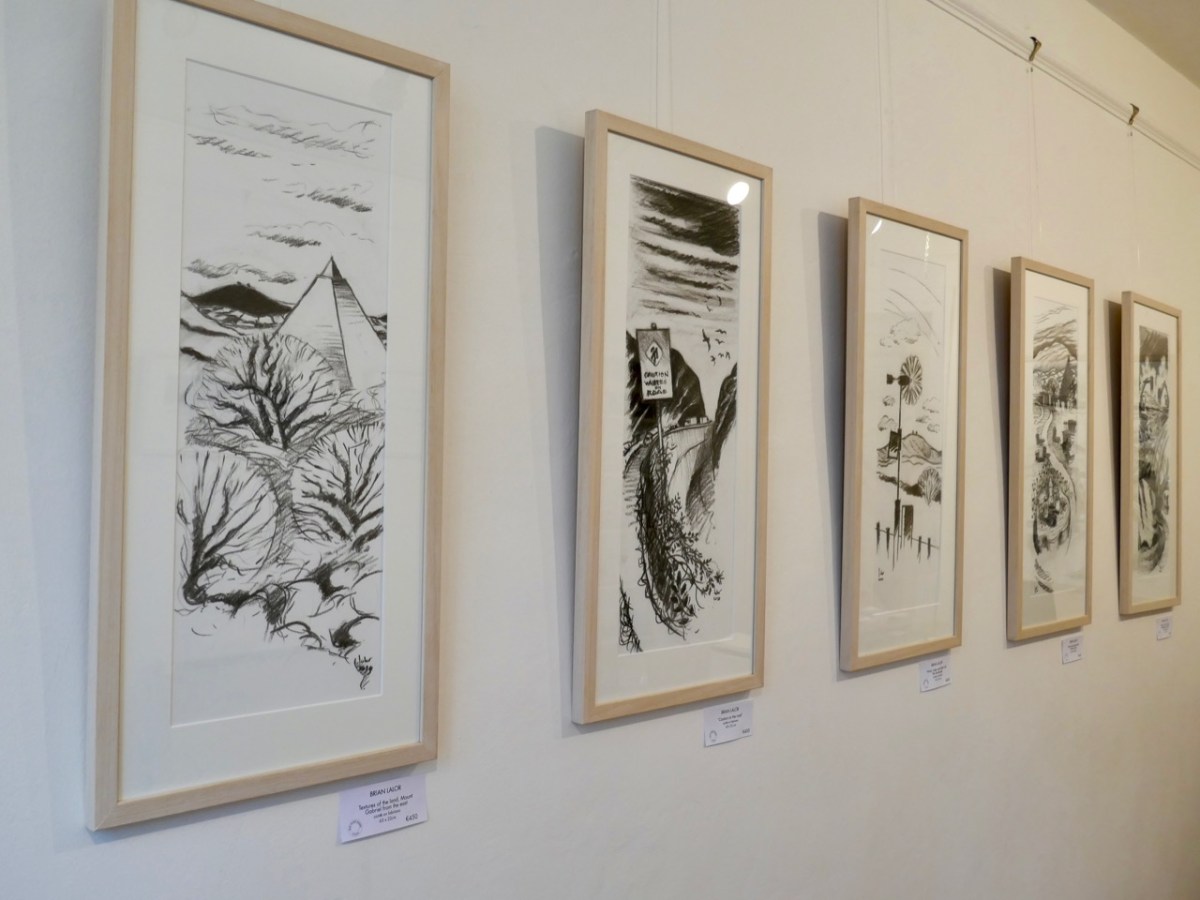
Brian Lalor has chosen to make this peak the centrepiece of his new exhibition, which opened in Schull’s Blue House Gallery at the weekend: Thirty-Six Views of Mount Gabriel. You have to see it. The works are for sale, so it will be impossible, probably, to assemble them as one entity ever again. (Unless, perhaps, in a hundred years time – if there is still an intellectual world in existence – Brian’s genius will be fully recognised and appreciated, and an astute curator will raid collections from all over the world in order to put this canon back together as a centenary project).

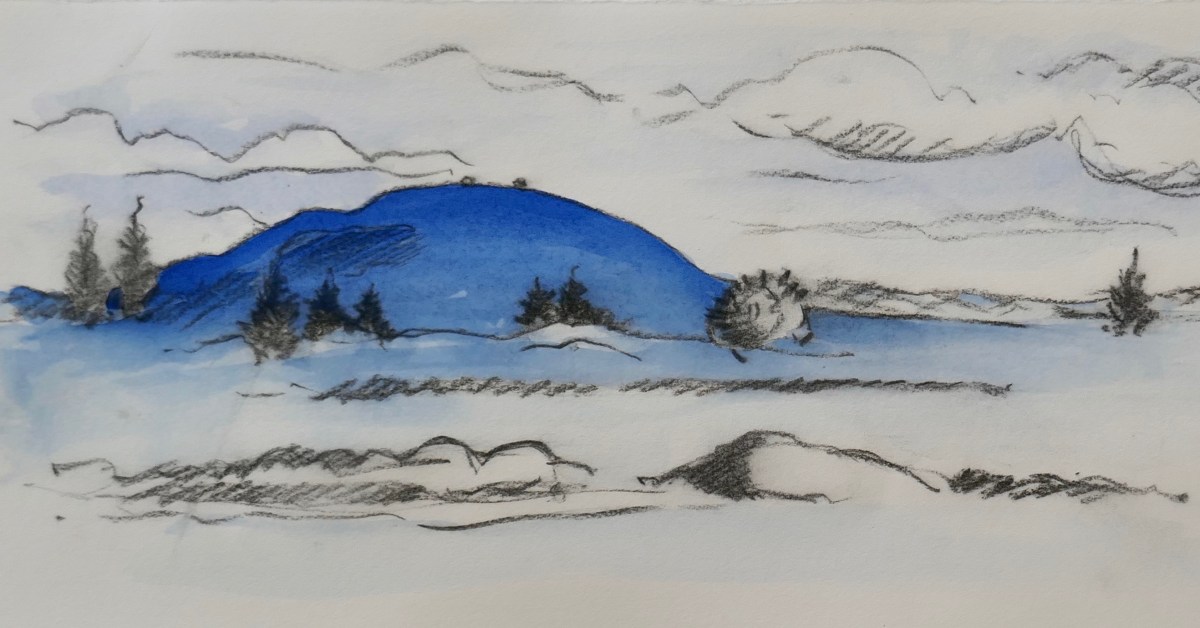
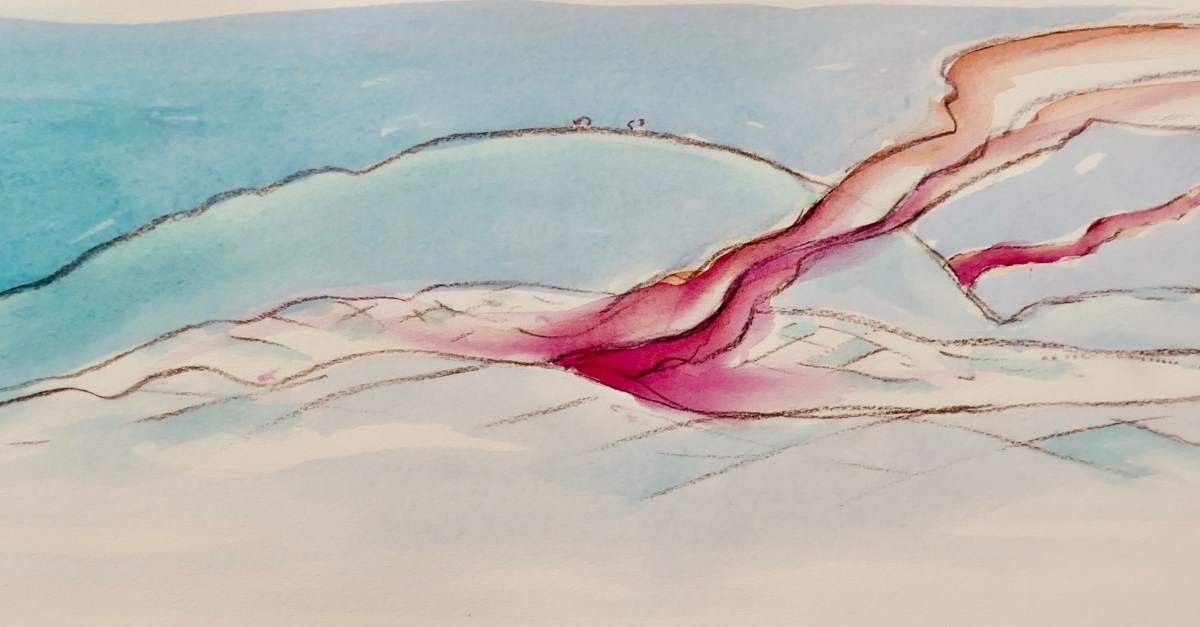
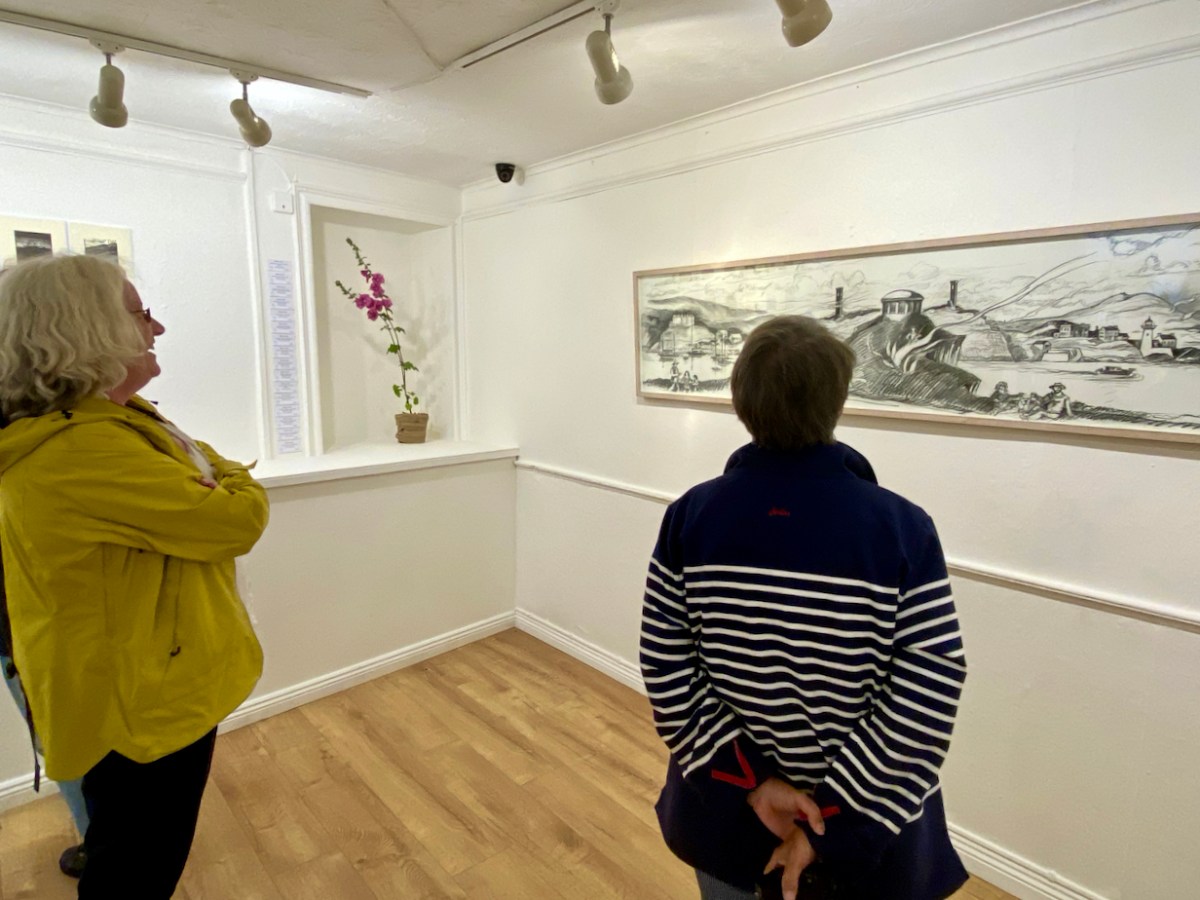
The works themselves draw attention to some of Brian’s many artistic talents: conté crayon drawings, exquisite watercolour sketches and linocut prints. They make an impressive whole on the walls of Schull’s eccentric gallery, which is a jumble of smallish rooms, a staircase and landing, with a minimalist shop-window frontage. Circumnavigating the spaces is a revealing and stimulating experience.

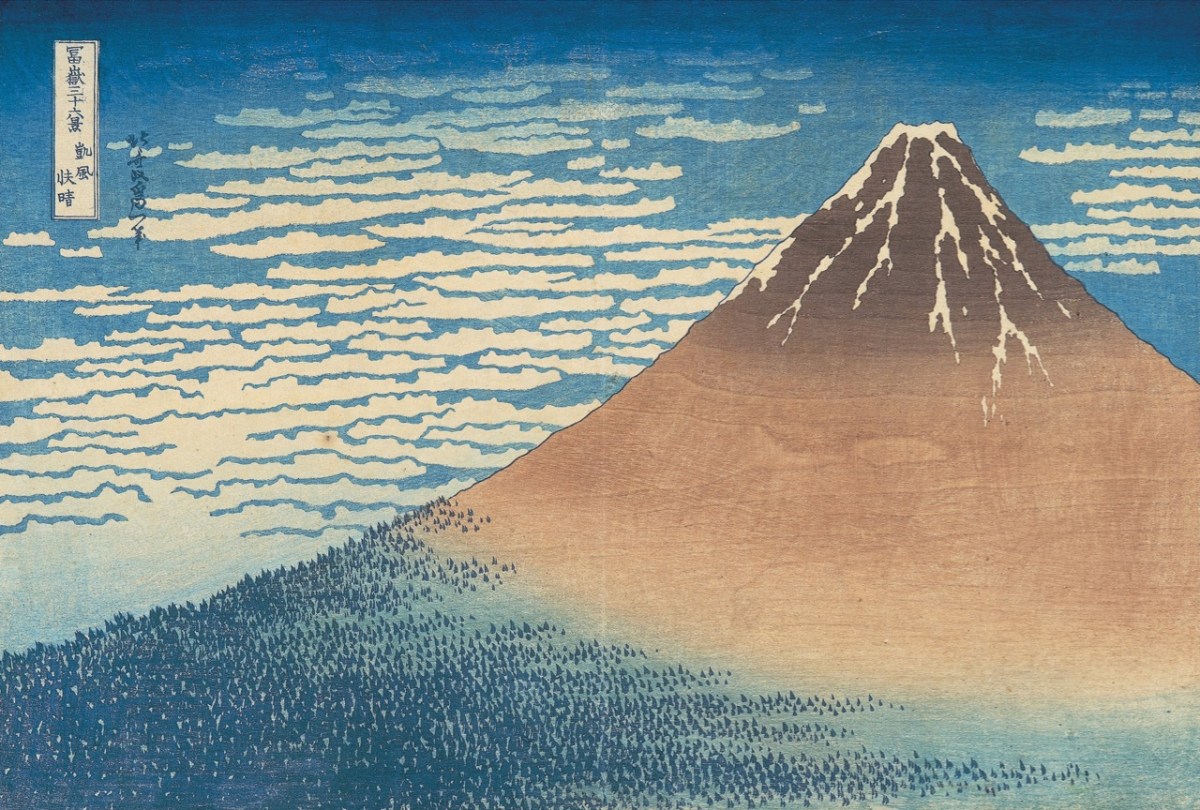
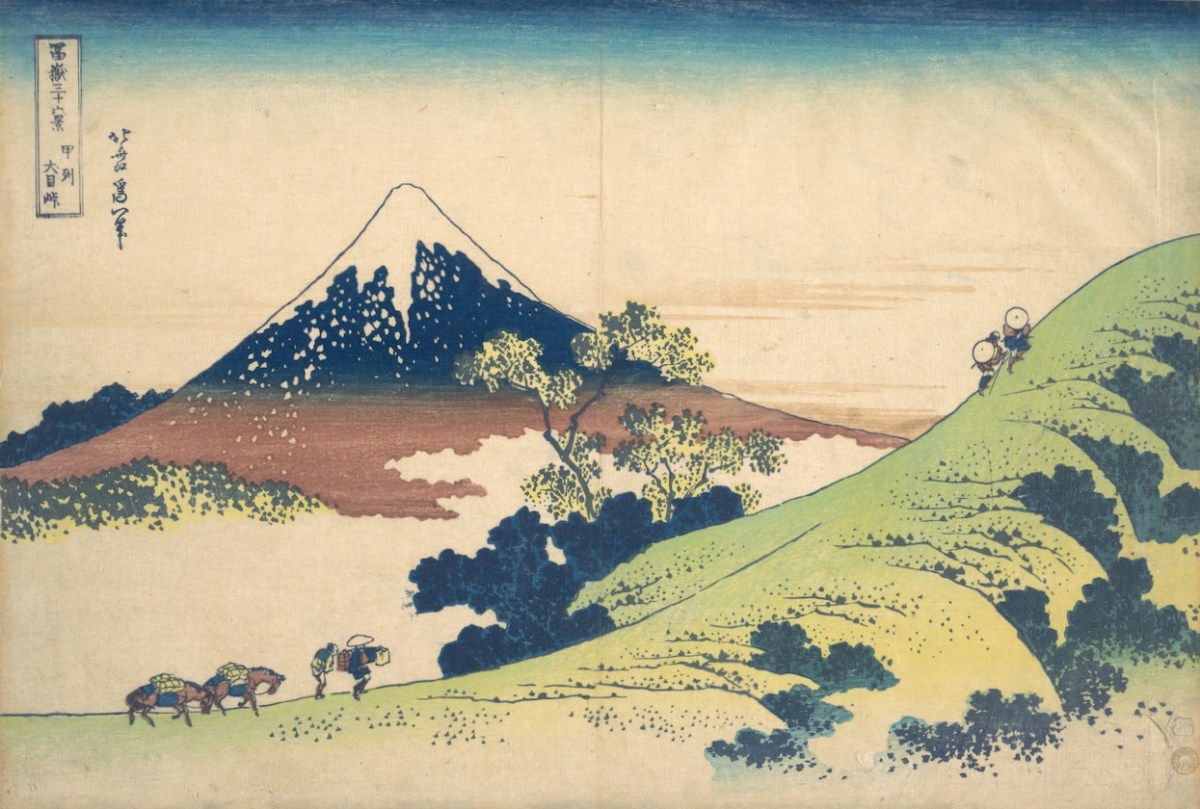
Returning to the subject matter of the work, Brian – General Editor of Gill & Macmillan’s mammoth 2003 volume The Encyclopaedia of Ireland – and considered a prime authority on Ireland’s art heritage and its place in world culture, is familiar with artists’ legacies from many other domains. He grew up in a household which contained significant pieces of Japanese art and was au fait from a young age with the concept of ukiyo-e – the floating world. His early awareness of the arts of Japan provided the source of inspiration for this exhibition: Katsushika Hokusai’s Thirty-Six Views of Mount Fuji, woodblock prints which date from the early 1830s. Here are Fine Wind, Clear Morning (upper) and Inume Pass (lower) from the series:

Fuji is one of Japan’s Holy Mountains. Brian’s juxtaposition is brilliant: our Mount Gabriel has to be a holy place. It is named after an Archangel, who is said to have descended to the mountain top to view the unsurpassed beauty of West Cork’s landscapes, the reputation of which had reached to Heaven even back in those days. In so doing he left behind his footprint, which is still to be seen on the summit.

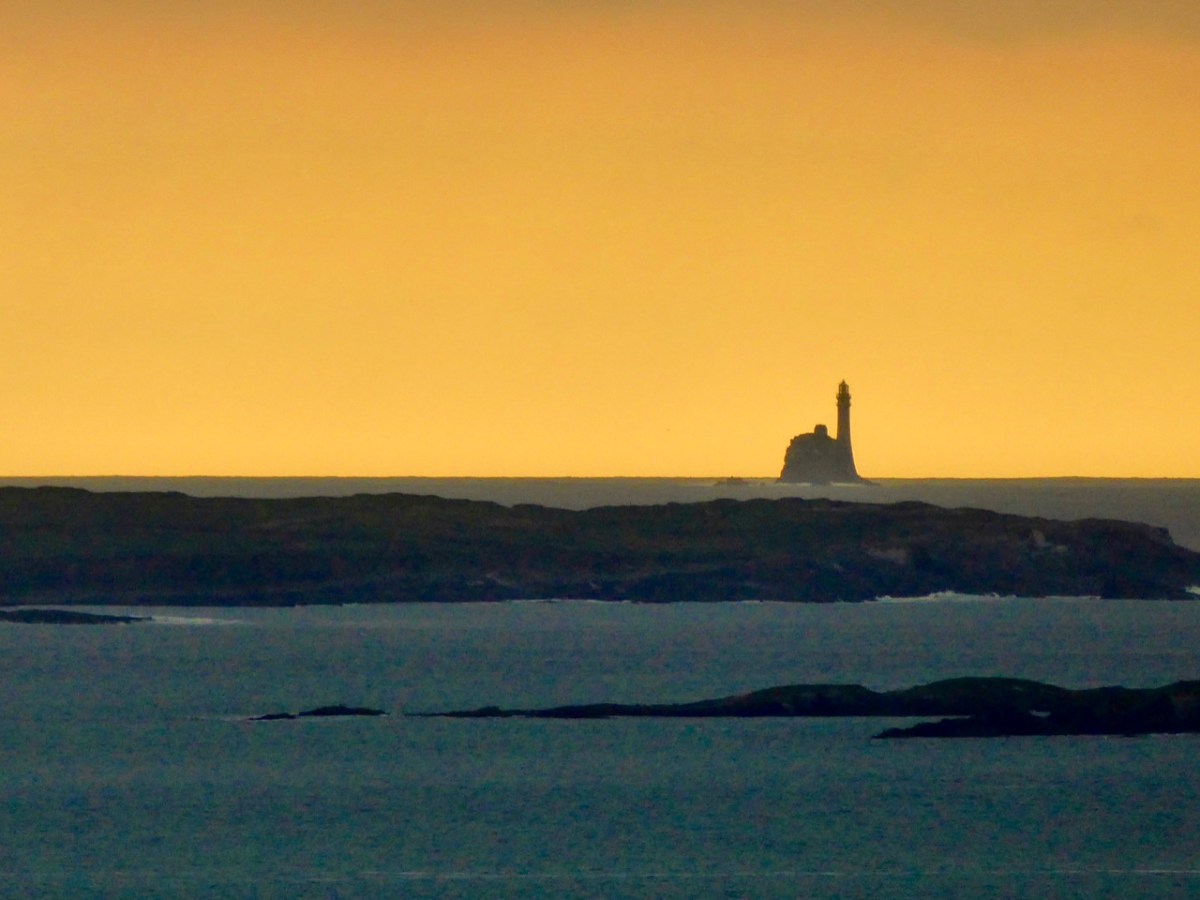
The Archangel was not the only biblical character to visit Gabriel: Satan himself touched down, but stumbled on a large rock. In a fit of temper he picked up the rock and threw it far off into the sea beyond. This caused such a hazard to shipping that we have had to erect a lighthouse on it. Here is Finola’s photographic view of The Fastnet, taken at sunset. For me, it has a suitably print-like quality . . .

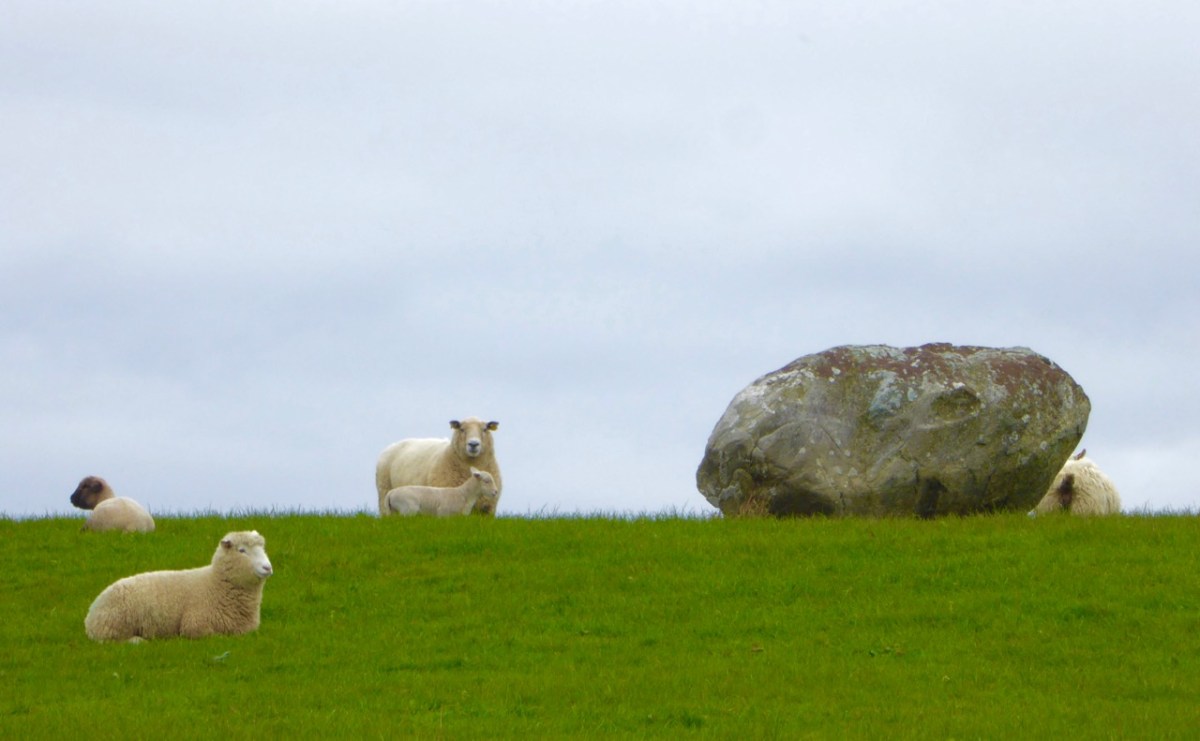
Legends attached to Gabriel include many that attribute Irish heroes to activities on the summit. Finn MacCool, for example, is also credited with throwing large rocks from the mountain, including this fine boulder burial at Rathruane:

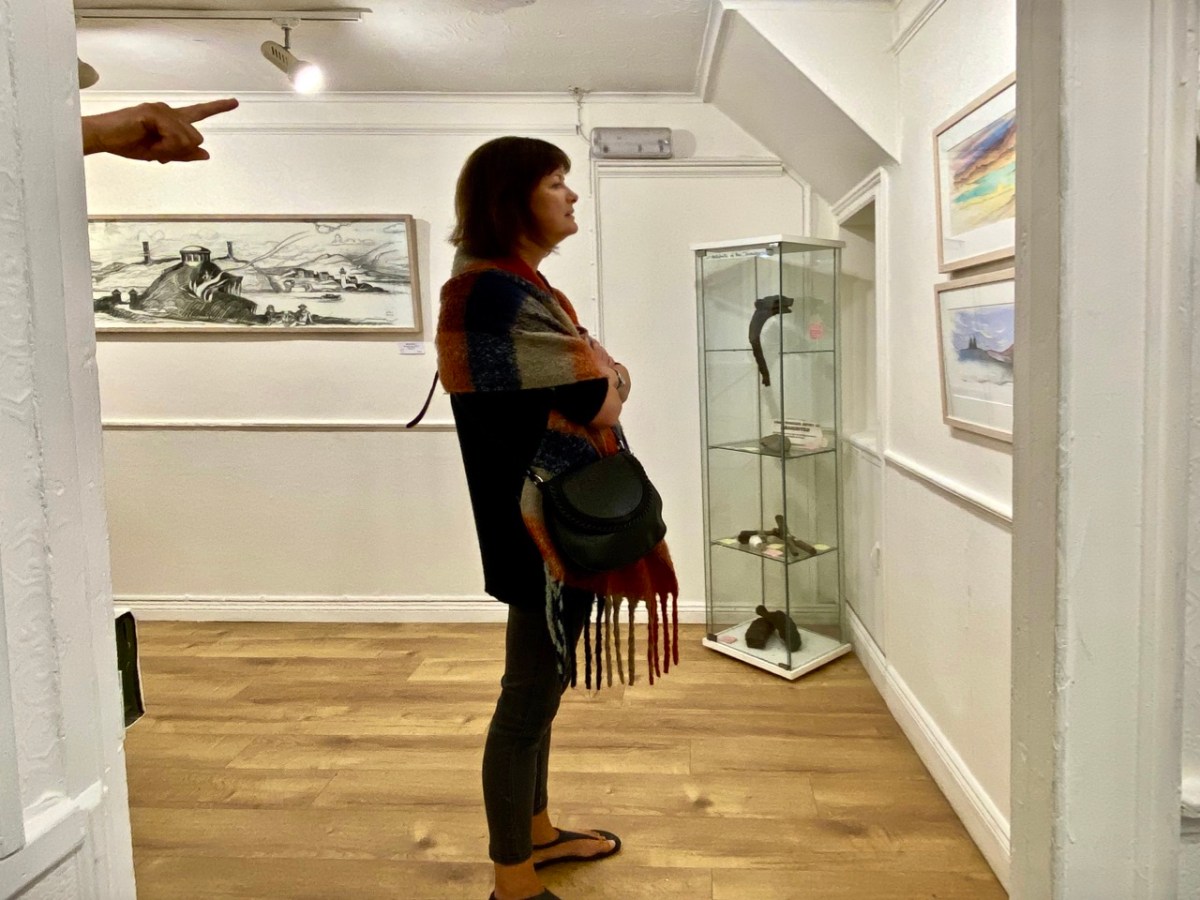
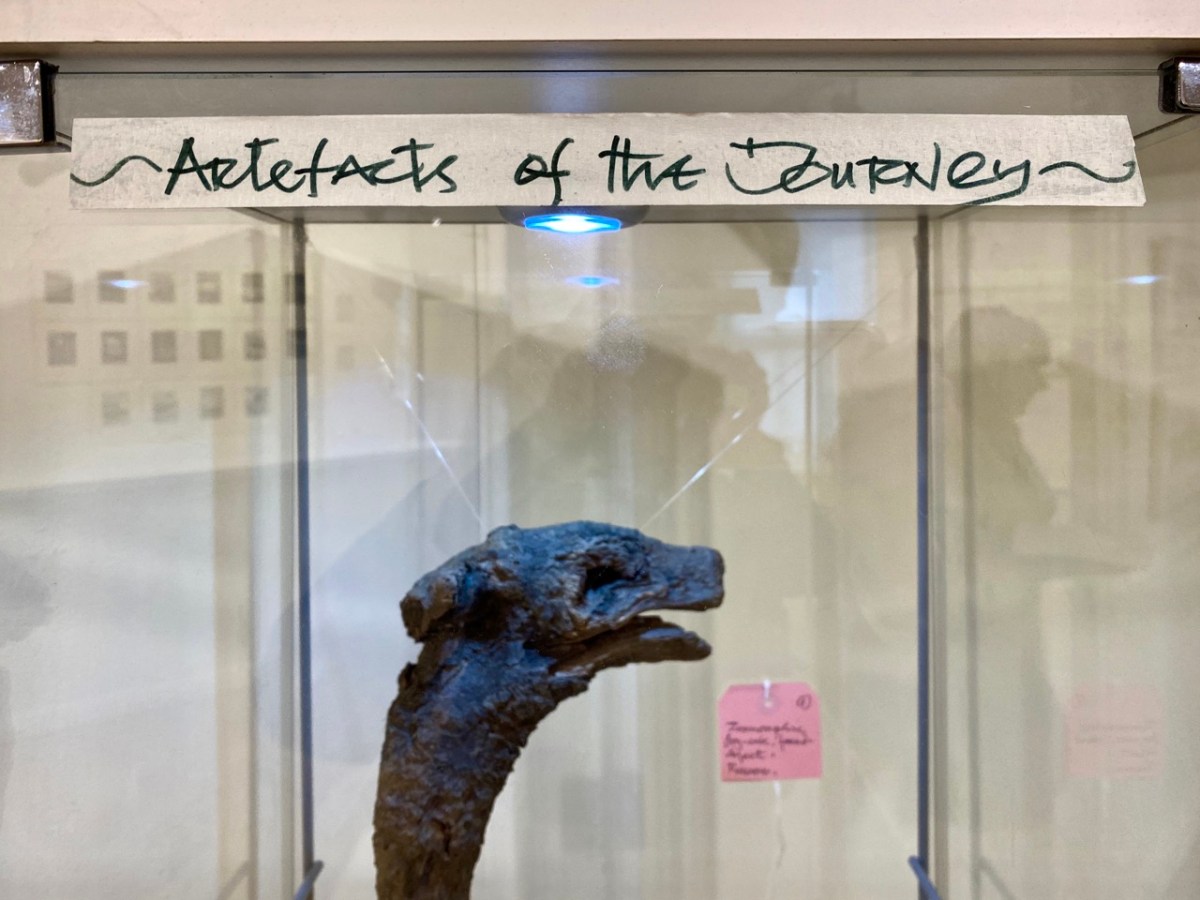
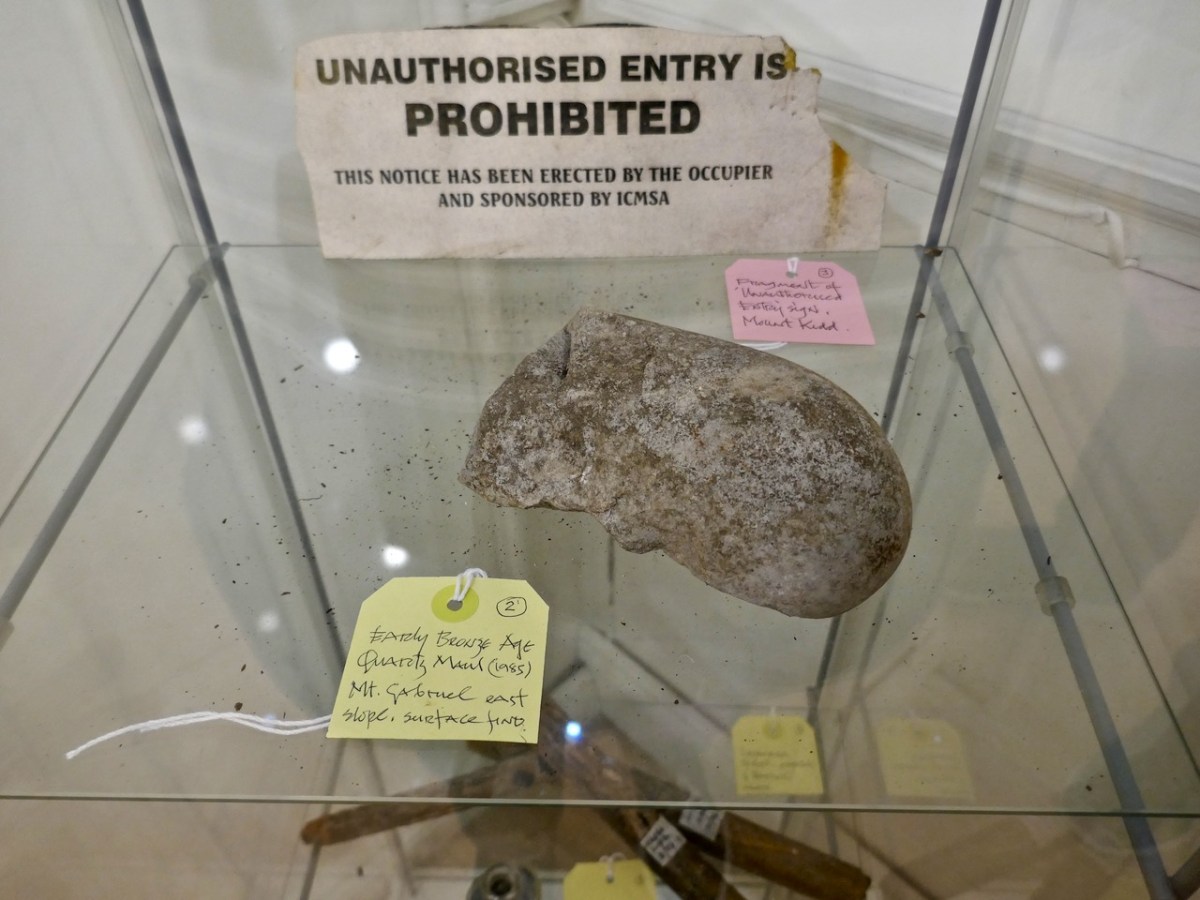
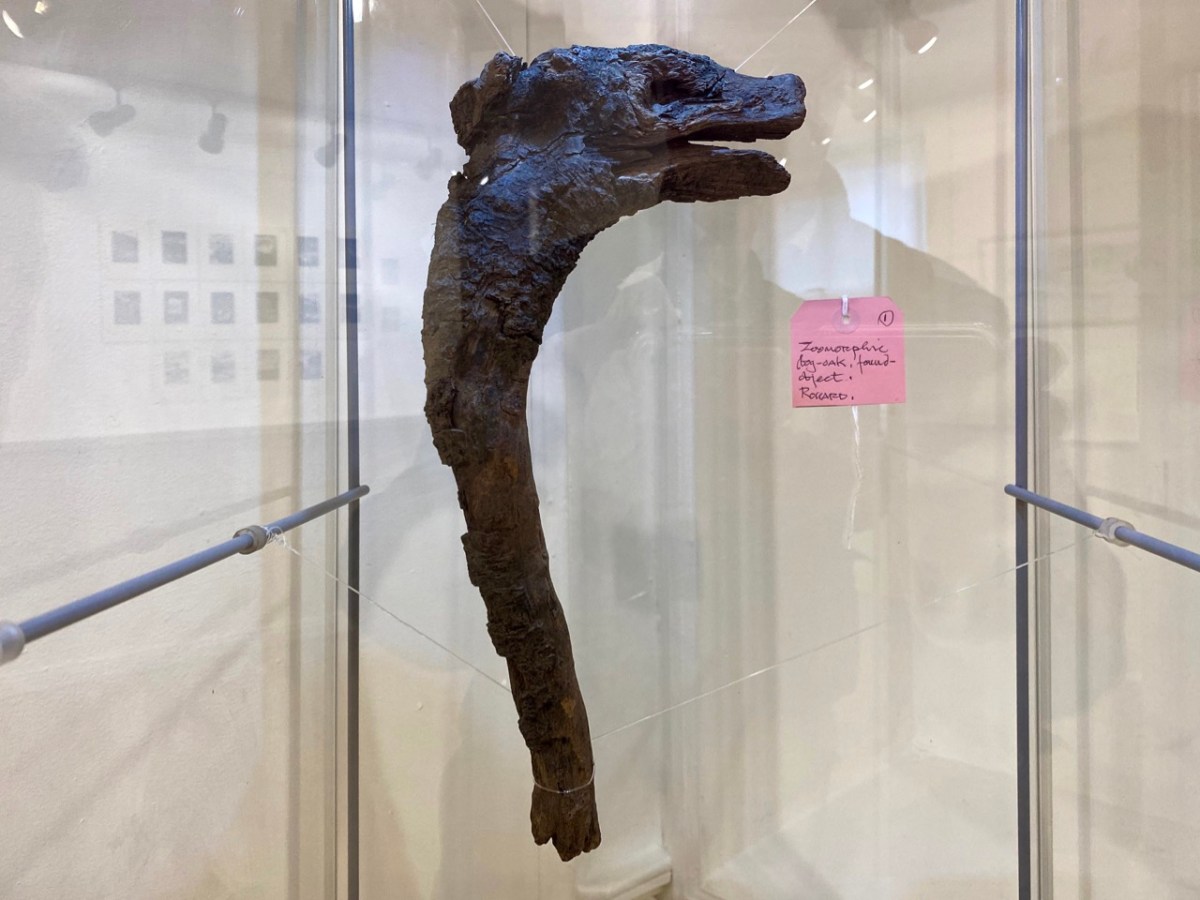
Brian’s observation and humour are not missing from this exhibition. He has included a cabinet of ‘artefacts’ distilled from his own explorations on the mountain. These make reference to the ancient history of the site and its connection with copper extraction in the Bronze Age and in medieval times, and also the twentieth century manifestations of air traffic control technology (known as ‘Gabriel’s Balls’) . . .

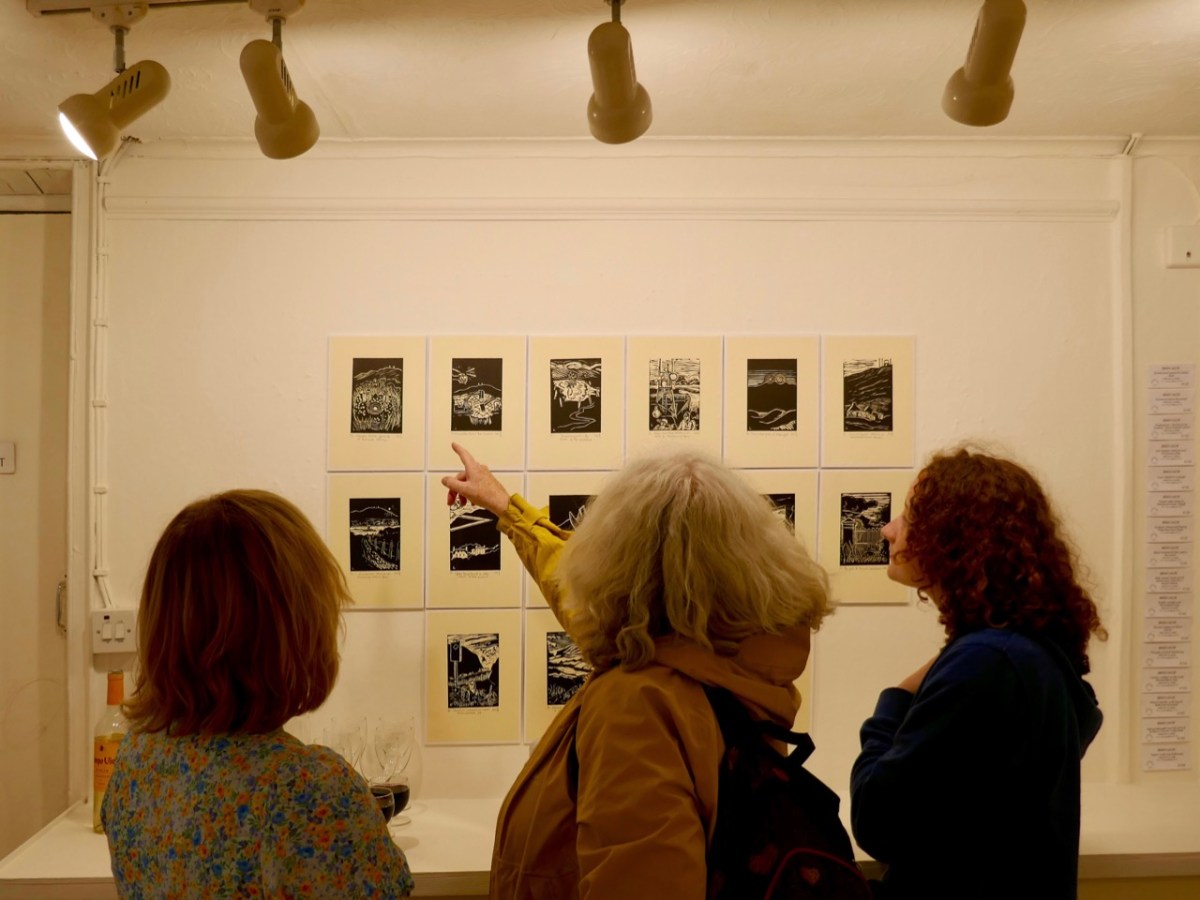
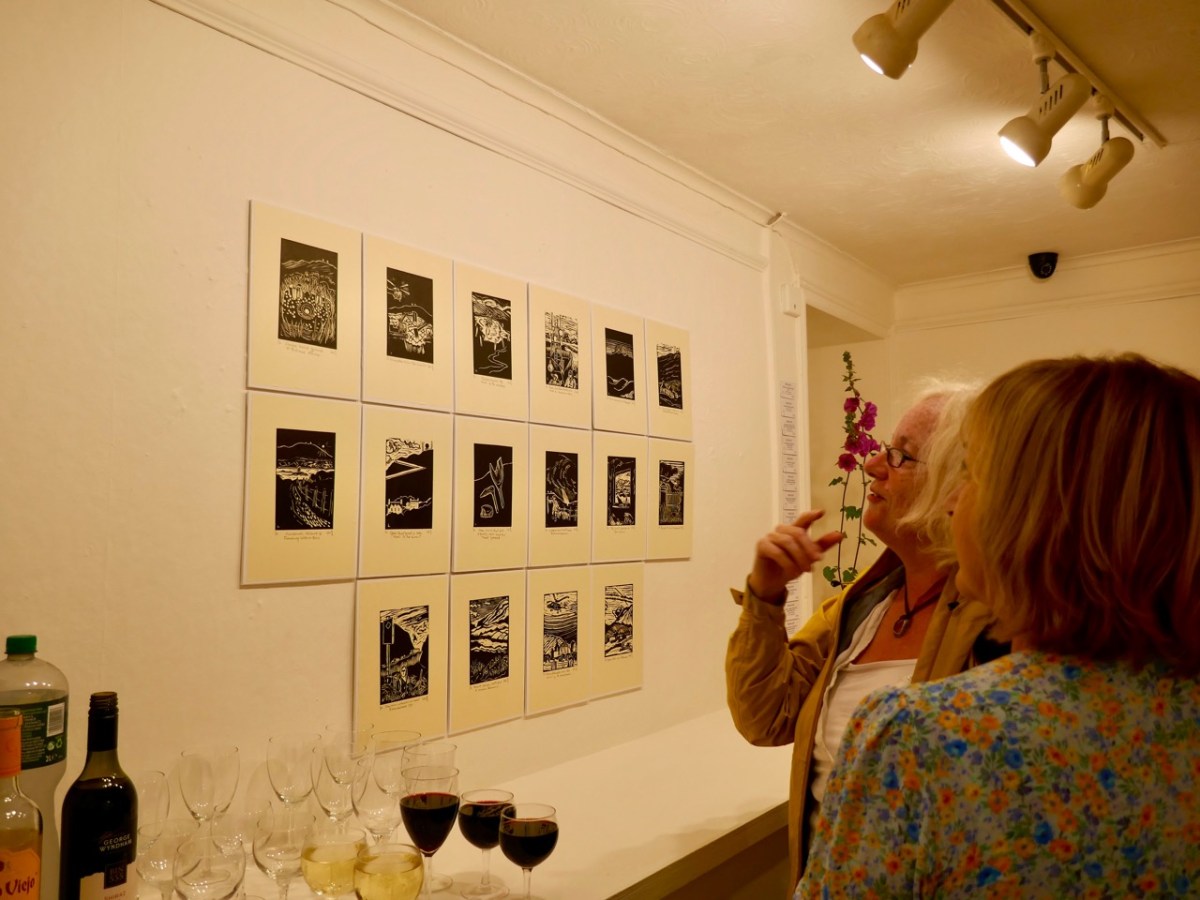
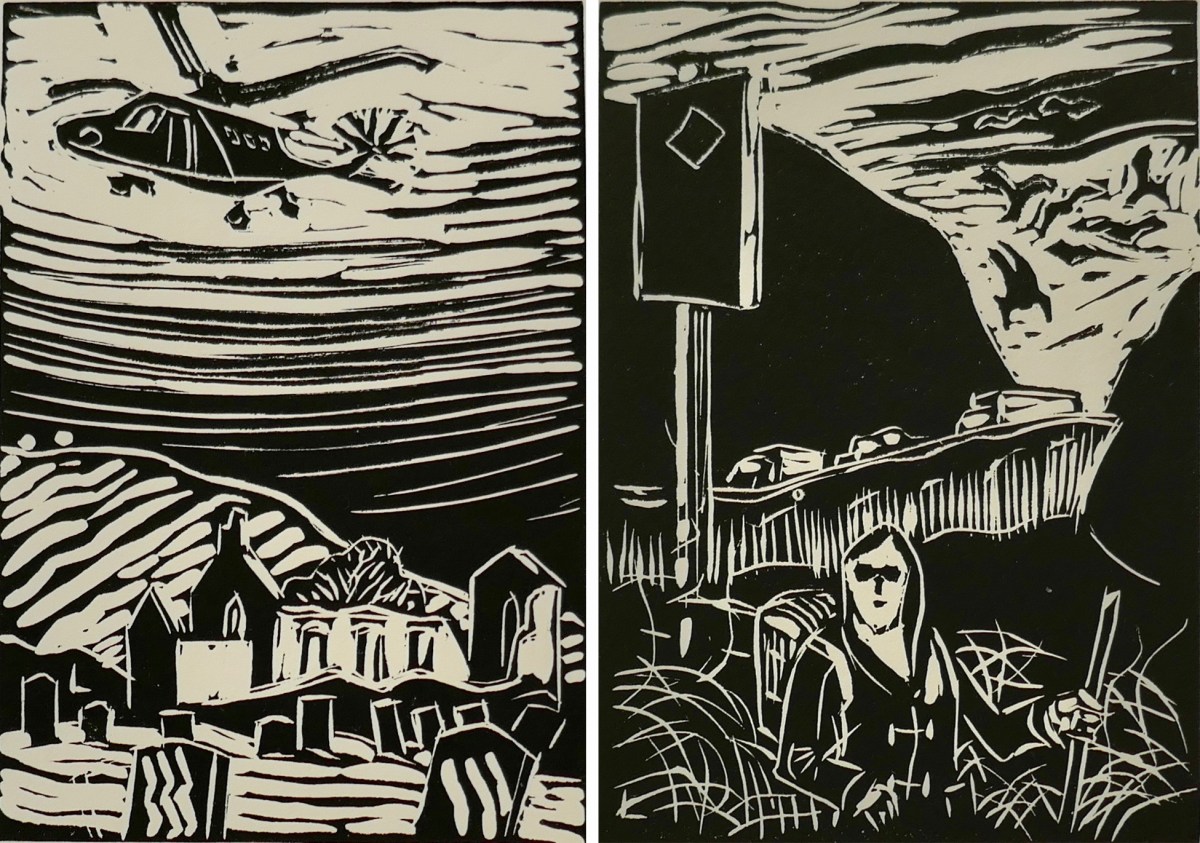
I am particularly taken with Brian’s linocut series – a limited edition of only ten of each print. They provide the ‘fine detail’ in the overall assemblage, and work so well together on the back wall of the largest room.

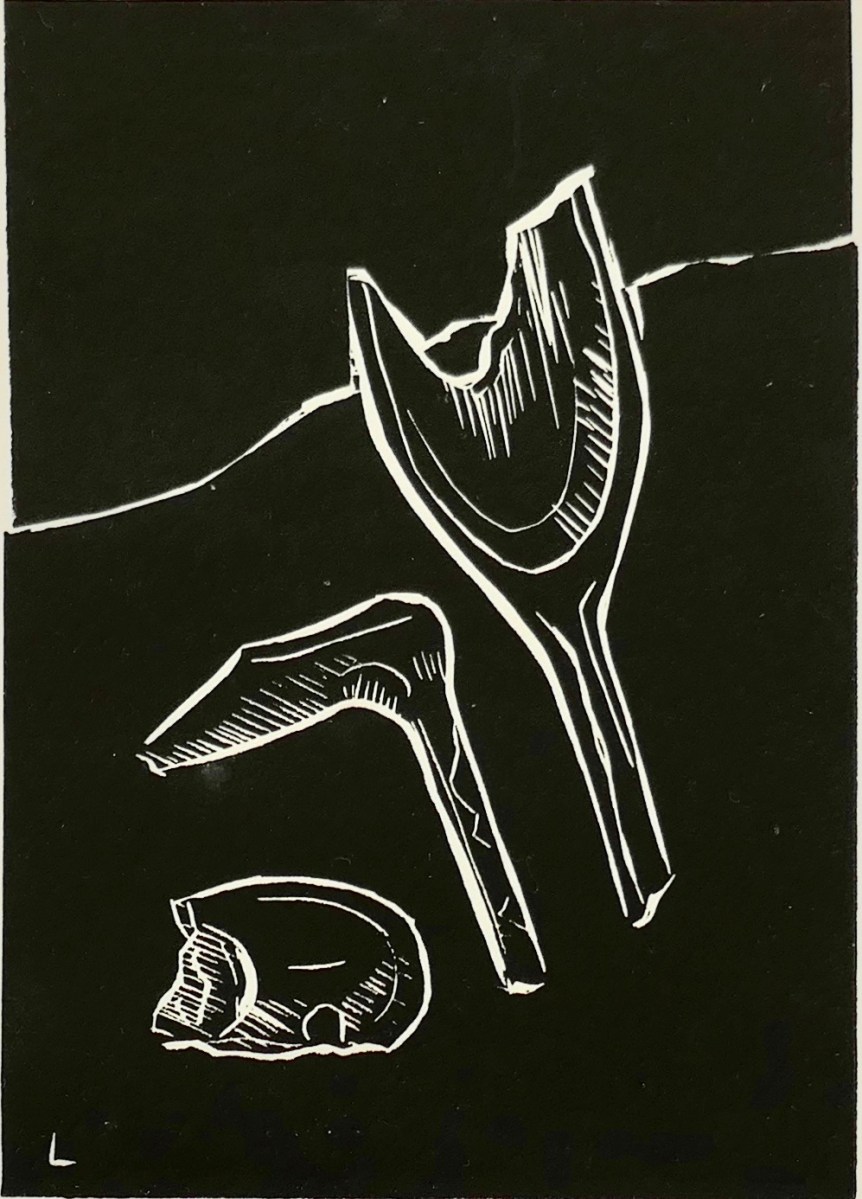
The detail print, above, shows Brian’s representation of archaeological finds connected with ancient copper mining which have been found during excavations on the mountain.

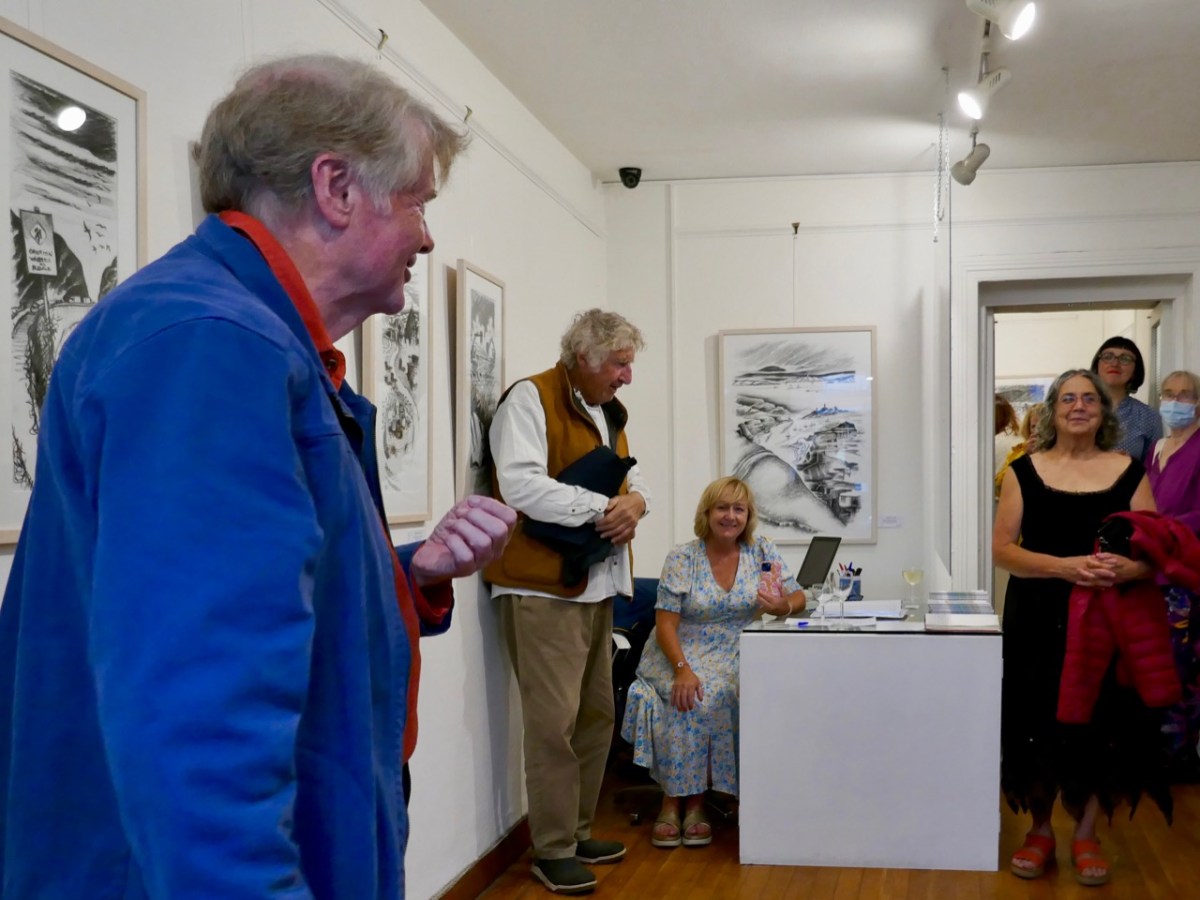
As ‘Guest Curator’ of this exhibition I was delighted to introduce it to an eager audience on the opening night in Schull (above). The show only runs until the 3rd of August, so please rush over in order not to miss it. It is (for me) the highlight of West Cork’s summer offerings!

Blue House Gallery, Schull

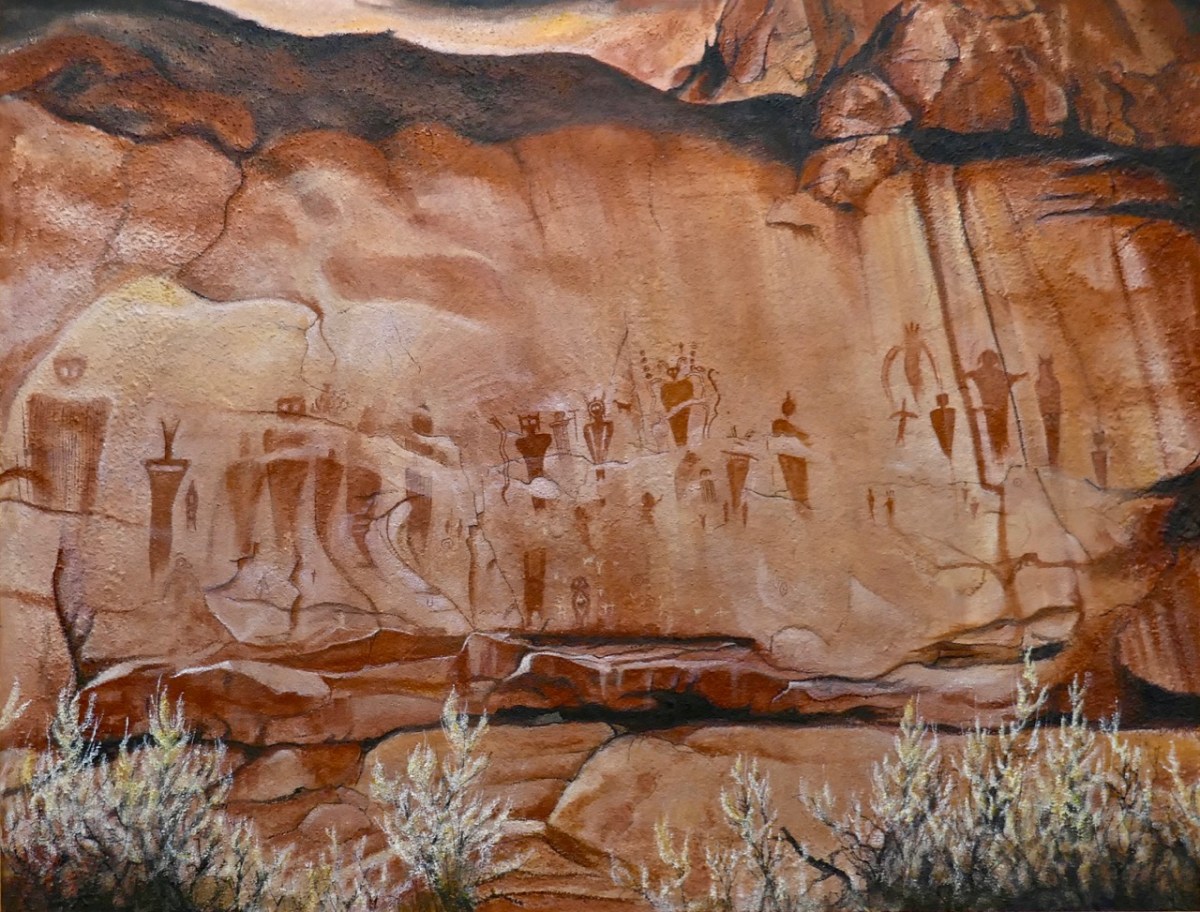
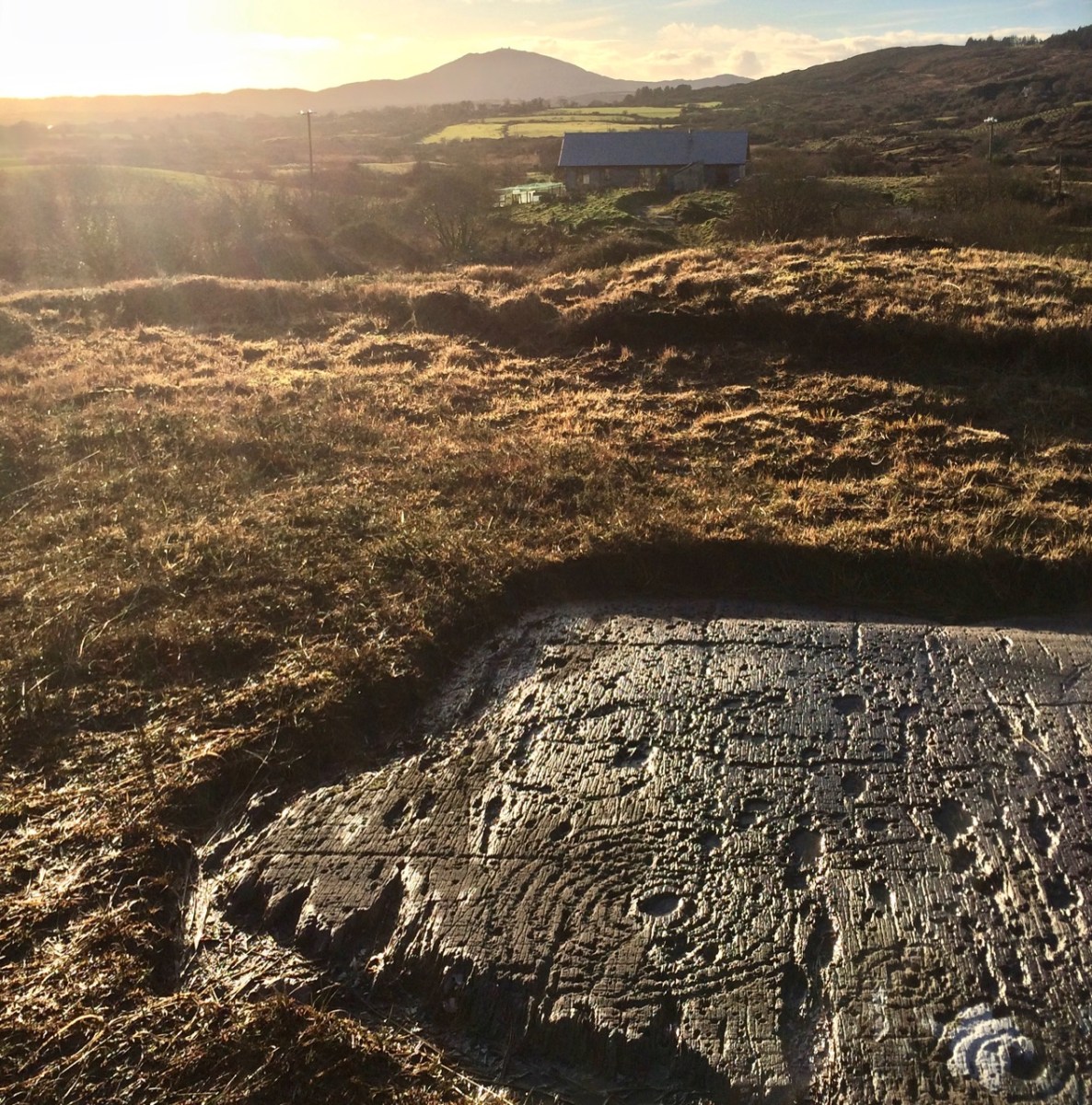
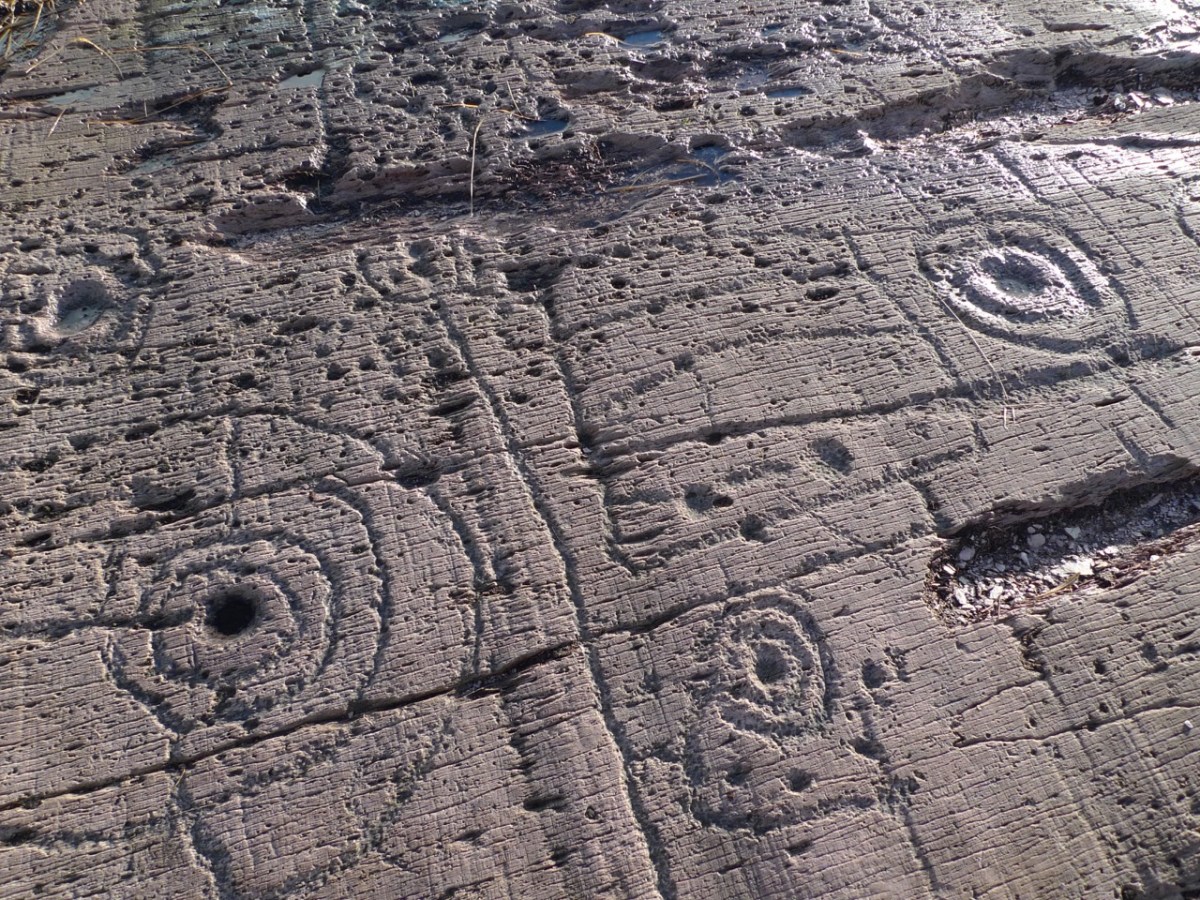
The gallery also has on show some work by other West Cork artists, well worth exploration, so don’t miss them when you go. I can’t resist finishing with one of them: this work (below) by Keith Payne – Sego Canyon. Keith has always been fascinated by ‘Rock Art’ in all parts of the world, and painted this based on his visit to a collection of petroglyphs on a cliff-face in Utah. It’s very apt, I think, to see this work in the context of the Brian Lalor exhibition. Below it is our own photograph of 5,000 year old Rock Art at Derreenaclough, West Cork – discovered only a few years ago. I am personally of the opinion that the siting of this rock in full view of ‘sacred’ Mount Gabriel is purely intentional!
A fully illustrated catalogue is available to purchase in the gallery

Some useful links:

West Cork Rocks

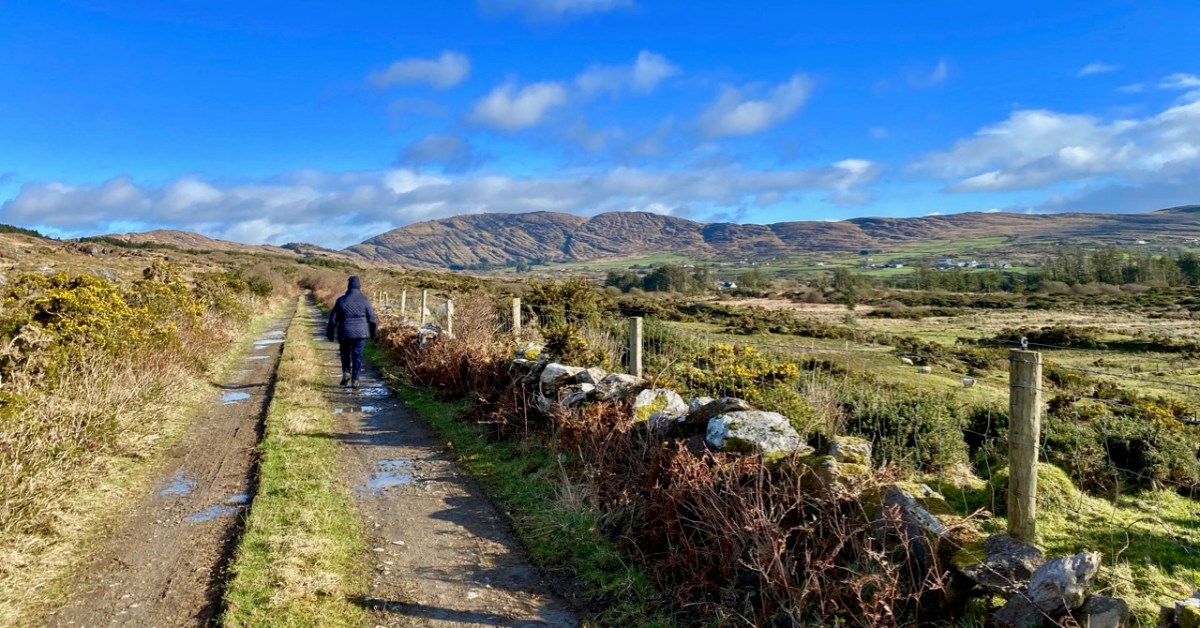
It certainly does! But this post is – literally – about rock: the hard, knobbly kind that is underneath us, surrounds us, and which has historically built our environment. In the picture above, taken on a clear February day during the most severe Covid lockdown, Finola is walking through beautiful West Cork. Beyond her is the great, gaunt outcrop of Mount Gabriel. Beside her is a traditional stone wall: its design unchanged over centuries. In the landscape all around her are rocks – large and small – scattered in the rough pasture.

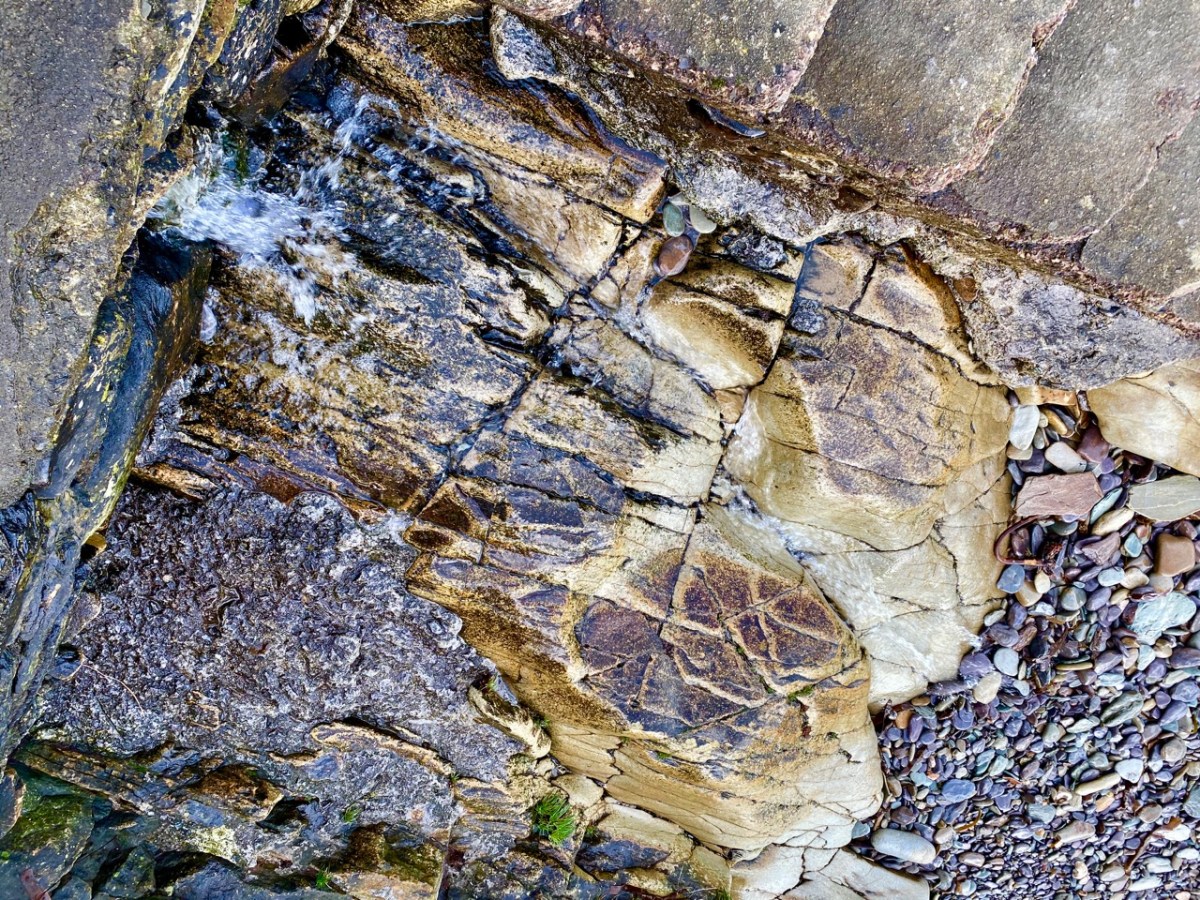
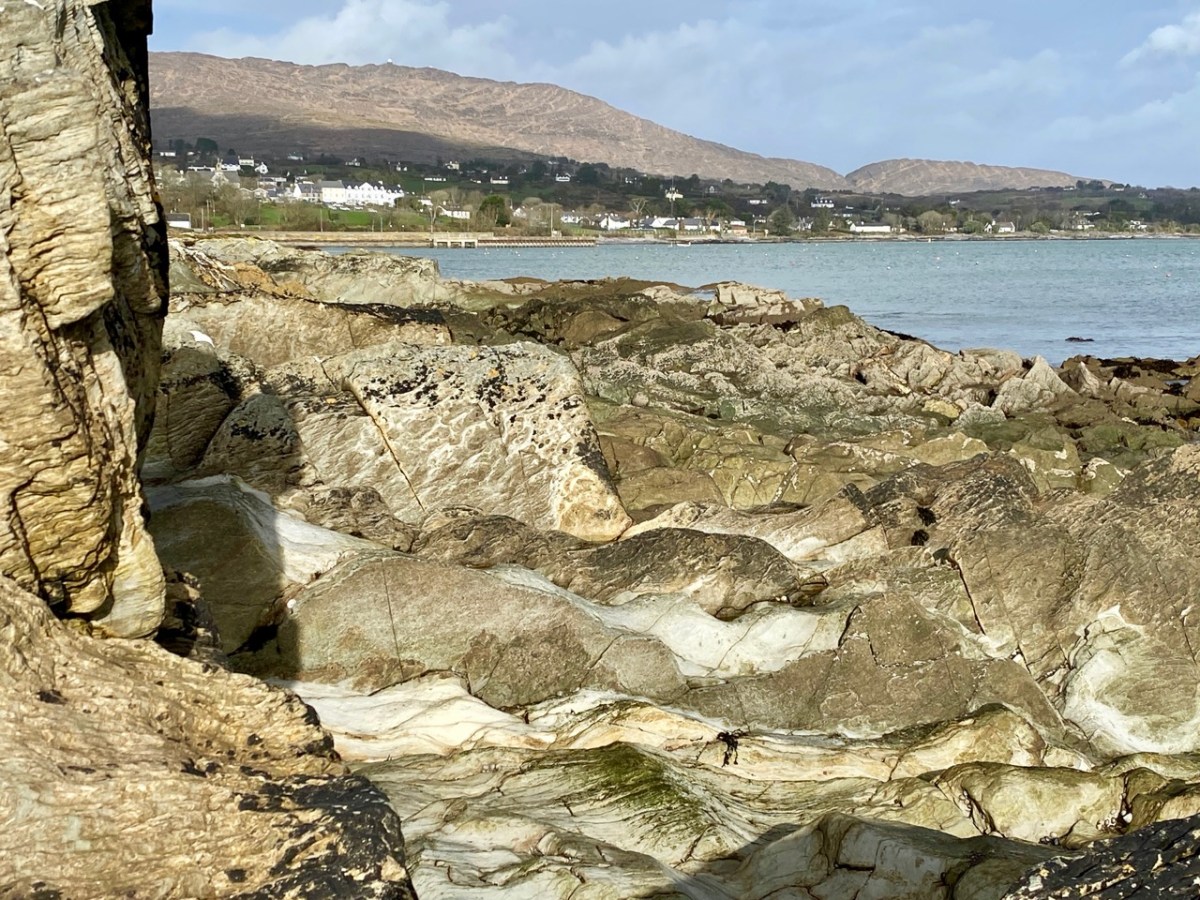
In the distance, of course, is the coast: there are very few places in West Cork where you cannot, at least, catch a glimpse of the sea – and so many where you can immerse yourself in it, or stand on its shore and admire the infinite textures which those same rocks display. It’s mostly Old Red Sandstone: that’s the correct geological term. It was laid down in the Devonian period – a while ago now: between 400 and 300 million years, in fact. This followed an era during which our mountains were built, known as the Silurian times. Continents were shifting and separating, and what was to become Ireland was a great arid desert – deserted: there was no-one around to see it!

Old Red Sandstone: in fact it varies in colour depending on its local history. Broadly, some of the mountain rocks are purple-grey, while those closer to the sea could be greeny-red, but that is probably far too wide a generalisation. The sheer beauty is in the infinite shapes and colours. What artist needs any finer palette?

In those deserted times, an ‘Old Red Sandstone Continent’ extended over what is now northwest Europe, but it is worth noting that in ‘our’ part of it – the Munster Basin, covering today’s Kerry and Cork – we have one of the densest masses of this rock in the world: at least 6 kilometres thick. And we have to appreciate what it has given to us – high mountain spines sweeping steeply down to an indented shoreline of coves, creeks and inlets, with the myriad mottled islands that we oversee. An unparalleled, unfolded world.

After the ‘desert’ period, but much later – only about a million and a half years ago – came the Pleistocene Epoch. the word is from the Greek polys and cene – meaning ‘most recent’ – and that brings us almost up to date. That was a time of great climate events: deserts were inundated and then covered in ice sheets 3 kilometres thick, while moving glaciers tore up the rock surfaces, advancing and retreating several times. Eventually, what had been desert became arctic tundra. It is supposed that the ancestors of our present day life forms happened along during this epoch, and managed to survive. But we don’t find any traces of them until after the last ice sheet retreated in our part of the world – only about 12,000 years ago. The landscape that was left behind was inundated by rising sea levels, and the very last land bridge (between Cornwall and the eastern tip of Wexford) was washed away after that, but not before the Giant Elk and its mammal relations had got a foothold on the western side. The snakes, however, didn’t make it. And what of the humans?

Well, the humans embraced the rocky landscape. They made their marks on the outcrops; then they moved the rocks about, and made architecture from them. We can still see their efforts, some 5,000 years later.

These Neolithic carved motifs could be the earliest human interventions on the natural Irish landscape: they might date from 3,000 BC. These examples are from West Cork, and were only discovered a few years ago. Finola wrote the definitive thesis on Rock Art when she studied at UCC in the 1970s, and we have staged exhibitions and given talks on the topic.

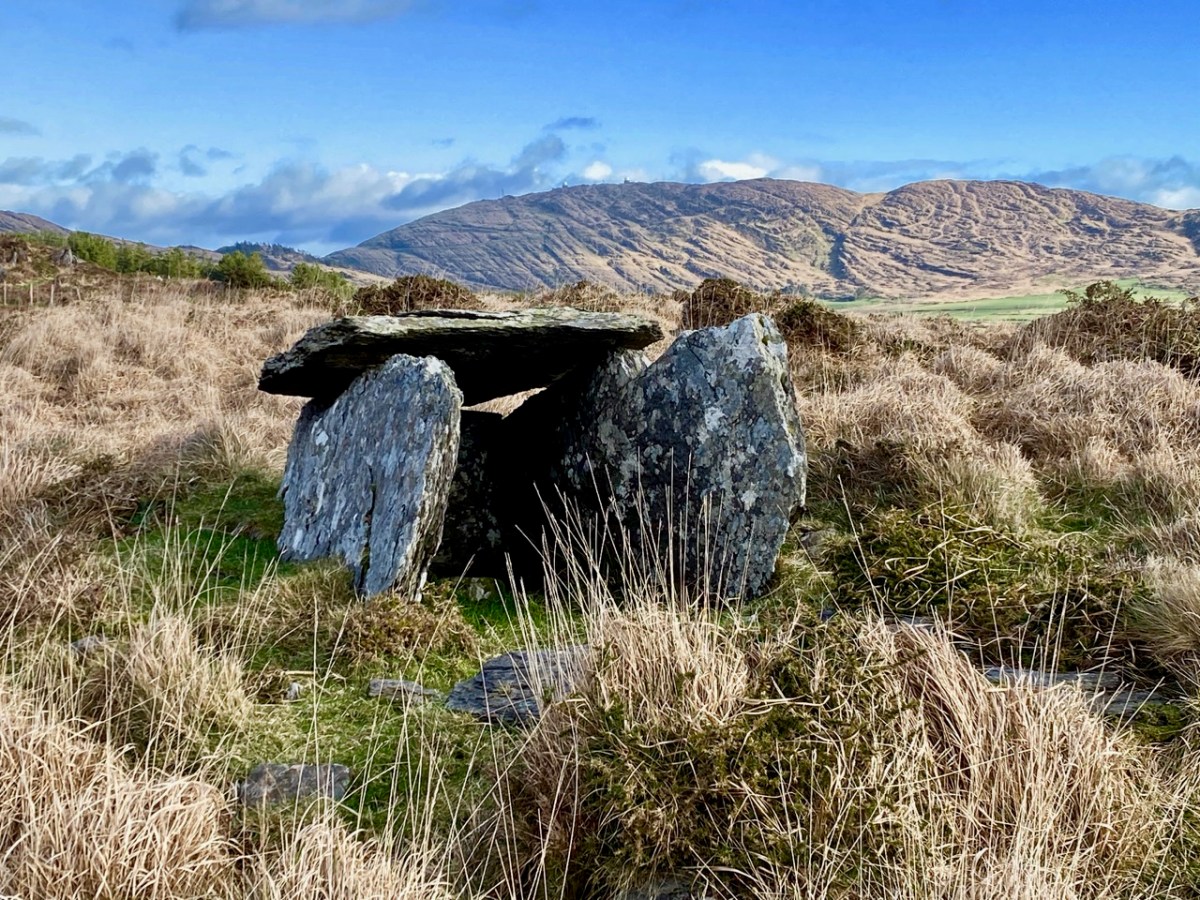
A couple of thousand years later, Irish people started to build things with the stones they found around them. This wedge tomb under the backdrop textures of Mount Gabriel at Ratooragh has rested here since the Bronze Age. Finola’s post today uncovers the fascinating folklore stories that generations have told about such artefacts. But restlessly working the fabric of the landscape – Old Red Sandstone – into walls, shelters, tower houses, temples and towns has never ceased.

Legends of Mount Gabriel: Wrought by Giants

While references to Fionn MacCumhaill (or Finn McCool) occur in many of the old legends about Mount Gabriel, more often a generic ‘giant’ is identified as having lived on or near Mount Gabriel. Giants were, apparently, given to fighting each other and to hurling rocks through the air. Here’s a good example from Jeremiah Mahony of Crookhaven:

Giants are a familiar motif of folklore – just across the sea many of the same stories are told about the effects the Giant, Bolster, had on the landscape of Cornwall.

The rock that was seized and thrown didn’t always become the Fastnet; prominent rocks on the landscape were also identified, including what we know now as Boulder Burials (for more on this class of archaeological monument see my post Boulder Burials – A Misnamed Monument?). Here is Cornelius Moynihan from Derreenlomane School (long since closed), telling a tale he got from his grandfather of the same name, then aged 75.

In my grandfather’s land in Rathravane there is a stone called “The Giant’s Stone”. A legend says that it was thrown from Mount Gabriel by a giant long ago. Those who believe this point out the print of a knee and prints of three fingers. It looks as if one end was lifted by human agency as it is supported at that end by three stones arranged regularly.

In an unusual piece of cross referencing, Tessie Coughlan from Dunbeacon School, on the other side of Mount Gabriel, tells of the same rock landing in Moynihan’s field (above, and below with Mount Corrin in the background).

The old people of this locality say that two giants once lived at the top of Mount Gabriel near the place where the lake now lies. One of them was much taller than the other but the smaller had two heads and was cleverer and stronger than the other. It is said that they killed any person who cut a tree on the mountain side and then they cast their bodies into the lake.

One day a dispute arose between the two as to which was the stronger and it was agreed upon that they should both lift a stone and throw it as far as they could. The two giants lifted stones of equal weight and threw them over the land together. The small giant threw his stone much farther than the other did and it fell in Rathravane in a field owned by Mr C Moynihan. The other stone fell in Dreenlomane and it is still to be seen.

The stone in Rathravane is oval shaped and it bears the five prints of the giant’s fingers. It rests on a height. The stone in Dreelomane is not shaped like the one in Rathravane but it is the shape of a coffin and bears the print of one of the giant’s fingers. The old people say that it is a real coffin and that a landlord is buried in it or under it. Several people have gone to break the stone, but owing to tradition they never struck it.

Perhaps this (above) is the other rock – it’s not in Derreenlomane but not far, on the slopes of Mount Corrin. Another student from Derreenlomane school, Rita Helen, tells a similar story in her piece titled Local Monuments, and goes on to describe several others.

There is a glacial stone in Mr. Young’s field and another in Mr. Moynihans field. The one in Mr. Moynihan’s field seems to have been lifted up at one end by some persons, as three stones have been placed under this end. People say there is a print of five fingers on the one in Mr. Moynihan’s field and that a giant threw the stone from the top of Mount Gabriel over into the field. 

In this photograph of the Rathruane boulder burial, perhaps you can see the knee imprint and one of the finger holes. That’s Mount Gabriel in the background.

There is a cairn on top of Mount Corrin (Cnoc an Chairn).

There are two pillar stones in the townland called the Gallauns, parish of Schull, W.D.W. Carbery, Co Cork.

In another part of the townland there are six pillar stones forming part of a circle.

The only stone circle in the vicinity is in Dunbeacon, on the slopes of Mount Corrin, but Mount Gabriel is visible from it, as you can see in the photo above. Rita was from Rathruane, although she spells it as it is pronounced locally, Rathravane. It’s interesting that she also says There are no stones in the district with peculiar markings or strokes on them, since there is indeed rock art in Rathruane, quite close to the boulder burial. It’s an excellent example of prehistoric Rock Art, AKA cup-and-ring art.

Hannah Hayes, also from Derreenlomane has her own version of Local Monuments:

There are two large stones in Rathravane :- one in Mr. Young’s field and one in Mr. Moynihan’s field. It is said a giant threw the stone from Mount Gabriel to Mr. Moynihan’s field, and those who believe this say there is the print of five fingers in it. There are pillar stones called Galláin standing in the ground in the townland of Coolcoulachta. There are no ornamented stones in the locality.

Here are the Coolcoulaghta galláns or pillar stones – they constitute a type of monument known as a standing stone pair.

Here’s a piece from an unnamed student at Gloun School. It refers to “a kind of grave” and we wonder if this is the beautiful little wedge tomb in Ratooragh

In the western side of the Glaun hill up east of Timothy Driscoll’s there is a kind of grave. Long ago there was a chieftain living here and people say he was buried there and some treasure buried with him. On top of the clay there is a heap of stones and there is a fairly large stone standing in the centre and there is some writing carved on it.

This writing is nearly blotted out now. It was read by many people in olden times. No one ever tried to find the treasure.

No sign now of any clay or writing but the National Monuments record does reference traces of a mound which may have covered the wedge tomb originally but is impossible to make out now. There are panoramic views from this wedge tomb, not only to Mount Gabriel and Mount Corrin (above), but west to the sea as well (below).

We know you’ll want to be out and about as soon as we all can, doing your own exploring. As an enticement, here’s a story about buried treasure, courtesy of Caitlín Ní Árnéidig of the Convent of Mercy in Skibbereen.

Under a huge stone on the slope of a hill in my father’s farm, there is said to be hidden treasure.

It is said that one day “Athach Mór”, a great giant, was challenged to throw this huge stone (at least one ton and a half weight) from Mount Gabriel to that spot on the hill. First the giant seemed unwilling to try this feat but when he began to lift the stone it seemed of no weight, and he suceeded in landing it exactly on the spot.

Under it there is said to be an unusual thing (a nest containing seven golden eggs each seven inches in diameter and filled with sovereigns).

About four perches due west of this stone is another stone, under which a similar treasure is hidden.

An old man of the vicinity recently revealed that in order to find the treasure one must draw a straight line from one stone to another, then standing near the middle of the line hold a cord in the hand and lift it an eastward direction, so that it will [words missing] the stone and a light will be seen over the spot where the treasure is.

My uncle, having heard the story, decided to prove this, so he set to work at the mysterious stone. Having drawn the line he stood near the centre and cast the string eastward. Then to his astonishment he noticed a ray of light over a small portion of the stone.

He tried to split the stone but failed though still engaged at the work he finds it impossible to do.

All you have to do is figure out the location and , crucially, what the student meant to say where the words are missing. Good luck!