A Signal Success in Irish Engineering – Part 1: Kedge Point

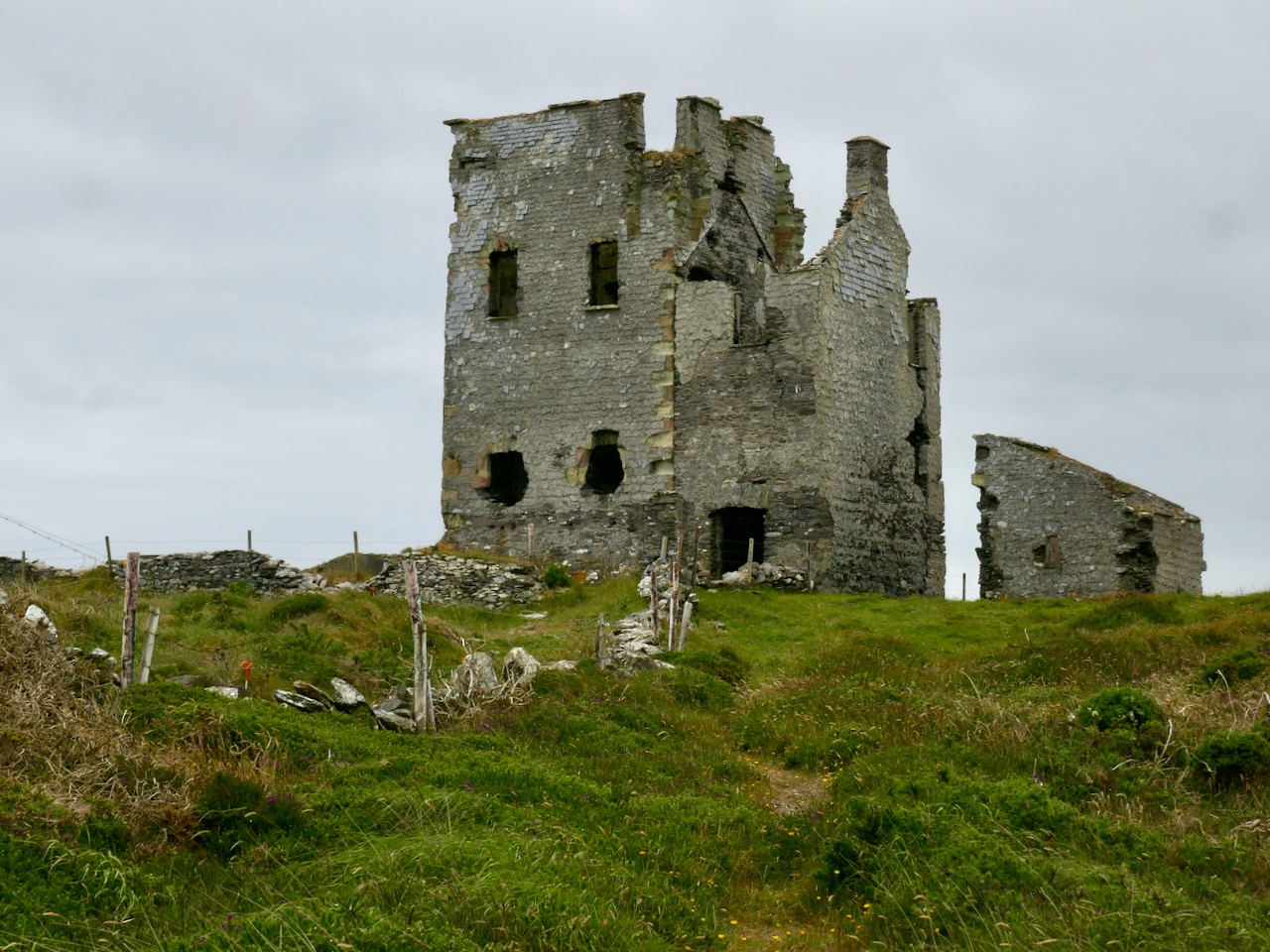
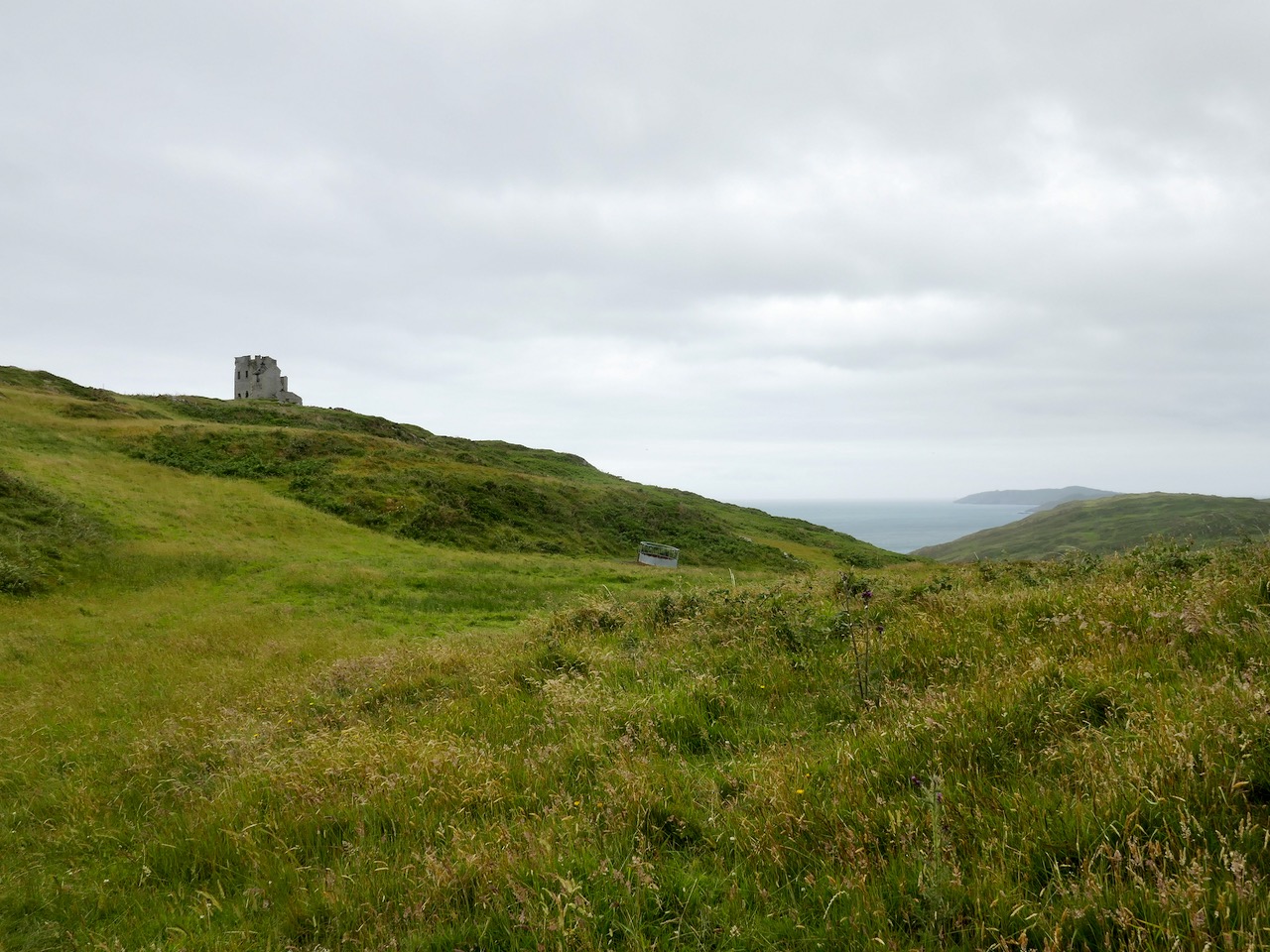
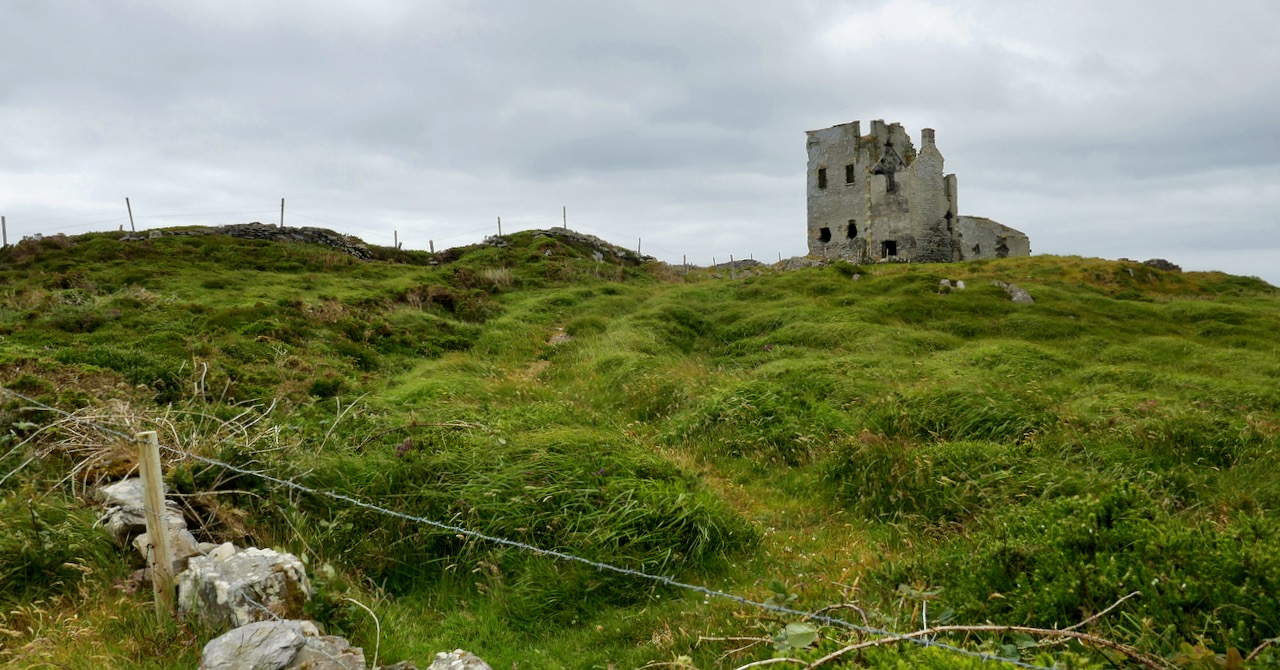
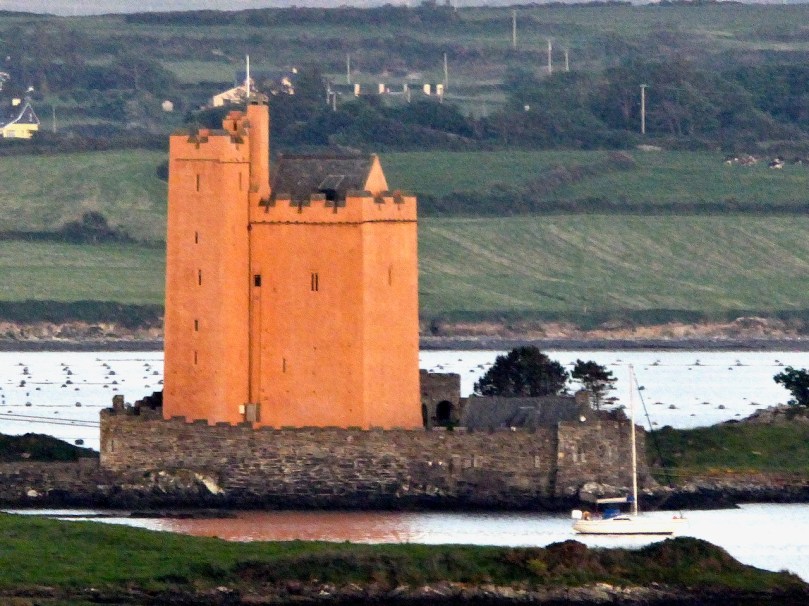
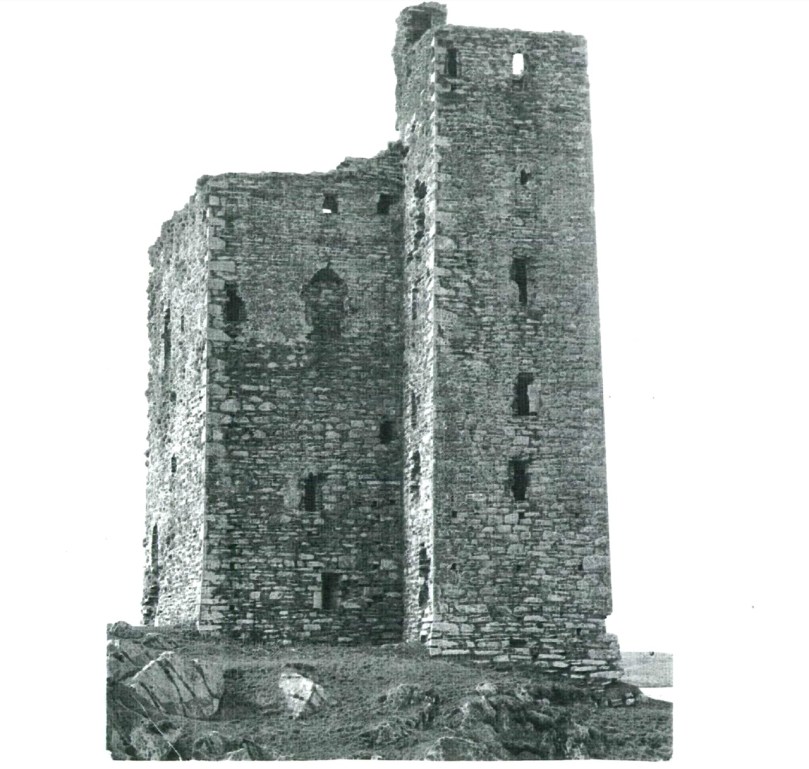
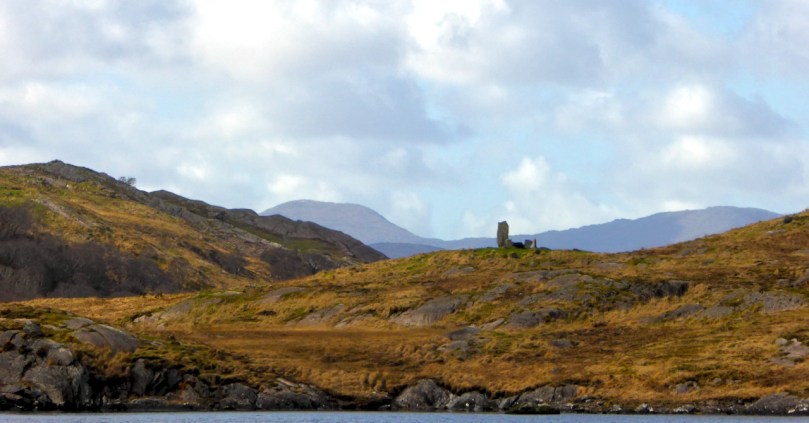
At first sight this gaunt ruin on the West Cork coastline could be taken for a medieval fortified house or castle, but we can date its construction very precisely – to 1805, and we also know its purpose: long-distance communication. It was only put to use for a few years, and has been derelict at least twenty times as long as it was ever in service. It’s a signal station, one of over eighty similar structures around the whole coastline of Ireland, an initiative which represented a major engineering feat of its time.

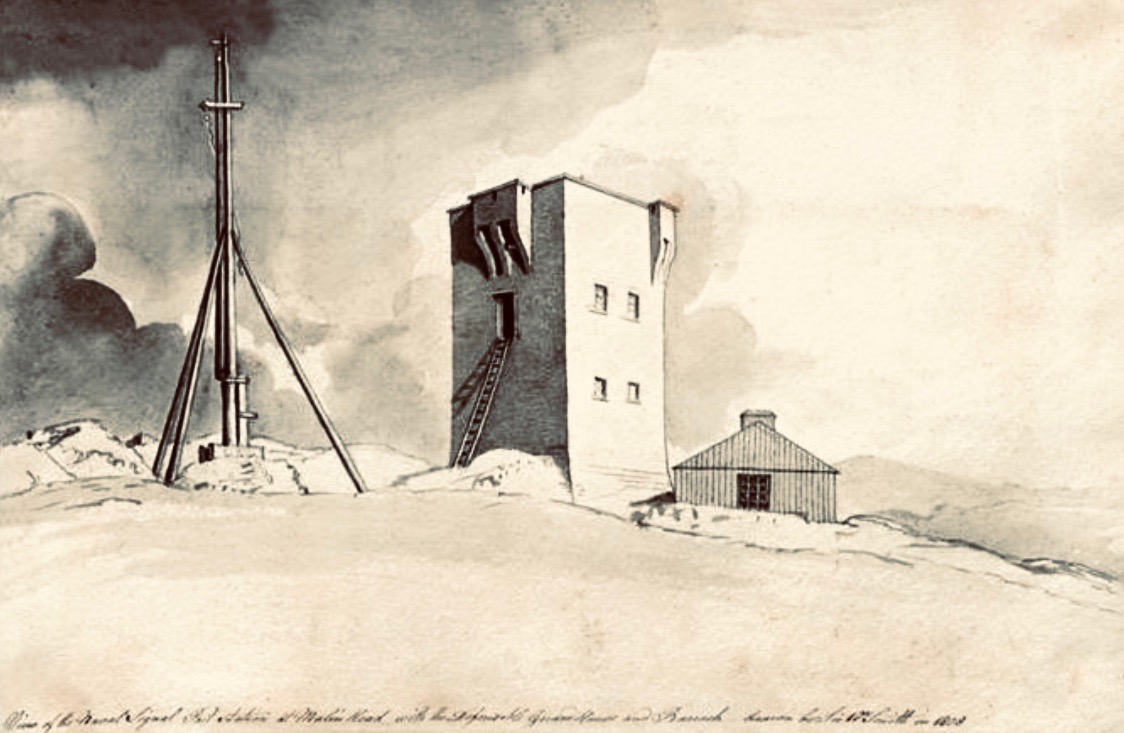
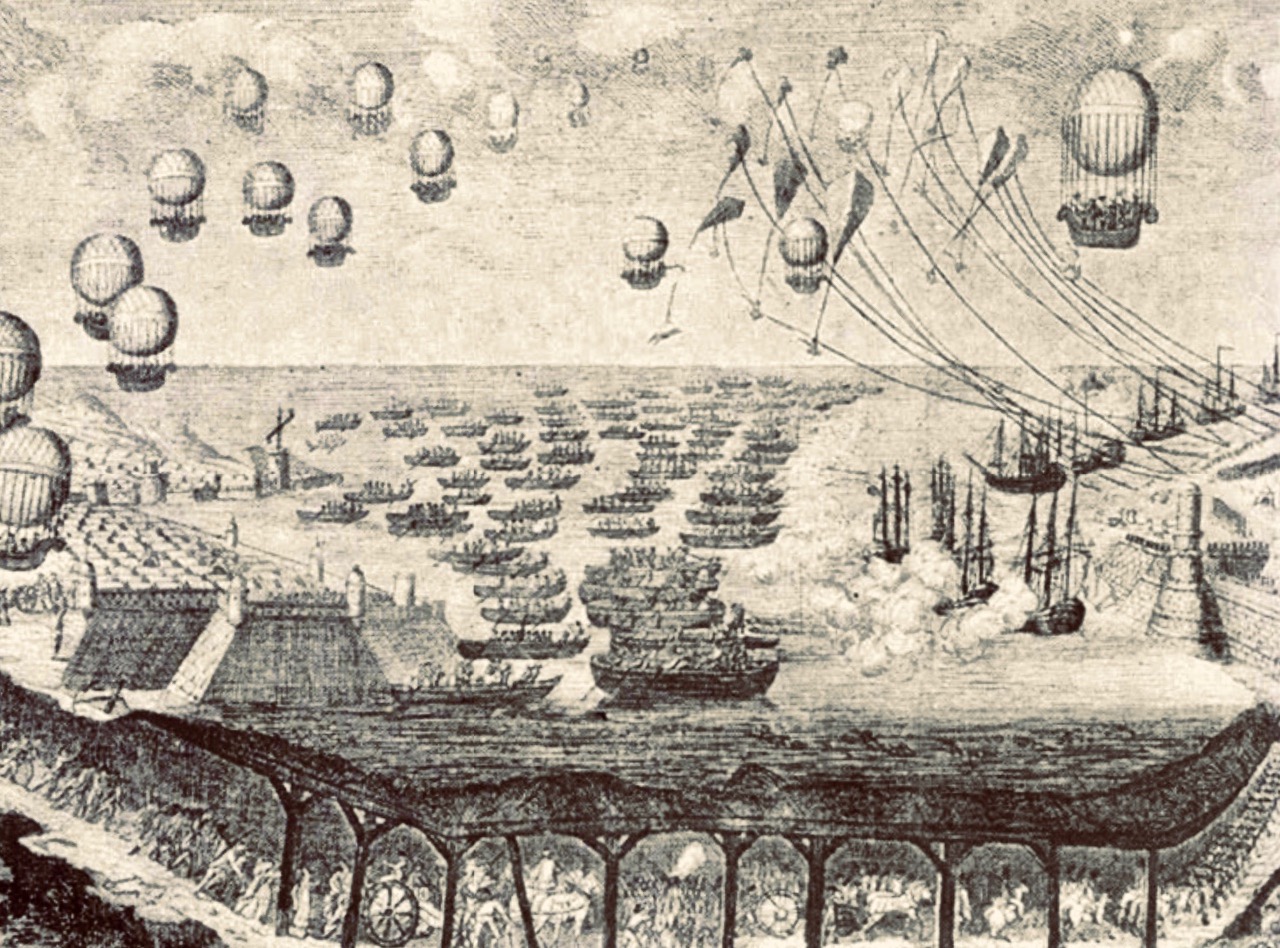
This watercolour sketch by surveyor Sir William Smith is invaluable: it dates from 1808 and shows a signal station in use in its heyday. This one is at Malin Head on the Donegal coast, Ulster, and shows the elements which would have been common to all of the stations: a signal mast, a defended tower and a ‘guard house and barrack’ – probably also an equipment store. The signal tower bears a striking resemblance to the Irish ‘tower house’ or castle dating from several hundred years earlier, with its bartizans, machicolation, base wall batter and raised entrance, All these features were practical as the towers were military installations built in the times of the Napoleonic Wars. The cartoon (below) dates from 1805 and encapsulates the fear of invasion that swept over Britain in the early 19th century. Balloons, kites, flotillas of troopships and a channel tunnel were all envisaged as ways in which the French might conquer these islands! Humorous though this may seem, France had already used military balloons in the 1790s, and Bonaparte appointed Madam Blanchard as his ‘air service chief’, though she told him an aerial invasion would probably fail because of adverse winds.

Since Theobald Wolfe Tone and the Society of United Irishmen attempted to rally France behind the Irish cause in the 1790s, Ireland was seen as a possible focus for the feared invasion, and led to the British Admiralty constructing the system of signal stations as observation posts, together with 50 Martello towers, each maintaining a garrison of troops, officers and heavy artillery. The principal purpose of the signal towers was to keep watch on the coasts and to rapidly send signals around the country if unrecognised shipping was seen. Each tower, therefore, had to be within sight of one or more of its neighbours in both directions. The average distance between towers was 13.5km, although here in West Cork the towers at Brow Head and Mizen Head are only 3.8km apart. Ireland’s coastline is about 1,400km long, depending how you measure it.

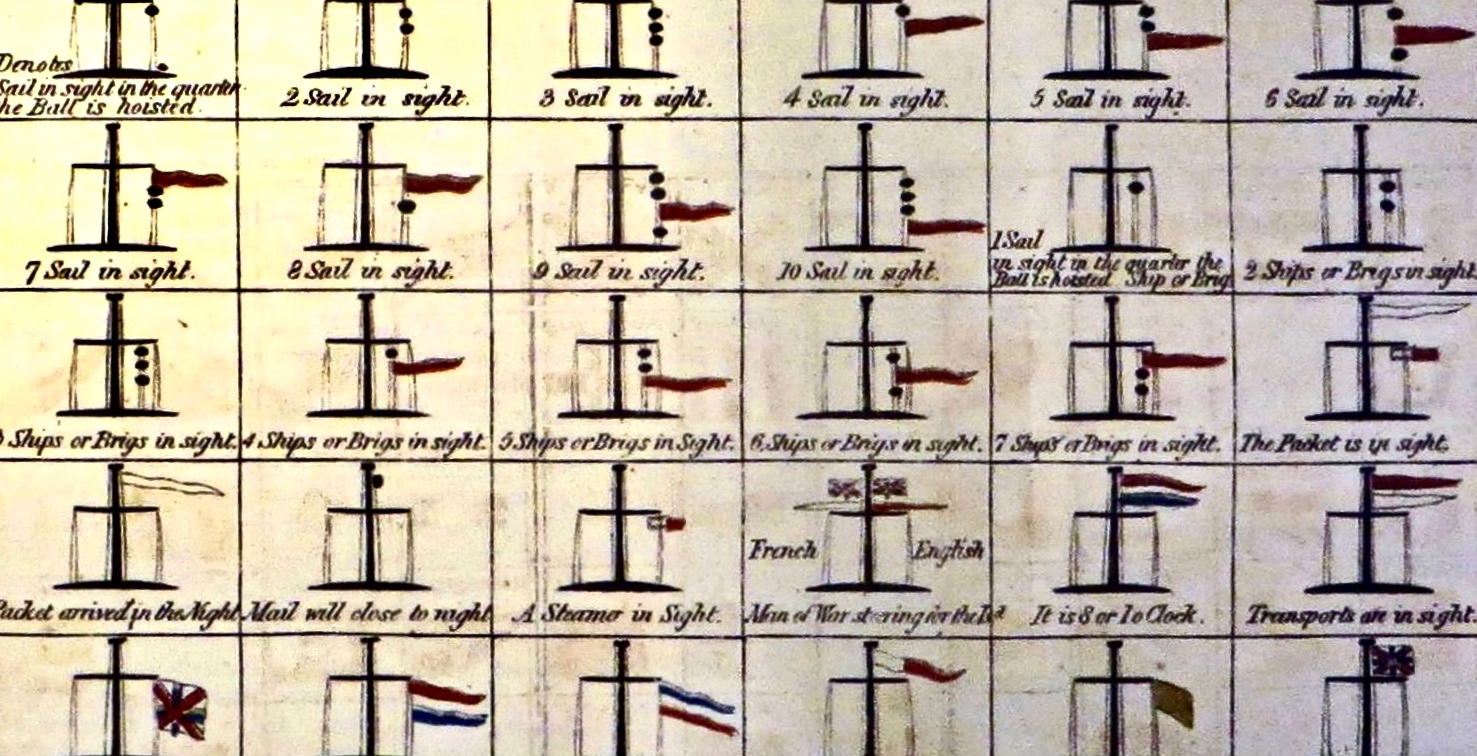
Various combinations of flags and canvas ‘balls’ could be quickly assembled on the signal masts and, with the use of a code book (above) fairly complex messages might be circulated. Another vital piece of equipment, of course, was a high quality telescope. As the Navy had such essential apparatus – and the experienced personnel to use it – the Irish signal towers were largely manned by active or retired sailors.

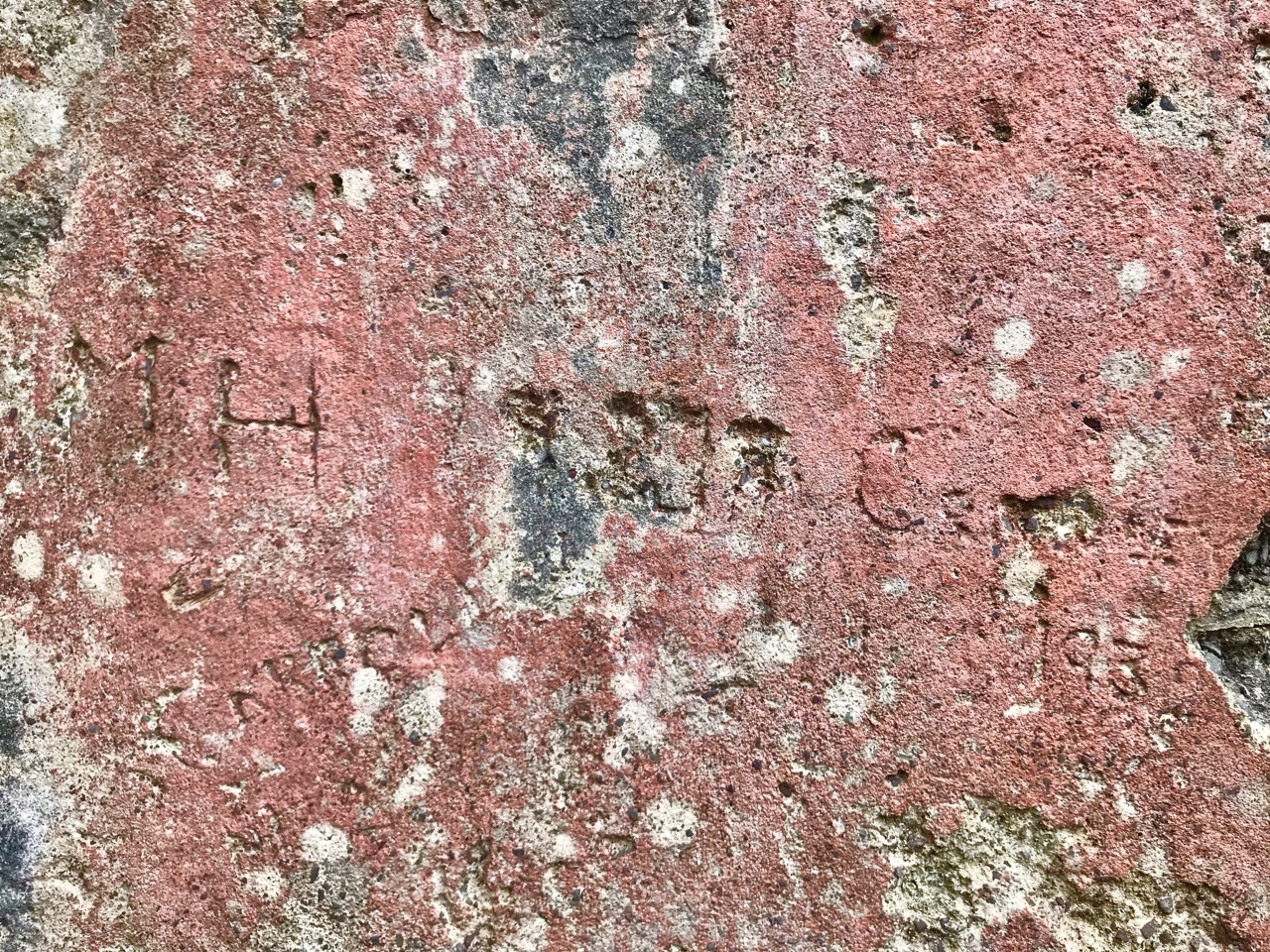
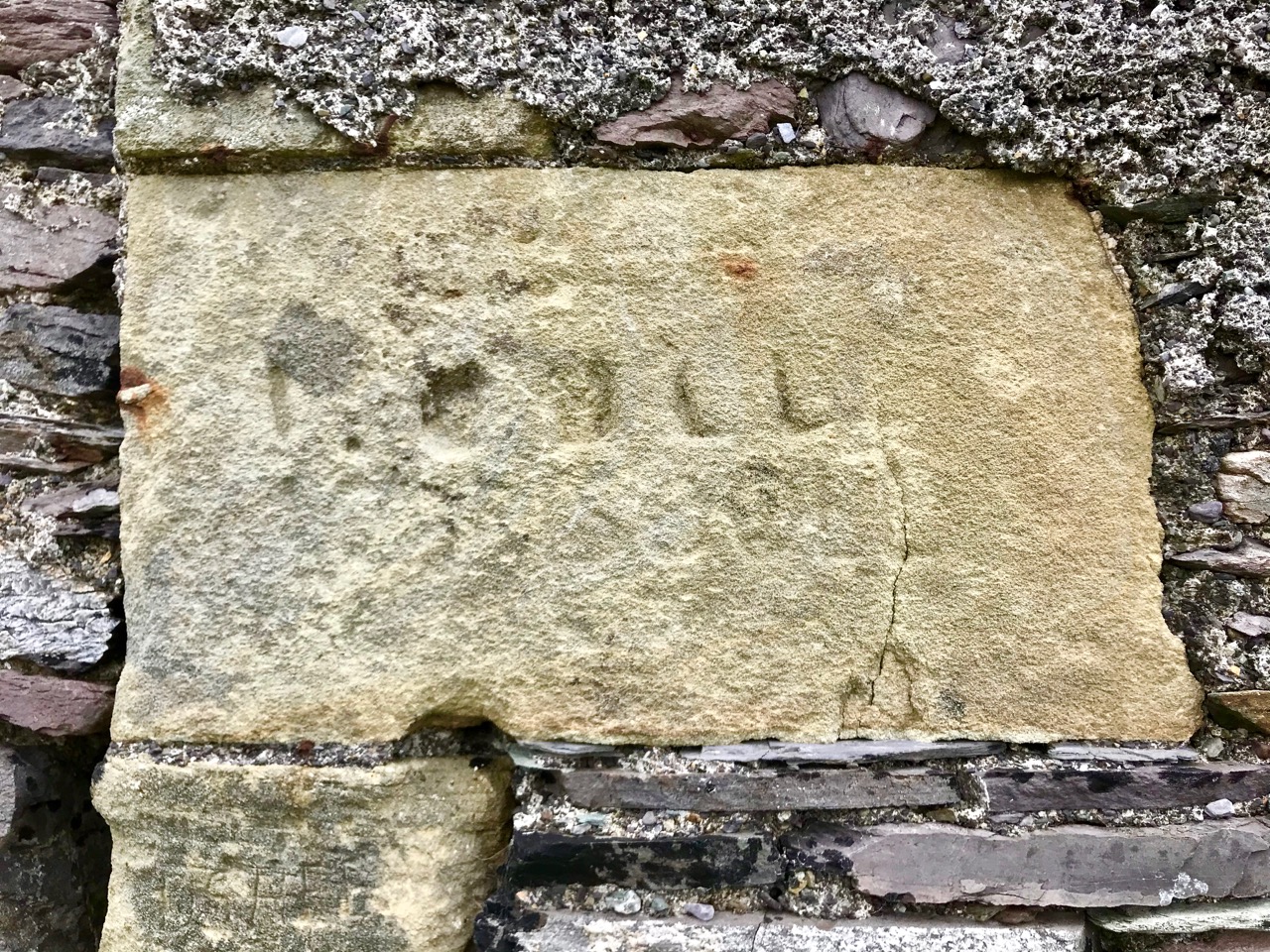
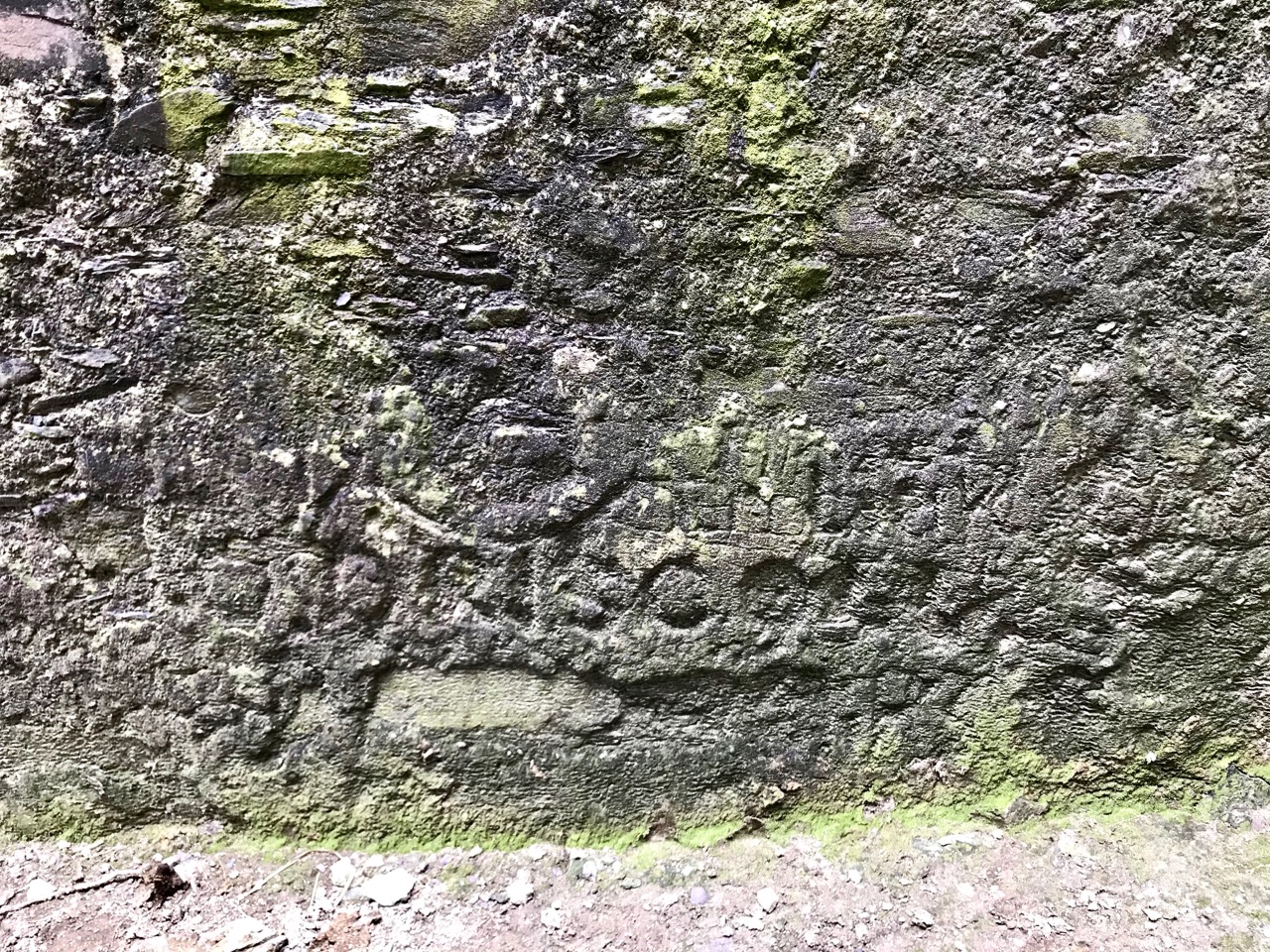
We set out to explore some of the signal stations close to us in West Cork. Once we feel free to travel further afield through Ireland I can see the signal towers becoming a long-term project! If those we have visited so far are good examples, they take us to some of the wildest high places with panoramic coastal views: many are utterly remote. And they are all imbued with a sense of history – of duties that demanded long hours of lonely vigilance in harsh conditions. Most are long abandoned and forlorn. But the marks of those who have been there remain inscribed on the decaying walls.

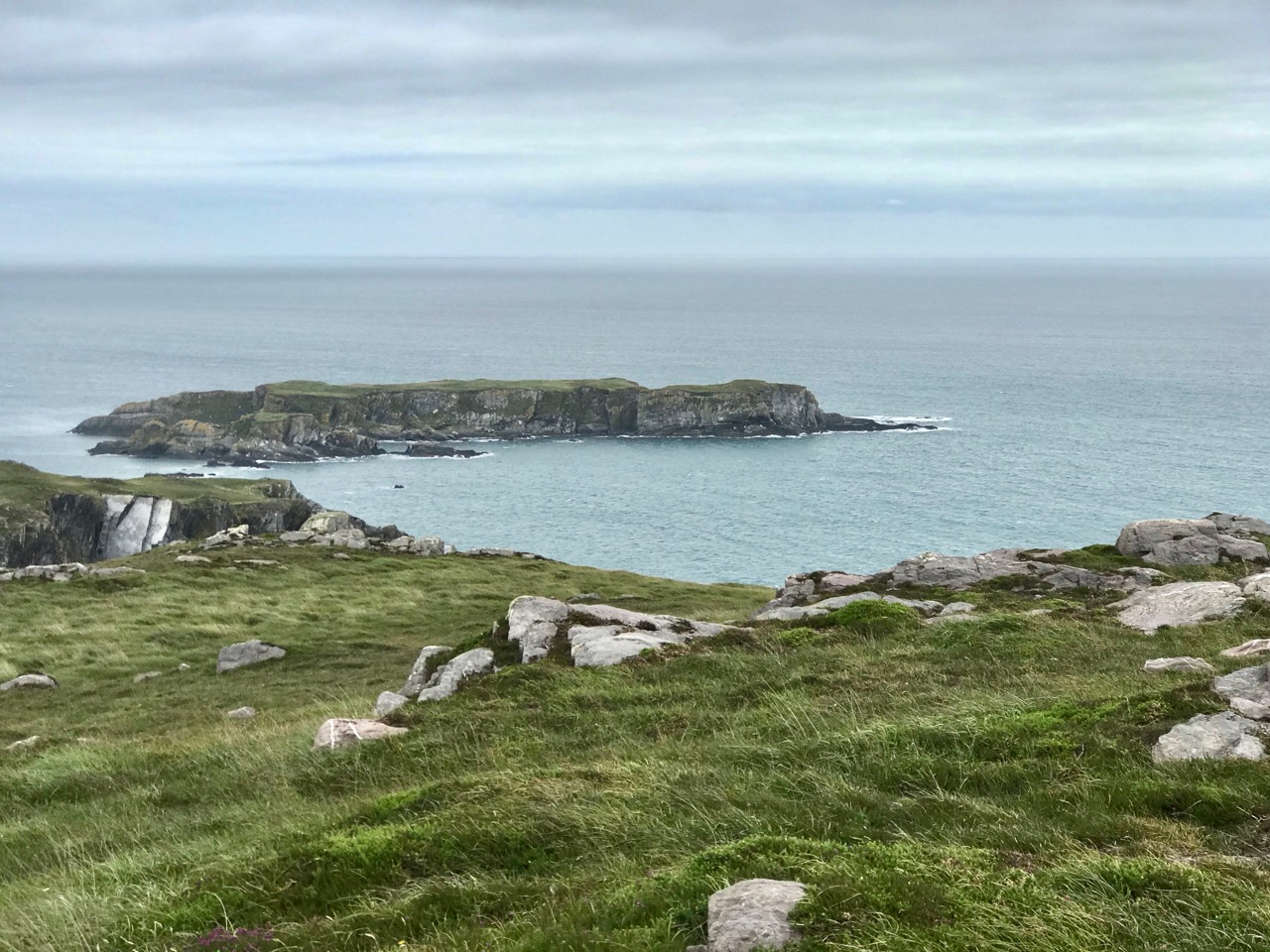
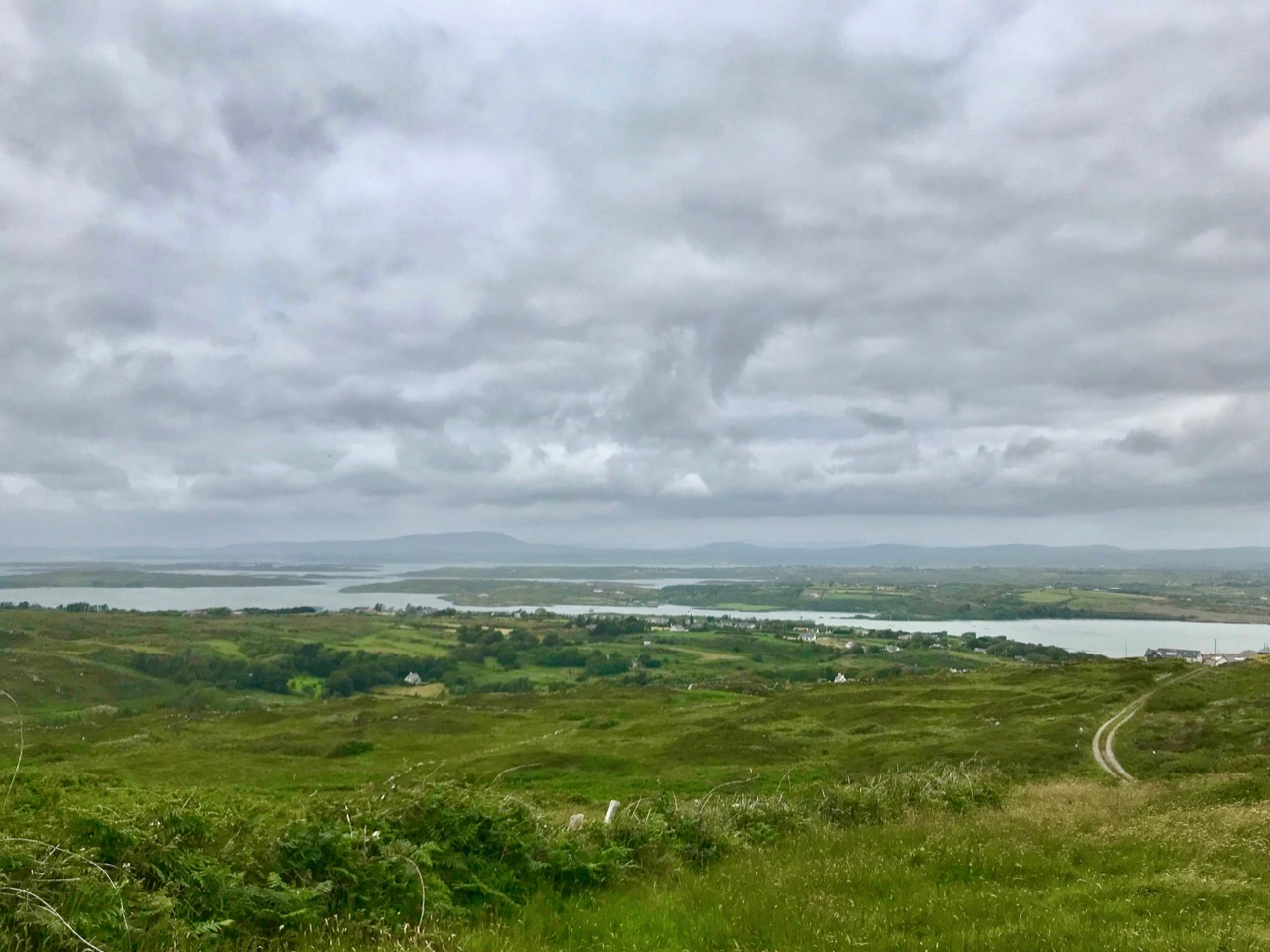
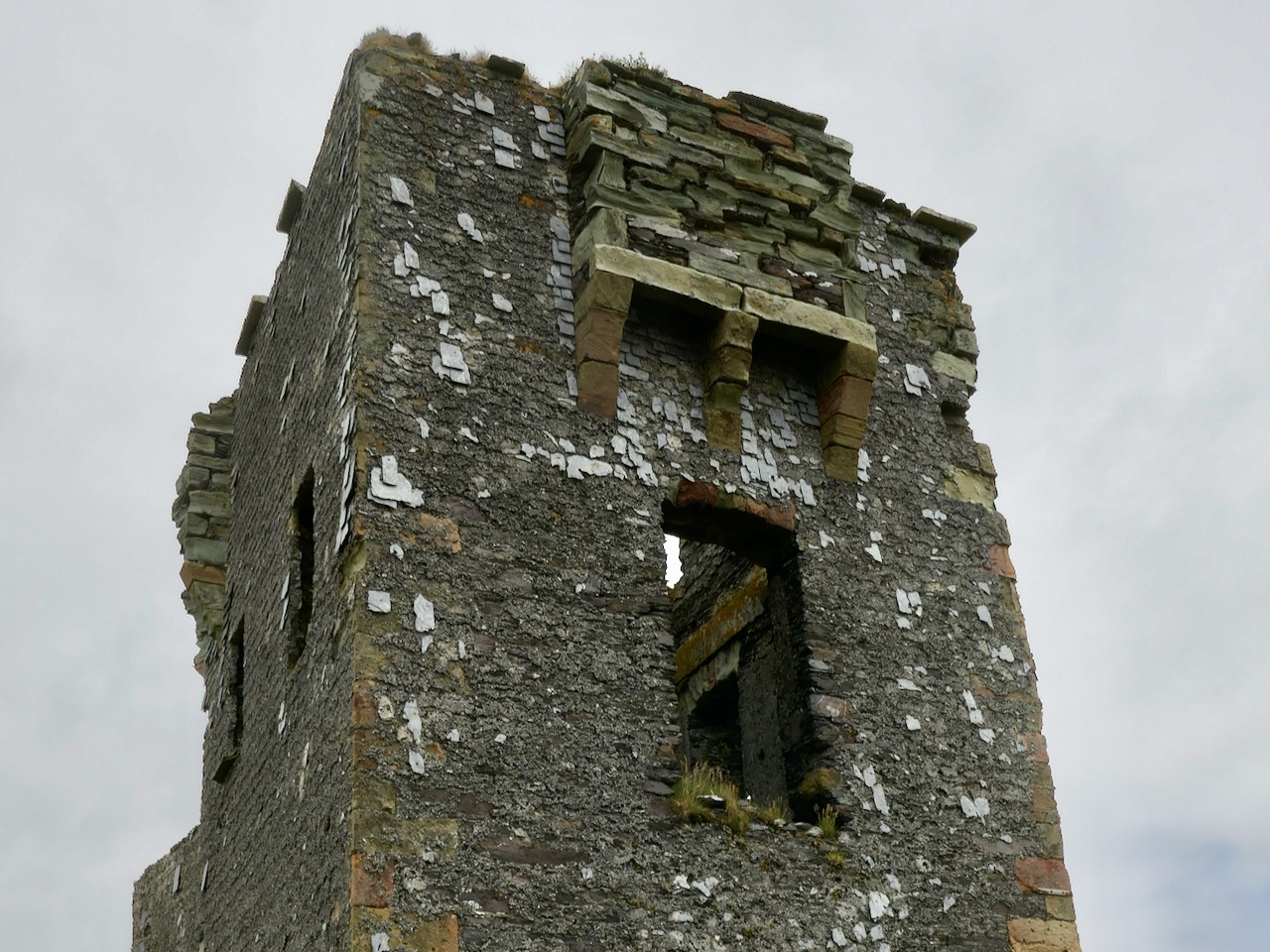
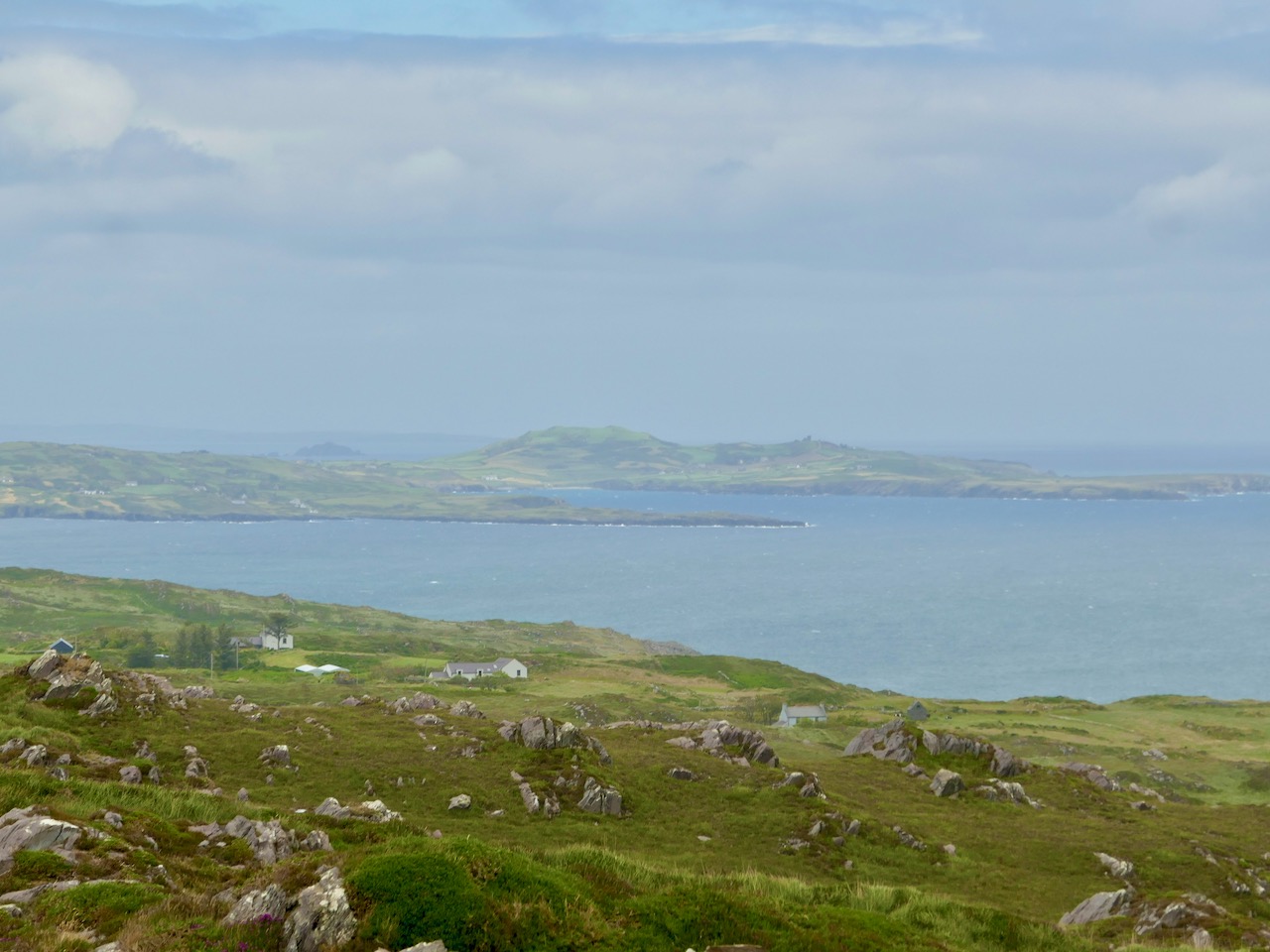
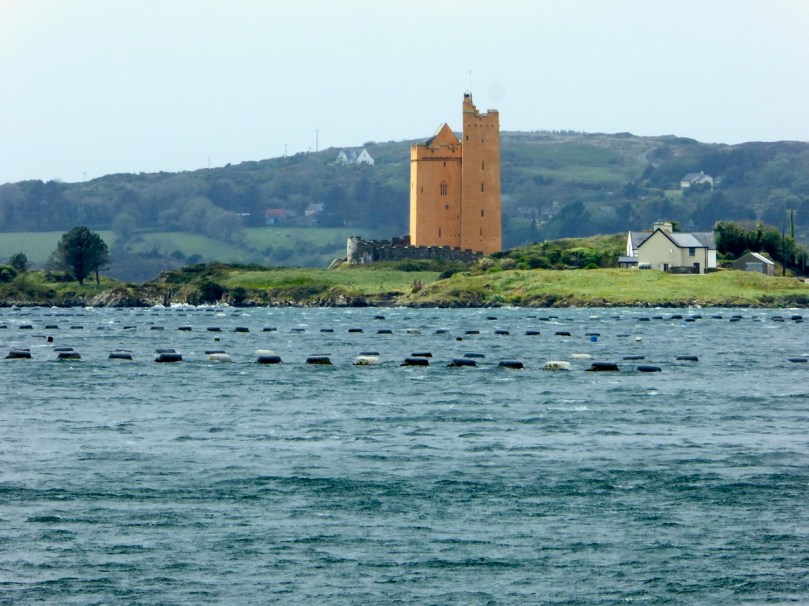
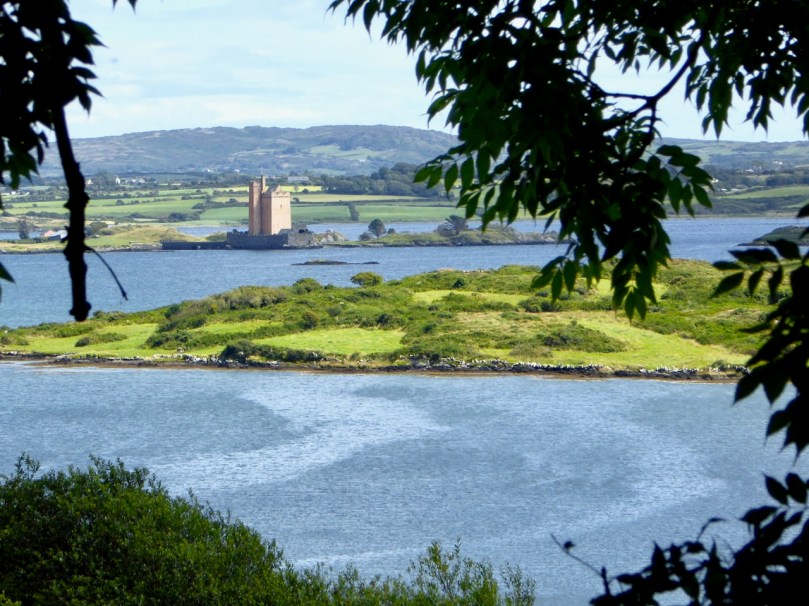
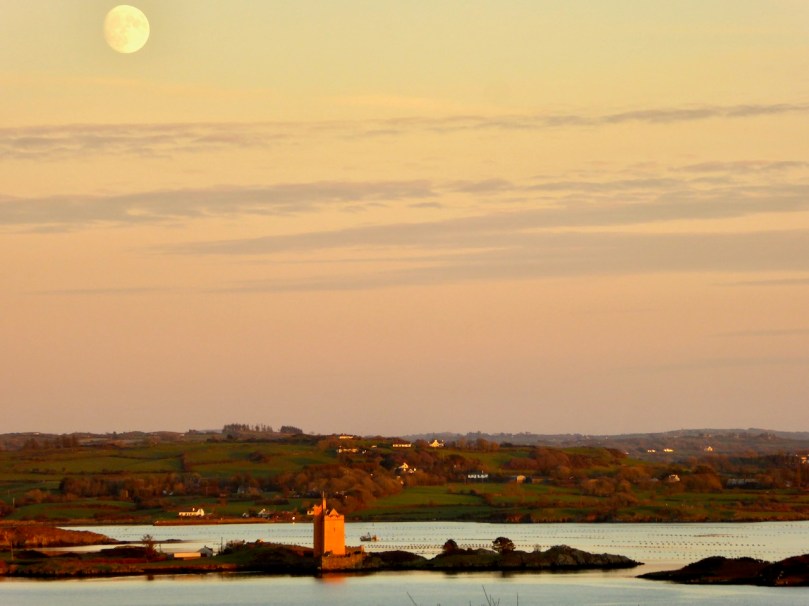
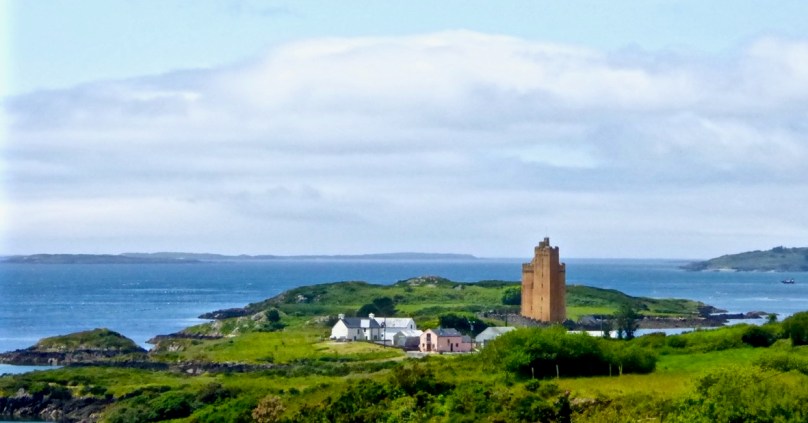
The header illustration and all the photographs above were taken on our recent visit to the signal station at Spain, to the east of Baltimore. There is rugged moorland there and dramatic cliffs overlooking Kedge Island. The site is known as Ballylinchy or Kedge Point. It’s a fair climb off-road but not difficult to reach. It’s always essential to seek permission locally before crossing farmland.

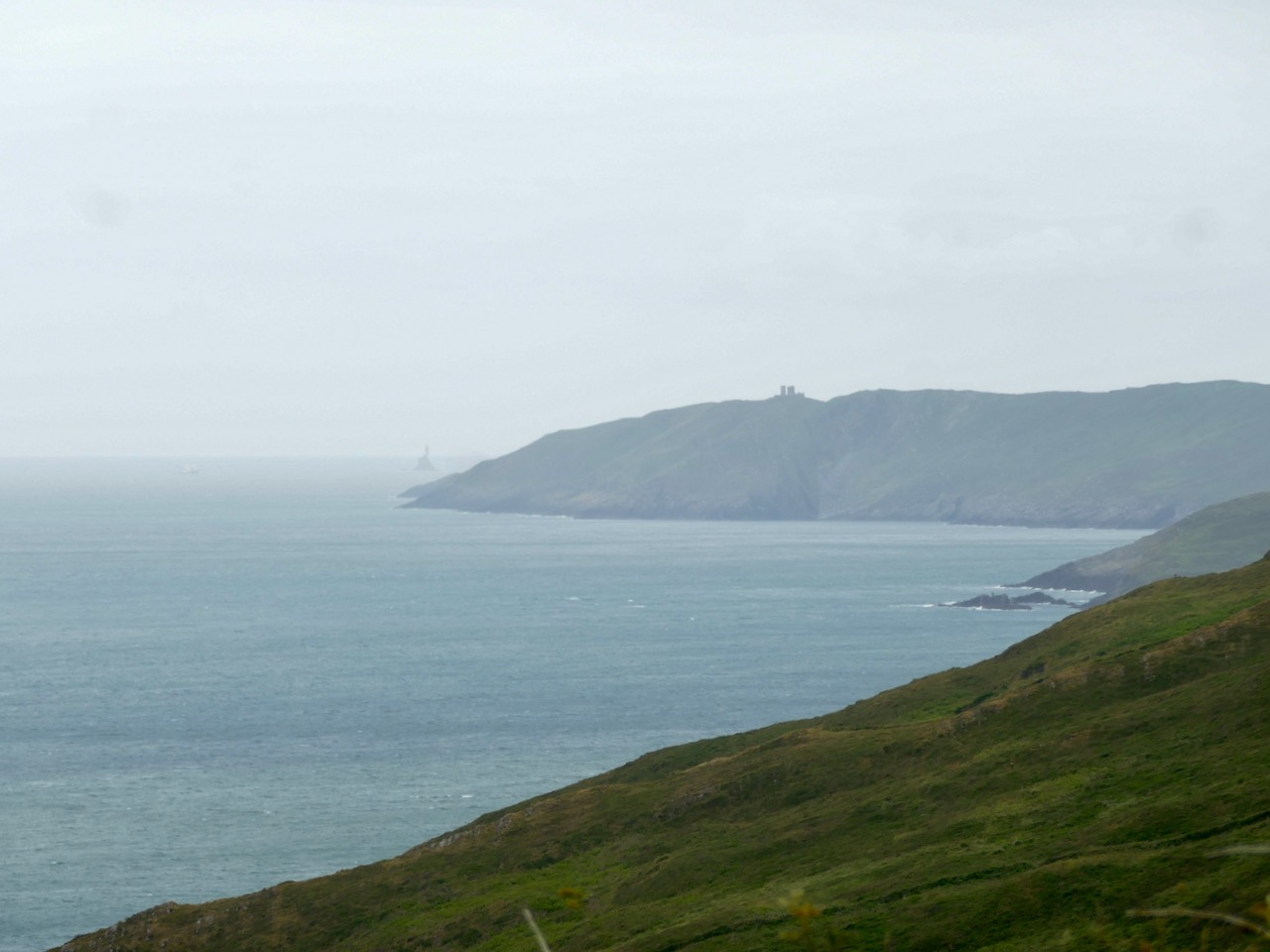
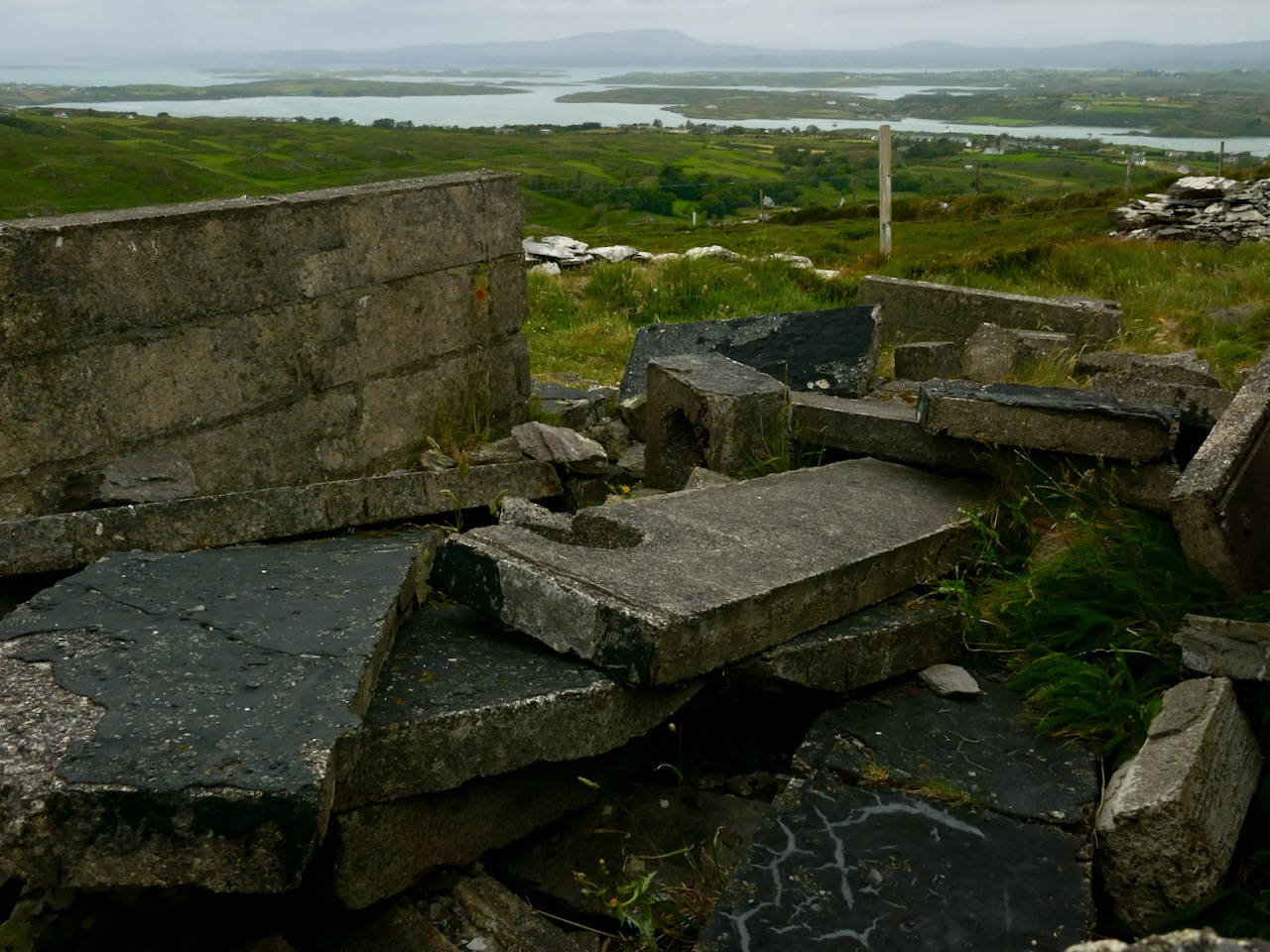
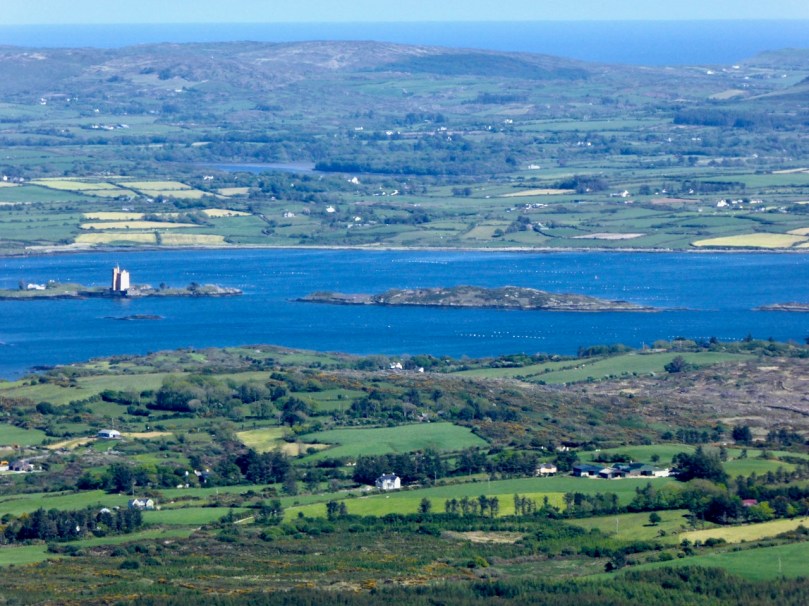
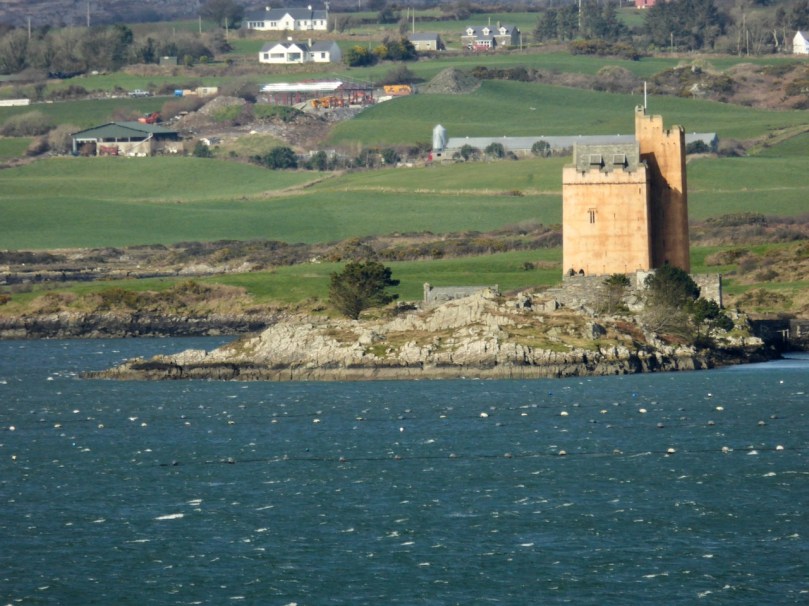
There are uninterrupted views from Ballylinchy towards Kedge Island (upper photo) and across the islands towards the Mizen (lower). Visibility was restricted on the day we visited – and this made us realise how important the weather would be for accurate observations. However, we could clearly see the signal tower on Cape Clear from this vantage point, shown below, with the Fastnet Rock and lighthouse beyond. You can understand from this view – with the camera zoomed in – how powerful the telescopes needed to be to clearly read the flag signals. Finola’s post here includes a section on the Cape Clear installations.

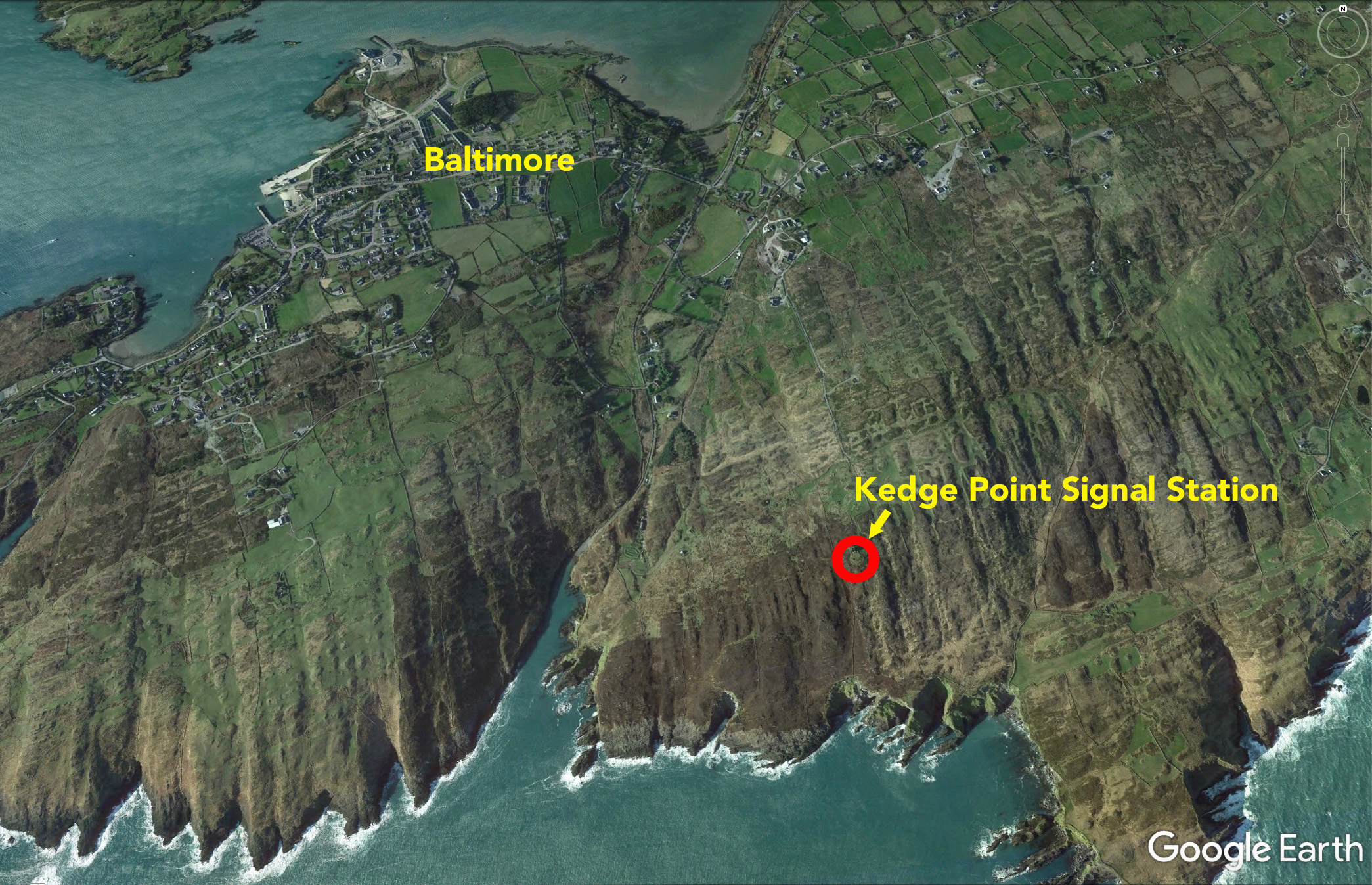
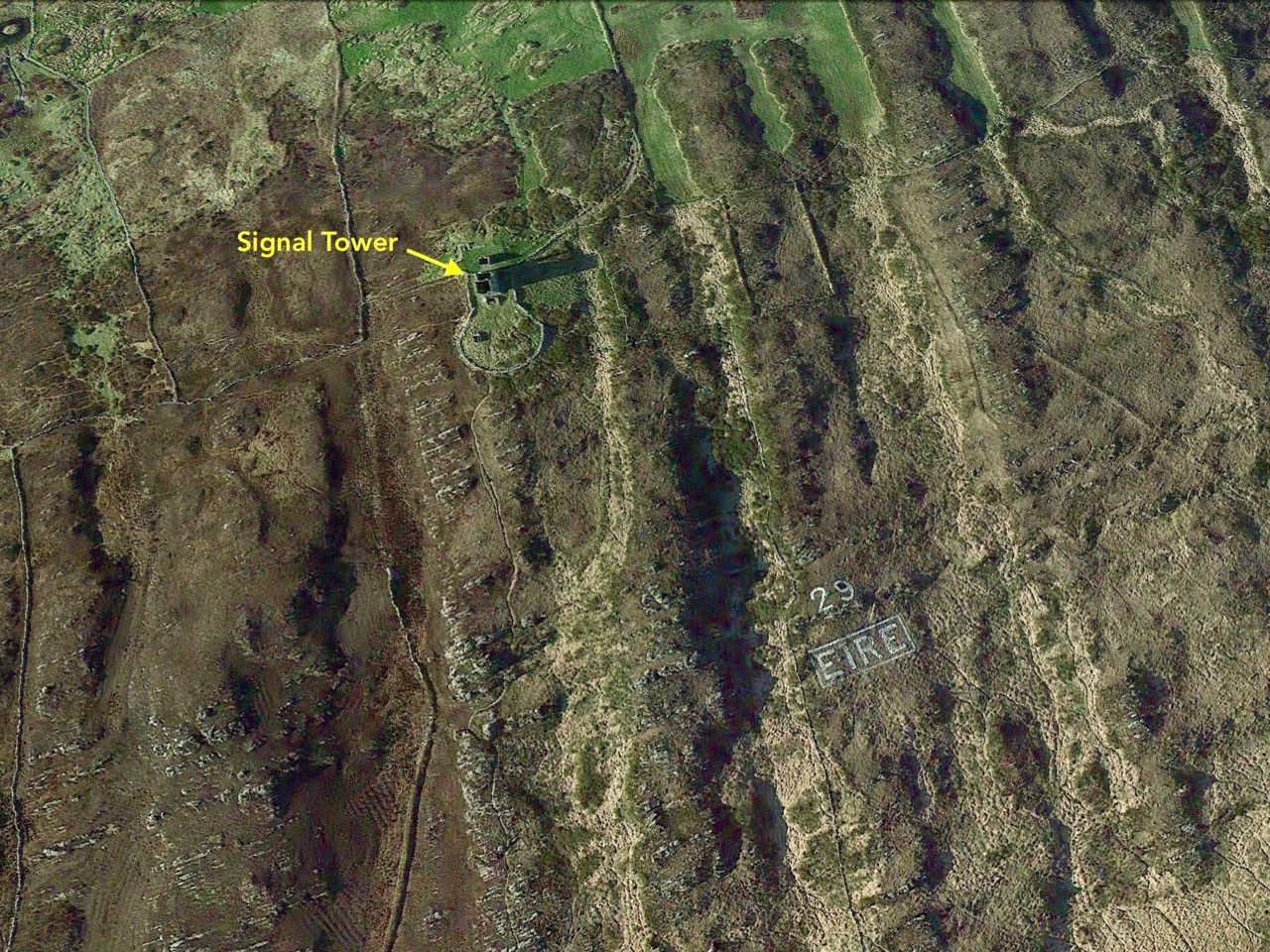
The Google Earth images above and below reveal the setting of this signal station on the highest point of land for miles around. History abounds on this site, with the remains of a World War 2 observation post in close proximity to the 1805 structure, and one of the many EIRE signs set into the cliff, also dating from World War 2 and set up around the coast, reportedly at the behest of the American authorities to help orientate pilots and alert them to Ireland’s neutrality.

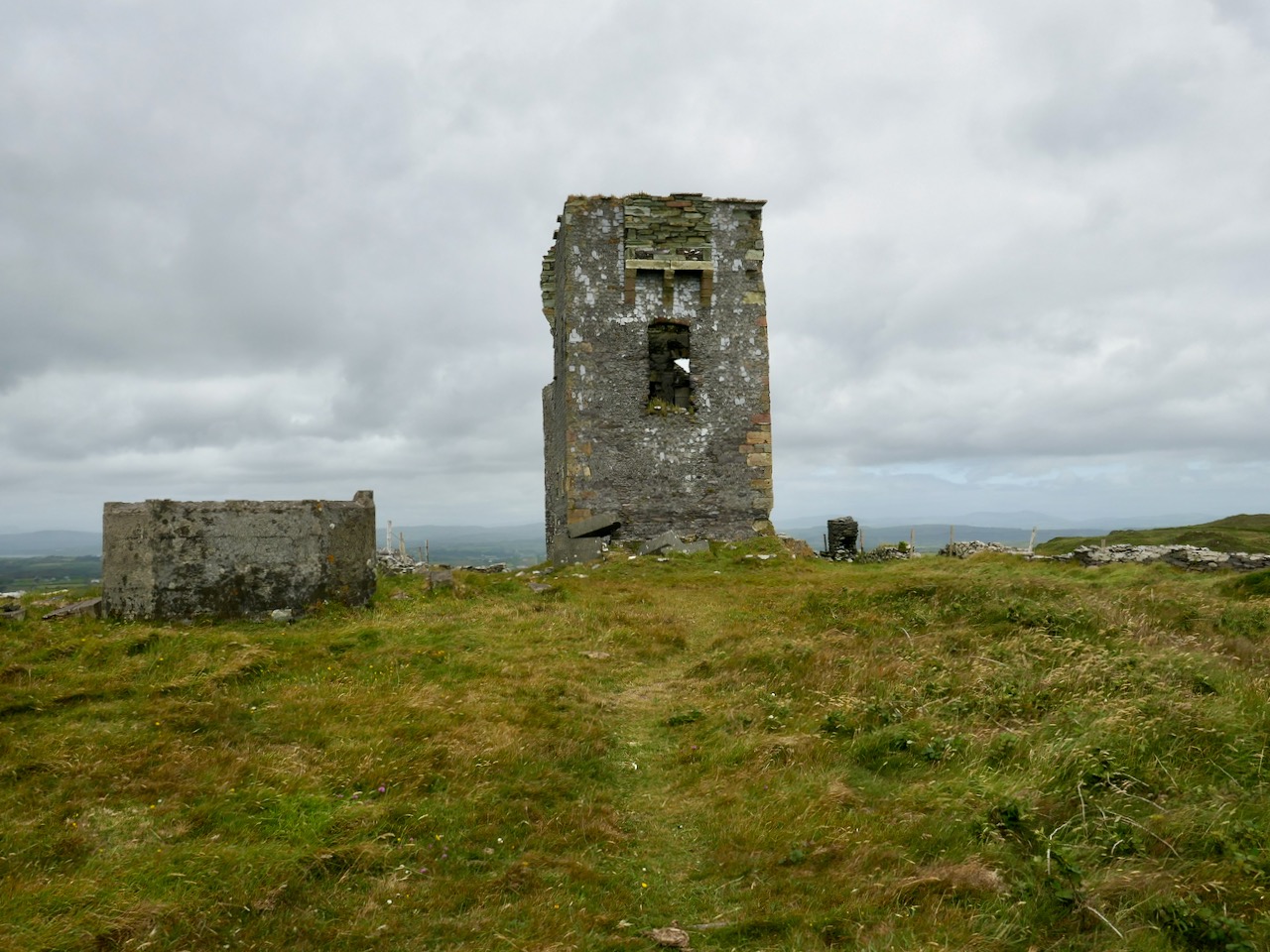
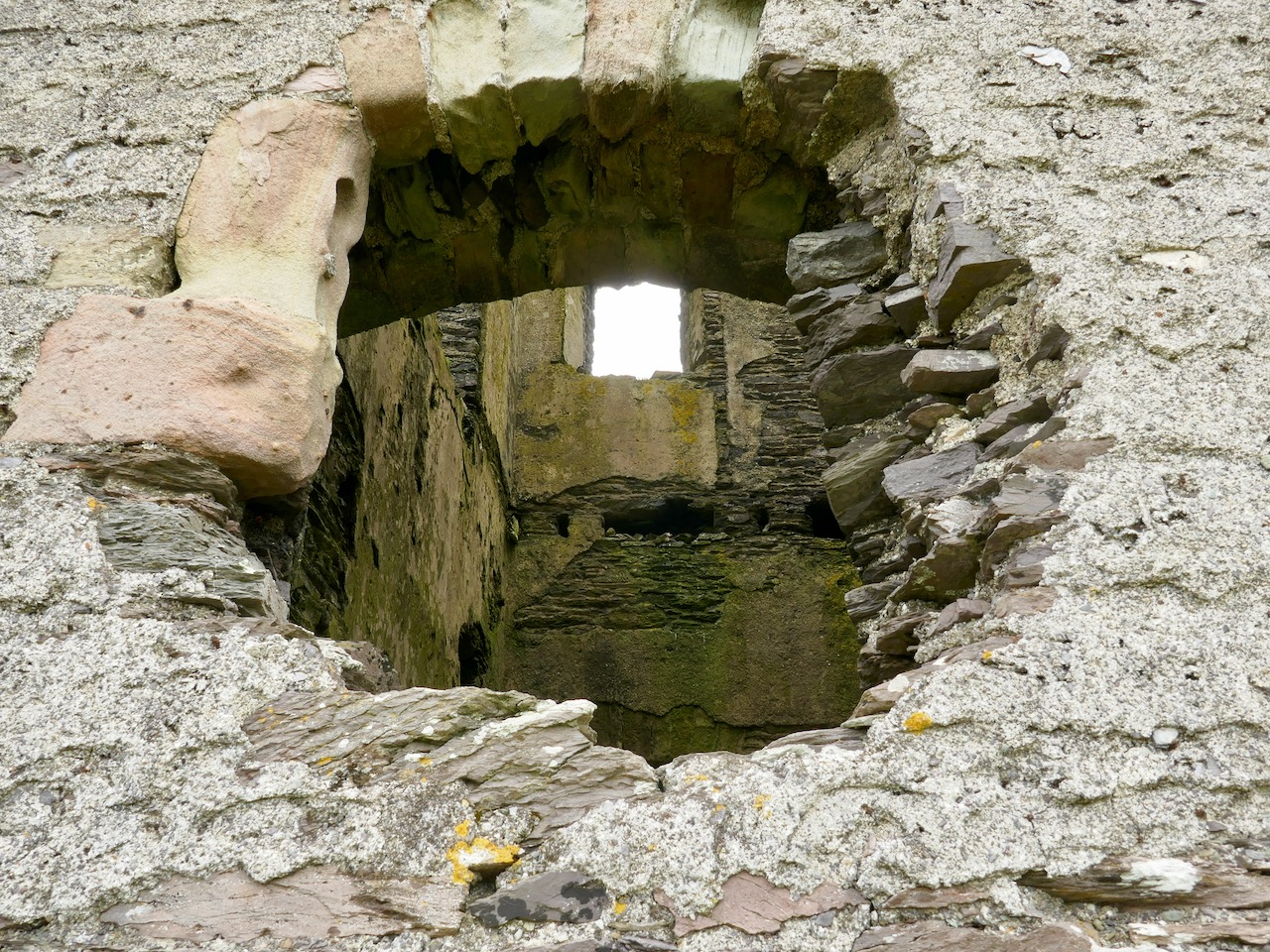
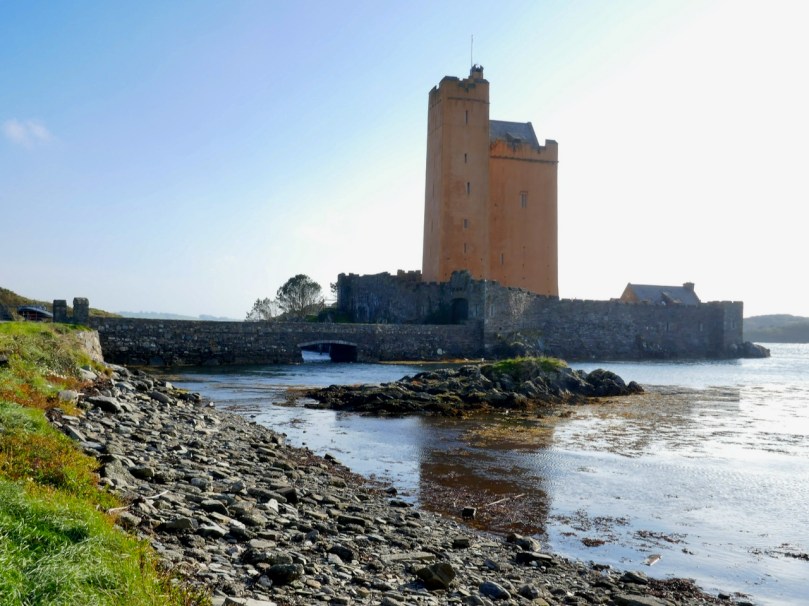
The south facing elevation of the Kedge Point signal tower clearly shows its defensive machicolation. On the left is the stump of the LOP (World War 2 lookout post). Below – the rubble of the destroyed LOP and some of the recognisable architectural features of this tower.

Next week I will report on a very different location, which we visited on a much better day – lots of sunlight, blue skies and West Cork magic to look forward to! This time our site will be at the westernmost tip of the Sheep’s Head Peninsula, and you will get a different sense of the relative orientation and intervisibility of these intriguing historic monuments.

Below – the signal tower at Toe Head, about ten kilometres to the east, seen from Kedge Point

The Stone Circles of West Cork: Discussion

The Stone Circles of West Cork form a distinct group within all types of Irish stone circles – the axial or recumbent pattern is its defining characteristic and completely consistent across the geographical spread and different circle sizes. I have described the circles in three posts now: a general Introduction, a post on the Multiple-Stone Circles, and a post on the Five-Stone Circles. If you have not already done so, you might like to refresh your memory by reading or re-reading those posts before carrying on with this one. My objective in this post is to address the question that everyone asks about these circles – When were they built? By whom? And most of all – WHY? I also want to share my own response to the experience of visiting and observing stone circles over many years.
Looking back at Uragh Stone Circle on the skyline

But perhaps this post should come with a trigger warning. Back away now if you want me to talk about mystic energies or ley lines. Stop reading if you believe in vibratory signatures or that a pendulum will reveal some hidden secret to a circle’s purpose. Run, if you think it’s appropriate to light a fire in a stone circle or leave an offering to an ancient goddess. You’ll find lots of other places on the internet to engage with you on those approaches but you won’t find them here. Still with me? All right, let’s get started.
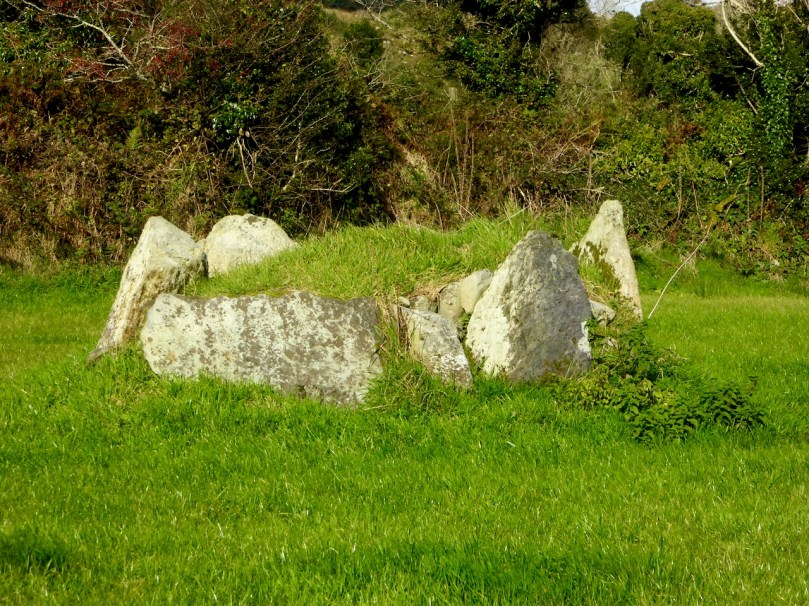
Not all stone circles look monumental – this one at Trawlebawn has been filled with field clearance, but all the features are still clearly visible

Let’s begin with the When? and By Whom? The idea of a circle as a way to create a dedicated space, of course, goes back to the earliest farming communities – John Waddell in his book The Prehistoric Archaeology of Ireland devotes a chapter to the arrival in Ireland of various traditions of monument building based on a circle, firstly earthen enclosures and on to the circular passage tombs of Brú na Bóinne and Loughcrew. New circular structures, some amazingly complex, have been discovered recently near Newgrange, thanks to dry summers and drone technology.
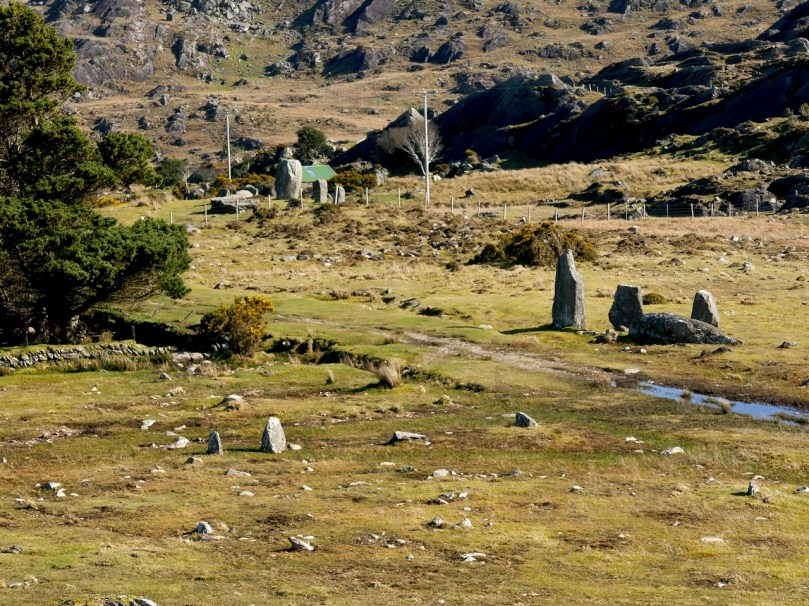
The Cashelkeelty Complex on the Beara – in this image you can see the remains of what was probably a Multiple-stone Circle on the right, while in the upper left is the Five-stone Circle and row of three Standing Stones

While the circles we are talking about – the axial circles of West Cork – share their basic shape with many of these earlier monuments they should be viewed as a unique and recognisable tradition of monument-building. Very few stone circles have been excavated, but those that have support a Mid- to Late-Bronze Age date, that is from about 1600BC to about 600BC.  It was a tradition that occupied a restricted geographic region (Cork and Kerry) and had their closest parallels to the similar stone circles of Scotland. In Scotland, few have been excavated but those that have been also support a Mid- to Late-Bronze Age date. Remember too that our stone circles are strongly associated with other monuments – boulder burials, standing stone outliers, stone pairs or rows. Where dates have been established, they place these monuments in the same era. Waddell sums up by saying These new monuments may be related to an expansion of settlement and an intensification of agriculture reflected in the pollen record and pre-bog field systems.
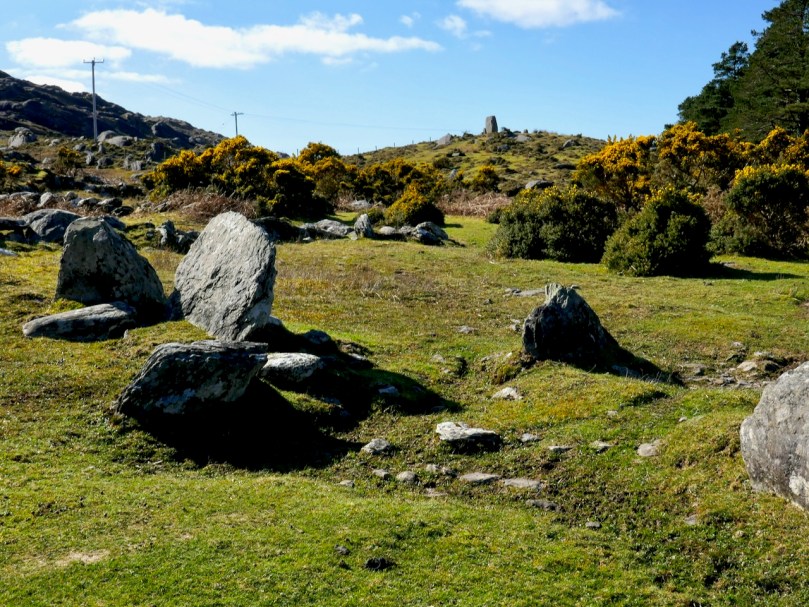
Cashelkeelty again, looking up towards the Five-stone Circle and stone row. In the foreground are the fence stones of an ancient field system. Waddell based his conclusion about agricultural expansion partly on the findings of excavations at this site 

And now to the Why? Archaeological theories fall into two broad categories – axial stone circles were built primarily for calendrical purposes and stone circles were built primarily as memorials or burial places. I emphasise primarily as it is likely that anything that takes this level of resources to construct would have been multi-functional. Our old friend Boyle Somerville was the pioneer of the calendrical approach – see Boyle Somerville, Ireland’s First Archaeoastronomer.
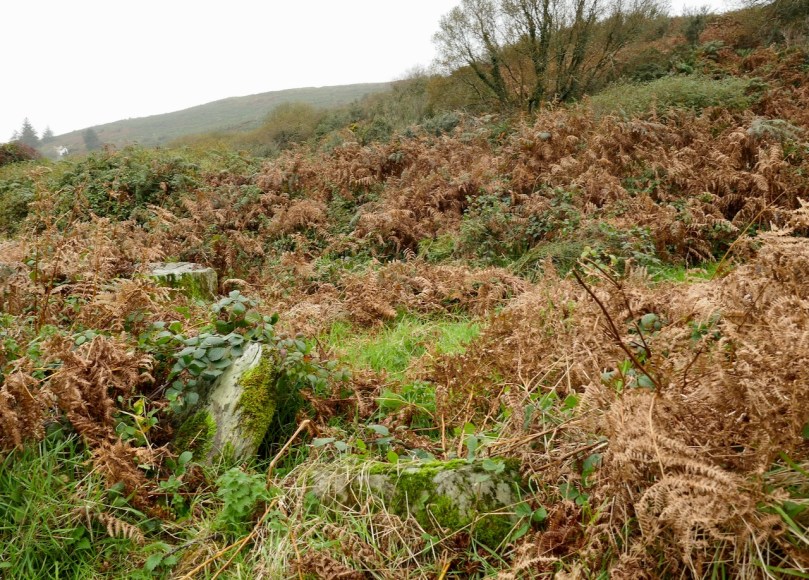
There’s a stone circle (large and sophisticated) under all that bracken!

There is no doubt that marking the turning of the year was of vital importance to an early farming culture. Two solstices, two equinoxes and the mid-way points between them, known as cross-quarter days, are the basis for many ancient calendars and festivals. Our own traditional festival days of Imbolc, Bealtaine, Lughnasa and Samhain correspond roughly to the cross-quarters and to the beginning of spring or the end of harvest. It makes sense to have some way to mark out those dates and building a stone circle to do so had the merit of being enduring in the landscape.
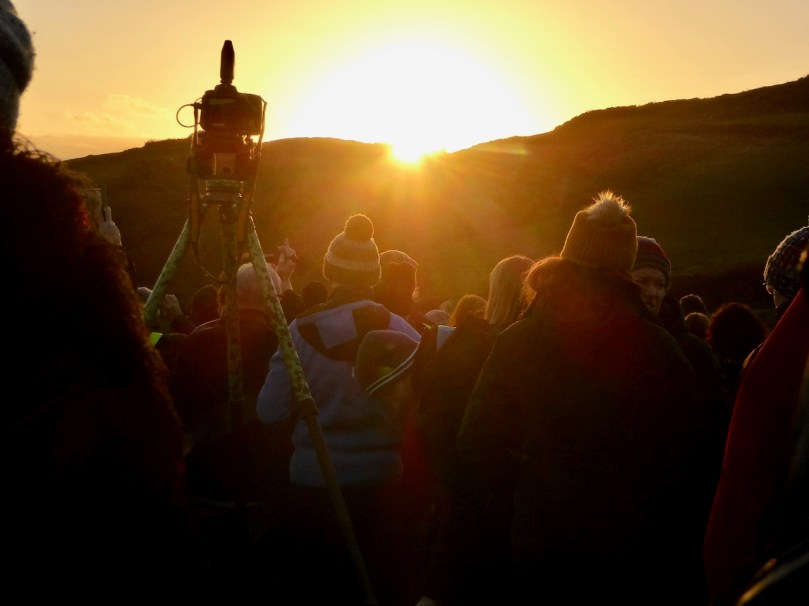
Each winter solstice people gather at Drombeg to watch the sun set over the recumbent – see our post, Drombeg Solstice Celebration for  more 

There is also the issue of the design of the circles – two portals across from a recumbent – a line has been observed and is being marked by the axis thus laid out. In West Cork, this axis line is NE (the portals) SW (the recumbent). However, there is a fairly broad spread on either side of the line so obviously it was not an immutable rule that the orientation was set to a certain point in the heavens but that it corresponded in a general way to that part of the sky in which both the sun and the moon rose and set – between the east for rising and the west for setting, moving across the southern sky.
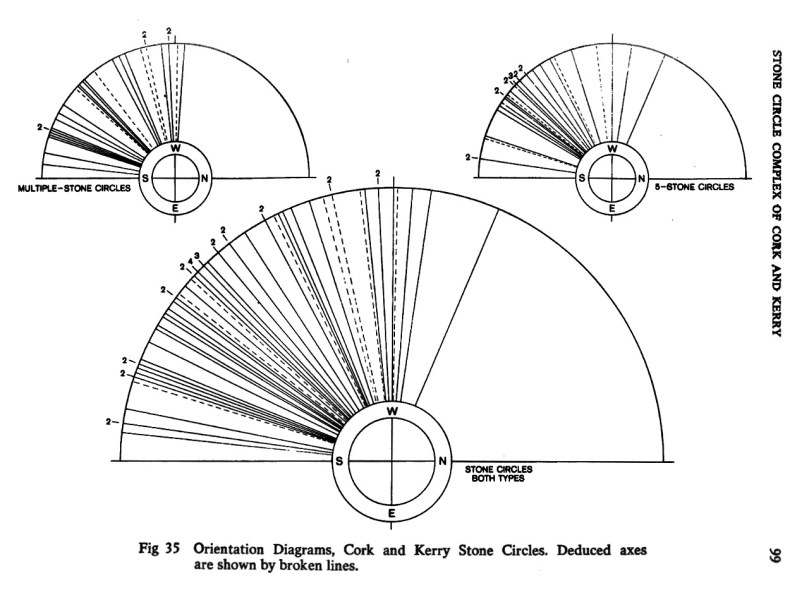
This diagram is from Seán Ó Nualláin, The Stone Circle Complex of Cork and Kerry, in the Journal of the Royal Society of Antiquarees of Ireland, Vol 105, 1975

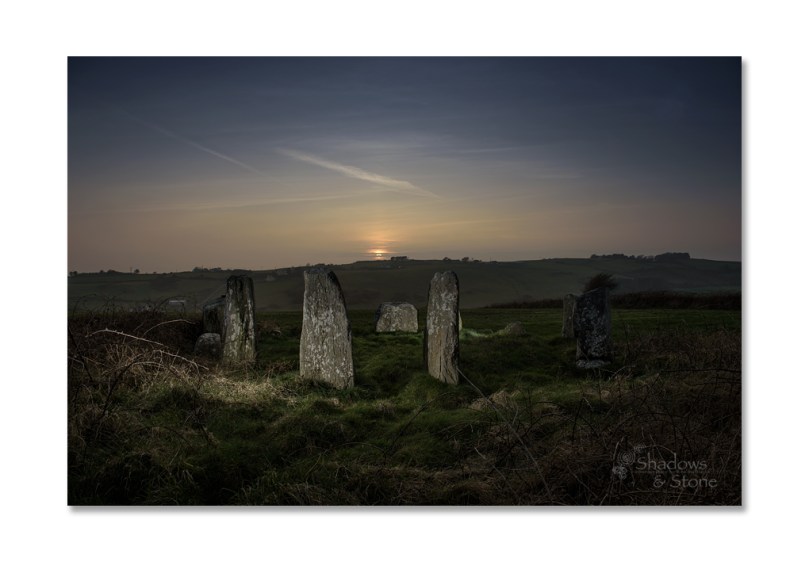
Within that general orientation, settings over the recumbent have been observed at many, although by no means all, the stone circles. The most well-known is Drombeg, where the sun sets over the recumbent at the winter solstice. We have observed an equinoctial orientation at Bohonagh with Ken Williams, Ireland’s foremost photographer of prehistoric subjects. That’s his photograph of that event below (used with permission). Lunar risings and settings have also been noted – see Mike Wilson’s observations at Drombeg, for example. The winter sky appears to be what is most important – perhaps understandably given the psychological effect of passing the darkest and coldest time of the year.
Other orientations have been posited – towards a sacred peak, for example, or to an upland area where people would move their cattle at a certain time of the year (known as transhumance, or as booleying in Ireland) or to stars of first magnitude. Terence Meaden has encouraged us to look at shadow-casting as a way of building an 8-month calendar and has made many accurate observations at stone circles to support his thesis. While there is no doubt that fertility must have been important to early farmers, Meaden somewhat undermines his own research by his insistence on interpreting everything as sexual symbolism, to the point of seeing penises and vulvas in the the stones and in invoking the concept of celestial marriage to explain ‘union by shadow’ between phallic and female orthostats.
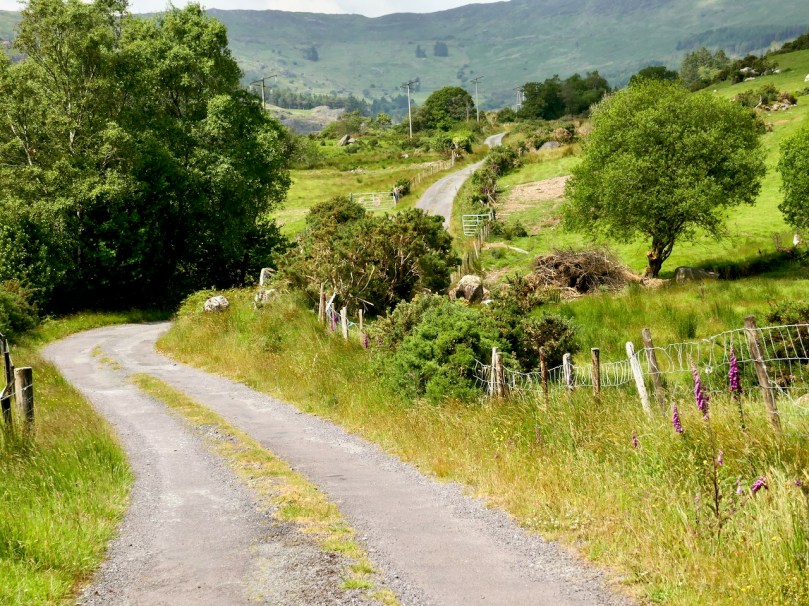
Some stone circles are more accessible than others – this one, at Derrynafinchin, is right by the road, which had to take a detour around it

Then there are the outliers – standing stones or stone rows that provide further and different orientations. Sometimes these are close by the circle, as at Uragh or Glanbrack (below) and sometimes at a distance, as at Dunbeacon. 
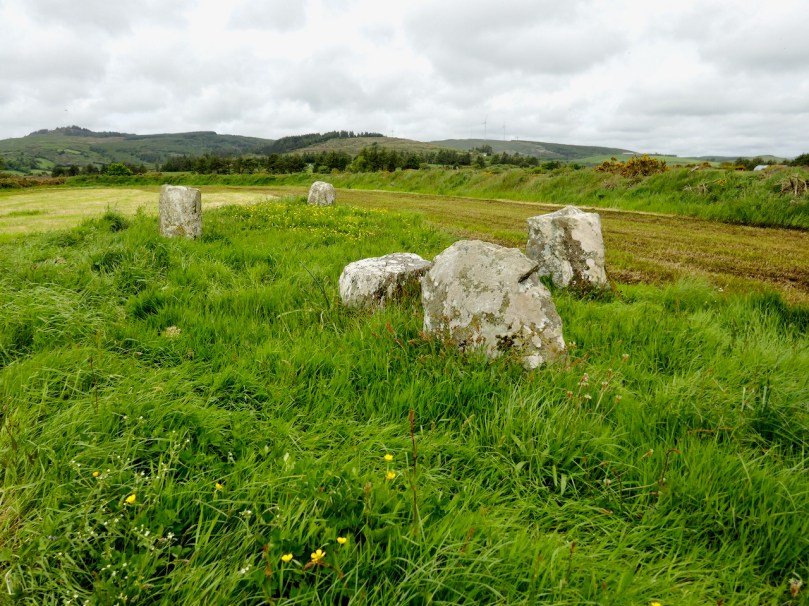
The late lamented Aubrey Burl, in his book Rings of Stone, reminds us that these are ceremonial spaces. Not keen on archaeoastronomy, he paid attention to the shape of the monument as creating a place for ritual, and especially for dancing, commonly done on special festival or feast days. Circle dancing is one of the oldest forms of dancing and innately human, providing contact between the dancers and capable of involving all, or specific (e.g. young women) members of the community. Multiple-stone Circles such as Cappanaboule (below) may have provided a platform for performances inside the circle, while dances at Five-stone Circles may have been outside the circle.
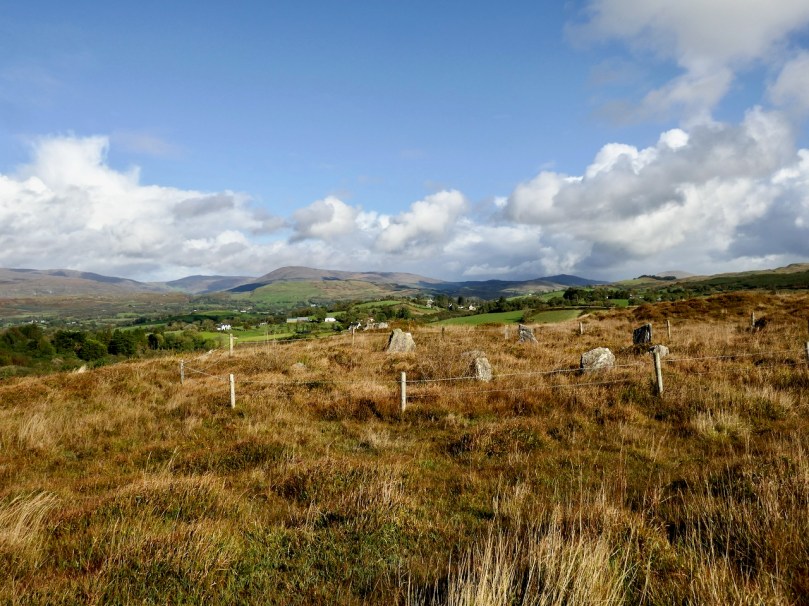
The second main theory revolves around the circle as a burial place. Once again, there is a paucity of excavation reports to rely on, but Fahy found cremated human bone at all three of his excavations, Drombeg, Bohonagh and Reanascreena, indicating that the primary purpose of the circle may have been sepulchral. Archaeologist also point to the strong association of stone circles with boulder burials. However, once again, there is actually little evidence of human remains at those boulder burials that have been excavated. Waddell, in fact prefers the more descriptive and less functional term boulder monuments for this reason.
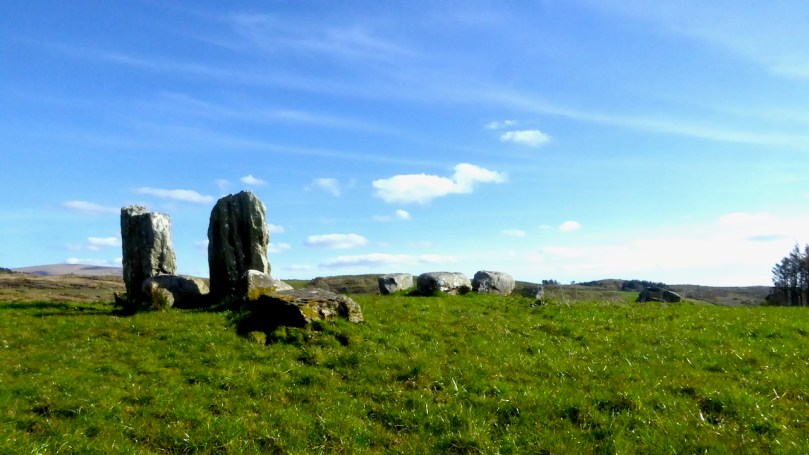
At Breeny More there are four Boulder Burials set within the remains of a Multiple-stone Circle

The question arises whether, if individuals were buried in any monument, it conclusively proves that that the primary purpose was to receive and honour the body of this person, who may have been a high-status member of the community. In support of this contention we can look at the pyramids – enormous monuments erected through the commandeering of community-wide resources as tombs for pharaohs. While it may have had other, secondary purposes, the main reason for building a pyramid was to memorialise the dead and to affirm a believe in the afterlife.
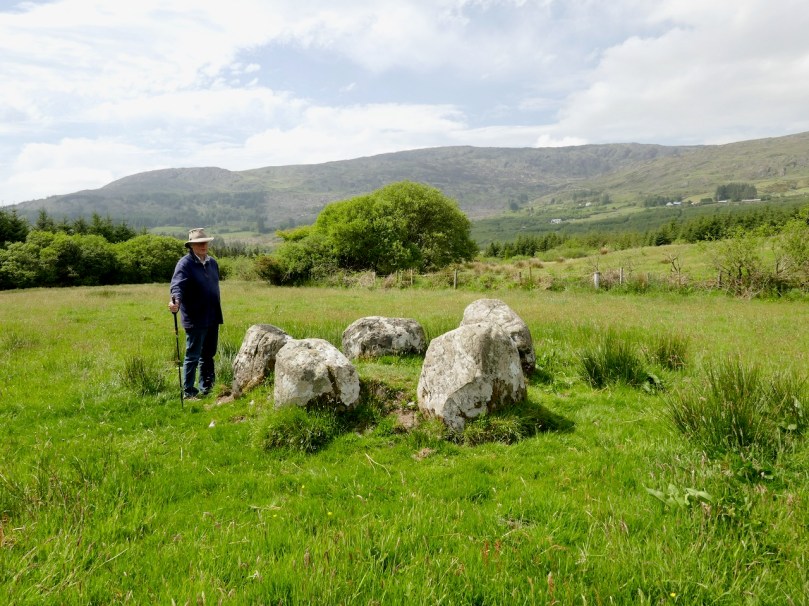
The perfect Five-stone Circle at Cappaboy Beg

Megalithic monuments in Ireland, even if they displayed certain orientations, such as Newgrange to the winter solstice, or wedge tombs to the autumn or winter setting sun, are regarded primarily as burial places. Should the primary purpose of stone circles, then, also be considered to be sepulchral. Or should we perhaps, think in terms of churches and cathedrals with crypts underneath them? To be buried in a crypt under a church (as opposed to outside in the graveyard) was the prerogative only of those who had the power and prestige to exercise that privilege: however it does not mean that the only or even main purpose of the church was as a memorial to those buried within its walls or under its floor. Where the remains were those of the founding saint the claim is stronger and the church’s role as a centre for pilgrimage may take precedence over its other liturgical functions. Likewise, although churches are traditionally oriented east-west, it does not follow that their primary purpose is to celebrate the sunrise.
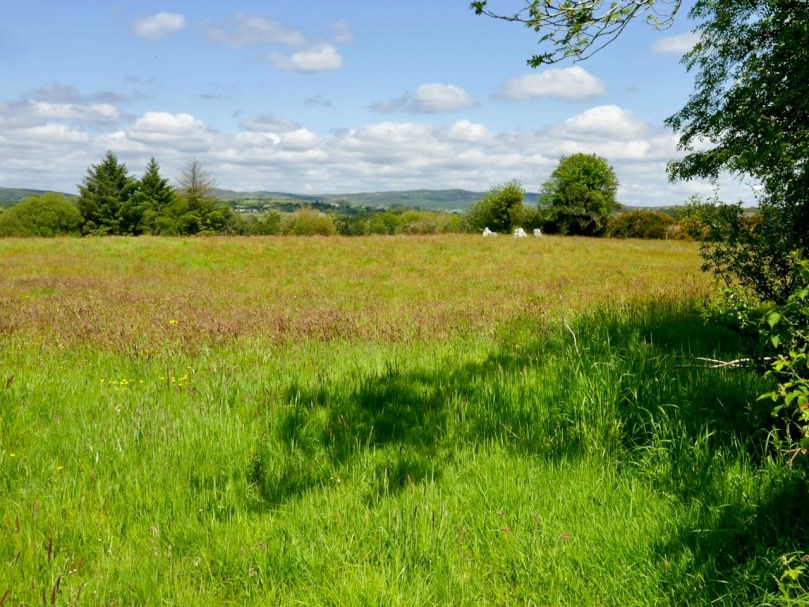
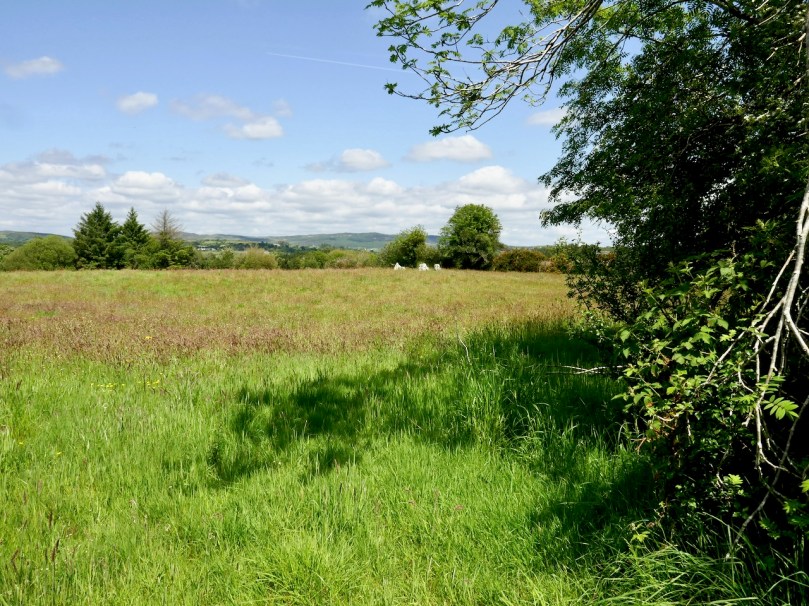
Whatever the ultimate answer, there is no doubt that for us in the present day, a visit to a stone circle is a very special experience. First of all, in West Cork, it is always an adventure, off the beaten track and in spectacular countryside. When you’re lucky, the circle will be right beside the road, or on the other side of a field of wildflowers, like the one above at Inchireagh. That happens once in a blue moon – normally we get to climb mountains, trudge through bogs, beat back gorse, get lost on tiny roads with nowhere to turn around and make friends with the local farmers who act as guardians of their monuments. Oh, yes, and face down cattle!
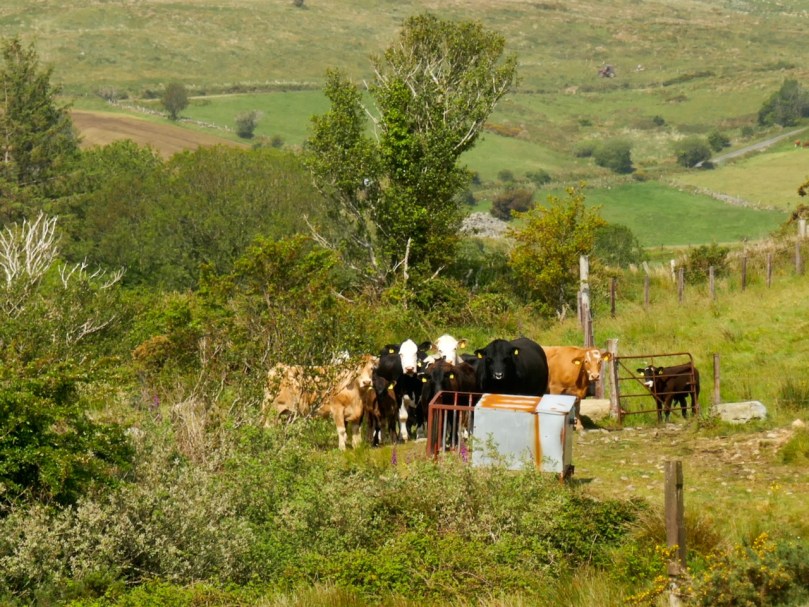
Can you see the ring in his nose? I had wandered by a field full of cattle in my quest for a particular stone circle, not noticing that the gate was open. On my return, I was confronted with this gigantic bull and his harem. I turned tail and fled, eventually finding my way back to the road by a circuitous route – scratched, drenched, exhausted, and badly in need of ice cream

Finally, and despite my insistence on logic and science, I have to admit that visiting a stone circle is a profoundly spiritual experience. By this I mean that it connects you somehow to all that went before and it raises all the deep existential questions about why our ancestors expended their precious resources to build these extravagant and arduous  structures. This sense of wonder has been marvellously expressed for me in a poem by one of our readers, Finbarr O’Driscoll* of Skibbereen. Originally published in the 70s, when I was doing my own research into rock art, including that at Drombeg, it resonated with me as soon as I saw it and I thank Finbarr for permission to reproduce it in full. It’s a fitting way to conclude this series.

DROMBEG

In an urn under
the stone the centre of
the stone circle
they found the ashes of
a child’s concise shape.

On the local limbo
of this wet hill I
of this congruent blood
cannot deny I
hold the godlessness was

good. Turning this thought
inside out again then
inside in unearths
no more. Again my heart
is as the urn then.
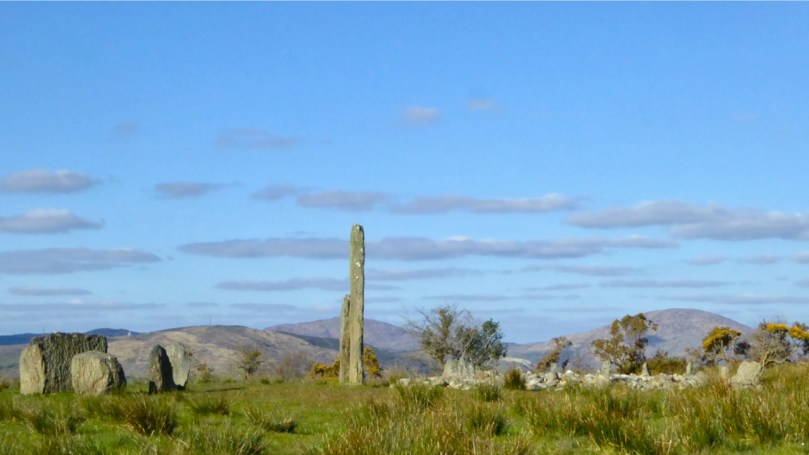
*Finbarr O’Driscoll sadly passed away last year. This post is dedicated to his memory.

Coomhola Country

As the Coomhola River tumbles from Borlin to the sea, gathering tributaries, it forms many pools amongst the riffles and glides. These pools, in summer, provide leafy shelters for salmon and trout. To anyone who has fished or walked the river, each pool has its own character, and each its own name . . .


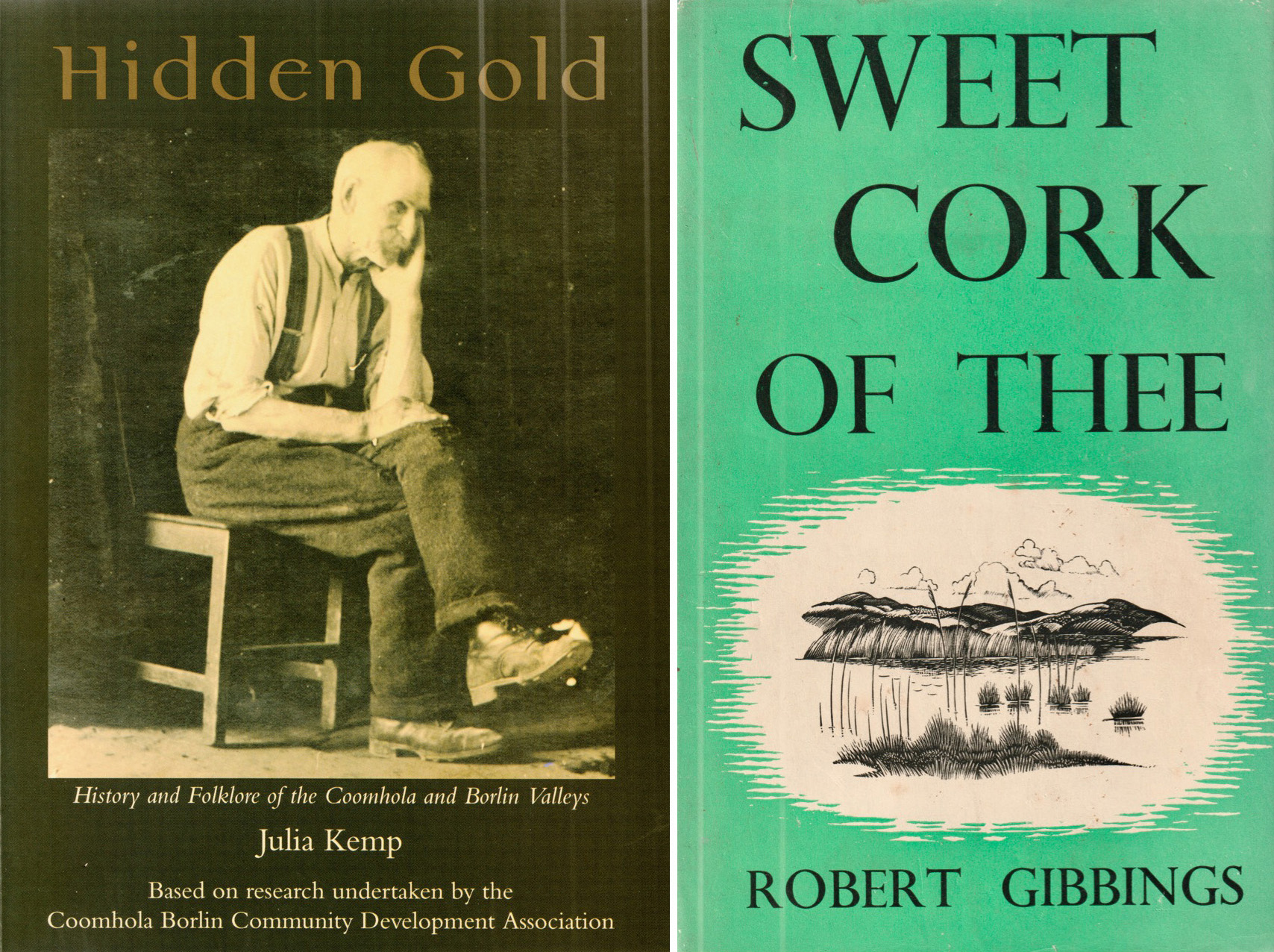
[From Hidden Gold, History and Folklore of the Coomhola and Borlin Valleys Julia Kemp: Coomhola Borlin Community Development Association 1998]

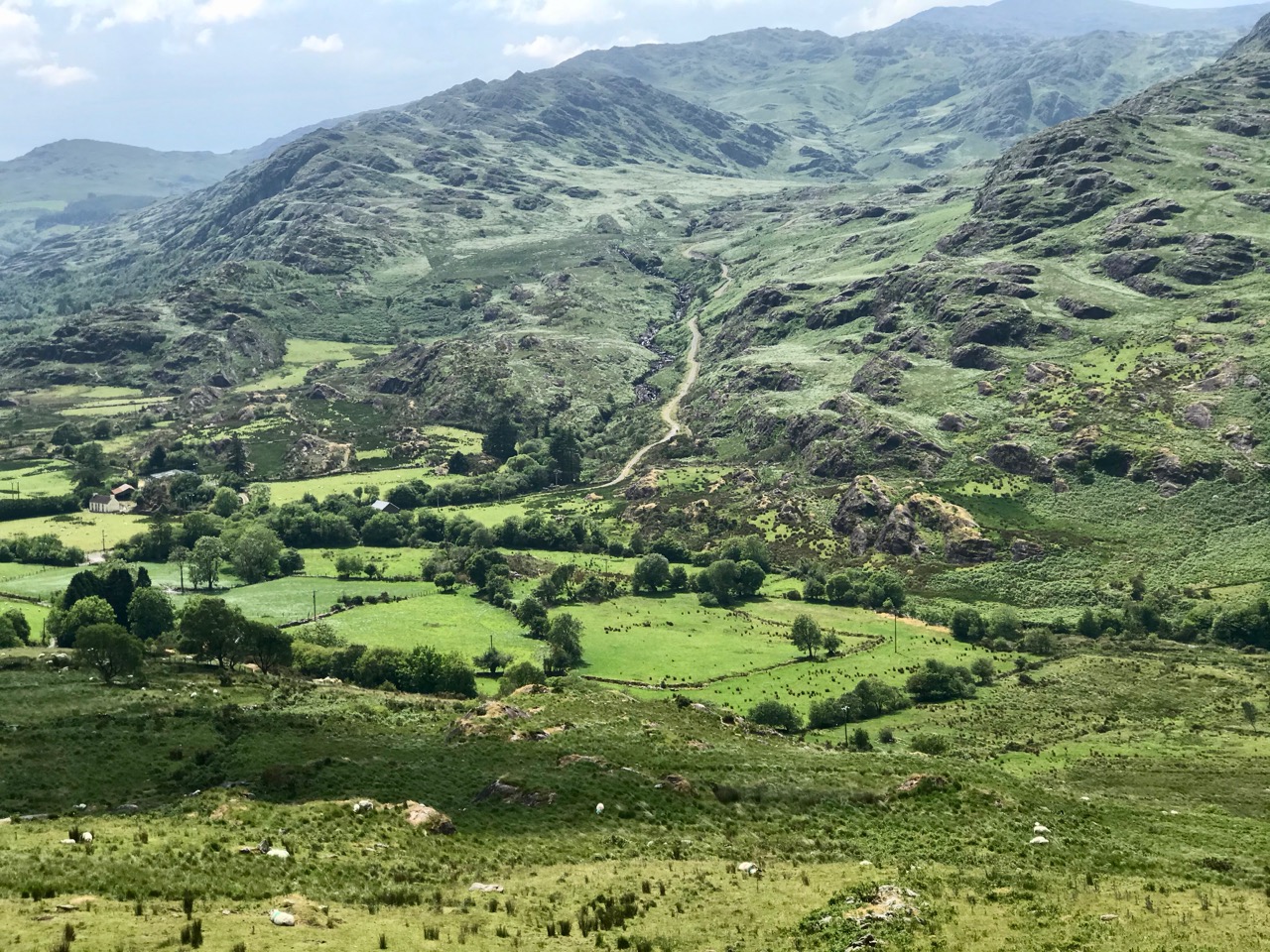
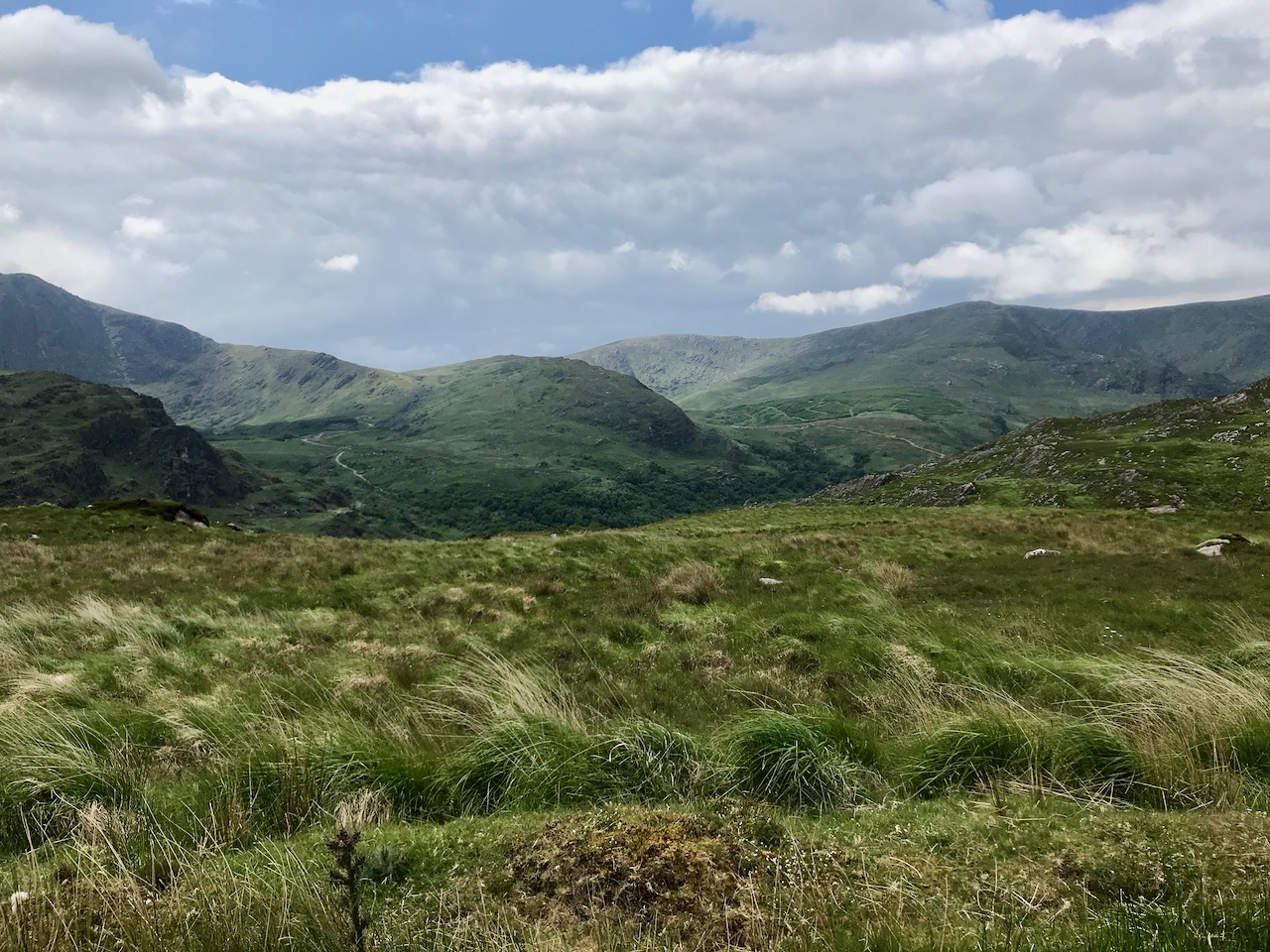
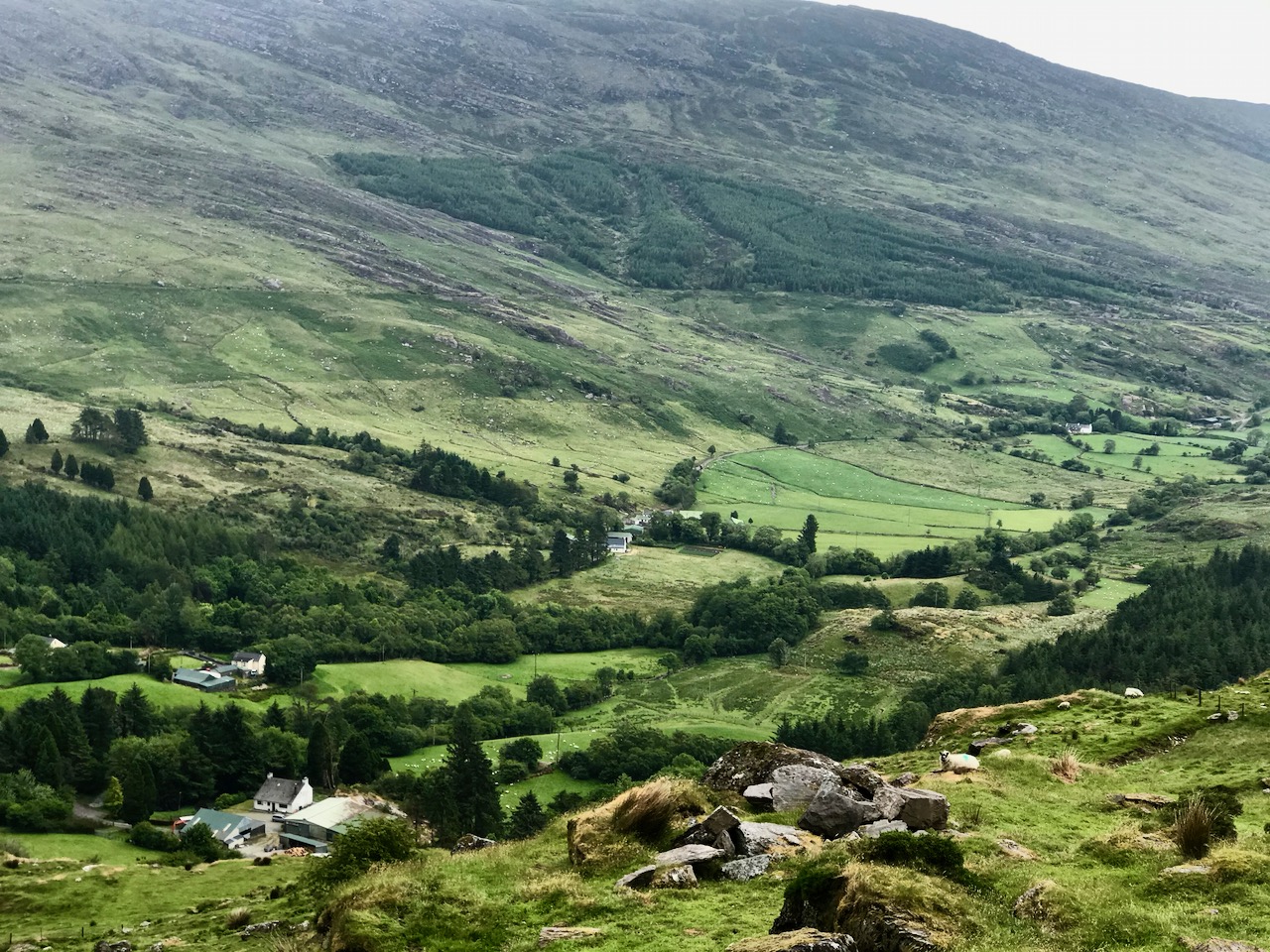
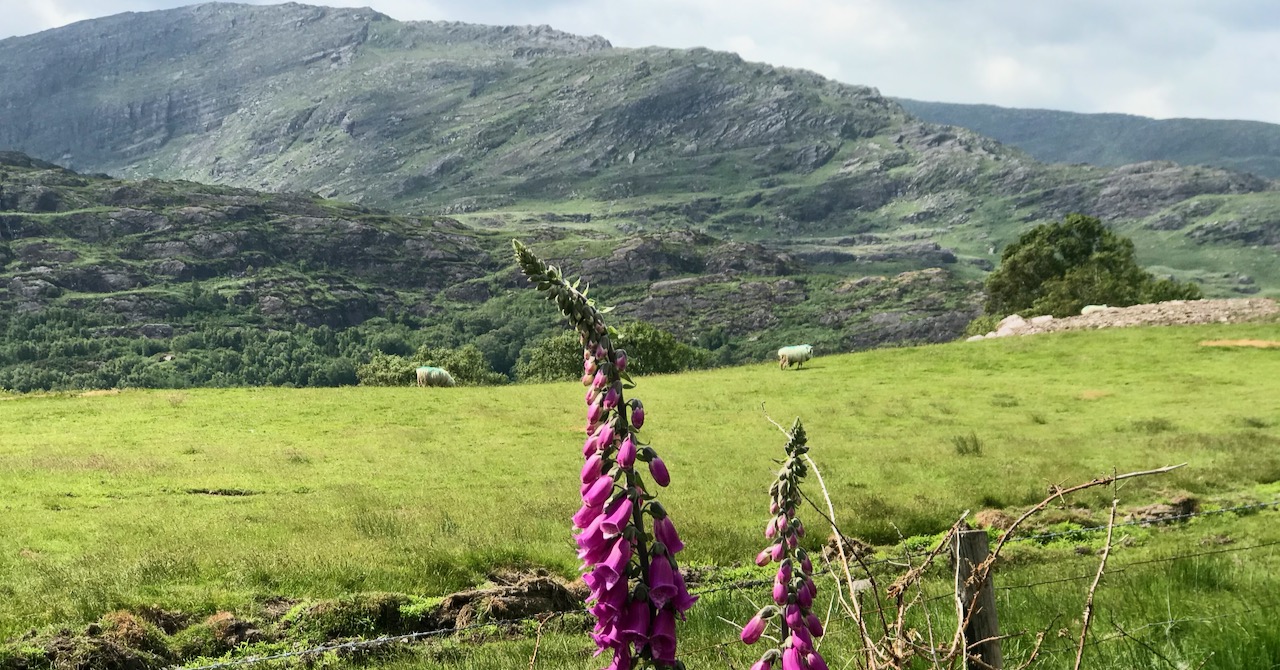
On the header is the spectacular view from Borlin, looking down the great glen where the Coomhola River finds its way through a country formed by glaciers in the Midlandian period, about 10,000 years ago. The rugged Shehy mountain range (Cnoic na Seithe in Irish, meaning Hills of the Animal Hides) with its peaks of Knockboy, Caoinkeen and Kinkeen provides some of the most dramatic scenery in West Cork, its scarred outcrops clearly showing the downward progress of the ice sheets. The contrast between the barren high land and the lush pastoral meadows laid out below evoke a beauty which is hard to match – anywhere in the world!

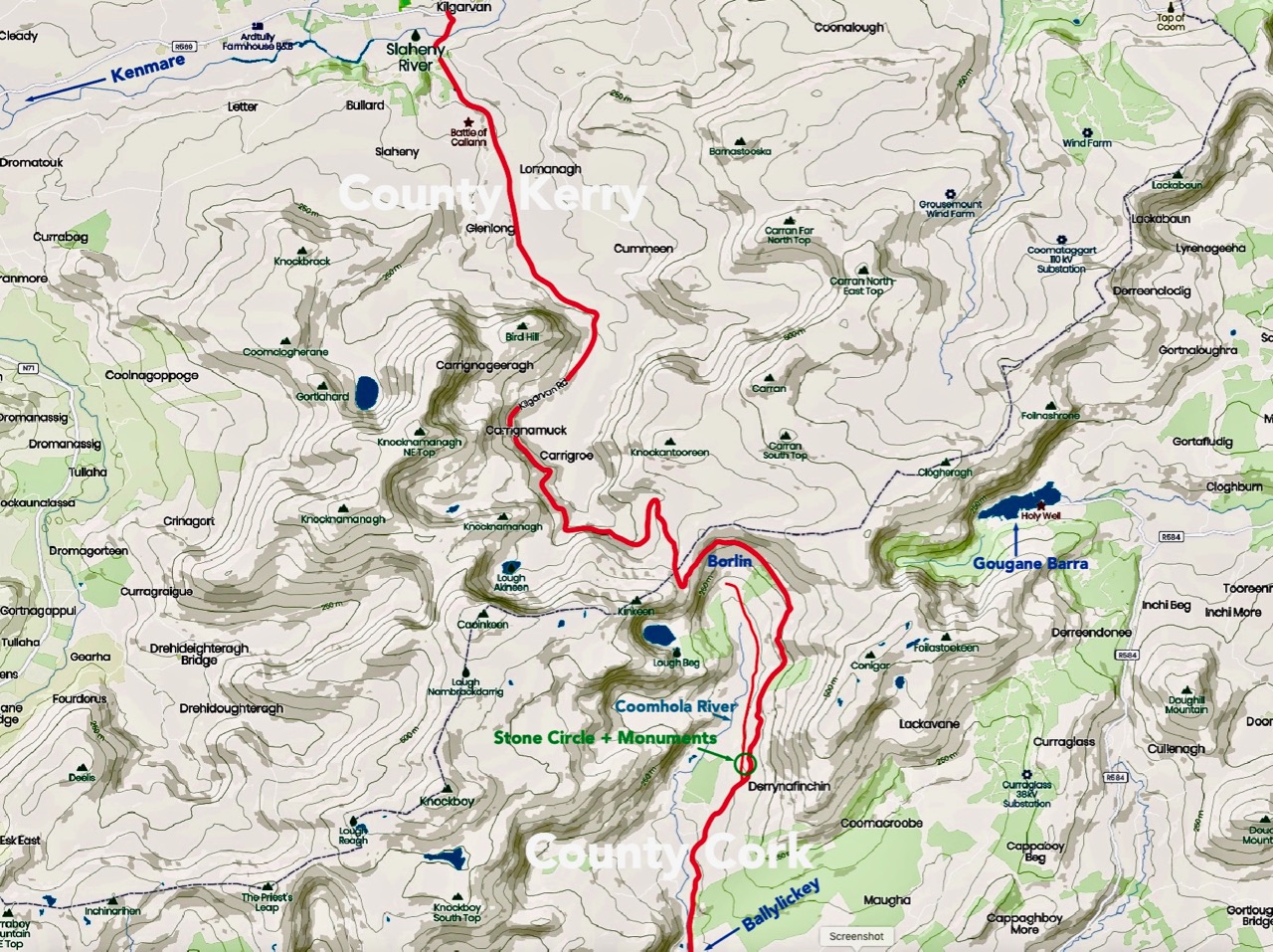
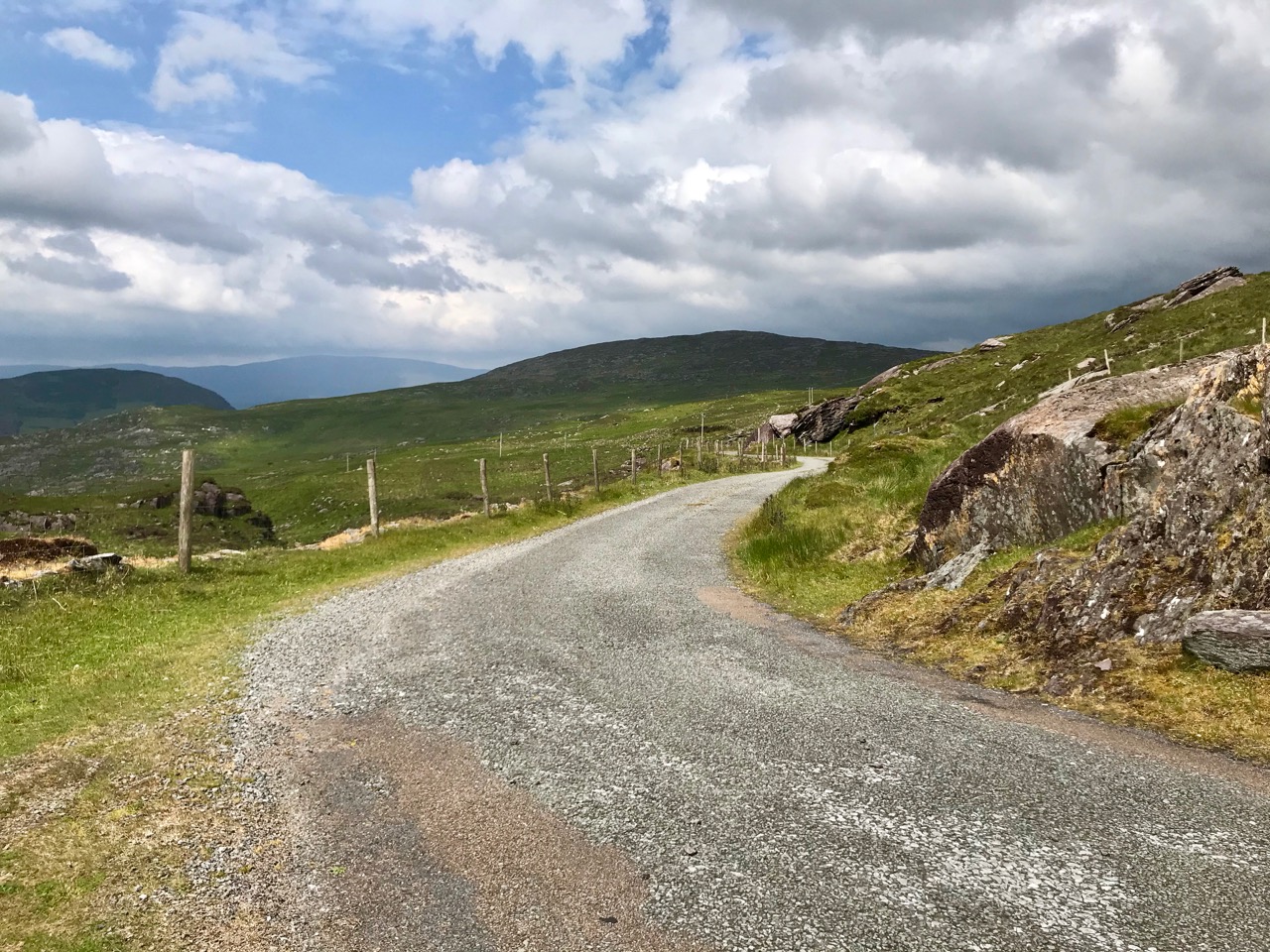
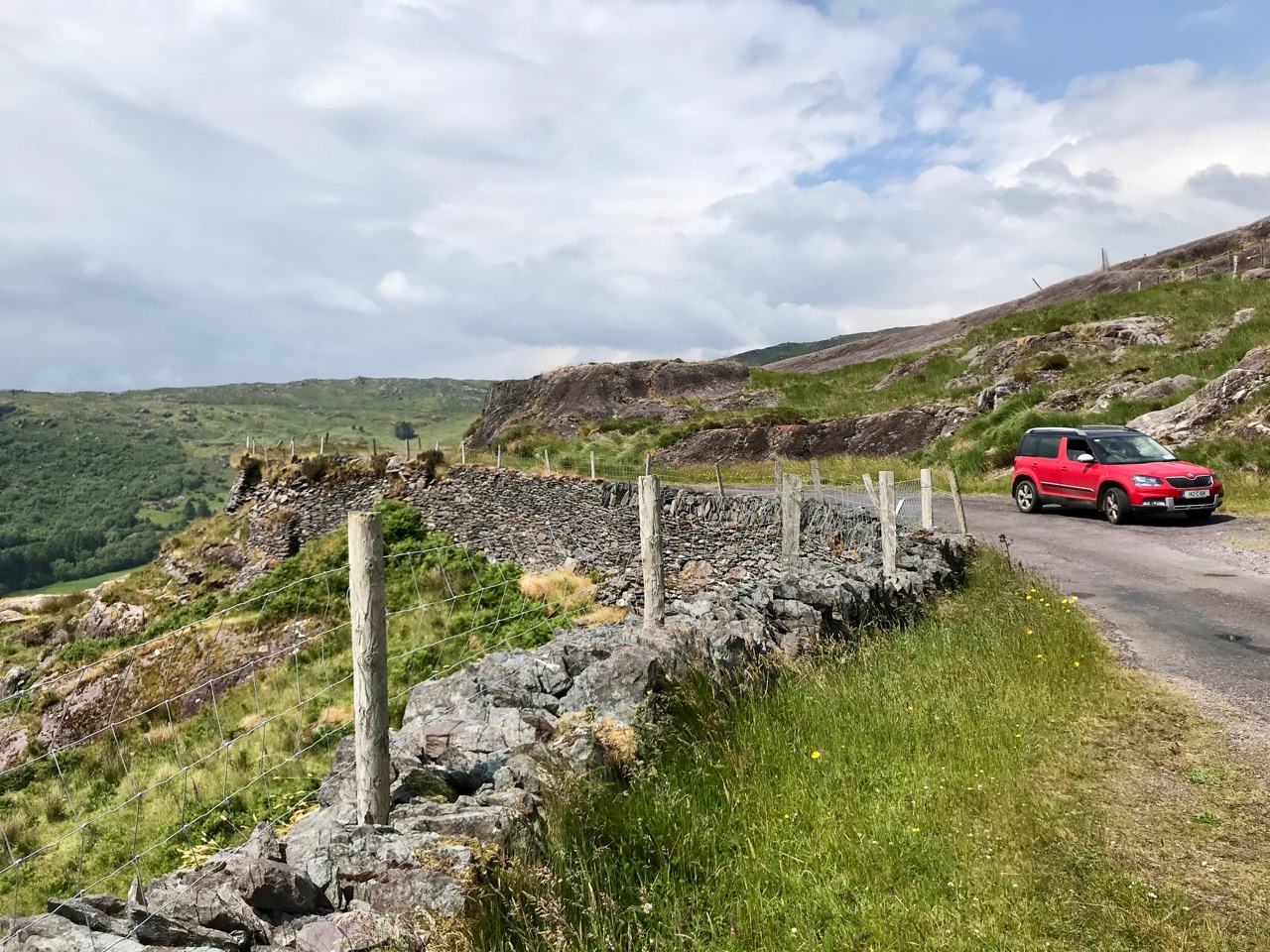
The Kilgarvan (Co Kerry) to Ballylickey (Co Cork) road is one of the unsung feats of Irish engineering. Until the middle of the nineteenth century it was no more than a system of ‘nearways’, providing rough, narrow access tracks to remote mountain dwellings and hard-won field systems. A famine improvement project c1846, involving metalling, a tunnel, cuttings and stone retaining walls, transformed it to the ‘through road’ which exists today – although it may seem to us no more than a boreen. It’s there for all to travel on, and will provide a breathtaking experience – but be aware that it could also deliver some hair-raising reversing episodes on the rare occasions when a vehicle is encountered coming the other way. The upper photo shows the road ‘clinging on’ to the face of a mountain outcrop, while the map gives a good idea of the circuitous route that the way takes to keep as far as possible to a level contour on its journey.

This is the country of St Finnbar. If you follow the County border east from the top of the Borlin Glen (off-road) you will very soon come to the site of his sixth century monastic settlement at Gougane Barra. This whole area was loved by the Cork born writer and illustrator Robert Gibbings, whose book Sweet Cork of Thee tells of a seven month sojourn in this mountainous region in 1949, beautifully illustrated by his woodcuts.

Mountain Road by Robert Gibbings, woodcut from Sweet Cork of Thee, published 1951

As we drove along the road beside the Inchigeelagh lakes, we could see moorhens gathering material for their nests among the taselled reeds and swans on islets, piling up dead rushes in readiness for their eggs. A corncrake was calling from a meadow. Celandines and kingcups outshone the gorse.


Mick said to me: ‘My father’s sister lived a mile to the north of us here. She married a man by the name of Scanlan. His mother came from Gougane and ’twas one evening when she was travelling west by the lake – there was no road there then, only a little bit of a track – she looked in the lake and what did she see but fields of corn and sheep and every sort of land and crop and stock. She was an old woman at the time and she knew well enough ’twas a kind of enchantment must be on the lake, so she says to herself, if I can keep an eye on it all and throw a bit of iron at it the spell will be broken. So she kept her eyes fixed on the fields and the cattle and the pigs and the hens, and all the time she was thinking where would she get a bit of iron. And the only bit she could think of was in the heel of her shoe. ‘Twould be worth it to throw in the shoe, says she. But when she went to unrip the lace wasn’t it tangled in a knot, and for the glint of a second she took her eye off the land. When she looked again ’twas all disappeared and the lake was there the same as ever.’


Our road turned south, through a wilderness of rock and bog and lilied pools . . .


[Robert Gibbings Sweet Cork of Thee, J M Dent & Sons 1951]

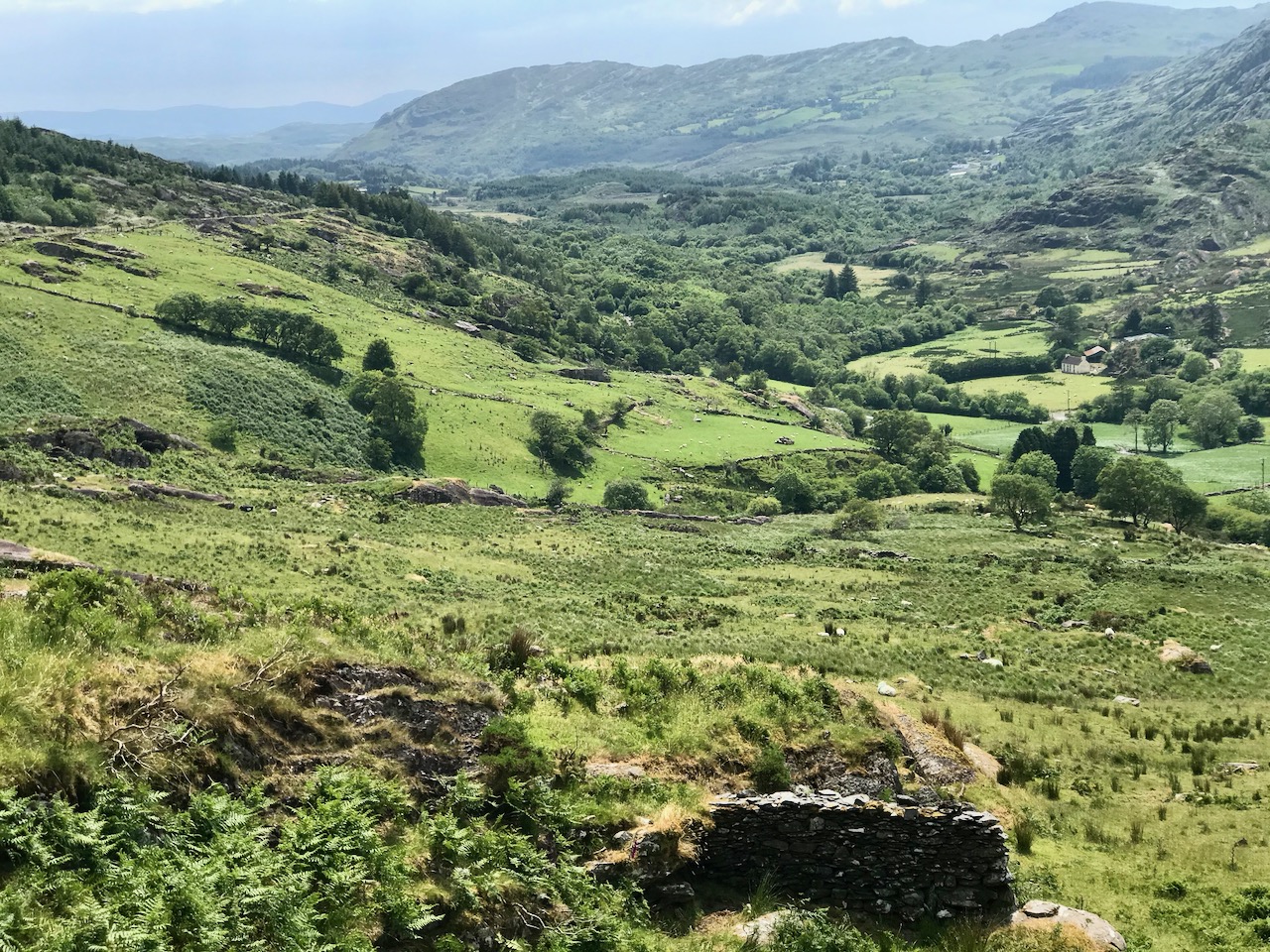
From the highest rim of Borlin Glen (upper picture), the Comhoola River valley is laid out below. Home to sheep and ravens, the scattered farmsteads emerge from rock and forest and provide a living – as they have for countless generations – to a hardy people.

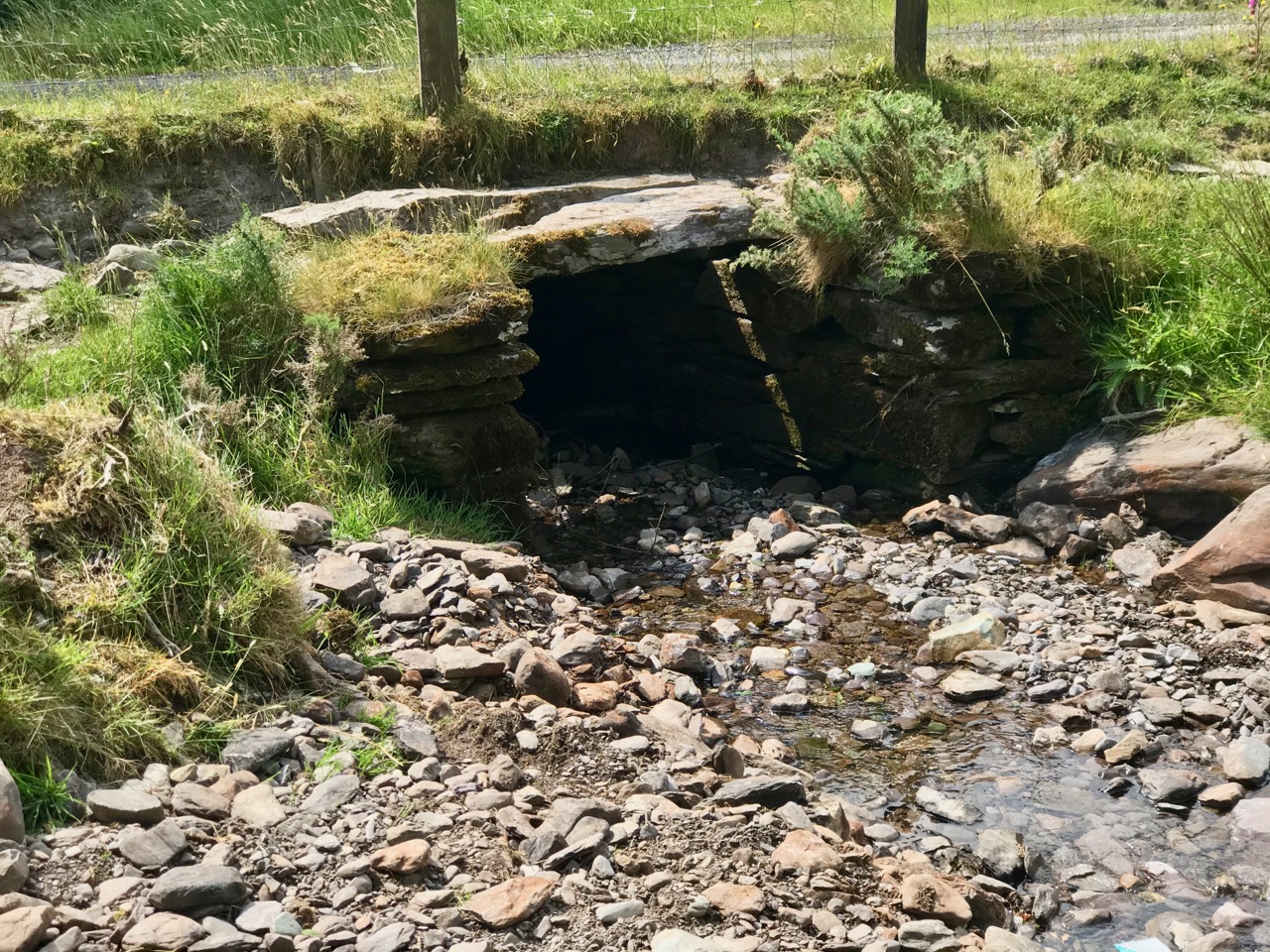
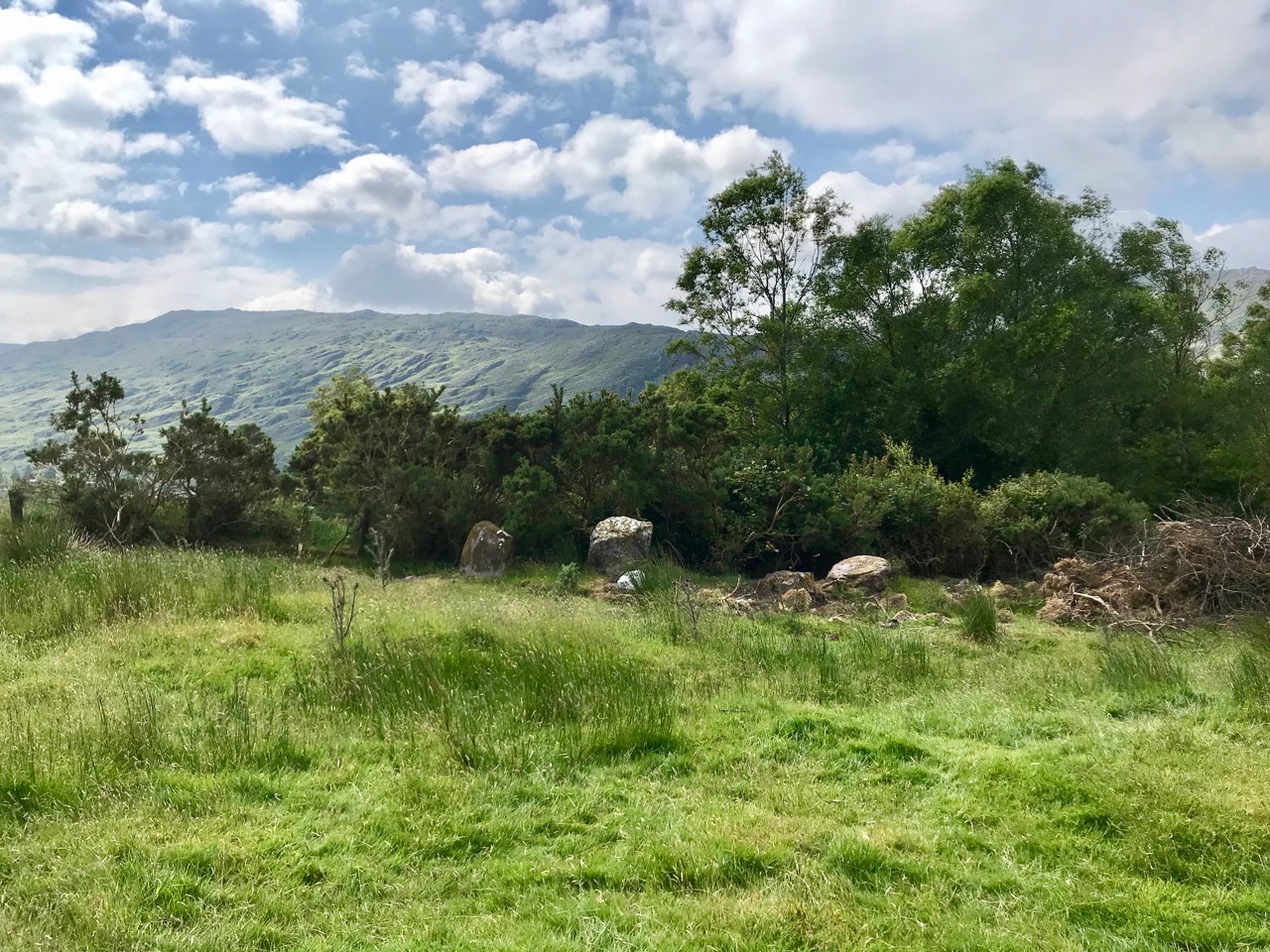
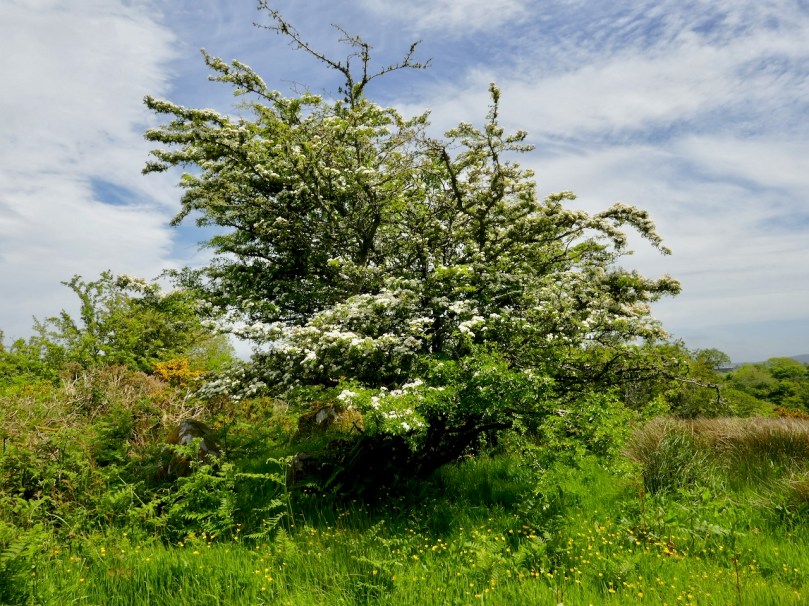
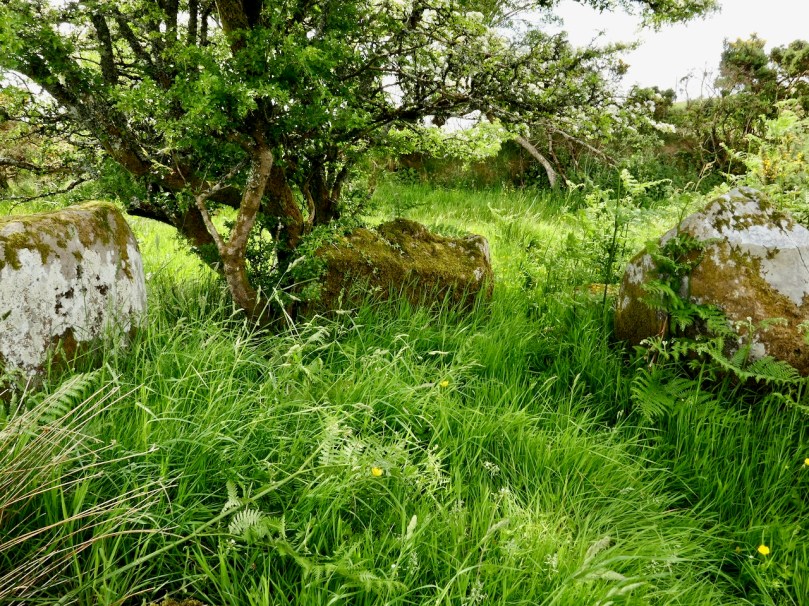
On the lush valley floor are signs of ancient activity and occupation. A stream flows through a meadow dotted with whitethorn trees (upper), while an old stone clapper bridge has been superseded by the modern boreen taking its way up to the Borlin Valley settlements (centre). Lower – a fascinating stone circle and mass rock site is interrupted by the field fence. Here, too, is a bullaun stone and cupmarked rock (below).
Let us give the last word to Johnny O’Driscoll from Snave, recorded by his grandson Sean O’Driscoll in the 1930s and featured in Julia Kemp’s Hidden Gold:

There is little gold in this area, but there is one place where it is said a crock of gold is buried. It is about a hundred yards from the Glaslough, between Coorycomade and Ardnatrush, about a mile and a half from Coomhola National School.


There is a bush growing at the exact location, and beneath the bush is a large stone which covers the hidden treasure. It belongs to a tiny dwarf, and anybody who visits the place at midnight can see this little creature on the bush above the gold.


People did go on one occasion in search of the gold, but they were unsuccessful. A little bright light is visible about midnight above the bush. I have seen it myself on several occasions . . .

The Stone Circles of West Cork: Five-Stone Circles

About half of the stone circles in the Cork-Kerry complex consist of only five stones, and constitute a sub-group know as Five-stone Circles. While they share many similarities with the Multiple-stone Circles, they are a unique class of monument. I’ve described the Multiples in detail here, so if you need to refresh your memory about that group, you can do it now and then come back and read on. While most of the photographs in this post are my own, I gratefully acknowledge the generosity of Ej Carr in allowing me to use two images (above and the last one in the post) of the Uragh Five-stone Circle and Standing Stone and of Peter Clarke for his drawing of the circle at Cashelkeelty (below).

Most strikingly, the Five-stone Circles follow the pattern of the larger ones in having two portal stones, usually the tallest orthostat of the circle, across from a recumbent, or axial stone which is usually the shortest. In describing them here, I am following the work of Seán Ó Núalláin, who surveyed and described all the Cork-Kerry Stone Circles in 1975. While his comprehensive paper is  45 years old, it is still the most complete work on the Stone Circles of Cork and Kerry (The Journal of the Royal Society of Antiquaries of Ireland, Vol. 105 (1975), pp. 83-131). 

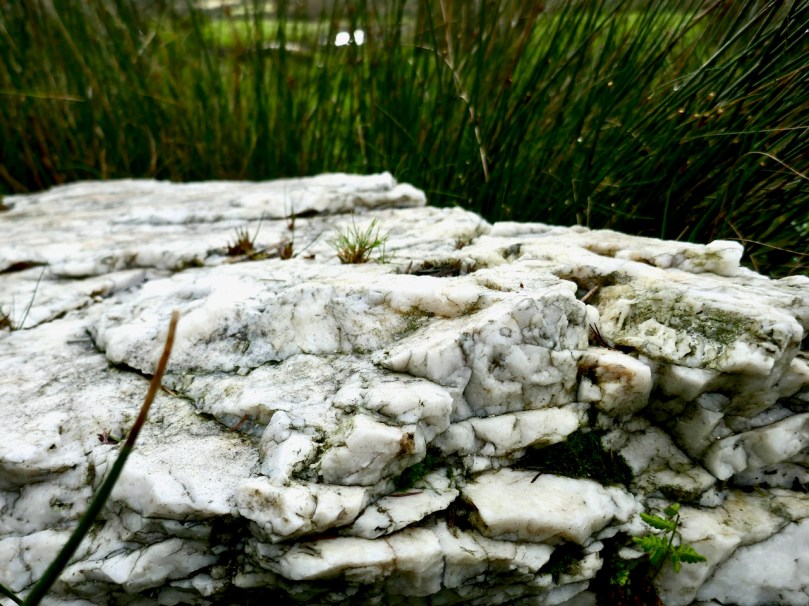
Lettergorman, with its large block of sparkling quartz

Most of the Five-stone Circles I have seen now are complete or almost complete, although some of the orthostats have fallen. They are actually in remarkably good condition – perhaps their small size has offered them some protection against the need to ‘improve’ farmland. some have been filled in with field stones but most are simply marooned in little islands of grass in the middle of a field, occasionally with a protective fence to keep cattle away.

Glanbrack, at the top of a small hill with views to all sides. This is one of the ones that Ó Núalláin thinks may have only ever had three stones. Note the two outliers

Two of the Five-stone Circles may in fact, according to Ó Núalláin, be actually Three-stone – it is assumed that both Cashelkeelty and Glanbrack had two more stones originally, but he muses that a setting of three stones could be seen as representing the ultimate degeneration of the “circle” concept.

This is Clodagh Five-stone Circle, also with two outliers immediately outside the circle. There is another standing stone pair nearby

Neither are they truly circular – in fact they are mostly D-shaped, with the axial stone being the straight edge of the D. This is a function of their size – the axial stone, with its straight edge, represents a much bigger proportion of the circle that it would in a large Multiple-stone Circle, but it also brings up the issue of whether the circle shape is truly essential to the functions of this type of monument.

Hard to make out exactly what’s what at Inchybegga Five-stone Circle, since the stones are small and the circle is disturbed and filled with field stones

The axis of the Five-stone Circles, that is, the direction of a line drawn between the portal stones across the recumbent, is generally NE/SW. This orientation is not exact, but most fall within a few degrees of it. Ó Núalláin agrees with Aubrey Burl in his analysis of the Scottish circles (and our own observations at the circles confirm this) when he says

Thus the circles are so aligned that the entrances face the side of the heavens on which the sun rises and the axial stones face the setting sun. The broad splay present, 107 degrees, suggests that a general alignment on the side of the heavens on which the sun rises or sets was what was required, and that precise alignments on specific celestial events were not in question. It is worth noting however that the axial stones tend to group in a sector indicating a winter rather than a summer position.


This intriguing site is Derryarkane Five-stone Circle. It is dominated by a Whitethorn Tree, traditionally never cut or interfered with. Under the tree the circle is complete although one of the portals has fallen. Robert is standing at an outlier about 35 metres away

As with the Multiple-stone Circles, there are peripheral monuments associated with Five-stone Circles – standing stones, stone pairs, stone alignments, quartz blocks, radial cairns, and in once case (Mill Little) boulder burials. None of these are inside the circle so are referred to as outliers.

One of the most complex of the Five-stone Circle sites is Kealkill (above), which includes two large standing stones (one of them is truly enormous) and a radial stone cairn.

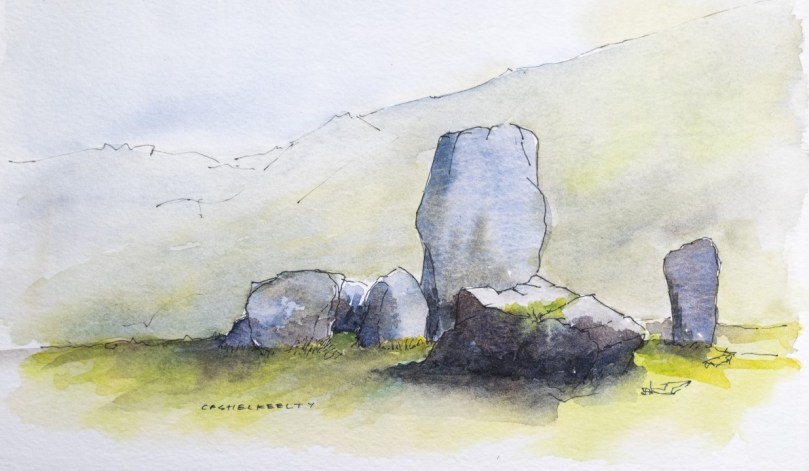
Another complicated site is Cashelkeelty. Here (above) we see the Five-Stone Circle (although it may be the second of Ó Núalláin’s Three-stone Circles), a row of three stones to the left, and in the distance orthostats of what may have been a Multiple-stone Circle

There are two Five-stone Circles in the townland of Baurgorm. This one (above), the more northerly of the the two, has two outliers but only one is visible in this photo as the other has fallen. There are two other standing stone recorded nearby but we could not find them. The portal stones are unusually far apart in this circle.

This is the second of the Baurgorm circles and from it are visible this group of stones – a standing stone row (three stones of which only two are visible from where we were and of which one of the stones is split) and a single standing stone.

This is the Mill Little Complex which comprises a Five-stone Circle (visible to the right of and behind Simon Tuite of Monumental Ireland), a standing stone pair (foreground, with field stones around them) and three Boulder Burials. While there are many example of Multiple-stone Circles in association with Boulder Burials, it’s unusual to see them alongside the Five-stone Circles.

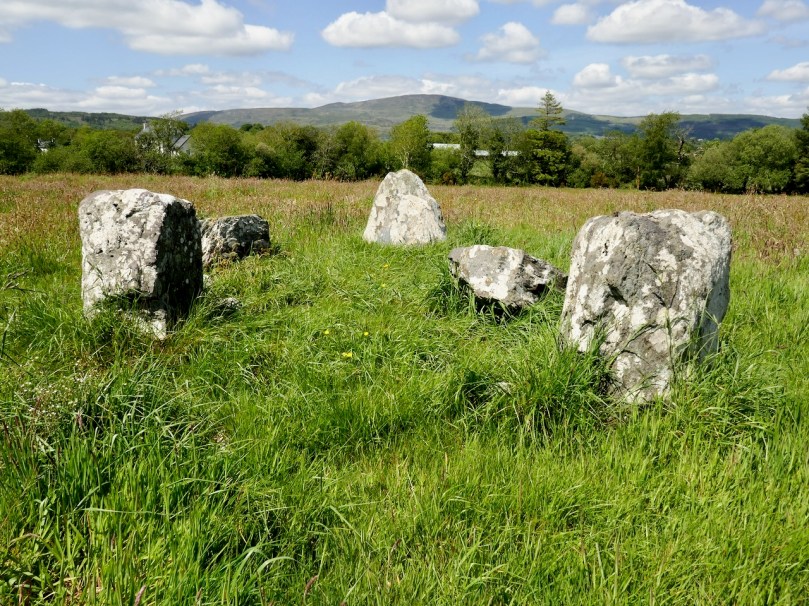
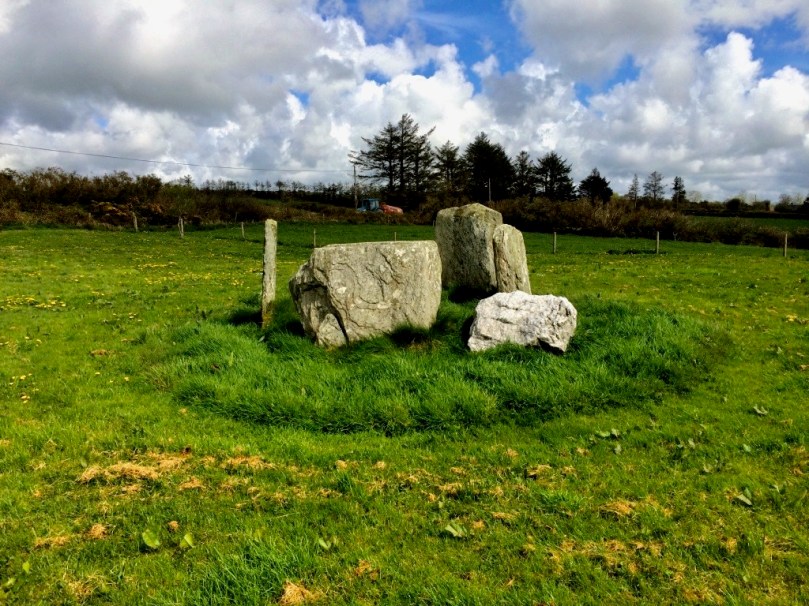
Ó Núalláin finds the morphology (size and shape) of the stones unremarkable, apart from noting that the stones in individual monuments are roughly similar in size and shape. However, there is a little more to say about it than that. While the recumbent is invariably flat-topped, the flanking stones can vary from a gently rounded curve, to a slant, to what looks like a deliberately shaped angular peak. Have they been chosen, or shaped, with some purpose in mind? Two examples (above and below) are shown here where the right flanking stone (to the right of the recumbent) appears to have been chosen for its pointed shape. The first is Cappaboy Beg, the smallest of the Five-stone Circles and the second is Inchireagh.

Even though the recumbent is usually the lowest stone in the circle, it’s not always the case. At Kealkill (below), for example, the recumbent is easily the largest and most dominant of the five stones.

We cannot rely on archaeological evidence to reveal more about the nature and purpose of the Five-stone Circles. Only one has been scientifically excavated – the one that is part of the Kealkill complex. No burials or deposits were found. A one-day dig in the 1930’s at another site, Knocknakilla, revealed a sort of flat-stoned pavement in the interior, with lots of quartz fragments. Obviously this will be a fertile field for some future researcher.

Glanbrack (above) has cupmarks on the top surface of the recumbent. Our second photograph, taken from the further of the two outliers, reminded us that on the day we visited the field had been half-spread with slurry (we held our noses). While we were engrossed in our photographing and observing, we suddenly became aware that the tractor had arrived at the gate (can you see it?) to do the second half. We hot-footed it out of there!

One thing we have noticed from our visits is that the Five-stone circles are differently situated from the Multiple-stone circles. Whereas Multiple-stone Circles are often on a bench on a hillside, with wide views in one direction and rising ground in the other directions (Drombeg is typical), Five-stone circles are often on flat ground in a valley or at the top of slight eminences (like Cullomane, above, and Cappaboy Beg and Inchireagh below) but usually with panoramic views all around. While we have noted this casually, we would need to go back and check these observations more carefully before being too categorical about them.

In my next post in this series I will get started on the Discussion – what conclusions can be drawn about the nature and purpose of Stone Circles? What do we know about who built them and why? And once again, thank you to Ej Carr for this superb shot of Uragh.


Kilcoe Castle – A Magnificent Reconstruction

Kilcoe Castle has been wonderfully restored and conserved by Jeremy Irons. His work allows us to see what a 15th century castle would have looked like in the landscape and has saved a precious piece of our heritage. This is important as there are so few castles that have been conserved here and lots that have disappeared or are in danger of doing so. Before you read on you might like to refresh your understanding of our West Cork castles, or Tower Houses, by reading When is a Castle?; Tower House Tutorial, Part 1; Tower House Tutorial, Part 2; or Illustrating the Tower House: A Guest Blog (sort of)

First of all, let’s address the issue of the colour of the exterior lime render, since this has been controversial. In fact, the only reason it’s been criticised is that people are not used to seeing castles as they originally stood, since the lime render has long ago disappeared from them, leaving the familiar bare stone walls that people have assumed was how they looked from the start. But all castles were rendered – without that they would have been porous and running with water inside and out.

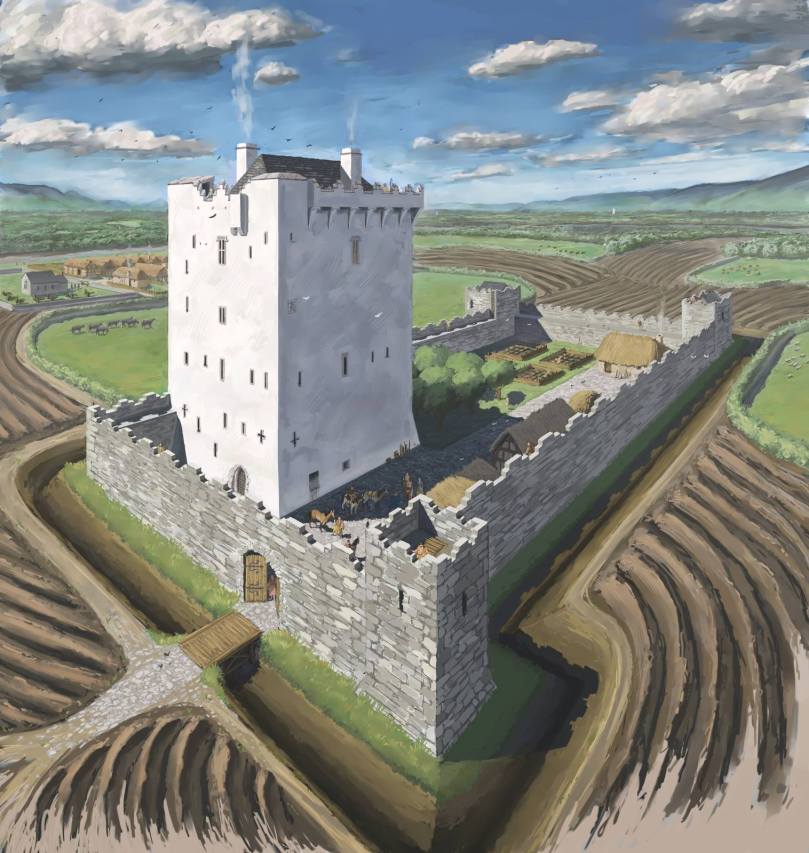
This is JG O’Donoghue’s reconstruction drawing (used with permission) of what a fifteenth century tower house would have looked like. It was based on Kilcrea Castle. Note the white render and note also that another white castle can be seen in the distance

And the render was coloured! There is evidence of all kinds of additions that would have added colour, including animal fats, blood and hair, flour, shell, sand and stone rubble. The plasterer had his formula and also used what was available locally, materials that would increase cohesion and improve drying time. Irish places names abound in references to coloured castles – just Google the words “castle Ireland” and then put white, black, red, green in front of it and see how many there are. Or look for Irish equivalents, such as Castlederg – for Caisleán Dearg, meaning Red Castle. There’s even a Castleboy in Meath that comes from Caisleán Buí, meaning yellow castle. So the choice of colour was not idiosyncratic or random but well grounded in historical precedents. The render was essential to keep the castle dry and will have to be renewed occasionally as it does eventually wash away – which is why very few examples have survived from the fifteenth century.

The other reason to include colouring elements in the render was to make the castle stand out in the landscape. These were statement residences and the statement was one of power and prestige. They were meant to be seen from a long way off so that nobody could be in any doubt who was the most important person in the neighbourhood. In West Cork, they were also meant to be seen from other castles – those built either by members of the same or another family (the McCarthys, O’Mahonys, O’Driscolls, O’Sullivans or O’Donovans). Kilcoe was a McCarthy castle: the McCarthys were the overlords of all the West Cork clans and this castle was inserted right into the middle of territory controlled by the O’Mahony’s and the O’Driscolls as a constant reminder of the hierarchy. Accordingly, Kilcoe is the largest castle in Roaringwater Bay and has a unique design that incorporates an additional corner tower, distinguishing it from all the other castes around it. There is only one other West Cork castle of the same design – Dunmanus Castle on Dunmanus Bay, a castle of the O’Mahonys.

It was also important that castles could be seen from the water, because control of the fisheries was what gave the great West Cork families their vast wealth. Salted herring and pilchards were staples of the European diet in the Middle Ages because there were so many fasting days on which eating of meat was forbidden and because fresh food wasn’t always readily available in the winter. The O’Mahonys and O’Driscolls catered to the huge fleets of Spanish, French, Portuguese and British fishing boats that plied the waters of Roaringwater Bay, providing, for hefty fees, permission to fish in ‘their’ waters, fish processing facilities and salt in several ‘fish palaces’ along the shore, fresh water, and taverns with fine wines and (sorry) accommodating women. The McCarthy’s must have been involved in this lucrative trade too, but it is also likely that their objective in building Kilcoe was to keep an eye on the the ‘take’ so that they could extract, as befitted those at the top of the food chain, their due share from those who owed them submission and therefore were obligated to yield up hefty donations on a yearly basis.

Castles such as Kilcoe were heavily fortified. Mostly the inhabitants were worried about incursions by other Irish families. It was not until after the Battle of Kinsale in 1601 that the forces of the British Crown came to lay siege to Kilcoe. Thanks to its defensive features and siting Kilcoe was able to hold out longer than any other West Cork castle. The McCarthys abandoned it after Kinsale but an O’Driscoll held on until finally surrendering in 1603. What were the features of this castle that allowed it to resist so successfully?

Fist of all, it was sited on a small island. Like a few other West Cork castles, it was connected by a causeway that could be destroyed at will, cutting off access to the castle. It was surrounded by a strong bawn wall, which is clearly visible now as it has been reconstructed. The wall was punctured by arrow loops and had a wall walk at the top where crenellations provided cover for archers. The roof of the tower also had a wall walk and crenellations – in this case they took the form of what became known as Irish Crenellations. These were stepped or ‘toothed’ battlements, with tall parts (merlons) behind which defenders could take cover and shorter parts (crenels) for shooting from. The crenellations have been expertly reconstructed as part of the restoration of the castle.

Heavy ordinance such as cannons were not yet staples of siege warfare in Ireland – it was Cromwell who unleashed their destructive force half a century later. When the castle finally surrendered, it was intact. Over the years, of course, it fell into disrepair and finally into ruin. It was shored up and some work was done by the Samuels family, but when they sold it to Jeremy Irons the restoration program got underway.

What Kilcoe Castle looked like before reconstruction

This is a private home and I have never been inside it. But if you are curious you can see lots of interior photographs here: https://jeremyirons.net/category/kilcoe-castle/. My objective in this post has been to emphasise the importance of the restoration of this magnificent tower house so that it will be a highlight of West Cork heritage for generations to come, as well as to acknowledge the solid research that went into the reconstruction program, resulting in a spectacular structure that is a superb and historically-accurate addition to our West Cork landscape. Thank you, Jeremy Irons and your team, from all of us in West Cork.


The Stone Circles of West Cork: Multiple Stone Circles

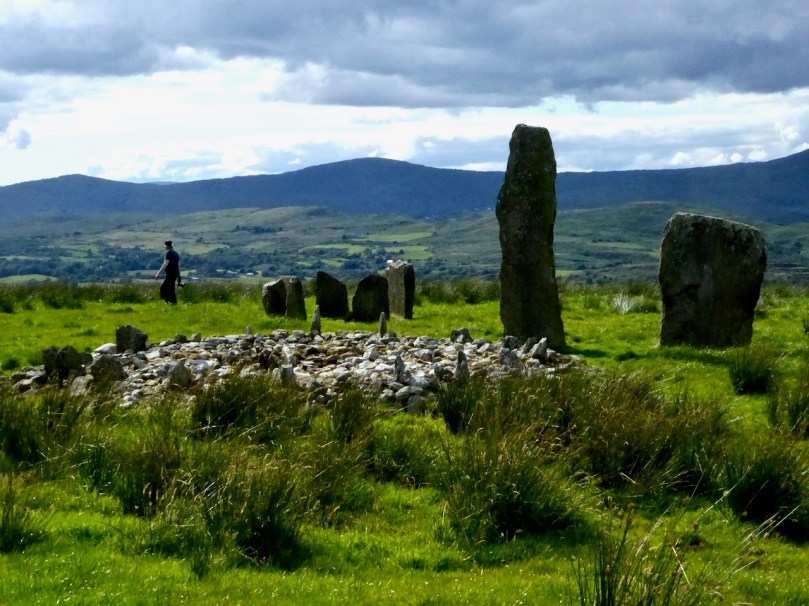
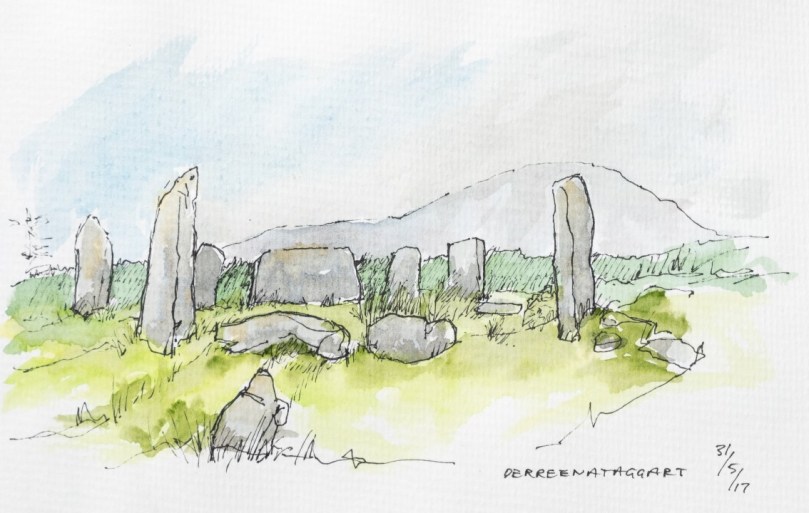
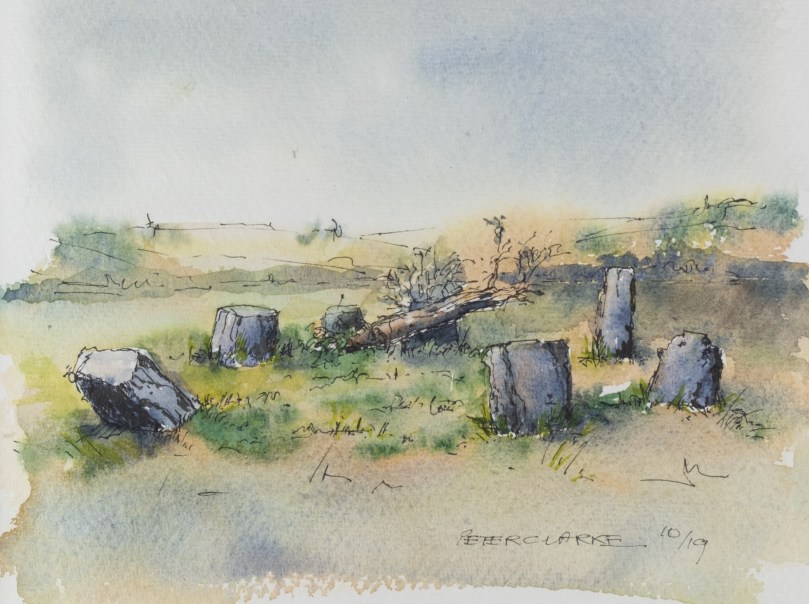
West Cork is home to a great concentration of prehistoric stone circles. While all of them share certain characteristics, there is a clear division between those containing only five stones and the multiples stone circles that contain seven or more, such as the Derreenataggart stone circle on the Beara, sketched by Peter Clarke, above. This post is about the multiple stone circles – I am leaving the five stone circles until next time. If you haven’t yet read The Stone Circles of West Cork: An Introduction, you might like to do that now before reading further.

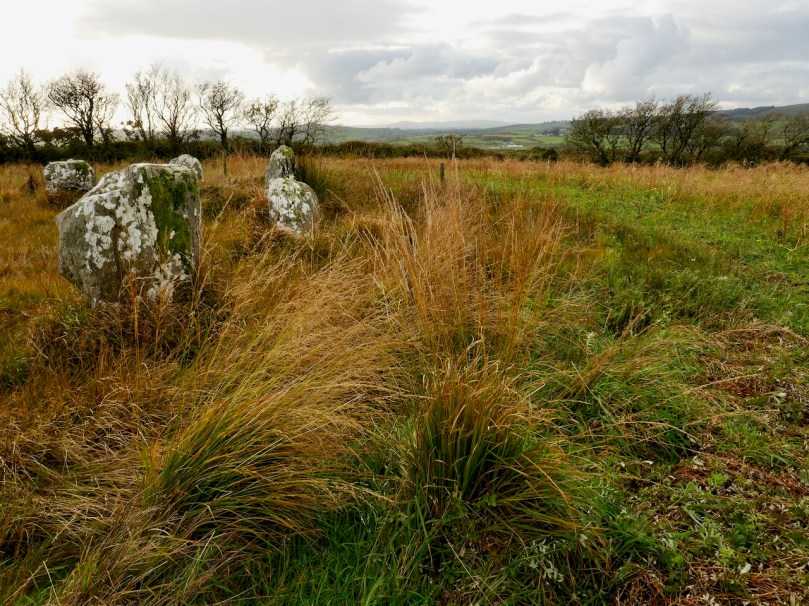
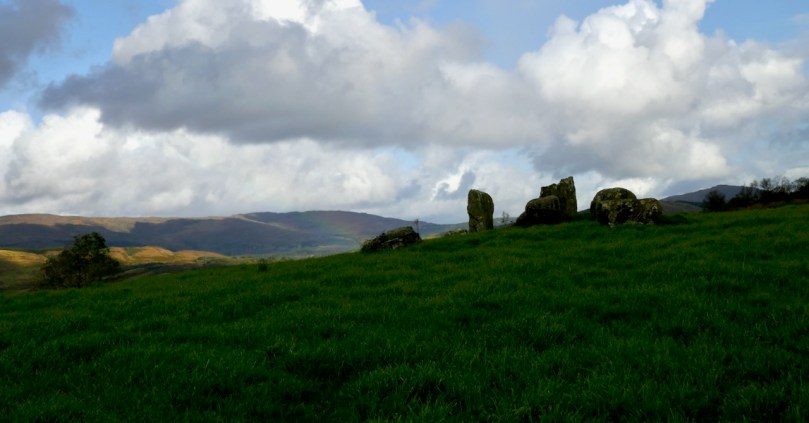
Although we love getting out in the field and visiting ancient monuments, such as this stone circle at Maughnaclea, we have to confess that the sun doesn’t always shine

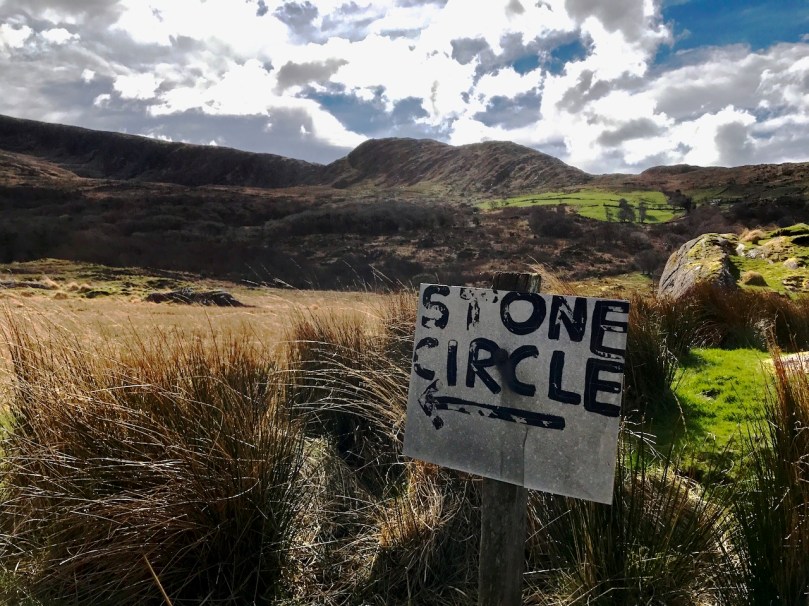
Although this post covers some of the same ground as the Introduction, my aim here is to concentrate on the larger circles and show you what they actually look like on the ground*. An online search for ‘West Cork Stone Circles’ will bring you to many pages of information about Drombeg but precious little else. Drombeg is a marvellous site and its excavation yielded much-needed information about stone circles, but it’s only one site – the one with the signposts and car park.

How about this one, for example, at Cappanaboule – it’s a bit of a hike and there’s no car park – but what a place!

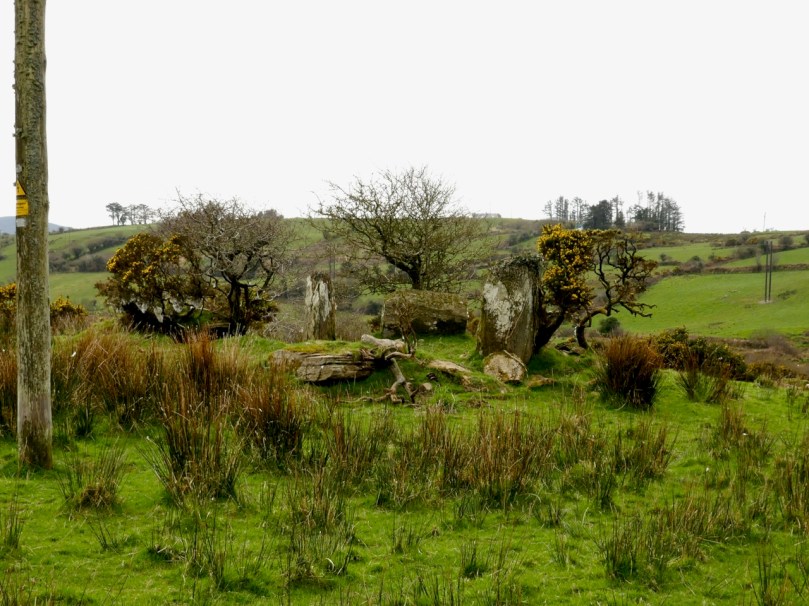
Multiple stone circles in West Cork all fall under the heading of recumbent or axial circles, in which two portal stones (usually the tallest in the circle) stand opposite a recumbent and the line that passes through the portals and over the recumbent is considered to be the axis of the circles. However, within this predominant design, there are variations in how the builders decided to construct their circles.

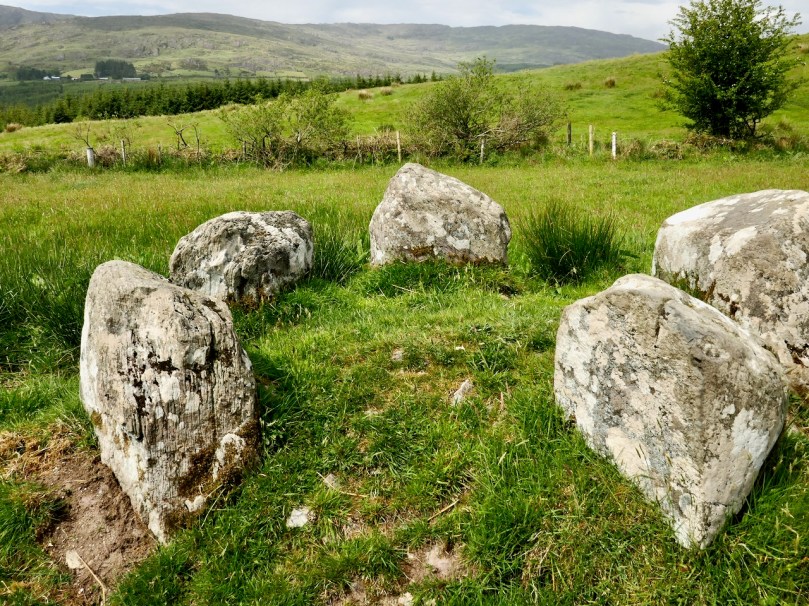
A closer look at the Cappanaboule stone circle: ten of the original thirteen stones are still there and there’s a boulder burial in the middle

The most noticeable variation, of course, is the size of the circle and the number of stones it contains, from seven to an estimated nineteen. We don’t know why the builders made these choices, although as with most construction, size can be equated with wealth: building a stone circle was an arduous undertaking necessitating the ability to commandeer a significant labour force. Perhaps also a larger circle with more stones permitted finer gradations of alignments, if this was the purpose of the circle, or more expansive ceremonials within the boundary of the circle.

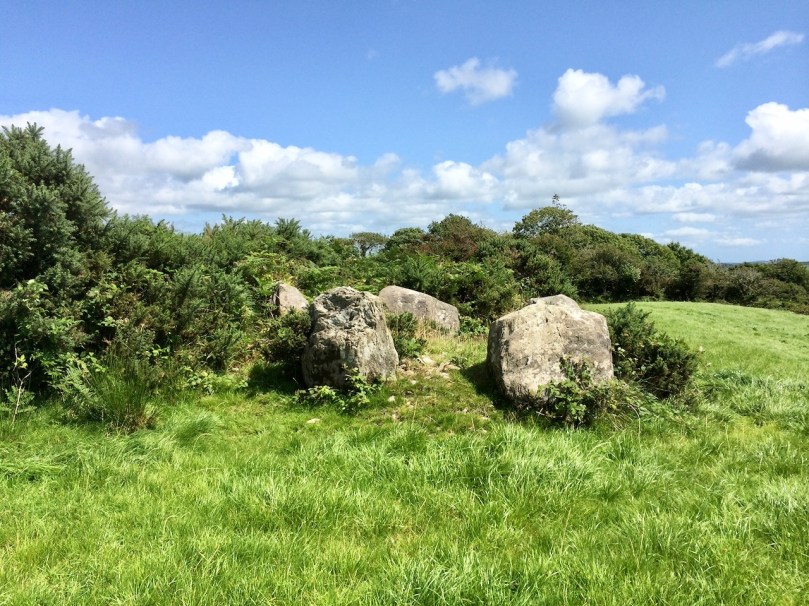
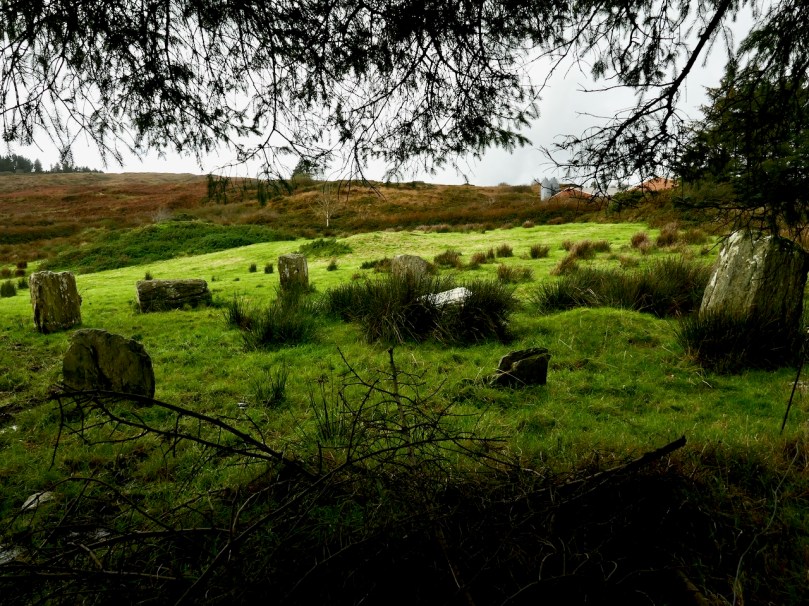
This is Gorteanish stone circle on the Sheep’s Head, only discovered in the 1990s when the Sheep’s Head Way trail was being cut. It’s hard to see what’s here because it’s so overgrown but it probably included 11 stones, four of which are still standing and two possible boulder burials, one inside and one outside the circle

The portals are normally the tallest stones in the circle but occasionally they are also set radially, or edge-on, to give the impression of a natural entrance.

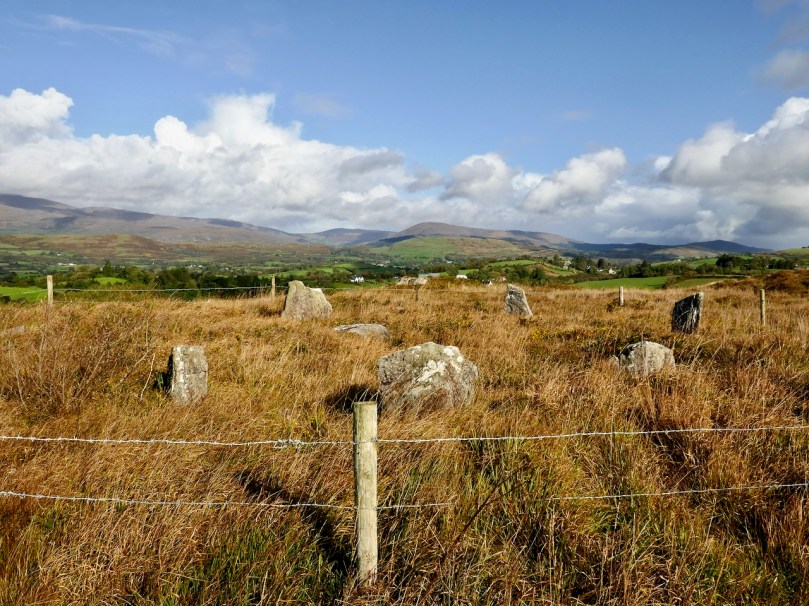
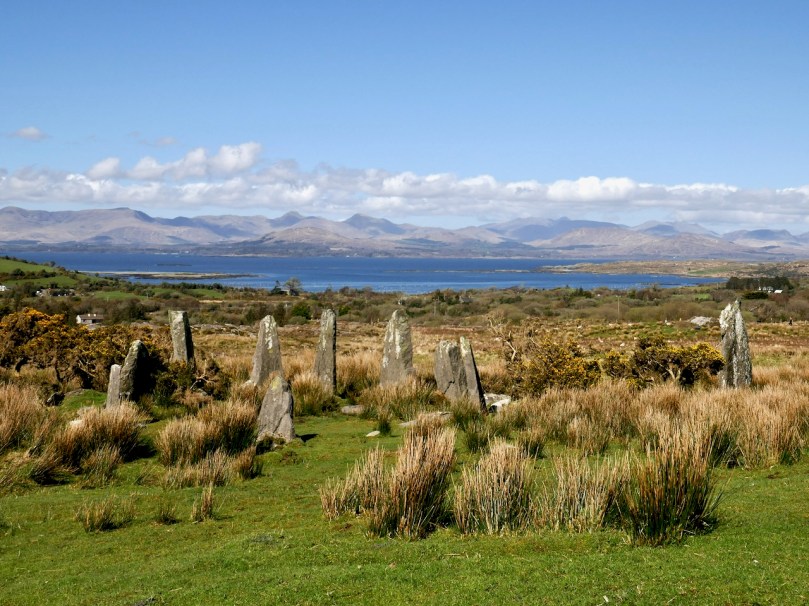
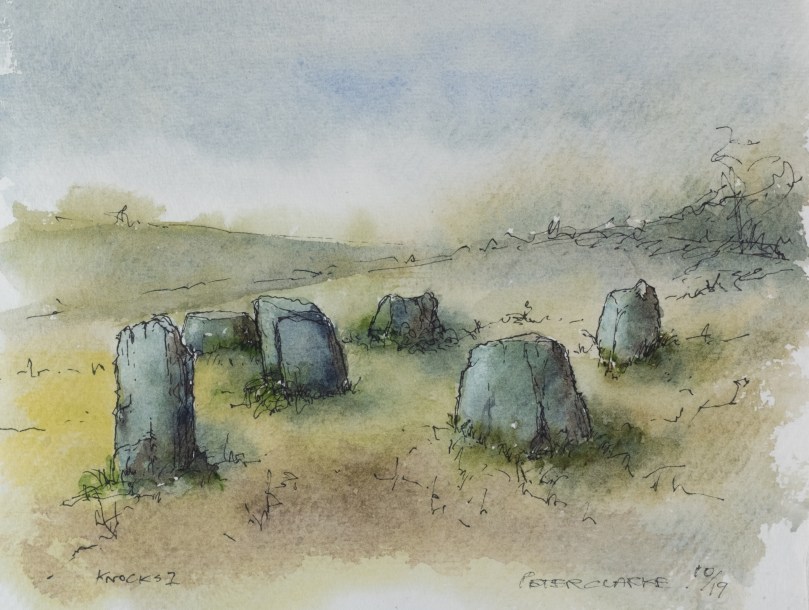
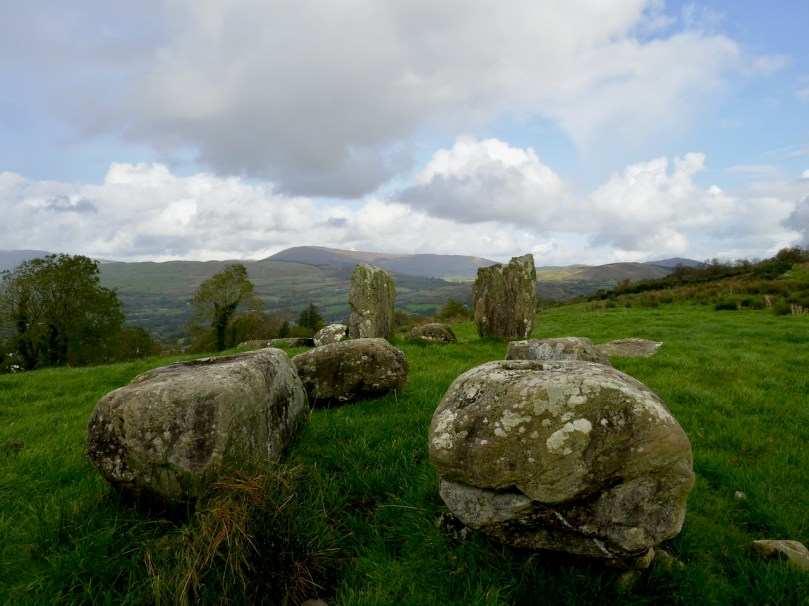
This is one of the two stone circles in the townland of Knocks. It illustrates well the portal stones being radially set and being the tallest stones in the circle. In my photograph you are looking across the recumbent to the portals and in Peter’s sketch you are doing the opposite

In only three cases an extra pair of stones helps to emphasise the entry point by creating a short passage. One example of this is Carrigagrenane, which is also one of the largest circles at nineteen stones.

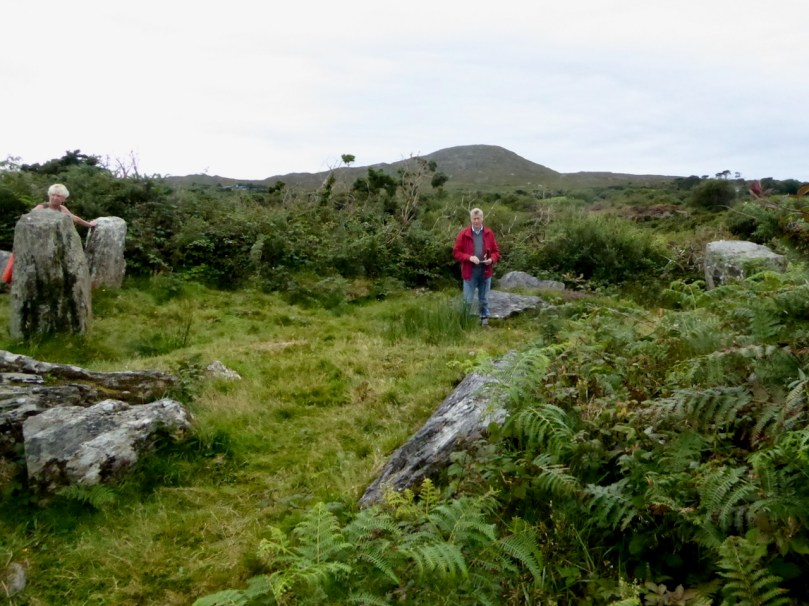
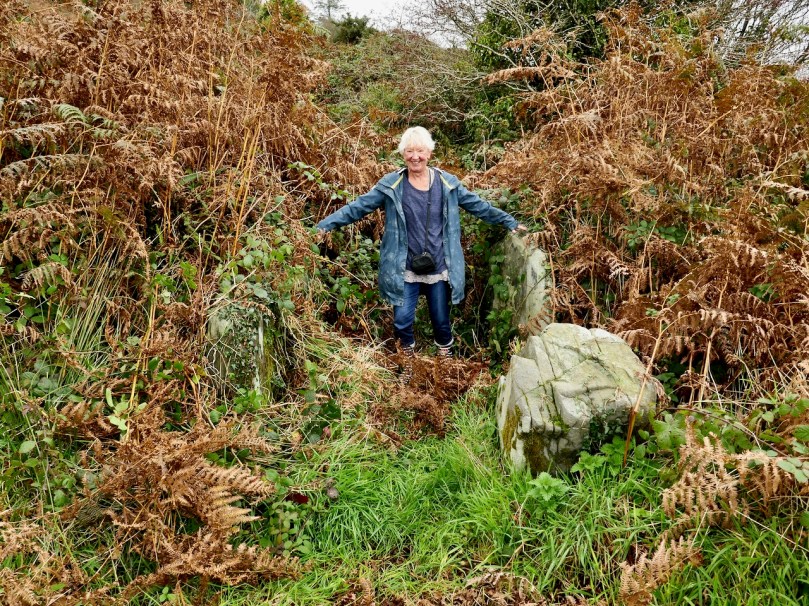
Carrigagrenane stone circle has double portals, creating a funnel or passage into the circle. This site is very overgrown and hard to locate so a lot of bracken-bashing was necessary to get this shot. Amanda is standing between the two outer portals

Conversely, the recumbent or axial stone is normally the lowest stone in the circle and the broadest (since it is set with its long axis parallel to the ground) but even here variation occurs. The axial stone at Ardgroom Outward, for example, is a pillar stone. Indeed, it can sometimes be difficult to decide where the axis line of the circle runs, if stones have fallen or are missing.

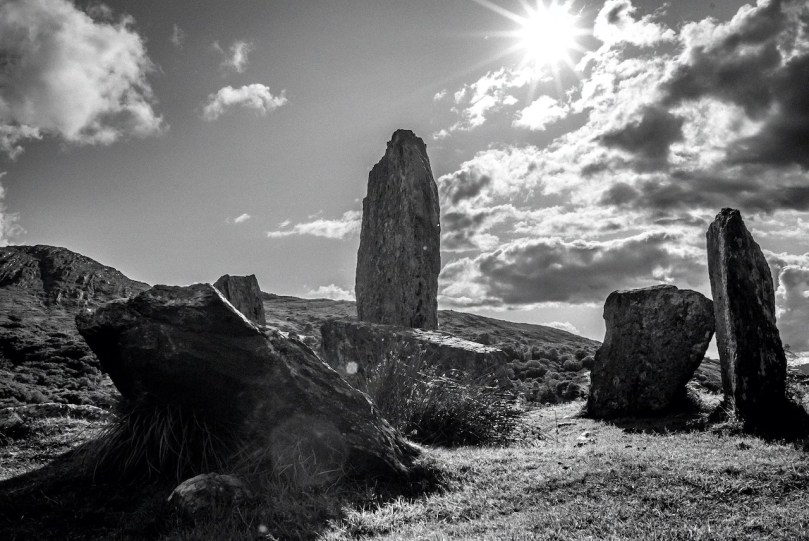
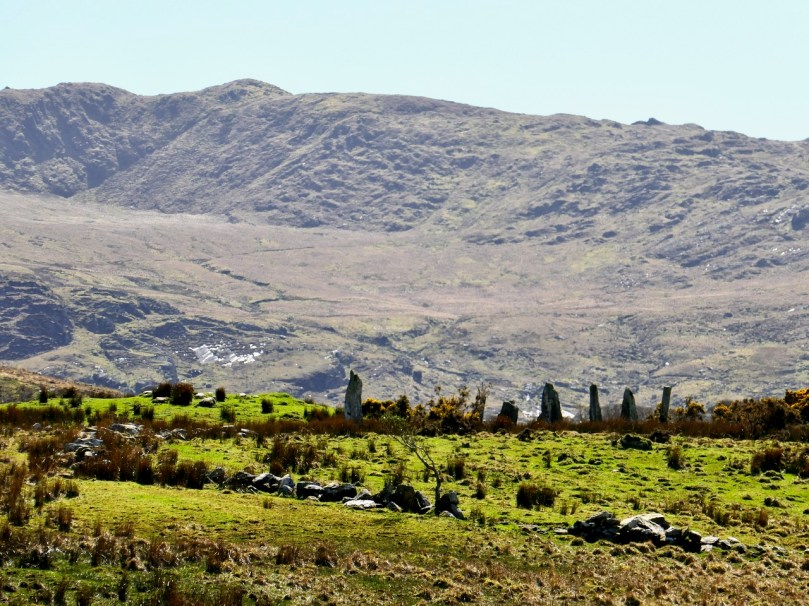
Ardgroom Outward stone circle, on the Beara is spectacularly sited. The axial stone, along with all the others in the circle, is a pillar stone rather than a recumbent. Note also the large monolith outside the circle to the right. The natural view-lines are to the north

Monoliths (single standing stones or blocks set on the ground) are present at some sites, either inside or outside the circle (as at Ardgroom Outward, above). Where they are inside they are placed off-centre. Where they are outside, they can be close to the circle or some way off but visible from it. These are usually called outliers.

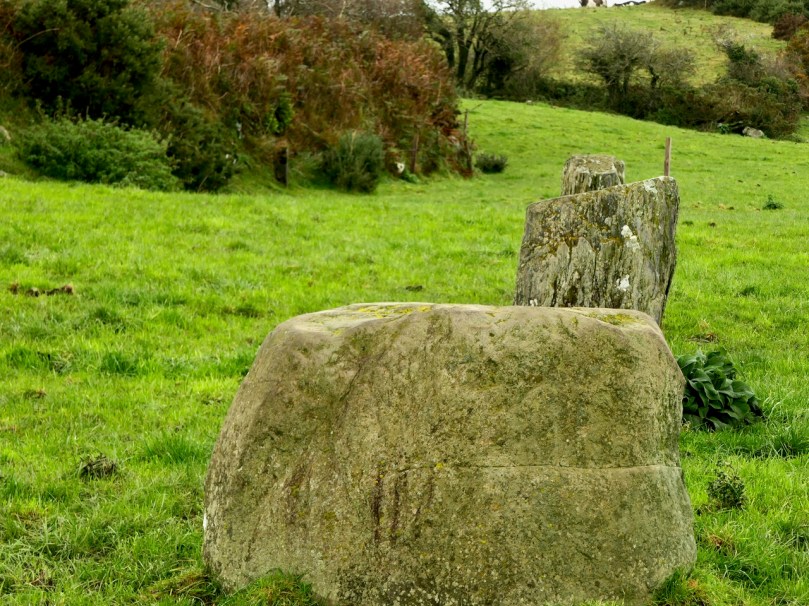
This is the second stone circle in the townland of Knocks, the more southerly of the two. My photograph illustrates the line of sight over the recumbent, across a slightly off-centre monolith, to a radially set portal. Peter’s sketch illustrates the whole circle

Quartz is a stone of choice for some of these monoliths but it is interesting that quartz is never in use as a circle orthostat. 

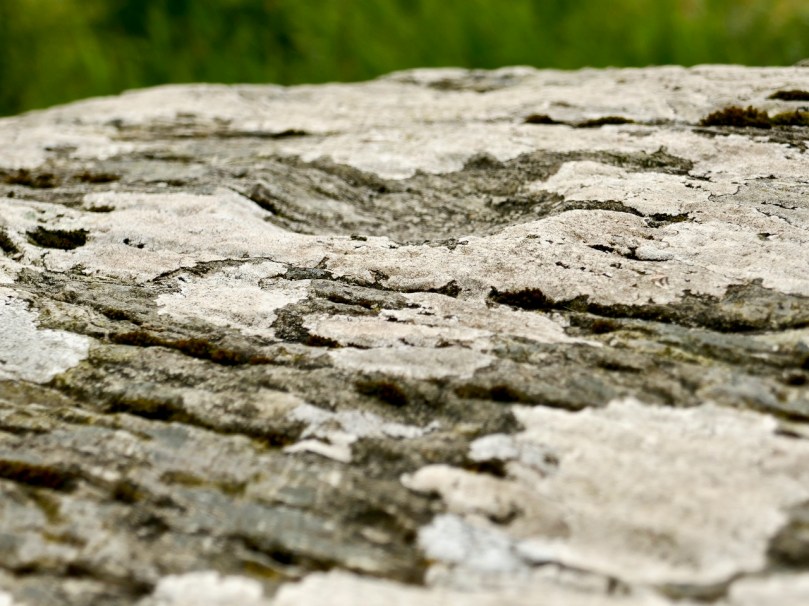
The stone circle at Maulatanvally includes a large quartz conglomerate block within the circle. I was struck by how it was gleaming on a dull day

Standing stone pairs can also function as outliers to a multiple stone circle. At Dunbeacon this outlier pair is almost half a kilometre from the circle across the valley, but each is clearly visible from the other. Originally a third standing stone also stood within 50 metres of the standing stone pair, but it has now disappeared.

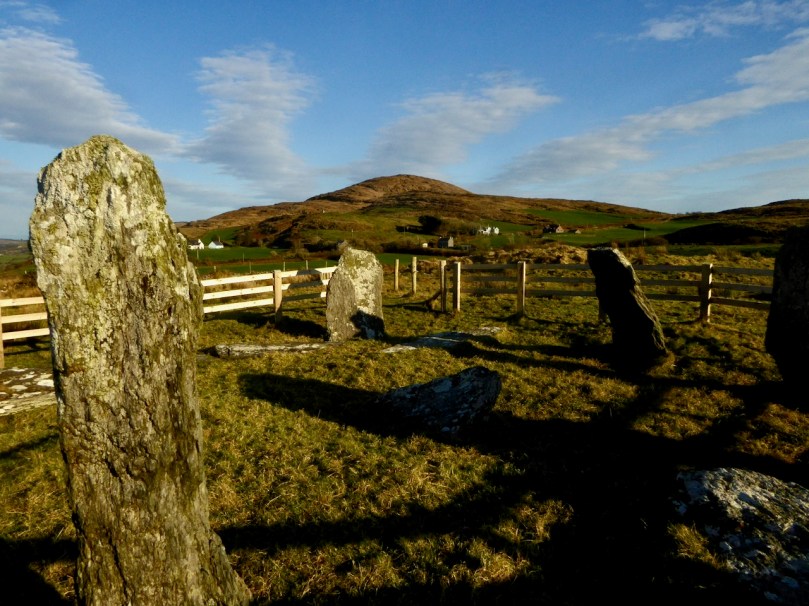
Dunbeacon stone circle, recently corralled inside a wooden fence. The natural view-line from this circle is to Mount Corrin to the east, rather than the south or west. The standing stone pair in Coolcoulaghta are located in front of the furthest house to the left in the photograph.

Another association is with boulder burials, sometimes found outside the circle, as in Bohonagh (see An Introduction) where the boulder burial capstone is quartz and contains cupmarks. At Ballyvacky (below) a boulder burial stands about 50 metres from the circle and a standing stone once stood beside it.

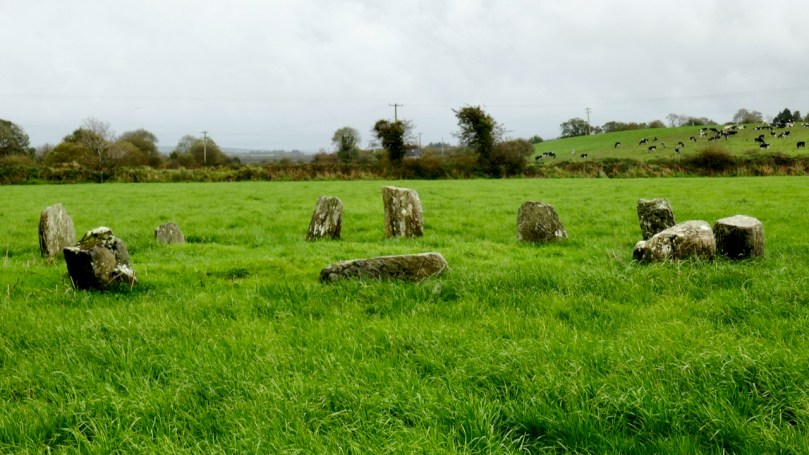
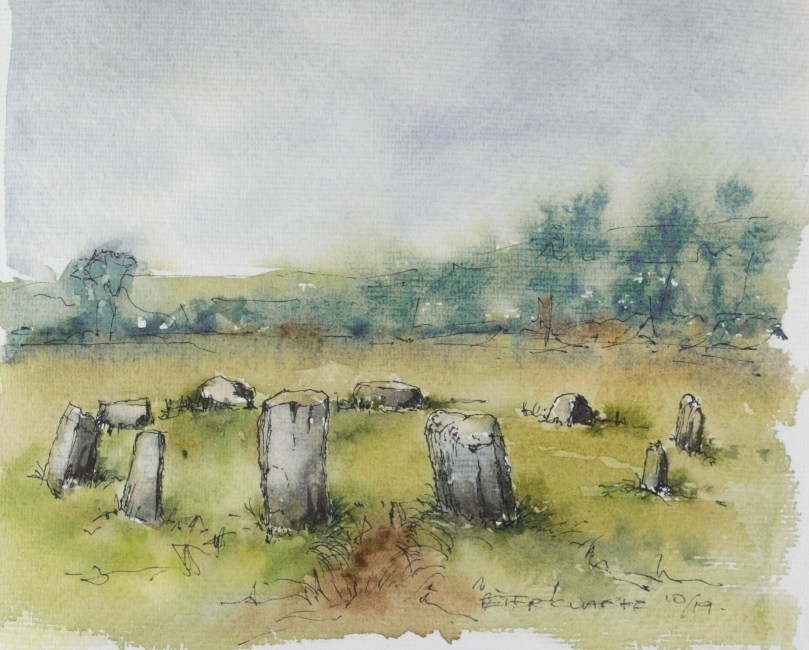
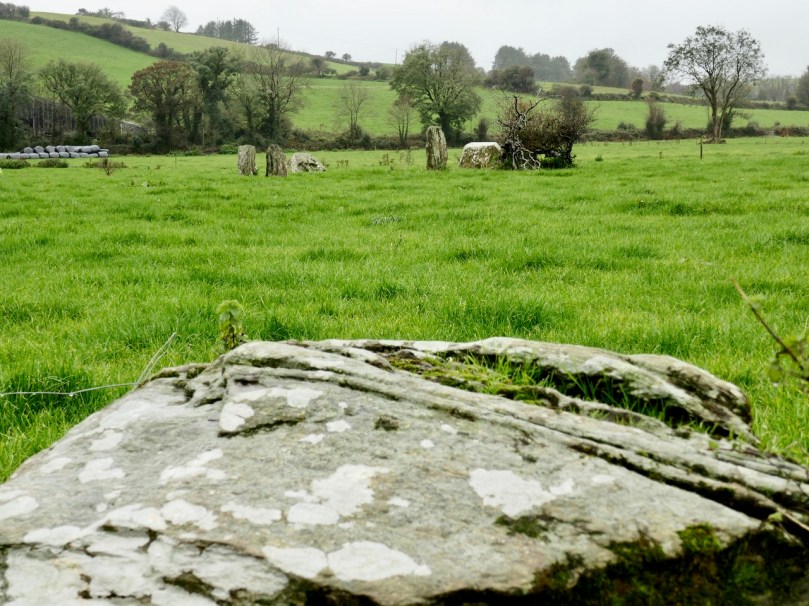
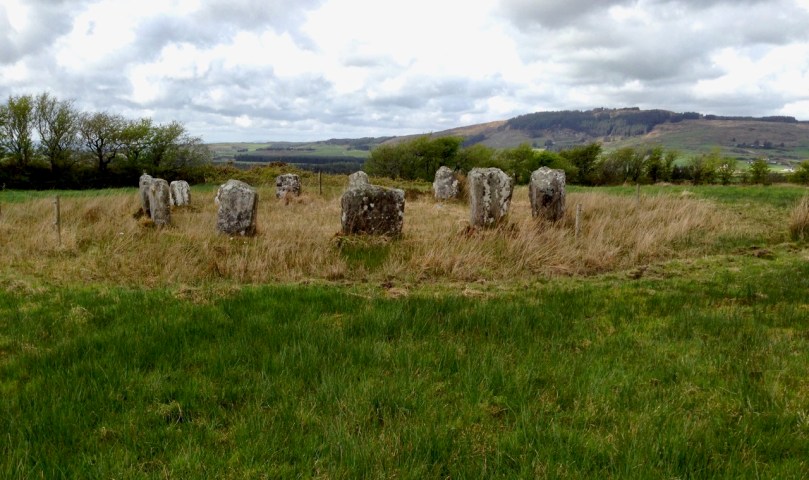
My photograph is taken from the Ballyvacky boulder burial, looking across to the stone circle. Peter’s sketch shows what is still standing – seven of the original nine stones. You can see that the remaining portal is radially set and that the recumbent is the largest stone in the circle

Boulder burials, as we have seen, are also found inside the circle: one of the most spectacular examples of this is at Breeny More (below) where a group of four boulder burial are set in a square within a large circle from which most of the stones are missing.

Finally, occasional stone circles will be surrounded by a fosse or shallow ditch. The most striking example is at Reenascreena, below.

Visiting stone circles, I am struck by features which appear to be similar at all or most of the sites. Many are situated on elevated sites with expansive views to the south and west. While this has been well documented by archaeologists, it’s one thing to read about it and yet another to visit several circles on one day and find yourself expecting a certain set of circumstances as you tune in to patterns in the sites themselves. What the orientation descriptions don’t mention, for example, is that the choice of location often features rising ground behind the circles which obscures the horizon to the north.

The rising ground behind Dunbeacon stone circle cuts off the view of Dunmanus Bay and concentrates the view-lines towards the east and south-east

Occasionally the higher ground obscuring the horizon is not to the north at all, but to the south or south-west – confounding our expectations that the obvious view-lines will be to the south and west. Cappanaboule is strikingly situated thus, as is Ardgroom Outward.

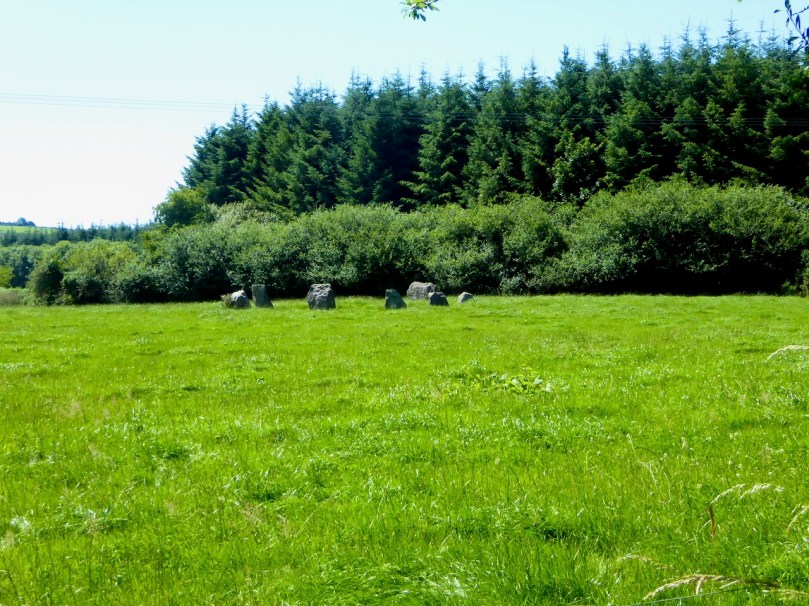
And then we have examples in fairly flat country with no really obvious view-lines. This can be complicated by surrounding forestry, as at Knockaneirk (above) where, if there was an obvious orientation over the recumbent it has long been hidden by tall tree.

Ardgroom Outward stone circle is dramatically silhouetted against the mountains of the Beara peninsula as you walk up the track towards it

Next time I will write about the five stone circles – there are as many of them as there are the multiple stone circles and while they share most of the same features they have their own special character.

*Most of these photographs (like the one of Breeny More, above) were taken last year or in previous year, and many of them in the company of Amanda (Holy Wells of Cork and Kerry) and Peter (Hikelines) Clarke. I am indebted to Peter for the sketches. Not being able to get out into the field to visit and photograph more circles has been frustrated this year by Covid19 travel restrictions, so I have decided to go ahead and use what I have, rather than wait to add to my collection.