All That Jazz

The Ballydehob Jazz Festival gets better every year! There was a marvellous program this year – eclectic and varied, and our little village was buzzing with locals and out-of-towners.

The great thing about a festival like this is that there’s something for everyone. The Big Acts take place in the “Festival Hall” (AKA Community Hall) where there’s big band sounds and dancing till the wee hours. There are workshops for kids (this year’s line-up featured archery tag and circus skills) and a Sunday Market with a continuous bandstand of acts.

The East Coast Jazz Band are effortlessly cool

But a lot of the action takes place in the intimate venues. The pubs and restaurants all host entertainers so you can have lunch and dinner accompanied by soulful crooners, or crowd into one of the pubs to listen to a piano duo or a swing band or a funk quartet. There’s a good mix of West Cork and come-from-away groups and every venue is packed to the scuppers.

Above: Stephanie Nilles and Thomas Deakin were one of THE acts of the Festival. Their sound (and her lyrics!) left us gasping. Below: The Eileen and Marilyn Experience, perennial favourites in West Cork, and Grace Notes, a new vocal performance group under the direction of Caz Jeffreys 

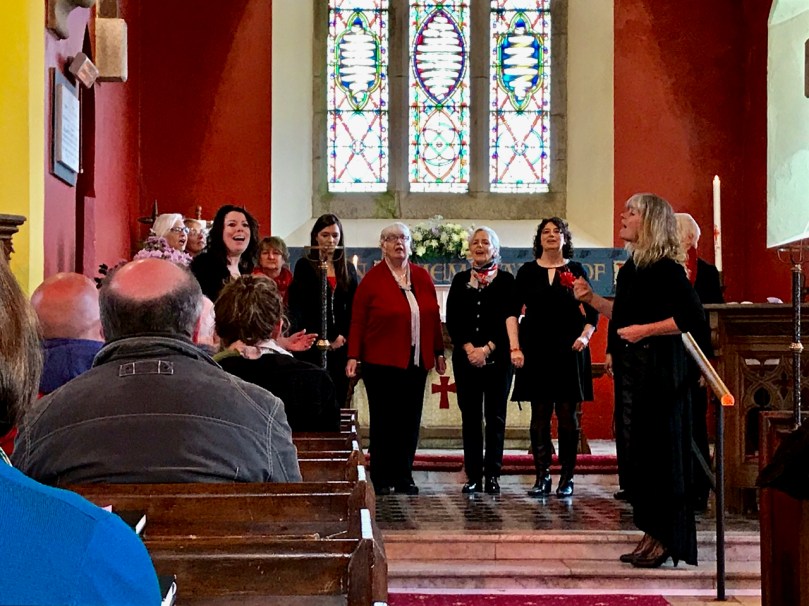
This year there was a first – a Jazz Mass. Actually it was a Church of Ireland Service, with gospel provided by the choir I (try to) sing with, Acapella Bella. Something tells me this could well become an annual event.

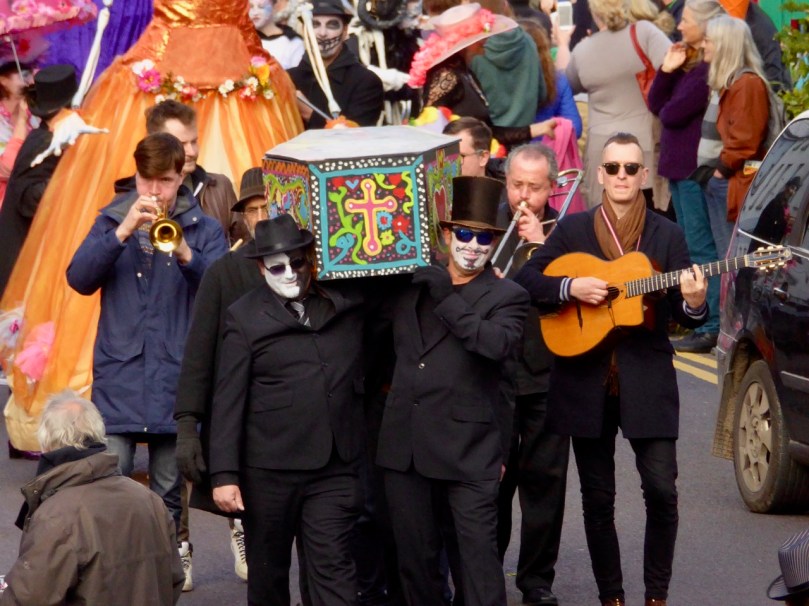
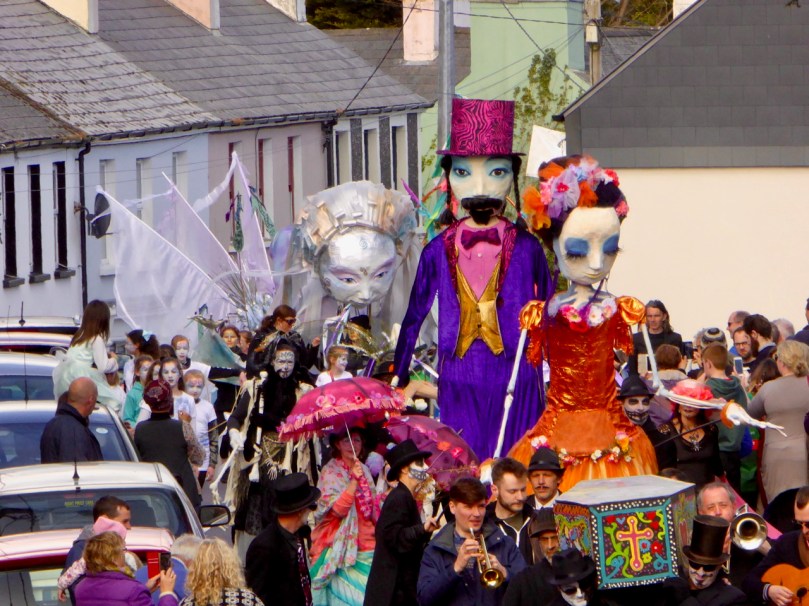
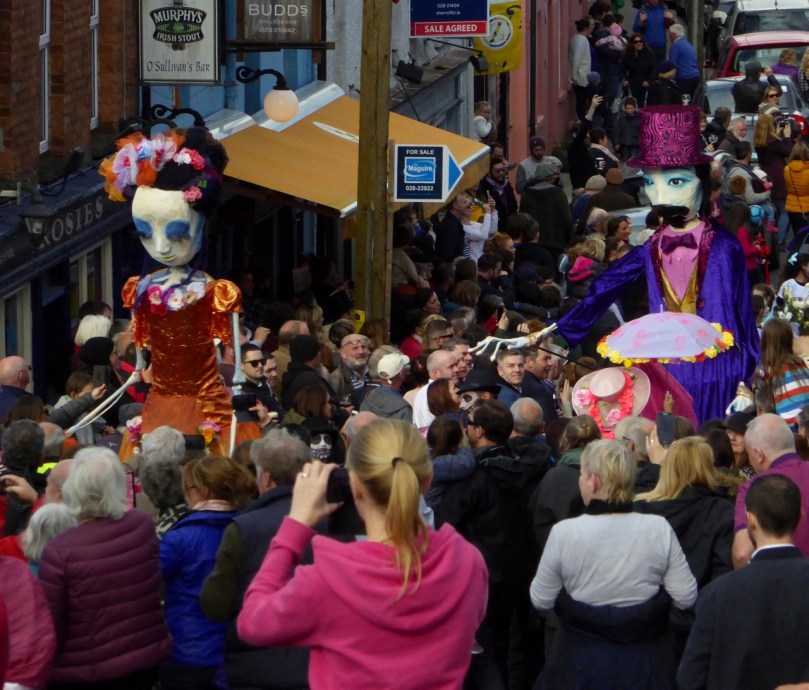
But the highlight of the festival for everyone is the New Orleans-style Jazz Funeral. Ballydehob is a hotbed of creativity at the best of times and the idea of a Jazz Funeral has galvanised the community. This is only the third year we’ve done it and it’s been improved and expanded every year.

Last year the giant puppet, Katrina, made her first appearance, and this time she was joined by a mate. Billed as Mexican Day of the Dead meets Bealtaine, the parade wound its way up the village, stopping along the way so the puppets could wow us with a dance. It was a marvellous spectacle.

Almost, you could forget you were watching dolls and feel the emotion flowing between them and they put their arms around each other and kept time to the music.

A stilt walker, a giant centipede, a pair of gangsters on a penny farthing, and a whole army of children in costume completed the parade of mourners. The weather held off (the Gods of Bealtaine must have been appeased) and the streets were thronged with cheerful festival-goers, all swearing to be back again next year and this time to bring all their friends.

Tara Brandel performed her dance Car at the end of the parade. Finola cosies up to a gangster

The tagline for the Festival is…drum roll, please…THE BOUTIQUE FESTIVAL IN THE BACK OF BEYOND PACKING A BOMBASTIC ARTISTIC PUNCH. Take a look at the program and see for yourself – great descriptor, or what!

Irish Romanesque – an Introduction

This post will introduce you to one of the most exciting aspects of our architectural heritage – the building style known as Romanesque, which in Ireland became the dominant form in the 12th Century. Characterised by flamboyant doorways and elaborate carvings, it replaced an earlier and much plainer indigenous Irish church-building form of which few unmodified traces remain.

An early church at Liathmore, Co Tipperary. Note the square doorway with a simple linteled top. The projections of the sidewalls beyond the gables, known as antae, are a feature common to many early churches

Most churches in the Early Christian (or Early Medieval) era in Ireland were probably built of wood, although some early stone examples survive, such as the one Robert wrote about in his post Molaga of the Bees. Defining characteristics of these churches were their relative plainness – one rectangular space, often quite small, with a linteled portal, one or two small windows, projecting antae, and finials atop the gables.

Leaba Molaga, or Molaga’s Bed – note the antae and small linteled doorway. The reconstruction drawing in the leading photograph above is based on this building

Besides Molaga’s Bed, we have seen several of these early churches on our travels – last year at Oughtmama when we spent a day with Susan Byron (see Susan’s Burren) in Clare, and earlier this year when we stopped off the M8 to visit the churches at Liathmore. This week we saw two more, one at Ardfert and another at Kilmalkedar, both in Kerry. (Robert also writes about Kilmalkedar this week, although concentrating on other aspects). However, in each case, the native form has been modified by the influence of the Romanesque style.

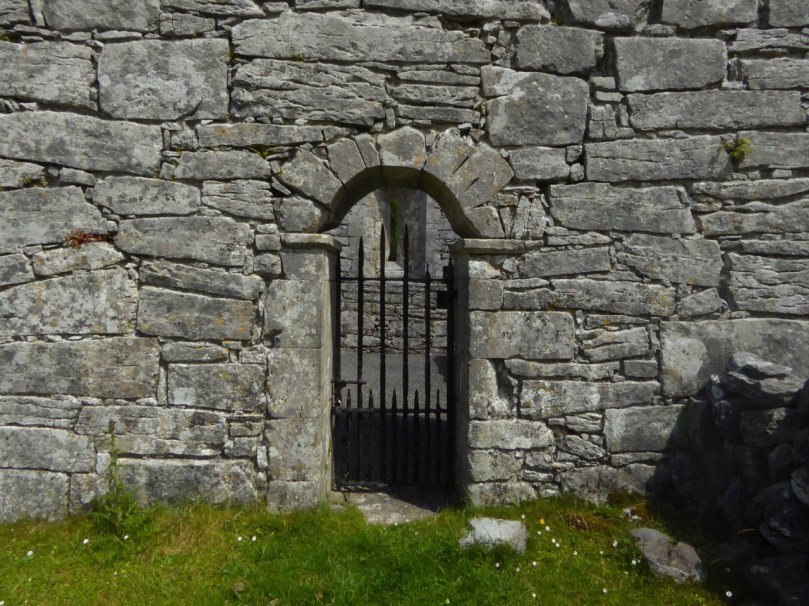
Both photographs were taken at Oughtmama in Co Clare. In the first, a simple linteled doorway leads into a large nave, which was later modified with the addition of a chancel, accessed through a Romanesque arch. In the second, the small doorway, although no bigger than the first example, is in the Romanesque, arched, style

Romanesque was the pan-European architectural style of the 11th century. More than just a construction method, it was an ideological movement. After a period known generally as the Dark Ages in Europe, the renaissance of scholarship and art in the 11th century harkened back to the idea of the antique Christian culture, with all the construction and engineering skills of the Romans. As in every era, the elite wished to associate themselves with this and Romanesque architecture gained popularity for great buildings such as cathedrals and castles.

A great Romanesque Church, Sant’ Ambrogio, in Milan. The Romanesque period of its construction dates to the 12th century – about the same time as Cormac’s Chapel in Cashel, generally reckoned to be the high point of Irish Romanesque architecture, was being built. More on Cormac’s Chapel in the next post

This was a period when people, especially clergy, from all over Europe travelled to great pilgrimage sites such as Compostela or Rome and this helped to spread ideas within the Christian world. In Europe the Romanesque style was well established by the mid 1000s and flourished until it was gradually replace by Gothic beginning in the mid-12th century. It took longer to reach Ireland, and didn’t really become the dominant church-building style until the 12th century.

This is one of two Romanesque sites at Ardfert. We are looking through the chancel arch into the nave. Note the roll-mouldings where antae would once have been, and also the small arched west doorway

In Ireland the simple rectangular stone-built early medieval churches with their antae, linteled entrances and finialed gables were gradually replaced or modified starting in the mid 1000’s. Romanesque churches become nave-and-chancel buildings rather than one rectangular room. The chancel is separated from the nave by a rounded arch, and windows have similar arched tops and are deeply splayed on the inside, often asymmetrically.

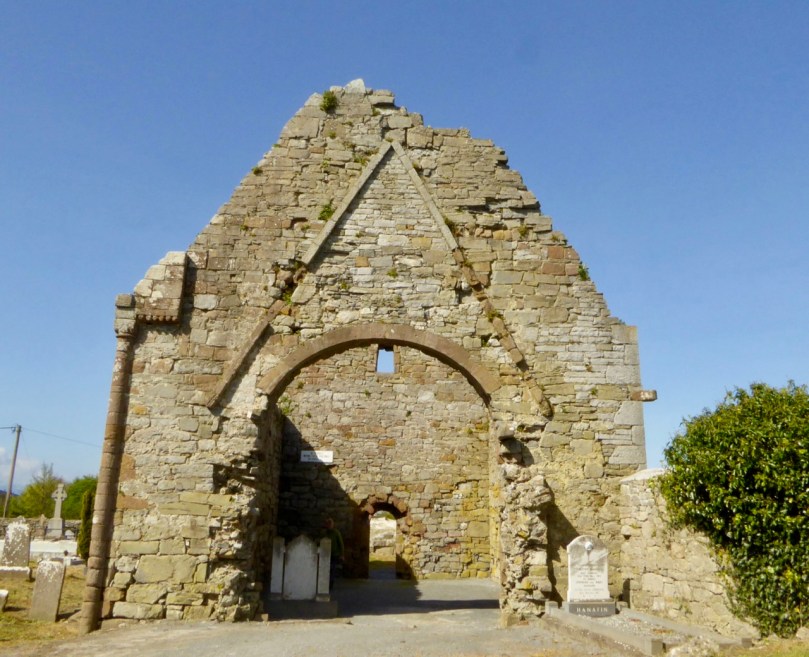
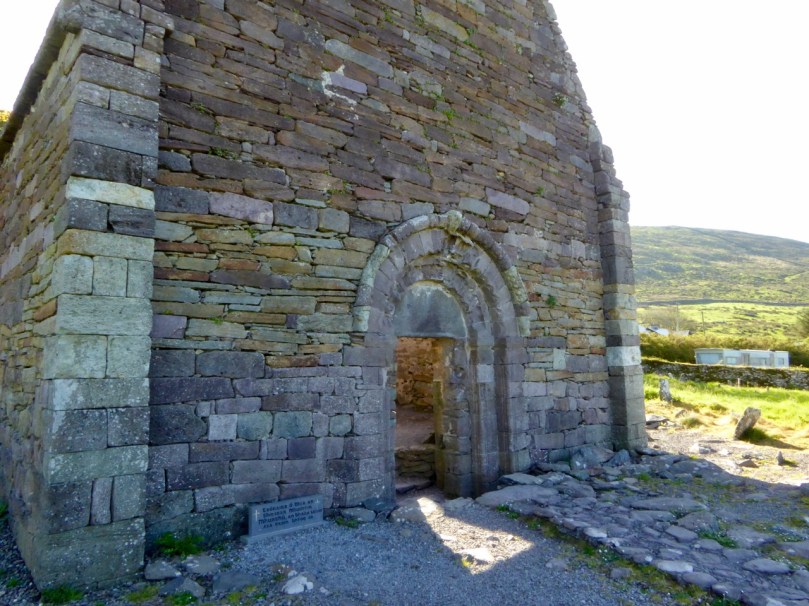
Kilmalkedar church in Kerry. While antae remain, the portal is now in the full Romanesque style  with an arch, a couple of receding ‘orders’, chevron carvings and a carved head

The doorway is in the west wall (on the opposite side to the chancel and the altar) and is now arched rather than linteled. The walls of the nave may have blind arcading. There is clear evidence that they were painted – a few vestigial examples survive in Ireland.

At Kilmalkedar, the finials still top the gables. The stone roof can be clearly seen, or at least what remains of it

The roof are sometimes stone, and may contain attic-type spaces.

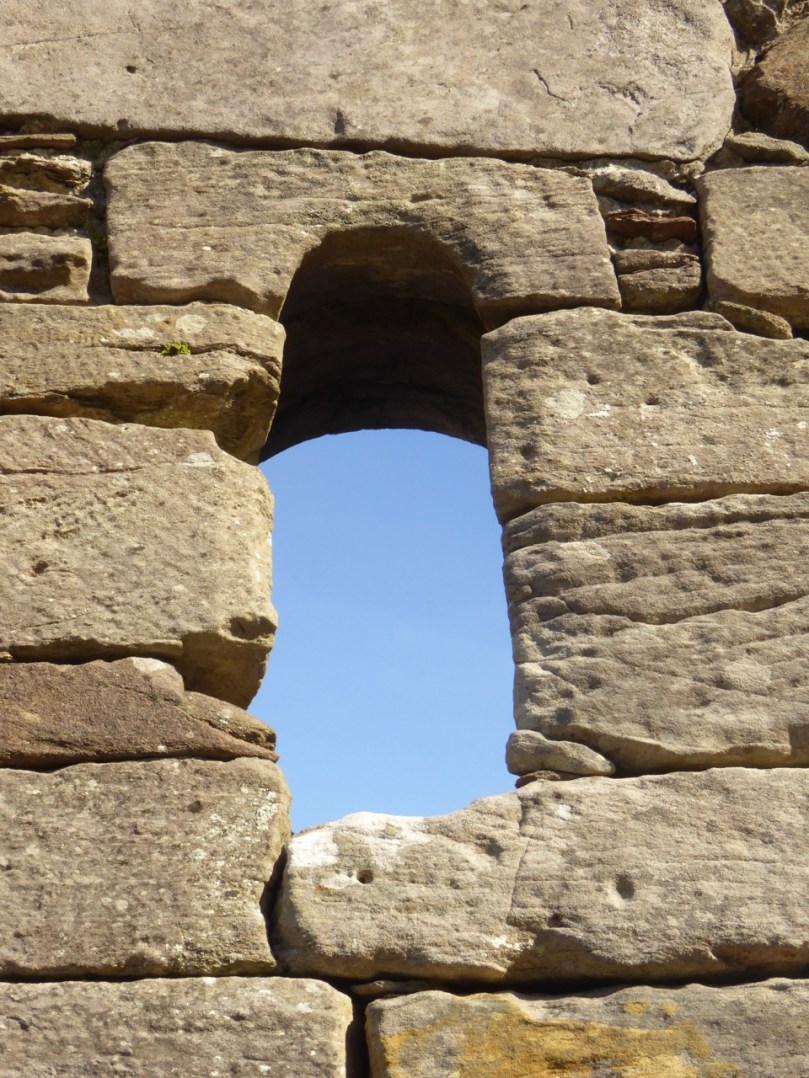
Two examples of Romanesque arched windows. The first (from Kilmalkedar) is topped by a simple arch hewn from one stone. In the second example the arch is more sophisticated. It is constructed using voussoirs – precisely cut wedge-shaped stones – which are beautifully carved with geometric and foliate shapes

But the real glory of the Romanesque building style, and what makes it so attractive for visitors are the carvings – a feature that is curiously absent from the Early Medieval church forms that preceded the Romanesque. (I say ‘curiously’ because other forms of stone carving, such as our wonderful high crosses, are well known from pre-Romanesque contexts in Ireland, as well as decorative metalwork and manuscripts.) Doorways, chancel arches and window surrounds are often carved with a variety of floral and geometric motifs (especially chevrons), while heads of humans and animals are found around doorways and arches, and occasionally outside. 

The chancel arch and blind arcading at Kilmalkedar

This post is just an introduction to Irish Romanesque, intended to cover the basics of the form and get you comfortable with the terminology. I have deliberately avoided talking about the carvings and the more spectacular of the sites. But in my next post on this topic I will concentrate on the doorways. There are many fine examples, from the simple to the elaborate – they are truly one of the wonders of our Irish architectural heritage. Here’s a sneak peek…

And by the way – this post is a celebration of sorts: it’s the 400th post in Roaringwater Journal! Our first post ever was in October 2012. With a five month hiatus (in order to move countries) we’ve been blogging faithfully week after week ever since. Our practice is that we, Robert and Finola, publish one post each every Sunday (and update the Table of Contents on the Navigation Page as we go along). We love the way this lends a shape to our week; we love the research and the photography; we love your feedback, both here and on our Facebook Page. Thank you, our wonderful readers, for sticking with us. Long may it continue!

Dividing the Day

We were on the trail of Saint Brendan, and the road took us deep into County Kerry. The spring days were blue, and the unparalleled scenery at its best for us. As we made our ways through the high hills and mountain passes we could see across to the coast:

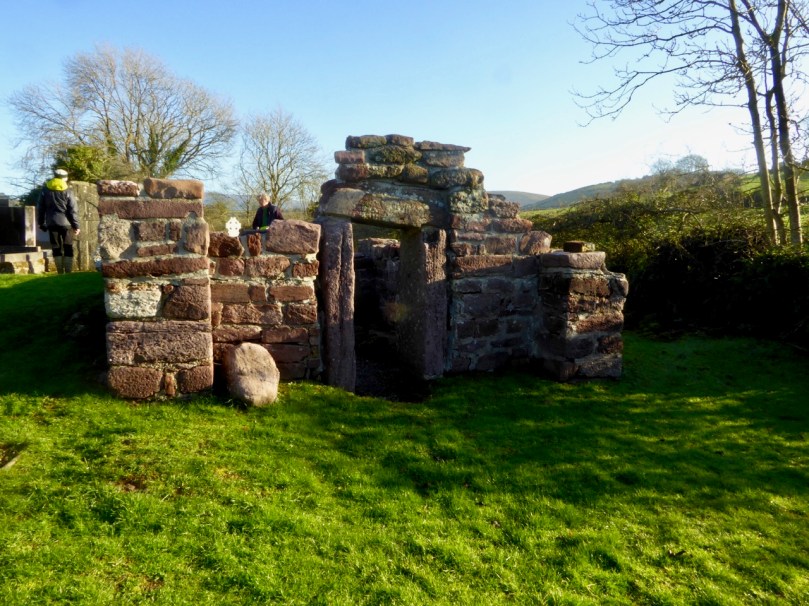
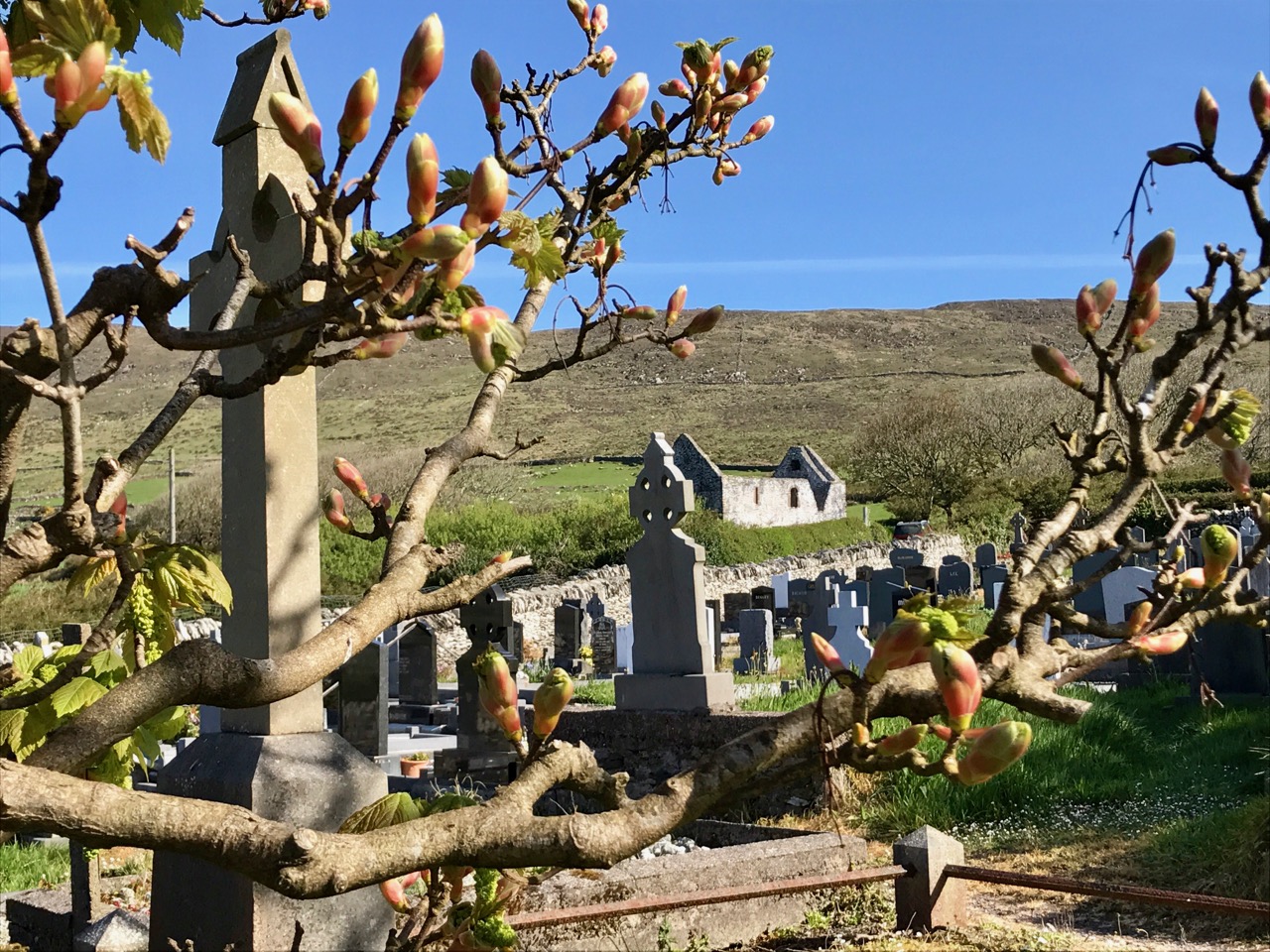
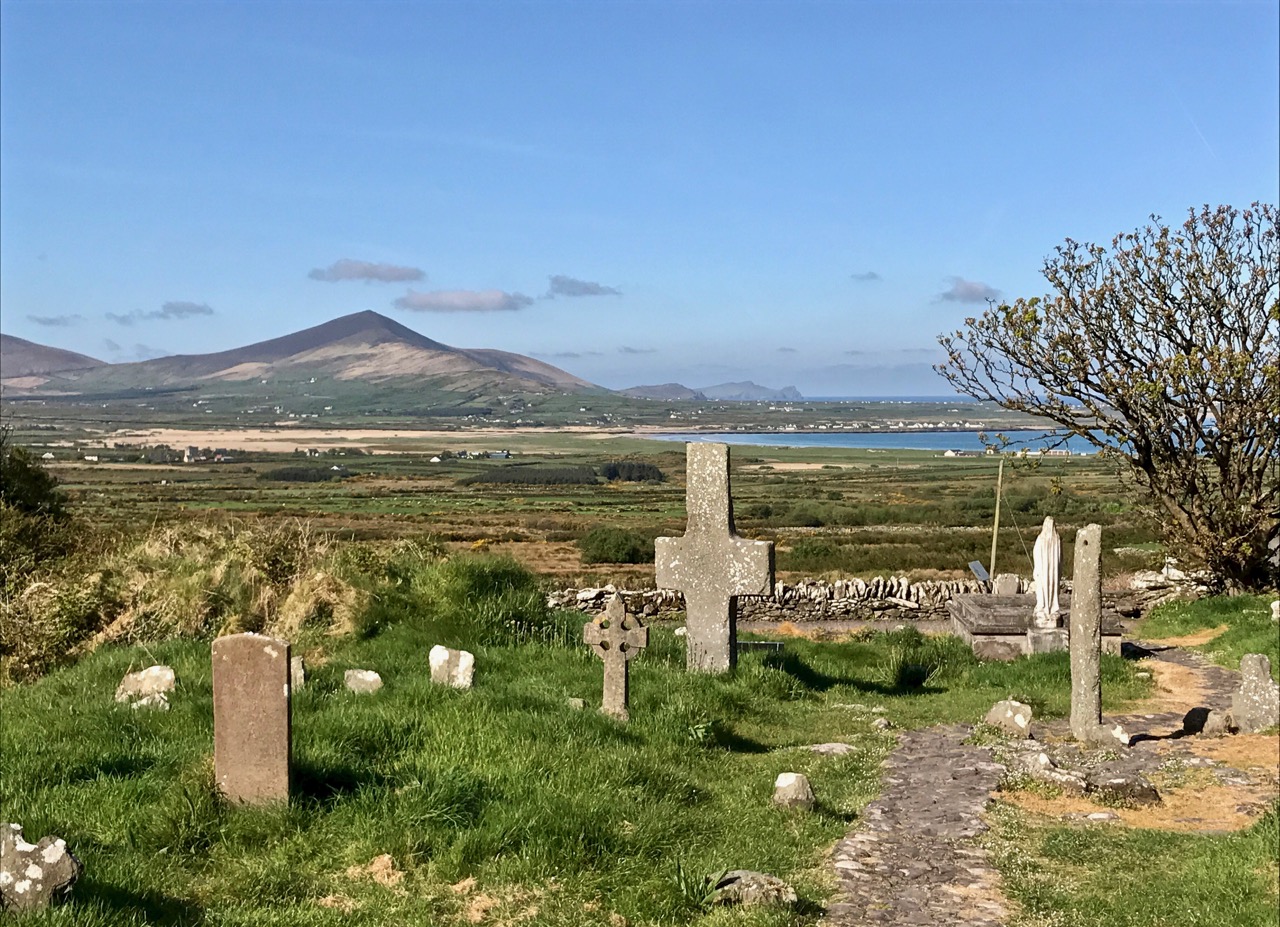
20,000 years ago, ice shaped the Kerry landscape: a huge glacier flowed from here towards the sea. Looking down from An Chonair, the highest mountain pass on the Wild Atlantic Way; the peak in the centre is Mount Brandon, named for Saint Brendan. The header picture shows the burial ground and, beyond, the medieval “Brendan’s House’ at Kilmalkedar, seen through the burgeoning spring growth

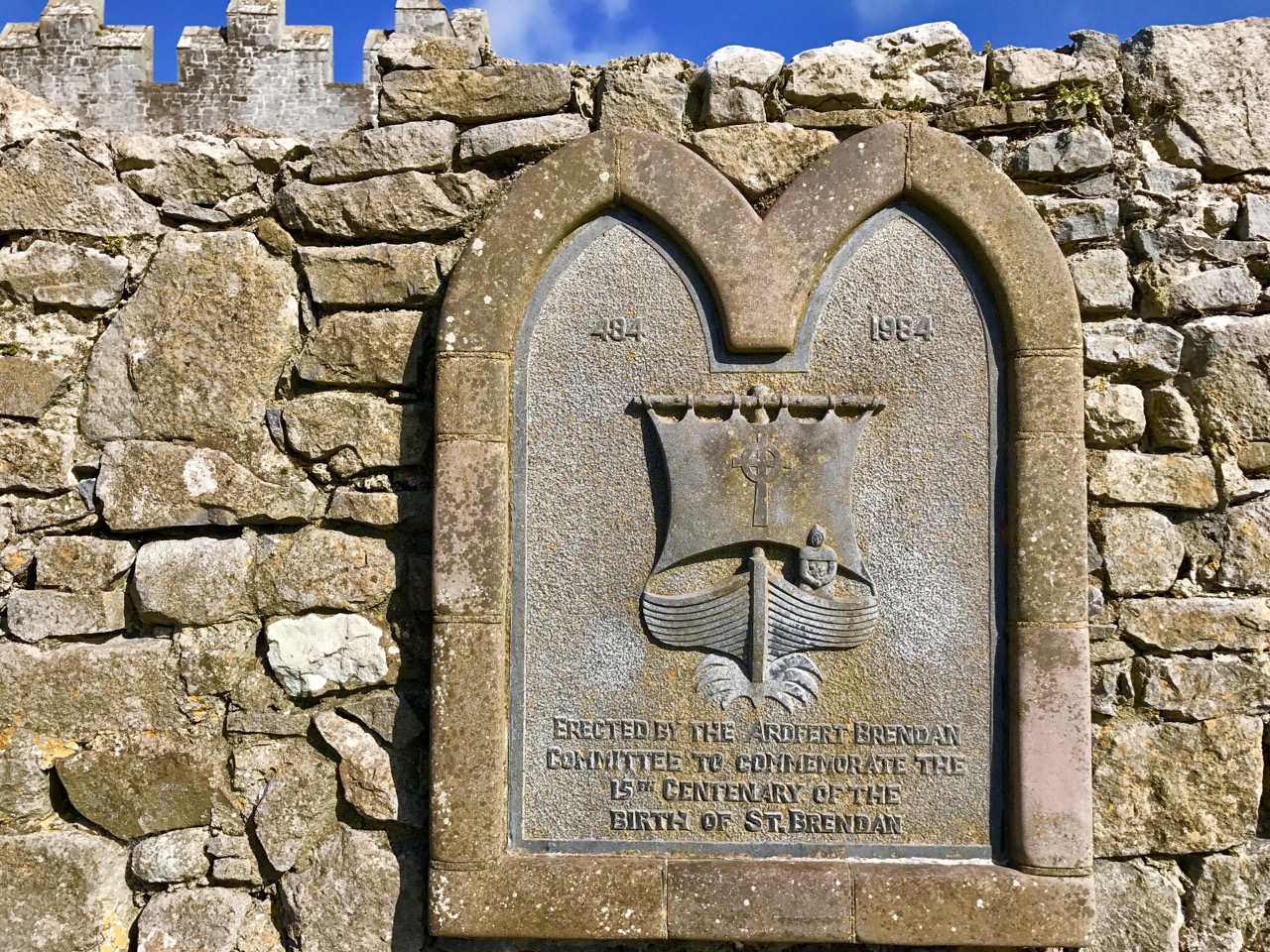
Our first call was to the Cathedral in Ardfert, which was built in medieval times over a Christian monastic site founded by the Saint in the sixth century. There’s nothing left of that, but the later buildings, while ruined, are well looked after by the Office of Public Works, and an information centre is open through the summer months – certainly worth a visit.

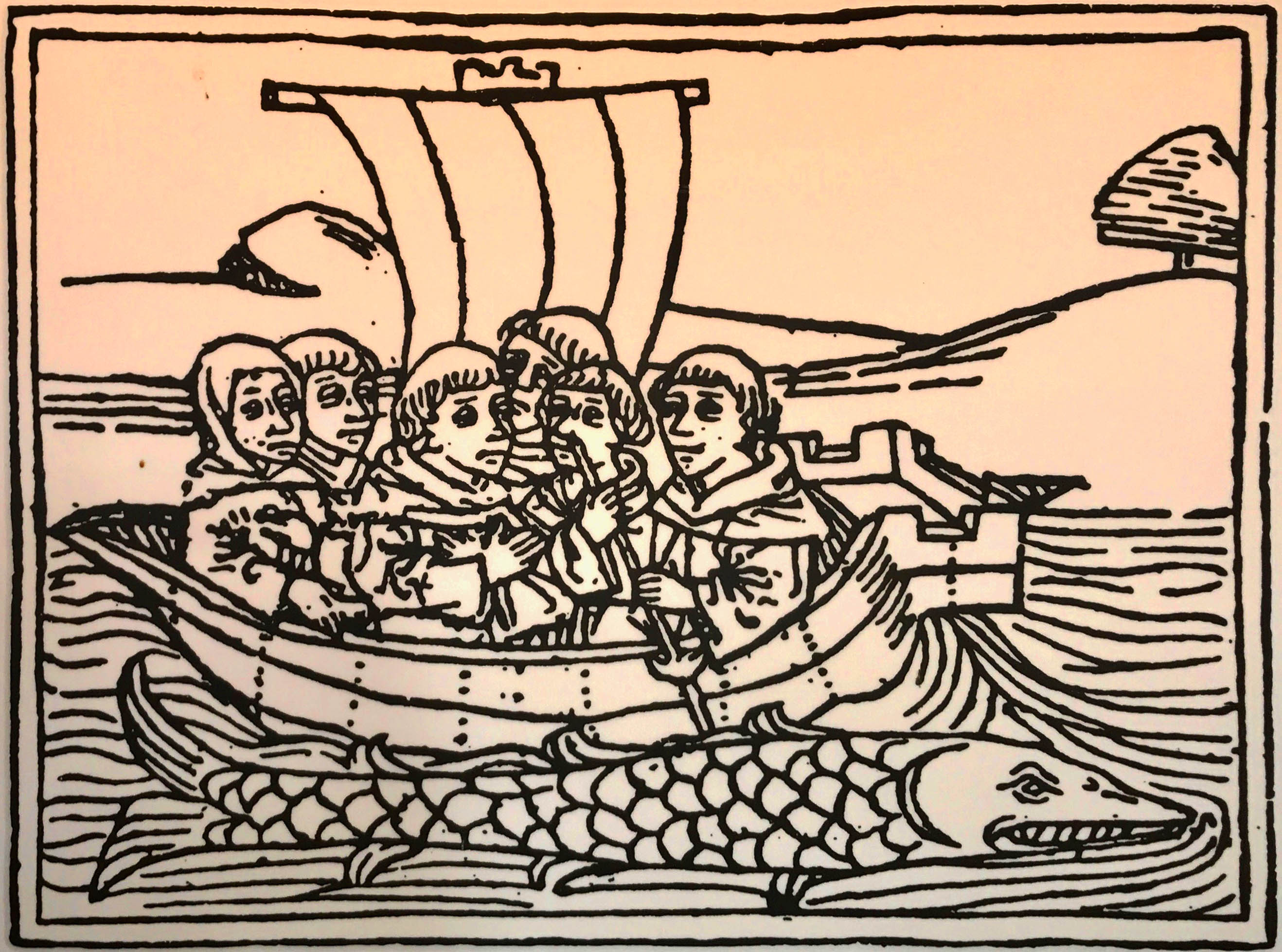
Seen in Ardfert Cathedral, an image of a woodcut dating from 1479: it shows St Brendan and his monks on their epic voyage in search of Paradise. On the way, they discovered the American continent!

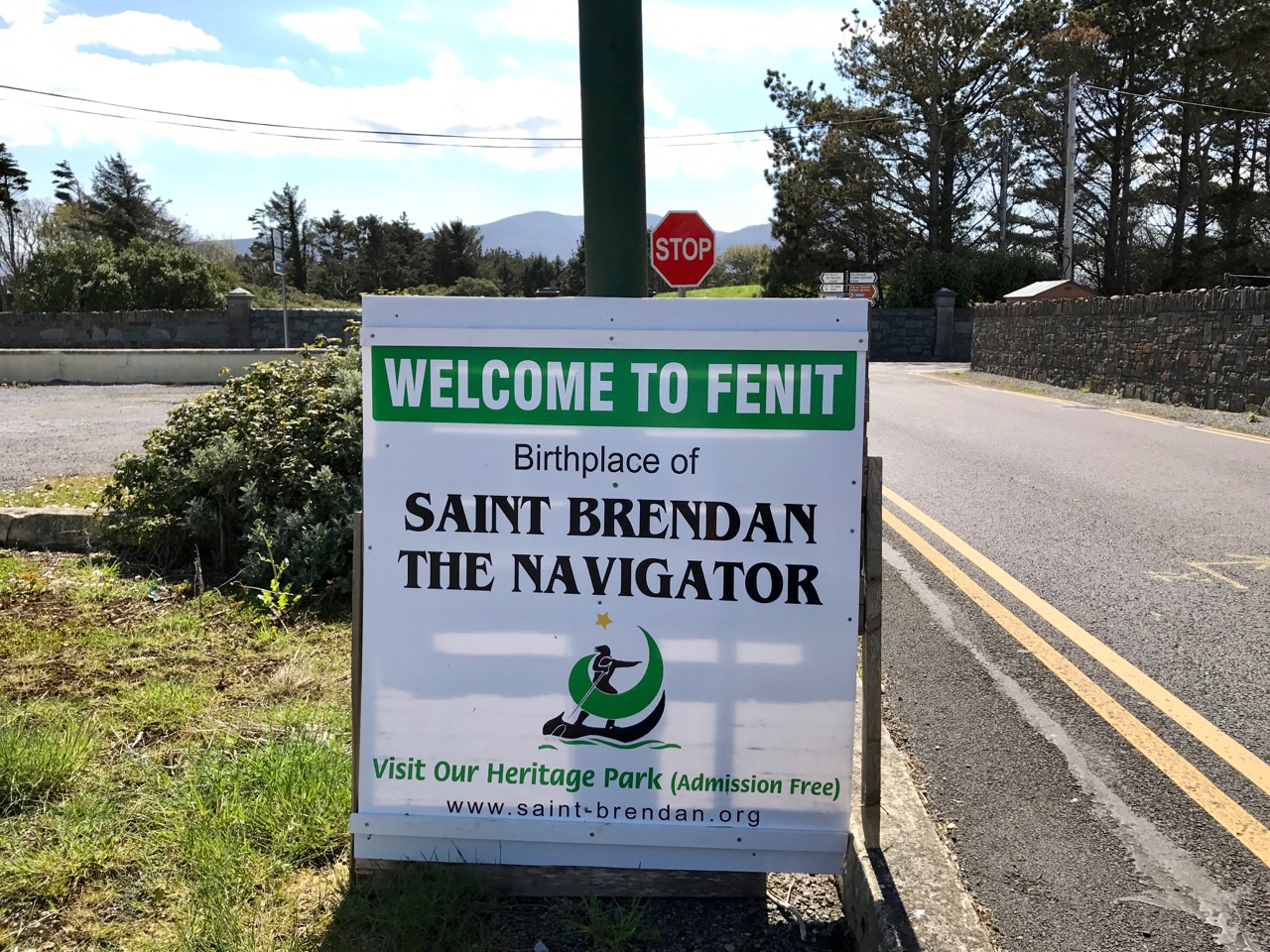
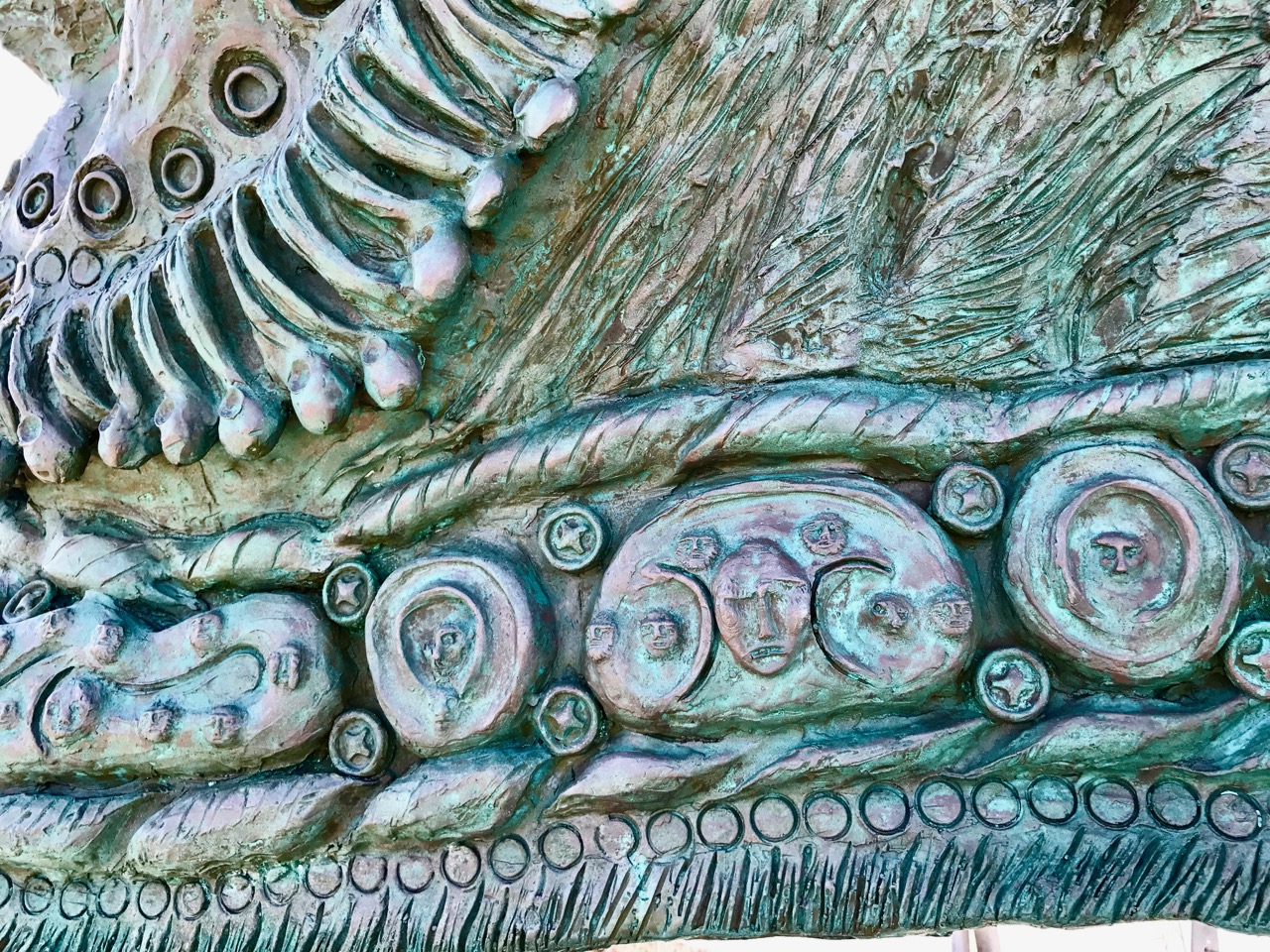
We could not miss a visit to the place of the Saint’s birth in 484 – Fenit, near Tralee – where a monumental bronze sculpture was installed in 2004. It was made by Tighe O Donoghue/Ross of Glenflesk.

It’s hard to do photographic justice to Tighe O Donoghue/Ross of Glenflesk’s sculpture of Saint Brendan in Fenit: he’s depicted as a ‘warrior saint’ (in the same vein as St Fanahan – or St Fionnchú – of Mitchelstown, Co Cork). Certainly he has a heroic character, necessary for someone who embarked on (and returned from) so many adventures

The culmination of our Brendan travels for this trip (there’s so much more yet to be explored) was the medieval site at Kilmalkedar, on the Dingle Peninsula. This monastic settlement is rich in history, and includes St Brendan’s House, and St Brendan’s Oratory. These alone are spectacular monuments, but there are further riches to delight the eye of Irish history enthusiasts. Finola’s post this week concentrates on the wonders of Irish Romanesque architecture, and the ancient stone-roofed church at Kilmalkedar is a prime example.

The wonderful Romanesque early Christian church at Kilmalkedar – right – with ‘Brendan’s House’ in the distance. The site is overflowing with medieval history. Below. the setting for the monastic site is stunningly beautiful. Note the large, very ancient cross and the holed ogham stone

A good while ago – in 1845, in fact – our excursion was foreshadowed by Mary Jane Fisher Leadbeater, who writes in her Letters from the Kingdom of Kerry:

…Our object to-day was not entirely to pay homage to Nature, though in the heart of her lovely works, but to visit the ruins of the wonderful church of Kilmelkedar, which we were solemnly assured “was built in one night by holy angels.” One evening, ever so many many ages ago, the sun, when he set in those wilds, saw no place dedicated to the worship of the Creator: he rose the following morning, and smiled upon a perfect chapel, with pillared niche and carved saint, and a holy fount, and massy cross! all ready for the purposes of prayer and sacrifice! A matin-call rang loud and clear over lofty mountain and lonely glen, to summon the devout and arouse the unthinking, where no vesper strain could sound the evening before; all gleamed proud and fair in the glad light, and the heart of man became purified, as the sacred bell called him to prayer! And this was the reward of the unceasing prayers of the holy Saint Brandon! Such is the legend…

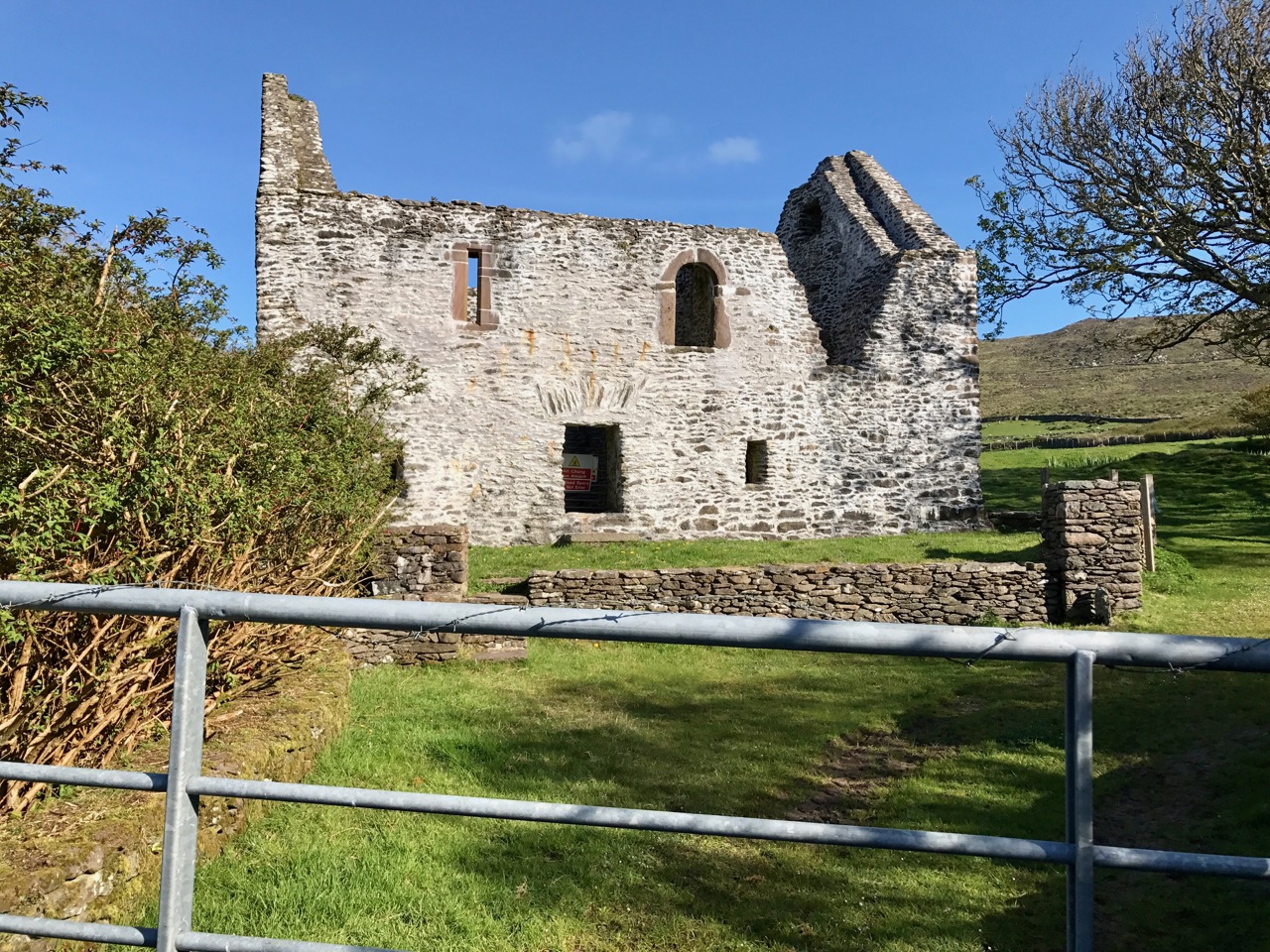
St Brendan’s House – behind a locked and barbed gate!

We spent hours at the Kilmalkedar site and didn’t take everything in. We consider ourselves so privileged: we had it completely to ourselves, and the day was perfect. Saint Brendan treated us very kindly – except that his ‘House’ and an associated holy well were not accessible: although an OPW project which has recently undergone significant restoration, the enclosure around it is impenetrable with barbed wire and a firmly locked gate. However, in an adjacent field, a gate and path gave us free access to a large, flat stone which seemed to be covered in giant cup-marks. The National Monuments register describes it as a ‘Ballaun Stone’: it’s very fine, and I was delighted to find that Mary Jane Fisher Leadbeater had unearthed some folklore about it:

…This place contained a colony of monks; and well they knew what they were about when they fixed on this retirement; for, besides its real advantages, it commands a most lovely view of Smerwick Harbour, The Sisters, and Sybil Head. They need not want for fish in the refectory in the days of abstinence. It is situated in a sheltered recess of the mountains, fine springs around, and, another popular legend bearing witness, in the centre of what was once good grazing and tillage ground. A cow is the subject of this legend—a cow of size and breed suited to provide milk for the giant race of those days. We saw the milk vessels, and if she filled them morning and evening, she was indeed a marvellous cow. In a huge flat rock were these milk pans; six large round holes, regular in their distances from each other, and nearly of equal size; they could each contain some gallons of liquid. This said cow gave sufficient milk for one whole parish; and was the property of a widow—her only wealth. Another parish and another clan desired to be possessed of this prize; so a marauder, endued with superior strength and courage, drove her off one moonlight night. The widow followed wailing, and he jeered her and cursed her as he proceeded. The cow suddenly stopped; in vain the thief strove to drive her on; she could neither go on, nor yet return; she stuck fast. At length, aroused by the widow’s cries, her neighbours arrived, and the delinquent endeavoured to escape. In vain—for he too stuck fast in the opposite rock; he was taken and killed. The cow then returned to her own home, and continued to contribute her share towards making the parish like Canaan, “a land flowing with milk and honey.” The prints of her hoofs, where the bees made their nests, are still to be seen in one rock ; and those of the marauder’s foot and hand in another, where he was held fast by a stronger bond than that of conscience…

Kilmalkedar’s giant ballaun – the cups were filled every day by the widow’s marvellous cow, providing milk for St Brendan’s community of monks back in the day

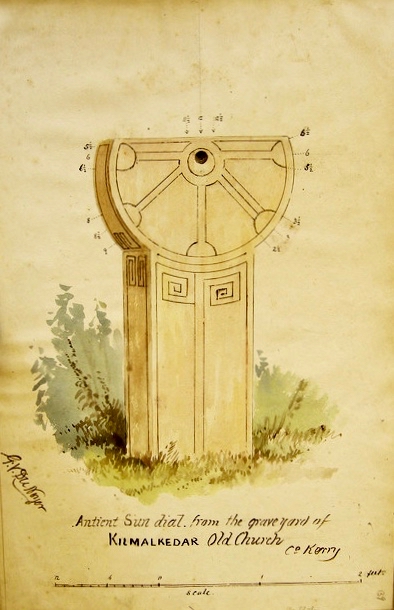
One of the special features of the Kilmalkedar site harks back to its medieval monastic associations – a sundial. The ordered lives of the monks were regulated by divisions of the day (and night) – the Canonical Hours, also known as the Divine Office or Liturgy of the Hours. These were the regular periods of prayer: seven daytime Offices of Lauds (at daybreak), Prime, Terce, Sext, None, Vespers, Compline (at sunset) and a night Office of Vigils. This was the important work of the monastery, of course: constant and regular prayers. In between it the monks had to fit in all the requirements of daily life: sustenance, growing crops, brewing, beekeeping. And, on top of all that, Brendan and his companions undertook their peregrinatio all around the known world. No wonder a timepiece was necessary!

The Kilmalkedar sundial is a particularly elegant example – it’s probably my favourite item on this site: functional and beautiful, as all things wrought by the human hand should be. In such an evocative environment it certainly helps us to cast our minds back to the life and times of the travelling Saint. The antiquarian George Du Noyer visited the place back in the 1860s, and was also drawn to this particular artefact, accurately recording it for us in one of his exquisite watercolour sketches.

Simply Signs

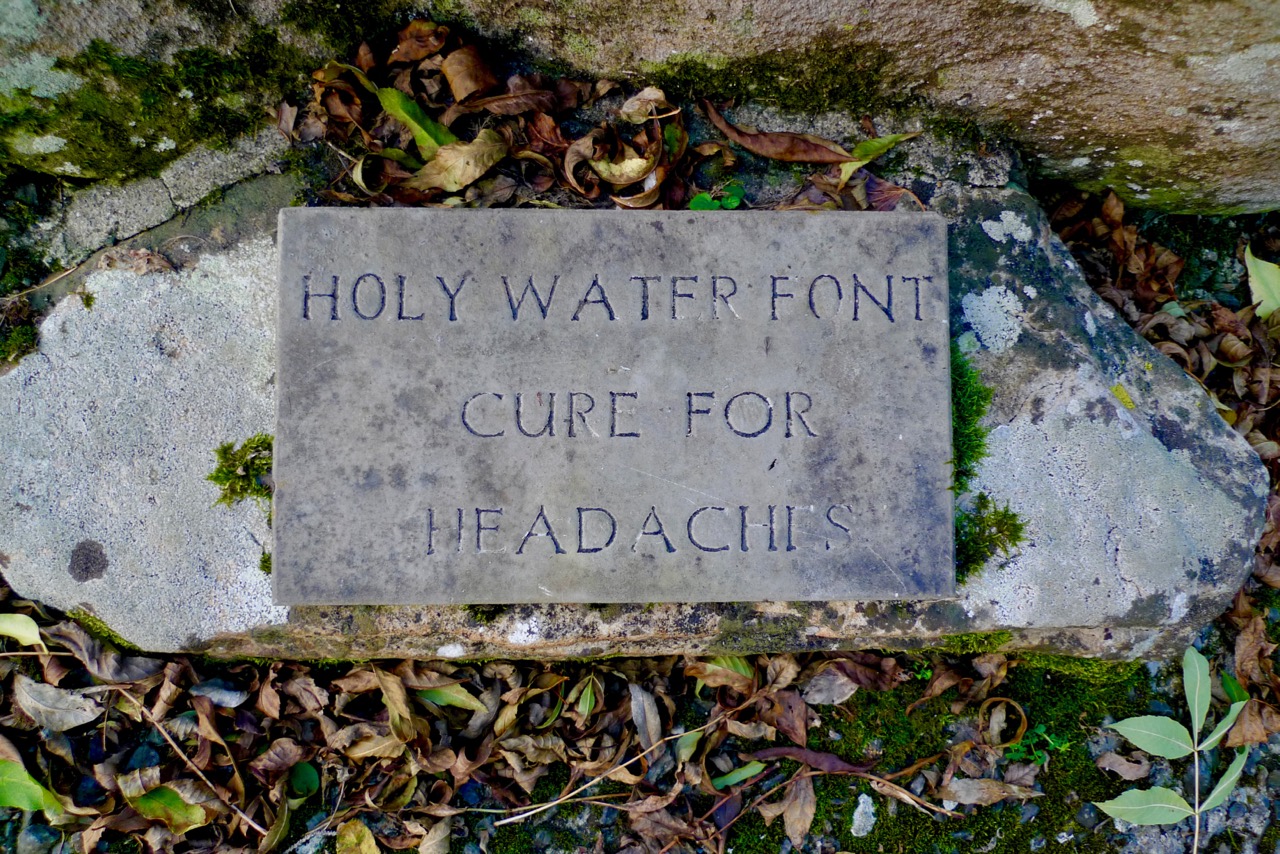
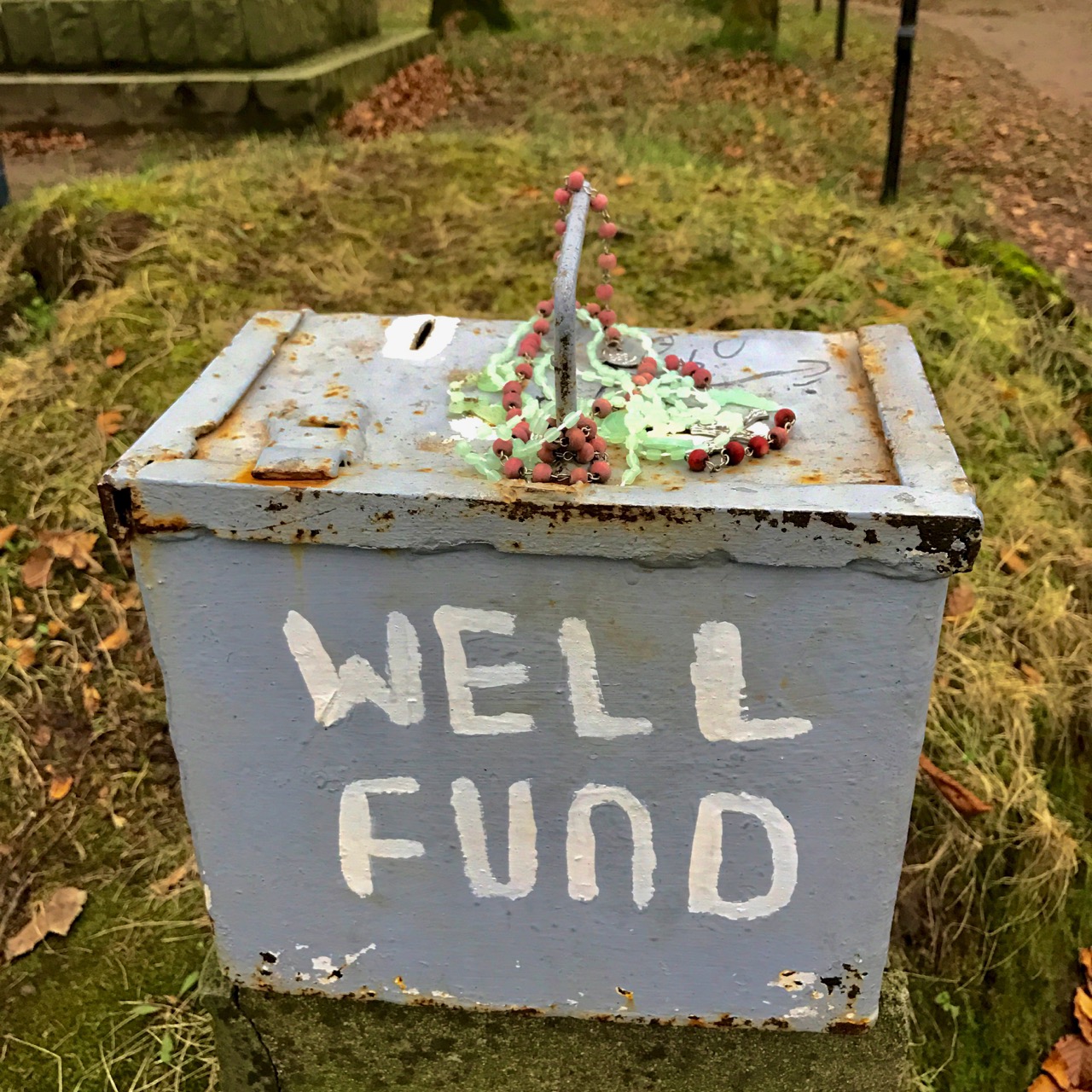
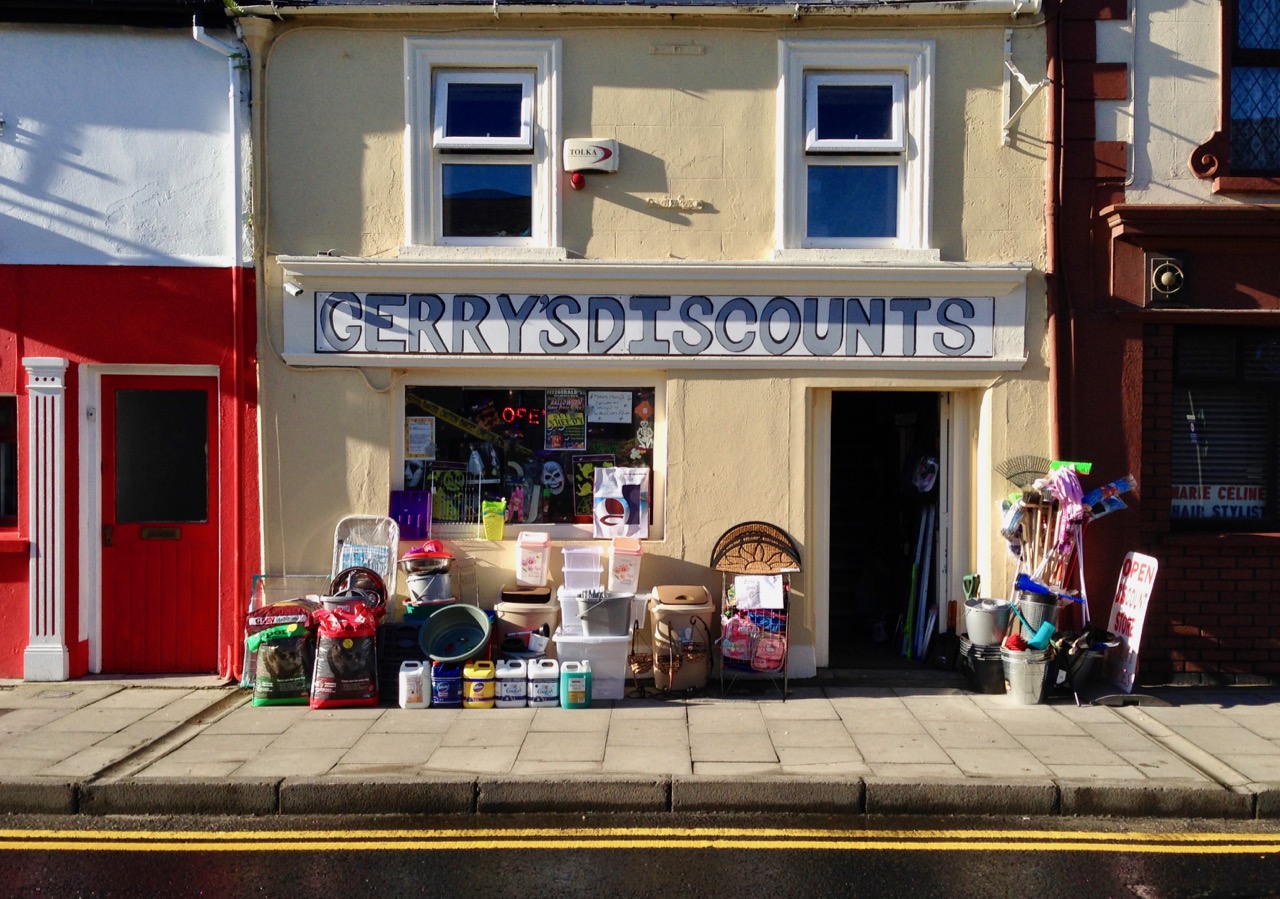
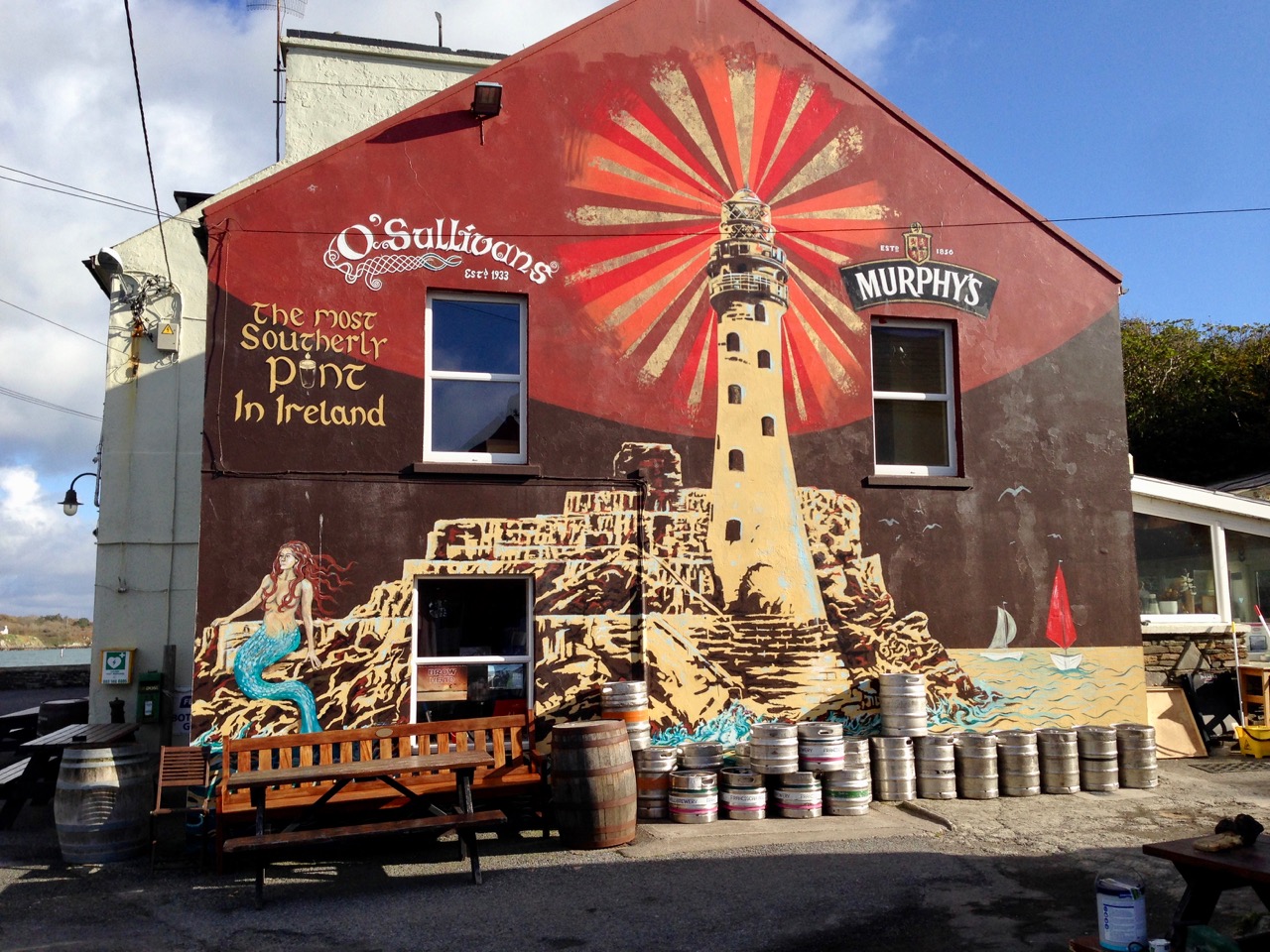
More sign spotting: always an agreeable pastime. These – which come from far and wide on our travels – add to previous collections of words and images spotted in Ireland: Good Signs, Juxtapositions, March Miscellany, and Impressions.

This is a very subjective survey: I’m showing things that I find intriguing or amusing – others will have different reactions. It just goes to show that, for us, there’s never a dull moment here: long may that continue.

In Skibbereen: look carefully here: -some things are easy to miss!

That’s enough for now! There’s plenty more in the collection – look out for them another day.

Stoned

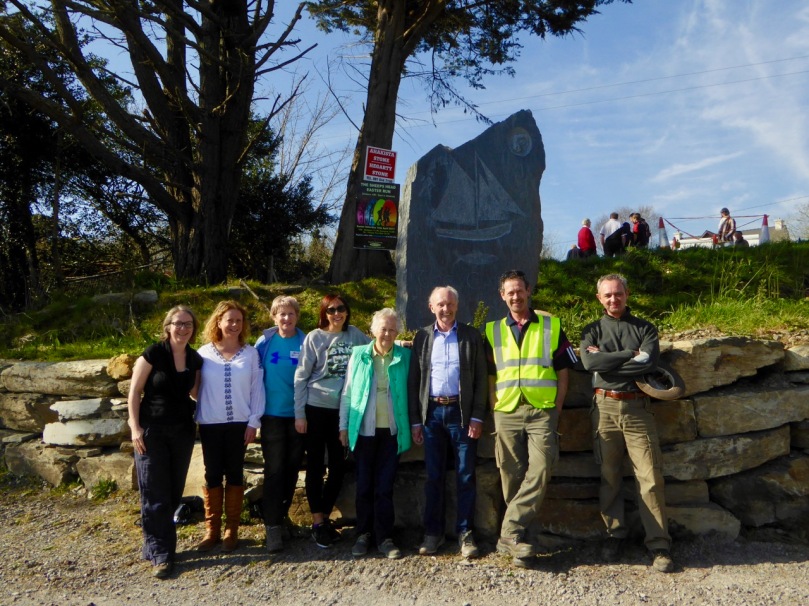
It started on Friday in glorious sunshine and the West Cork Stone Symposium ended today in the same magnificent spring skies. All participants appear to be on a high, and that includes me.

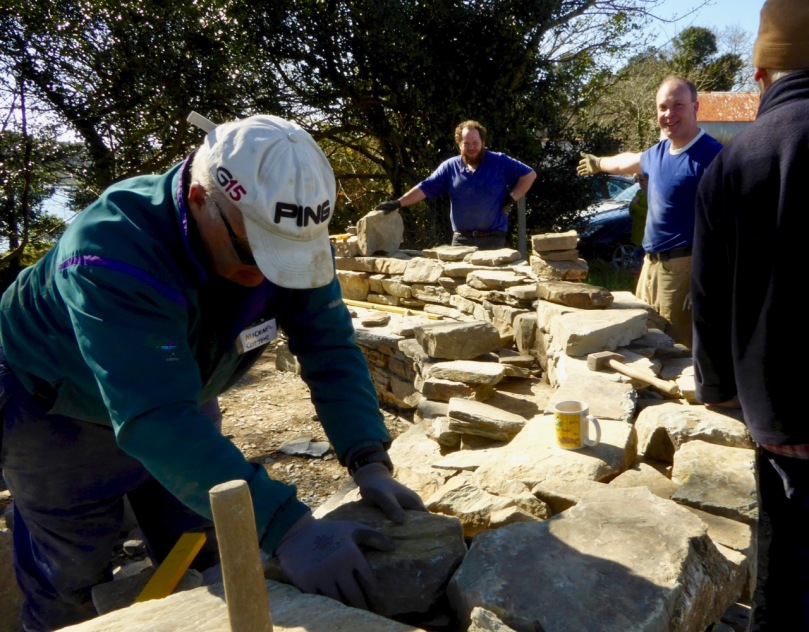
A barbecue pit for the community of Ahakista. Look what we built!

Anyone who lives in or has been to Ireland knows we’re all about stone. Stone walls, stone buildings, stone sculpture, stony landscapes…it’s in our DNA. Wicklow granite, Burren limestone, the basalts of the Giant’s Causeway, Connemara marble, the great slate quarries of Clare and the quartzite peaks of Donegal’s Errigal Mountain. And here, in West Cork, the old red sandstone, in use since prehistoric times to build field boundaries, stone circles and portal tombs, to erect standing stones, and to construct everything from the humble cottage to the big house.

Light on Stone – the theme of the photography workshop led by Ben Russell. 

For us, of course, the old red sandstone is the canvas used for the prehistoric rock art we study. But as one of the organisers of the festival said – everyone who came to the Symposium came with their own experience of stone and their own plans for how they wanted to work with it. Thus, the two main events on the program revolved around stone carving and dry stone wall building, but there was lots more on offer too – guided hikes, a photography day, a whiskey-tasting walk around Whiddy Island, an evening with the Cork Astronomy Club talking about stone circles, a presentation on the dry stone walls of Cork, and more.

The photography workshop group, Ben is second from the left (Photograph by Ben Russell). Ben, camera close-ups

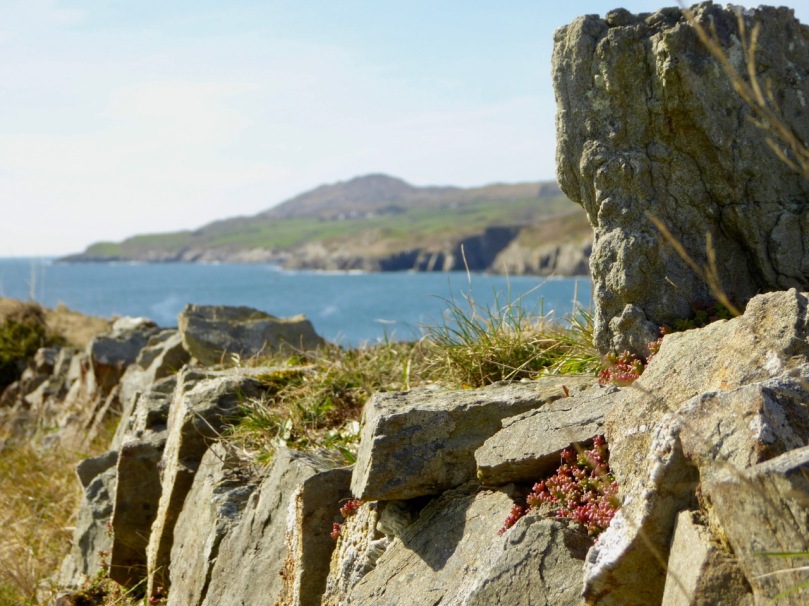
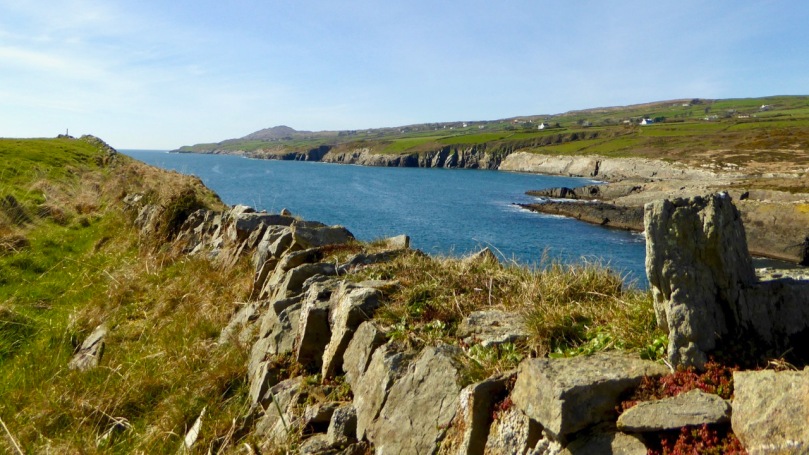
Robert and I participated in several ways: we mounted a pop-up version of our Rock Art Exhibition in Bantry, we gave a talk on rock art, and I enrolled in the all-day photography workshop, Light on Stone, with Ben Russell. This was a great learning experience, half in the classroom and half in the field. The morning outdoors session was spent at Dooneen on dramatic cliffs with the Caribbean blue sea below us.

Practising composition: top, rule of thirds. Bottom, leading line

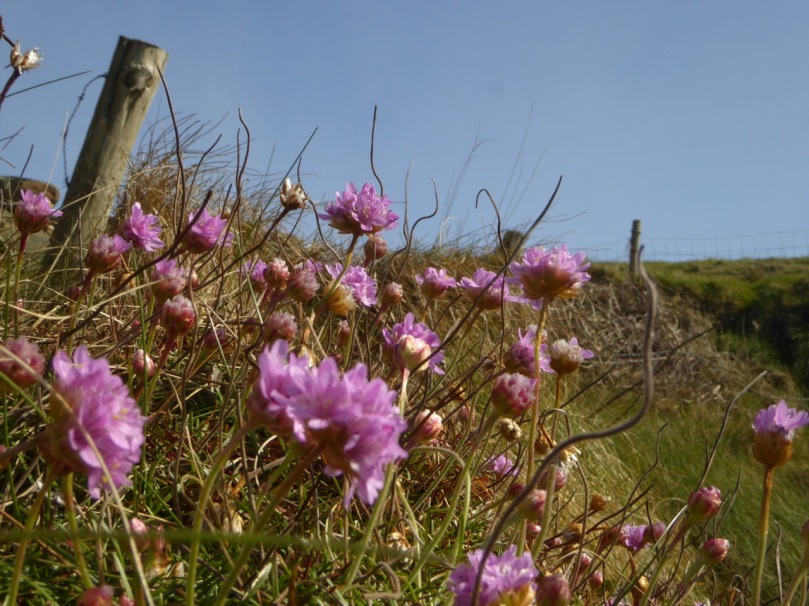
Working with depth of field – and with the first Sea Pinks of the season

In the afternoon Ben led us through taking close-ups and macro shots and then we headed off for the symposium site to photograph whatever we wanted.

Watching and talking to both the carvers and the wall-builders was marvellous. Of all ages and stages, the students were a study in concentration, discovery, and pride in achievement.

The wall-builders had undertaken a long dry-stone wall and a barbecue pit, both of complex and attractive design. Covered in dust, sweat, and broad smiles, they were delighted to talk to me about what they had learned and about their respect for the tutors and their skill.

Rita and her friend had worked on the wall. By the end of day three they were exhausted – but look at those grins!

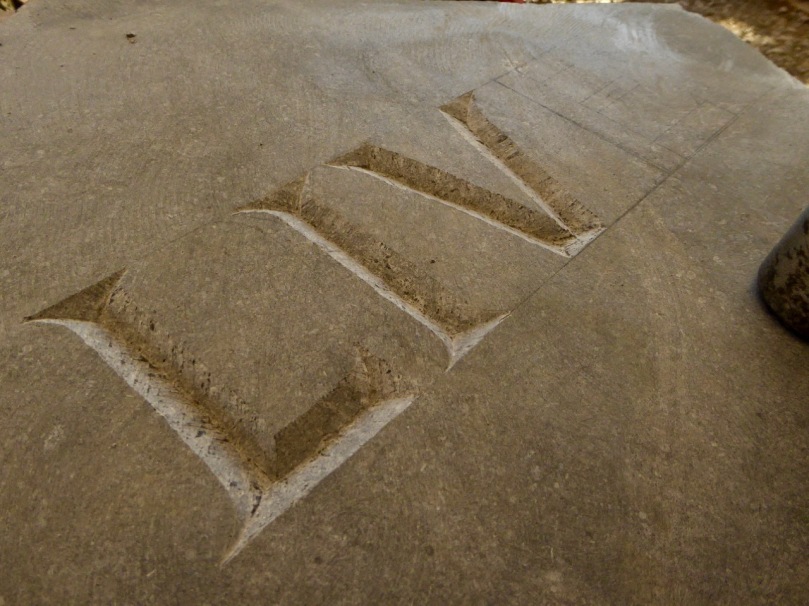
The carvers were all working on individually chosen pieces – words, animals, geometric designs. Few of them had done anything like this before and all were delighted with what they had accomplished. “I never thought I could actually do something like this” was a common refrain.

I was delighted to run into Cliodhna Ní Lionáin again – last time was at a talk she gave on rock art in Dublin. Here she is carving a deer from a Spanish rock art panel

Today we were back to the Sheep’s Head – the Symposium was centred in Ahakista – to give our talk and watch the erection of the standing stone carved by participants.

Members of the organising committee. Second from the right is Victor Daly, our local stone carver and one of the Symposium’s tutors.

This is the inaugural symposium and it’s been an incredible success. There are plans for it to be annual. Have you ever wanted to carve something? Just want to know more about working with stone? Keep an eye on the website and next year come along and experience it for yourself – it will be one of the most unique and rewarding things you will have ever done.

Looking for Patrick

Patrick lights the Paschal Fire on the Hill of Slane. Richard King window, Church of St Peter and Paul, Athlone

A joint post – text by Robert, images by Finola

Last week we talked about Ireland’s very first saint – Ciarán (or Piran), who was born on Cape Clear. His aim in life was to convert the heathen Irish to Christianity, but they were having none of it: they tied him to a millstone and hoisted him over the edge of a cliff. Fortunately – and miraculously – the wondrous millstone floated him over to Cornwall where he became their Patron Saint and is celebrated with great acclaim on March 5th every year.

A typical representation of Patrick, older and bearded, in bishop’s robe, holding a shamrock in one hand and a crozier on the other. Skibbereen Cathedral

To return the favour of gaining an important saint from Ireland, the British have given Ireland their special saint – Patrick – and he is being celebrated this week in similar fashion. So here’s the story of Saint Patrick, seen through the eyes of an Englishman (albeit one with Cornish connections) and illustrated by Finola with a series of images from her collection.

Still traditional – looking fierce – but this one has beautiful detailing, including the interlacing surrounding the cherubs. St Carthage Cathedral, Lismore

Of course, there’s the real Patrick – the one we know through his own Confessio. The best summary we’ve come across of what can be deduced from the historical documents is the audio book Six Years a Slave, which can be downloaded from Abarta Heritage, and which is highly recommended (be warned – no snakes!). But what you’re going to get from me today is the good old-fashioned Patrick, with all his glamour and colour and centuries of accrued stories – just as he’s shown in Finola’s images.

Six Years a Slave – this Harry Clarke window in the Church of The Assumption, Tullamore, seems to depict Patrick tending sheep during the period of his captivity

Patrick was born and brought up somewhere in the north west of Britain. He was of Romano British descent: his father was a a decurion, one of the ‘long-suffering, overtaxed rural gentry of the provinces’, and his grandfather was a priest – the family was, therefore, Christian. In his own writings Patrick describes himself as rustic, simple and unlearnèd.  When still a boy, Patrick was captured by Irish pirates and taken to be a slave in Ireland. He was put to work on a farm somewhere in the west and spent the long, lonely hours out in the fields thinking about the Christian stories and principles he had been taught back home.

Patrick is visited by a vision – the people of Ireland are calling to him to come back and bring Christianity to him. Richard King window, Church of St Peter and Paul, Athlone.  Read more about Richard King and the Athlone windows in Discovering Richard King

After six years he escaped from his bondage and made his way back to Britain – apparently by hitching a lift on a fishing boat. Because he had thought so much about Christianity during those years away, he decided to become a bishop which, after a few years of application, he did. Although he had hated his enforced capture he was aware that Ireland – as the most westerly outpost of any kind of civilisation – was one of the only places in the known world that remained ‘heathen’, and he was nagged by his conscience to become a missionary there and make it his life’s work to convert every Irish pagan.

Detail from Patrick window by Harry Clarke in Ballinasloe

When you see Patrick depicted in religious imagery he always looks serious and, perhaps, severe. You can’t imagine him playing the fiddle in a session or dancing a wild jig at the crossroads. In fact he was well know for his long sermons: on one occasion he stuck his wooden crozier into the ground while he was preaching and, by the time he had finished, it had taken root and sprouted into a tree!

Patrick with his hand raised in a blessing, accompanied by his symbols of the Paschal Fire and the shamrock. Harry Clarke Studio window, Bantry

Perhaps it was his severity that caused him to be respected: while giving another sermon (at the Rock of Cashel) he accidentally and unwittingly put the point of his crozier through the foot of the King of Munster. The King waited patiently until Patrick had finished sermonising then asked if it could be removed. Patrick was horrified at what he’d done, but the King said he’d assumed it was all part of the initiation ritual!

In Richard King’s enormous Patrick window in Athlone, the saint is depicted as youthful and clean-shaven. Here he is using the shamrock to illustrate the concept of the Trinity

Patrick first landed on the shores of Ireland just before Easter in 432 AD and established himself on the Hill of Slane – close to the residence of the High King. In those days the rule was that only the King himself was to light the Bealtaine Fire to celebrate the spring festival, but Patrick pre-empted this by lighting his own Paschal Fire on the top of the hill, thus establishing his authority over that of the High King (see the first image in this post). Somehow, he got away with it – and the fire has been lit on the top of the Hill of Slane every Easter from that day to this.

Another panel from the Richard King window – Eithne and Fidelma receive communion from Patrick. They were daughters of the King of Connaught; Eithne was fair-haired and Fidelma a redhead, and they were baptized at the Well of Clebach beside Cruachan

St Patrick seems to have been everywhere in Ireland: there are Patrick’s Wells, Patrick’s Chairs (one of which in Co Mayo – the Boheh Stone – displays some fine examples of Rock Art), Patrick’s Beds and – on an island in Lough Dergh – a Patrick’s Cave (or ‘Purgatory’) where Jesus showed the saint a vision of the punishments of hell.

Patrick blesses St Mainchin of Limerick. Detail from the Mainchin window in the Honan Chapel, by Catherine O’Brien for An Túr Gloinne

The place which has the most significant associations with Patrick, perhaps, is Croagh Patrick – the Holy Mountain in County Mayo, on the summit of which the saint spent 40 days and 40 nights fasting and praying, before casting all the snakes out of Ireland from the top of the hill – an impressive feat. To this day, of course, there are no snakes in Ireland – or are there? See my post Snakes Alive for musings on this topic (it includes a most impressive window from Glastonbury!)

Like many Patrick windows, this one, By Harry Clarke in Tullamore, shows Patrick banishing the snakes. This one has all the gorgeous detailing we expect from Clarke, including bejewelled snakes

When Patrick considered that he’d finished his task, and the people of Ireland were successfully and completely converted, he returned to Britain and spent his retirement in the Abbey of Glastonbury – there’s a beautiful little chapel there dedicated to him.

This depiction of Patrick on the wall of his Glastonbury chapel shows him with familiar symbols but also several unusual symbols – an Irish wolfhound, high crosses, and Croagh Patrick, the holy mountain

It’s logical he should have chosen that spot to end his days as it must be the most blessed piece of ground in these islands, having been walked upon by Jesus himself who was taken there as a boy by his tin-trading uncle, Joseph of Arimathea. St Bridget joined Patrick there in retirement and they are both buried in the Abbey grounds, along with the BVM who had preceded them to that place a few centuries earlier.

From the George Walsh window in Eyeries, Patrick returns to convert the Irish

A depiction of Patrick below comes from St Barrahane’s Church of Ireland in Castletownsend where he is shown alongside St George. The window dates from before Irish independence and is an attempt to show the unity of Britain and Ireland through their respective patron saints. Perhaps meant to represent friendship between the countries, nevertheless nowadays it seems to display a colonial overtone that is an uncomfortable echo of past mores.

The window is by Powells of London and dates to 1906

So let’s leave Patrick doing what he came back to do – a last panel from the Richard King window in Athlone shows him performing his saintly task of converting the Irish – one chieftain at a time.