Mosaics and Maharajas Revisited – Part 1

We have a particular reason for re-publishing this 2016 post, one of our personal favourites, this week. The church urgently needs conservation and this West Cork gem is in danger. The group trying to save it is looking for help. If you feel like donating, here’s the link: https://www.gofundme.com/f/west-cork-hidden-gem

But no matter if you donate or not, you will love this little church and its amazing features and we encourage you to visit it when you can.

What follows is a substantially re-written version of a post originally published in Feb 2016

———–

This week when we were passing though Timoleague I had a fancy to see inside the Church of the Ascension as I had heard it was ‘worth a look’.  Understatement of the century! What we saw was astonishing, beautiful, and overflowing with history and stories.
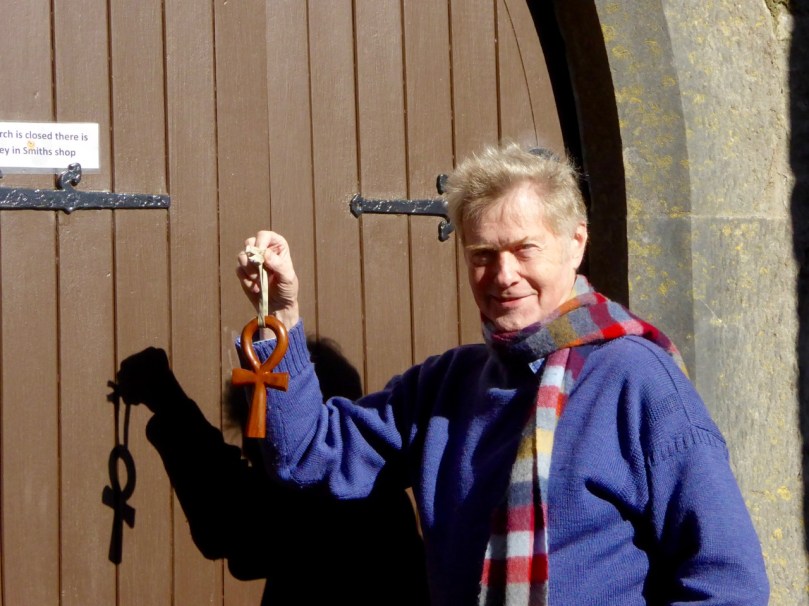
The key is kept at the Post Office on the main street – just ask

This Church of Ireland building is typical of the simple gothic revival style favoured by the funders – the Board of First Fruits. (Read more about this almost-forgotten organisation in a post from the always excellent Irish Aesthete.) Built from the ruins of an earlier (probably medieval) church it was consecrated in 1811 but enlarged later in the 19th century. The pointed-arch windows and the square tower with louvre vents are unremarkable features on the exterior, but open the door and step inside and you enter another world.

The mosaics are the most obvious (although by no means the only) glory of this church. Designed to commemorate members of the Travers family (yes, the same Travers whose memorials dot the walls of St Fin Barre’s) they cover the entire interior of the church, apart from the hammer-beam ceiling in the nave. They incorporate motifs in several traditions – Christian, Jewish and Islamic.
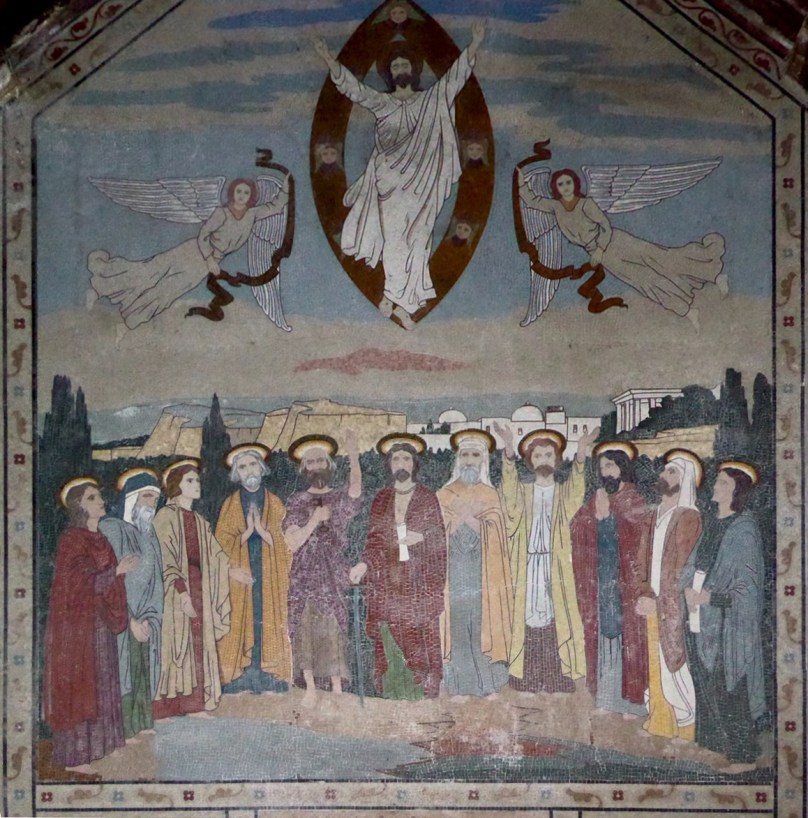
Above the west doorway is the Ascension scene – the apostles are rather conventional but I love their colourful robes and the flower borders. Below them is an angel font, similar to a pair in St John’s Catholic Church in Tralee, made of Carrera marble, with yet more mosaic detail.
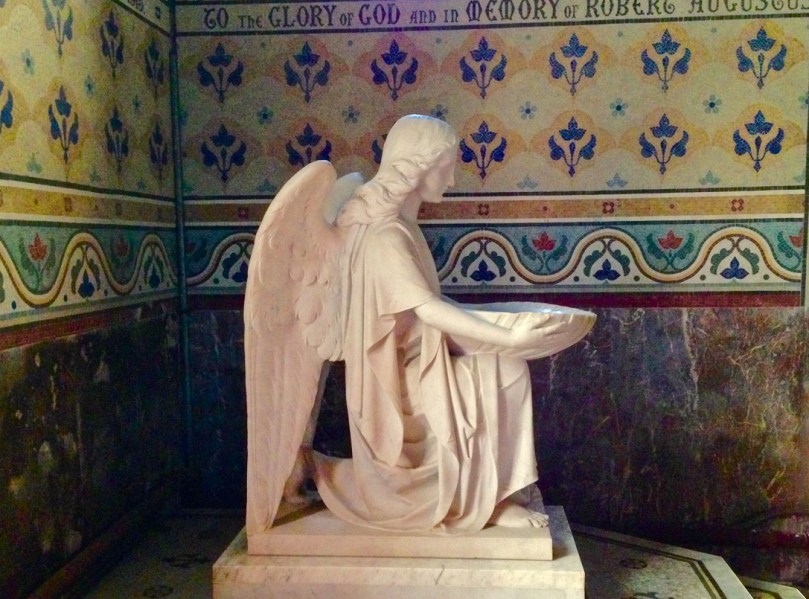
Members of the Travers family are named in mosaic around the walls – Robert Valentine Travers of the Munster Fusiliers was only 22 when he fell at Gallipoli.
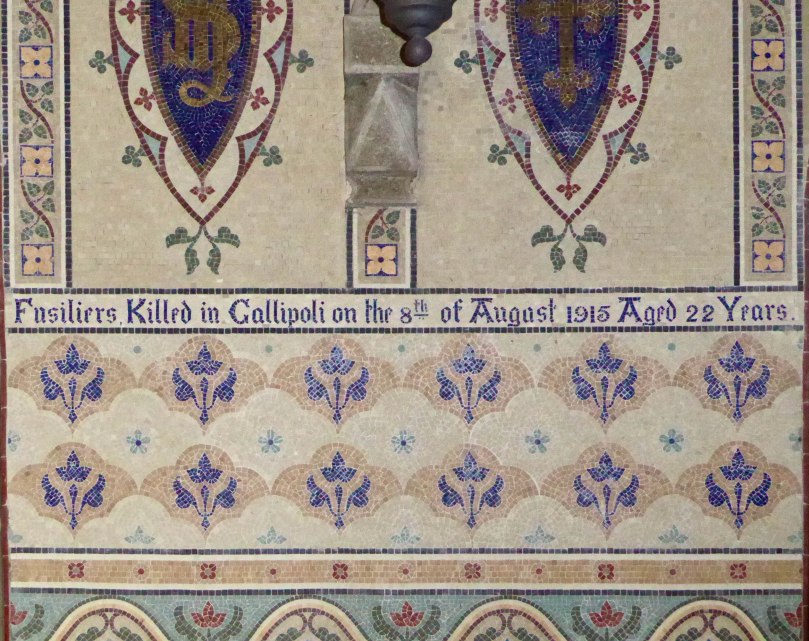
The mosaic tiles were made by Minton, as were the encaustic tiles on the floor (below). Minton is known for its bone china but in fact it was also was the leading producer of British ceramic tiles during the 19th century.
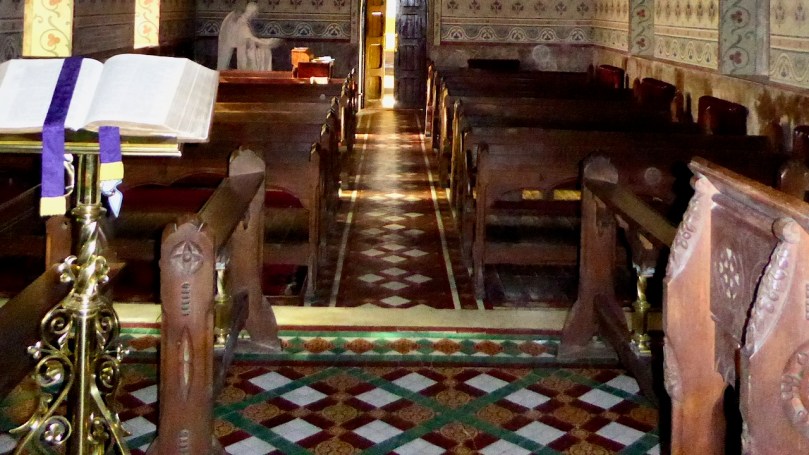
In the chancel, above the marble altar, the ceiling is covered in painted angels, while the walls are mosaic, parts of which have been gold-leafed. The richness of the detail and the vision that dictated such a glorious conjunction of imagery and colour is jaw-dropping, and mark this little provincial church as part of the influential Oxford Movement of the Victorian era that aimed to return ornamentation and beauty to spaces of worship.
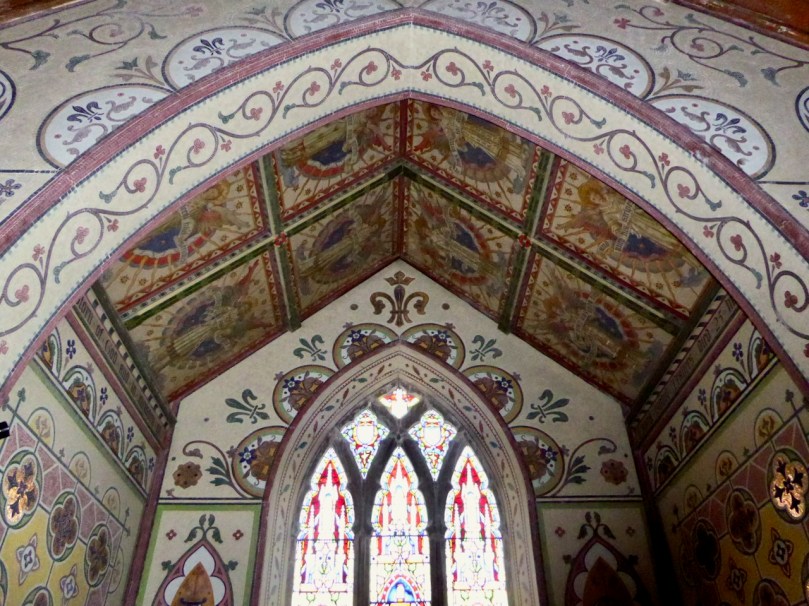
This is the great High Church and Low Church debate. A group called the Cambridge Camden Society promoted a return to gothic architecture: the classical style was seen as pagan, while the great gothic cathedrals of Europe represented the apex of Christian architecture. (More about this in Part 2, which will concentrate on the stained glass and the architecture of the church.)
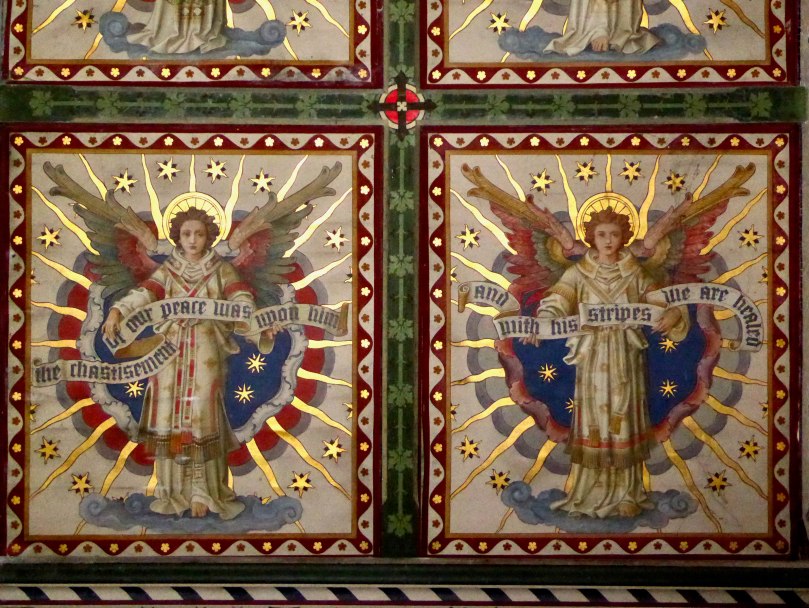
Installing mosaic is a time-consuming and expensive process – this one involved importing artisans from Italy and the parishioners eventually received help from an unexpected quarter. The final series of installations was paid for by an Indian Maharaja!
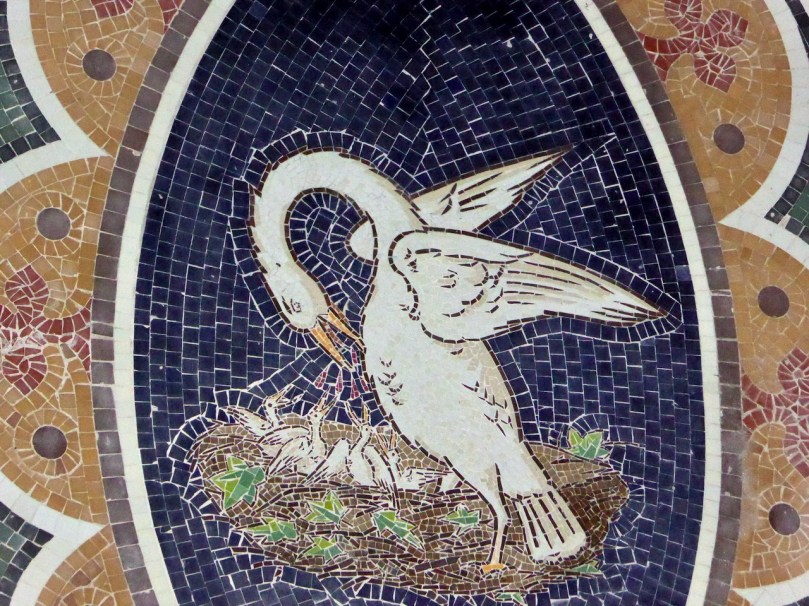
The Pelican is a Christian symbol of sacrifice – the pelican was believed to provide her own blood to her young when no other food was available

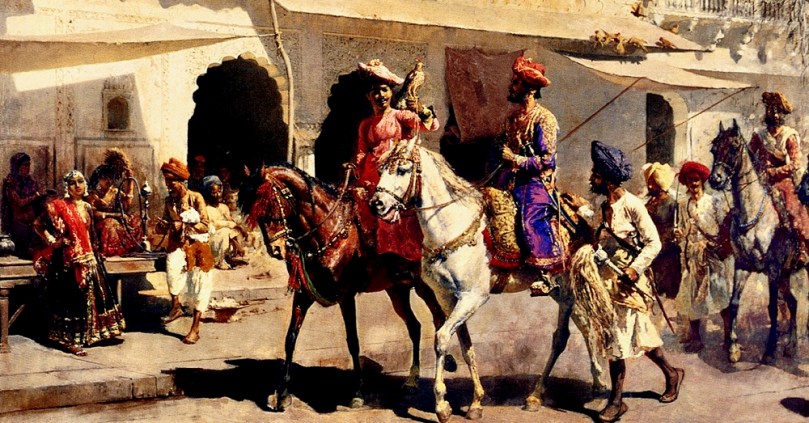
Madhav Rao Scindia was the Maharaja of Gwalior. He was wealthy and looking for places to  spend his money. What, you don’t believe that? Just read this story about the fabulous and secret treasure chambers of Gwalior. No, I jest – in fact, he was a highly-educated ruler who did much to modernise his state but he was only 9 years old when he inherited the title from his father, pictured below leaving his palace in state.
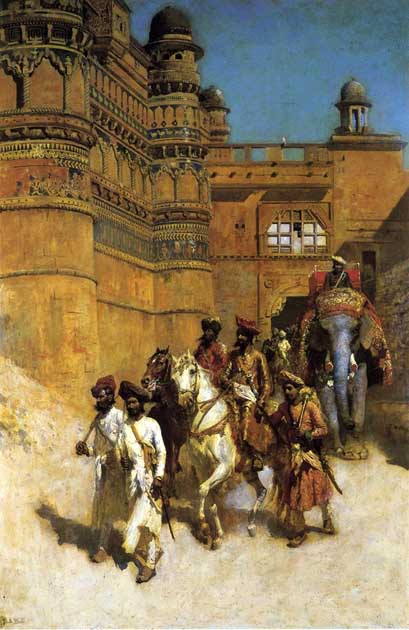
The Maharaja of Gwalior Before His Palace, C 1887 by Edward Lord Weeks

The British appointed as his surgeon and tutor an Irish doctor from Timoleague – Dr Martin Crofts. A long friendship grew, based on mutual respect (and shared tiger-hunting expeditions) and it is said that Crofts saved the life of the Maharaja’s son. 
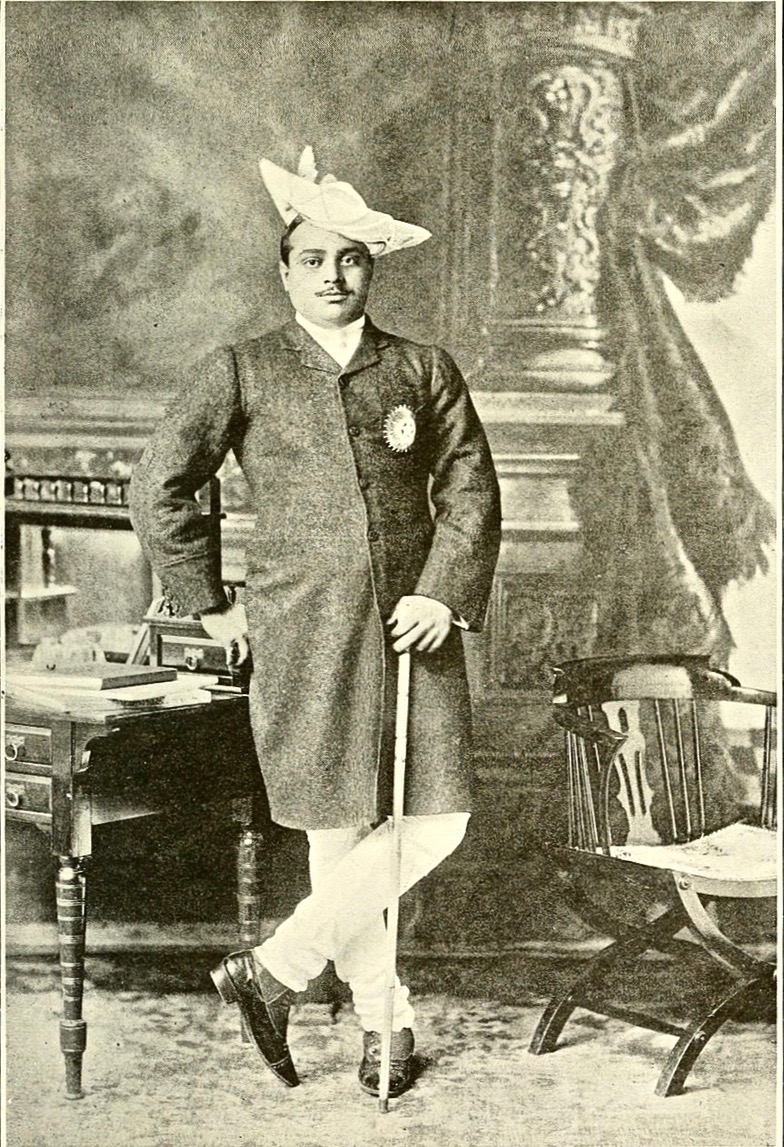
The Maharaja in his prime

When Crofts died suddenly in 1915, after only a year of retirement, and was buried in Timoleague the Maharaja funded the completion of the mosaics as a memorial to his friend and mentor.
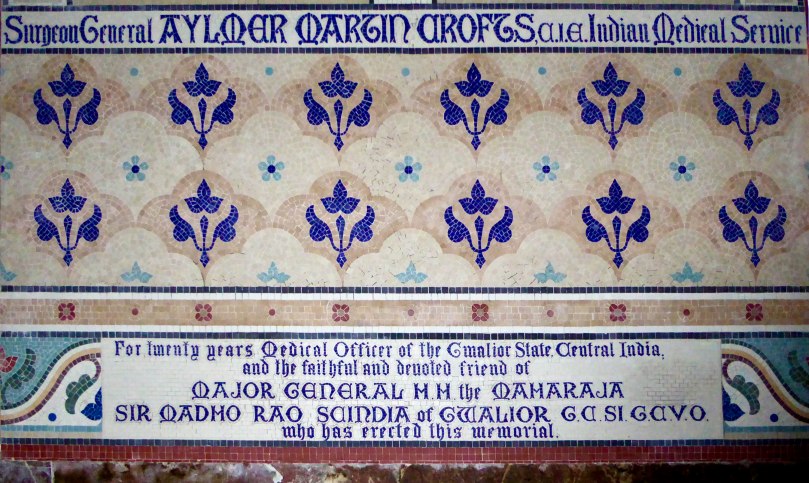
Thus, a tiny and obscure church in Timoleague invokes not only a great architectural movement but, like the memorials last week, echoes of the Empire and an unlikely international friendship. But this is not the last of the story – in the next post we will explore the other glory of this little church, the stained glass windows. In their own way they also link Timoleague to the great artistic trends of their age.
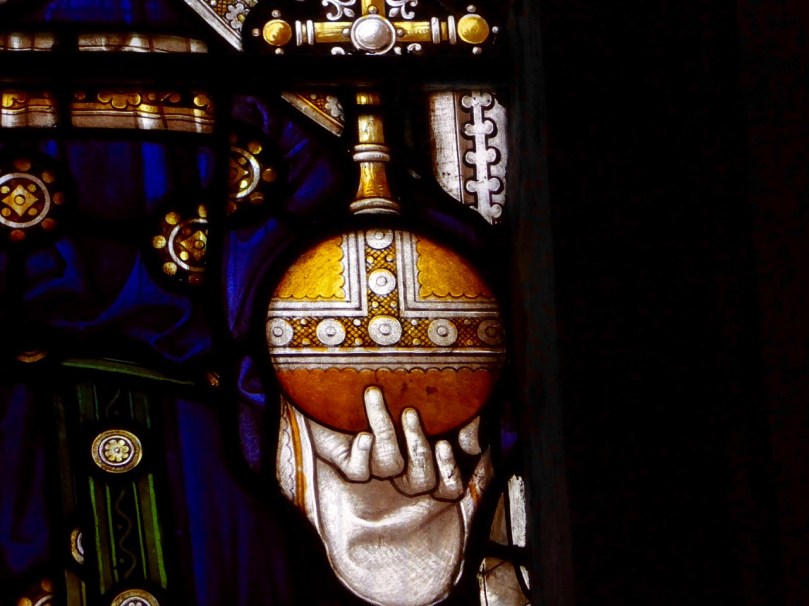
A detail from one of the windows
Part 2 is here.

Leaving for the Hunt at Gwalior by Edwin Lord Weeks

Aughadown – Church on the Ilen

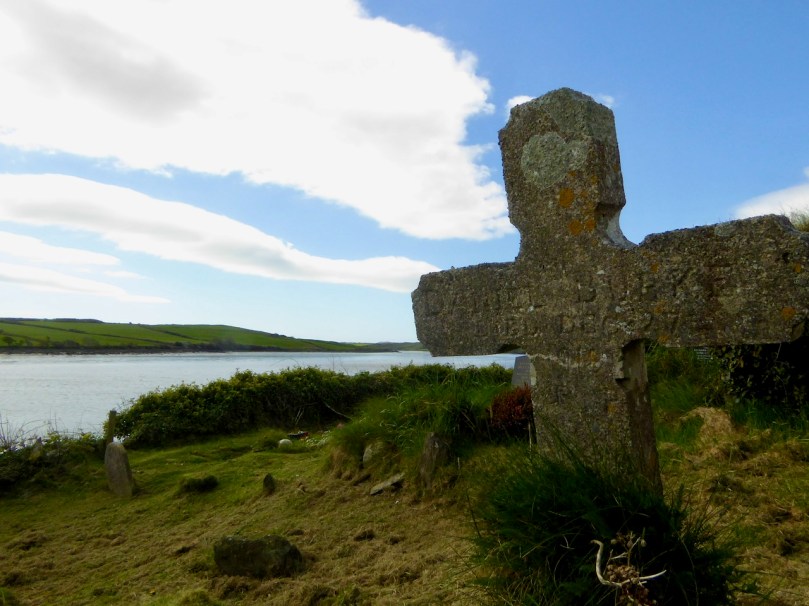
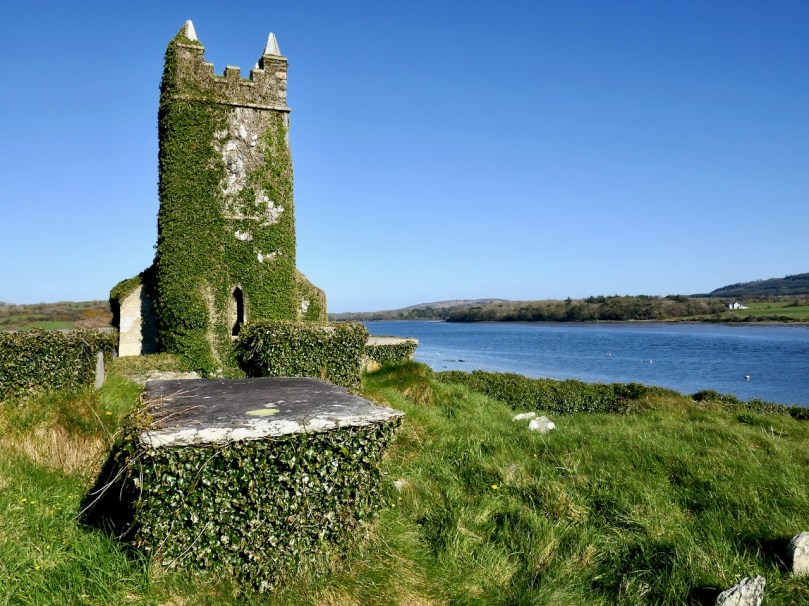
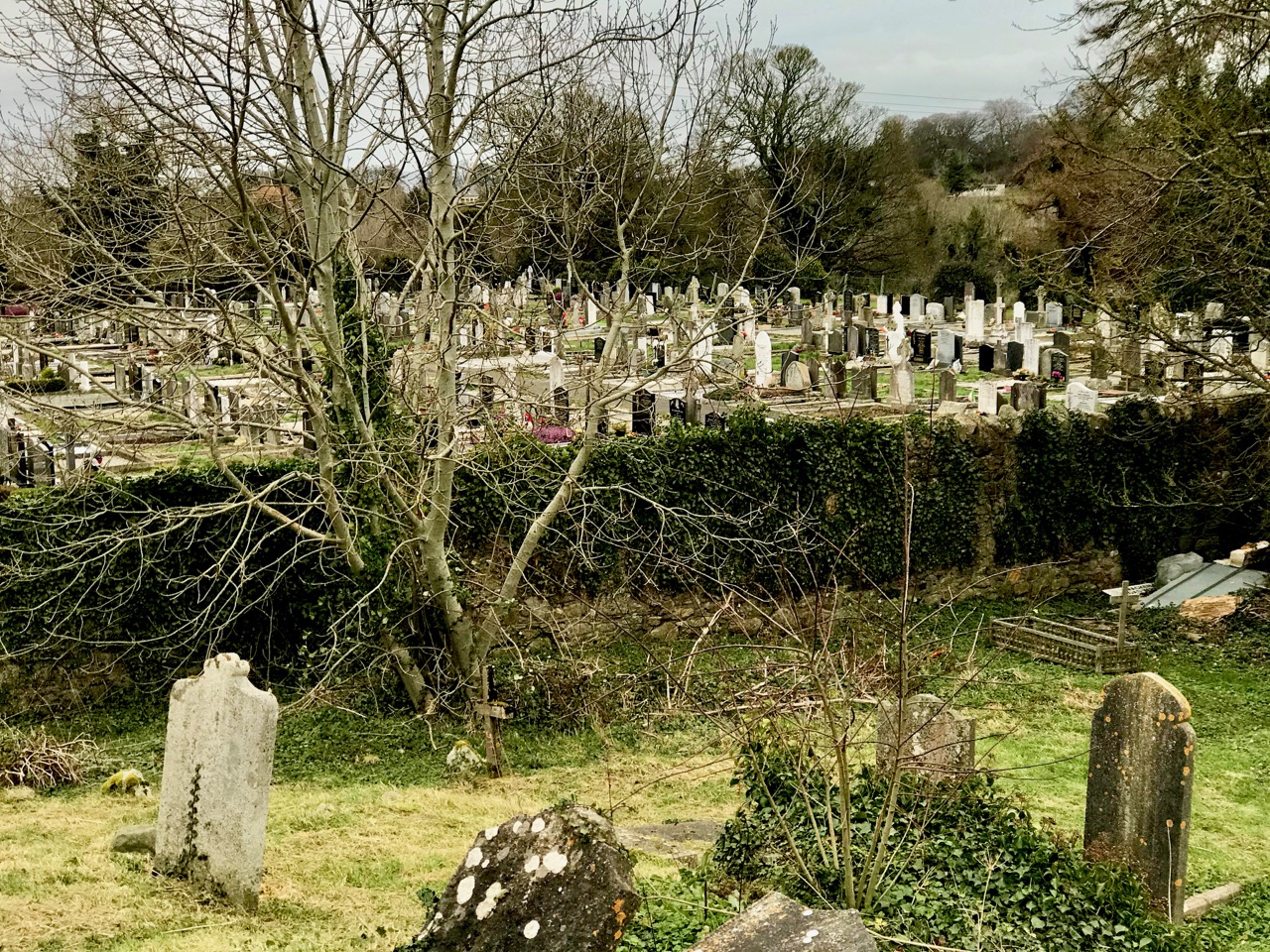
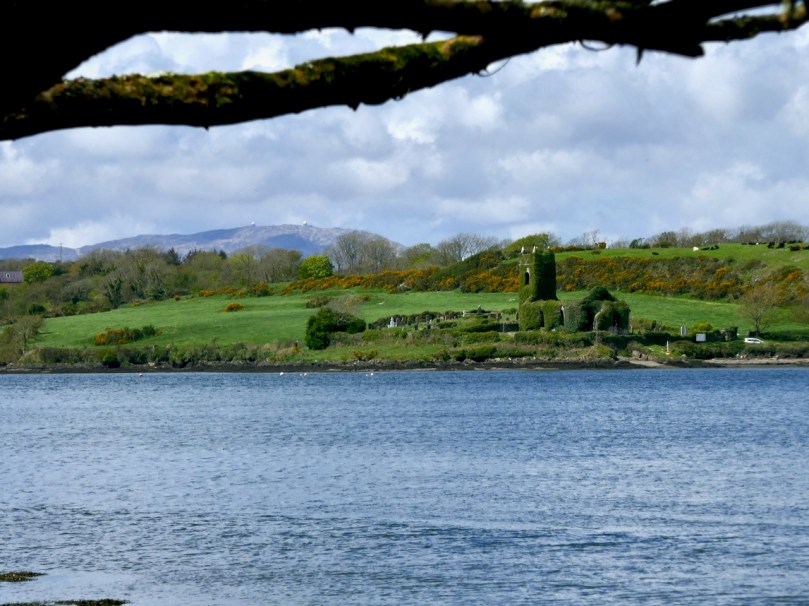
Surely one of the most picturesquely situated in Ireland, the early nineteenth century church at Aughadown on the Ilen is surrounded by a graveyard that tells the story of Irish and local history. Locals, by the way, use the pronunciation Affadown, and for the river, it’s Eye-len.

The church we see now dates from 1814, but there was an even older church on this spot once, of which no trace now remains. The 1814 church was no longer fit for purpose by the 1870s and was replaced in 1872 by the much larger St Matthias church, exactly a mile (1.6km) to the north along what is now the N71.

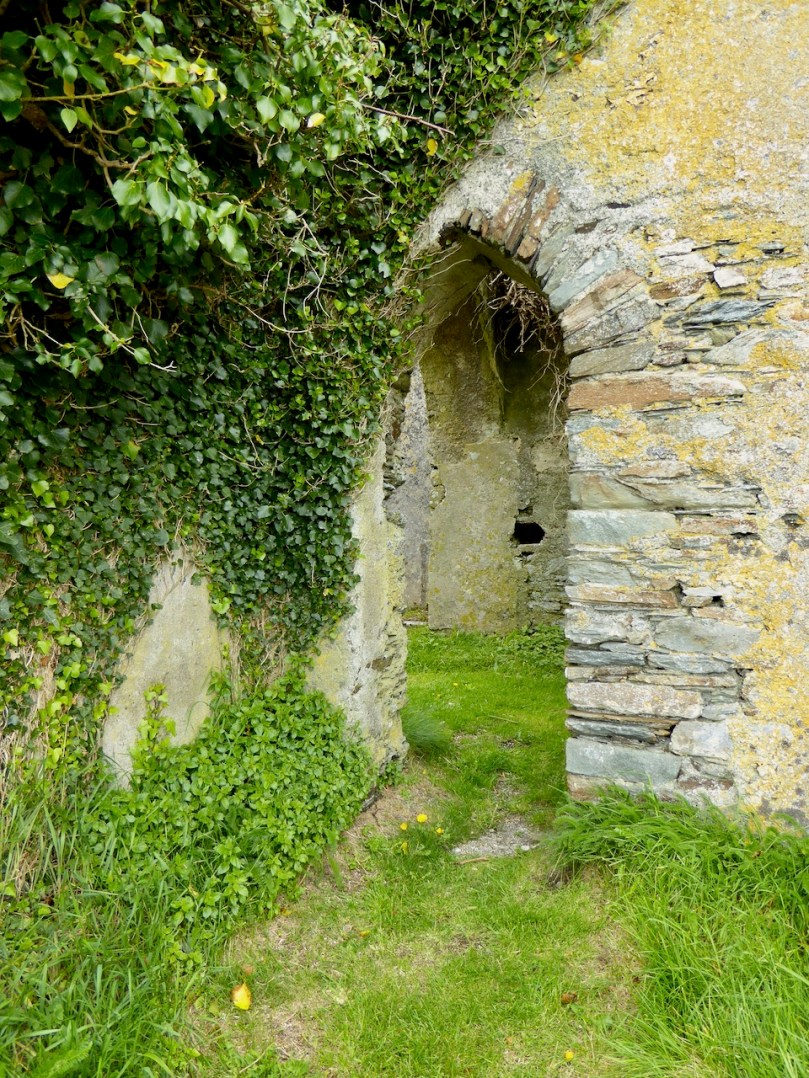
As the church fell into ruin it gradually accrued the ivy and the general air of dereliction that are the indispensable attributes of the romantic, greatly augmented by its charming siting on the banks of the Ilen river. Oxeye Daisies cover the graves in spring and summer, while Thrift flourishes along the banks. The outlines of the slate-hanging that would have kept the interior dry are still obvious on the outside walls – see the photo above.

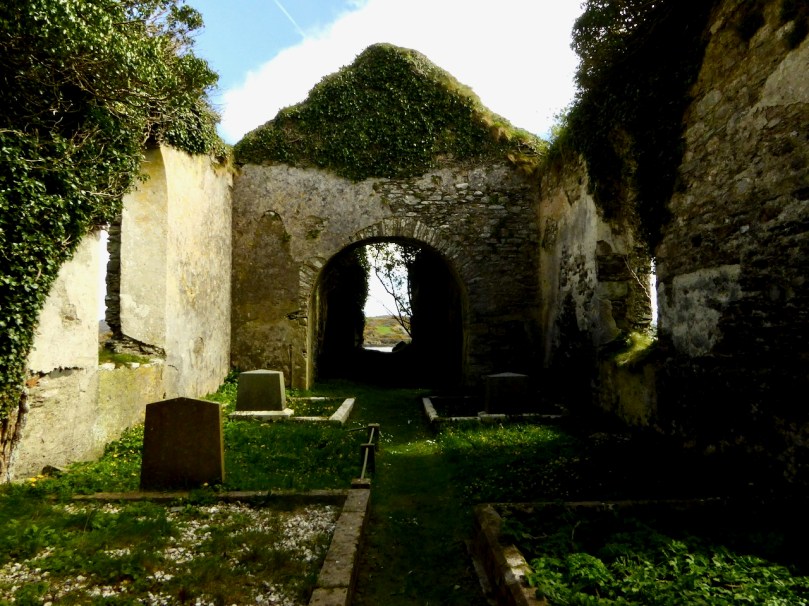
Inside, the church looks remarkably small by today’s standards and it’s easy to see how a congregation would have outgrown it over time. There are some unusual design features, such as round-headed arches and windows rather than the more common gothic ogees.

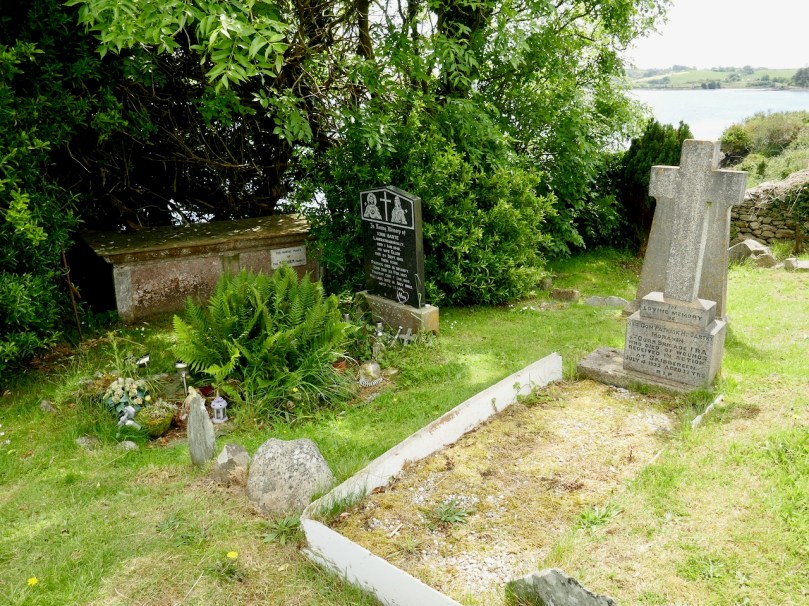
But it’s the graveyard that is the most fascinating part of this site. As the community graveyard of that place, it was used by all – Church of Ireland, Catholic and Dissenter. Plots seem to follow family lines, rather than, as in many West Cork graveyards, separate areas for Catholic and Protestant. As a result, there are some curious juxtapositions.

The graveyard has been surveyed and recorded by a volunteer group coordinated by the Skibbereen Heritage Centre. For a burial place as old and overgrown as this one, with faded or non-existent inscriptions, this was a herculean undertaking! But the good folks at the Skibb Heritage Centre seem to thrive on challenges like this. As they say themselves – they ‘get’ graveyards.

From their own website, here is an account of one of those ‘curious juxtapositions’:

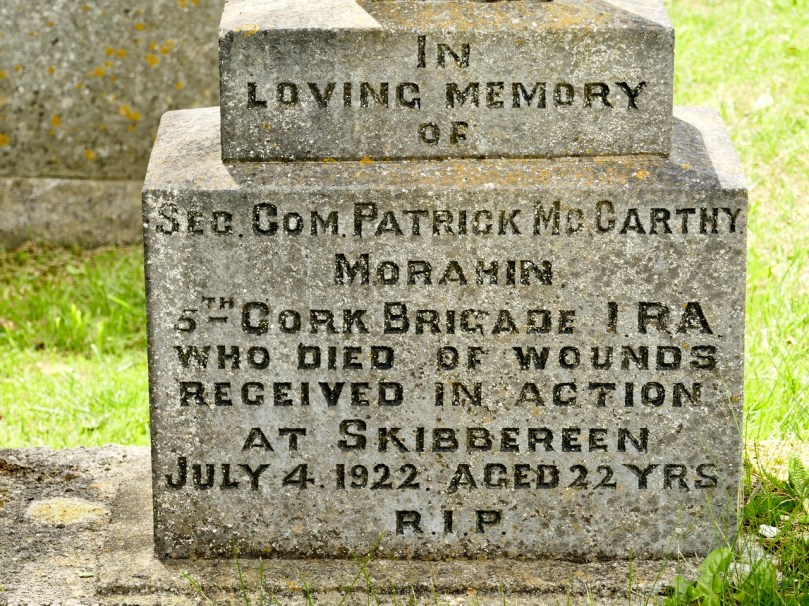
Among those buried at Aughadown is Patrick McCarthy of the 5th Cork Brigade of the IRA. He took part in the Kilmichael Ambush in 1920 and was shot during the Siege of Skibbereen in 1922, aged 22. It was said that a lit cigarette revealed his location to his assassin. A plaque now marks the spot where he was killed on the Windmill Rock in Skibbereen.

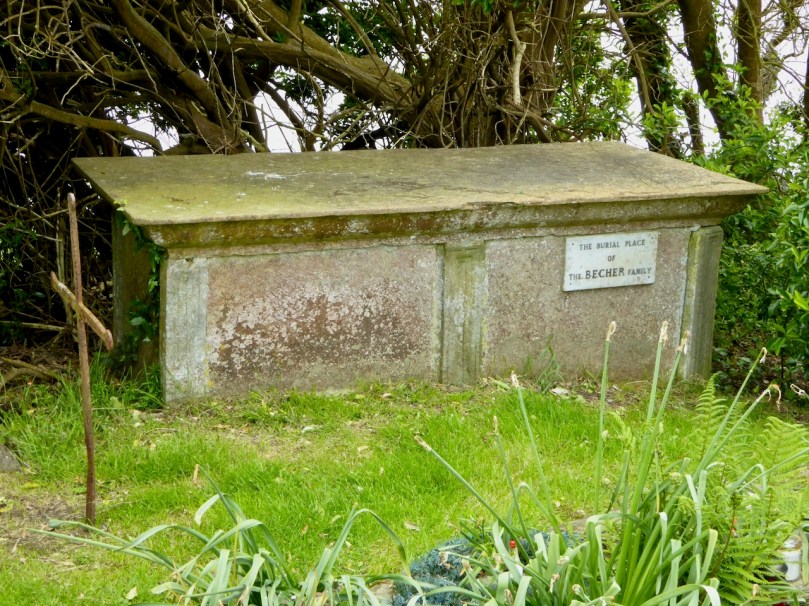
Very close to the Patrick McCarthy grave is the tomb is of the Bechers of Aughadown, once major landlords in the area. Buried in this plot is Colonel Thomas Becher who died in 1708 and served as aide-de-camp to King William of Orange at the Battle of the Boyne in 1690

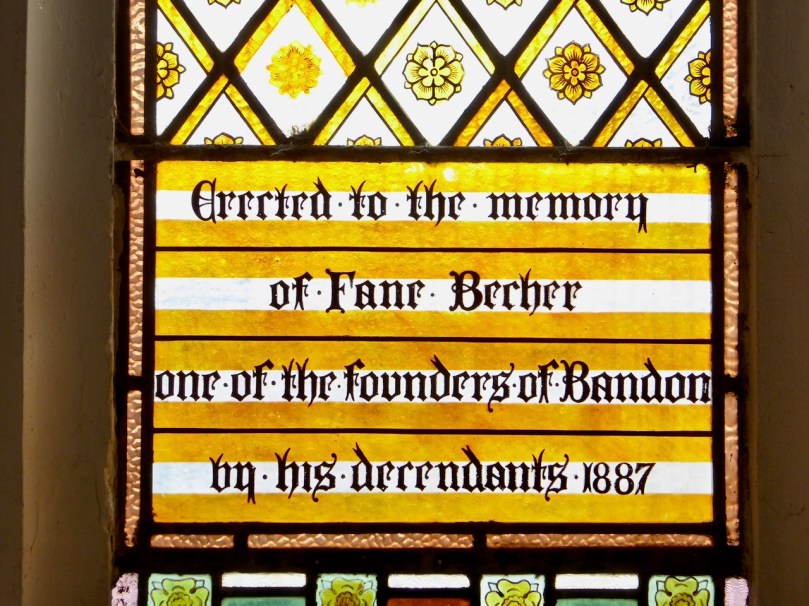
The Bechers were responsible for the fortified manor house at Aughadown that I reported on in Moving Up in Tudor Times. Descended from Fane Becher, one of the founders of Bandon, they intermarried with all the local families and the name Becher is familiar in other graveyards too – Castletownshend for example.

A detail from a memorial window in St Peter’s Church in Bandon

Here’s a lovely old headstone with a depiction of an angel playing a trumpet, although I can’t make out the inscription

Lionel Fleming is buried here – a man infamous for his conduct during the Famine, but so too is Dr Stephen Sweetnam, a dispensary doctor responsible for saving many lives during that terrible time.

The Tonson tomb in the foreground

The oldest recorded burial (although probably not the earliest) is that of Henry Tonson, about whom I wrote in my post New Court Bridge – a Hidden Wonder. It dates from 1703 and appears to be on slate, with an incised inscription that reads Here Lyes the body of Captn Henry Tonson who departed this life November the twenty fifth and in the thirtyeth seventh year of his age 1703.

A wander around this old church on a sunny day is rewarding. You’ll find yourself marvelling at the wildflower meadow while simultaneously seeking out old headstones and wondering about the lives of those buried here. Perhaps you might even arrive by boat, or kayak, as just outside the gate is a stopping place for the newly developed Ilen River Blueway.

However you arrive, you will leave – and I guarantee this – in a better mood.


A Medieval High Cross – Out of Place

I was intrigued by this advertisement in the current edition of the Irish Arts Review (March – May 2020). Morgan O’Driscoll is based in Skibbereen, West Cork and specialises in Irish art. Paul Henry (1876 – 1958) fought an uphill battle in his own lifetime to get his work recognised. In 1911 Paul Henry and his wife Grace exhibited in Leinster Hall, Dublin. One critic commented that the Henrys: ‘ . . . seldom rise above the dead level of mediocrity and too often fall below it . . . ‘  In that exhibition was a work, The Potato Diggers: it didn’t sell until the 1930s. In 2013 it was included in a sale by James Adams & Sons, Dublin – and fetched €400,000! Just a decade ago, a Paul Henry might have been expected to sell for a few thousand – now, 40 years after his death, he’s a star!

Paul Henry painted by his wife Grace in 1899

So why am I intrigued by the O’Driscoll advertisement? Take another look – the title of the painting is given as Celtic Cross at Lough Derg. I have taken an interest in Irish medieval High Crosses, and published a few articles on them in this Journal. In particular, this one – The Wonders of Monasterboice. Here’s a couple of photos from that post: the left one is an image of the west face of Muiredach’s Cross taken in the early years of the twentieth century – when the carving appears to be more clearly defined than it is today – and on the right is Finola, giving scale to the same cross just a couple of years ago. This cross – named after Abbot Muiredach mac Domhnaill, who died in 923AD – is one of the finest in the country, standing 5.5 metres tall.

Looking at a detail from the Paul Henry painting (above), there is a remarkable similarity between the ‘Lough Derg’ cross and Muiredach’s Cross at Monasterboice. So – I hear you suggest – are they twins? Not exactly: in fact, through the medium of painting, one cross can be in two places at once! There is no ‘Celtic Cross’ at Lough Derg, so our artist has taken Muiredach’s Cross and placed it in his picture. Why?

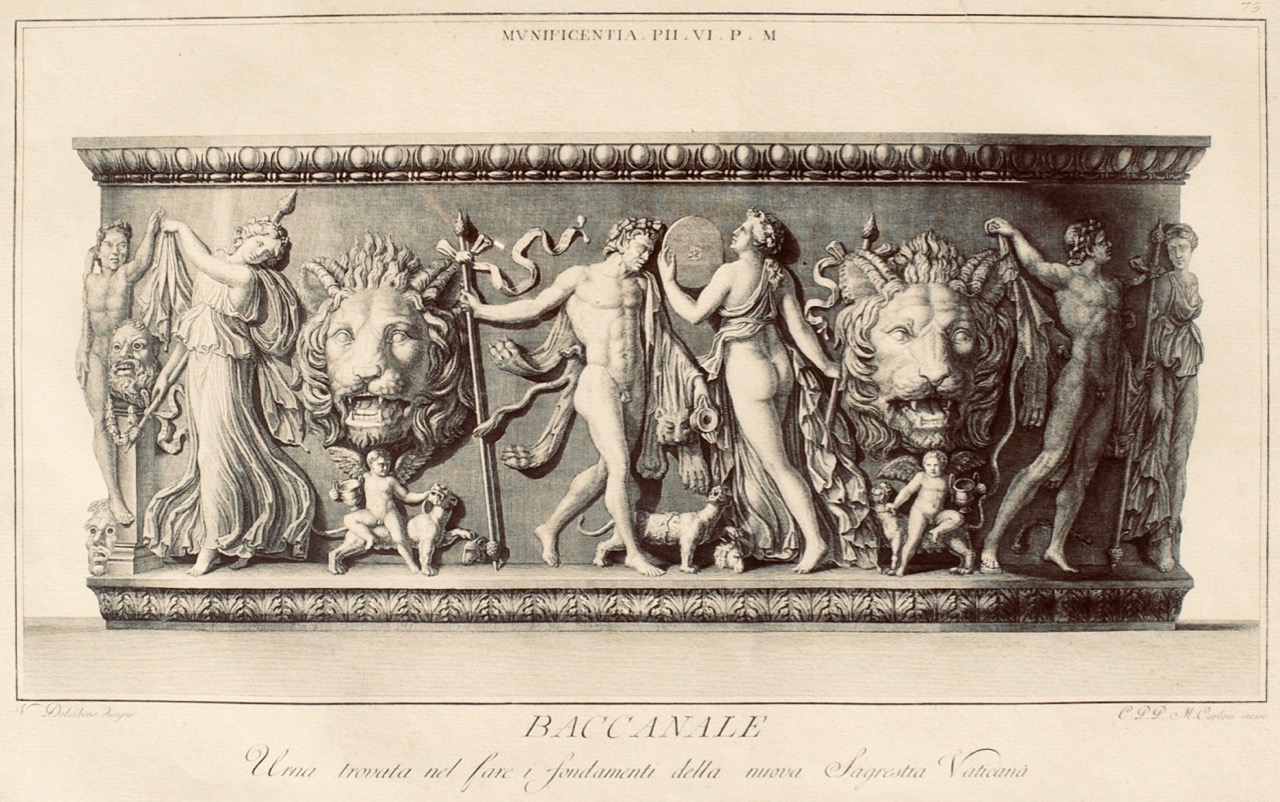
At this point I can’t resist showing you this antiquarian drawing of Muiredach’s Cross (above), probably dating from the eighteenth century, although I haven’t been able to find the author of it. It’s fascinating that all the elements of the cross are portrayed: the central figure in the roundel – presumably Christ – the various figures on the  panels above and below and on either side, and the two cats on the base looking very much like comfortable fireside moggies. But look how all the images have become stylised: medieval has been transported to Georgian neo-classical!

Baccanale – an example of a 1782 copperplate engraving by Marco Carloni, Rome

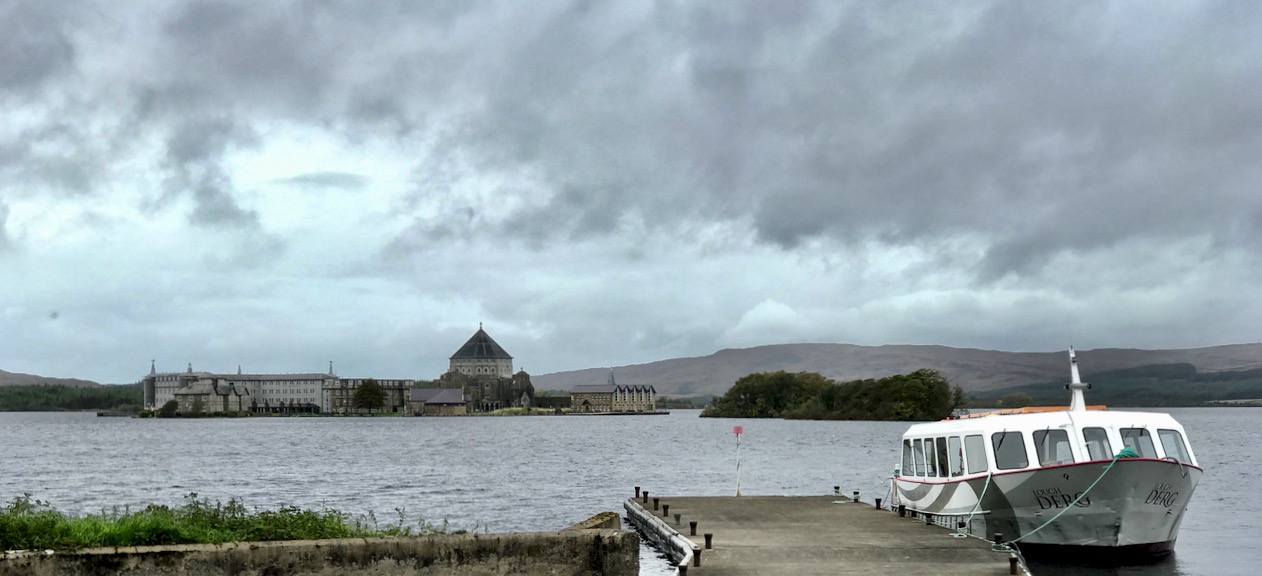
Before we explain Paul Henry’s stretching of the truth, let’s consider something else: there are a few Lough Dergs in the country, but the most famous – and the one most likely to be depicted by an artist who is showing off Ireland might be Saint Patrick’s Purgatory, which I covered in this post, also from two years ago.

Lough Derg, showing the pilgrimage site of Station island, and the surrounding landscape

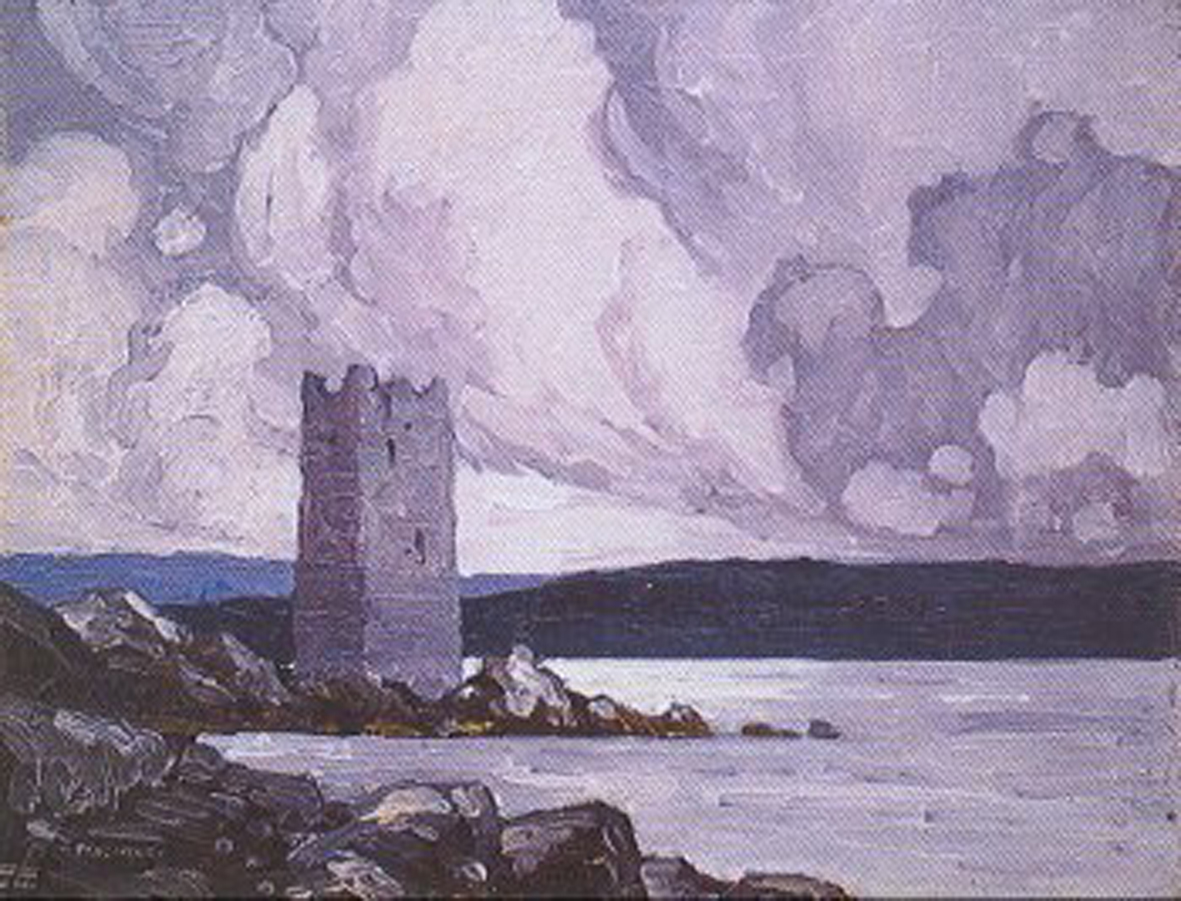
It’s a bit of a stretch of the imagination to see the setting of Lough Derg, with its fairly low-lying hills, in the background of Paul Henry’s painting. And where is that little tower house on the spit of land behind the ‘Celtic Cross’? Well – maybe it’s here:

This painting by Paul Henry is known as Grace O’Malley’s Castle: it is picturesquely situated at Kildavnet, in the south-east corner of Achill Island, County Mayo, which Paul and Grace first visited in 1910. So inspired were they by the landscape and the apparently idyllic simple way of life that they remained on Achill for a decade. Here’s another view of the O’Malley castle by Paul Henry:

So the ‘Celtic Cross at Lough Derg’ is, in fact, a medieval high cross from Monasterboice, County Louth, and it is set against the stunning scenery of Achill, County Mayo. We can’t blame Morgan O’Driscoll (or anyone else who can be identified) for giving the painting a misleading name. It seems that originally the work was just titled ‘Celtic Cross’: here are some insights from Paul Henry’s biographer, Brian Kennedy, in the Irish Arts Review Yearbook 1989 / 1990 –

. . . Henry was egocentric and occasionally used artistic licence with historical facts in the same way he might have done in a painted composition . . .

. . . In 1917 the Irish Times thought he was developing a decorative treatment of the landscape whereby his imagery was not realistic but was symbolically Irish . . .

And the following is from Paul Henry: With a Catalogue of the Paintings, Drawings, Illustrations, by S B Kennedy, Paul HenryYale University Press, 2007: it tells us that the painting was clearly known as ‘Celtic Cross’ in 1924, and was in the collection of Seán T O’Kelly, Ireland’s second President (between  June 1945 and June 1959). When sold by Adams in 1984 the painting had acquired the additional wording . . . at Lough Derg . . .

. . . 611 Celtic Cross 1924. Oil on board 24 x 22 (61 x 56). Signed ‘PAUL HENRY’ . . .

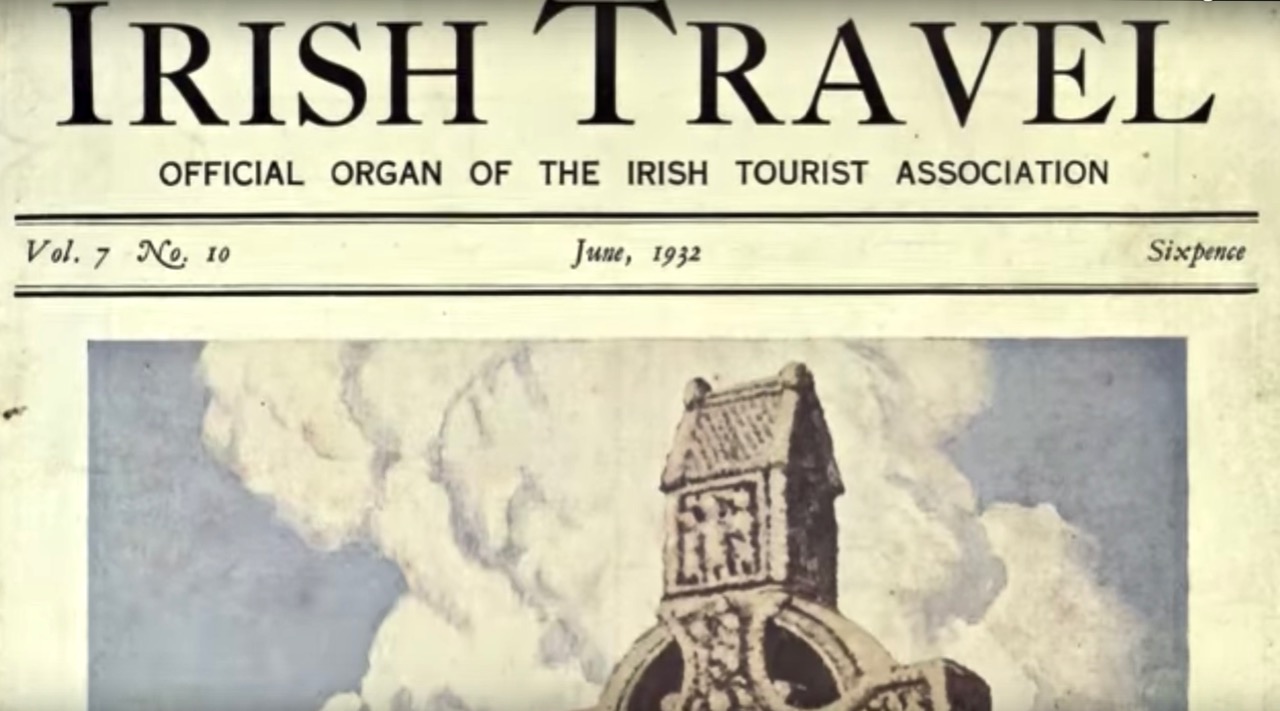
Private collection. Prov: Sean T O’Kelly; sale, Adams, Dublin 19 July 1984. Lot 86, as Celtic Cross at Lough Derg, repr. Irish Travel, vol 7, no 10, June 1937 repr. on front cover. Almost certainly a composite composition . . .

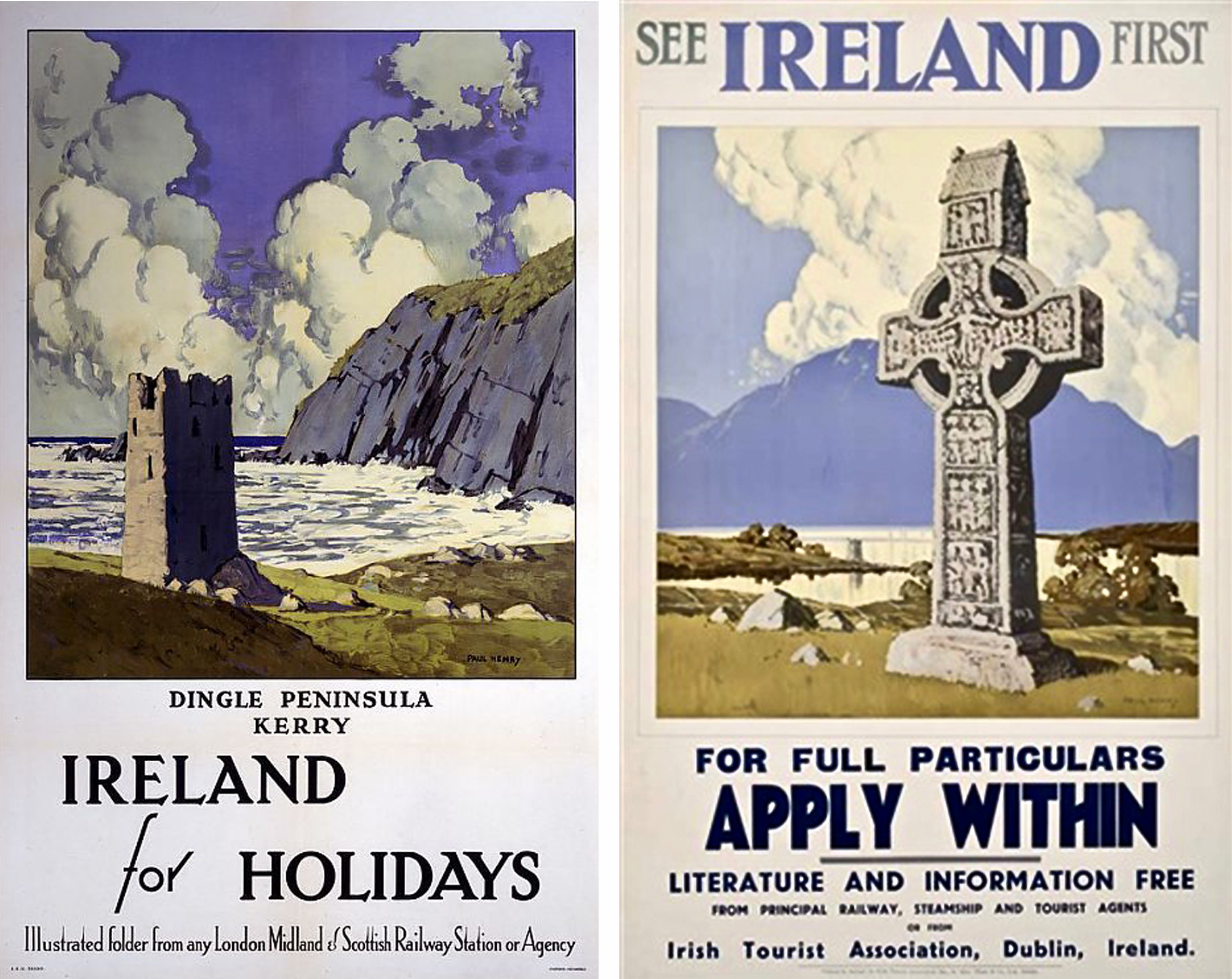
As with most artists – who need to earn a living – Paul Henry willingly accepted commissions. He was successful in selling ‘popular’ work to railway companies and the Irish Tourist Association (above – 1920s and 30s).

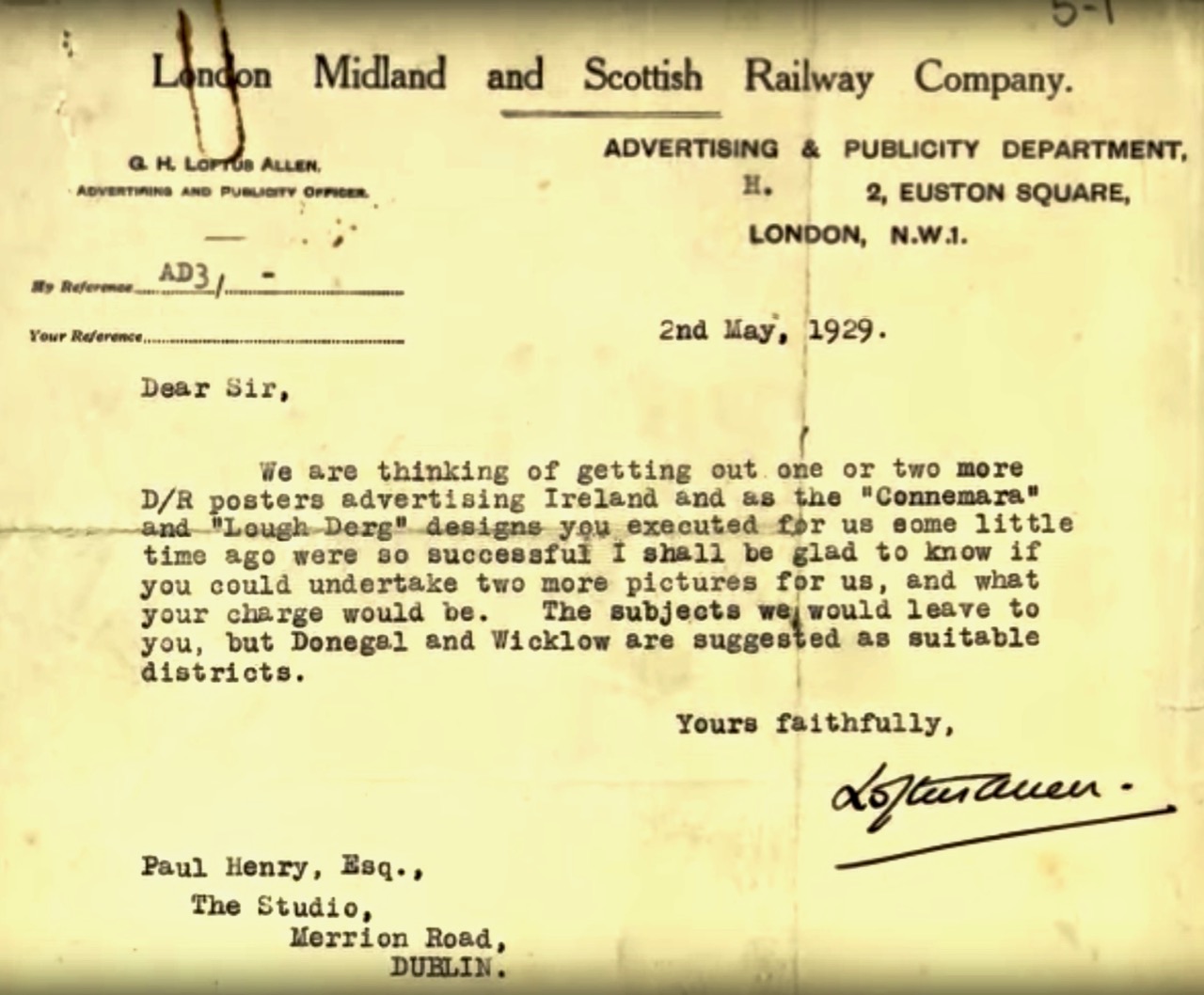
A “Lough Derg” design is mentioned in the Railway Company’s letter (above). Below is another – for British Railways: this is more likely to be the Lough Derg on the Shannon.

Has this helped to unravel the enigma of Paul Henry’s Celtic Cross at Lough Derg? Whether or not you are convinced, I’m sure you would like to have the painting hanging on your wall – me too! Although it would be so much better if it could go permanently into a public collection The sale is coming up in April . . .


Ireland in the 1950s – Through the Lens of Robert Cresswell

This post complements last week’s overview of the work of Dorothea Lange, who spent several weeks in County Clare in 1954, documenting the rural way of life she observed there in over 2,400 monochrome photographs. That’s a monumental collection which can only be fully accessed by visiting the Oakland Museum of California. We are fortunate to have a book of some of her Irish work – Dorothea Lange’s Ireland – published by Eliott & Clark, Washington, 1996 and a current exhibition which includes some of her images at Dublin’s Museum of Decorative Arts & History, Collins Barracks. That same exhibition features the work of two further documentary photographers, one of whom is our subject today: Robert Cresswell (below):

The Paris-based American anthropologist Robert Cresswell (1922-2016) remained on in France after WWII, having served in the US army there for four years. Following the completion of his studies in anthropology in Paris, he arrived in Ireland in 1955 with the ambition of carrying out an anthropological analysis of an Irish rural community. Taking the advice of the Irish Folklore Commission he chose Kinvara, County Galway. The small rural town of Kinvara and its agricultural hinterland would become the base for his study, published in 1969 as ‘Une Communauté Rurale de l’Irlande’ . . .

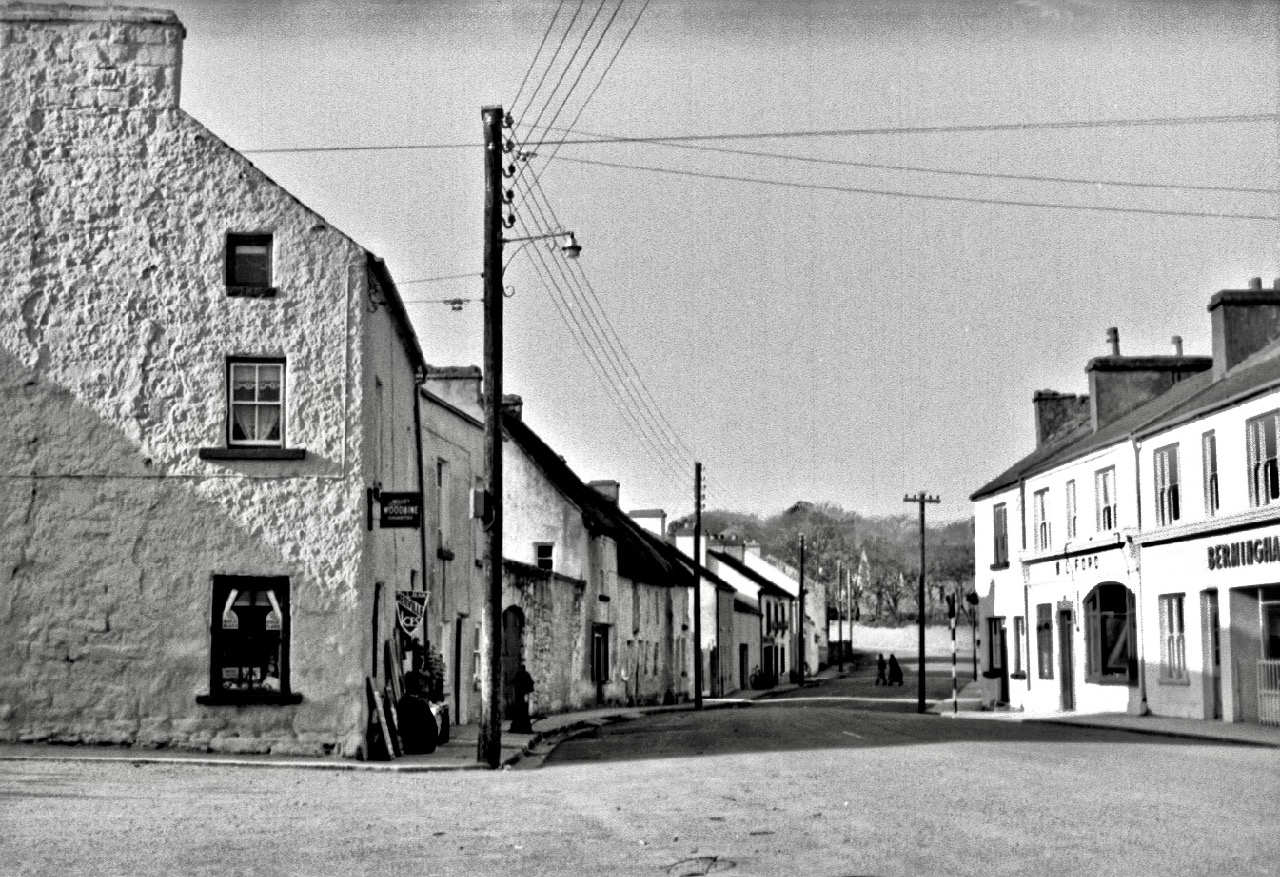
Header – Kinvara on Fair Day, 1955 by Robert Cresswell. Above – Kinvara, Co Galway, streetscape; compare these to Dorothea Lange’s views of Ennis and Tulla, Co Clare (in last week’s post), taken in the same period

While the photographic essays by Dorothea Lange and Robert Cresswell bear close comparison – and how hugely interesting it is for us to see Irish rural life through those lenses nearly 70 years ago – it’s fascinating to consider that both came from very different backgrounds and disciplines, but were equally absorbed by the iconic images each of them was capturing – giving us a visual ‘time capsule’ of Ireland as it was apparent a few generations ago.

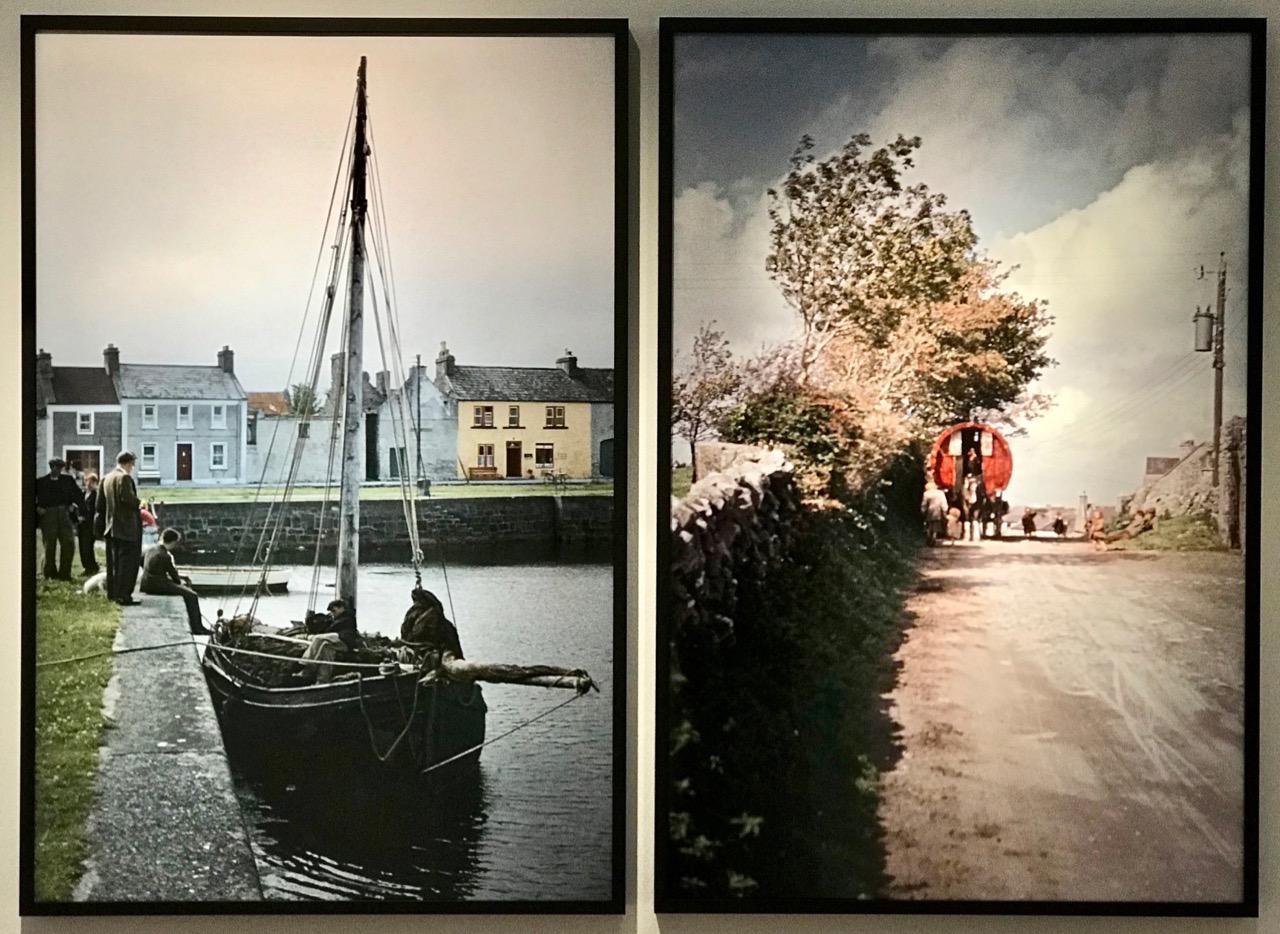
Above – examples from the Dublin exhibition showing the work of Cresswell taken from his colour slides

Robert Cresswell was a pioneer in some respects, in that he used Kodachrome film to produce colour slides, in the days when monochrome documentary photography was the norm. Some professional photographers could not cope with the idea of using colour, partly because they considered the images were not realistic. Ansell Adams felt that ‘. . . color could be distracting, and could therefore divert the artist’s attention away from creating a photograph to its full potential . . .’ while Henri Cartier-Bresson famously uttered his opinion that ‘. . . color is bullshit . . .’ – which was all he ever said about it, allegedly! My own (humble) opinion is that there is something about monochrome photographs which seems to draw the eye and enhance the atmosphere, particularly with historic images. I can’t explain this – there is no logic: it’s just a personal response which I am always aware of.

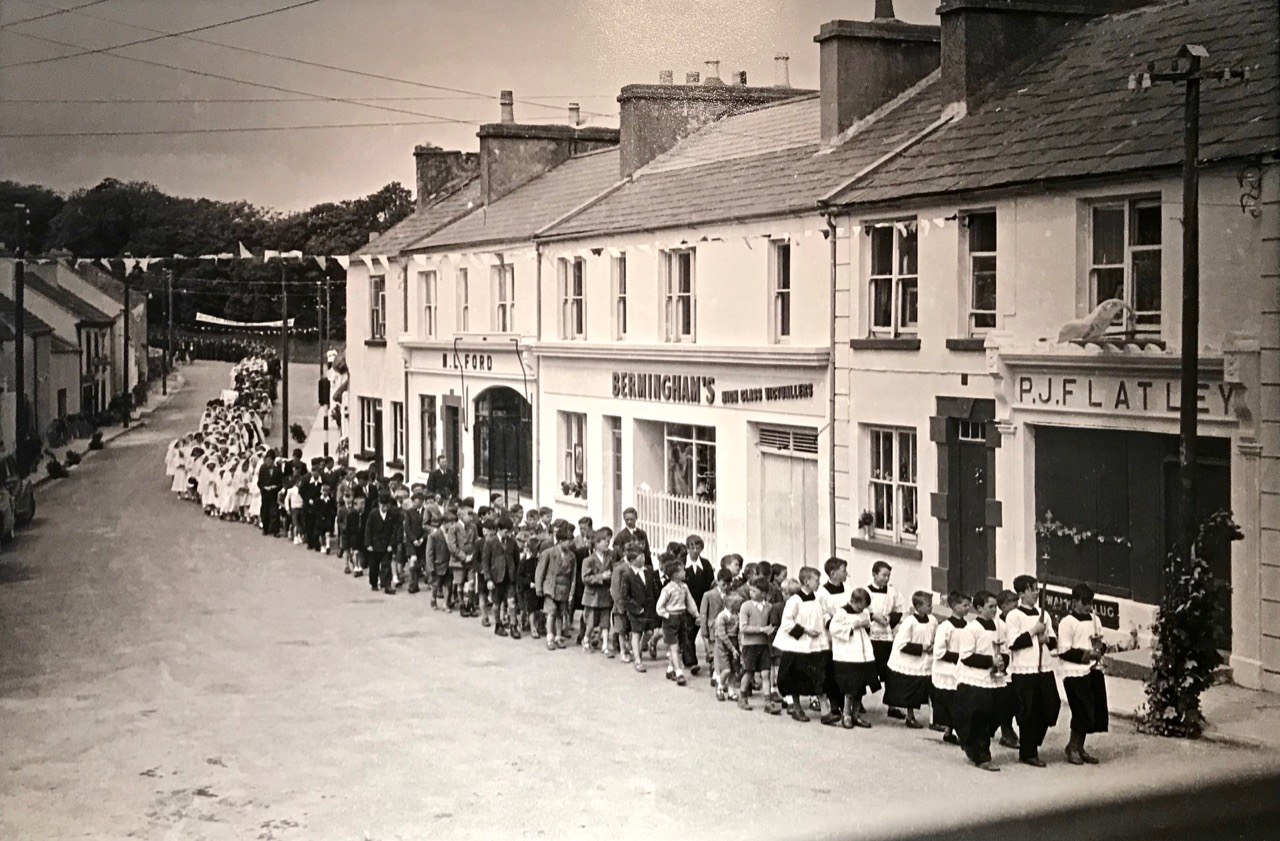
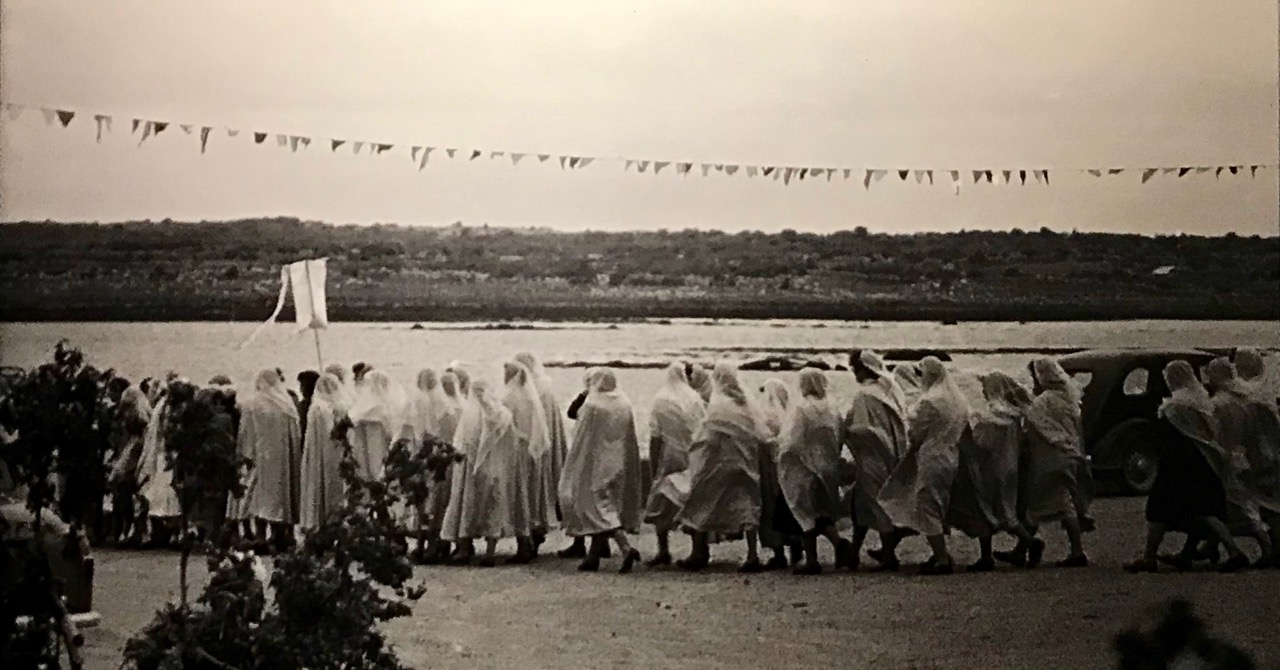
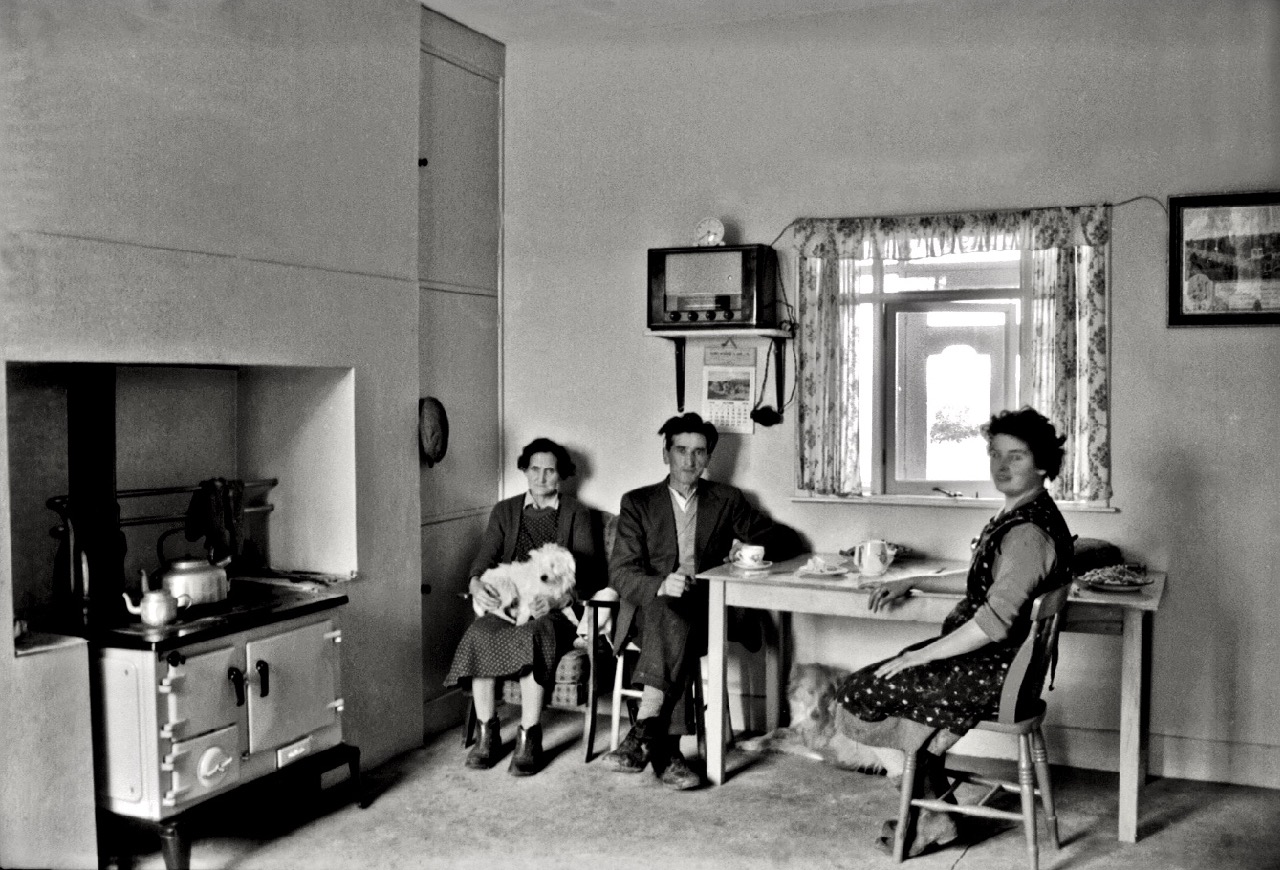
Above – monochrome Kinvara: the Forge, and Corpus Christie procession

Robert Cresswell lived in the Kinvara community for fifteen months between 1955 and 1956, returning for short periods in 1957 and 1958. The quotations in this post are from the exhibition text panels:

Capturing more than five hundred images . . . Cresswell photographed the people of Kinvara, their countryside, their work on sea, shore and land, the daily lives, religious processions, and fairs and markets. Documenting the changes that were occurring in the shift from a traditional farming community to a wider market-led economy, he was motivated to emphasise a community in transition over one operating in the continuity or stagnation of tradition. His photographs generally portray a well-functioning society, but his interpretation of emigration as the ultimate destructive agent in community and country profoundly influenced his understanding of rural life in a small community in 1950s Ireland . . . The population of the parish of Kinvara sustained a net loss of 80% between 1841 and 1956 . . .

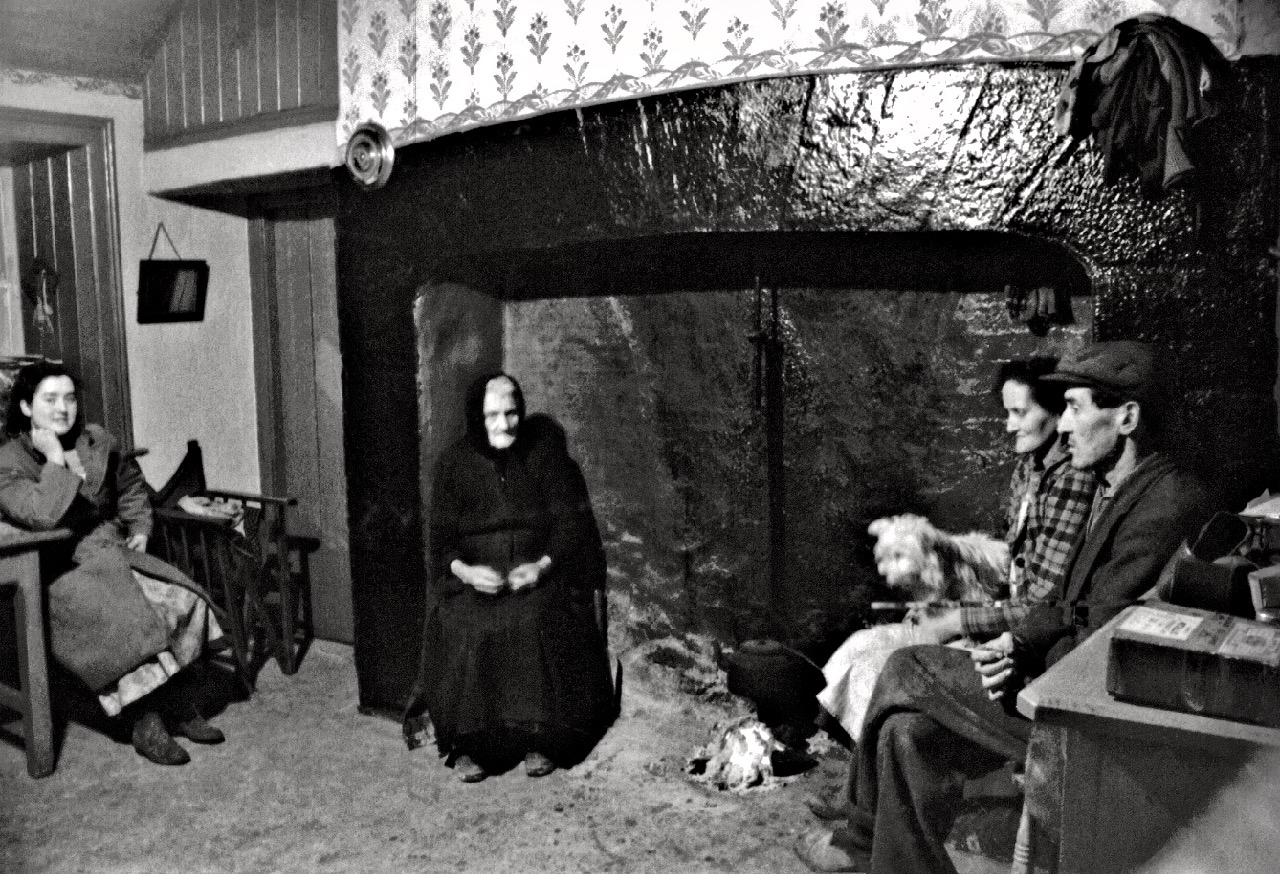
Above: a community in transition – contrasting pictures of family life in Kinvara recorded by Cresswell in the mid 1950s

Tempting though it is to show you much more of Cresswell’s work here, I really want you to go and see for yourselves. The exhibition at Collins Barracks, Dublin continues until April this year, and is well worth making the effort to visit. Robert Cresswell lived a long life; in 2010, then aged 88, he donated his entire collection of documentary photographs and cine film of Kinvara to the Irish nation. He waived his own copyright to this unique work in favour of all persons who wish to use any of it for educational or heritage purposes (but not for commercial gain without prior permission). Copyright now rests with Kinvara Community Council, who have published an excellent website here. I have used a small number of images from the collection to supplement those we found at the exhibition, in order to give you a fair cross-section of the entirety of Cresswell’s opus.

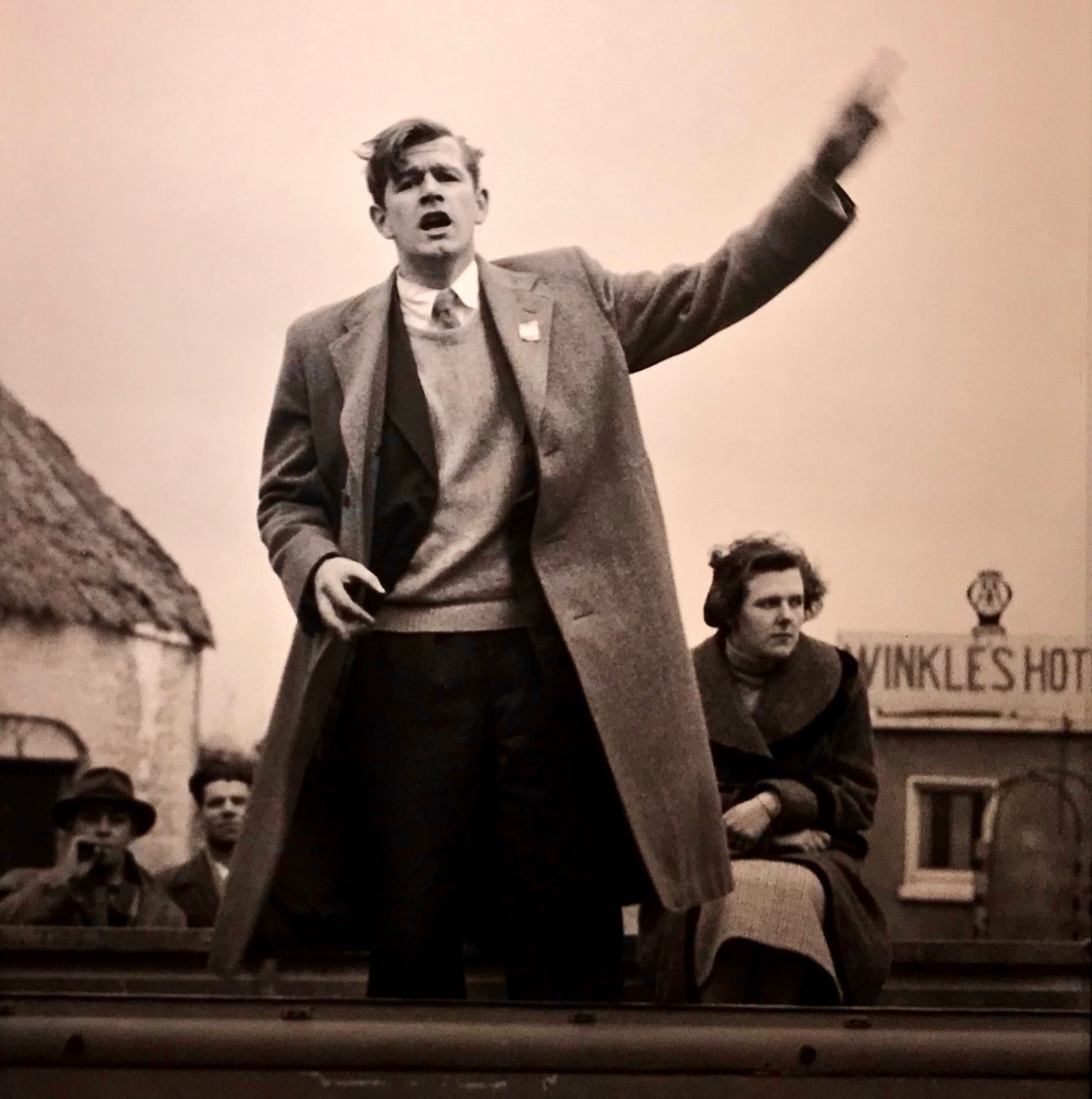
In a mirror of present-day events in Ireland, here’s a shot by Cresswell of the Sinn Fein candidate Murchadh Mac Ualtair canvassing in Kinvara for the 1957 General Election with Peggy Linnane. In that election Fianna Fáil, under Éamon de Valera, took 78 seats with 48.3% of first preference votes, and Sinn Féin took 4 seats with 5.3% of first preference votes. In our 2020 election, just passed, Sinn Féin, under Mary-Lou McDonald, took 37 seats with 24.5% of first preference votes in a thoroughly divided result, leaving us all in a bit of a dilemma! But I digress . . .

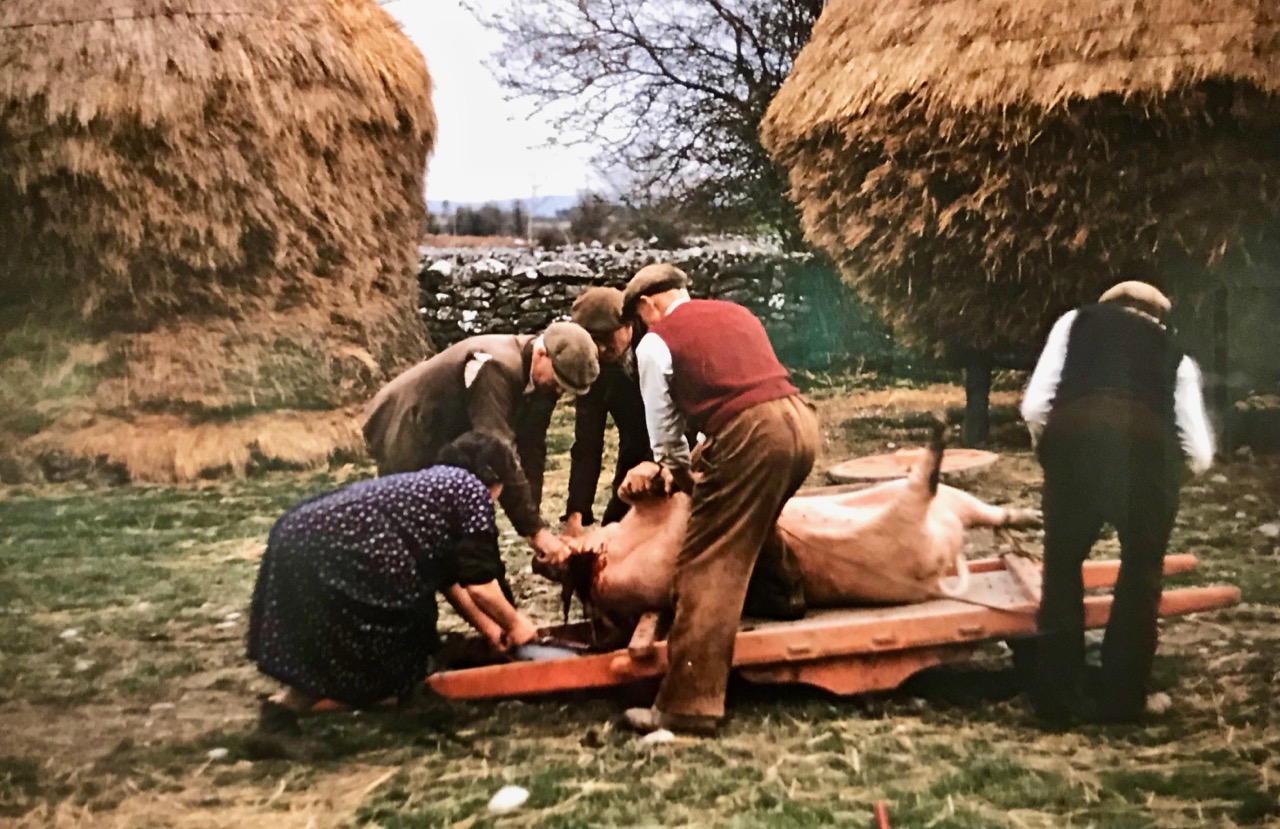
Another of Cresswell’s colour images, showing the killing of the pig – a family affair

There is one more photographer in this exhibition, who I will feature in a future post – watch this space! One last image from Robert Cresswell, possibly another view of the Corpus Christie parade:

Seán Keating – Escaping the Storm

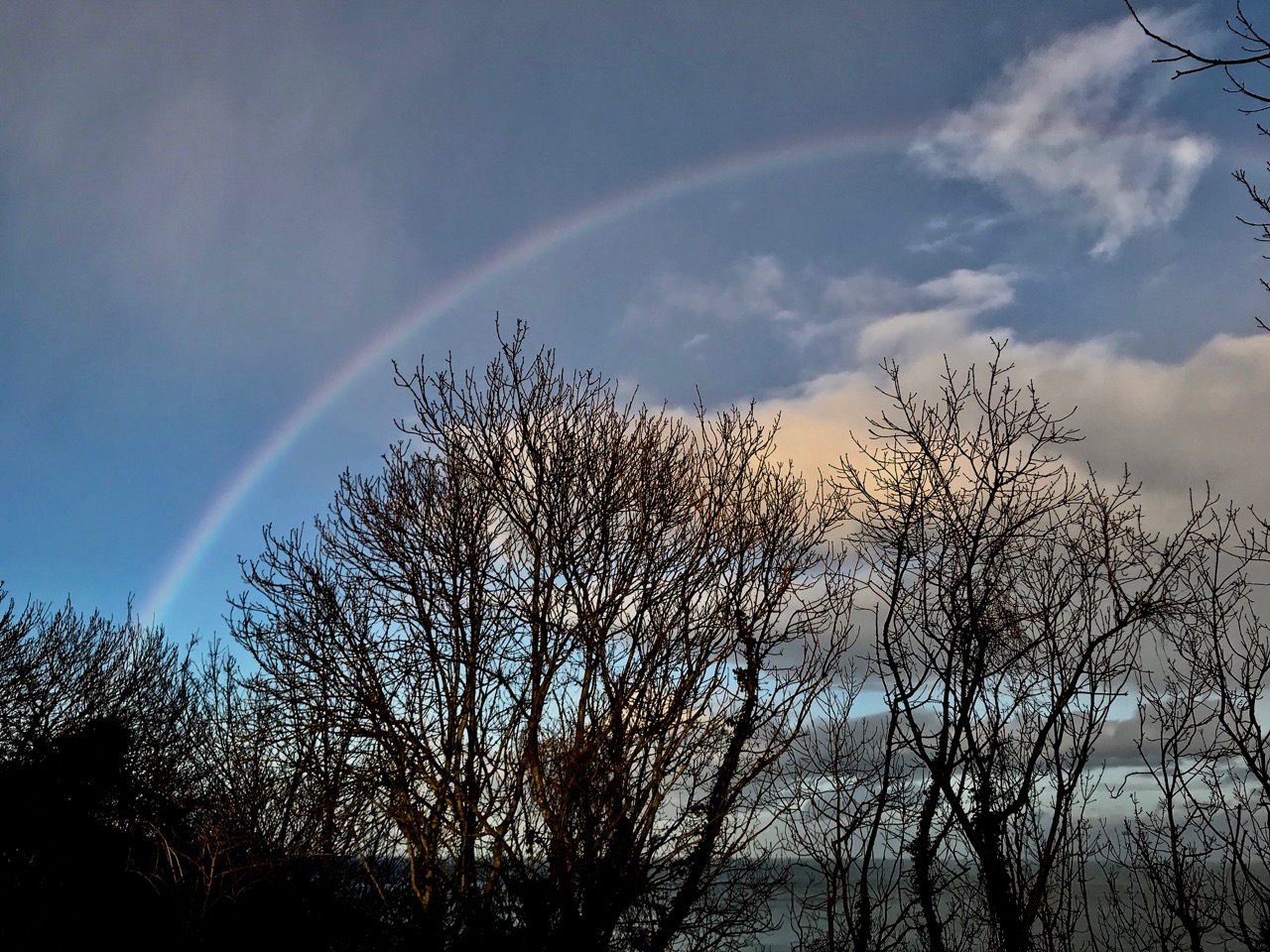
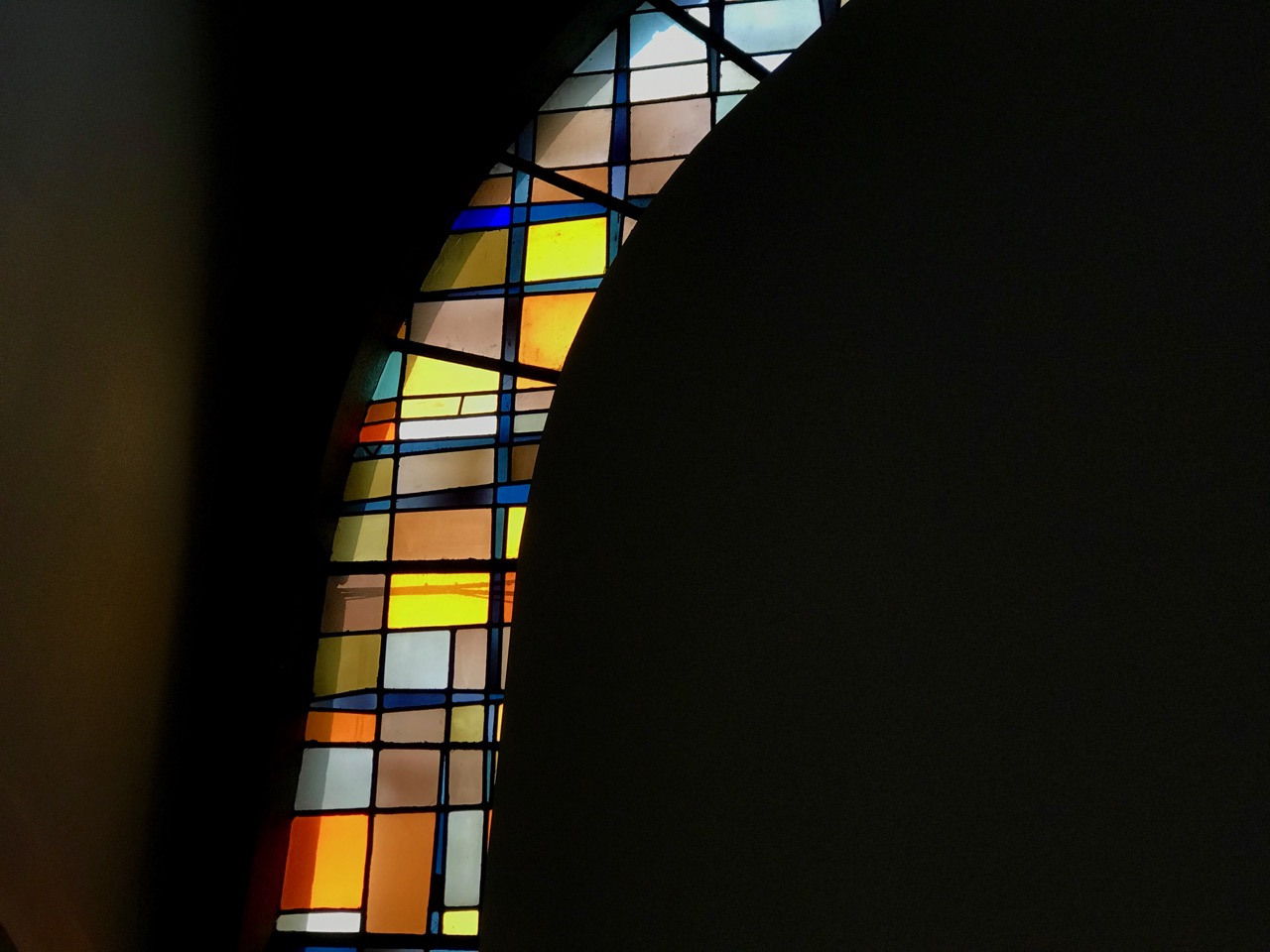
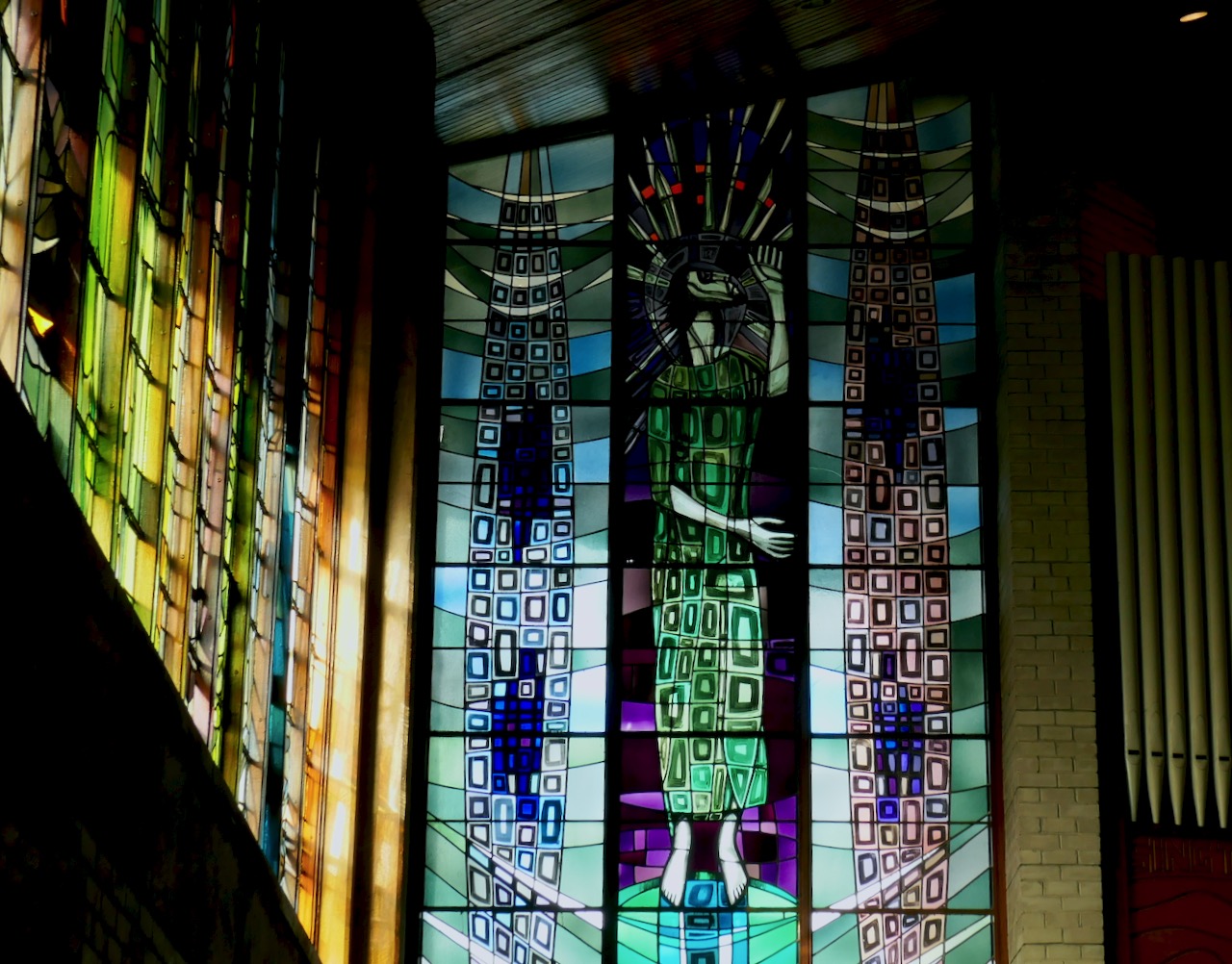
Storm Ciara was upon us as we headed over to the east coast – a mere few hops from Nead an Iolair. But it wasn’t all black clouds and thunder and lightning: winter storms here in Ireland feature high winds and spectacles such as this rainbow (above) which seemed to hang in the sky over County Wicklow for hours. When the rain comes, we often find refuge in a church – especially if it helps Finola’s quest for new stained glass windows. Sometimes they seem to reflect the weather patterns:

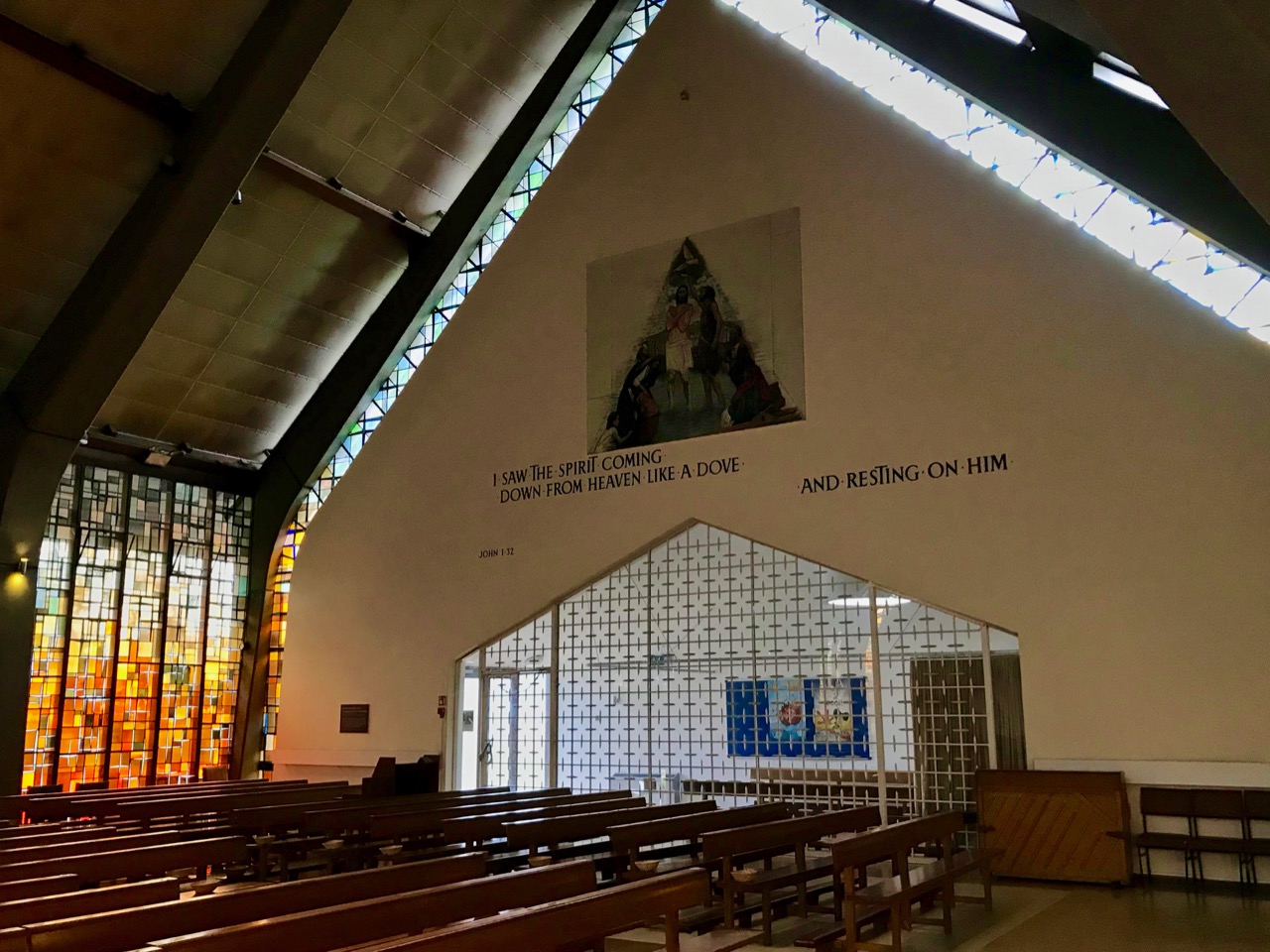
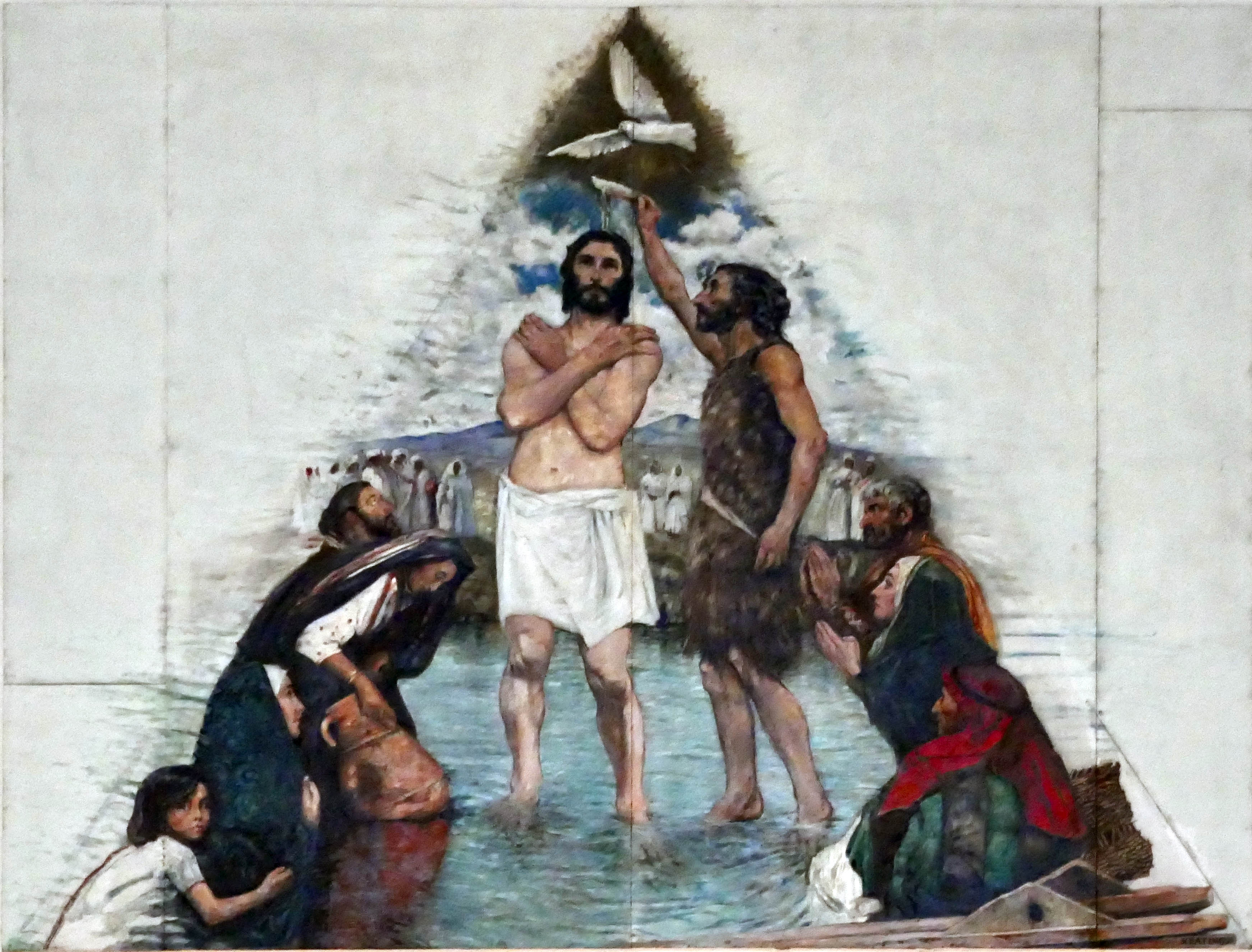
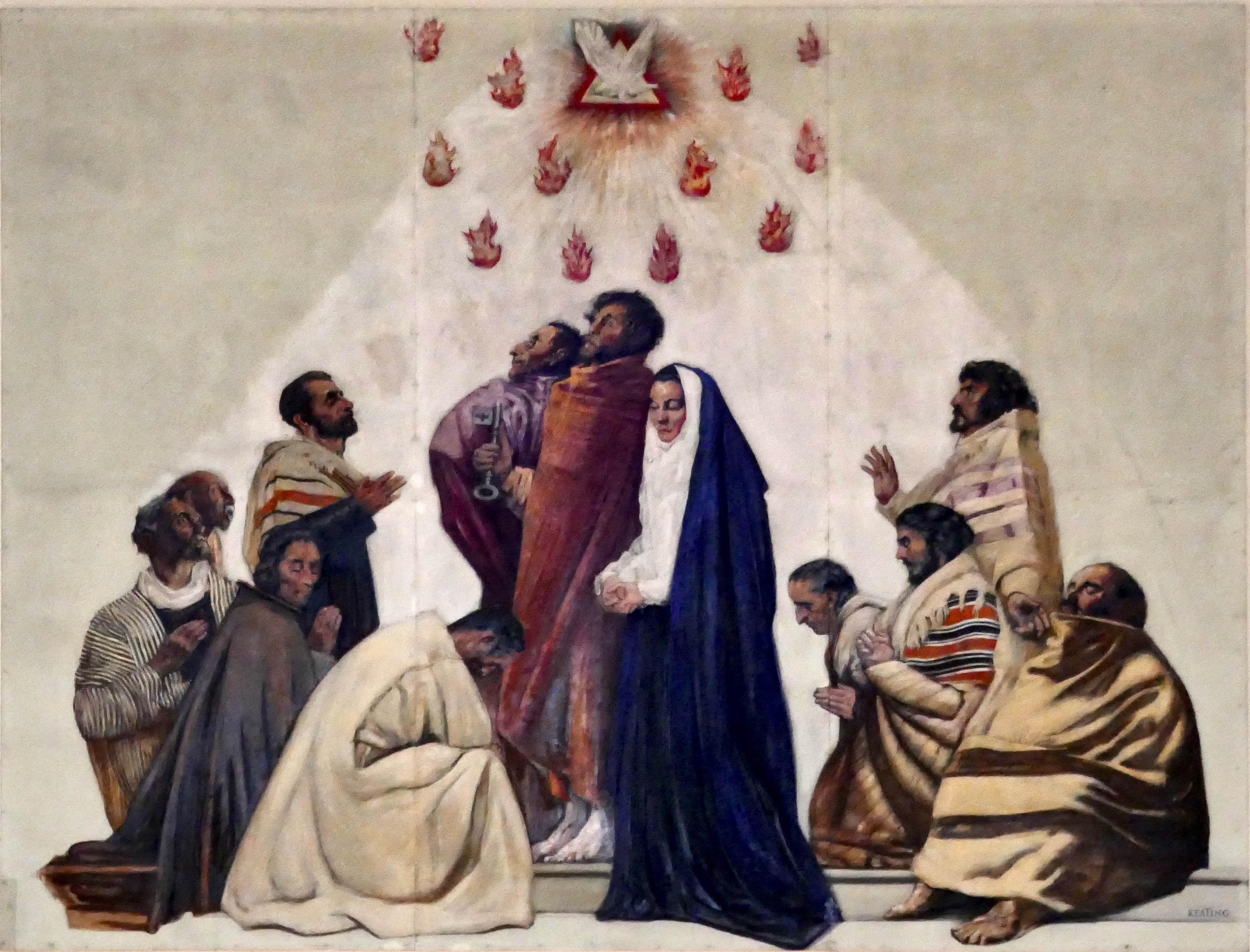
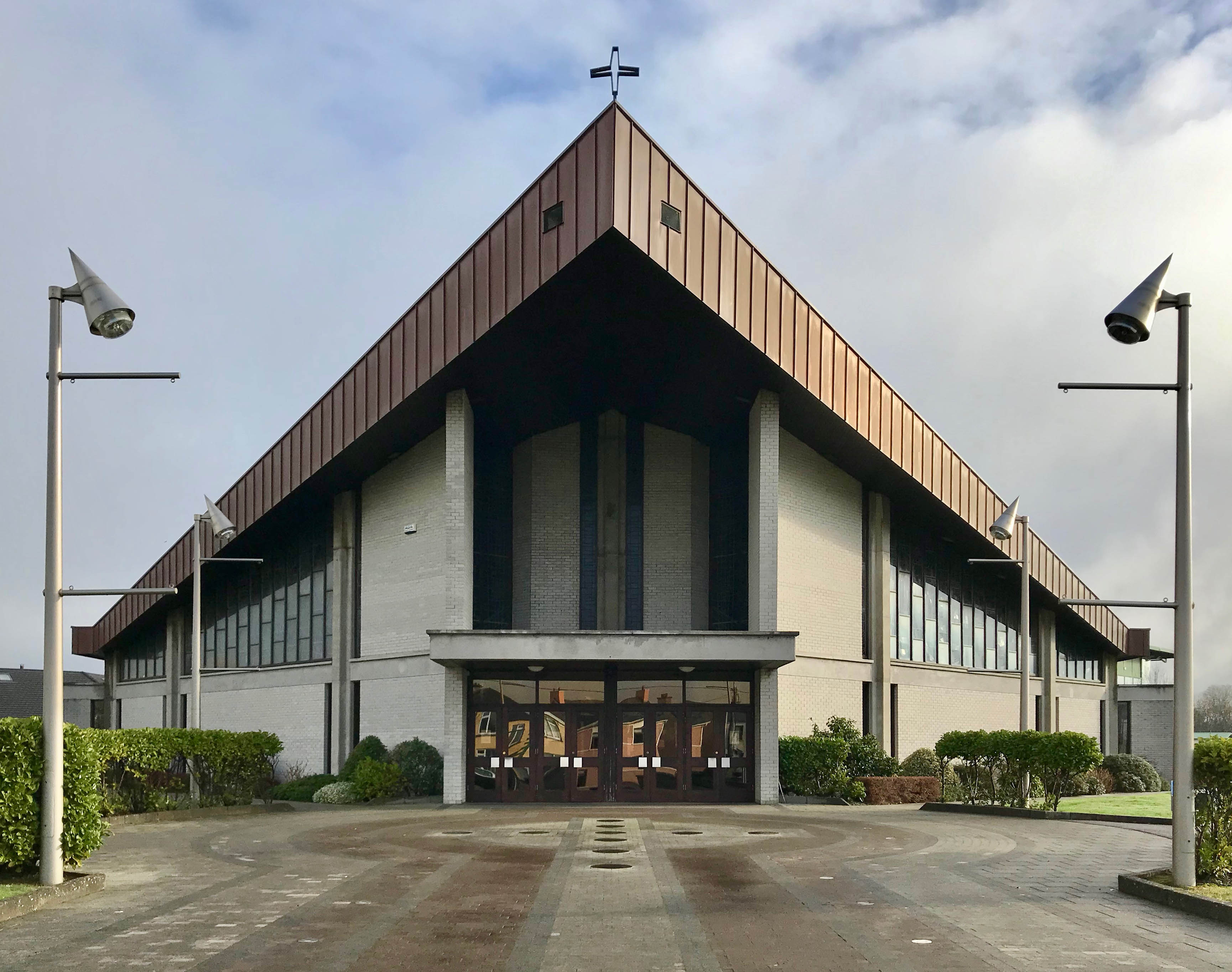
This panel, which could be seen as an indoor rainbow, is in an impressively large church in Ballyroan, Rathfarnham Parish, County Dublin: it was built in 1967 to seat a thousand. What caught my eyes was not the array of windows by Murphy Devitt (Finola has written extensively about this creative partnership), but two murals high on the walls of the crossing. I was delighted to find that these were painted by one of Ireland’s great artists working through the turbulent twentieth century – Seán Keating.
Seán Keating’s ‘Baptism of Christ’ mural in the Church of the Holy Spirit, Ballyroan

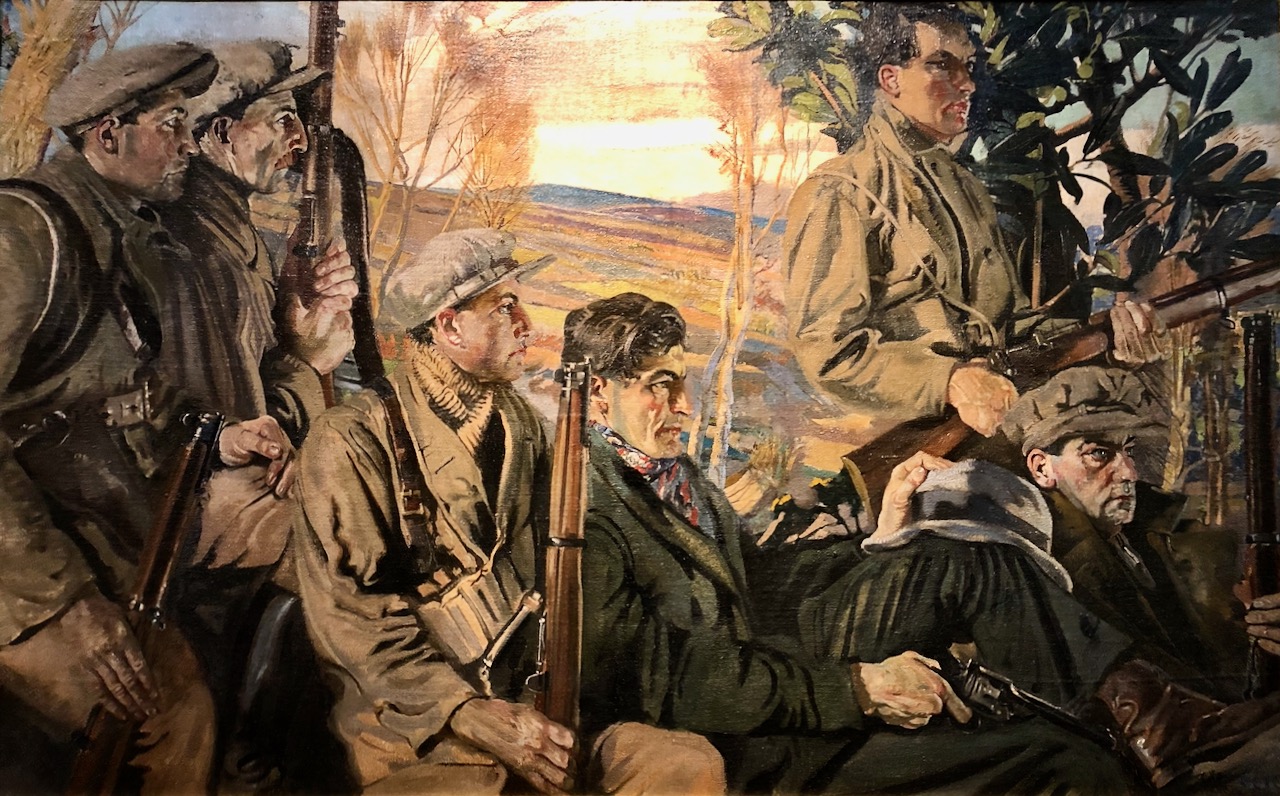
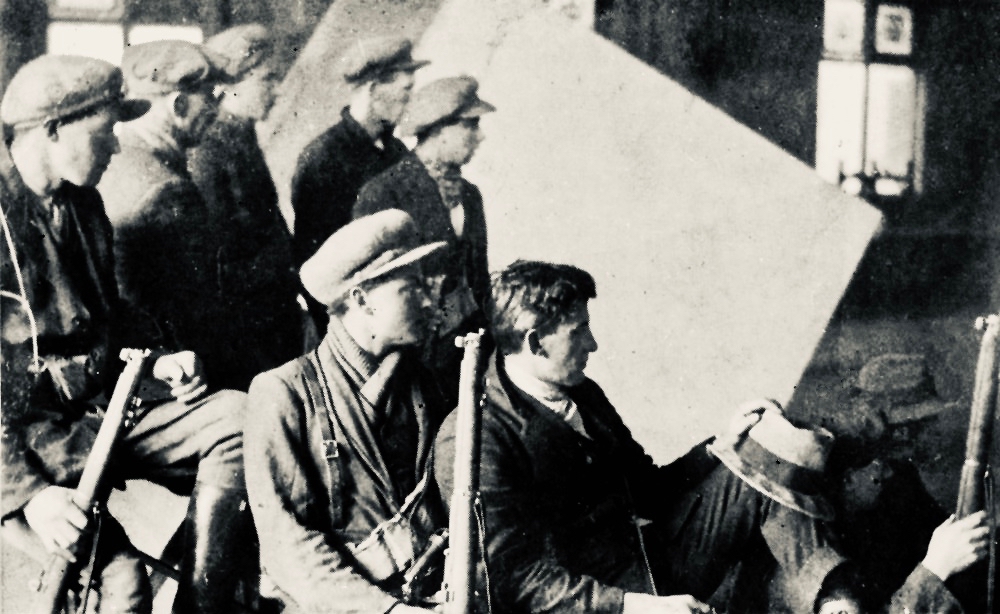
I am always surprised to find that Keating is under-appreciated: yes, he gets mentioned in books of art history, and is reasonably well represented in the state’s galleries. Yet you will also find terms such as ‘not great art’ applied to his work by critics and commentators. This is possibly because he is best known for his documentary work and, particularly, for his raw representations of the tempestuous years of Ireland’s struggle to gain independence. Here is ‘Men of the South’, dating from 1921 when there was a ceasefire in the Irish War of Independence while the Anglo-Irish Treaty was being negotiated and out of which the Irish Free State was born.

Top: Men of the South – Seán Keating’s documentary portrayal of the North Cork Brigade of the Irish Republican Army. Below the painting is one of the photographs taken in Keating’s Dublin studio in preparation for the work. Two versions of this painting were made by the artist: the one above is in the Crawford Gallery, Cork City, while the other (which depicts eight men) is now in Áras an Uachtaráin, the official residence of the President of Ireland.

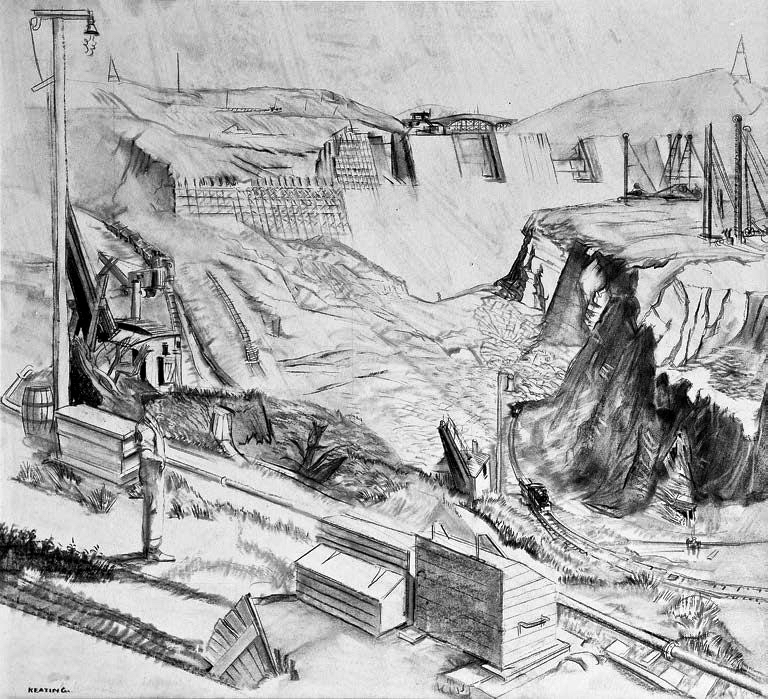
After the War of Independence and the abhorrent Civil War which followed it, Keating’s work concentrated on documenting the founding and burgeoning of the new State. Scenes of conflict were replaced by works showing industrial development, such as Ireland’s largest ever civil engineering contract: harnessing the power potential of the State’s major waterway, the River Shannon. The construction of a dam and hydro-electric generating station at Ardnacrusha, County Clare, together with a country-wide electric distribution infrastructure, was a symbol of major importance to the nation’s fledgling government. Keating began recording the work in 1926, soon after inception. No-one had commissioned him – he saw the significance of making dramatic documentary work of this nature, but his vision was eventually recognised by the Electricity Supply Board (ESB) – which now owns the largest collection of Keating’s paintings in Ireland. Above is one of the artist’s working sketches of the dam under construction.

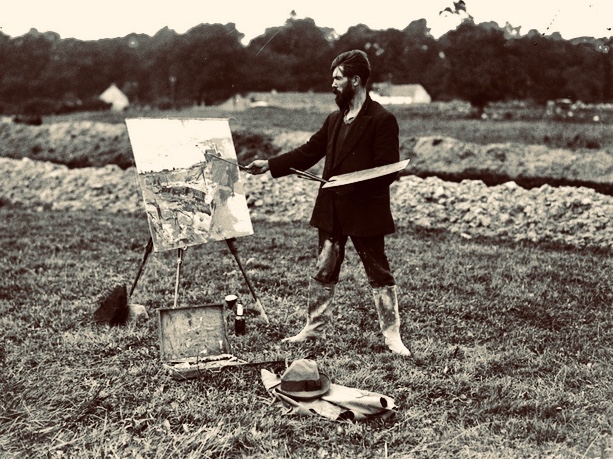
Seán Keating painting en plein air at Ardnacrusha, 1920s

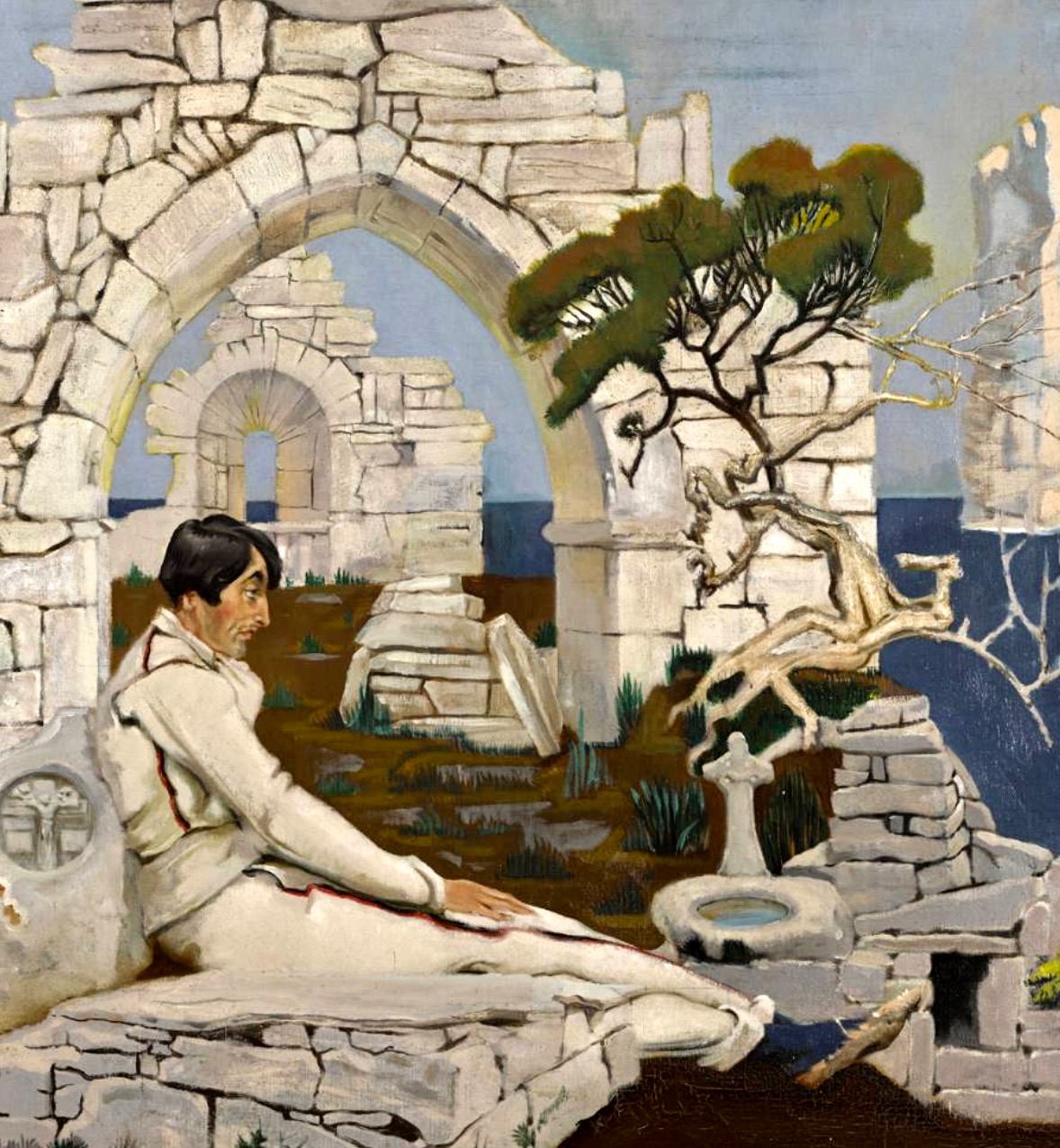
Keating studied under William Orpen in Dublin. He was to become one of Orpen’s important pupils (and, latterly, his assistant) and his documentary painting style owes a debt to his teacher. One of his famous early paintings is Thinking Out Gobnet (below), a portrait of his good friend Harry Clarke, dating from 1917. Keating and Clarke frequently visited the Aran Islands together. The painting shows Clarke sitting on a grave slab within the ruins of Teampall Chaomháin (St Kevin’s church) on Inis Oírr, along with a holy water font at his feet, and a holy well to the bottom right of the image. The suggestion is that Clarke is finding inspiration for his series of eleven windows for the Honan Chapel, Cork, which include a fine representation of St Gobnet. The ‘healing’ symbolism of the holy water and well are deliberate references to Clarke’s TB, the illness which ended his life at the age of 41.
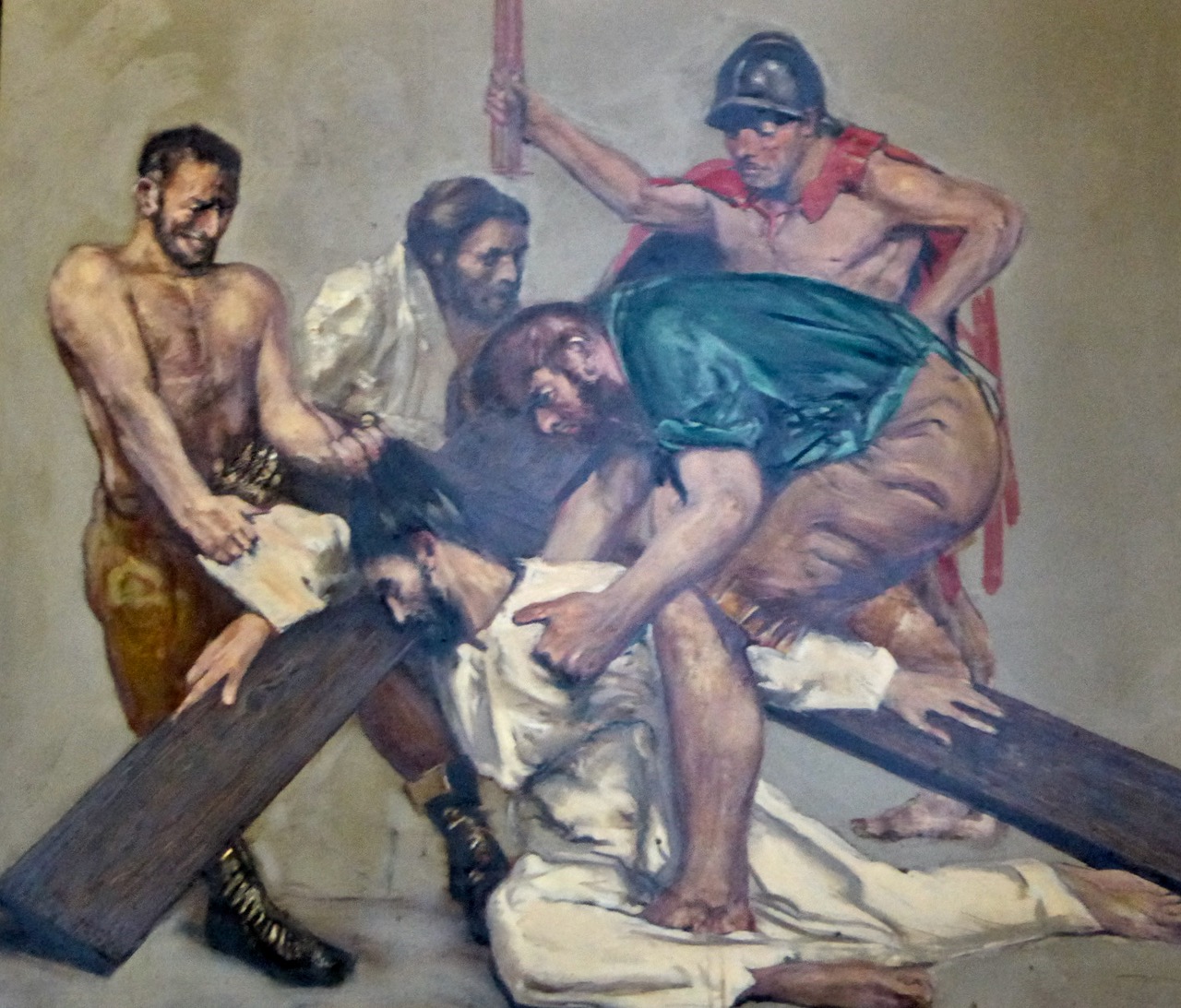
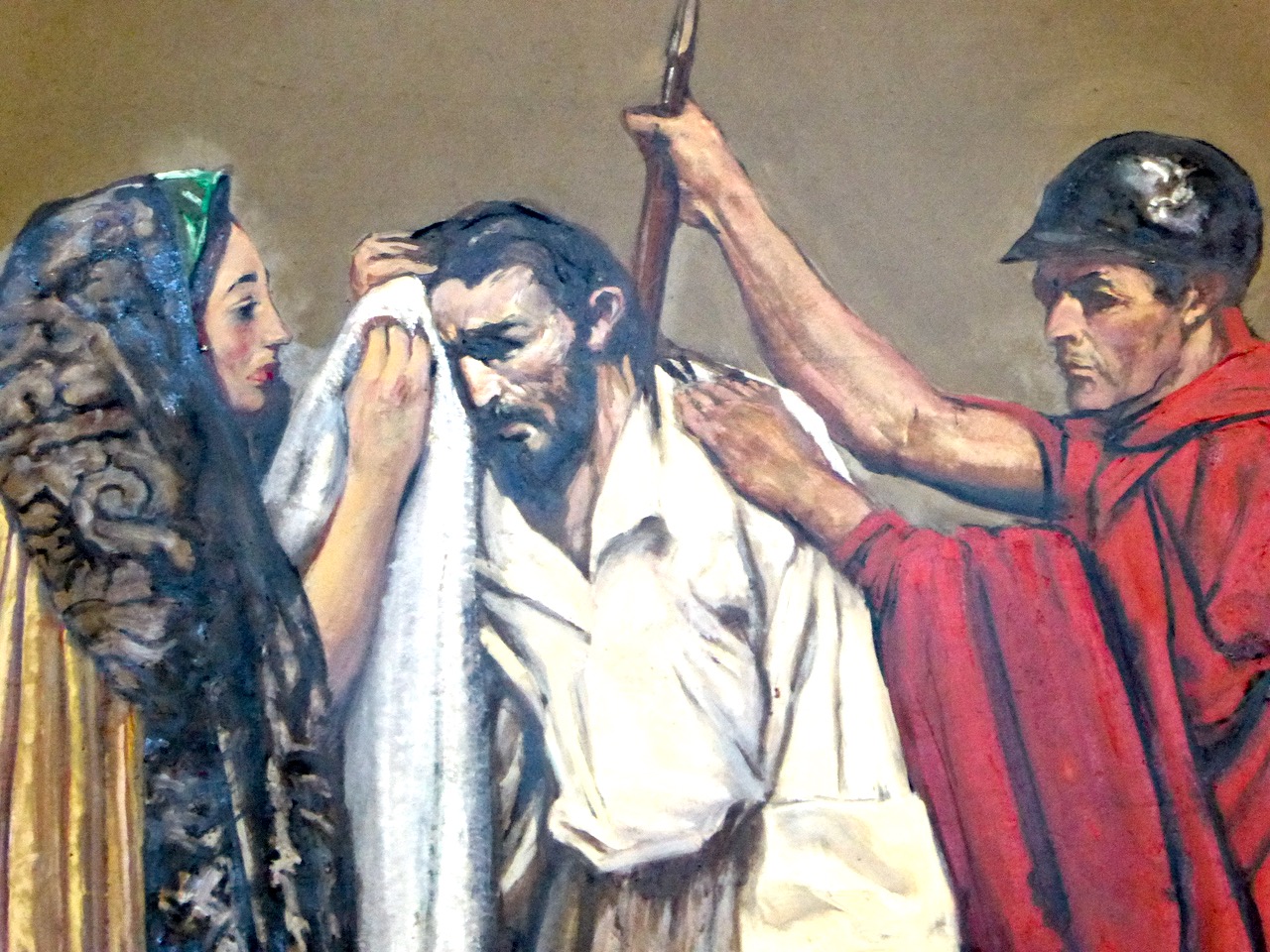
Seán Keating was always a committed Catholic, and we have seen many examples of his artwork in churches, including the murals at Ballyroan. Most striking, perhaps, are the Stations of the Cross which he painted for St John’s Church, Tralee – the church which features in Finola’s wonderful Irish Arts Review article (and RWJ blog post) about Ireland’s Newest Stained Glass Window.

Stations of the Cross by Seán Keating in St John’s Church, Tralee, County Kerry

Back to Ballyroan: while we were sheltering from the tempest and admiring the church architecture, and the murals, I was delighted to find out that Seán Keating had lived for much of his life just down the road, in Ballyboden, in a house which he had designed himself. He attended mass regularly at Ballyroan until his death in December 1977, aged 88.

Keating’s mural The Descent of the Holy Spirit in his own church of Ballyroan, Parish of Rathfarnham, installed in 1967

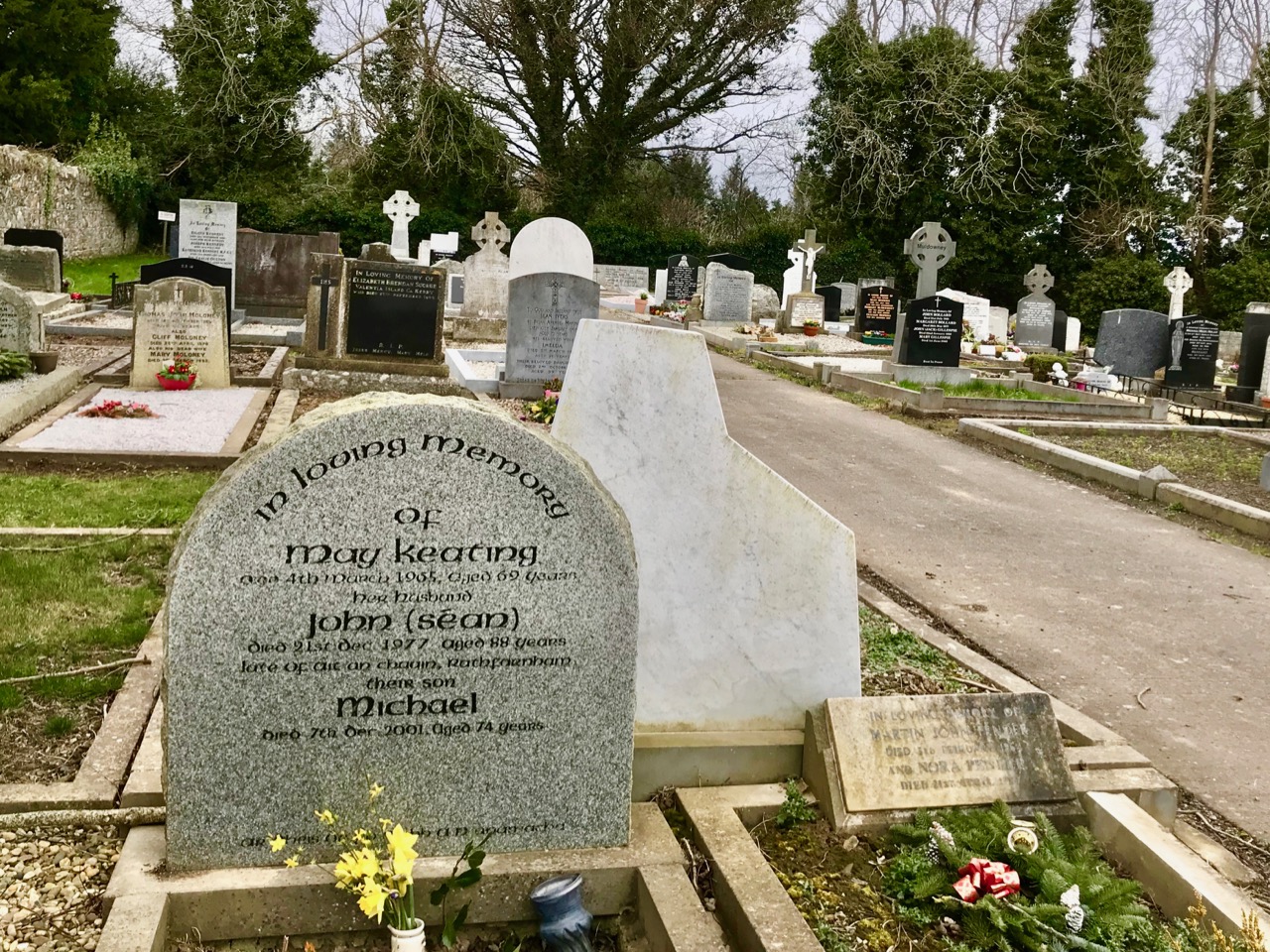
We discovered that Keating is buried in the nearby Cruagh Cemetery, so we had to head out into the storm again to find his grave. It is as unassuming as he apparently was in life: a visitor would not be aware that herein lies one of modern Ireland’s greats.

Cruagh Cemetery, Co Dublin (top) is the resting place of Seán Keating. His grave is shared with his wife, May, and son Michael

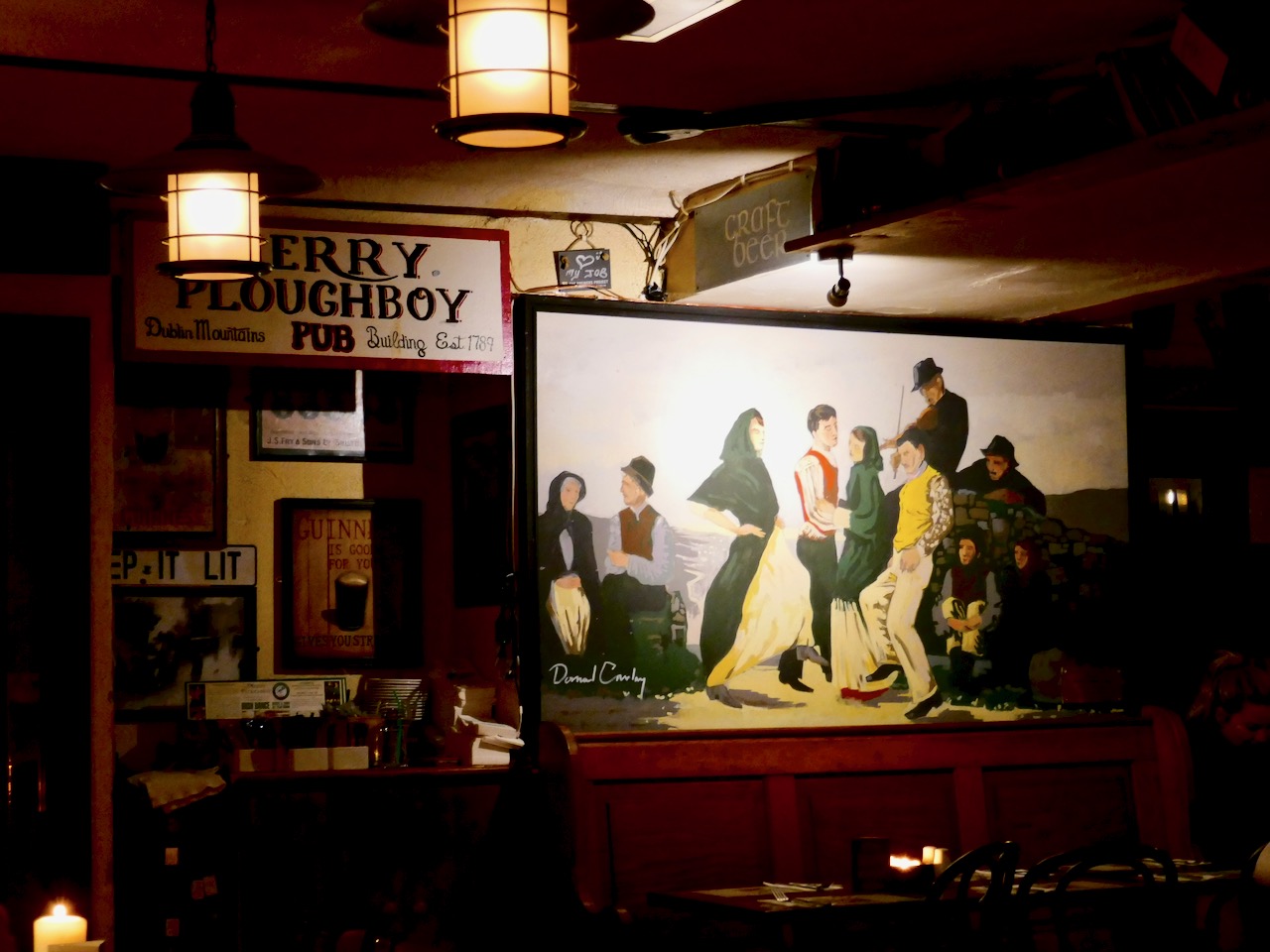
Our little artist’s memoir is almost over. The gale continued with ferocious lashing rain: cold and hungry we made a beeline for the local pub – the Merry Ploughboy, evidently a famous music venue. It was warm and welcoming, and full of a crowd watching Six Nations Rugby on the big screen (Ireland won the match).

In the lounge we were intrigued to find an oblique reference to Seán Keating – a painting which has a nod to his style but is by a different artist!

We agreed that our day trip to the east, in the teeth of the gale, was a memorable way to discover the life, work and death of one of Ireland’s significant artists.

Brendan in Bronze

Do you know the story of St Brendan? He – ‘The Navigator’ – went to North America long before Columbus. Nearly a thousand years before, in fact: Brendan was born in the fifth century. The story of his voyage, and his remarkable adventures with his fellow monks, has inspired art, music and song ever since then. Here’s the beginning of Christy Moore’s version:

A boat sailed out of Brandon in the year of 501
’twas a damp and dirty mornin’ Brendan’s voyage it began.
Tired of thinnin’ turnips and cuttin’ curley kale
When he got back from the creamery he hoisted up the sail.
He ploughed a lonely furrow to the north, south, east and west
Of all the navigators, St Brendan was the best . . .

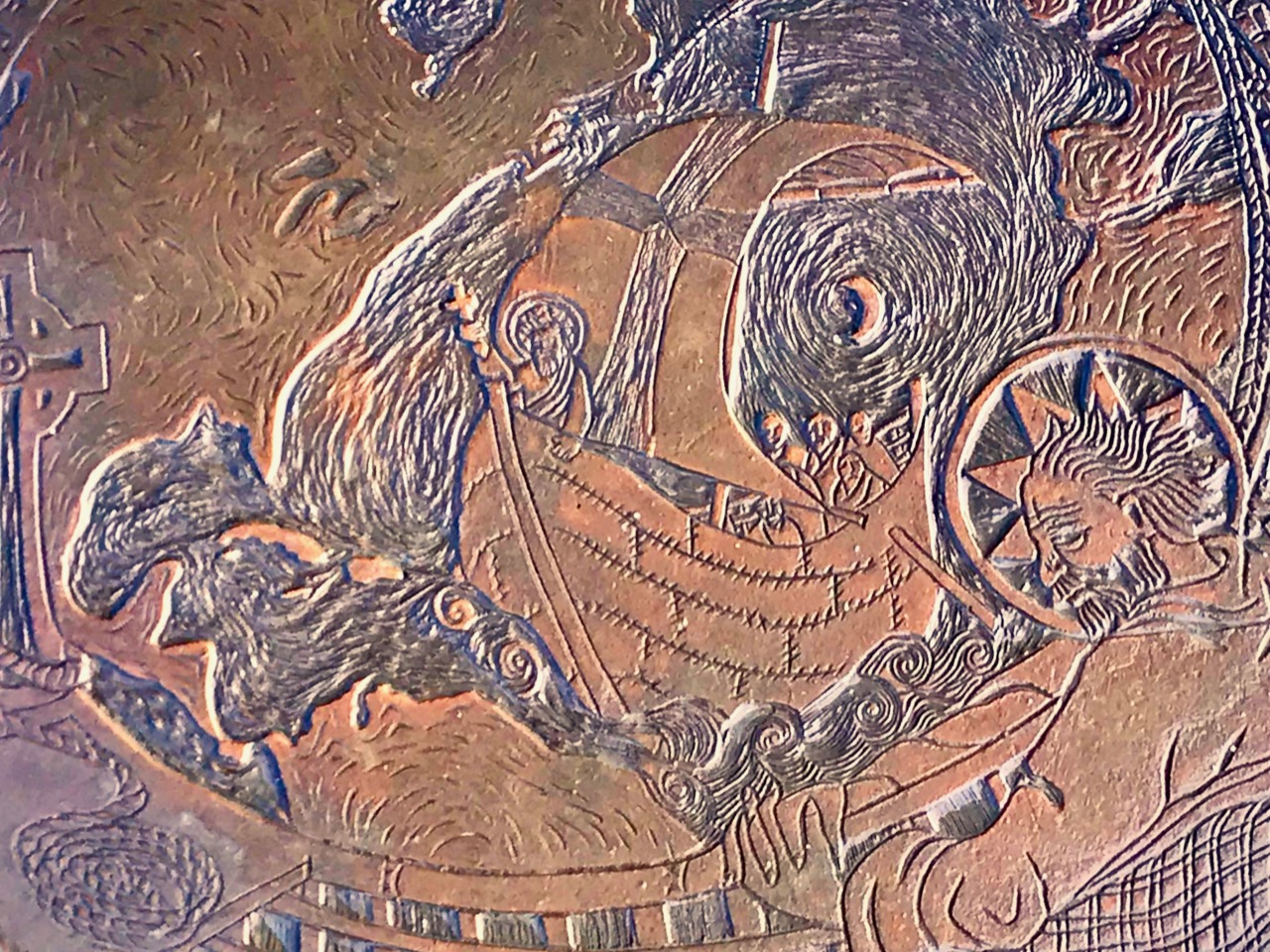
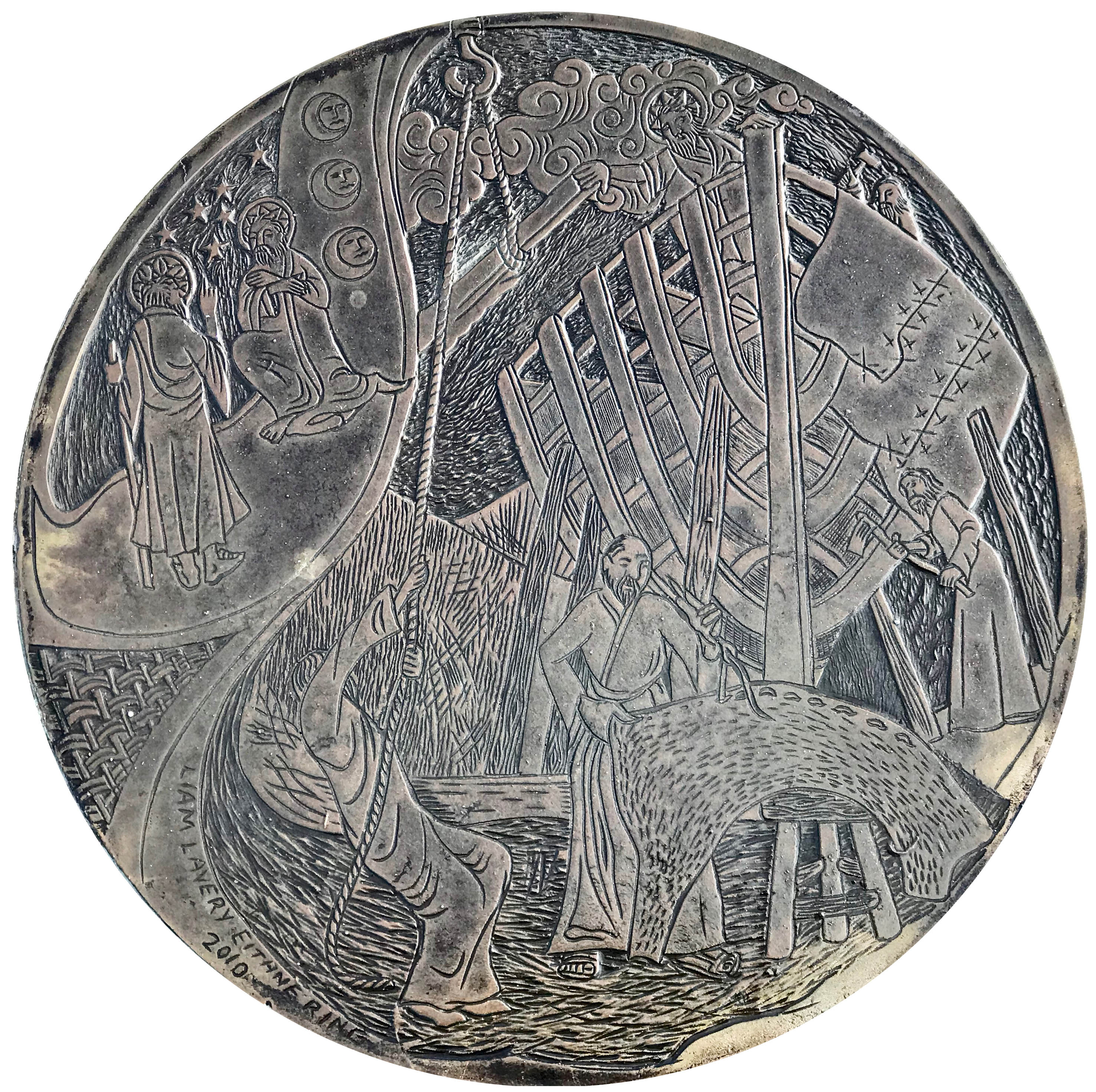
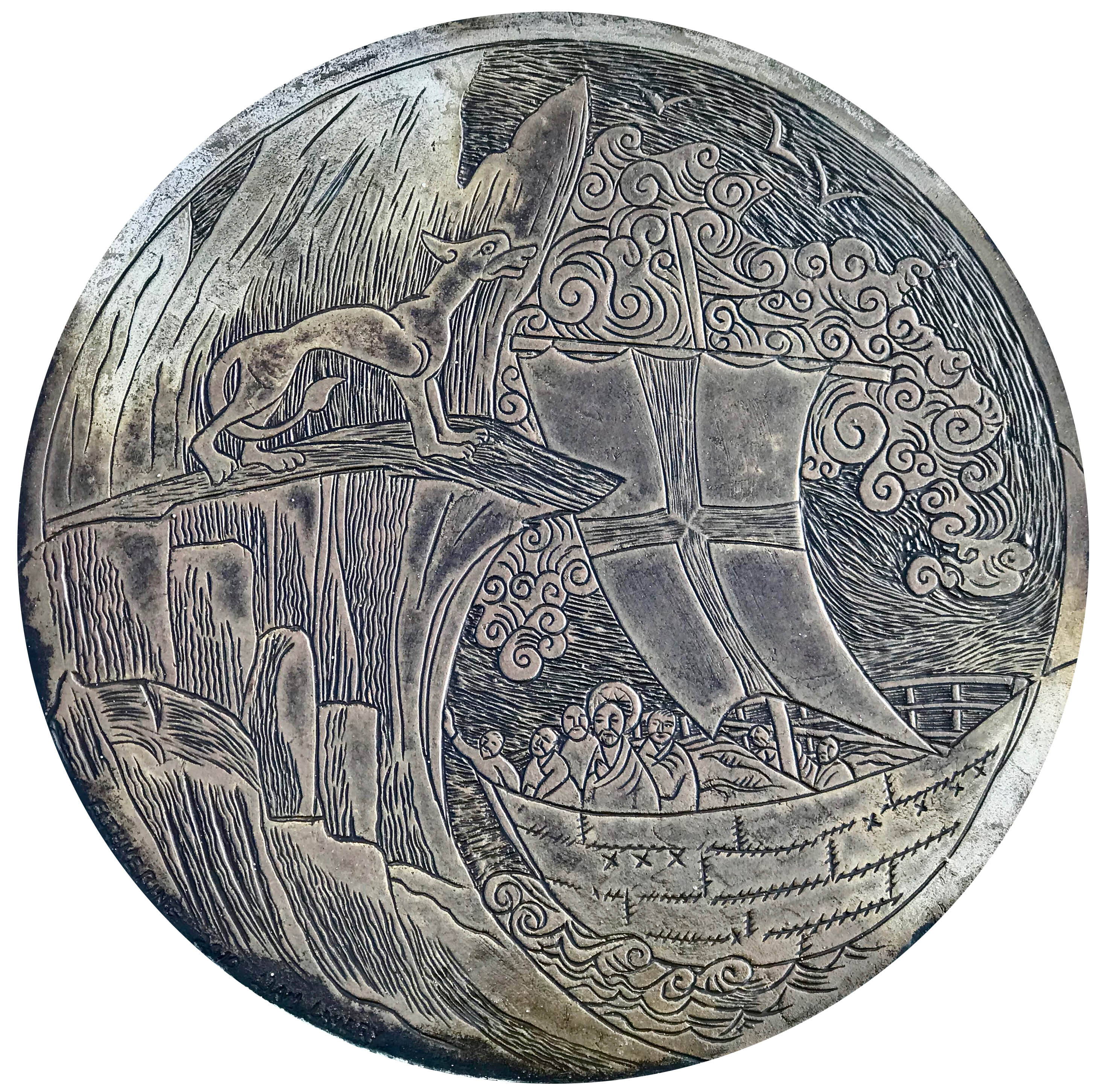
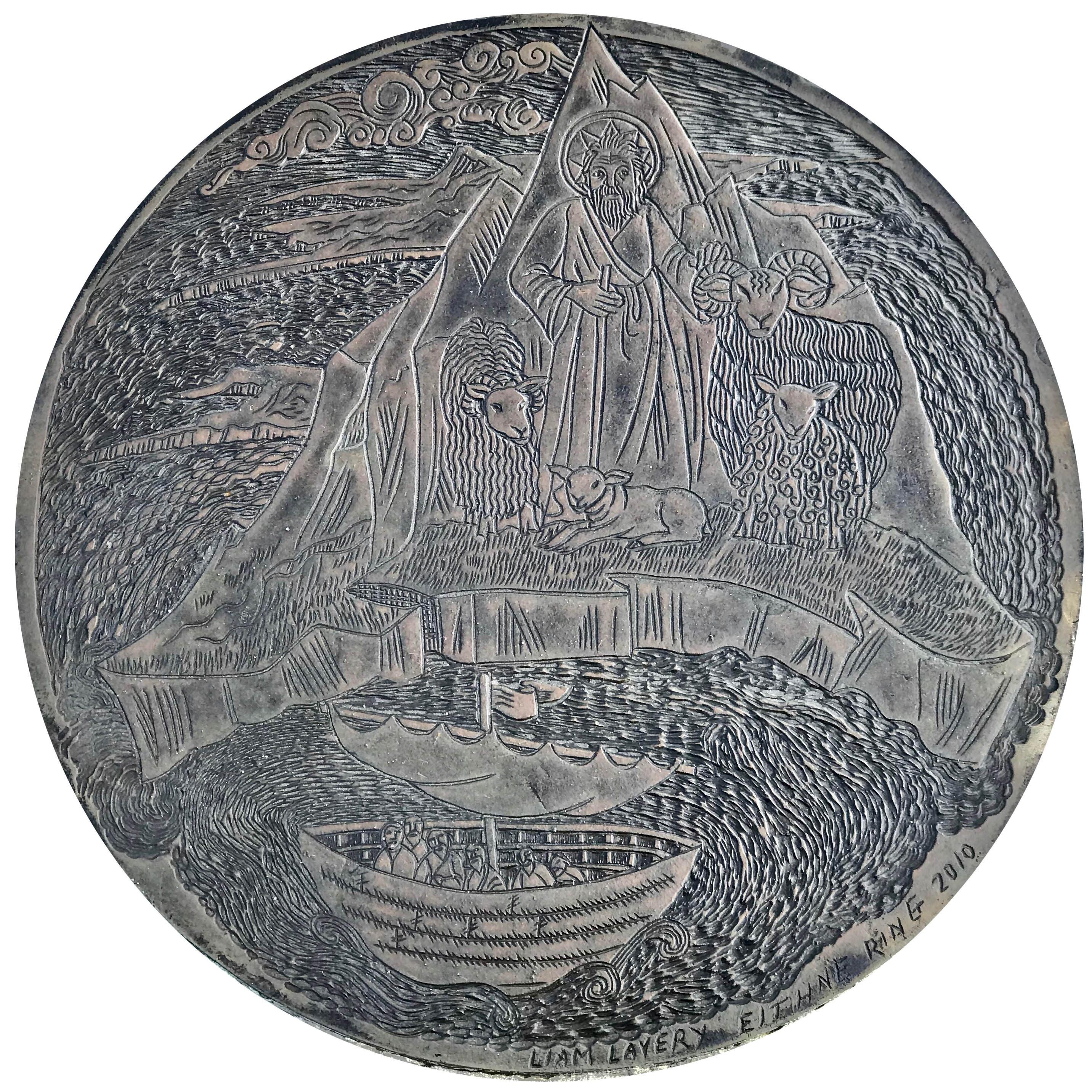
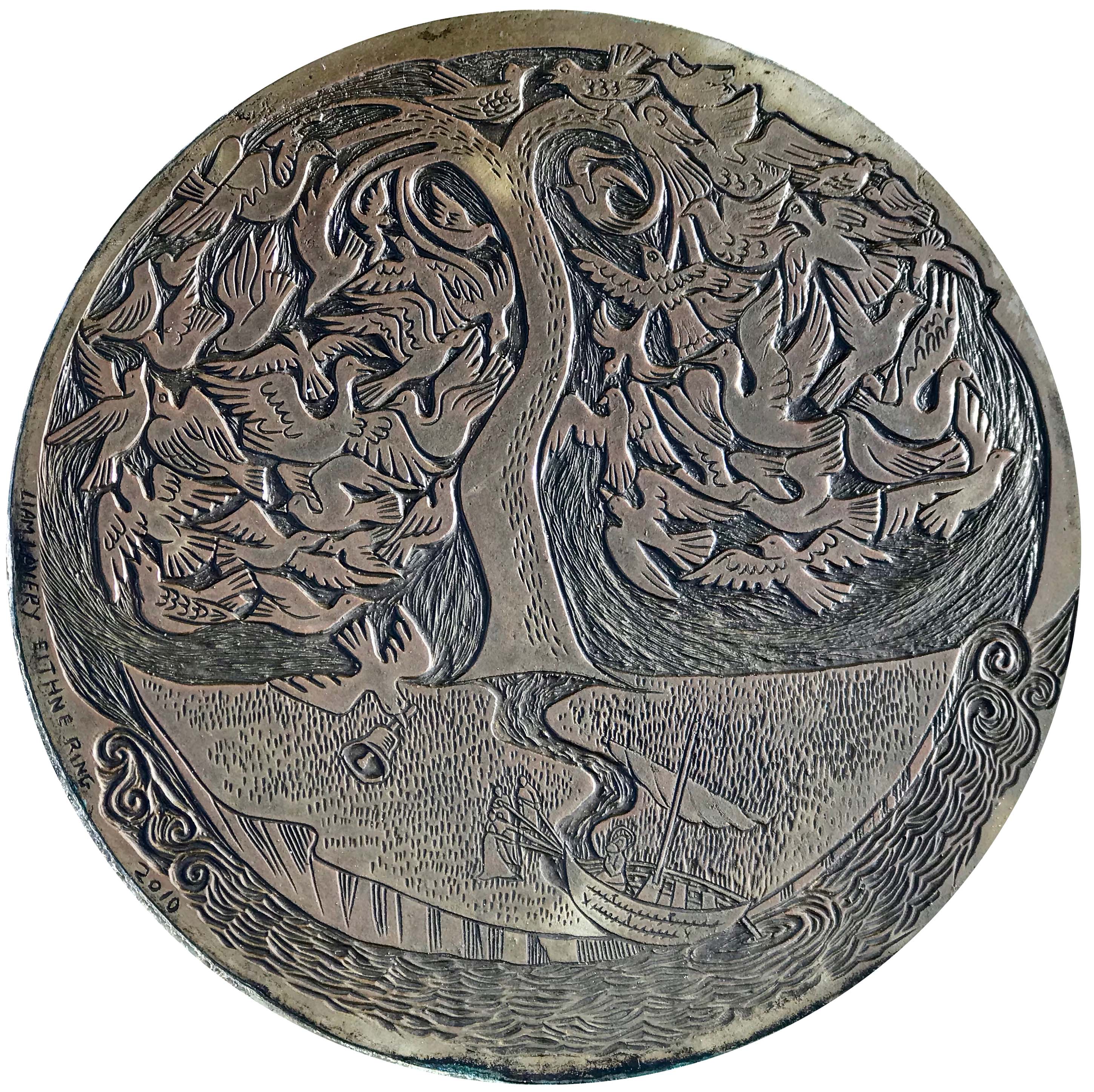
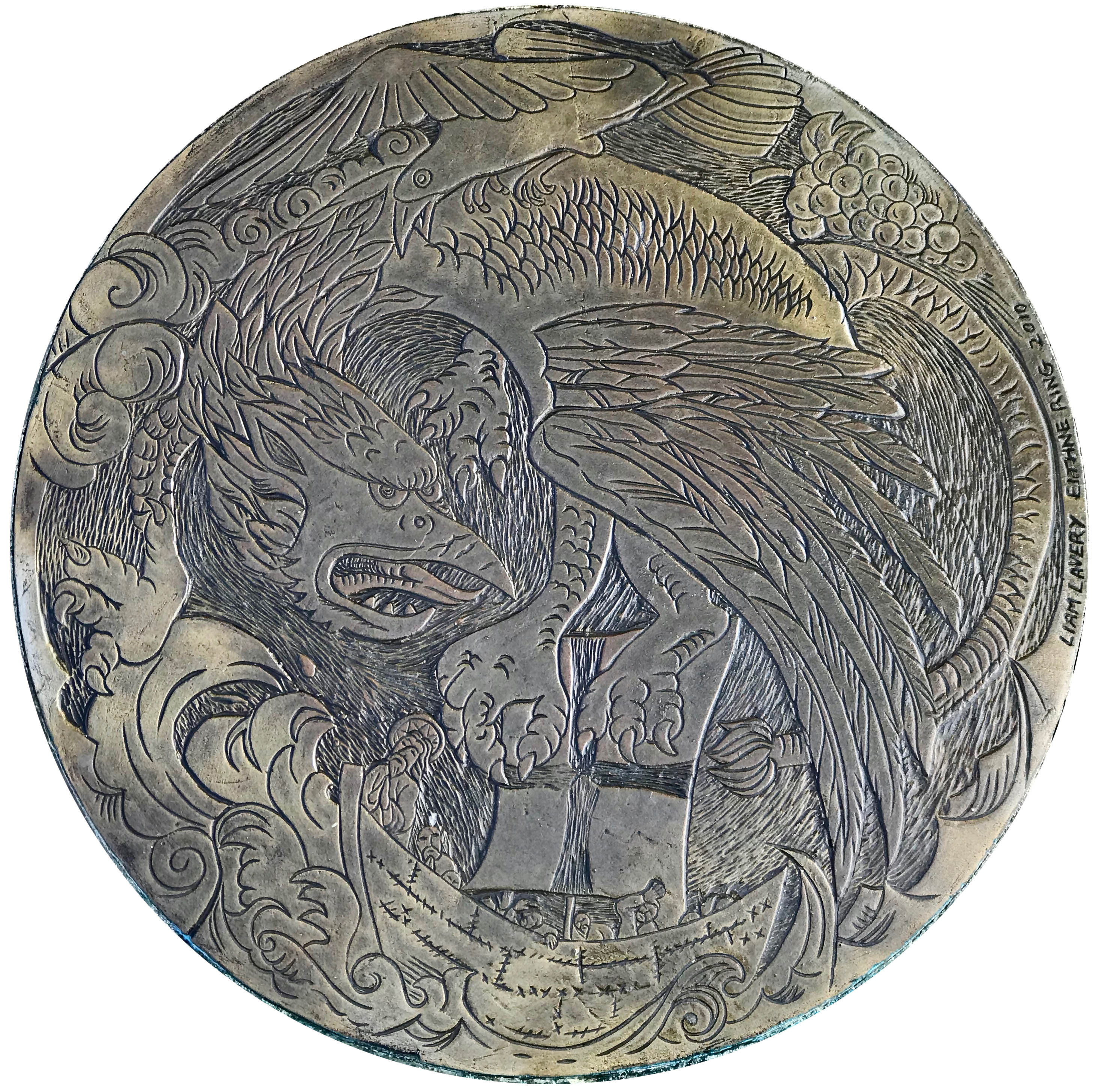
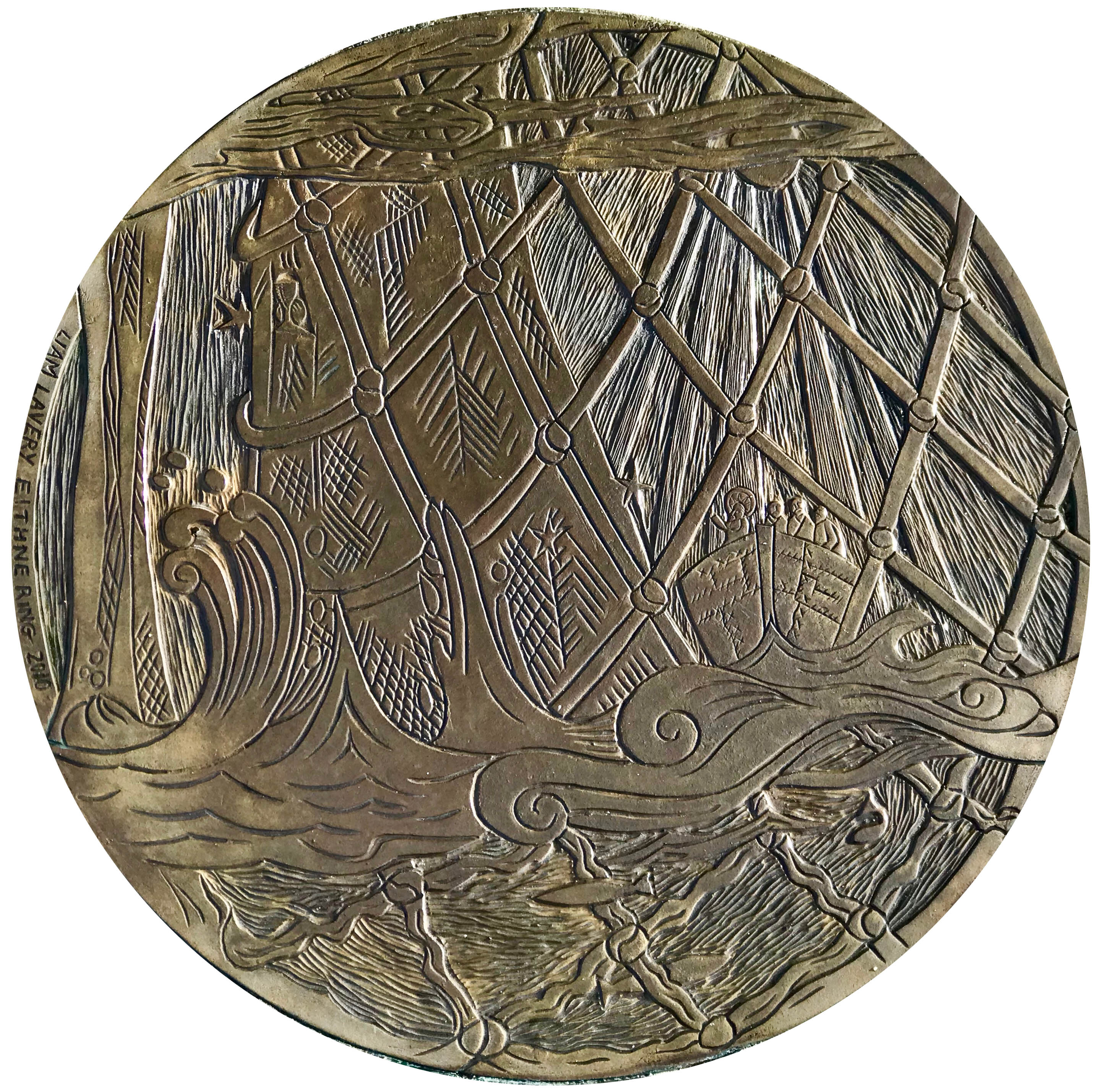
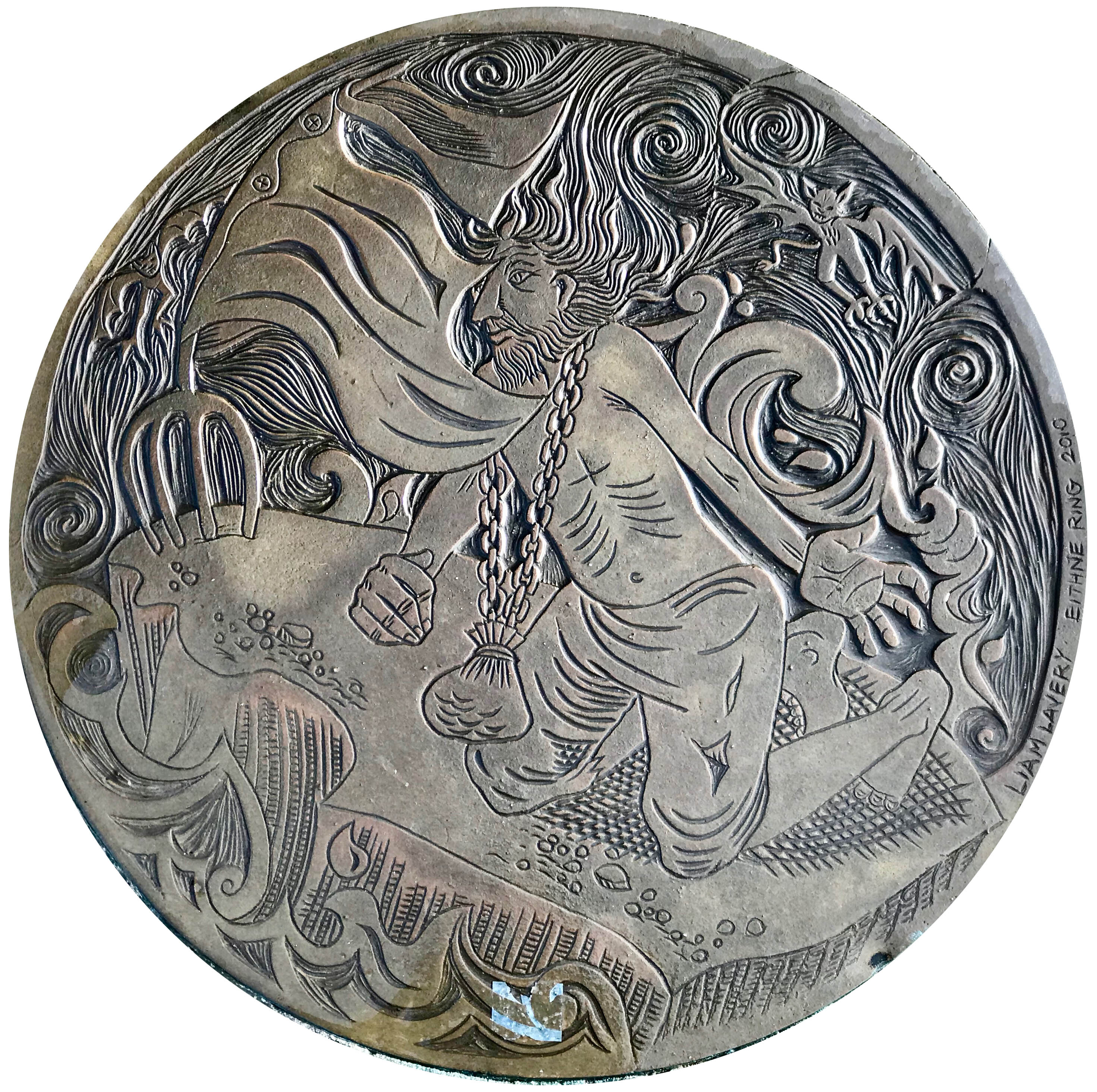
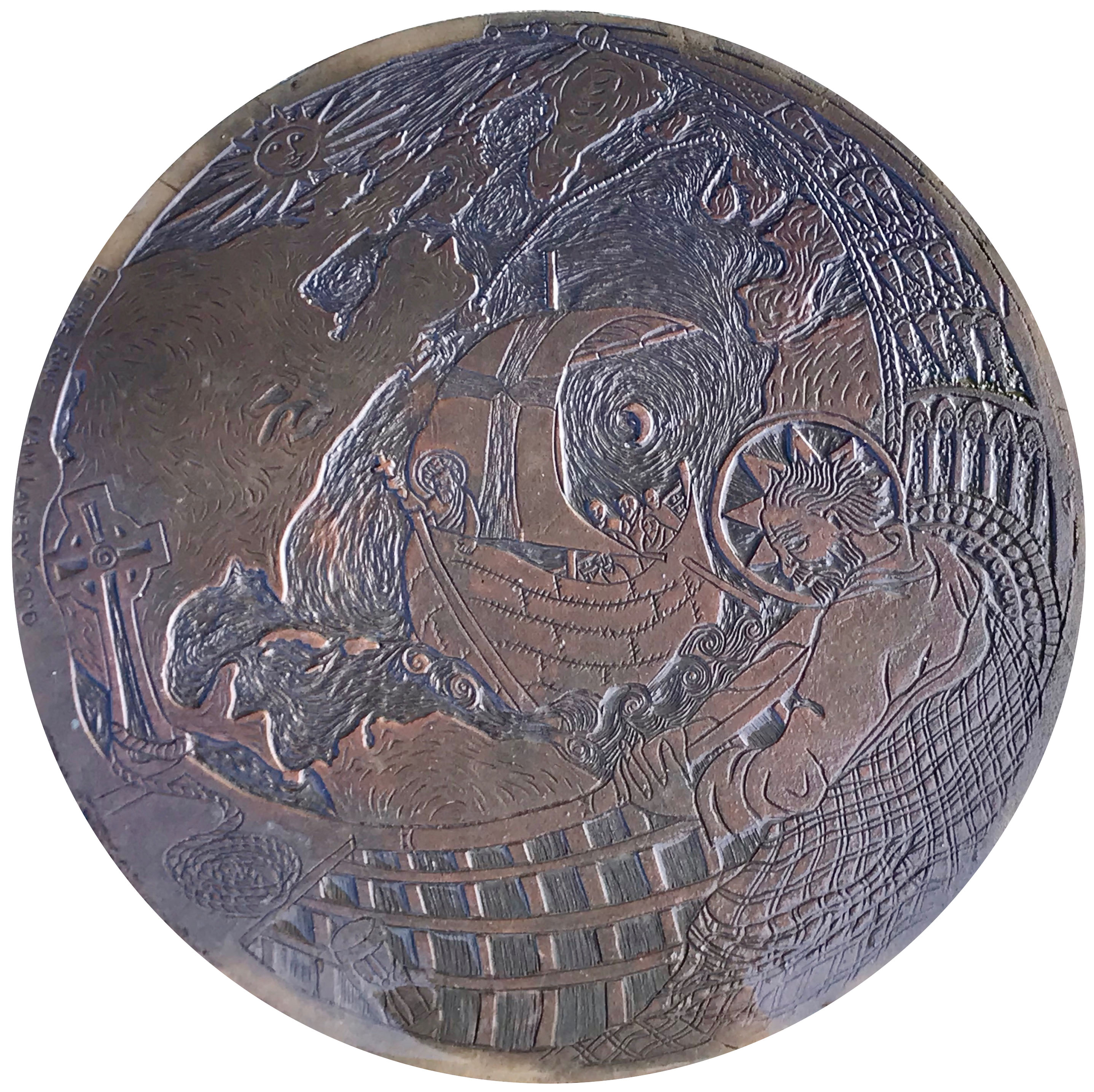
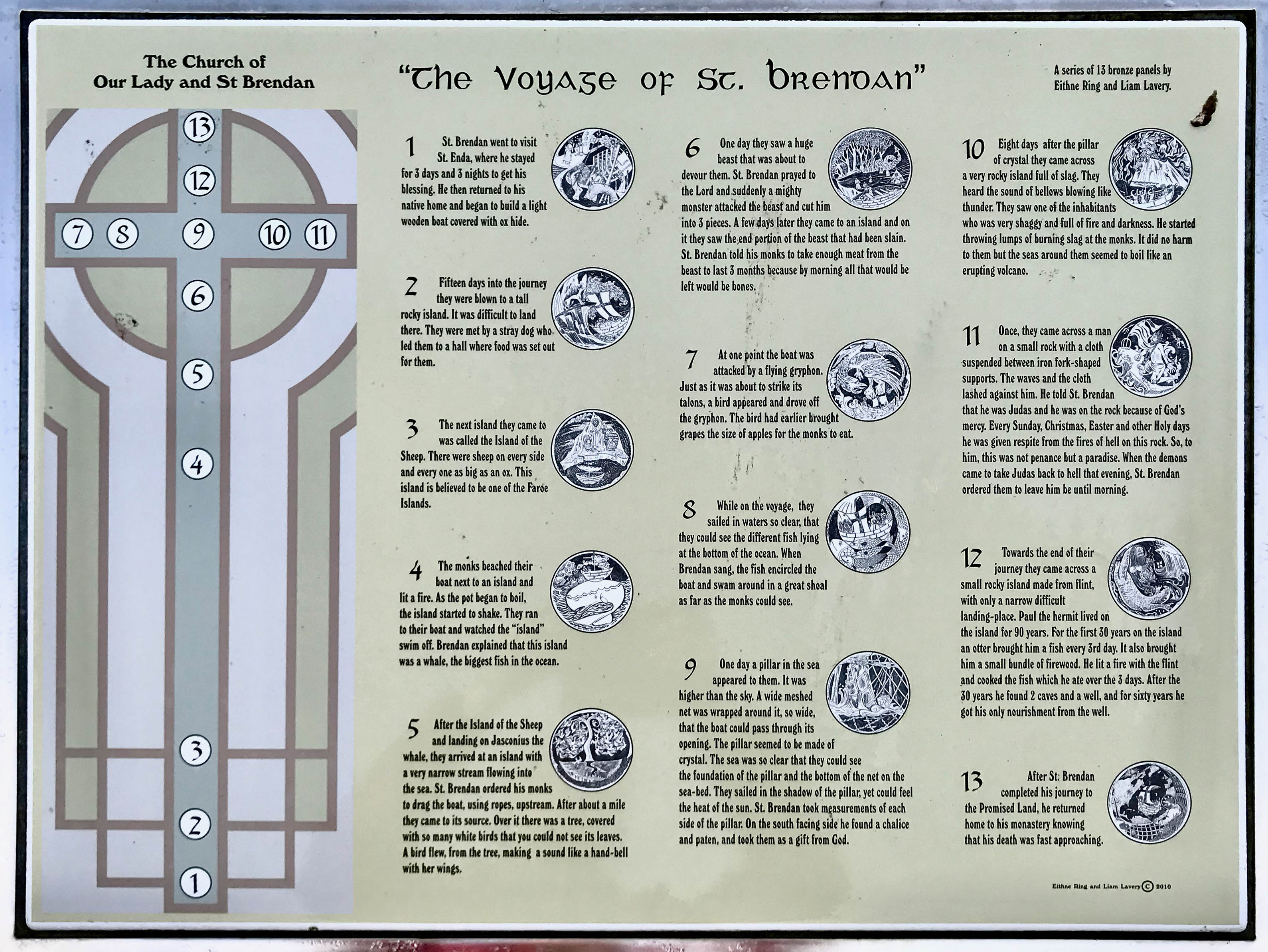
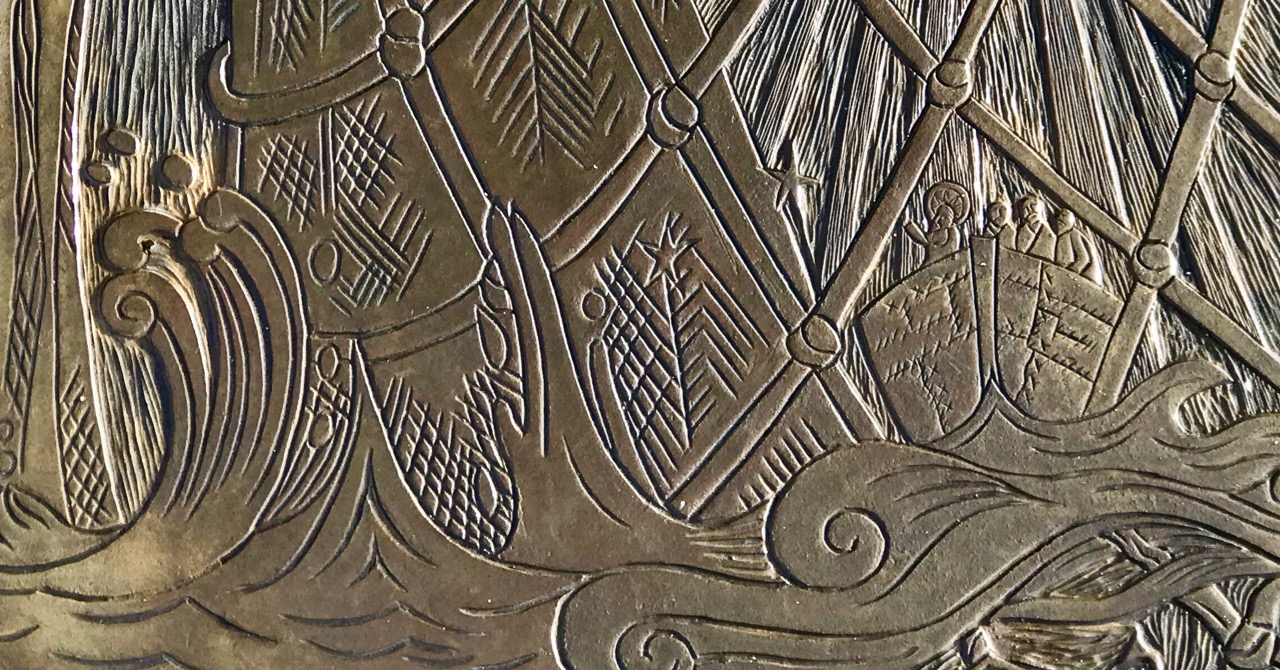
We went to Tralee, Co Kerry, to visit the Church of Our Lady and St Brendan: Finola was looking for windows by Murphy Devitt (which are spectacular) and I chanced upon a set of bronze roundels laid into the paving leading up to the main entrance (above). I felt I had to record them here, as they illustrate and tell the whole story of the Saint so wonderfully well. The large medallions were designed and made by Eithne Ring and Liam Lavery, and were installed in 2010. As far as I know this is a unique record of the voyage: well worth a visit – but don’t miss the windows!
St Brendan: part of a huge stained glass installation by Murphy Devitt in this Kerry church

I’m showing the roundels in the order in which you encounter them as you approach the main doors to the church, and giving a very brief description of the subject of each. At the end you will find a commentary provided by the designers, which gives more detail.

1 St Brendan visits St Enda prior to building his boat

2 On a rocky island, Brendan’s crew are led by a hound to a miraculous hall of food

3 The monks find an island inhabited by giant sheep

4 Brendan and his companions land on an island, light a fire and celebrate Mass; they discover that they are on the back of a whale!

5 An island of white birds: one is ringing a bell

6 The monks take meat from a beast that has been slain by a monster

7 On the Island of Grapes the monks witness a battle between a gryphon and a bird: the bird is victorious

8 All the fish in the ocean come to listen to Brendan while he sings

9 Brendan finds a huge crystal pillar rising out of the sea

10 The sea is boiling like an erupting volcano

11 Brendan and his companions meet the unhappy Judas chained to a rocky island

12 The travellers find a hermit who has been fed by an otter for forty years

13 Brendan returns to Ireland to prepare for his death

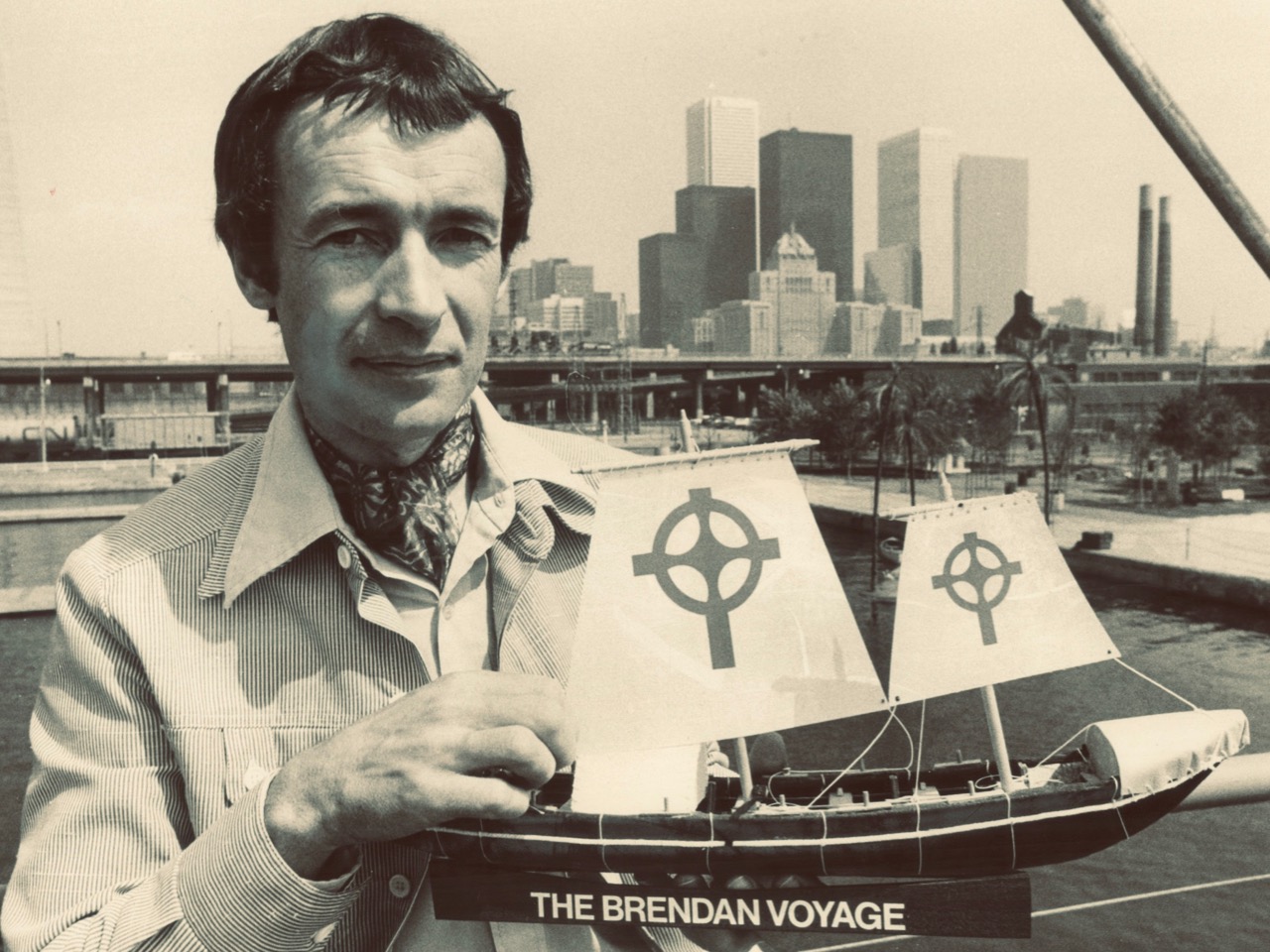
So now you know the bones of Brendan’s story. Now listen to the music! Saun Davey’s Brendan Voyage, a suite for uillinn pipes and orchestra, is a masterpiece inspired partly by the Saint himself, but also by Tim Severin’s 1976/77 recreation of the journey across the Atlantic in a leather clad boat:

Tim Severin pictured with a model of the boat in which he recreated the Saint’s journey

Let’s give the last words to Christy Moore, and the chorus of his Brendan song (you can find all the lyrics here):

“Is it right or left for Gibraltar?”
“What tack do I take for Mizen Head?”
“I’d love to settle down near Ventry Harbour”,
St Brendan to his albatross he said . . .