New Court Bridge – a Hidden Wonder

New Court Bridge has been badly damaged recently. Why does that matter?

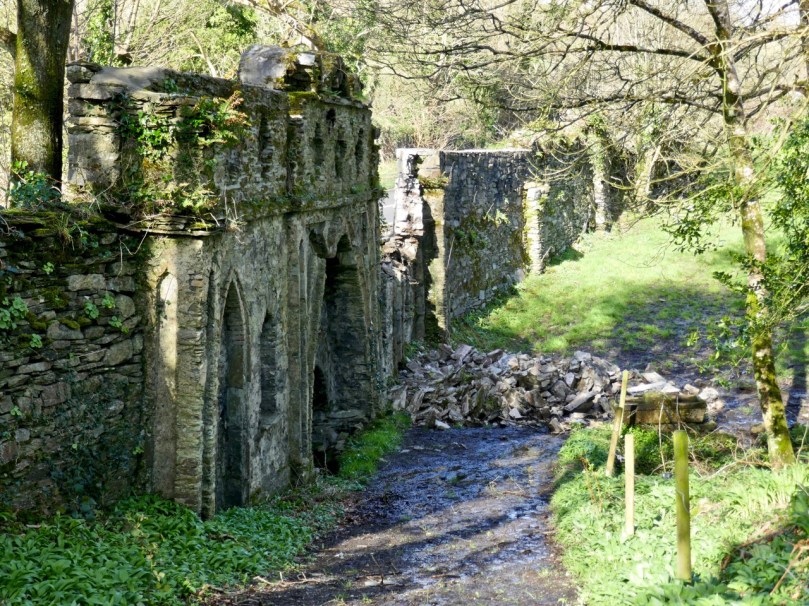
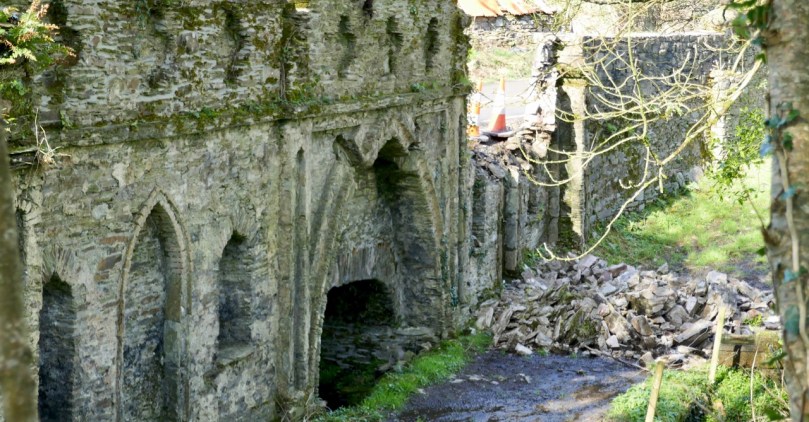
The damage from behind the wall. Now you can see that this is a bridge – but a most unusual one!

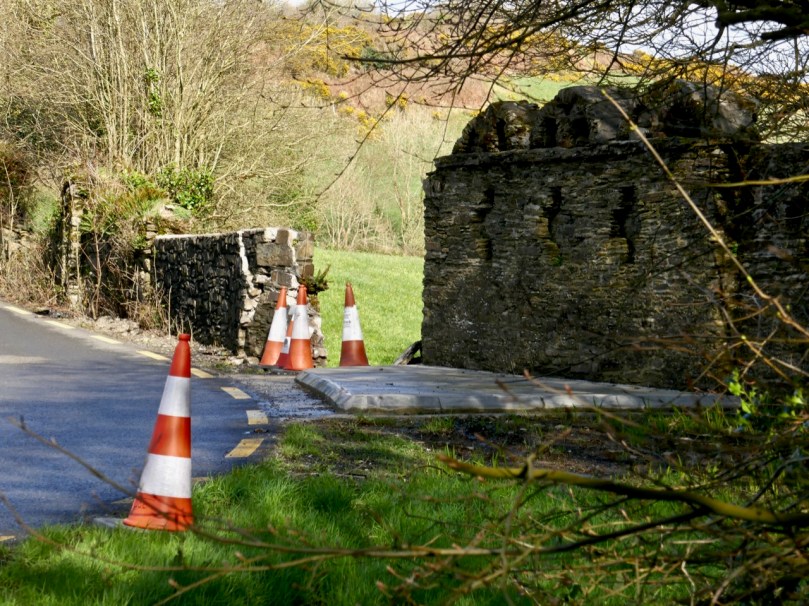
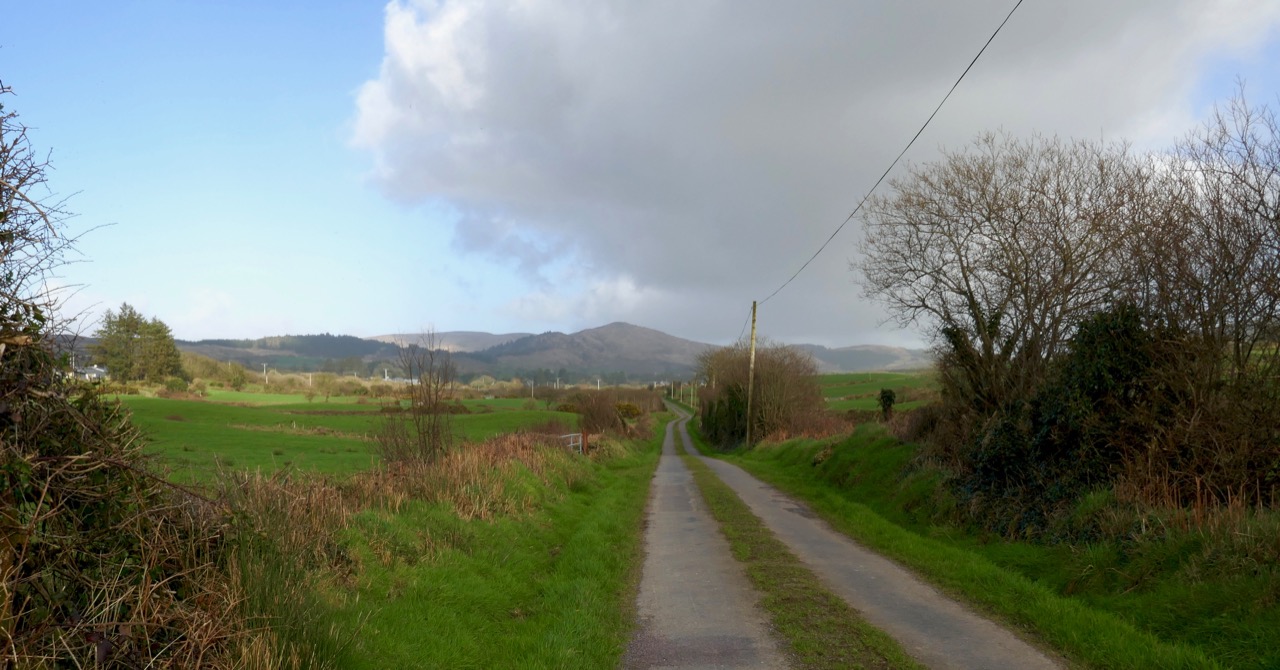
Most people driving by this dangerous bend, where the Ilen River meets the N71 just west of Skibbereen, notice the funny arches on top of the wall, but don’t think twice about them. It’s too risky to stop and take a close look, after all. Most people, in fact, probably don’t realise that they are driving over a bridge, although that’s a bit more obvious now as the County Council have put in one of those concrete pads that are going in front of all bridge walls at the moment (see lead photograph).

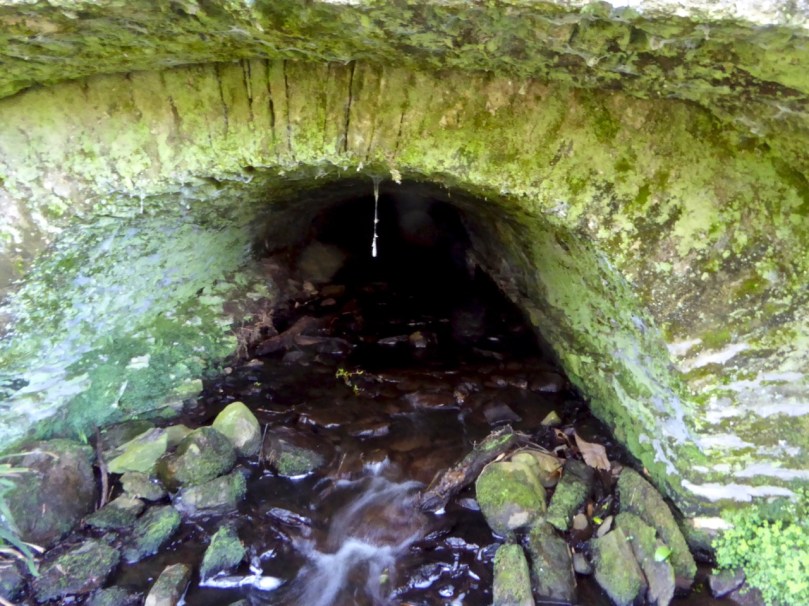
Water under the bridge

Does anyone know how the damage happened? Did a car take the bend too fast and hit the wall? Did the concrete work loosen the structure of the wall? Let us know if you have information. I hope nobody was hurt. All I know is that one morning I was driving into Skibbereen and there was a chunk of the wall – gone!

Early Ordnance Survey map of the New Court Estate, bounded by the Ilen River on the east and south. The red dots indicate the locations of the belvederes (marked as towers) and the bridge

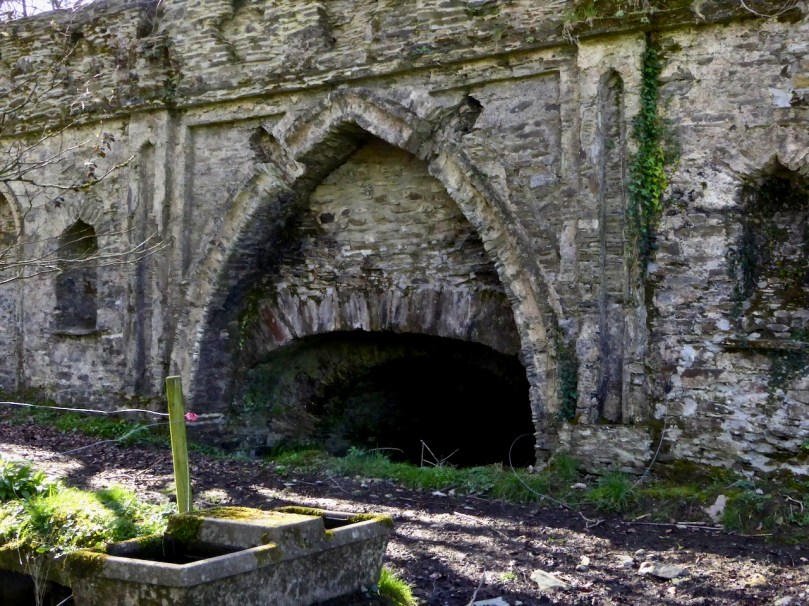
We tend in Ireland to think of old estate walls like this one as ‘Famine Walls’, erected during the mid nineteenth century as work projects. But this wall was far older than that, and it hid a secret – an elaborate facade on the back with decorative arches and niches. It was part of the plan for a pleasure garden undertaken by Henry Tonson at his newly acquired ‘seat’ which he called New Court, to distinguish it from Old Court, across the river. Originally, there was a matching wall across the road, but it was demolished in a truck accident many years ago. EDIT: I misinterpreted this – rather than a matching wall across the road, in fact there were matching arches on either side of the road, west of the entry to New Court. Both are now gone, one at least due to the aforementioned truck accident. Thanks to Sean Norris for this information.

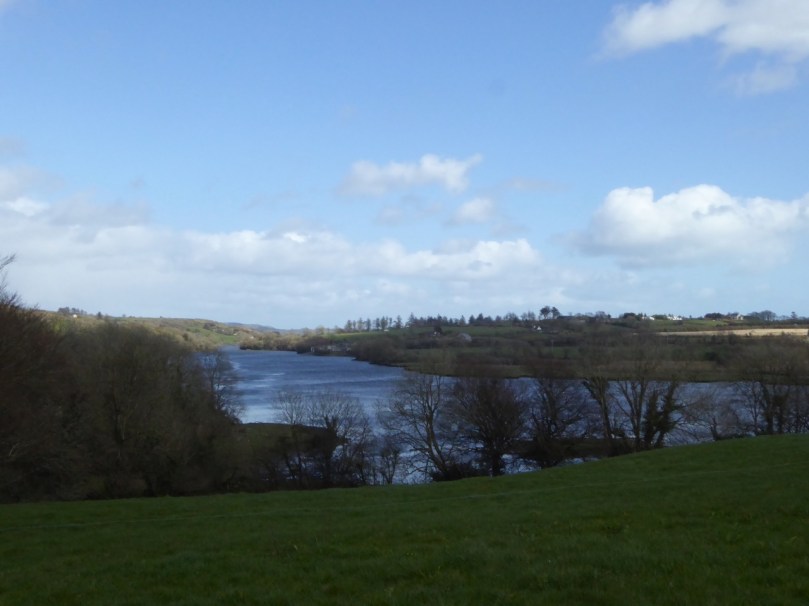
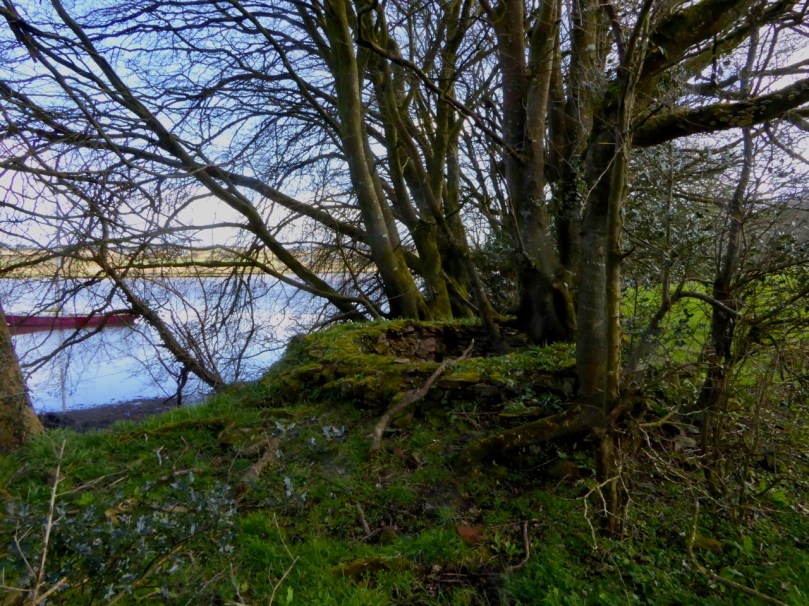
The Ilen floats by – a navigable river was a must for transporation to and from these early estates

The Tonsons had arrived in the 1660s. According to Burke’s Peerage, Major Richard Tonson received a grant of land in the county of Cork from Charles II for his distinguished exertions in favour of royalty during the Civil Wars and purchased the castle and lands of Spanish Island, in the same county. If he built anything on Spanish Island, just off Baltimore, no traces remain, and indeed, although strategic in marine terms at that time, it is hard to imagine how the island, mostly bare rock, would have made for comfortable accommodation.

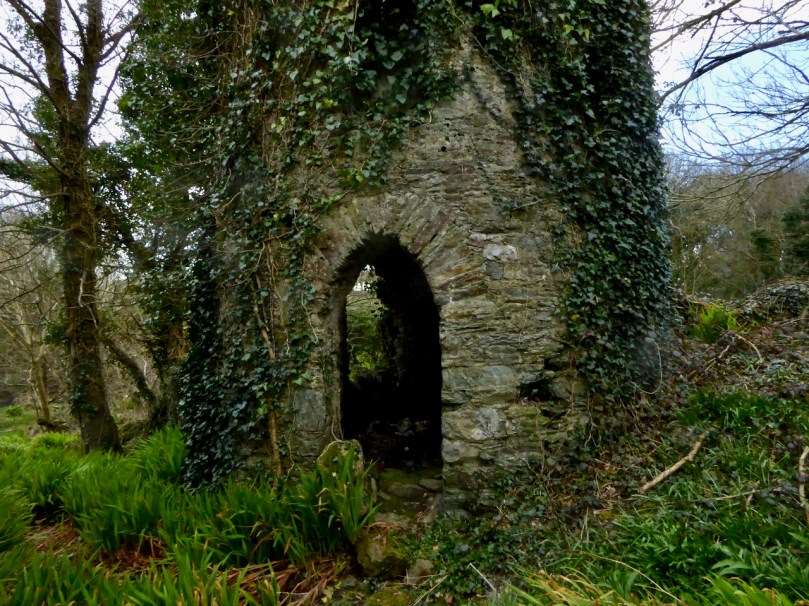
The stump of one of the belvederes, overlooking the river

It appears he, or his son, Henry, bought the land on the west bank of the Ilen and Henry set about establishing his dwelling there. This included building the wall around the estate. Eventually, and we are not sure when, one of the Tonsons (over time they acquired a title, Lord Riversdale) developed the area around the house as a vast pleasure garden.

The most complete belvedere. This one also functioned as a dovecote

The fashion for designed landscapes is an eighteenth century phenomenon. As I said in my post on belvederes, in that century

. . . a different style of landscaping. . . dominated garden design in Britain, pioneered by William Kent and Charles Bridgeman and reaching its peak in the work of Lancelot ‘Capability’ Brown. The effect they strove for was naturalistic (as opposed to natural) – a planned layout that mirrored but enhanced their idea of a ‘wild’ and romantic landscape. Large expanses of grass, strategically placed lakes and ponds, plantings of carefully chosen tree and shrub species, and clever little structures such as temples, summer houses and belvederes all combined to delight the eye, create a romantic mood and, of course, attest to the taste and wealth of the owner.

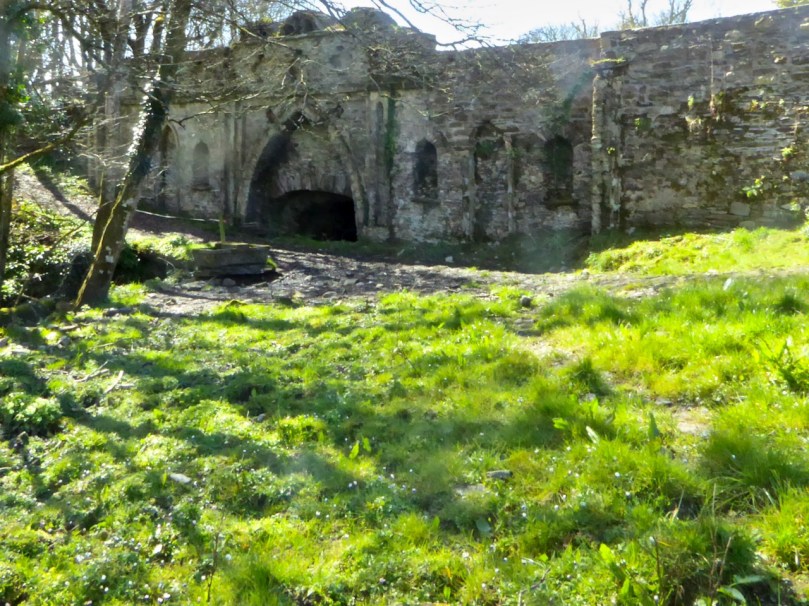
A closer look at the construction of the bridge. It would be fascinating to attempt a reconstruction drawing. The niches may well have held statuary or decorative urns

Although the grand houses at the centre of the estate have now gone (see this photograph in the National Library for a glimpse of the last one), there is lots of evidence still of such a designed landscape. Originally lawns sloped to the river – no need to build artificial ponds as the Ilen provided the perfect watery scene. Little round towers were built to be used as gazebos or belvederes (and in one case a dovecote): three in all, of which the stump of one and a fairly complete second are still to be seen. The bridge with its elaborate facing was the crowning glory of the estate wall.

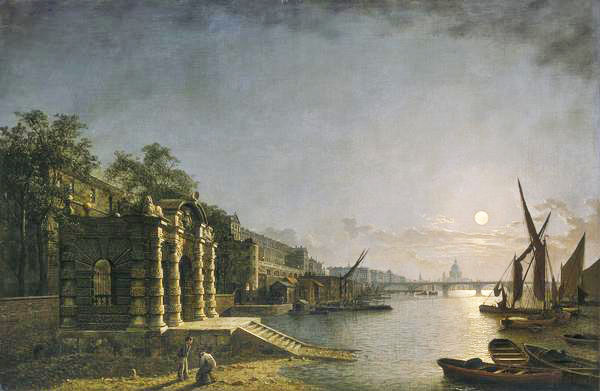
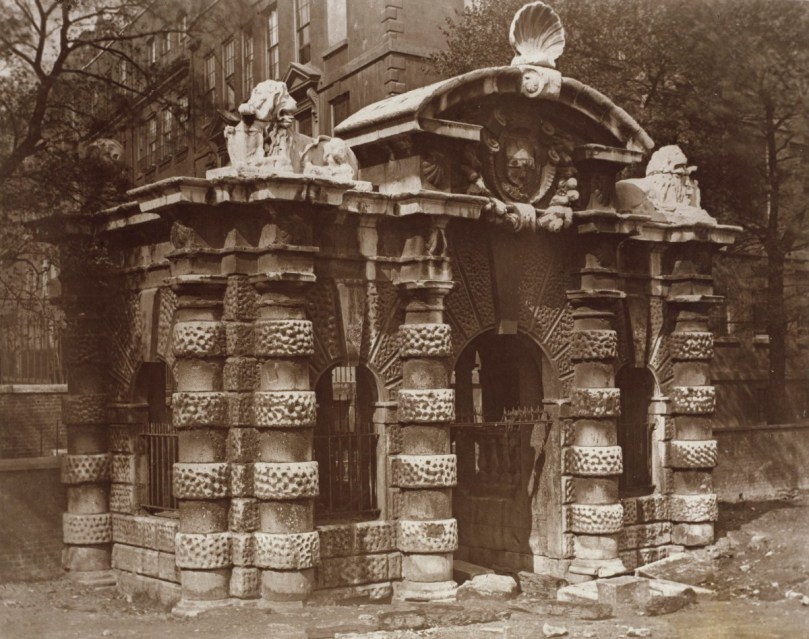
The York House Water Gate as it would have looked originally on  the Thames (Wiki Commons)

What did the bridge wall look like originally? We don’t know, but Peter Somerville-Large in his Coast of West Cork says it was modelled on the ‘water gates at Hampton Court’. I can’t find any images of this online, but I have found the water gate at York House, which is still there. It was built as a ceremonial landing place on the Thames (above) although it is now a long way from the river.

The York House Water Gate in an early photograph (www.royalacademy.org.uk/art-artists/work-of-art/O18442 Credit, Royal Academy of Arts / Photographer William Strudwick )

Of course, it is larger and more elaborate, but you can still see the basic shape, with its curved arch on top and the arched niches in the wall. The arches at New Court may have been plastered, perhaps, or faced with some material. The York House Water Gate dates to 1626 and it’s all that left of the York House estate – the Tonsons may well have been familiar with it or with similar water gates along the Thames. Building such an edifice would have been aspirational, indicating a desire to impress.

This was what it looked like in 2016 – taken by a camera with spots on the lens

The likelihood, therefore, is that the bridge at New Court is most probably eighteenth century, and early eighteenth century at that – about three hundred years old. We don’t have a lot of structures in West Cork dating to then. Surely it’s worth preserving those that still exist? I am hopeful that the National Monuments Service (they’ve been alerted and have notified their Monument Protection Unit) will come riding to the rescue. I’ll be keeping an eye on it all – you do too. But note that this is private property, so no walking or driving through the gates without permission.

UPDATE, MARCH 20, 2019. This notice was received from the National Monuments Protection Unit: “Cork County Council (Bridge Management) have indicated it is prepared to repair the wall as a Reactive Maintenance Incident and will ensure repairs meet any necessary heritage requirements.”

Saint Manchan, his Miraculous Cow, and his Shrine

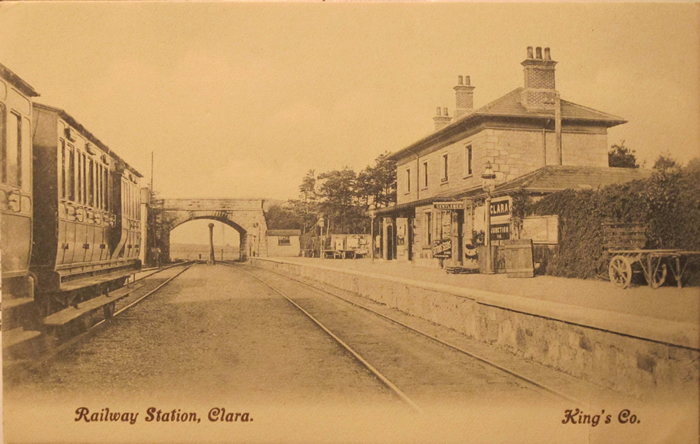
I was in the little two-horse train which labours west from Clara to Banagher and the outlook was desolate. There was another chap in the carriage. He sat hunched up in the corner with his nose to the window. One glance convinced me that it was useless to say anything and there the two of us kept on staring rather lovingly at a wilderness of bog stretching away to the Slieve Bloom Mountains. It seemed to me that there was a kind of promised land on the other side. On past a few scattered farm houses some grey boulders and the ruins of a church. I found myself thinking dismally enough of the tourists. After all what do they get? Just ruins, ruins and more ruins – the saddest ruins in Europe. Then suddenly I heard my friend of the opposite corner speak in a mournful kind of way with his nose still glued to the window – “That’s Leamanaghan, a quare kind of place, decent people, too, the best in the world, people who’d give you all the milk you could drink but wouldn’t sell a drop of it for all the gold in Ireland and it’s all by raison of a cow, Saint Manchan’s cow.”


(St Manchan By Tomas O’Cleirigh, Midland Tribune 27th April 1935)

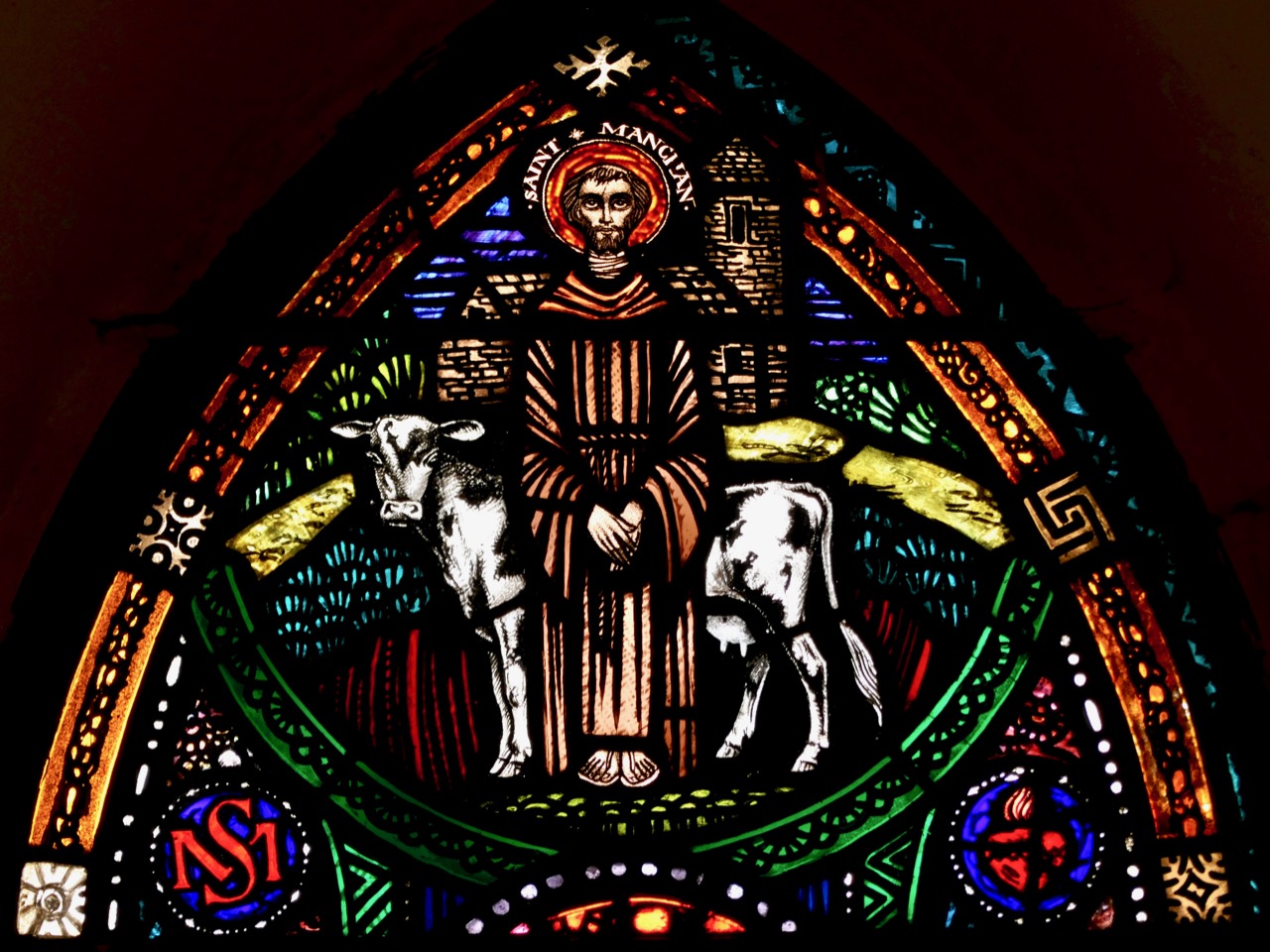
Upper – Finola is featuring the work of stained glass artist George Walsh this week. We were fortunate to find his portrait of Saint Manchan and his cow in the  little church at Baher , Co Offaly, on our travels. Centre – The Church of Saint Manchan

(From Robert’s diary, 2012) – St Manchan had a Cow, a miraculous animal that was always in milk, and the people of Leamonaghan had the milk for free (and, to this day, will not charge anyone for a pint straight from the herd). We tramped through a field of cows as we searched for St Manchan’s holy well: they gazed at us with some disdain. The well is a curious affair – old stones, concrete and rather ugly. The water is alive with tadpoles. We were tentative as we sampled the rank, slow moving stream – but it gave us the gift of credulity!

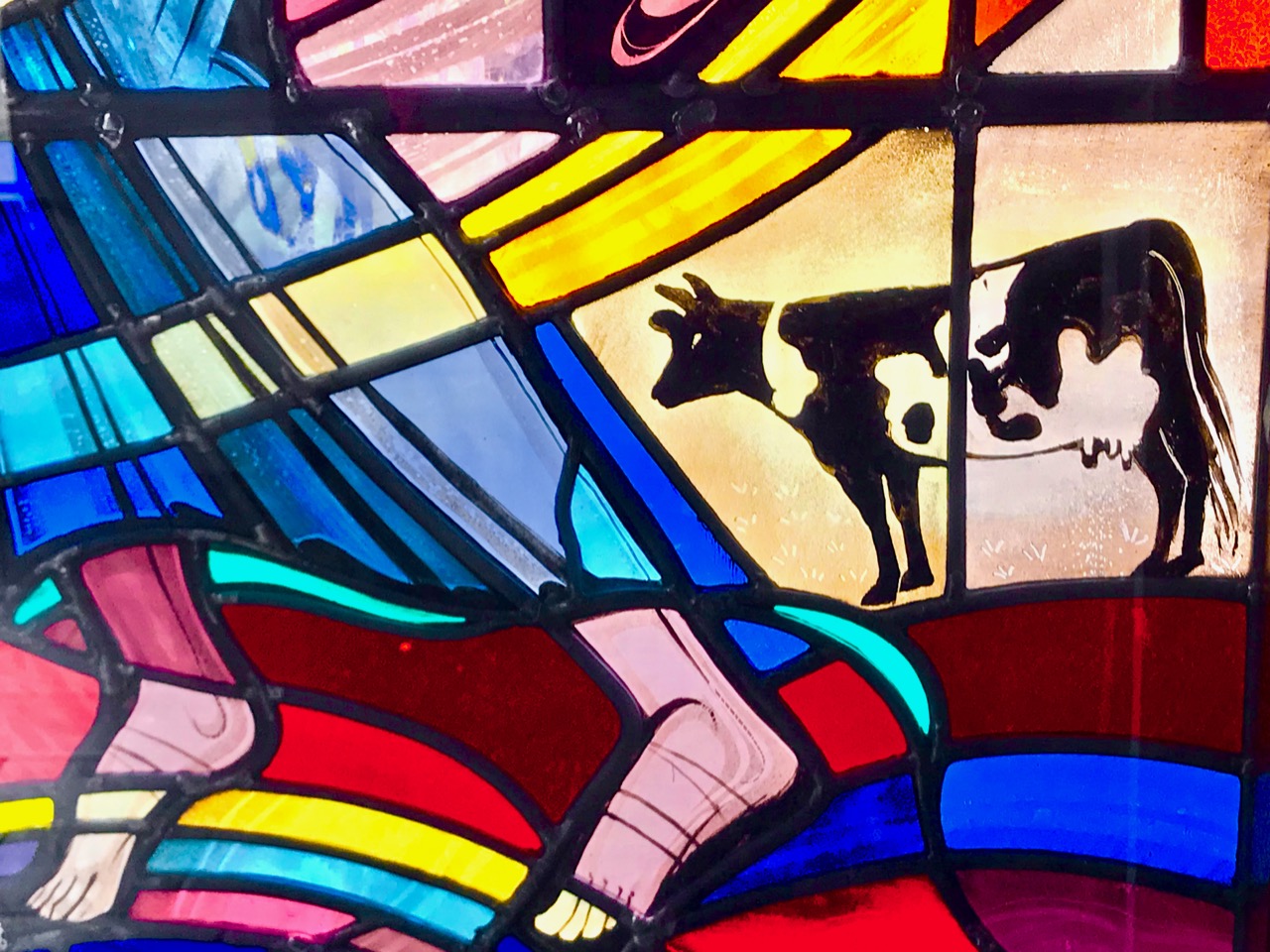
This detail from the Harry Clarke Studio window at St Manchan’s Church (dating from 1931) shows the miraculous cow

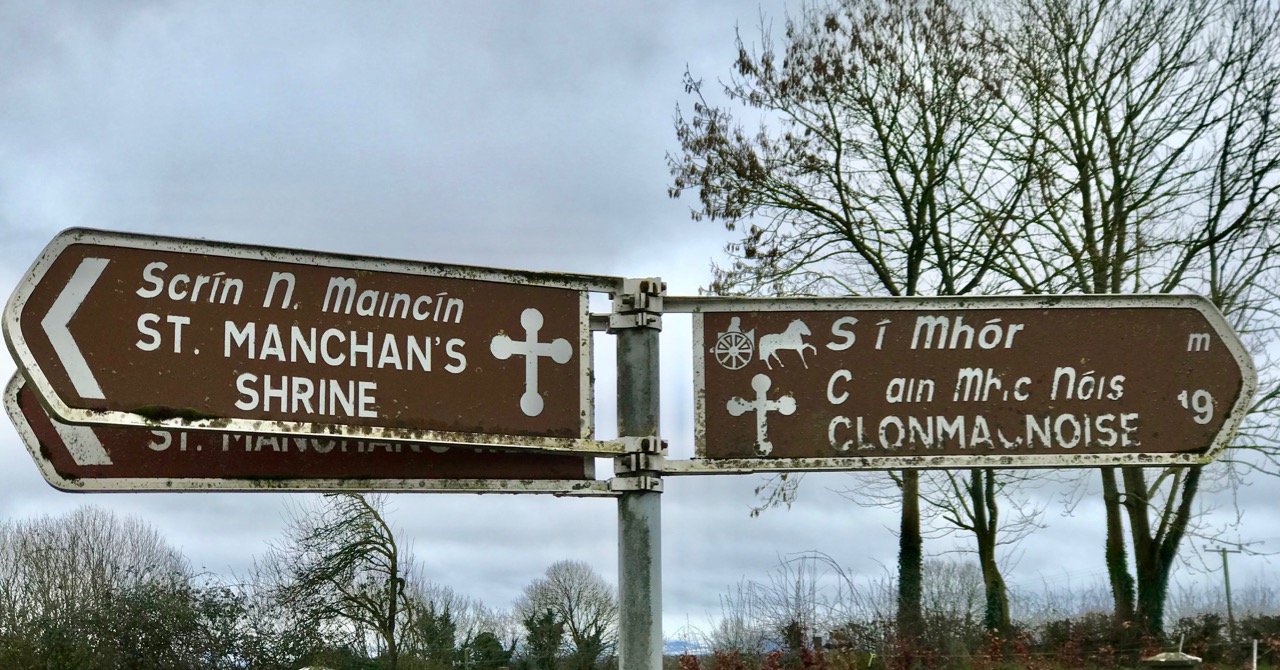
I went through a storm of real Irish rain to see Leamanaghan that very evening. It is four miles from Ferbane in County Offaly and hidden away in a vast bog region which is dotted with scattered boulders of magnesian limestone. The general depression is summed up in the name – Liath Manchan – the grey land of Manchan. Aye! The grey, lonely, chill land of Manchan. Saint Manchan lived here and died in AD 664. That might have been only yesterday, however as far as the good neighbours are concerned because he is the one subject over which every man, woman and child can get really voluble. I was taken to see the ruins of his church and then down to his well and heard how when you are sick you should pray here, walk three times round it and then go back and leave a little present for the saint himself in the window of the church . . . I was told that on the 24th January when all the rest of the world works, the people of Leamanaghan just take a holiday and make merry because it would be the unpardonable sin to think of work on their Saint’s day.


(Tomas O’Cleirigh, 1935)

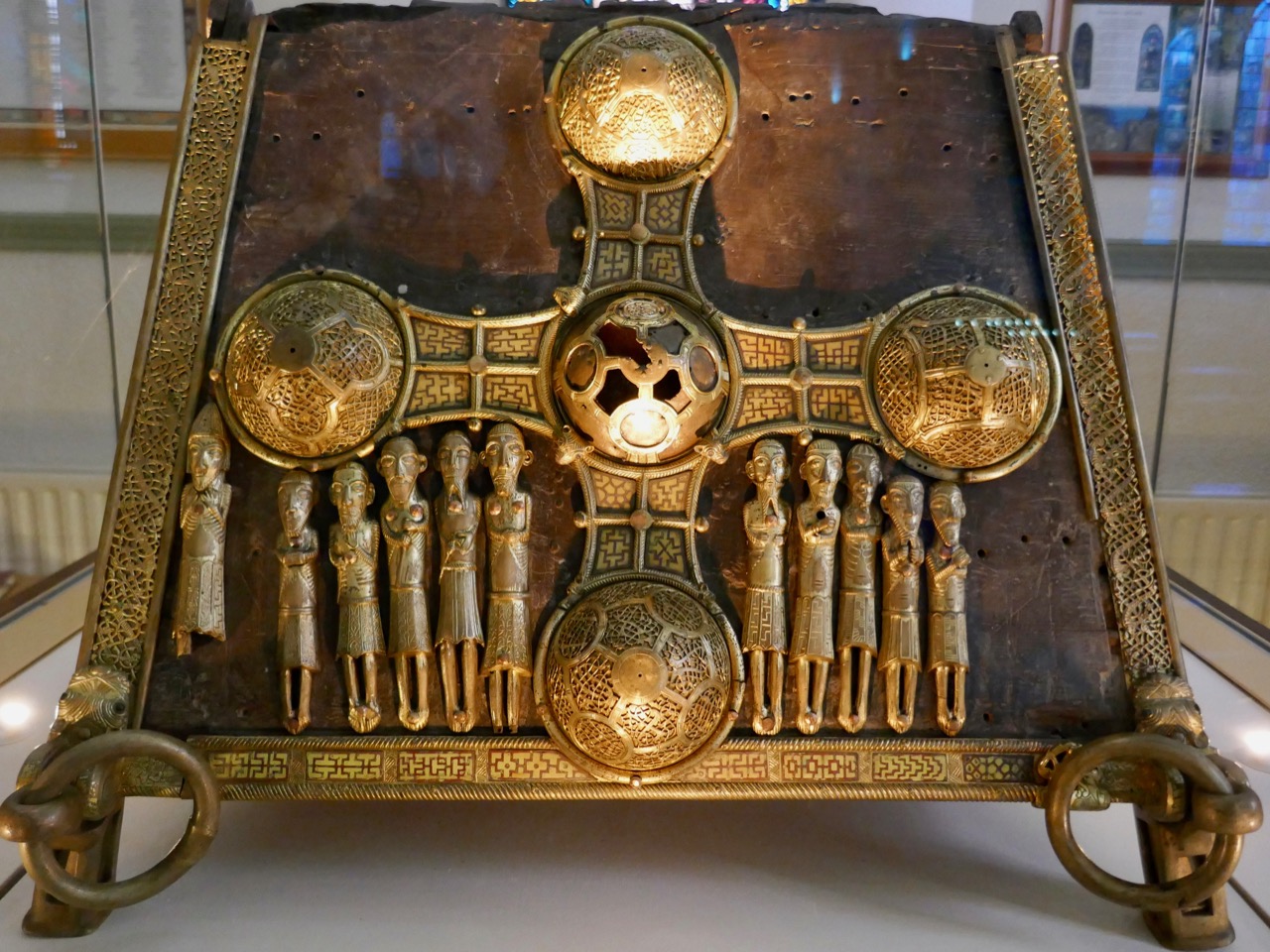
The twelfth century shrine of St Manchan securely displayed in the church today, with the Harry Clarke Studio window behind it

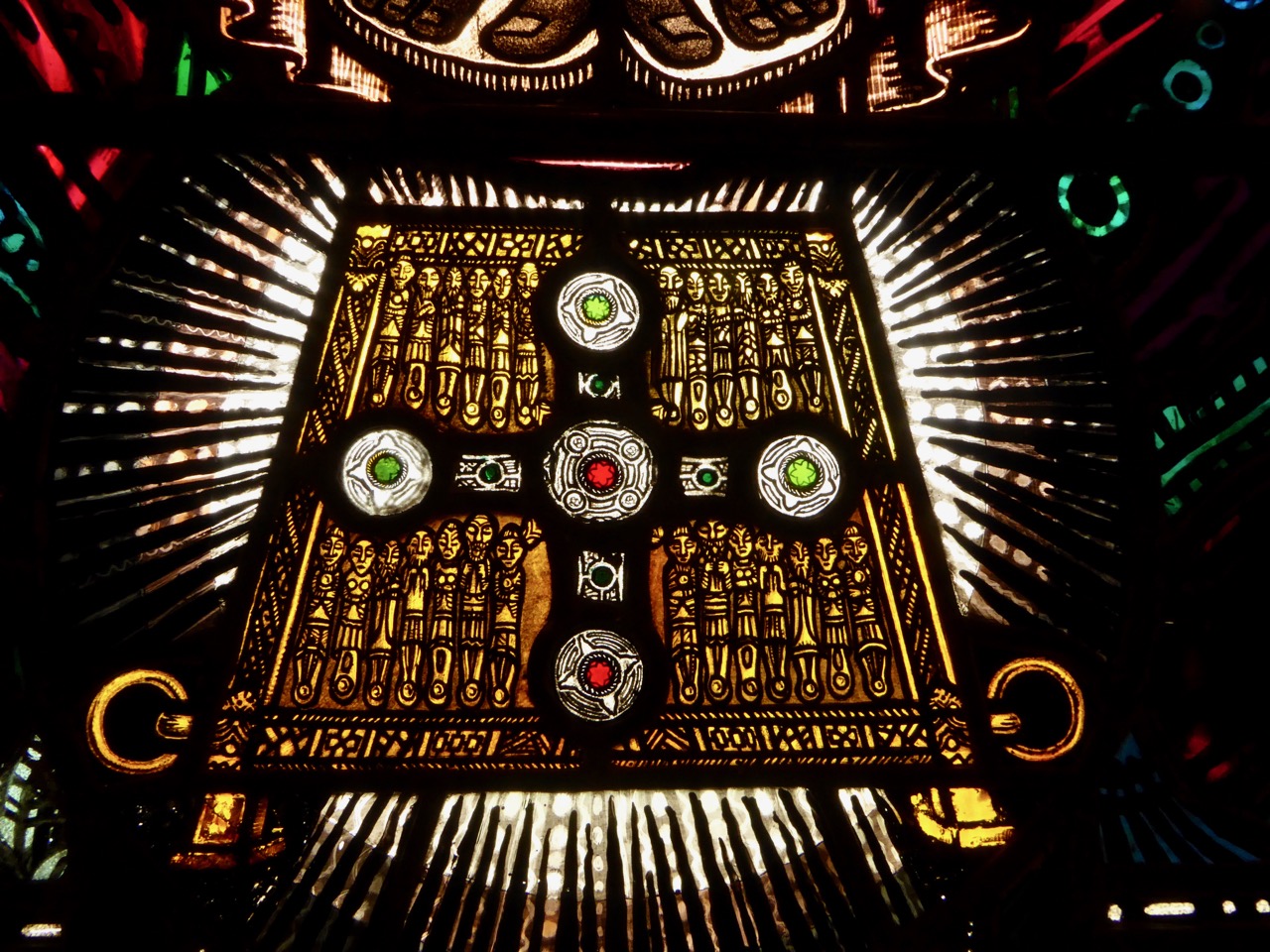
St Manchan died in a plague which he had asked God to bring on his sinning people. After his death, his herdsmen – Bohooly (from which the name Ua Buachalla – or Buckley – is derived) found it necessary to call upon the Saint to help recover the Community’s cattle, which had been stolen by raiders. Manchan duly appeared, but one of his faithful herdsmen was so overjoyed to see his old master again that he threw his arms around him. This he should not have done, as he was a mortal sinner: the Saint fell into a heap of dry bones, but the cattle were recovered. We learn that Manchan’s bones were gathered up and taken to Clonmacnoise, where a fine casket was made to house them, out of yew wood, bronze and gold. Nearly a thousand years later we stumbled on this same shrine in the little church at Boher which carries the Saint’s name, with a glorious representation of itself shining out from a Harry Clarke Studio window set behind it. It resided in a case of armoured glass, alarmed and watched by cameras  – incongruous…. and ineffective: the day after we saw it there the shrine was stolen in broad daylight, evidently after only a few minutes’ work. (Robert’s diary, 2012)

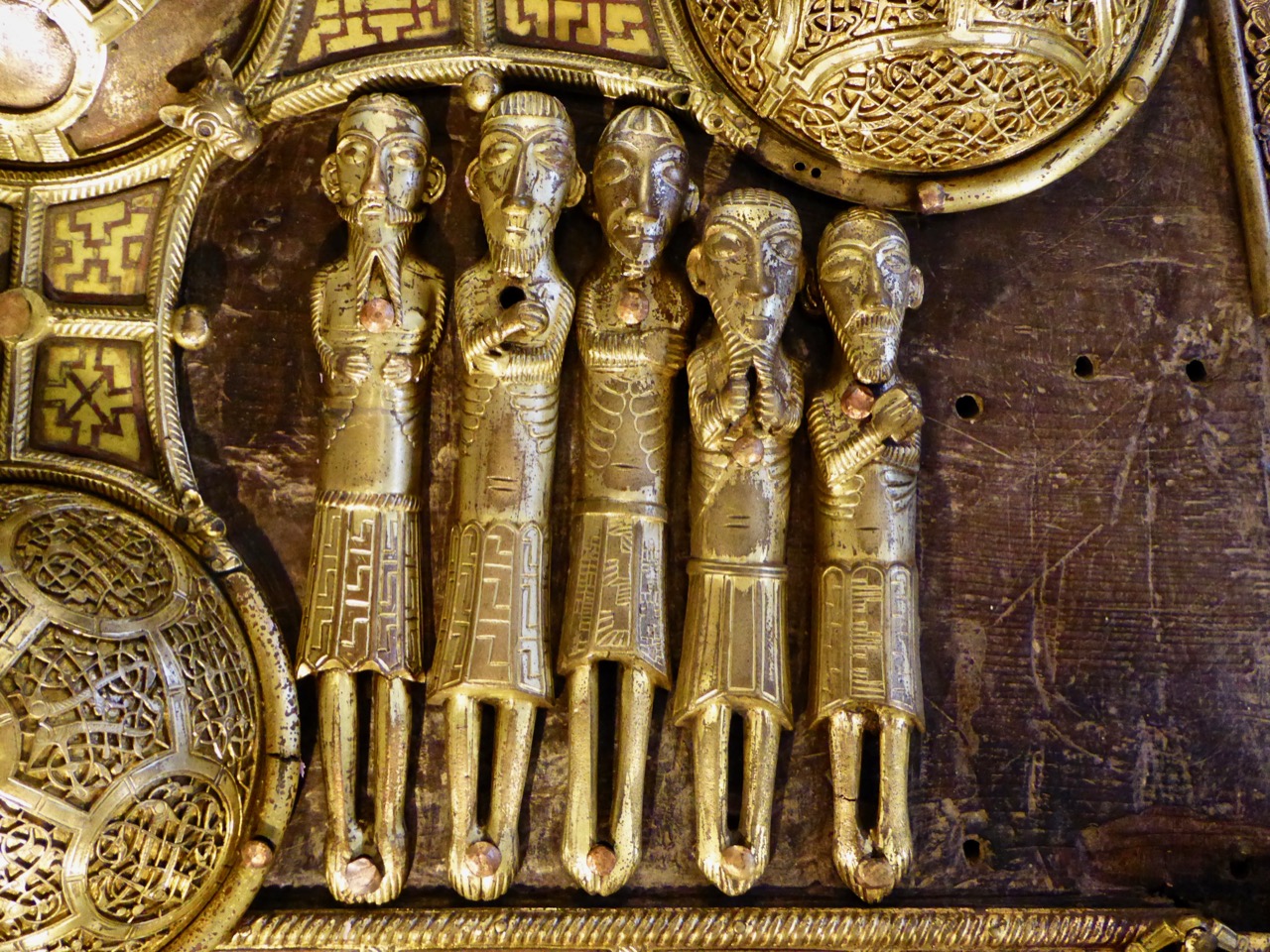
It’s wonderful that we can see the actual reliquary containing St Manchan’s bones returned to the church at Boher, Co Offaly, close to the ruins of the monastery at Leamonaghan which the Saint founded in the seventh century. Although it has suffered some damage over the centuries, the detailing is exquisite: it is one of Ireland’s finest medieval treasures 

They have all kinds of stories about the good saint but the best one of them all explains why Leamanaghan people don’t sell milk. Here it is: Saint Manchan had a cow – a wonderful cow that used to give milk to the whole countryside – good, rich milk for which no charge was ever made by the saint. Then, the people of the neighbouring Kil Managhan got jealous and watched for their chance. One fine day when Manchan was absent they came and stole the cow and started to drive her along the togher through the bog back home to Kil Managhan. The good cow, suspecting something was wrong, went backwards and most unwillingly, fighting, struggling and disputing every inch of the way. Now she’d slip designedly on the stones: again she’d lie down but every where she went, she managed to leave some trace of her rough passage on the stones of the togher. The marks are there to this day, – hoof marks, tail marks – every kind of marks and the chef-d’oeuvre of them all has a place of honour at the entrance to the little school. Alas! In spite of that very gallant resistance, the cow was finally driven to Kil Managhan. There, horrible to say, she was slain and skinned.


(Tomas O’Cleirigh, 1935)

The shrine wonderfully depicted in the Harry Clarke Studio window at St Manchan’s Church, Boher

Prior to being housed in the church the shrine had rested in an ancient chapel. This burned down, but the shrine was rescued and then was kept in a thatched cottage nearby: legend has it that the ruin of this cottage became the unprepossessing holy well that we had found . . . Miraculous cows; plagues; holy wells; a modern theft – St Manchan’s bones do not rest lightly in his casket. The stories tell that Manchan was a tall man with a limp. When the shrine was sent to the British Museum some years ago for refurbishment, the experts examined the bones and proclaimed that they belonged to a tall male who had suffered from arthritis. (Robert’s diary, 2012)

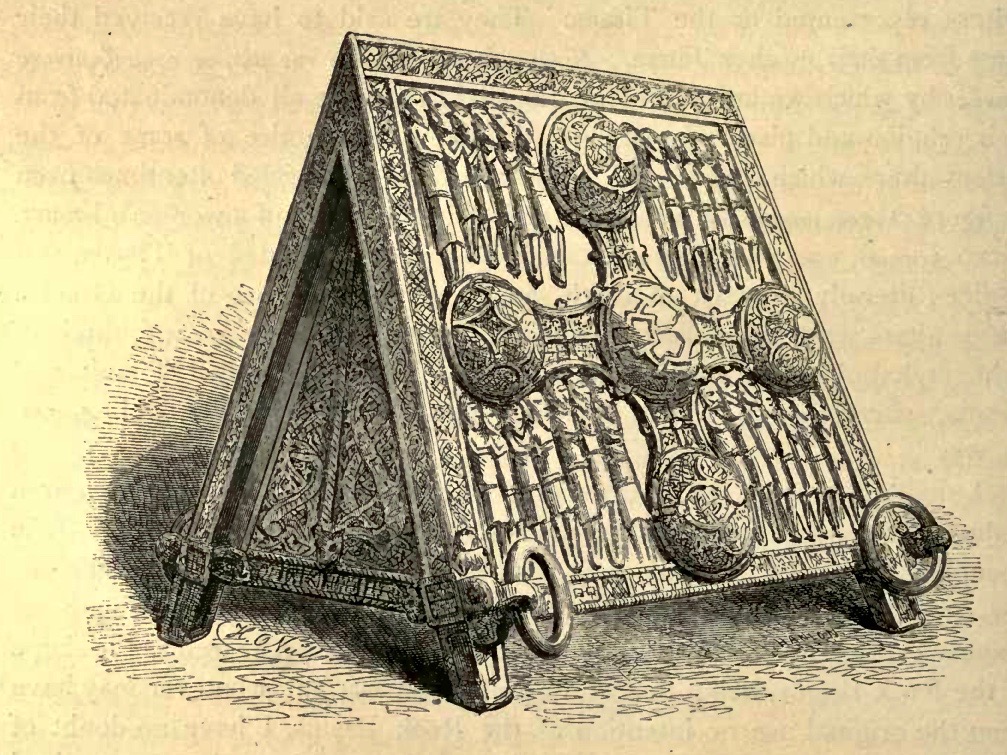
Remarkably, St Manchan’s Shrine has been exactly replicated. This full-sized copy of the reliquary is in the National Museum of Ireland: all the ‘missing’ figures and details have been restored. The drawing dates from 1867, and is a plate in a book titled The Towers and Temples of Ancient Ireland by Marcus Keane MRIA. In that book it is said that the copy belonged to Sir William Wilde, and it may well have been commissioned by him. It is likely that the Harry Clarke Studio modelled their version of the shrine on the replica, rather than on the original

In the meantime, the saint returned, missed his cow, and straightaway started in pursuit. He succeeded in tracing the thieves by the marks on the stones and arrived just at the moment when she was about to be boiled. He carefully picked the portions out of the cauldron, pieced them together, struck at them with his stick and immediately the cow became alive again. She was every bit as good as ever, too, except that she was a wee bit lame on account of one small portion of a foot which was lost. She continued to supply the milk as before, and, of course, no charge was made by the saint. Ever since the famous custom still lives on, and good milk is given away but never gold by the loyal people of Leamanaghan. Now, can any lover of the grand faith of Medievaldom beat that?


(Tomas O’Cleirigh, 1935)

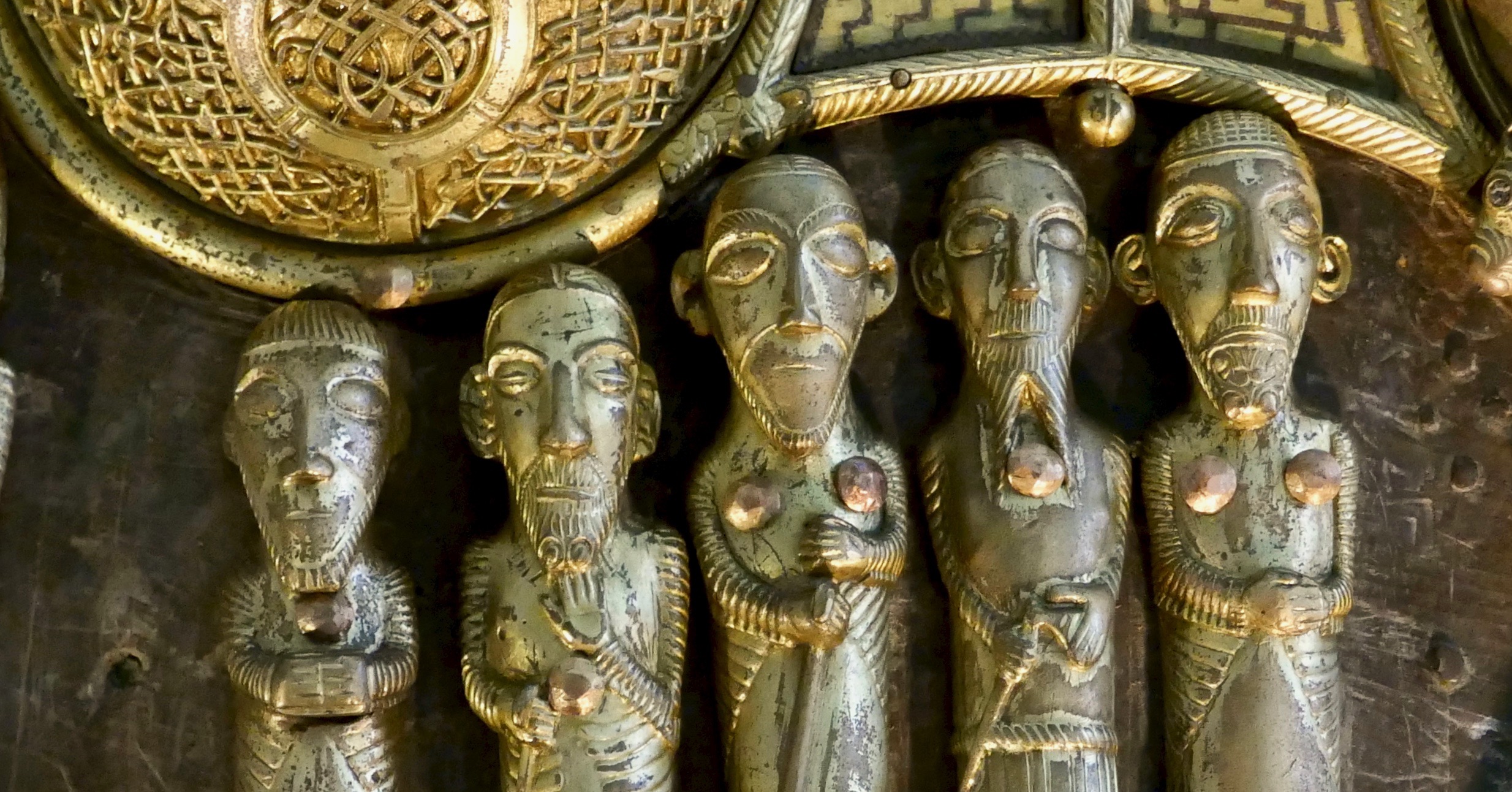
A detail of the original Shrine in St Manchan’s Church

There’s one more piece to this Saint’s story: the fame of his miraculous cow grew and the people of neighbouring Kilmonaghan were jealous, and sent out some rustlers to drive the cow over into their own parish. The cow proved reluctant and stalled and slipped all the way, leaving hoof marks on the many stones that lay on the road. Those marks are still on the stones to this day (they say) and the Saint was able to follow her tracks and recover her. (Robert’s diary, 2012)

Saint Manchan, depicted in stained glass: Harry Clarke Studio (left) and George Walsh (right). Both can be seen in the church at Boher, Co Offaly

The very old vellum books state that Manchan of Liath was like unto Hieronomus in habits and learning. I can well believe it. Some distance away from the church is the little rectangle cell which he built for his mother – Saint Mella. Cold, austere and with no window, you get the shivers by even looking at it. There is also a large flag-stone on the togher leading from the well, and they say the saint and his mother used to meet here every day and sit down back to back without speaking a word because the saint had vowed never to speak to a woman!


(Tomas O’Cleirigh, 1935)

The Mass Rock – revisited

This post was originally published way back in 2014 but I have updated it with a few new photographs and edited the text slightly.

An raibh tú ag an gCarraig? / Were You at the Rock?

nó a’ bhfaca tú féin mó grá / Or did you yourself see my love,

nó a’ bhfaca tú gile, / Or did you see a brightness,

finne agus scéimh na mná? / The fairness and the beauty of the woman?

This beautiful song speaks to a revered tradition in Irish history and folk custom – the mass rock. During the period of the Penal Laws (late 17th and first half of 18th Century) when the practice of Catholicism was outlawed, parishioners would gather at a secret location to attend mass. The priest travelled from community to community in disguise, a lookout was posted, and mass was celebrated on a lonely rock far from the reach of the law. The song encodes the message that the people still find ways to attend mass, despite the harsh prohibition against it.

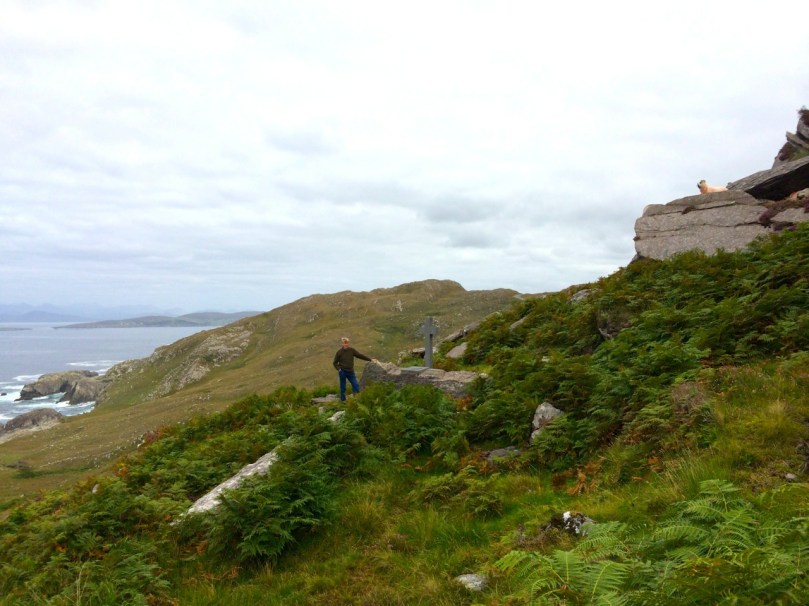
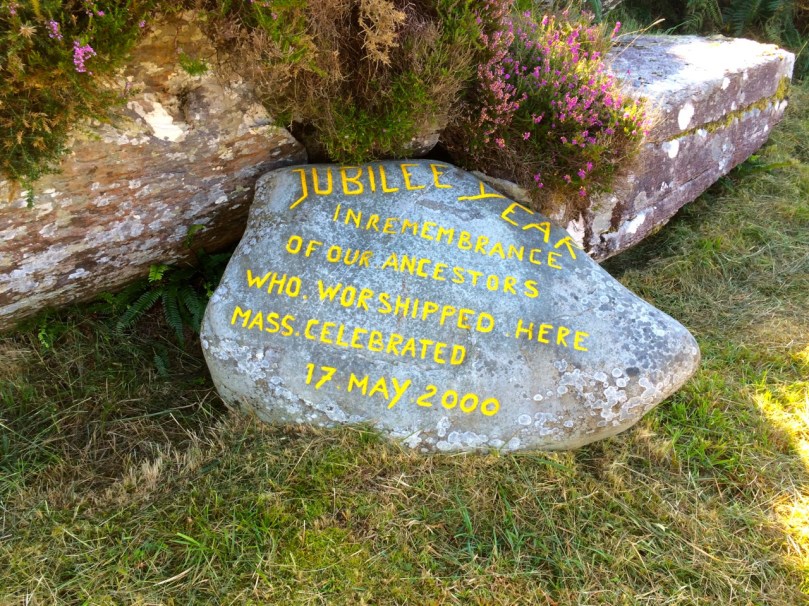
Mass rocks are often in remote locations, such as this one in Kerry, or the lead image on the Beara

Dr. Hilary Bishop, in her excellent website Find a Mass Rock says, As locations of a distinctively Catholic faith, Mass Rocks are important religious and historical monuments that provide a tangible and experiential link to Irish heritage and tradition. She also points out that, because of the imperative for secrecy, mass rocks are difficult to find.

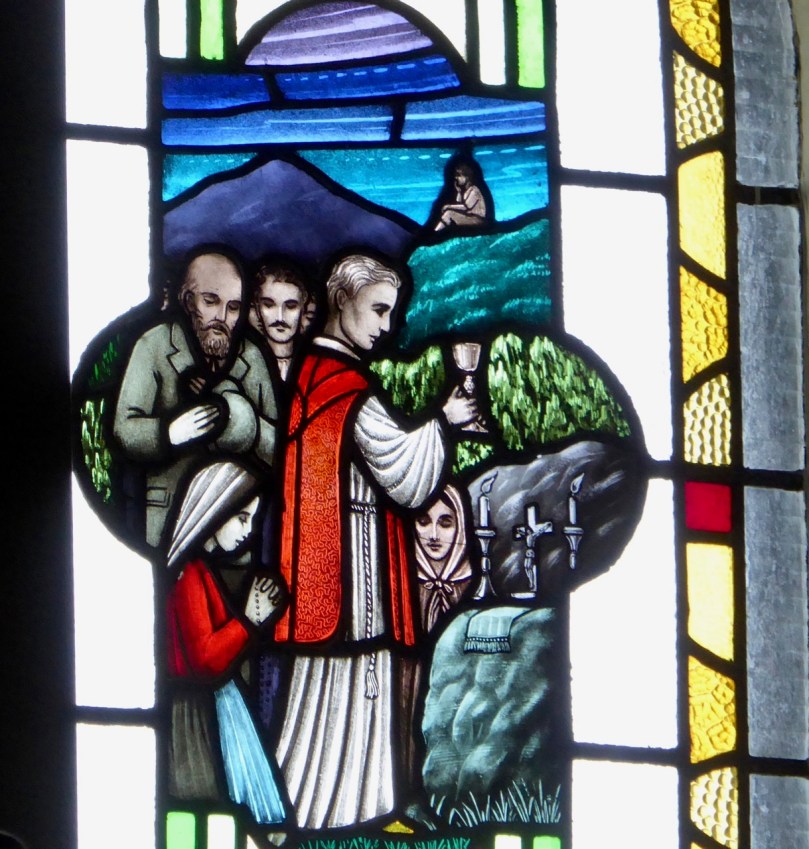
This stained glass window shows mass at a mass rock, with a lookout posted to keep an eye out for the redcoats

We certainly experienced this when we set out for a day of mass rock hunting. Working from a list generated from the National Monuments Service database we spent a day on the Sheep’s Head and the Mizen and had trouble finding all the rocks on the list. One, if it was still there, had disappeared under impenetrable layers of gorse. A second rock was last recorded in the 1980s: residents were no longer familiar with it.

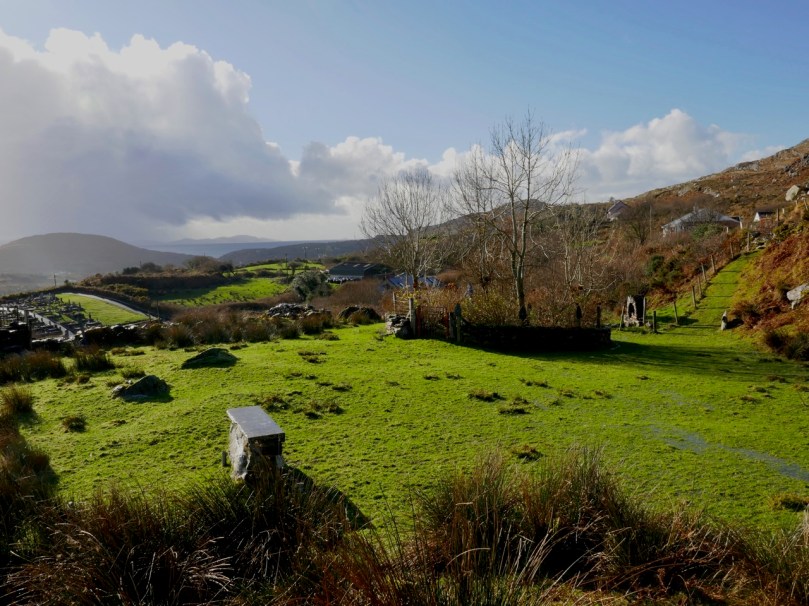
One of our favourite holy wells, at Beach on the Sheep’s Head, also incorporates a mass rock. Mass is celebrated here every August

Knowledge of mass rocks has passed down from generation to generation. In the deep countryside, the sites maintain a mystique and a sense of the sacred. We’ve written about the mass rock and holy well at Beach, where Mary conjured up a blanket of fog to confuse the English soldiers and allow the priest to escape. At Beach and at our first stop, the mass rock at Glanalin on the Sheep’s Head Way, mass is still celebrated.

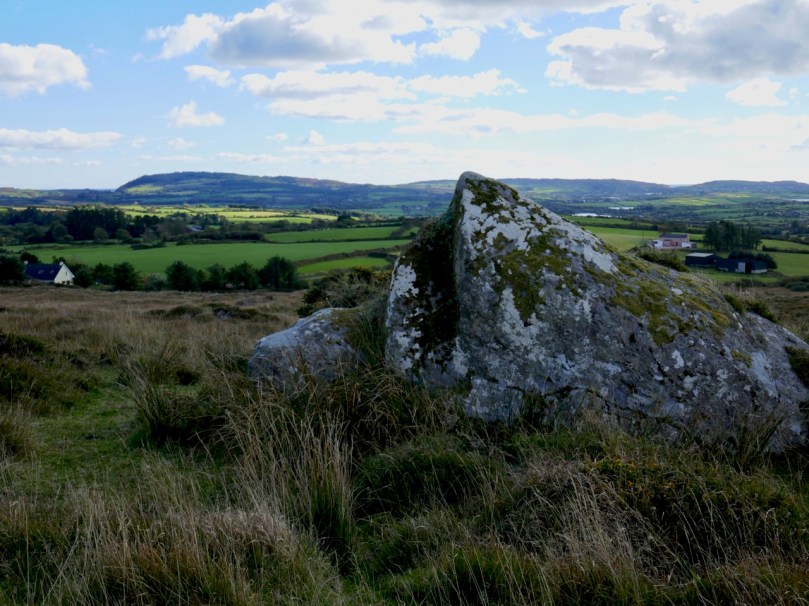
The Glanalin rock (above), and the one we visited on the Beara Peninsula, are good examples of the remote locations typical of many mass rocks, high on a hillside or hidden in an isolated valley. You can picture the procession of worshippers, in ones and twos, slipping silently through the bracken, pausing to make sure they are not being watched, climbing higher, following an overgrown trail, arriving at the meeting place where the hushed crowd awaits the arrival of the priest.

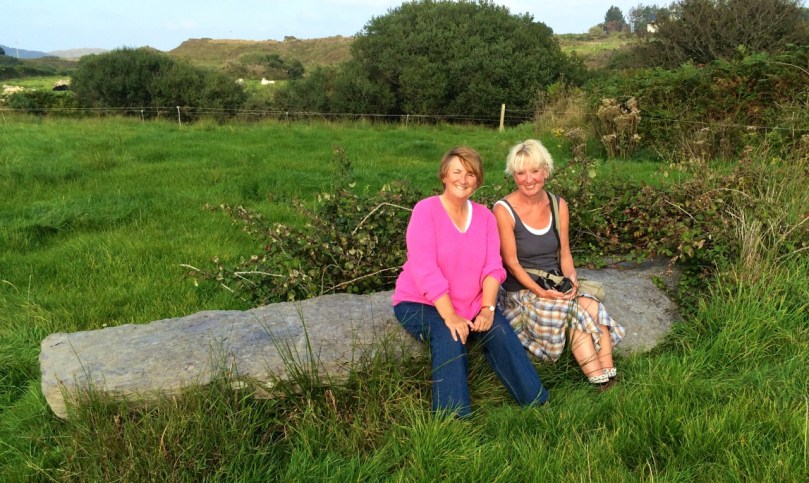
One of the rocks we found (above) looked for all the world like a fallen standing stone – and that’s probably what it was. (I wonder if I should go to confession, though – I’m sure that sitting on a mass rock would qualify as at least a venial sin.)

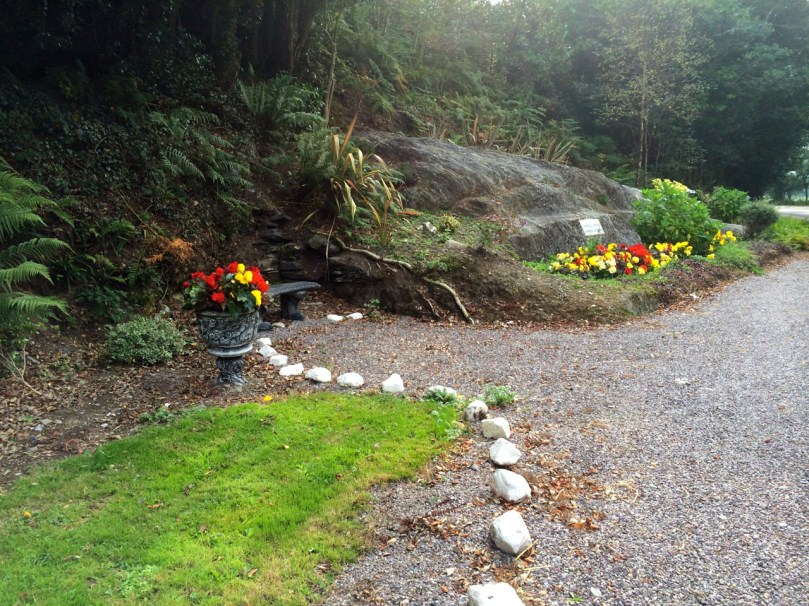
A mass rock that is easily visited is the one at Cononagh Village (above), right at the side of the main road into West Cork, the N71. This site is beautifully maintained – Cononagh is obviously proud of its heritage: signage and flowers invite the passerby to take a closer look.

The mass rock we visited last year, at Foherlagh, has a commanding view of the surrounding countryside. This one even had a small scoop-out in the rock, identified as a holy well

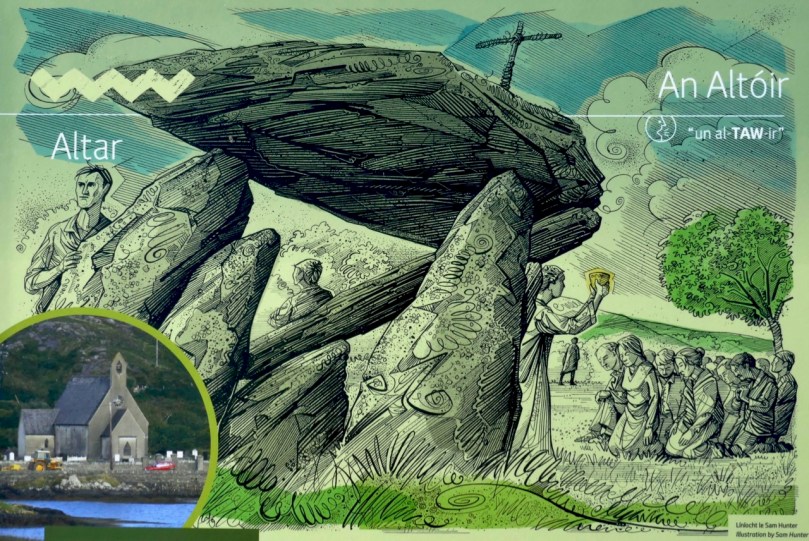
Another easily accessible site is Altar, at Toormore. This is a wedge tomb, probably over 4,000 years old and excavated in 1989. It remained in use through the Bronze Age and into the Iron Age. Dr. William O’Brien, in Iverni, says of this site: …over time this tomb came to be regarded as a sacred place, housing important ancestral remains in what was a type of community shrine. How fitting, then, that the flat capstone of the Altar wedge tomb became, in the Penal Days, a mass rock. And how intriguing to think of the continuation of this sacred space over the course of thousands of years.

But perhaps our favourite of all the mass rocks we have visited is the one at Castlemehigan. We wrote about it here. It started out life as a cupmarked stone perhaps in the Neolithic, then probably got converted into a bullaun stone in the Early Medieval period, before finally serving as a mass rock – and it has all the stories to go with its long history.


‘Flying Foam’

A recent post – Fish Palaces and How They Worked – discussed the history of the fishing industry in the south west of Ireland, and focussed on our own Roaringwater Bay. There’s an ‘extra’ story following on from that – well worth the telling, but frustratingly incomplete.

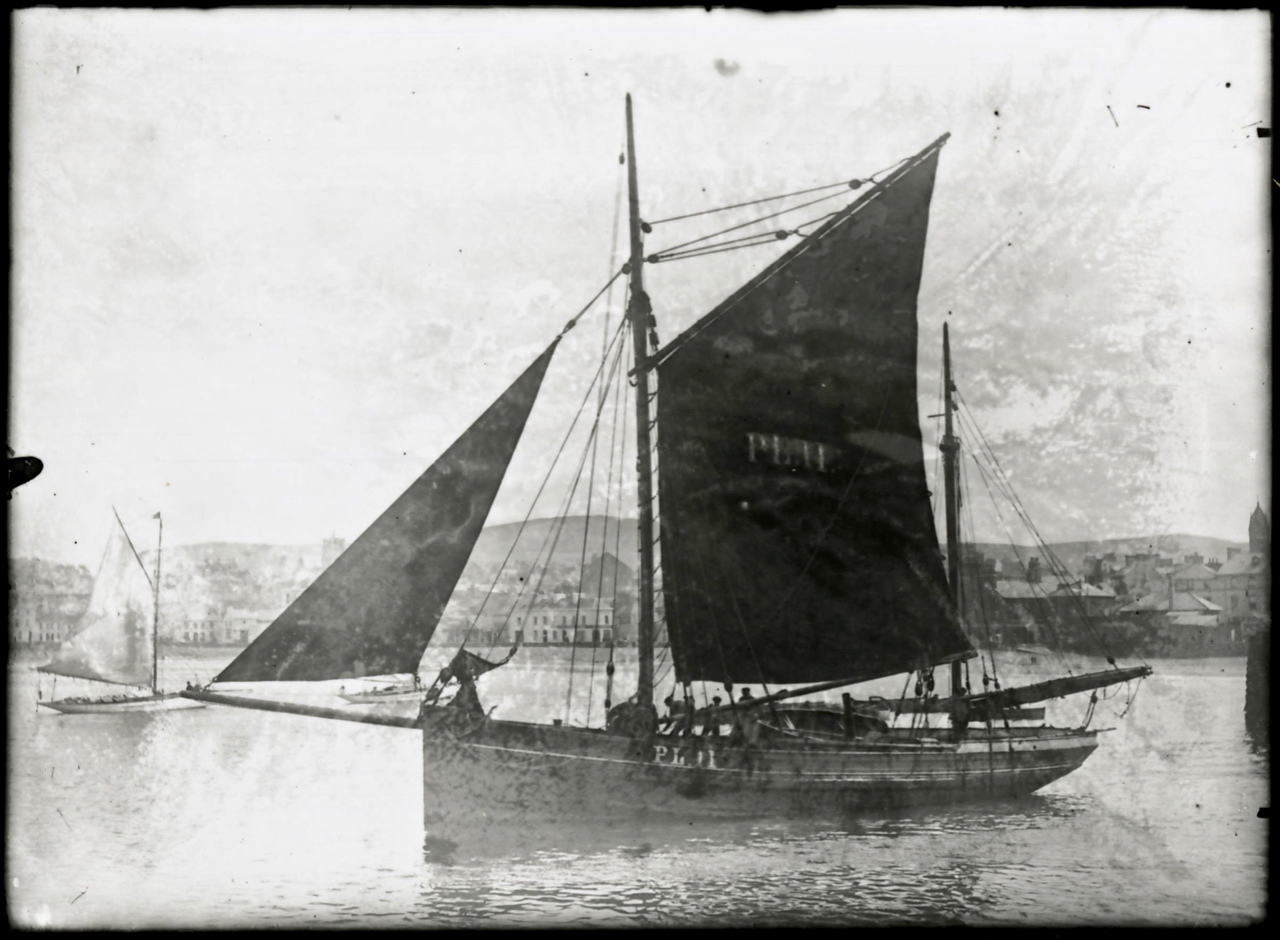
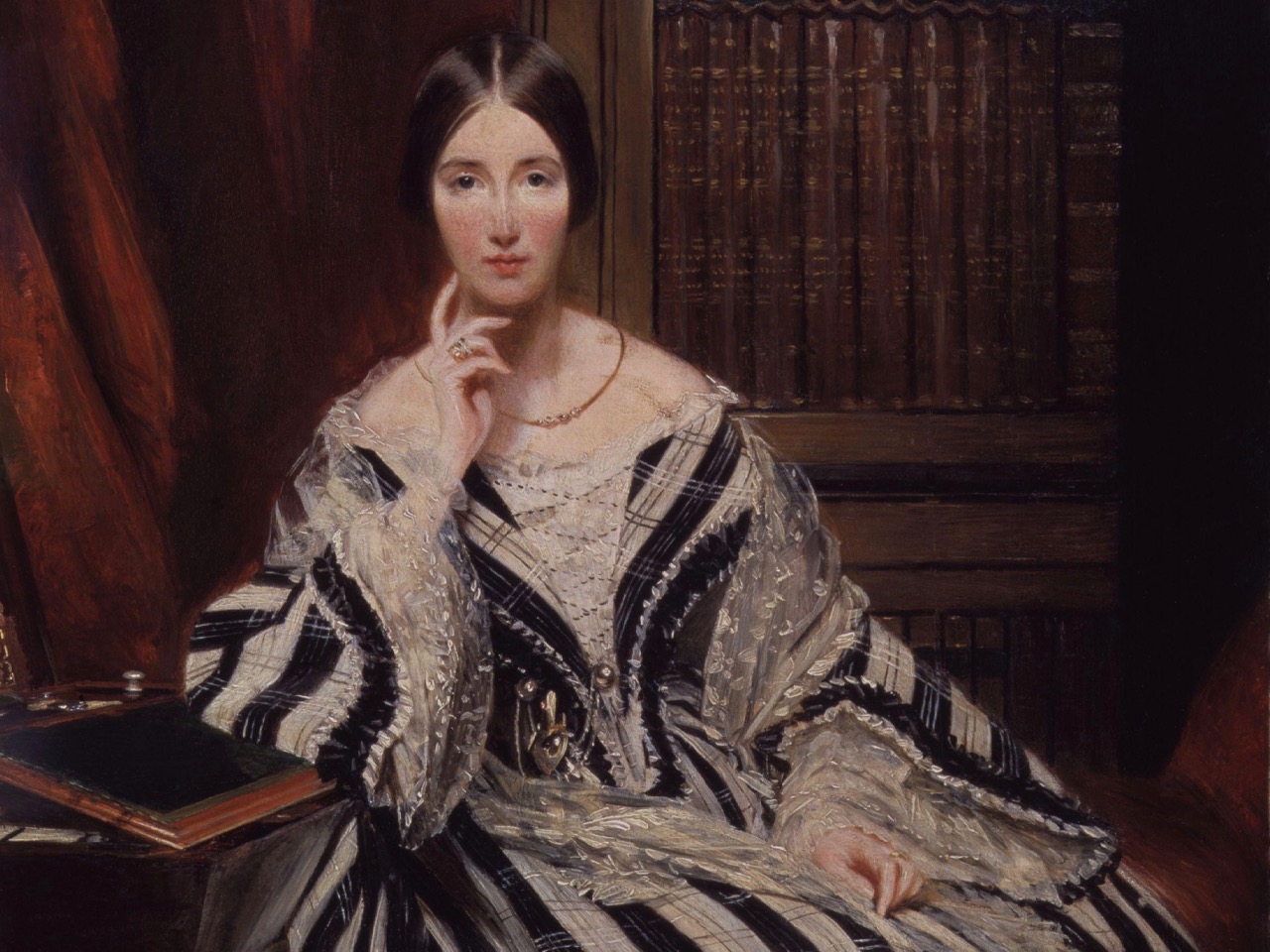
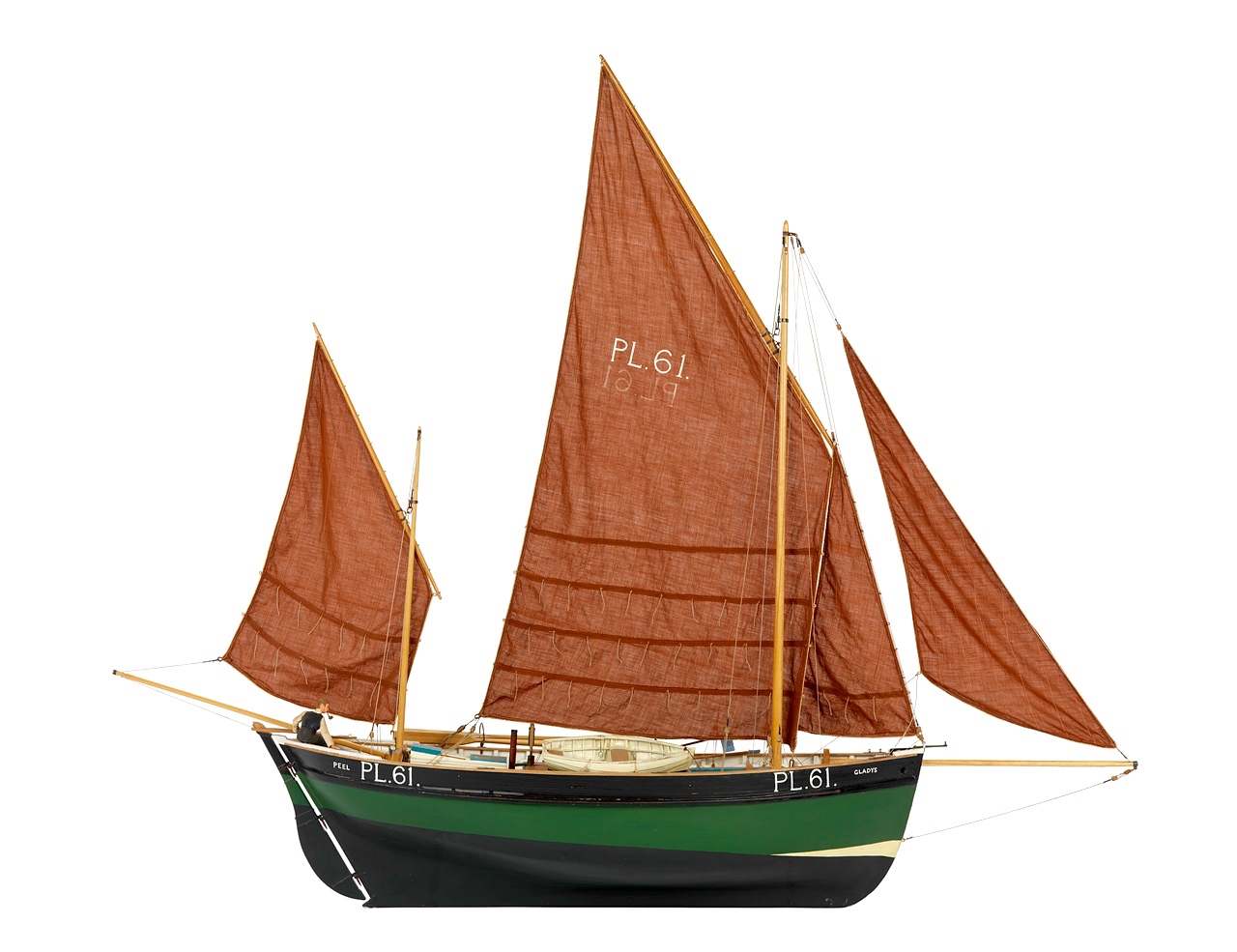
The header picture (courtesy of the National Maritime Museum, Greenwich) shows a ‘dandy-rigged nobby’, a traditional fishing vessel built on the Isle of Man during the second half of the nineteenth century. The photograph above shows such a boat, also from the Isle of Man. ‘Nobbies’ like these came to form the basis of a fishing fleet centred on Cape Clear and Baltimore, provided by the benefice of ‘the wealthiest lady in Victorian Britain’ – Baroness Angela Burdett-Coutts (1814 – 1906). Here she is, below.

Angela Burdett-Coutts was just twenty-three when in 1837 she gained an inheritance of around three million pounds (roughly one hundred and thirty million pounds in today’s money) from her Grandfather, which she immediately directed to good causes. According to the Dictionary of National Biography

In 1862 Father Davis, the parish priest of Rathmore, co. Cork (now Baltimore), appealed to her for aid on behalf of the people of the south-west of Ireland, especially in the district of Skibbereen, Crookhaven, and the Islands of Cape Clear, Sherkin, Hare, and the Calves, which had never recovered from the sufferings of the famine years 1848 and 1849 . . . Her chief work was to revive and extend the fishing industry of the south-west coast. She advanced large sums of money, on a well-devised scheme of repayment out of profits, to provide the fishermen of Baltimore and the Islands with the best fishing-boats that could be built, and fitted them with modern and suitable gear. In the course of five years the new fishing fleet of Baltimore was valued at 50,000 pounds . Much of the capital was in due course repaid; and Father Davis used all his influence to keep his parishioners scrupulously to their engagements. In 1884 she paid her first visit to the district and was everywhere welcomed with enthusiasm. With the assistance of Sir Thomas Brady she soon afterwards helped to inaugurate a fishery training school for 400 boys at Baltimore. The school was opened by her on 16 Aug 1887, when she was received with bonfires on the wild hill-sides, and flags flew from every cottage down the coast from Queenstown to Baltimore.

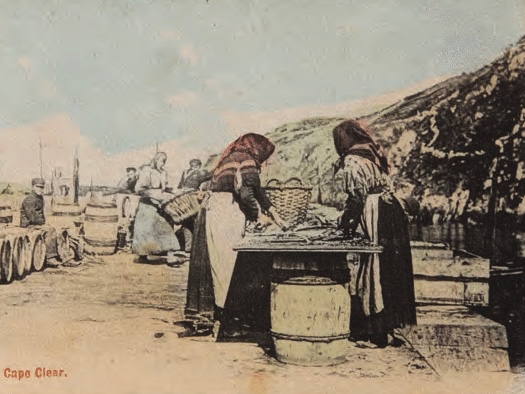
Fish processing on the quay in Cape Clear, nineteenth century

By 1900 fishing in West Cork was in its heyday, with an annual turnover of £100,000. Between 1880 and 1926 Baltimore was the largest fishing port in Ireland and 78 fishing vessels were registered locally. By 1907, after the North Pier had been built, the fleet was so numerous that you could, it was said, walk to Sherkin across the decks of the boats!

Looking across to Sherkin Island from the Cove, Baltimore, today

A further version of the story appeared in Ireland’s Own Magazine, in September 2018, narrated by Eugene Daly:

My father, Mícheál Ó Dálaigh, was born on Cape Clear in 1910, the eldest of four children. When his father Eugene died in 1920, he quickly had to take over the part of breadwinner and at a young age became a fisherman . . . The people of Clear, often known as Capers, had for many generations always been fishermen. On Cape Clear one is aware of the all-embracing sea. In the 1880s, through the work of Father Charles Davis, a £10,000 loan was granted by the English philanthropist, Baroness Angela Burdett-Coutts. With those loans they bought ‘dandies’, 50 to 60 ft long made in the Isle and Man and later in Baltimore Fishery School. By 1920 there were up to forty of these boats fishing out of Trá Chiaráin, the island harbour. Some of the musical names for these boats include Sarah Gale, Guiding Star, Carbery Queen, Jasmine of Downings etc . . .

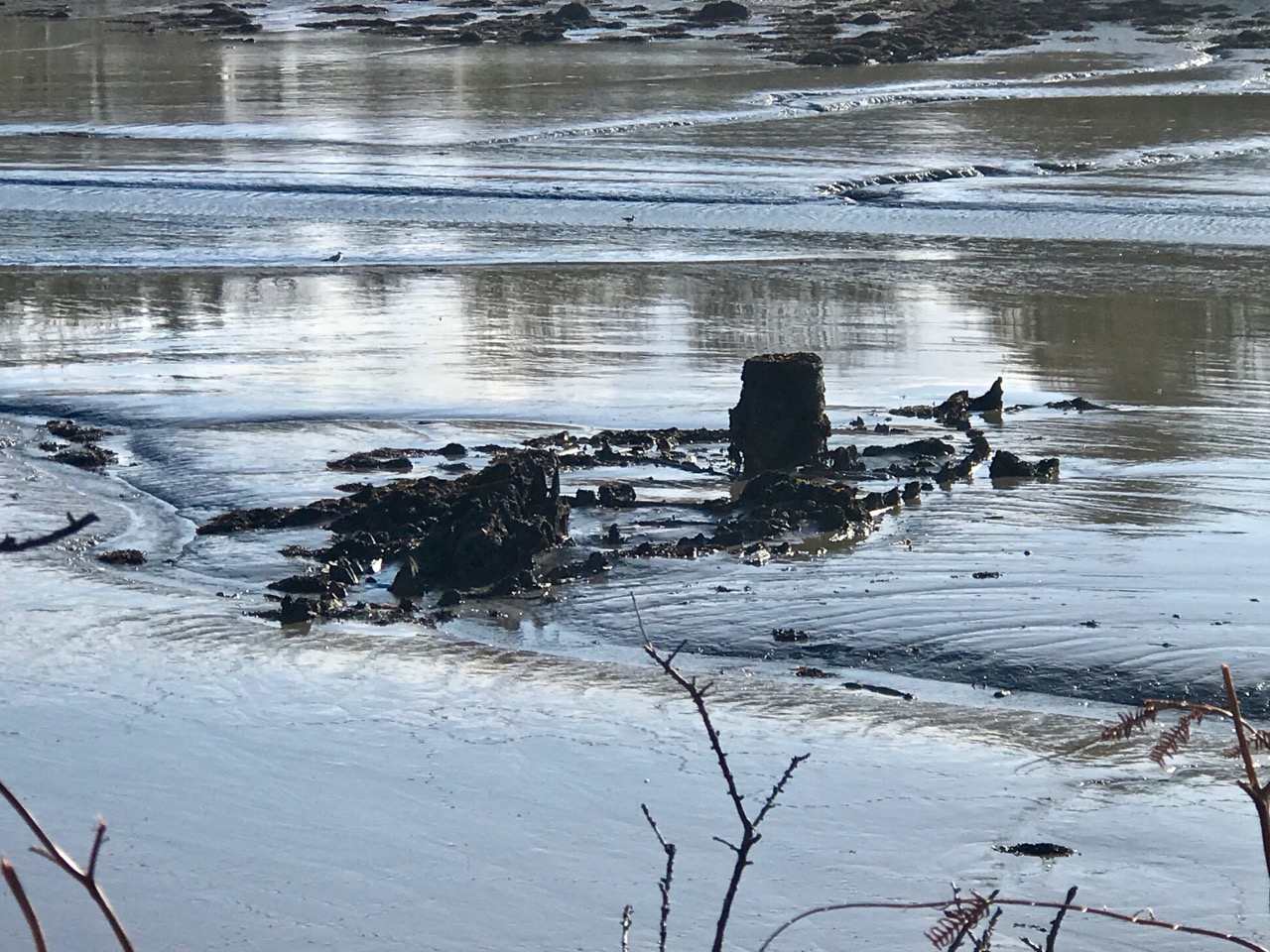
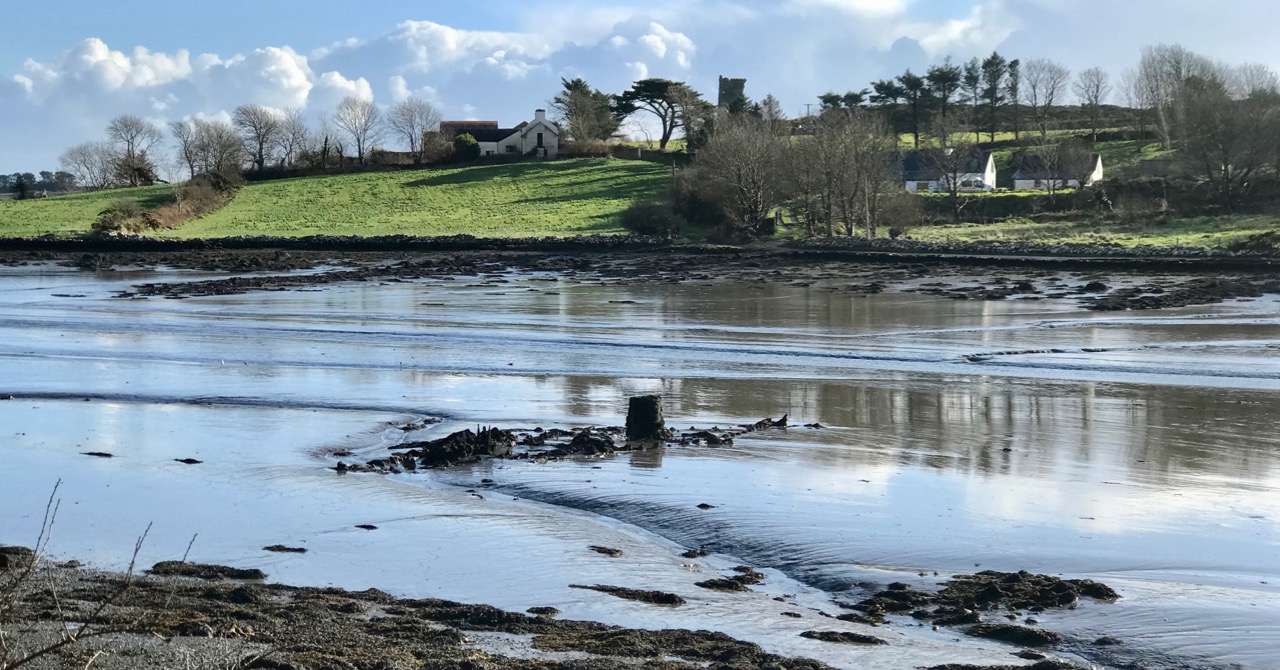
What is of interest to us is that – according to local tradition – there is the remains of one of the ‘nobbies’ or ‘dandies’ in Rossbrin Cove, just below where we live in Nead an Iolair. You’ll have to look at low tide: you can just make out the scuttled boat in the picture above, on the right in the middle distance. In the view below the wreckage is clear.

It was our near neighbour, Michael John, who told us that this was one of the Burdett-Coutts boats, and that it was named ‘Flying Foam’. He also remembered hearing a poem or recitation about the boat and its fate at some time in the past but – in spite of many enquiries locally – I can as yet glean no further information. Frustratingly, this is where the story is left hanging in the air . . . Perhaps a reader of this journal might have the memory and can enlighten us? We would love to find the poem!

Abhainn na Seangán – River of the Ants!

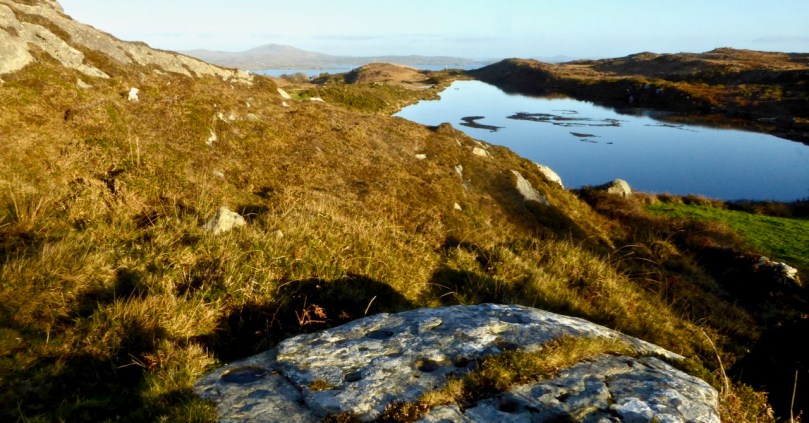
What’s in a name? In Ireland – quite a lot, usually, although the meaning often takes some searching out. Perusing Ordnance Survey Ireland sheet 85 on a late February afternoon when the sun miraculously appeared and lit up a countryside ripe for exploration, my eye was drawn to a river running through the hills to the east of Bantry: Owennashingaun. How could you overlook such a name? And how could you not be intrigued by the Irish place-name which must have preceded it before the surveyors put their anglicisation to it: Abhainn na Seangán? Even better was the discovery of the meaning of this name: River of the Ants!

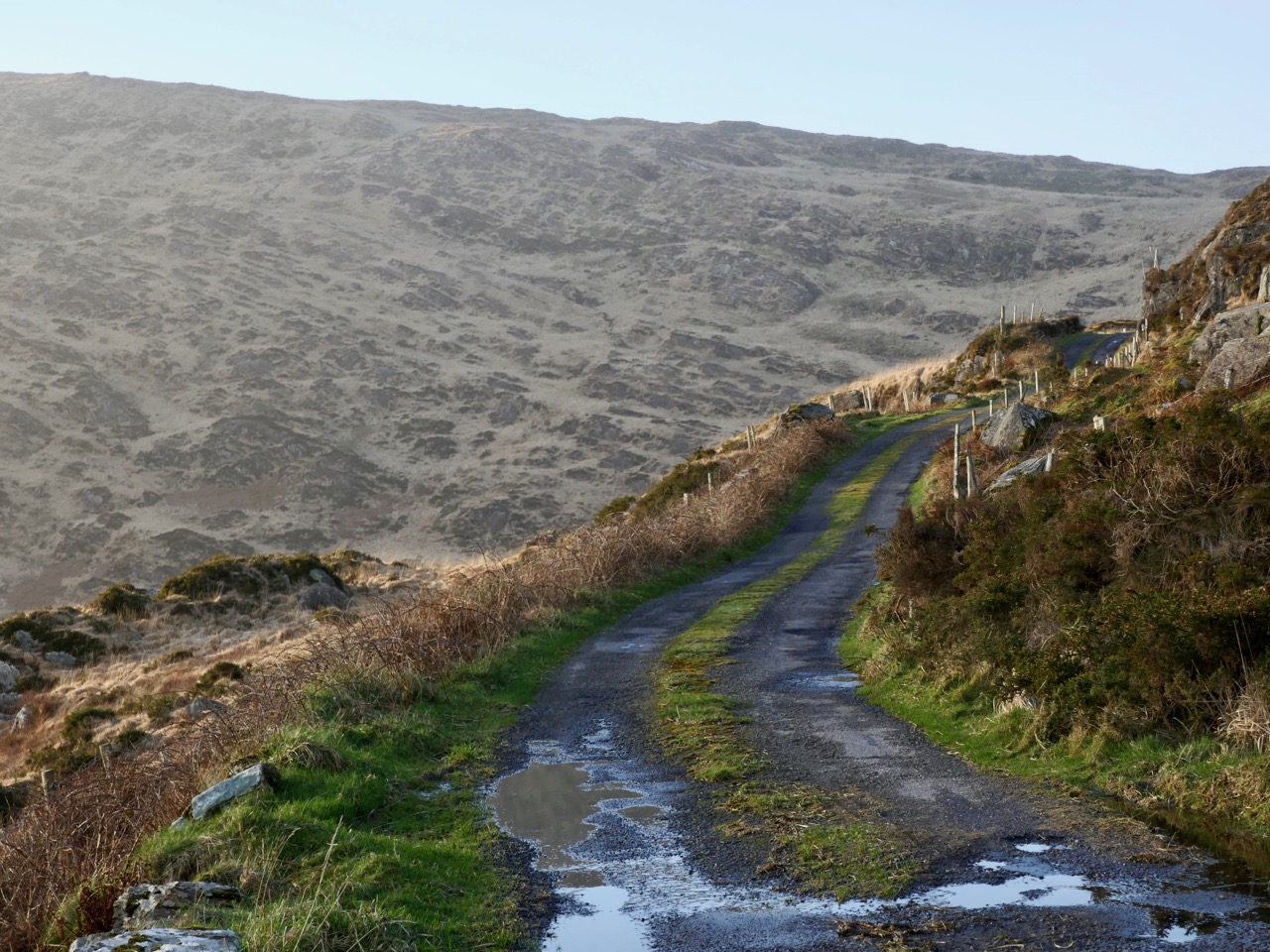
Our byway heading into the hills

With high expectations we set out, with Finola at the ready with her camera. As with all West Cork locations, Abhainn na Seangán is but a few paces from Nead an Iolair, as the crow flies. Pausing only to pick up our friend Gill in Ballybane West along the way, we were soon heading north for the foothills of Mullaghmesha (Irish: Mullach Méise – Summit of the Altar).

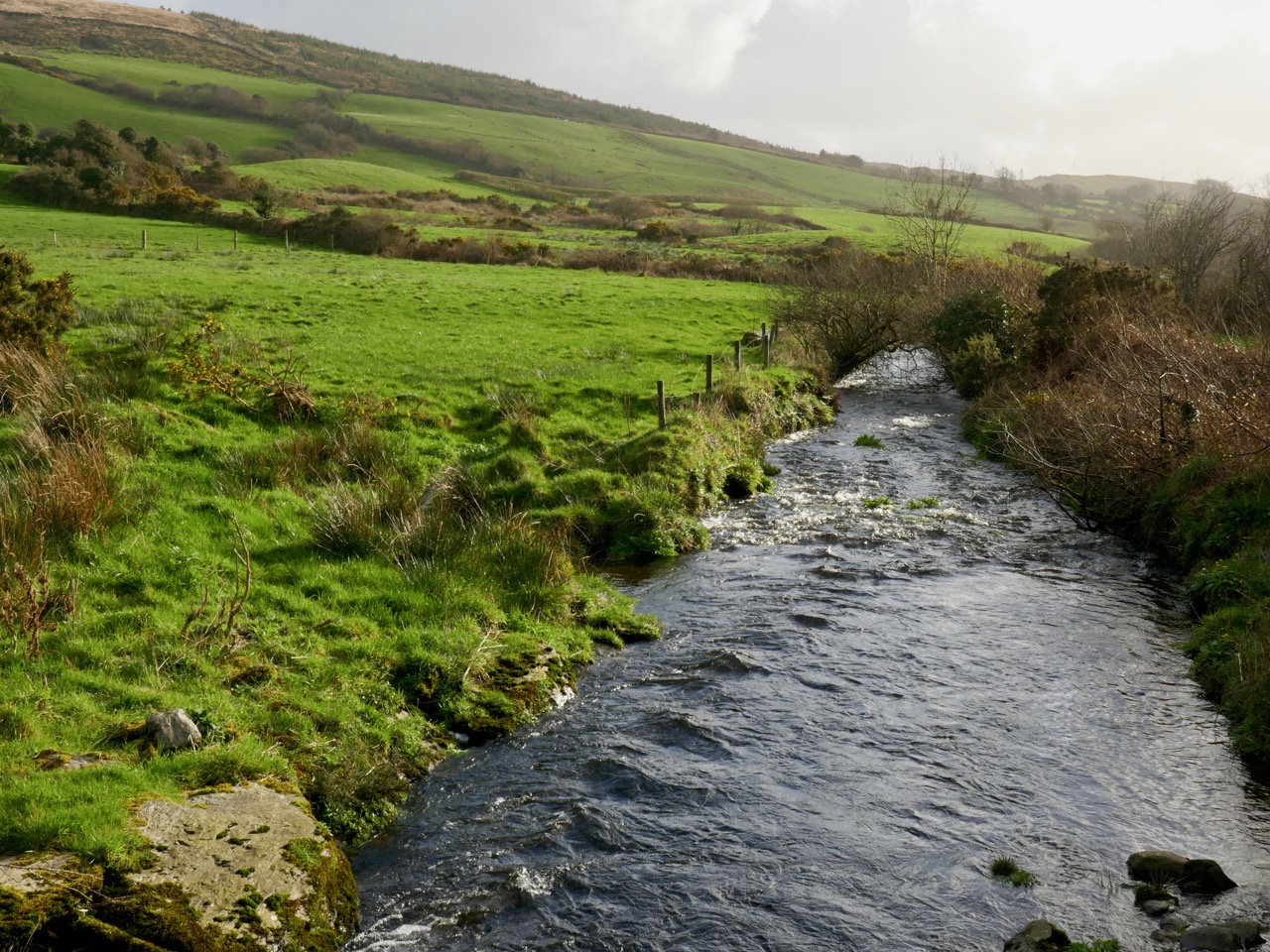
Turning north at the Cullomane Crossroads on the R586 we almost immediately crossed the Owennashingaun River (I’ll use the Anglicised version as that is what usually appears on the map). Here it’s just a gentle, straight watercourse which follows the main road until it picks up the Ahanaclaurshee Stream (Irish: River of the Harp) and then becomes the Ilen River, which flows on through Skibbereen and eventually reaches the sea at Baltimore.

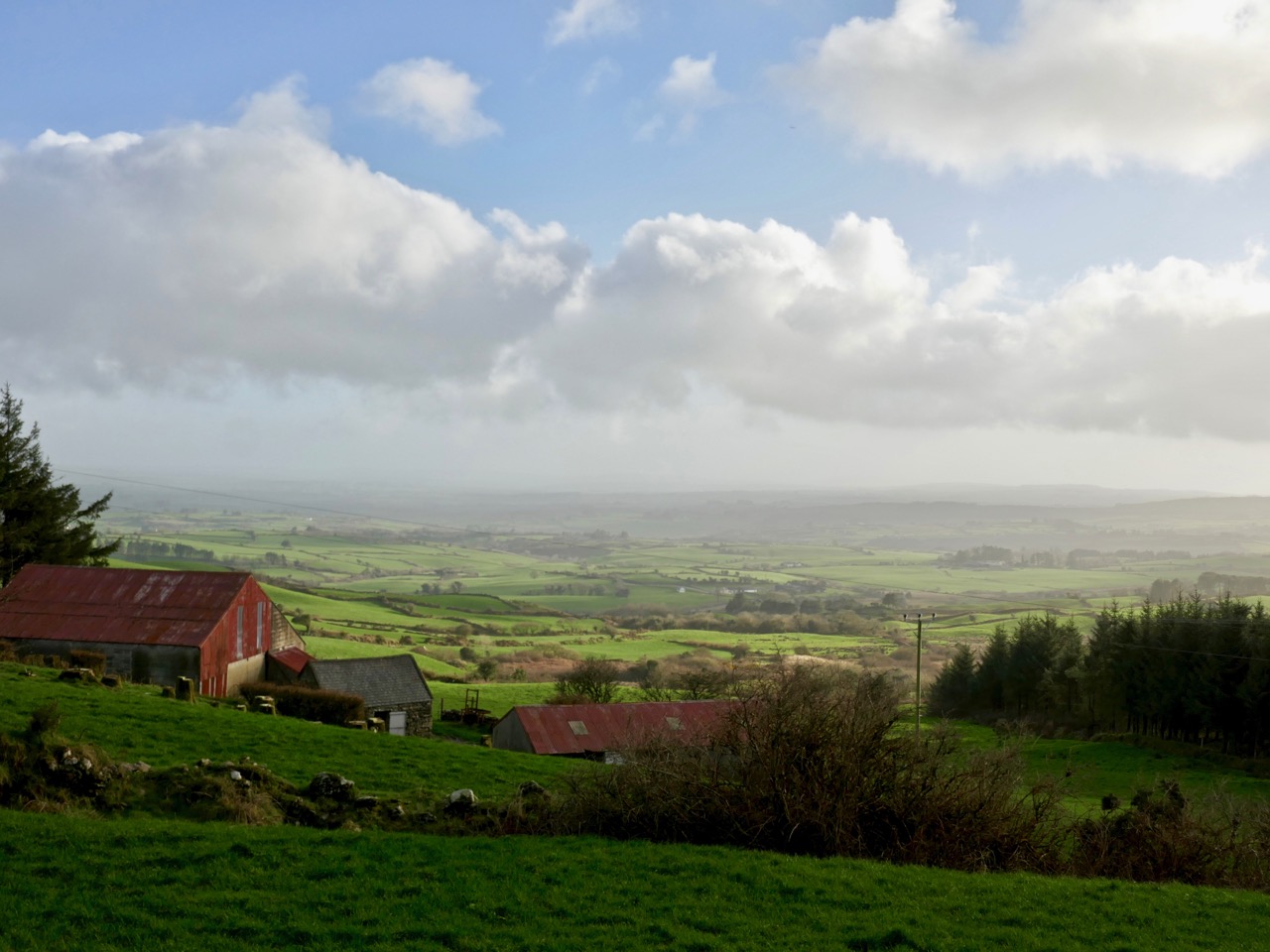
Glens, farms and distant highlands on our road heading for Mullaghmesha

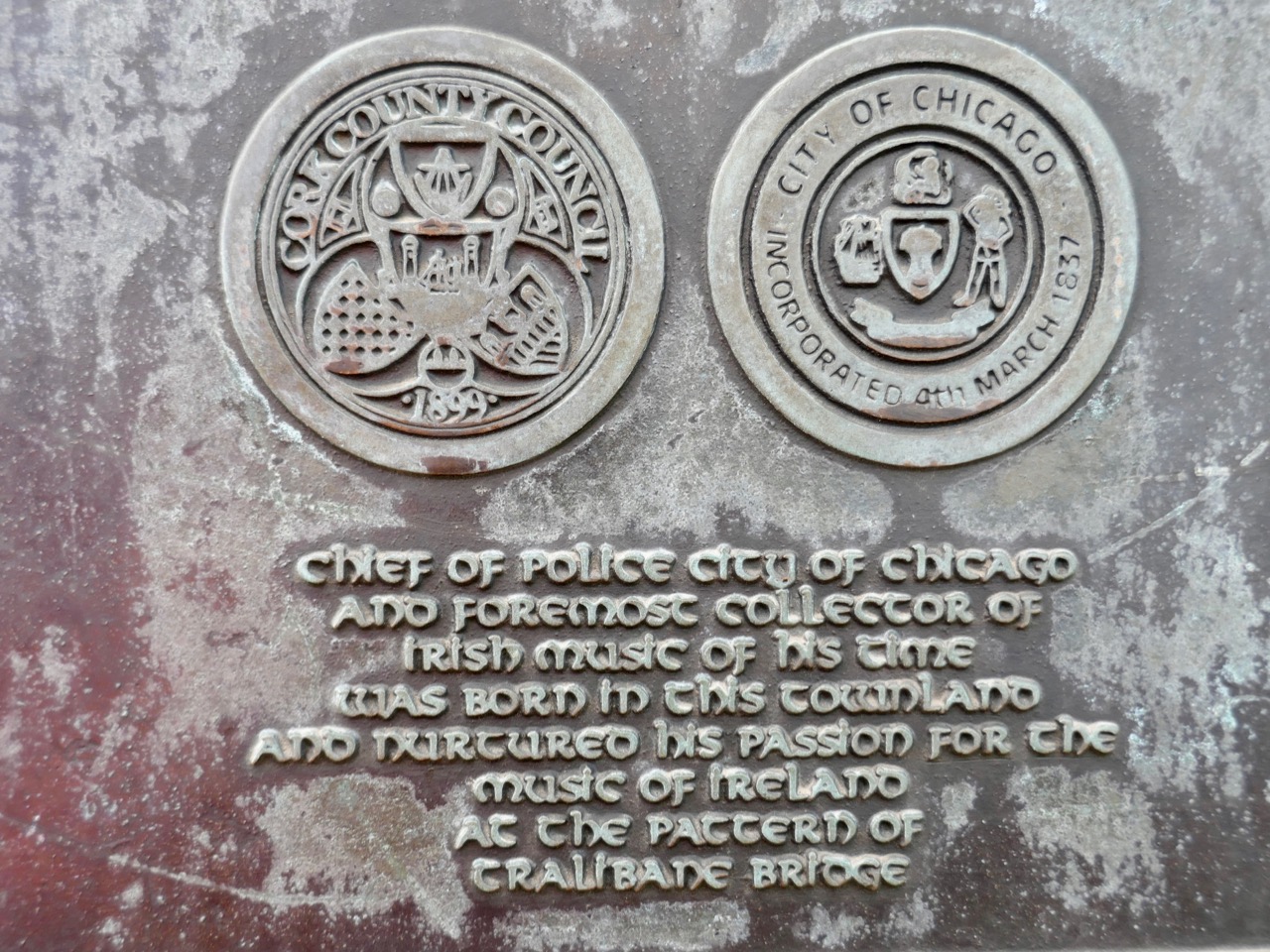
We skirted two smallish peaks – Sprat Hill and Knocknaveagh (Irish:Cnoc na bhFiach, wonderfully ‘The Hill of the Ravens’) – before reaching the townland of Tralibane, an important Irish landmark as it was here that Captain Francis O’Neill was born in 1838. He travelled the world and had a colourful life of many adventures before being elevated to the role of Chief Superintendent of Police in Chicago in 1901. O’Neill came from a musical family in his West Cork childhood and is best known today as one of the most successful collectors of Irish Traditional Music. Here is a post I wrote about The Chief back in 2014.

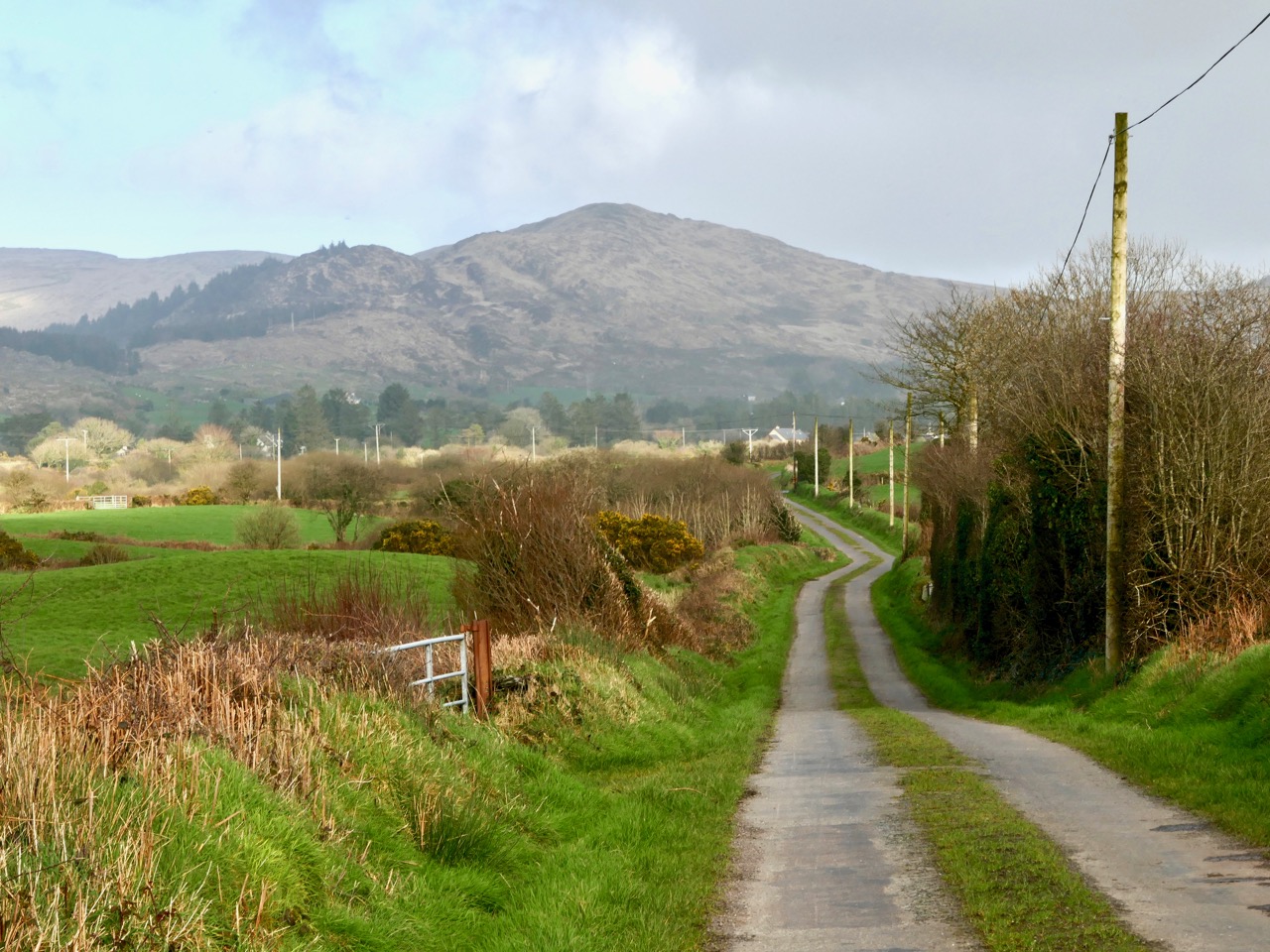
From Tralibane we travelled north-east on deserted boreens, through a soft, green landscape of glens and standing stones (see the header picture), gradually rising towards more distant highlands, until we encountered again the ‘River of the Ants’. The source of Abhainn na Seangán is on the slopes of Mullaghmesha, whose peak is at 495 metres: we didn’t make it up there to look for the altar: a destination for another day. The name of the river remains enigmatic: I searched the excellent resource www.logainm.ie and found an archive record there dating from 1840 which gives the translation as: ‘river of the pismires’. I then had to look up ‘pismires’, which is evidently from early English:

1350 – 1400: Middle English pissemyre, equivalent to pisse to urinate + obsolete mire ant, perhaps Scandinavian (compare Danish mire, Swedish myra) cognate with Dutch mier; pejorative name from stench of formic acid proper to ants

There was nothing untoward with the smell of the river as we followed it – and we didn’t see any ants! So the mystery remains. Surely there must be a story embedded in local knowledge or folklore which could enlighten us?

Upper – sweeping views began to open up as the road climbed towards Castle Donovan; centre – the iconic ruined castle, which was taken into the care of the State in 2000 and has since received major stabilisation and renovation; lower – a splendid piece of signage at Castle Donovan – every possible disaster has been foreseen!

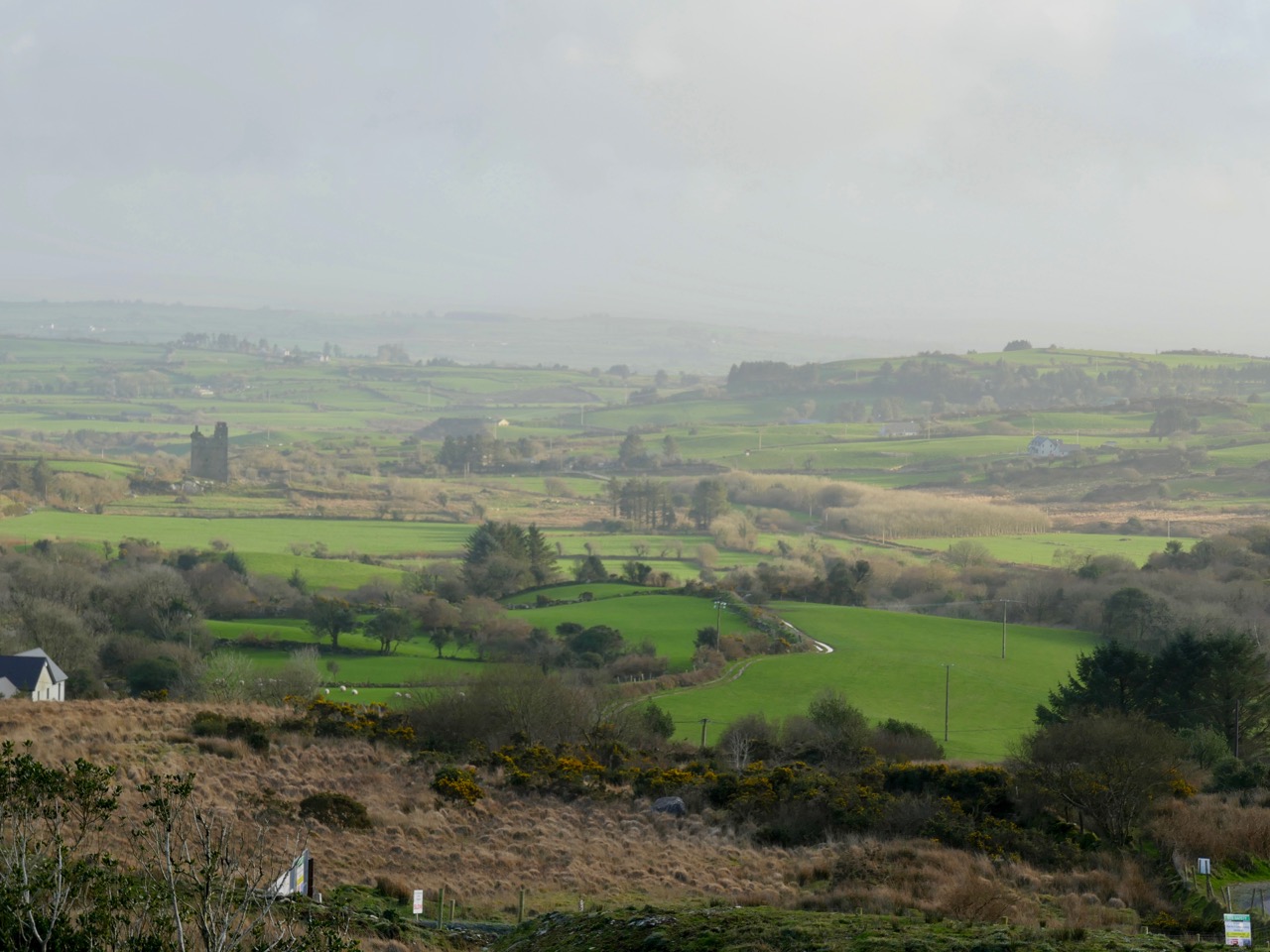
The ruin of Castle Donovan is as fine as any in West Cork, and is fortunate to be in permanent State care. Set on a plateau with the mountain rising behind it, it is an impressive focal point in the landscape, which can be seen for miles around. We passed by the castle and headed up on a rough, winding way: looking back, the silhouette of the tower house stands out with benign West Cork rolling pasture as a prepossessing backdrop.

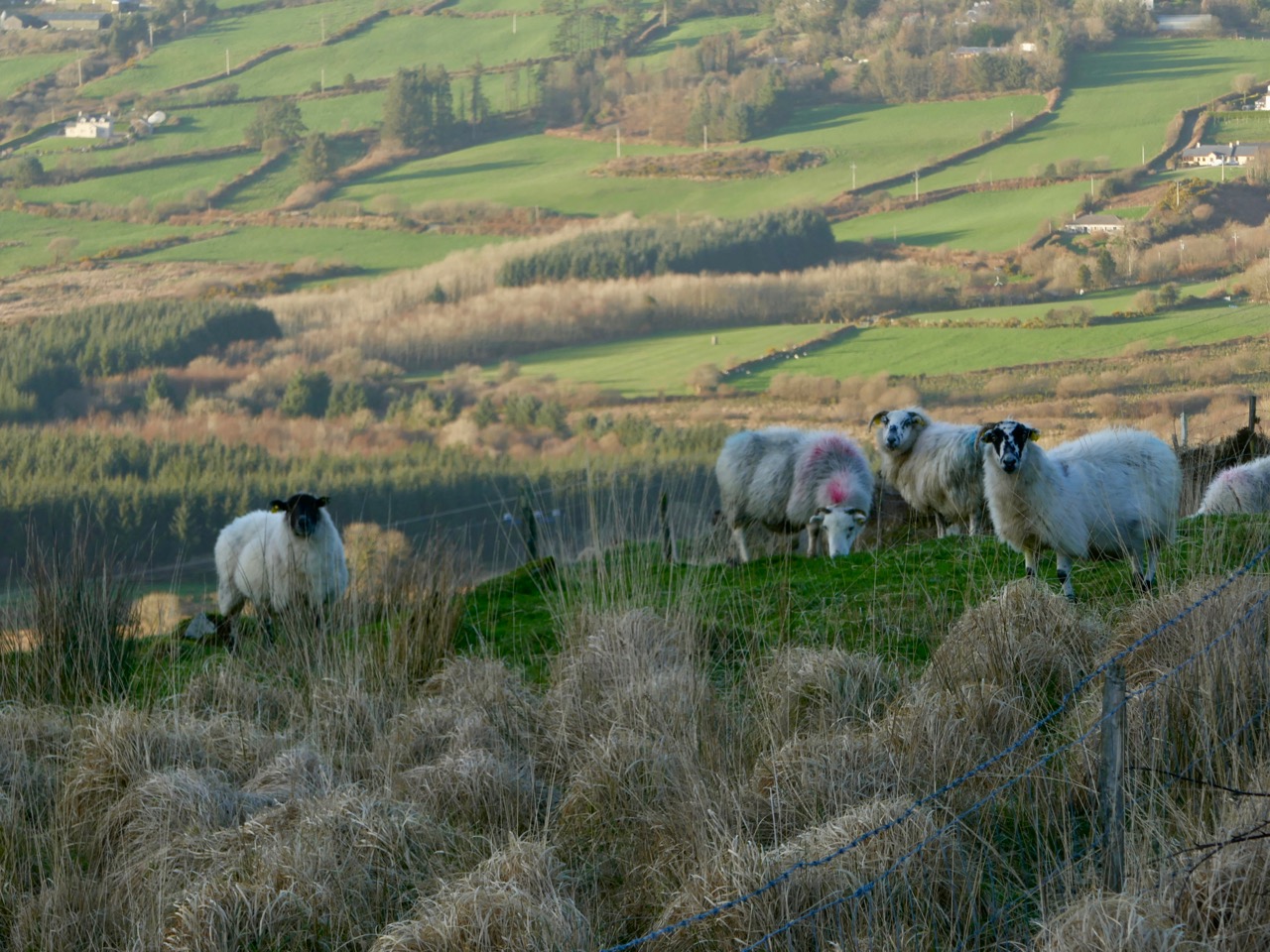
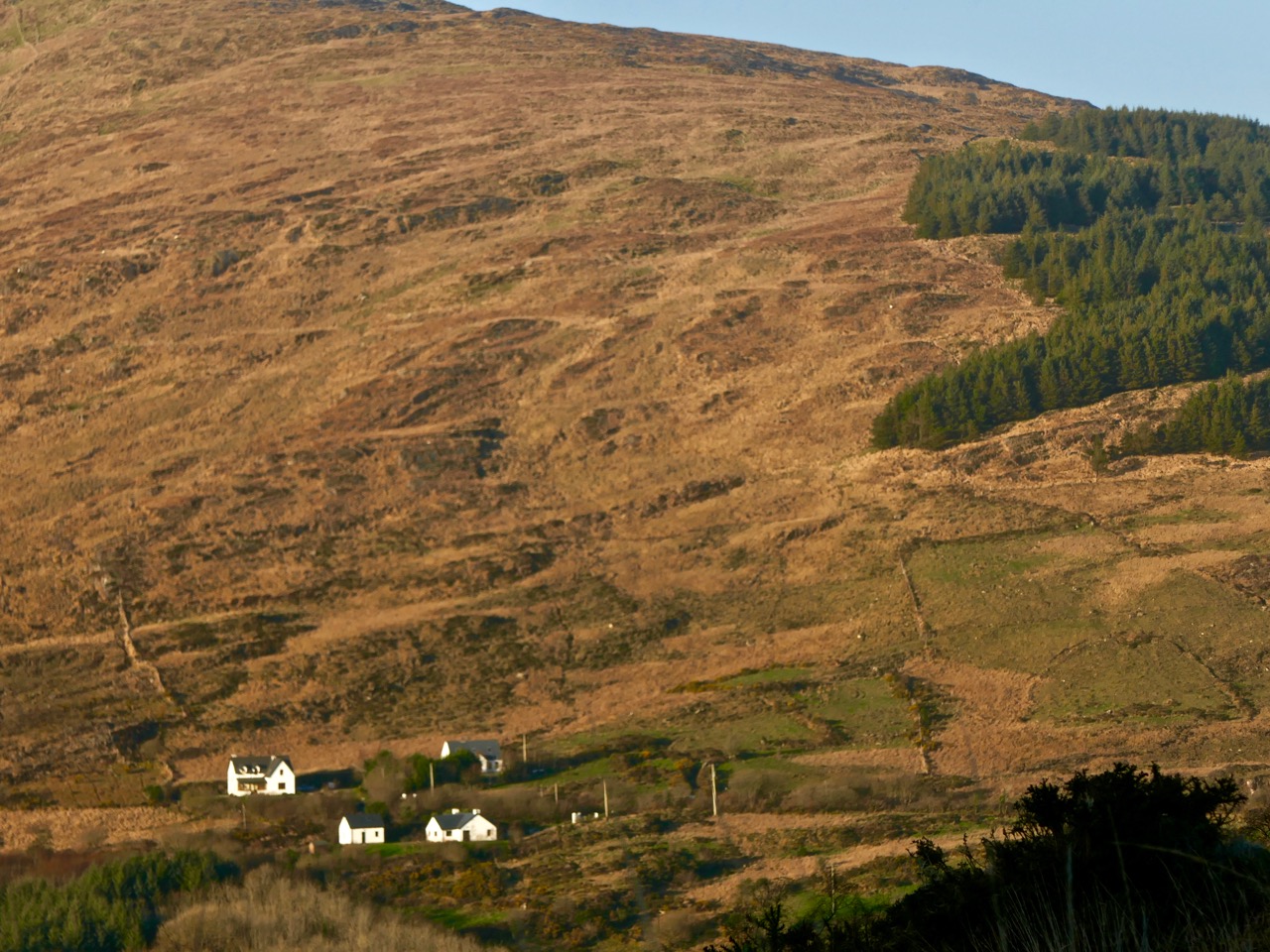
The road very quickly becomes a true mountain pass, and an early evening haze seemed to hang over everything as we skirted the east side of Mullaghmesha. We hardly saw a soul on our whole journey, but we were eyed warily by sheep who plainly considered us intruders on their territory.

On the north side of the mountain we entered the Mealagh Valley, and were reminded of our recent adventures travelling through the Yellow Gap. Finding our way down to the lowlands again, we took our last look at the River of the Ants at Dromore, and bid it a fond farewell. In spite of its unfathomable name, it had taken us on a grand exploration. Give it a try for yourselves!

Upper, the distinctive church at Dromore, with its pencil-thin ’round tower’ and, above, our last view of Owennashingaun

Saints and Soupers: the Story of Teampall na mBocht (Part 7, the New Catholicism)

First Vatican Council

The Protestant Evangelical Crusade of the first half of the nineteenth century in Ireland was able to gain traction for two reasons. First, the Catholic Church, after centuries of suppression, was impoverished and underserved. While over 80 percent of the population was Catholic, there were relatively few priests, no seminaries to train new ones, no institutions of higher learning, few churches fit for purpose, few Catholic resources in Irish (the language of the people), and little access to primary education. Second, for the majority of the rural population, actual religious performance revolved not around church, mass and the sacraments, but around a variety of folk practices such as patterns at holy wells, stations, wakes, funerals and pilgrimages – events which started off with penitential prayers and offerings and often ended in drunkenness, revelry and even faction fights. Religious belief, meanwhile, was based on centuries of folklore, mythology and superstition mixed up with religion, so that saints and giants, pookas and devils, banshees and miracles, all became part of a rich melting pot of stories to underpin everyday behaviours.
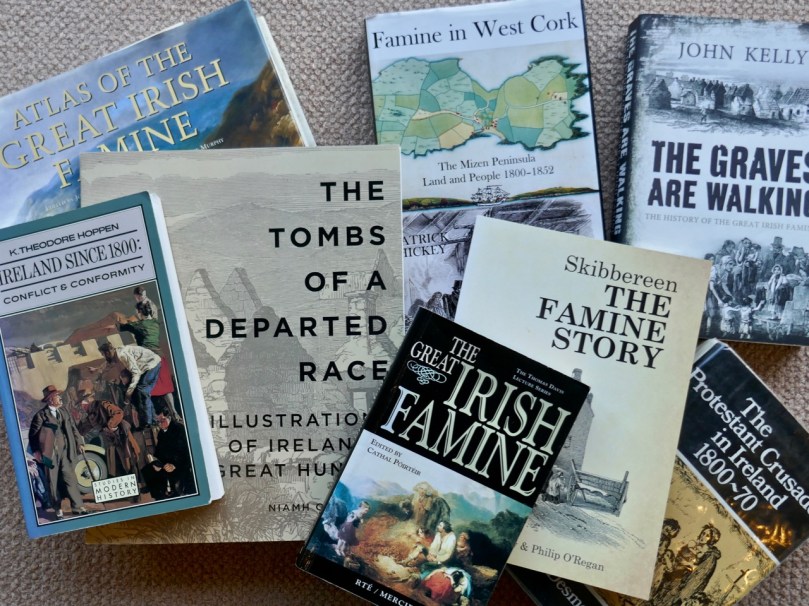
Some of the main resources I consulted for this series. All excellent reading, and towering over them all is Patrick Hickey’s meticulously researched study of the Famine in West Cork

During the course of the nineteenth century all of that was to change. The first half of the century saw significant advances. Catholic Emancipation in 1829, the establishment of the National School System in 1931 (soon dominated by, and ultimately controlled by the Catholics) and the Tithe Wars of the 1840s all galvanised the Catholic population into a new assertiveness. Many new churches were built in West Cork, mainly plain, barn-style buildings which were nevertheless a great advance on tumble-down mass houses or the open air, and some of which are still in daily use.

And then Ireland was struck by The Great Hunger. Over the ten years from 1841 to 1851 one in every four people in Cork died or left. Proportionately, of course, the poorer and more remote districts were hit the hardest. In the maelstrom of disaster, Catholic priests and Protestant Clergymen worked to alleviate the situation for their flock often together but sometimes, disastrously, in opposition to each other, as with the Rev Fisher in Kilmoe, and the ‘colonies’ in Dingle and Achill, leading to enormous resentment about ‘souperism’ but also to panic among the Catholic hierarchy about the inroads that the evangelicals had managed to make.
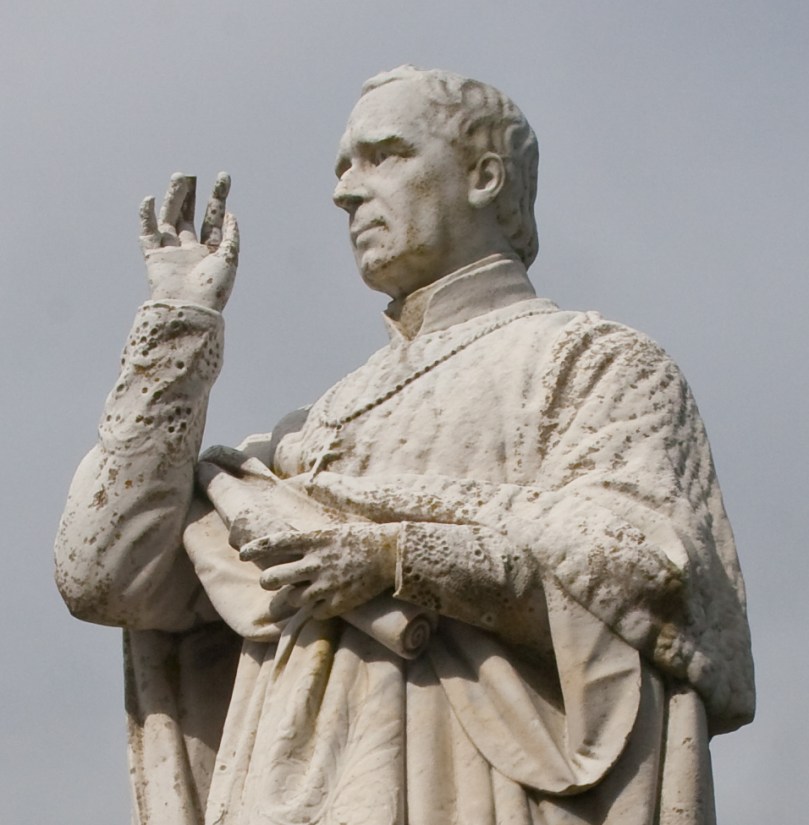
Archbishop John McHale of Tuam, Gallican and fiercely nationalist: Cullen disapproved of him (image licensed under Creative Commons,  Attribution: Andreas F. Borchert)

Enter the towering figure of Paul Cullen, Archbishop and later Cardinal, who was to dominate Irish Catholicism from his arrival as Archbishop of Armagh in 1849 to his death in 1878. According to Bowen, because of the increasingly Gallican attitudes of MacHale and his Episcopal supporters and their failure to discipline their clergy or to hold the extension of Protestant authority, the Vatican came to an important decision. The Pope would send to Ireland an ecclesiastic totally committed to the Ultramontane cause, and he would restore order among the faithful. The ecclesiastic who came as papal delegate and Primate was Paul Cullen.
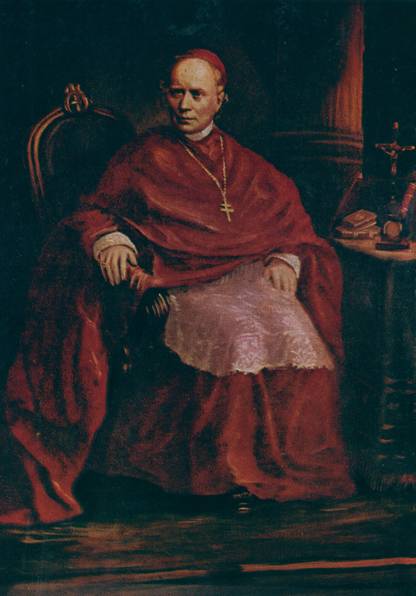
Cardinal Paul Cullen

Gallican, in this context, refers to a philosophy that respects the state in civil matters and religious authority on spiritual matters – a ‘render unto Caesar’ approach to which many Irish priests, trained on the continent, adhered. As Daniel O’Connell expressed it in 1815, I am sincerely a Catholic, but not a Papist.
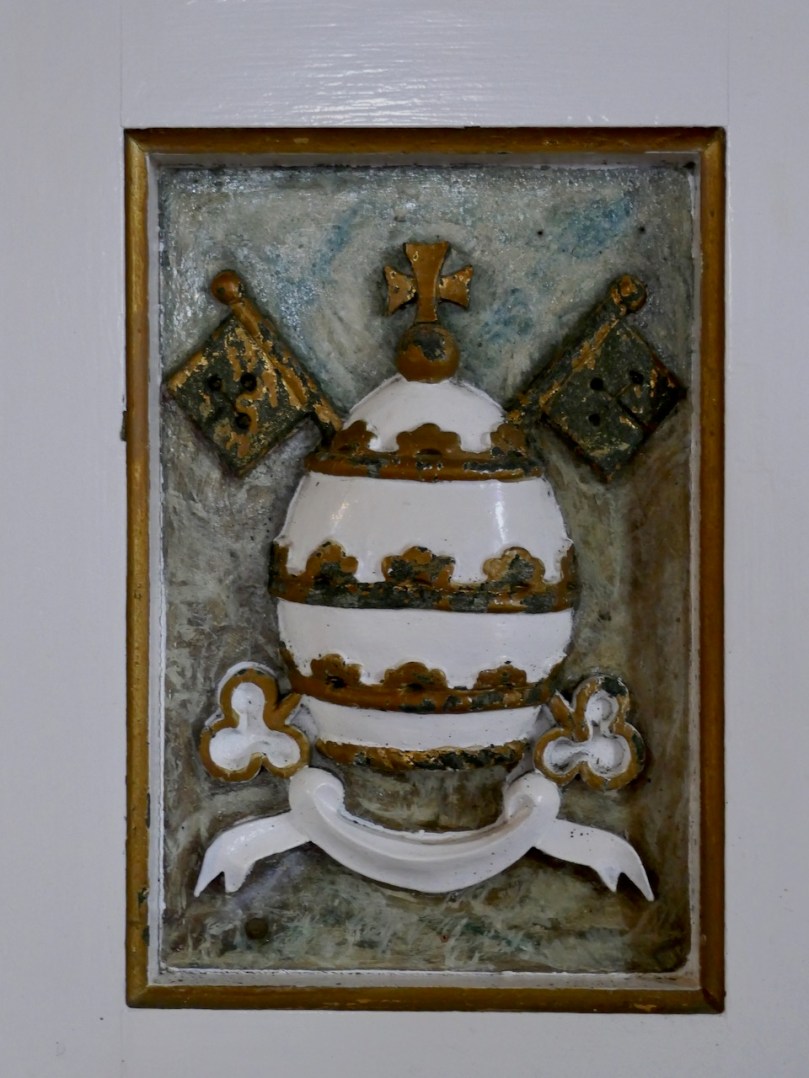
Cross Keys, The Papal Insignia. This one was spotted in a small Catholic Church in West Cork; look out for it in churches built after 1850.

Ultramontane Catholicism was the opposite – it placed papal authority as central to the conduct of the church and its members. In part, nineteenth century Ultramontanism was a reaction to the horrors of the French Revolution but also to the nationalistic policies of Bismarck which imposed state supervision on church activities. Cullen was an arch-Romanist. In his engaging study Ireland Since 1800: Conflict and Conformity, Theodore Hoppen says, Cullen, one of the towering figures of modern Irish history, had spent virtually all his earlier career in Rome where he had been inoculated against liberalism in its continental form

Cullen’s first major initiative was the Synod of Thurles in 1850. Hoppen again:

Patterns now stood condemned as potentially immoral. Wakes were to be sanitised and all the other rights of passage – funerals, baptisms, weddings – brought under clerical auspices alone. . .

Before the 1850s were out he had imposed Draconian loyalty oaths upon the staff and insured that both Maynooth and the new Seminary founded for his own diocese at Clonliffe in 1859 were henceforth to produce only priests totally committed, at least in theological and social terms, to his own version of the clerical role. While this did nothing to encourage intellectual endeavour within the church, it proved highly efficacious in producing a steady stream of those dogged pastoral moralists who, armed with the rulebook at once precise and immutable, could alone have furnished the kind of religious justification and guidance which important sections of the laity increasingly demanded and required.

The reference to ‘sections of the laity’ reflects the emergence of a new rural class. All over Ireland population decline after the famine was hastened by mass evictions as landlords took advantage of the situation to consolidate their holdings. In the second half of the century a new class of ‘strong farmers’ emerged who were to become the backbone of rural life. Seeking respectability, conservative, passing on their farms only to the eldest son, finally approaching financially security and land ownership, they supported the hierarchical and puritanical expression of religion represented by this new Catholicism. Cullen came from, and kept in close contact with, this very group.
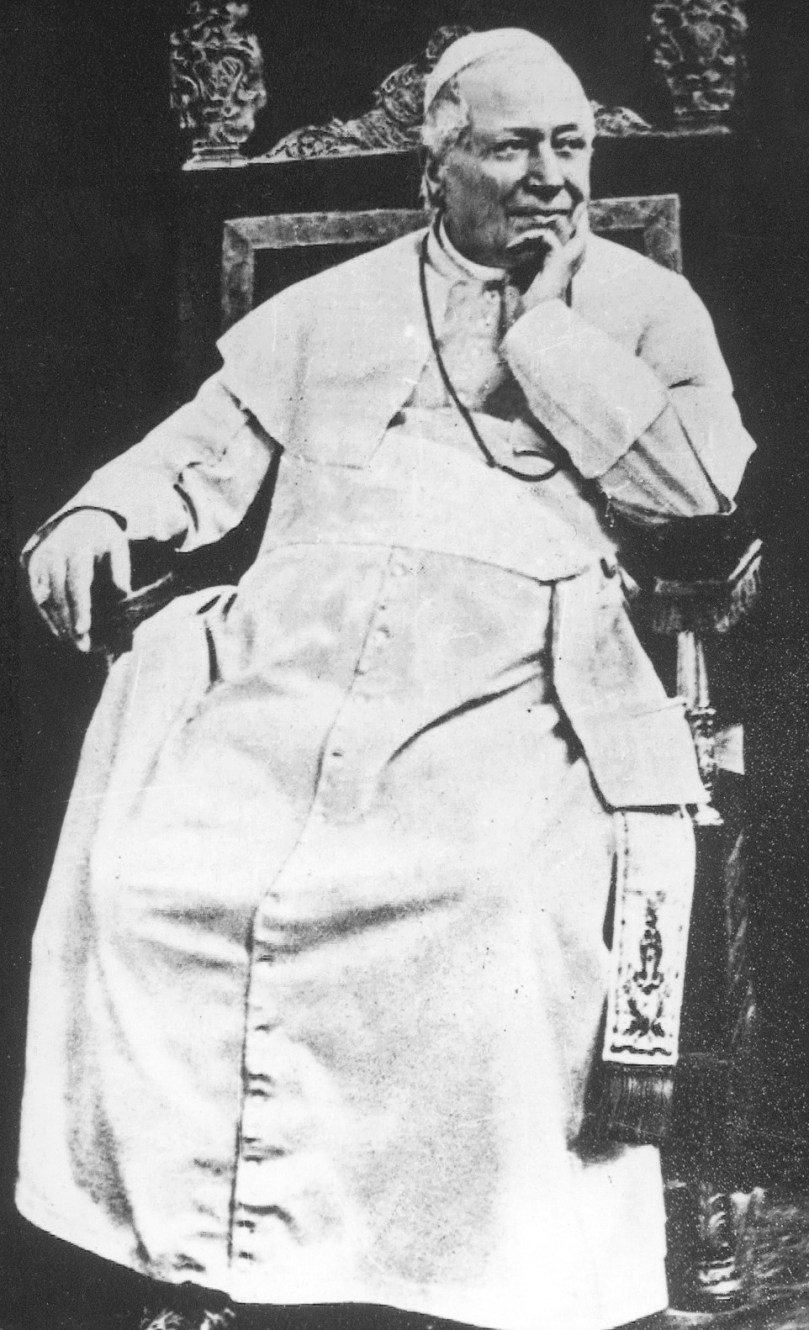
Pope Pius IX

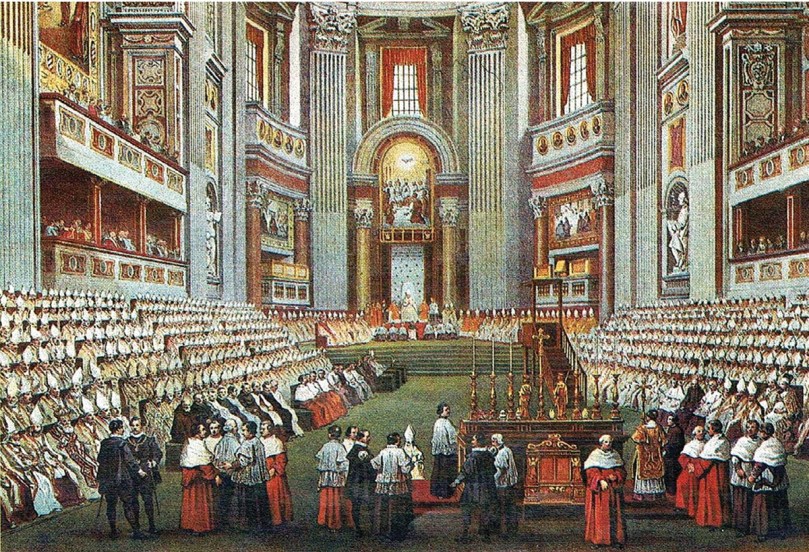
Cullen was extremely well connected within the Vatican and indeed was a personal friend of Pius IX, still the longest-serving Pope and one of the most centralising and controversial. He could rely on Cullen for support – and needed it to get the infamous doctrine of Papal Infallibility passed at the First Vatican Council in 1868 (that’s my lead image for this post). It outraged not only Protestants but liberal Catholics too – a breed that still clung on to some influence as the century wore on, but were ultimately on the losing end of Irish religious history. Charles Kickham, for example, one of the Fenians and a revered writer, was a constant critic of Cullen’s ultramontane activities. Cullen dismissed him as a cultural Protestant.
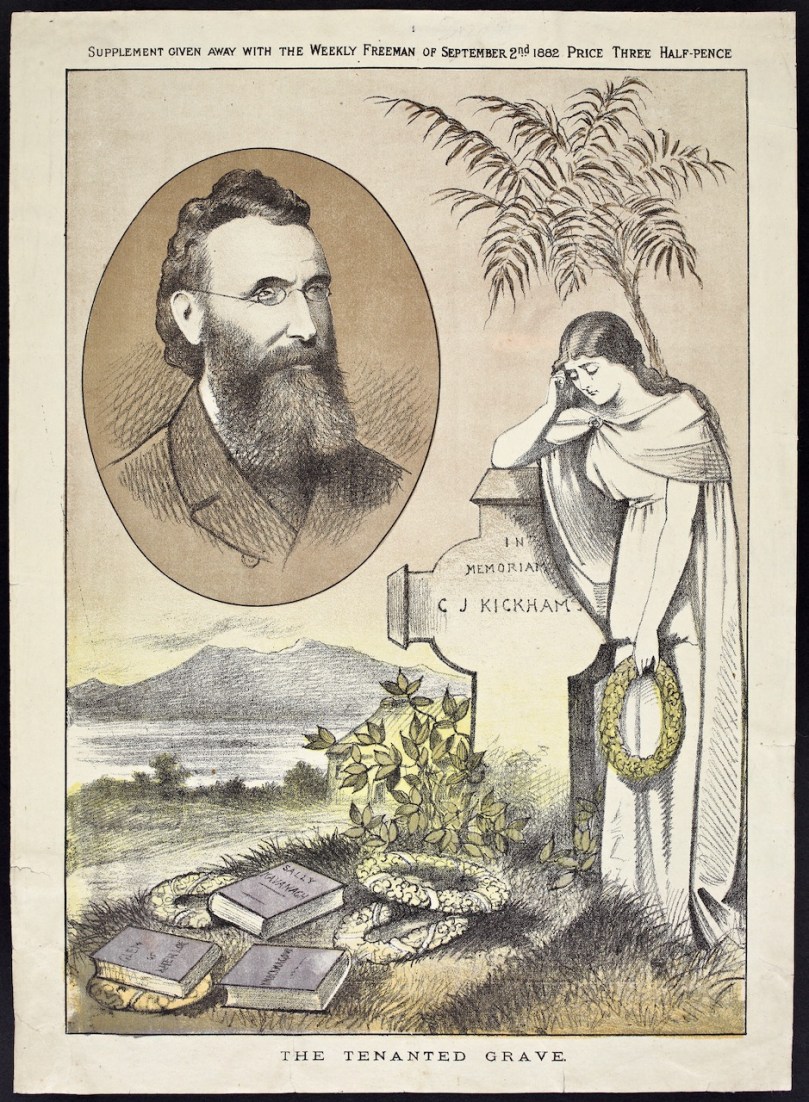
Charles Kickham. This image is reproduced courtesy of the National Library of Ireland (with permission)

Others, such as Charles Gavan Duffy, according to Bowen had to flee the kind of Ireland that Cullen had created, where the ‘power of the priest is the one unspeakable, unmentionable thing’. So long as their presence was felt in Irish Catholicism these people were to experience the full force of Cullen’s inquisitorial instincts.
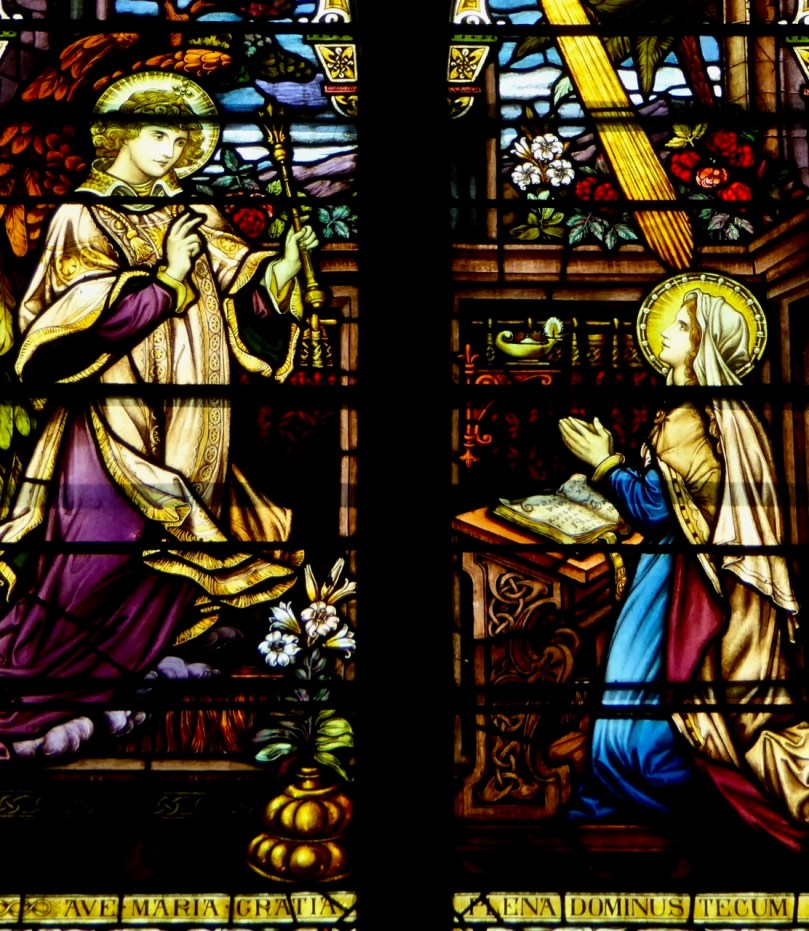
Marian imagery starts to dominate much Catholic Church decoration in this period

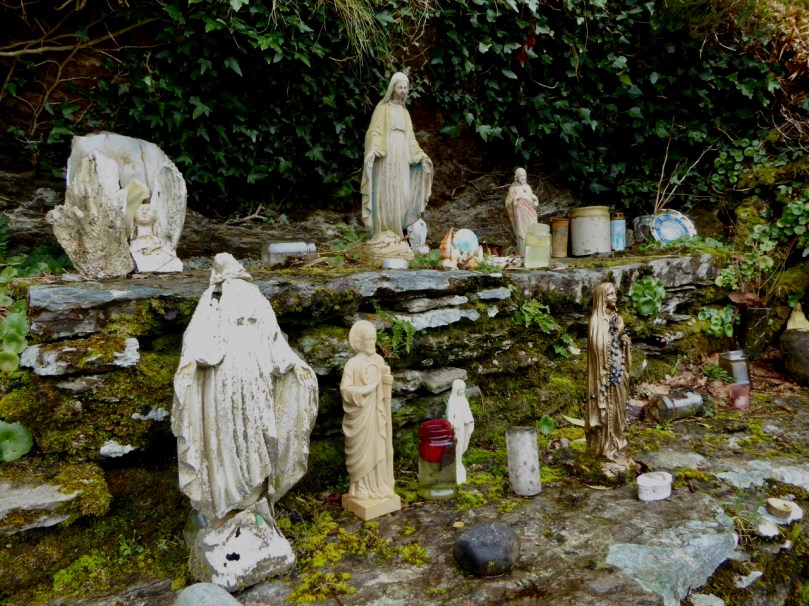
It is at this time that the great period of Catholic church building commenced and triumphalist cathedrals and churches were erected all over Ireland, often on the highest piece of ground in the town. ‘Roman’ initiatives such as an emphasis on Marian worship (Cullen helped to usher in the ‘doctrine’ of the Immaculate Conception in 1854), Novenas and Sodalities, ‘Miraculous Medals’ (the Vincentians had distributed these in Kilmoe and they were much derided by the Protestant clergymen) and of course a continuation of the yearly missions or retreats where the faithful were encouraged in their faith (or whipped into line, according to your perspective) by specialist itinerant preachers. Often referred to as Cullen’s Devotional Revolution, forms of worship settled into the pattern we often now consider ‘traditional’ Irish Catholicism.
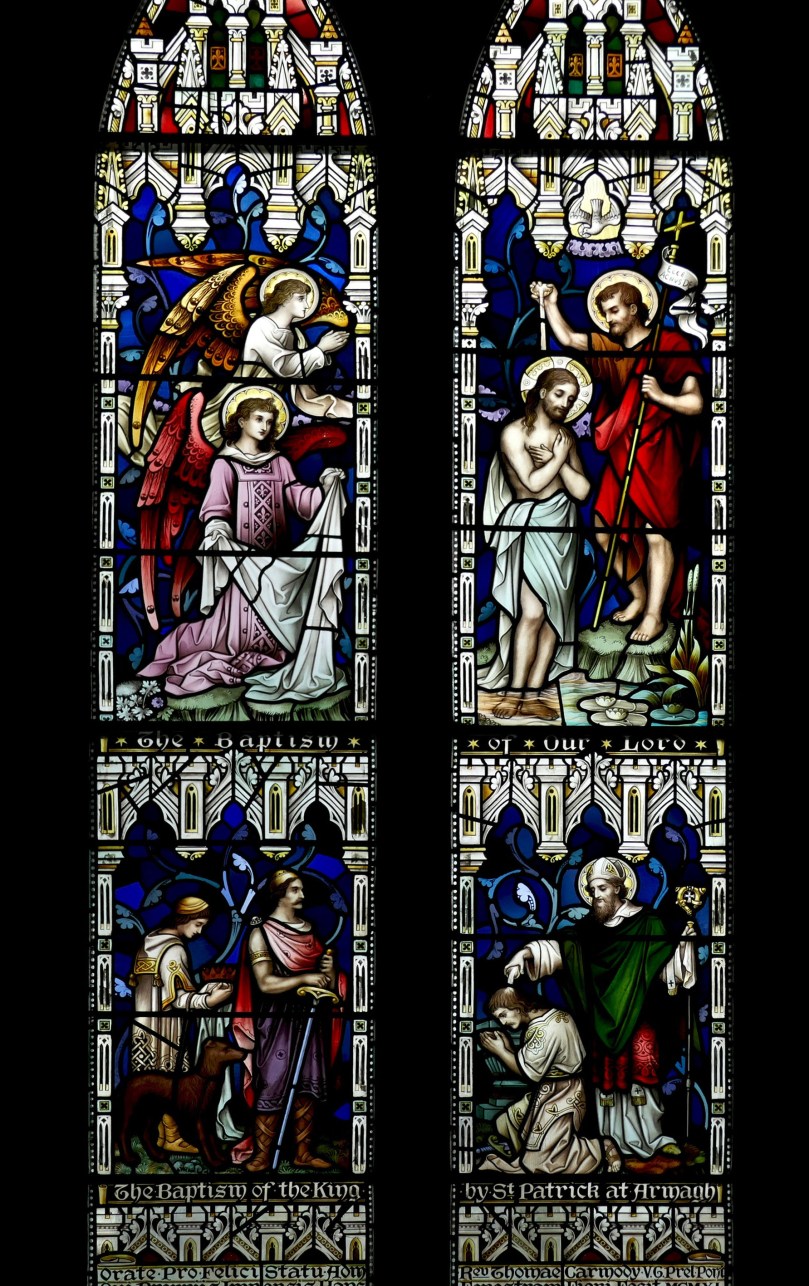
In this window from Killarney Cathedral a direct parallel is drawn between the baptism of Jesus and the conversion activities of Patrick

Stained glass and statuary of the period is a fascinating mix of the continental (the Italian holy statue factories must have been doing a booming business) and the local, as priests incorporated their own parish and diocesan patron saints into the overall decorative plan. Killarney Cathedral, started in 1842 but interrupted by the Famine, was ready for worship by 1855. Decoration was added as time went by, including a set of windows clearly designed with an Ultramontanist message in mind – they draw clear parallels between Irish saints and martyrs,  the life of Christ, and the ultimate authority of Rome. It’s quite a demonstration of verbal and visual sleight of hand, and a powerful message to the congregation.
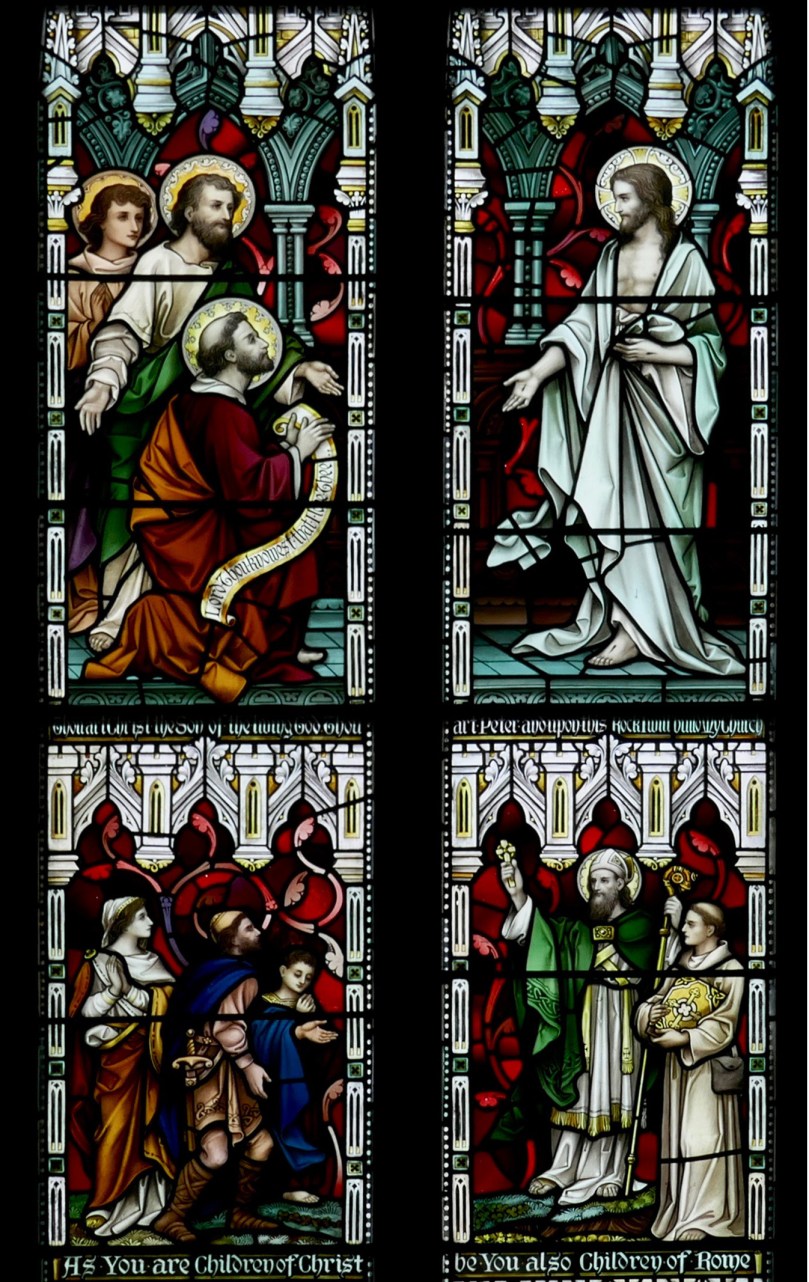
And in this one the message is direct – look to Rome for spiritual guidance. A message from St Patrick himself

In Kilmoe, Fisher had built his own Church of Ireland church in Goleen in 1843 – the one that is now, for want of parishioners, in use as a sail making workshop. In contrast, the large Catholic ‘Star of the Sea and St Patrick’ Church stands on the hill, dominating the town and is very active. It was built in 1854, only a few years after the devastation of the famine, quite an amazing testament to the resilience of the population and the growth in influence and economic power of the Catholic church.

Goleen with the Catholic Church dominating the skyline

It is also, of course, a reminder that the Church of Ireland was finally disestablished by the Irish Church Act of 1869 under Gladstone.  
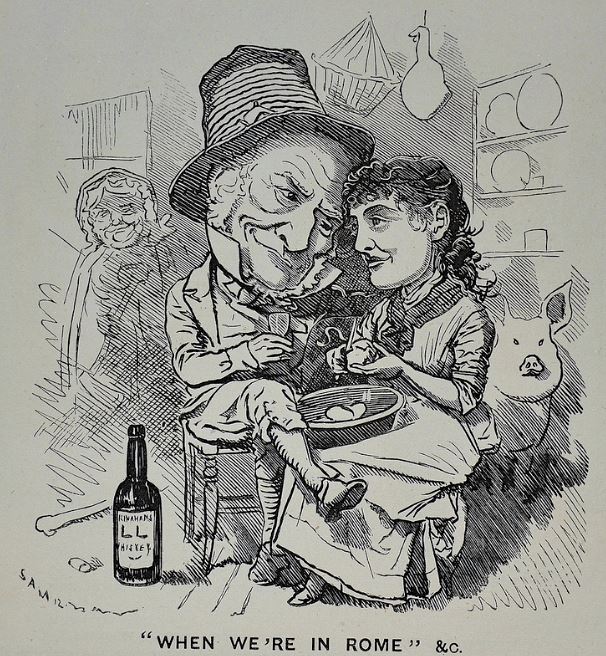
A typical Punch cartoon, this one showing Gladstone cosying up to the Irish.  And of course there’s a pig, potatoes, whiskey and a none-too-subtle reference to Rome – all the tropes of Victorian images of Ireland

This Ultramontanist Catholicism was the church I grew up in, walking up to mass every Sunday in the Holy Redeemer in Bray (built in 1895), going to confession on Saturdays, attending the Children’s retreats and participating in the Corpus Christi parade. Although I knew Protestants because we lived beside them, I had never been in a Protestant church. I attended a national school and an all-girls convent school run by the same order of nuns (the Loreto order) that set up convents all over Ireland in the nineteenth century. It always puzzled me that we called ourselves Catholics but the Protestants always insisted on calling us Roman Catholics. I understand why, now.
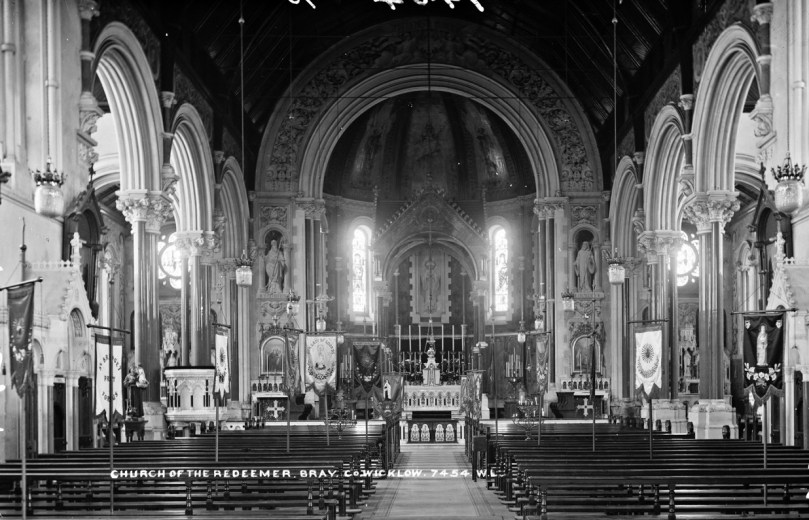
This is it, the Church of the Most Holy Redeemer in Bray – note the sodality banners and the extreme ornamentation. It’s much plainer now, having been toned down considerably in the post-Vatican II era. (This image is reproduced courtesy of the National Library of Ireland, with permission)

I’ve learned a lot about my own history in the course of this series and about the kind of attitudes I grew up with (and which, if I am to be perfectly honest, can still stir inside me in certain circumstances, despite the fact that I am now a non-believer). I suppose awareness of our history and constant vigilance against ingrained prejudice and facile assumptions has to be our watchword if we are not to perpetuate the mistakes and schisms of the past.
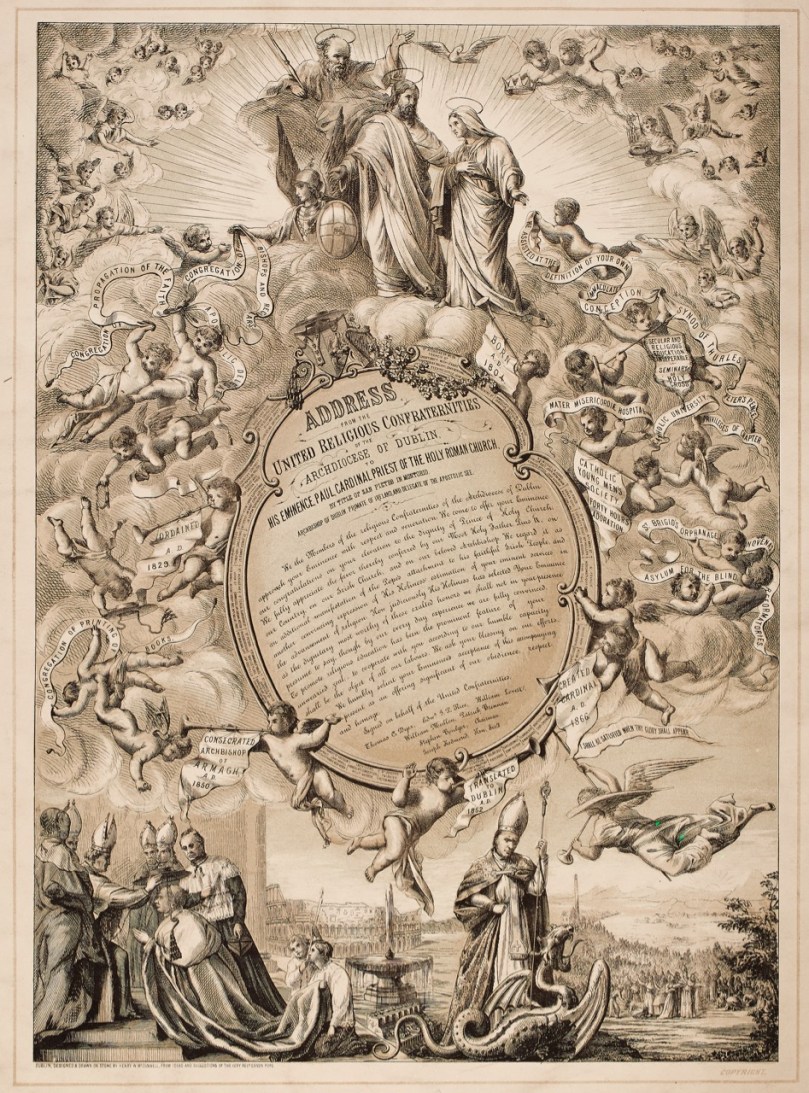
It’s worth enlarging this extraordinary print and having a good look. It’s an address to Cardinal Cullen, enumerating his many achievements. I love the bottom right image of him defeating the dragon. What evil does this dragon represent? I think you can choose one of several candidates. (This image is reproduced courtesy of the National Library of Ireland, with permission)

And what conclusions have I come to about Fisher – was he a Saint or a Souper? He was both. He worked incredibly hard and succeeded in saving hundreds, Catholic and Protestant, from the worst ravages of the Famine, and he died of famine fever himself. But his enthusiasm for his own narrow definition of Christianity drove him to alienate his Catholic counterparts by seeing the Famine as God’s punishment on Romanist intransigence, and to conflate the need to save bodies with the imperative to save souls.
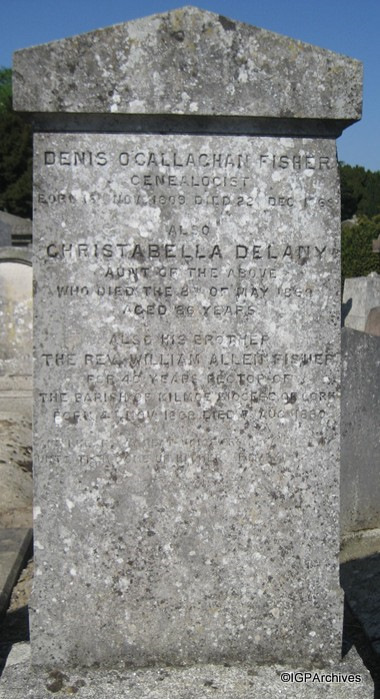
Fisher’s gravestone, in Mount Jerome, Dublin. I am not sure why he would have been buried there, since he died, I think, in West Cork. Perhaps he is simply commemorated on this stone, on the grave of his brother and sister-in-law (© IGP Archives)

I am left with an abiding sense of sadness that the events of the mid-nineteenth century, as symbolised for me by the story of Teampall na mBocht, have left a legacy of sectarian division in Ireland. Perhaps now we can leave Fisher – and all the other crusaders and reformists and counter-reformists – to lie in peace.
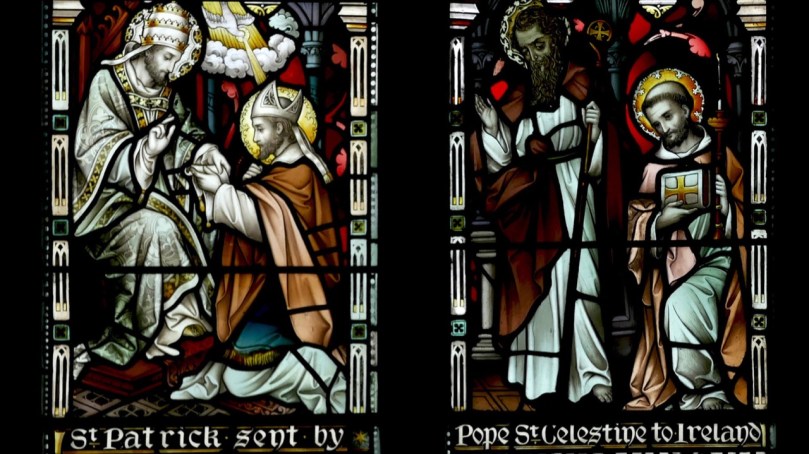
A reminder, in one of the Killarney windows, that Patrick was sent by the Pope

I’d like to end with the words of Carlo Gébler, reviewing John Kelly’s excellent book on the Famine, The Graves are Walking:

It’s tempting, with figures as obdurate and flawed as Trevelyan, to judge them by our standards and find them guilty of crimes against humanity – but. . . be advised: Kelly has no truck with this type of transaction. On the contrary, as he firmly but politely reminds us at every turn, all the participants in this miserable saga were made what they were by their period, should be judged only by standards of their time, and, however, we might wish it weren’t true, did believe they were doing right.
None of this is easy to accept, but part of growing up as a country is that we allow those we hold responsible for our woes the integrity of their beliefs, no matter the suffering they caused.

This link will take you to the complete series, Part 1 to Part 7