Ireland’s Finest Prospect – The Story of Ballyfin Demesne, Part 1

There are two reasons why Ballyfin, in County Laois, was high on our list of Important Places To See In Ireland. One was the story that the name – An Baile Fionn in Irish – could mean ‘The Place of Fionn’ – and there is a legend that the great warrior Fionn Mac Cumhaill was raised here, in the foothills of the Slieve Bloom Mountains. Fionn has left behind him so many traces all over Ireland that the place where he was – perhaps – born and grew up deserves pilgrimage status.

A place fit for a legendary Irish hero? Ballyfinn has associations with Fionn Mac Cumhaill. The lake which is central to the prospect from Ballyfin today was constructed by William Pole in the second half of the eighteenth century

An alternative translation of An Baile Fionn is ‘The White Town’, and the location has long had a reputation as a place of great beauty. Emily Fitzgerald, the Countess of Kildare – a remarkable lady who was illegitimately descended from King Charles II and who bore twenty-two children – wrote in 1759: 

. . . Yesterday, I saw a most delightful place indeed, much beyond any place I have seen in Ireland – Ballyfin . . .

The beauty of the Irish Midlands in the eighteenth century: Ballyfinn House can be seen in the centre distance of this pastoral view from 1784: beyond are the Slieve Bloom Mountains (painting by William Ashford)

In medieval times Ballyfin belonged to the O ‘Mordha clan but was lost during the Tudor conquest of Ireland. The process of Plantation (in which areas of the country were to be settled with people from England, who would bring in English language and culture while remaining loyal to the crown) was first implemented in Laois – then known as ‘Queen’s County’ after Queen Mary I – in the mid sixteenth century. It was a complicated and unstable period in British and Irish history, and Ballyfin saw many possessors ascend and fall until in May 1666 the estate of approximately 3,500 acres was conferred on Periam Pole, a recent arrival from Exeter in Devon. Pole and his son William expanded the estate, built a ‘modern’ house and reshaped the entire gardens and demesne. William planted woodlands and constructed the 30 acre artificial lake which is there to this day. The improvements were ‘grand and expensive and their designs were elegant’.

A view of Ballyfin engraved by William Beauford and published in 1794 shows the woodland, landscaped grounds and lake. The house  – which the Poles extended and improved – was described as ‘a rambling Georgian house’ although with no particular architectural merit

In the time of the Poles, Ballyfin began to build its reputation as one of Ireland’s grandest estates. However, it was not until the Poles were succeeded by the Cootes, in 1813, that the significant architectural statement that is Ballyfin today came into being.

Progenitors of Ballyfin: left – William Pole who died in 1781 (artist unknown) and right – Sir Charles Henry Coote who died in 1864 (artist John Hoppner). The legacy of these two families is a house and demense which are acknowledged as outstanding examples of their period – probably the finest in Ireland

Sir Charles Henry Coote already owned substantial estates close to Ballyfin, and it was timely and appropriate that he was able to purchase the demesne. He employed the father and son team of Richard Morrison and William Vitruvius Morrison as architects to rebuild the house, which is widely acknowledged as one of the most important examples of nineteenth-century neo-classical architecture in Ireland and is famed for its elaborate interior design.

A print showing the ‘new’ house designed by the Morrisons in the neo-classical style (1828 British Library). below – views of the house today

The picture above shows the west elevation of the house with the finely-wrought conservatory that was added in around 1855, designed and constructed by ironfounder Richard Turner, who was also responsible for the great Palm Houses at Kew and Belfast Botanic Gardens and the range of glasshouses at the Irish National Botanic Gardens at Glasnevin, Dublin. It’s my favourite part of the architecture – lightweight and elegant: seemingly timeless – it could be a contemporary structure.

Fine though the house is, it would fail without its context. The demesne is so important as a setting for the rather uncompromising architecture of the elevations. Finola has looked at the grounds and the surroundings. But it’s also the interior that sets Ballyfin apart as an icon of its time.

The Library at Ballyfin: upper – in Victorian days (Coote Archive); lower – splendidly restored, today

The Saloon: upper – a sketch from c 1855 by the Marquis de Massigny de la Pierre (Coote Archive); lower (and header picture) – the restored Saloon forms the centrepiece of the house today. Note the magnificent parquet floor

The Entrance Hall incorporates a Roman mosaic pavement: one of the art treasures brought over by Sir Charles Coote from his Grand Tour of 1822. The hall also displays a far more ancient antiquity: the antlers of Megaloceros Giganteus – the Irish Elk, recovered from an Irish bog and some 10,000 years old!
Details from the superbly restored marquetry flooring in the saloon – the most exotic examples to be found anywhere in Ireland

The first part of our story ends with the Cootes: the family owned Ballyfin until the 1920s. But there’s much more to tell about its succeeding time as a school – periods of neglect and decline – and, most remarkably,  its revival and return to distinction through one of the most complete and elaborate architectural restoration projects undertaken in Ireland in the 21st century. Ballyfin is now a first-class 5 star hotel where attention to detail in the service it offers is absolute: it has justifiably won many accolades and awards.

Afternoon tea on the Dining Room terrace at Ballyfin, c 1903 (Magan Collection)

The story of Ballyfin has been expertly and completely documented by Kevin V Mulligan in the volume Ballyfin – The Restoration of an Irish House & Demesne, Churchill House Press 2018. We are indebted to this author and his work. The architectural restoration and the incarnation of the house today is described in Part 2 of this post: Decline and Revival.

Another Grand Day Out on the Fastnet Trails

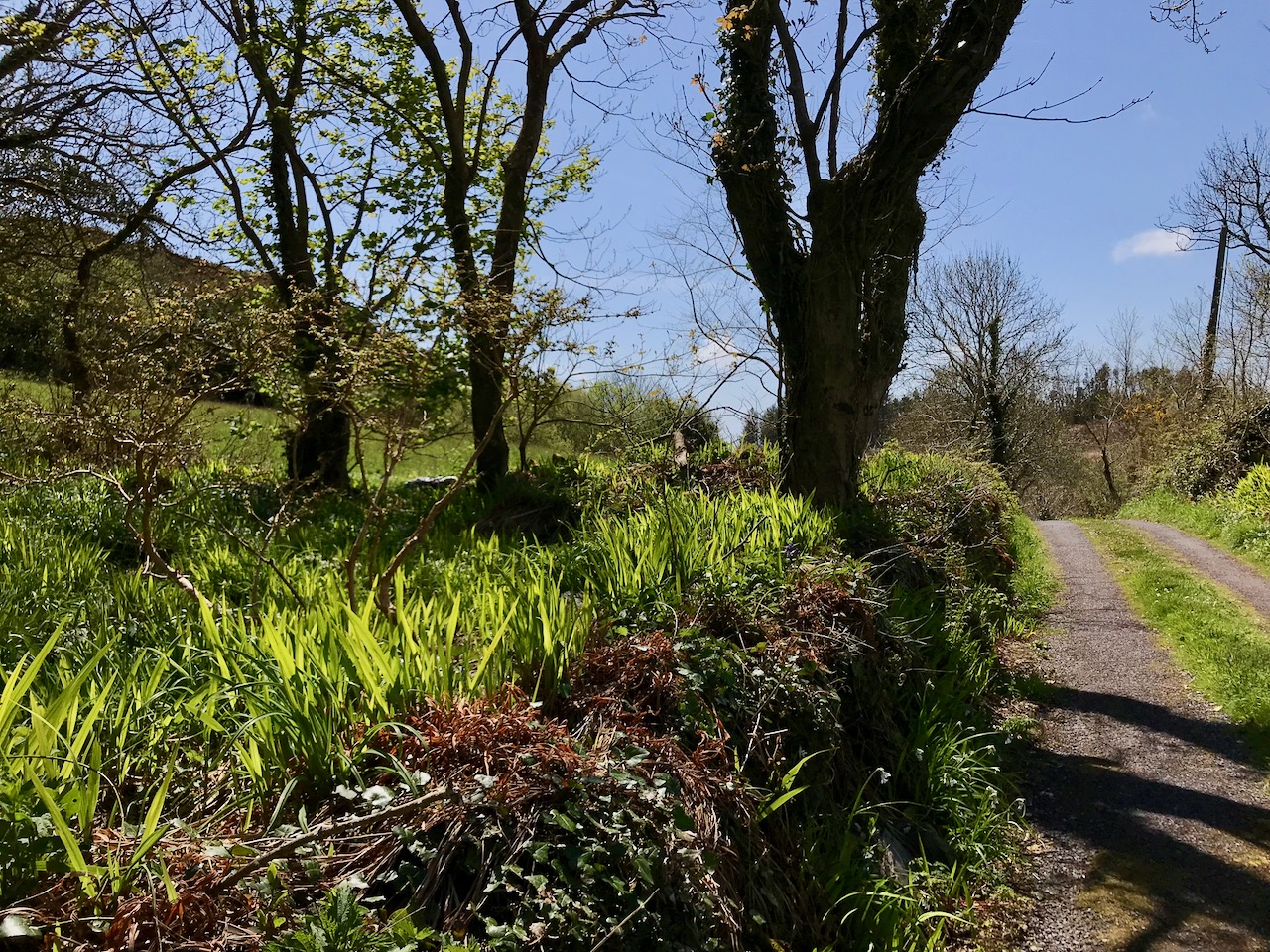
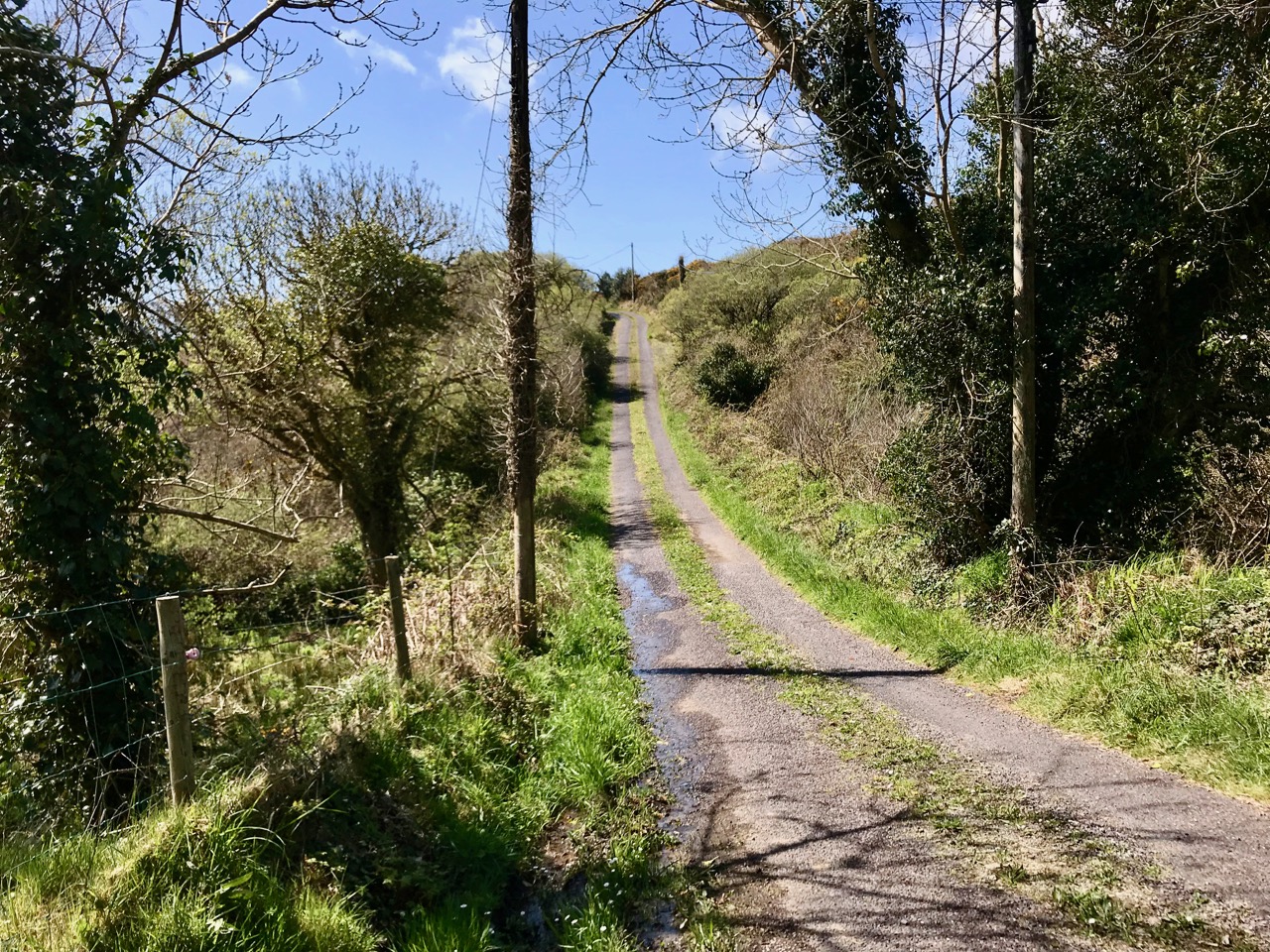
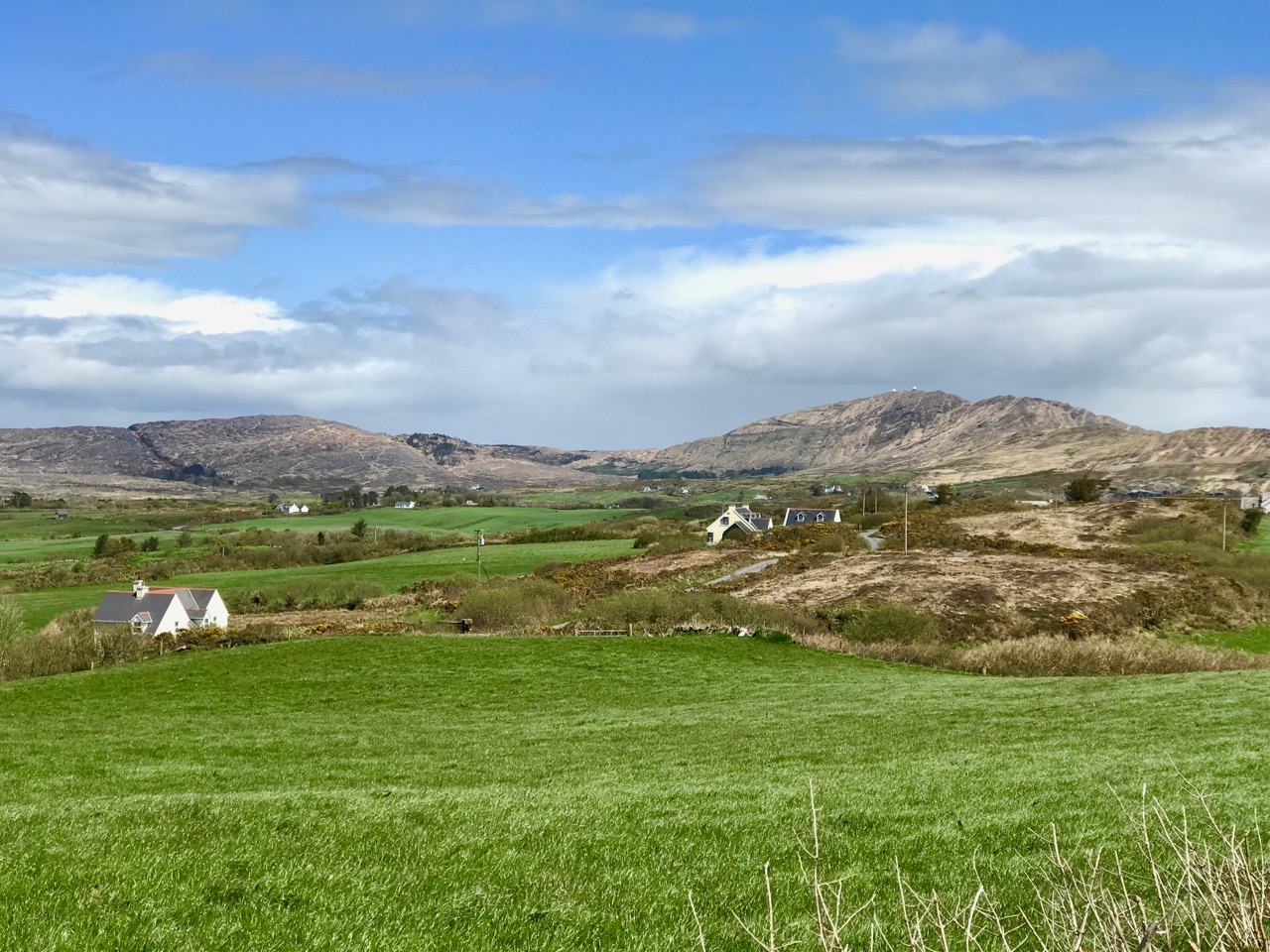
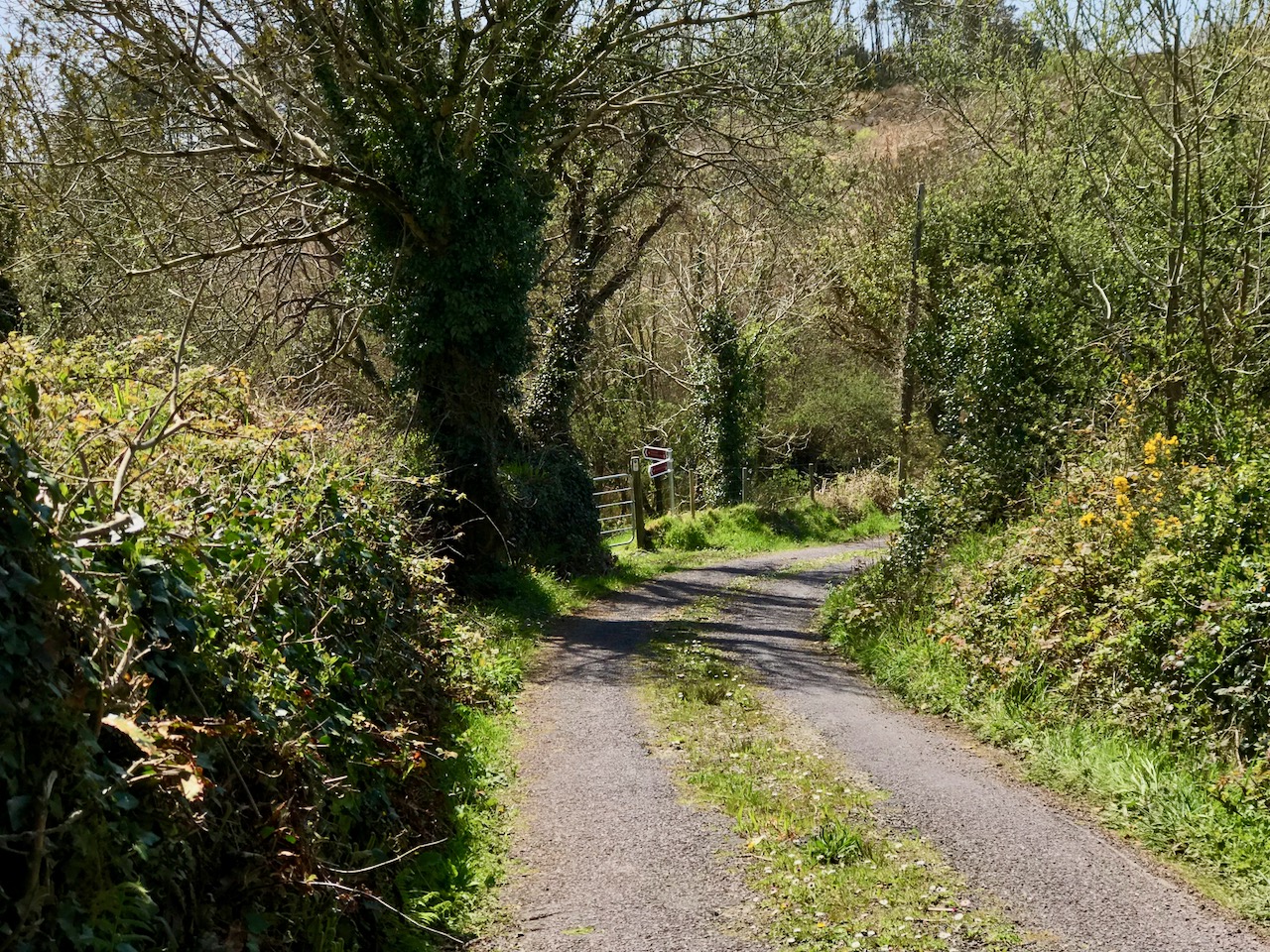
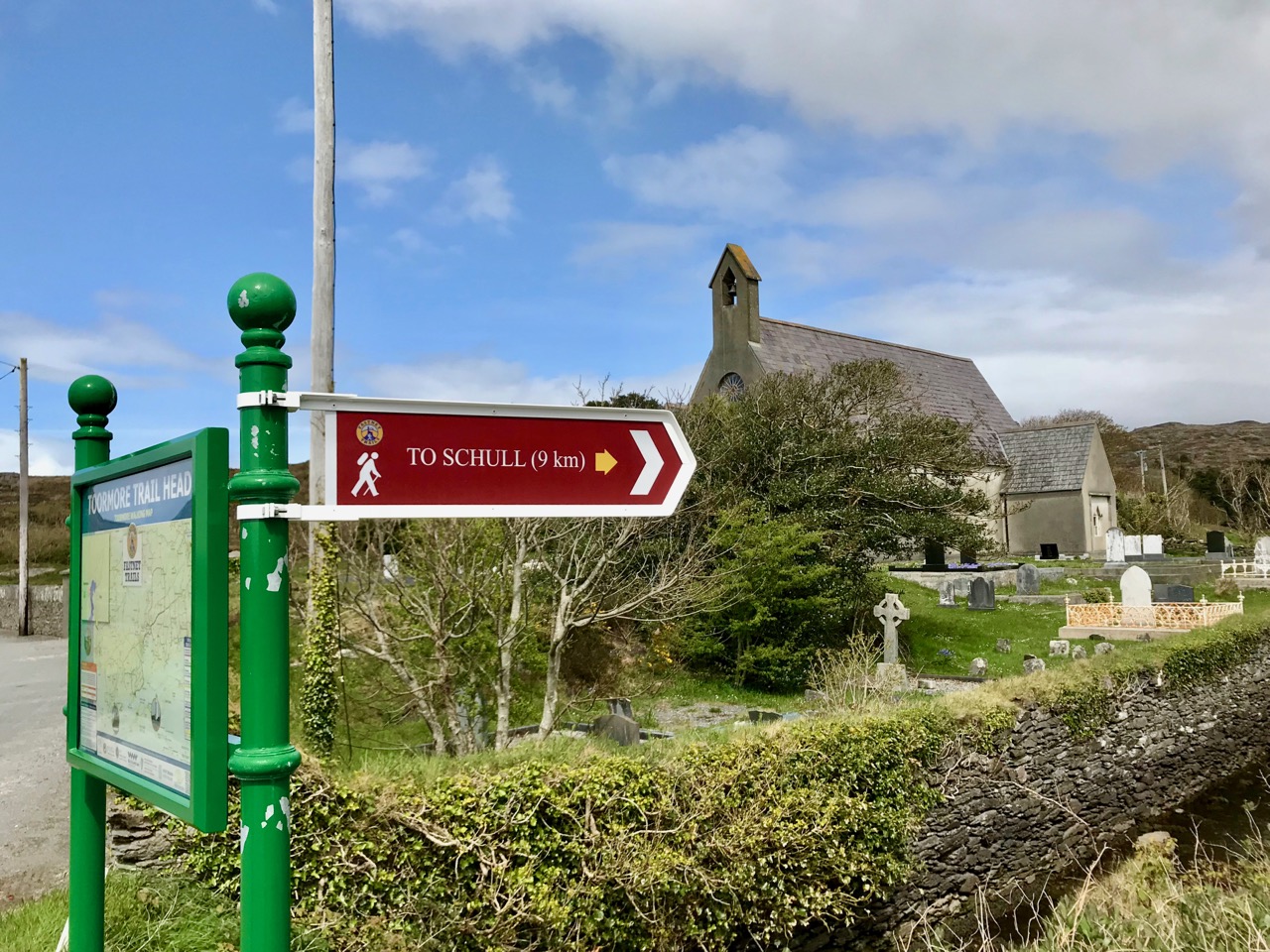
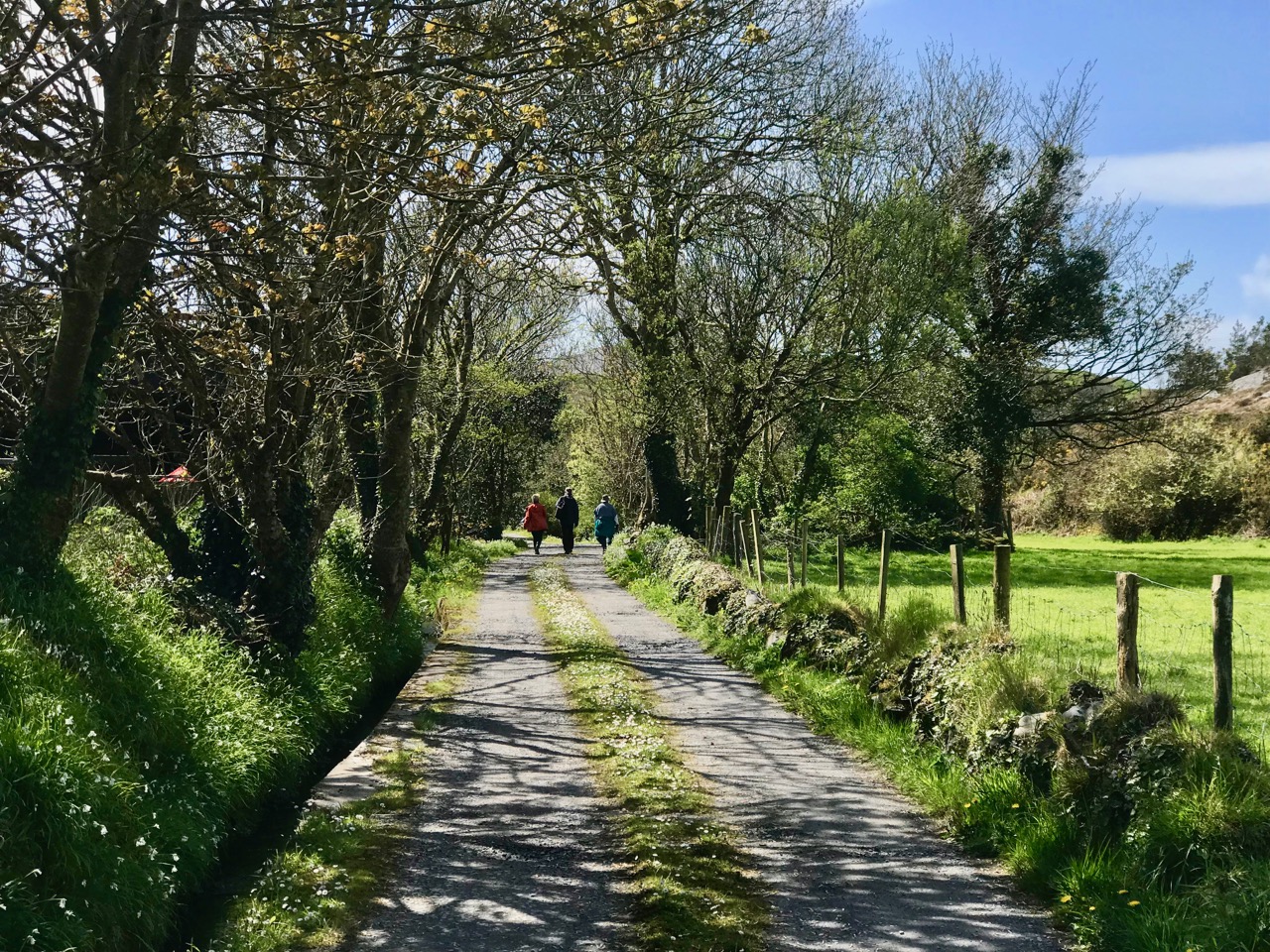
Lowertown, Schull to Toormore: it may seem a rather unadventurous walk: mainly on narrow back roads. But, on a spring day of scudding clouds and clear air, with distant views from the high ground across to the Sheep’s Head and even beyond, into Kerry, there is stimulation a-plenty to be had from an easy afternoon’s ambling and exploring of places which would be passed by in an instant when driving down to the west of West Cork. Although largely on tiny boreens, you are unlikely to encounter any traffic: we didn’t see any vehicles in two hours, apart from those parked in the few houses and farmyards on the way.

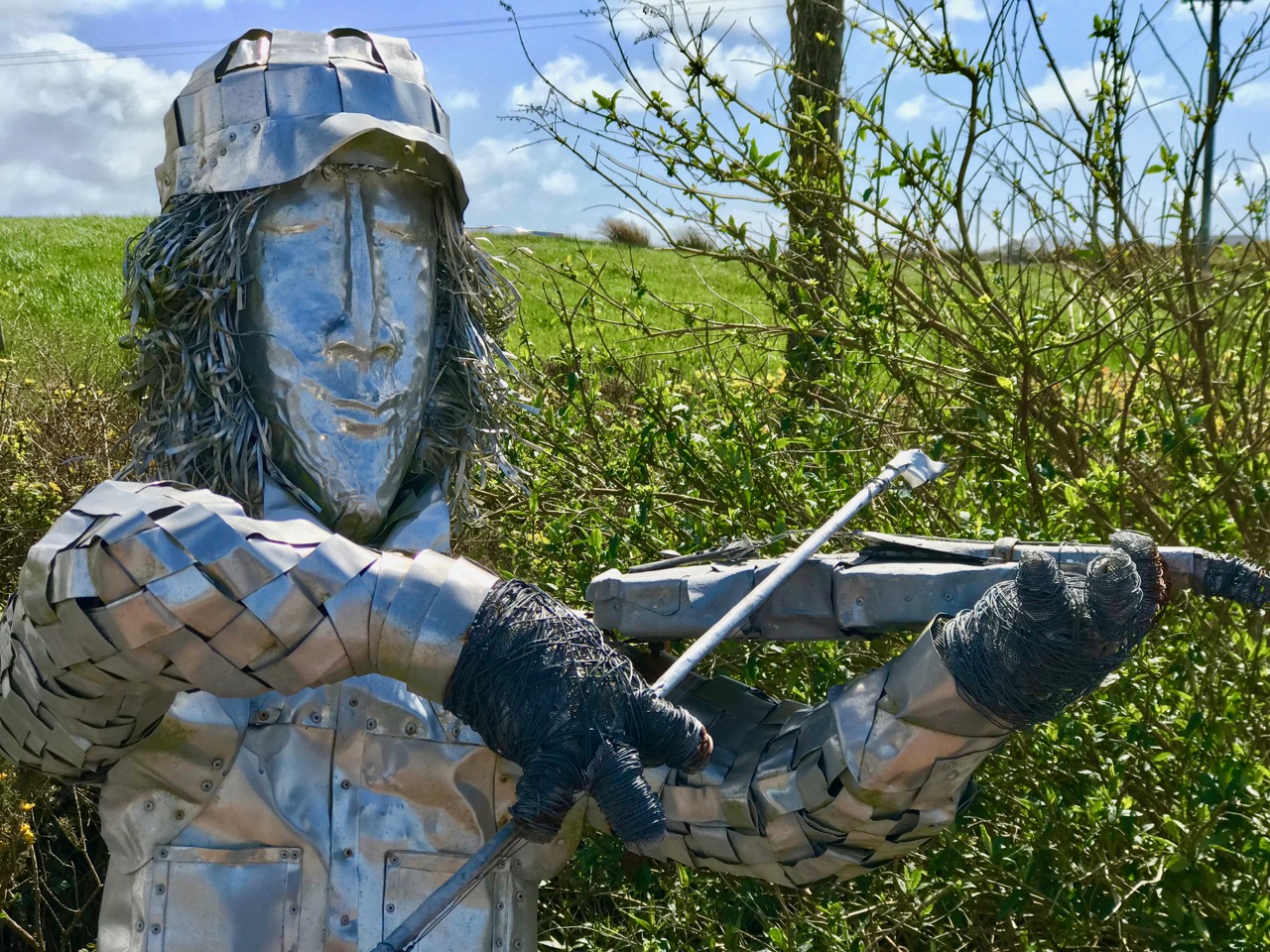
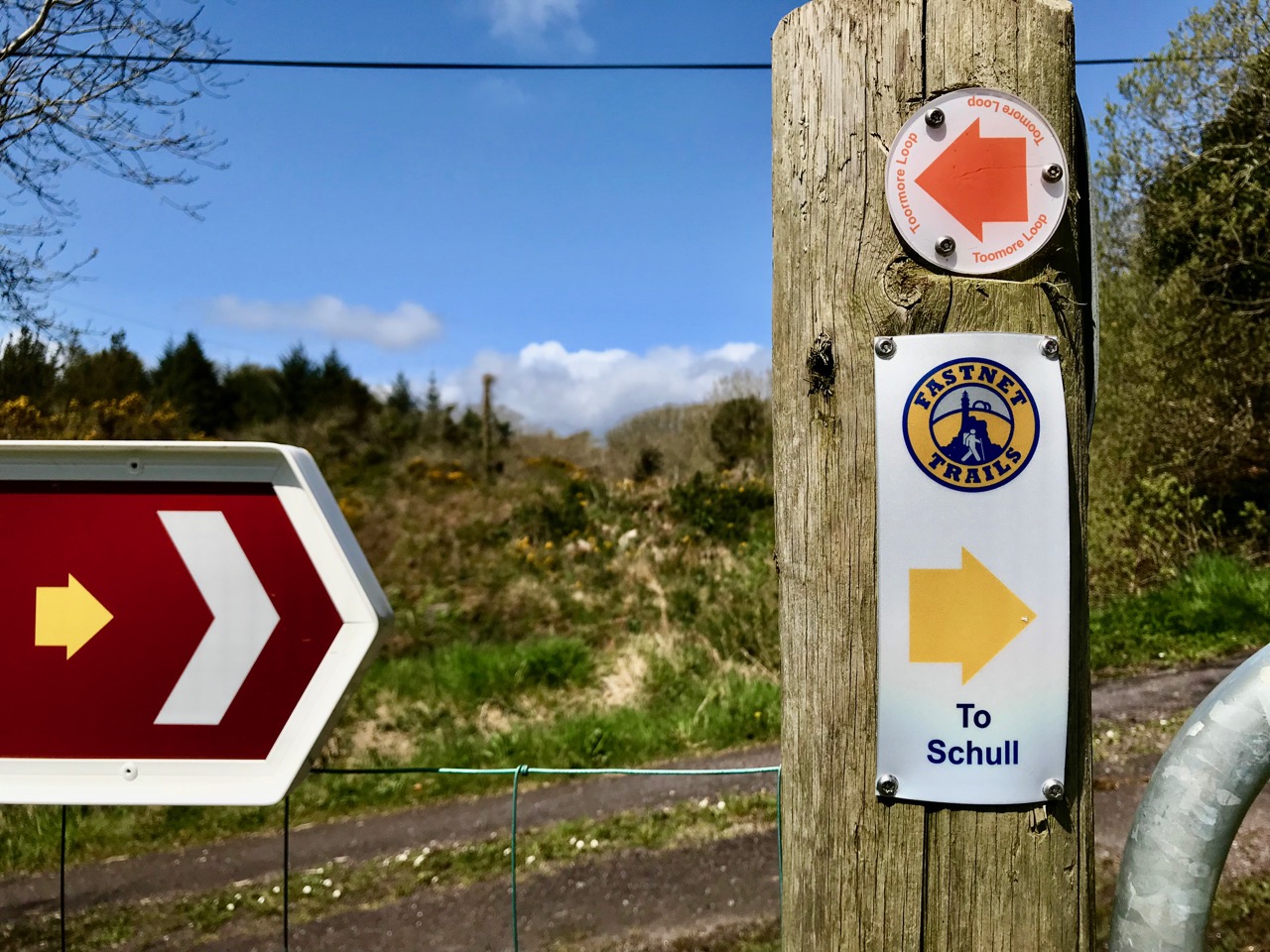
Header – our walk is part of the Fastnet Trails network beyond Schull: in this case the Toormore Loop. Upper – undisturbed peace on the quiet boreens; lower – we started out at Lowerton, where you will find a fiddler at the ready beside the old dance platform!

We parked one car beside the church at Lowertown – opposite the site of the old dance platform, celebrated with the sculptures of Susan O’Toole – and the other beside Teampol na mBocht, the little church at Altar, overlooking Toormore Bay. This enabled us to take our time and enjoy every aspect of the route, walking from east to west: in my view always the proper way to walk – following the sun! I should point out that the route we took – around 5 kilometres – is only a part of the full Toormore Loop which is itself one of an excellent comprehensive system of Fastnet Trails which has been put in place in recent years.

From the board at Toormore Trail Head: I have indicated our walk from Lowertown to Altar with the broken red line over on the left. Leaflets showing the full extent of the Fastnet Trail walking routes are available in the tourism information offices in Ballydehob and Schull

The little road climbs up and over hills and down through valleys and glens. I hadn’t expected to find an old burial ground, the site of the original Ballinskea Church which existed in this remote area between 1826 and 1967, when the Church of the Seven Sacrements was built to replace it beside the main road at Lowertown.

The old burial ground at Ballinskea Church: top – a bit of local history, perhaps, in the name stamped on the ironwork at the gate; bottom – the graveyard is well looked after – cowslips are in abundance

We passed a few houses along the way, but many were abandoned: each one tells its own story of lives and livelihoods – but they don’t readily give away their secrets to us.

Some of the signs of former occupation and cultivation which we passed by on our way: the area seems so remote, yet it’s not so far from well-trodden routes

We were taken by surprise at the extent of the views both north and south from the higher ground. At one point we stopped to admire the long vista out over Dunmanus Bay with the Sheep’s Head settlement of Ahakista clearly delineated.

Top – the nature of the walk: I can’t guarantee that you won’t encounter a vehicle along these back roads, but we didn’t! Centre, looking back over rolling fields towards the wild high ground of Mount Gabriel. Bottom – the view towards Ahakista on the Sheep’s Head, with the Beara beyond

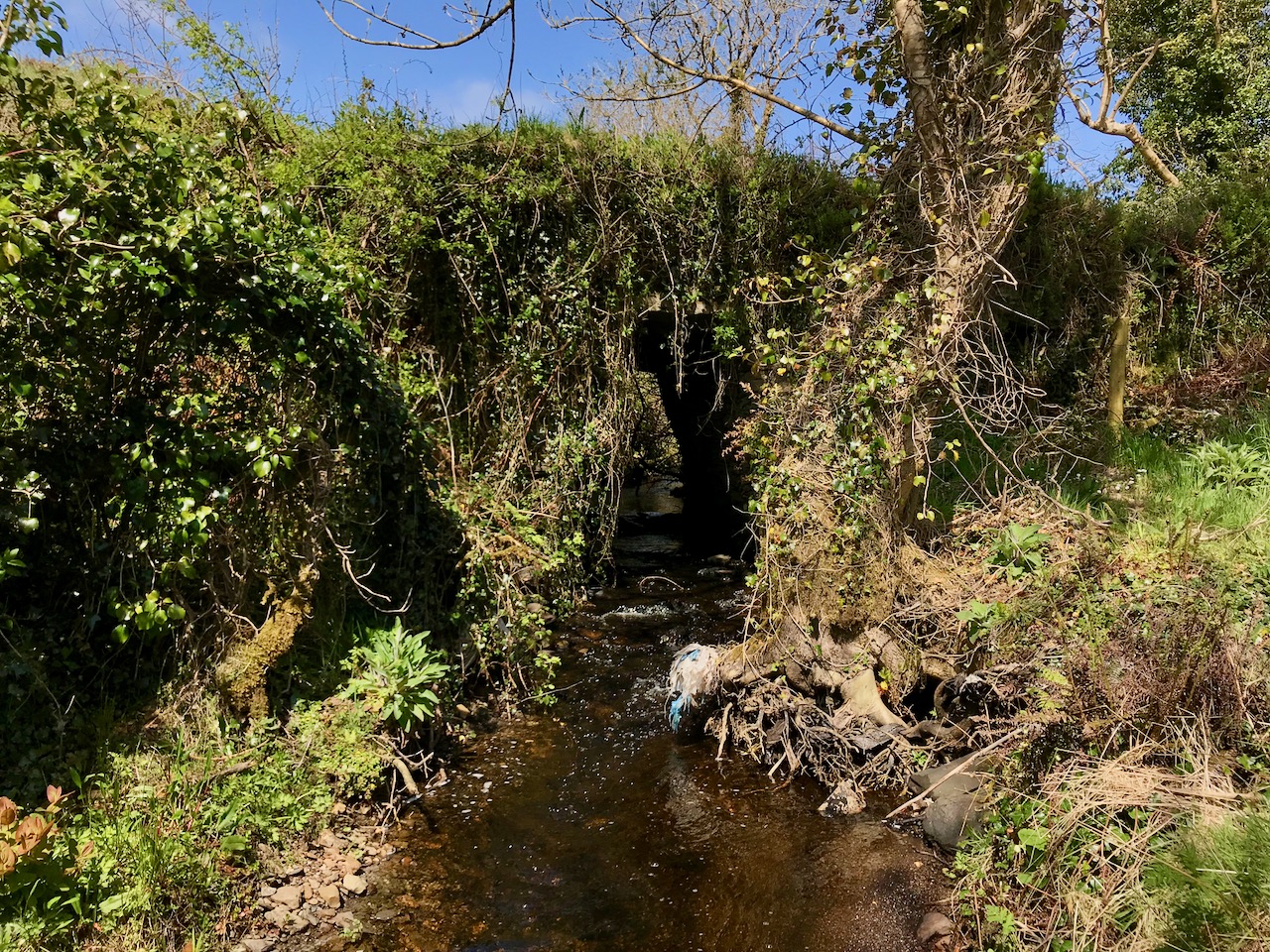
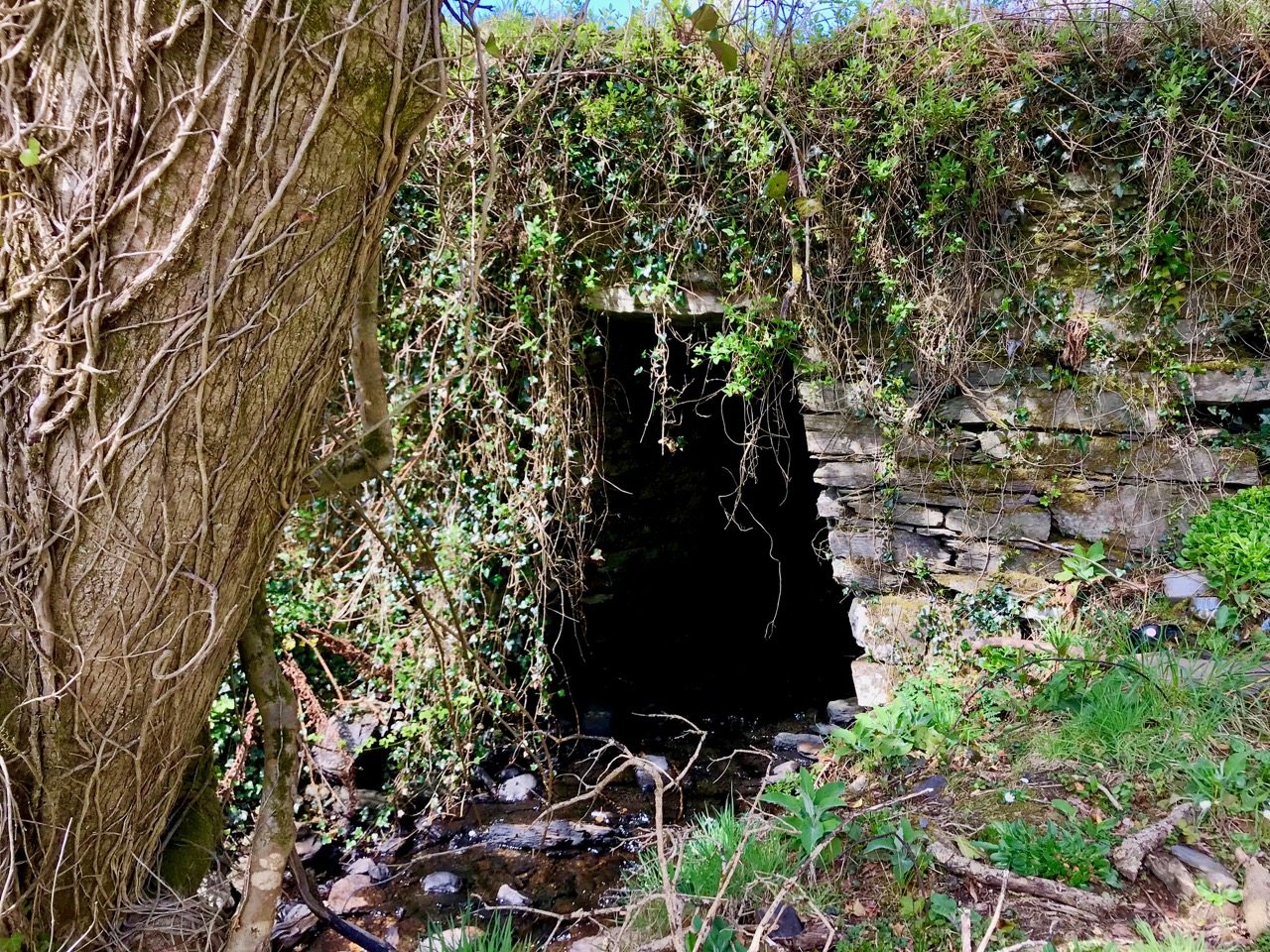
After a good hour you will reach a gateway where you will leave the boreens behind and continue across country. Of course, you don’t have to follow the marked trail: the myriad of tiny roadways continues throughout West Cork and is awaiting your further exploration. We did turn off, however, as the footpath beckoned through a leafy glen and looked most inviting. First of all, however, we paused to take a look at the bridge which carries the roadway over a stream that flows along by the path – and runs all the way down to Toormore Bay. The bridge is unusual in that it has a large stone slab lintol rather than an arch. I don’t know its history for sure, but I would guess it dates from the eighteenth century, when the road it carries was established as the main highway from Goleen to Cork!

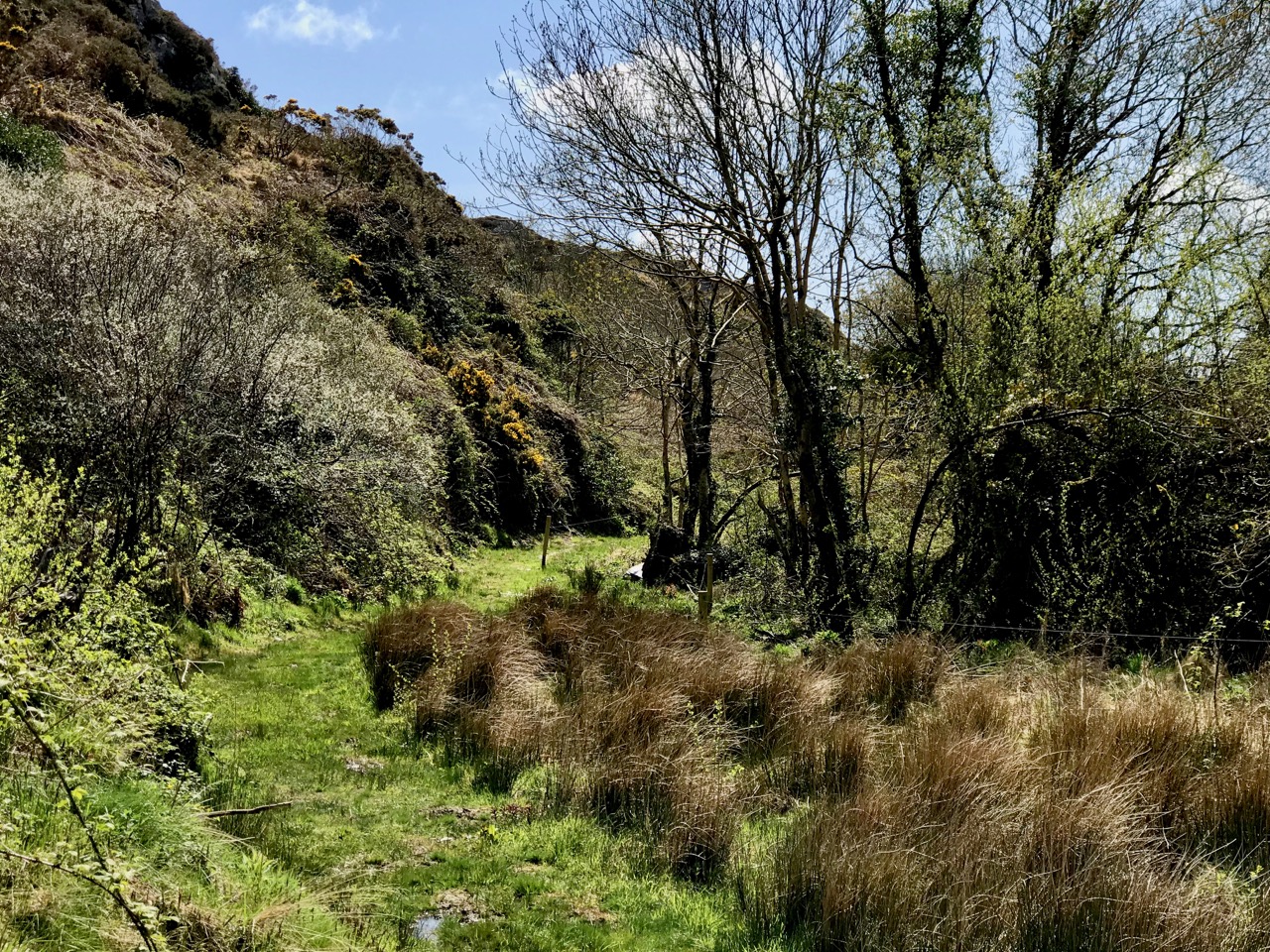
Top – the footpath diverges from the main road to Cork! Just around the corner it passes over the unusual bridge (centre and below)

Our route is the line of the former Butter Road which ran all the way to the international Butter Market in Cork. In its heyday it would have seen plenty of traffic in the form of packhorses and donkey carts, and some of the now abandoned cottages lining its way would have been welcome ports of call on the long trek. Here’s a post from Finola about a walk we did a few years ago on another part of this highway, which tells a little more about the great butter trading days. You can also have a look at my own post from last week, which talks about the improvements to the roads of West Cork initiated by Richard Griffiths a century later, at which time the importance of our own little trail receded and was bypassed by what is now the main road going from Ballydehob and Schull down to the end of the Mizen. I suppose we therefore have Griffiths to thank for taking all the traffic away from our back roads and giving us these idyllic walking trails.

The footpath through the glen is another world – a contrast to the boreen we have been following so far. It is lush and damp underfoot, and there is green everywhere: mossy green boughs of ancient oaks, soft turf and vivid St Patrick’s Cabbage emerging in the newness of the late spring. All too soon we are in sight of our goal, the little church by the bay. But the good experiences of the day are not yet over. The church itself, and its burial ground, deserve exploration.

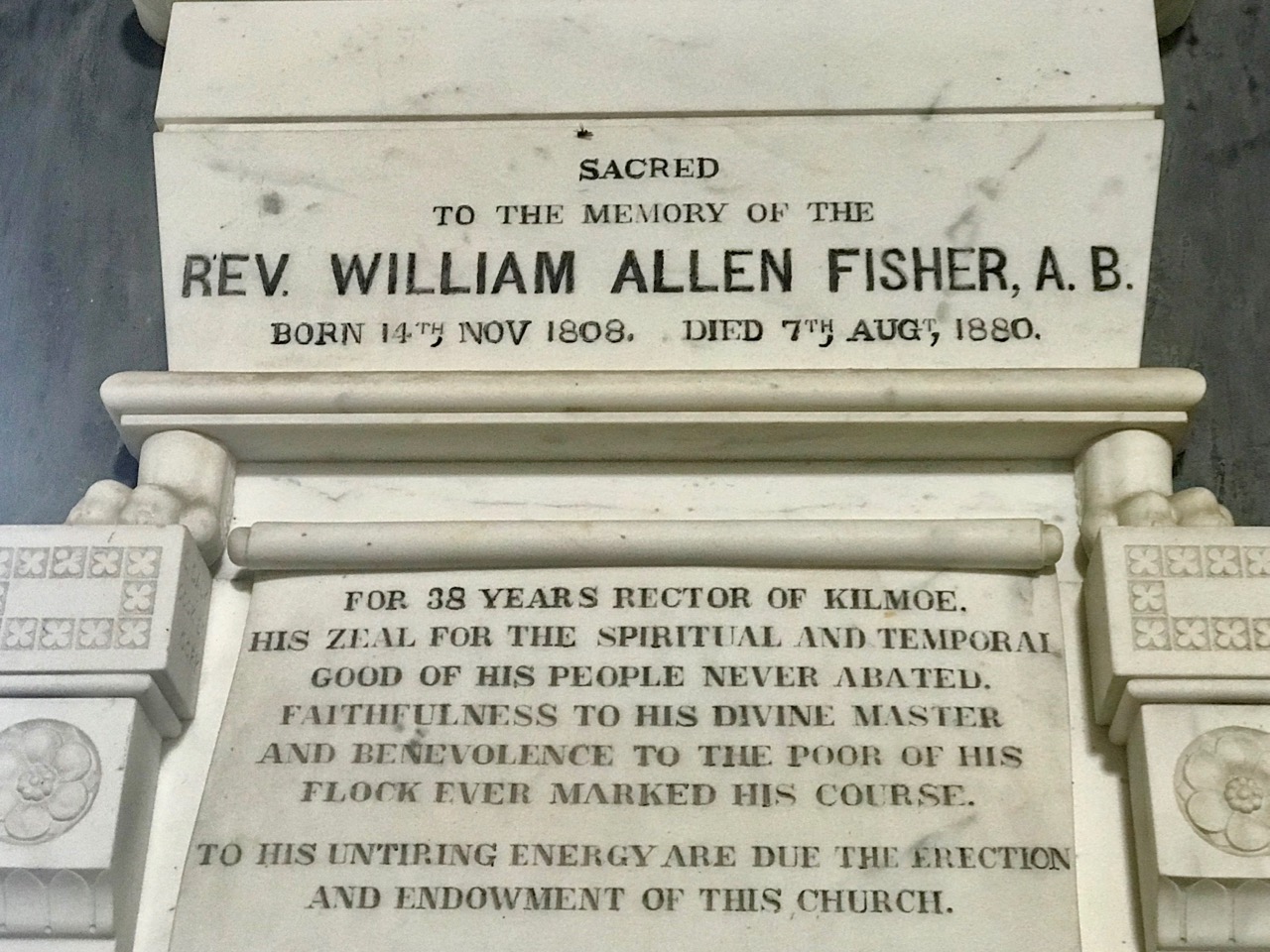
Teampol na mBocht is said to be the only Church of Ireland church in the country with an Irish name: it means ‘Church of the Poor’, so named by its builder, Rev William Allen Fisher, who was Rector of the Parish. Appalled by the ravages of the Great Famine, he raised money from well-wishers in both Ireland and England: with this he set up soup kitchens and distributed food, medicine, blankets and clothing.  But he wanted to do more than dole out charity. He determined to provide paid work for everyone in the area, regardless of their denomination. In 1847 – at the height of the famine – he commenced the building of this church. The story is told in more detail on the website of the Kilmoe Union of Parishes:

. . . Tradition has it that, in order to employ as many as possible, without benefiting the less impoverished farmers, no carts or horses were to be hired.  The stone was quarried nearby and carried to the site entirely by hand.  As Fisher wrote in a report on the church, ‘the employment was given chiefly by contract, so that the poor were able to work about their cabins, fishing etc. at the same time that they earned a subsistence for themselves.’ . . .

. . . It is a controversial building.  For many Protestants, William Fisher was a saint, a scholarly man happiest at his books, who nevertheless drudged selflessly for forty years in a remote parish, giving all his time and strength to the poor, the hungry and the sick, until he himself died of famine fever.  But for many Catholics, Fisher was a ‘souper’, whose manifold projects on the Mizen Peninsula, including the building of his church, had only one object: to win converts from Catholicism to the Church of Ireland . . .

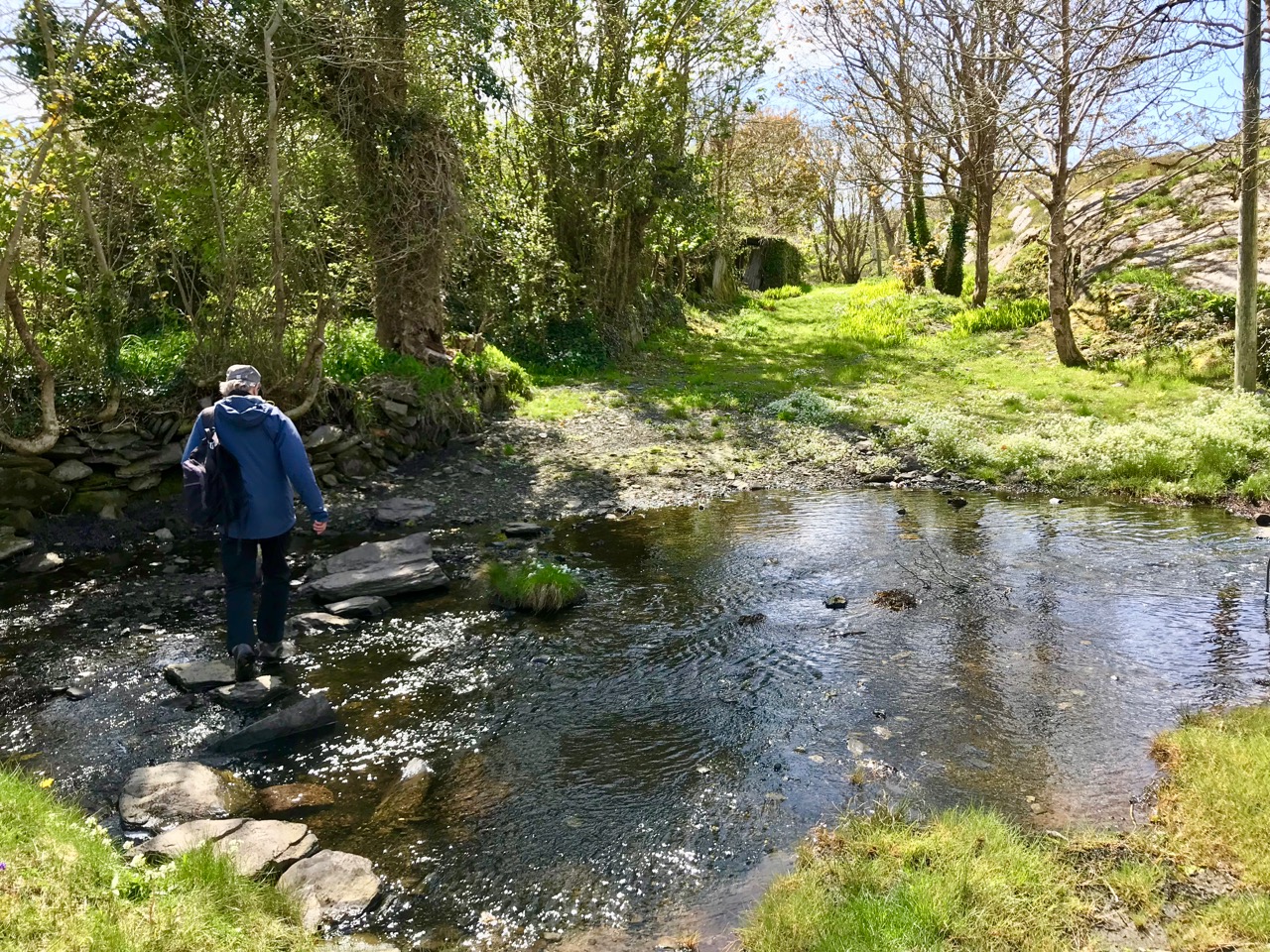
The church is not always open, so it is best to contact the Parish in advance for a look inside – it’s worth it for the history. This would be the end of the trail but we walked a little further, west of the church, and took the road up to the right. This intersects the Butter Road at a crossroads. We turned left and found ourselves heading for another green track, followed by a ford with stepping stones. Keep going and you meet the main road again: if you are following the route it’s probably best to do as we did and retrace your steps here, rather than walk on the relatively busy main road.

All in all, we had another Grand Day Out! In West Cork you really can’t fail to have a good time: every day can – and should – be a new adventure. Try this one for yourselves…


The Rocky Road to Nowhere

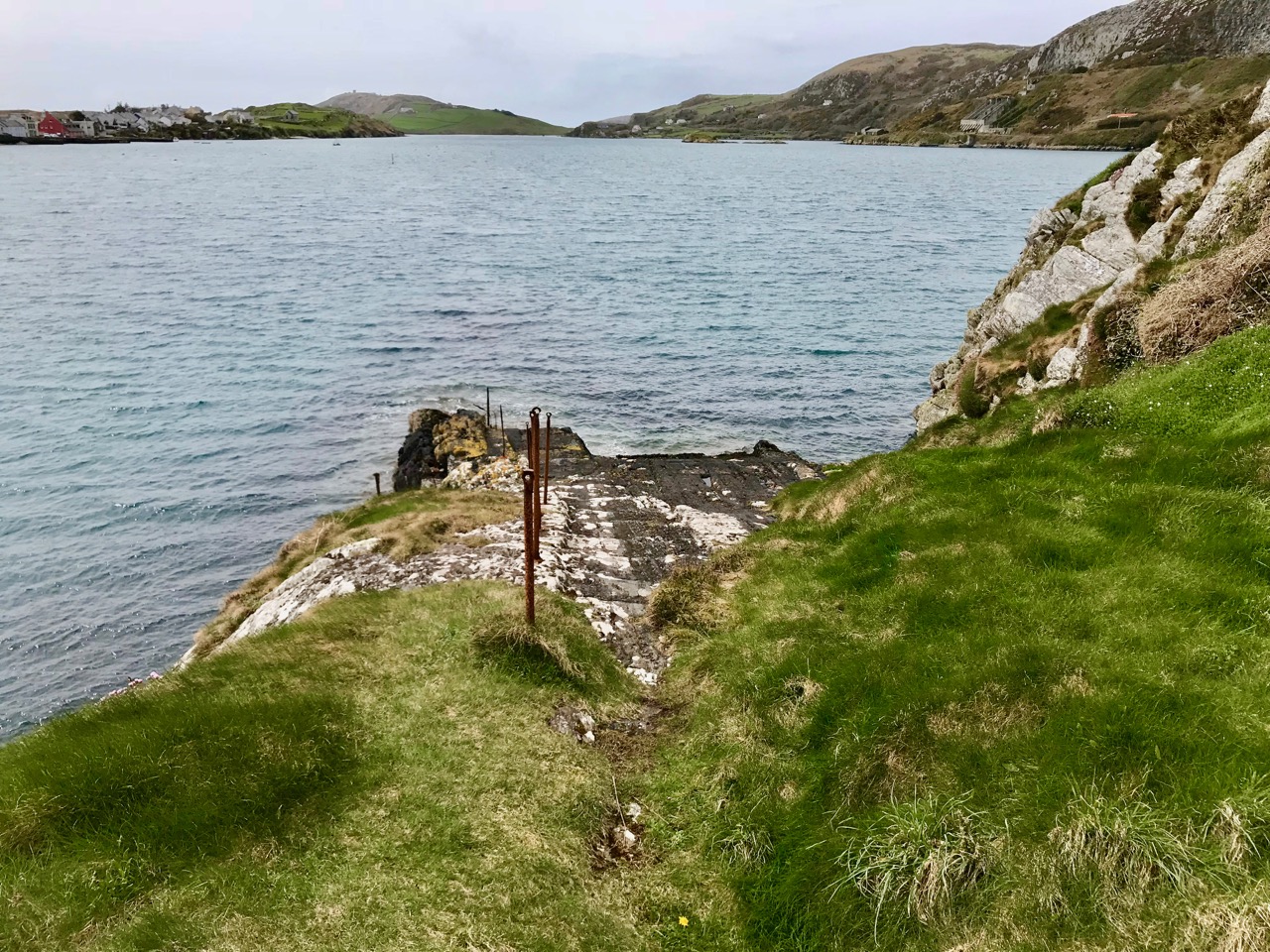
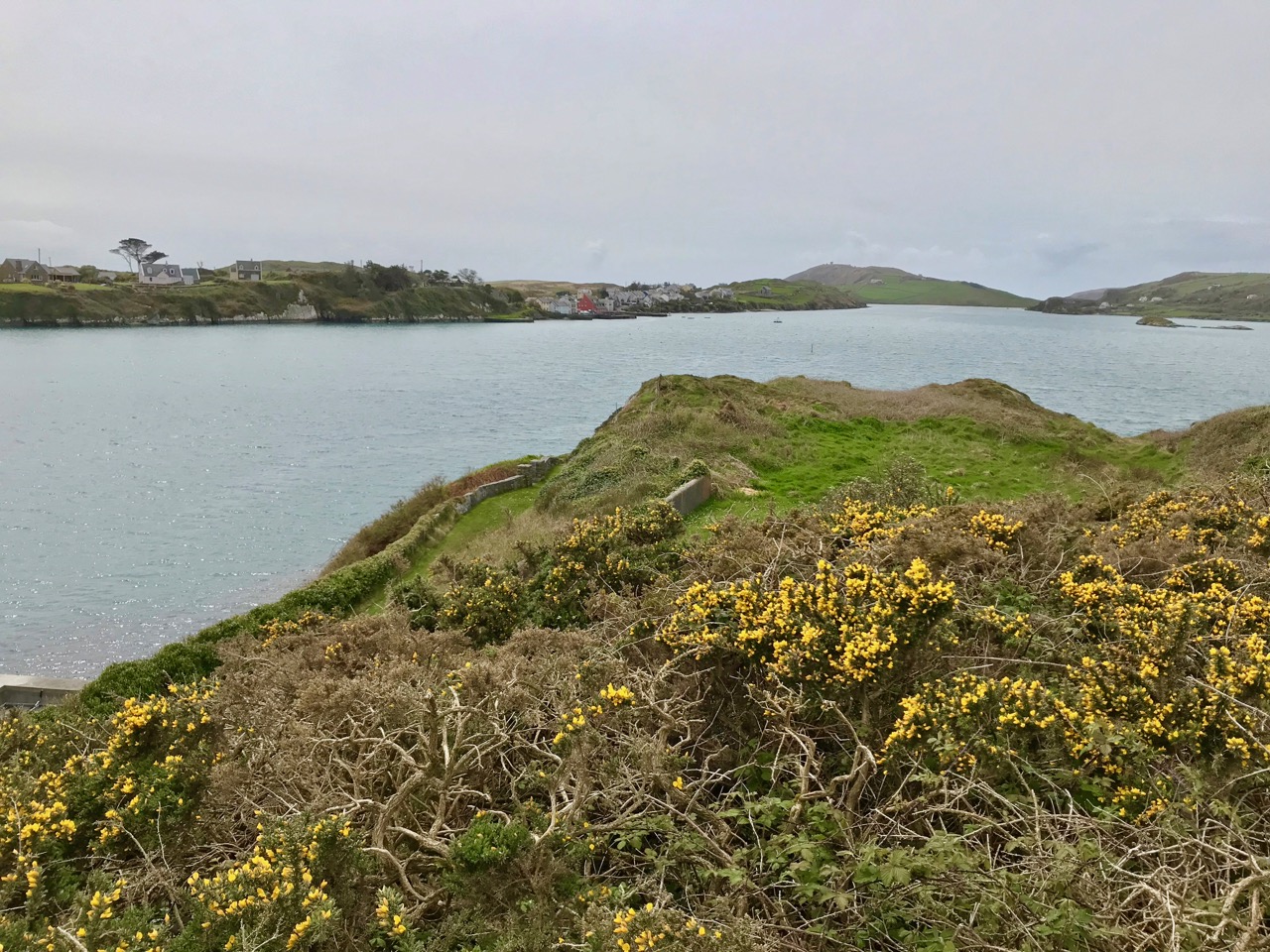
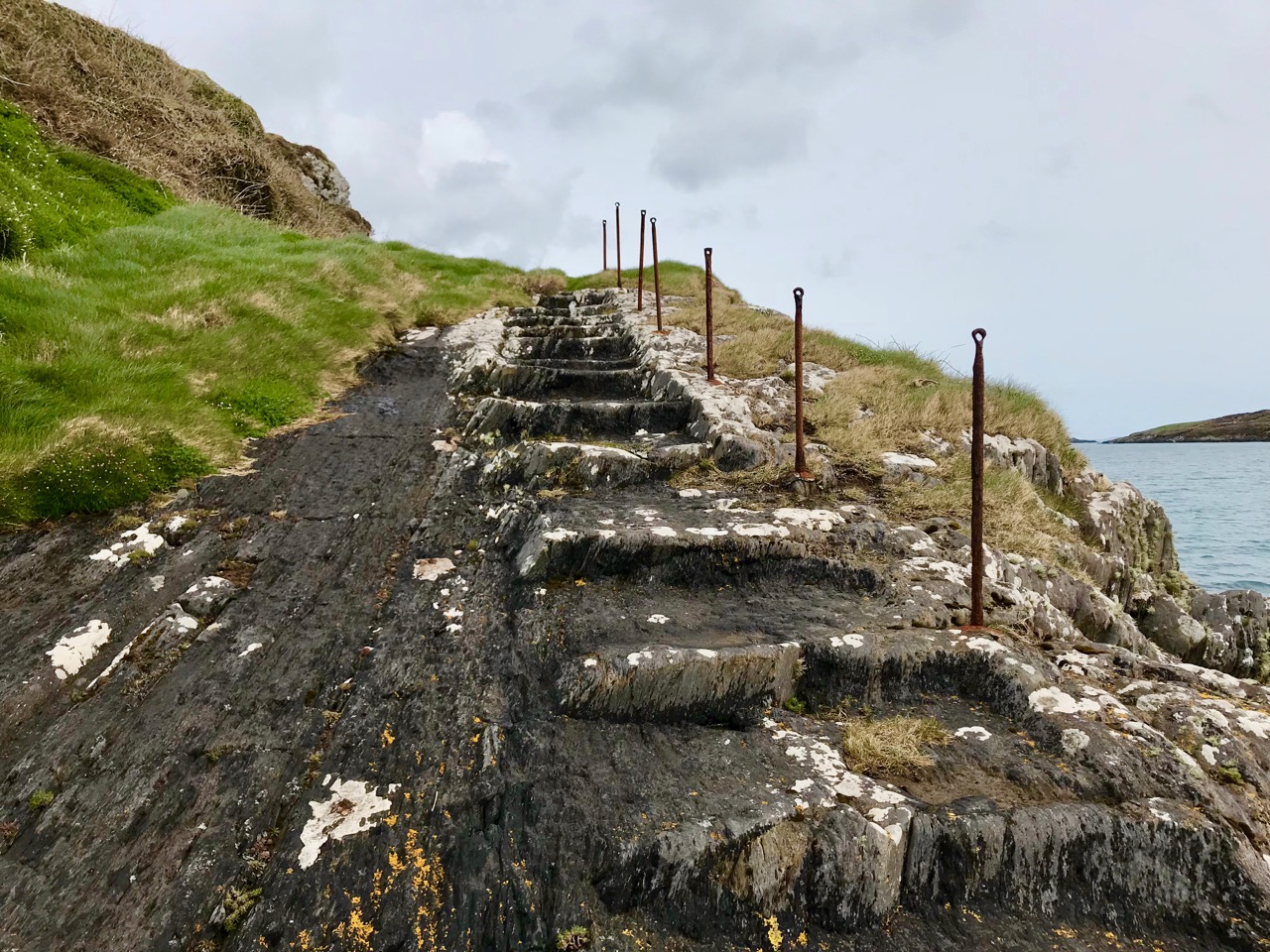
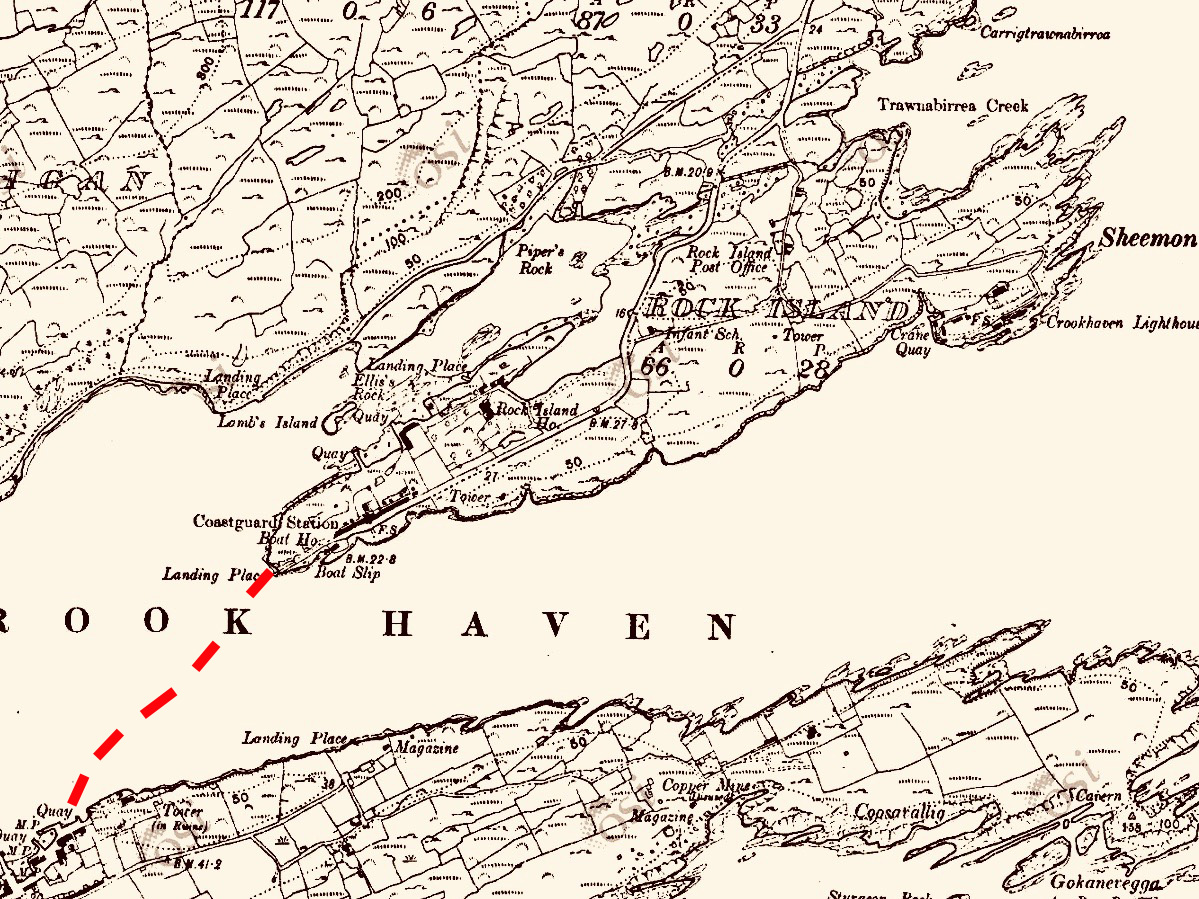
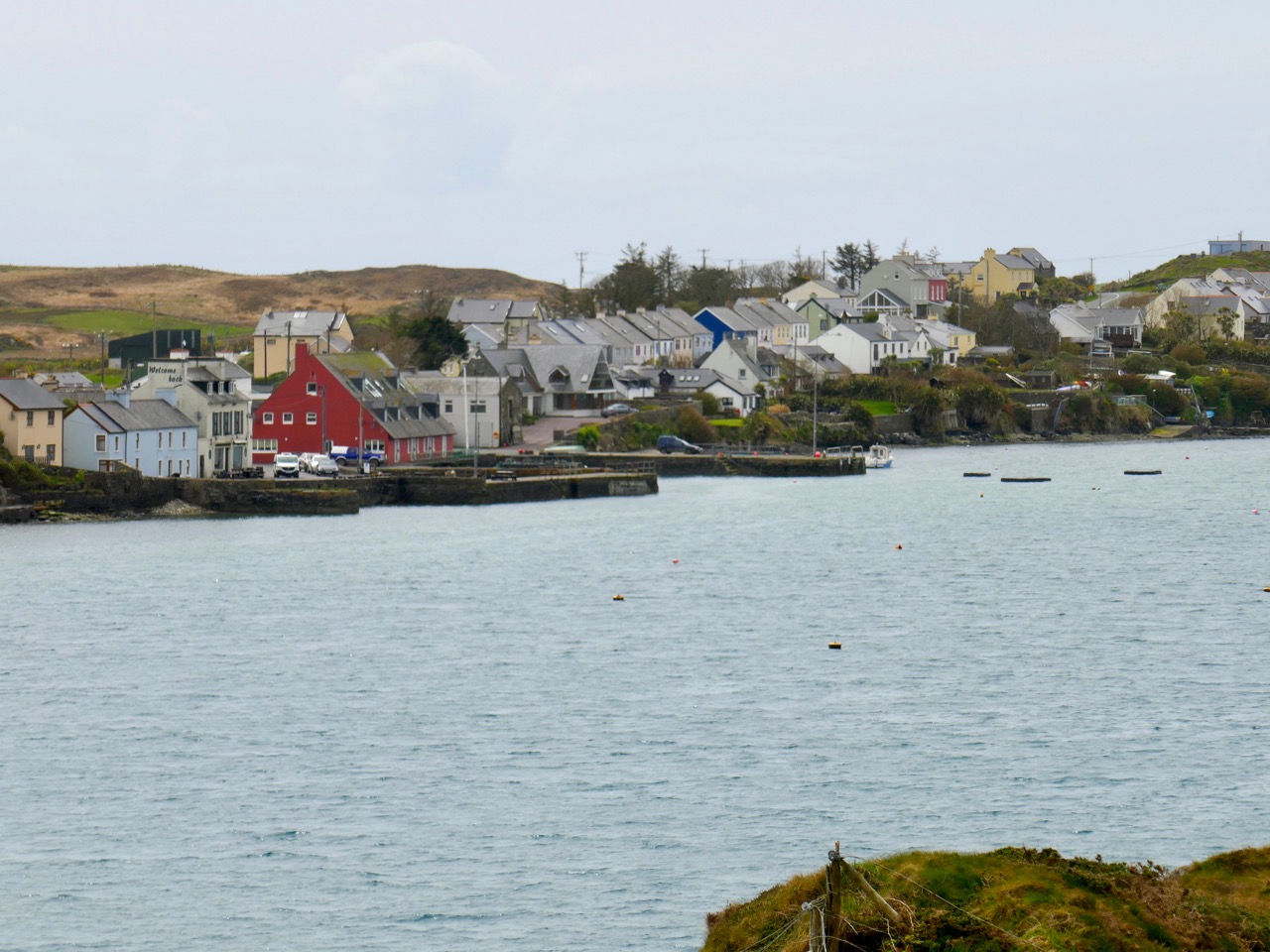
The road from Cork to Crookhaven – one of the most westerly communities in the whole of Europe – ran into the sea here at Rock Island. The picture above shows the remote settlement in the distance across an expanse of water, and the stone steps in the foreground are literally the end of the road that was laid out by Sir Richard John Griffith – Engineer of Public Works in Cork, Kerry and Limerick – between 1822 and 1830.

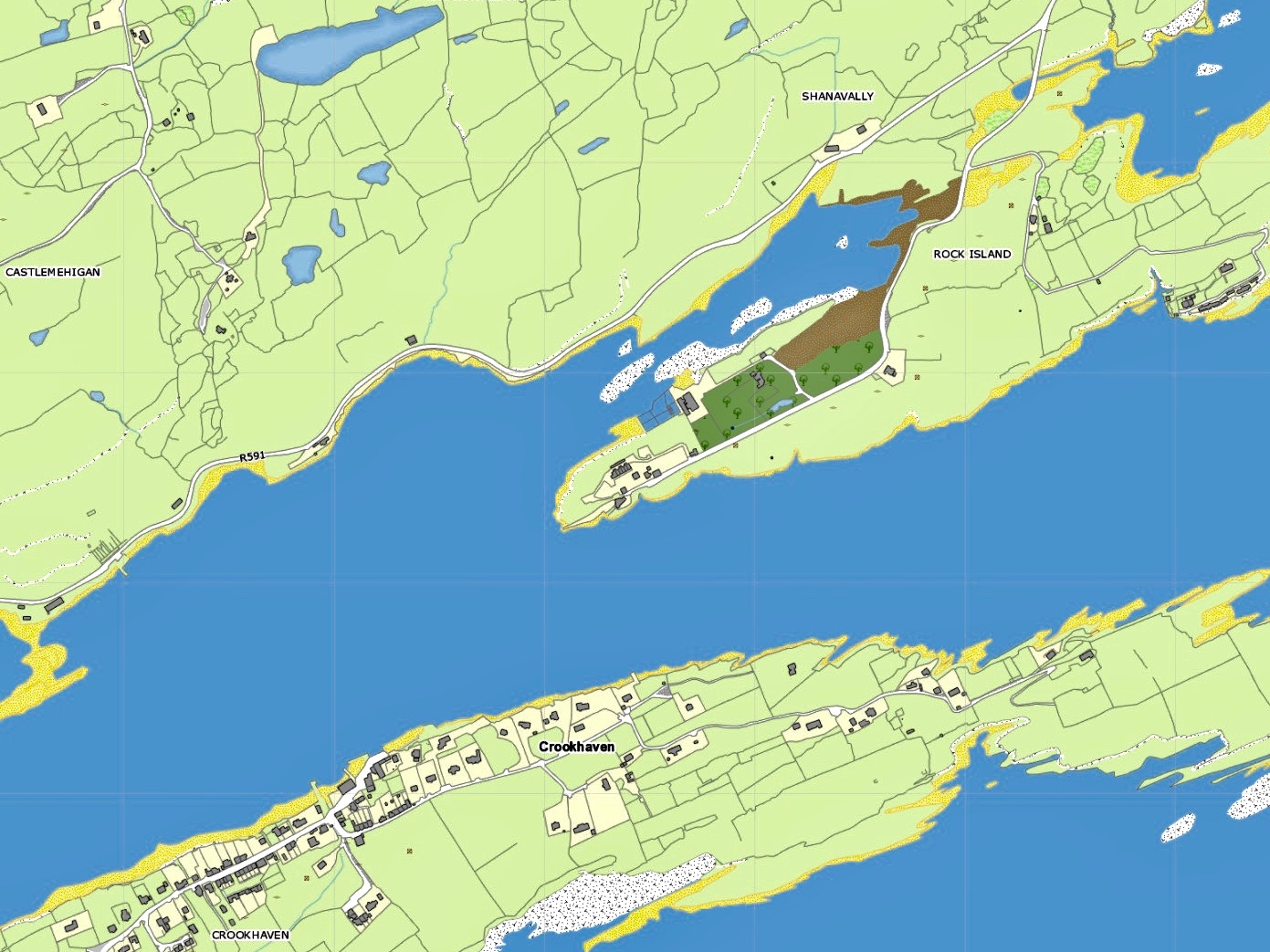
Upper – map showing Rock Island today: note the R591 road which now goes around the north side of Crookhaven Bay to reach the village. Lower – the Cassini map of c1848, showing Griffith’s Road – the direct route across Rock Island to the Landing Place at the western point: from there you went by water to Crookhaven Quay

Griffith’s brief as Engineer was to lay out many miles of new roads in some of the most inaccessible parts of the three counties. But even in his day travelling through the hinterland of Ireland was risky and uncomfortable: always far better to go by water along the coast – at least the passage was direct and relatively smooth in calm weather, while the byroads of the day were at best circuitous and muddy. Here’s an extract from a report by Griffith dated 1824:

. . . Richard Griffith, Road Engineer, Progress Report, Skibbereen to Crookhaven, Wheeled Carts now Appear, where heretofore Loads were carried on the Backs of Horses, New Entrance to Town Of Bandon, Road From Courtmacsherry to Timoleague, Road from Clonakilty to New Fishery Pier At Ring, New Road Skibbereen to Bantry, Macroom to Killarney, with a Note on The System of Labour Organisation Used . . .

Connections by water: a telephoto view of Crookhaven, taken from above the ‘Landing Place’ at the west end of Rock Island

A few years ago, Finola wrote about the Butter Roads, an eighteenth century venture to serve the hub of Cork – and its international Butter Market – from the wilds of Ireland’s rural hinterland. Griffith and his contemporaries improved on this network during the nineteenth century: what we have today – especially here in West Cork – is an updating of Griffith’s system, with a few improved main roads connecting up with the web of winding boreens which then accessed the scattered townlands and farms – and still do.

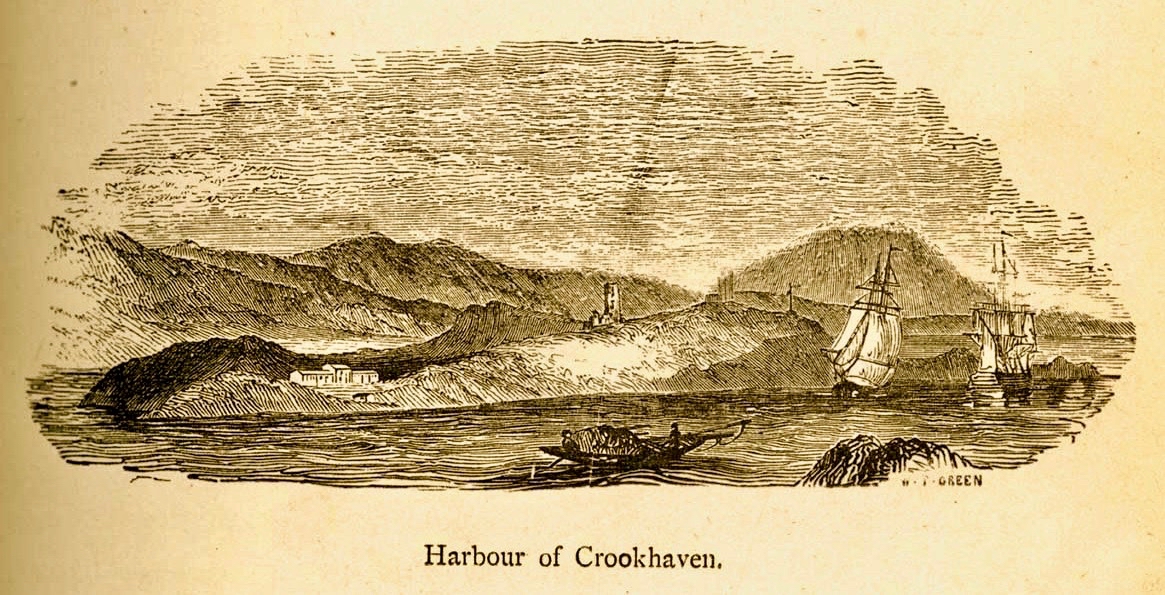
An engraving signed W T Green from A History of the City and County of Cork by Mary Cusack, Cork 1875

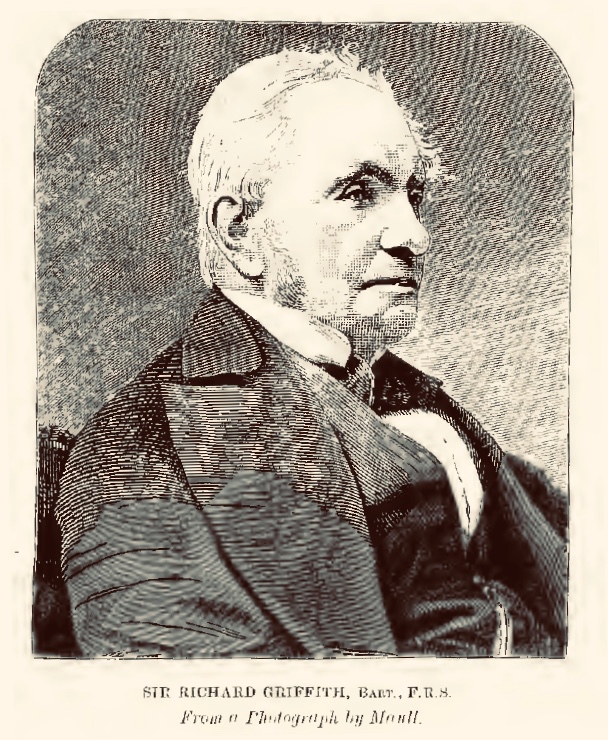
Born in Dublin in 1784, Richard Griffith exerted a great influence over the whole of Ireland during his lifetime. He was fascinated by the relatively new science of geology and studied in London and Edinburgh. I was particularly interested to see that he spent some time in Cornwall, studying mine engineering and mining techniques. Returning to Ireland in 1808, He was appointed Engineer to the Bog Commissioners and over the following four years wrote detailed accounts of the geology of various parts of the country, including Clare, Cork , Kerry, Leitrim, Mayo, Sligo and Wicklow. He became Professor of Geology and Mining at the Royal Dublin Society in 1812, and Inspector-General of His Majesty’s Royal Mines in Ireland at about the same time. The first edition of his Geological Map of Ireland was published in 1815.This was revised and republished a number of times over the following 40 years, and was the work he considered his major achievement.

Sir Richard Griffith 1784 – 1878

You will see from Finola’s post today that we visited Rock Island during the week in the good company of Aidan Power who has written an account of the place. It’s wonderful to get a guided tour with an enthusiastic expert. It was Aidan who sparked my imagination when he pointed out that a mail boat was rowed over from Crookhaven every day to the Landing Place at Rock Island – and was the regular and reliable means of communication between that village and the rest of Cork.

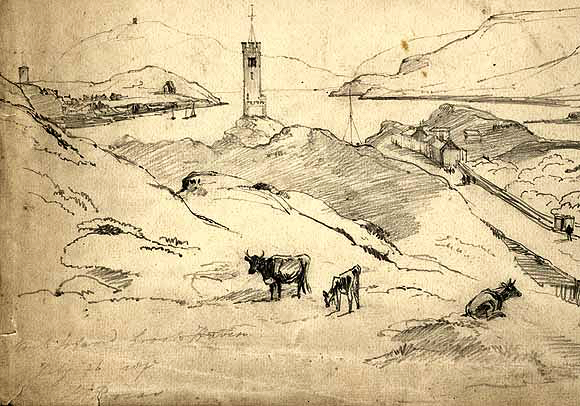
This drawing of Rock island by Brocas is dated 1837, and clearly shows, on the right hand side, Griffith’s Road leading down to the Landing Place, the principal connection with Crookhaven

There’s a lot more of Griffith’s story to be told: particularly his appointment as Boundary Commissioner in 1824, a post he held for 41 years. This resulted in the full recording of all townland boundaries and designations – although these were often anglicised at the time, resulting in the loss of many local traditional names. He died in 1878 at the age of 94. On his grave in Mount Jerome Cemetery is the epitaph . . . Not slothful in business, fervent in spirit, Serving the Lord . . .

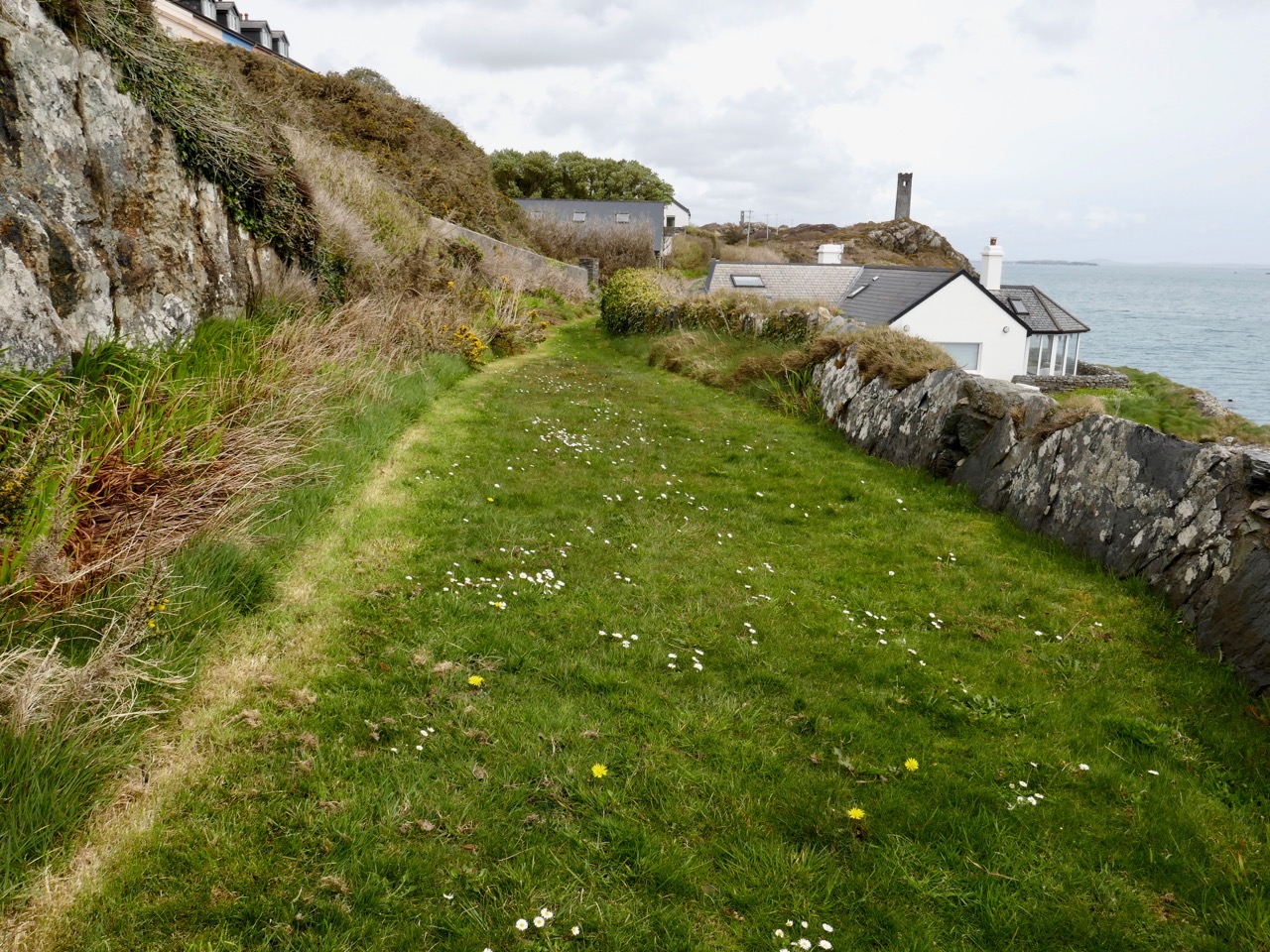
Griffith’s Road on Rocky Island is lost to a grassy track (upper picture and on the left in the lower picture) but is still traceable and remains theoretically a public highway! You can at least still follow it on foot to the point where it becomes a series of rocky steps that finish in the sea. You will have quite a wait for the Crookhaven mailboat today, however.

Lee Snodgrass and Mizen Archaeology

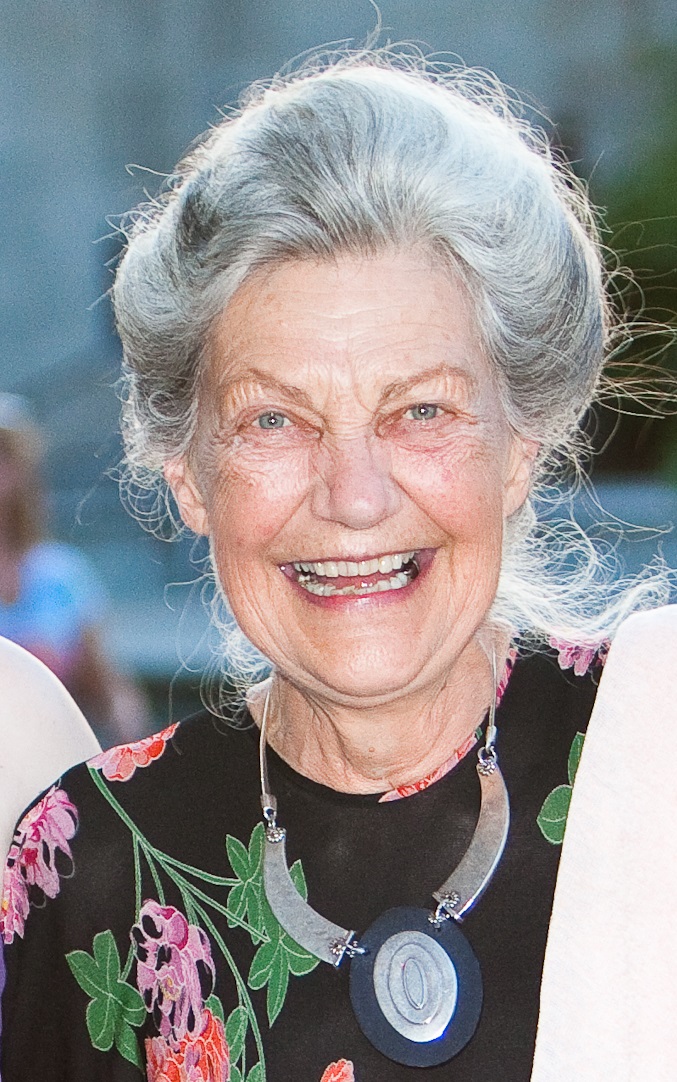
West Cork lost a friend and champion this week. Lee Snodgrass was involved in many movements, political and environmental, and participated in all kinds of events to do with heritage and meditation and yoga and music and art. But it was as an archaeologist we knew her first and best.

Lee and her partner, Paddy O’Leary, along with Bernard O’Regan, first launched the idea of the Schull Field Club in 1979. The aim of the club was to preserve, protect and record local monuments and to note the archaeology, history, flora and fauna of the Mizen.*

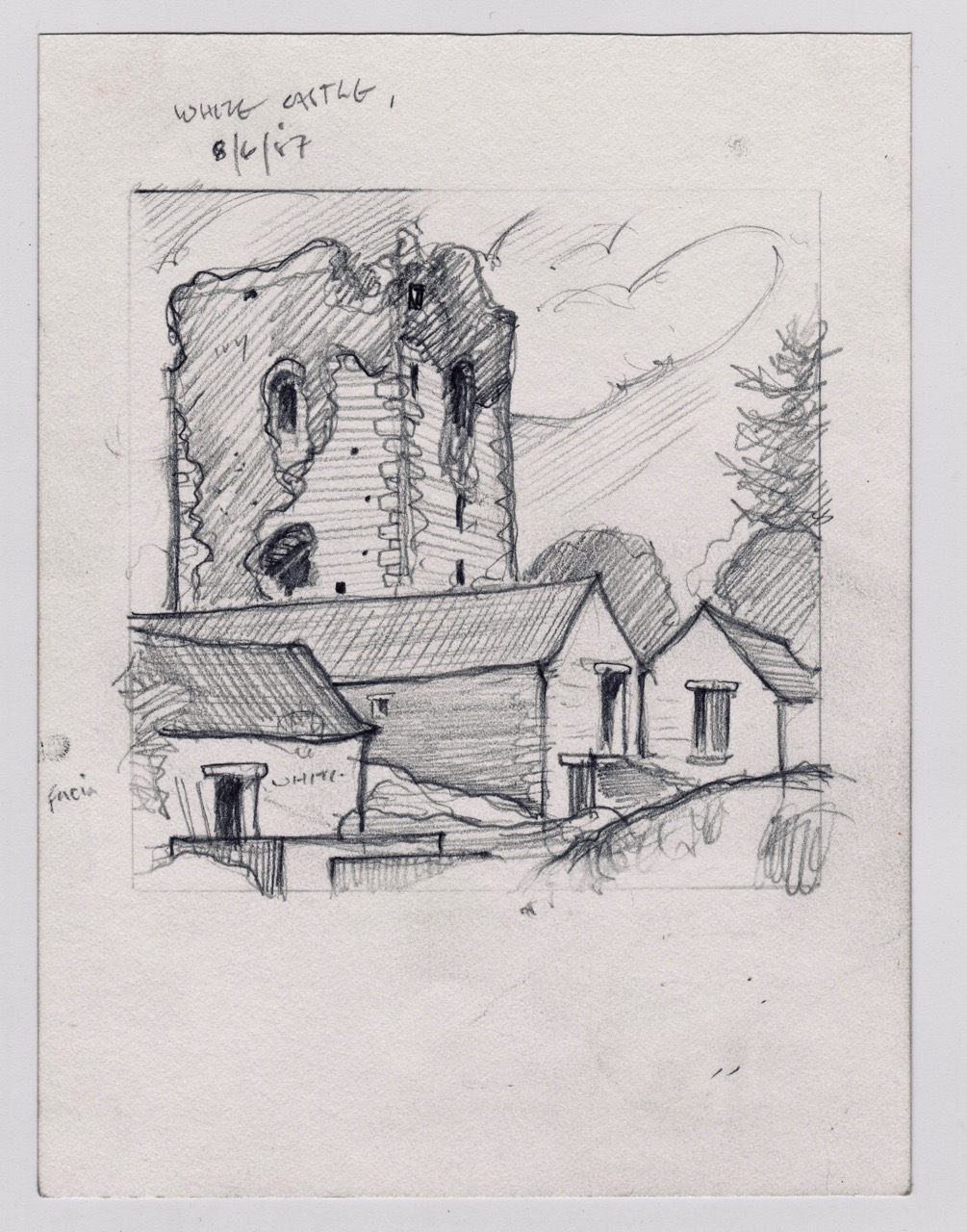
Ardintenant (White) Castle, sketch by Brian Lalor, done on a Mizen Field Club outing

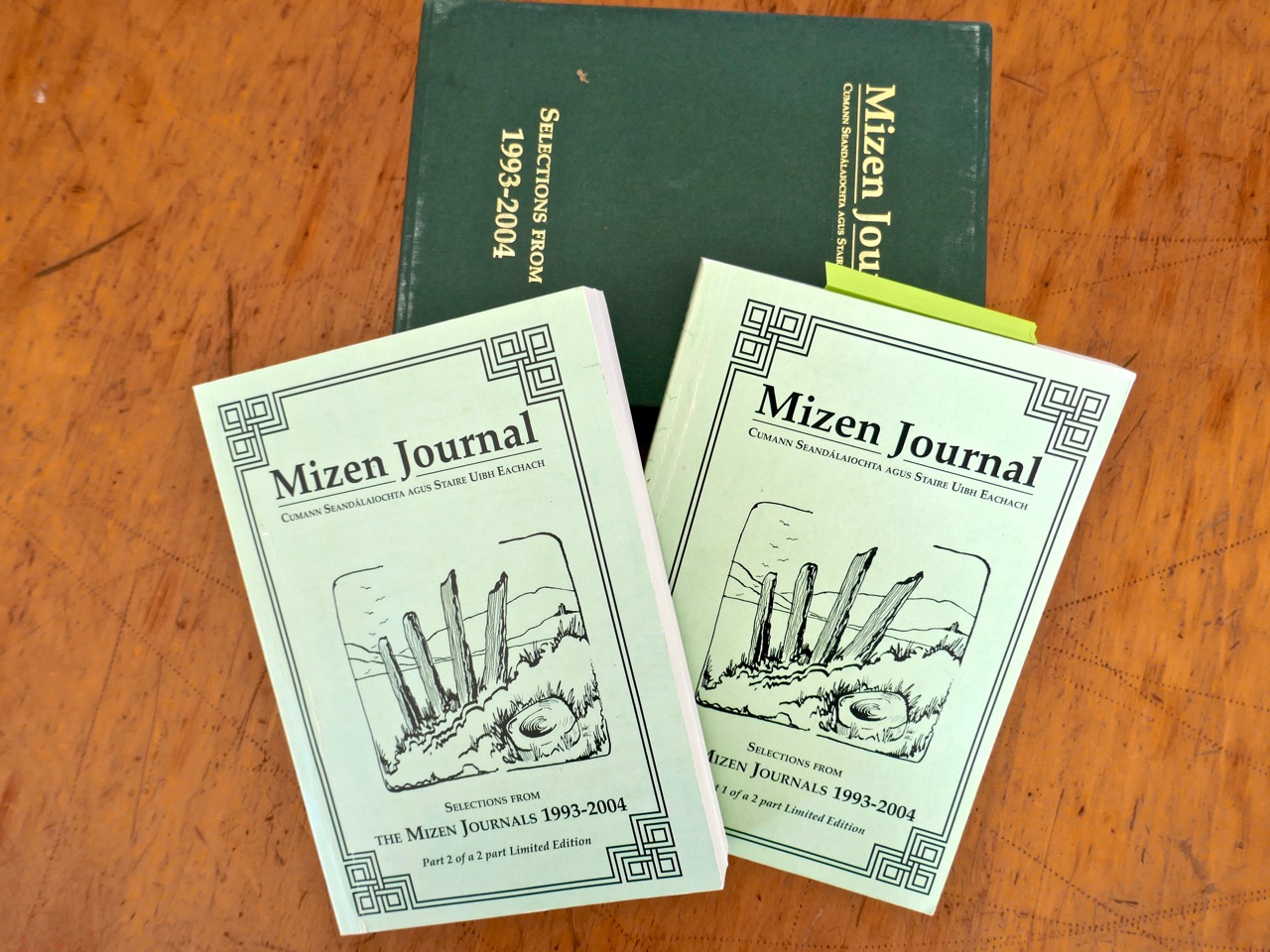
It was very successful and soon there were monthly meetings, field trips and eventually, from 1993 to 2004 a highly regarded Journal, the copies of which are now jealously guarded by those fortunate enough to have them. The Field Club became the Mizen Peninsula Archaeology and History Society. Paddy and Lee were at the heart of all those efforts, although the real strength of the club was how many people got involved, led trips, gave talks and contributed to the Journal.
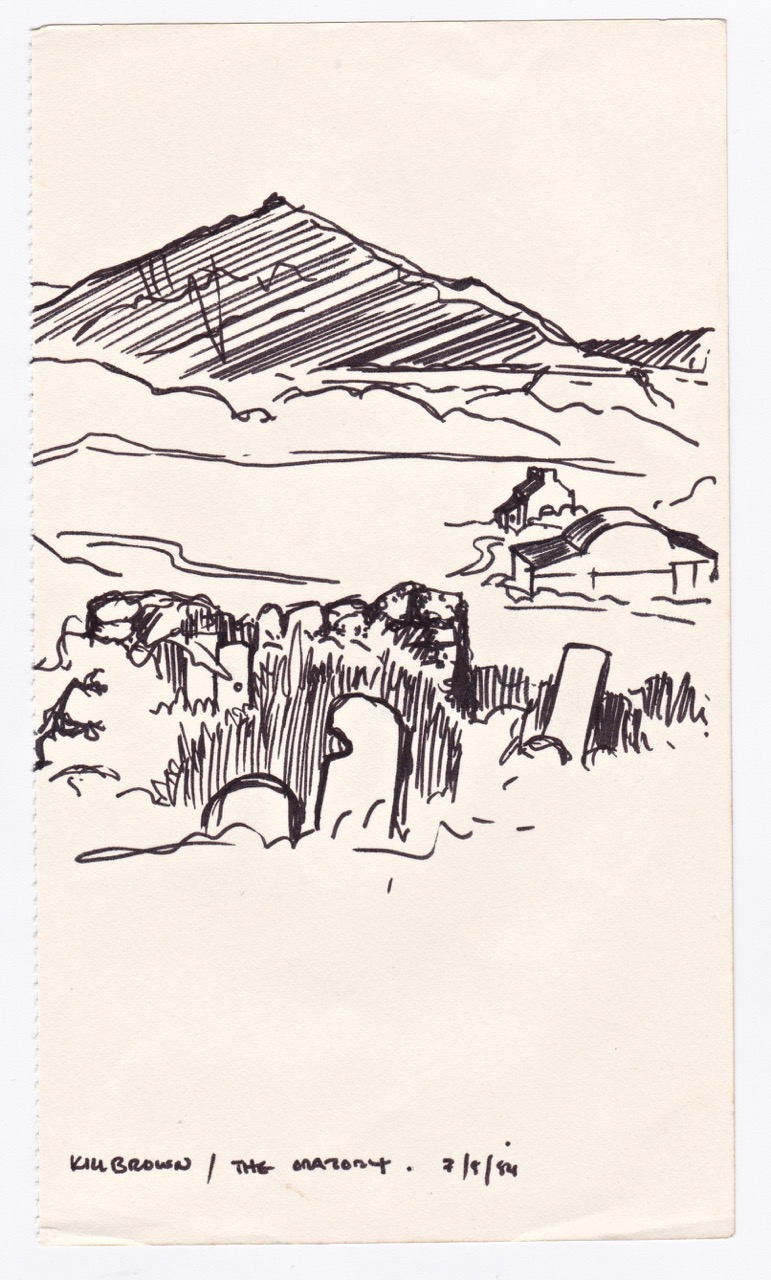
The Early Medieval site of Kilbrown on the Mizen. See our post Mizen Mud for photographs of this enigmatic (and very muddy) place

At Lee’s memorial service people talked about her elegance and style, her wayward sense of time, the tinge of glamour she brought to every occasion, the utter devotion with which she nursed Paddy through his long final illness.

The Cape Clear Passage Grave, spectacularly sited on the highest point of Cape Clear Island

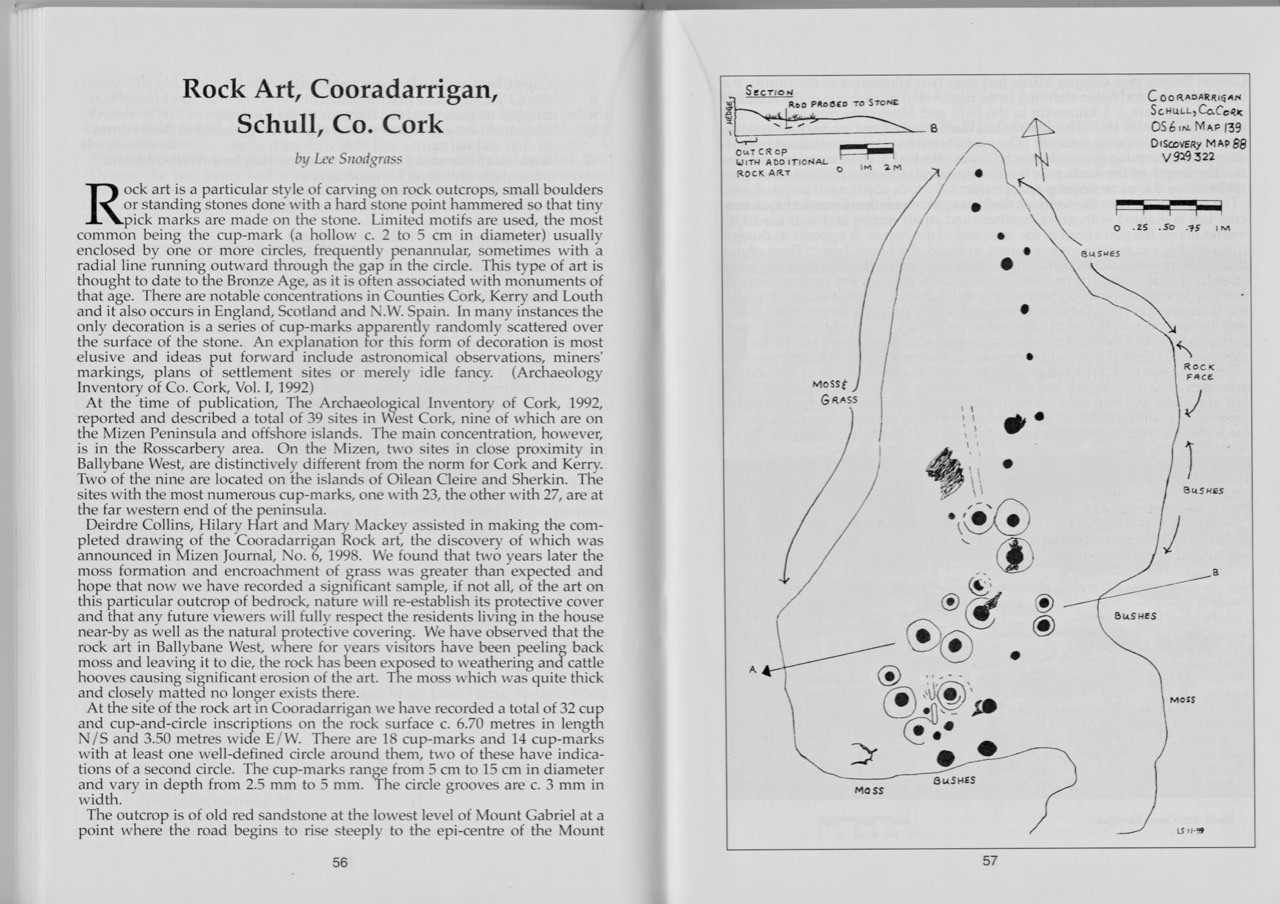
Brian Lalor, a member of the Field Club, paid tribute to Lee as a ‘generative’ person – she got things done! She and Paddy were Mizen archaeology – the go-to people when new discoveries were made or when a monument was in danger. When the Cape Clear Passage Grave was discovered, they camped overnight on the mountain to confirm the orientation of the solstice sunrise. When a piece of rock art was discovered in the garden of a house in Schull, Lee wrote a full description of it that is still the only complete record. She was an excellent photographer and used her skills to record many monuments and artefacts.

Cooradarrigan rock art, discovered by accident on the garden of a new house

They explored and mapped the souterrain at Liss Ard, agitated successfully for the restoration of the stone row at Coolcoulaghta, helped to survey old graveyards – in short did their part and more to preserve and celebrate the heritage of the Mizen. Paddy is remembered and talked about still, and Lee will join him now when the stories are told of the couple who did so much for this area.

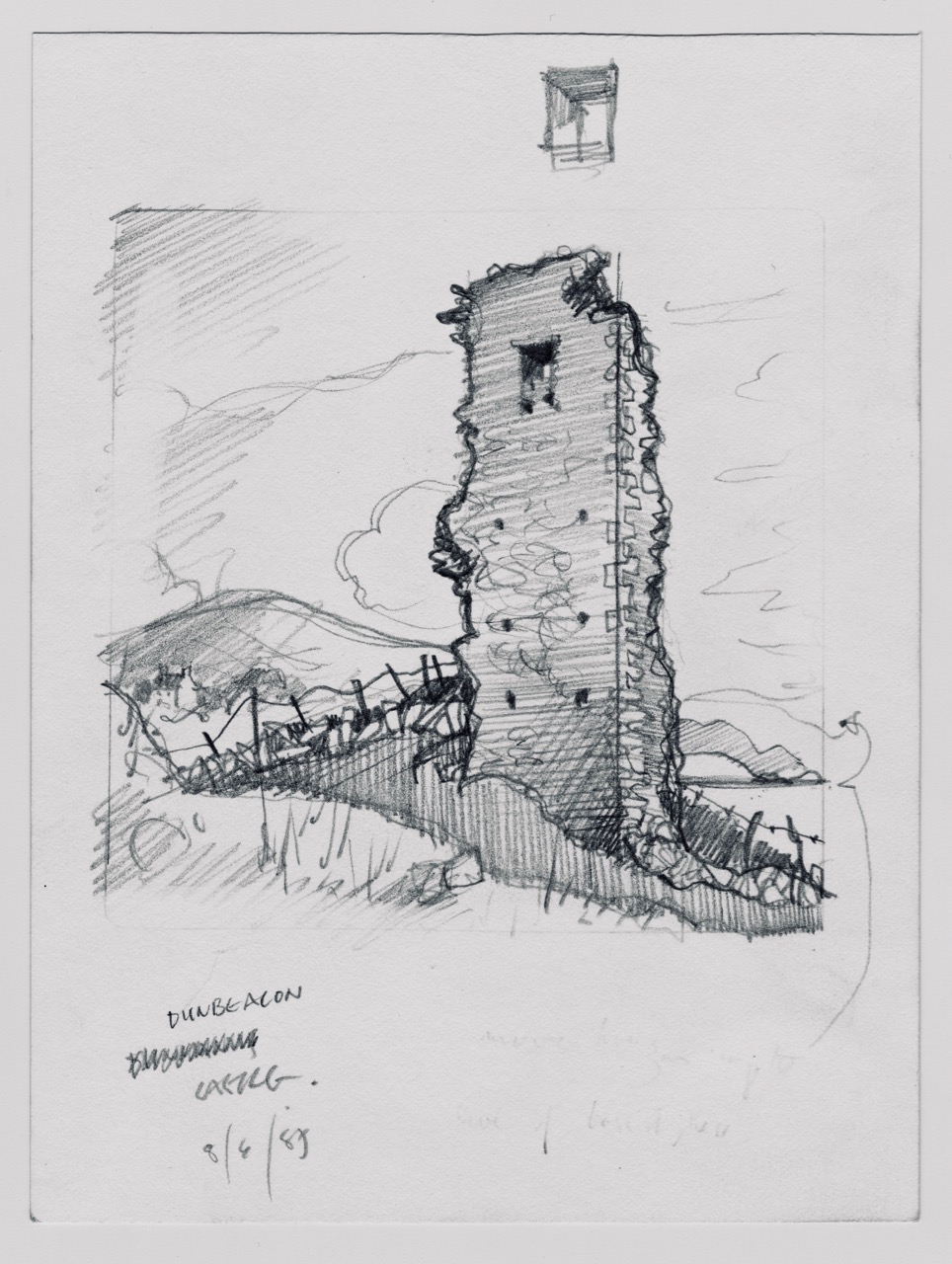
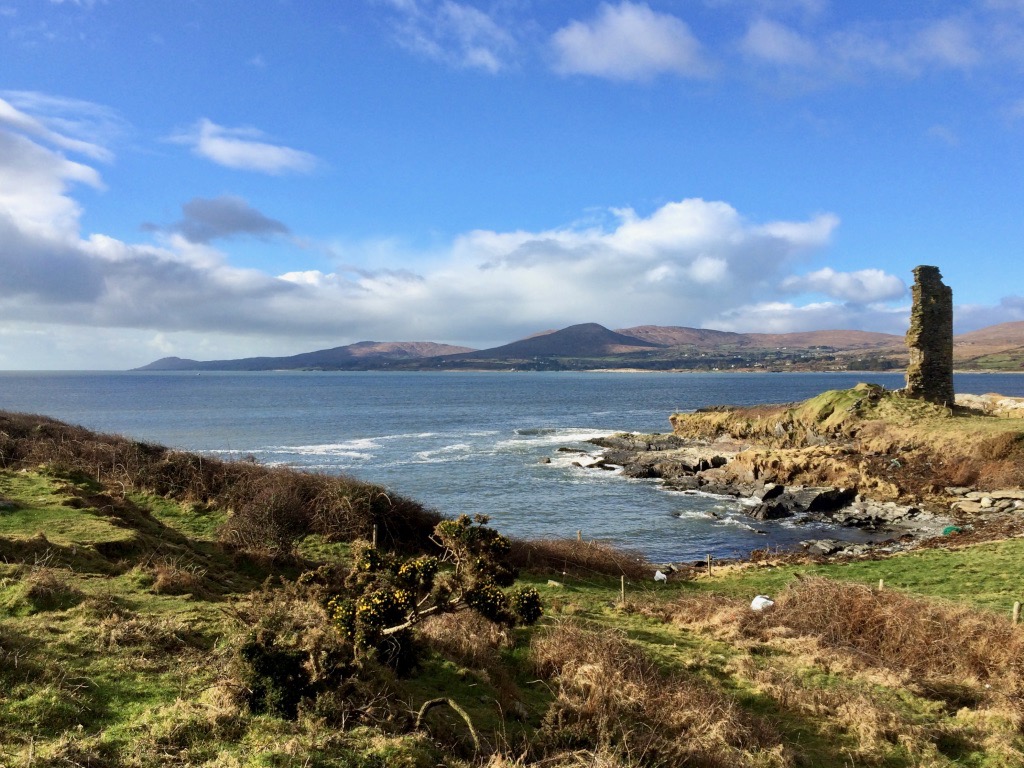
Dunbeacon Castle – there isn’t much left, but what a strategic siting, with a clear view all down Dunmanus Bay

We’ve known Lee only for the last five years, but like everyone else who knew her we liked and admired her. We picked her brains often on aspects of Mizen archaeology and she turned to us to record a new rock art find when she could no longer undertake it. We met her everywhere – lectures, gallery openings, festivals, concerts – always looking wonderful and always supportive of  local efforts.

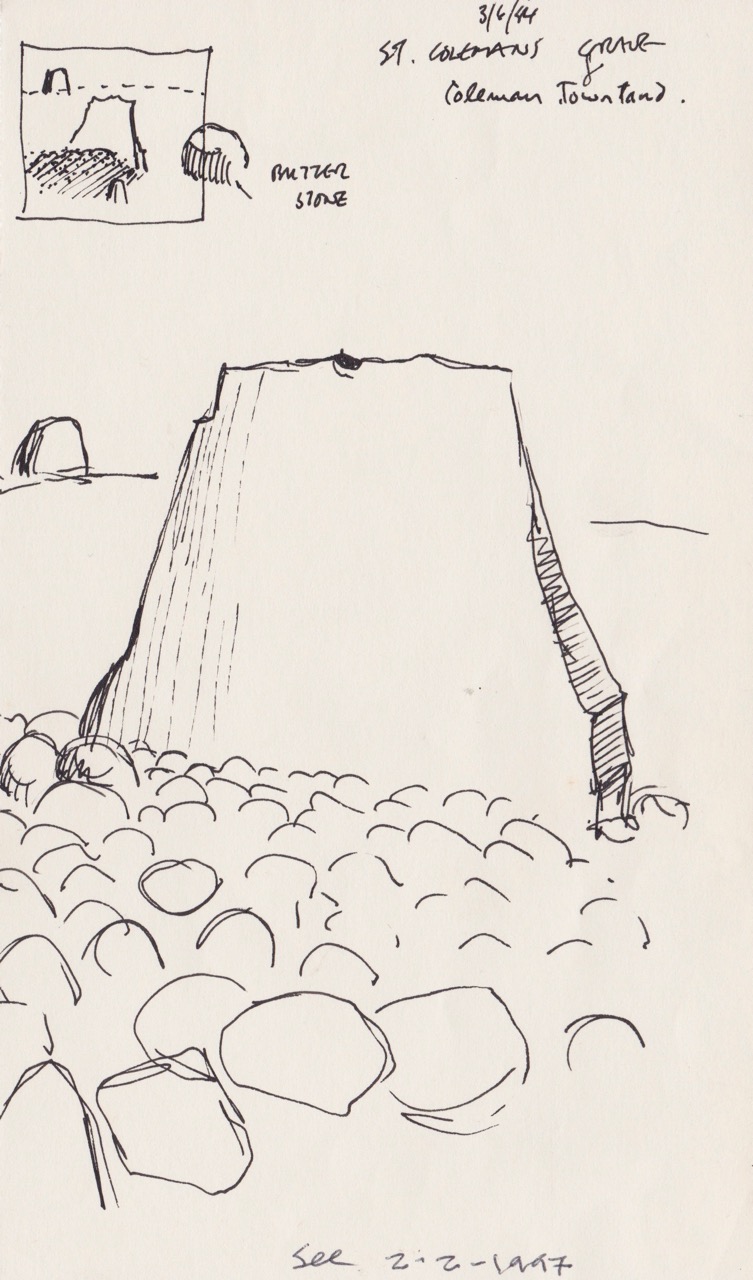
Variously known as St Coleman’s Grave and a ‘penitential station’, this is one of a complex of monuments that includes a holy well and a boulder burial

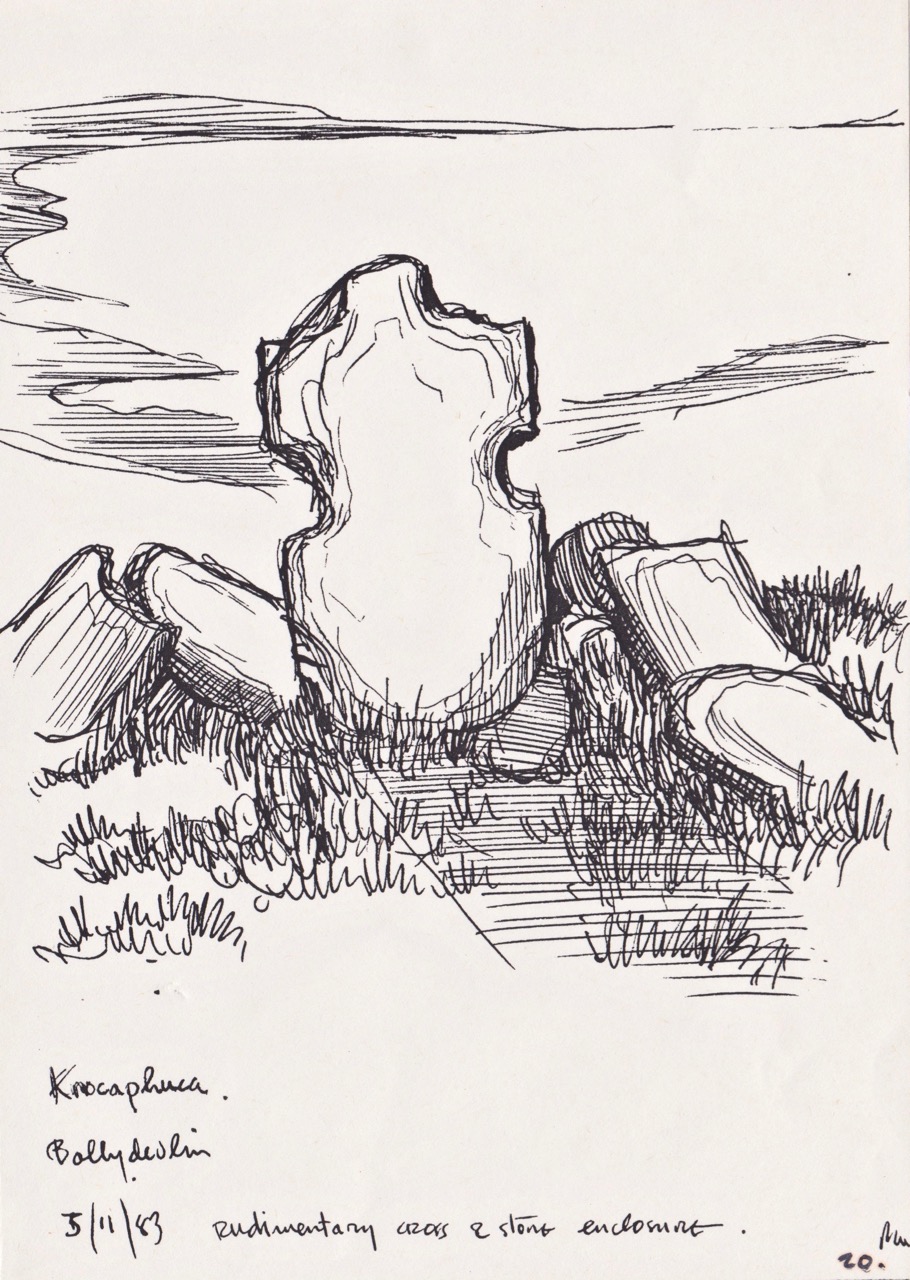
I’ve chosen to illustrate this tribute to Lee with photographs and drawings of sites on and near the Mizen visited over the years by the Field Club. The drawings are all by Brian Lalor, from the sketchbook he has entrusted to me and which I have written about before in the post Brian’s Sketchbook: The Signal Towers. They were all done on trips with the Field Club.

Lee made a difference in West Cork. Isn’t that, in the end, what we all hope to do with our lives?

*Information based on the Introduction to the boxed set of the Mizen Journal, written by Deirdre Collins

Rock Art: Returning to Derrynablaha

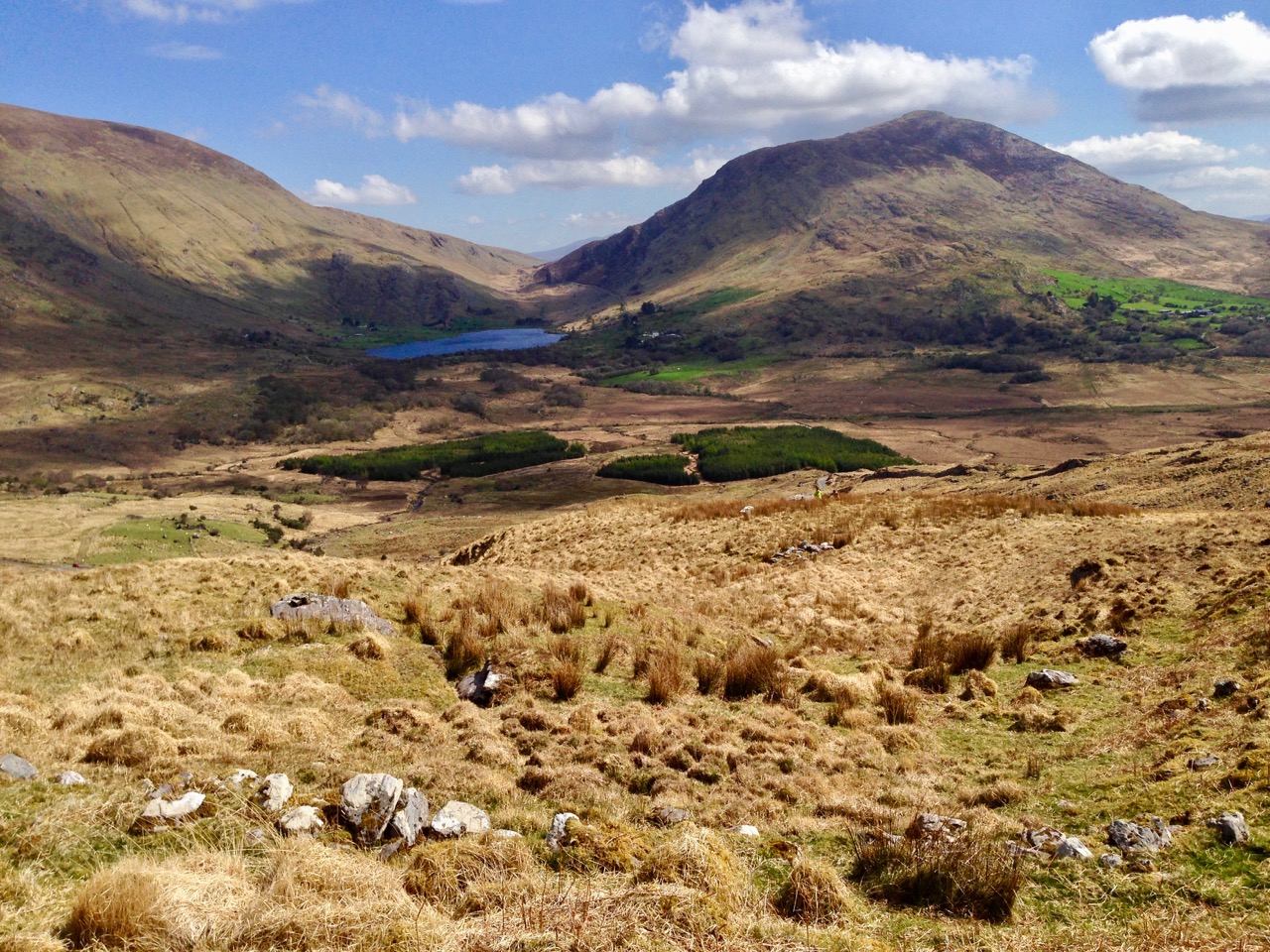
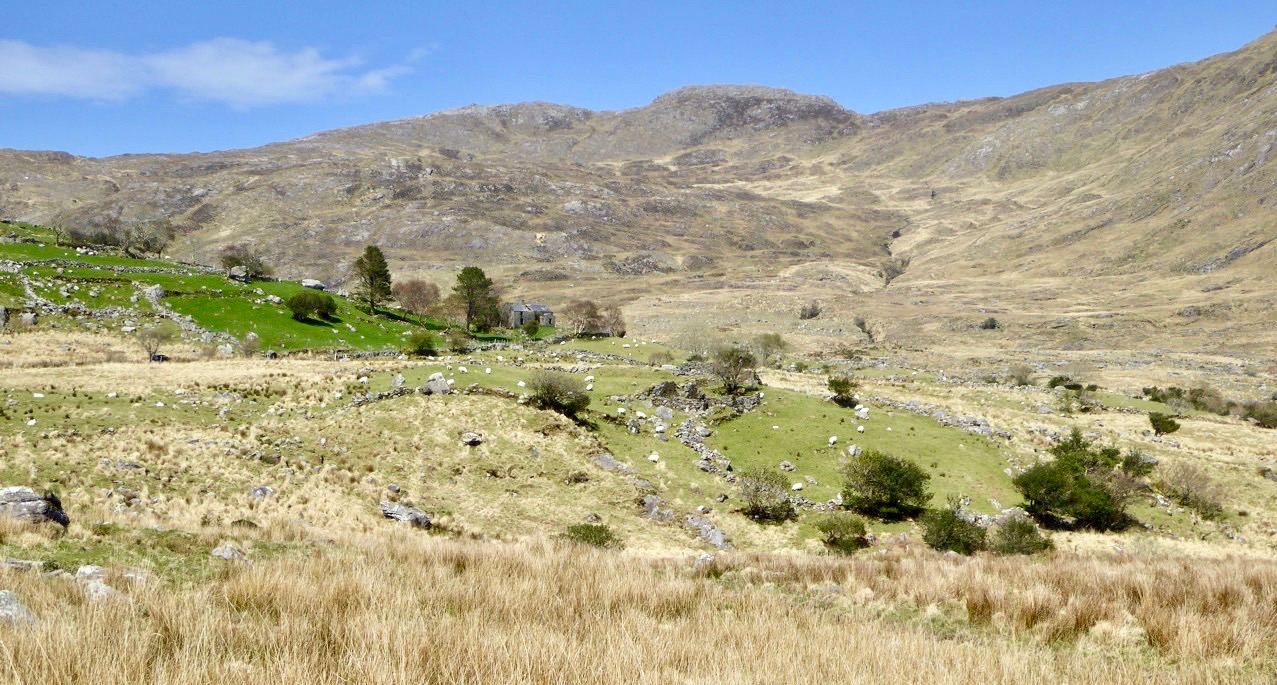
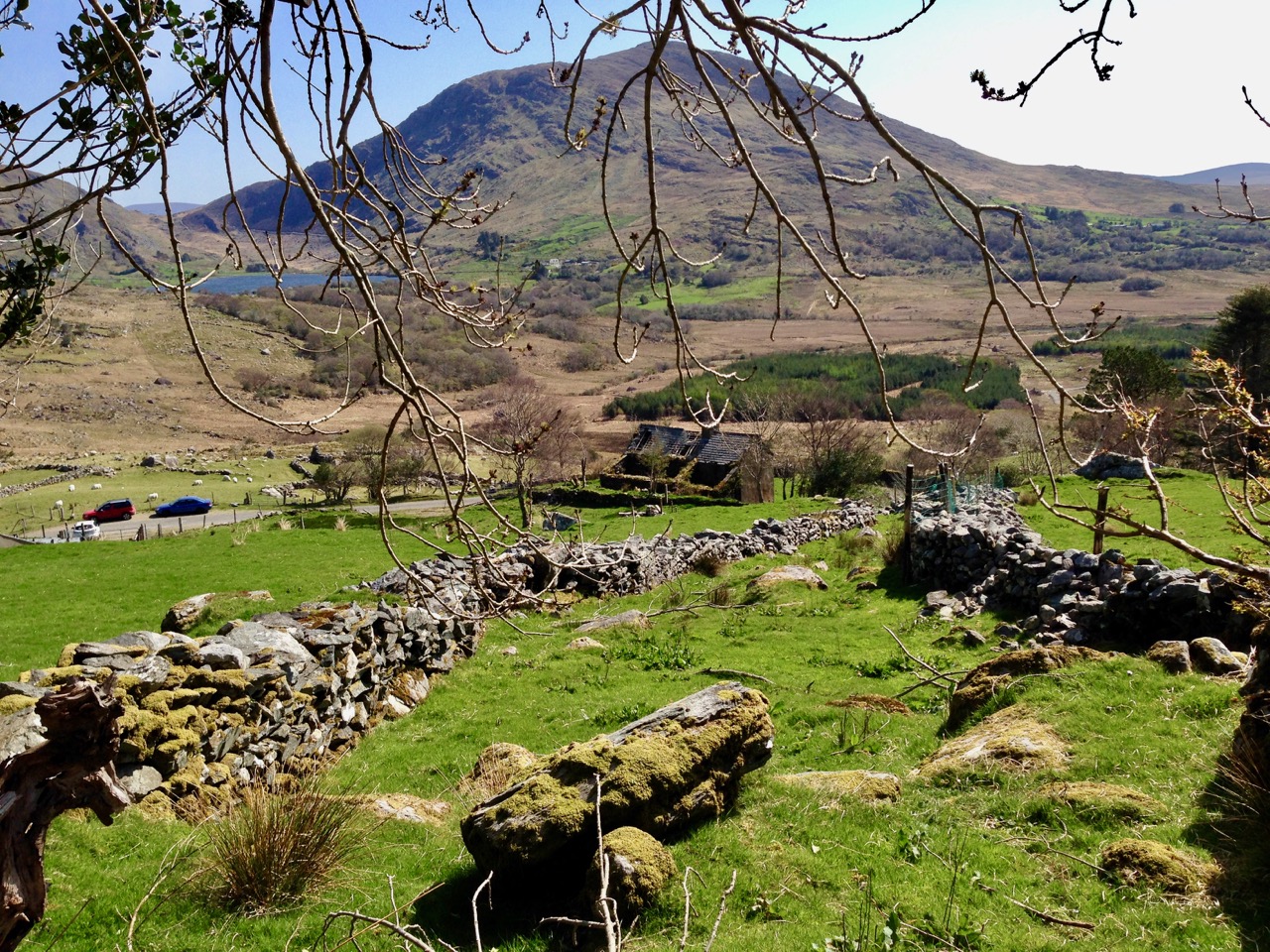
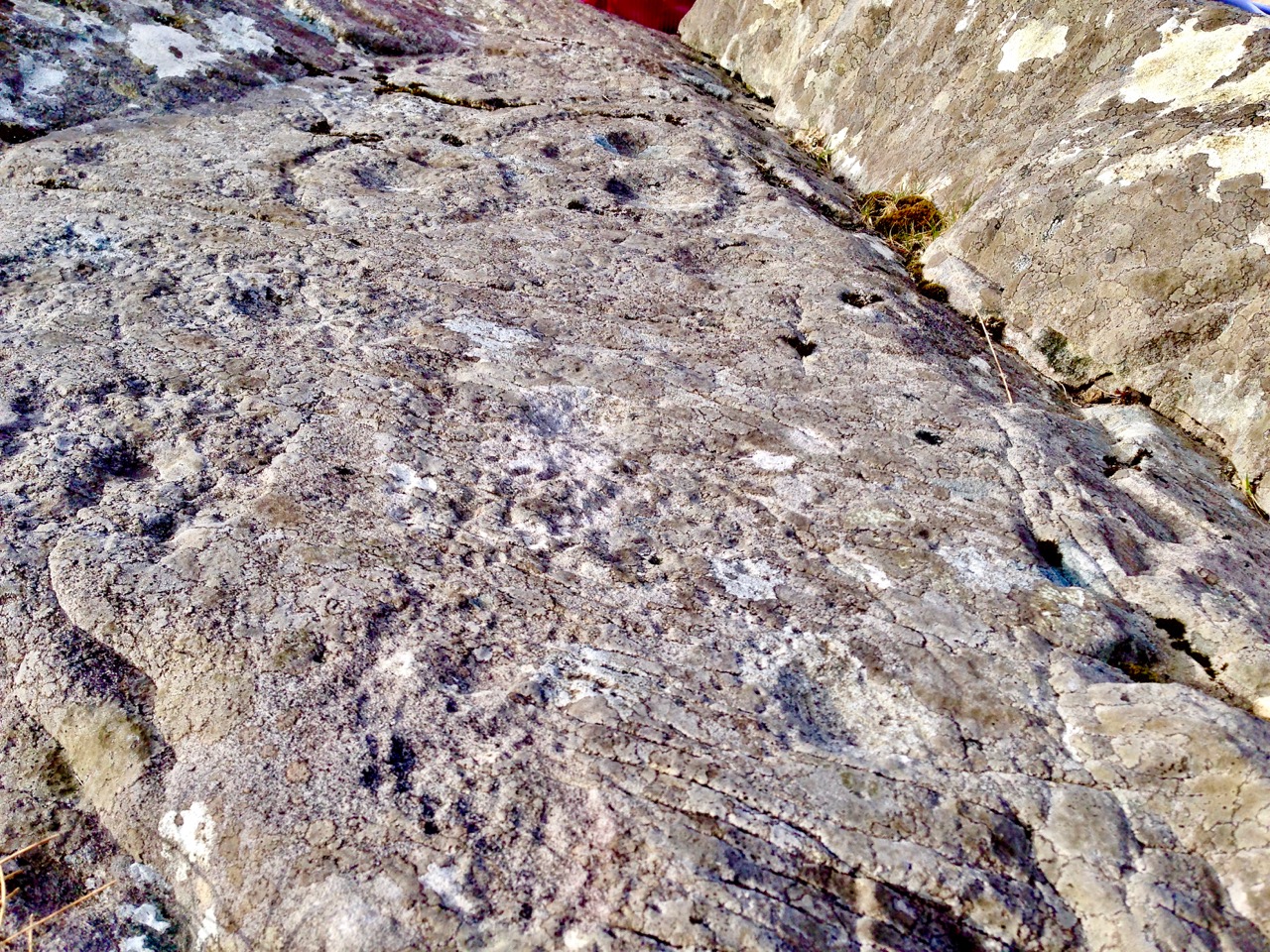
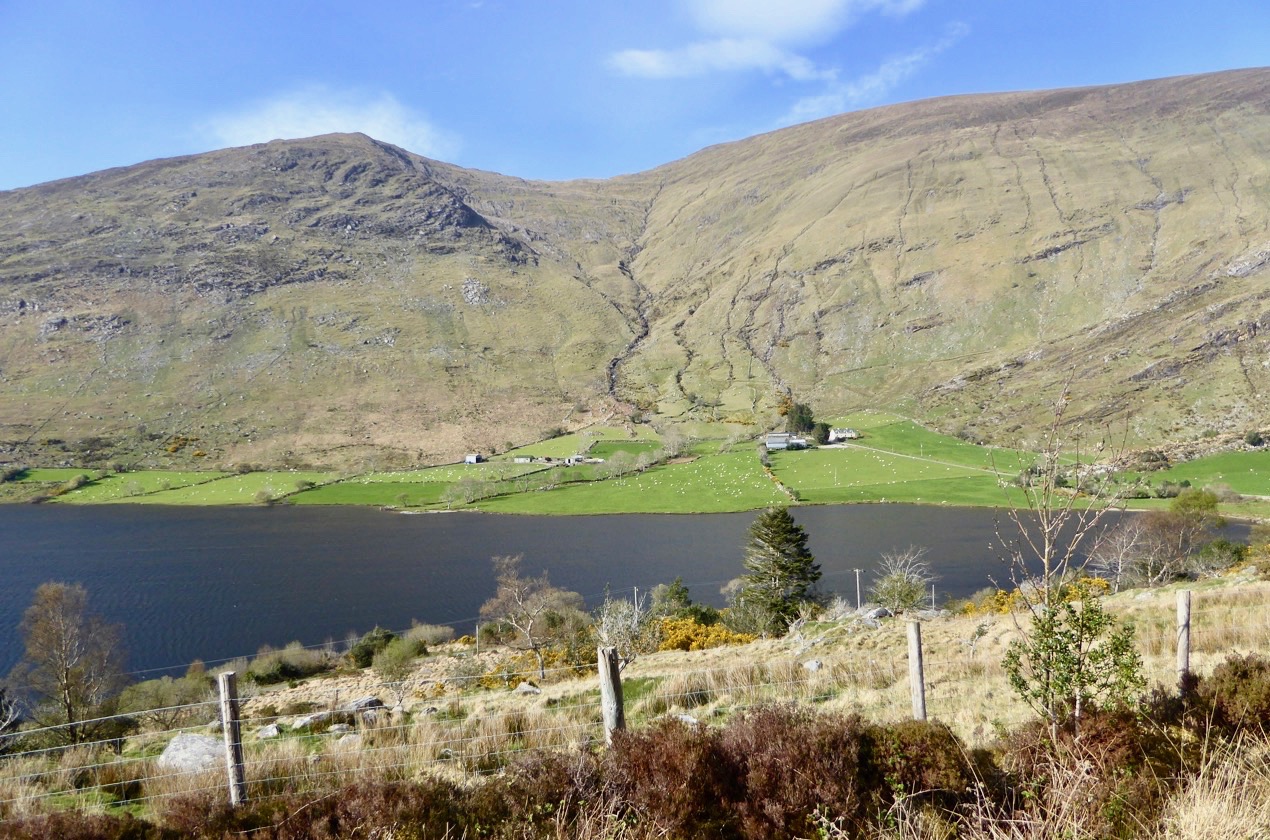
Three years ago Finola and I both wrote posts about a remote valley in the Kerry hills, north of Sneem, where some iconic examples of Irish Rock Art can be found: Derrynablaha Expedition by Finola, and my own Glen of Ghosts. I think it’s time to revisit this hauntingly beautiful place, and its ancient carved stones which could date back 5,000 years, to Neolithic times.

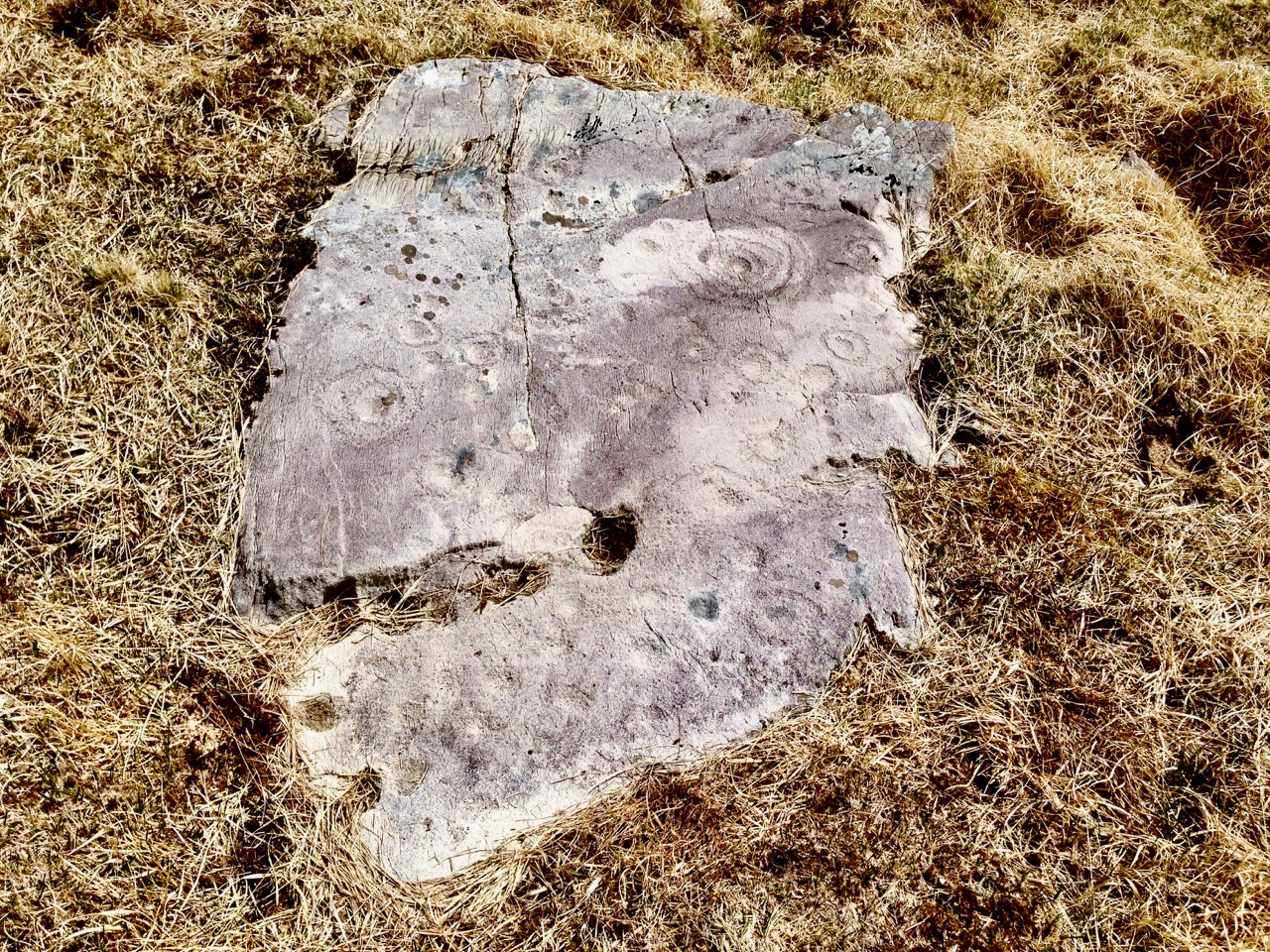
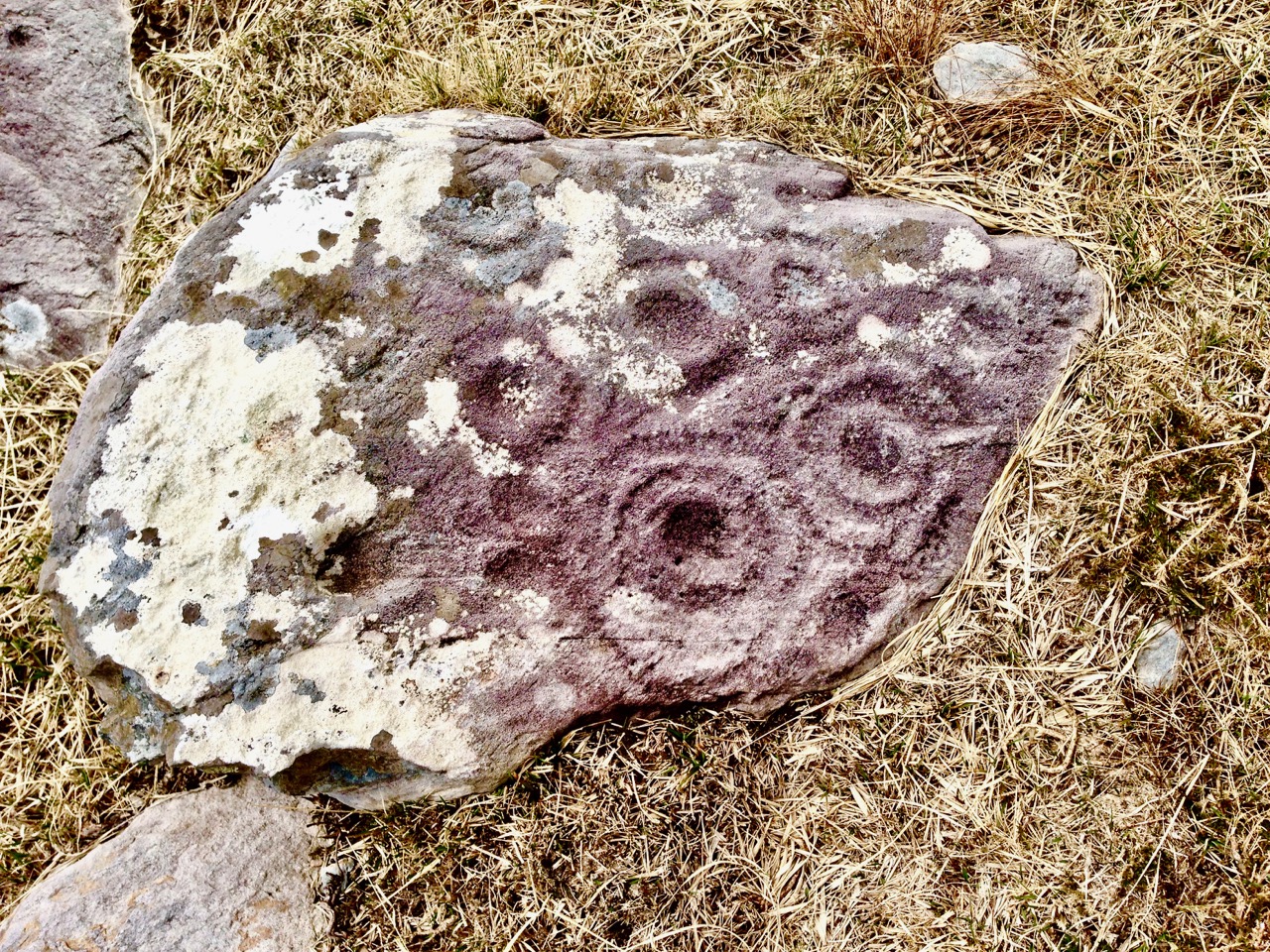
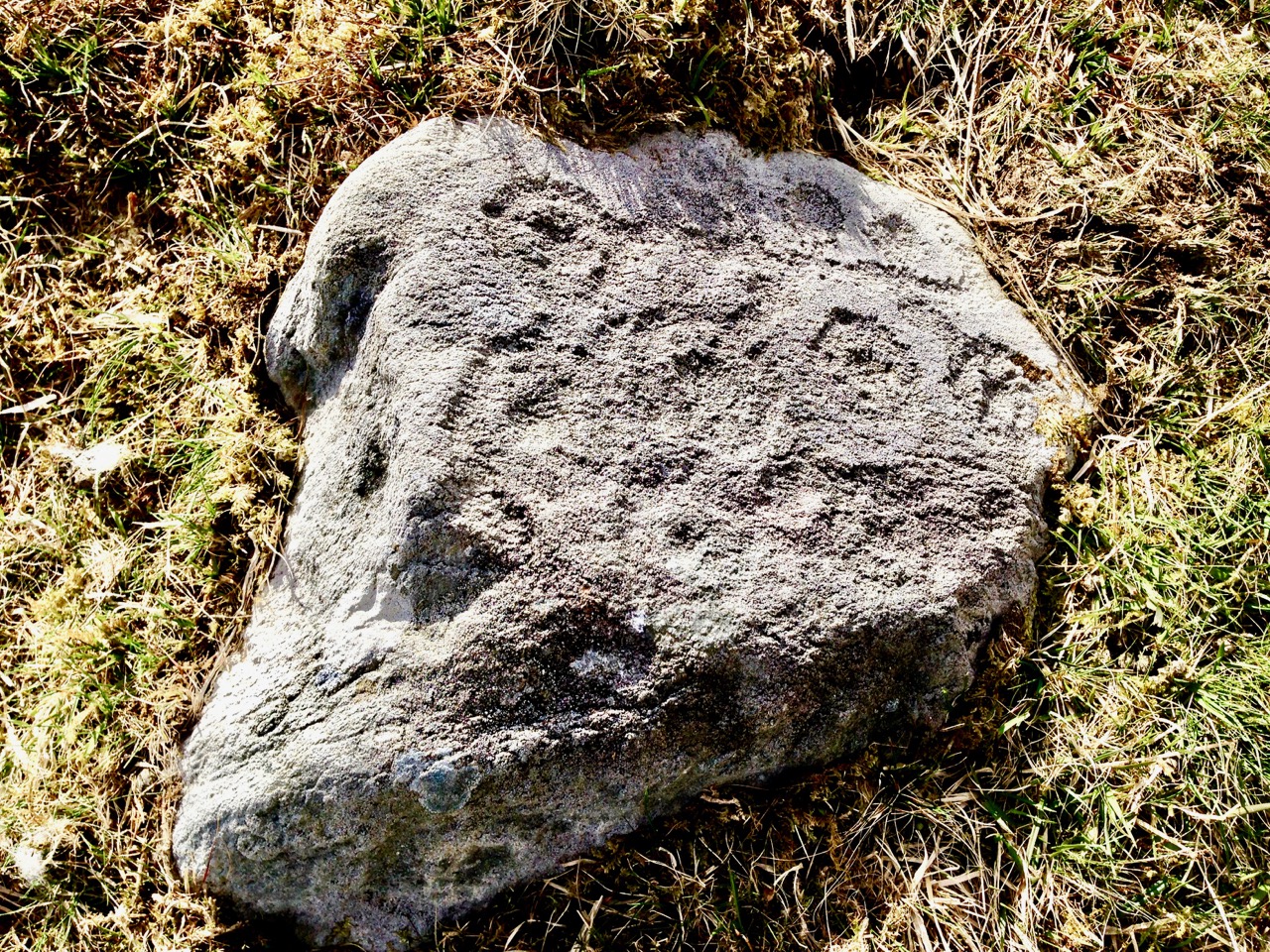
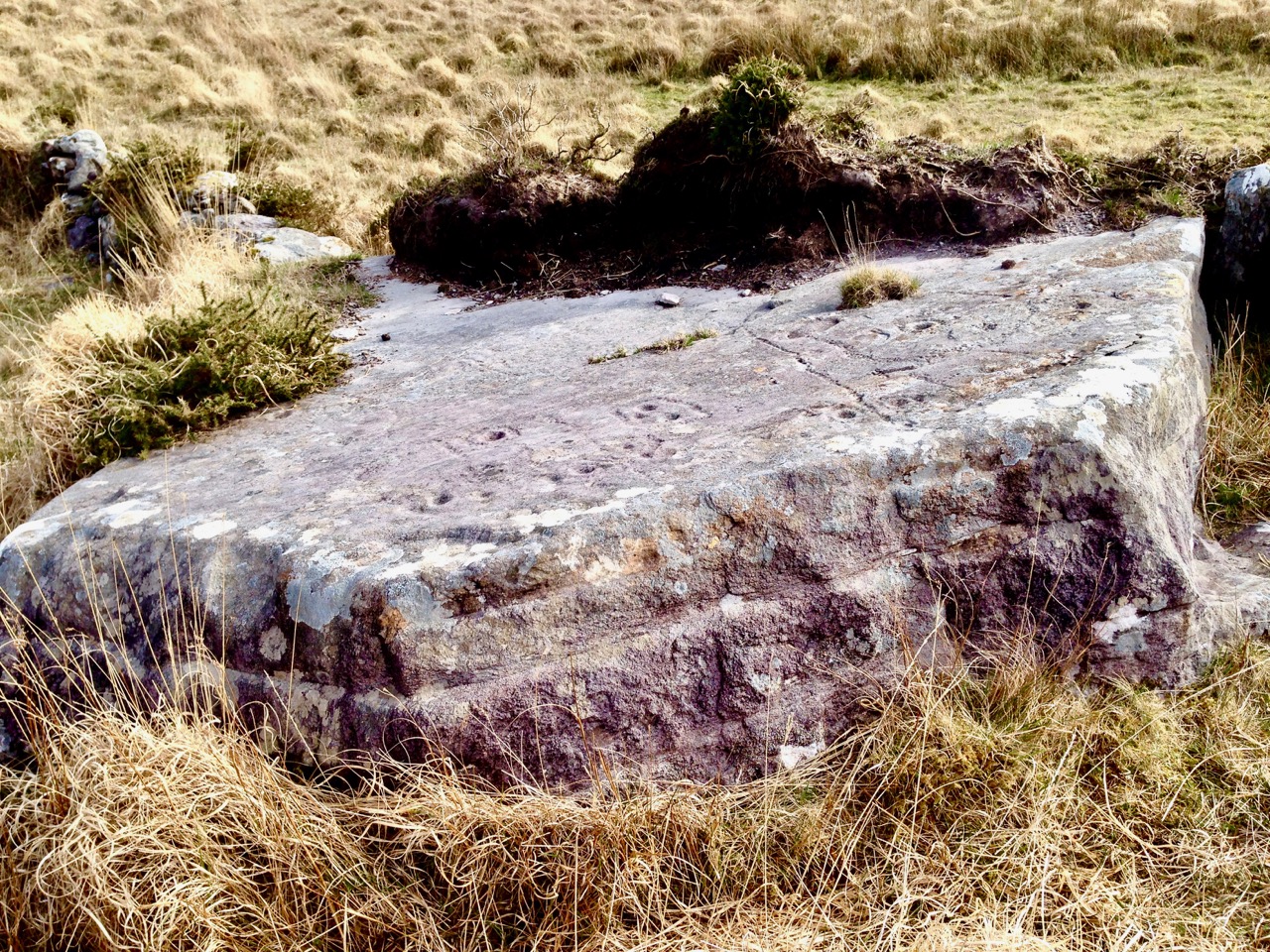
All the examples of Rock Art illustrated in this post can be found in the townlands of Derrynablaha and Derreeny, Co Kerry

When Finola visited the valley in 1972 and 1973 she explored and recorded 23 marked stones, all within the townland of Derrynablaha: these were illustrated in her UCC thesis The Rock Art of Cork and Kerry. Between 1986 and 1996 The Iveragh Peninsula Archaeological Survey undertook further detailed research, resulting in a comprehensive volume published by Cork University Press: this contains a 30 page section on Rock Art and includes many of Finola’s drawings. The book lists 26 known examples, now, in Derrynablaha with a further 7 stones in the adjacent townland of Derreeny.

Cork University Press volume (left) which includes many of Finola’s drawings (sample page,right)

My introduction to prehistoric Irish Rock Art came in the early 1990s when I first visited West Cork to look at a piece of land which my friends Danny and Gill had purchased, with a view to building themselves a house: I was to be the designer. We walked the 5 acre site at Ballybane West and discovered a large, flat outcrop of rock some 30 metres long by 10 metres wide, the surface of which was covered with strange carved motifs. These intrigued and occupied me for many years. Eventually I made contact with the Department of Archaeology at University College Cork and unearthed Finola’s thesis. Finola had visited ‘Danny’s Rock’ during her explorations: she and I have just completed a comprehensive article on Rock Art in the environs of Ballybane West for a forthcoming edition of the Journal of Bantry Historical Society, due to be launched on 10 May.

Because of the number of pieces of Rock Art at Derrynablaha, as recorded by Finola, I set out to visit the site and was fortunate, I think, to locate several of the pieces there: they are hard to find. My most significant impression of the place was its isolation and loneliness: when Finola was there decades before, the O’Sullivan house was occupied – a family home and working farm – now it was a ruin returning to nature. No one lives in that valley today: it is home to sheep and eagles.

The most iconic piece of Rock Art in Derrynablaha is high up on the slopes of a mountain: there is no path, and the trek is across bogs, boulders and streams. Also remember that all the land is private – farmed now by another O’Sullivan from a neighbouring valley – and permission has to be sought in advance of any attempt to visit. Strict rules apply, understandably, to the use of gates and fences and no dogs will be permitted. The iconic piece is probably Ireland’s most important. When you stand up there, on a good day, you can see to distant horizons and take in outstanding views: time for reflection, perhaps, on what inspired our forebears to create such panels in these places – was it where they lived? Or did they assemble there for celebrations? The mountainside seems to present a natural platform here, with the carved rocks a central focal point. The work involved in carving these motifs would have been significant and time-consuming – they had only stone tools.

When we give talks about Rock Art we ask a question: Is it art? Some of it is certainly pleasing to the eye – the iconic Derrynablaha carvings are. But they also appear random, as though new carvings have been squeezed in amongst older ones: maybe the proliferation of motifs – or the number of carvers involved – was more important than any particular visual effect or relationship. We don’t ever try to answer that question, nor guess meanings for things we can never know. It’s enough – for me, at least – to experience these ‘footprints’ of former souls in such wild places.

We go far out of our way to look for Rock Art. It would take more than a lifetime to see every piece in Ireland. Some would argue that such a pursuit would be pointless – seen one, seen them all. It is true that the motifs are similar, although variable, across Rock Art panels, not only in Ireland, but in Britain and on continental Europe. That in itself is remarkable: 5,000 years ago humankind was making identical marks on rock surfaces all over its world. For me, however, it’s not really the motifs – spectacular though many of them are. It’s the places that they mark which are meaningful. Rock Art took me to the mountainside in that lonely Kerry glen and showed me a most incredible view across townlands and counties: I see it as inspiration, relevant as much in the 21st century of this struggling world as it was, perhaps, thousands of years ago, when the same world was a little bit newer.
Gothic Revival – With Bells

A month ago I wrote of our first visit to Cobh, in County Cork, and told how impressed we were with the town and its architecture. I promised that Roaringwater Journal would revisit Cobh, and today I will concentrate on the splendour of the Cathedral, which dominates the skyline and looks across to the Lee Estuary. All shipping using the port, or passing up to Cork, will be aware of this spectacular building.

St Colmán’s Cathedral was conceived in the mid-Victorian era, when the Gothic revival style of architecture was in full swing. Popularity of the style was, perhaps, generated as a reaction to the society and machinery of the Industrial Revolution – all noise, smoke and progress – and harked back to a perception of medieval life when all seemed sylvan and pastoral and when everyone, from lords to artisans, knew their place: Medievalism meant a concentration on the trappings of chivalry, craftsmanship and decoration, particularly in religious buildings – although private houses for the very wealthy also explored the idiom: have a look at our post on Adare Manor.

Construction work on the Cathedral began in 1867. The designers were Edward Welby Pugin (son of Augustus Welby Pugin – probably the greatest of the British Victorian architects) and Irish-born George Coppinger Ashlin who was responsible for over 100 new churches in Ireland including those in Clonakilty and Skibbereen, here in West Cork. St Colmán’s was not completed, however, until 1915. The tower – 90 metres high – was the last element to be finished – old photographs above (emptyseas) and below left (National Archives of Ireland) show the Cathedral in use without it in the 1890s while the picture (below right – from the Michael O’Leary Private Collection) shows the tower under construction in 1914.

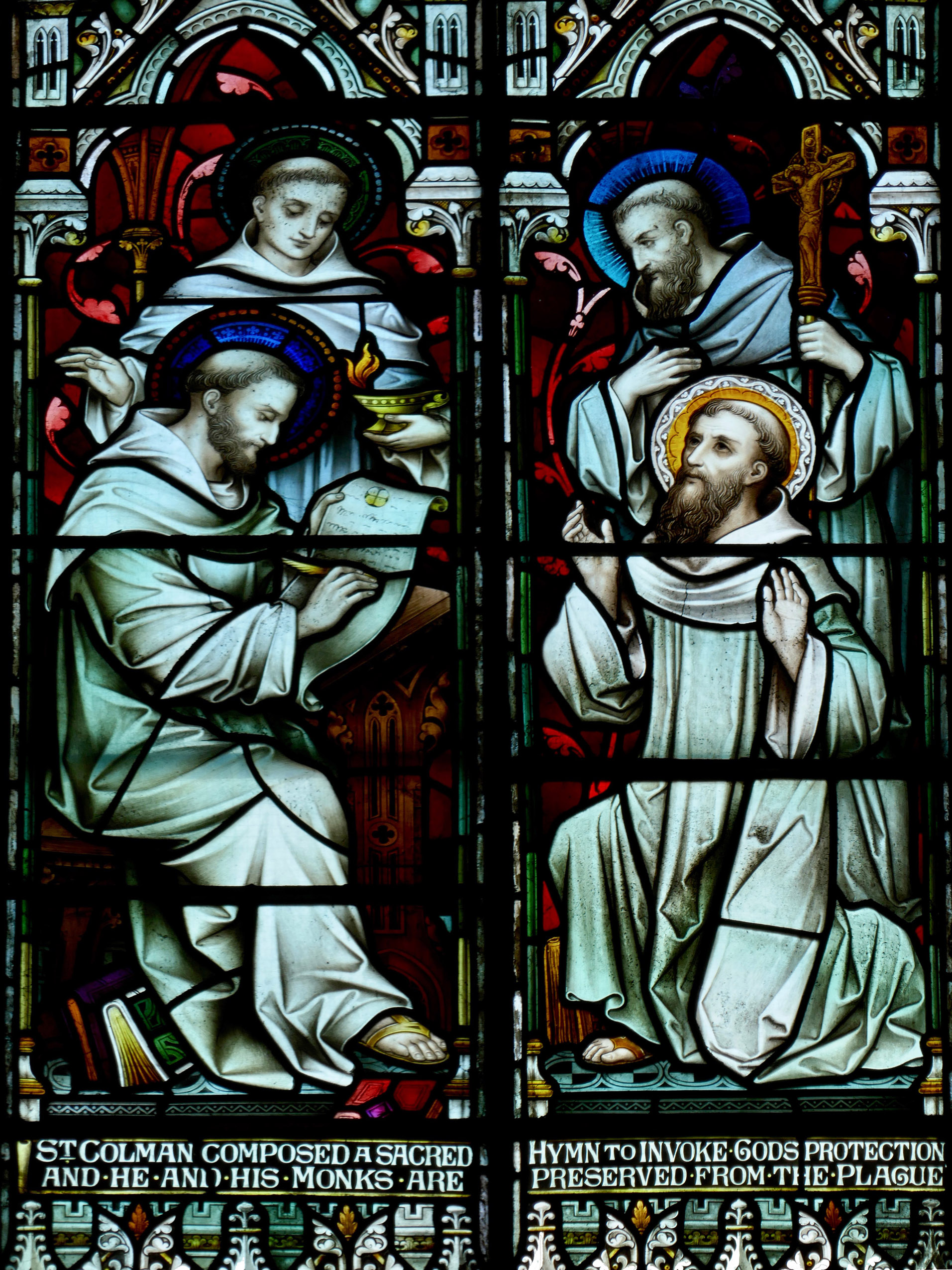
The Cathedral is dedicated to St Colmán of Cloyne, who founded the Diocese in the year 560. This saint is known as ‘The Poet Saint’ as he trained to be a bard for twelve years and entered the court of Aodh Caomh, High King of Munster, at Cashel. Influenced by St Brendan and St Ita, Colmán became a priest and then set up a monastery on the shores of the Lee, where Cobh now stands.  Our friend Amanda has told the story of this saint, and includes a piece from the Schools Folklore Collection, written by Padraigh Ua hAodha in the 1930s:

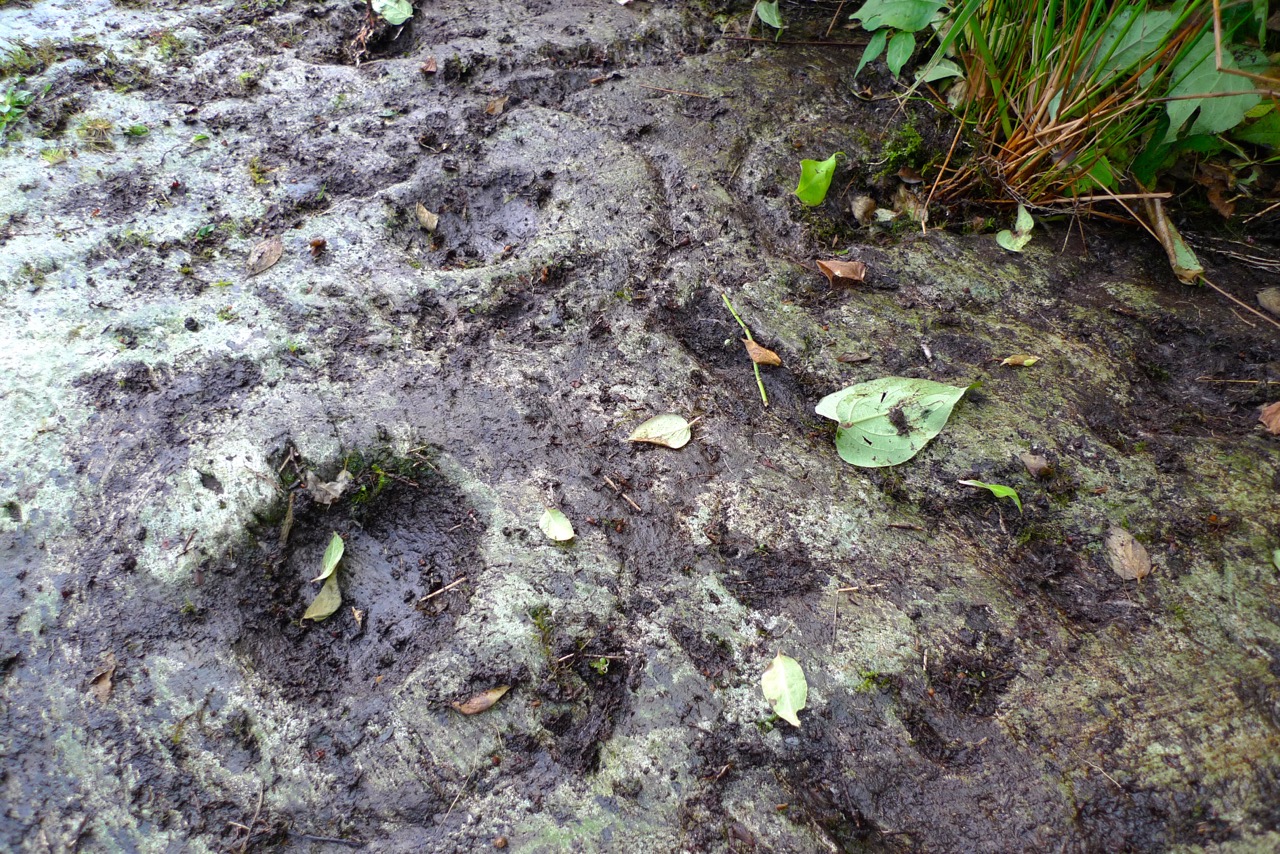
. . . When St Coleman was building the round tower in Cloyne a woman asked him what he was doing so high up. When he heard her speak he got such a shock he jumped from there to Kilva where the print of his feet are still to be seen on a stone. He jumped from there to Glen Iris Wood. When he landed he prayed to god to send him some water and immediately water sprang up at his feet. When he had drunk some he sprang from here to Cove  where there is a cathedral built called Saint Coleman’s. The spring that sprung up at his feet is now known as St Coleman’s Well . . .

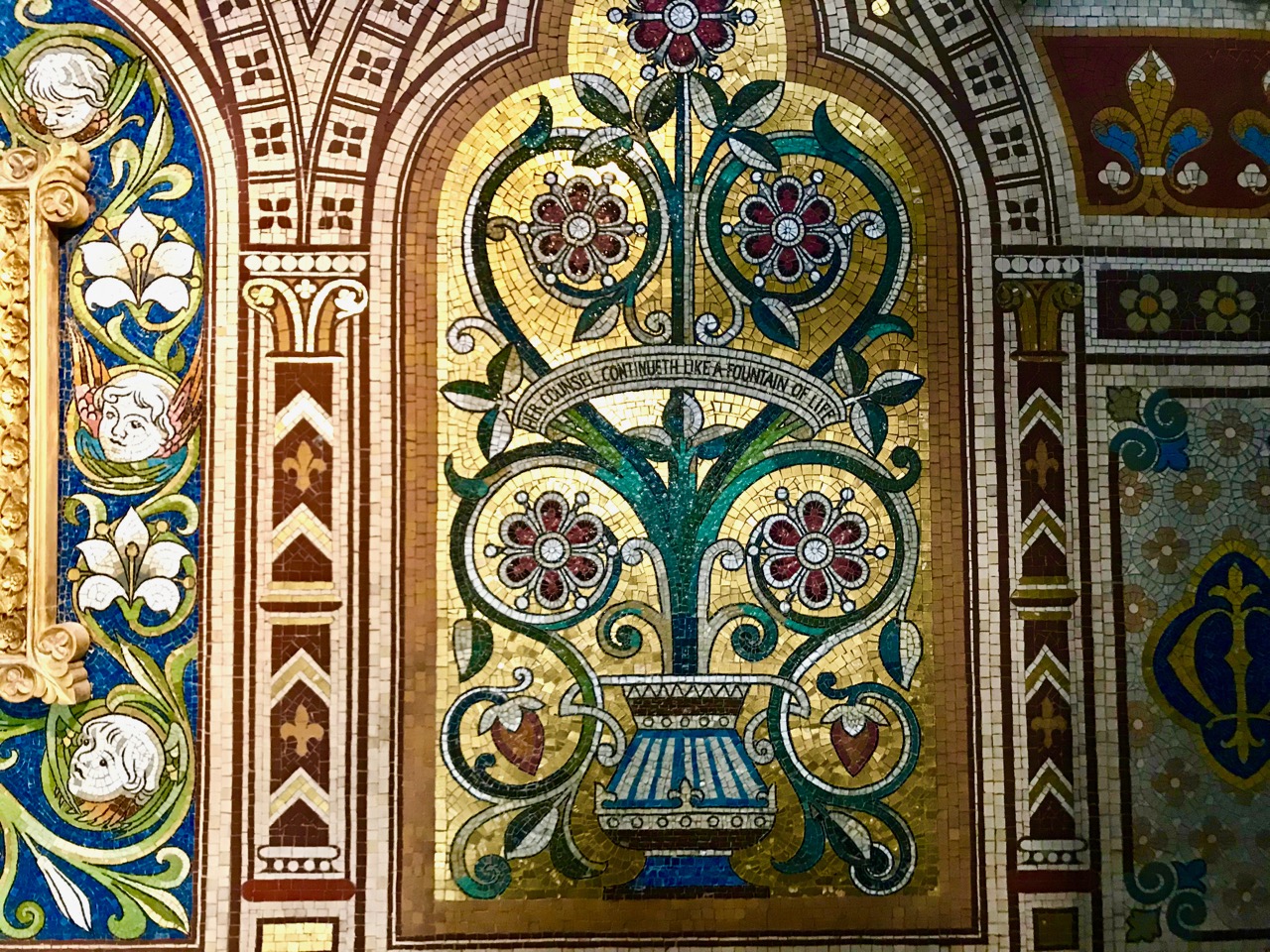
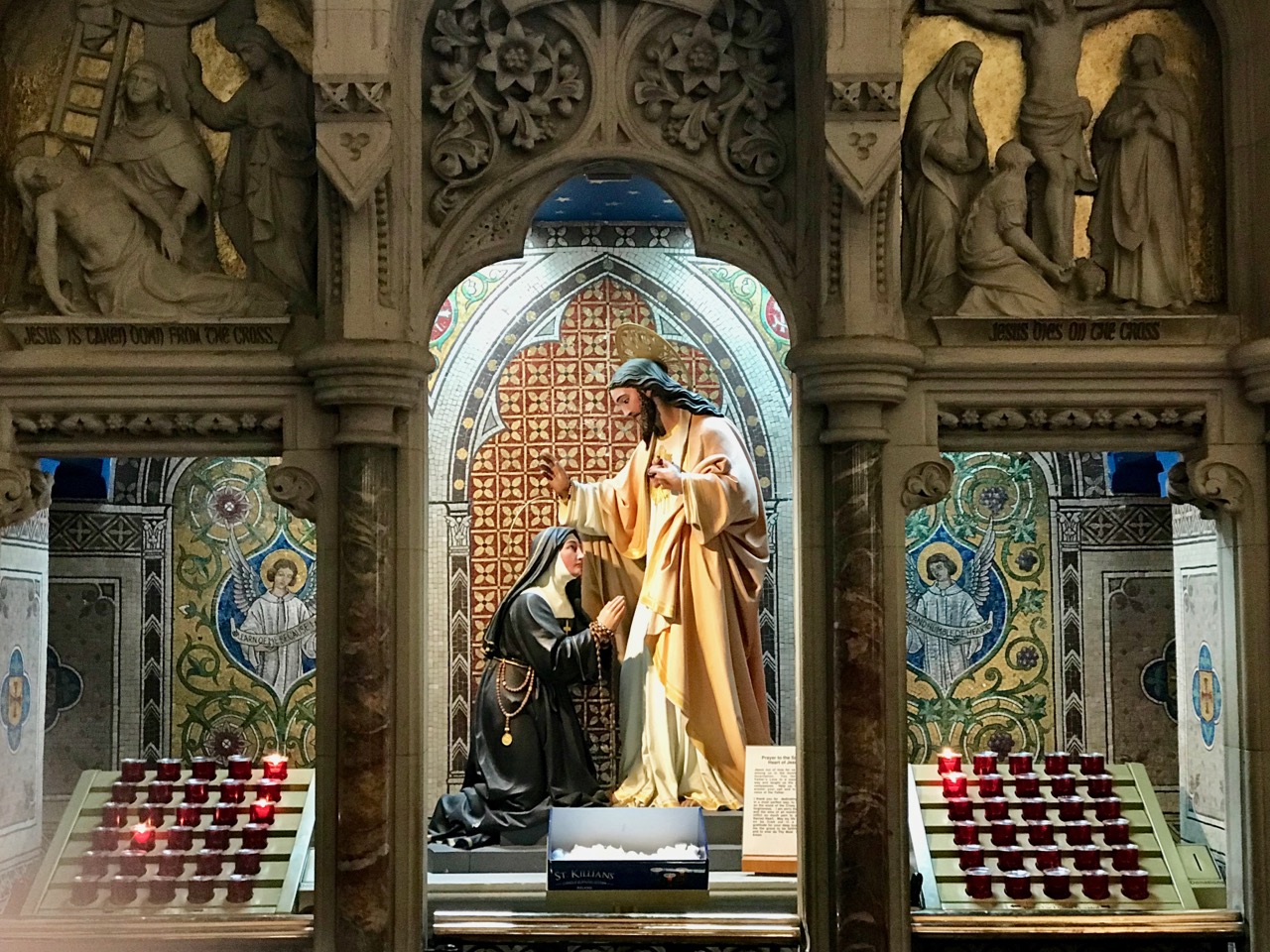
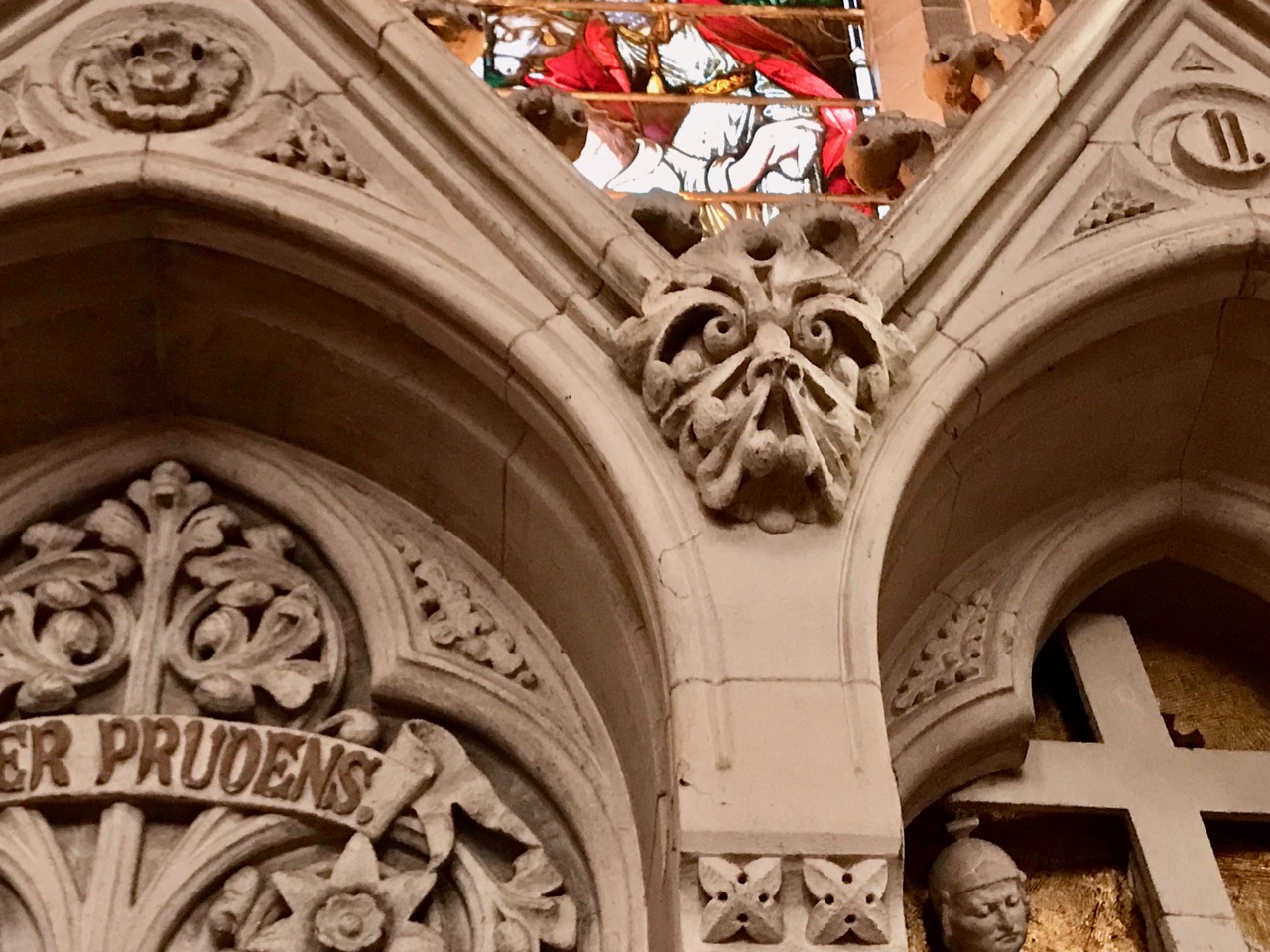
The Cathedral contains an inscribed list of all the bishops of the Diocese, from St Colmán to the present day. This list includes Thaddeus McCarthy, bishop from 1490 to 1492 – Finola is telling his story today. The richness of the building is as evident inside as it is without. It’s an homage to fine detailing and craftsmanship and there is no corner free from it: unfortunately I could not find the names of the the artists, masons and carvers in any records. At least their skills are celebrated in their works.

Something you may not discover from a visit to St Colmán’s is the carillon which was built in to the new tower in 1916. A carillon is a giant musical instrument which, using a large mechanical keyboard and pedals, sounds a whole series of cast bells. In this cathedral there are 49 bells – making it the largest carillon in Ireland and Britain: the heaviest bell weighs 3.6 tons, and is named Colmán! Please watch this fascinating seven minute film about the carillon, and the man who plays it: his title is Carillonneur. Through the summer recitals are given and can, of course, be heard not only in the Cathedral, but over the whole town.

Visiting Cobh is itself a great experience, but allowing sufficient time to explore and appreciate the Neo-Gothic gem which is St Colmán’s Cathedral has to be the icing on the cake. Although only completed a hundred years ago, remember the long tradition of the saints who set up their foundations here in Ireland, keeping civilisation alive . . . while the Dark Ages settled on Europe . . .