The City of Shrone – and a talking cow!

shrone walls + gap

It’s May Day, and we’re in Ireland, so it’s no surprise that we should encounter a talking cow. We are in Kerry County and it’s a Kerry Cow that’s doing the talking. This is an ancient breed of cattle – probably the oldest in Europe – so our cow has a lot of stories to tell.

city cow

We found the cow – or, at least, the story she has written – in the City of Shrone. What sort of a metropolis is that, you wonder? It’s a pretty diminutive one: it’s almost certainly the smallest city in the world. It has no skyscrapers and no traffic jams…

no parking

Shrone does, however, have a long, long history. According to the local expert on this subject, Dan Cronin, …Historians have satisfied themselves that The City was one of the first places in Ireland to be peopled. It was here on a barren elevated site that the Tuatha Dé Danann had their base established, naming the mountains at whose base they had settled, Dhá Chich Danann, The Two Paps of Dana…

in the shadow

Dan’s book (published in 2001 by Crede, Sliabh Luachra Heritage Group) is the definitive work on The City, The Paps, and the life and traditions of the Sliabh Luachra – which is the name given to the mountains and rushy glens on the borders of Cork, Kerry and Limerick. It’s an area which has long been famous for its traditional music: at our own Ballydehob Fastnet Maritime and Folk Festival – coming up in June – two of the most notable musicians carrying that living tradition, Jackie Daly and Matt Cranitch, will once again be in residence.
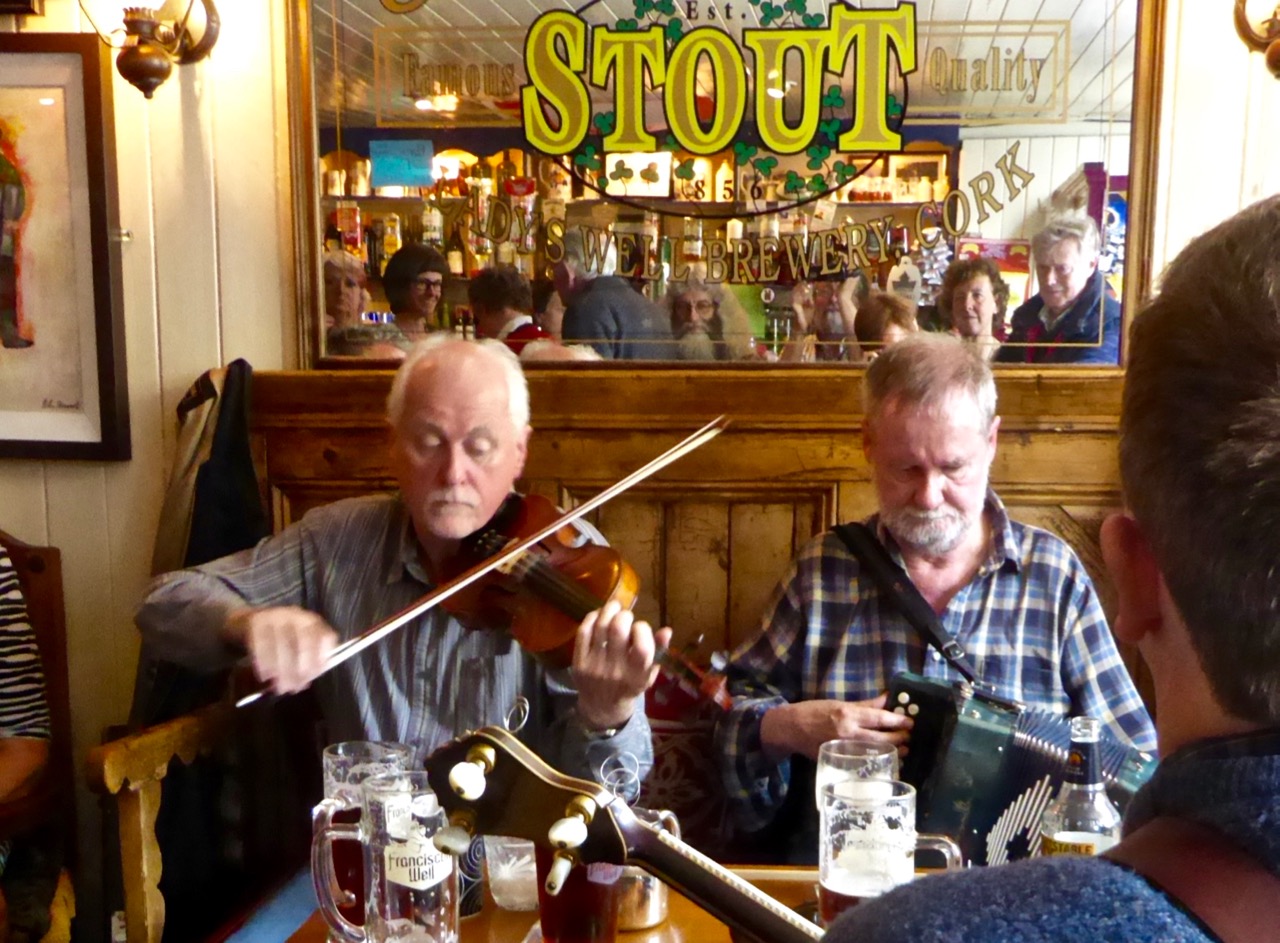
Jackie Daly and Matt Cranitch

Matt Cranitch and Jackie Daly in Ballydehob, at last year’s Fastnet Maritime and Folk Festival

Meanwhile, back in the City, we have deliberately timed our visit for the First of May: this is Shrone’s big day! The City is 50 metres in diameter – it’s a very ancient stone cashel or ring fort. The Irish name for it is Cathair Crobh Dearg, meaning ‘Mansion of the Red Claw’. On the western side of the finely preserved four metre thick stone walls is an entrance (known as the gap), and anyone coming in that way has to pass by a holy well. Today is the Pattern Day for the well, and elaborate rounds are performed, culminating in taking the holy water. There is much to do with cattle at this site: the Tuatha Dé Danann are said to have originated in Boeotia – the Land of Cattle – in Greece, and the well water is notably good for cattle, especially on this day. The well was formerly in another site nearby and there cattle were driven around it to ensure good health and fertility for the herd. Farmers still take water from here and sprinkle it on their animals.

shrone aerial

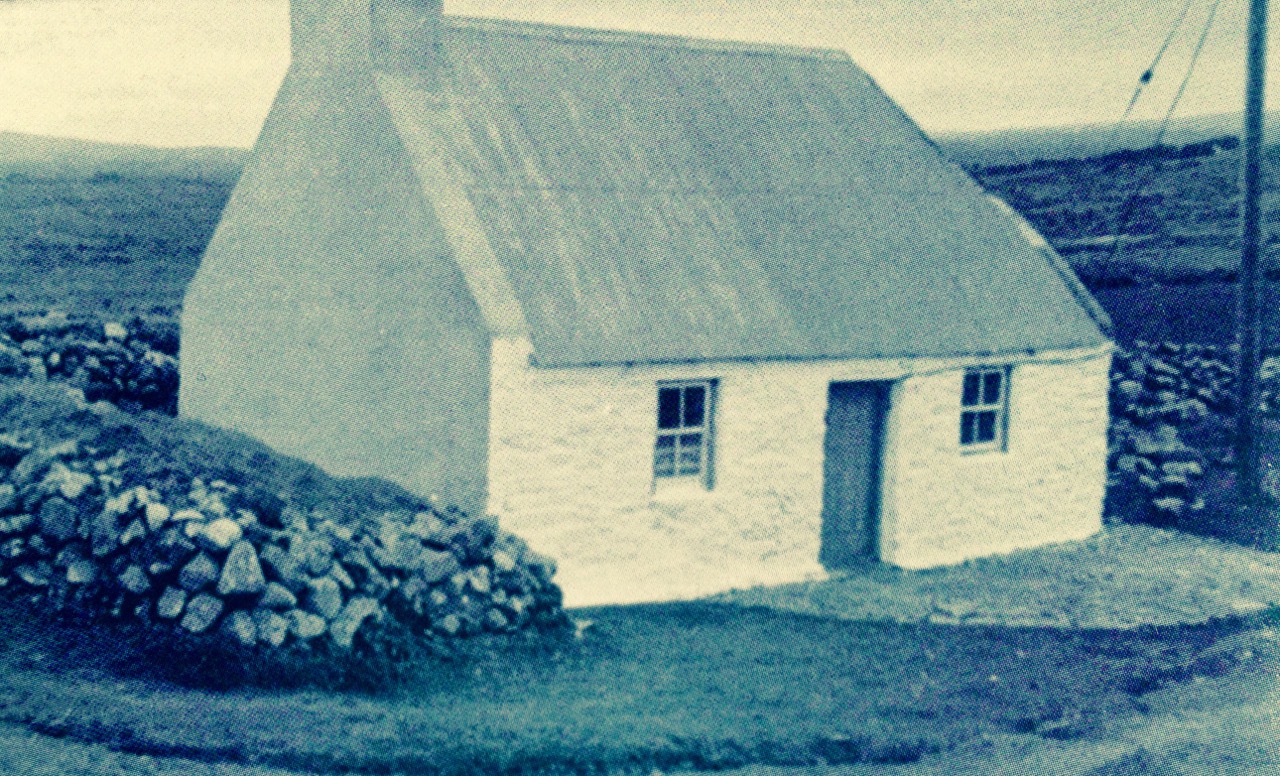
Satellite view of The City of Shrone: the circular cashel wall is clear. On the left is ‘The Gap’ and the holy well. Beside ‘The Gap’ and inside the city is the ruin of Paddy Quinihan’s House (below and bottom): in the 1930s he was the deerhough (caretaker) of the holy well

keeper's house

the house

Today is Lá Bealtaine (pronounced Law Byowl-tinneh): the Irish word might refer to the ‘Fires of Baal’, reflecting a tradition of lighting fires on hilltops or in sacred places. In Ireland it was important to drive cattle through, or by, the flames as a purification ritual. As May Day was usually the first day that the animals were brought out of byres and sent to the summer pastures (booleys), it makes sense that the purification would have taken place at this time. So we have the various seasonal elements of water and fire connected with cattle and their health and fertility: it’s no wonder that our commentator at Cathair Crobh Dearg is a cow!

The holy well water at Shrone is good for animal health and fertility: Robert gives it a try!

The City of Shrone is below the Paps. According to Cronin, the early celebrants – the Danann – …were wont to go up to the top of the Paps for the fertility and immortality rituals. Fragments of ancient pagan altars still remain to this day. Petitions were made to the gods for fertility for man and beast, good return from the land, good crops and fodder. Even today, 4000 years later, several small offerings are placed on ledges near the ruins of pagan altars on top of the Paps Mountains for health of the family and of cattle and for fertility… Many of those acquainted with this old pagan custom have remarked on the peculiarity of its perseverance and continuity… I would like to explore those high parts but, ‘on the day that’s in it’, they are not even visible, and it would be unwise to venture into such a shrouded domain when, at this turning point of the year, the spirits of the hills might be abroad…

way to the paps

The way to the Paps: it’s unwise to venture there when you can’t even see the summits of the sacred mountains…

Cronin again: …So the May Day or Lá Bealtaine festivities were held each year and the years rolled by. On May Day, The City and its surroundings were a hubbub of activity. The music of pipes and fiddles re-echoed from the hills and valleys, and the lowing of cattle mingled with the sweet music of the harp. Jesters and jugglers plied their respective trades, with everybody trying to make themselves heard. It is very evident that ale was brewed here in plenty. Champions were performing feats of valour, while throngs of admirers looked on… What will we find happening today, May Day, at the smallest but most ancient city in the world?
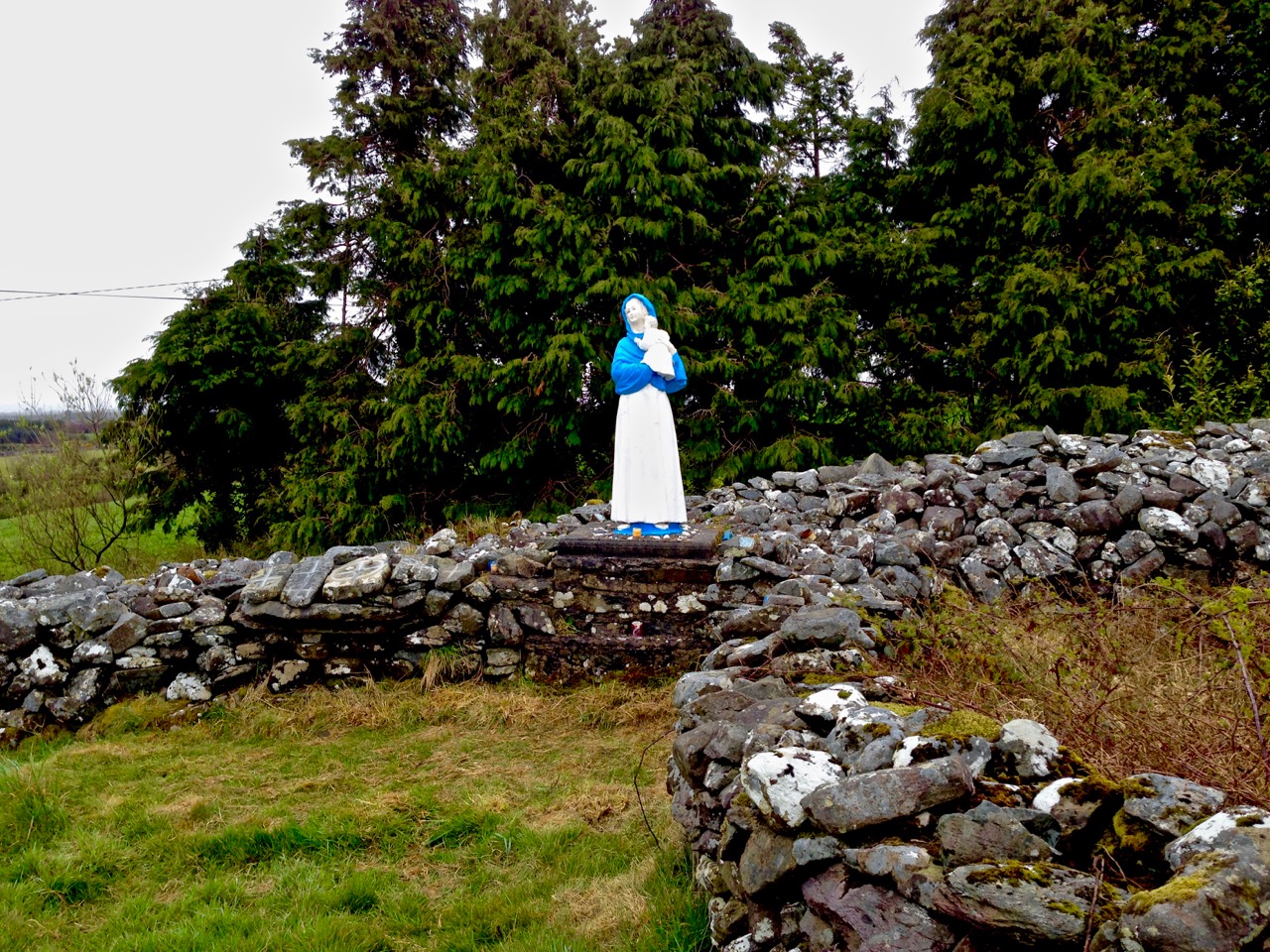
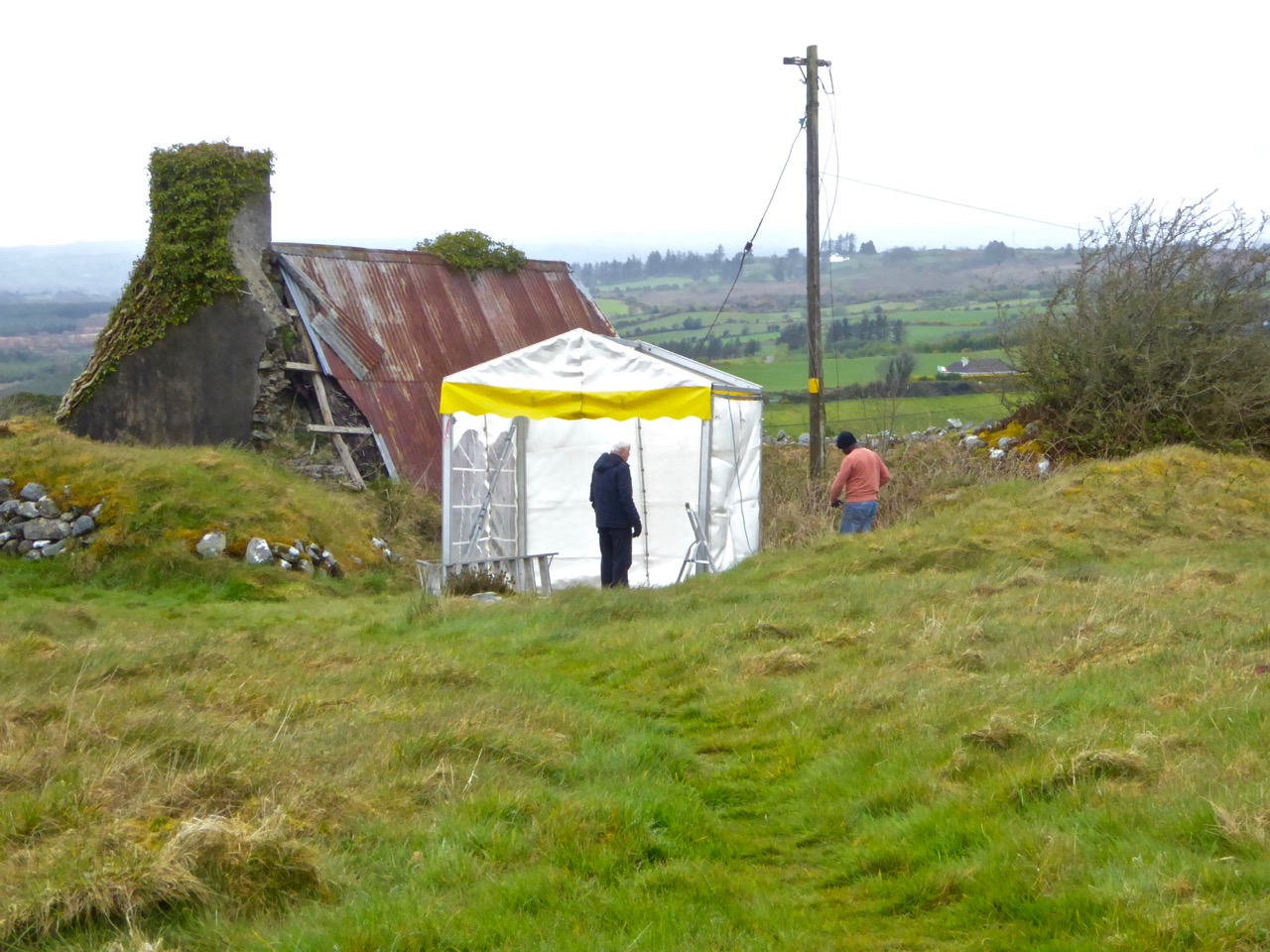
mary and walls

Setting Up

Our Lady of the Wayside guards the sacred site now (above) while (below) preparations are made for the Bishop’s visit

It’s still a sacred site and the crowds still come. But it’s Our Lady of the Wayside who looks out over the City walls now. A Mass is performed within the Cashel on May Day afternoon. This year the Bishop of Kerry is in attendance, as is a devouring Kerry mist. I listen in vain for the echoes of harp, pipes and merrymaking. The City of Shrone on a cold, damp First of May seems a desolate place – yet an absolutely fascinating one. The pilgrims visit and the curious passer-by (like me) pauses to drink from the well. As always here in Ireland, history is writ large on the landscape, and continuity is assured both through holy ritual and piseogs…
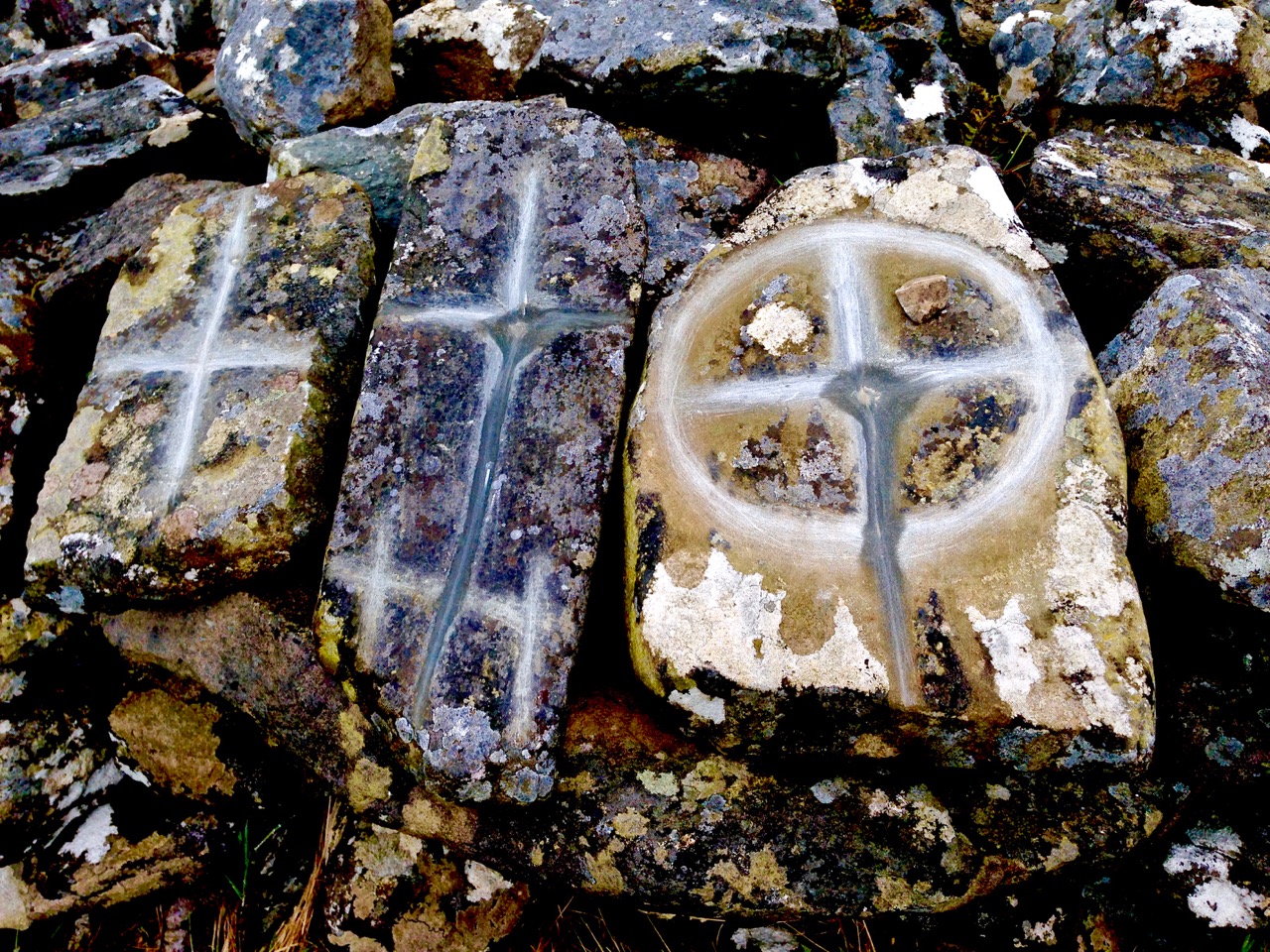
making the mark

Pilgrims leave their marks on a ‘Neolithic altar’ under the statue of Mary

Another record of the day at The City can be viewed on Louise Nugent’s page, here. Amanda has covered the holy well at Shrone here. Voices from the Dawn website published an interview with Dan Cronin, who wrote In the Shadow of the Paps.
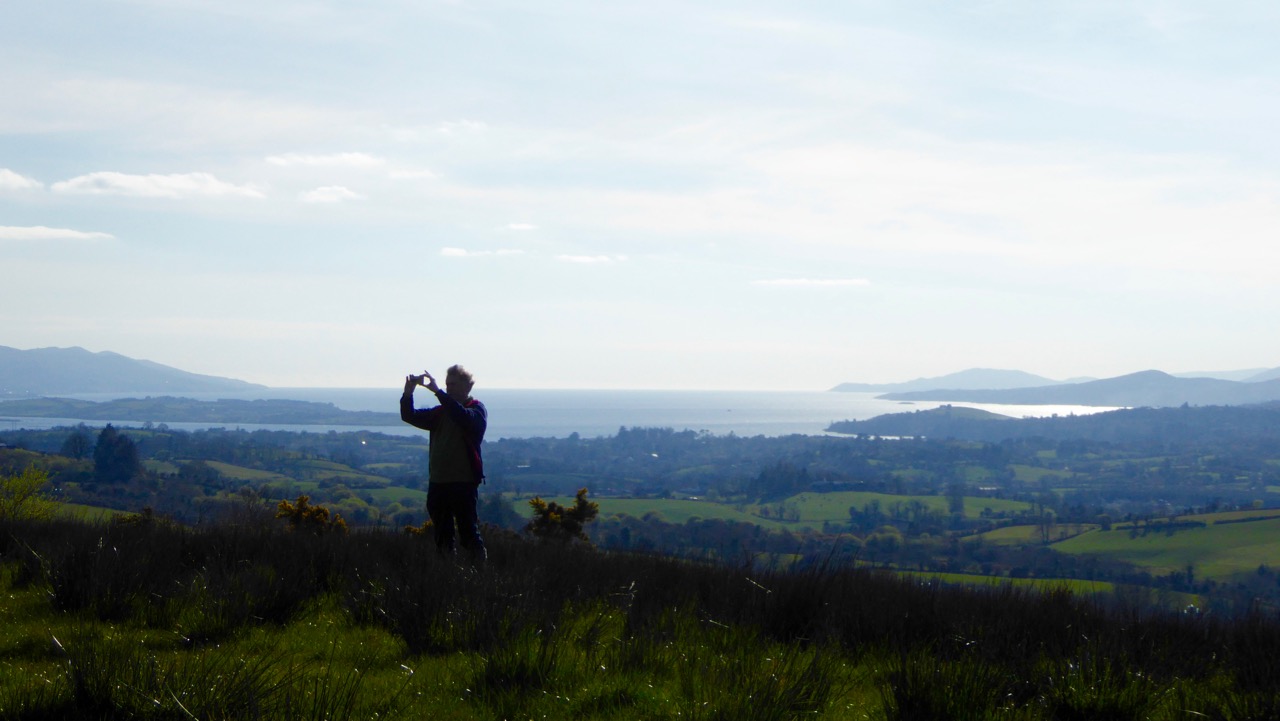
Walking the Past

Robert taking a picture

How fortunate are we? We are free to spend our days wandering the world’s most beautiful landscapes, here in Ireland: landscapes which have changed relatively little over the last five thousand years. They have changed, of course, but the human hand has had less impact in this country than in many other developed nations, especially in these wilder parts. That is why we relish our explorations: we are walking the past.

breeny landscape

Top picture: Robert taking in the setting of the monuments at the Kealkill complex. Above: the view towards Kealkill village from Breeny More

Every expedition requires a little pre-planning. This week we were keen to catch up with a group of monuments known as ‘boulder burials’. Finola tells me that, when she was first studying archaeology, they were known as ‘boulder dolmens’: I prefer that term – perhaps because it has a touch of the antiquarian about it – and, in any case, the use of the word burials implies a definitive function which has not been universally borne out with the examples that have been excavated. But I will leave Finola to delve into the specifics of that subject in her post Boulder Burials: a Misnamed Monument?

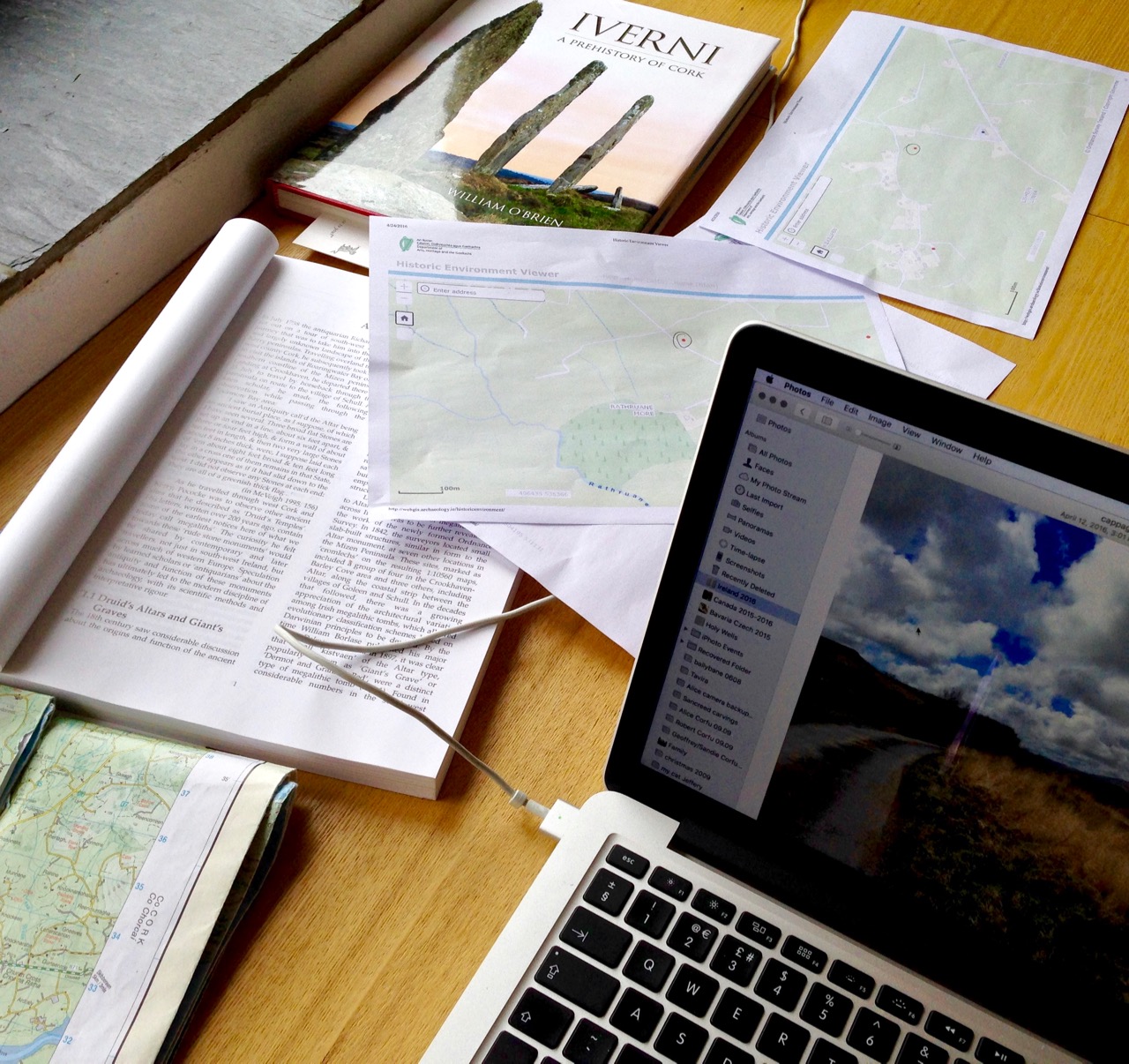
workspace

Blogging in progress: prequel to an expedition…

First, we look to the available information: William O’Brien’s Iverni – A Prehistory of Cork (The Collins Press 2012) is an essential primer on the pre-Christian era in this corner of Ireland since the first human foot was set on its shores. Then there are maps to be consulted: the Ordnance Survey Office was created in 1824 to carry out a survey of the whole island for land taxation purposes. The original survey at a scale of 6 inches to 1 mile was completed in 1846 and Ireland thus became the first country in the world to be entirely mapped at such a detailed scale. From the outset, known historic sites and monuments were recorded and the present Discovery Series at 1:50,000 scale provides a wealth of information to the fingertips of historians and adventurers.

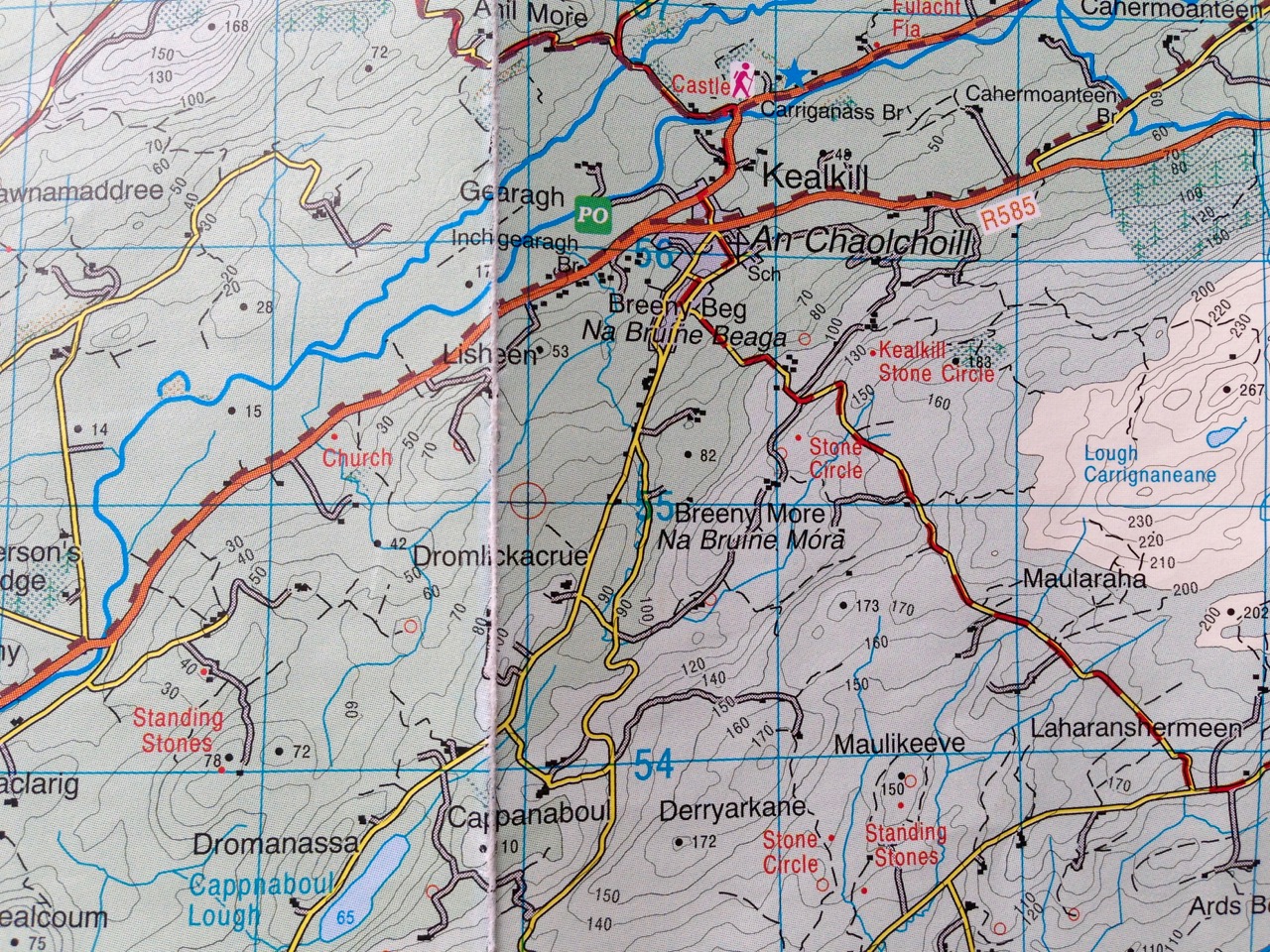
kealkill OS map

One of our bibles: the Discovery Series of the 1:50,000 Ordnance Survey maps – well used and well worn! The monument sites are marked in red

Before setting out we usually consult with the Archaeological Survey Database of the National Monuments Service: this gives us the fine detail on where to find recorded historic sites. Yet in the end the most valuable information often comes from knocking on doors. Farming families here often go back through many generations and local knowledge is always passed down through them. It’s here that you sometimes pick up the ‘stories’ that are associated with ancient sites – for me, these are just as interesting as any formal records.

Breeny More landscape

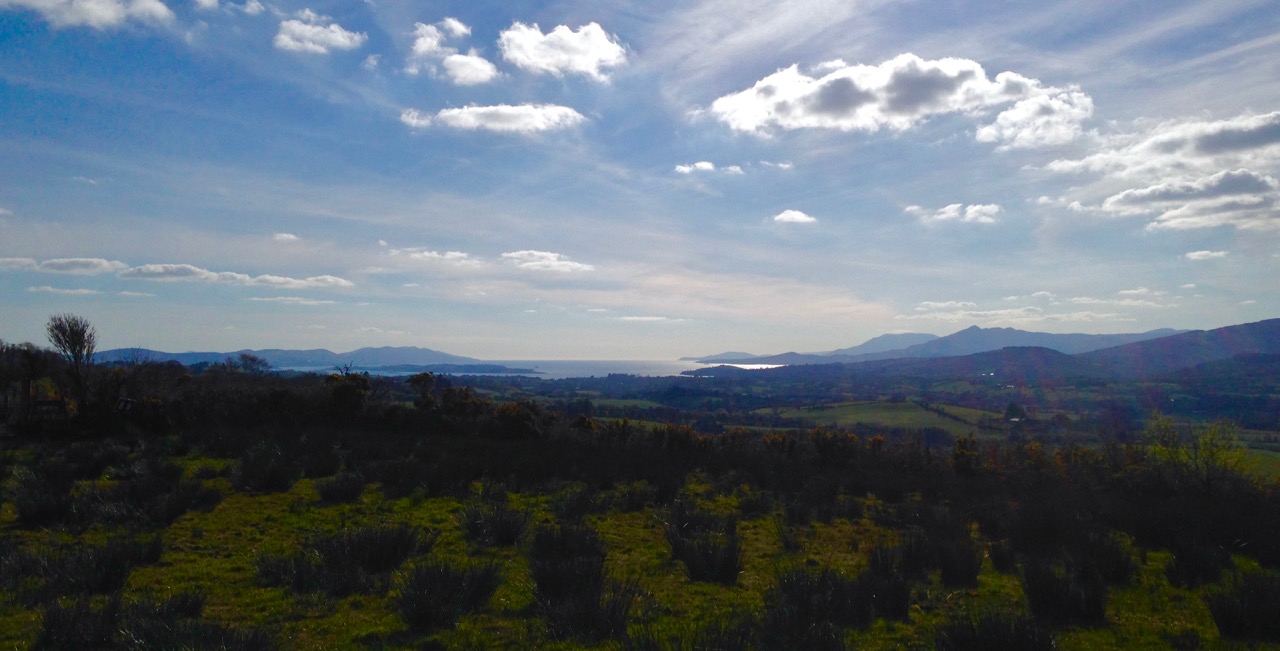
View to Bantry Bay across the Breeny More archaeological site

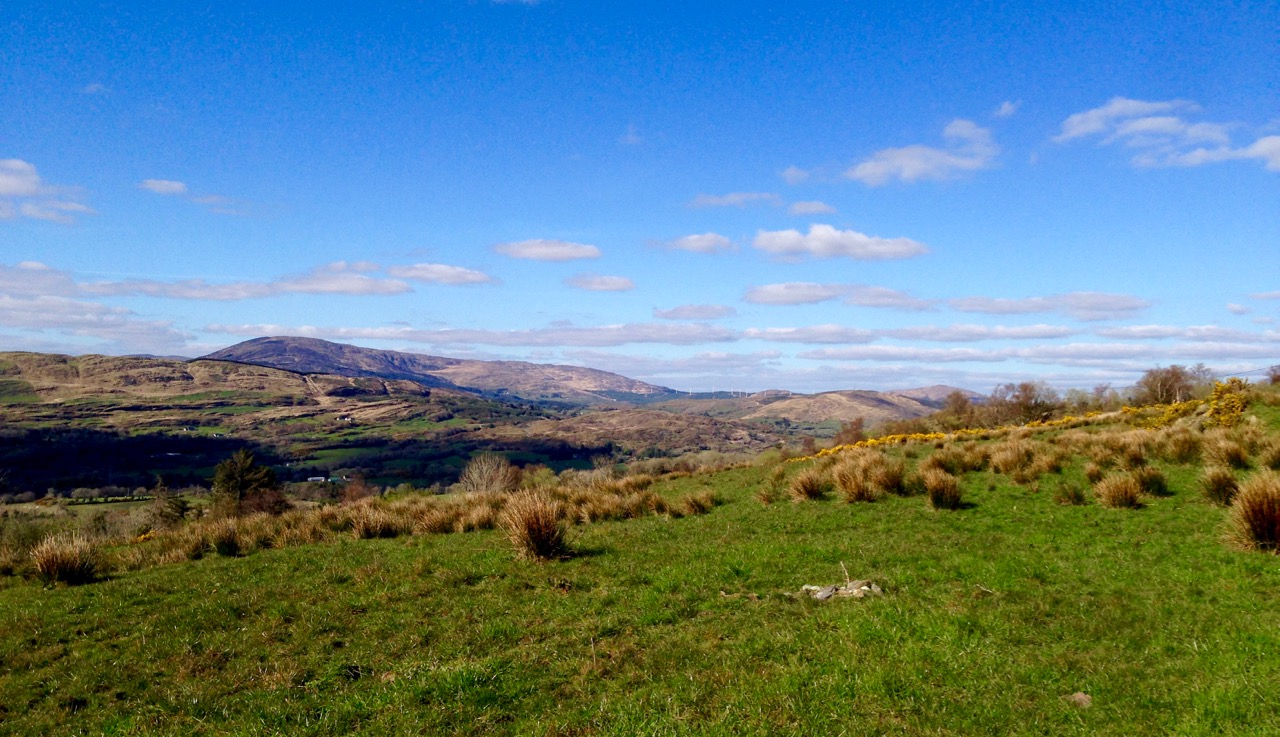
This week our travels brought us to the Breeny More and Kealkill complexes, high up in the hills above Bantry, heading towards the wonderfully named Cnoic na Seithe – the Mountains of the Spirits. This was on a perfect spring day: the views all the way down the bay with the Beara on one side and the Sheep’s Head on the other can only be described as spectacular.

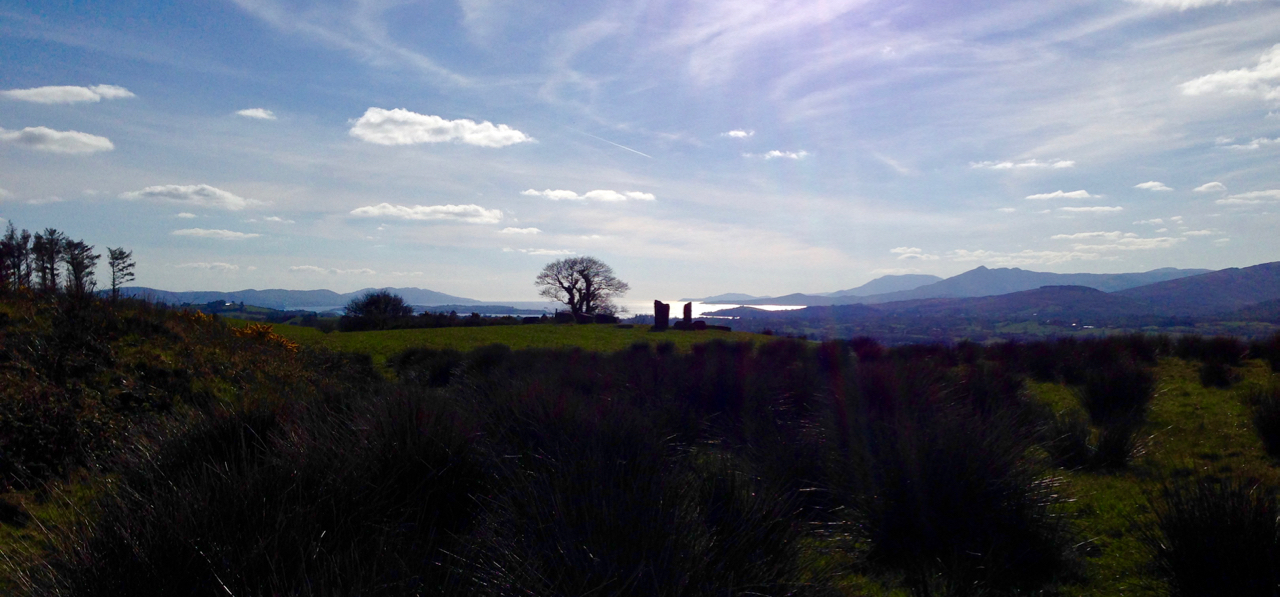
kealkill landscape

view west

Two views from the Kealkill complex

It can’t be accidental, surely, that these ancient sites occur in places like this, that make the senses reel? In many cases there are long views in all directions, often taking in prominent horizons, hilltops, the sea, inlets and islands. ‘As far as the eye can see’ is an expression that truly comes into its own: these vistas must have had special meanings to the ancestors who were here in the Neolithic and Bronze ages. Were they trying to define it in some way by building such impressive large-scale structures, most likely for some ceremonial purpose? It was certainly not construction work which could have been undertaken lightly or frivolously. Here’s O’Brien in Sacred Ground, Megalithic Tombs in Coastal South-West Ireland (NUI Galway 1999):

…Antiquarian interest in Ireland dates from the visit of Edward Lhuyd at the end of the 17th century and was encouraged by the discovery of great megalithic centres like the Boyne Valley in Co Meath and Carrowmore in Co Sligo. The early antiquarians were to link these ‘Giants Graves’ to invaders or colonists from the East, to Scandinavian incursions and eventually to the events and characters of early Irish literature…

boulder cluster

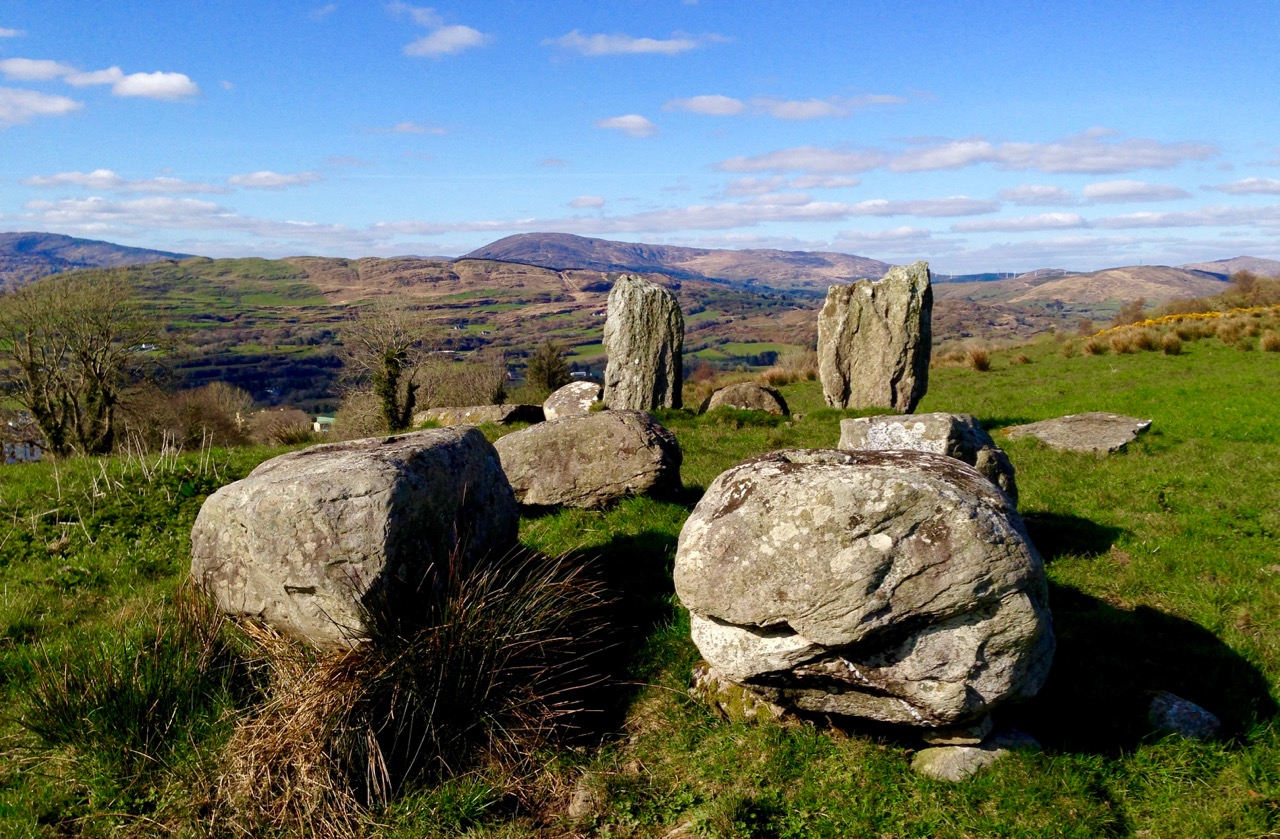
The Breeny More complex:  no less than four boulder burials, a multiple stone circle and a (much later) ring fort, all on one superbly located site

Robert Kealkill Complex

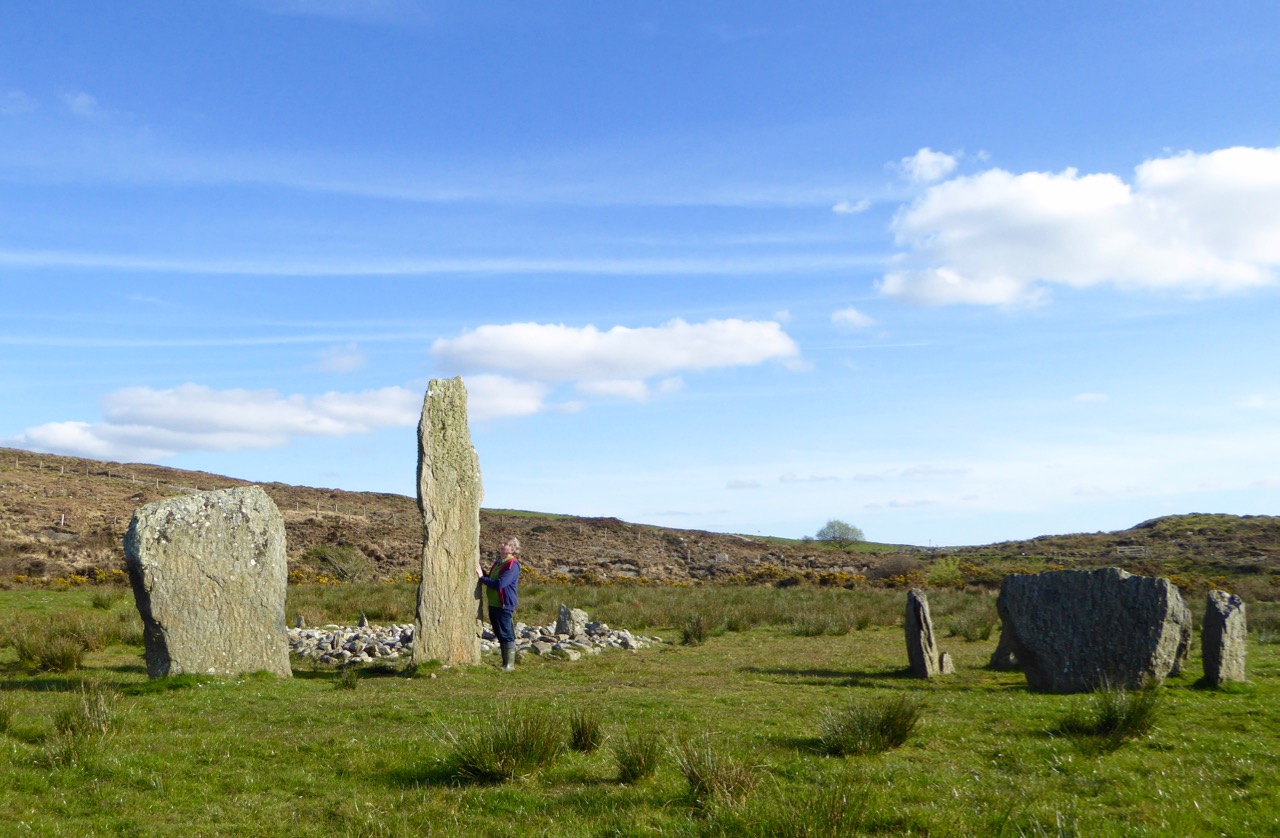
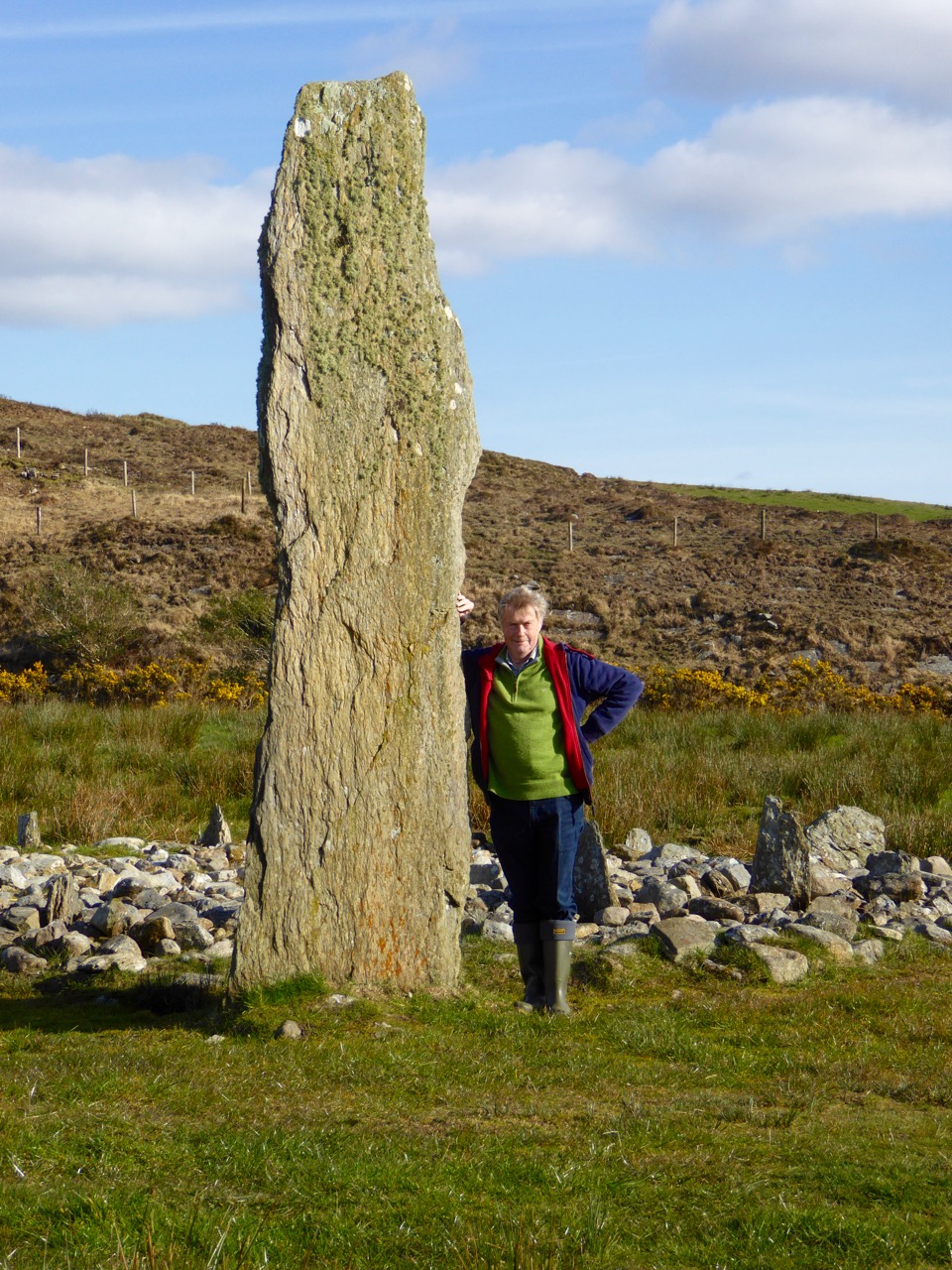
A cause for wonder: the tall standing stone at the Kealkill complex. A stone circle lies to the west while a radial cairn is behind (to the south of) the stone pair

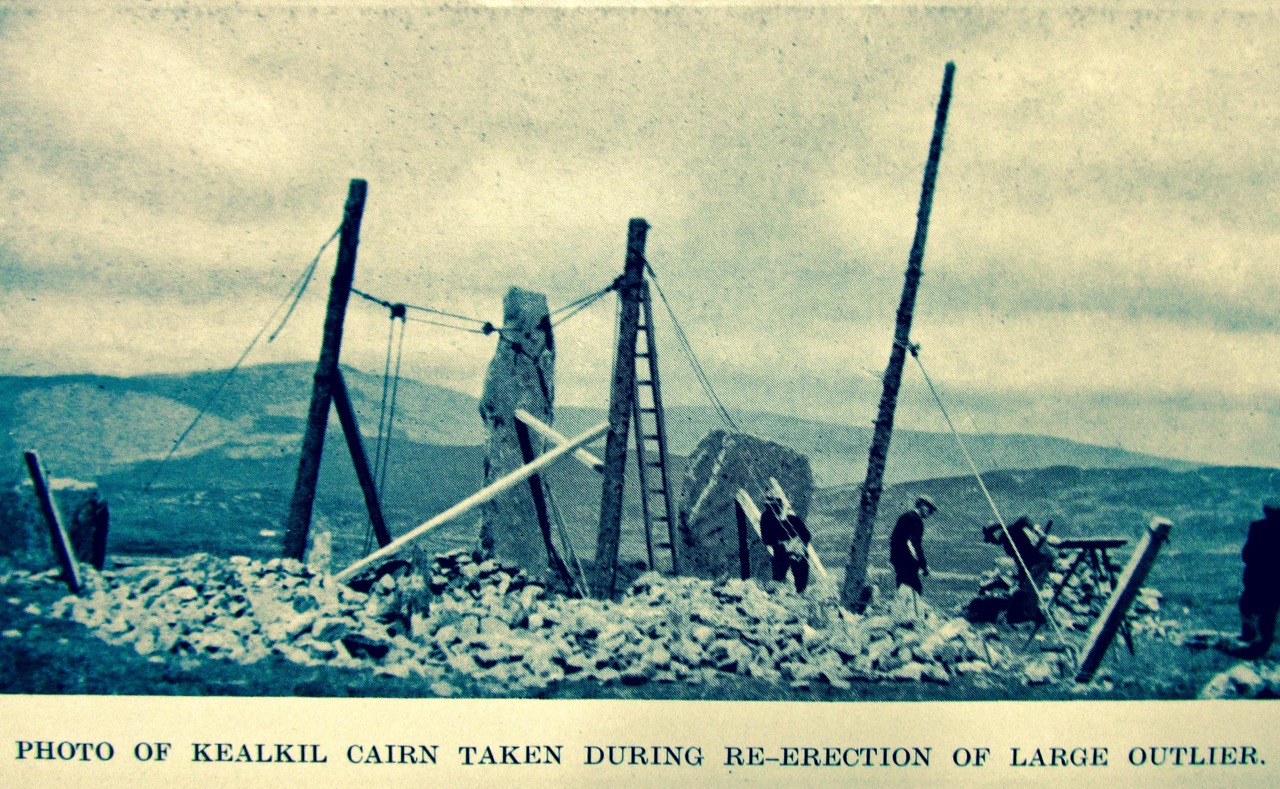
So, it’s Finn McCool and the Tuatha de Danaan that we have to look to, perhaps, for explanations as to why we find these incursions on our natural landscape standing as solidly and unchangingly as they did a few millennia ago. Perhaps not quite unchangingly, in fact: archaeologists have had a hand in the present day appearance of some of them. In the photo above you can see me wondering at the 4.6 metre high megalith which is part of the Kealkill complex. When the site was explored by Sean P O’Ríordáin in 1938 that stone had broken off and had fallen: O’Ríordáin re-erected the remaining part of the menhir. The original would have been at least a metre higher than what we see today.

kealkill excavation report

kealkill diagram

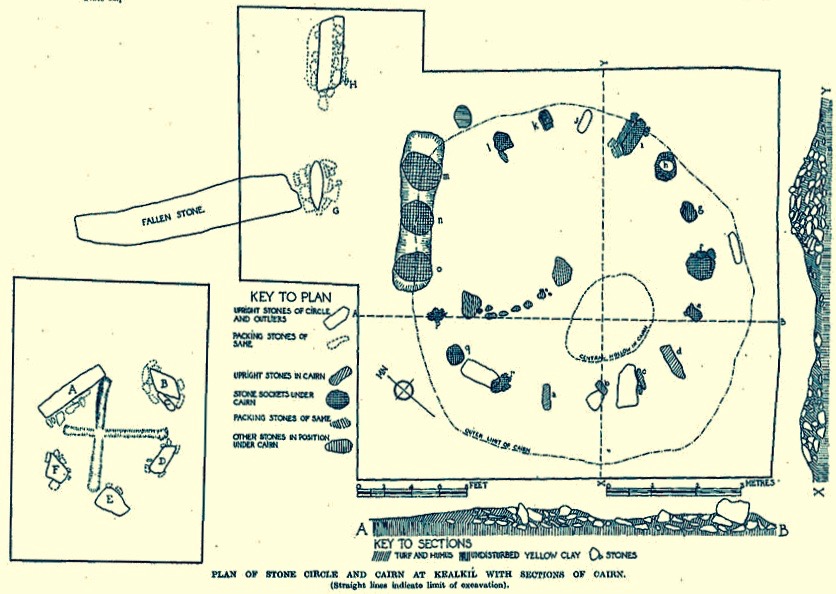
From O’Ríordáin’s published report of the excavation of the Kealkill complex: top, the taller standing stone being re-erected and, below, a survey diagram of the findings. From the Journal of The Cork Historical Archaeological Society, Volume XLIV ,1939

The Breeny More site and the Kealkill complex are near neighbours. Both contain various artefacts: standing stones, stone circles and boulder burials. Kealkill also has a radial cairn. Both are set against a background of moorland, mountain and bay. Kealkill is easily accessible although boggy.

Most sites are on private land and permission should always be sought to visit, unless it is obvious that access is welcomed, as here at Kealkill

Our second archaeological adventure this week was also boulder burial orientated. This was close to home in the townlands of Rathruane, Lisheen Lower and Bawngare. Again, Finola has detailed the findings in her post, but I was struck at each of these sites that the their settings, too, were on high ground with excellent distant views. In each case, mountains were prominent. I couldn’t help thinking that the boulders could have been placed where they are specifically because of the visibility to the various peaks. Might it even be that territories were marked out by these huge stones? Boundaries have always been important to human strategies: we have been identifying and ‘naming’ the land before records began to be written. Field names, townland names, parishes, baronies… A whole lot more to be researched, visited and recorded. Our long walk through Ireland’s past has barely begun!

Robert at Kealkill

Hill of Slane

abbey + college

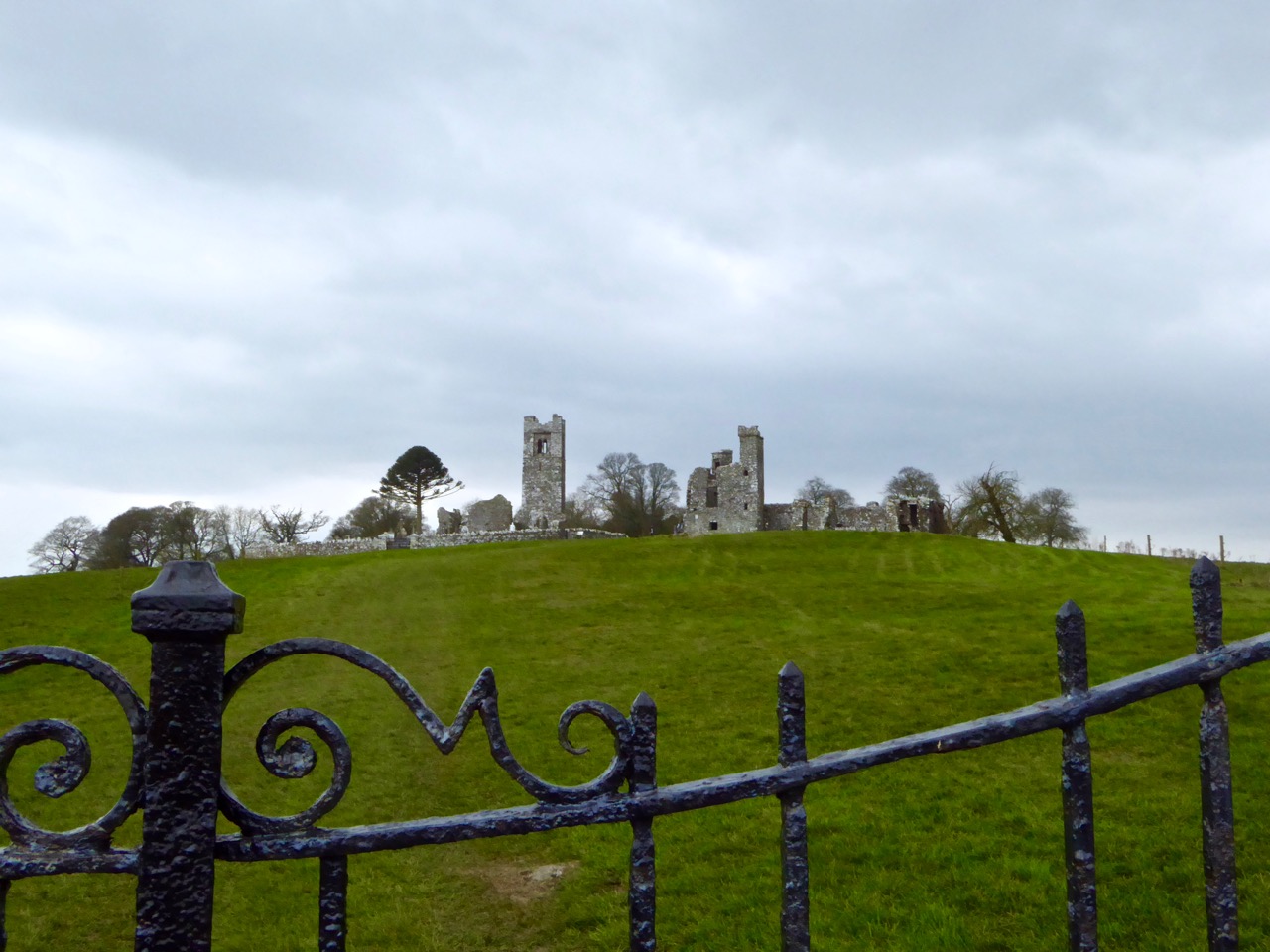
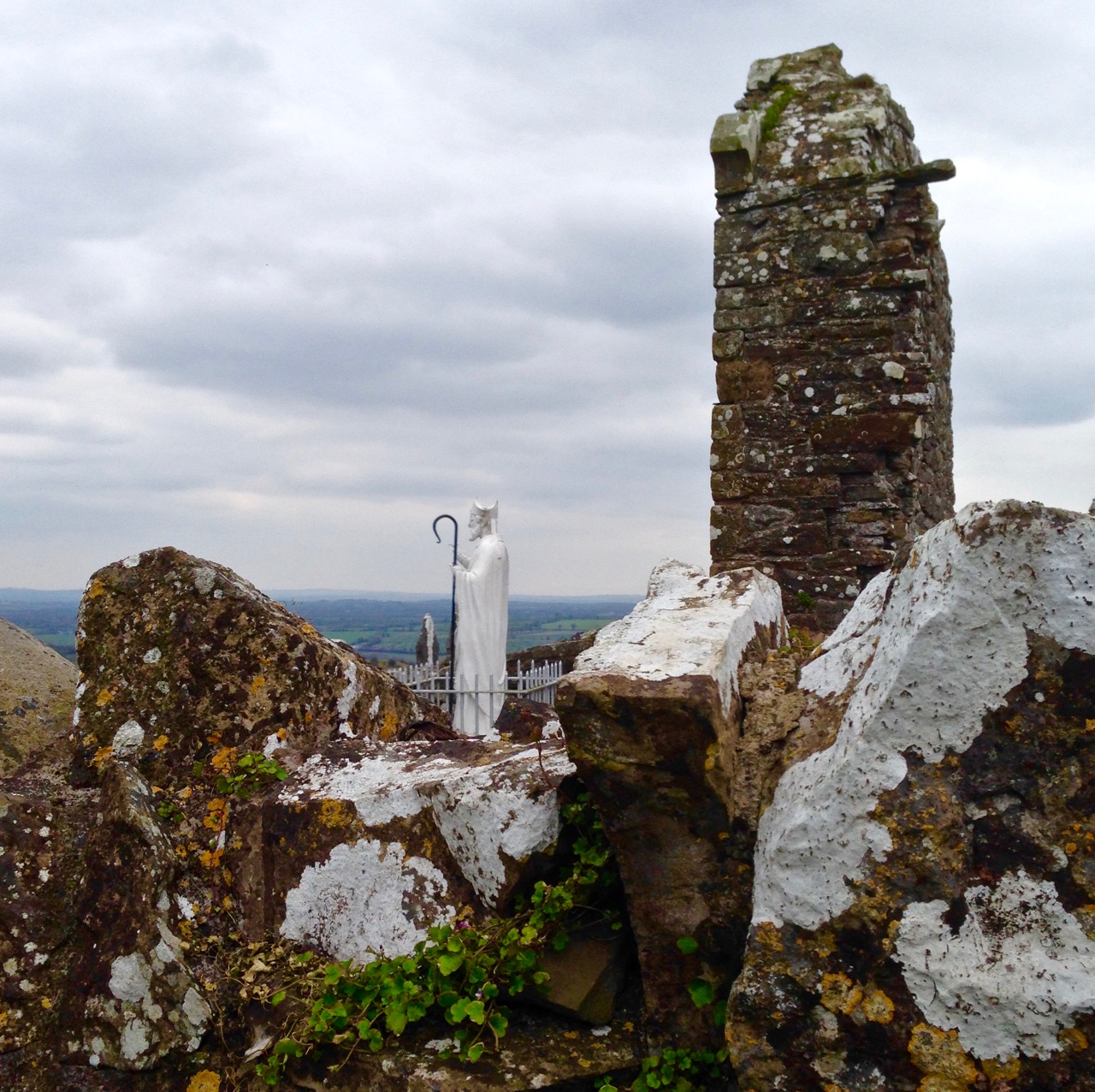
Our travels took us to the Hill of Slane. On its summit overlooking the River Boyne a depleted Saint Patrick (he’s lost his hands) looks forever out to the east, facing towards the mound of Millmount at Drogheda, about 15 kilometres away according to our Crow. Millmount is reputed to be the site of an ancient passage grave – and the burial place of Amhairgin mac Míled, who was regarded as the originator of the arts of song, poetry and music. The very first Irish poem The Song of Amhairgin was recited by him as he entered Ireland from the River Boyne, below the mound. Here’s a version of it translated (from the original Irish) by Lisa Gerrard:

I am the wind on the sea
I am the stormy wave
I am the sound of the ocean
I am the bull with seven horns
I am the hawk on the cliff-face
I am the sun’s tear
I am the beautiful flower
I am the boar on the rampage
I am the salmon in the pool
I am the lake on the plain
I am the defiant sword
I am the spear charging to battle
I am the god who put fire in your head

Who made the trails through stone mountains?
Who knows the age of the moon?
Who knows where the setting sun rests?
Who took the cattle from the house of the Warcrow?
Who pleases the Warcrow’s cattle?
What bull, what god created the mountains’ skyline?
The cutting word – the cold word?

The Saint lit the Pascal Fire on the Hill of Slane soon after his mission in Ireland began (the flame is still lit at Easter). That seems to me a symbolic action: a challenge issued, perhaps to the pagan traditions that had gone on for generations before the new religion arrived. Patrick’s fire-raising activities are also a comparatively recent addition to the lore of the hill: according to the Metrical Dindsenchas – combining poems from the Book of the Dun Cow, the Book of Leinster, the Rennes Manuscript, the Book of Ballymote, the Great Book of Lecan and the Yellow Book of Lecan – all sources well over a thousand years old and themselves most likely compiled from the timeless oral traditions of the Bards – Slane is the burial place of an ancient king:

…Slaine, whence the name? Not hard to say. Slaine, king of the Fir Bolg, and their judge, by him was its wood cleared from the Brugh. Afterwards, he died at Druim Fuar, which is called Dumha Slaine, and was buried there: and from him the hill is named Slaine. Hence it was said: Here died Slaine, lord of troops: over him the mighty mound is reared: so the name of Slaine was given to the hill, where he met his death in that chief abode….

(Translated by Edward J Gwynn in 1903)

The ‘mighty mound’ must surely be the enigmatic earthworks hidden in the trees to the west of the abbey and college ruins: these are variously described as a barrow or a motte.

Over the gate

Top: medieval profile; Above left: ‘Creature of Slane’ decorating the walls of the old college, and Above right: the tower of the monastery which dates from the 16th century

Mostly what we see today on the summit here is medieval: the hill remained a centre of religion and learning for many centuries after St Patrick. A friary church was established on the site of an earlier monastery in 1512: it was abandoned in 1723. Beside it is a medieval college, probably also 16th century. The stonework here includes some extraordinary carvings, sadly much dilapidated.

I musn’t shy away from another tradition associated with Slane Hill: the authors of this book make a convincing case for an alignment right across Ireland that takes in several historically important sites:

41s5jHsihjL…The Millmount-Croagh Patrick alignment stretches over 135 miles from the east coast of Ireland to the west, and has significant St Patrick associations … we found that the line from Millmount to Slane westwards travels all the way to Croagh Patrick, perfectly intersecting the little chapel on the summit of The Reek with breathtaking accuracy. Significantly, this line skirts the hills of Loughcrew on its way, and also travels directly through Cruachan Aí, one of the largest archaeological complexes in the whole world, with 200 monuments located in a 10-mile radius. Croagh Patrick, known in prehistoric times as Cruachan Aigle, is the place where, according to legend, Patrick banished the serpents from Ireland…

If nothing else, the theory at least demonstrates that St Patrick’s influence stretches the length and breadth of the country: witness his statue looking out from the Hill of Slane and another looking across from the lower slopes of The Reek!

croagh patrick 6

croagh patrick 5

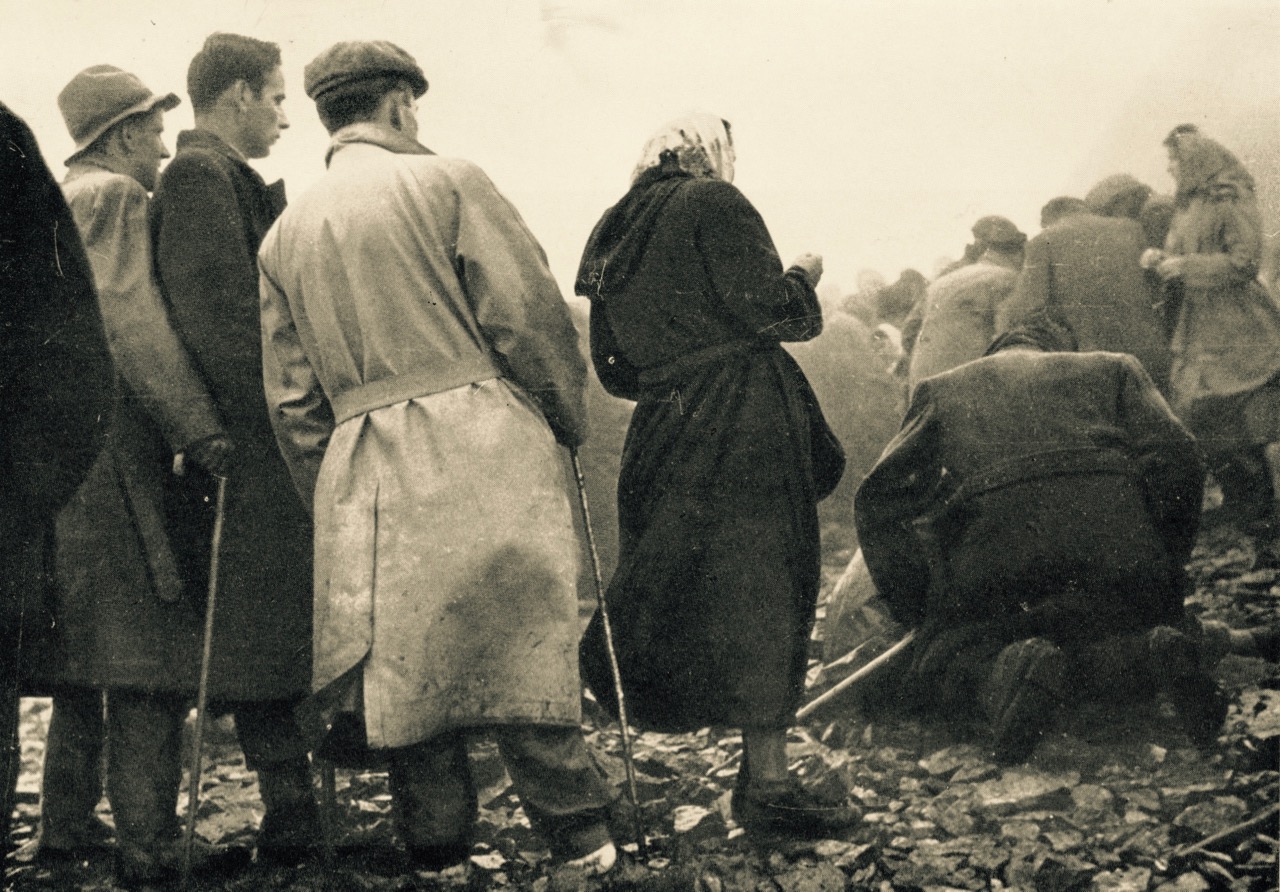
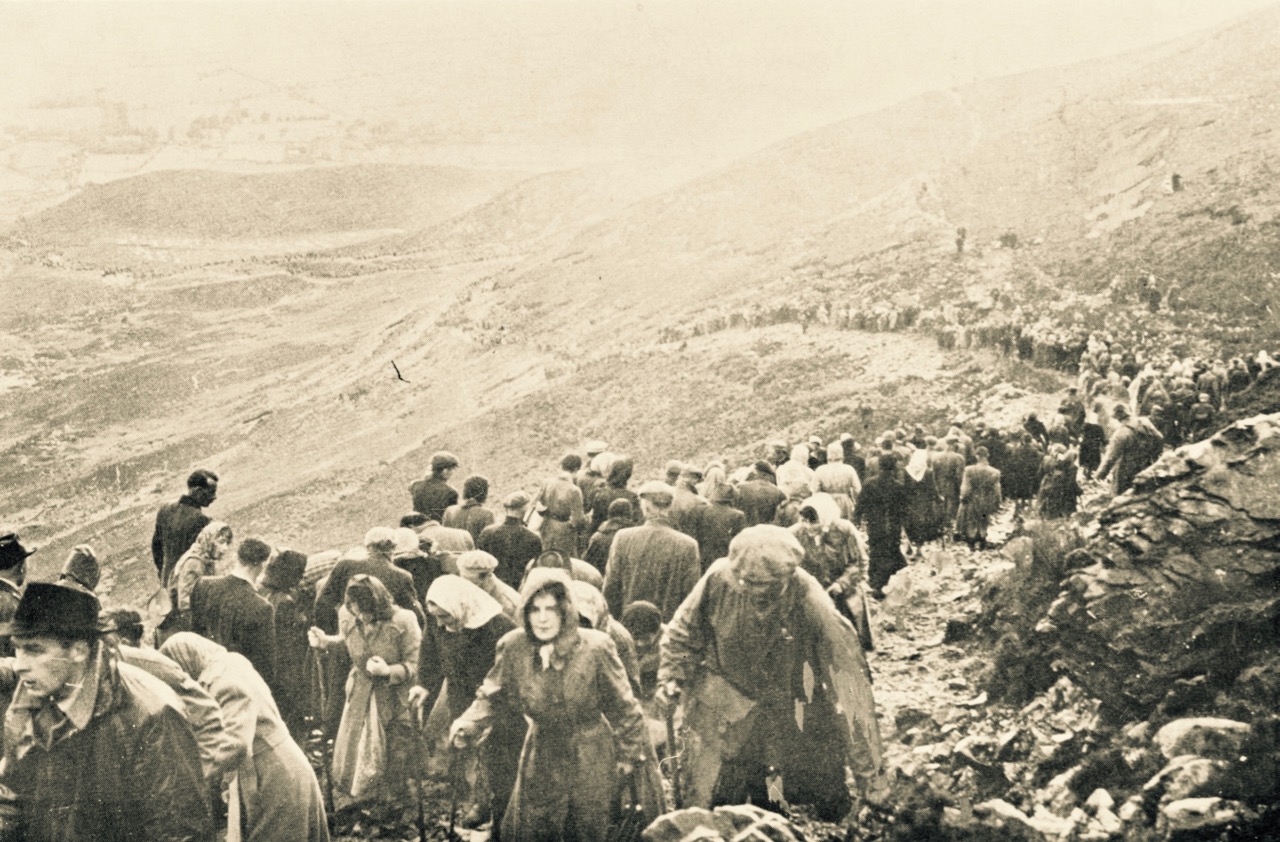
Pilgrimage for St Patrick on The Reek: Photos from the collection of Tomás Ó Muircheartaigh, who documented life in rural Ireland between the 1930s and the 1950s

St Patrick (his day was last week), Easter (this weekend), the Boyne neolithic monuments, Irish poetry, ancient kings and their battles, a little bit of astro-archaeology, the commemoration of the 1916 uprising in Dublin, the fight for Irish freedom… All seem to have joggled along beside each other in our recent explorations. Somehow they fit together and define an Irish-ness which is all-encompassing but not overwhelming. History is dancing all around us: alive and relevant.

watching saint p


Mosaics and Maharajas, Part 2

East Window

The more I look into the Church of the Ascension in Timoleague the more fascinating it becomes. Last week I concentrated on the mosaics and the story of the Maharaja, but what I failed to say is that the mosaic tiles were made by Minton, as were the encaustic tiles on the floor. Minton is known for its bone china but in fact it was also was the leading producer of British ceramic tiles during the 19th century.

Encaustic Tiles

The encaustic floor tiles as well as all the mosaic tiles were made by Minton

The windows were also produced by the most famous British stained glass artists of their day, as we shall see. Taken as a whole then, the architecture and decoration of this singular church leads us directly to Augustus Pugin, one of the giants of the Victorian Age, and locates it in the highest echelons of the Gothic Revival Movement. This hidden gem is even more of a jewel than I suspected!

Pugin

Who was Augustus Pugin? Born in 1812, son of a French emigré draughtsman and an English mother, Pugin trained in his father’s workshop, becoming proficient in design and drafting by aged 9. Conversion to Catholicism and a visit to Nuremberg in Germany convinced him that the greatest expression of church architecture was High Gothic and he set about challenging, and ultimately revolutionising, the prevailing design norms of the Victorian period. He was incredibly prolific and influential, such that today when we think about Victorian architecture and gothic revival, we are really thinking about the work of Augustus Pugin – even though he died in 1852 at the early age of 40.

The signature of the Warrington Stained Glass Company on the East Window

Pugin designed several churches in Ireland (mostly Catholic), especially in Wexford, where you can follow the ‘Pugin Trail’. (I don’t know who wrote the Wexford Pugin Trail brochure, but it is one of the best explanations of his style and influence that I have read.) While he did NOT design the Church of the Ascension, his influence is everywhere in evidence, along with the use of his favourite suppliers – Minton for the mosaics and tilework and Warrington, Lavers and Westlake, and Mayer for the windows.

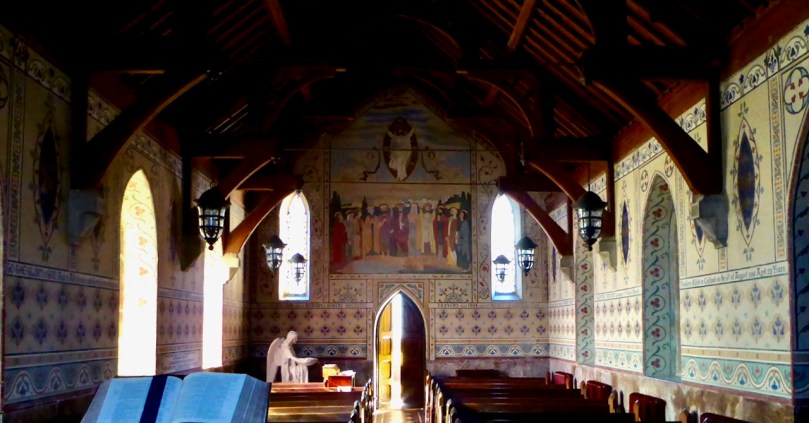
Church interior looking east

Hallmarks of gothic revival: a beautiful hammer-beam ceiling, tall pointed windows with simple Y tracery, everything to lead the eye upwards

The real art of making stained glass in the medieval style had been lost and during the 18th century colour was mostly painted directly on the glass using an enamel technique. But part of the gothic revival ethic was to base manufacturing technology as closely as possible on the original so there was also a re-discovering of real stained glass processes where the colour was fired directly into the material and sections of glass were separated by lead. This art was revived in the 19th century by artists and craftspeople who studied medieval glass and learned through trial and error how to make it again.

The Presentation

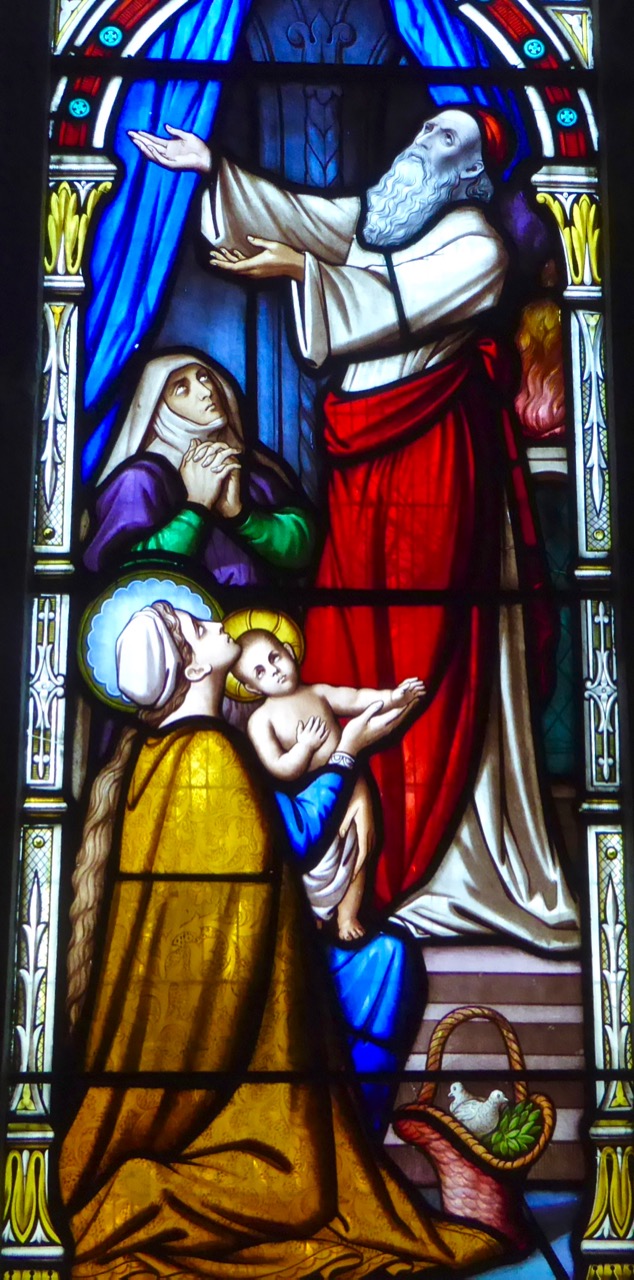
The Presentation, East Window

Let’s start with the East Window, the work of Warrington. William Warrington was one of the leading stained glass artists of his day. Like Pugin, he was a student of the gothic style and he strove to reproduce glass work as close as possible to medieval models. He had trained with his father as a painter of armorial shields, an influence that can be seen in his designs. He wrote a book in 1848 on The History of Stained Glass, but fell afoul of the group called the Cambridge Camden Society (or CCS) who had set themselves up as the arbiters of taste in all things related to church architecture. Partly this was the outcome of class prejudice: the CCS, all university educated men, did not believe that a “mere artisan” should be allowed to have an opinion of what they saw as their own exclusive preserve.

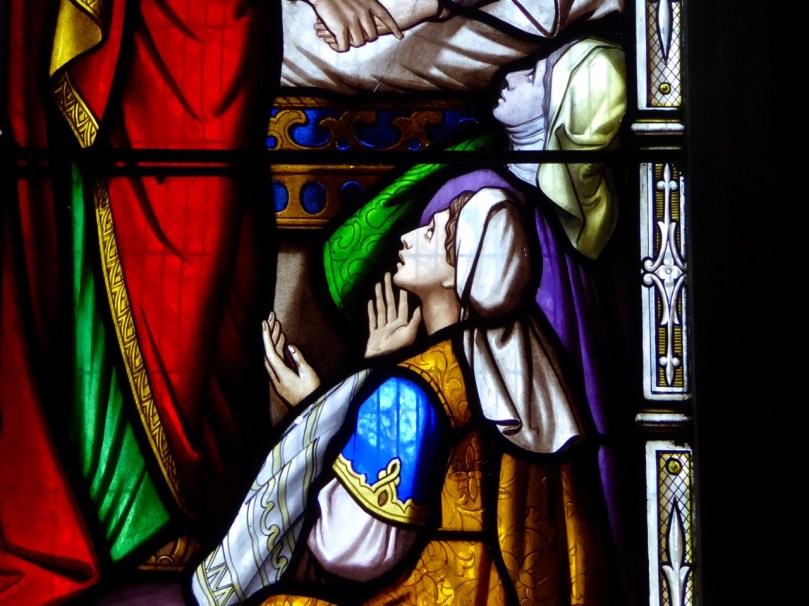
supplicants

Detail from The Raising of Dorcas, East Window

By any standards, this is a beautifully executed window. According to the Wikipedia article, Warrington’s figurative painting strives towards the Medieval in its forms, which are somewhat elongated and elegant, with simply-painted drapery falling in deep folds in such a way that line and movement is emphasised in the pictorial composition. His painting of the details, particularly of faces, is both masterly and exquisite.

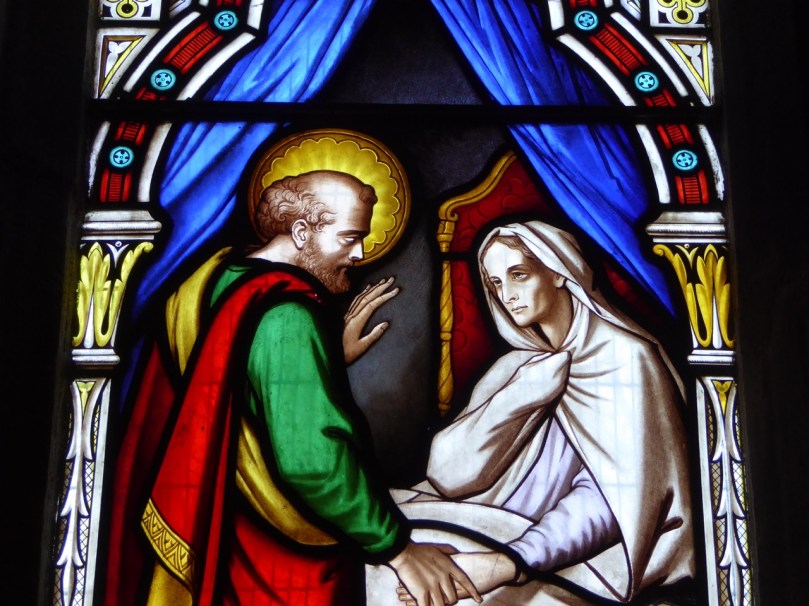
Raising Dorcas

The Raising of Dorcas, East Window. In this story, from the Acts of the Apostles, Peter prays over the dead body of Dorcas, who returns to life

This is all clearly visible in the East Window, a masterful set of three lights depicting the Crucifixion in the centre, Raising Dorcas on the left and the Presentation in the Temple on the right. Note the use of heraldic motifs above the main panels, and the tall medieval-style spires of foliage, all typical of Warrington glass.

East Window heraldic

For some reason, this was all too much for the Bishop of Cloyne when he came to consecrate the new chancel in 1861. Cloyne Cathedral itself was a true medieval building but much simpler in its interior decoration. The Bishop obviously had less sympathy with this new style of highly decorated church interiors and objected in particular to the East window, which he viewed as similar to the ‘graven images’ popular in the Catholic churches.

On the cross

He refused to conduct the consecration unless the window was covered in a cloth. The cloth, apparently stayed up a long time, and when it came down the window continued to attract opprobrium – it was even attacked and broken on at least one occasion! It’s hard to understand now how such a beautiful piece of devotional art could have inspired such an over-the-top reaction.

Jesus Walking on the Sea

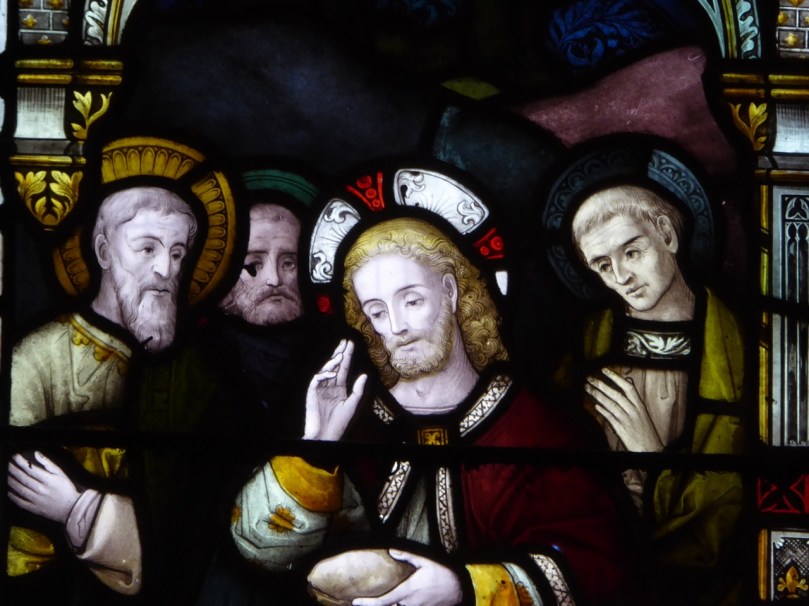
The Sermon on the Mount by Lavers and Westlake

Three sets of windows in the nave are by Lavers and Westlake, yet another of the London-based stained glass firms that responded to the new demand for gothic-revival glass windows in 19th century Britain. Nathaniel Westlake was another scholar of stained glass, publishing a four volume work, A History of Design in Painted Glass, and also a decorative painter of wall and ceiling panels. He was considered one of the leading exponents of stained glass art with a style considered to be Pre-Raphaelite. He worked with William Burges for a while – the one who designed every aspect of St Fin Barre’s Cathedral in Cork – who recommended him to the firm of Lavers and Barraud. In 1868 he became their chief designer and was responsible for much of the success of the firm, which captured a large share of the booming stained glass industry. Unlike Warrington, however, Westlake did not clash with the CCS, probably because his partner, Lavers, was a member of that society.

Loaves and Fishes detail

A detail from the Lavers and Westlake Loaves and Fishes window showing Westlake’s Pre-Raphaelite tendencies

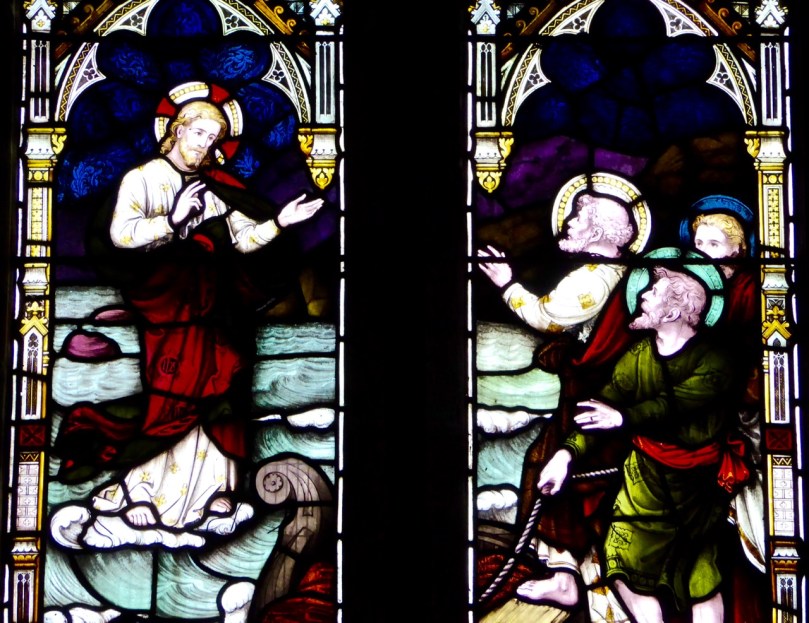
The three windows by Lavers and Westlake are in the nave on the north and south walls. Those on the north wall depicts the Miracle of the Loaves and Fishes and the Sermon on the Mount. That on the south wall is of Jesus Walking on the Water.

Loaves and Fishes Detail

Jesus Walking on the SeaAbove, detail from the Loaves and Fishes. Below, Jesus Walking on the Water

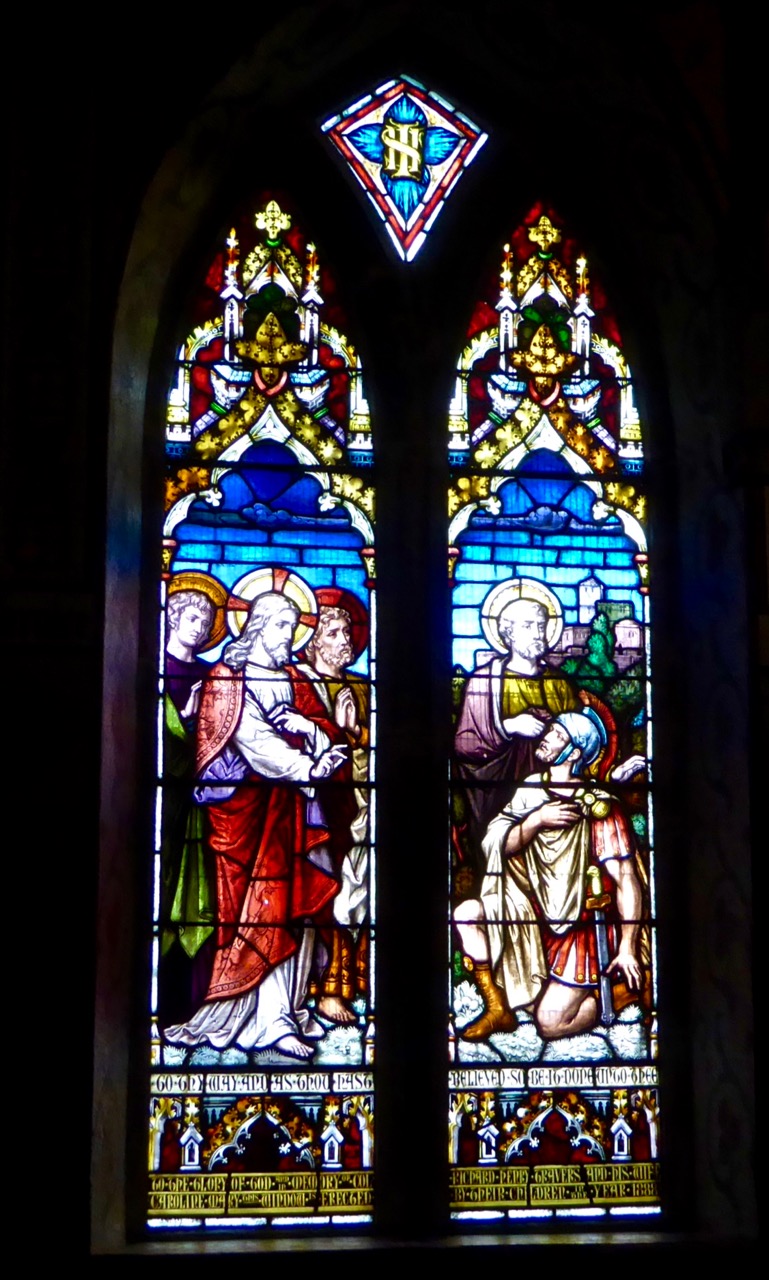
The final window on the south wall is by the firm of Mayer and the subject is The Good Centurion. Franz Mayer and Co was possibly the busiest stained glass company of all and are actually still in business under the name Mayer of Munich. The founder, Franz Mayer, started a company dedicated to “…a combination of fine arts, architecture, sculpture and painting…”. This firm was officially recognised by the Vatican so it was very popular with Catholic churches and there are many examples of Mayer windows throughout Ireland. In 1865 the firm opened a London branch, which supplied this window.

The Good Centurion

The Good Centurion, a window by Mayer of Munich and London

There are three more windows in the south transept, these ones by the firm of Clayton and Bell. They are very fine indeed and I particularly like the east and west window pair which depict, apparently, Life and Death, for their wonderful luminous colours.

Clayton and Bell windows, detail 

There are several more noteworthy features of this fine little church (the pulpit, the carved wooden furniture) but I think I will leave it at that for now. I’ve learned a lot about the Gothic Revival Movement through this exercise, and about some of its chief practitioners. I’ve been struck, as the reader might be, at how British (rather than Irish) the influences are in this church, but that of course was very much a function of the times. At some point I will write about the enormous Catholic church that dominates the village, with a view to showing how the great era of Catholic church building in Ireland finally led to an emphasis on Irish architecture and Irish artisans. For a very brief word on that, you can read my post A Tale of Four Churches.

Timoleague Three Churches

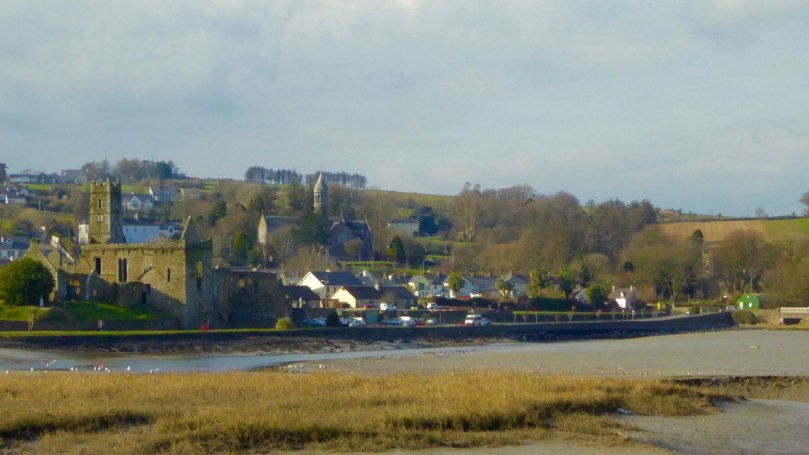
Timoleague. On the left are the ruins of the medieval friary, the Catholic Church dominates the hilltop, and the Church of the Ascension is behind the green building on the far right

And as for Augustus Wellby Northmore Pugin – you can learn more about this complex genius through the BBC Program Pugin: God’s Own Architect, available on YouTube.

Mosaics and Maharajas, Part 1

This week when we were passing though Timoleague I had a fancy to see inside the Church of the Ascension as I had heard it was ‘worth a look’.  Understatement of the century! What we saw was astonishing, beautiful, and overflowing with history and stories.

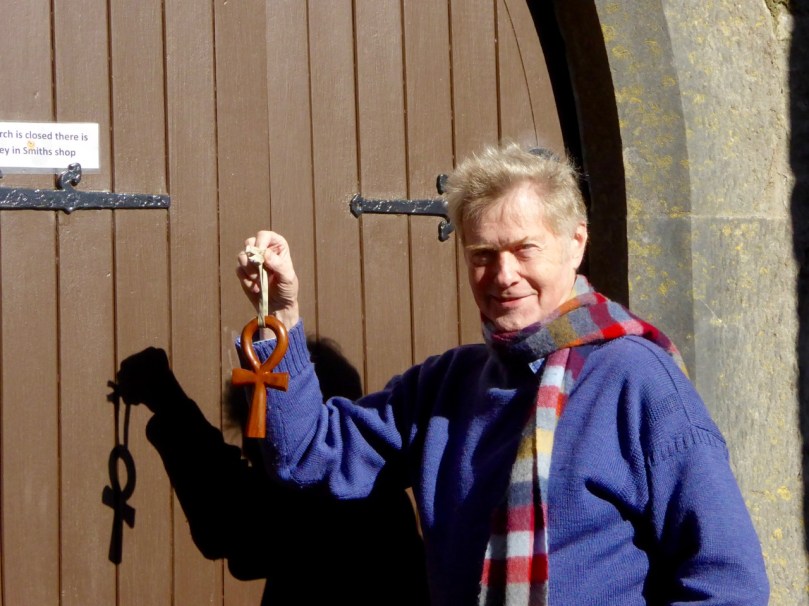
The key is kept at the Post Office on the main street – just ask

This Church of Ireland building is typical of the simple gothic revival style favoured by the funders – the Board of First Fruits. (Read more about this almost-forgotten organisation in a post from the always excellent Irish Aesthete.) Built from the ruins of an earlier (probably medieval) church it was consecrated in 1811 but enlarged later in the 19th century. The pointed-arch windows and the square tower with louvre vents are unremarkable features on the exterior, but open the door and step inside and you enter another world.

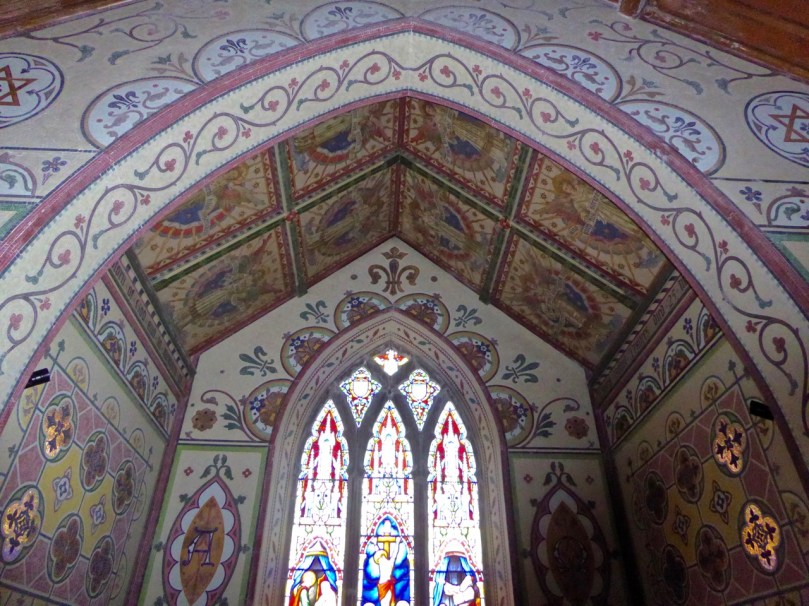
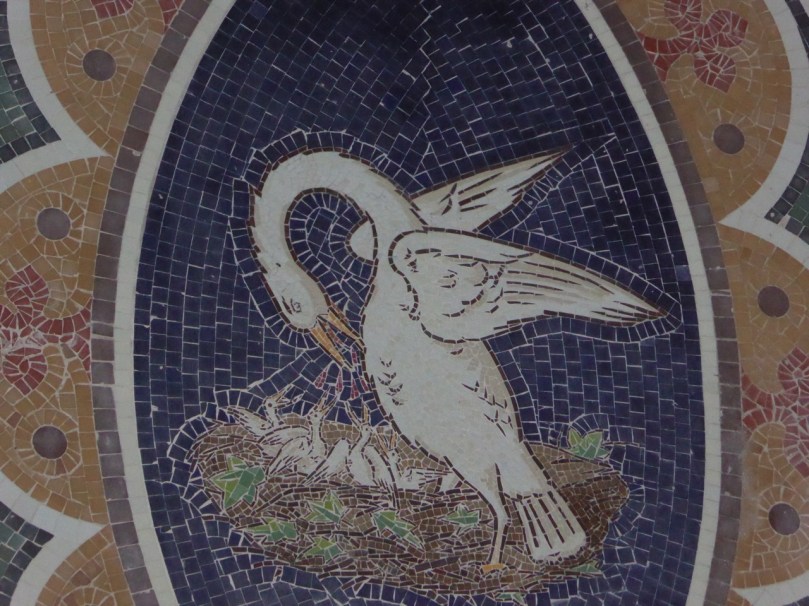
The mosaics are the most obvious (although by no means the only) glory of this church. Designed to commemorate members of the Travers family (yes, the same Travers whose memorials dot the walls of St Fin Barre’s) they cover the entire interior of the church, apart from the hammer-beam ceiling in the nave. They incorporate motifs in several traditions – Christian, Jewish and Islamic.

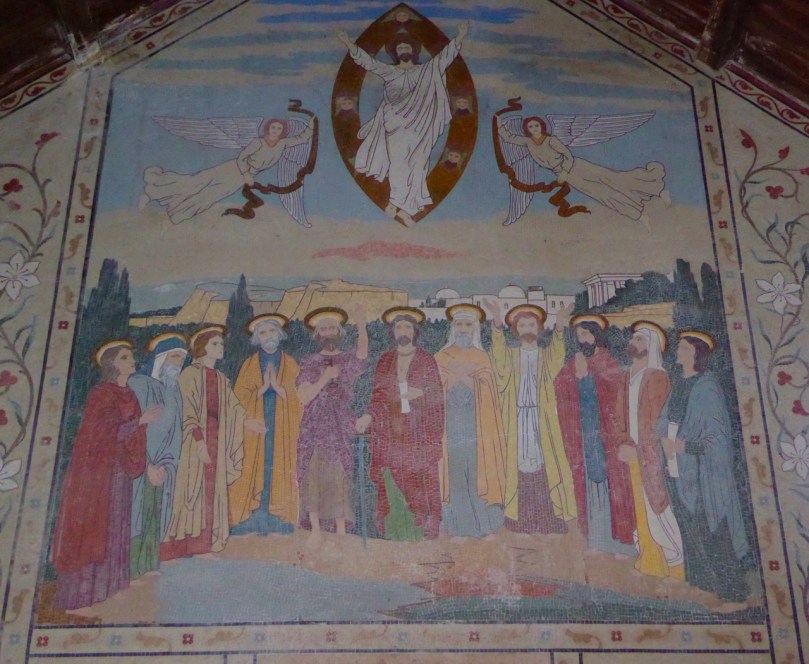
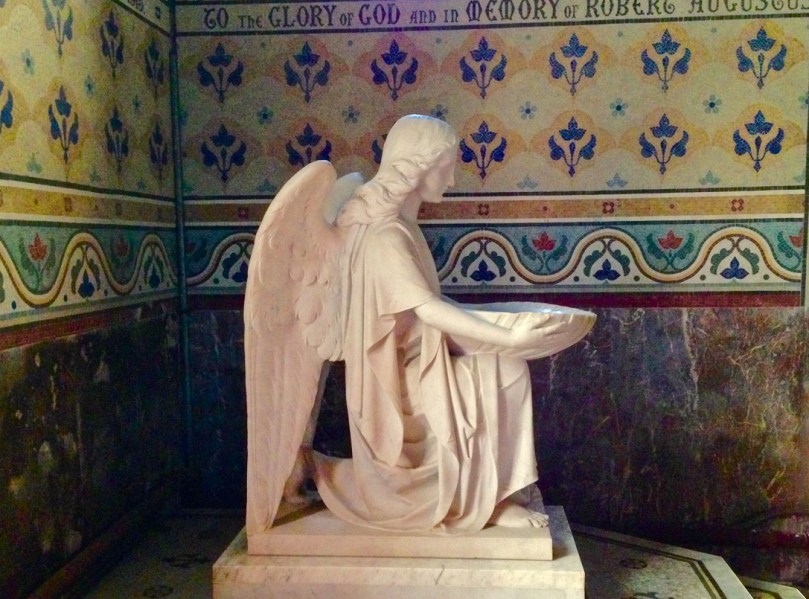
Above the west doorway is the Ascension scene – the apostles are rather conventional but I love their colourful robes and the flower borders. Below them is an angel font, similar to a pair in Tralee Cathedral, made of Carrera marble, with yet more mosaic detail.

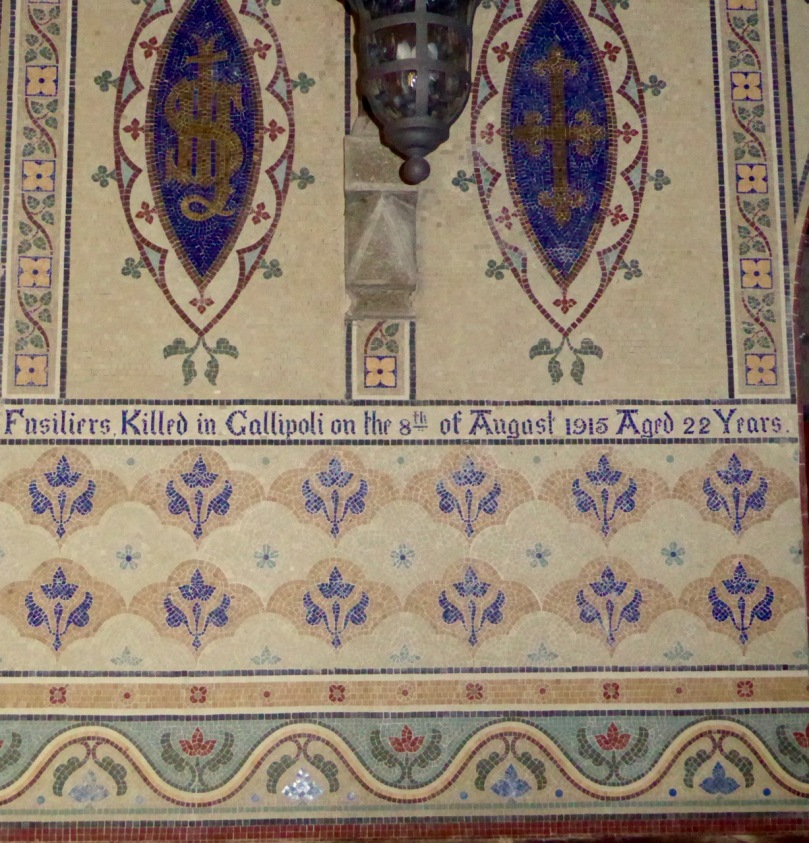
Members of the Travers family are named in mosaic around the walls – Robert Valentine Travers of the Munster Fusiliers was only 22 when he fell at Gallipoli.

In the chancel, above the marble altar, the ceiling is covered in mosaic, as are the walls, some of which have been gold-leafed. The richness of the detail and the vision that dictated such a glorious conjunction of imagery and colour is jaw-dropping, and mark this little provincial church as part of the influential Oxford Movement of the Victorian era that aimed to return ornamentation and beauty to spaces of worship.

This is the great High Church and Low Church debate. A group called the Cambridge Camden Society promoted a return to gothic architecture: the classical style was seen as pagan, while the great gothic cathedrals of Europe represented the apex of Christian architecture. (More about this in the next post, which will concentrate on the stained glass.)

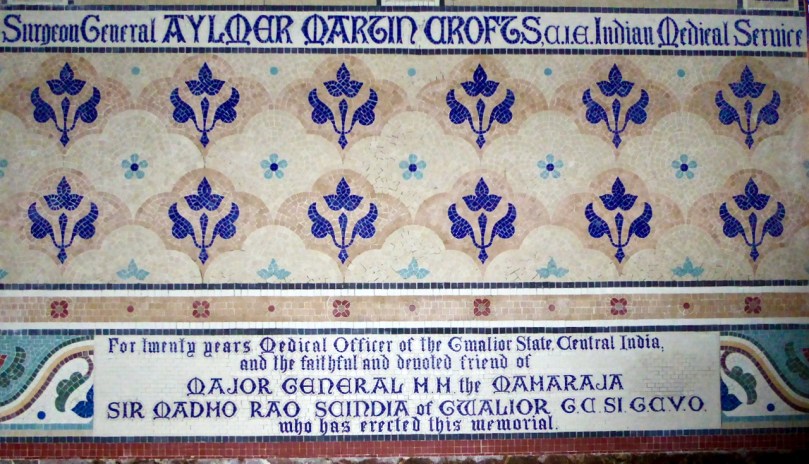
Installing mosaic is a time-consuming and expensive process – this one involved importing artisans from Italy and the parishioners eventually received help from an unexpected quarter. The final series of installations was paid for by an Indian Maharaja!

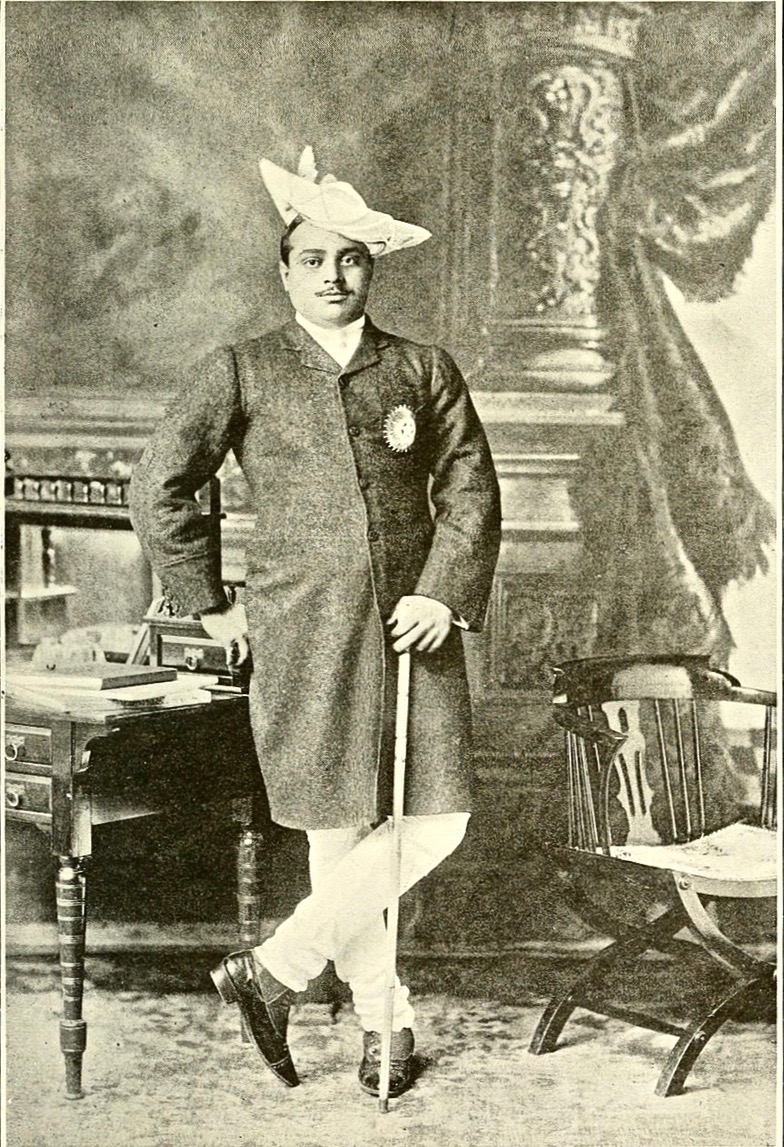
Madhav Rao Scindia was the Maharaja of Gwalior. He was wealthy and looking for places to  spend his money. What, you don’t believe that? Just read this story about the fabulous and secret treasure chambers of Gwalior. No – in fact, he was highly-educated ruler who did much to modernise his state but he was only 9 years old when he inherited the title.

The Maharaja in his prime

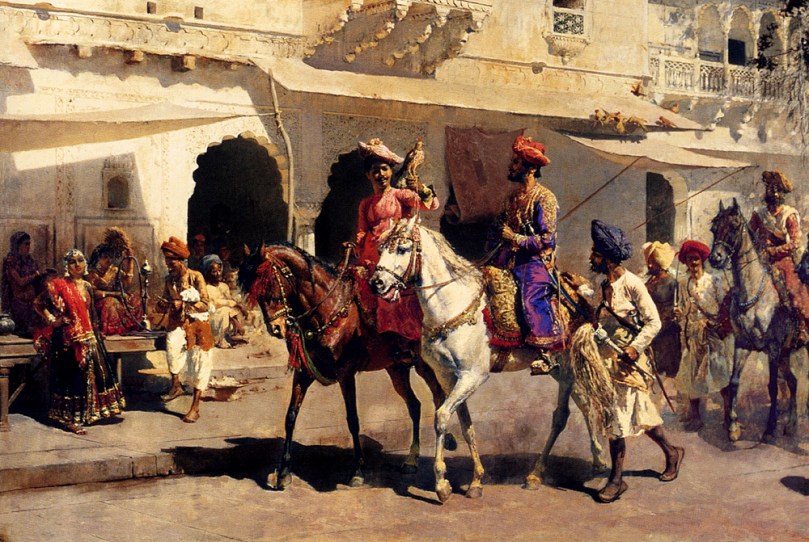
The British appointed as his surgeon and tutor an Irish doctor from Timoleague – Dr Martin Crofts. A long friendship grew, based on mutual respect (and shared tiger-hunting expeditions) and it is said that Crofts saved the life of the Maharaja’s son. 

Leaving for the Hunt at Gwalior by Edwin Lord Weeks

When Crofts died suddenly in 1915, after only a year of retirement, and was buried in Timoleague the Maharaja funded the completion of the mosaics as a memorial to his friend and mentor.

Thus, a tiny and obscure church in Timoleague invokes not only a great architectural movement but, like the memorials last week, echoes of the Empire and an unlikely international friendship. But this is not the last of the story – next week we will explore the other glory of this little church, the stained glass windows. In their own way they also link Timoleague to the great artistic trends of their age.

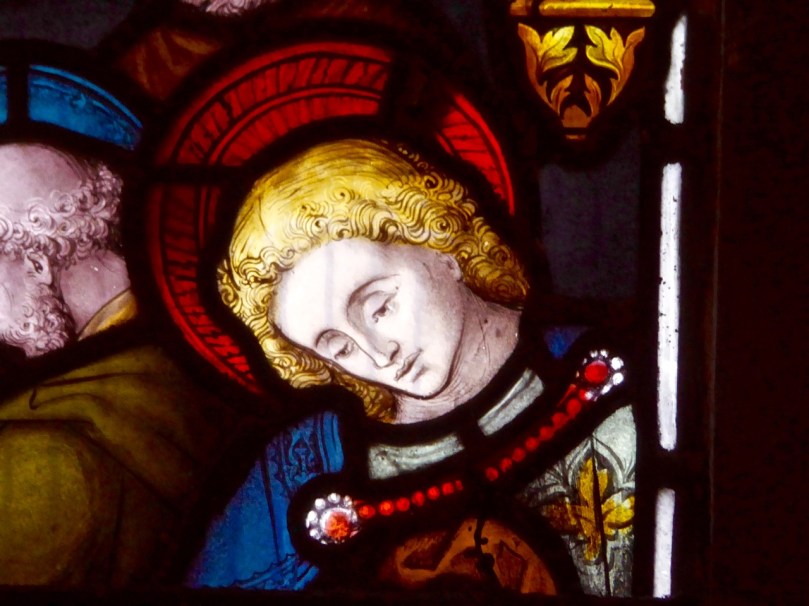
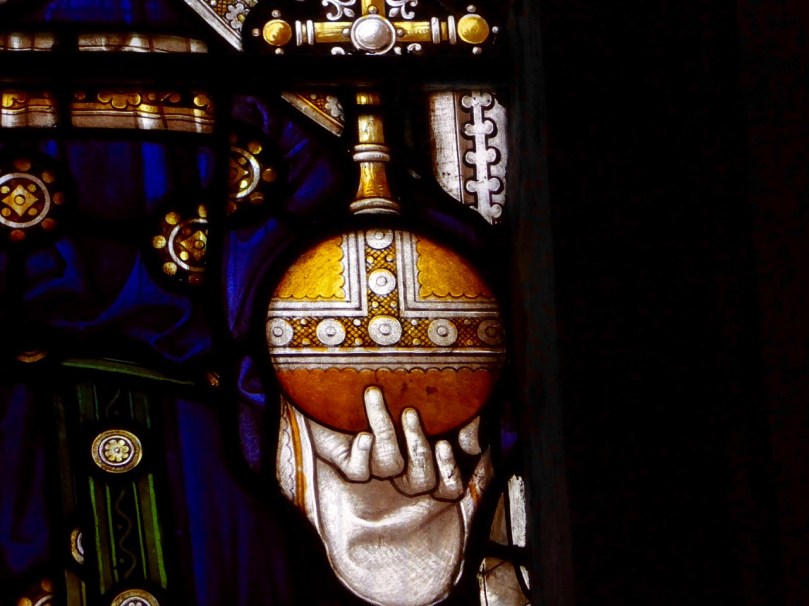
A detail from one of the windows

Part 2 can be seen here.

Outposts of Empire

St Patrick's Cathedral

There’s a class of monument in Ireland that I am only discovering as an adult. There is a reason for this – as a young person growing up in a conservative Catholic culture, it was verboten for us to enter (yes, even just enter) Protestant churches. I was used to a certain iconography – stations of the cross, statues, stained glass of saintly subjects – and very rarely did it include memorials to deceased individuals. That was confined to the graveyards.

St Fin Barre's

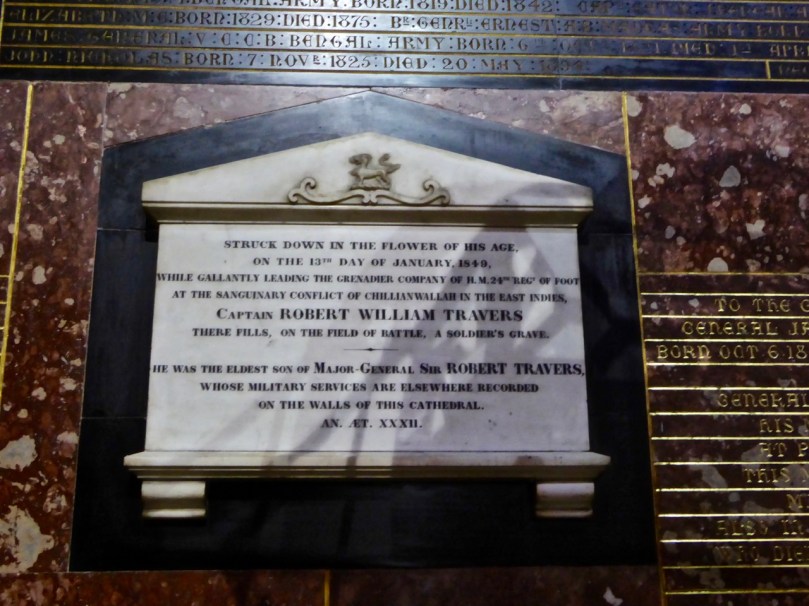
No modern Irish reader of this memorial at St Fin Barre’s Cathedral in Cork could fail to be aware of its incongruities

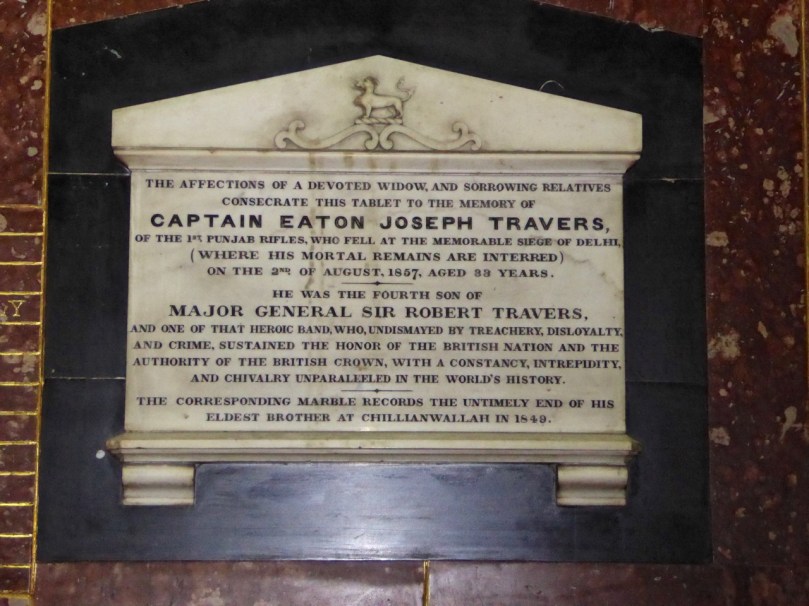
As our readers will know by now, Robert and I never pass an open church without poking around inside. Last year, in The Love Which He Bare Her, I wrote about the wonderful memorials I have discovered to women, cataloguing their many virtues. That was for St Valentine’s Day so since it’s still February I thought I would do a similar post for men. There are lots – poets, priests and philosophers, benevolent and erudite – but the ones I have been most taken by are the military memorials* we have discovered in Protestant churches.

St Barrahanes 2

Irish men served in the British army all through our long and complex history together. My father served in the Second World War although he saw no combat. My maternal grandfather was a Sergeant in the Welsh Fusiliers stationed in Dublin where he met my grandmother, whose own father had served in India and Afghanistan.

Left: My father, Hugh Finlay, during his time in the British Army, stationed in Belfast during the Second World War. Right: The grave of my Welsh grandfather, William Owen Roberts, in The Hague, Holland. He saw action as a young man in the Boer War. He died of the Spanish Flu on his way home from the First World War.

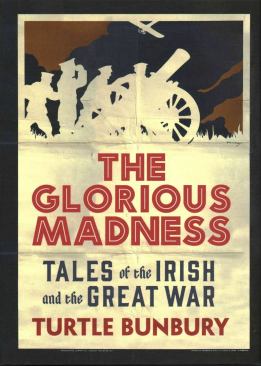
Although this was part of family lore, it received no attention in our history lessons. Once again – there’s a reason for this. It’s been succinctly expressed by Turtle Bunbury in his book The Glorious Madness:

The Glorious MadnessFor those who returned to Ireland after the war, the horror of their experience was magnified by the realisation that everything they fought for amounted to nought and that anyone who thought otherwise was no longer welcome. Although many of those who won independence for the Irish Free State had formerly served in His Majesty’s forces, there were powerful elements within the new order that would obligate the country at large to throw an unforgiving eye upon ex-servicemen of the British Empire. In time the hostility became amnesia and the Ireland of my youth in the late 20th century seemed to have a history in which the only war the Irish ever fought was for freedom from Britannia’s rule.

Turtle’s book opens our eyes to the vast numbers of Irish men and women who fought in WWI and their reasons for doing so – reasons as diverse as their backgrounds. Read the chapter on Tom Kettle and Emmet Dalton, for example, or the piece on Liam O’Flaherty (author of The Informer) or that on Cork’s famous son, Tom Barry, as well as those on members of the Anglo-Irish aristocracy such as Lord Desmond FitzGerald, or famine-survival emigrants such as Knox D’Arcy who helped found BP Oil. Thankfully, the collective amnesia is being faced now and memorials to WWI dead are springing up in country graveyards around Ireland.

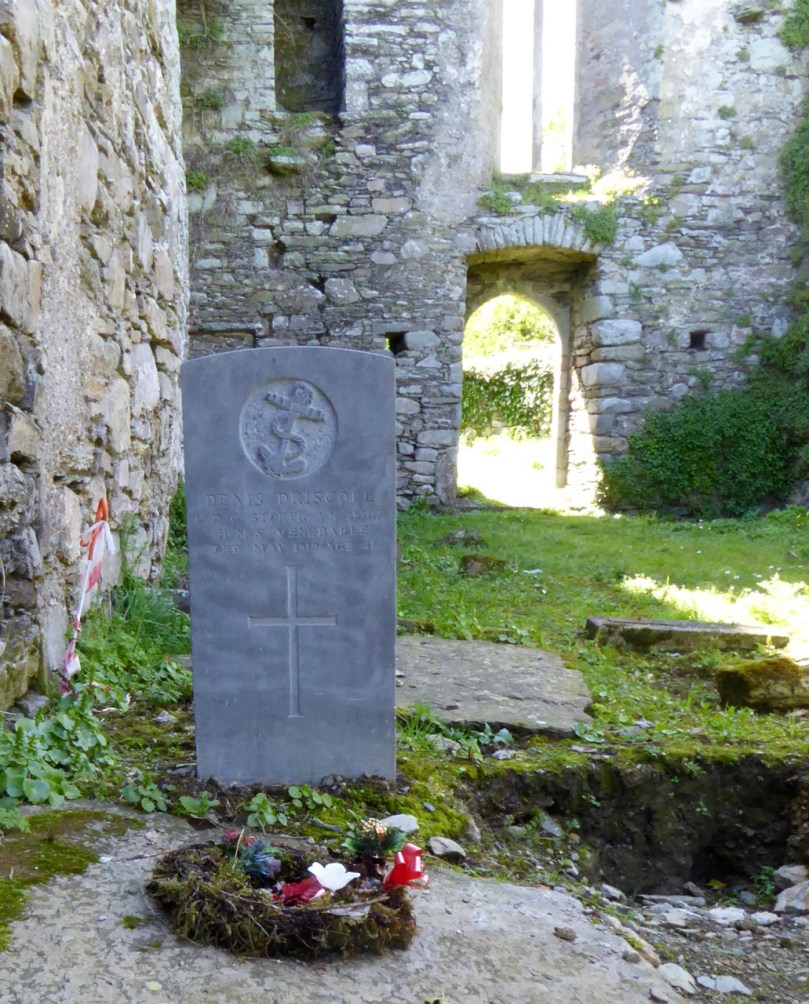
First World War Grave

A new slab at Abbeymahon church near Courtmacsherry remembers Denis Driscoll, a local man who fought in WWI

Besides the first and second World Wars, though, the military memorials that have caught my eye have celebrated the courage and sacrifice of Irish men who devoted their lives to a career in the British army and navy even before the 20th century. But why are these memorials inevitably found in Protestant churches and not Catholic? Besides the conventions of iconography and the collective amnesia referred to above, there is, yes you guessed it, a reason for this.

St Fin Barre's 2

As part of a minority but ruling class in Ireland, Church of Ireland members often saw themselves as standard bearers of Empire. As a community they were on the whole (with many notable exceptions) conservative and unionist and looked to Britain for education for their children. Many families had generations-long traditions of sending their sons to serve in the army or navy. (While Irish Catholics also served, it was predominantly in the ranks of foot-soldiers and to escape unemployment at home, rather than as career officers.) British military valour and sacrifice, therefore, loomed far larger in the consciousness of Protestant families than in Catholic ones.

St Barrahanes

According to Martin Maguire in his paper Our People”;  the Church of Ireland in Dublin and the culture of community since Disestablishment**, The most powerful and emotional bond with Great Britain, and within the Church of Ireland community in Dublin, were memories of the first World War… After the war Remembrance Day became one of the most solemn occasions in the year, one which strengthened the sense of being a special community and, despite national independence, maintained the close identity between the Church of Ireland and the community of the British Empire… The loss of a great many young men to a population which was already unstable was traumatic.

St Patricks 2

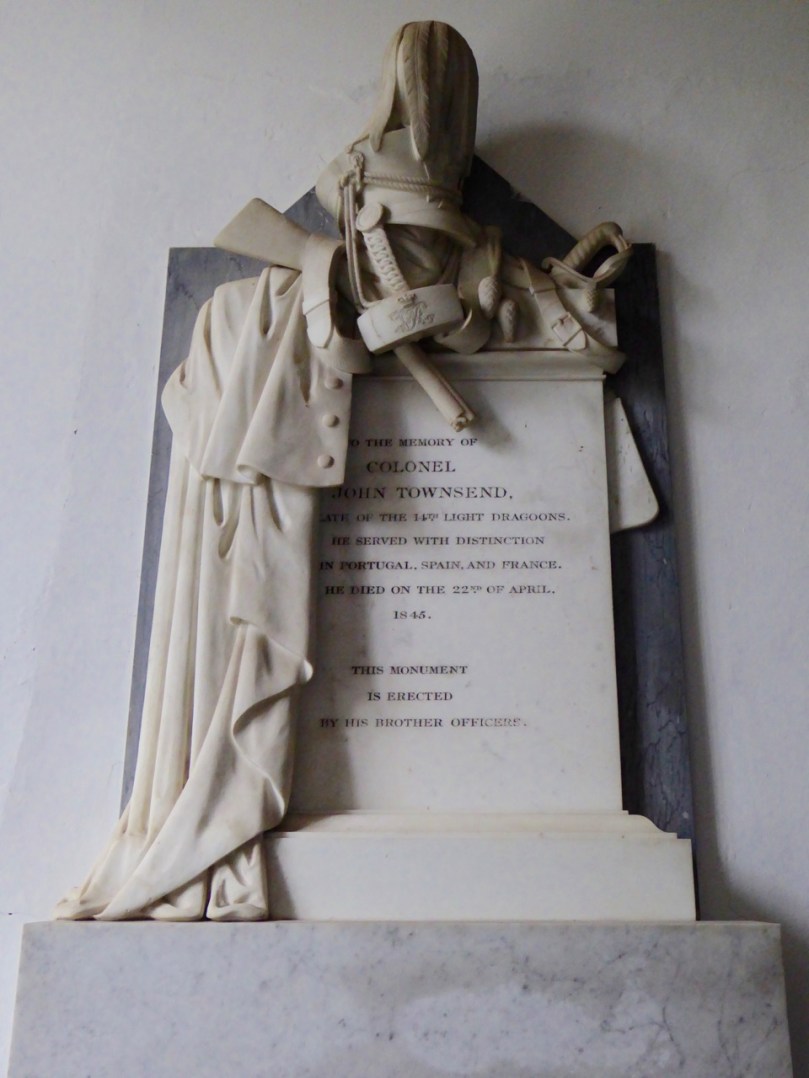
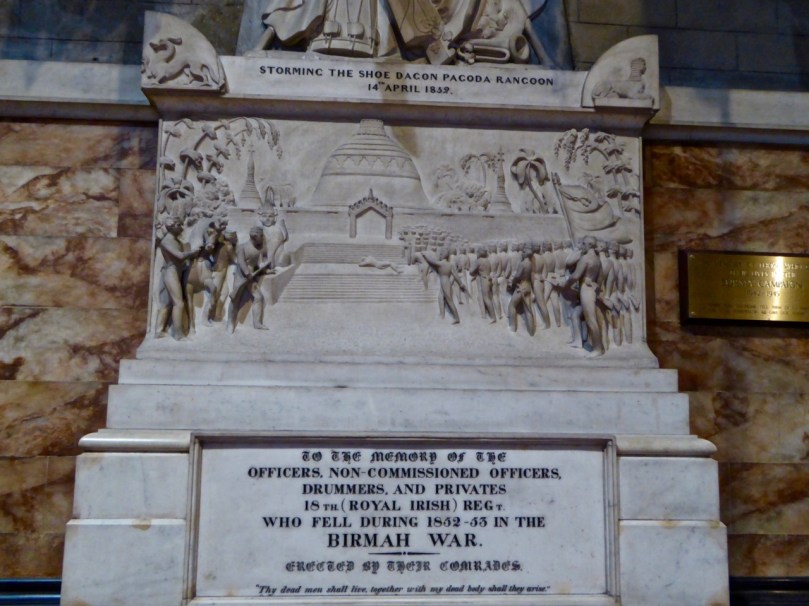
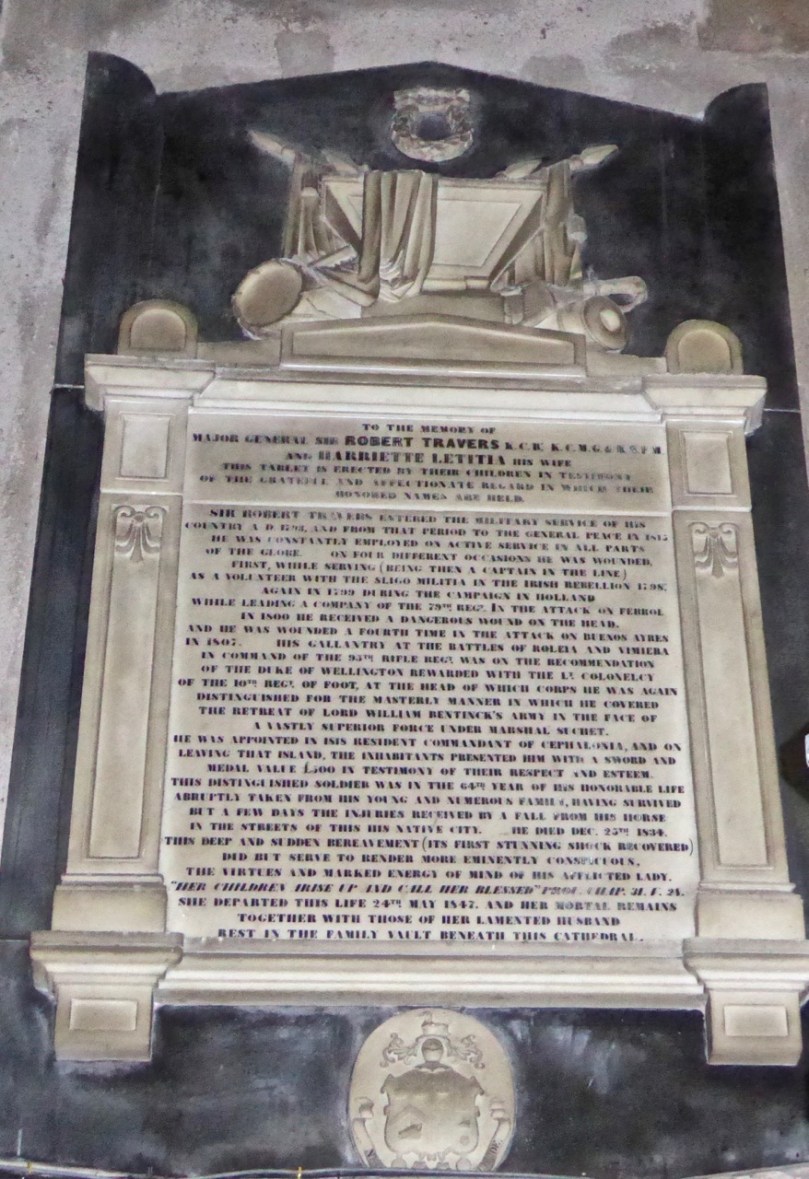
But this is also true of all the preceding wars, and this is reflected in the church memorials we see in the Protestant churches. Battles and engagements in places we never learned to think about about in school as being part of our collective heritage (the Burma War? the Siege of Lucknow?) are eulogised in these tablets and plaques. Soldiers are honoured by their companions, and lamented by their families. Their bravery and accomplishments are lauded and potent symbols such as crossed spears and empty helmets represent their sacrifice.

St Fin Barre's 4

Being an ‘Outpost of Empire’ doesn’t sit well with our ideas of what Ireland is now and this year in particular we will be celebrating our independence from all that that phrase invokes. But these memorials serve to remind us of the complexity and plurality of our history, and in many case of our own family history.

Brabazon Family c.1898-1900 (1)

The Brabazons, about 1900. Great-grandfather John Edward had served in India and Afghanistan and wears a military medal. Great-Uncles Michael and James wear the uniforms of army cadets***. Marie, my grandmother, who married William Owen Roberts, is in the middle at the back

*The Memorials in this post come from three churches: St Fin Barre’s in Cork City, St Barrahane’s in Castletownshend (Co Cork) and St Patrick’s Cathedral in Dublin.

**Available at: http://eprints.dkit.ie/75/1/Our_People_Laity_of_the_C_of_I.doc

** *More information from my cousin, Shauna: The two boys are wearing the uniform of the Royal Hibernian Military School. More information about that establishment here.