William Burges and Saint Fin Barre’s

You may recall my delight in finding so much animal imagery in the Honan Chapel at UCC. In Cork City again this week we discovered another ‘menagerie’ – this time at the Cathedral of Saint Fin Barre. This Gothic Revival building is an architectural and artistic wonder – quite the most significant work that I have seen to date from the palette of English designer William Burges, who lived from 1827 to 1881. In fact it is an early work of his, resulting from an architectural competition which he won in 1863 (receiving a prize of £100). Unusually for an ambitious building such as a cathedral, it was finished in a relatively short time: the first services were held in 1870 – although completion of some of the detailed carving and decoration continued through to the twentieth century.

Everything in the cathedral was designed by William Burges: stained glass windows (74 of them, incorporating twice as many individual scenes); statuary (1,260 pieces of sculpture); brasswork, floor mosaics and wood carvings. Most striking for me is the complete coherence of the building: the genesis of the design work from a single mind – down to the very last constructed item – is visually obvious and I am, of course, professionally jealous that an architect was allowed to completely indulge himself to this level of detail, apparently without the intervention or censorship of clients, building inspectors or planning authorities! The cost of the building project overran its budget some tenfold…

Whole books could (and have been) written about this building and all its intricacies. In this short post I will concentrate mainly on the iconography, especially animal images, because it’s obvious that Burges shares my own enthusiasms for the natural world. There’s much more of this than I can illustrate here, and considerably more to the whole building that’s well worth seeing. I advise you to allow an afternoon – or a day – when you visit, if you want to really get to grips with everything.

A little about the man himself, although biographical information is scant: he was described during his lifetime as “short and fat” and “so near-sighted that he once mistook a Peacock for a man”. Lady Bute, wife of his greatest patron, wrote, “…Dear Burges, ugly Burges, who designed such lovely things – what a duck…” He was undoubtedly an eccentric, attending site meetings on occasion dressed as a medieval jester. Like many of his contemporaries he smoked opium (the overdoing of which is said to have contributed to his early death) and he was a friend of Oscar Wilde, James Whistler and – according to the architectural historian Joseph Mordaunt Crook – “the whole gamut of pre-Raphaelite London”.

Three views of the eccentric William Burges: portrait by Henry van der Weyde (left), dressed as a medieval jester (centre) and a caricature by Frederick Weekes (right)

Dante Gabriel Rossetti wrote a limerick on Burges’s childish nature:

There’s a babyish party called Burges,
Who from childhood hardly emerges.
If you hadn’t been told,
He’s disgracefully old,
You would offer a bull’s-eye to Burges.

It does appear that Burges was quite active in the world of London’s creatives in his day. Elected to the Institute of British Architects in 1860, in 1862 he was appointed to its Council and in 1863 was elected to the Foreign Architectural Book Society, the FABS, which comprised the RIBA elite and was limited to fifteen members. He became a member of the Atheneum Club in 1874, was a member of the Arts Club, the Medieval Society, the Hogarth Club, and was elected to the Royal Academy just before his death.
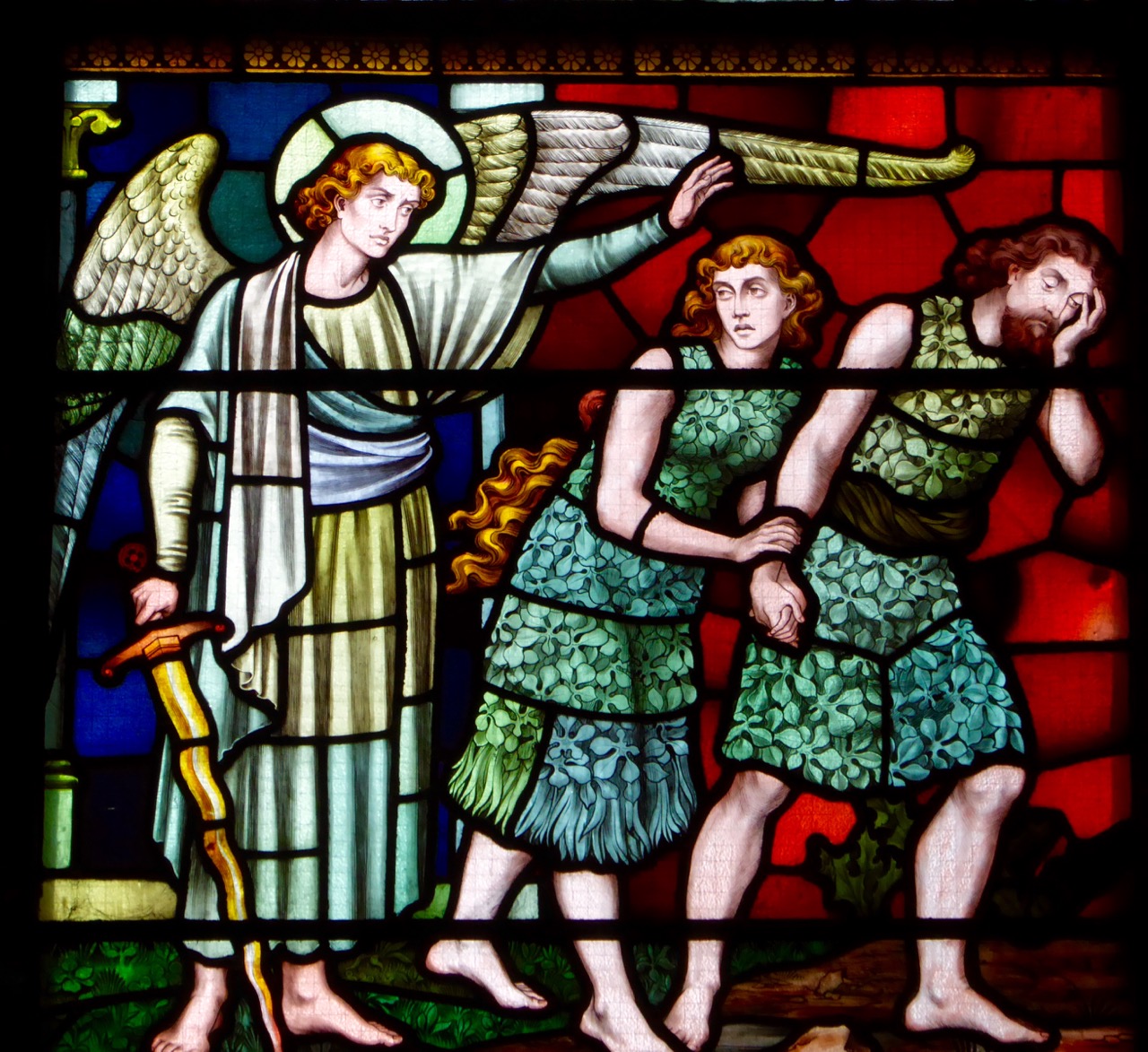
Paradise Lost

Poor William Burges received very little praise for his work, either in his own lifetime and for a long while afterwards. Gothic Revivalist architecture went out of fashion when the new century approached, and was often derided for its heaviness and over-elaboration. For a while Victorian art was under constant assault, critics writing of “the nineteenth century architectural tragedy”, ridiculing “the uncompromising ugliness” of the era’s buildings and attacking the “sadistic hatred of beauty” of its architects. In my own view they all failed to grasp the romance of the age, expressed so beautifully and particularly in the detailing of many of the buildings, among which the Cathedral of Saint Fin Barre stands supreme.

birdie 4


Infant of Prague

church shop

It may seem excessive to travel to the centre of Europe to check out an old Irish tradition, but we hope you’ll agree that this shows the dedication of your team here at Roaringwater Journal!

Robert and infant

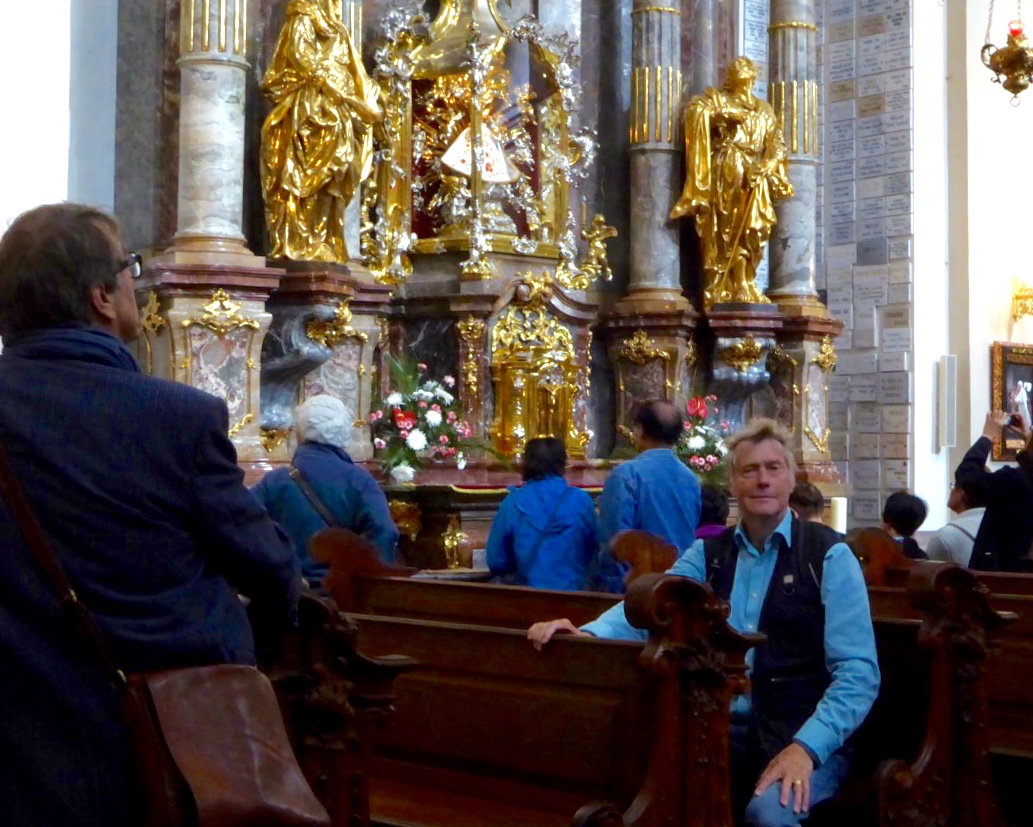
The Infant surveying a visitor from Ireland at the Carmelite Church of Our Lady Victorious in Prague

Prague, in old Bohemia (now the Czech Republic), is a beautiful historic city, once considered the cultural and economic hub of Europe. The architectural integrity of the medieval centre presents unparalleled vistas by day and by night.

Cathedral at night

The tourist trail in Prague takes you past palaces, cathedrals and embassies, through crowded squares and across ancient monumental bridges over the Vlata River. But no visitor from Ireland could miss the Carmelite Church of Our Lady Victorious located in Malá Strana – the ‘Lesser Quarter’ of the city. Why? Because that’s where you will find the original Infant of Prague – a statue which is ubiquitous in every traditional Irish household. 

The traditional Irish parlour invariably includes an Infant of Prague

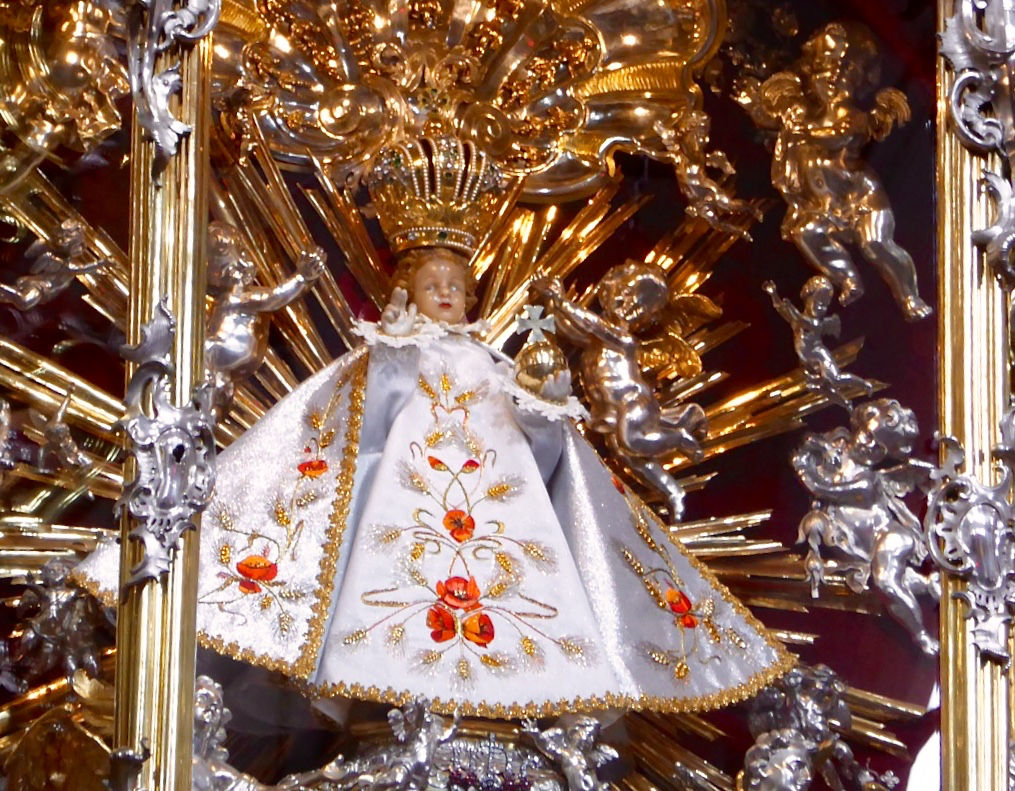
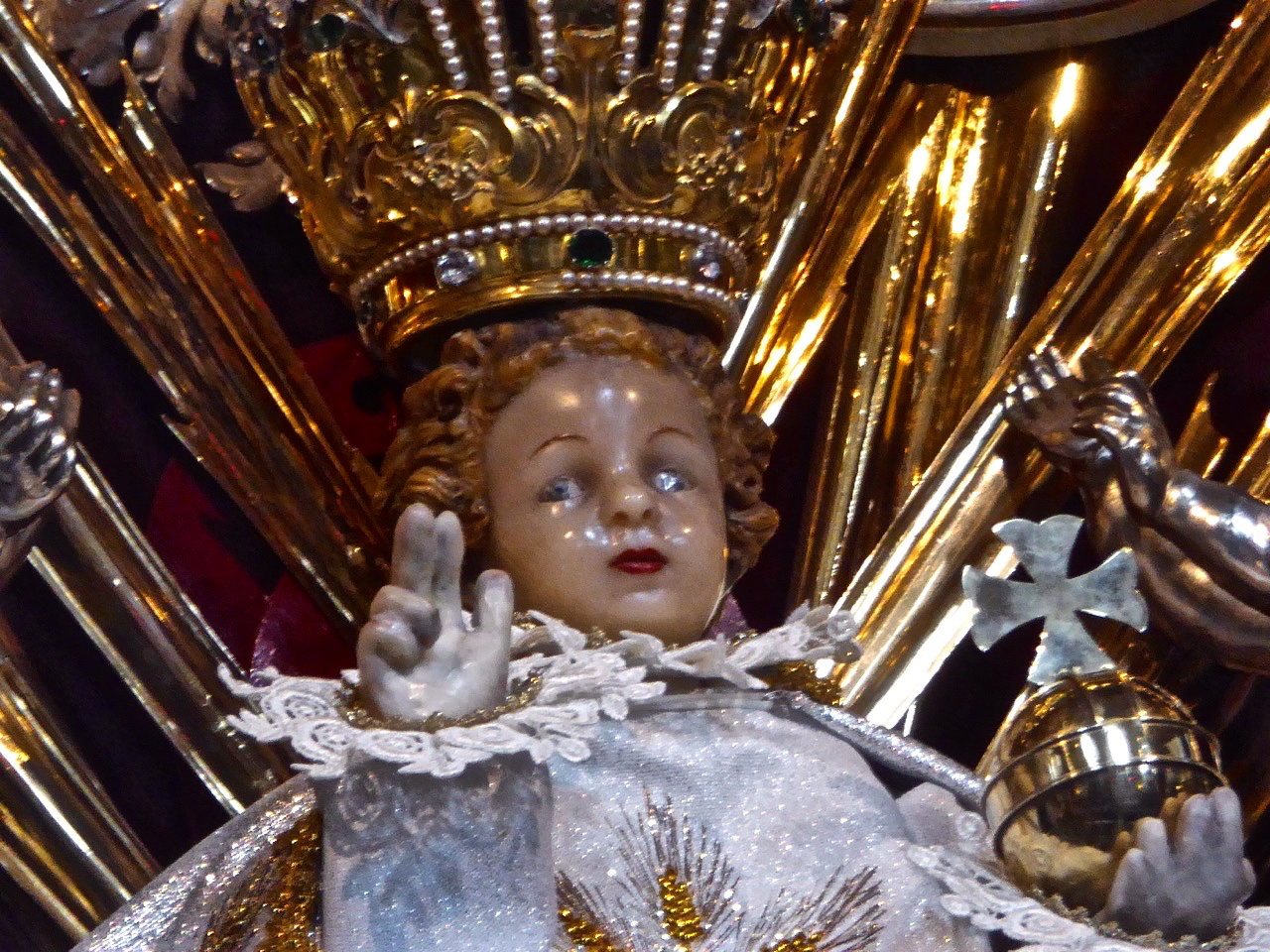
Nowadays the Infant – a 45cm high effigy of the Christ Child dressed as a king fashioned in waxed wood – is displayed in a glorious shrine of gold, glass and marble, but it has a long and complex history.

big infant

head detail

In 1556 Maria Manriquez de Lara, a Spanish princess, was engaged to Vratislav Pernstyn, a Czech nobleman and brought with her to the marriage the statue, a family heirloom which was said to have been made in Spain by a friar who had a vision of Christ as a king. 

Christ as King – images based on the Prague statue

Maria passed on the statue to her splendidly named daughter Polyxena, who was married to Baron Zdenek Vojtech Popel de Lobkowitz, Great Chancellor of the Kingdom, Knight of the Golden Fleece, and Prince of the Holy Roman EmpirePolyxena gifted the statue to the Carmelite Monastery and the adjoining church in Prague, stating “I bring you my dearest possession: honour the Infant Jesus and you shall never want.” The friars attributed miracles and blessings to the statue, which became an object of veneration.

the real infant

The chapel in the Church of Our Lady Victorious where the Infant is now venerated

During the Thirty Years War which devastated much of central Europe between 1618 and 1648 the monastery and church were sacked and the statue was broken and thrown on a rubbish heap. The Infant was forgotten until its remains were found by a Father Cyril many years later. The hands were missing and Fr Cyril heard the Infant say, “Have pity on Me, and I will have pity on you. Give Me My hands, and I will give you peace. The more you honour Me, the more I will bless you.” The statue was repaired and in 1655 the Infant was given a coronation and placed in the Carmelite Church where it has remained to this day, looked after now by an order of nuns who ensure that the statue wears vestments appropriate to the religious festivals. On every first Sunday in May a copy of the statue is carried in procession through the streets and re-crowned, implying perhaps that the Infant is now the centre of a seasonal custom.

dress detailExquisite detail of the vestments worn by the Infant on the day of our visit

We were surprised to find Prague so full of tourists – and of shops selling souvenirs for tourists. Prominent among these souvenirs are Infant of Prague statues: there are shelves, cabinets, whole shops full of them – just as there are in Ireland.

Gracious Jesus

Christian Shop close

Quite how the connection between the Infant, weddings and the weather has come about I’m not sure but there’s no doubt that an Infant of Prague statue is essential to an Irish wedding – to ensure good weather… Variously, you have to put your Infant of Prague outside the house, or outside the church – or even bury it in the garden to make certain that it won’t rain on the big day. I’m sorry that Finola and I were unaware of this custom at the time of our own wedding – but we were fortunate anyway in having a very good day (in every respect).  I have been told by Infant of Prague experts that’s it’s important to knock the head off the statue for maximum efficacy! Perhaps that’s some sort of confusion over the original statue having lost its hands?

wedding photo

Have a look at this Irish wedding photographer’s site

But it’s not just weddings: in Ireland the Infant of Prague is considered to bring good luck in many ways. Small coins are often kept under the statue to make sure that the house ‘never runs short of money’ and, in keeping with the older traditions of cures and miracles having been attributed to the Prague effigy, the Infant is also a bringer of good health. The presence of the statue over every Irish hearth seems to be as essential as a St Brigid’s Cross

coaster

Snakes Alive!

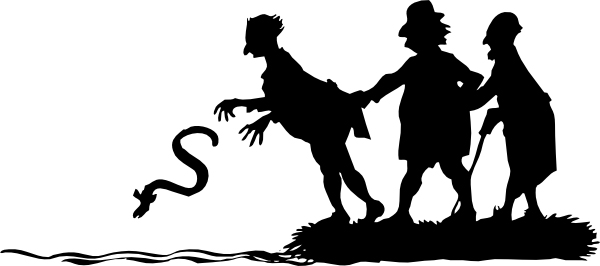
Year of the Snake 66 barabara trott

It’s about as far away as we can get from St Patrick’s Day, so it’s probably ok to talk about snakes in Ireland…

Ah yes – the old fable that he banished all the snakes out of the land…

That’s enough of the ‘old fable’ – there’s no doubt about it: there are no snakes in Ireland at all, so it must be true that St Patrick sent them packing! Although I was a bit alarmed when, out walking in the Mayo hills a while ago, I came across this…

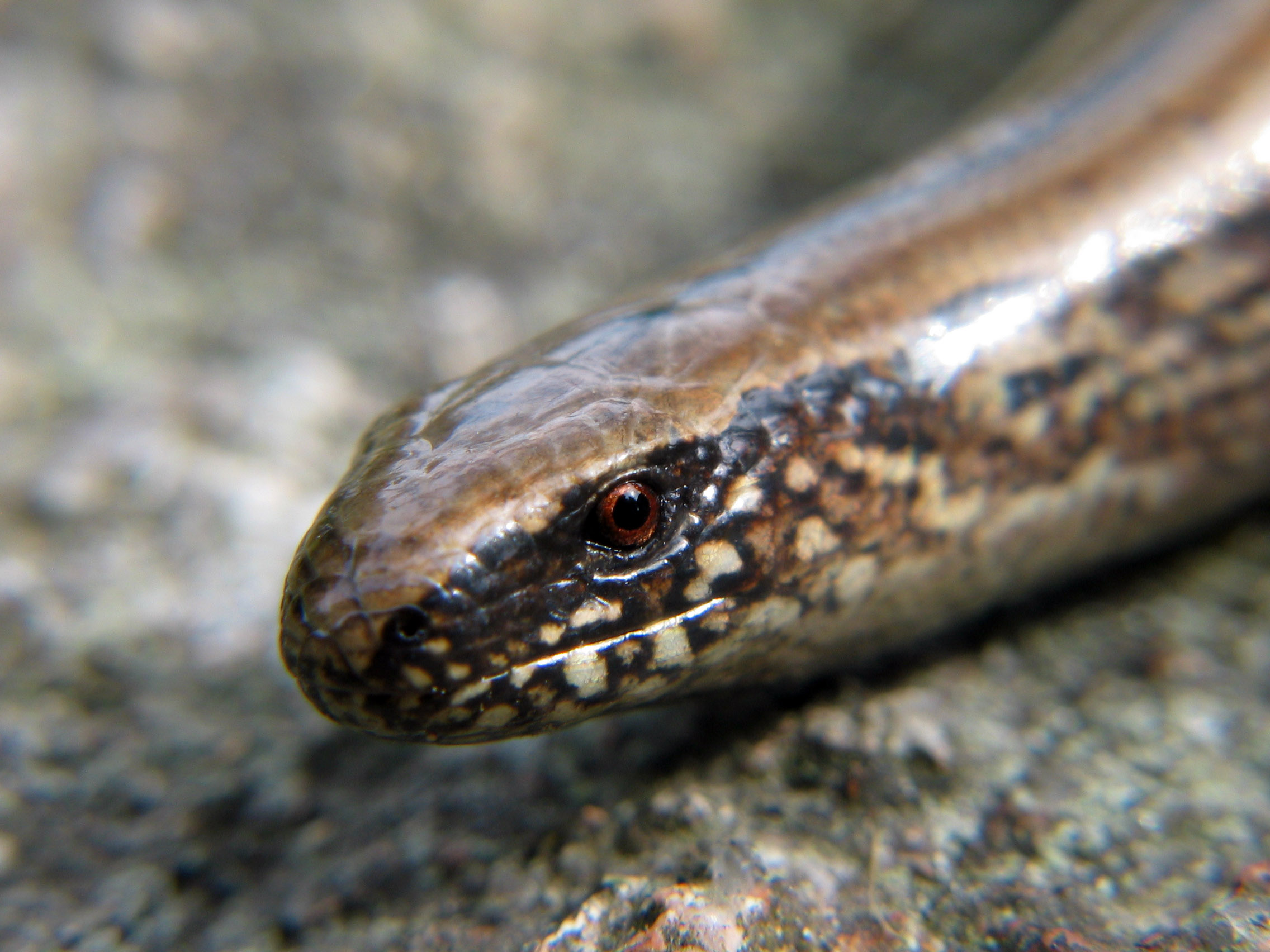
Slow-worm (Jonas Bergsten)

A slow-worm? Anguis Fragilis… How does that fit into the St Patrick story?

Well, there shouldn’t be any slow-worms here really – as the Saint expelled all the reptiles and lizards – and that’s a lizard. But evidently someone introduced them into County Clare illegally back in the twentieth century, and they’ve survived there. (Frogs were also introduced, incidentally, as a food source by the Normans).  My sighting in Mayo, however, is something of an anomoly…

But didn’t I hear that these serpenty creatures couldn’t actually live on Irish soil because of Ireland’s purity?

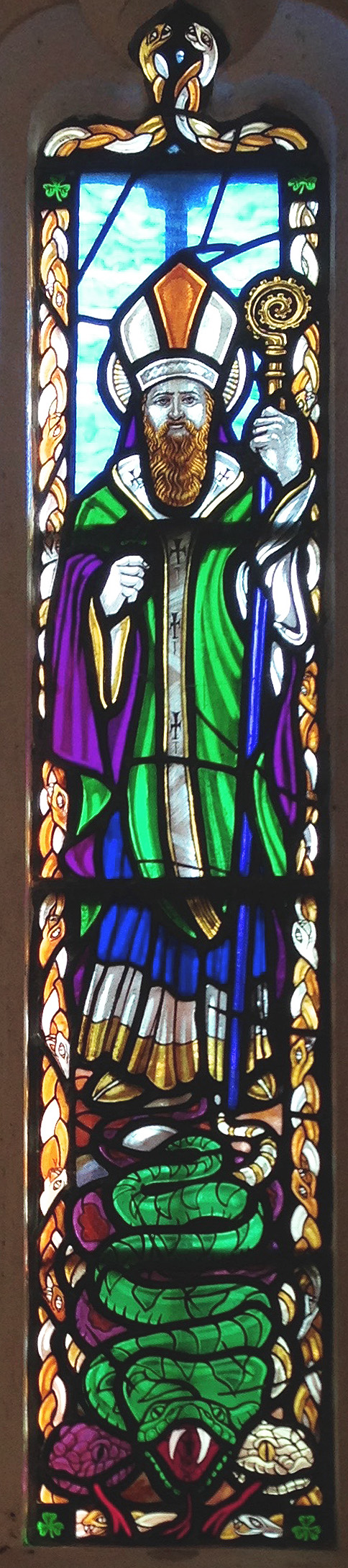
St P window GlastonburyNow you’re talking. It’s perfectly true that if you try to bring a snake into Ireland it drops dead as soon as you enter Irish waters…

Oh? Has that been proven?

Indeed – by Gerald of Wales. He lived in the twelfth century and states that ‘…it is a well-known fact that no poisonous thing can live in Ireland and if Irish soil is taken and scattered elsewhere it will expel poisonous things from that vicinity…’ Other stories mention toads brought to Ireland by accident (having, presumably, stowed away in the holds of ships) ‘…which when thrown still living onto the land, turn their bellies up, burst in the middle and die…’ Perhaps you’ve heard of the Fir Bolg?

I think so – aren’t they one of the early races who inhabited Ireland?

They are – and the name means Men of the Bags. They carried bags of Irish soil around with them when they travelled all over the world, because they would be kept safe by its serpent slaying properties…

I like that idea – remind me to go and do some digging in the garden. Where are you getting all this information from?

Much of it out of a most wonderful book: Ireland’s Animals by Niall Mac Coitor (The Collins Press, Cork 2010), but there are plenty of other early sources, many of which Mac Coitor admirably collects together. Perhaps the best of these is the old medieval Irish text Lebor Gabála Érenn – the Book of Invasions. I have already quoted from that in my story of Cessair, the very first person to set foot on Ireland in 2680 BC…

Yes, I remember that. She was Noah’s grand-daughter. Wasn’t it the case that Ireland was supposed to have been a land without sin, which is why she went there to escape the flood?

That’s her. And it’s a nice bit of symbolism that Ireland was without sin because it had no serpents…

But hang on – that was Old Testament times – long before the saints…

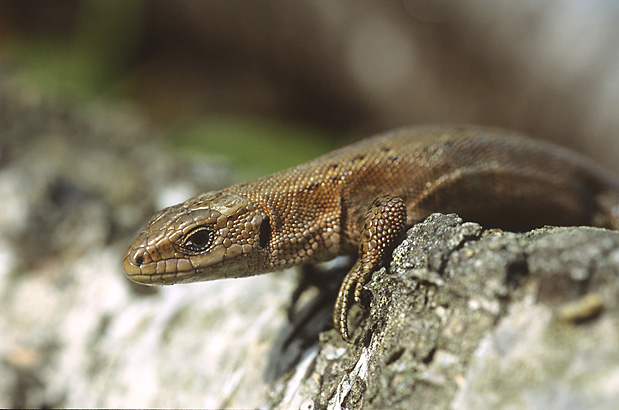
You do have a point there. And, you know, in archaeological terms there are no fossil records of any reptiles having ever been here in Ireland – except for one: the common lizard Lacerta (Zootoca) Vivipara which has always been here, and still is…

Common Lizard (Marek Szczepanek)

Now I’m getting very confused about St Patrick…

Don’t worry about it – it’s a grand story…

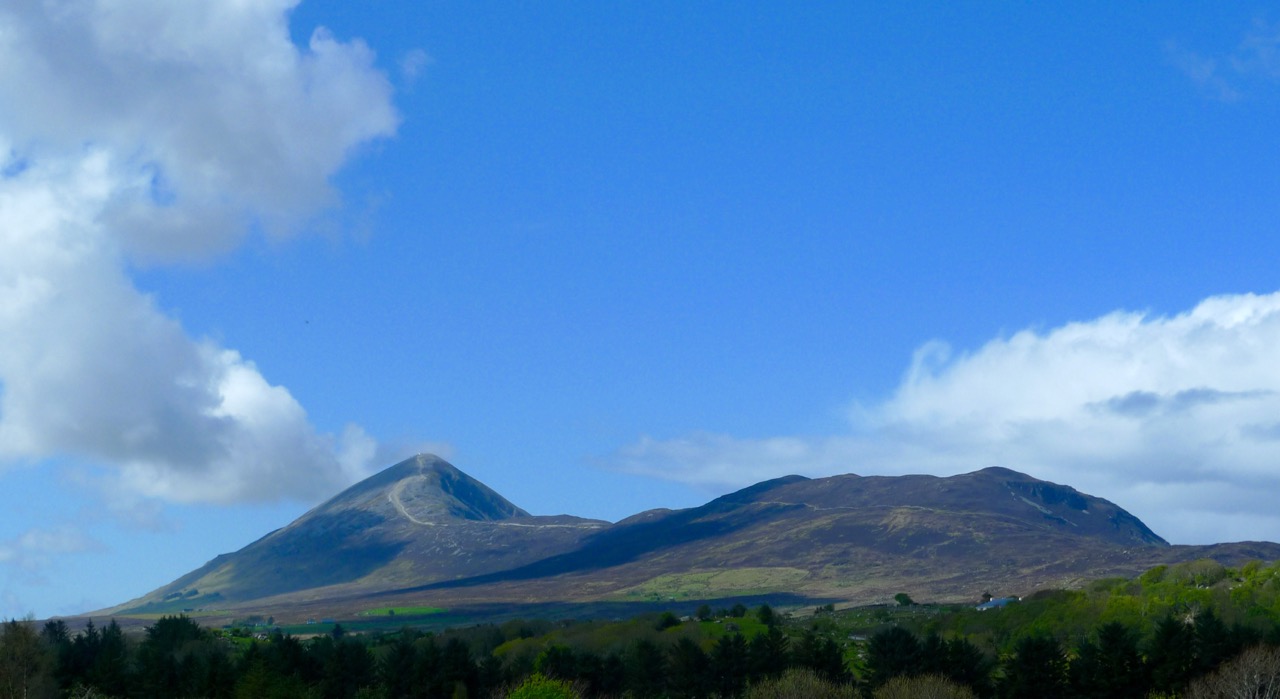
Yes, I have this picture of our good saint standing on the top of Croagh Patrick in Mayo and all the crowd of little snakes and reptiles climbing up there to surround him, only to be cast down to their doom by a sweep of his crozier…

Hmmm… but surely they would have just rolled and bounced down to a soft landing at the bottom? It’s only a hill, after all…

Croagh Patrick

You’ve obviously got something else in mind?

Well I like the story of St Patrick’s Chair, which is at Altadaven, Co Tyrone. The Chair is a huge boulder which seems to have been carved into the shape of a chair or throne. Beside it is a holy well – also ascribed to St Patrick – which appears to be a bullaun stone: offerings are made at the well and the trees around it are hung with rags and tokens. Altadaven means Cliff of the Demons, and it was evidently where all the snakes, serpents and reptiles once lived. The saint went there, sat on his chair (presumably) and cast them all down the cliff and into Lough Beag below…

Which is a bit different to just rolling down the hill at Croagh Patrick…

Wishing Chair Slemish

Another St Patrick’s Chair at Slieve Mish, Co Antrim – this one looks like a good candidate for the place where the snakes were cast down… (Irish Times 1956)

And there was a tradition at Altadaven of an annual gathering known as Blaeberry Sunday or ‘The Big Sunday of the Heather’, probably connected with Lúnasa customs. People would climb the rock to sit in the chair and make a wish which, of course, always came true. Then they visited the well and left pins and pennies behind…

Anything else we should know about reptiles in Ireland?

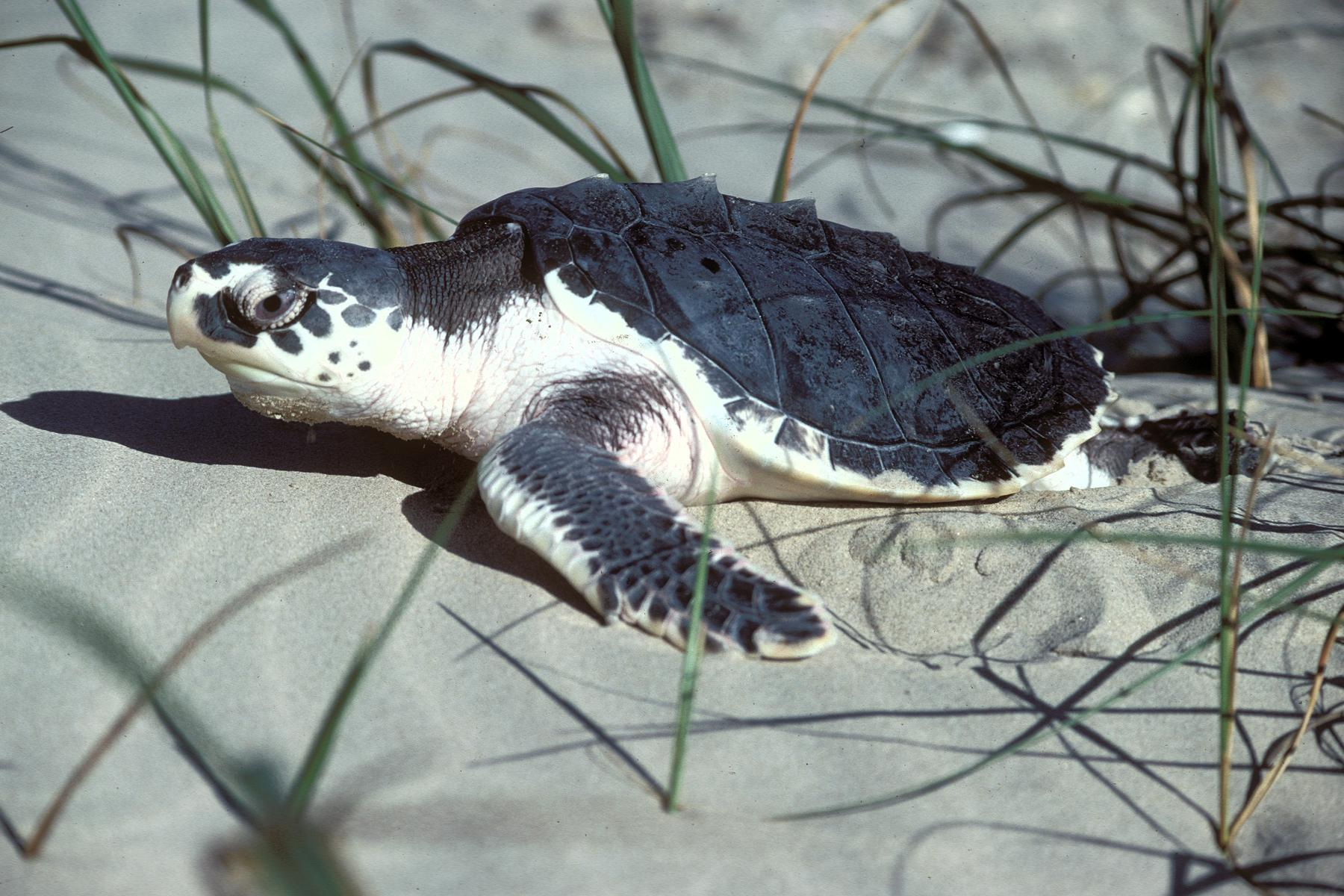
Kemps turtle

Well, earlier this year one of the world’s rarest turtles – the Kemps Ridley Sea Turtle – appeared in Donegal. Unfortunately it was dead – washed up on the beach. But there are also other small turtles which do inhabit Irish waters.

The exception to the rule, possibly. But perhaps being in the water isn’t quite the same as being on the land…

Peist 1611

I’m always keeping my eyes open. I had a ‘serpent’ experience once, in Devon. On my first visit to St John’s holy well up on Hatherleigh Moor I opened the door to the well (which was surrounded by a stone built enclosure) and there inside was an eel swimming around!

I heard that’s a very good omen – to see an eel in a holy well?

Oh yes – why wouldn’t I be a total believer in such things? In Celtic Brittany holy wells are always protected by a ‘Fairy’ who has the form of an eel, and is a benign spirit. Interestingly, though, there is no stream or watercourse near to the Hatherleigh well, so the eel must have travelled some away across the moor to get there – on dry land!

So – I have to ask: are there eels in Ireland?

eel

There are – Anguilla Anguilla – It’s a fish, so not a problem to the saint. Eels have been eaten in Ireland since the earliest human times and have been found in association with Mesolithic sites such as Mount Sandel, Co Derry.

Thank you – you’ve taken us on a serpentine tour through Irish history and mythology…

Mac Coitor


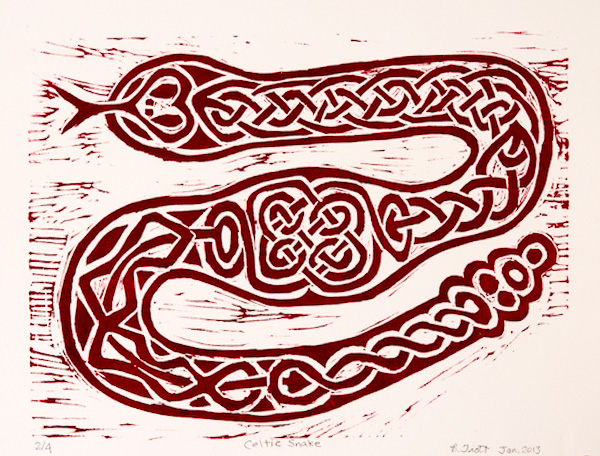
The heading picture Celtic Snake is by Canadian artist Barbara Trott; the Slow-worm is from Jonas Bergsten; the long window is in St Patrick’s Chapel Glastonbury; St Patrick in Bandon Cathedral is by Finola; the Lizard is by Marek Szczepanek; the Peist is from Speed’s Map of Ireland 1611; and Drowning Eels is courtesy of images.all-free-download.com

Wayside Miracles

Ballinspittle Grotto

Ballinspittle, Co Cork: the Marian Grotto became a world news sensation

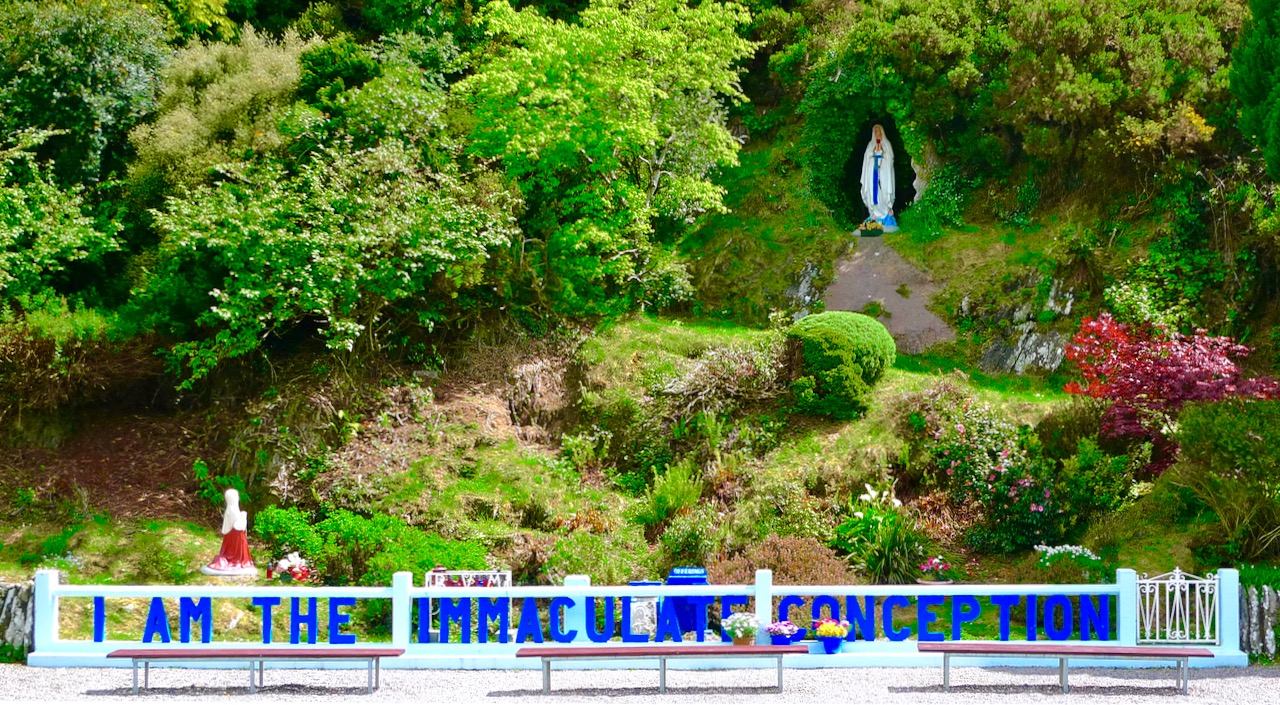
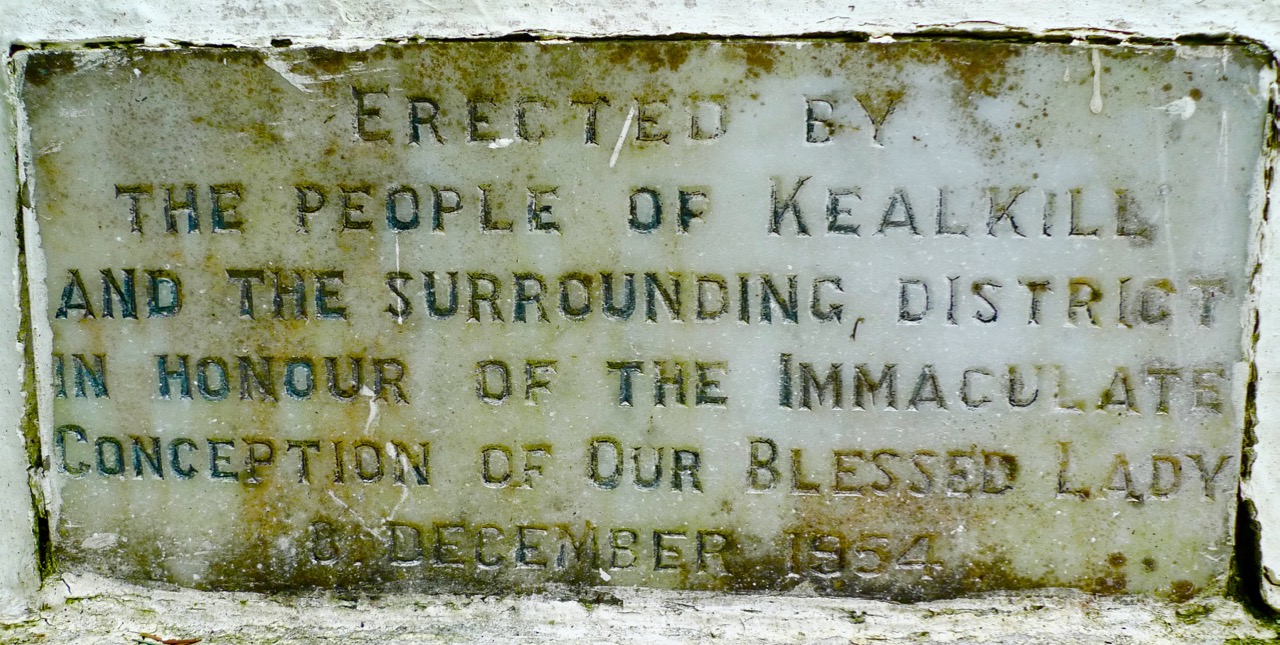
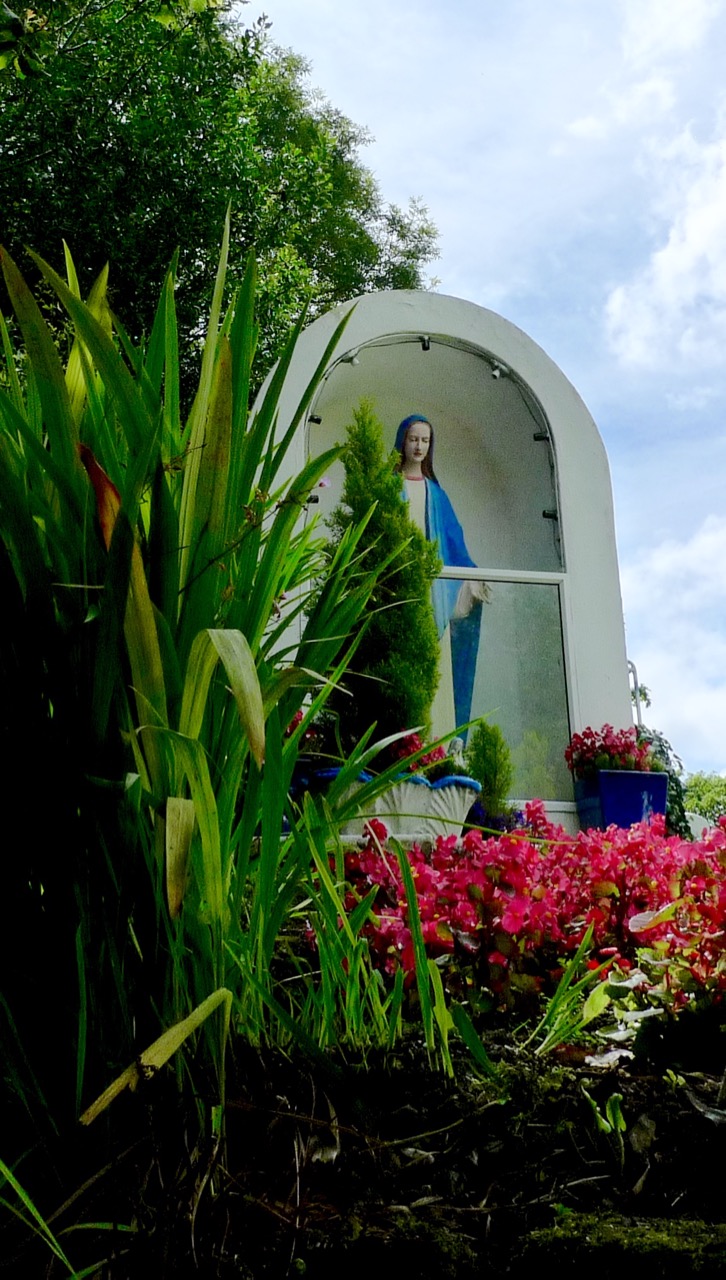
1954 was a great year for the construction of outdoor shrines and grottoes in Ireland. Pope Pius XII had designated it a special Marian Year to mark the centenary of the ‘dogma of the Immaculate Conception and Assumption’. The Marian Year was an international event, but apparently no other country embraced the idea with greater fervour than Ireland. The notion seemed to capture the imagination of a young republic suffering from serious recession, high unemployment and loss of population through emigration. Hundreds of projects were put in hand and today, on almost every road in the country – and in every community – you will see statues of the Blessed Virgin Mary, usually in well tended settings. They add to the colour and character of this green land: like the ancient holy wells, they are venerated and not forgotten.

1954 tablet

Statue maker Maurice O’Donnell recalled that 1954 was a bonanza year for him: “…I was making so many at that time there was no time to dry them out before painting, so lots of statues in the shrines around the country are still unpainted. But that was in the Marian Year. The bottom has dropped out of the statues market since the Vatican Council…” Although many statues of the Virgin were painted later on, you will still see many unpainted (white) examples.

Marian Year shrine added on to the Holy Well at Keallkill, Co Cork

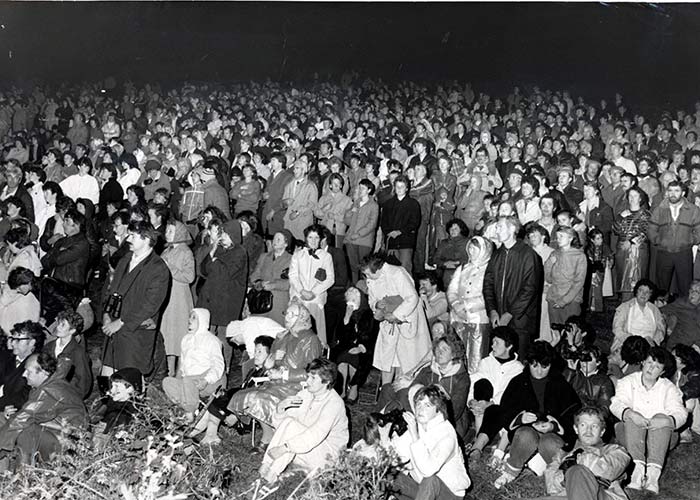
Exactly thirty years ago – on 26 July 1985 – the grotto at Ballinspittle jumped into the news headlines of the world because two local women witnessed the statue there moving while they were praying. The little Cork village suddenly found itself the centre of media attention and – during that summer – thousands of people came in bus loads from all over Ireland, either out of curiosity or anxiety to become part of a phenomenon. Many saw the statue move: a police sergeant (presumably a reliable observer) saw it rise into the air – while cures were claimed by sick people who visited the site.

Ballinspittle 1985

Crowds at Ballinspittle 1985  – Evoke.ie

Strange events were not limited to Ballinspittle. Reports had already appeared elsewhere. Kerry got in first: in February of the same year 30 schoolchildren saw two statues moving in the church at Asdee, while in nearby Ballydesmond something similar happened soon after. Here’s a contemporary extract from RTE News – worth watching for the concise view of rural Ireland in the 1980s.

magill asdee

Over 10,000 people visited the Ballinspittle grotto every night throughout the summer. The Irish Times (6 August 1985) reported: ’…Ballinspittle’s claim to a moving statue was matched in no time at all by reports of similar occurrences in Dunmanway and Courtmacsherry. But too many people, including senior gardai, well-tried sceptics and some who registered what appeared to be genuine shock said they saw the statue move, so Ballinspittle has remained the premier place of pilgrimage…’

white marys

The Catholic Church distanced itself from these happenings. Bishop Michael Murphy of Cork warned that “…common sense would demand that we approach the claims made concerning the grotto in Ballinspittle with prudence and caution…” but he also relished the fact that “…crowds are gathering there in a great spirit of prayer…” A difficult stance, perhaps, as similar occurences from Lourdes and Knock in the 19th century led to the creation of huge religious centres and pilgrimage destinations.

WWL

The visions at Knock, witnessed in 1879

The moving statues was a story big enough to inspire Peter Mulholland of the National University of Ireland, Maynooth, to pen a lengthy monograph in 2009, Moving Statues and Concrete Thinking, available in full on line – and a fascinating read. Mulholland makes the point that from the 1950s to the 1980s the western world, including Ireland, was perceived to be under threat from the Cold War, ‘Nuclear Nightmare’ (from weapons and waste), Communism, the ‘permissive society’ – and, more locally, ‘The Troubles’ and increasing unemployment and emigrations; while in 1970 the Bishop of Galway said he thought ‘organized atheism’ was the source of the ‘most serious injury’ being done to the young people of Ireland. All this, says Mullholland, contributed to an underlying feeling of insecurity which created an atmosphere ripe for ‘cults’ (such as observers of moving statues) because of a high level of anxiety in the community. The monograph goes pretty deeply into the realms of psychology, quoting one researcher who “…argued that a certain kind of family structure ‘intensifies Oedipal desires in both sons and daughters, and so promotes Marian devotion’. He held that Marian ‘hallucinations’ are shaped not simply by Oedipal desires but also by other infantile and adult desires…”

Mulholland concludes: “…The moving statues were a modern manifestation of the kind of ‘magical devotionalism’ that sections of the Irish Catholic population have long been prone to resort to during periods of personal or collective distress… They were products of the kind of literalistic, magical-devotionalism that Irish clerics condemned in the 1950s and ‘60s as being ‘anti-intellectual’ and a ‘peasant religion’…”

Knock Shrine

Knock Shrine, early 20th century

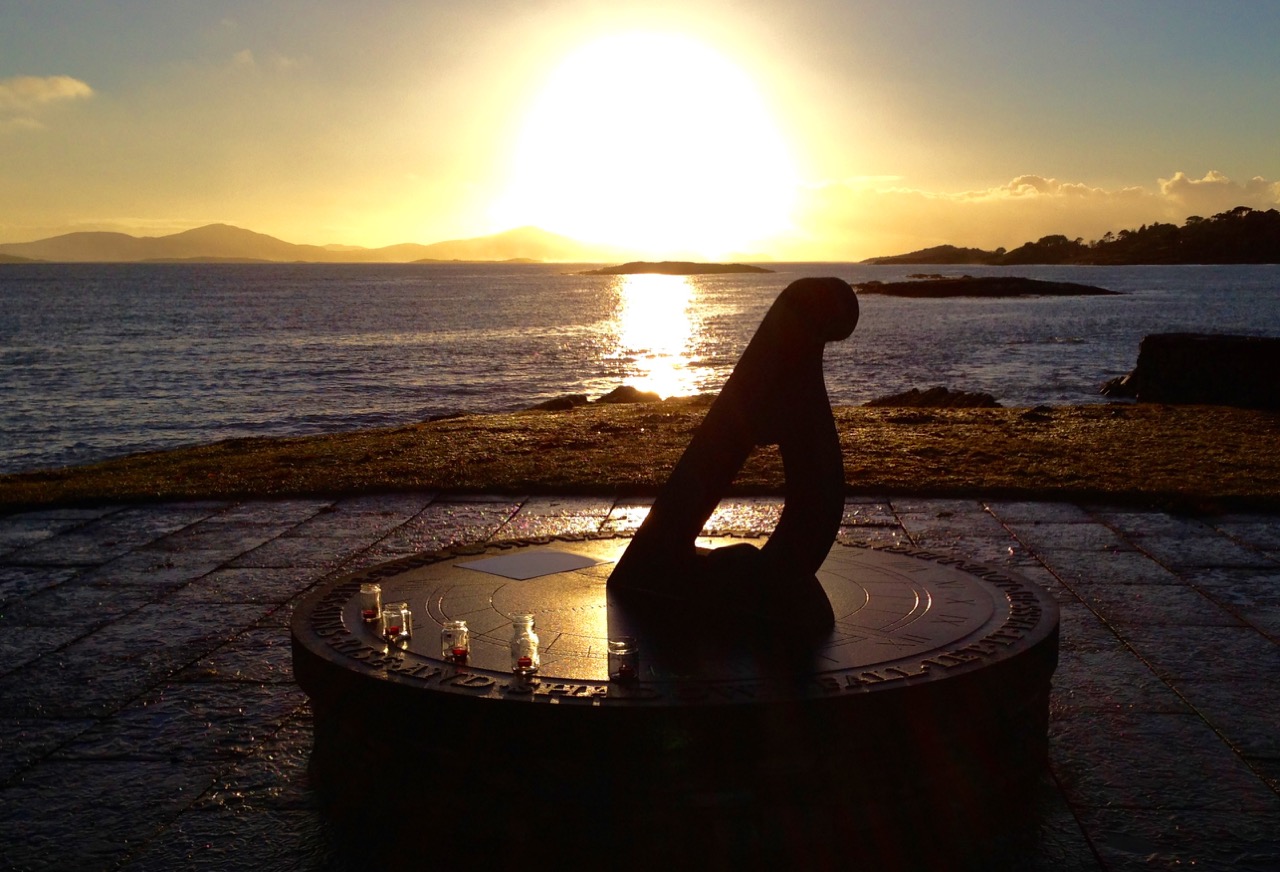
Perhaps it’s just coincidence (and I haven’t seen anyone else mention this), but it is worth noting that the Air India Disaster occurred at Ahakista, on the coast of West Cork, less than a month before the first apparitions were seen at Ballinspittle. This terrorist event which killed over 300 innocent souls must have had some effect on the local – if not the national – psyche, and could certainly have enhanced feelings of anxiety and insecurity in a rapidly changing world.

Ahakista

1985 Air Disaster Memorial, Ahakista

Looking back from the 21st century to these events I feel a sense of – well, disappointment – that what comes across now in reports on the phenomenon is mainly disparagement. This is a country which, quite rightly, hangs on to its history and mythologies: as with the wandering bards of older times stories are kept alive at the fireside, in the pubs – wherever people gather. Stories of The Other Crowd, of old battles, of heroes – and of neighbours – are listened to eagerly, and will be repeated just as eagerly. I don’t hear people dismissing them or expressing cynicism about them, as they seem ready to do about moving statues. Such scepticism is understandable in modern Ireland but I will continue to listen with an open mind to all the stories of miraculous happenings that are cherished and passed on, and which underscore the ancient faith of the countryside.

First day of issue

It would be wrong not to finish the story of Ballinspittle. On 31st October (Samhain) 1985, when a group was gathered in prayer at the grotto a car pulled up and three men got out carrying hammers and axes. In front of the dismayed onlookers they smashed the statue of the Virgin and shouted abuse at the worshippers for “…adoring false Gods…” The men, who claimed to belong to an extremist fundamental Christian sect based in California, were later arrested and charged with ‘causing malicious damage in a place of divine worship’. Amazingly, at the trial the Judge stated that he had to be “…particularly zealous in guarding the rights of the three defendants…” and dismissed the case on the grounds that the Ballinspittle grotto is not, in fact, a place of divine worship. In March 1986 the perpetrators appeared on the popular Late Late Show, hosted by Gay Byrne on RTE Television. They cited the fourth and fifth commandments of the Old Testament as giving them divine sanction to smash all religious statues in Ireland, regardless of the rights and views of other people. Reporter Eoghan Corry stated in an article in the Sunday Press, “…there isn’t a safe statue in the country.” Fortunately, following further acts of vandalism they were duly convicted.

Links worth following for more on the Moving Statues:

Finola’s blog post Mary Mary

Radio Documentary from RTE in 1992

RTE TV documentary on Ballinspittle

marian shrine

A Medieval Feast

4 weepers

This was a feast for the eyes – a few thousand years younger than Rock Art and far less enigmatic! Our travels took us to County Meath where we explored the monastic city of Kells (where the famed book was written and illustrated), Kells Augustinian Priory – a different Kells but in County Kilkenny (and which Finola has written about in her post) – and Jerpoint Abbey – a Cistercian monastery rife with carved figures – some up to 900 years old.

kells 2

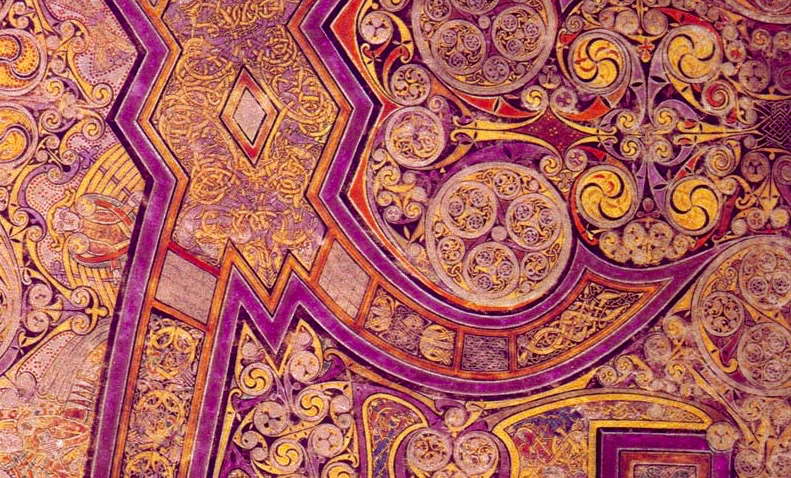
Firstly, the Book of Kells is worth more than a passing mention, especially as some commentators have likened the medieval carvings at Jerpoint and other contemporary monastic foundations in Ireland to ‘illuminated manuscripts cast in stone’ – because of the richness of the characters, the decoration and the detail. The Book of Kells probably dates from the 8th or 9th centuries and may either have been written in its entirety in Kells, or started by St Columba’s community in Iona and completed in the Scriptorium in Kells. That building still exists! In fact it (or something very like it) is illustrated in the book. It’s known as St Colmcille’s House – we went to have a look at it, and were fortunate to have a tour by its guardian.

scriptorium book of kells

A page from the Book of Kells which may be an illustration of the Scriptorium at Kells – and, perhaps, a self-portrait of the writer: see him sitting in the doorway to the house working away with his quill pens…
St Colmcille’s House – in its 21st century context (top left), the keeper of the key (bottom), and the ancient stone roofed oratory (main picture) which is supposedly where the Book of Kells was written – or, perhaps, completed. The upper floor of the building has a small window oriented to focus sunlight on the writing table. St Colmcille’s bed was also kept here – a large and heavy stone slab – until it was stolen in the 1950s! A few hundred years earlier (in 1007)  the Book itself was stolen from Kells and eventually found in a nearby bog. It stayed in Kells until 1654, when it was sent to Dublin for safekeeping: it is now on permanent display in Trinity College.

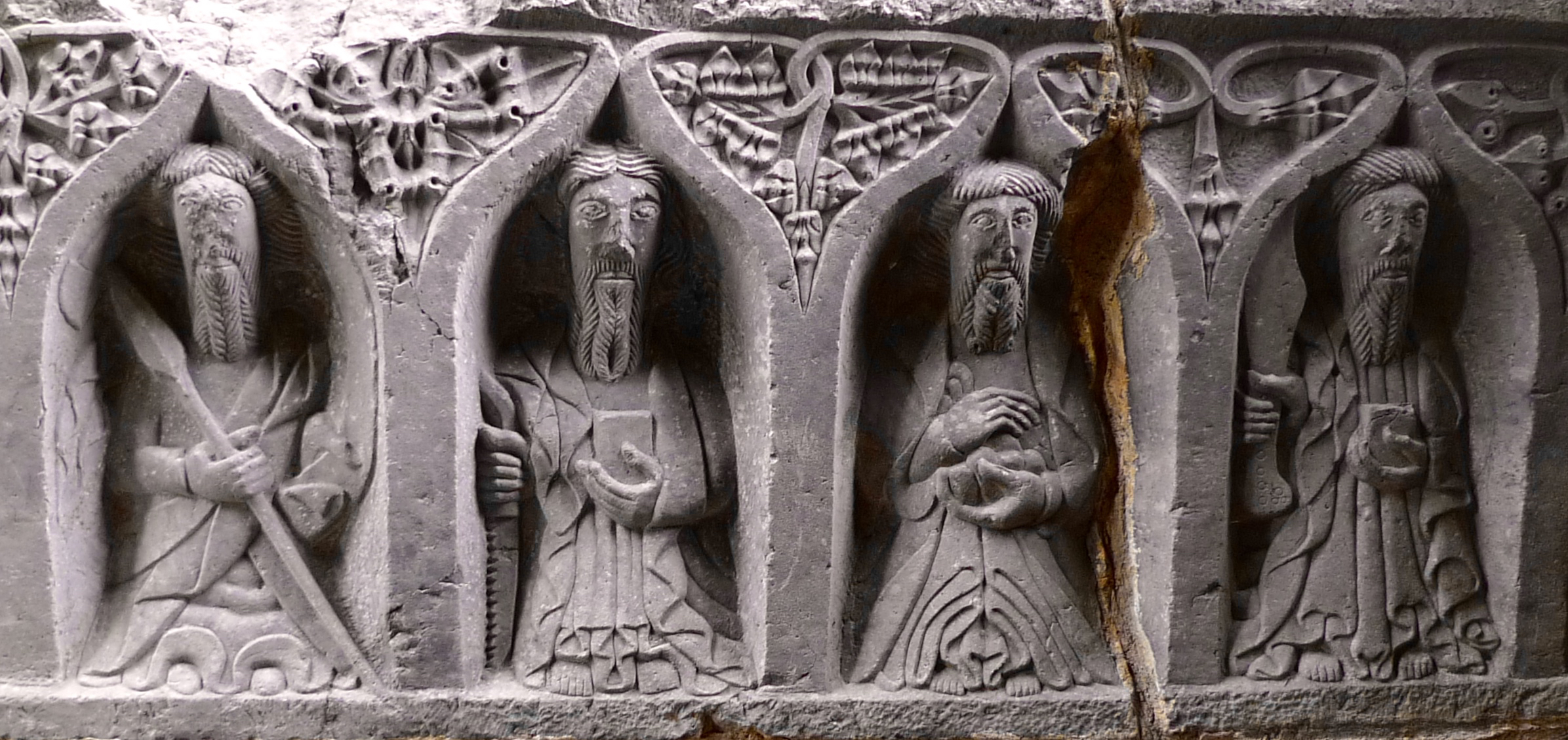
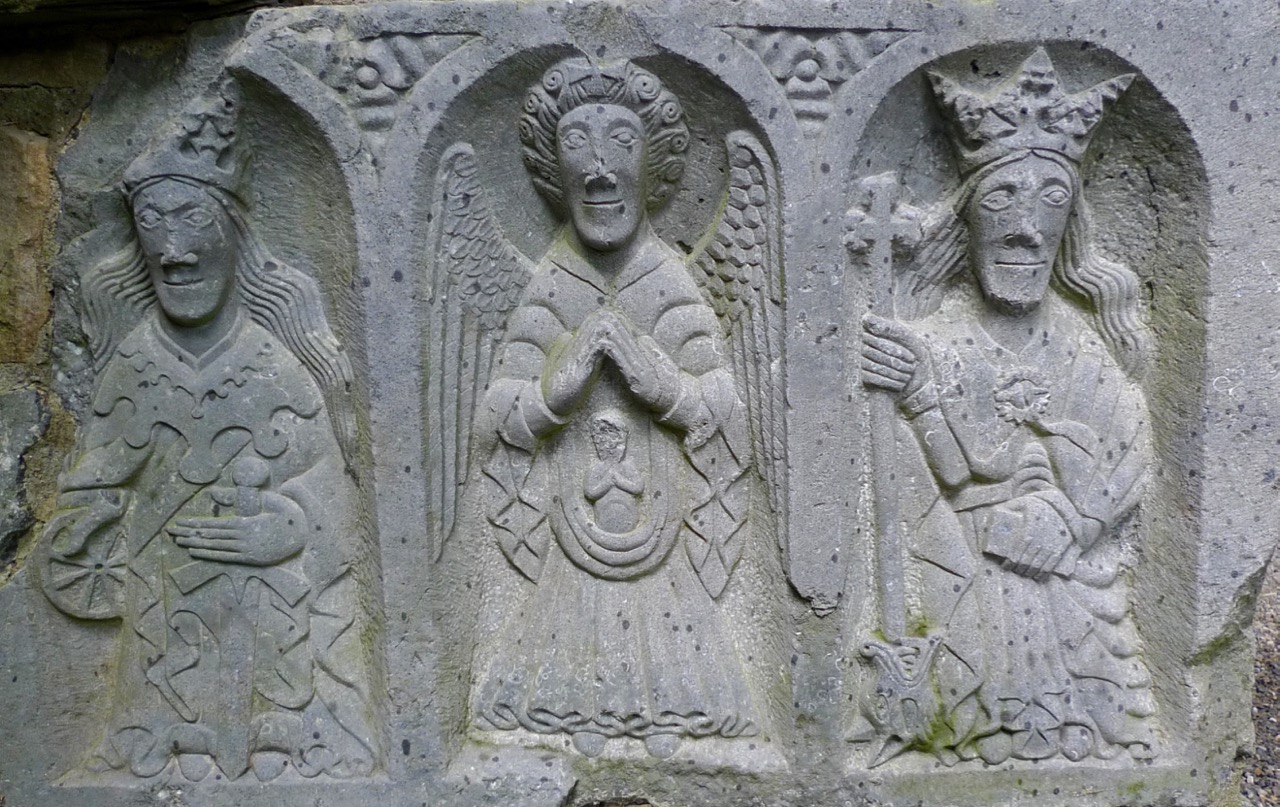
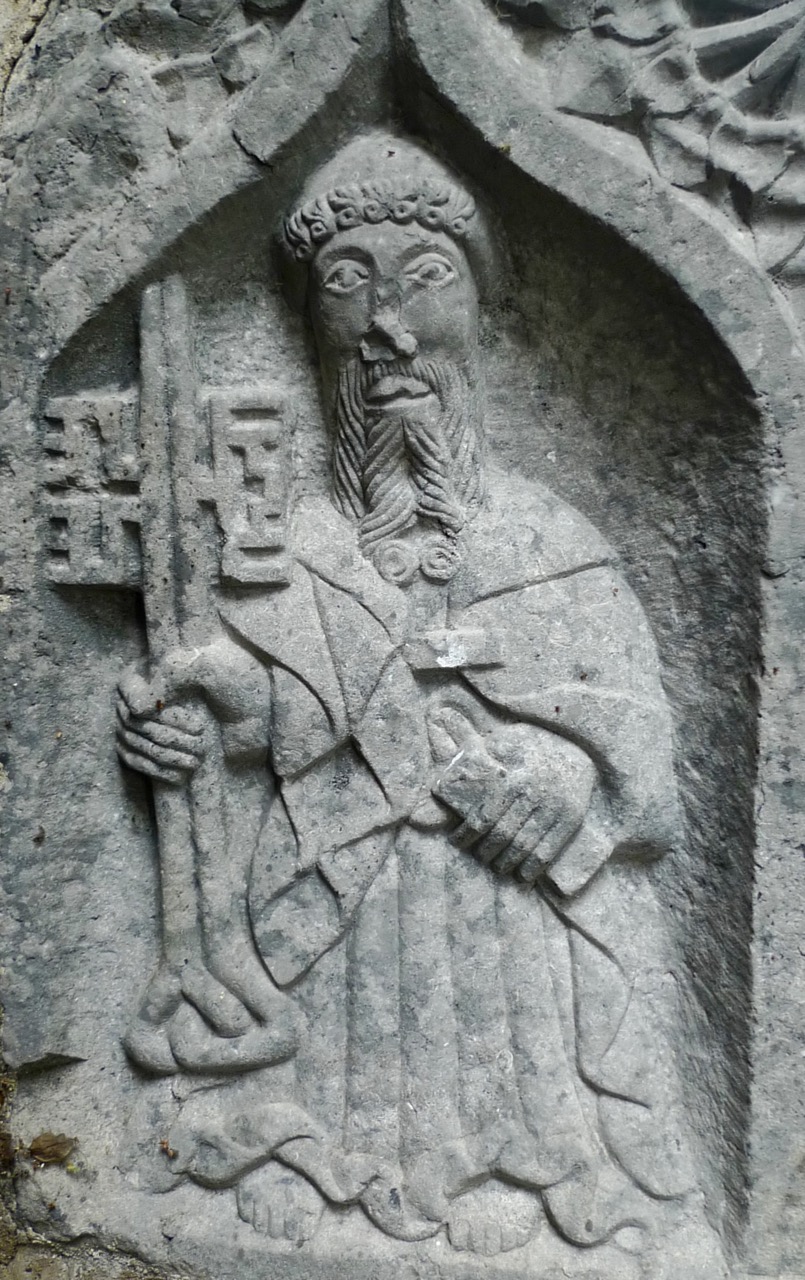
So – back to the feast, and this was centred on Jerpoint (Kilkenny), which has spectacular examples of medieval carving, including at the tomb of Felix O’Dulany, Bishop of Ossory between 1178 and 1202. Adornments on later tombs include ‘Weepers’ – those who might be in mourning for the departed souls. These figures were carved by members of the O’Tunney family – sculptors from Callan who worked in the 15th and 16th centuries. Some of them can be readily identified: St Peter, for example (another keeper of the key), while the trio below are St Catherine – with her wheel, Michael the Archangel and St Margaret of Antioch – who is conquering a Dragon.

trio

The Weepers at the top of this post show how they were martyred: St Thomas with a lance, St Simon with a saw, St Bartholomew holds a skin (he was flayed to death) and St Paul with a sword.

trio 2

Another trio of Weepers: none of the guidebooks identify these, but I’m sure that among our readership there is an expert hagiographer who can help out…

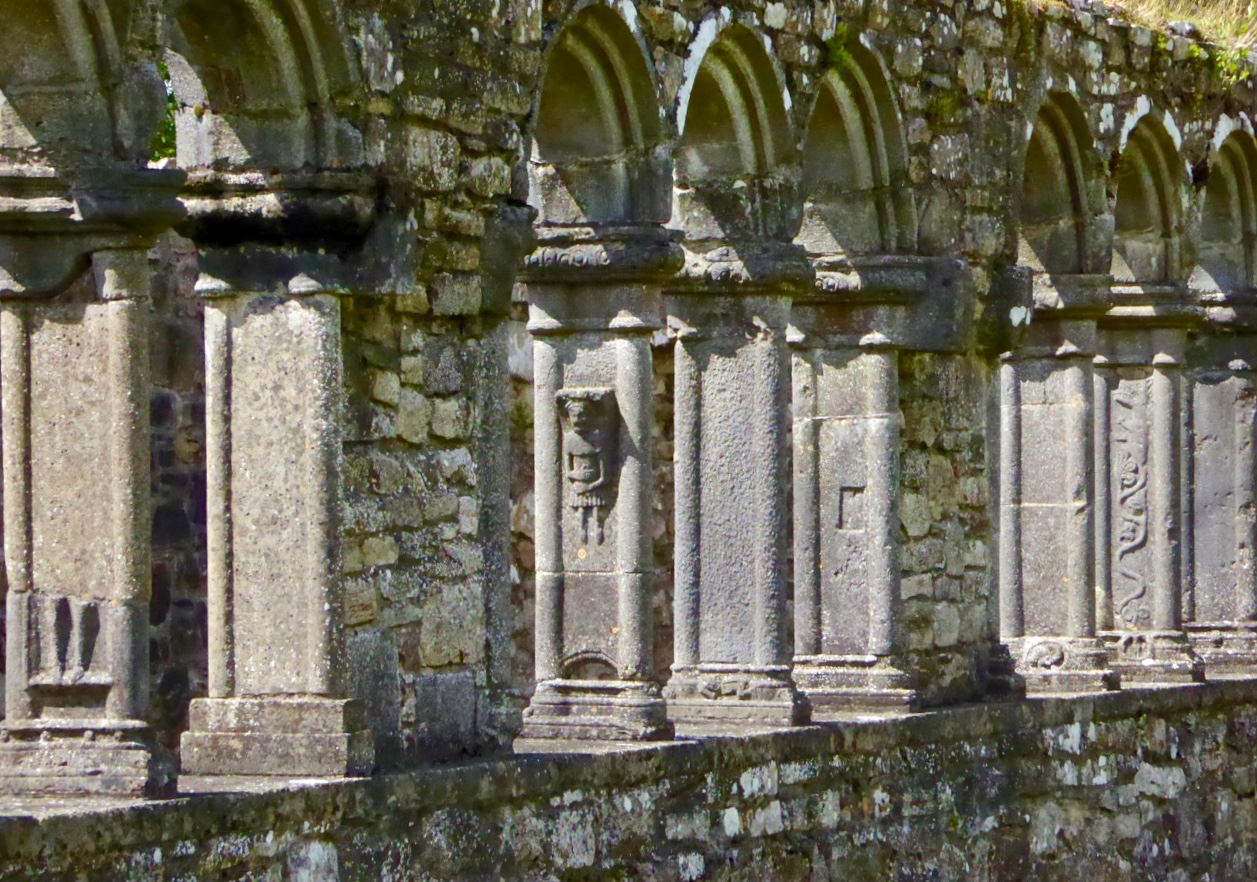
At Jerpoint it’s not just the tombs and the Weepers which fascinate: there is a 15th century cloister which, in its heyday, displayed a riot of carvings both saintly and secular. Some of these are in situ; some are partially destroyed and others have been recovered during archaeological excavations, and placed on display in a little museum. Among them we identified knights, ladies, animals fantastic and real, and ‘ordinary folk’ – including a man with stomach ache!

arches

It’s not easy to do justice to all the carvings at Jerpoint: I could fill many more pages. There are also cross slabs, roof bosses, decorative friezes and capitals…

I can’t leave Jerpoint without recounting one story which I was delighted to discover. You may remember my excitement when I found out that the real St Valentine is interred in the Carmelite Church in Dublin. Here at Jerpoint, Co Kilkenny, is another marvel: the bones of St Nicholas are reputed to be buried here… Yes – the Santa Claus St Nicholas! Tradition has it that a band of Irish Norman knights from Kilkenny went to the Holy Land to take part in the Crusades. As they headed home to Ireland, they ‘seized’ St Nicholas’ remains, bringing them back to Jerpoint, where the bones were buried – some say – under the floor of the Abbey (others say they repose nearby at the old church of St Nicholas).

Cross-slabs commemorating knights at Jerpoint: did they bring back Saint Nicholas from the Holy Land?

…That saint protector of the child
Whose relics pure lie undefiled
His casket safe within its shrine
Where the shamrocks grow and rose entwine…

(from The Bones of Santa Claus by Bill Watkins)

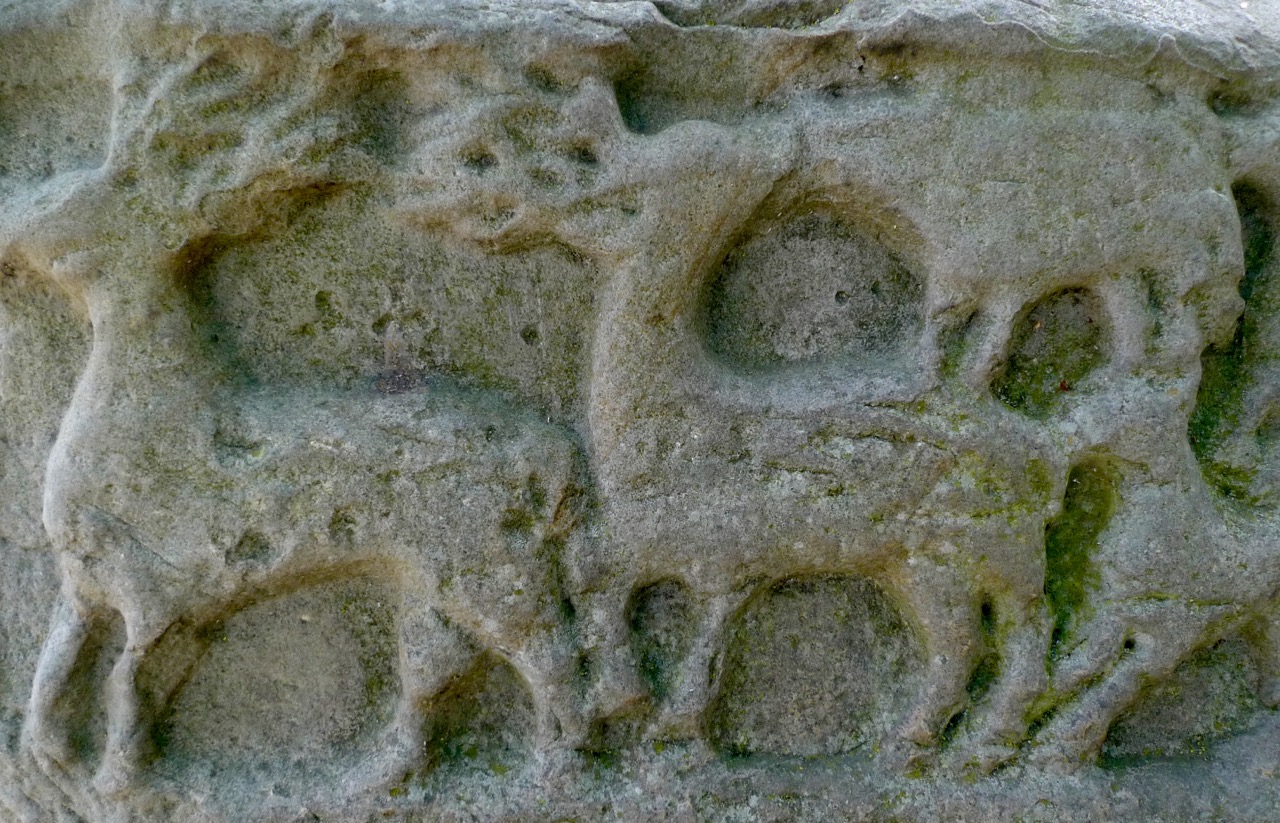
Well, we may or may not have seen – or walked over – the tomb of St Nicholas, but we saw his Reindeer during our medieval feast tour. Or perhaps they were somebody else’s Reindeer… They are carved on to the base of the Market Cross in Kells (Meath), the town which boasts so much history and which has no less than five high crosses and a round tower.

kells deer

Medieval illustrations on the high crosses at Kells, including some enigmatic Reindeer

Finola and I between us have treated you to a horn of plenty this week with our tours of medieval hotspots in Ireland. We know it’s not West Cork! However, these posts demonstrate, again, how easy it is to find history (and legend) wherever you go in this special land. In fact, it’s very difficult to travel far here without tripping over the past. It’s always fairly low-key. Most sites are protected as scheduled monuments; some are in the good care of the Office of Public Works and have guides and visitor centres. Many are remote, open to the wind, rain and sunshine and free for us all to visit: very often you will have the history all to yourself.

st peter


A Tale of Four Churches

Kilcoe Medieval Church

Kilcoe Medieval Church

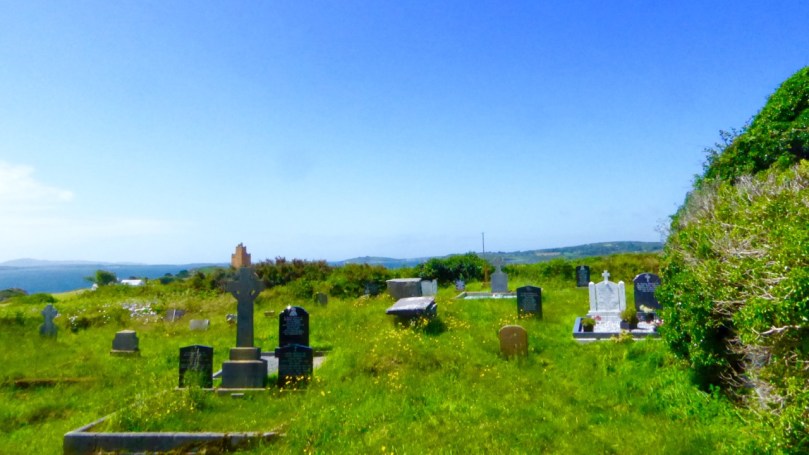
Kilcoe is a magical place. The story of its four churches leads us from the dawn of Christianity in Ireland through turbulent times and many centuries when religious differences and sectarian strife marked all aspects of life in Ireland.

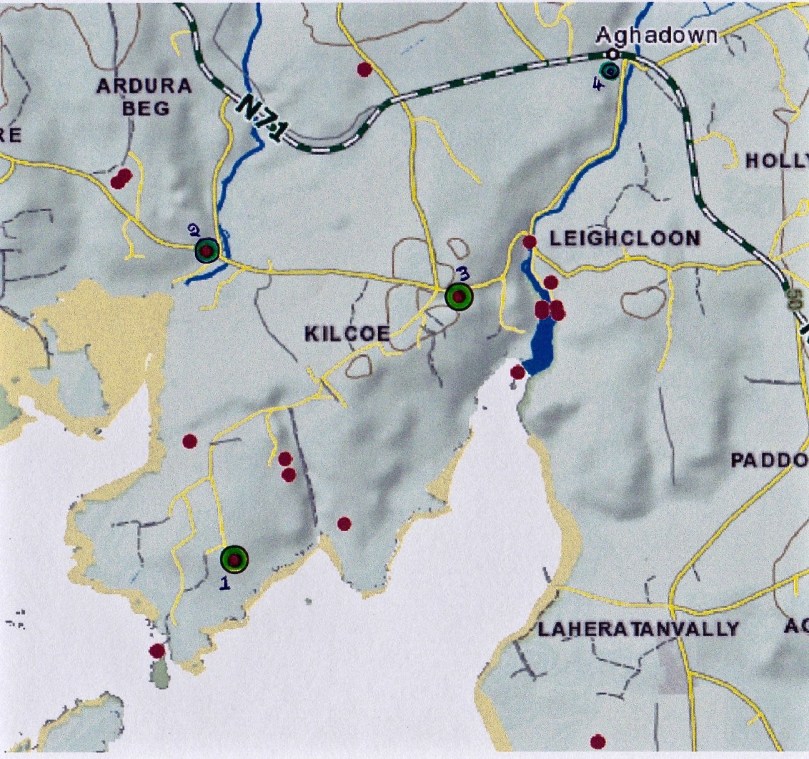
The four churches: 1, Kilcoe Medieval Church  2, Mass Rock 3, Kilcoe 19th Century Church 4, Kilcoe Modern Church of the Most Holy Rosary

The four churches: 1, Kilcoe Medieval Church. 2, Mass Rock. 3, Kilcoe 19th Century Church. 4. Kilcoe Modern Church of the Most Holy Rosary

We love going down to the Medieval church at Kilcoe or wandering the boreens along the Roaringwater River. Those boreens are now part of the Fastnet Trail Network and last weekend, at the Launch, we were treated to a talk about the locality from Fr Patrick Hickey, Parish Priest of Timoleague and a noted scholar of West Cork History. This blog post was inspired by that talk – thank you, Fr Hickey!

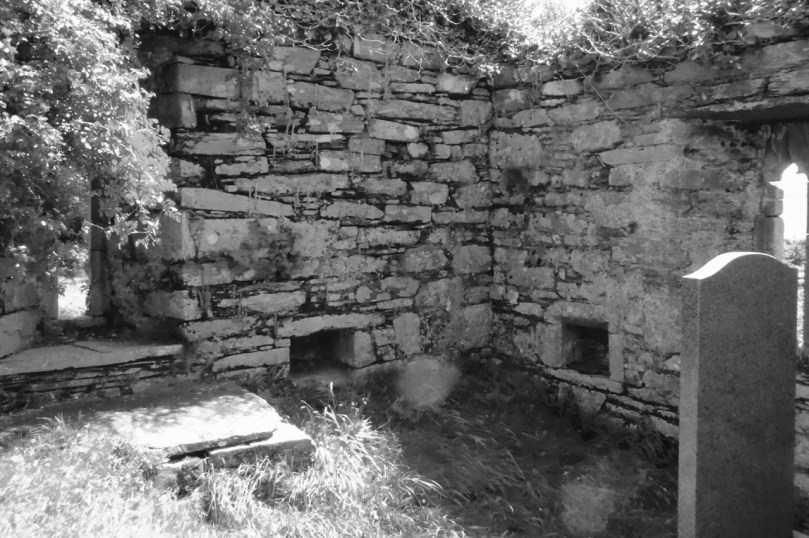
Inside the church, showing the ogival windows, the altar, piscina or stoup, and a small recessed cupboard

Inside the church, showing the ogival windows, the altar, piscina or stoup, and a small recessed cupboard

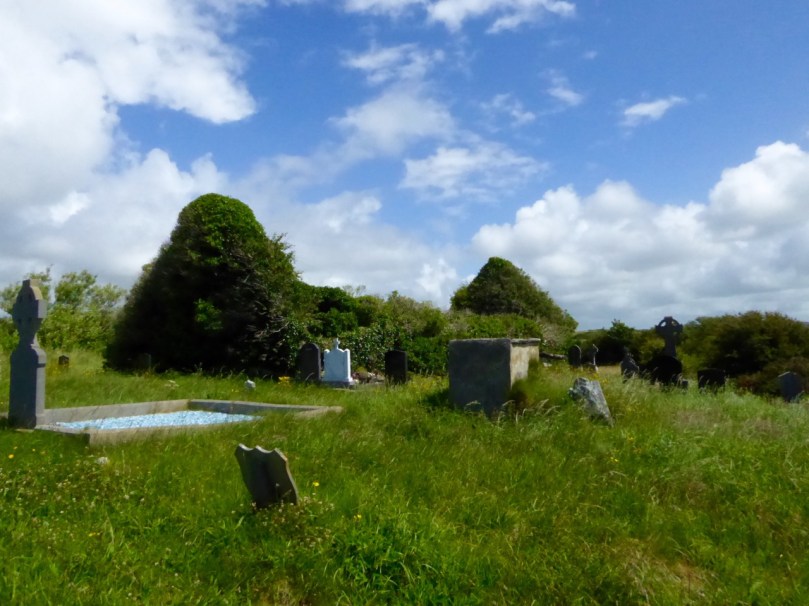
Kilcoe gets its name from St Coch, a nun said to be a colleague of St Ciarán of Cape Clear, who preached Christianity in Ireland before St Patrick, in the 5th Century. It is possible she founded a church here, but what we do know is that one was built in Medieval times – a building that still exists although the ivy is doing its best to take it over.

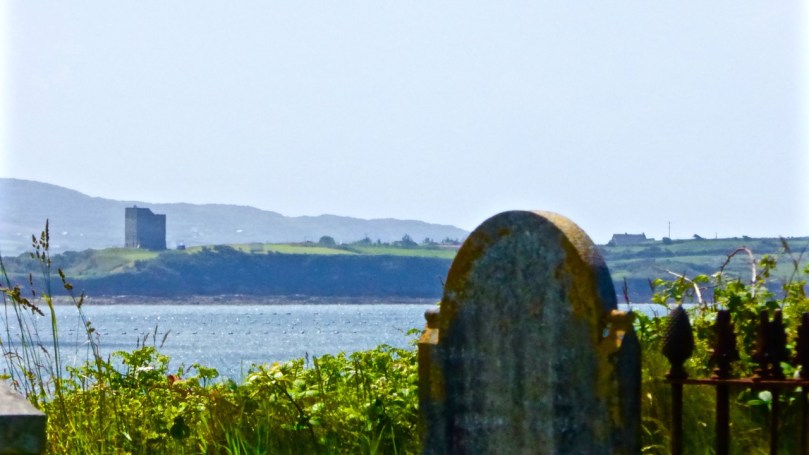
It’s a beautiful and atmospheric place, on the water, overlooking Roaringwater Bay. Two castles are in view: Kilcoe and Rincolisky, a McCarthy and an O’Driscoll Castle respectively. Each has a fascinating history that deserves a post of its own sometime. Some special features remain in this ruined church – windows with carved ogees, a lovely arched doorway, a piscina (for washing vessels) or stoup (for washing hands), a recess for storing vessels and the remains of a possible altar.

We don’t know exactly when this church was built or by whom, but we do know it was in ruins by 1615. Perhaps it was destroyed by the same forces that laid siege to Kilcoe Castle after the Battle of Kinsale in 1601 – a period that marked the end of the Old Gaelic Order in West Cork.

The Medieval church, with Kilcoe Castle in the background.

The Church, with Kilcoe Castle in the background

The rise of the Protestant Ascendancy class in the aftermath of that fateful battle privileged the Church of Ireland (transplanted Anglicanism) over the Catholic faith and a series of new laws, gradually getting harsher, were designed to suppress ‘Romanism’. This culminated in the enactment, in 1695, of the infamous Penal Laws. While attendance at mass was initially tolerated, churches could only be built from wood and away from roads. Eventually, priests were expelled from Ireland and after that mass had to be held in secret, with priests moving from hiding place to hiding place. At Roaringwater Pier Fr Hickey talked of the typical cargo of the smuggling ships that plied their trade from there: each ship to arrive from France would be carrying tobacco, brandy – and a priest!

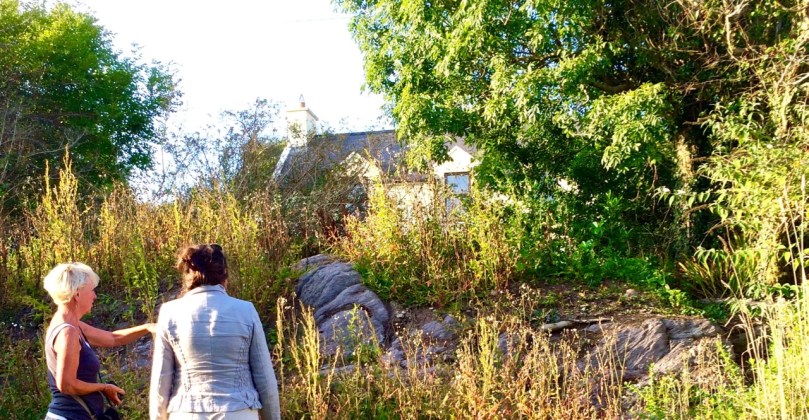
From this period we find the Mass Rocks scattered around rural Ireland, identified on the basis of local tradition. The one at Ardura Beg is just up from a tiny pier that would have offered possibility of a quick escape. Many stories have come down of lookouts warning of the approach of the ‘red coats’ and the miraculous ways in which priests would make their escape. (See here and here for examples.)
Sheona and Amanda examine the mass rock at Ardura Beg

Sheona and Amanda examine the mass rock at Ardura Beg

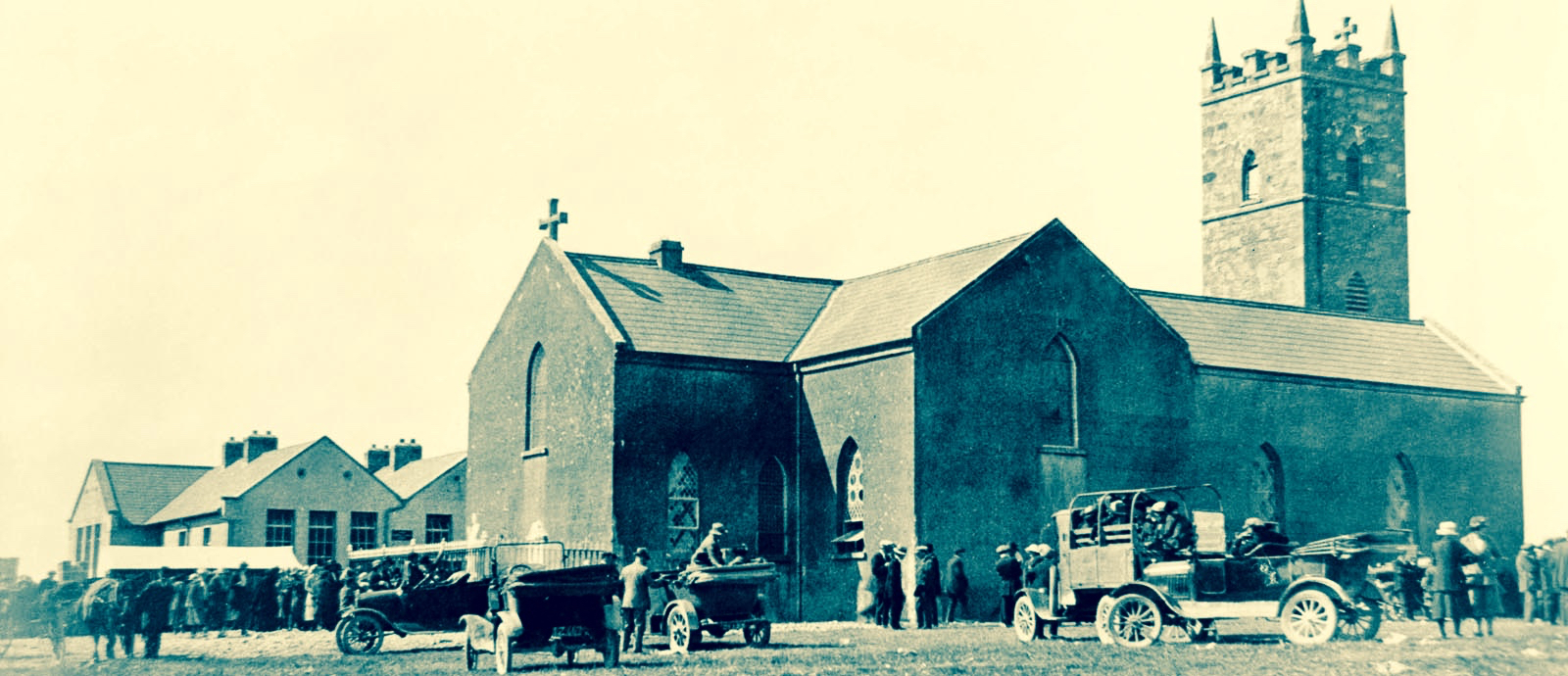
Places of worship must be located where they are accessible and the first two are close by the sea, which afforded the easiest travel routes in Ireland for most of its history. However, roads were constructed eventually and the next two churches were located along these new routes. The first one, we’ll call it the Old Church, was built along the new road that led from Skibbereen to the Beara Peninsula. After 1778 the anti-Catholic laws were gradually relaxed, although it was not until 1829 that full Catholic Emancipation was won by Daniel O’Connell. The Old Church was probably built around 1800 and was a simple ‘barn-style’ edifice which served an impoverished and famine-stricken populace for a hundred years.

Left, the Old Church near Roaringwater Pier. Right, an example of a simple ‘barn style’ church in West Cork

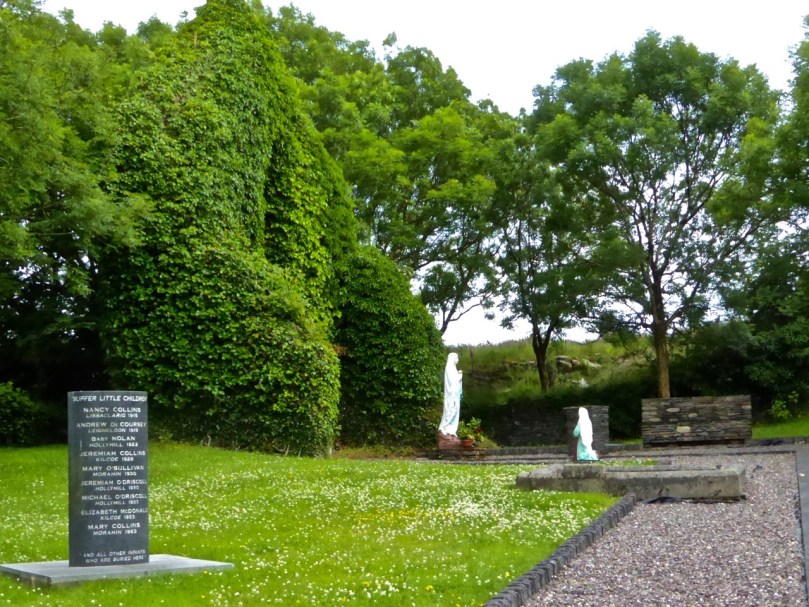
By the turn of the 20th Century it was deemed unfit for purpose. Nowadays it is a gentle green space, lovingly tended and in use as a grotto. Children were buried there – it was not a cillín, but a consecrated graveyard – and a memorial remembers them now.

Grotto and Chirdren Memorial. A place for contemplation

Grotto and Children’s Memorial. A place for contemplation

Catholic Emancipation ushered in a long period of church building by the newly-confident Catholic majority. The new road from Skibbereen to Ballydehob was constructed at the end of the 19th century and the New Church was built there in 1905, right beside the bridge over the Roaringwater River.

Kilcoe Church and Bridge

Bridge over Roaringwater River

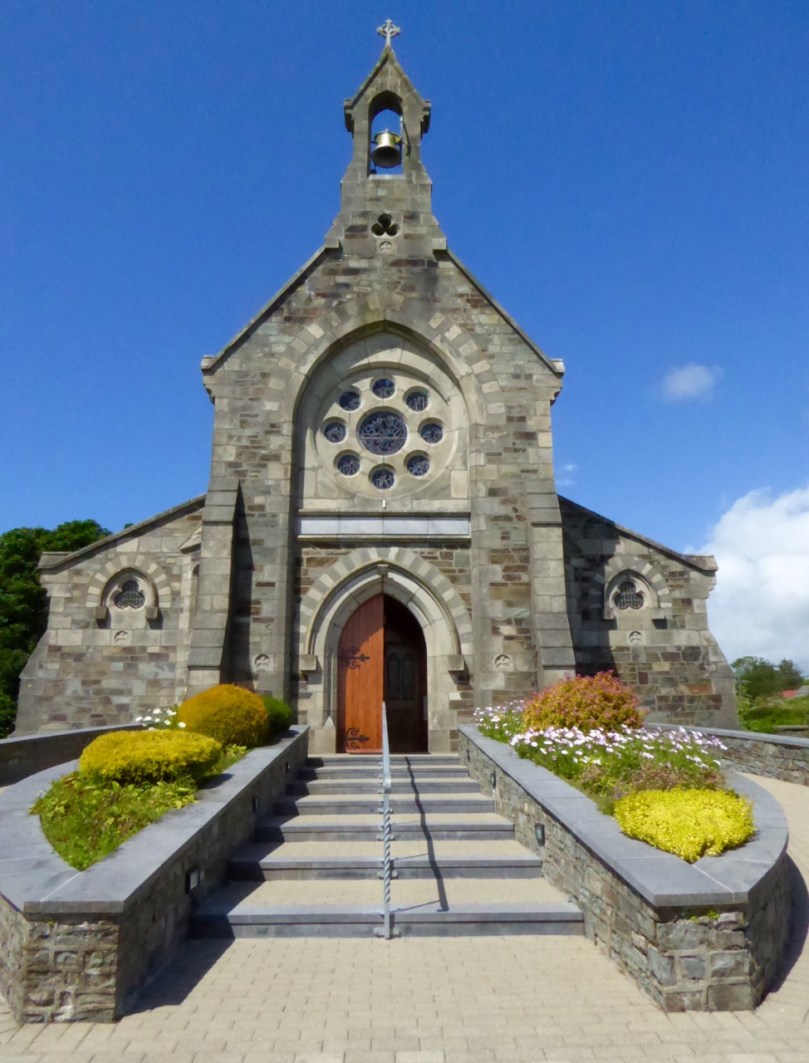
The two styles of churches common at the time were Neo-Gothic, Influenced by continental cathedrals, and Hiberno-Romanesque which took its inspiration from the Early Medieval Romanesque style of Old Ireland and featured wonderful doorways and round towers. The Kilcoe New Church, the Church of the Most Holy Rosary, was built in the Neo-Gothic style, with a large rose window at the eastern end.

Kilcoe, Church of the Most Holy Rosary

Kilcoe, Church of the Most Holy Rosary

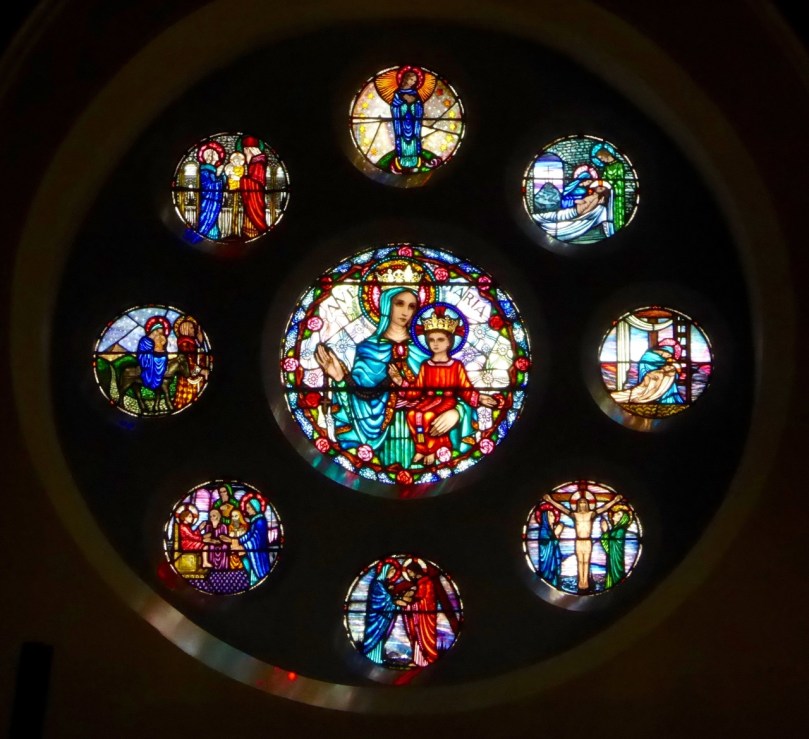
Originally the side-aisles did not have seats – poorer people could stand there for mass, while those who could afford a penny would occupy the pews. As the church fund grew, thought was put into ornamentation and stained glass was commissioned for several windows. The rose window was executed by the Harry Clarke Studios in 1943 and shows scenes from the life of Christ and of Mary.

The Rose Window, by the Harry Clarke Studio

The Rose Window, by the Harry Clarke Studio

The Altar and side windows were the work of Sarah Purser’s Tower of Glass. The choice of stained glass – from Dublin-based Celtic Revival artists rather than the English or Continental firms that supplied most church glass at the time –  was a choice that demonstrates the nationalistic feelings that were rife in West Cork at the time.

Irish History is written large on her landscape. In this one small area – these sites are within a couple of kilometres of each other – we see encapsulated sixteen hundred years of history, starting with St Coch and ending with the latest incarnation of a church at Kilcoe. Their beauty and their peaceful settings have been hard won. They should serve to remind us that peace and tolerance must always be cherished and safeguarded.
Rincolisky Castle from Kilcoe Medieval Church

Rincolisky Castle from Kilcoe Medieval Church