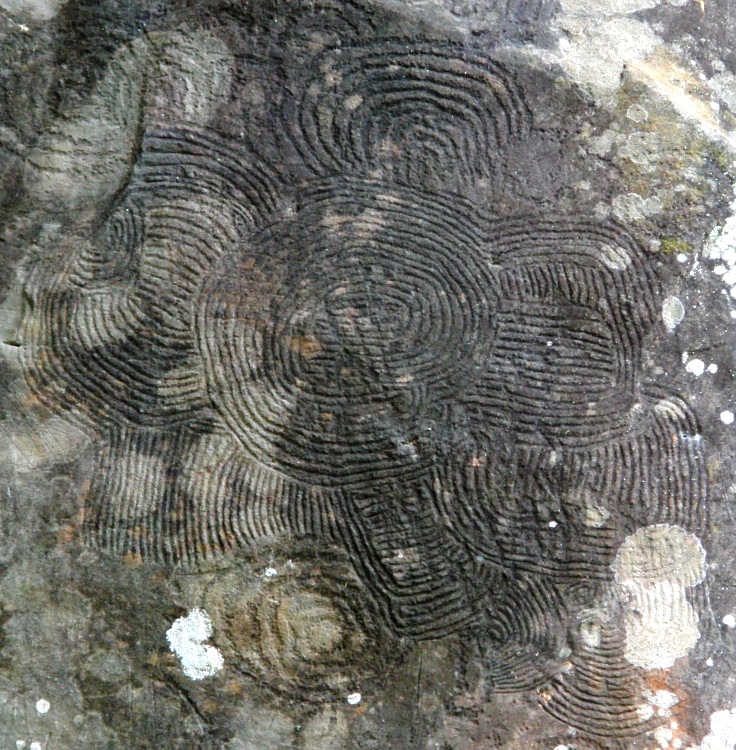
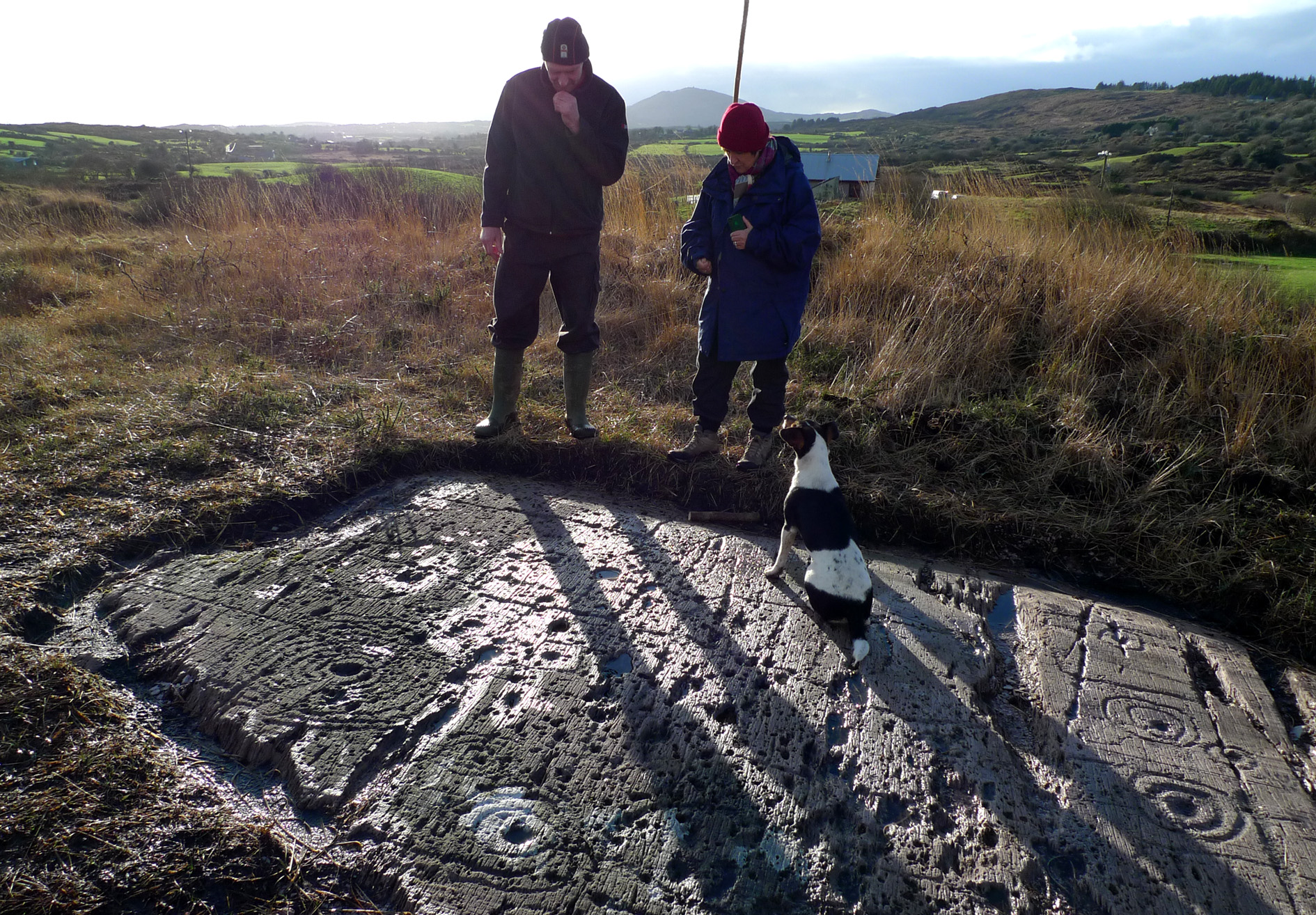
First Foot

‘…According to local folklore the first foot was planted on Irish soil at Donemark on the shores of Bantry Bay in 2680 BC…’
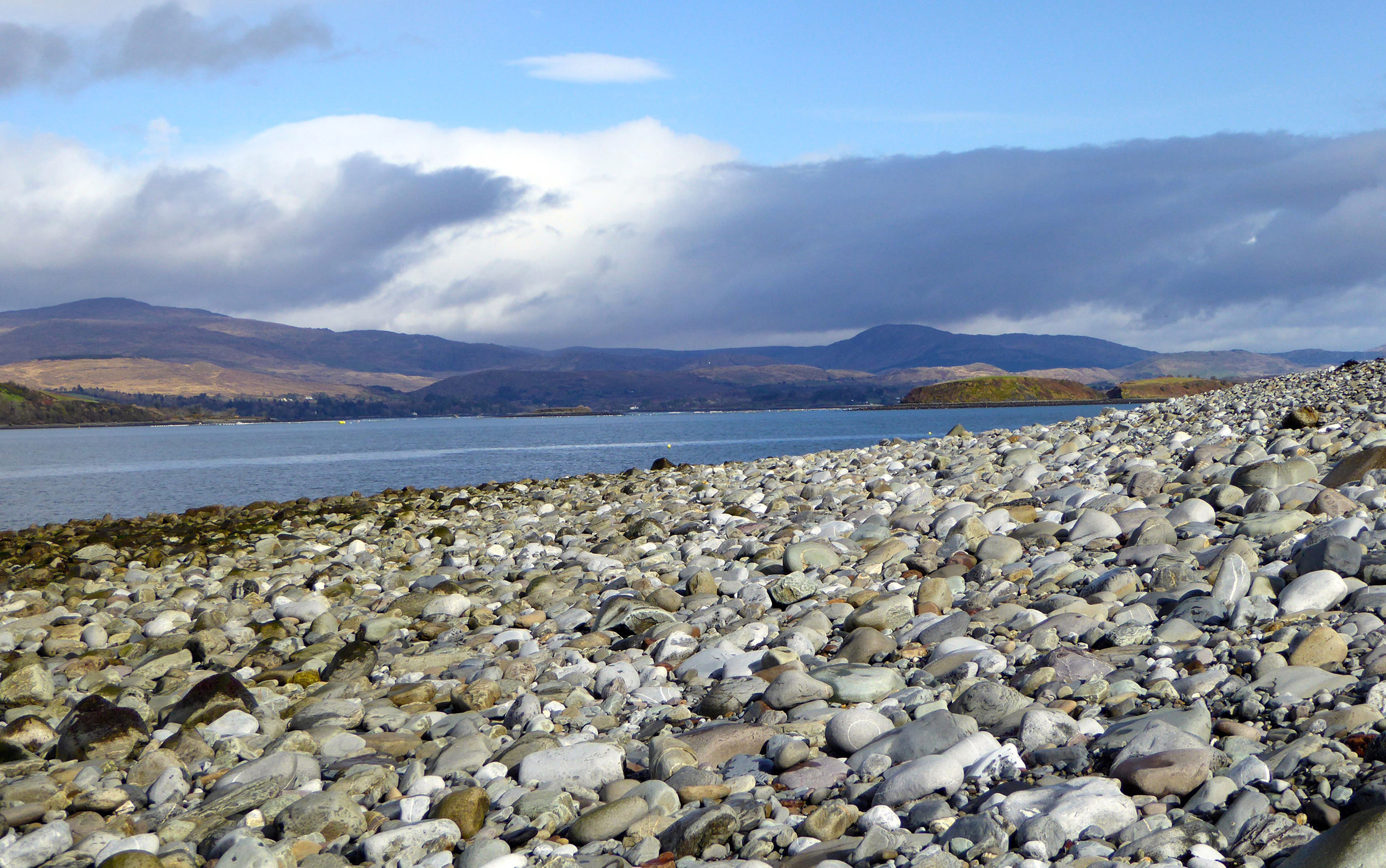
Ireland's first arrivals passed by this pebble beach on their way to Donemark

Ireland’s first arrivals passed by this pebble beach on their way to Donemark

This statement (from Fuchsia Brand’s leaflet on Heritage) was guaranteed to send me scurrying for my history books. And – yes – I found many references to the event: an event which, to my mind, was surely one of special significance for Ireland: the first human ever to have set foot in this land – it must have deserved commemoration… Surely, there must at the very least be a plaque marking the spot? For a moment I wondered if this could be the long sought explanation for the enigmatic piece of Rock Art that’s on display in Bristol’s Museum & Art Gallery – the carving is about the right age…
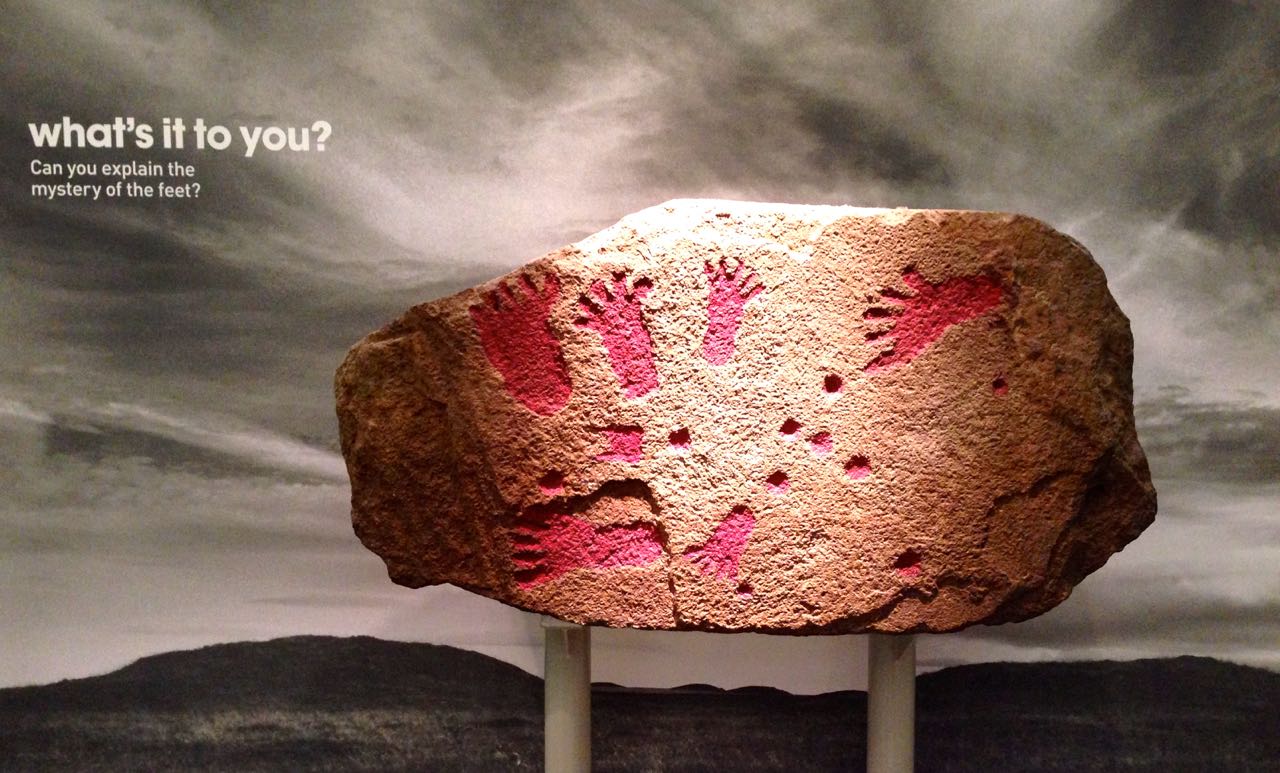
Bronze Age Footprints in Bristol's museum

Bronze Age Footprints in Bristol’s museum

So, a similar example of Petrosomatoglyphia is what I was hoping to find on the shores of Bantry Bay, a mere stone’s throw from our home here in Cappaghglass. But – before that expedition – let’s just go back to the history for the moment. Back – in fact – to the Lebor Gabála Érenn (The Book of the Taking of Ireland), which was written down in the 11th century and – allegedly – based on earlier source material. It takes a bit of wading through: I used a commentary edited and translated by R A Stewart Macalister and published by the Irish Texts Society in Dublin in 1938, but it’s well worth the effort. There’s a lot I had never understood before about the earliest history of the people of Ireland.

lebot gabala book frontispiece

It’s a long story… The book is a collection, in five protracted parts, of all the poems and traditions which had been written and learned by the Bards, telling the history of their nation. There’s a lot of repetition: like the Gospels there are several versions of each episode and it’s a bit dizzying to try to get a clear overall picture of events. So, settle down and imagine the visiting Bard you have given hospitality to in your tower house on a winter’s night is regaling you with tales of your ancestors.
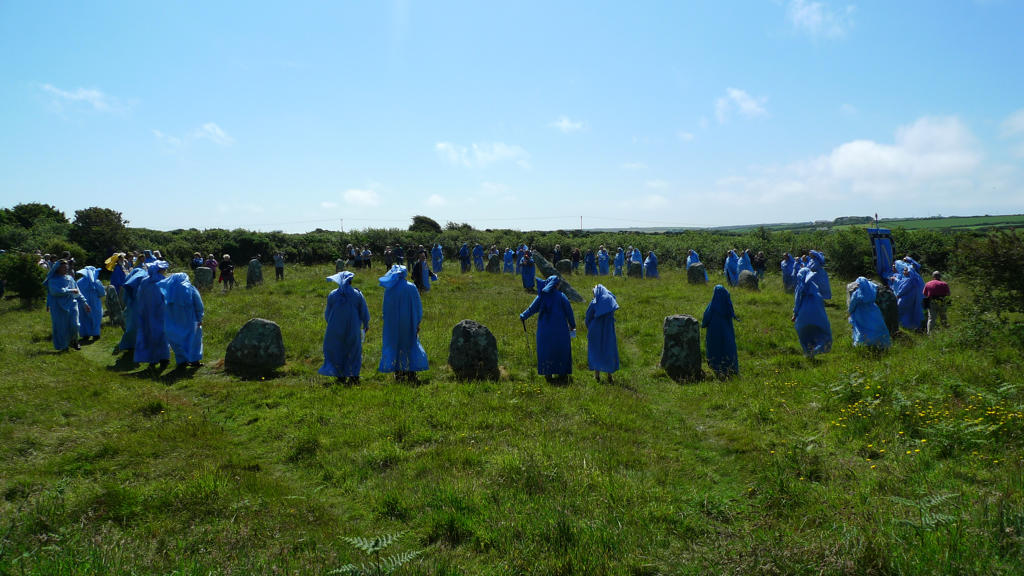
A Meeting of Bards (at Boscawen-Un Stone Circle, West Penwith, Cornwall

A Meeting of Bards (at Boscawen-Un Stone Circle, West Penwith, Cornwall)

Everything has to go back to Noah, who was only allowed to take with him on the Ark his own sons and their wives. One of his sons, Bith, had a daughter – Cesaire (or Cessair). As she had to stay behind so also did her father, but they built their own ships, three of them, and set sail with two other men and a large company of women, looking for a land which ‘knew no sin’ because it had never been populated: there they would settle and aim to re-found the human race in a green and fertile place. Their voyaging took them to many parts of the known world and they came eventually to the north of Spain – which we know today as Celtic Galicia. Cesaire knew that this wasn’t the Utopia they were seeking but she climbed to the top of a very tall tower and, in the far distance, she spotted Ériu – ‘…where no evil or sin had been committed, and which was free from the world’s reptiles and monsters…’

Cesaire would have needed a tower like this to catch a glimpse of Ireland from northern Spain...

Cesaire would have needed a tower like this to catch a glimpse of Ireland from northern Spain…

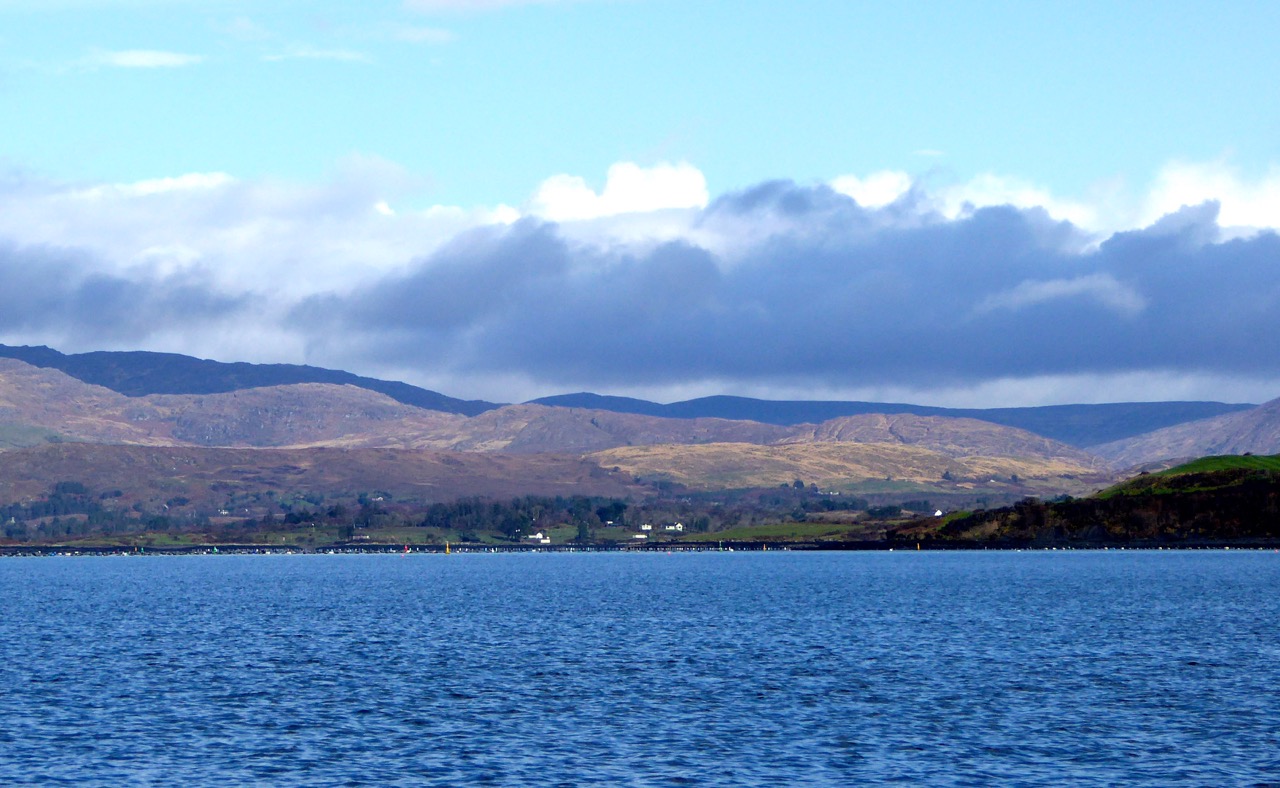
And so it was, forty years before the Great Flood engulfed everything, Cesaire’s expedition sailed up to the mouth of the Mealagh River, passing on the way the most beautiful landscapes they had ever seen – landscapes that we are fortunate to see every time we set out to explore our own new horizons.
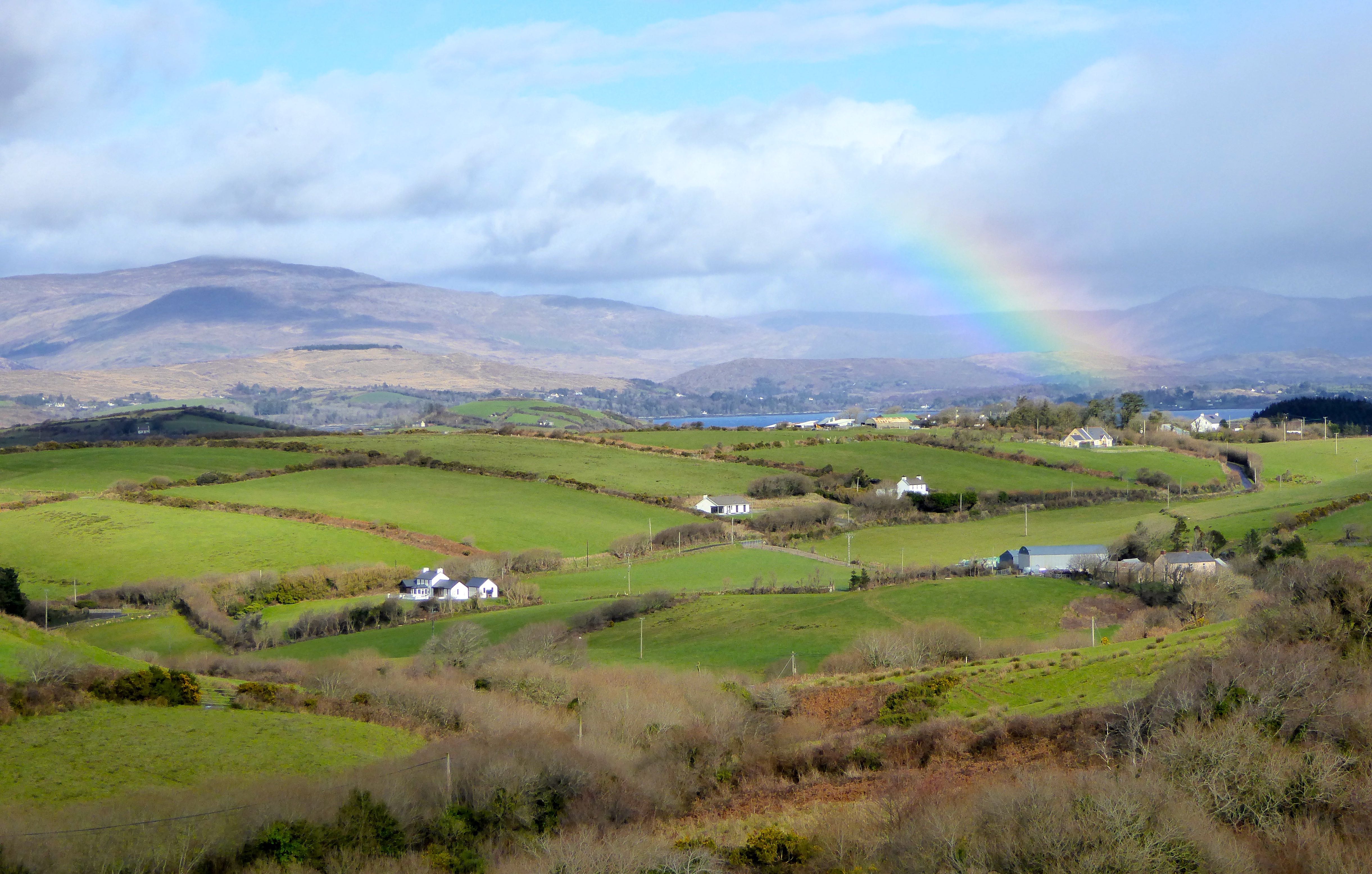
Bantry Bay - the landscape today

Bantry Bay – the landscape today

Now it was time to glimpse for ourselves this remarkable site – Dún na mBarc – the place of the boat – (Donemark -Dunnamark Townland) in the parish of Kilmocomogue. We drove up the unremarkable N71 through Bantry town and turned in to its attractively situated golf course, then made our way down to the shore. Disappointingly, that is also unremarkable: it’s got a brooding, although not unattractive atmosphere about it. We came there at low tide and saw mud-flats – alive with foraging birds, including a very fine Old Nog – the huge stones of a disintegrating quay, and distant views to the Sheep’s Head and Beara Peninsulas.

Landing Place? At Donemark

Landing Place? At Donemark

Old Quay at Donemark

Old Quay at Donemark

.

Alas, there were no footprints, no plaque, no signification of the very important history of this site: there was only our imagination to fill in the gaps. I could envisage Cesaire’s Bronze Age boat (only one survived the full journey) making its way up the azure waters admiring the emerald green of the landscape and passing by some of Ireland’s most dramatic scenery. They landed on ‘…a Saturday, the fifteenth day of the moon at Dun na mBarc…’

Kerry Mountains

Mountains of West Cork

We did find a single commemoration of this event: in the tranquil gardens of the National Learning Network Centre, which is not far from the mouth of the river. It is a work of art, made in 2013 by the students of the Centre, under the guidance of Michael Ray and the auspices of the West Cork Arts Centre – you may remember both from this recent post. Voyage of Stories’  recalls that pioneering arrival in the form of a boat sculpture made of steel, copper and glass and set up over a pool. The glass tiles tell of invasions and emigrations both ancient and modern in Irish and English. It’s a good way to commemorate the journey and those early settlers, we thought.

'Voyage of Stories' at Donemark

‘Voyage of Stories’ at Donemark

Now, Finola – at my side and wearing her Archaeologist’s hat – is tutting at my unquestioning acceptance of the dating of this milestone in Ireland’s history, bearing in mind that the passage graves at Newgrange, Knowth and Dowth appear to be some 5,000 years old and – she says – there were people living in Ireland earlier than that! But my view is that there’s history, and there’s story… Well, perhaps history is always someone else’s story but give me a good tale any day, especially one woven with adventure and romance and told at the fireside.
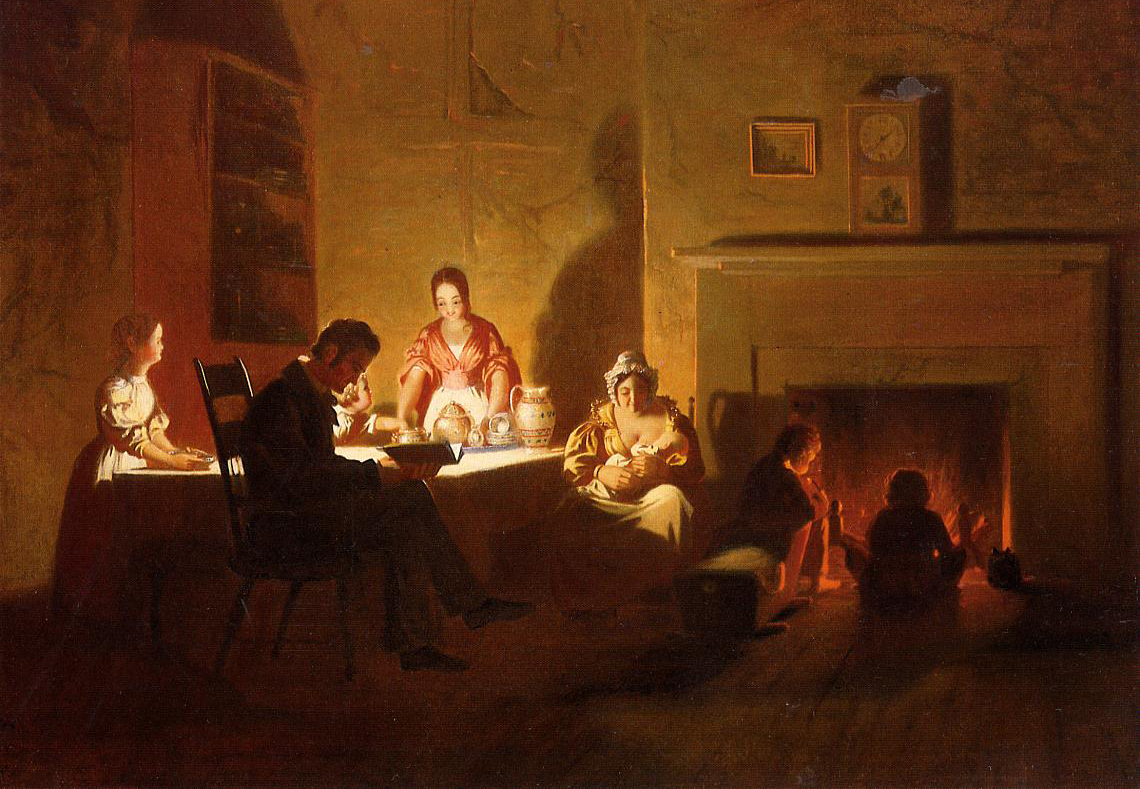
Family Life (Caleb Bingham 1845)

Family Life (Caleb Bingham 1845) New Orleans Museum of Art

So now you know all about Cesaire, who was the first to step from that frail vessel which had travelled all the way from Egypt in those far off days. But perhaps I should also tell you a little more: the three men on that voyage faced the prospect of serving no less than fifty women between them if they were to populate this new land. The Lebor Gabála Érenn is quite frank about this: ‘… Ladra, the pilot, from whom is Ard Ladrann named he is the first dead man of Ireland before the flood. He died of excess of women, or it is the shaft of the oar that penetrated his buttock. Whatever way it was, however, that Ladra is the first dead man in Ireland…’ while Bith – Cesaire’s father – was already aged before the voyage and also passed away soon after. That left one man – Fionntán – who was so frightened by the prospect of facing all those women alone that he ran away and hid in a cave. There he changed into a Salmon and survived the Flood which, sadly, overcame Cesaire and her companions. The shape-shifting Fionntán went on to live for five and a half thousand years (by my reckoning that means he’s still alive!) and recorded all of Ireland’s history (including at first hand the account of Cesaire’s voyage) – which he then taught to the Bards of Ireland so that it would be taken out into the world…

But all that is for another day!

made harbour

Your Favourite Posts of 2014

Cape Clear Harbour

Cape Clear Harbour

What were your favourite Roaringwater Journal blog posts of 2014?

Our blogging software provides a running count of visitors to Roaringwater Journal and it’s always fascinating to see which ones receive the most views. Some of them are our own favourites as well, and some can attribute their high numbers to being re-blogged by others, or to being shared on social media. So tell us, Dear Reader – did the software capture it – or do you have a different favourite from our top posts of 2014?

From the Whiddy Island high point

From the Whiddy Island high point

The top two posts of 2014 were the ones we wrote about our trips to Cape Clear and to Whiddy Islands. We loved our time on the islands and intend to go back often – our enthusiasm probably shone through. But it may also be that islands hold a mystique for us that is hard to define – out there in the dawn mist, mysterious and peaceful, whole worlds unto themselves. The islanders of West Cork are worried at the moment by cuts to their development officer funding, and need all the support we can give them. So if you live here, or are planning a trip, include one or more of these beautiful islands in your plans.

Timoleague Friary

Timoleague Friary

Next in popularity was our post on the Timoleague Friary. It’s an iconic piece of West Cork history and architecture – the only sizeable medieval religious ruins we have, perched on a picturesque estuary of the Arigideen River.

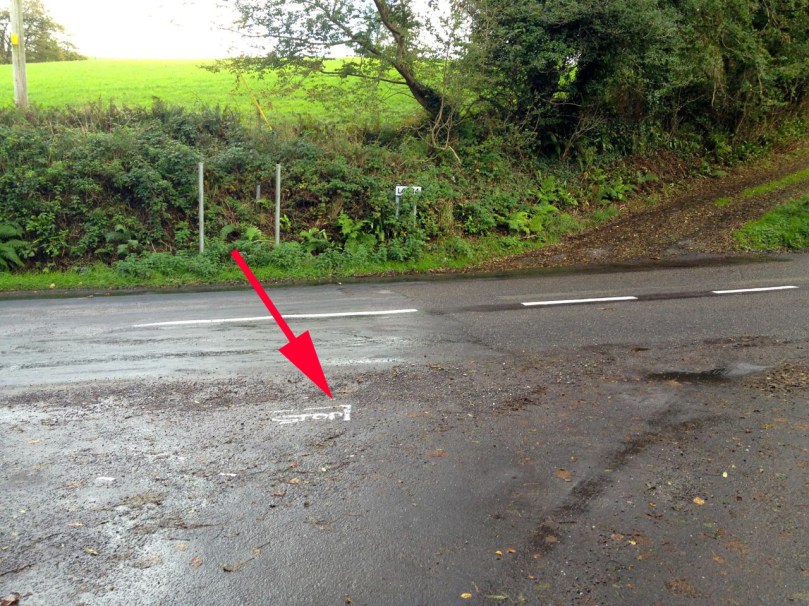
I've learned to look carefully for road signs

I’ve learned to look carefully for road signs

Finola’s frustration at the inflexible regulations that treated her like a novice driver, despite forty years of driving experience, must have struck a chord with you. Maybe you dropped by Driving Home the Point to sympathise with her plight, or maybe it was to chuckle over the numerous example of the routine flouting of the Irish rules of the road, or the bemusing driving conditions of many rural roads.

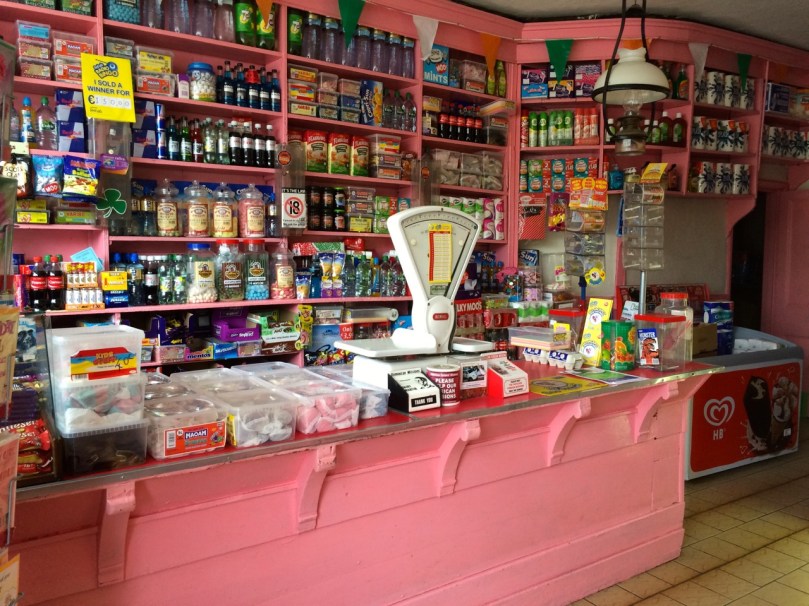
Evans of Bantry

Evans of Bantry

We have enormous nostalgia for the things we remember from our childhood, don’t we? In that vein, it’s not surprising that Shopping for Memories was such a popular post. These lovely old shops evoke a time when a whole variety of shops lined the main streets and our mothers went from the butchers to the greengrocers to the chemists to the haberdashers and, if we were lucky, to the sweet shop on a daily basis.

Carraig Abhainn Gardens

Carraig Abhainn Gardens

But sadly, the numbers of these old-fashioned shops are dwindling. This year we said goodbye to Wiseman’s in Durrus, no longer able to compete against the hardware shops of Bantry. Fortunately, their wonderful Carraig Abhainn Gardens are still open behind the shop – and our description of this hidden gem was one of your favourite posts of the year.

A group of posts on festivals came next. We wrote about the question our friends asked us when we decided to move here, What on earth will you find to DO? We answered in a series of posts describing some of the local events and festivals we have taken in this year – the Ballydehob Jazz Festival and Arts and Culture Festival (which included our own Rock Art Exhibition), traditional music Festivals in Baltimore, Bantry and Ballydehob, and a host of musical and theatrical events. One day all of you retirees out there are going to discover that moving to West Cork is the best decision you can make!
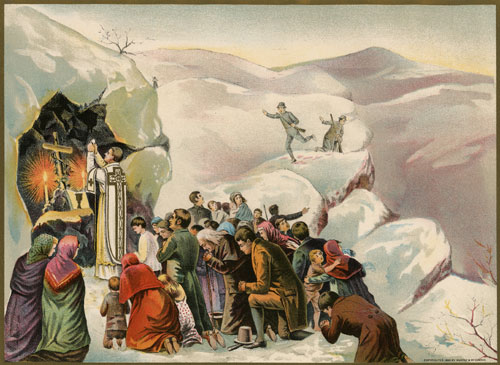
The next group of posts centred on the Mizen – the Mizen Magic posts where we concentrated on aspects of the Mizen Peninsula that delight us – the Beaches, Brow Head, the Butter Road, Mount Gabriel, the Gortnagrough Folk Museum, and the history and archaeology of this beautiful part of Ireland.

How are ye?

How are ye?

In fairness, like, it looks like ye would have enjoyed our take on how to speak like ye’re from West Cork. Those little posteens made you happy out.

Ye must be a fierce active crowd altogether because you really got a kick out of Finola’s description of her day of sailing and (perhaps her personal favourite in the activities department) her moonlight kayaking on Lough Hyne.

Happy New Year from Robert and Finola!

Happy New Year from Robert and Finola!

And our own personal favourite of 2014? Robert’s post on the Sky Garden, of course! If you haven’t read it yet, you’ll have to do so to find out why this was the highlight of our year in West Cork.

Mizen Mission

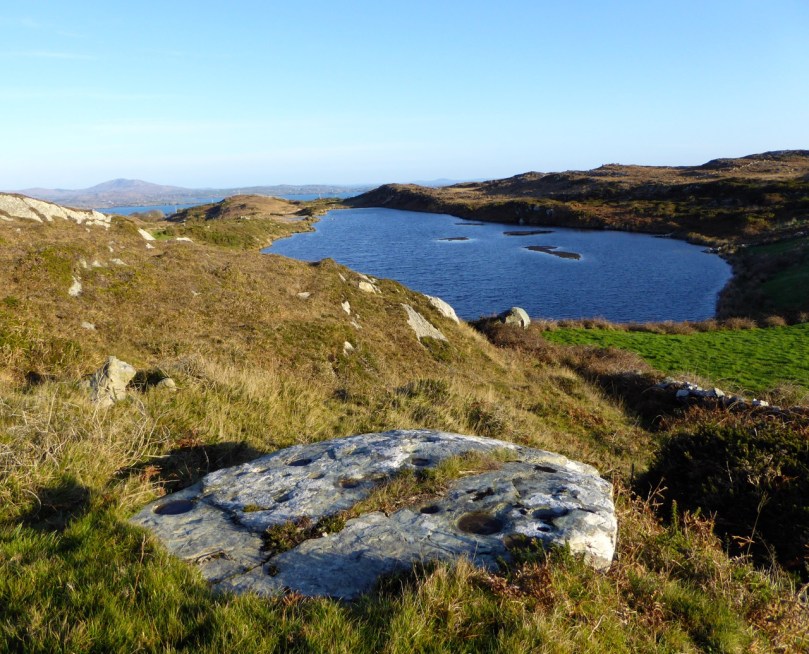
Tooreen Lake

Tooreen Lake

A joint post by Robert and Finola…

Finola

According to the forecast today could be the last fine day of 2014, so we decided to make the most of it and set off on a mission. And what a day it was! Cold, yes, but with that brilliant light that only happens on crisp winter days.

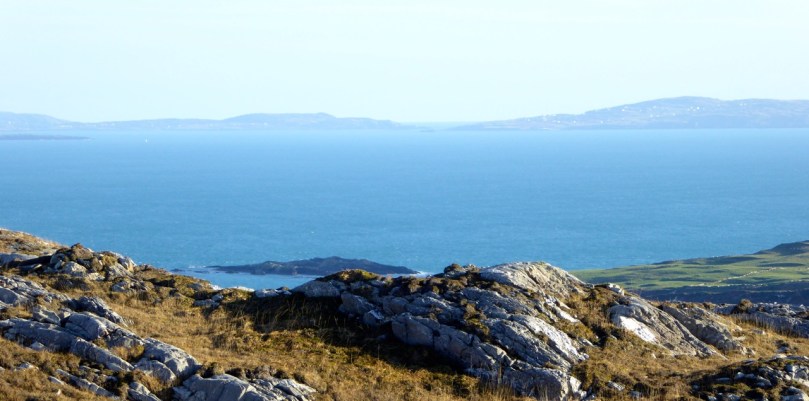
Looking across Roaringwater Bay

Looking across Roaringwater Bay

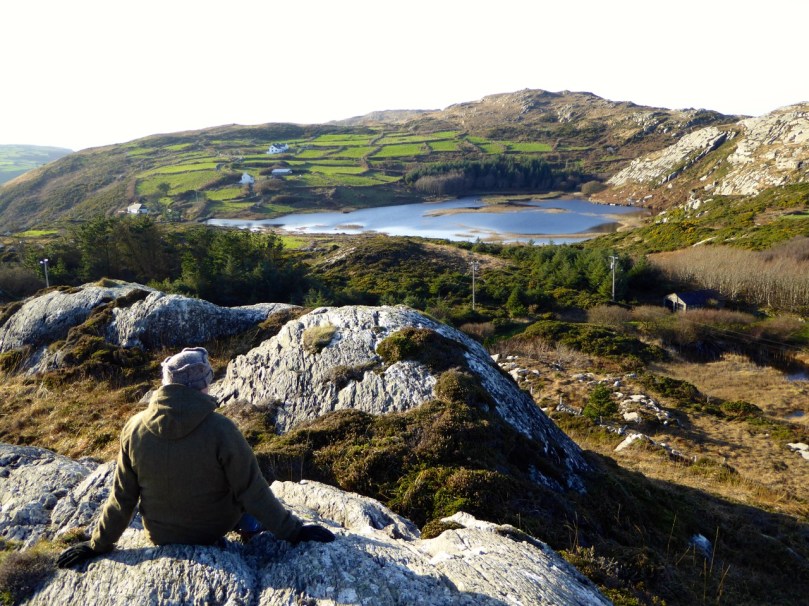
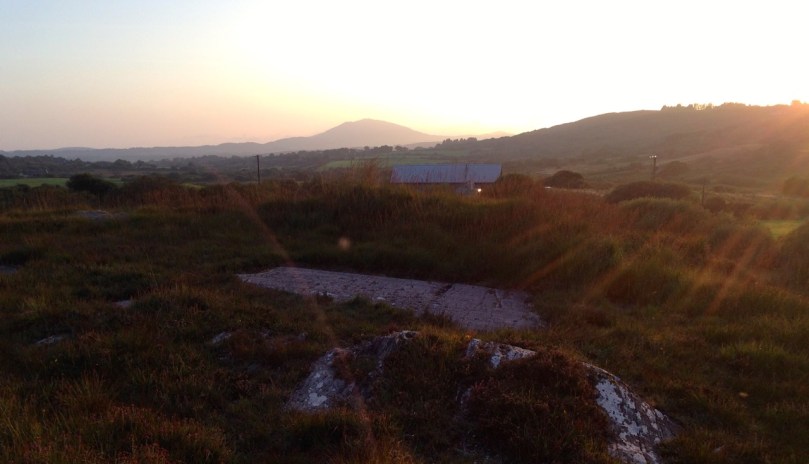
Our mission? it was to find a piece of prehistoric rock art I had last visited over 40 years ago in the townland of Castlemehigan, near the end of the Mizen Peninsula. But once in the vicinity of Castlemehigan we couldn’t resist continuing to the end of the tiny road, which climbed up the rocky hills on the northern side of Crook Haven. Parking the car, we climbed to the highest point we could find. We’re used, by now, to the jaw-dropping views around here, but even by Mizen standards, this was something special. 

Crookhaven Village

Crookhaven Village

South of us, across the Haven was the village of Crookhaven nestled in its protective harbour. Looking north we could see across the Sheep’s Head to where the unmistakeable outline of Hungry Hill loomed on the Beara Peninsula. To the west was the White Strand and Brow Head, crowned by the historic Marconi telegraph station and to the east was the whole of Roaringwater Bay: Cape Clear Island, Sherkin, Baltimore, and the ring of hills that run down to the water.

Back in the vicinity of the rock we knocked on the door of a farmhouse to ask directions and permission. Often when we do this we are met with a blank look – not every ancient monument location has survived in the folk memory of the local residents. But this time we hit it lucky, with Florence O’Driscoll – ah yes, he knew it – the mass rock is what we were looking for. I showed him a picture of the rock and he confirmed that was the one, it was on his land and he would take us there.

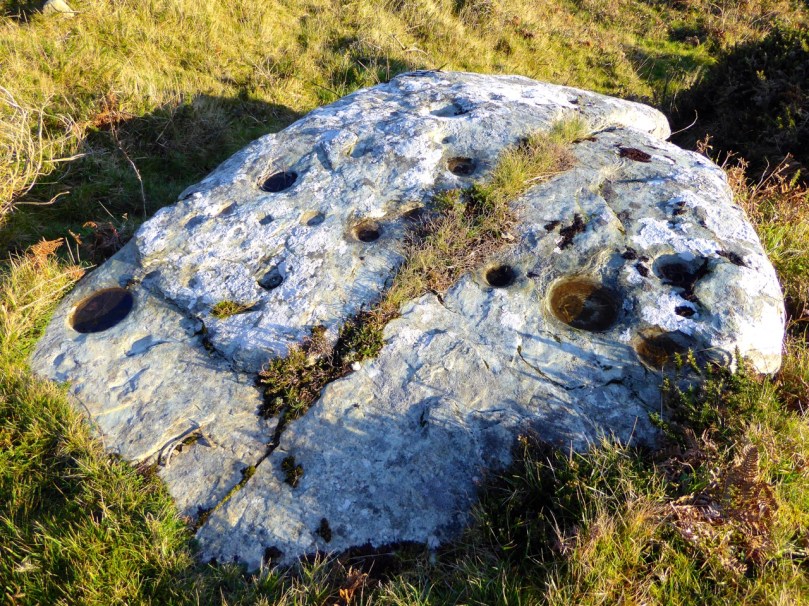
Castlemehigan Rock

Castlemehigan Rock

My write-up and drawing of the time brought back some memories of an unusual rock with very large depressions, almost more basins than cupmarks. I also had a very clear recollection of being taken to the site by Bernard O’Regan, a local (and well-remembered) amateur archaeologist who was very helpful to me at the time. Because the rock was very overgrown, he had arranged to have it cleaned for me and when we arrived there were two men on top of the rock hacking away the gorse and heather. Nowadays, rock art specialists abide by an ethic of zero surface contact – no clearing or scrubbing allowed!

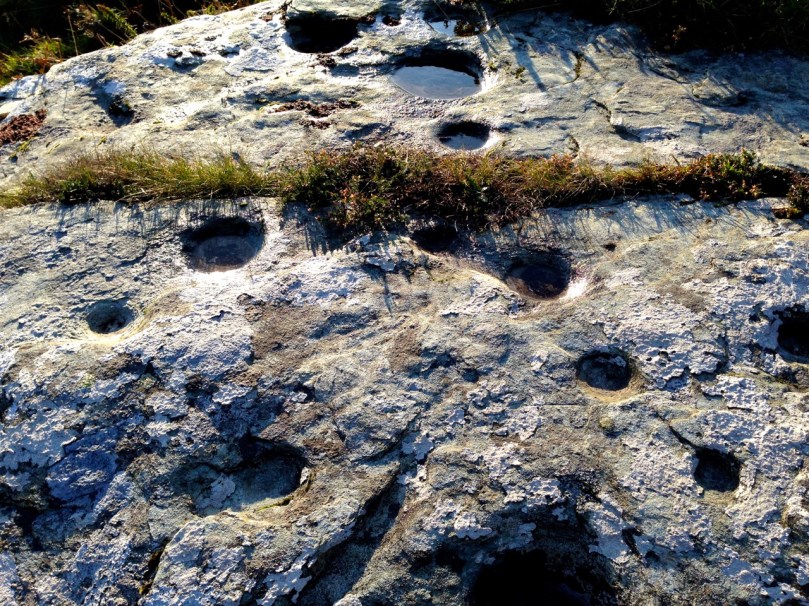
Castlemehigan rock surface

Castlemehigan rock surface

Although this rock lacks any of the circles, grooves and lines that add interest and appeal to many panels of rock art, it is special in other ways. Several of the cupmarks are unusually large, and one is basin-shaped (that is, with straight sides and a flat bottom).

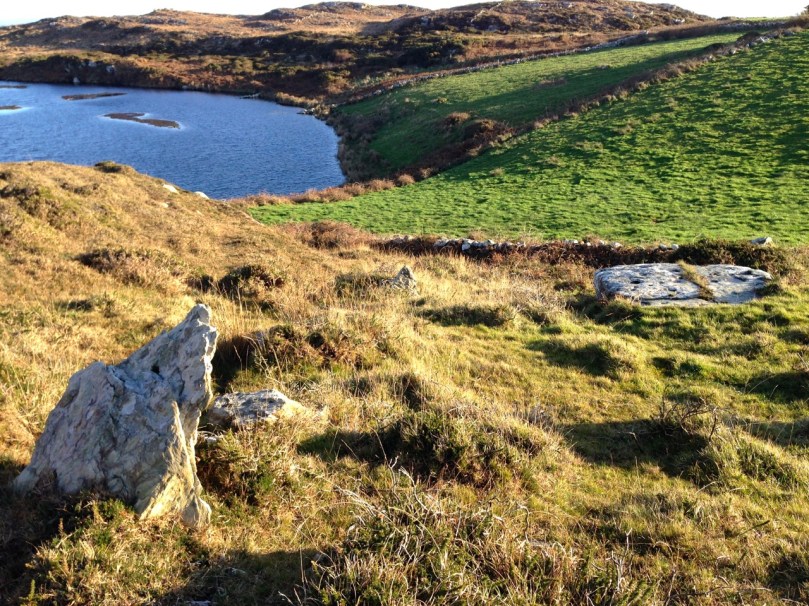
Oriented to Mount Gabriel to the east

Mount Gabriel clearly visible

Some cupmarks appear to run in rows and the rows run in specific directions – one line of cupmarks run directly east/west pointing at the lake that lies about 100 meters away at the bottom of the field. Another line pointed to Mount Gabriel, about 15 kms away on the distant horizon. The two large basin-like depressions are directly north/south of each other.

row of cupmarks

Row of cupmarks

What could be a standing stone is located a few metres away.

Standing stone?

Standing stone?

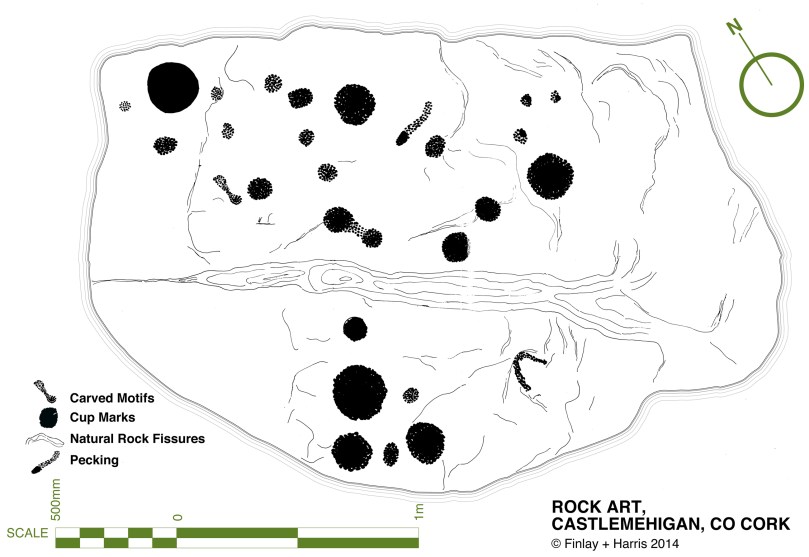
In comparing my original drawing, done 42 years ago, there wasn’t much I would change. Some cupmarks appear to have pecked areas between them which conjoin them in a dumb-bell motif. My original decision was that there were two dumb-bells, but perhaps now I would be tempted to say there were three or even four. However, this just illustrates the subjective nature of the recording process. Especially where lichen obscures the surface, decisions like this come down to professional judgement and experience: drawings can differ from one recorder to another, or even from one visit to another when lighting conditions show up more or less of the carving detail.

Original drawing, updated by Robert

Original drawing, updated by Robert

Robert

This earthfast boulder is a beautiful object – not least because of its setting. I love these Mizen landscapes – they have a very particular character. Large areas of rock outcrop are interspersed with the tiniest fields, tracks and bog. Here there are lakes close by – once natural features, they have been turned into reservoirs to serve local communities. The marked rock overlooks one of these – this one supplying nearby Goleen.

Mount Gabriel clearly visible from the Derreennaclogh stones

Mount Gabriel clearly visible from the Derreennaclogh rock

This example reminds me in some ways of the Derreennaclogh rock – it’s of similar size and shape. Also, at Derreennaclogh Mount Gabriel is prominent on the western horizon, and we’ve been told that the setting sun towards the short end of the year appears to ‘roll’ down the slope of the hill at times. At Castlemehigan the rock also looks out to Mount Gabriel – this time to the east. This is a relatively isolated piece of rock art: the nearest recorded example is at Cooradarrigan, on the far side of Schull. It’s tempting to think that the flat, table-like surfaces of both Derreennaclogh and Castlemehigan were considered significant to those ancient people – who made them notable by marking them – because of their settings which relate to unmistakable landscape features. Otherwise, one might question why large areas of flat rock surface in the immediate vicinities – ideal for carving – have apparently been left untouched.

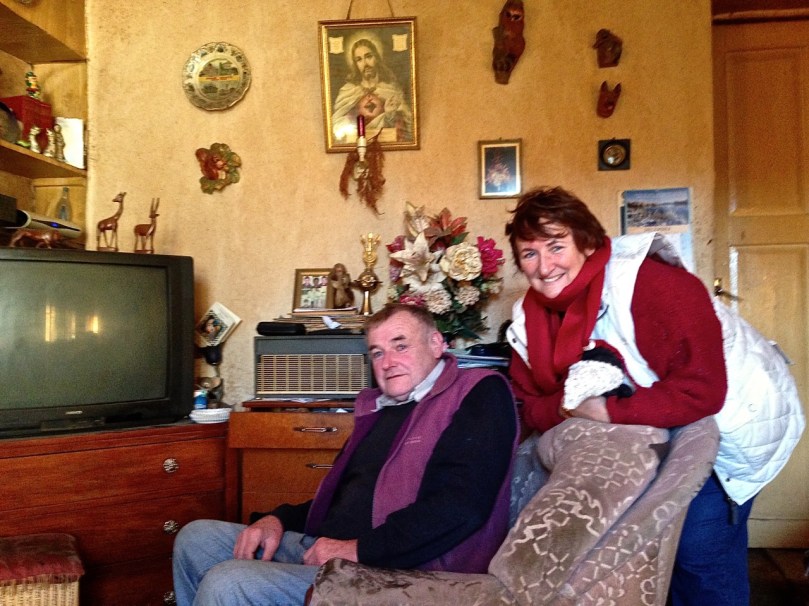
Florence and Finola

Florence and Finola

Florence O’Driscoll, our guide on this expedition, proved to be a fund of information. He had farmed the land which had been his father’s before him. Finola must have met his father when she explored the rocks over forty years ago. Florence carried the stories of the rock from his father’s generation, and probably from generations before that. He told us that the rock had been used as a mass rock in penal times – and that the hill above it was known as Cnocan an Aifreann (the hill of the mass): there is what certainly appears to be a cross carved into the rock surface, close to the large basin (Finola did not record this in her original drawing – she will add it when we update the records). Florence told of the time that the ‘Tans’ (the Black-and-Tans) caught red-handed the Priest celebrating the mass: the Priest threw the crucifix into the lake below the rock (the lake was then smaller than it is now). Ever since then, says Florence, the lake has never run dry – and never will.

Look for the possible cross carving on the right

Look for the possible cross carving on the right

It’s interesting that stories carried through local tradition pay no heed to time or history. They don’t need to: the ‘story’ is a part of the rock, as much as the carvings are. Florence told the tales as if they had happened yesterday. I hope they will continue to be told as long as the rock continues to display its enigmas.

Mass in penal times (Maggie Land Blanck Collection)

Mass in penal times (Maggie Land Blanck Collection)

Ballydehob Rocks Art and Culture

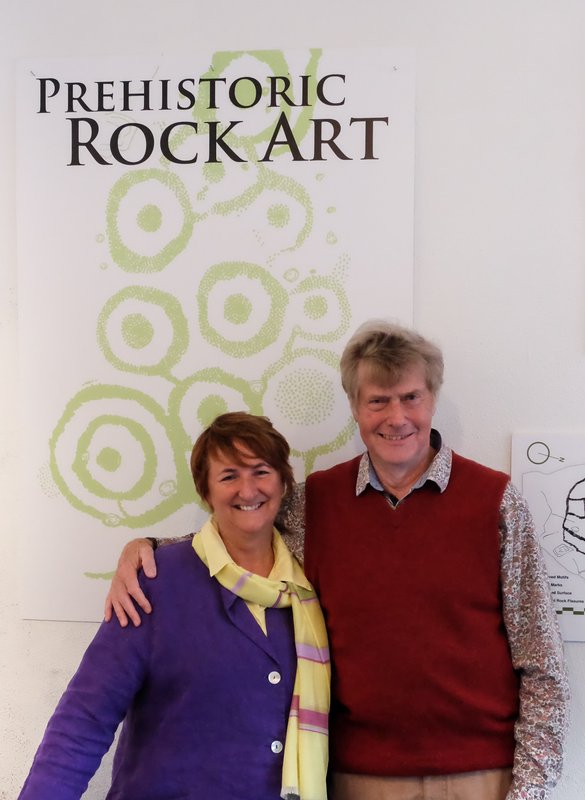
Looking pleased with the exhibition!

Looking pleased with the exhibition!

I’ve posted before about the amazing variety of events and festivals that West Cork towns host. The latest, and this is a new one, is Ballydehob’s Art and Culture weekend. It’s just over and it was great fun.

For the most part the venues were intimate (think pubs, cafes, An Sanctoir) or outdoors. The weather was variable – we got everything from gales to sunshine – but only one event had to be cancelled because of it.

There was a bus tour to the delightful Gortnagrough Museum, and another to the Rock of the Rings (local rock art!) and an historic walking tour of the town. There was a poetry trail, storytelling, plays, dance performances, a dozen different art exhibitions (including our own), kids’ workshops and movies, a cabaret, and of course music – lots of music from trad to country to world music to drumming to classical.

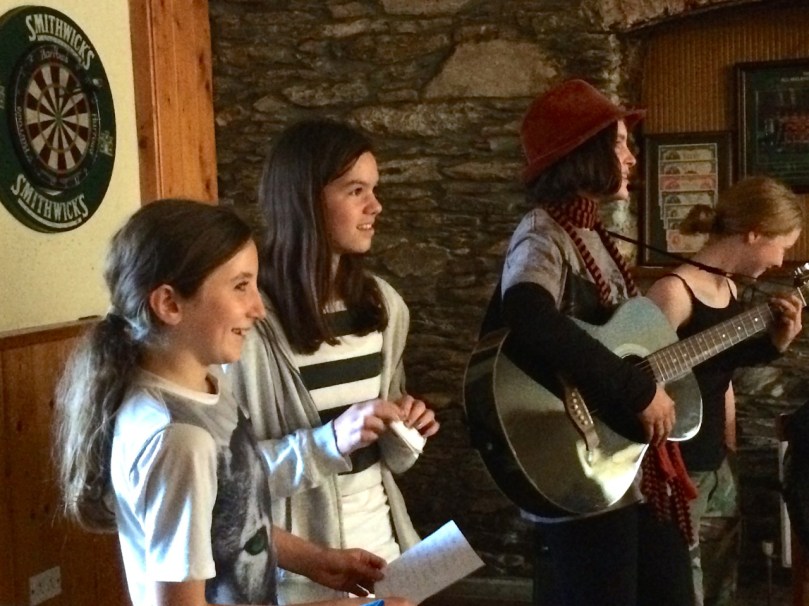
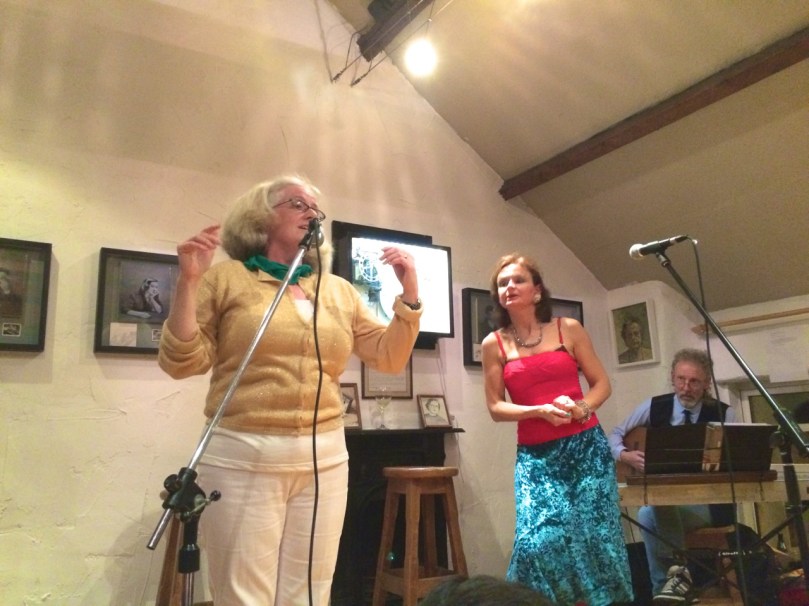
Young songwriters

Young songwriters

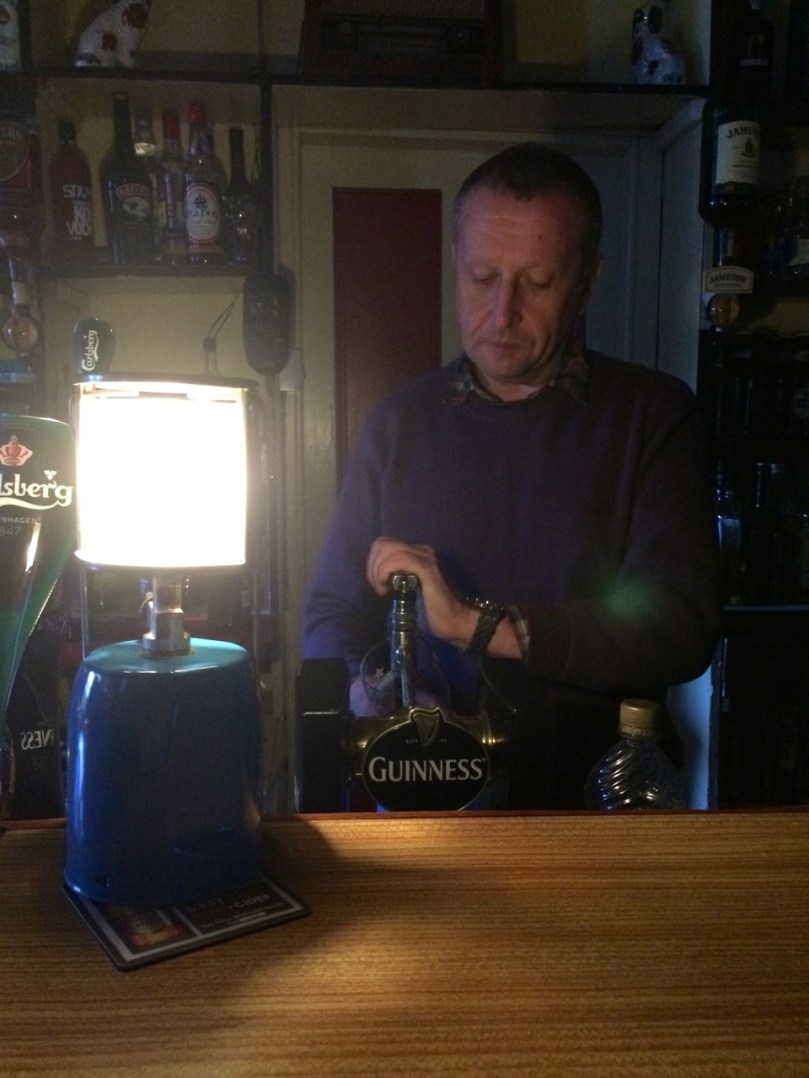
Perhaps one of my favourite moments was watching the girls who had taken the songwriting workshop, which had been led by a 12 year old, perform the songs they had written. We’ve been having fierce gales and the whole of Ballydehob was without electricity, so the pub was lit by candles and gas lamps. It was like going back to the rare old times when we made our own entertainment for gatherings of neighbours and friends. The lack of power didn’t bother anyone – the following act simply switched from electronic to acoustic with no fuss and soon we were singing again. The Choir I (try to) sing with, A Capella Bella, had a sing-along too – it was great to hear so many voices belting out our African rythms, enthusiastically conducted by the talented Caz Jeffreys.

By lamplight

By lamplight

Our own event, the Prehistoric Rock Art Exhibition, proved to be popular. The talk was packed and people lingered afterwards and peppered us with questions. There is a lot of interest here in anything to do with our heritage, and rock art is a little-known aspect of it: many people commented that they had no idea it existed or what it was like. People also liked Robert’s account of rock art in other parts of the world. For those of you who would have liked to be there but couldn’t, we are planning a permanent blog page on rock art which will contain some of the images we used as well as the program we produced for the show. You can also read our friends Amanda and Peter Clarke’s accounts of the exhibition here and here – they supplied the photographs of the exhibition I’ve used in this post.

These small local festivals can make a huge difference to a place. I’ve written before about the economic downturn in Ballydehob and the depressing effect it has had on local business, but the community has never lost its positive attitude and its volunteering spirit. One of our local writers, Sarah Canty, illustrates, in her documentary Down But Not Out, the challenges facing small villages like ours.

The Eileen and Marilyn Experience

‘The Eileen and Marilyn Experience’ Caberet

This festival was spearheaded by a great team, many from the Ballydehob Social Club, with lots of other volunteers pitching in. A huge thank you to the pubs and other venues for providing free space and paying for entertainers. And a special shout out from us to Joanne Cassidy at the West Cork Gourmet Store for providing a wonderful gallery for our Rock Art Exhibition. 

The Weekend ended with a huge party – more music, more dancing, more laughter and camaraderie.

Ballydehob – you rock!

Rock Art Ramblings… away from home!

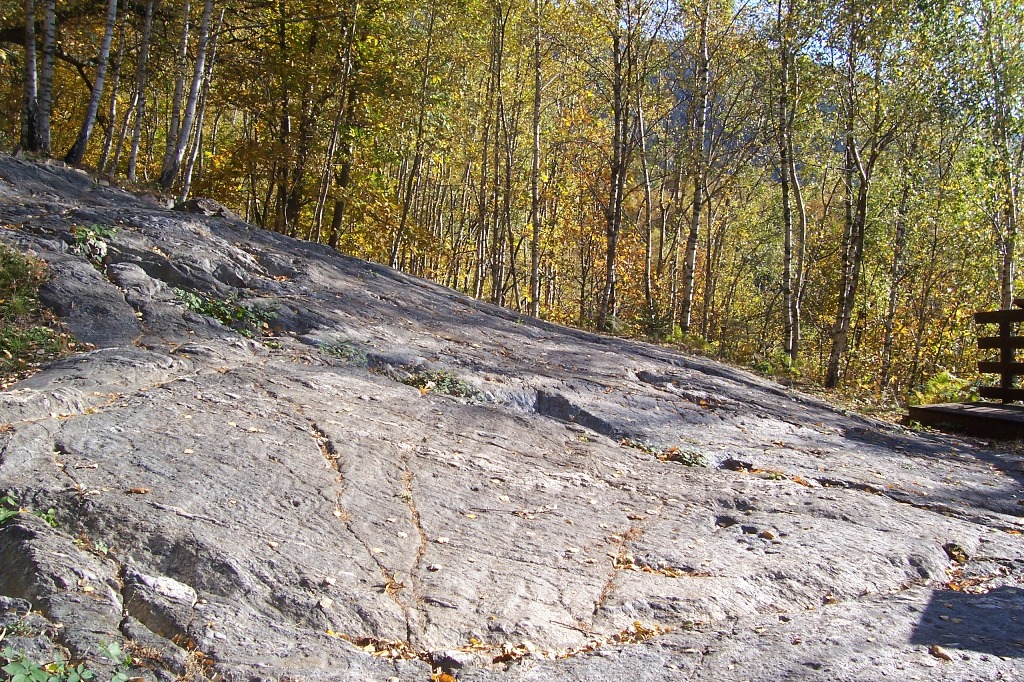
Ireland? No - it's Rock Art in Italy

Ireland? No – it’s Rock Art in Italy

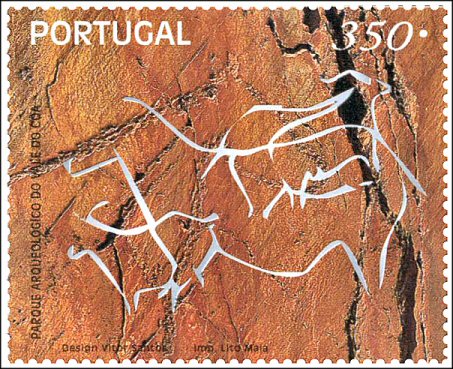
At our talk in Ballydehob yesterday I mentioned briefly the world-wide context of Rock Art: this generated a lot of interest during and after the event so I thought it worthwhile to write a post about non-Irish Rock Art. portugal stamp The carvings in Ireland appear to be part of a cultural phenomenon that runs down the Atlantic coast – from Scandinavia to Iberia – taking in Ireland and Britain on its way. However, Rock Art is widespread across the world, and over the whole time spectrum of human occupation of land. There is a UNESCO World Heritage site in Portugal – the Côa Valley Archaeological Park – which is based on finds of Rock Art. When the project was opened in 1996 its Director stated: “…The Upper Paleolithic art of the Côa Valley is an exceptional illustration of the sudden development of creative genius at the dawn of human cultural development…” That’s quite an announcement! The Park is home to some 25,000 carvings created at various periods over the last 10,000 years. Some of it is visually similar to our own Neolithic / Bronze Age examples (which were probably made within the last five Millennia) but other earlier examples seem – surprisingly – more sophisticated: mainly very beautiful representations of animals.

Canary Island example

Canary Island example

Where do we find the oldest Rock Art? Possibly in India: the Bhimbetka Caves show evidence of human habitation dating back more than half a million years, and in one particular site – known as the Auditorium Cave – carved cupmarks were found under human debris deposits that could be dated to at least 290,000 years ago. This means that the cupmarks must be as old as that date. Some scientists claim that they could be twice this age. Those cupmarks are exactly the same as the ones we have in Europe – and when found they contained traces of red pigments, suggesting that the carvings might have been painted.

India – Norway – Africa – Europe – the Americas – Australia… Ancient rock carving has been found in all continents of the world excluding Antarctica. It’s not all the same as Irish prehistoric Rock Art – where the simple motifs are familiar to regular readers of this blog – but cupmarks do seem to predominate as a common occurrence, and are usually apparently carved in the same way wherever you find them: shallow circular indentations are picked out using one hard stone tool striking another.

What does it all mean? Finola did a good job of sidelining that question during yesterday’s talk but came up with some plausible pointers: it is, of course, impossible to be certain when we are so out of touch with the peoples who produced the marks. We should also be careful of making any assumptions based on our own cultural ways of thinking. An archaeologist (Mountford) witnessed cupmarks being carved in central Australia in the 1940s: he reports that these were made as an increase ritual for the Pink Cockatoo (Kakatoe leadbeateri). The particular rock the cupmarks were hammered into was thought to contain the life essence of these birds, so the mineral dust rising from the activity was believed to fertilise the female cockatoos and thus increase their production of eggs, which the Aborigines valued as food.

I have mentioned before the cupmarks which are found carved into the lava stone in Hawaii’s Volcanoe National Park: it’s worth noting again that they are very similar to those we find in Ireland and Britain – even to the extent of having concentric rings around some of them. Hawaian families who go a long way back will tell you that they are made to receive the umbilical cords of newly born babies – to ensure health, long life and fertility. The carvings are known as ‘Puka’.

Rock Art is fascinating. I want everyone to be excited by it. It’s a ‘poor relation’ archaeologically speaking: it’s very easy to miss. It’s also an ‘endangered species’: in Ireland, some examples which have been recorded in the past can no longer be found. Perhaps our exhibition and talk will at least have raised awareness.

Our Rock Art Exhibition!

A joint post by Robert and Finola…

Derrynablaha A2.PC9

For all of you who are fortunate enough to live within reach of our beautiful part of West Cork we are pleased to invite you to our exhibition, which is being shown as part of the Ballydehob Art and Culture Weekend, running from 17th to 19th October. The exhibition is being held in the West Cork Gourmet Store (go left at the statue of Danno and it’s just up on the right, behind the Post Office), and it will continue to run there during opening hours for the two weeks after the Art and Culture event.

Finola studied for her Archaeology degree at the University of Cork, and her thesis was written on the Rock Art of Cork and Kerry. For her research – in the early 1970s – she travelled across the two counties on a borrowed Honda 50, visiting every piece of Rock Art known at the time, and recording each piece using a tracing technique which would not be allowed today. The thesis is a unique and valuable archive of the rock carvings, which date back anything from three to five thousand years. We believe that this is the first time a comprehensive exhibition of Irish Rock Art has been shown.

knockdrum detail.PC9

Regular readers of Roaringwater Journal know that we are still working on Rock Art: Robert has recorded some more recently found examples using a ‘non-invasive’ technique, and we are involved with CRAG – the Cork Rock Art Group – under the aegis of the University, where our aim is to produce a website which lists and illustrates all known examples of Rock Art in the west of Ireland. Eventually the work may extend further afield: there are Rock Art sites elsewhere in the Republic. Similar carvings are found on the Atlantic coast, from Scandinavia down to Iberia.

Finola, Gary and companion study the Art

Finola, Gary and companion study the Art

On Saturday 18th October the exhibition will be formally opened at 4pm, and we will be giving a talk on the subject and on our adventures studying it. Some refreshments will be on hand: please come if you can!

Title poster.PC9