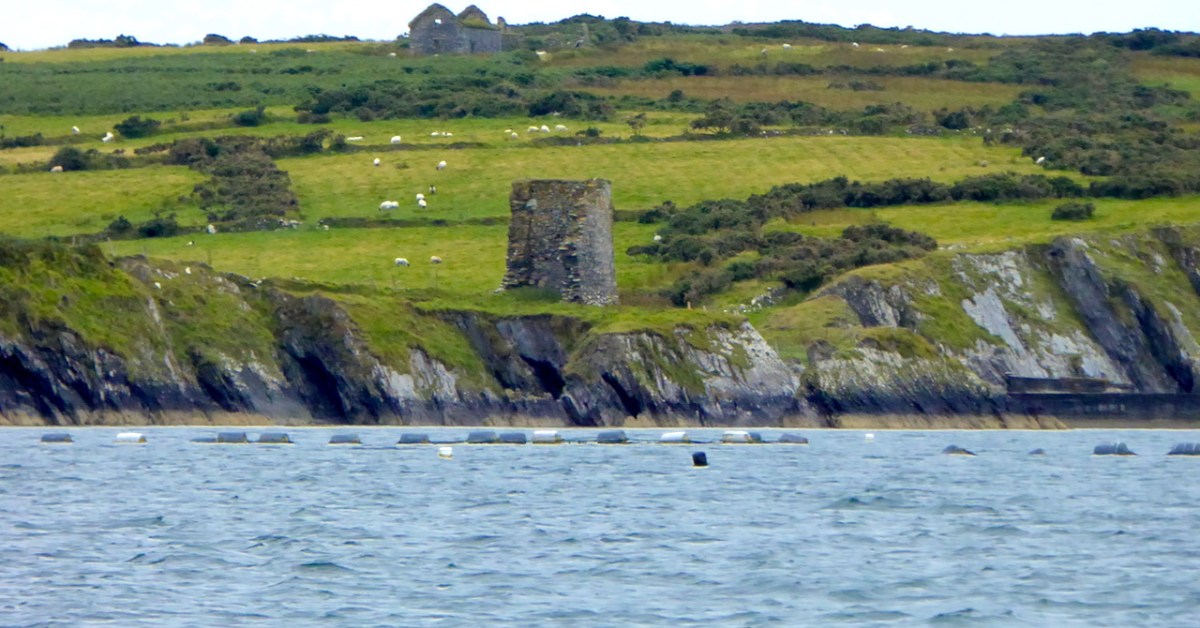
The Castles of Ivaha: ‘Fragmentary Remains’

What can you say about a castle where only fragments remain of the original structure? Turns out – a surprising amount!
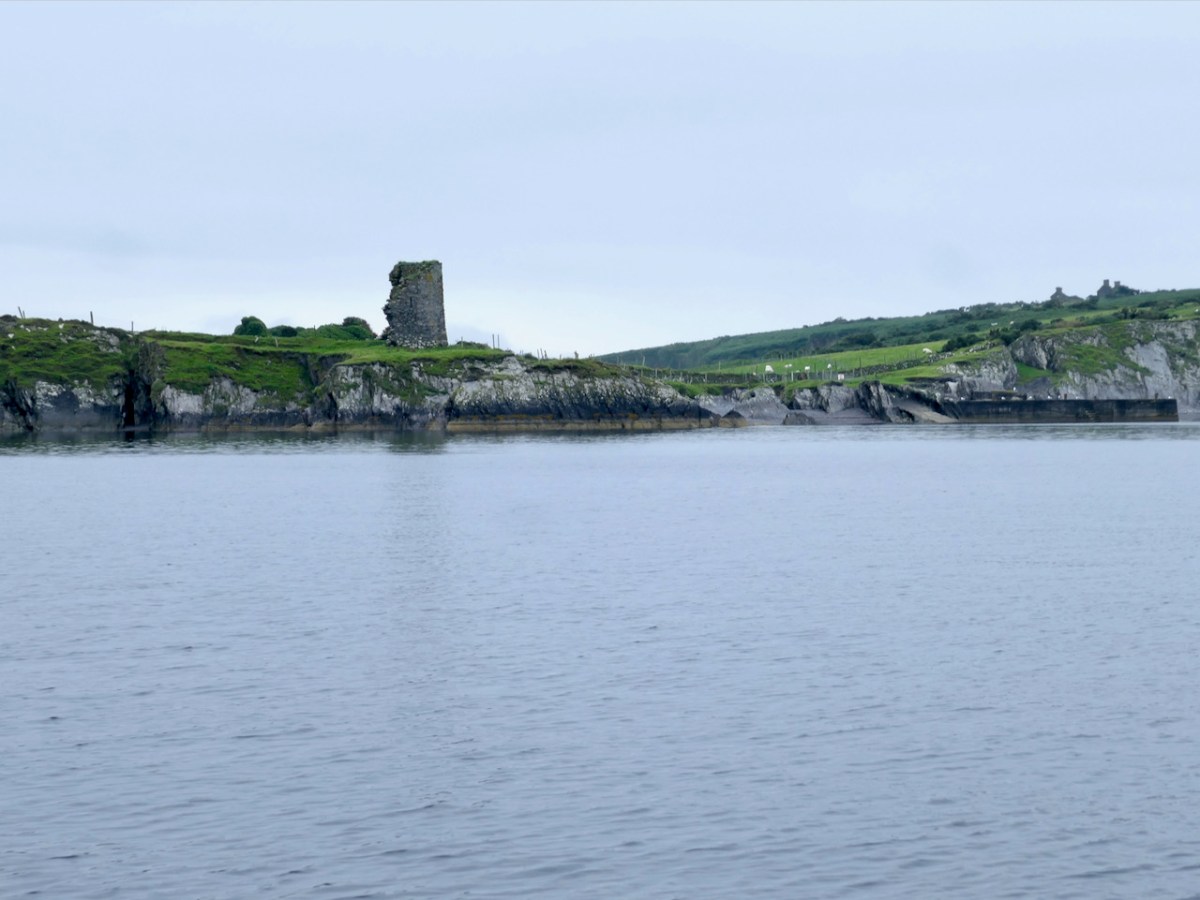
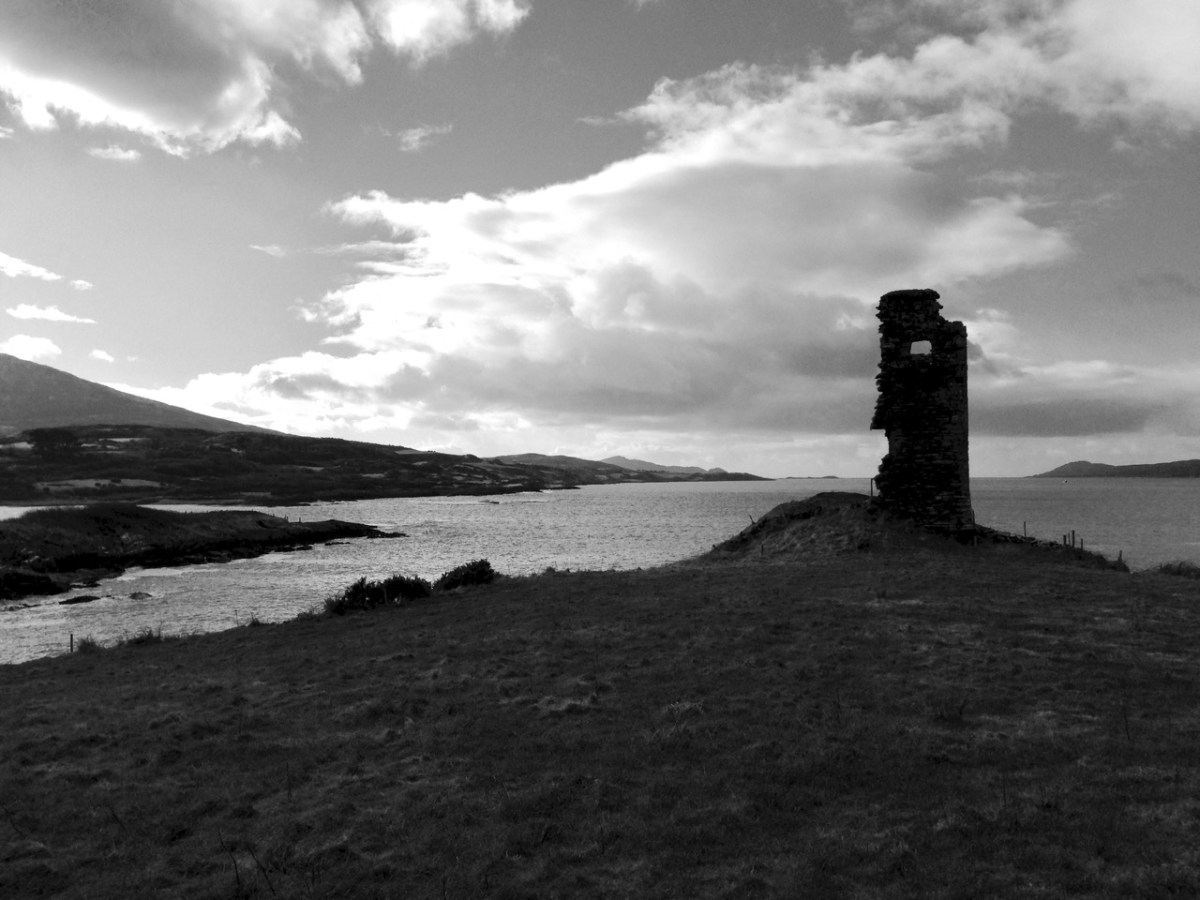
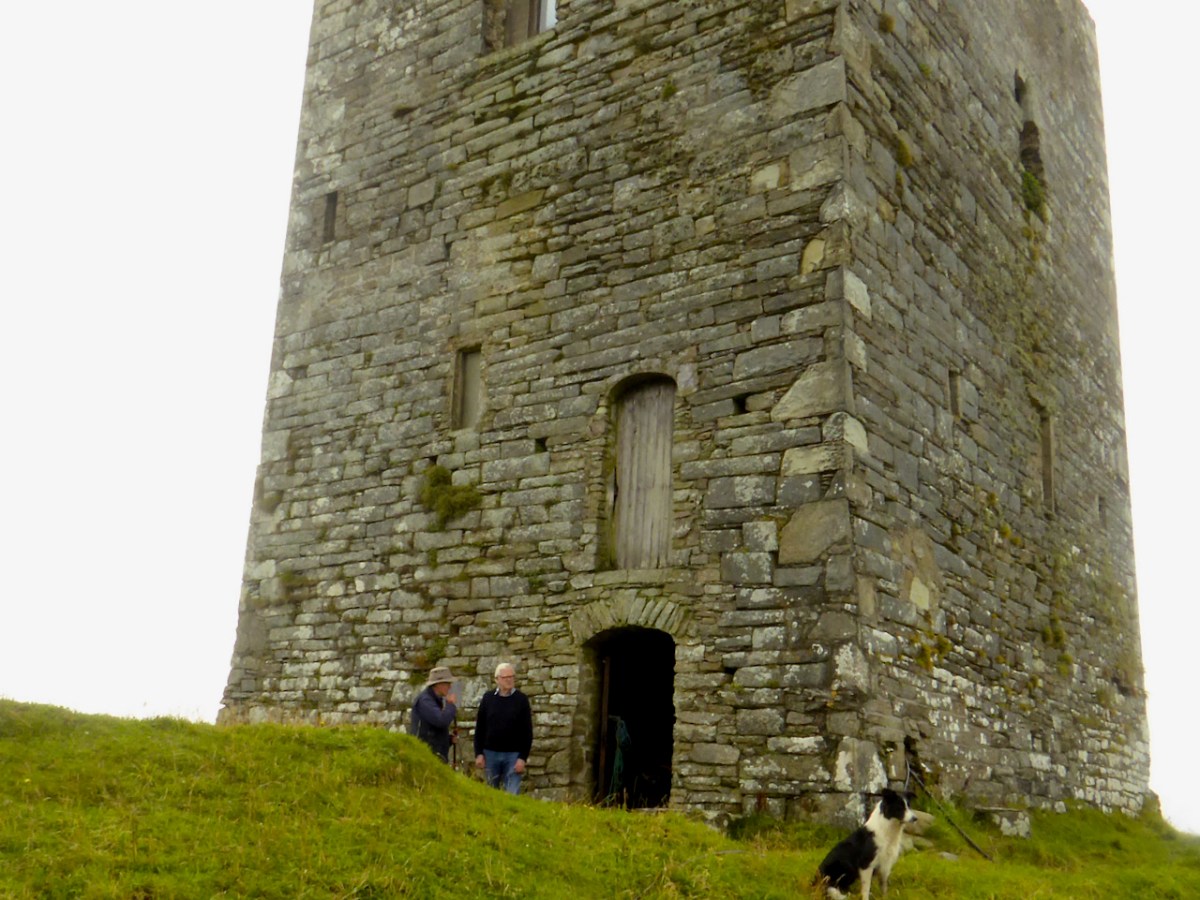
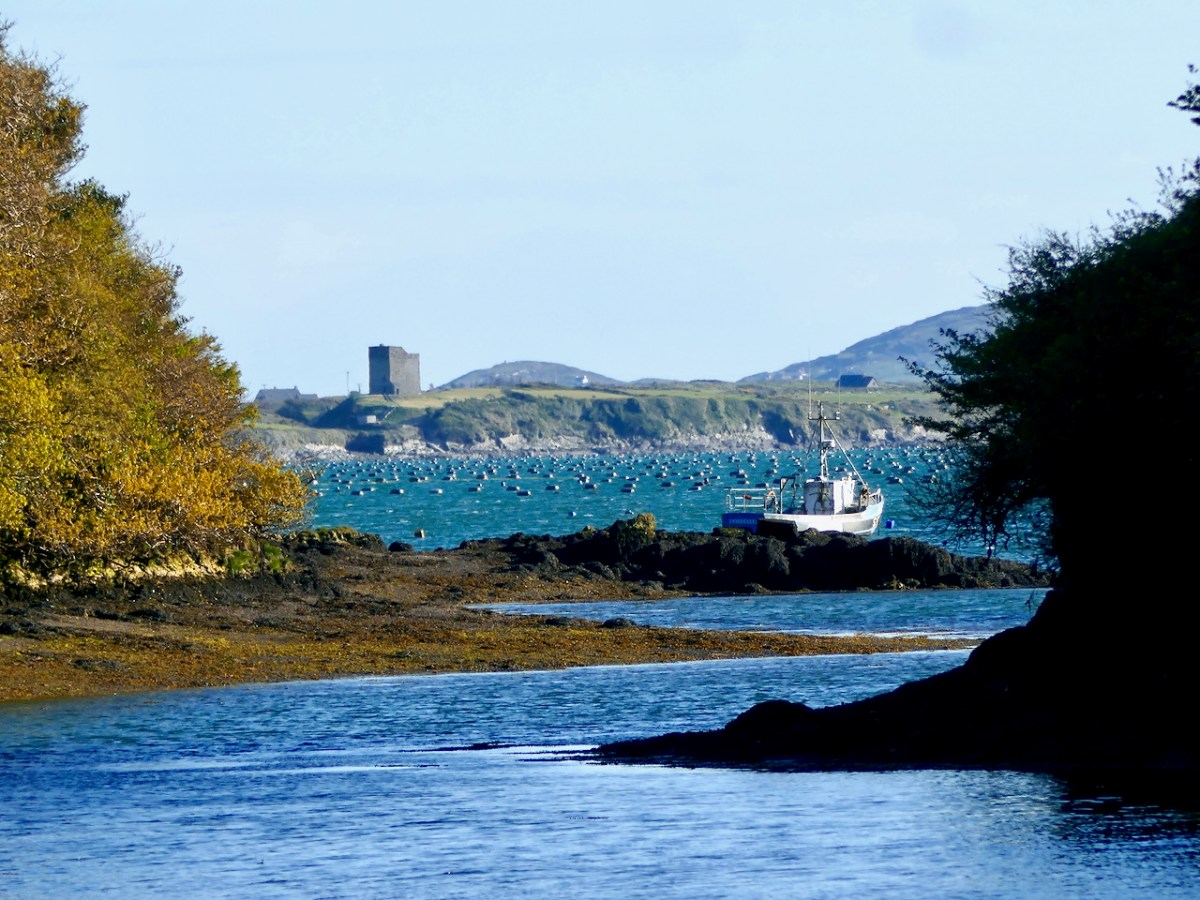
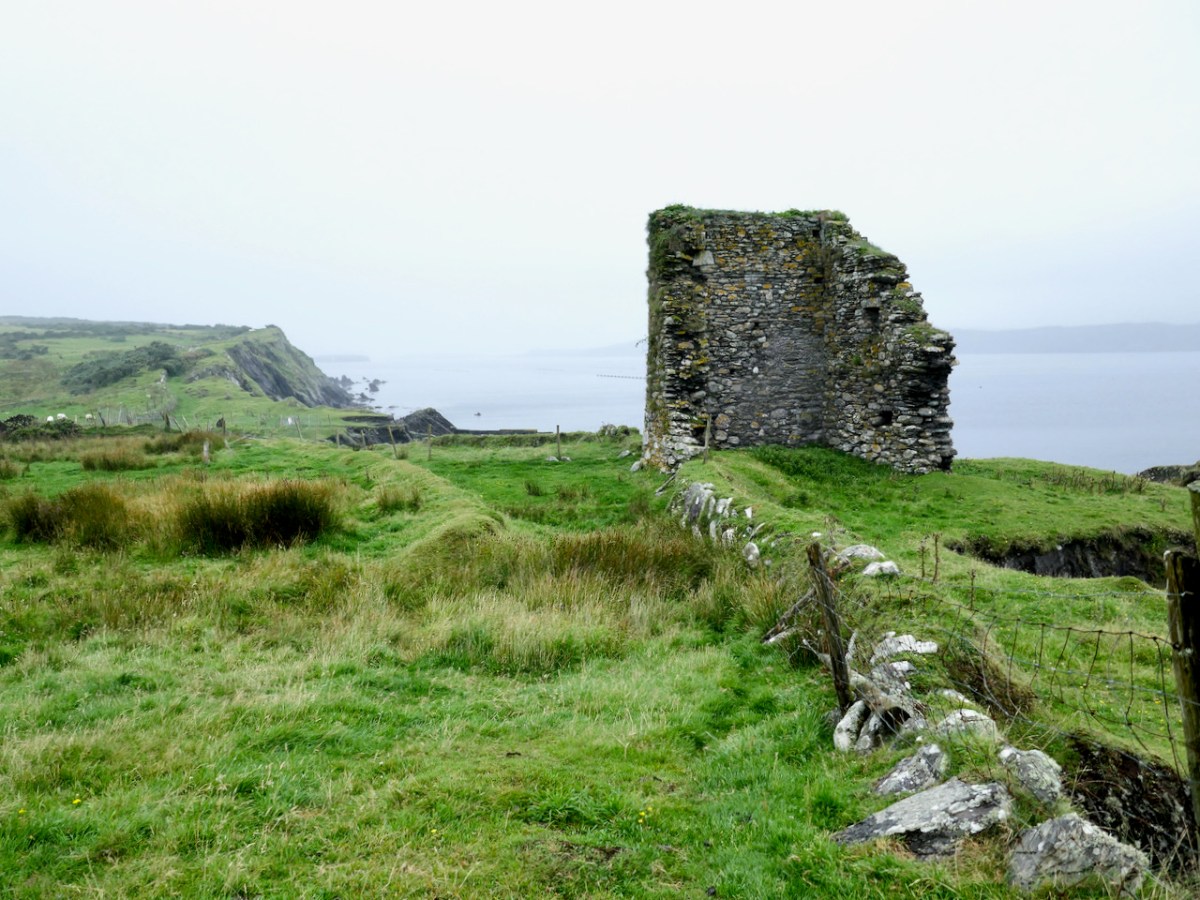
Fragmentary remains is the phrase used in the National Monuments record to describe the two castles which are the subject of this post – Dunbeacon and Castle Island. In each case only enough is still standing to confirm that it was indeed a medieval tower house. Fortunately, in the case of Dunbeacon, there is also historical evidence. 
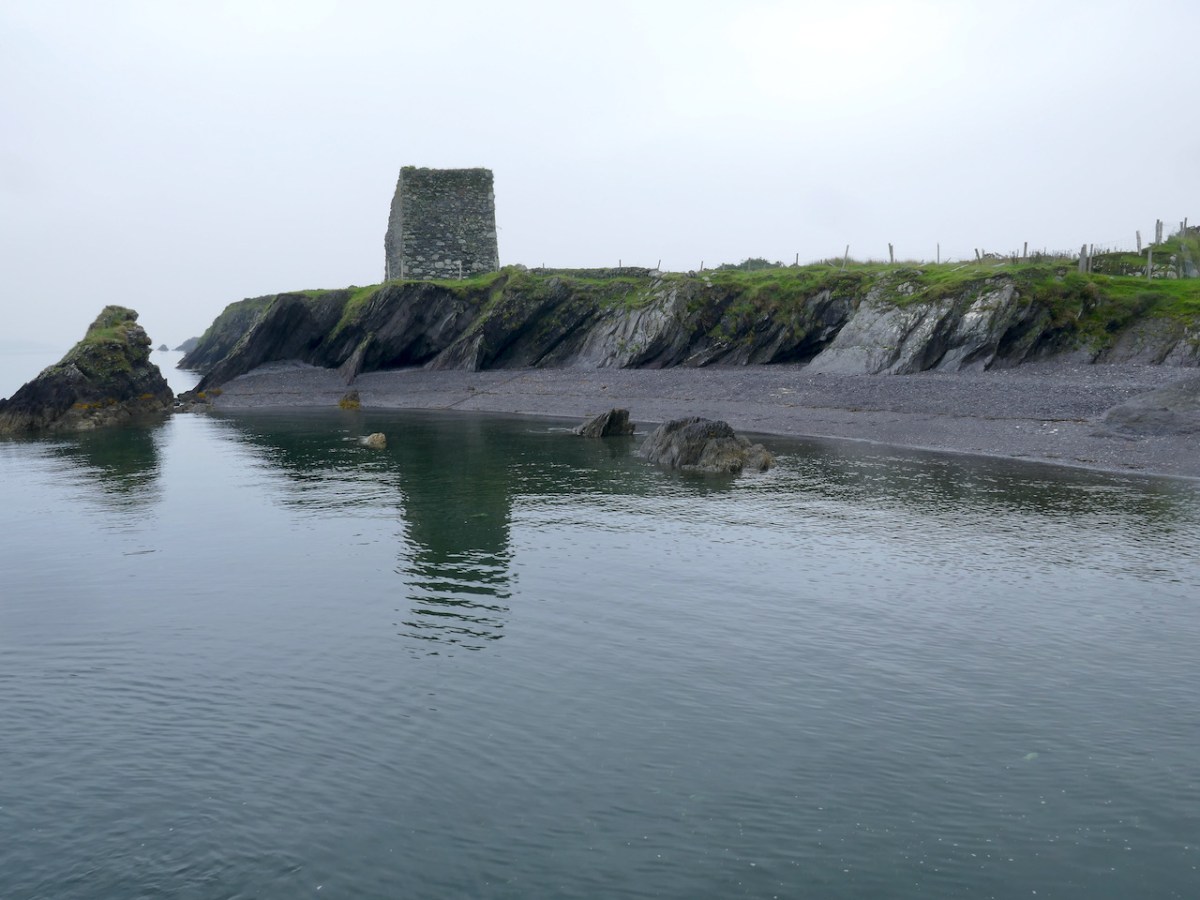
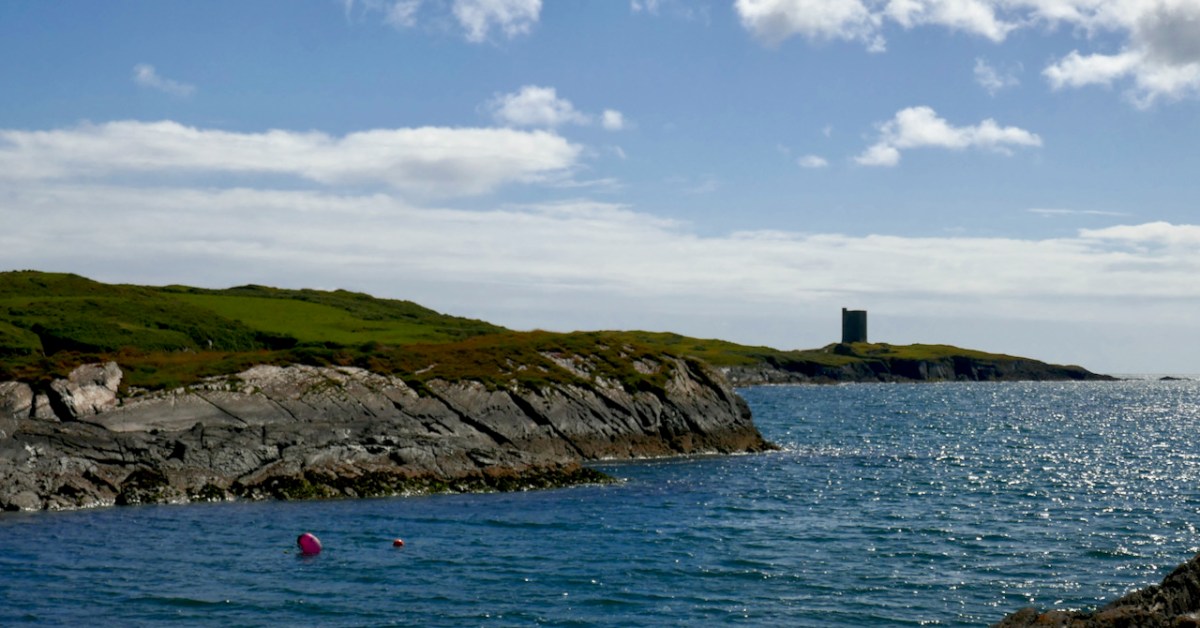
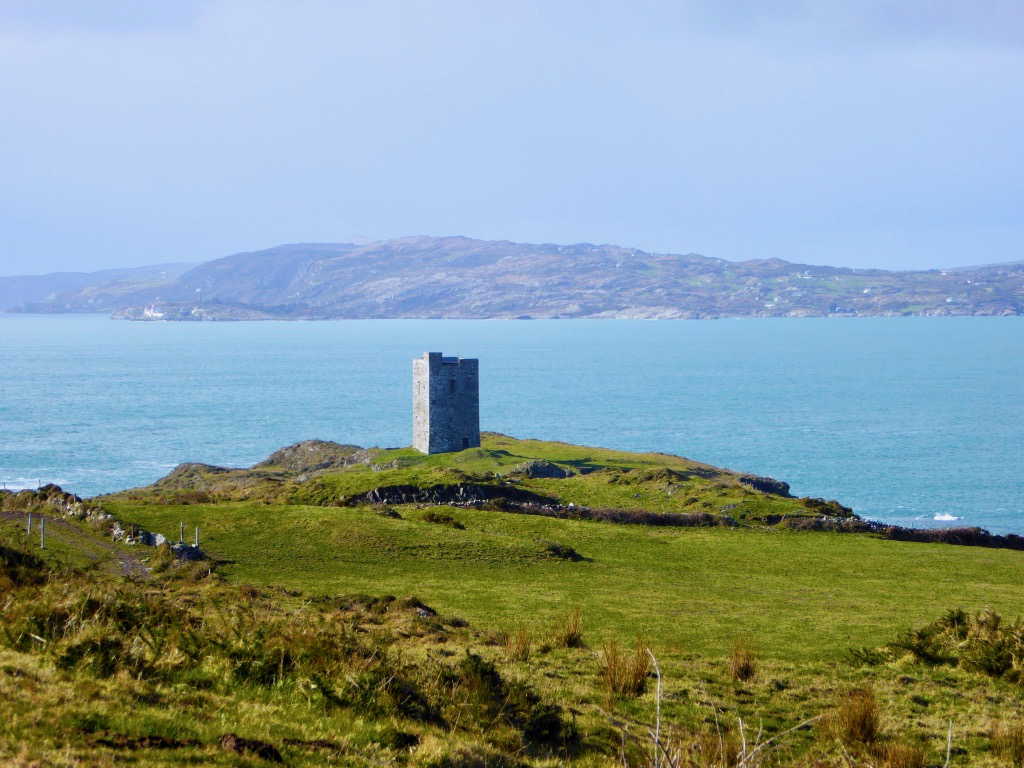
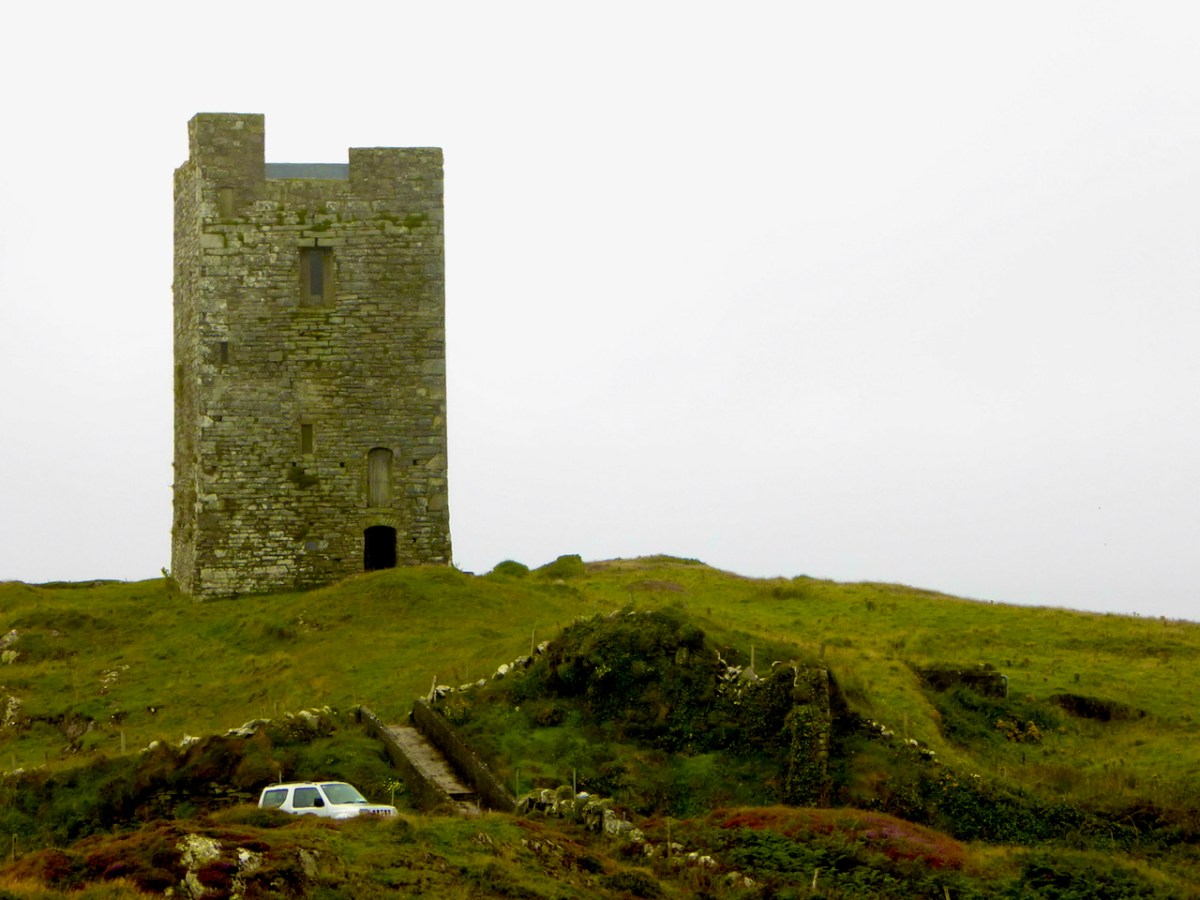
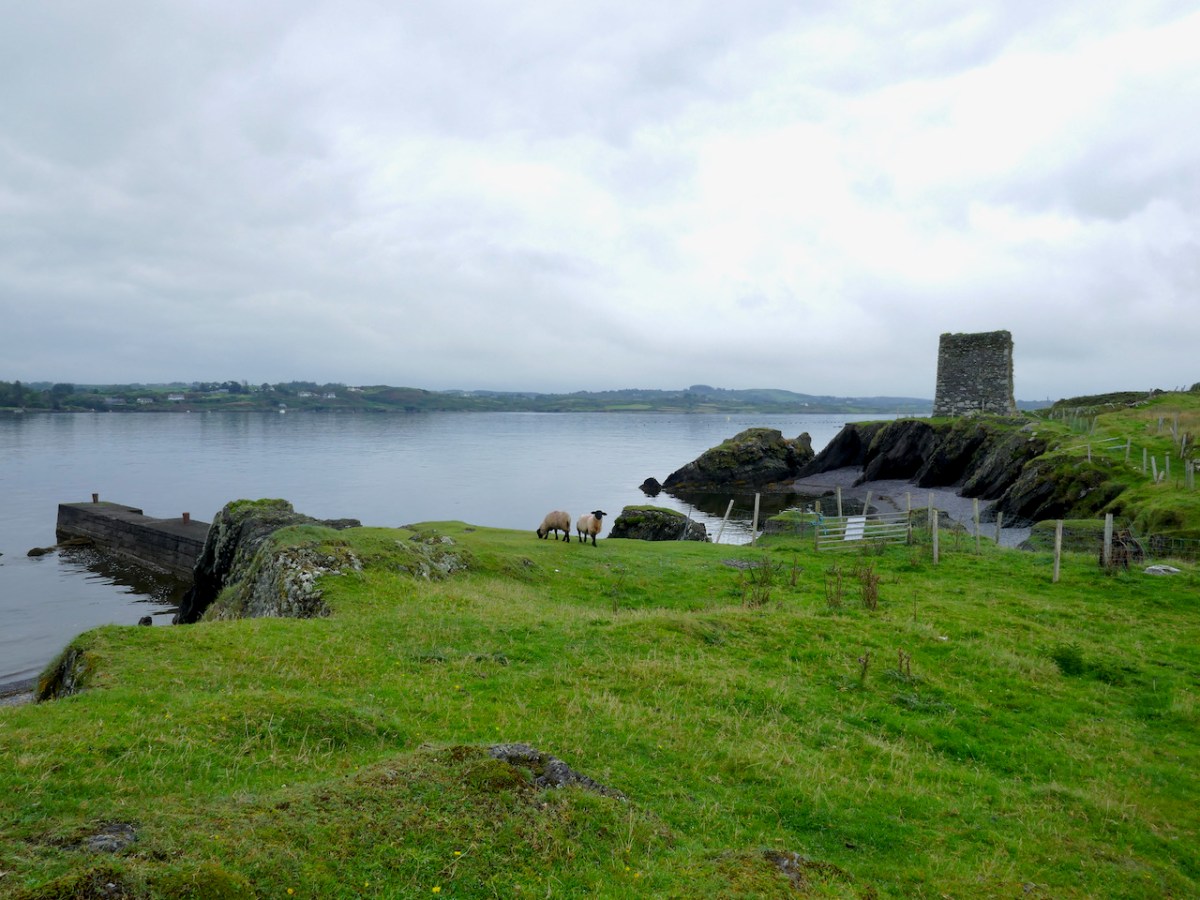
Let’s look at Castle Island first, and begin with the name. Samuel, in his thesis on The Tower Houses of West Cork, tells us that it was known locally as Castleduff, or Caisleán Dubh, the Black Castle. However, this was the name more commonly applied to Black Castle/Leamcon, so he says there might be some confusion there. There is no other name in the historical records – no mention, indeed, at all. Perhaps it was too insignificant to merit a mention – a fortified outpost rather than the high-status residence of one of the ruling O’Mahonys. 
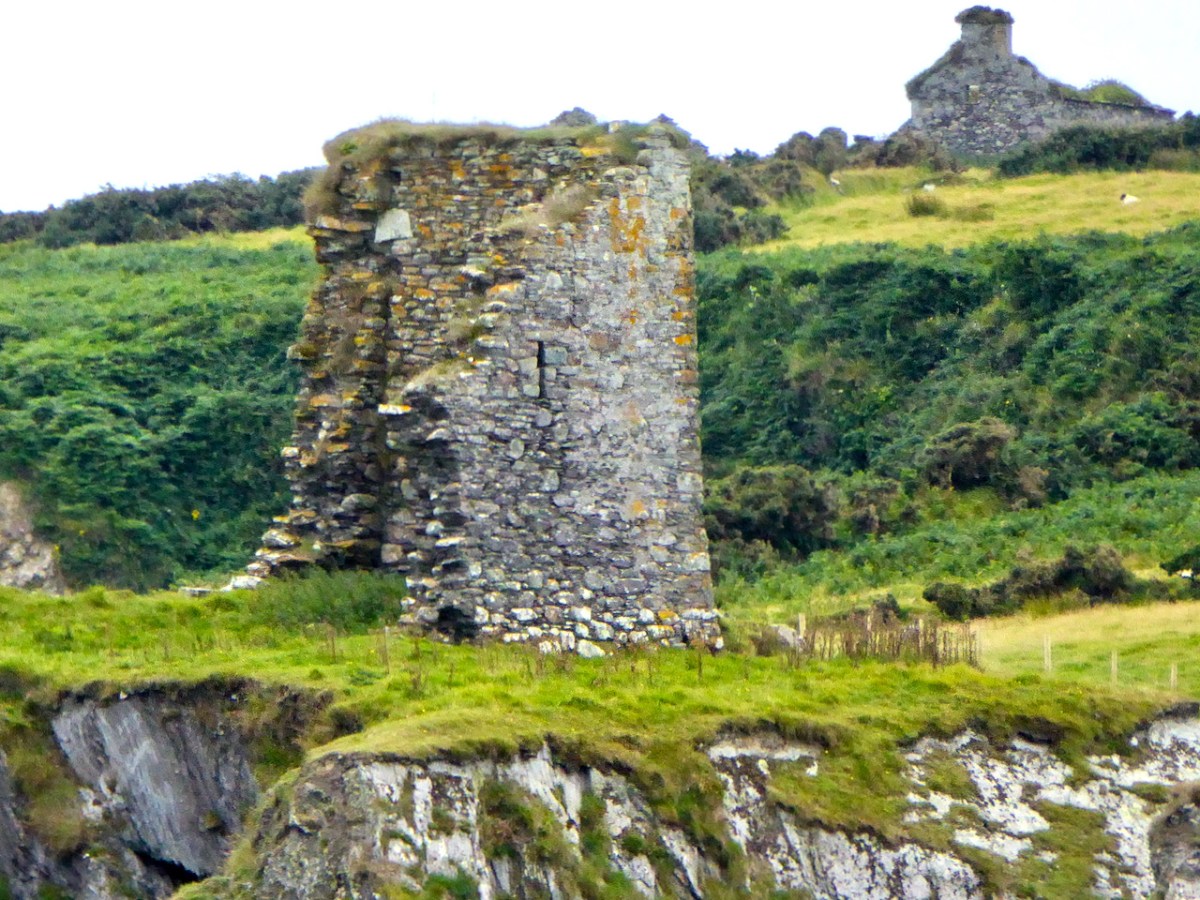
We have noted with other of the O’Mahony castles that they were built on the site of a ring fort (Ardintenant) or a promontory fort (Dunlough). The National Monuments records notes a promontory fort at this site, although it is not obvious on the ground any more. There are, in fact several promontory forts noted on Castle Island, perhaps indicating that this was the preferred type of fortified dwelling here, since there are no ringforts.
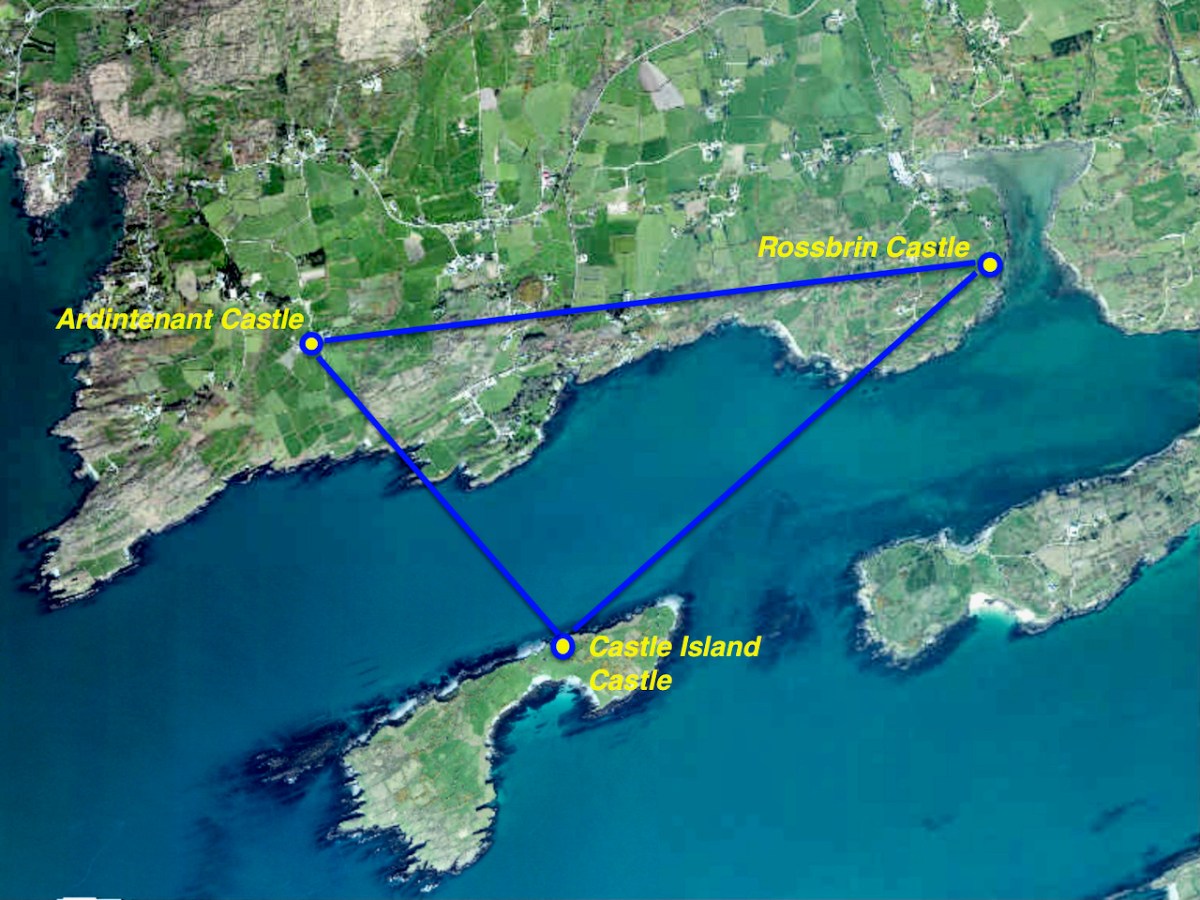
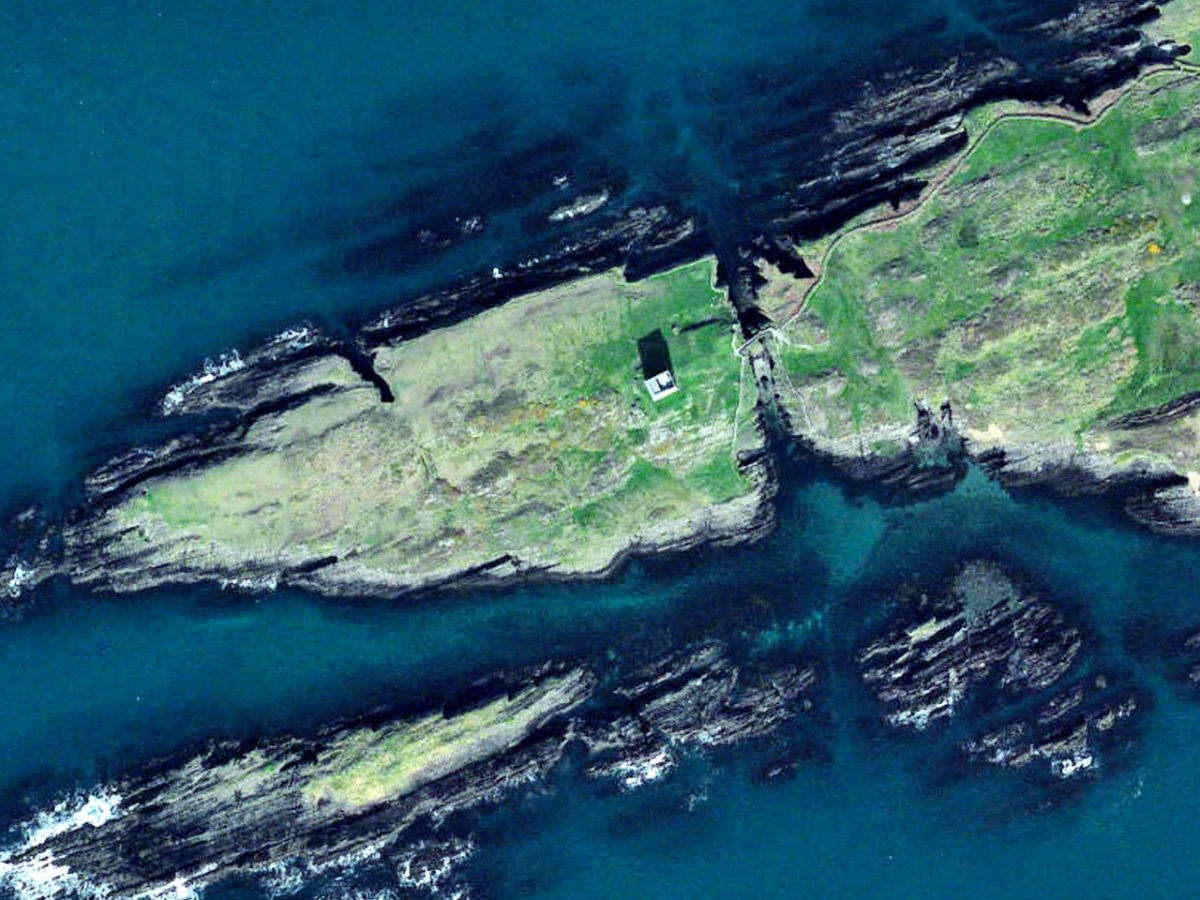
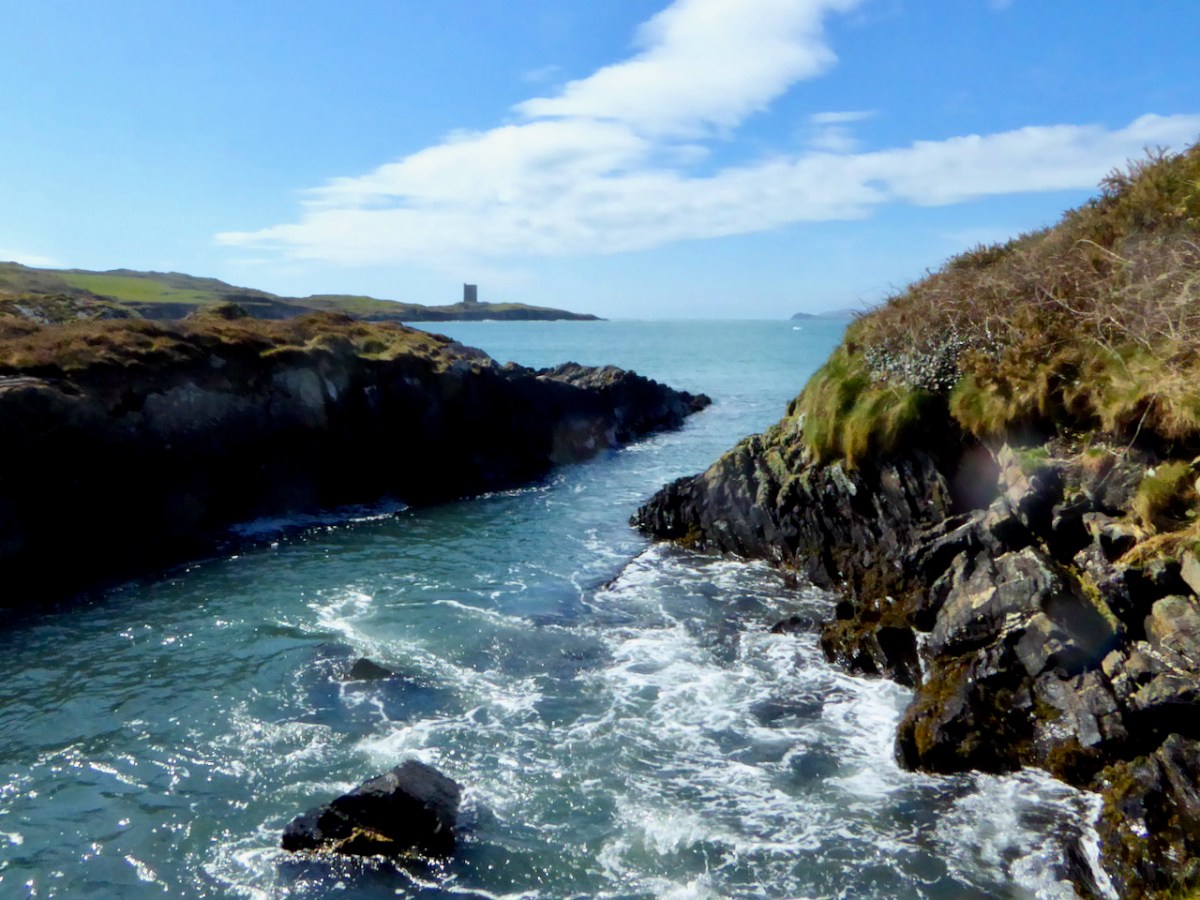
Like all the O’Mahony castles, it was strategically sited – it was beside the waters that separates the island from the mainland, and within sight of two other castles – Rossbrin and Ardintenant. The three form a triangle that overlooked and guarded the sheltered waters of Castle Island Channel. But also, from the top of the castle, there would have been a clear view south across the low land in the centre of the island, out to Roaringwater Bay.
We know that these waters would have been crowded with Spanish, French, Portuguese and British fishing boats, coming in to salt their catches in the fish palaces along the coast and to replenish their supplies. For all of these services and for permission to fish around Roaringwater Bay they paid hefty fees to the O’Mahonys, who got fabulously wealthy as a result. 
The castle was much smaller than all the others. Samuel says, 

Working on the assumption that Castleduff was an RE tower house [i.e Raised entry], its smallness is striking. The surviving ‘end wall’ makes possible a reasonably accurate estimate of the plan’s original length. It is assumed that like its neighbours, its plan had a length-to-breadth ratio of 3:4 to 4:5; the ratios suggest a length of 7.96-7.46m (measures above the base-batter). The surviving north wall probably represents the full length of the ground-floor chamber.

Mark Wycliffe Samuel
the tower houses of west cork

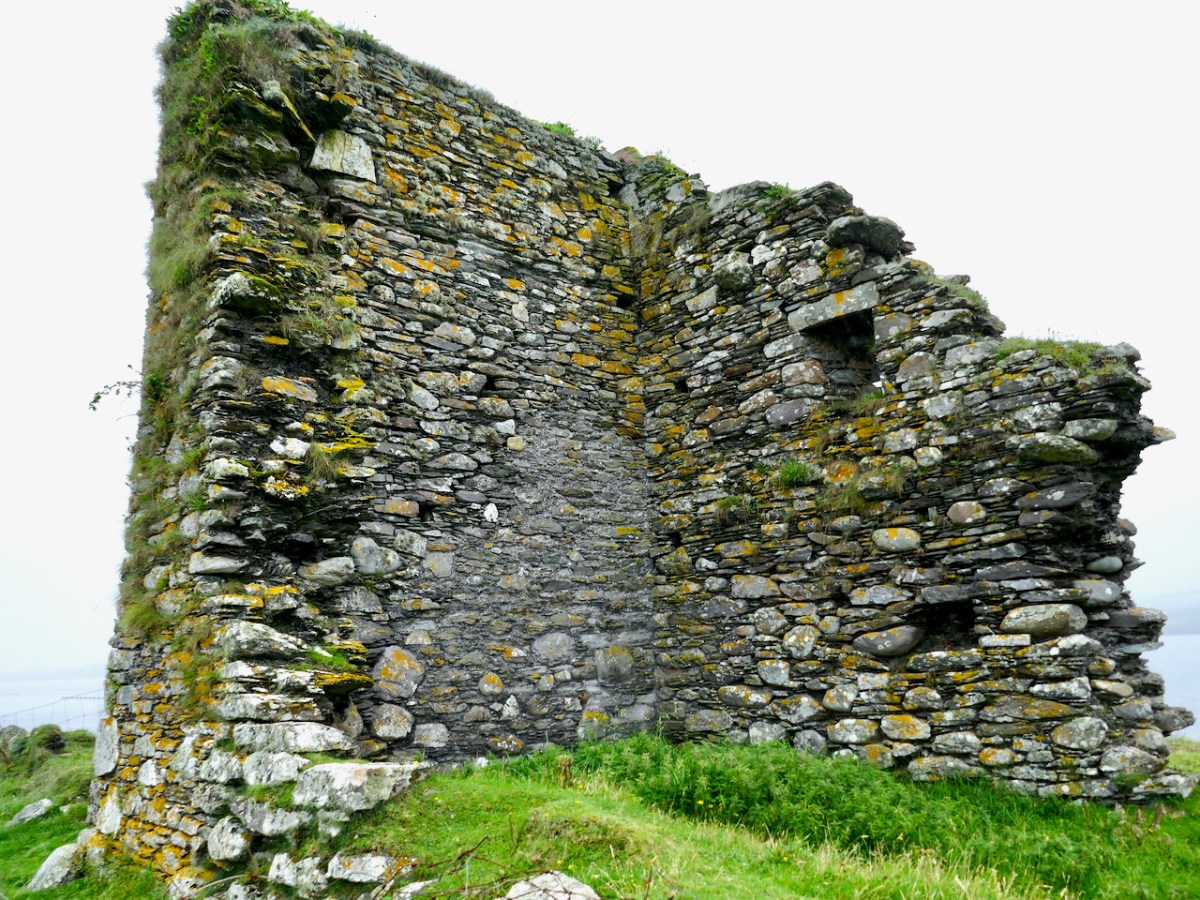
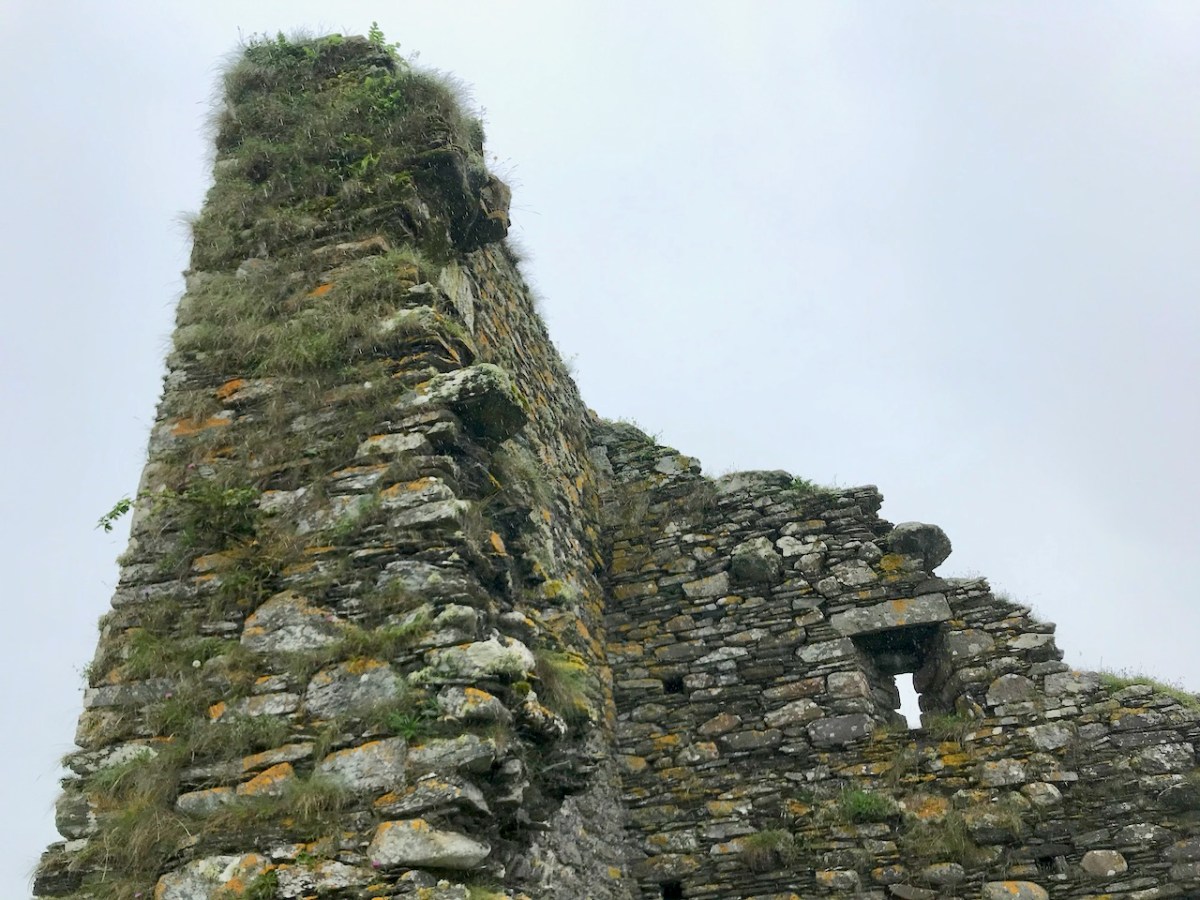
The only surviving opening is a loop in one wall, and a row of corbels that would have supported the first floor is still visible. There is no trace of anything that might suggest a vault, so it is possible that this small tower was unvaulted – Samuel thinks that the walls are noticeably thinner than the other castles, implying that this was a much simpler and shorter tower.
Samuels concludes his study of this tower by saying:

The jetty is modern, but the beach that it is laid upon was the best natural landing point on the island, well sheltered from the Atlantic swell. The landing clearly determined the siting of the tower house and was an important resource to the family that built the tower house. It is tempting to see a direct continuity between the recent settlement and a settlement around the tower house. Only excavation could determine if this was the case.

Mark Wycliffe Samuel
the tower houses of west cork
Dunbeacon (images below) is even more vestigial than Castle Island, but fortunately we do have some historical evidence for it. The name could mean Fort of Beacan – where Beacan is the name of a chieftain. However, it could also mean The Fort of the Mushrooms – since the Irish word for mushroom is beacán. I like to think of the chieftain and his lady chowing down on a plate of eggs and mushrooms for breakfast.
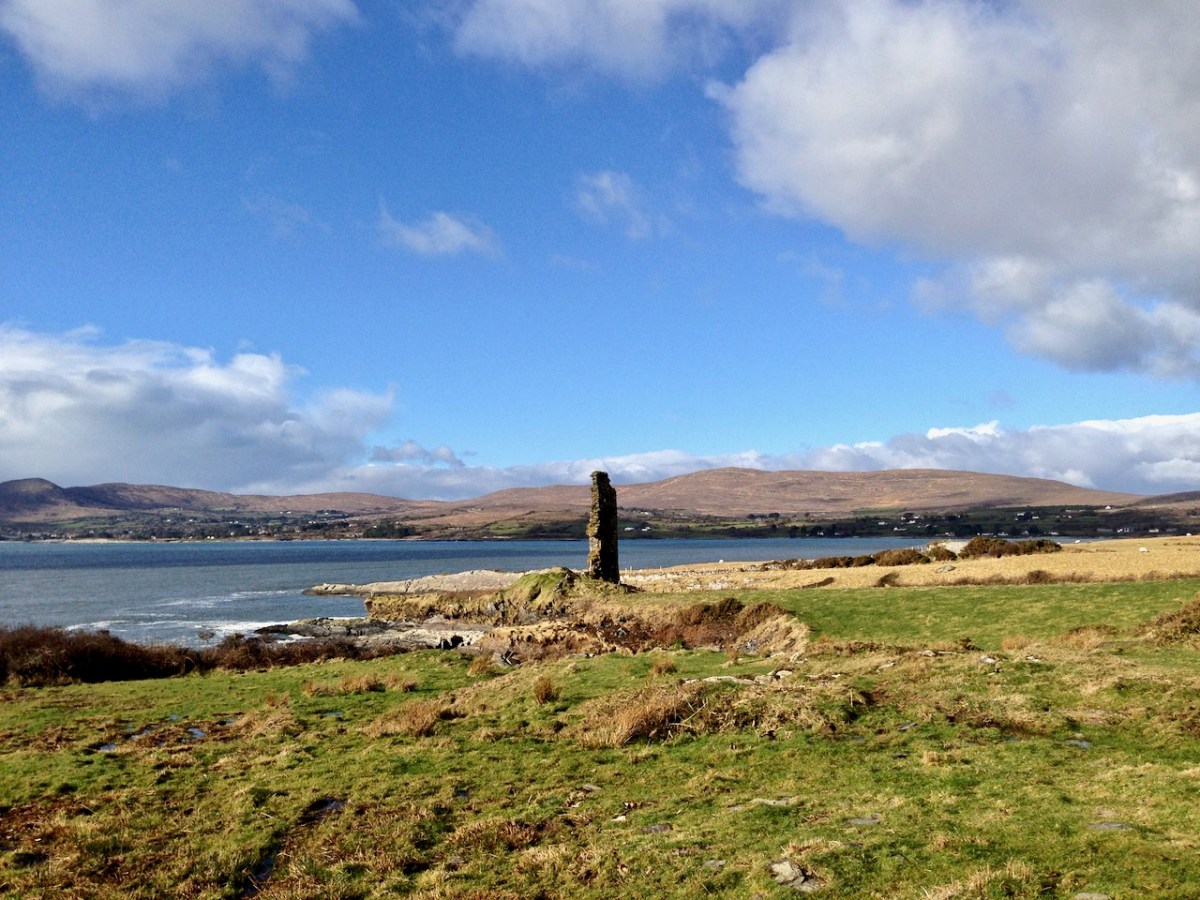
As with Castle Island, there are signs that the castle was built within a former promontory fort, also underscored with the name Dún, which means fortress. A fosse, or ditch, cut through the rock, is all that remains of the fortifications of that promontory fort.
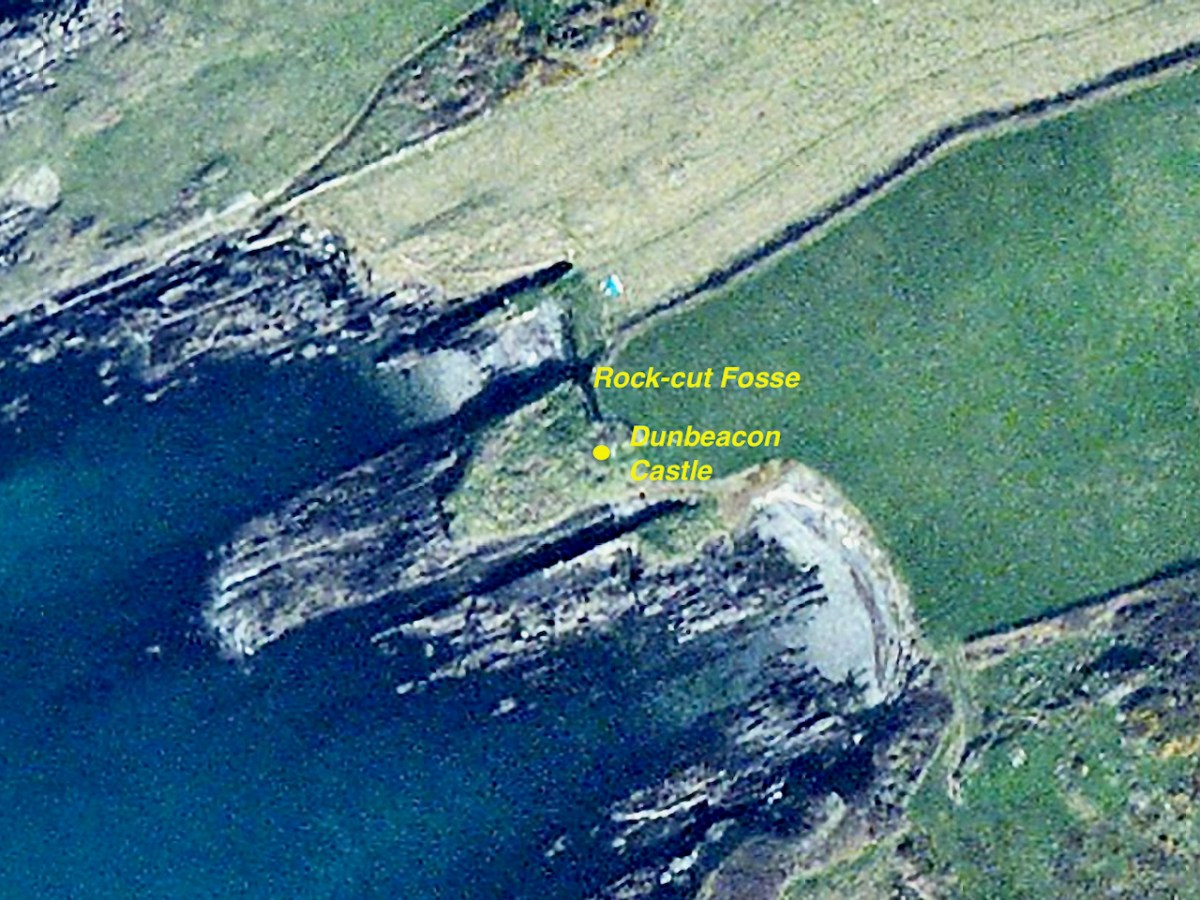
The majority of the O’Mahony tower houses in Ivagha were built by or for the sons of Conchobar Cabach. Dunbeacon castle was allegedly built by his brother Dohmnall. This seems to be a traditional rather than documented attribution. If it is assumed that Dohmnall was born c. 1400, he may have built the tower house at any date during his adult life (c.1420 to c.1470).

Mark Wycliffe Samuel
the tower houses of west cork
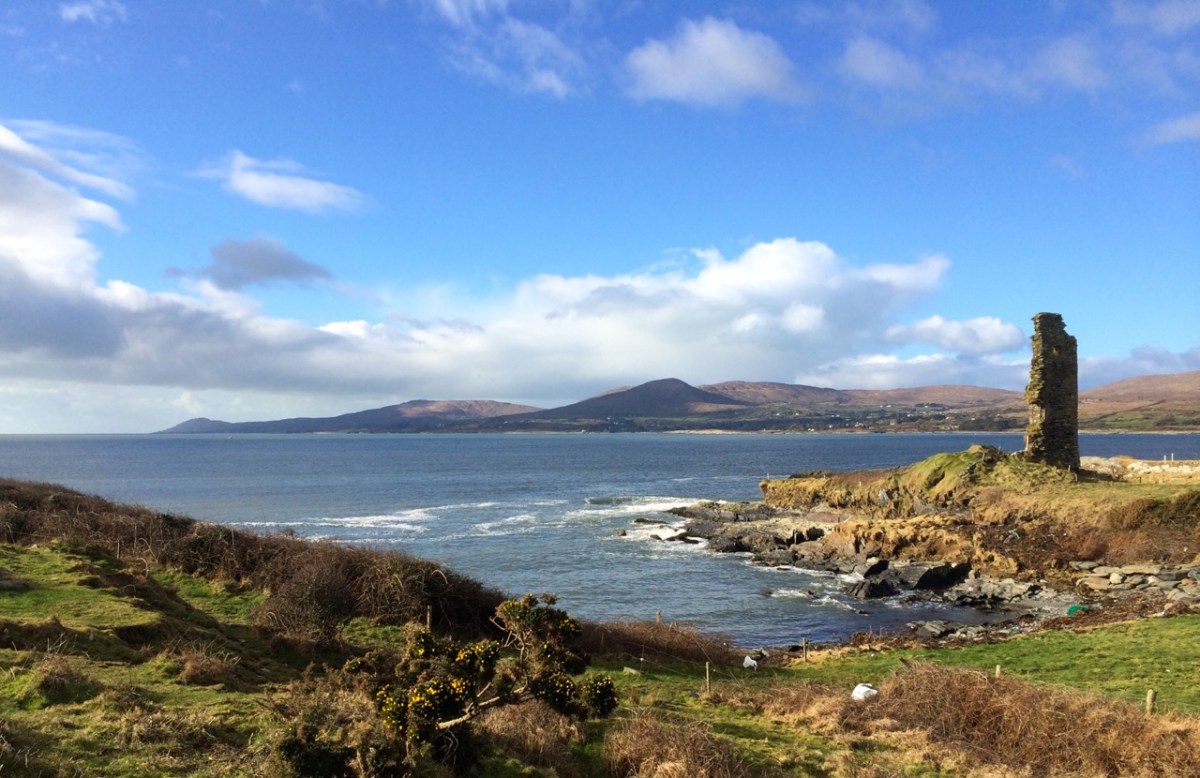
The siting is magnificent. From it, there is a clear view of the whole of Dunmanus Bay, right to the end of the Ivaha (Mizen) and Sheep’s Head Peninsulas. This, of course, also meant that it bore the responsibility, along with Dunmanus, of defending O’Mahony territory from attack or incursion on the north side of Ivaha. The pro-English Owen O’Sullivan of Beara, for example, is known to have conducted cattle raids on the lands surrounding Dunbeacon.
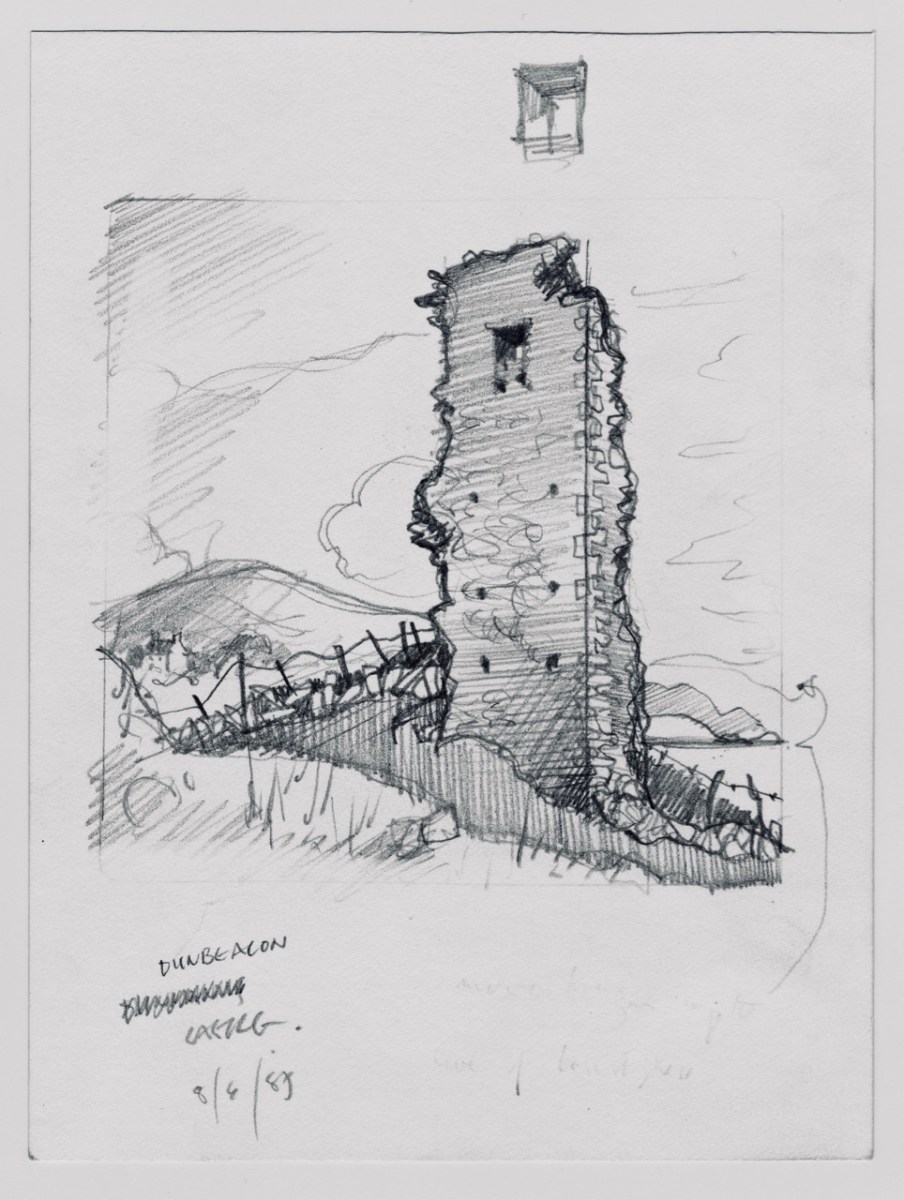
Samuel tells us that the chief of Dunbeacon, Domhnall O’Mahony, forfeited his lands as a result of his participation in the Desmond Rebellion, and it became a ruin – beautifully captured in Brian Lalor’s sketch, above.

The tower house and four ploughlands were confiscated, and passed into the possession of an English settler who probably built a timber house to the east. The O’Mahonys did not attempt to reconquer the lost part of their pobol; instead they contented themselves with attacking and burning the tower house, an event recorded in a letter written by an English judge in 1588. The tower house probably remained a ruin.

Mark Wycliffe Samuel
the tower houses of west cork
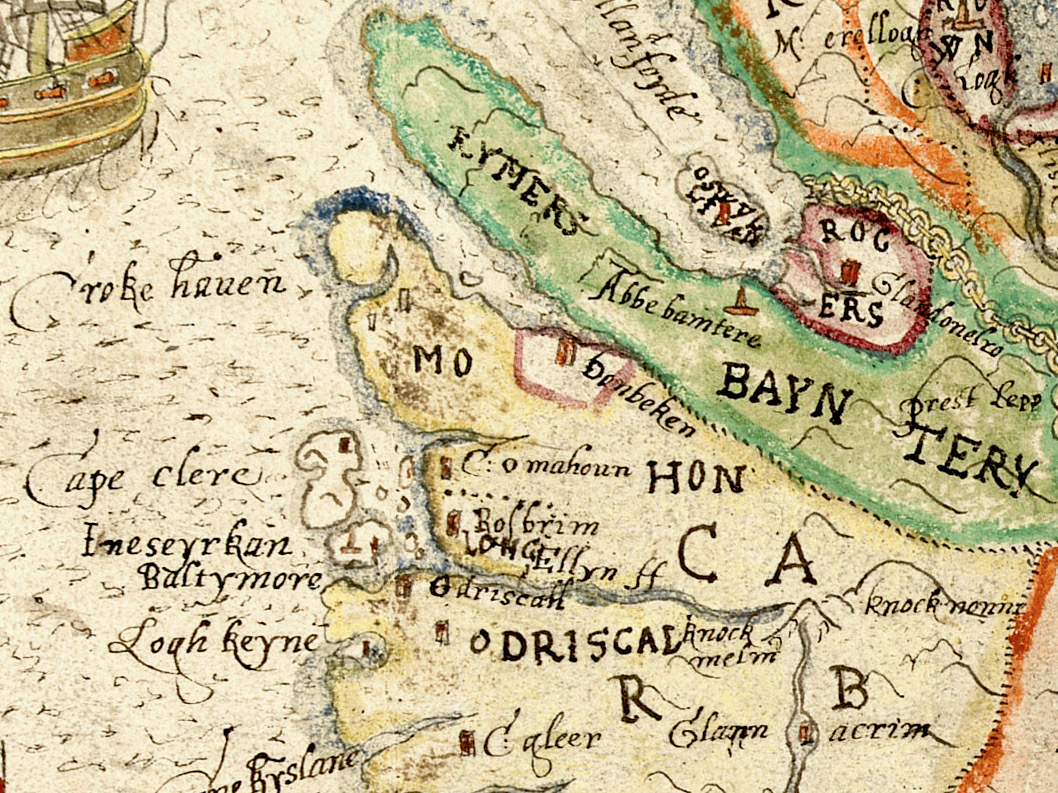
The O’Mahonys regained possession of their Dunbeacon lands but lost them again when they were granted to an English settler. See my post Planning a Plantation: Jobson’s 1589 Map of Munster Part 1 and Part 2 for how the land was mapped preparatory to the Plantation of Munster. As you can see above, Dunbeacon (or Donbeken) was clearly marked out for colonisation. William Hull came to own it at one point, and even the conniving ‘lawyer’ Walter Coppinger laid claim to it – as he did with much of the O’Mahony and O’Driscoll territory.
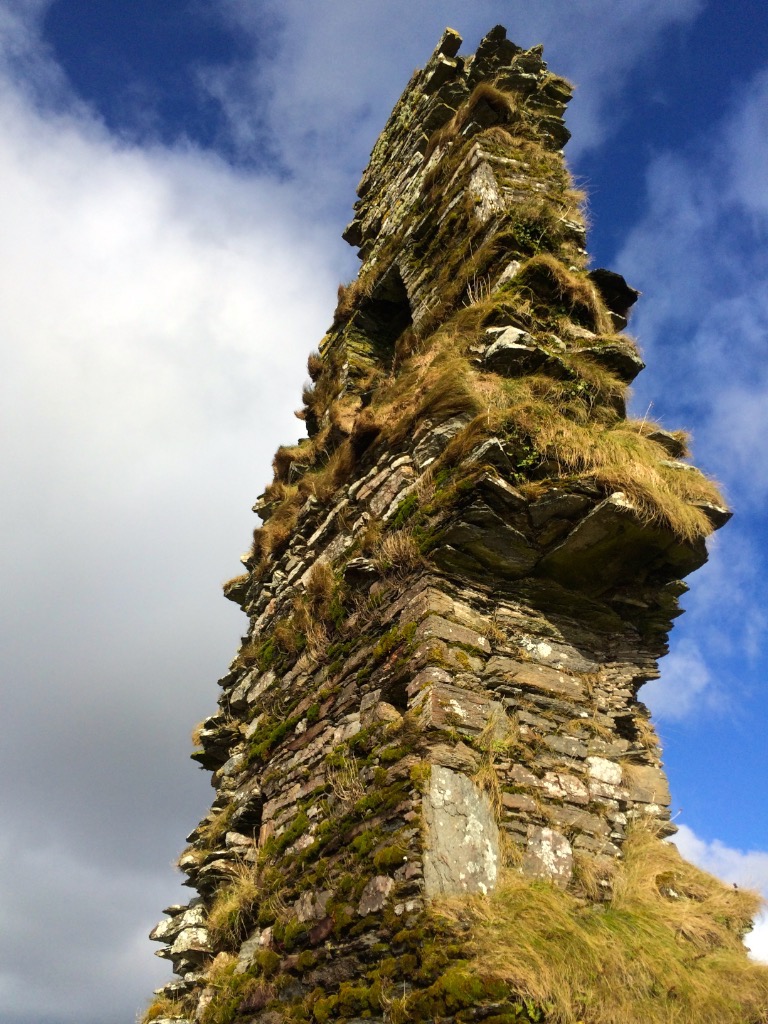
Although so little remains, Samuel’s careful analysis indicates that Dunbeacon was probably a typical raised entry tower house, with a vault supporting the third floor which held the principle private chamber. See my posts on Ardintenant  and Black Castle for what it may have looked like.
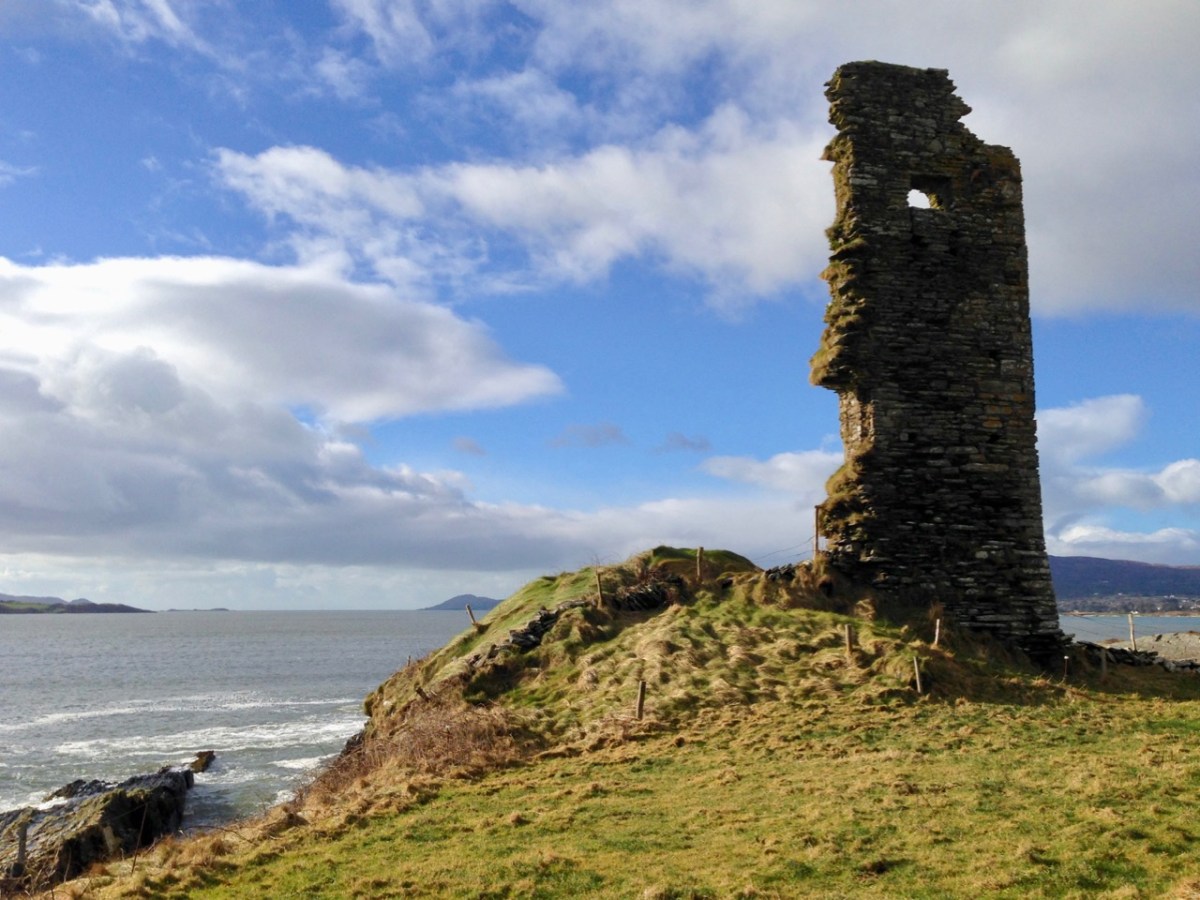
It’s hard to look at ‘fragmentary remains’ and think of them as vibrant centres of life. Yet, these two castles were once part of the mighty O’Mahony federation – a large network of connected families that ruled Ivaha and the surrounding seas. Sic Transit Gloria Mundi
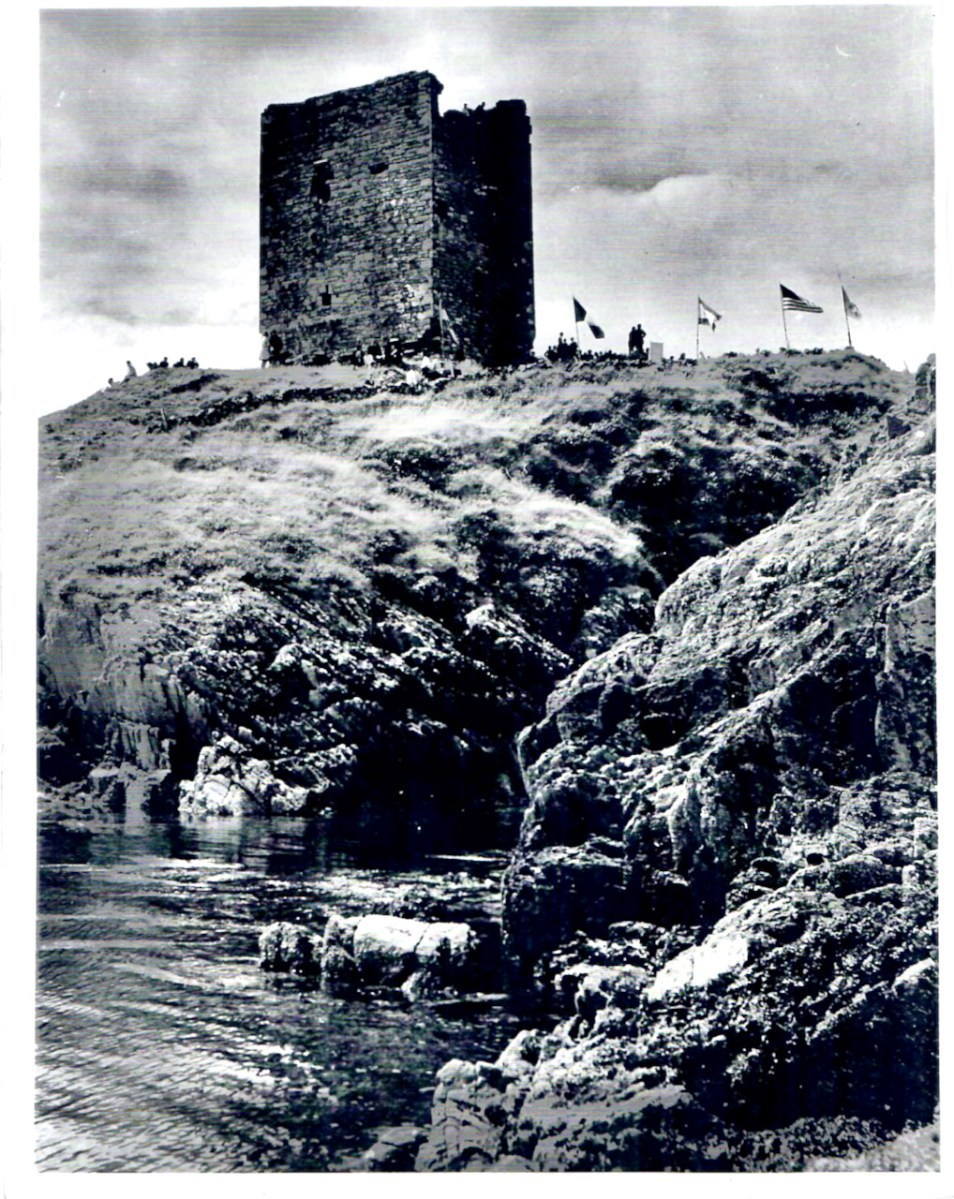
Black Castle, or Leamcon

This is the fourth castle in my series The Castles of Ivaha, and the final one which is intact enough to be able to describe in detail (although I may have more to say about those which are more vestigial). Not just intact, though – Black Castle has been superbly stabilised and saved for future generations by its owner, Niall Hyde. 

Niall, by the way, thinks the the term Black Castle is more historically accurate. He points out that there is, in fact, in the townland of Leamcon, about 2km to the northeast, another ‘turret’ marked on the old OS maps, which is the remains of a castle built by the notorious Sir William Hull. Black Castle is in the townland of Castlepoint, and its name neatly distinguishes it from White Castle, AKA Ardintenant. Both were built by the O’Mahonys.

James Healy’s drawing of Black Castle from his wonderful book The Castles of County Cork, Mercier Press, 1988

As I said in my post on Ardintenant Conor Cabaicc succeeded his father in 1427 and remained Taoiseach for 46 years, embarking on an ambitious program of construction to provide castles for his sons and brothers. This included Black Castle, which he built for his second son, Finín Caol (pronounced Fineen Kale), or Finín the Slender. This means that Black Castle was built in the period before Conor Cabaicc (Conor the Talkative) died, in 1473. This accords well with its architectural details, which place it among the fifteenth century ‘raised entry’ castles, similar to Ardintenant, Dunmanus and Dunlough

The best source material for all the castles of Ivaha is the thesis The Tower Houses of West Cork by Mark Samuel. Here’s what Samuel says about the location of Black Castle, which he refers to throughout as Leamcon. Leamcon, by the way, means Hound’s Leap, which Samuel suggests may refer to a legend about the gully across which you must pass to get to the castle.

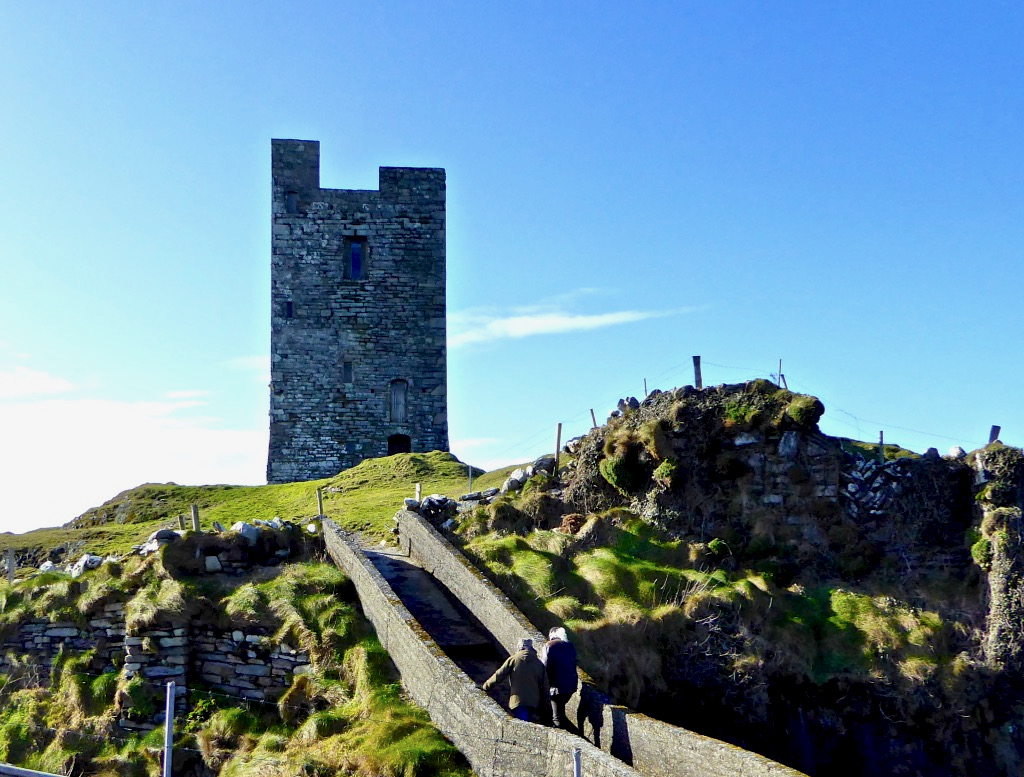
The western part of the Ivagha peninsula, the territory of O’Mahony Fionn, is now sparsely populated. Away from the formidable Mizen Head, the ice-sculpted land meets the sea with low, rocky cliffs. In this part of the Survey region, the strike of the rock is almost south-west/northeast, the layers being tipped close to the vertical, the shore tends to be sculpted into long peninsulas and islands running along the strike. Exposed to the Atlantic, it is a wild treeless shore. The fields once densely fanned prior to the famine, are now mostly given over to pasture. The tower house stands far from any road at the west end of a long narrow peninsula. Erosion has nearly severed the tip of the peninsula; only a precarious natural bridge, now reinforced with concrete, joins it to the mainland. The island is large, the ruins cover only a small fraction of its area. The tower house stands towards the island’s east end at its highest point. The promontory is for the most part gentle in relief, being covered by grass-grown ‘drift’ deposits.

THE TOWER HOUSES OF WEST CORK
MARK WYCLIFFE SAMUEL, 1998

When Niall bought the property the bridge consisted of a few planks. It must have been a hairy business getting across to it until he built the concrete walkway you see today. Niall and his family spent their summers at the castle – can you imagine, as a child, what it must have been like to have your own castle to play and live in? Magical! Although I do think about what it must have been like for Dorothy, who spent the weeks there with the children while Niall worked in Dublin. How did she manage to feed them and keep them safe? A heroine, indeed.

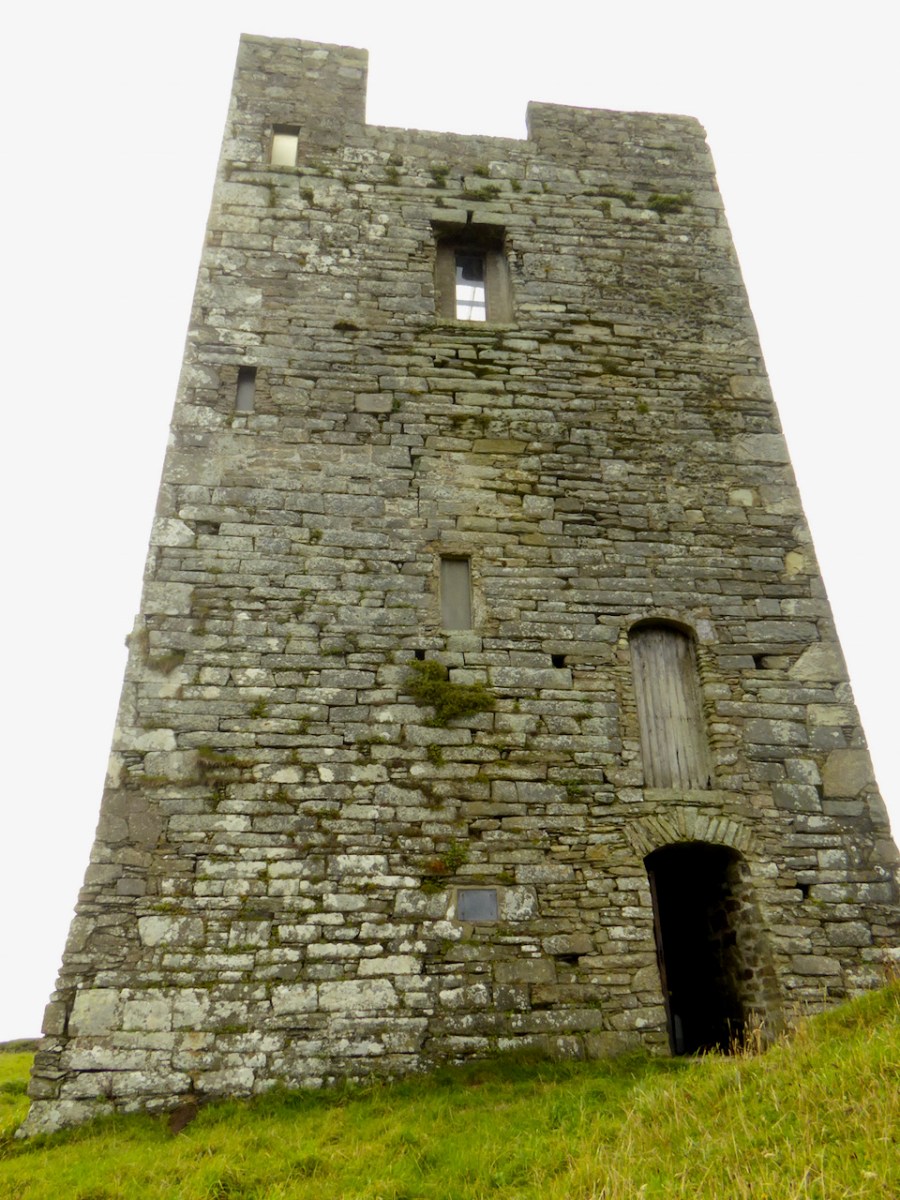
Like the others I have described in detail, Leamcon is a raised entry castle. To recap – the ground floor entry gave access to the ground floor, and possibly by means of a ladder to the second floor and mezzanine. The raised entry gave access to the second floor, and then, by means of a strait mural staircase, the the floors above the vault. Take a look at the cut-away diagram in Illustrating the Tower House: A Guest Blog to see what I am talking about here. Thus, the upper floors could only be accessed by one staircase, a defence feature, and being above the vault provided security from fire in the lower floors. Given that there were no fireplaces, and that braziers were lit in the middle of the floor, with smoke escaping however it could, this was probably a good idea.

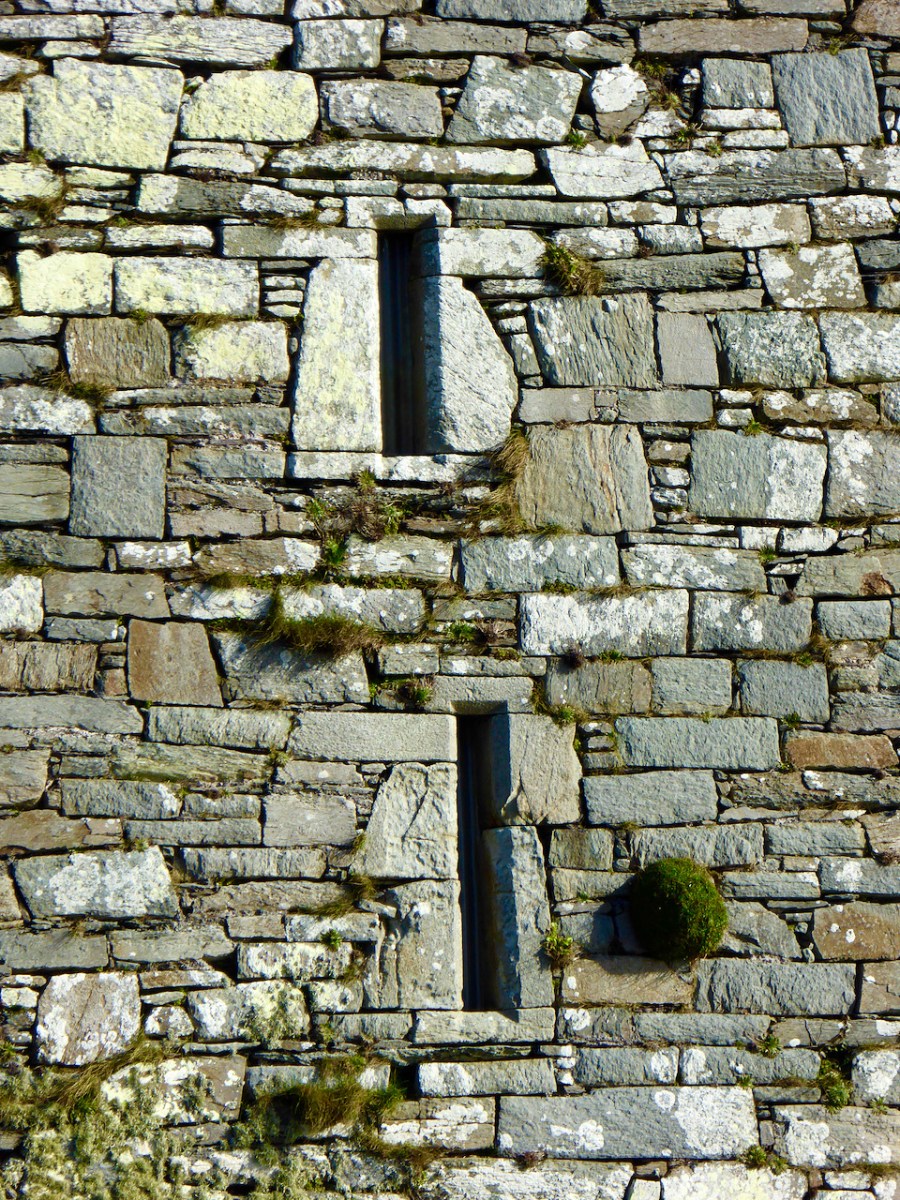
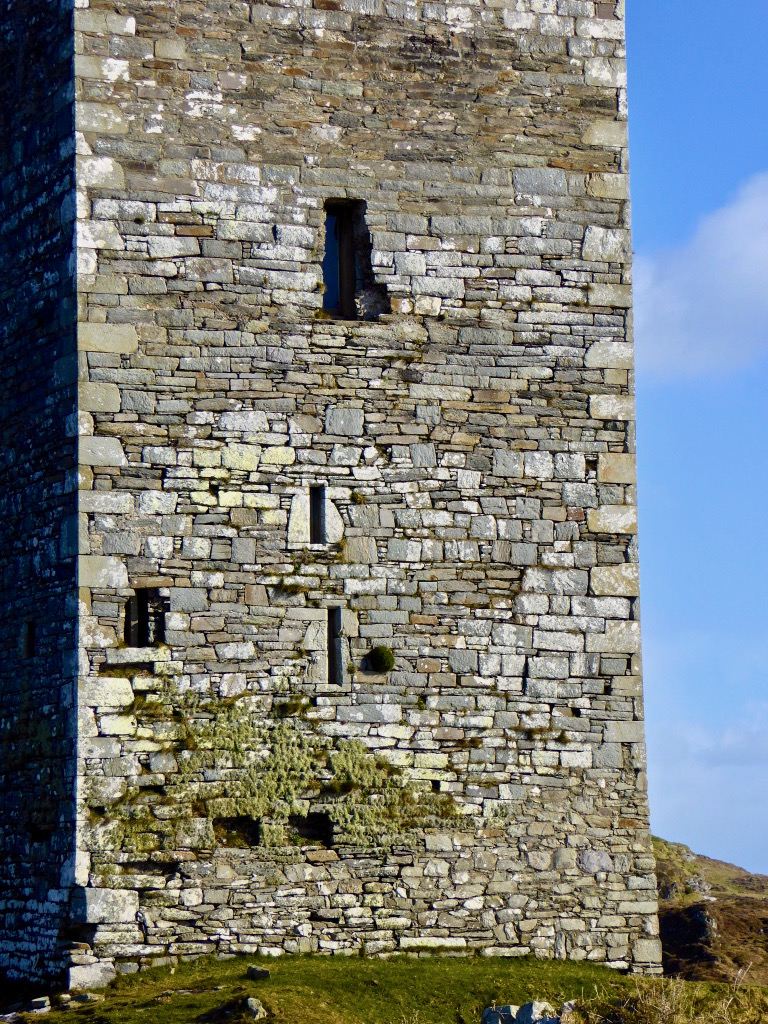
Another defensive feature was the small opes, or windows, through which no attacker could climb and little light could penetrate

As regards defence, the castle was attacked by Carew’s forces after the Siege of Dunboy in 1602. According to Samuel:

Sir George Carew reported, on 13th July 1602, that his lieutenant, Captain Roger Harvy, had taken several castles strongly seated on rocks and necks of land. All were so ‘neere unto the sea where ships may safely ride, and fit places for an enemy to hold as, namely Leamcon, Donnegall’ and others. The decision was taken to burn these tower houses. Conor, the head of the sept, received quarter with his men and migrated to Spain immediately afterwards. He was subsequently pardoned but seems never to have returned.

THE TOWER HOUSES OF WEST CORK
MARK WYCLIFFE SAMUEL, 1998

Black Castle wasn’t burned and it subsequently was reclaimed for a time by the O’Mahonys, although the clan forfeited all or most of their lands after the rebellions of the 1640s, and the castle was abandoned from at least the 1690s. Such was the state of it when the O’Mahony Reunion took place here in 65 or 66.

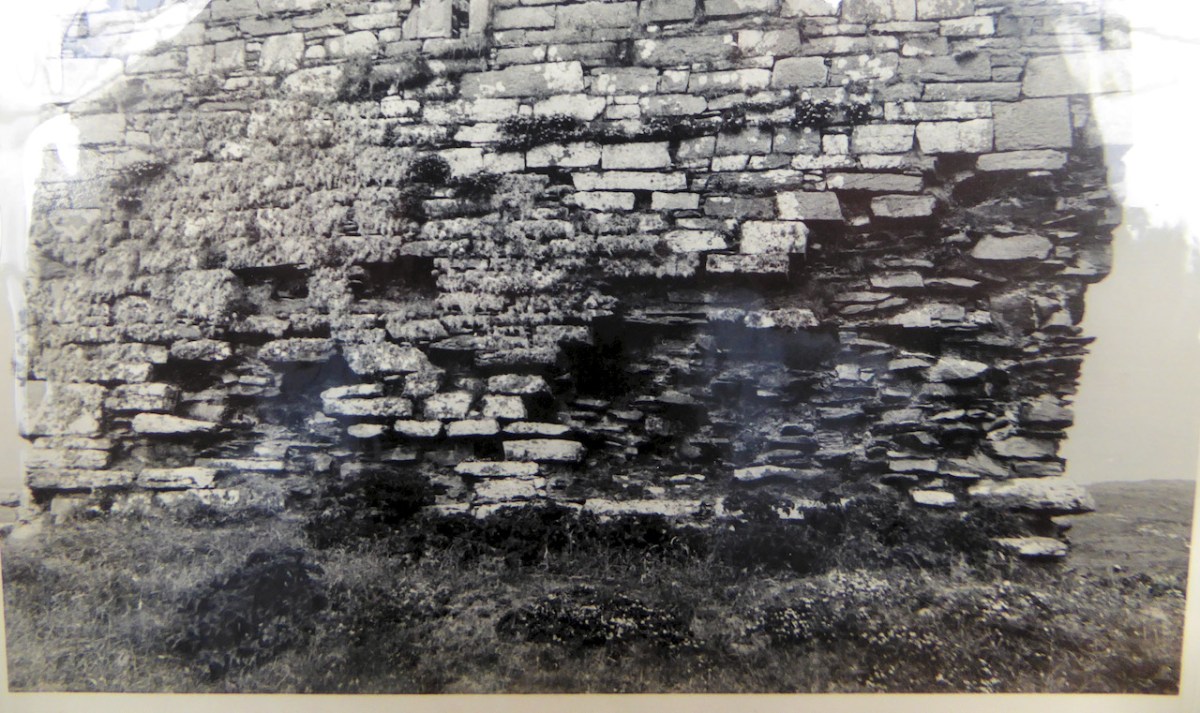
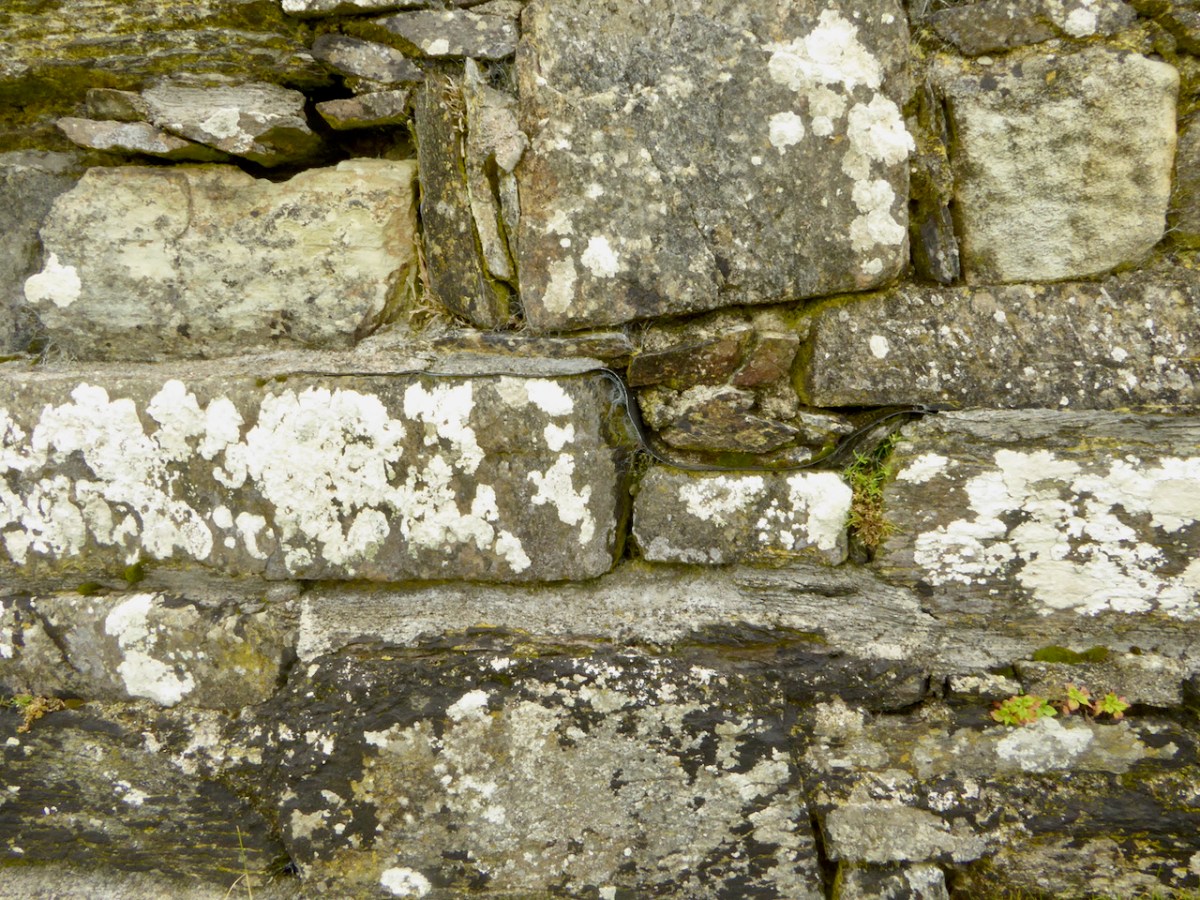
All those years of neglect had resulted in a castle in a perilous state of dereliction and Niall and his builders set about stabilising it before they could make it habitable. The base batter – the broad foundation that give the walls a strong base – had first to be repaired. This called for great skill and the results are impressive. Niall has left a band of membrane to indicate where the old and new stone work meets.

The castle was built to align with the strike of the rock, a feature of most of the Ivaha tower houses. The strike is the compass direction in which the rock bed is running and for West Cork that is mainly in a northeast to south west direction. The builders chose a prominent and solid rocky platform, still easily discernible, and probably prepared it by digging away any soil and loose rock and may have laid down a layer of mortar to help bind the lowest slabs to the rock surface. 

At Black Castle, the quality of the masonry varies, leading me to think that not all stone masons were as skilled, or perhaps as careful, as others. See the variation in the image below. The quoins (corner stones) were made of fine-grained sandstone that can be freely dressed in any direction (called Freestone), while the stones used to dress the outer layer were carefully chosen (or deliberately shaped) to be smooth and even, lending a pleasingly sheer surface to the castle exterior, sometimes called  an “ashlar finish.”

The raised entry, in the case of Black Castle, is directly about the ground-level entry, similar to Ardintenant, but unlike Dunmanus where the entries are staggered. The entrance to the upper door would have been by means of a wooden staircase, possible from the small rocky knoll across from the entrance.

In his conversion of the castle to provide habitable space, Niall concentrated on the upper floors. There is a living room, kitchen dining area and bedrooms, along with a toilet and shower which are situated in the original garderobe space. 

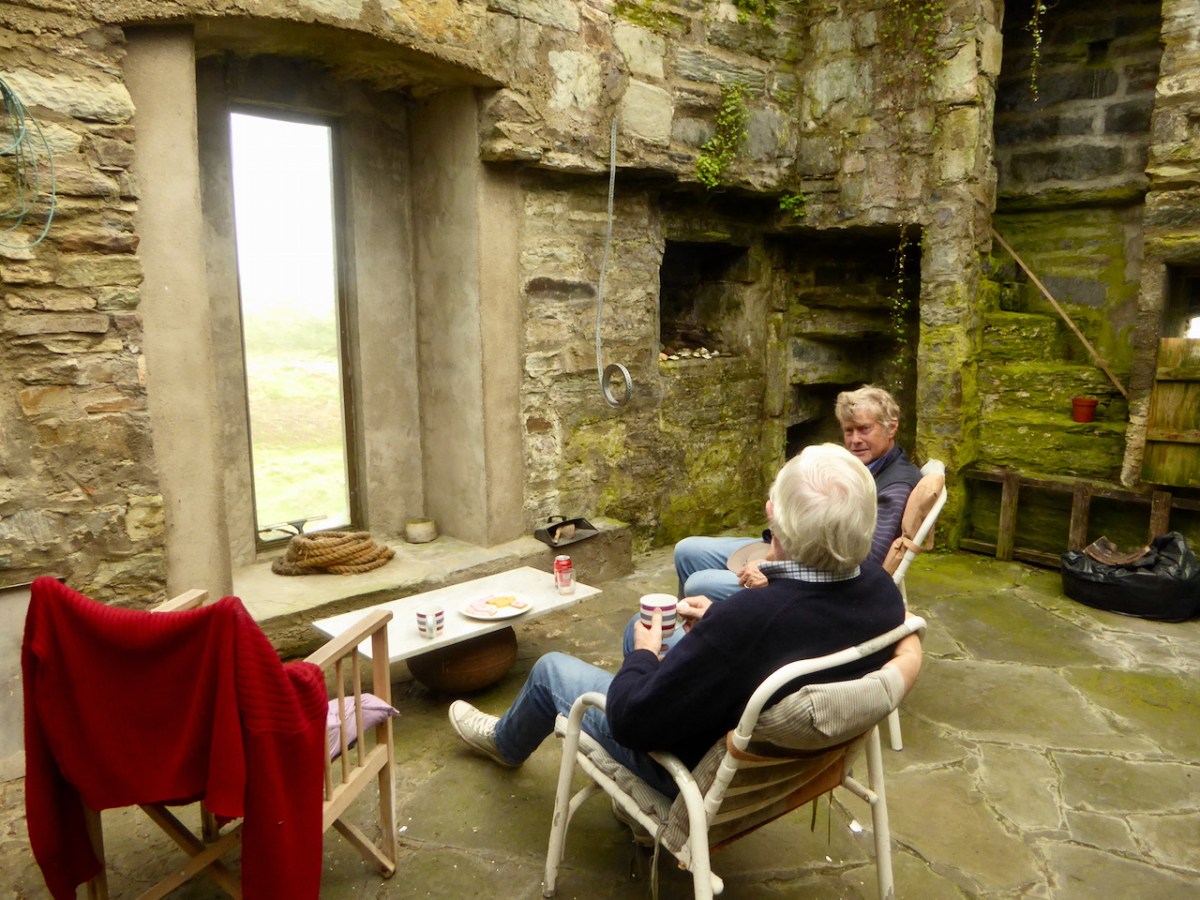
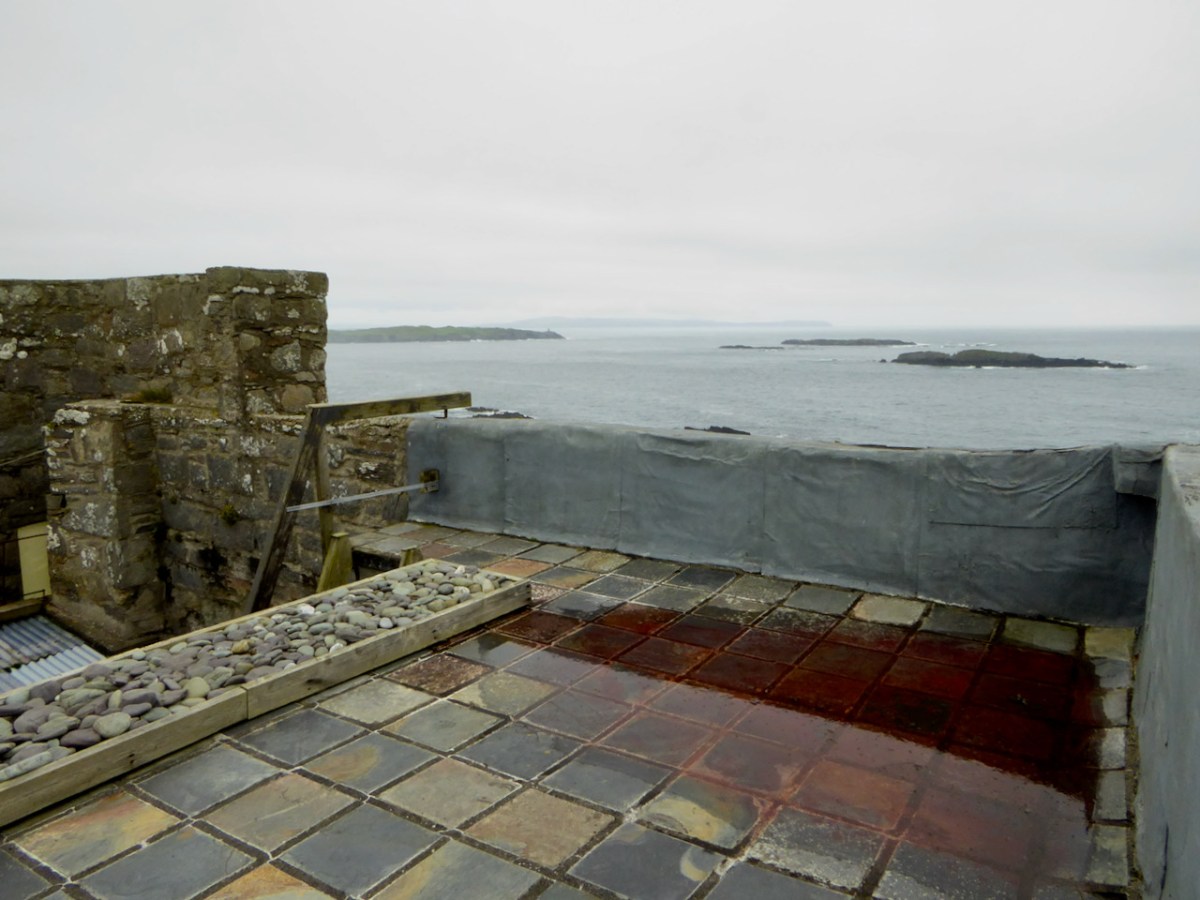
By roofing and waterproofing the building, Niall has kept further deterioration at bay. It is a joyous thing to sit and look over the countryside with a cup of tea on hand, or to climb up to the wall walk and gaze over the wild and rugged peninsula, imagining Carew’s forces advancing across the sea.

Niall Hyde has managed, on a limited budget, to salvage Black Castle and indeed turn it into a space that his family enjoyed. We should all be grateful to him, and to others who have taken on such tasks with vision and courage. Without the Niall Hydes of this world, we would all be the poorer.

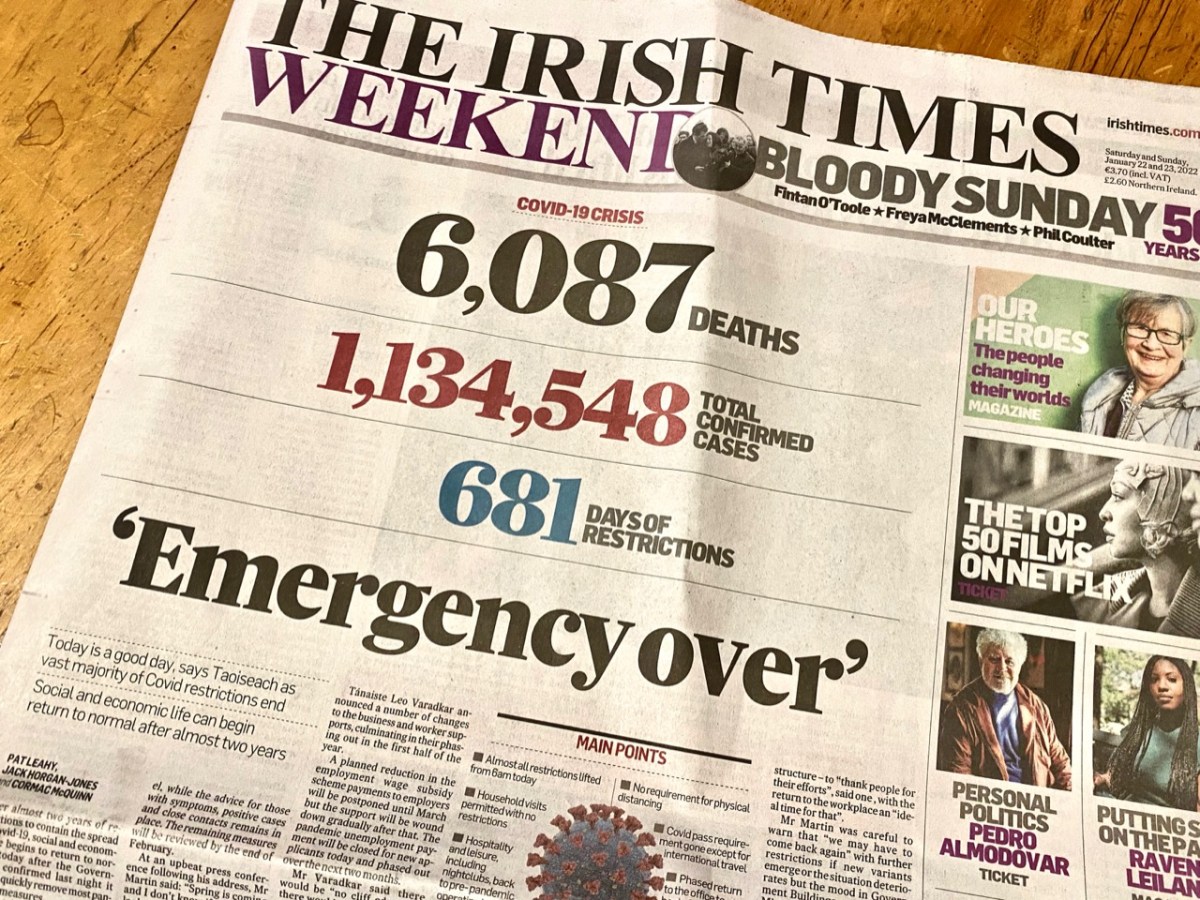
681 Days!

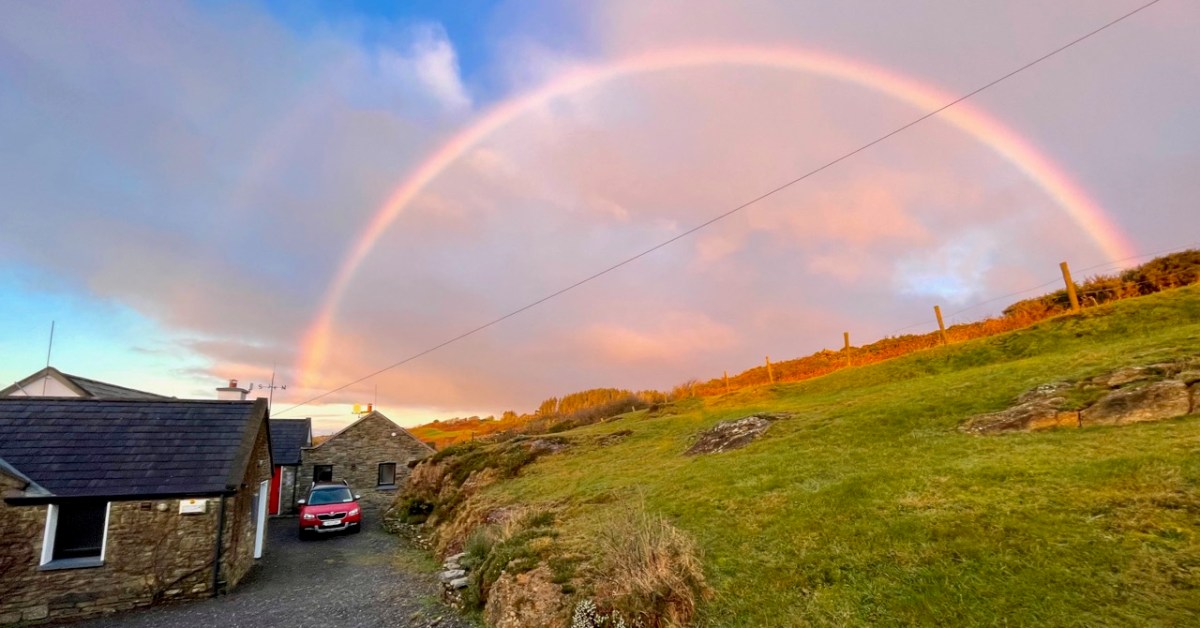
Yes – it has been 681 says since Covid-19 hit us and our world changed. From today, 22 January 2022, most restrictions in the state are gone, apart from the continuing need to wear masks in certain public places. Hopefully that West Cork sky over our house this morning, above, is a good omen for us. Today’s paper shows the stark tally:

The population of the Republic of Ireland as I write this is 5,023,337 (no doubt that is changing by the minute). That tells the story: 22.6% of the people here have had the virus. And of course it hasn’t gone away yet… But at least “social and economic life can begin to return to normal” says the Taoiseach. In order to mark the significance of the moment, my post looks back to our experiences over the last 681 days: in particular, how our lives changed at the beginning of the outbreak.

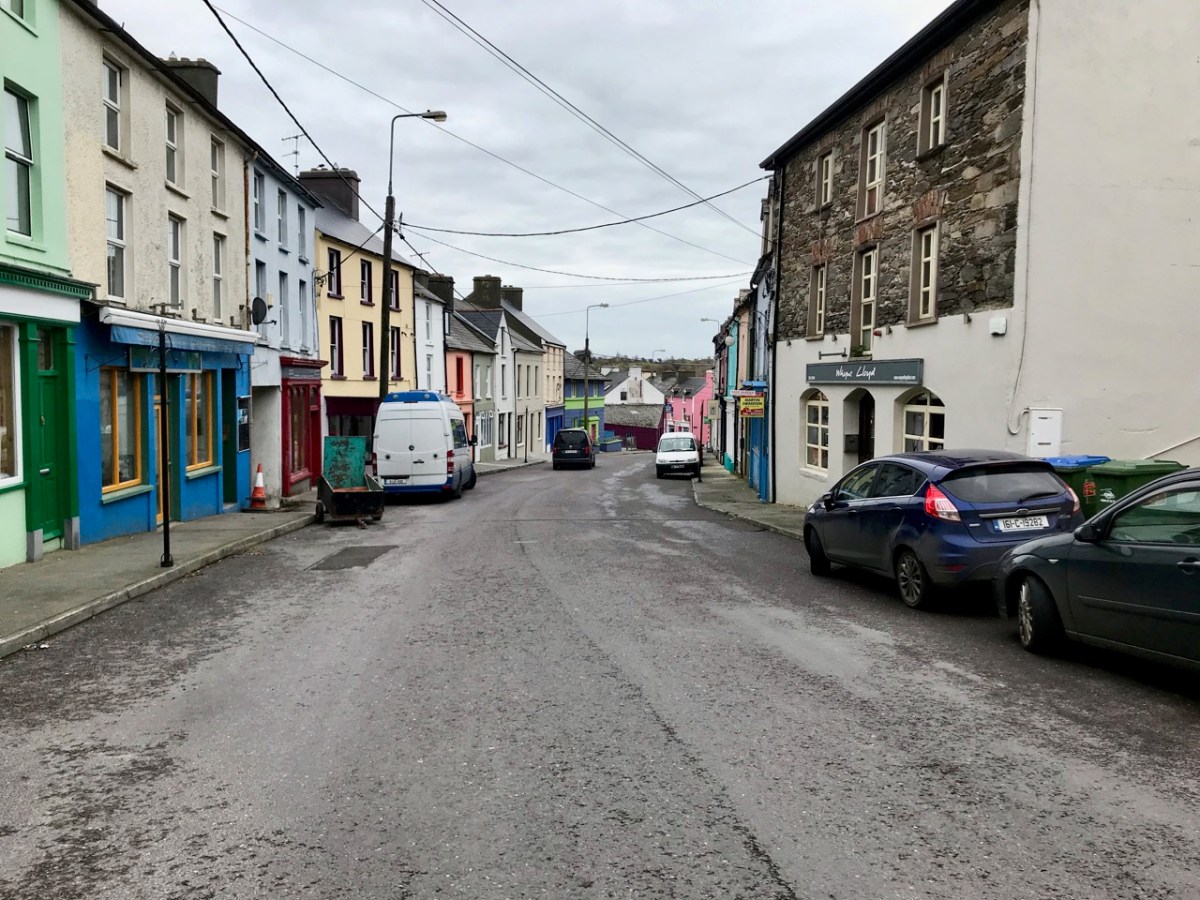
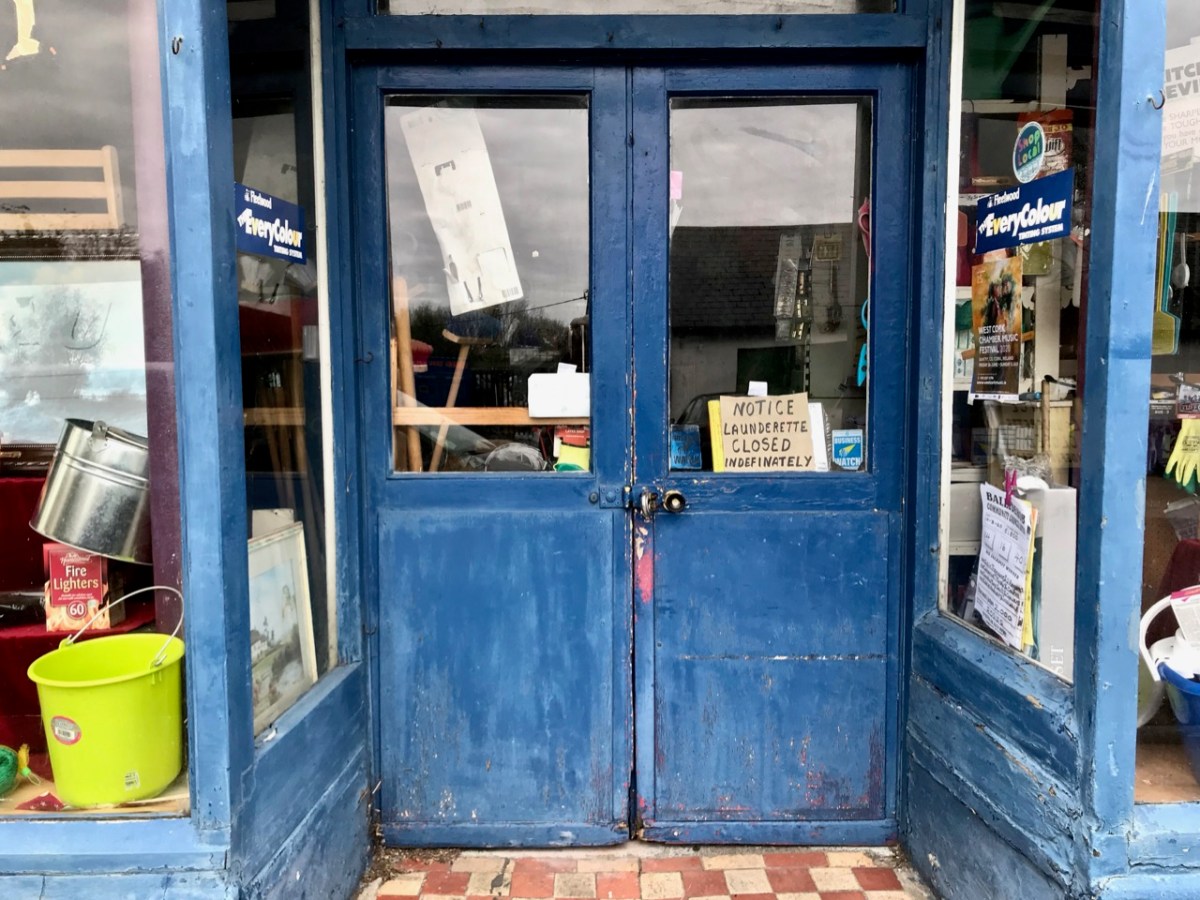
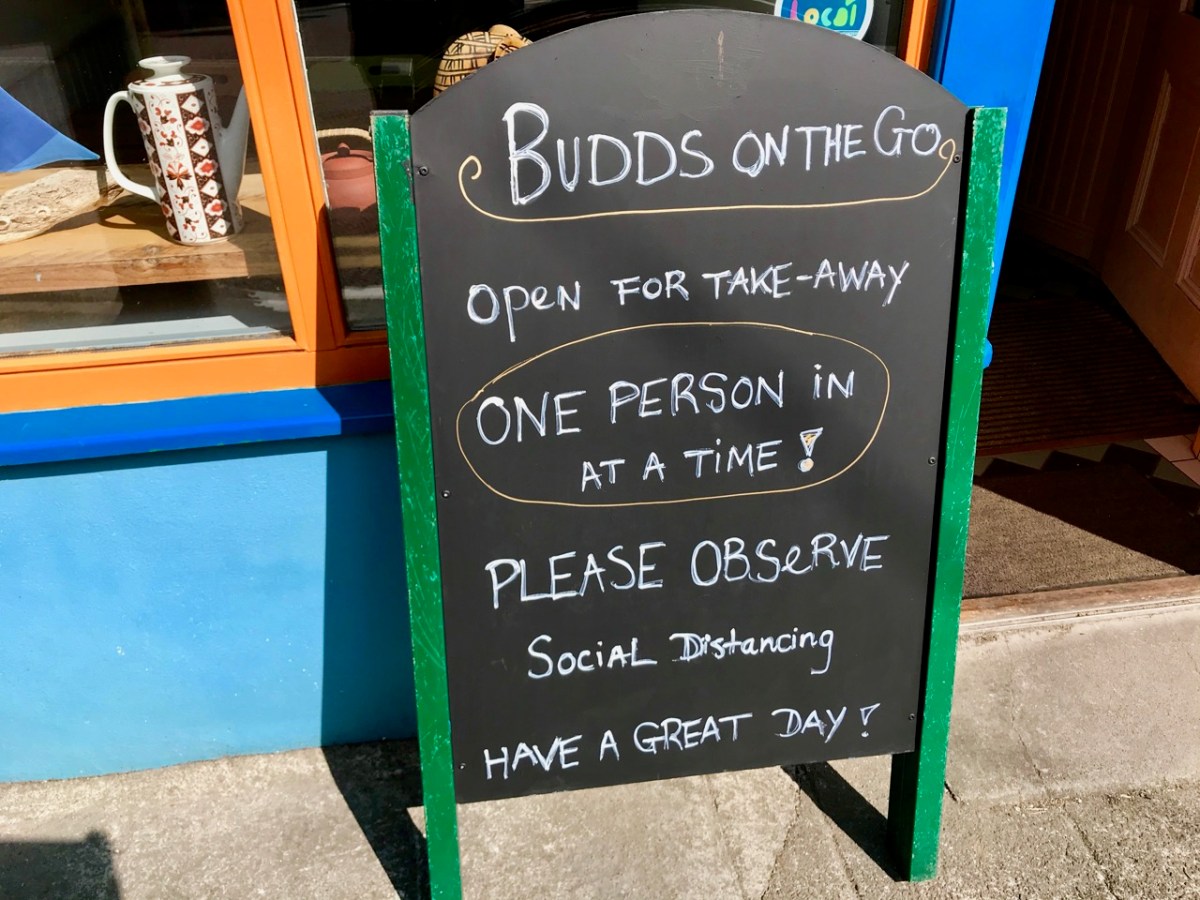
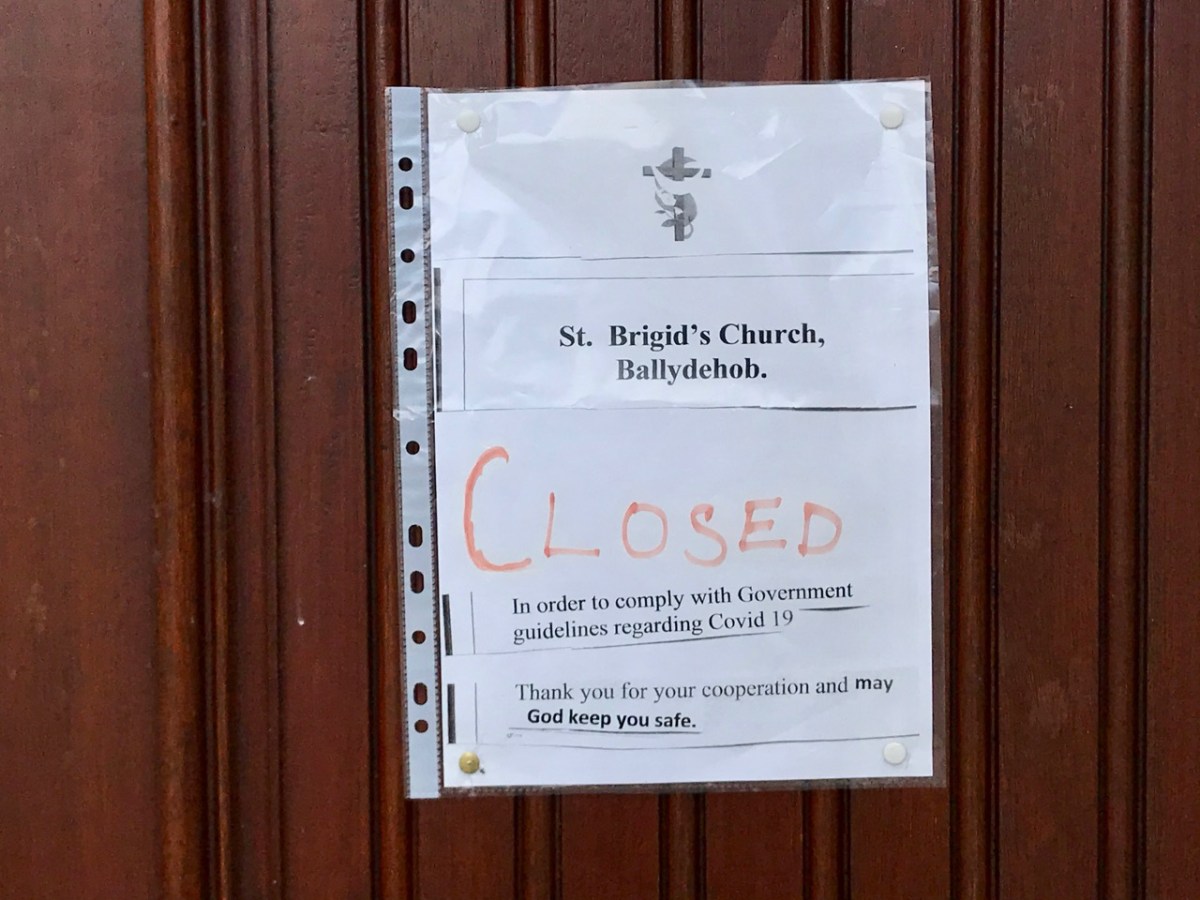
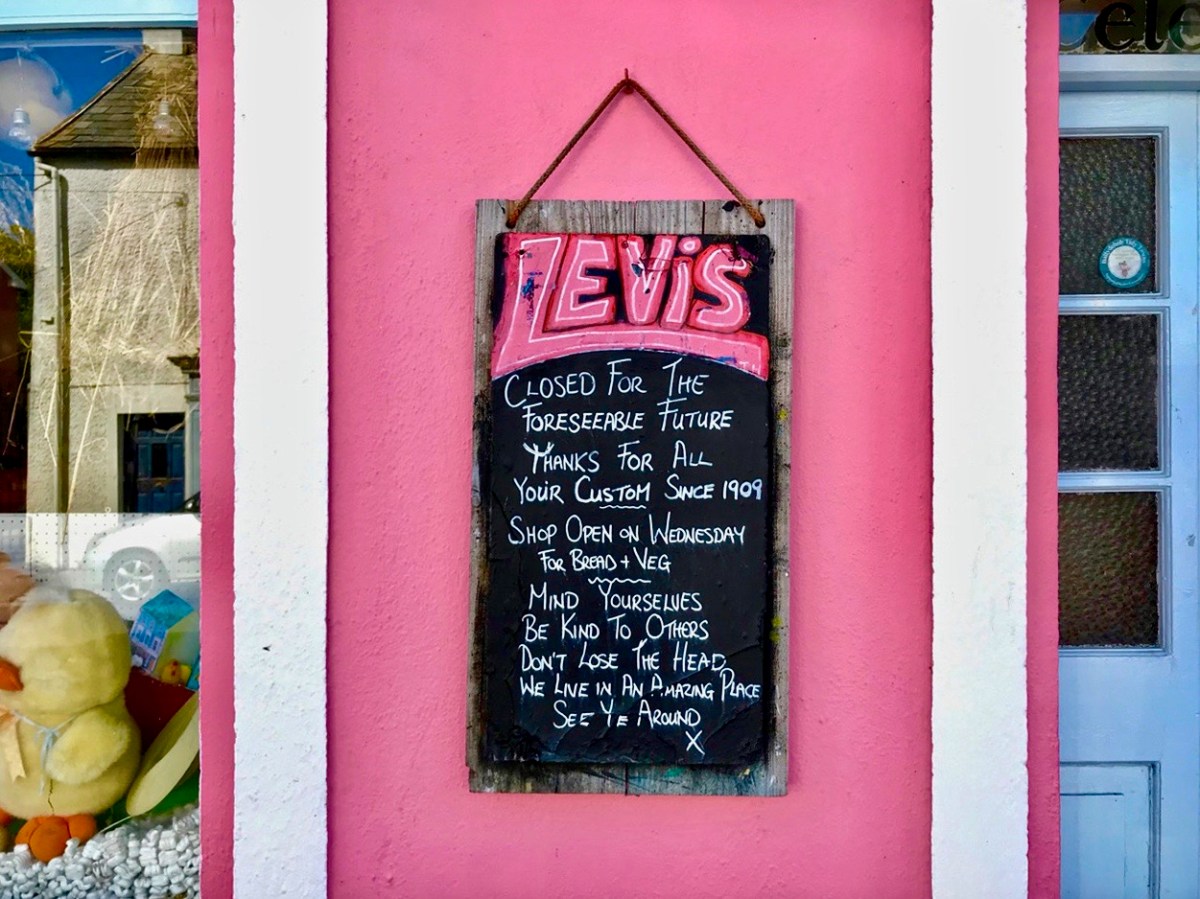
These two images of Ballydehob, taken at the beginning of April, 2020, sum up the shock of empty streets, closed businesses and everyone being advised to isolate. It all seemed very bleak: our movements were initially restricted to 2km from home, then that increased to a radius of 5km. If you lived in rural areas – as we do – you were permitted to travel beyond those distances if you needed to in order to shop or use essential services. We breached those rules on occasion – sometimes to get exercise in the deserted countryside all around us.

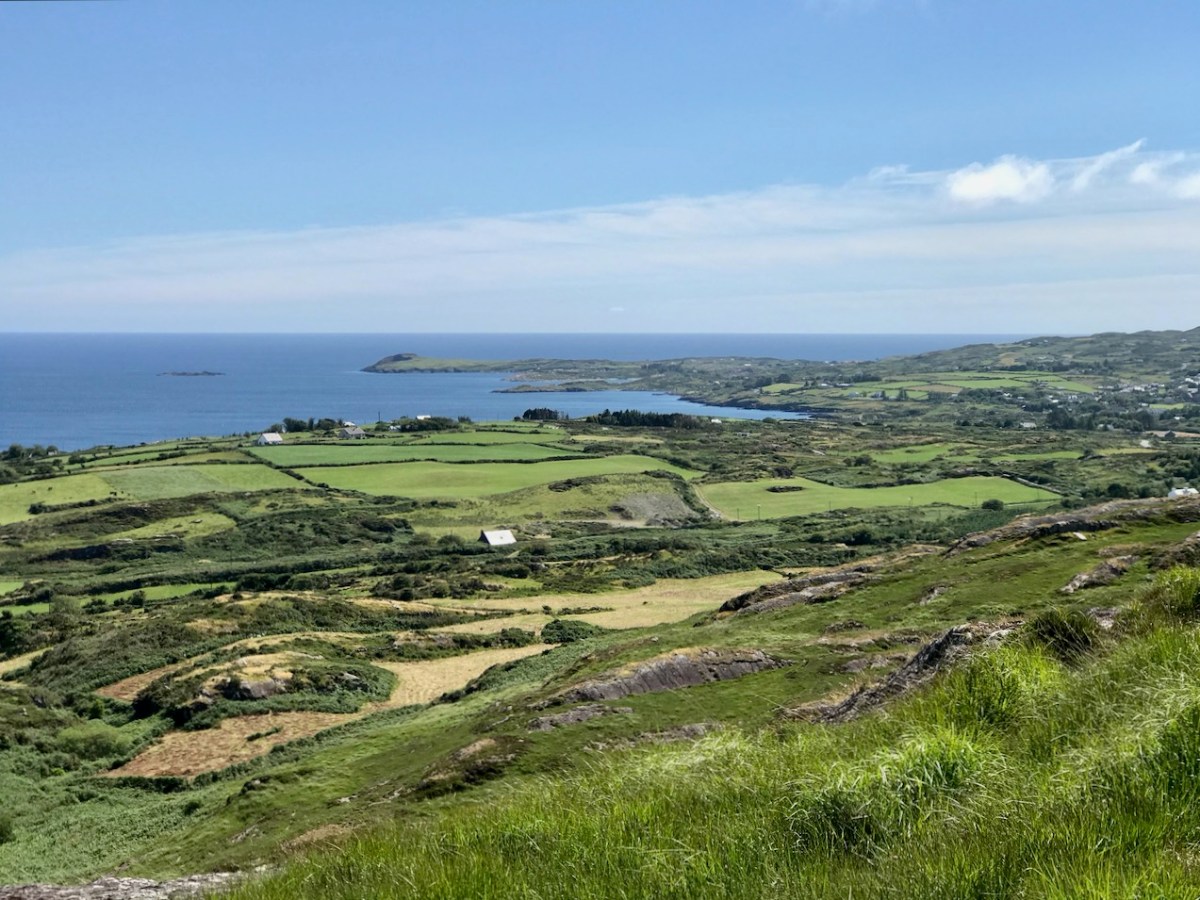
As the days went by, an amazing spring emerged, with day after day of beautiful weather. Human activity was curtailed, but the natural world continued along its course as though nothing was awry!

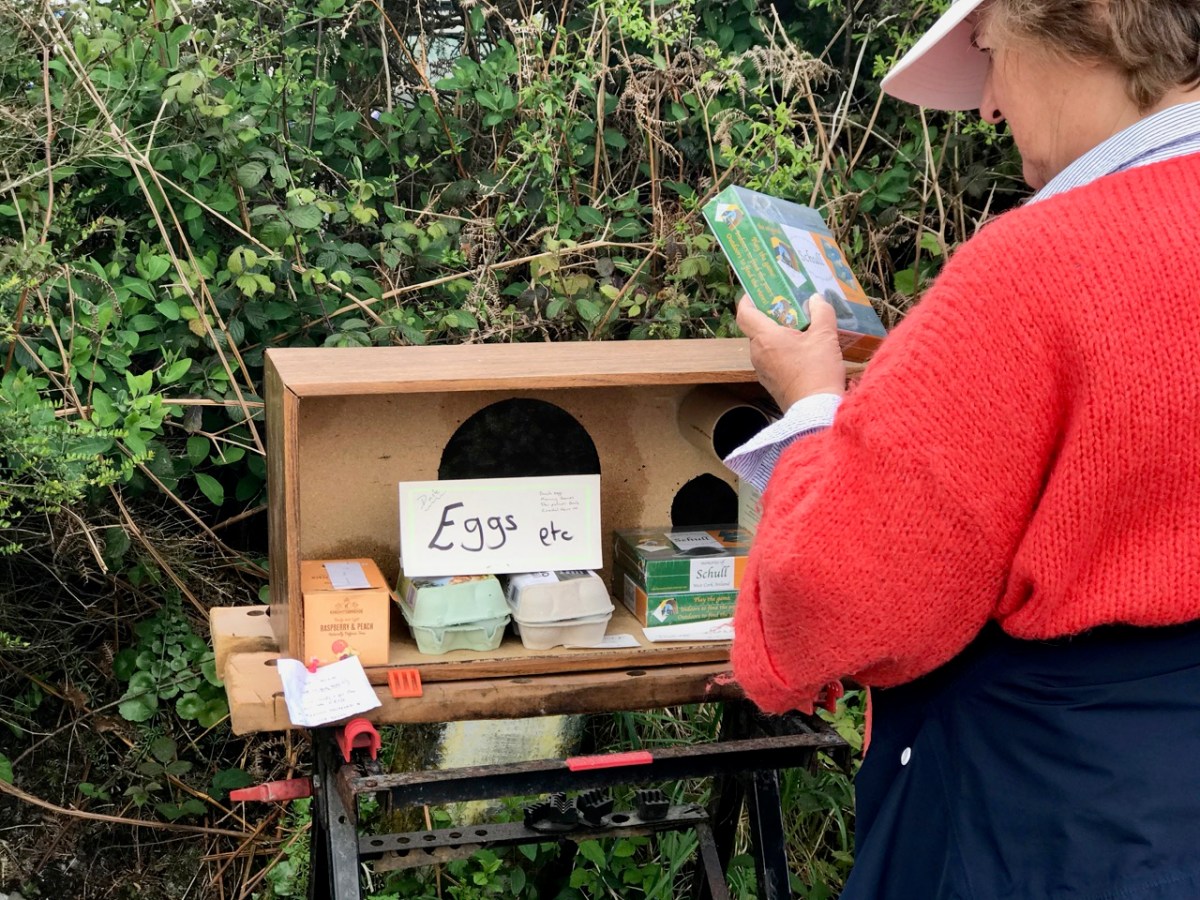
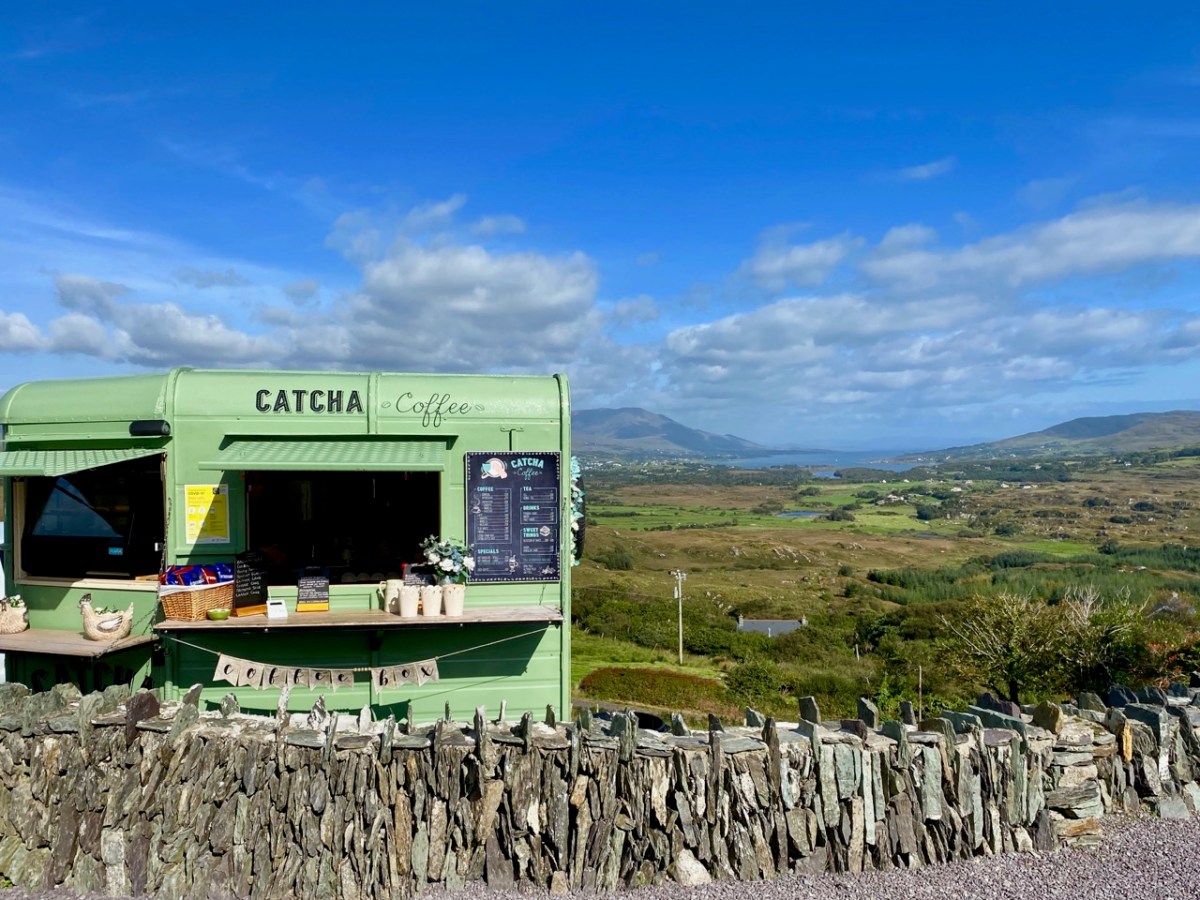
We humans are pretty adaptable. It was amazing to see the ingenuity of folks creating outlets for their energies without having to mix. Food-on-the-go blossomed as a craft industry: here are some examples.

We were very impressed with many of the examples we encountered – and which have survived over the months. Hopefully they will carry on, as casual coffee stalls in the middle of nowhere are welcome to us in our travelling. Pre-pandemic they were probably frowned upon by ‘the authorities’ – and they are certainly regulated – but ‘authority’ would have had to be very hard-hearted to close down these little lifelines. In our experience, every one we encountered was well-run, and spotless. It was an incidental opportunity to have a distanced ‘chat’: always a source of good local information on how others were coping.

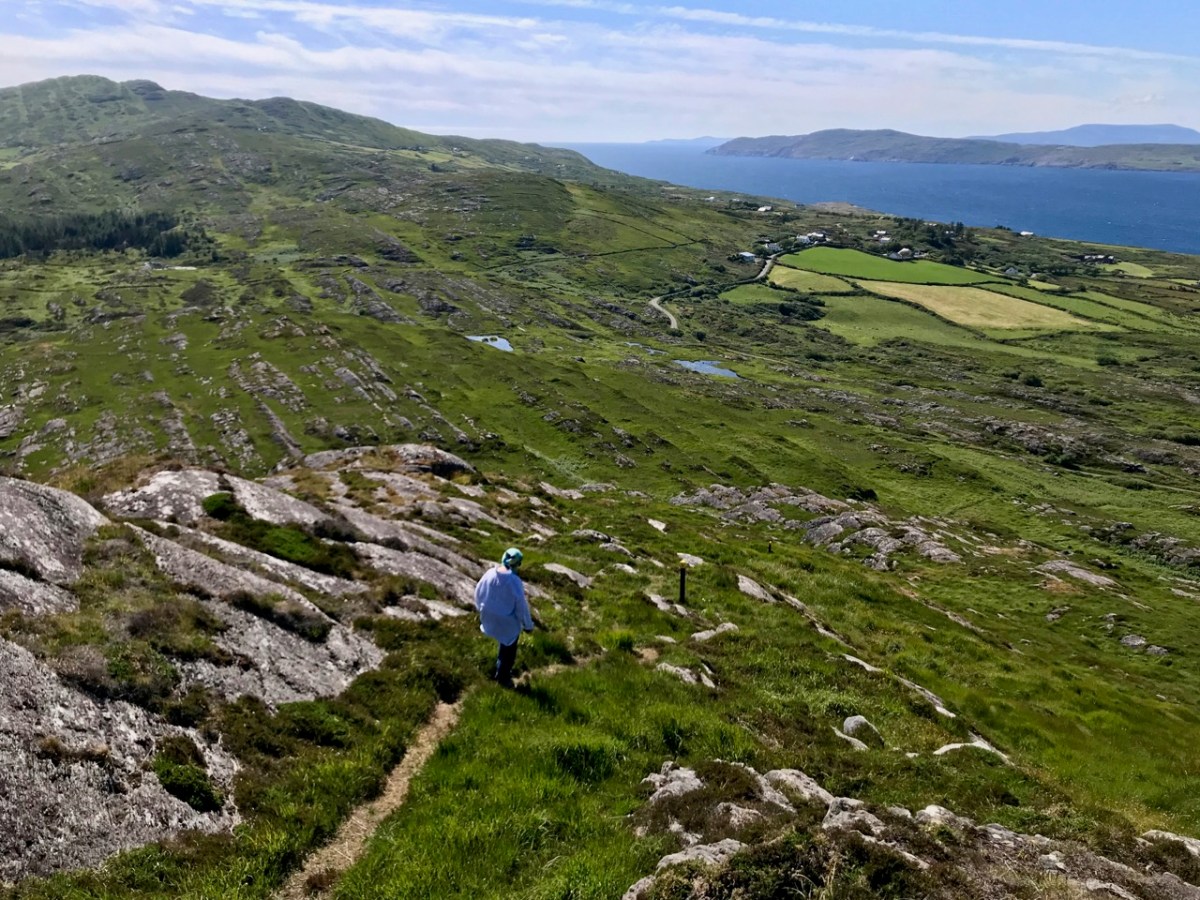
We took the opportunity to climb – and descend – Knockaphuka during the pandemic. It’s a mountain a short distance from Nead an Iolair, but a little outside the limit. No-one was watching! I suppose being restricted to our immediate environment for so long – day after day – made us re-assess it, and our lives. Certainly we have got to know the fine detail of the beautiful place we call home.

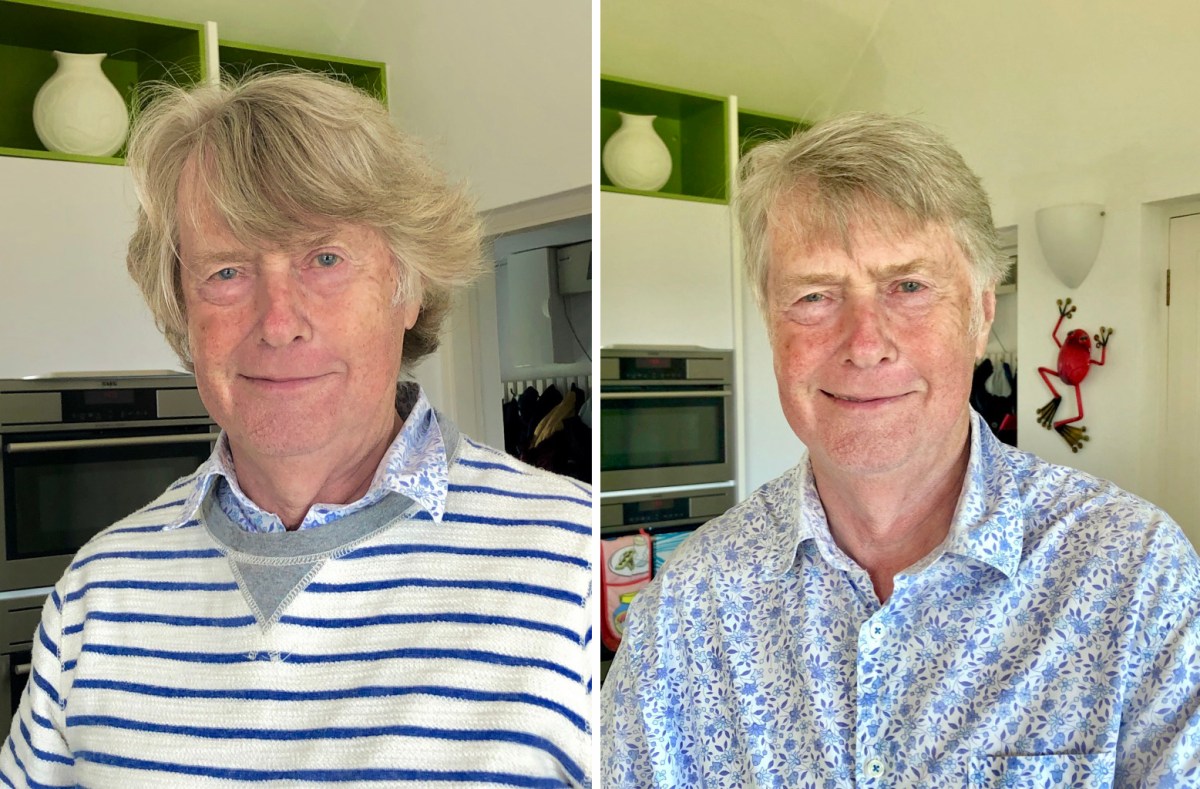
Here’s a social issue: we couldn’t get a haircut for months! Finola kept me in trim, but it was a relief when salons were once again allowed to operate, albeit with some restrictions.

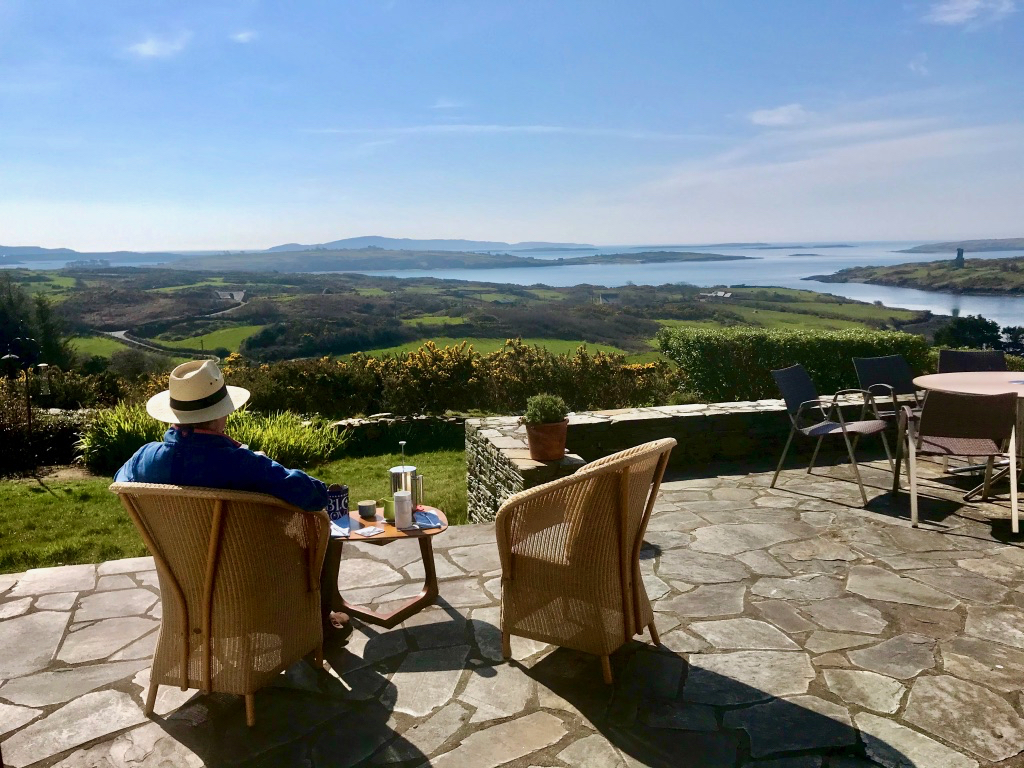
This is us having coffee on our own terrace, looking out over Roaringwater Bay in the wonderful spring of that first pandemic year. In fact, each of the two last years has been benign – with a few exceptional winter storms. We would have felt less relaxed if we had had persistent rain (which sometimes happens).

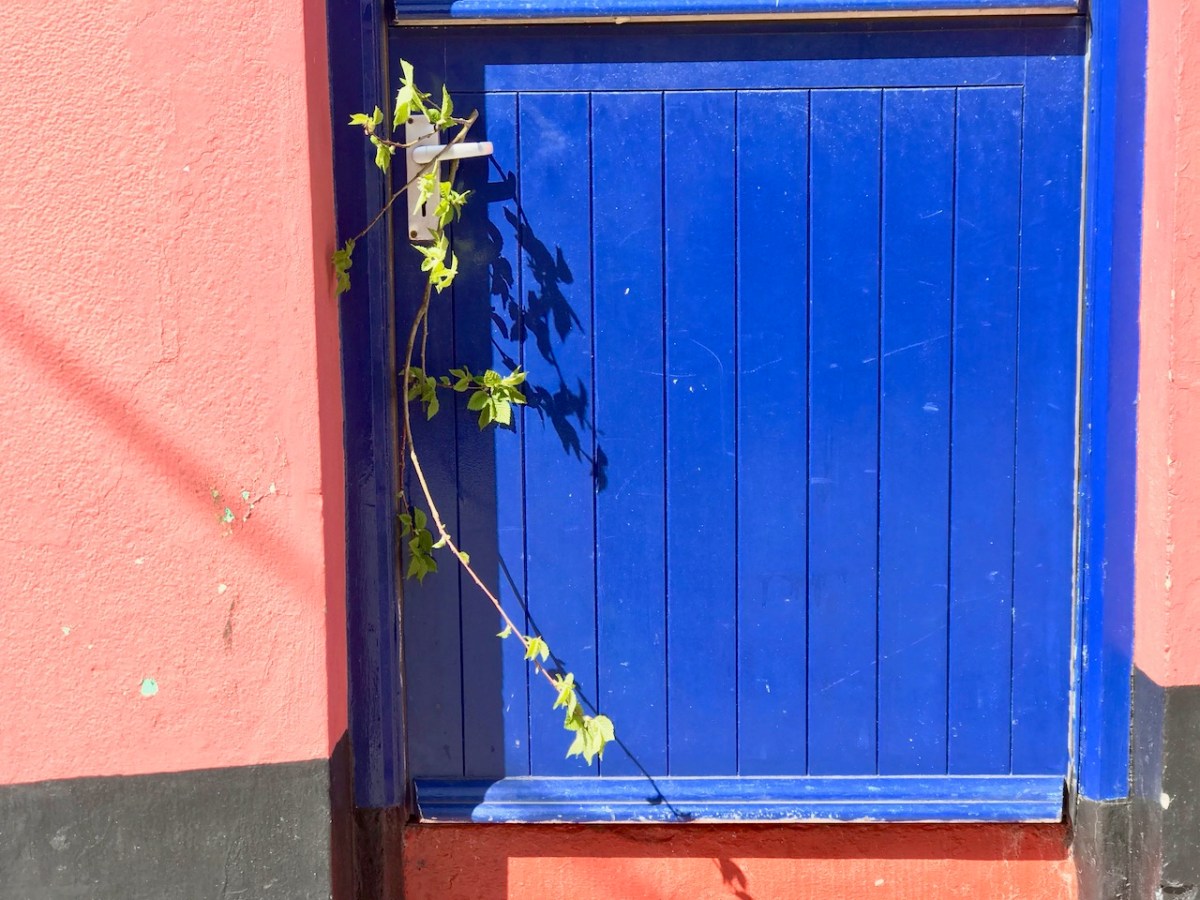
A sprig of green appears on a doorstep on May Day, 2020: a sign that we all still want to continue the old (perhaps ancient) traditions… There were ups and downs: things eased as the year went by and then the new variations came in. Numbers went down and we breathed out. Then they soared – especially with the Omicron variant, and everything went haywire again. Let’s hope that the present easing is here to stay. But the future can never be told…

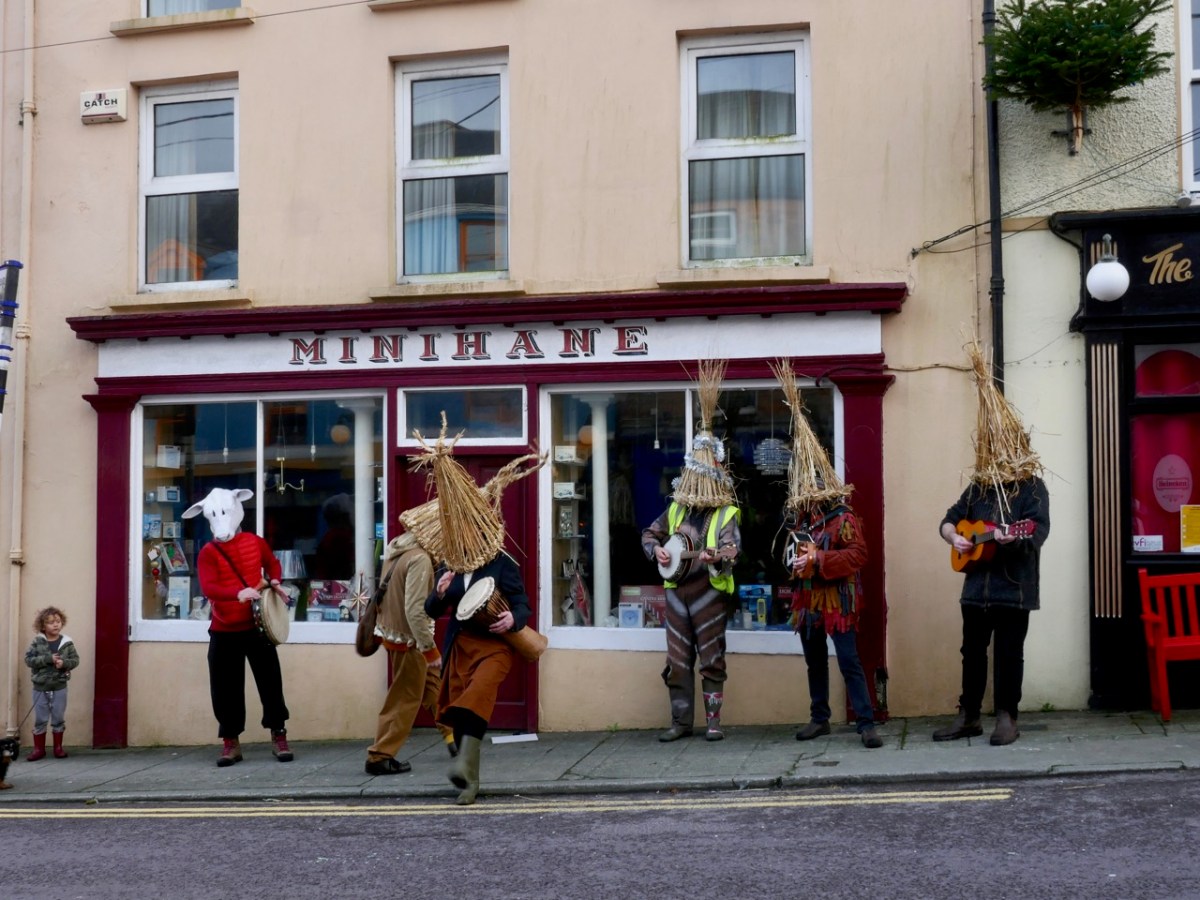
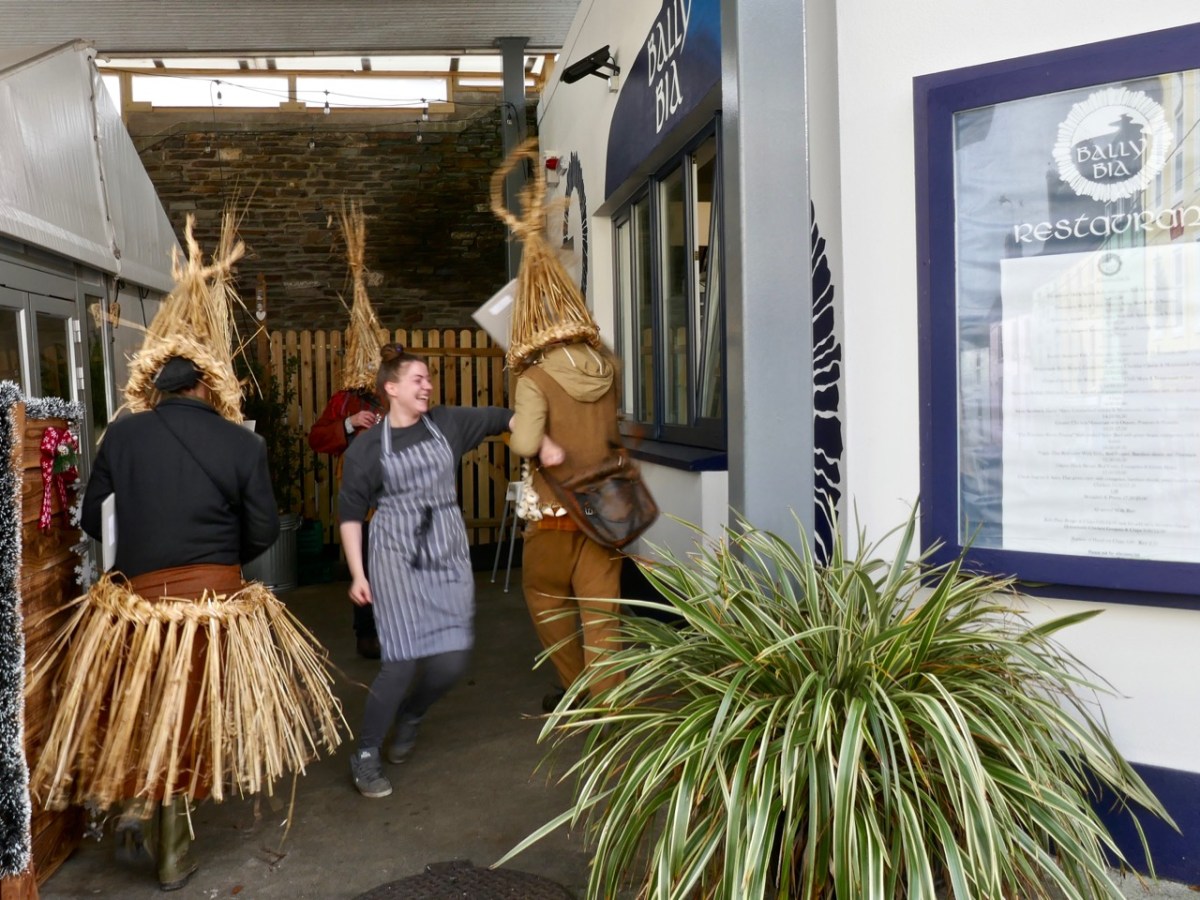
The Wran, The Wran . . .

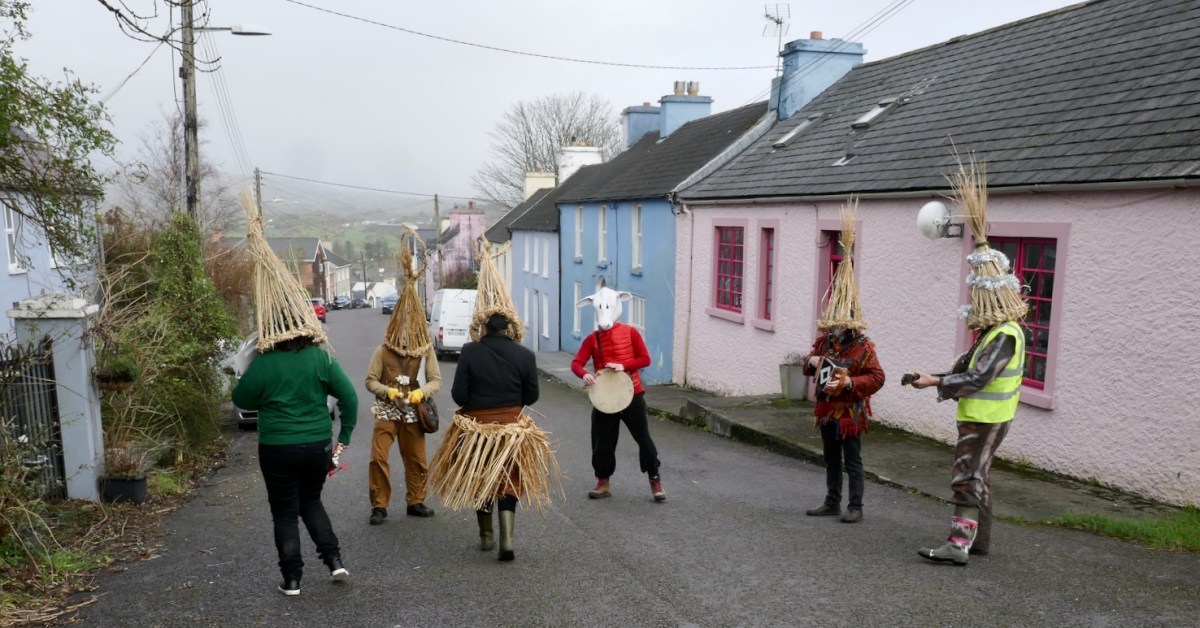
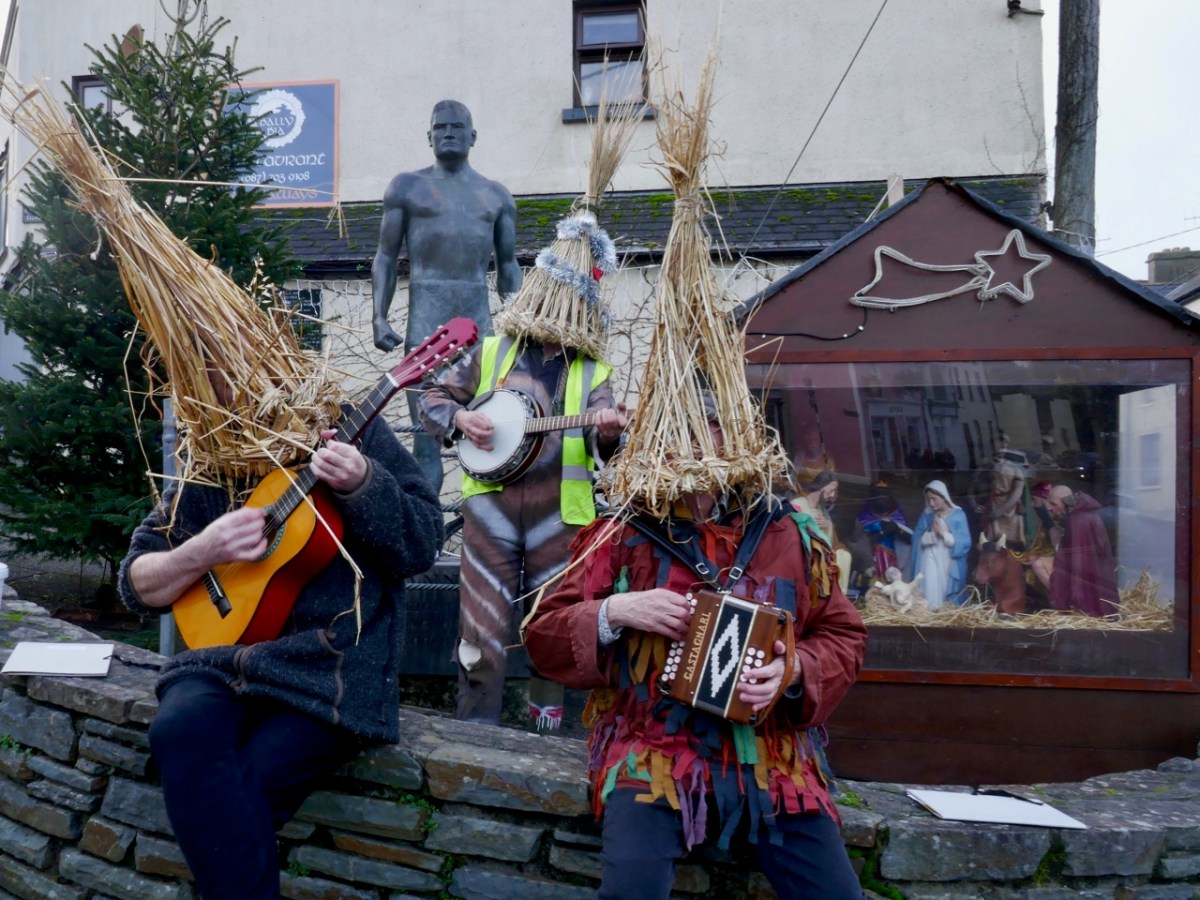
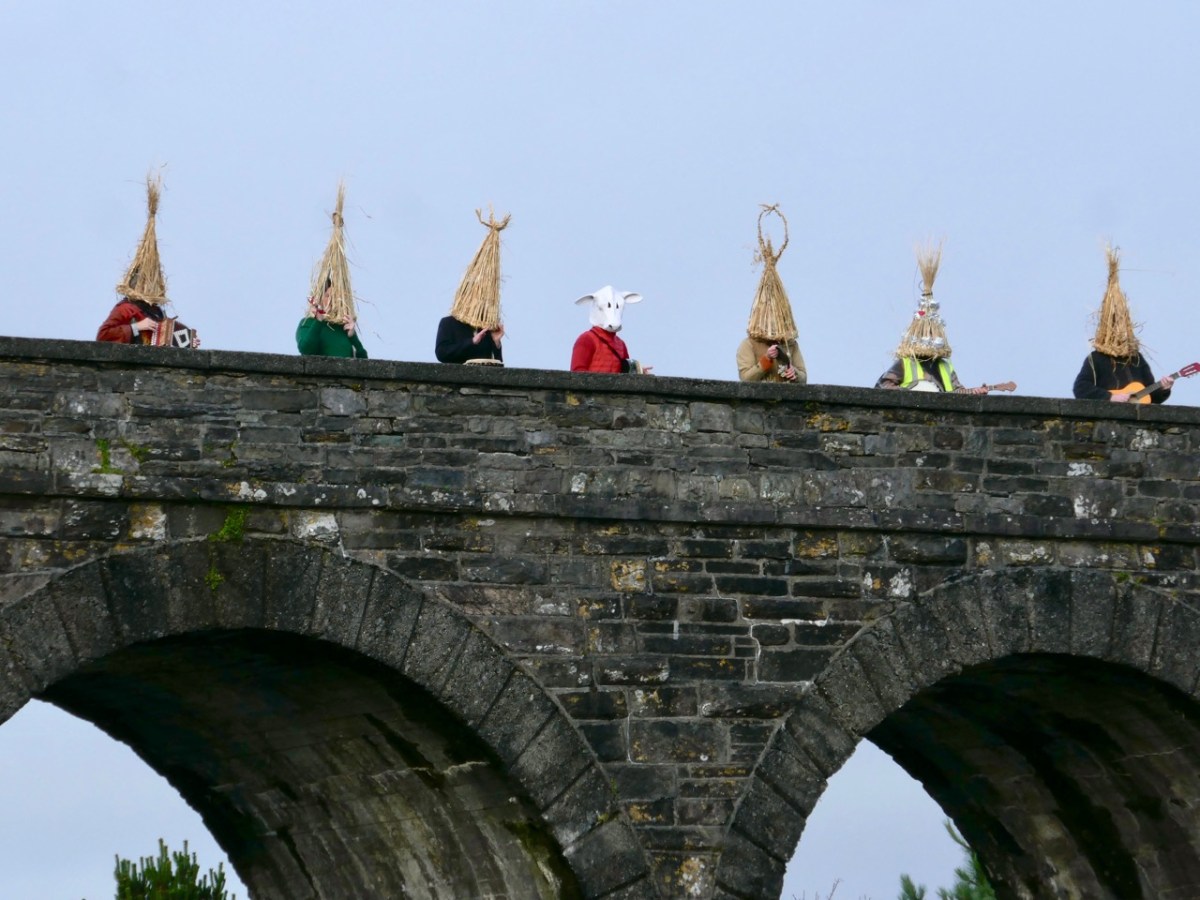
. . . New Year’s Day saw the Wran coming out in our village of Ballydehob, County Cork. It’s an old tradition here. That time “the fool” accompanied the wren boys. He was mounted on a donkey and carried a bladder tied to a stick. I got the song from John Levis, Ballydehob, (34 years of age) who procured it from Jeremiah Driscoll, Ballydehob (age 64yrs) who was an old wren boy. “Wren” is pronounced wran locally in Ballydehob and surrounding districts . . .

Duchas Schools Folklore Collection : Collector J Barry

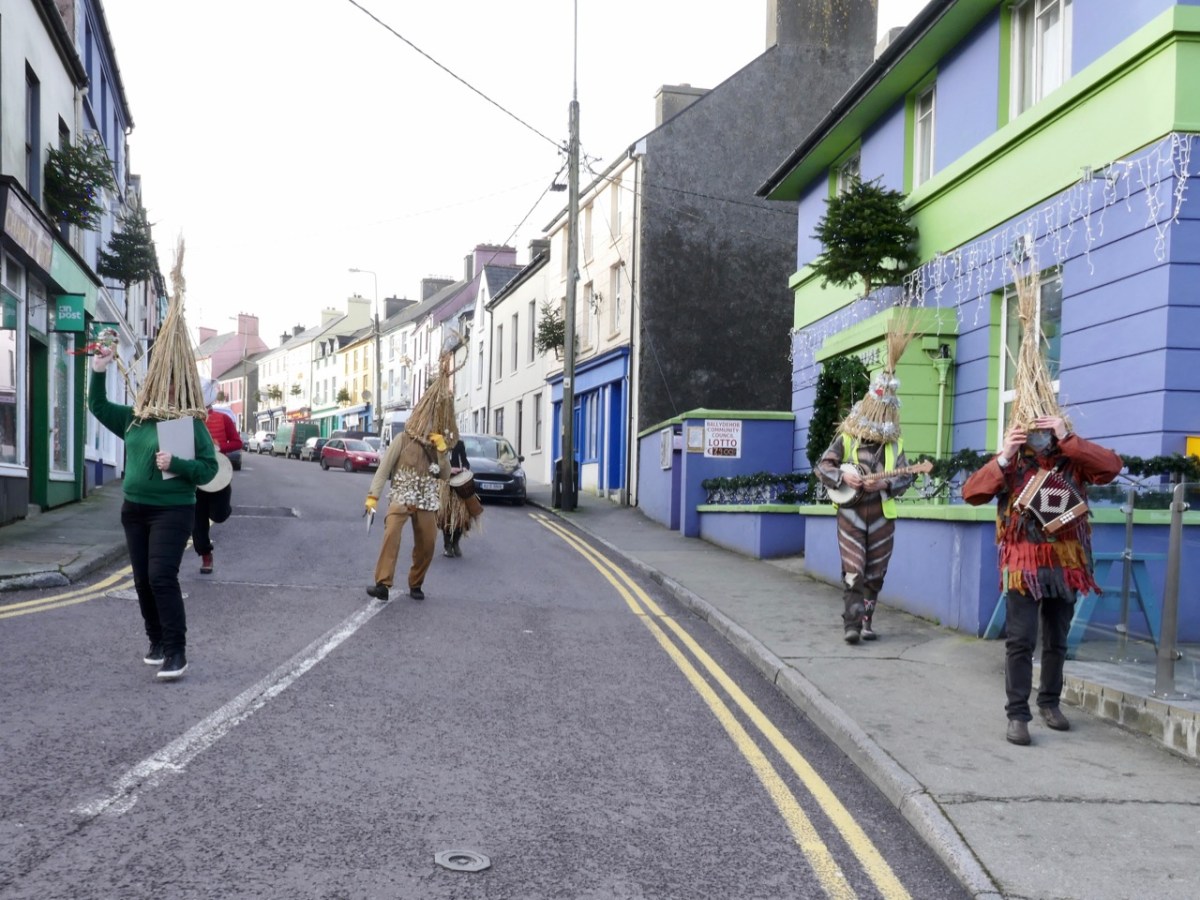
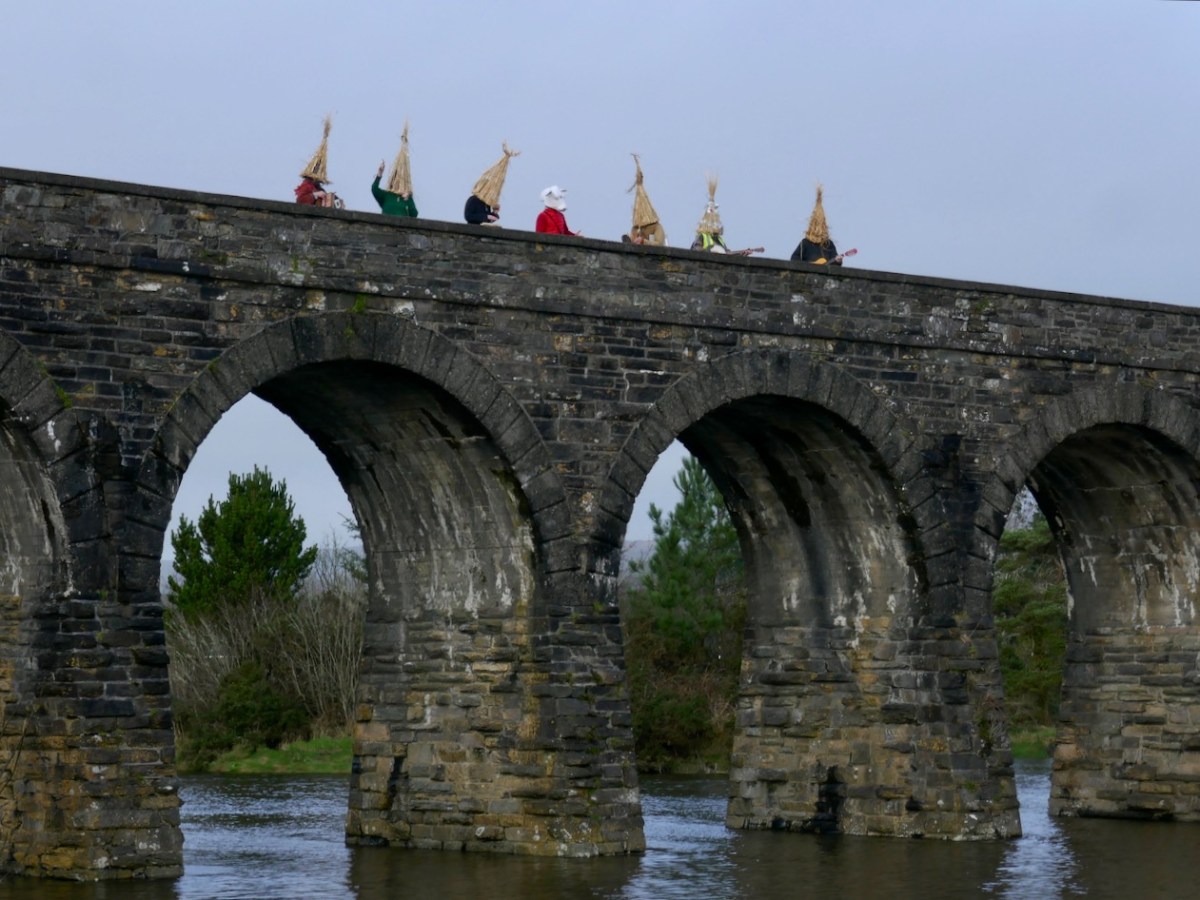
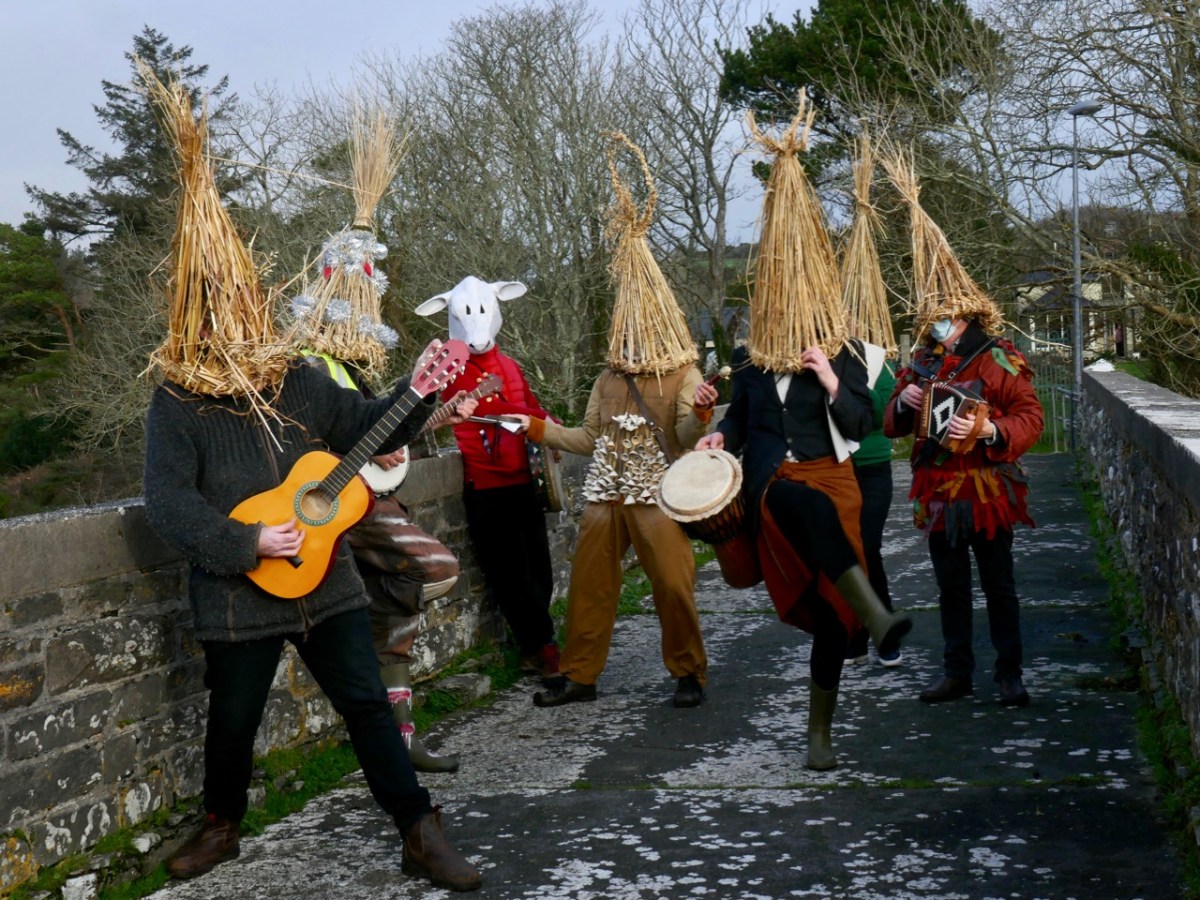
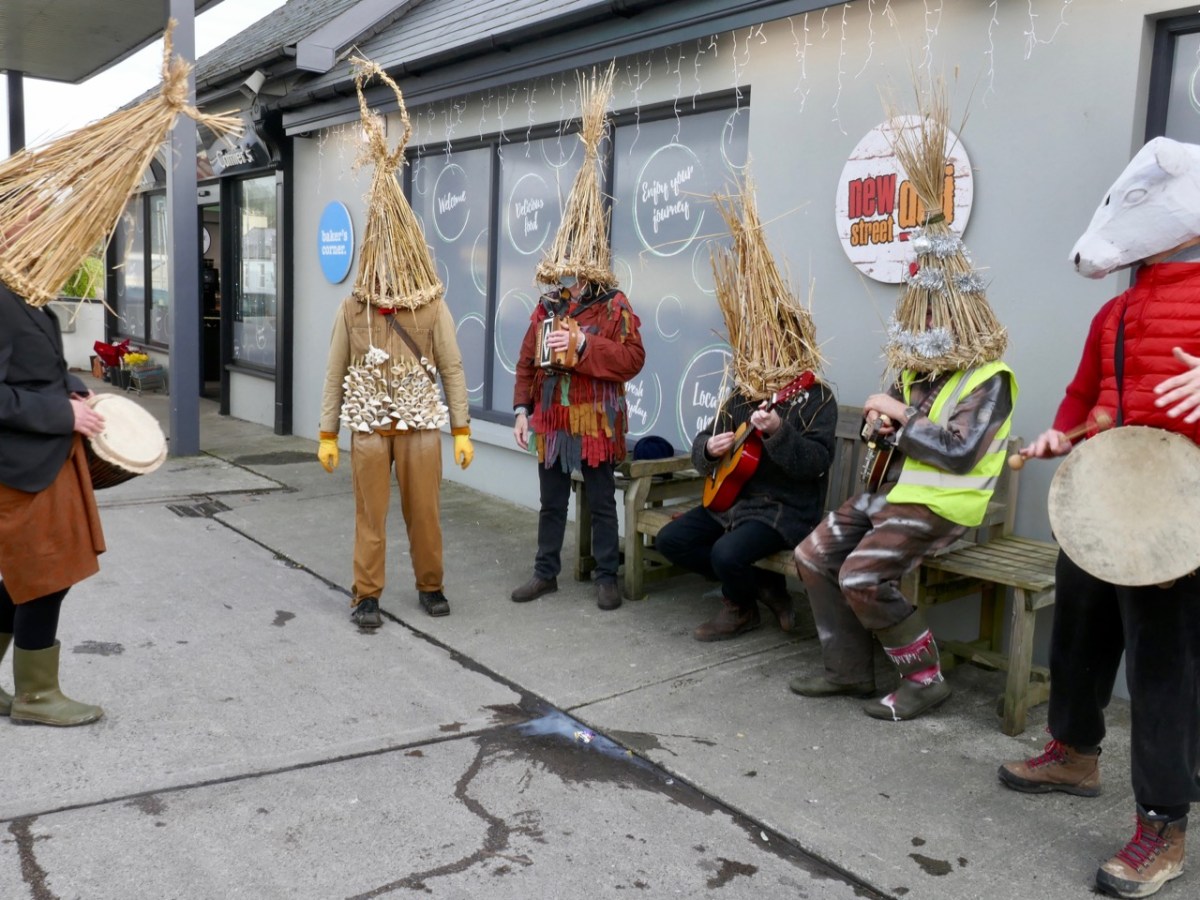
This account dates from around 1936. It’s referring, therefore, to something happening regularly in the late 1800s and, probably long before that. ‘The Wran’ is still active in Ballydehob, well over a century later. I have written about our own Wran Day preparations not so long ago – and included the song – and I’m pleased to report that the day went well. That’s me, above and below, playing the melodeon (although perhaps I shouldn’t be giving away the disguise)! I’m actually wearing ‘tatters’, which was my costume when I took part in Mummers’ plays in England from relatively early in my life: I was brought up on the Surrey / Hampshire borders, prime country for this English tradition. Mumming also takes place in parts of Ireland, have a look here.

New Years’ Day was quiet day in the village – until we took to the streets! If you want to know the purpose of it all, I can’t really tell you. These are activities that happen around the natural turning point of the year – the change from the sun getting progressively lower in the sky, and weaker, to its returning strength: already we can sense the lengthening of each day. In the mumming on these islands you got a sense of it from a symbolic play where combatants fought and died, then were brought back to life by The Doctor who can apparently cure all illnesses. And, of course, we are always anxious to see the solstice in action!

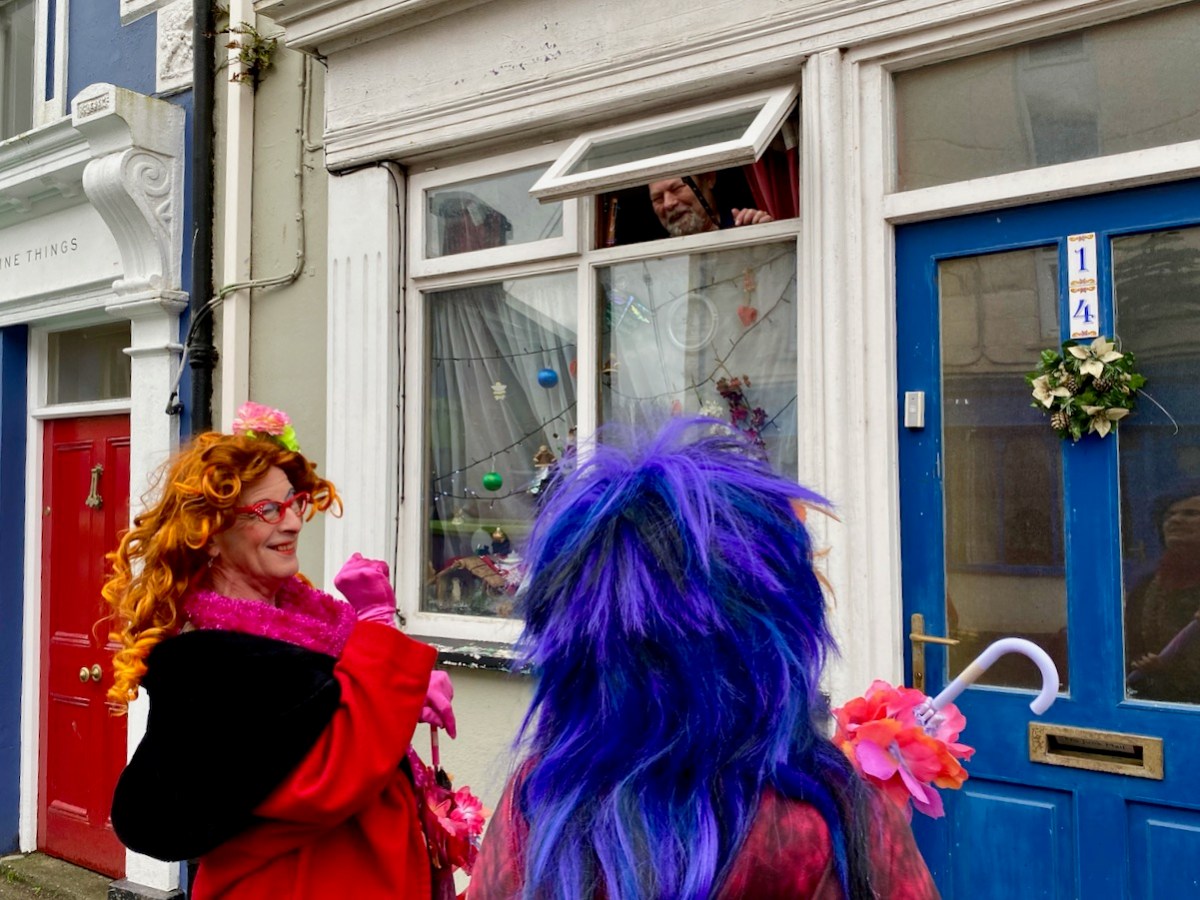
In Ireland, the Wran Day tradition is accompanied by a play in some places, but more usually it’s a procession through a community, involving interaction by going into houses and shops, making a lot of noise and generally stirring up the spirits with a bit of mischief-making. We were fairly passive this year because of Covid restrictions, but it felt good to be out and about. Let’s hope that this anomaly in the regularity of daily life can become more marked as things gets back to near normal in future years!

Thanks are due to Sonia Caldwell – who instigated proceedings, keeping us all focussed – and Joe and Caroline of Levis’s Bar who provided the venue for making the masks – and gave great moral support! Traditionally, the masks are ritually burned on the following St Patrick’s day. Finola kindly provided the pics.

Robert’s Favourite Posts of 2021

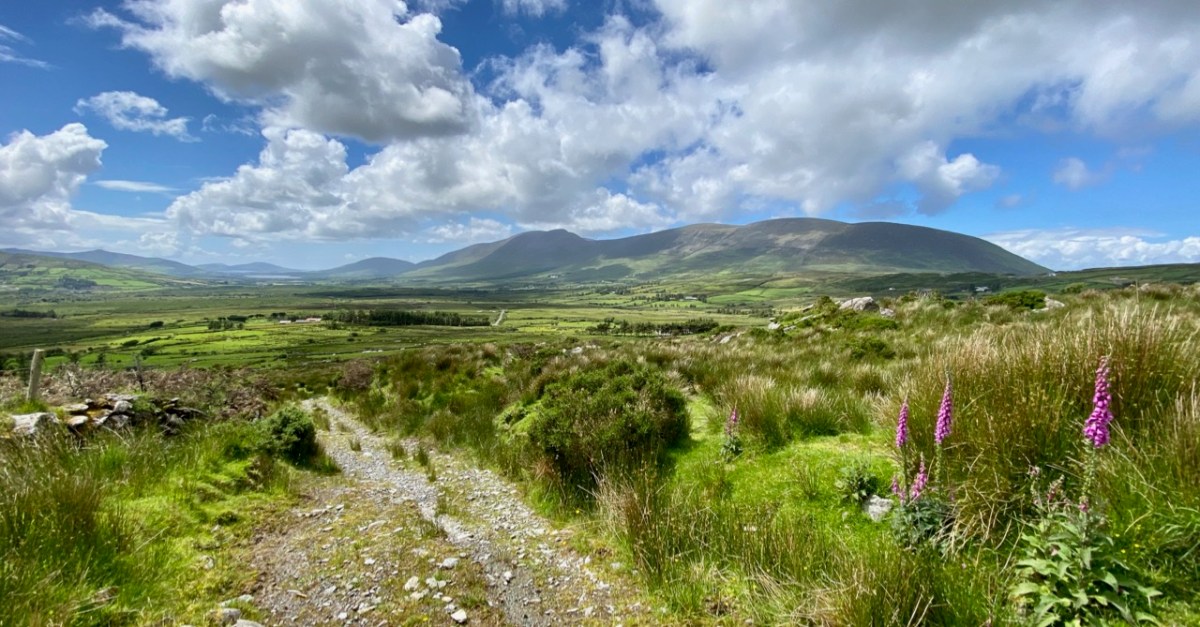
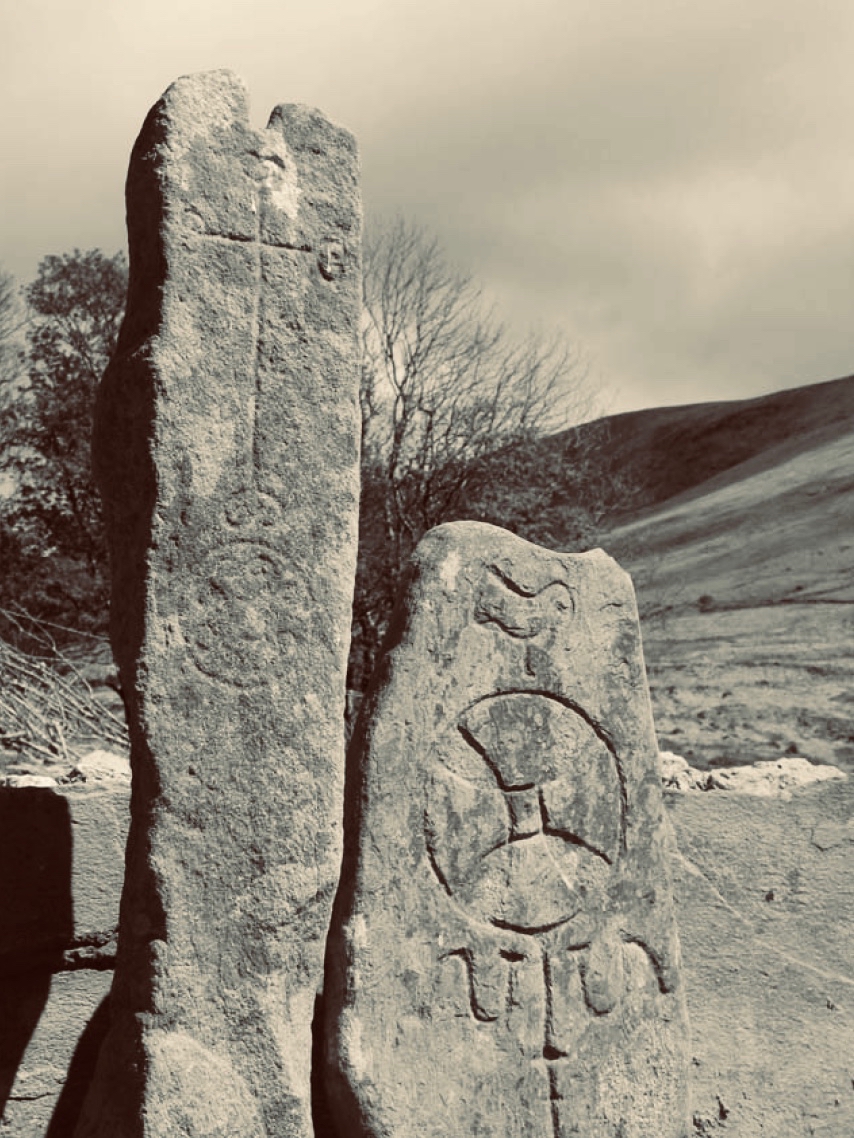
It was another strange year: we had hopes that the pandemic would be conquered. We have had vaccines, boosters and mutations, but Covid still dominated all the headlines and affected our lives. (Finola’s selection is here.) We coped with lockdowns and restrictions, but took full advantage of the times when we could travel freely. One of the most memorable expeditions brought us to Kerry, where we looked at early Christian sites but also took in a lot more:

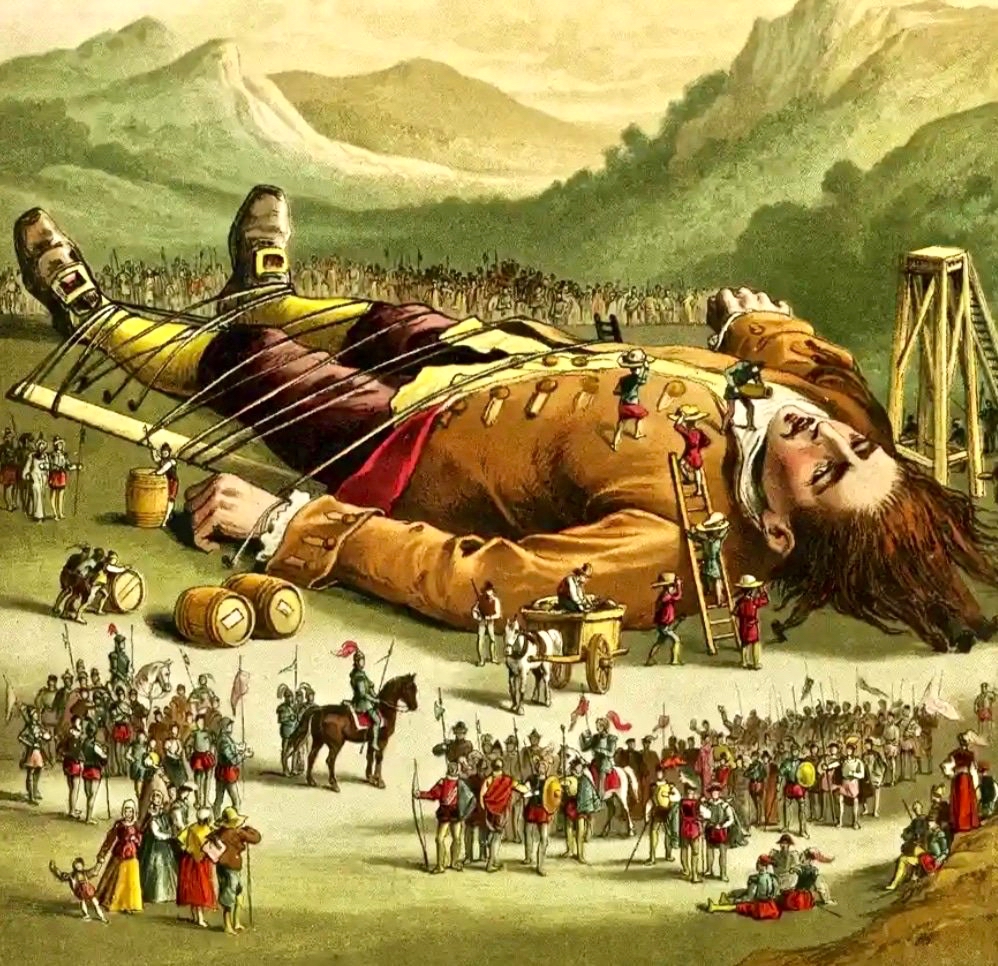
Earlier in the year I went back to my childhood days, remembering when I first learned about Jonathan Swift from my Granma, and walked with her to the places associated with him in the town of my birth: Farnham, Surrey. Here is the post.

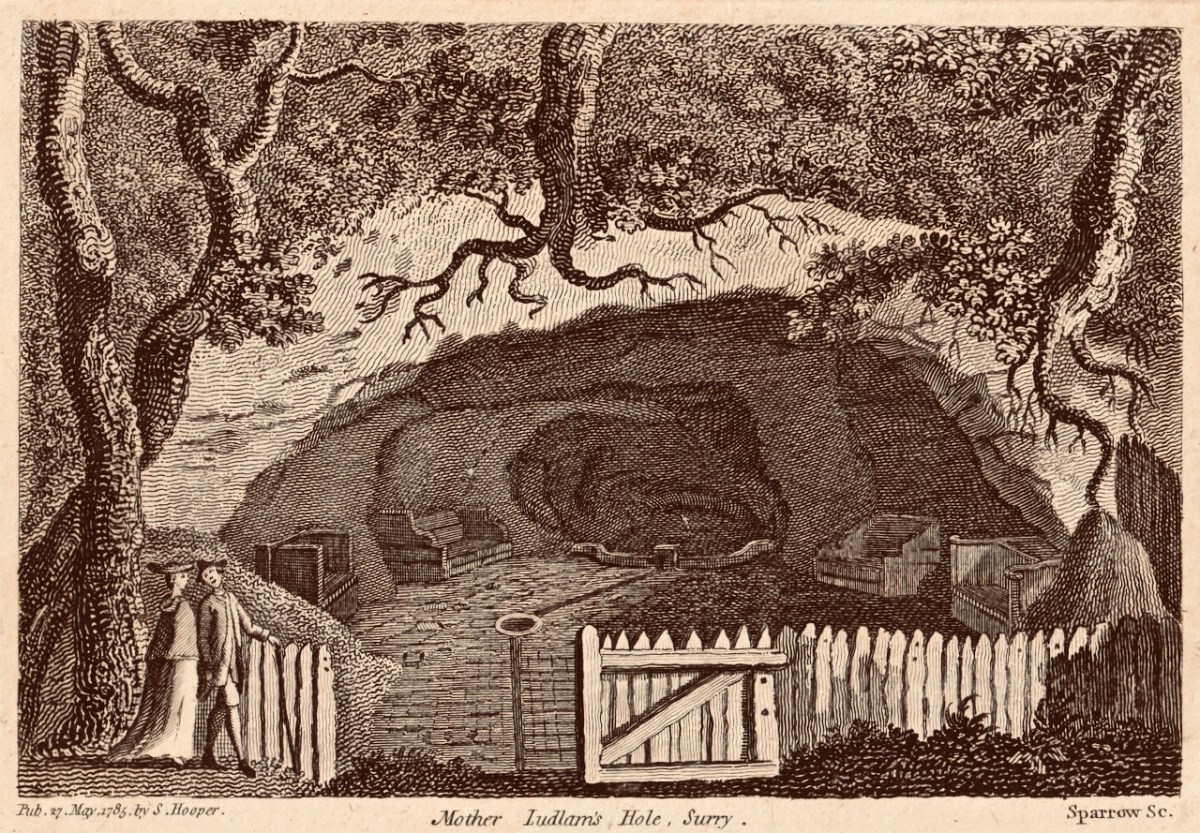
If you read my ‘Dean Swift and I’ post you will find this engraving of ‘Mother Ludlam’s Cave’ which was close to Stella’s Cottage, and must have been familiar to Jonathan Swift during his years living in Surrey. I came across this old print in a local bookshop when I was growing up in Farnham, and it has stayed with me ever since

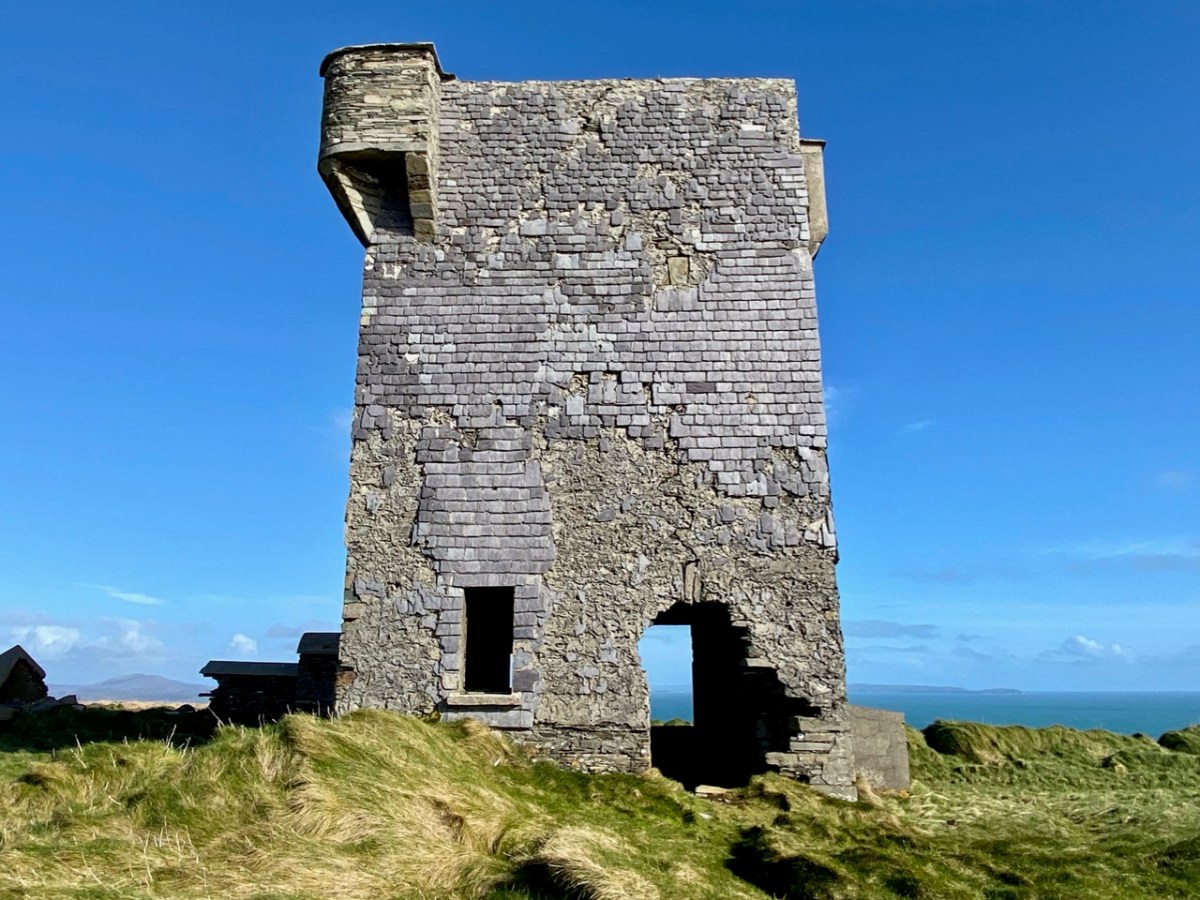
I have been keeping a few series of posts going through the year: one is about the Napoleonic signal towers that dot the coastline all around this island. I began the series in 2020 (do you remember how we thought the Covid restrictions would soon be over?). In 2021 I continued the posts with new episodes. This is one of my favourites.

The Napoleonic Signal Tower at Brow Head, West Cork

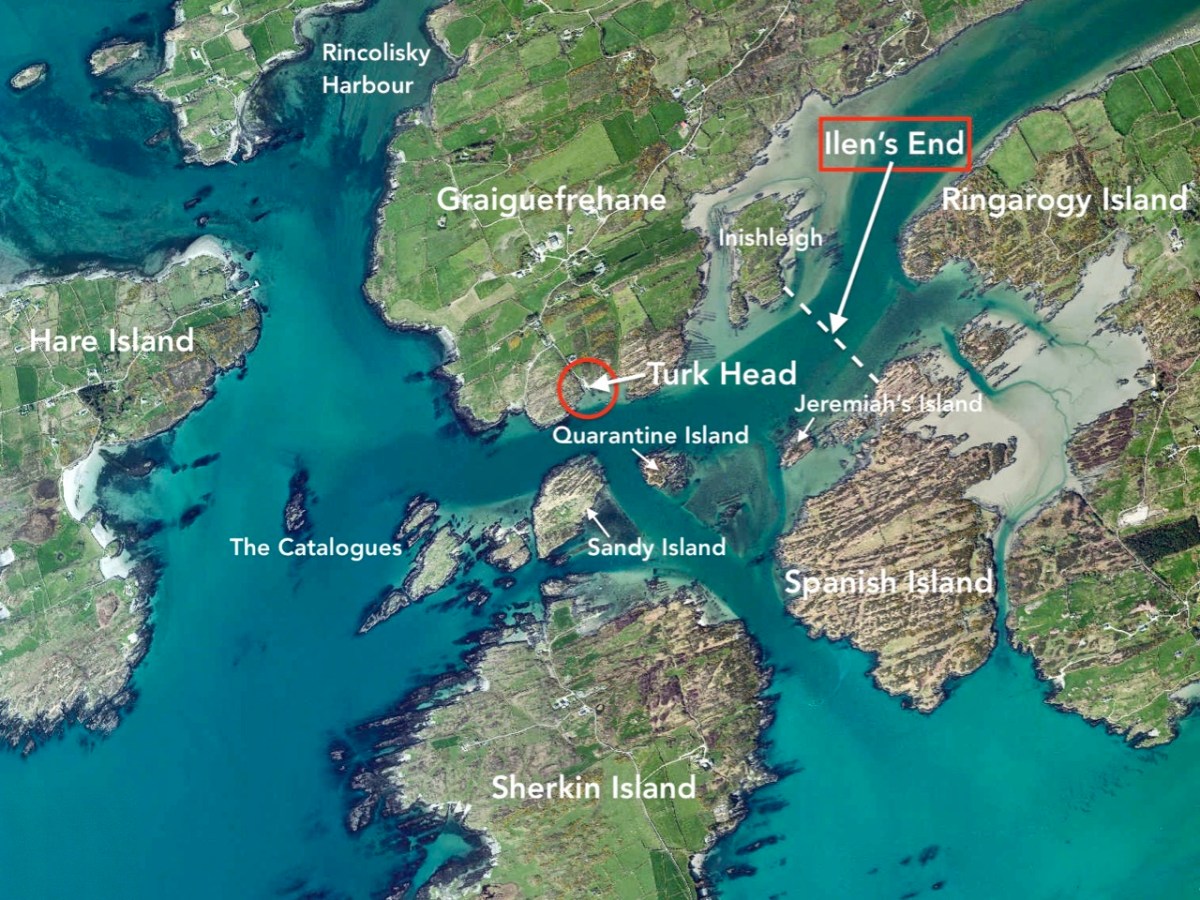
Another series explored the Ilen River, West Cork’s most significant waterway. We still haven’t been to its source – said to be on the summit of Mullaghmesha, north of Castle Donovan – but this post (Ilen’s End) took us to the point at which the river meets the Atlantic.

West Cork had good coverage from our blog during the year which has just ended. I began a series of posts about West Cork Villages and Towns. Perhaps it was an interesting time to concentrate on our local communities: hopefully it proved that we West Corkonians are not deterred from celebrating life as much as is possible in these strange times.

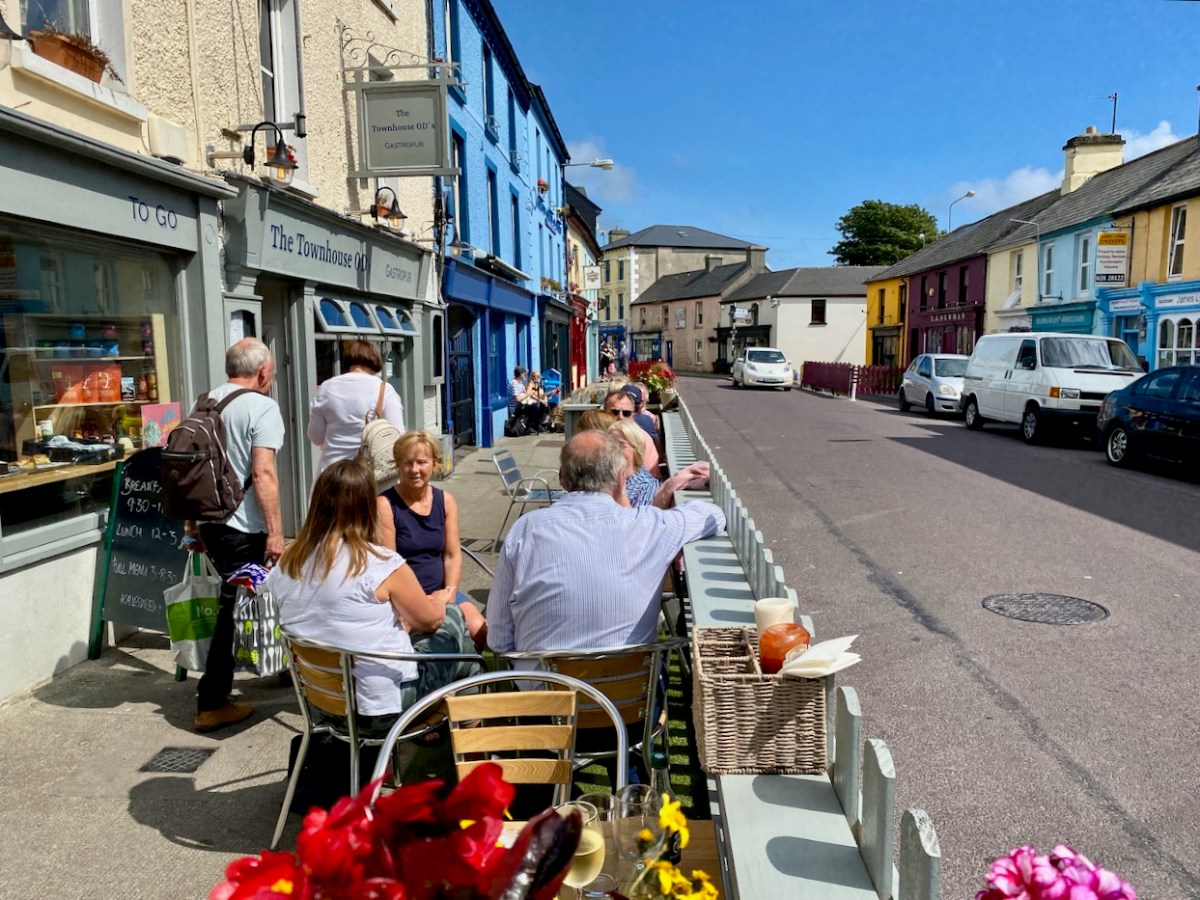
The communities of (top to bottom) Bantry, Schull and Skibbereen have been the subjects of posts in my West Cork Villages and Towns series in the past year. There are many more to come in the future, including the remarkable activities that take place in our ‘home’ village, Ballydehob (below).

All but a year ago I put my tongue firmly in my cheek and imagined an encounter between my ancestor Robáird an Tuairisceoir Fáin and  the Scholar Prince of Rossbrin – Finghinn O Mathuna – who was Tánaiste of the great West Cork O’Mahony clan, and who lived down below us in Rossbrin Castle in the fifteenth century.

It proved a remarkably popular post and I was forced to admit that it did come from my imagination, although all the background historical information can be verified. What really interested me was the interest and enthusiasm that everyone has about life here on our wild West Cork coastline all those centuries ago!

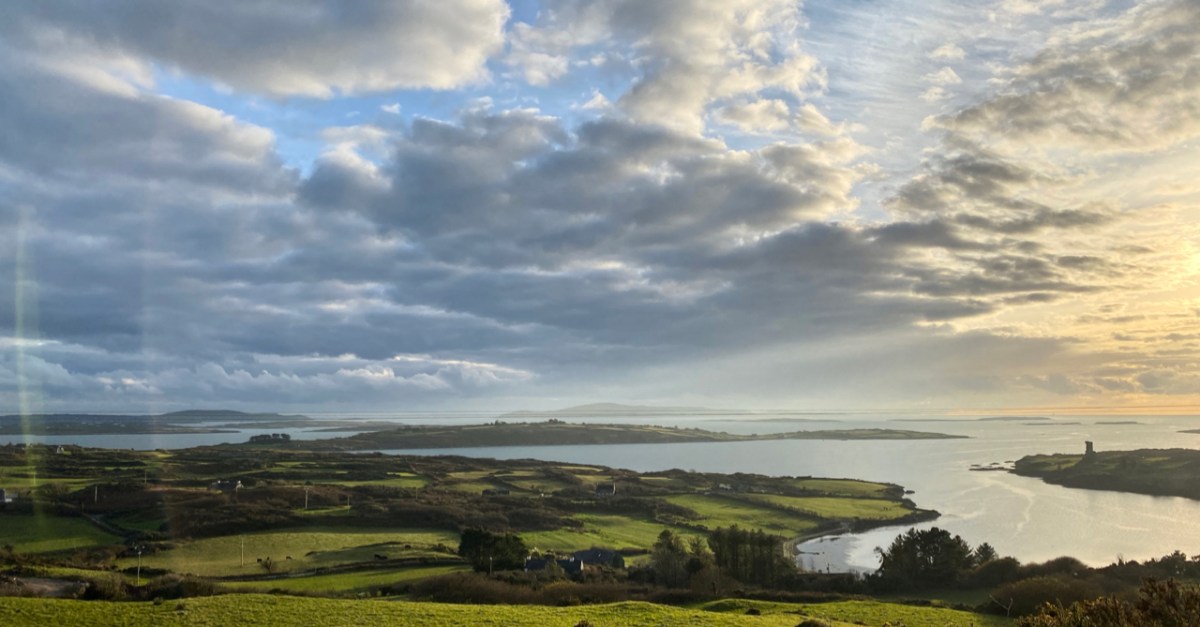
We are most fortunate to live overlooking Rossbrin Cove and the islands of Roaringwater Bay

It’s always a difficult task to choose just a few posts from the 50 or so each of us has written over the last twelve months. If I started all over again I would probably choose many different ones. But they are all still there to be read (dating back to 2012): you only have to search the archives! Our new year began – yesterday – with the enactment of an ancient Irish tradition in Ballydehob: the Wran Day. That will be my post next weekend, but here’s a taster. Happy New Year everybody…!

Our Favourite Photos You Never Saw – Finola

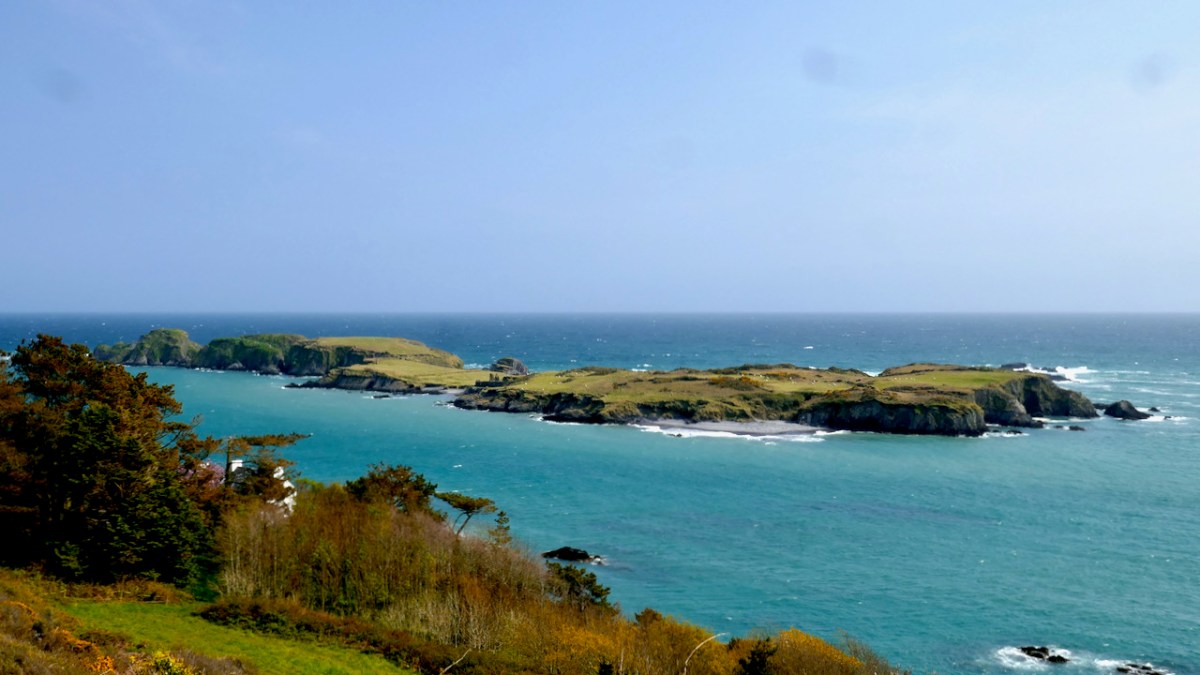
Rabbit Island

The traditional continues, with a twist. This year, instead of photos we’ve already published, we’ve gone through our albums and chosen the ones we didn’t use this year (2021) but want to share now. It’s a fairly random collection – our guiding principle was personal preference or something that jogs a pleasant memory for us, all taken in West Cork in 2021. Some of them are similar to images we have used, but that’s because we take so many! So, as every year, although we’ve provided links to relevant posts, we’ll keep the writing to a minimum – all you have to do is scroll!

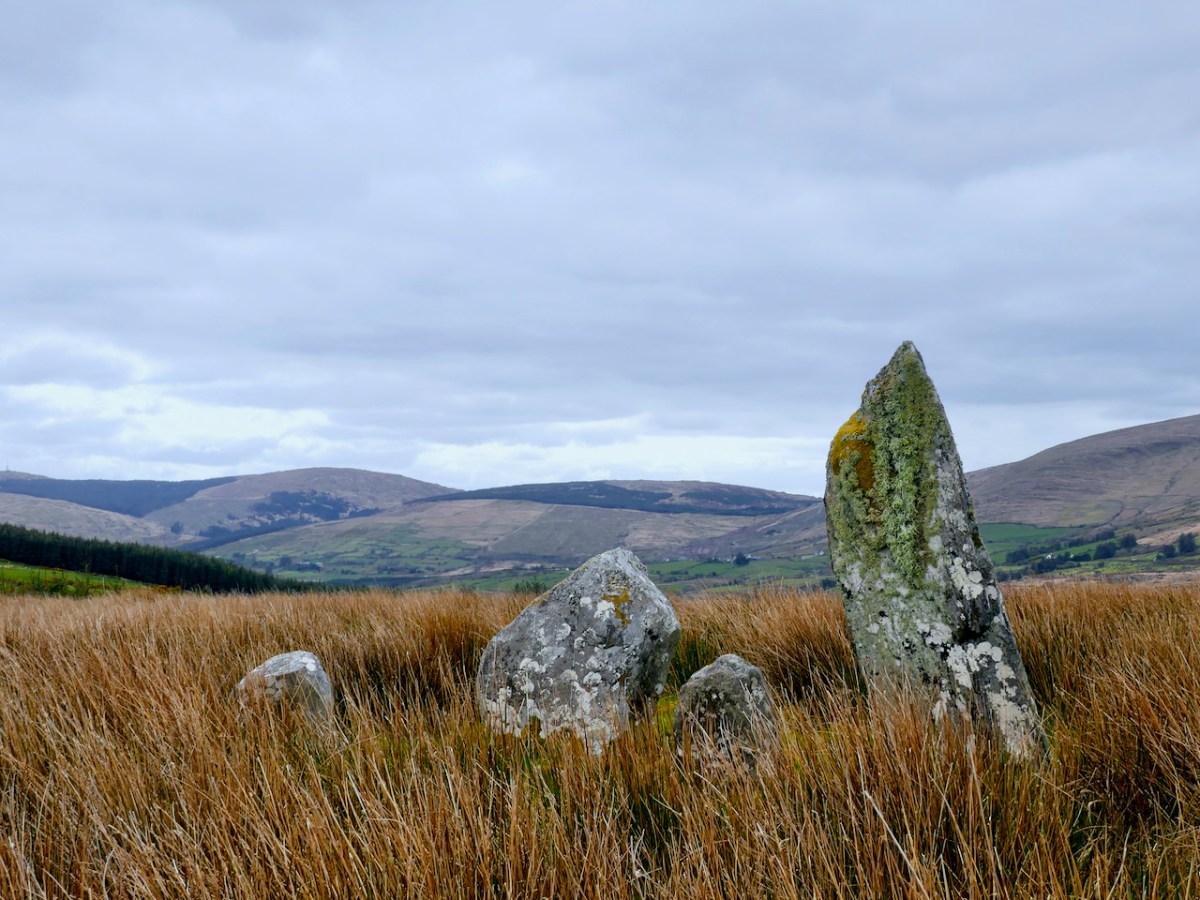
A stone row shown to us by the marvellous Walking With Stones.
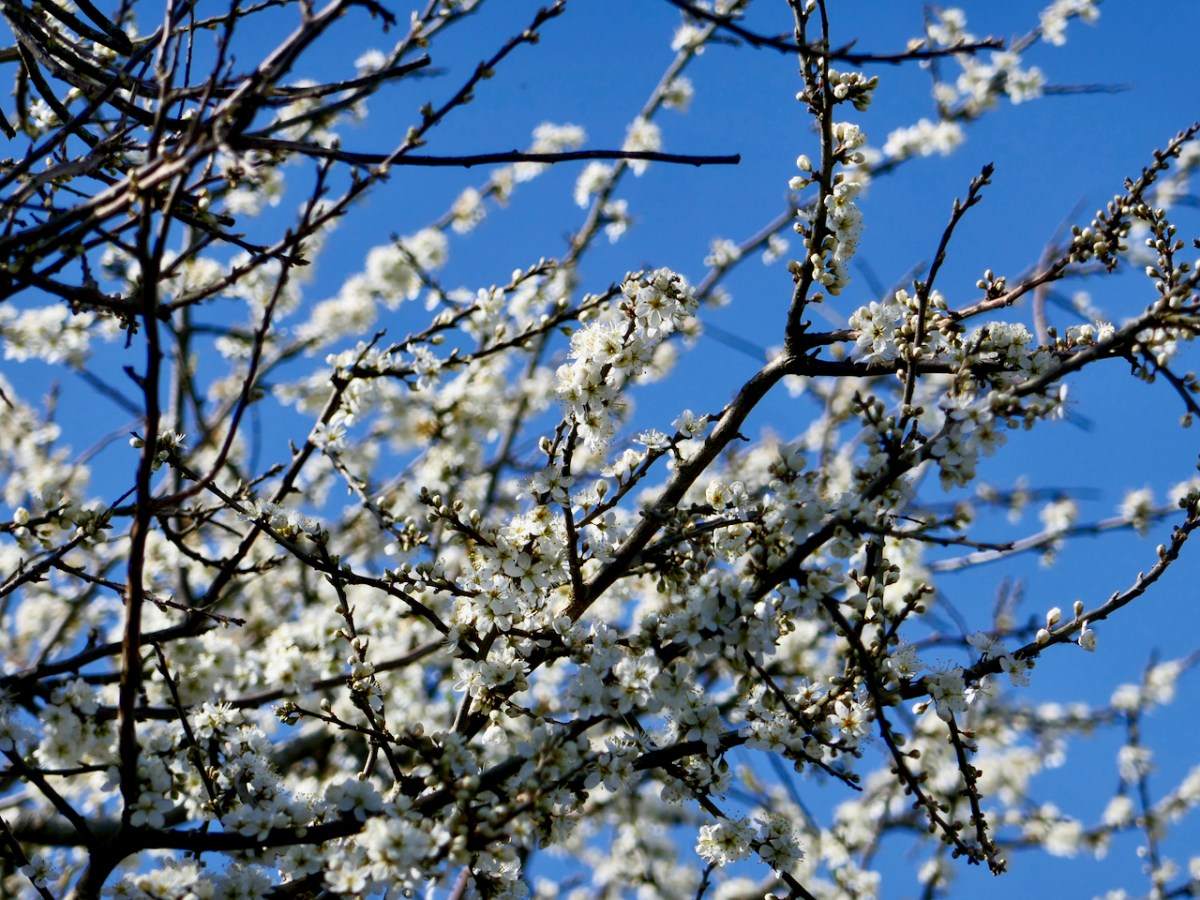
Nothing lifts the spirits in spring like the exuberantly flowering Blackthorn
And nothing concentrates the mind as this look, noticed in the act of climbing over a gate
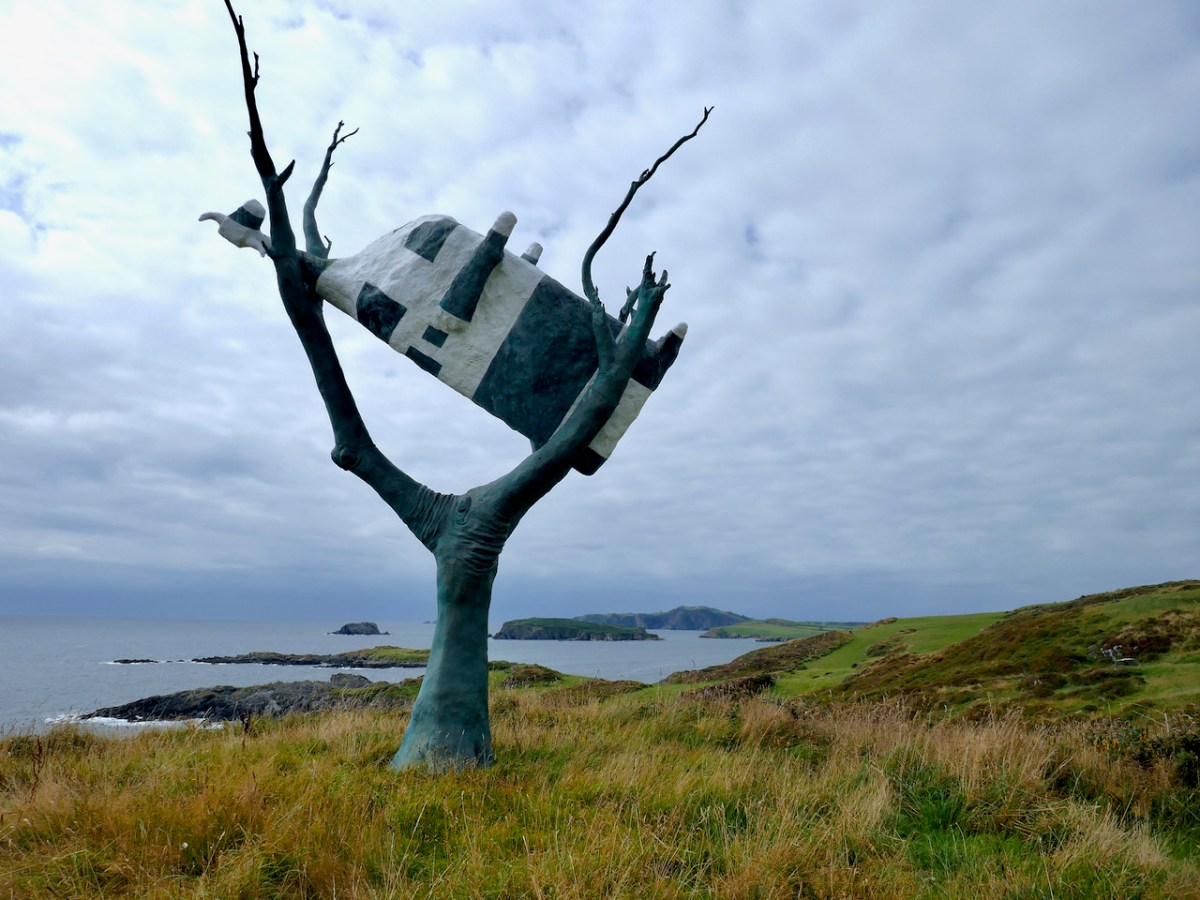
Thank you to John Kelly for the treat of a visit to Reen Farm Sculpture Garden
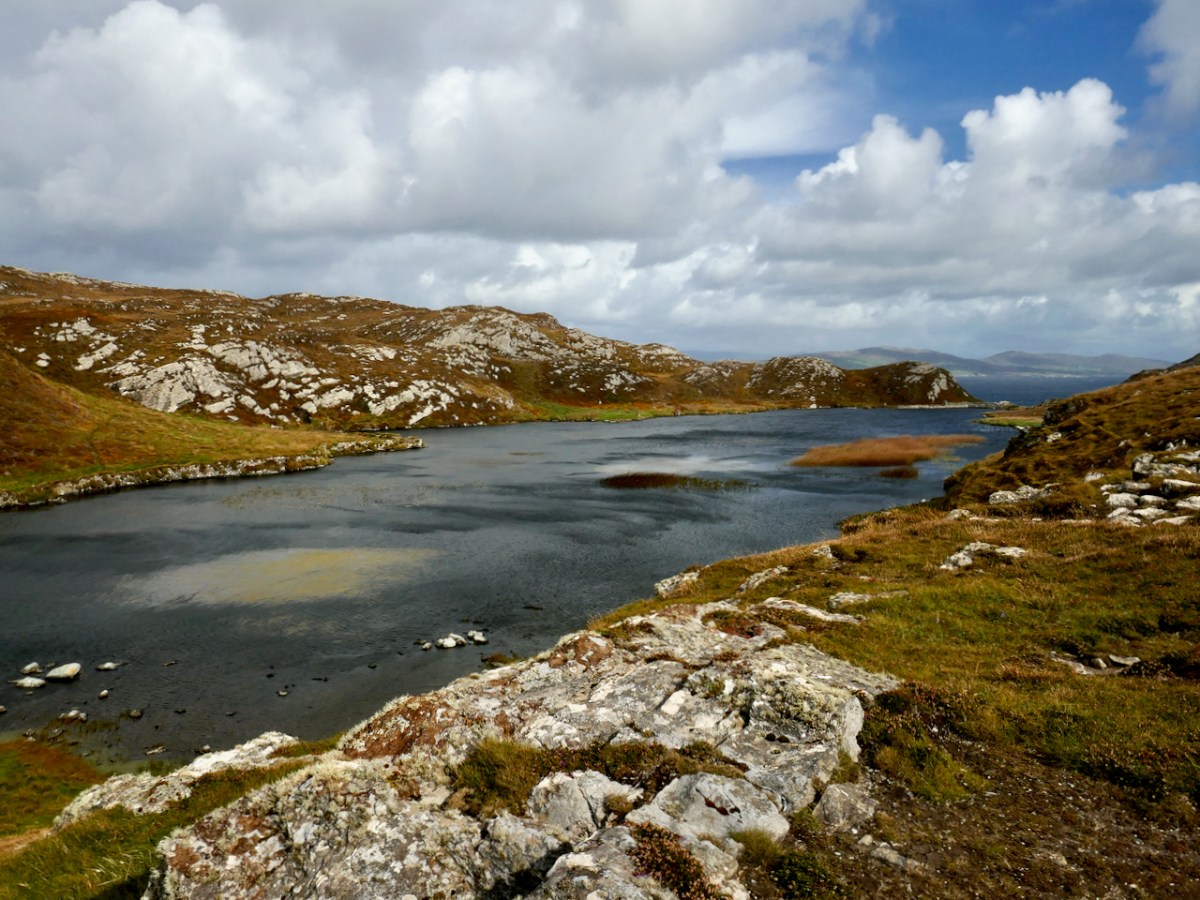
Dunlough Lake, at Three Castle Head – the lake rather than the equally iconic castle
An Early Purple Orchid, spotted at my favourite graveyard
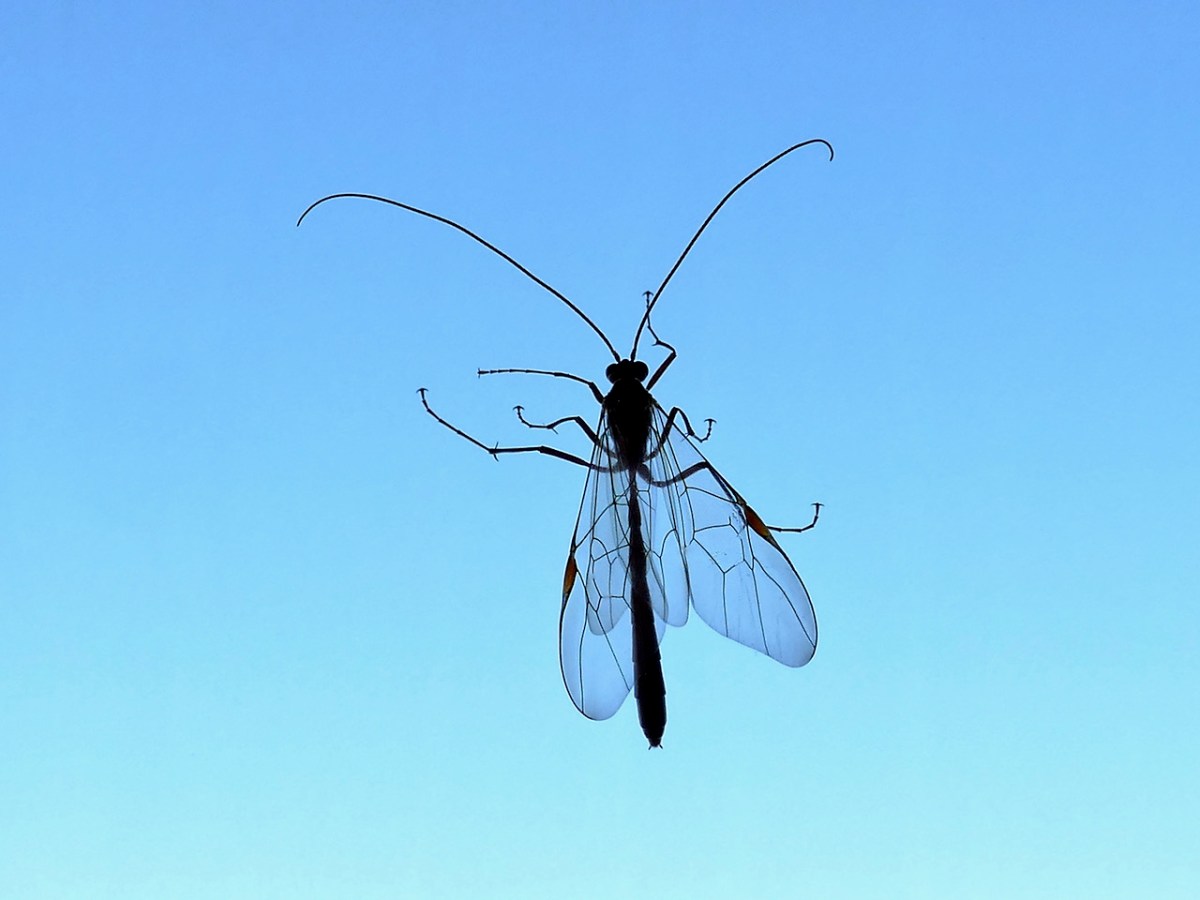
Couldn’t resist the delicate tracery of those wings!
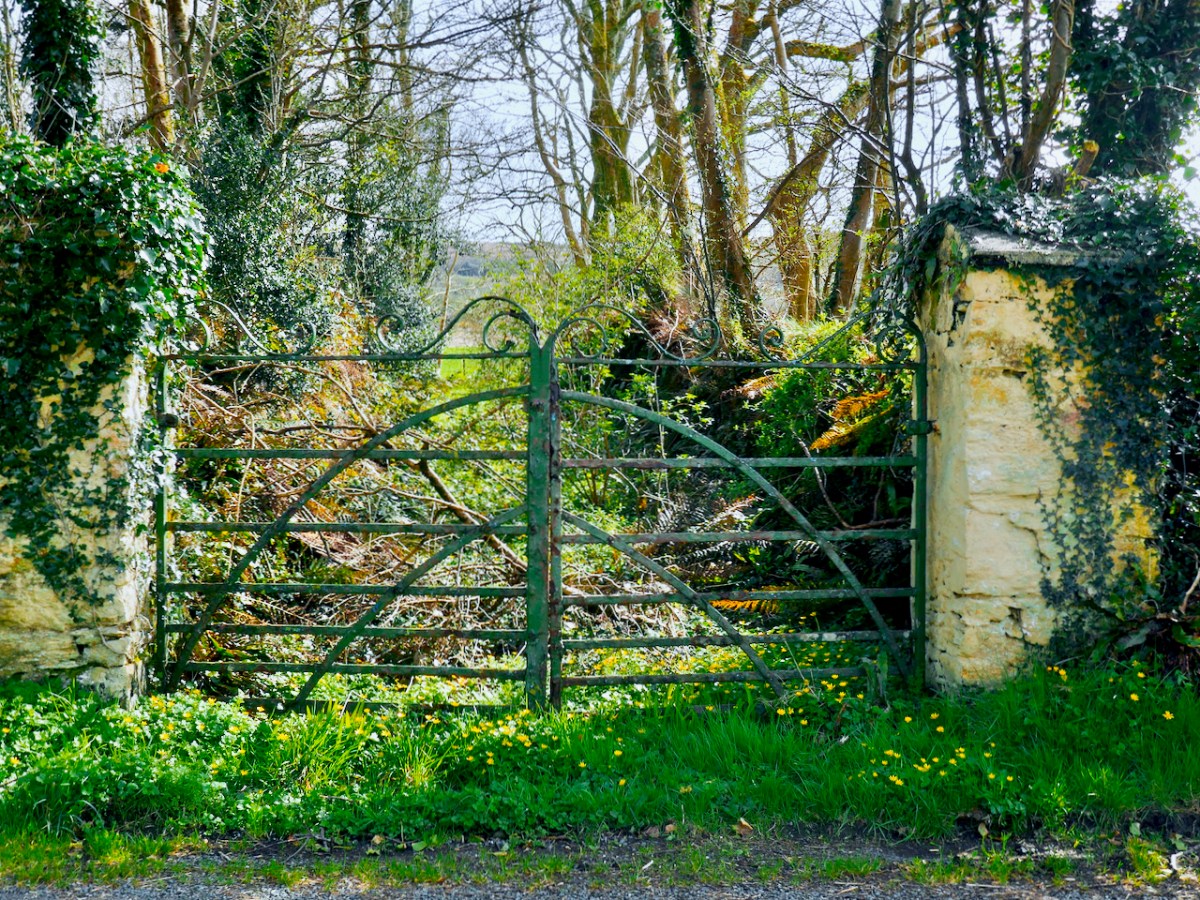
Readers know my love of gates – this fabulous example appeared after I had written my two posts on vernacular gates, here and here
On the Sheep’s Head – taken during our Dander
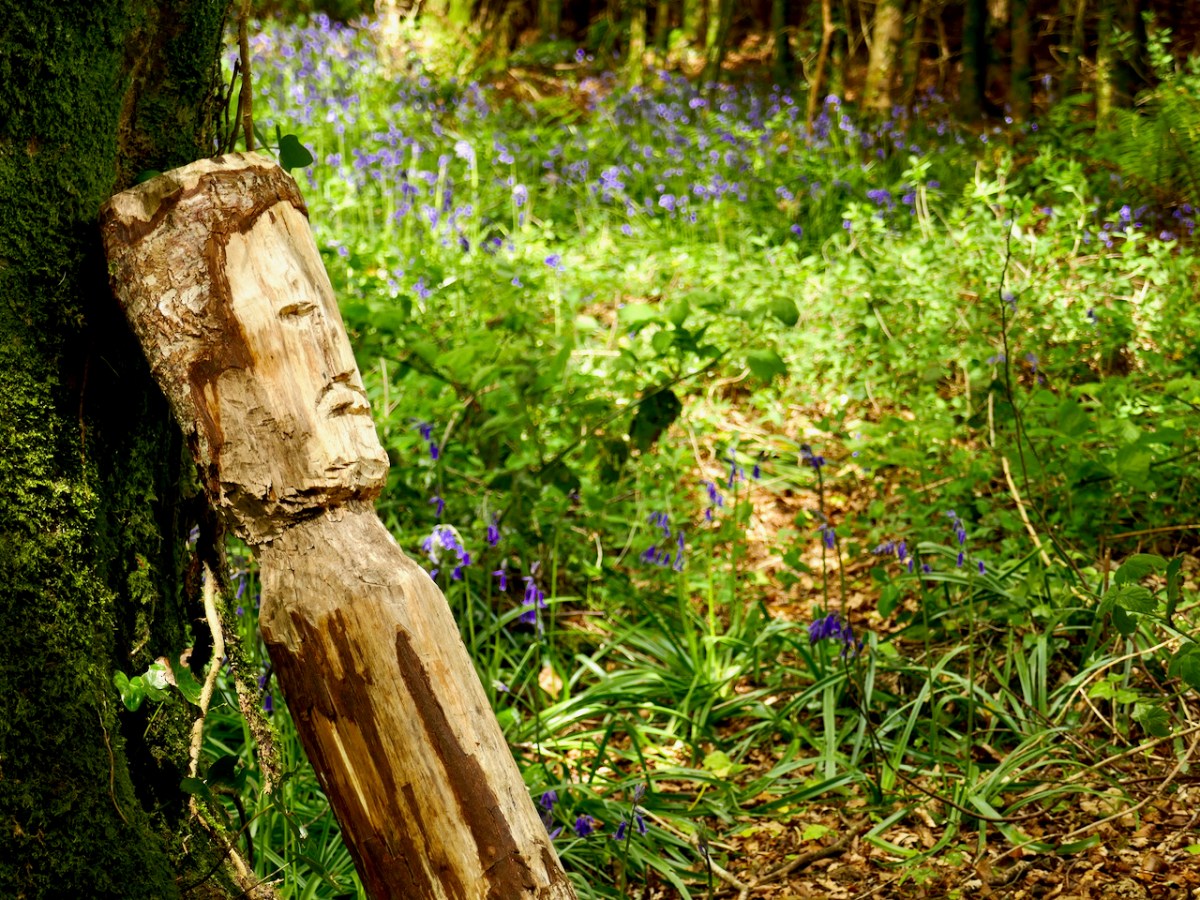
In Castlefreke Woods – we love walking in woodland in the spring, when the bluebells are out
Inchydoney Beach – Robert wrote about it in his post Inchydoney – And Virgin Mary’s Bank
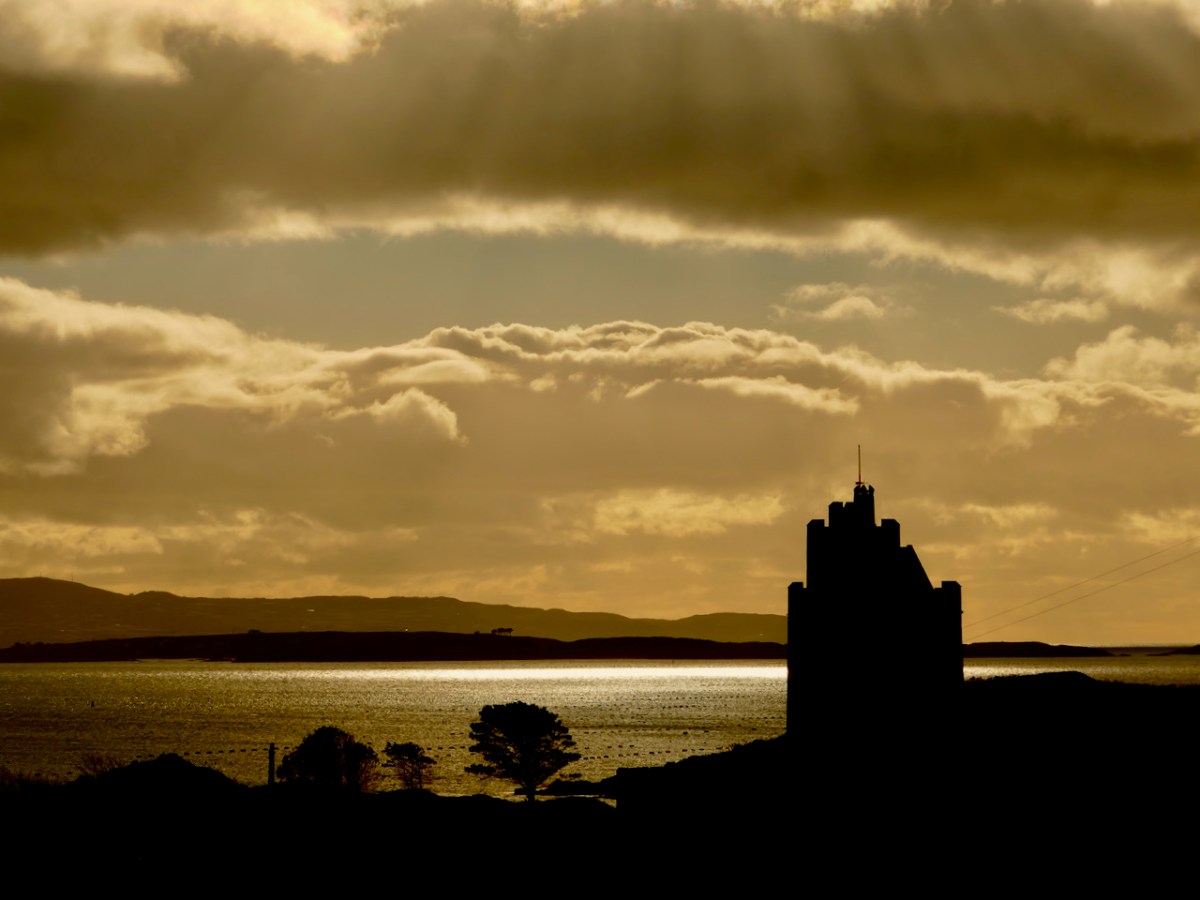
The magnificently restored Kilcoe Castle at sundown
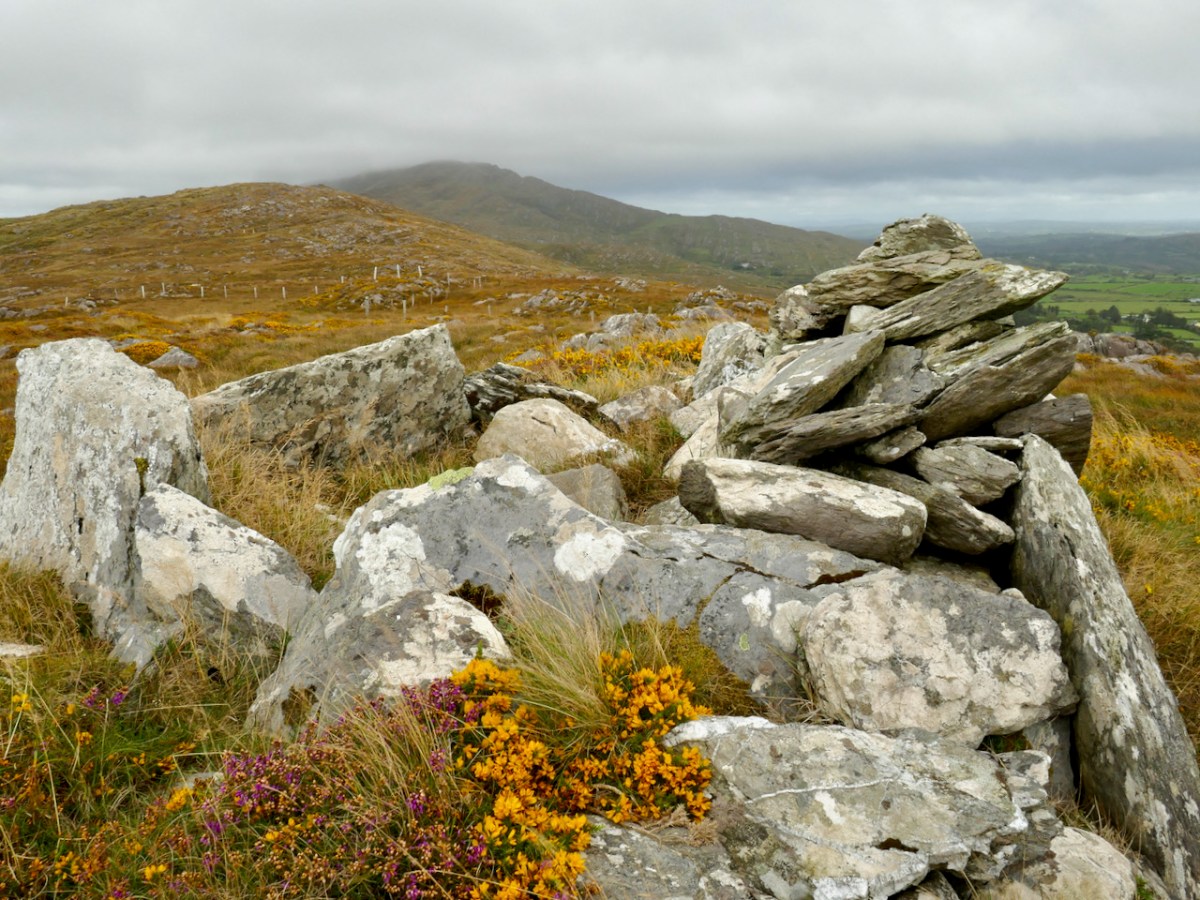
A mysterious megalithic tomb – we’re not quite sure what type it it – on a mountain in West Cork. We haven’t written about this one yet, but getting to it was quite an adventure.
Muscle beds and a castle – quintessential West Cork! This one was taken from Roaringwater Pier.
The traces of lazy beds can still be discerned on this isolated patch at Lackavaun, on the north side of the Mizen
Early in the new year we clambered around Mount Gabriel, looking for the fabled Cauldron Pool. We found it, with Schull stretched out below.
I think I might have used this one in my Dander on the Sheep’s Head post – but what the heck, I love it so here goes again
Looking across to the Beara from the Sheep’s Head
Great drifts of Thrift at the old mine site at Dhurode, on the North Side of The Mizen