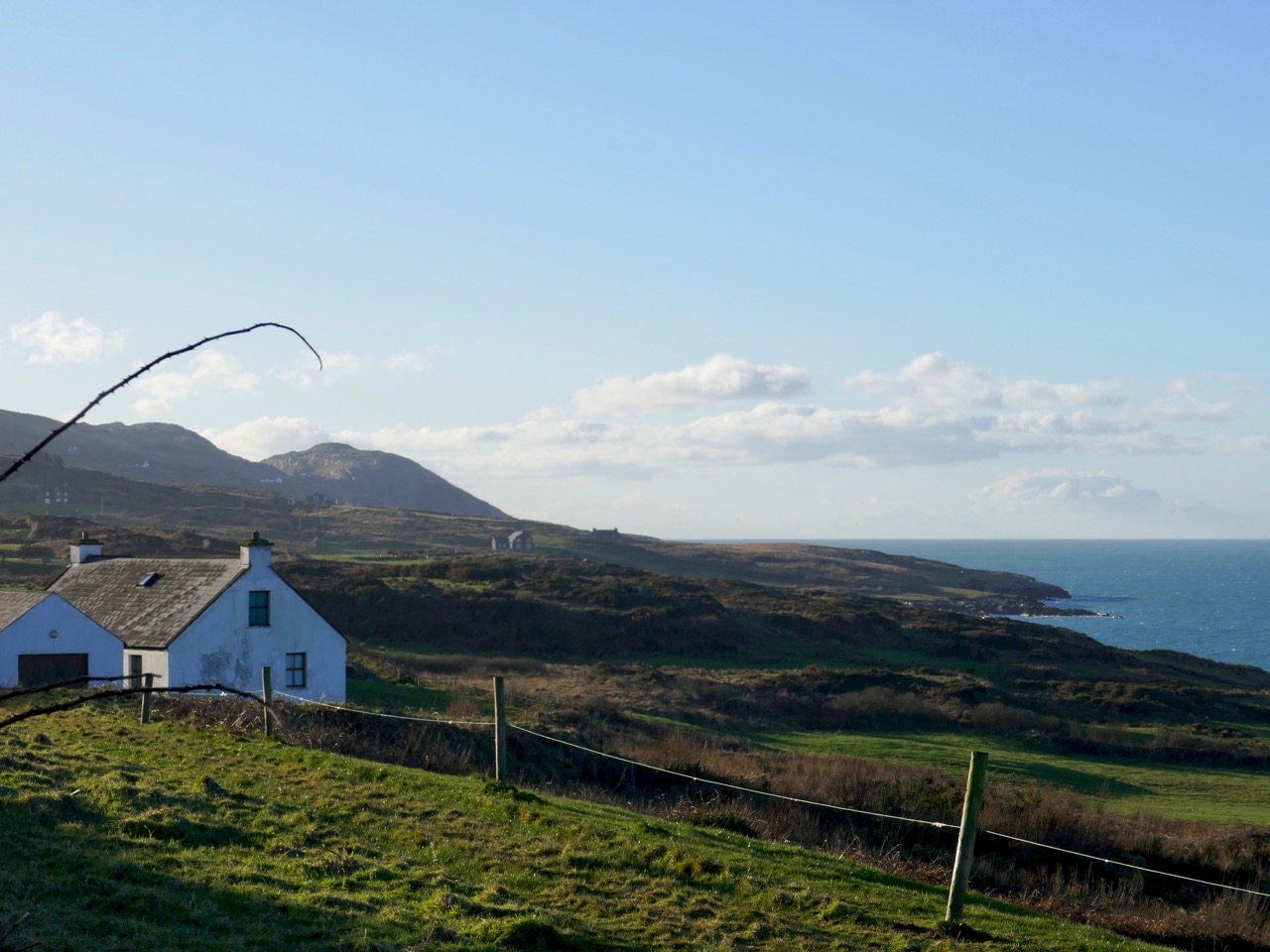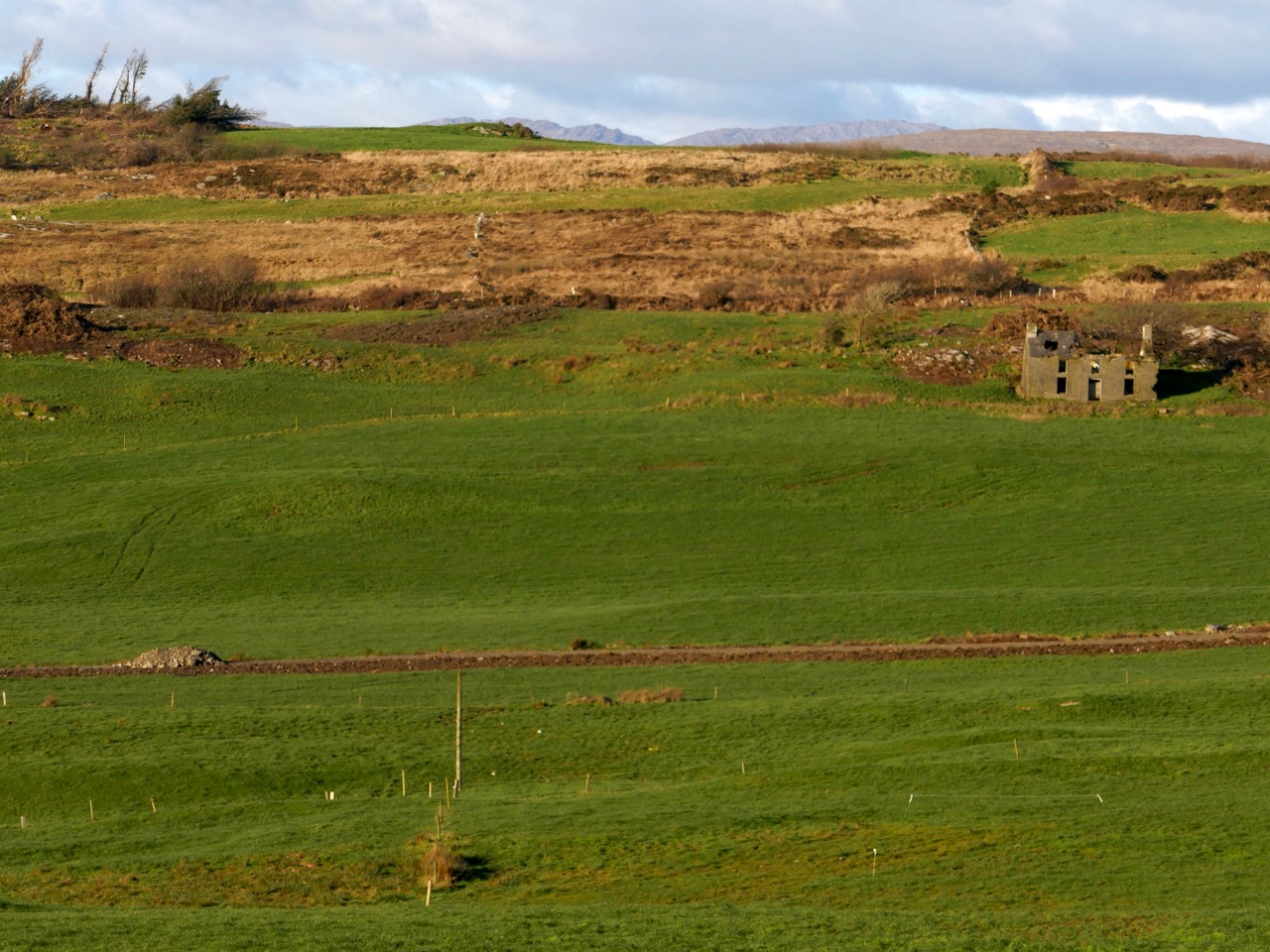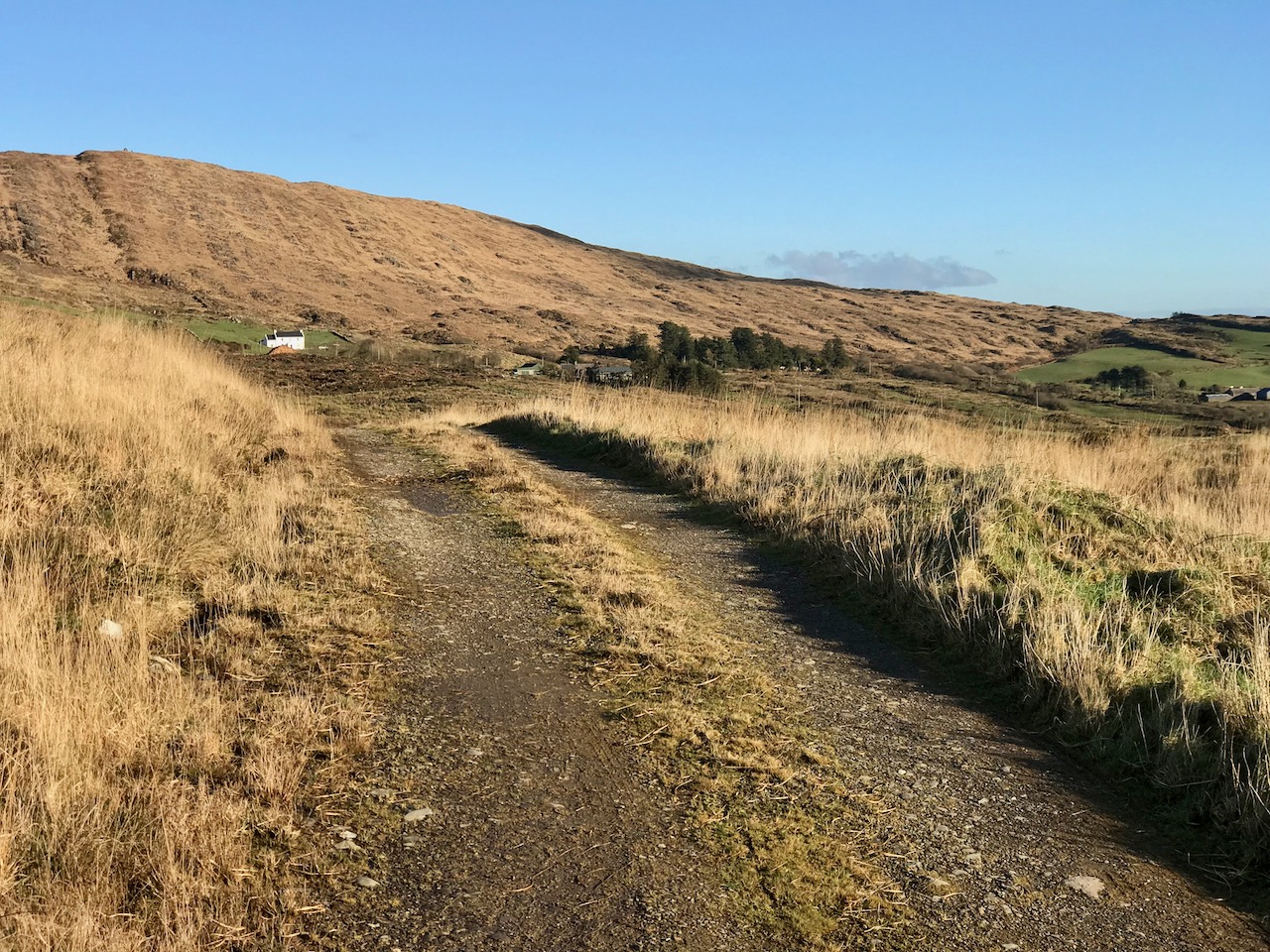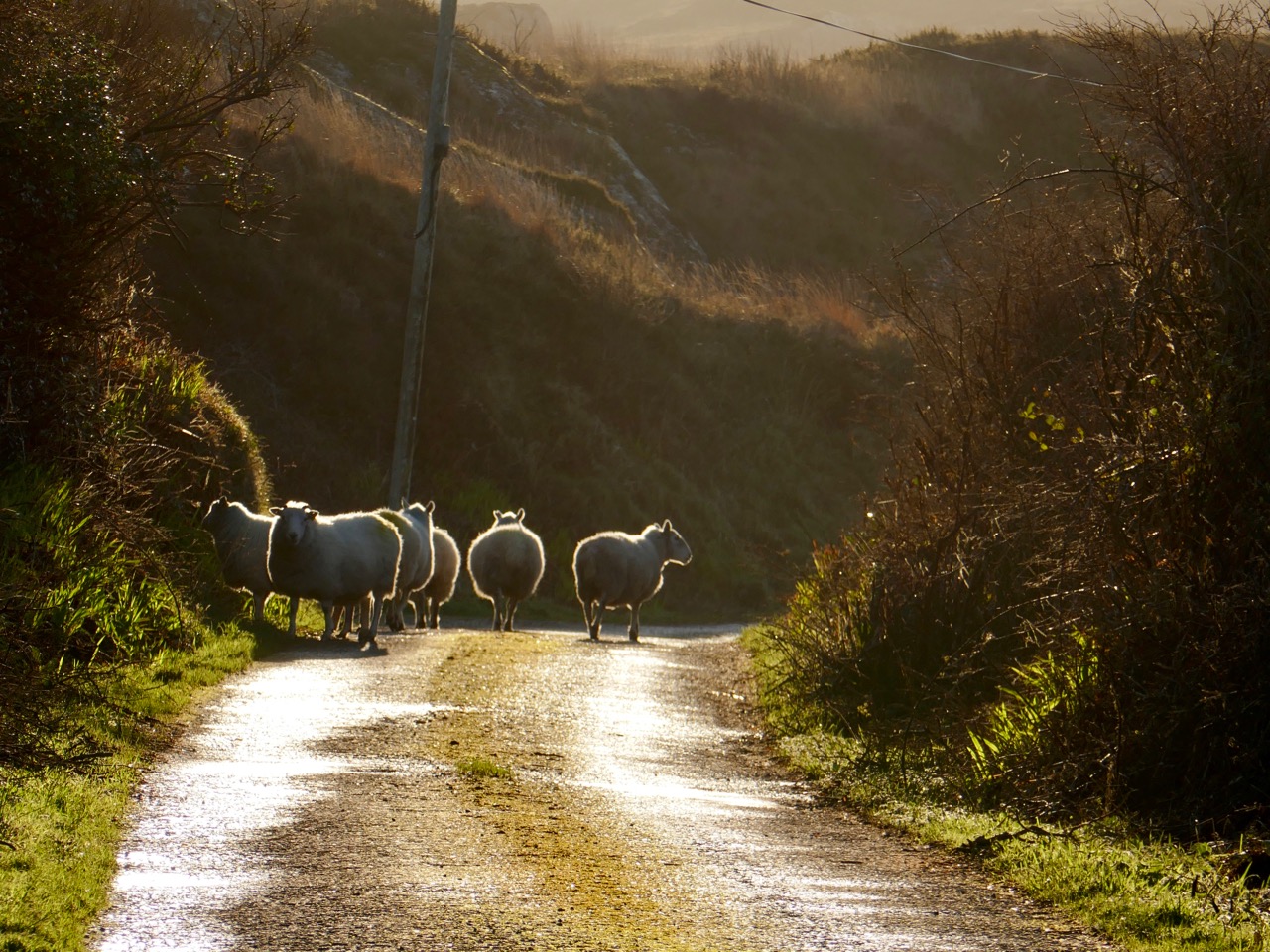
A Change to The Fastnet Lighthouse

Way back in 2014 I wrote about An Carraig Aonair: The Fastnet Rock and I have decided to repost that today, but with some updated information and photographs, because of an upcoming change announced by Irish Lights. Depending on the story, this is either a relatively benign but majorly cost-saving switch to LED lighting, or a change we must be vigilant about to make sure the Fastnet is left “intact and unharmed”.

Irish Lights tells us that structural repairs. . .are necessary to ensure the metal lantern room is properly secured to the granite tower and modernisation of the light source to an energy efficient rotating LED lantern. When these works are completed the outward appearance of Fastnet will be unchanged. The work will improve our environmental impact by significantly reducing the need for diesel and generators and by removing all mercury from the station. The range of the light will reduce from 27 to 18 Nautical miles.

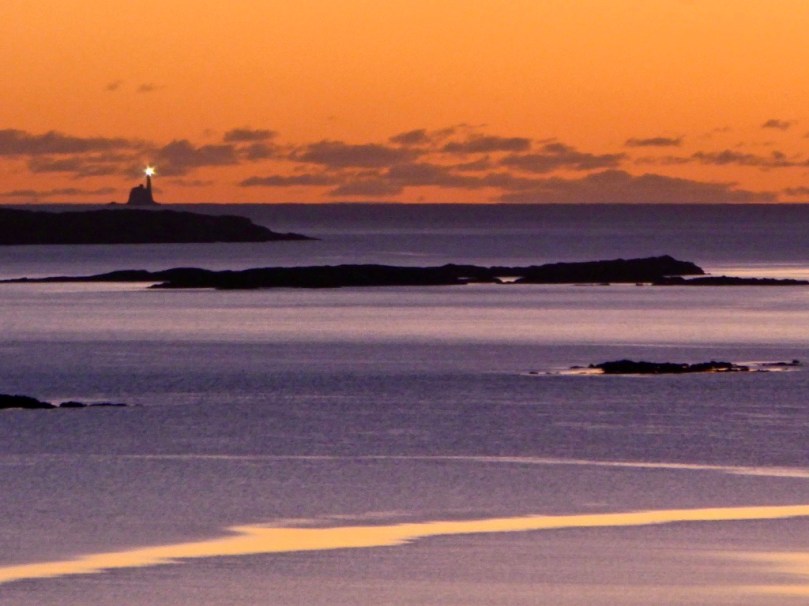
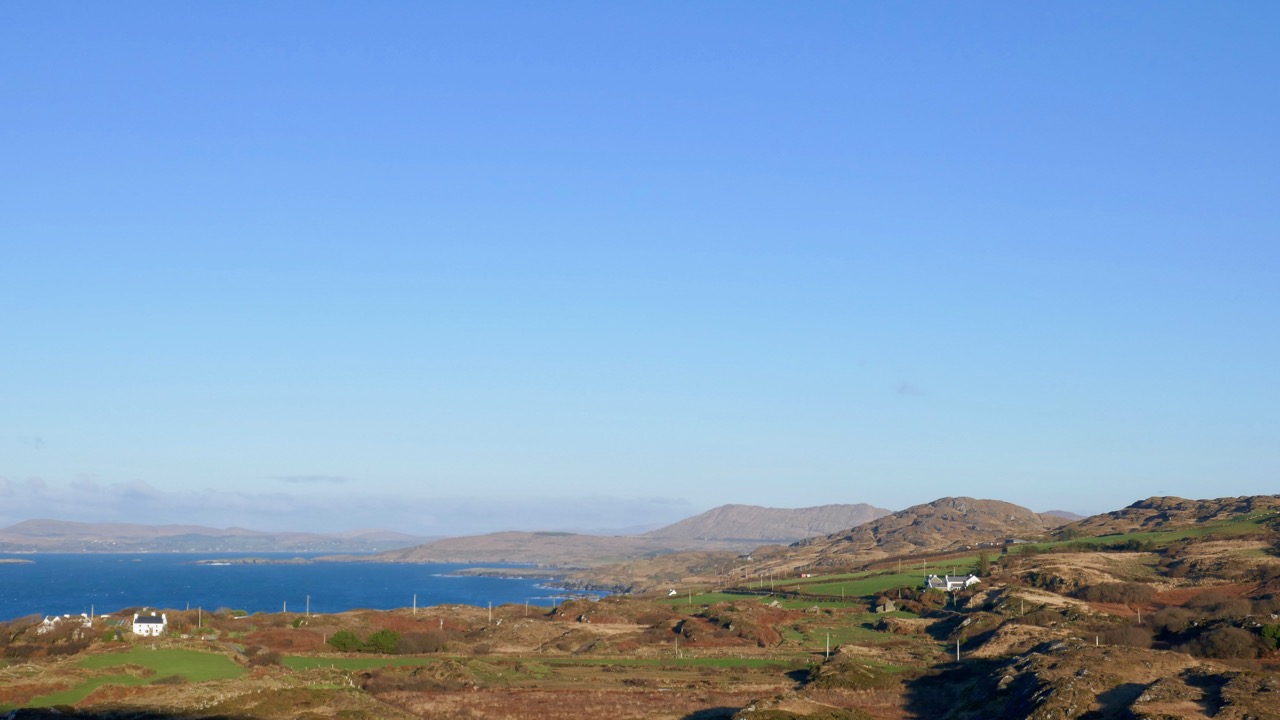
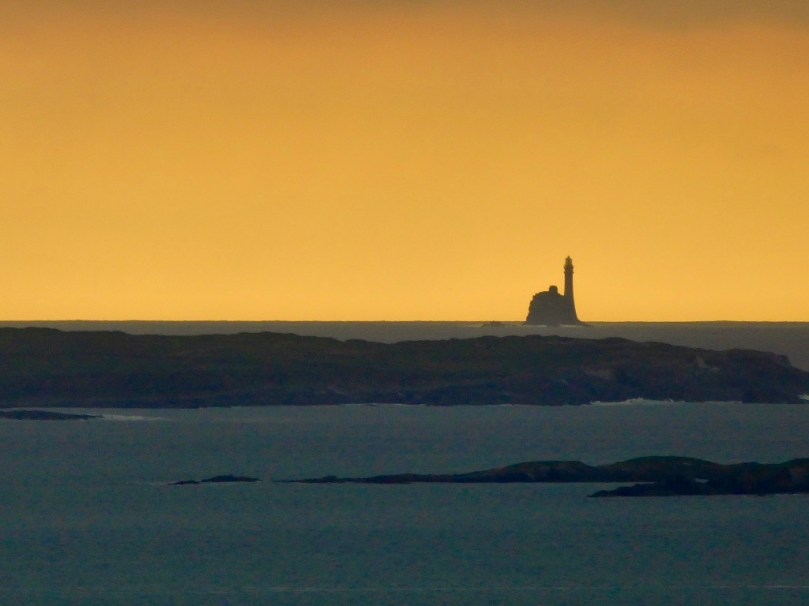
This photo was taken from our house, 12 miles (or 10.4 nautical miles) away

While this seems like a sensible and inevitable modernisation, with (according to this letter to the Irish Times) a very significant saving of €100,000 per year, those of us who live around Roaringwater Bay want more information: we want to be sure that the change does not negatively impact on the safety of our sailors and fisherfolk, and does not rob us of the iconic flash that is so much part of our lived experience in West Cork. There will be a meeting on Monday (March 5, 2018) at the Schull Sailing Club to discuss it all.

What follows now is the text of my post from June of 2014, lightly edited and with some newer photographs inserted.

Robert has written about our field trip to Cape Clear Island and I can now reveal that the journey also included a thrilling sail around An Charraig Aonair (Karrig Ane-er, The Lone Rock) better known as the Fastnet Rock; or to thousands of emigrants for whom it was the last sight of their home country, Ireland’s Teardrop.
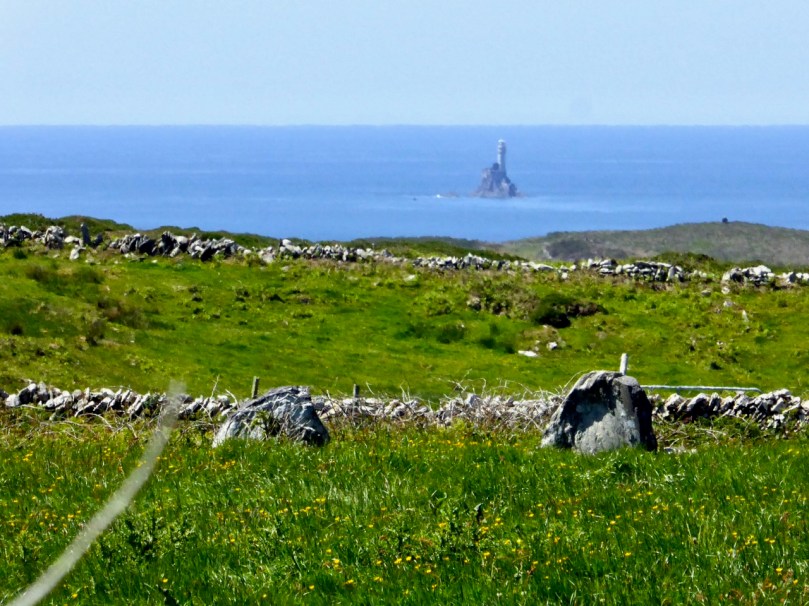
We had been looking forward with great anticipation to visiting the rock close up. We can see it from our home, a far away mystical crag abounding with lore and legend. We have been awestruck by the waves crashing over the lighthouse in winter storms and wondered at the lives of the lightkeepers who once manned that treacherous outpost. We watched through our telescope as enormous yachts rounded the rock in the biennial Fastnet Race last summer, following the progress of the race on a special iPhone app. I have written elsewhere about the awful tragedy of the 1979 race, in which Gerard Butler and his fellow lightkeepers on the Fastnet played a crucial role in monitoring the participating yachts in the mountainous sea conditions. 
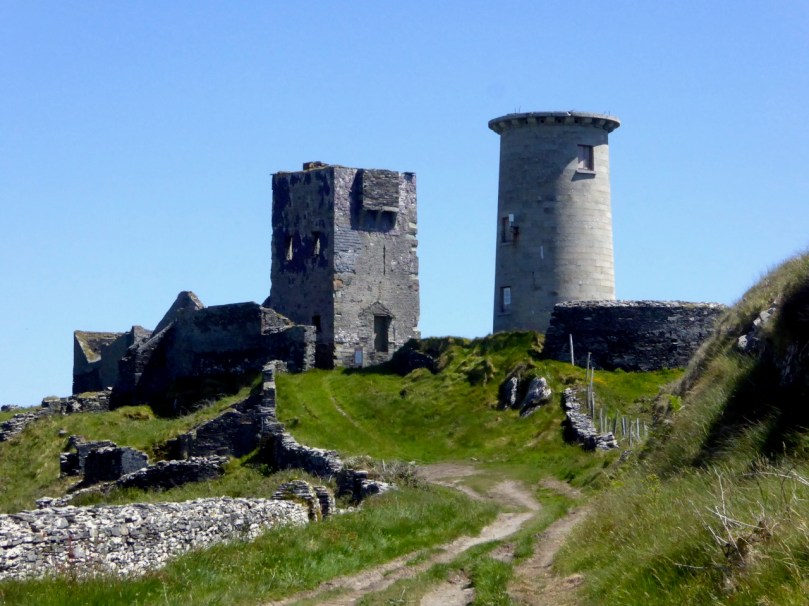
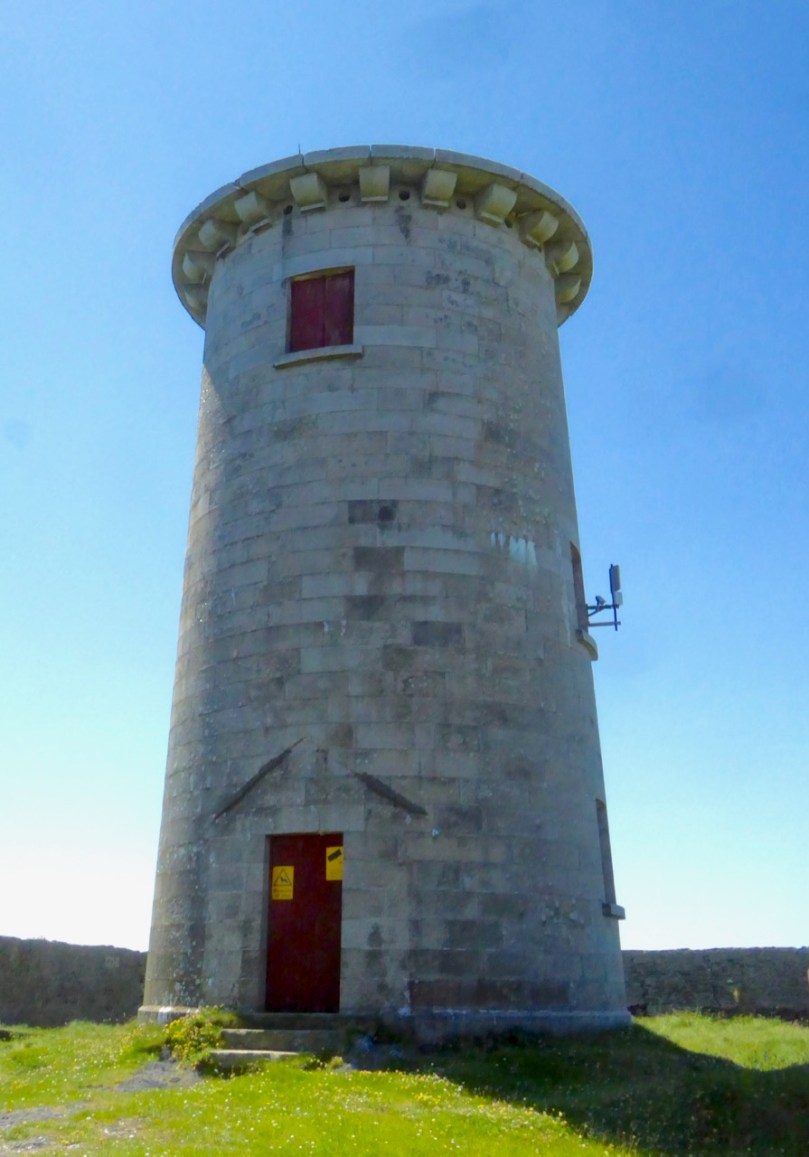
The signal station and the first lighthouse, on Cape Clear Island

The Fastnet was built to avoid such tragedies. Its first iteration was in 1818 as a lighthouse tower on a high point on nearby Cape Clear Island, beside the Napoleonic-era signal tower. However, the light was frequently obscured by fog and after the wreck of the Stephen Whitney in 1847 with 92 souls lost, it became clear that the best place for a lighthouse was on the Fastnet Rock. 
The great era of lighthouse building in Ireland got underway in the mid-nineteenth century. The engineering, design and construction expertise necessary to build lighthouses are impressive enough. Add to this the logistics of building on a tiny and inhospitable rock in a heaving sea on the edge of the Atlantic, and the sheer accomplishment of the objective is  staggering. The first attempt, started in 1849, was of steel and needed constant repair.
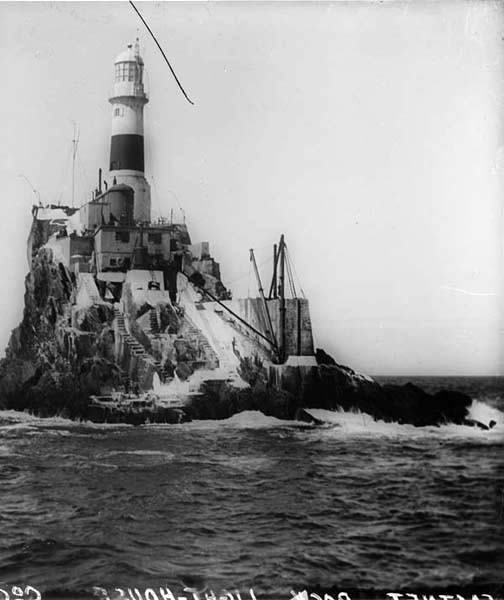
The first lighthouse on the rock – it was made of steel and didn’t last

It was decided to replace it with a structure of Cornish granite and the current lighthouse first cast its beam over the waters in 1904. Eamon Lankford in his book Fastnet Rock: An Charraig Aonair describes the building process and provides old photographs illustrating how the granite blocks were ‘floated’ and hoisted on to the islet, having been first assembled and tested in Cornwall. The website Digital Irish Lighthouse Experience by Sandra Michler has an animated sequence showing how this was accomplished. it took eight years.
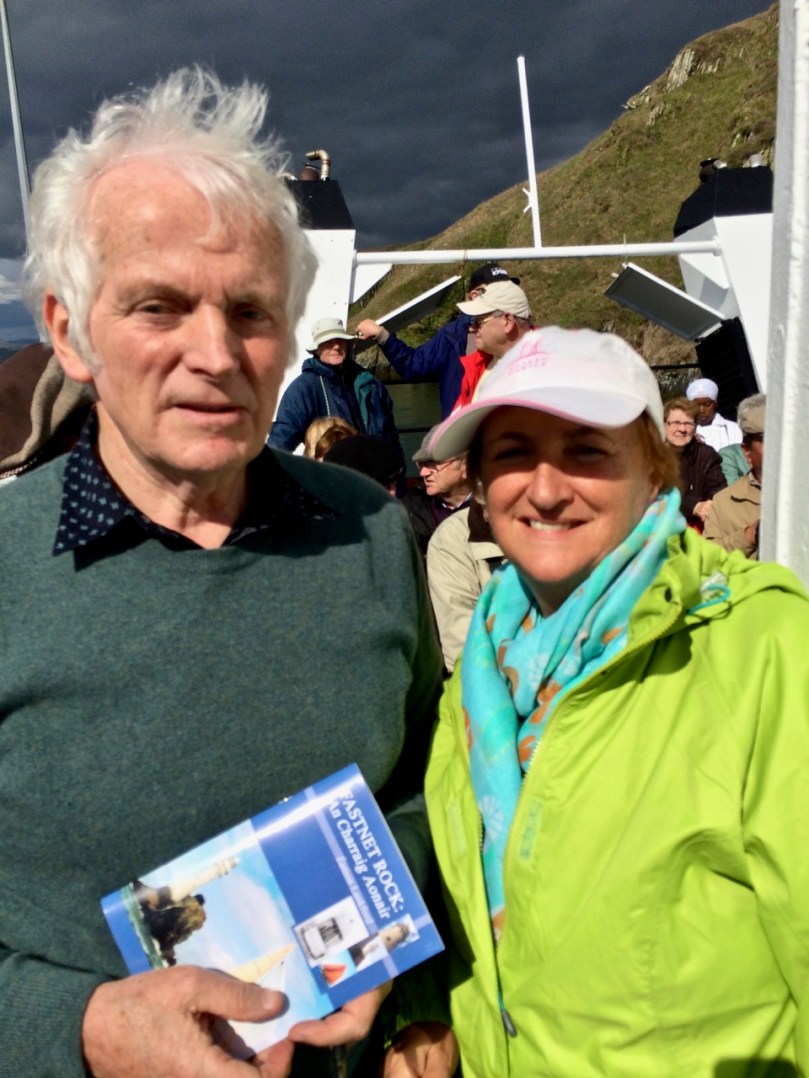
We were fortunate to have Eamon Lankford as one of our guides on our trip to the Fastnet

One of the best accounts of the building of the lighthouse was in a 2008 article in The Economist called Light on a Lonely Rock. The piece gives fascinating details into the dedications and hardships of the builders and calls the lighthouse “a monument of man’s gift to mankind.” I don’t know who wrote it, but it’s a terrific essay.

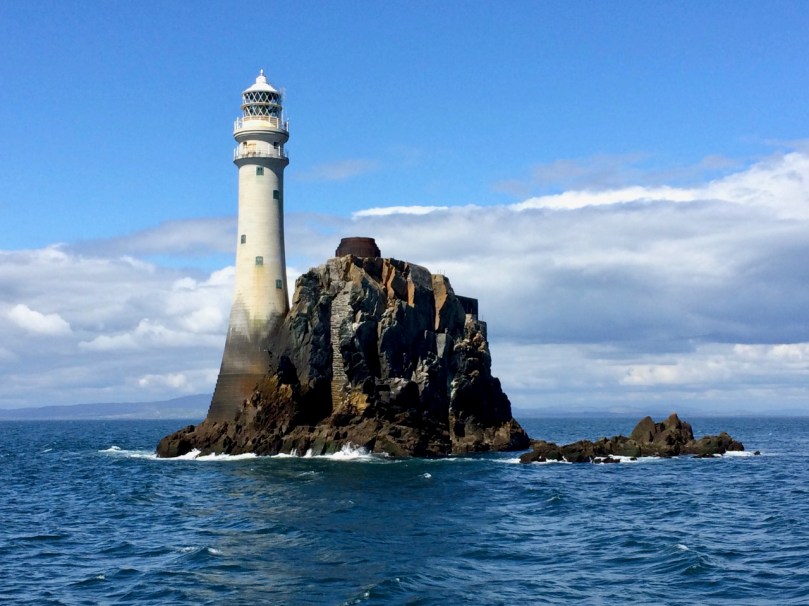
According to the Irish Lights website, Fastnet is the tallest and widest rock lighthouse tower in Ireland and Great Britain and was a monumental achievement when completed in 1904. Each of the granite stones of the tower is dovetailed into those around it, bonding the structure into a virtual monolith. This webpage also has several excellent photographs of the lighthouse from the air. What all photographs of the rock also reveal is that the lighthouse is a thing of beauty. Tall, slender and elegant and boasting two balconies, it personifies form and function in the most admirable fashion possible. (Take a look, for example, at Dennis Horgan’s website – he’s an acclaimed aerial photographer and his photograph of the lighthouse is probably the most iconic shot of them all.) Today the Fastnet is fully automated but in The Lightkeeper Gerard Butler describes what it was like to live on the rock in fair weather, when he fished and swam from the steps, and foul, when the seas crashed and roared over the lighthouse as it quivered and shook all night. 
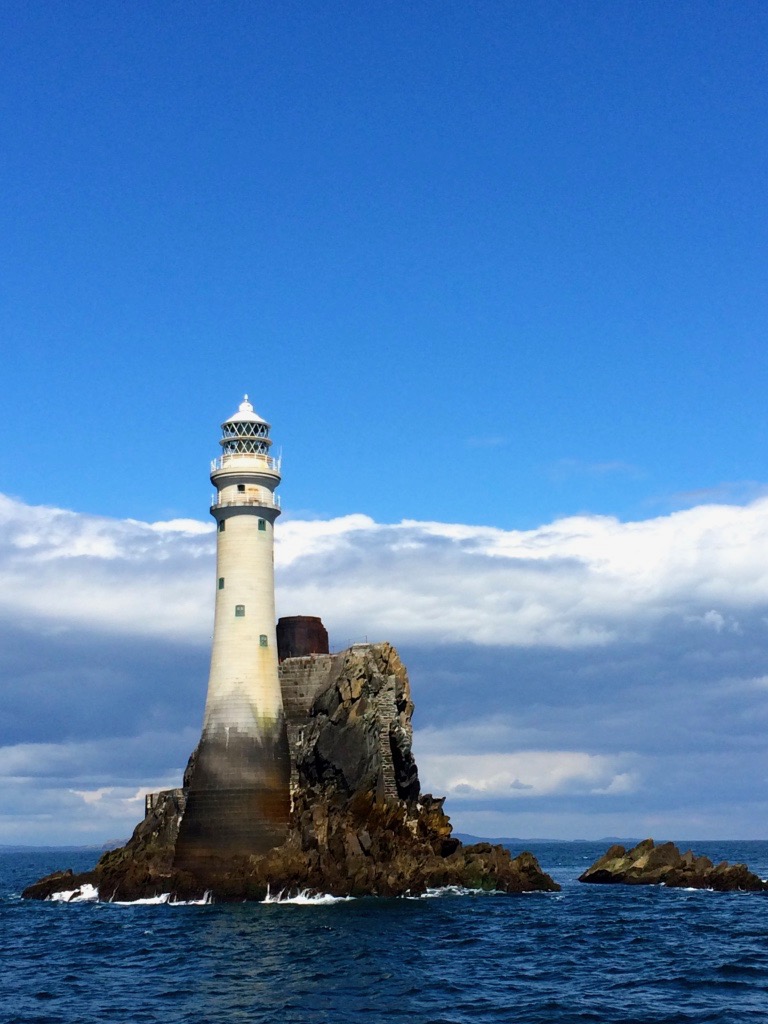
The lighthouse showing the full extent of the Cornish granite and the stub of the old steel tower

One of the stories we heard from Eamon concerned  a daring midnight raid on the lighthouse carried out by an IRA ‘Flying Column’ (experts in guerilla warfare) in 1921 during the Irish War of Independence. They were after the explosives used on the Fastnet to power the foghorn. [EDIT: I have some errors here – please see Finbarr O’Driscoll’s correct information about the raiding party in the comments section.] In researching this story further, I found an article in the 1999 Mizen Journal (no longer in print) by Frank Lannin, based on the eyewitness statement of Sean O’Driscoll.*
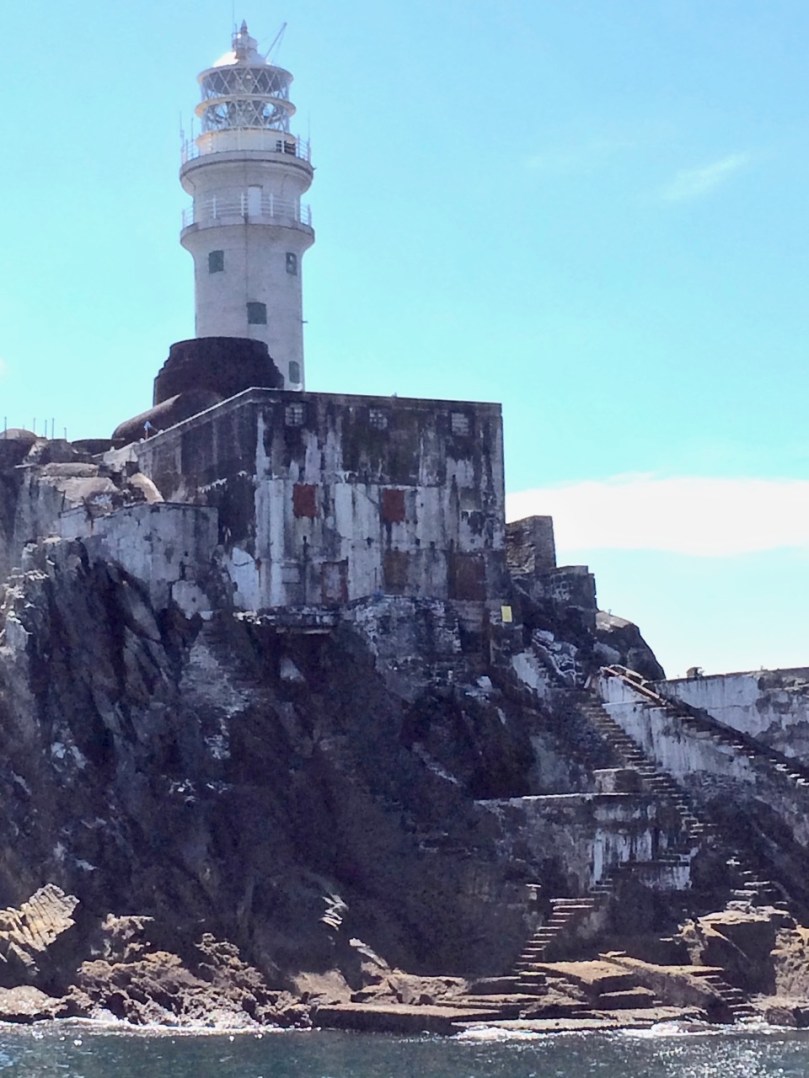
The Rock, showing the landing platform, steps and store

Here is part of Lannin’s account:

The breeze had freshened and caused the usual swell around the Rock and there was a rise and fall of several feet. The anchor was let out and the boat moved slowly to the landing place. Positioned on the bow was John O’Regan, a rope tied around his waist, a revolver in his pocket and balancing himself with the rise and fall of the boat. He would have to select the right moment to jump on the Rock and catch the iron ring which was fixed to the Rock. He knew where the ring was fixed, but to grasp it in total darkness was a feat that few would attempt. His vast experience as a seaman was now to be put to the test. As a wave was rising he jumped. It was a tense moment. As the wave covered him he grasped the ring with both hands. (It was an occasion for handclapping, but not tonight.) In seconds he had made the boat fast and the rest of the raiding party were landing on the platform. The huge steel door of the lighthouse was not locked. John was first up the spiral stairway leading to the room where the Lightkeeper was on duty. He put up no resistance and as a precaution the wireless was dismantled. Seventeen boxes of gun cotton and three boxes of detonators and primers were loaded on to the “Maire Cait” by means of the lighthouse derrick. in all, the spoils weighed but one ton. The daring mission was accomplished.
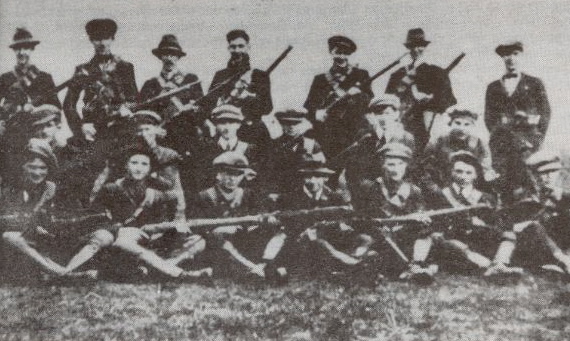
A Flying Column (this one from Tipperary)

The fog signal, together with the light, was an important aid to navigation for ocean going vessels. It was only in 2011 that the Fastnet foghorn was permanently discontinued, as modern navigation equipment rendered it unnecessary. All around the world people are missing the haunting sound of foghorns now, a sound so many of us grew up with. But at least we can see the light from Carraig Aonair every night and count its ‘character’ – one two three four FLASH…one two three four FLASH – and know that it’s doing its part to keep our mariners safe on the seas that roll outside Roaringwater Bay.
*See pages 18 to 20 of Sean O’Driscoll’s statement for his dramatic story of the raid.


Mizen Magic 9: Rossbrin to Schull

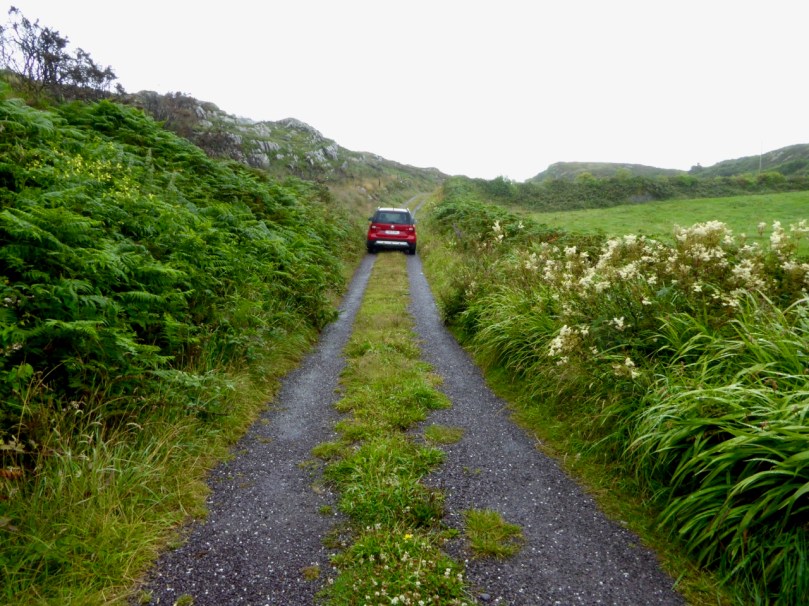
There’s a main road between Ballydehob and Schull, and then there’s a back road – a road that meanders through farmland and down half-forgotten boreens, a road lined with wildflowers and dotted with the remains of past history, a road that looks over once-inhabited islands. South of this road lies Mizen Magic 9.

Along the back road in early summer

We’ll start at Rossbrin Cove – a place that Robert has written about over and over, like any writer with his own ‘territory.’ This was the home, in the 15th century, of Fineen O’Mahony, the Scholar Prince of Rossbrin.

Looking down now on what’s left of his castle, it’s hard to imagine that this was a place teeming with life and learning – a mini-university where scribes and poets and translators transcribed to vellum (and to paper – a first in Ireland) psalters, medical tracts and even the travels of Sir John Mandeville. The castle has been in ruins since the 1600s, and we live in fear that the next storm will bring the last of it down.

Rossbrin Castle from the sea

The road runs through the townlands of Rossbrin, Ballycummisk, Kilbronogue, Derreennatra and Coosheen. Ballycummisk has a wedge tomb from the Bronze Age and a ring fort from the Early Medieval period – just to remind you that you are far from the first to want to settle in this place. In more recent times, and like Horse Island, it was once the centre of a thriving mining industry, but a spoil heap and stone pillars are all that remain.

Large ring fort, and the remains of mining activity, in Ballycummisk

Two islands dominate the views of Roaringwater Bay along this road. The first is Horse Island, owned now by one family, with its industrial past a distant memory. There have been various plans for Horse Island in recent years – a resort, a distillery – but so far it has resisted development.

Horse Island Miners in 1898 and the ruins of miners’ dwellings

The other is Castle Island, home to yet another vestigial O’Mahony Castle – one of a string along the coastline, all within sight of each other and sited strategically to control the waters of Roaringwater Bay and their abundant resources.

There’s not much left of the castle on Castle Island

The O’Mahonys became fabulously wealthy in their day, charging for access to fishing and fish processing facilities and for supplies and fresh water. They also forged strong alliances with the Spanish and French fishermen and visitors who plied those waters – a friendship that was to cause great concern to the English crown and that was to spell, in part, their eventual downfall.

Ruined farm houses on Castle Island. The photograph was taken from a boat – that’s Mount Gabriel in the background

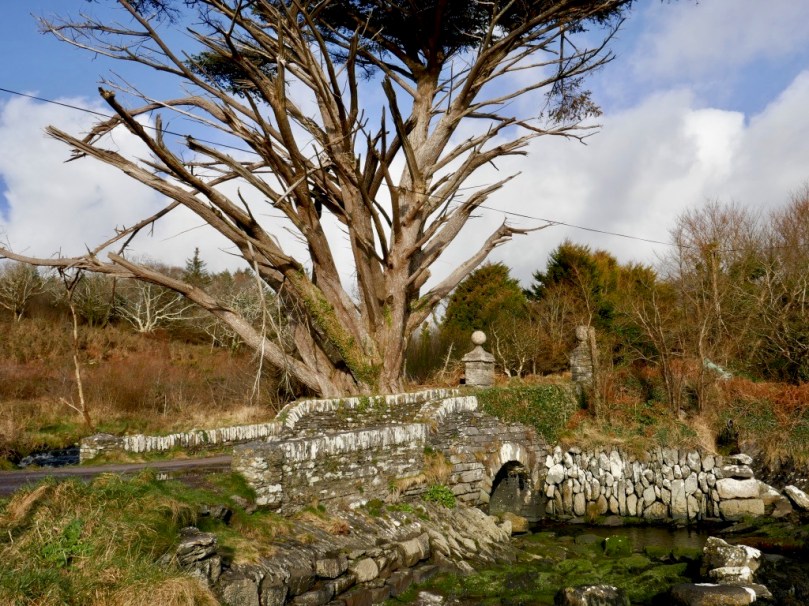
The closest spot to Castle Island (also uninhabited) is the beautiful little pier at Derreennatra. There is a large house up behind the pier, now inaccessible but once run as a guest house and famous for its hospitality. A curious bridge once gave access to the demesne and it remains a striking landscape feature, with its pillars and giant Macrocarpa tree.

Derreennatra Bridge

Continuing towards Schull we come to the last of the O’Mahony castles and the best preserved in this area. This is Ardintenant (probably Árd an Tinnean – Height of the Beacon – possibly referring to a function of the castle to alert others to the presence of foreign vessels) and it was the home of the Taoiseach, or Chief, of this O’Mahony sept.

Two ‘beacons,’ ancient and modern – Ardintenant or White Castle below and above it the signal stations on Mount Gabriel

The castle, or tower house, still has a discernible bawn with stretches of the wall and a corner tower still standing. If you want to learn more about our West Cork tower houses, see the posts When is a Castle..?; Illustrating the Tower House; and Tower House Tutorial, Part 1 and Part 2.

Ardintenant is also known as White Castle, a reference to the fact that it was once lime-washed and stood out (like a beacon!) to be visible for miles around. It appears to have been built on top of an earlier large ring-fort which in its own day was the Taoiseach’s residence before the fashion for tower house building.

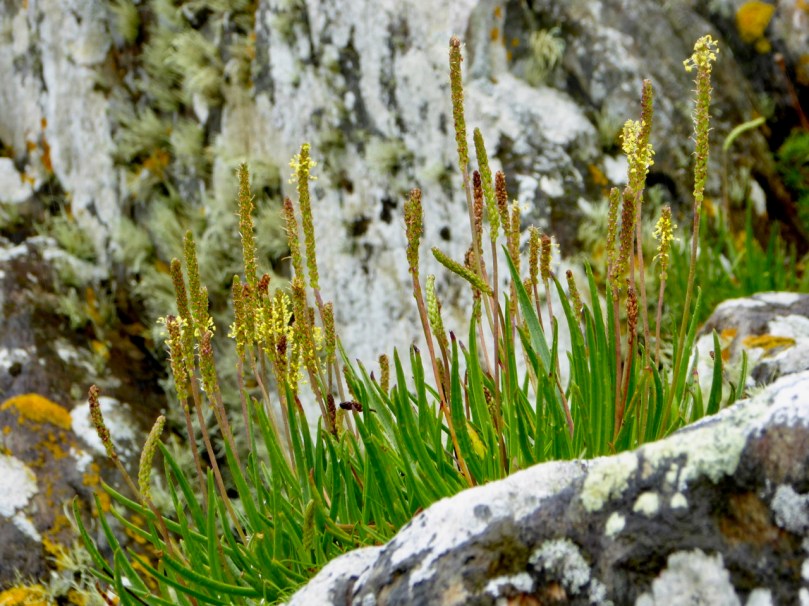
Sea Plantain at Coosheen

From Ardintenant we head south to Coosheen, a picturesque pebble beach known only to locals. It’s one of my favourite places to go to look for marine-adapted wildflowers. On a rainy day last August I saw Sea-kale, Sea-holly, Sea Plantain and Thrift, and drove back on a boreen lined with Meadowsweet and Wood Sage and past a standing stone whose purpose has been long-forgotten but that continues its vigil through the centuries.

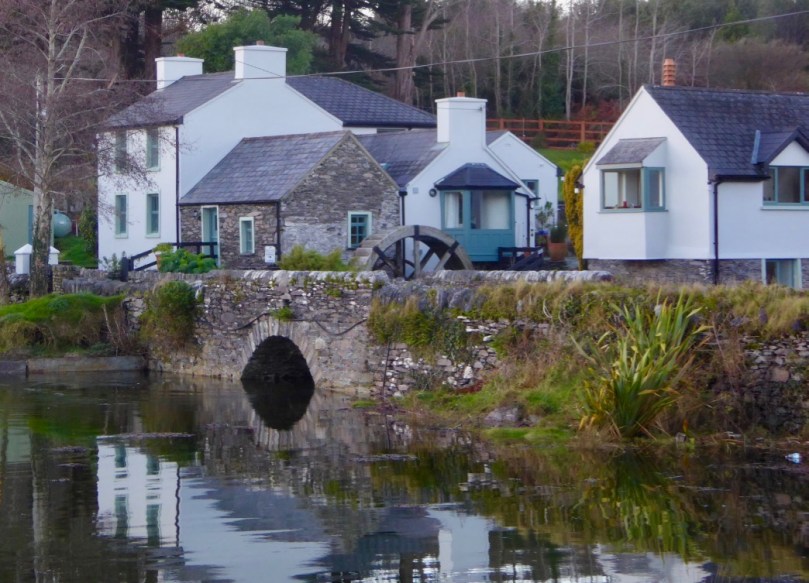
Our final spot in Coosheen is Sheena Jolley’s mill house, now the gallery of this award-winning wildlife photographer. She has restored it beautifully and the gardens are a work-in-progress that manage to capitalise on, rather than overwhelm, the mill stream and the rocky site. This is also the starting point for the Butter Road walk – but that deserves a new post one of these days, a post in the Mizen Magic series. We have written one but it was a long time ago.

Take a walk, or a drive, down any part of this road – do it in summer when the boreens are heady with wildflowers, or do it in winter when the colours of the countryside are at their most vivid. Heck, do it any time!


Mizen Magic 8: The Altar

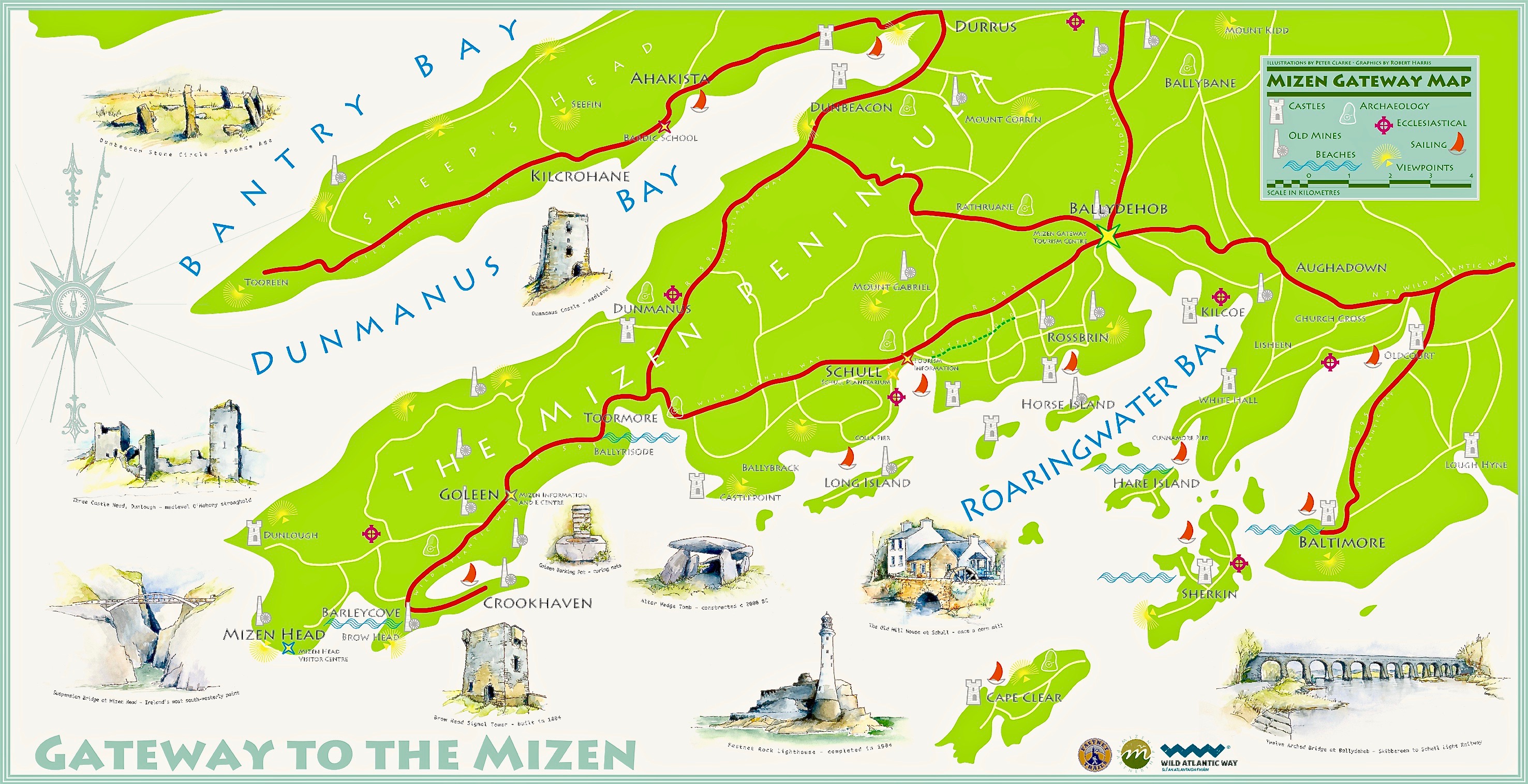
Here’s the Mizen Peninsula shown on a map drawn by Robert for the Bank House tourism centre in Ballydehob and embellished with Peter Clarke‘s exquisite watercolour sketches of just some of the places that should not be missed by visitors to West Cork . . .

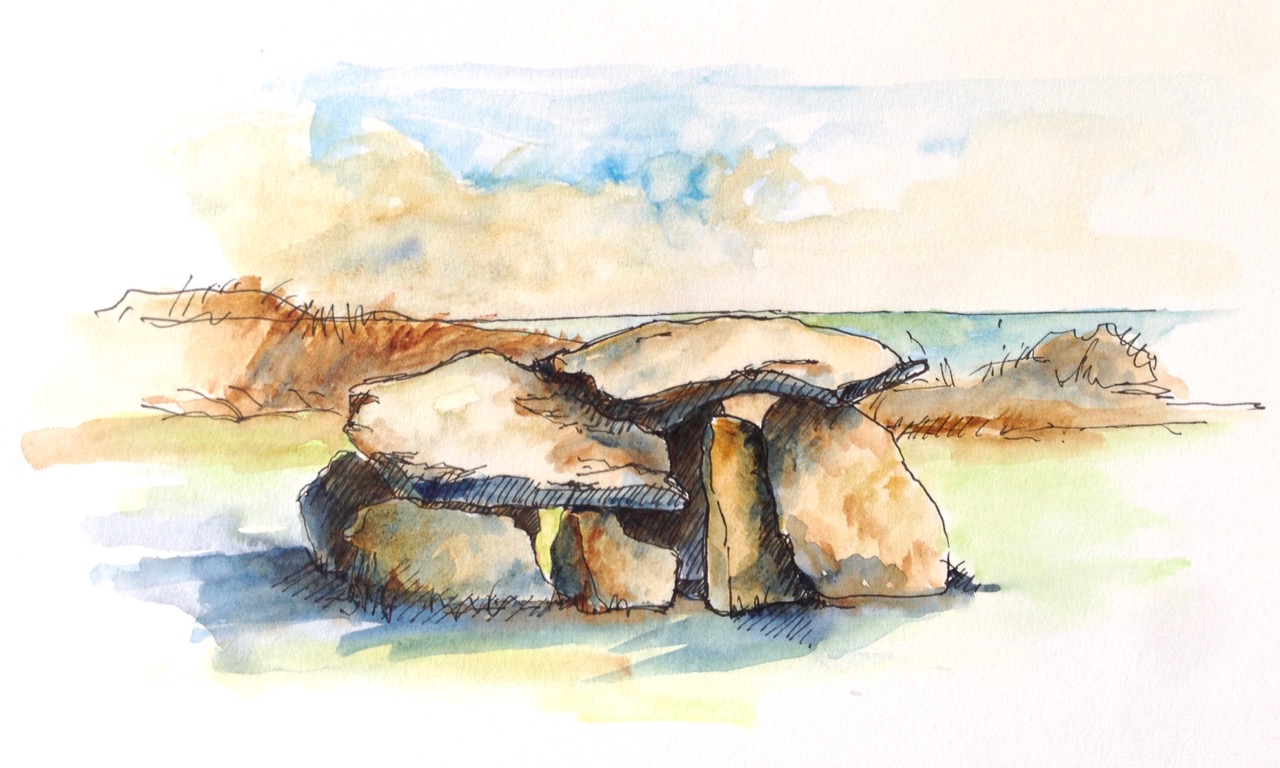
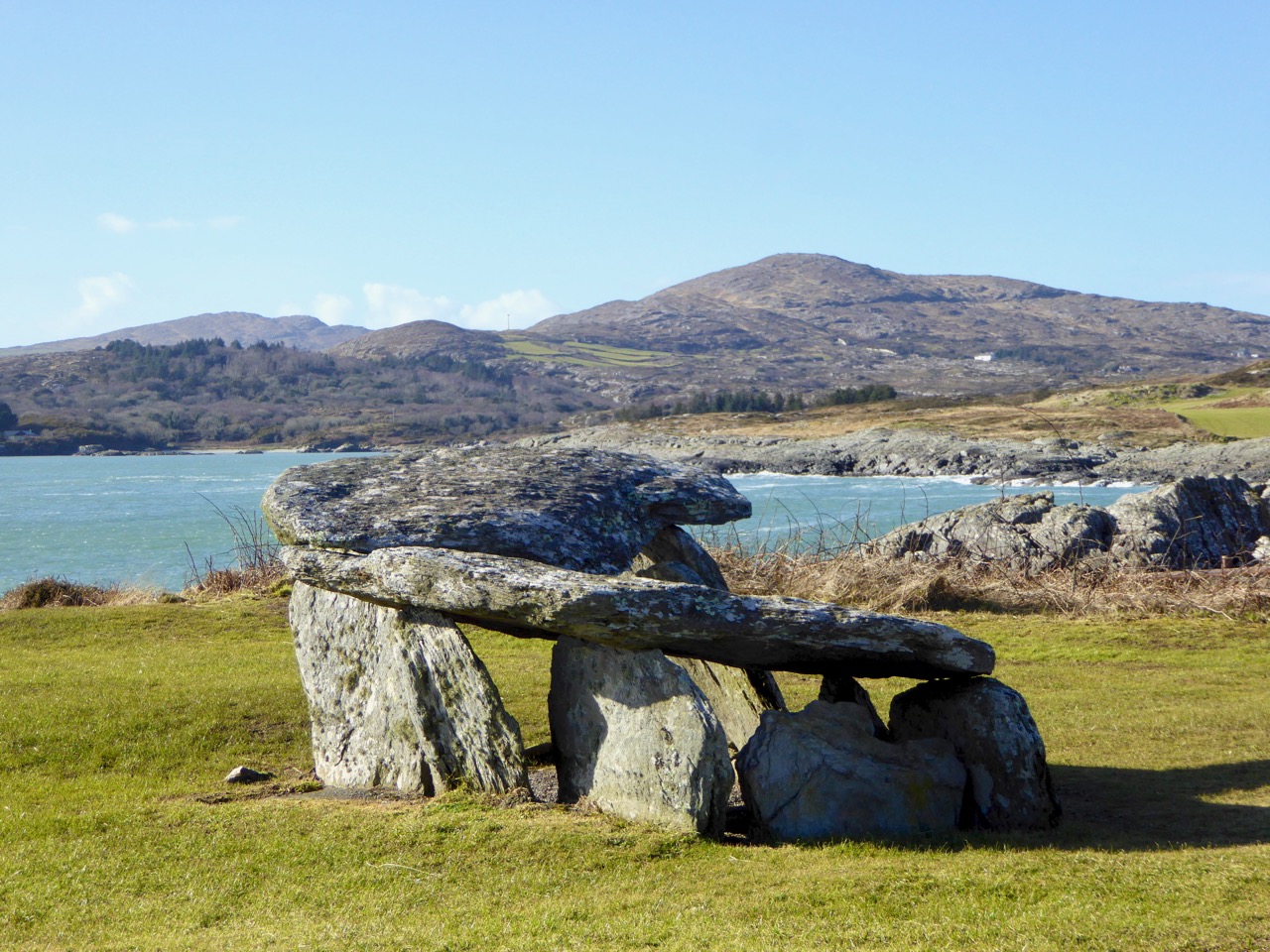
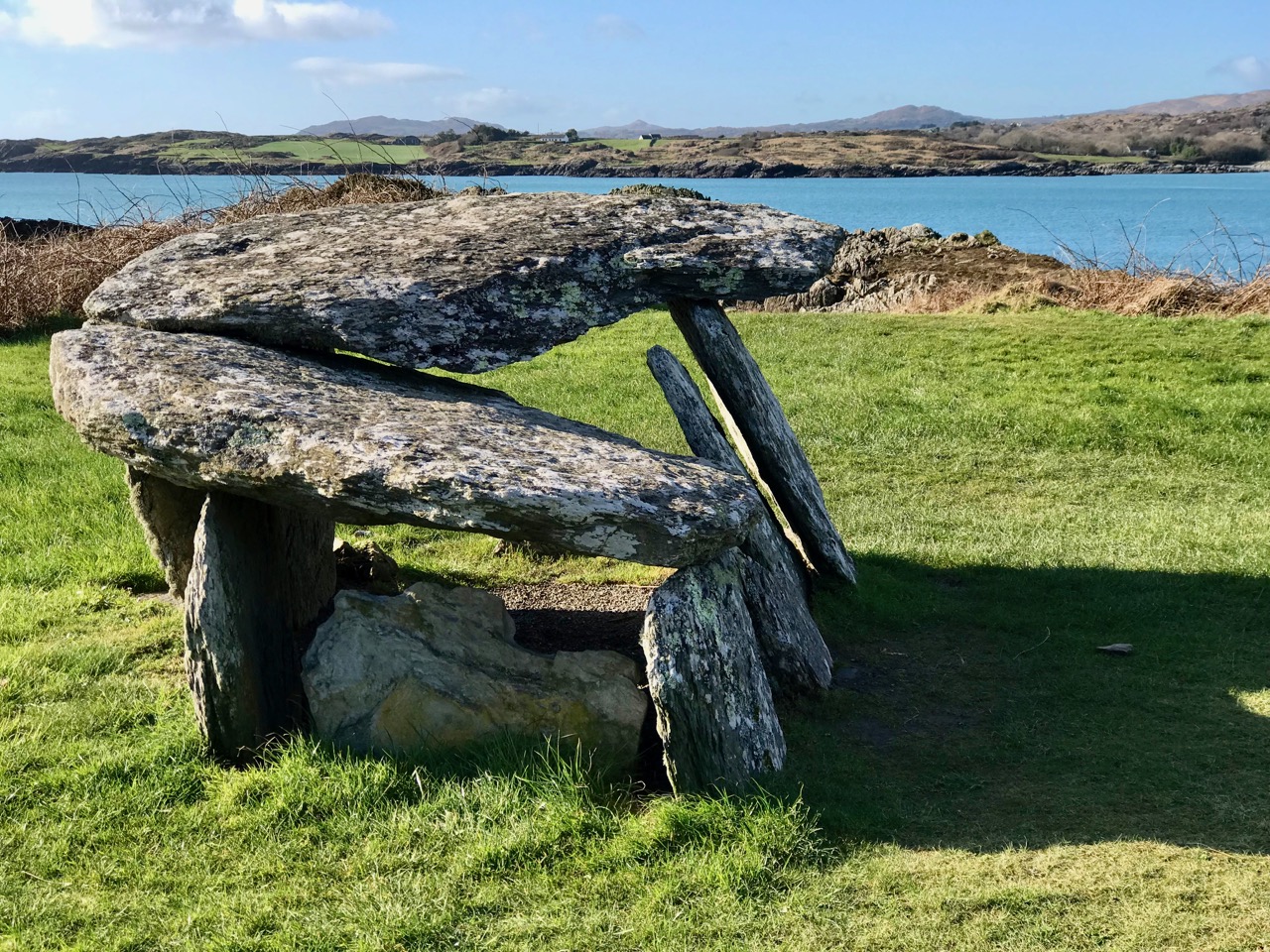
. . . And here is another rendering from Peter of one of the ancient sites that everyone goes past when travelling to the far west: possibly one of the most accessible pieces of archaeology on this section of the Wild Atlantic Way. It’s the Altar Wedge Tomb at Toormore Bay.

It’s early February, and Imbolc has passed. That means that Springtime has officially started here in Ireland. Sure enough, we looked out over a sunlit Roaringwater Bay this morning: soon we were heading out towards Goleen, Barley Cove and all points west. We stopped at The Altar and had it all to ourselves. You can see here that it’s orientated towards the Mizen Peak – that sharp little pyramid which is right on the centre of the picture – and lies to the west. For me, there’s a perfectly natural symbolism about placing the dead in a tomb that is aligned on the rising and the setting of the sun: that’s something we still do, several thousand years on!

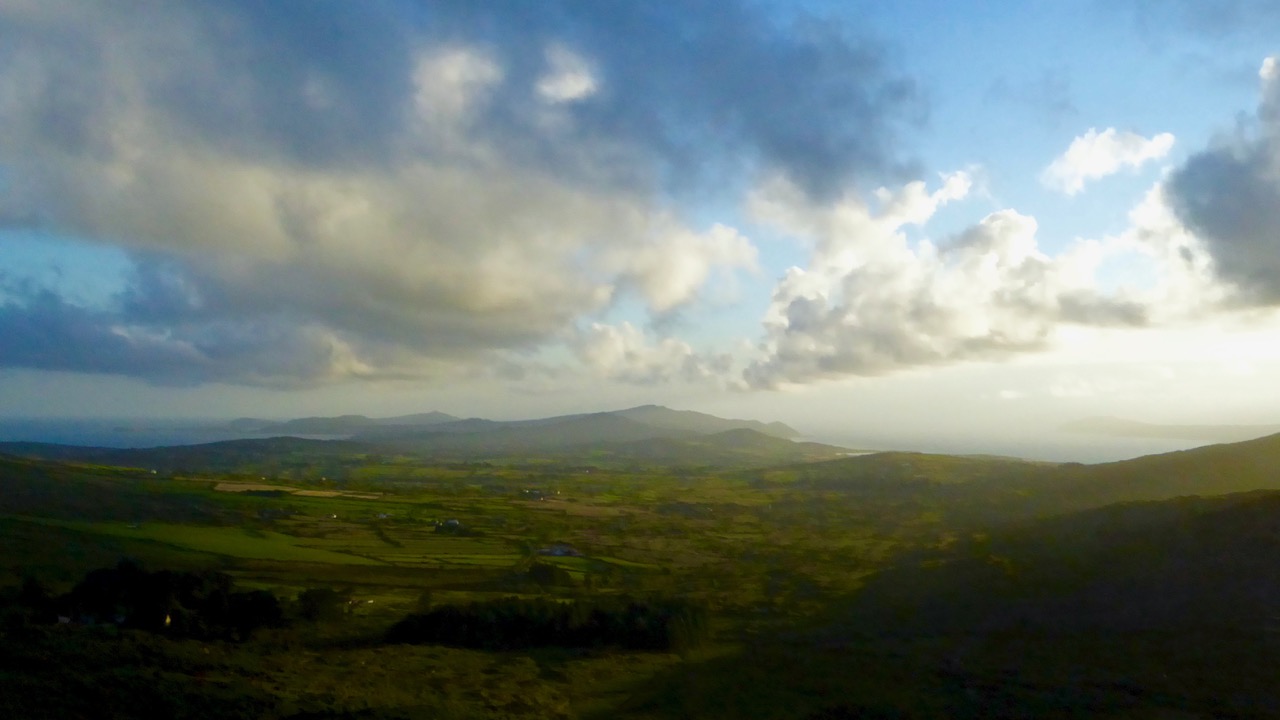
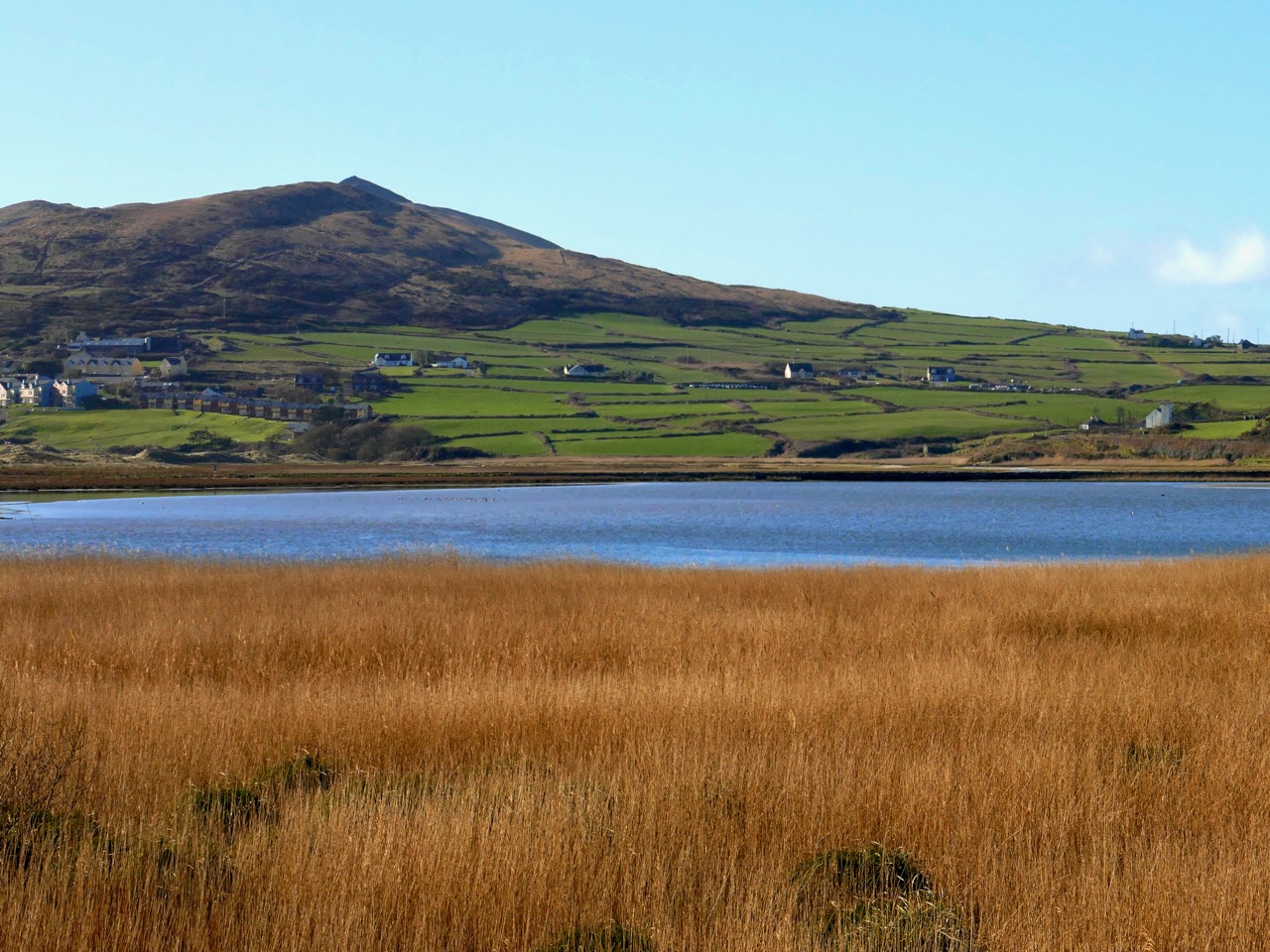
The upper picture, taken on the Winter Solstice, shows the Mizen stretching away from the heights of Mount Gabriel: the Mizen Peak is the little pointed blip just left of centre. The lower picture looks across the wetlands behind the sand dunes at Barley Cove, and was taken today in the Spring sunlight: the Peak is clearly visible as the highest point. I believe that our forebears attached great importance to high places, as many stone monuments and Rock Art often seem to be placed in the landscape with commanding views towards hilltops. Mike Wilson’s site Mega-What sets out his detailed studies of the orientation of ancient sites within the natural landscape. Here is his analysis of the setting of the Altar Wedge Tomb.

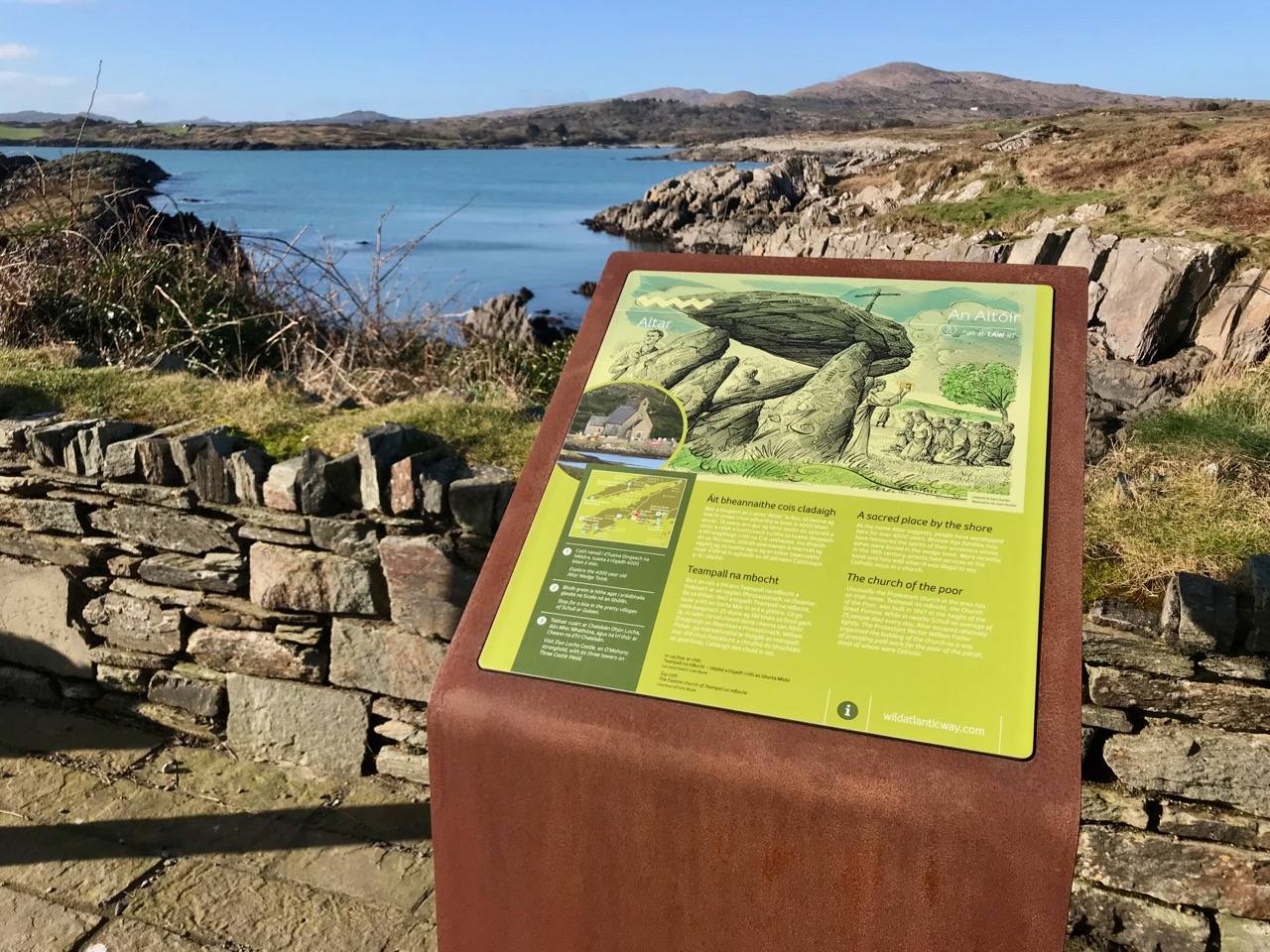
I am always alert for the ways in which our special sites are interpreted for us. I created a bit of a storm a while back when I commended the signage which has been put in place along the Wild Atlantic Way using visually strong corten steel elements (above left) supplemented more recently by (in my opinion) very well designed information boards. The image on the right above is from an earlier OPW board which explains the possible early use of the wedge tomb, while the images below show the new signage, which features the later use of the tomb as a Christian altar during the Penal times (hence the name: The Altar), with a drawing by Sam Hunter. I am struck by the way this monument has been a focal point for differing rituals spanning countless generations.

When writing about archaeological subjects I am always on the lookout for the way that antiquarians saw the sites which we are familiar with today. I had hoped that George Victor du Noyer – the subject of an excellent recent exhibition in Cork’s Crawford Gallery – might have drawn this wedge tomb when he travelled the country for the Ordnance Survey during the early nineteenth century: he may well have done, but the annotation and cataloguing of his vast legacy of work has yet to be completed and I have not found such a record. His drawings below are not of The Altar, but a portal tomb, Ballybrittas in County Wexford. Portal tombs (sometimes known as dolmens) share similarities with wedge tombs, but are earlier, dating from between 3000 BC to 2000 BC, while wedge tombs tend to be associated with the Bronze Age, which followed this period.

Cremated remains were found in Altar Wedge Tomb when it was excavated in 1989 by Dr William O’Brien, now Professor of Archaeology at UCC. We can never know exactly what the significance of these impressive structures was to those who built them. For me, I’m pretty sure that it was connected with their relationships to, and respect of, the landscapes which they inhabited, and which they invested with meaning. They must certainly have paid heed to the passing of the seasons and the continual cycles of nature, and their closeness to all of this must have given them an inherent knowledge of the paths of the sun, moon and stars. Above all, our ancestors had to understand and appreciate the environment around them, and make it work for them. In a practical sense, certainly, but also in terms of the stories they might pass on about the meaning of places.

Above – the magical landscape of the Mizen: we will never tire of it

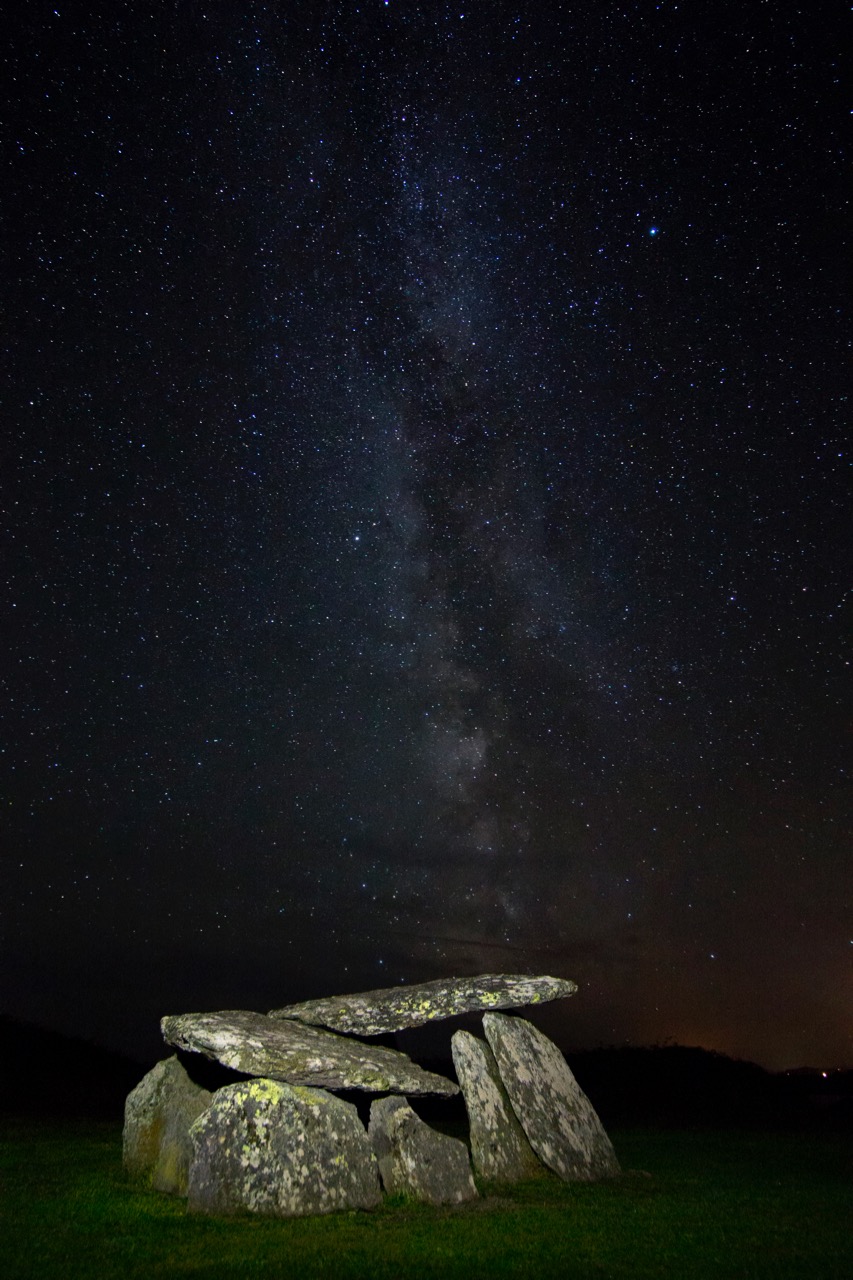
The tailpiece picture, which is from Wikimedia Commons, attributed to Lukeoc88, is a remarkable timeless view of a human construction in the setting of our Universe: Altar Wedge Tomb under the Milky Way.

Robert Gibbings

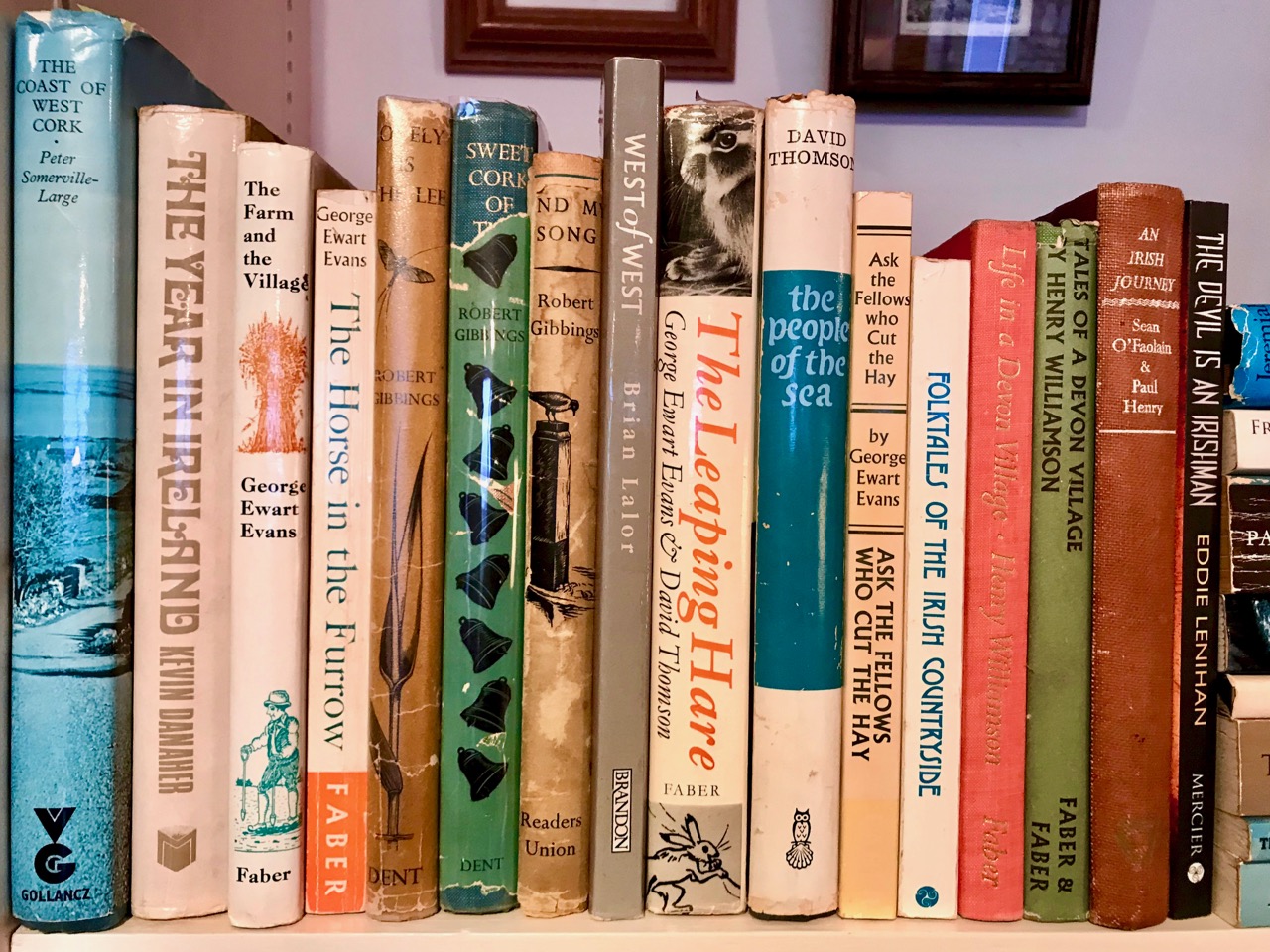
Our bookshelves in Nead an Iolair include some volumes which have travelled with me for the best part of fifty years. They include titles by George Ewart Evans, Henry Williamson, Brian Lalor, Peter Somerville-Large. Look carefully and you’ll also see some there by Robert Gibbings. Who is he?

A writer and illustrator, Gibbings was born in 1889 and died exactly sixty years ago, on 19 January 1958. He was a Cork man, raised in Kinsale, where his father became the Rector of St Multose Church. However, he was an inveterate traveller and lived most of his working life in England. Much of his work seems to exude ‘Englishness’ and – in an Irish Times article this week to mark the anniversary of his death, Alannah Hopkin writes:

People often forget that Gibbings was Irish. Brian Lalor, author of Ink-stained Hands, the definitive history of Irish print-making, was challenged by an English academic at a conference in Dublin in 2007, who refused to believe that Gibbings was Irish, as he had produced archetypal English landscapes. But his account of Gougane Barra, for example, confirms how deeply steeped in Irish myth and folklore Gibbings was.

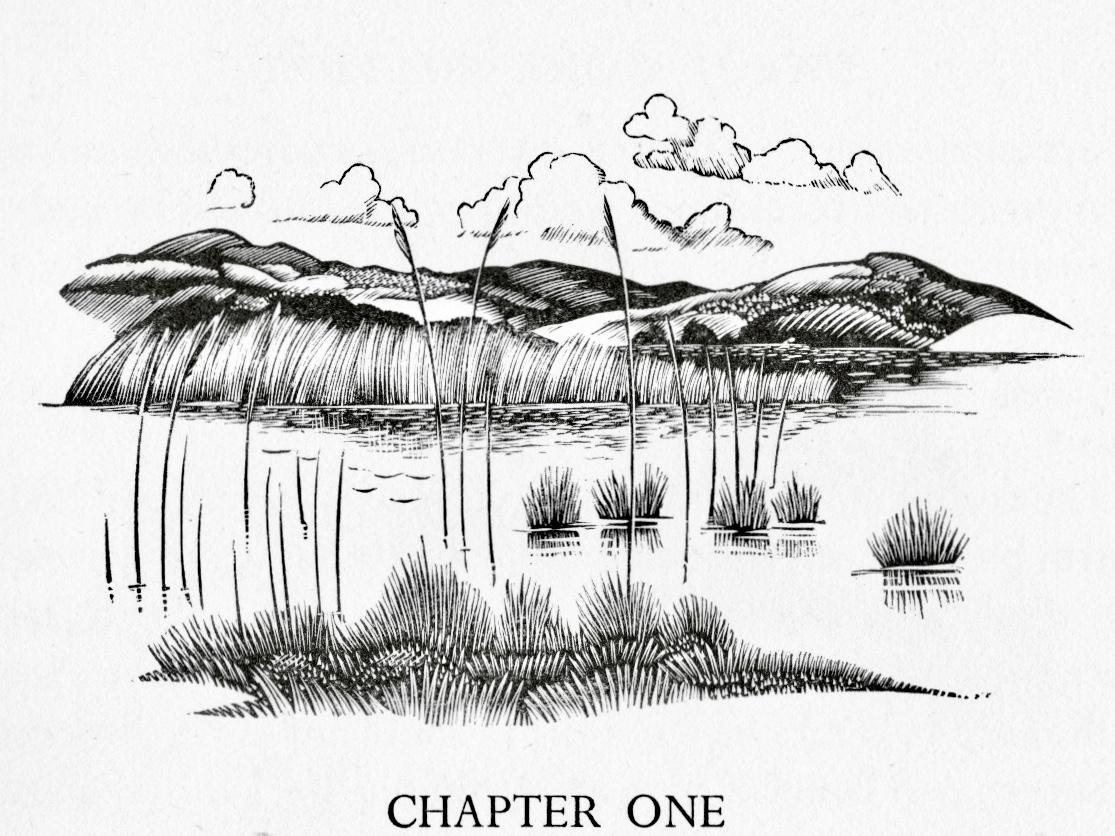
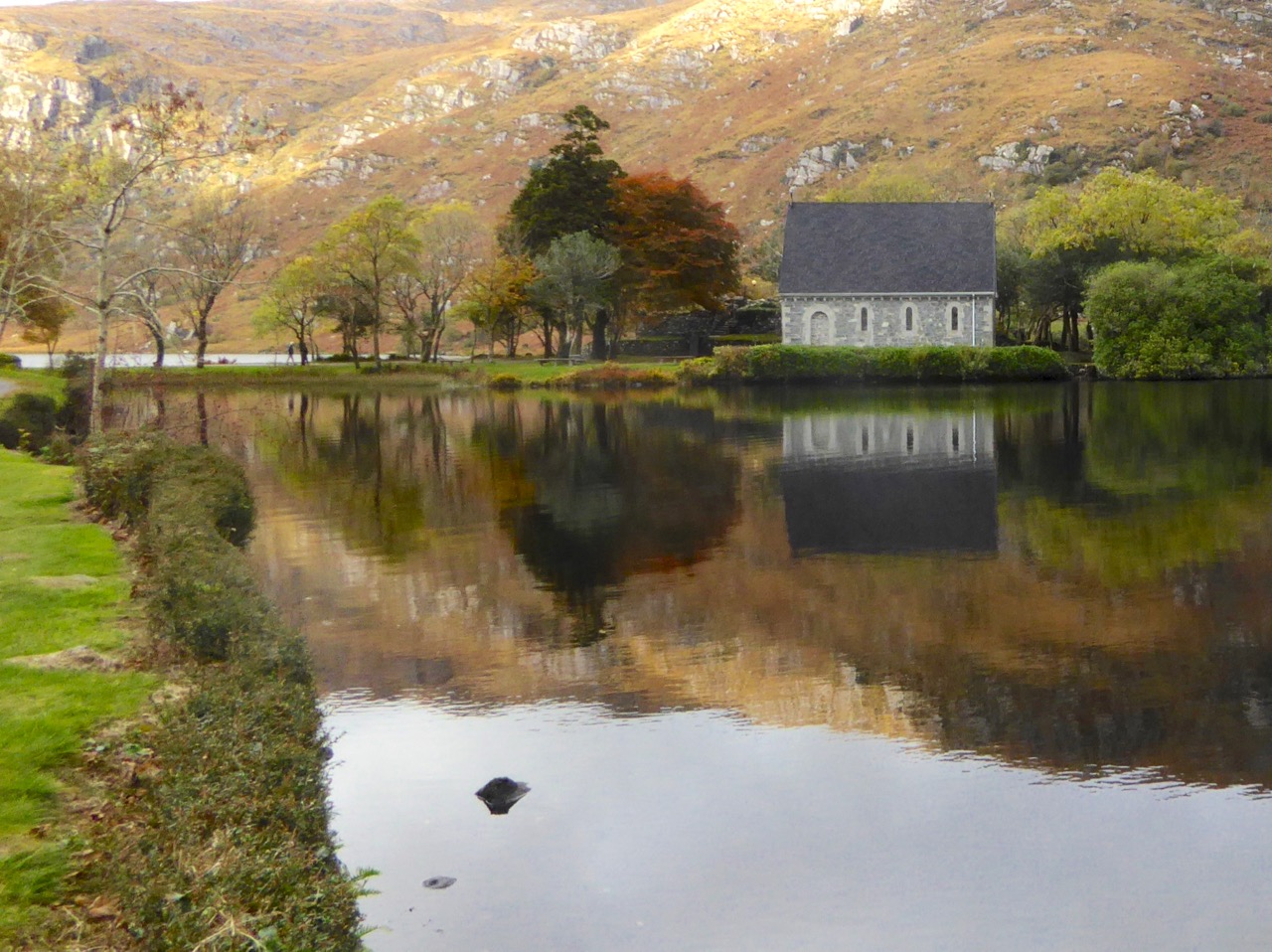
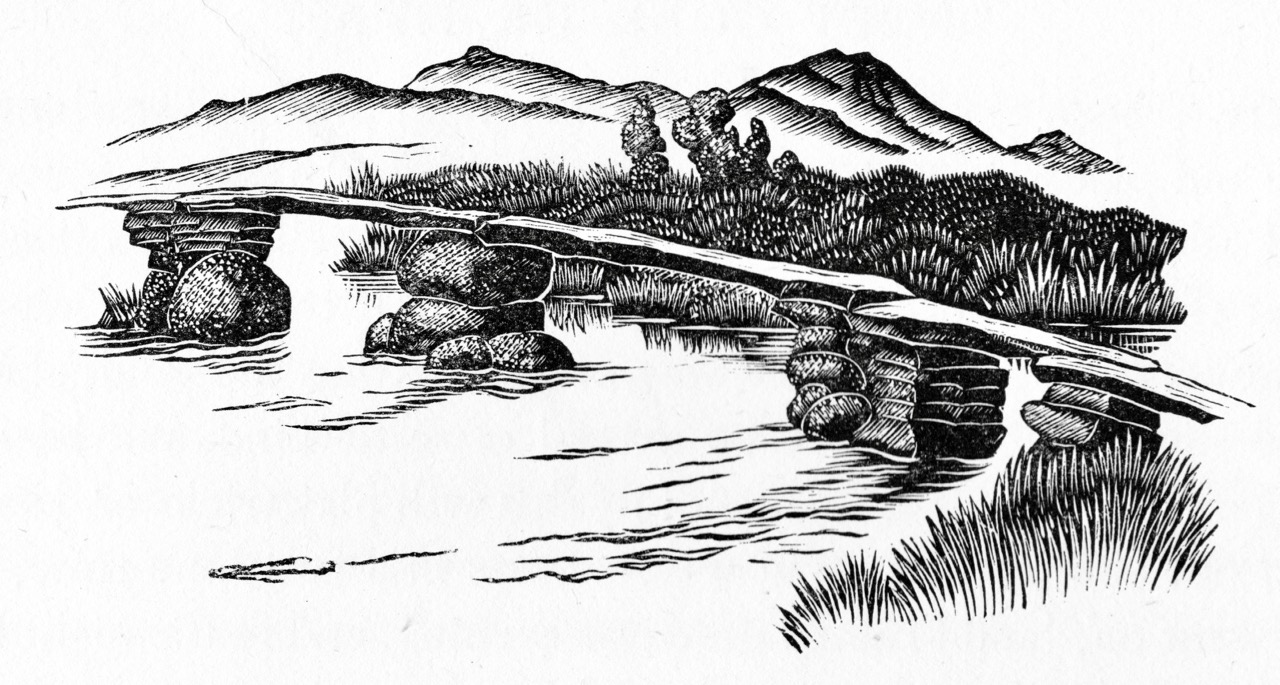
Gougane Barra in County Cork: upper image – the lake in the mountain. Centre – Robert Gibbings’ woodcut engraving of the lake which opens ‘Sweet Cork of Thee’ (1951). Lower image: a clapper bridge near Gougane – perhaps the same one which Finola illustrates in her post today

At the insistence of his parents, Gibbings studied medicine at UCC, although his ambition was to be an artist . . . writes Alannah Hopkin . . . While he enjoyed the scientific side of his studies, it soon became apparent that this big, soft-hearted man was unable to cope with the human suffering of his patients. His parents were apprehensive about his decision to be an artist, fearing, quite rightly, that it meant he would lead an unconventional life, looking at naked women, dressing untidily and consorting with social misfits . . . From 1911 he studied life drawing at the Slade in London. His contemporaries included Eric Gill, John Nash, David Jones and Mabel Annesley. He was advised to take wood-engraving classes; the technique perfectly suited his strong line and close observation of nature, which in this phase was lightly stylised.

Gibbing’s woodblock signature – used in the majority of his books – shows the tools of the wood engraver

The wood engravings of Robert Gibbings are exquisite: his eye is attuned to fine detail. His writing is also compelling: I suppose it reflects a nostalgia for past times and things gone, but it is also humorous and always tightly observant. He brings to life characters he has met in his travels.

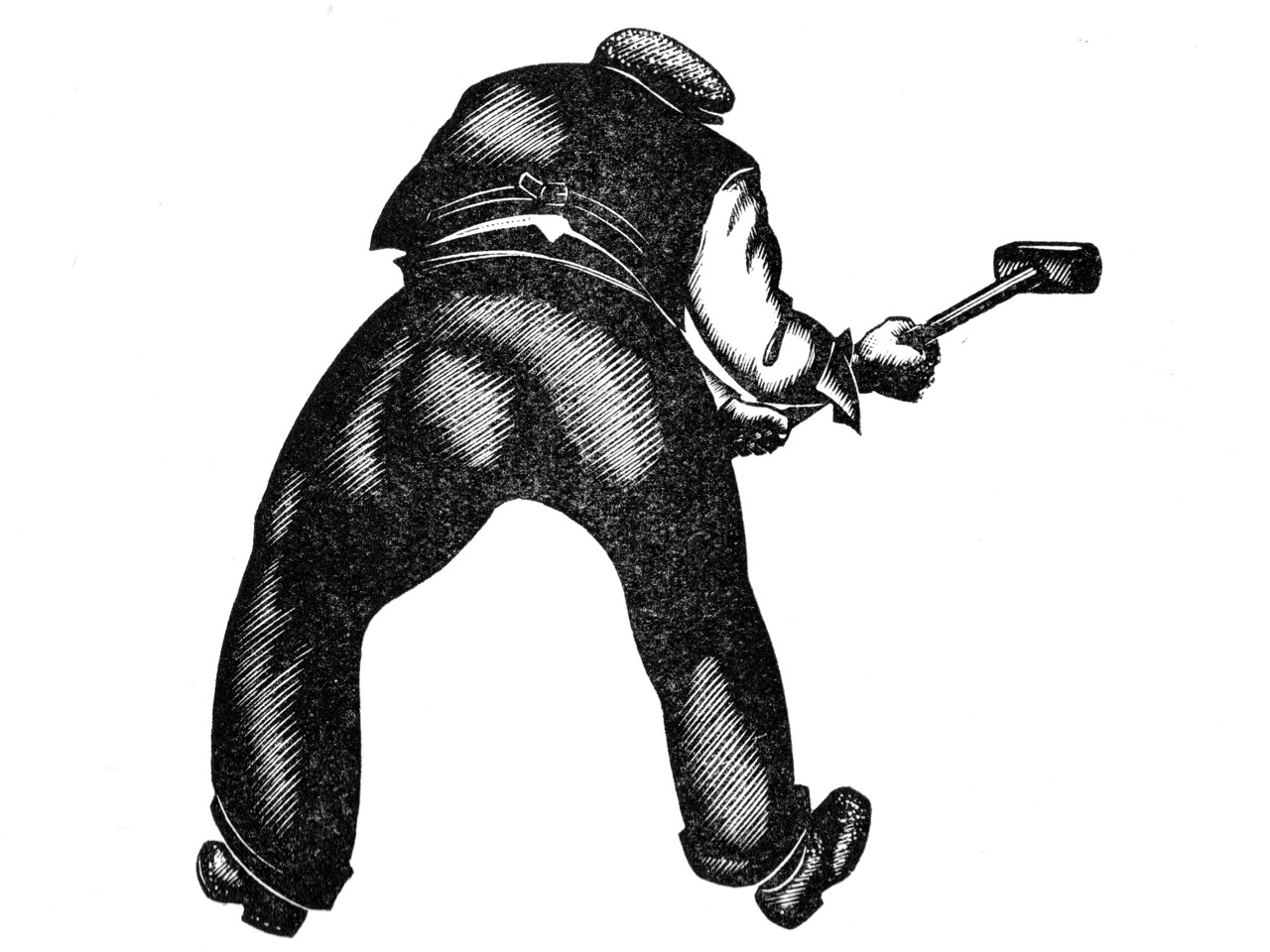
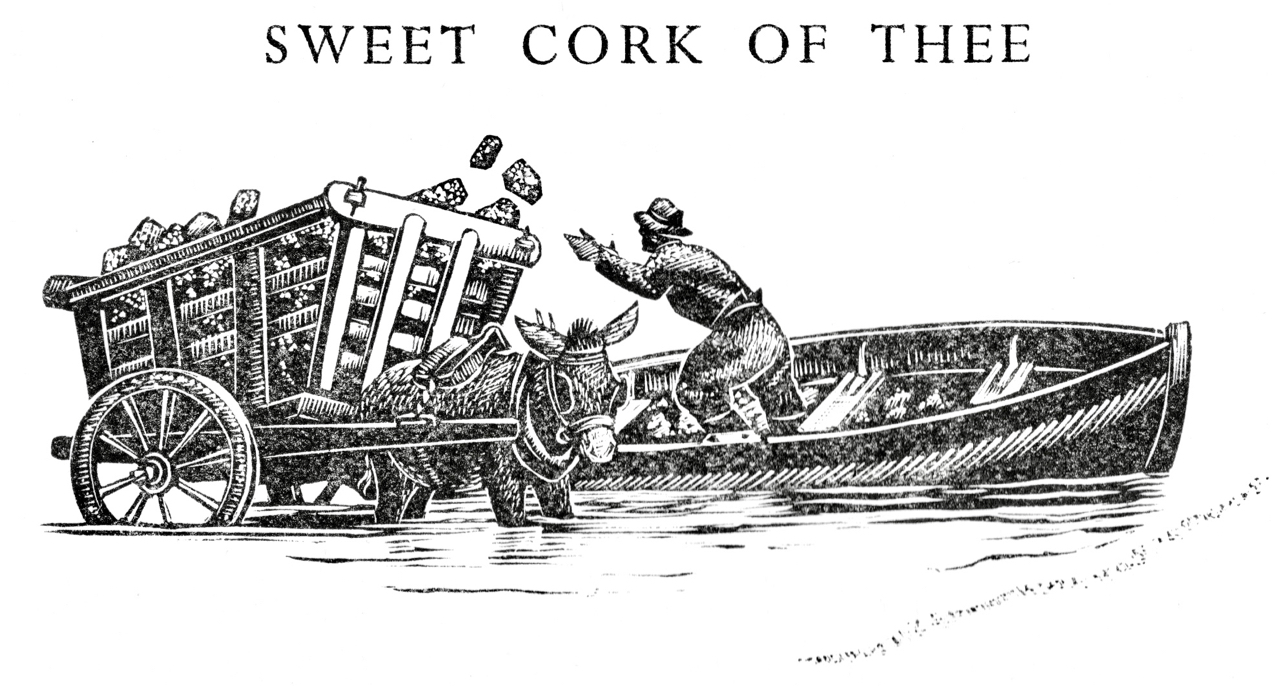
‘Paddy the Forge’ putting metal tyres on wagon wheels – from Sweet Cork of Thee

In the 1940s Gibbings attended the World Ploughing Contest, held for the first time in England, at Shillingford on Thames:

Bowler hats and highly polished riding boots had been the order of the day at the Arab Horse Show: here among the shires it was rubber-boots, corduroy caps, and hats of weathered tweed. ‘I think you’re Irish,’ said a man to me as I was admiring a pair of Pedigree Suffolks resplendent with brasses that told of former triumphs. ‘What gives me away?’ I asked. ‘The tilt of your hat,’ he said, ‘I can always tell an Irishman – he just sticks it on his head and forgets it. Look at some of these fellows – caps, hats, pulled up here, pushed down there – self-conscious all of them. Look at those two fellows in the pork-pie hats – I wouldn’t trust that one on the right, he wears his too straight, has to – it’s psychological.’ ‘Bishops wear their hats straight,’ I said. ‘Same idea,’ he answered. ‘Suggests the narrow path, only they keeps to it.’
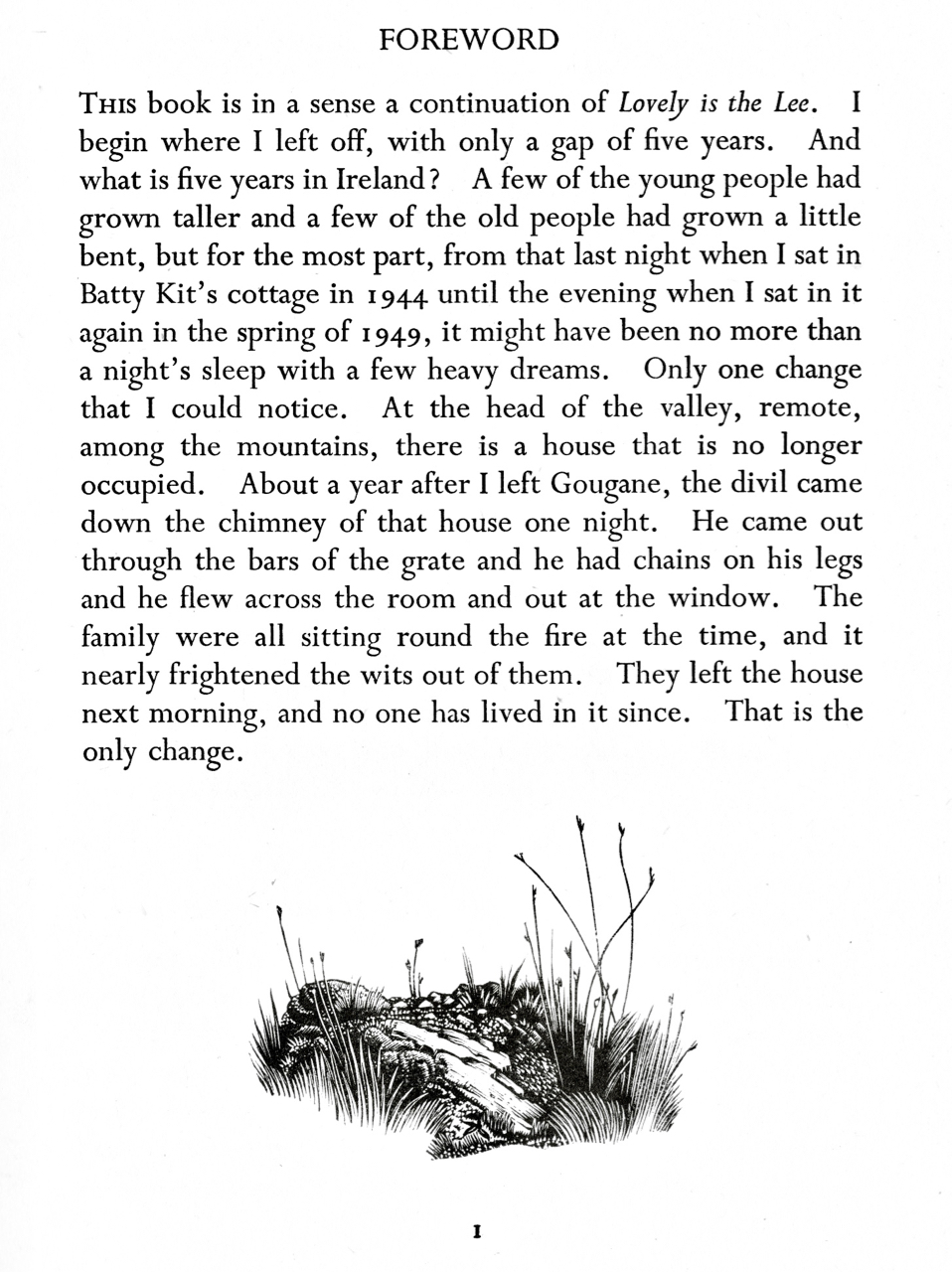
For Robert Gibbings, text and illustration were always of equal importance. Each page of his books is set out as an art work, to be enjoyed by the two senses of sight and feeling – the feeling engendered by his descriptive writing. Here is the Foreword to his second ‘Irish’ book – Sweet Cork of Thee:


The illustrated Foreword to Sweet Cork of Thee, the second of Gibbings’ books which describe his travels in the land of his birth

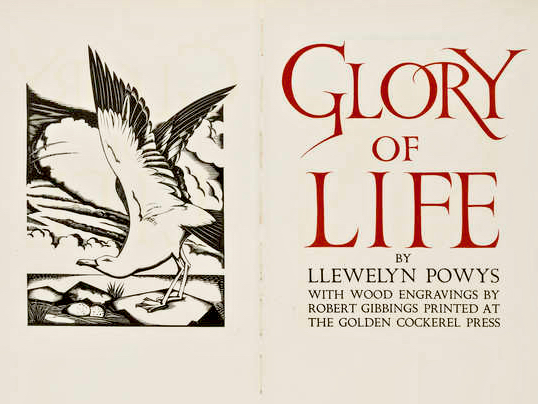
Throughout his life, Gibbings immersed himself in travelling and in art. His best known books are his ‘river’ books, beginning with ‘Sweet Thames Flow Softly’, published in 1940 and, at the end of his life, the sequel: ‘Till I End My Song’ completed in 1957: he died at the age of 68. The rivers he explored included the Thames, the Wye, the Seine and Cork’s River Lee. Between 1924 and 1933 he owned and ran the art-based Golden Cockerel Press. Founded in 1920, its earliest prospectus proclaimed:

This press is a co-operative society for the printing and publishing of books. It is co-operative in the strictest sense. Its members are their own craftsmen, and will produce their books themselves in their own communal workshops without recourse to paid and irresponsible labour.

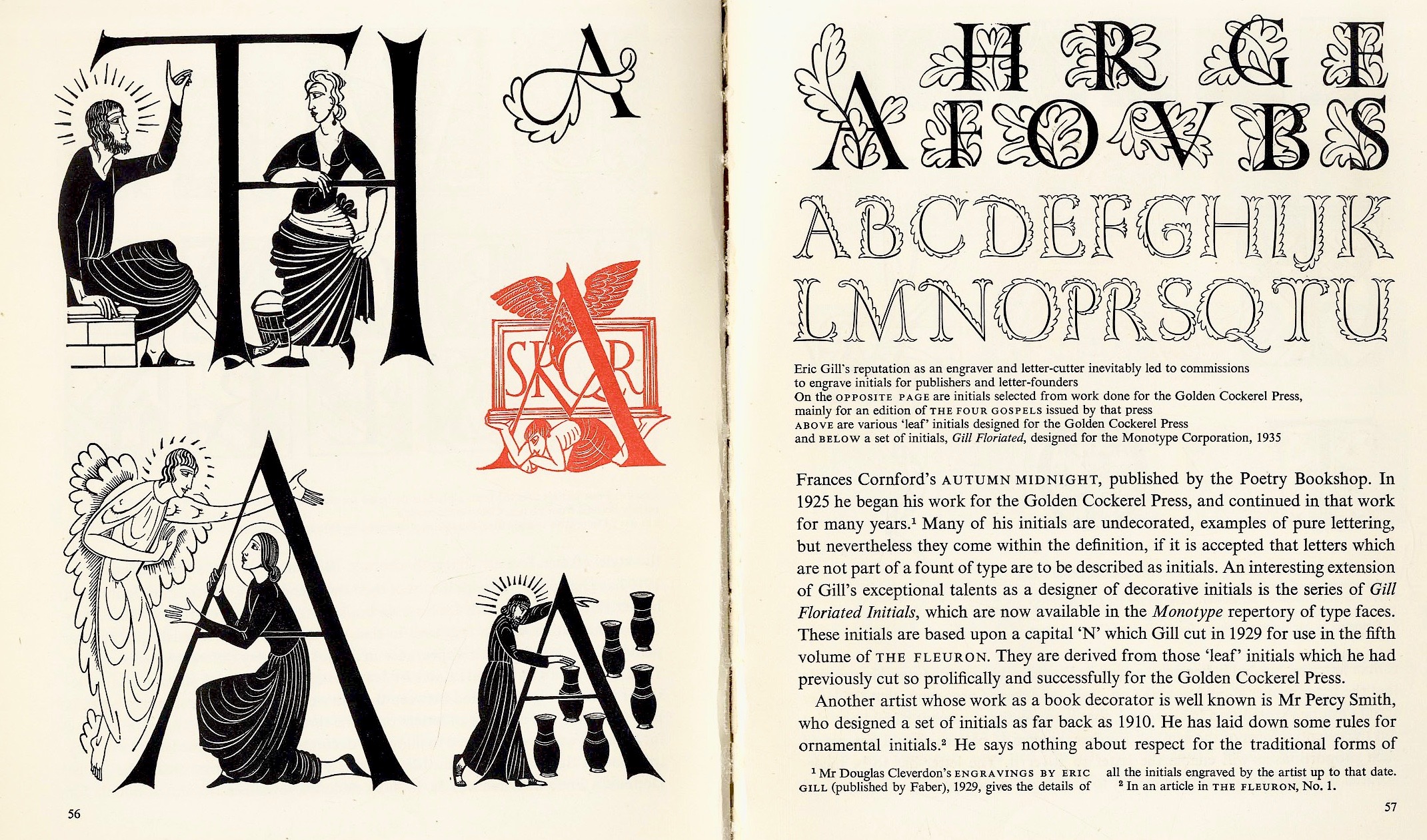
Work from the Golden Cockerel Press: typefaces by Eric Gill

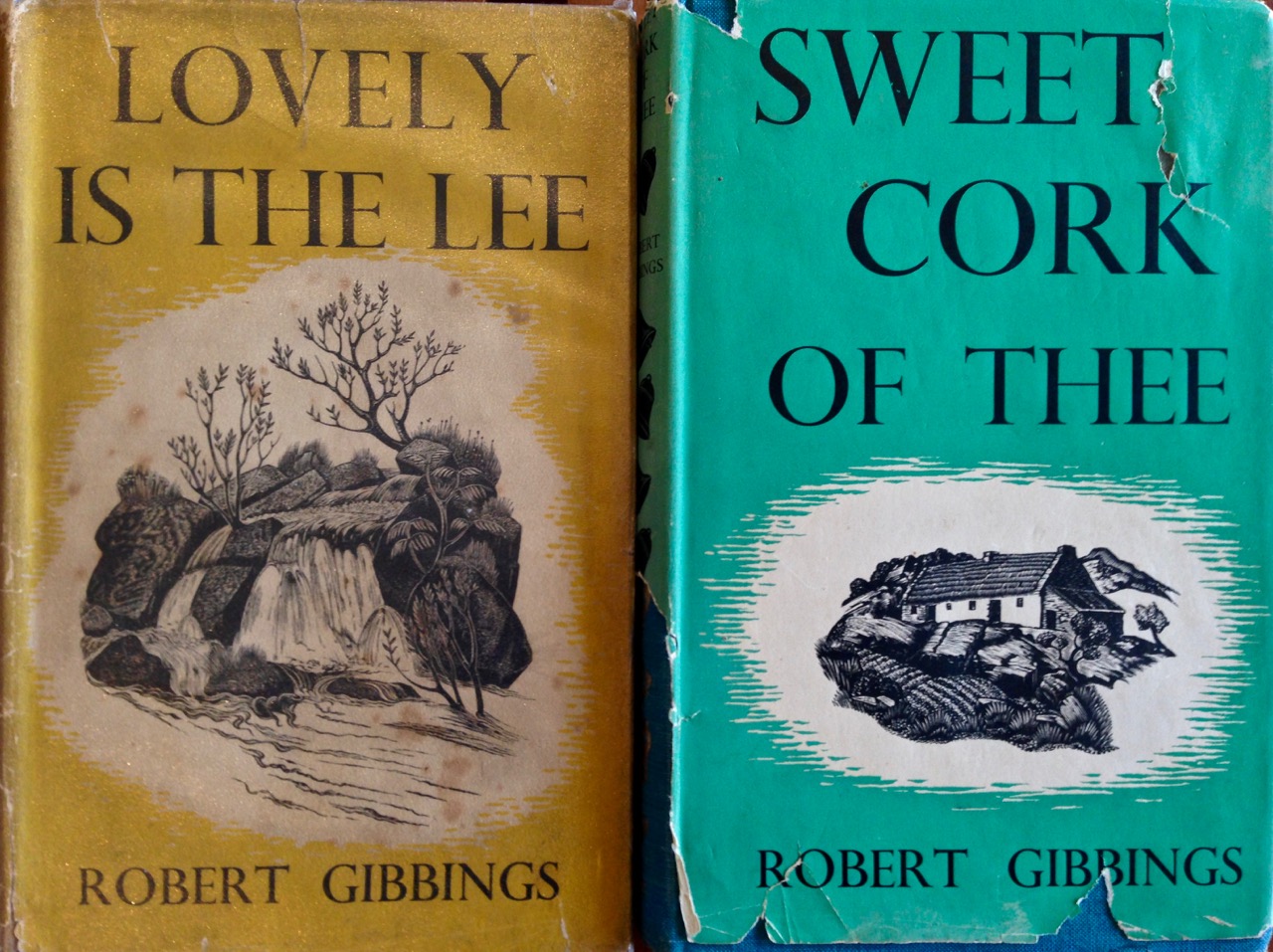
It is the two ‘River Lee’ books that will concern those interested in all things Irish. My copies (both first editions) were given to me by Danny who I first met when I moved to Devon in the 1970s. Danny was determined that I was going to fall in love with Ireland – and it didn’t take me very long! Eventually Danny – who hailed from Limerick but, like Gibbings, led a restless life during which he travelled the world – settled in Devon and then moved on to West Cork.

Danny gave me these books to encourage my interest in Ireland. At the time he told me that ‘these were all I needed’ to get to know his country. I think he was right!

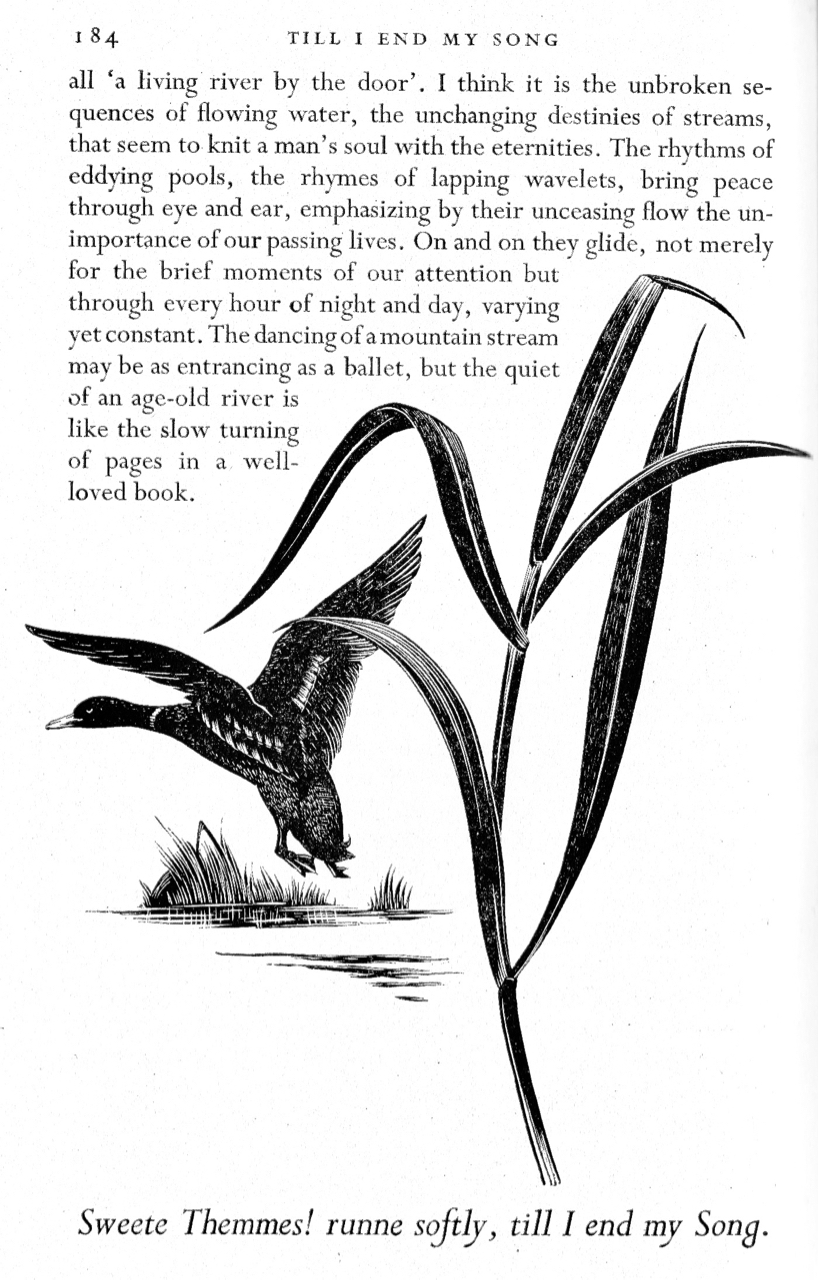
I encourage anyone who follows Ireland to read these books – and anyone who appreciates art to get to know the work of Robert Gibbings who died just fifty years ago. I will ‘play out’ the man by quoting these lines from his aptly titled ‘Till I End My Song’, and include an image of the last page of this, his final book.

Poets throughout the ages have sung of the peace of gently running streams. In the sacred writings a river is used constantly as a symbol of peace: ‘Then had thy peace been as a river’, ‘He leadeth me beside the still waters’. Throughout our own literature flows the timelesss tranquility of rivers. Spenser’s Prothalamion is borne on the waters of Sweete Themmes. The tortured mind of Swift longed for a river at his garden’s end. The gentler Stevenson wishes to all ‘a living river by the door’. I think it is the unbroken sequences of flowing water, the punching destiny of stream, that seem to knit a man’s soul with the eternities . . .

Buzzing and Humming

It’s a great title for an art exhibition: Buzz and Hum, and you’ll be drawn into the gallery – Uillinn in Skibbereen – by the glimpses of strong colour seen through its doors and windows. If you like colour (as I do) you will remember the memorable exhibitions we have seen in Skibbereen over the past few months: at Uillinn – Scissors Cut Paper Wrap Stone, West meets West (the work of Cornish Artists), David Seeger: 80 Moving Still – and the wonderful William Crozier: The Edge of the Landscape. At the O’Driscoll Building at Levis Quay in the summer we also saw the excellent retrospective of the work of West Cork Artist Terry Searle.

Colourful art shown in Skibbereen, 2017 – clockwise from top left: Jennifer Mehigan; David Seeger; Booth, Lanyon and Lattimer; Terry Searle and William Crozier

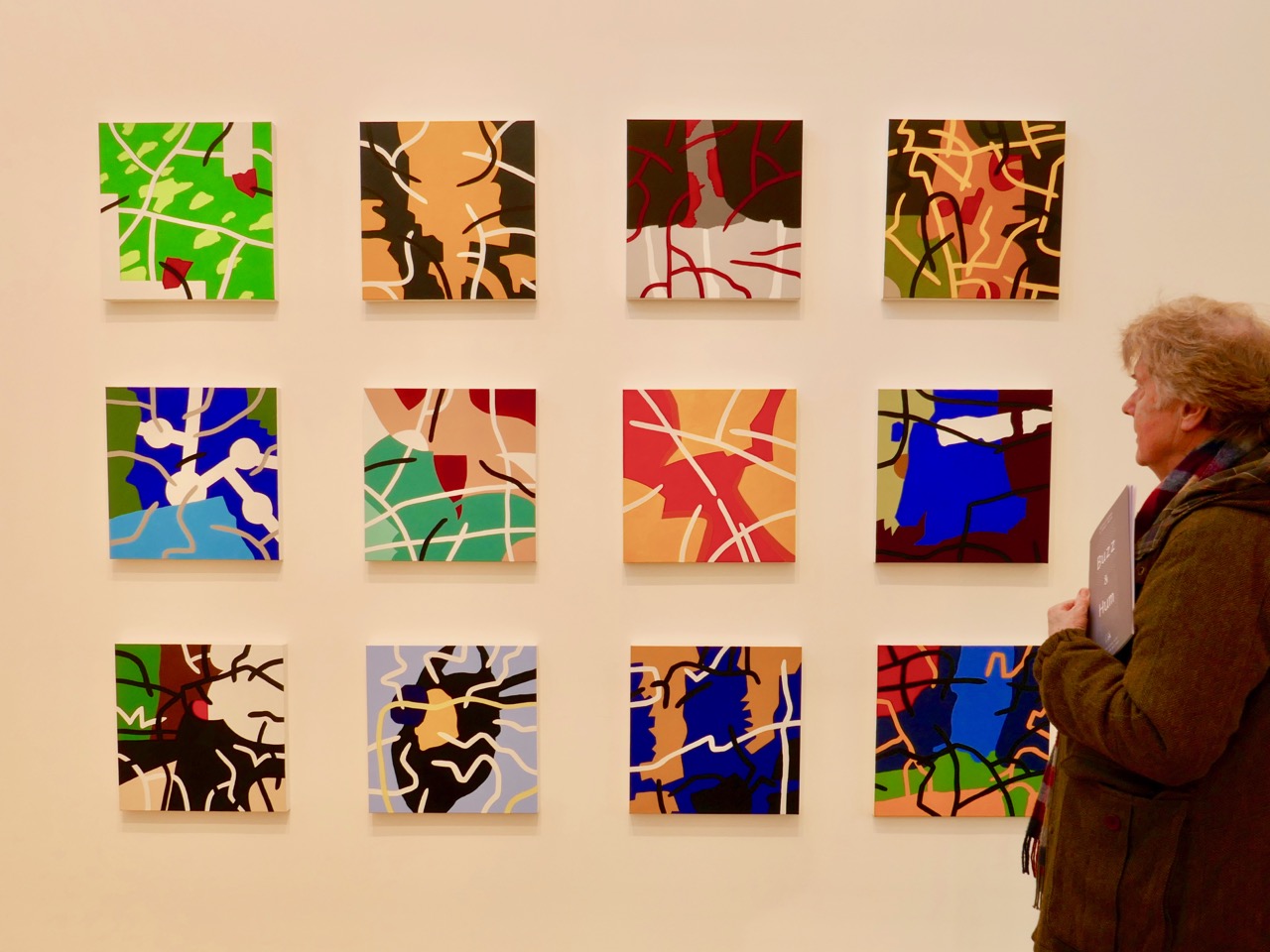
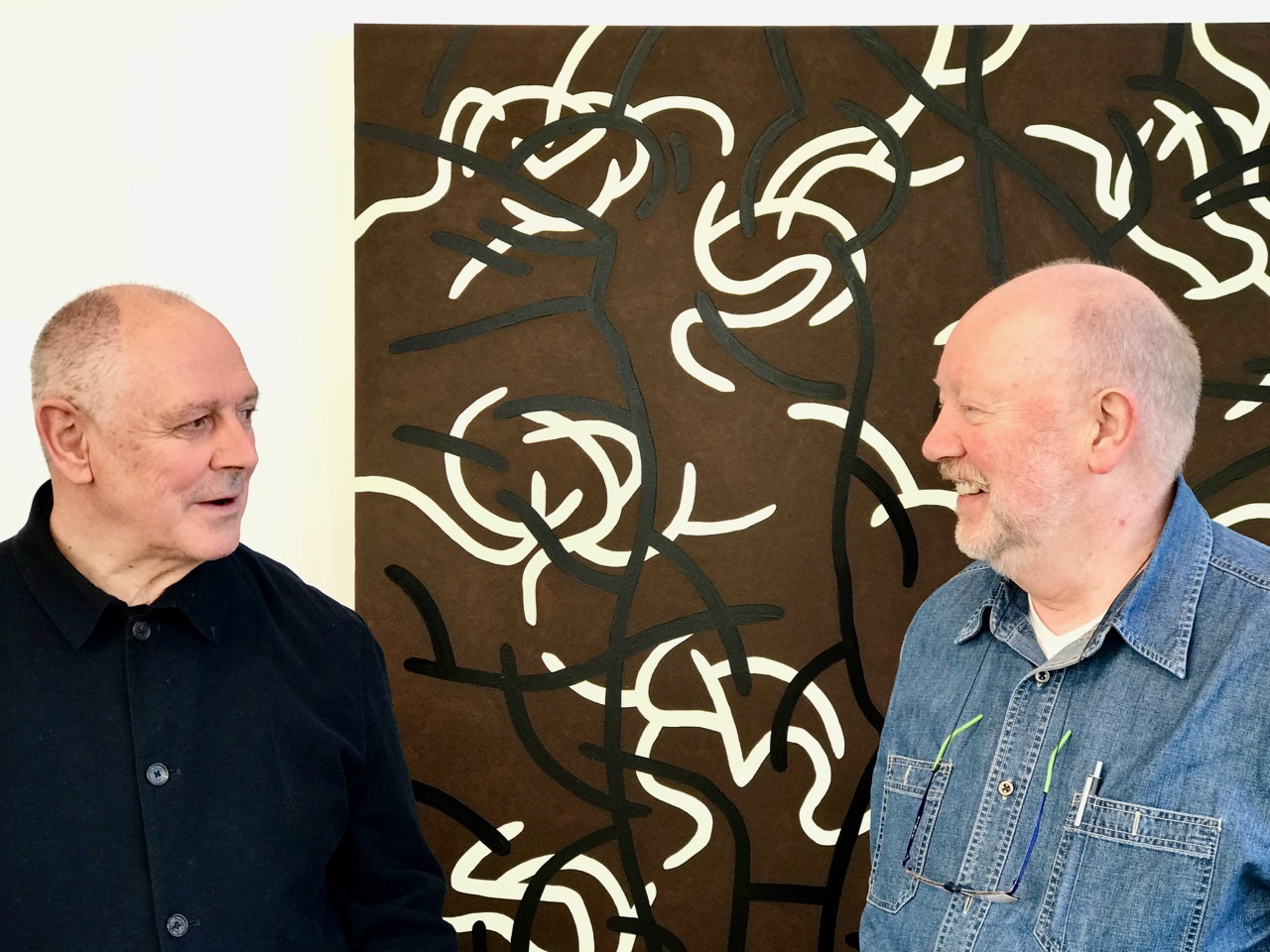
Uillinn’s first exhibition of 2018 is a stunning outburst of colour and composition, the non-objective accomplishment of two artists who have different approaches, different philosophies, yet allow their work to hang together – literally – and find balance with each other.

Upper – the smaller ‘Locus’ panels by Samuel Walsh form an astonishingly rich group in this juxtaposition; lower – Gallery II at Uillinn, awaiting the Artists’ Talk, creates a dramatic sunlit setting for Richard Gorman’s  3 metre square ‘Shuffle’

. . . The title of this exhibition by the two artists who have been familiar with each other’s work for nearly 30 years, derives from an insight arrived at by one, then happily endorsed by the other, regarding a persistent distinction between their respective bodies of work . . . writes Caoimhin Mac Giolla Leith in her introduction to the exhibition catalogue . . . Richard Gorman’s observation that his colleague Samuel Walsh’s paintings generally ‘buzz’, while his own tend to ‘hum’, was not intended to occlude the fact that they otherwise have much in common. What they share most significantly is a fidelity to the pursuit of abstract painting over the course of three decades during which the fortunes of this form have varied considerably in different parts of an increasingly globalised art world . . .

Buzz and Hum – clockwise from top left: Walsh, Locus II (Ladakh); Gorman, Kan Run; Walsh, Autumnus X (Bénodet); Gorman, Kan Fly

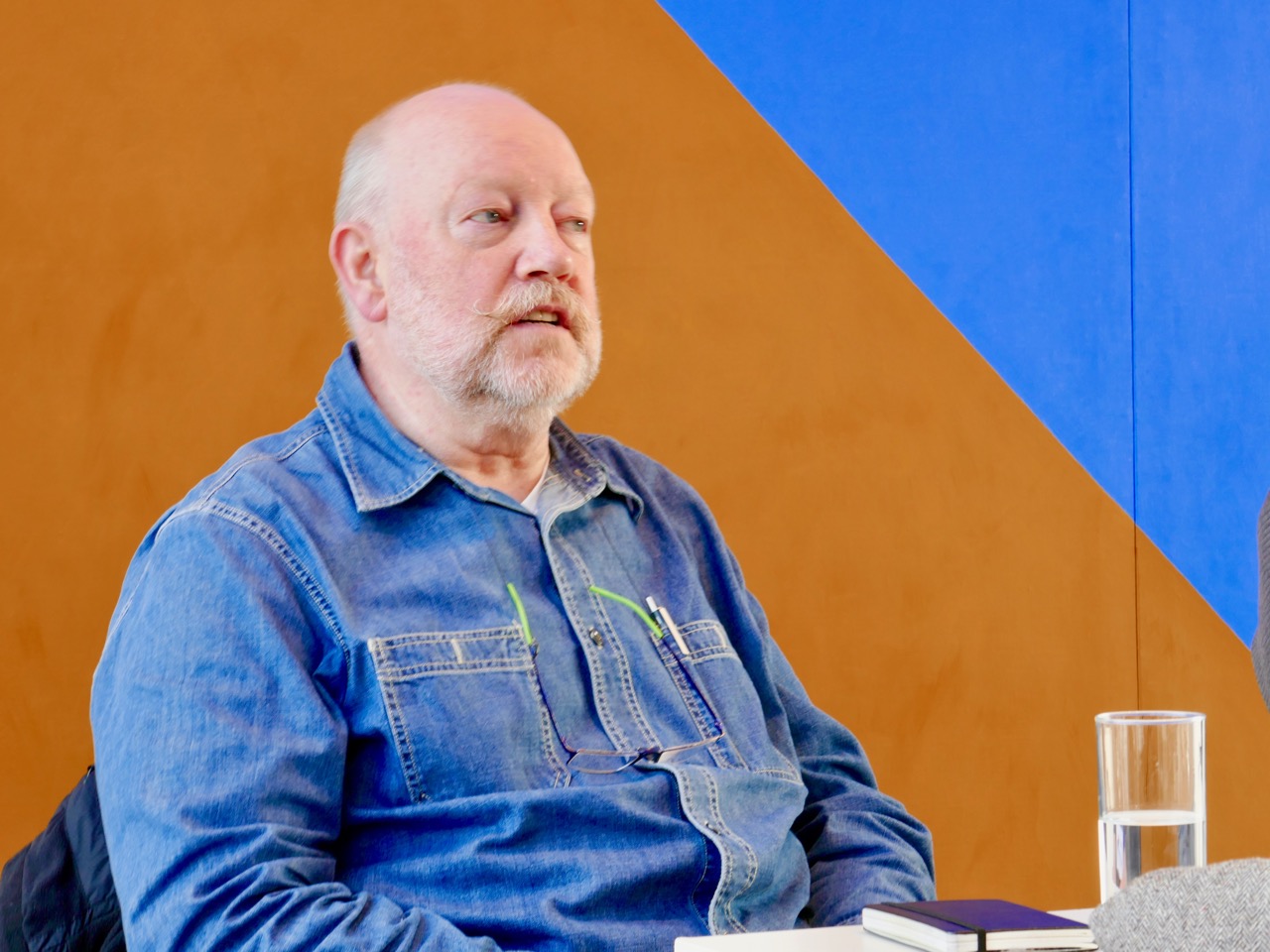
The gallery talk at Uillinn was partly a dialogue and partly a presentation by each artist on their individual approaches to their work and the techniques they use: it was a gentle and informative amble, and it was clear that each respects the other. I always wonder whether I should come away from such encounters with insights as to what the work means. I don’t know any better, now, what this work ‘means’ – but, having heard the artists speak, I do sense that they don’t want it to ‘mean’ anything. It’s visual exploration, and I sense the artists want us to view their works completely as visual experiences: I don’t have a problem with that approach, in fact I like to engage with any artwork with no prior preconceptions. I thoroughly enjoyed the dynamic experience of walking through Uillinn and absorbing these works, all of which are – in my opinion – of a consistently high standard. I could easily live with any or all of them.

Samuel Walsh (upper image) talked of how he records events and places in a number of notebooks (lower image) – making an intricate series of lines; his paintings will extract and build on these records

Richard Gorman (upper image) explained how important the process is to his work: each shape is fully considered and placed: this becomes an anchor for the next shape. The continuity follows, not only in each individual work but through a whole series of works. Gorman’s canvasses have been shown in Castletown, Co Kildare (lower images), and I was intrigued to see how the paintings interacted with and related to the Palladian setting

I’m hoping that this little review will have whetted your appetite for the work on show in Skibbereen. It’s well worth looking at the whole exhibition. It runs at Uillinn until 20 February: don’t miss it!

Northside

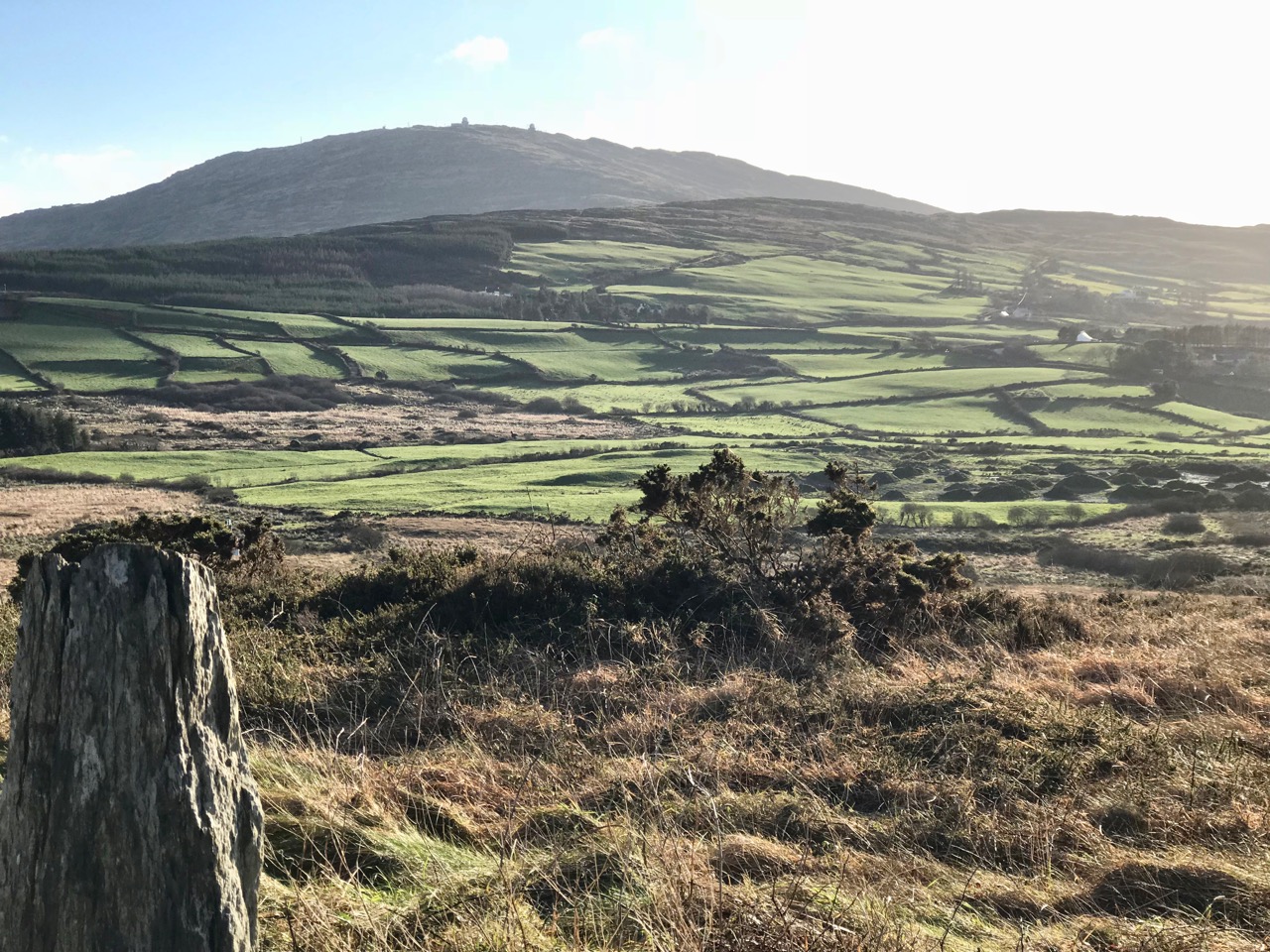
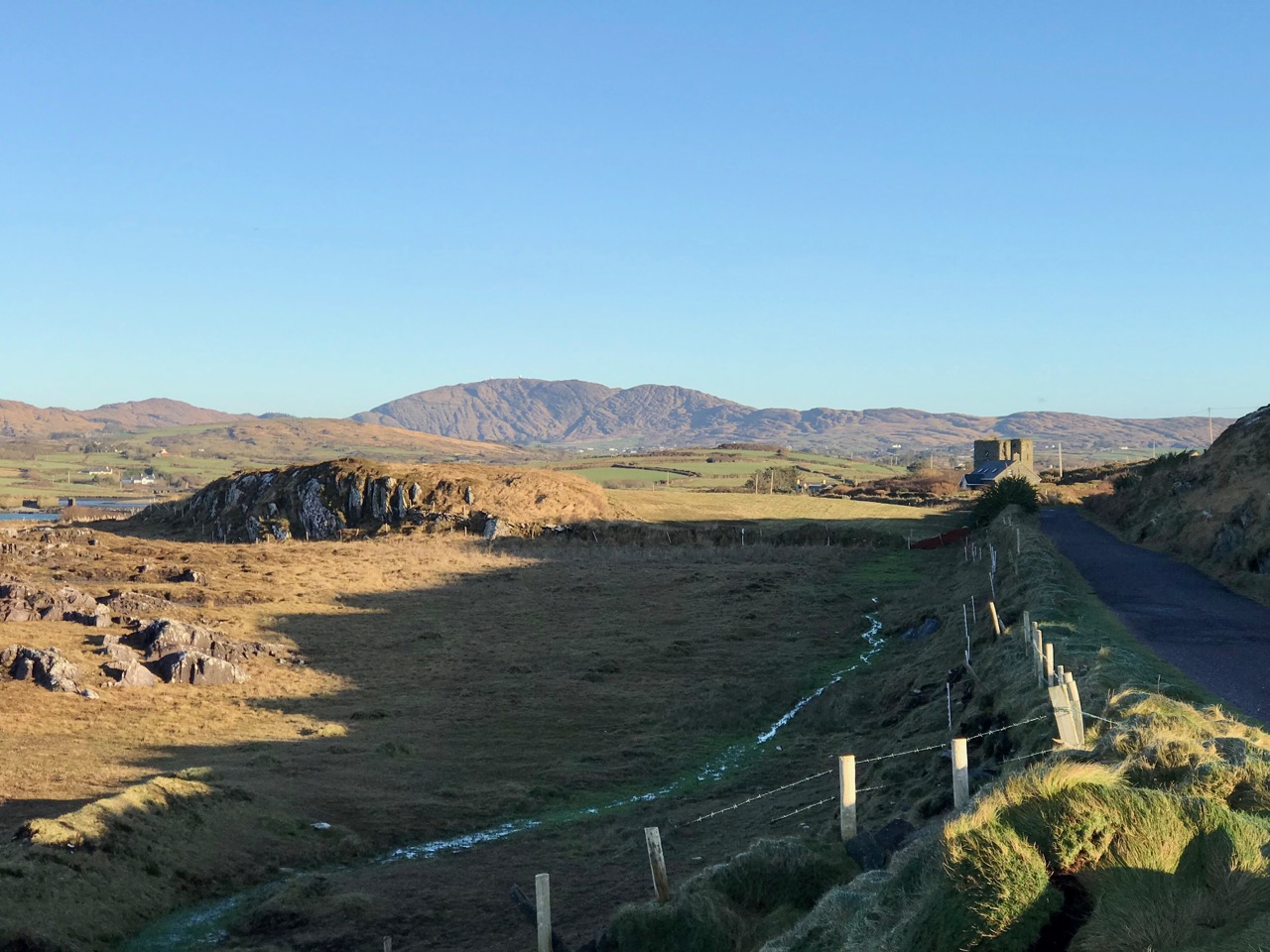
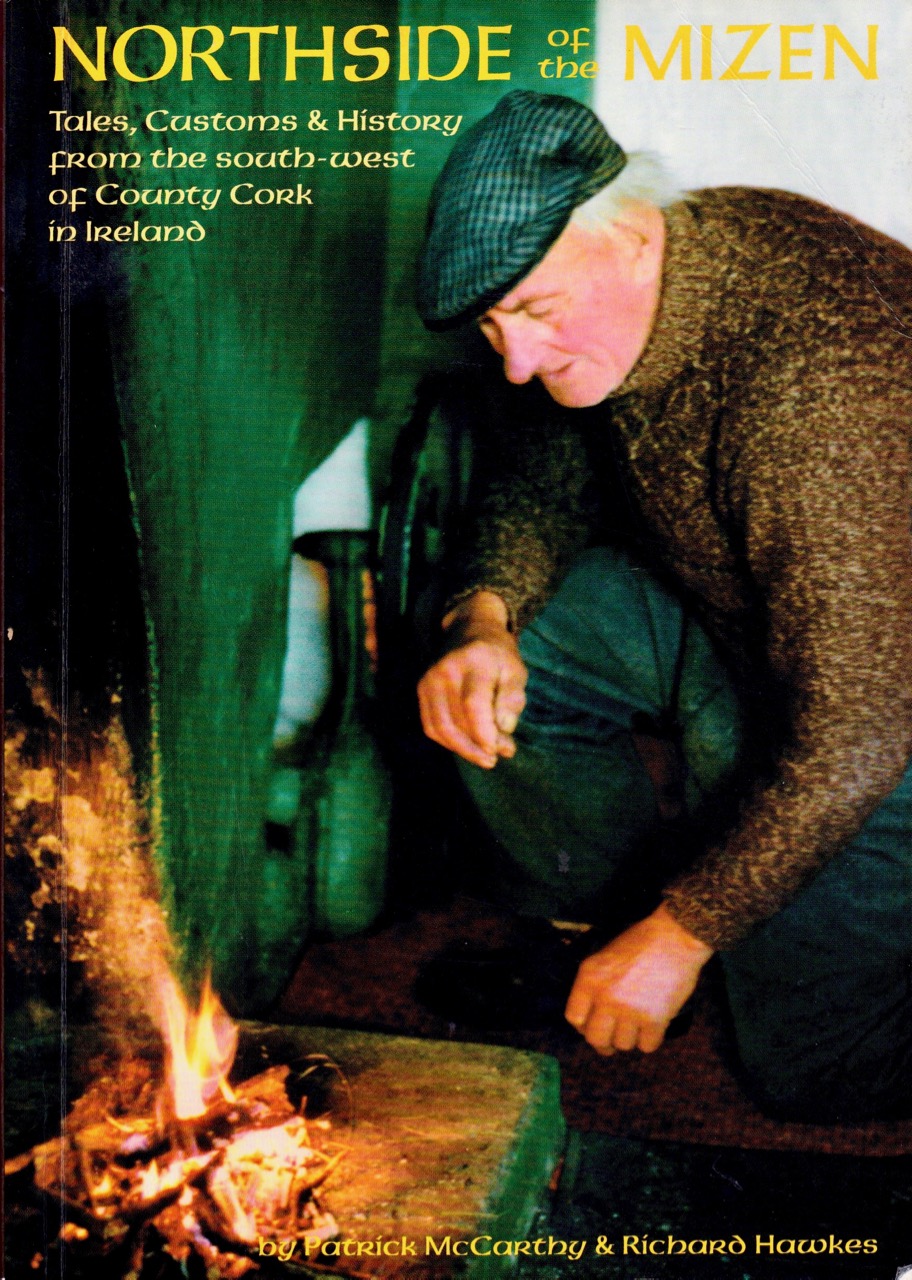
It was a perfect start to the year – a crisp, transparent January day when the whole landscape was set out before us in meticulous sunlit detail. We determined that our own Mizen terrain would begin our 2018 posts. Finola reached for her camera; I took down from the bookshelves an old stalwart: Northside of the Mizen by Patrick McCarthy & Richard Hawkes, 1999, and we headed out for Dunbeacon and all points west!

. . . Welcome to the Northside ‘The Northside’ is tucked away in the remote and most south-westerly point of Ireland. It is a place of wild beauty, with hills to the back, overlooking Dunmanus Bay. In the past it offered a harsh living. where man has protected himself from the elements blown in from the Atlantic and where one person often relied on another for survival. It gave a camaraderie that can rarely be found today.

(all quotations are taken from Northside of the Mizen)

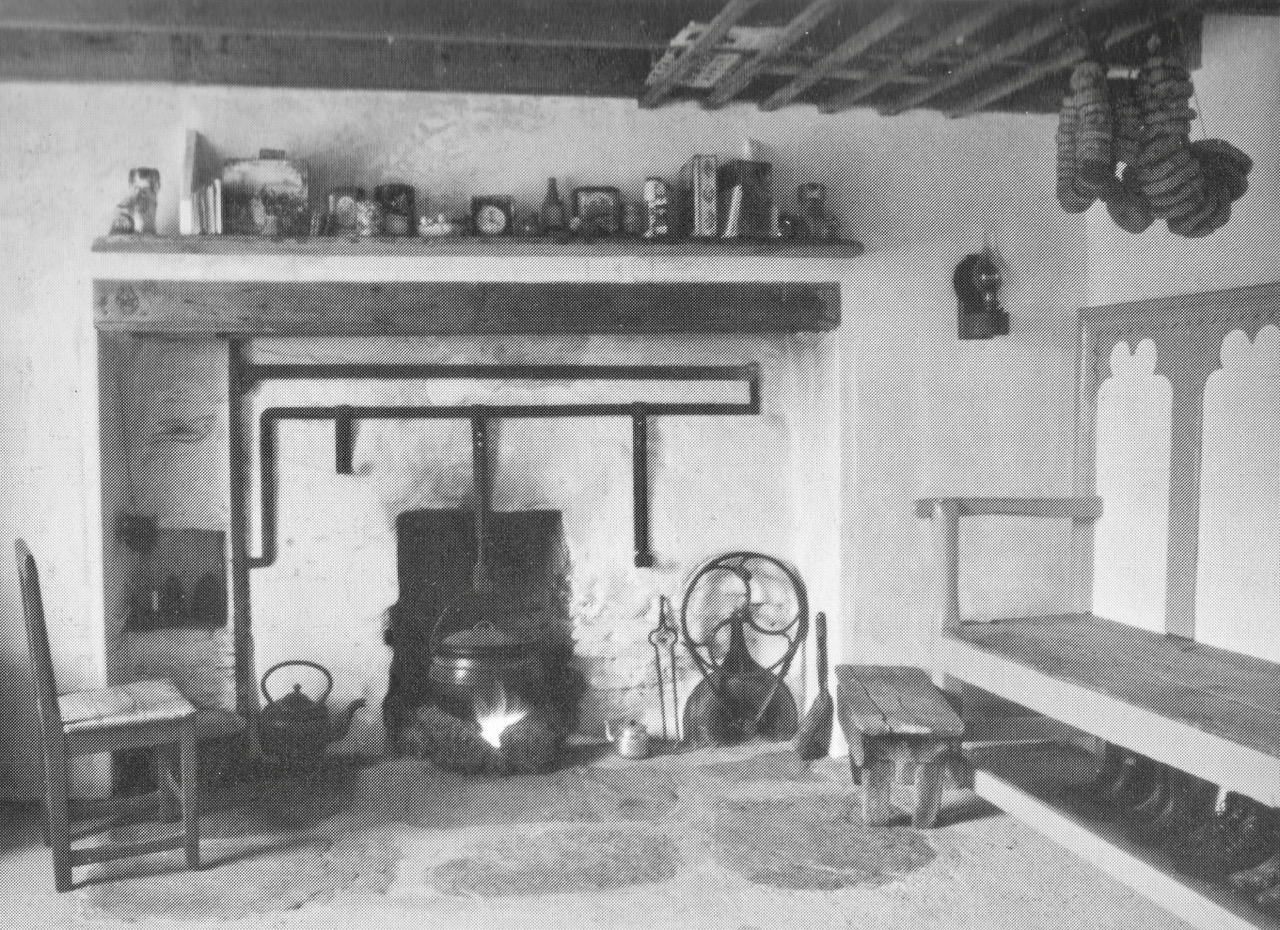
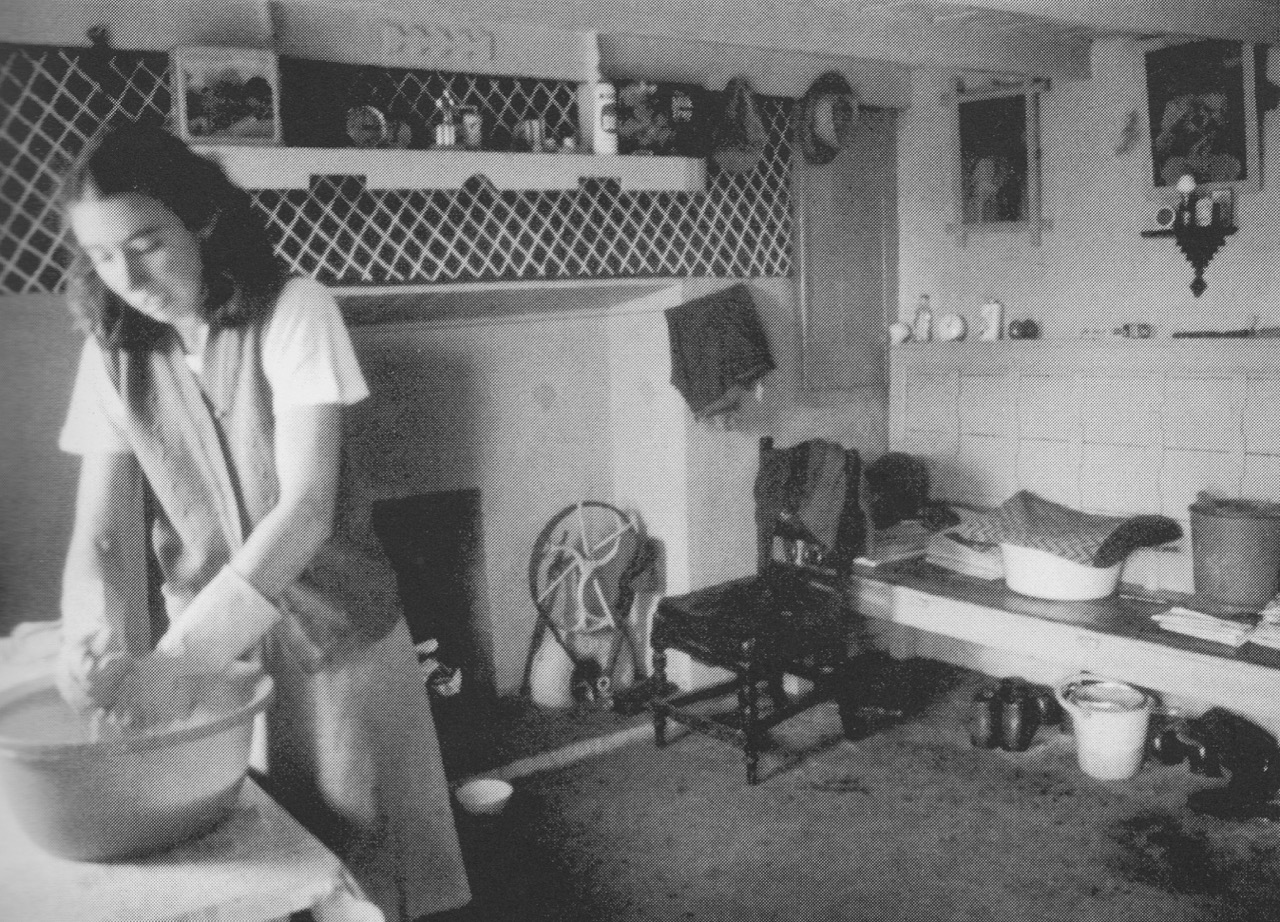
. . . January A new year and the cycle of passing months began again. With the weather at its worst, there was little to do on land or sea. Jobs around the home and haggard, or repairs to ditches and gaps on the farm were carried out. The house provided shelter and it was a time to be by the warmth of the turf fire for the long nights, whether at home or out scoriachting.

The heart of the home – Northside kitchens. Lower picture, Bridget McCarthy 1977. All early photos are taken from Northside of the Mizen

. . . Scoriachting Throughout the year, scoriachting (visiting neighbours) at night was the custom and in the winter the warmth of the open fire was the focus for games, songs and stories… Only Saturday night was not a night for calling to friends, as you would have to get ready for Mass early next morning. Different houses in the townlands would be known for their own form of entertainment; for example, the Coughlan’s (the Kit’s) for talk of people and who was related to whom, the Courcey’s and the Scully’s for cards, the Hodnett’s for games and tricks to test your wits and for a bit of harem scarem.

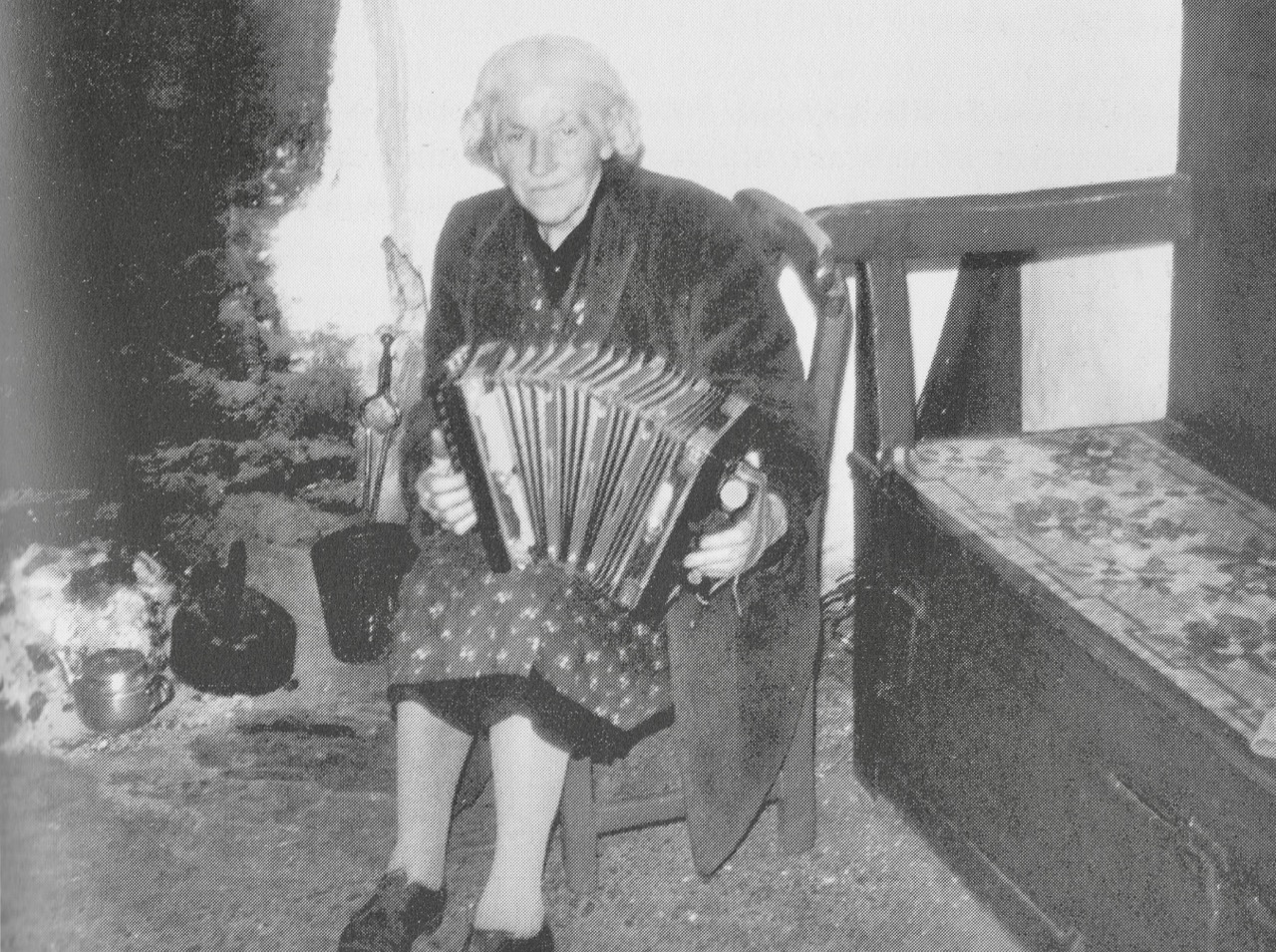
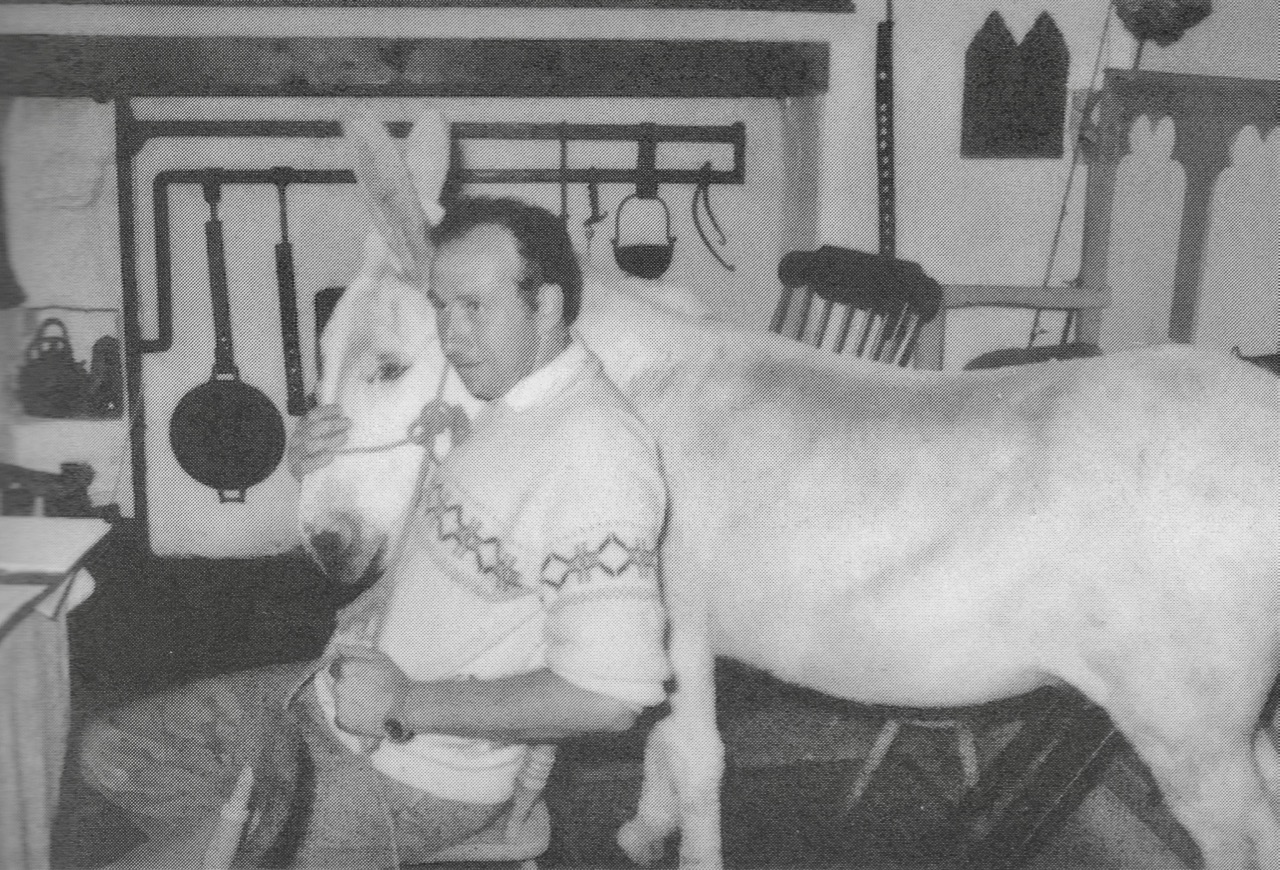
Harem Scarem? Upper – ‘Agnes O’Donovan at her fireside, 1969’ and lower – ‘Michael and Tom McCarthy out scoriachting’

. . . If you were a pipe smoker and you walked into a house where a man was smoking, he would offer you the pipe for a few pulls. When handing the pipe back you’d say, “The Lord have mercy on the dead.” Women would occasionally smoke a pipe but preferred snuff. Often the night’s scoriachting would start with the Rosary and two candles would be lit. One Sunday night in the nineteen-thirties, at the O’Donovans in Dunkelly a lad pegged (threw) a cap at one of the candles and quenched it. Danny O’Donovan said that it was a queer thing to happen in the house of God, to which the reply came, – “There’s a great deal of difference between you and God!” That was the end of the Rosary that night!

. . . A night would start with games, blackguarding (horseplay) and sometimes dancing, then progress on to songs and poems. Storytelling was the preserve of an evening by the fire. With the flames flickering and the wind and rain howling like the Banshee, the imagination of the storyteller and his forebears was let loose on a delighted and spellbound audience of children and adults alike. this, in turn, would lead to stories of a more superstitious nature, into a world of small folk, púcas (sprites), mermaids and of people’s misfortune when they interfered with the fairy ways.

. . . If the night was black as you made your way home and you couldn’t see where you were going, it was a good idea to call on the little people to help you. To do this you took a piece of clothing off, turned it inside out and put it back on. That gave you the sight back and you would find your way. It was also wise to carry a twig of hazel as it would protect you from the not-so-good little folk and get you back home safely!

. . . The last job of the night was to build the fire up and cover it with ash, so as to keep it red for the next morning. It was bad luck to let a fire go out, and it was said that many of the hearths had the same fire for generations.