Shenanigans

running fox

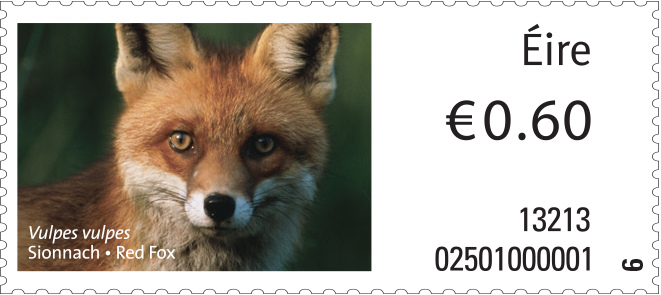
The word shenanigan (a deceitful confidence trick, or mischief) is considered by some to be derived from the Irish expression sionnachuighim, meaning ‘I play the Fox’. That’s by no means the only definition of shenanigan that you’ll find, but – for me – it’s a good one.

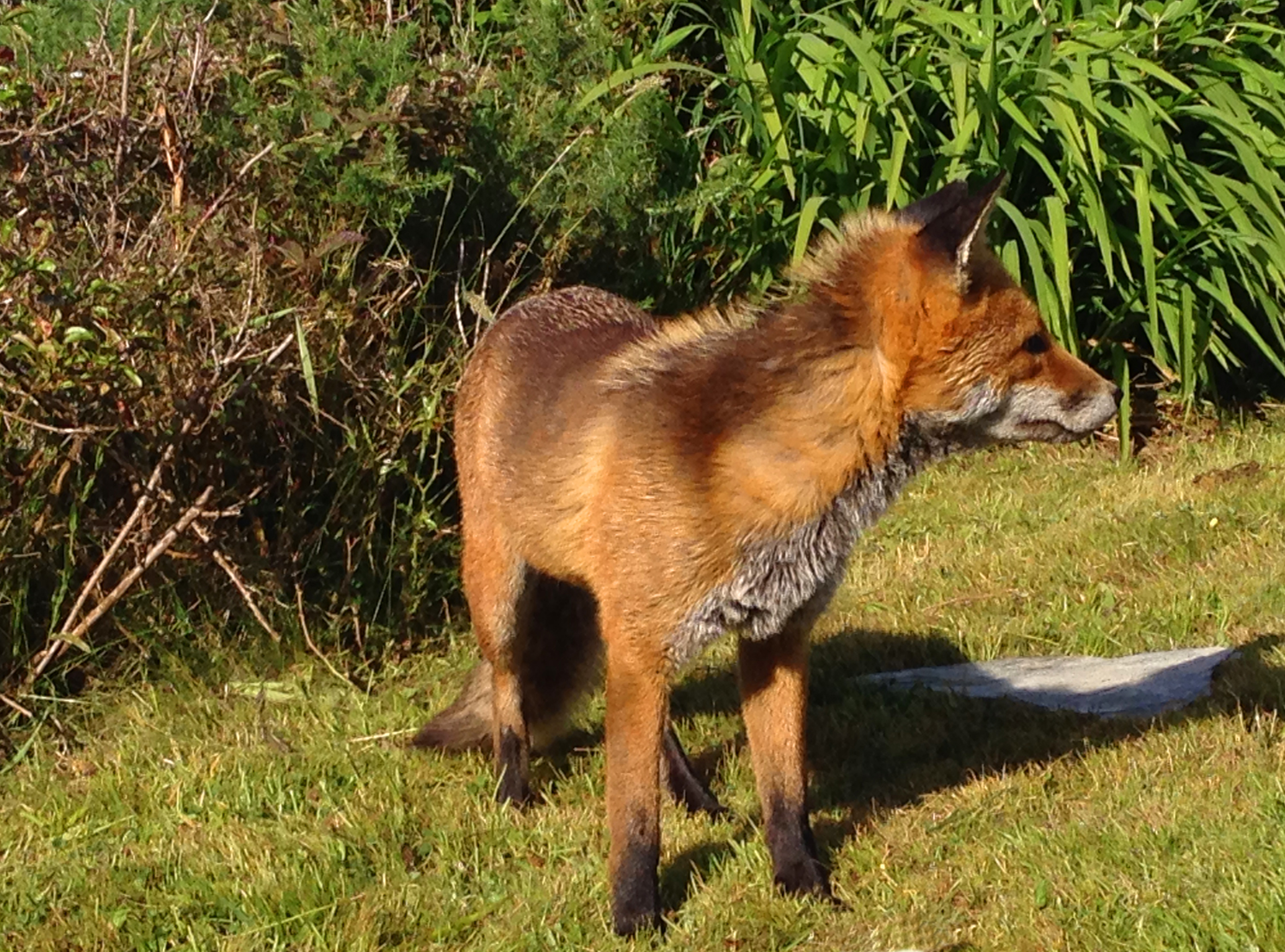
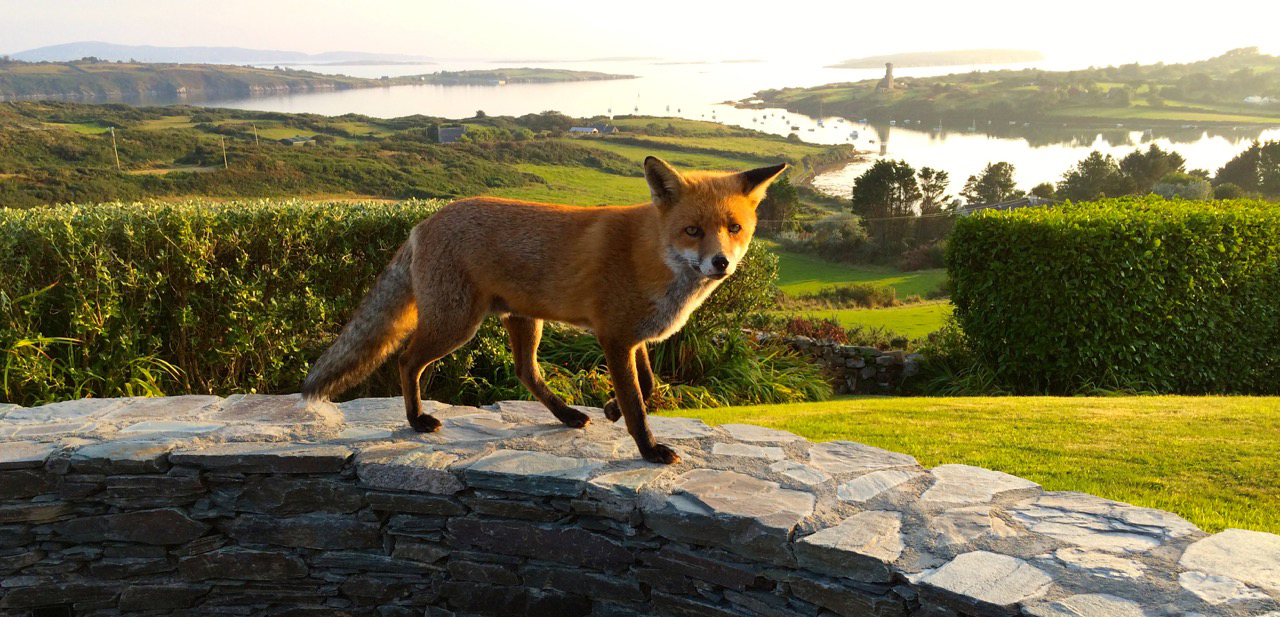
The Red Fox stops by Nead an Iolair on most days. He’s such a frequent visitor that he’s trodden a furrow across the lawn – which he follows meticulously in order to keep his feet dry: he’s a fastidious creature is our Ferdia.

It’s a bit unkind, perhaps, to always think that the Fox is up to some kind of shenanigans. That would be playing up to his reputation of being cunning or sly. Our Ferdia is pretty open about why he takes an interest in us – purely and simply, it’s his stomach. His patter is always the same: he stands at the window and presses his nose against the glass, managing to look somehow downtrodden or neglected (we know he isn’t at all – in fact his current winter coat is magnificent: not just red, but with a silver grey sheen, and his legs, paws and ears are a beautifully velvety black).
on the wall 2

The Irish word for Fox is Sionnach, and there are stories that this animal was brought over here by the Vikings, who reputedly used them for hunting. Now the tables are turned: in Ireland Fox hunting is a legal sport (which it no longer is in Scotland, Wales and England), and we have very occasionally seen The Hunt crossing the fields during our travels. If you read the highly amusing Irish RM by Somerville and Ross you will quickly gather that actually apprehending a Fox is something very rare for The Hunt: more usually it results in a loss of balance, life or dignity for the participants. This is probably a realistic picture: Edith Somerville was herself a MFH and therefore had considerable experience in the matter.

Well, Ferdia’s ploy usually works, and he frequently deprives us of the last morsel on our own plates. I’m sure I’ve heard him chuckling to himself as he disappears off into the fields clutching a bone or three. Foxes are good family animals: generations can live together for a few seasons, helping to look after the succeeding offspring – the collective noun for Foxes is A Skulk. Ferdia himself has got his act together: if we give him some scraps he’ll eat a good chunk first and then carry the rest off home – which I’ve worked out is quite a distance away. That’s fair enough: as Alpha Male and number one provider it wouldn’t do if he was debilitated with hunger.

We have on occasion seen Ferdia lead another Fox into the garden – either a wife or a daughter, but they are so nervous that their visits are rare and short. Ferdia, on the other hand, is totally confident that he’s got us wrapped around his little finger… In the summer he has been sitting out with us on the terrace, passing the time of day in a very relaxed fashion.
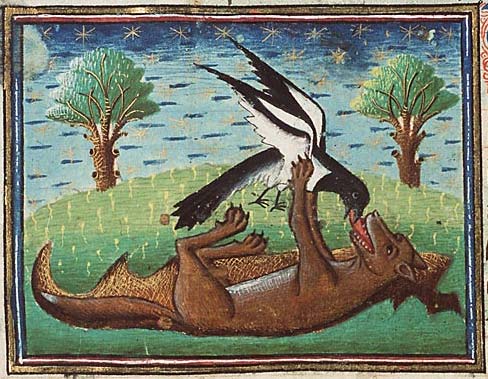
img4954Only yesterday I noticed our Fox sorting out some scraps on the lawn. Suddenly, there came into view two magpies. As I watched, one of them hopped around to the front of Ferdia and he stopped what he was doing to chase it away. Immediately, the other Magpie jumped in and took a good helping. Ferdia rushed at this competitor, and Magpie number One hopped in and had his share… From which I deduce that the cunning of Magpies is equal to that of the Red Fox.

In folklore, the Fox has a big presence. The animal is said to be able to foresee events including the weather and its barking is said to be a sure sign of rain (the only time we heard Ferdia bark was when we hadn’t noticed him standing at the window).

It is thought to be unlucky to meet a woman with red hair when setting out in the morning, especially if you are a fisherman. We may assume that the woman is a Fox in disguise.

There are legends about both St Ciarán and St Brigid finding and taming a Fox, and there are medieval carvings in churches showing Foxes: in one instance a Fox is in a pulpit preaching to Geese!

Where does the word Fox come from? One theory is that it derives from the French word faux – false. Interestingly there is also a possible link to the flower – Fuschia – so prolific in the Irish hedgerows. Theories abound, but we know that the Fox is above us in the night sky, in the constellation of Vulpecula – once known as Vulpecula cum Ansere – Fox and Goose.
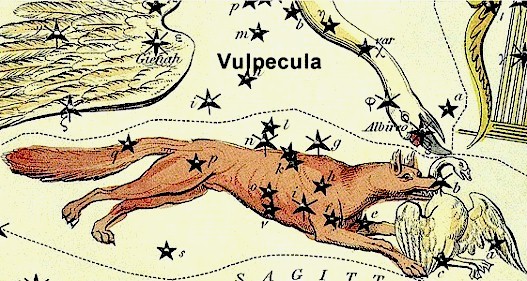
Vulpecula

The story of Fox and Goose has been immortalised in what is reputedly one of the oldest folk songs in the English Language: The Fox or Daddy Fox. This version is from the 14th century:

‘Pax Uobis quod the fox,

‘for I am comyn to toowne’

It fell ageyns the next nyght

the fox yede to with all his myghte,

with-outen cole or candlelight,

whan that he cam vnto the town.

When he cam all in the yarde,

soore te geys were ill a-frede;

‘I shall macke some of youre berde,

or that I goo from the toowne!’

when he cam all in the croofte,

there he stalkyd wundirfull soofte;

‘for here haue I be frayed full ofte

whan that i haue come to toowne.’

he hente a goose all be the heye,

faste the goos began to creye!

oowte yede men as they myght heye,

and seyde, ‘fals fox, ley it doowne!’

‘Nay,’ he said, ‘soo mot I the

sche shall go vnto the wode with me;

sche and I wnther a tre,

e-mange the beryis browne.

I haue a wyf, and sche lyeth seke;

many smale whelppis sche haue to eke

many bonys they must pike

will they ley a-downe.’

2253385750

Here’s a more accessible version:

The fox went out on a chilly chilly night

He prayed to the moon to give him light

He had many many miles to go that night

Before he reached the town-o, town-o town-o,

Many many miles to go that night before he reached the town-o.

He ran ’til he came to a great big pen

Where the ducks and the geese were kept therein

He said a couple of you will grease my chin

Before I leave this town o, town o, town o

A couple of you will grease my chin before I leave this town-o.

He grabbed the grey goose by the neck

And he threw a duck all across his back

He never did heed the quivvy quivvy quack

Nor the legs all a dang-ling down-o, down-o, down-o

He never did heed the quivvy quivvy quack

Nor the legs all a dang-ling down-o.

Old mother Flipper Flopper jumped out of bed

Out of the window she pushed her little head

Cryin’ O John, O John the grey goose is gone

And the fox is away to his den-o, den-o, den-o

O John, O John the grey goose is gone

And the fox is away to his den-o.

Well, the fox he came to his very own den

And there were the little ones, eight, nine, ten

Saying Daddy you better go back again

‘Cause it must be a mighty fine town-o, town-o, town-o

Saying Daddy you better go back again

‘Cause it must be a mighty fine town-o.

Well, the fox and his wife without any strife

Cut up the goose without any knife,

They never had such a supper in their life

And the little ones chewed on the bones-o, bones-o, bones-o

They never had such a supper in their life

And the little ones chewed on the bones-o.
stamp

The Children of Lir

Artist Warren Osborne's depiction of the enchanted Swans

Artist Warren Osborne‘s depiction of the enchanted Swans

It was the mission of the Bards and the Seanchaí to keep alive the ancient stories of Ireland: I am always eager to hear these wonder tales: if they are well told, they will make the hairs stand up on the back of your neck. Your storyteller is being watched and listened to by a generation gone before, who in turn carried that story forward from their ancestors – a chain of continuity which for all we know could go back to the time of the Bronze Age rock carvers and Megalith builders – or even before that. History books are mere speculation and short lived; stories encompass the spirit of the people, and last forever.

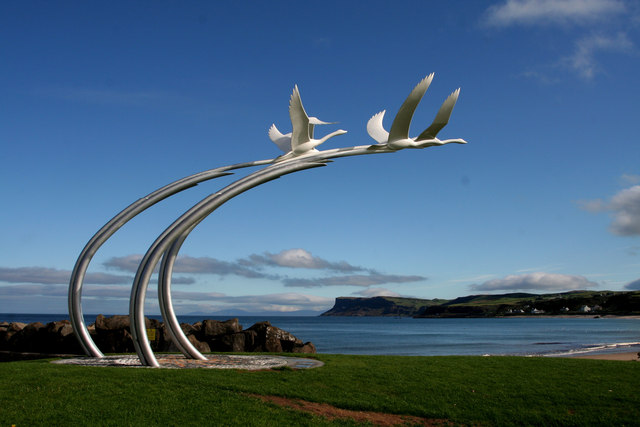
The story captured in sculpture at Ballycastle, County Mayo

A story captured in sculpture at Ballycastle, County Antrim

Have you ever wondered why Swans are such special birds? Did you know that in Ireland no-one can harm the Swan? Some say that law was made by the Milesians, who are said to have arrived in Ireland from Galicia (northern Spain) around four thousand years ago, and heard about The Children of Lir.

It’s a Wicked Step-Mother Tale. Finola is a Step-Mother and is sensitive to such stories, but interestingly she herself appears in this story – in fact she is its heroine! The twins Finola (…as beautiful as sunshine in blossomed branches…) and Hugo and the twins Fiachra and Conn were the children of King Lir and Queen Aoibh.

l_1069ca_20121008_1587912131

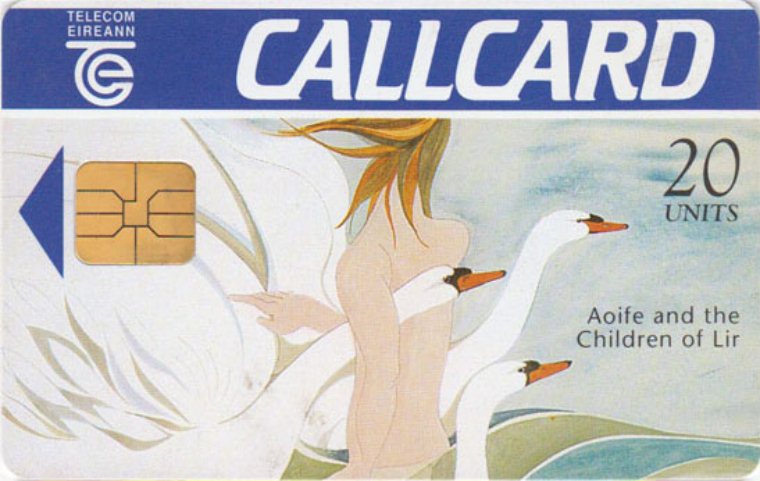
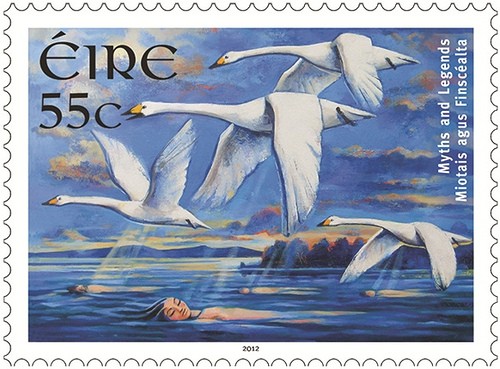
When the children were very young their mother died, and the King married Aoifa, a sister of Aoibh. All was well until Aoifa noticed that Lir was spoiling his children: each one of them was given a beautiful white horse and a pair of white hounds and the King spent most of his time in their company. In true step-mother fashion, Aoifa became jealous and determined to intervene. Just as in the story of Snow White, she planned a dire end for them: she took them off to the wild shores of Lake Derryvaragh and threw them into the waters. But her magical powers were not strong enough: Finola gathered her brothers around her and, as Aoifa looked on, the children were transformed into beautiful Swans. In a final curse their step-mother said that they would live out three hundred years on the lake, then three hundred years more in the Sea of Moyle (the narrowest part of the Atlantic Ocean between Ireland and Scotland), then a final three hundred years on Sruth Fada Conn or Irrus Domnann – Stream of the Long Hound – in County Mayo. The spell could only be broken when the sound of the first Christian bell was heard by the Swans.
Sruwaddacon Bay - also known as Sruth Fada Conn

Sruwaddacon Bay – also known as Sruth Fada Conn

Aoifa might have suffered some last minutes pangs of guilt, for she allowed the Swans to retain their human voices. They also had the gift of music and while they were on Lake Derryvaragh people flocked to hear them singing. In fact, it is said that all of Ireland’s great musical tradition originated from the Children of Lir.

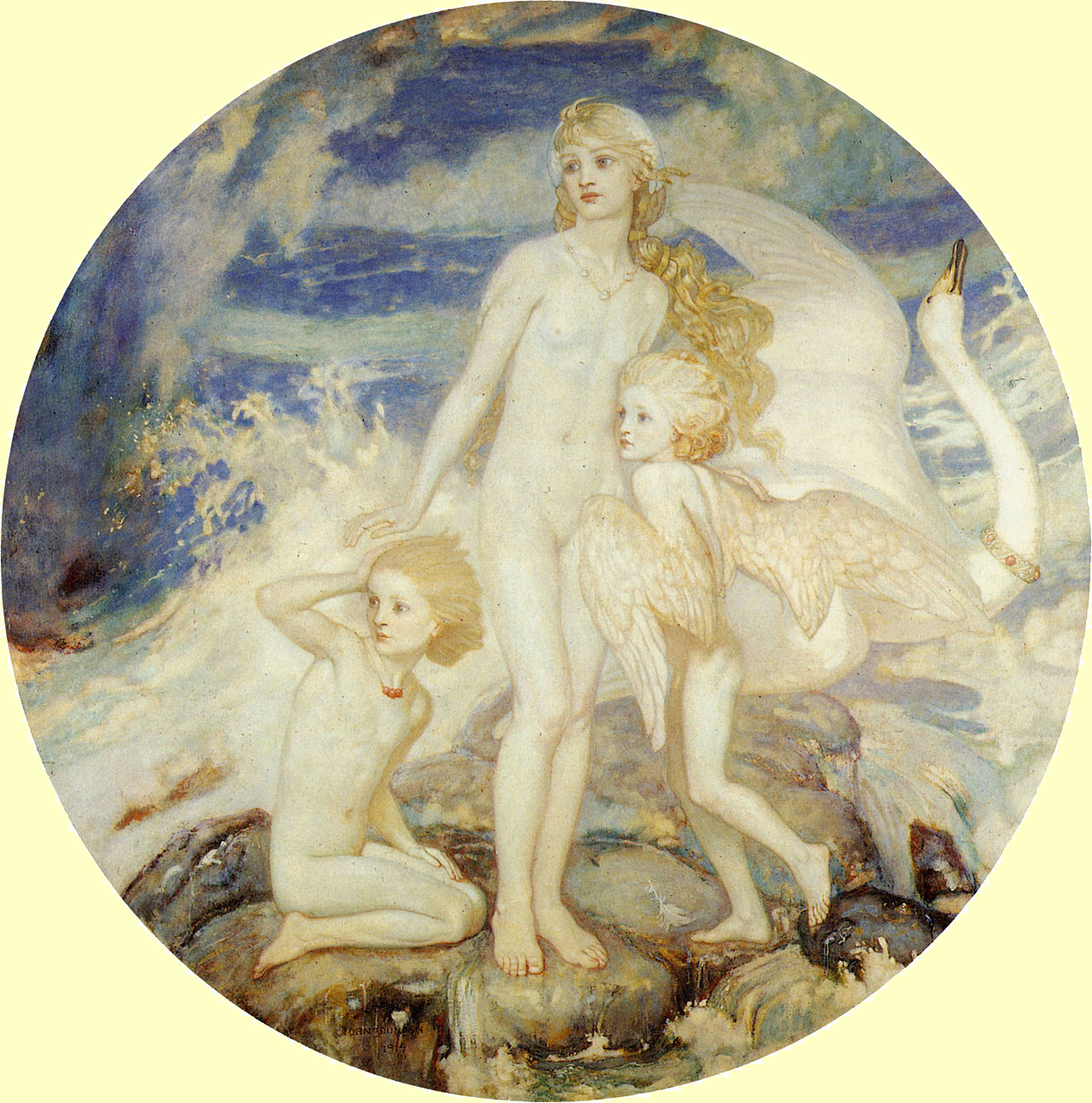
Children of Lir by John Duncan, 1914

Children of Lir by John Duncan, 1914

When the King found out about Aoifa’s treachery he turned her into a ‘night demon’ – a Moth, and she’s still around: we see her frequently down here in Nead an Iolair.

Aoifa - the Emperor Moth

Aoifa – the Emperor Moth

One of the most poignant parts of the story (and I am telling only the briefest of versions here) pictures the Swan children revisiting their father’s tower house on their journey to the Sea of Moyle – only to find grass covered ruins and no traces of the family’s heritage:

…when they looked down they saw no light in the house, they heard no music, no sound of voices. The many-coloured house was desolate and all the beauty was gone from it; the white hounds and the brightmaned horses were gone, and all the beautiful glad-hearted folk of the Sidhe… (http://www.sacred-texts.com)

stamp children of lir

We watch the Swans in Rossbrin Cove. On occasion we are fortunate enough to see them taking off from or landing on the water – a noisy and energetic affair: it’s hard to believe that such large and heavy birds can actually take to the air, and migrate over huge distances. Swans appear in folktales all over the world: usually they are associated with light and beauty. A tradition that the Swan only sings when dying has been captured in a madrigal by Orlando Gibbons:

The Silver Swan who, living, had no note,
When death approach’d, unlock’d her silent throat.
Leaning her breast against the reedy shore,
Thus sung her first and last, And sung no more:
“Farewell all joys, O death come close mine eyes.
More geese than swans now live, more fools than wise”

children of lir

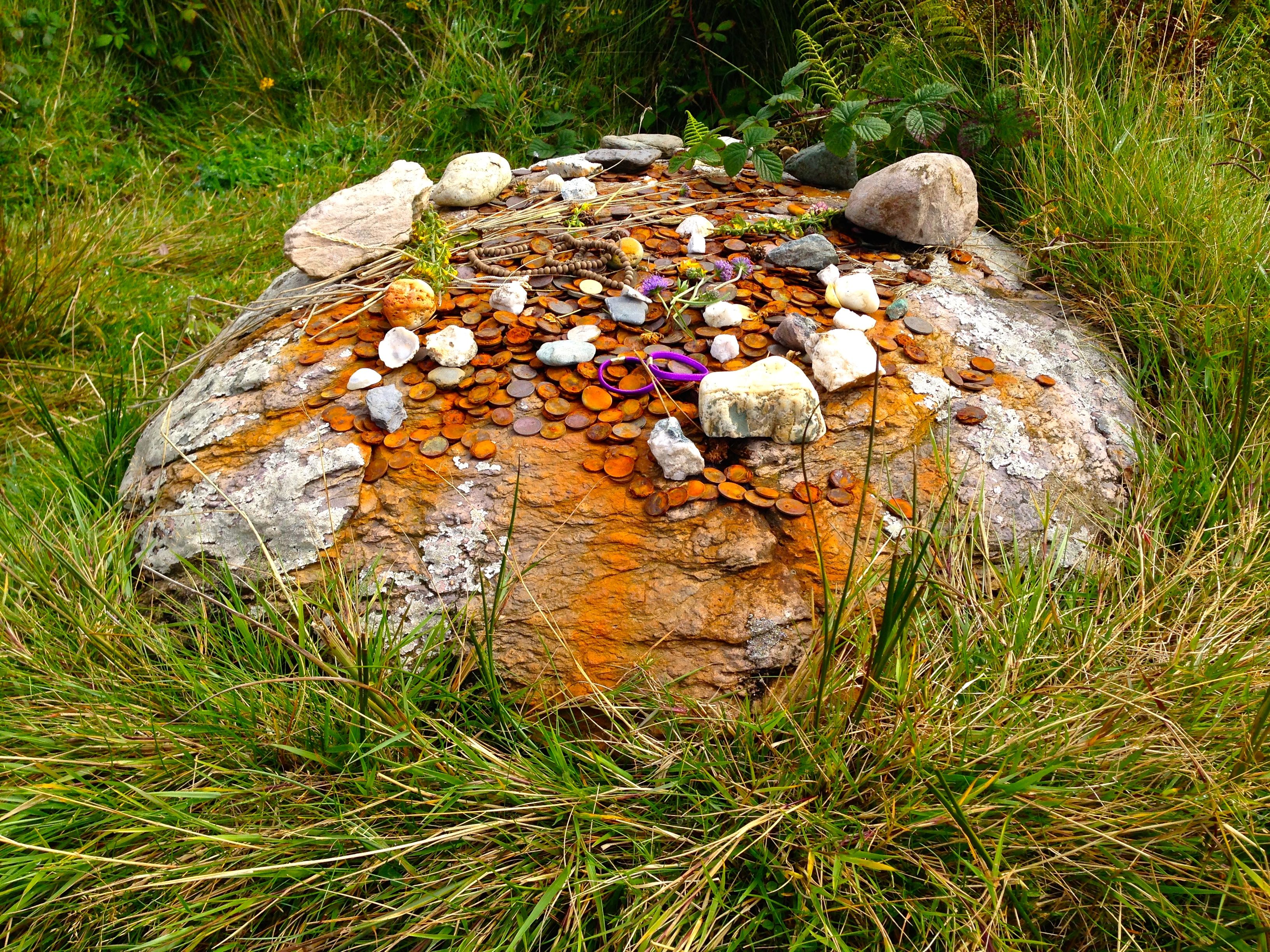
To return to our tale – the Children of Lir took their final journey to the far west of Ireland: to the Beara peninsula in West Cork. There they heard St Patrick’s bell and were transformed to human shape again. A hermit – Saint Kemoc – found them, four ancient, withered people. He baptised them just before they crumbled to dust. This place is marked now by a stone where offerings are made: their story is alive today.

The Lir Stone, near Allihies on the Beara

The Lir Stone, near Allihies on the Beara

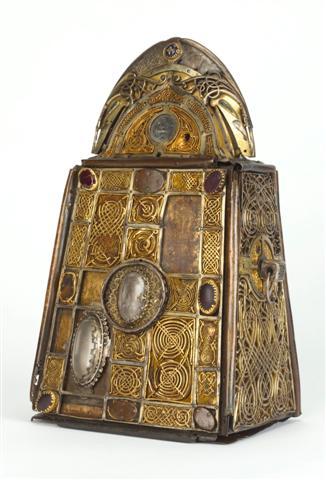
patricks bell

St Patrick’s Bell

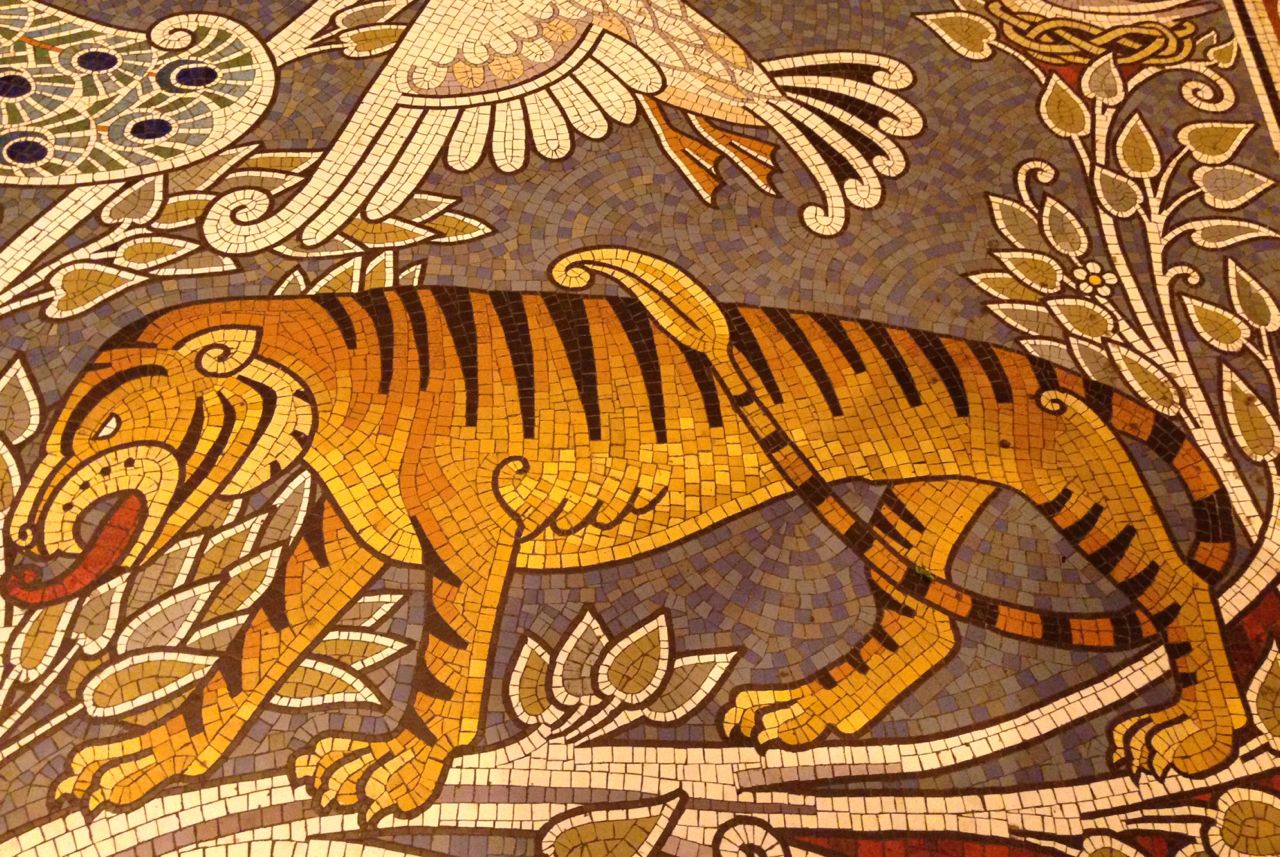
Cork Menagerie

tiger

Cork does have a wildlife park – over in Fota, to the east of the city. But I think Cork’s real menagerie is on the University campus – The Honan Chapel, built almost a hundred years ago, and opening its doors to Catholic students in November 1916.

Ireland’s universities have a fascinating history: Pope Clement V authorised the first one in 1311, and this was based in St Patrick’s Cathedral, Dublin. This institution ‘came to an abrupt end’ with the Protestant Reformation of the 1530s, and Trinity College Dublin was founded as the ‘University of the Protestant Ascendancy’. At this time, England had the Universities of Oxford and Cambridge, while Scotland had Universities at St Andrews, Glasgow and Aberdeen.

In 1908, the Irish Universities Act was passed, by which the National University, consisting of the Constituent Colleges of Dublin, Cork and Galway was founded. Part of this act decreed that of the finance provided for the new University, none should be applied ‘… for the provision or maintenance of any church, chapel or other place of religious observance …’ It was left to a Cork merchant family – the Honans (who made their wealth through butter) to provide a hostel and chapel for Catholic students. 

‘…The chapel, itself, is in perfect accord not only with its immediate surroundings, but also with the wide heritage of art handed down to us by the early native church building. It is one of the best reproductions of the ancient style of building and it exemplifies, in a striking manner, all that is best in the Hiberno Romanesque architecture of the tenth, eleventh and twelfth centuries…’ The Honan Chapel, M J O’Reilly, Cork Univeristy Press, 1966

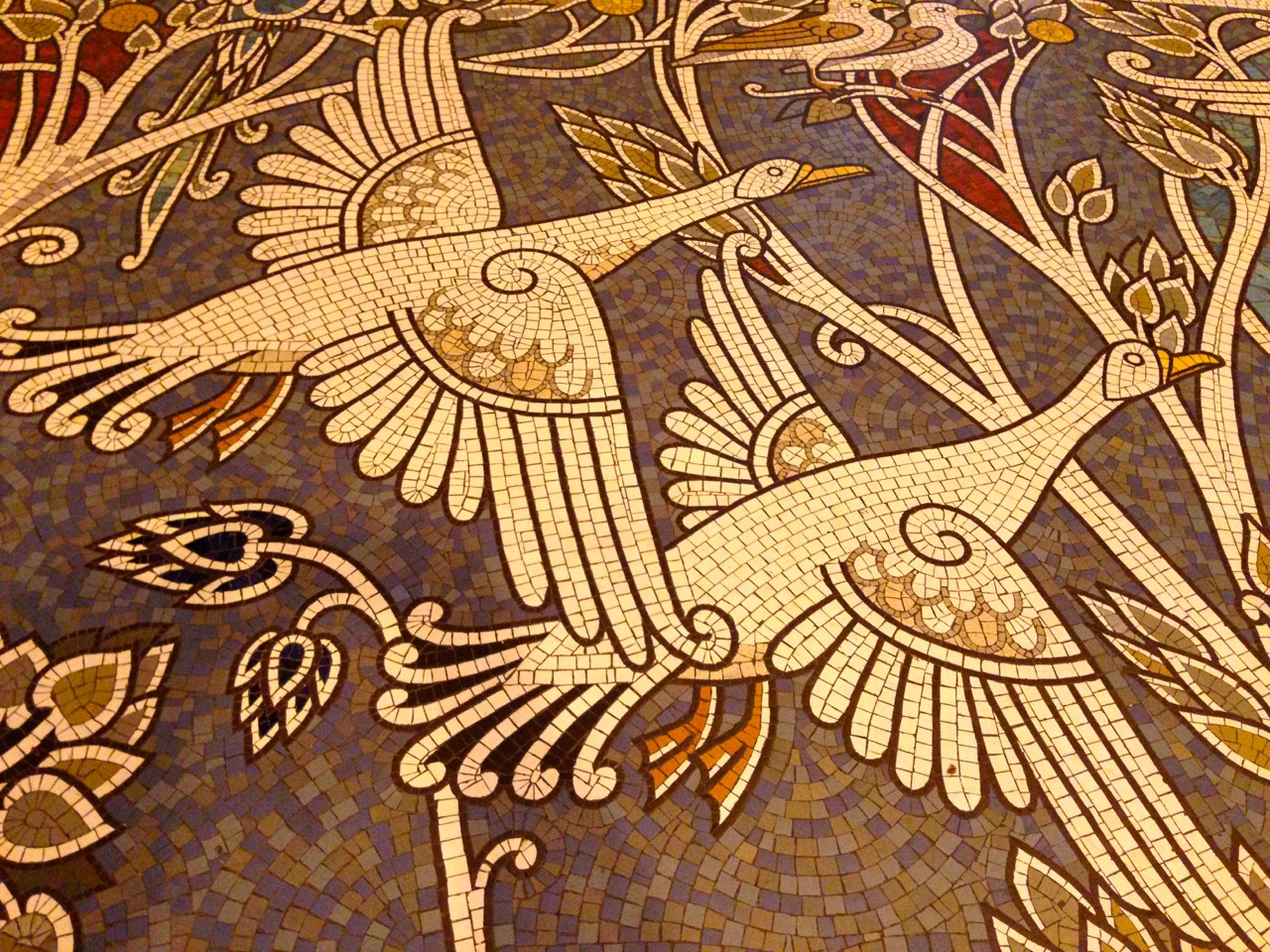
legilium

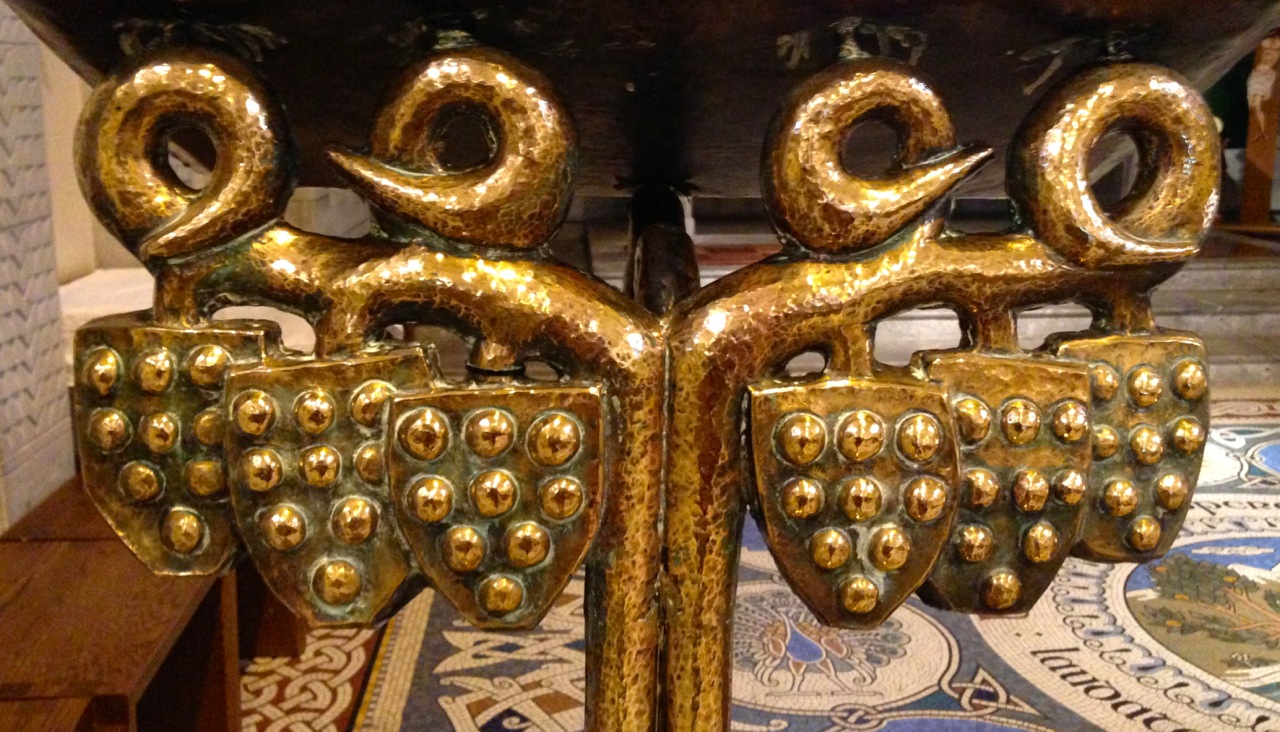
Lectern decoration

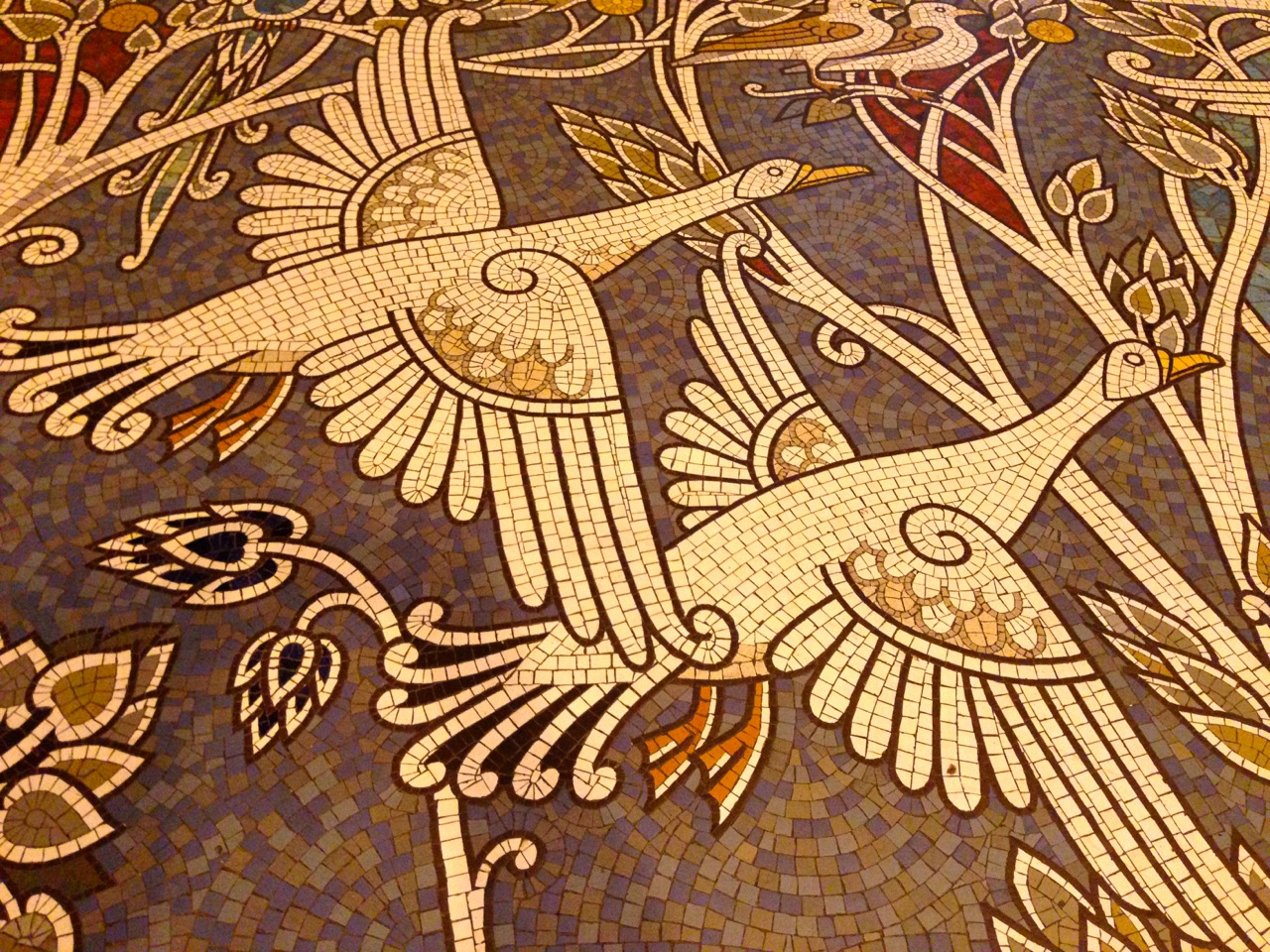
The interior of the building abounds in exquisite artworks. It’s a feast for the eyes wherever you look: stained glass windows by Harry Clarke stand out (including St Gobnait) – but, for me, the real treat is the mosaic work on the floors, designed by Ludwig Oppenheimer of Manchester. A River of Life runs the length of the nave from the entrance door to the sanctuary where, amidst a riot of pattern and colour, the menagerie unfolds: there are birds and beasts, fish and fowl all contained in decorated borders with Celtic knots and patterns. The only analogy I can think of is a medieval illuminated manuscript such as the Book of Kells, where the pages and margins are extravagantly ornamented with figures of humans, animals and mythical beasts in vibrant colours imbued with Christian symbolism.

The Chapel is dedicated to St Finbarr, Patron Saint of Cork. The foundation stone, laid on the 18th May 1915, records ‘… built by the Charity of Isabella Honan for the scholars and students of Munster…’ The architect was James F McMullen.

swans


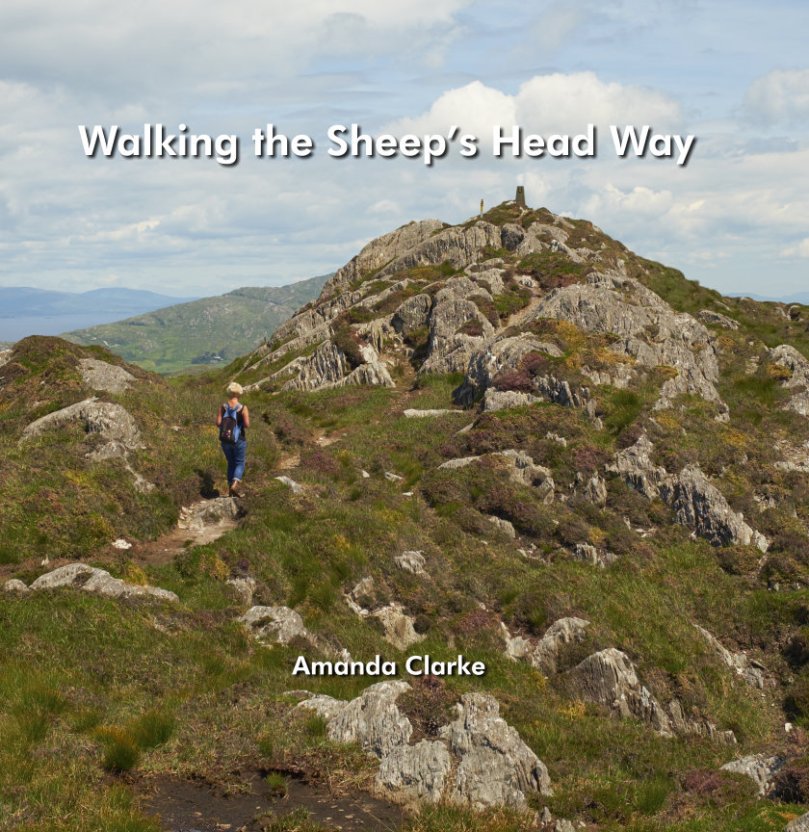
Walking the Sheep’s Head Way

COVER-FRONT

The definitive guide, by Amanda Clarke

NOTE: Since we wrote this post Amanda and Peter have brought out a second edition, including all the loop walks.

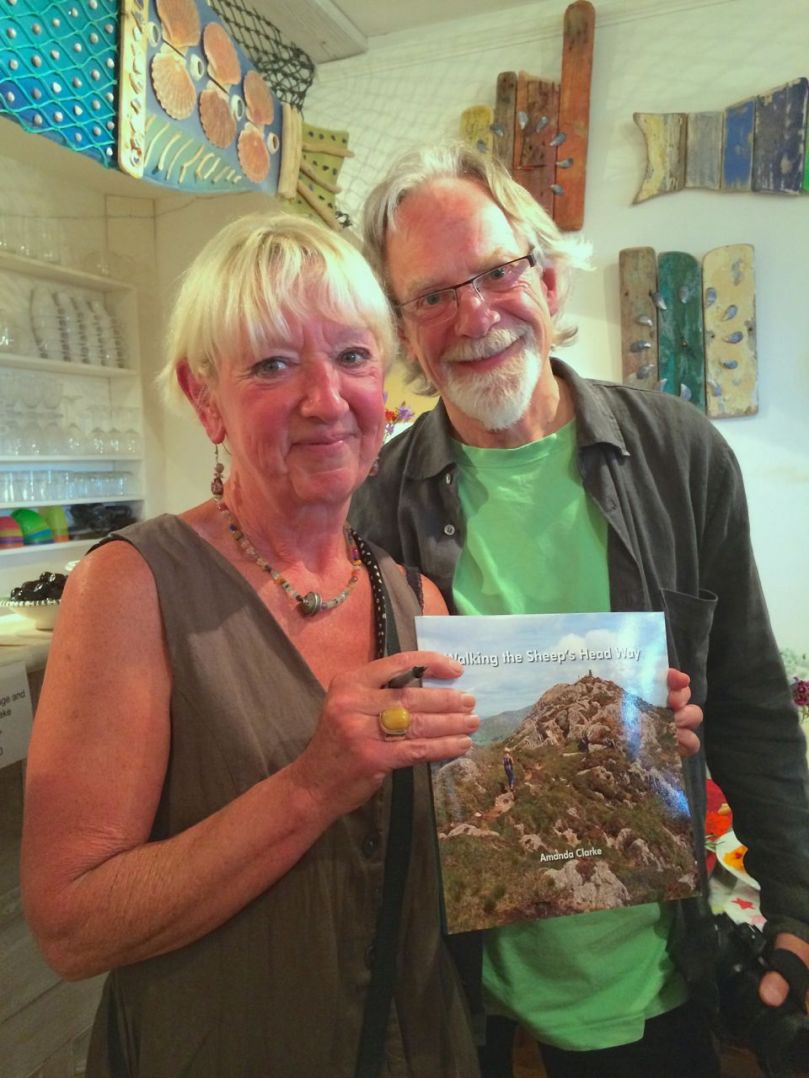
This week we attended a very special event – the launch of a new book, Walking the Sheep’s Head Way, written by Amanda Clarke and designed by Peter Clarke. Readers of this blog will be familiar with Amanda and Peter by now, as we have shared many adventures, hikes and explorations with them. 

Amanda and Peter at the launch

Amanda and Peter at the launch

For twelve years now they have been keen photographers and chroniclers of the Sheep’s Head: the book is a natural outgrowth of the passion they have for the peninsula.

Along the north side

Along the north side

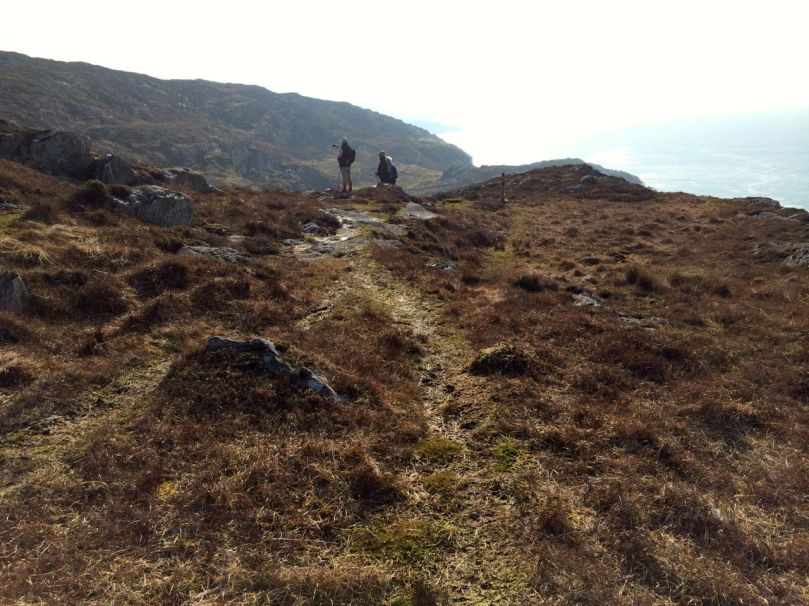
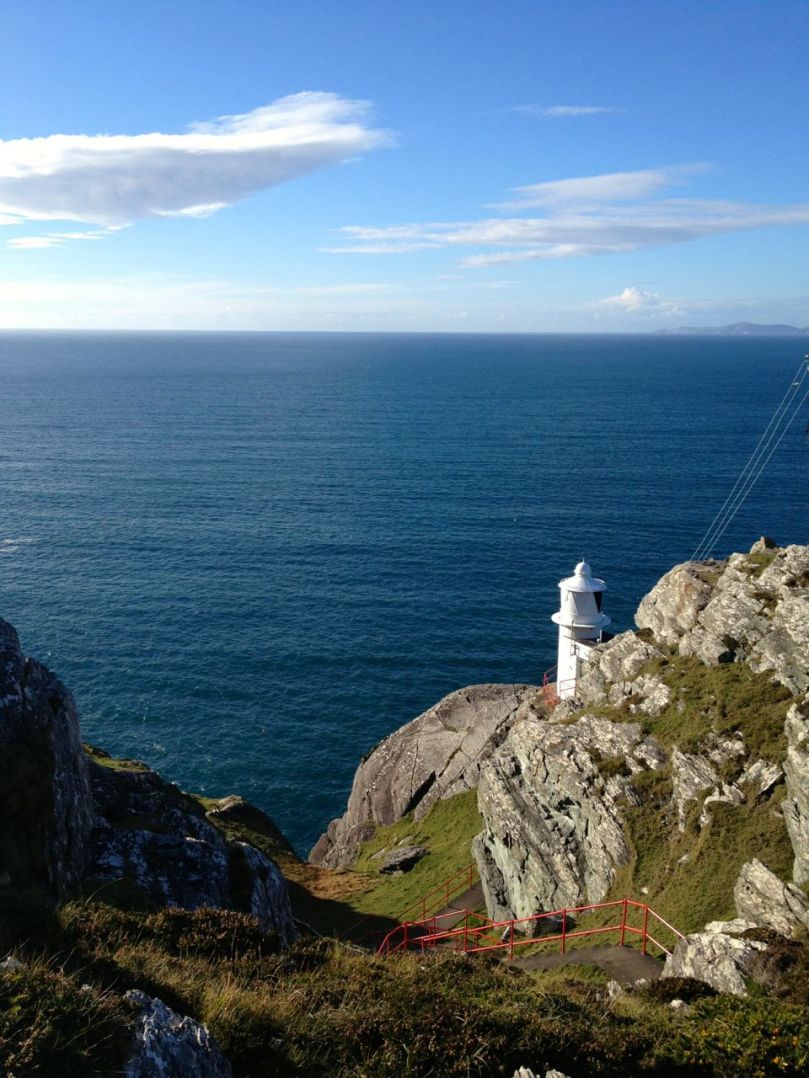
Starting and ending in Bantry, the book takes us on the original Sheep’s Head Way, beginning along the north side, out to the lighthouse, and back along the south side. It is divided into 11 sections, each one a separate walk, although they can be combined. Each walk is mapped, and because the Way is so clearly marked, you can’t go wrong. No, really!

Out to the lighthouse!

To the lighthouse!

Amanda has immersed herself in the history, geography, flora, birdlife, archaeology, folklore and landscape of the Sheep’s Head. (Indeed, it is difficult to live here and NOT be fascinated by it all and carried away by the sheer magnificence of the scenery.) Each walk is accompanied by her observations – what to look out for, the meaning of a particular feature, the history of the area, stories of the old days.

As she has done for Robert and me, she leads the reader through the walk as if she’s chatting along beside you like an old friend, filling you in on what’s around you or encouraging you to pause and just listen. 

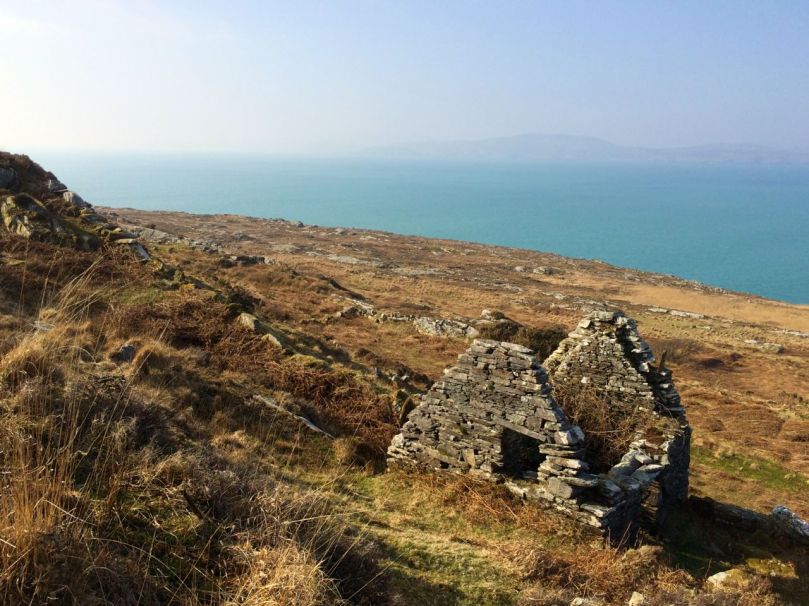
Abandoned houses at Crimea

Abandoned houses at Crimea

Each walk has its own character – whether it’s a holy well, a famine graveyard, an abandoned settlement, a prehistoric stone circle, old mine workings or signal towers – Amanda provides the essential commentary to enhance your understanding. 

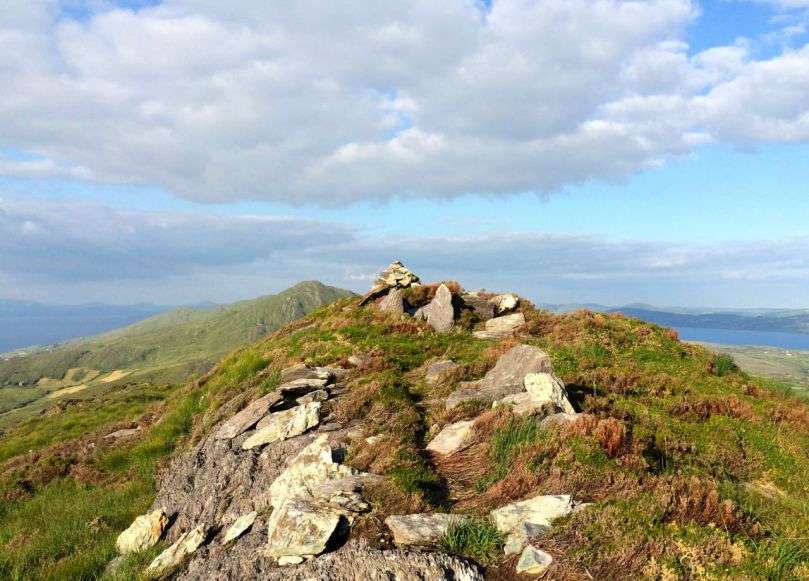
The walks encompass high ridges with sweeping views, cliffhangers with yawning drops to the sea below, soft boggy trails, seaside ambles, and stretches of boreen fringed with wild flowers. 

A ridge walk

A ridge walk

The Sheep’s Head Way has been recognised in Ireland as an area of outstanding natural beauty, and in Europe as a Destination of Excellence (one of the EDENs). And yet, you can walk for miles and never meet another soul, especially in the off season. 

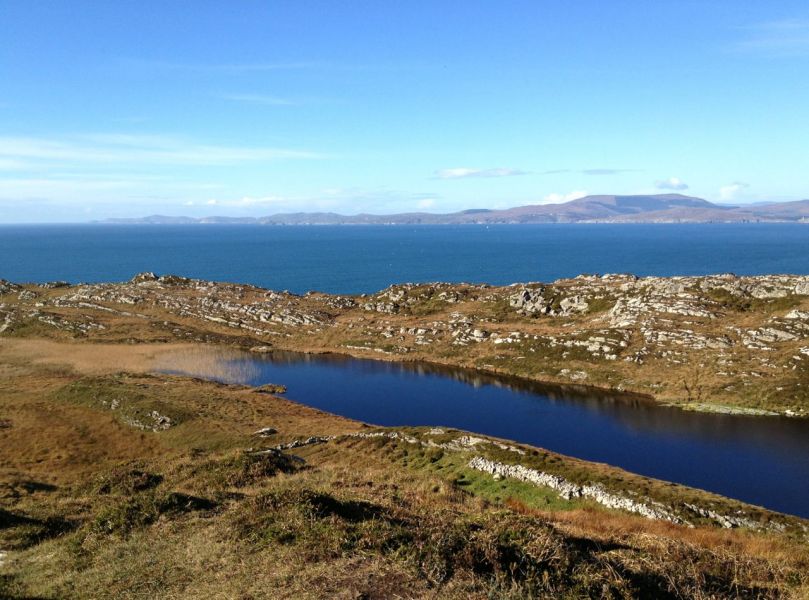
Looking towards the Beara

Looking towards the Beara

If you’re contemplating a holiday in Ireland, or if you’re already here and thinking about dropping down to see us in the Wilds of West Cork, pick up a copy of this book (buy it on Amazon or at one of our great local book shops) pack a pair of stout boots, check out Living the Sheep’s Head Way, and be prepared to be blown away. 

Looking down to Dunmanus Bay

Looking down to Dunmanus Bay

Let us know when to put the kettle on.

Midsummer Maunderings…

Beautiful Cappaghglass

Beautiful Cappaghglass

…or Life Seen Through a Lens… Things found, places visited, mainly in the environs of West Cork, often just a few steps from Nead an Iolair, although one or two are from further afield. We have been away in Tipperary this week, so these posts are ‘ones we have prepared earlier’.

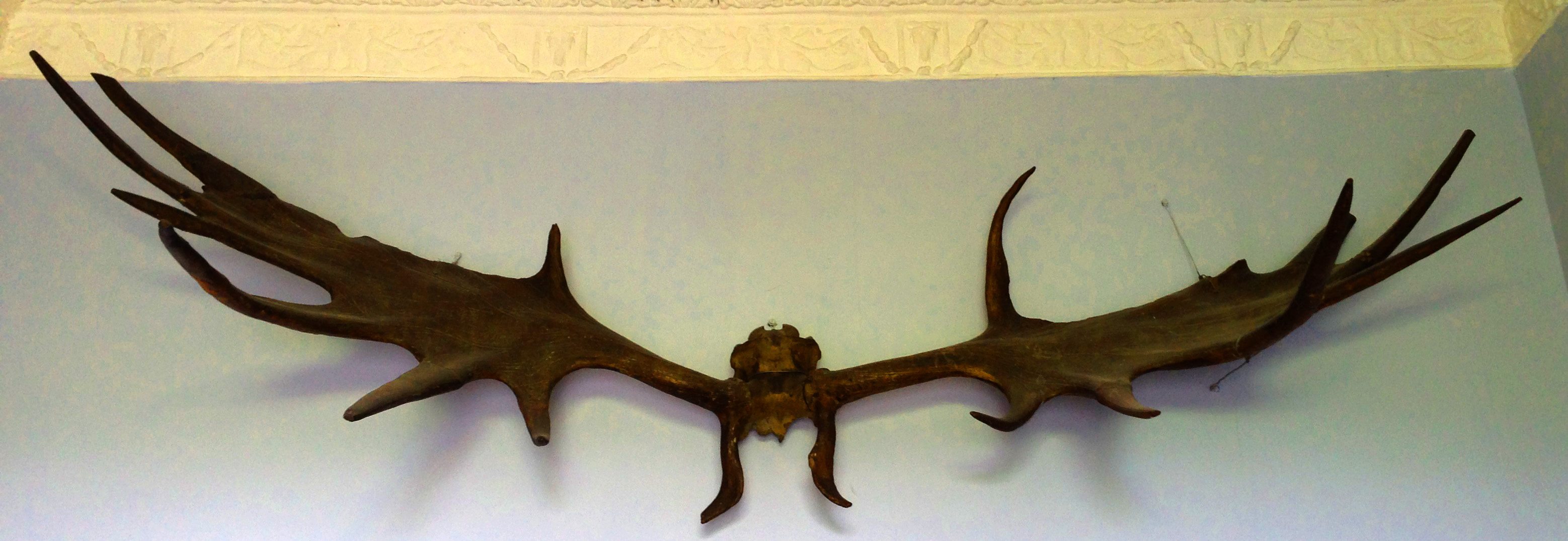
A reminder of Megaloceros - the extinct Irish Elk

A reminder of Megaloceros – the extinct Irish Elk, at Ballymaloe

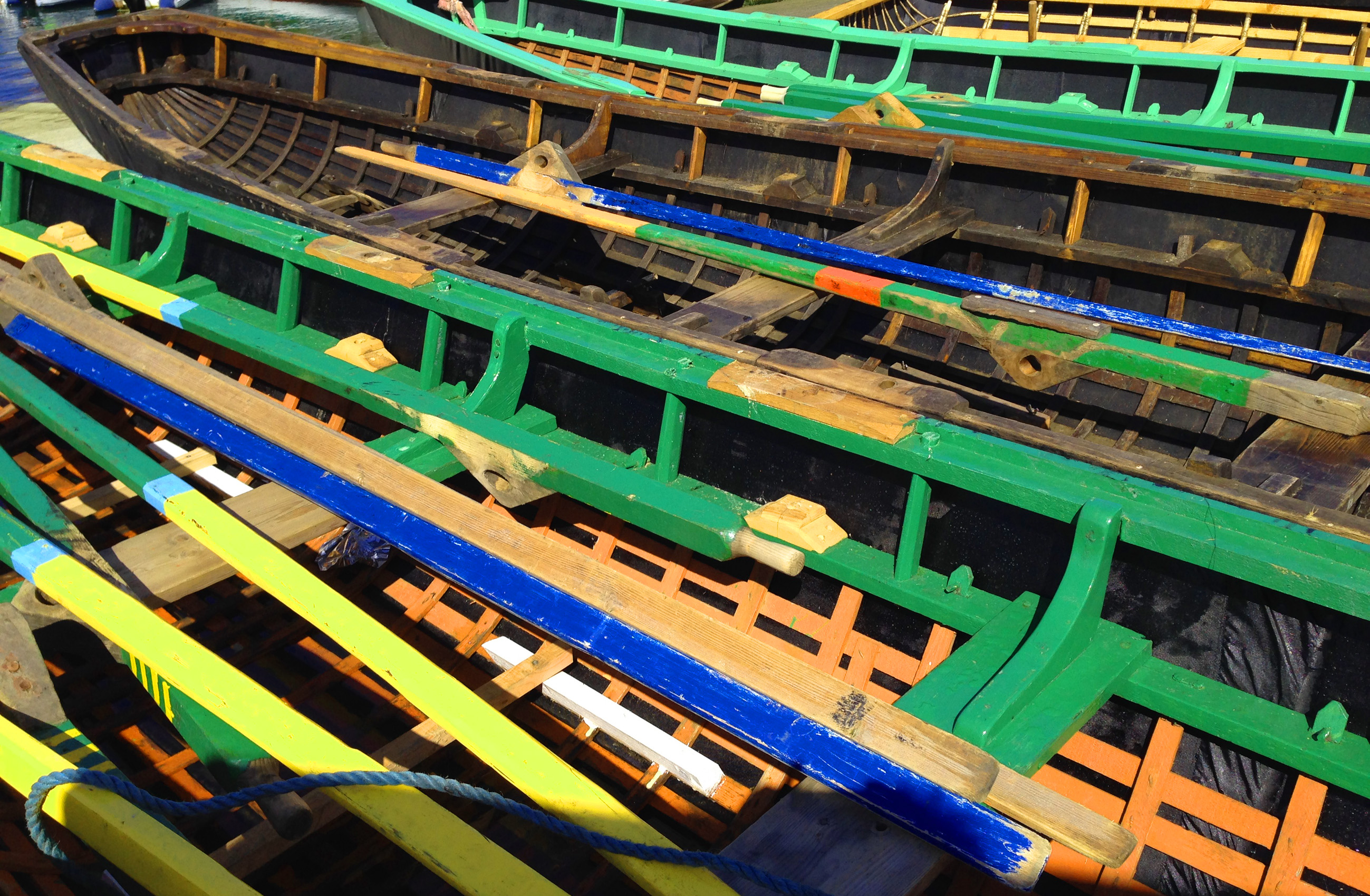
curraghs

Currachs at Baltimore

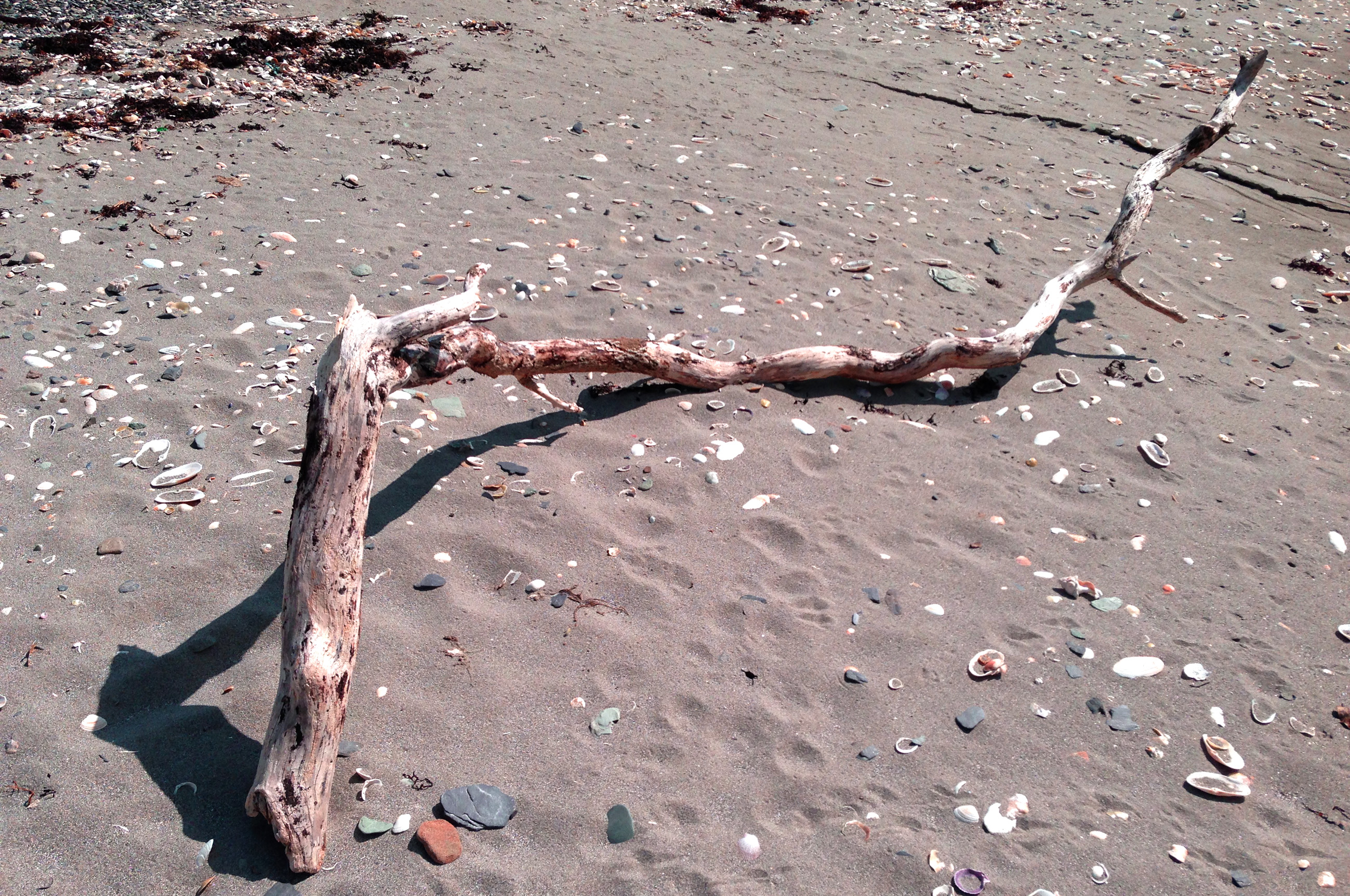
Shelly Beach - our local secret

Shelly Beach – our local secret

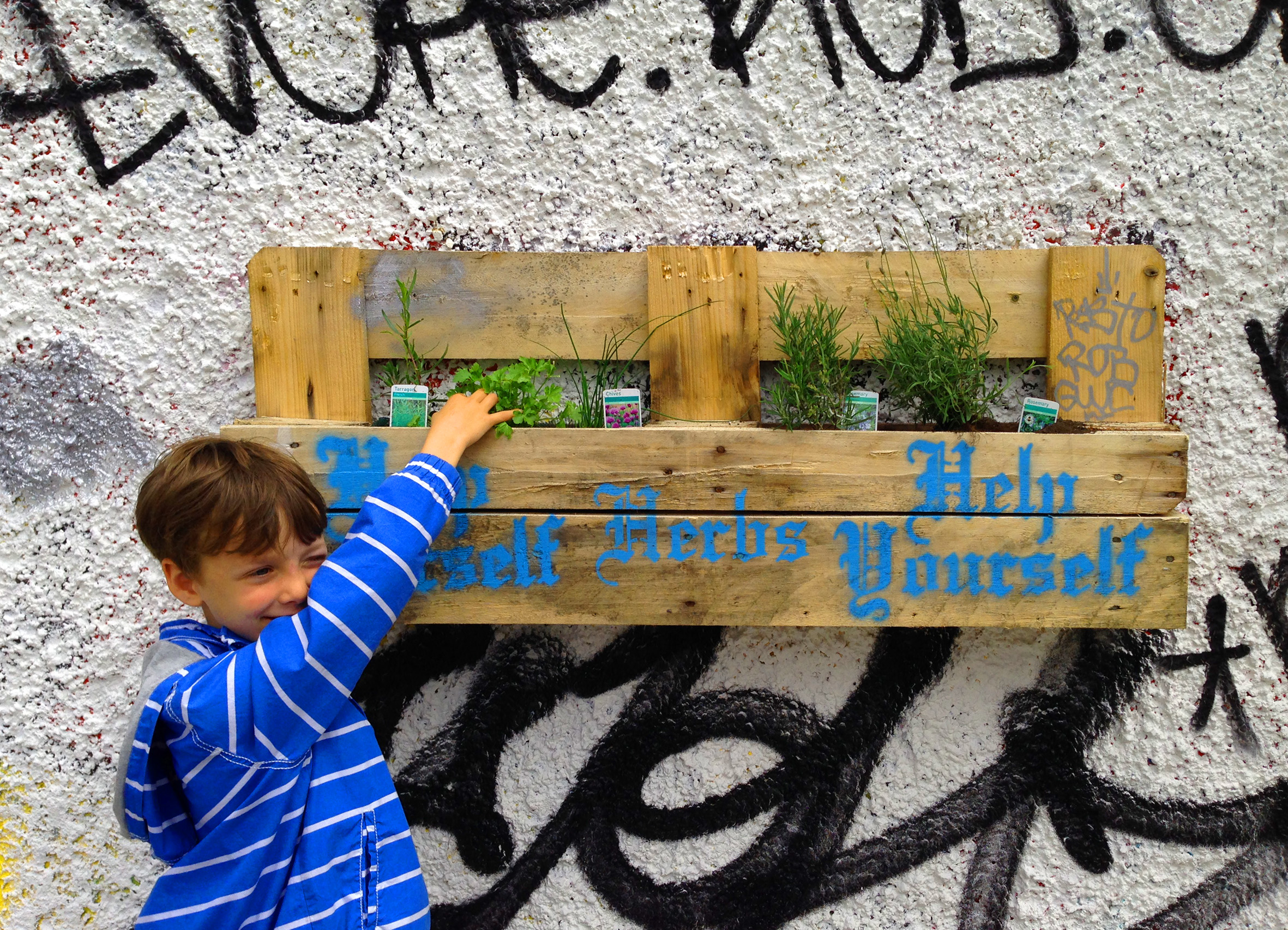
Hugo helps himself!

Hugo helps himself!

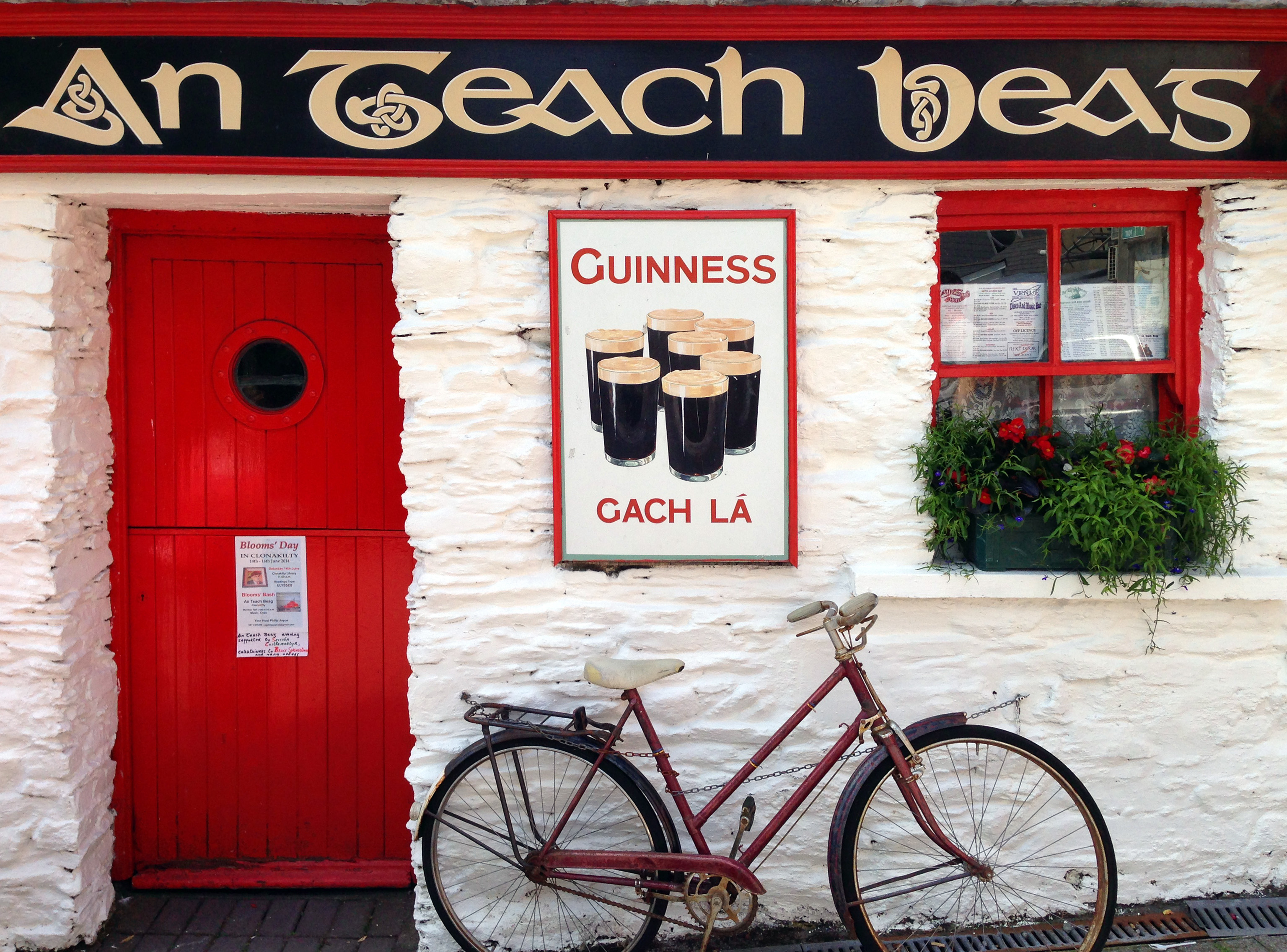
guiness

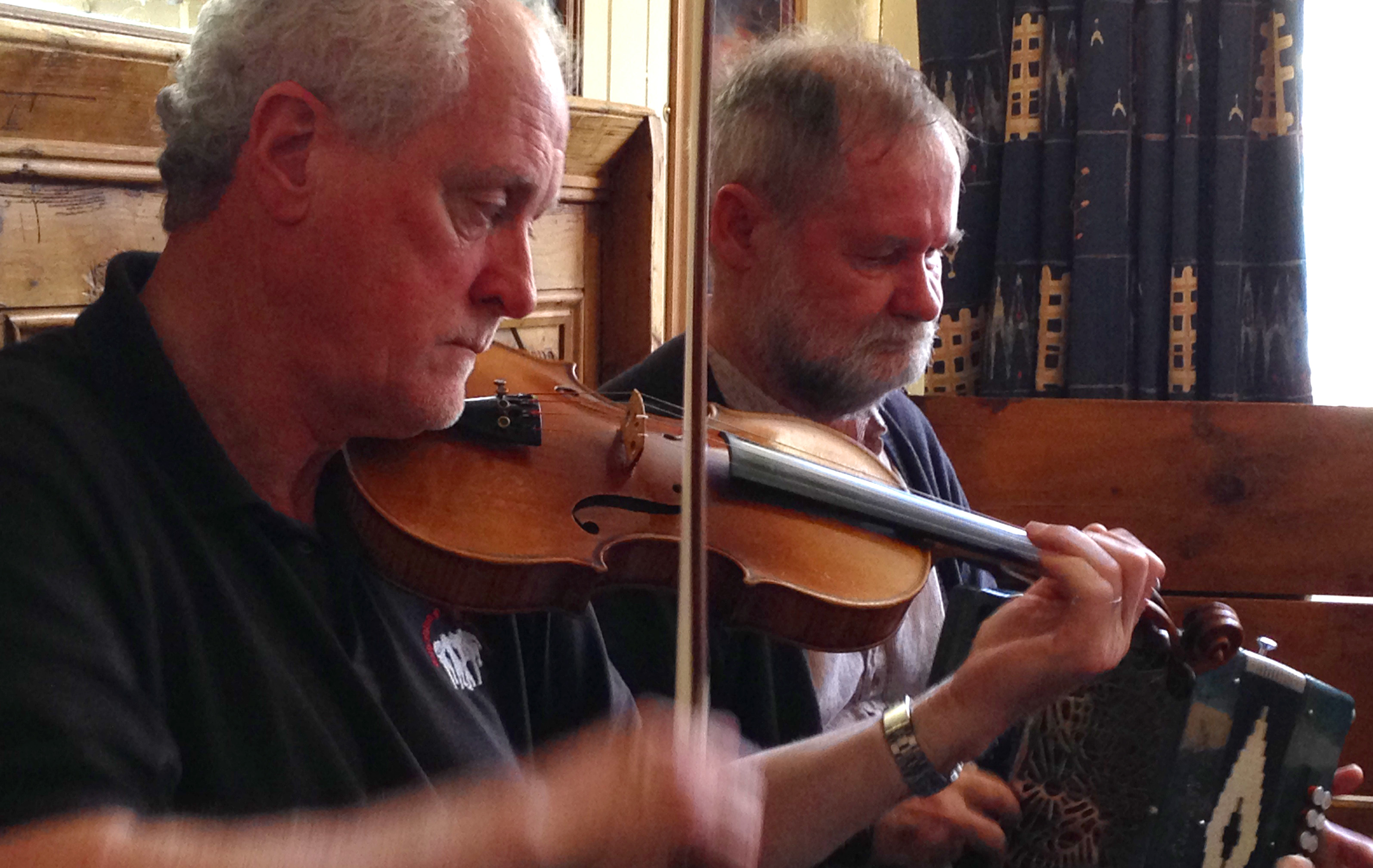
Maestros Matt Cranitch and Jackie Daly playing in Ballydehob

Maestros Matt Cranitch and Jackie Daly playing in Rosie’s

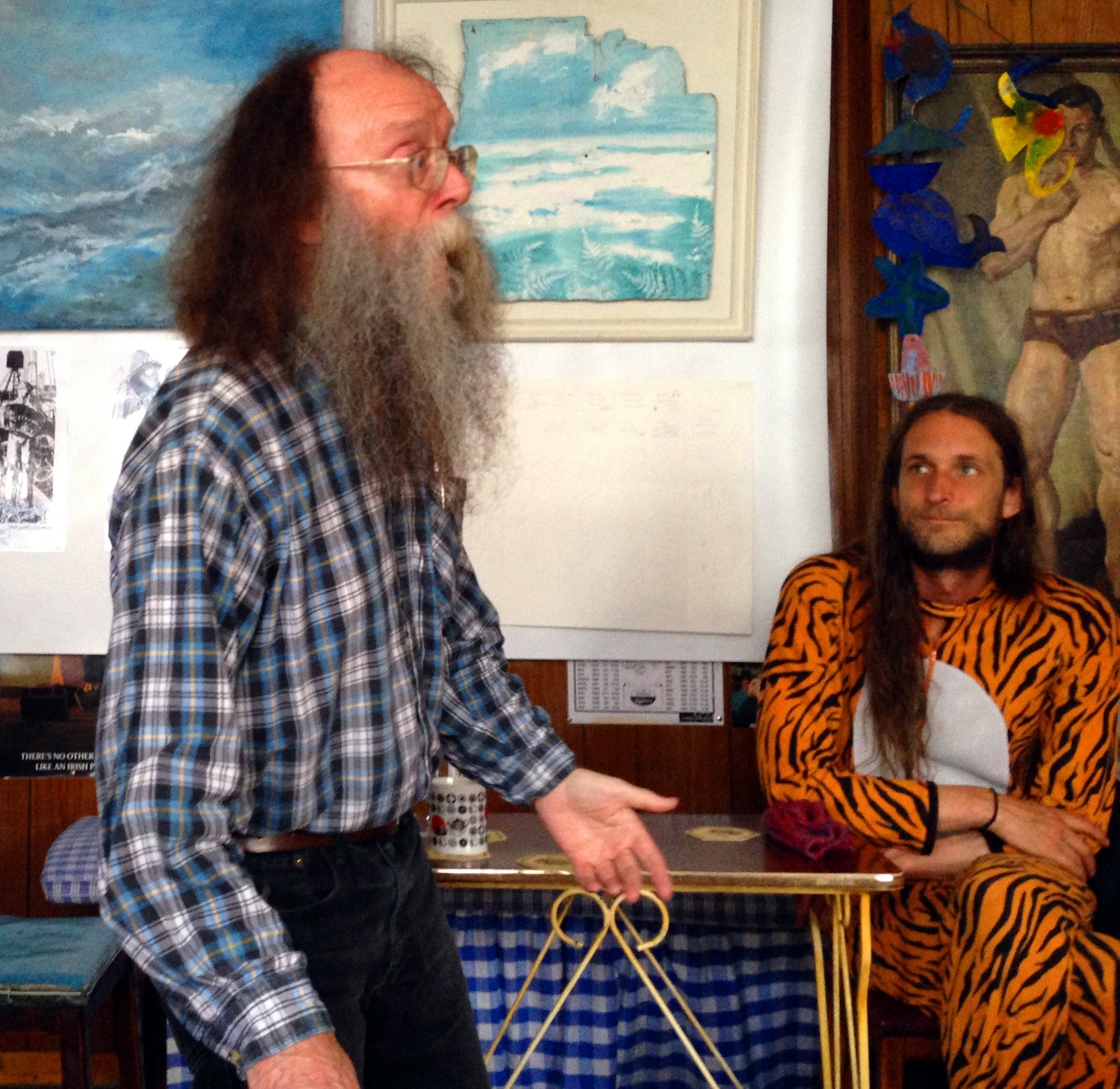
An ordinary day in Ballydehob - with seanchaí Eddie Lenihan

An ordinary day in Ballydehob – with Seanchaí Eddie Lenihan

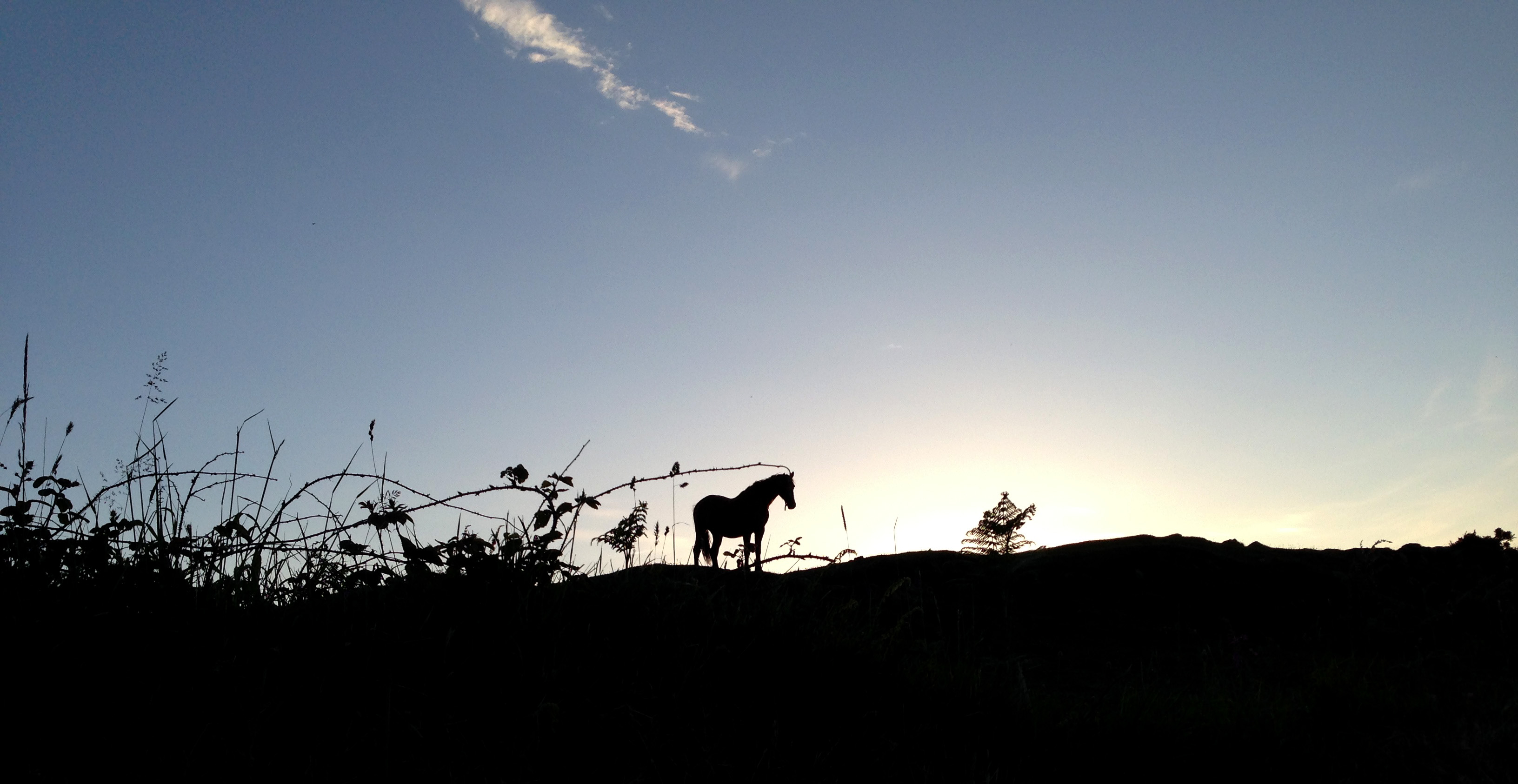
Ferdia - our garden companion

Ferdia – our garden companion

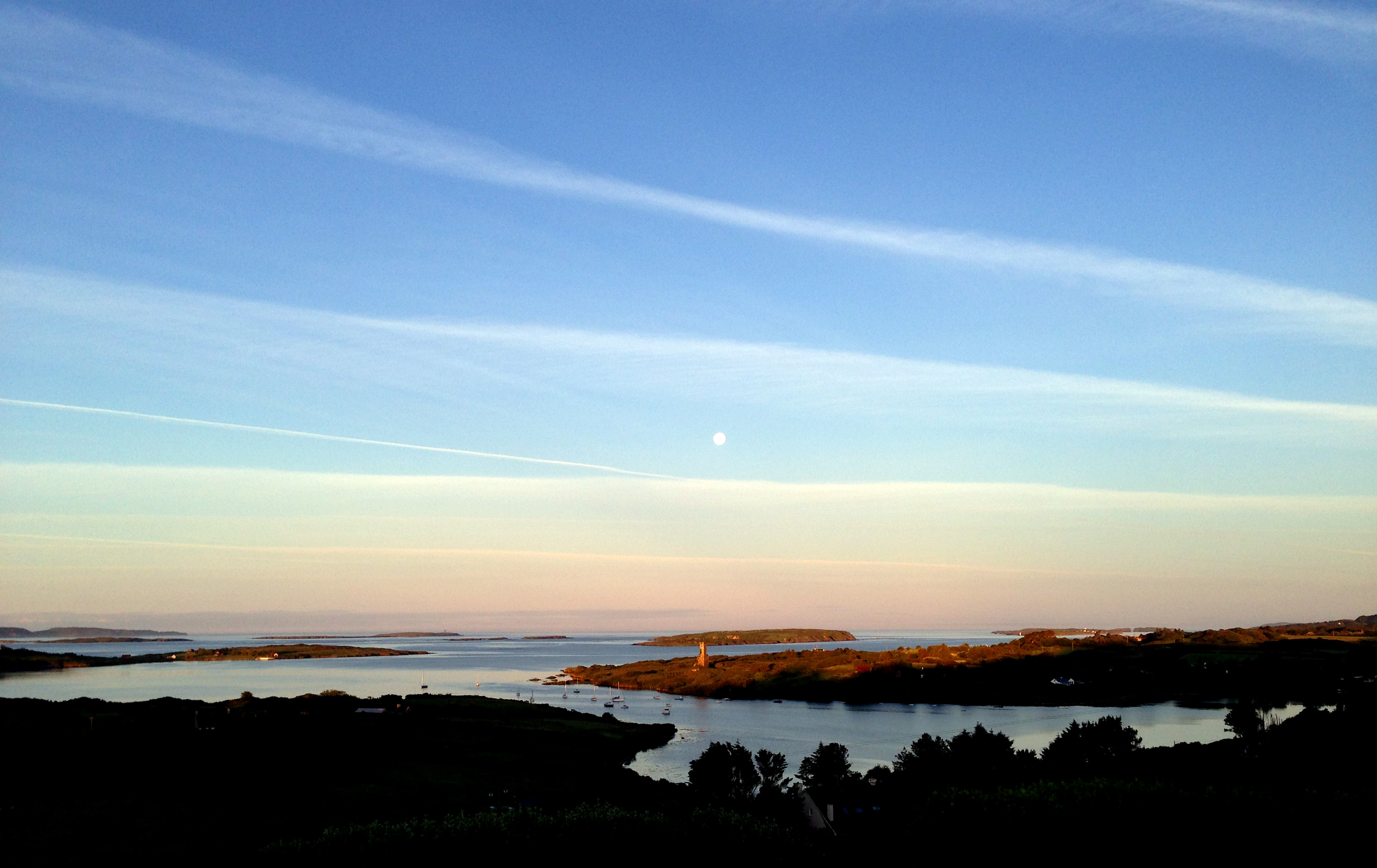
Dawn Moon over Rossbrin Castle

Dawn Moon over Rossbrin Castle

***

By the way… Dictionary definition of Maunder: to move or act in a dreamy, idle or thoughtful manner. Synonyms: wander, drift, meander, amble, dawdle, potter, straggle… Finola has only ever heard the word used in Ireland.

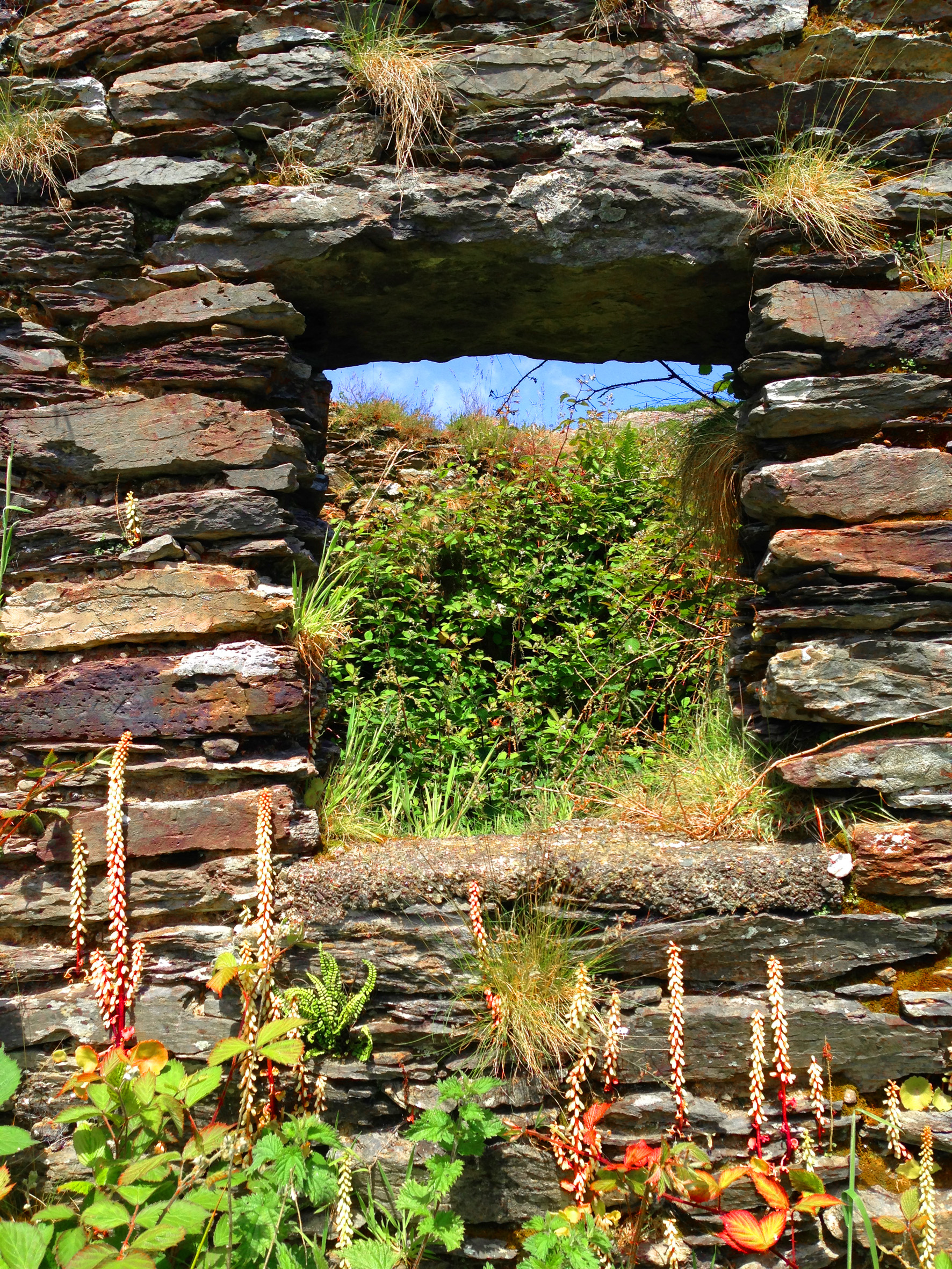
thady's

Thady’s window on the World

Mount Gabriel

Trails over Mount Gabriel

Trails over Mount Gabriel

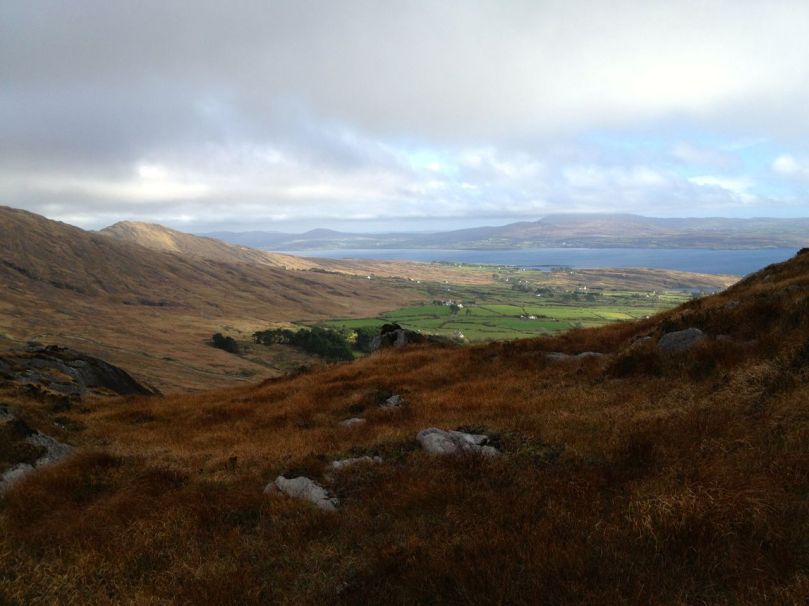
Only a few kilometres from Nead an Iolair – as the Crow flies – sits Mount Gabriel: at 407m elevation it’s the highest piece of land in West Cork. Cork mountains are dwarfed by those from Kerry: McGillycuddy’s Reeks has the highest peaks in Ireland, at over 1,000 metres. However, our own local mountain is nevertheless impressive and on a good, clear day provides a view not to be missed – to all points of the compass.

Looking west to the Mizen

Looking west to the Mizen

I spent a while researching why a mountain in the west of Ireland should be called Gabriel. There is no received opinion about this. I suppose there’s no reason why it shouldn’t be named after the Archangel himself: after all, we have Croagh Patrick (after St P) and Mount Brandon (after St Brendan) and many others: Ireland’s landscape is alive with place-names having religious connections, although such associations are likely to be fairly young. In Irish the mountain is Cnoc Osta – possibly ‘hill of the encampment’ – so there’s no clue there.

Roaringwater Bay

Roaringwater Bay

I did find this fascinating piece from the Church of Ireland Magazine, dated 1826 – written by John Abraham Jagoe, Vicar of Cape Clear …where I have no protestant parishioners… and Curate of Schull …where interspersed amongst moor and mountain, I have fifteen hundred Protestants, to visit and oversee… It’s well worth a verbatim extract:

‘…amidst these everlasting hills arose, in peculiar prominence, Mount Gabriel. Why, my lads, said I, is yonder mountain called such an outlandish name; one would think it was brought here by Oliver Cromwell, it has such an un-Irish – such a saxon name. O! says Pat, it is a pity that the blockhead is not here to tell the gentleman the story about this, for sure and certain such poor garcoons as the likes of us know little, and care not the tail of a herring for such old stories. And who, said I, is the blockhead? O, says my friend, the blockhead is an old man living up on the mountain, who, from his great memory, his knowledge of cures for cattle, charms against fairy-struck people, experience in bleeding, acquaintance with legends about the good people, the Milesians, and Fin McCoul, is called far and near, the blockhead.

My dear fellow, will you tomorrow bring me to that man; I would pilgrimage over all the hills in Cork and Kerry to get into chat with him: says I to myself, this is just the man that I want. Ah my good friend, do bring me to the blockhead to-morrow. Why yes to be sure, – but stay, can you speak Irish? Not a word, to my sorrow be it spoken. Well then go home first and learn Irish, for Thady Mahony can speak no other language. – Well boys, can none of you (as I cannot get it out of the blockhead) tell me about Mount Gabriel; O! yes, Sir, says Pat Hayes, my Godmother used to tell me it was called after the Angel Gabriel, who came, you know, from Heaven to deliver the happy message of mercy to the Virgin – ever blessed be her name. And so on his return, as he was flying back, he looked down upon Ireland, and as he knew that in time to come, this honest island would never part with the worship and duty it owes to the Mother of God, he resolved to take a peep at the happy land, that St Patrick was to bestow for ever on the Virgin. So down he came, and perched on the western peak of that mountain; the mark, they say, of his standing is there to this day, and his five toes are branded on the rock, as plain as if I clasped my four fingers and thumb upon a sod of drying turf; and just under the blessed mark, is a jewel of a lake, round as a turner’s bowl, alive with trout; and there are islands on it that float about up and down, east and north and south; but every Lady-day they come floating to the western point, and there they lie fixed under the crag that holds the track of the Angel’s foot…’

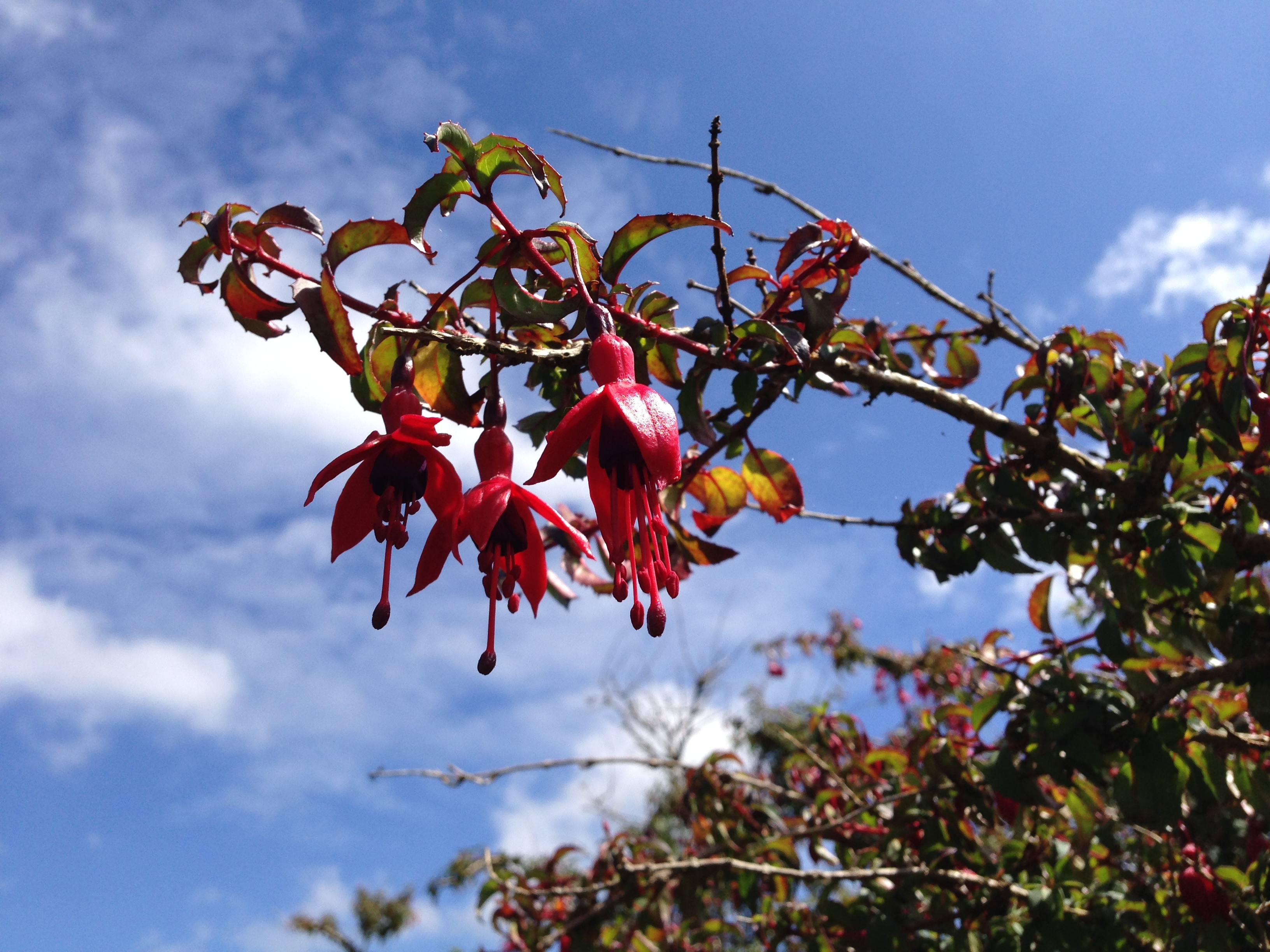
Hidden Glen Fuschia

Hidden Glen Fuschia

Well, there’s enough in those few lines to keep us going on field trips for some time to come! We did find, on the western slopes, a beautiful hidden valley holding the ruins of a one roomed cottage. I have convinced myself that this must have been the dwelling place of the blockhead Thady Mahony, who may once have been the keeper of all the secrets of the mountain. But we have yet to find the jewel of the lake with its trout and its miraculous floating islands, notwithstanding the Archangel’s footprint…

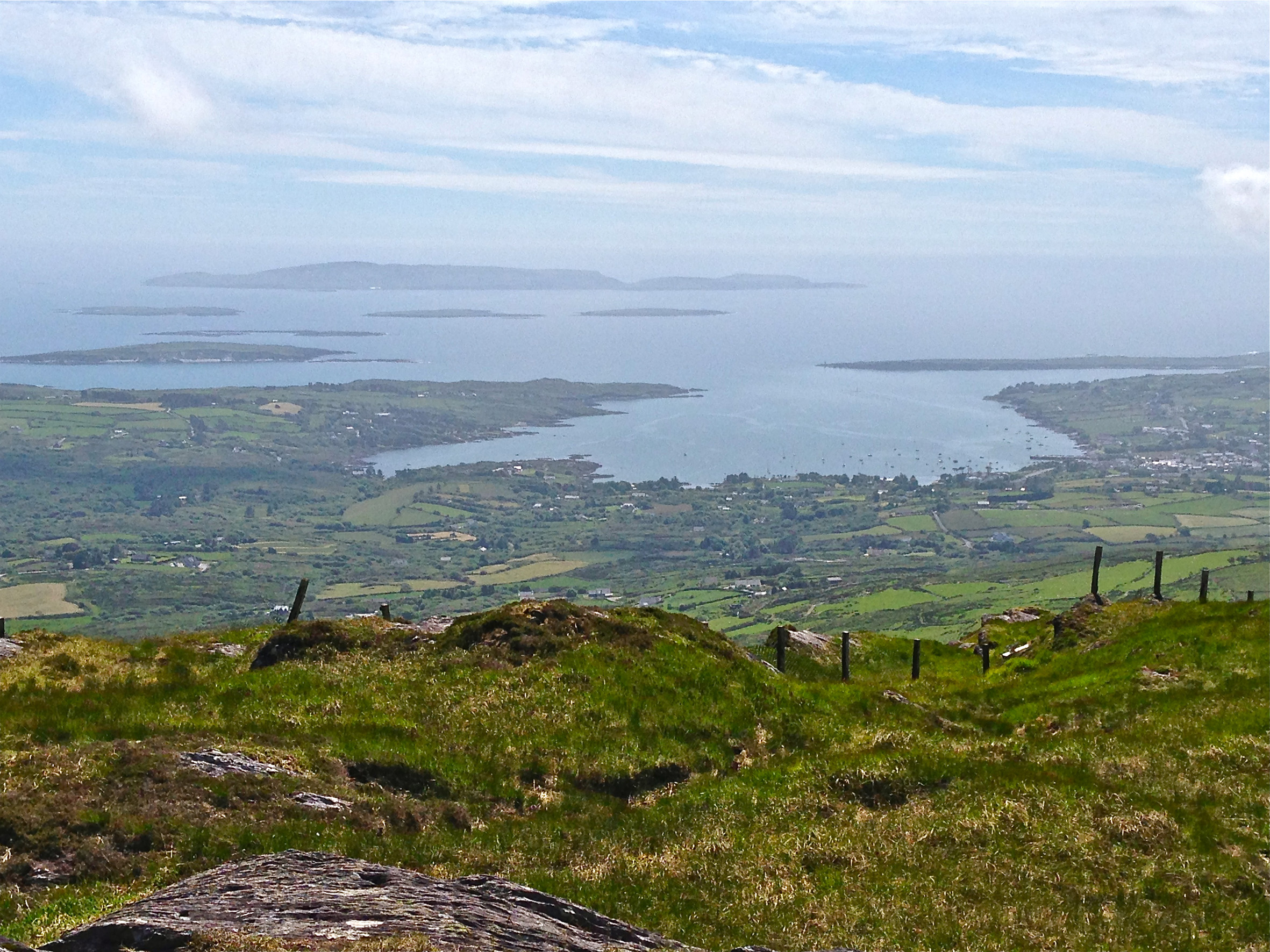
View from the summit

View from the summit

One other possibility for the name is a corruption of the Old Irish Gobhann – which means smith, as in a metal smith. Remember Saint Gobnaitt? She was the patron saint of ironworkers (blacksmiths) and her name is supposed to be rooted in Gobhann. There is also a Goibhniu in Irish mythology: he was the smith of the Tuatha De Danaan and forged their weapons for battle with the Formorians. So – Gobhann, Goibhniu, Gabriel…? Too much of a leap of faith? But it is known that Mount Gabriel was the site of extensive copper mining a few thousand years ago – remains of pits, shafts and spoil heaps can be seen:  so perhaps there just could be something more ancient inherent in the name.

golf ball

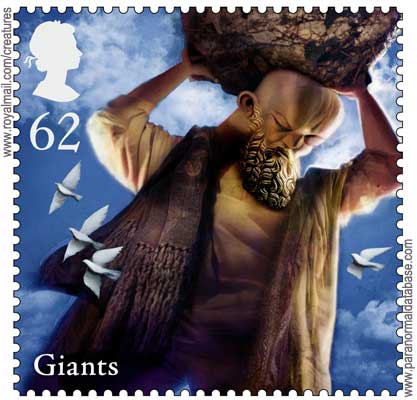
There is mythology attached to the Mountain: the Fastnet Rock was torn from the slopes and thrown into the sea by a giant; once we were searching for a piece of Rock Art within sight of the mountain and the landowner assured us that the carved stone had been thrown there by Finn MacCool (we didn’t find it).

giant stamp

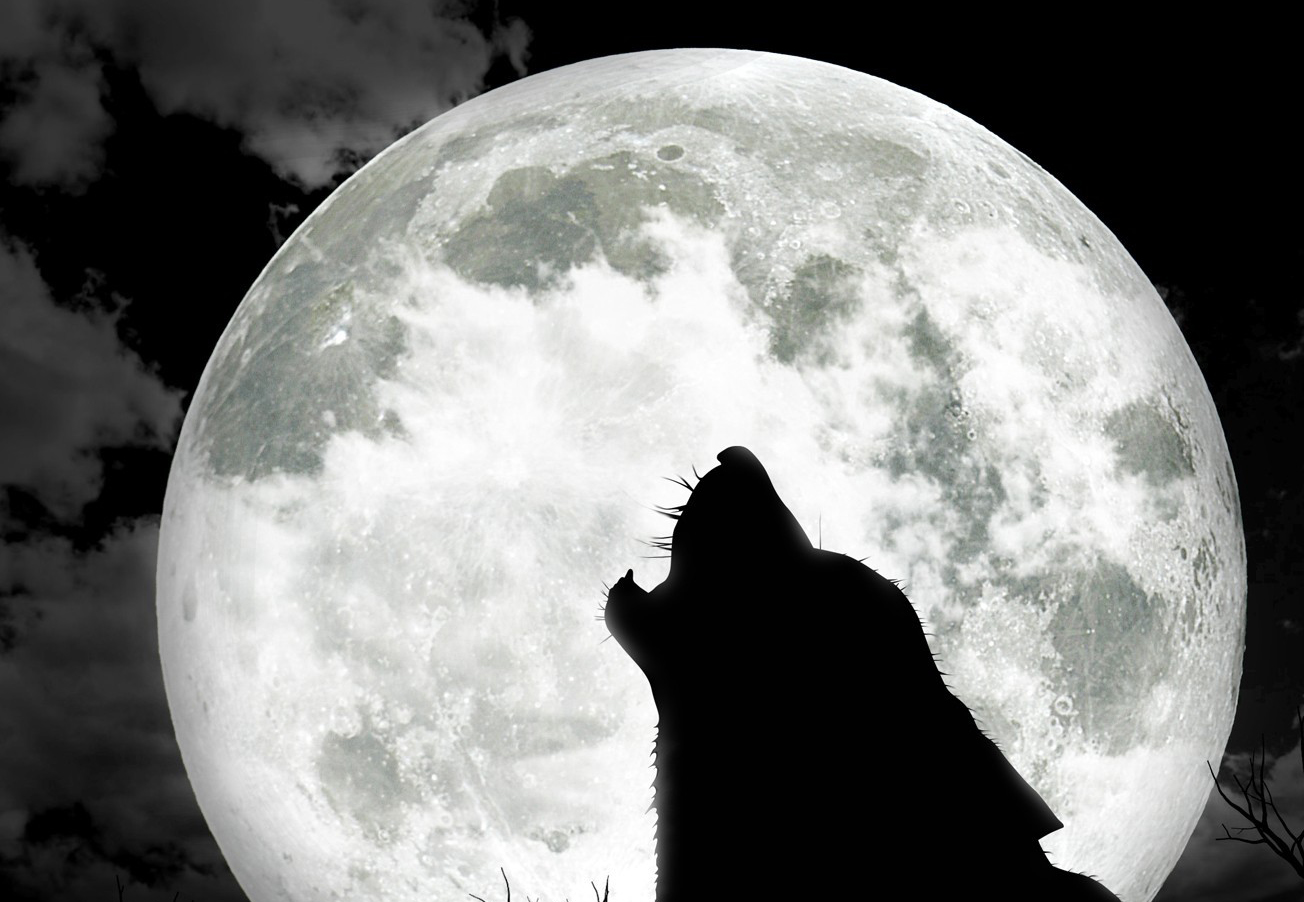
The story about Mount Gabriel that most captures my imagination is the suggestion that the last Wolves in Ireland inhabited the rocky landscape there back in the eighteenth century (although it’s true that several other places make the same claim). Until that time Wolves were commonly seen in the wilder parts of the land and feature in local stories and folklore. Interestingly they were often portrayed in a positive way and were sometimes companions of the saints. There are very few records of Wolves having maimed or killed humans, yet in 1653 the Cromwellian government placed a bounty on them – 5 pounds for a male Wolf, and 6 pounds for a female: worthwhile prize money in those days. This encouraged professional hunters and, coupled with the dwindling forest habitats, the fate of the animal was sealed.

grey wolf

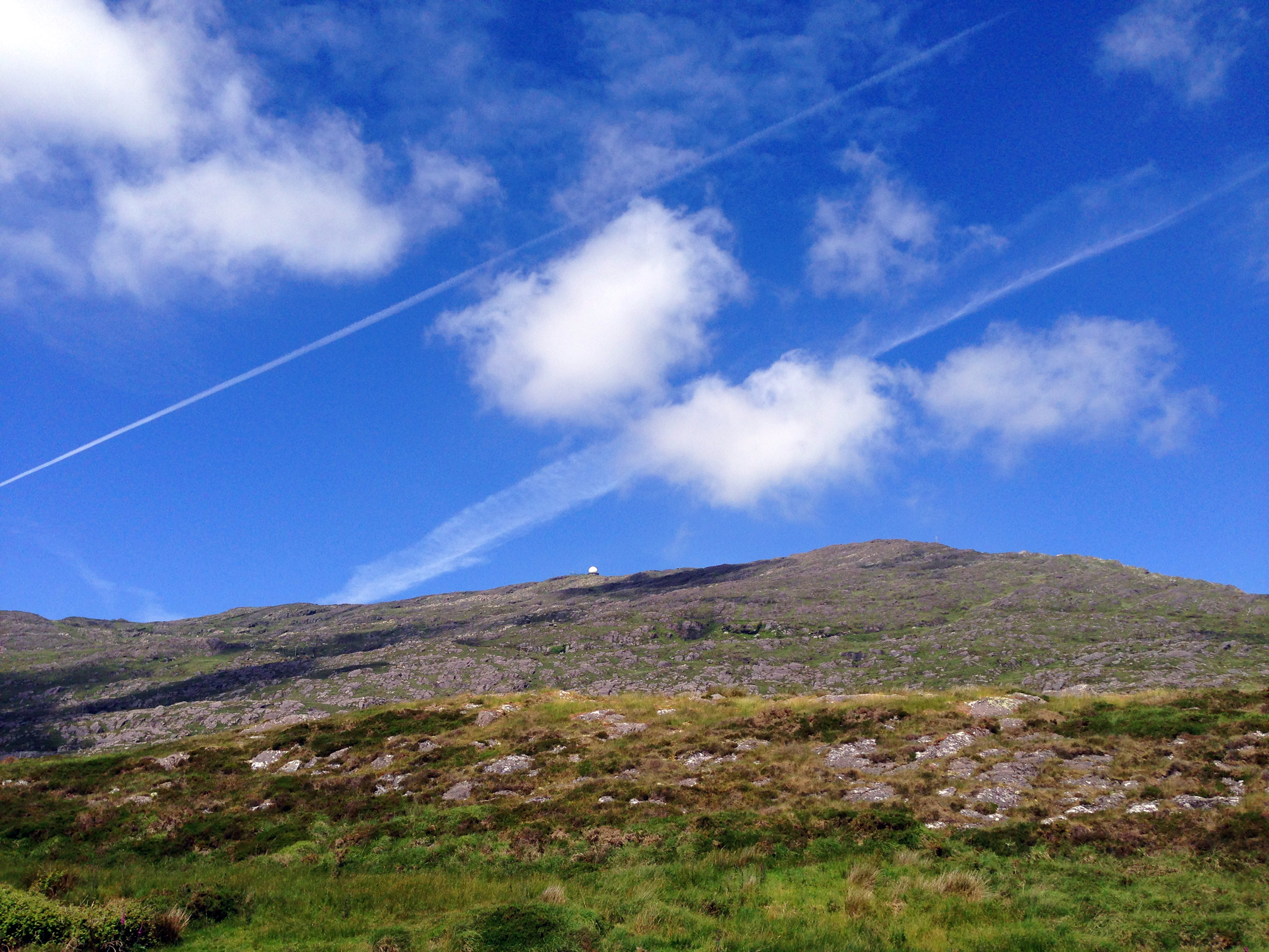
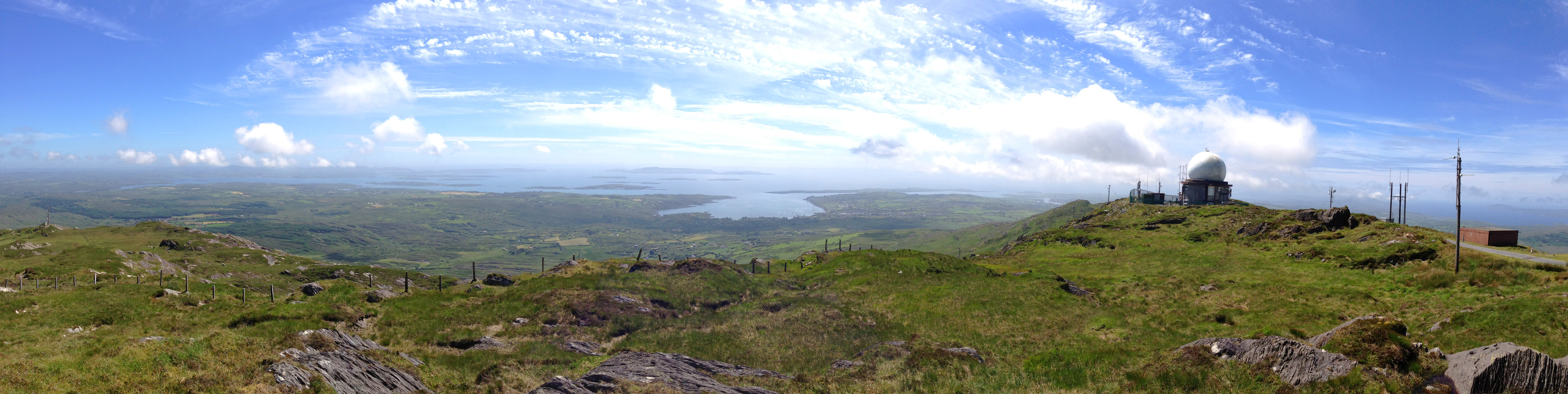
Mount Gabriel today is relatively benign, although it still has its remoter parts. The Irish Aviation Authority has kindly provided a road up to the summit, where sit the distinctive ‘golf ball’ radar domes and aerials of an Air Traffic Control installation. From these heights we can see Rossbrin Cove, Ballydehob, Schull and all the islands of Roaringwater Bay set out in a magnificent panorama – on a clear day.

iaa

Aerials and view to the north

Aerials and view to the north

Modern events have affected the mountain: a German plane crashed here in 1942, and in 1982 the Irish National Liberation Army bombed the radar station, believing that it was providing assistance to the North Atlantic Treaty Organisation, allegedly in violation of Irish neutrality.

IMG_3573

For us the mountain is a landmark and, like most of our view, its profile changes with the weather on a daily – perhaps hourly basis. As a repository of archaeology, human history, lore and nature Gabriel provides a rich resource.

Gabriel

Gabriel