Good Well Hunting: Duhallow

St John's Well 1

Amanda started her blog, Holy Wells of Cork, in February and oh my goodness she already has over 100 wells documented. Not just documented – recorded, photographed, mapped, described, researched and written up in a charming cheerful style that’s a hoot and a pleasure to read.

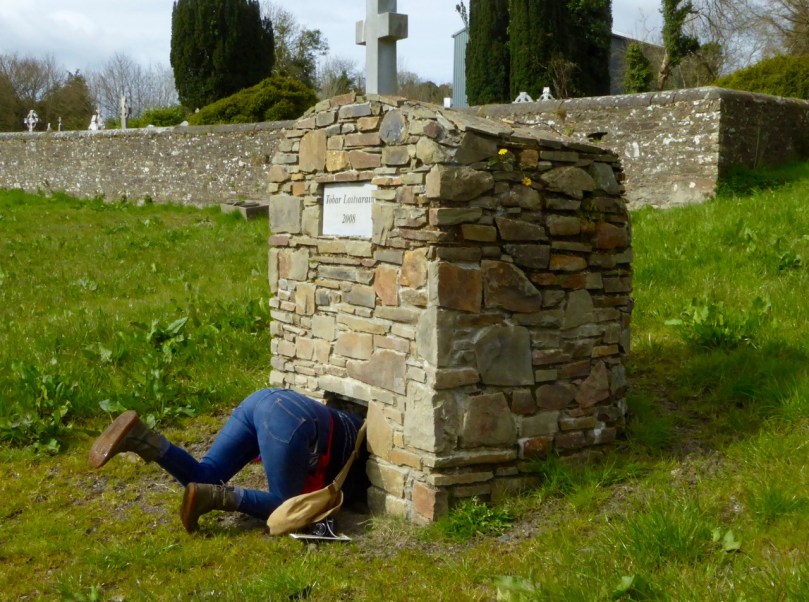
AB 1 Laitiaran

Standard Amanda shot as she checks out St Laitiaran’s Well  

Robert and I go along on her well-finding trips every now and then. Between accompanying Amanda, and wells we’ve gone to ourselves, we’ve visited about half the wells in her gazetteer. The sheer variety is astonishing, as also is the varying state of preservation. From muddy holes in the ground to gleaming and designed surrounds – holy wells come in all shapes, all sizes, and all conditions.
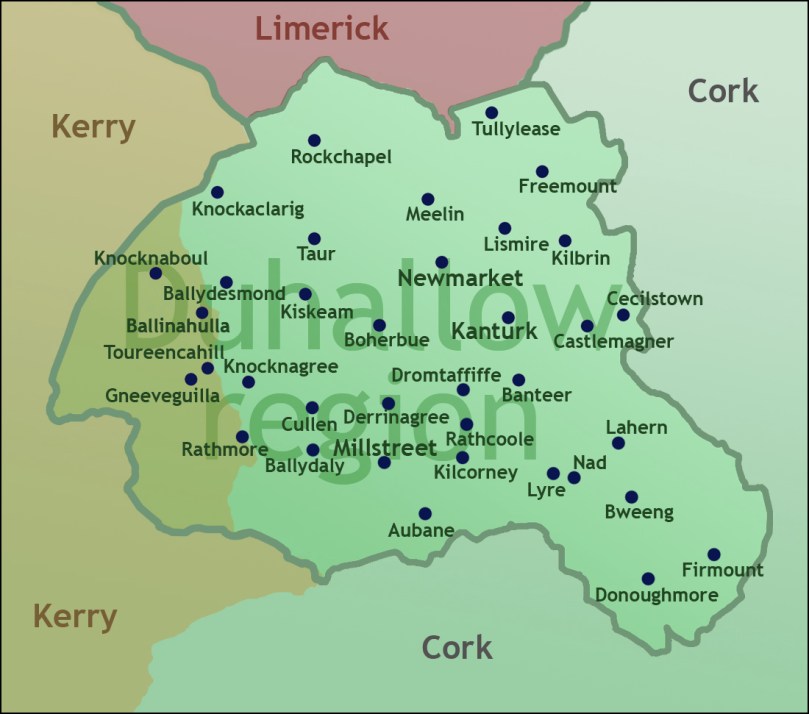
duhalloworiginal

Duhallow – isn’t that a lovely word? It’s a lovely place too – a barony (part of Ireland’s old land division system) that occupies the northwest corner of the county of Cork. It’s mostly rolling hills and farmland, drained by the headwaters of the Blackwater River, with the Derrynasaggart and Boggeragh mountains to the south and the rich agricultural lands of Limerick to the north, while the Kingdom of Kerry lies just over the county border to the west.

Duhallow Sign

Duhallow has its act together when it comes to holy wells – the local development committee has developed a Holy Well Trail. A brochure leads you around the trail and at each well is a detailed history of the well, the saints associated with it, the cures attributed to it, and the rounds and prayers to be undertaken.
Tubrid Well Millstreet

Robert makes his markTubrid Well, Millstreet. Robert adds his mark to the cross inscribed by hundreds of pilgrims
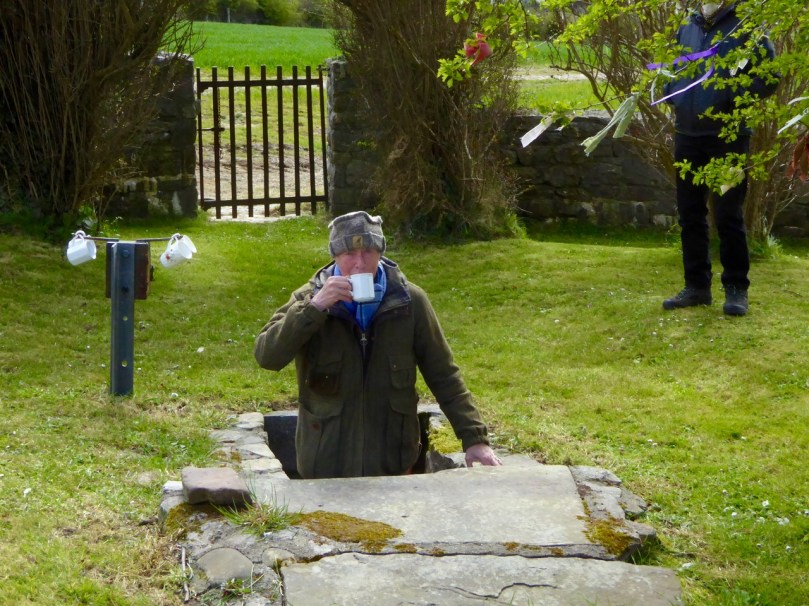
At  many of these sites mass is still said once a year and cups and bottles are provided so that you can drink, or take away, some of the water. The Tubrid Well outside Millstreeet is the largest and most active. While we were there people came and went and fresh flowers and candles were in evidence. This is a well that even has its own Facebook page!

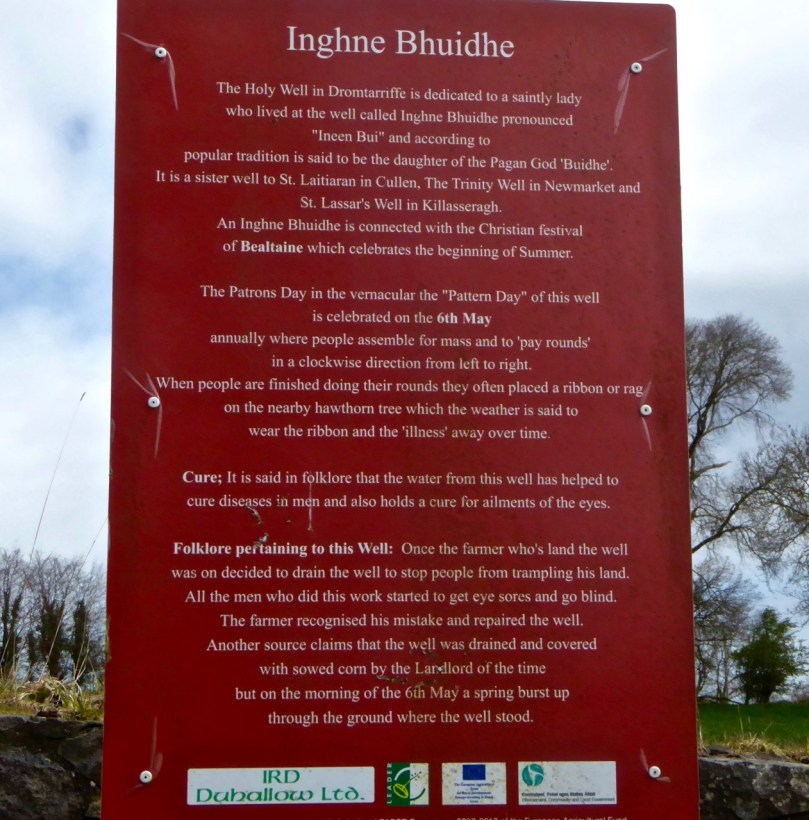
Inghne Buidhe rag tree

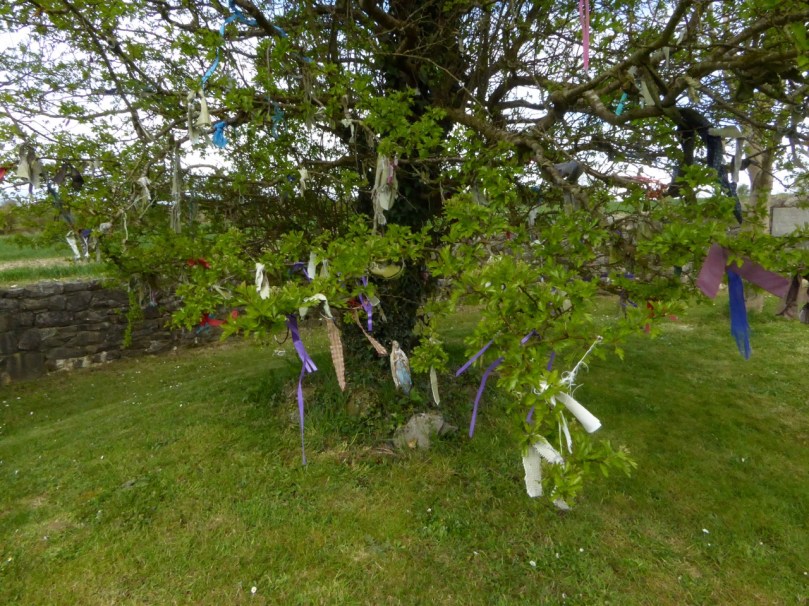
A rag tree at the well of Inghne Bhuidhe

The well devoted to Inghne Bhuidhe (Inyeh Bwee, daughter of Buidhe, the Yellow-Haired) provided a complete contrast – out in the middle of corn fields, surrounded by a low wall and with a rag-festooned thorn tree looming over it. This one had a remote and tranquil vibe, suitable for contemplation.
Tasting the water, Inghne Bhuidhe

My  personal favourite was the Trinity Well near Newmarket, mainly because it was built inside a fulacht fiadh (pronounced full okt feeah) – that’s an ancient (possibly as far back as the Late Bronze Age) cooking place where stones were heated and then rolled into a trough of water. Over time, the used stones built up into a horseshoe-shaped mound that surround the trough – now re-purposed as a holy well. It was a marvellous testament to the timeless character of special places in the deep countryside. 

Trinity Well in Fulacht Fiadh

Trinity Well, formed from an ancient fulacht fiadh

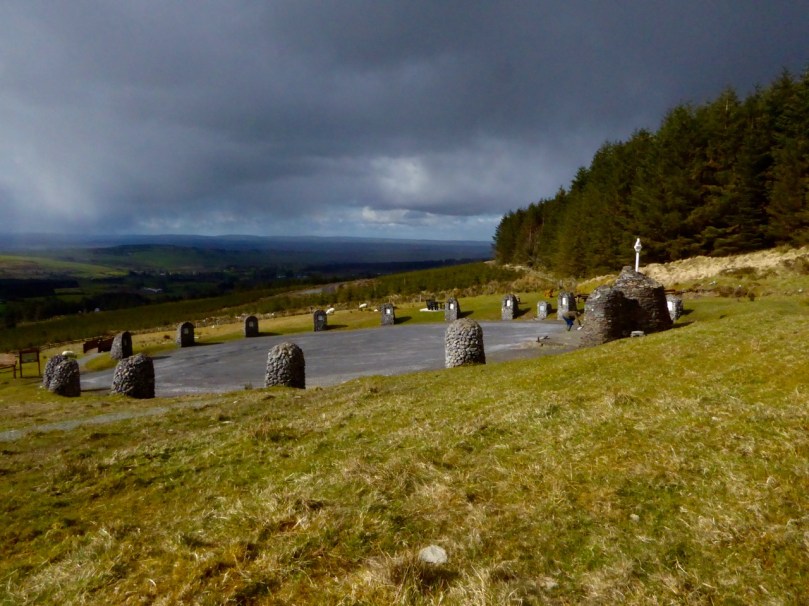
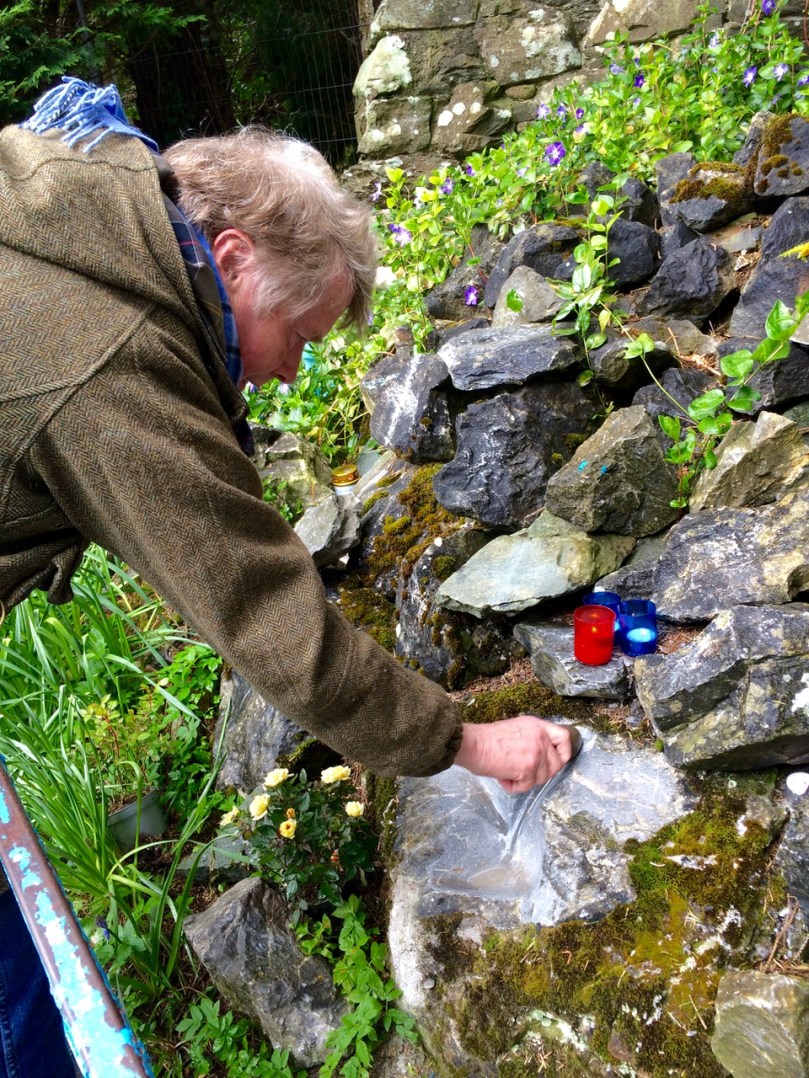
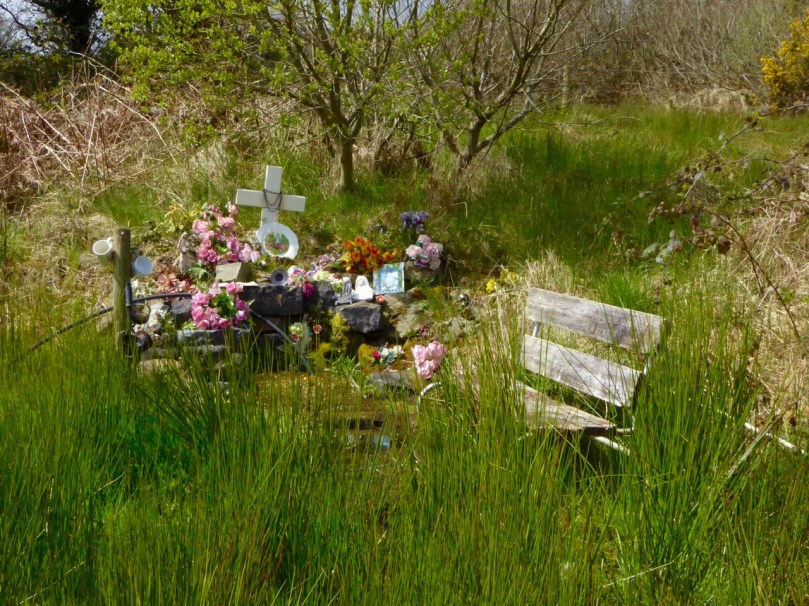
One of Duhallow’s wells is high in the Mushera Hills and dedicated to St John. The first photo in this post shows the location and extent of it. Back when the veneration of holy wells was at its peak, this one was the site of an enormous pilgrimage on St John’s Eve, June 23rd, every year. As with many such events the prayers and devotions of the daytime gave way to the partying of the night time and eventually the church acted to curb what they saw as the excessive debauchery of the occasion. Read Amanda’s account of the goings-on at Gougane Barra for an insight into the aprés-penance hooleys.

St John's Well 2

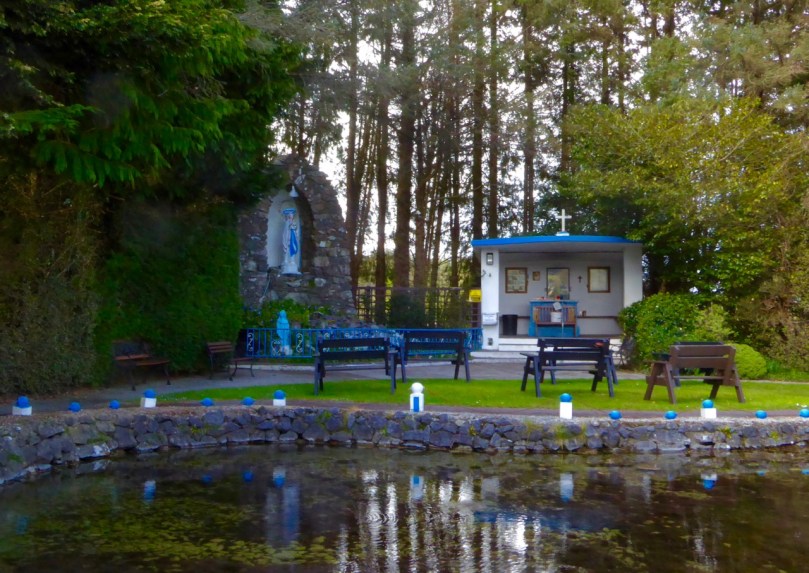
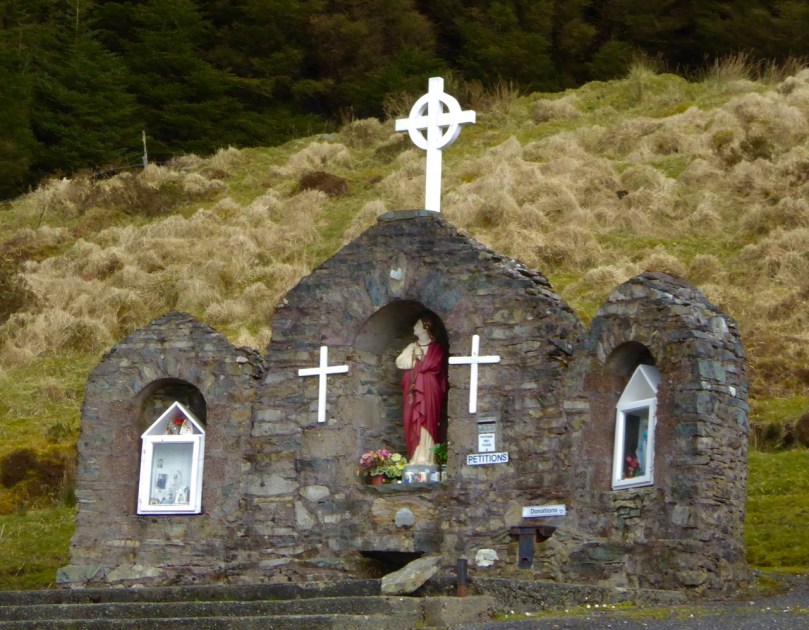
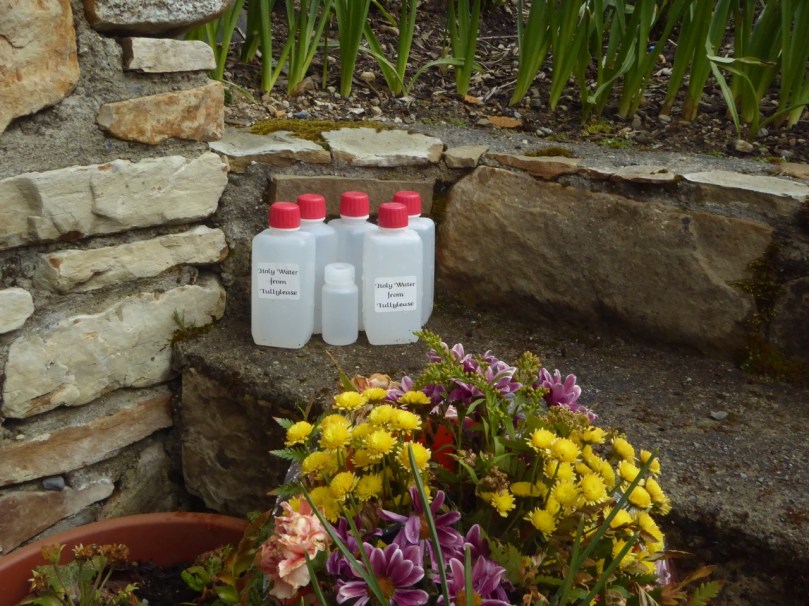
Tullylease had three wells, one devoted to Mary and another to St Beirechert (a saint whose name is spelled in a bewildering number of ways). The third well turned out to be something different – see below. The Marian well is thoughtfully stocked with holy water. Some of it is now in our bathroom to see if a few drops added to the bathwater will fend off the rheumatiz. So far, so good.

Holy Water

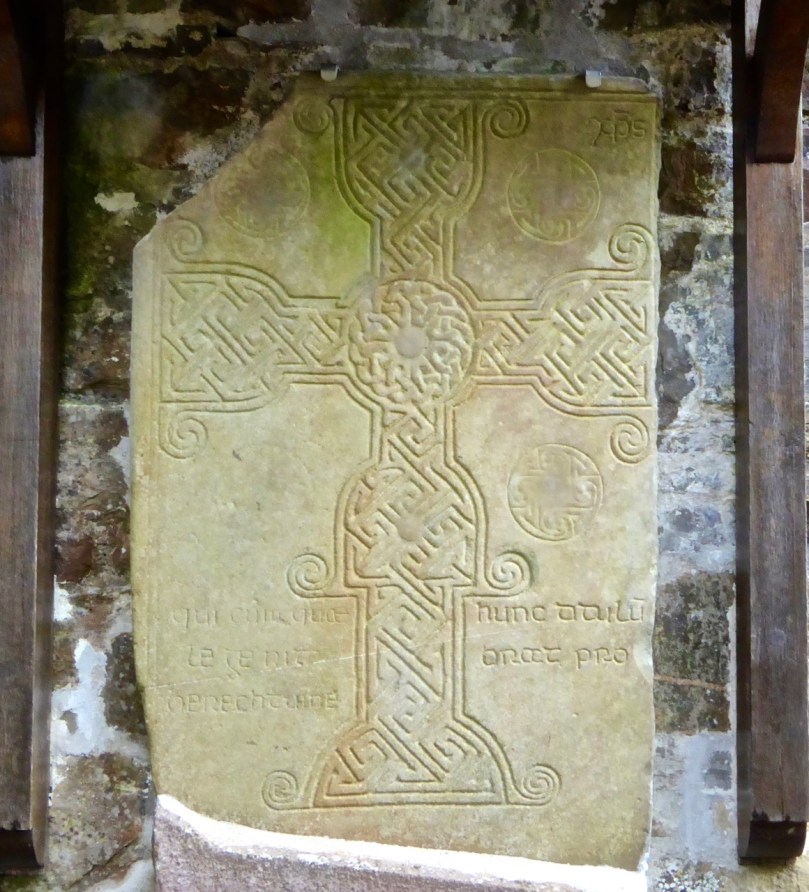
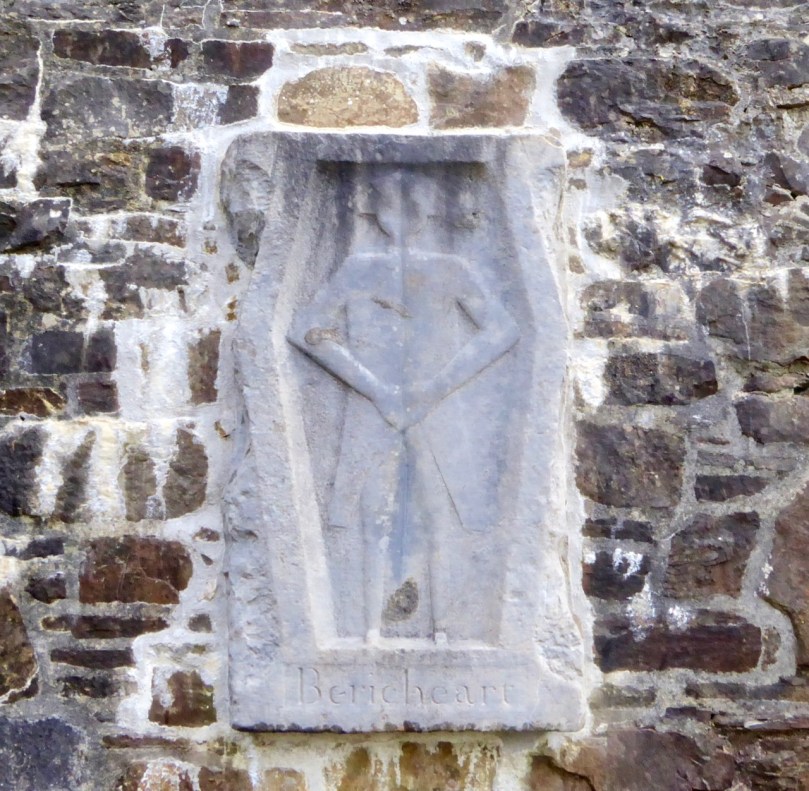
St  Beirechert’s church has several interesting carvings: St Beirechert himself in an unlikely swallow-tailed coat and tricorn hat, several fragments and a wonderfully worked cross slab with interlace design.

Bericheart in swallowtail coat

We  were intrigued to learn recently that this very cross was used as a model for the design of leather and fabric pieces for UCC’s Honan Chapel, an Arts and Crafts masterpiece, when it was being built a hundred years ago. I can’t show you a picture of that, as it’s undergoing painstaking conservation, but click here to see a modern use of the design!

Tullylease cross slab

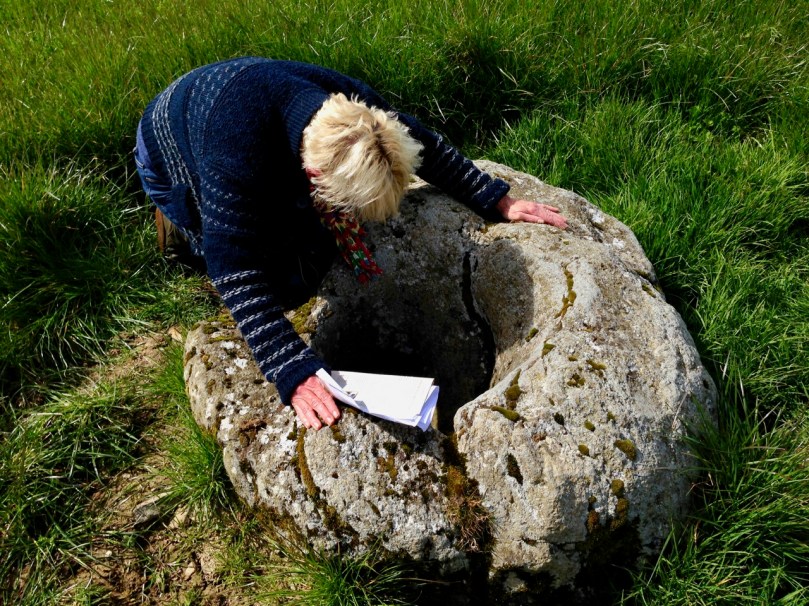
The final well we saw at Tullylease  wasn’t really a well at all but a bullaun stone – a big one. It’s supposed to cure headaches if you rub your forehead all around the rim, so here is Amanda, about to give it a try.

Amanda headache well

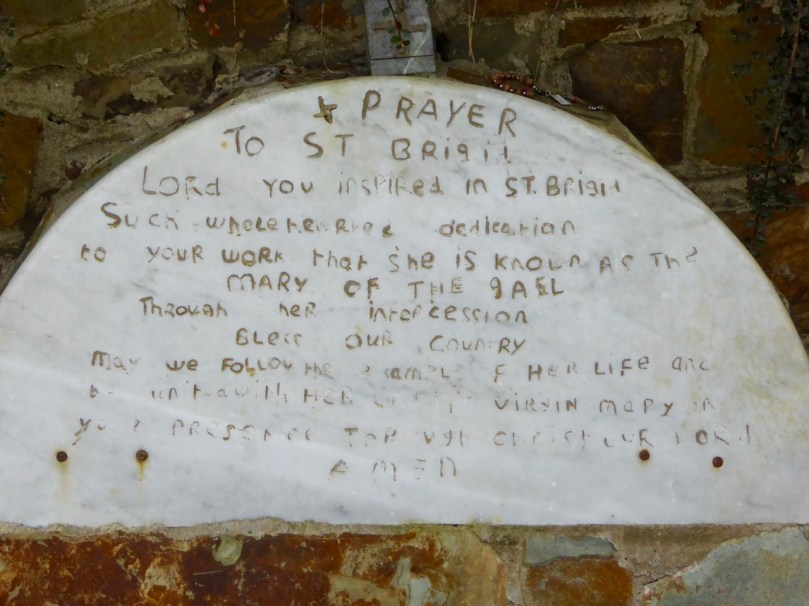
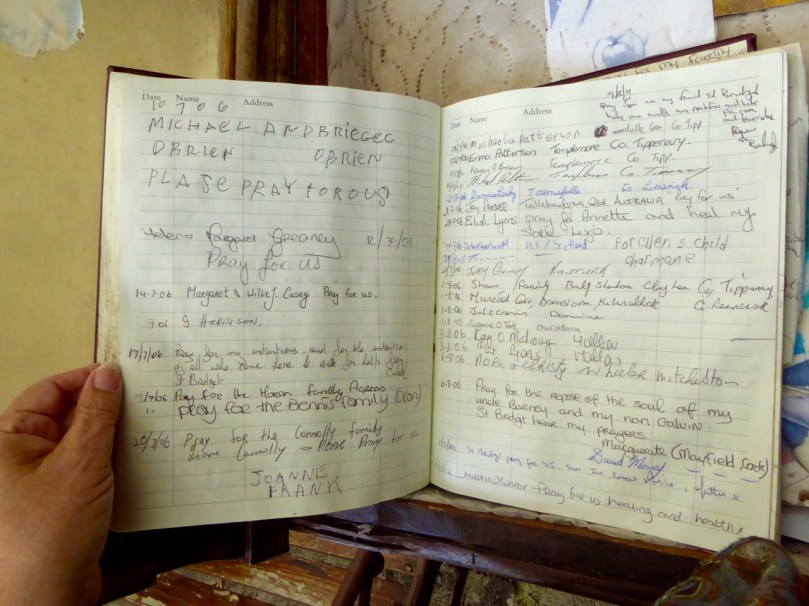
Our last stop was at a well for St Brigid. This one had a kind of cupboard containing a book in which visitors can write their prayers and ‘intentions’. It was fairly up to date, indicating recent visits.

Brigid's Well, prayer

St Brigid Pray for usIn  this post I have concentrated on the Duhallow wells, as examples of how one community has embraced this aspect of its heritage and created a wonderful experience for its residence and for visitors. For a detailed description of each of the ones I’ve mentioned here, browse through the North Cork section of Amanda’s Gazetteer.

Brigids well cups

But following a brochure and a map to wells that are tidy and well signed is not a fair representation of how you find holy wells in the field! In my next Good Well Hunting post I will invite you to come with us as we fight brambles, mud and neglect, as well as discover little gems still intact and visited in the deep countryside.

Wild Beasts of Ireland

tiger at feet st canice

There are wild beasts all around us!  Animal, fish, serpent or fowl, real or mythical, carved, painted – imagined. This is my second ‘Menagerie’ – previously we explored the Honan Chapel in Cork, and I was struck by all the wildlife representations there, as set out in this post from over two years ago.

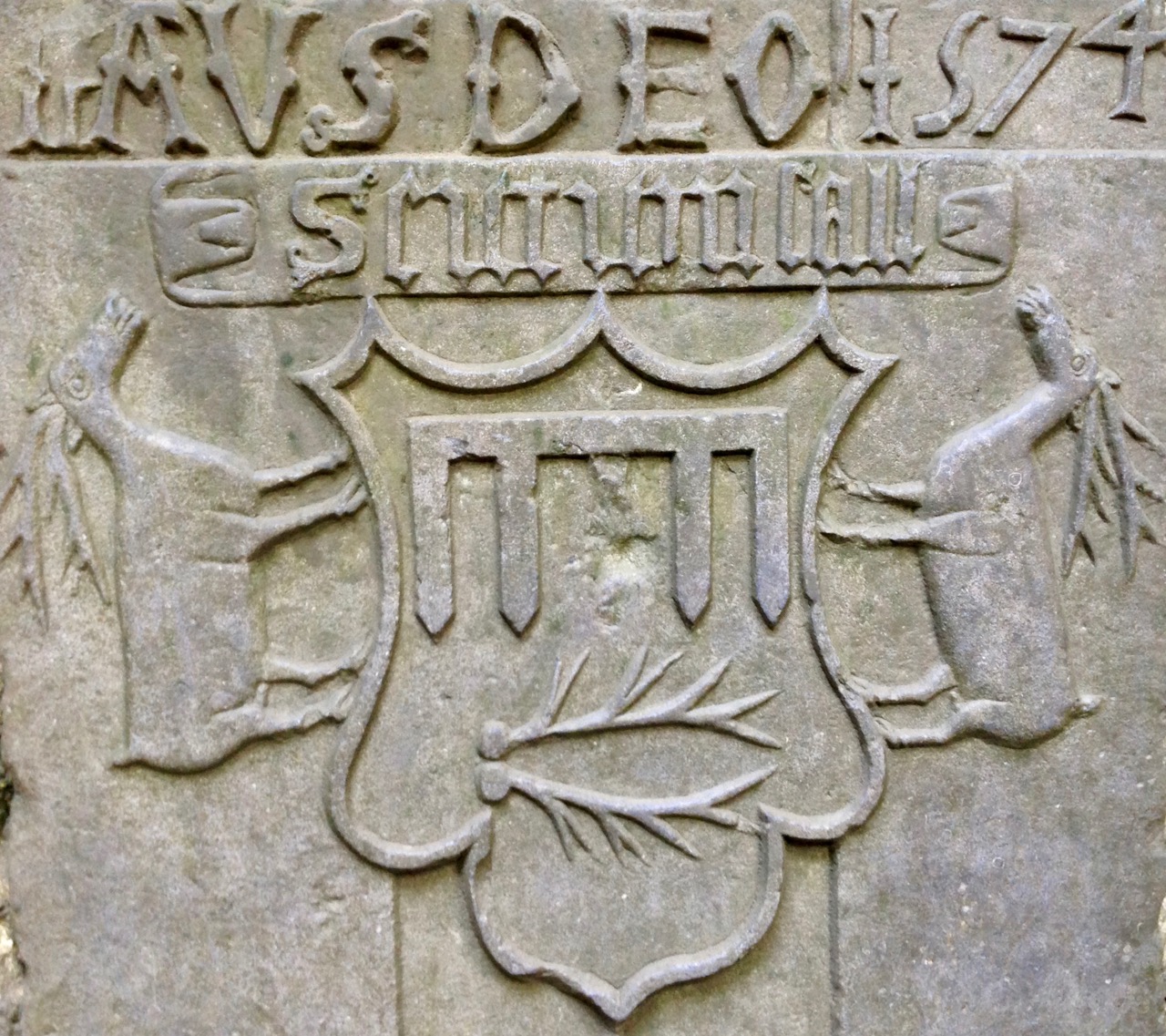
2 deer cashel

Deer and antlers on a memorial plaque in the Cathedral at Cashel – one of the earlier representations here, dating from 1574. Top picture – believed to be a tiger, this fine beast lies at the feet of a medieval knight in St Canice’s Cathedral, Kilkenny

Our travels take us around many of Ireland’s historic sites, and I’m always on the lookout for Creatures – they are abundant everywhere. Countless stories of the saints involved animals: they are common symbols on tombs and heraldic plaques, but we can’t resist also using them today – for inns, shop signs or just decoration on the streetscape. Have a look around you – you might be surprised how many you can see…

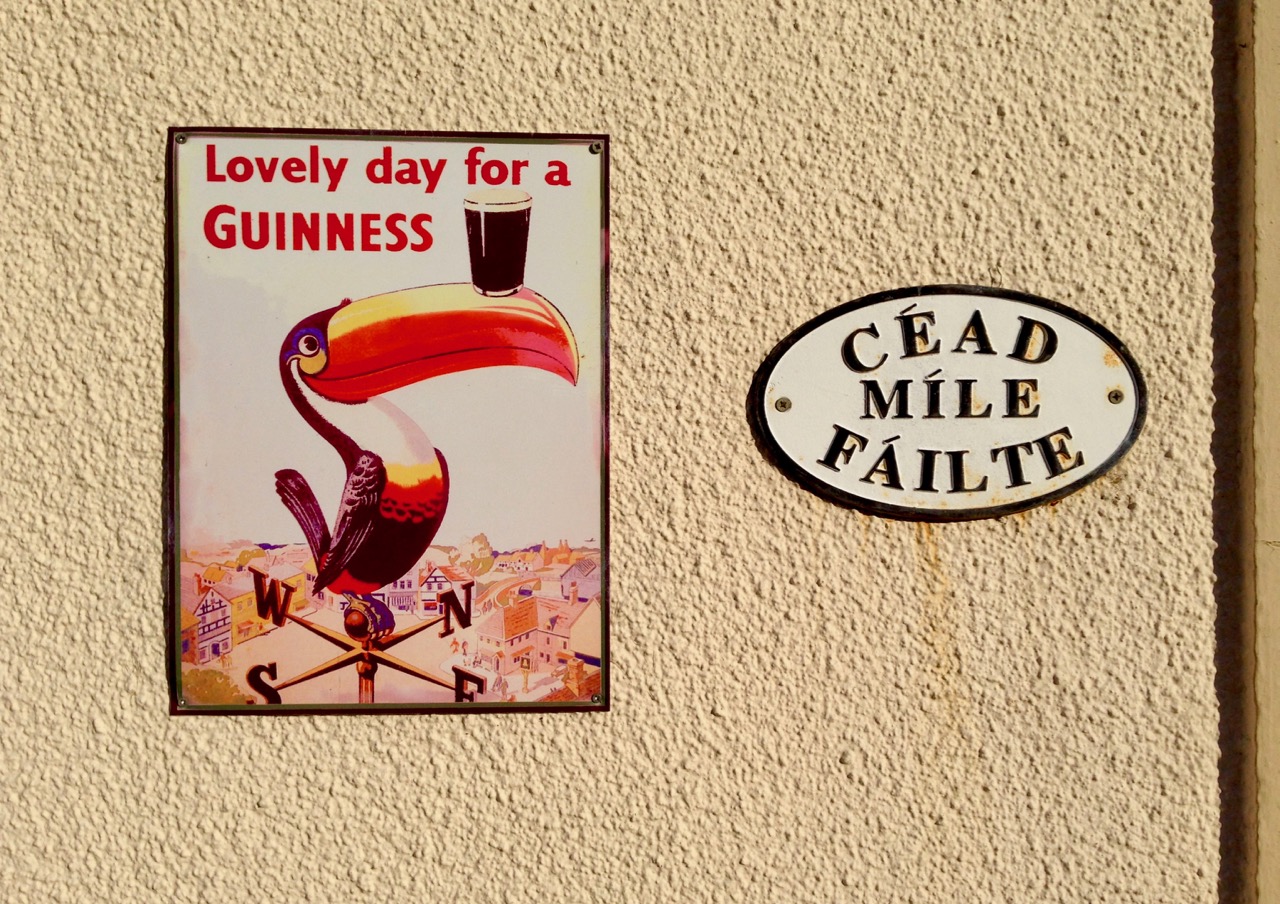
toucan guiness

Inhabited streetscapes: top – two Kilkenny Cats undoubtedly belonging to Dame Alice Kytler and, above – there are plenty of these toucans still around in Ireland! They originate from a ‘zoo’ advertising campaign for Guiness begun in 1935 (abeted by Dorothy Sayers who wrote captions and verses); the toucan campaign flourished until 1982

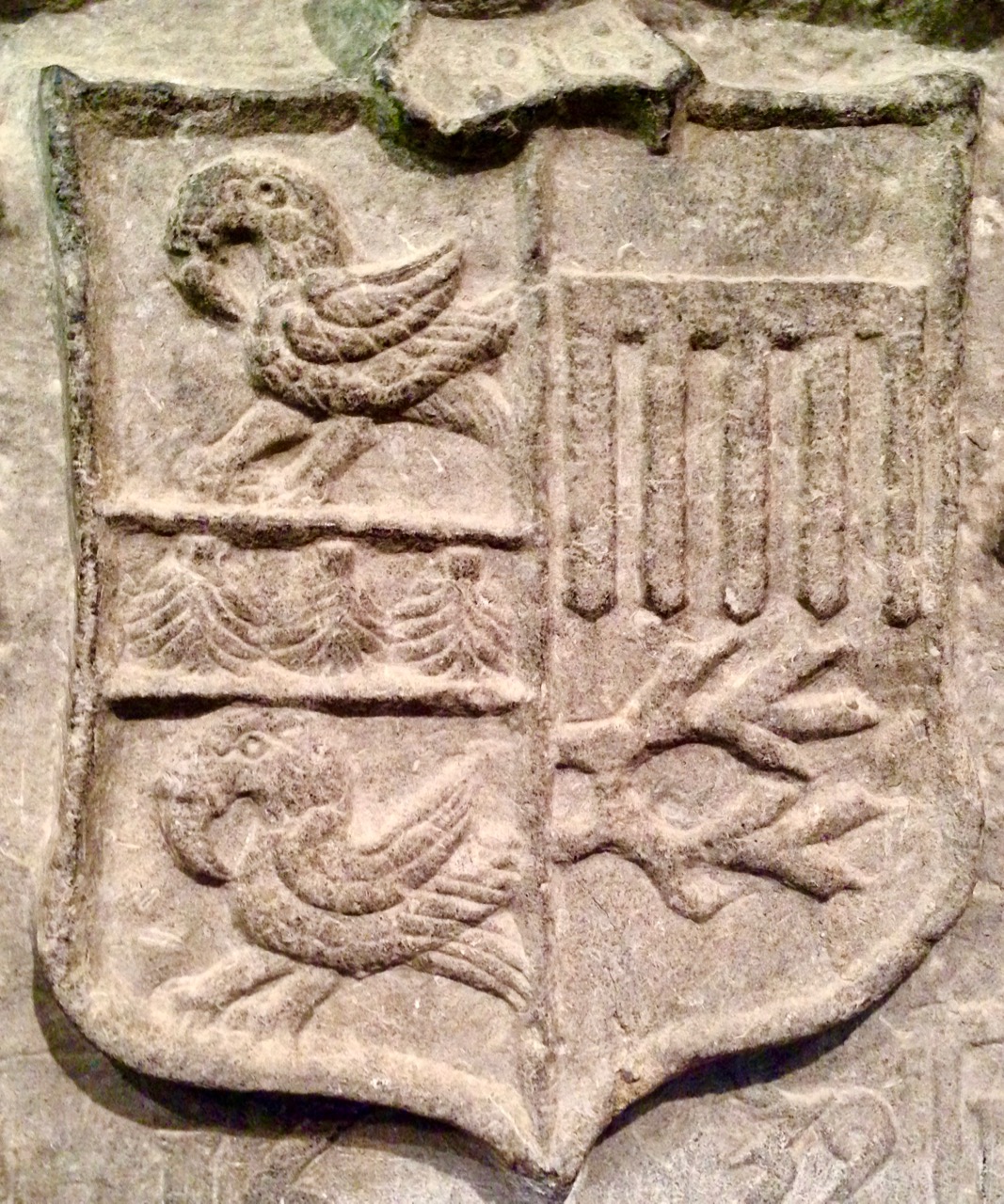
Nobody has ever claimed the toucan as an Irish bird, but pelicans were certainly not uncommon in medieval carvings here. That’s because the pelican in early Christianity symbolises atonement as it was believed to wound itself in order to feed its young with its own blood.

2 birds shield cashel

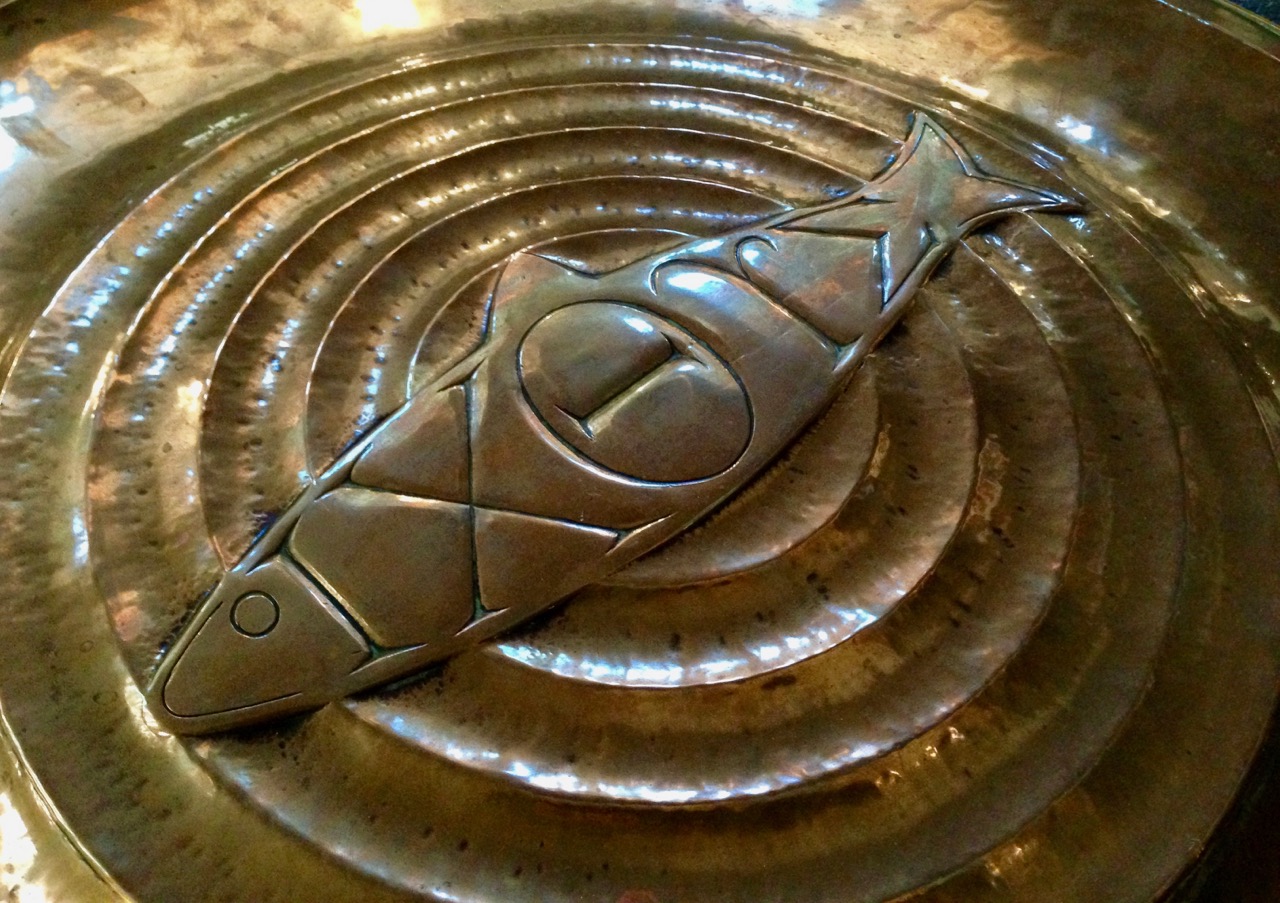
fish lid st canice

Christian symbolism: top – medieval pelicans at Cashel, and below – a fish incorporated in a modern lid to the ancient font in St Canice’s Cathedral, Kilkenny. The Greek ΙΧΘΥΣ is an acrostic for ησοῦς Χριστός, Θεοῦ Υἱός, Σωτήρ, literally translating as Jesus Christ, Son of God, Saviour

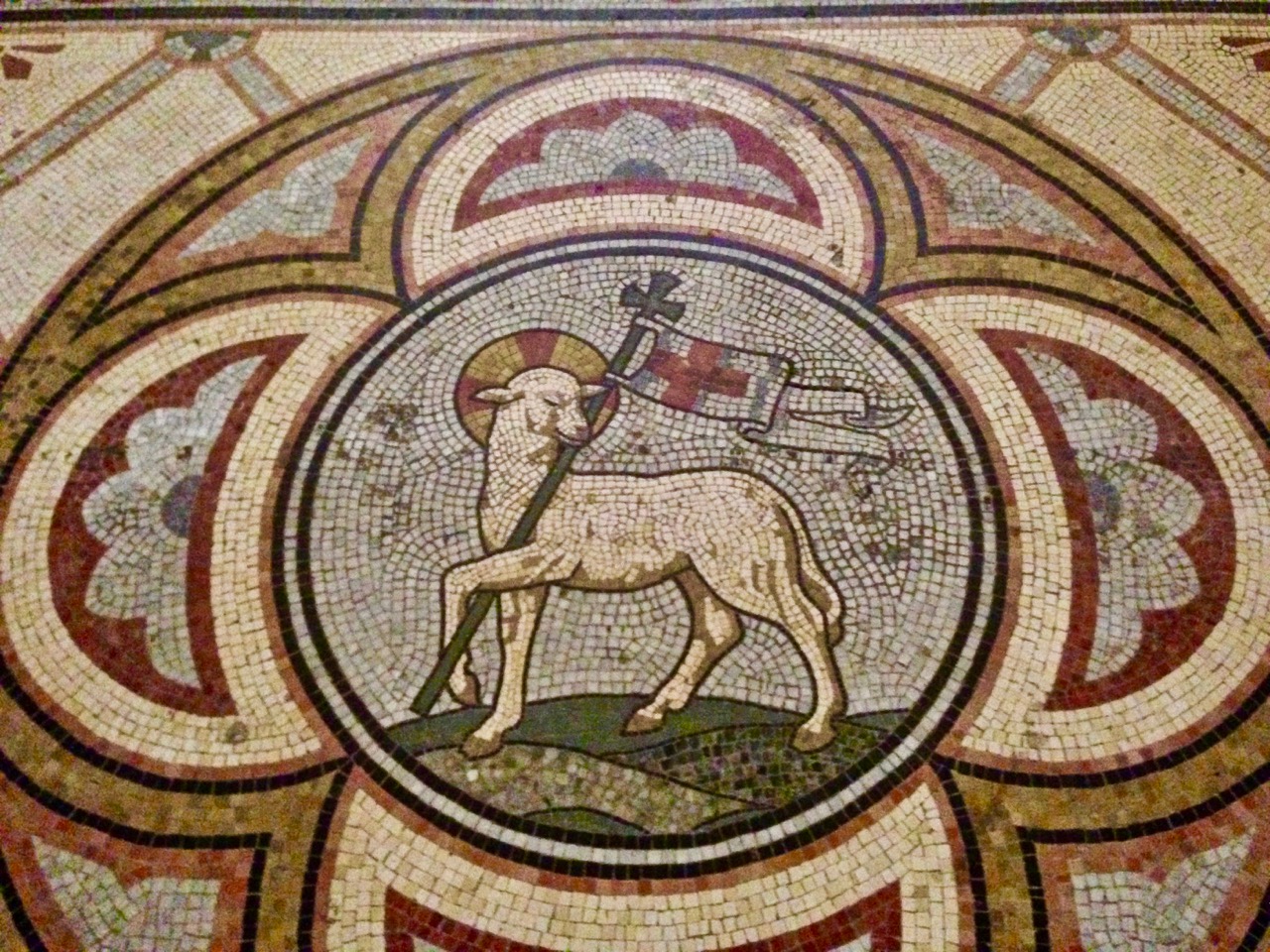
Also in Christian symbolism the lamb represents Jesus – the Lamb of God – who was sacrificed in order to atone for human sin.

lamb with pennant kilkenny

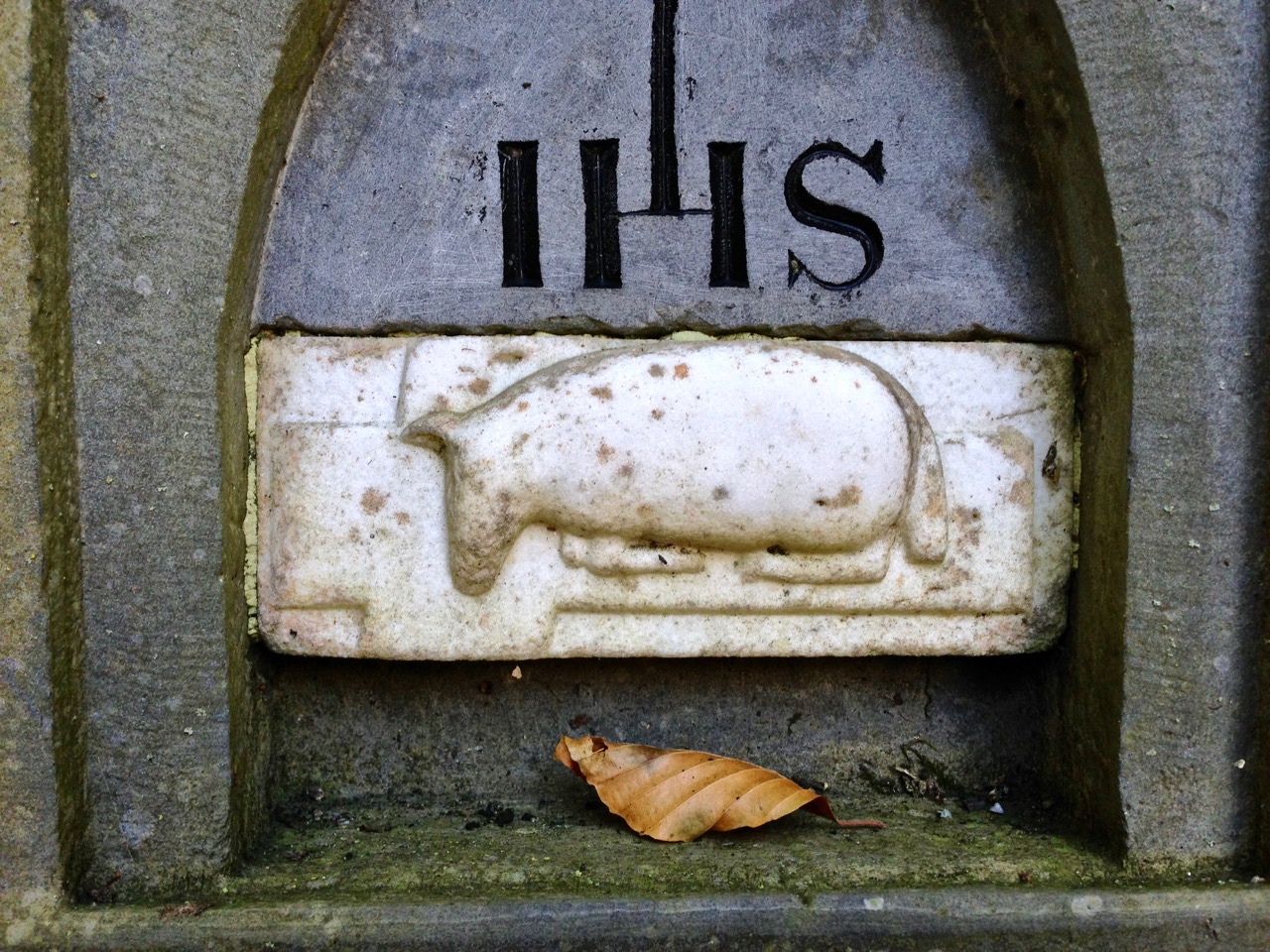
ihs lamb detail
Top picture – not a wild beast, perhaps, but a pascal lamb mosaic in St Mary’s Cathedral, Kilkenny. Lower picture – this strange creature is also a lamb, from a graveyard memorial in Killeen, Co Meath

Lions are popular animals in Britain and Ireland, possibly because they appeared on royal crests and were therefore associated with status and dignity. I was surprised to find bears and eagles well represented.

All the lions (graphic tiles and wistful memorials) are from the Collegiate Church in Youghal. The stained glass is from St Peter’s Church, Bandon, Co Cork and shows off bears (from crests of the Earls of Bandon – their motto was Bear & Forbear), eagles, another lion and – for good measure – a fine serpent

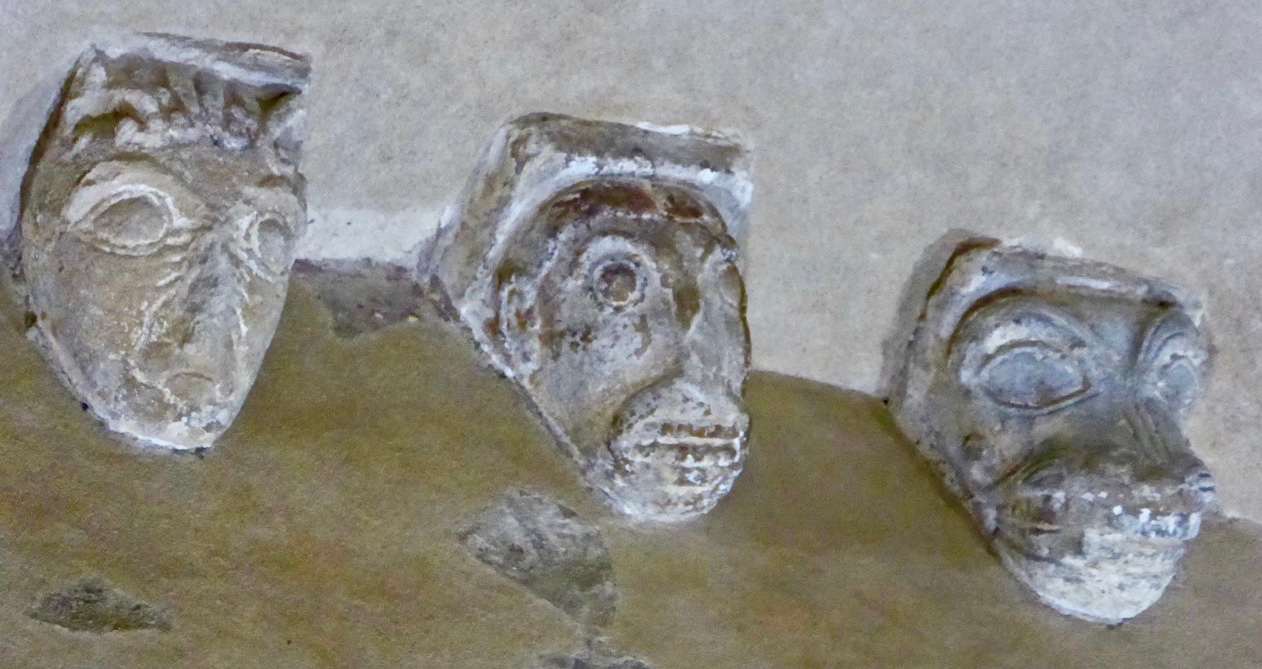
Some of the most splendid and oldest carved stonework in Ireland is to be found at Cormac’s Chapel, Cashel and at Clonfert Cathedral, both dating from the twelfth century. The Hiberno Romanesque doors and arches display arrays of human heads but also numerous creatures.

Heads cormacs chapel

Upper pictures – a small selection from the riotous carvings at Clonfert Cathedral, Co Galway and – lower picture – ambiguous creatures from Cashel, Co Tipperary: all are around 900 years old

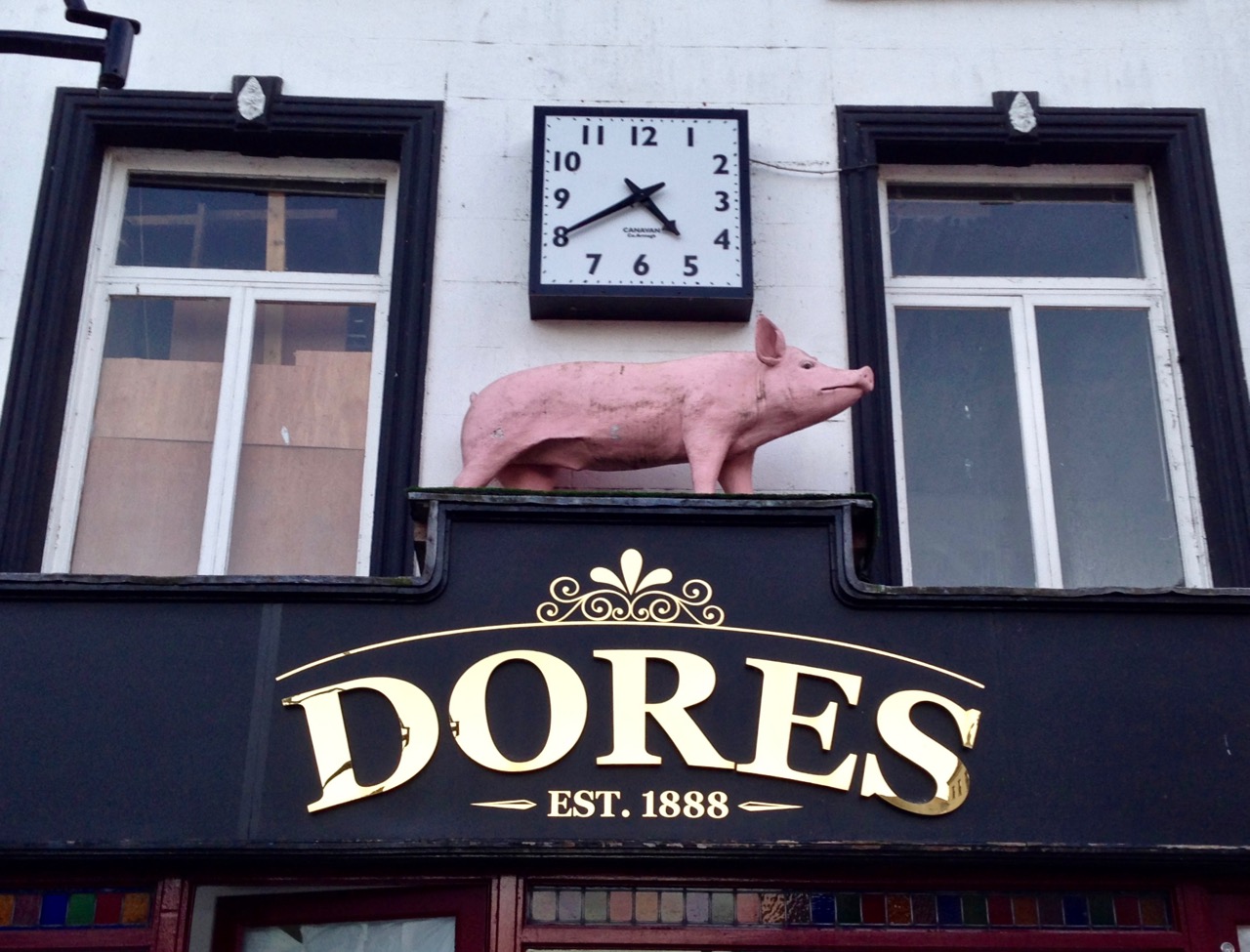
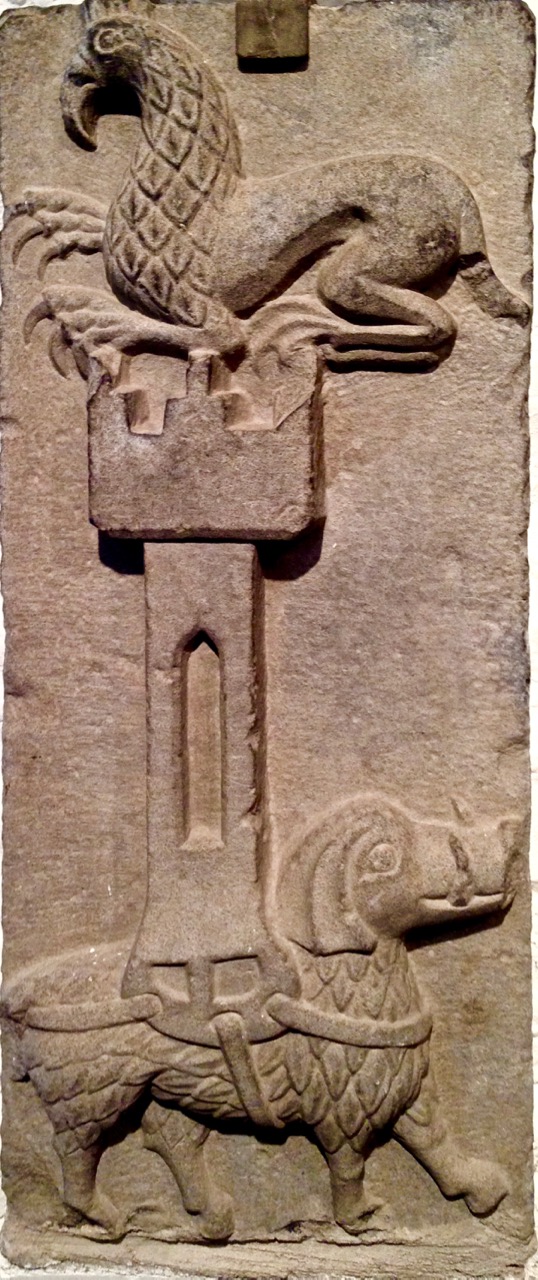
I’ll round off for now with some more cat-like creatures and a Kilkenny pig. Oh – and a carving we found in the Cashel museum, titled ‘Elephant and Castle’. Both the carving and the name are enigmatic, as the creature with a castle on its back (wherein resides another creature – a gryphon?) looks to me like a boar with feathers!

pig dores kilkenny

Elephant + Castle


The Murdering Glen

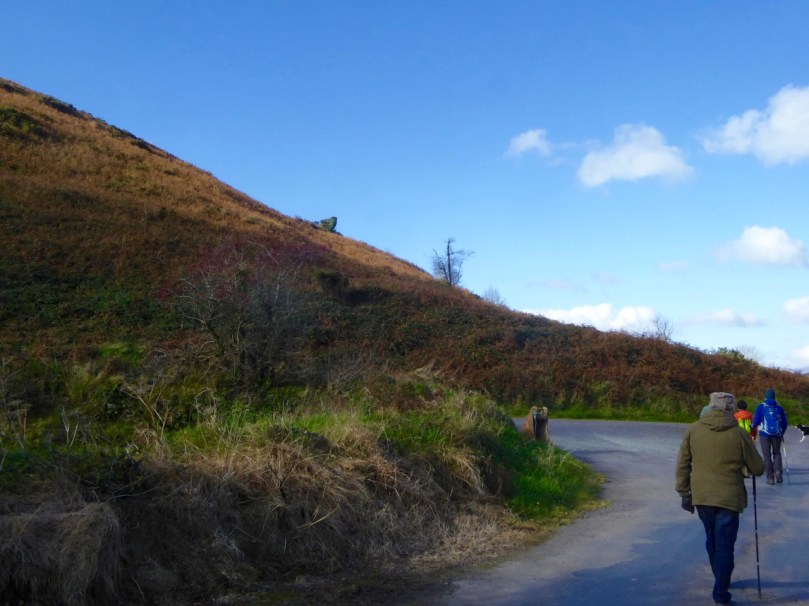
On the walk

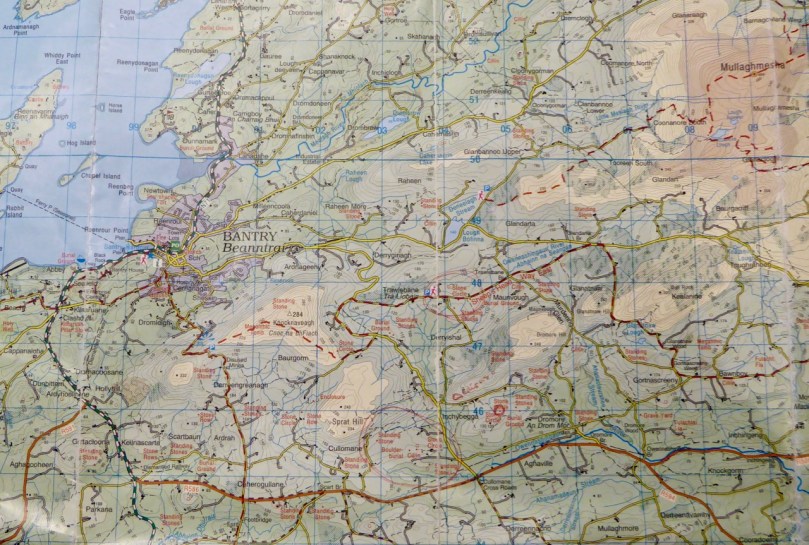
The long valleys that run eastwards from Bantry are filled with antiquities – Discovery Map 85 is dotted with red circles of places we want to tramp around. We have been particularly intrigued by the ‘Murdering Glen’, labelled on the map: can you see it?.

Murdering Glen Map

Today we got a chance for a thorough exploration of the Murdering Glen, on the invitation of our friend Bridget, who lives there and is a keen explorer herself. After a wonderful lunch supplied mainly from her garden we set out up the road towards the Glen, with Bridget assuring us that the place appeared peaceful enough these days and not to worry.

Murdering Glen

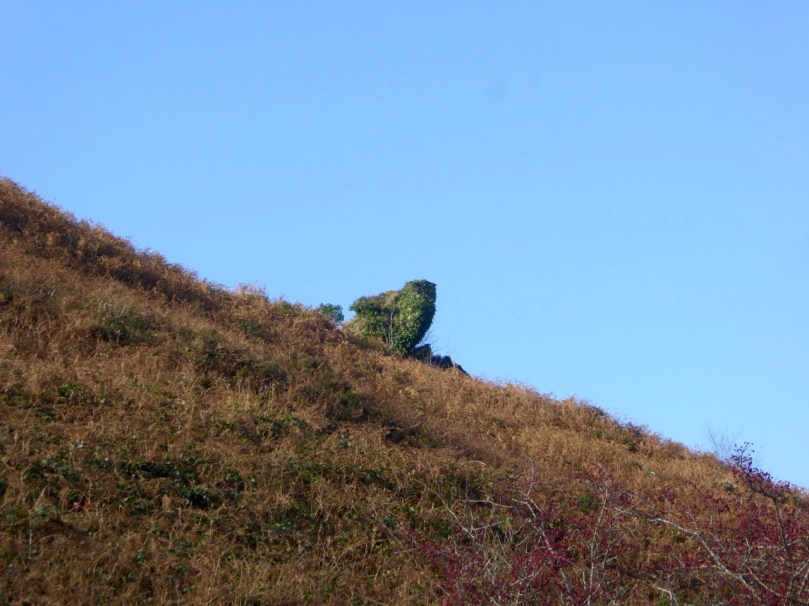
The Glen is indeed dramatic, with steep sides and an enormous overhanging rock – just the kind of place for a brigand to lurk. In this case the brigand (and his mother) were locals, by the name of O’Kelly, who would lay in wait for travellers and murder them for their gold, before throwing them into the Butcher’s Pool.

Murder Rock

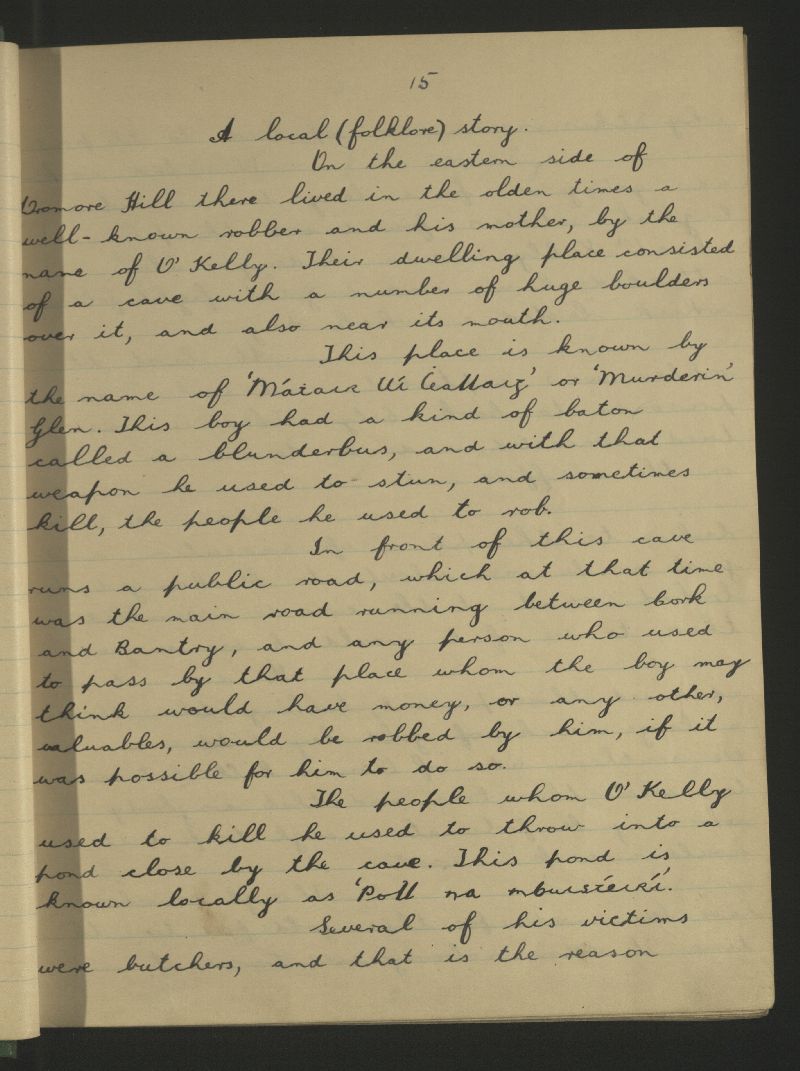
In  the 1930s schoolchildren in every National School in Ireland were asked to write down the stories they heard at home and these were recorded, in their own writing, by the National Folklore Commission. Here is the outline of the project, as presented on Duchas, the website that now stores that collection:

For the duration of the project, more than 50,000 schoolchildren from 5,000 schools in the 26 counties of the Irish Free State were enlisted to collect folklore in their home districts. This included oral history, topographical information, folktales and legends, riddles and proverbs, games and pastimes, trades and crafts. The children recorded this material from their parents, grandparents, and neighbours. The scheme resulted in the creation of over half a million manuscript pages, generally referred to as ‘Bailiúchán na Scol’ or ‘The Schools’ Collection’.

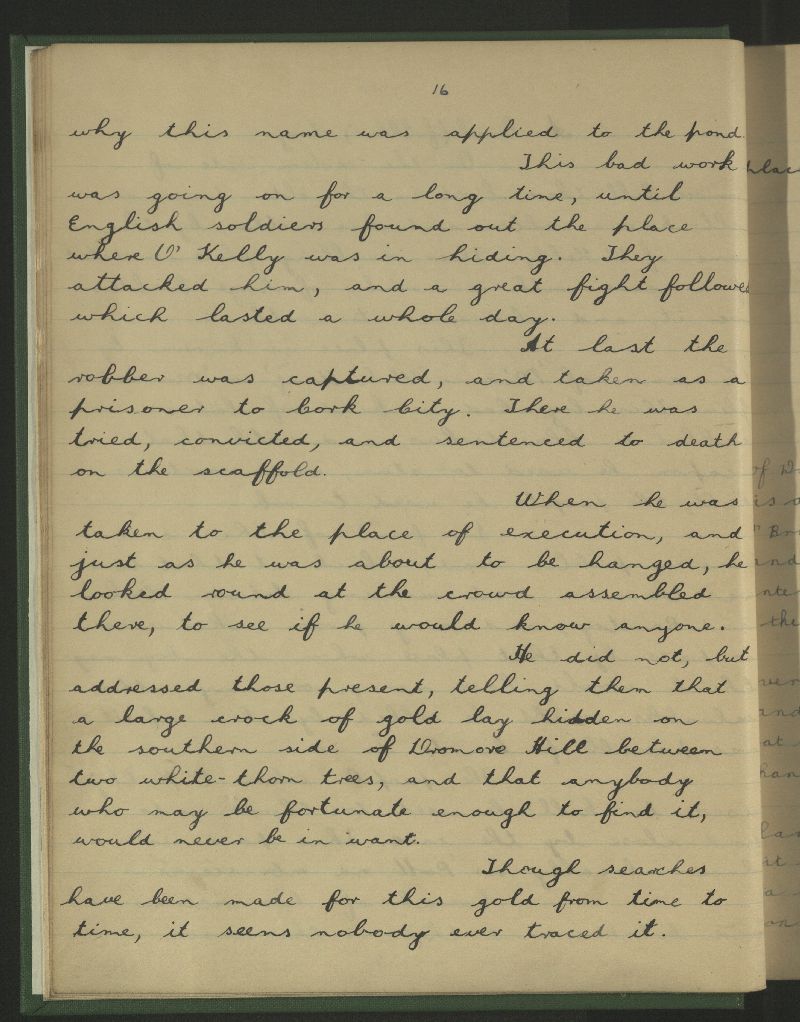
To my delight, I was able to find the original story in the collection – and here it is, in the handwriting of schoolboy Michael Keohane from Dromore National School. I think you will agree he has done a magnificent job of telling the local legend.

murdering-glen

murdering-glen-page-2Before we left the murderous spot Bridget led us up to the mass rock, on a ledge on the side of the valley. It was a block of sparkling quartz, with holes to collect water, into which you can dip your warts in hopes of a cure.

Bridget shows us the mass rock

We  walked then towards the Trawlebane Bridge, where Robert and I had joined the walk two years ago to honour and remember Chief O’Neil. Robert’s post, The Chief, will take you back to that day and show you the spot where, before we started the walk, participants decided to put on an impromptu display of Crossroads Dancing, just as local people would have done on a fine summer evening in the old days.

Trawlebane Crossroads

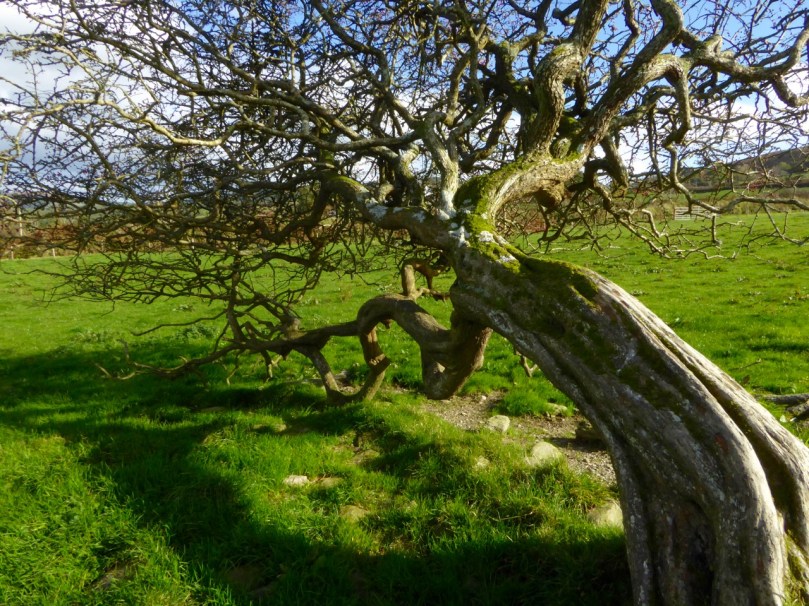
There was more, much more to see, just in the immediate neighbourhood. We spent time in a Cillín first, in the middle of a field, with a magnificent blackthorn tree to mark the lonely spot where unbaptised children were traditionally buried. Read more about this practice in my post Unknown Souls.

Cillín

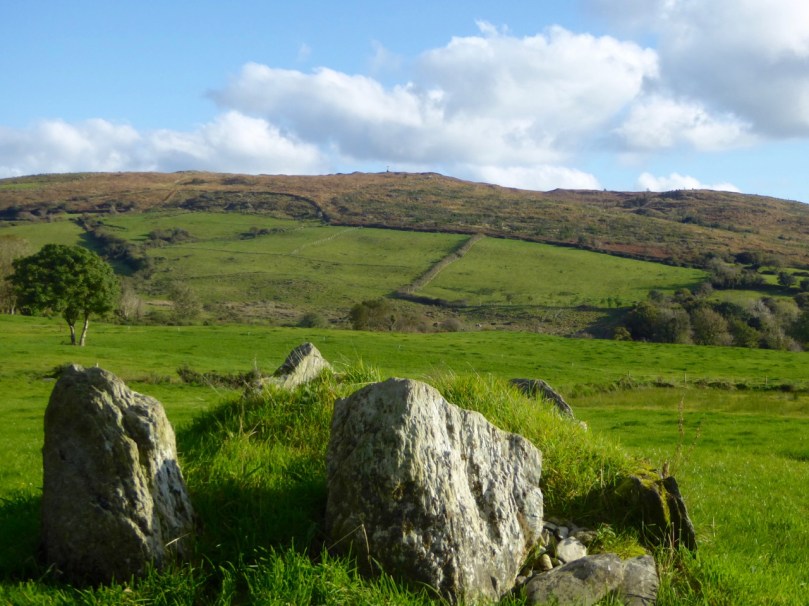
Blackthorn TreeA little five-stone circle was next – a classic of its kind, with four stones set on edge and a recumbent stone marking the axial alignment. (See more examples of them in my post Family-Friendly Archaeology). Besides three sites in nearby Kerry, these small stone circles are only found in Cork. They mirror exactly the larger multiple-stone circles, just with fewer stones – an efficient variation requiring fewer resources to erect but accomplishing the same outcomes.

Five stone circle

Unfortunately, this five-stone circle has been filled with field debris, creating the appearance of a mound

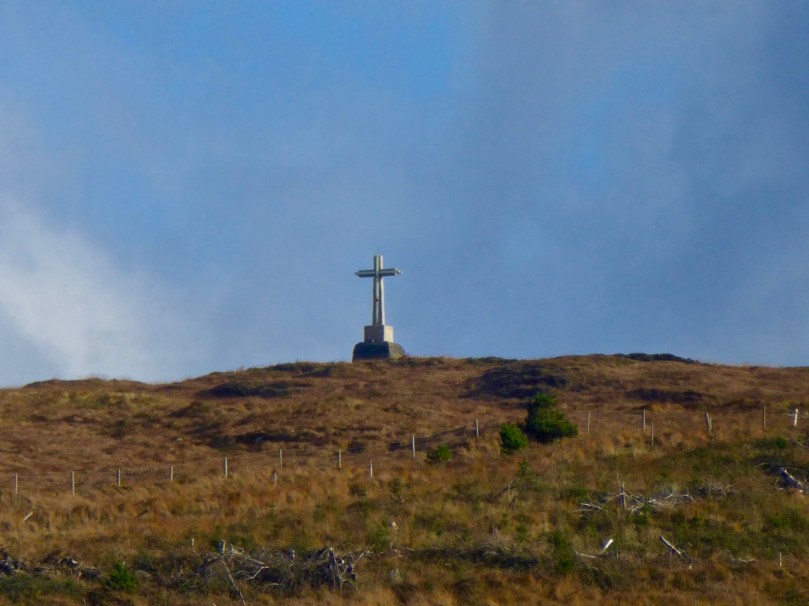
We also passed numerous ringforts and several standing stones. Looming over us as we walked was Dromore hill, on top of which was erected, in the Marian Year of 1954, an enormous cross, now rather improbably lit up at night. The cross is clearly visible from the stone circle and the standing stones, presenting opportunities to ponder on the juxtaposition of what is considered sacred in its own day, and what communities will expend precious resources to erect at different times over millennia.

Cross above circle

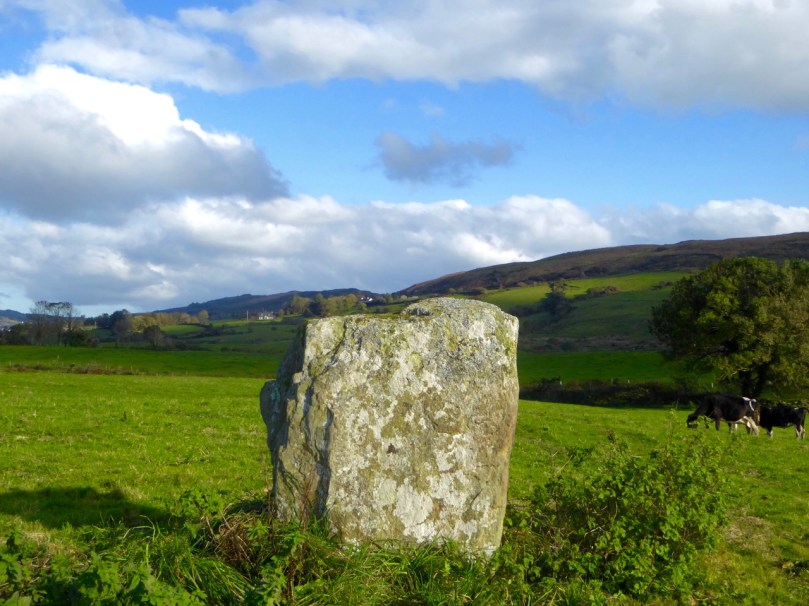
CrossOn  our trip to Sligo recently Robert and I were sensitised to the phenomenon of monuments seemingly echoing or imitating the topography behind them – see his post Discovering Carrowmore for more about this. I was struck by one of the standing stones – the top did seem to echo the hill behind it. Coincidence?

Standing Stone shape

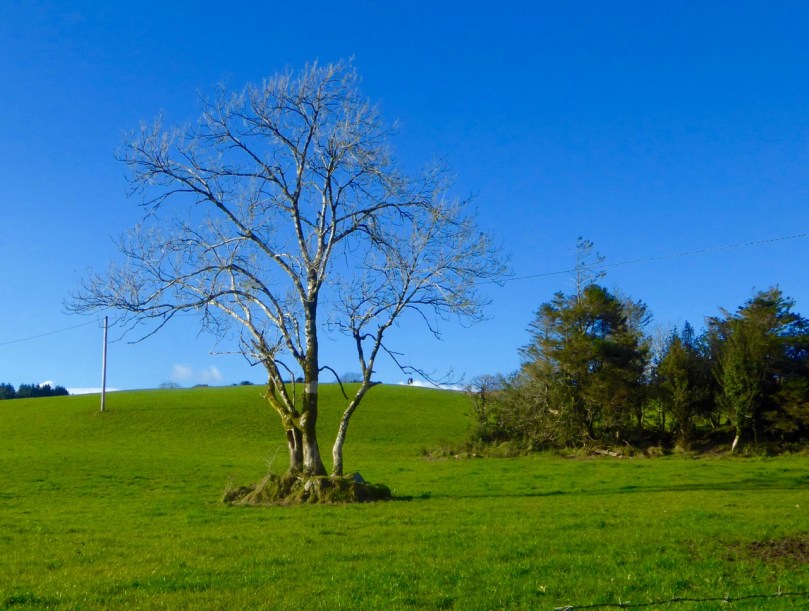
October in West Cork can feature some of the best weather and walking conditions of the year. Today did not disappoint, with blue skies and crisp air.

Tree

Thank you, Bridget, and our other exploring companions Amanda and Peter, for a marvellous day of Murder, Mythology and Megaliths.

At the rabbit ears

Into the Heartland

Elphin Windmill

Because we live on it, sometimes we get carried away by the notion that The Wild Atlantic Way represents the best that Ireland has to offer. A recent trip to the midlands – the Heartland of Ireland – convinced us (if we needed it) that there is no part of Ireland that isn’t beautiful and full of fascinating things to do and see. (Like the Elphin Windmill, Co Roscommon, above.)

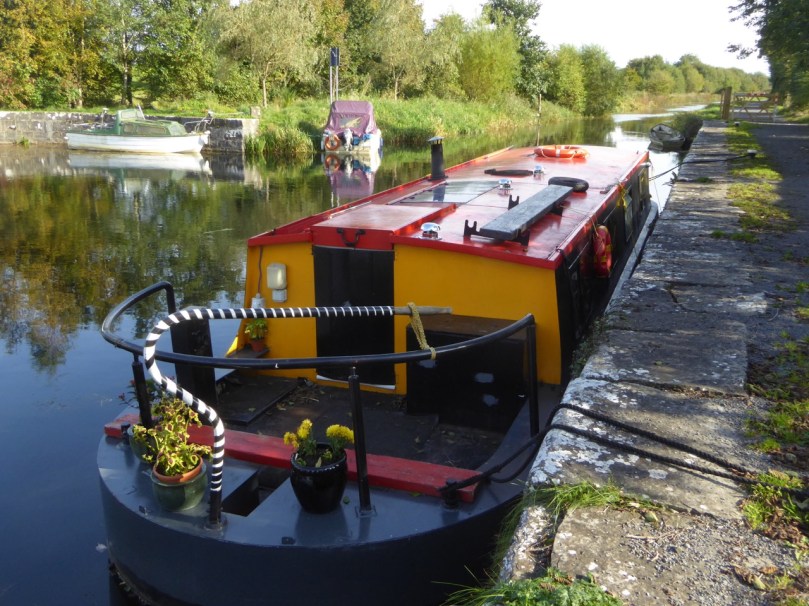
Parked at Coolnahay

We spent a lot of time along rivers and canals! 

Robert explains the background and purpose of our trip in his post, Travel by Water. I knew very little about canals before I met Robert and it’s been eye-opening to learn about the history and the sheer extent of Ireland’s inland waterways. We spent a lot of time exploring the canals – walking and driving – and enjoyed it all tremendously.

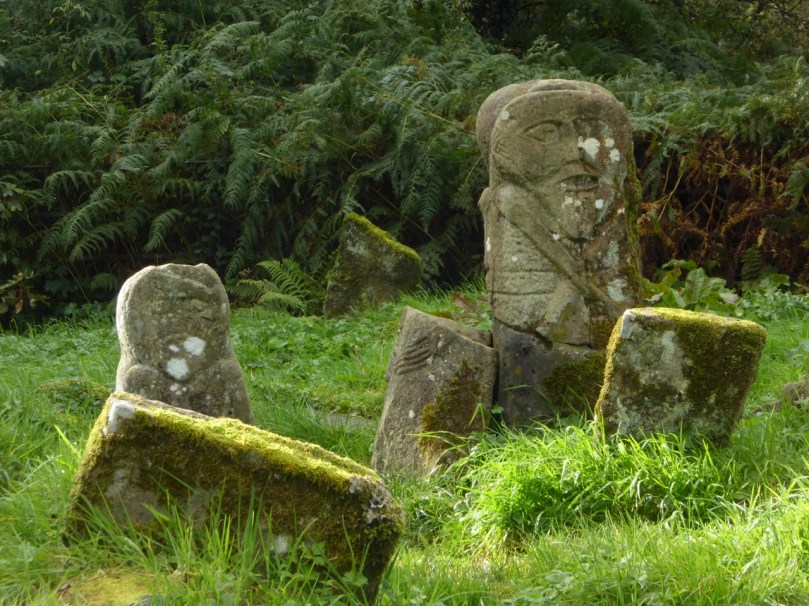
Boa Island figures

Boa Island on Lough Erne, Co Fermanagh, is home to these mysterious carved figures. Lower left: heads on a medieval church in Kilmallock, Co Limerick. Lower right: a contemporary sculpture celebrates the mythical Finn McCool, in Keshcarrigan, Co Leitrim

But wherever we went there were always other places luring me away – tower houses and fortified houses, churches and graveyards, friendly villages and colourful houses, stained glass windows and prehistoric sites. We drove along roads where we counted ring forts in every field. We explored ancient graveyards and we found a Holy Tree. We visited two sites we posted about last week, the Corlea Iron Age Trackway, and the Hill of Uisneach.

Holy Chestnut

The Holy Tree. A local man we met called it a ‘holy show’ and it certainly had some very questionable items mixed in with the statues and offerings

It’s autumn now, and, while we do experience a change of colour here in West Cork, it’s really in the midlands that the colours of the deciduous trees can overwhelm the senses. They were just starting to turn. I’m strongly tempted to head back in another couple of weeks for the full experience.

Birr Castle Gardens 2

These photographs were all taken at Birr Castle Gardens. Birr Castle (Co Offaly) was one of the most interesting and beautiful places we visited, home of the famous telescope and beautifully maintained

We visited thirteen of Ireland’s 32 counties on this trip – and never came close to the sea or the Wild Atlantic Way. Instead, everywhere we went we saw notices for the latest iteration of the Tourist Board’s marketing scheme. This one is called Ireland’s Ancient East, and appears to take in every county that isn’t on the Atlantic seaboard. A good resource, if you’re considering a trip like this, is Neil Jackman’s guidebook, Ireland’s Ancient East – we kept it by us and found it invaluable.

Grange Stone Circle, Lough Gur

Grange Stone Circle, the largest in Ireland, is one of a complex of monuments at Lough Gur, Co Limerick

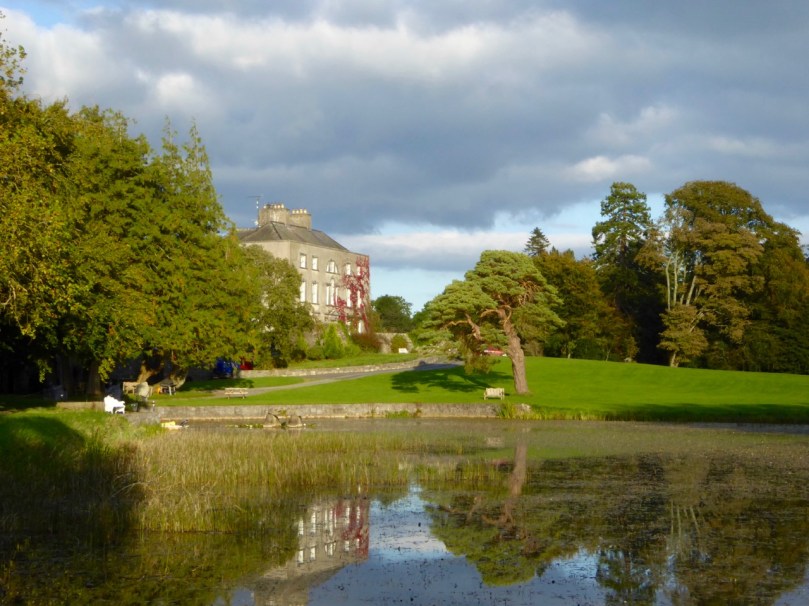
Our headquarters for the biggest chunk of our time away was the incomparable Mearescourt House near Mullingar, Co Westmeath. George and his team made us welcome and comfortable, there were glorious grounds to wander around and animals to meet, and delicious breakfasts that left us feeling full for the rest of the day.

Mearescourt House

Mearescourt House – highly recommended!

When tourists are interviewed about their holidays in Ireland they praise the scenery, the food, the music – but most of all, they say, it’s the people who make it so enjoyable. We agree! Everywhere we went we ended up in conversation, as you do here, with local people delighted to help out with information, share old stories, invite us to the sessions, tell us where to go for a nice dinner, or point out places off the beaten track (and then rescue us later when we got lost).

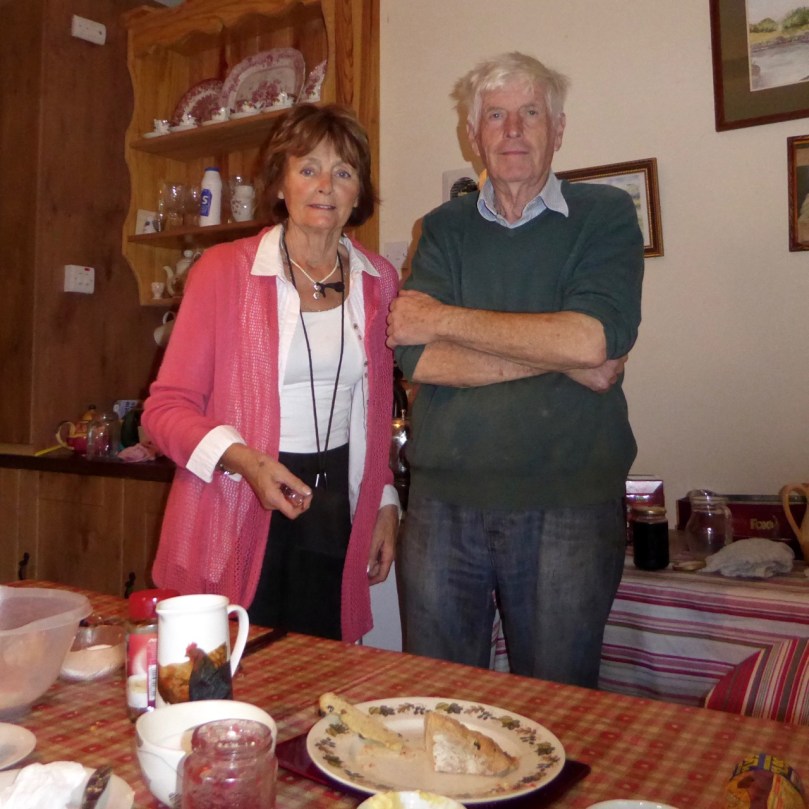
Claire and Paddy Crinnegan, Coolnahay

Paddy and Claire Crinnegan maintain the canal lock at Coolnahay on the Royal Canal. in Co Westmeath They made us tea, fed us Claire’s delicious currenty bread, told us about the trad concert that evening, loaned us a book, and related stories of growing up at the lock, where Claire’s father was the lock keeper.

Future posts will go into more depth on some of what we saw and experienced on this trip. This one is just an introduction, to share some of our impressions and drop some hints about what might be upcoming.

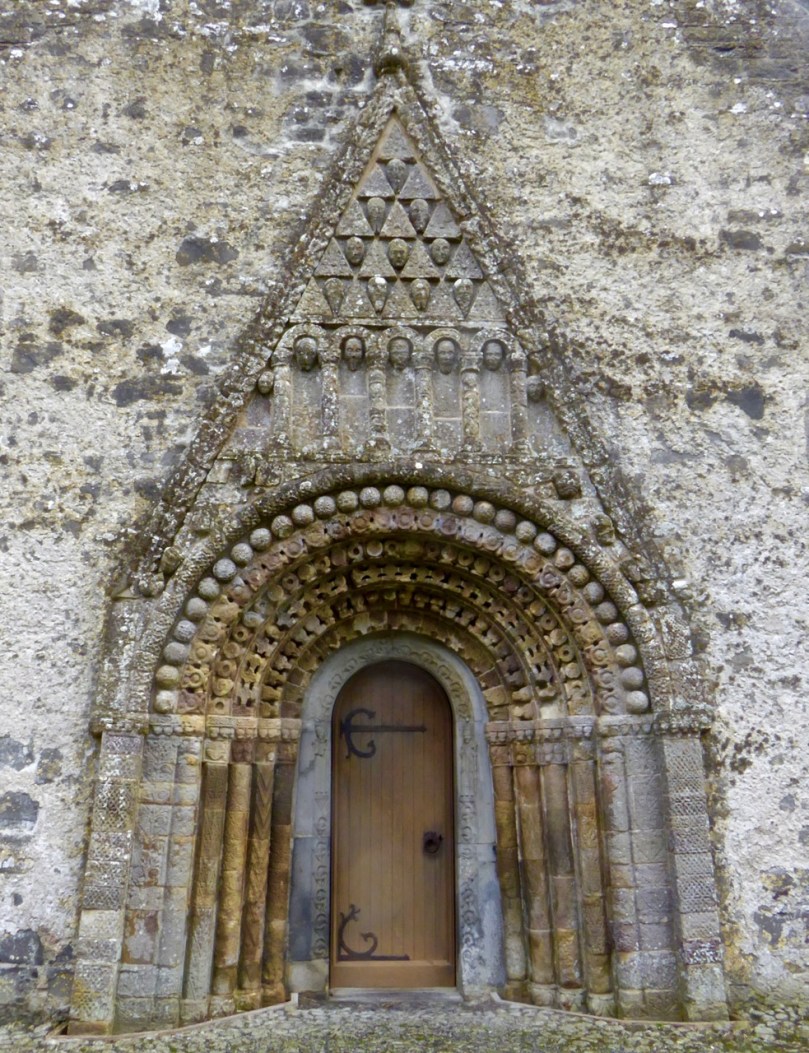
Clonfert Doorway

Clonfert Cathedrall (Co Galway) has the most beautiful Romanesque doorway I have ever seen
Along the canals and rivers, flora and fauna
Top left: in case you might get too happy with yourself; top right: the imposing gates to Portumna Castle, Co Galway, a 17th century house now owned and managed by the Office of Public Works; Bottom left: I peeped inside the priest’s section of a confession box and observed how he maintains an efficient count of time spent on each confession; bottom right; we disturb the rooks at Ballycowan Castle, Co Offaly

HC Studio, Athlone

Athlone Cathedral (Co Westmeath) has a gorgeous set of enormous windows from the Harry Clarke Studios – this is a detail from just one of them.

Can you detect a future post or two?

Tracking the Past

Guiding the oxen

Bogs are mysterious and dangerous places now, and they were even more so for our ancestors. The raised bogs of the midlands were laid down after the ice age and covered vast areas of land, creating difficulties and opportunities for prehistoric peoples.

Construction

The top photo and this one are of the imaginatively assembled diorama showing how the trackway was built

Turf cutters find things in bogs all the time – last year we wrote about the extensive field systems under the blanket bogs of the Ceide Fields of Mayo. Bog bodies are the most fascinating finds no doubt, but all kinds of organic materials can be preserved in the acidic and anaerobic environment of the bog.

Section and Pegs 2

A long section of trackway has been conserved and is on view in a climate-controlled room

In  Corlea, County Longford, what was found turned out to be the longest and largest Iron Age trackway ever discovered. It was excavated by Dr Barry Raftery in the late 80s/early 90s and a whole section of it is conserved and on display in an attractive visitor’s centre in Corlea, which is located exactly where the trackway was found. Noel Carbery was our guide on a recent visit and we couldn’t have asked for a more enthusiastic and knowledgeable person to answer our questions and show us around. 

Visitor Centre

Building the road was a massive undertaking and must have taken hundreds of people working together. Using dendrochronology to date the oak, archaeologists determined that the trackway was constructed in 148BC, placing it in the Iron Age. It is speculated that it provided a routeway from the Shannon to the royal inauguration site of Rathcroghan in Co Roscommon, allowing wheeled vehicles to cross the bog. We can picture warriors in their chariots and full regalia following a ceremonial way to some great feast at Cruachain.

The trackway was held in place by means of wooden stakes

Ironically, its very magnitude proved its undoing – it was so heavy it sank into the bog within ten years of being built. Oak planks were laid on runners, occasionally supported by additional brushwood, and fixed in place with stakes which served to peg the boards to the underlying peat and keep them from moving around. A layer of peat on top may have helped to even out the surface.

Infill

Gaps are filled in with branches and saplings of oak, ash or birch

The builders showed considerable skill in splitting the logs to form planks and in whittling the stakes and boring the sockets, using metal axes and adzes. Gaps were filled in with round saplings  and brushwood.

Woodworm?

Top left – 2000 year old silver birch bark, beautifully preserved. Top right – some shrinkage of the interior wood is visible. Below – is this woodworm?

The excavation and conservation was as large an effort as building the road. Once the planks were revealed they had to be kept dry, then immersed in special substances and freeze dried. Finally, they were returned to Corlea, to the new visitor centre where they are kept in climate-controlled conditions. Nevertheless, some deterioration is inevitable and on our visit we observed shrinkage of one runner away from its bark, and some signs of what looked like woodworm in one of the planks, indicating the difficult task of conserving two thousand year old timbers.

Chopping

There is lots of fascinating information at the Visitor Centre about other trackways (including some from much earlier) and about building methods. I particularly loved the little diorama that an artist had made showing the trackway under construction. We also learned a lot about the bog itself, which surrounds the Visitor Centre on all sides.

Modern Bog Trackway

Top – a modern bog trackway, in the form of narrow-gauge railway tracks. Below left – this bog is being ‘milled’ to provide fuel for a power station. Below right – a more traditional cutting to provide domestic fuel

The Corlea Trackway deserves to be much better known than it is. I highly recommend a visit if you’re anywhere close by – it’s not everyday you get to walk beside a 2000 year old royal road!

Home sweet home

The Navel of Ireland

eyes of the goddess

Today we happened upon the Navel of Ireland. That’s the name given to the Hill of Uisneach in the townland of Loughanavally, in the barony of Rathconrath, in the county of Westmeath. It’s an archaeological centre of powerful cultural significance, one of (possibly) six ‘royal’ sites in the island of Ireland.

palace rendering

Seen in the developing visitor centre below the Hill – an artist’s reconstruction of the ‘Royal Palace’ on the Hill of Uisneach, County Westmeath

Today, Ireland is divided into four provinces: Leinster, Ulster, Munster and Connacht. The Irish word for this division is cúige, which literally means ‘fifth part’. That’s confusing, until you learn that there was, before the Norman invasion, a fifth province, known as Mide. The Irish word Midhe means ‘middle’. Mide has survived as a county – Meath; but this large county was divided in two during the time of Henry VIII, and we now have both Meath and Westmeath.

Justin the guide 2

catstone in context 2
Upper picture – Justin, our tour guide, explains the significance of the earthwork known as the ‘Royal Palace’. Lower picture – approaching the Navel of Ireland, the focal point of the Hill of Uisneach

Uisneach was probably the ancient headquarters of the fifth province, but was also particularly important because it was the place where all the provinces came together. The provinces were formerly administered by the dynasties, or ruling families of the day, and it is likely that they met up here to ensure that laws were fair and consistent through the whole of the land, and also to exchange news and stories, to feast, and to hold contests. In that latter context the tradition survives – rugby and hurling contests between the provinces in Ireland are madly important events – and their followers positively tribal!

ancient trackway 2

distant fort 2

Upper picture – an ancient trackway appears to lead to another circular enclosure on a distant hilltop (shown in the lower picture)

Uisneach is privately owned – and a working farm – but we are fortunate that the owner fully appreciates the significance of the place and allows access – by permission – through the services of a number of guides who are well versed in its known history and traditions. Our tour guide today was Justin – a complete Uisneach enthusiast. We followed him for two hours and were shown many of the currently accessible sites. There are very many more: access to others is being worked on, as is a small visitor centre, so a visit to Uisneach is an evolving experience. Some of the hill was excavated, intermittently, over a period of years during the 1920s by R A S Macalister and R L Praeger. In 2001 a long term project was started by Dr Roseanne Schot  of NUI Galway: this is continuing. Future plans for the archaeological investigations include aerial Lidar surveys which could uncover hidden features and artefacts without excavation.

Justin talks about the first archaeological excavators of the Hill (left) and (right) describes the ‘wood henge’ which has been found by laser scanning on the Hill’s summit

While the science of archaeology is being focussed on Uisneach, the equally important investigations of folkore and mythology (the stories of the hill) are also in full swing. Naturally, St Patrick made an appearance on the hill back in the day (we were shown his stone ‘bed’) and I was fascinated to read, later, that Geoffrey of Monmouth in his 11th century History of the Kings of Britain tells how stones from Uisneach were magically transported to Stonehenge. From the top of the hill it is said that you can see twenty counties – and all four (five?) provinces. The day of our visit was not quite clear enough for this, but we did ascend to the summit, where we could see the remains of a passage tomb – perhaps five thousand years old – although these had been disturbed and disbursed by the Ordnance Survey, who placed a trig point there back in the 1800s.

walking to the catstone

Our visit to The Catstone, an enormous glacial erratic which became the meeting place of the chieftains of all the provinces of Ireland

The goal of our little expedition was the Navel of Ireland – by tradition the centre of the whole land, and the place where the meetings of dynasties took place. It’s a little way on from the summit of the hill and only enjoys some of the views, but it is marked by an enormous natural boulder set into a circular earthwork of human construction: Justin painted a word picture for us of each of the chieftains sitting at the head of his own province on the banks of the earthwork and facing the stone while all the important affairs of state were discussed. Culturally this was where the provinces met. In relatively modern times the boulder has been called The Catstone: some say this is because it resembles a cat, others would have it that a cat is a traditional symbol for a place where our world meets the ‘otherworld’.

decorating the goddess

Upper left – the entrance to Uisneach symbolises the Bealtainne Fires which have been celebrated on the hilltop. Upper right – an image of Lugh on the shores of the lake (middle pictures) where he is said to have met his end. Lower picture – Eriu being adorned with autumnal hues

On our way down from the hill we met with a large crowd coming up. They were off to the Catstone for a ceremony of their own which involved drumming and singing – and, possibly, making contact with the ‘otherworld’ themselves. I think there’s a continuity here: a gathering place imbued with some deep significance and referenced to Irish mythology through Eriu, a goddess who gave her name to Ireland, and Lugh – a god or ancient hero who, according to the stories, met his death in a lake near the summit of the hill. Whatever your beliefs, there’s no denying that the Hill of Uisneach has been an empowering place in ancient times, and remains so today.

With thanks to Justin for such an erudite and enthusiastic tour of the Hill, and great appreciation of the interest and generosity of the Clarke family in allowing the Hill to be researched and visited

Below – off to the ceremony on Uisneach Hill

ready for the ceremony