Dividing the Day

We were on the trail of Saint Brendan, and the road took us deep into County Kerry. The spring days were blue, and the unparalleled scenery at its best for us. As we made our ways through the high hills and mountain passes we could see across to the coast:

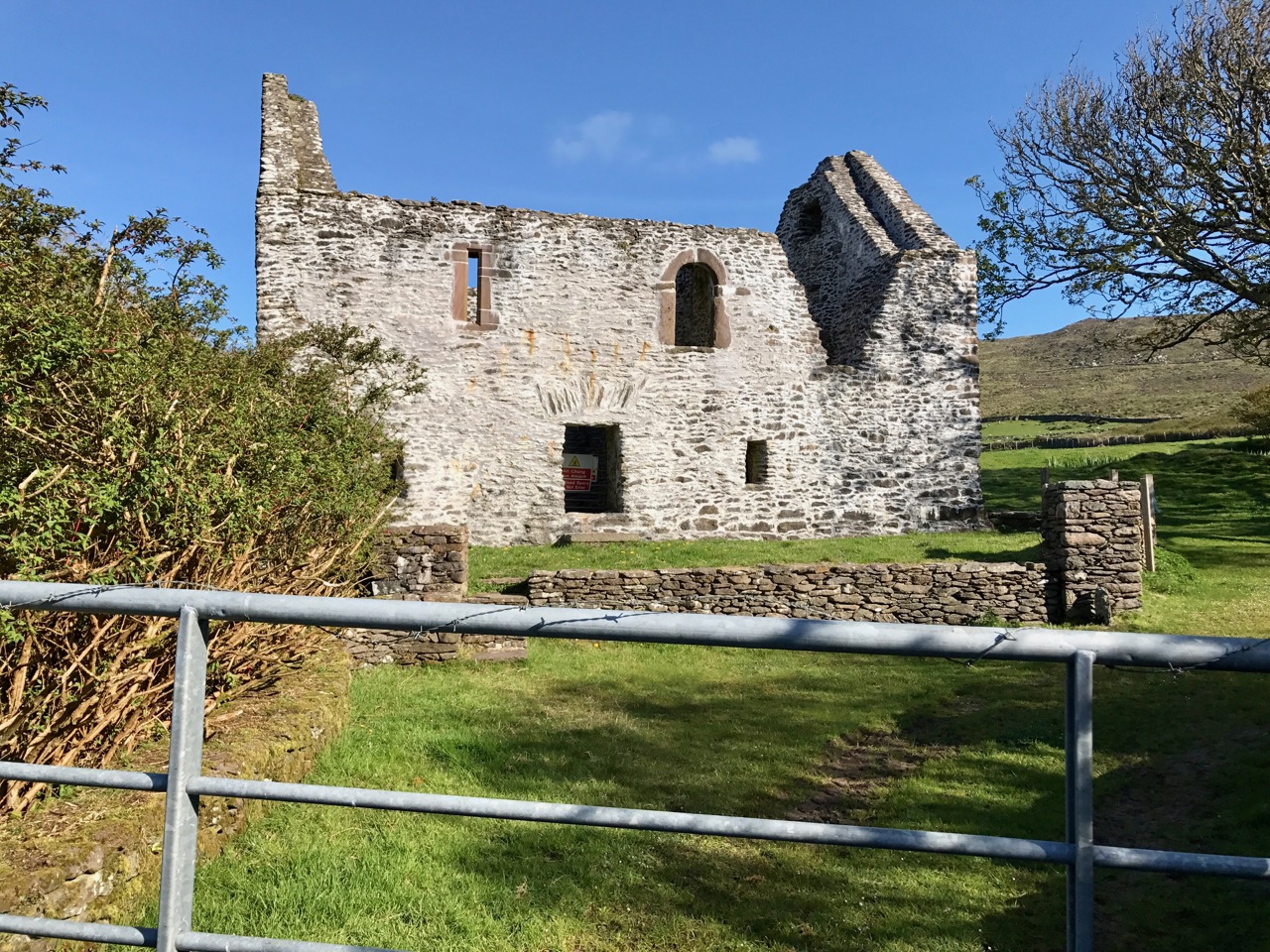
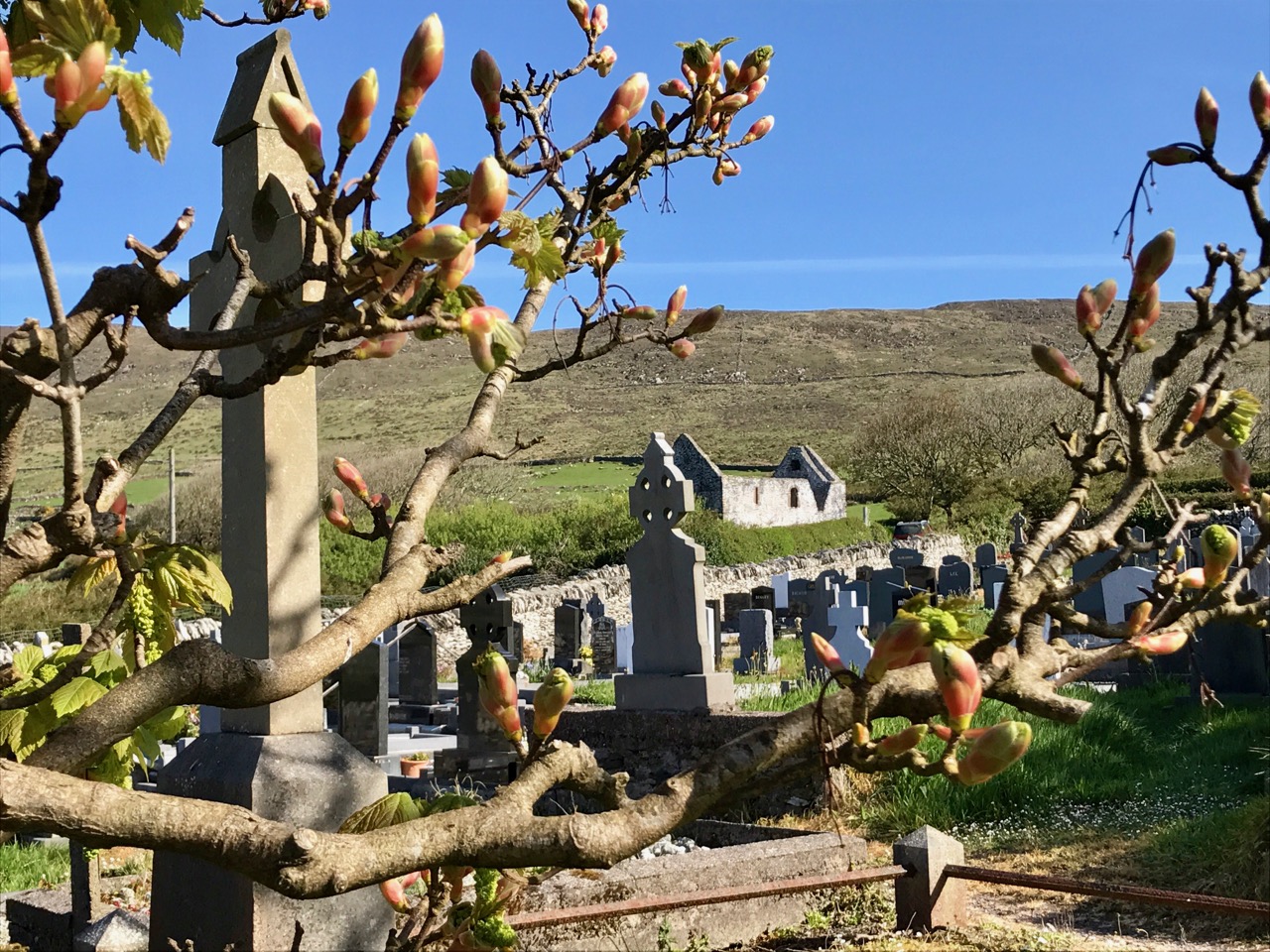
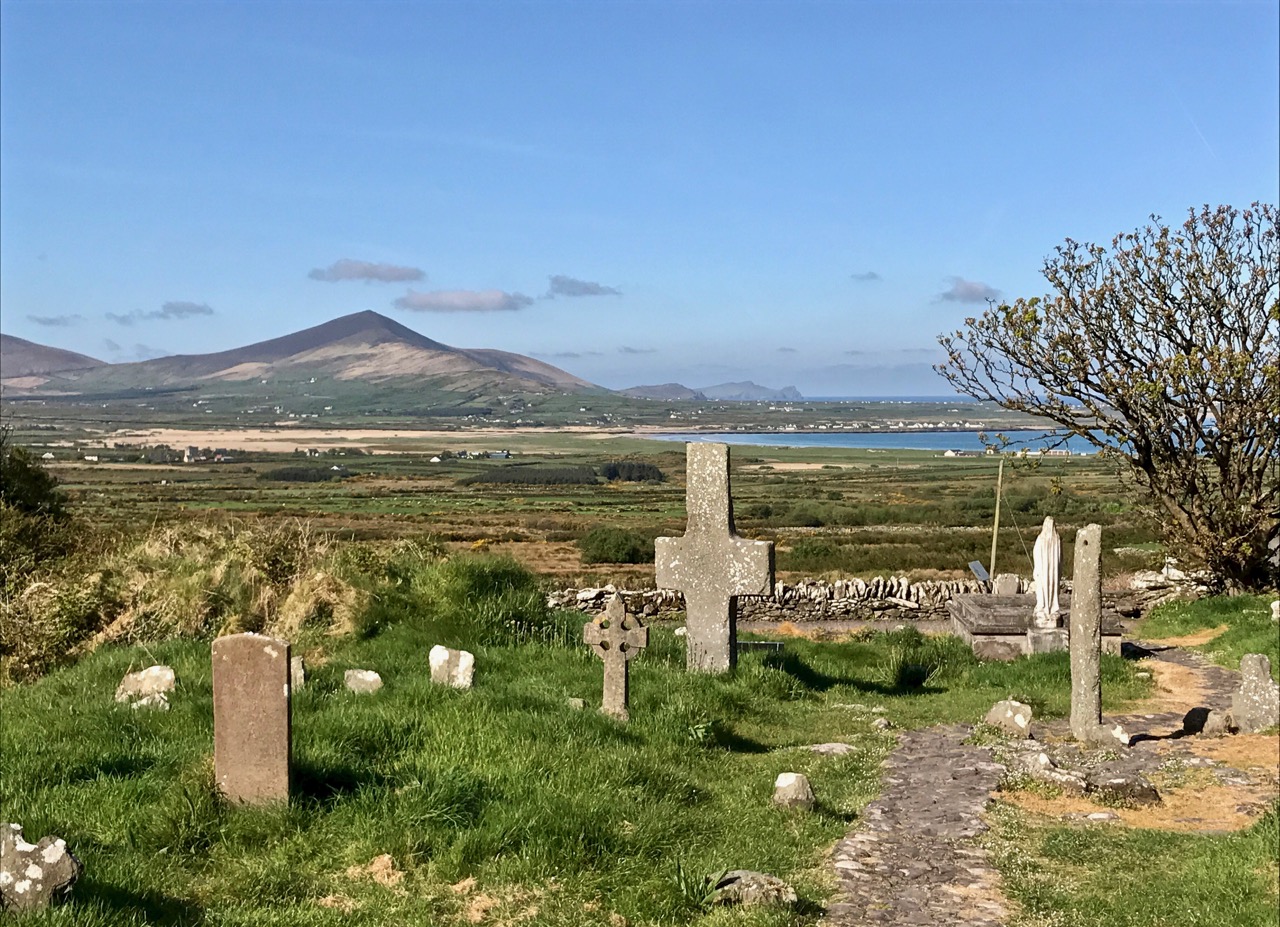
20,000 years ago, ice shaped the Kerry landscape: a huge glacier flowed from here towards the sea. Looking down from An Chonair, the highest mountain pass on the Wild Atlantic Way; the peak in the centre is Mount Brandon, named for Saint Brendan. The header picture shows the burial ground and, beyond, the medieval “Brendan’s House’ at Kilmalkedar, seen through the burgeoning spring growth

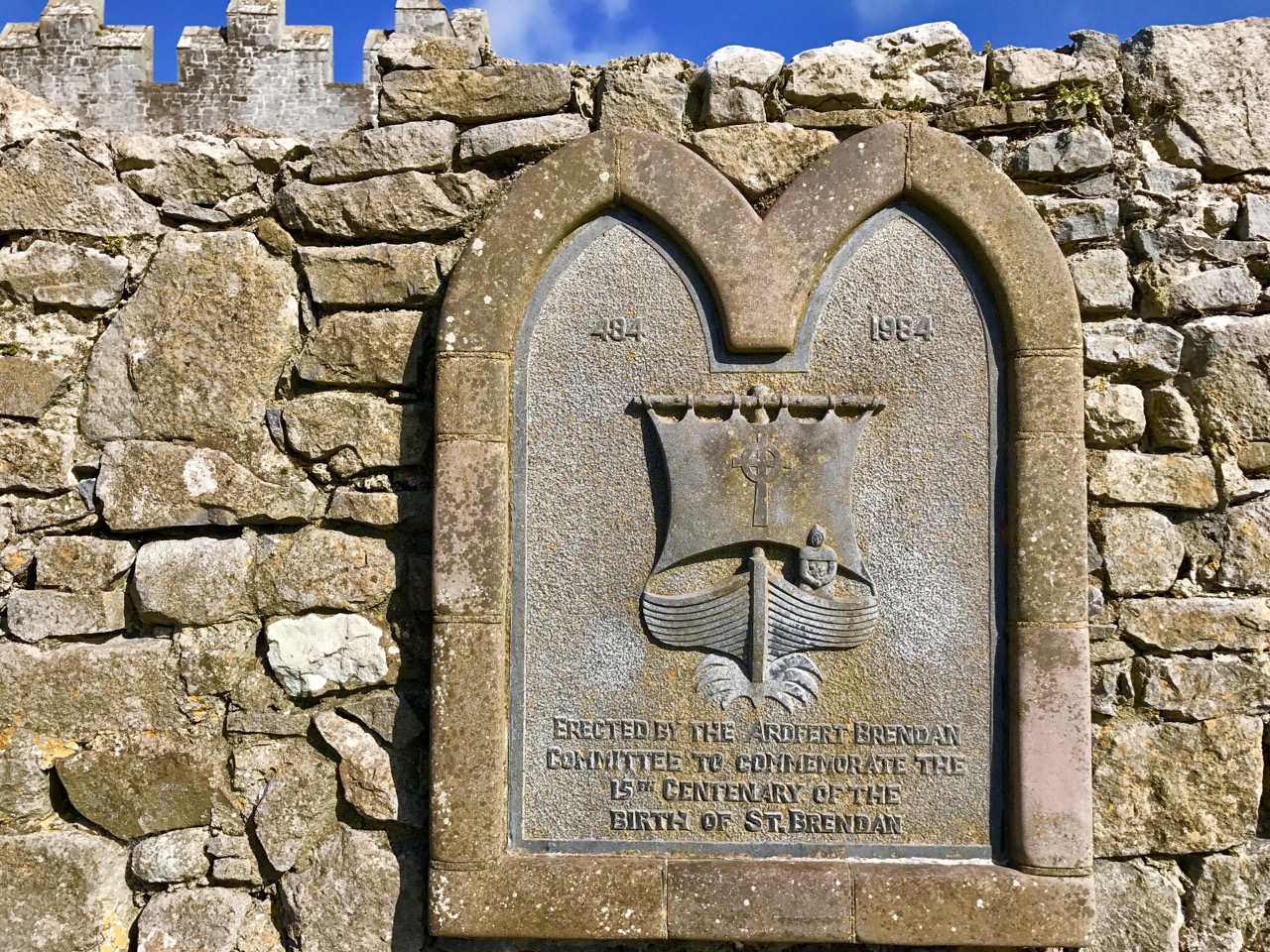
Our first call was to the Cathedral in Ardfert, which was built in medieval times over a Christian monastic site founded by the Saint in the sixth century. There’s nothing left of that, but the later buildings, while ruined, are well looked after by the Office of Public Works, and an information centre is open through the summer months – certainly worth a visit.
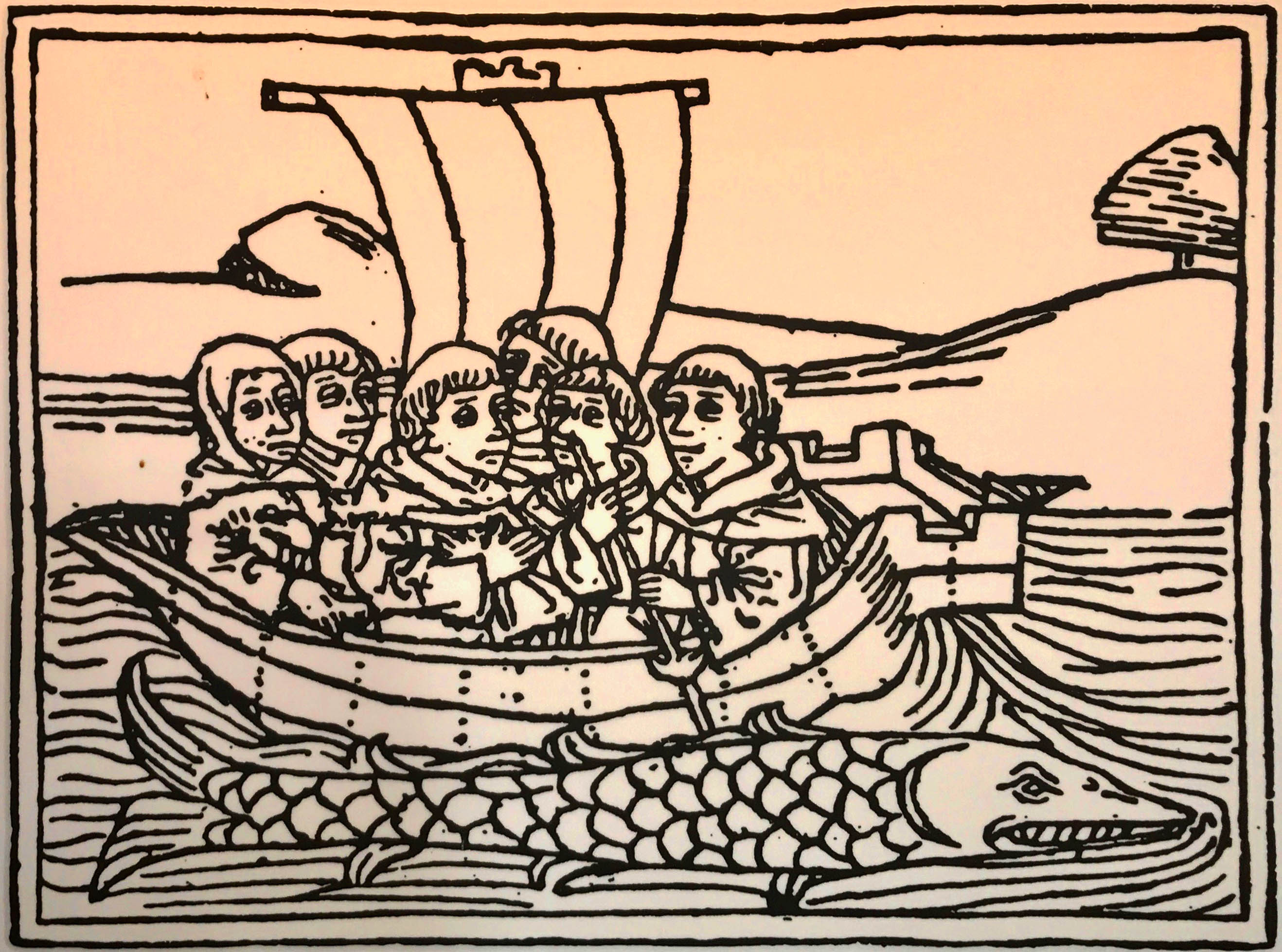
Seen in Ardfert Cathedral, an image of a woodcut dating from 1479: it shows St Brendan and his monks on their epic voyage in search of Paradise. On the way, they discovered the American continent!

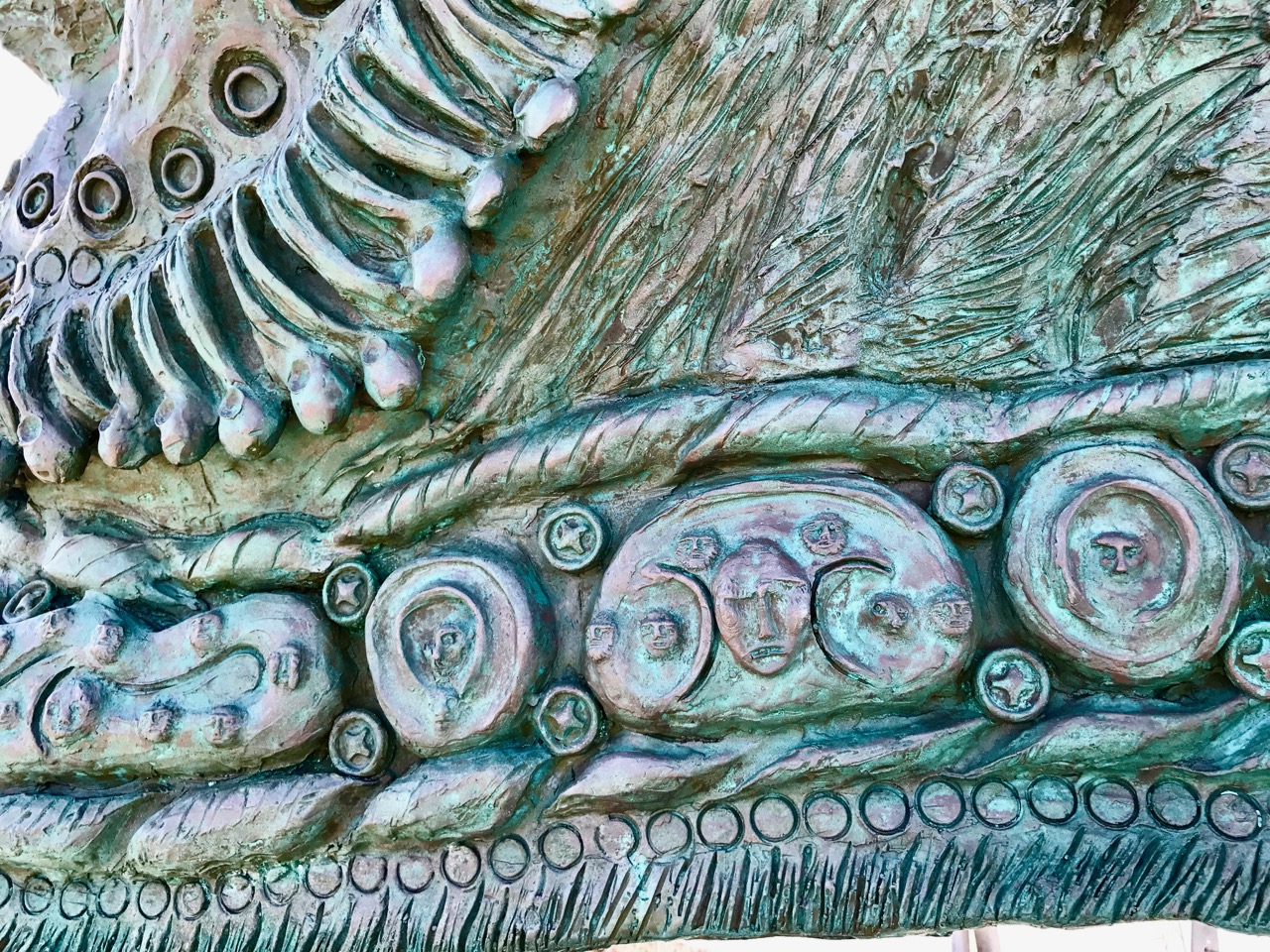
We could not miss a visit to the place of the Saint’s birth in 484 – Fenit, near Tralee – where a monumental bronze sculpture was installed in 2004. It was made by Tighe O Donoghue/Ross of Glenflesk.
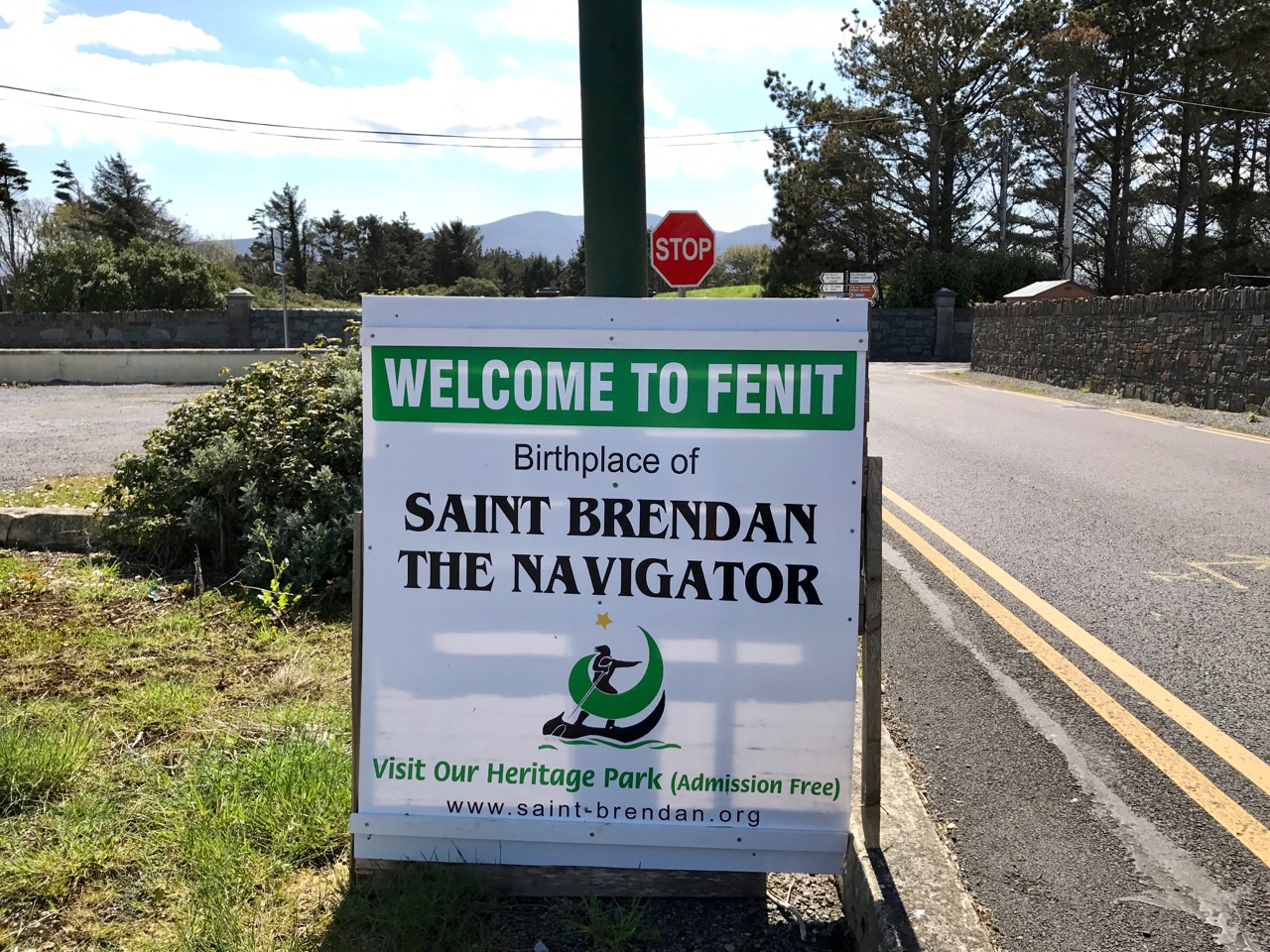
It’s hard to do photographic justice to Tighe O Donoghue/Ross of Glenflesk’s sculpture of Saint Brendan in Fenit: he’s depicted as a ‘warrior saint’ (in the same vein as St Fanahan – or St Fionnchú – of Mitchelstown, Co Cork). Certainly he has a heroic character, necessary for someone who embarked on (and returned from) so many adventures

The culmination of our Brendan travels for this trip (there’s so much more yet to be explored) was the medieval site at Kilmalkedar, on the Dingle Peninsula. This monastic settlement is rich in history, and includes St Brendan’s House, and St Brendan’s Oratory. These alone are spectacular monuments, but there are further riches to delight the eye of Irish history enthusiasts. Finola’s post this week concentrates on the wonders of Irish Romanesque architecture, and the ancient stone-roofed church at Kilmalkedar is a prime example.

The wonderful Romanesque early Christian church at Kilmalkedar – right – with ‘Brendan’s House’ in the distance. The site is overflowing with medieval history. Below. the setting for the monastic site is stunningly beautiful. Note the large, very ancient cross and the holed ogham stone
A good while ago – in 1845, in fact – our excursion was foreshadowed by Mary Jane Fisher Leadbeater, who writes in her Letters from the Kingdom of Kerry:

…Our object to-day was not entirely to pay homage to Nature, though in the heart of her lovely works, but to visit the ruins of the wonderful church of Kilmelkedar, which we were solemnly assured “was built in one night by holy angels.” One evening, ever so many many ages ago, the sun, when he set in those wilds, saw no place dedicated to the worship of the Creator: he rose the following morning, and smiled upon a perfect chapel, with pillared niche and carved saint, and a holy fount, and massy cross! all ready for the purposes of prayer and sacrifice! A matin-call rang loud and clear over lofty mountain and lonely glen, to summon the devout and arouse the unthinking, where no vesper strain could sound the evening before; all gleamed proud and fair in the glad light, and the heart of man became purified, as the sacred bell called him to prayer! And this was the reward of the unceasing prayers of the holy Saint Brandon! Such is the legend…

St Brendan’s House – behind a locked and barbed gate!

We spent hours at the Kilmalkedar site and didn’t take everything in. We consider ourselves so privileged: we had it completely to ourselves, and the day was perfect. Saint Brendan treated us very kindly – except that his ‘House’ and an associated holy well were not accessible: although an OPW project which has recently undergone significant restoration, the enclosure around it is impenetrable with barbed wire and a firmly locked gate. However, in an adjacent field, a gate and path gave us free access to a large, flat stone which seemed to be covered in giant cup-marks. The National Monuments register describes it as a ‘Ballaun Stone’: it’s very fine, and I was delighted to find that Mary Jane Fisher Leadbeater had unearthed some folklore about it:

…This place contained a colony of monks; and well they knew what they were about when they fixed on this retirement; for, besides its real advantages, it commands a most lovely view of Smerwick Harbour, The Sisters, and Sybil Head. They need not want for fish in the refectory in the days of abstinence. It is situated in a sheltered recess of the mountains, fine springs around, and, another popular legend bearing witness, in the centre of what was once good grazing and tillage ground. A cow is the subject of this legend—a cow of size and breed suited to provide milk for the giant race of those days. We saw the milk vessels, and if she filled them morning and evening, she was indeed a marvellous cow. In a huge flat rock were these milk pans; six large round holes, regular in their distances from each other, and nearly of equal size; they could each contain some gallons of liquid. This said cow gave sufficient milk for one whole parish; and was the property of a widow—her only wealth. Another parish and another clan desired to be possessed of this prize; so a marauder, endued with superior strength and courage, drove her off one moonlight night. The widow followed wailing, and he jeered her and cursed her as he proceeded. The cow suddenly stopped; in vain the thief strove to drive her on; she could neither go on, nor yet return; she stuck fast. At length, aroused by the widow’s cries, her neighbours arrived, and the delinquent endeavoured to escape. In vain—for he too stuck fast in the opposite rock; he was taken and killed. The cow then returned to her own home, and continued to contribute her share towards making the parish like Canaan, “a land flowing with milk and honey.” The prints of her hoofs, where the bees made their nests, are still to be seen in one rock ; and those of the marauder’s foot and hand in another, where he was held fast by a stronger bond than that of conscience…

Kilmalkedar’s giant ballaun – the cups were filled every day by the widow’s marvellous cow, providing milk for St Brendan’s community of monks back in the day

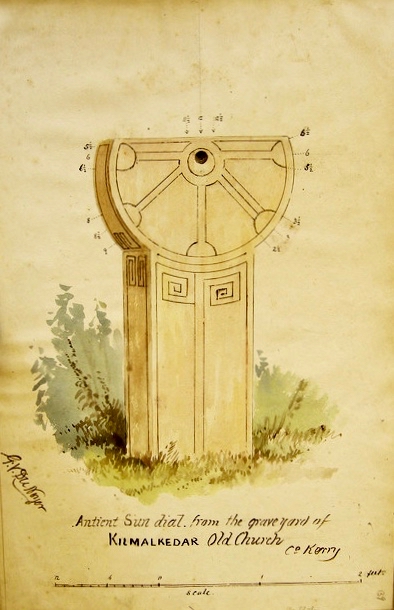
One of the special features of the Kilmalkedar site harks back to its medieval monastic associations – a sundial. The ordered lives of the monks were regulated by divisions of the day (and night) – the Canonical Hours, also known as the Divine Office or Liturgy of the Hours. These were the regular periods of prayer: seven daytime Offices of Lauds (at daybreak), Prime, Terce, Sext, None, Vespers, Compline (at sunset) and a night Office of Vigils. This was the important work of the monastery, of course: constant and regular prayers. In between it the monks had to fit in all the requirements of daily life: sustenance, growing crops, brewing, beekeeping. And, on top of all that, Brendan and his companions undertook their peregrinatio all around the known world. No wonder a timepiece was necessary!

The Kilmalkedar sundial is a particularly elegant example – it’s probably my favourite item on this site: functional and beautiful, as all things wrought by the human hand should be. In such an evocative environment it certainly helps us to cast our minds back to the life and times of the travelling Saint. The antiquarian George Du Noyer visited the place back in the 1860s, and was also drawn to this particular artefact, accurately recording it for us in one of his exquisite watercolour sketches.
Simply Signs

More sign spotting: always an agreeable pastime. These – which come from far and wide on our travels – add to previous collections of words and images spotted in Ireland: Good Signs, Juxtapositions, March Miscellany, and Impressions.

This is a very subjective survey: I’m showing things that I find intriguing or amusing – others will have different reactions. It just goes to show that, for us, there’s never a dull moment here: long may that continue.

In Skibbereen: look carefully here: -some things are easy to miss!

That’s enough for now! There’s plenty more in the collection – look out for them another day.

Stoned

It started on Friday in glorious sunshine and the West Cork Stone Symposium ended today in the same magnificent spring skies. All participants appear to be on a high, and that includes me.

A barbecue pit for the community of Ahakista. Look what we built!

Anyone who lives in or has been to Ireland knows we’re all about stone. Stone walls, stone buildings, stone sculpture, stony landscapes…it’s in our DNA. Wicklow granite, Burren limestone, the basalts of the Giant’s Causeway, Connemara marble, the great slate quarries of Clare and the quartzite peaks of Donegal’s Errigal Mountain. And here, in West Cork, the old red sandstone, in use since prehistoric times to build field boundaries, stone circles and portal tombs, to erect standing stones, and to construct everything from the humble cottage to the big house.

Light on Stone – the theme of the photography workshop led by Ben Russell. 

For us, of course, the old red sandstone is the canvas used for the prehistoric rock art we study. But as one of the organisers of the festival said – everyone who came to the Symposium came with their own experience of stone and their own plans for how they wanted to work with it. Thus, the two main events on the program revolved around stone carving and dry stone wall building, but there was lots more on offer too – guided hikes, a photography day, a whiskey-tasting walk around Whiddy Island, an evening with the Cork Astronomy Club talking about stone circles, a presentation on the dry stone walls of Cork, and more.

The photography workshop group, Ben is second from the left (Photograph by Ben Russell). Ben, camera close-ups

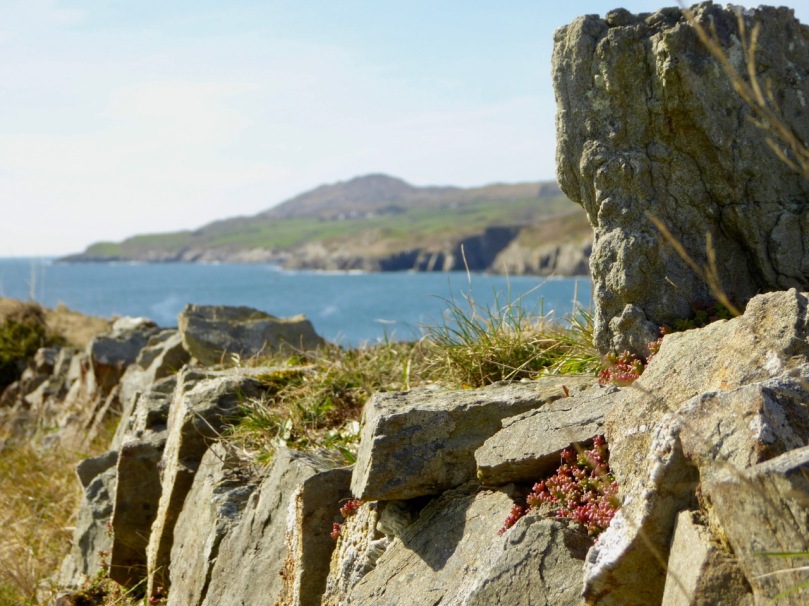
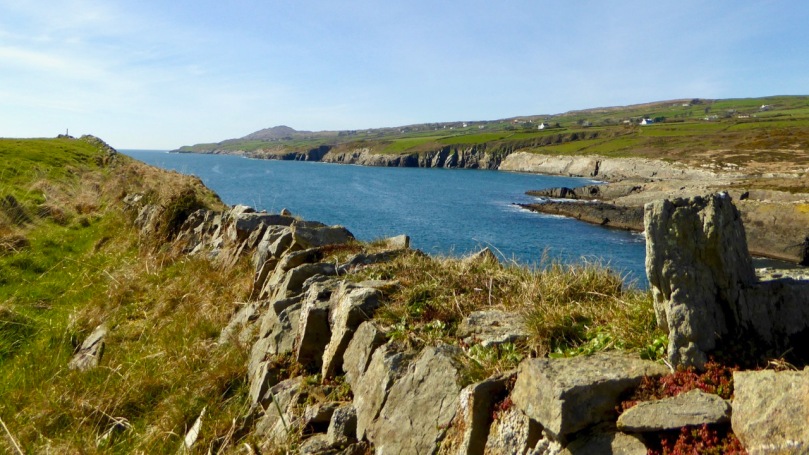
Robert and I participated in several ways: we mounted a pop-up version of our Rock Art Exhibition in Bantry, we gave a talk on rock art, and I enrolled in the all-day photography workshop, Light on Stone, with Ben Russell. This was a great learning experience, half in the classroom and half in the field. The morning outdoors session was spent at Dooneen on dramatic cliffs with the Caribbean blue sea below us.

Practising composition: top, rule of thirds. Bottom, leading line

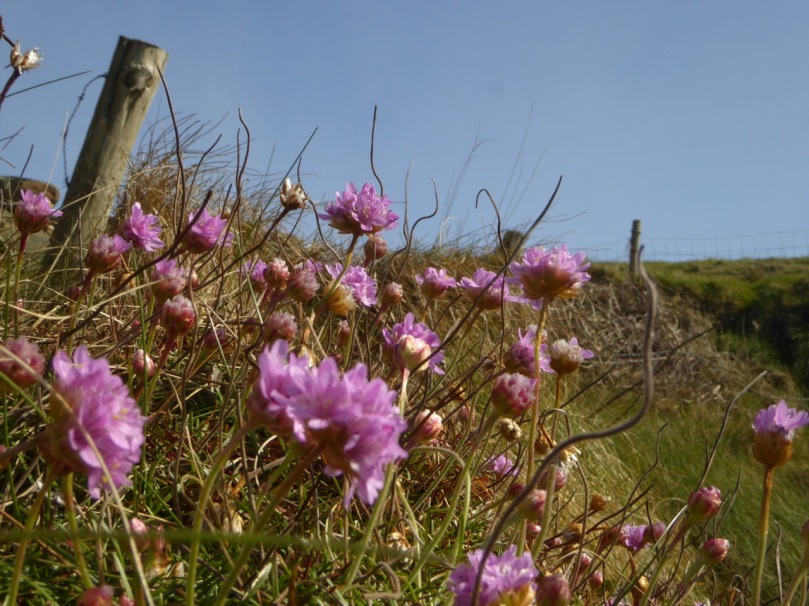
Working with depth of field – and with the first Sea Pinks of the season

In the afternoon Ben led us through taking close-ups and macro shots and then we headed off for the symposium site to photograph whatever we wanted.

Watching and talking to both the carvers and the wall-builders was marvellous. Of all ages and stages, the students were a study in concentration, discovery, and pride in achievement.

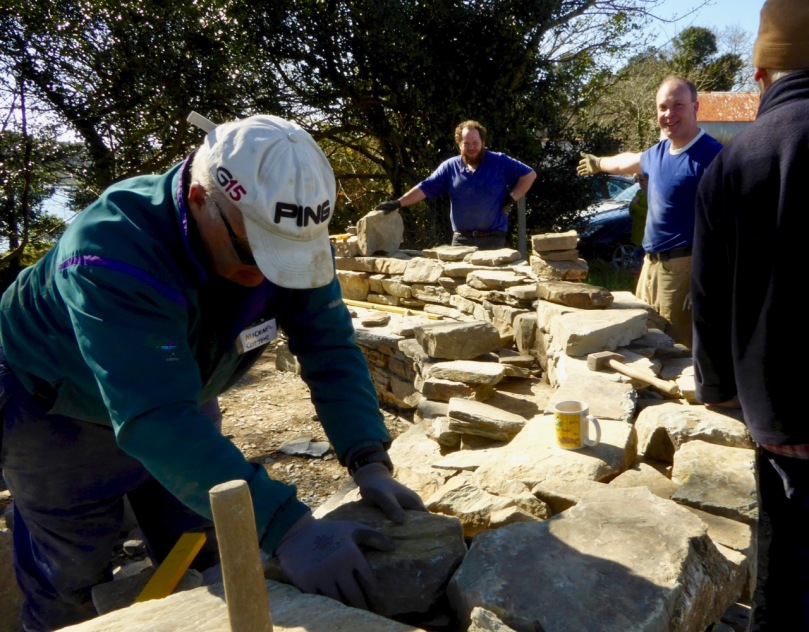
The wall-builders had undertaken a long dry-stone wall and a barbecue pit, both of complex and attractive design. Covered in dust, sweat, and broad smiles, they were delighted to talk to me about what they had learned and about their respect for the tutors and their skill.

Rita and her friend had worked on the wall. By the end of day three they were exhausted – but look at those grins!

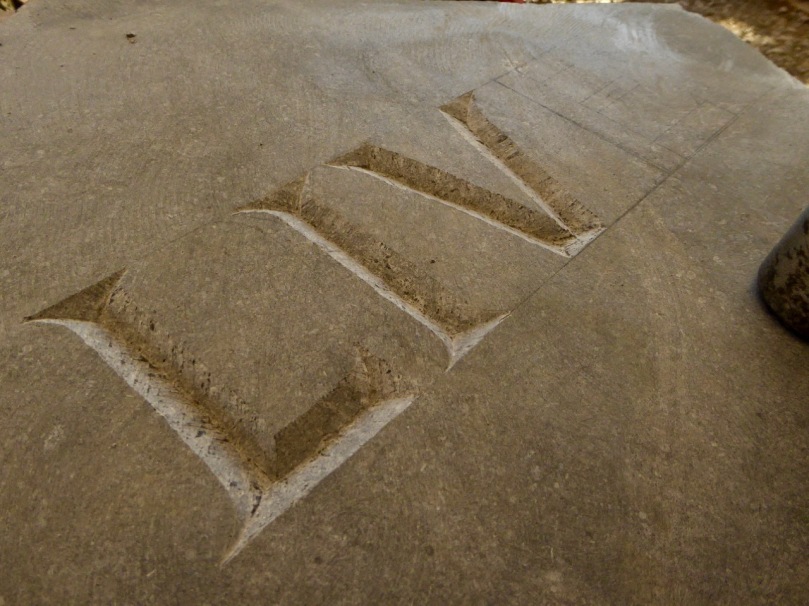
The carvers were all working on individually chosen pieces – words, animals, geometric designs. Few of them had done anything like this before and all were delighted with what they had accomplished. “I never thought I could actually do something like this” was a common refrain.

I was delighted to run into Cliodhna Ní Lionáin again – last time was at a talk she gave on rock art in Dublin. Here she is carving a deer from a Spanish rock art panel

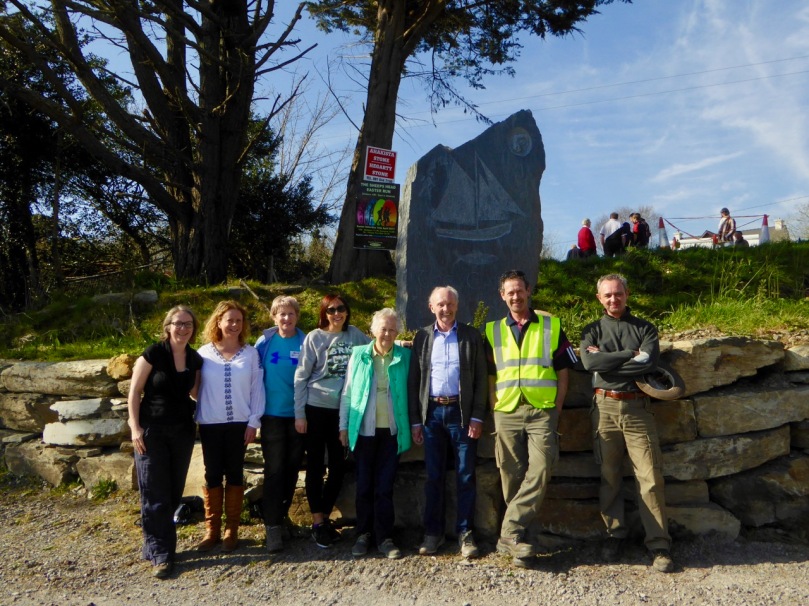
Today we were back to the Sheep’s Head – the Symposium was centred in Ahakista – to give our talk and watch the erection of the standing stone carved by participants.

Members of the organising committee. Second from the right is Victor Daly, our local stone carver and one of the Symposium’s tutors.

This is the inaugural symposium and it’s been an incredible success. There are plans for it to be annual. Have you ever wanted to carve something? Just want to know more about working with stone? Keep an eye on the website and next year come along and experience it for yourself – it will be one of the most unique and rewarding things you will have ever done.

Looking for Patrick

Patrick lights the Paschal Fire on the Hill of Slane. Richard King window, Church of St Peter and Paul, Athlone

A joint post – text by Robert, images by Finola

Last week we talked about Ireland’s very first saint – Ciarán (or Piran), who was born on Cape Clear. His aim in life was to convert the heathen Irish to Christianity, but they were having none of it: they tied him to a millstone and hoisted him over the edge of a cliff. Fortunately – and miraculously – the wondrous millstone floated him over to Cornwall where he became their Patron Saint and is celebrated with great acclaim on March 5th every year.

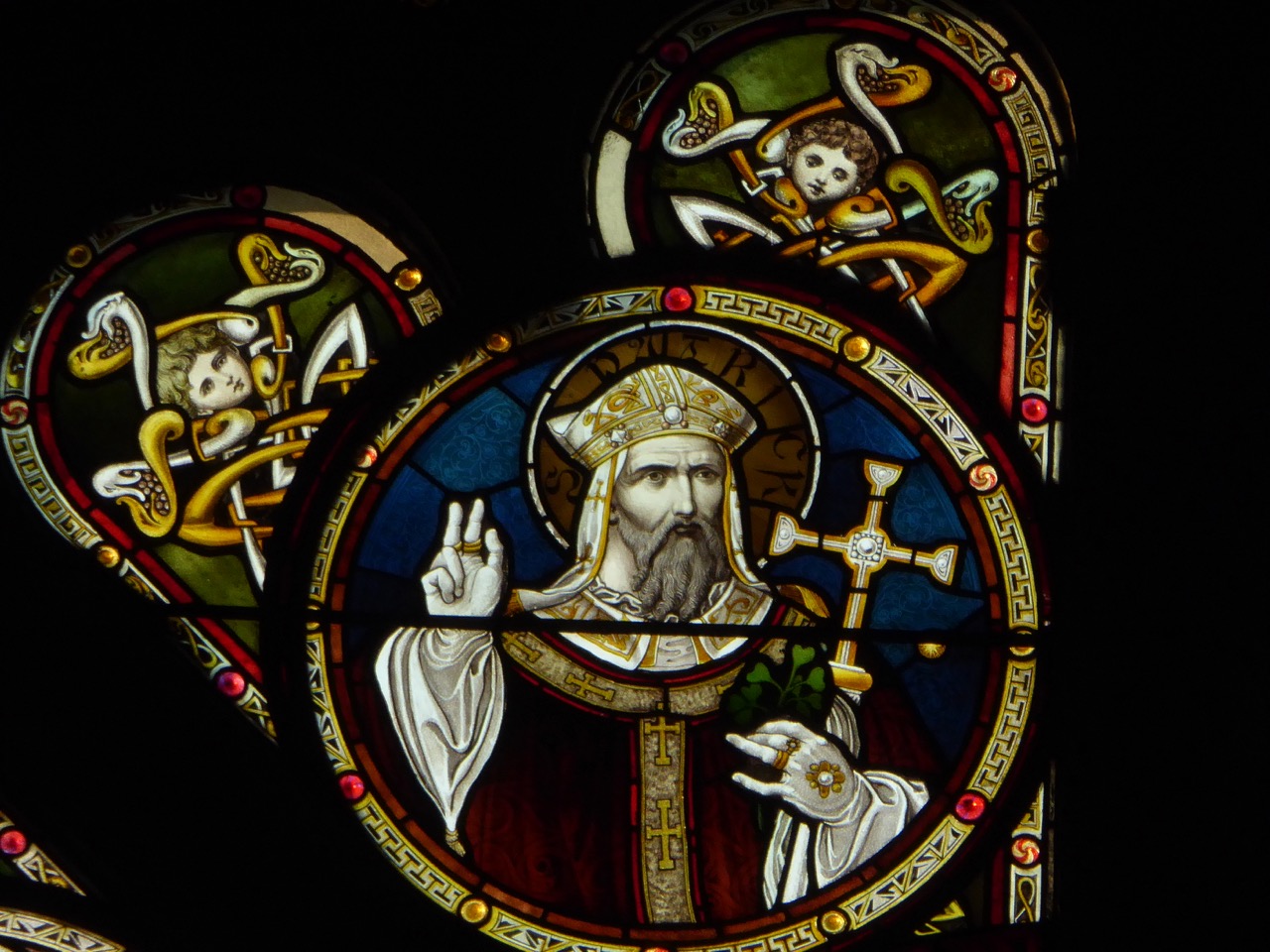
A typical representation of Patrick, older and bearded, in bishop’s robe, holding a shamrock in one hand and a crozier on the other. Skibbereen Cathedral

To return the favour of gaining an important saint from Ireland, the British have given Ireland their special saint – Patrick – and he is being celebrated this week in similar fashion. So here’s the story of Saint Patrick, seen through the eyes of an Englishman (albeit one with Cornish connections) and illustrated by Finola with a series of images from her collection.

Still traditional – looking fierce – but this one has beautiful detailing, including the interlacing surrounding the cherubs. St Carthage Cathedral, Lismore

Of course, there’s the real Patrick – the one we know through his own Confessio. The best summary we’ve come across of what can be deduced from the historical documents is the audio book Six Years a Slave, which can be downloaded from Abarta Heritage, and which is highly recommended (be warned – no snakes!). But what you’re going to get from me today is the good old-fashioned Patrick, with all his glamour and colour and centuries of accrued stories – just as he’s shown in Finola’s images.

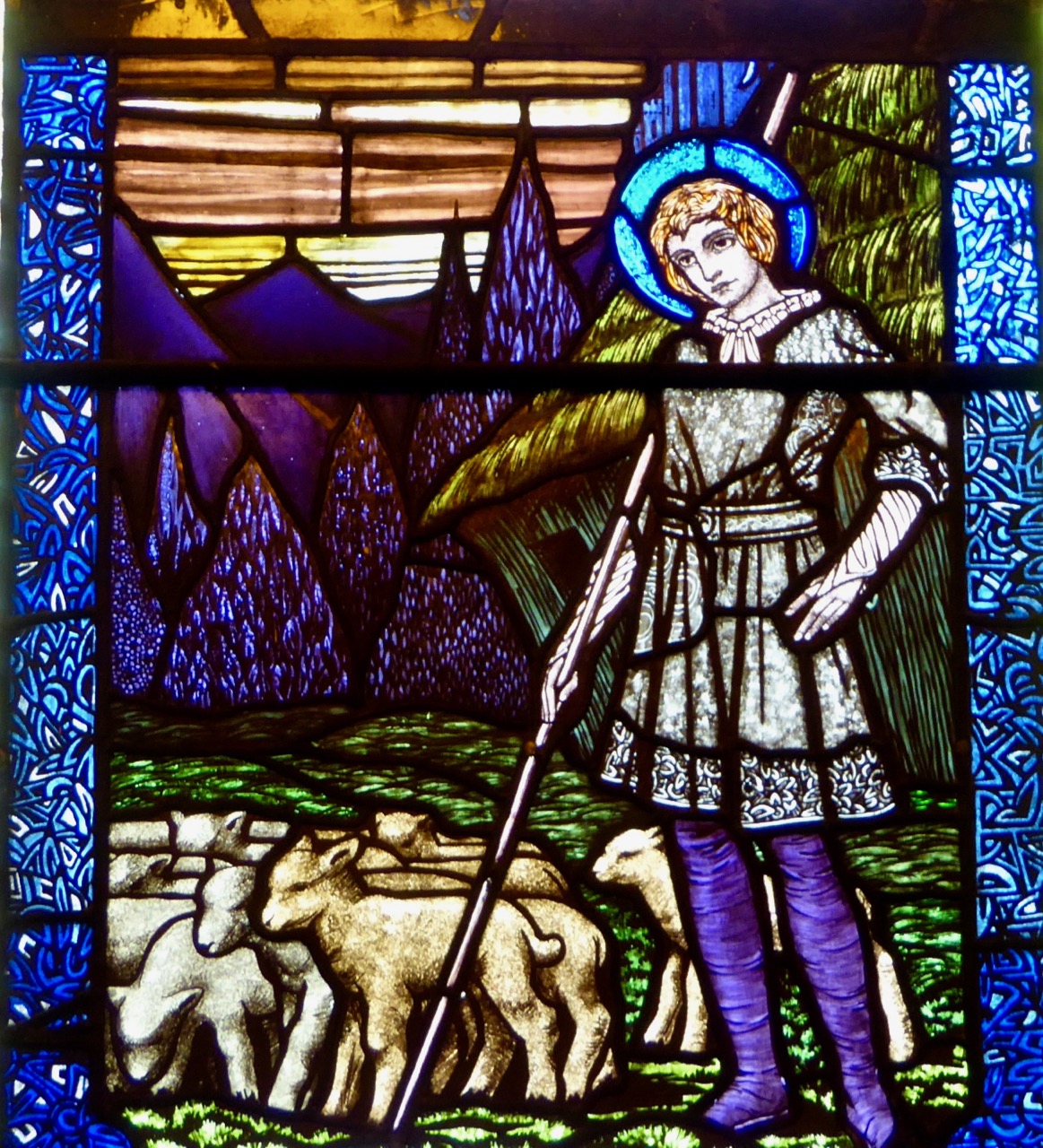
Six Years a Slave – this Harry Clarke window in the Church of The Assumption, Tullamore, seems to depict Patrick tending sheep during the period of his captivity

Patrick was born and brought up somewhere in the north west of Britain. He was of Romano British descent: his father was a a decurion, one of the ‘long-suffering, overtaxed rural gentry of the provinces’, and his grandfather was a priest – the family was, therefore, Christian. In his own writings Patrick describes himself as rustic, simple and unlearnèd.  When still a boy, Patrick was captured by Irish pirates and taken to be a slave in Ireland. He was put to work on a farm somewhere in the west and spent the long, lonely hours out in the fields thinking about the Christian stories and principles he had been taught back home.

Patrick is visited by a vision – the people of Ireland are calling to him to come back and bring Christianity to him. Richard King window, Church of St Peter and Paul, Athlone.  Read more about Richard King and the Athlone windows in Discovering Richard King

After six years he escaped from his bondage and made his way back to Britain – apparently by hitching a lift on a fishing boat. Because he had thought so much about Christianity during those years away, he decided to become a bishop which, after a few years of application, he did. Although he had hated his enforced capture he was aware that Ireland – as the most westerly outpost of any kind of civilisation – was one of the only places in the known world that remained ‘heathen’, and he was nagged by his conscience to become a missionary there and make it his life’s work to convert every Irish pagan.

Detail from Patrick window by Harry Clarke in Ballinasloe

When you see Patrick depicted in religious imagery he always looks serious and, perhaps, severe. You can’t imagine him playing the fiddle in a session or dancing a wild jig at the crossroads. In fact he was well know for his long sermons: on one occasion he stuck his wooden crozier into the ground while he was preaching and, by the time he had finished, it had taken root and sprouted into a tree!

Patrick with his hand raised in a blessing, accompanied by his symbols of the Paschal Fire and the shamrock. Harry Clarke Studio window, Bantry

Perhaps it was his severity that caused him to be respected: while giving another sermon (at the Rock of Cashel) he accidentally and unwittingly put the point of his crozier through the foot of the King of Munster. The King waited patiently until Patrick had finished sermonising then asked if it could be removed. Patrick was horrified at what he’d done, but the King said he’d assumed it was all part of the initiation ritual!

In Richard King’s enormous Patrick window in Athlone, the saint is depicted as youthful and clean-shaven. Here he is using the shamrock to illustrate the concept of the Trinity

Patrick first landed on the shores of Ireland just before Easter in 432 AD and established himself on the Hill of Slane – close to the residence of the High King. In those days the rule was that only the King himself was to light the Bealtaine Fire to celebrate the spring festival, but Patrick pre-empted this by lighting his own Paschal Fire on the top of the hill, thus establishing his authority over that of the High King (see the first image in this post). Somehow, he got away with it – and the fire has been lit on the top of the Hill of Slane every Easter from that day to this.

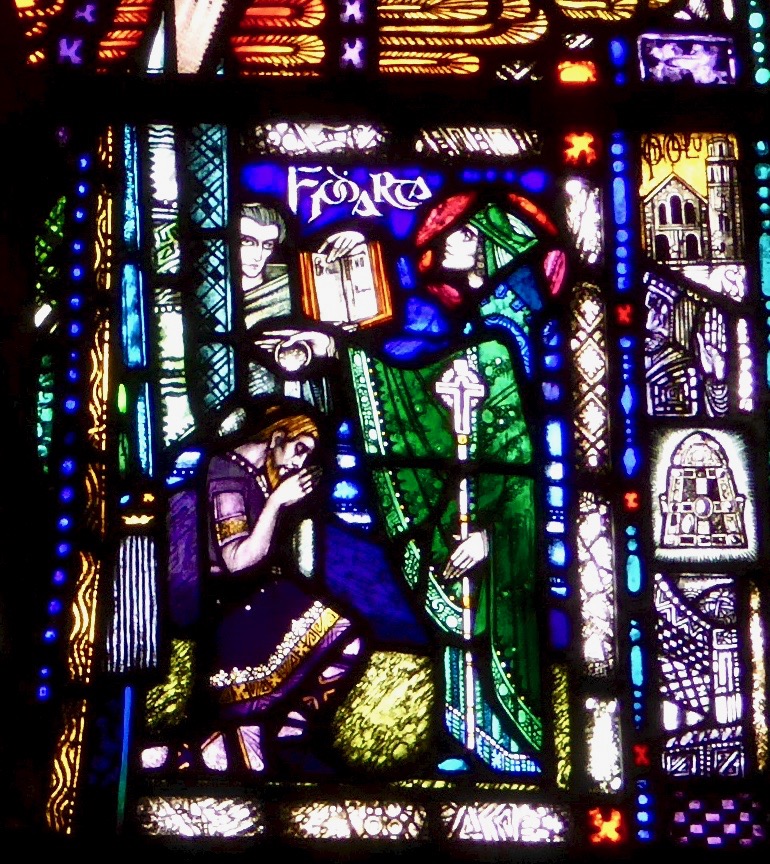
Another panel from the Richard King window – Eithne and Fidelma receive communion from Patrick. They were daughters of the King of Connaught; Eithne was fair-haired and Fidelma a redhead, and they were baptized at the Well of Clebach beside Cruachan

St Patrick seems to have been everywhere in Ireland: there are Patrick’s Wells, Patrick’s Chairs (one of which in Co Mayo – the Boheh Stone – displays some fine examples of Rock Art), Patrick’s Beds and – on an island in Lough Dergh – a Patrick’s Cave (or ‘Purgatory’) where Jesus showed the saint a vision of the punishments of hell.

Patrick blesses St Mainchin of Limerick. Detail from the Mainchin window in the Honan Chapel, by Catherine O’Brien for An Túr Gloinne

The place which has the most significant associations with Patrick, perhaps, is Croagh Patrick – the Holy Mountain in County Mayo, on the summit of which the saint spent 40 days and 40 nights fasting and praying, before casting all the snakes out of Ireland from the top of the hill – an impressive feat. To this day, of course, there are no snakes in Ireland – or are there? See my post Snakes Alive for musings on this topic (it includes a most impressive window from Glastonbury!)

Like many Patrick windows, this one, By Harry Clarke in Tullamore, shows Patrick banishing the snakes. This one has all the gorgeous detailing we expect from Clarke, including bejewelled snakes

When Patrick considered that he’d finished his task, and the people of Ireland were successfully and completely converted, he returned to Britain and spent his retirement in the Abbey of Glastonbury – there’s a beautiful little chapel there dedicated to him.

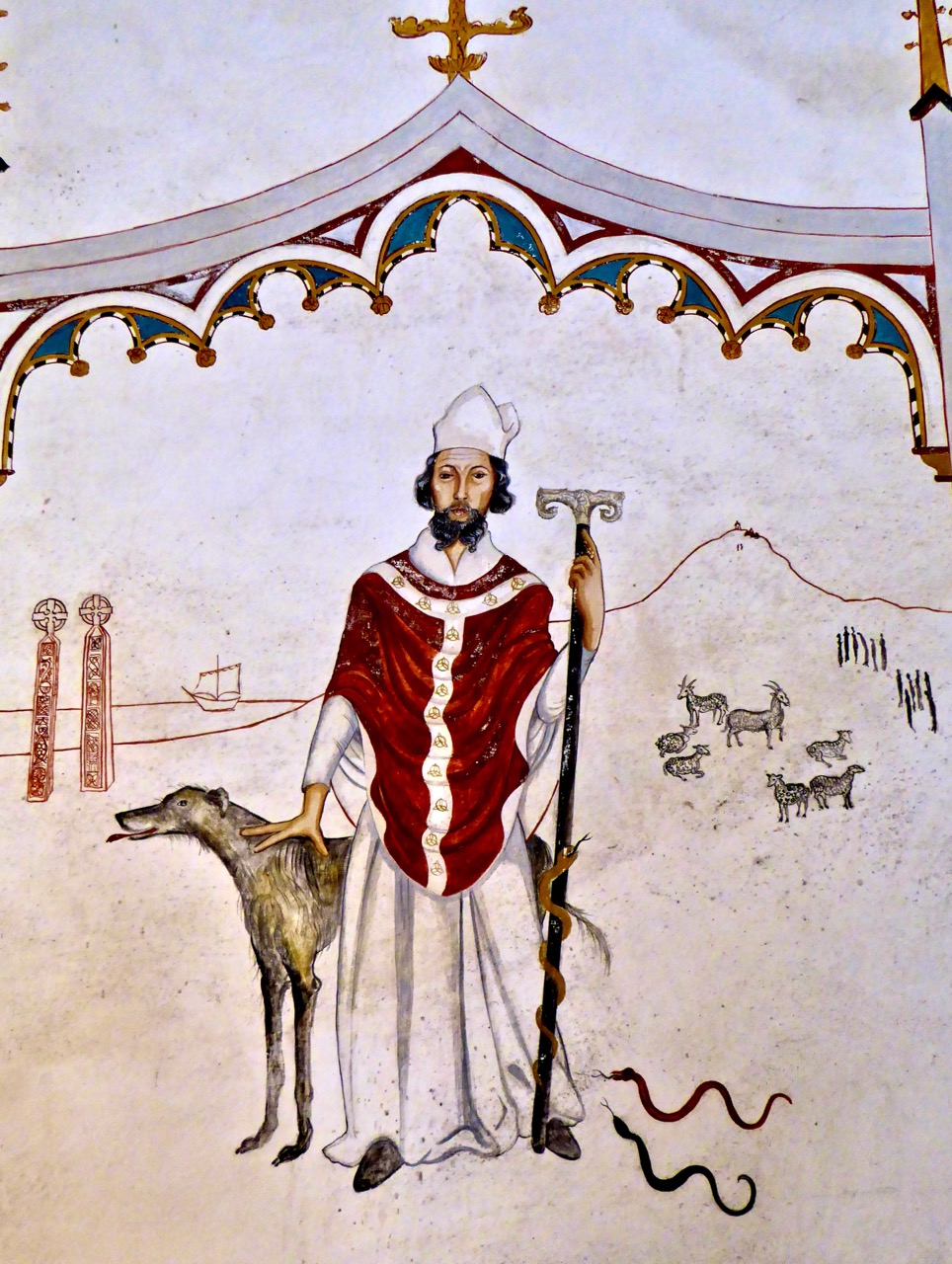
This depiction of Patrick on the wall of his Glastonbury chapel shows him with familiar symbols but also several unusual symbols – an Irish wolfhound, high crosses, and Croagh Patrick, the holy mountain

It’s logical he should have chosen that spot to end his days as it must be the most blessed piece of ground in these islands, having been walked upon by Jesus himself who was taken there as a boy by his tin-trading uncle, Joseph of Arimathea. St Bridget joined Patrick there in retirement and they are both buried in the Abbey grounds, along with the BVM who had preceded them to that place a few centuries earlier.

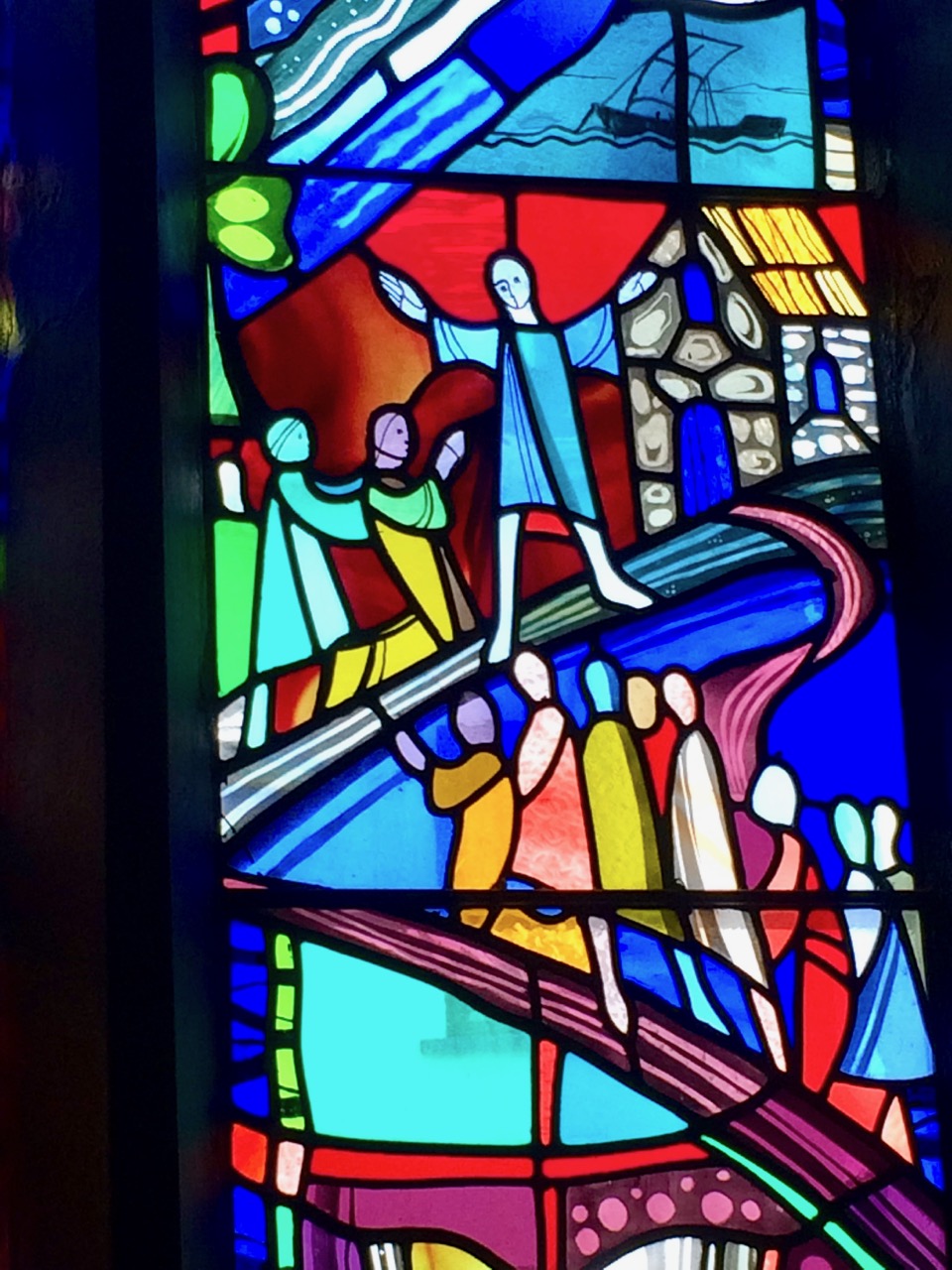
From the George Walsh window in Eyeries, Patrick returns to convert the Irish

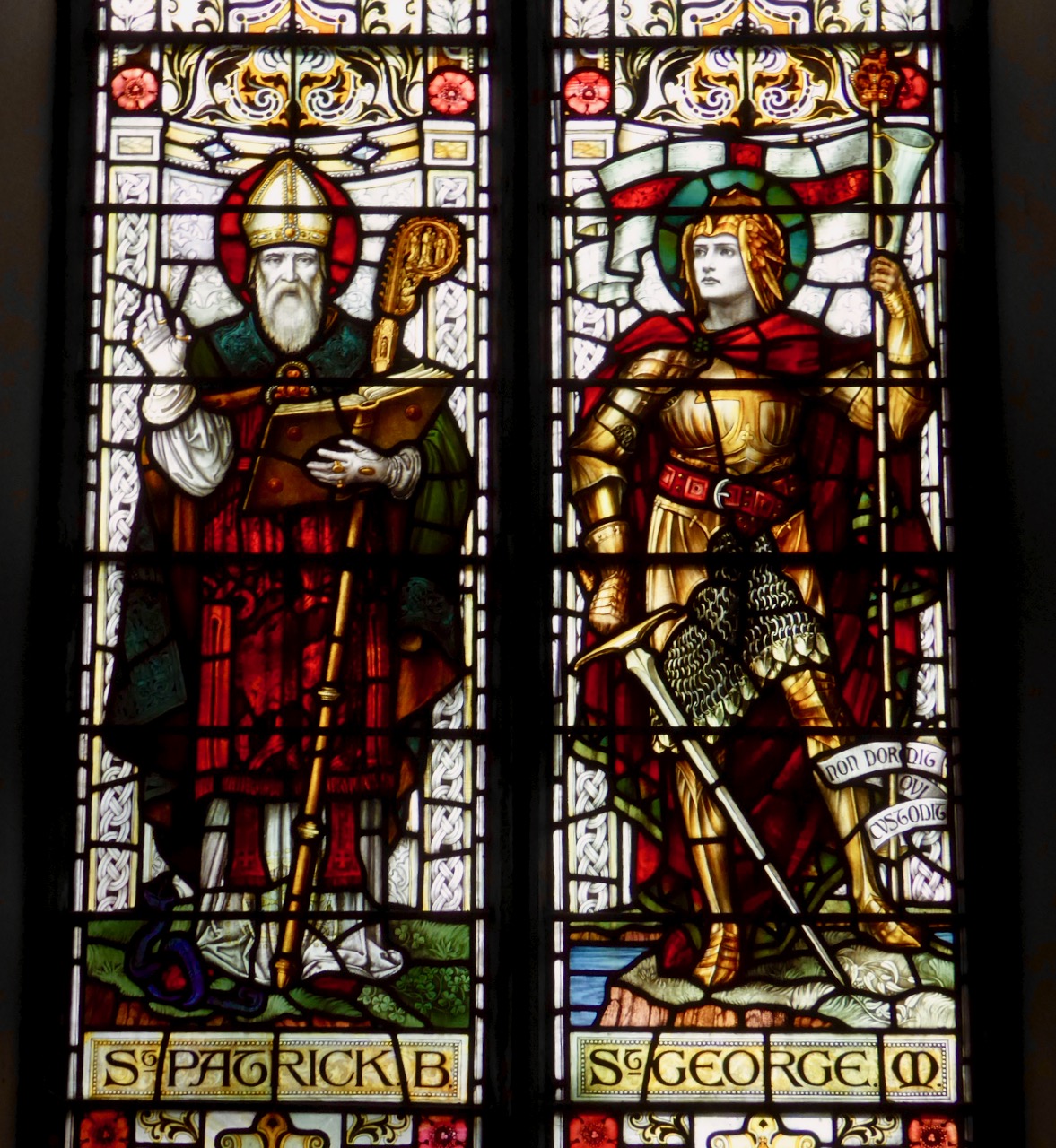
A depiction of Patrick below comes from St Barrahane’s Church of Ireland in Castletownsend where he is shown alongside St George. The window dates from before Irish independence and is an attempt to show the unity of Britain and Ireland through their respective patron saints. Perhaps meant to represent friendship between the countries, nevertheless nowadays it seems to display a colonial overtone that is an uncomfortable echo of past mores.

The window is by Powells of London and dates to 1906

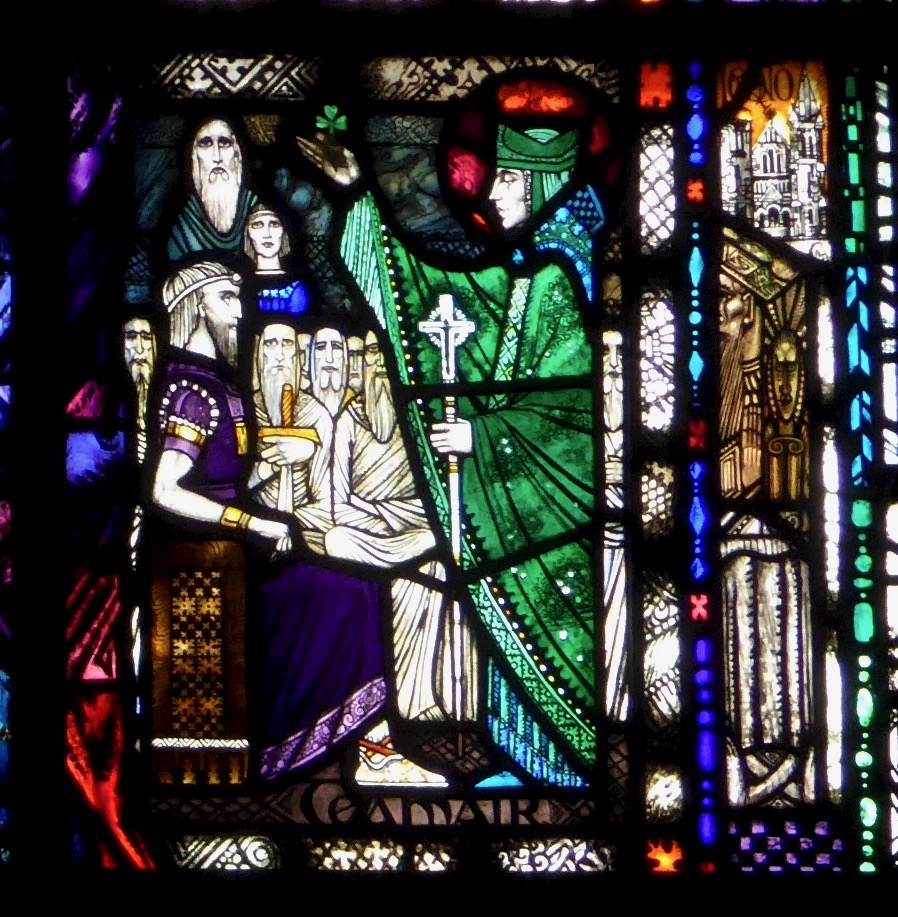
So let’s leave Patrick doing what he came back to do – a last panel from the Richard King window in Athlone shows him performing his saintly task of converting the Irish – one chieftain at a time.

Tiny Ireland

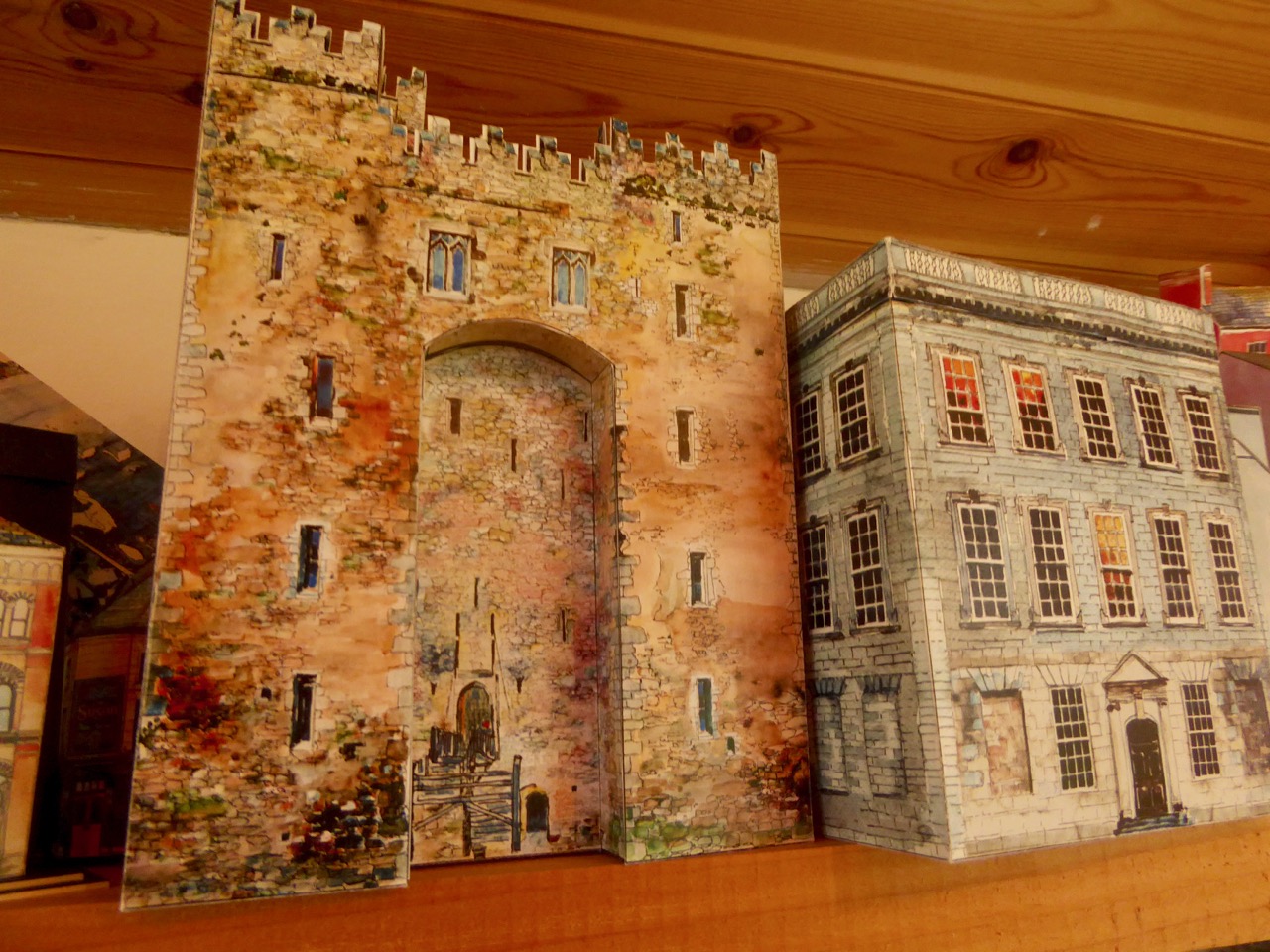
Bunratty Castle

If you live around here or have visited Ireland you’ve seen them in all the best gift shops: Tiny Ireland – those intriguing paper models of Irish buildings and towns that make the perfect gift.

Top photograph: Bunratty Castle. Above: Skibbereen, the model and the real thing, and Tiny Cobh

They say that a true craftsperson makes it look easy. But this week we visited Tiny Ireland in her studio and found out first hand just how much talent and research and imagination goes into every single detail.

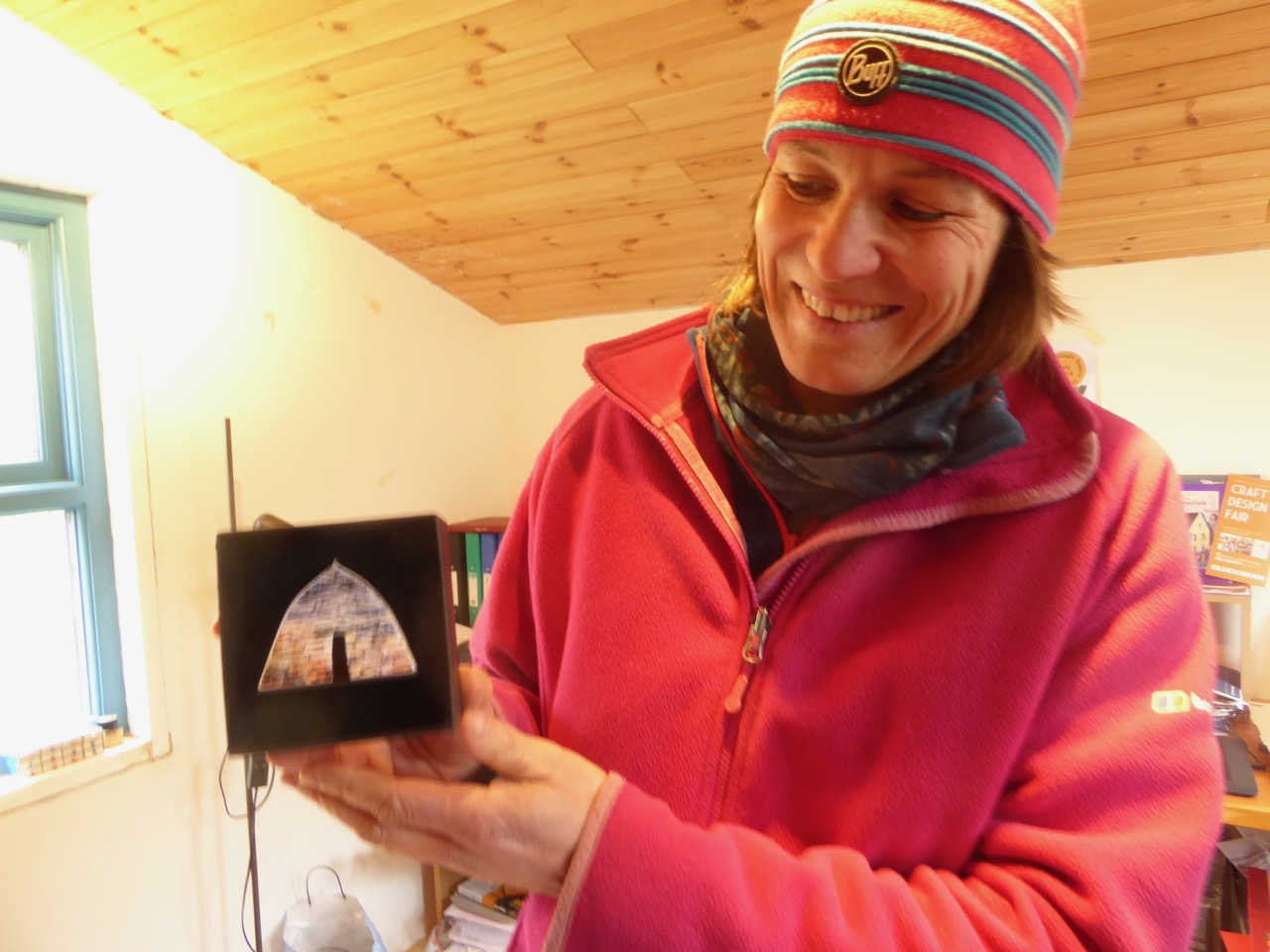
Anke with boxed Gallarus

Anke shows us her Tiny Gallarus

And who is Tiny Ireland? Meet Anke Eckardt. She’s lived here in West Cork since she was a little girl, plays a mean tin whistle, is an artist, a master joiner and boat builder and joint owner with Rui of West Cork Boats. The idea for Tiny Ireland came to her when she made some paper models with and for her son Fionn to complement his train set. That was ten years ago. She has been making models ever since, but devoting herself seriously to it for the last five years.

Designer at work – Anke in her studio. Full marks for anyone who can guess the pub she’s working on.

Anke starts with familiarising herself with the town or village. She wanders round with her camera, talks to everyone, gets a feel for the place, and then does extensive research on the history of the area. In the case of West Cork, like any other native she already knows every inch of it – the stories, the atmosphere, the iconic buildings, the colours and contours of the landscape. She tries to capture that same sense of place wherever she goes.

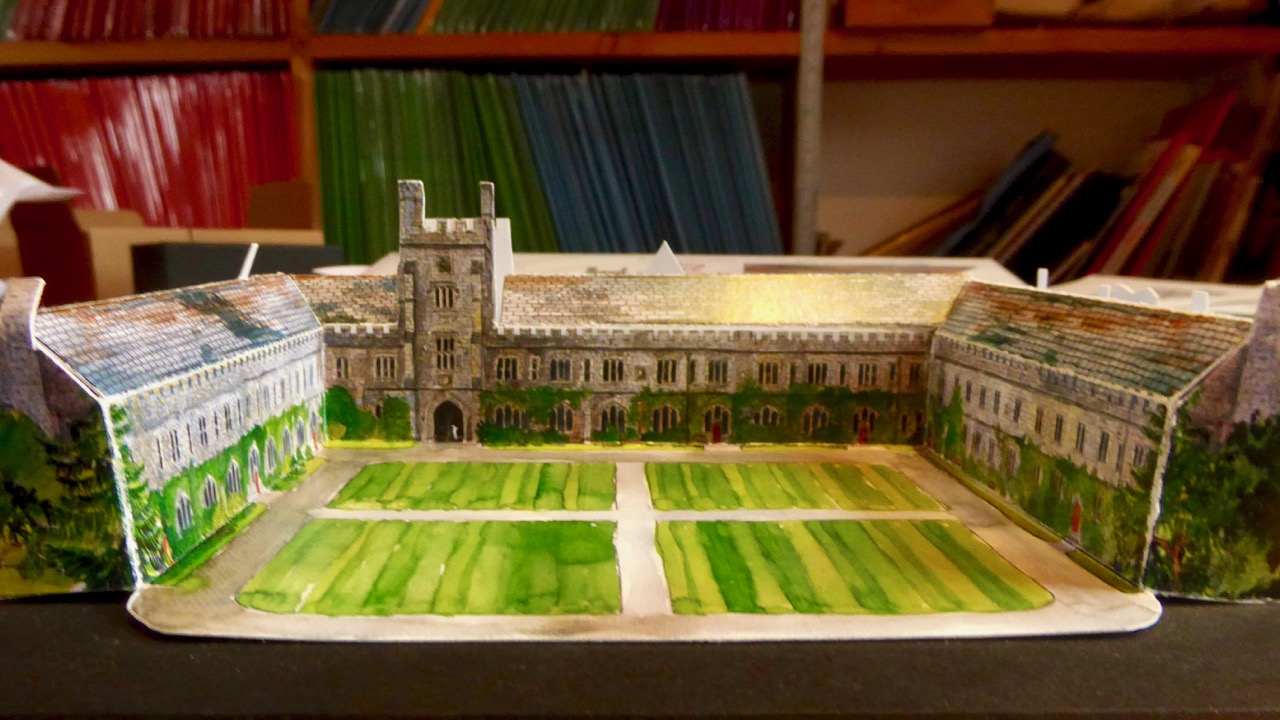
UCC

GPOTop: Both Anke and I went to University College Cork and the Quad holds a special place in our hearts. Bottom: Anke’s contribution to the 1916 commemorations – the General Post Office in Dublin

Back in the studio she decides on which buildings to use and starts drawing and painting and figuring out what should go where on the model and what extra details to include. Each building occupies one sheet in the kit. Anke wants each sheet to be a beautiful object in itself, to be poured over before you even start the scoring and cutting process. Can you imagine the cleverness it takes to construct even one building? Add to that all the little details that go into making it unique and contributing to its cultural and geographic character.

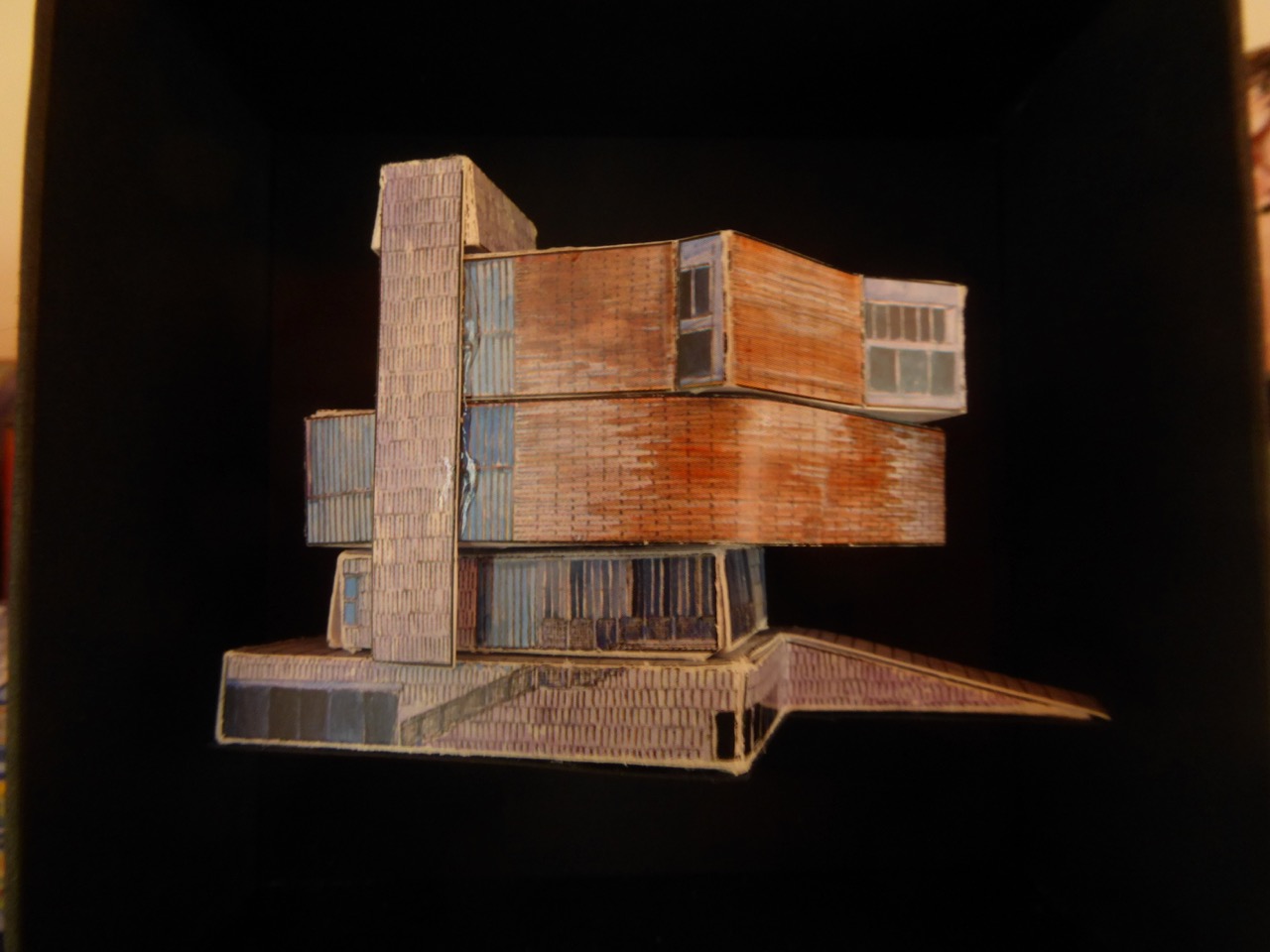
Glucksman Gallery in box

Not just traditional buildings! Here is the ultra-modern Glucksman Gallery at UCC

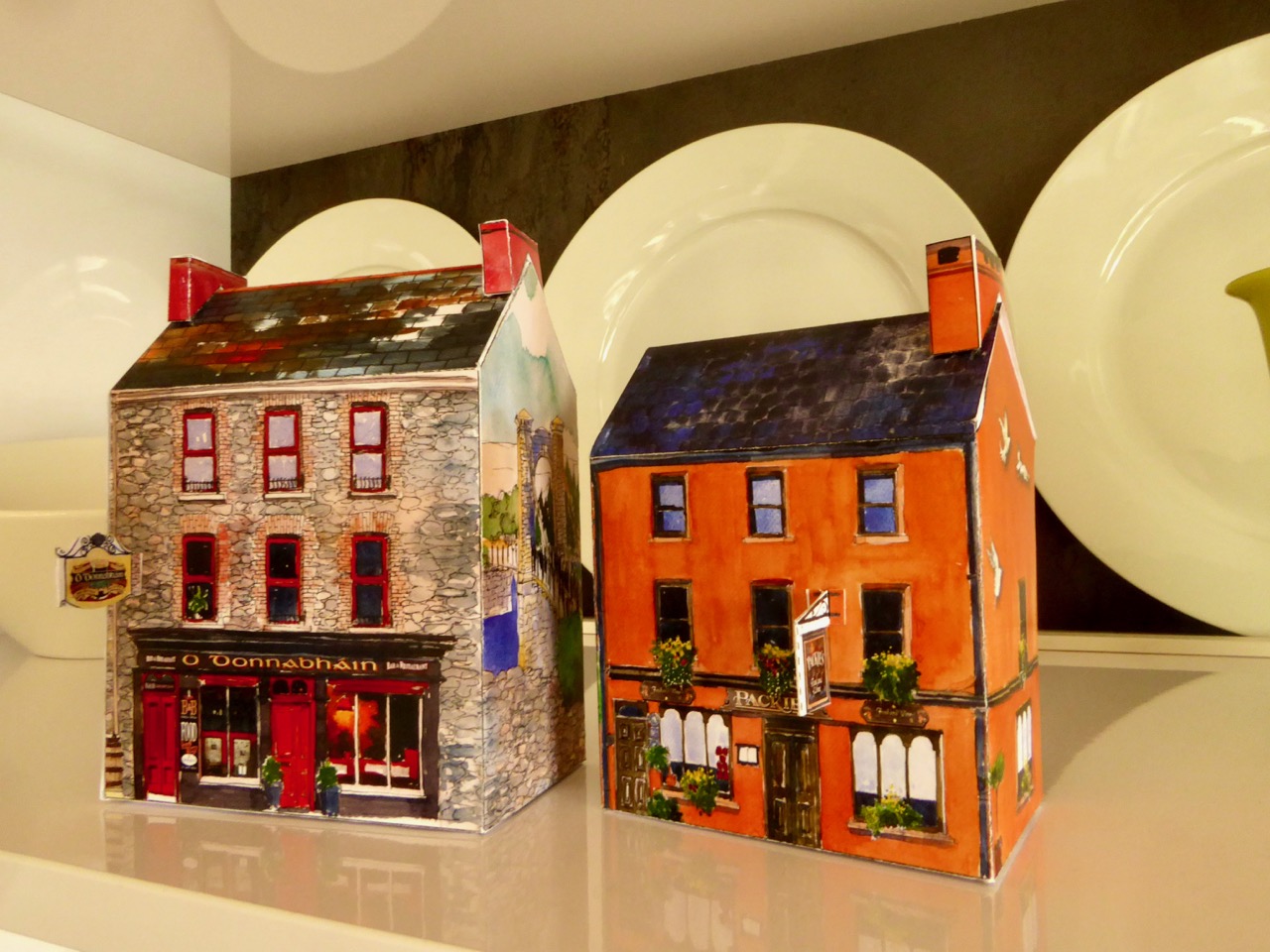
We came home with a Tiny Kenmare kit so that we could experience the assembly process first hand. Not only was this great fun but it gave us additional insights into both the craft of model making and the lovely additional details that Anke has inserted into each piece – details that extend the model into little bits of history.

Robert assembles Packie’s Pub

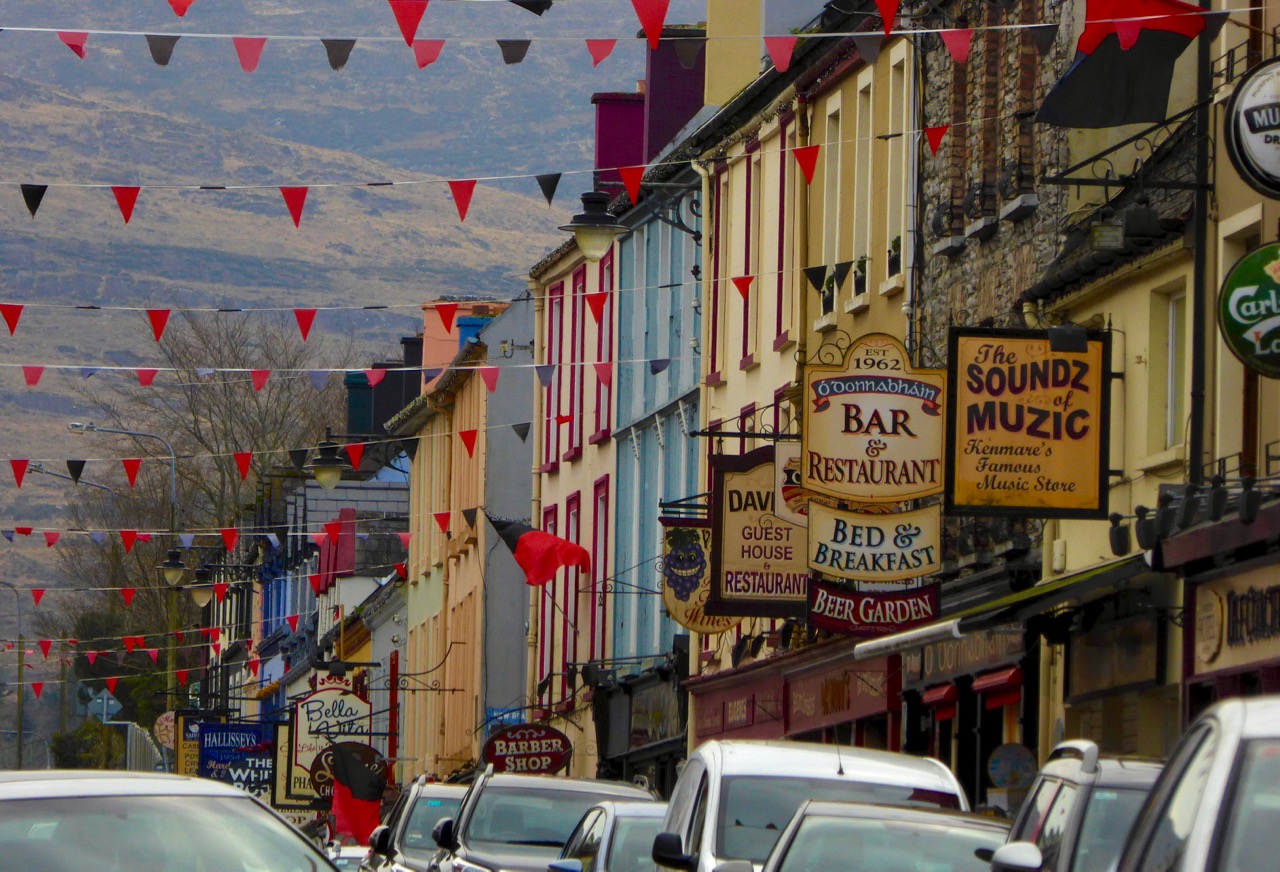
The second Kenmare building we assembled was O’Donnabháin’s pub and guest house (pronounce it O Dunn-eh-vawn’s). Look around the side – Anke has added the image of a funeral coming over a suspension bridge. Curious, I looked up what this was all about and found that Kenmare did indeed have the first suspension bridge ever built in Ireland – read an amusing account of its history here – and that the funeral was a real one, that of an IRA man murdered by the Black and Tans in 1921.

Kenmare Funeral

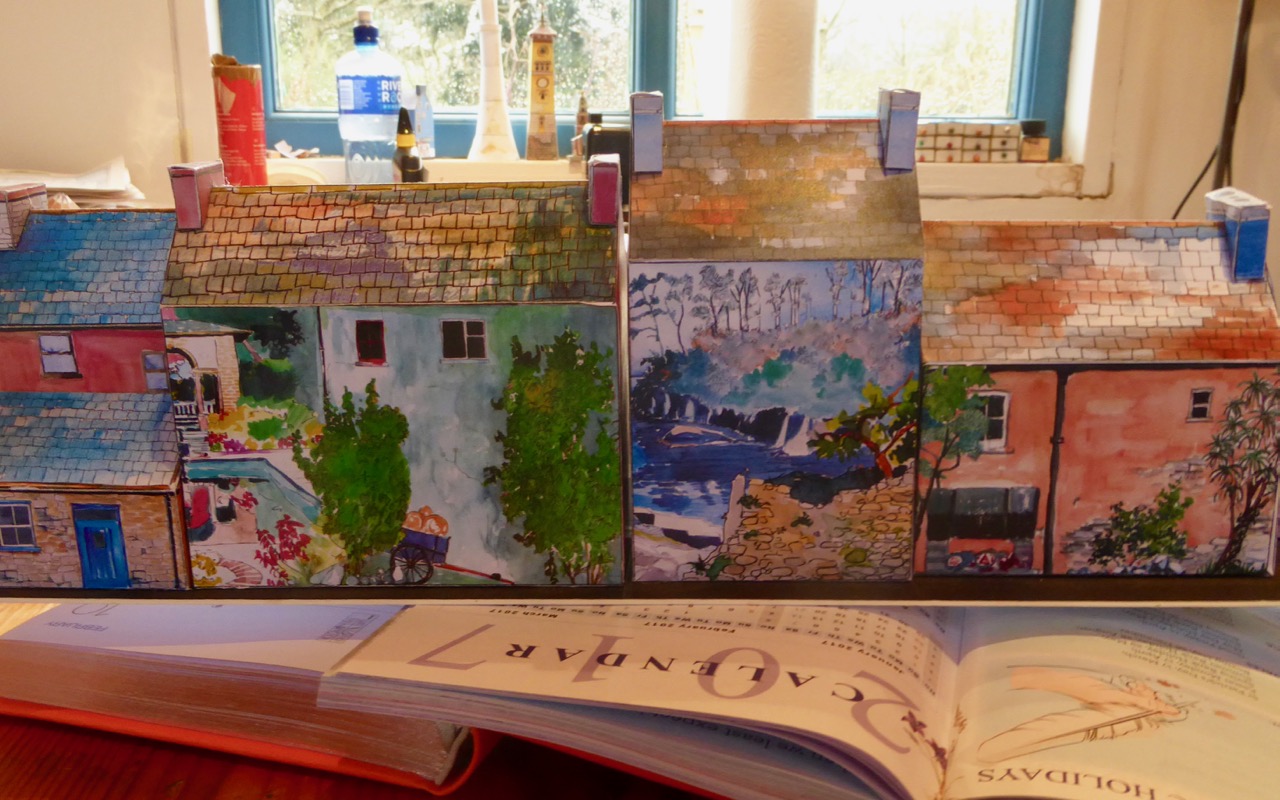
On the shelfKenmare is as scenic and colourful as any town anywhere has a right to be. It’s a great shopping town too, with wonderful cafes and pubs, and right on the justly-famed Ring of Kerry.

Colourful Kenmare 1

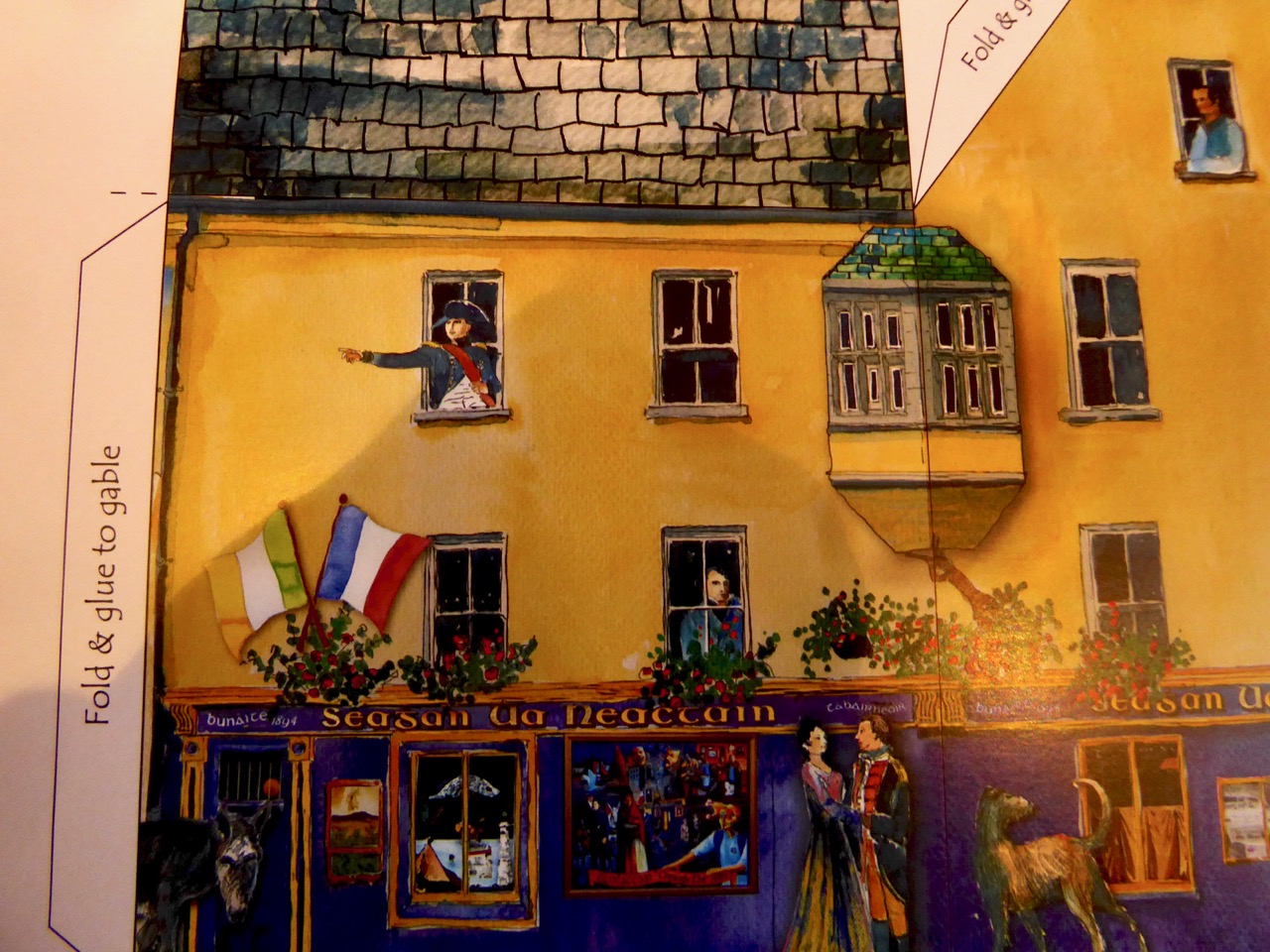
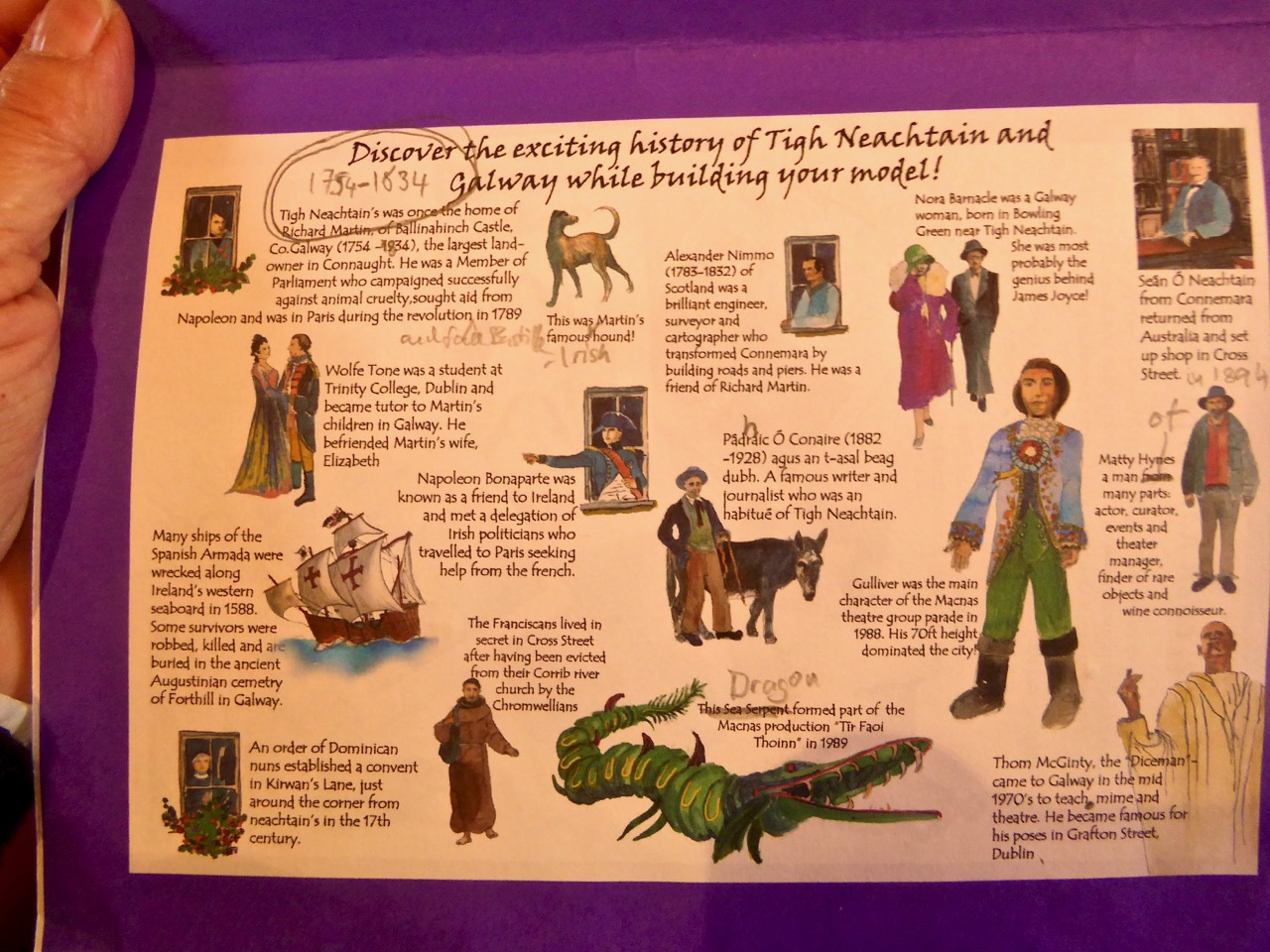
Every model Anke makes is unique and delightful. Individual pubs, shops, castles, etc are often made at the request of the owner. Here’s one for Tigh Neachtain in Galway. Anke showed us a draft of the Explanation sheet that goes with it. It’s an object lesson in how one building can encompass the story of a town. Richard Martin, by the way, is better known to history as Humanity Dick.

Tig Neachtain

Tig Neachtain ExplanationFor tourists, Tiny Ireland models make the perfect gift, light and packable and chock full of the real Ireland. For all of us, making one engages us in a creative act that comes out of the rich imagination and artistic talent of Anke Eckardt.

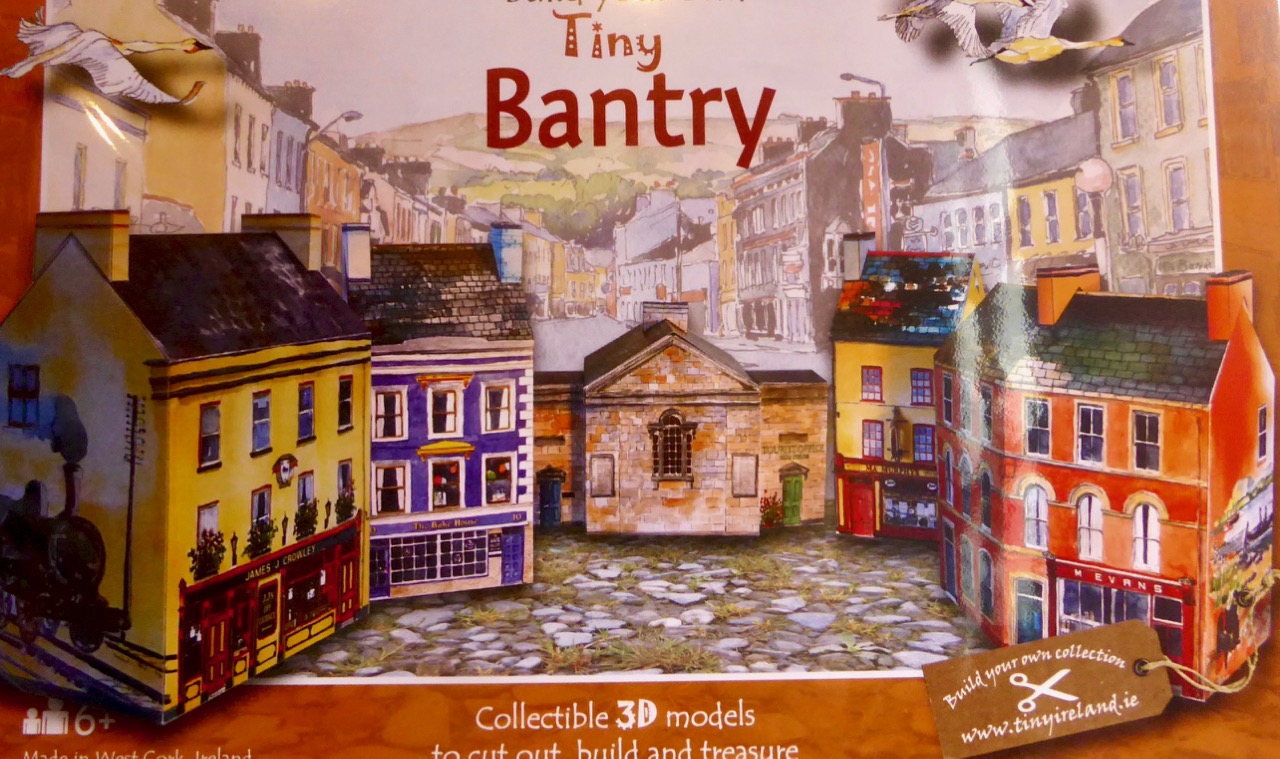
Tiny Bantry

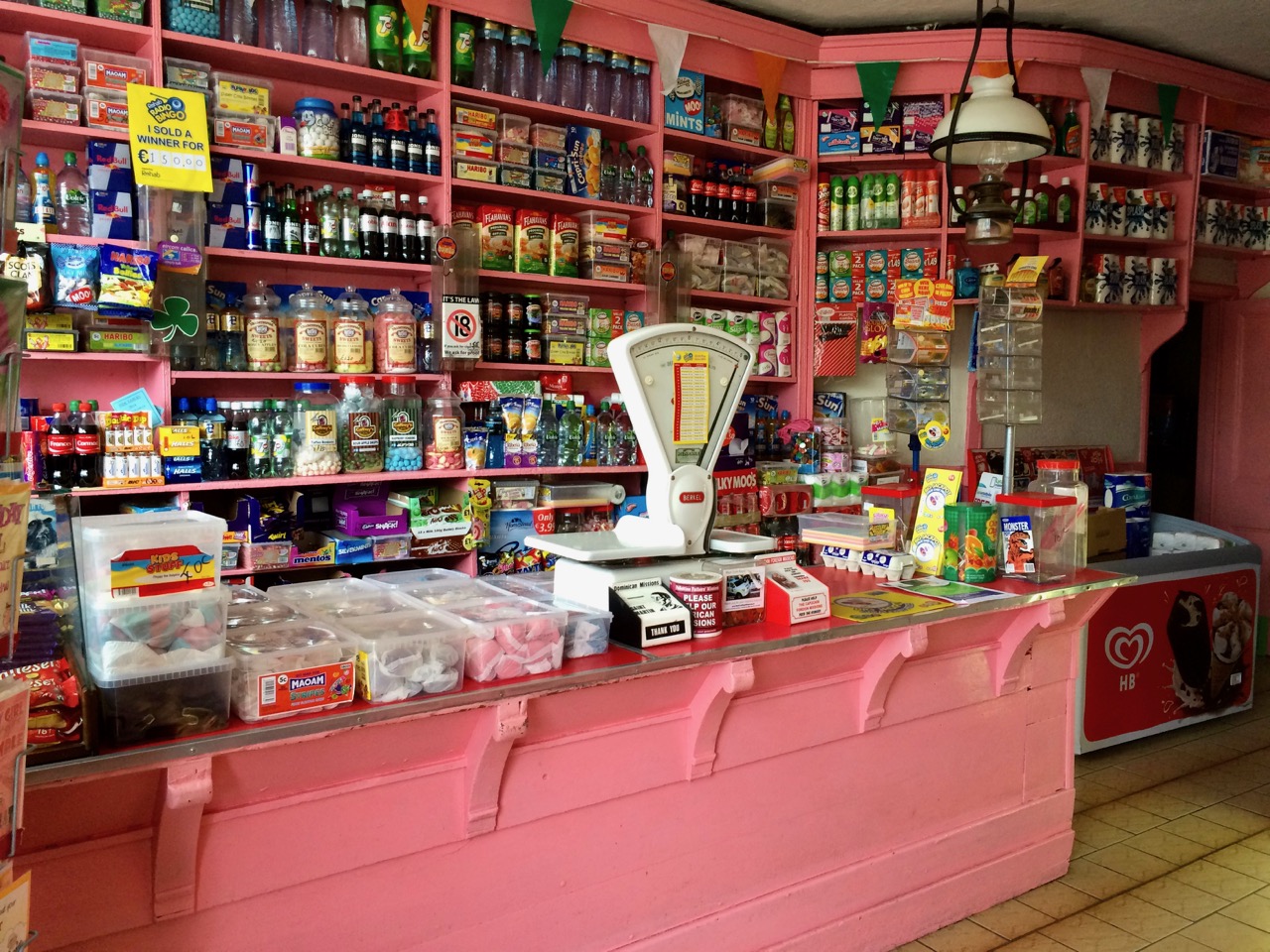
Evans InteriorTiny Bantry – note Miss Evans traditional shop on the right. Here’s what it’s like inside. For more on this and other traditional Irish shops, see Shopping for Memories

And it’s not just models. Recently Anke has started to produce charming watercolours of the traditional shops and pubs she loves. We in Ballydehob have loved her posts on our wonderful old shopfronts. Here’s an example – Just drive down our main street and you can’t miss The Chestnut Tree.

chestnut-tree

Happy cutting and glueing!

Around the back

The First Viral Sensation: How a Pre-Raphaelite Painting Inspired a Generation

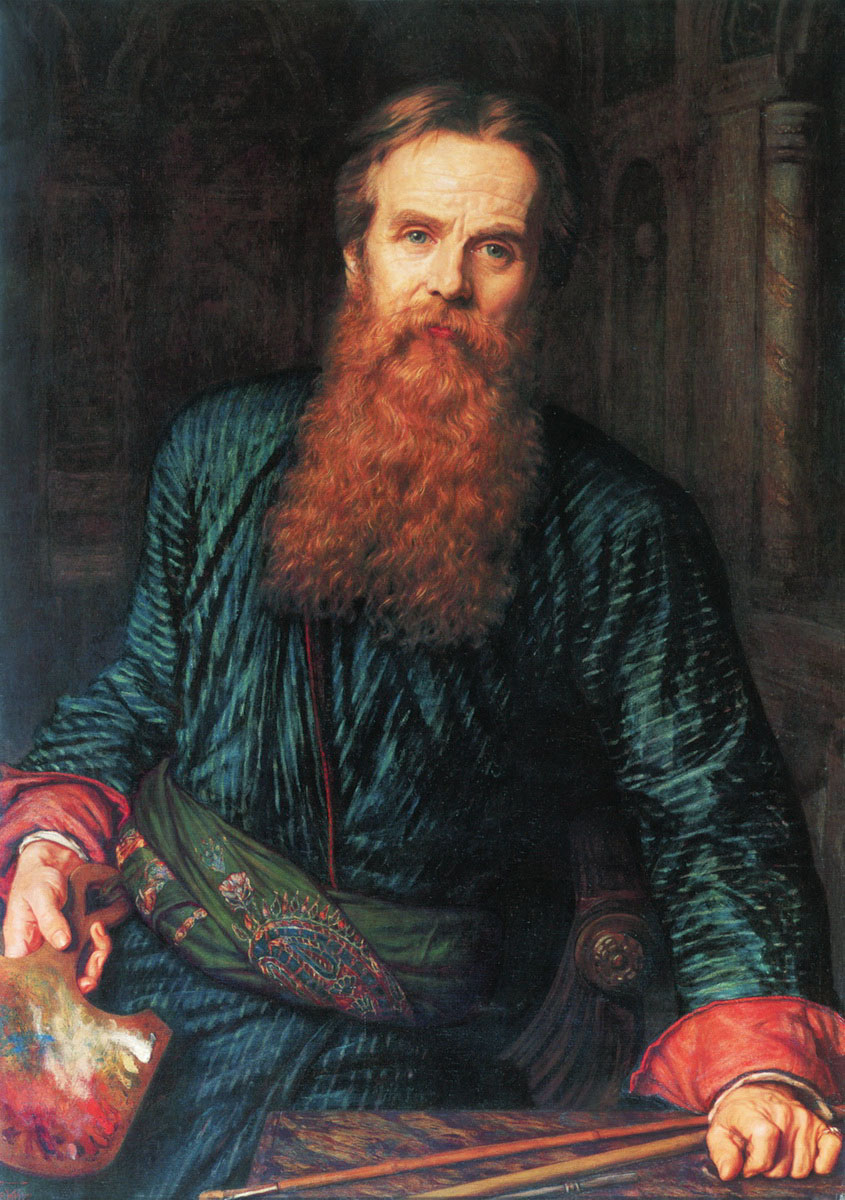
william_holman_hunt_-_selfportrait

Holman Hunt, one of the three founders of the Pre-Raphaelite Brotherhood

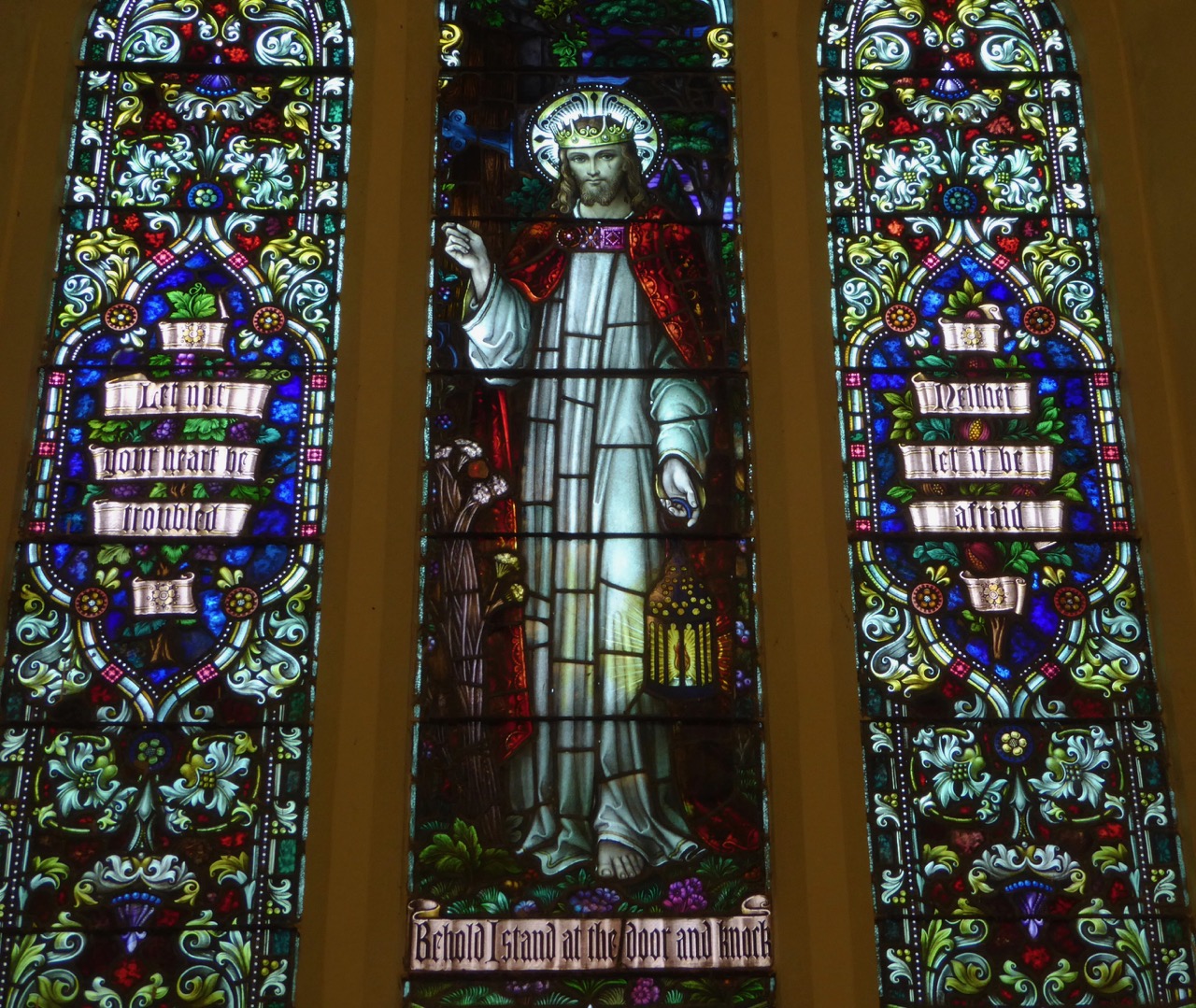
In preparing for an upcoming talk of stained glass in West Cork, I was struck by a single image that seemed to crop up again and again. The image was described as The Light of the World, or occasionally as Christ Knocking at the Door.

St Matthias Light of the World by Clokey of Belfast 1945

Christ as the Light of the World. This window, by Clokey of Belfast is in St Matthias Church of Ireland in Ballydehob

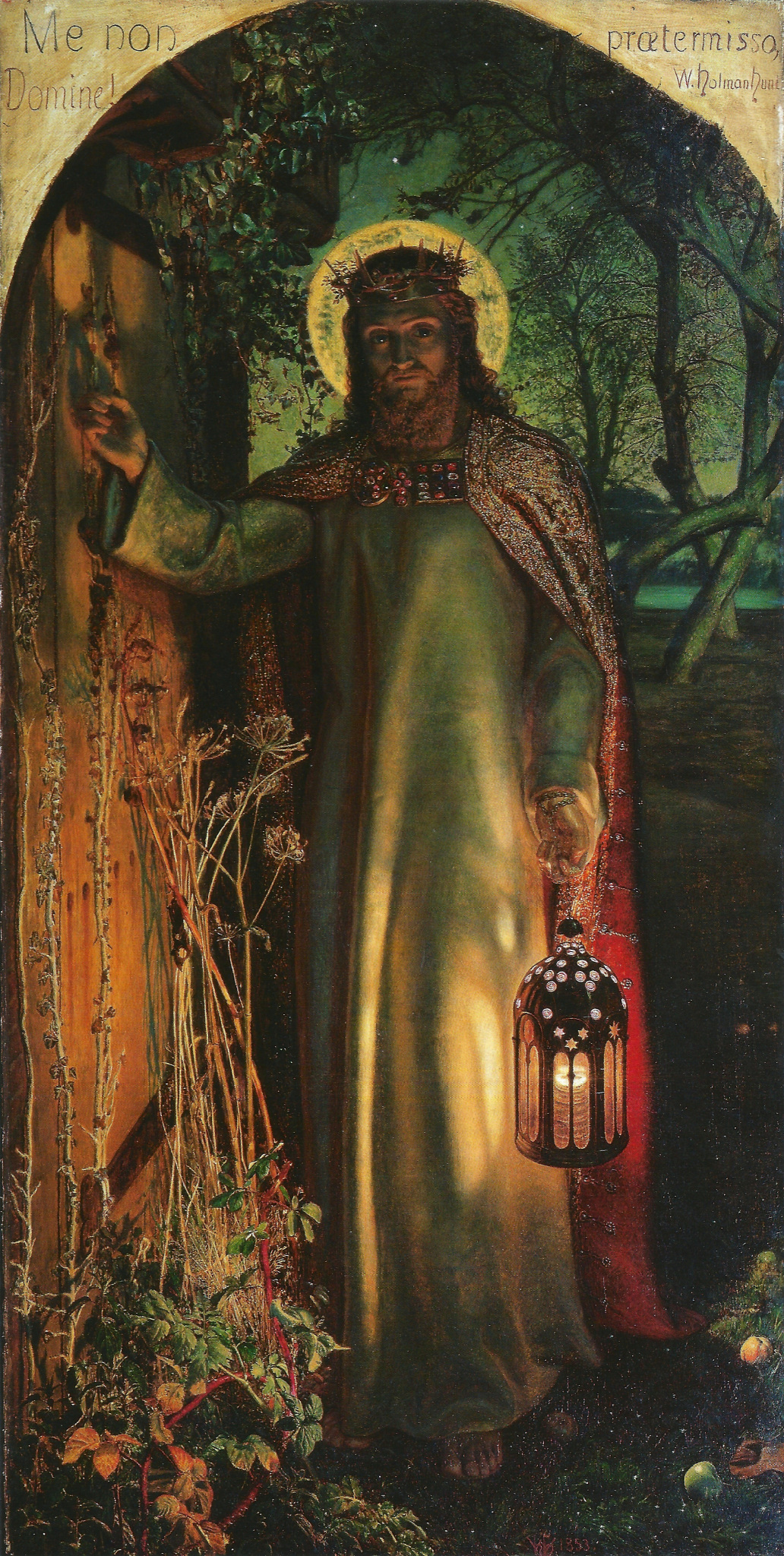
Curious, I searched online to find out more about the window and discovered to my astonishment that the painting upon which the window was based was The Light of the World by the Pre-Raphaelite painter Holman Hunt and, in the words of Robert Fulford, although…Hardly anyone today admires The Light of the World as art…it remains a historic moment in mass culture, the beginning of the great age of reproduction, the first image that millions of people knew intimately, and often loved.

hunt-light-of-the-world1

Holman Hunt’s Light of the World. It was based on Revelation 3:20 Behold, I stand at the door, and knock: if any man hear my voice, and open the door, I will come in to him, and will sup with him, and he with me.

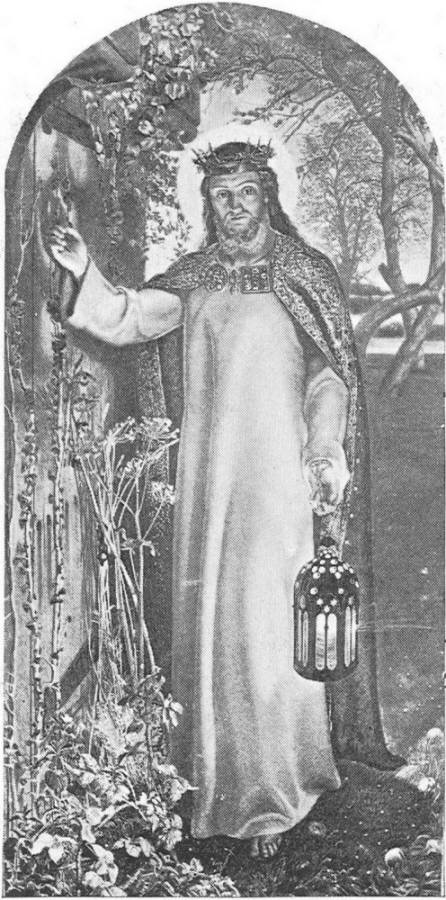
Hunt’s first version light-of-the-world-engraving(he eventually painted three) was begun in 1851 and was widely admired. But it was two other media that carried it to the status of international icon. The first was engraving (left) – the photography of its age in its ability to convey images to a mass audience – and the second was stained glass, just coming into its heyday as a result of recent innovations in church architecture and decoration.

The painting toured the world and attracted enormous crowds wherever it went. It is estimated that four fifths of the population of Australia viewed it, for example. Fulford describes it thus: In Melbourne in 1906 visitors stampeded, anxious to see it the moment it was open to the public. But if the crowd was rowdy at first, Maas writes, soon “an air of reverential awe descended on the gathering.” Men removed their hats, voices fell to a whisper. Some people stood or sat gazing at it for hours. A few visitors fainted. Later it toured South Africa and in 1907 returned in triumph to Britain and its final destination, St. Paul’s.

Rosscartbery Light of the World Mayer 1934

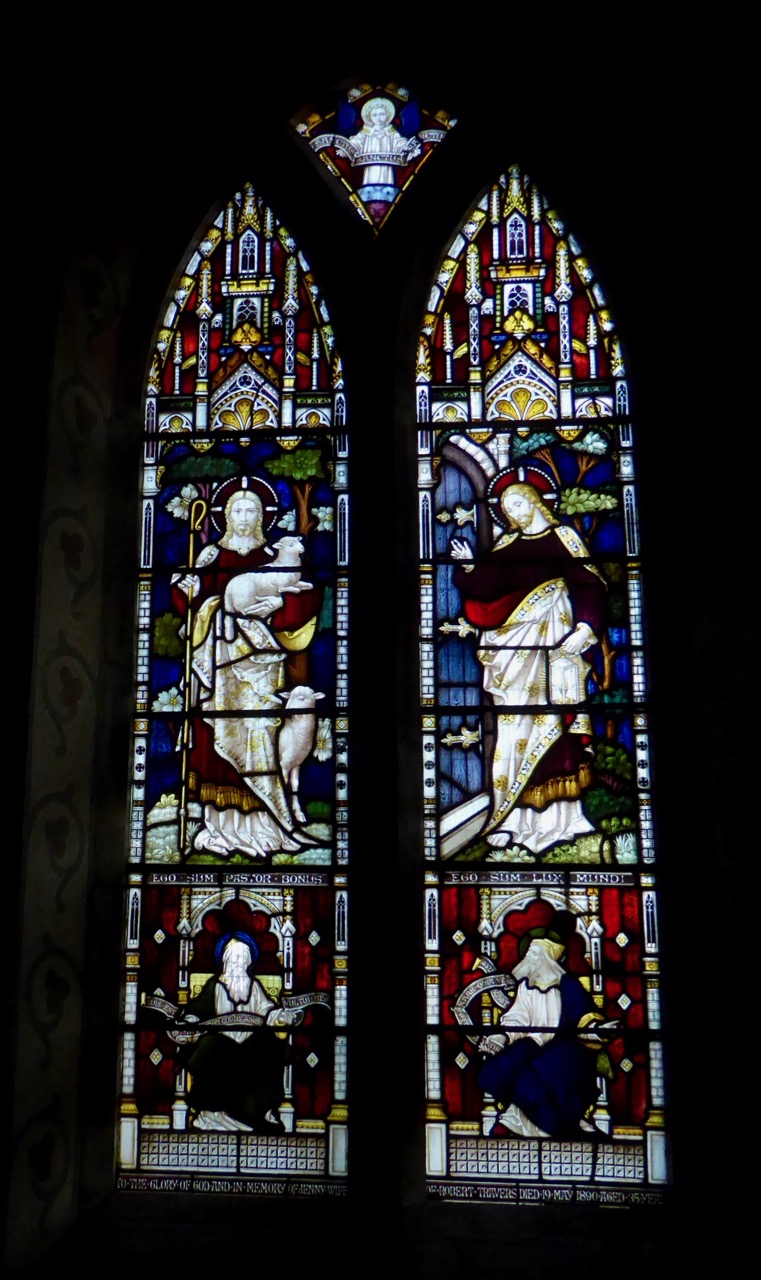
This window in Rosscarbery Cathedral is by Mayer of Munich. Christ as The Light of the World was often paired in a two-light window with Christ as the Good Shepherd

How to explain the appeal of this image? Holman Hunt himself gives us a clue. Writing in The Victorian Web, George Landow states that Hunt …believed that The Light of the World created its symbolic language in precisely the same way that men had formed language to express abstract and spiritual ideas. The important point is that, since the symbolism derives from what he takes to be essential habits of mind, it would be immediately comprehensible to any audience, because such “natural” symbolism does not require any knowledge of iconographic traditions. It appears he was correct, since the symbolism employed in the painting spoke directly to masses of people who took its message to heart and hung engravings and reproductions in their homes.

Rosscarbery Cathedral Light of the World detail

Detail from the Mayer window

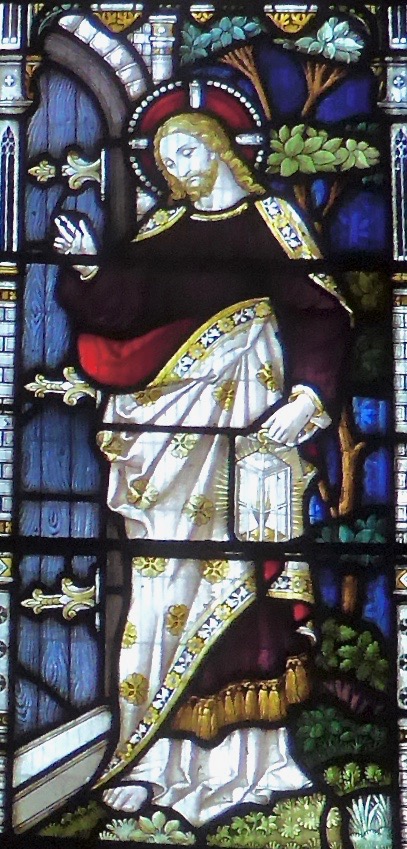
And in their churches. In its listing of the glass in Church of Ireland churches, the website Gloine* lists 70 examples of Light of the World windows and a few others labelled Christ Knocking at the Door. Of these, about 65 are modelled directly on the Holman Hunt painting. Most of the stained glass studios are represented in the list – it was such a popular request that every studio had to have it in its catalogue. While there are more windows devoted to, for example, the Resurrection, or the Four Evangelists, they are all quite diverse representations, rather than being based upon a single original source. A similar list does not exist for Catholic churches, but it is unlikely that the Light of the World would be as prominent in them, mainly because most stained glass windows in Irish Catholic churches are later than the high point of popularity for Hunt’s painting.
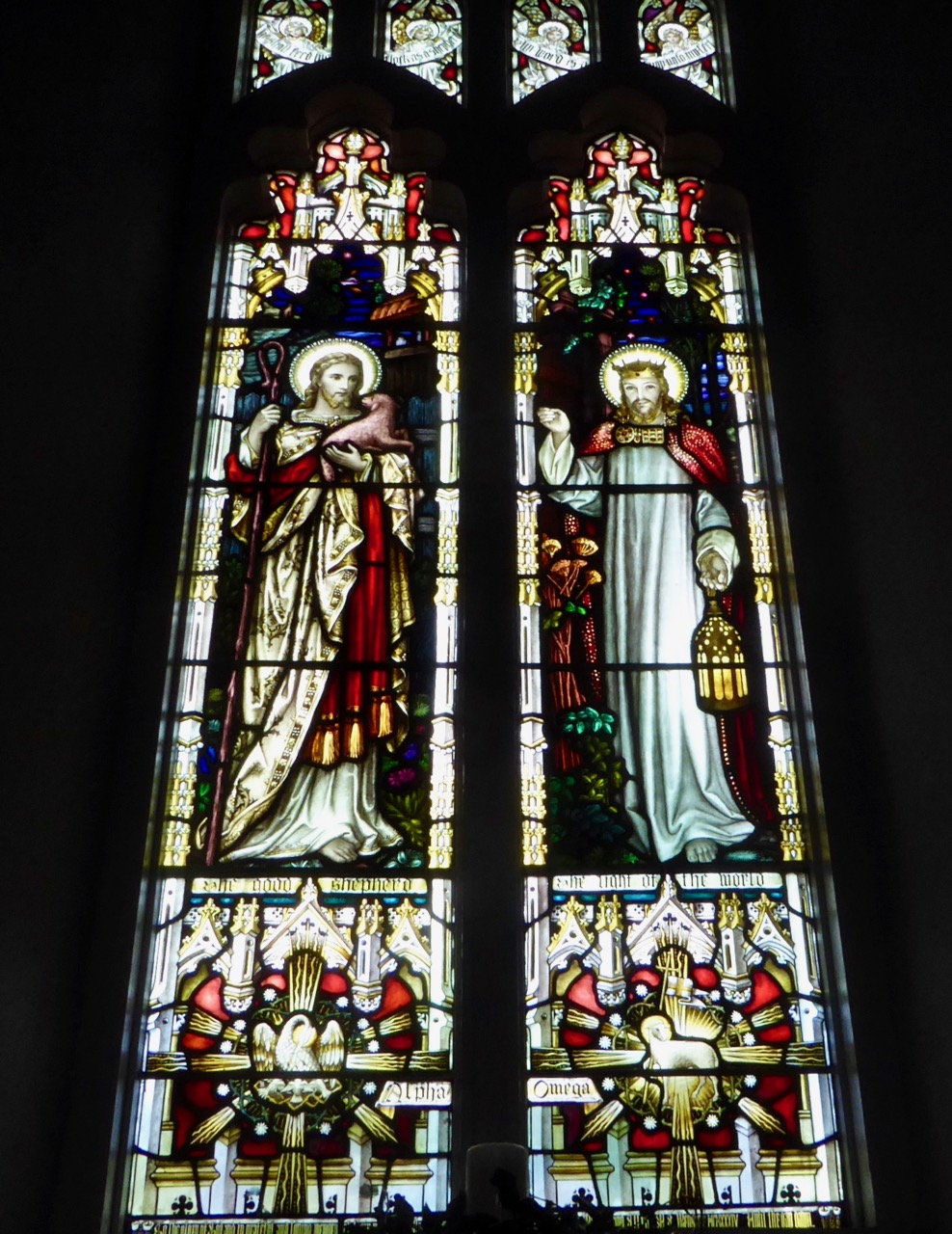
Timoleague Good Shephard and Light of the World, 1890 Clayton and Bell

This window by Clayton and Bell dates from 1890 and is in the Church of the Ascension (C of I) in Timoleague

So here’s a challenge for you, Dear Reader. Have you seen this image in stained glass, or elsewhere? Were you familiar with the painting and aware of its impact? Do you have photos, stories or memories to share? Or is this an image that had its moment, particular to its day and time, and then disappeared from our consciousness like so many others have, before and since?

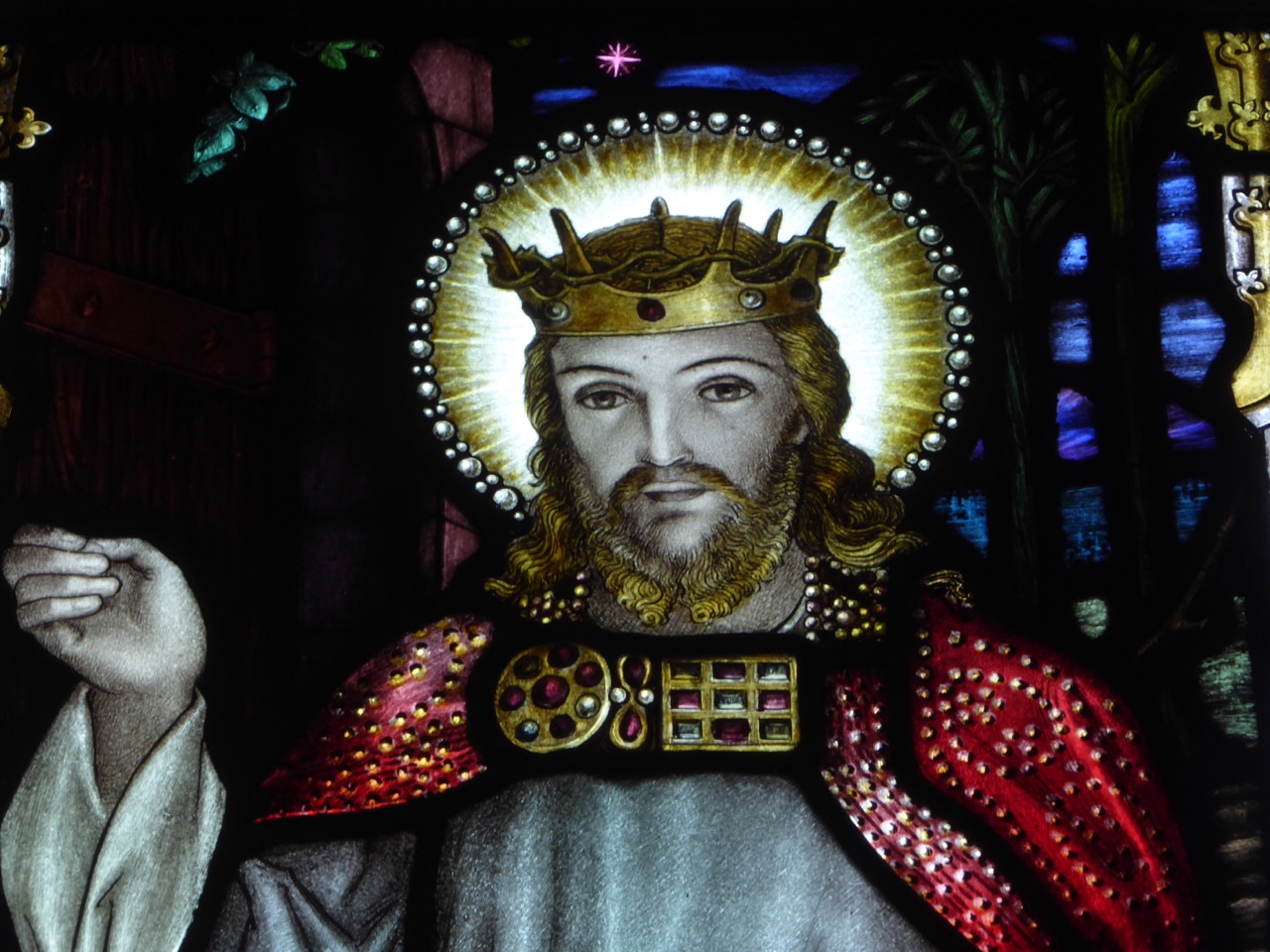
Timoleague Good Shephard and Light of the World, 1890 Clayton and Bell Detail

Detail from the Clayton and Bell window in Timoleague

*My grateful appreciation goes to Dr David Lawrence and the website Gloine – Stained glass in the Church of Ireland. This is a magnificent resource that contains information on almost every stained glass window in almost every Church of Ireland building in Ireland and Northern Ireland. It is awe-inspiring in its scope and erudition. The site lists two more examples from West Cork, Durrus and Caharagh.