Mizen Mission

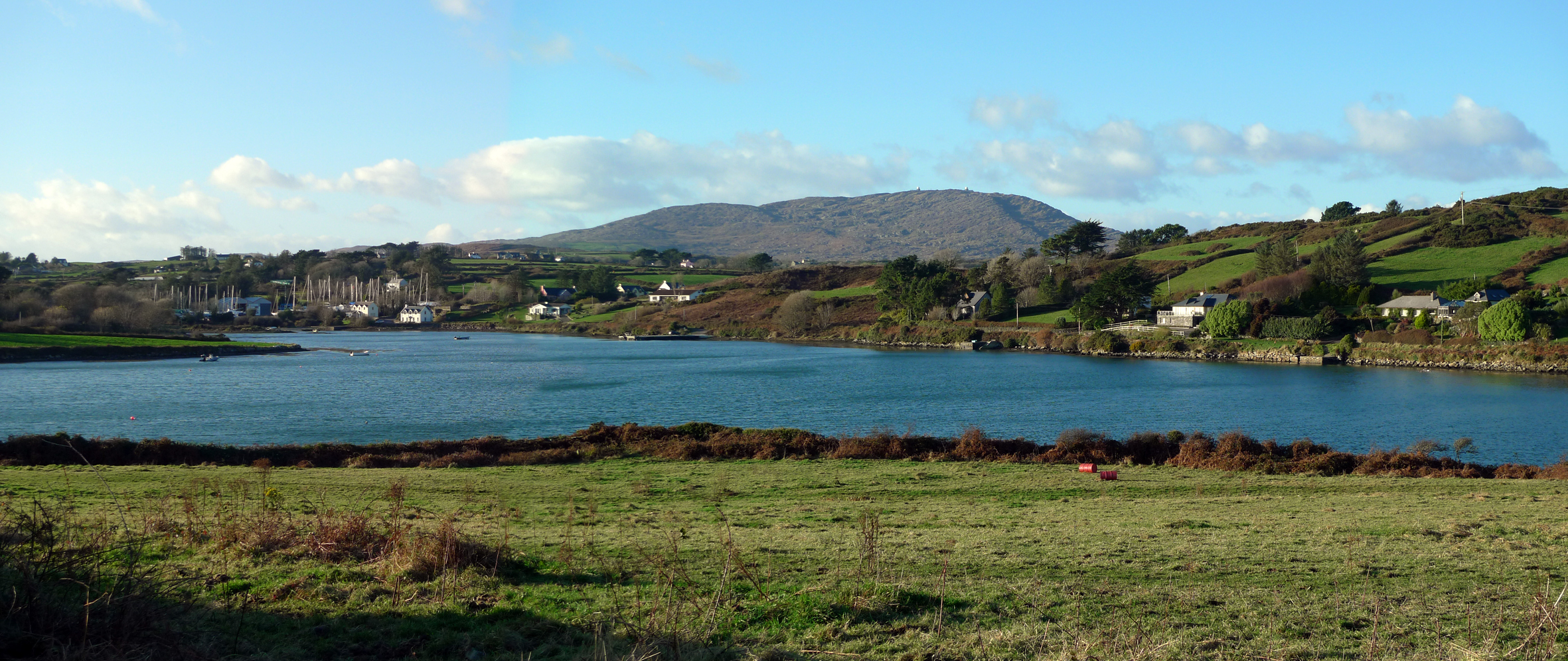
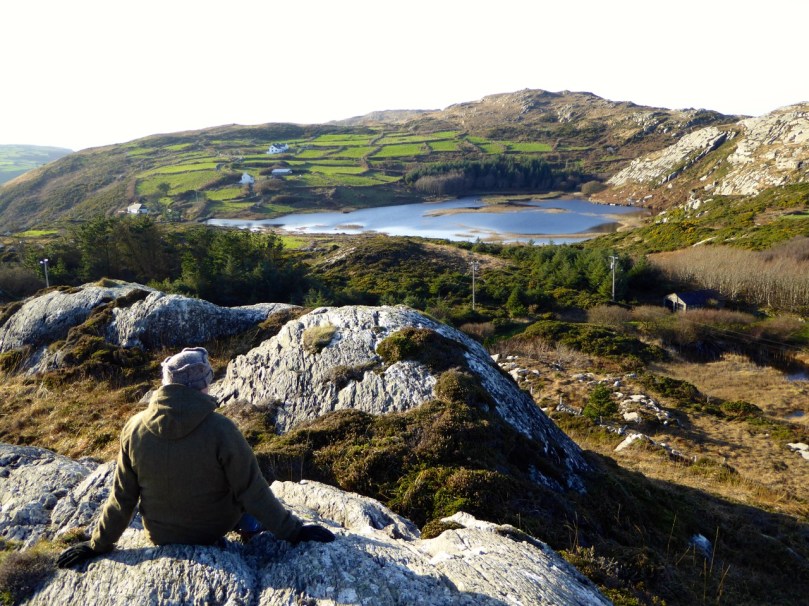
Tooreen Lake

Tooreen Lake

A joint post by Robert and Finola…

Finola

According to the forecast today could be the last fine day of 2014, so we decided to make the most of it and set off on a mission. And what a day it was! Cold, yes, but with that brilliant light that only happens on crisp winter days.
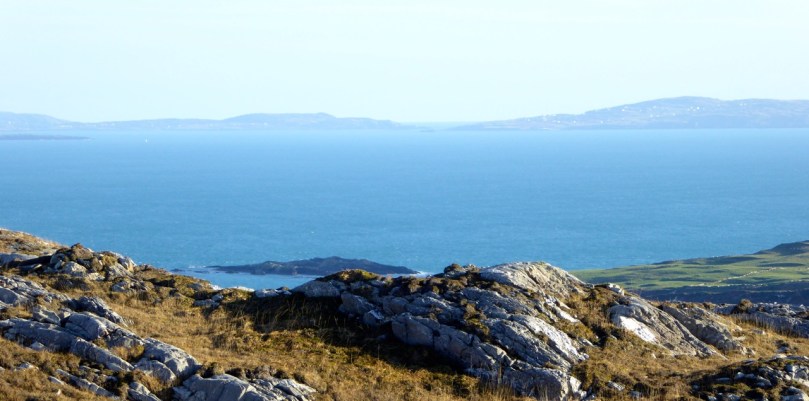
Looking across Roaringwater Bay

Looking across Roaringwater Bay

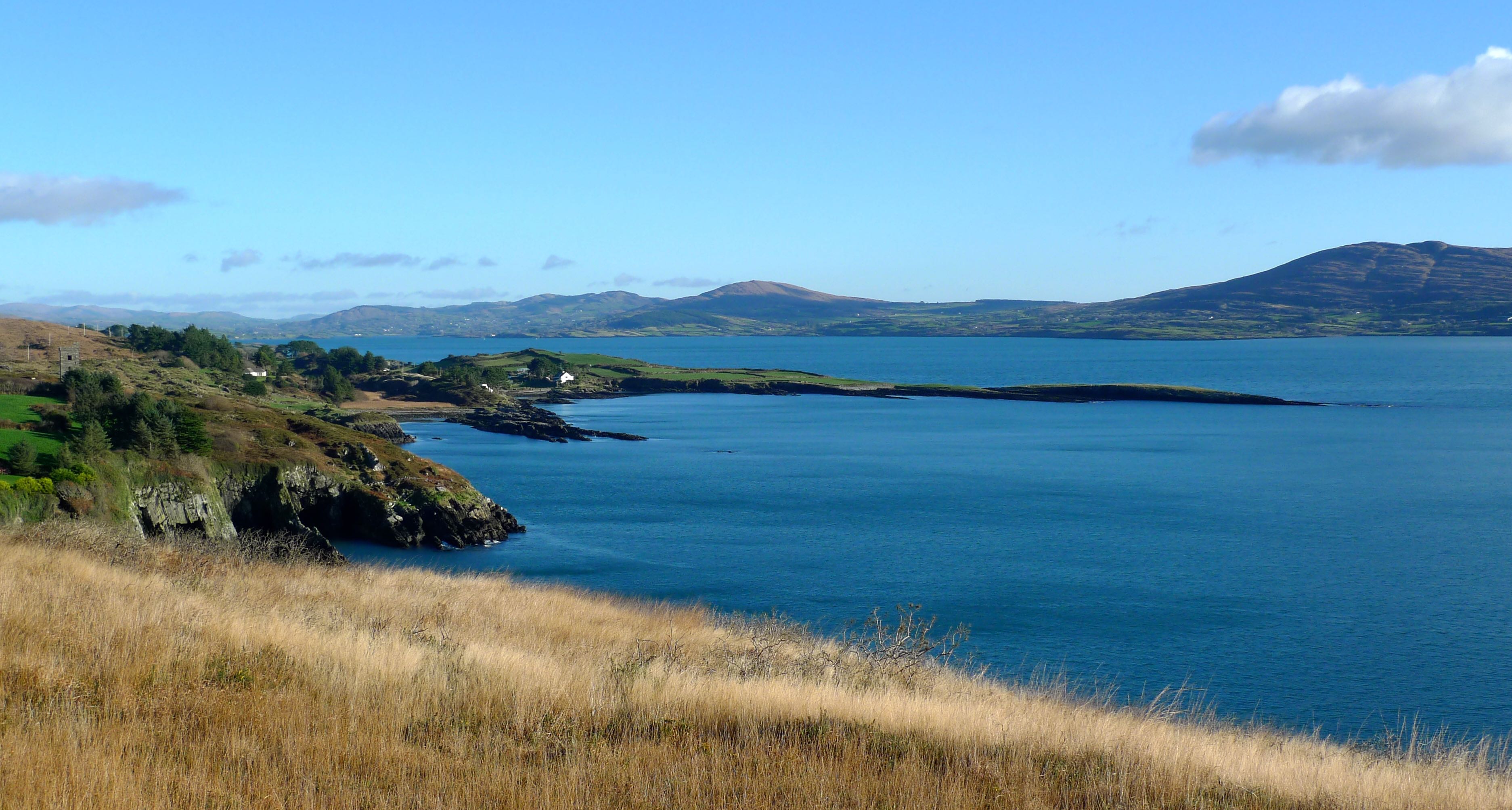
Our mission? it was to find a piece of prehistoric rock art I had last visited over 40 years ago in the townland of Castlemehigan, near the end of the Mizen Peninsula. But once in the vicinity of Castlemehigan we couldn’t resist continuing to the end of the tiny road, which climbed up the rocky hills on the northern side of Crook Haven. Parking the car, we climbed to the highest point we could find. We’re used, by now, to the jaw-dropping views around here, but even by Mizen standards, this was something special. 

Crookhaven Village

Crookhaven Village

South of us, across the Haven was the village of Crookhaven nestled in its protective harbour. Looking north we could see across the Sheep’s Head to where the unmistakeable outline of Hungry Hill loomed on the Beara Peninsula. To the west was the White Strand and Brow Head, crowned by the historic Marconi telegraph station and to the east was the whole of Roaringwater Bay: Cape Clear Island, Sherkin, Baltimore, and the ring of hills that run down to the water.

Back in the vicinity of the rock we knocked on the door of a farmhouse to ask directions and permission. Often when we do this we are met with a blank look – not every ancient monument location has survived in the folk memory of the local residents. But this time we hit it lucky, with Florence O’Driscoll – ah yes, he knew it – the mass rock is what we were looking for. I showed him a picture of the rock and he confirmed that was the one, it was on his land and he would take us there.
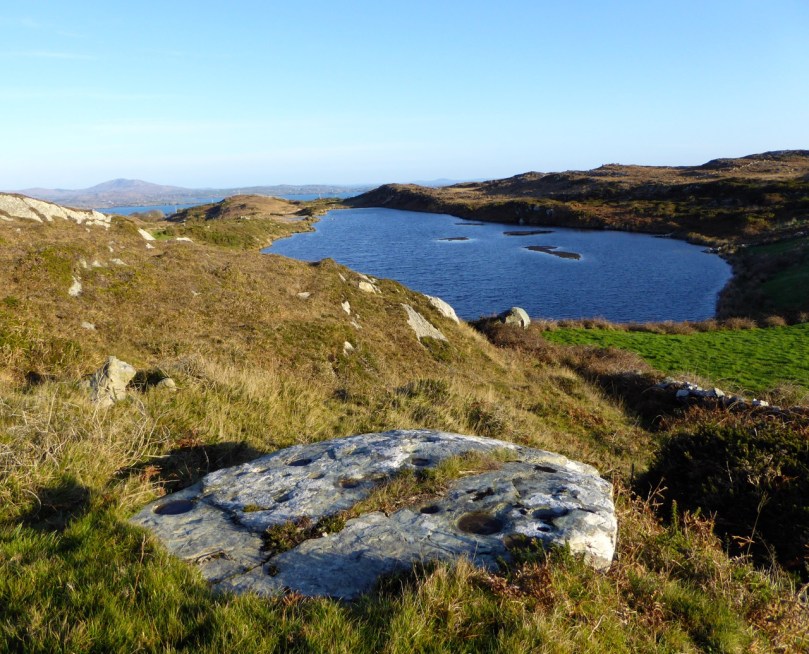
Castlemehigan Rock

Castlemehigan Rock

My write-up and drawing of the time brought back some memories of an unusual rock with very large depressions, almost more basins than cupmarks. I also had a very clear recollection of being taken to the site by Bernard O’Regan, a local (and well-remembered) amateur archaeologist who was very helpful to me at the time. Because the rock was very overgrown, he had arranged to have it cleaned for me and when we arrived there were two men on top of the rock hacking away the gorse and heather. Nowadays, rock art specialists abide by an ethic of zero surface contact – no clearing or scrubbing allowed!
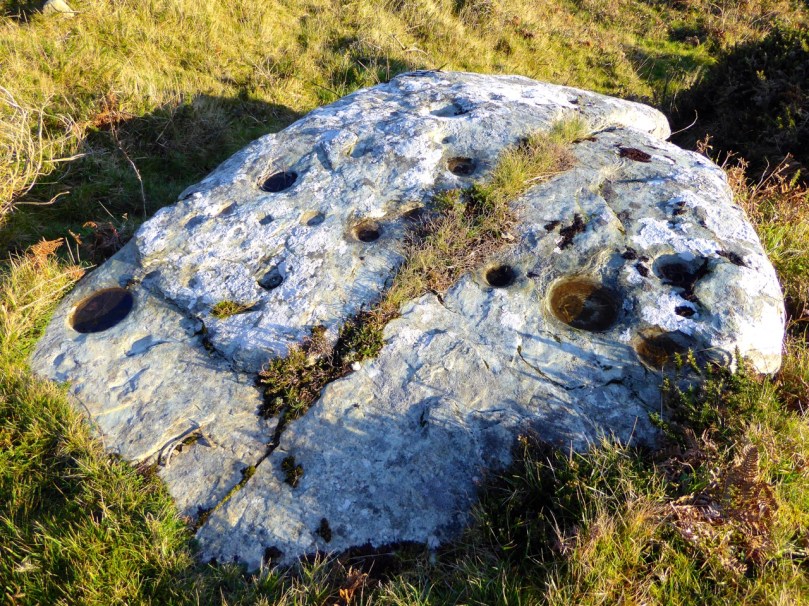
Castlemehigan rock surface

Castlemehigan rock surface

Although this rock lacks any of the circles, grooves and lines that add interest and appeal to many panels of rock art, it is special in other ways. Several of the cupmarks are unusually large, and one is basin-shaped (that is, with straight sides and a flat bottom).

Oriented to Mount Gabriel to the east

Mount Gabriel clearly visible

Some cupmarks appear to run in rows and the rows run in specific directions – one line of cupmarks run directly east/west pointing at the lake that lies about 100 meters away at the bottom of the field. Another line pointed to Mount Gabriel, about 15 kms away on the distant horizon. The two large basin-like depressions are directly north/south of each other.
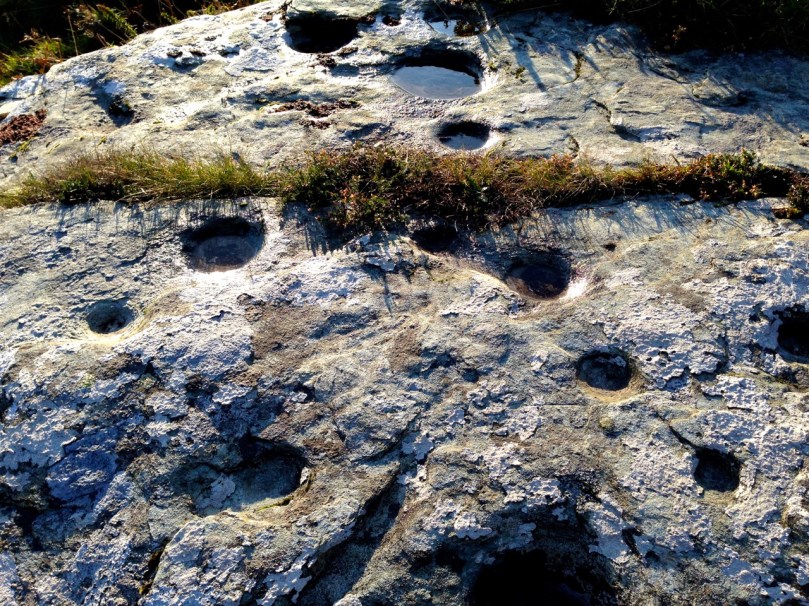
row of cupmarks

Row of cupmarks

What could be a standing stone is located a few metres away.
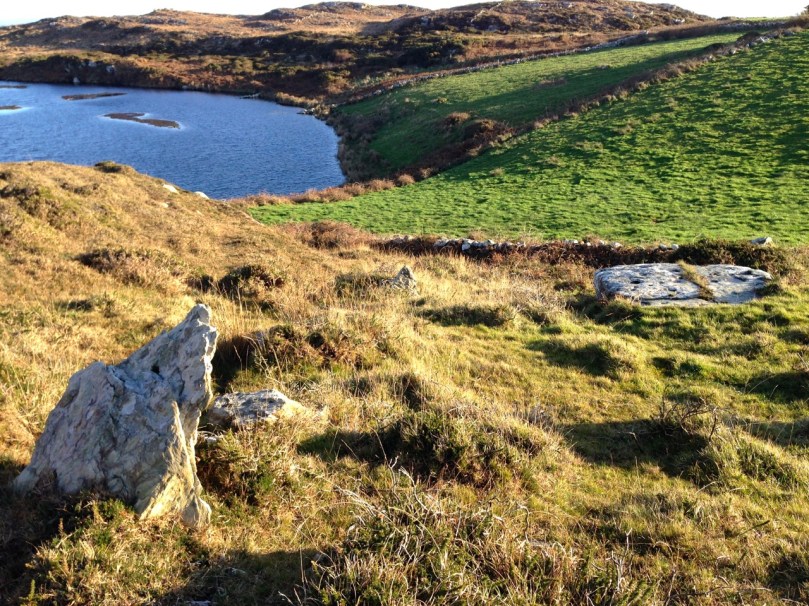
Standing stone?

Standing stone?

In comparing my original drawing, done 42 years ago, there wasn’t much I would change. Some cupmarks appear to have pecked areas between them which conjoin them in a dumb-bell motif. My original decision was that there were two dumb-bells, but perhaps now I would be tempted to say there were three or even four. However, this just illustrates the subjective nature of the recording process. Especially where lichen obscures the surface, decisions like this come down to professional judgement and experience: drawings can differ from one recorder to another, or even from one visit to another when lighting conditions show up more or less of the carving detail.
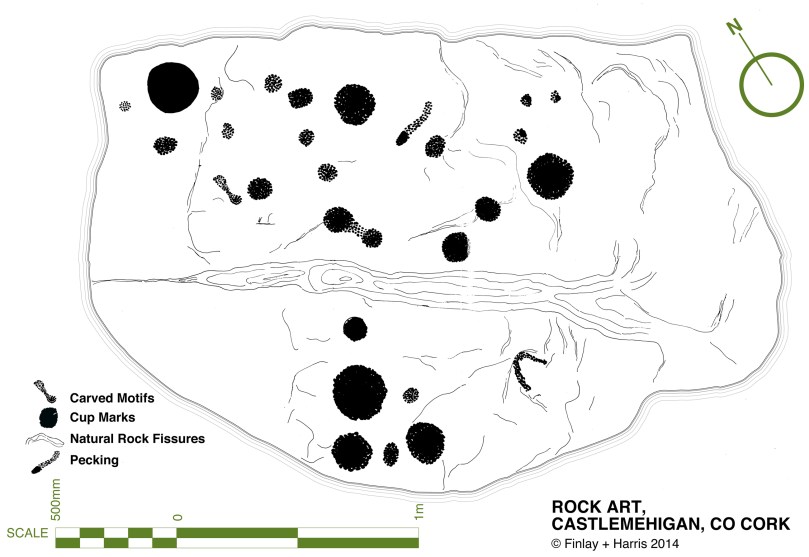
Original drawing, updated by Robert

Original drawing, updated by Robert

Robert

This earthfast boulder is a beautiful object – not least because of its setting. I love these Mizen landscapes – they have a very particular character. Large areas of rock outcrop are interspersed with the tiniest fields, tracks and bog. Here there are lakes close by – once natural features, they have been turned into reservoirs to serve local communities. The marked rock overlooks one of these – this one supplying nearby Goleen.
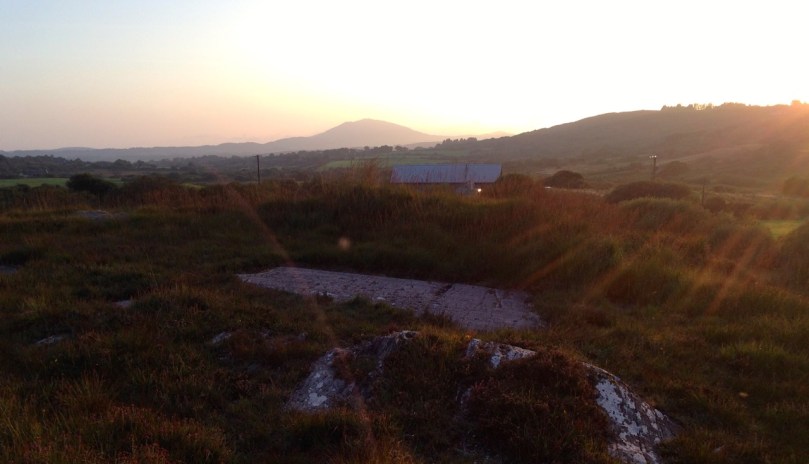
Mount Gabriel clearly visible from the Derreennaclogh stones

Mount Gabriel clearly visible from the Derreennaclogh rock

This example reminds me in some ways of the Derreennaclogh rock – it’s of similar size and shape. Also, at Derreennaclogh Mount Gabriel is prominent on the western horizon, and we’ve been told that the setting sun towards the short end of the year appears to ‘roll’ down the slope of the hill at times. At Castlemehigan the rock also looks out to Mount Gabriel – this time to the east. This is a relatively isolated piece of rock art: the nearest recorded example is at Cooradarrigan, on the far side of Schull. It’s tempting to think that the flat, table-like surfaces of both Derreennaclogh and Castlemehigan were considered significant to those ancient people – who made them notable by marking them – because of their settings which relate to unmistakable landscape features. Otherwise, one might question why large areas of flat rock surface in the immediate vicinities – ideal for carving – have apparently been left untouched.
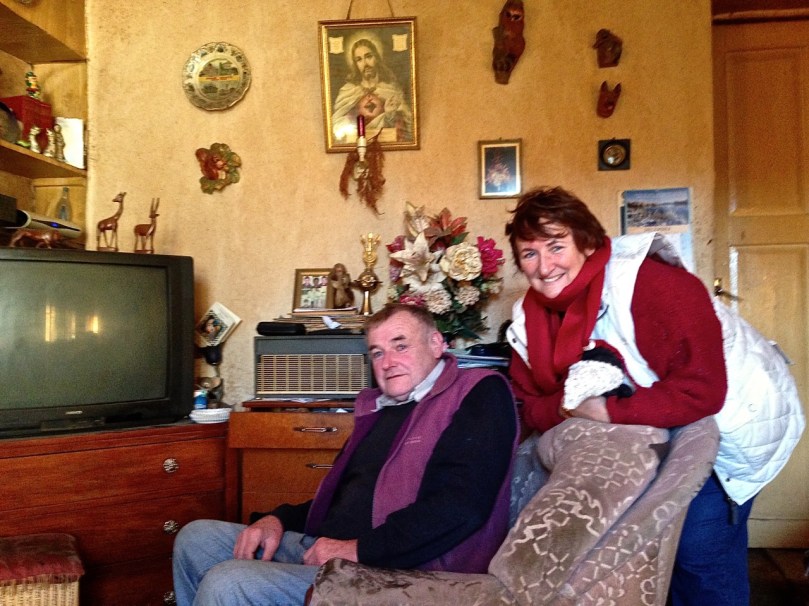
Florence and Finola

Florence and Finola

Florence O’Driscoll, our guide on this expedition, proved to be a fund of information. He had farmed the land which had been his father’s before him. Finola must have met his father when she explored the rocks over forty years ago. Florence carried the stories of the rock from his father’s generation, and probably from generations before that. He told us that the rock had been used as a mass rock in penal times – and that the hill above it was known as Cnocan an Aifreann (the hill of the mass): there is what certainly appears to be a cross carved into the rock surface, close to the large basin (Finola did not record this in her original drawing – she will add it when we update the records). Florence told of the time that the ‘Tans’ (the Black-and-Tans) caught red-handed the Priest celebrating the mass: the Priest threw the crucifix into the lake below the rock (the lake was then smaller than it is now). Ever since then, says Florence, the lake has never run dry – and never will.

Look for the possible cross carving on the right

Look for the possible cross carving on the right

It’s interesting that stories carried through local tradition pay no heed to time or history. They don’t need to: the ‘story’ is a part of the rock, as much as the carvings are. Florence told the tales as if they had happened yesterday. I hope they will continue to be told as long as the rock continues to display its enigmas.
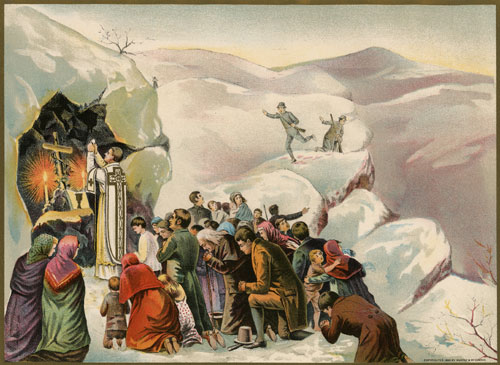
Mass in penal times (Maggie Land Blanck Collection)
Mass in penal times (Maggie Land Blanck Collection)

Footsteps

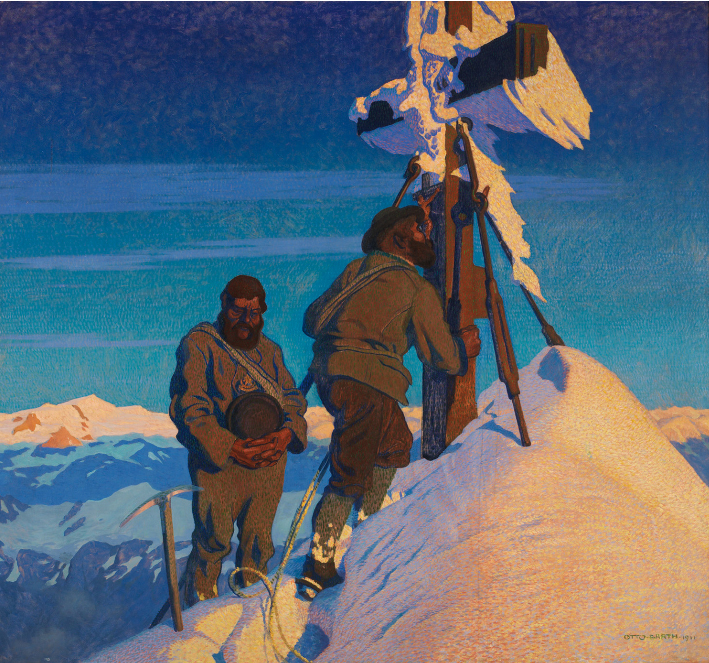
Morning prayers on the Großglockner, Otto Barth 1911

Morning prayers on the Großglockner, Otto Barth 1911

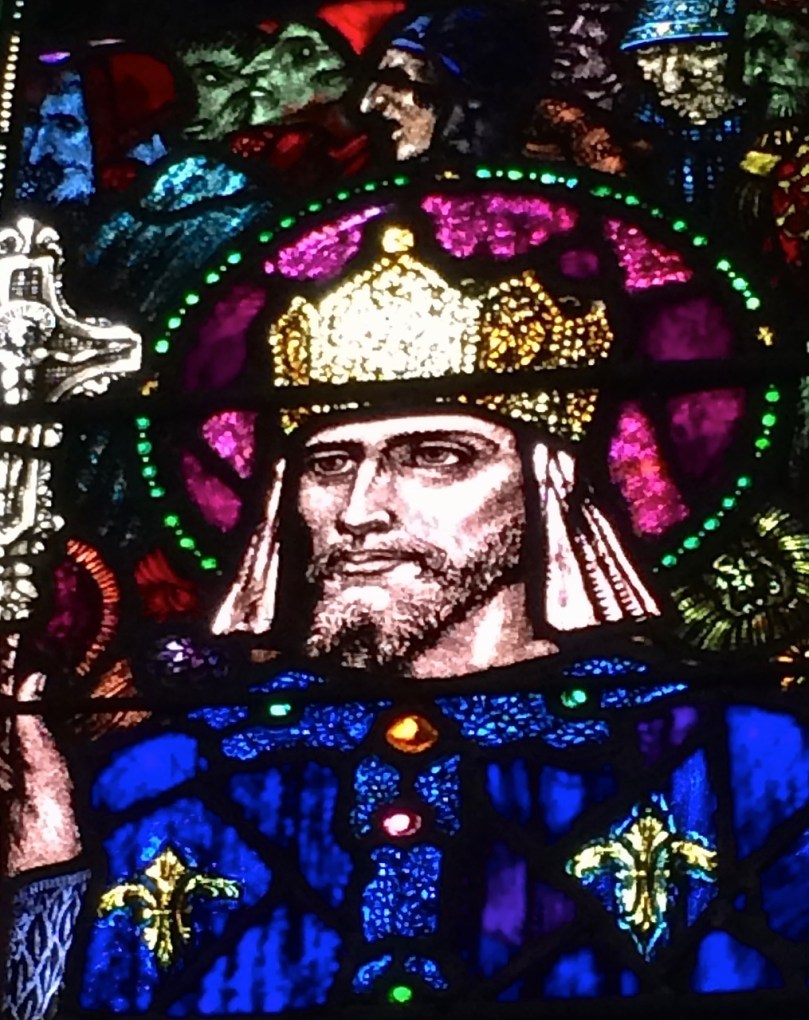
Is it us? We seem to be following in the footsteps of thieves and wreckers… Back in June 2012 we visited St Manchan’s Church, in Boher, Offaly and saw the splendid shrine of that Saint securely locked in an armoured glass case and mounted in front of the equally magnificent Harry Clarke window depicting him. That was at about 1 o’clock in the afternoon. We were shocked to hear on the news that evening that the shrine had been stolen at 1.30! Two men had taken just a few minutes to break open the case – in spite of alarms and cctv – and make off with the Saint’s remains…

We were relieved to hear the following day that the robbery had been bungled: the shrine was thrown out of the getaway car and landed in a bog: both it and the perpetrators were picked up by the Gardi. I wonder if perhaps the thought of what divine justice might be wrought from on high (from St Manchan himself, even) had put doubts into the minds of the thieves and diverted them from their intentions – whatever they might have been.

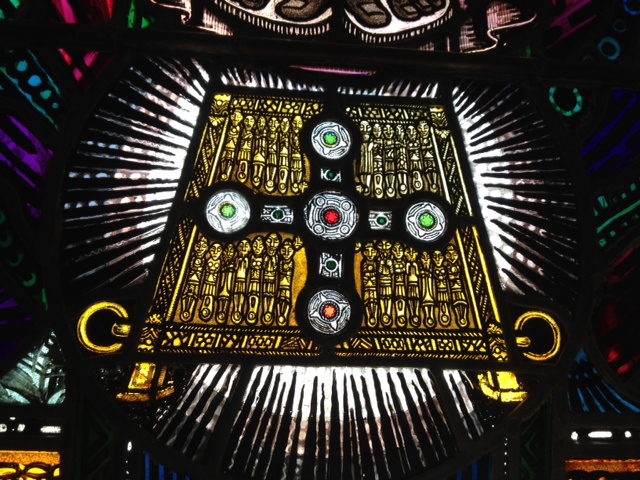
Harry Clarke's depiction of the Saint's shrine

Harry Clarke’s depiction of the Saint’s shrine

Nevertheless, the incident led to some considerable debate on whether the reliquary should be returned to the church – where the security was evidently lacking – or whether the original 1,000 year old artefact should be put into Ireland’s National Museum and the replica which happens to be there should be sent back to St Manchan’s. The Boher people campaigned vigorously against this – quite rightly in my opinion – and eventually, after some improvements to the arrangements in the church, the shrine has been restored to where it belongs.

winter

Carrauntoohil Summit – photo by Noel Mulcair: thejournal.ie

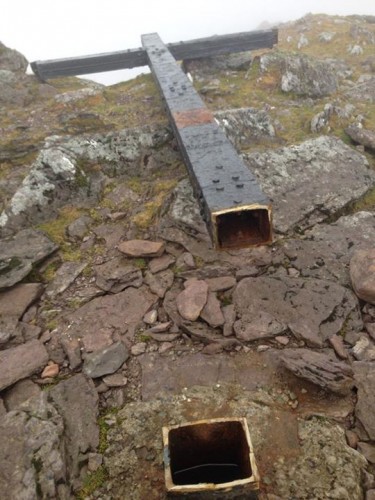
So there we were just a week or two ago, honeymooning in the shadow of Ireland’s highest mountain (although warmly ensconsed in a comfortable Kerry hotel) when we heard the news that, not far away, someone had climbed the mountain at night and felled the iron cross that had stood up there for many years, with an angle-grinder! Obviously some point was being made, although nobody was quite sure what that was at the time…

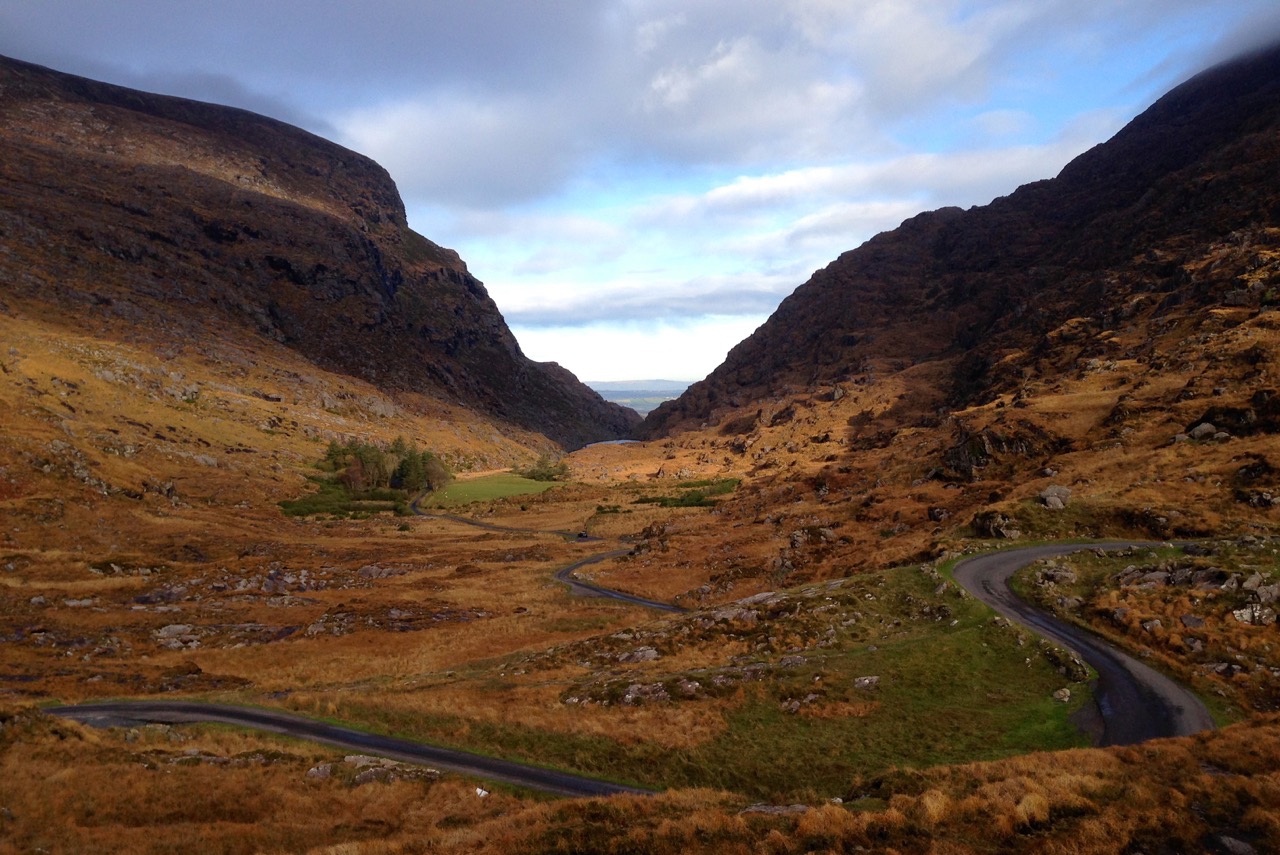
The Mountains of Kerry

Gap of Dunloe, in the shadow of Carrauntoohil


The cross is felled...

The cross is felled…

The Carrauntoohil incident sparked off a lively correspondence in The Irish Times. Many were indignant at the act of vandalism, while others took the view that there is no reason why wild places should be ‘sullied’ with religious symbols. Hmmmm… that’s a bit harsh, perhaps: crosses on mountain tops have a been around for a long time all over the world and, ever since prehistory, humans have marked their presence on the landscape with monuments of one sort or another. As you all know, the two of us are fascinated (obsessed might be a more appropriate word) by megaliths, tombs, circles and inscribed rocks – and these are preserved archaeological artefacts – it would be unthinkable for someone to get it into their head that a standing stone should be destroyed because it might have represented someone’s god. At the very least, surely, the subject should be aired and a democratic decision made by a public majority before any such action is taken. Indeed, the subject did get aired after the event and I gleaned that the majority of respondents felt that the iconic cross should not have come down.

Well, this story – like the St Manchan one, has had a happy ending. A group of volunteers has been up to the summit with block, tackle and welding equipment and the cross is back again.

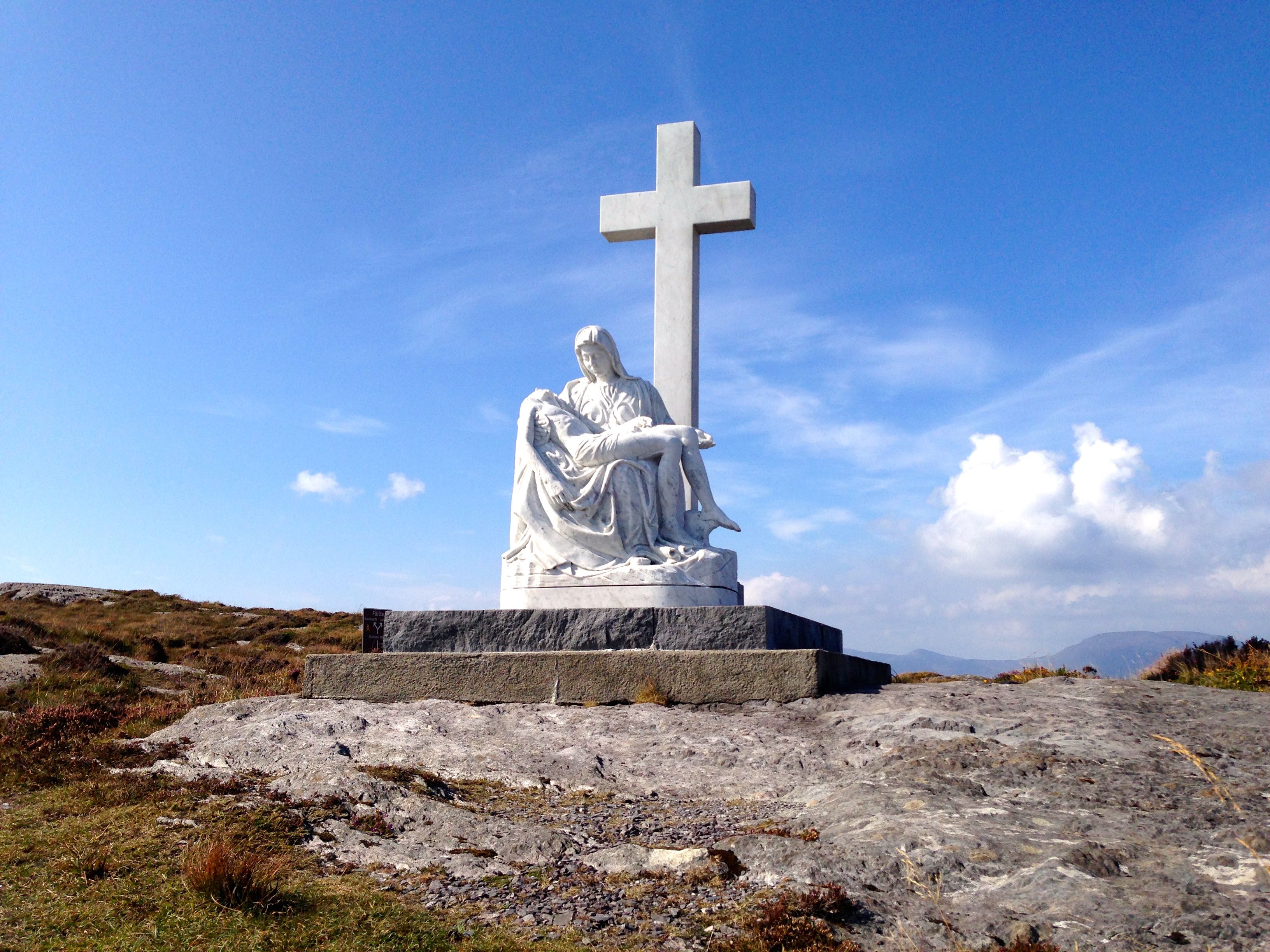
Ireland has many summits adorned with constructed pieces – ancient cairns and tombs, and more modern statues and symbols, not forgetting the wind farms which are another source of controversy. We are all part of human history and one of Ireland’s big attractions for me is that the history is so visible and accessible. In 1968 a white marble Pieta was placed high up on the Goat’s Path in Glanalin townland. It’s someone’s personal monument to a much loved father. In my opinion the melancholy statue enhances the wild place: I make a bee-line for it whenever I’m in the area – partly to enjoy the magnificent view but also, I have to say, because I am fascinated to see how many coins and offerings are put into the outstretched palm of Mary. Look here for a fuller description on the excellent website Sheep’s Head Places.

Hilltop Pieta

Hilltop Pieta

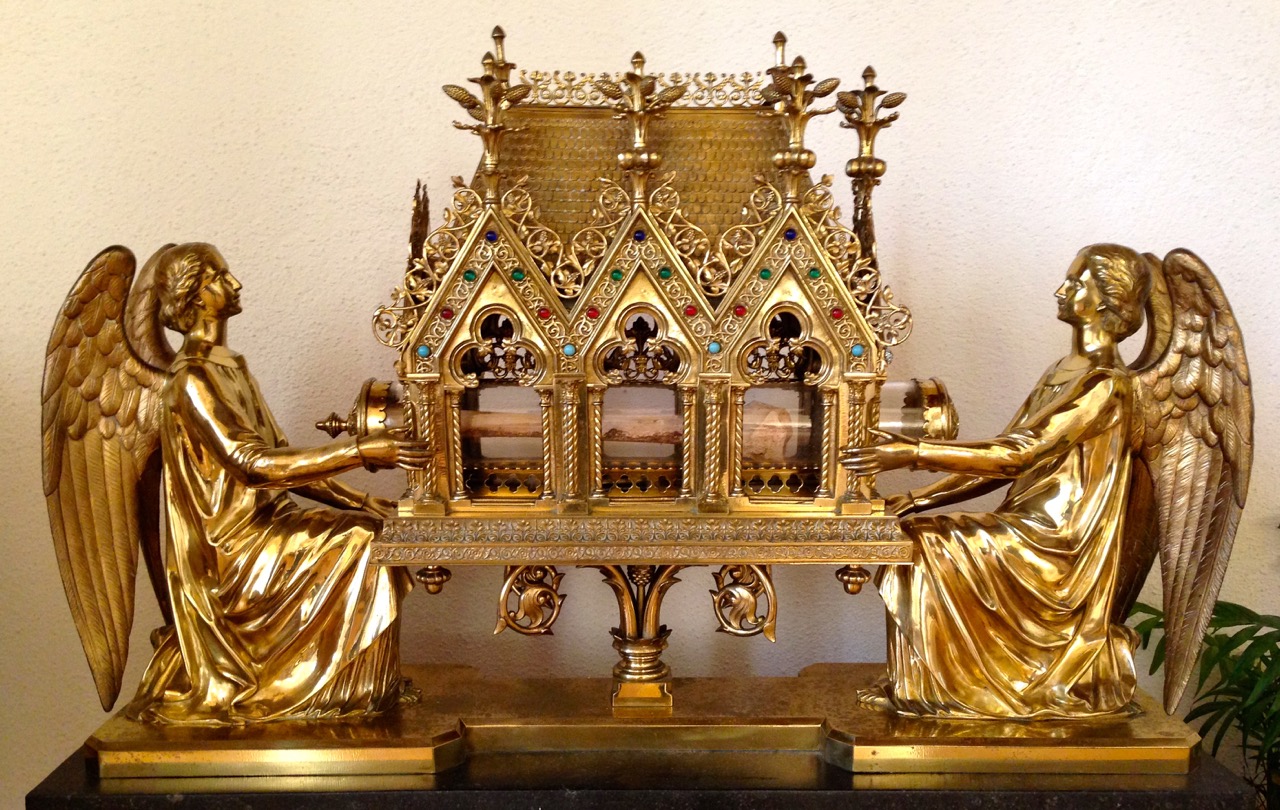
Given our experiences to date I worried a bit about our visits to Holy Cross Abbey and the Cathedral of St Mary and St Anne in Cork, where we came across the shin bone of Blessed Thaddeus McCarthy. But it seems to be ok: fair enough, the fragment of the True Cross was stolen from Holy Cross (it’s now been replaced with another), but long before our visit, while the saintly shin bone seems to have survived unscathed so far. I can’t help looking over my shoulder, though, when we visit such places. Ireland is full of enigmas…

thaddeus

Sacred shin bone – with Angelic guardians

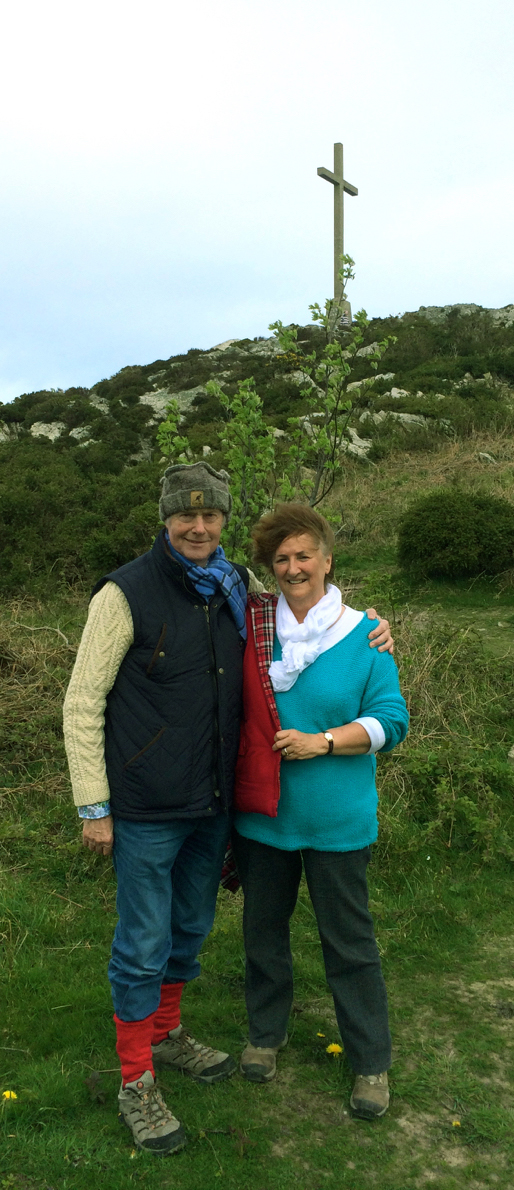
Finola's childhood haunts: the cross on Bray Head, Wicklow

Finola’s childhood haunts: the cross on Bray Head, Wicklow

Three Pilgrims in West Cork

Glebe Church, on the Ilen River

Glebe Church, on the Ilen River

The guest speaker at this Thursday’s Skibbereen Historical Society meeting was Louise Nugent, speaking on the topic of Pilgrimage in Medieval Ireland. We became familiar with Louise’s work though her blog of the same title – a blog which manages to be consistently erudite and down-to-earth and entertaining all at once – and suggested her as a speaker. This also gave us the opportunity to meet Louise in person (she is as engaging and as knowledgeable as her blog) and, the next day, show her a little bit of our part of West Cork.

One of the great delights of following Louise’s blog is realising that the concept of pilgrimage – a spiritual journey undertaken for a variety of purposes – is still very much alive in Ireland. Local veneration of shrines, relics and holy wells is common and often involves a mass or prayers on special days. The “journey” involves going to the shrine, and sometimes moving around it in a set pattern or round. Larger scale pilgrimages, such as the annual trek up Croagh Patrick or a stay at Lough Derg in Donegal or a Novena at Holy Cross Abbey, transcend the local and attract pilgrims from around Ireland. In her talk, Louise also described the popularity of pilgrimage in Medieval times to holy sites outside Ireland such as York, Santiago de Compostela, Rome, or Jerusalem. Those who completed the Santiago Camino wore scallop shells to signify their pilgrim status, an image we had just seen the previous weekend in Cork in the Cathedral of St Mary and St Anne, where we came across a shrine to Blessed Thaddeus McCarthy. There was a statue, a painting, scrolls, but most fascinating of all a reliquary containing a leg bone! Blessed Thaddeus lived in the 15th Century and was appointed a bishop twice but was never able to take up his see because of the activities of the rival clan O’Driscoll.

On our day with Louise we concentrated on the area around Skibbereen. We started off by visiting the 18th Century Church at Glebe, on the banks of the River Ilen. The church and graveyard enjoy a picturesque and peaceful setting and a wander around the graveyard yielded interesting headstones.

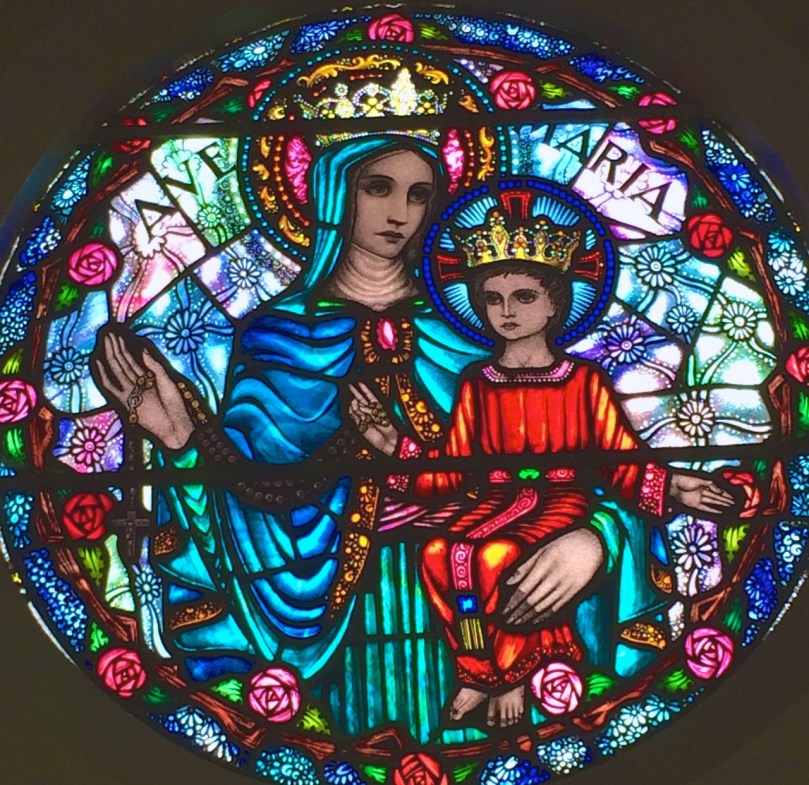
Holy Rosary Church at Aughadown, window detail

Holy Rosary Church at Aughadown, window detail

From there we went to the ruined medieval church at Kilcoe, stopping for a quick peak at the notable windows in the Church of the Most Holy Rosary at Aughadown. They deserve a fuller description at a future date, so for now I will include a detail from the rose window at the back of the church, designed and executed by the Harry Clarke studios in 1941.

The church at the tip of the Kilcoe Peninsula was already a ruin in the early 17th century. Although a simple rectangular structure, the pointed arched doorway and the tiny ogival windows mark it as medieval, perhaps as early as 14th or 15th century. Romantic and atmospheric as it is, it has the added advantage of a clear view of Kilcoe Castle, famously restored by Jeremy Irons and gently glowing in the afternoon light as we were there.

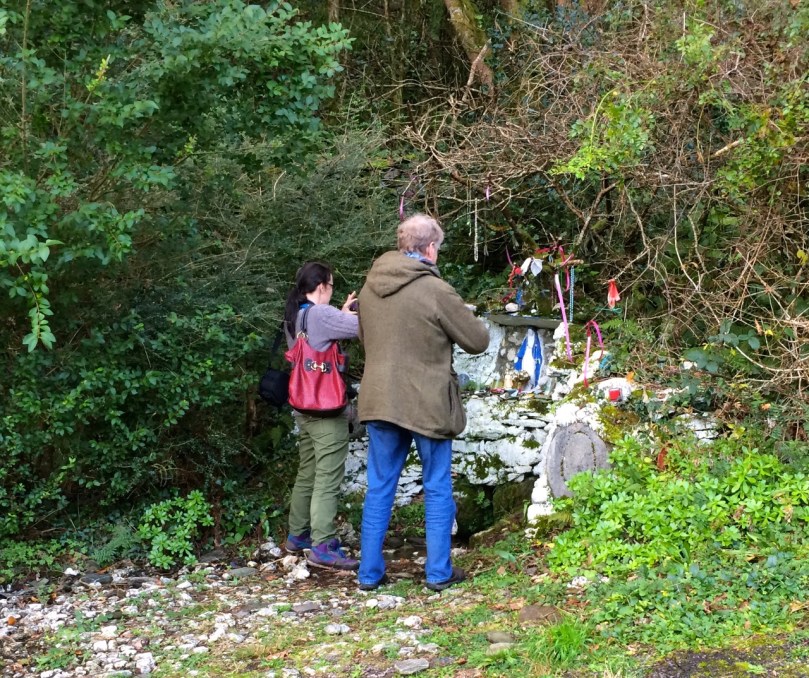
Two of the three pilgrims at a holy well

Two of the three pilgrims at a holy well

Louise’s special interest is in holy wells and several audience members the night before had come forward with information about local wells and the practices and beliefs associated with them. Two of the best known and most beloved local wells are situated close to each other at Lough Hyne. Robert is writing about these wells this week so I will leave the detailed description to him.

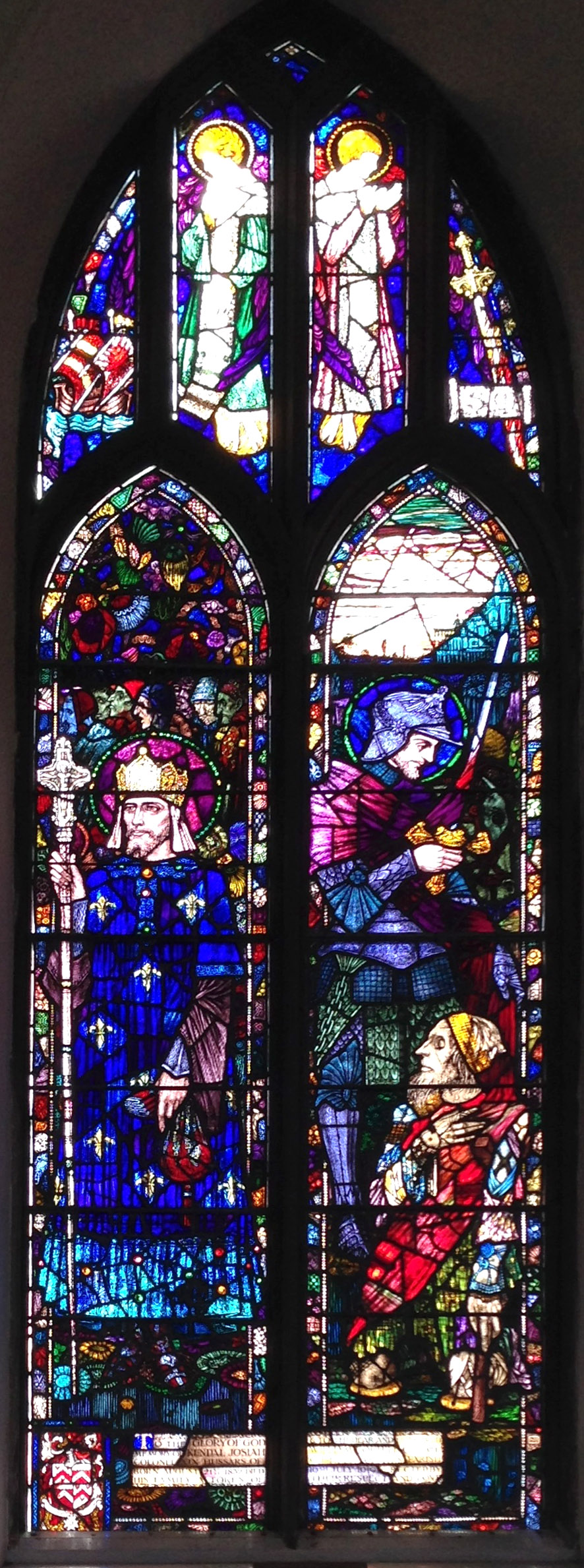
Our final stop was the village of Castletownshend and the Church of St Barrahane, filling two different functions. First, Louise had been to visit a holy well dedicated to St. Martin of Tours in Clare, and we wanted to show her the Harry Clarke window that Robert had described in his Martinmas post. Second, a trip to St Barrahane’s is always a pilgrimage of a different sort for me, as it is the final resting place of three of my heroes. The first two, of course, are the writing team of Somerville and Ross – more about them in this post. The third is Vice-Admiral Boyle Somerville, brother of Edith and a keen amateur archaeologist worthy of a post to himself in the future.

St Louis: detail of Harry Clarke window in St Barrahanes, Castletownshend

St Louis: detail of Harry Clarke window in St Barrahanes, Castletownshend

Come back soon, Louise – these two pilgrims have lots more to show you!

Martinmas

St Martin's Summer: late November on the Sheep's Head

St Martin’s Summer: late November on the Sheep’s Head

I’m used to pursuing the lives of the Irish Saints – often obscure, always fascinating – their legends tied up with folk tales and seasonal customs. But here we are, in Ireland, with a strong tradition of celebrating a continental Saint – St Martin of Tours.

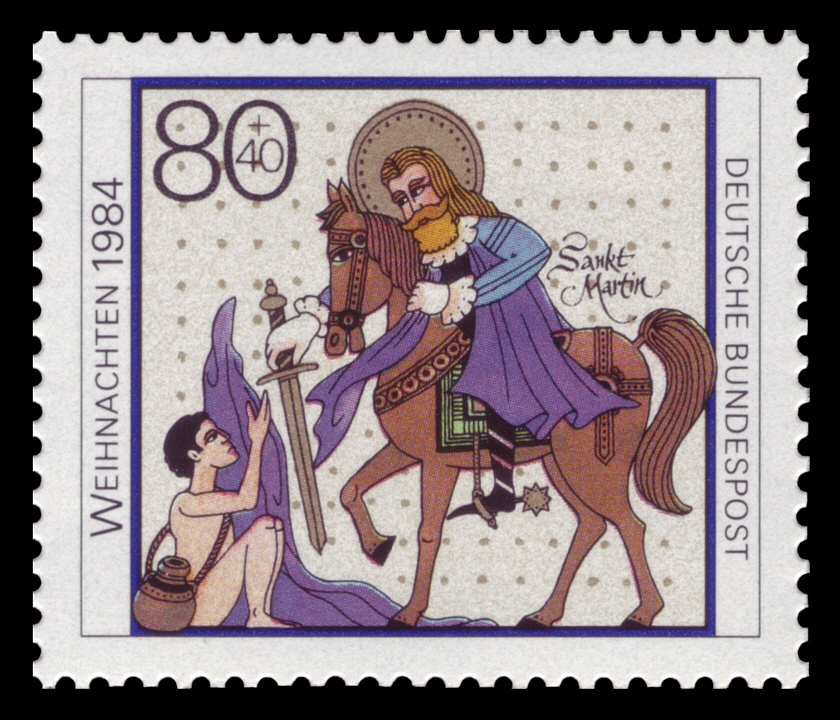
St Martin of Tours adorns a German postage stamp

St Martin of Tours adorns a German postage stamp

St Martin doesn’t appear to have any connection with Ireland at all – yet everyone here seems to know the one element of his story that is always told: in the winter storms he met a naked beggar and cut his own cloak in two, giving half to the beggar. There is a twist to the story – that same night Martin had a dream: he saw Jesus wrapped in the piece of cloak he had given away and Jesus said to him, “Martin has covered me with this garment.” Even though Martin was at that time a soldier in the Roman Army he sought to be baptised and then refused to fight as this was against Christian principles. In fact, he was the first recorded ‘Conscientious Objector’.

Harry Clarke's window in Castletownshend, showing St Martin and the Beggar in the right hand panel

Harry Clarke’s window in Castletownshend, showing St Martin and the Beggar in the right hand panel

St Martin’s Day is on 11 November and the season is known in Ireland as Martinmas. There are customs surrounding this time – still remembered in some rural districts. There is a whole chapter devoted to Martinmas in Kevin Danagher’s book The Year in Ireland (Mercier Press 1972). From this we learn that every family is to kill an animal of some kind “…and sprinkle the threshold with the blood, and do the same in the four corners of the house to exclude every kind of evil spirit from the dwelling where this sacrifice is made…”

In 1828 Amhlaoibh Ó Súilleabháin of Kilkenny recorded in his diary: “…The eleventh day, Tuesday. St Martin’s Day. No miller sets a wheel in motion today; no more than a spinning woman would set a spinning wheel going; nor does the farmer put his plough-team to plough. No work is done in which turning is necessary…” This might be because of a story that Martin was martyred when thrown into a mill stream and killed by the mill wheel. In fact the hagiography states that he died of old age.

Another Irish legend (from Wexford) relates that the fishing fleet was out one St Martin’s Day, when the Saint himself was observed walking on the waves towards the boats. He proceeded to tell them to put into harbour as fast as possible, despite the good weather and fishing conditions. All the fishermen who ignored the Saint’s warning drowned during a freak afternoon storm. Traditionally, Wexford fishermen will not go out to sea on Saint Martin’s Day.

St Martin is the patron saint of Geese. In England there are two ‘Goose Fairs’ held in the autumn, one at Tavistock near my old home on Dartmoor. I have been to that fair: geese and poultry are still in evidence, but I don’t know whether there is any direct link to our Saint. In the not-too-far-away Exeter Cathedral Close there is a Holy Well dedicated to St Martin.

In England and Ireland they call any spell of good weather which occurs after 11th November ‘St Martin’s Summer’. We are having one of those at the moment.

We are also now at the ‘November Dark’ – the days just before a new moon when there is no moon at all visible in the night sky. Traditionally, this was the time to cut willow rods to store for basket making in the spring, as then “…they would have the most bend in them…” (according to Northside of the Mizen).

St Martin's Summer at Rossbrin Cove

St Martin’s Summer at Rossbrin Cove

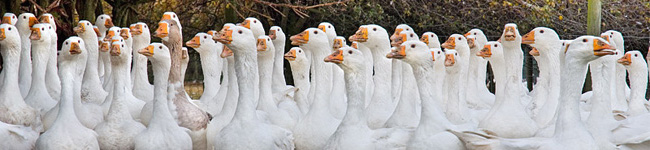
St Martin’s Goose was traditional fare on Martinmas in some cultures, so I’m feeling a little worried about this gaggle…

Goosey Fair, Tavistock, Devon

Goosey Fair, Tavistock, Devon


Shopping for Memories

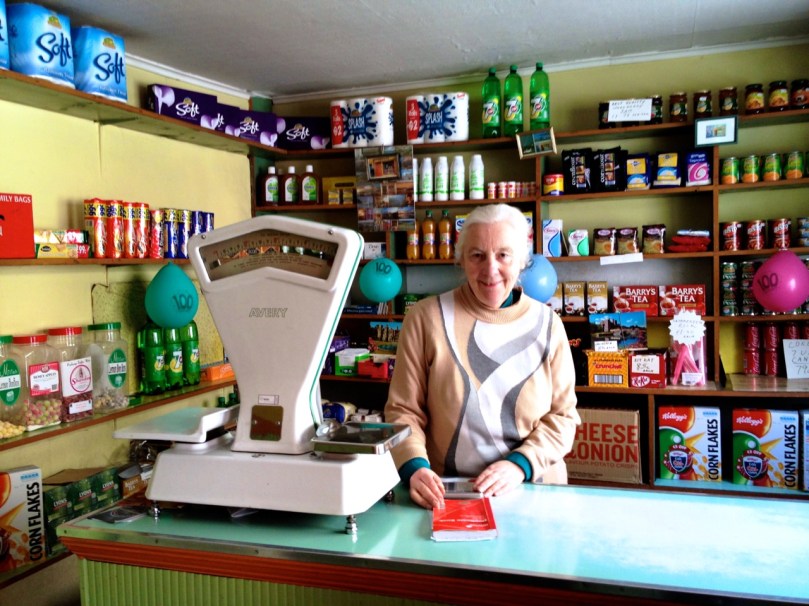
Miss Clerke

In my post Going for the Messages I told you about rediscovering the shops of my childhood here in West Cork. Since then, Miss Clerke’s shop, lightly photoshopped but totally recognisable, graced the front page of the Irish Times Magazine as their illustration for their Ireland’s Best Shops competition. So it’s not just me, then. I’m not the only one with a nostalgia for the old-time shopping experience.

Evans of Bantry

In that spirit, I am revisiting a few of my favourites traditional shops. I have discovered two more shops like Miss Clerkes. First, there’s Evans, In Bantry. Proudly run by Miss Evans, it has the same look and feel of a place unchanged since the 50’s, although perhaps the pinkness of it all might be more modern. It has a lovely atmosphere – when I was in there a couple of kids were trying to decide how to spend their pocket money on sweets from the big glass jars.

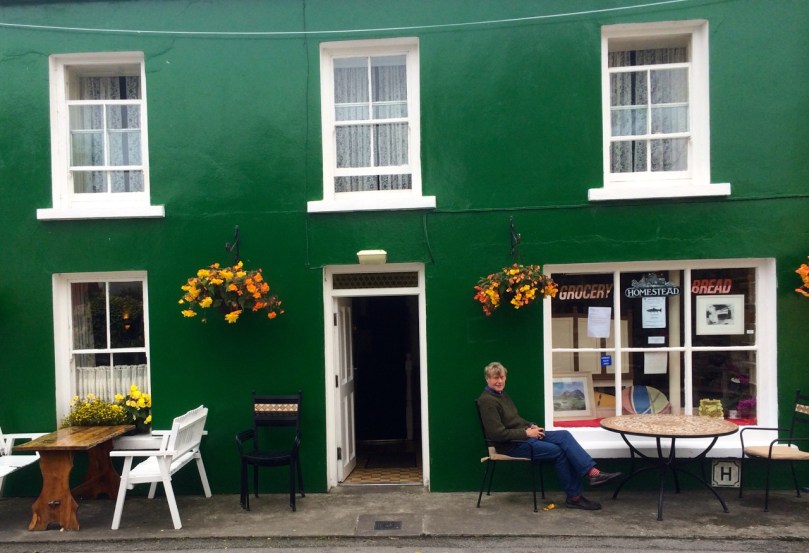
MIss Murphy in her traditional shop

MIss Murphy in her traditional shop, Eyeries


Lunch is served outside

Lunch is served outside

On the Beara Peninsula we stopped for lunch at Miss Murphy’s store in Eyries and chatted with her about my Great Uncle who had married an Eyries woman. Since I couldn’t remember her name Miss Murphy was unable to help, but she tried, and she made us a delicious basket of sandwiches.

Some shops are a little puzzling – for example, P. Cronin Carpenter in Skibbereen. I’ve never seen it open and I’m not sure what it would sell if it did open its doors. The photo of the interior was taken through the window.

In Bantry one of the Undertaking establishments has a shop. At first I found this idea a little startling, but it makes a lot of sense once you come to appreciate Irish graveyard traditions, including how often people visit graves and leave tokens at them.

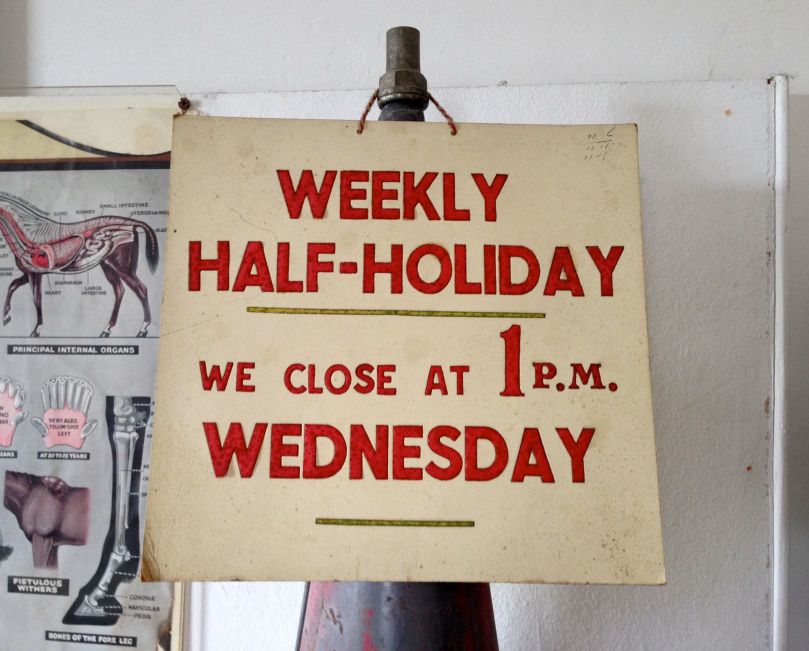
half holiday

Shops in Irish country towns follow traditional opening hours. They invariably close for lunch (1PM to 2PM) and generally follow a five-day-a-week opening schedule. This can mean they are closed, besides on Sundays, on Mondays – but other days are possibilities too. None nowadays follows the old tradition of the half day. Remember that? 

messenger bike

And remember how the groceries would be delivered – by a young lad on a messenger boy bike? You can still get delivery but now the messages come in a van.

Levis's Pub in Ballydehob: the traditional grocery section is still intact

Levis’s Pub in Ballydehob: the traditional grocery section is still intact

Of course, one of the traditions we remember about country towns was that of pubs also selling groceries or dry goods – whatever people needed. You went in for a pair of wellies and a dozen eggs, and took your ease with a pint on the bar stool, or a whiskey in the snug, before you left. Levis’s Corner House in Ballydehob has preserved the grocery counter. You can hear Joseph talking about it, and about the great history of this historic pub in the excellent radio documentary “Keeping the Door Open.” It’s about far more than just this one pub – it’s about a whole way of life in rural Ireland. A way of life that still lingers in West Cork…so far.

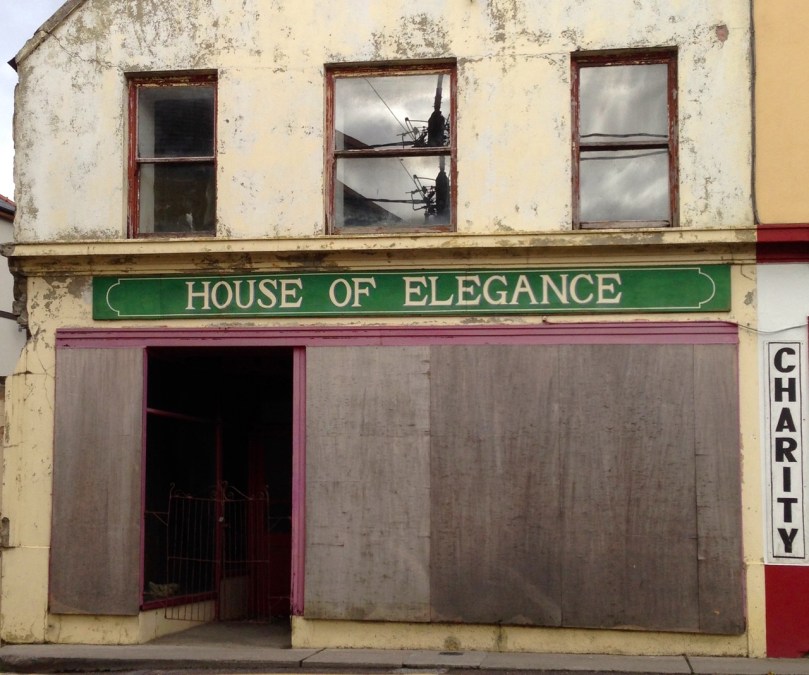
elegance

Snap-Apple Night

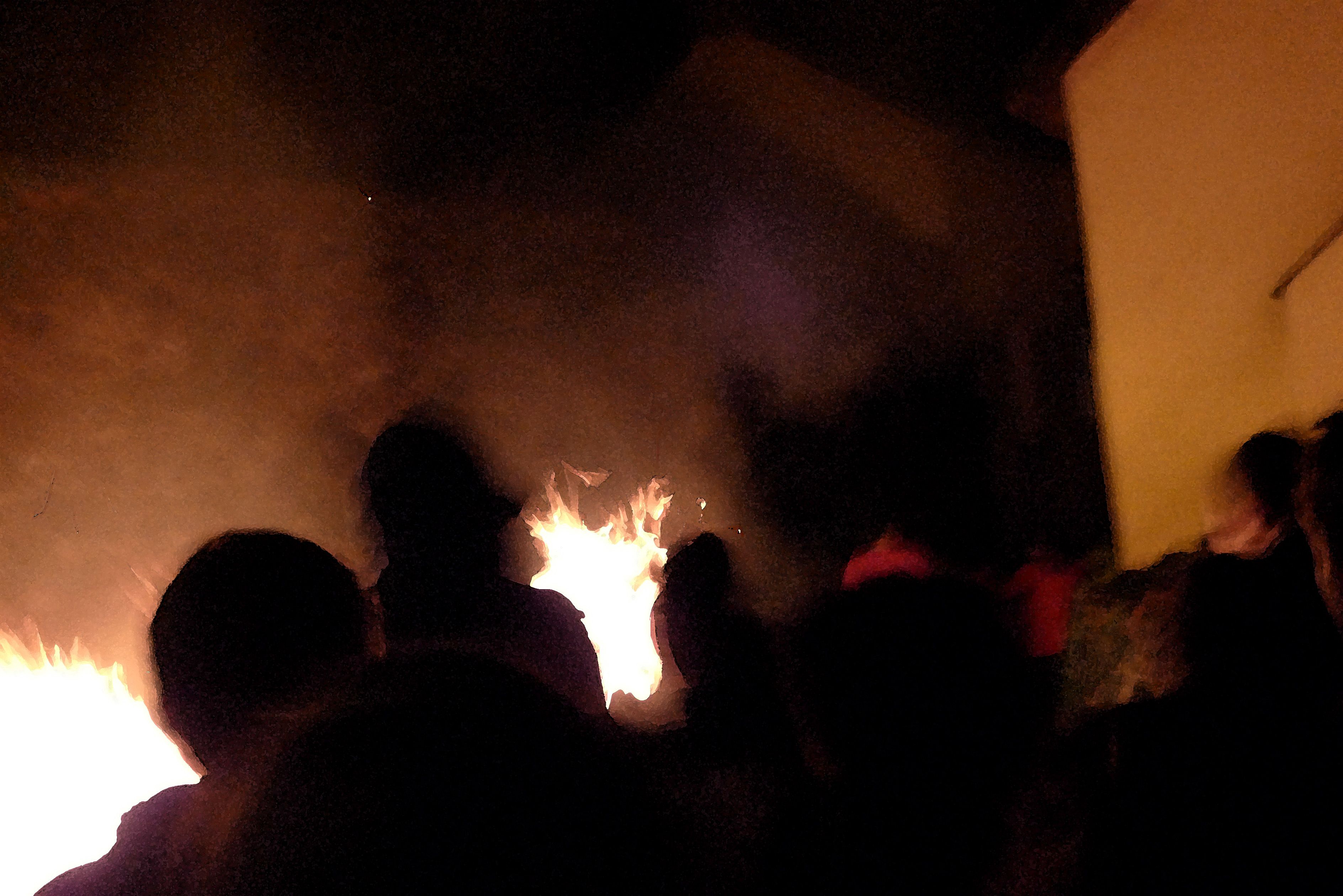
November - a time for Fire Festivals

November – a time for Fire Festivals

Hallowe’en is big in Ireland. It has always been celebrated and is, of course, an opportunity for children in wonderful spooky disguises to go out collecting sweets and treats. But this – the ‘Day of the Dead’, and traditionally the beginning of the winter – has generated far more elaborate customs than any I have encountered before. Have a look at this parade which takes place in Shandon, Co Cork.

The origins of Samhain (Oiche Shamhna in Irish) seem to be an old Irish festival marking the first day of winter and the ending of the farming year. All crops had to be in and safely stored – hay, potatoes, turnips, apples – and cattle and sheep were moved from mountain and moorland pastures and brought closer to the farmstead; milking cows were brought inside for the winter and feeding with stored fodder began. Turf and wood for the winter fires must have been gathered and dried. If fires were lit year-round – for cooking – they had to be allowed to go out for the one night and were then lighted again in the morning: this custom still survives in some Irish households.

Fire is an essential element in the festival. The word ‘bonfire’ is supposed to be derived from ‘bone fire’ – the burning of the bones of the animals slaughtered before the onset of winter once the meat had been prepared and preserved to keep the larder full through the cold bleak months to come. It’s no coincidence that in England bonfires are lit in early November to ‘remember’ Guy Fawkes and his plot to blow up the House of Lords in 1605: this was just a continuation of fire festivals that already happened then – and are still happening now. When I lived in Devon I came across (and took part in) traditions of pulling burning barrels through the streets (Hatherleigh) or carrying burning barrels through crowds of spectators (Ottery St Mary). West Country carnivals were common at this time of the year, and many were accompanied by flaming torches and fireworks. It has always seemed necessary to ‘lighten’ and warm the darkening year with fire.

Tar Barrels in Hatherleigh, Devon, 2012

Tar Barrels in Hatherleigh, Devon, 2012

November, from Northside of the Mizen by Patrick McCarthy and Richard Hawkes 1999:

‘…The Month opened with Snap-Apple Night and tales of púcas and little folk. From the rising of the moon on November Dark the mackerel would make their way to deeper water; it was the end of the seine season. With the crops all in and hill grazing finished, fires were set on the hills and preparations made for the winter. There was little employment for the months ahead…’

Snap-Apple Night by Irish painter Daniel Maclise, 1833

Snap-Apple Night by Irish painter Daniel Maclise, 1833

Continuing tradition - a modern Snap-Apple, by Coca Cola

Continuing tradition – a modern Snap-Apple, by Coca Cola

‘…The first game of the night was always ‘Snap-apple’ when an apple was hung from a beam in the kitchen and all the children took turns to ‘snap’ the apple. Sometimes the apples were put in a half barrel of water and you had to take one out with just your teeth, with your hands behind your back…’

Two Hallowe’en tales from Northside of the Mizen:

…One fine Halloween, Neddy Hodnett (Gurthdove) was crossing the land on the way back from scoriachting (visiting friends and neighbours), when he came across a Narry the Bog (a heron) at Hodnett’s Sleabh. He caught it and put it under his coat. Neddy knew that Dan Thade Coughlan was out scoriachting and he also knew what route across the fields Dan would take, so he hid in a beillic. It wasn’t long before Dan came from the east, and as he passed the beillic, Neddy knocked a screech out of the Narry. Dan leapt out of his skin with fright and with a roar he leapt over the ditch and away out of sight. Dan didn’t take long to arrive home and he told everyone he had met the devil himself, coming agin him! Dan did not leave the house, day or night, for a week…

The Púca of Knocnaphuca  …The old people would feed the Púca of Knocnaphuca on ‘Snap-apple Night’, or indeed, whenever one had a call to travel up the hill. It was the wise person that fed the Púca the night before going up. Milk and cake would be put on a plate and left outside the house and by the next morning the food had always gone!

The Púca of Knocnaphuca was half horse and half human. One late Snap-apple night there was a young lad out walking the road when he heard a strange, sweet music coming from the hill. He went up and saw the Púca playing on a whistle. As soon as the lad had put eyes on it, it stopped playing and caught him. Away the Púca went to the top of the hill, where a crack opened up in the rock. In they went. They went twisting and turning down through tunnels until the entered a chamber full of gold. “Now,” said the Púca, “you are mine!”…

The next morning the boy was found on the road by the Long Bog. His hair had turned white and he could not speak a word ever after…

I like Finola’s tradition for Samhain: making (and tasting) a Hallowe’en barm brack… Delicious!
barm brack