Mizen Magic 14: Lissagriffin

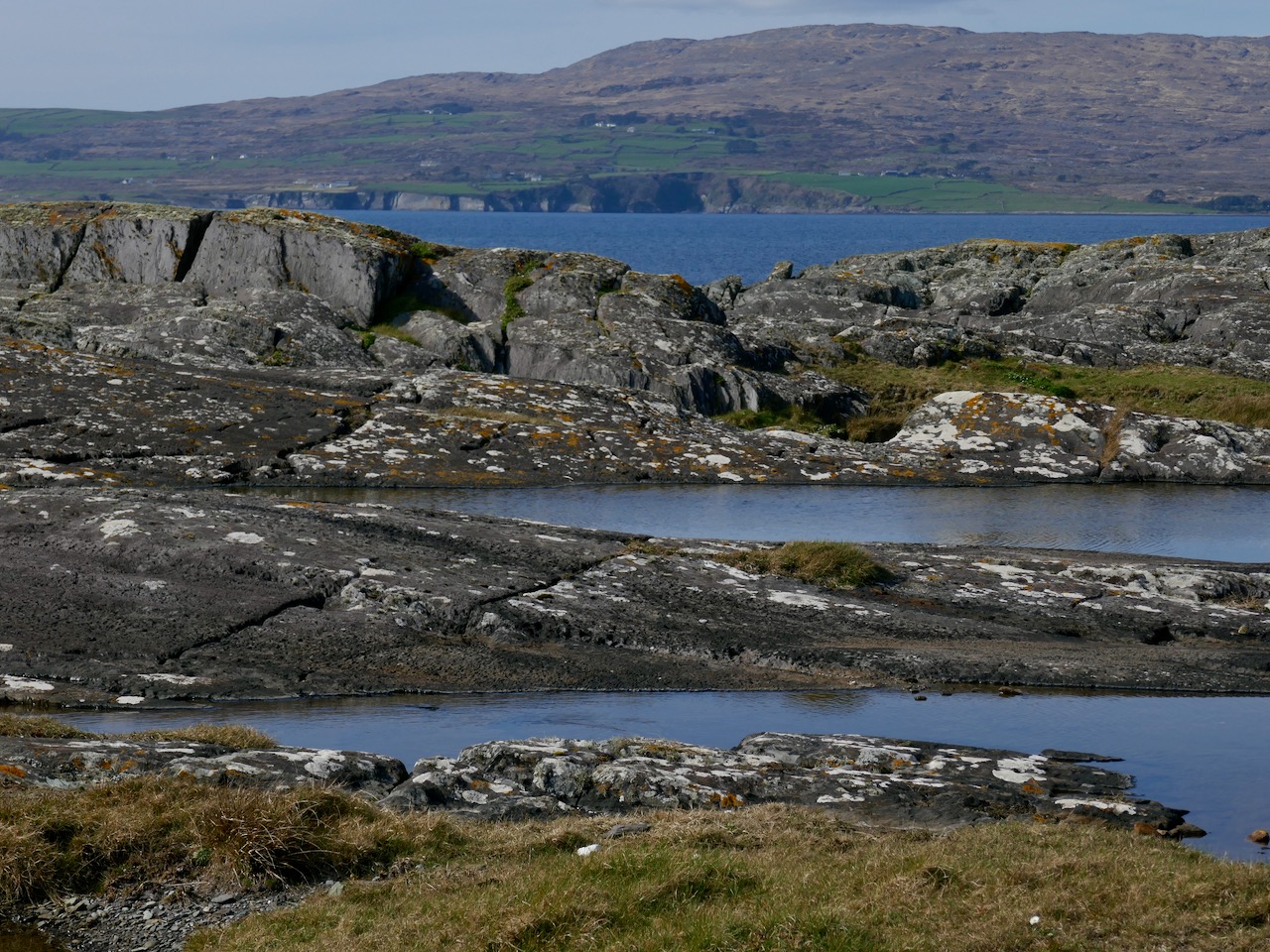
Lissagriffin (the fort of Griffin) lies on the south-facing slope on the northern side of the salt marshes behind Barley Cove. It is a sunny spot with panoramic views back to the hills beyond Goleen and across the salt marshes below to the dunes of Barley Cove and the sea beyond.
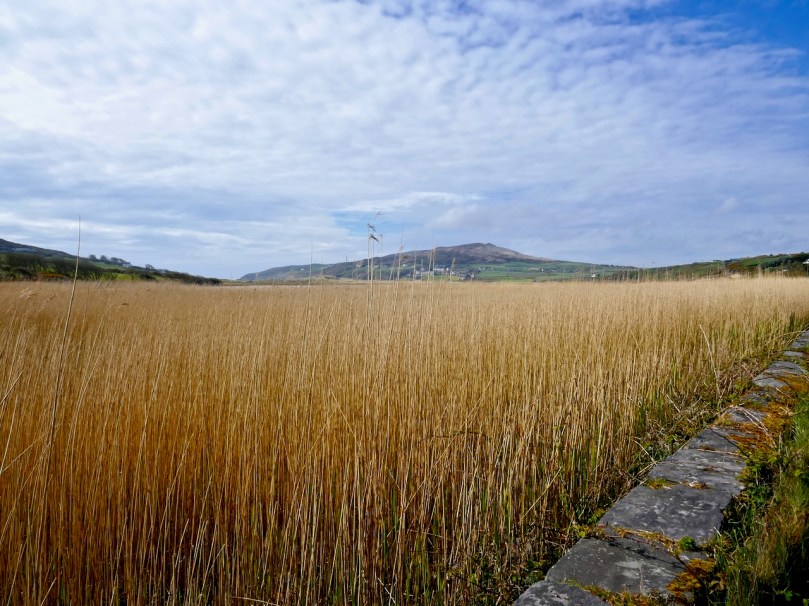
The Barley Cove salt marshes – sit on the wall and just listen to the breeze in the reeds

Nowadays, it’s a peaceful place of farms and pasture land, but there are clues in the landscape and the old maps and records that there was much more going on here in times past.
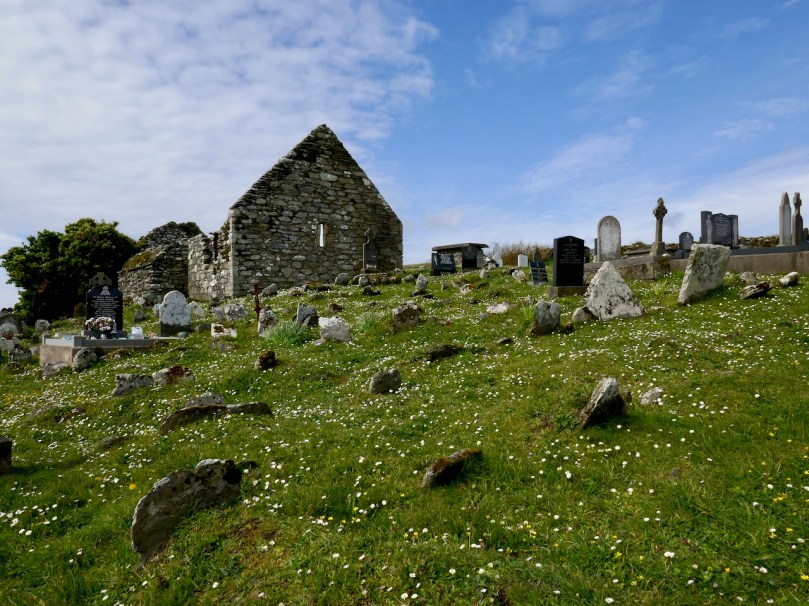
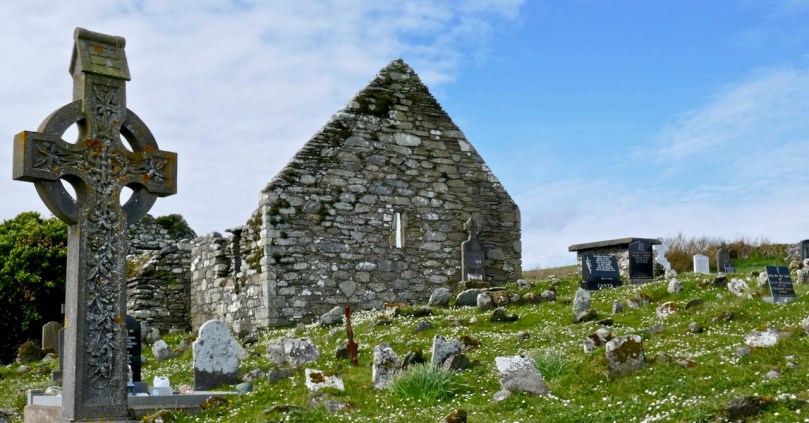
The most visible reminder is the ruined church, surrounded by a graveyard. Once, these lands were in the possession of the Rev Fisher  – remember him from my Saints and Soupers saga? They were associated with the Glebe Lands accruing to the Church of Ireland, which means that the rector was also the administrator of the graveyard, to whom you had to apply for permission for burial. The church and graveyard is known as Kilmoe (pronounced kill moo, meaning the the church of Muadh, although I haven’t been able to identify this saint), like the parish of the same name which occupies most of the Mizen west of Schull.
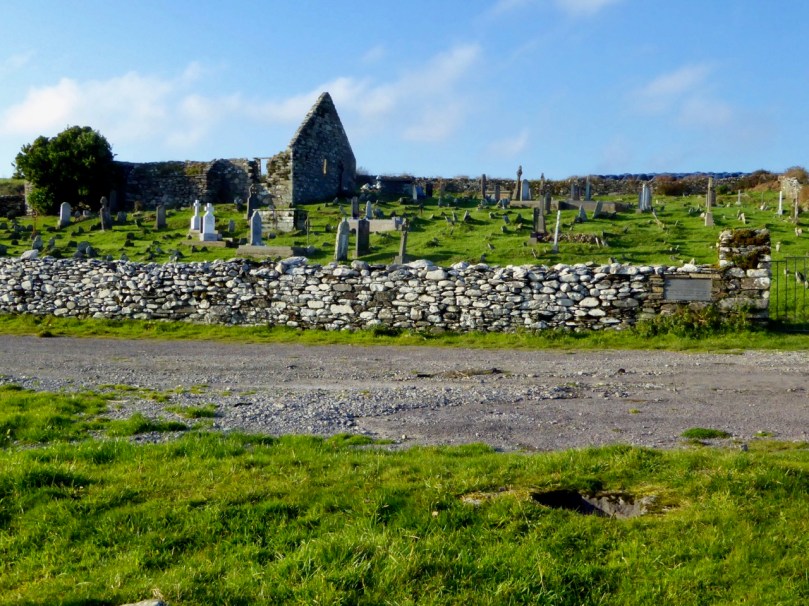
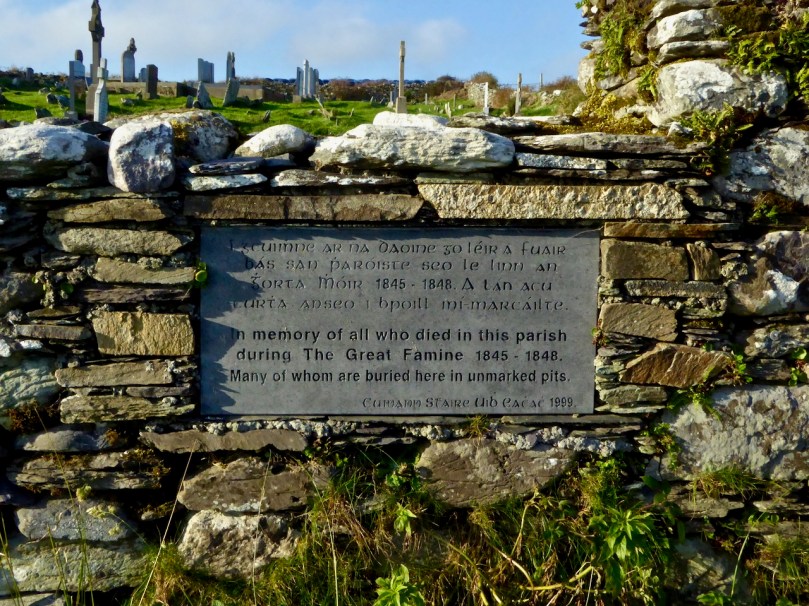
The graveyard has headstones going back to the 1700s, although I couldn’t find any from that era on my searches. All the local names are represented here, including the Burchills and the Wilkinsons of my Cousins Find Each Other post. It was in use as a burial plot during the Famine – a memorial plaque on the wall attests to this.
A feature of graveyards from this time was a watch-house, a reminder that bodysnatching was a lucrative trade. During the famine watch-houses also enabled people to be on the look out for dogs – there are accounts of dogs attempting to get at bodies barely covered by soil during this terrible time. There’s a ruined structure just inside the gate at Kilmoe (below), probably a watch-house from this time.
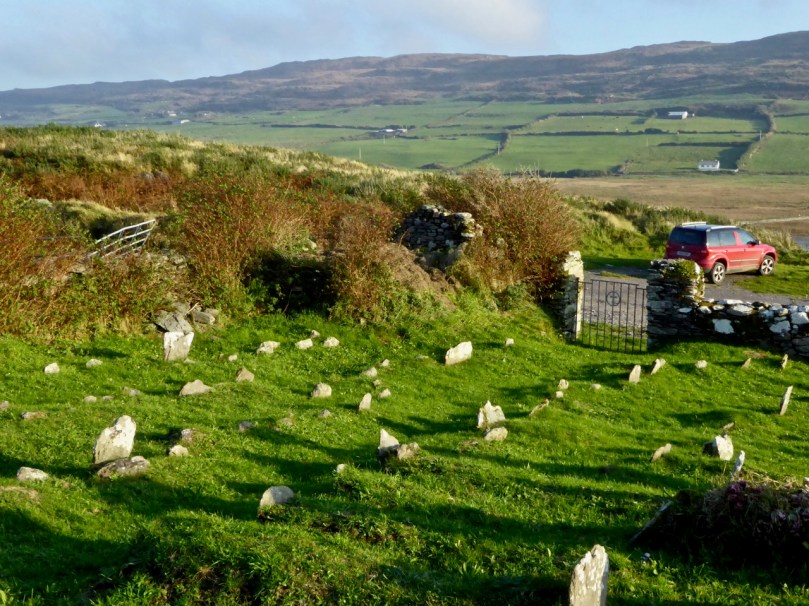
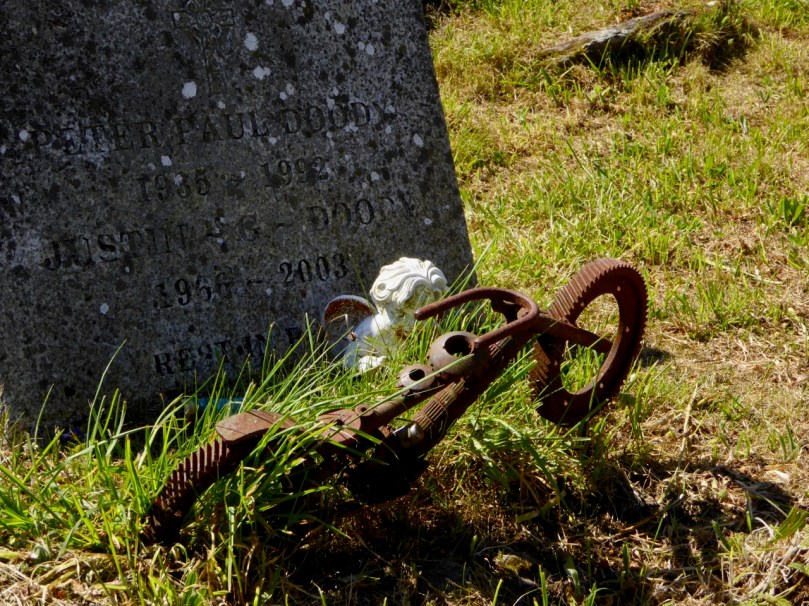
Like all historic graveyards around here there are many plots marked by simple stones, headstones and foot-stones, where people could not afford the services of an engraver. Remarkably, the knowledge of who is buried in some of those unmarked graves still resides somewhere, whether in church records or in the folk memory of local people. You can browse the listings of the graves here.
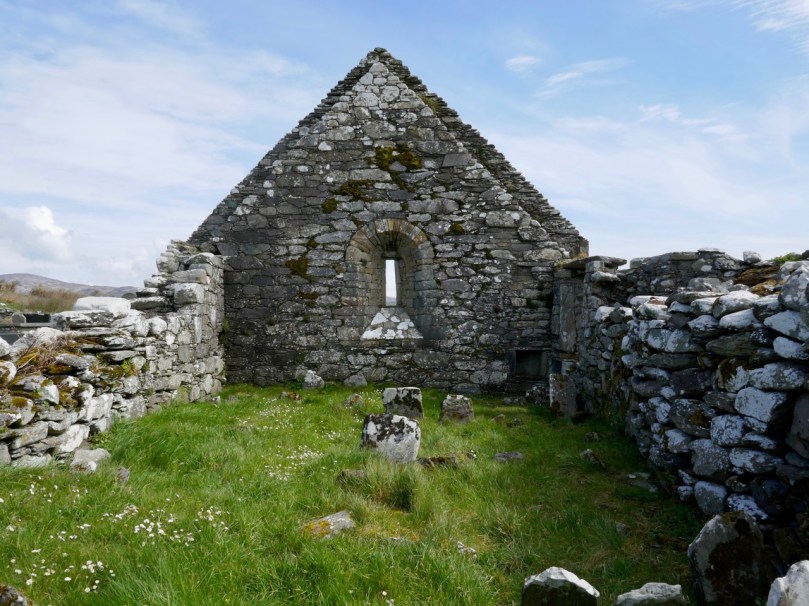
At the centre of the graveyard is a ruined church. It’s a very interesting structure to me, because I believe it is actually older than its normally-ascribed date. It was occupied, according to Brady’s Clerical and Parochial Records in 1581, when Dermot McCormack McCarthy was the rector and the church belonged to the College at Youghal and was dedicated to St Brendan. The Down Survey described it thus in 1700: Kilmoe : the church is ruinous, the walls that are standing are bad, built with stone and clay. The church stands about a mile from Crookhaven, to the westward near the head of Barlycove bay. 8A. of glebe on the north of the church; good land, set for £20 per an. There are the ruins of a vicaridge house joining to ye church-yard.

There are hints in the structure of the Romanesque style, which would place it in the 12th century. The east window is clearly Romanesque in construction, while the door, with its plain lintel and ‘relieving arch’ also appears so.
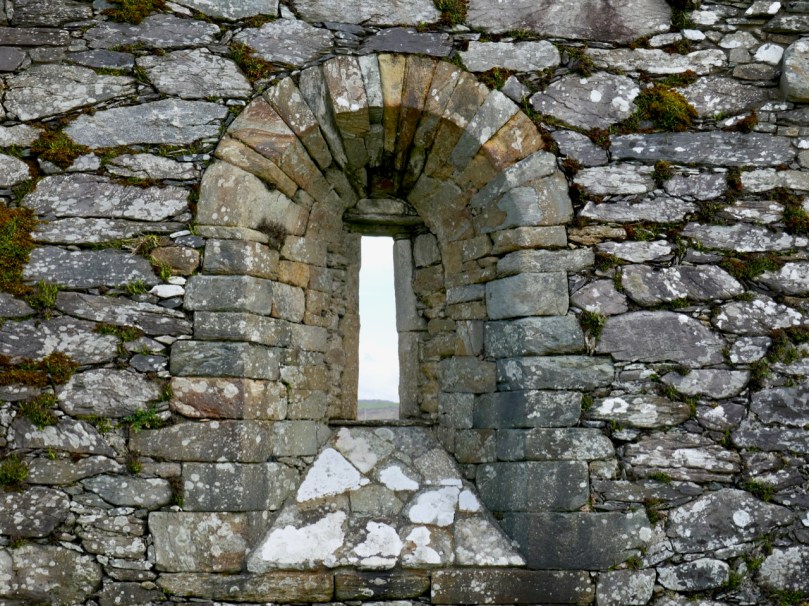
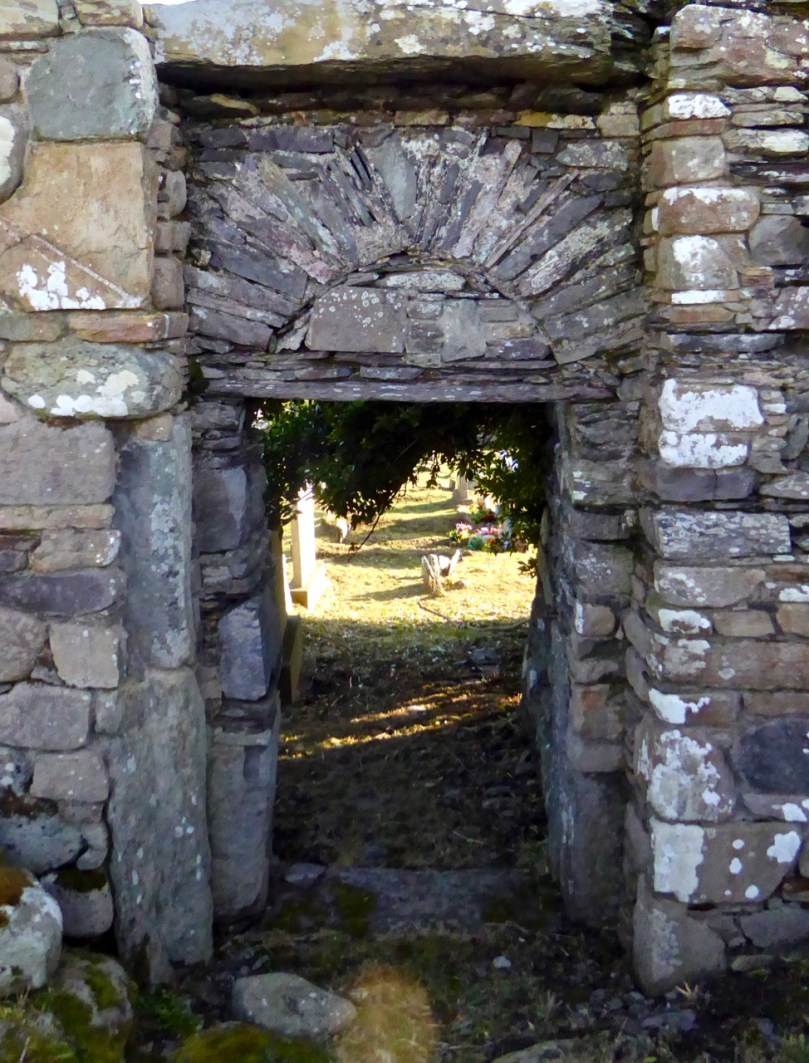
I am seeking some confirmation of this and will update this post if or when I get a response. The west end appears to have been two storey – the joist supports are still projecting from the wall, which means that the old ground level was lower than it is today and that the window was in the second storey. That window (below) is ogee-headed – a clearly gothic element, which means (if I am right about the west end) that it was inserted later. The whole church may have been modified many times over the years it was in use.
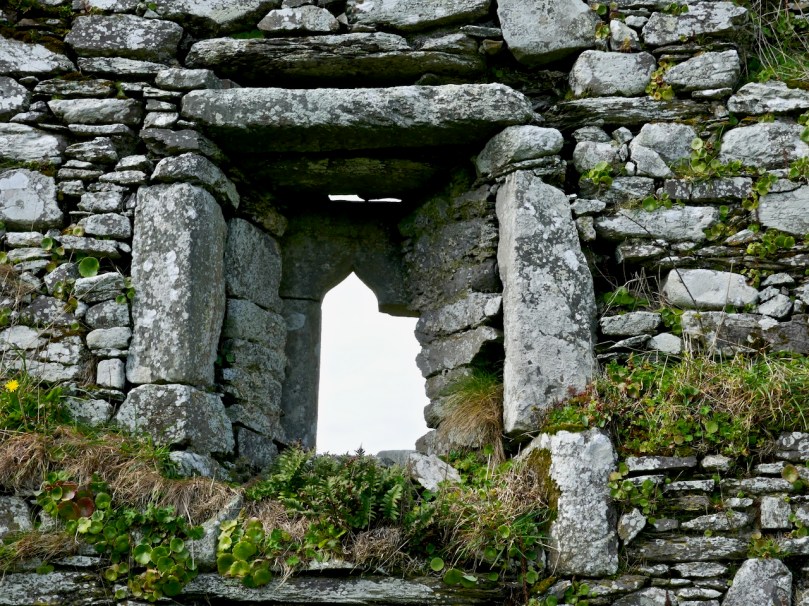
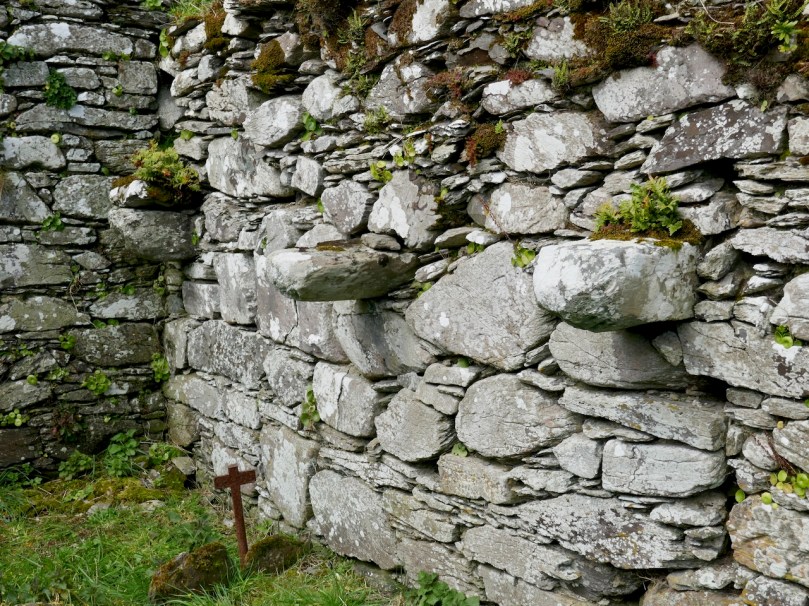
There is a record of a cross-inscribed stone inside the church – we have looked for this but cannot find it. It may be gone, or it may be partially buried in the long grass. There’s no sign of the vicaridge house joining to ye church-yard.
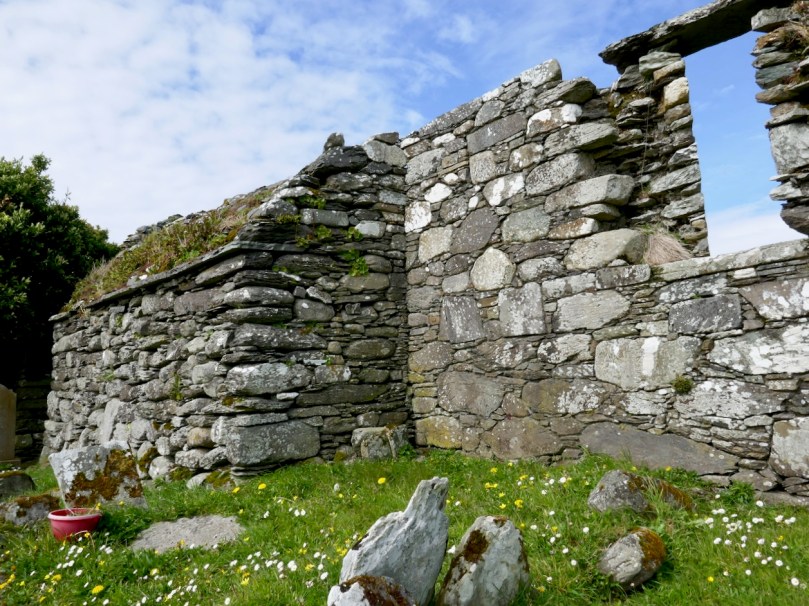
The unusual ‘buttress’ feature on the north wall

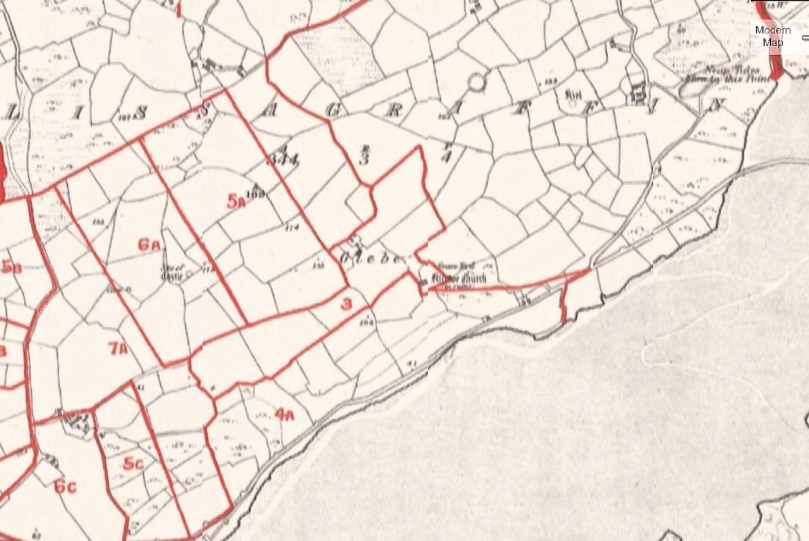
But the landscape around has other elements too – or rather had other elements. There used to be an O’Mahony Castle just to the east of the church, of which no trace remains today. We know of it from Griffiths map of the 1840’s, (below: apologies for the blurriness, it seems to be the best resolution one can get) where it is clearly marked as a ruin. While many of the O’Mahony castles were closer to the shore, this one would have benefited from all-encompassing views of both land and sea, and from proximity to the church, for worship. According to James Healy’s The Castles of County Cork, it was probably tenanted by the O’Meighans, a bardic family associated with the O’Mahony clan. Although there is nothing left, local people told Healy in the 1980s that the site was cursed and that bad luck attached to it.
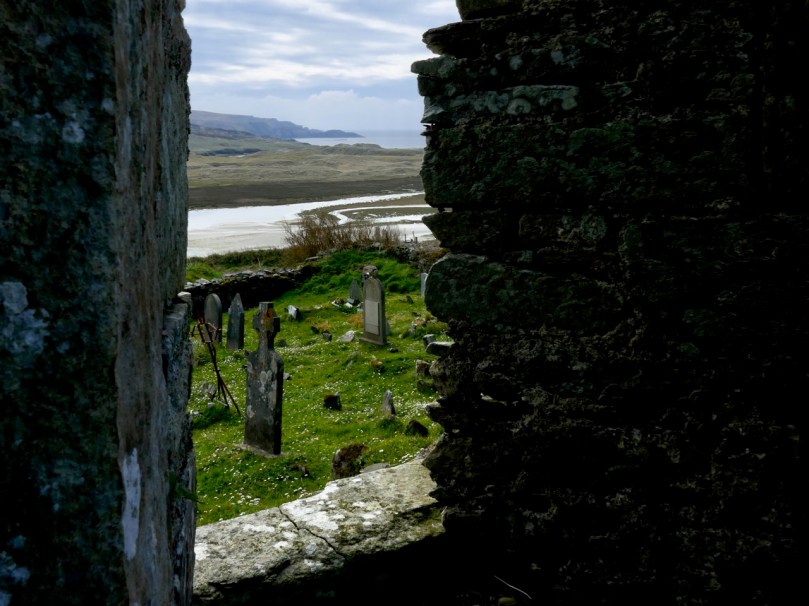
The view out to sea from the church

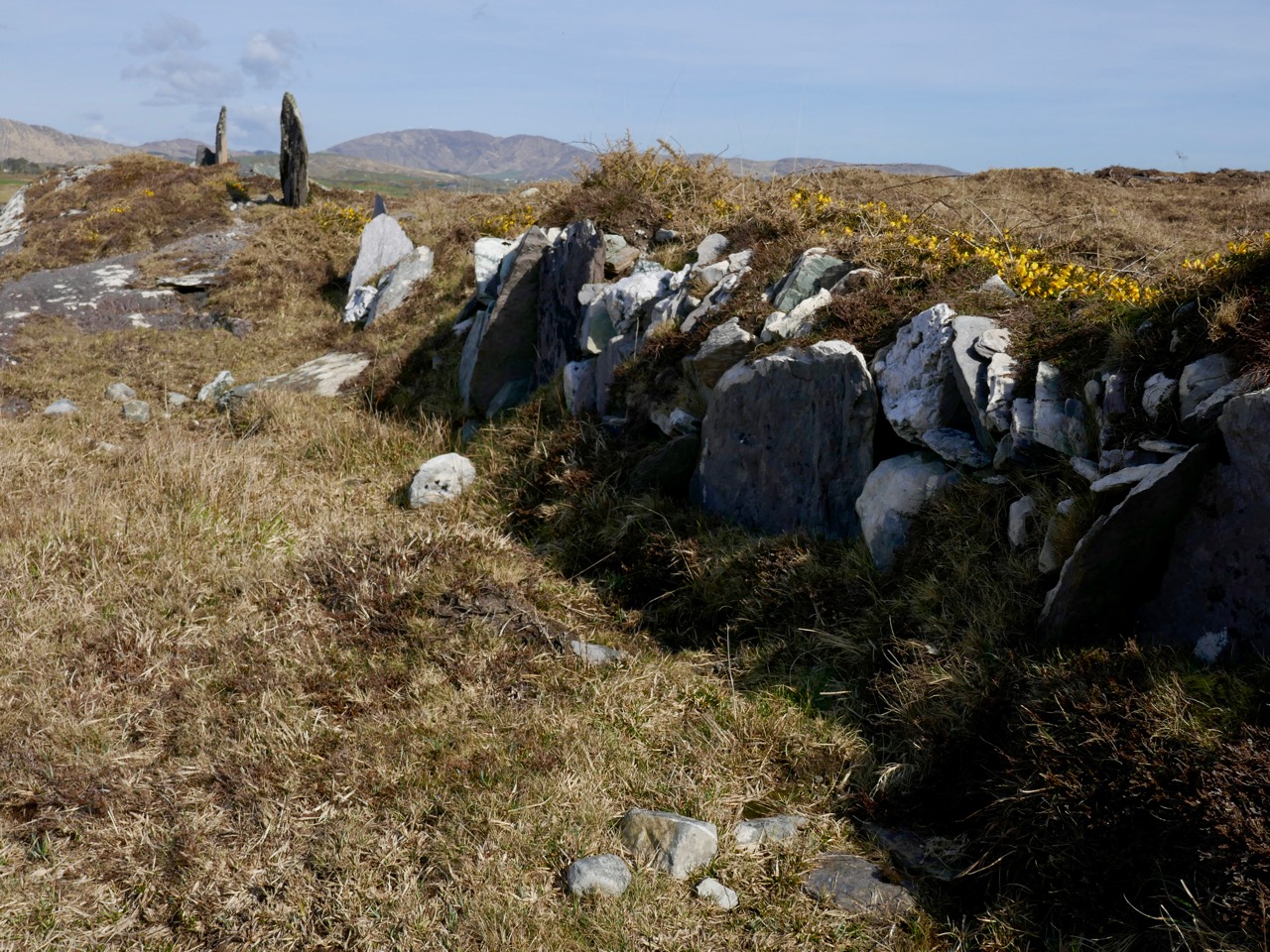
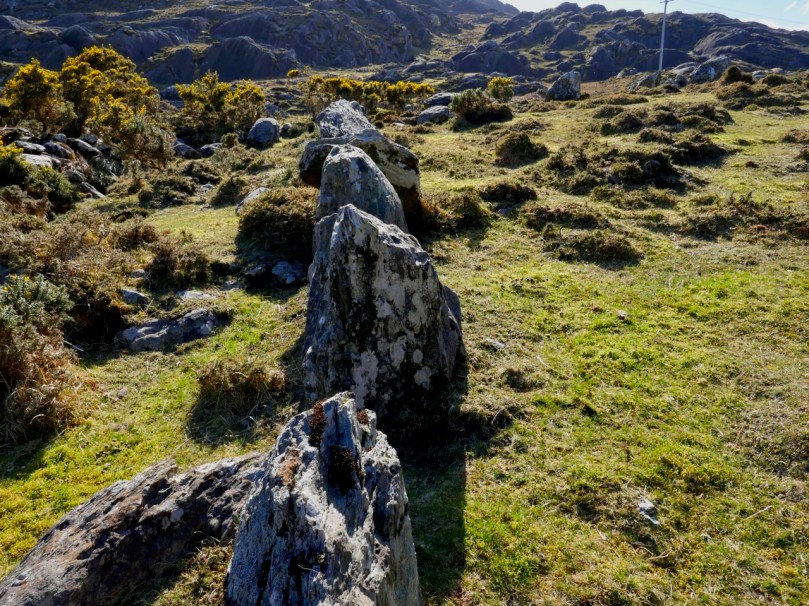
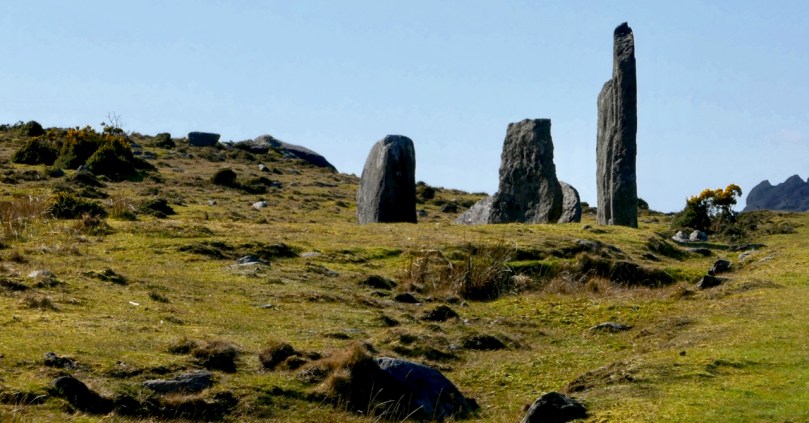
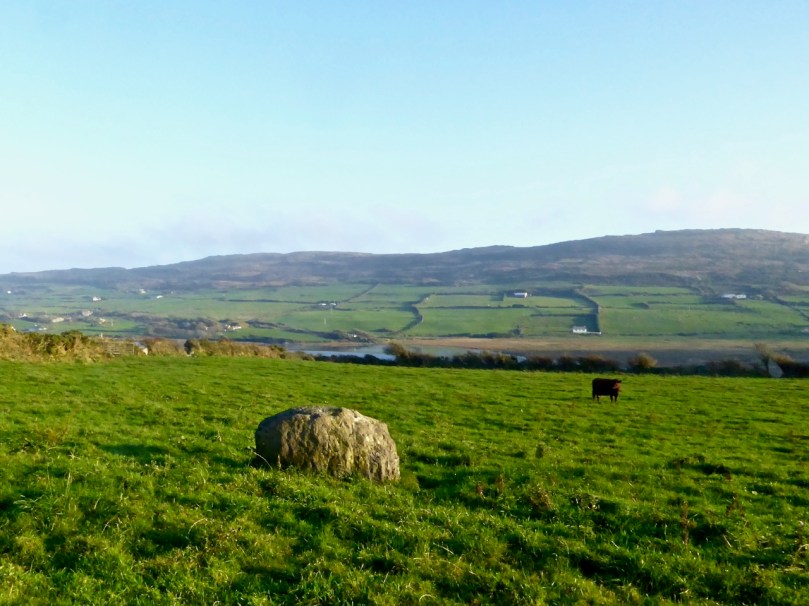
Even older still are the numerous standing stones that dot the hillside to the east and north. The photograph below shows one – a rather stumpy example. And probably even older than those are the cupmarks reported on the rock face just to the east of the graveyard. We have searched for these too, but were defeated by the gorse and brambles.
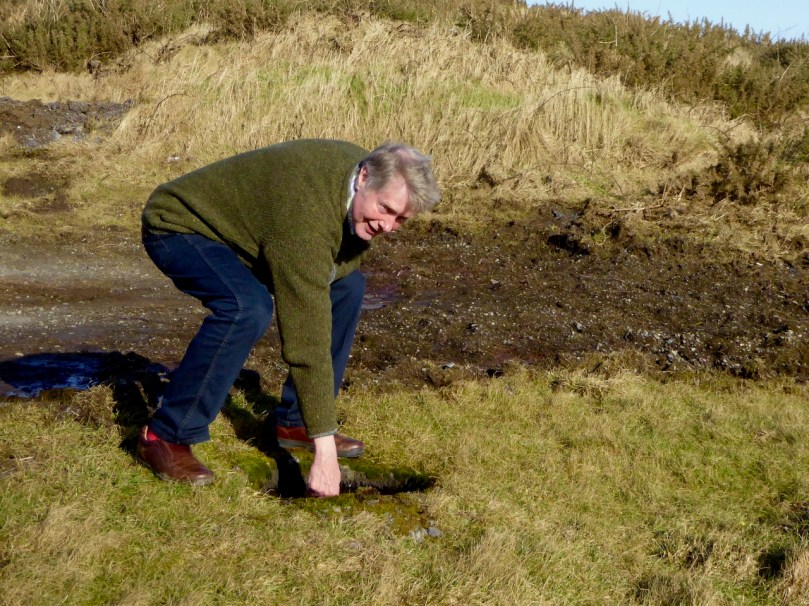
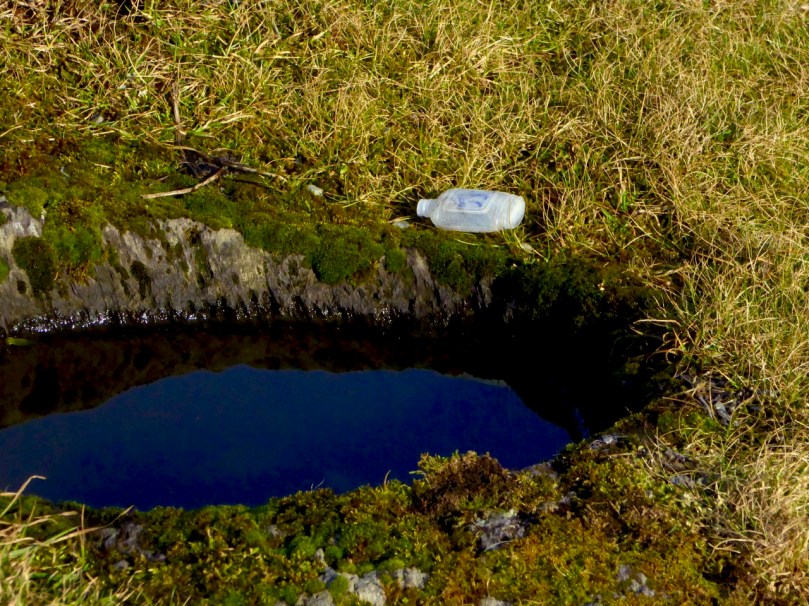
Of unknown vintage is the bullaun across from the graveyard gate. Although bullauns are often carved in free-standing boulders, this one was scooped out of the bedrock: it is known locally as a wart well. Dip your finger in, say the requisite prayers, and your wart will disappear. We even found a small bottle for Lourdes holy water left by it on one of our visits, showing that it is believed to still possess curative powers. Robert agrees! Amanda has included it in her Holy Wells blog.
Next time you’re headed out to Barley Cove on a fine day, take a little detour up to Lissagriffin church. The views alone are worth it, although a little wander around the graveyard will do a lot to soothe your soul. 
 

Mizen Magic 13: Dunmanus Promontory

It’s geologically and archaeologically fascinating – a substantial natural promontory just to the north of Dunmanus Castle: well worth an exploration. But, do be warned – there are cliff edges, exposed fissures, ankle-wrenching undulations and bogs to overcome. Also – it’s private, so please seek permission before crossing the land.

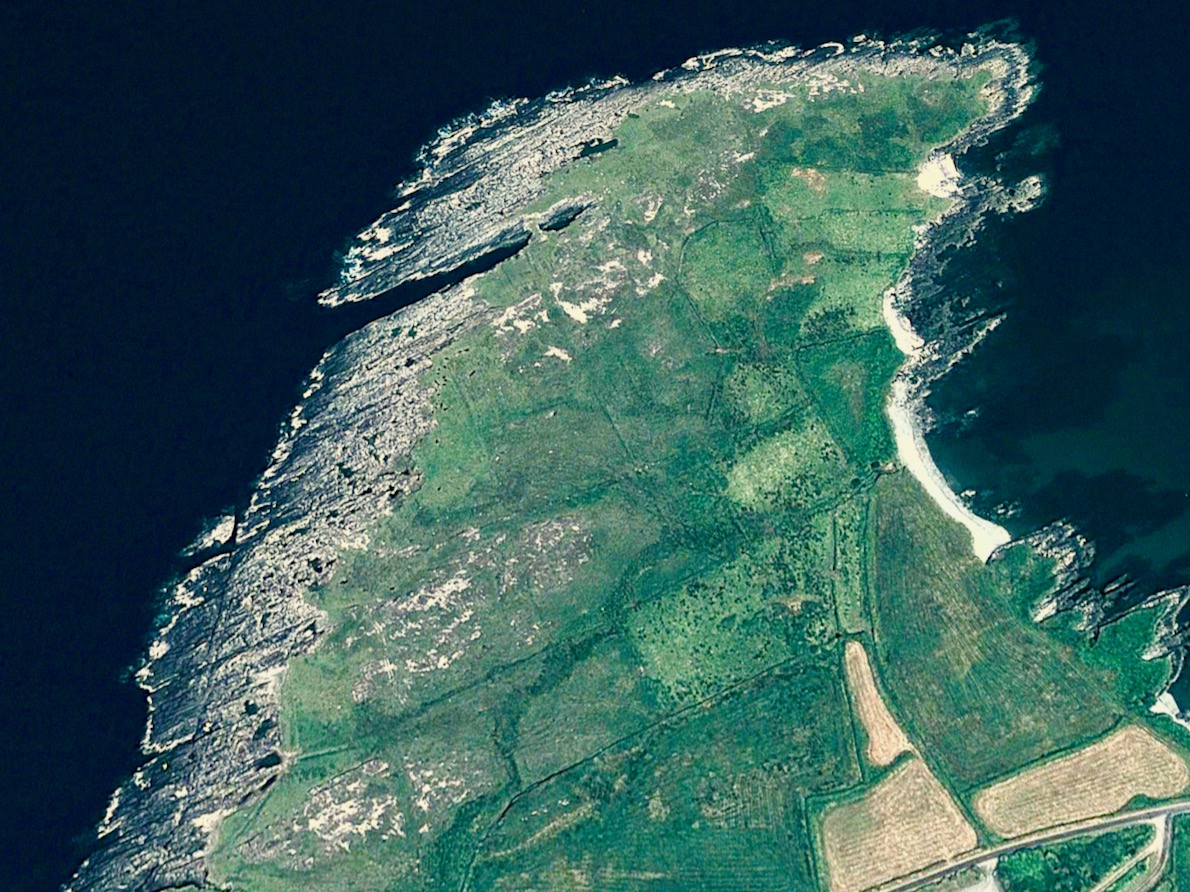
The west side of this shark’s fin-shaped promontory is wildly exposed to the ocean and its gales. You can see from the aerial views, above, how the rock bed is bare and visible, and the vestigial fields which occupy – or once occupied – the east side peter out, and the walls and banks which once formed them fade away altogether over on the left. In fact, these Google Earth images give a better impression of the oddly shaped enclosures than can be seen on the ground.

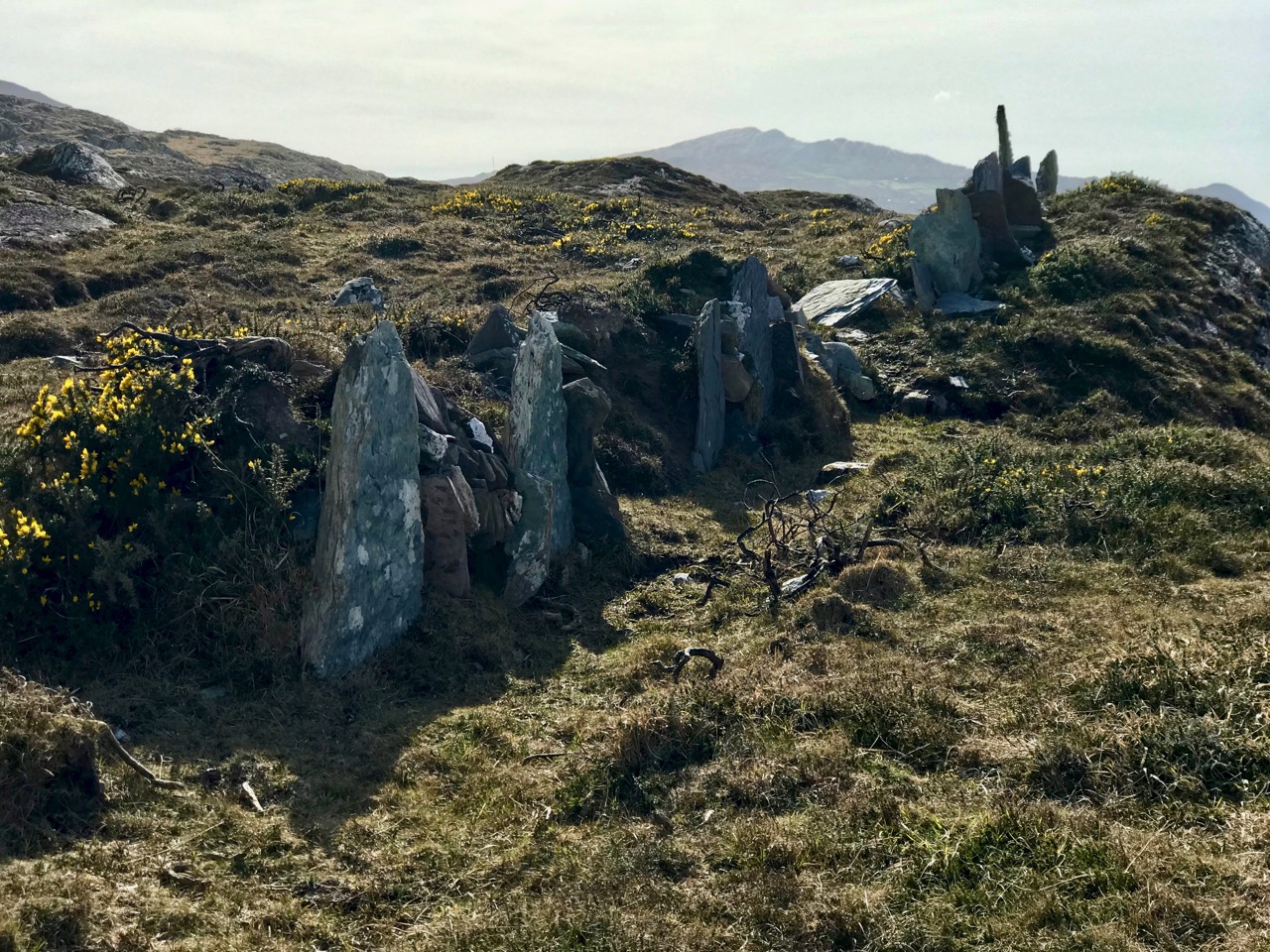
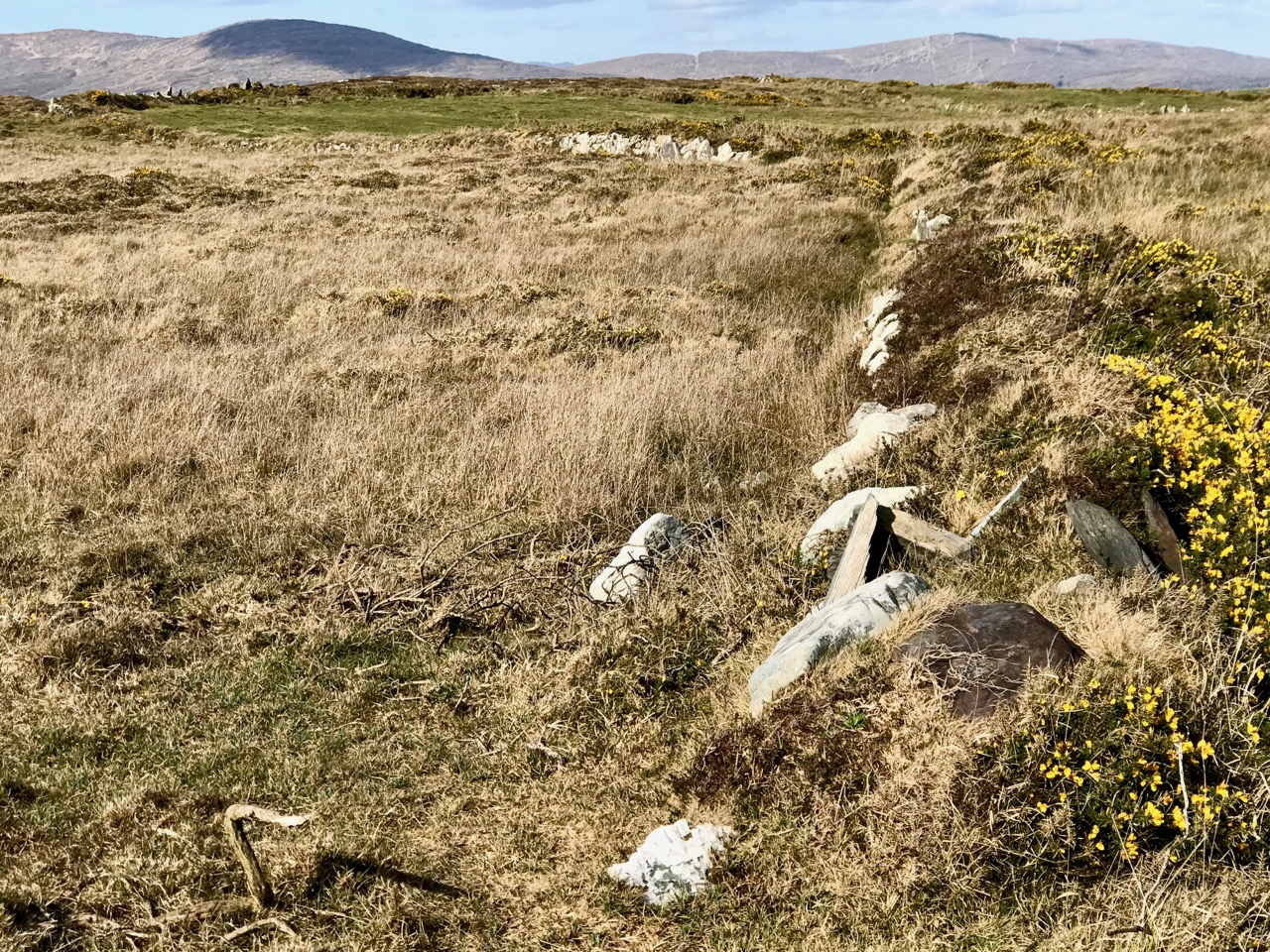
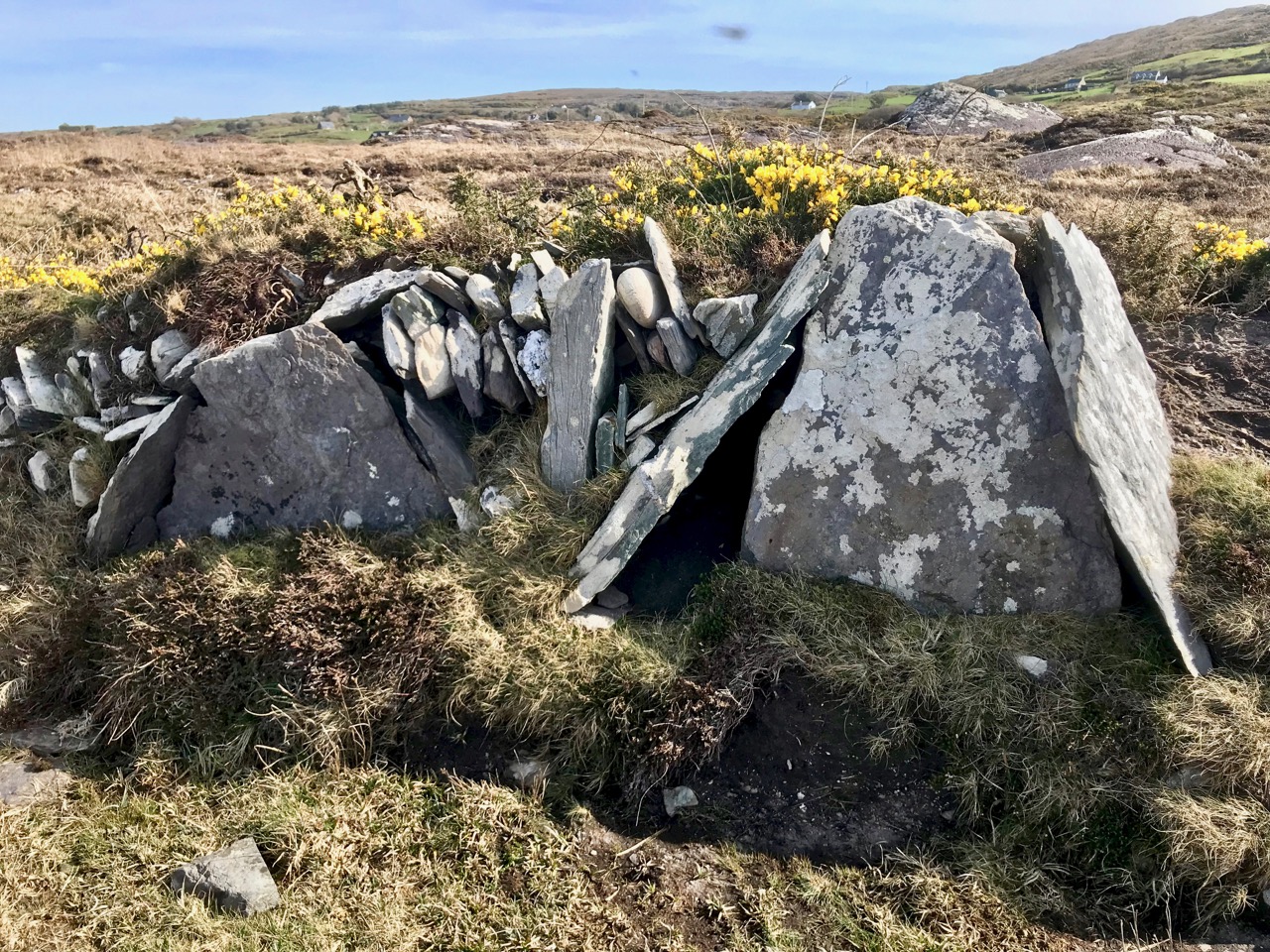
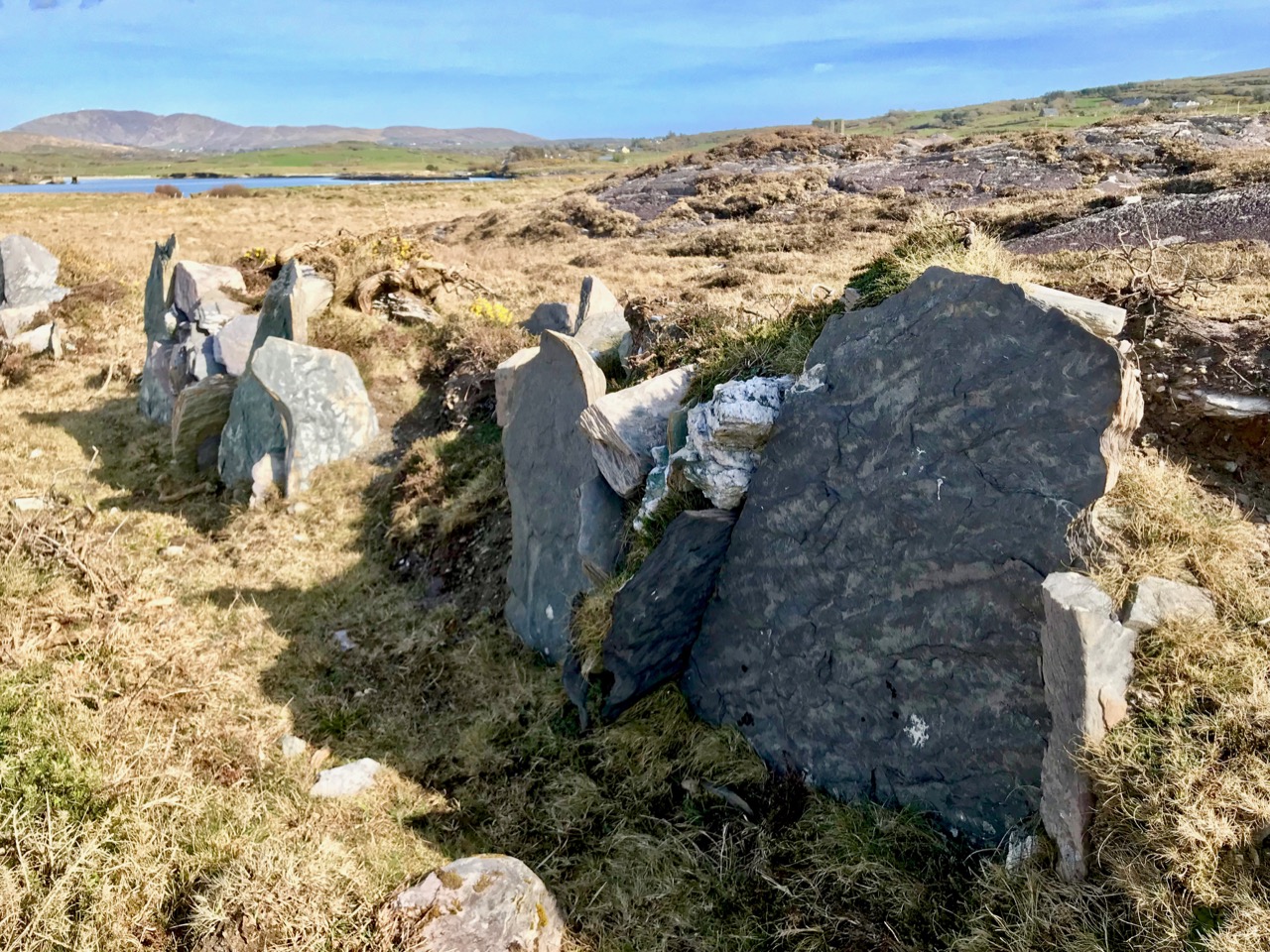
Three examples of many varied boundary features on the promontory are shown above. Each is differently constructed and they range from a series of vertically-set slabs to rocks-and-rubble and a raised bank reinforced with stones. In the picture below, follow with your eye the boundary as it traverses the scrub and makes a large S-bend on to the ridge facing the distant horizon.

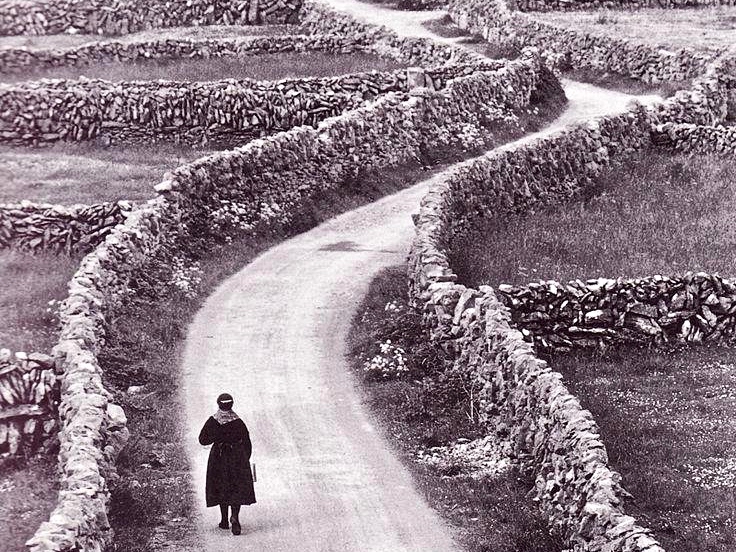
Ireland – especially the west of it – is a huge stone landscape. Wherever people have settled, they have moved the stone and used it. To make fields, or any enclosures, they have had to clear the land. The stone taken from the land is used – sometimes to build shelter, often to build myriad walls to define the holdings. Here’s a striking example from the Aran Islands:

Nothing is recorded on the National Monuments Survey about these land boundaries at Dunmanus – or the significance of the promontory as a whole. Was it once a promontory fort? There are others on this coast. It could easily have been defended along the line of the present road running across the south. However, the land is flat and low, and there is no shelter.

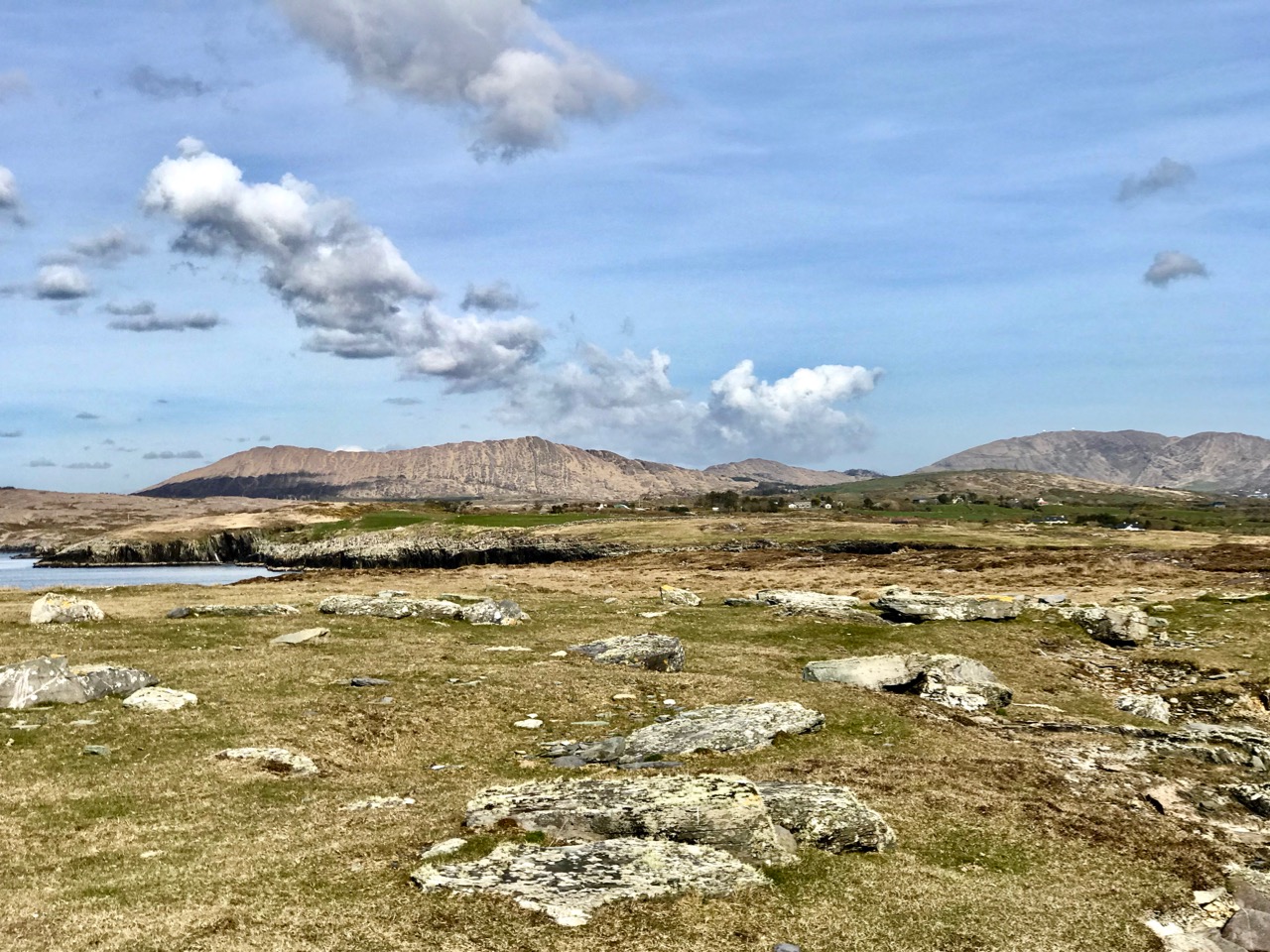
Flat stone surfaces – of old red sandstone – remind us of the Burren landscape in Clare, and we can suppose that the present windswept bog and scrub could once have supported agriculture. But when? In medieval times, perhaps, when the nearby Dunmanus tower house was a thriving centre of occupation and, probably, commerce. In the shelter of the bay the little quay at Dunmanus survives and is still used by small boats searching out shellfish and scallops.

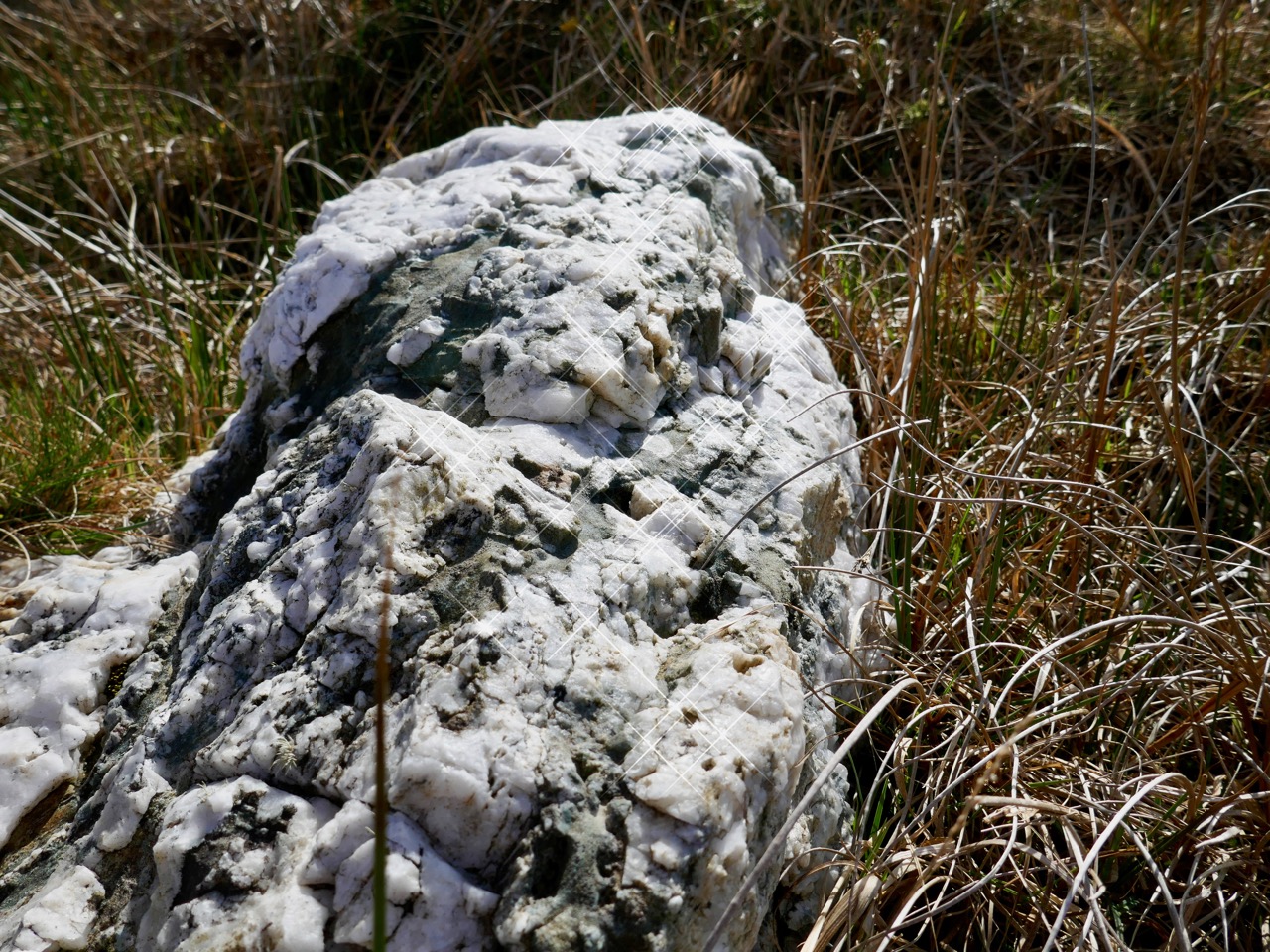
In some places the old walls seem to have a prehistoric feel: the use of slabs embedded vertically like standing stones is quite unusual in West Cork. The presence of large quartz rocks, too, is reminiscent of ancient sites, although they are natural geological occurrences here.

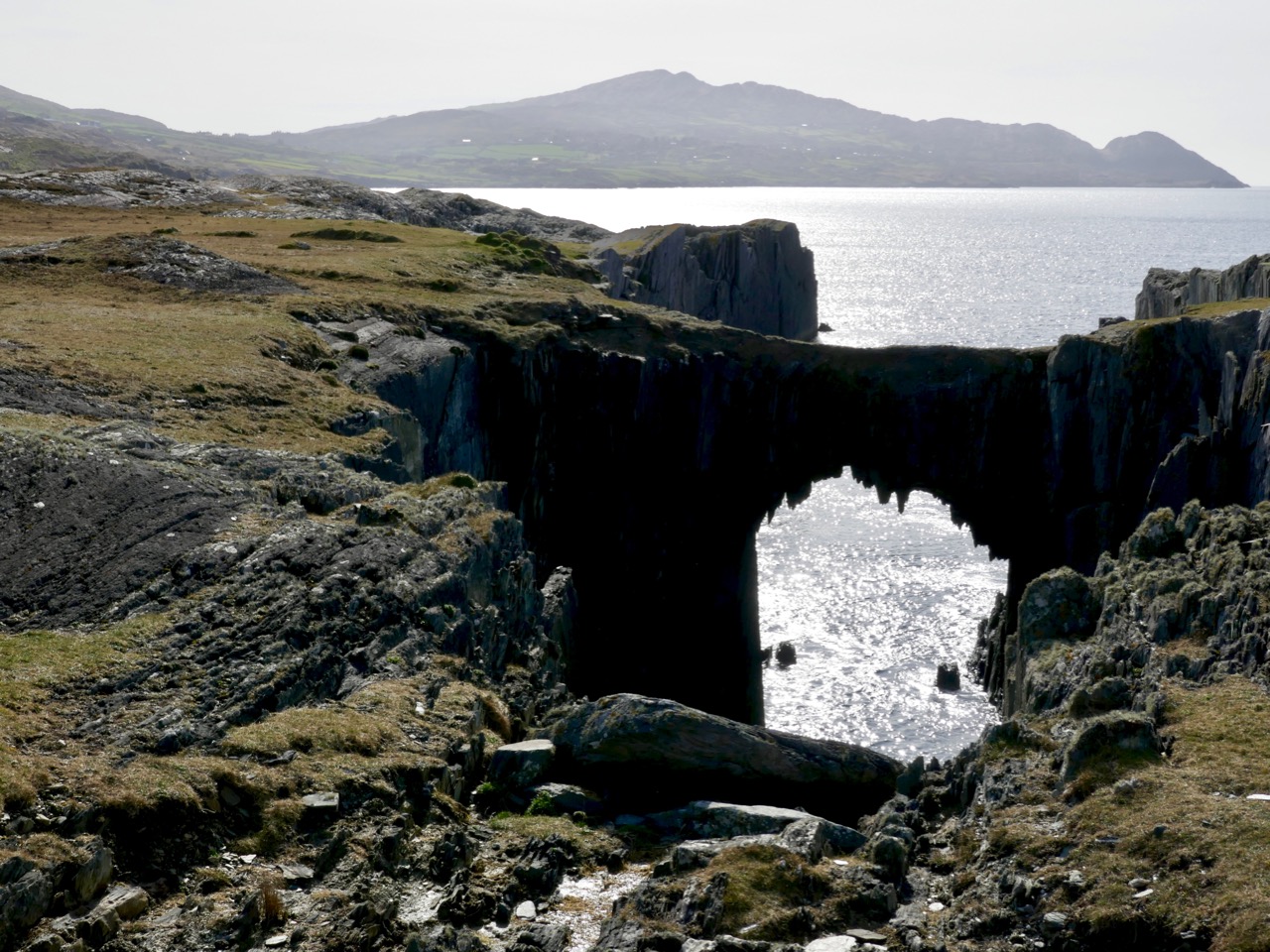
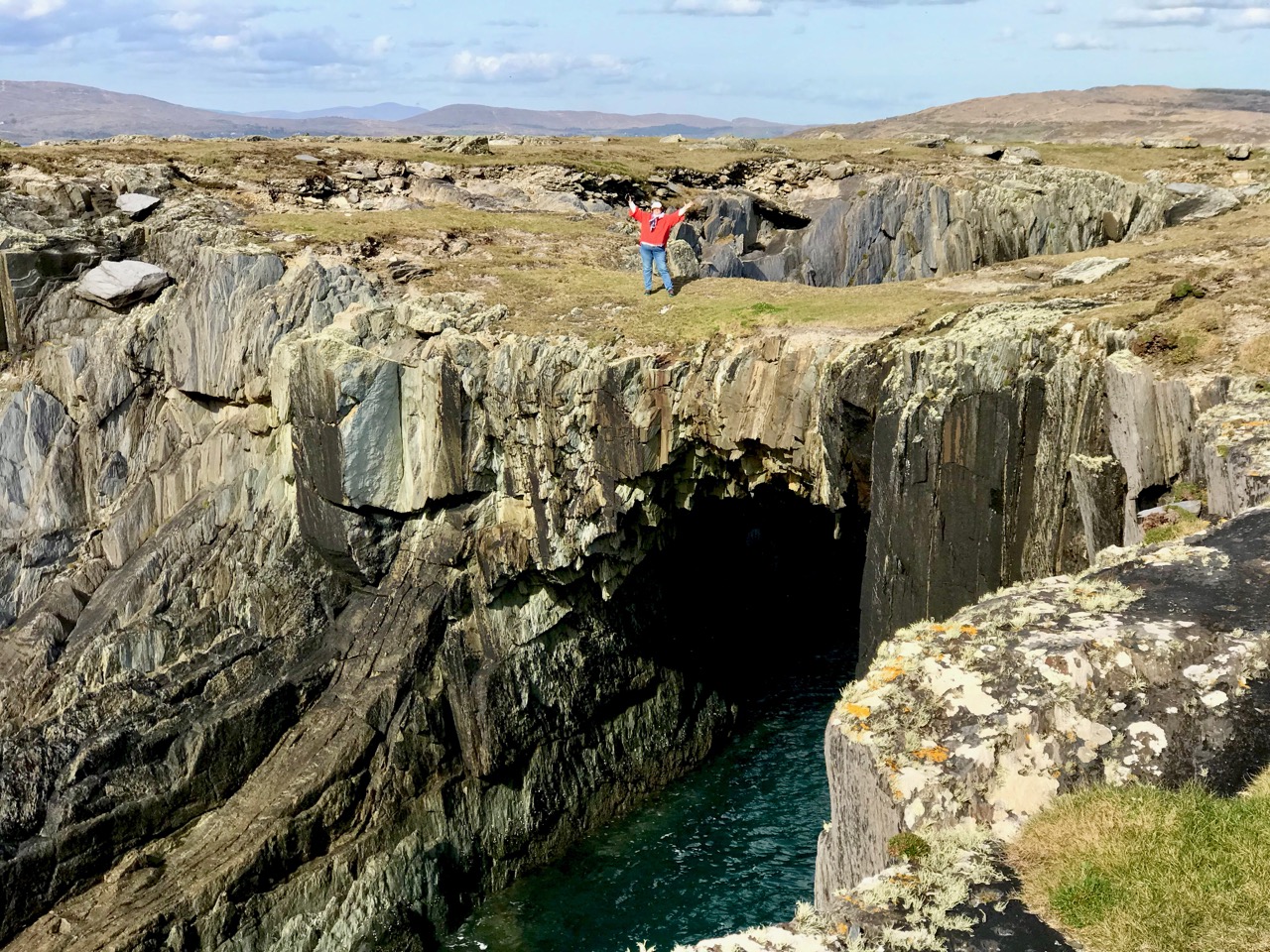
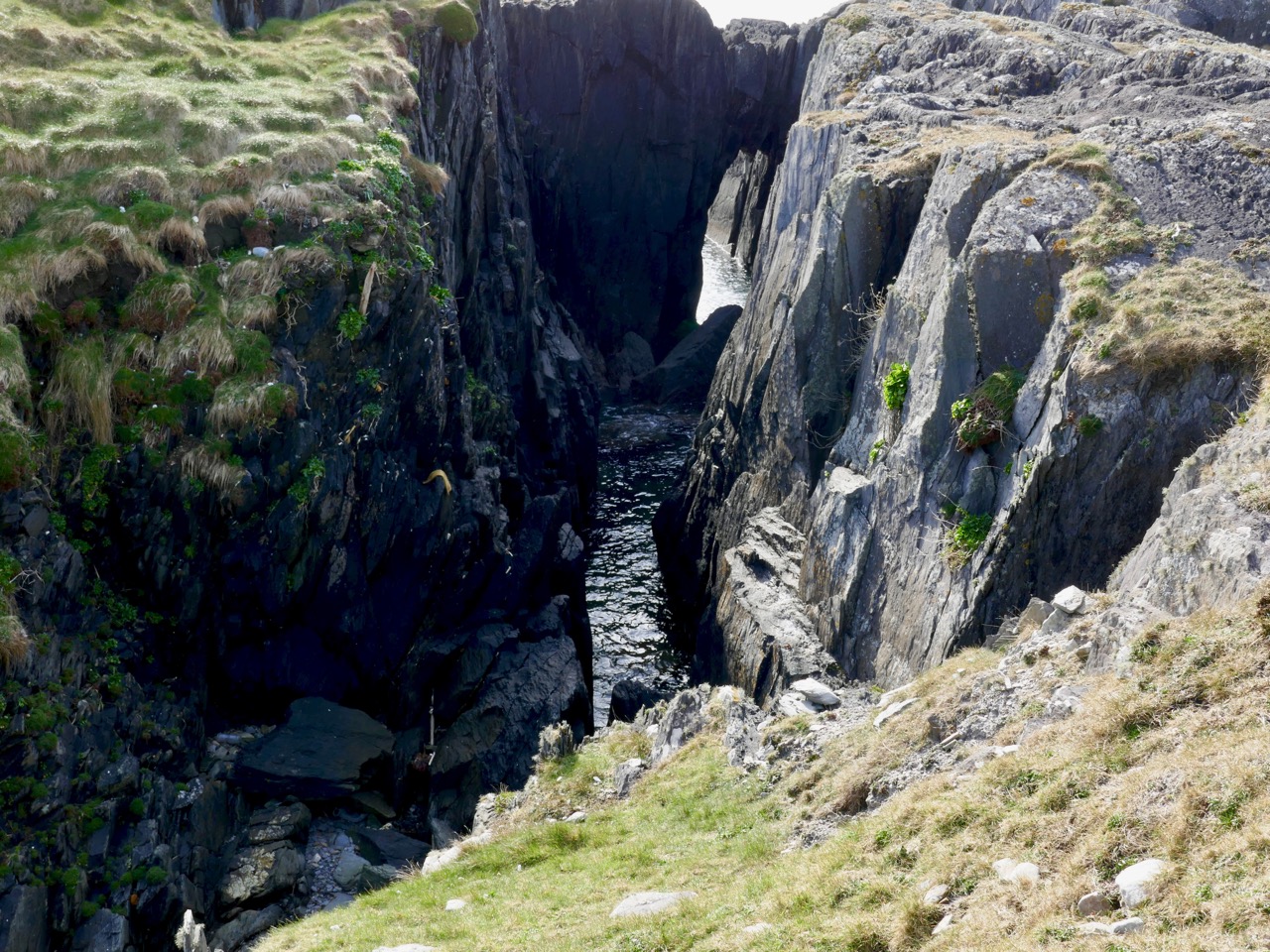
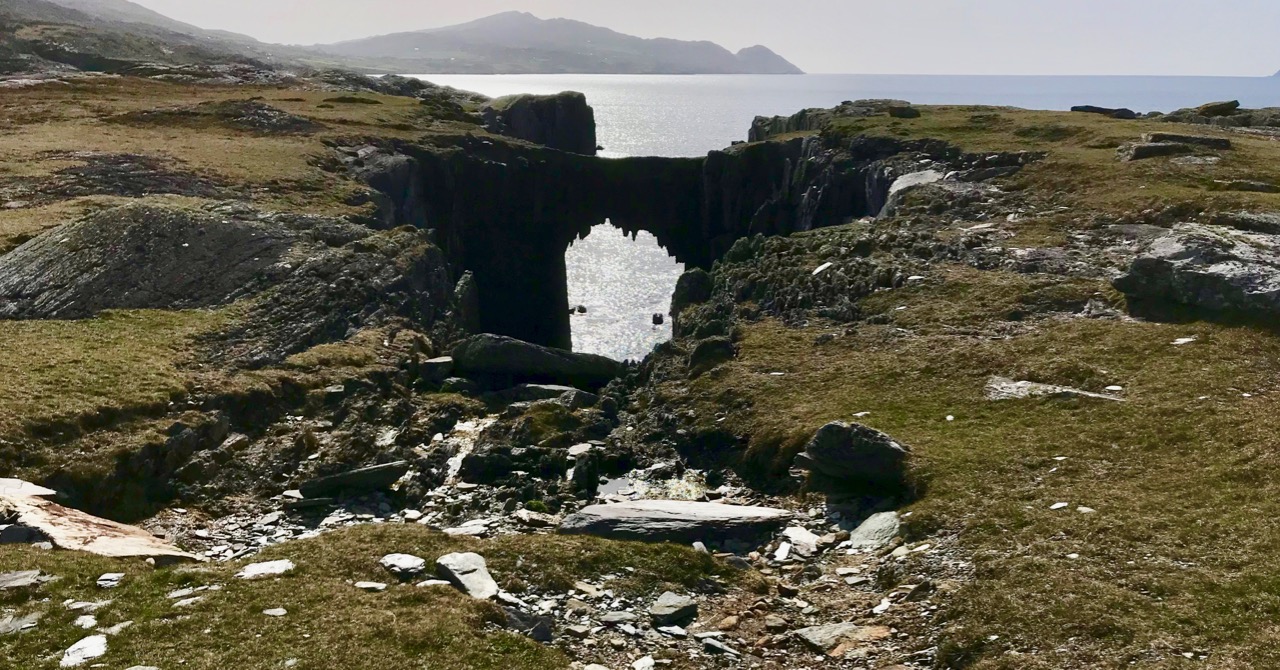
Other natural features on the peninsula include two ‘sea arches’ – bridges formed through erosion of the rocks and chasms by the ocean.

It’s a landscape of vestigial fields, sea – and stones. Nothing more. But I find it a mesmeric place; partly because we can see that it bears the marks of human toil, and we want to know more about who was there and how they lived. It’s a remote piece of Ireland to call ‘home’. Those marks remain after how many years – hundreds, thousands? They intrigue us, and compel us to explore.

Drawn to the Beara

The spectacular landscapes of the Beara Peninsula draw us again and again: have a look at some of our past explorations here and here. There’s no doubt that for fine, distant views, tranquil coastlines and variety in geology, history and archaeology this part of Ireland takes some beating. And, for us, it’s ideal: near enough that we can have a full day out absorbing all these things, yet still being home in time for tea!

This is the weekend when clocks ‘spring forward’ – giving us longer evenings. But also the sun is getting noticeably stronger, colours are getting more intense, and the shadows are hardening. It’s a great time to be out on our travels.

That’s Hungry Hill above – highest peak in the Caha Mountain range, Co Cork – and the background setting for Daphne du Maurier’s 1943 novel of that name. The story is based on the real-life Puxley family who set up and ran Allihies copper mines in the first half of the nineteenth century. Du Maurier weaves the tale to give the name of the hill a symbolic meaning – the mines ‘swallow up’ the lives of those who work them and the plot is charged with tragedy and unhappiness.

We crossed the peninsula on the Healy Pass, one of Ireland’s great road journeys, with breathtaking views towards Bantry Bay in the south and the Kenmare River to the north as you traverse the 334 metre summit. The road, known in Irish as Bealach Scairte, was originally cut as a nineteenth century famine relief project, and improved in the 1930s, when it was named in honour of Tim Michael Healy, a Cork man who served as the first governor general of the Irish Free State.

We had a mission: to visit Dereen Garden, which is open all year round. We were there before the tourist season got going, and we mainly had the beautiful walks and vistas to ourselves. The woodland garden was laid out 150 years ago with sub-tropical plants from around the world and has been improved and added to since then; it is famous for its huge Arboreum rhododendrons. Evidently there is a variety of wildlife to be seen, including red squirrels, sitka deer and hares, but they were all keeping out of the way when we visited.

We were hoping to sample some of the fine eateries which have been set up on the Beara but, again, we were a little too early in the year: an excuse for another trip when they open up. So we reluctantly turned our way back towards the Healy Pass – to get the views from the other direction – and were stopped in our tracks by a sign pointing to ‘stone circles’. This is in a townland named Cashelkeelty and is near Lauragh, Co Kerry. Finola had a look at her archaeological records on the phone and found it was somewhere we had to go! It involved a long, uphill walk through a forest, but was very well worth it. Read Finola’s post to find all the details.

I will show only one picture as a taster (above) – but also to point out the proximity of the high grade overhead powerline which runs right by the ancient stones. Does it add or detract from the monument itself?

There were many more vistas to be taken in on our few hours spent on this dramatic peninsula, where mountains so spectacularly meet the sea. We can never tire of this, our own little part of the world.

Cashelkeelty – More Than Meets The Eye

It’s on the wild and remote Beara Peninsula and it’s a bit of a trek to get up to it – but so worth it. We are fortunate that we know quite a lot about Cashelkeelty, which is in the Kerry section of the Beara, not far from Lauragh. There were excavations here in the 70s and 80s led by old friends, John Barber and Anne Lynch. Pollen analysis in the region has added to our understanding of the environment during the Bronze Age.

You can see both the multiple stone circle (the closer set of stones) and the 5-stone circle and stone row from the knoll near the site

But none of this is obvious on the ground and there are no explanatory signs, so I’m going to lay out what we know about this marvellous complex of monuments, so that when you go (Yes, do go!) you’ll know a bit more about what you are looking at. Make it part of a day trip, like the one that Robert is describing this week.

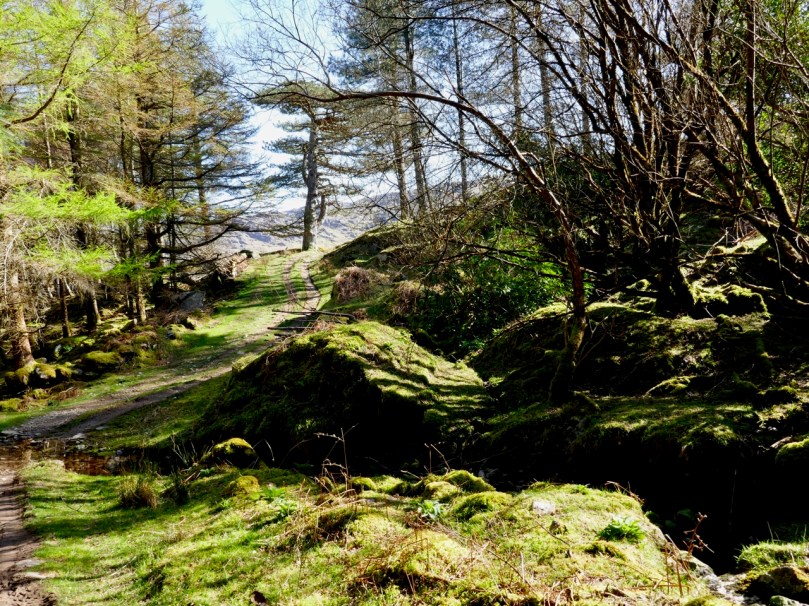
Park in the little car park about 2 km west of the turn off for Derreen Garden. Someone has handily marked it on Google Maps as ‘Parking Place Stone Circle’ and take the path that runs upwards through the woods, turning left (and ever upwards) when you come to another path. It’s a Robert Frost experience – the woods are not only lovely, dark and deep but also mossy and mysterious, with hints of old walls here and there.

When you emerge into open country, you are actually on the Beara Way and this stretch was beautifully described by Peter Clarke in his Hikelines blog.

Peter Clarke’s sketch of the 5-stone circle and stone row ©Peter Clarke/Hikelines

In fact, you are walking now along or beside a medieval road that once ran from Kenmare to Castletownbere. Once you know this, you can pick it out and imagine walking or riding along it in rough woollen garments, or perhaps the  flowing robes of a monk, or the full armour of a knight. But this road is actually one of the newer items in this landscape.

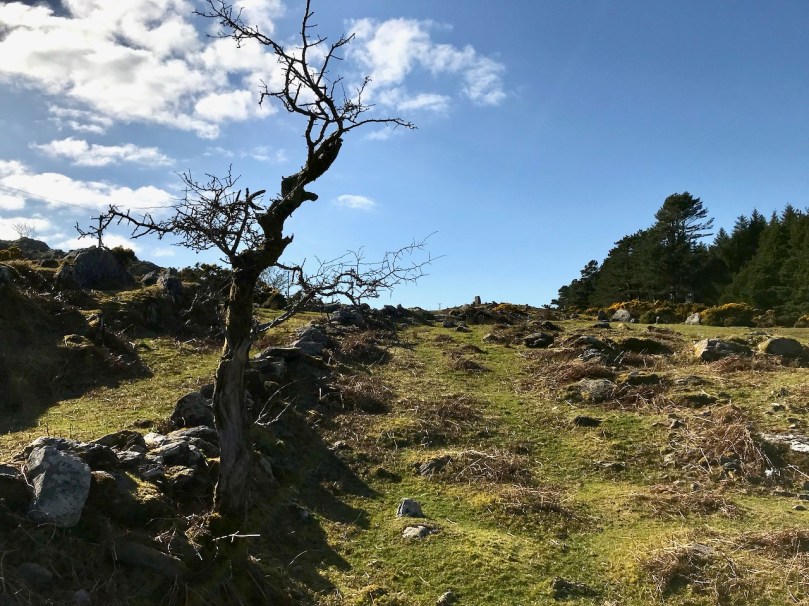
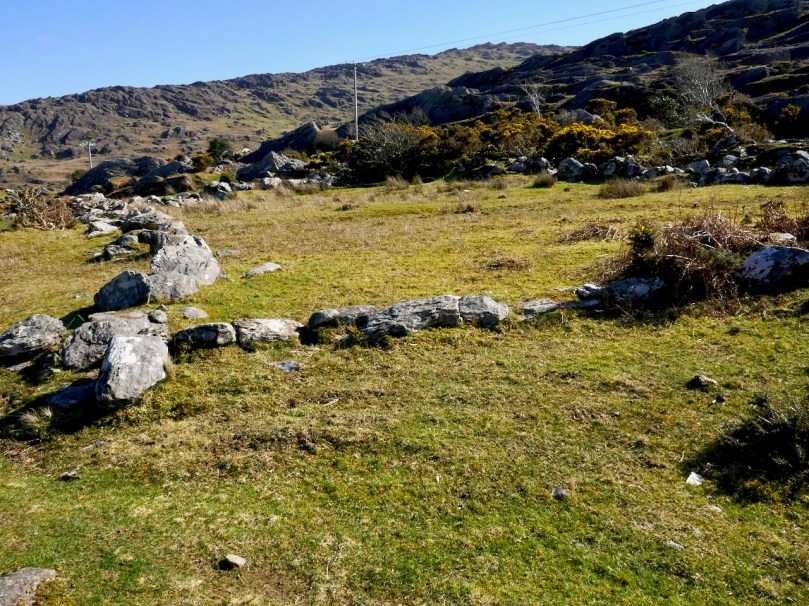
The landscape itself is Bronze Age. People made their living here by growing some cereals (probably barley and emmer wheat) and by herding cattle and sheep. Pollen analysis tells us that forest cover declined – that is, it was cleared by the early agriculturalists – beginning about 1500BC and intensifying around 1100BC. Pre-bog field systems are everywhere here – look for the lines of upright boulders defining walls and small fields as you walk.

According to Billy O’Brien in his Iverni (got your copy yet?) deterioration in the climate and higher rainfall about 1000BC led to increased acidification and the spread of bogs in many areas. So what we are looking at here, in the Mid to Late Bronze Age, is an open pastoral landscape. This is important because the views from here are panoramic and significant, and they would not have been obscured by trees.

Ancient fields

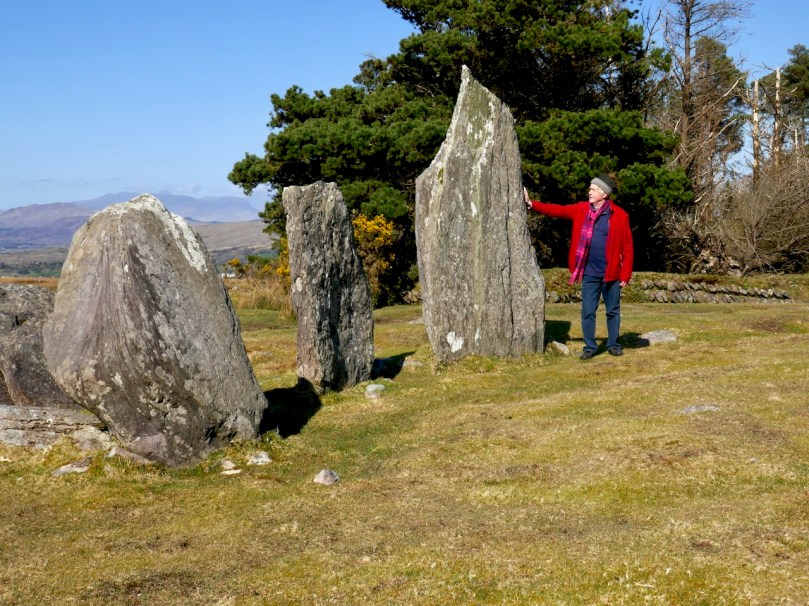
And in this open landscape these early farmers lived in houses of which no traces remain, probably of wood and thatch. What does remain are the monuments they built of stone – they meant them to endure and endure they do. There’s a five-stone circle, and a stone row right beside it, and about 30 metres to the west another set of upright stones.

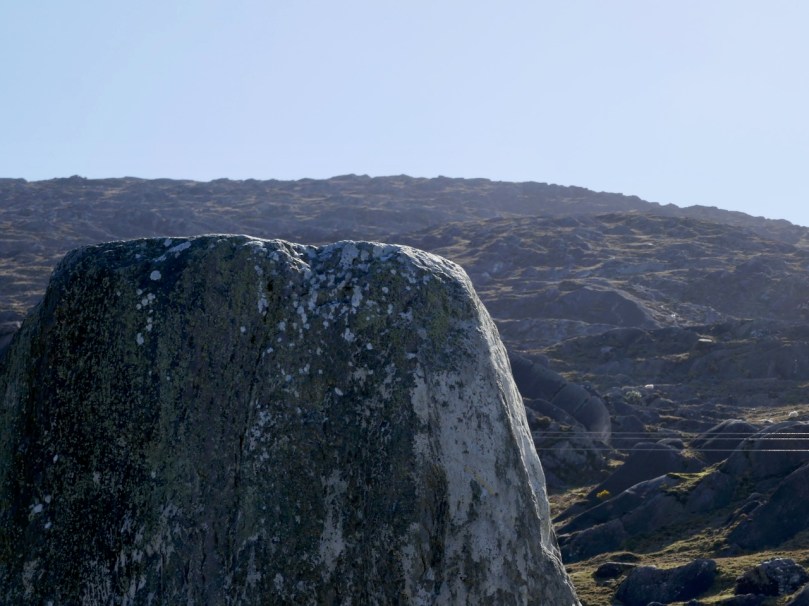
The stone row was built before the 5-stone circle, possible hundreds of years before. There are three stones now, but the Lynch excavation established that there had been a fourth. Like most of  the stone rows on this part of the world it is oriented ENE/WSW, or towards the morning and evening horizons in summer. As regular readers know, I am always intrigued by the way the shapes of the stones seem to mirror the landscape behind it and this is no exception.

The 5-stone circle now only has three stones, but the sockets for the remaining two were found in the course of the excavations. In the centre, covered by a stone slab, was the cremated remains of a person in his or her 20s. Radio carbon dates (later re-calibrated) established the construction to about 1300 to 700BC, placing it in the Late Bronze Age. Mike Wilson of the Mega-WHAT site has analysed the orientations of both the stone row and the 5-stone circle – you can see the results of that here.

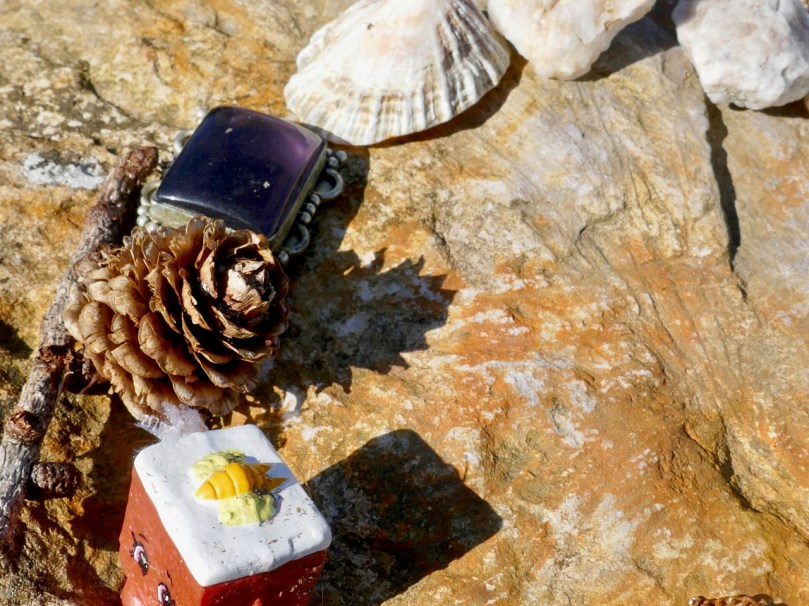
Visitors love to leave little offerings at sites like this. You are looking into the 5-stone circle, towards the recumbent. The slab is more or less where the cremated remains were discovered in the excavation

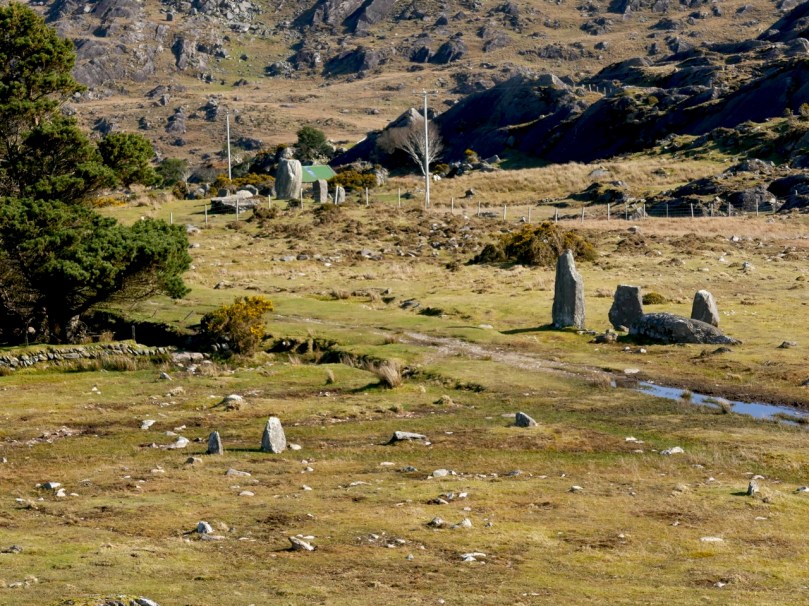
From here you can clearly see another set of stones to the west. What looks like another stone row is actually the remaining uprights of a multiple stone circle, as Anne Lynch documented in her account of the excavation. There were either 11 or 13 stones originally. The tallest stone now standing must have been one of the portals. The middle stone was originally lying down but was re-erected in the course of the excavation.

Once again, I am struck by how these three stones appear to mirror the horizon behind them. Can this really be a coincidence? If so, it’s a an eerie one. To understand how and why multiple stone circles were built, start by reading The Stone Circles of West Cork: Discussion. That post will point you to others as well.

To round out the Bronze Age monuments, there’s a Fulacht Fia just south of the 5-stone circle – you can read more about these ancient cooking places in my post Ballyrisode Fulacht Fia.

This little road leads to a stone building, perhaps originally a cottage. It’s the green roof you can see in the second photograph

Cashelkeelty is an amazing site – so many monuments, such evidence of Bronze Age activity from daily living and farming to monument-building. We still have their stone edifices to remind us that these people were sophisticated builders who wanted certain of their practices and rituals to endure for centuries. What we no longer see easy signs of, we can imagine – the forest clearing, the planting and herding, the communal feasting. Take a little while at this site and ask whether our own efforts will endure for thousands of years.

Inspired by Stone

One of the many archaeological excitements in Ireland last summer was the discovery of a hitherto unknown passage grave with significant carvings beside Dowth Hall in the Bru na Boinne area of County Meath. These carvings are likely to date from around 5,500 years ago. In the picture above (courtesy of agriland.ie) from left to right are Minister for Culture, Heritage and the Gaeltacht Josepha Madigan; agri-technology company Devenish’s lead archaeologist Dr Cliodhna Ni Lionain; Devenish’s executive chairman Owen Brennan; and Professor Alice Stanton.

As you know, we are Rock Art addicts, so this week went along to this year’s Stone Symposium in Durrus, West Cork, to hear Cliodhna, above, give a fascinating illustrated talk on the finds at Dowth. Have a look at this post on the inaugural Stone Symposium from 2017. It’s great that the event is thriving and attracting interest and participants from far and wide.

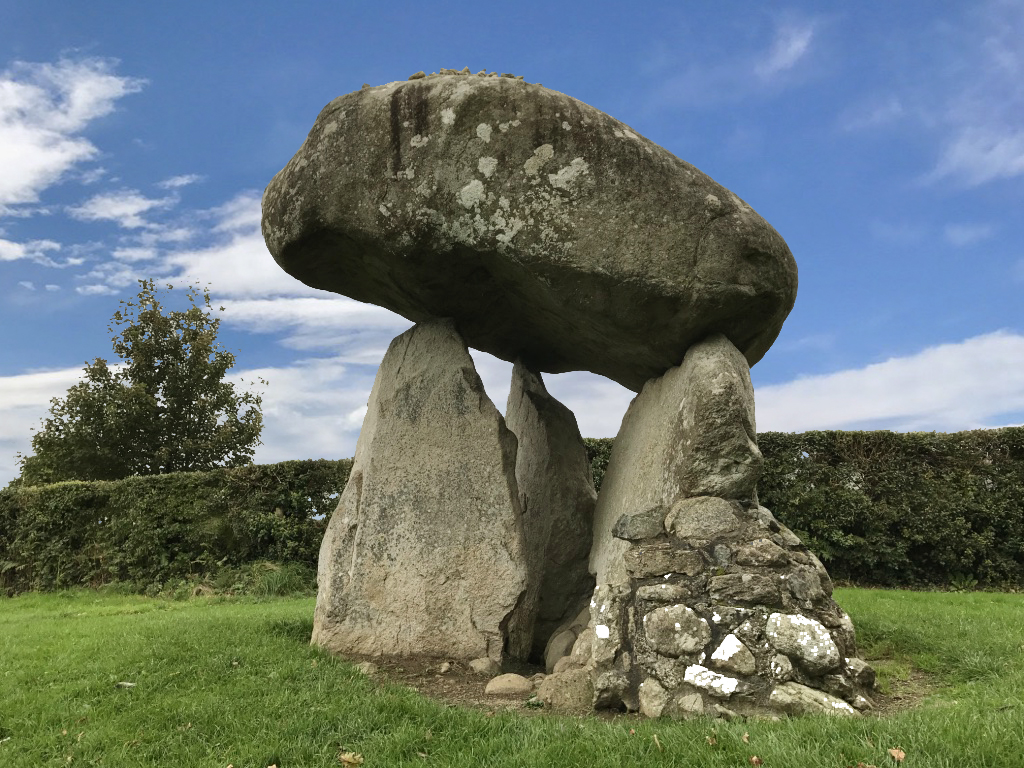
Our attendance at the Symposium set me thinking about the whole subject of stone. It’s the most basic of creative materials, as relevant today in construction and art as it was to our Neolithic ancestors. Proleek Dolmen in County Louth (above) is an example of the early use of stone to create a structure which made a huge impact on the landscape. It’s a portal tomb over 3 metres high, and the supporting stones are around 2 metres high: the capstone is estimated to weigh 35 tons. It’s probably a more visually impressive structure today – in its ‘naked’ state – than it was when completed, as it is likely to have been covered over with a mound of earth and / or stones. There is folklore attached to this monument: it is known locally as the Giant’s Load, having been  carried to Ireland by a Scottish giant named Parrah Boug McShagean, who is said to be buried in the tomb or nearby.

Here’s another portal tomb – the largest in Europe – which I discussed in this post from last year. It’s known as Brownshill Dolmen, and is in County Carlow. Finola is in the picture to give the scale. This capstone is said to weigh 103 tons. The portal tombs demonstrate the use of stone in its rawest and most spectacular state: they are examples of Ireland’s earliest architecture, and we don’t really know what they were for. Perhaps it’s to do with status, either of the builders or of the chiefs or priests who might have been buried in them. They certainly make mighty marks on the landscape…

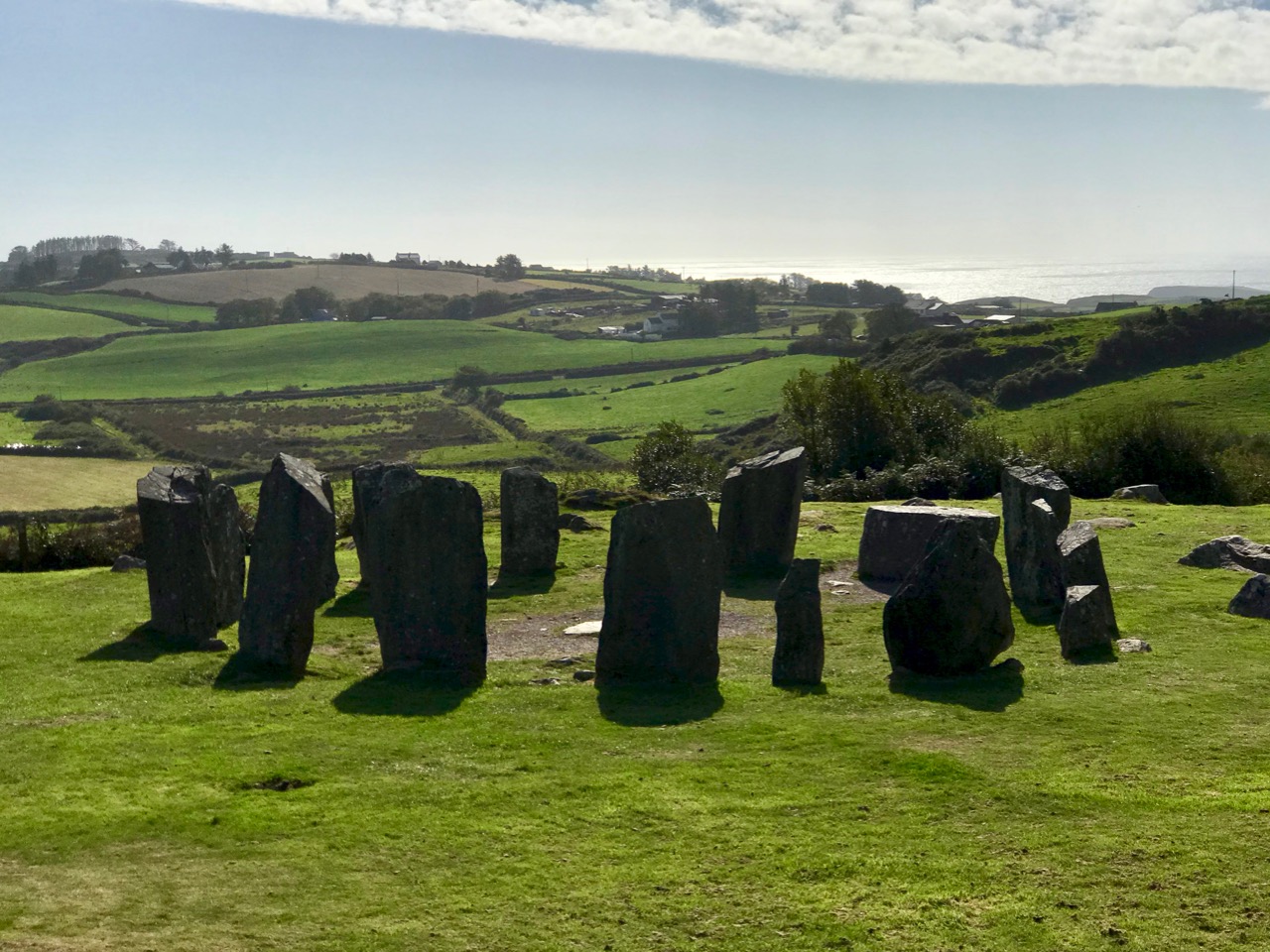
…As do all the other stone monuments which celebrate their makers – although perhaps they remain enigmatic to us today. Bronze Age stone circles have always fascinated, and at least we know that they have orientations which must have been significant. Drombeg in West Cork (above) is much visited at the winter solstice, when the path of the setting sun falls over the recumbent stone when observed through the two portal stones at the east side of the circle.

While the earliest dwellings of the inhabitants of Ireland thousands of years ago were probably constructed from organic materials  – earth, sticks and furze – stone began to play a part in architectural construction in Christian times. The remarkable Gallarus Oratory (above) on the Dingle Peninsula, County Kerry, was long thought to have dated from around the 8th century, although an early commentator – antiquarian George Petrie, writing in 1845 – suggested:

I am strongly inclined to believe that it may be even more ancient than the period assigned for the conversion of the Irish generally by their great apostle Patrick . . .

It’s a fascinating discussion to follow – Peter Harbison sets it out in detail here, and concludes that the Oratory could have been built as late as the 12th century, even after the great Romanesque flowering which included the building of monastic settlements and round towers.

The 12th century cathedral and (possibly earlier) round tower at Ardmore, County Waterford (above), should be a Mecca for stone enthusiasts because of its monumental architecture and carvings: St Declan founded the site in the 5th century, and his monastic cell survives. The Romanesque period in Ireland has many other examples of stone craftsmanship to show, proving that working with stone had become a high art in those medieval times. The examples below are from Killaloe Cathedral in County Clare.

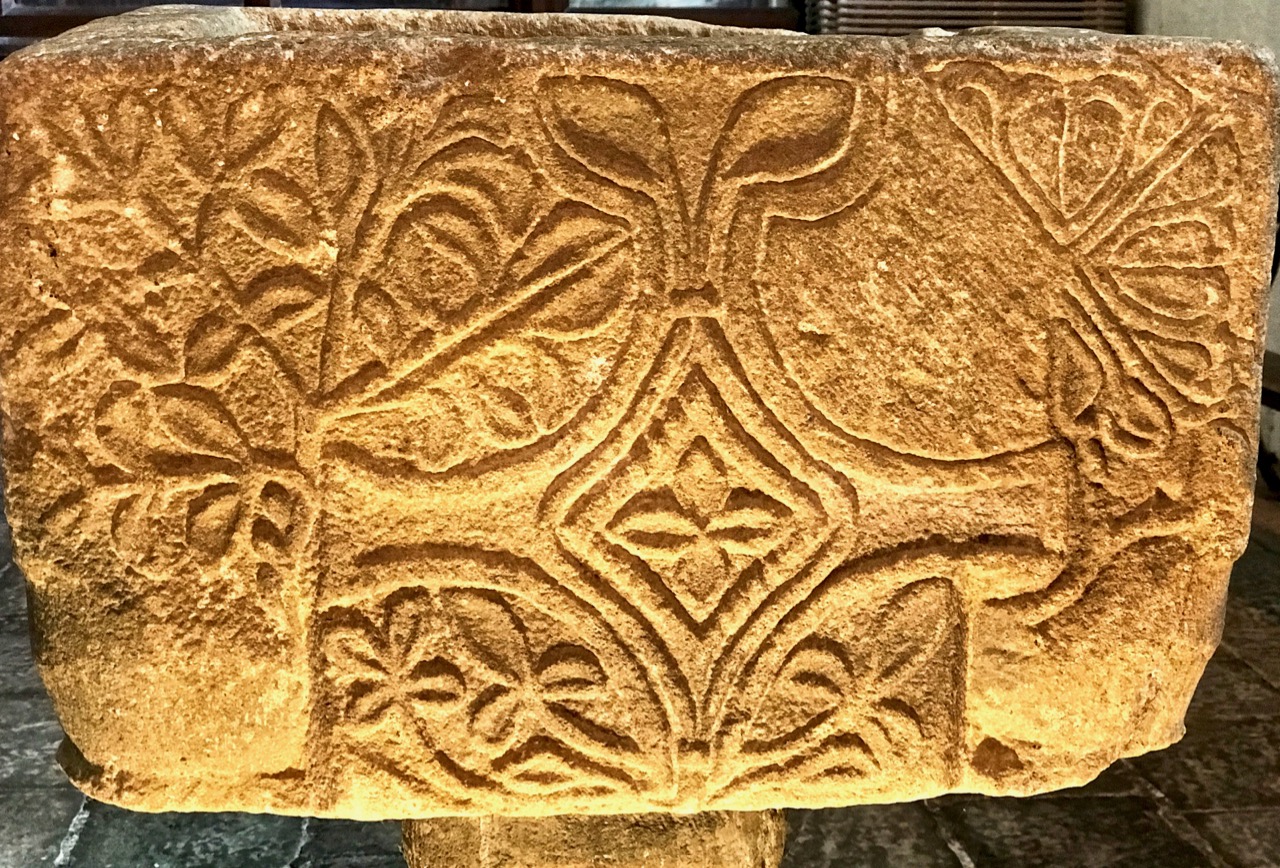
One of the finest Romanesque sites is the Rock of Cashel in County Tipperary. Finola has written in detail on this architectural gem here and here. Suffice it for me to illustrate only one of its treasures – Cormac’s tomb, a sarcophagus beautifully carved in the ‘Urnes’ style – a Scandinavian tradition of intertwined animals.

For centuries, stone has also been a ubiquitous utilitarian building material all over Ireland. ‘Castles’ or – more properly ‘Tower Houses’ – date from roughly 1400 to around 1650, and many remain in a ruined condition, particularly on the coastline of West Cork: we can see five of them from Nead an Iolair. Some have been restored in modern times, including Jeremy Irons’ Kilcoe Castle. The example below is from Conna, East Cork.

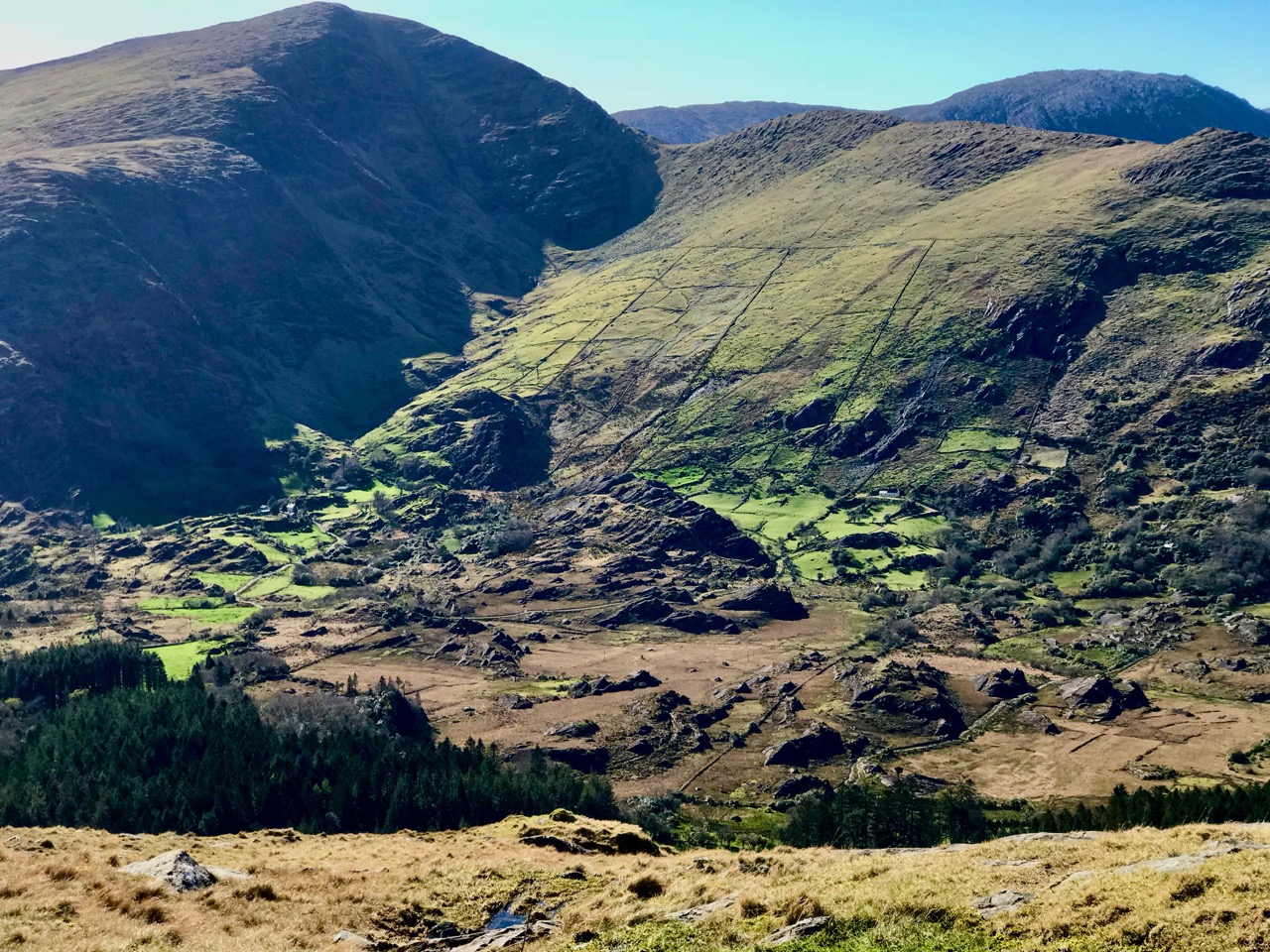
Ireland’s landscape is sculpted from stone. Drystone walling is an ancient tradition still practiced for dividing up land, and varies considerably in style regionally, reflecting the differing geology across the island. Two examples from the Beara Peninsula (below) show the essential geometry of field patterns which stone wall building has created over the centuries.

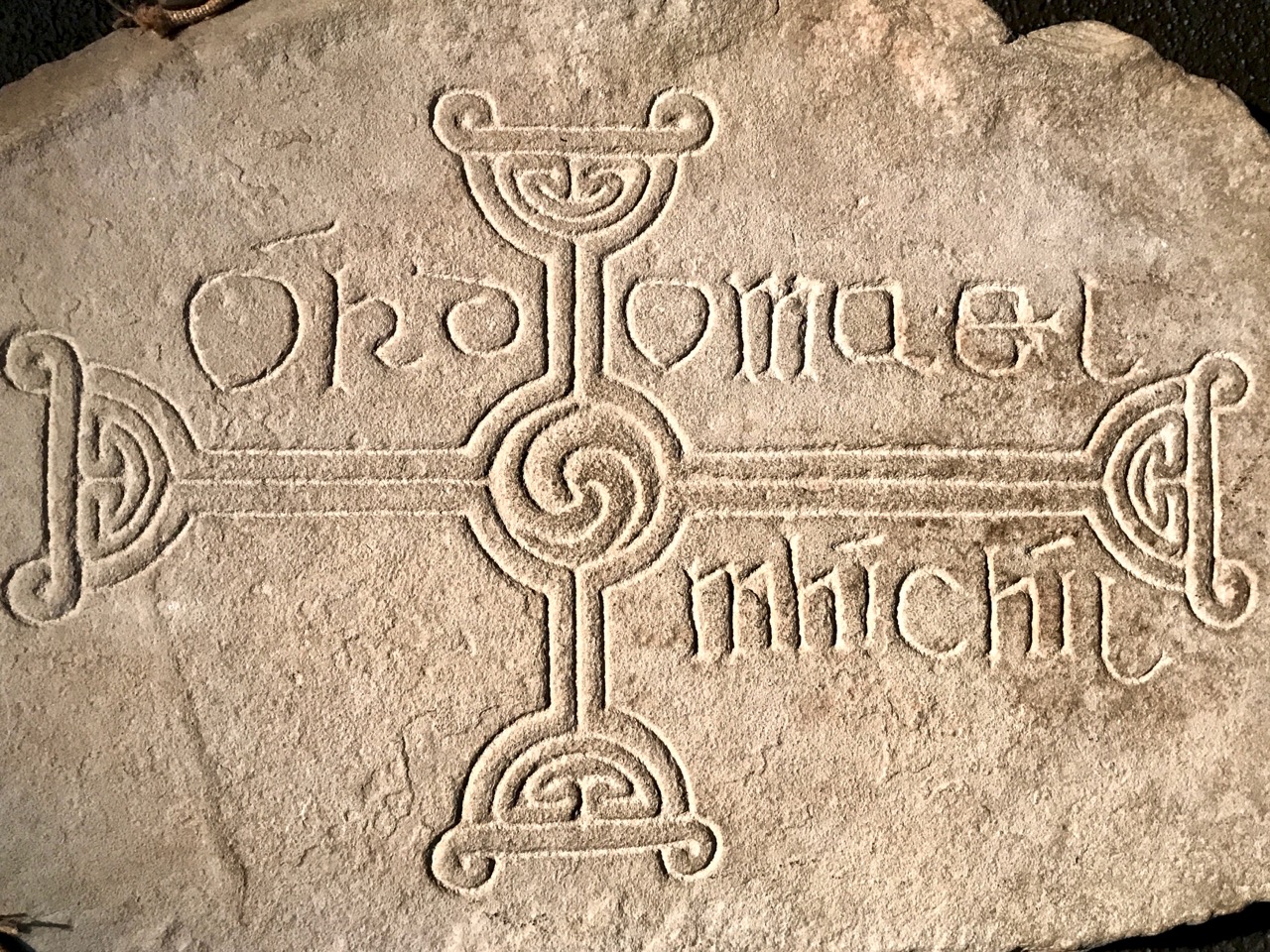
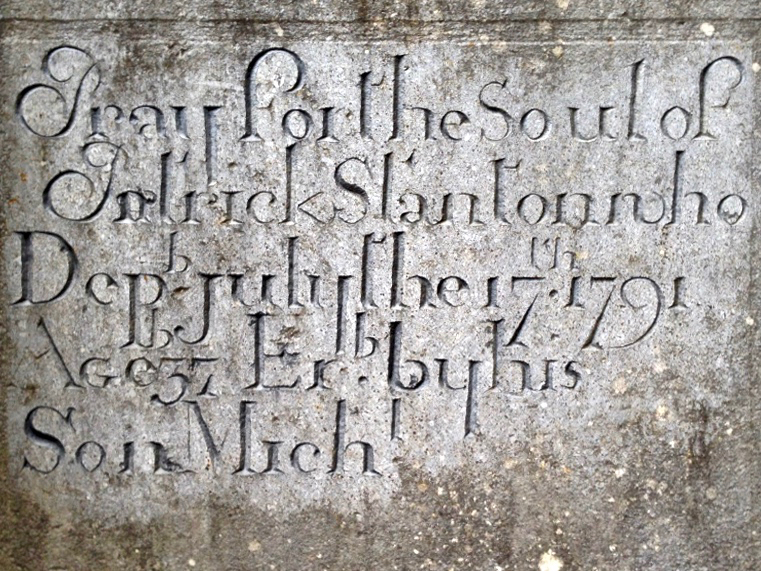
Stone has also long been a medium for communication. We have commemorated our ancestors for centuries with grave markers, often with elegantly carved lettering. Of the two examples below, the first is from Clonmacnoise, and is likely to be early medieval, while the second is an inscription from 1791.

This is just a brief history of our use of stone, dating over thousands of years: I have chosen many examples – almost at random – but hope that I have demonstrated how important it is to continue this ancient craft. The West Cork Stone Symposium is doing sterling work in promoting it today: long may this continue!

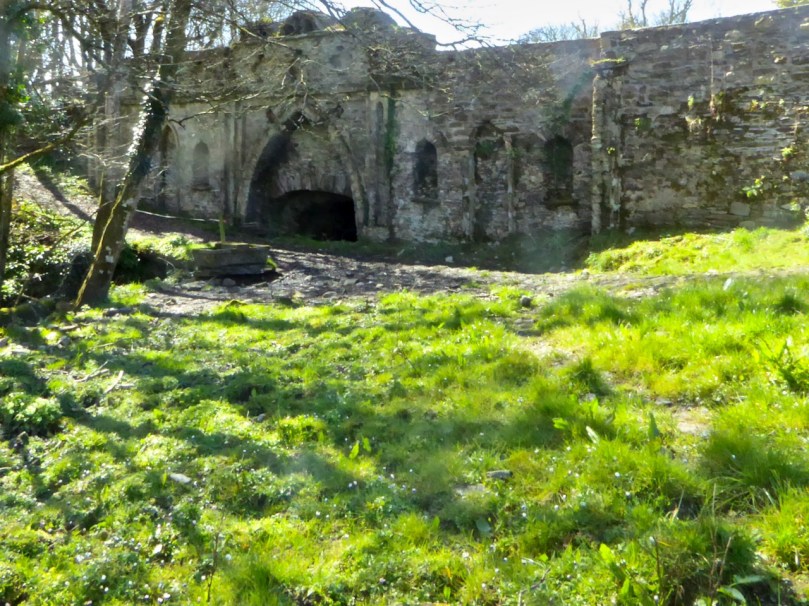
New Court Bridge – a Hidden Wonder

New Court Bridge has been badly damaged recently. Why does that matter?

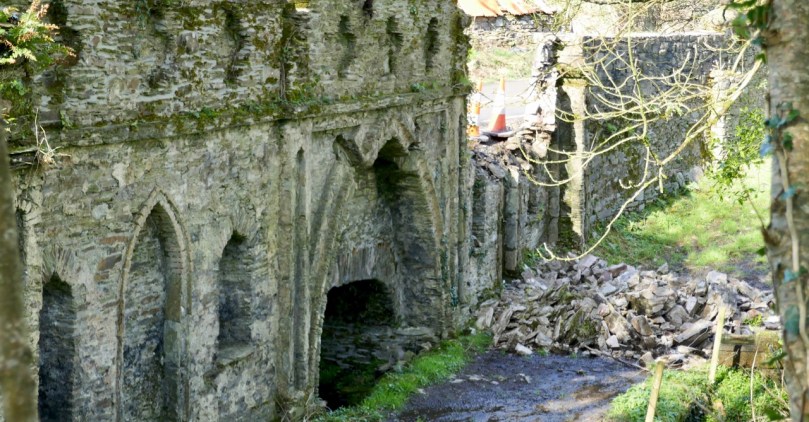
The damage from behind the wall. Now you can see that this is a bridge – but a most unusual one!

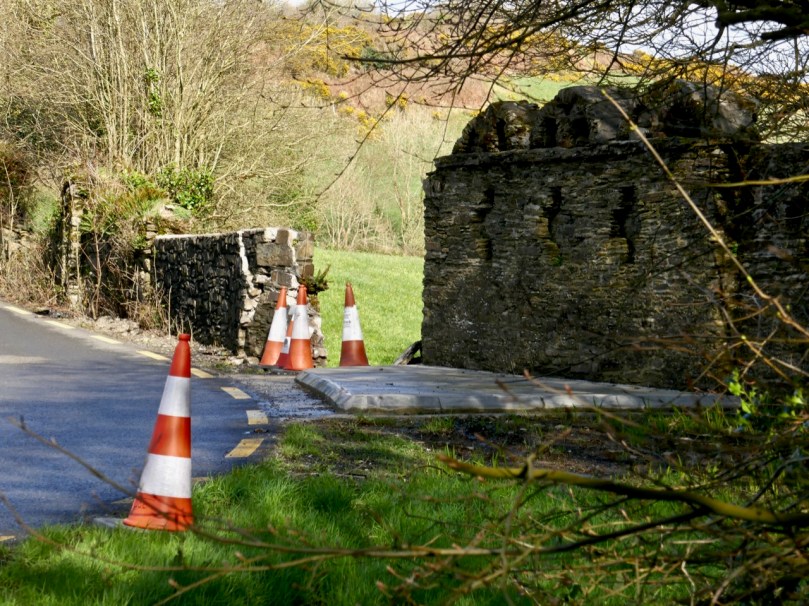
Most people driving by this dangerous bend, where the Ilen River meets the N71 just west of Skibbereen, notice the funny arches on top of the wall, but don’t think twice about them. It’s too risky to stop and take a close look, after all. Most people, in fact, probably don’t realise that they are driving over a bridge, although that’s a bit more obvious now as the County Council have put in one of those concrete pads that are going in front of all bridge walls at the moment (see lead photograph).

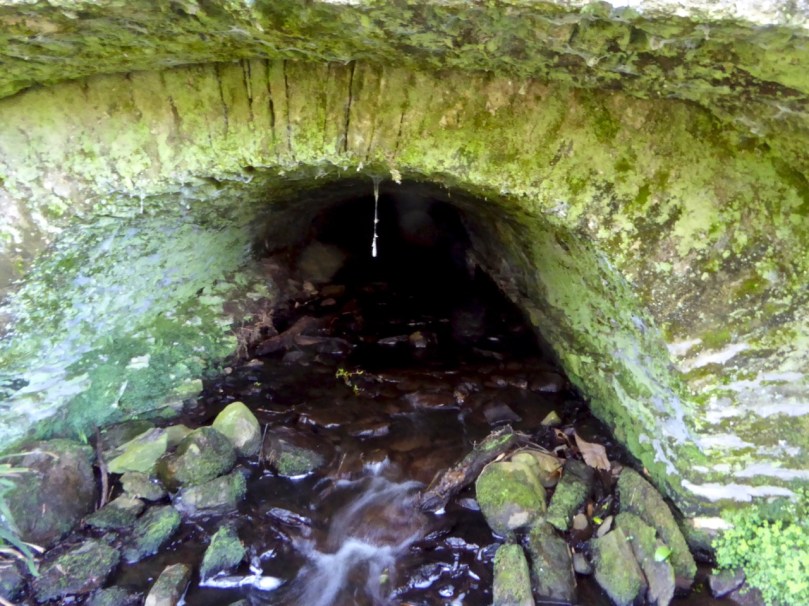
Water under the bridge

Does anyone know how the damage happened? Did a car take the bend too fast and hit the wall? Did the concrete work loosen the structure of the wall? Let us know if you have information. I hope nobody was hurt. All I know is that one morning I was driving into Skibbereen and there was a chunk of the wall – gone!

Early Ordnance Survey map of the New Court Estate, bounded by the Ilen River on the east and south. The red dots indicate the locations of the belvederes (marked as towers) and the bridge

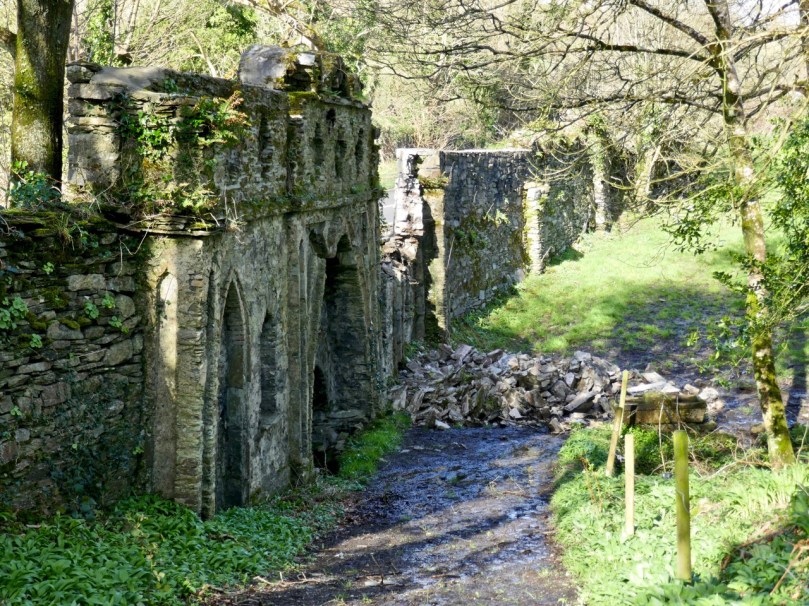
We tend in Ireland to think of old estate walls like this one as ‘Famine Walls’, erected during the mid nineteenth century as work projects. But this wall was far older than that, and it hid a secret – an elaborate facade on the back with decorative arches and niches. It was part of the plan for a pleasure garden undertaken by Henry Tonson at his newly acquired ‘seat’ which he called New Court, to distinguish it from Old Court, across the river. Originally, there was a matching wall across the road, but it was demolished in a truck accident many years ago. EDIT: I misinterpreted this – rather than a matching wall across the road, in fact there were matching arches on either side of the road, west of the entry to New Court. Both are now gone, one at least due to the aforementioned truck accident. Thanks to Sean Norris for this information.

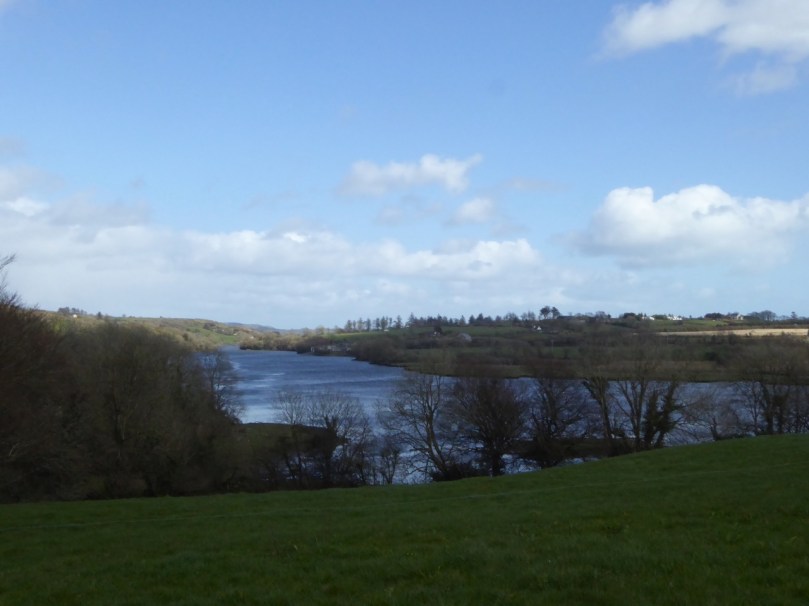
The Ilen floats by – a navigable river was a must for transporation to and from these early estates

The Tonsons had arrived in the 1660s. According to Burke’s Peerage, Major Richard Tonson received a grant of land in the county of Cork from Charles II for his distinguished exertions in favour of royalty during the Civil Wars and purchased the castle and lands of Spanish Island, in the same county. If he built anything on Spanish Island, just off Baltimore, no traces remain, and indeed, although strategic in marine terms at that time, it is hard to imagine how the island, mostly bare rock, would have made for comfortable accommodation.

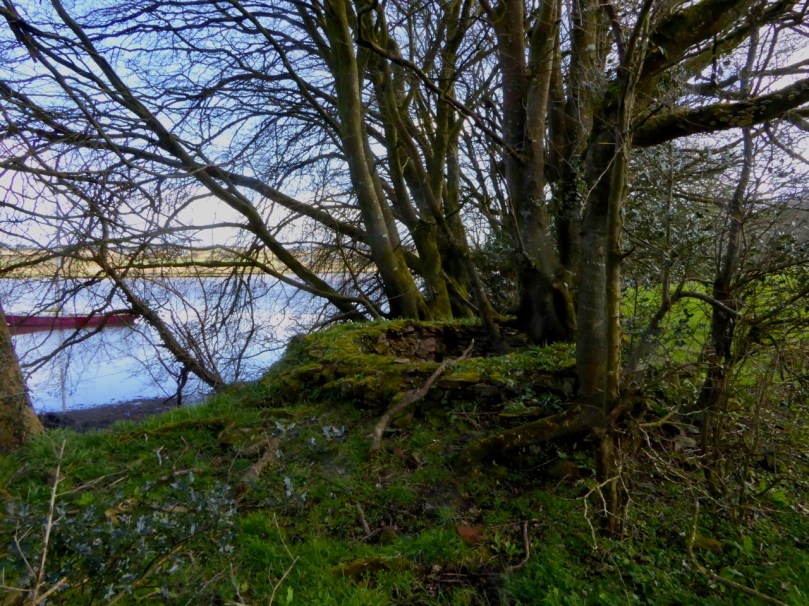
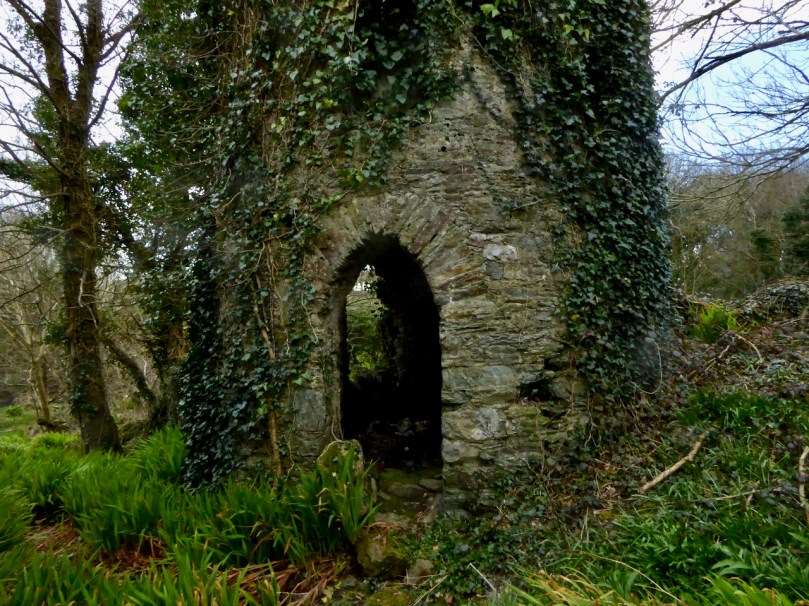
The stump of one of the belvederes, overlooking the river

It appears he, or his son, Henry, bought the land on the west bank of the Ilen and Henry set about establishing his dwelling there. This included building the wall around the estate. Eventually, and we are not sure when, one of the Tonsons (over time they acquired a title, Lord Riversdale) developed the area around the house as a vast pleasure garden.

The most complete belvedere. This one also functioned as a dovecote

The fashion for designed landscapes is an eighteenth century phenomenon. As I said in my post on belvederes, in that century

. . . a different style of landscaping. . . dominated garden design in Britain, pioneered by William Kent and Charles Bridgeman and reaching its peak in the work of Lancelot ‘Capability’ Brown. The effect they strove for was naturalistic (as opposed to natural) – a planned layout that mirrored but enhanced their idea of a ‘wild’ and romantic landscape. Large expanses of grass, strategically placed lakes and ponds, plantings of carefully chosen tree and shrub species, and clever little structures such as temples, summer houses and belvederes all combined to delight the eye, create a romantic mood and, of course, attest to the taste and wealth of the owner.

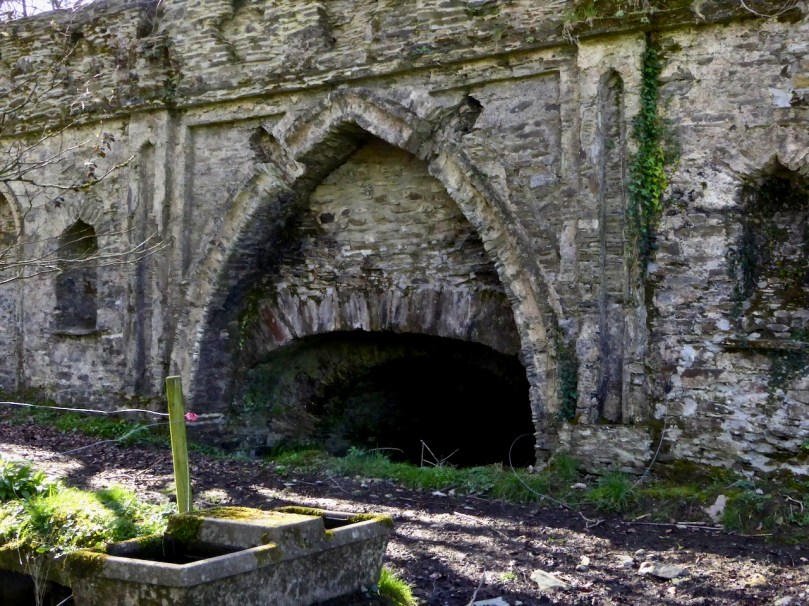
A closer look at the construction of the bridge. It would be fascinating to attempt a reconstruction drawing. The niches may well have held statuary or decorative urns

Although the grand houses at the centre of the estate have now gone (see this photograph in the National Library for a glimpse of the last one), there is lots of evidence still of such a designed landscape. Originally lawns sloped to the river – no need to build artificial ponds as the Ilen provided the perfect watery scene. Little round towers were built to be used as gazebos or belvederes (and in one case a dovecote): three in all, of which the stump of one and a fairly complete second are still to be seen. The bridge with its elaborate facing was the crowning glory of the estate wall.

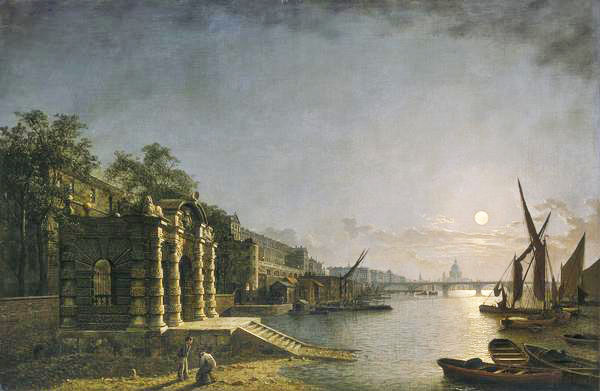
The York House Water Gate as it would have looked originally on  the Thames (Wiki Commons)

What did the bridge wall look like originally? We don’t know, but Peter Somerville-Large in his Coast of West Cork says it was modelled on the ‘water gates at Hampton Court’. I can’t find any images of this online, but I have found the water gate at York House, which is still there. It was built as a ceremonial landing place on the Thames (above) although it is now a long way from the river.

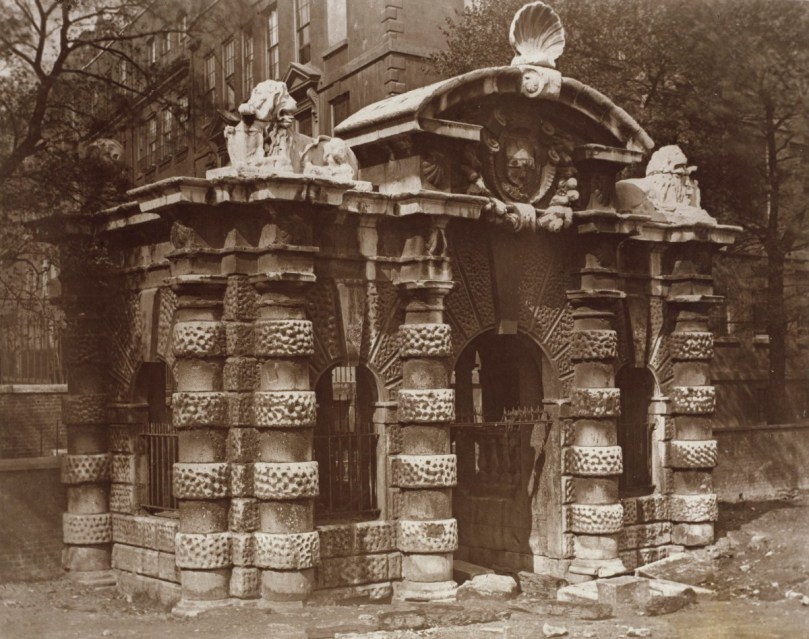
The York House Water Gate in an early photograph (www.royalacademy.org.uk/art-artists/work-of-art/O18442 Credit, Royal Academy of Arts / Photographer William Strudwick )

Of course, it is larger and more elaborate, but you can still see the basic shape, with its curved arch on top and the arched niches in the wall. The arches at New Court may have been plastered, perhaps, or faced with some material. The York House Water Gate dates to 1626 and it’s all that left of the York House estate – the Tonsons may well have been familiar with it or with similar water gates along the Thames. Building such an edifice would have been aspirational, indicating a desire to impress.

This was what it looked like in 2016 – taken by a camera with spots on the lens

The likelihood, therefore, is that the bridge at New Court is most probably eighteenth century, and early eighteenth century at that – about three hundred years old. We don’t have a lot of structures in West Cork dating to then. Surely it’s worth preserving those that still exist? I am hopeful that the National Monuments Service (they’ve been alerted and have notified their Monument Protection Unit) will come riding to the rescue. I’ll be keeping an eye on it all – you do too. But note that this is private property, so no walking or driving through the gates without permission.

UPDATE, MARCH 20, 2019. This notice was received from the National Monuments Protection Unit: “Cork County Council (Bridge Management) have indicated it is prepared to repair the wall as a Reactive Maintenance Incident and will ensure repairs meet any necessary heritage requirements.”