Miniature World

A bog seems at first like an unpromising site for photography but all it takes is getting close. This isn’t as easy as it sounds, since bogs are wet places, but having arrived home sodden but exhilarated I’ve decided it’s definitely worth getting wet. My role model in this type of close observation is Tina Claffey, whose book, Tapestry of Light, and whose Facebook Page are constant sources of inspiration. Tina – thank you! We must be twin souls because like you I return again and again to the same patch of bog. Time loses meaning as I simply lie and let my eye tune in.
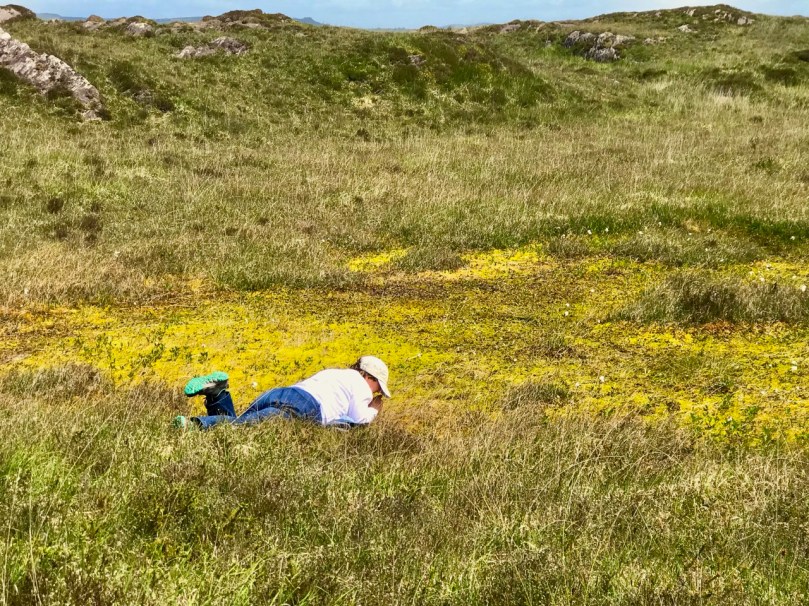
My little patch is quite close to my house and I described it in my post last year “The Wildest and Richest Gardens” – West Cork Bog Soaks. It’s taken a while this spring for the Cappaghglass soak to wake up but it’s well and truly alive now so here’s what’s there already.
On the rocks

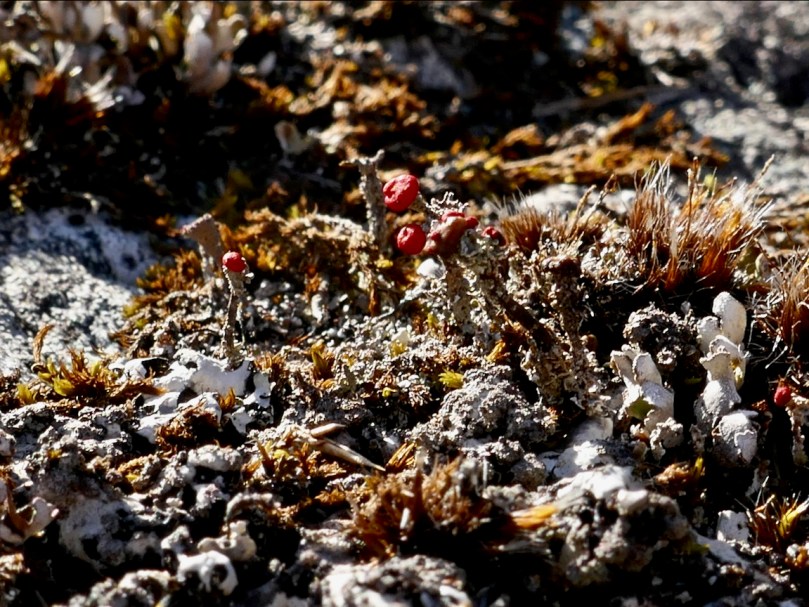
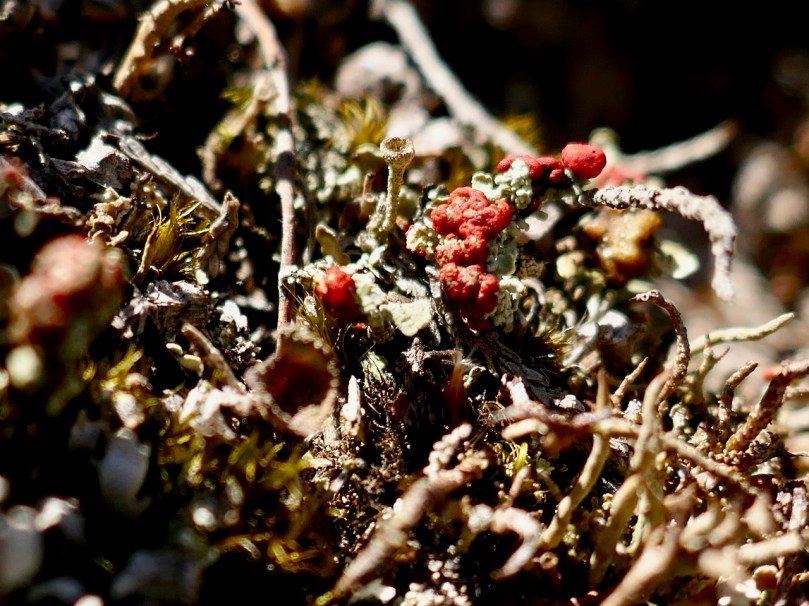
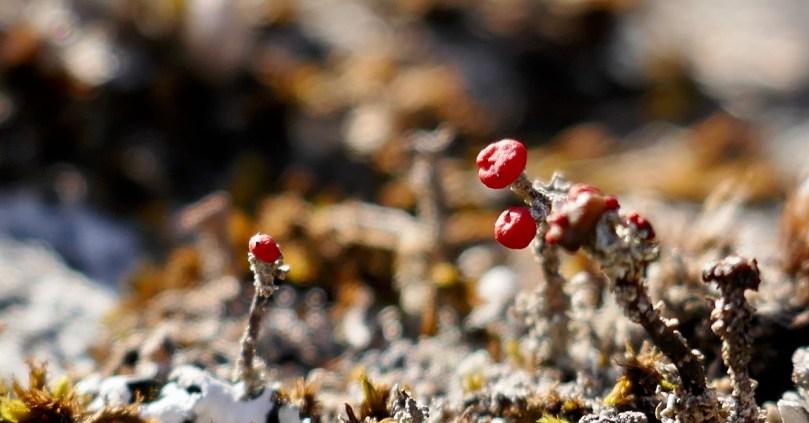
First of all, the soak is surrounded by heather and rock. Lying on the rock, with my face a few centimetres from the surface, I have become aware of the rich lichen growth all around me. I don’t know a lot about lichens but I have been studying this one (above and below) – Devil’s Matchstick.
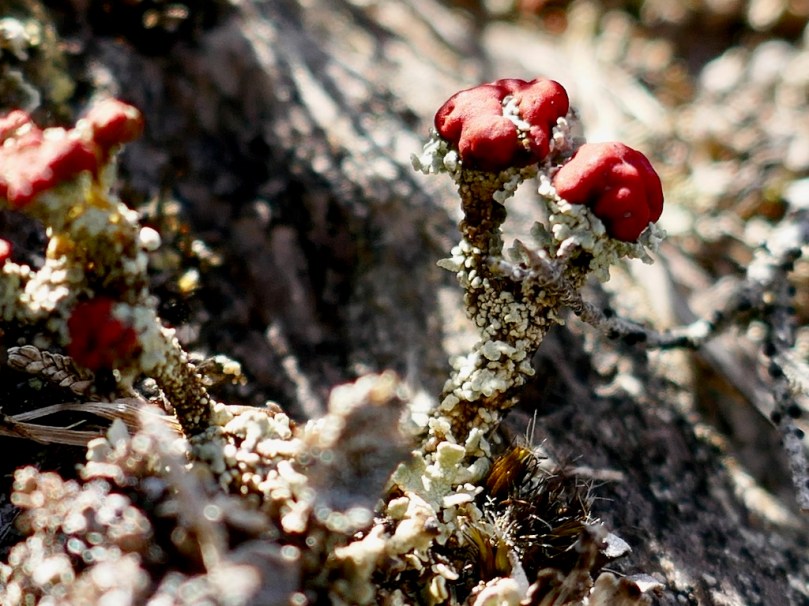
It’s obvious how it got that name, and it’s sometimes also known as Nail Lichen too. It’s only about a centimetre high, about the length of my little fingernail. The Latin name is Cladonia floerkeana. In Ireland we get this bright red form of it, whereas in North America the tips are black.  The site I go to to learn about Lichens is http://www.irishlichens.ie. Here’s what they say about lichens on their home page:

Lichens are dual organisms; a fungus and one or more algae in a stable, mutually beneficial (symbiotic) partnership. The fungus provides structural form and protects the algae from extremes of light and temperature. Algae are capable of photosynthesis and some of the sugars produced provide the fungus with energy for growth and reproduction. Some lichens can live for many hundreds of years and being sensitive to pollution levels they are important environmental indicators.

There are several red-tipped lichens in the Cladonia group so I must look out for others. The trunk is described as squamulose which simply means scaly, at the bottom and becoming fruticose (or shrubby) as it grows. The stems are called podetia, and they are topped by the bright red apothecia. Yikes! Don’t think I’ll become a lichen expert in this lifetime.
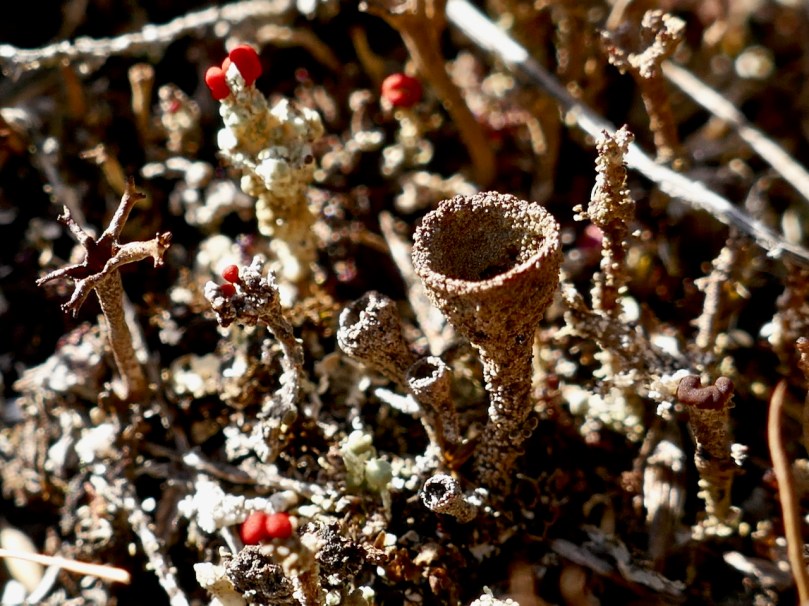
And look at this one, that looks like a goblet – it’s another Cladonia but I don’t know which one. And lots of white lichen to boot. It’s a whole world down there on the rock, under our feet. 
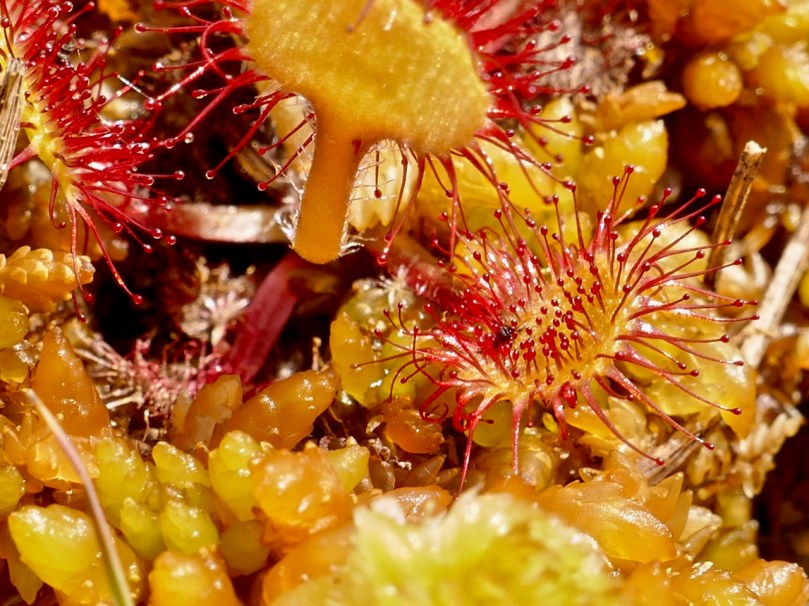
Let’s move over to the the bog soak now and look at two things in particular. The first is the Sundew. At first I thought it wasn’t up yet, but as I got closer I realised that it was just emerging from the surrounding Sphagnum moss (the second thing).
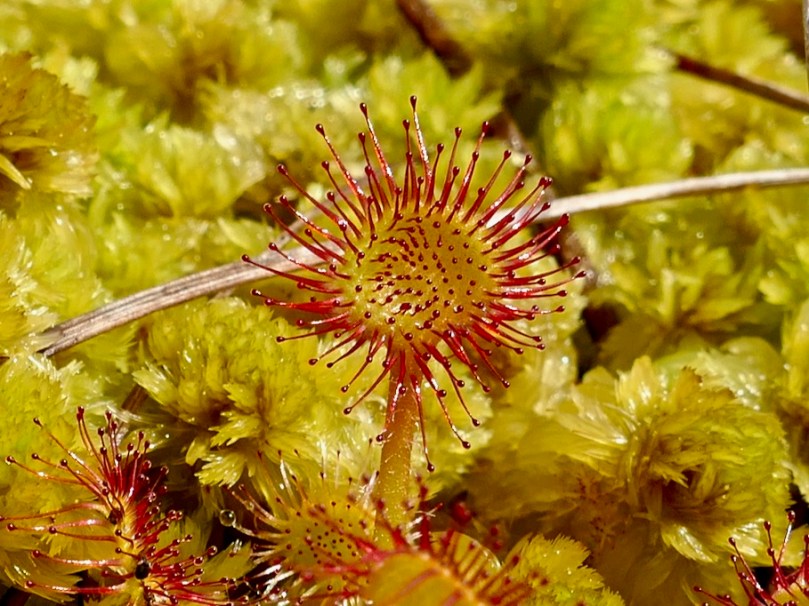
Besides looking weirdly otherworldly, the Sundew is a clever little critter, well adapted to this habitat. It’s developed a special mechanism to ensure it gets the nutrition it needs, since there isn’t much in the bog. It traps insects on its little sticky hairs, then the leaf rolls rolls over and digests them.

You might not want to watch this video if you have a weak stomach

The sundew does have a little white flower, but it’s the leaves that are the centre of all the action on this plant. Our bog soak has the Round-leaved Sundew, which is more common in Ireland than the Oblong-leaved Sundew that you saw in the video.
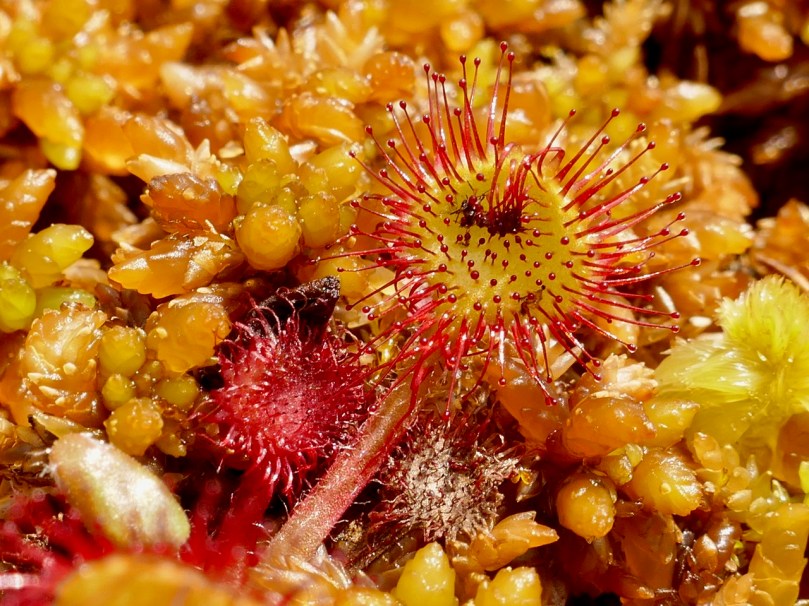
A hapless ant is this Sundew’s meal

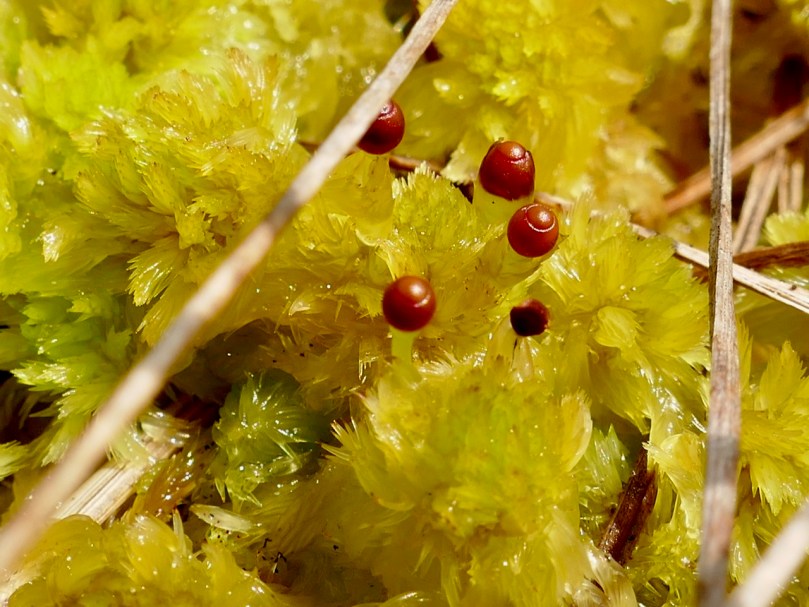
Finally, as I was nosing around (er, literally) among the Sphagnum, I saw that some of them had these little brown caps and I wondered what they were. It turns out that mosses propagate by means of spores, and the caps are little exploding spore capsules. When they blow, they fire the spores great distances.
Take a look at the spores exploding in slow motion – it’s quite a sight.

Some of the capsules in my little patch had exploded already – you can see the empty cup-like capsules in the photograph below – at the bottom of the picture..

Sphagnum itself is an amazing moss – we wouldn’t have bogs without it, as it’s what holds all the moisture. The Irish Peatland Conservation Council has an excellent information page on Sphagnum. It includes this:

A huge number of tiny microscopic plants and animals live with Sphagnum mosses. A few drops of water squeezed from wet Sphagnum contains hundreds of microscopic species such as desmids, diatoms, algae, cyanobacteria, amoebae, rhizopods, flagellates, ciliates, rotifers (wheel organisms), worms, nematodes (round worms), flat worms and heliozoans (sun animals). One scientist counted over 32,000 microscopic animals from a Sphagnum moss growing in a bog pool!

Now that’s a bit too miniature for my lens. I’m happy at the magnification I can achieve with my Lumix. If you need me, you know where I’ll be.
 

Long Island Wildflowers – a Reconnaissance

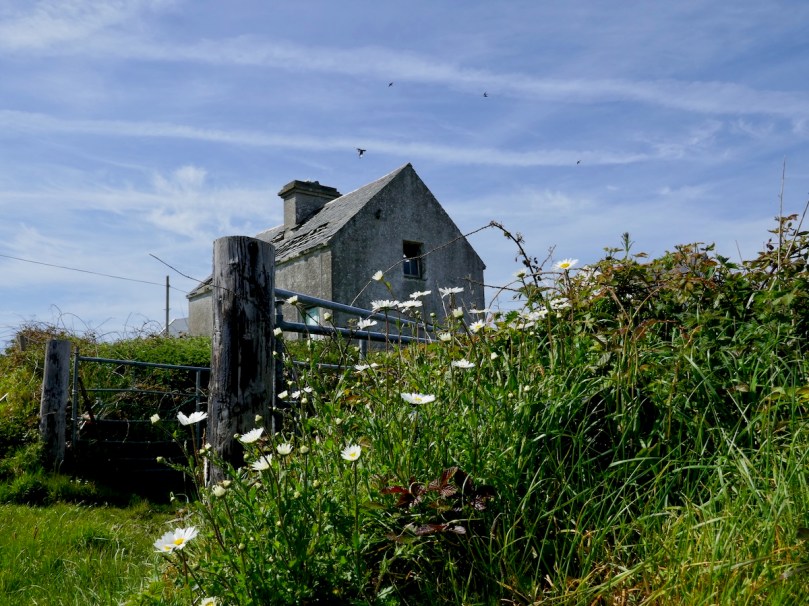
Robert and I set off on Tuesday for Long Island and enjoyed everything about it. See his post Mizen Magic 15: Long Island for a full account of our day. One of Roaringwater Journal’s New Year Resolutions was to spend more time on the islands and this was an excellent start! I was there mainly to take a look at the wild flowers, with a view to leading a wildflower walk there later in the year. Do let me know if you’d be interested in coming along, in the comments section below.

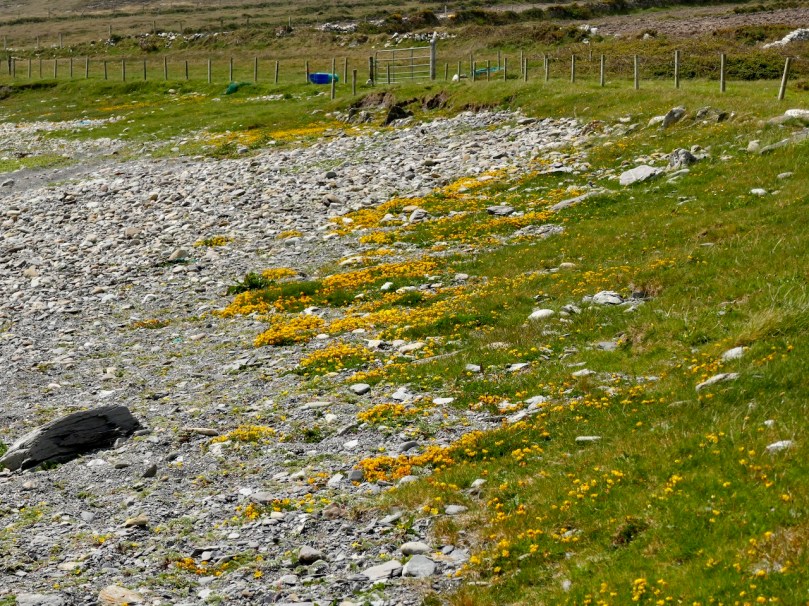
I’m used to seeing Bird-foot Trefoil in my garden, but here it’s spread to the stony beach and looks wonderful

Wildflowers come and go, so what I saw was a lovely selection of late spring and early summer blooms. I also got a feel for the character of the island and the habitats it hosts.

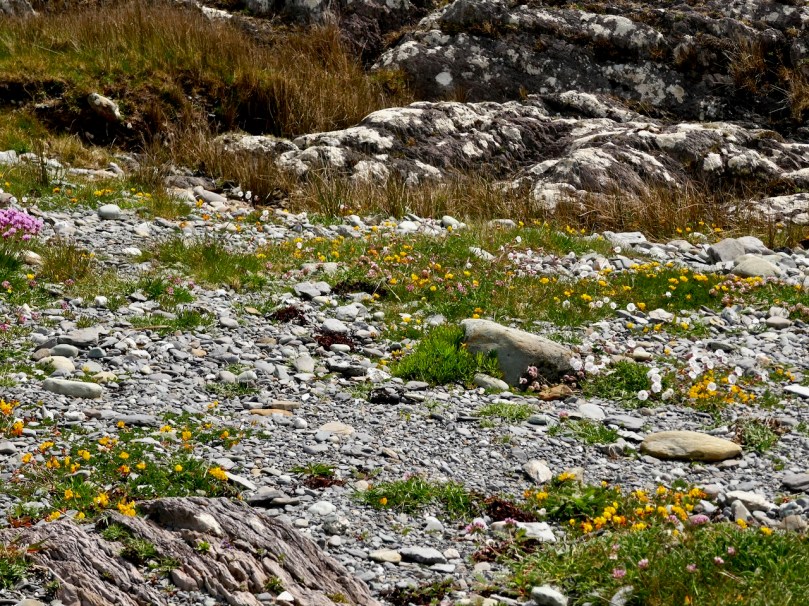
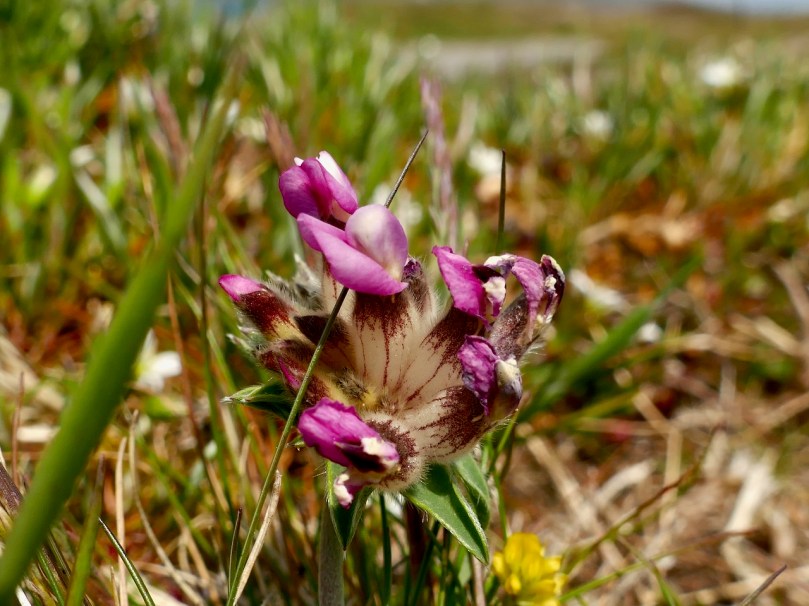
The maritime habitat was rich with Thrift, Trefoil, Kidney Vetch (also the lower photo) and Sea Campion

It would be lovely to be able to say that the island is pristine and free of invasive species, but alas we did see some Japanese Knotweed along the way. We are left scratching our heads as to how it manages to spread like that.

The uncultivated higher ground was particularly colourful, with Lousewort predominating. In this photograph you can also see the yellow of Tormentil and the pale flowers of Common Milkwort (see below for more on this Milkwort)

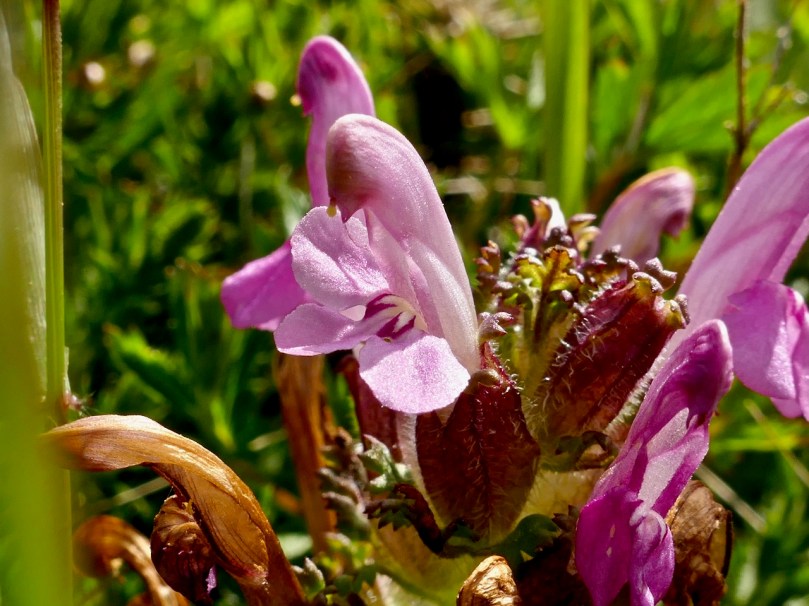
I don’t think I have ever seen such a profusion of Lousewort (below) anywhere else and this is one of the things that gives Long Island a particular colour at this time of year. It’s not a pretty name, for what is, in fact a beautiful little plant, but it was so called because it was believed that sheep got lice from eating it. This has never been proven, but the name stuck. Long Island, with its acres of damp moorland, provides the perfect habitat for Lousewort.

It’s also perfect for Tormentil and Common Milkwort (below). This last flower is tiny – you have to get your face up close to the grass to see it and it’s normally a deep purply-blue. However, on Long Island there were lots of very pale Milkwort, almost white. Although I knew that Milkwort came in pink and white, besides dark blue, I had only seen blue before this year. Now I have to find some pink!

The Yellow Iris (below), which most people call Flags, are in abundance in all the marshy areas, creating a colourful swath here and there. Up close, they are very dramatic. Here, it’s native and welcome, but in North America it has become invasive, choking waterways and displacing native plants.

A couple of unusual flowers to end with, beginning with Musk Stork’s-bill (below). I found this little beauty before in a graveyard in Rosscarbery but this is the first time I have seen it near where I live. It’s described as ‘probably introduced’ which means that it’s not native but has been here a long time.

The flowers of the Stork’s-bill look very like a Crane’s-bill, but the leaves are hairy and they have these funny spiky seed pods, both of which help in identification

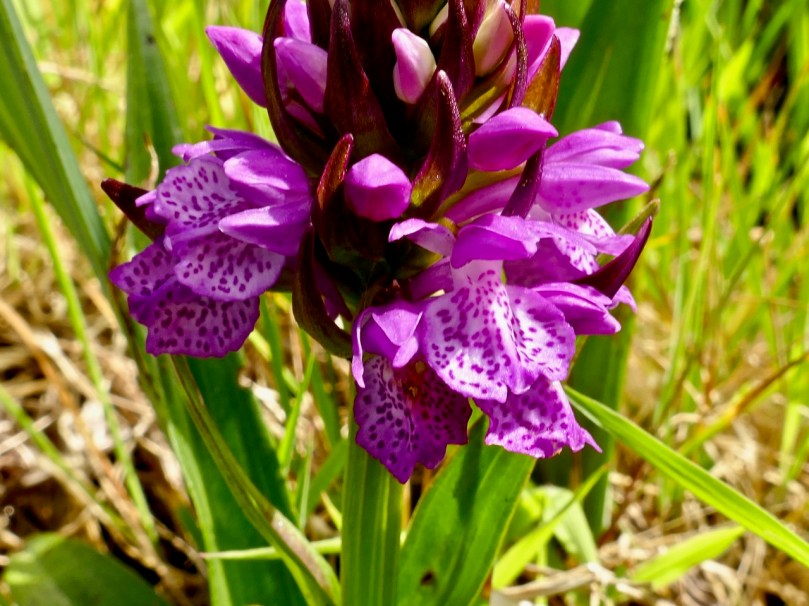
Finally – who can resist an orchid? There are several kinds of Marsh Orchid, but I think this one (above and below) is the Irish Marsh Orchid. We saw it before on Cape Clear, so it obviously loves islands! I was glad I had my hand lens with me, as this is best viewed close up.


Off the M8: Fethard Walled Town

Fethard is nestled snugly in Tipperary’s Golden Vale, famously rich agricultural land, and is nowadays well-known for raising legendary race horses. But it also happens to be the town in Ireland with the most intact set of medieval walls. The map above (taken from Fethard’s Conservation and Management Plan) shows how the town would have looked in the 1850s when George Victor du Noyer came through.

We drive the M8 often and we’re always looking for ways to vary the journey, so this post is part of our ‘Off the M8’ series. Fethard is an easy detour: if you’re heading north, leave the M8 at Exit 10 just after Cahir and re-join it at Horse and Jockey or at Urlingford. You’ll be travelling along lovely quiet roads parallel to the motorway and depending on how much time you spend in Fethard, the whole detour should add a couple of hours (or maybe three) to your journey.

Fethard also happens to have some lovely old shop fronts. This one dates to 1770

We started off at the visitor centre in the old Tholsel, or Town Hall. It’s been nicely restored and features an excellent audio-visual presentation, and upstairs many colourful explanatory panels. The staff was friendly and very informative, with an obvious passion for their town and its history.

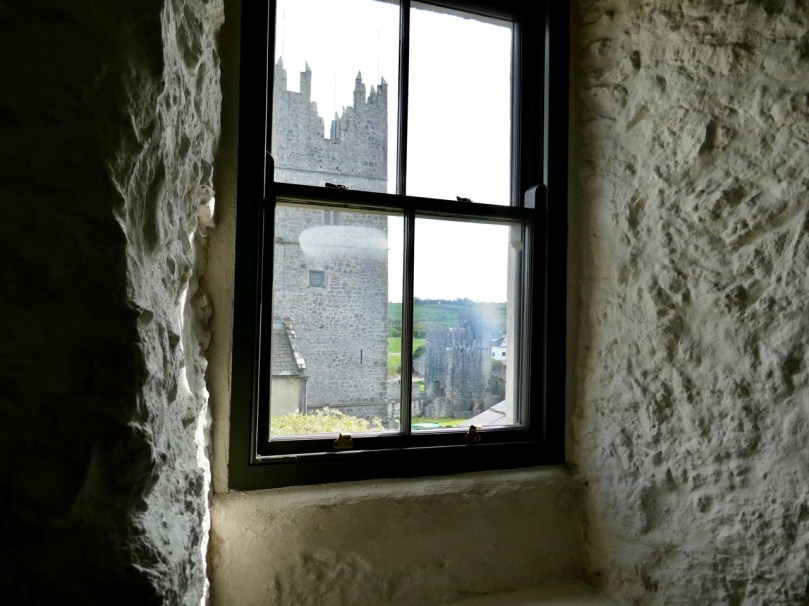
From the Tholsel Visitor Centre, you look down over Trinity Church and the walls

The town was founded around 1200, and walled soon after, when Edward I granted the right to raise money through what was known as ‘murage grants’. This continued over the next couple of centuries, in fact most of the walls were built (or rebuilt) in the 15th century. We tend to think of town walls as primarily for defensive purposes, and indeed the town was attacked on more than one occasions. But walls were also important demarcations of commerce. The market was held within the walls and according to Tadhg O’Keefe (in the Irish Historic Towns Atlas):

The walls were a barrier through which those wishing to trade in Fethard had to enter, so they articulated, especially with guarded gateways, the differences of privilege and opportunity between those who lived within and those who entered from without.

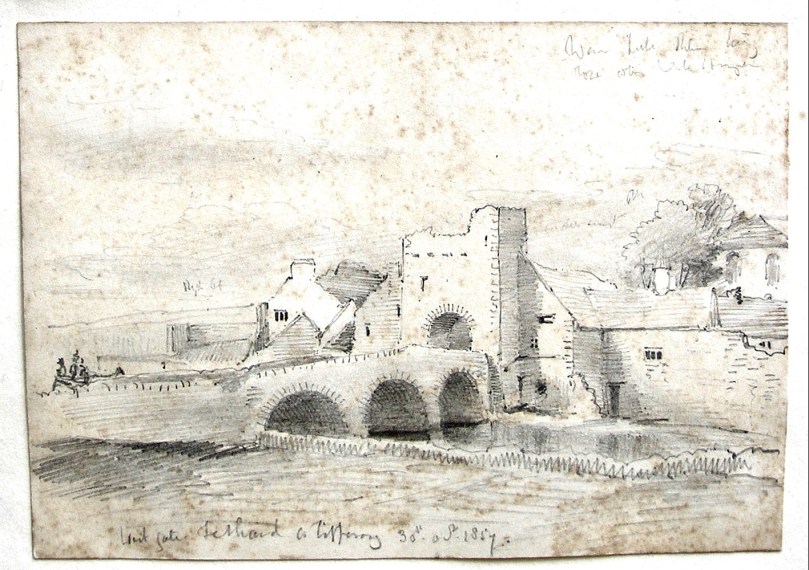
There is only one gate left, the North Gate, which we actually didn’t see. But when our old friend Du Noyer came through in the 1850s there was still a gate at the west end of the town (below). It guarded the entrance at the bridge known as Madam’s Bridge and had what O’Keefe describes as a rare type of Gate incorporating a three story fifteenth century tower house.

Despite the walls, the town was attacked and burned on several occasion – but not (unlike so many Irish towns) by Cromwell! In fact, the town surrendered, under terms, and was spared the violent destruction that the Parliamentary army visited on so many other Irish towns. This doesn’t exactly make Cromwell popular in Fethard, in fact there is still a tradition in the town that ‘people will not go out the way that Cromwell came in’ so that funerals, for example, take a circuitous route to the cemetery to avoid retracing his tracks.

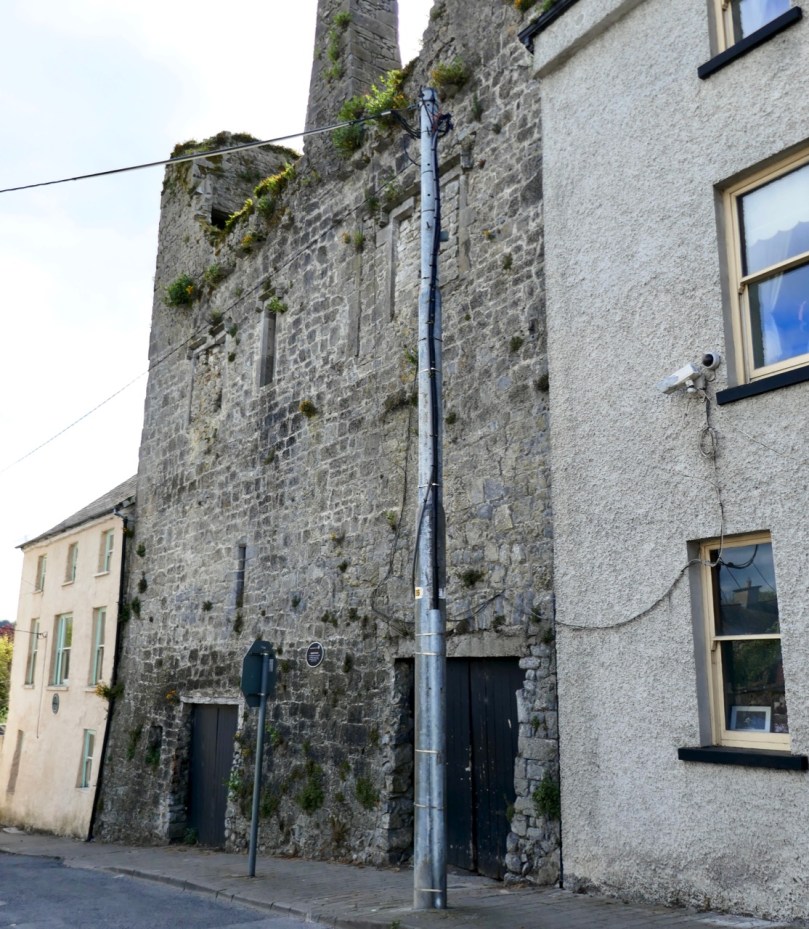
Like Youghal, the other Irish town with a significant extent of wall, there were tower houses along the wall, and within the town there were fortified town houses. Some are obvious and some are hidden behind more modern facades. Court Castle is one of the obvious ones, but the house next to it, known as the Watergate House, has a base batter that marks it out as fifteenth century (both images, below).

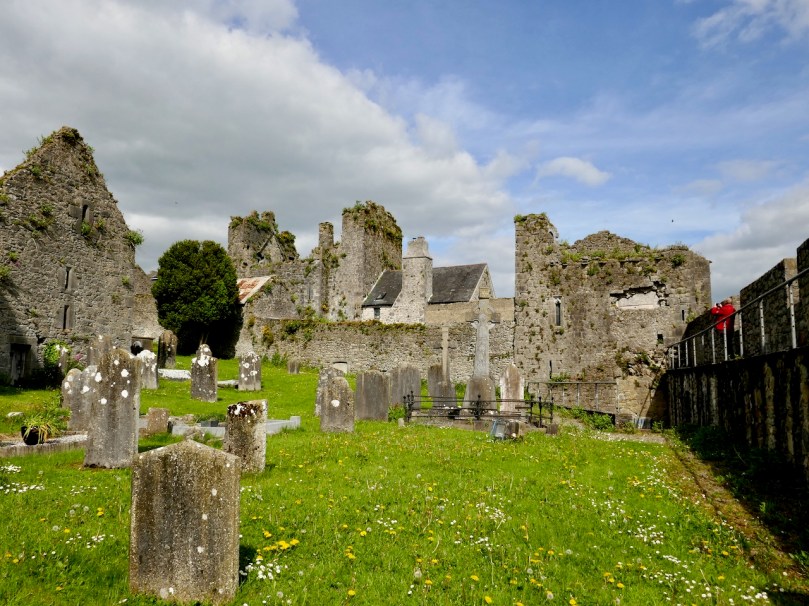
Within the walls and behind the Tholsel is Trinity Church. Because there is so much going on in and around it, I will quote the Buildings of Ireland summary in full:

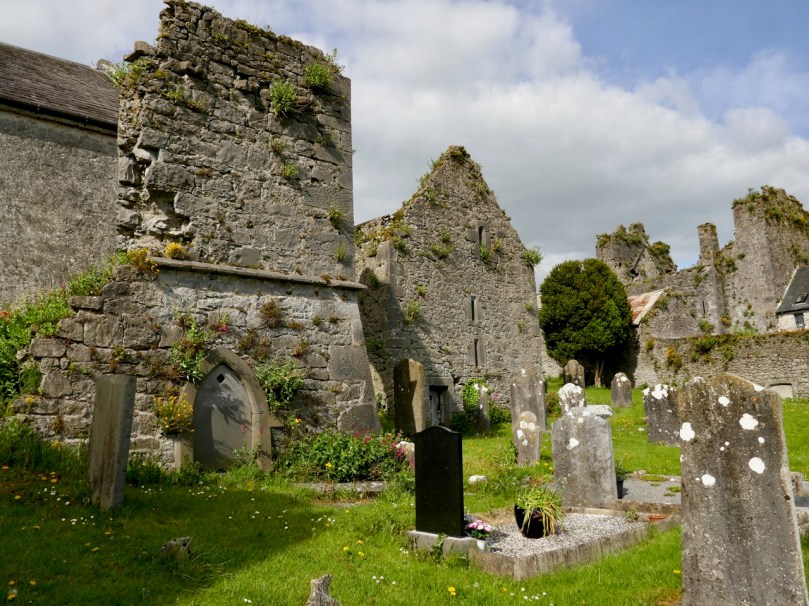
Like the Town Hall and the Augustinian Abbey, the medieval parish church is a multi-period building of outstanding architectural, archaeological and historical importance. The church stands at the heart of the medieval walled town and the focus for the extraordinary number of late medieval structures arranged around the sides of the graveyard with rear entrances allowing direct access to the graveyard. The size and design of the church reflect Fethard’s prosperity in the medieval and early modern periods, the different types of windows, from different eras, emphasise the continuity of use. The impressive tower, that is highly visible for a considerable distance, is a particularly important and dramatic example of fifteenth-century craftsmanship, and is especially evocative of the medieval era as it stands picturesquely and appropriately inside the almost entirely intact medieval town wall and close to a impressively rare grouping of late medieval houses and almshouses. The interior has a finely crafted timber screen to the vestibule, and at the east end a stained-glass window with Eucharistic motifs, both highly decorative, and showing care and attention in the design as well as the execution. The recently timber roof to the nave, recently dated to of c.1489, is of exceptional importance as it is one of a small number of medieval roofs surviving in Ireland and is almost entirely intact.

Trinity, the graveyard and medieval church remains on the left and the town walls on the right

Unfortunately, the church itself was closed when we were there. It’s still very much in use, though, and there was some tidying up taking place in the graveyard. I’d like to go back for another poke around sometime.

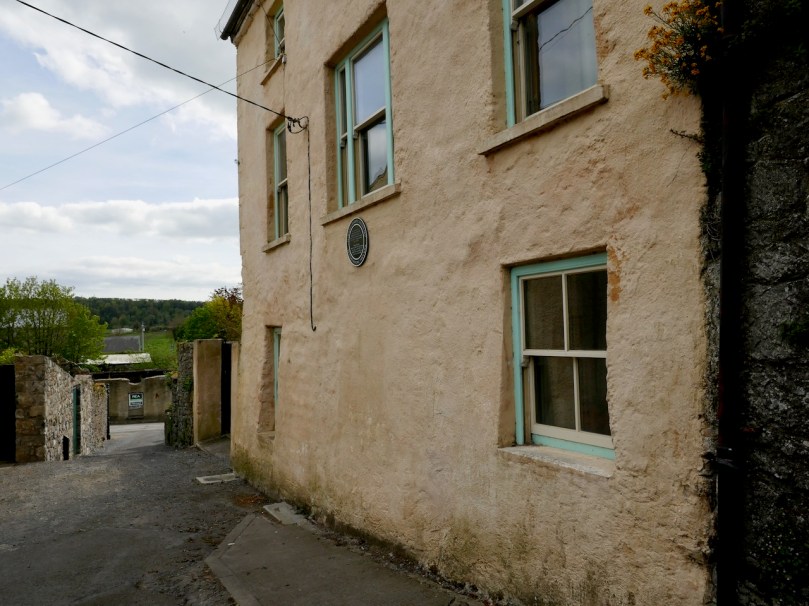
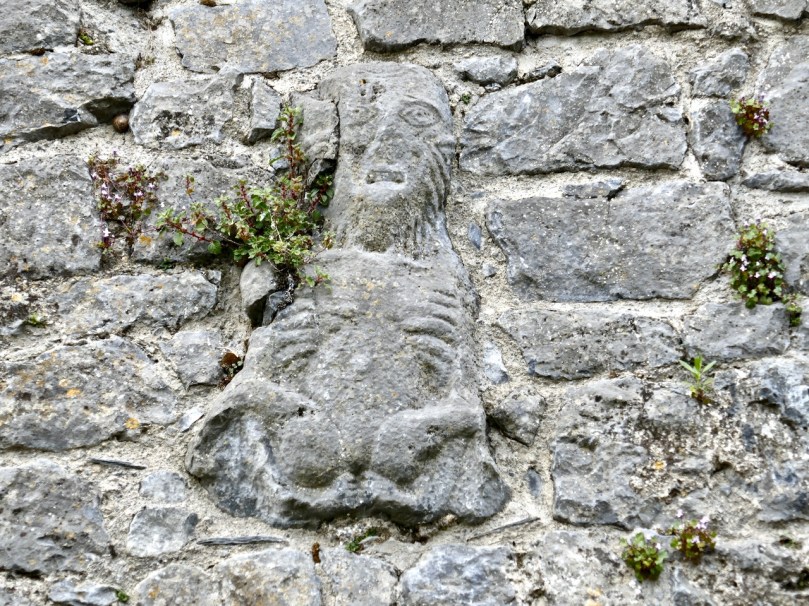
Down by the Watergate we came across one of Fethard’s two Sheela-na-gigs. (See this post for more about the Sheelas). This one is typical – a female figure displaying her genitalia, but unusual in her emaciated form with ribs clearly shown, staring eyes and a grimace. We didn’t have time to see the other one, which means a) you (yes, you, Dear Reader) have to, and let us know and b) we have to go back.

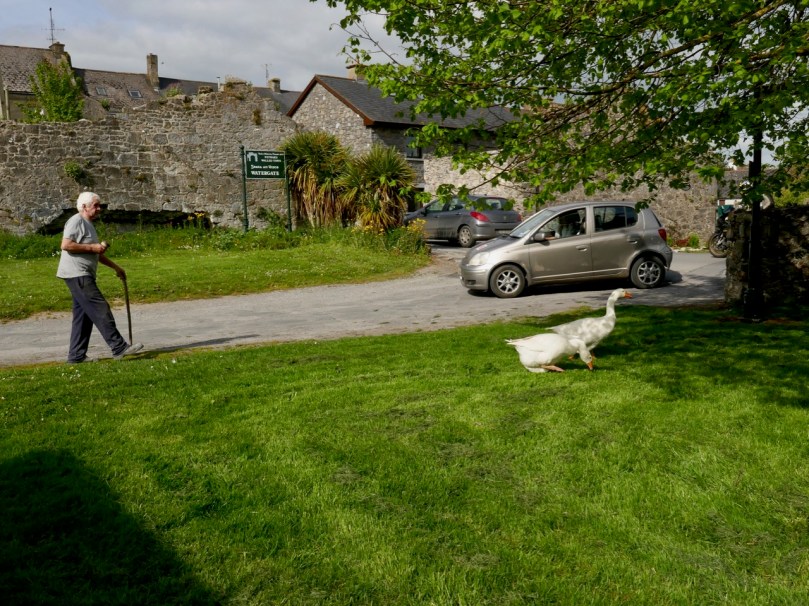
We also met Fethard’s famous geese down here too, along with their owner. They are pets, he told us, but don’t go too near the male as he is guarding the female carefully at the moment as she is just taking a little break from sitting on eggs.

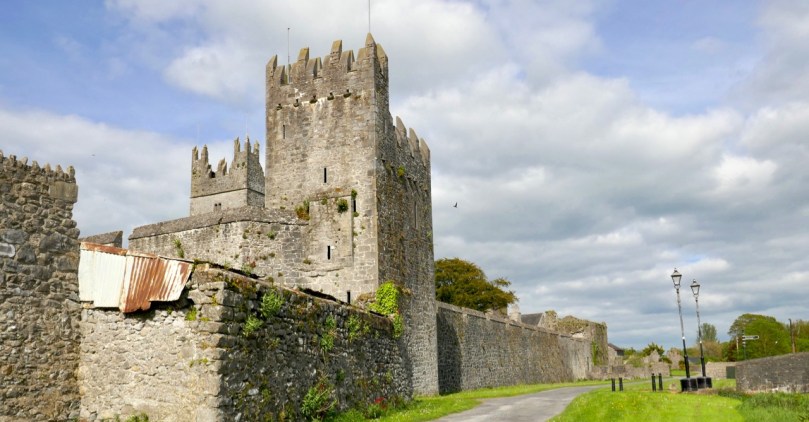
The walls are extensive, with long stretches very much intact. Edmund’s Castle and a mural tower known as Fethard Castle punctuate the wall on the river side.

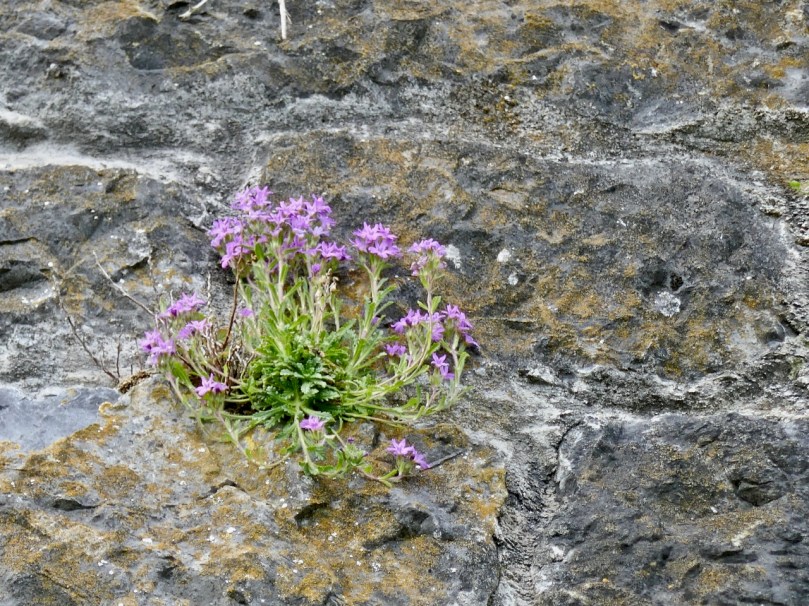
I was fascinated by the flowers growing all over the walls. I expected Ivy-leaved Toadflax and Wallflowers, but it was fun to see Fairy Foxglove also: it’s an alpine plant and so it likes high rocky places. The only other place I have seen it here is on the Martello Tower at Illnacullen/Garnish Island, off Glengarriff.

Upper: Fethard Tower, with Trinity Church bell tower behind the wall. Lower: Fairy Foxglove growing high on the wall

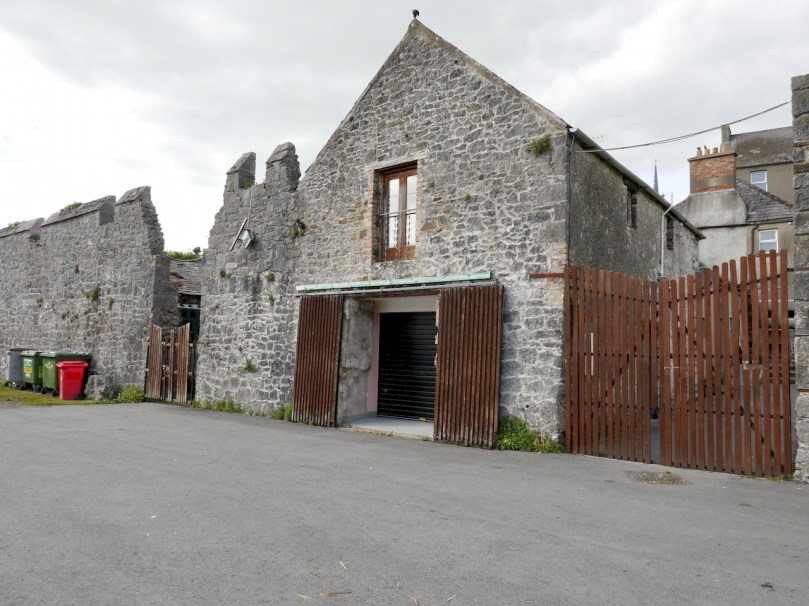
Because it also happens to be the end wall of people’s gardens, the wall is breached here and there by entries to residences – not something I was expecting to see, and probably not something that would be allowed nowadays.

The wall is part of a living town, so it has not always been considered untouchable

We rounded out our visit with an excellent lunch at Emily’s Tea Room before resuming our journey. Fethard was a surprise – an amazingly intact slice of medieval history!

nnnn

Inish Beg Estate: Ancient Woods and New Discoveries

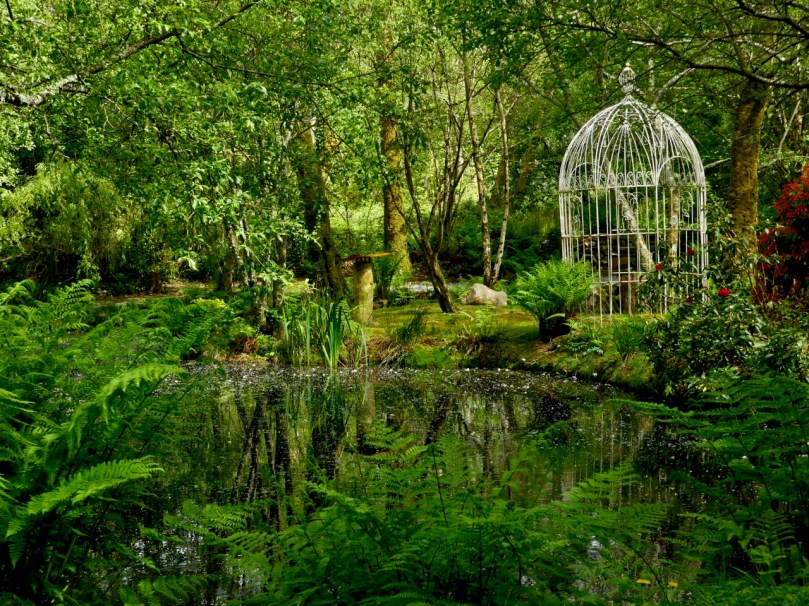
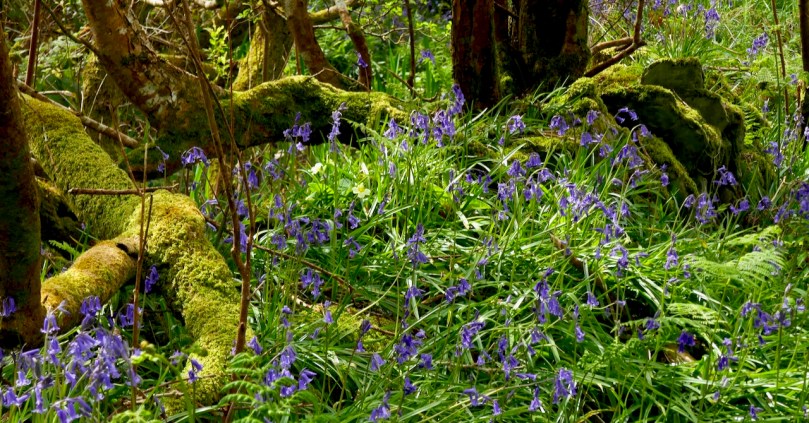
Craving a woodland walk, we took ourselves to Inish Beg this week – and found a lot more than bluebells!

This is a cillin, down beside the river. There are lots of stories associated with it

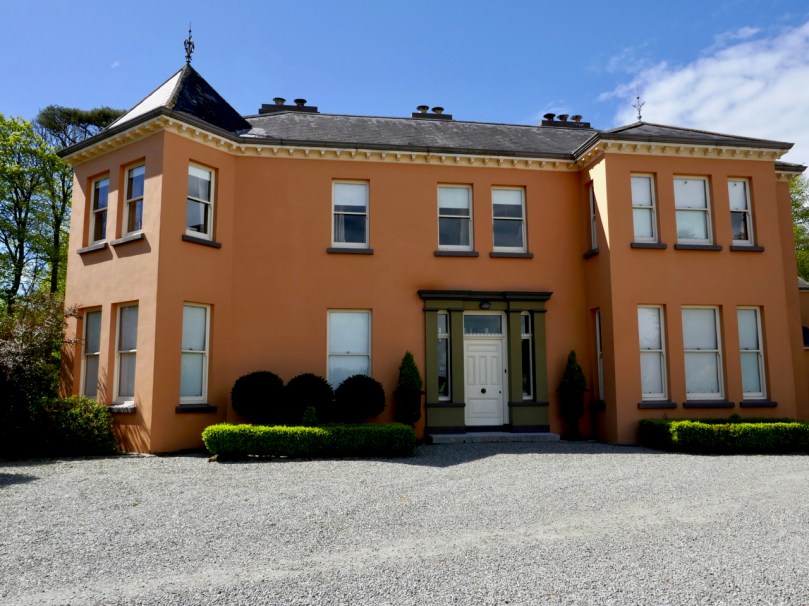
Inish Beg abounds in both the wild and the tame. That’s not such an easy balance to maintain and it’s a real tribute to the team on the ground that manages and nurtures the estate. Mostly, of course, it’s down to the vision and hard work of Paul and Georgiana Keane who bought the place in 1997 when it was crumbling and neglected. The house, Georgie told us, was close to collapse and had to be completely re-done – new roof, plumbing, electrics and a complete re-furbishment. It’s hard to believe now, when you see the beautiful place it has become.

Paul and Georgie run it now as a hotel and wedding venue and it is totally set up for it. In fact it must be one of the most romantic venues in Ireland, ideally situated on an island on the Ilen River, accessible by an old stone bridge. It was originally O’Driscoll territory, but owned by the McCarthy family. When James Morrogh inherited it from a McCarthy relative in the 1830s he changed the family name to McCarthy Morragh – such stipulations were not unusual then.

In the 1890s the family built the grand house, and it is this house that is associated with its most famous inhabitant, Kay Summersby. A noted beauty, she was Eisenhower’s secretary in London during the war, and may (or may not) have had an affair with him.

She describes her early life at Inish Beg thus:

Our home, Inish Beg, was a somewhat run-down estate on a small but lovely emerald island in a river in County Cork. Our favourite pastime (I had a brother and three sisters) was to sail down that river four miles, to the Atlantic. There was a succession of governesses, hunts, spatting parents, riding in the fields and along the long avenue fringed with old trees . . . the usual pattern of life in that obsolete world.

The ‘usual pattern’ for some, perhaps – to me it sounds like a life of breathtaking privilege. However, like many such estates, it became difficult to sustain and by time the Keanes took it over it desperately needed their infusion of enthusiasm and capital. And what a magnificent job they have done with not only the house but the grounds as well.

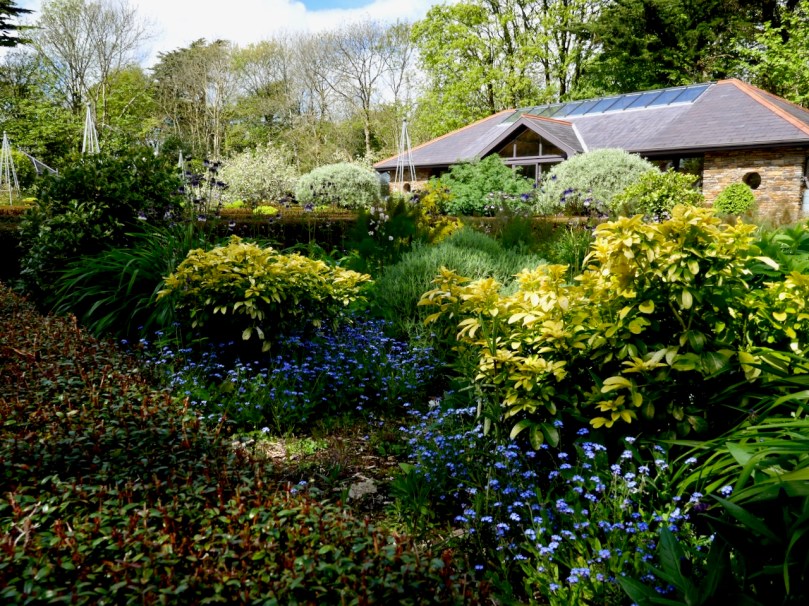
There’s a walled garden (above) that’s full of organic goodies for the estate kitchens, and also features an indoor swimming pool! Tony O’Mahony, the head gardener, practises an organic philosophy and does not feel the need to eliminate wildness from the garden, which results in a delightful mix of plant life.

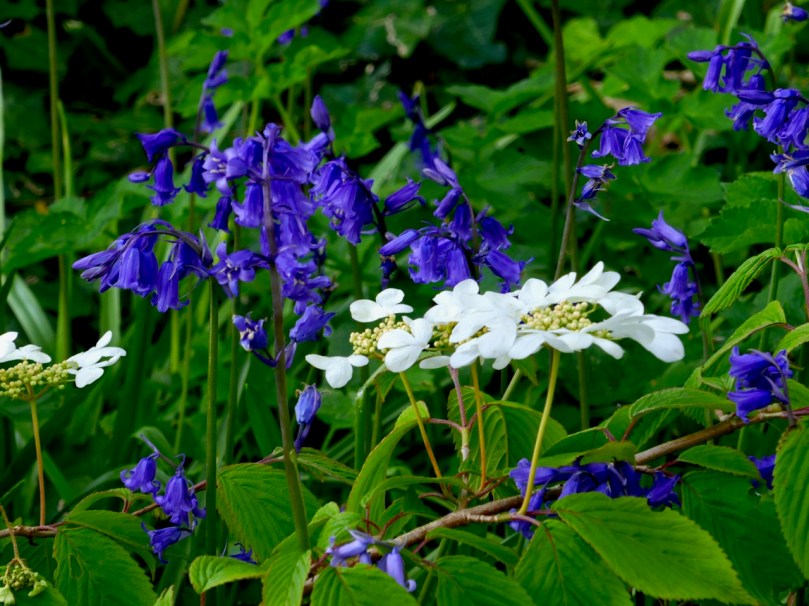
But we were here mainly for the woodland walks and we were certainly not disappointed. You could spend several hours wandering the trails here and right now the undergrowth is glorious. Bluebells were in abundance along with every wildflower that contributes to that colourful spring carpet that is so dear to our senses.

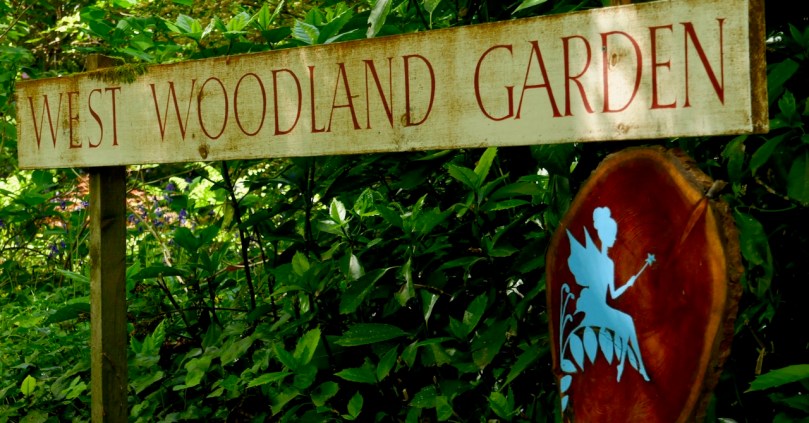
There are trails for the kids – pirates and a wildlife search are part of the system, as well as little fairy houses here and there.

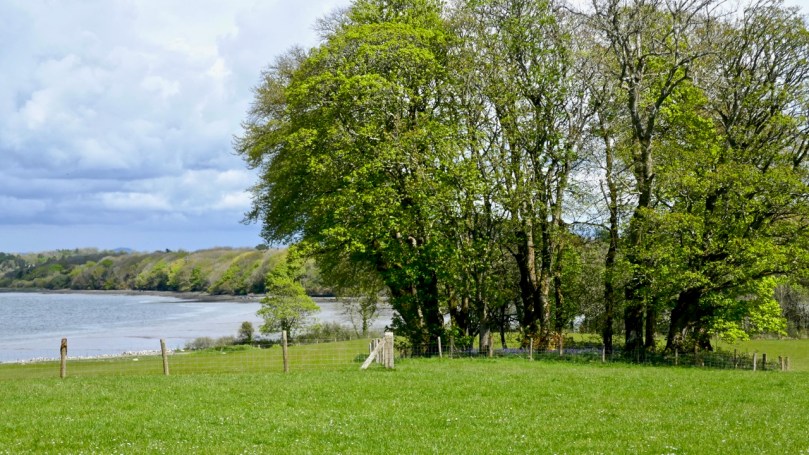
There are lovely views (above) across the Ilen to the ruined church at Aughadown – burial place of the Tonsons that I wrote about in New Court Bridge – a Hidden Wonder. Surprisingly, beyond the church, you can see Mount Gabriel. I mention this because of its significance with our next find – a previously unrecorded cupmarked stone!

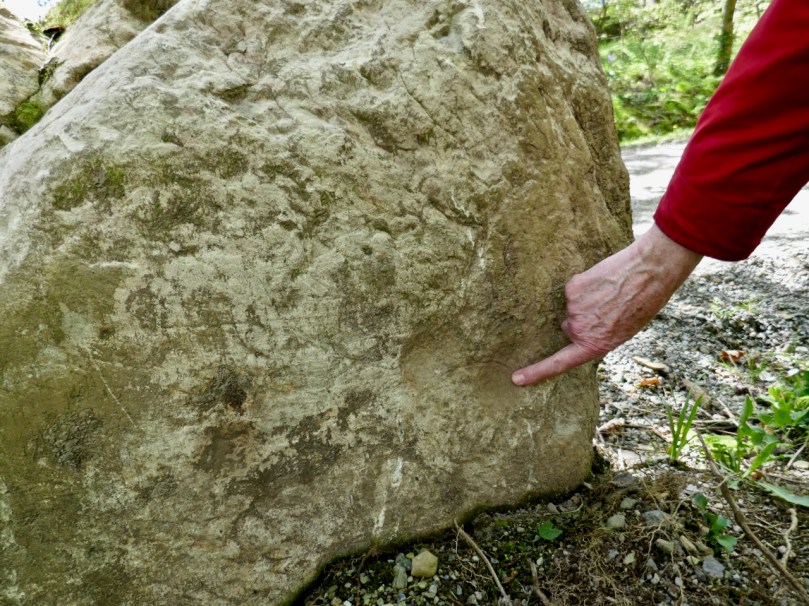
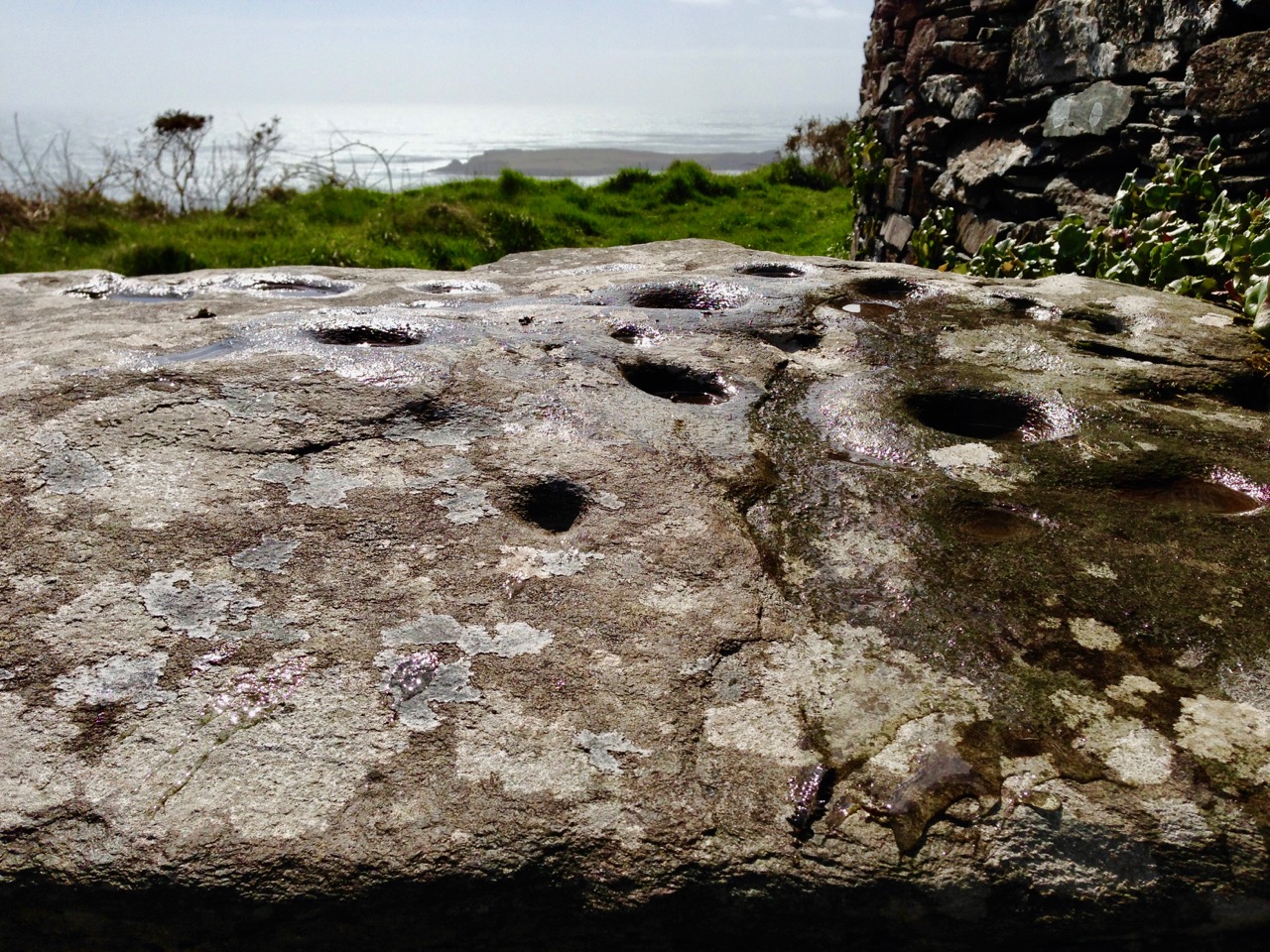
Regular readers know of our involvement with Prehistoric Rock Art – Neolithic or Bronze Age carvings on open air boulders and outcrops. The cupmark is the basic motif of all Irish Rock Art – a semi-spherical cup-shaped hollow (see more about Rock Art here and here and specifically about cupmarks here). Robert has an amazing eye for slight differences in rock surfaces and has developed a habit of examining every stone we come across for cupmarks. This time he struck gold! At least four cupmarks on the back of a stone along one of the trails.

We like to warn people that rock art can be a little underwhelming. I know these cupmarks don’t look like much, but they were probably carved several thousand years ago as part of a ritual we now know nothing about

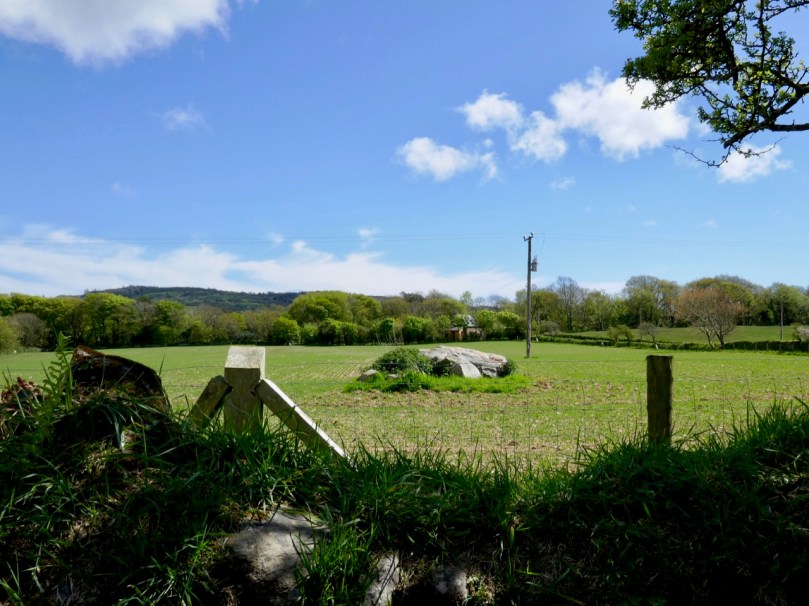
The stone has been moved there from somewhere on the estate and the Keanes will try to track down where this was. It’s always important to see a rock like this in its context, of corse, but we are also curious to know if Mount Gabriel was visible from the location, as it is from so many of our West Cork Rock Art sites. We will be returning to do a proper record and see if we can add more information to the story before we send it in to be included in the National Monuments database.

There’s also a boulder burial on the estate, visible as you are leaving. It’s a pretty tumbledown affair, but still recognisable, and we found cupmarks on the capstone too. These may be already recorded, but we will let National Monuments know in case they aren’t.

Fabulous woodland walks, my fill of wildflowers, lovely vistas across the Ilen – and a new archaeological find. Too much excitement for one day!

Bluebell Time in West Cork

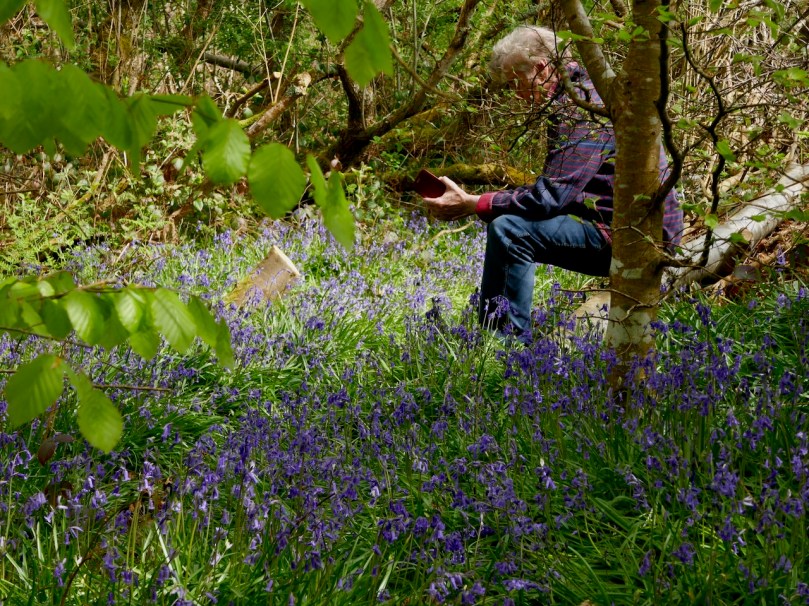
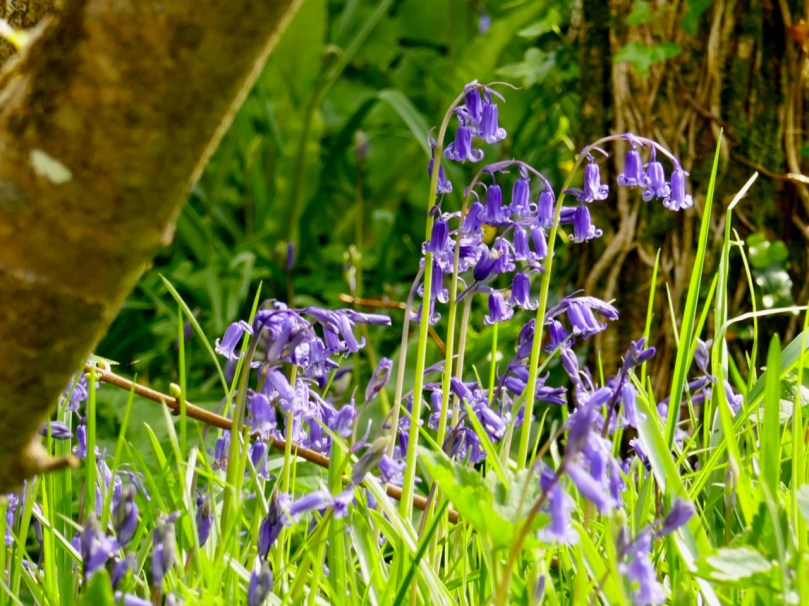
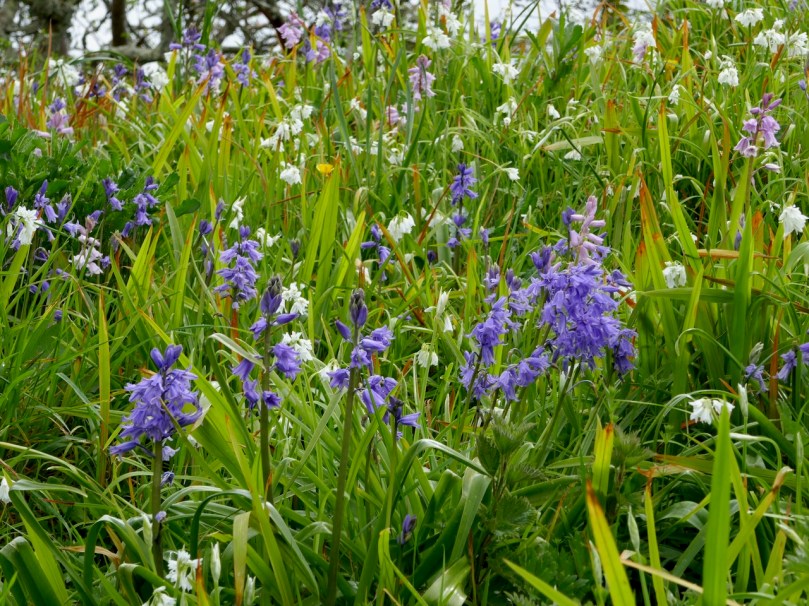
What is it about a bluebell wood that re-charges the batteries and lifts the heart? Perhaps it’s that amazing blue carpet that stops us in our tracks: it’s so unlike anything else in our natural world.

Or maybe it’s the fact that it lasts only a little while that makes it special. Like Easter eggs or Christmas carols, we would get tired of them if they were always with us – it’s their brief seasonality that makes us look forward to them (OK, maybe the Christmas carols don’t appeal to everyone in the same way).

Lower: Bluebells and Three-cornered Garlic

Even when it’s bluebell time, as it is right now, it’s not always easy to find a bluebell wood, because we don’t have expansive deciduous forest cover here in West Cork. I love the bluebells that line the boreens in places, growing up the hedgebanks, but it’s not quite the same thing as a woodland carpet.

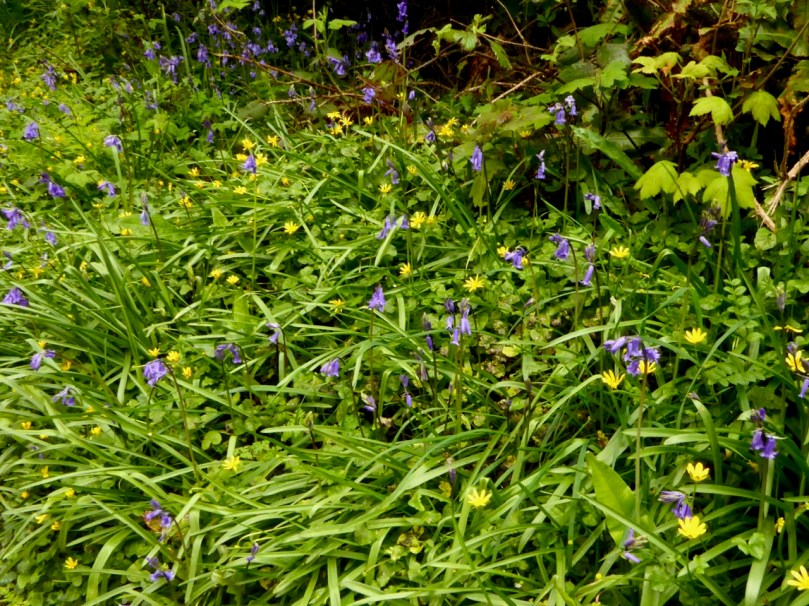
Bluebells and Celandine growing on the bank on one of my favourite boreens

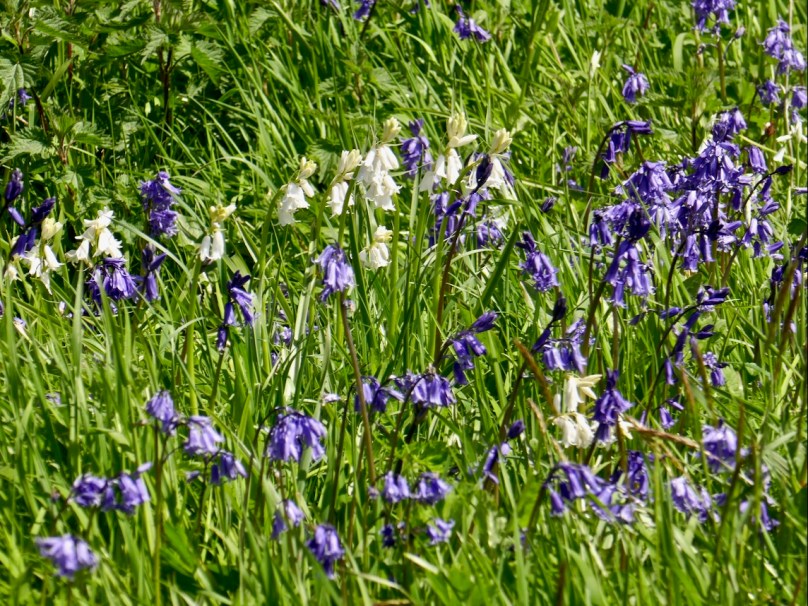
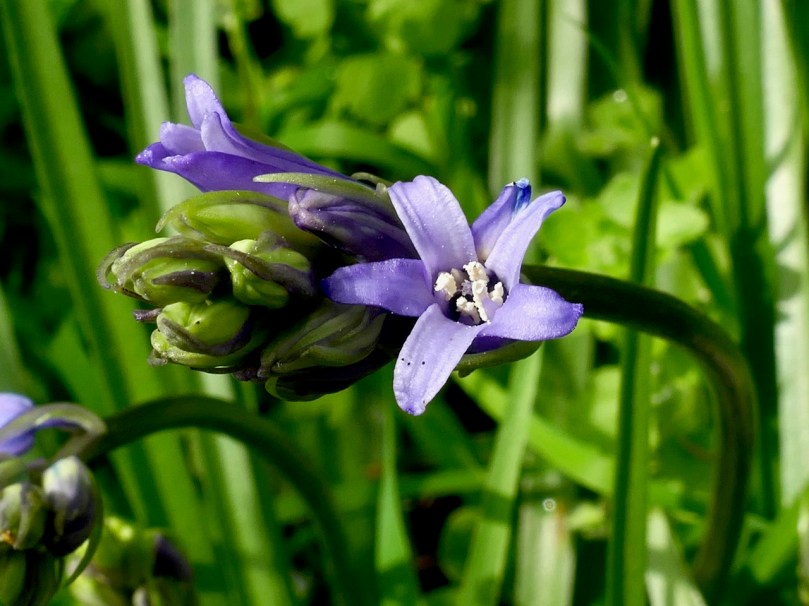
Let’s start with what a bluebell is – I’m talking here about our native bluebells (Bluebell/Hyacinthoides non-scripta. Or in Irish Coinnle corra, pronounced quinn-la curra). As you probably know, the imported Spanish Bluebell is everywhere now, and to add insult to injury has started to hybridise with our native Bluebell.

A garden near us has a lovely display of blue and pink Bluebells and Three-corned Garlic – unfortunately these are the non-native Spanish Bluebells, or possibly hybrids

Take a look at this excellent video from the Irish Wildlife Trust for a guide to how to distinguish between them.

Fortunately, we still have lots of native bluebells and I was lucky this week to get permission to stroll in my friend, Nick’s, little wood, and also to take a walk with Robert and Gill up the hill behind Long Strand. For more about what we were after, see Robert’s post on the cross today.

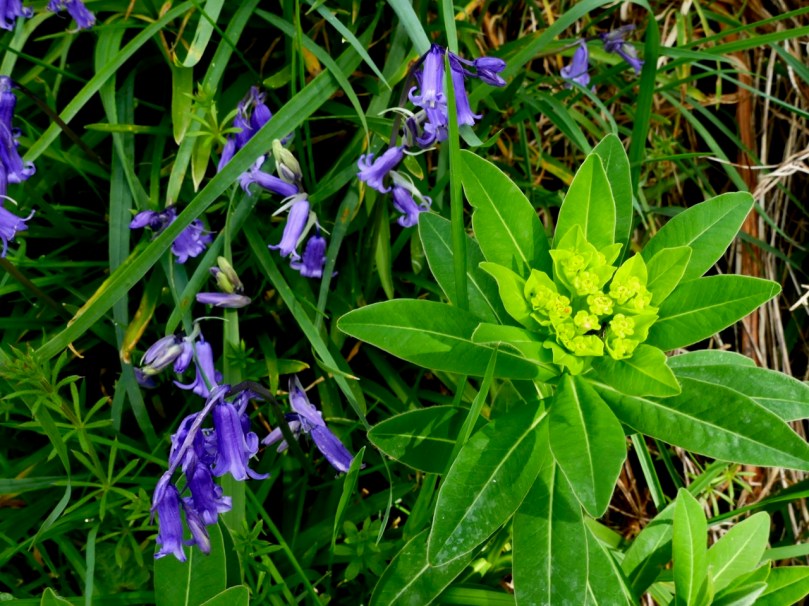
Upper: One of the little bridges over the stream. Lower: Bluebells and Irish Spurge

Nick’s little wood is down beside the sea on what was once an old homestead – you pick your way through a heritage orchard to get in there. It felt like an immense privilege to be the only ones there, to wander through the trees and over the tiny bridges.

Upper: one of the way to recognise a native Bluebell is to look at the anthers – they’re white or cream-coloured. Lower: a spontaneous white Bluebell in among the blue ones. It happens

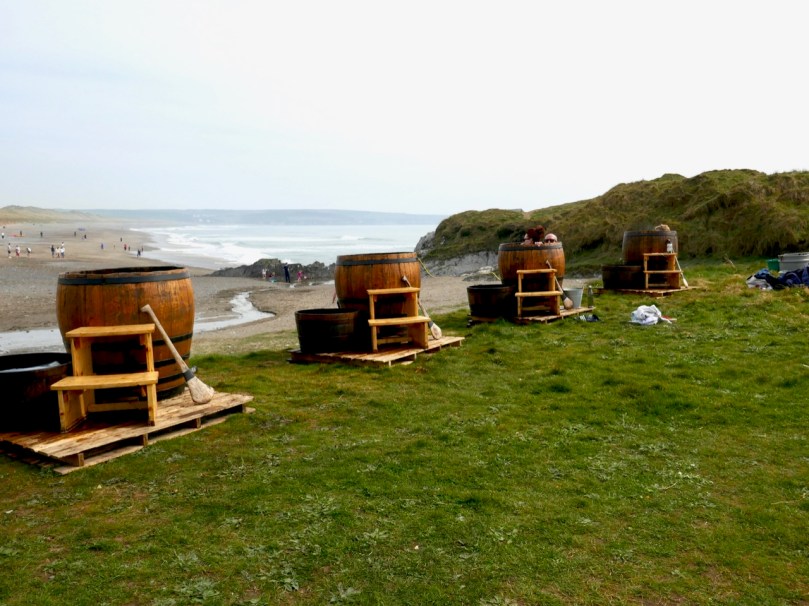
Yesterday, because Robert wanted to see Lady Carbery’s Cross, we walked up Croachna Hill, behind Long Strand, near Rosscarbery. The strand was heaving with swimmers, surfers and loungers, the coffee truck and restaurant were packed and the guy who does the Wild Atlantic Seaweed Baths was out – it all looked so festive and summery.

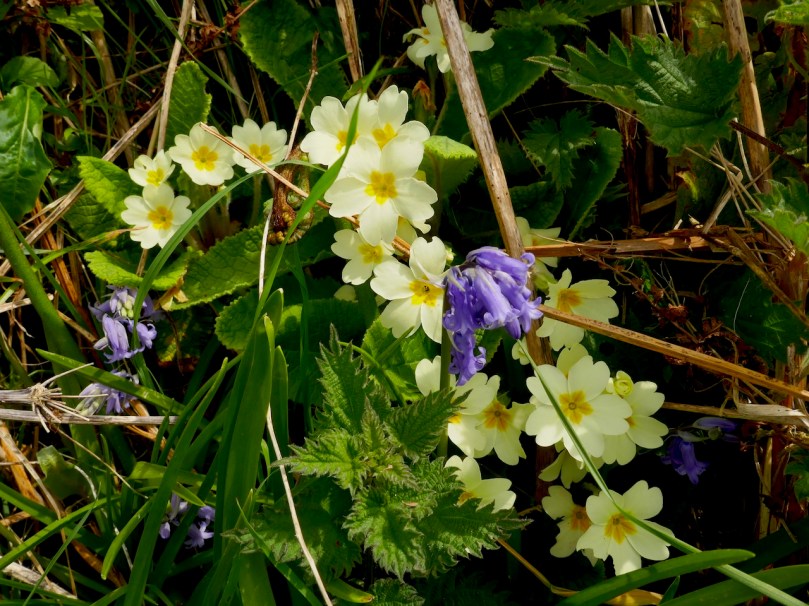
Primroses and Bluebells

The walk up the hill was awash with wild flowers, besides the ones I’ve illustrated here we saw Common Dog-violet, my first Ragged-Robin of the season, Yellow Pimpernel, Ribwort Plantain, Navelwort, Ground-ivy and Herb-Robert.

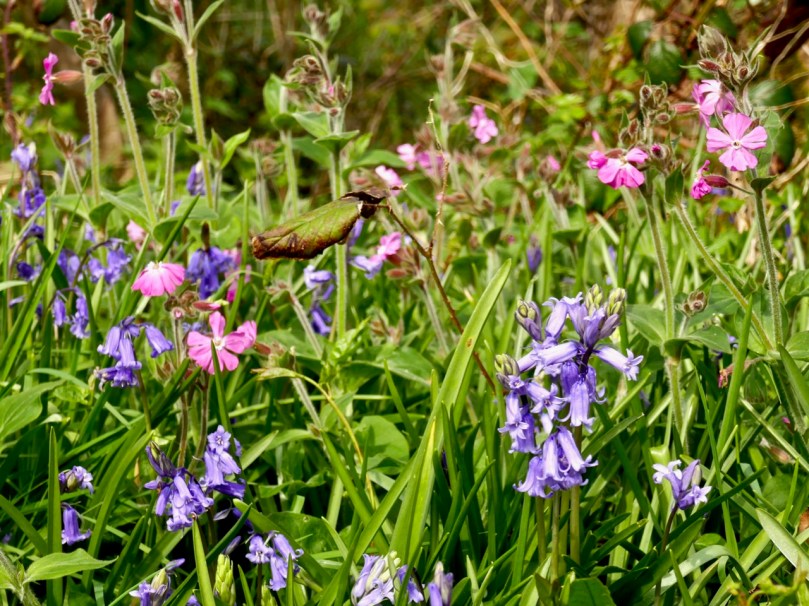
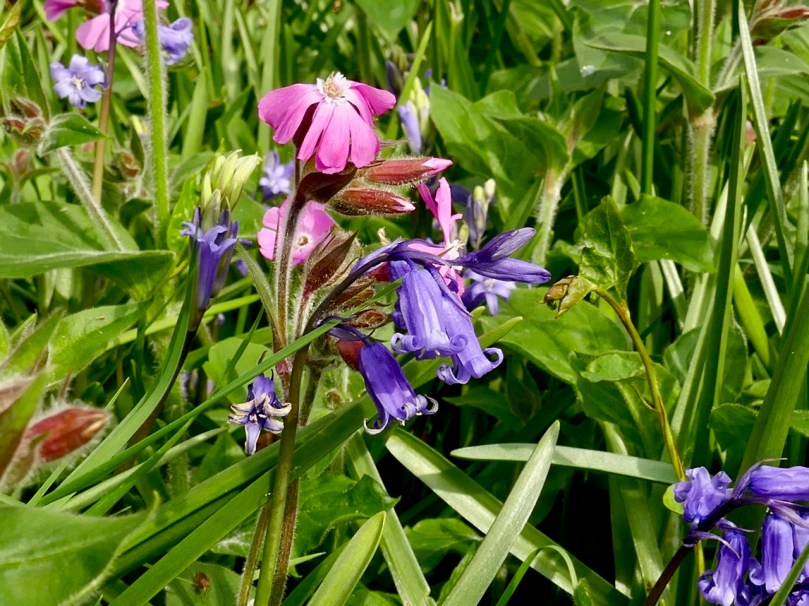
I’d never seen that combination of Bluebell and Red-campion before (above). It’s pretty spectacular, and a reminder that colours in nature always harmonise. Together with the yellow of Celandine and Buttercup, and the lovely woodsy smells, it was a sensuous experience.

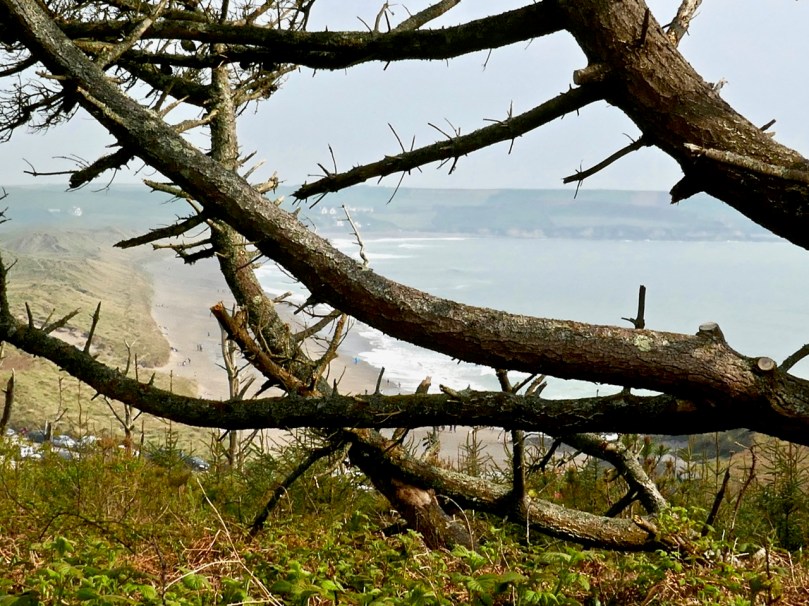
Upper: Looking back to Long Strand from Croachna Hill. Lower:  Bluebells, Celandine, Buttercup, and a lone Red Campion

Where are your favourite bluebell haunts, dear readers?


Favourite Posts of 2018

At this end of the year we reflect with a critical eye on all our 2018 posts – there have been 102 of them – and select just a few which we think stand out in some way. A link is provided for each one, in case you want to have another look yourselves.

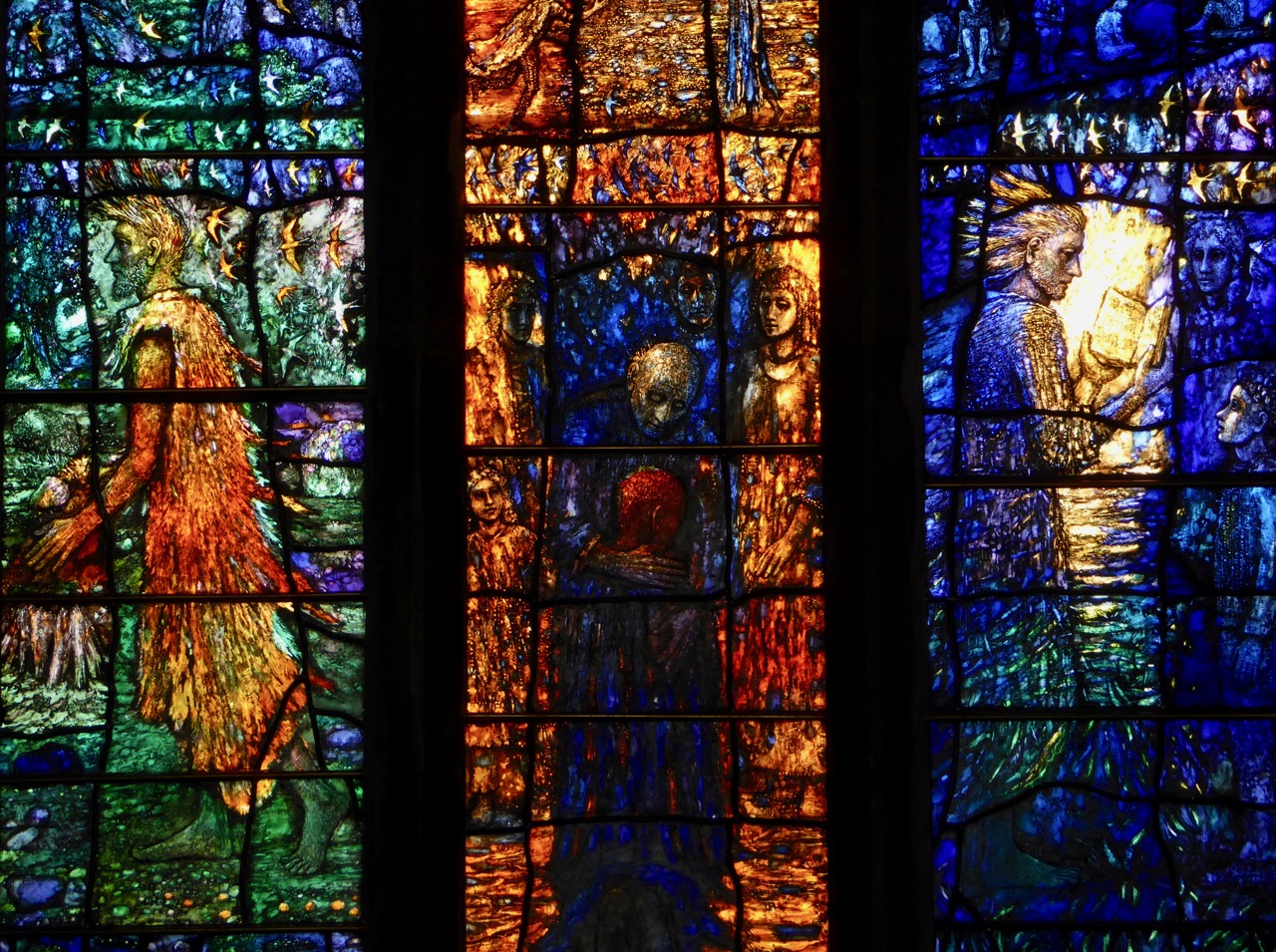
Firstly – not just one of our favourites, but the all-time most popular post we have ever published – Ireland’s Newest Stained Glass Window. Finola wrote this in January, and then went on to put together an article in the Irish Arts Review on the same subject later in the year. The window is in St John’s Church in Tralee, a Catholic church, but the project was a joint venture between the Catholic and Anglican congregations. It tells a story of reconciliation, from many angles. The window was designed and made by Tom Denny, one of Britain’s most eminent and respected stained glass artists. Tom is a direct descendant of Sir Edward Denny (1547 to 1599) who was one of the architects and enforcers of the Plantation of Munster. It’s a complex history, and this post is well worth a careful read.

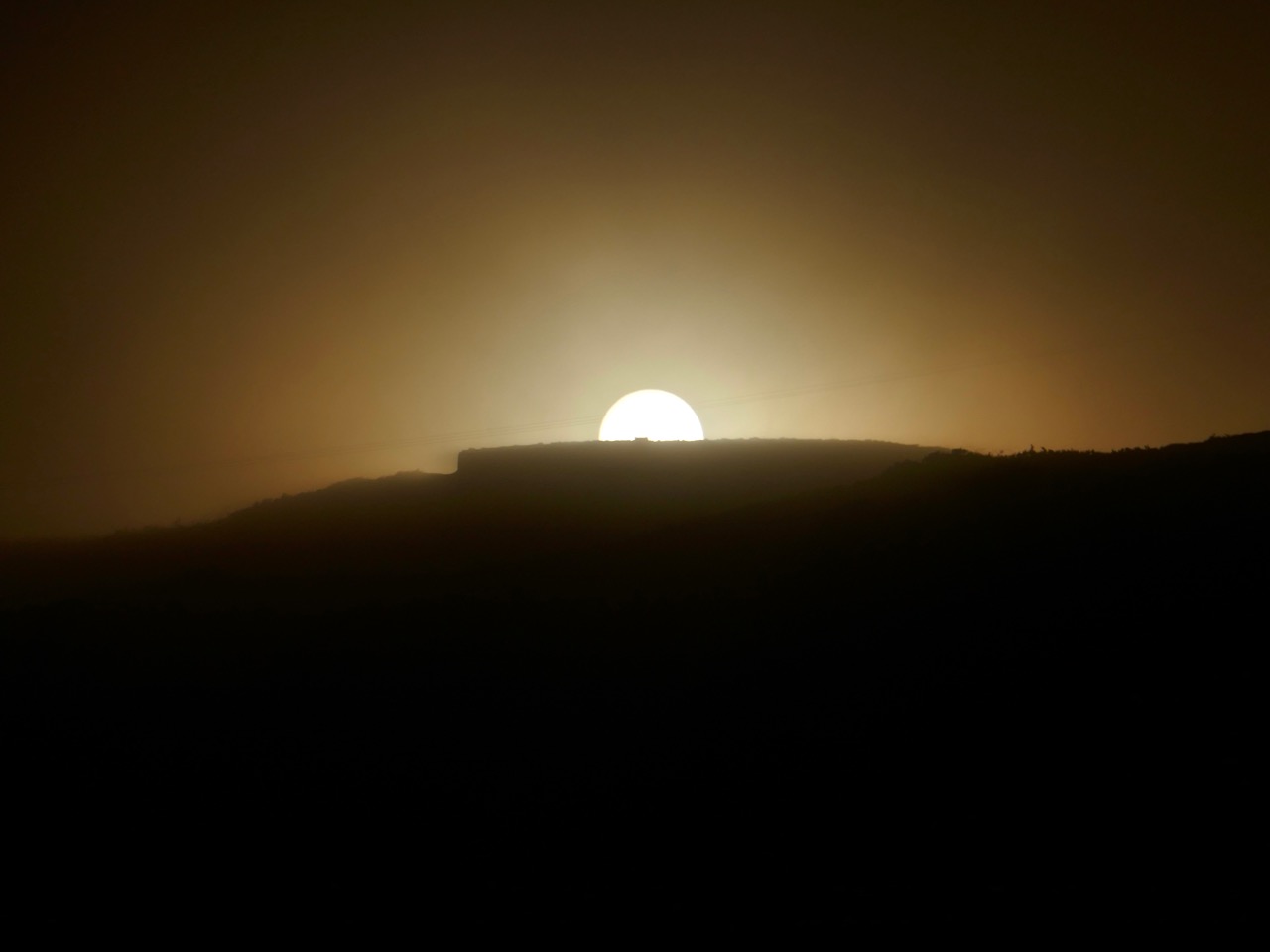
Another post which proved popular was Robert’s detailed account of an archaeological site in West Cork: Knockdrum Stone Fort. This place has everything – a substantial stone structure which probably dates from the first millennium AD; prehistoric Rock Art (one of our favourite subjects – the Knockdrum example is pictured above), likely to be around 5,000 years old; fabulous views (choose a clear day) – and a solar alignment discovered in 1930 by Vice Admiral Henry Boyle Somerville, the younger brother of writer and artist Edith Somerville. In a complementary post, Finola reported on Boyle’s life and tragic death – and gave us insights into the science of archaeoastronomy, expanding on this in a Bealtaine post, following our own experience of Boyle’s discovered alignment at Knockdrum (the sun setting exactly over the fort is pictured below).

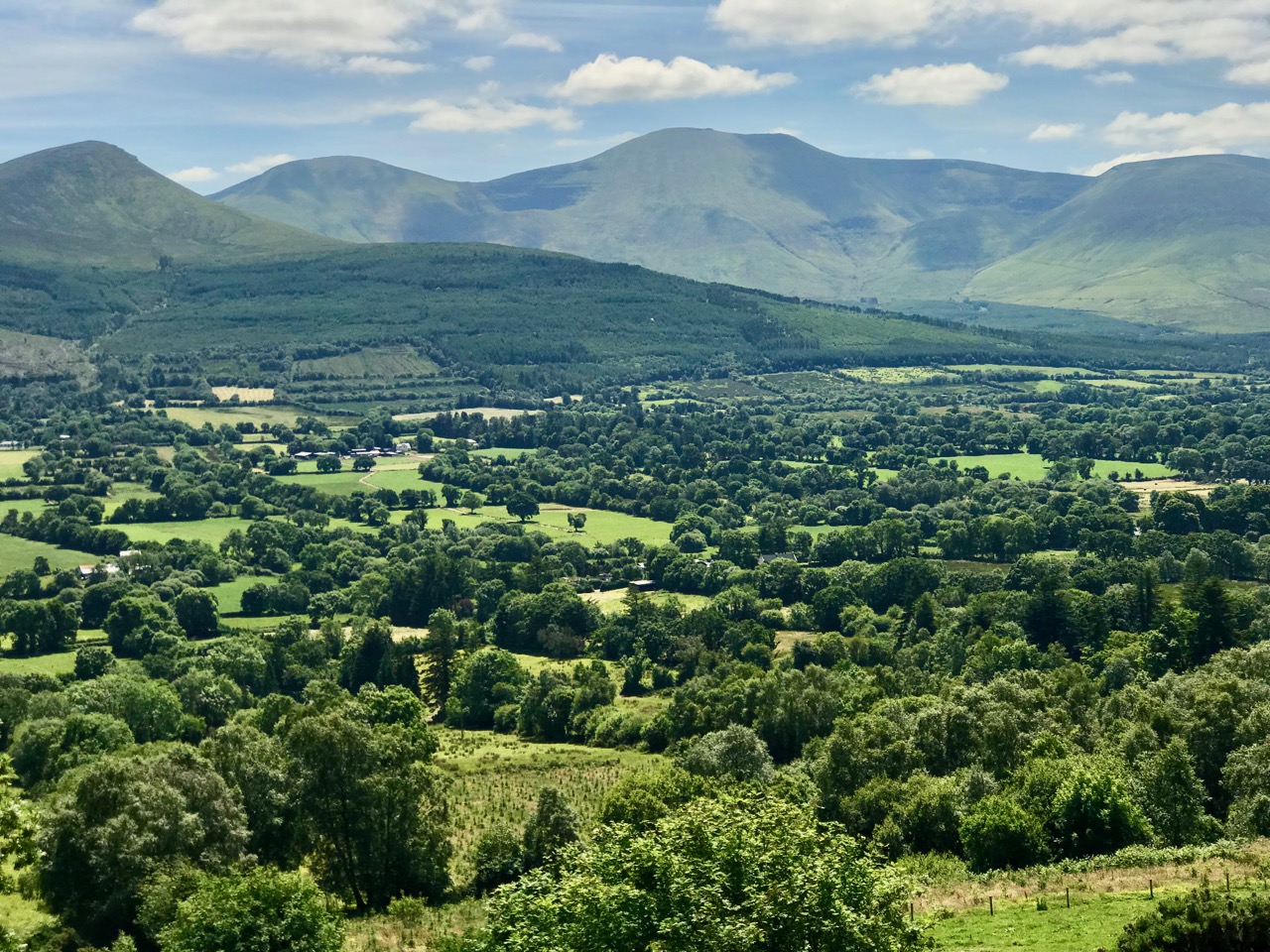
Way back in 2017 we started a series of occasional posts bearing the title . . . Off the M8 . . . We do a lot of travelling throughout Ireland (because it’s such a beautiful and historically rich country) and cover the ground between Cork and Dublin quite frequently. The M8 motorway has made this journey quite straightforward, but it has also provided the jumping off point for many an exploration to enhance the journey. One of my own favourite discovered places this year is the magical Glen of Aherlow (pictured above). We thank our good friends and travelling companions Amanda and Peter – she of Holy Wells of Cork and he of Hikelines  – for pointing us to this entrancing valley located between Slievenamuck and the Galtee Mountains in the western part of County Tipperary. We discovered there secret places and stories relating to obscure Irish Saints: have a look at the haunts of St Berrahert and St Péacáin in these posts from Robert.

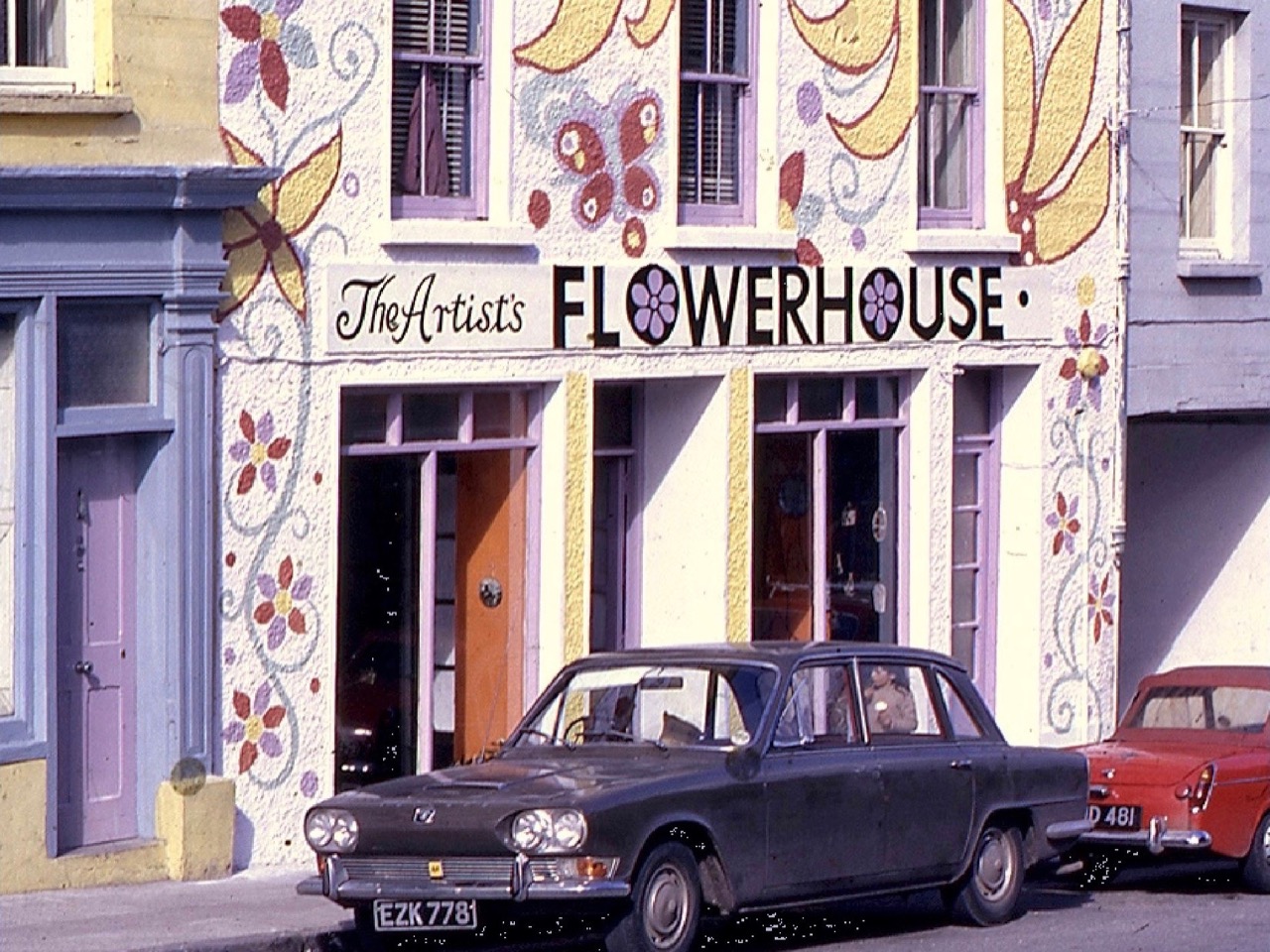
When I moved from Cornwall to West Cork some years ago I was delighted to find out that our lively adopted village of Ballydehob had a great artistic heritage during the second half of the twentieth century, to rival that of Britain’s westernmost county. West Cork became a cosmopolitan centre for artists, writers, craftspeople and musicians, renowned in its day but never properly celebrated – until this year. I was one of a small group locally who decide to rectify this by establishing the Ballydehob Arts Museum (BAM): our first exhibition . . . Bohemians in Ballydehob . . . using donated artworks, ceramics, storyboards and posters, was staged in Ballydehob’s community building, Bank House, and – presided over by Curator Brian Lalor (one of the surviving Bohemians!) – was the first incarnation of the new Museum, which will be followed up by new exhibitions every year. The picture above (courtesy of Andrew Street) from my post, shows the Flower House which, during the 1960s and 70s, became an iconic focus for the town’s artistic colony.

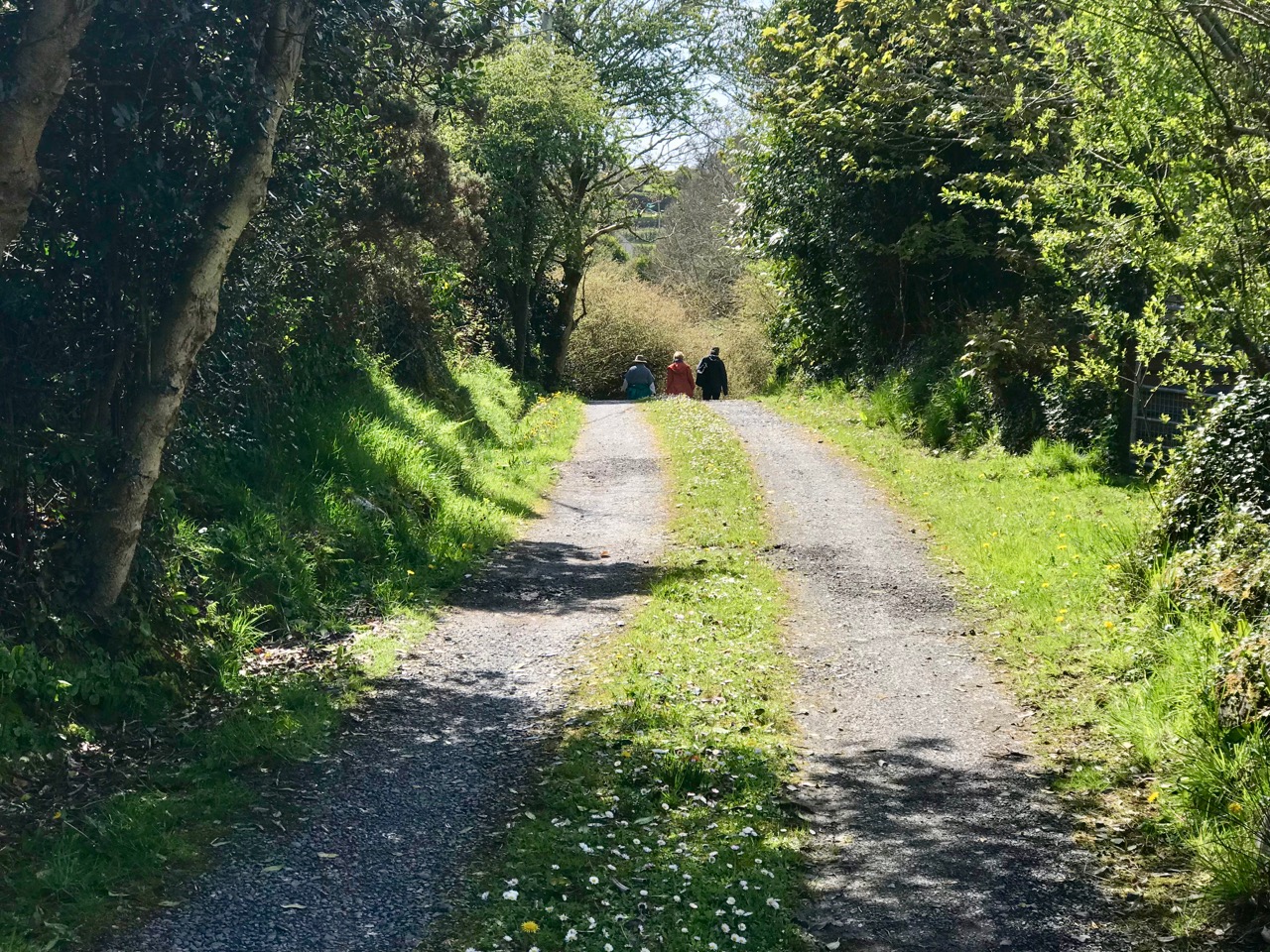
It was a grand summer altogether, and we were out walking the roads and footpaths of West Cork as much as possible. On a fine day in May we set off to explore the Toormore Loop which is only one of an excellent comprehensive system of trails which has been put in place locally in recent years. This post – Another Grand Day Out on the Fastnet Trails – documents that adventure and, hopefully, will encourage all of you to enjoy this wonderful free resource and immerse yourselves in the nature that’s all around us.

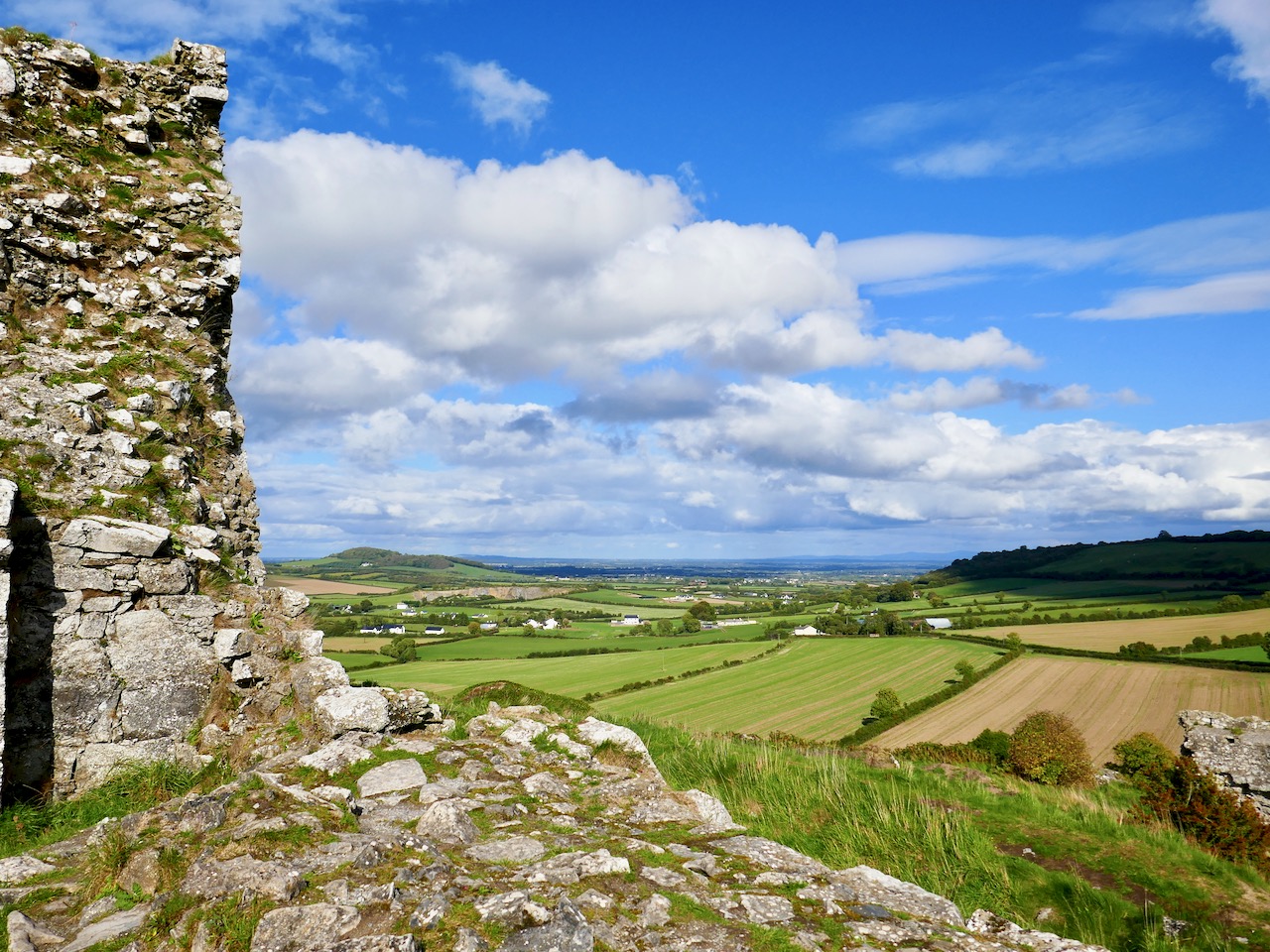
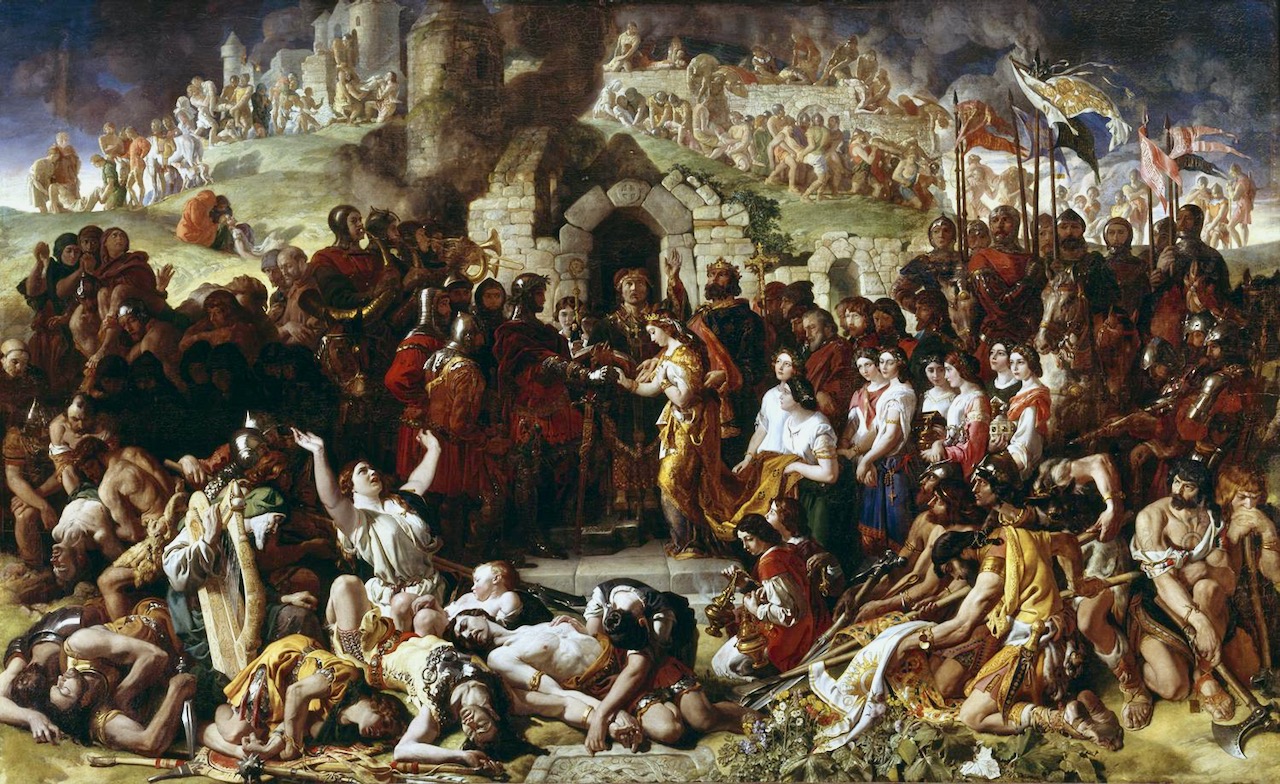
The second most viewed post this year was Finola’s fascinating account of the Rock of Dunamase and the history that it embodies. It’s a place that, for some reason, took us a few years to get to – and it’s Off the M8! But – as you can see from the picture above – climbing the Rock will give you a most rewarding and spectacular view across several counties. The ruin on its summit is inextricably associated with the most turbulent events in Irish History – the coming of the Normans to Ireland in 1169, and the famous marriage of Aiofe (daughter of Diarmuid MacMurrough, King of Leinster) to the Earl of Pembroke, immortalised in the painting by Daniel Maclise (below, courtesy of National Gallery of Ireland). The fortification with its Great Hall on the Rock was a MacMurrough stronghold, and accordingly was part of Aoife’s dowry when she married Strongbow.

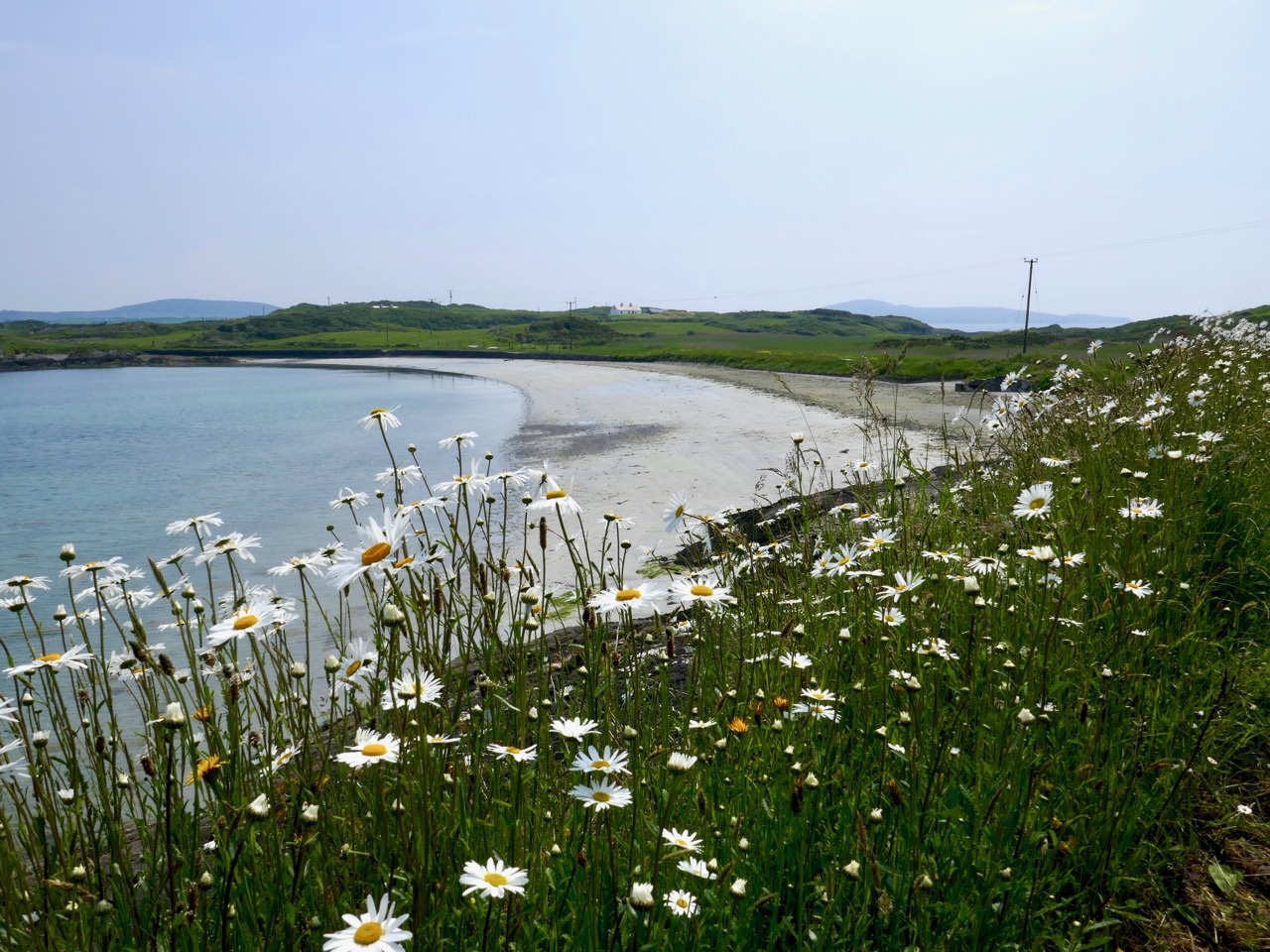
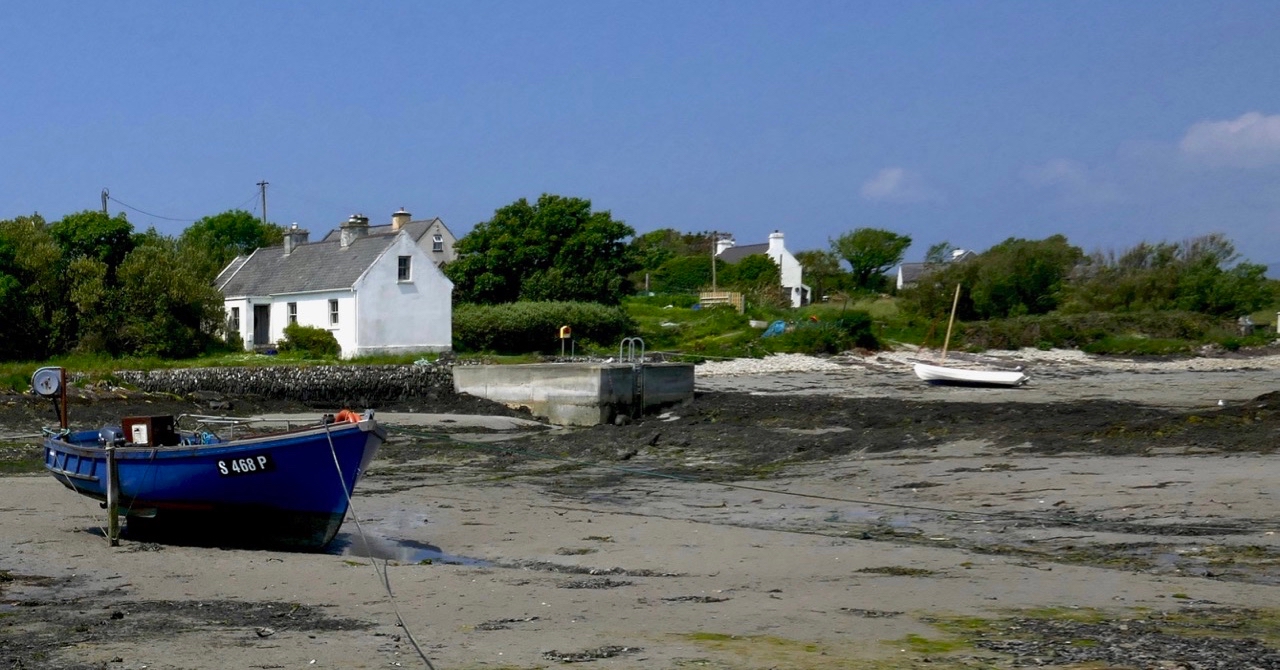
Finally (for today, anyway) we look at Finola’s post which comprehensively explores another West Cork treasure: Heir Island – a Modern Paradise (pictured above and below). West Cork has such a diverse landscape, including the inhabited islands of Roaringwater Bay, each one of which is unique. Finola teamed up with her photographer friend Trish Punch and they were shown around the island by islanders Christine Thery and Sarah Mathews, who run the Heir Island Wildlife Project. This post is a great example of how the diversity of life on the island – and here in West Cork generally – brings together so many disciplines and interests: photography, history, wildflowers, wildlife, colourful houses, and art. Everything that Roaringwater Journal tries to encompass, in fact.