West Cork in Photographs – Your Favourites, Part 2

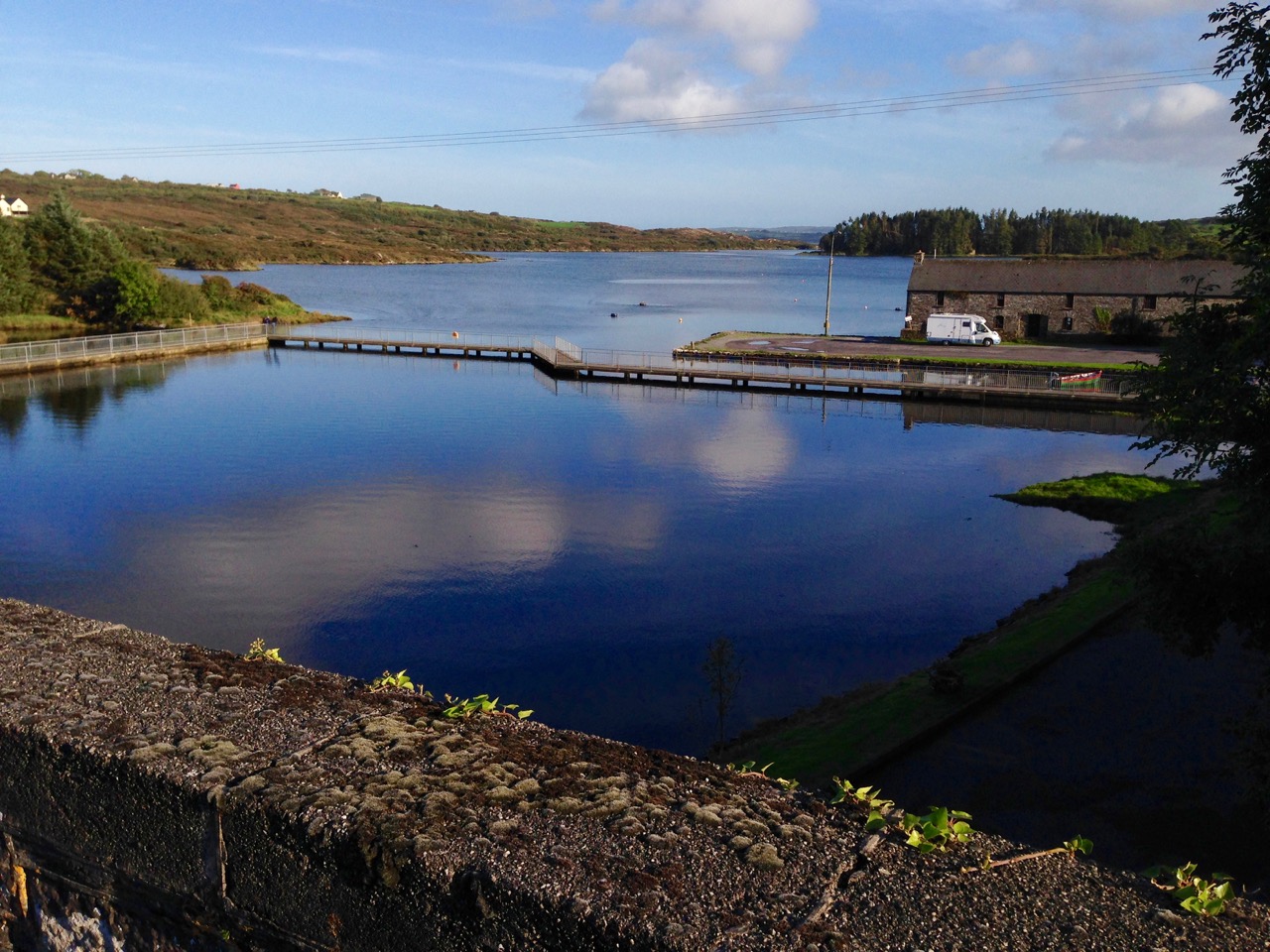
Courtmacsherry Bay

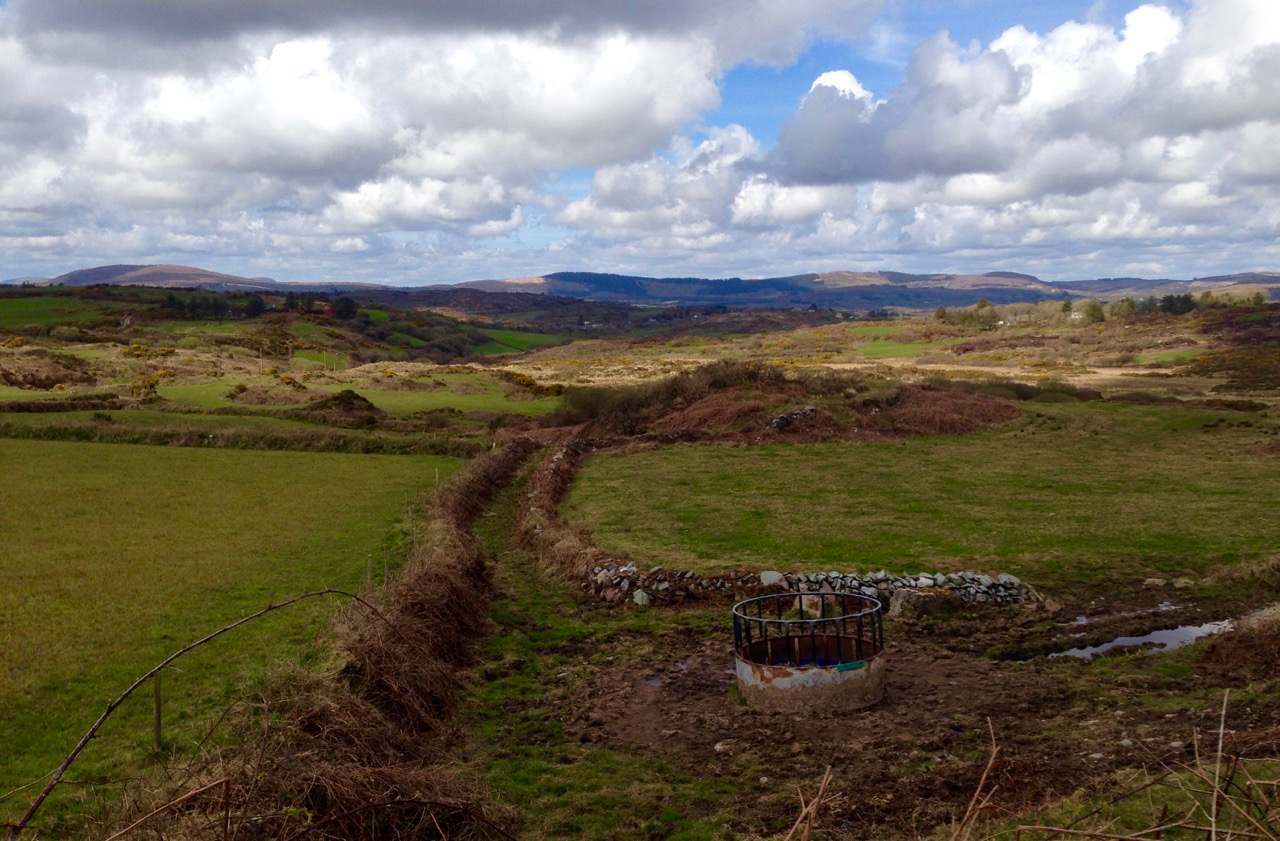
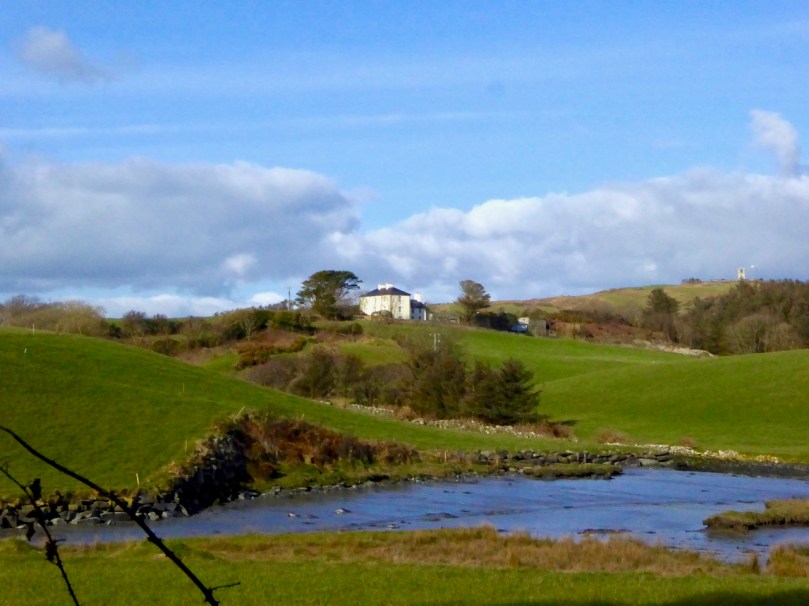
A winter walk in Courtmacsherry Bay

Part 2 of your (and our!) favourite West Cork photographs of 2016. If you’re not here already, as they say in West Cork – Where else would you want to be?

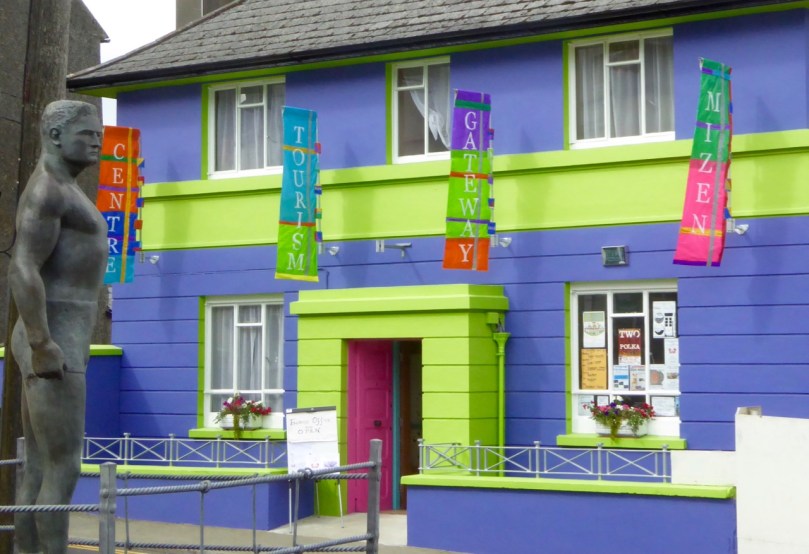
Banners up

The new Ballydehob Tourist Information Centre

Castle in the mist

Kilcoe Castle in the mist

Colours of West Cork

Toormore – the colours of West Cork

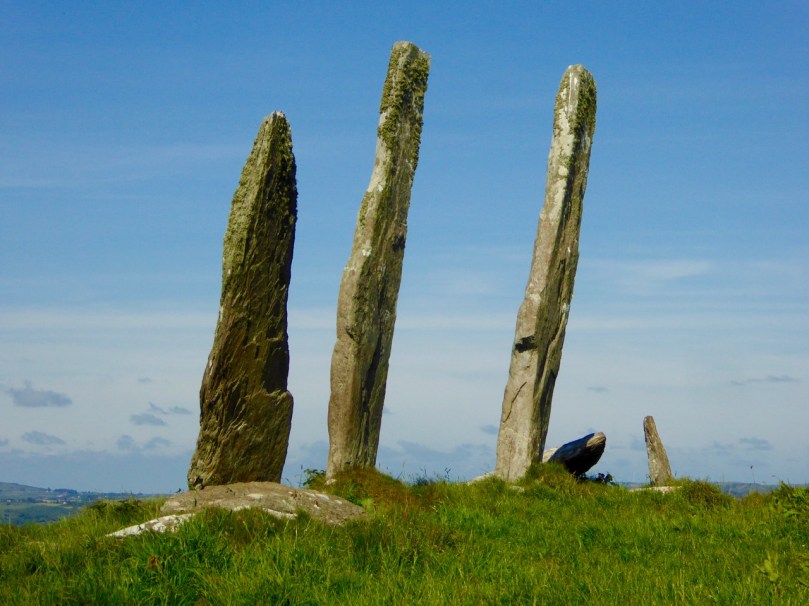
The Fingers

The Fingers, Gurranes, near Castletownshend

Summer in Goleen

Summer in Goleen

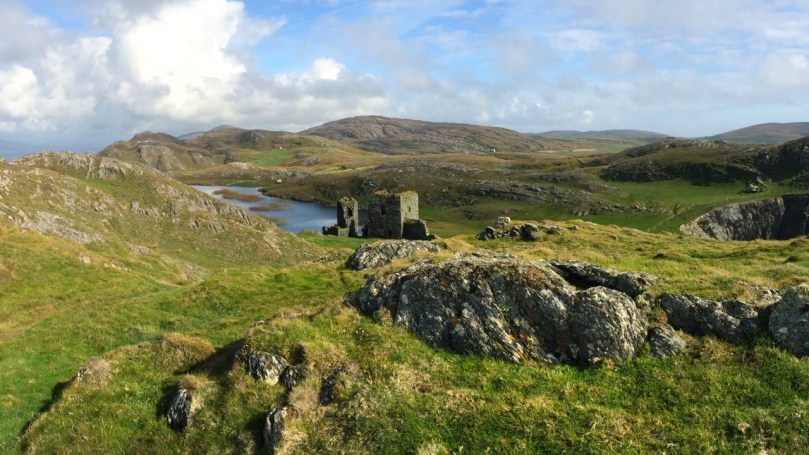
Three Castles

Three Castle Head

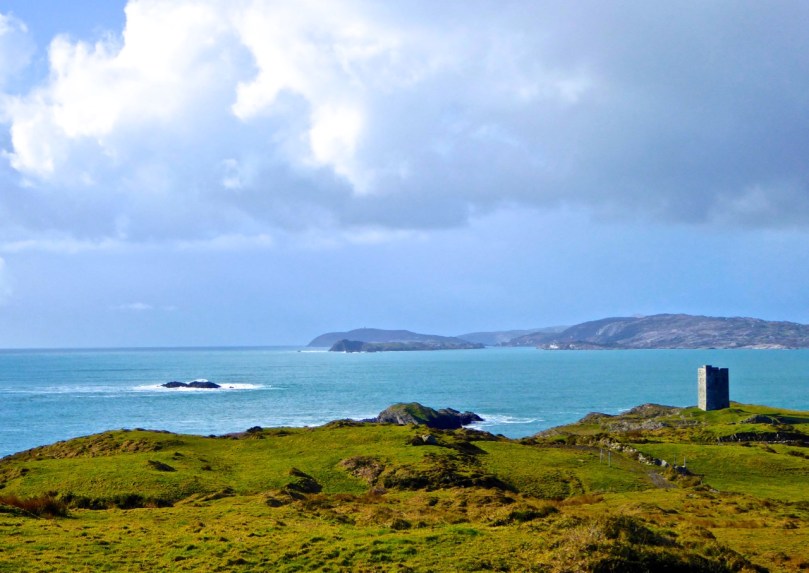
Black Castle

Black Castle, south of Lowertown

Mizen North Colours

North Side of the Mizen

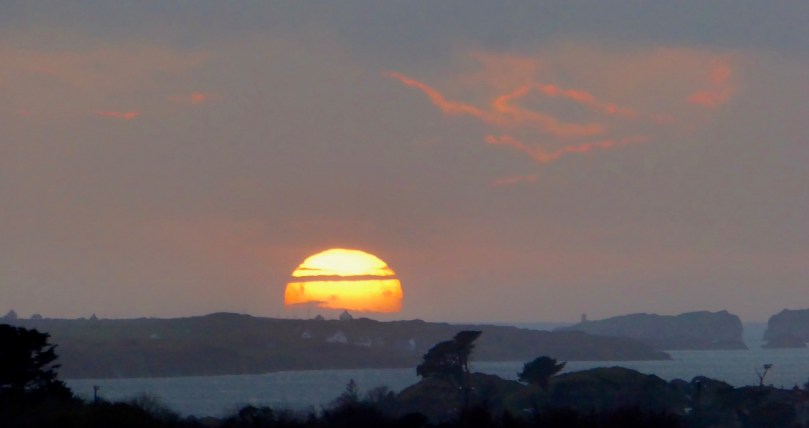
Sun sets over Long Island

The sun goes down over Long Island

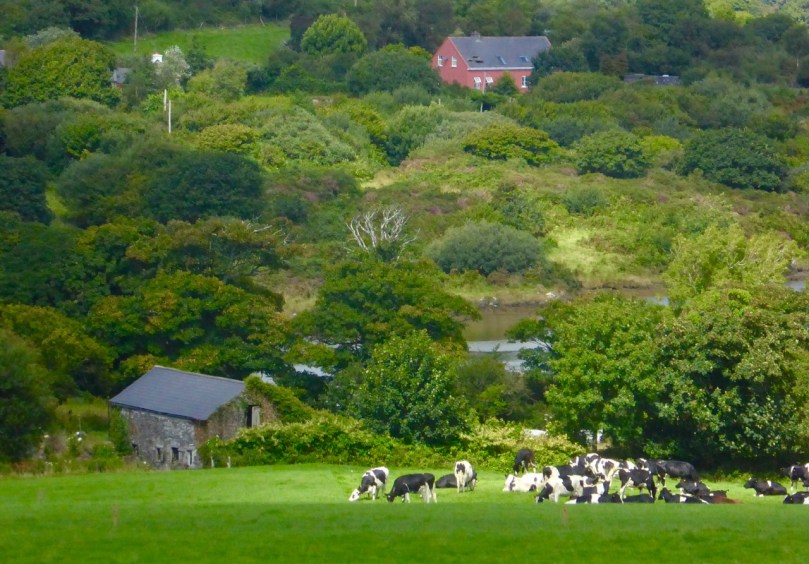
And an extra – one of my own favourites from this year. No drama – just a quiet sunlit meadow, an old stone barn and a colourful house. My West Cork.

Eugene and Margaret'sIn case you missed it, here’s a link to Part 1 of this two part exploration of West Cork in photographs.


‘Auf der Walz’ – The Journeymen

on the summit

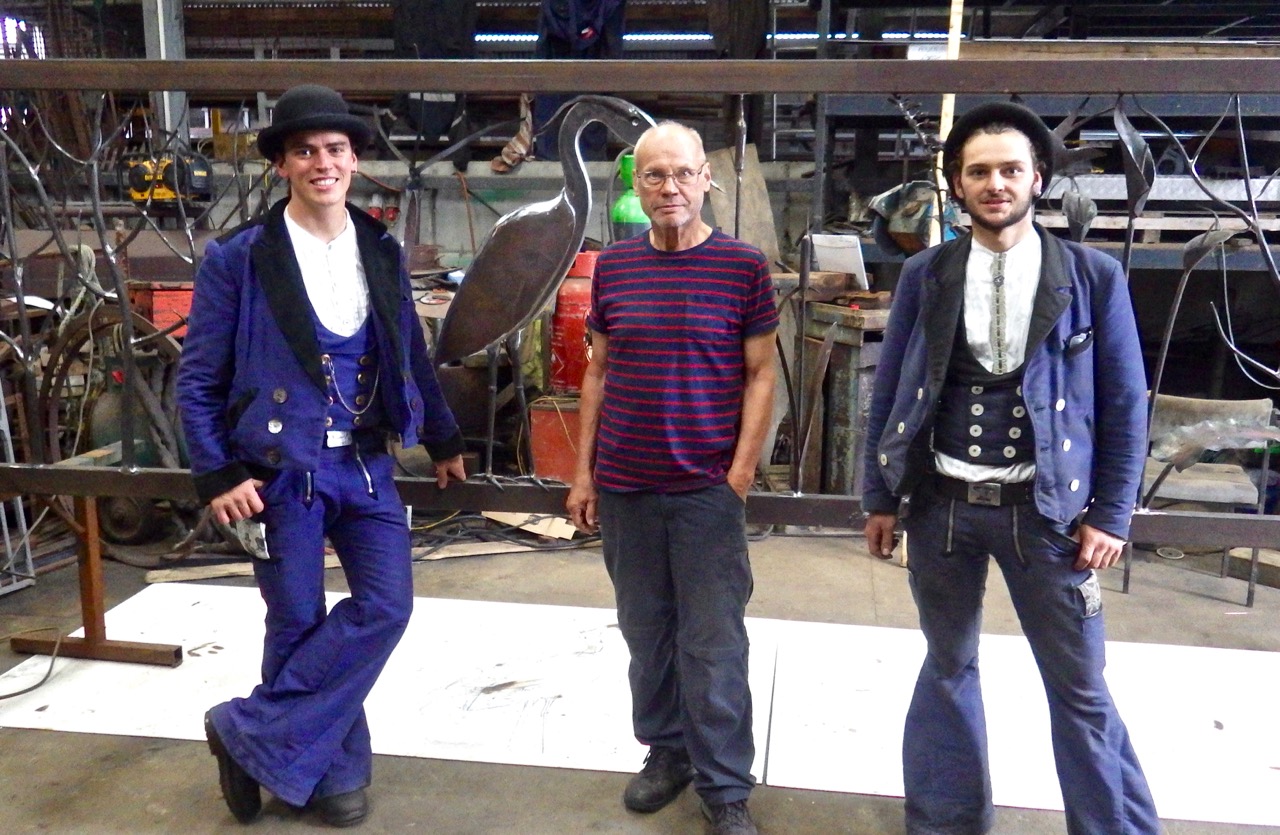
I am always happy to find longstanding customs and traditions still going strong, especially when they are as relevant today as they have been over countless generations. This summer we chanced upon two strangers from Germany who passed through Ballydehob. They were journeymen blacksmiths: lads who had completed their apprenticeships at home and were now ‘Auf der Walz’ (on the road) – gaining experience in the wider world.

inese-journeymen

Here are the two Journeymen who travelled the west of Ireland’captured’ by photographer Inese MJ – she came across them in her local supermarket! I am very grateful to Inese for allowing me to use her excellent photograph which comes from her own blog, here.

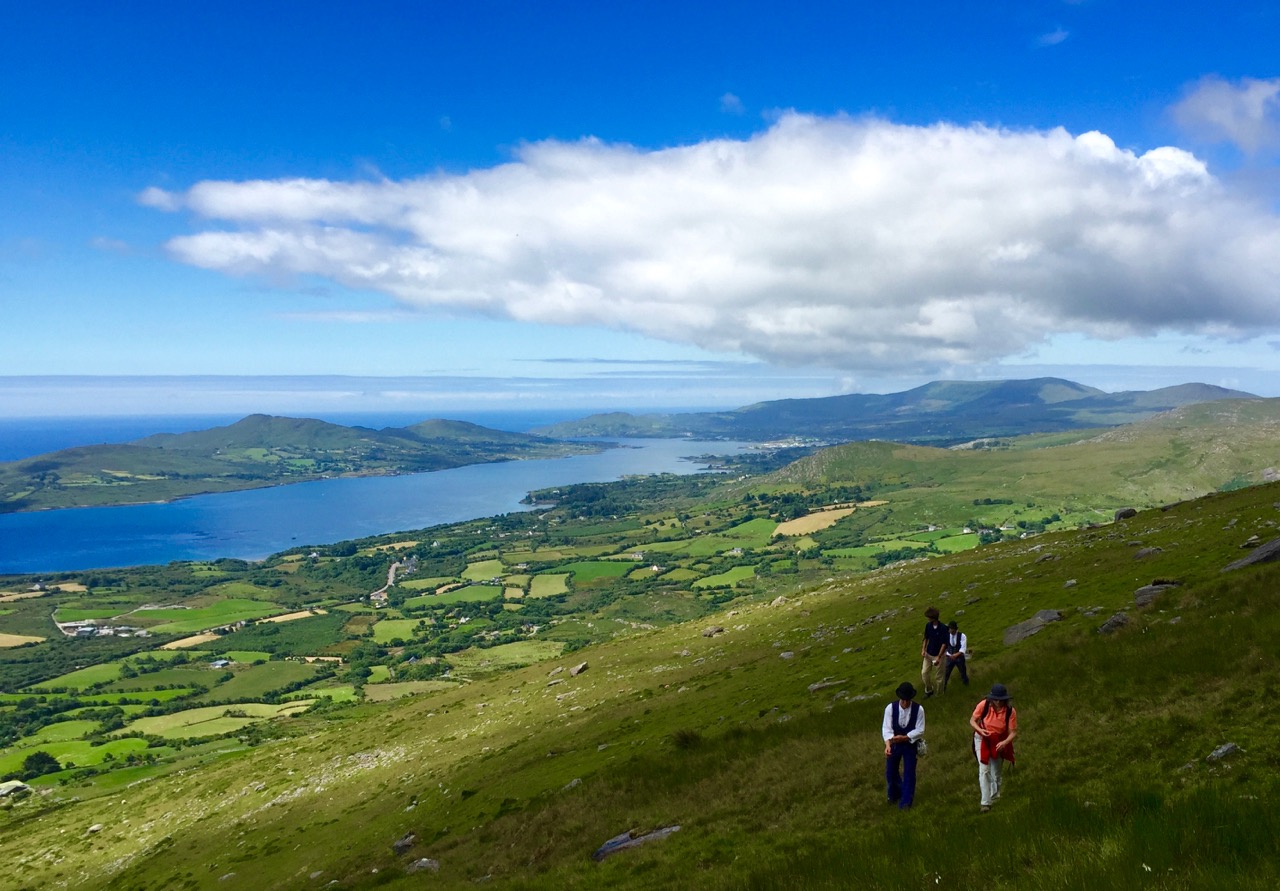
The tradition of the Journeyman Brotherhood is centuries old, originating in the Craftsmen Guilds of Europe during the Middle Ages and it is still practiced. In the past every young craftsperson who aspired to be a Master was, following his apprenticeship, required to leave home and not return for three years and a day. They had to stay at least 50 km away, but the journeys of the more adventurous candidates involved crossing oceans and continents. Simon and Benjamin – seen in the top picture after an exploratory climb to the summit of Hungry Hill on the Beara Peninsula – are from Munich and Frankfurt. They are wearing the uniform of their trade, known as the Kluft: this is how they are required to dress during their travels. The number of buttons on their waistcoats show the number of hours in a day they expect to work – in this case eight. When they leave home they have only a token sum of money each, and they must return with the same sum, no more. The purpose of the journey is not to seek their fortune, but to improve their knowledge and skills and give them a rich life experience, preparing them for becoming masters of their craft. It is a prerequisite that Journeymen cannot set out unless they are unmarried, childless and debt-free.

Left – a typical Charlottenburger used to carry the Journeyman’s possessions. Right – group of three in Germany looking for their preferred mode of transport

Other traditions which have to be observed by the true Journeymen include carrying only the most basic possessions with them: clothes to work in and the tools of their trade. These are wrapped in a small blanket, 80 cm square, known as a Charlottenburger. They also often carry a crooked walking stick, called a Stenz, which they have made themselves. Mobile phones are not allowed! Notably, Journeymen usually have gold bracelets and earrings: these may be pawned or sold, but only in cases of dire emergency… I learned that the earring tradition refers back to a time when each apprentice had a nail hammered through his earlobe to mark that he had reached the stage of his apprenticeship which allowed him to go out into the world and remain a stranger until he had completed his journey. Some sources suggest that the term Journeyman comes from the French Journée, meaning ‘journey’ – but this is not correct. Journée means ‘day’ in modern French, but its medieval root is the latin diurnata, which in fact means ‘a day’s work’ or ‘a day’s travel’.

Journeymen surrounded by the tools of their trade in the forge at Lowertown

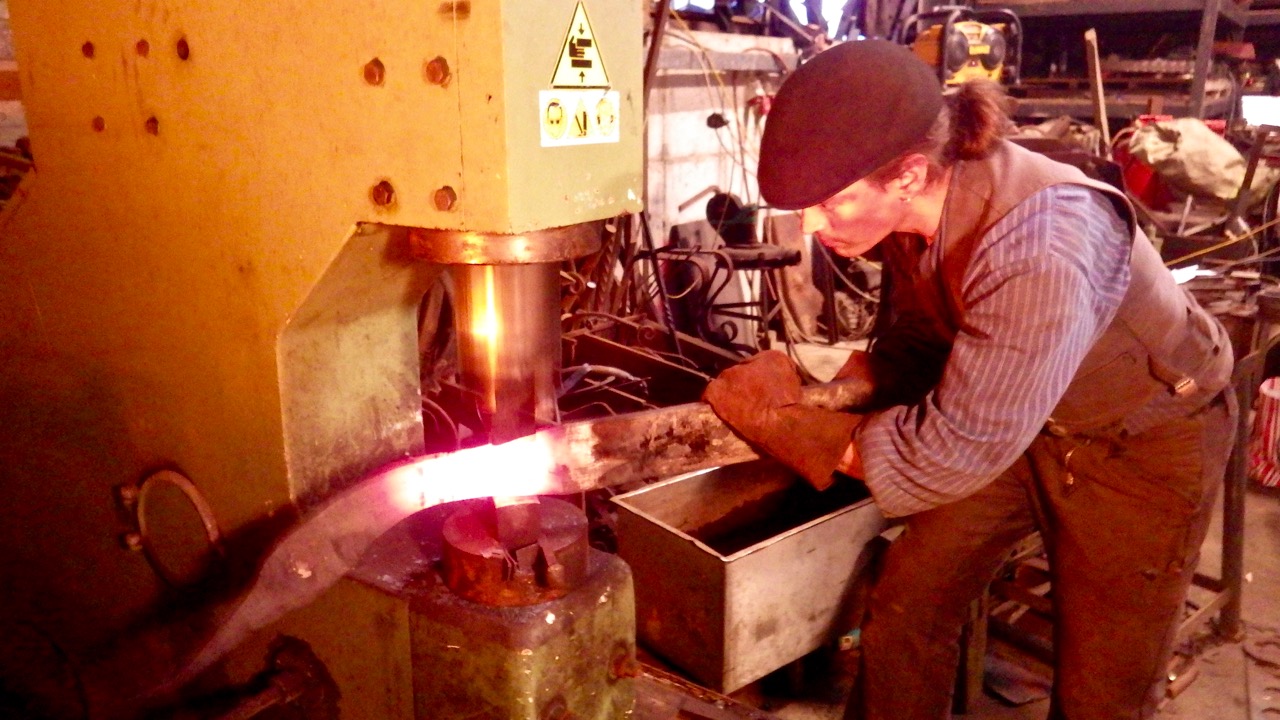
Simon and Benjamin were fortunate that in Ballydehob they bumped into our neighbour Dietrich: although he and Hildegard have lived here for much of their working lives they were brought up in Germany and were aware of the Journeyman tradition. They immediately found a project for the two young blacksmiths: constructing a new gate for their entrance. John Joe Bowen of the local forge at Lowertown was very helpful in allowing a space in his workshops for the boys to set to work.

blank canvas

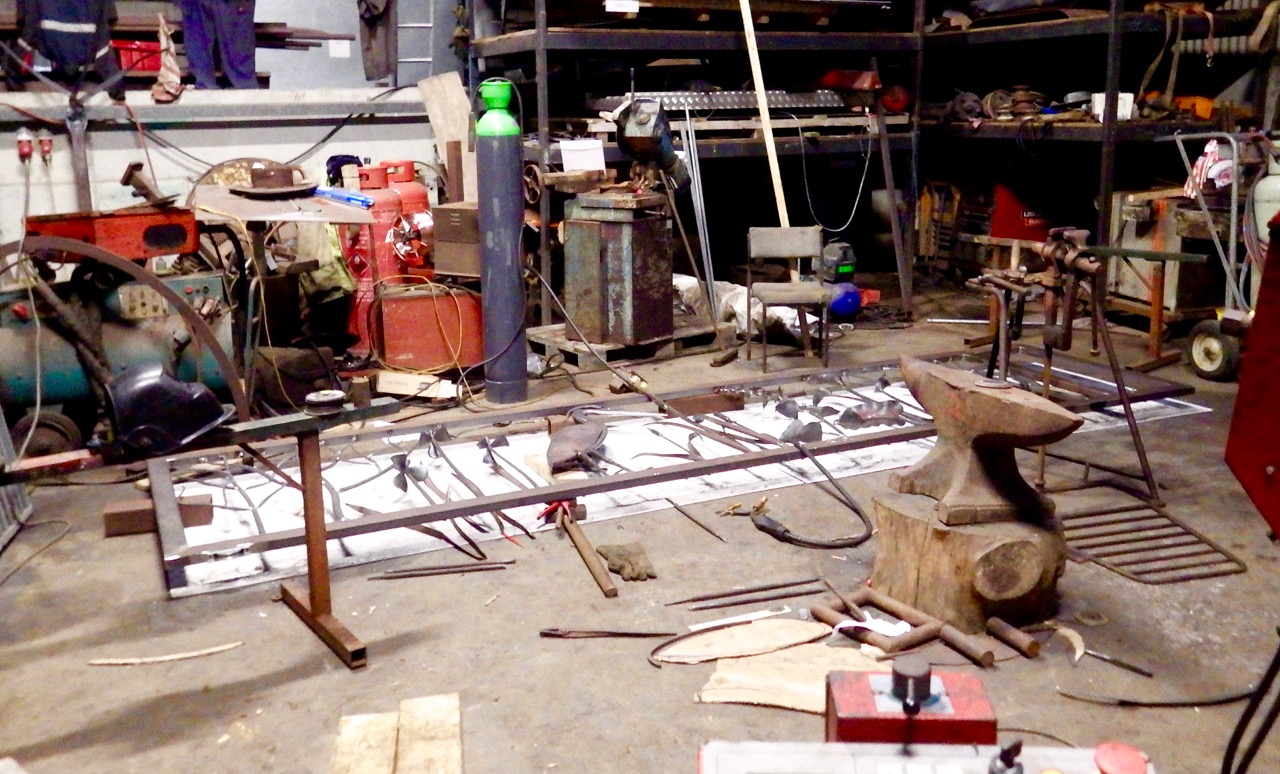
The process. Top – blank canvas: laying the full-size design out on the workshop floor. Above – learning from real life: how to fabricate a metal foxglove

We followed reports of the gate-making process with great interest, but were not allowed to see the completed design until the ‘official unveiling’. Dietrich and Hildegard recorded the various stages and have most kindly allowed me to use their photographs of the construction process (and the hike up Hungry Hill) reproduced here.

hammering

making the heron

From design to reality. Top left – Hildegard supervising the assembly and – top right – her design concept drawings. Above – a metal heron takes shape

The gate is a masterpiece. Made in West Cork, it reflects the environment of the place. It’s elegant, and unique. Although it appears complex, it is very understated: I think Dietrich and Hildegard have perfectly summed up the zeitgeist of our own time here in our small townland. Its inspiration is in nature, yet it is a technologically up-to-date piece of fine engineering.

piecing it together

on the floor

sanding the gate

dietrich, journeymen and gate

The construction process, and Dietrich and ‘The Boys’

We were privileged to be at the ‘launch party’. I have never been to a formal gate opening before! Dietrich cut the ribbon and then revealed the finished product to our eager eyes. This work must surely have been the highlight of the travels of these Journeyman from afar: they learned so much about observation and the translation of ideas into practical form.

the gate

Benjamin and Simon were not at the ‘launch’; they were already far away, continuing with their travels and their education. But they must carry with them good memories of the West of Ireland. Good luck to them both!

on hungry hill

Experiencing beautiful West Cork – the Beara Peninsula, summer 2016

The Old Mine Road

to the castle

Exactly two years ago I wrote a piece for this Journal – A Moment in Time – remarking on the very specific changes that we become aware of at the end of the summer: the holiday homes being closed up and shuttered; the boats being taken off their moorings and stored away in the boatyard; the shorebirds returning to their winter quarters. I finished up by pointing out that our own summers never end: we enjoy living in Cappaghglass just as much in the darker, colder days at the turning of the year as we do when the sun is high in the heavens.

cove gray day

high road gray day

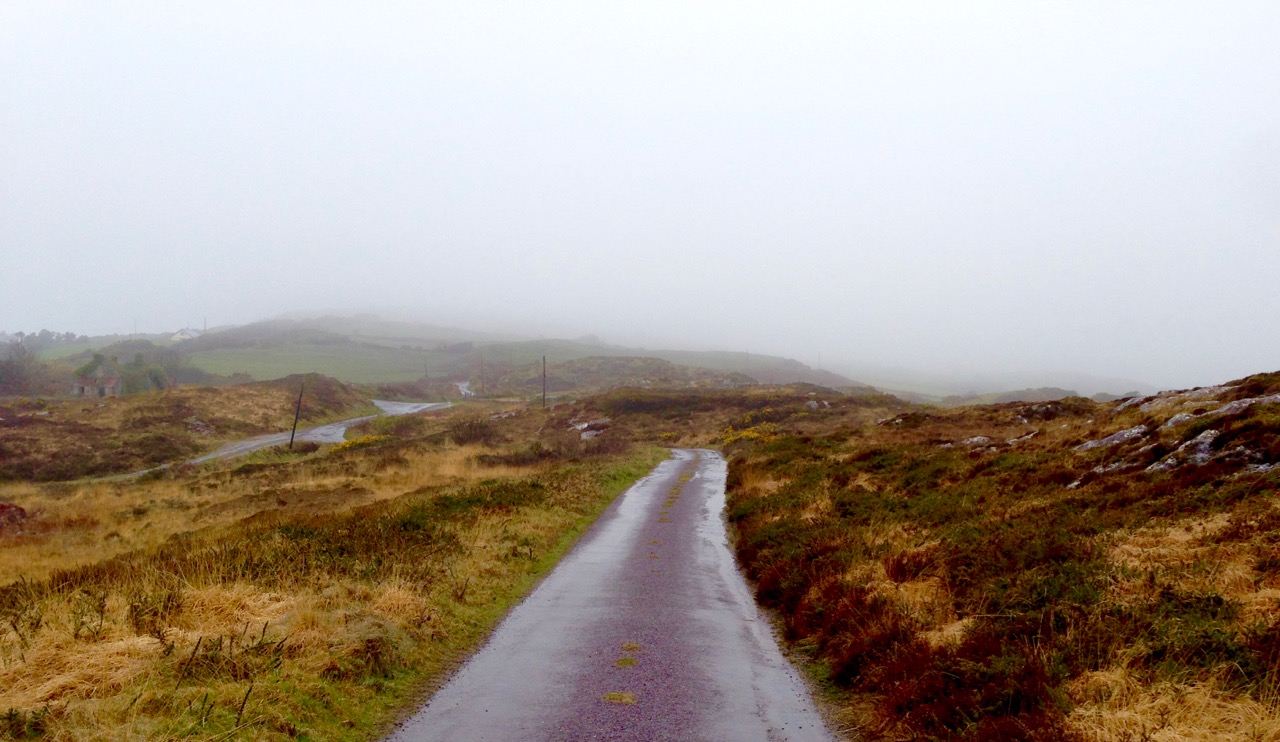
Top – starting point: Rossbrin Cove on a gray day. Bottom – The Old Mine Road wearing its raincoat

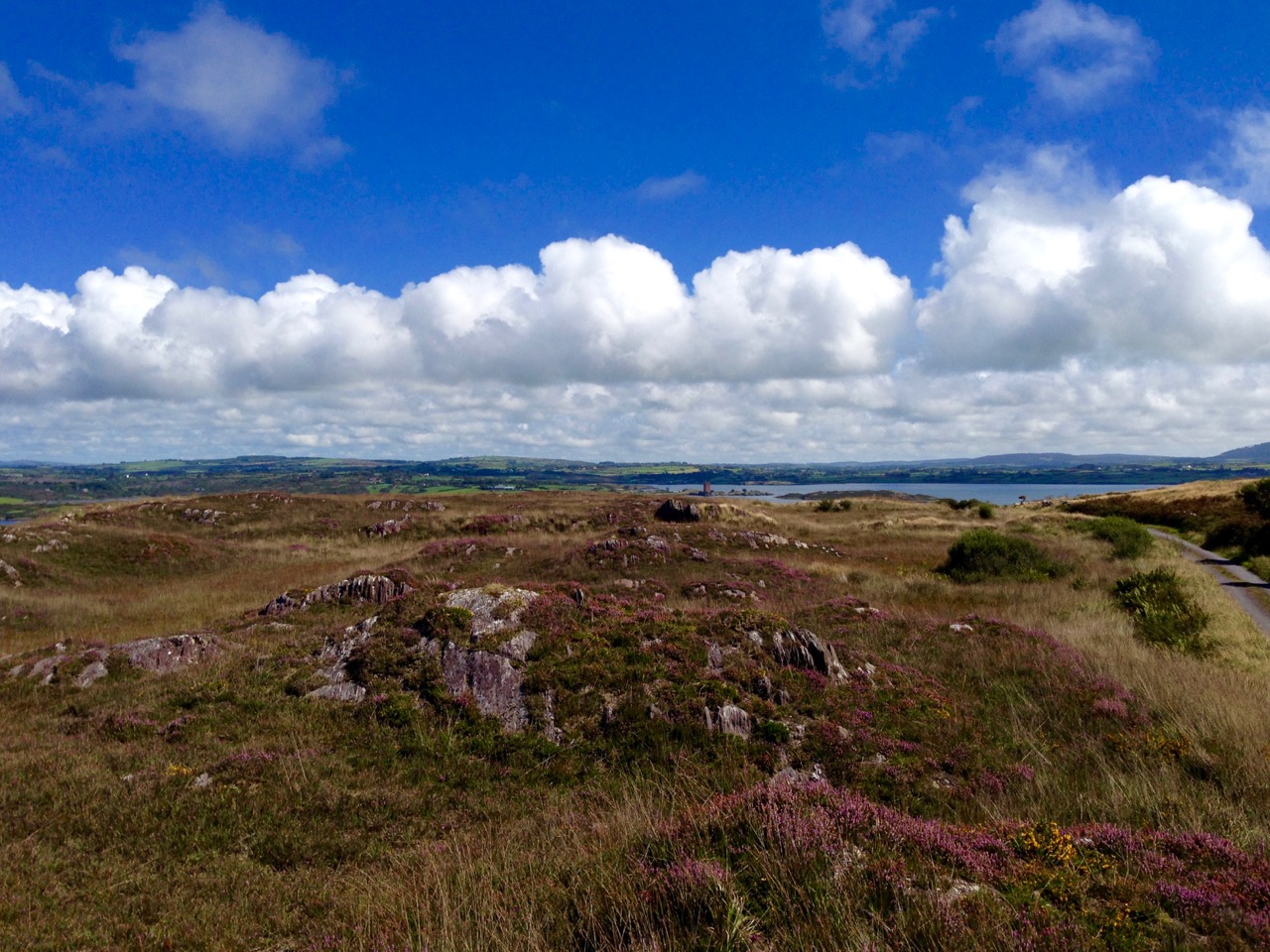
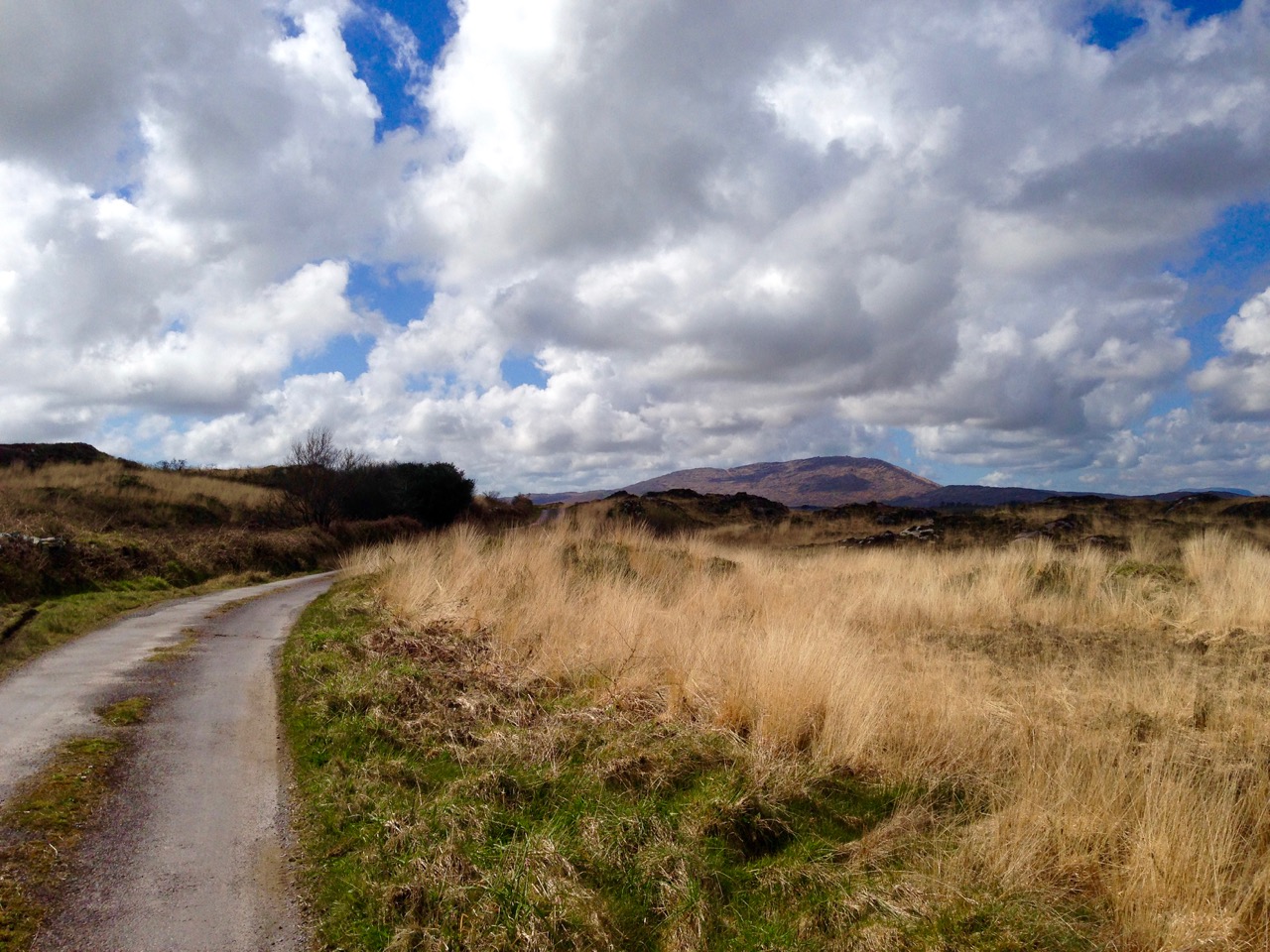
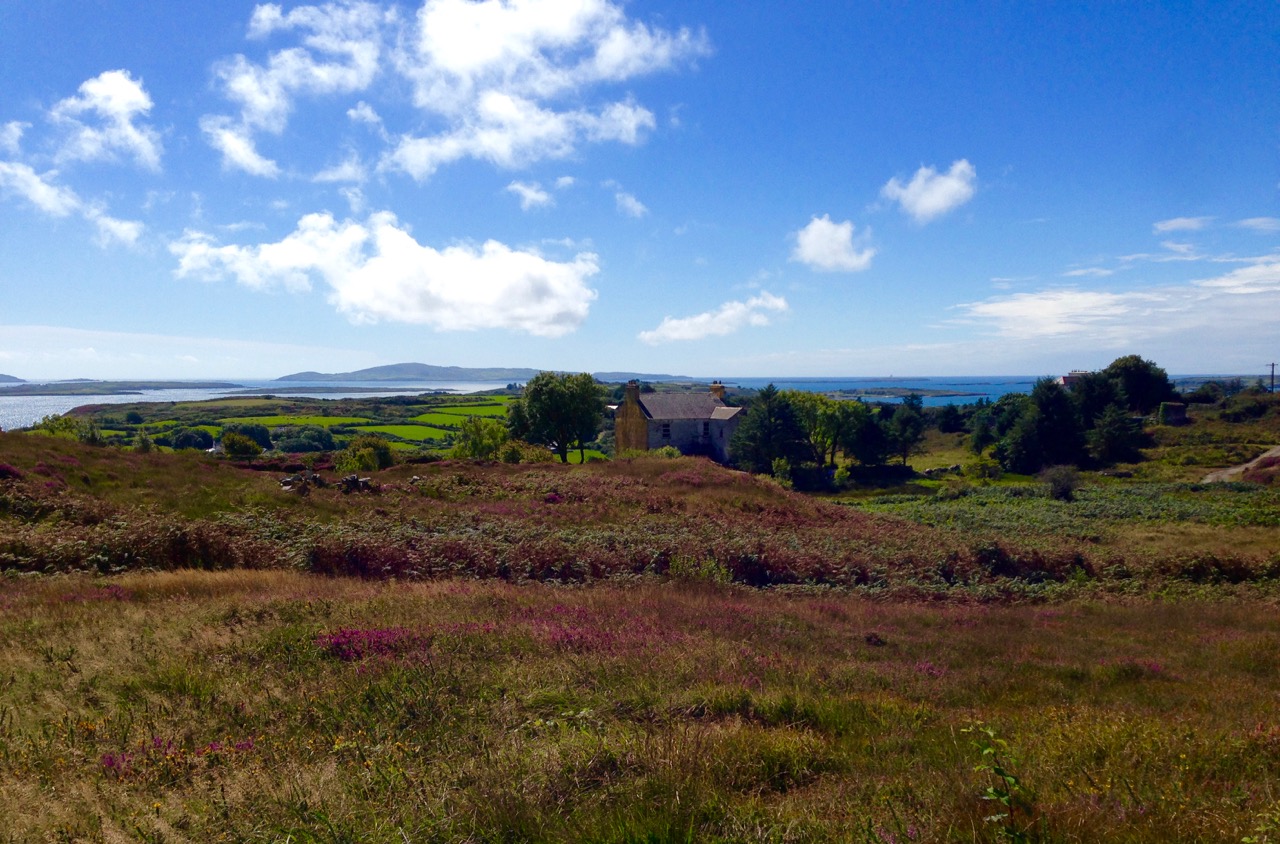
It is an idyllic life and we are privileged to have the quiet boreens to ourselves in all weathers. We have talked about Rossbrin Cove so often, in its many seasonal variations: for today’s post I’m taking the upward road through the townland, the route that I call The Old Mine Road. This road – or more accurately this series of lanes and byways – will take the traveller from the Cove into the little town of Ballydehob, and will pass through an old copper mining district which, two hundred years ago, saw heavy industry, intermittent employment, smoke, noise, pollution and desperate human working conditions where now ‘peace comes dropping slow’ with only the crying of the Choughs over an undisturbed backdrop of rock, heather and coarse grasses – and the occasional jumble of stones showing where there were once buildings, shafts and crumbling walls marking the old mine complex.

cappaghglass

captain's house sun

Top – the landscape of The Old Mine Road: Mount Gabriel dominates the horizon to the west. Bottom – looking from the road towards Roaringwater Bay: in the foreground is the site of old mine workings, now reclaimed by nature, with one of the two Mine Captain’s Houses in the centre and the stump of an old mine chimney on the right

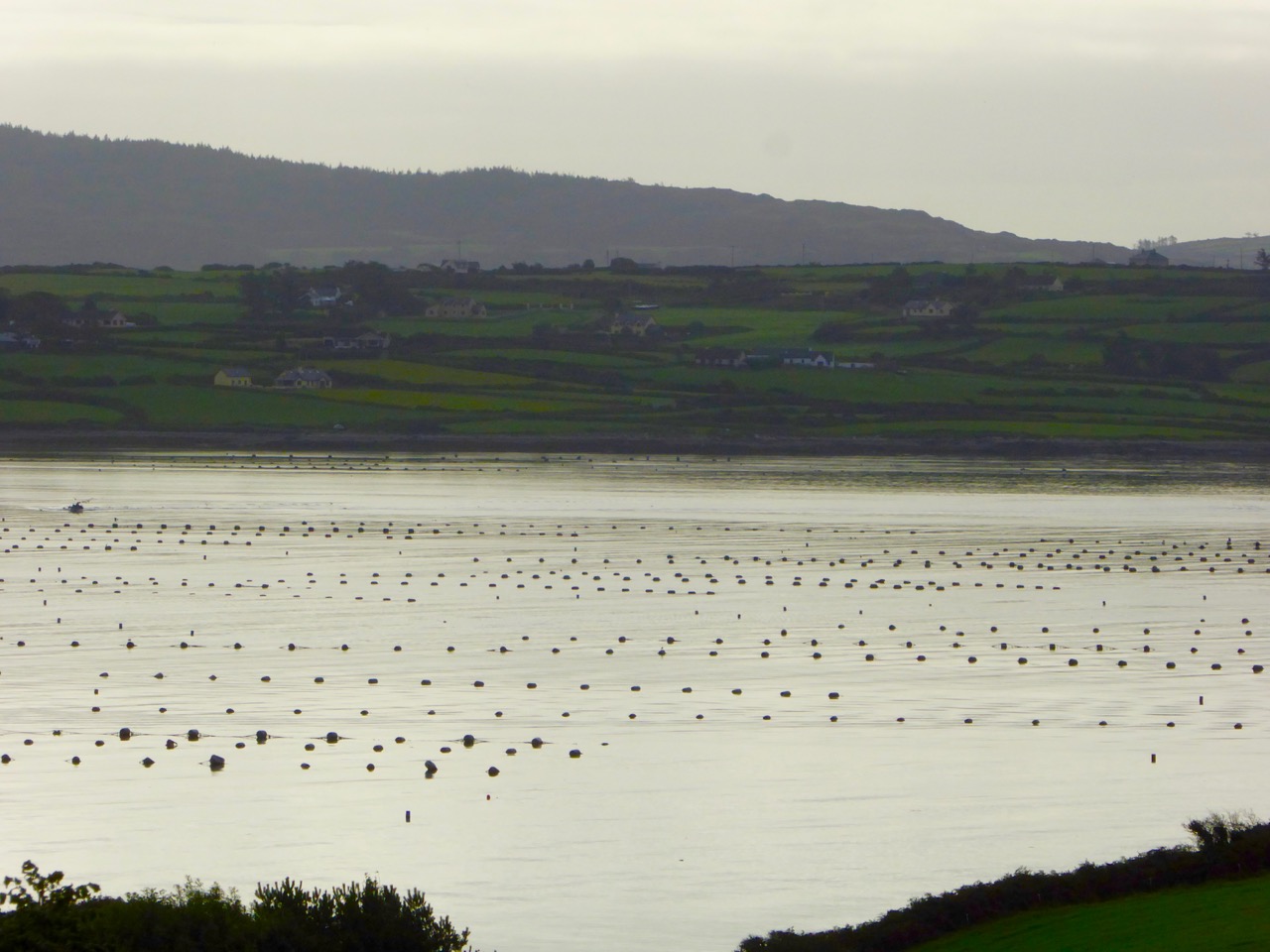
A walk along The Old Mine Road on a benign late September day will be rewarding because of the good air, the distant views to the Mounts Gabriel and Kidd, and with the bays of Roaringwater and Ballydehob below. You will find medieval history in the form of towerhouse castles, modern economy delineated by distinctive lines of mussel ropes spilling over the water and always alongside you the immediate wildness of a natural, undisturbed landscape. Views change as the way winds and dips – always interesting, always different, however many times you follow these routes.

mussel ropes

waving grass

mine buildings

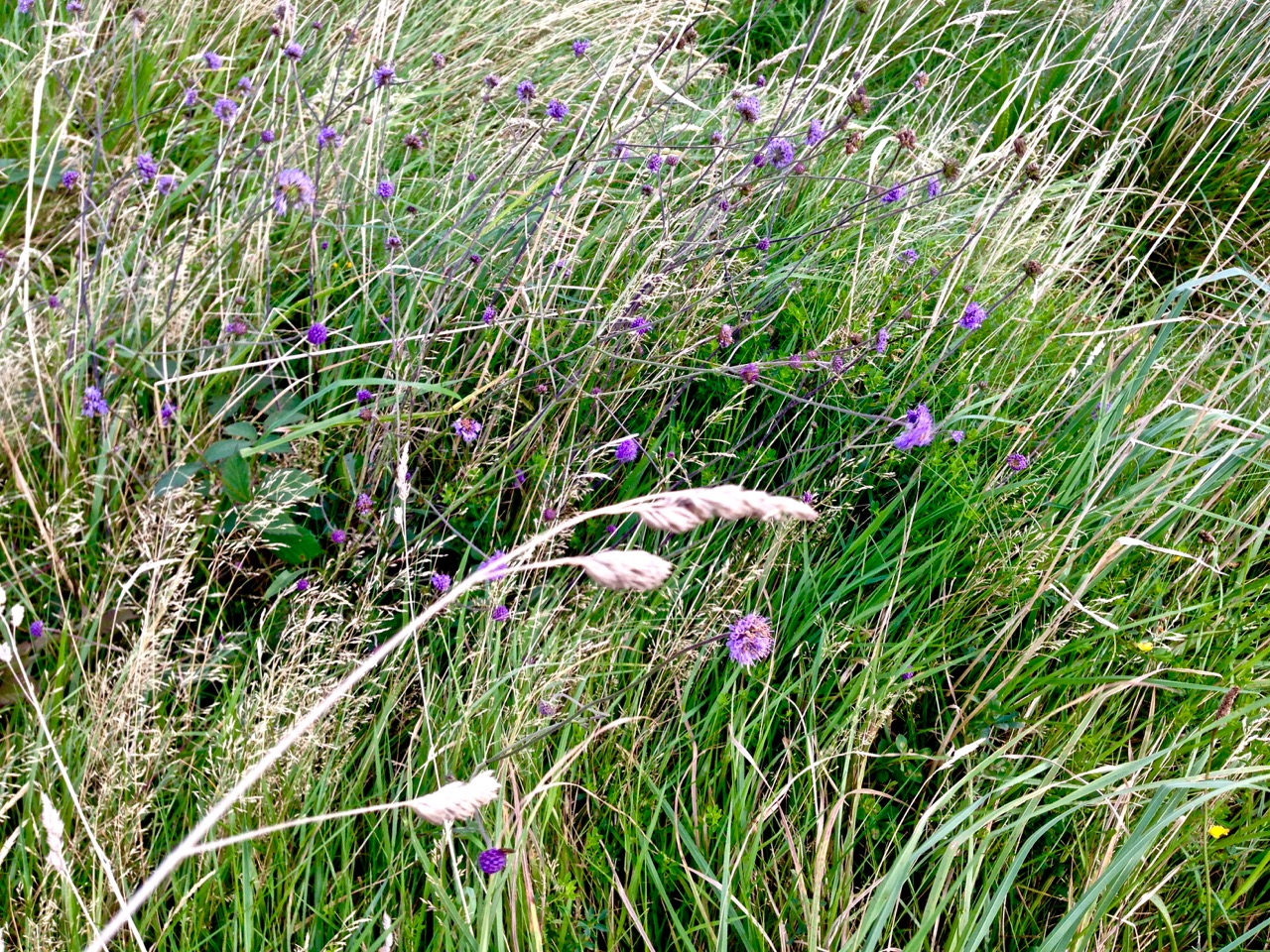
Top – mussel ropes abundant in the Bay. Middle -waves of grass in the wild landscape to the north of the road. Bottom – ruins of old mine buildings can still be seen from the road

Autumn brings with it a certain melancholy. Time passes, our lives move relentlessly forward. We enjoy the changing of the seasons but we want to know that there will be so many more seasons to see. Each one will bring us unique experiences.

blue in the grass

from the road

Top – wildflowers in abundance on the boreens of Cappaghglass. Bottom – signs of old workings in the fields below the road

As I walk the old road, I can’t help trying to picture the scenes there from other times. I wonder what feelings the hard working miners had – did they take in the changing light and the views? Did they see the way the grasses moved with the wind, creating waves on the landscape? Did they have any time to notice nature’s fine details – the incredible variety, colours and designs of the wild flowers? Or was theirs just a drudging commute from cottage to workplace at dawn and dusk?

ballydehob wharf

The end of the road: Ballydehob Wharf, which would have seen great activity (intermittedly) when the mines were in full swing. Cappagh Mine was operating between 1816 and 1873, with its maximum output of about 400 tons of ore being produced in 1827

The poet Seamus Heaney has much to say about the hardship – and order – of a physical working life; his own father had worked the land and the poet was infected with memories of his younger days. This poem – Postscript – has a different emphasis but strikes me as a similar commentary on encounters with the landscape, although it’s concerned with another geography:

…And some time make the time to drive out west
Into County Clare, along the Flaggy Shore,
In September or October, when the wind
And the light are working off each other
So that the ocean on one side is wild
With foam and glitter, and inland among stones
The surface of a slate-grey lake is lit
By the earthed lightning of a flock of swans,
Their feathers roughed and ruffling, white on white,
Their fully-grown headstrong-looking heads
Tucked or cresting or busy underwater.
Useless to think you’ll park or capture it
More thoroughly. You are neither here nor there,
A hurry through which known and strange things pass
As big soft buffetings come at the car sideways
And catch the heart off guard and blow it open…
wall and heather

Gary, Paul, and Nana’s Soup

Rowers Return

Two local lads, from Lisheen down the road, have stolen the hearts of everyone in West Cork. Everyone in Ireland, actually, and beyond.

On the stand

Gary and Paul rode the open-topped bus into Skibbereen on Monday night and then spoke from the stage at Fairfield

Gary and Paul O’Donovan won a silver medal in Rio in their rowing pairs class. They row for the Skibbereen Rowing Club, a local club that punches way above its weight in national and international competitions. The coach credited with that is the brilliant, but mono-syllabic, Dominic Casey. Taking Gary and Paul under his wing, he turned them into the hard-working athletes they are.

MUM AND NANA

In  the window on the left, the boys’ mother, Trish O’Donovan, and their grandmother (Nana), Mary Doab

Their parents’ devotion was sterling. Eoghan Harris’s Independent interview with their Mother, Trish, is perhaps one of the most revealing pieces of journalism about the O’Donovan Brothers phenomenon and what it takes to support an Olympian.

Waiting for the Open-Topped Bus

Gary and Paul are also dream interviewees – every sentence is a sound bite, delivered in pure West Cork accents, with artless but articulate insouciance. Their interviews are now the stuff of legend – but if you haven’t already seen them, take a look at this one done before the final race. What shines through, and makes them so endearing, is that they take their training, but not themselves, seriously.
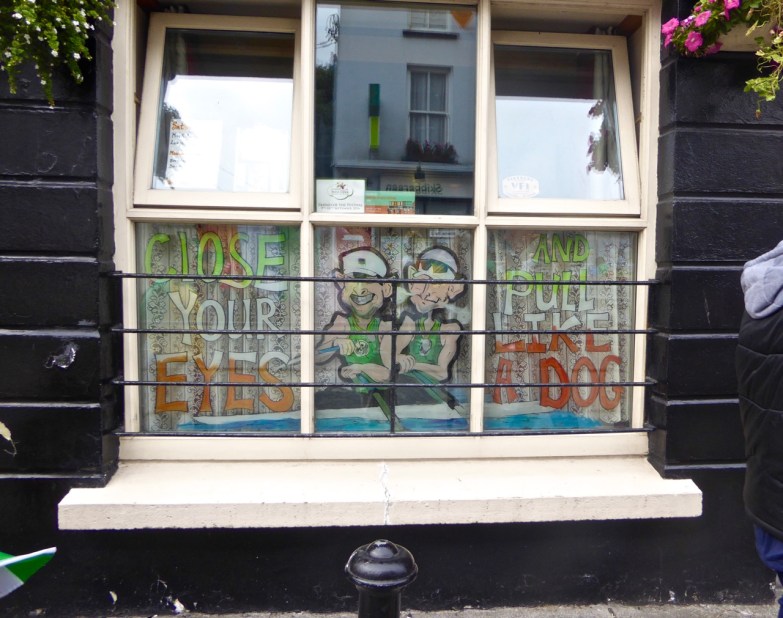
Pub Window

Above: Left, Stella and Hugh sporting their ‘occasion wear’; Right, this young man let me take his photo in his Shteak and Spuds shirt. Below: Many of the Skibbereen merchants had decorated their windows

The classic quotes have already been immortalised and the T-shirts have been selling like hot cakes in Skibbereen. The night of their homecoming it seemed like the whole of West Cork turned up to welcome them, including us! It was great fun to be there, in the streets, waiting for the open-topped bus, and then to see them on the stage, with Dominic Casey, so obviously having the time of their lives.
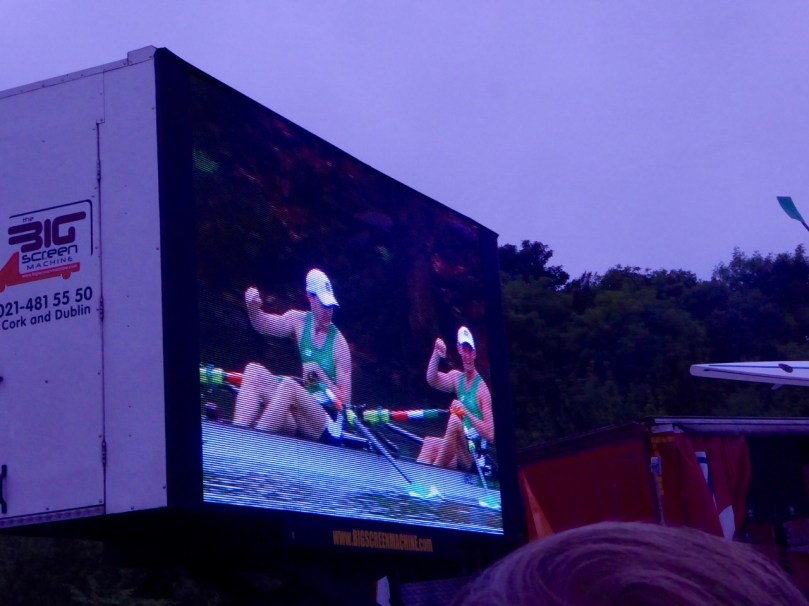
Replay

We, thousands of us, re-lived their big moment on an enormous screen in the Skibbereen Fairfield

Someone who came in for special praise in one of their interviews was the boys’ grandmother – their Nana (the first of the interviews on this page). Coming in cold and hungry from rowing, they gratefully wolfed down her home-made soup and ‘brown cake.’ Here in West Cork when we talk about a ‘cake of bread’ – what we mean is that solid round mass of white or brown home-made soda bread that is one of the staples of our diets, and that tourists have come to love.
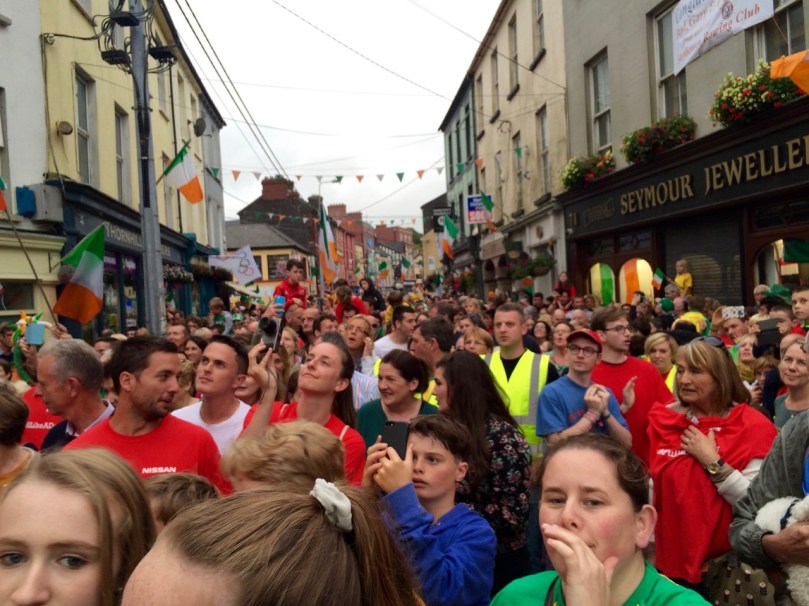
Following the Bus

It  seemed like the whole of West Cork turned out to greet them

In honour of Gary and Paul and their Nana, and using only locally grown and organic vegetables purchased at Levis’s of Ballydehob Wednesday Farmers’ Market, here is my recipe for Nana’s Soup. It’s vegetarian and gluten-free – and totally delicious! Serve with a wedge of brown bread if gluten is OK for you. (I’ve become more sensitised to gluten issues recently as a dear little niece has been diagnosed with coeliac disease.) 

Levis market

Local growers sell their fresh vegetables at Levis’s pub in Ballydehob on Wednesday mornings

NANA’S SOUP: THE RECIPE

Vegetables: I used kabocha squash, onions, carrots, parsnips, potatoes and green beans, but you can use any robust vegetables that are in season.

Other ingredients: 1 can organic tomatoes, tapioca starch, vegetable stock (I used Marigold Swiss Veg Bouillon, but Knorr Veg Stock Pot is also gluten-free)), fresh or dried herbs.

Cut the squash in half, scoop out the seeds and roast in a hot oven for about 20 minutes. Leave to cool. Once cool, scoop out the flesh of the squash and chop roughly.

Peel and roughly chop the onions, potatoes, carrots and parsnips. Top and tail the green beans and cut in half or thirds. Chop the herbs (I used parsley sage, oregano and fennel from my garden, but any combination that suits you is fine).

Sweat the onions over medium heat in butter or olive oil until translucent. Over the onions, scatter about 2tbs of tapioca starch (this make it gluten-free, but if gluten is not a problem, just use flour) and stir until well mixed and starting to thicken. Pour in a can of organic tomatoes, the herbs, and a cup or two of vegetable stock. Stir until well mixed, then add all the vegetables. Bring to a boil, then turn down and simmer for at least an hour, preferably two or even three.

Soup and brown cake

After a bowl of this, you too can Pull Like a Dog!

Gary and Paul aren’t intimidated by a ‘bit of wind’. This is why – Skibbereen Rowing Club is on the beautiful , and breezy, Ilen River

Learning from the Masters

matt + jackie

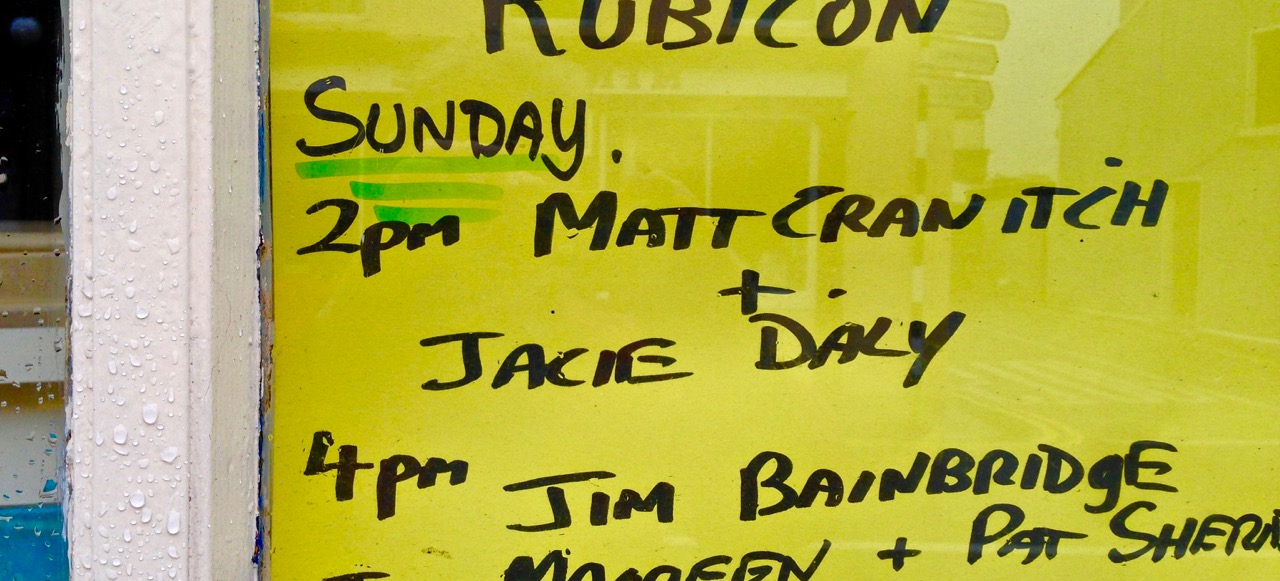
It’s midsummer – and time for the Fastnet Maritime and Folk Festival in Ballydehob. Amongst the distinguished guests this year are these two regulars: Matt Cranitch and Jackie Daly. They hail from the Sliabh Luachra on the Cork, Kerry and Limerick borders. I’ve made mention of this area before, particularly in Slides or Jigs and The City of Shrone: the name means ‘Rushy Mountains’. I can’t resist quoting from this anonymous and wry review of a book published in 2003:

…I’ve just come across a book which may interest serious Sliabh Luachra obsessives, though not those merely in search of new polkas and slides.  “Sliabh Luachra Milestones”, by Diarmuid Moynihan, is an attempt at the first general history of the area, and grew out of a thesis on early road development in Sliabh Luachra.  It covers, in outline at least, such topics as archaeology, Christianity (traces have been found, apparently), early descriptions by English invaders, historical events, settlement patterns, maps, and of course, roads…

rushy glen

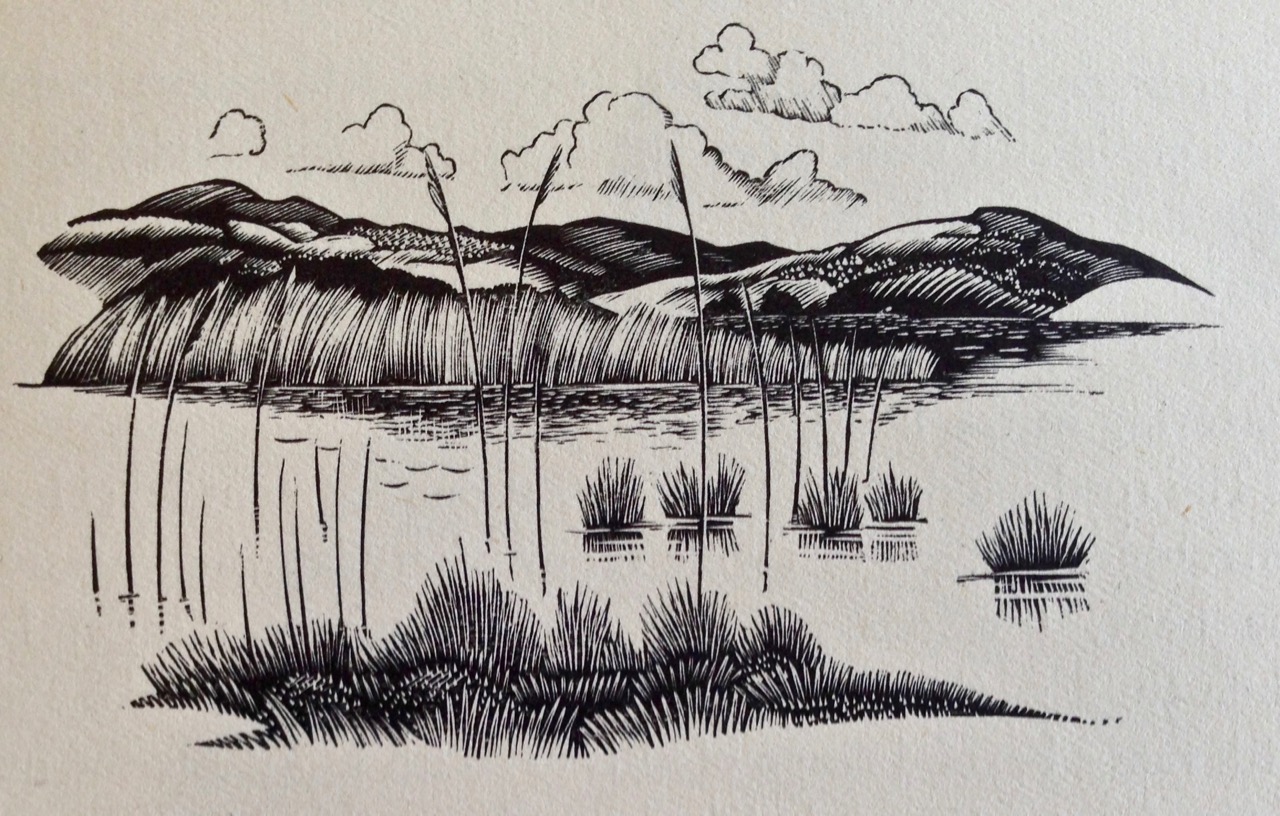
The rushy glens of Sliabh Luachra – from a woodcut by Robert Gibbings

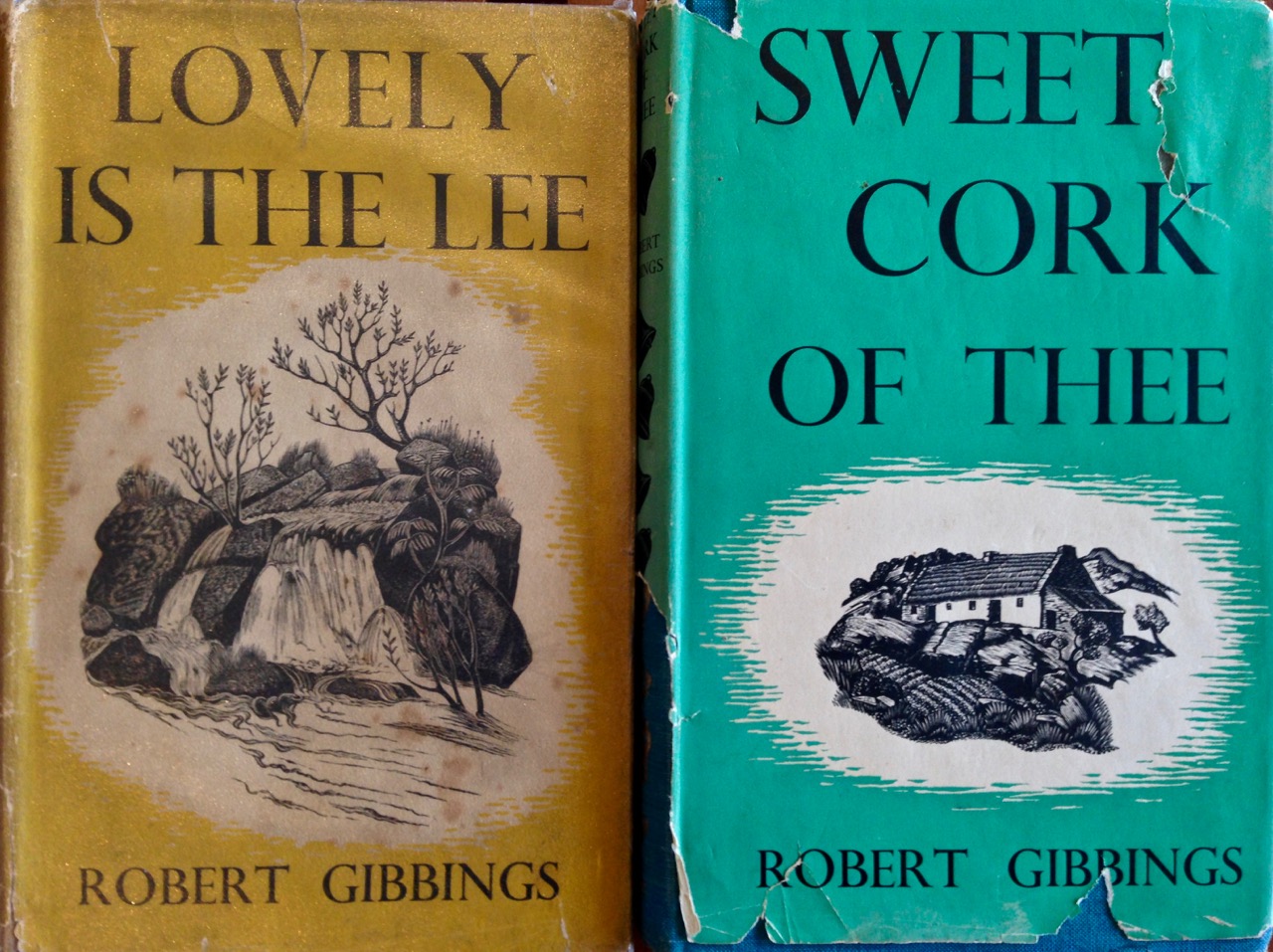
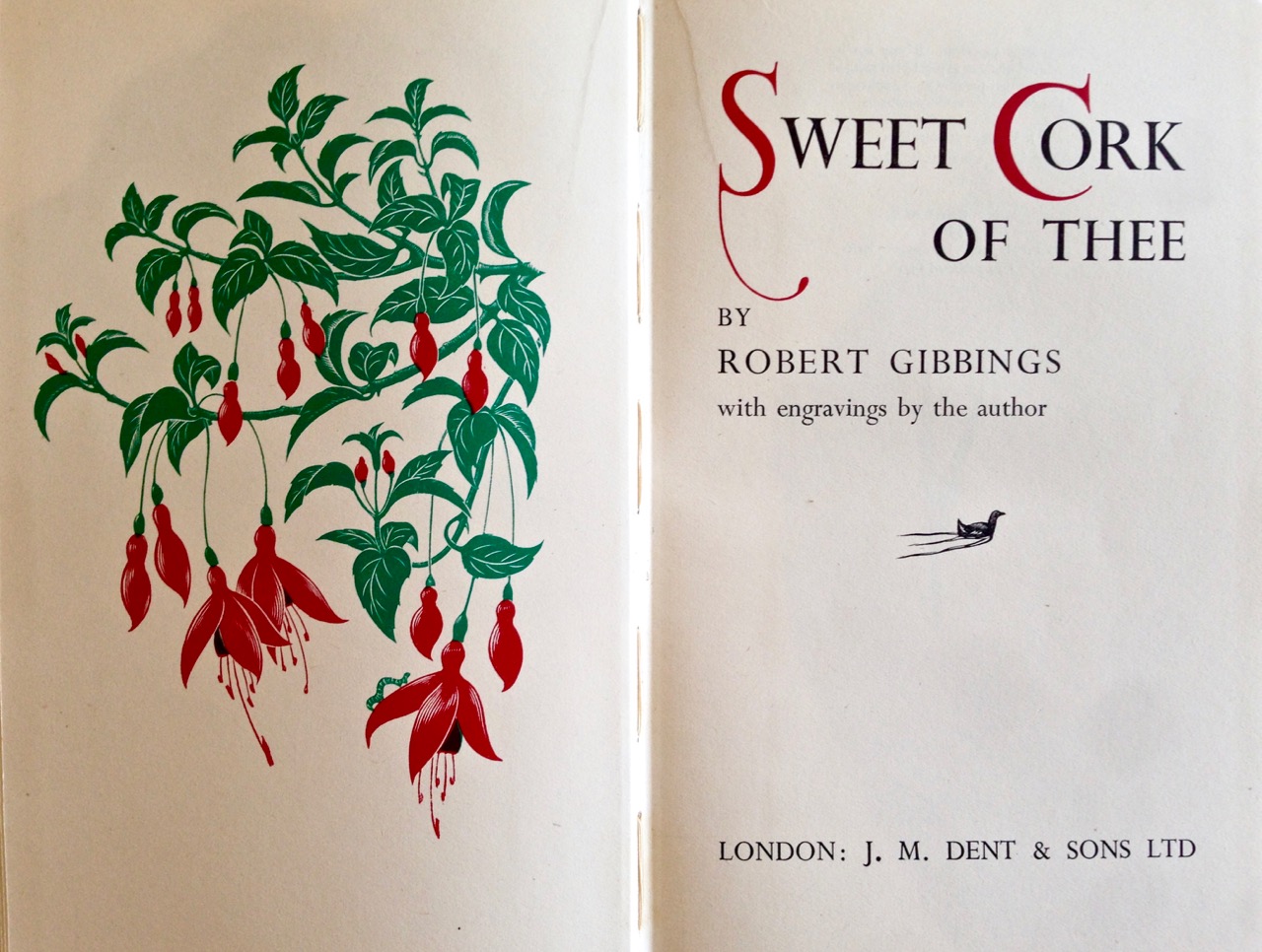
So, am I a Sliabh Luachra obsessive? I think I probably am… It all started in the 1970s when my good friend Danny gave me two books by Robert Gibbings – Lovely is the Lee (J M Dent 1945) and Sweet Cork of Thee (J M Dent 1951). They are my most treasured books in our extensive collection of Irish literature and both are set, in part, in the Sliabh Luachra – and it was these books that set me on a journey that – 40 years later – has brought me here to Nead an Iolair, and to the wealth of musical tradition that we enjoy.

Gibbings books

Sweet Cork title

Jackie Daly is only a year older than I am, yet I remember looking up to him as a master when I first started listening to Irish music half a century ago: I suppose we must both have been more youthful then! He grew up with the music of course: his father played the melodeon, and he played at local ‘crossroads dances’ with a neighbouring mentor Jim Keefe. I still have – and still play – the recordings of Sliabh Luachra musicians that I bought in the early 1970s (and which are still available from Topic Records). Matt Cranitch is a distinguished and respected fiddle player who has also has an academic career and has lectured widely on Irish traditional music.

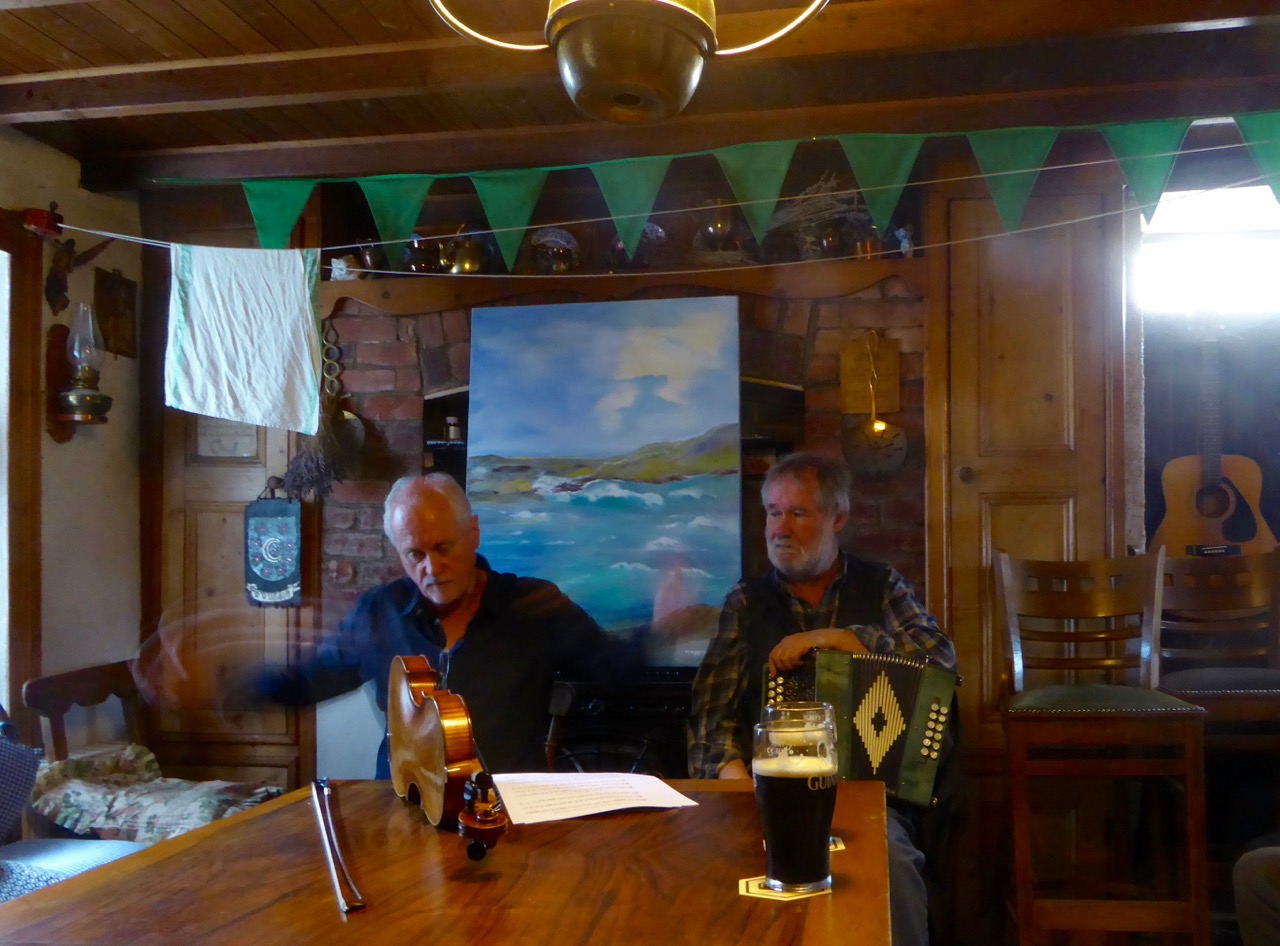
Here’s a taster from the Festival sessions – Matt, Jackie and friends finishing up a set of iconic Sliabh Lauchra slides in Rosie’s Bar

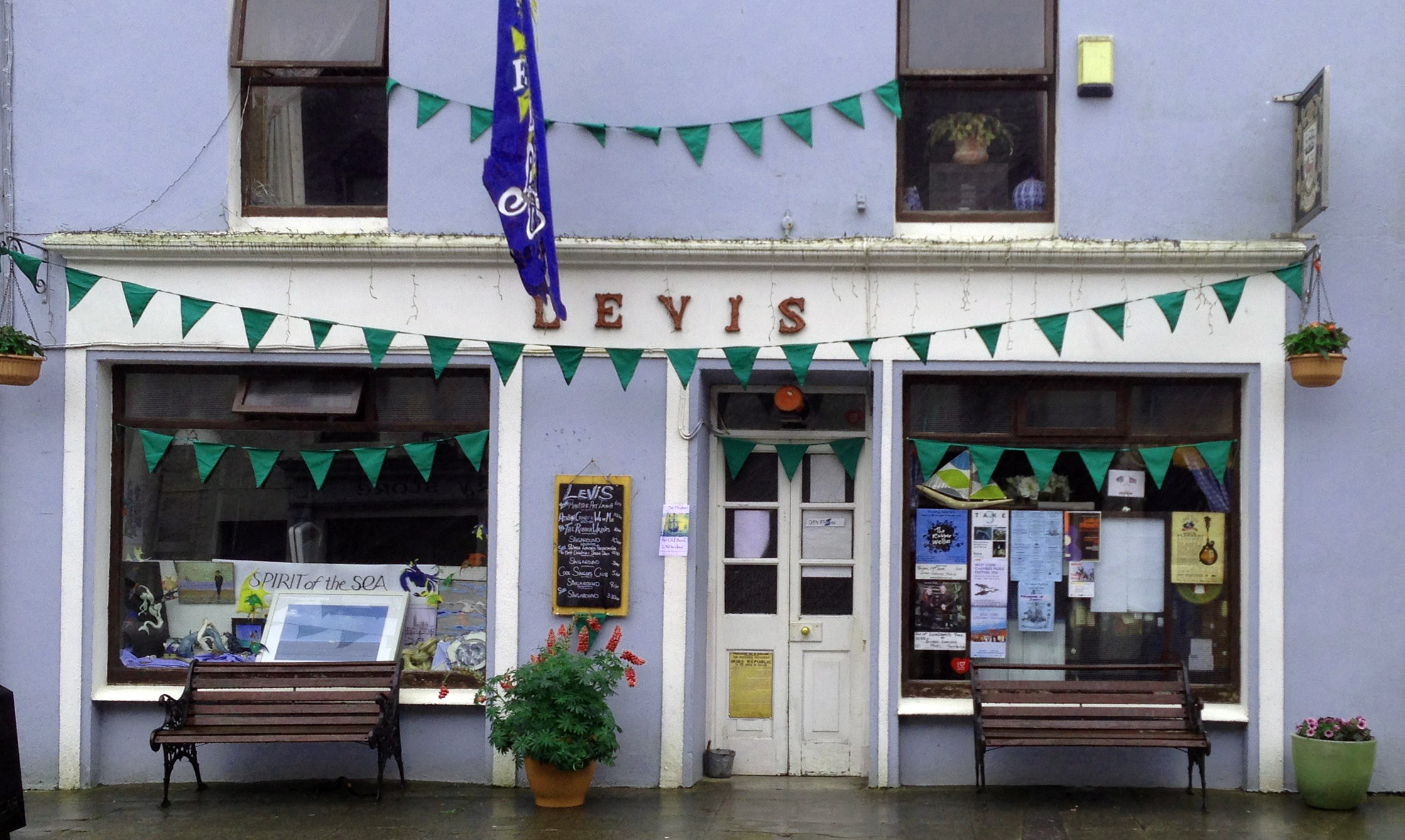
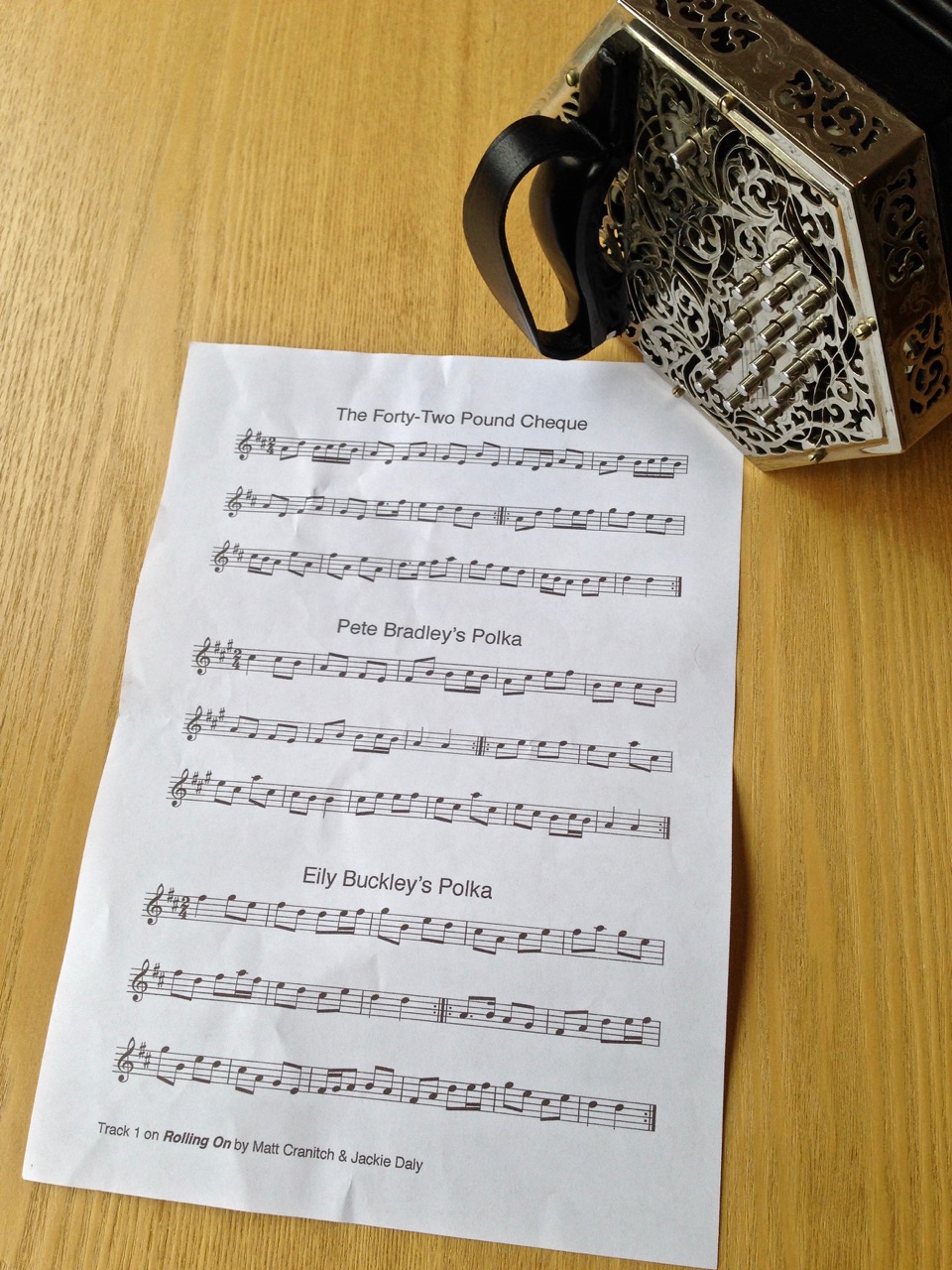
I was fortunate to attend a workshop with Matt and Jackie in Levis’s on Saturday. After a fascinating talk on their traditions we all ended up learning a set of polkas. Wonderful! Those without instruments were cajoled to sing the tunes, so it was a communal affair.

Here you’ll catch the end of a tale by Jackie and a few bars of a beautiful slow air (Maidin Ró-Mhoch) from Matt

The workshop took place in the intimate setting of the back parlour of Levis’s Corner House – on its way to becoming one of the top music venues in Ireland through the efforts of Joe and Caroline yet always keeping its distinctive character.

Levis midsummer day

It takes me a little while to pick up new tunes but the duo were good and patient teachers and we were doing quite well by the end of the session. I thoroughly recommend their latest CD Rolling On (2014), which includes Maidin Ró-Mhoch and many other fine Sliabh Luachra pieces.

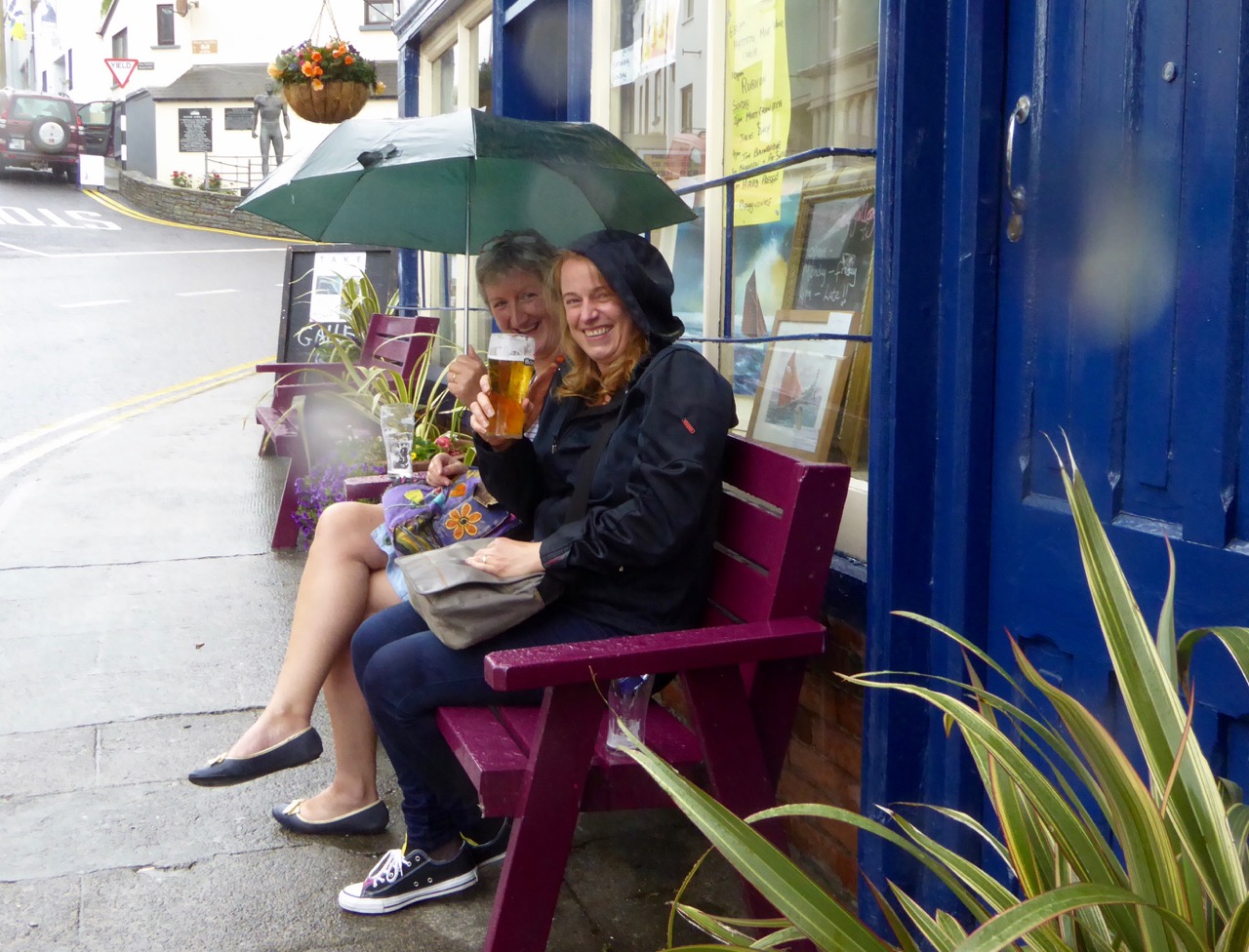
As usual, Ballydehob has embraced this festival – one of many through the summer – and the town is rocking in the rain… there are visitors from afar: Hyttetu – a maritime themed male voice choir from Norway, Swansea shantymen Baggyrinkle and very many others, including someone who has been at the forefront of the Irish folk music scene for many years, Andy Irvine.

yellow poster

festival time!

Festival time – midsummer’s day!

So many thanks to all the organisers, particularly Dick Miles and Cathy Cook, and the landlords of all our local hostelries: it wouldn’t happen without them. Now I’m off home to get dry and practice those tunes!

3 polkas


Here Be Pirates!

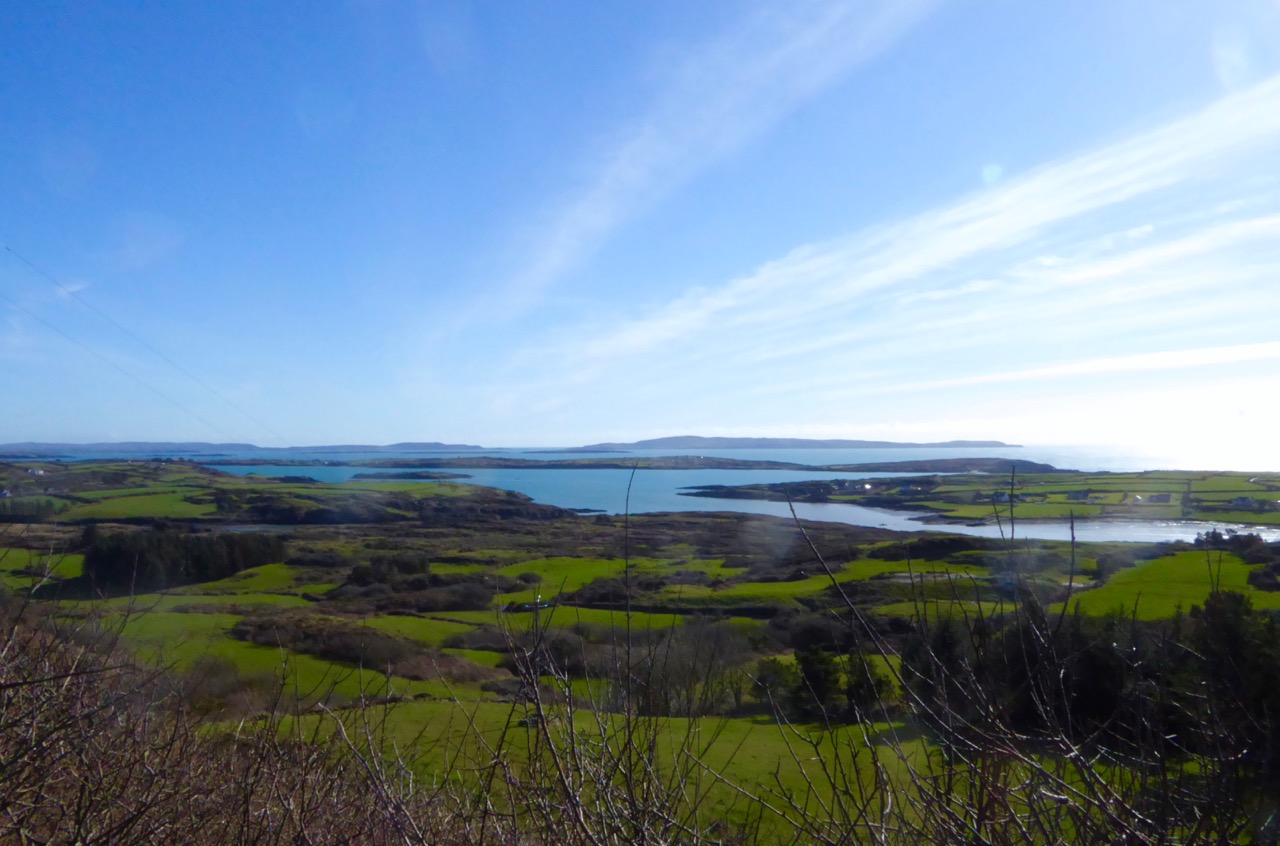
Crough Bay in the townland of Leamcon – one of the sheltered and hidden moorings which became known as a pirates’ nest in the late sixteenth and early seventeenth centuries. This is a view of part of the former estate of Sir William Hull who, as Vice Admiral of Munster, was charged with routing the pirates but in fact connived with them for his own financial gain

…Ireland may well be called the nursery and storehouse of pirates… wrote Sir Henry Mainwaring in a manuscript now in the British Museum (A Discourse of Pirates, on the suppression of piracy 1618). He had first-hand knowledge: this adventurer who was born in the time of Elizabeth spent most of his life at sea, survived the English Civil War – although on the losing side – and had been privateer, pirate and Royal Naval captain. He died at the age of 66 with his feet on dry land, although in poverty and exile in France.

map of baltimore

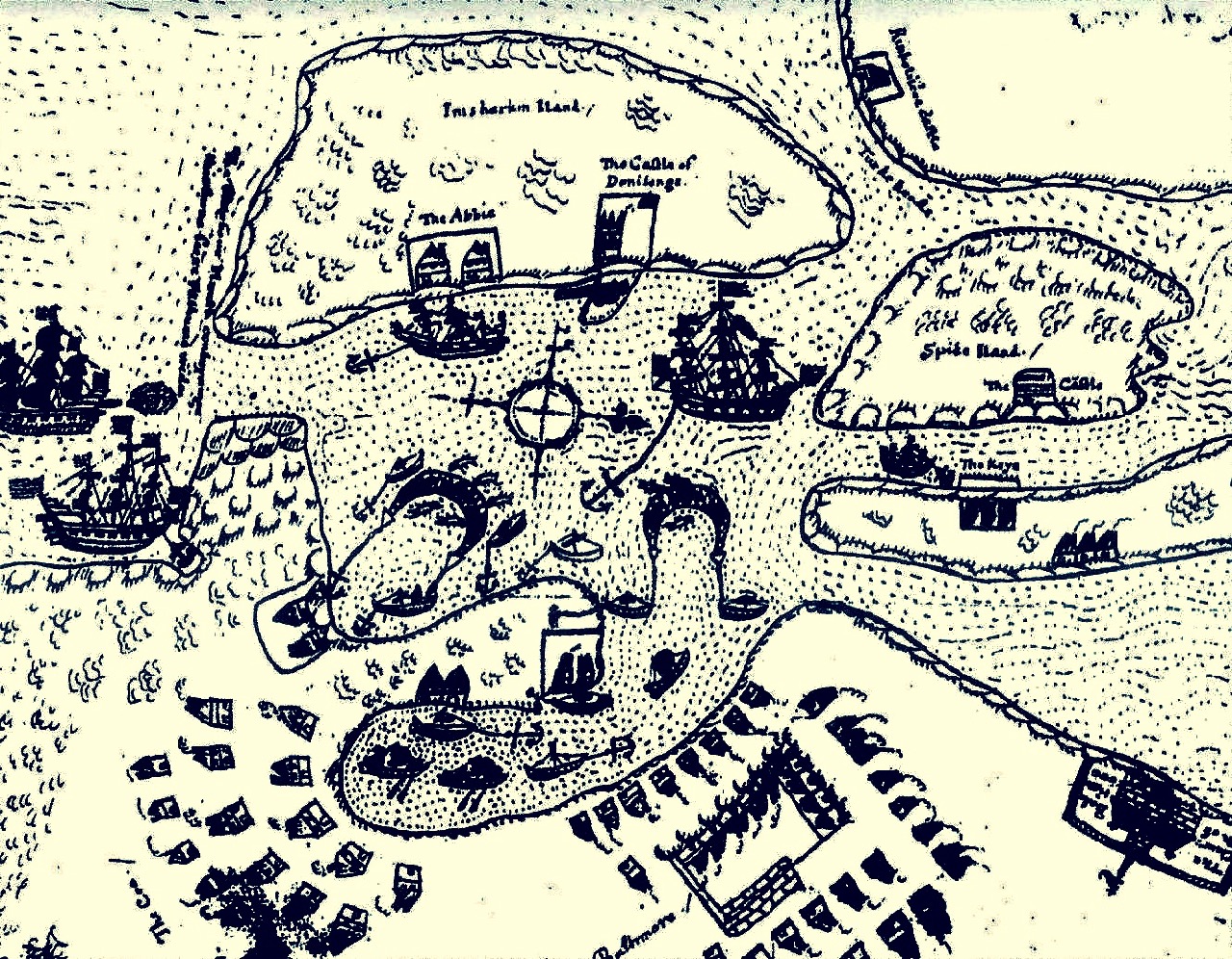
The Earl of Cork’s map of Baltimore,1628 –  following well-founded fears of ‘Turk’ raids he petitioned the Admiralty to fortify the coastal settlements. He was ignored and in 1631 the town was sacked and burned by Barbary pirates who carried away over 100 of the residents to the slave markets in Morroco

My possible ancestor Captain James Harris of Bristol died with his feet in the air: he was hanged at Wapping, in the estuary of the Thames, with 16 other pirates in December 1609. They had been captured in Baltimore, in sight of Roaringwater Bay. Why was it that Ireland – and, in particular, this coastline of west Cork was the notorious harbourer of pirates from all over Europe?

behold leamcon

According to Mainwaring, the west of Ireland was enticing because food and men were abundant; fewer naval ships patrolled the coast [than in England]; many of the local inhabitants were willing to trade with the pirates; and there was a …good store of English, Scottish, and Irish wenches which resort unto them… 

1611 John Speed map – Roaringwater

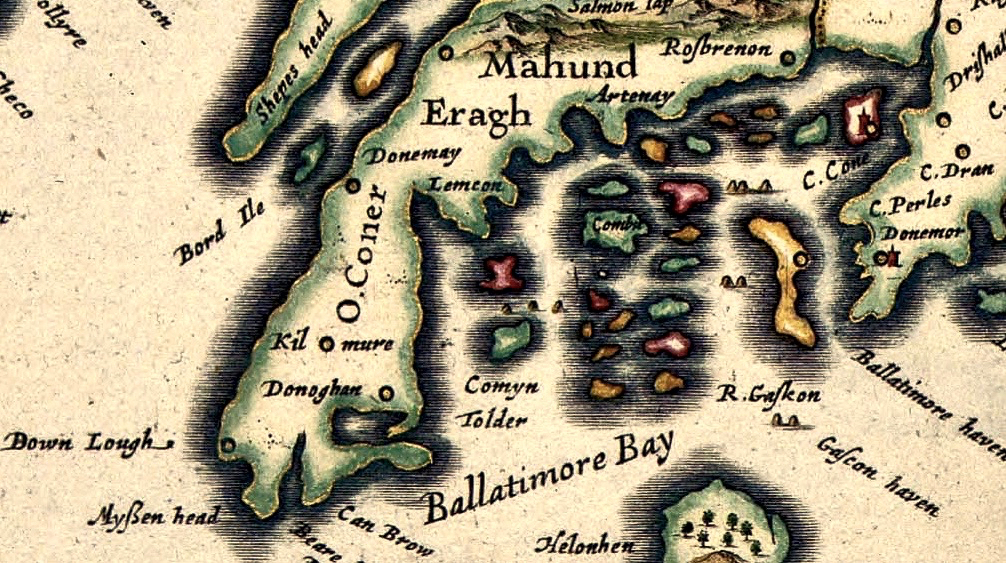
John Speed’s map of 1611 which portrays ‘Ballatimore Bay’ and Carbery’s Hundred Islands – ideal territory for concealing pirates. Note the curious geography, the names of the Irish clans and some of the places we recognise today: Rossbrenon (Rosbrin); Lemcon; Shepes Head and Myssen Head

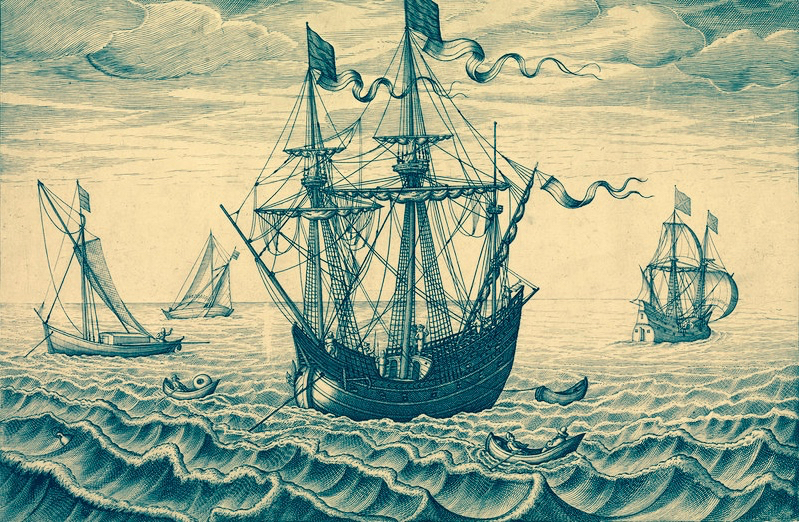
The coast of west Cork, in particular, was eminently suitable for sheltering ships in need of careening and victualling: bays, coves, inlets and estuaries abound and Carbery’s Hundred Isles (in fact many more than a hundred but it depends on what you count as an island) offer refuges a-plenty. In Captain Harris’s time there was only one naval ship patrolling the whole area from Kinsale around to Bantry and beyond – and this was the Tremontane – an ancient leaky pinnace which could be easily outrun by any respectable pirate crew. All the more unfortunate, then, for my forebear and his band who fell into the hands of the authorities, no doubt through some act of treachery or double-dealing.

Captain Harris’s family paid to retrieve his body from the gallows at Execution Dock (above left) and gave him a Christian burial. It was more usual for the bodies to be immersed by ‘three high tides’ before being disposed of. In particularly notorious cases the corpses were tarred and then hung in gibbets (iron cages – above right) to remain in public view. Captain Kidd was displayed this way for at least forty years after his death in 1701.

pirate ship

…The Irish folk surreptitiously colluded with pirates. When a captain needed supplies, he sent word of his needs. The reply to his note told him where he might find “so many Beeves or other refreshments as he shall need” on a specific night. When he and his men came ashore, they were to fire upon those who tended the herd, which allowed the herders to claim that they had been forced to hand over the cattle. Later on, he secretly landed “the goods or money in exchange, which by custom, they expect must be 2 or 3 times the value” If the pirates desired arms and/or ammunition and the Irish had any, they traded those items, too… (from Pirates and Privateers – The History of Maritime Piracy – an excellent online resource compiled by Cindy Vallar).

If you would like to learn more about Pirates in west Cork (and to listen to some great music) come along to the Fastnet Maritime + Folk Festival in Ballydehob this weekend 17th – 19th June: Robert is giving an illustrated talk on William Hull and the Leamcon Pirates’ Nest on Saturday 18th at 2.30pm in the Old Bank Building