Cousins Find Each Other – Through Roaringwater Journal!

I don’t know how to put it in words, but it it means so much to have this connection to our past and our common ancestors.

These are the words of Barbara Baxter, who found her cousin, Sylvia Whitmore-Jones, when they both responded to my post on Rock Island. Their common ancestors were the Burchills of Crookhaven. Here’s the story, as they have each sent it to me, and as I have put it together. It is deeply embedded in the history of this part of West Cork and directly related to the building of that iconic lighthouse, the Fastnet Rock.

Two brothers, Charles and Arthur Nicholls, experienced stonemasons, came from Penzance in Cornwall to help build the Fastnet Lighthouse. According to Aidan Power’s book on Rock Island (Available from the author, we can put you in touch), they were employed by  John Albert Freeman who supplied all the granite for the Fastnet Lighthouse from his quarry at Penryn, Cornwall. Nicholls’ job was to assist in the erection of the tower.
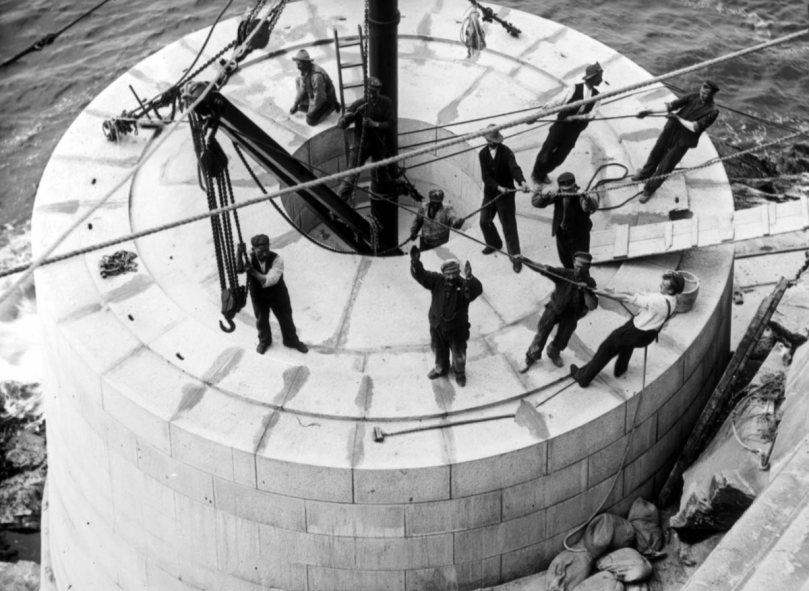
The building of the Fastnet. I’d like to think that the Nicholls brothers are in this picture (Photo courtesy of Irish Lights)

It took five years to build the Lighthouse (read more about the Fastnet here) and during that time all the men were housed locally and it seems integrated well into the local community. So well, in fact, that the Nicholls brothers married two sisters: Charles married Elizabeth Burchill and Arthur married Sarah Burchill. The Burchill sisters’ parents, Michael and Sarah (Hegarty) were Church of Ireland, and lived in Crookhaven.
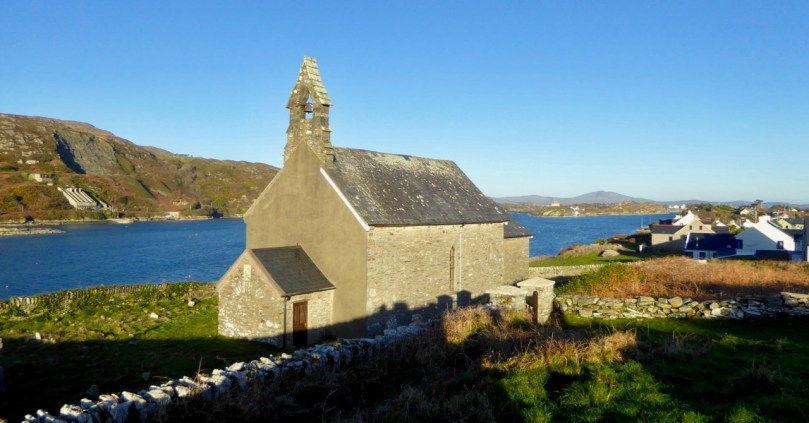
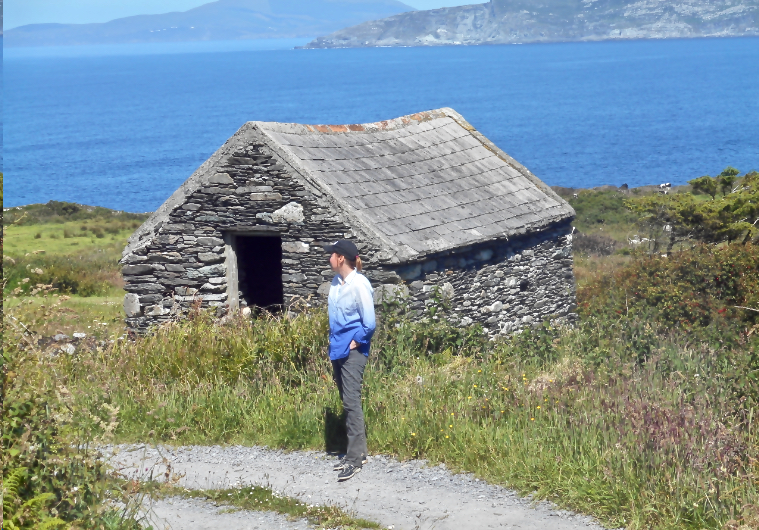
A third sister, Anne, married William Wilkinson (more on her below). If I am understanding the history correctly, her aunt, Michael’s sister, also called Anne, had herself married a George Wilkinson. That Wilkinson family had a farm at Gortnacarriga, just outside Goleen. The photo below is of Barbara Baxter on a visit to that Wilkinson farm a couple of years ago. 
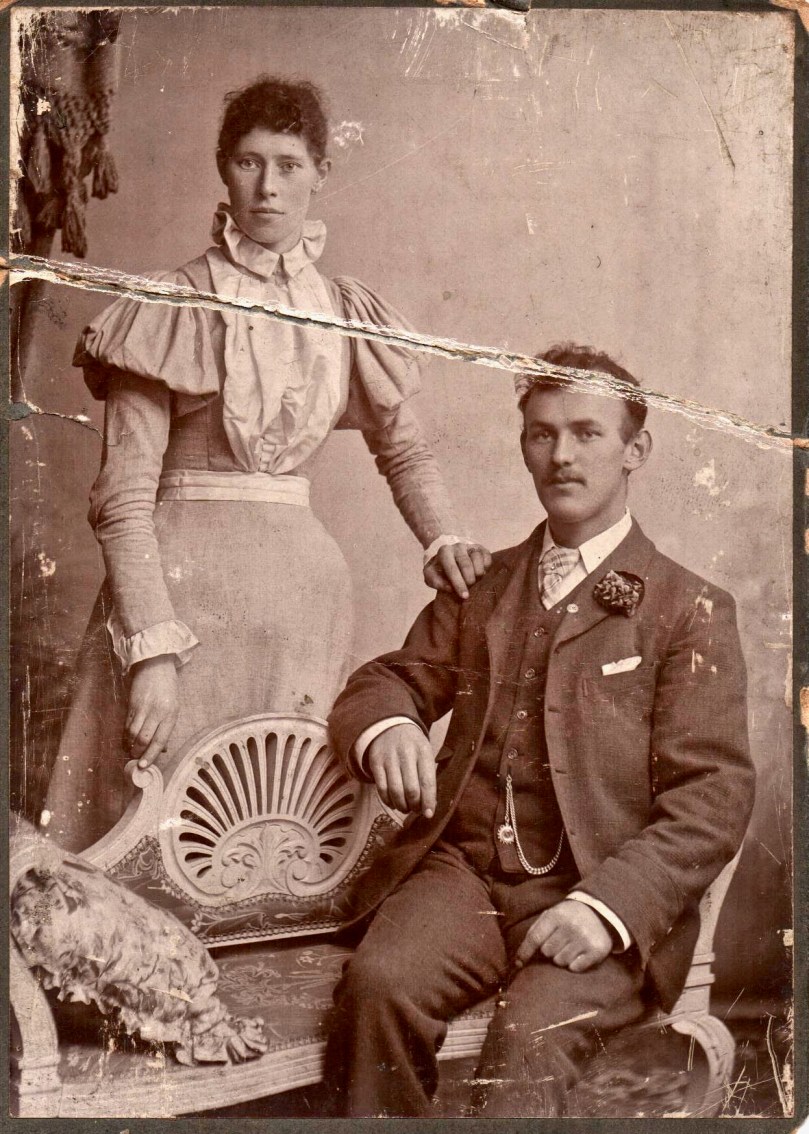
Let’s start with Charles and Elizabeth – they are the couple in the photograph at the beginning of the post. The 1901 census has them in House number 8 on Rock Island, with a baby daughter, Annie, who is just one. When the Fastnet project was finally over, in 1904, Charles and Elizabeth went to live in Wales where they had at least one more child, a son, in 1911. Sadly, Charles, who had served in the First World War, died in the Spanish Flu epidemic in 1919 (echoes of my own family history here – same thing happened to my grandfather).
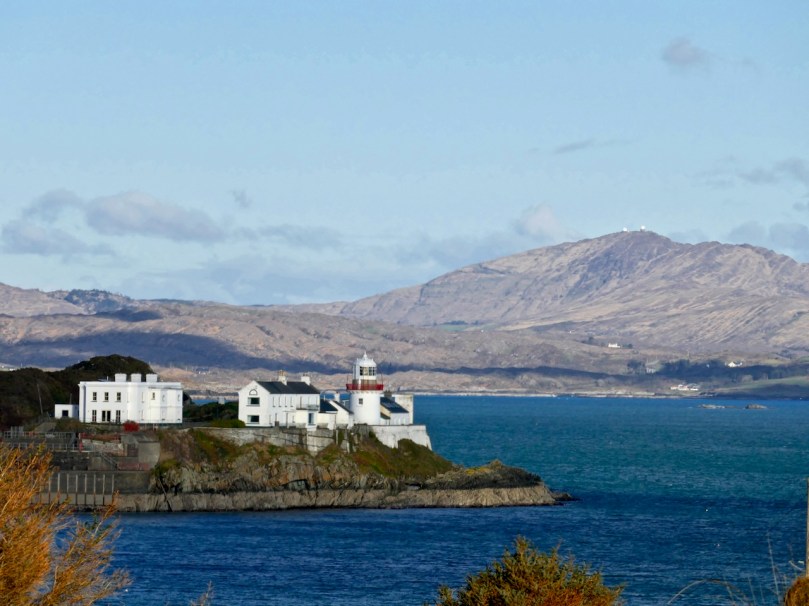
The Rock Island lighthouse and housing, seen from Crookhaven. Charles and Elizabeth lived in one of these houses

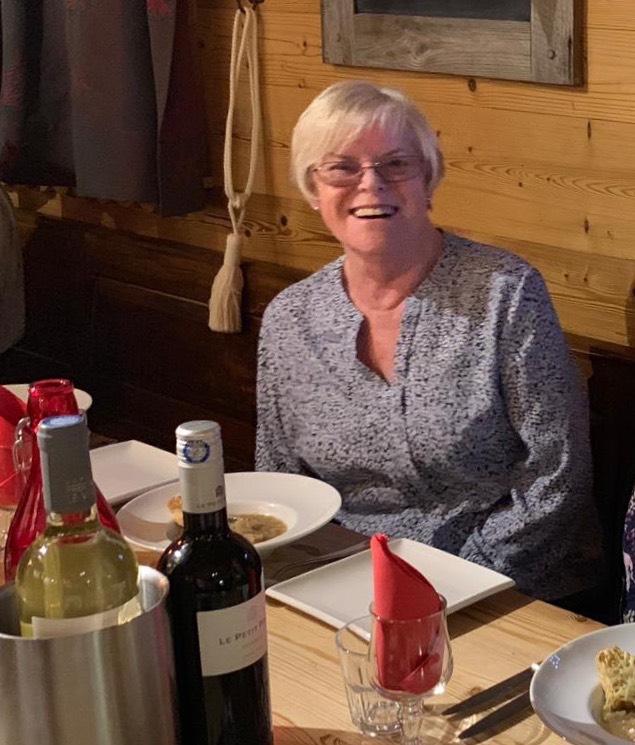
Charles and Elizabeth’s son eventually moved to Southhampton, and worked as a draughtsman in Thornycroft’s shipbuilding firm, married and had four children. The eldest of these was Sylvia Whitmore-Jones, an active and youthful 78 year-old. Here she is.
But let’s go back to Charles and Elizabeth, living in the Fastnet housing on Rock Island in 1901. Did you notice they had a daughter named Annie? I think she was so named after yet another of Elizabeth’s sisters – Anne Burchill. Anne married William Wilkinson (I think they were cousins – not uncommon in those days), an officer in the Royal Irish Constabulary.
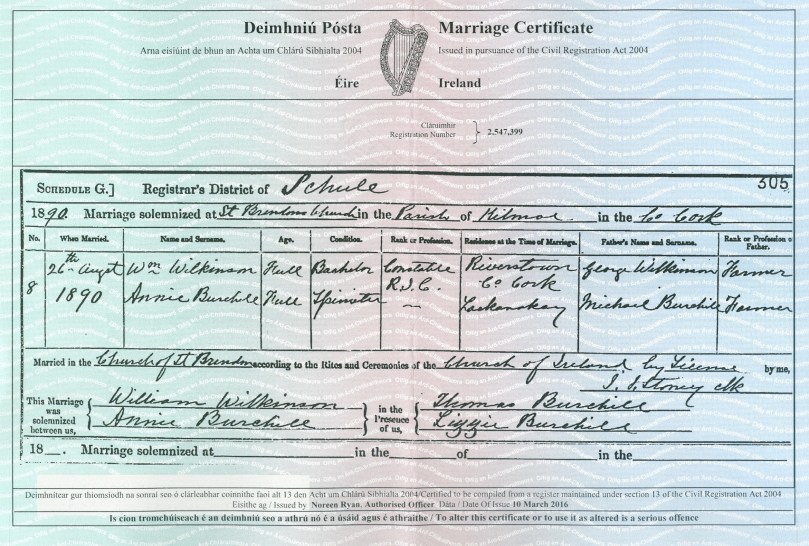
They had a daughter, Sarah Anne. They were great at keeping names in the family – no doubt Sarah Anne was called after her aunt, the Sarah Burchill who married Charles’ brother, Arthur, as well as the numerous Annes in the family. Sarah Anne Wilkinson must have been close to her Aunt Elizabeth Nichols because eventually, as a young married woman, she and her husband, John Miller, from Bantry, moved to Wales.
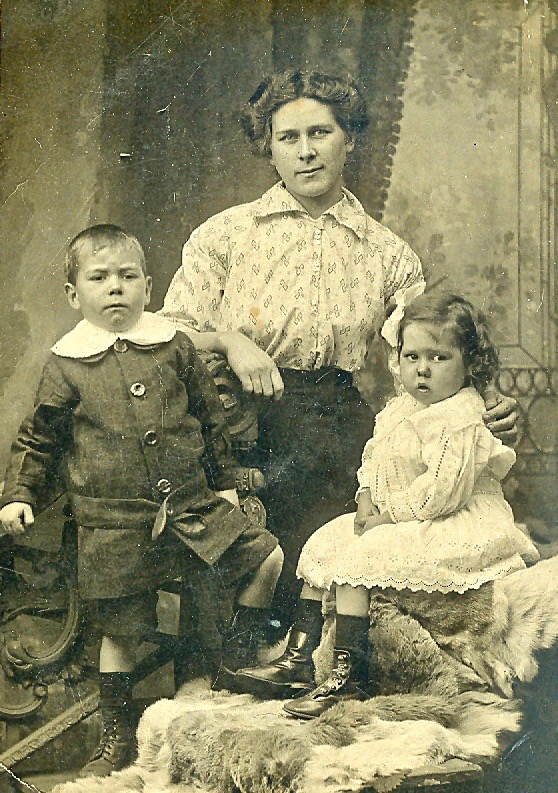
Sarah Anne Miller, nee Wilkinson, with her children

This photo (above) must have been taken then, when Sarah Anne and John had two children. Sarah Anne is Barbara Baxter’s great-grandmother and her grandmother is the little girl in the photo. Perhaps this was during the time when John was away in the war – he was apparently decorated three times for his service as a bombardier.
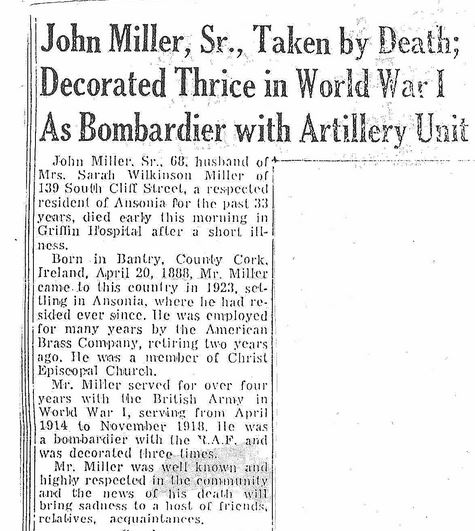
Eventually the family emigrated to America, finally settling in Connecticut, which is where Barbara Baxter grew up. Barbara is now 57 and lives in Virginia. She has led an active life filled with animals, especially horses. She wonders if her love of horses might be connected to John Miller – apparently before he left for Wales with Sarah Anne he worked with horses at Drombrow House, near Bantry. Drombrow, not surprisingly, was owned by the Wilkinson family.
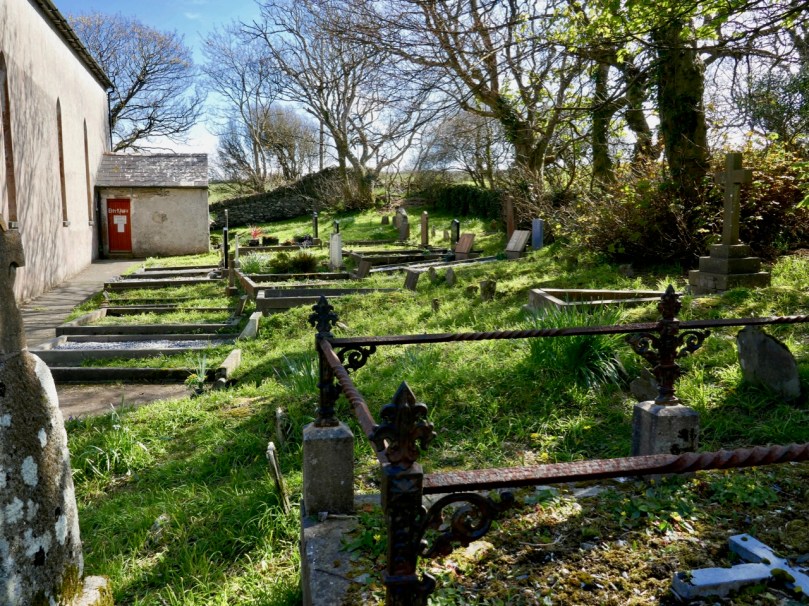
Graveyard attached to the Church of Ireland (no longer in use as a church) in Goleen – Babara said in one of her emails: ‘I am related to all of the Wilkinsons and Burchills buried at the Goleen Church’ 

Sylvia and Barbara had been independently interested in their family history but had never known of each other or met (at least virtually) until both of them contacted us at Roaringwater Journal when they each saw our Rock Island post.
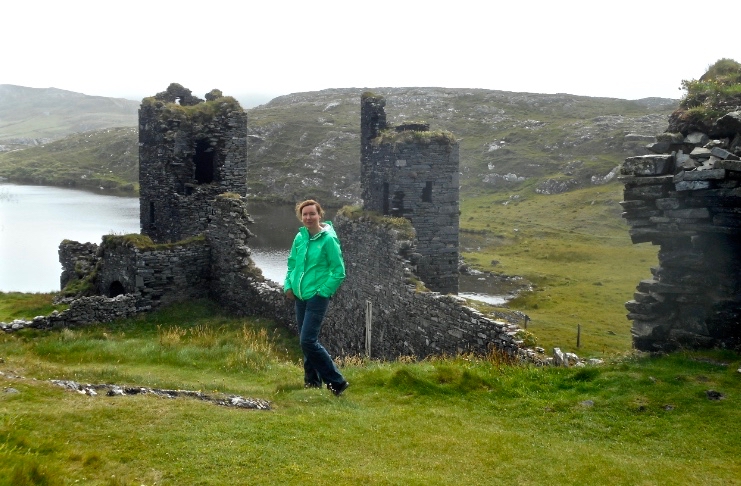
On her trip to West Cork in 2017, Barbara visited Three Castle Head. The Wilkinson farm is close by

I am beyond pleased that Roaringwater Journal has been the cause of bringing these two cousins together, but there’s another reason for my interest. My own dear cousin, Shauna, is also a Burchill! Although she has lived in the United States most of her adult life she is Irish and her father grew up in Bandon as a Prebyterian. She is likely to be connected to Sylvia and Barbara at some point way back in the family tree – the Burchills first came to West Cork in the 1620s as part of the Plantation of Munster. It’s a tenuous connection, but it adds an additional frisson for me – we are all connected somehow.
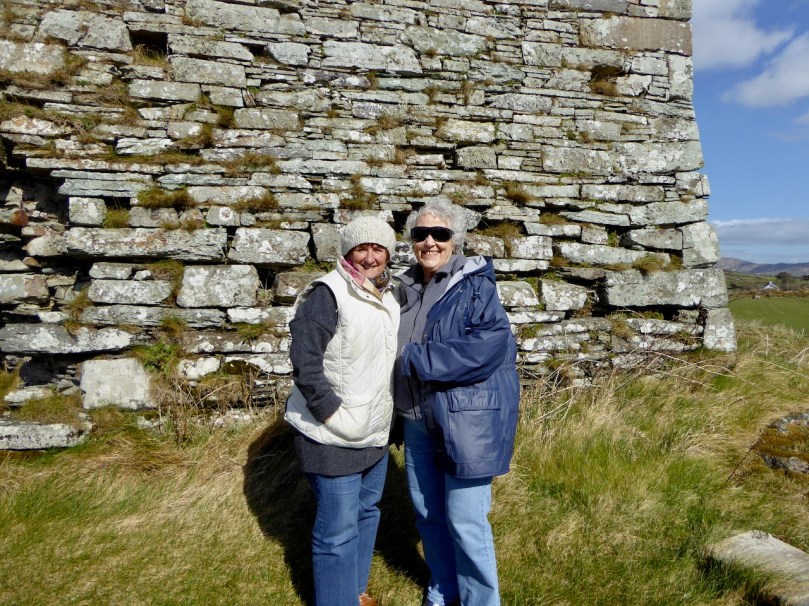
Shauna (right) and I, on one of her visits to Ireland

Thank you to Sylvia and Barbara for generously sharing their family stories, and to Aidan Power, whose book on Rock Island was the ultimate catalyst for all of this. It’s been a privilege to be a tiny part of it. If I have made mistakes in my relating of their stories, I hope they will weigh in with the corrected version. 
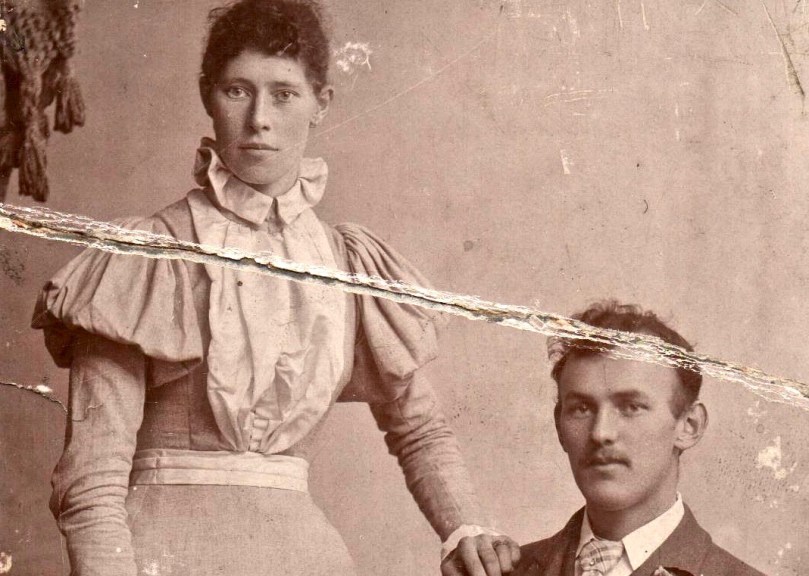
Now all we need is for the descendants of Arthur Nicholls and Sarah Burchill to join the party. C’mon – we know you’re out there.

Drawn to the Beara

The spectacular landscapes of the Beara Peninsula draw us again and again: have a look at some of our past explorations here and here. There’s no doubt that for fine, distant views, tranquil coastlines and variety in geology, history and archaeology this part of Ireland takes some beating. And, for us, it’s ideal: near enough that we can have a full day out absorbing all these things, yet still being home in time for tea!

This is the weekend when clocks ‘spring forward’ – giving us longer evenings. But also the sun is getting noticeably stronger, colours are getting more intense, and the shadows are hardening. It’s a great time to be out on our travels.

That’s Hungry Hill above – highest peak in the Caha Mountain range, Co Cork – and the background setting for Daphne du Maurier’s 1943 novel of that name. The story is based on the real-life Puxley family who set up and ran Allihies copper mines in the first half of the nineteenth century. Du Maurier weaves the tale to give the name of the hill a symbolic meaning – the mines ‘swallow up’ the lives of those who work them and the plot is charged with tragedy and unhappiness.

We crossed the peninsula on the Healy Pass, one of Ireland’s great road journeys, with breathtaking views towards Bantry Bay in the south and the Kenmare River to the north as you traverse the 334 metre summit. The road, known in Irish as Bealach Scairte, was originally cut as a nineteenth century famine relief project, and improved in the 1930s, when it was named in honour of Tim Michael Healy, a Cork man who served as the first governor general of the Irish Free State.

We had a mission: to visit Dereen Garden, which is open all year round. We were there before the tourist season got going, and we mainly had the beautiful walks and vistas to ourselves. The woodland garden was laid out 150 years ago with sub-tropical plants from around the world and has been improved and added to since then; it is famous for its huge Arboreum rhododendrons. Evidently there is a variety of wildlife to be seen, including red squirrels, sitka deer and hares, but they were all keeping out of the way when we visited.

We were hoping to sample some of the fine eateries which have been set up on the Beara but, again, we were a little too early in the year: an excuse for another trip when they open up. So we reluctantly turned our way back towards the Healy Pass – to get the views from the other direction – and were stopped in our tracks by a sign pointing to ‘stone circles’. This is in a townland named Cashelkeelty and is near Lauragh, Co Kerry. Finola had a look at her archaeological records on the phone and found it was somewhere we had to go! It involved a long, uphill walk through a forest, but was very well worth it. Read Finola’s post to find all the details.

I will show only one picture as a taster (above) – but also to point out the proximity of the high grade overhead powerline which runs right by the ancient stones. Does it add or detract from the monument itself?

There were many more vistas to be taken in on our few hours spent on this dramatic peninsula, where mountains so spectacularly meet the sea. We can never tire of this, our own little part of the world.

Local Heroes: Ballycommane Gardens – and Bronze Age Site!

This week we were privileged to meet with Andy Stieglitz and Ingolf Jungmann at their home, Ballycommane House, between Durrus and Bantry. We’d been once before, several years ago, when we had met Andy, then busily engaged in renovating one of the sheds. Now the house has been extended and modernised, along with various outbuildings. Andy and Ingolf, both retired and living here full time, are running the house as a bed and breakfast, with an adjacent self-catering cottage, and have opened their garden to the public.

I don’t know the names of most of these flowers, although the one above is from one of their heritage-variety fruit trees

They have taken a few acres of scrubland and pasture – and turned it into a little piece of paradise! Both keen gardeners, they have been working now for fifteen years to develop their arboretum and lay out different areas of the garden connected by meandering paths. Here and there open spaces invite you to lounge and simply take in the sights and the scents.

This Gunnera is, thankfully, the non-invasive variety

Or you can keep strolling and discovering. They specialise in plants from the Azores, where they like to winter, and have discovered that many Azorean species flourish in this mild climate. Of course they have had to learn to deal with the wind, as parts of the site are quite exposed, and with the unpredictable Irish climate.

But Andy and Ingolf value all plants and also celebrate the humble wildflowers that are my special interest. Ingolf has learned to propagate the wild primroses and the colourful borders he has created are a joy.

Wild Primroses are generally pale yellow, but pink varieties also occur. Ingolf tells me the pink ones are a little harder to propagate 

Wild spurges mix with the Azorean ones – the Euphorbia genus is one of the largest and most variable on earth, and while we know it mainly from our wild Spurge varieties they can range from tiny to huge and from colourful (Poinsettias!) to shades of green.

A native Euphorbia (top) is flourishing while below an Azorean import looks very comfortable also. Note the tiny native spurge that has sprung up underneath it – a study in contrasts

Now in March, the garden hasn’t quite come into its own yet. Nevertheless, there is plenty to see and surprising hits of colour here and there. Wherever you look, the eye is caught.

Above: We decided it was an Azorean daisy. Below: I think it’s Green Alkanet, a garden escape that has naturalised widely in Ireland

Ballycommane House is part of the marvellous West Cork Garden Trail and is open from March to October. Andy and Ingolf love to welcome visitors so plan a trip to see this treasure. And when you do, there’s a surprise in store – Ballycommane is also home to a Bronze Age Boulder Burial and Standing Stone Pair!

Andy (left), Ingolf and I contemplate the boulder burial

Regular readers of this blog will know that Robert and I worry about loss of and damage to our ancient monuments due to neglect, lack of knowledge, and occasional wilfulness. That’s why I am calling this post Local Heroes because Andy and Ingolf, quite apart from the enormous work involved in developing their house and garden, have embraced the challenge of celebrating and safeguarding these monuments for all of us.

The Boulder Burial is a large erratic of quartz. Quartz was highly prized in prehistory and was used in various ways. Not surprising, given how it gleams and sparkles in the sun. This one is visible from across the valley

Today was the official unveiling of their Visitor Centre – a converted piggery now in use to display a set of explanatory posters developed by Prof Billy O’Brien and Nick Hogan of UCC. Billy has excavated this site and two other Boulder Burial sites and is more responsible than any other researcher for what we know about the age and possible functions of Boulder Burials. You can read my posts, Boulder Burials: a Misnamed Monument? and Standing Stone Pairs: A Visit to Foherlagh for more about these kinds of monuments.

The standing stone pair is of the local slatey sandstone, chosen to be flat on top – no doubt this served some kind of purpose

Billy was there to do the honours and to give us a talk on the site. When he excavated here in 1989 it rained, he told us, every day of the dig. Although no carbon-datable material turned up he was confident in assigning a mid-to-late Bronze Age date – it’s about 3,000 years old.

Cutting the ribbon to officially open the Visitor Centre

He asked us (there was quite a crowd!) to consider the setting of the boulder burial and standing stone pair in the landscape, and spoke about their use to memorialise high-status individuals and to mark locations from which sunrises and sunsets might be observed at solstices and equinoxes.

Unfortunately tree plantings have obscured the view from the boulder burial, but this is what it looks like. You can see all the way down the Sheep’s Head to Seefin Mountain

Ballycommane is a very special place indeed and we are very fortunate that Andy and Ingolf are committed to being good stewards of the prehistory they have inherited. Thank you, Andy and Ingolf – and for that yummy cake too!


Reviving St Patrick’s Cross!

It’s an archaeologist’s job to dig things up from the past. Today – the Feast of St Patrick – I’m digging up an old custom and suggesting that it’s something we should all revive!

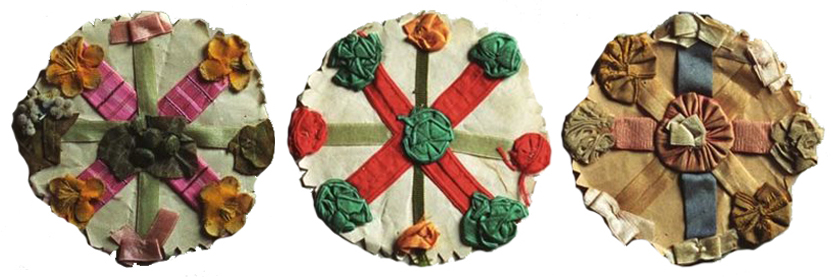
Examples of St Patrick’s crosses survive in glass cases today. These three are from Ireland’s National Museum of Country Life, Castlebar, Co Mayo

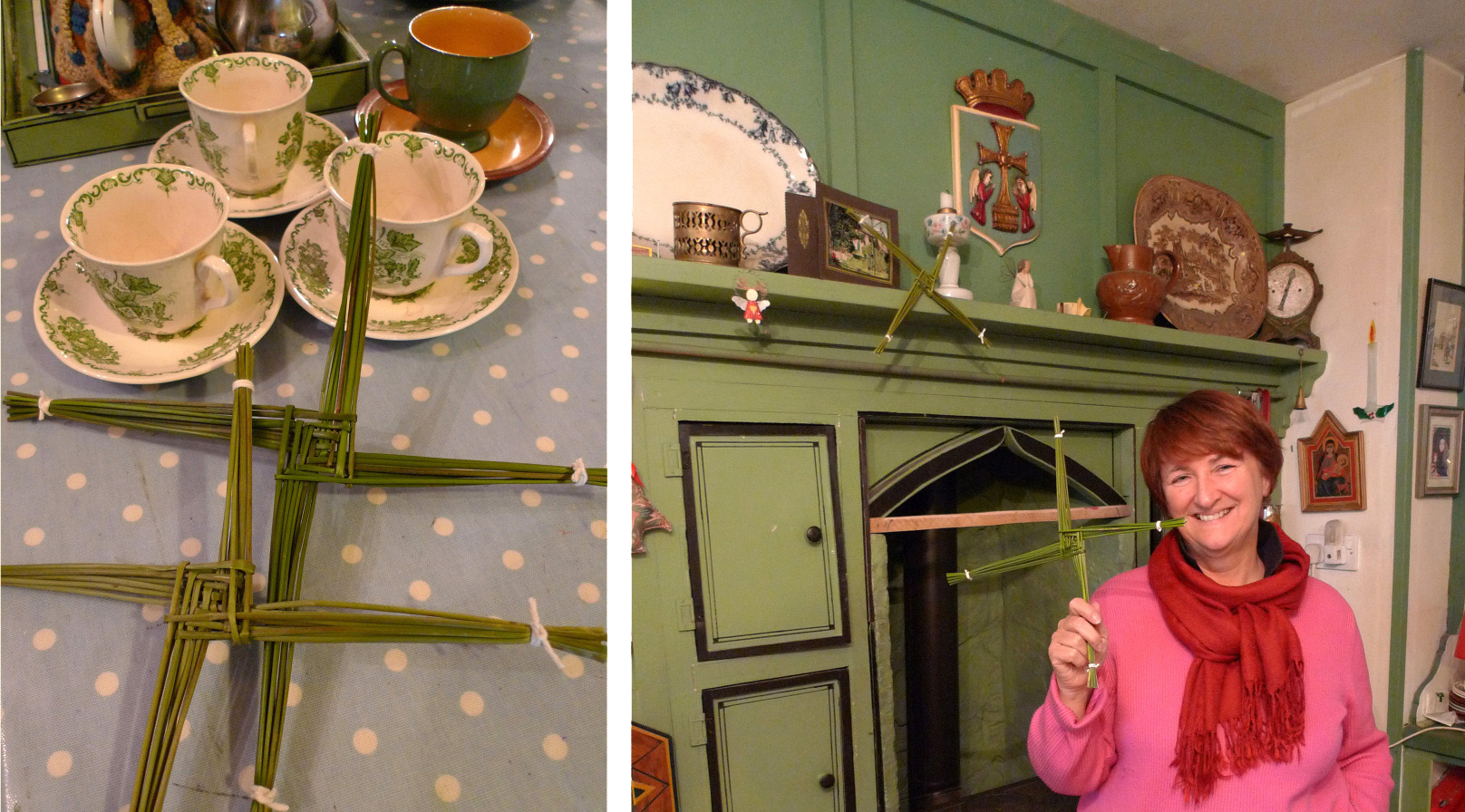
I have found much of my information on this subject in Kevin Danaher’s 1972 book The Year in Ireland – A Calendar published by The Mercier Press. Danaher begins his calendar on St Brighid’s Day (his spelling), and naturally discusses the custom of the making of bogha Bríde – the St Brighid’s cross. In this tradition, very much alive today, a cross is made from straw or reed and hung in the house to ensure good luck and protection for the coming year. In future years new crosses are made, but the old ones are never thrown away: if you visit a traditional Irish cottage, you are likely to see a whole lot of Brighid’s crosses pinned over the mantlepiece or among the rafters in various stages of decay.

A traditional Irish cottage, Finola and her St Brighid’s cross. See this post

When Danagher comes to the next important Irish Festival – St Patrick’s Day – he mentions a similar custom involving a St Patrick’s cross or badge, worn on the clothing for the day itself, and then hung in the house to ensure that the saint’s blessing continues through the years. The custom was still within living memory when Danaher wrote, but its practice appears to have died out altogether in the early years of the twentieth century, although surviving examples of these crosses, emblems or badges can be seen in museums today. I am not aware of anyone keeping up this custom so – to celebrate the day that’s in it – I am proposing a revival!

Danaher’s illustrations of St Patrick’s crosses from The Year in Ireland

First, the history: an English traveller in Ireland, Thomas Dinely, wrote in 1681:

The 17th day of March yearly is St Patrick’s, an immoveable feast when the Irish of all stations and conditions wore crosses in their hats, some of pins, some of green ribbon, and the vulgar superstitiously wear shamroges, 3-leaved grass, which they likewise eat (they say) to cause a sweet breath . . .

Dean Swift in his Journal to Stella wrote from London on 17 March 1713:

The Irish folks were disappointed that the Parliament did not meet to-day, because it was St Patrick’s day; and the mall was so full of crosses, that I thought all the world was Irish . . .

Here’s ‘Mannanaan Mac Lir’ writing in the Journal of the Cork Historical Society in 1895:

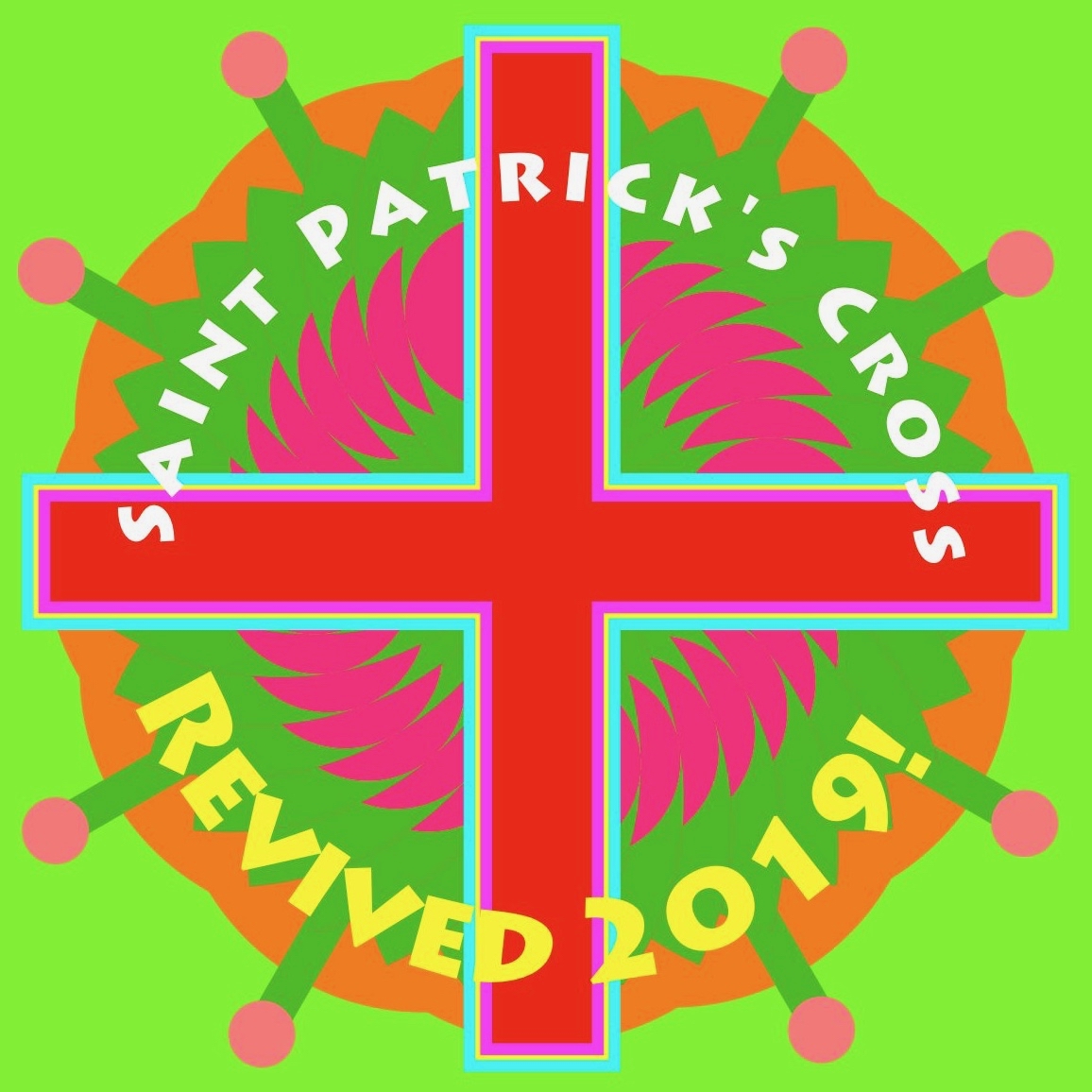
For a week or so preceding the National Festival, the grown members of the family are occupied in making “St Patrick’s Crosses” for the youngsters, boys and girls; because each sex have a radically different “Cross”. The “St Patrick’s Cross” for boys consists of a small sheet of white paper, about three inches square, on which is inscribed a circle which is divided by elliptical lines or radii, and the spaces thus formed are filled in with different hues, thus forming a circle of many coloured compartments. Another form of St Patrick’s Cross is obtained by drawing a still smaller circle, and then six other circles, which have points in the circumference of this circle as their centre, and its centre as their circumferential point, are added; after which one large outer circle encompasses the whole, thus forming a simple and not inartistic attempt at imitating those circle or bosses  of our beautiful Celtic cross pattern. The many spaces, concave, convex or otherwise, thus formed, are then shaded in; each a different hue, and this constitutes the “St Patrick’s Day Cross”, of which our little ones are so proud. In our time, when every school boy is supplied with a pair of compasses and a box of water colours, the making of a St Patrick’s Cross is only the work of a few idle moments . . .

Hmmm… Well, the architect in me is intrigued enough to try out these instructions and – perhaps – add a few embellishments to see what sort of a job can be made of it:

What do you think? I have to admit to using my electronic drawing board rather than the compasses and water colours! ‘Mannanaan Mac Lir’ goes on to describe the girl’s cross:

The little girl’s “St Patrick’s Day Cross” – which is made by an elder sister, or if sufficiently skilled, by herself – is formed of two pieces of card-board or strong thick paper, about three inches long, which are placed across at right angles, forming a cross humette. These are wrapped or covered with silk or ribbon of different colours, and a bunch or rosette of green silk in the centre completes the tasteful little girl’s “St Patrick’s Cross”, which is pinned on the bosom or shoulder . . .

Not a little curious is the etiquette of those children’s “St Patrick’s Crosses,” for whereas it would be considered effeminate of a little boy to wear “a girl’s cross”, it would be considered most unbecoming on the part of the little miss to don a boy’s paper cross . . .

‘Mannanaan Mac Lir’ continues to enlighten us further on this custom:

I have known two or three old priests in Cloyne diocese break up and distribute among the girls of their respective parishes their old and worn vestments, for the purpose of being made into St Patrick’s crosses. The cross thus made (from a priest’s vestment) was an object of veneration; and I have known many such forwarded by their owners to their kindred in America, where they were doubtless received as welcome souvenirs of an ancient custom in the land of their fathers . . .

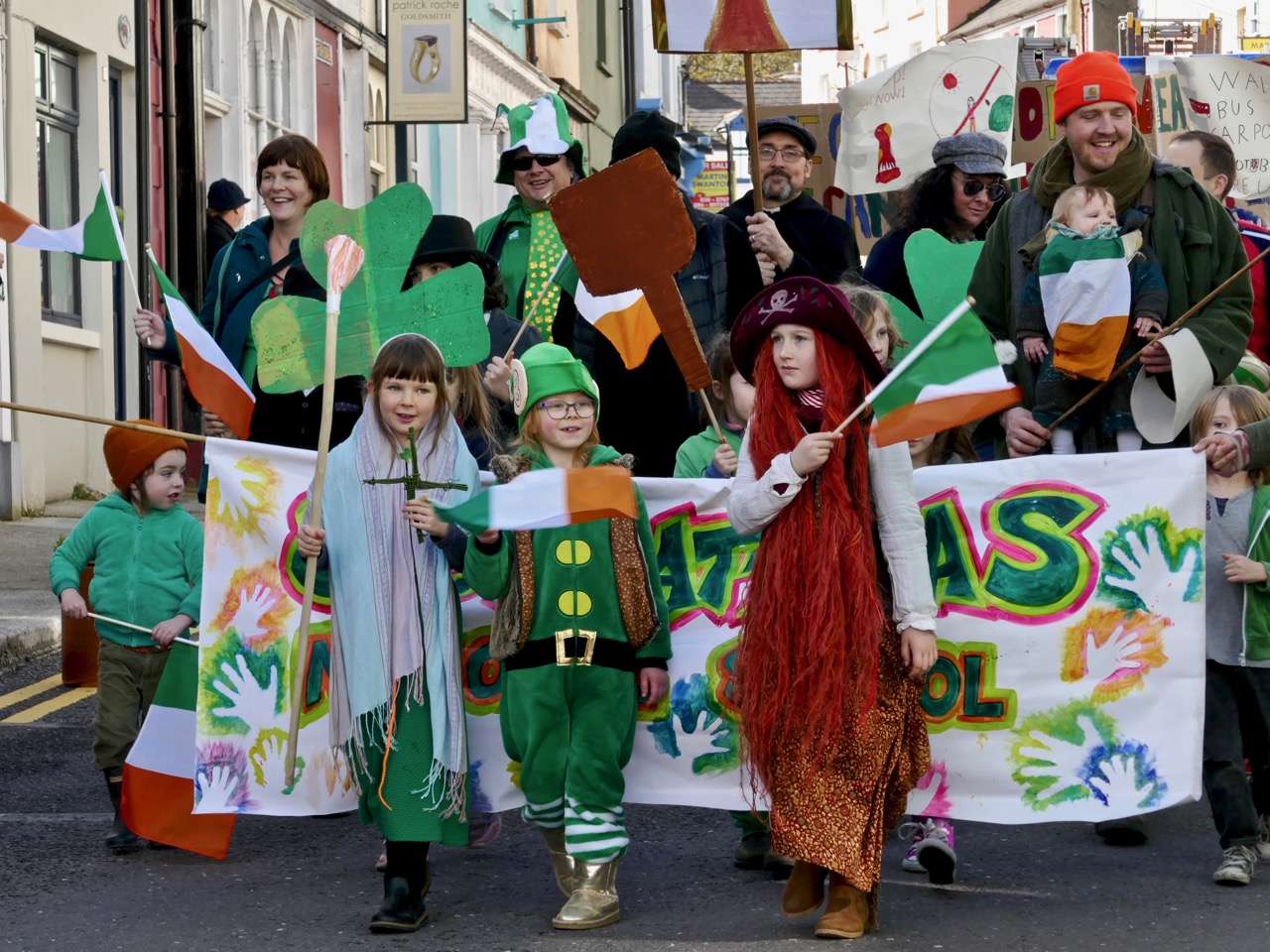
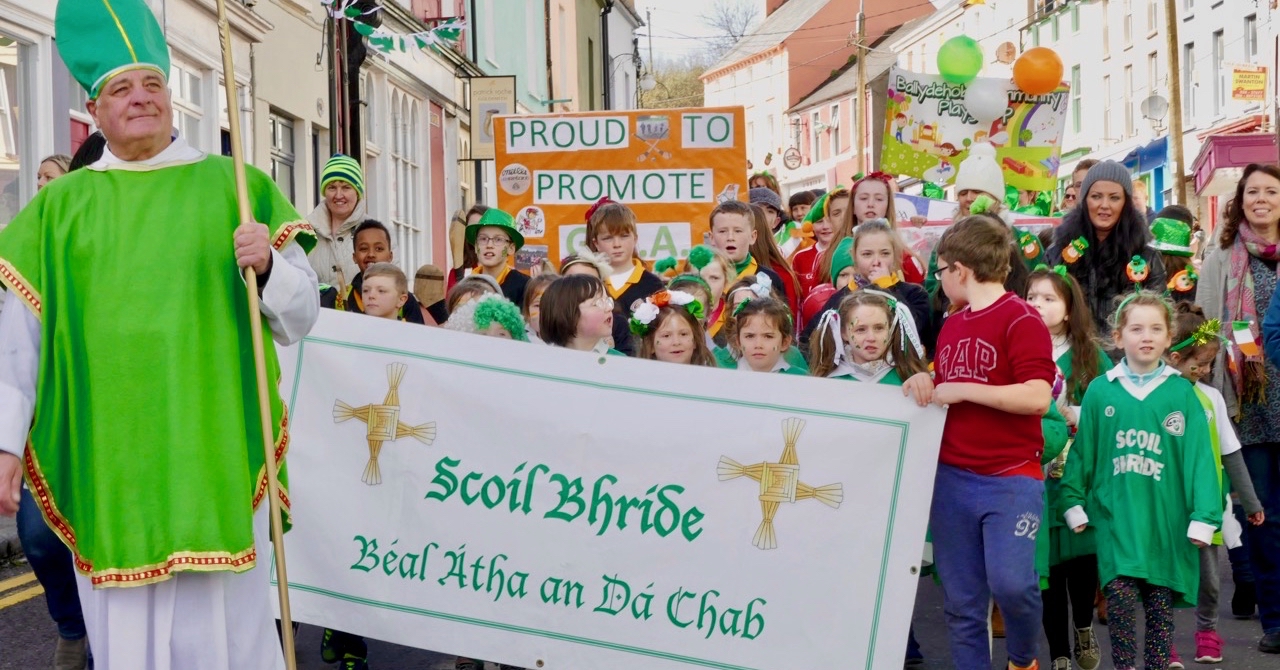
My final offering (above) – have I encouraged you all to get busy and help me revive this custom in time for St Patrick’s Day next year? I hope so . . . I’ll finish off with a couple of pics of a custom that’s still as strong as ever: the annual St Patrick’s Day Parade in Ballydehob, West Cork. Of course, the sun shone out!

New Court Bridge – a Hidden Wonder

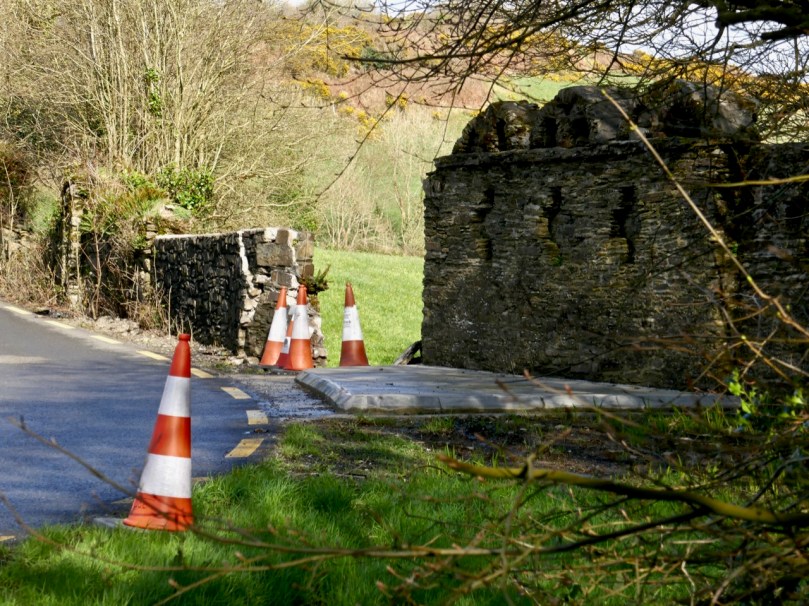
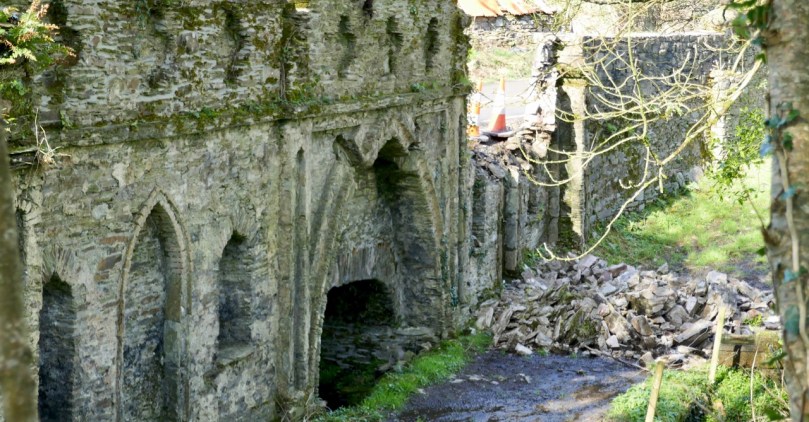
New Court Bridge has been badly damaged recently. Why does that matter?

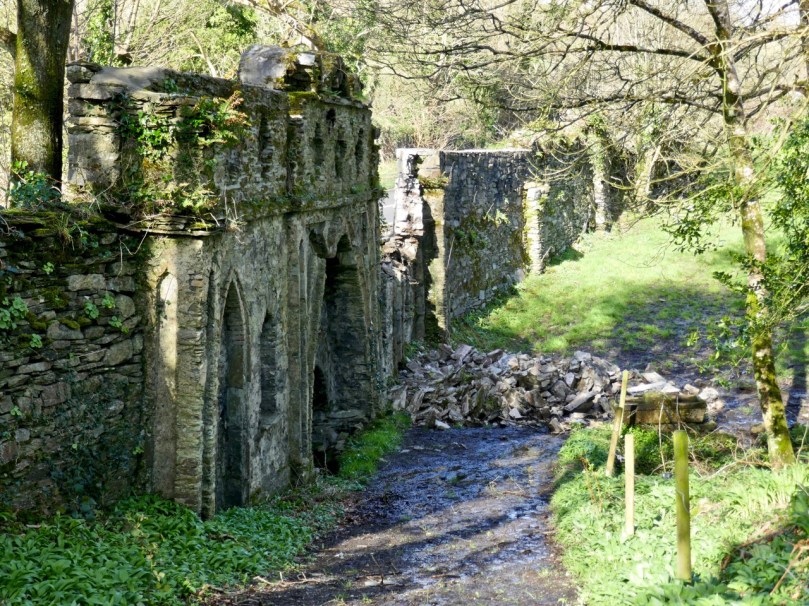
The damage from behind the wall. Now you can see that this is a bridge – but a most unusual one!

Most people driving by this dangerous bend, where the Ilen River meets the N71 just west of Skibbereen, notice the funny arches on top of the wall, but don’t think twice about them. It’s too risky to stop and take a close look, after all. Most people, in fact, probably don’t realise that they are driving over a bridge, although that’s a bit more obvious now as the County Council have put in one of those concrete pads that are going in front of all bridge walls at the moment (see lead photograph).

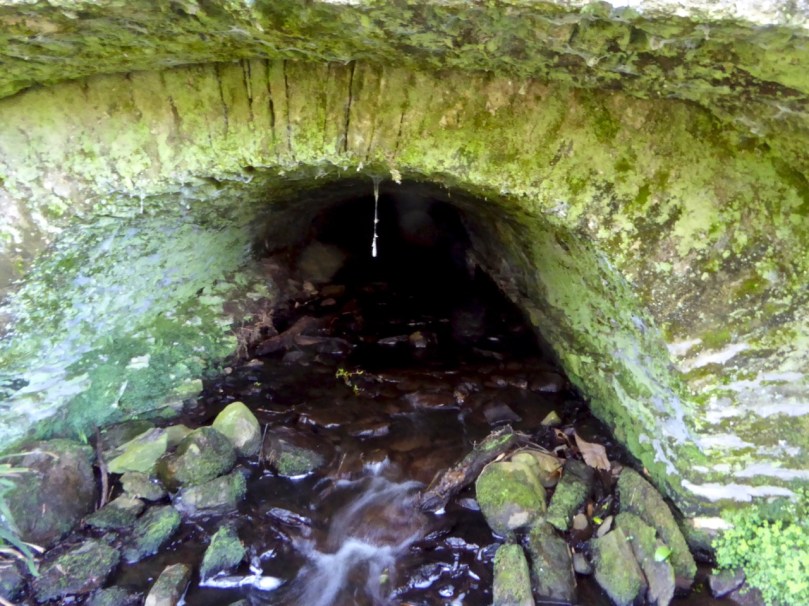
Water under the bridge

Does anyone know how the damage happened? Did a car take the bend too fast and hit the wall? Did the concrete work loosen the structure of the wall? Let us know if you have information. I hope nobody was hurt. All I know is that one morning I was driving into Skibbereen and there was a chunk of the wall – gone!

Early Ordnance Survey map of the New Court Estate, bounded by the Ilen River on the east and south. The red dots indicate the locations of the belvederes (marked as towers) and the bridge

We tend in Ireland to think of old estate walls like this one as ‘Famine Walls’, erected during the mid nineteenth century as work projects. But this wall was far older than that, and it hid a secret – an elaborate facade on the back with decorative arches and niches. It was part of the plan for a pleasure garden undertaken by Henry Tonson at his newly acquired ‘seat’ which he called New Court, to distinguish it from Old Court, across the river. Originally, there was a matching wall across the road, but it was demolished in a truck accident many years ago. EDIT: I misinterpreted this – rather than a matching wall across the road, in fact there were matching arches on either side of the road, west of the entry to New Court. Both are now gone, one at least due to the aforementioned truck accident. Thanks to Sean Norris for this information.

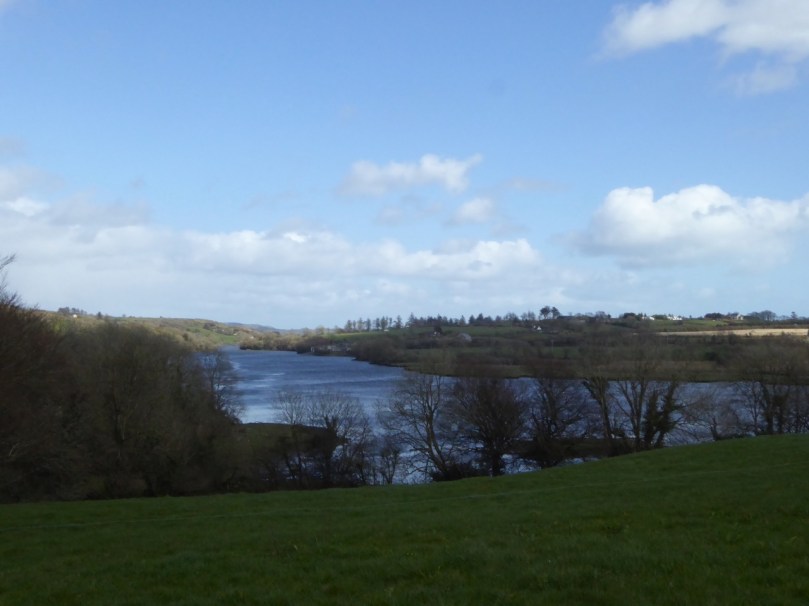
The Ilen floats by – a navigable river was a must for transporation to and from these early estates

The Tonsons had arrived in the 1660s. According to Burke’s Peerage, Major Richard Tonson received a grant of land in the county of Cork from Charles II for his distinguished exertions in favour of royalty during the Civil Wars and purchased the castle and lands of Spanish Island, in the same county. If he built anything on Spanish Island, just off Baltimore, no traces remain, and indeed, although strategic in marine terms at that time, it is hard to imagine how the island, mostly bare rock, would have made for comfortable accommodation.

The stump of one of the belvederes, overlooking the river

It appears he, or his son, Henry, bought the land on the west bank of the Ilen and Henry set about establishing his dwelling there. This included building the wall around the estate. Eventually, and we are not sure when, one of the Tonsons (over time they acquired a title, Lord Riversdale) developed the area around the house as a vast pleasure garden.

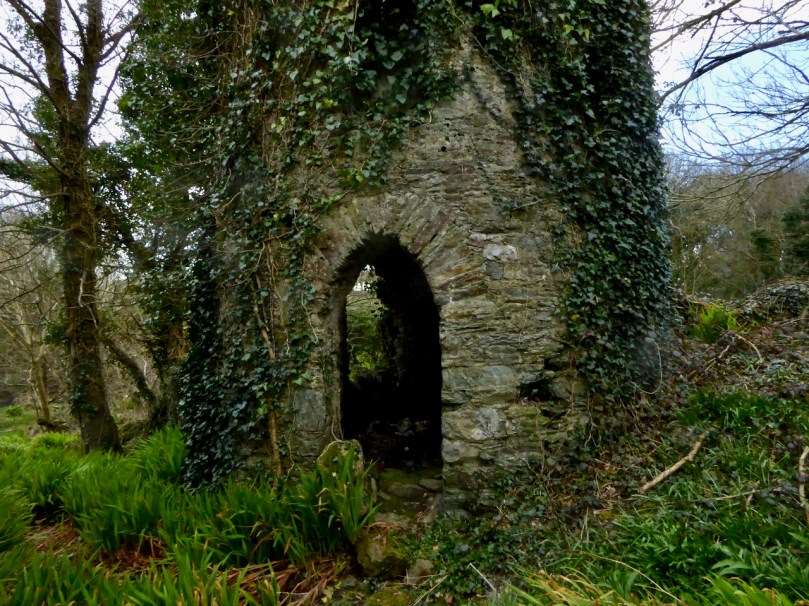
The most complete belvedere. This one also functioned as a dovecote

The fashion for designed landscapes is an eighteenth century phenomenon. As I said in my post on belvederes, in that century

. . . a different style of landscaping. . . dominated garden design in Britain, pioneered by William Kent and Charles Bridgeman and reaching its peak in the work of Lancelot ‘Capability’ Brown. The effect they strove for was naturalistic (as opposed to natural) – a planned layout that mirrored but enhanced their idea of a ‘wild’ and romantic landscape. Large expanses of grass, strategically placed lakes and ponds, plantings of carefully chosen tree and shrub species, and clever little structures such as temples, summer houses and belvederes all combined to delight the eye, create a romantic mood and, of course, attest to the taste and wealth of the owner.

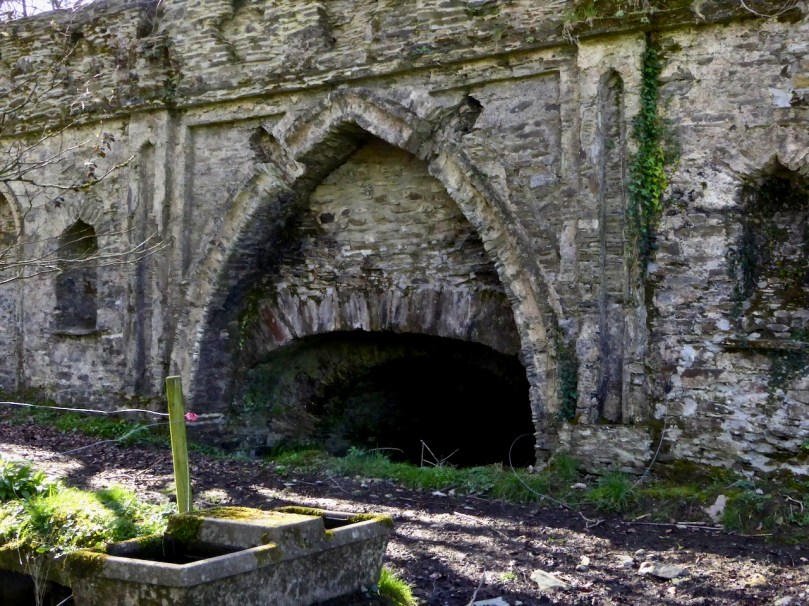
A closer look at the construction of the bridge. It would be fascinating to attempt a reconstruction drawing. The niches may well have held statuary or decorative urns

Although the grand houses at the centre of the estate have now gone (see this photograph in the National Library for a glimpse of the last one), there is lots of evidence still of such a designed landscape. Originally lawns sloped to the river – no need to build artificial ponds as the Ilen provided the perfect watery scene. Little round towers were built to be used as gazebos or belvederes (and in one case a dovecote): three in all, of which the stump of one and a fairly complete second are still to be seen. The bridge with its elaborate facing was the crowning glory of the estate wall.

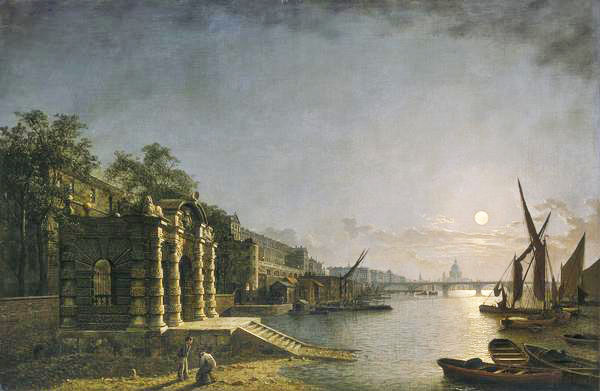
The York House Water Gate as it would have looked originally on  the Thames (Wiki Commons)

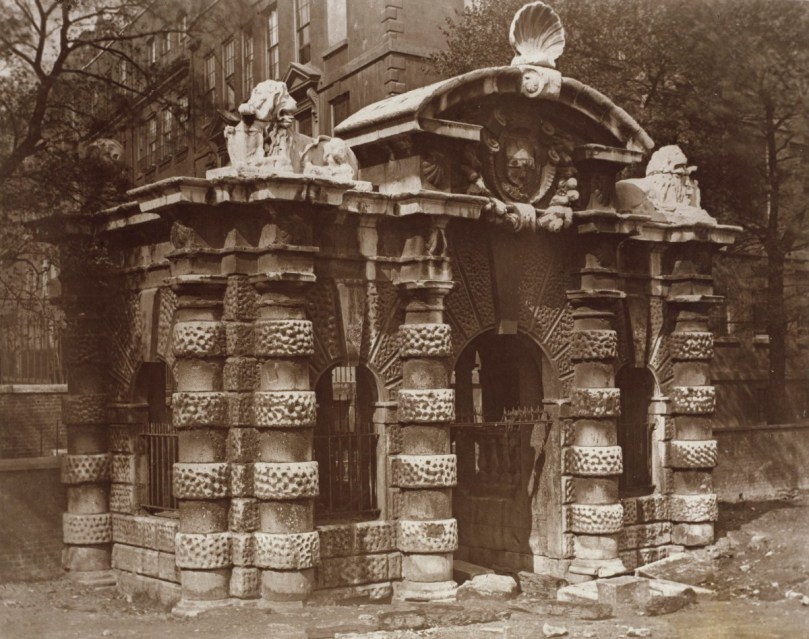
What did the bridge wall look like originally? We don’t know, but Peter Somerville-Large in his Coast of West Cork says it was modelled on the ‘water gates at Hampton Court’. I can’t find any images of this online, but I have found the water gate at York House, which is still there. It was built as a ceremonial landing place on the Thames (above) although it is now a long way from the river.

The York House Water Gate in an early photograph (www.royalacademy.org.uk/art-artists/work-of-art/O18442 Credit, Royal Academy of Arts / Photographer William Strudwick )

Of course, it is larger and more elaborate, but you can still see the basic shape, with its curved arch on top and the arched niches in the wall. The arches at New Court may have been plastered, perhaps, or faced with some material. The York House Water Gate dates to 1626 and it’s all that left of the York House estate – the Tonsons may well have been familiar with it or with similar water gates along the Thames. Building such an edifice would have been aspirational, indicating a desire to impress.

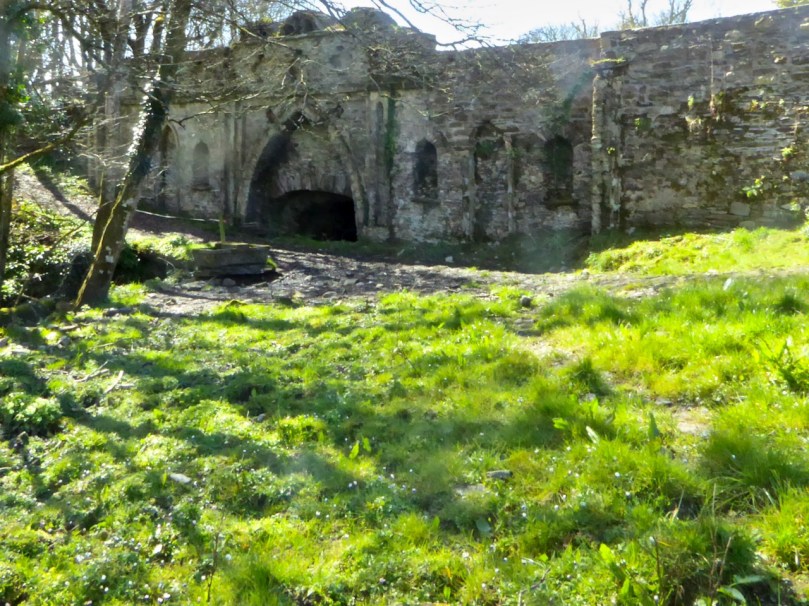
This was what it looked like in 2016 – taken by a camera with spots on the lens

The likelihood, therefore, is that the bridge at New Court is most probably eighteenth century, and early eighteenth century at that – about three hundred years old. We don’t have a lot of structures in West Cork dating to then. Surely it’s worth preserving those that still exist? I am hopeful that the National Monuments Service (they’ve been alerted and have notified their Monument Protection Unit) will come riding to the rescue. I’ll be keeping an eye on it all – you do too. But note that this is private property, so no walking or driving through the gates without permission.

UPDATE, MARCH 20, 2019. This notice was received from the National Monuments Protection Unit: “Cork County Council (Bridge Management) have indicated it is prepared to repair the wall as a Reactive Maintenance Incident and will ensure repairs meet any necessary heritage requirements.”

The Mass Rock – revisited

This post was originally published way back in 2014 but I have updated it with a few new photographs and edited the text slightly.

An raibh tú ag an gCarraig? / Were You at the Rock?

nó a’ bhfaca tú féin mó grá / Or did you yourself see my love,

nó a’ bhfaca tú gile, / Or did you see a brightness,

finne agus scéimh na mná? / The fairness and the beauty of the woman?

This beautiful song speaks to a revered tradition in Irish history and folk custom – the mass rock. During the period of the Penal Laws (late 17th and first half of 18th Century) when the practice of Catholicism was outlawed, parishioners would gather at a secret location to attend mass. The priest travelled from community to community in disguise, a lookout was posted, and mass was celebrated on a lonely rock far from the reach of the law. The song encodes the message that the people still find ways to attend mass, despite the harsh prohibition against it.

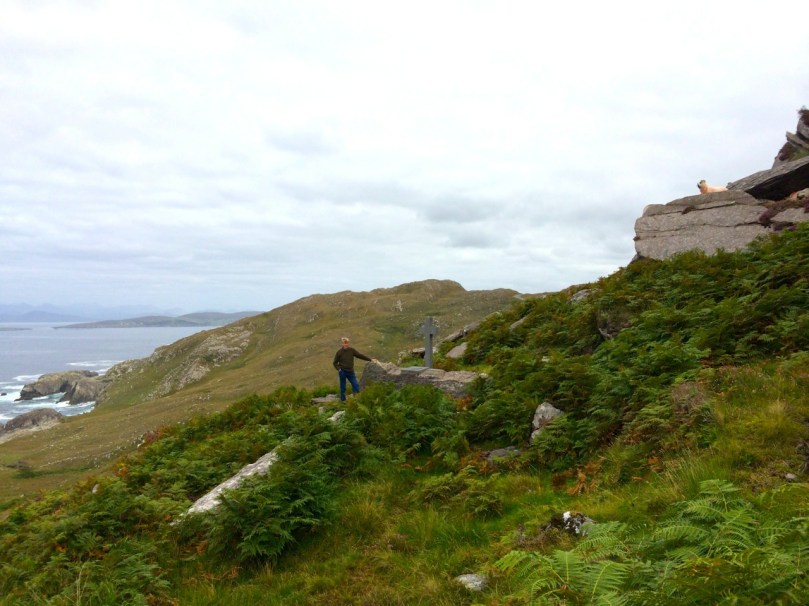
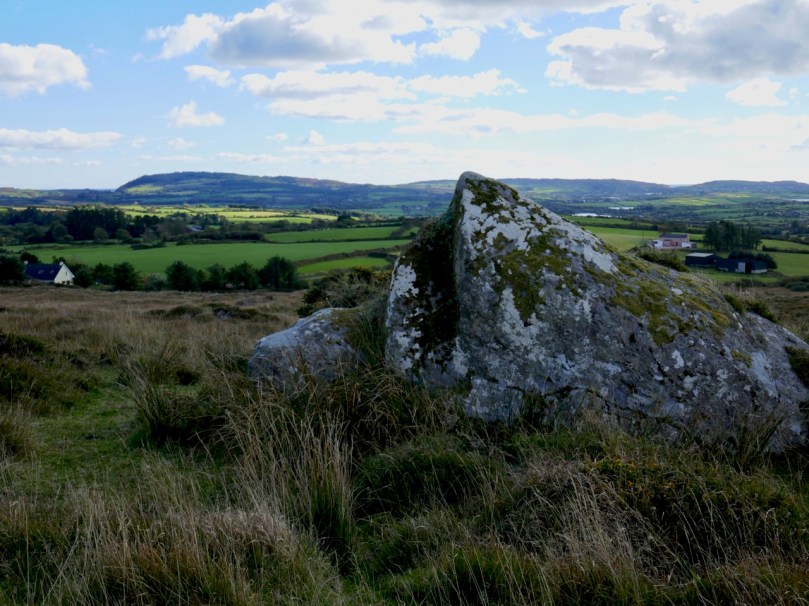
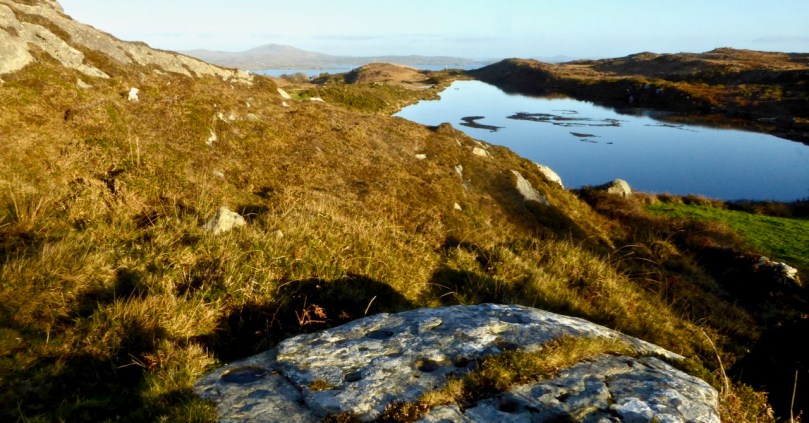
Mass rocks are often in remote locations, such as this one in Kerry, or the lead image on the Beara

Dr. Hilary Bishop, in her excellent website Find a Mass Rock says, As locations of a distinctively Catholic faith, Mass Rocks are important religious and historical monuments that provide a tangible and experiential link to Irish heritage and tradition. She also points out that, because of the imperative for secrecy, mass rocks are difficult to find.

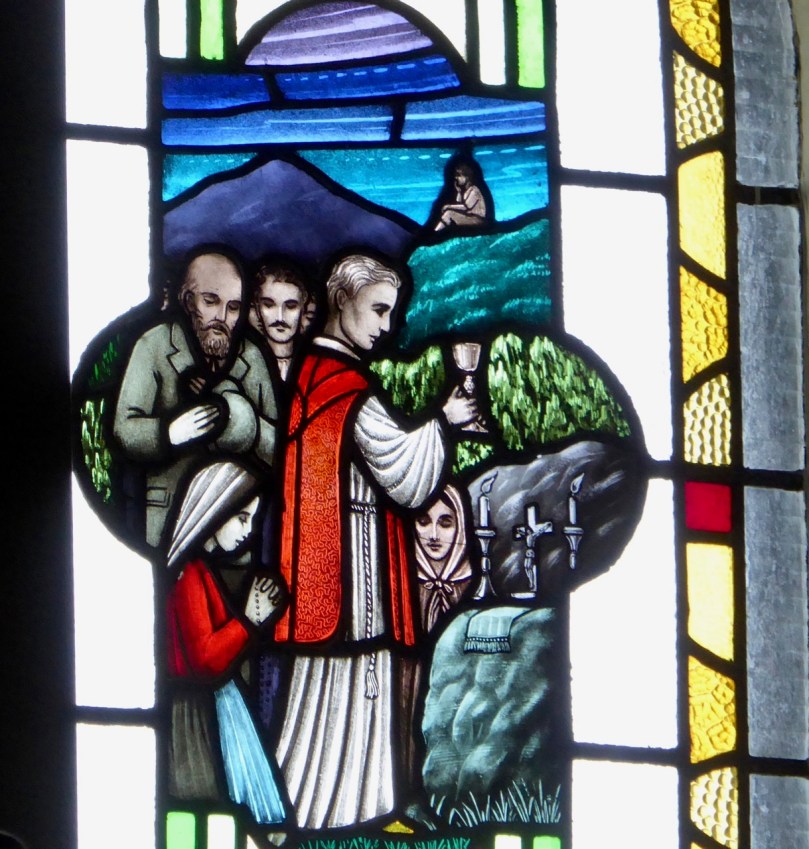
This stained glass window shows mass at a mass rock, with a lookout posted to keep an eye out for the redcoats

We certainly experienced this when we set out for a day of mass rock hunting. Working from a list generated from the National Monuments Service database we spent a day on the Sheep’s Head and the Mizen and had trouble finding all the rocks on the list. One, if it was still there, had disappeared under impenetrable layers of gorse. A second rock was last recorded in the 1980s: residents were no longer familiar with it.

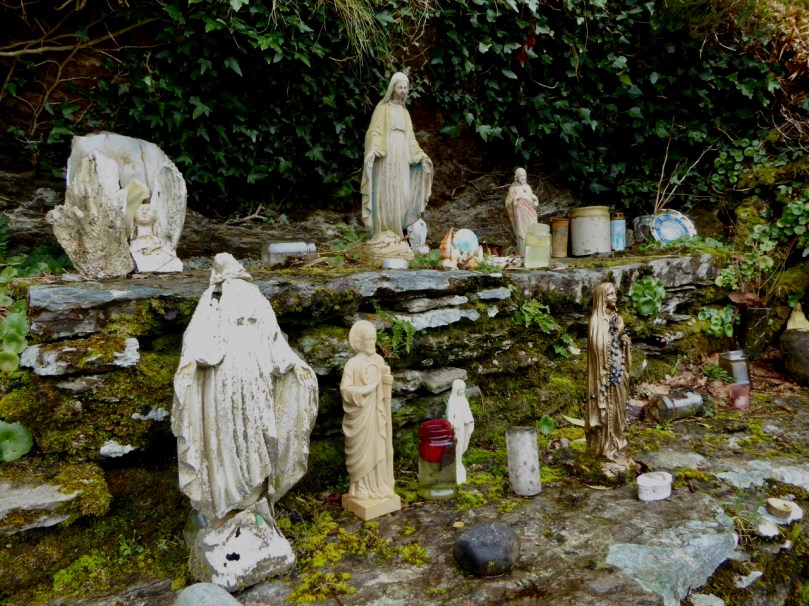
One of our favourite holy wells, at Beach on the Sheep’s Head, also incorporates a mass rock. Mass is celebrated here every August

Knowledge of mass rocks has passed down from generation to generation. In the deep countryside, the sites maintain a mystique and a sense of the sacred. We’ve written about the mass rock and holy well at Beach, where Mary conjured up a blanket of fog to confuse the English soldiers and allow the priest to escape. At Beach and at our first stop, the mass rock at Glanalin on the Sheep’s Head Way, mass is still celebrated.

The Glanalin rock (above), and the one we visited on the Beara Peninsula, are good examples of the remote locations typical of many mass rocks, high on a hillside or hidden in an isolated valley. You can picture the procession of worshippers, in ones and twos, slipping silently through the bracken, pausing to make sure they are not being watched, climbing higher, following an overgrown trail, arriving at the meeting place where the hushed crowd awaits the arrival of the priest.

One of the rocks we found (above) looked for all the world like a fallen standing stone – and that’s probably what it was. (I wonder if I should go to confession, though – I’m sure that sitting on a mass rock would qualify as at least a venial sin.)

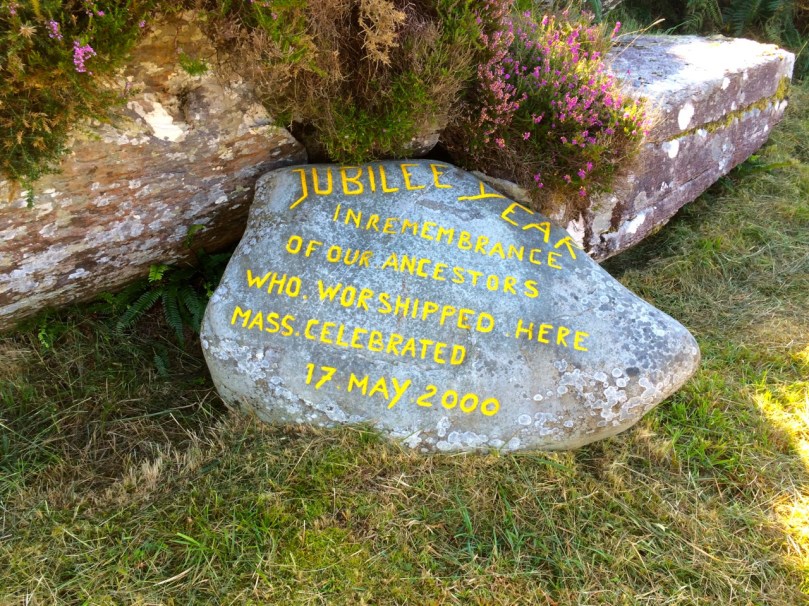
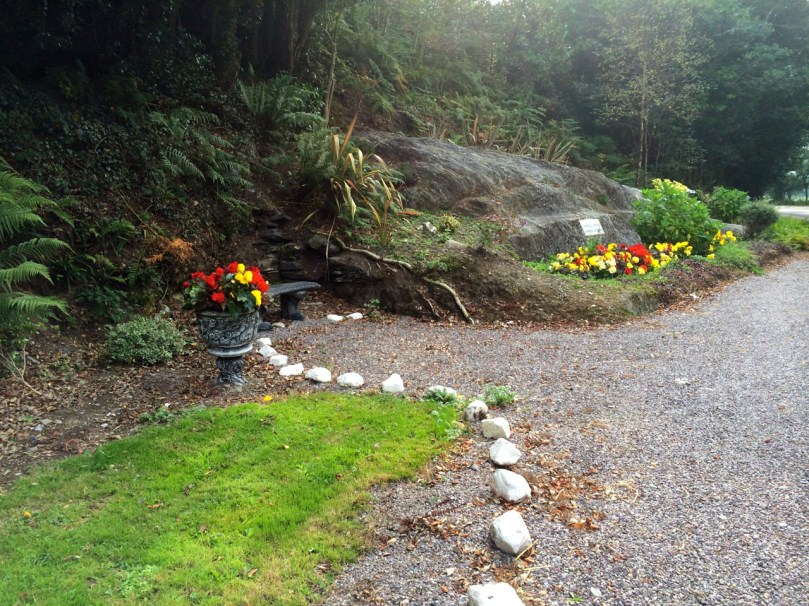
A mass rock that is easily visited is the one at Cononagh Village (above), right at the side of the main road into West Cork, the N71. This site is beautifully maintained – Cononagh is obviously proud of its heritage: signage and flowers invite the passerby to take a closer look.

The mass rock we visited last year, at Foherlagh, has a commanding view of the surrounding countryside. This one even had a small scoop-out in the rock, identified as a holy well

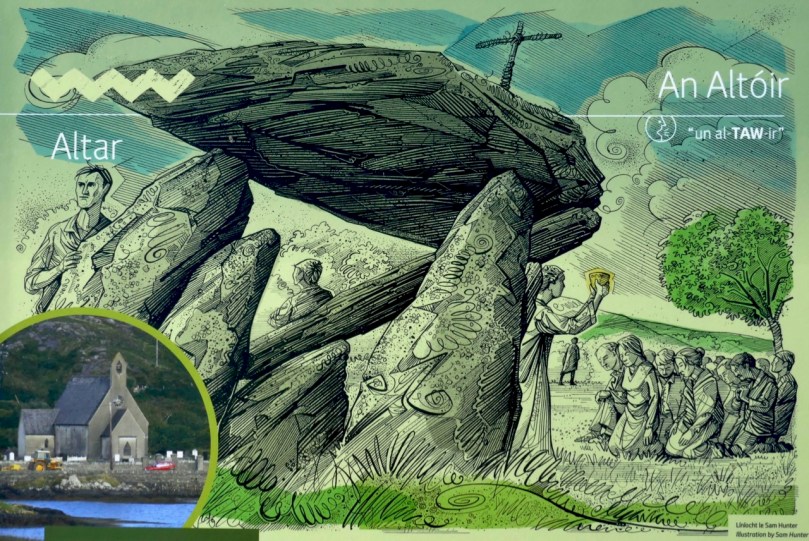
Another easily accessible site is Altar, at Toormore. This is a wedge tomb, probably over 4,000 years old and excavated in 1989. It remained in use through the Bronze Age and into the Iron Age. Dr. William O’Brien, in Iverni, says of this site: …over time this tomb came to be regarded as a sacred place, housing important ancestral remains in what was a type of community shrine. How fitting, then, that the flat capstone of the Altar wedge tomb became, in the Penal Days, a mass rock. And how intriguing to think of the continuation of this sacred space over the course of thousands of years.

But perhaps our favourite of all the mass rocks we have visited is the one at Castlemehigan. We wrote about it here. It started out life as a cupmarked stone perhaps in the Neolithic, then probably got converted into a bullaun stone in the Early Medieval period, before finally serving as a mass rock – and it has all the stories to go with its long history.