West meets West

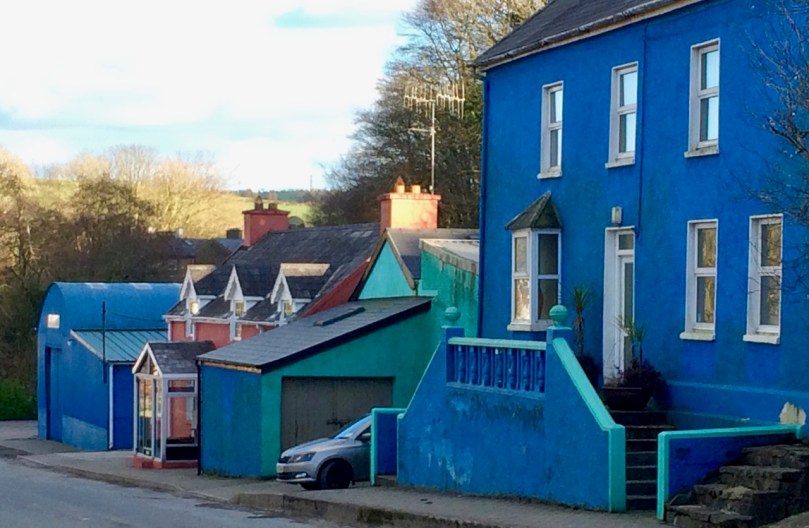
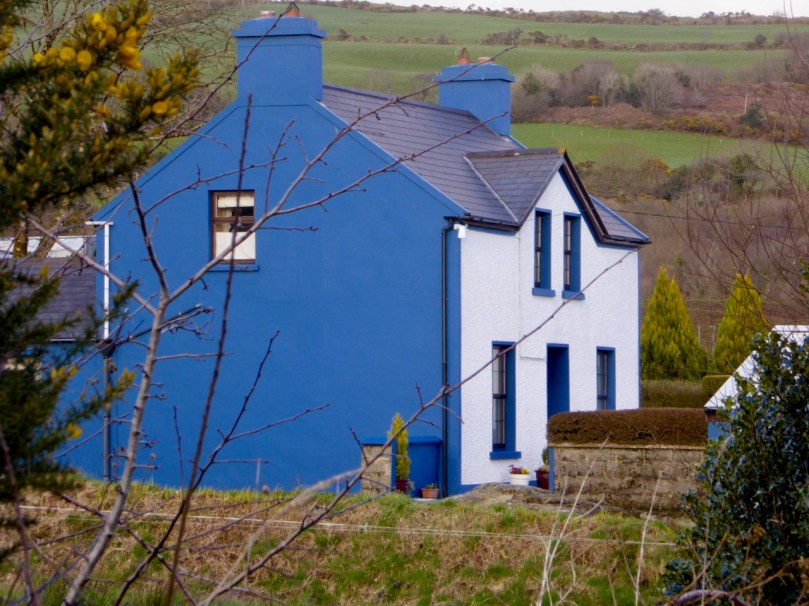
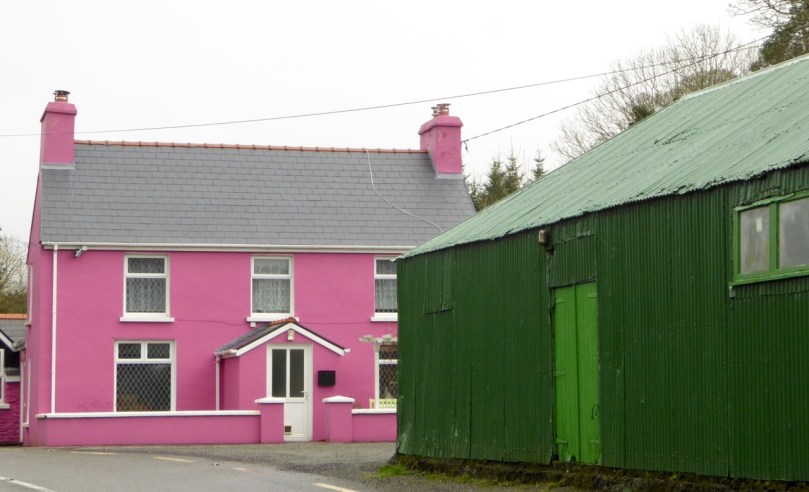
Picturesque Newlyn, Cornwall – the fishing village was the centre of a major art movement in the late 19th and early 20th centuries

I have been working hard with Uillinn – West Cork Arts Centre‘s fantastic new gallery in Skibbereen – to bring over an exhibition of the work of contemporary Cornish artists, which opens in June. West meets West will be the launch of a continuing programme which sees the art and culture of Cork and Cornwall being shared, to the mutual benefit of all working artists and art lovers – and to residents and visitors.
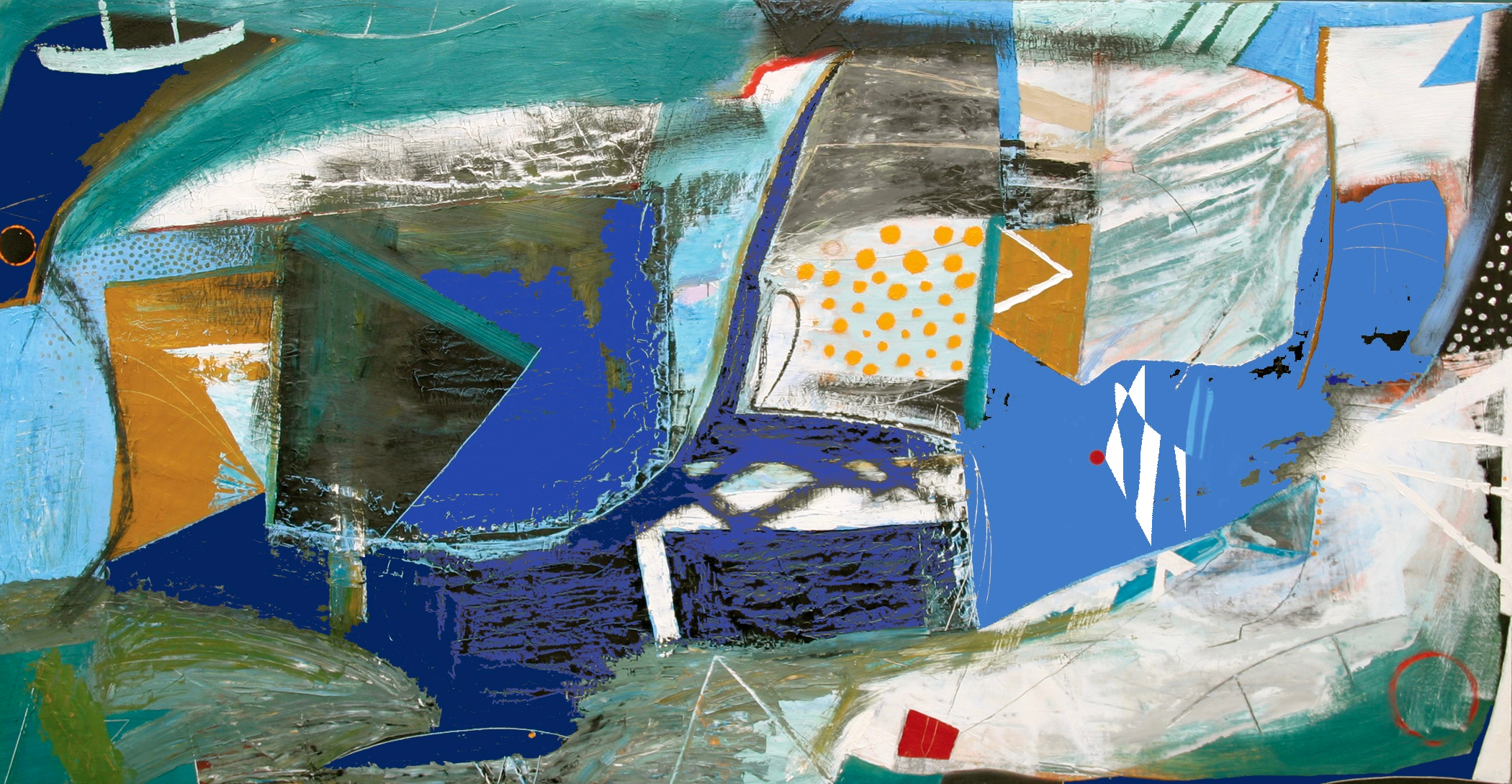
Greenstone – a canvas by the late Matthew Lanyon, one of Cornwall’s important contemporary artists whose work will be shown at Uillinn in June this year

Why Cornwall and Cork? And, particularly, why these westernmost peninsulas of Ireland and England? Well, as you may have noticed from past posts on this Journal, historic links between the two geographical areas go back a very long way. Starting between three and four thousand years ago copper was mined on Mount Gabriel and was mixed with tin from Cornwall to produce a revolutionary new metal – Bronze. This material was hard enough to make tools and weapons – therefore a practical commodity: also it does not rust. It has, too, been used to make bells for centuries, so its properties include sonority. In fact the word bronze probably originates from the Medieval Latin bronzium, in modern Italian bronzo, meaning ‘bell metal’. Regardless of all this, the important thing we know is that relations between the west of England and the west of Ireland were well enough advanced to set up regular trading between the two outposts in those far-off days.

Tony Lattimer, international award winning ceramic artist based near The Land’s End in Cornwall, whose large ceramic sculptures will be shown in West meets West, Skibbereen, June of this year

In a recent post I alluded to the incredible debt that Cornwall owes to us in West Cork because we gave them their patron saint – Saint Piran. The fact that the gift wasn’t intentional shouldn’t delay us too long: we tied Cape Clear’s Saint (whose Irish name was Ciarán) to a millstone and threw him over a cliff. Instead of meeting his doom he miraculously surfed the millstone across to the Cornish coast, where his landing place – Perranzabuloe – is named after him, and where he is royally celebrated on March 5th every year, with all the zeal that we show to our own St Patrick!

Apart from metal mining and saints, another important connection is shared fishing grounds. From medieval times onwards (and perhaps before) the Cornish fishing fleets put out from Mousehole and Newlyn to follow the pilchard and herring shoals across to Roaringwater Bay. This is really where art comes into our story, as it was the way of life of some of the Cornish fishing communities that attracted artists to that western County of England in the late nineteenth century, once the arrival of the Great Western Railway in Penzance had established the direct connection with London. Newlyn was an early focus, and a young man from Dublin, Stanhope Alexander Forbes, an up and coming young painter in the plein air tradition, made his home there in 1884 and stayed for life. Forbes found in Cornwall a true ‘rural idyll’: an unspoiled countryside where life was simply lived, and a rugged coastline with a magical quality of light. Known as the ‘Father of the Newlyn School’, he gathered around him like-minded artists who recorded (and perhaps romantically idealised) the way of life of the communities there, and that special quality of the light, in canvasses which are highly admired and respected today.

A preliminary sketch by Stanhope Alexander Forbes for a painting known as On Paul Hill (Paul is the name of a village between Newlyn and Mousehole in Cornwall). Forbes painted in the Plein Air style, out of doors and from real life

I made my home in Cornwall for a number of years, before I decided that I hadn’t come far enough to the west, and followed the pilchards and herring myself to Roaringwater Bay, where I now look down on them from my eyrie in Nead an Iolair (although the shoals are today much diminished). During my years in Cornwall I came to know and respect the stories of the artists from Victorian years up to the present day. The ‘Newlyn School’ which Forbes represented was only one piece of the jigsaw there: we will explore others later. Art is probably Cornwall’s biggest asset. Ever since the opening of the Tate Gallery in St Ives – established there because of that town’s historic links with artists and craftspeople of international repute – ‘art tourism’ has grown to become a major year-round driver of the local economy.

Newlyn old and new: left – Stanhope Alexander Forbes in 1900 painting outside Trelyn, Boase Street, Newlyn – my home for 25 years! Right – Newlyn today is Britain’s largest fishing port

Cornwall is home to a number of artists renowned today in the British Isles. I got to know many of them when I lived in Newlyn. Three of them will be exhibiting in Uillinn from 3 June to 8 July this year: Philip Booth, Matthew Lanyon and Tony Lattimer. Their work is large scale, stimulating and mutually complementary: constructions, canvasses and ceramic sculptures. Please make a note of the dates now: this exhibition is important for West Cork and for Cornwall. Please don’t miss it!

Below: Philip Booth, from Lamorna, Cornwall, will be showing a number of his spectacular relief constructions at West meets West, Uillinn, Skibbereen, in June. This one is titled ‘Formed in Running Water’
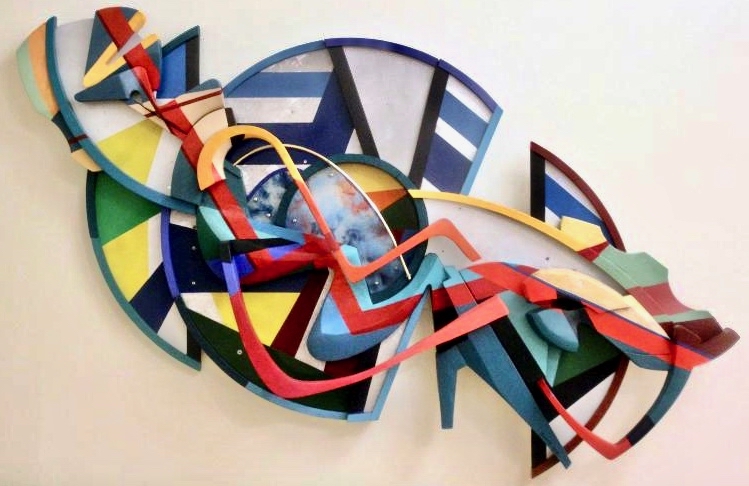
Formed in Running Water

All That Jazz

The Ballydehob Jazz Festival gets better every year! There was a marvellous program this year – eclectic and varied, and our little village was buzzing with locals and out-of-towners.

The great thing about a festival like this is that there’s something for everyone. The Big Acts take place in the “Festival Hall” (AKA Community Hall) where there’s big band sounds and dancing till the wee hours. There are workshops for kids (this year’s line-up featured archery tag and circus skills) and a Sunday Market with a continuous bandstand of acts.

The East Coast Jazz Band are effortlessly cool

But a lot of the action takes place in the intimate venues. The pubs and restaurants all host entertainers so you can have lunch and dinner accompanied by soulful crooners, or crowd into one of the pubs to listen to a piano duo or a swing band or a funk quartet. There’s a good mix of West Cork and come-from-away groups and every venue is packed to the scuppers.

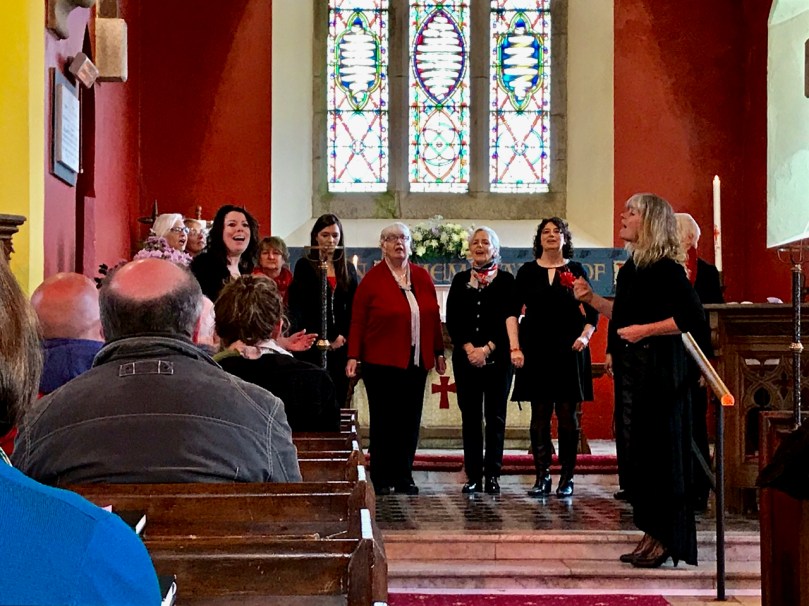
Above: Stephanie Nilles and Thomas Deakin were one of THE acts of the Festival. Their sound (and her lyrics!) left us gasping. Below: The Eileen and Marilyn Experience, perennial favourites in West Cork, and Grace Notes, a new vocal performance group under the direction of Caz Jeffreys 

This year there was a first – a Jazz Mass. Actually it was a Church of Ireland Service, with gospel provided by the choir I (try to) sing with, Acapella Bella. Something tells me this could well become an annual event.

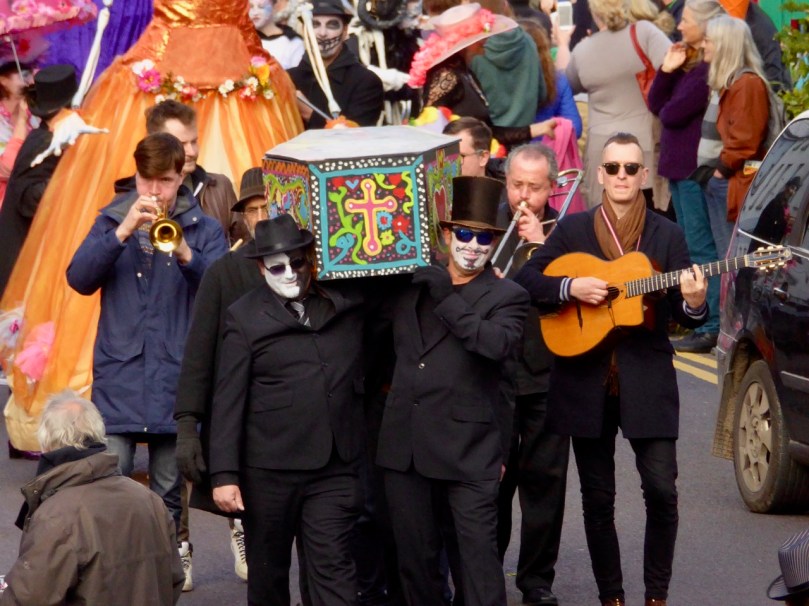
But the highlight of the festival for everyone is the New Orleans-style Jazz Funeral. Ballydehob is a hotbed of creativity at the best of times and the idea of a Jazz Funeral has galvanised the community. This is only the third year we’ve done it and it’s been improved and expanded every year.

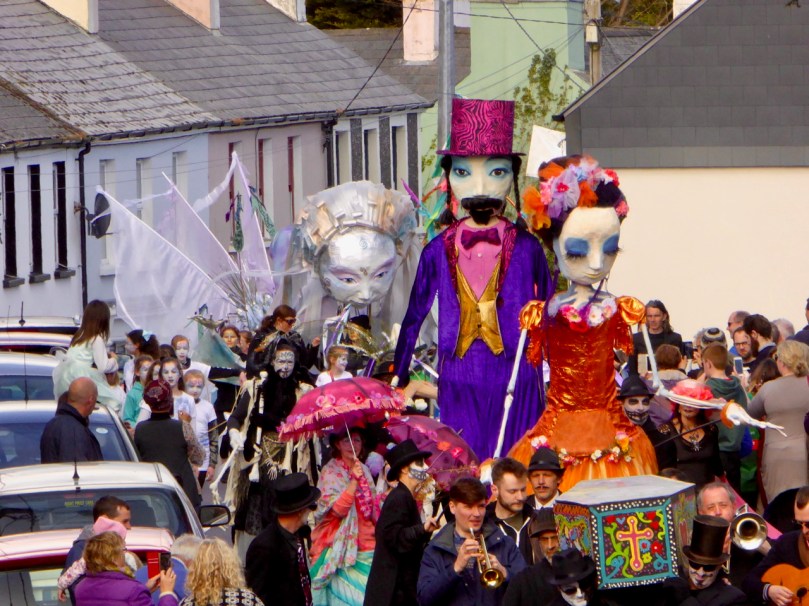
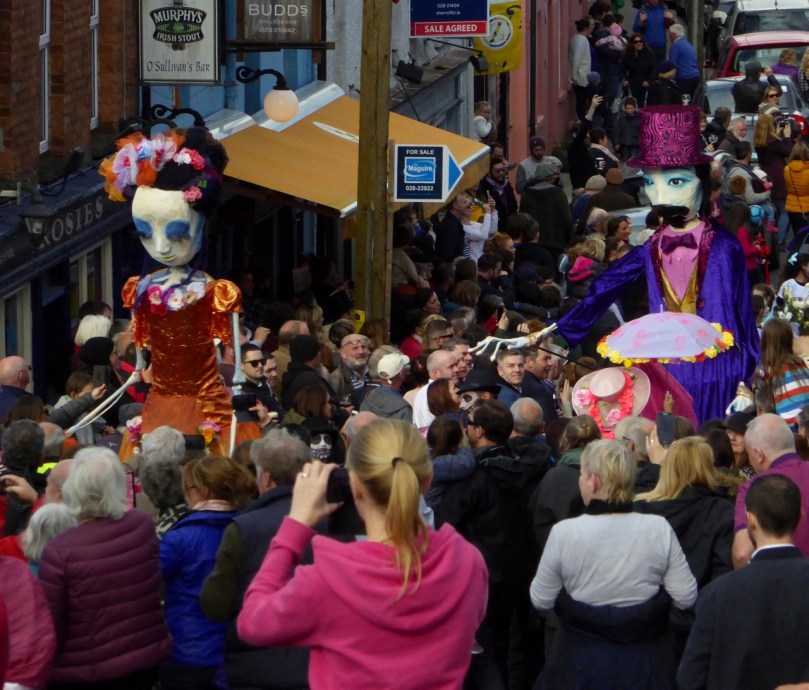
Last year the giant puppet, Katrina, made her first appearance, and this time she was joined by a mate. Billed as Mexican Day of the Dead meets Bealtaine, the parade wound its way up the village, stopping along the way so the puppets could wow us with a dance. It was a marvellous spectacle.

Almost, you could forget you were watching dolls and feel the emotion flowing between them and they put their arms around each other and kept time to the music.

A stilt walker, a giant centipede, a pair of gangsters on a penny farthing, and a whole army of children in costume completed the parade of mourners. The weather held off (the Gods of Bealtaine must have been appeased) and the streets were thronged with cheerful festival-goers, all swearing to be back again next year and this time to bring all their friends.

Tara Brandel performed her dance Car at the end of the parade. Finola cosies up to a gangster

The tagline for the Festival is…drum roll, please…THE BOUTIQUE FESTIVAL IN THE BACK OF BEYOND PACKING A BOMBASTIC ARTISTIC PUNCH. Take a look at the program and see for yourself – great descriptor, or what!

Irish Romanesque – an Introduction

This post will introduce you to one of the most exciting aspects of our architectural heritage – the building style known as Romanesque, which in Ireland became the dominant form in the 12th Century. Characterised by flamboyant doorways and elaborate carvings, it replaced an earlier and much plainer indigenous Irish church-building form of which few unmodified traces remain.

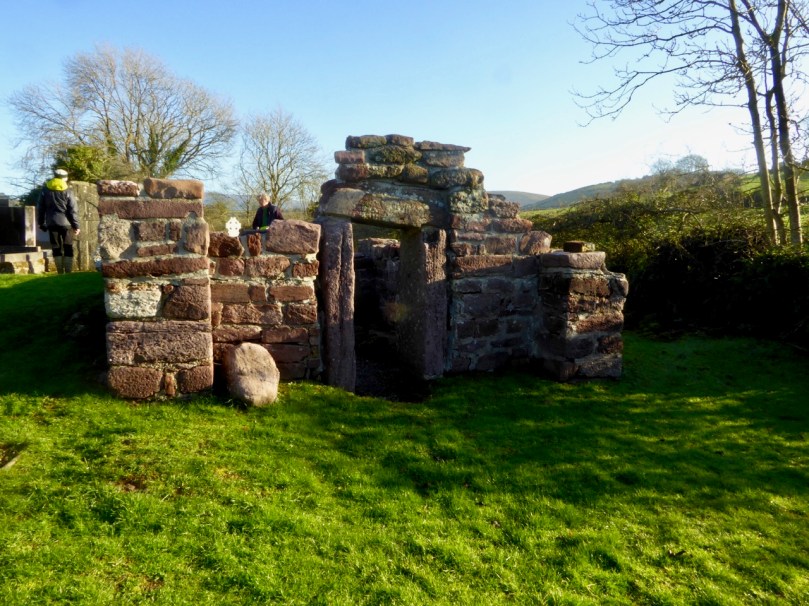
An early church at Liathmore, Co Tipperary. Note the square doorway with a simple linteled top. The projections of the sidewalls beyond the gables, known as antae, are a feature common to many early churches

Most churches in the Early Christian (or Early Medieval) era in Ireland were probably built of wood, although some early stone examples survive, such as the one Robert wrote about in his post Molaga of the Bees. Defining characteristics of these churches were their relative plainness – one rectangular space, often quite small, with a linteled portal, one or two small windows, projecting antae, and finials atop the gables.

Leaba Molaga, or Molaga’s Bed – note the antae and small linteled doorway. The reconstruction drawing in the leading photograph above is based on this building

Besides Molaga’s Bed, we have seen several of these early churches on our travels – last year at Oughtmama when we spent a day with Susan Byron (see Susan’s Burren) in Clare, and earlier this year when we stopped off the M8 to visit the churches at Liathmore. This week we saw two more, one at Ardfert and another at Kilmalkedar, both in Kerry. (Robert also writes about Kilmalkedar this week, although concentrating on other aspects). However, in each case, the native form has been modified by the influence of the Romanesque style.

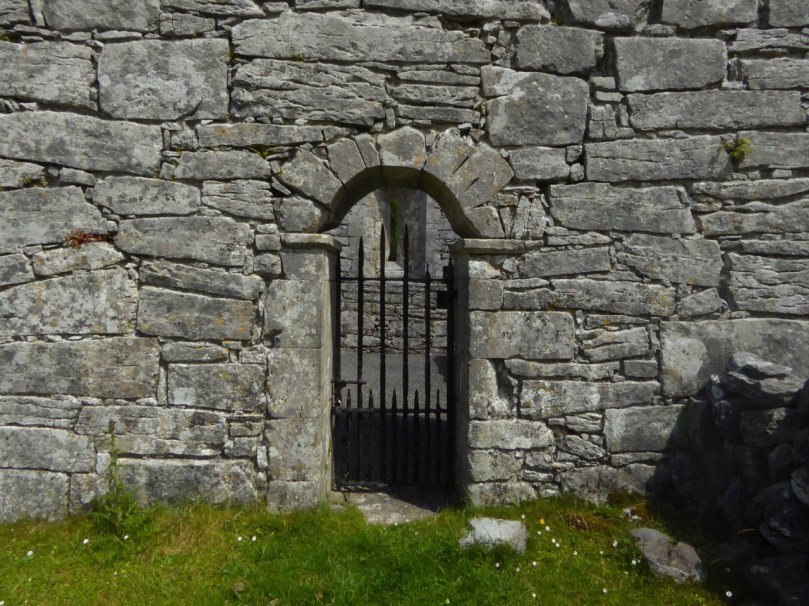
Both photographs were taken at Oughtmama in Co Clare. In the first, a simple linteled doorway leads into a large nave, which was later modified with the addition of a chancel, accessed through a Romanesque arch. In the second, the small doorway, although no bigger than the first example, is in the Romanesque, arched, style

Romanesque was the pan-European architectural style of the 11th century. More than just a construction method, it was an ideological movement. After a period known generally as the Dark Ages in Europe, the renaissance of scholarship and art in the 11th century harkened back to the idea of the antique Christian culture, with all the construction and engineering skills of the Romans. As in every era, the elite wished to associate themselves with this and Romanesque architecture gained popularity for great buildings such as cathedrals and castles.

A great Romanesque Church, Sant’ Ambrogio, in Milan. The Romanesque period of its construction dates to the 12th century – about the same time as Cormac’s Chapel in Cashel, generally reckoned to be the high point of Irish Romanesque architecture, was being built. More on Cormac’s Chapel in the next post

This was a period when people, especially clergy, from all over Europe travelled to great pilgrimage sites such as Compostela or Rome and this helped to spread ideas within the Christian world. In Europe the Romanesque style was well established by the mid 1000s and flourished until it was gradually replace by Gothic beginning in the mid-12th century. It took longer to reach Ireland, and didn’t really become the dominant church-building style until the 12th century.

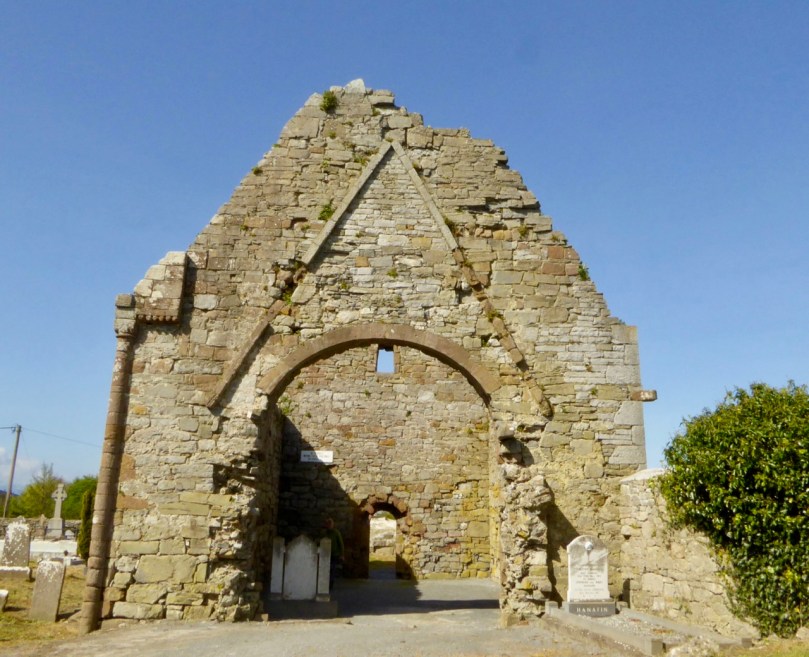
This is one of two Romanesque sites at Ardfert. We are looking through the chancel arch into the nave. Note the roll-mouldings where antae would once have been, and also the small arched west doorway

In Ireland the simple rectangular stone-built early medieval churches with their antae, linteled entrances and finialed gables were gradually replaced or modified starting in the mid 1000’s. Romanesque churches become nave-and-chancel buildings rather than one rectangular room. The chancel is separated from the nave by a rounded arch, and windows have similar arched tops and are deeply splayed on the inside, often asymmetrically.

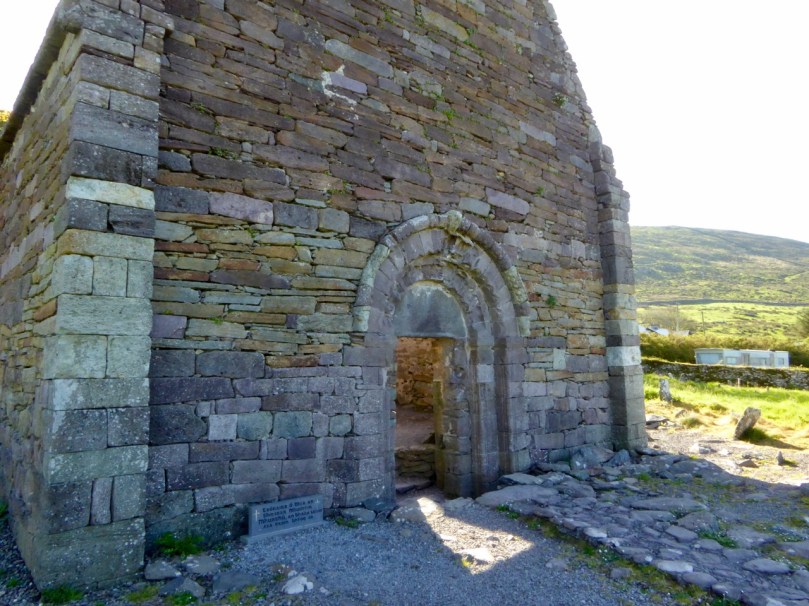
Kilmalkedar church in Kerry. While antae remain, the portal is now in the full Romanesque style  with an arch, a couple of receding ‘orders’, chevron carvings and a carved head

The doorway is in the west wall (on the opposite side to the chancel and the altar) and is now arched rather than linteled. The walls of the nave may have blind arcading. There is clear evidence that they were painted – a few vestigial examples survive in Ireland.

At Kilmalkedar, the finials still top the gables. The stone roof can be clearly seen, or at least what remains of it

The roof are sometimes stone, and may contain attic-type spaces.

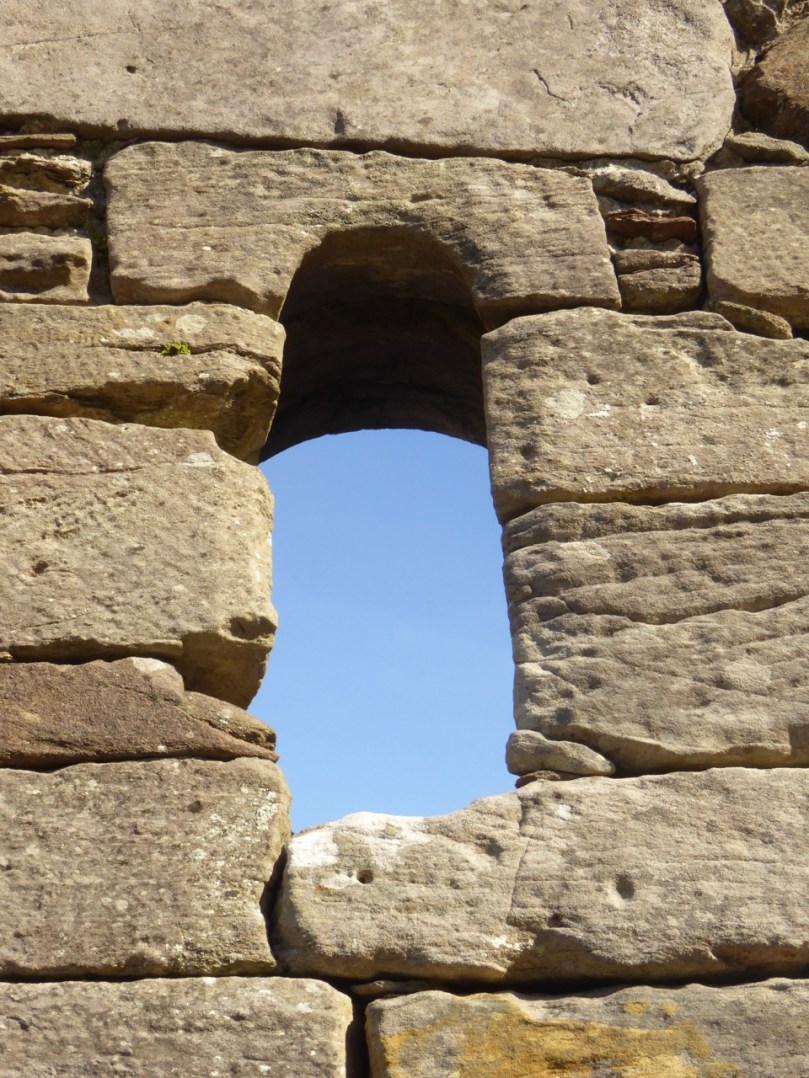
Two examples of Romanesque arched windows. The first (from Kilmalkedar) is topped by a simple arch hewn from one stone. In the second example the arch is more sophisticated. It is constructed using voussoirs – precisely cut wedge-shaped stones – which are beautifully carved with geometric and foliate shapes

But the real glory of the Romanesque building style, and what makes it so attractive for visitors are the carvings – a feature that is curiously absent from the Early Medieval church forms that preceded the Romanesque. (I say ‘curiously’ because other forms of stone carving, such as our wonderful high crosses, are well known from pre-Romanesque contexts in Ireland, as well as decorative metalwork and manuscripts.) Doorways, chancel arches and window surrounds are often carved with a variety of floral and geometric motifs (especially chevrons), while heads of humans and animals are found around doorways and arches, and occasionally outside. 
The chancel arch and blind arcading at Kilmalkedar

This post is just an introduction to Irish Romanesque, intended to cover the basics of the form and get you comfortable with the terminology. I have deliberately avoided talking about the carvings and the more spectacular of the sites. But in my next post on this topic I will concentrate on the doorways. There are many fine examples, from the simple to the elaborate – they are truly one of the wonders of our Irish architectural heritage. Here’s a sneak peek…

And by the way – this post is a celebration of sorts: it’s the 400th post in Roaringwater Journal! Our first post ever was in October 2012. With a five month hiatus (in order to move countries) we’ve been blogging faithfully week after week ever since. Our practice is that we, Robert and Finola, publish one post each every Sunday (and update the Table of Contents on the Navigation Page as we go along). We love the way this lends a shape to our week; we love the research and the photography; we love your feedback, both here and on our Facebook Page. Thank you, our wonderful readers, for sticking with us. Long may it continue!

Dividing the Day

We were on the trail of Saint Brendan, and the road took us deep into County Kerry. The spring days were blue, and the unparalleled scenery at its best for us. As we made our ways through the high hills and mountain passes we could see across to the coast:

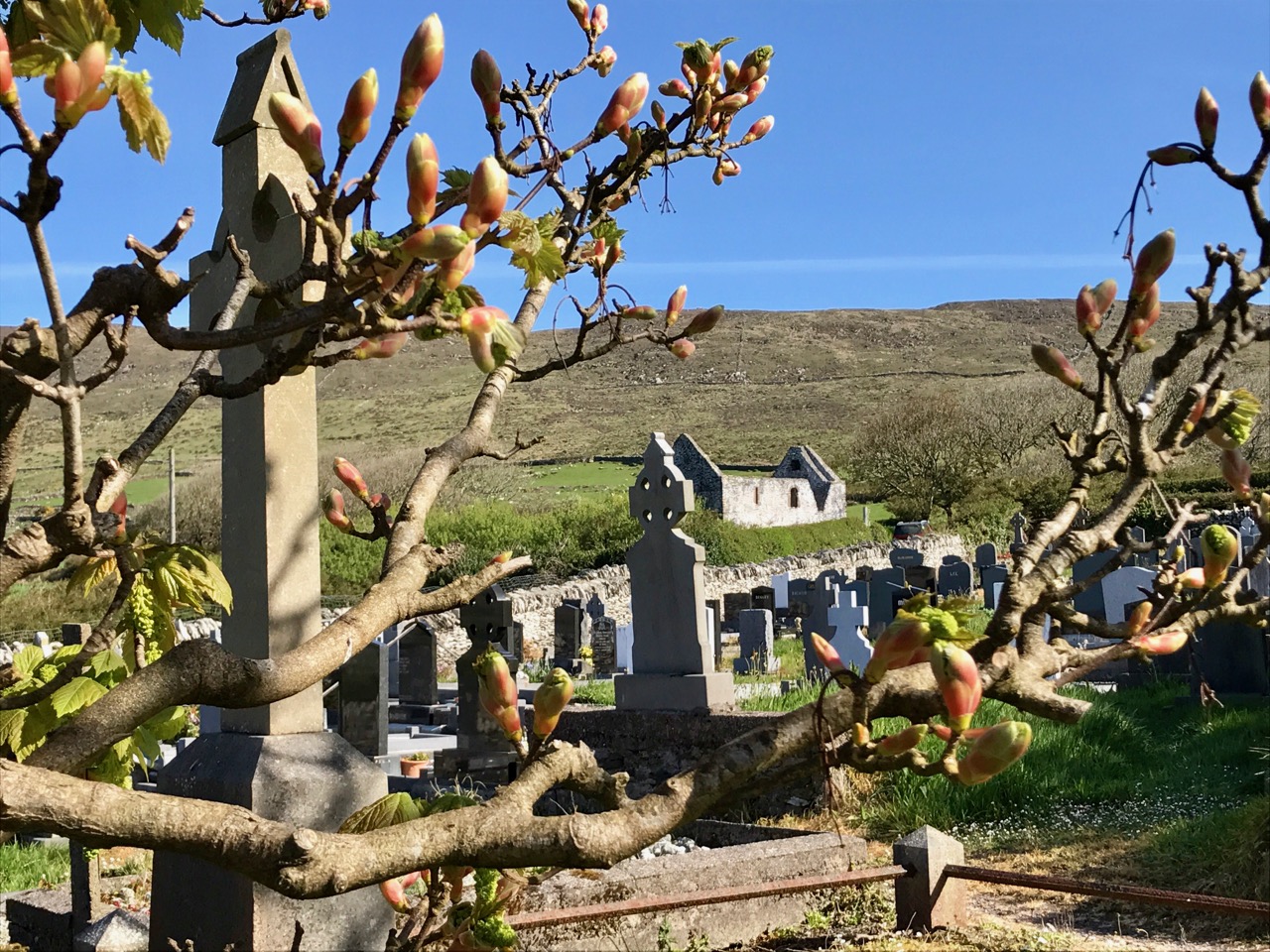
20,000 years ago, ice shaped the Kerry landscape: a huge glacier flowed from here towards the sea. Looking down from An Chonair, the highest mountain pass on the Wild Atlantic Way; the peak in the centre is Mount Brandon, named for Saint Brendan. The header picture shows the burial ground and, beyond, the medieval “Brendan’s House’ at Kilmalkedar, seen through the burgeoning spring growth

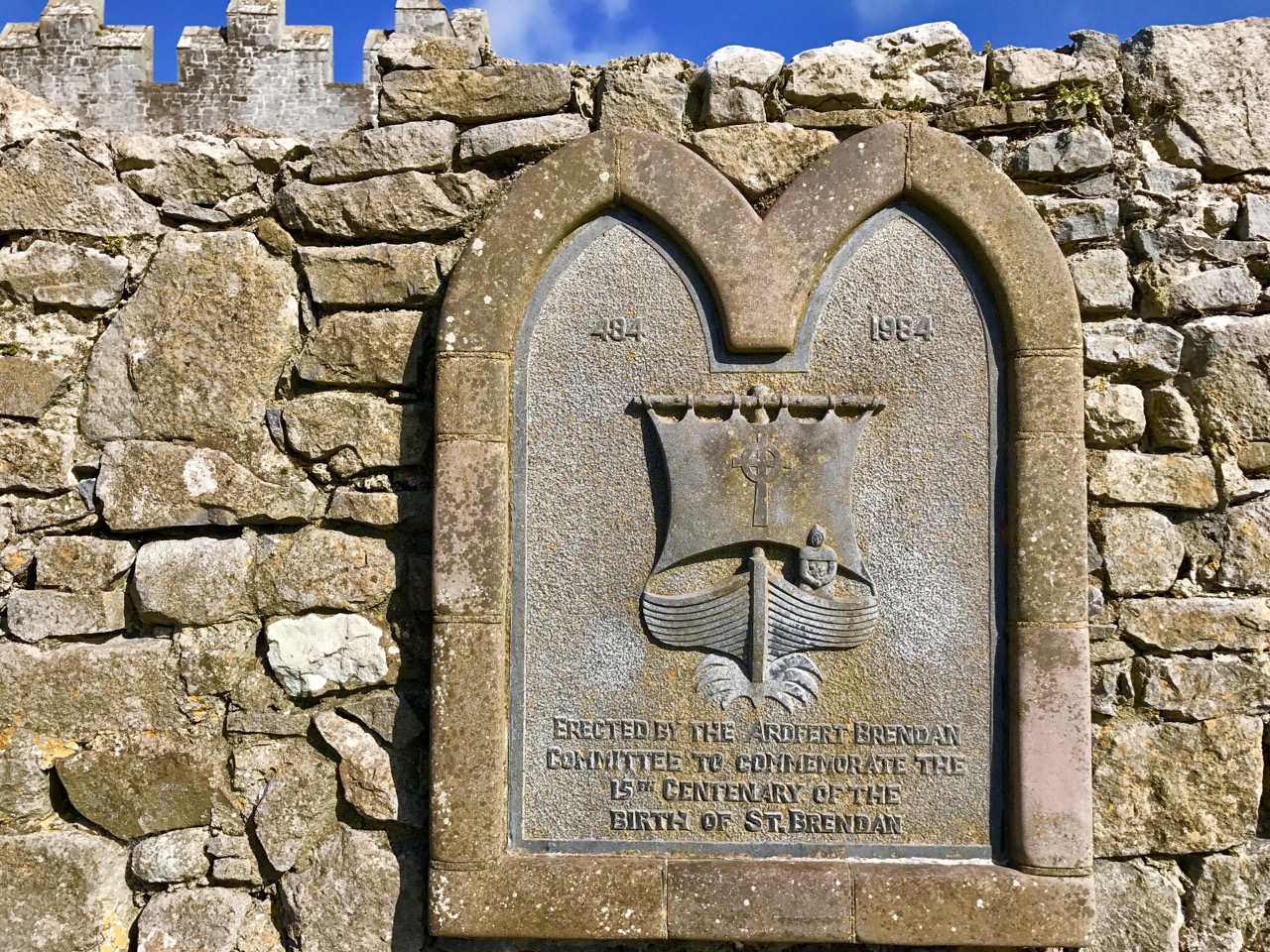
Our first call was to the Cathedral in Ardfert, which was built in medieval times over a Christian monastic site founded by the Saint in the sixth century. There’s nothing left of that, but the later buildings, while ruined, are well looked after by the Office of Public Works, and an information centre is open through the summer months – certainly worth a visit.

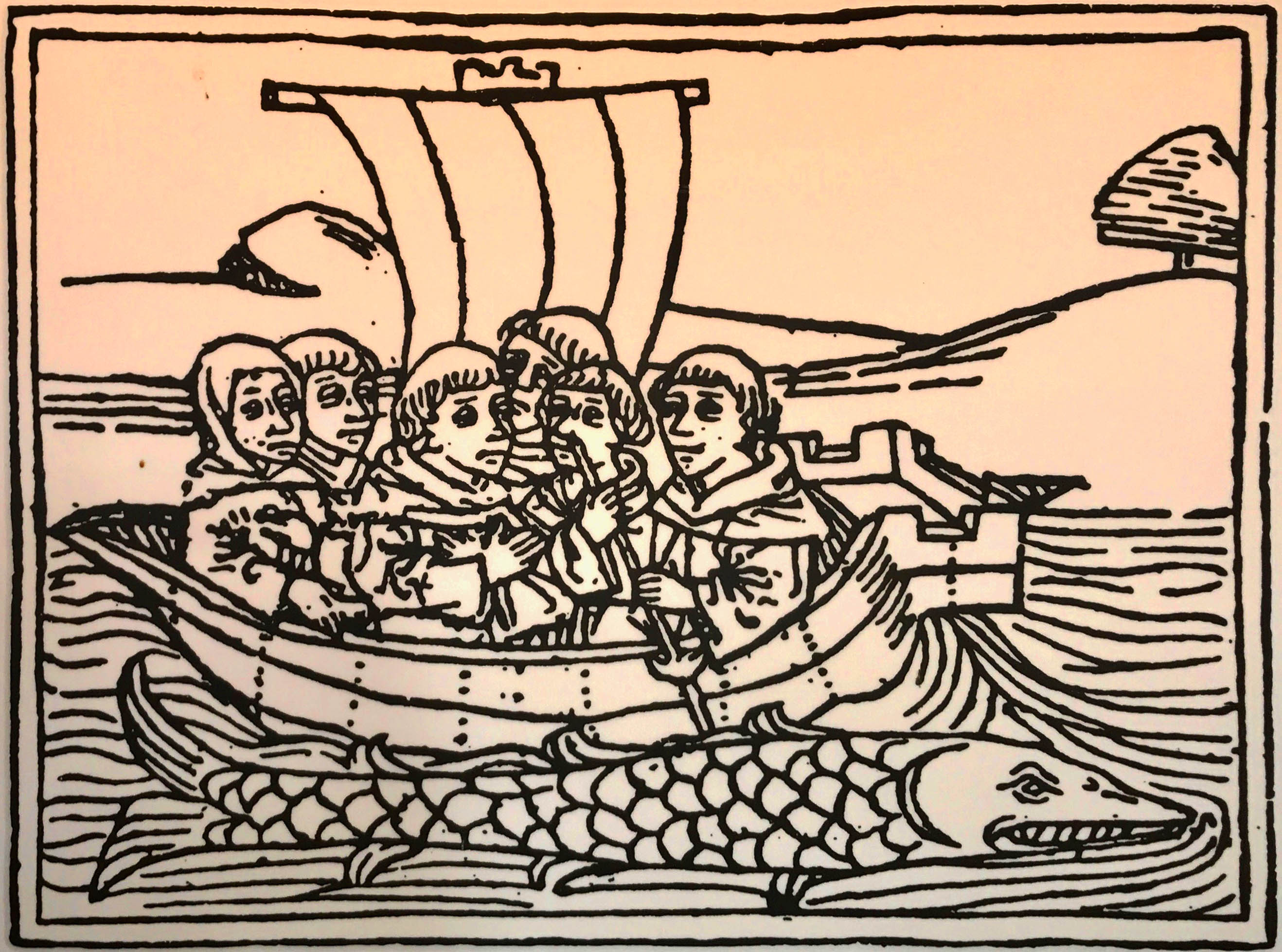
Seen in Ardfert Cathedral, an image of a woodcut dating from 1479: it shows St Brendan and his monks on their epic voyage in search of Paradise. On the way, they discovered the American continent!

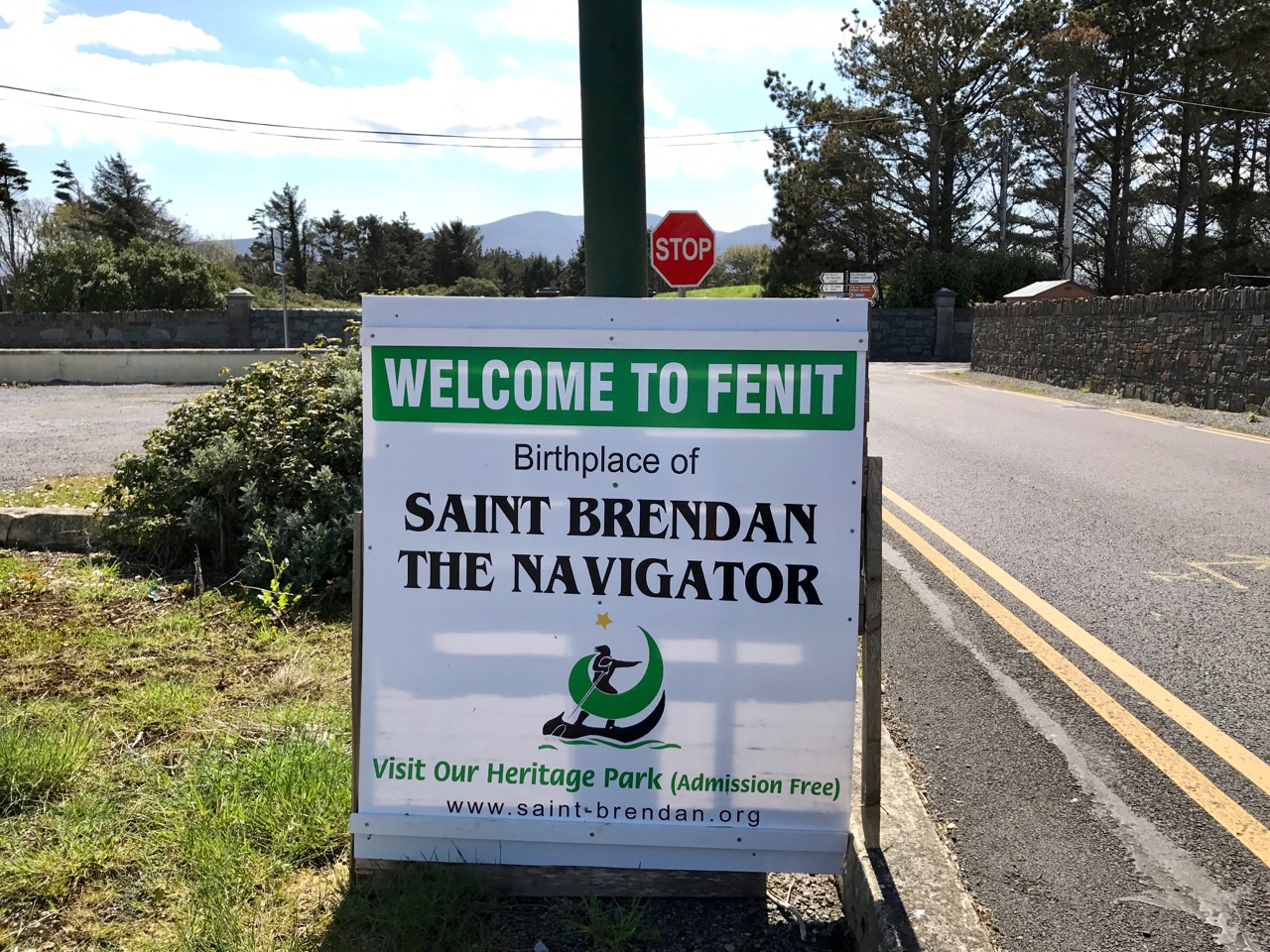
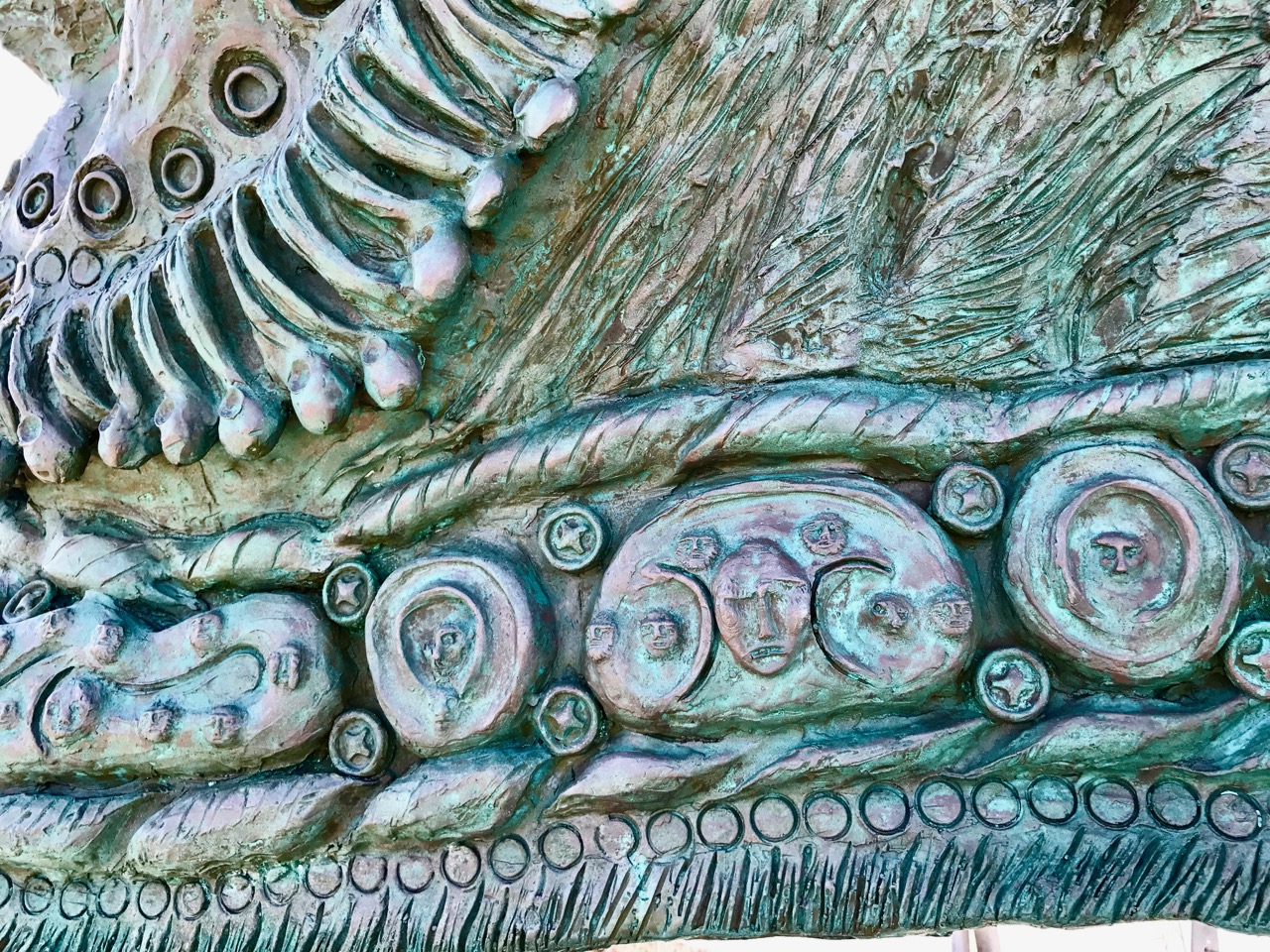
We could not miss a visit to the place of the Saint’s birth in 484 – Fenit, near Tralee – where a monumental bronze sculpture was installed in 2004. It was made by Tighe O Donoghue/Ross of Glenflesk.

It’s hard to do photographic justice to Tighe O Donoghue/Ross of Glenflesk’s sculpture of Saint Brendan in Fenit: he’s depicted as a ‘warrior saint’ (in the same vein as St Fanahan – or St Fionnchú – of Mitchelstown, Co Cork). Certainly he has a heroic character, necessary for someone who embarked on (and returned from) so many adventures

The culmination of our Brendan travels for this trip (there’s so much more yet to be explored) was the medieval site at Kilmalkedar, on the Dingle Peninsula. This monastic settlement is rich in history, and includes St Brendan’s House, and St Brendan’s Oratory. These alone are spectacular monuments, but there are further riches to delight the eye of Irish history enthusiasts. Finola’s post this week concentrates on the wonders of Irish Romanesque architecture, and the ancient stone-roofed church at Kilmalkedar is a prime example.

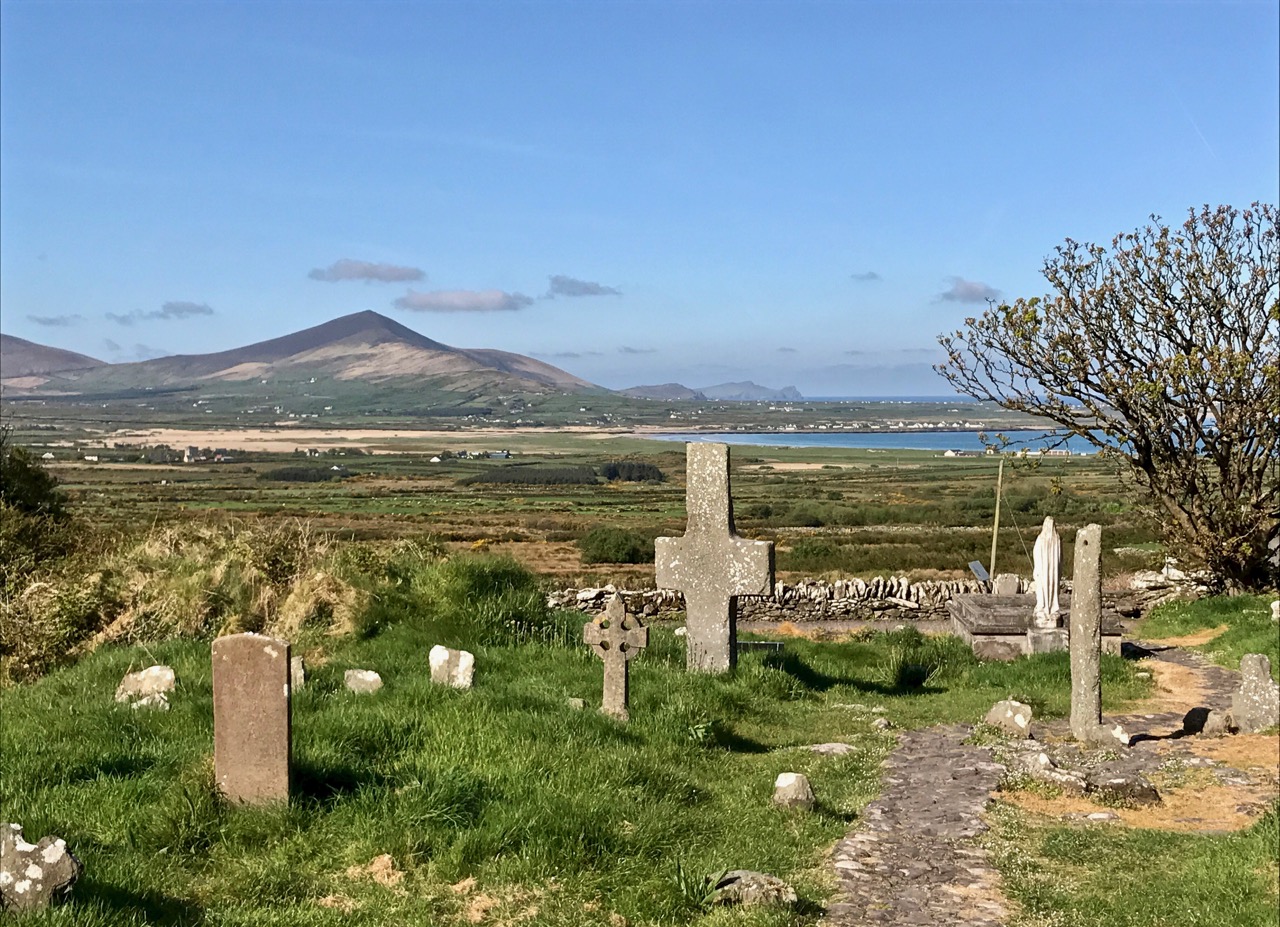
The wonderful Romanesque early Christian church at Kilmalkedar – right – with ‘Brendan’s House’ in the distance. The site is overflowing with medieval history. Below. the setting for the monastic site is stunningly beautiful. Note the large, very ancient cross and the holed ogham stone

A good while ago – in 1845, in fact – our excursion was foreshadowed by Mary Jane Fisher Leadbeater, who writes in her Letters from the Kingdom of Kerry:

…Our object to-day was not entirely to pay homage to Nature, though in the heart of her lovely works, but to visit the ruins of the wonderful church of Kilmelkedar, which we were solemnly assured “was built in one night by holy angels.” One evening, ever so many many ages ago, the sun, when he set in those wilds, saw no place dedicated to the worship of the Creator: he rose the following morning, and smiled upon a perfect chapel, with pillared niche and carved saint, and a holy fount, and massy cross! all ready for the purposes of prayer and sacrifice! A matin-call rang loud and clear over lofty mountain and lonely glen, to summon the devout and arouse the unthinking, where no vesper strain could sound the evening before; all gleamed proud and fair in the glad light, and the heart of man became purified, as the sacred bell called him to prayer! And this was the reward of the unceasing prayers of the holy Saint Brandon! Such is the legend…

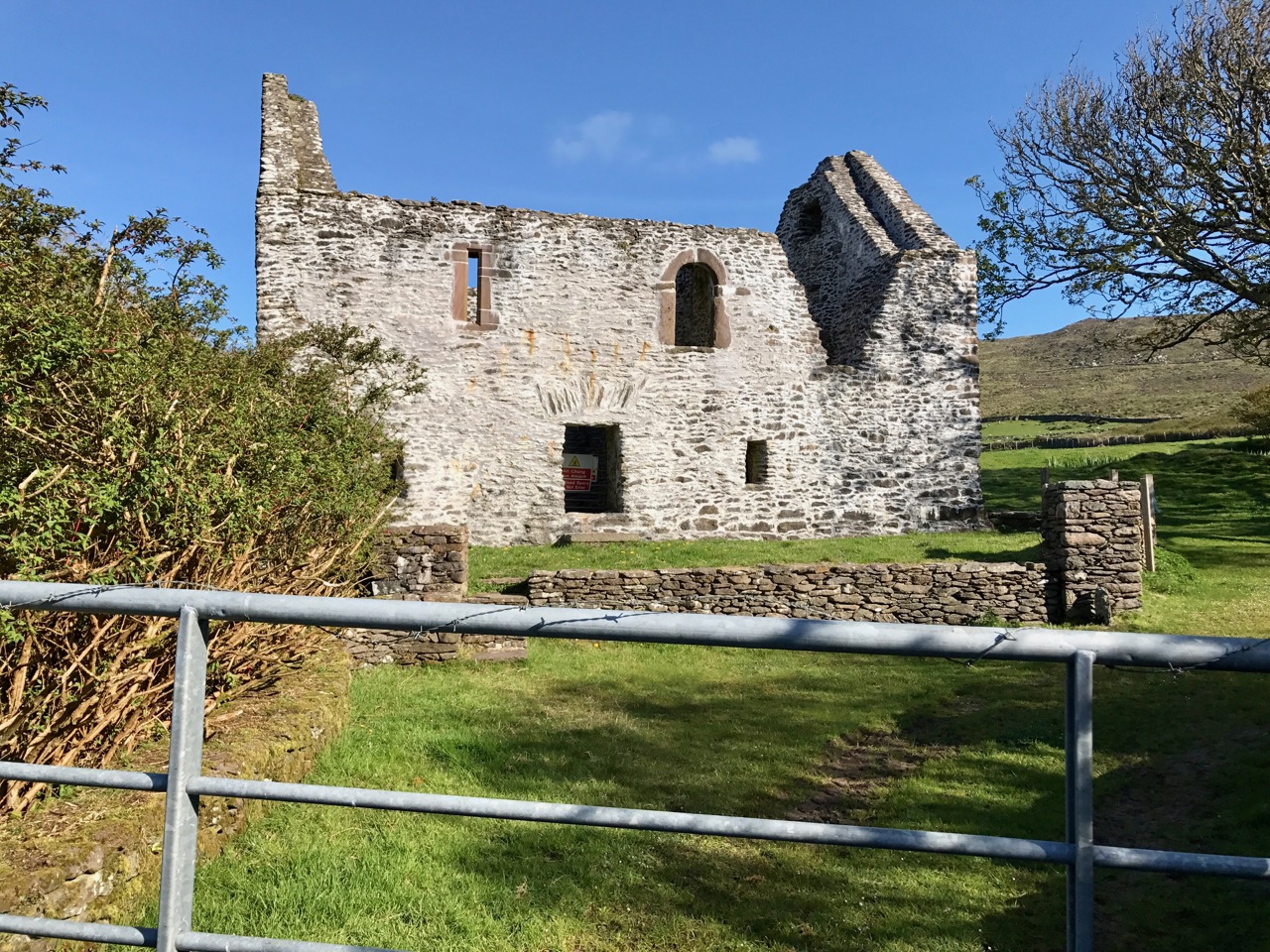
St Brendan’s House – behind a locked and barbed gate!

We spent hours at the Kilmalkedar site and didn’t take everything in. We consider ourselves so privileged: we had it completely to ourselves, and the day was perfect. Saint Brendan treated us very kindly – except that his ‘House’ and an associated holy well were not accessible: although an OPW project which has recently undergone significant restoration, the enclosure around it is impenetrable with barbed wire and a firmly locked gate. However, in an adjacent field, a gate and path gave us free access to a large, flat stone which seemed to be covered in giant cup-marks. The National Monuments register describes it as a ‘Ballaun Stone’: it’s very fine, and I was delighted to find that Mary Jane Fisher Leadbeater had unearthed some folklore about it:

…This place contained a colony of monks; and well they knew what they were about when they fixed on this retirement; for, besides its real advantages, it commands a most lovely view of Smerwick Harbour, The Sisters, and Sybil Head. They need not want for fish in the refectory in the days of abstinence. It is situated in a sheltered recess of the mountains, fine springs around, and, another popular legend bearing witness, in the centre of what was once good grazing and tillage ground. A cow is the subject of this legend—a cow of size and breed suited to provide milk for the giant race of those days. We saw the milk vessels, and if she filled them morning and evening, she was indeed a marvellous cow. In a huge flat rock were these milk pans; six large round holes, regular in their distances from each other, and nearly of equal size; they could each contain some gallons of liquid. This said cow gave sufficient milk for one whole parish; and was the property of a widow—her only wealth. Another parish and another clan desired to be possessed of this prize; so a marauder, endued with superior strength and courage, drove her off one moonlight night. The widow followed wailing, and he jeered her and cursed her as he proceeded. The cow suddenly stopped; in vain the thief strove to drive her on; she could neither go on, nor yet return; she stuck fast. At length, aroused by the widow’s cries, her neighbours arrived, and the delinquent endeavoured to escape. In vain—for he too stuck fast in the opposite rock; he was taken and killed. The cow then returned to her own home, and continued to contribute her share towards making the parish like Canaan, “a land flowing with milk and honey.” The prints of her hoofs, where the bees made their nests, are still to be seen in one rock ; and those of the marauder’s foot and hand in another, where he was held fast by a stronger bond than that of conscience…

Kilmalkedar’s giant ballaun – the cups were filled every day by the widow’s marvellous cow, providing milk for St Brendan’s community of monks back in the day

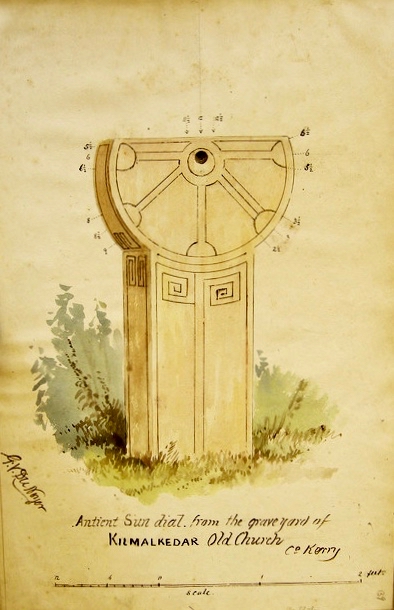
One of the special features of the Kilmalkedar site harks back to its medieval monastic associations – a sundial. The ordered lives of the monks were regulated by divisions of the day (and night) – the Canonical Hours, also known as the Divine Office or Liturgy of the Hours. These were the regular periods of prayer: seven daytime Offices of Lauds (at daybreak), Prime, Terce, Sext, None, Vespers, Compline (at sunset) and a night Office of Vigils. This was the important work of the monastery, of course: constant and regular prayers. In between it the monks had to fit in all the requirements of daily life: sustenance, growing crops, brewing, beekeeping. And, on top of all that, Brendan and his companions undertook their peregrinatio all around the known world. No wonder a timepiece was necessary!

The Kilmalkedar sundial is a particularly elegant example – it’s probably my favourite item on this site: functional and beautiful, as all things wrought by the human hand should be. In such an evocative environment it certainly helps us to cast our minds back to the life and times of the travelling Saint. The antiquarian George Du Noyer visited the place back in the 1860s, and was also drawn to this particular artefact, accurately recording it for us in one of his exquisite watercolour sketches.

Simply Signs

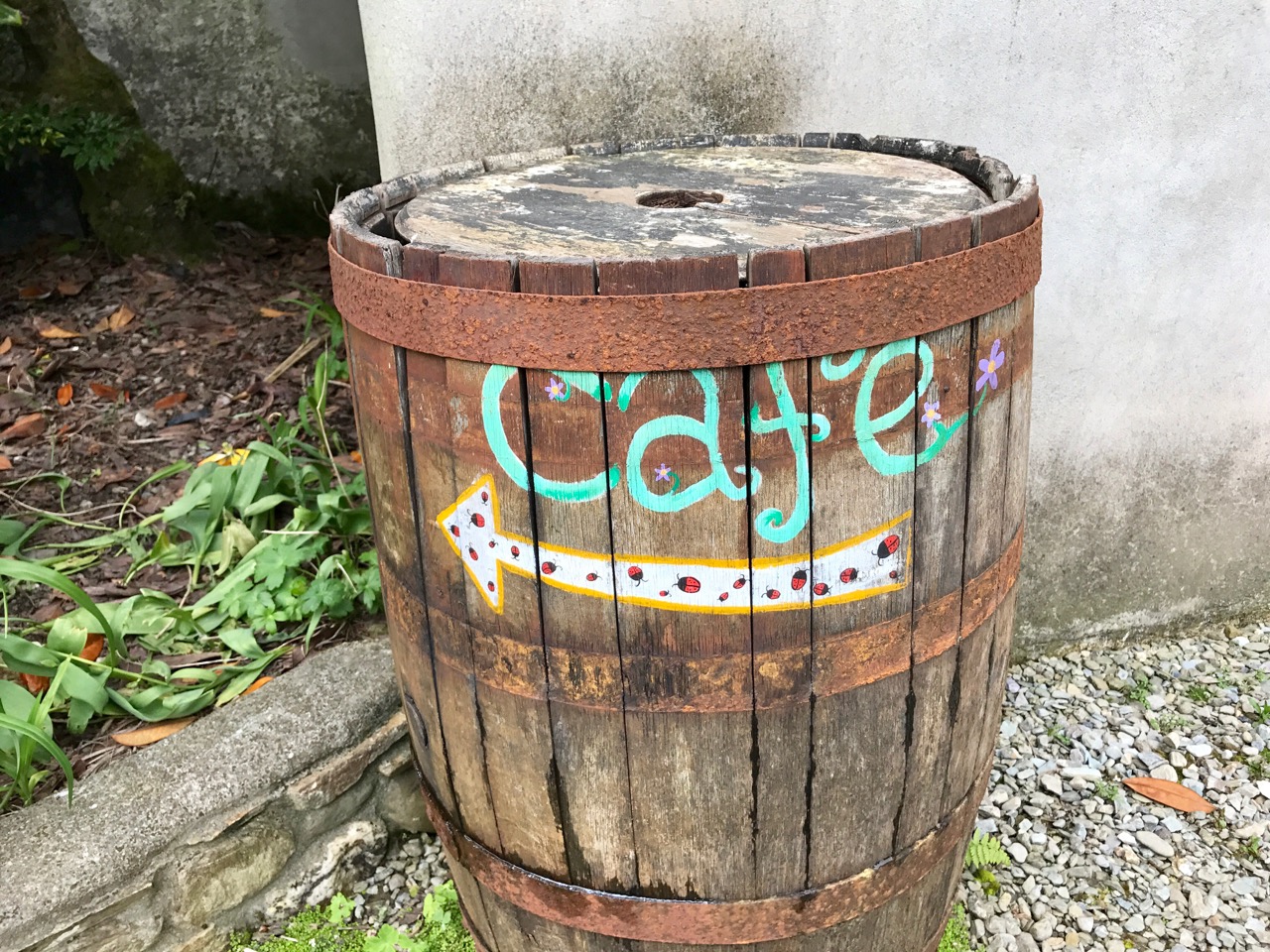
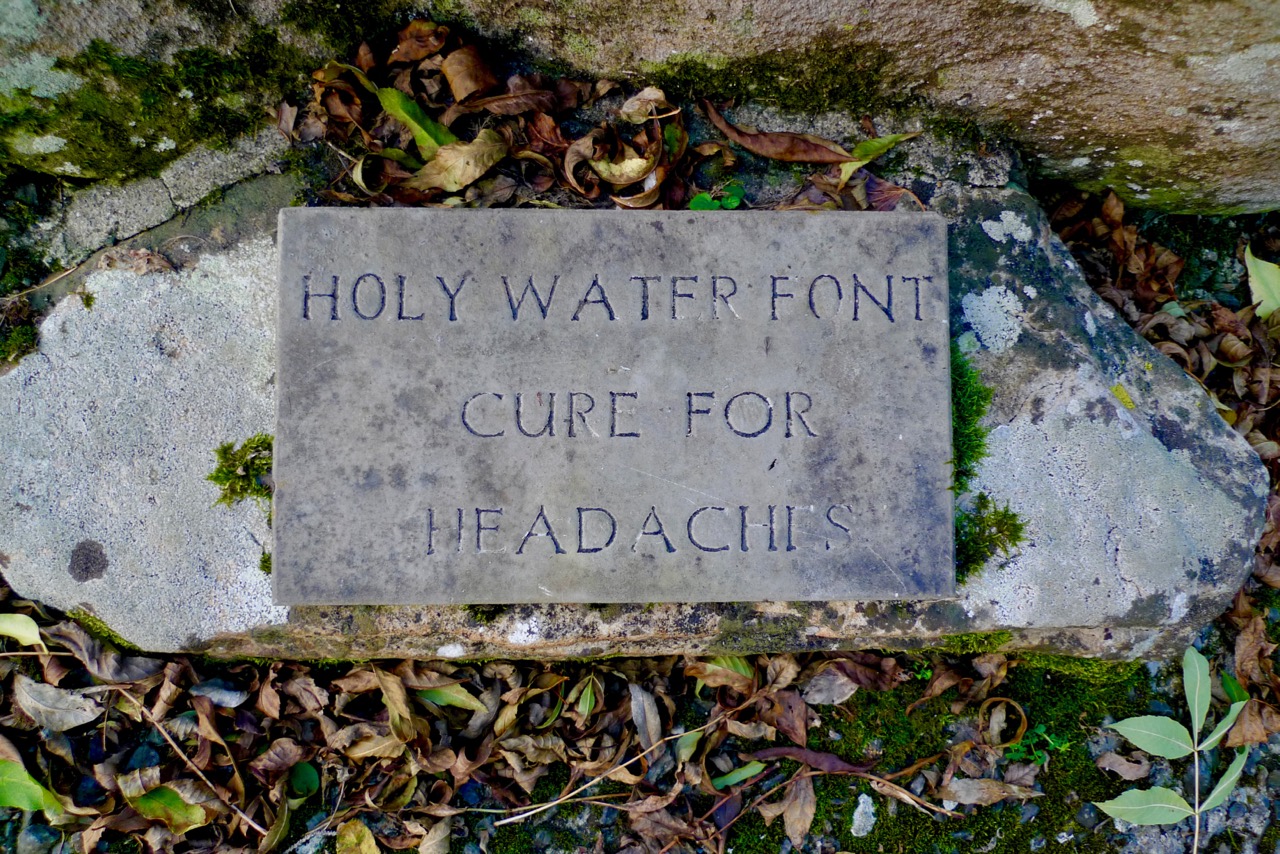
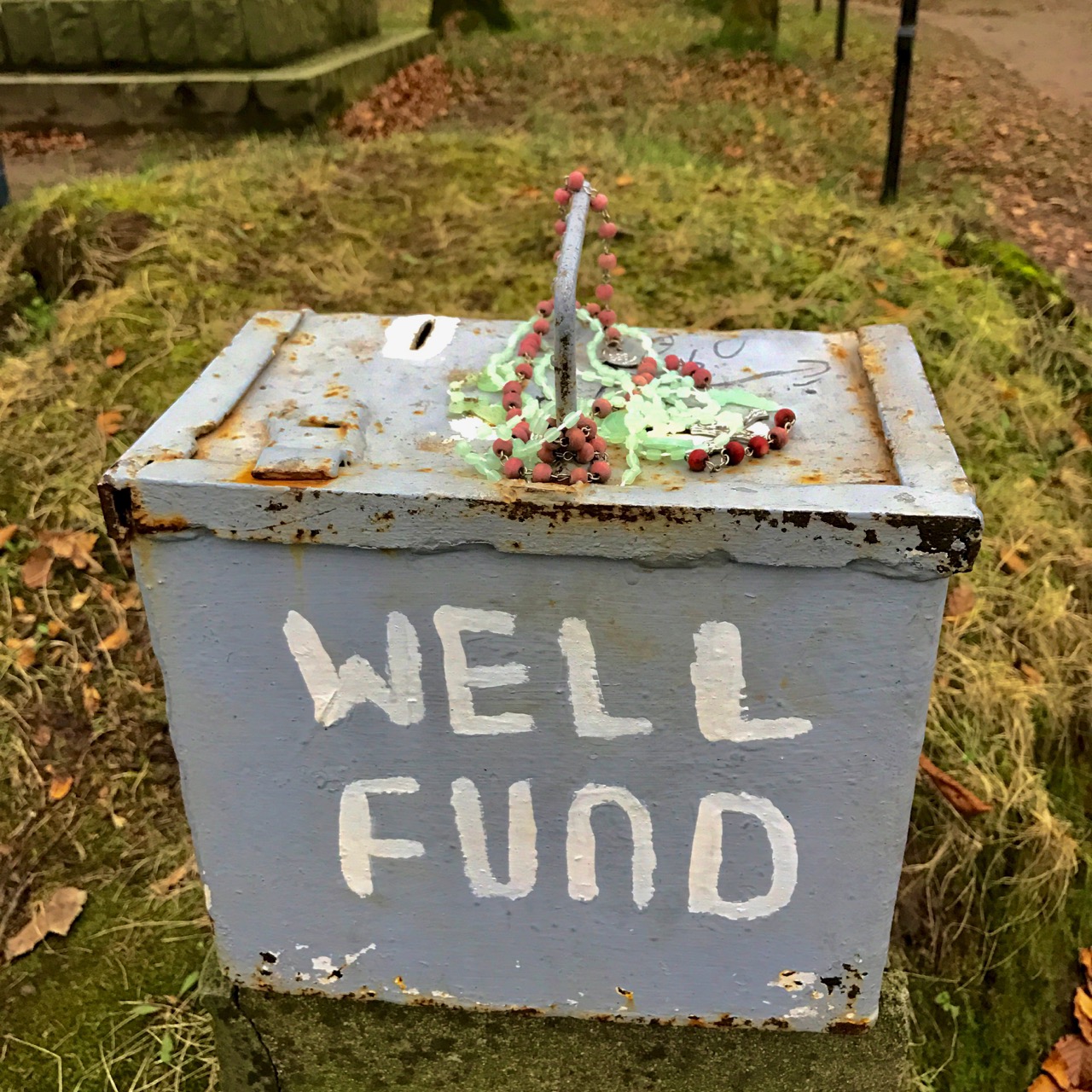
More sign spotting: always an agreeable pastime. These – which come from far and wide on our travels – add to previous collections of words and images spotted in Ireland: Good Signs, Juxtapositions, March Miscellany, and Impressions.

This is a very subjective survey: I’m showing things that I find intriguing or amusing – others will have different reactions. It just goes to show that, for us, there’s never a dull moment here: long may that continue.

In Skibbereen: look carefully here: -some things are easy to miss!

That’s enough for now! There’s plenty more in the collection – look out for them another day.

Into the Blue…

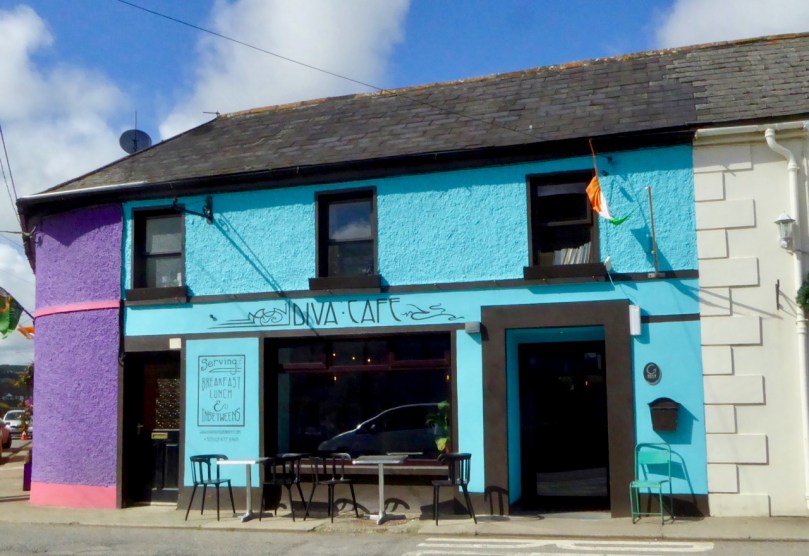
In this series on Ireland’s colourful buildings, we started off with purple and pink and proceeded through the colour wheel to the oranges and yellows and now we have arrived back on the cool side of the spectrum – the blues and greens. The Diva Cafe in Ballinspittle (above) has black trim that does nothing to tone down its exuberance, and it marries beautifully with the purple and pinks beside it, which were highlighted in our first post on this series.

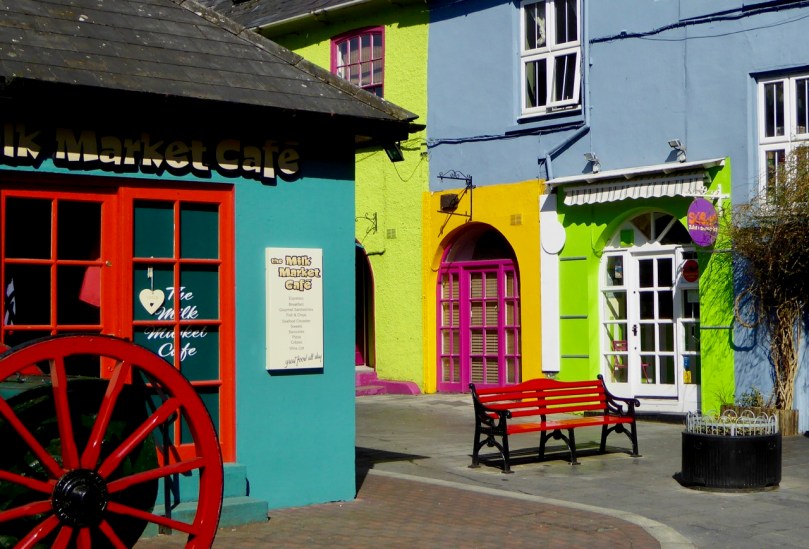
We left off the last post with a couple of lime greens, so here’s another, from Kinsale (above) to get us back in the swing of things.

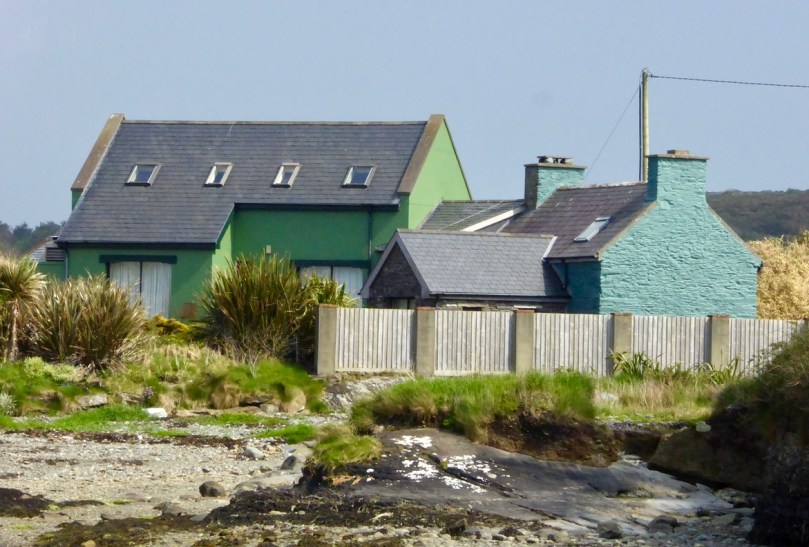
A bright green and a blue green are a great combination beside the sea – this house is at Dunmanus, on The Mizen

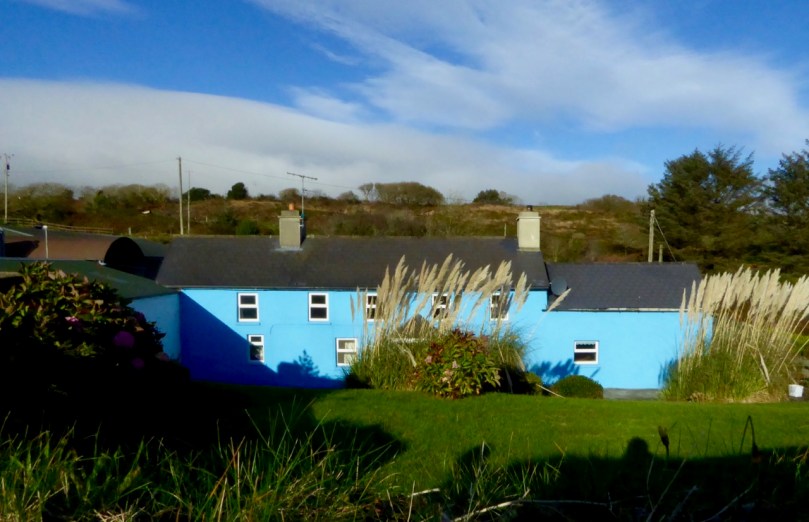
Blues and greens are the colours of the sky and the fields, so they don’t pop as much as the pinks and the oranges. In fact they can be quite subtle, when used in tones that blend in with their surroundings.

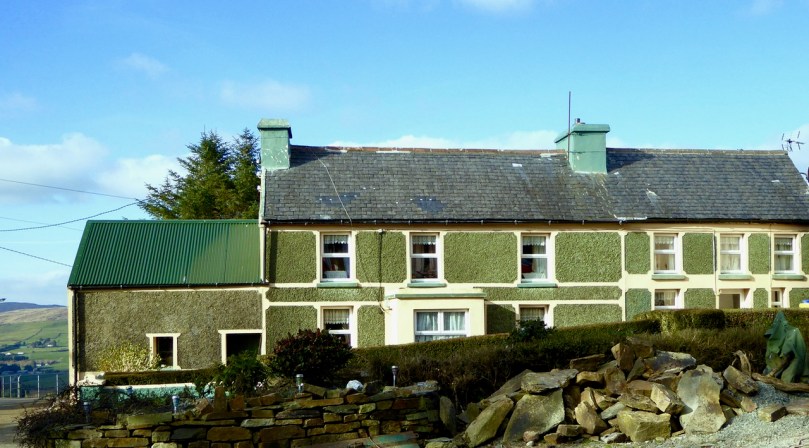
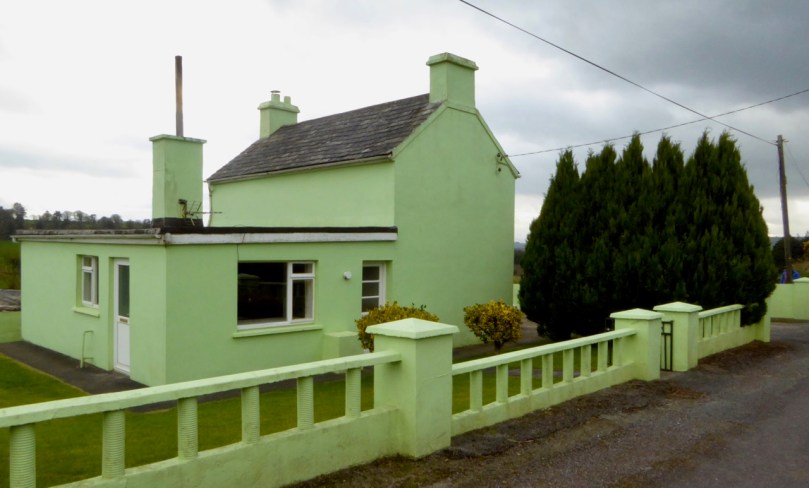
I love these two farmhouses, the first near Mount Kidd and the second near Coppeen

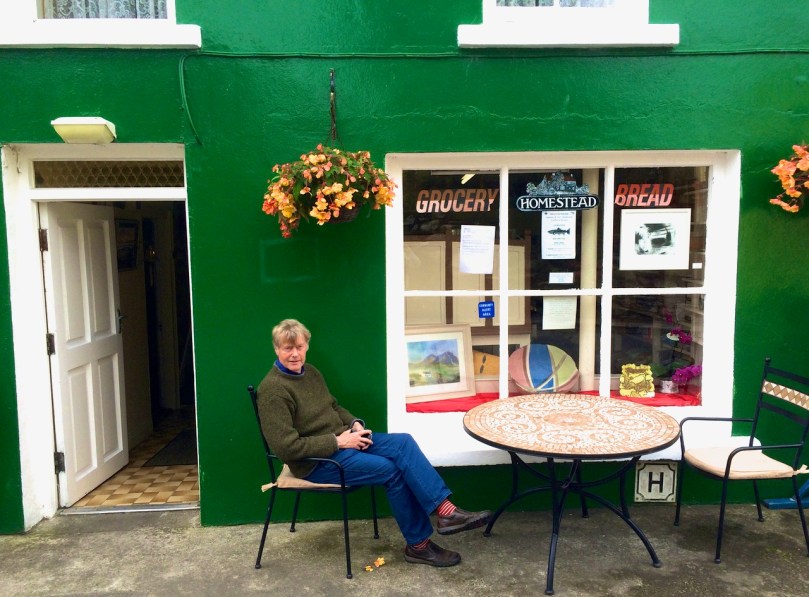
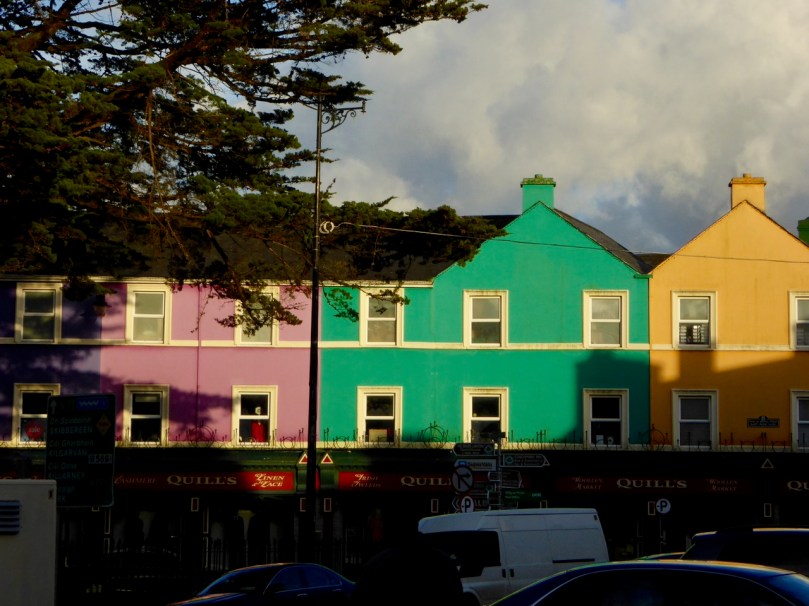
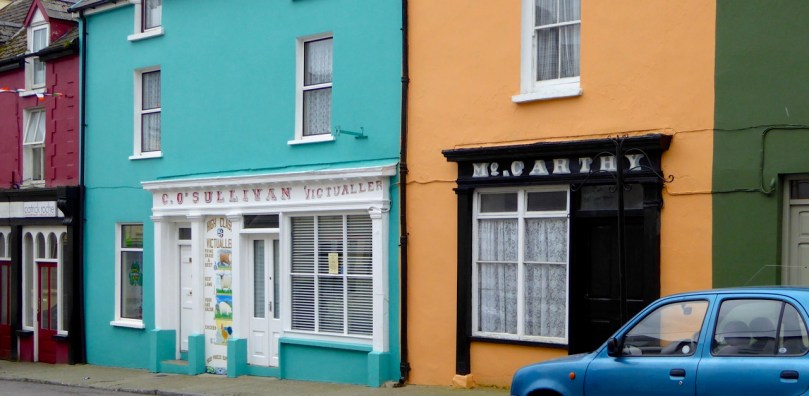
But in village streets, and especially when combined with the other colours of the streetscape, they can be as cheerful and arresting as the stronger hues around them.

Eyeries (top) and Kenmare (bottom)

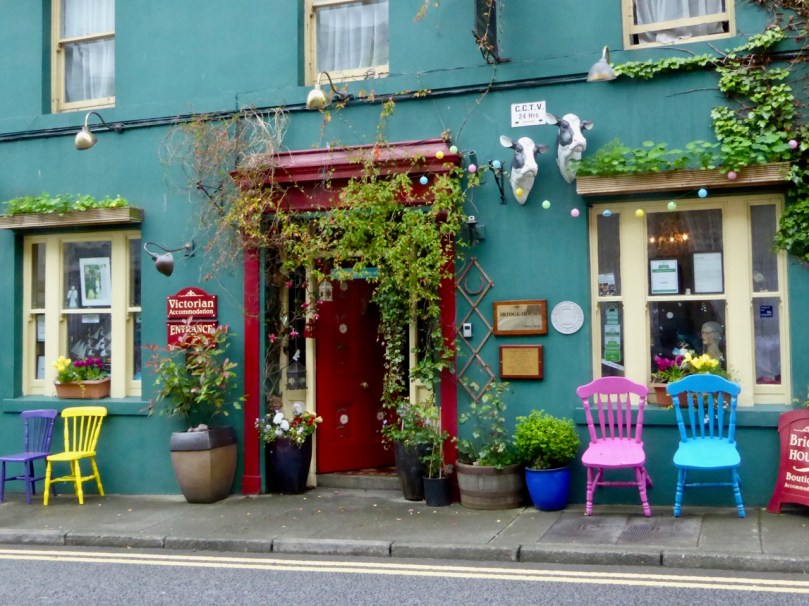
There are shades of blue and green that people argue over – one will call it blue and another green.

The fabulous Bridge House in Skibbereen – blue or green?

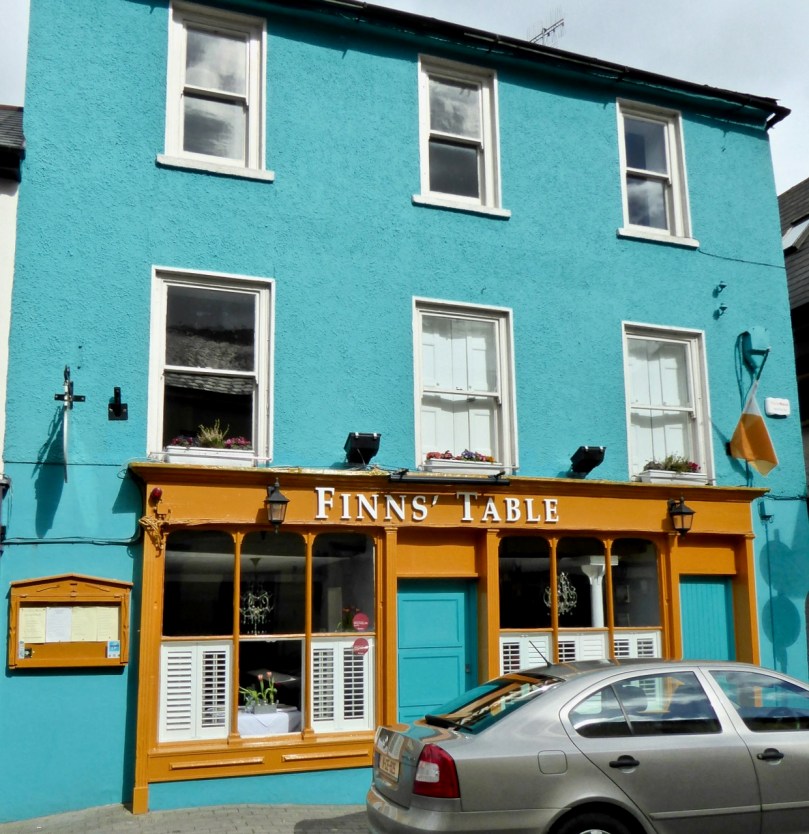
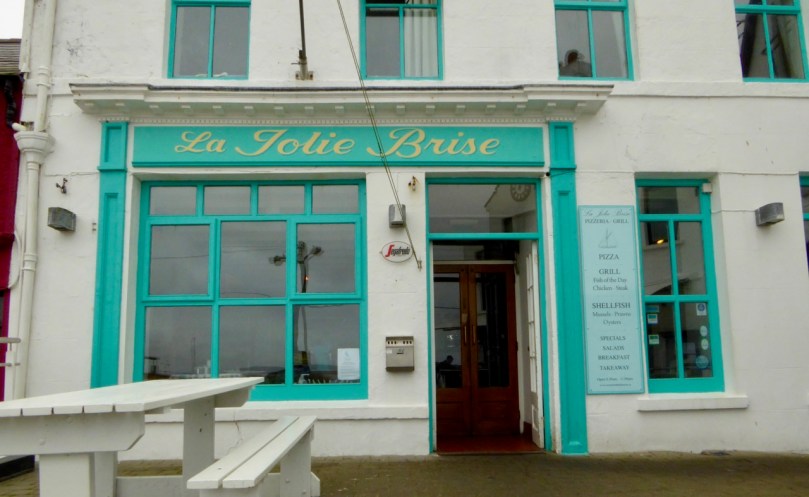
Those are the teals, ceruleans and turquoises, and St Patrick’s Blue, which is the colour of the Aer Lingus uniforms.

Finn’s Table in Kinsale, La Jolie Brise in Baltimore and a lovely brick and teal combo in North Cork

O’Sullivan’s butcher shop in Ballydehob has been closed for years, but it still retails its welcoming colours and graphics

True blues vary from the strong dark ultramarines and navy blues through the denims, duck eggs, periwinkles, sky blues and on to the paler shades and baby blues.

The first house is in Baltimore, the one underneath it was glimpsed somewhere on our travels

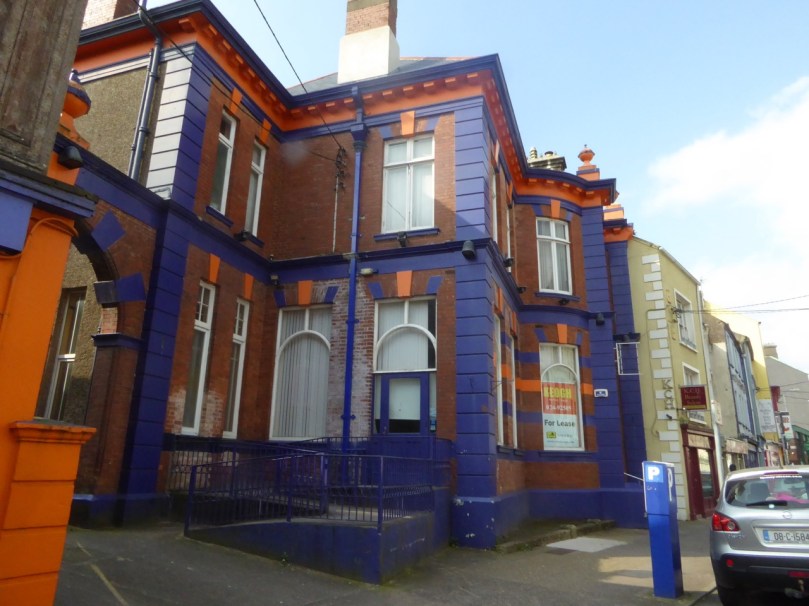
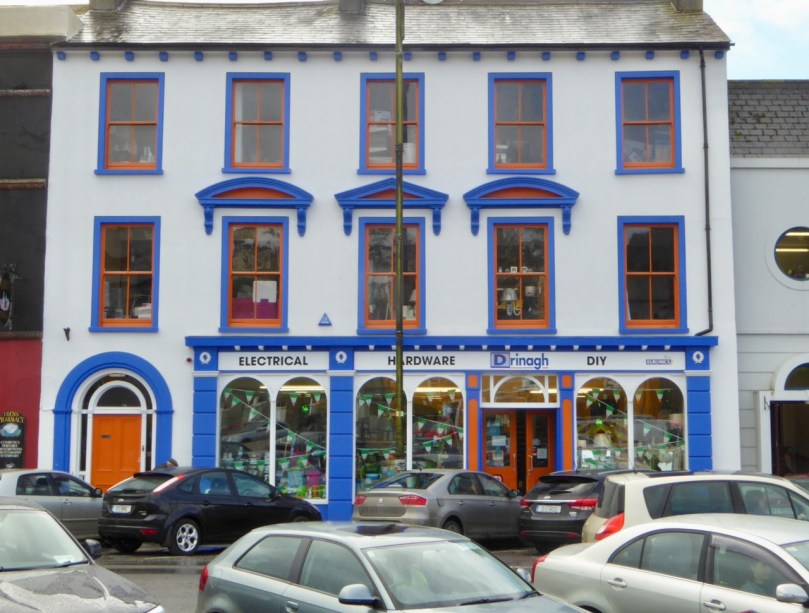
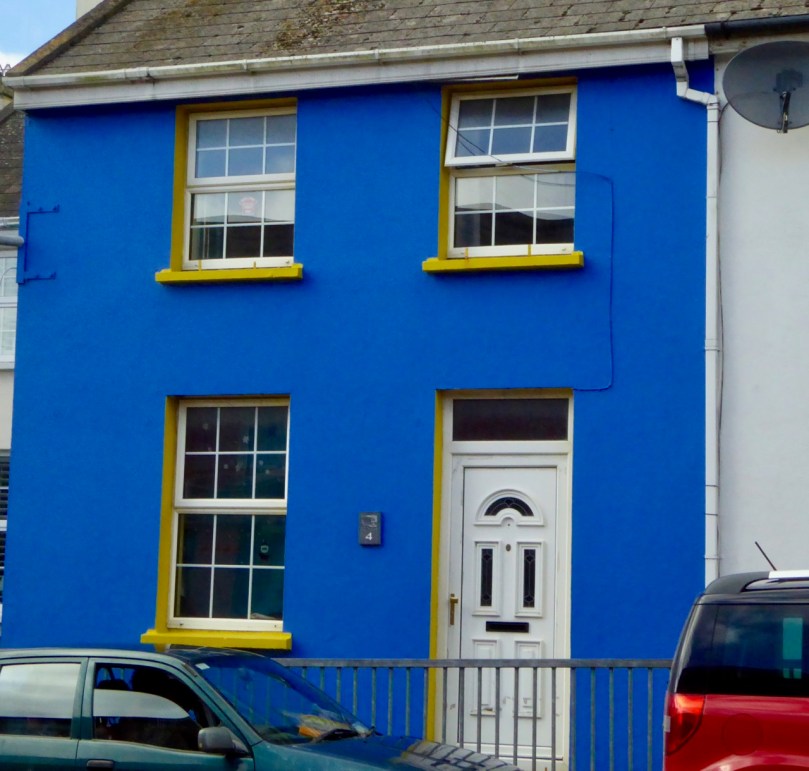
Blue matches well with other colours and is often used in combination. Some of the nicest buildings we’ve seen use blue with another colour to great effect.

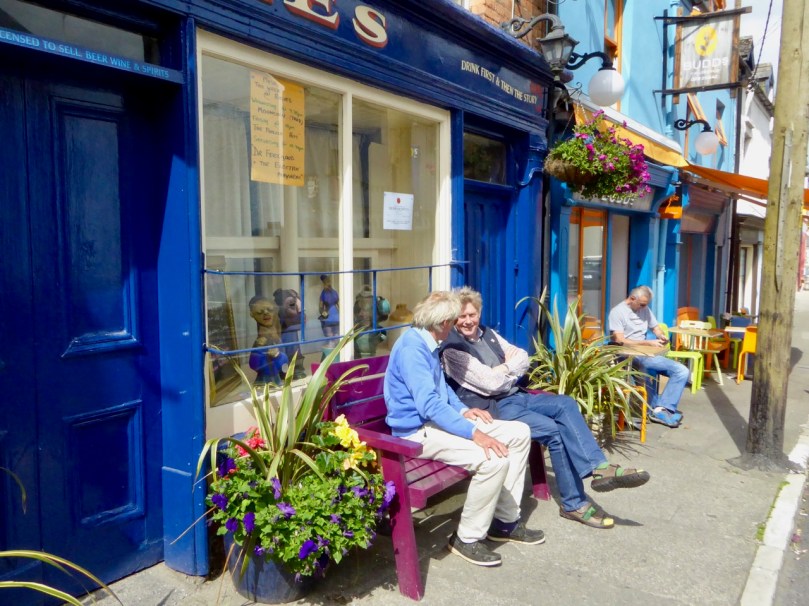
Three wonderful buildings that use blue in combination with orange tones – a bank in Youghal, a hardware store in Bantry and our own Budd’s Restaurant in Ballydehob (with Rosies pub for good measure)

Yellow trim is a tried and true favourite
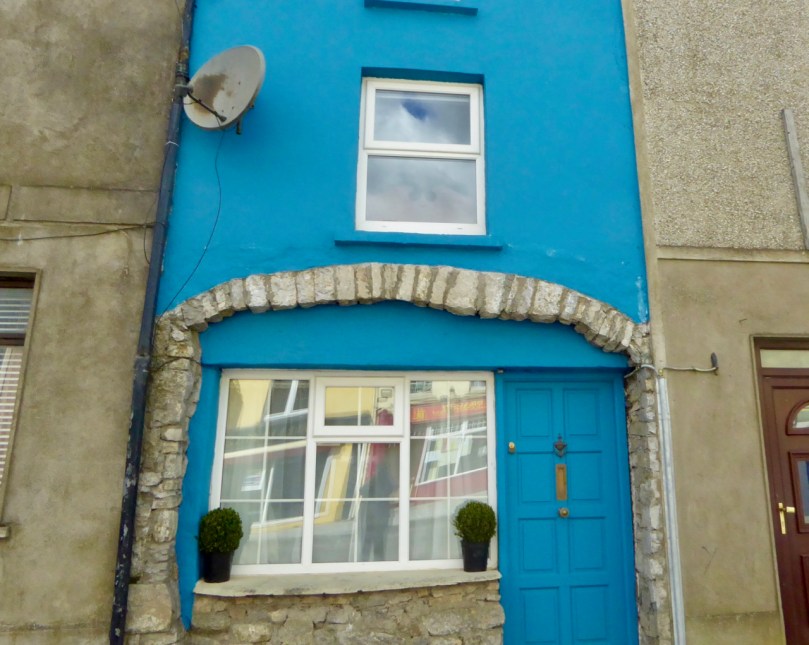
It might be one of the smallest houses I’ve seen, but it stands out when painted in blue
Blues and greens in Kilbrittain 
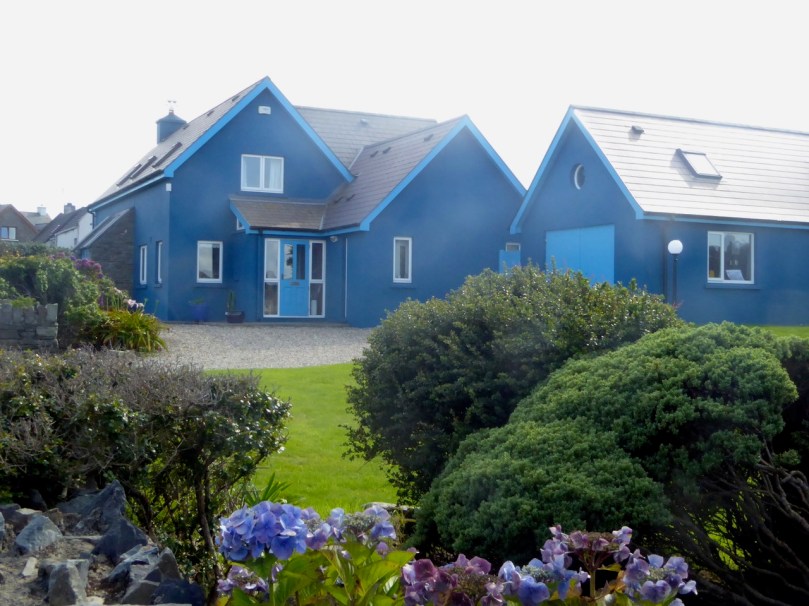
This one near Castle Donovan uses a strong blue cleverly as both a main and a trim colour

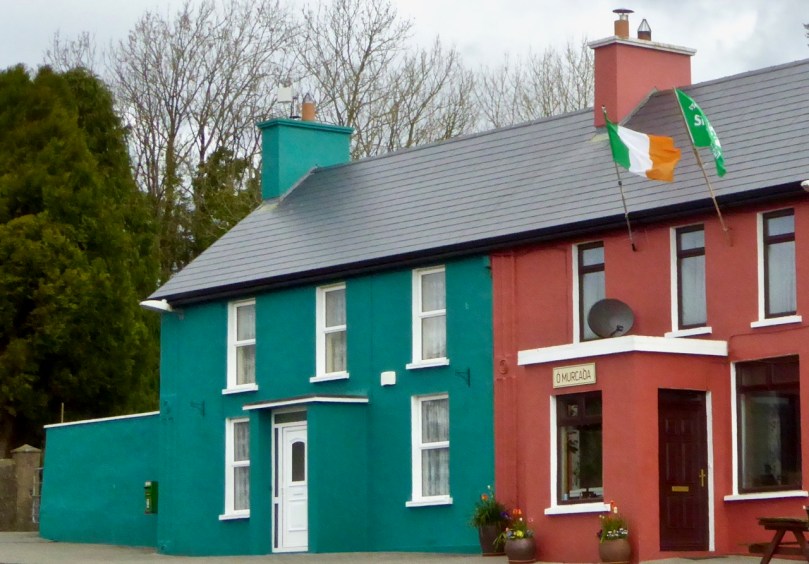
I’ve decided to end this series with this photograph of two side-by-side buildings in Adrigole on the Beara Peninsula.  The juxtaposition of the strong green and the vivid pink proves that when it comes to colour, anything can work!