Were You at the Rock?

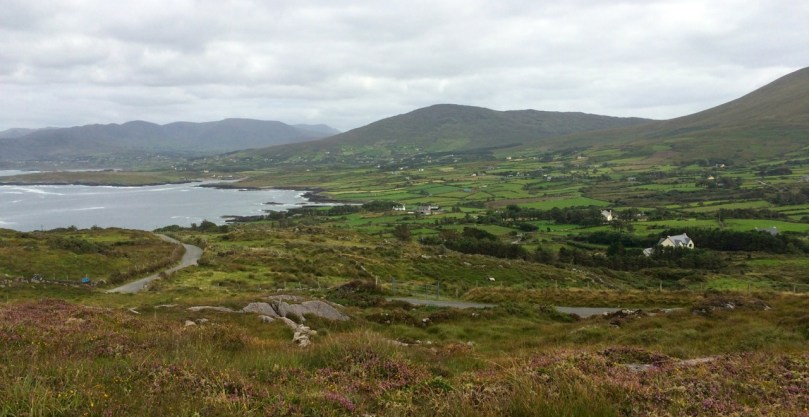
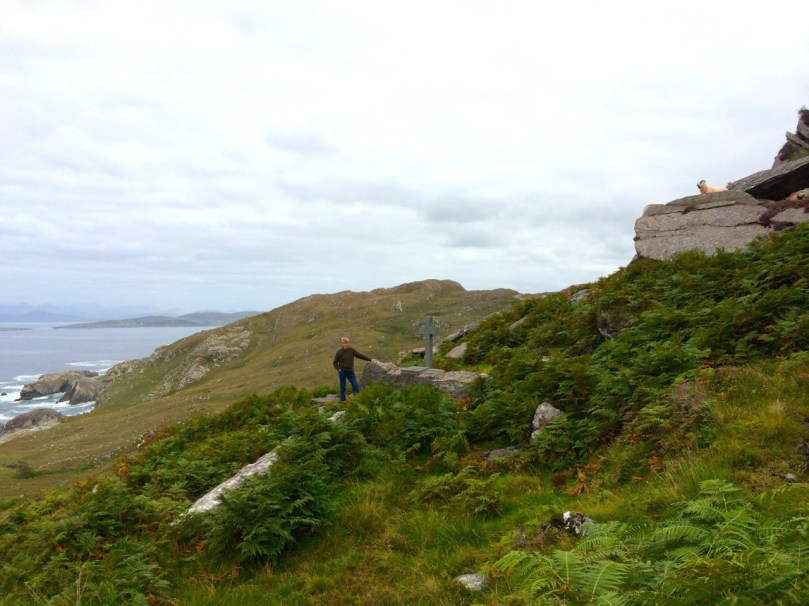
Mass rock along the Beara Way (see the look out above)

Mass rock along the Beara Way (see the lookout above)

An raibh tú ag an gCarraig? / Were You at the Rock?

nó a’ bhfaca tú féin mó grá / Or did you yourself see my love,

nó a’ bhfaca tú gile, / Or did you see a brightness,

finne agus scéimh na mná? / The fairness and the beauty of the woman?

This beautiful song speaks to a revered tradition in Irish history and folk custom – the mass rock. During the period of the Penal Laws (late 17th and first half of 18th Century) when the practice of Catholicism was outlawed, parishioners would gather at a secret location to attend mass. The priest travelled from community to community in disguise, a lookout was posted, and mass was celebrated on a lonely rock far from the reach of the law. The song encodes the message that the people still find ways to attend mass, despite the harsh prohibition against it.
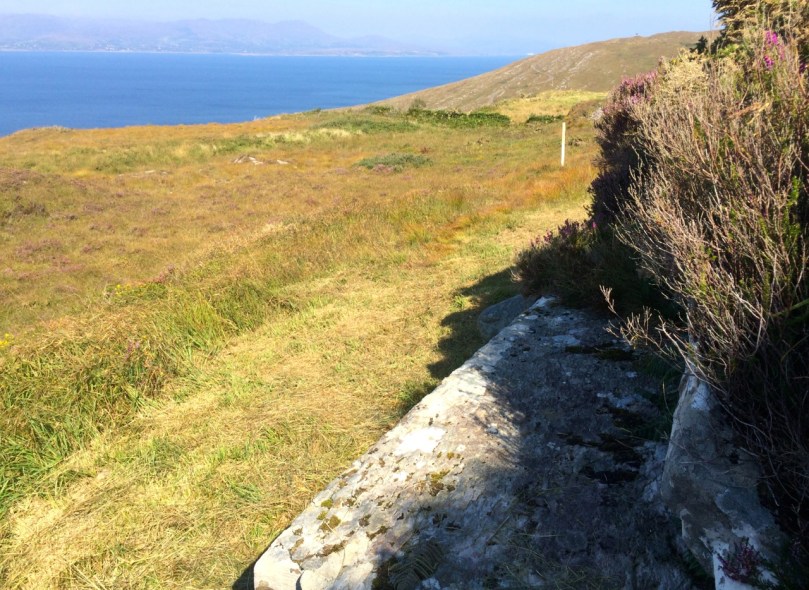
Mass rocks are often in remote locations

Mass rocks are often in remote locations

Dr. Hilary Bishop, in her excellent website Find a Mass Rock says, “As locations of a distinctively Catholic faith, Mass Rocks are important religious and historical monuments that provide a tangible and experiential link to Irish heritage and tradition.” She also points out that, because of the imperative for secrecy, mass rocks are difficult to find. We certainly experienced this when we set out for a day of mass rock hunting recently. Working from a list generated from the National Monuments Service database we spent a day on the Sheep’s Head and the Mizen and had trouble finding all the rocks on the list. One, if it was still there, had disappeared under impenetrable layers of gorse. A second rock was last recorded in the 1980s: residents were no longer familiar with it.
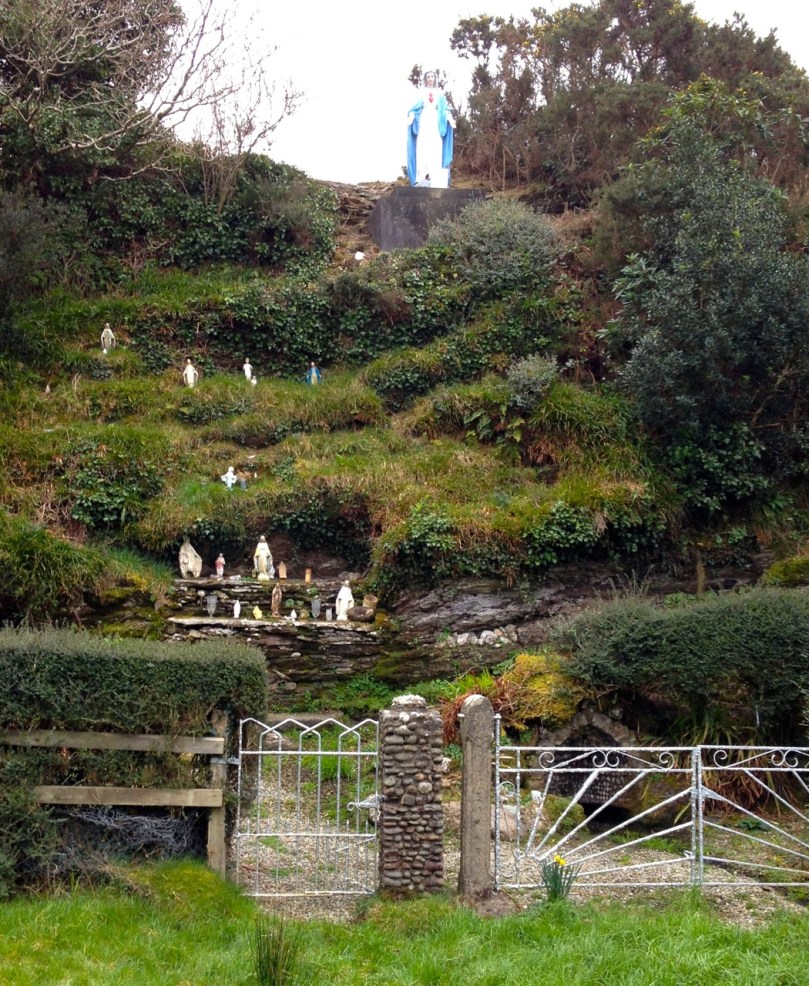
Beach Holy Well and mass rock

Beach holy well and mass rock

Knowledge of mass rocks has passed down from generation to generation. In the deep countryside, the sites maintain a mystique and a sense of the sacred. Last year we wrote about the mass rock and holy well at Beach, where Mary conjured up a blanket of fog to confuse the English soldiers and allow the priest to escape. At Beach and at our first stop, the mass rock at Glanalin on the Sheep’s Head Way, mass is still celebrated occasionally.

The Glanalin rock, and the one we visited on the Beara Peninsula, are good examples of the remote locations typical of many mass rocks, high on a hillside or hidden in an isolated valley. You can picture the procession of worshippers, in ones and twos, slipping silently through the bracken, pausing to make sure they are not being watched, climbing higher, following an overgrown trail, arriving at the meeting place where the hushed crowd awaits the arrival of the priest.
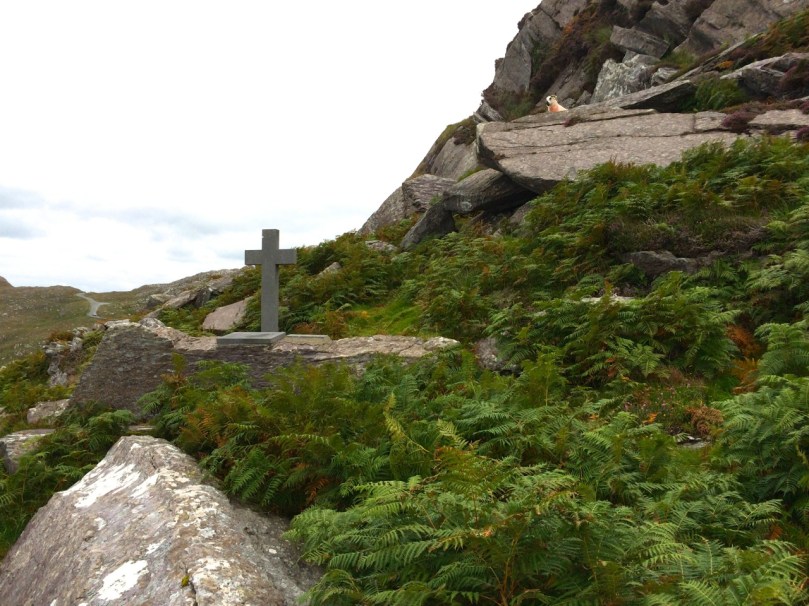
Beara mass rock

Beara mass rock

One of the rocks we found looked for all the world like a fallen standing stone – and that’s probably what it was. (I wonder if I should go to confession, though – I’m sure that sitting on a mass rock would qualify as at least a venial sin.)
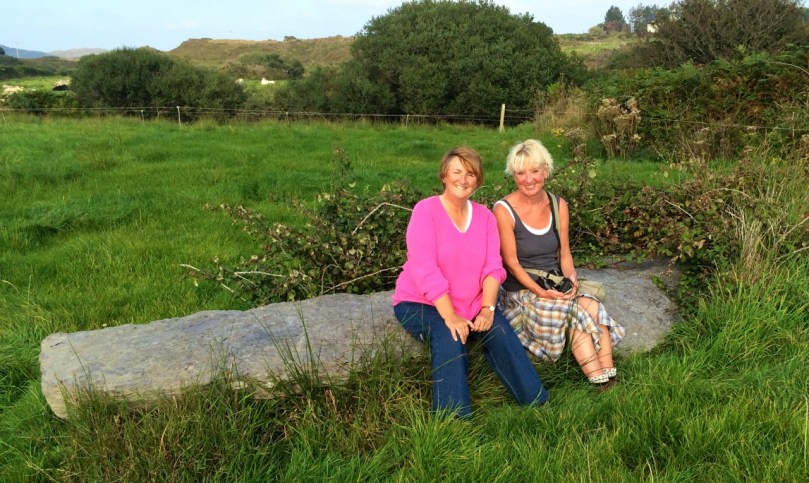
Fallen standing stone?  Mass rock? Both?

Fallen standing stone? Mass rock? Both?

A mass rock that is easily visited is the one at Cononagh Village, right at the side of the main road into West Cork, the N71. This site is beautifully maintained – Cononagh is obviously proud of its heritage: signage and flowers invite the passerby to take a closer look.

Another easily accessible site is Altar, at Toormore. This is a wedge tomb, probably over 4,000 years old and excavated in 1989. It remained in use through the Bronze Age and into the Iron Age. Dr. William O’Brien, in his book on the archaeology of County Cork, Iverni, says of this site: “…over time this tomb came to be regarded as a sacred place, housing important ancestral remains in what was a type of community shrine.” How fitting, then, that the flat capstone of the Altar wedge tomb became, in the Penal Days, a mass rock. And how intriguing to think of the continuation of this sacred space over the course of thousands of years.
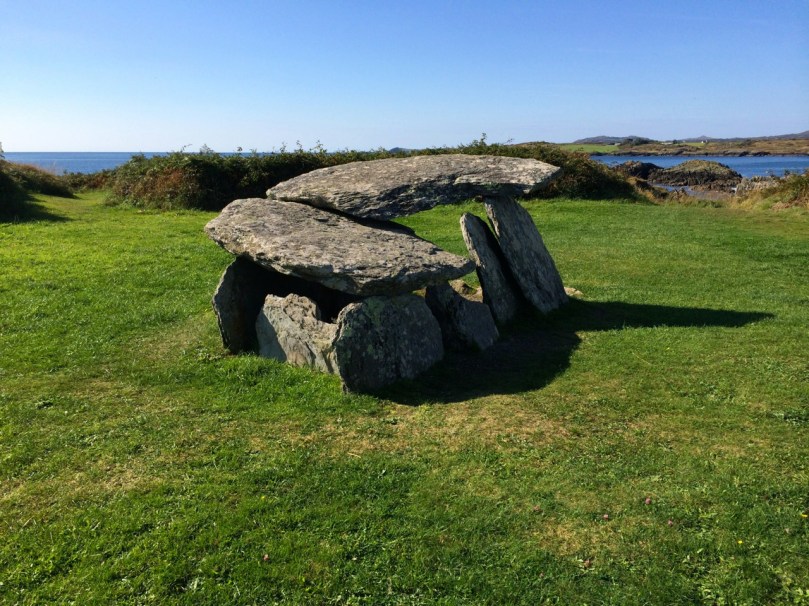
Altar Wedge Tomb, later used as a mass rock
Altar Wedge Tomb, later used as a mass rock

Beara – the Lie of the Land

On the north side of the Beara, looking across to the Kerry Mountains.

On the north side of the Beara, looking across to the Kerry Mountains

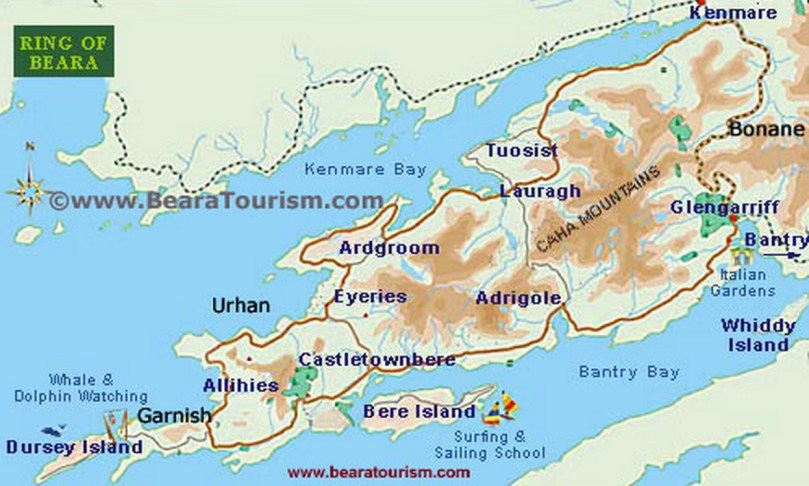
The Beara Peninsula is the largest and perhaps the wildest of the three West Cork Peninsulas. (See last week’s post for the map.) Two mountain chains, the Caha Mountains and the Slieve Miskish Mountains make up the spine of the Peninsula. You can traverse it via the spectacular Healy Pass, which runs from Adrigole north to Lauragh. On this occasion, because we had limited time, we confined ourselves to driving the main coastal route and to getting the general lie of the land. This meant we missed out on several landmarks – Bere Island, for example, and Dursey Island, besides the Healy Pass – so of course we must go back soon!

Near Cod's Head

Near Cod’s Head

After the inspiring piano recital by David Syme, described last week, we stayed overnight in Allihies and enjoyed an excellent dinner in O’Neill’s pub. The local Gaelic Football team had won a championship match that afternoon and the town was celebrating well into the night. Our first stop the next day was the Allihies Mining Museum. Housed in an impressively converted old Methodist Chapel, it tells the story of copper mining on the Beara, evidence of which can still be seen in the vicinity.

Note the green copper veins on the cliff face

Note the green copper veins on the cliff face

From there we carried on to the Cod’s Head, through a small pass which brought us out to a jaw-dropping vista across Coulagh Bay to Kilcatherine Point, and beyond to the Mountains of the Iveragh Peninsula in Kerry. We took the time here to hike up a waymarked trail that brought us up to breathtaking views high into the mountain slopes, home of purple heather, enormous boulders and curious sheep.

The sentinel

The sentinel

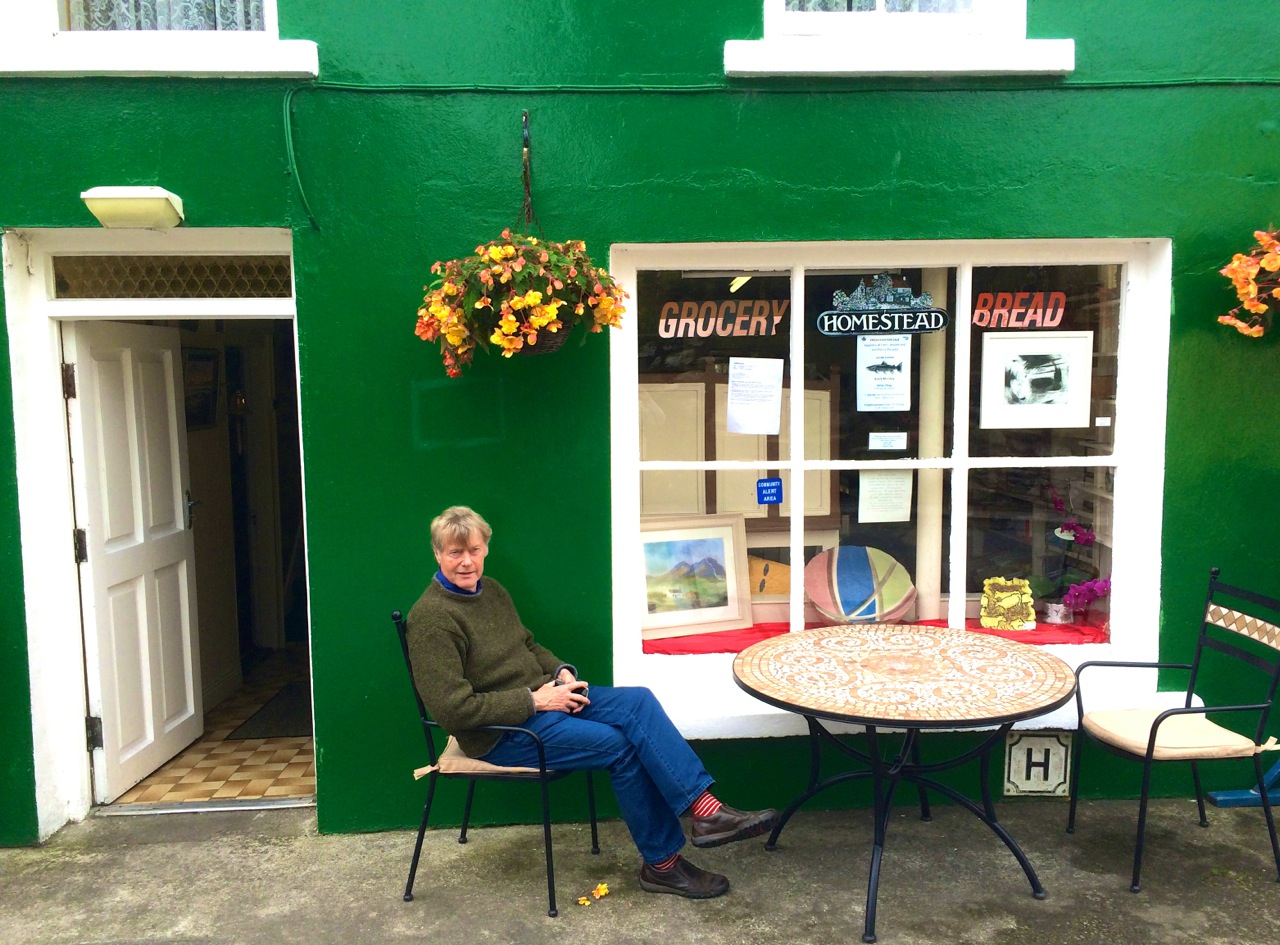
Eyries village is a pure delight: a riot of colourful houses and sleepy streets. We stopped at Ms Murphy’s traditional shop for tea and delicious sandwiches, strolled along the main street taking pictures and chatting to friendly residents, and finally by chance dropping into the startlingly beautiful St Kentigern’s church.

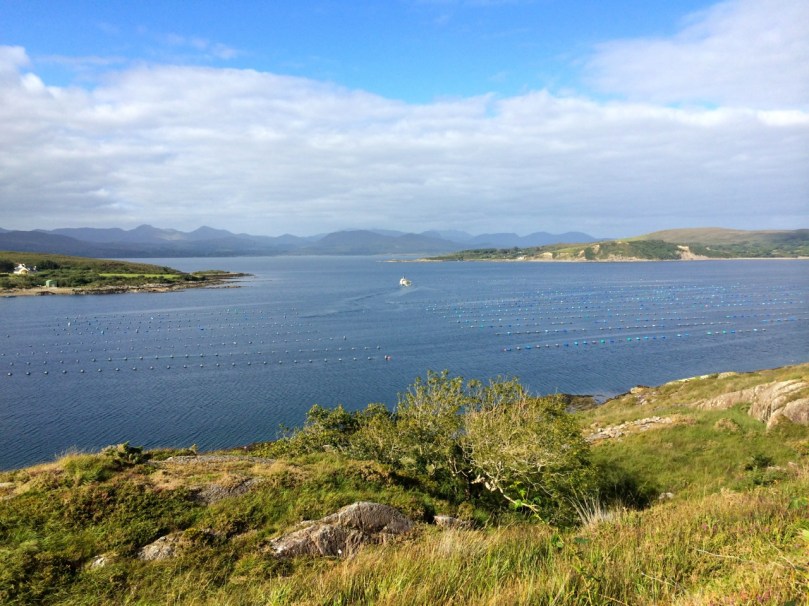
The north side of the Peninsula offers glorious vistas across the Kenmare River (an enormous sea inlet but called, oddly, a river). We took the coastal route from Kilcatherine to Dog’s Point and back to Ardgroom and on to Lauragh – lovely villages with seaside settings.

Mountain and sea

Mountain and sea

We stopped to visit the Cailleach Beara, the Hag of Beara. A powerfully symbolic site from Irish mythology, this rock is associated with many legends. People leave votive offerings – coins, rosary beads, a set of old glasses, shells and ribbons in honour of the spirit of the ancient goddess. Our next stop was the Ballycrovane Ogham Stone – the tallest in the world, and still in the wild, as Robert was glad to note.

Alright – so we have our bearings now and we’ve scratched the surface of this fascinating part of West Cork. Look out for future posts on the Beara – we can’t wait to return!

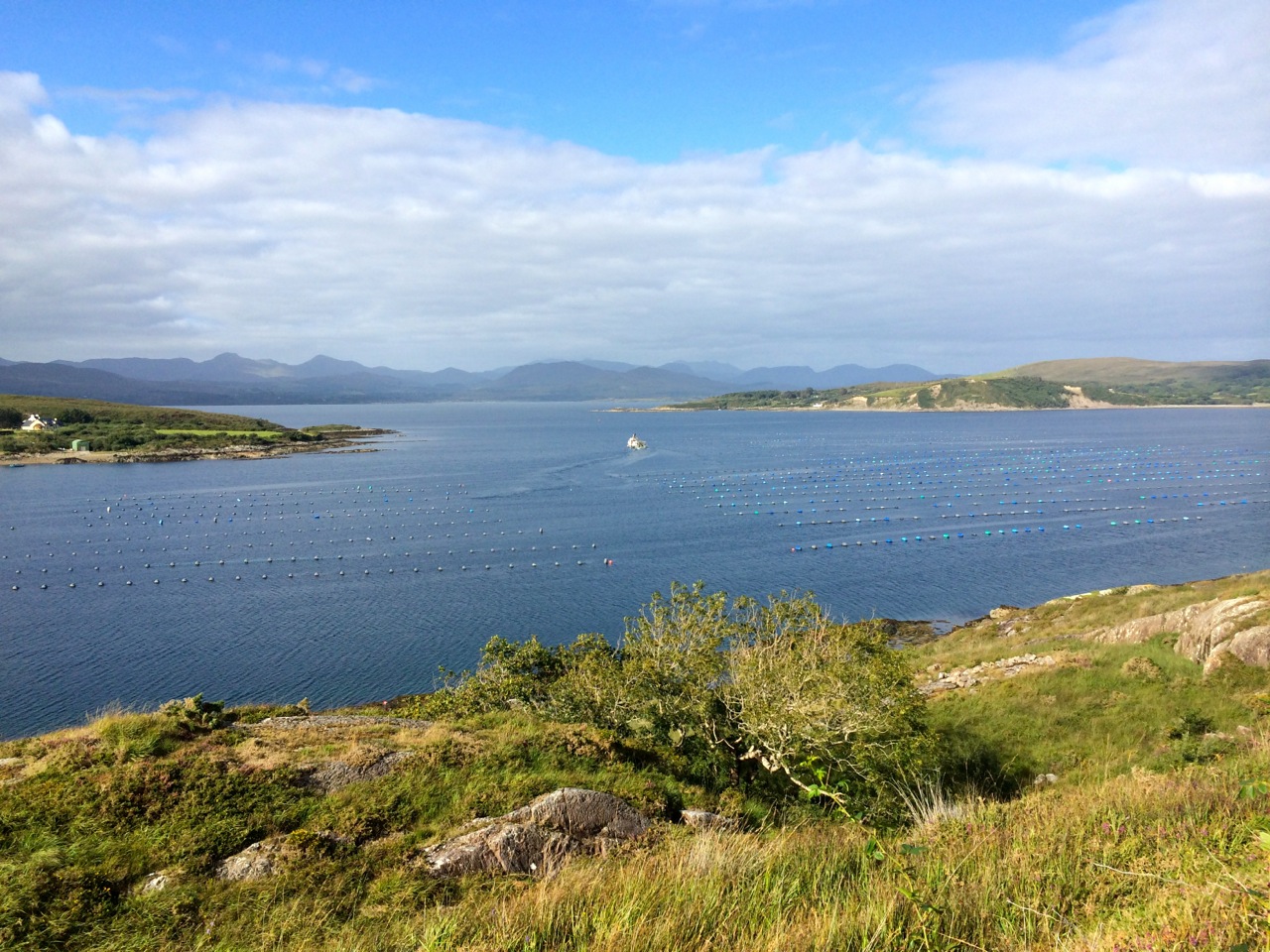
Beara mussel beds

Mussel beds, looking out to the Kenmare River

A Misplaced Saint

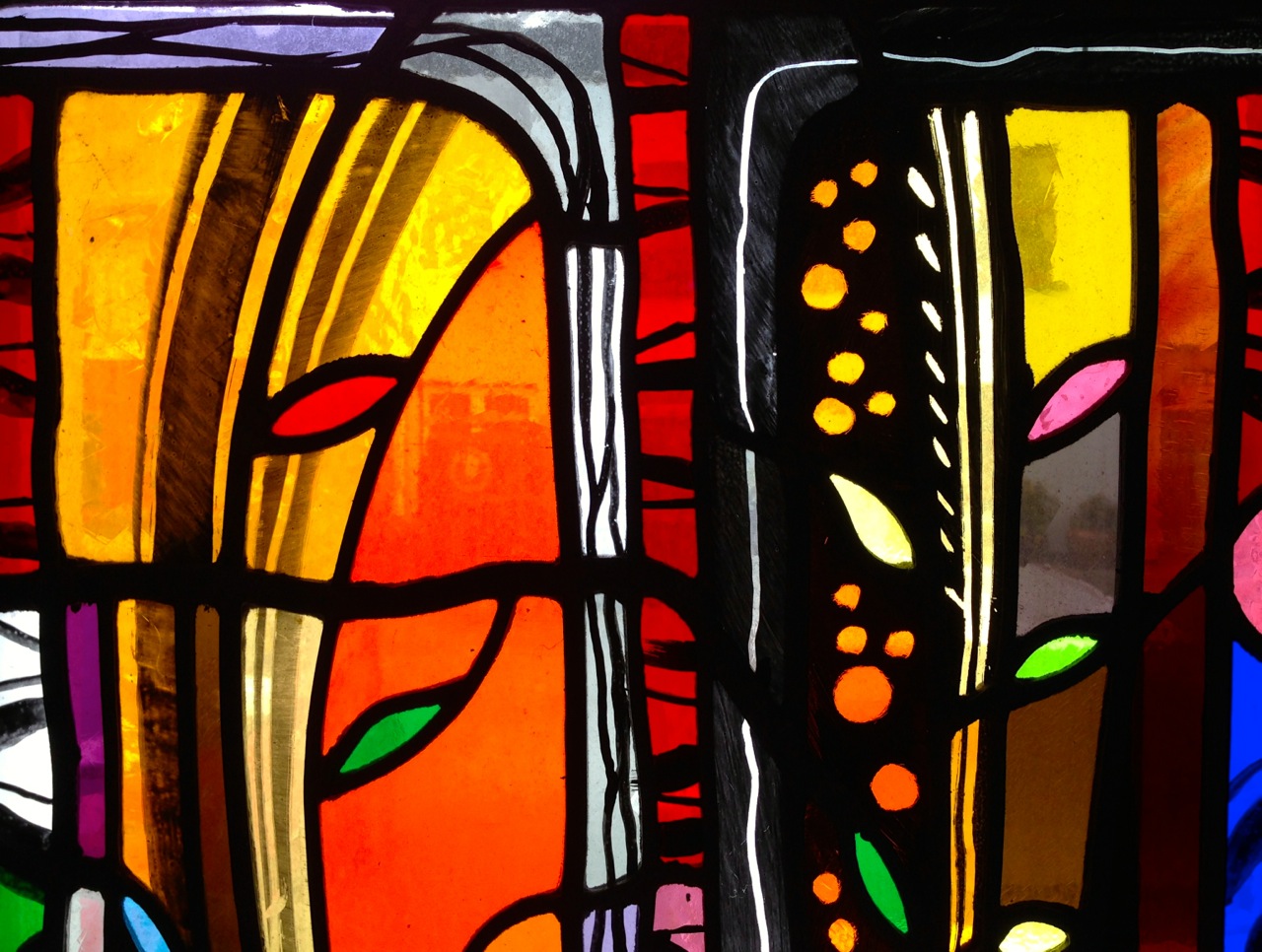
detail 11

Partly in West Cork, and partly in Kerry, the Beara Peninsula is a majestic place to explore. Some of Ireland’s highest mountains are here, and in places they sweep sheer down to the Atlantic to create dramatic landscapes, hard to match – in my own limited traveller’s view – with anything else in the world, But it’s not just landscape: the Beara offers surprises in the way of rainbow-hued village houses, off-the-beaten-tracks pubs with lively music and conversation, and the occasional gem of an altogether different kind. My post today is simply about one place – one church, in fact – which we found by chance in the village of Eyeries situated on the recently implemented long distance drive around the whole magnificent west coast of this country: the Wild Atlantic Way.

Wild Atlantic Way...

Wild Atlantic Way…

‘…Come to Eyeries Village. Embrace the tranquility…’ That’s the advice of this little community’s website. We did just that and, as we were enjoying our coffee outside Miss Murphy’s cafe in the centre of town we were only disturbed by one or two cars and diverted by the sound of the street sweeper’s brush. But the focus of our attention for this visit became the church: St Kentigern’s.

notice

As you will know, I am always on the lookout for Irish Saints, and I had never heard of St Kentigern, so I went inside expecting to find a new story. My eyes were assailed by a riot of colour! This unassuming little building hides a magnificent set of coloured glass windows telling the story of the world from prehistoric times and Ireland’s central part in that history… I have put a precis of the artist’s explanation of the designs below, but the windows must speak for themselves.

There are eleven windows in all: eight in the main body of church, two in the Sanctuary, and the last in the west wall, over the entrance doors.

So – why are they here? A very good question. I have gleaned no information from the usual sources. The best I could find (based on a chat with a passer by) was that the windows were commissioned in the 1980s, and each one is dedicated to the memory of a local person, and they were all paid for by friends and relatives of the dedicatees. It seems that there was a wish at the time to ‘brighten up’ the interior of the formerly nondescript building. I think this aspiration has been completely successful, but it’s a shame that there’s hardly a mention of the church or its windows in any of the information I could find about Eyeries.

Regarding the stained glass artist himself – George Walsh: I have found mentions of him as an artist working in Dublin. His father, George S Walsh, worked in the studios of Harry Clarke. He has carried out commissions in Kerry, Kildare, Kilkenny, Dublin, Galway and as far afield as Newfoundland and Florida. My source thought that he is now retired and living in Dublin. It seems odd that he hasn’t gained more public recognition (unless I am missing something – comments please).

Here are the notes of George Walsh giving an ‘explanation’ of the Eyeries windows: it would be easy to miss, as it is a single fading typewritten sheet on a window cill on the south side of the aisle:

 ‘…The windows… begin with the elements sun, rain wind etc. The next depict fishing and the tradition of work on seas and rivers… Next, farming and husbandry, sowing seed etc. the final windows on this side show Saint Finbar – emigration, both going and returning old and new. The windows on the right side begin with the Dark Ages and pre-history to the next which remembers our Megalithic and Celtic past. Following on to the Christian period – Eucharist, Gospel Missionaries etc and finally to Resurrection… Sun and birds symbolise renewal and hope… The Sanctuary windows show Baptism, Water, Fish, Shell etc. Next is Mary in the form of Annunciation… the balcony windows are seen as we go out from the Church into the world in renewed spirit…’

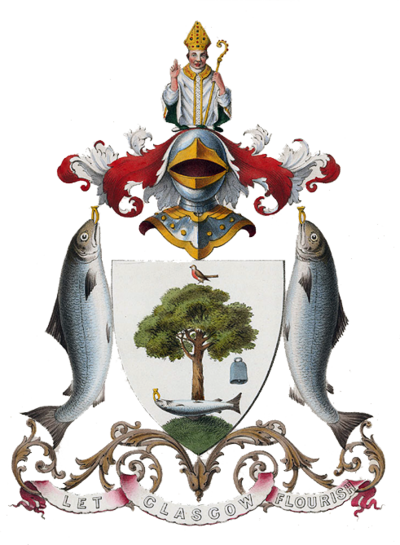
What of Saint Kentigern? You may well ask that – he gets no mention in the church, nor in the Irish Saint Hagiographies. He is mentioned as a Scottish Saint (more commonly known as Saint Mungo) who founded the city of Glasgow in the 6th century. Look for him on that city’s coat-of-arms. I could only glean (from another local source after a bit of a grumble) that when the church was restored and the new windows were commissioned a priest of the time decided to give the church that dedication. He evidently had unearthed some obscure link, but this has apparently never been put on record. There is another possibility: he might have been the local saint whose name is now more commonly given as Chaitighern or Catherine. There is a ruined church of this dedication on the Beara, not far from Eyeries.

Church of Catherine, Close to Eyeries

Kilcatherine Church, close to Eyeries

Our elusive Saint on Glasgow's coat-of-arms

Our elusive Saint on Glasgow’s coat-of-arms


Body and Soul

The Beara Peninsula

The Beara Peninsula

Last week I promised you an account of our time on the Beara Peninsula – it’s the third of the West Cork Peninsulas (shared with County Kerry) and the most remote. To the north is the Iveragh Peninsula, better known as the Ring of Kerry, and to the south is the Sheep’s Head.

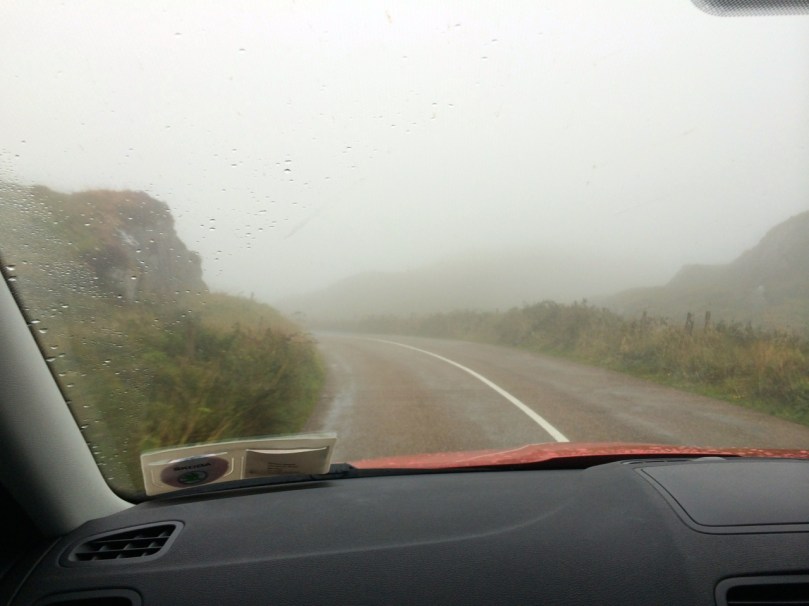
OK, so it does rain occasionally

OK, so it does rain occasionally

Readers have teased me in the past about doctoring my photographs or carefully choosing only those that show blue sky. After all, everyone knows that it rains all the time in Ireland. While I haven’t done any doctoring, or over-careful selecting (honest!) – even I have to admit that yes, it does rain in Ireland and the first day of our trip was pretty much a washout. (In fairness, like, we have devoted much bandwidth to talk of the variable weather we encounter here – cast an eye back over here, here and here.)

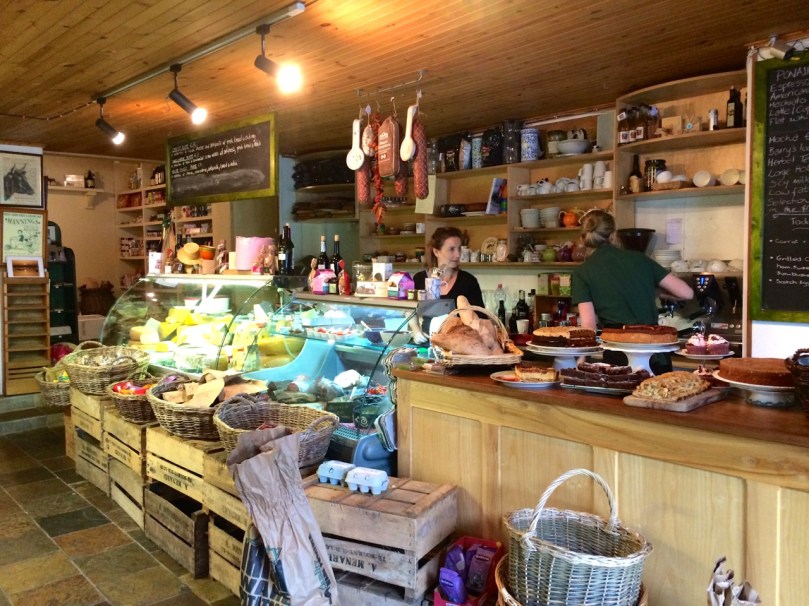
Manning's Emporium - the counter

Manning’s Emporium – the counter

Despite the weather, we managed to have a truly marvellous first day on our mini-break: it was a delight for the body and for the soul. First the body part – a stop in the famous Manning’s Emporium in Ballylickey. In the Manning family for 70 years and under the guidance of Val Manning, this little shop turned from a post office and grocery store into a mecca for food lovers, with wines, cheeses, meats and baked goods to die for. Val’s niece and her husband, Laura and Andrew Heath, have joined the business, introduced a new hot menu and expanded the range of foodie items. I’ve never yet left empty handed and, after a cappuccino and scone, we browsed the shelves and chose some excellent aged cheddar, a jar of their own chutney, and some locally made and heavenly-scented soap. The place was heaving, and Val himself was chatting sociably with everyone – always a bonus to enjoy a laugh with him.

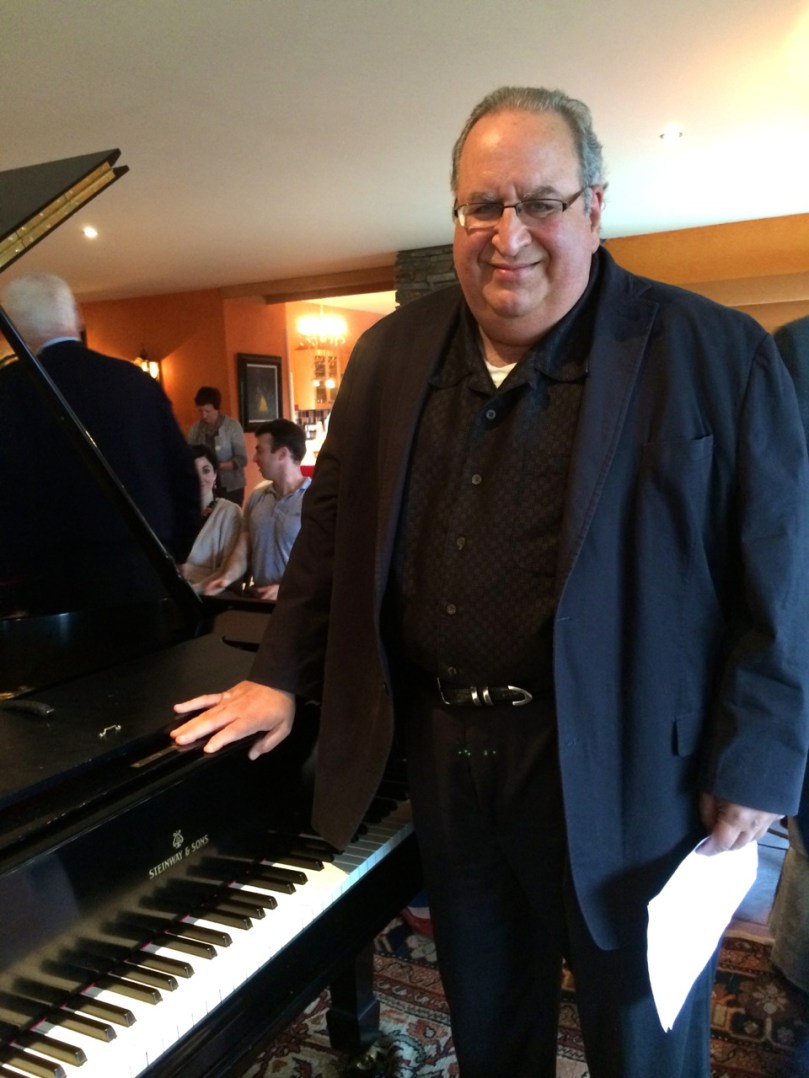
Now for the soul! We had booked two tickets for that afternoon to the Ahabeg Vista Concert Series, on the advice of a friend. We weren’t quite sure what to expect, but what we experienced took our breath away. David Syme, a Juilliard-trained and internationally acclaimed American concert pianist has made his home on the Beara, between Adrigole and Castletownbere, and every Sunday afternoon in the summer he gives a concert in his living room.

David Syme

David Syme

With Bantry Bay as the backdrop (except we couldn’t see it on this occasion), he played first a long and complex piece, Schumann’s Carnaval. Although I am no pianist even I could see the technical prowess demanded by the 22 short movements. David explained it to us, and even identified some of the motifs as he was playing. He took requests from the audience (ours was Clair de Lune) and played pieces by Beethoven, Liszt, Gershwin and Ravel. But then he delighted us with Carolan’s Concerto, Elton John’s Candle in the Wind and finally Danny Boy, in honour of Maureen O’Hara. We learned that Maureen, a long-time resident of Glengarriff, is to be honoured with a special Oscar next year – so watch out for that next February 22nd! David’s wife, Suzanne, puts on an amazing spread during the interval. To get a sense of what we encountered, watch the RTE Nationwide program devoted to this concert series.

This was only our first day and we encountered fog and drizzle everywhere. But it didn’t matter – when you find such nourishment for the body and the soul, who cares about the weather! I will write more about the Beara in a future post: meanwhile, check out Robert’s account of an unexpected discovery in Eyries.