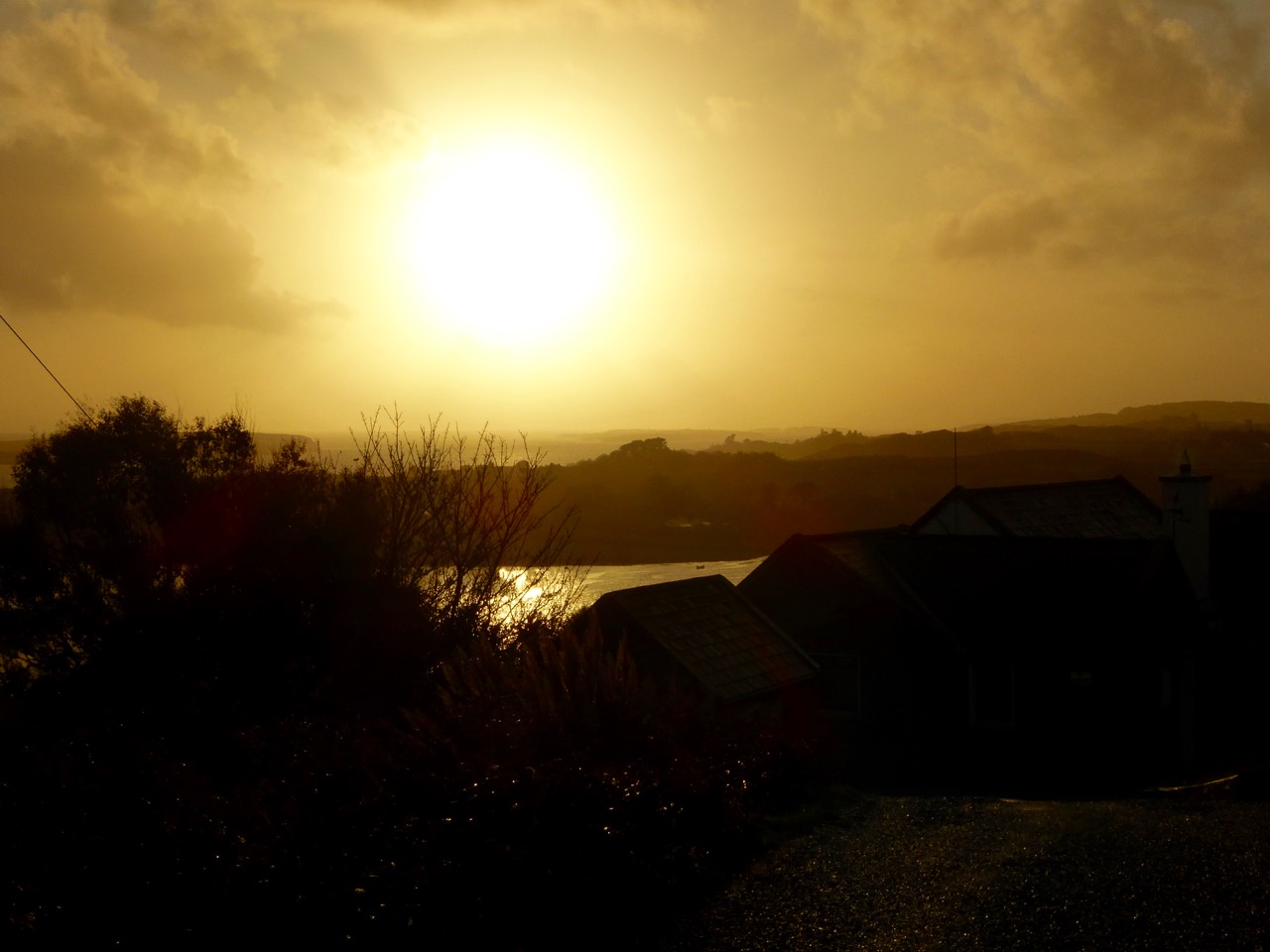
Up the Airy Mountain…

Shadow and light

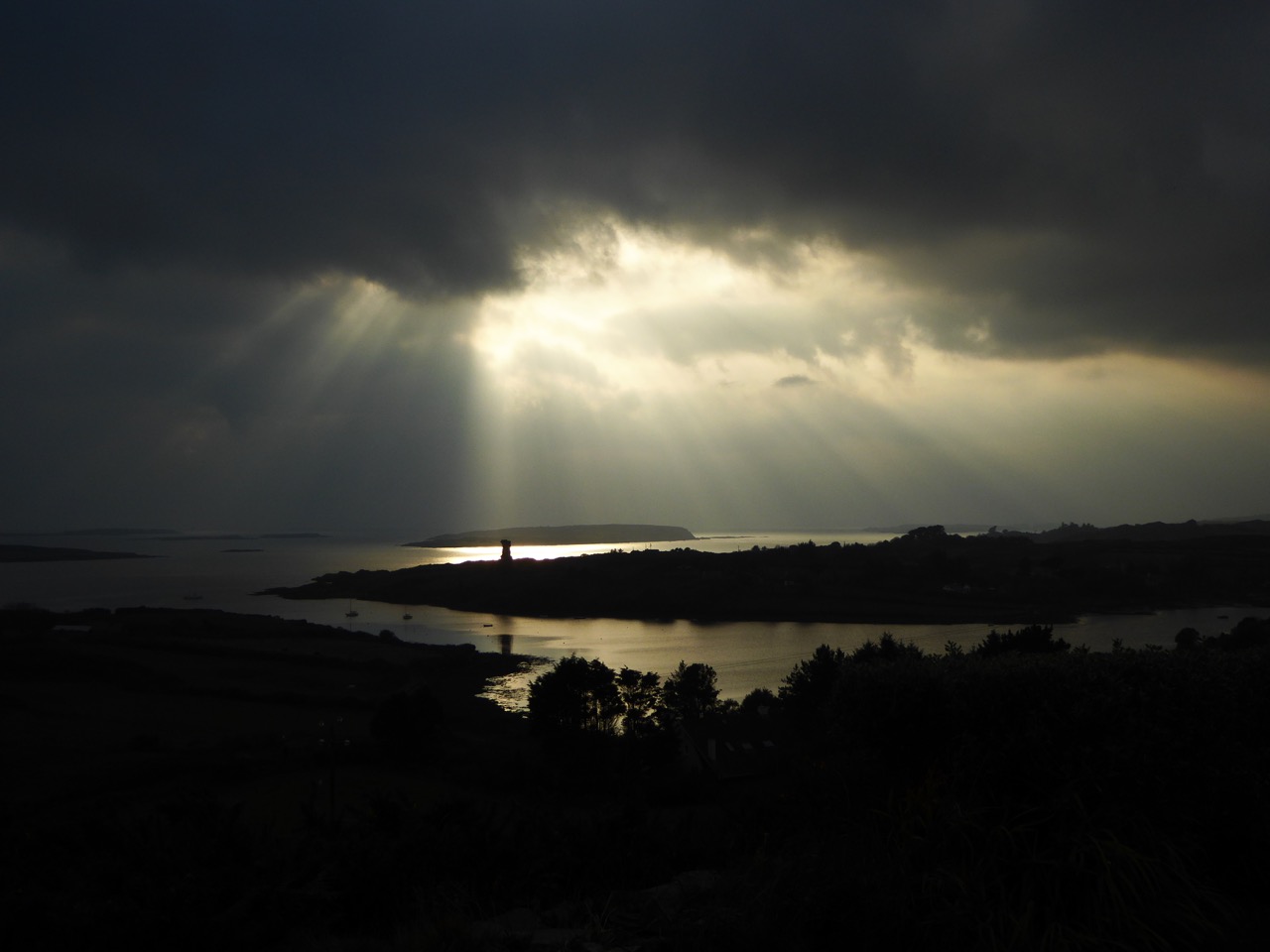
…down the rushy glen – we daren’t go a-hunting for fear of little men! We were hunting mountains last week when we travelled up the west coast of Ireland with a visiting friend – finding some of the best scenery this country has to offer.

Connemara 2

If you look down on the island from above (as in this view from NASA, below) the lie of the land is very clear: the high points are all around the perimeters, yellow and brown in colour, with lower green plains in the centre.

nasa imageIf you lived in a country like Canada, then Ireland’s mountains should seem like mere gentle slopes. Our highest peak is not too far from us, up in Kerry, Carrauntoohil (Irish: Corrán Tuathail – this could mean Tuathal’s sickle or fang, Tuathal having been a common Irish name in medieval times) and this is only 1038 metres to the summit. However, the overriding characteristic of Irish mountains is that they often sweep steeply down to the sea or to a lough and are therefore visually spectacular in their settings.

We live in the far south-west: our mountains form the backbone of each of the peninsulas: The Mizen, Sheep’s Head, Beara, Iveragh and Dingle, largely Old Red Sandstone with some Carboniferous Limestone north of Killarney. Our travels took us up to Clare – very distinctive exposed limestone ‘pavements’ and mountain tops – and then to the complexities of granite, schists and gneisses found in the district of Connemara.

Connemara 3

Connemara fence

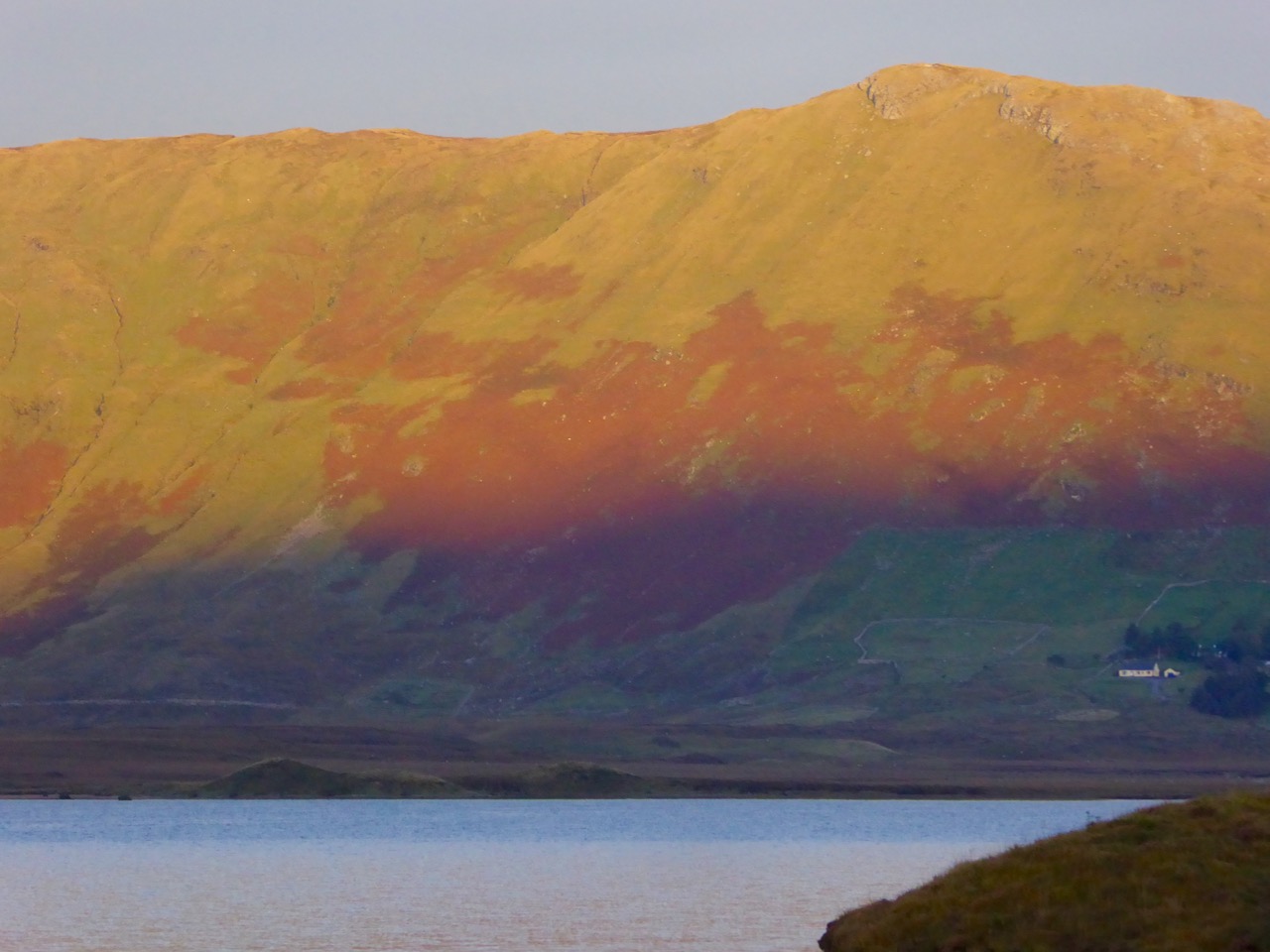
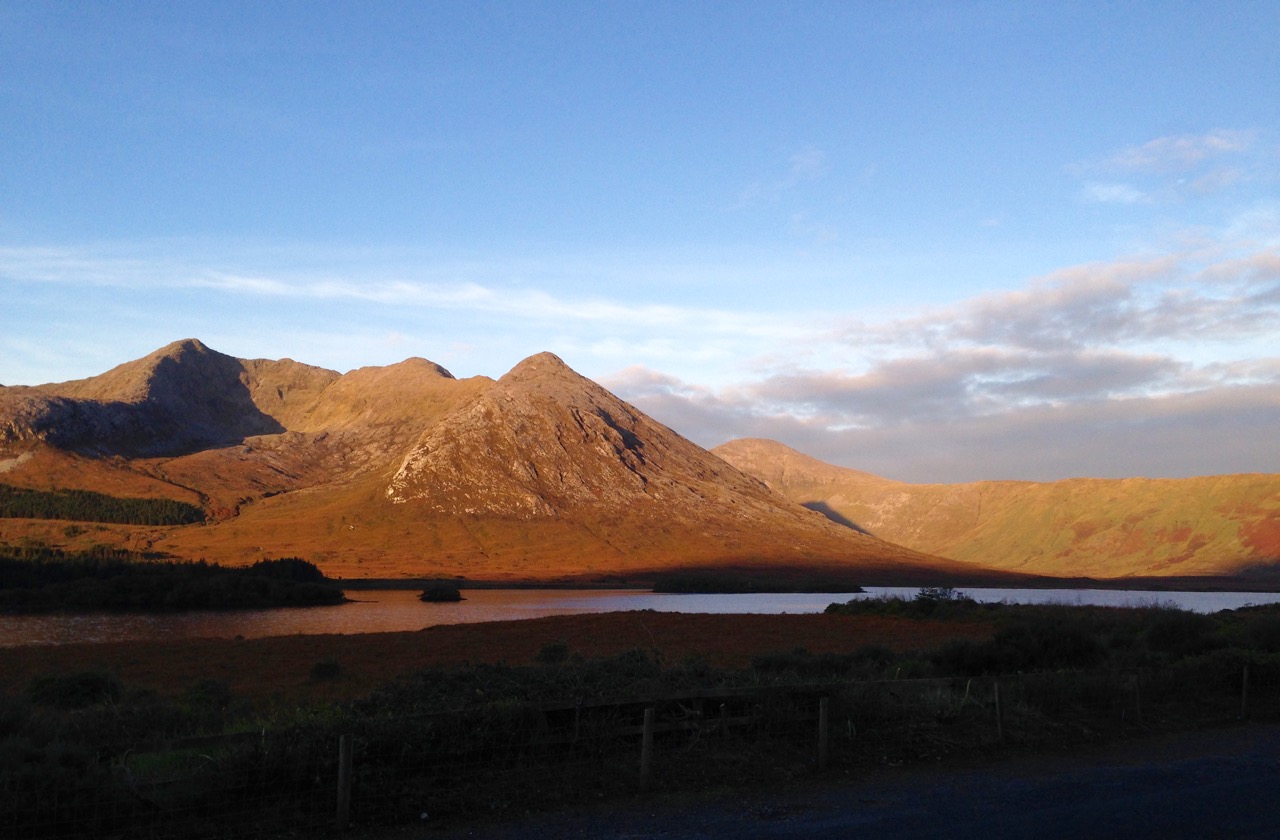
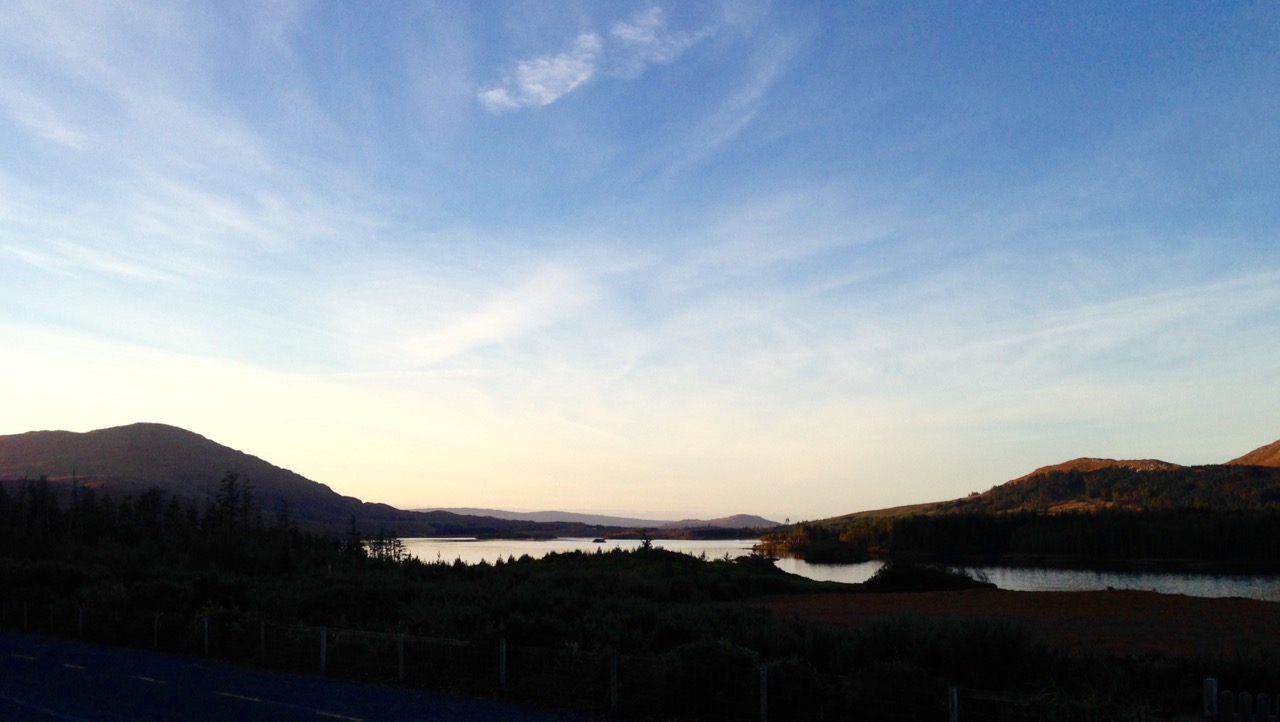
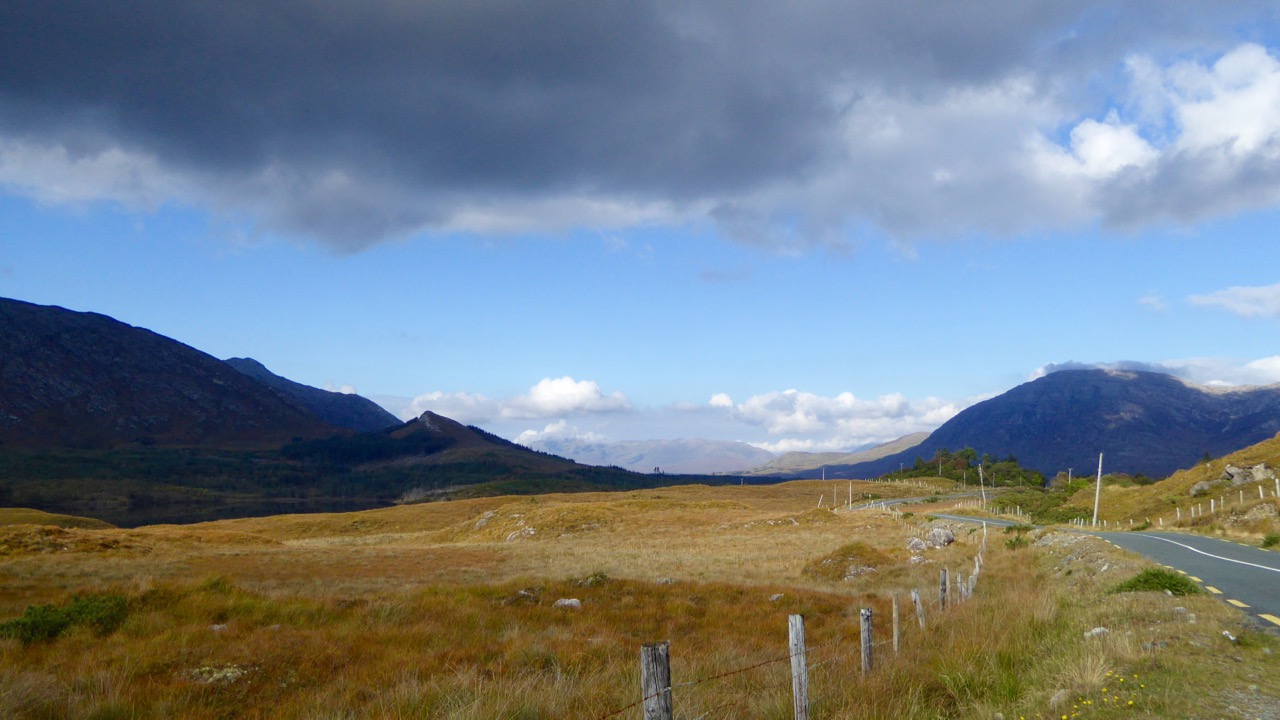
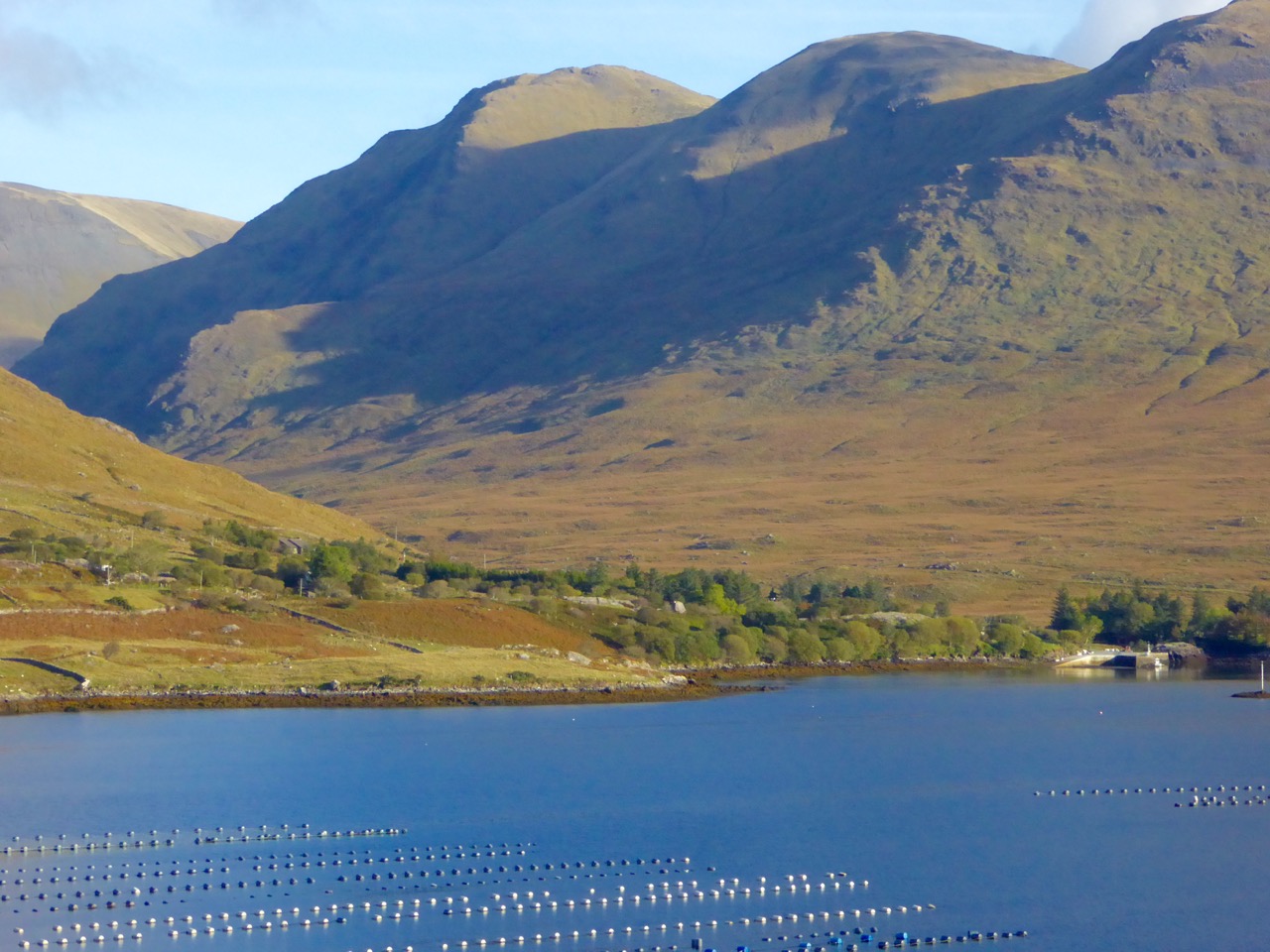
The four pictures above show the elements of the landscape in Connemara, Co Galway: quiet boreens, reflective water and dramatic mountains

The Irish landscape -and, particularly, her mountains – has long been the inspiration for artists and poets. The work of Paul Henry (1877 – 1958) is sparse and flat, yet expertly captures the character of the high lands of the west. It has been used over and over again in tourist advertising campaigns.

Paul Henry’s work was part of popular culture during his lifetime (above): now his art is very collectible and can be found in international galleries (below)

Killary Harbour

Killary Harbour, Connemara (above) and in Paul Henry’s landscape (above left) is said to be Ireland’s only true fjord (a flooded valley cut by glacial erosion which outlets to the sea): in the foreground are mussel ropes

irish mountain postcard

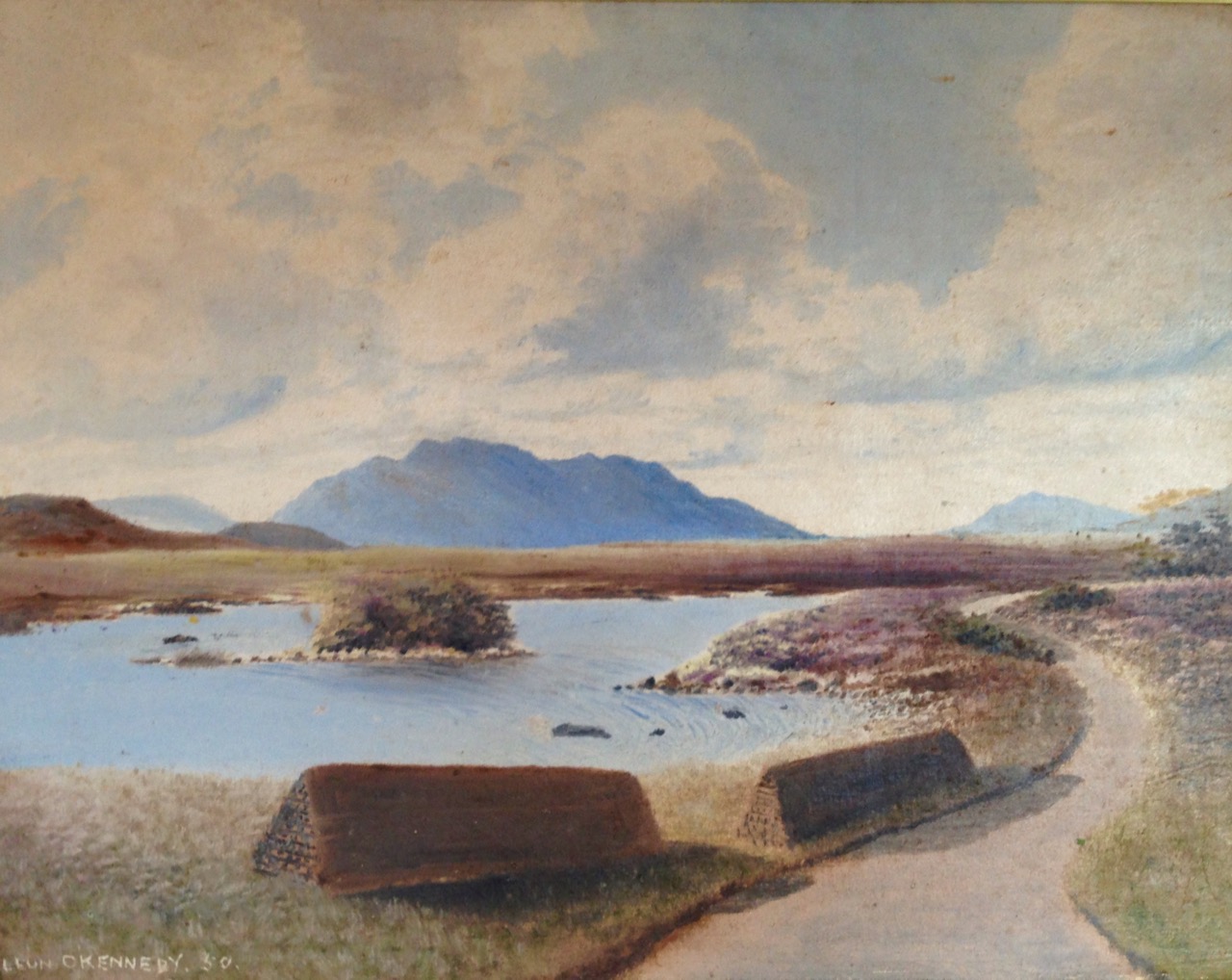
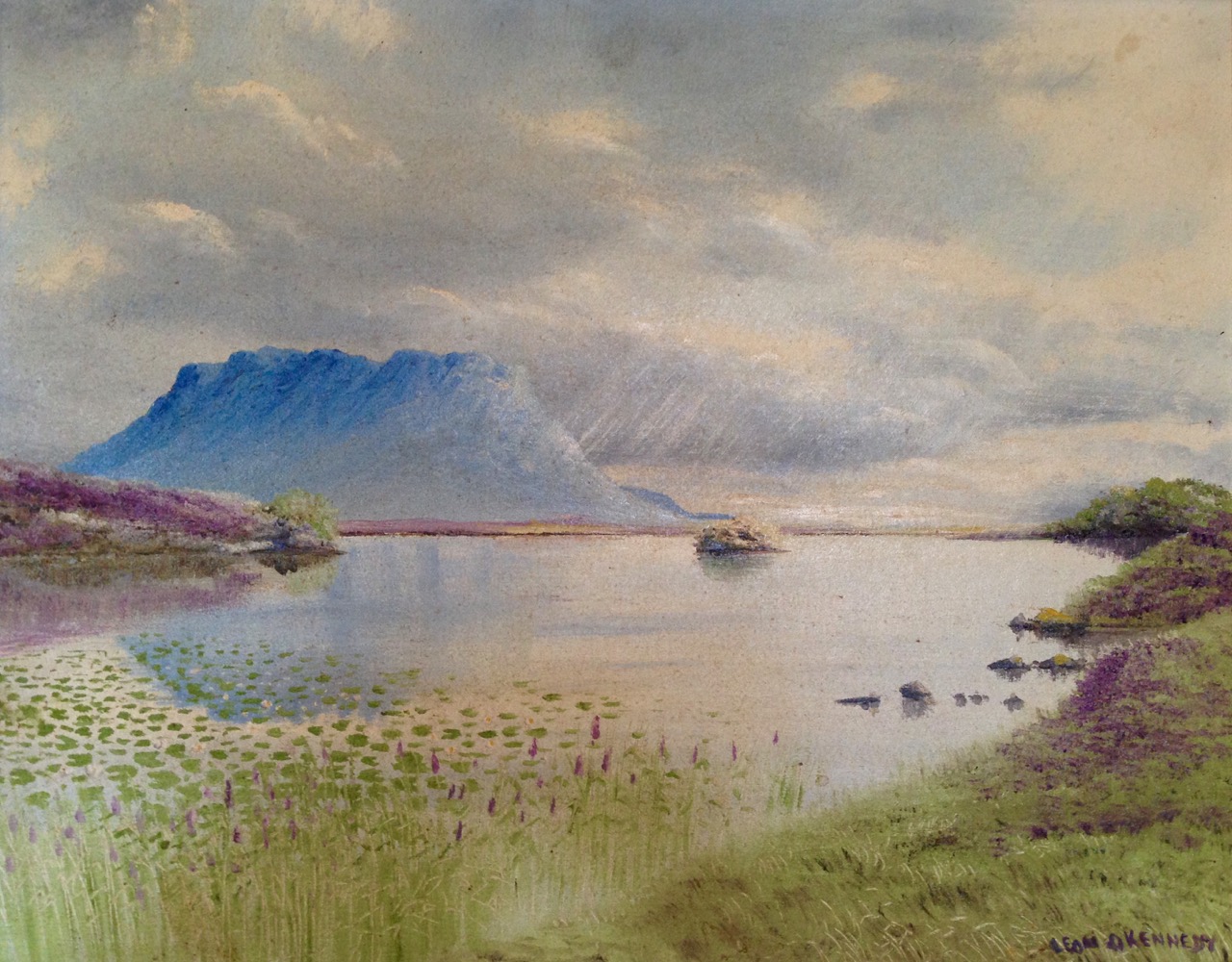
We stayed in the Lough Inagh Lodge – a comfortable hotel with great character and superb views to the mountains. There I was pleased to discover two original oil paintings by Leon O’Kennedy (1900 – 1979), a little known artist  who travelled mainly in the west of Ireland and, evidently, sold his work by knocking on doors. The hotel’s paintings might have arrived in this way as they depict local views: the prism shaped peat stacks are still very much in evidence in Connemara.

O Kennedy 1

O Kennedy 2

Connemara (which derives from Conmhaicne Mara meaning: descendants of Con Mhac, of the sea) is partly in County Galway and partly in County Mayo, in the province of Connacht. We were there only two days and barely did it justice. We intend to return and get to know it more intimately. In terms of our tour of Ireland’s mountainous districts it was the icing on the cake, but that in no way lessens the particular beauty of the other places we encountered – the strangely haunting limestone heights of Clare and the perennial grandeur of Killarney: all are experiences not to be missed.

rainbow over burren

Killarney

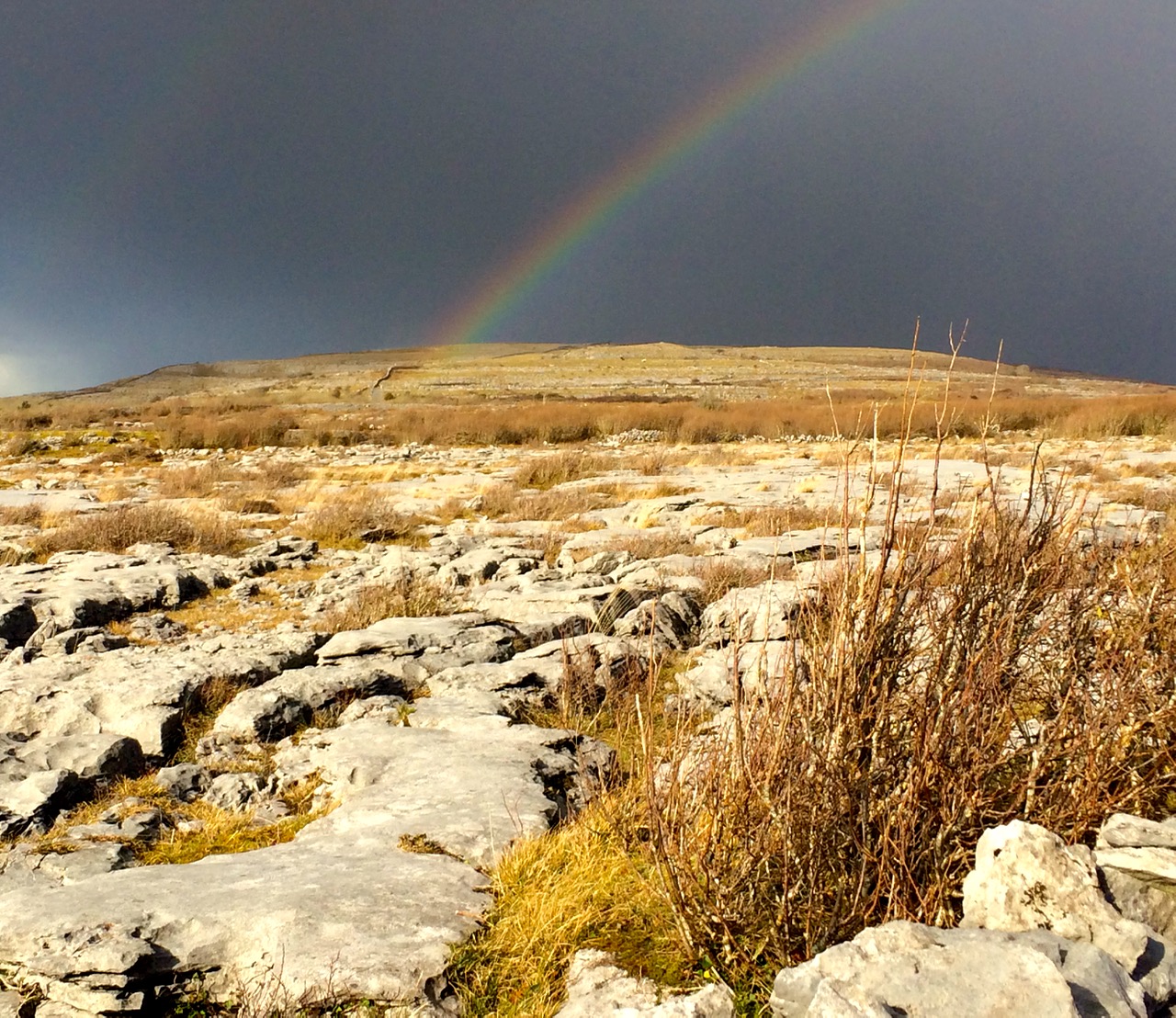
Limestone landscape in the Burren, Clare (top) and the lakes of Killarney, Kerry (above)

Fairy Tree

…By the craggy hillside,

Through the mosses bare,

They have planted thorn-trees,

For pleasure here and there.

Is any man so daring

As dig them up in spite,

He shall find their sharpest thorns

In his bed at night.

Up the airy mountain,

Down the rushy glen,

We daren’t go a-hunting

For fear of little men.

Wee folk, good folk,

Trooping all together;

Green jacket, red cap,

And white owl’s feather!

from The Fairies by William Allingham

Snakes Alive!

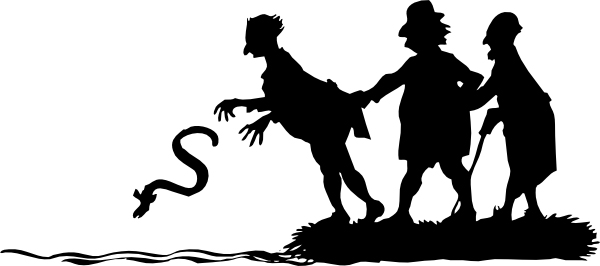
Year of the Snake 66 barabara trott

It’s about as far away as we can get from St Patrick’s Day, so it’s probably ok to talk about snakes in Ireland…

Ah yes – the old fable that he banished all the snakes out of the land…

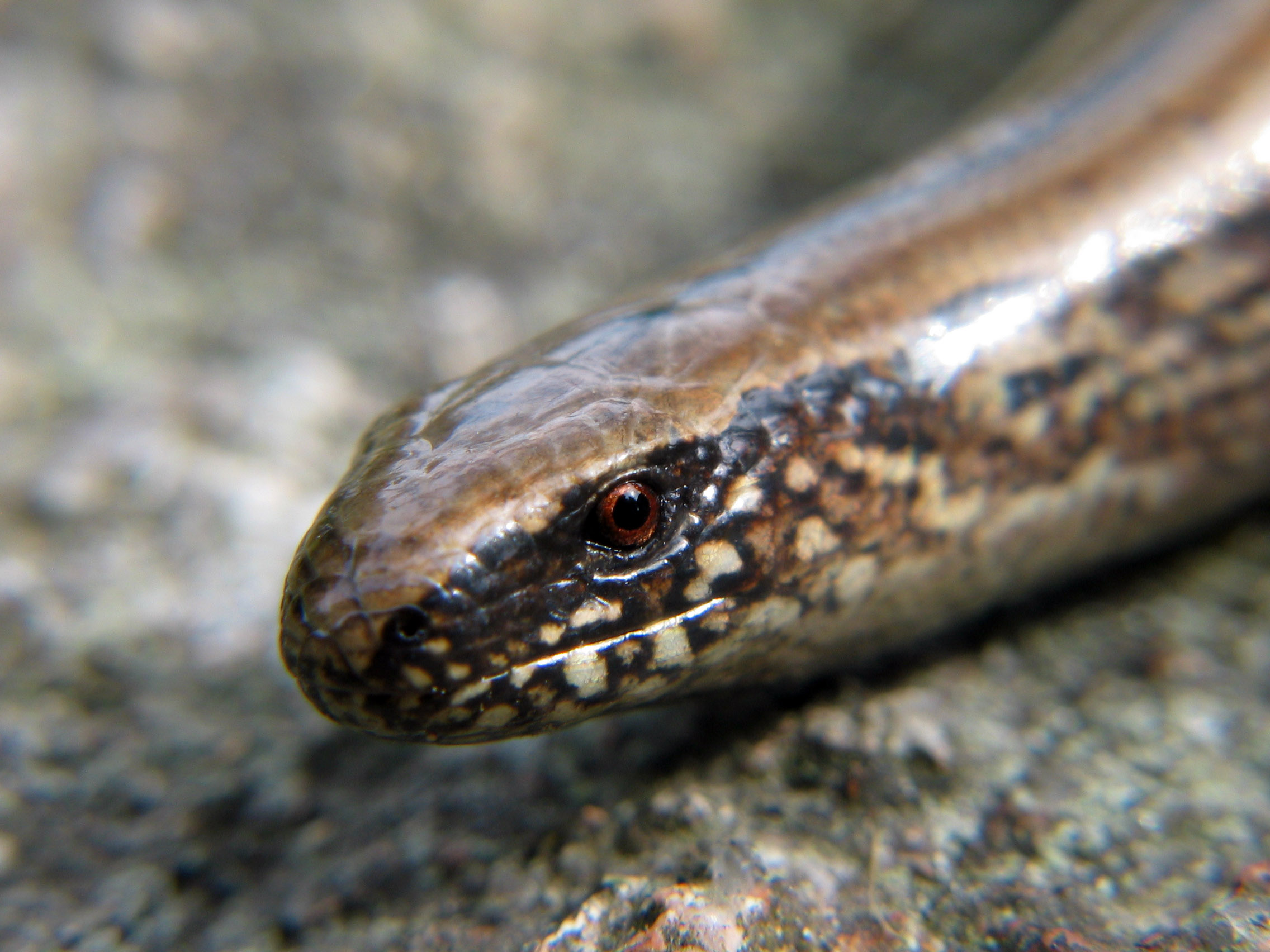
That’s enough of the ‘old fable’ – there’s no doubt about it: there are no snakes in Ireland at all, so it must be true that St Patrick sent them packing! Although I was a bit alarmed when, out walking in the Mayo hills a while ago, I came across this…

Slow-worm (Jonas Bergsten)

A slow-worm? Anguis Fragilis… How does that fit into the St Patrick story?

Well, there shouldn’t be any slow-worms here really – as the Saint expelled all the reptiles and lizards – and that’s a lizard. But evidently someone introduced them into County Clare illegally back in the twentieth century, and they’ve survived there. (Frogs were also introduced, incidentally, as a food source by the Normans).  My sighting in Mayo, however, is something of an anomoly…

But didn’t I hear that these serpenty creatures couldn’t actually live on Irish soil because of Ireland’s purity?

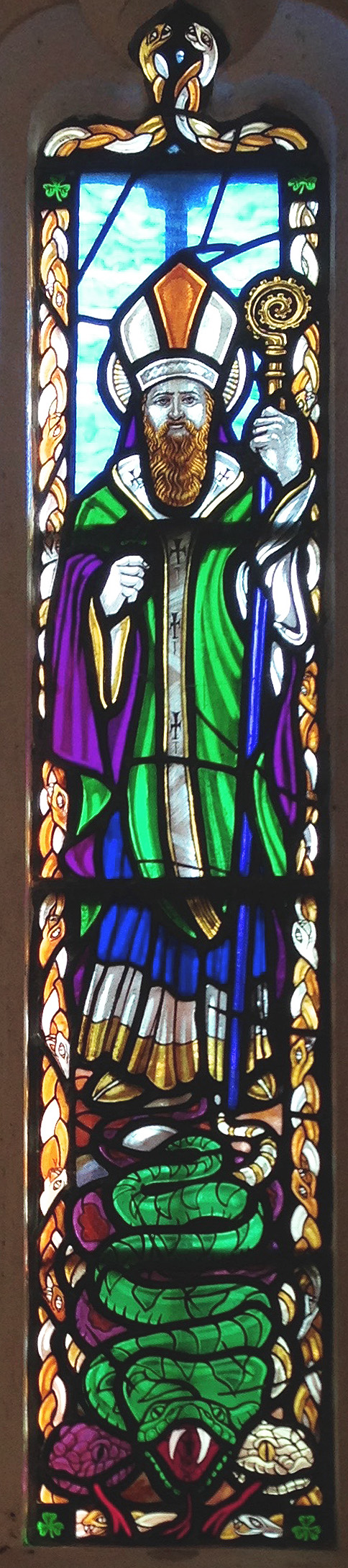
St P window GlastonburyNow you’re talking. It’s perfectly true that if you try to bring a snake into Ireland it drops dead as soon as you enter Irish waters…

Oh? Has that been proven?

Indeed – by Gerald of Wales. He lived in the twelfth century and states that ‘…it is a well-known fact that no poisonous thing can live in Ireland and if Irish soil is taken and scattered elsewhere it will expel poisonous things from that vicinity…’ Other stories mention toads brought to Ireland by accident (having, presumably, stowed away in the holds of ships) ‘…which when thrown still living onto the land, turn their bellies up, burst in the middle and die…’ Perhaps you’ve heard of the Fir Bolg?

I think so – aren’t they one of the early races who inhabited Ireland?

They are – and the name means Men of the Bags. They carried bags of Irish soil around with them when they travelled all over the world, because they would be kept safe by its serpent slaying properties…

I like that idea – remind me to go and do some digging in the garden. Where are you getting all this information from?

Much of it out of a most wonderful book: Ireland’s Animals by Niall Mac Coitor (The Collins Press, Cork 2010), but there are plenty of other early sources, many of which Mac Coitor admirably collects together. Perhaps the best of these is the old medieval Irish text Lebor Gabála Érenn – the Book of Invasions. I have already quoted from that in my story of Cessair, the very first person to set foot on Ireland in 2680 BC…

Yes, I remember that. She was Noah’s grand-daughter. Wasn’t it the case that Ireland was supposed to have been a land without sin, which is why she went there to escape the flood?

That’s her. And it’s a nice bit of symbolism that Ireland was without sin because it had no serpents…

But hang on – that was Old Testament times – long before the saints…

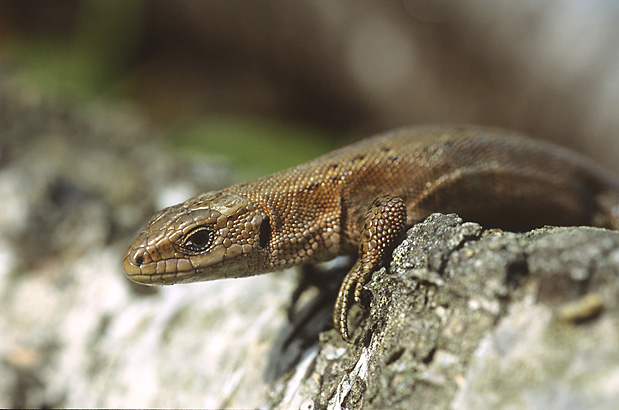
You do have a point there. And, you know, in archaeological terms there are no fossil records of any reptiles having ever been here in Ireland – except for one: the common lizard Lacerta (Zootoca) Vivipara which has always been here, and still is…

Common Lizard (Marek Szczepanek)

Now I’m getting very confused about St Patrick…

Don’t worry about it – it’s a grand story…
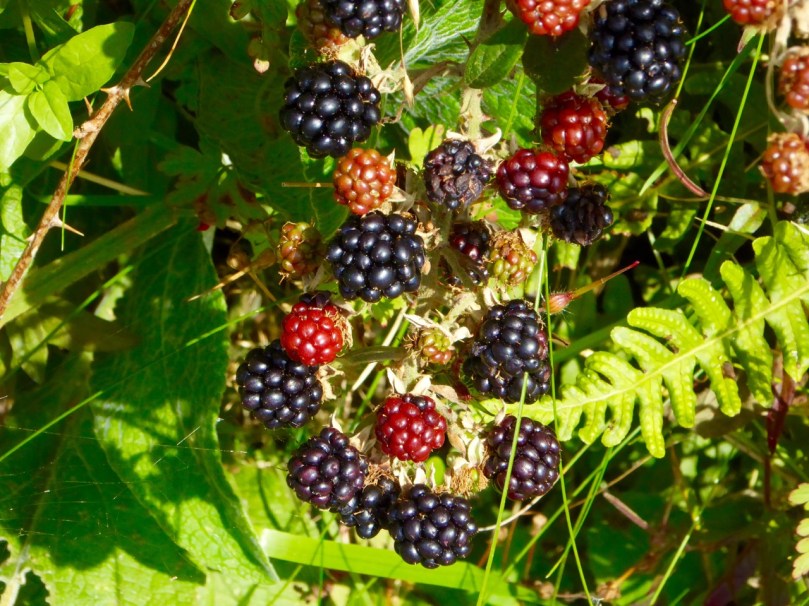
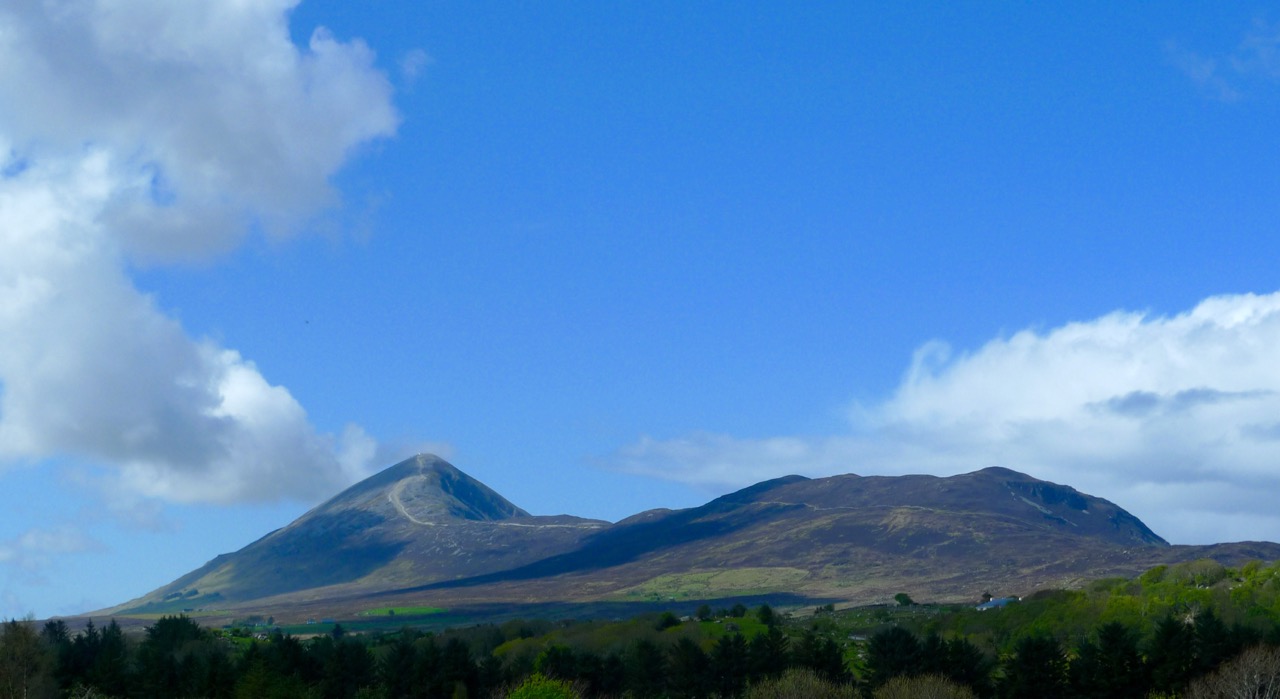
Yes, I have this picture of our good saint standing on the top of Croagh Patrick in Mayo and all the crowd of little snakes and reptiles climbing up there to surround him, only to be cast down to their doom by a sweep of his crozier…

Hmmm… but surely they would have just rolled and bounced down to a soft landing at the bottom? It’s only a hill, after all…

Croagh Patrick

You’ve obviously got something else in mind?

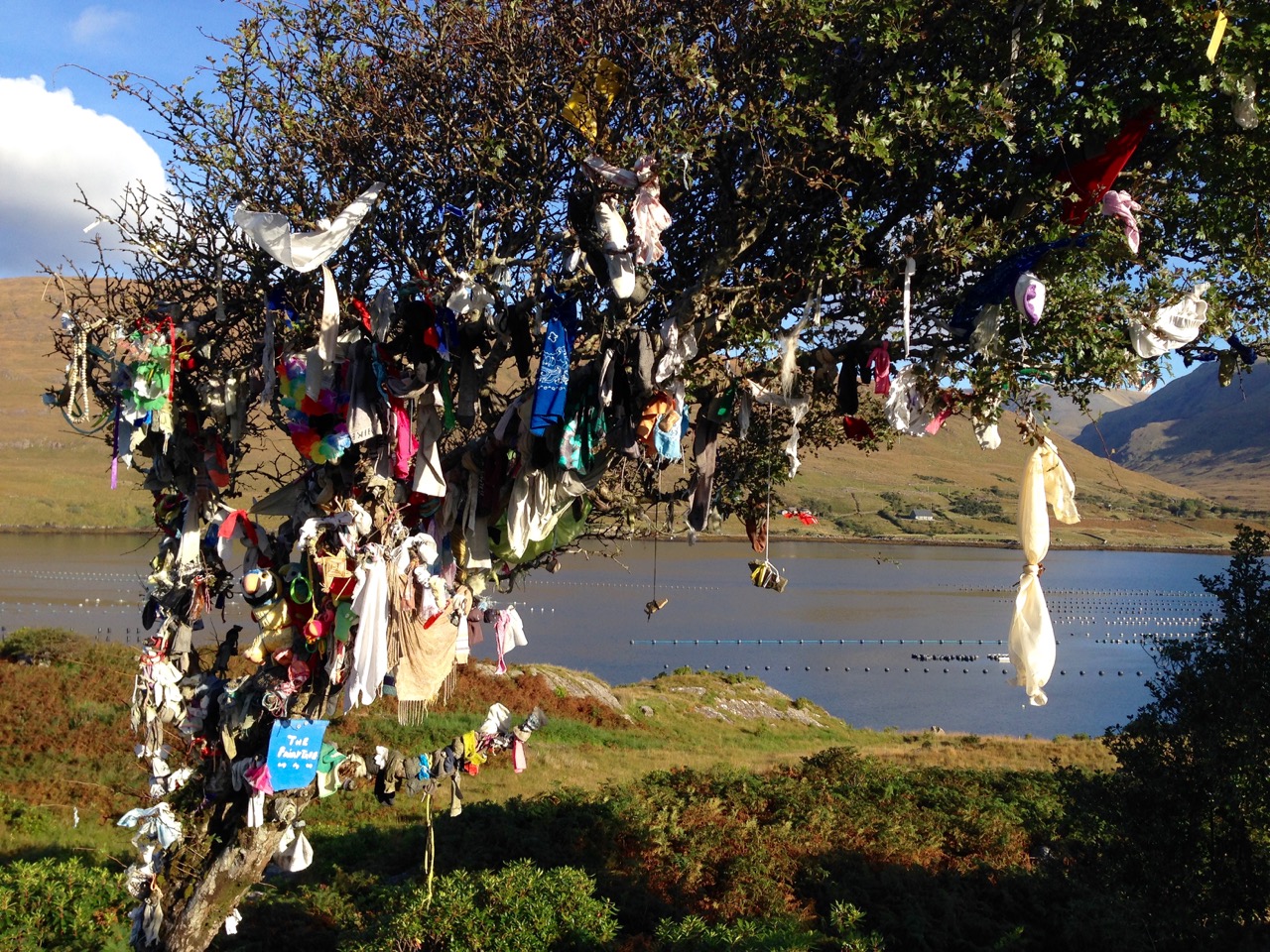
Well I like the story of St Patrick’s Chair, which is at Altadaven, Co Tyrone. The Chair is a huge boulder which seems to have been carved into the shape of a chair or throne. Beside it is a holy well – also ascribed to St Patrick – which appears to be a bullaun stone: offerings are made at the well and the trees around it are hung with rags and tokens. Altadaven means Cliff of the Demons, and it was evidently where all the snakes, serpents and reptiles once lived. The saint went there, sat on his chair (presumably) and cast them all down the cliff and into Lough Beag below…

Which is a bit different to just rolling down the hill at Croagh Patrick…
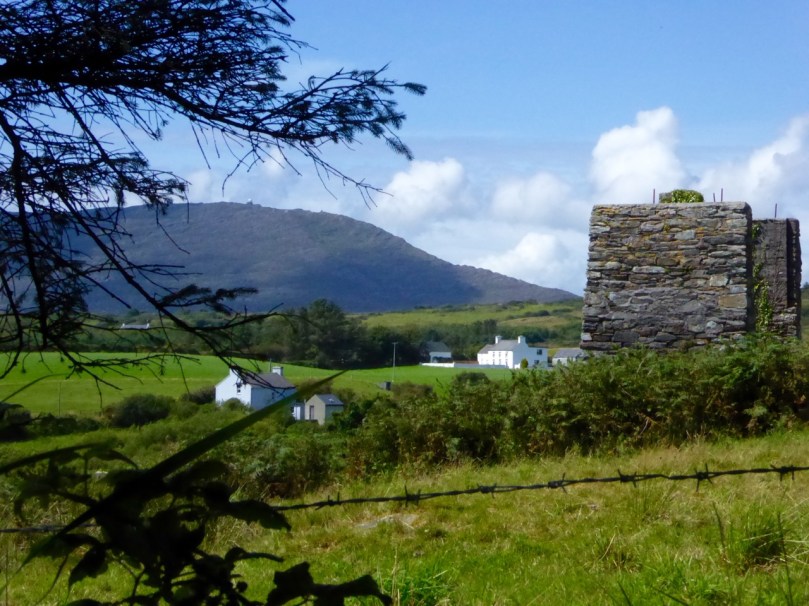
Wishing Chair Slemish

Another St Patrick’s Chair at Slieve Mish, Co Antrim – this one looks like a good candidate for the place where the snakes were cast down… (Irish Times 1956)
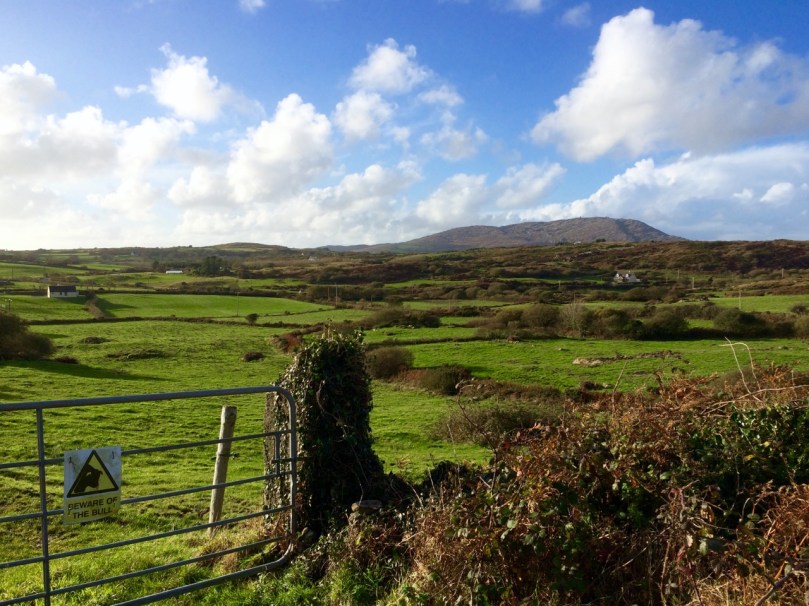
And there was a tradition at Altadaven of an annual gathering known as Blaeberry Sunday or ‘The Big Sunday of the Heather’, probably connected with Lúnasa customs. People would climb the rock to sit in the chair and make a wish which, of course, always came true. Then they visited the well and left pins and pennies behind…

Anything else we should know about reptiles in Ireland?

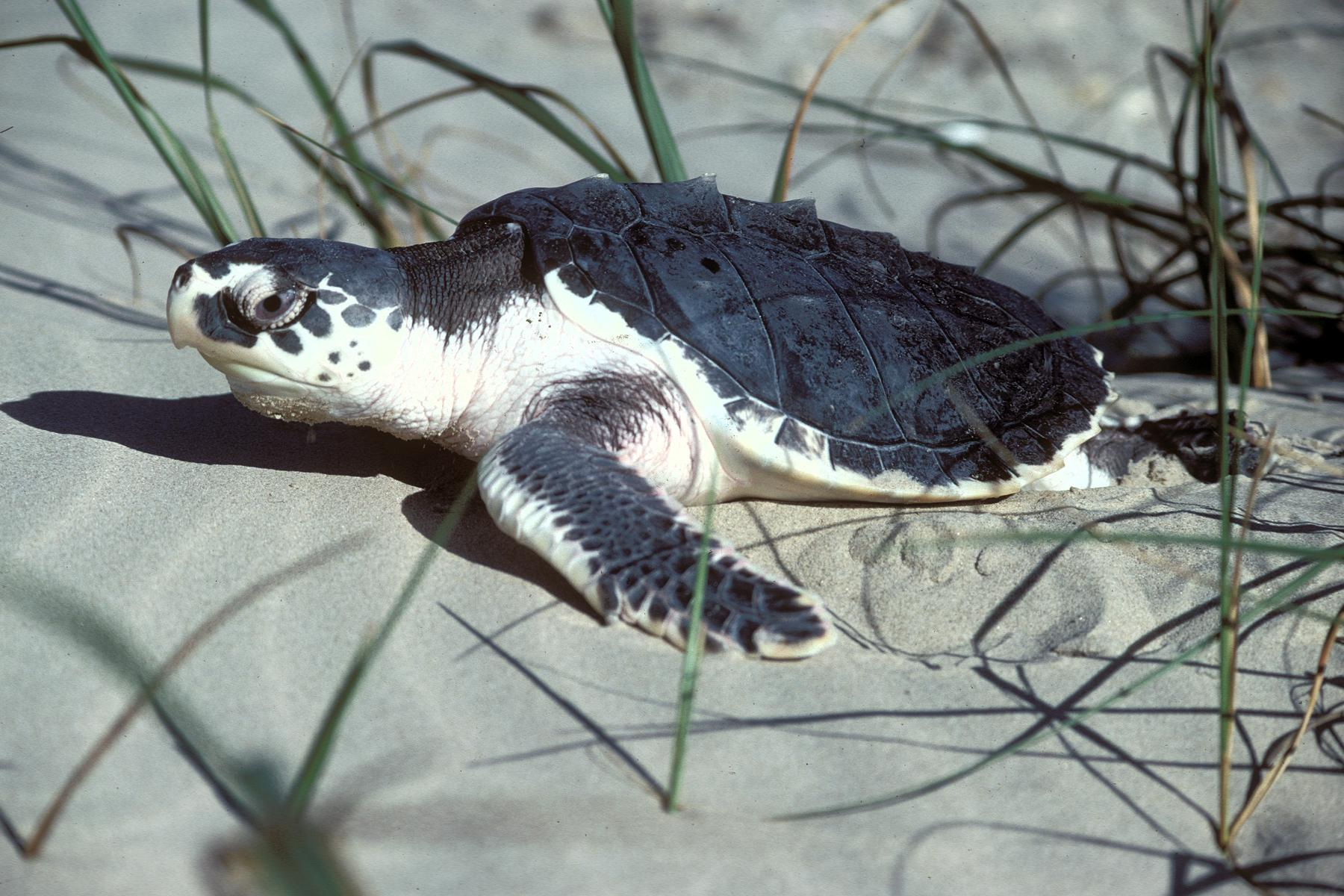
Kemps turtle

Well, earlier this year one of the world’s rarest turtles – the Kemps Ridley Sea Turtle – appeared in Donegal. Unfortunately it was dead – washed up on the beach. But there are also other small turtles which do inhabit Irish waters.

The exception to the rule, possibly. But perhaps being in the water isn’t quite the same as being on the land…

Peist 1611

I’m always keeping my eyes open. I had a ‘serpent’ experience once, in Devon. On my first visit to St John’s holy well up on Hatherleigh Moor I opened the door to the well (which was surrounded by a stone built enclosure) and there inside was an eel swimming around!

I heard that’s a very good omen – to see an eel in a holy well?

Oh yes – why wouldn’t I be a total believer in such things? In Celtic Brittany holy wells are always protected by a ‘Fairy’ who has the form of an eel, and is a benign spirit. Interestingly, though, there is no stream or watercourse near to the Hatherleigh well, so the eel must have travelled some away across the moor to get there – on dry land!

So – I have to ask: are there eels in Ireland?

eel

There are – Anguilla Anguilla – It’s a fish, so not a problem to the saint. Eels have been eaten in Ireland since the earliest human times and have been found in association with Mesolithic sites such as Mount Sandel, Co Derry.

Thank you – you’ve taken us on a serpentine tour through Irish history and mythology…

Mac Coitor


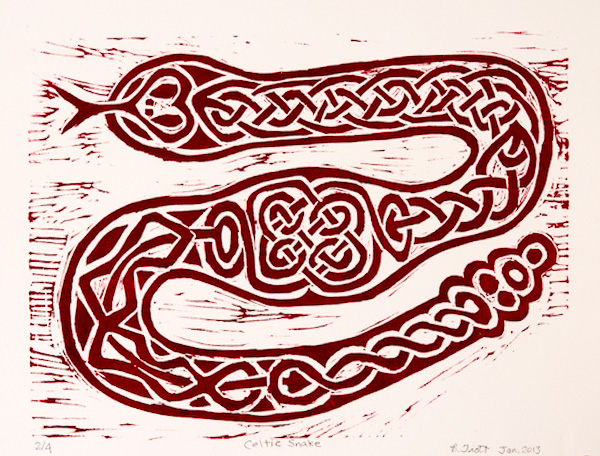
The heading picture Celtic Snake is by Canadian artist Barbara Trott; the Slow-worm is from Jonas Bergsten; the long window is in St Patrick’s Chapel Glastonbury; St Patrick in Bandon Cathedral is by Finola; the Lizard is by Marek Szczepanek; the Peist is from Speed’s Map of Ireland 1611; and Drowning Eels is courtesy of images.all-free-download.com

All Around the Bloomin’ Heather

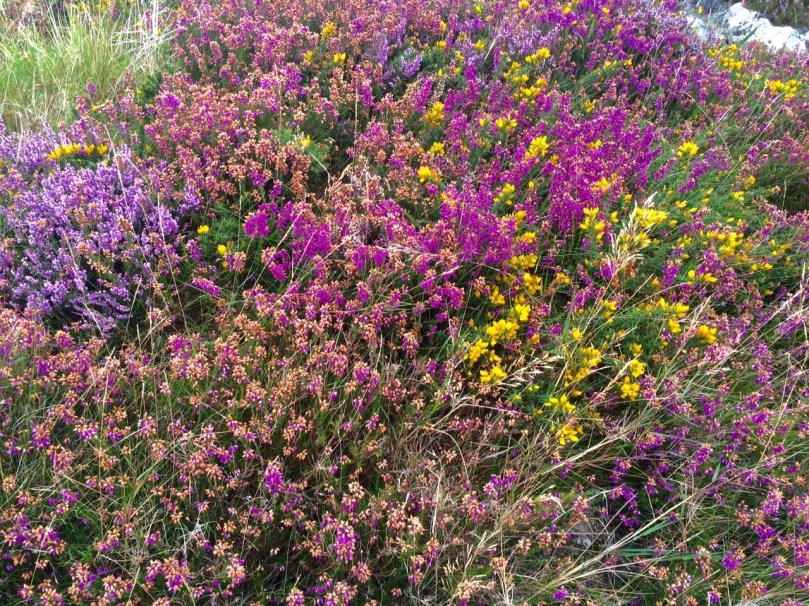
heathers CappaghglassHeather blooms here in late summer and through the autumn – not, as in the song lyrics, when “the summer time is comin’”. It washes the hillsides with a rich pink-purple that has to be seen to be truly appreciated. The gorse has a late bloom too and the combination of the purple heather and the brilliant yellow gorse is one of my favourite things at this time of year.

We’ve been walking the little roads around us in West Cork again, and observing the new cycle of hedgerow flowers since I last reported on them in June.

boreen

Inspired by my Ellen Hutchins experience, I set out to identify some of the most conspicuous of them, aided by my Zoë Devlin book and my friend Amanda.

Fuchsia Montbretia and blackberries

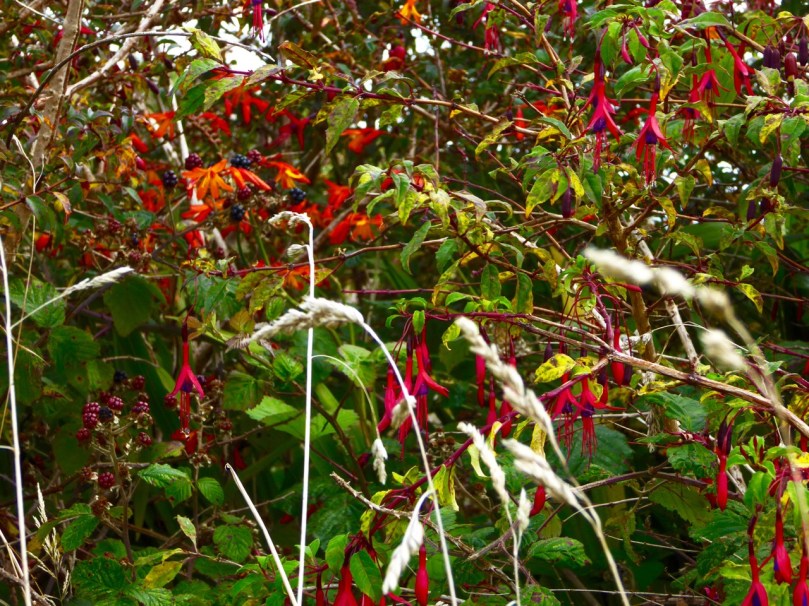
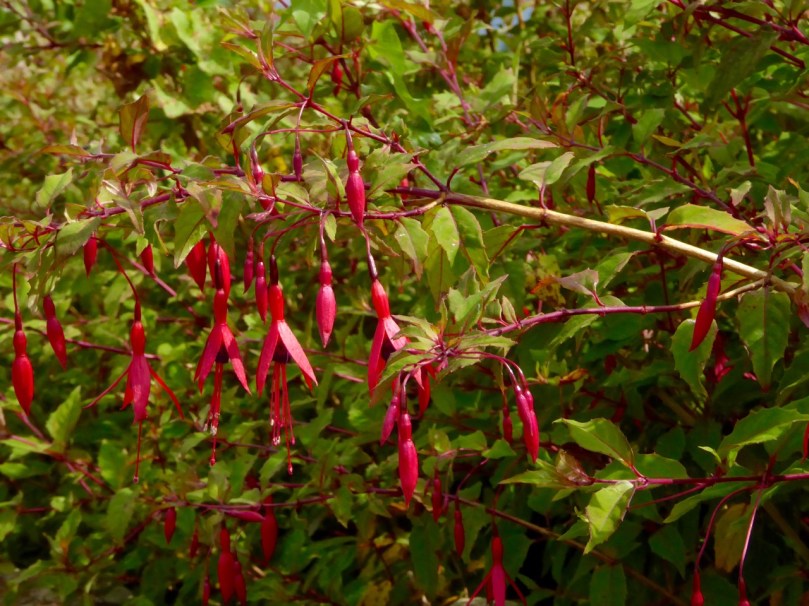
Most striking, of course, is that combination of drooping fuchsia and the gaily waving montbretia (or crocosmia) underneath. Although technically both are introduced species, together these two flowers define the south west of Ireland – it’s what we see in our mind’s eye when we think of West Cork.

Mainly montbretia

Now the berries are ripening and it’s impossible to walk without keeping an eye out for particularly juicy blackberries.

Blackberries

Although, because we’ve had a cold and wet summer, lots of the brambles are only flowering now.

blackberry flowers

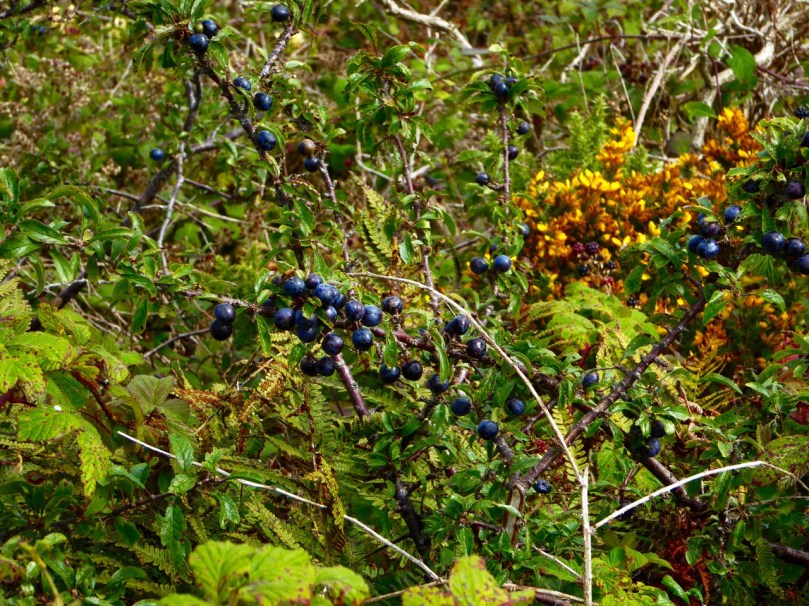
Sloes too, with their glossy blueblack skins are there for the picking. Sloes are the fruit of the blackthorn, often used for making sloe gin. They are actually a type of small plum and are considered edible after the frost. (Note to self – must try one!) Blackthorn hedges are common around here as they make an impenetrable, thorny cattle-proof fence. The wood was prized in the past for making walking sticks that could also be used as clubs, sometimes called shillelaghs. Traditionally, they were cured and acquired their glossy black colour by sticking them up the chimney.

Sloes

Whitethorn, or hawthorn, hedges and their red berries, or haws, are equally ubiquitous in September. We love to see our garden birds descend on the whitethorn trees in the winter, knowing that the haws provide an important source of nutrition for them.

Haws

The wild roses, white and pink, still sport a few blooms but now mostly the colour comes from the rose hips, the more domesticated ones huge and glossy and the wilder ones smaller and half-hidden among the brambles. I’ve never made rose hip jelly, which is apparently packed with Vitamin C, but I did pick up a delicious rose hip and apple jam at one of our local markets recently, and I’ve been enjoying it on my morning toast.

One of the dominant flowers in the hedges and ditches now is purple loosestrife. In lower-lying marshy ground it masses in a vivid amaranthine swath.

Loosestrife

We can admire it freely here, although when I lived in Canada I knew it as an invasive weed to be feared and eliminated. Researching this online, I came across this excellent article by the Examiner’s Dick Warner. As he explains it, once purple loosestrife established itself in North America…

In these new homes, without any natural ecological controls, it became invasive and threatened to choke up important watercourses. The main reason this doesn’t happen in Ireland is that purple loosestrife is kept in check by a number of specialised and very efficient insect predators.

There are known to be two species of beetle, two species of weevil and one species of moth that feed virtually exclusively on purple loosestrife and control its spread. In America, the first thing they tried when it started to become a problem was to control it mechanically, by cutting and removing it. When this didn’t work they tried chemical control, spraying it with herbicides. Not only was this equally unsuccessful, it had some very undesirable environmental repercussions. Using toxic substances in or around water is always problematic.

Then the scientists looked to Europe. They decided the moth with caterpillars that ate purple loosestrife was itself a potential pest, so they left it alone. But they imported the beetles and the weevils and they did an excellent job. It’s one of the classic success stories of biological pest control.

The grasses, brackens, hogweed and ragwort have colonised the hedges and jostle for space in the corners of the fields.

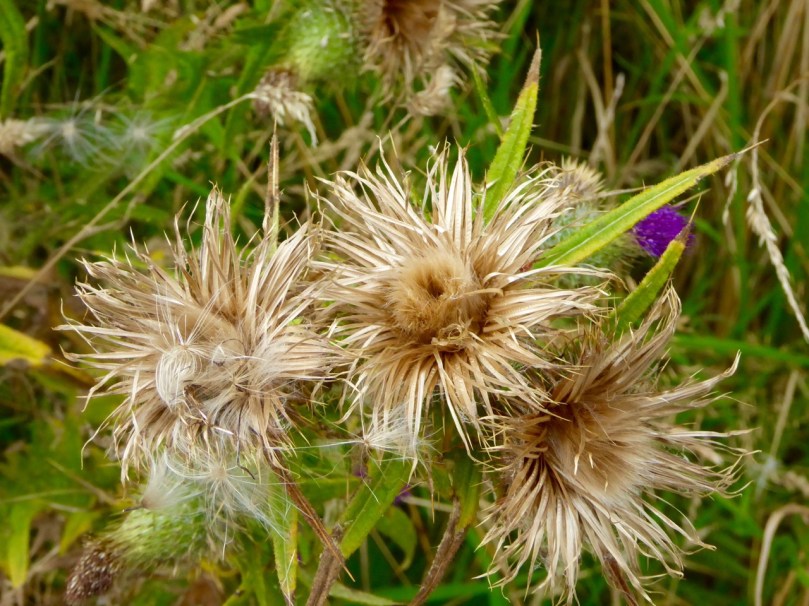
Thistles have now mostly lost their purple heads but are no less spectacular for that.

thistle seedheads

In fact seed heads of all kinds provide an ethereal fringe to many of the hedges, while the breeze in the grasses supplies the music. 

Thistles and seedheads

Knapweed (top) and ragwort seed heads

A few of the smaller flowers can be easily missed.

Common dog-violet (left) and tormentil (right)

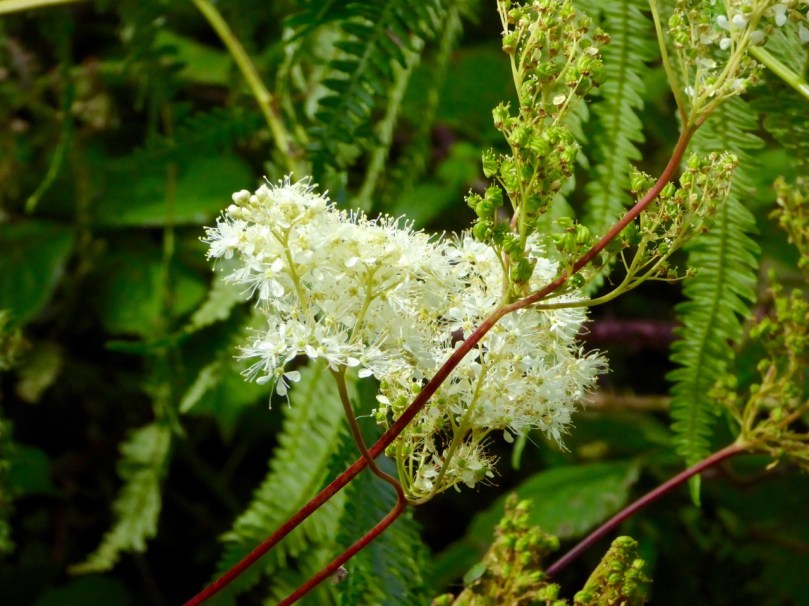
And even some of the larger ones are easy to ignore because they’re so common. But look closely…

meadowsweet

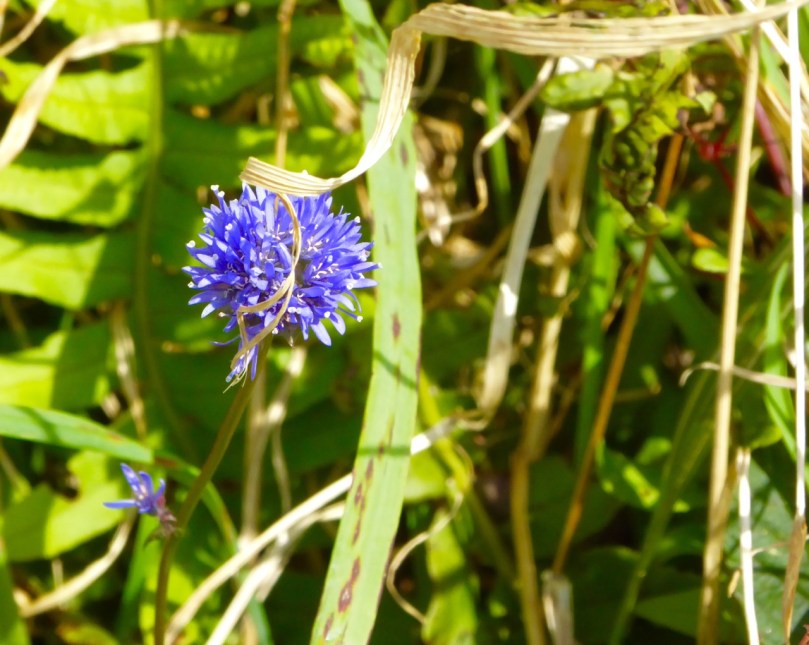
Scabious

Meadowsweet (upper) and Scabious (lower)

And here’s a handsome one – Hemp Agrimony, sometimes known as Holy Rope or St John’s Herb. Apparently you’re supposed to boil the root in ale as a purgative or to cure dropsy. Now you know.

Hemp Agrimony

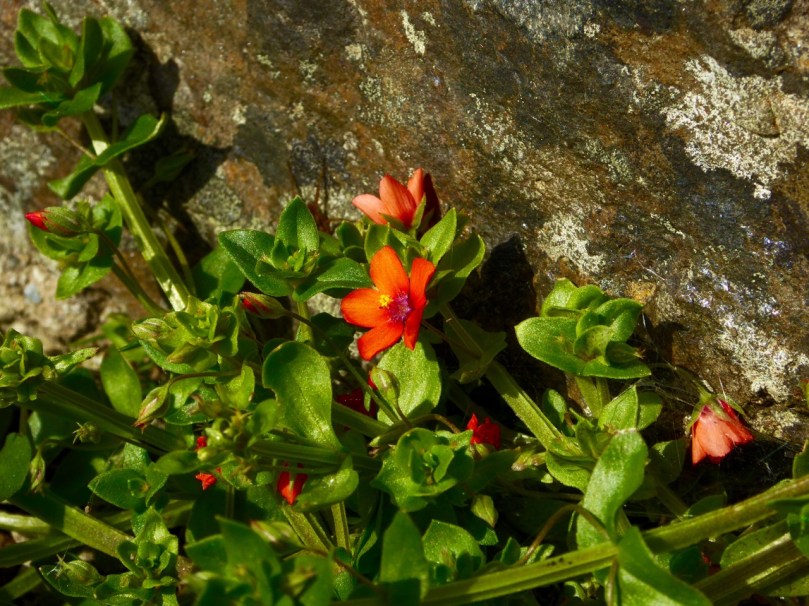
Finally, and because many of you cherish the memory of curling up with Baroness Orczy as teenagers, here’s a Scarlet Pimpernel.

Scarlet pimpernel

All the photographs in this collection, with one exception, were taken on one day, September 8. There’s more, so much more, to see and hear at this time of year along the boreens of West Cork, but I’ll leave it at that for now, except to show you whom I was sharing all this with on my walk.

FLY ON BLACKBERRY

Clockwise from top: blackberry, dog rose, rose hip, hawkbit, herb robert and a species of willowherb. All with visitors.

Oh and one more thing… there are many versions of the song Wild Mountain Thyme on YouTube, but this one struck me because of the lyrics. Subtle changes make the song both more romantic and more accurate. See what you think.

fuchsia

Ellen Hutchins: The Short and Remarkable Life of Ireland’s First Female Botanist

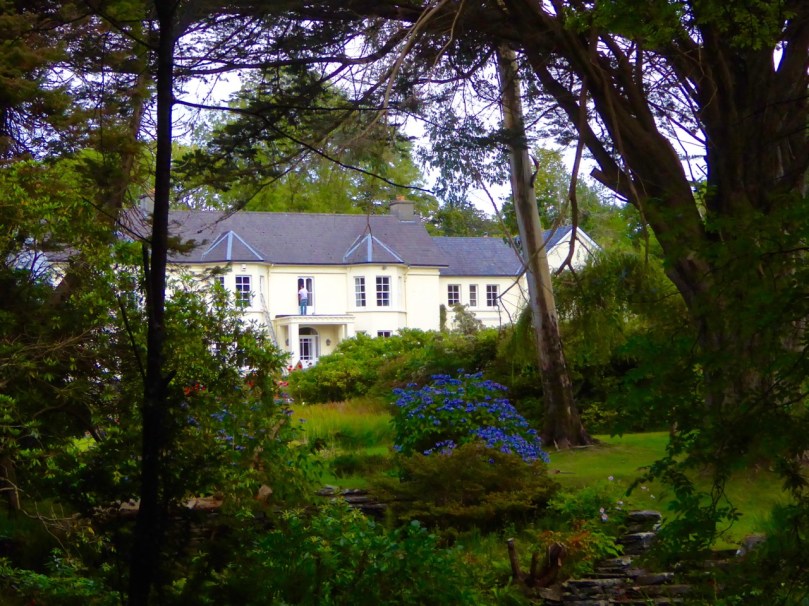
Ballylickey House, Home of Ellen Hutchins. Although the burned down, it was rebuilt exactly as the original.

Ballylickey House, Home of Ellen Hutchins. Although the house burned down, it was rebuilt exactly as the original

In West Cork, we have been celebrating the short but extraordinary life of Ellen Hutchins who died 200 years ago this year. Acknowledged in her lifetime as one of the most knowledgeable and accomplished botanists in the British Isles, she contributed specimens and drawings to the great collections in Glasnevin and Kew and kept up a lively and learned correspondence with some of the leading botanical scientists of the day. When she died, aged only 29, her name had already been memorialised: several plant specimens bore the title hutchinsia.

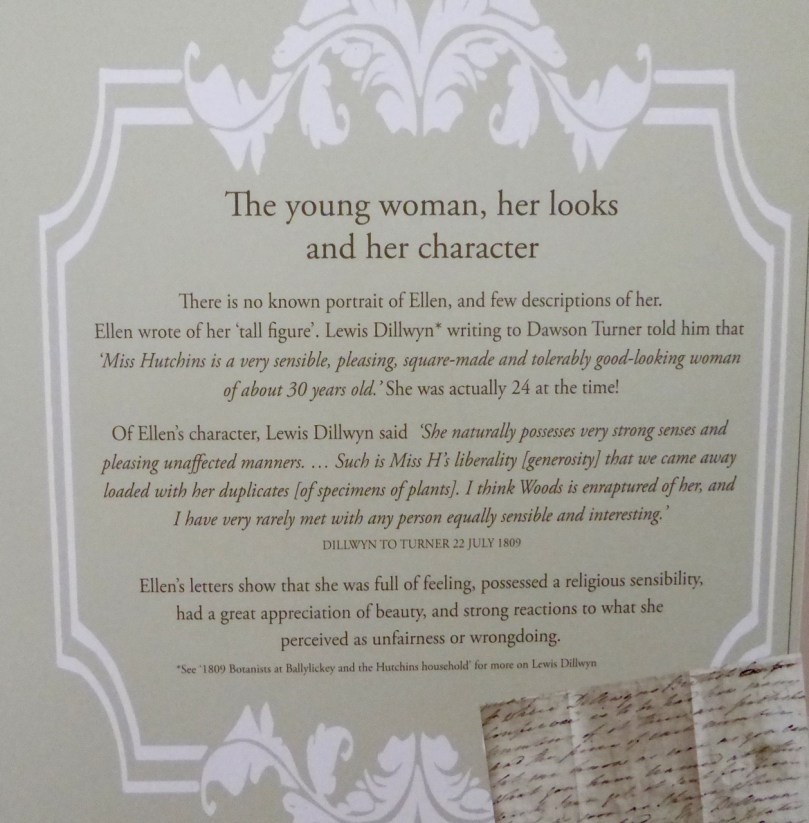
Looks and character

It’s been a fantastic week of lectures, guided walks, exhibitions and demonstrations. Jointly organised by the Bantry Historical Society, the National Parks and Wildlife Service and the Hutchins family, the week has been a marvellous success, with all the events well attended and everyone eager to learn more about Ellen. For a program of what was available, take a look at the excellent Ellen Hutchins website and the Facebook page.

Dublin Botanic Gardens

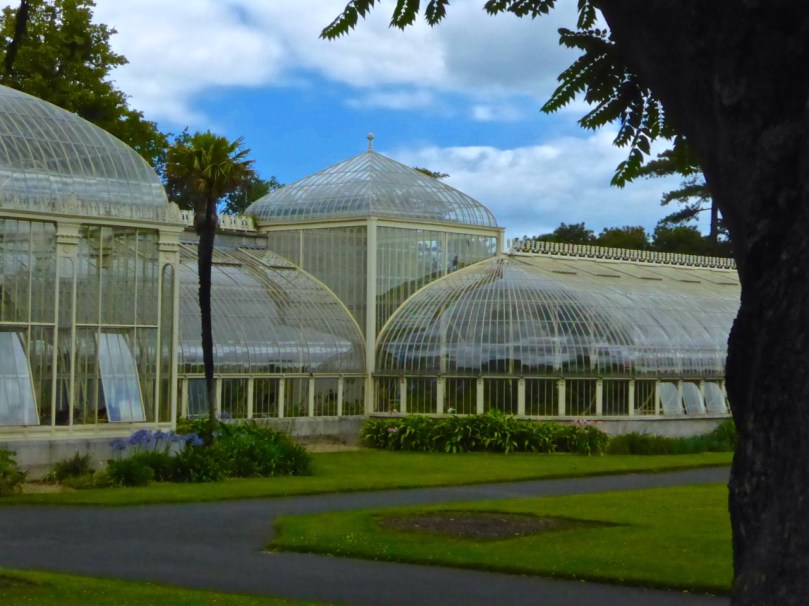
While many of Ellen’s specimens ended up in Kew Gardens, some went to what has become the Dublin Botanical Gardens

The website contains biographical data about Ellen, her accomplishments, her family and her place in the scientific community, and a links and resources section leading to much more information. Ellen Hutchins was born in Ballylickey, near Bantry, in 1785 and spent most of her life there. During schooldays in Dublin she lived with family friend Dr Whitley Stokes who introduced her to the discipline of botanizing. She became an avid and scholarly collector of plants and seaweed, annotating, sorting and cataloguing as she went, and an expert illustrator of marine and terrestrial specimens.

Ellen identified new species of seaweeds on the shores around Bantry Bay

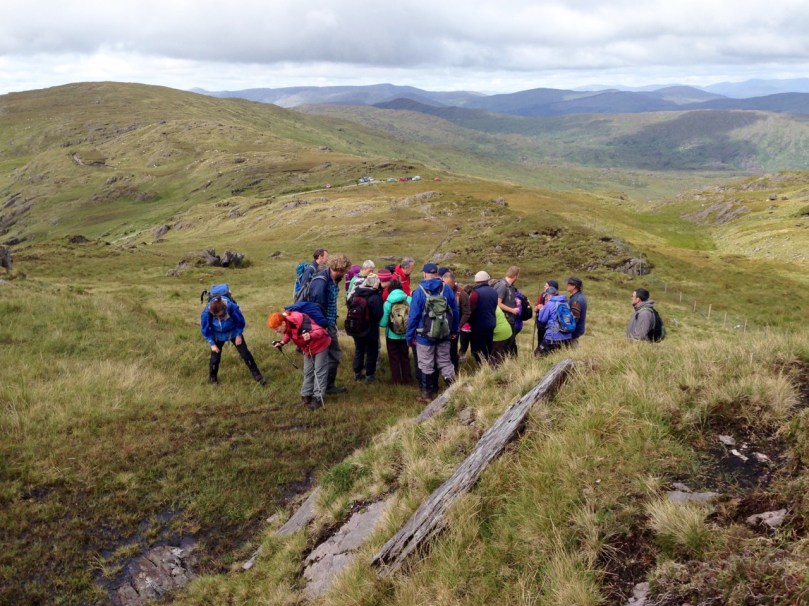
She roamed freely around the shores of Bantry Bay and took her family’s boat out to Whiddy Island. She also climbed (we’re not sure how) to the top of Knockboy, the highest mountain in Cork at 700m, identifying new species of plants right at the top. We followed her footsteps last weekend, led by Wildlife Officer Clare Heardman of Glengarriff Nature Reserve, botanist Rory Hodd, writer Kevin Corcoran, and Madeline Hutchins, great great grandniece of Ellen, who has been uncovering all kinds of new material on her ancestor.

group botany

What a day we had! It was warm and dry until we got to the top, where we were subjected to a hailstorm for form’s sake before the sun re-emerged. It was an insight into what gets botanists excited – tiny plants, apparently, with subtle variations from other tiny plants.

We were in awe of the knowledge on display, and the boundless enthusiasm of all the plant experts in the group. The highlights for them were finding some of the species that bore Ellen’s name, although Rory and Clare were particularly pleased to find a dwarf willow at the summit that had originally been identified by Ellen over 200 years ago. Along the way, we also learned a lot about the characteristics of that kind of high mountain environment, with its burden of boggy moss and highly acidic environment.

Kevin Corcoran demonstrated the properties of sphagnum moss, and showed us how soft the bog underneath us was, by probing with his staff

Knockboy descent

We felt on top of the world on Knockboy. We drove up to Priest’s Leap and only climbed the final 300m.  But how did Ellen get up there, with her long skirts and her intermittent poor health?

In Bantry House we viewed Ellen’s drawings, beautifully framed and presented and on loan from their permanent homes in Kew Gardens, Trinity College, Dublin and elsewhere. Her drawings were used by other botanists to illustrate books and were considered to be superior in their exactitude.

The Bantry Library hosted an exhibition about her life. This was curated by Madeline Hutchins and here we came closer to appreciating the woman herself, of whom no portrait exists. We learned, through her letters, of the struggles of a home life dominated by an ailing mother, a disabled younger brother and two bitterly feuding older brothers. She suffered from intermittent ill health, which often prevented her from collecting, but when she was strong her delight in her outdoors pursuits was palpable. One of her greatest pleasures was her correspondence with fellow botanists, among whom she earned true respect, especially Dawson Turner.

Dawson Turner

Dawson Turner: Although they never met, he thought of Ellen as a beloved sister and was devastated when she died

Although we were not able to join the group tour of the Ardnagashel Arboretum, we ventured down there on our own and were shown around the east section by the gracious Arethusa Greacen, herself a Hutchins on her mother’s side. The arboretum was started by Ellen’s brother and was maintained and added to by succeeding generations of Hutchins – the botany gene was obviously strongly embedded in the family!

Myrtle Woods Path

Ardnagashel colourMyrtle groves and colour at Ardnagashel

The enormous contribution made by Ellen Hutchins to science has languished in obscurity for two centuries, known only to a few experts in the field (a bit like that other West Cork woman of science, Agnes Clerke of Skibbereen). All that changed last week. West Cork, and Bantry/Ballylickey in particular, has celebrated and honoured Ellen Hutchins in style. There is talk of future events, perhaps even a summer school.

Ellen Plaque

A new plaque has been erected on the wall of the old ruined church in Garryvurcha graveyard, final resting place of Ellen Hutchins

Well done to the hardworking organisers of this exceptional festival! Thank you to them for illuminating the life of this remarkable woman and to helping us appreciate, in the most hands-on and interesting way, her enormous contributions to science.

Madeline Clare Angela

The team behind the Ellen Hutchins Two Hundred Year Celebration: Madeline Hutchins, great great grandniece and biographer of Ellen; Clare Heardman of the National Parks and Wildlife Service; Angela O’Donovan of the Bantry Historical Society. This photo was taken from the Ellen Hutchins 200 Years Facebook Page, with appreciation

Don’t forget to check out the website Ellen Hutchins: Ireland’s First Female Botanist for so much more detail than I could give you in a blog post.

Fastnet Trails: Rossbrin Loop, Part 2

Start this walk at the Rossbrin boat slip

Start this walk at the Rossbrin boat slip

A joint post by Finola and Robert

In Part 1 of this trail post, we took you around the first leg of the Rossbrin Loop trail, which we have broken into two shorter rambles.

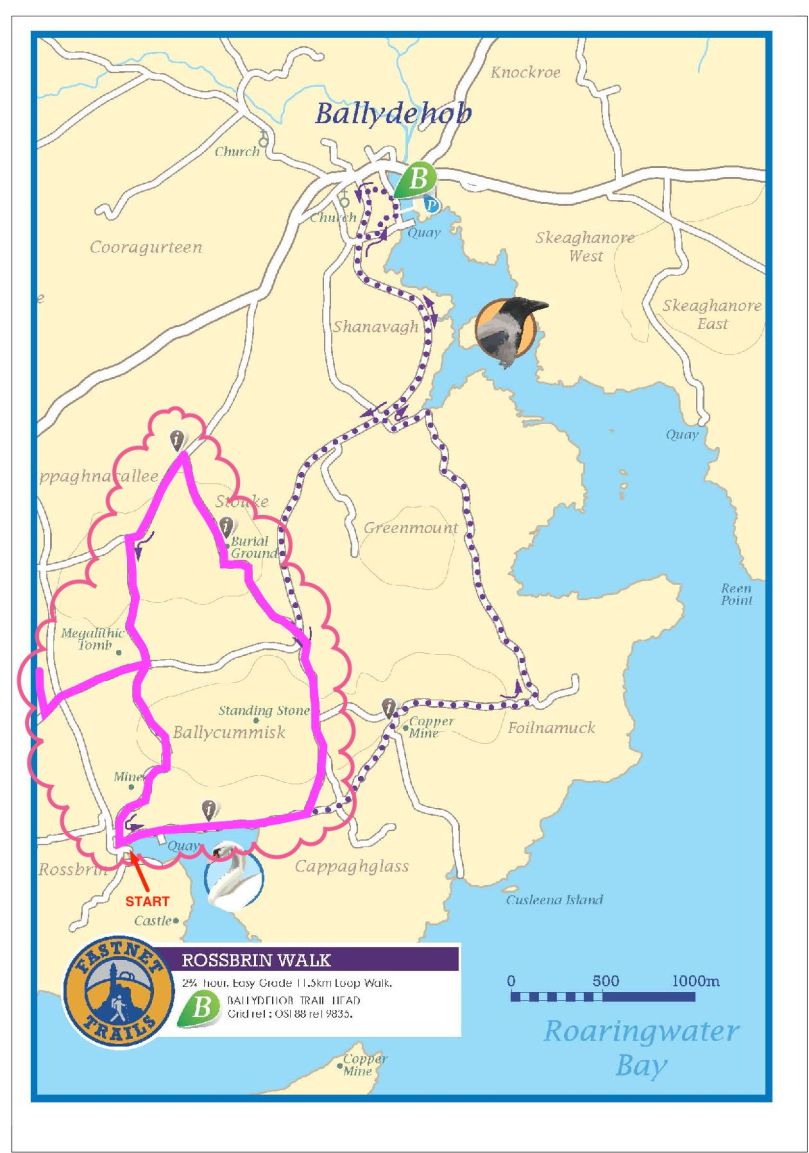
This one is steeper and climbs higher, but it’s full of interest and you can take it as easy as you like. For this walk, you park at the Rossbrin boat slip, at the eastern end of Rossbrin Cove.

Rossbrin trails route revised Export

You won’t need off-road boots and you can take the dog. Give yourself two to three hours, depending on whether you decide to do the detour to see the wedge tomb. This is a nice, rambling pace, with lots of time to stop and chat to anybody you meet, admire the wonderful views, take lots of photographs, and maybe indulge in a picnic along the way. 

The first hill affords lovely views back to Rossbrin Castle

The first hill affords lovely views back to Rossbrin Castle

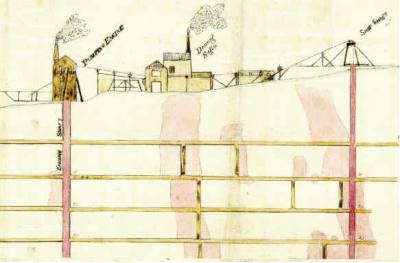
Set off north and turn right after the boat yard and then left up the hill. As you ascend you will see the remains of old mine workings to your left. The earliest records of mining at Ballycummisk refer to 16 tons of ore raised in 1814 and 42 tons in 1815. In 1838 a shaft was sunk 20 fathoms, mainly through barytes and shale. In 1857, 174 tons of ore were sold, mainly copper. By 1861 the mine was recorded as being ‘one of the best developed and very satisfactorily worked.’ The ‘Lady’s Vein shafts’ are marked on the OS 6” map. The Ballycummisk Mining Company worked the mine from 1872. In 1878 a section down to 228 fathoms was noted, but in the same year the mine was recorded as ‘abandoned’. Nowadays some concrete pillars and the slag heap are the most visible remains of the once thriving mine-site.

Old Mine site

There are extensive views over the countryside beyond the old mines

At the top of the hill, where you will find a sign to the riding stables, turn left and head through the townland of Ballycummisk with pleasant country views to the west. Once you get to the crossroads you may see a little wayside stall selling vegetables on the honour system. If you’ve brought a backpack, this would be a good place to stock up on carrots, potatoes, or yellow tomatoes.

Beware of the bull

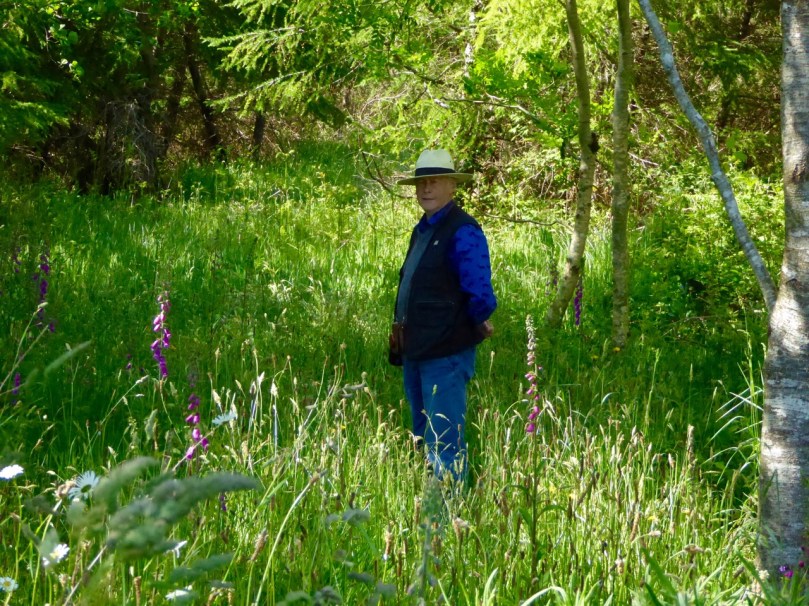
Wayside StallAt this point, we recommend a detour to see the Kilbronogue wedge tomb. Turn left and walk until you reach the next crossroads. Go straight through the crossroads and a short distance on you will see a lay-by on the right side of the road. Step over the wire and find your way up the path that has been generously maintained by the landowner. In early summer this path is awash with ox-eye daisies. It meanders up through a birch plantation until you emerge in a small clearing to find the wedge tomb.

Path to wedge tomb, Kilbronogue

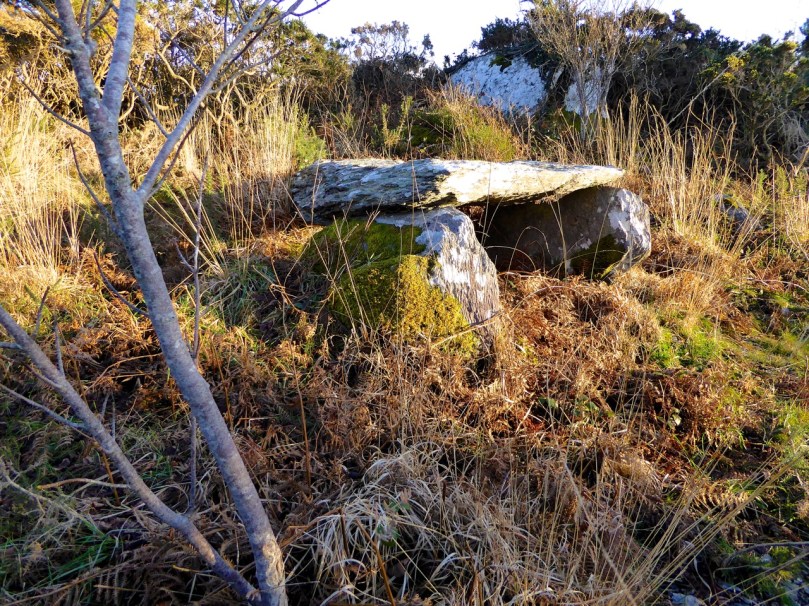
Like most wedge tombs, this one is orientated to the west – take a look at our post Wedge Tombs: Last of the Megaliths for lots of information on this class of Bronze Age monuments. This is a lovely example, and we are grateful to Stephen Lynch for ensuring its wellbeing and providing access to it.

Kilbronogue Wedge tomb

Retrace your steps to the second cross roads and turn left up the hill, turning right when your reach a T junction, and then take the left fork at the Y. This is a pleasant country road – farmland stretches on either side, with ruined or abandoned houses dotted here and there among the neat modern farmhouses with their colourful paint and bowery entrances.

In spring and summer the hedgerows are heady with wild flowers of every variety.

Turn right again at the next junction and you will come shortly to the beautiful and atmospheric Stouke burial ground. Although we have read that there are the ruins of an old church in this graveyard, we have never found it. But there are other items of great interest here, the traditional burial place of many island dwellers. In the centre you will find the grave of two priests, Fathers James and John Barry, who were parish priests here during the time of the famine. According to the Historic Graves listing for Stouke  “Sarah Roberts who is buried here in this tomb, died at an early age… worked as a housekeeper for the parish priest… When his sister died and was also buried here, Sarah’s coffin was in perfect condition. She was reburied with the parish priest even though she was not a Catholic. People of the parish come to pray at this tomb on the 24th June at John’s Feast Day.”

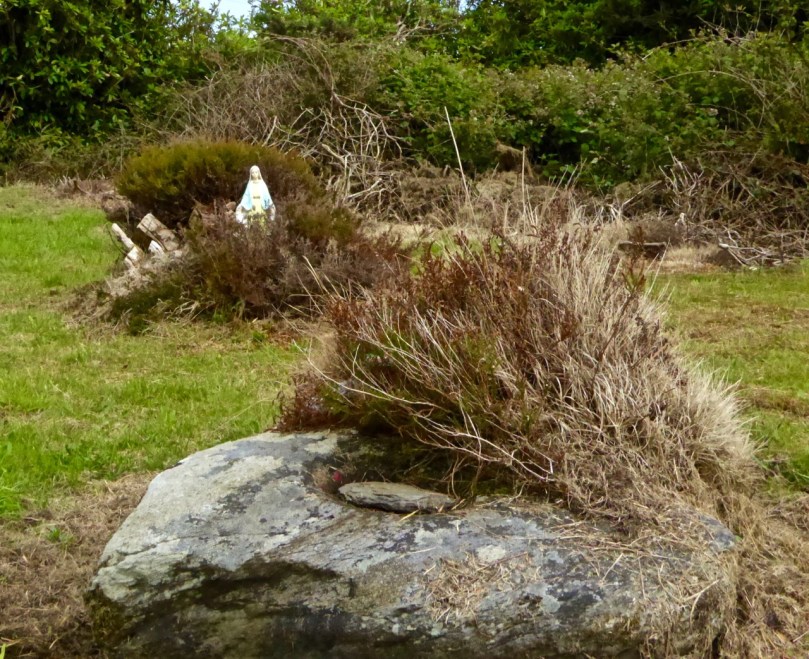
A little way to the right of this grave is a rock, partially covered by heather, that contains a bullaun stone, known locally as the Bishop’s Head. Once again, according to the Historic Graves entry, “The bishop was confirming children in a nearby church. Red coats came in and beheaded the bishop.”

Amanda photographs the bullaun stone

Amanda photographs the bullaun stone

There are offerings of coins in jars at the bullaun stones, and at the priests’ grave. Leave one too, along with a prayer or wish for a loved one.

Bishops Head bullaun stone, Stouke Graveyard

Bishop’s Head bullaun stone, Stouke Graveyard

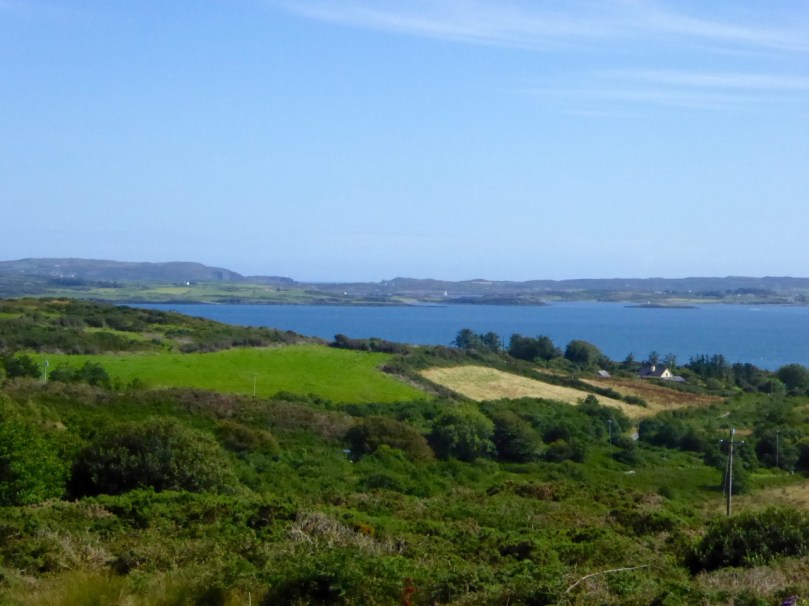
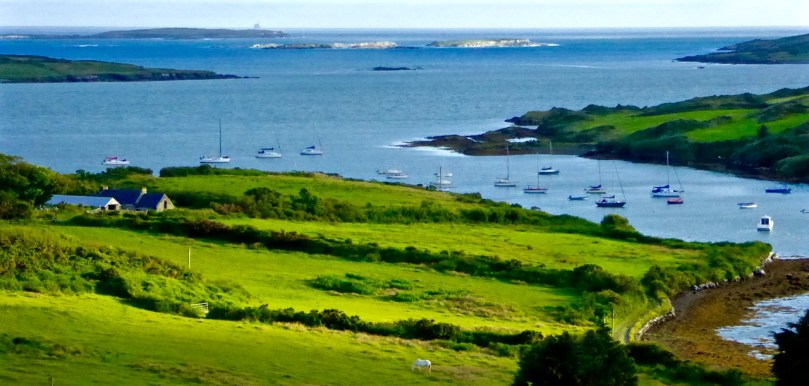
From Stouke the road drops down to a cross roads. Go straight through and start to climb again up to Cappaghglass. Ignore the left turn and carry on until you reach a Y junction. Take the right fork, pass all the ripe blackberries (if you’re able) and as you crest the hill the whole of Roaringwater Bay is laid out before you. Few views in the country can equal this one for sheer scope: all the islands in Carbery’s Hundred Isles come into view, The Baltimore Beacon gleams on its rocky outcrop to the east, while the Fastnet Rock sits sturdily on the horizon, and the Mizen Peninsula stretches away to the west.

Roaringwater Bay from Cappaghglass

Descend the steep hill, turning right at the T junction, and meander down to Rossbrin Cove.

Shaft of Sun

Now a peaceful boat harbour, Rossbrin in the 15th Century was the domain of Finghín O’Mahony, the Scholar Prince of Rossbrin, a man who used the riches extracted from taxes paid by Spanish and French fishermen to fund a centre of learning here in Rossbrin where scribes and learned men wrote and translated books which still exist today. The ruined section of the castle still standing gives little evidence of the erudite court that was once respected throughout Europe. A fish ‘palace’ for processing pilchards once provided employment to the people of Rossbrin, but little trace remains of it, or the holy well at the shore that once attracted those seeking cures for their ailments.

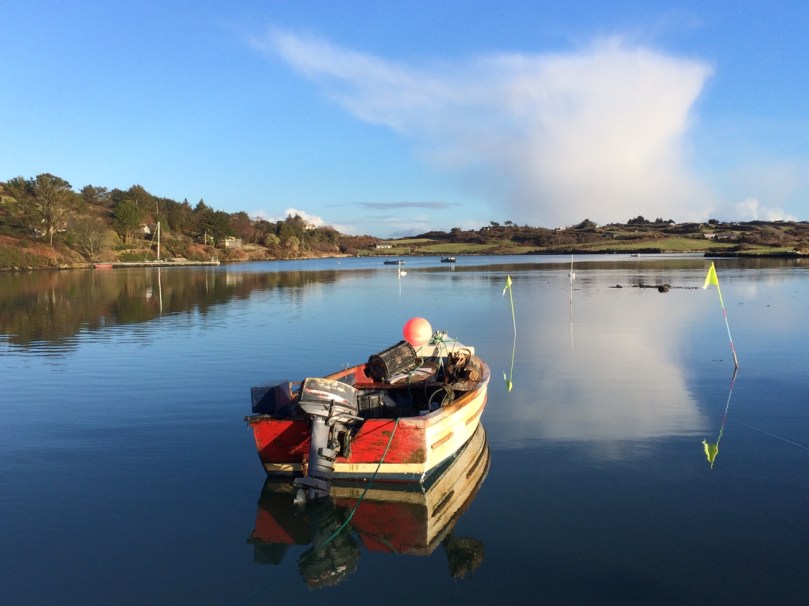
Kayaks at Rossbrin Cove

If the weather’s warm and the tide’s in, this is a good spot for a dip. No? Well, a photograph, then. 

We hope you’ve enjoyed the two Rossbrin Loop walks – do let us know how you got on.

Ballycummisk Mine

Ballycummisk Mine

Oldcourt

red hull

…At Oldcourt a boat-building yard flourished within the walls of an old O’Driscoll castle overlooking the pier and river. Schooners and steamships used to anchor at this spot, the highest point they could travel up the river. Here their cargoes of coal and other supplies were unloaded and placed on specially built lighters with a small draught that would be poled along a further sluggish turn or two upstream to the pier at Skibbereen. In this way cargoes of cattle were brought up by islanders to be sold at the market… (description of the townland of Oldcourt from The Coast of West Cork by Peter Somerville-Large 1974)

gentle Ilen

The tidal River Ilen making its lazy way out to Roaringwater Bay on a late summer evening has a melancholy beauty: it is wide and slow and – mid tide – is a perfect mirror to the sky. The sounds of Oystercatchers and Curlews coming over the water always bring thoughts of autumn: the harvest is ready to cut, the verges are brilliantly orange with the montbretia and the hedges purple-red and weighed down with fuscia.

Montbretia

wide river

We went down to Oldcourt to seek out history and atmosphere. We knew that it had once been a transport hub for the transhipments of goods and we wanted to see what might be visible from those earlier times. It was the river Ilen (pronounced eye-len) that gave birth to Skibbereen following a pirate raid on Baltimore in 1631. According to Skibbereen historian Gerald O’Brien …in the wake of the shock of that – the most daring pirate raid mounted against Britain or Ireland – a small number of survivors rowed upstream to resettle in the safety of the Ilen Valley. The role of this river-borne migration from Baltimore [was] a factor in the foundation of Skibbereen… (Journal of the Skibbereen and District Historical Society, Vol 7, p 91).

reflections

beyond the bridge

rust

We found atmosphere a-plenty. On the upstream side of the wide inlet where the transhipment quays were sited is a streamlined modern boatyard where sleek yachts are wintered and serviced while, opposite and downstream, is a far more eclectic establishment surrounding and embracing the remains of the medieval castle and bawn: this is Hegarty’s‘…one of Ireland’s last surviving traditional boatyards…’

birdie in circle

Our aim was to search for the old quay and the medieval buildings which had been part of the castle demesne, but we were fascinated to pick our way through boats of all kinds – classic, sailing, fishing, ferrying – and boat paraphernalia: here an old decapitated wheelhouse, there a collection of masts, everywhere ropes and tackle…

green ropes

Oldcourt Castle is a tower house standing four storeys high but originally at least one storey higher, once surrounded by a bawn, some ruins of which remain. It was an O’Driscoll clan castle, probably dating from the 15th century, and was captured by English forces after the Battle of Kinsale in 1601.

Old Court Castle

Ilen and Castle

Part of the castle bawn was used as a grain store up to comparatively modern times: now it houses a fascinating boat restoration. The story begins with Connor O’Brien (1880-1952) whose ketch, the Saoirse, took him on a circumnavigation of the world between 1923 and 1925. On this journey he stopped off at Port Stanley in the Falkland Islands. The islanders were so impressed at the way the Saoirse rode the waves that they asked O’Brien to arrange the building of a similar boat. This was the Ilen, named after the river and estuary and registered at the port of Skibbereen in February 1926. She was 56 feet in length overall with a beam of 14 feet and a displacement of 45 tonnes. Connor set sail in August 1926 from Cape Clear, arriving at Port Stanley in January 1927 where he handed it over to the new owners, The Falkland Islands Company, in exchange for £1,500. There she remained until the early 1990s, carrying cargoes of stores, mail, passengers and sheep. Limerick man Gary McMahon found it abandoned on one of the islands and determined that it should return to its homeland for restoration. There was great excitement when he sailed the ketch back into Baltimore in 1998.  The refitting of this eighty-two year old vessel in the old bawn at Hegarty’s, Oldcourt, is now the centre of an educational project allowing people to experience first-hand the ancient skills of wooden boat building.grain store

ilenframesThe old grain store – formerly part of the Castle bawn – now houses the restoration project of the AK Ilen (above – courtesy of Roeboats)

Such a hive of activity at OIdcourt today… Echoes of busy days gone by when the schooners were arriving with their cargoes bound for the growing town of Skibbereen.

Ilen postage stamp