Sheep’s Head Stone Circle Revived!

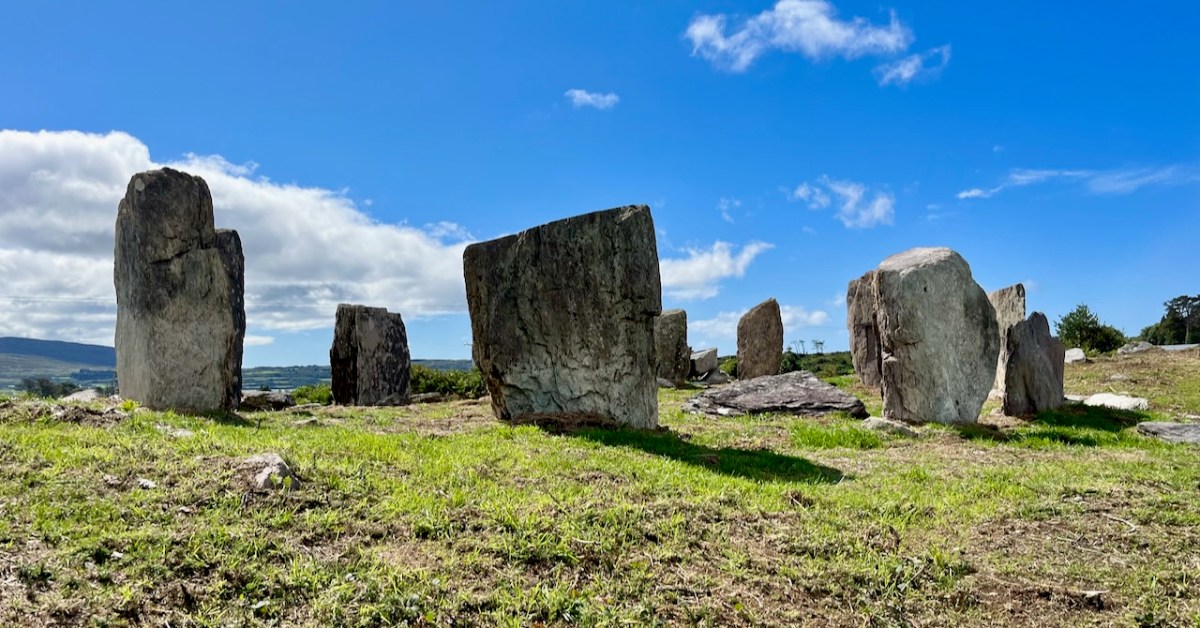
Gorteanish Stone Circle, near Ahakista on the Sheep’s Head Peninsula, is singular because it lacks ancient history. It doesn’t appear on the early Ordnance Survey maps and – to the best of my knowledge – no local stories or folklore have been recorded about it. It is a Bronze Age archaeological site, but it has apparently been overlooked until comparatively recent times.

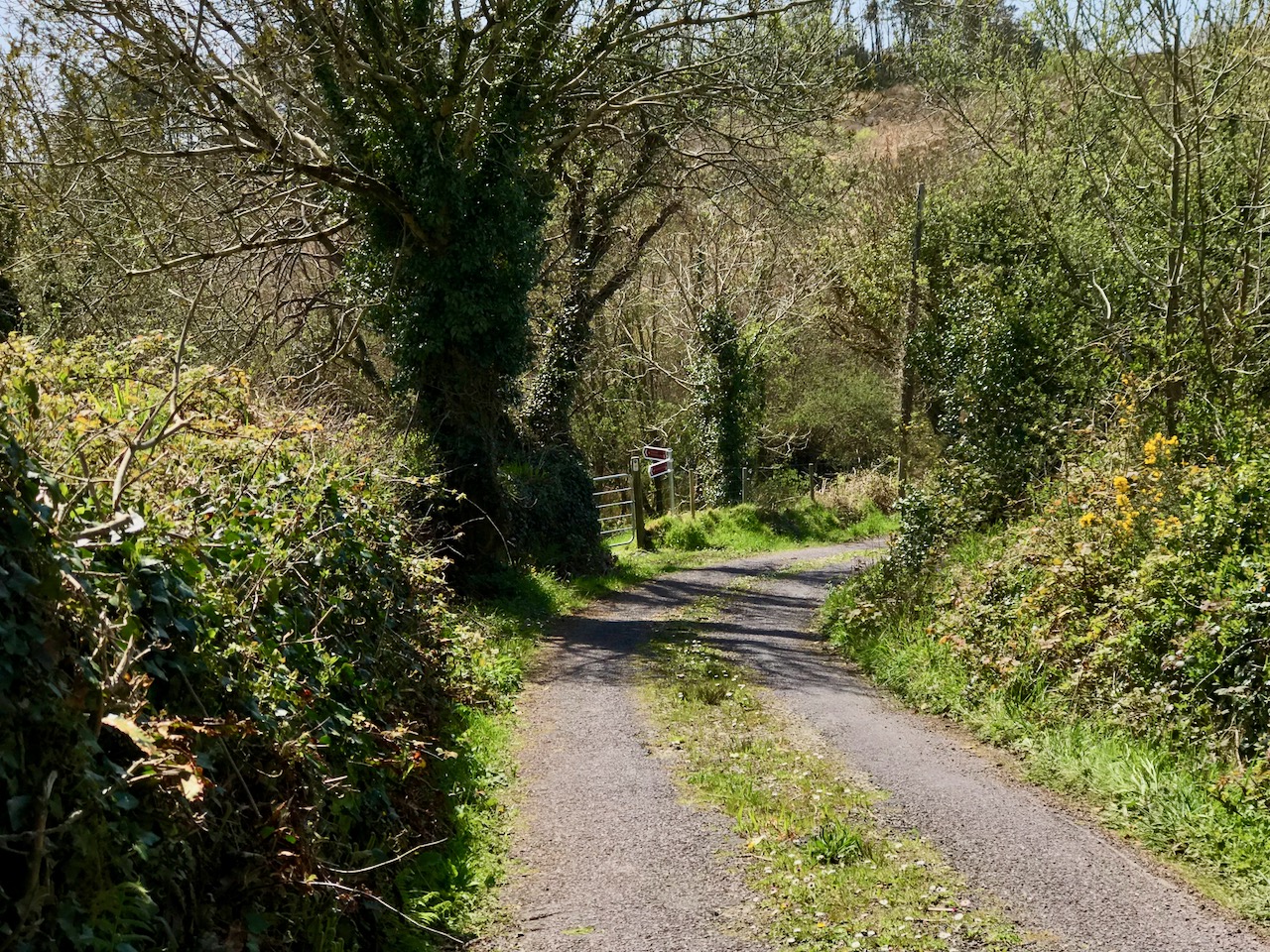
It’s a short walk to the west out of Ahakista to the site of the stone circle. The way is marked by the stone above. Atha Tomais means ‘Tomais’s Place, and refers to Tom Whitty from Philadelphia, who settled on the Sheep’s Head in the 1980’s with his wife Suzanne and family. He is credited with having come up with the idea of establishing The Sheep’s Head Way – a series of footpaths covering the peninsula, and the project was put in hand by Tom and a local farmer, James O’Mahony, completed in (remarkably) just 18 months and formally opened by President of Ireland Mary Robinson in July 1996. During clearance work for the Ahakista footpath the remains of the stone circle at Gorteanish were discovered. It has since been suggested that there were stories of ‘old stones’ being hidden in the undergrowth. A footpath giving access to the stones from the nearby lane was duly completed and opened, and the inscribed stone marks this occasion.

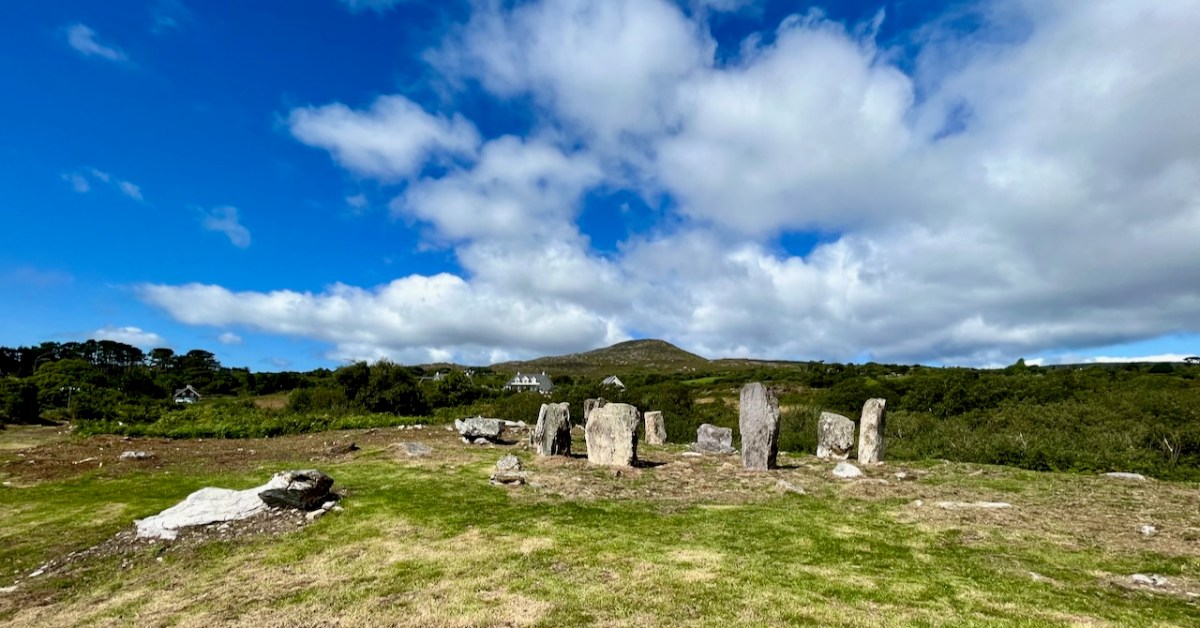
This photograph shows the circle more or less as it was found in the 1990s. Four stones are standing, and others are lying prostrate.
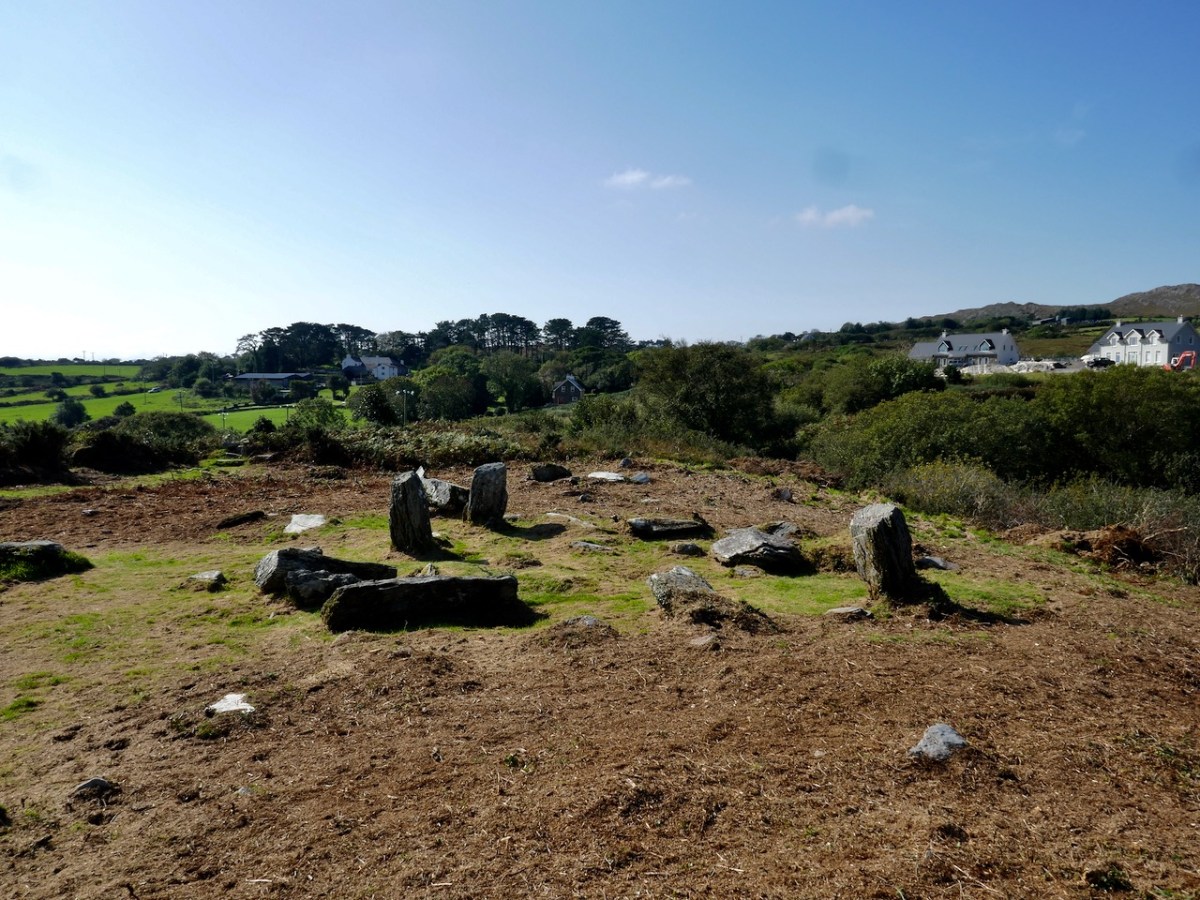
Earlier this year, the decision was taken by Professor of Archaeology at University College Cork, William O’Brien, together with a group of students, to extensively study the site at Gorteanish. Their mission was to excavate the site where necessary to establish which of the stones had been standing and to see how feasible it might be to restore these standing stones in their original sockets, using only traditional methodology. A significant area around the whole site would also be examined to search out any evidence of human occupation and activity – and hopefully to provide a reasonably accurate dating for the circle.
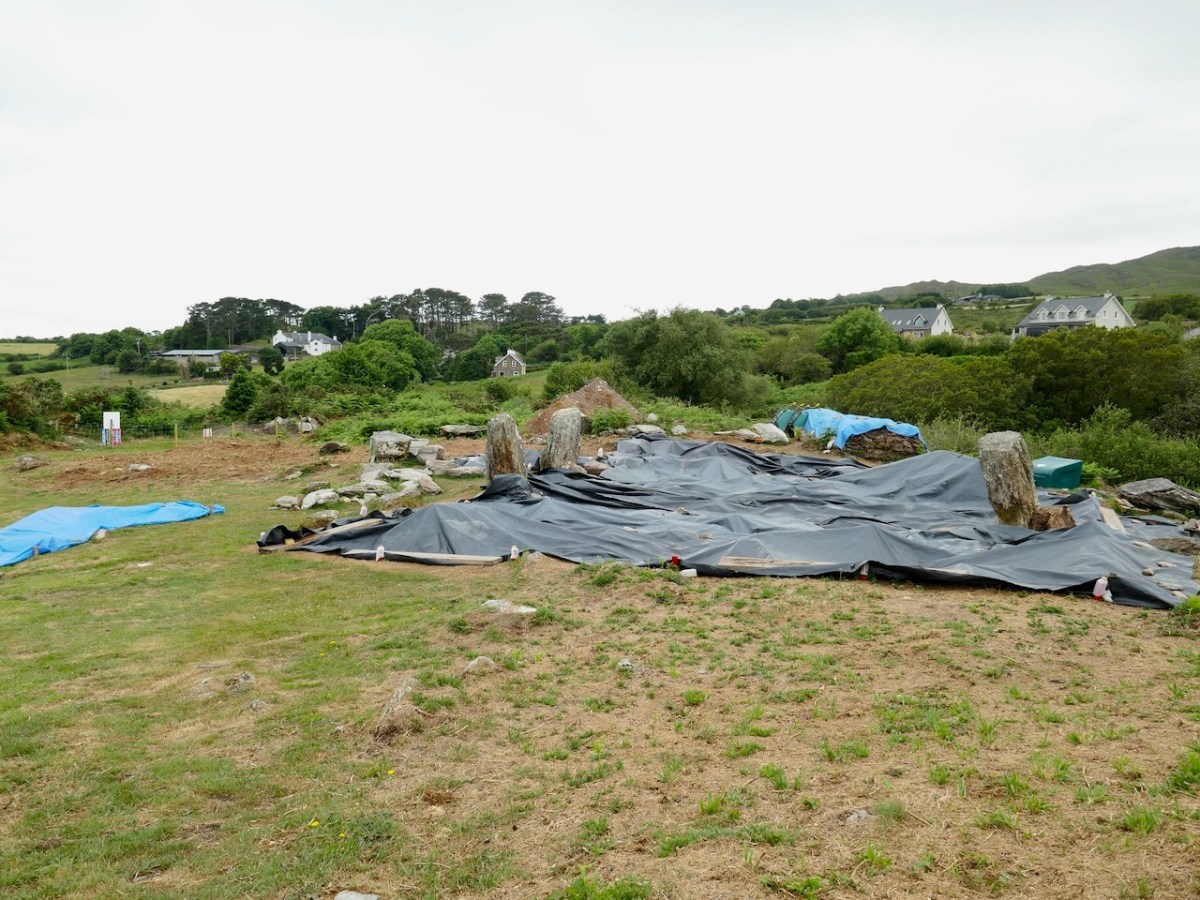
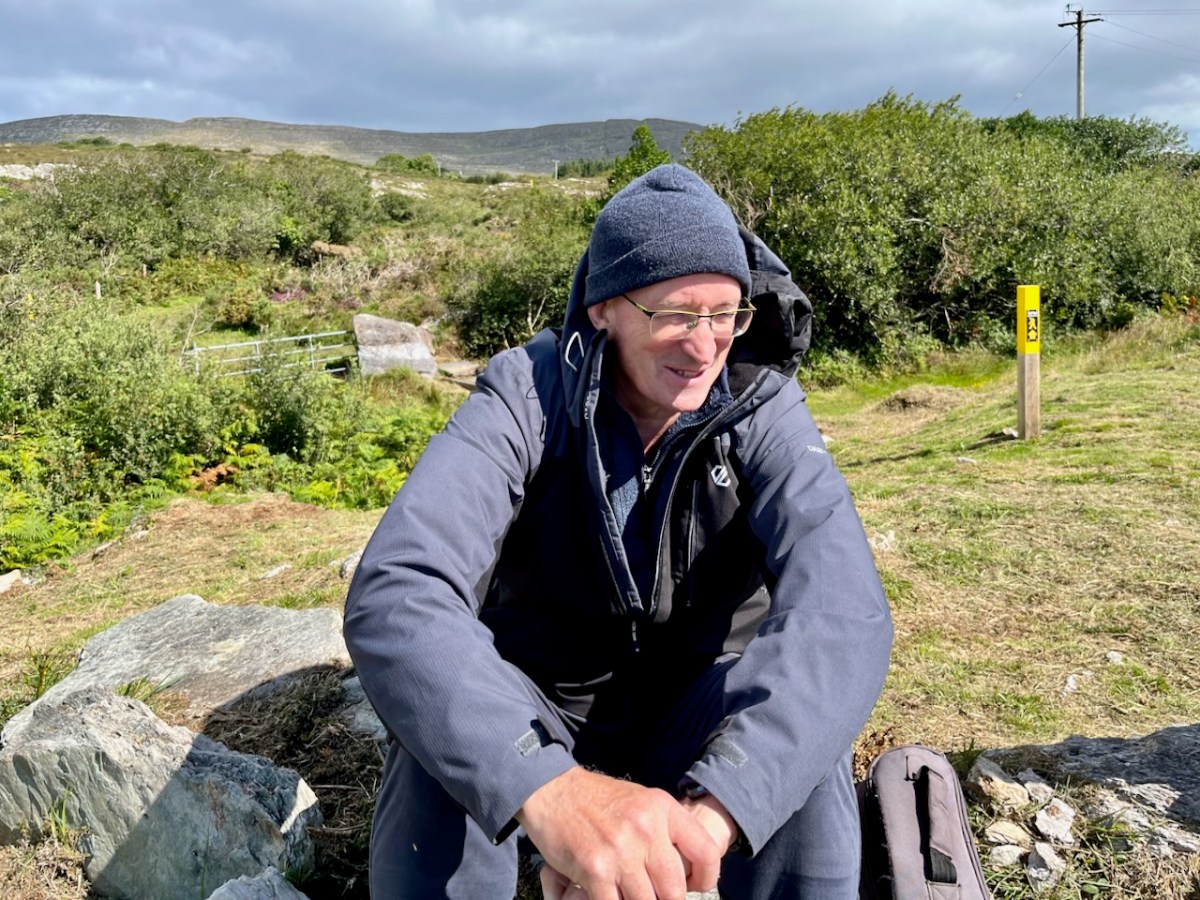
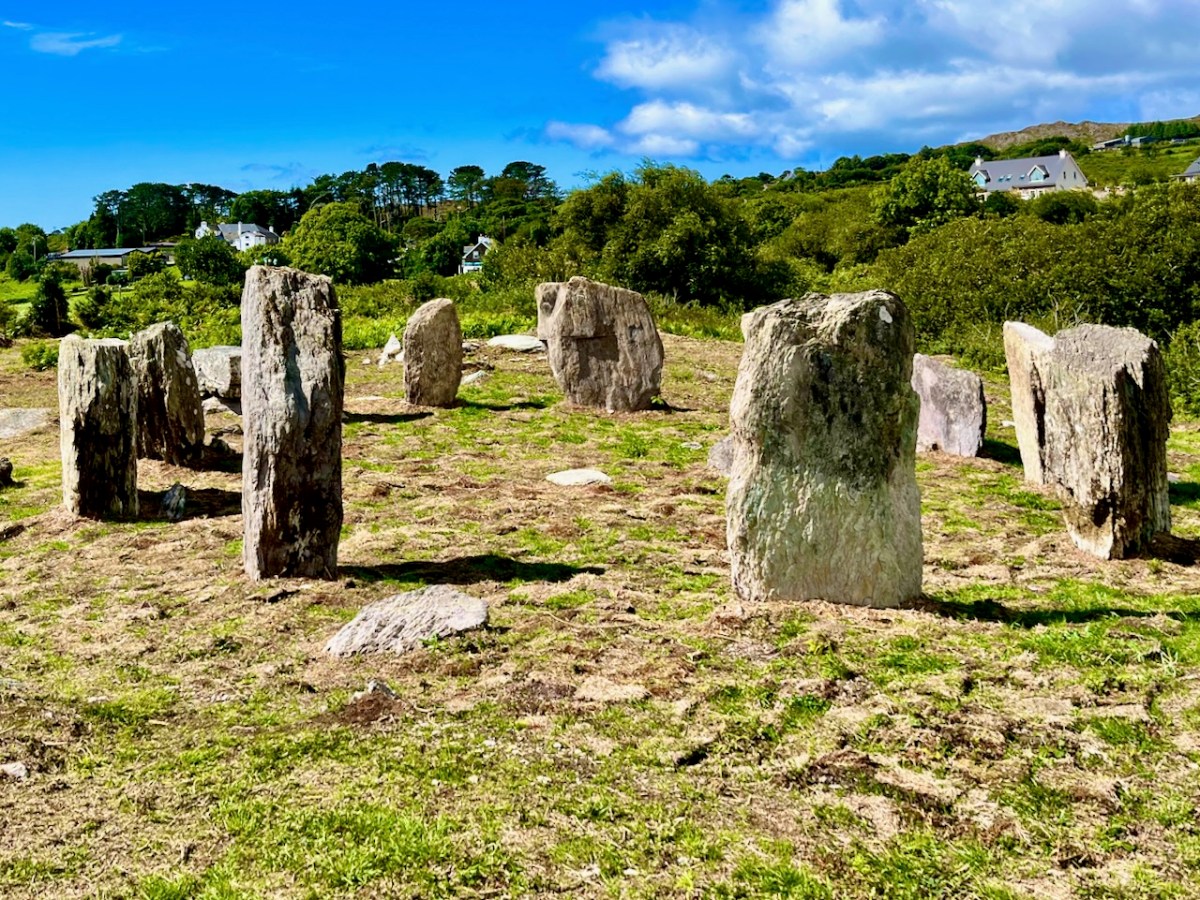
Finola and I visited the site while the archaeological works were progressing (above). Yesterday (5 August 2023) Billy O’Brien (below) was on hand to give a detailed talk on the excavation and restoration work, and we could see, for the first time in many generations, the circle restored to its complete state: it now has all eleven stones standing.
The view above shows a boulder burial monument situated to the south-west of the main circle. This has always been a visible feature of the site. A boulder burial (once called a boulder dolmen) is peculiar to Ireland. In fact it is found only in Counties Cork and Kerry. Finola has written comprehensively on this subject, here. It is usually a substantial raised stone supported on a bed of smaller stones:

. . . Boulder-burials are a group of prehistoric stone monuments of megalithic proportions, whose distribution is largely confined to south-west Ireland. Some 84 examples have been identified, 72 of these in Co Cork and the remainder in Co Kerry, where they occur both singly or in small groups of between two and four. They consist of a large boulder erratic supported by an arrangement of smaller stones, with no covering cairn or tumulus. Several examples are known which are centrally placed within stone circles . . .


Boulder-burials: A Later Bronze Age Megalithic Tradition in South-West Ireland
William O’Brien Dept of Archaeology, UCG 1992

A closer view of the boulder-burial at Gorteanish: it can be seen that the main ‘boulder’ element has split in two through the ravages of time. In the main circle, all the standing stones have been restored to their original (relatively shallow) sockets, and fixed using rammed small stones, following the evidence gained during excavation.

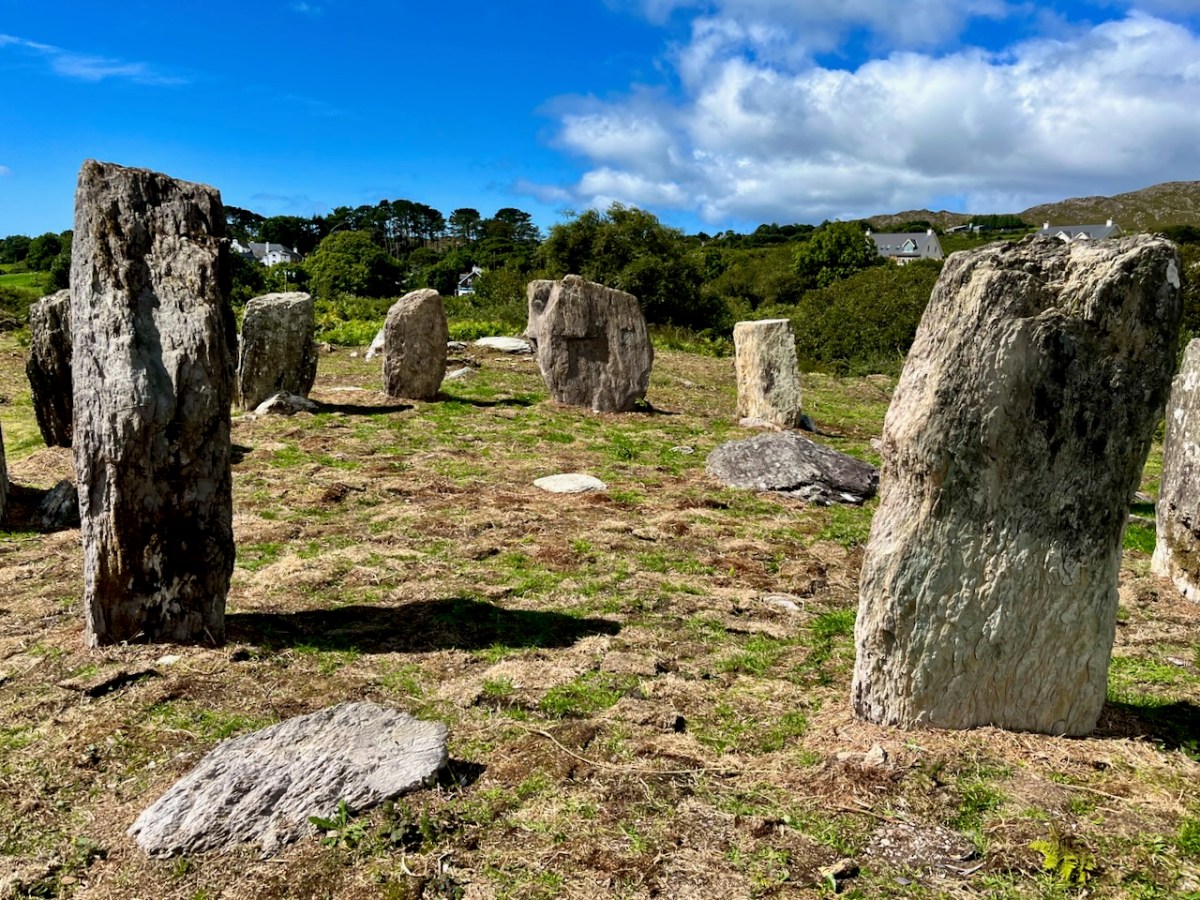
Most stone circles have a specific orientation. This can be seen by the shaping of the stones around the circle. In this case there are two clear ‘portal stones’ on the east side, directly opposite an axial stone on the far side (above). More usually, the stone opposite the portals is flatter, when it is known as the ‘recumbent’. In this case it is a substantial stone with a shaped top (detail, below).Perhaps this points to a feature on the horizon? Our calculations show that the orientation of this circle is towards the winter solstice sunset – just as at Drombeg Circle, not too far from here.

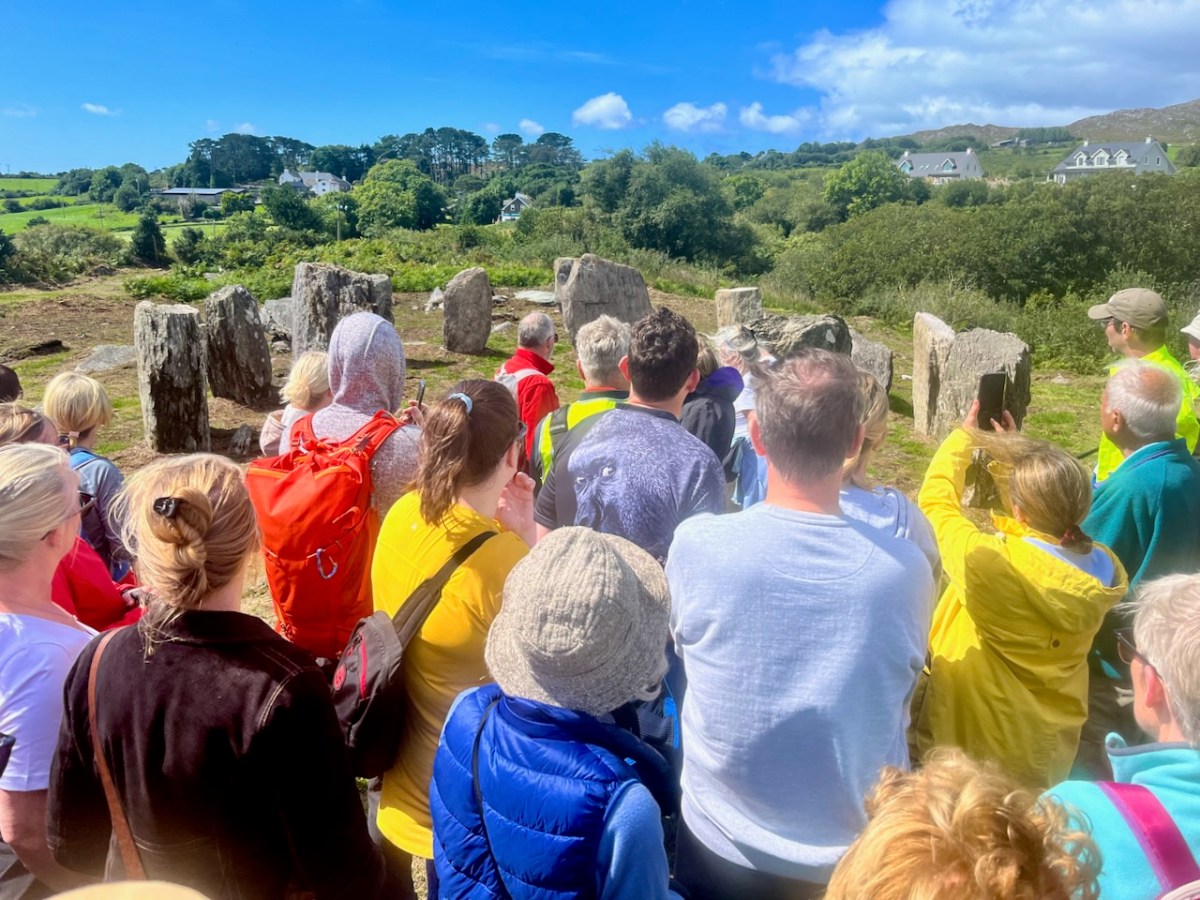
Yesterday’s event attracted a substantial crowd, eager to hear Professor O’Brien talking about this project. Many were no doubt surprised to see the site returned so faithfully to its original state. But – with stones standing – it has now become an iconic piece of archaeology. We are delighted that it is on our doorstep. If you want to read a deeper discussion on stone circles and their historical contexts, look at Finola’s post here – one of many that include the subject.

Another thing that Billy pointed out was the significant ancient stone wall that runs across the site; you can see traces of this above. In this view you can also see an elongated large rock apparently lying on its side. Some local commentators have suggested that this was once a very tall standing stone. If so, at about nine metres, it would have been spectacular! But the excavation confirmed O’Brien’s view that it was never standing, and has always been part of the landscape in its current position.
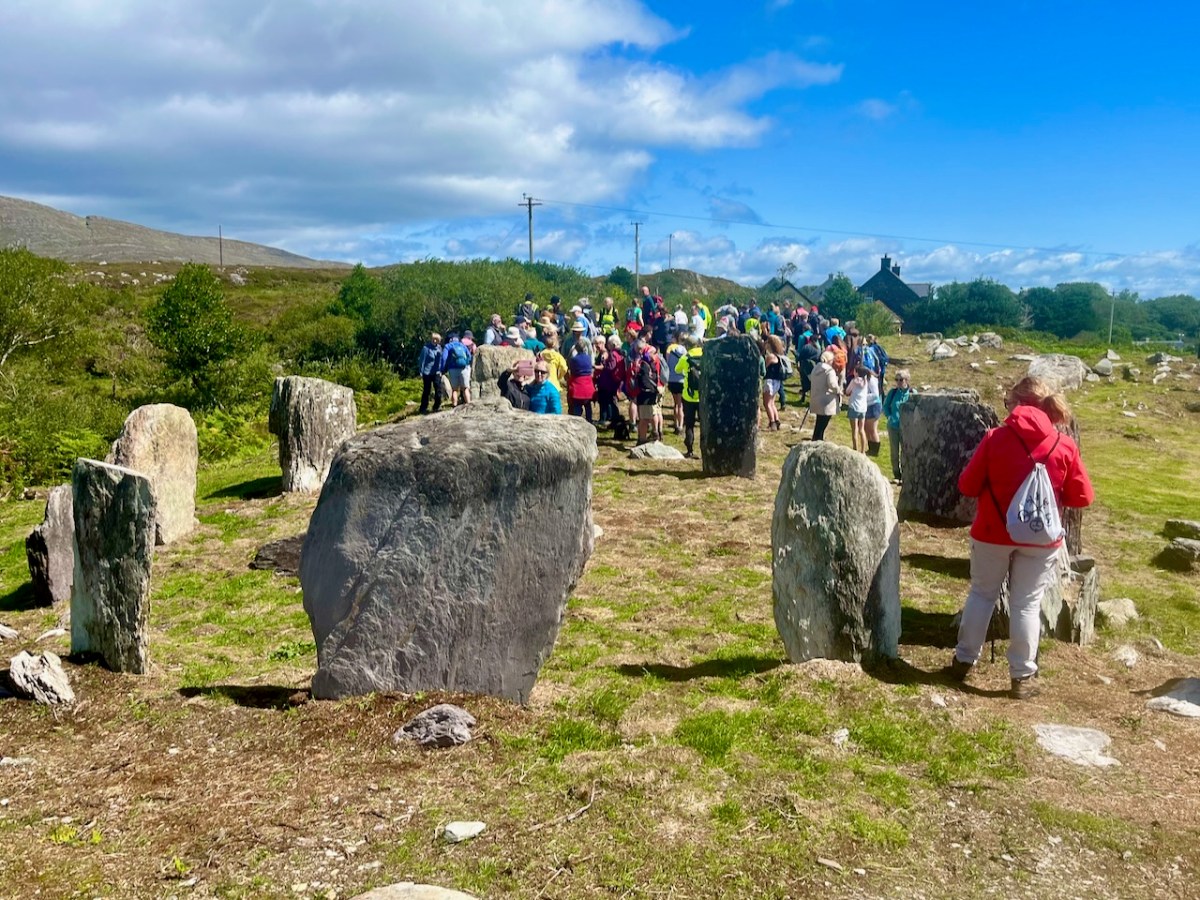
Also, an area of flat ground to the east above the site was closely examined, in case it revealed traces of any human use, but none was found. In fact, there were no signs of any notable human activity. However, one point that I found particularly interesting was that, in the centre of the circle, is a pit containing quartz stones. Quartz, that glinting reflective material that faces the much older main chamber at Newgrange (you can see a pic of it in this post), certainly catches the attention; it’s fascinating that the Gorteanish people – whoever they were – gave it an aura of importance by burying it at the focal point of this circle. The quartz has been replaced in the pit, after the excavation. Its position is marked by the only ‘alien’ element that has been introduce here – a pale coloured flat stone:
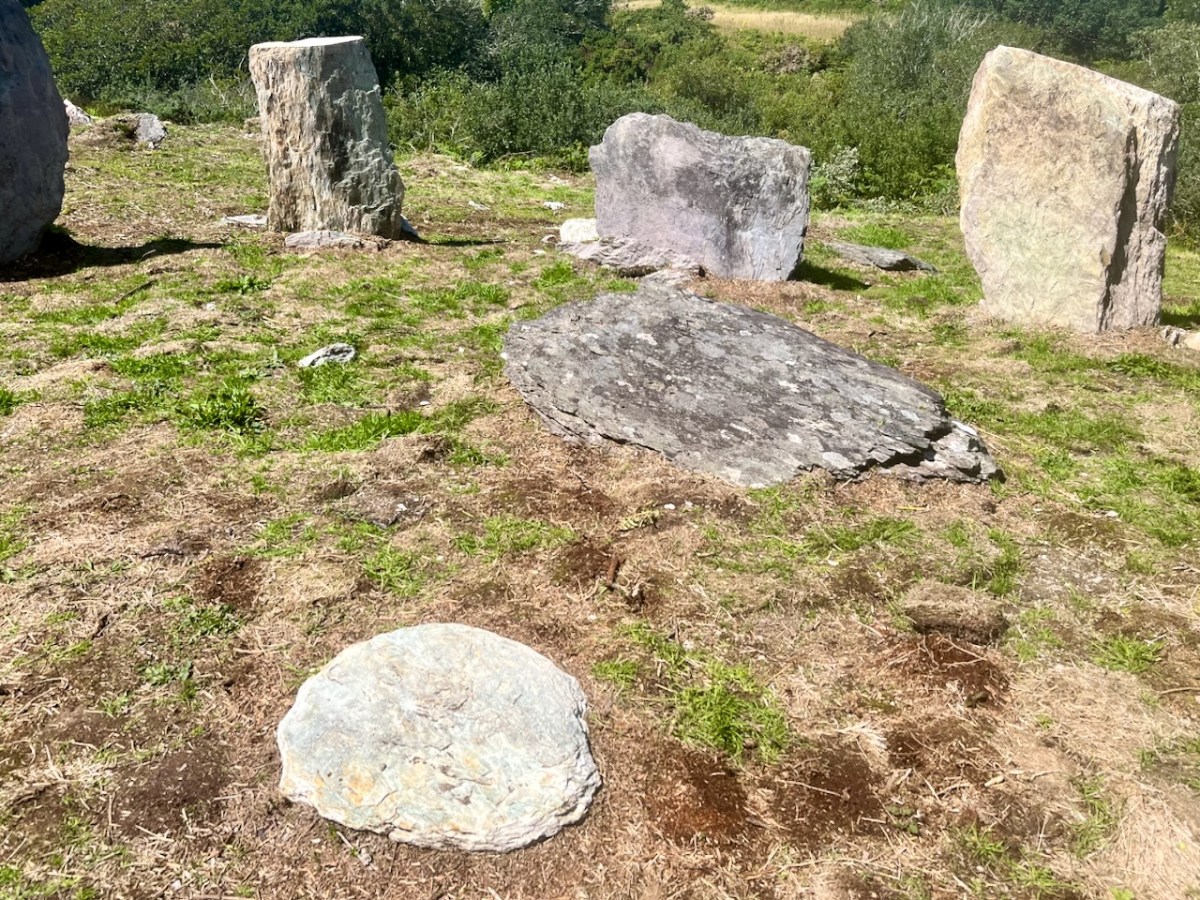
The larger earth-fast stone beyond this new addition has always been there: the site might have been constructed around it. It’s always interesting to see how people are going to react to a circle like this – here is someone’s recent contribution, also giving importance to the ‘magical’ quartz:
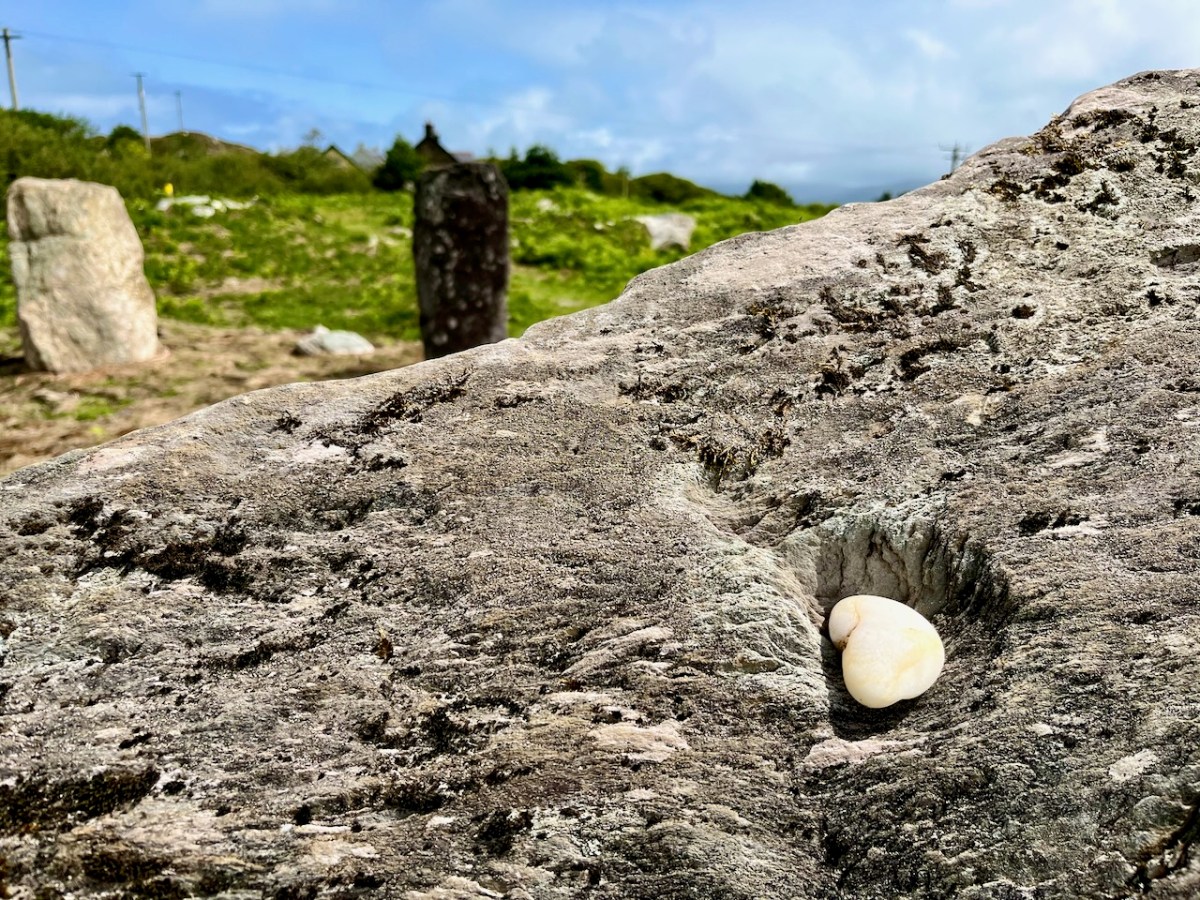
All in all, our day was exciting. It’s pretty special to see something ancient faithfully restored – and open for all to access. The seven fallen stones probably collapsed because of cattle rubbing up against them over centuries. That has been prevented now. We hope you will all appreciate – and enjoy – this new West Cork experience.
Sheep’s Head Oasis – the Heron Gallery

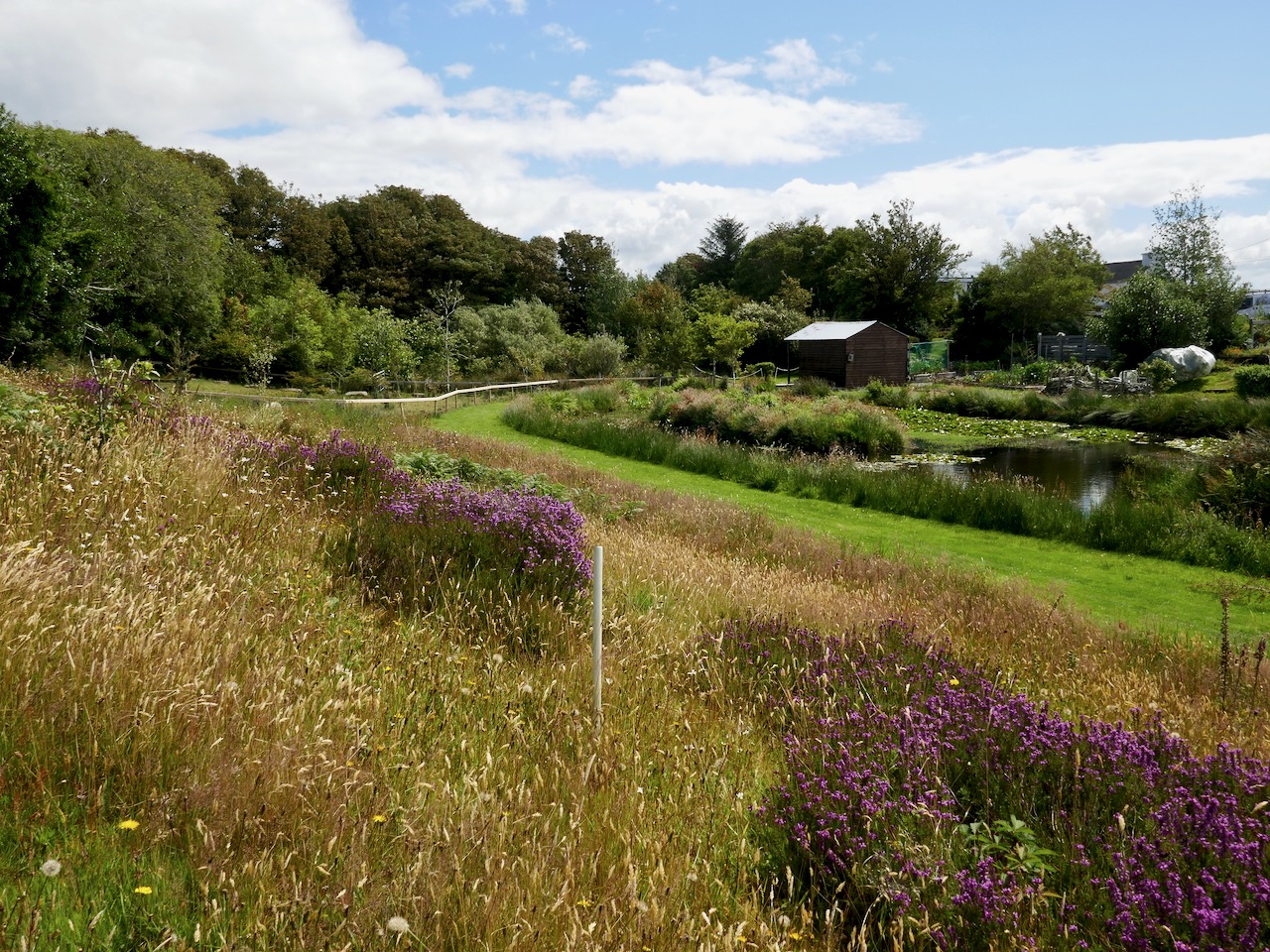
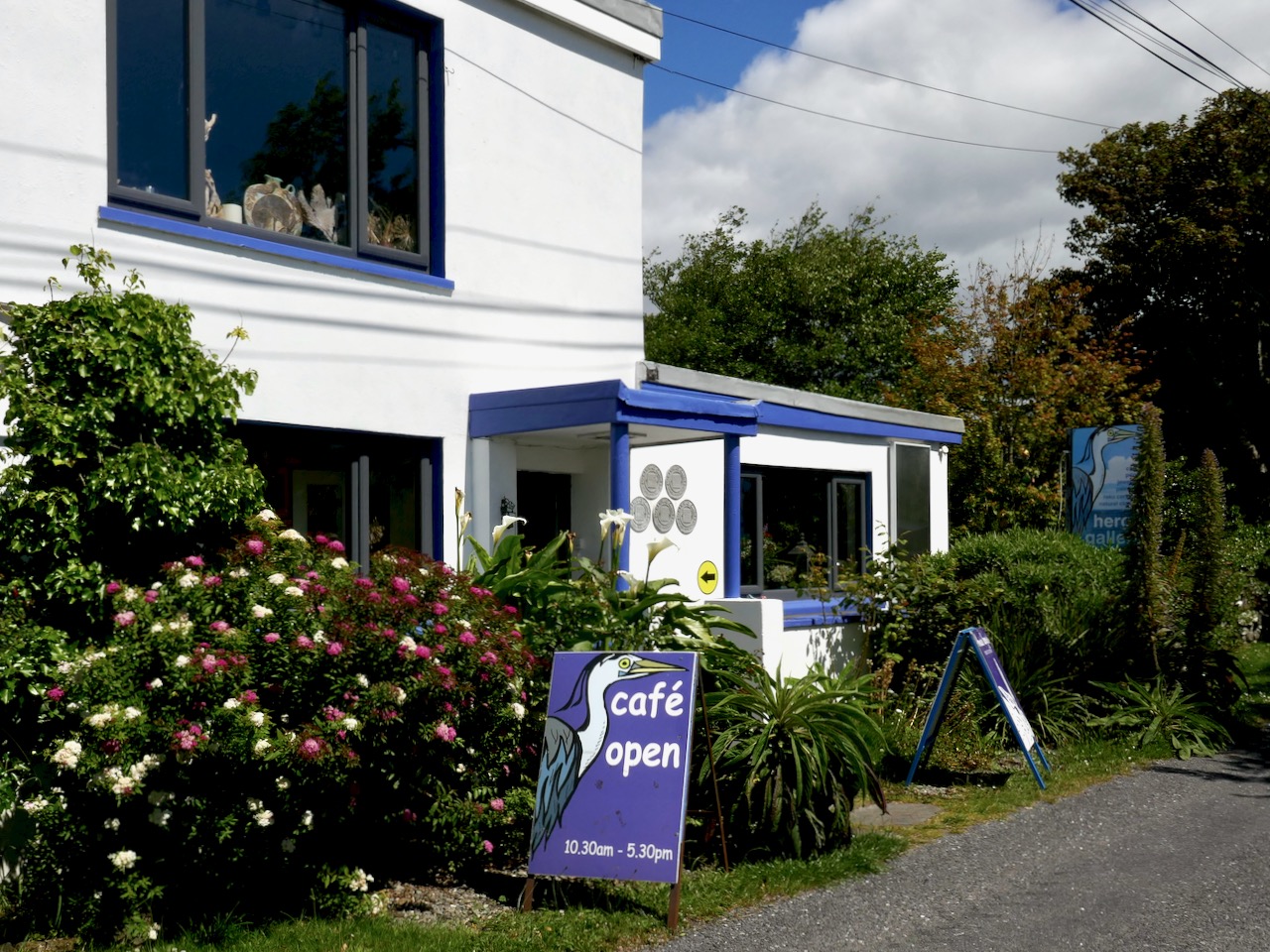
As West Cork slowly opens up again, we welcomed the news that the Heron Gallery in Ahakista was once again serving food in its wonderful garden setting. The only excuse we needed to head over to the Sheep’s Head!

This garden is one of those on the West Cork Garden Trail and most of them are opening now, late this year, of course. According to Trail President, Jean Perry, Like many of us, garden owners have had lots of time on their hands this year and the outcome is that gardens of the West Cork Garden Trail are to an exceptional standard and have never looked better!

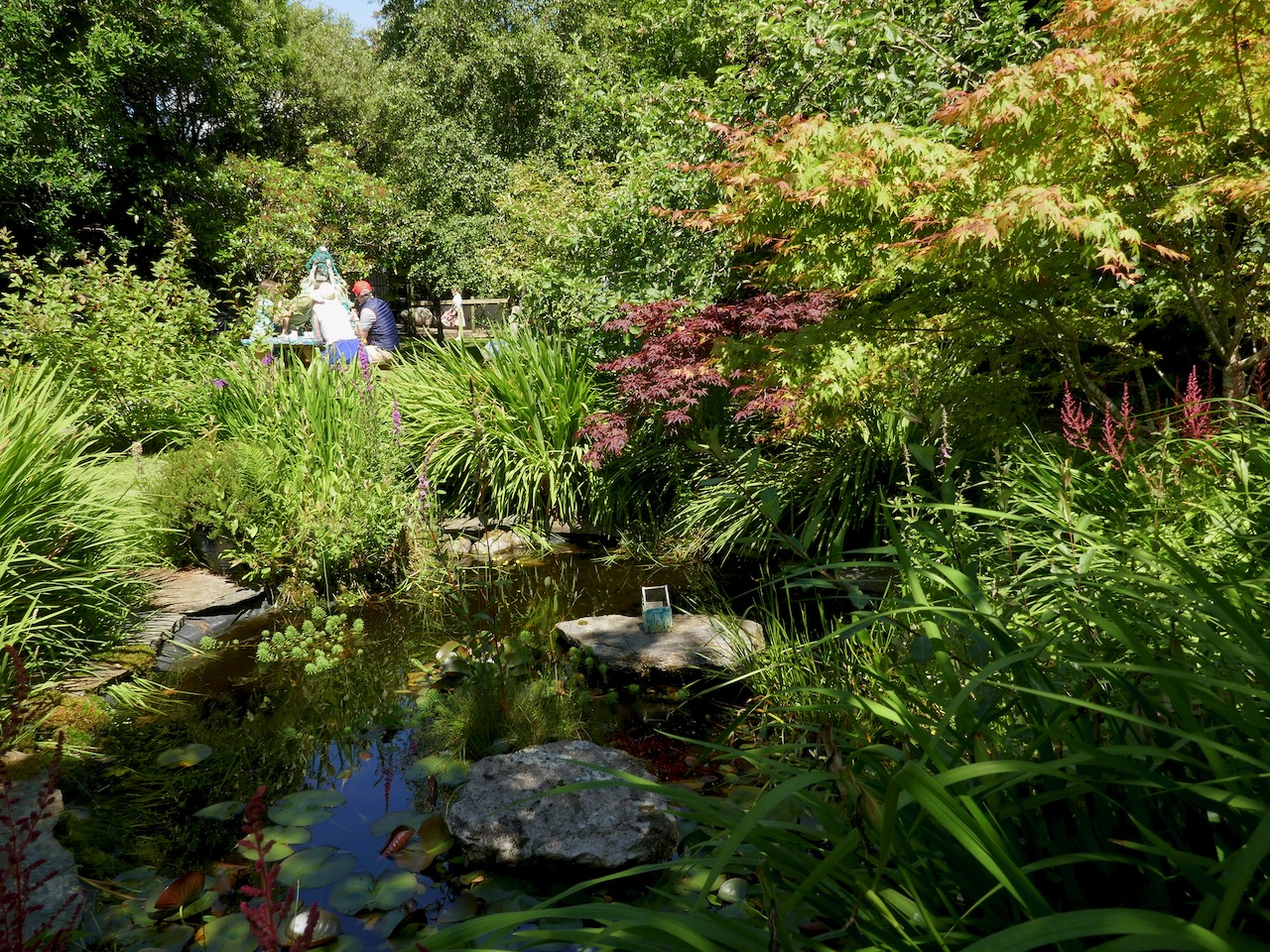
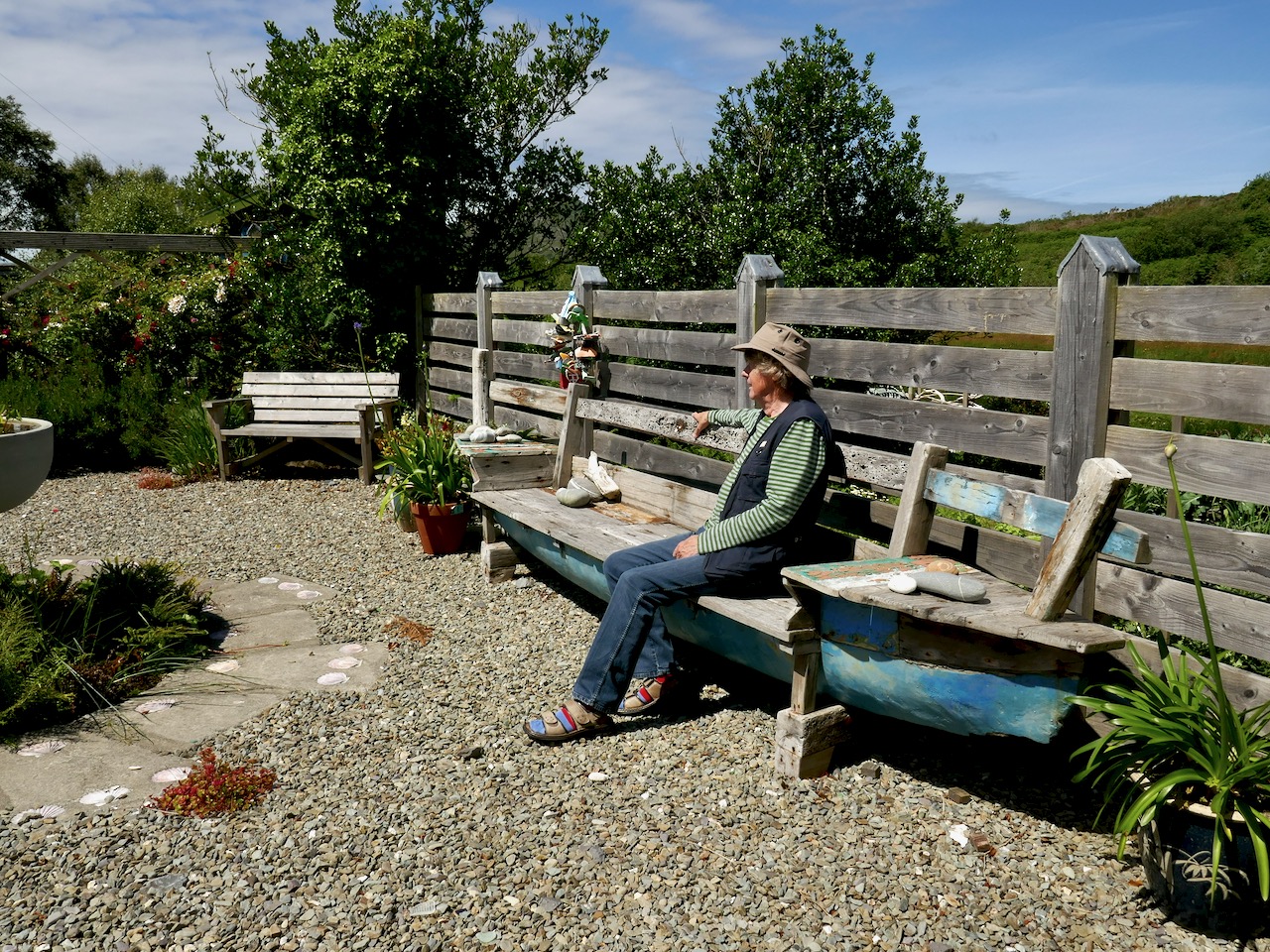
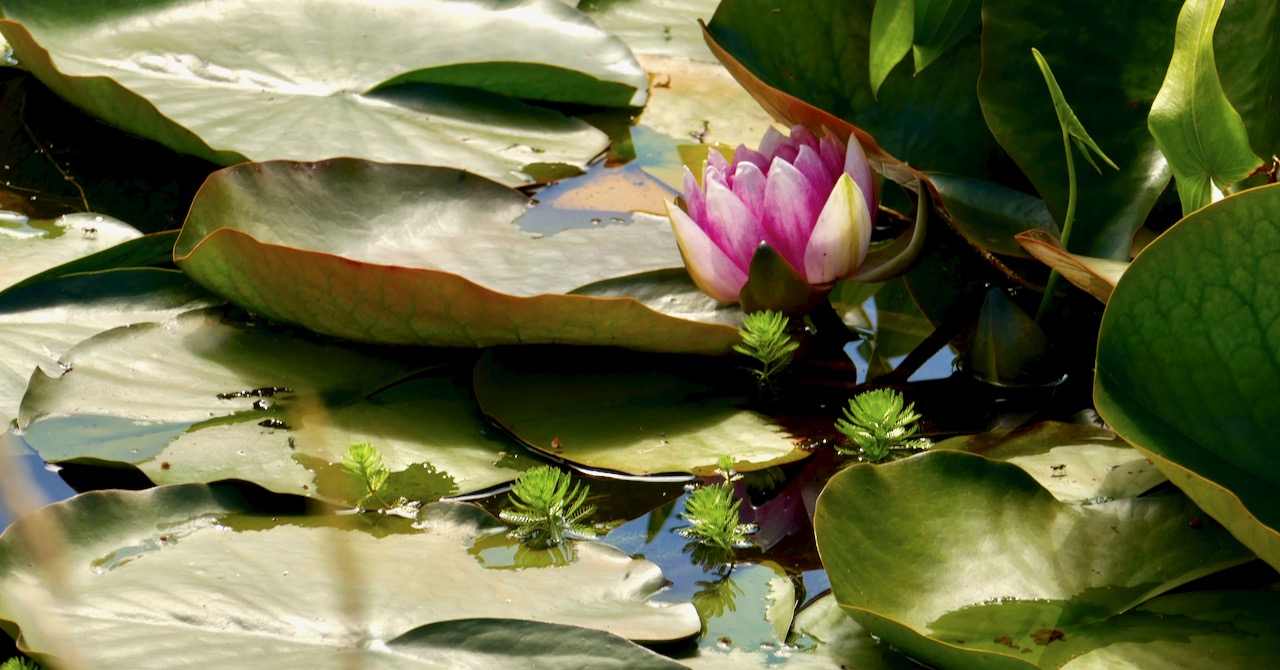
I can vouch for the truth of this as regards the Heron Gallery. There is nothing more delightful than to linger over one of their delicious lunches, or just a latte and cake, seated outside by the pond, and then to wander through the garden.

Annabel and Klaus have been working on this garden for about fifteen years. It was just a field when they took it over – that’s hard to imagine now. For Annabel, it is a haven and an inspiration. Take a look at her website and especially at her blog where she writes about the nature all around her and her latest projects. 

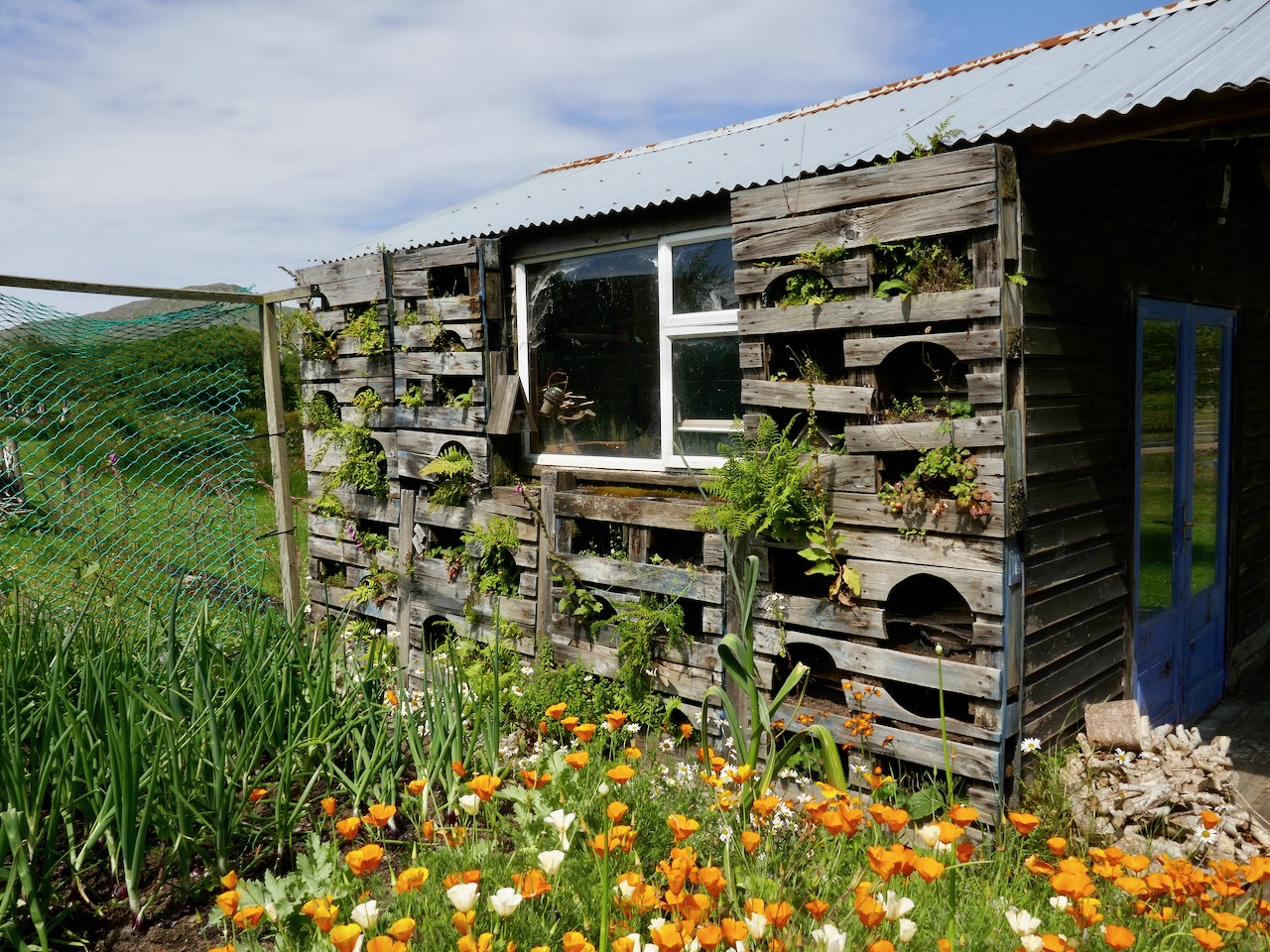
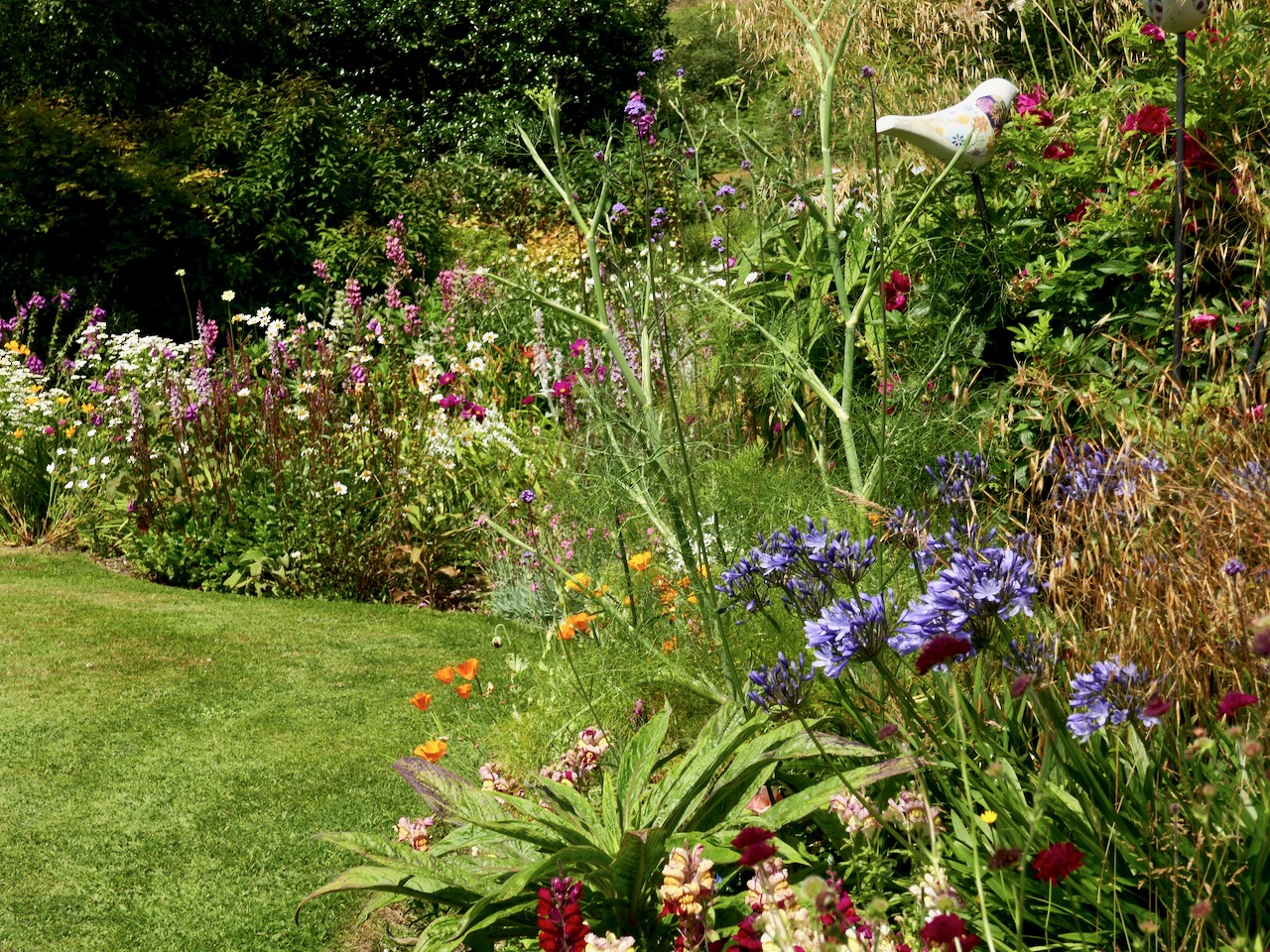
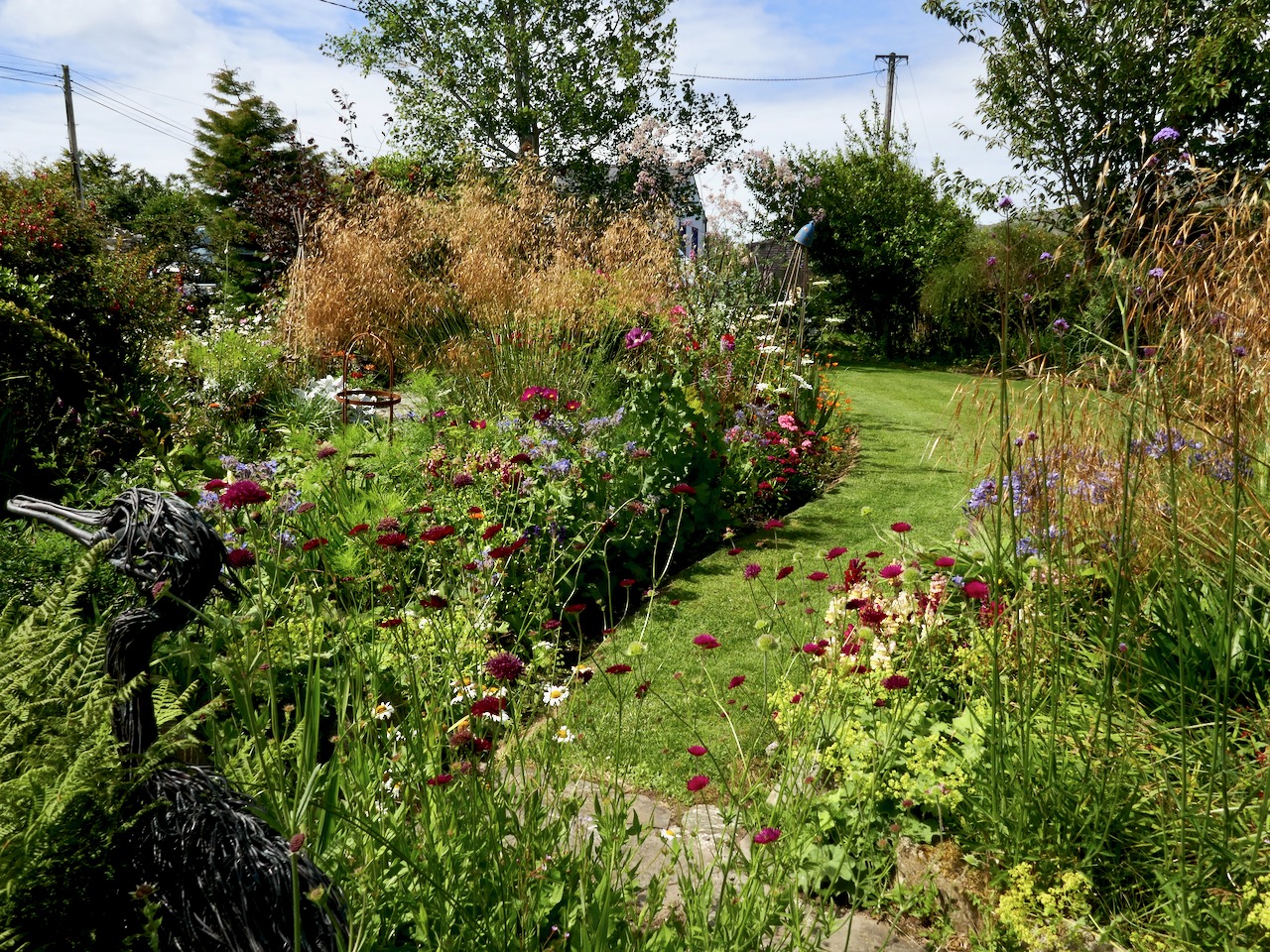
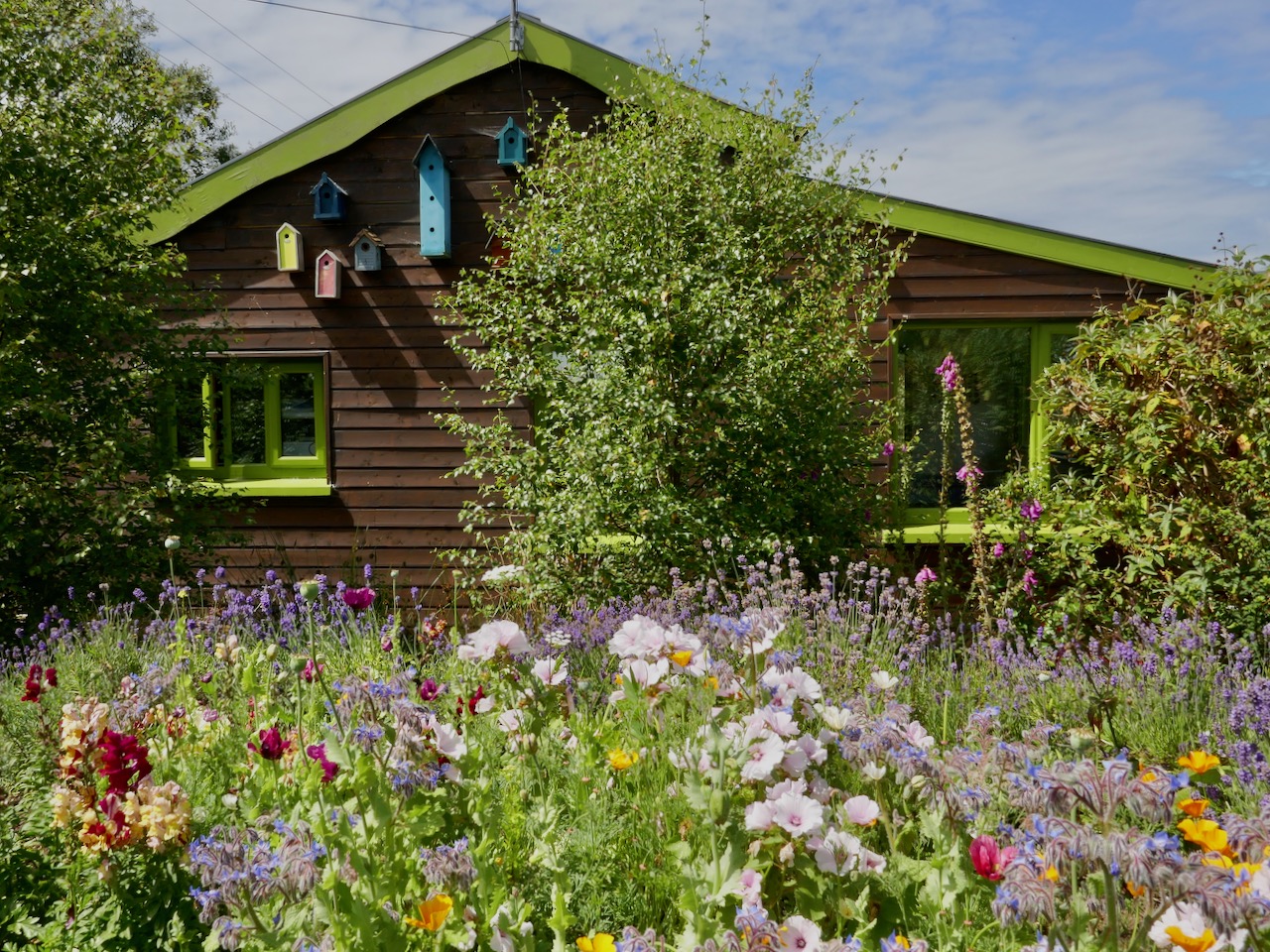
The garden is a paean of praise to both the natural and the cultivated. The traditional herbaceous borders are at their most colourful right now and feature clever little inserts of sculptures and objects of metal, pottery and wood.

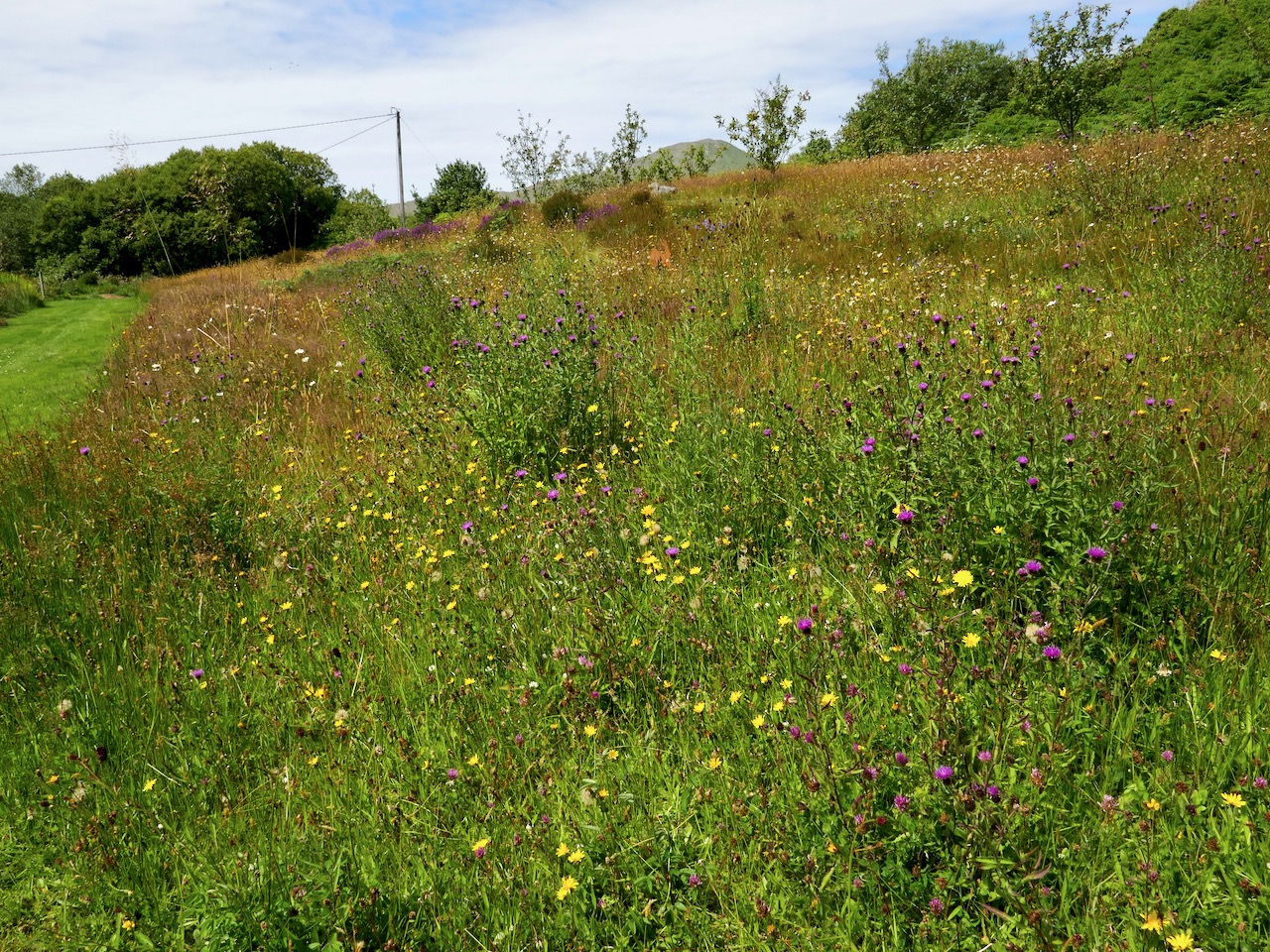
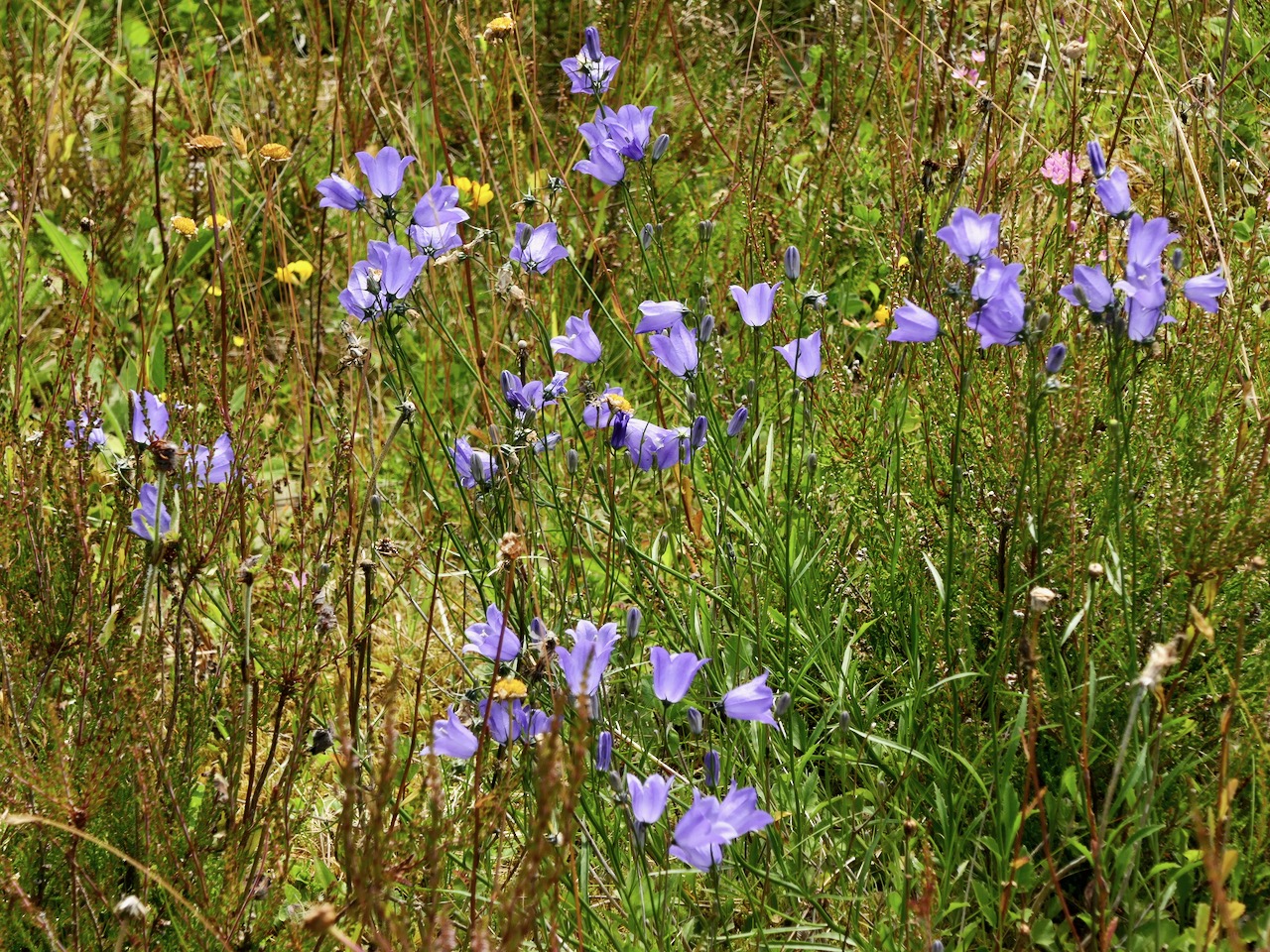
Wander through the more formal garden and you come to the wildflower meadow – all native plants, most of which have simply volunteered, although Annabel has also carefully introduced harebells and local orchids. I spent most of my time here, observing the mix of flowers and grasses.

By the time we left the cafe was busy with lunch service. This is a garden that adults and kids both love. The piggies are a universal favourite, but sharp little eyes will discover many hidden delights.
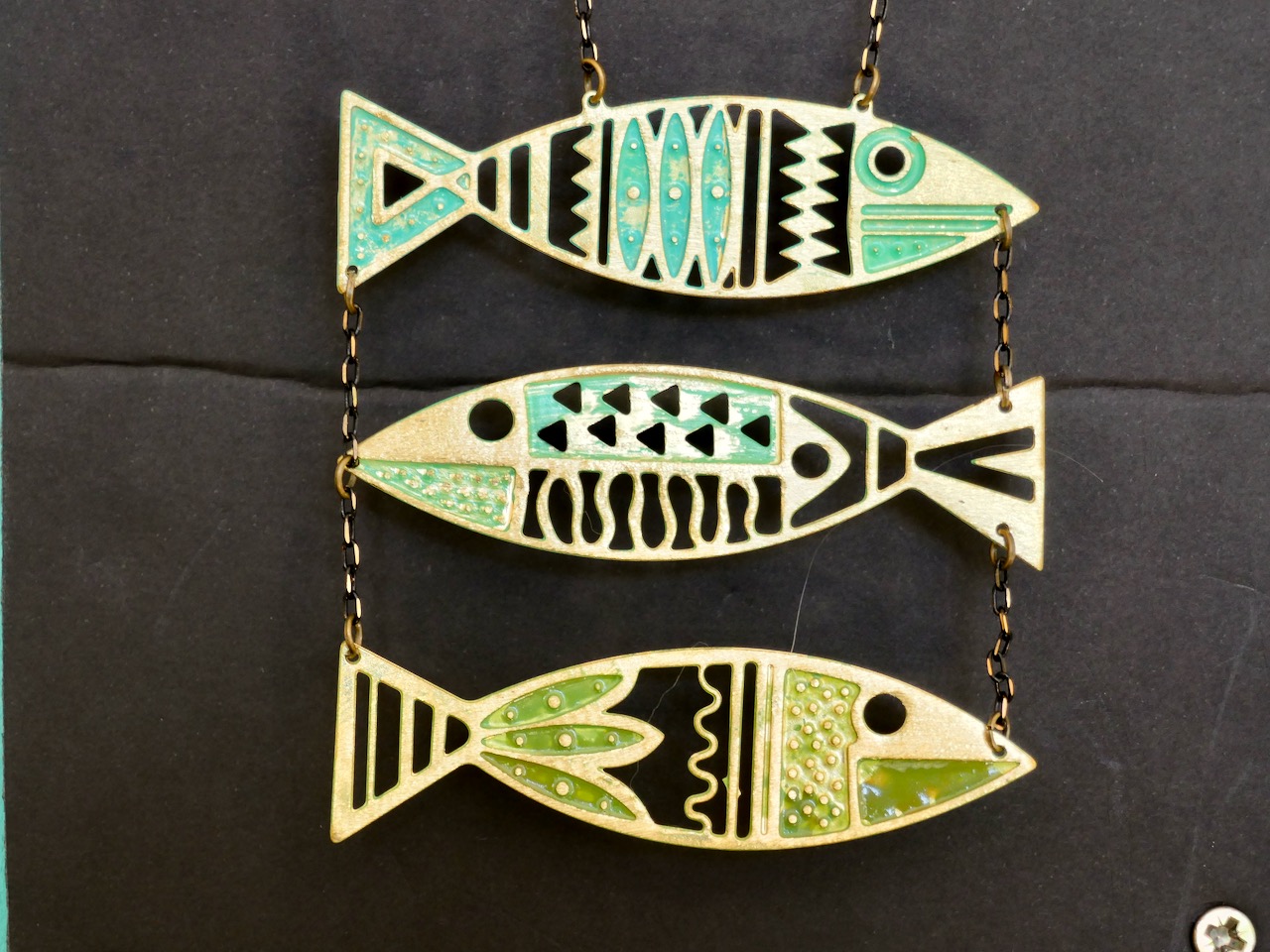
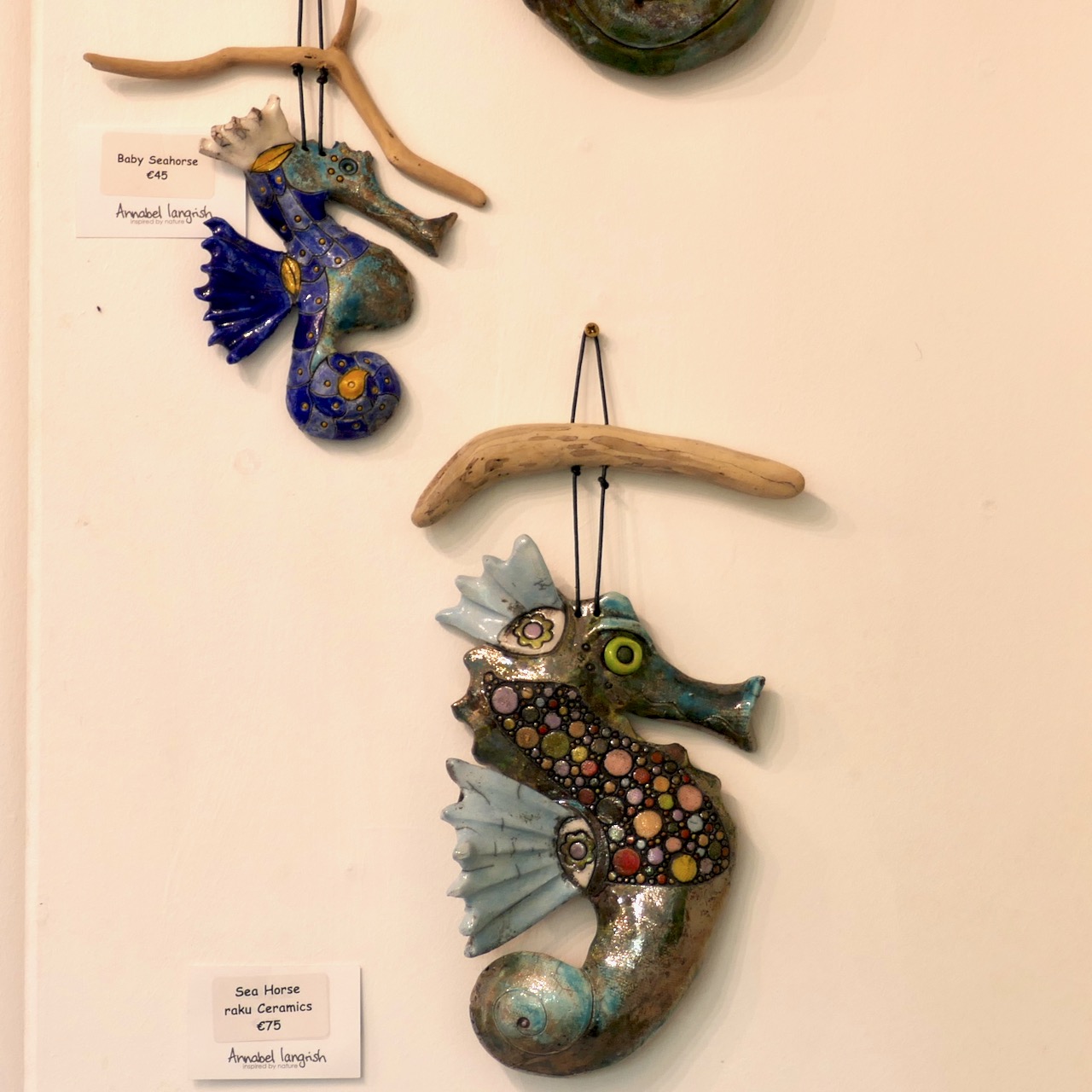
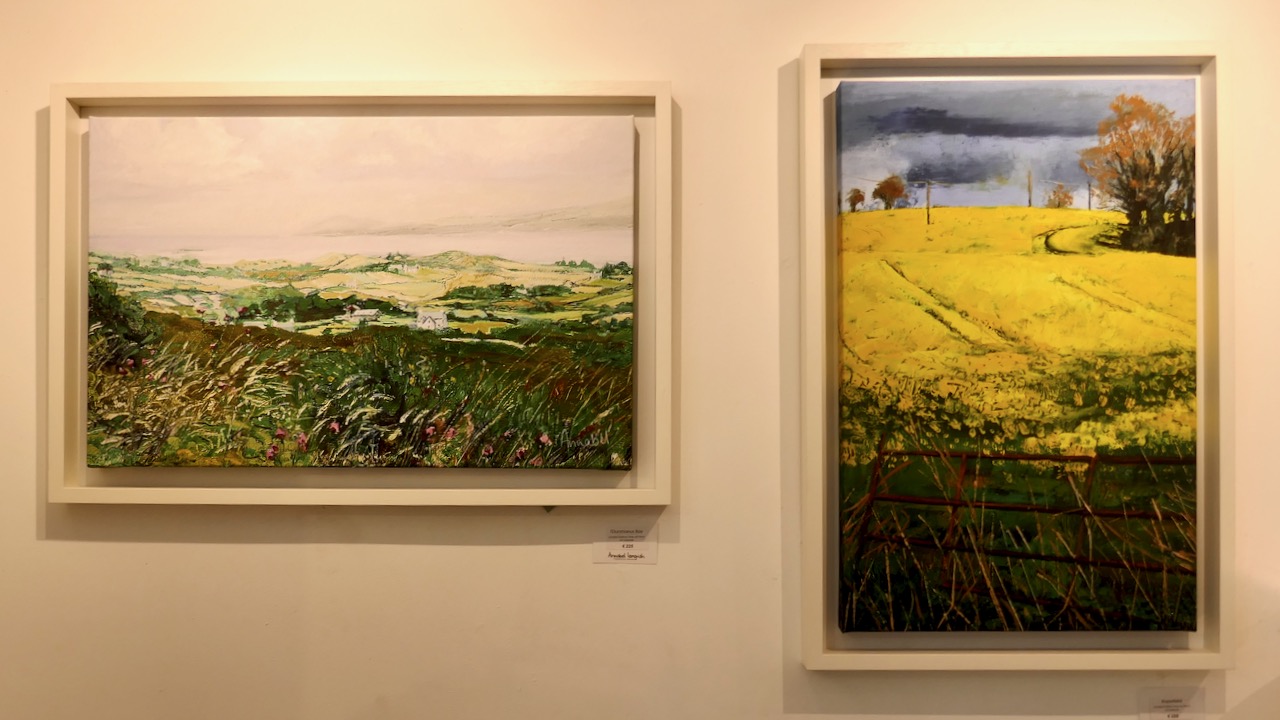
The gallery is devoted to Annabel’s art. She works in a staggering variety of media and sells her paintings and products all over Ireland, as well as in her own galleries, here and in Kenmare. 
Many thanks to Annabel Langrish and her team for creating this spectacular little oasis on the Sheep’s Head. It was just what we needed this week and we look forward to more visits over the summer.
Another Grand Day Out on the Fastnet Trails

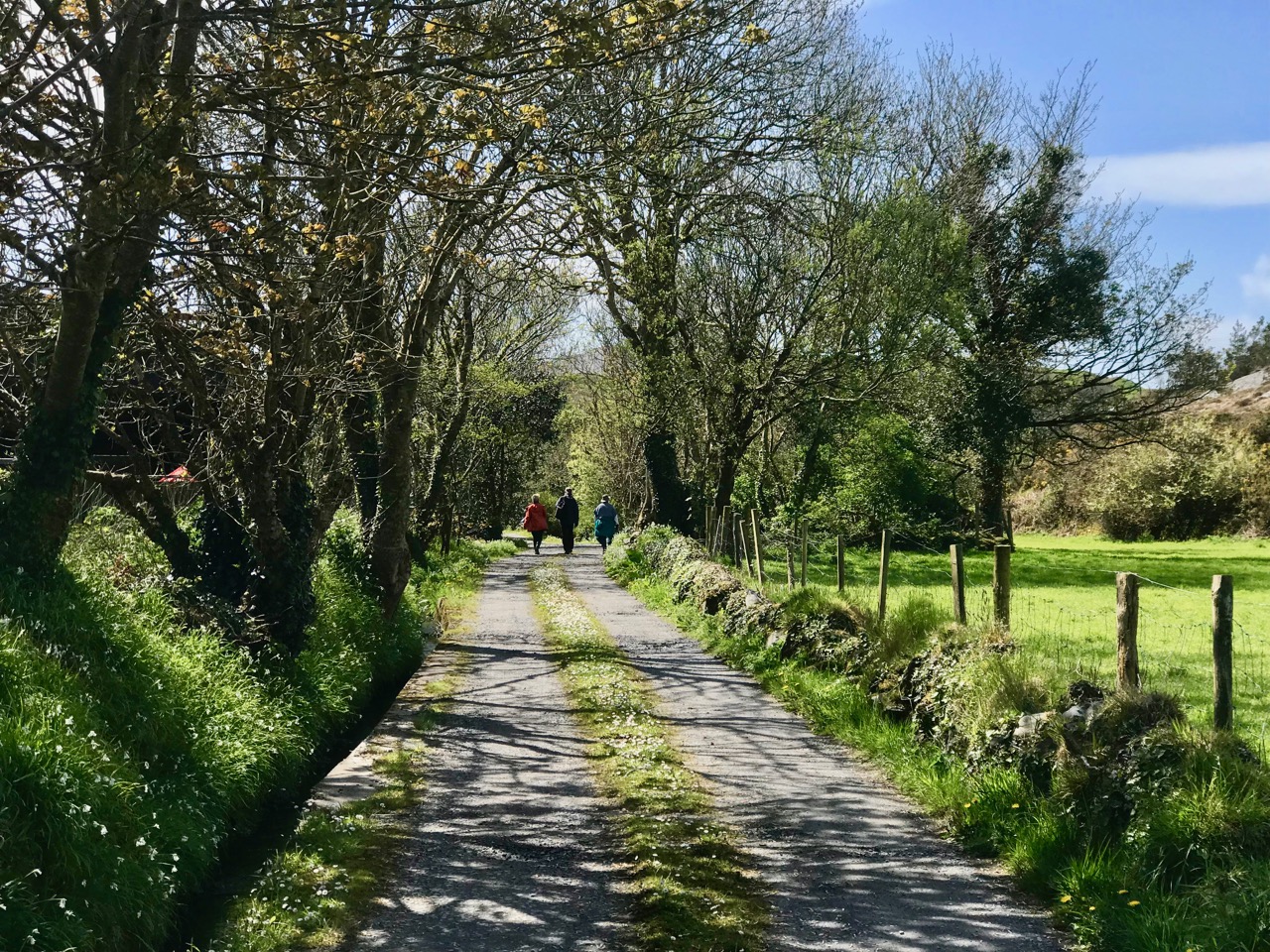
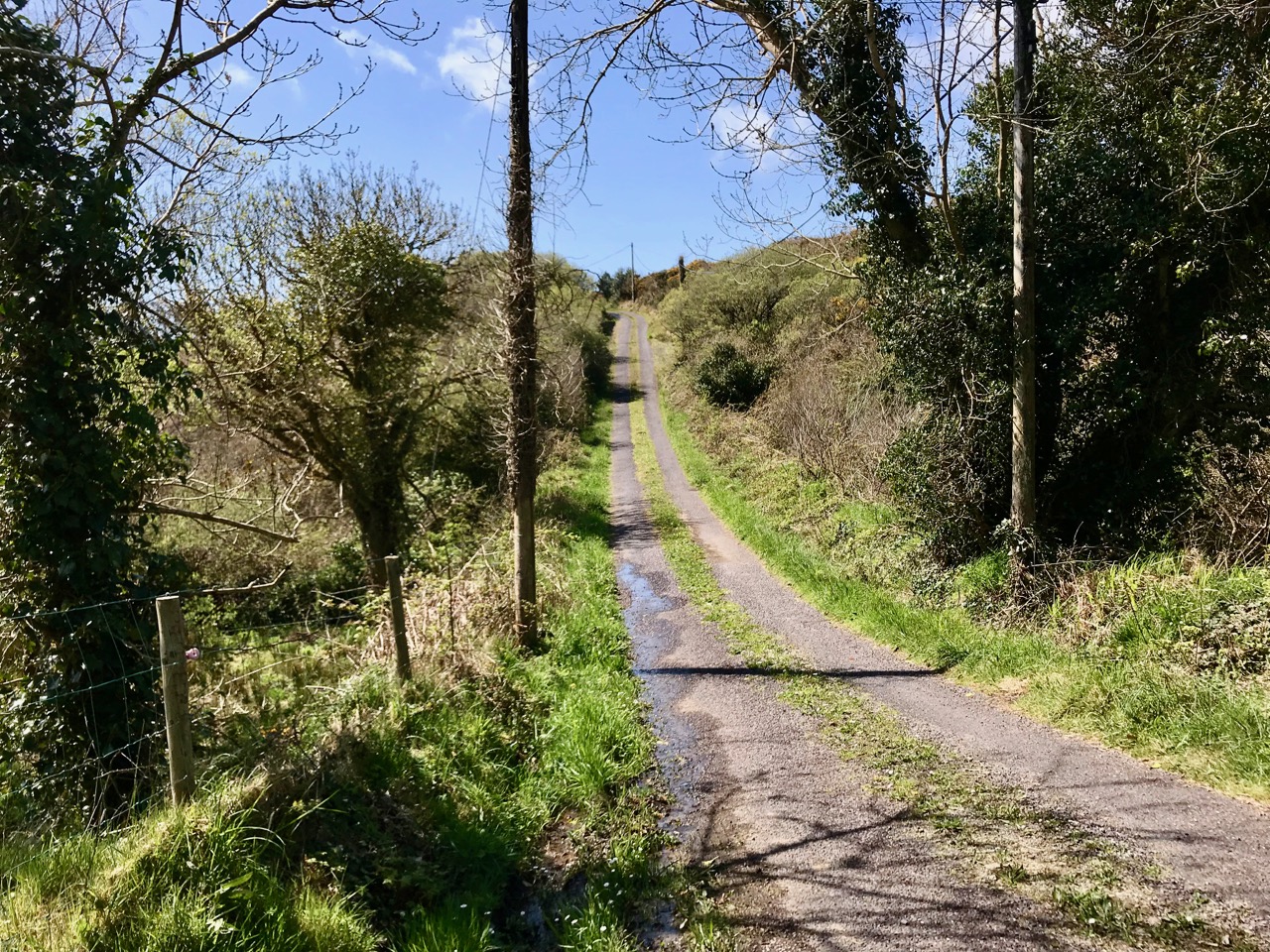
Lowertown, Schull to Toormore: it may seem a rather unadventurous walk: mainly on narrow back roads. But, on a spring day of scudding clouds and clear air, with distant views from the high ground across to the Sheep’s Head and even beyond, into Kerry, there is stimulation a-plenty to be had from an easy afternoon’s ambling and exploring of places which would be passed by in an instant when driving down to the west of West Cork. Although largely on tiny boreens, you are unlikely to encounter any traffic: we didn’t see any vehicles in two hours, apart from those parked in the few houses and farmyards on the way.

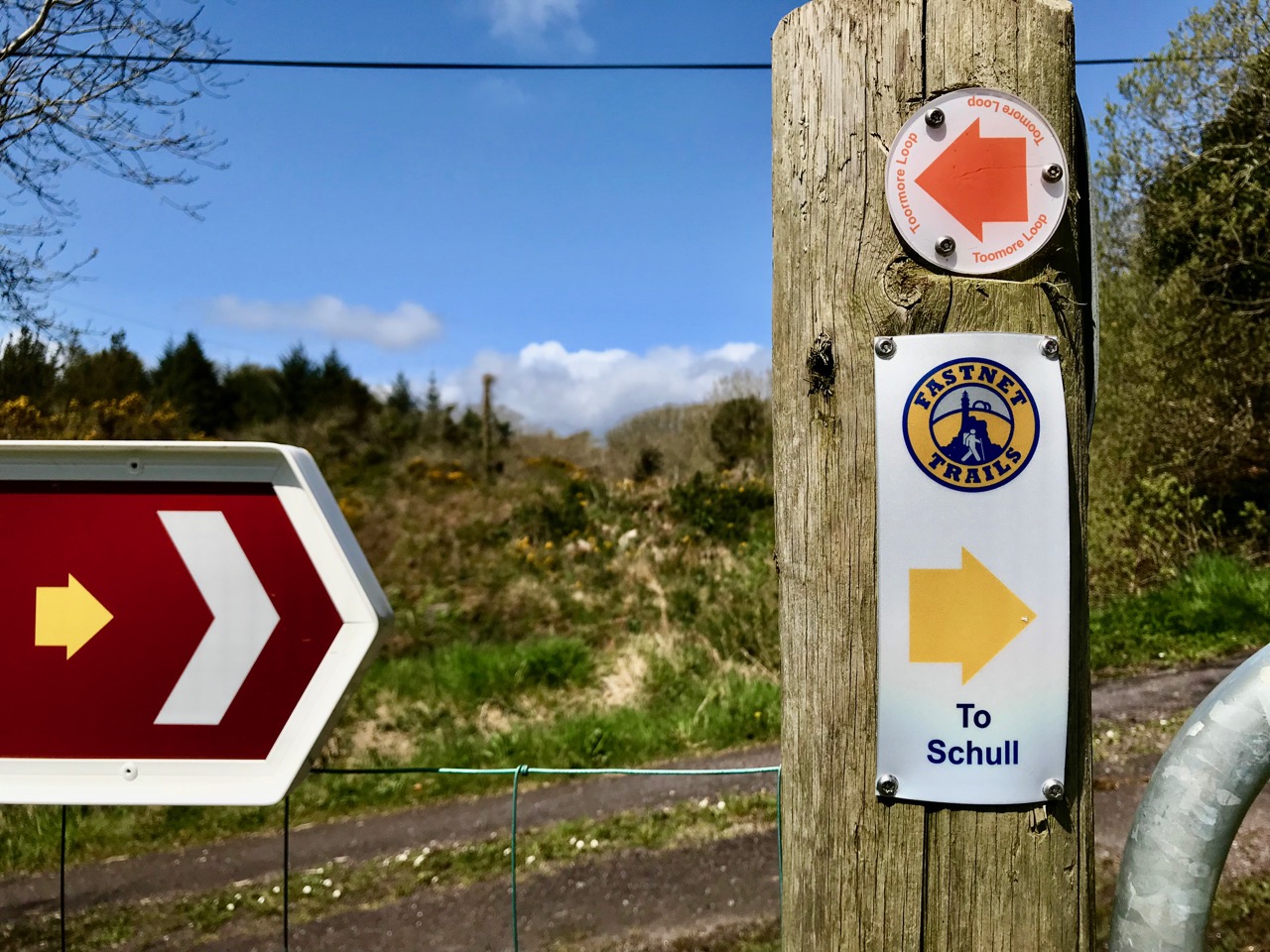
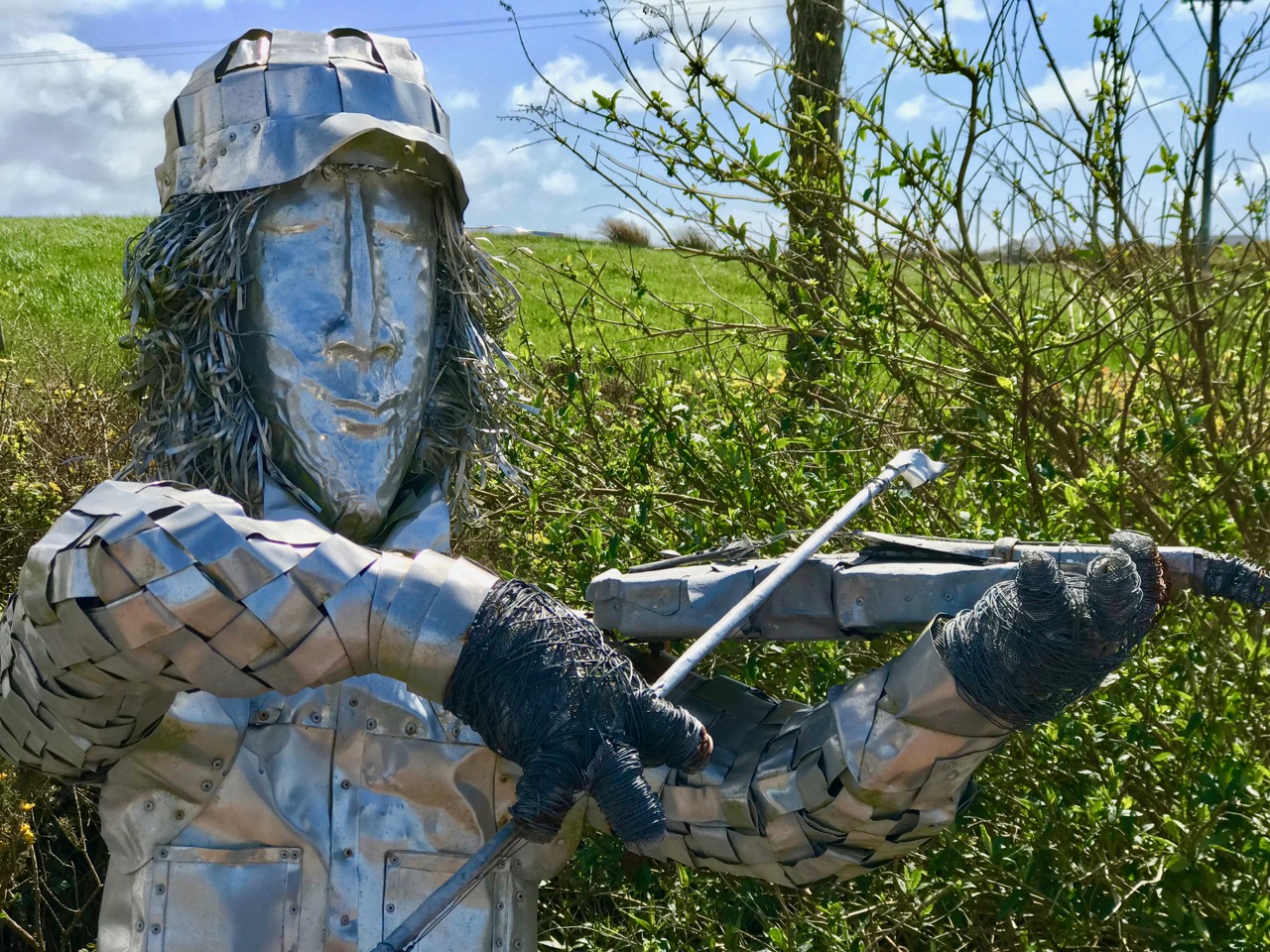
Header – our walk is part of the Fastnet Trails network beyond Schull: in this case the Toormore Loop. Upper – undisturbed peace on the quiet boreens; lower – we started out at Lowerton, where you will find a fiddler at the ready beside the old dance platform!

We parked one car beside the church at Lowertown – opposite the site of the old dance platform, celebrated with the sculptures of Susan O’Toole – and the other beside Teampol na mBocht, the little church at Altar, overlooking Toormore Bay. This enabled us to take our time and enjoy every aspect of the route, walking from east to west: in my view always the proper way to walk – following the sun! I should point out that the route we took – around 5 kilometres – is only a part of the full Toormore Loop which is itself one of an excellent comprehensive system of Fastnet Trails which has been put in place in recent years.

From the board at Toormore Trail Head: I have indicated our walk from Lowertown to Altar with the broken red line over on the left. Leaflets showing the full extent of the Fastnet Trail walking routes are available in the tourism information offices in Ballydehob and Schull

The little road climbs up and over hills and down through valleys and glens. I hadn’t expected to find an old burial ground, the site of the original Ballinskea Church which existed in this remote area between 1826 and 1967, when the Church of the Seven Sacrements was built to replace it beside the main road at Lowertown.

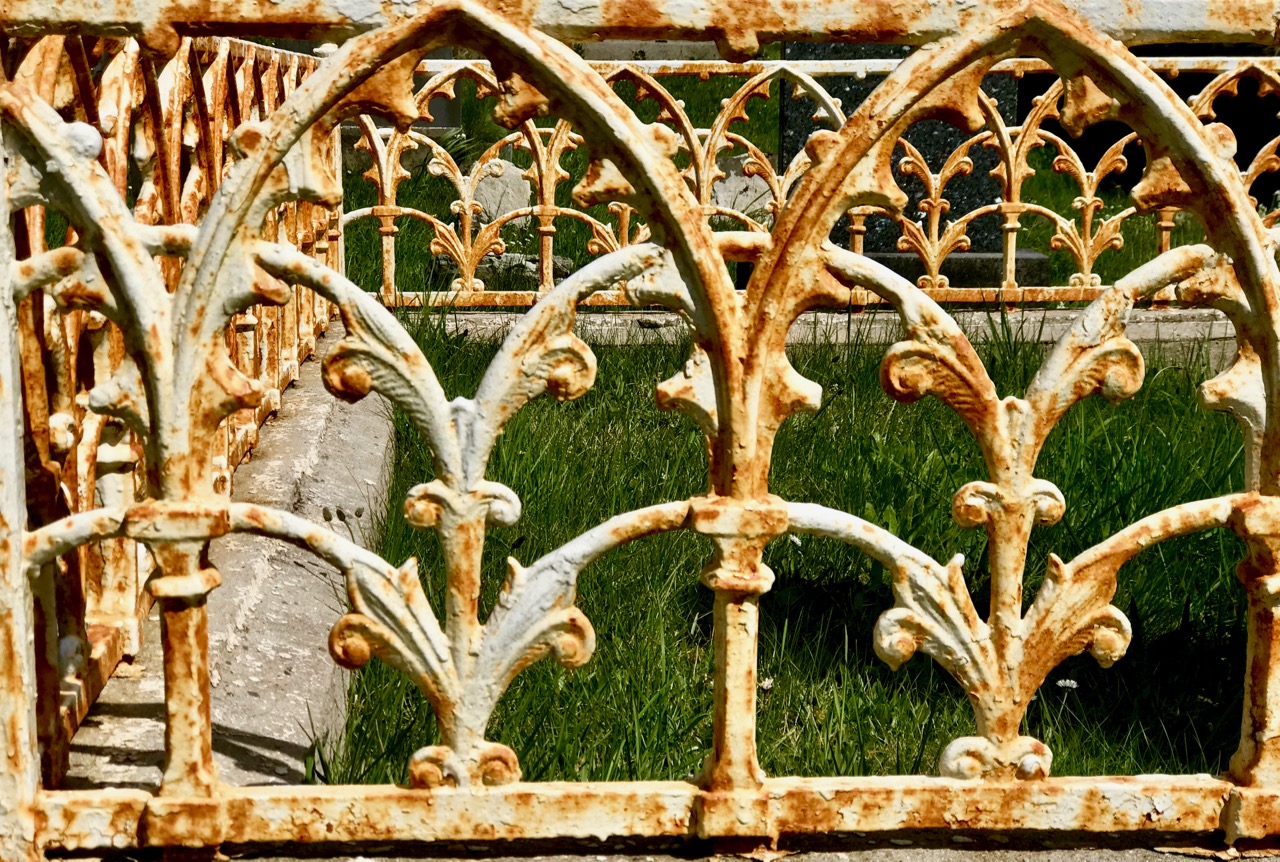
The old burial ground at Ballinskea Church: top – a bit of local history, perhaps, in the name stamped on the ironwork at the gate; bottom – the graveyard is well looked after – cowslips are in abundance

We passed a few houses along the way, but many were abandoned: each one tells its own story of lives and livelihoods – but they don’t readily give away their secrets to us.

Some of the signs of former occupation and cultivation which we passed by on our way: the area seems so remote, yet it’s not so far from well-trodden routes

We were taken by surprise at the extent of the views both north and south from the higher ground. At one point we stopped to admire the long vista out over Dunmanus Bay with the Sheep’s Head settlement of Ahakista clearly delineated.

Top – the nature of the walk: I can’t guarantee that you won’t encounter a vehicle along these back roads, but we didn’t! Centre, looking back over rolling fields towards the wild high ground of Mount Gabriel. Bottom – the view towards Ahakista on the Sheep’s Head, with the Beara beyond

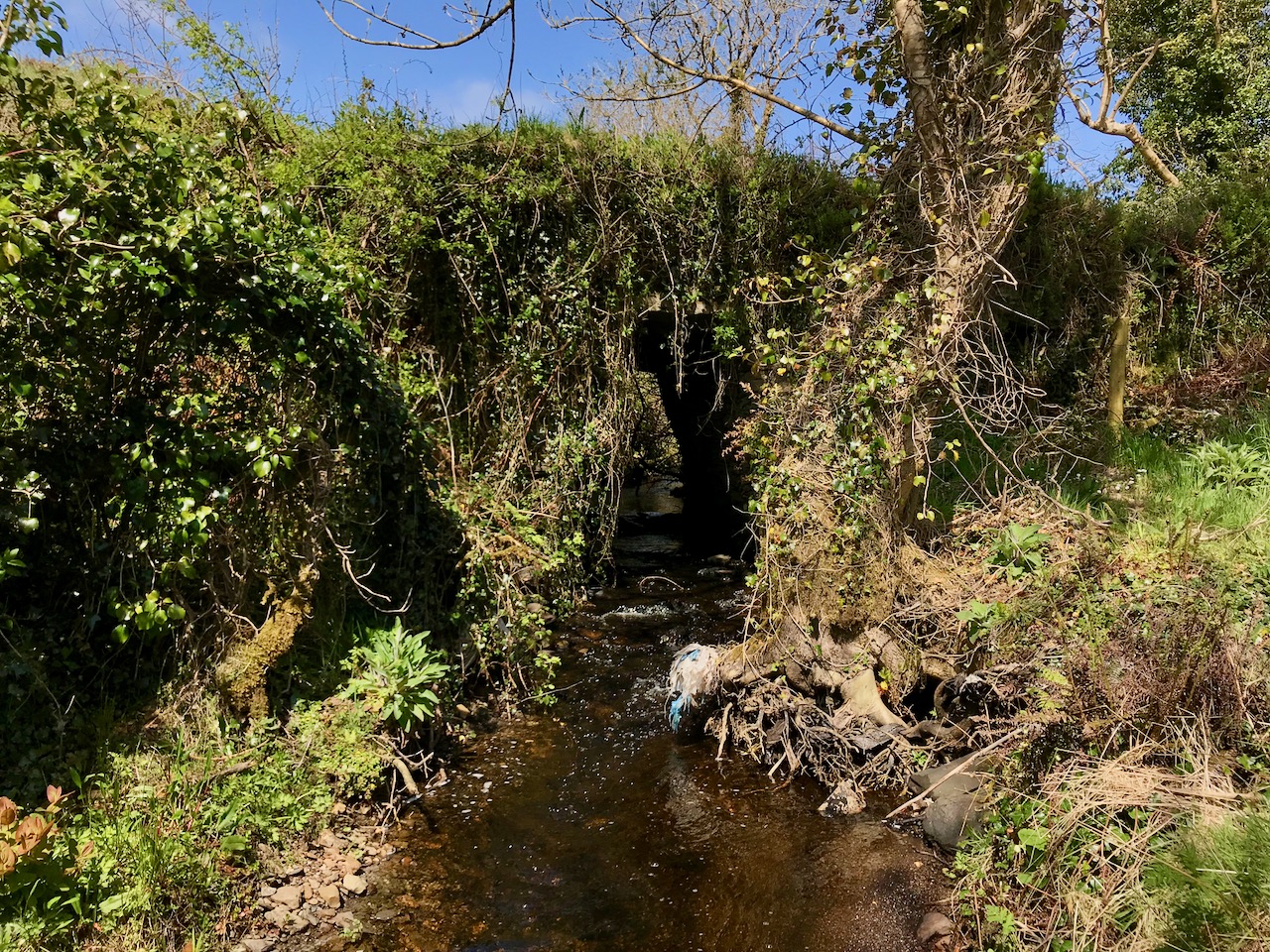
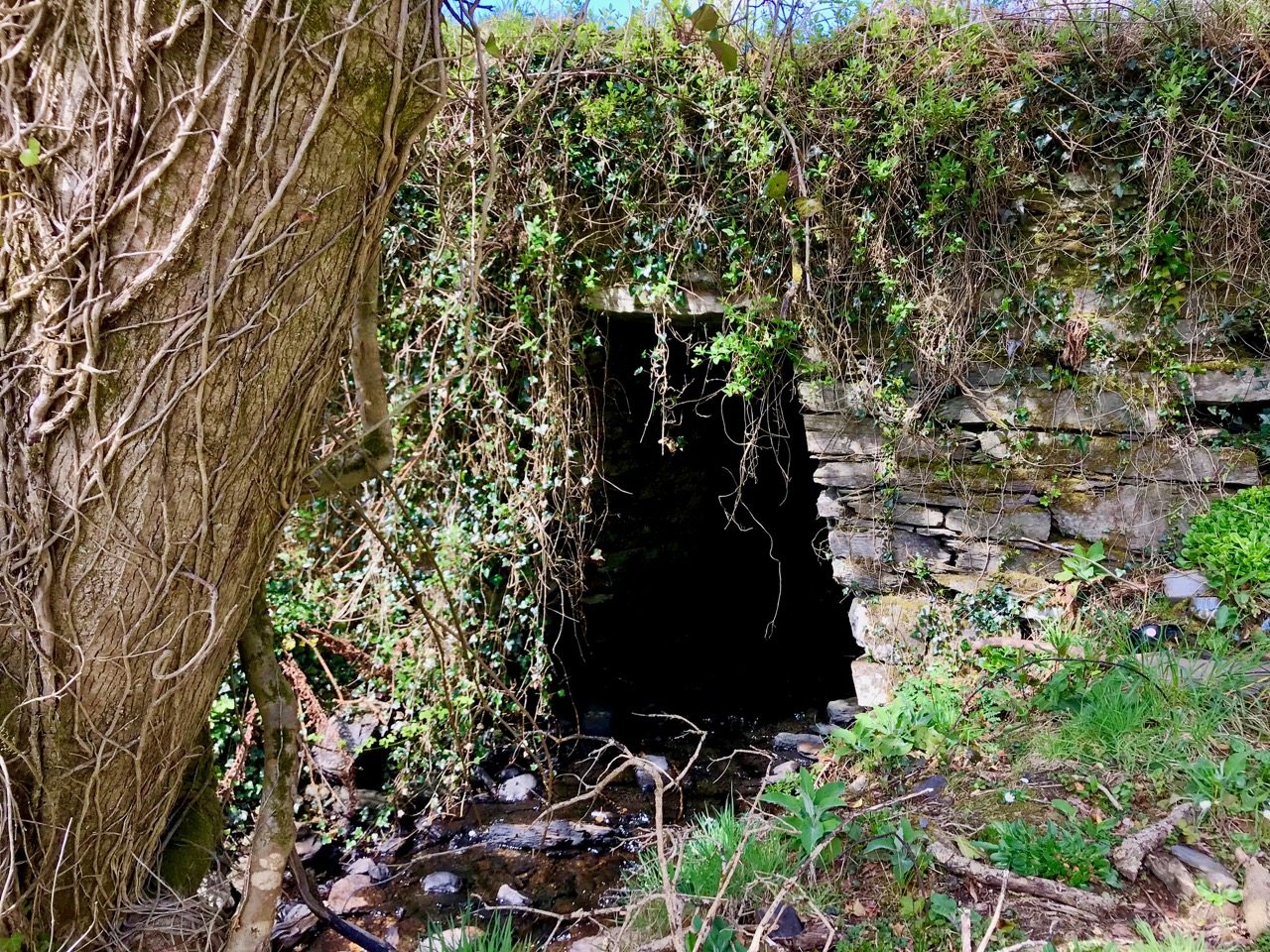
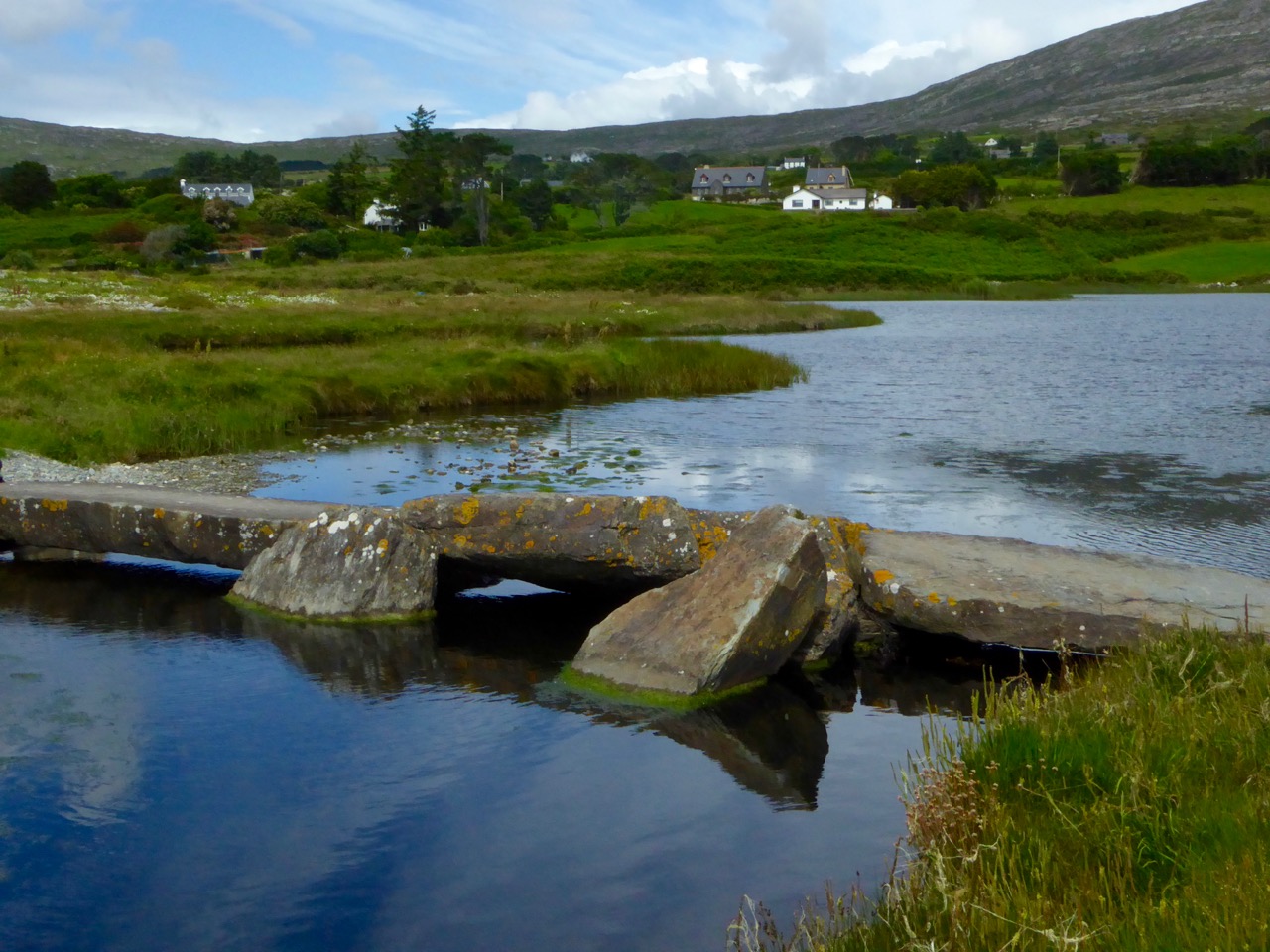
After a good hour you will reach a gateway where you will leave the boreens behind and continue across country. Of course, you don’t have to follow the marked trail: the myriad of tiny roadways continues throughout West Cork and is awaiting your further exploration. We did turn off, however, as the footpath beckoned through a leafy glen and looked most inviting. First of all, however, we paused to take a look at the bridge which carries the roadway over a stream that flows along by the path – and runs all the way down to Toormore Bay. The bridge is unusual in that it has a large stone slab lintol rather than an arch. I don’t know its history for sure, but I would guess it dates from the eighteenth century, when the road it carries was established as the main highway from Goleen to Cork!

Top – the footpath diverges from the main road to Cork! Just around the corner it passes over the unusual bridge (centre and below)

Our route is the line of the former Butter Road which ran all the way to the international Butter Market in Cork. In its heyday it would have seen plenty of traffic in the form of packhorses and donkey carts, and some of the now abandoned cottages lining its way would have been welcome ports of call on the long trek. Here’s a post from Finola about a walk we did a few years ago on another part of this highway, which tells a little more about the great butter trading days. You can also have a look at my own post from last week, which talks about the improvements to the roads of West Cork initiated by Richard Griffiths a century later, at which time the importance of our own little trail receded and was bypassed by what is now the main road going from Ballydehob and Schull down to the end of the Mizen. I suppose we therefore have Griffiths to thank for taking all the traffic away from our back roads and giving us these idyllic walking trails.

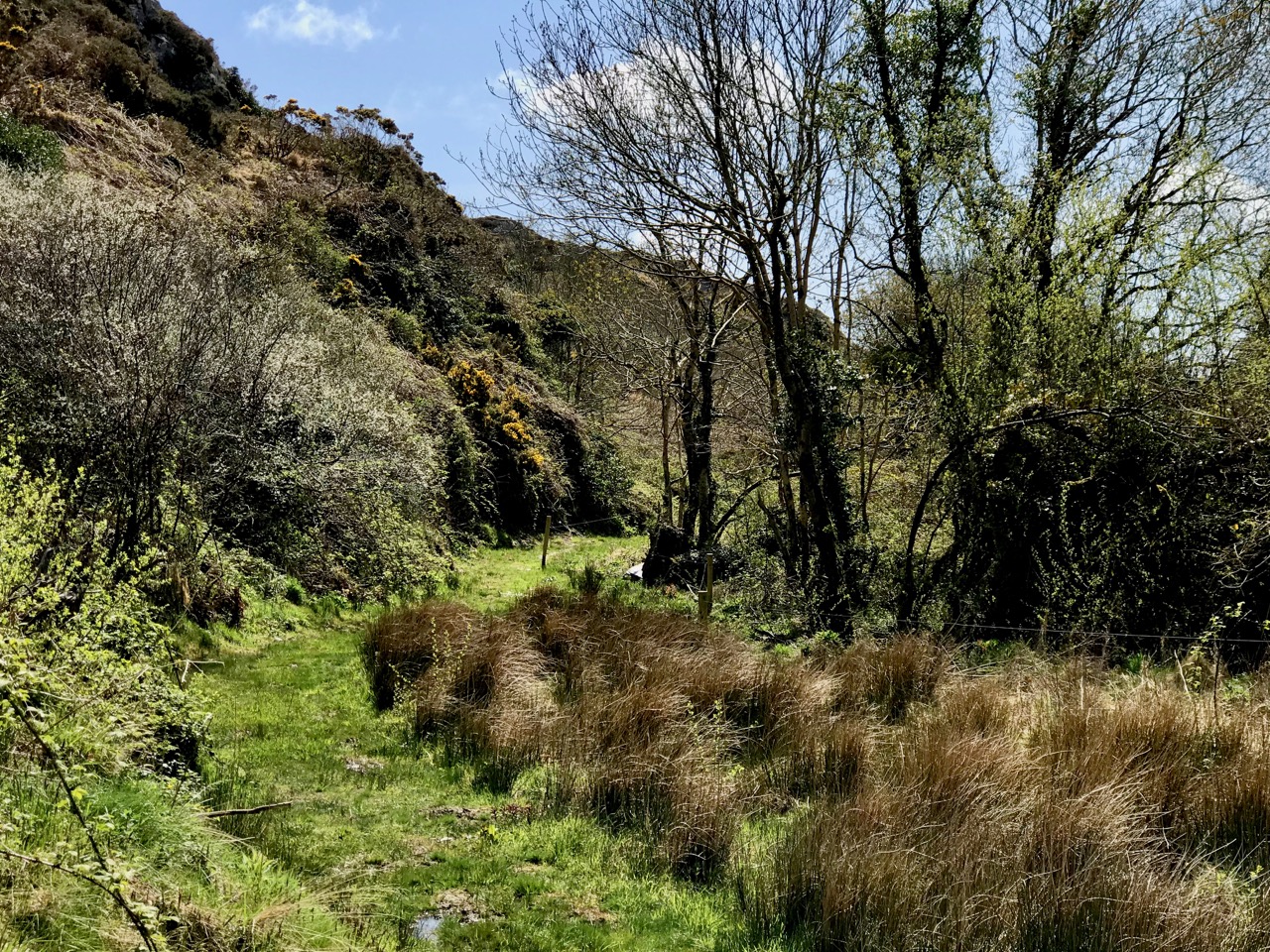
The footpath through the glen is another world – a contrast to the boreen we have been following so far. It is lush and damp underfoot, and there is green everywhere: mossy green boughs of ancient oaks, soft turf and vivid St Patrick’s Cabbage emerging in the newness of the late spring. All too soon we are in sight of our goal, the little church by the bay. But the good experiences of the day are not yet over. The church itself, and its burial ground, deserve exploration.

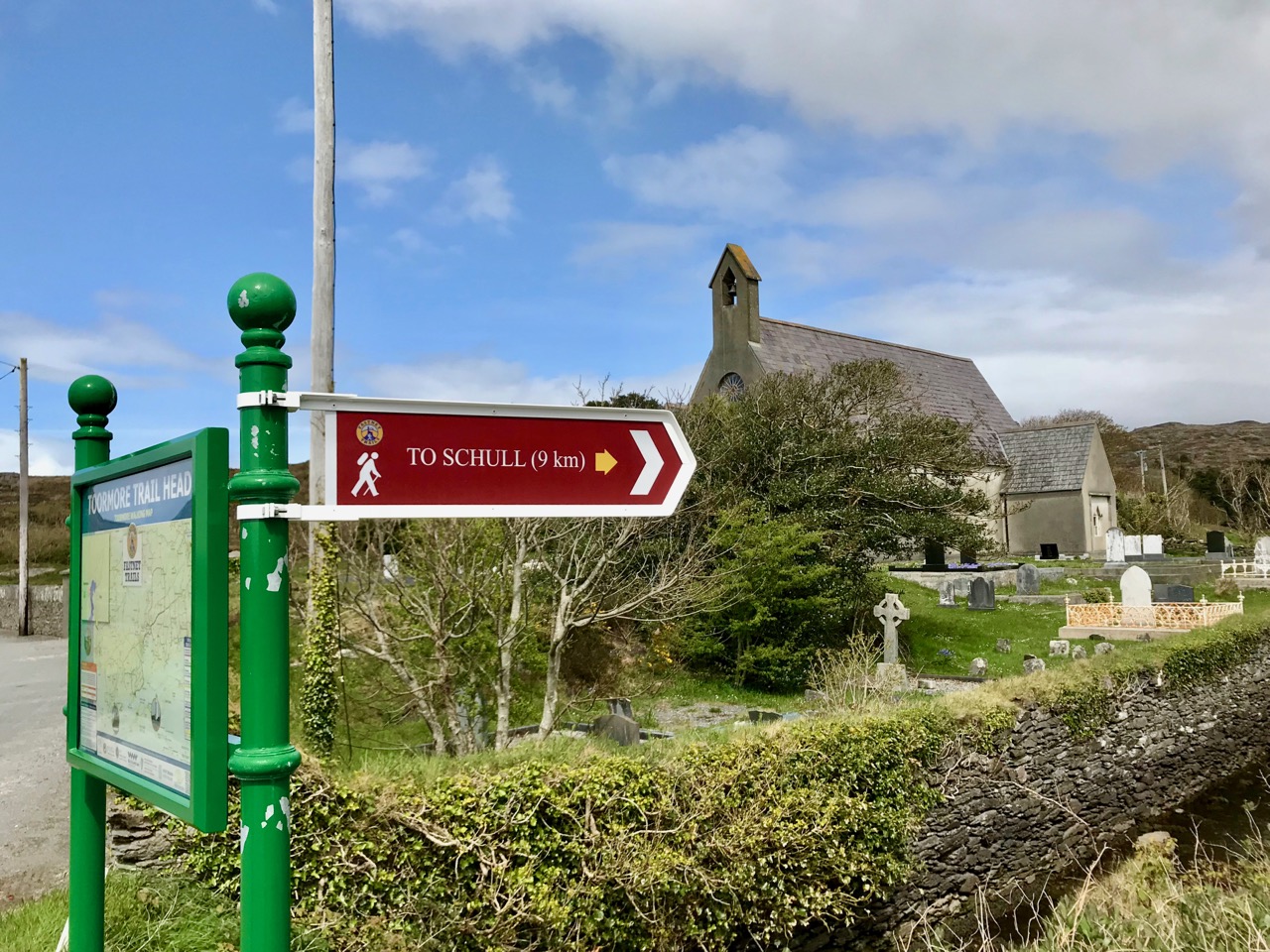
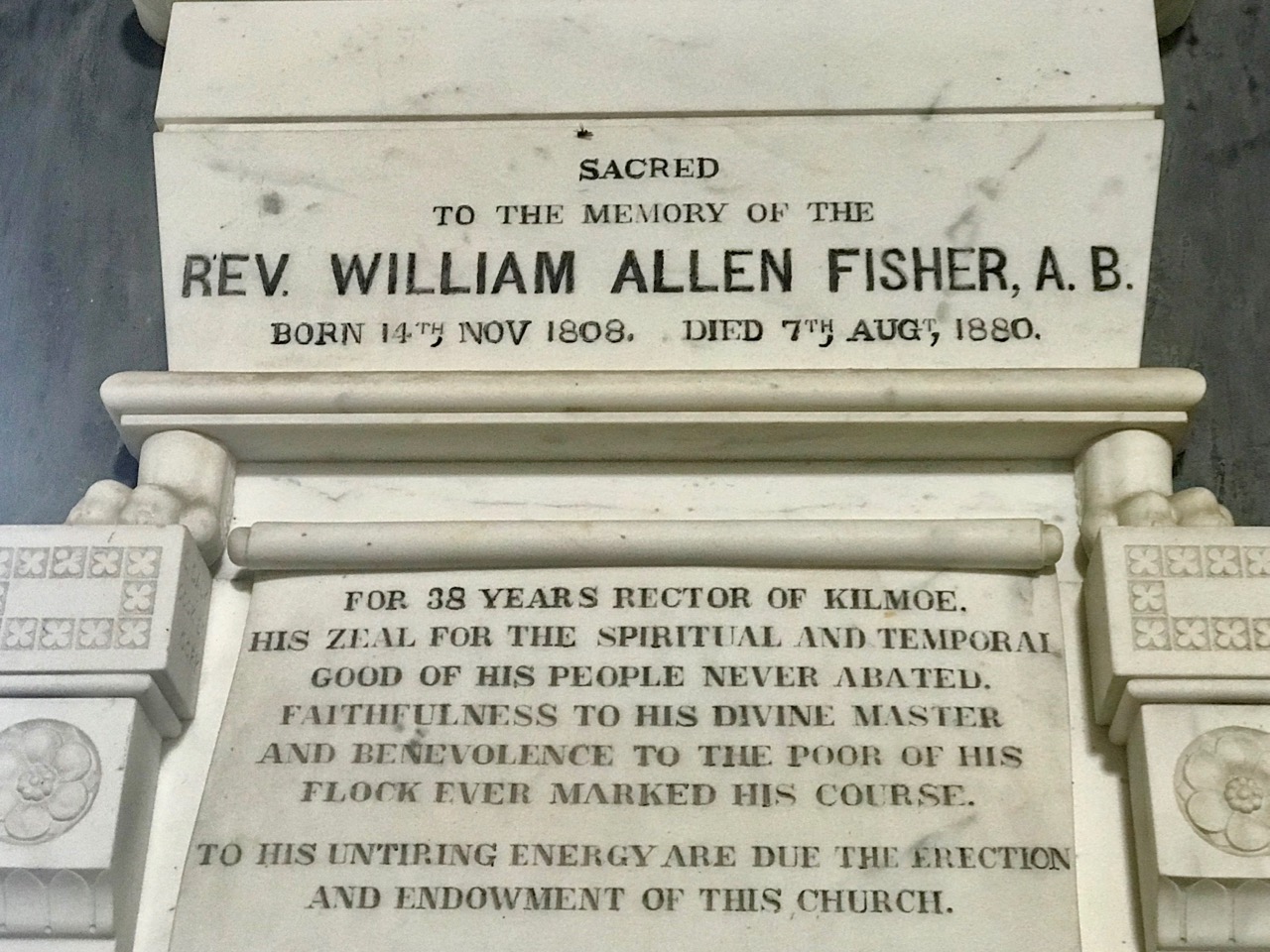
Teampol na mBocht is said to be the only Church of Ireland church in the country with an Irish name: it means ‘Church of the Poor’, so named by its builder, Rev William Allen Fisher, who was Rector of the Parish. Appalled by the ravages of the Great Famine, he raised money from well-wishers in both Ireland and England: with this he set up soup kitchens and distributed food, medicine, blankets and clothing.  But he wanted to do more than dole out charity. He determined to provide paid work for everyone in the area, regardless of their denomination. In 1847 – at the height of the famine – he commenced the building of this church. The story is told in more detail on the website of the Kilmoe Union of Parishes:

. . . Tradition has it that, in order to employ as many as possible, without benefiting the less impoverished farmers, no carts or horses were to be hired.  The stone was quarried nearby and carried to the site entirely by hand.  As Fisher wrote in a report on the church, ‘the employment was given chiefly by contract, so that the poor were able to work about their cabins, fishing etc. at the same time that they earned a subsistence for themselves.’ . . .

. . . It is a controversial building.  For many Protestants, William Fisher was a saint, a scholarly man happiest at his books, who nevertheless drudged selflessly for forty years in a remote parish, giving all his time and strength to the poor, the hungry and the sick, until he himself died of famine fever.  But for many Catholics, Fisher was a ‘souper’, whose manifold projects on the Mizen Peninsula, including the building of his church, had only one object: to win converts from Catholicism to the Church of Ireland . . .

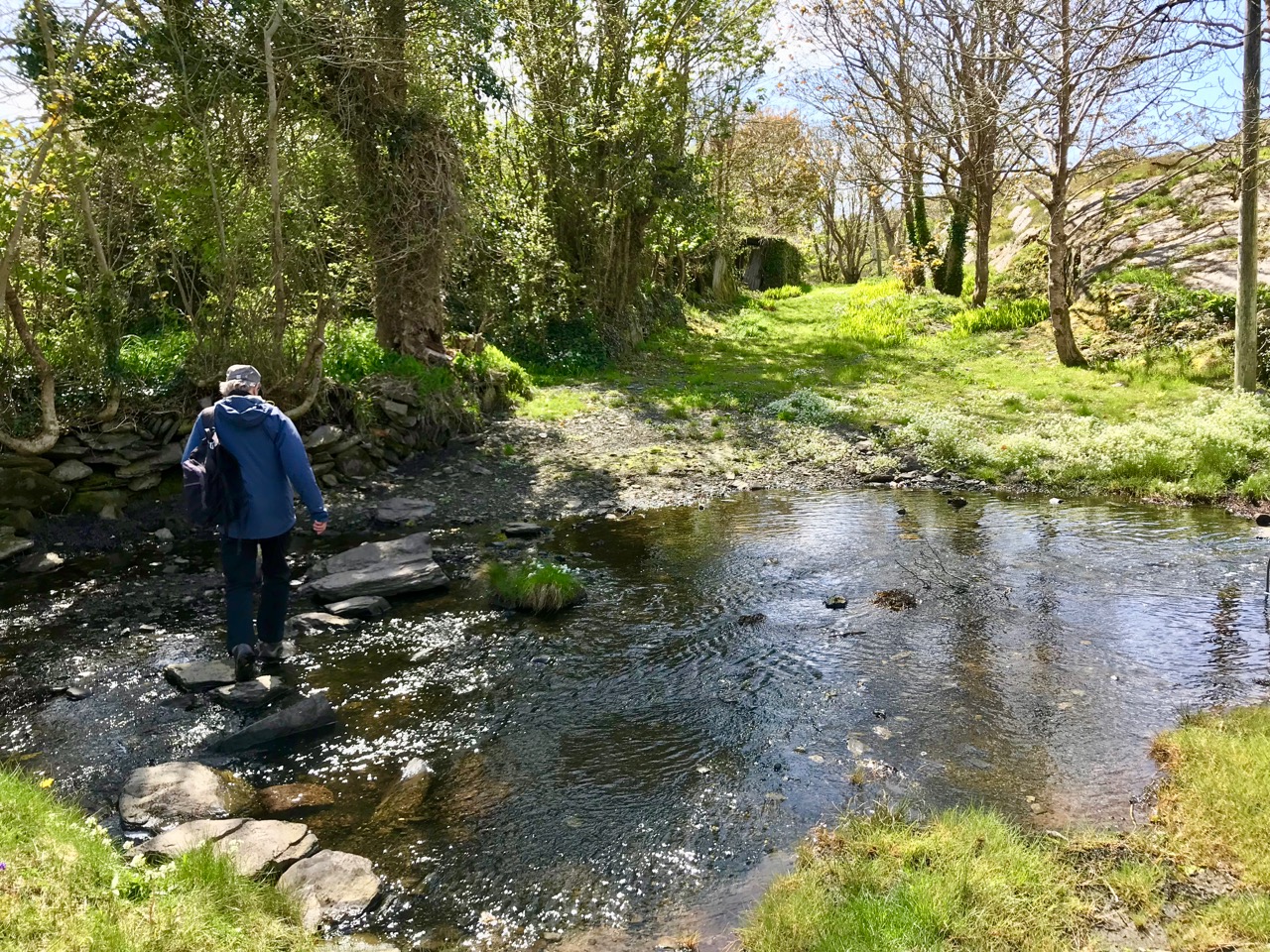
The church is not always open, so it is best to contact the Parish in advance for a look inside – it’s worth it for the history. This would be the end of the trail but we walked a little further, west of the church, and took the road up to the right. This intersects the Butter Road at a crossroads. We turned left and found ourselves heading for another green track, followed by a ford with stepping stones. Keep going and you meet the main road again: if you are following the route it’s probably best to do as we did and retrace your steps here, rather than walk on the relatively busy main road.

All in all, we had another Grand Day Out! In West Cork you really can’t fail to have a good time: every day can – and should – be a new adventure. Try this one for yourselves…


Stoned

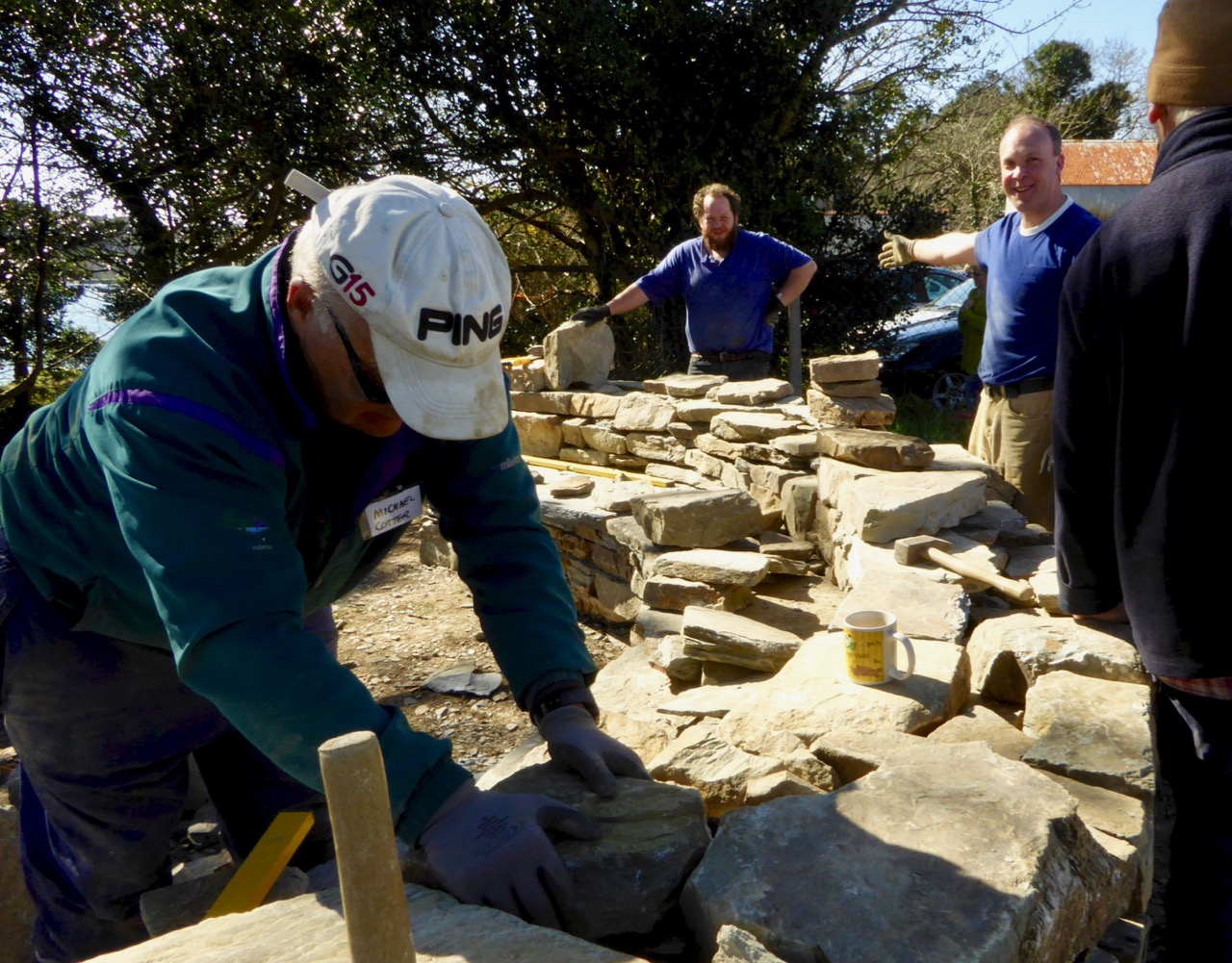
It started on Friday in glorious sunshine and the West Cork Stone Symposium ended today in the same magnificent spring skies. All participants appear to be on a high, and that includes me.

A barbecue pit for the community of Ahakista. Look what we built!

Anyone who lives in or has been to Ireland knows we’re all about stone. Stone walls, stone buildings, stone sculpture, stony landscapes…it’s in our DNA. Wicklow granite, Burren limestone, the basalts of the Giant’s Causeway, Connemara marble, the great slate quarries of Clare and the quartzite peaks of Donegal’s Errigal Mountain. And here, in West Cork, the old red sandstone, in use since prehistoric times to build field boundaries, stone circles and portal tombs, to erect standing stones, and to construct everything from the humble cottage to the big house.

Light on Stone – the theme of the photography workshop led by Ben Russell. 

For us, of course, the old red sandstone is the canvas used for the prehistoric rock art we study. But as one of the organisers of the festival said – everyone who came to the Symposium came with their own experience of stone and their own plans for how they wanted to work with it. Thus, the two main events on the program revolved around stone carving and dry stone wall building, but there was lots more on offer too – guided hikes, a photography day, a whiskey-tasting walk around Whiddy Island, an evening with the Cork Astronomy Club talking about stone circles, a presentation on the dry stone walls of Cork, and more.

The photography workshop group, Ben is second from the left (Photograph by Ben Russell). Ben, camera close-ups

Robert and I participated in several ways: we mounted a pop-up version of our Rock Art Exhibition in Bantry, we gave a talk on rock art, and I enrolled in the all-day photography workshop, Light on Stone, with Ben Russell. This was a great learning experience, half in the classroom and half in the field. The morning outdoors session was spent at Dooneen on dramatic cliffs with the Caribbean blue sea below us.

Practising composition: top, rule of thirds. Bottom, leading line

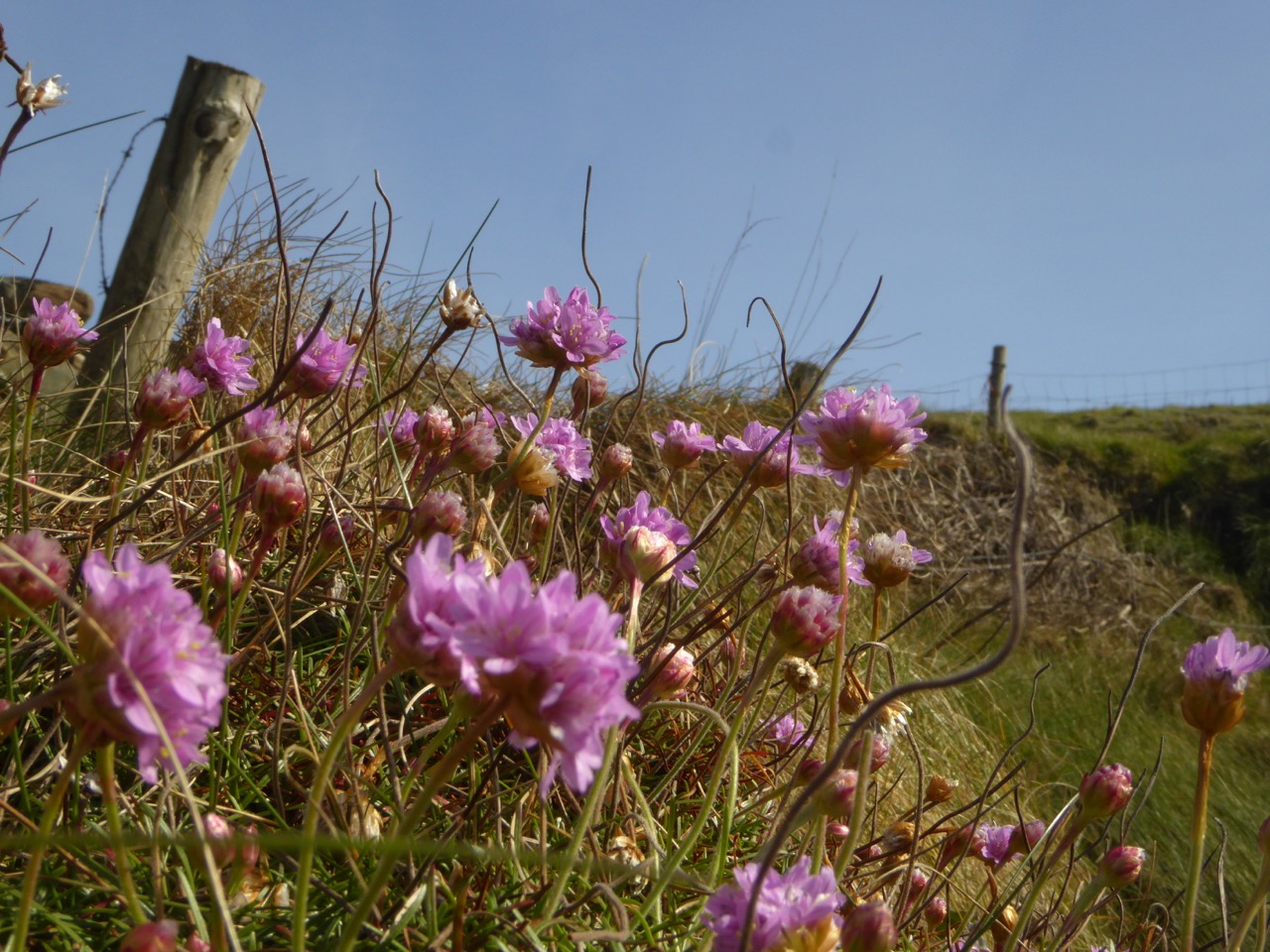
Working with depth of field – and with the first Sea Pinks of the season

In the afternoon Ben led us through taking close-ups and macro shots and then we headed off for the symposium site to photograph whatever we wanted.

Watching and talking to both the carvers and the wall-builders was marvellous. Of all ages and stages, the students were a study in concentration, discovery, and pride in achievement.

The wall-builders had undertaken a long dry-stone wall and a barbecue pit, both of complex and attractive design. Covered in dust, sweat, and broad smiles, they were delighted to talk to me about what they had learned and about their respect for the tutors and their skill.

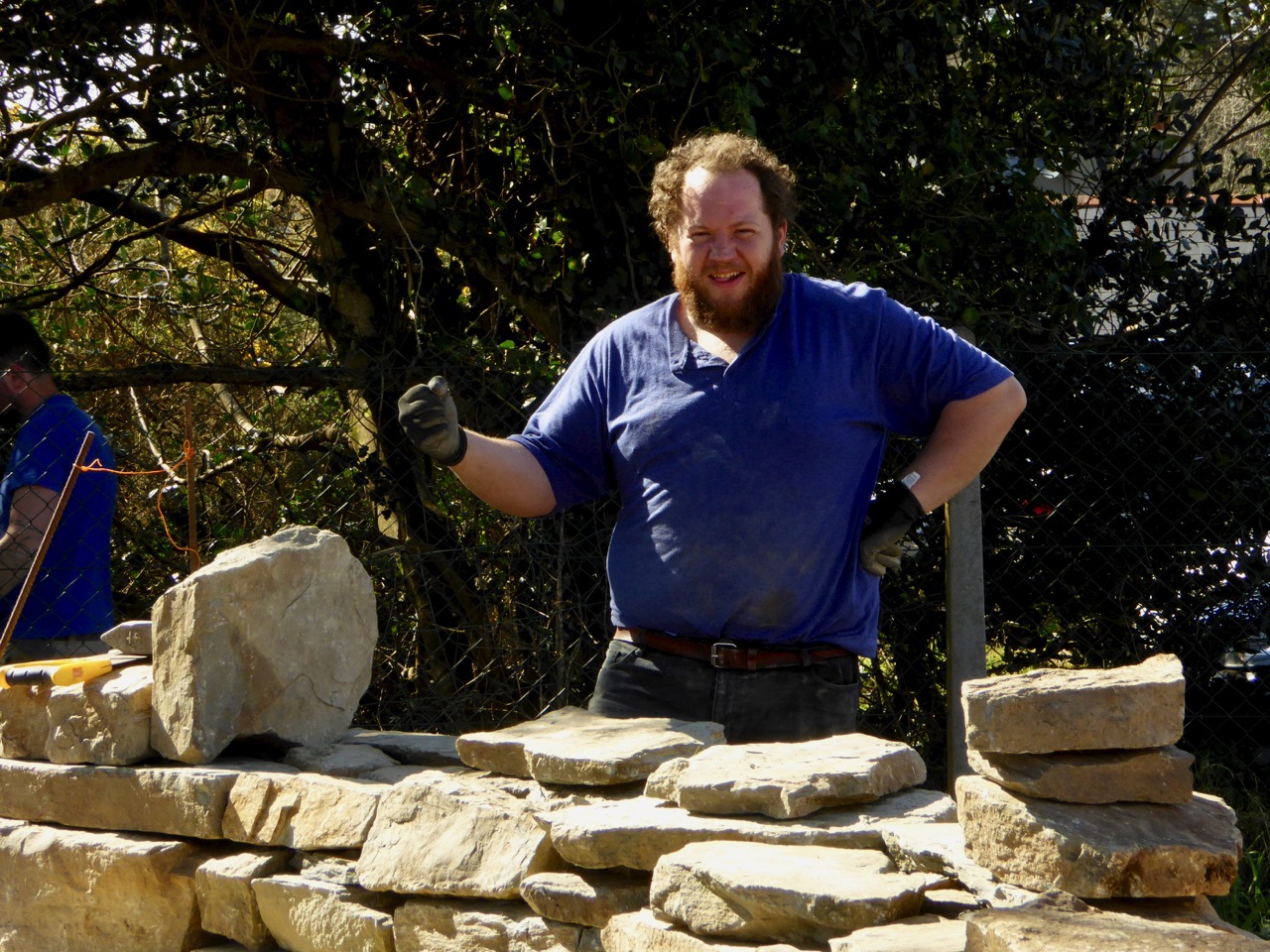
Rita and her friend had worked on the wall. By the end of day three they were exhausted – but look at those grins!

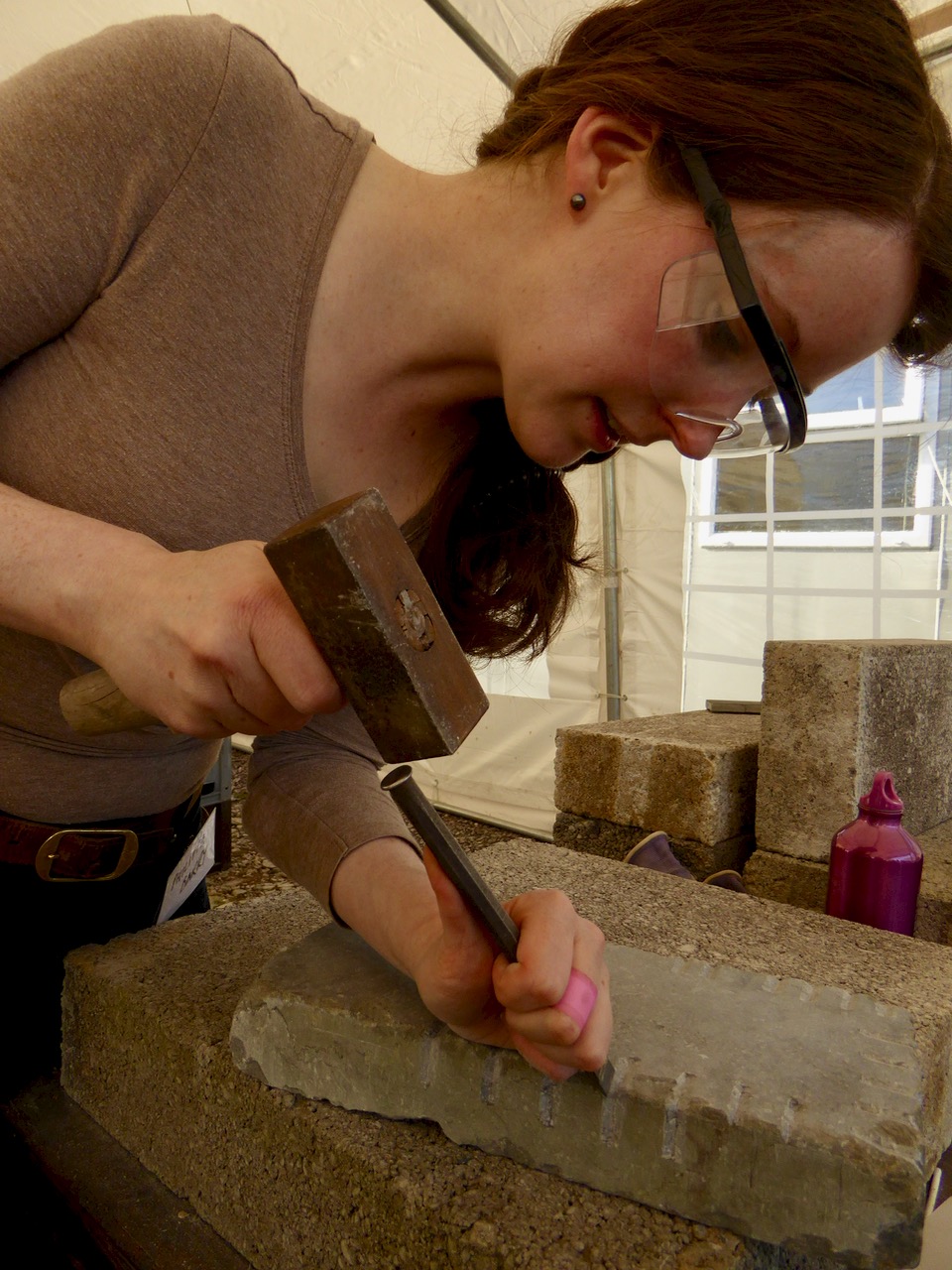
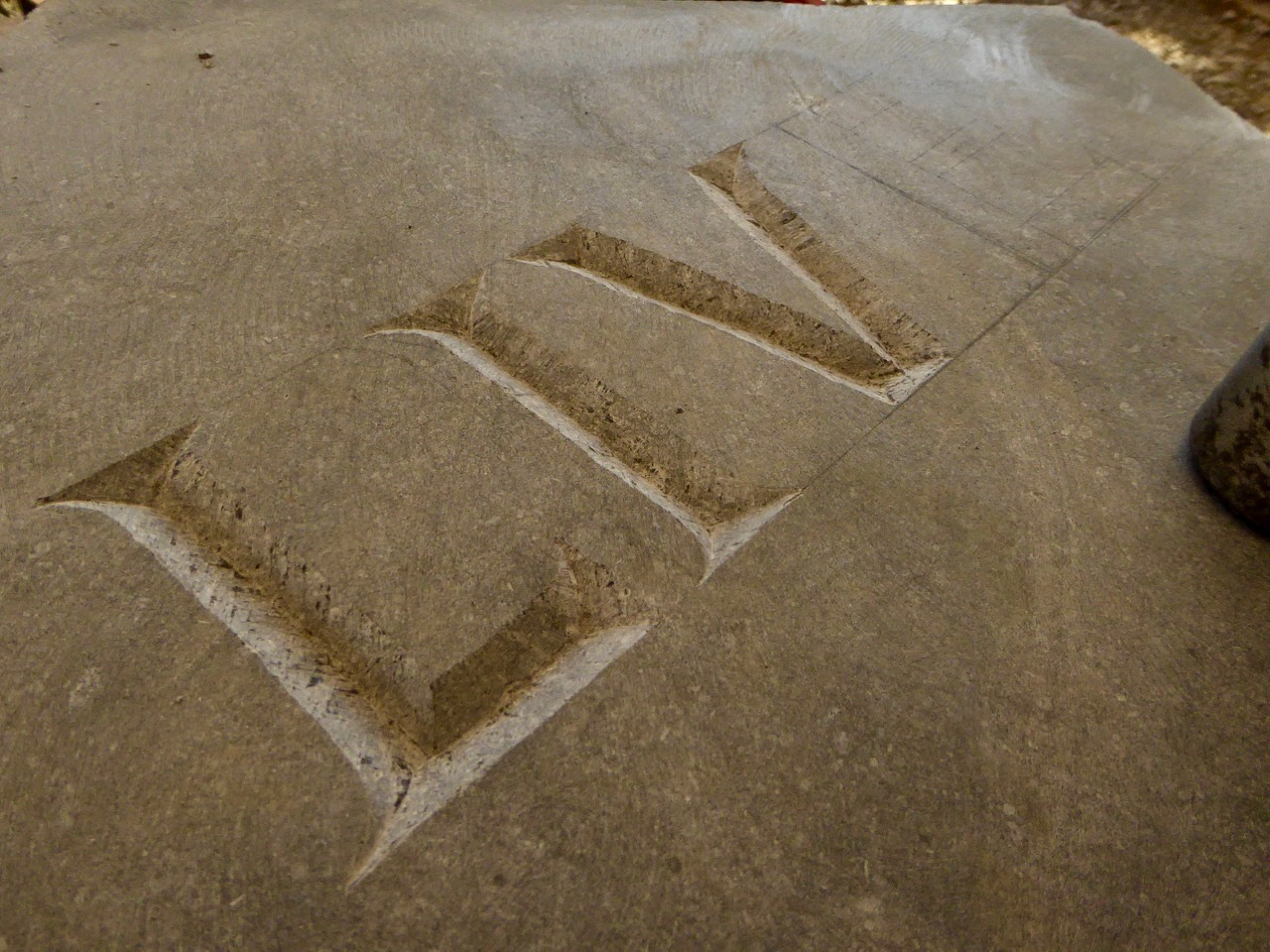
The carvers were all working on individually chosen pieces – words, animals, geometric designs. Few of them had done anything like this before and all were delighted with what they had accomplished. “I never thought I could actually do something like this” was a common refrain.

I was delighted to run into Cliodhna Ní Lionáin again – last time was at a talk she gave on rock art in Dublin. Here she is carving a deer from a Spanish rock art panel

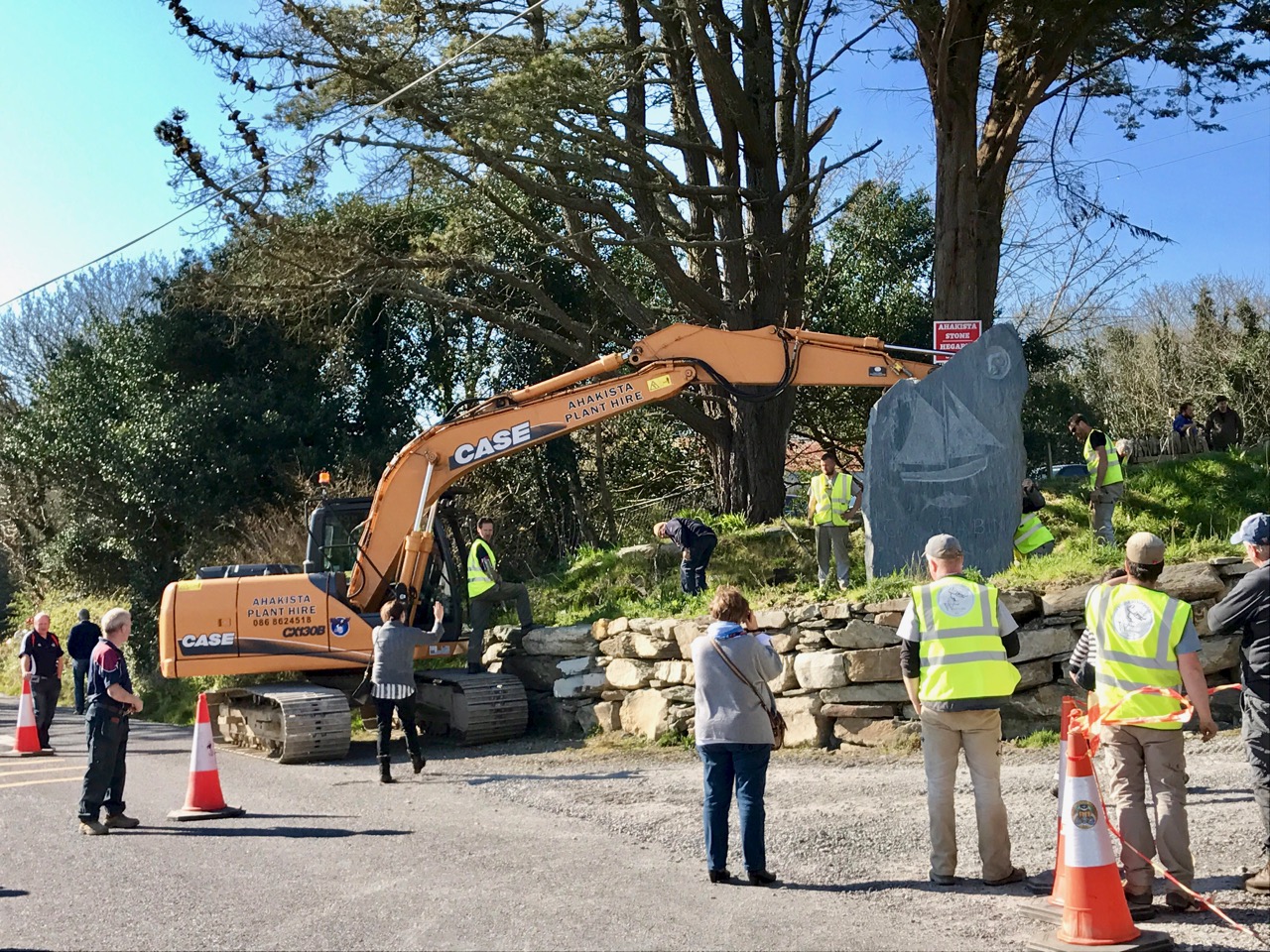
Today we were back to the Sheep’s Head – the Symposium was centred in Ahakista – to give our talk and watch the erection of the standing stone carved by participants.

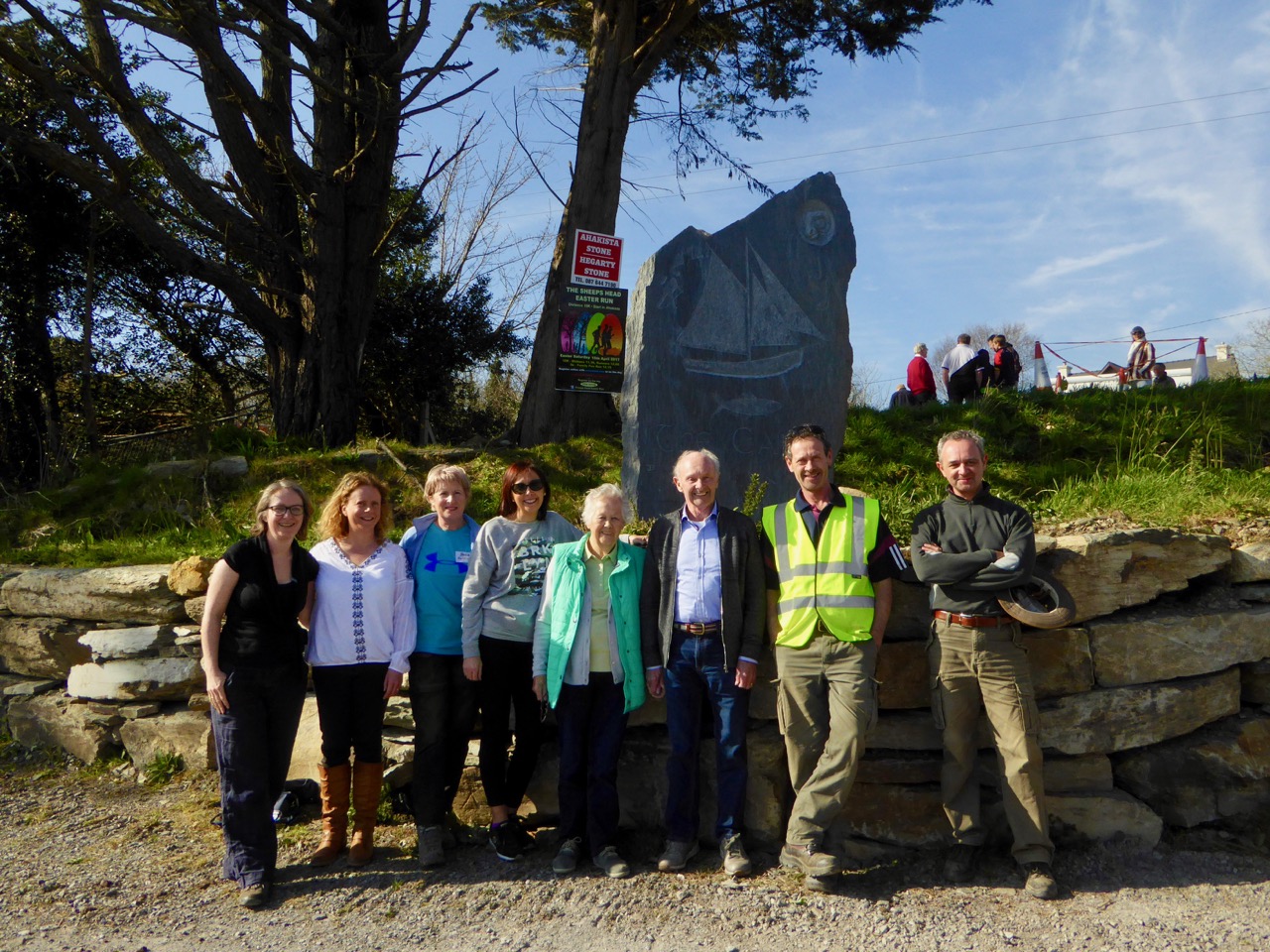
Members of the organising committee. Second from the right is Victor Daly, our local stone carver and one of the Symposium’s tutors.

This is the inaugural symposium and it’s been an incredible success. There are plans for it to be annual. Have you ever wanted to carve something? Just want to know more about working with stone? Keep an eye on the website and next year come along and experience it for yourself – it will be one of the most unique and rewarding things you will have ever done.

Cycling the Sheep’s Head

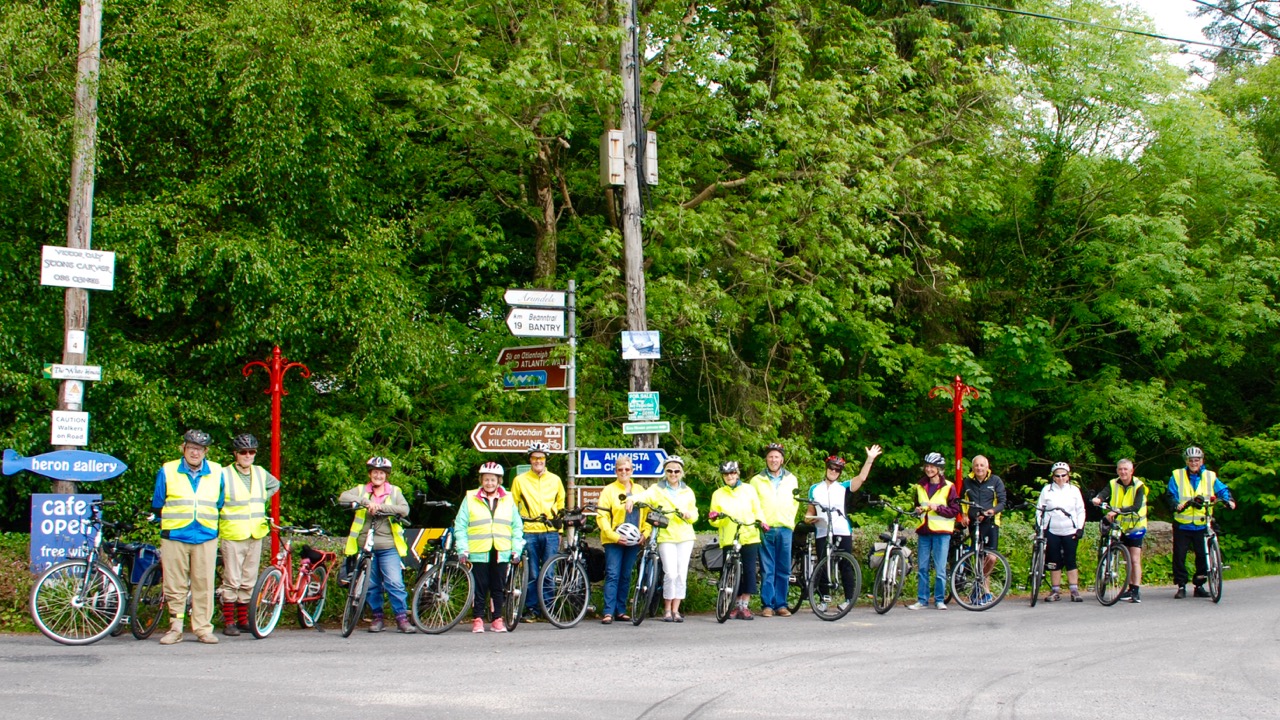
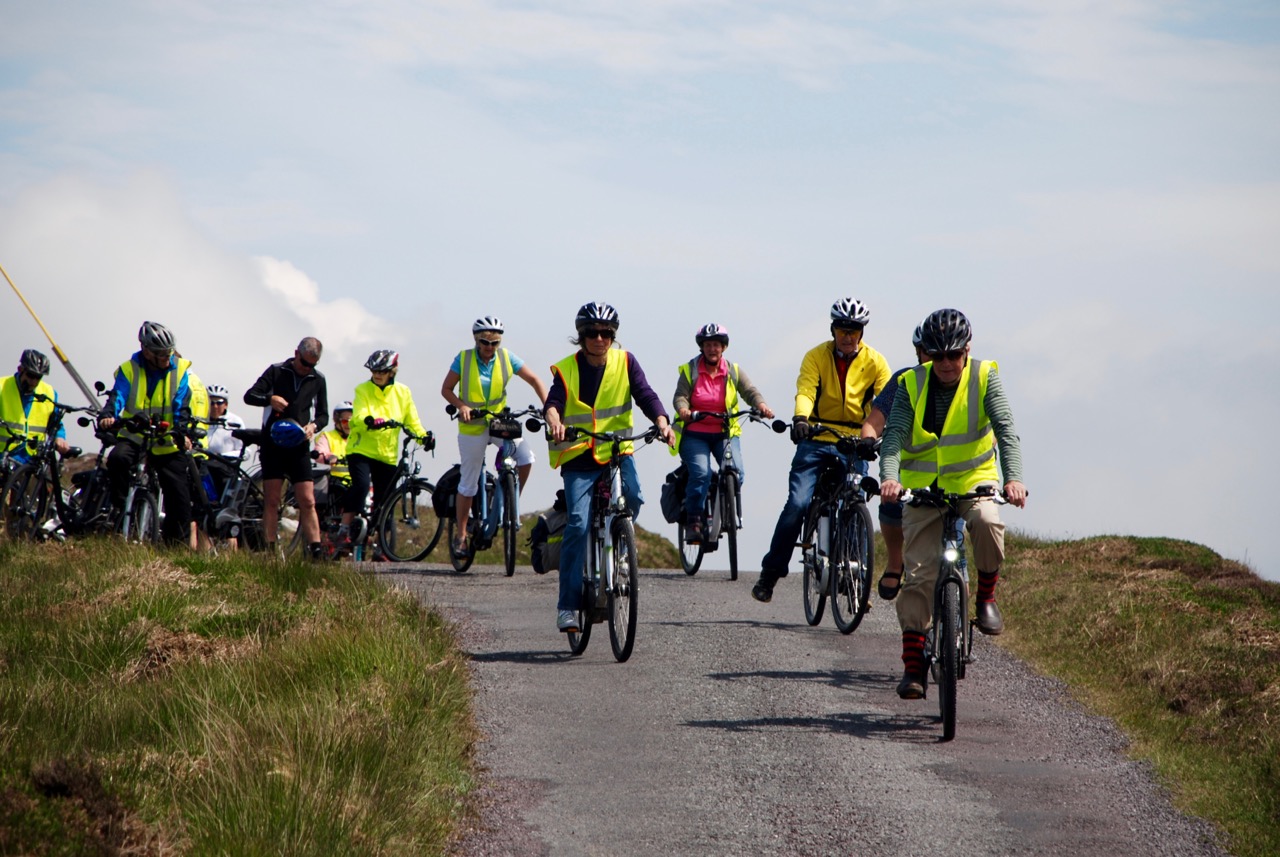
Group at Ahakista

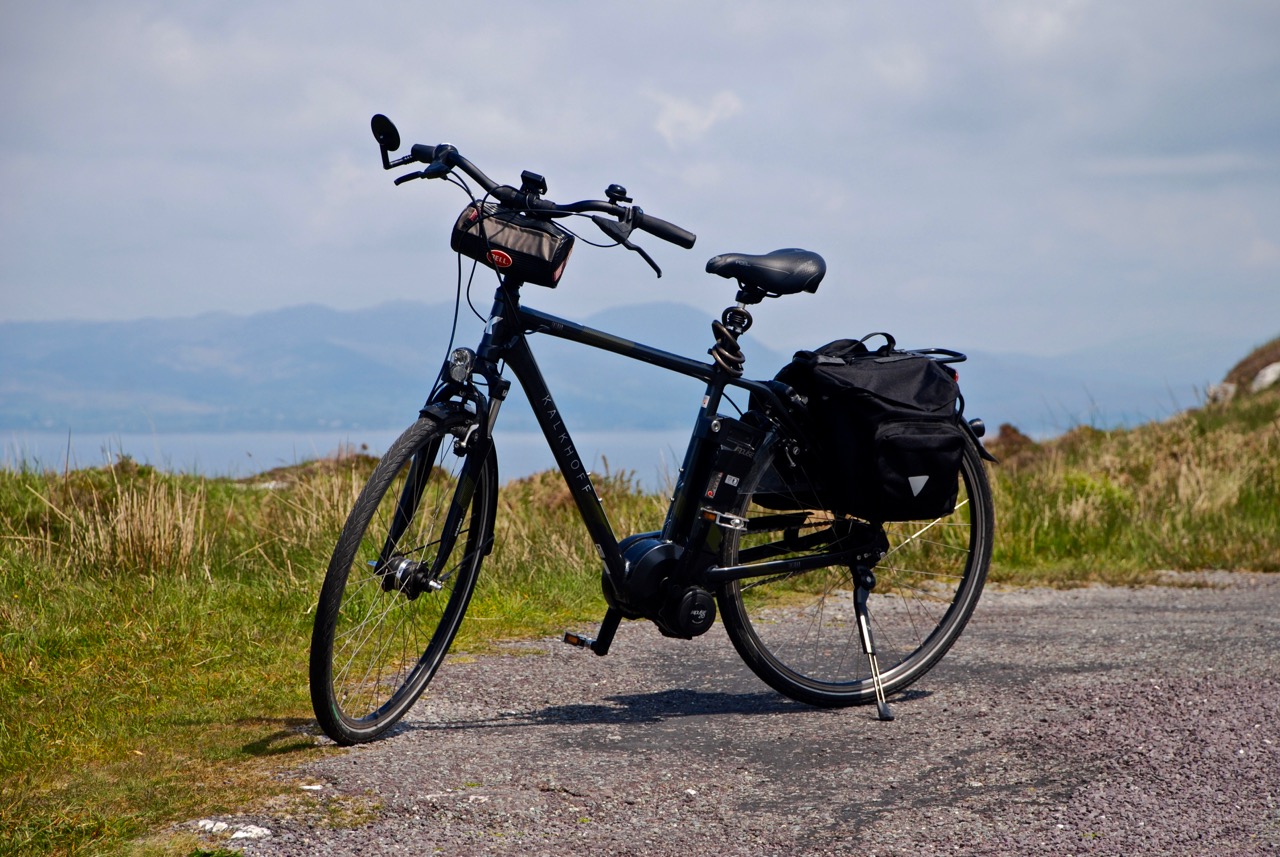
The joy of cycling! The fresh air! The wind in your face! The sun on your back! The sights, the sounds, the smells! Wait – those killer hills! The wobbly legs, the burning lungs! No problem – we have Kalkhoffs!

Is  that enough exclamation marks for any decent blog post? And what on earth is a Kalkhoff?

DSC_0073

Sheeps Head light
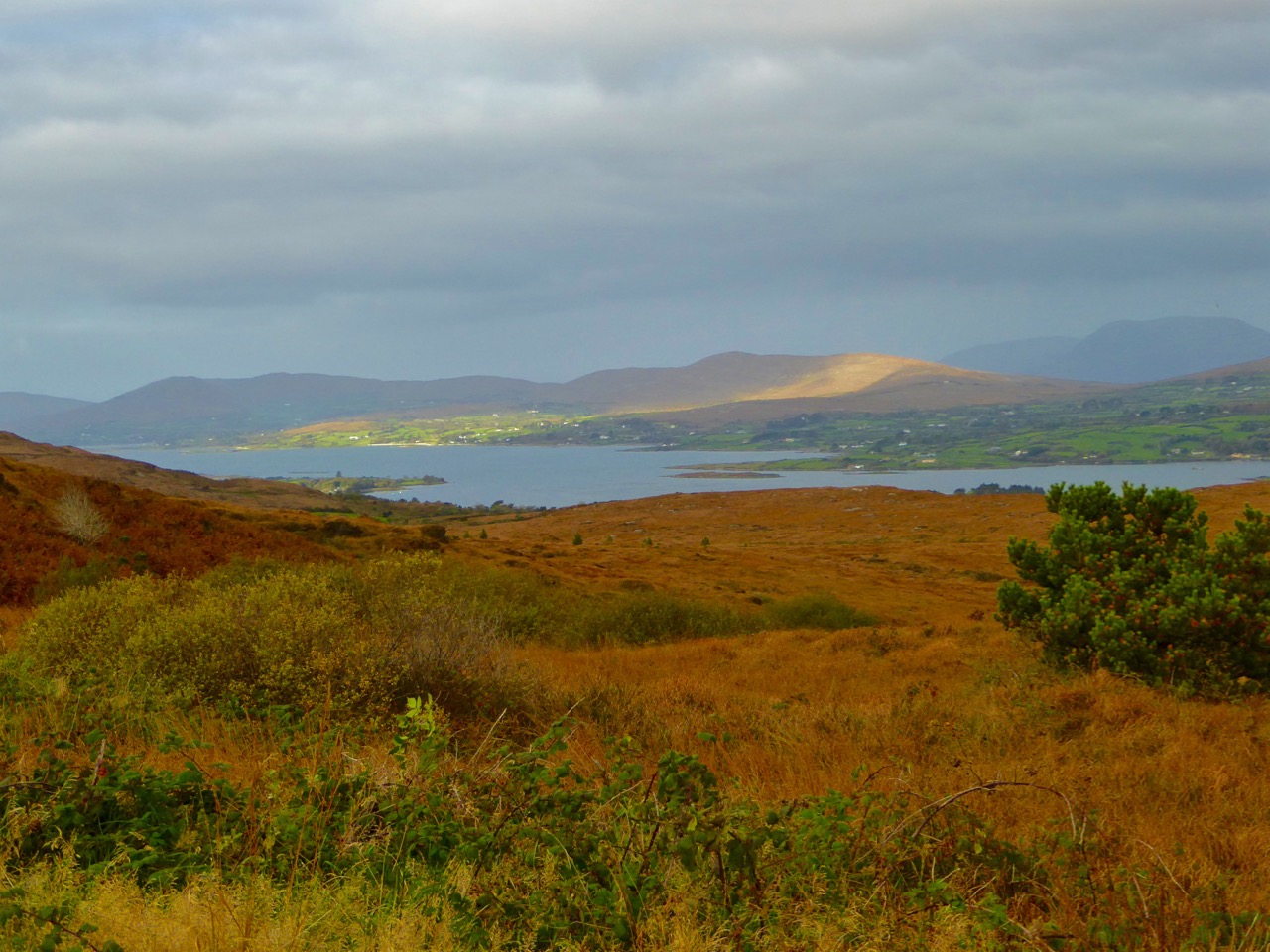
Above, a Kalkhoff electric bicycle and below, the Sheep’s Head – the perfect combination

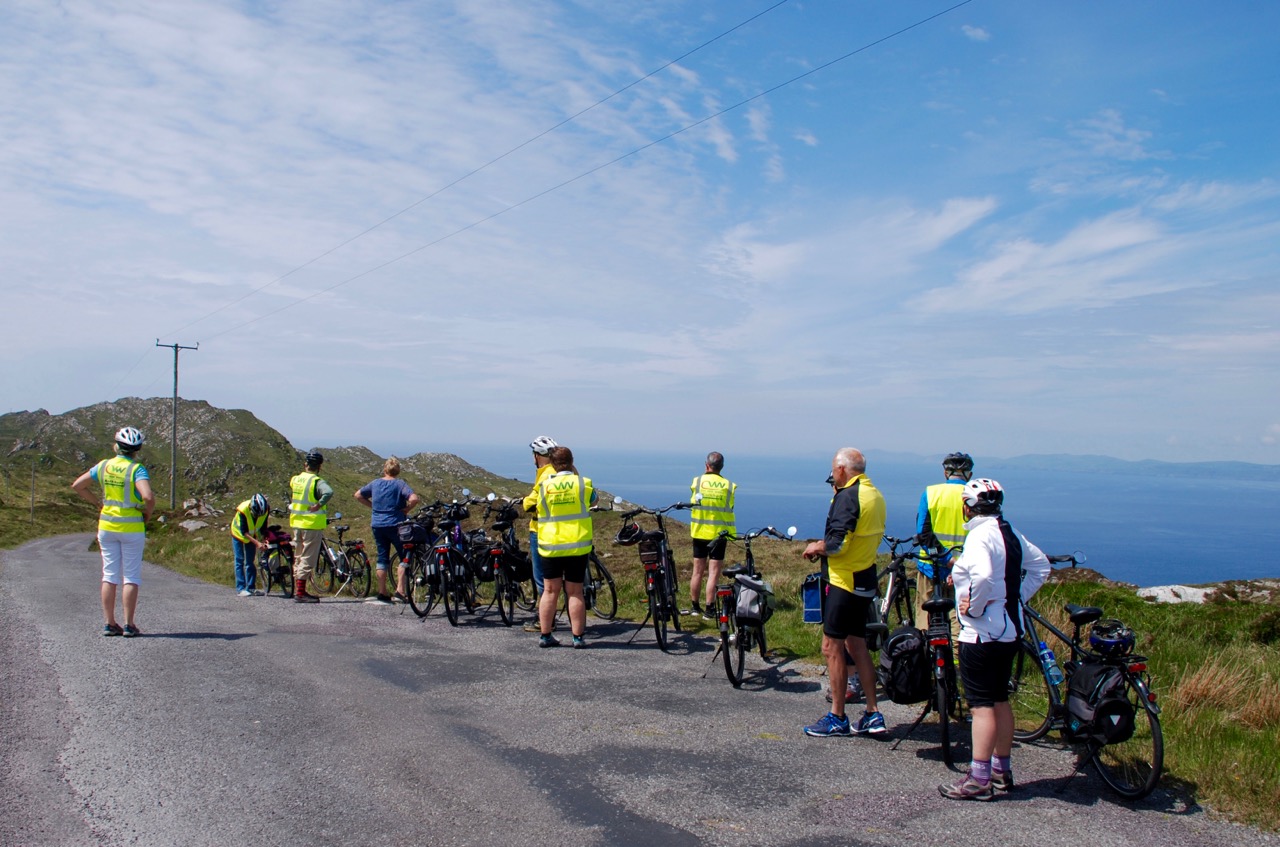
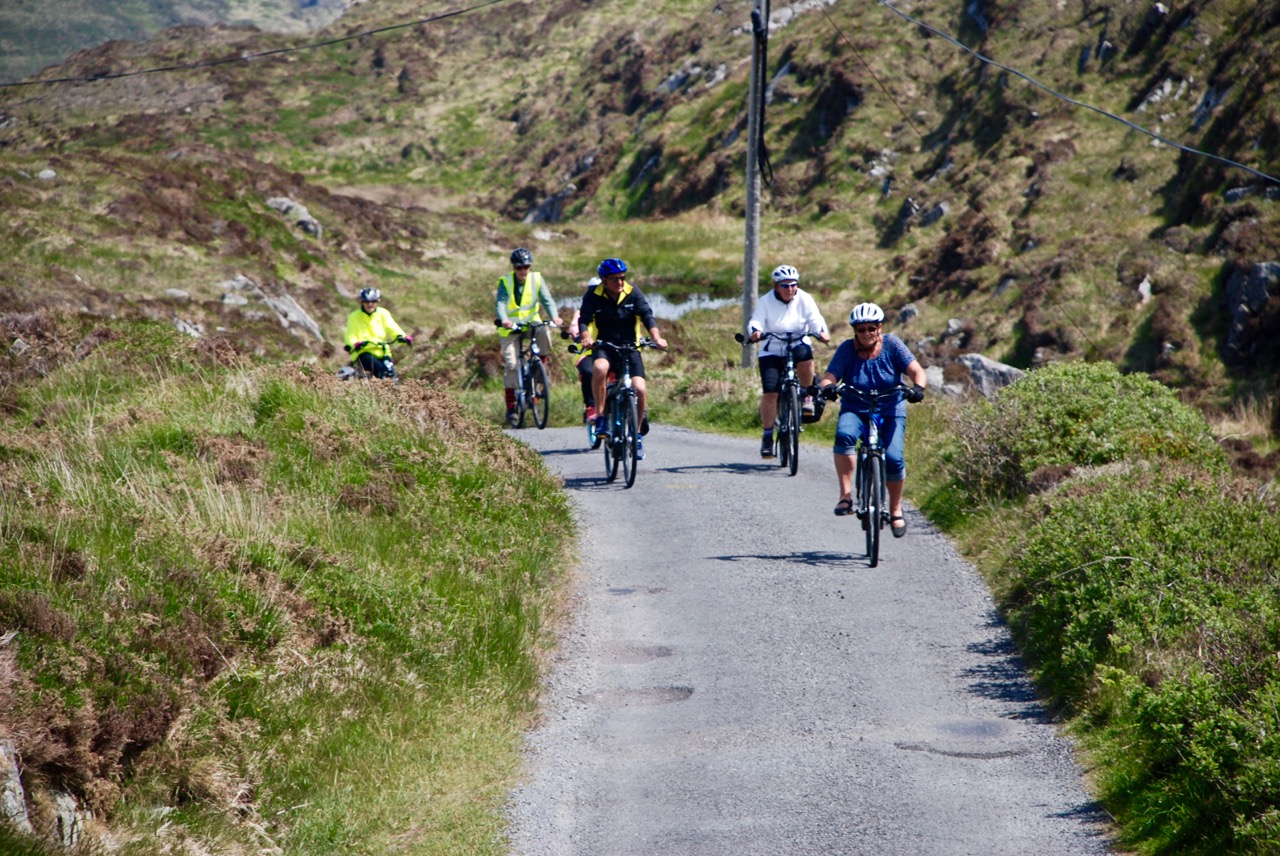
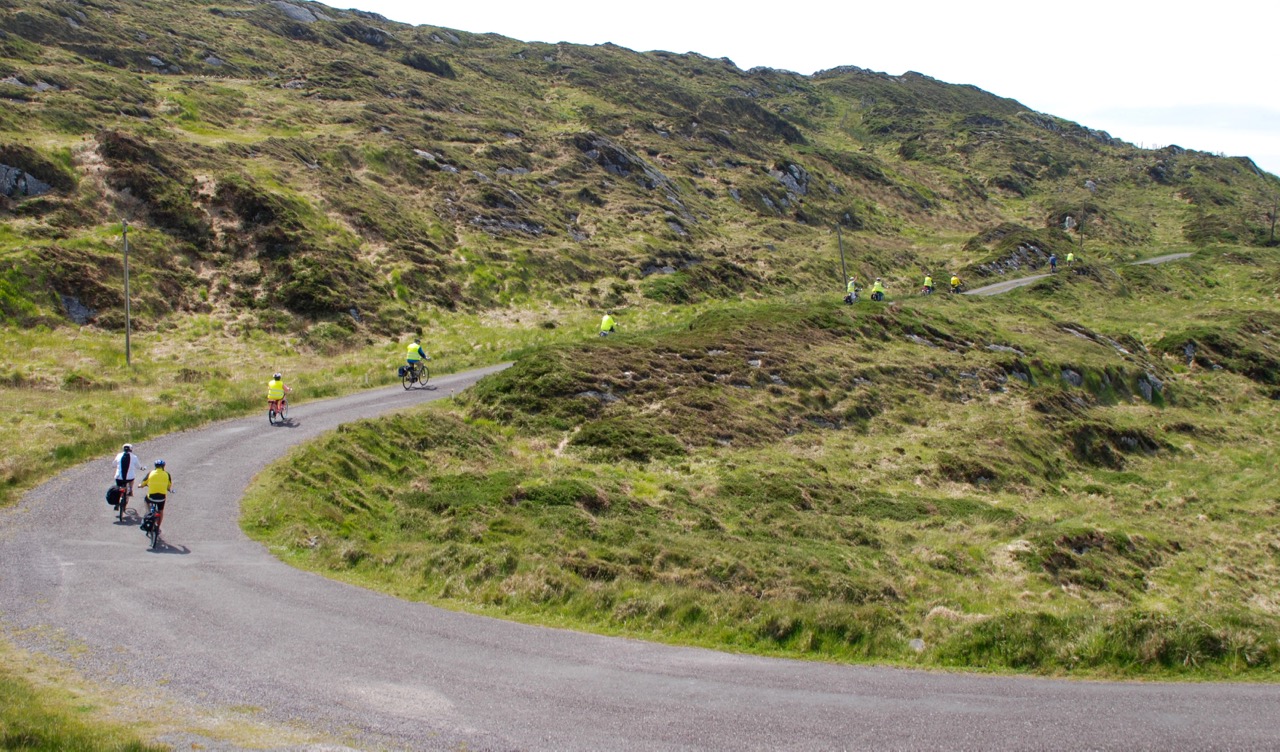
Earlier this year we cycled the length of the Sheep’s Head and back, all of us on electric bicycles, mostly Kalkhoffs. The day was organised by Patrick Murray and Helen Guinan of City View Wheels in Cork, and a masterpiece of organisation it was, featuring stops for coffee, lunch and a pint at the end of the day, followed by a lovely dinner in the Maritime Hotel in Bantry.

stopping for the view

Riding an electric bike has revolutionised cycling for me and for many others. Let’s face it, West Cork is nothing but hills, and huffing and puffing up one of them, pushing a bike, can take the joy out of a day’s adventure. But with some battery-powered help, you can stay on the bike and arrive at your destination still able to breathe.

The Old Creamery at Kilcrohane is a great place for lunch

It’s like having the wind at your back, giving you a gentle push when you need it. It’s still a work-out (you don’t stop peddling) but it just makes the whole venture doable. No, more than doable – pleasurable!

Lighthouse Loop

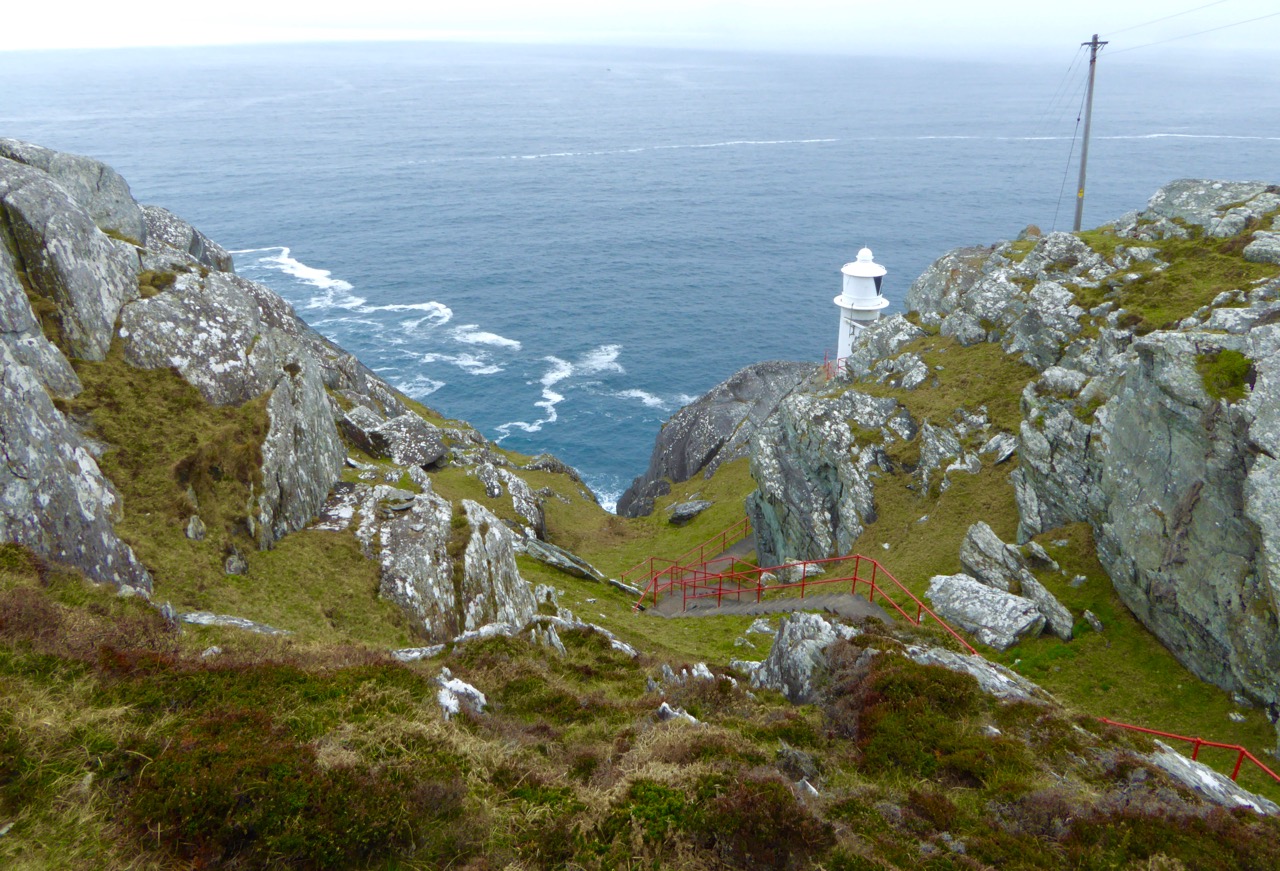
Sheeps Head LighthouseAbove: This is as far as you can drive or ride on the Sheep’s Head – after this, it’s a goodly walk to the lighthouse (below)

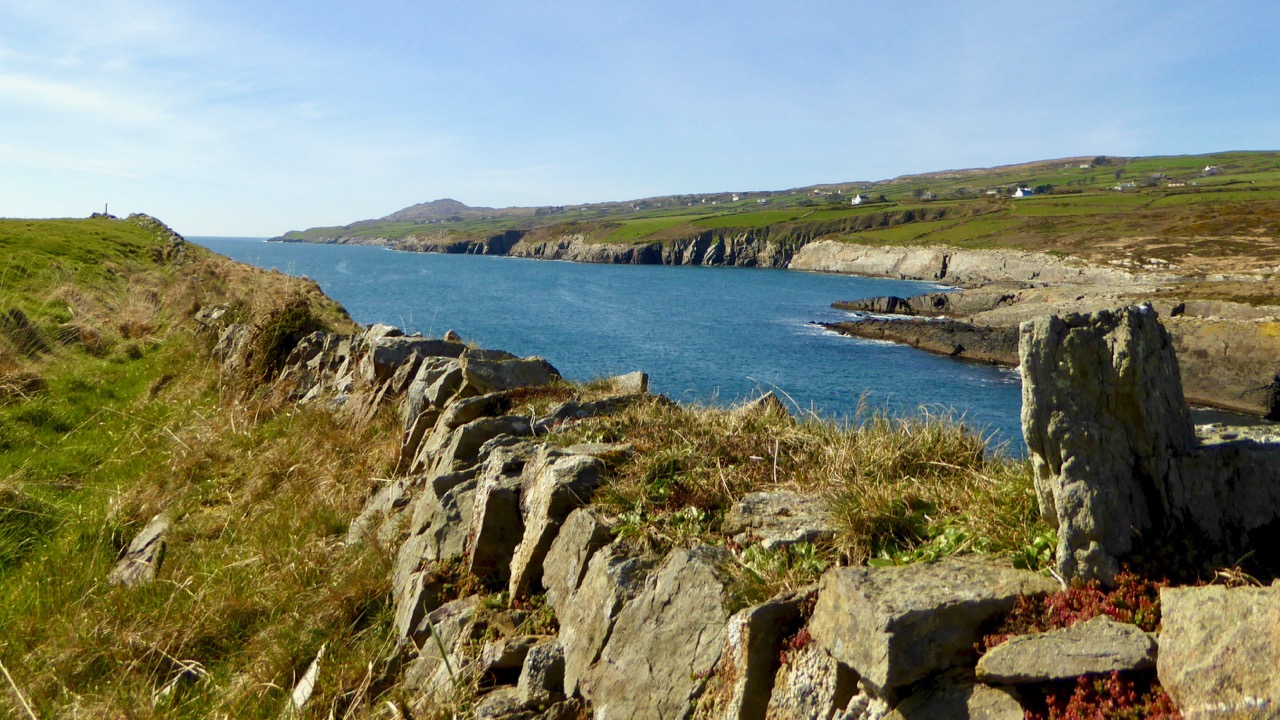
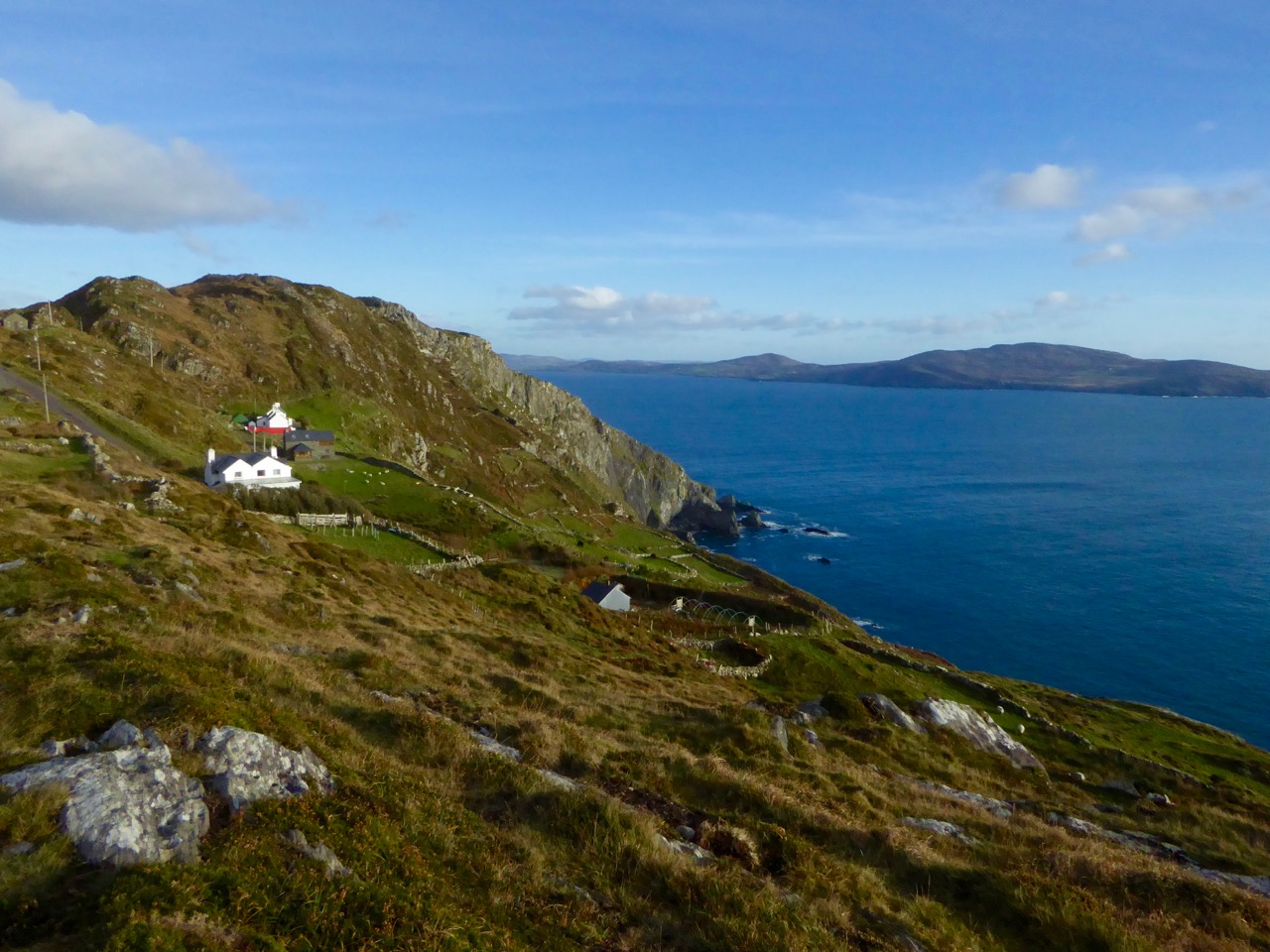
The Sheep’s Head is the perfect destination for a day’s cycling – incredibly scenic, lots of places to stop for refreshment, lots of things to see and do along the way, and relatively flat. Note that word relatively – if you start at Durrus and cycle along the south side to the end of the road and back, you don’t climb over any mountains but you do gain considerable altitude – enough to ensure that you deserve lunch by the time you reach Bernie’s Cupán Tae.

up the last hill

The good news is that it’s mostly downhill all the way back to Durrus.

Leaving Cupán

It  was a congenial bunch and the day was full of chats and laughter. As the ‘locals’ in the group, it was lovely to be able to show off West Cork. We made a detour down to Lake Faranamanagh and told everyone about the Bardic School and the King of Spain’s sons.

sheeps head view


Lake Faranamanagh
The Sheep’s Head , Lake Faranamanagh

When you’re cycling with a group you can’t really stop to take photos whenever you want, so the photographs in this post are a mixture. Photos of the day itself were taken either by Patrick (thank you, Patrick!) or by me, while general photographs of the Sheep’s Head come from my own collection and were taken at various times of the year. They will give you a feel for what’s to do and see along the way.

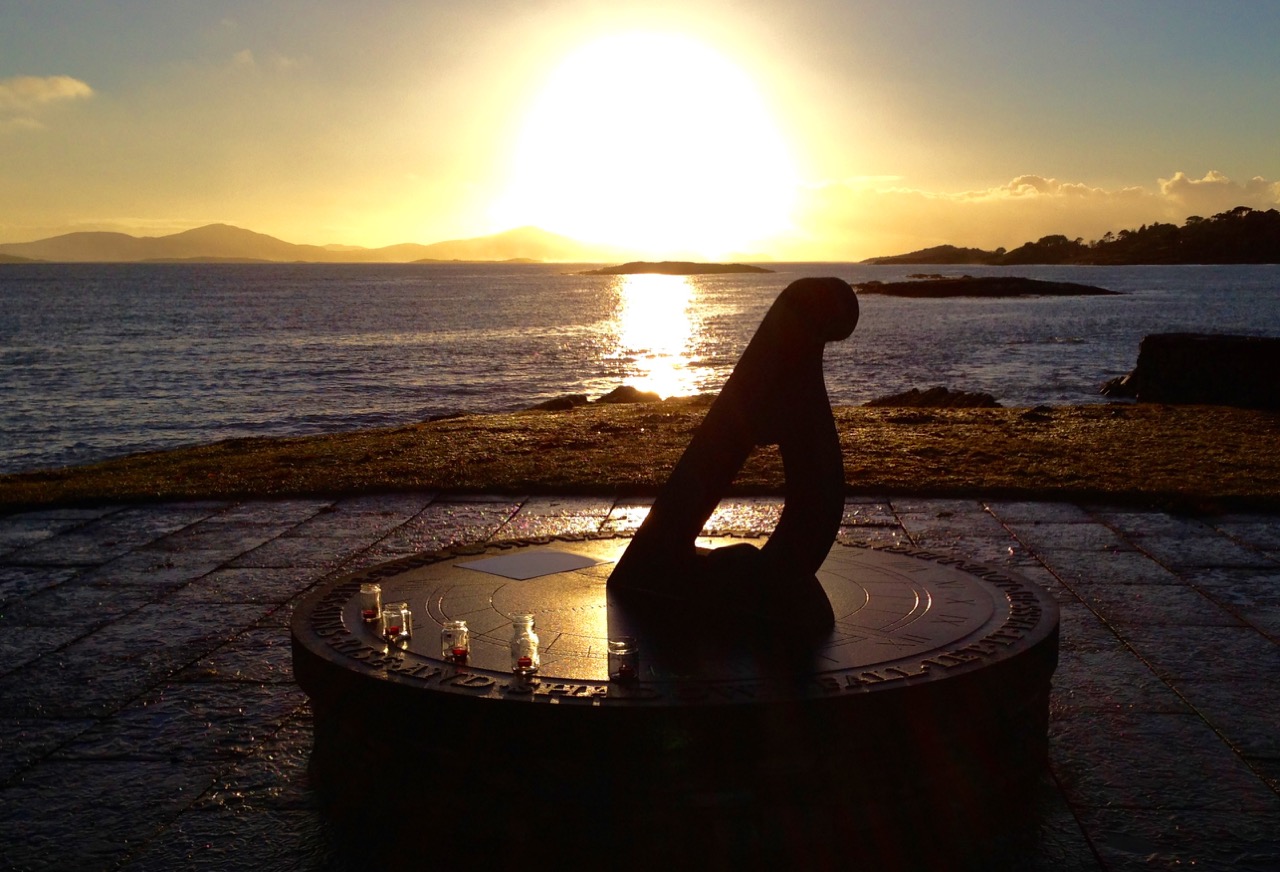
Air India Memorial Site


Top: The beautiful and moving Air India Memorial site at Ahakista; bottom: Critters encountered along the way

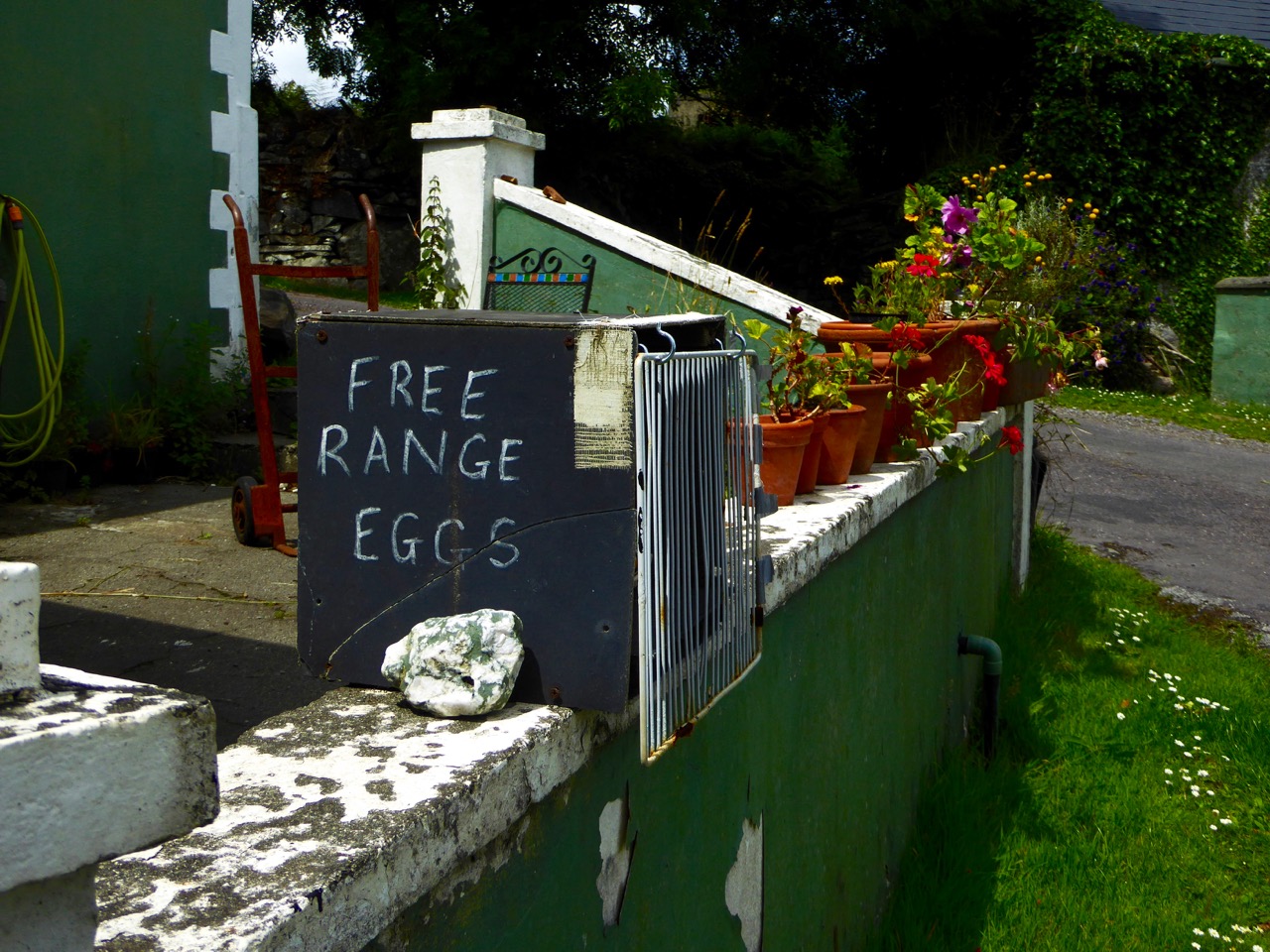
We were blessed with a lovely day for our bike trip. But then, as you know, the sun always shines in West Cork. And sure, if it doesn’t, you can hole up in a pub and sing, or stay home and cook up some fresh eggs from the happy hens at Faranamanagh.

eggs

If  you love to get out on a bicycle but aren’t the iron-man type, fear not – there is life after lycra!

road into Durrus

And if you just want to explore the Sheep’s Head, bike or no bike, take a look at our post on Walking the Sheep’s Head Way or head on over to Living the Sheep’s Head Way, the website of the Sheep’s Head and Bantry Tourism Co-operative, for lots of information the peninsula and places to stay. Or take a browse through The Sheep’s Head Way for all the walking routes – it’s the website of the voluntary committee that takes responsibility for the way-marked trails.

convoy

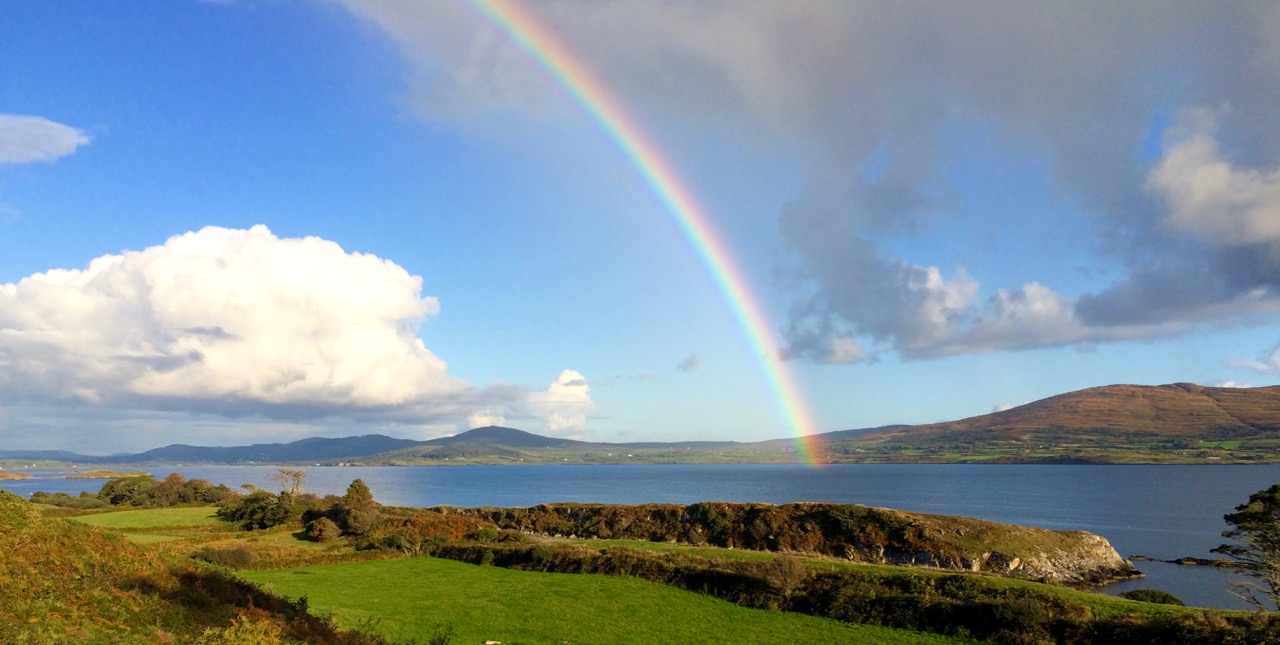
rainbow over mizen from Sheep's Head

Wayside Miracles

Ballinspittle Grotto

Ballinspittle, Co Cork: the Marian Grotto became a world news sensation

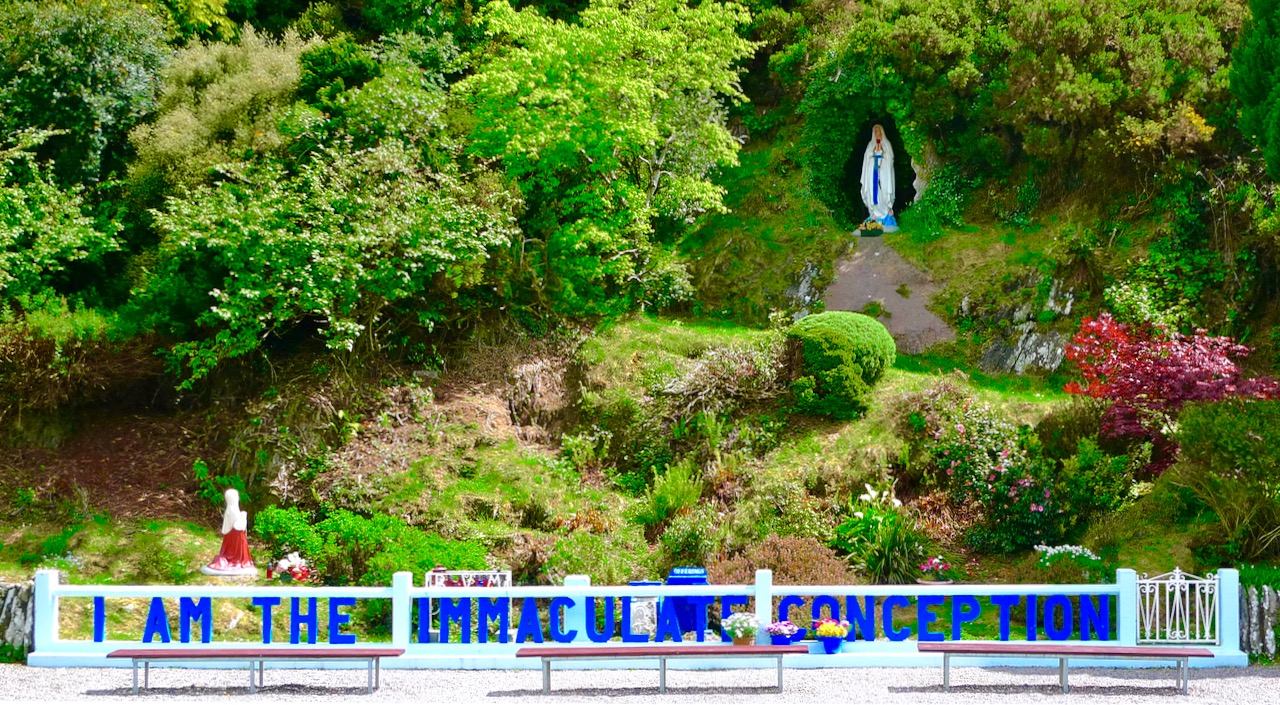
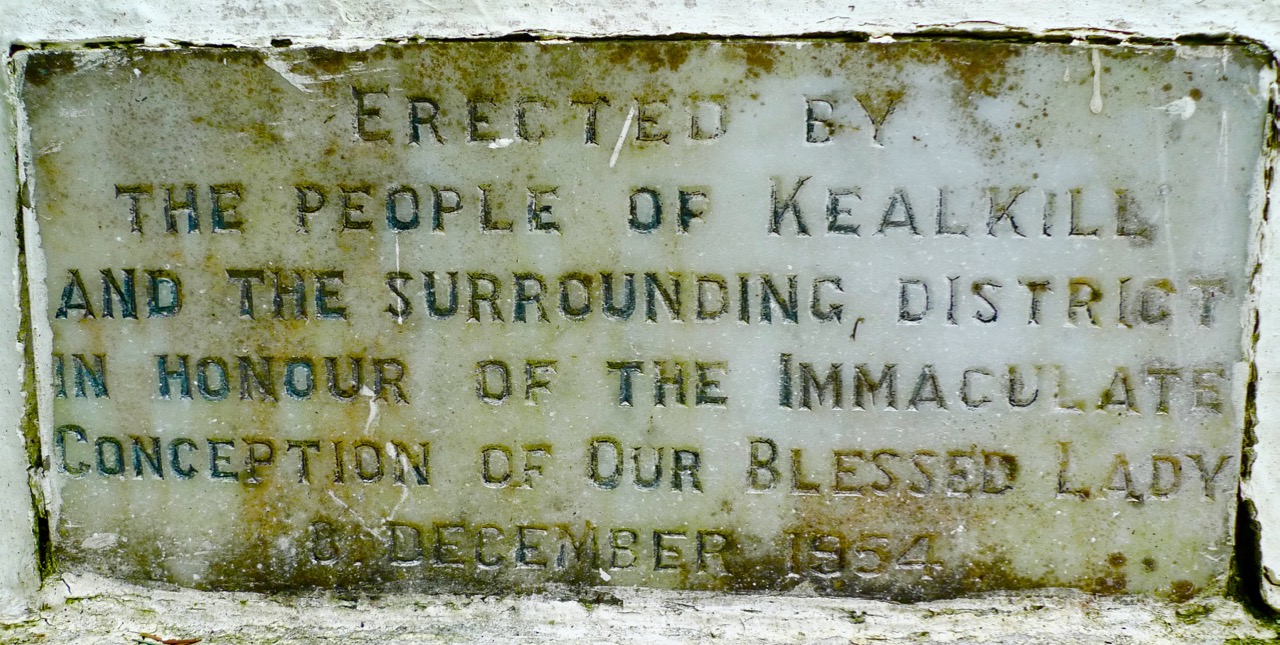
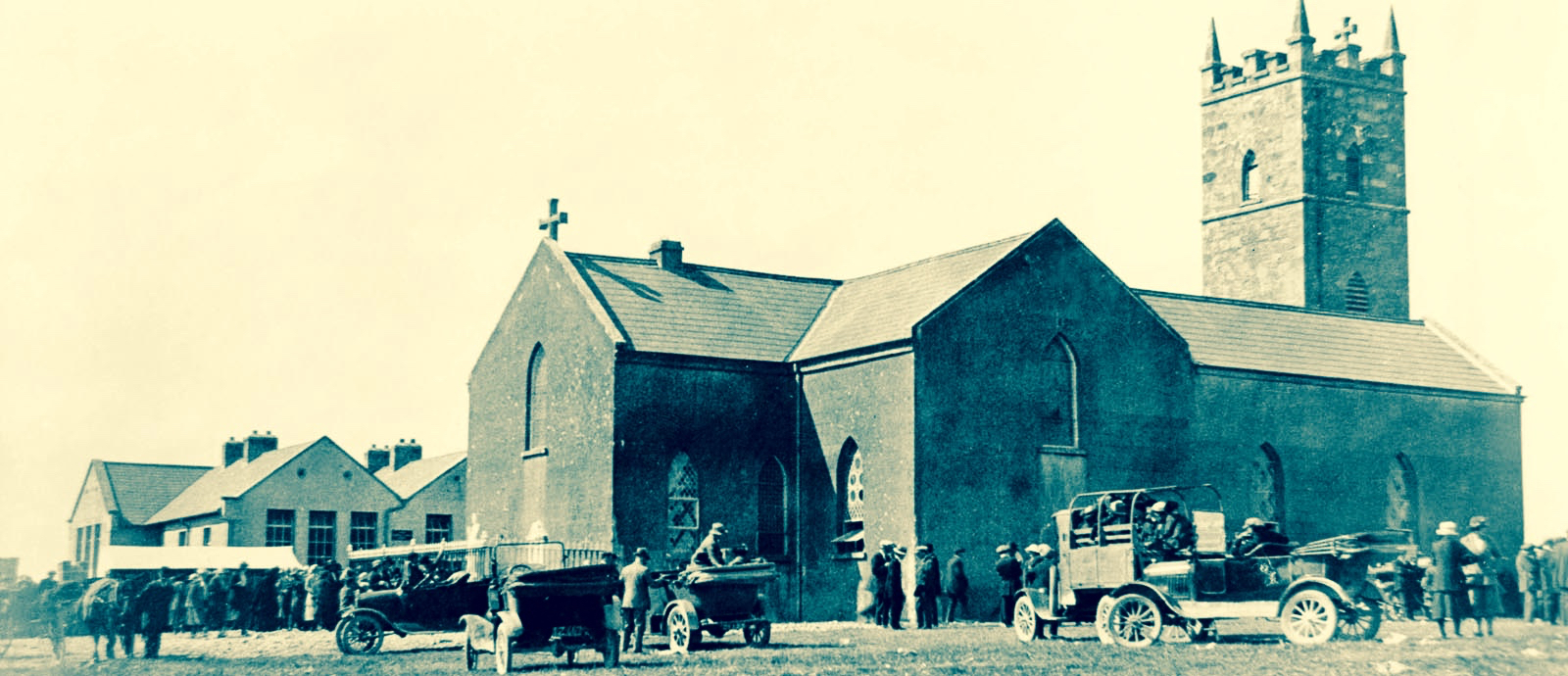
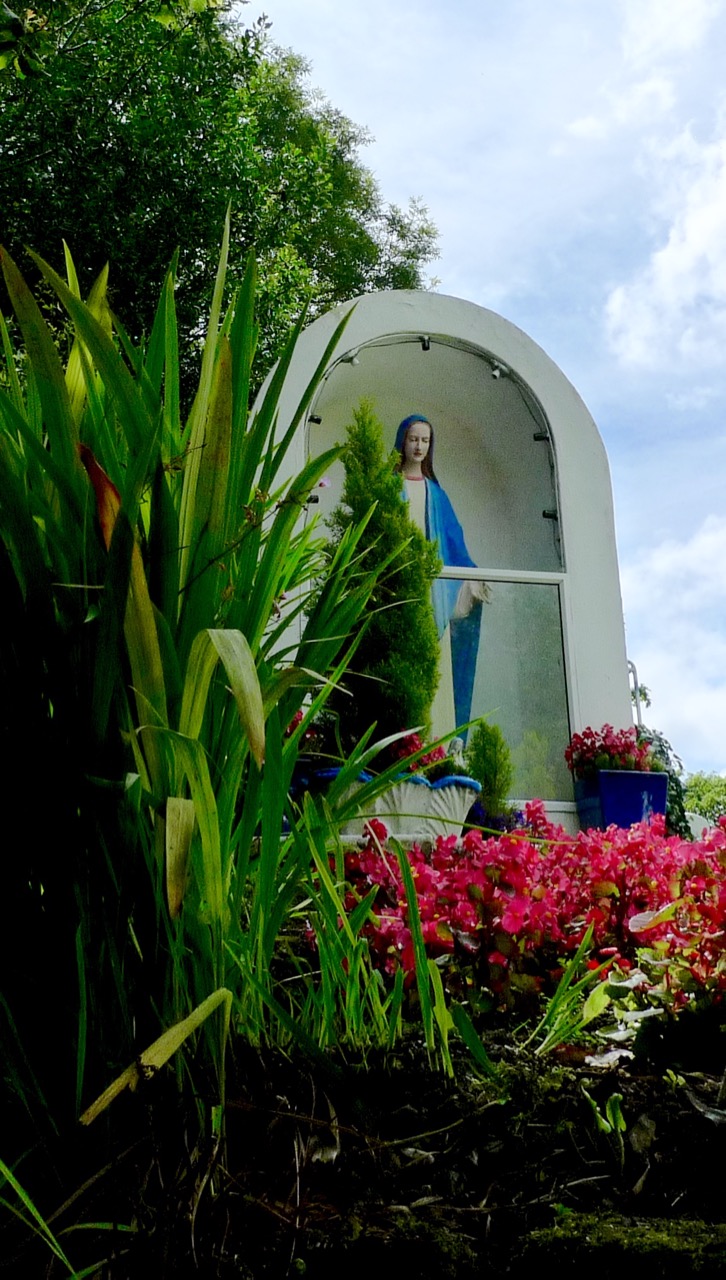
1954 was a great year for the construction of outdoor shrines and grottoes in Ireland. Pope Pius XII had designated it a special Marian Year to mark the centenary of the ‘dogma of the Immaculate Conception and Assumption’. The Marian Year was an international event, but apparently no other country embraced the idea with greater fervour than Ireland. The notion seemed to capture the imagination of a young republic suffering from serious recession, high unemployment and loss of population through emigration. Hundreds of projects were put in hand and today, on almost every road in the country – and in every community – you will see statues of the Blessed Virgin Mary, usually in well tended settings. They add to the colour and character of this green land: like the ancient holy wells, they are venerated and not forgotten.

1954 tablet

Statue maker Maurice O’Donnell recalled that 1954 was a bonanza year for him: “…I was making so many at that time there was no time to dry them out before painting, so lots of statues in the shrines around the country are still unpainted. But that was in the Marian Year. The bottom has dropped out of the statues market since the Vatican Council…” Although many statues of the Virgin were painted later on, you will still see many unpainted (white) examples.

Marian Year shrine added on to the Holy Well at Keallkill, Co Cork

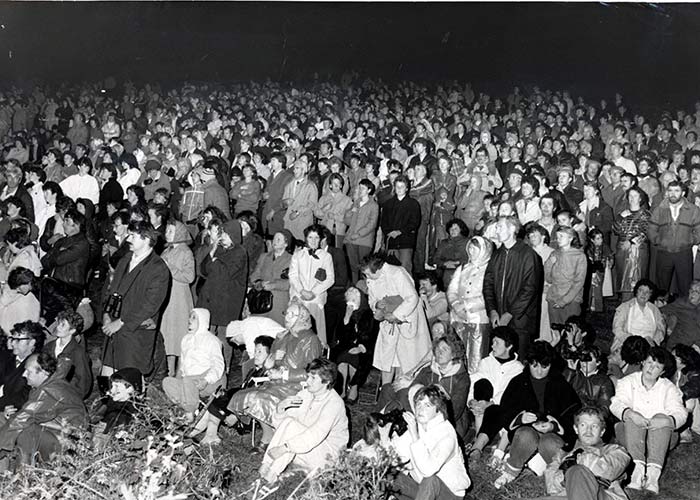
Exactly thirty years ago – on 26 July 1985 – the grotto at Ballinspittle jumped into the news headlines of the world because two local women witnessed the statue there moving while they were praying. The little Cork village suddenly found itself the centre of media attention and – during that summer – thousands of people came in bus loads from all over Ireland, either out of curiosity or anxiety to become part of a phenomenon. Many saw the statue move: a police sergeant (presumably a reliable observer) saw it rise into the air – while cures were claimed by sick people who visited the site.

Ballinspittle 1985

Crowds at Ballinspittle 1985  – Evoke.ie

Strange events were not limited to Ballinspittle. Reports had already appeared elsewhere. Kerry got in first: in February of the same year 30 schoolchildren saw two statues moving in the church at Asdee, while in nearby Ballydesmond something similar happened soon after. Here’s a contemporary extract from RTE News – worth watching for the concise view of rural Ireland in the 1980s.

magill asdee

Over 10,000 people visited the Ballinspittle grotto every night throughout the summer. The Irish Times (6 August 1985) reported: ’…Ballinspittle’s claim to a moving statue was matched in no time at all by reports of similar occurrences in Dunmanway and Courtmacsherry. But too many people, including senior gardai, well-tried sceptics and some who registered what appeared to be genuine shock said they saw the statue move, so Ballinspittle has remained the premier place of pilgrimage…’

white marys

The Catholic Church distanced itself from these happenings. Bishop Michael Murphy of Cork warned that “…common sense would demand that we approach the claims made concerning the grotto in Ballinspittle with prudence and caution…” but he also relished the fact that “…crowds are gathering there in a great spirit of prayer…” A difficult stance, perhaps, as similar occurences from Lourdes and Knock in the 19th century led to the creation of huge religious centres and pilgrimage destinations.

WWL

The visions at Knock, witnessed in 1879

The moving statues was a story big enough to inspire Peter Mulholland of the National University of Ireland, Maynooth, to pen a lengthy monograph in 2009, Moving Statues and Concrete Thinking, available in full on line – and a fascinating read. Mulholland makes the point that from the 1950s to the 1980s the western world, including Ireland, was perceived to be under threat from the Cold War, ‘Nuclear Nightmare’ (from weapons and waste), Communism, the ‘permissive society’ – and, more locally, ‘The Troubles’ and increasing unemployment and emigrations; while in 1970 the Bishop of Galway said he thought ‘organized atheism’ was the source of the ‘most serious injury’ being done to the young people of Ireland. All this, says Mullholland, contributed to an underlying feeling of insecurity which created an atmosphere ripe for ‘cults’ (such as observers of moving statues) because of a high level of anxiety in the community. The monograph goes pretty deeply into the realms of psychology, quoting one researcher who “…argued that a certain kind of family structure ‘intensifies Oedipal desires in both sons and daughters, and so promotes Marian devotion’. He held that Marian ‘hallucinations’ are shaped not simply by Oedipal desires but also by other infantile and adult desires…”

Mulholland concludes: “…The moving statues were a modern manifestation of the kind of ‘magical devotionalism’ that sections of the Irish Catholic population have long been prone to resort to during periods of personal or collective distress… They were products of the kind of literalistic, magical-devotionalism that Irish clerics condemned in the 1950s and ‘60s as being ‘anti-intellectual’ and a ‘peasant religion’…”

Knock Shrine

Knock Shrine, early 20th century

Perhaps it’s just coincidence (and I haven’t seen anyone else mention this), but it is worth noting that the Air India Disaster occurred at Ahakista, on the coast of West Cork, less than a month before the first apparitions were seen at Ballinspittle. This terrorist event which killed over 300 innocent souls must have had some effect on the local – if not the national – psyche, and could certainly have enhanced feelings of anxiety and insecurity in a rapidly changing world.

Ahakista

1985 Air Disaster Memorial, Ahakista

Looking back from the 21st century to these events I feel a sense of – well, disappointment – that what comes across now in reports on the phenomenon is mainly disparagement. This is a country which, quite rightly, hangs on to its history and mythologies: as with the wandering bards of older times stories are kept alive at the fireside, in the pubs – wherever people gather. Stories of The Other Crowd, of old battles, of heroes – and of neighbours – are listened to eagerly, and will be repeated just as eagerly. I don’t hear people dismissing them or expressing cynicism about them, as they seem ready to do about moving statues. Such scepticism is understandable in modern Ireland but I will continue to listen with an open mind to all the stories of miraculous happenings that are cherished and passed on, and which underscore the ancient faith of the countryside.

First day of issue

It would be wrong not to finish the story of Ballinspittle. On 31st October (Samhain) 1985, when a group was gathered in prayer at the grotto a car pulled up and three men got out carrying hammers and axes. In front of the dismayed onlookers they smashed the statue of the Virgin and shouted abuse at the worshippers for “…adoring false Gods…” The men, who claimed to belong to an extremist fundamental Christian sect based in California, were later arrested and charged with ‘causing malicious damage in a place of divine worship’. Amazingly, at the trial the Judge stated that he had to be “…particularly zealous in guarding the rights of the three defendants…” and dismissed the case on the grounds that the Ballinspittle grotto is not, in fact, a place of divine worship. In March 1986 the perpetrators appeared on the popular Late Late Show, hosted by Gay Byrne on RTE Television. They cited the fourth and fifth commandments of the Old Testament as giving them divine sanction to smash all religious statues in Ireland, regardless of the rights and views of other people. Reporter Eoghan Corry stated in an article in the Sunday Press, “…there isn’t a safe statue in the country.” Fortunately, following further acts of vandalism they were duly convicted.

Links worth following for more on the Moving Statues:

Finola’s blog post Mary Mary

Radio Documentary from RTE in 1992

RTE TV documentary on Ballinspittle

marian shrine