March Back in Time

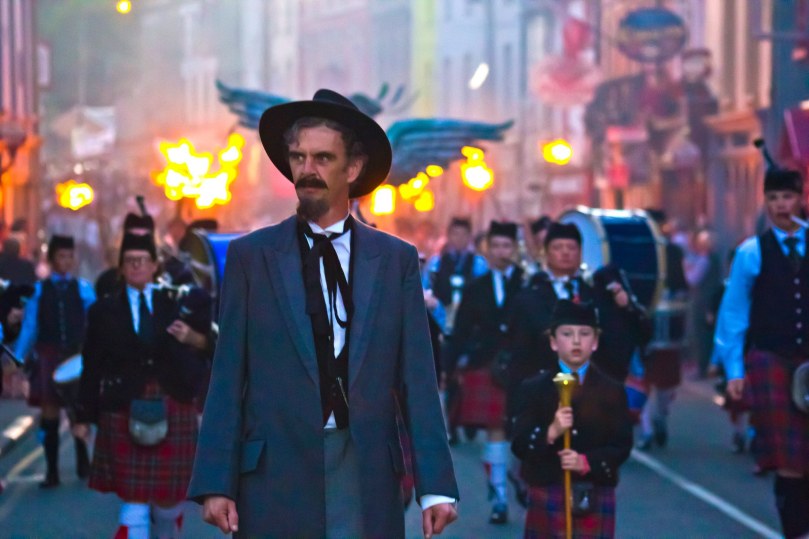
Jeremiah O'Donovan Rossa at the head of the Demonstration. Photo © Ian Flavin, used with permission.

Jeremiah O’Donovan Rossa at the head of the Demonstration. Photo © Ian Flavin, used with permission

100 years ago this month all Ireland was galvanised by the news that Jeremiah O’Donovan Rossa’s body was to be brought from New York to be buried in Ireland. As an acknowledged leader of the Fenian movement, he was as infamous in America and Canada as he was revered in Ireland, and his funeral was one of the largest ever seen in Dublin. 

Rossa, born in 1831, grew up near Rosscarbery and experienced the dreadful time of the Great Famine, watching his father’s death and his family’s eviction. Left alone in Skibbereen while his mother and siblings emigrated, he made a life for himself as a shopkeeper, all the time growing in his hatred of tyranny and nurturing revolutionary thoughts. He founded the Phoenix Society in Skibbereen which, although called a literary society, advocated ‘force of arms’ as a means of liberation from British rule.

It was during this period, in 1863, that he organised a demonstration in Skibbereen in support of Poland. There were many analogies between Ireland and Poland at that time: Poland was ruled by Tsarist Russia, which had imposed the Russian language on the Poles, closed universities and Catholic churches and dealt ruthlessly with resistance. The march was a barely-concealed act of sedition, of course, watched closely by the police.

Polish Contingent in national costume

Polish contingent in national costume

This week, as part of the launch of the annual Arts Festival, Skibbereen re-enacted that demonstration – and it was thrilling! Declan McCarthy (of Baltimore Fiddle Fair fame) took the role of Rossa, ably abetted by members of the Kilmeen Drama Group and the Skibbereen Theatre Society

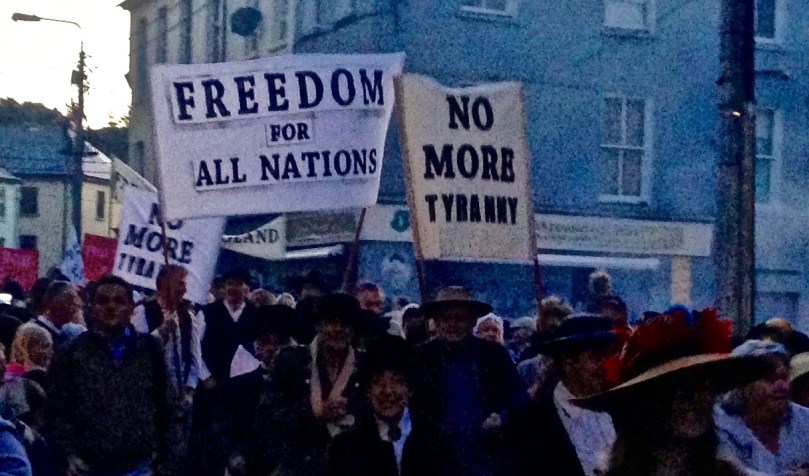
Banners

Everyone who could manage it was dressed in period costume, shop windows put on special displays, and the streets were closed to all but pedestrian and horse-drawn traffic.

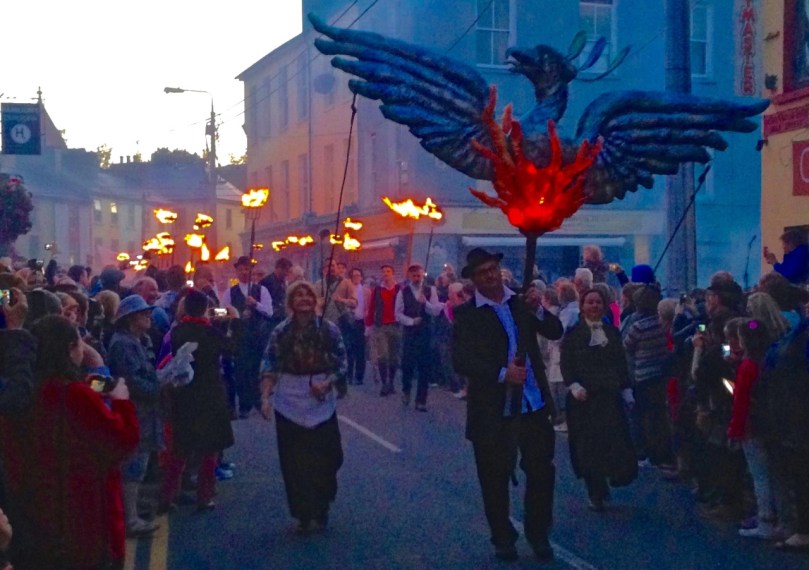
Phoenix out front

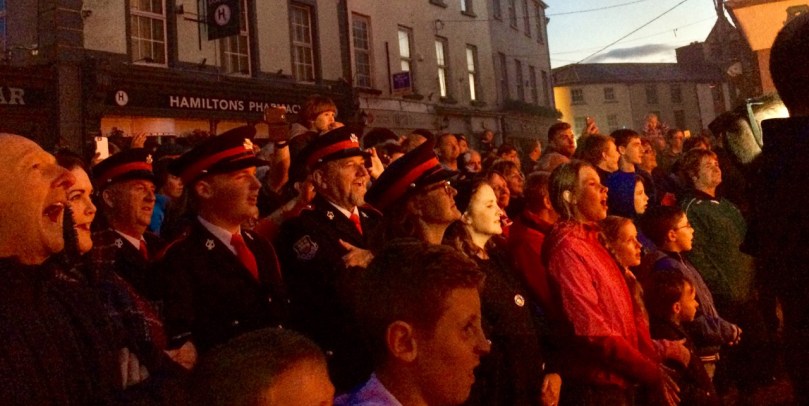
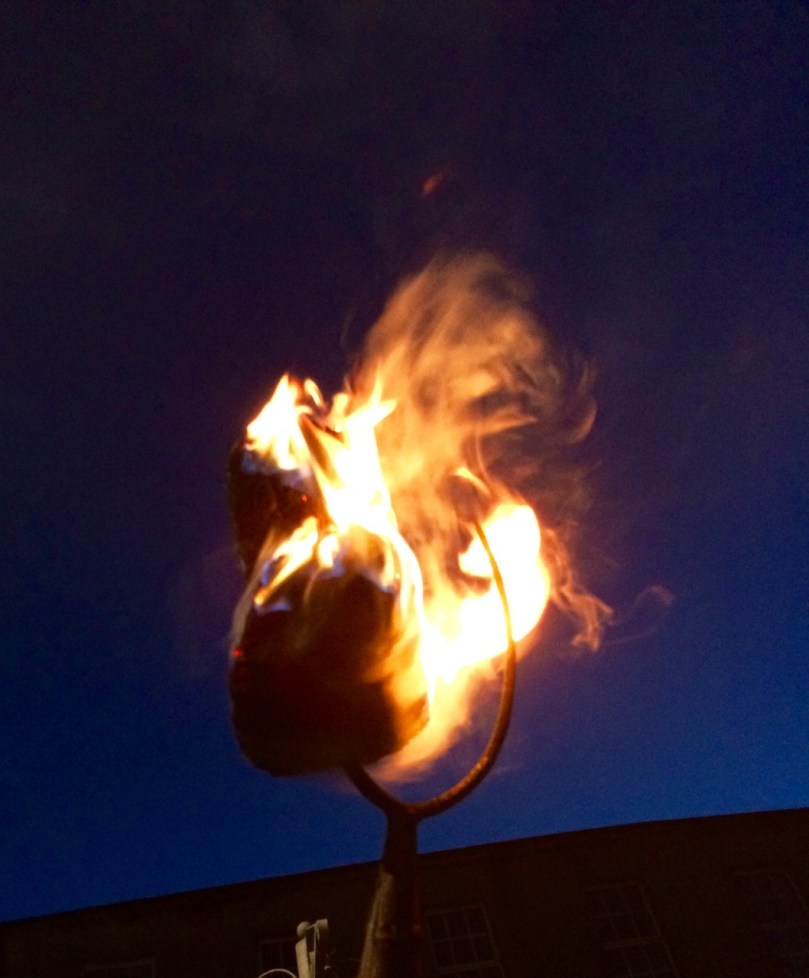
The demonstrators paraded through town when night fell, lit by flaming turf torches and led by Rossa and an enormous Phoenix Society emblem. A contingent of Poles had come from Cork and marched in costume. Banners were hoisted and a pipe band played The Minstrel Boy.

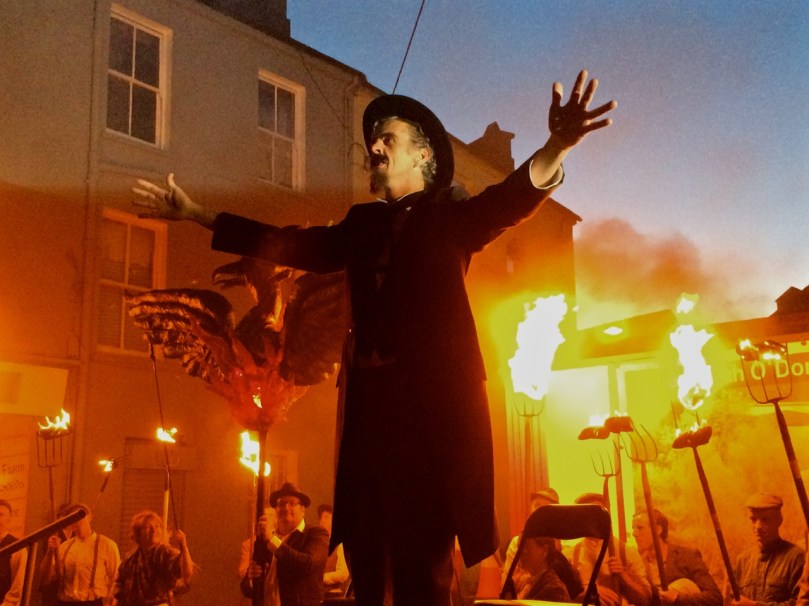
Finally, lit by the flaming torches, Rossa ascended the platform and delivered a fiery speech about tyranny and illegal occupation, punctuated by cheers from the crowd.

Firebrand Speech

The atmosphere was incredible. We were transported back to 1860s Skibbereen, surrounded by threatening policemen, firebrand revolutionaries and Victorian citizens, all getting into the spirit of the times.

AudienceIt was the high point (although not the culmination yet) of two months of Rossa commemorations in West Cork which has included lectures, a play, a walking tour, exhibitions and the unveiling of new monuments in several places including the impressive Skibbereen installation inaugurated by President Higgins.

Rossa and torch bearers

More about Rossa in a future post, including his three wives and 18 children, his Fenian career and his connection to events in Canada. To end, a link to one of the classic Fenian songs, Down by the Glenside.

Pitchfork torch

Wayside Miracles

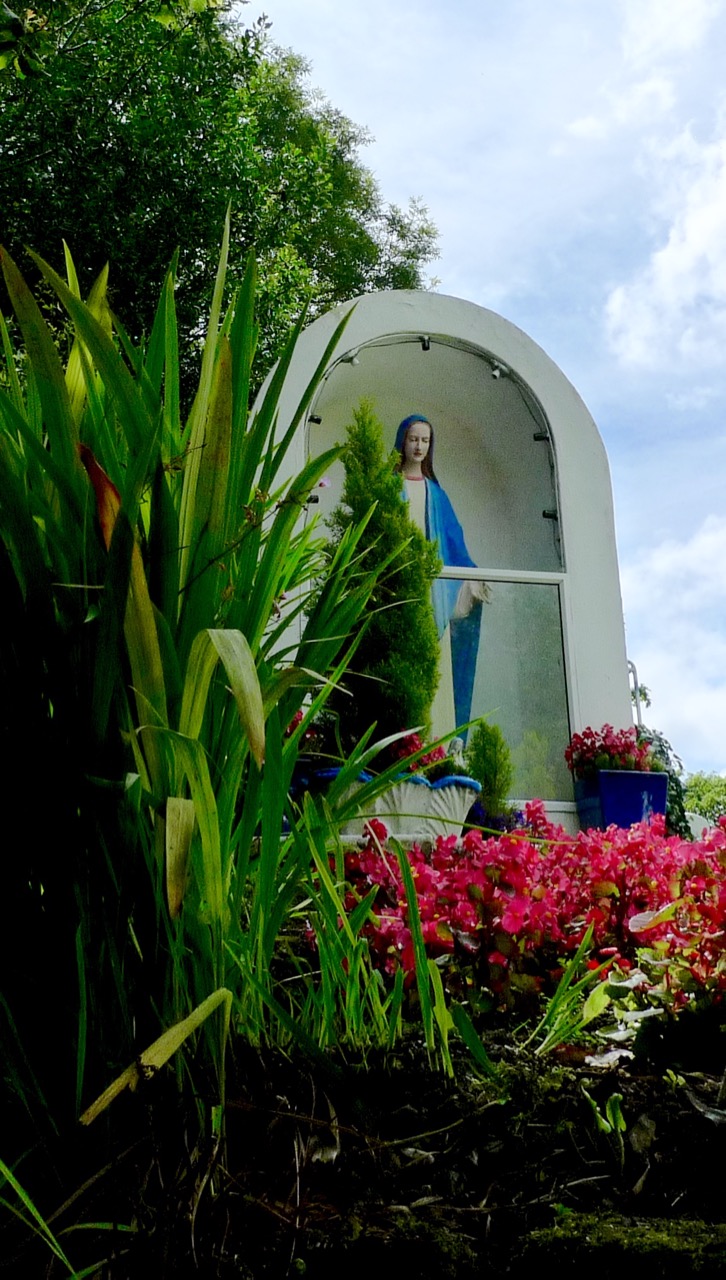
Ballinspittle Grotto

Ballinspittle, Co Cork: the Marian Grotto became a world news sensation

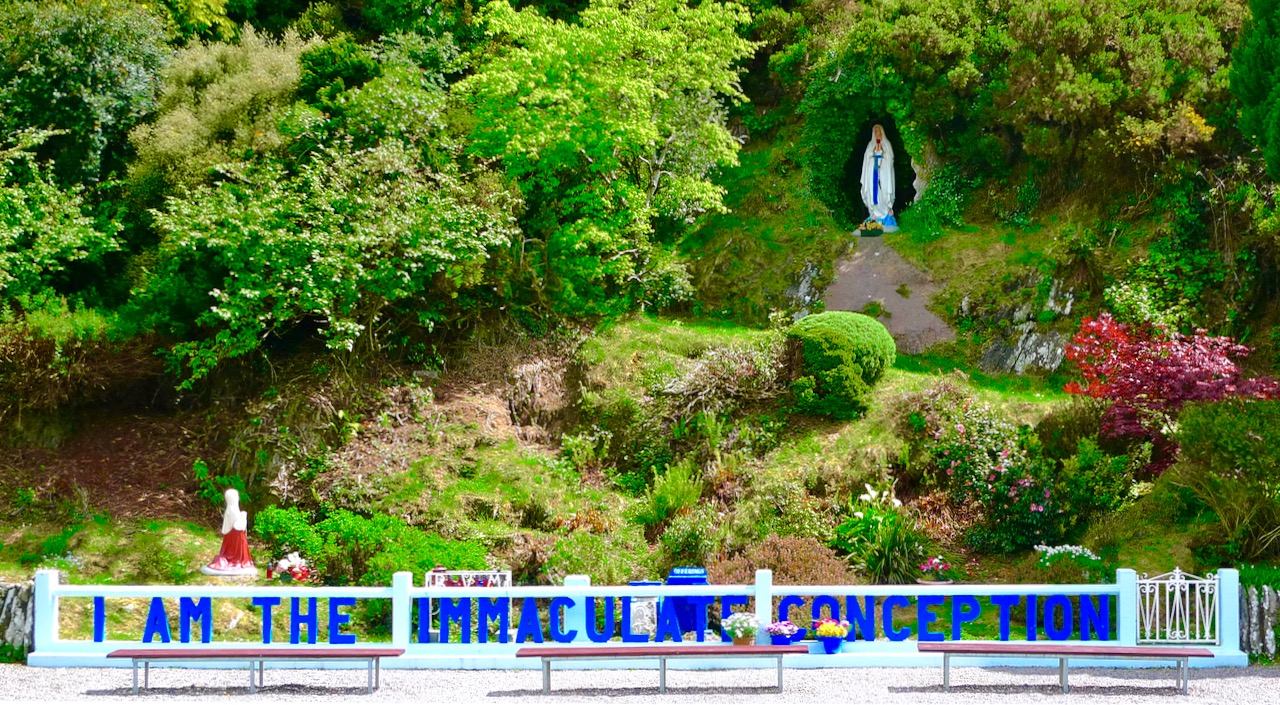
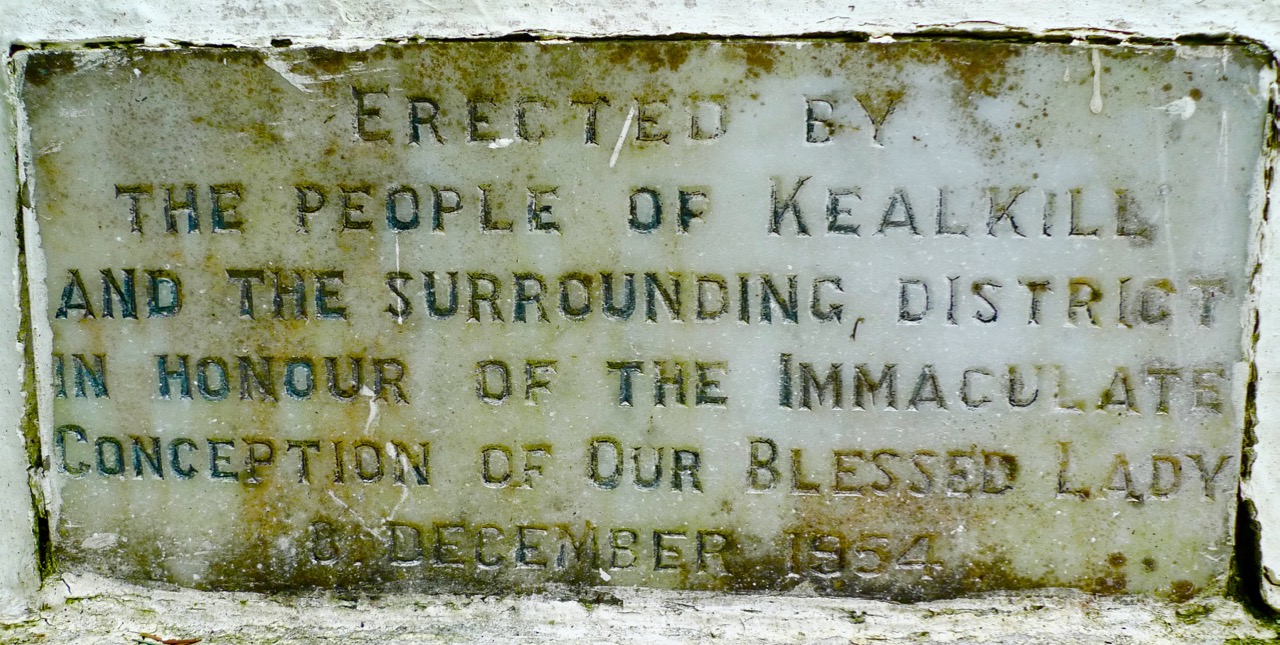
1954 was a great year for the construction of outdoor shrines and grottoes in Ireland. Pope Pius XII had designated it a special Marian Year to mark the centenary of the ‘dogma of the Immaculate Conception and Assumption’. The Marian Year was an international event, but apparently no other country embraced the idea with greater fervour than Ireland. The notion seemed to capture the imagination of a young republic suffering from serious recession, high unemployment and loss of population through emigration. Hundreds of projects were put in hand and today, on almost every road in the country – and in every community – you will see statues of the Blessed Virgin Mary, usually in well tended settings. They add to the colour and character of this green land: like the ancient holy wells, they are venerated and not forgotten.

1954 tablet

Statue maker Maurice O’Donnell recalled that 1954 was a bonanza year for him: “…I was making so many at that time there was no time to dry them out before painting, so lots of statues in the shrines around the country are still unpainted. But that was in the Marian Year. The bottom has dropped out of the statues market since the Vatican Council…” Although many statues of the Virgin were painted later on, you will still see many unpainted (white) examples.

Marian Year shrine added on to the Holy Well at Keallkill, Co Cork

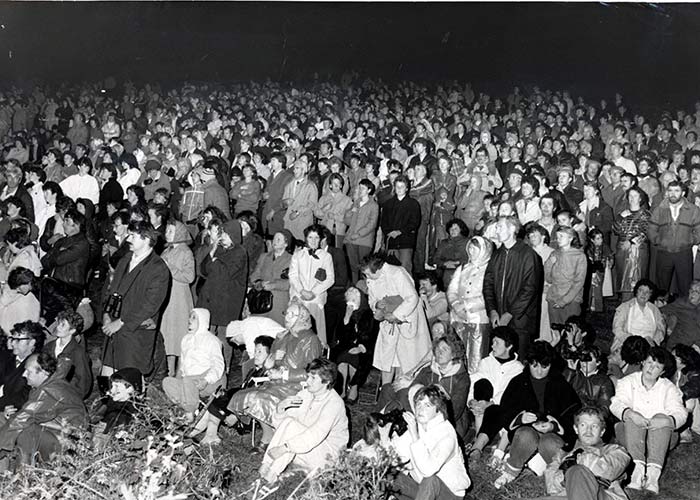
Exactly thirty years ago – on 26 July 1985 – the grotto at Ballinspittle jumped into the news headlines of the world because two local women witnessed the statue there moving while they were praying. The little Cork village suddenly found itself the centre of media attention and – during that summer – thousands of people came in bus loads from all over Ireland, either out of curiosity or anxiety to become part of a phenomenon. Many saw the statue move: a police sergeant (presumably a reliable observer) saw it rise into the air – while cures were claimed by sick people who visited the site.

Ballinspittle 1985

Crowds at Ballinspittle 1985  – Evoke.ie

Strange events were not limited to Ballinspittle. Reports had already appeared elsewhere. Kerry got in first: in February of the same year 30 schoolchildren saw two statues moving in the church at Asdee, while in nearby Ballydesmond something similar happened soon after. Here’s a contemporary extract from RTE News – worth watching for the concise view of rural Ireland in the 1980s.

magill asdee

Over 10,000 people visited the Ballinspittle grotto every night throughout the summer. The Irish Times (6 August 1985) reported: ’…Ballinspittle’s claim to a moving statue was matched in no time at all by reports of similar occurrences in Dunmanway and Courtmacsherry. But too many people, including senior gardai, well-tried sceptics and some who registered what appeared to be genuine shock said they saw the statue move, so Ballinspittle has remained the premier place of pilgrimage…’

white marys

The Catholic Church distanced itself from these happenings. Bishop Michael Murphy of Cork warned that “…common sense would demand that we approach the claims made concerning the grotto in Ballinspittle with prudence and caution…” but he also relished the fact that “…crowds are gathering there in a great spirit of prayer…” A difficult stance, perhaps, as similar occurences from Lourdes and Knock in the 19th century led to the creation of huge religious centres and pilgrimage destinations.

WWL

The visions at Knock, witnessed in 1879

The moving statues was a story big enough to inspire Peter Mulholland of the National University of Ireland, Maynooth, to pen a lengthy monograph in 2009, Moving Statues and Concrete Thinking, available in full on line – and a fascinating read. Mulholland makes the point that from the 1950s to the 1980s the western world, including Ireland, was perceived to be under threat from the Cold War, ‘Nuclear Nightmare’ (from weapons and waste), Communism, the ‘permissive society’ – and, more locally, ‘The Troubles’ and increasing unemployment and emigrations; while in 1970 the Bishop of Galway said he thought ‘organized atheism’ was the source of the ‘most serious injury’ being done to the young people of Ireland. All this, says Mullholland, contributed to an underlying feeling of insecurity which created an atmosphere ripe for ‘cults’ (such as observers of moving statues) because of a high level of anxiety in the community. The monograph goes pretty deeply into the realms of psychology, quoting one researcher who “…argued that a certain kind of family structure ‘intensifies Oedipal desires in both sons and daughters, and so promotes Marian devotion’. He held that Marian ‘hallucinations’ are shaped not simply by Oedipal desires but also by other infantile and adult desires…”

Mulholland concludes: “…The moving statues were a modern manifestation of the kind of ‘magical devotionalism’ that sections of the Irish Catholic population have long been prone to resort to during periods of personal or collective distress… They were products of the kind of literalistic, magical-devotionalism that Irish clerics condemned in the 1950s and ‘60s as being ‘anti-intellectual’ and a ‘peasant religion’…”

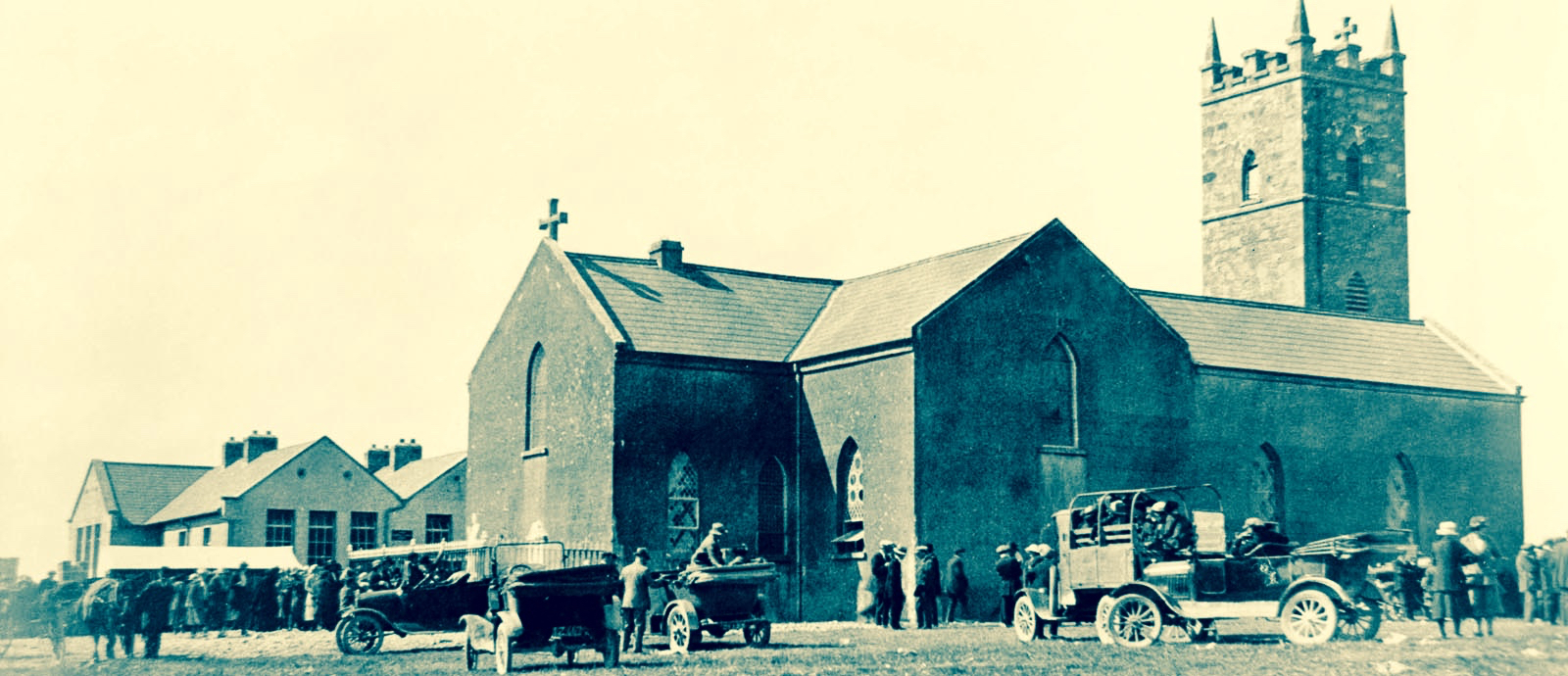
Knock Shrine

Knock Shrine, early 20th century

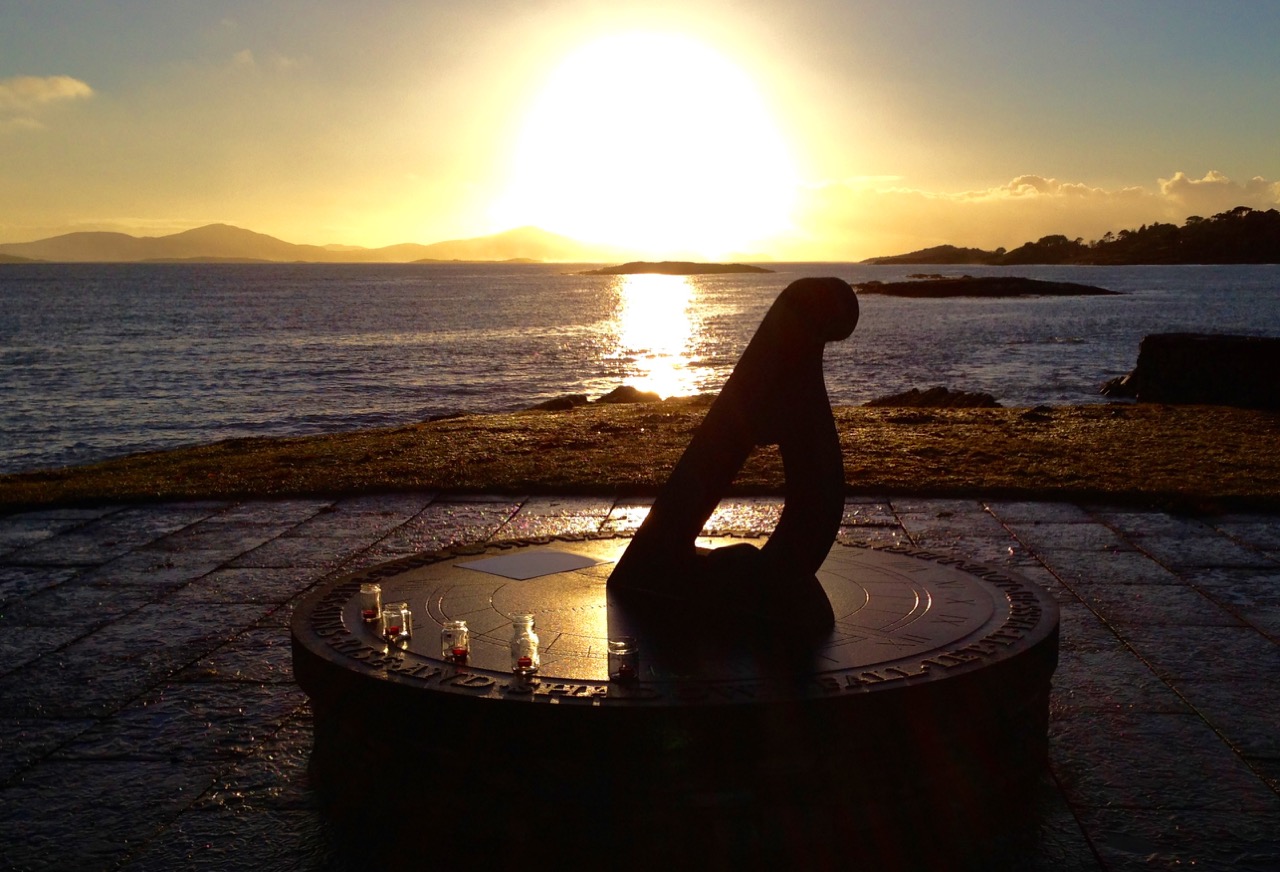
Perhaps it’s just coincidence (and I haven’t seen anyone else mention this), but it is worth noting that the Air India Disaster occurred at Ahakista, on the coast of West Cork, less than a month before the first apparitions were seen at Ballinspittle. This terrorist event which killed over 300 innocent souls must have had some effect on the local – if not the national – psyche, and could certainly have enhanced feelings of anxiety and insecurity in a rapidly changing world.

Ahakista

1985 Air Disaster Memorial, Ahakista

Looking back from the 21st century to these events I feel a sense of – well, disappointment – that what comes across now in reports on the phenomenon is mainly disparagement. This is a country which, quite rightly, hangs on to its history and mythologies: as with the wandering bards of older times stories are kept alive at the fireside, in the pubs – wherever people gather. Stories of The Other Crowd, of old battles, of heroes – and of neighbours – are listened to eagerly, and will be repeated just as eagerly. I don’t hear people dismissing them or expressing cynicism about them, as they seem ready to do about moving statues. Such scepticism is understandable in modern Ireland but I will continue to listen with an open mind to all the stories of miraculous happenings that are cherished and passed on, and which underscore the ancient faith of the countryside.

First day of issue

It would be wrong not to finish the story of Ballinspittle. On 31st October (Samhain) 1985, when a group was gathered in prayer at the grotto a car pulled up and three men got out carrying hammers and axes. In front of the dismayed onlookers they smashed the statue of the Virgin and shouted abuse at the worshippers for “…adoring false Gods…” The men, who claimed to belong to an extremist fundamental Christian sect based in California, were later arrested and charged with ‘causing malicious damage in a place of divine worship’. Amazingly, at the trial the Judge stated that he had to be “…particularly zealous in guarding the rights of the three defendants…” and dismissed the case on the grounds that the Ballinspittle grotto is not, in fact, a place of divine worship. In March 1986 the perpetrators appeared on the popular Late Late Show, hosted by Gay Byrne on RTE Television. They cited the fourth and fifth commandments of the Old Testament as giving them divine sanction to smash all religious statues in Ireland, regardless of the rights and views of other people. Reporter Eoghan Corry stated in an article in the Sunday Press, “…there isn’t a safe statue in the country.” Fortunately, following further acts of vandalism they were duly convicted.

Links worth following for more on the Moving Statues:

Finola’s blog post Mary Mary

Radio Documentary from RTE in 1992

RTE TV documentary on Ballinspittle

marian shrine

Scratched Stone – Scratched Heads

stone scratches

Aultagh Ogham Stone

One thing always leads to another – that’s something you can be sure of when we are on our archaeological adventures. A case in point was a recent expedition to have a look at Ballynacarriga Castle (not far from Dunmanway, County Cork: 16th century – notable for having a Sheela-na-gig carving built high up into the outer masonry wall, and some unusual carved inscriptions on the internal stonework).

Ballynacarriga Castle (left) with its Sheela-na-gig (right)

Perhaps these various stone scribings turned our minds to the subject of Rock Art (easily done). Our excellent guide on that morning, Margaret Murphy of the Skibbereen Heritage Centre, offered to show us an Ogham stone not too far away, in the townland of Aultagh. How could we refuse?

finding the stone

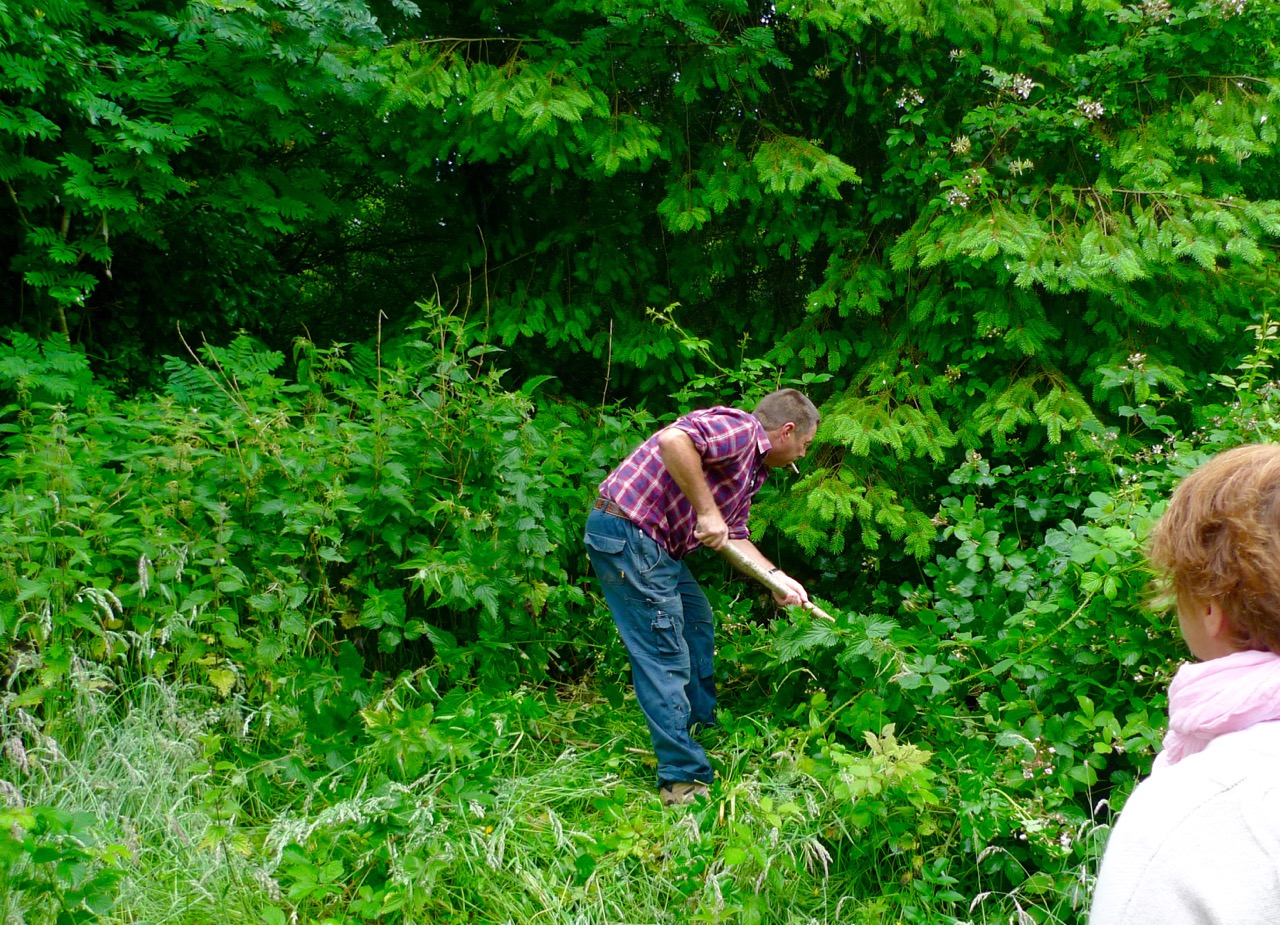
Assistance required in finding the stone!

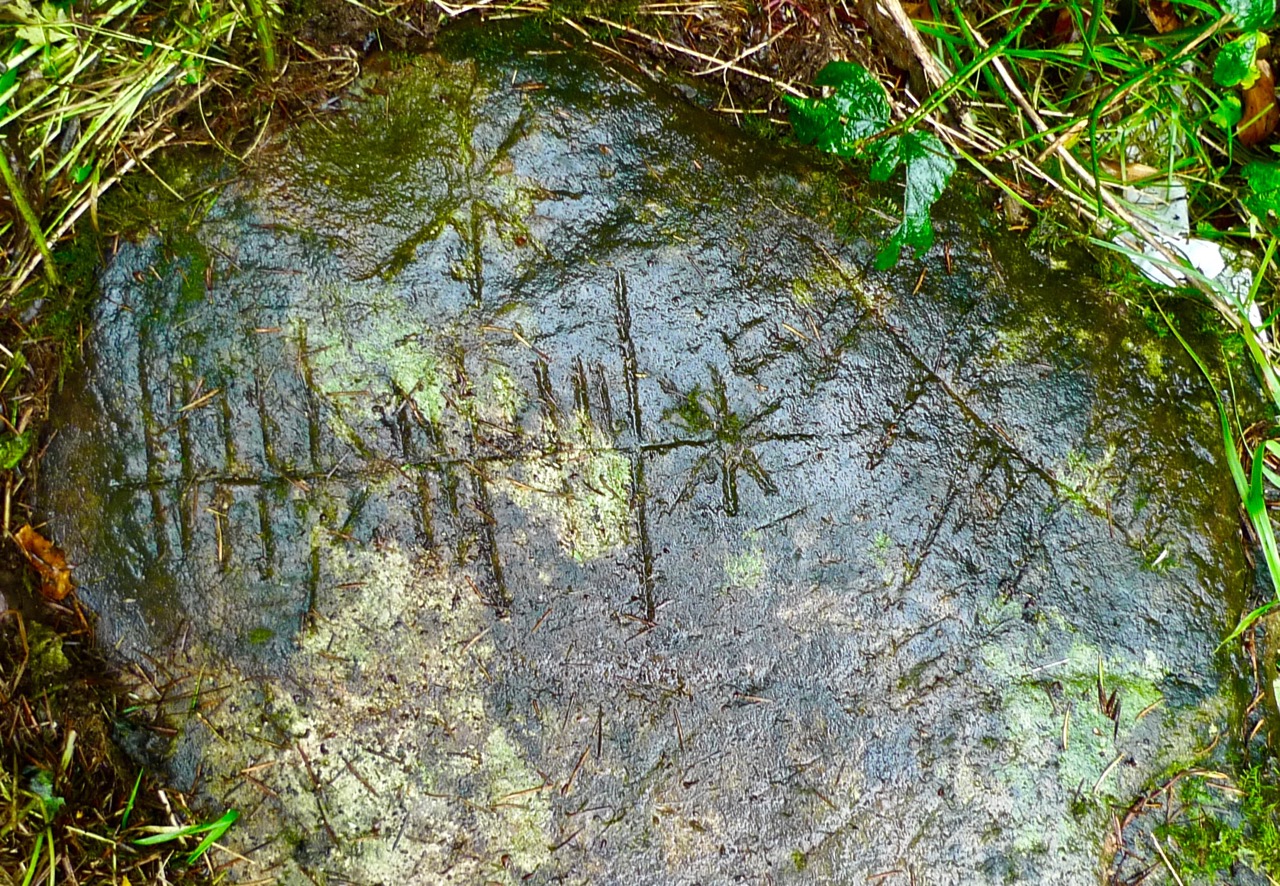
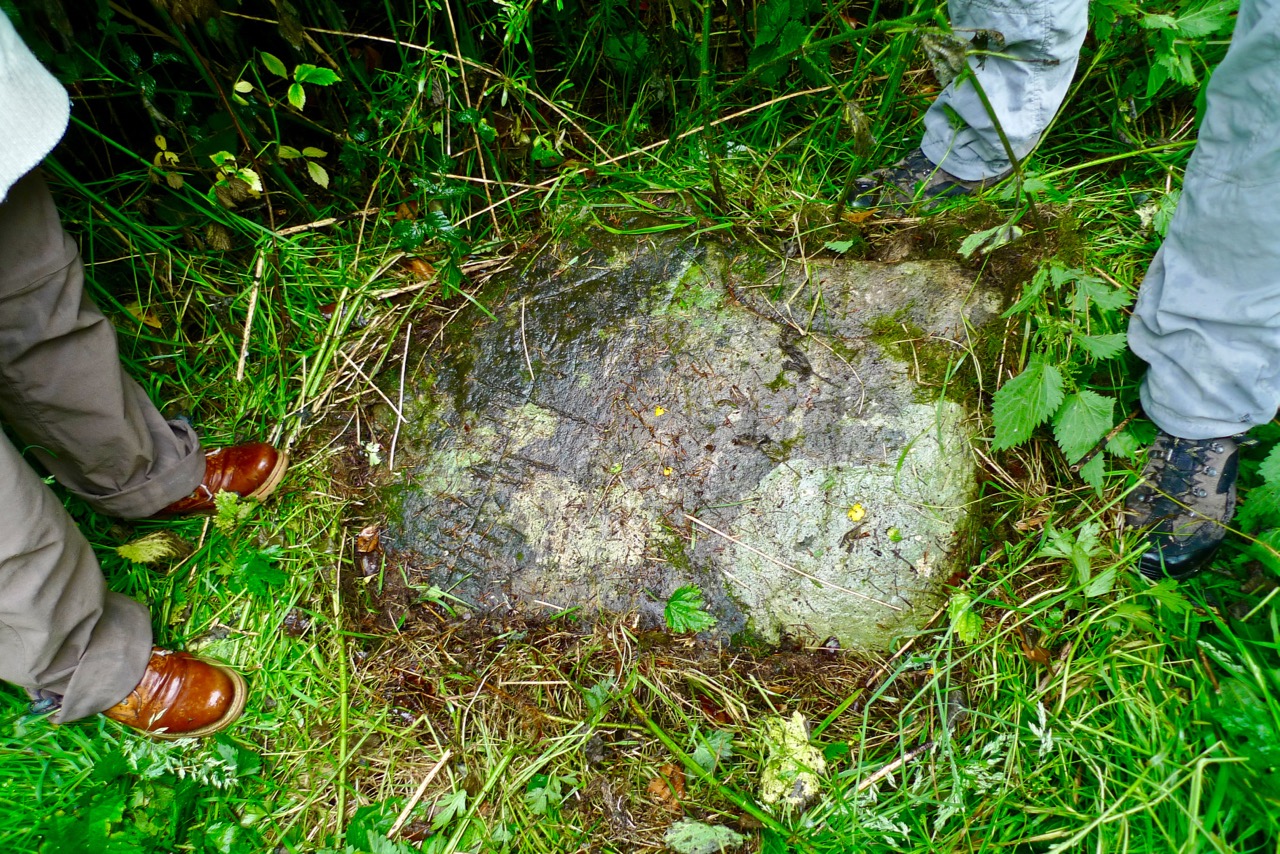
Our goal was beside an ancient track in Aultagh Wood (Coil an Ailtaigh), approached from a private driveway. Margaret knew the owner who readily gave us permission to have a look. In fact, he provided sterling service after we had searched in vain for the elusive rock – opportunely arriving with a pole to clear the thick undergrowth, and soon revealing this modest boulder to our eager gaze.

stone discovered

Stone uncovered…

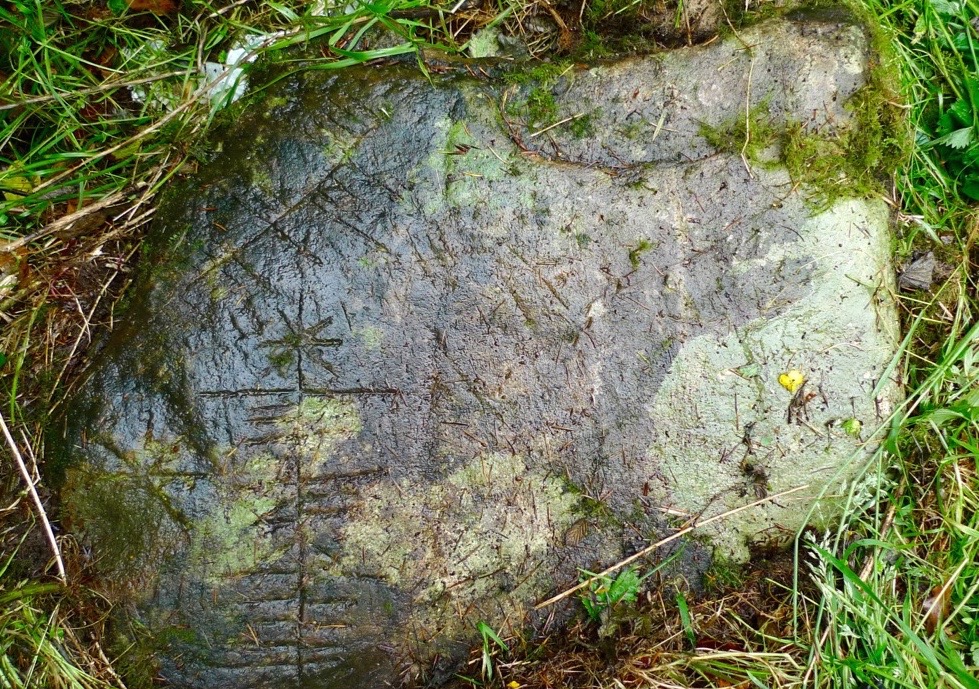
The stone lies close to a drainage ditch and has possibly arrived there from another location at some time in its history. In one area the surface of the rock has been damaged, affecting part of the scribings: it may be that it was once standing – now it is prone with carved marks clearly visible on the upper surface.

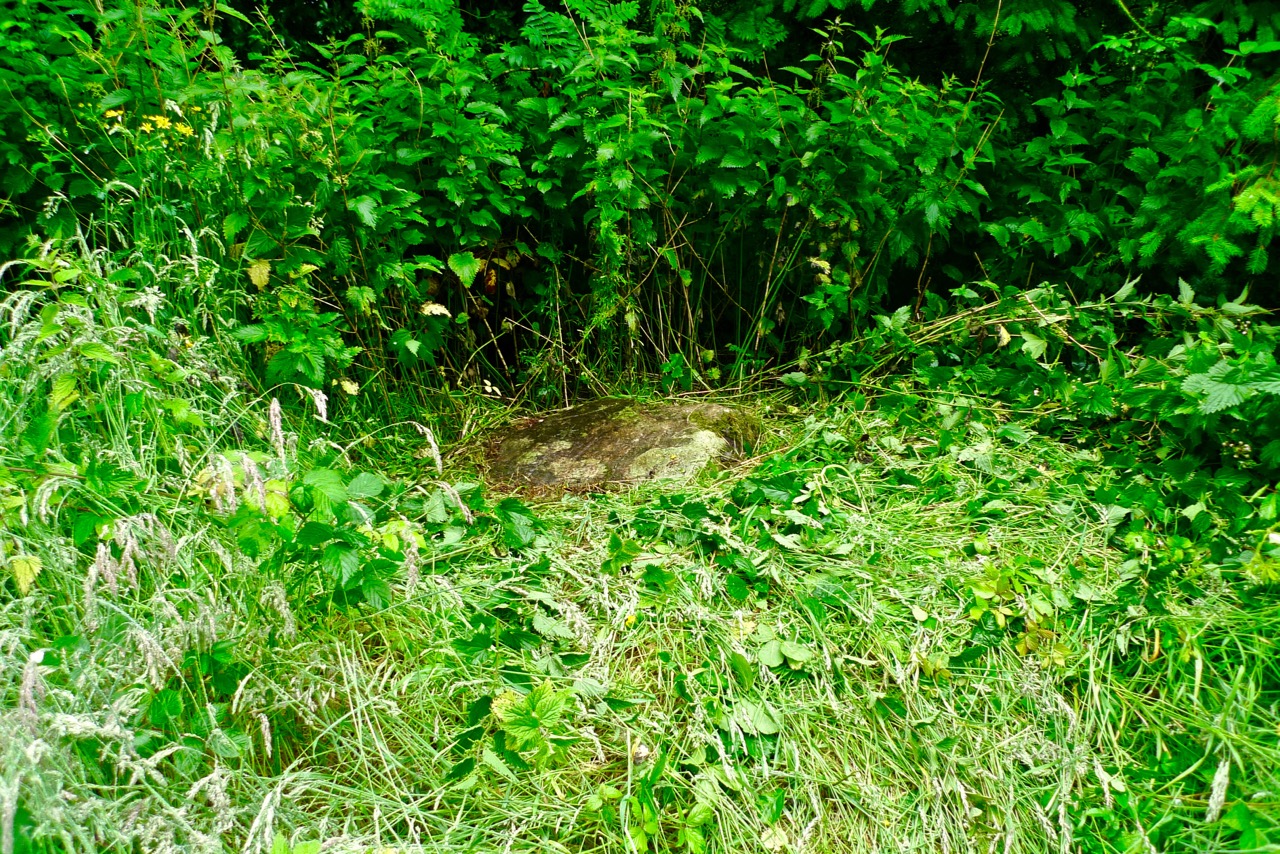
stone in context

The Aultagh Ogham Stone in context

The last time I wrote a post about ogham (here it is) I gave a very general overview of the subject. Ogham stones are concisely described by the Irish National Monuments Service as:

…upright monoliths or recumbent slabs, onto which ogham script has been incised. Ogham script consists of groups of 1-5 parallel lines and notches cut along the side or across the edge of a stone to represent the sounds of the Irish language. It is usually read up the left angle. The inscription gives a person’s name (usually male) and immediate antecedent/s or tribal ancestor. The stones may have functioned as memorials, grave markers or territorial markers and date from the late 4th to the early 8th century AD.
Fine examples of ogham stones in Ireland

Here’s the entry in the National Monuments Service records for our Aultagh stone:

Description: On a W-facing slope, in Aultagh Wood. Fallen stone (L 1.1m; 0.7m x 0.3m) with inscription on flat face. According to Macalister (1945, 75) ‘fashioned by an illiterate artificer, copying by rote from a wooden model cut for his guidance’ and reading UBEDABO ALTASI.

MacalisterThat’s quite a bald statement from Robert Alexander Stewart Macalister who was Professor of Celtic archaeology at University College Dublin from 1909 to 1943, during which time he compiled and edited the catalogue of all known ogham inscriptions from Britain and Ireland. Macalister’s theories on ogham are generally out of favour today (some commentators have claimed that his interpretations are gibberish) but he seems to accept the Aultagh stone as being within the early medieval ogham tradition. Yet it seems to me very different from many of the other stones we have seen: it is very sharply incised, obviously with a fine-tipped metal tool, whereas a majority of the traditional or ‘classic’ ogham stones are larger and more robustly carved.

Possible ogham stone at Maulinward, West Cork (left) and others from the Stone Corridor at UCC

When you begin to delve into modern literature on ogham you realise how very many varieties of examples there are, and also how many differing interpretations there are of how to ‘read’ the script. This was monumental writing, labour intensive and time consuming to undertake. For this reason it is generally supposed that ogham was ostensibly reserved for marking important graves or places, and that the inscriptions are all names.

Aultagh Inscribed completeAultagh Ogham Stone – ‘classic’, ‘scholastic’ – or ‘fake’?

There are suggestions that ogham inscriptions for more general – and less monumental – usage were once carved on wood, and might have been language primers for the bardic poets. Later inscriptions are sometimes termed ‘scholastic ogham’ deriving from the fact that the inscriptions are believed to have been inspired by manuscript sources, instead of being continuations of the original ‘monument’ tradition. Hallmarks of scholastic ogham are the median line and scribings being on the flat face of a stone (as at Aultagh) rather than on the edge. Ogham was occasionally used for notes in manuscripts down to the 16th century, and the burgeoning interest in all things antiquarian from the 18th century onwards led to  a popular ogham revival. A typical example, from the graveyard in Ahenny, Co Tipperary, has an English inscription dated 1802 and this in ogham: FA AN LIG SO NA LU ATA MARI NI DHIMUSA O MBALLI NA GCRANIBH, interpreted as ‘Under this stone lies Mary Dempsy from Ballycranna’. Macalister takes the view that this inscription, and others like it, were written “with much more zeal than discretion”, while some scholars have suggested that this more modern usage of the scribing should be termed ‘fake ogham’.

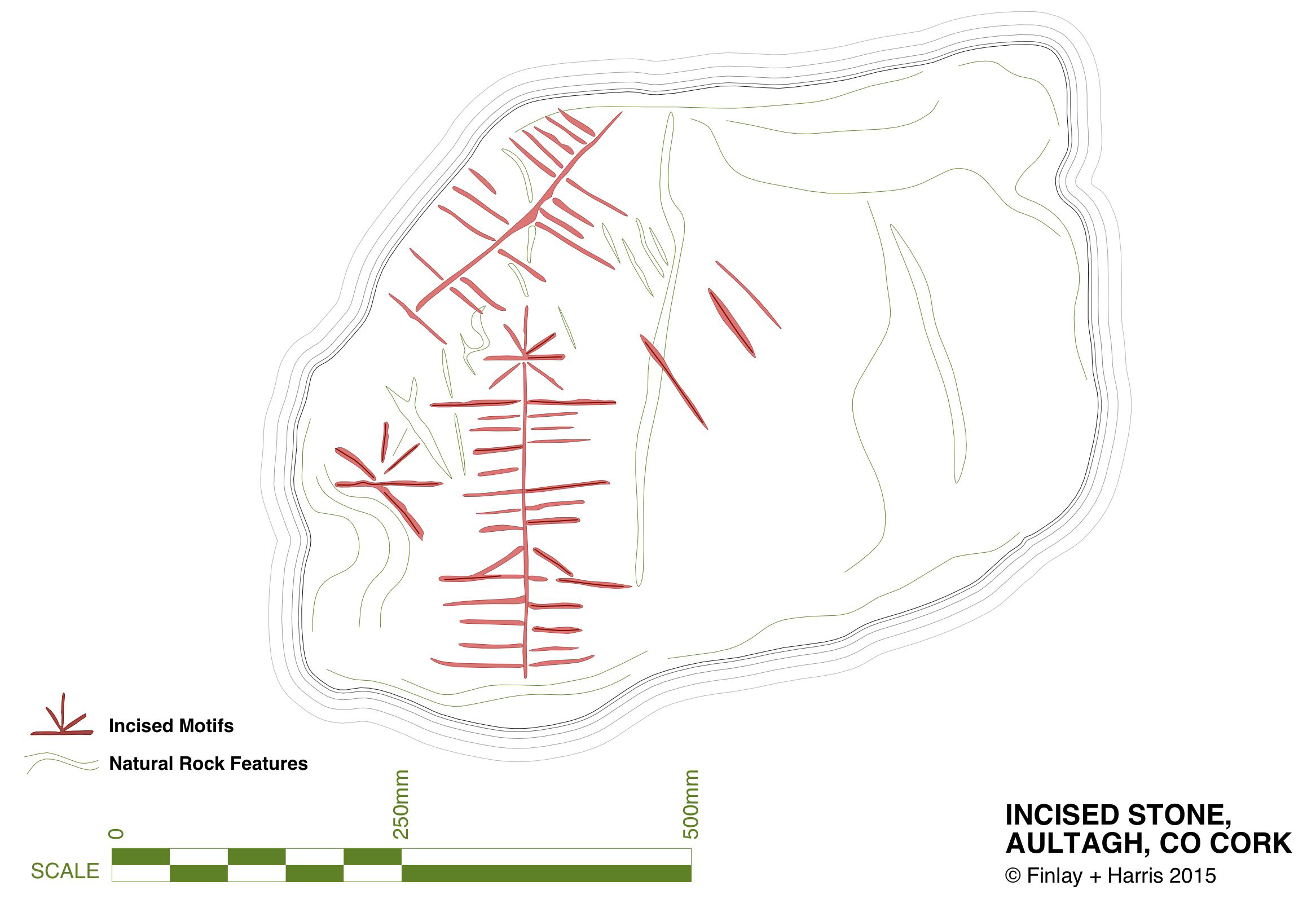
Aultagh Incised Stone

My own drawing of the Aultagh inscribed stone – traced from detailed photographs

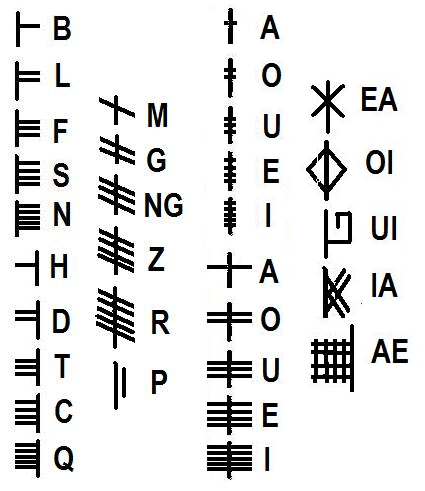
You may like to have a go at translating the inscription at Aultagh for yourself. Firstly you will need to select your decipherer: a quick internet search will show that there are many, and also a whole lot of inconsistencies. But perhaps this is all part of the head-scratching: and also part of the whole fascination of a historical subject where many of the elements can only be guessed at…

ogham-alphabet

All the Trimmings

Near Dunmanway

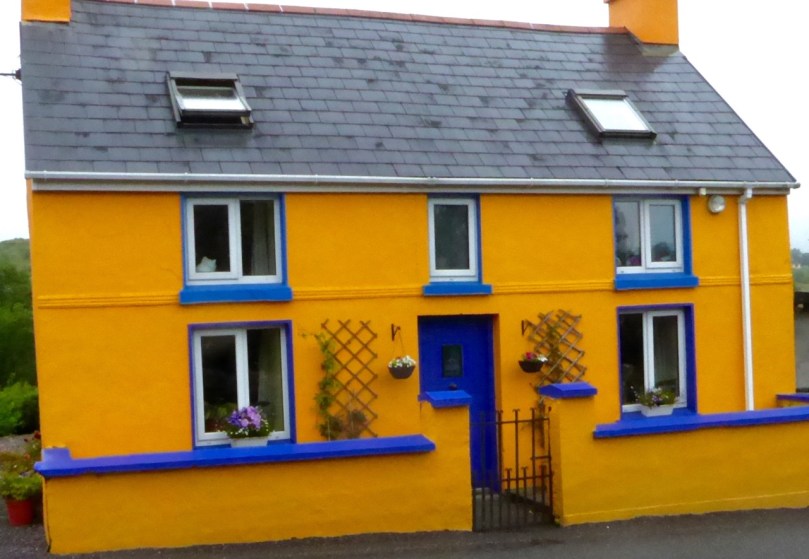
In my two previous posts on our wonderful West Cork colourful houses, A Lick of Paint and An Extra Lick of Paint, I’ve concentrated on overall house colour and on how that colour stands out in the landscape or the streetscape. Since that second post was written, in March, two of the most colourful houses I photographed have been re-painted, both in shades of khaki. Am I chronicling an endangered species? I hope not!

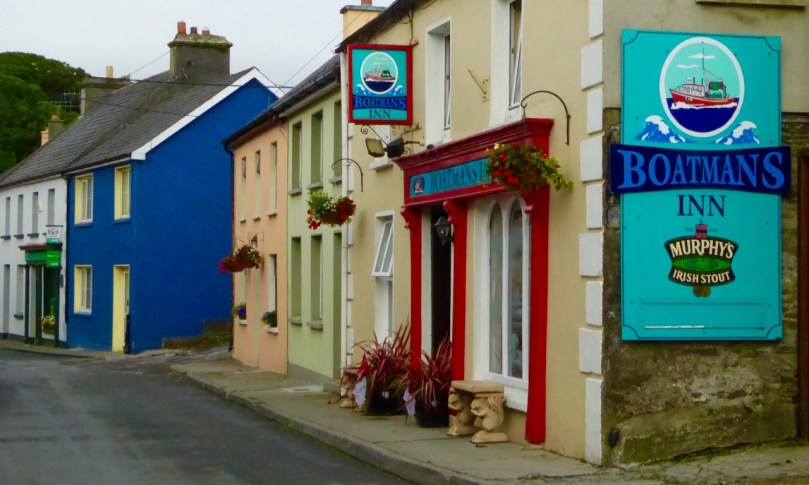
Boatmans

So in the spirit of celebrating our colourful tradition, I am devoting a post to the trim choices – the window surrounds, the doors and the chimneys, the shop fronts – that add to the vibrancy and delight of our neighbourhoods, villages and countryside.

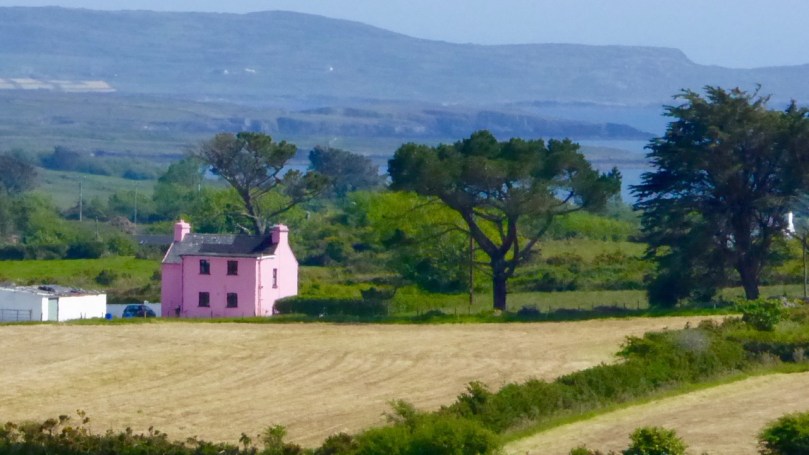
VERY VERY PINK

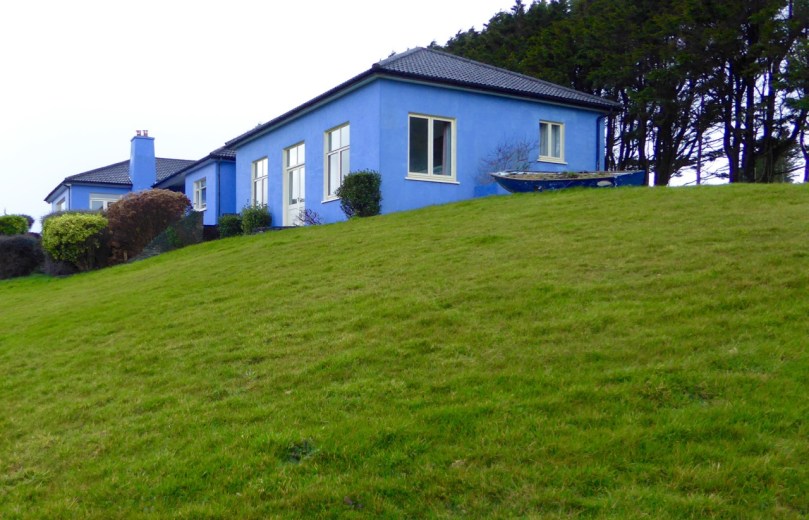
The most common trim choice is white and often that seems the only, or perfect, choice. Or perhaps the safest. It certainly provides a lively contrast to a bold colour.

Marine blue

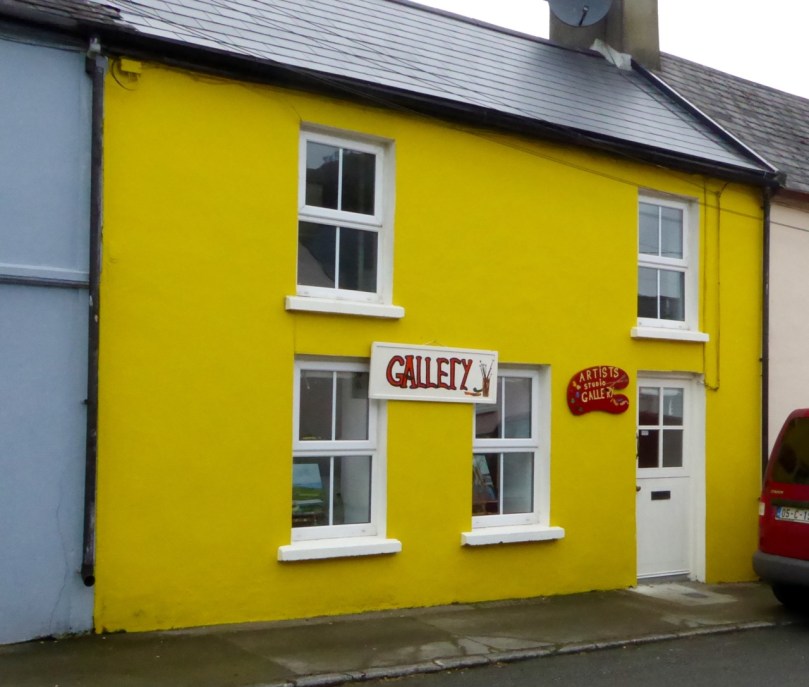
Orange you glad to see me?Gallery, Union HallWhite and bold-colour contrast can also look charming the other way around – white walls and colourful trim.

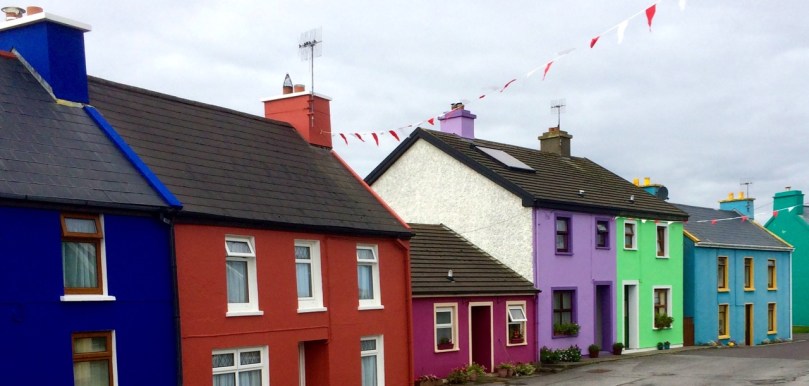
However, the juxtaposition of two bold colours, or even three, for walls and trim is irresistible.

Purple on Mustard

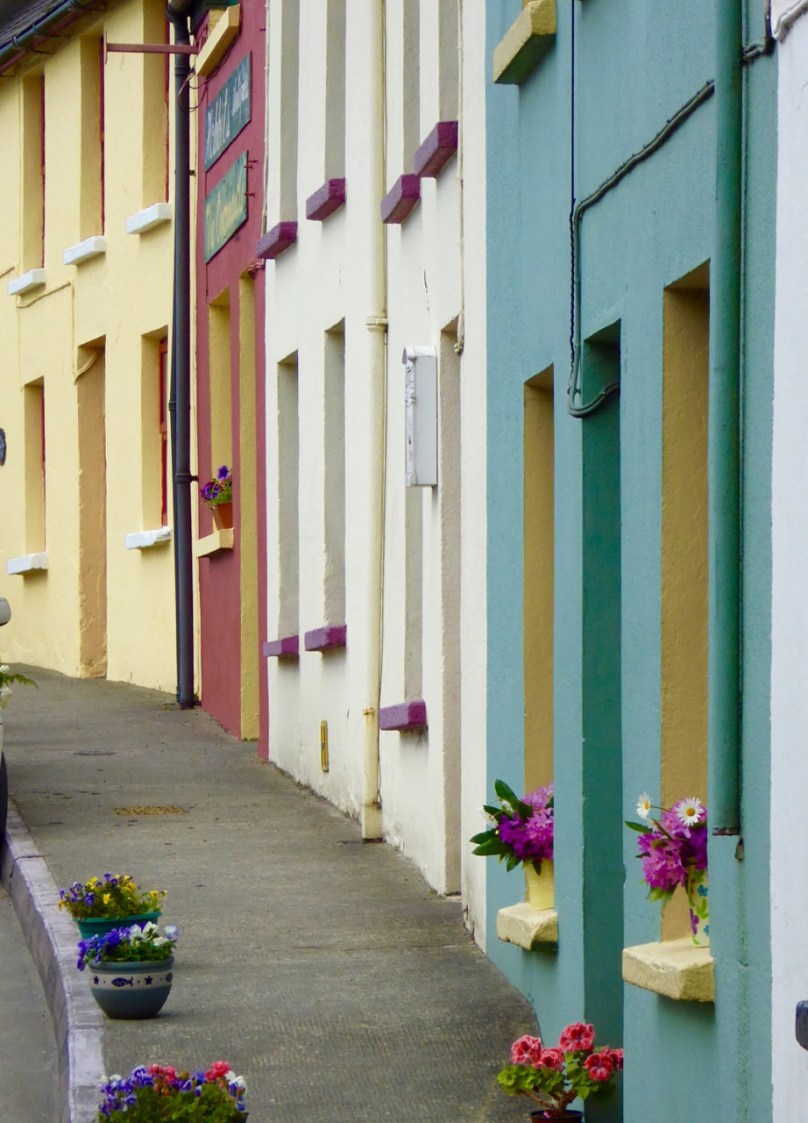
Windows are a natural focus for colour. Sometimes the frame and the surround is painted the same colour and sometimes two colours are employed, both contrasting with the wall colour.

Ballydehob windowsills

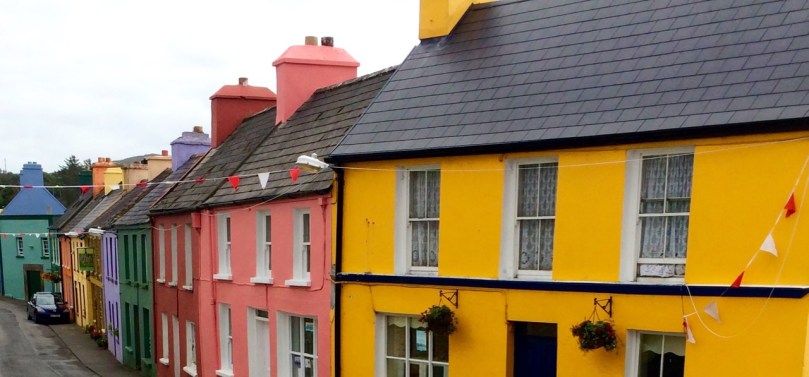
A local tradition seems to be to paint the chimneys the same colour as the walls, although occasionally the trim colour is used instead. I particularly like the chimneys in Eyries on the Beara Peninsula. Note the jaunty use of the trim colour on the chimney pots, on the second-to-last house in the lower photograph.

Eyeries Chimneys

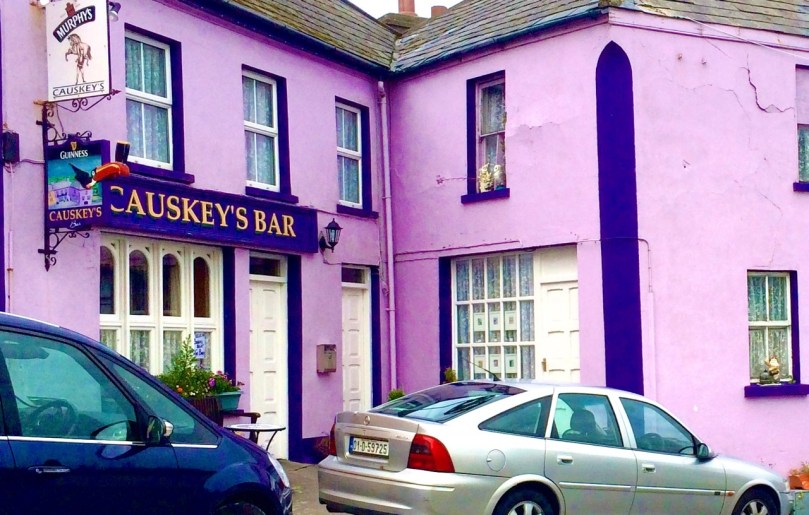
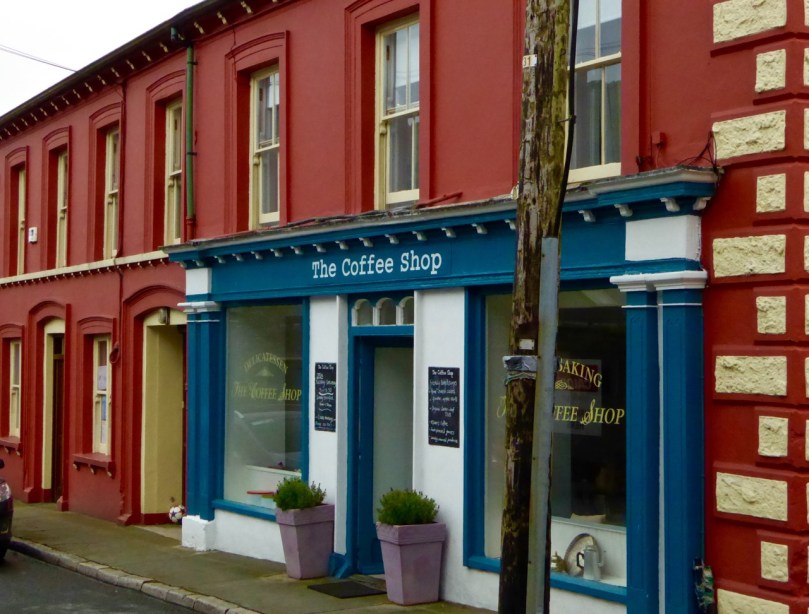
chimney trimMany traditional village or town commercial buildings here are masonry, with the shop-fronts in painted wood. A few examples here – although traditional shop-fronts deserve a post to themselves at some point. I also include cafés, restaurants and pubs in this category.

Causkey's

The Coffee Shop Union Hall

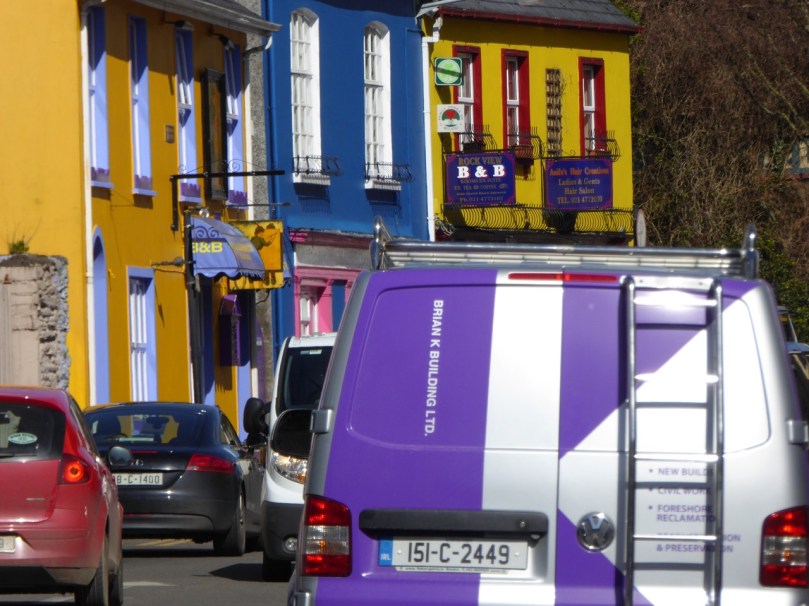
Kinsale is a cornucopia of colour! Herewith just a few examples of what you’ll find if you wander its streets.

Van

Trim colour is often used to good effect on garden walls and gate posts in addition to the house. Here’s a fetching example from near Union Hall .

Swedish

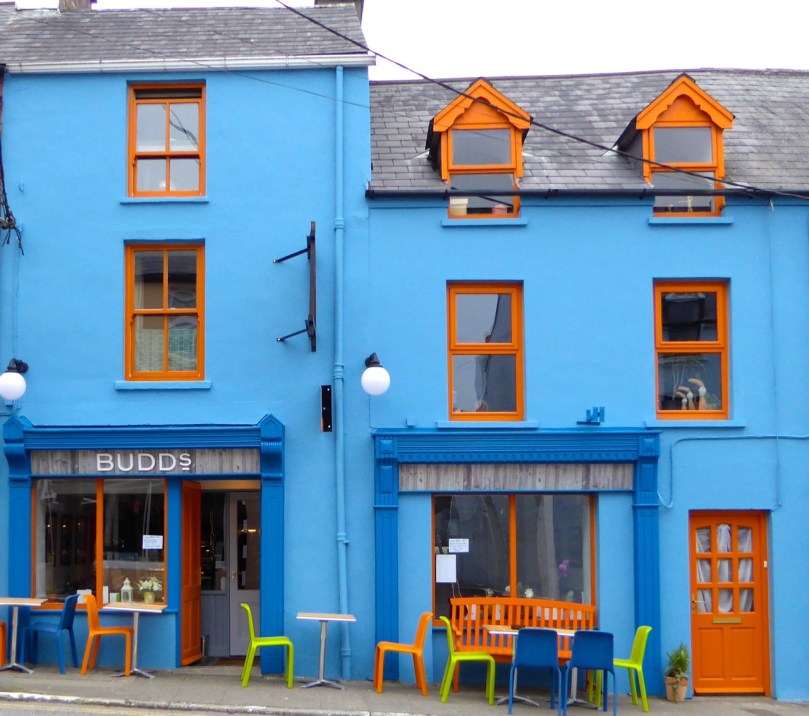
So – what do you think, Dear Reader? Do you have a favourite among these examples? Do you have any photos of your own to share? If so, comment below, or drop by our Facebook Page and vote for the one you like best. I will finish with one of my own current favourites and an exuberant addition to Ballydehob.

Budds

A Tale of Four Churches

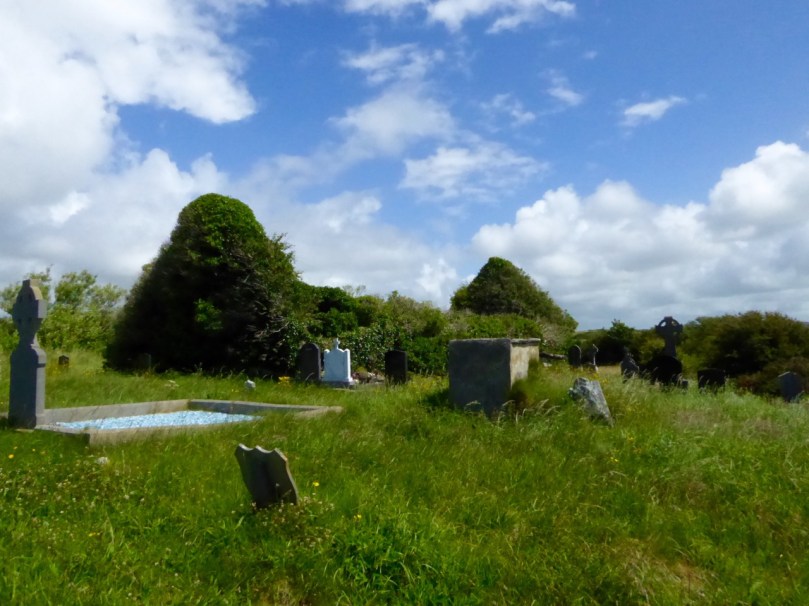
Kilcoe Medieval Church

Kilcoe Medieval Church

Kilcoe is a magical place. The story of its four churches leads us from the dawn of Christianity in Ireland through turbulent times and many centuries when religious differences and sectarian strife marked all aspects of life in Ireland.
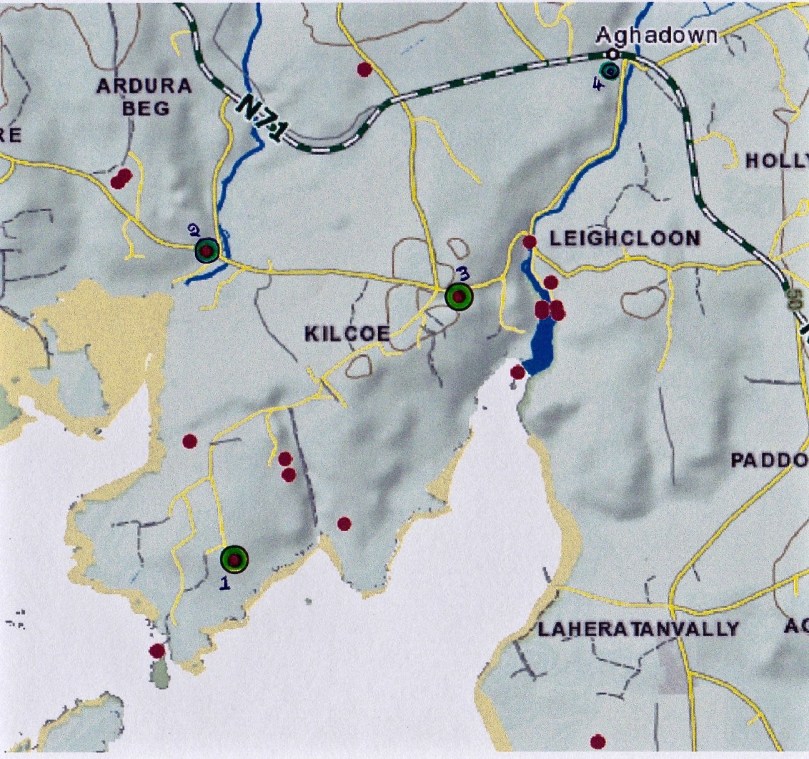
The four churches: 1, Kilcoe Medieval Church  2, Mass Rock 3, Kilcoe 19th Century Church 4, Kilcoe Modern Church of the Most Holy Rosary

The four churches: 1, Kilcoe Medieval Church. 2, Mass Rock. 3, Kilcoe 19th Century Church. 4. Kilcoe Modern Church of the Most Holy Rosary

We love going down to the Medieval church at Kilcoe or wandering the boreens along the Roaringwater River. Those boreens are now part of the Fastnet Trail Network and last weekend, at the Launch, we were treated to a talk about the locality from Fr Patrick Hickey, Parish Priest of Timoleague and a noted scholar of West Cork History. This blog post was inspired by that talk – thank you, Fr Hickey!
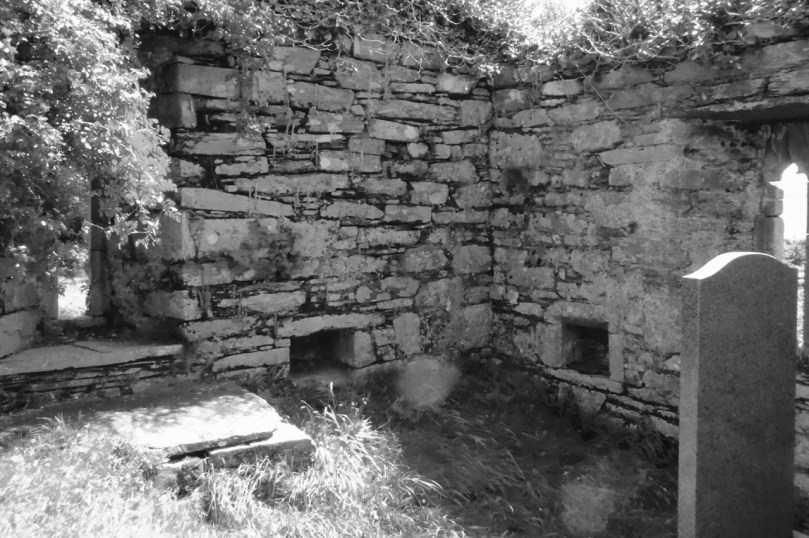
Inside the church, showing the ogival windows, the altar, piscina or stoup, and a small recessed cupboard

Inside the church, showing the ogival windows, the altar, piscina or stoup, and a small recessed cupboard

Kilcoe gets its name from St Coch, a nun said to be a colleague of St Ciarán of Cape Clear, who preached Christianity in Ireland before St Patrick, in the 5th Century. It is possible she founded a church here, but what we do know is that one was built in Medieval times – a building that still exists although the ivy is doing its best to take it over.

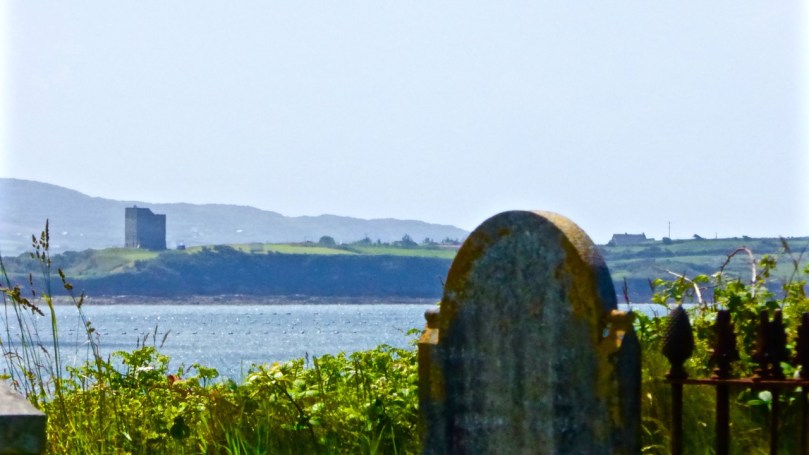
It’s a beautiful and atmospheric place, on the water, overlooking Roaringwater Bay. Two castles are in view: Kilcoe and Rincolisky, a McCarthy and an O’Driscoll Castle respectively. Each has a fascinating history that deserves a post of its own sometime. Some special features remain in this ruined church – windows with carved ogees, a lovely arched doorway, a piscina (for washing vessels) or stoup (for washing hands), a recess for storing vessels and the remains of a possible altar.

We don’t know exactly when this church was built or by whom, but we do know it was in ruins by 1615. Perhaps it was destroyed by the same forces that laid siege to Kilcoe Castle after the Battle of Kinsale in 1601 – a period that marked the end of the Old Gaelic Order in West Cork.
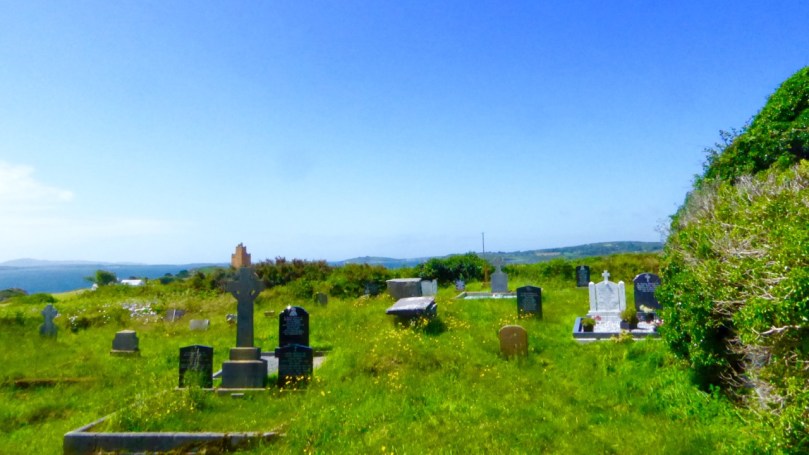
The Medieval church, with Kilcoe Castle in the background.

The Church, with Kilcoe Castle in the background

The rise of the Protestant Ascendancy class in the aftermath of that fateful battle privileged the Church of Ireland (transplanted Anglicanism) over the Catholic faith and a series of new laws, gradually getting harsher, were designed to suppress ‘Romanism’. This culminated in the enactment, in 1695, of the infamous Penal Laws. While attendance at mass was initially tolerated, churches could only be built from wood and away from roads. Eventually, priests were expelled from Ireland and after that mass had to be held in secret, with priests moving from hiding place to hiding place. At Roaringwater Pier Fr Hickey talked of the typical cargo of the smuggling ships that plied their trade from there: each ship to arrive from France would be carrying tobacco, brandy – and a priest!

From this period we find the Mass Rocks scattered around rural Ireland, identified on the basis of local tradition. The one at Ardura Beg is just up from a tiny pier that would have offered possibility of a quick escape. Many stories have come down of lookouts warning of the approach of the ‘red coats’ and the miraculous ways in which priests would make their escape. (See here and here for examples.)
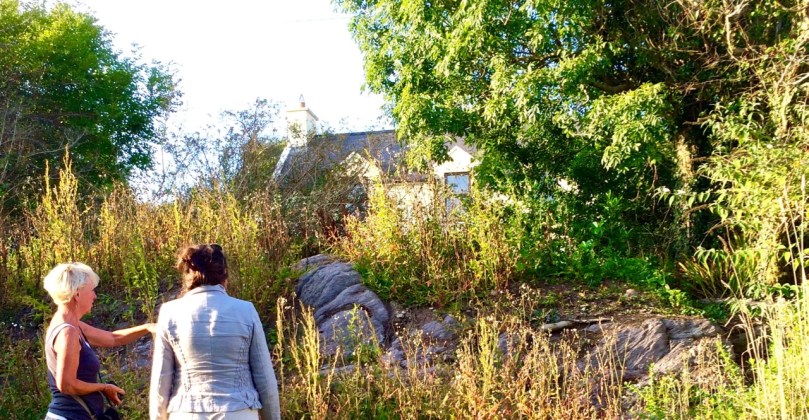
Sheona and Amanda examine the mass rock at Ardura Beg

Sheona and Amanda examine the mass rock at Ardura Beg

Places of worship must be located where they are accessible and the first two are close by the sea, which afforded the easiest travel routes in Ireland for most of its history. However, roads were constructed eventually and the next two churches were located along these new routes. The first one, we’ll call it the Old Church, was built along the new road that led from Skibbereen to the Beara Peninsula. After 1778 the anti-Catholic laws were gradually relaxed, although it was not until 1829 that full Catholic Emancipation was won by Daniel O’Connell. The Old Church was probably built around 1800 and was a simple ‘barn-style’ edifice which served an impoverished and famine-stricken populace for a hundred years.

Left, the Old Church near Roaringwater Pier. Right, an example of a simple ‘barn style’ church in West Cork

By the turn of the 20th Century it was deemed unfit for purpose. Nowadays it is a gentle green space, lovingly tended and in use as a grotto. Children were buried there – it was not a cillín, but a consecrated graveyard – and a memorial remembers them now.
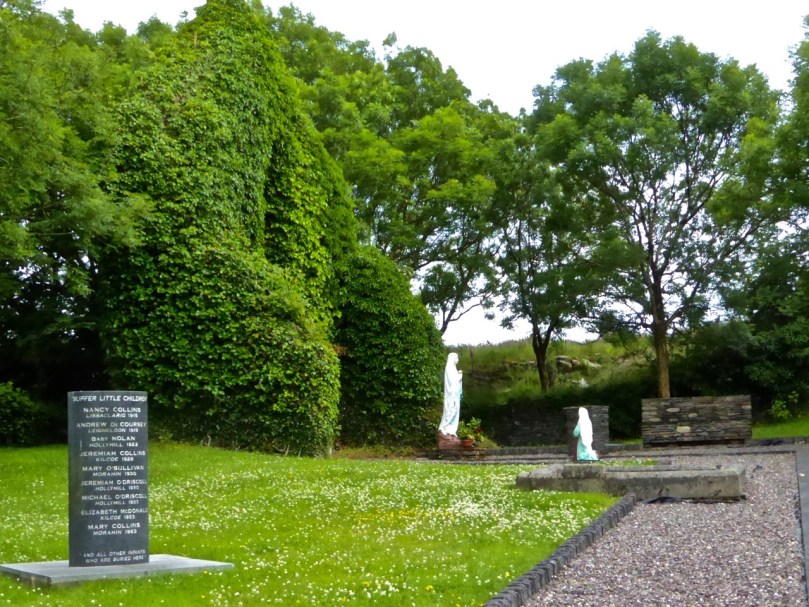
Grotto and Chirdren Memorial. A place for contemplation

Grotto and Children’s Memorial. A place for contemplation

Catholic Emancipation ushered in a long period of church building by the newly-confident Catholic majority. The new road from Skibbereen to Ballydehob was constructed at the end of the 19th century and the New Church was built there in 1905, right beside the bridge over the Roaringwater River.

Kilcoe Church and Bridge

Bridge over Roaringwater River

The two styles of churches common at the time were Neo-Gothic, Influenced by continental cathedrals, and Hiberno-Romanesque which took its inspiration from the Early Medieval Romanesque style of Old Ireland and featured wonderful doorways and round towers. The Kilcoe New Church, the Church of the Most Holy Rosary, was built in the Neo-Gothic style, with a large rose window at the eastern end.
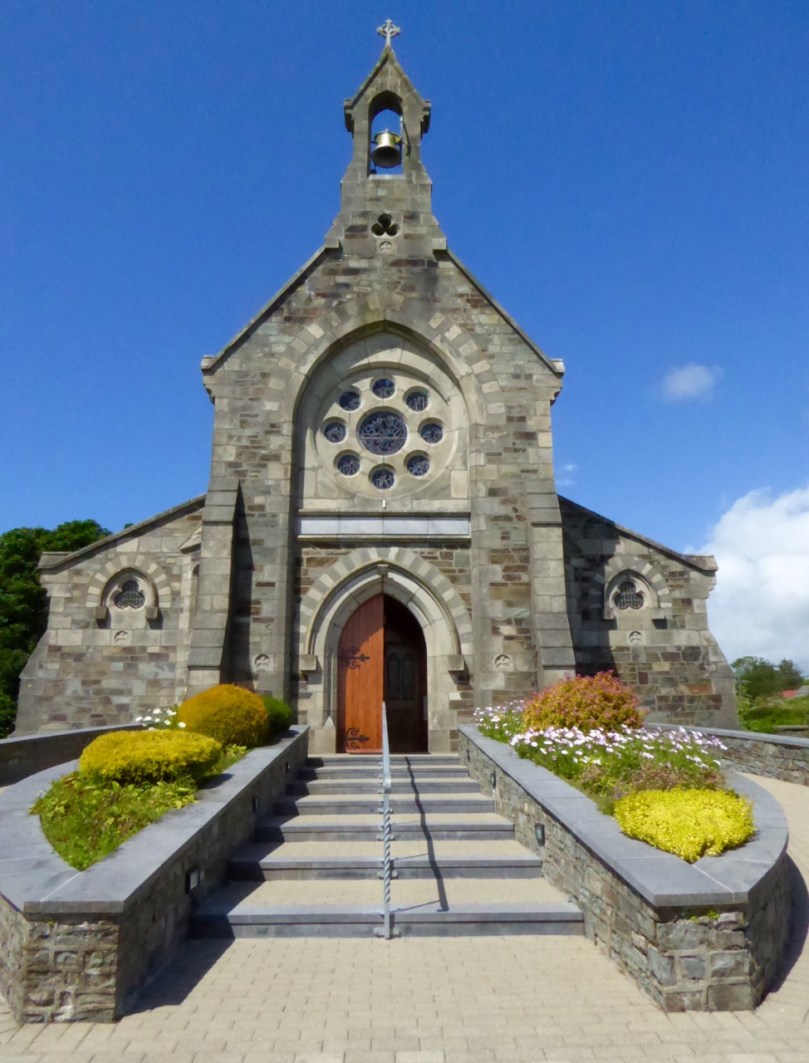
Kilcoe, Church of the Most Holy Rosary

Kilcoe, Church of the Most Holy Rosary

Originally the side-aisles did not have seats – poorer people could stand there for mass, while those who could afford a penny would occupy the pews. As the church fund grew, thought was put into ornamentation and stained glass was commissioned for several windows. The rose window was executed by the Harry Clarke Studios in 1943 and shows scenes from the life of Christ and of Mary.
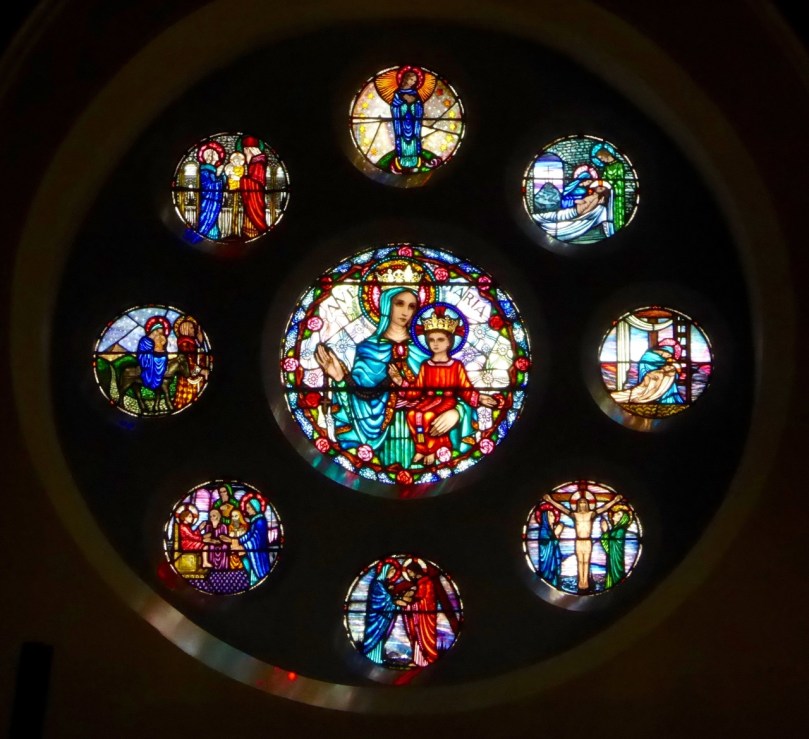
The Rose Window, by the Harry Clarke Studio

The Rose Window, by the Harry Clarke Studio

The Altar and side windows were the work of Sarah Purser’s Tower of Glass. The choice of stained glass – from Dublin-based Celtic Revival artists rather than the English or Continental firms that supplied most church glass at the time –  was a choice that demonstrates the nationalistic feelings that were rife in West Cork at the time.

Irish History is written large on her landscape. In this one small area – these sites are within a couple of kilometres of each other – we see encapsulated sixteen hundred years of history, starting with St Coch and ending with the latest incarnation of a church at Kilcoe. Their beauty and their peaceful settings have been hard won. They should serve to remind us that peace and tolerance must always be cherished and safeguarded.
Rincolisky Castle from Kilcoe Medieval Church

Rincolisky Castle from Kilcoe Medieval Church

Hares in Abundance

exhibition poster

“And now, Sir Hare, good-day to you. God guide you to a how-d’ye-do with me…” (from the Middle English poem – Names of the Hare – translation by Seamus Heaney)

You may know that I am a Hare fanatic. Every day as I travel along through West Cork – driving, cycling or walking – I am scouring the fields and hedgerows in the hope of seeing one of these shy and elusive animals: very occasionally my watchfulness is rewarded. Last year I kept a Hare Diary… on the last day of December I counted up: I had seen only six, and two of these were in other parts of Ireland. Yet, when I first visited Ballybane West – just over the hill from here – back in the early 1990s I saw them on most days; one early morning then I looked out of the window and there was a whole luck of Hares running around the field beyond the house – at least ten of them.

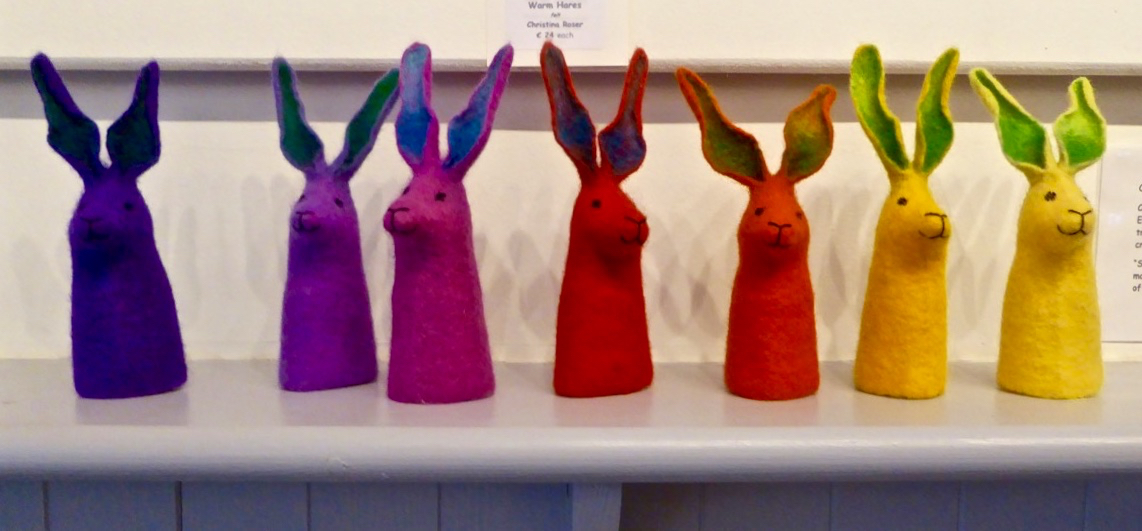
felt hares

A luck of Hares by Christina Jasmin Roser, feltmaker

Where have all the Hares gone? I can’t answer that, but I can tell you that there are a whole lot of Hares in the Heron Gallery, Ahakista at the moment: Annabel Langrish and her husband, Klaus have mounted an excellent exhibition of art and craft works based around images of the Hare.

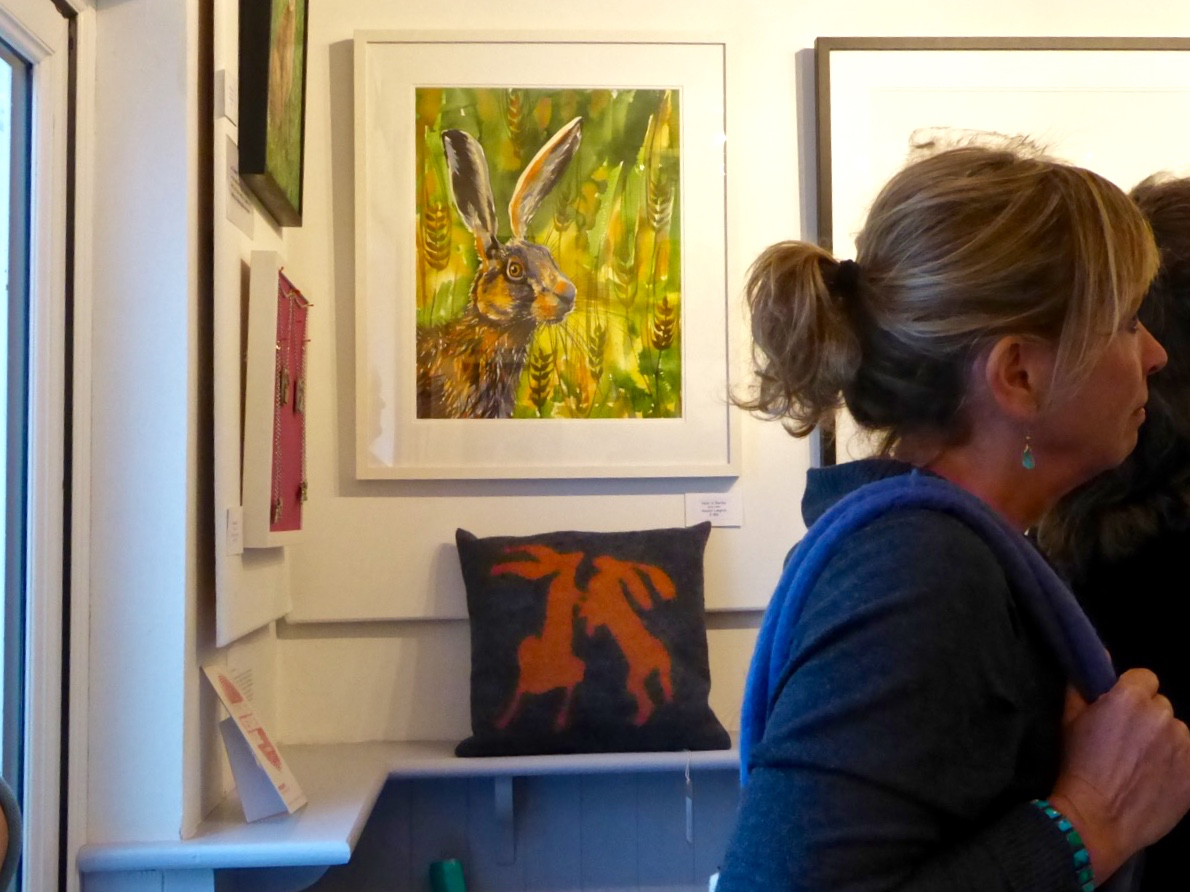
The exhibition brings together the work of several artists from the West of Ireland: paintings, drawings, feltwork, fabrics, papier mache, jewellery and ceramics. The whole makes a really attractive assemblage, but any one of the works on display – all of which are for sale – would be an elegant addition to your own art collection! I would readily bring them all here to Nead an Iolair but – as we already have numerous images of Hares around the house – Finola has put an embargo on further Hare imports (just for the moment).

Robert talking

Yours Truly was asked to say a few words about Hares at the exhibition opening: a wonderful portait of William the Hare by Sylvia Parkinson looks on

All the works in the Heron Gallery show bring out the magical qualities of this special animal. Mostly it is Lepus Timidus Hibernicus which is depicted: the Irish Hare. This belongs to the Mountain Hare species, related to Arctic Hares. Irish Hares don’t turn white in the winter but they do moult to a paler colour, and sometimes they have white patches then. There are also Brown Hares in Ireland: these were imported from Britain to add to the game stock on landlord estates from medieval times onwards.

Three ceramic Hares by Annabel Langrish, from the exhibition

Although the Irish Hare has been ‘legally protected’ since 1930 – and is listed as a protected species under EU legislation – it can be hunted under license, and Hare coursing is still permitted. This seems anomalous to me: those who support Hare coursing claim that the animals do not suffer. They are captured from the wild, caged (usually for several weeks), and released onto a course where they are chased by muzzled Greyhounds. After this they are put back into the wild. As their name would suggest (Lepidus Timidus), Hares are nervous animals and there can be little doubt that they do suffer stress through the ordeal. Many die before being released. Coursing has been banned in the UK since 2005. There have been moves to have Hares fully protected in Ireland.

The Hare’s Revenge: Dean Wolstenholme’s painting of Greyhounds coursing a Hare (right), while in the medieval woodcut (left) a Hare plays a tabor. The tabor is the forerunner of the Irish bodhran: I am reliably informed that the best skin to use for a bodhran is that of the Greyhound!

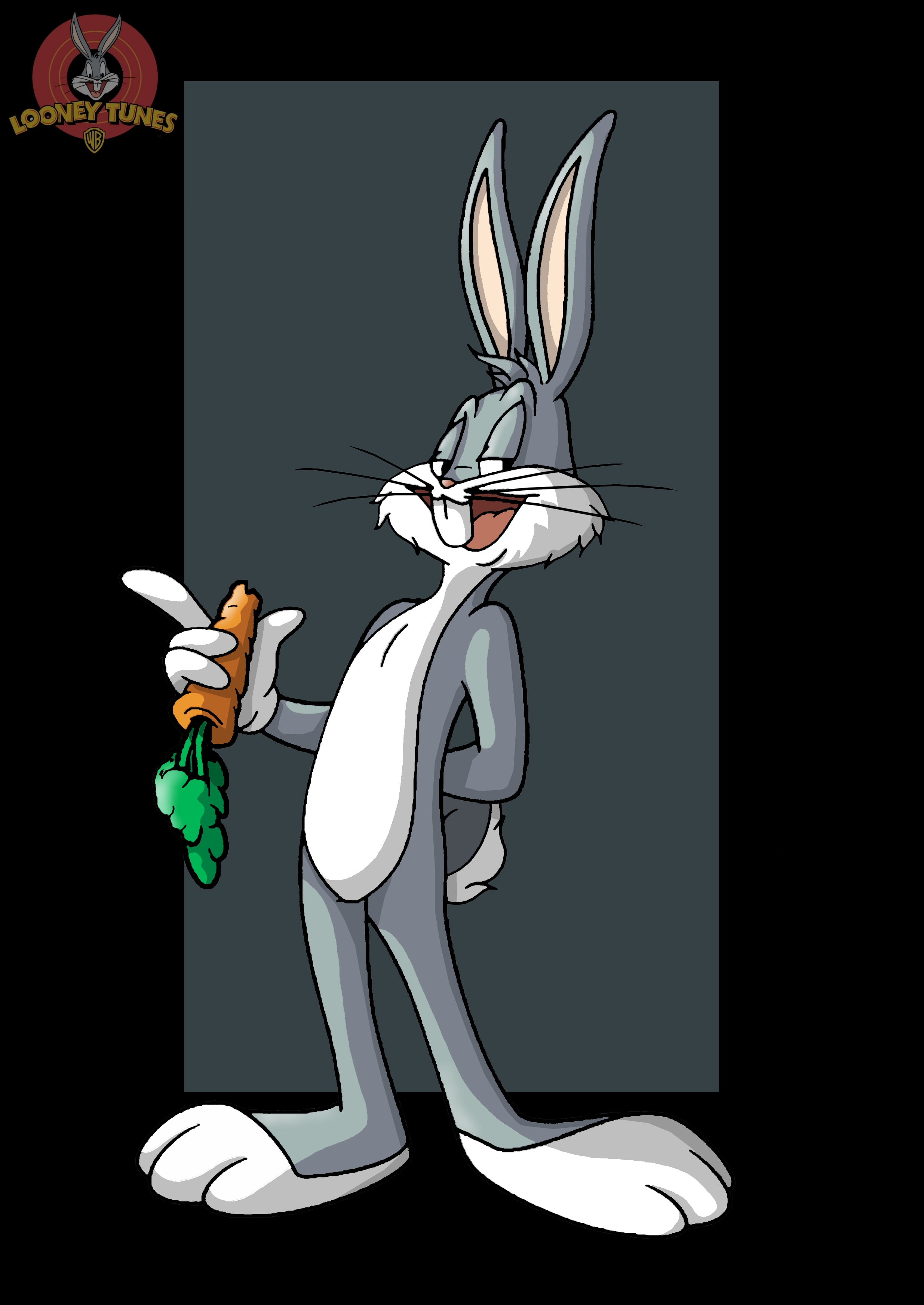
bugs_bunny_by_nightwing1975The Hare is a most ancient animal. Fossils have been found dating from Pleistocene times showing that the Hare has not changed or developed in three million years: presumably it is just so perfectly integrated to its environment. It also occupies a prime place in our own mythology. Hare is the archetypal Trickster figure in many cultures – helping to create the world, to bring fire to humans, generally being mischevious and getting into hopeless scrapes, but always coming out on top: just like Warner Brothers’ Bugs Bunny in fact – who is, of course, a Hare! Bugs (my favourite cartoon character) is loosely based on the Br’er Rabbit stories by ‘Uncle Remus’ – collected in the 1870s by Joel Chandler Harris from the oral tradition of the plantation slaves in the Southern United States. Br’er Rabbit (in America Hares are known as Jackrabbits) has his origin as a Trickster figure in African folk tradition.

I have gleaned most of my Hare lore from this much thumbed edition of The Leaping Hare by George Ewart Evans and David Thomson – published by Faber – which I acquired when it first came out in 1972. If you have an evening or three to spare I will happily regale you with tales of Hares gathered from far and wide and recorded in these pages.

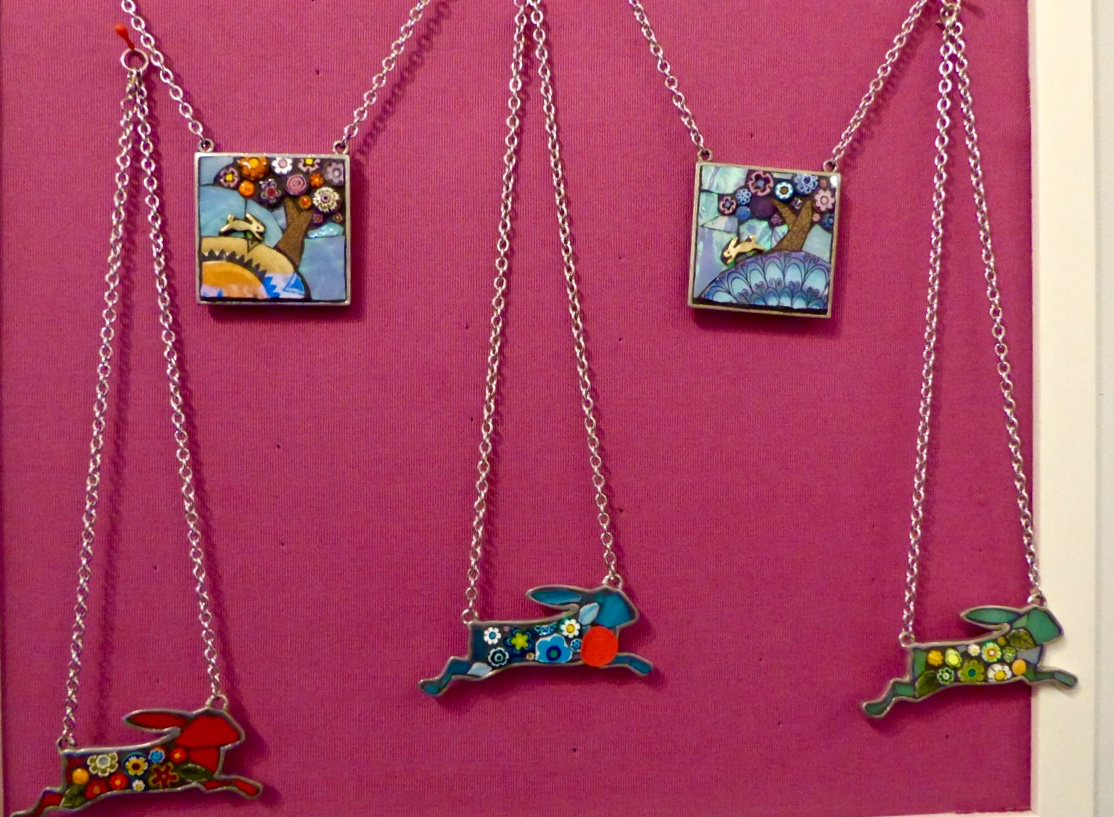
pendants

Jewellery by Alison Ibbs

When I lived in Devon, on Dartmoor, I was fortunate to have around me many examples of a symbol known as The Tinners’ Rabbits. Chagford was a Stannary Town – a place where refined tin was assessed, coined, and sold and there was a story that the symbol was a badge of the tin miners. It depicts three Hares (not Rabbits) in a circle: each Hare has two ears, yet there are only three ears in total. A bit of a riddle, perhaps – but one which has been found all over the world, as a project carried out by Chris Chapman reveals. In Chagford’s medieval church (and in several others in Devon and elsewhere) there is a roof boss carved with the image.

There doesn’t seem to be any real evidence to connect the Tinners’ Rabbits symbol to the tin miners – however, there is a surviving superstition in Cornwall and in Ireland that if you meet a Hare while on your way to the mine (or, in some places, when you are going fishing) you turn around and go home!

Some of Annabel’s Hares in the exhibition (left) and (right) our own view of the Hare in the Moon seen from Nead an Iolair last week

Part of the universal folklore of Hares reminds us that it’s the Hare in the Moon we are seeing above us, not the Man in the Moon. And… I know you thought it was an Easter Bunny that brings the chocolate eggs – in fact it’s the Easter Hare! The Saxon spring festival of Ēostre celebrated a hero-Goddess who had a Hare as a companion… Well, that’s one of the many interpretations you will find of this moon-based festival.

Hare eggs and Hare ceramic by Etain Hickey

It’s not Easter now – it’s July – but you can go and see this exhibition on the Sheep’s Head for the rest of this month, and enjoy the beautiful gardens there as well. If, like me, you are a Hare fan, then don’t miss it!

Looking on