Dividing the Day

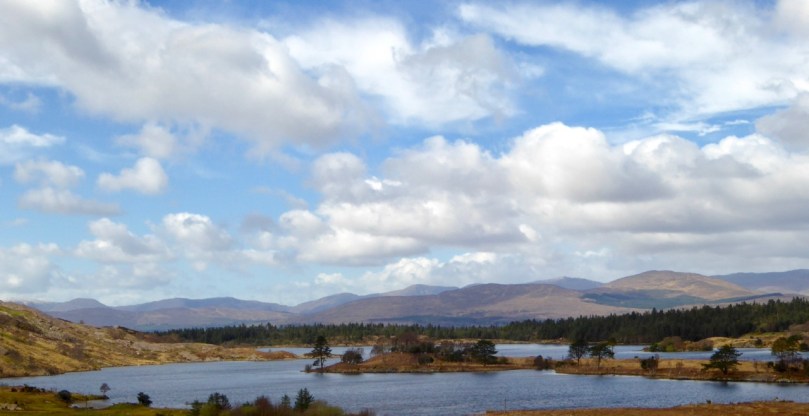
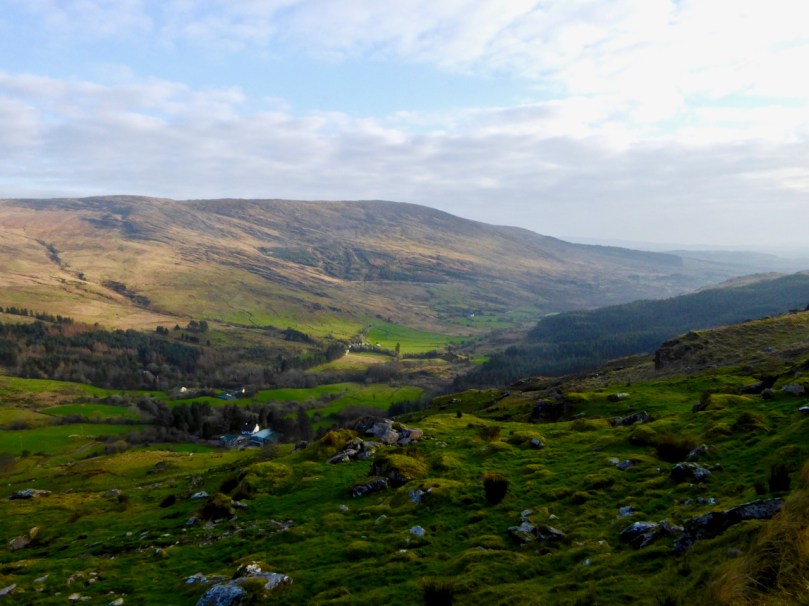
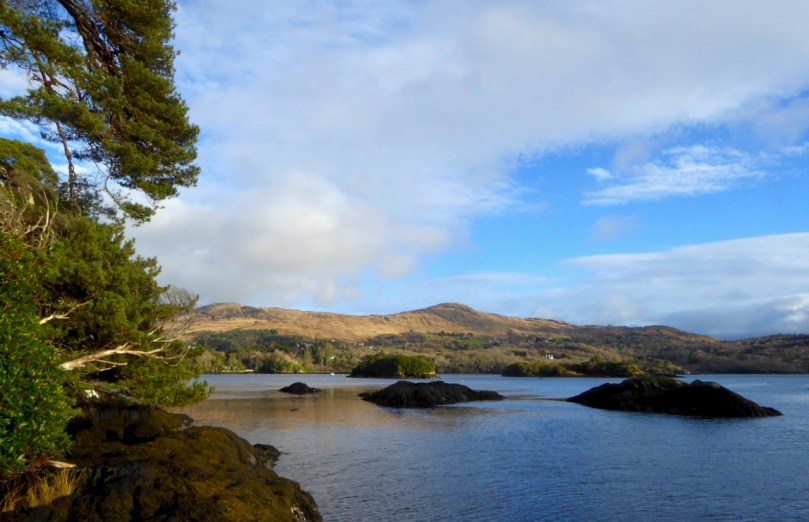
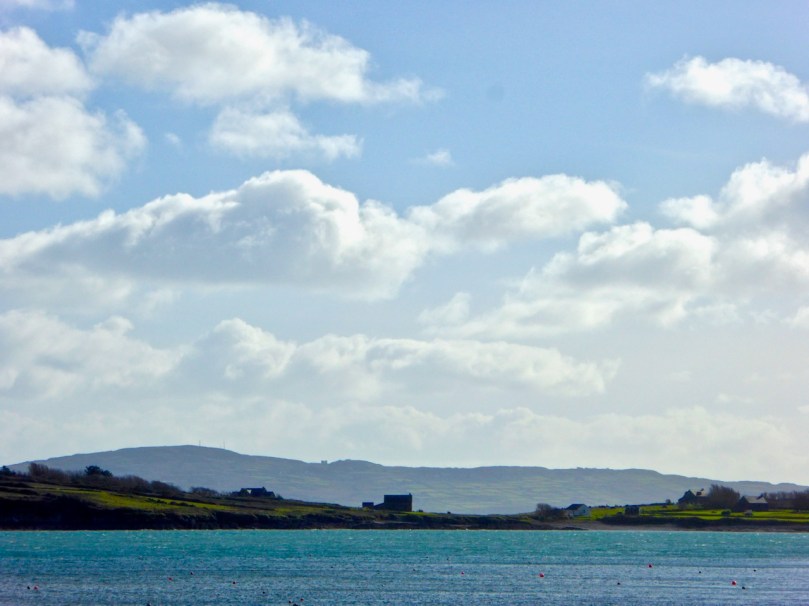
We were on the trail of Saint Brendan, and the road took us deep into County Kerry. The spring days were blue, and the unparalleled scenery at its best for us. As we made our ways through the high hills and mountain passes we could see across to the coast:

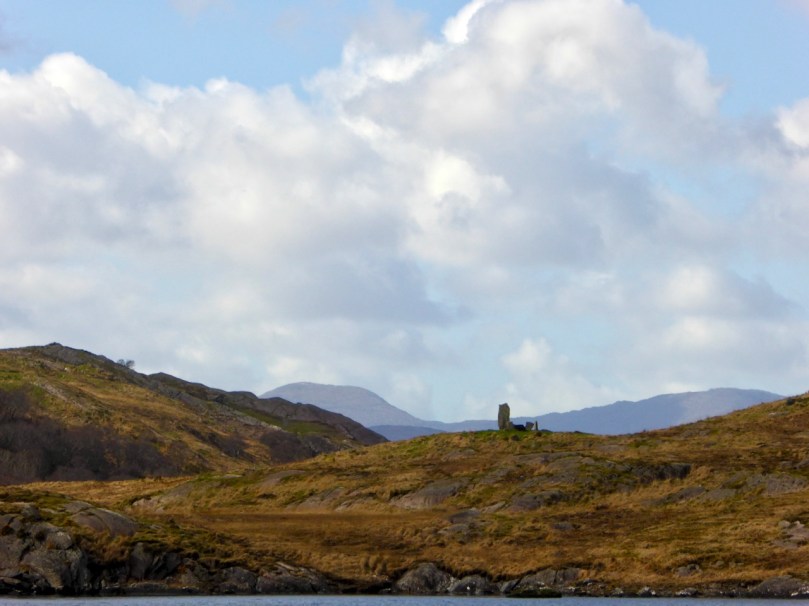
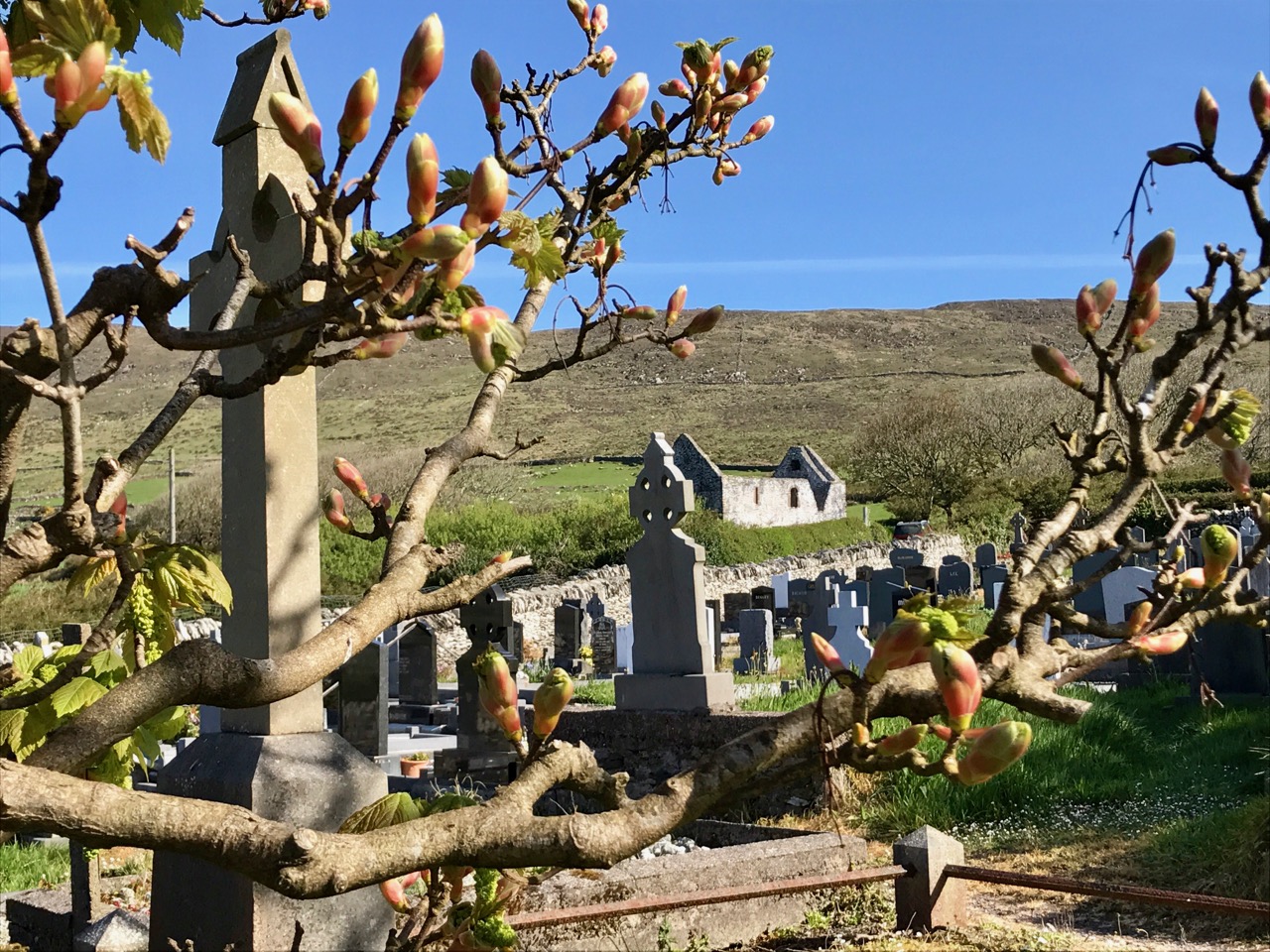
20,000 years ago, ice shaped the Kerry landscape: a huge glacier flowed from here towards the sea. Looking down from An Chonair, the highest mountain pass on the Wild Atlantic Way; the peak in the centre is Mount Brandon, named for Saint Brendan. The header picture shows the burial ground and, beyond, the medieval “Brendan’s House’ at Kilmalkedar, seen through the burgeoning spring growth

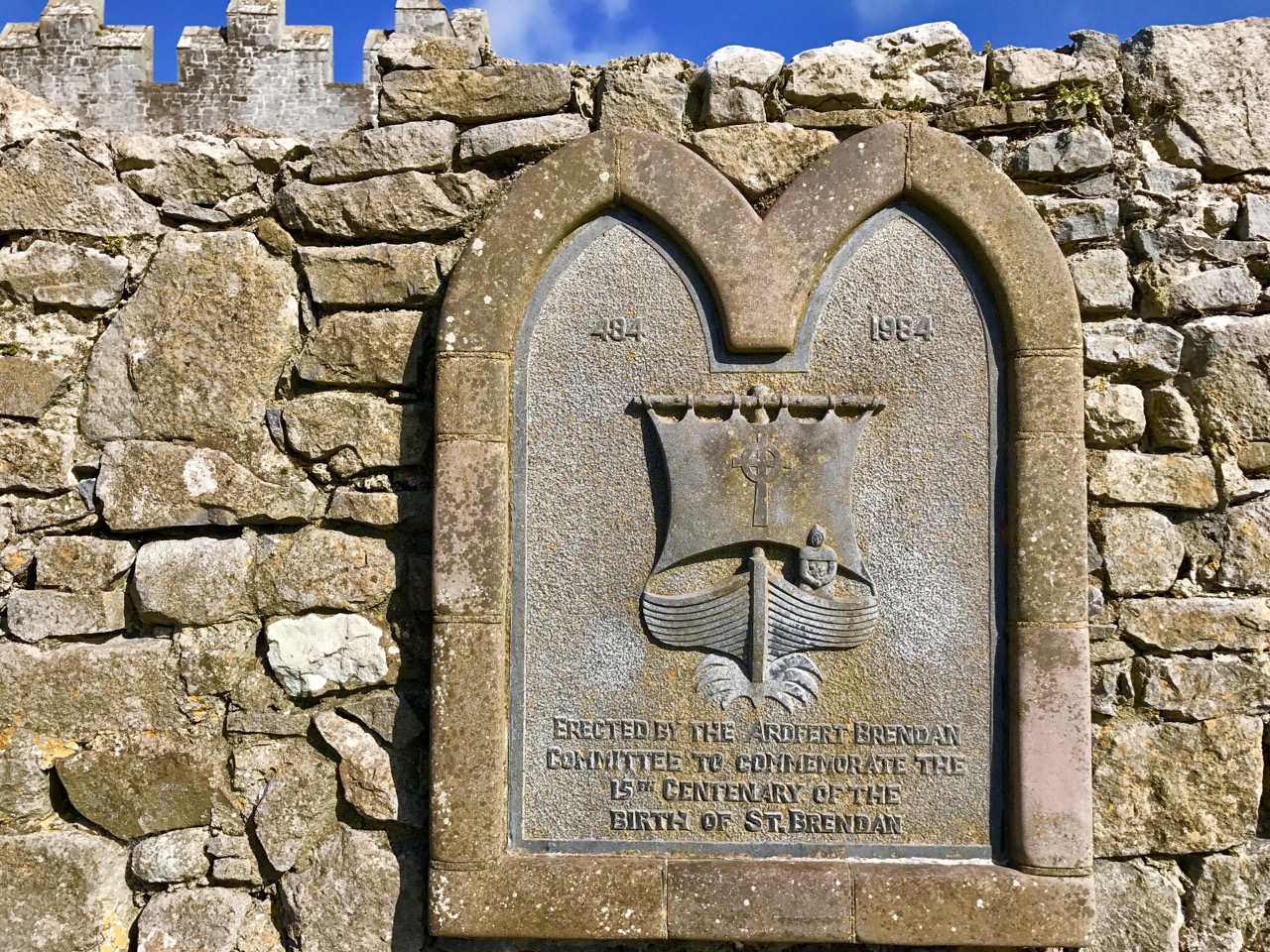
Our first call was to the Cathedral in Ardfert, which was built in medieval times over a Christian monastic site founded by the Saint in the sixth century. There’s nothing left of that, but the later buildings, while ruined, are well looked after by the Office of Public Works, and an information centre is open through the summer months – certainly worth a visit.
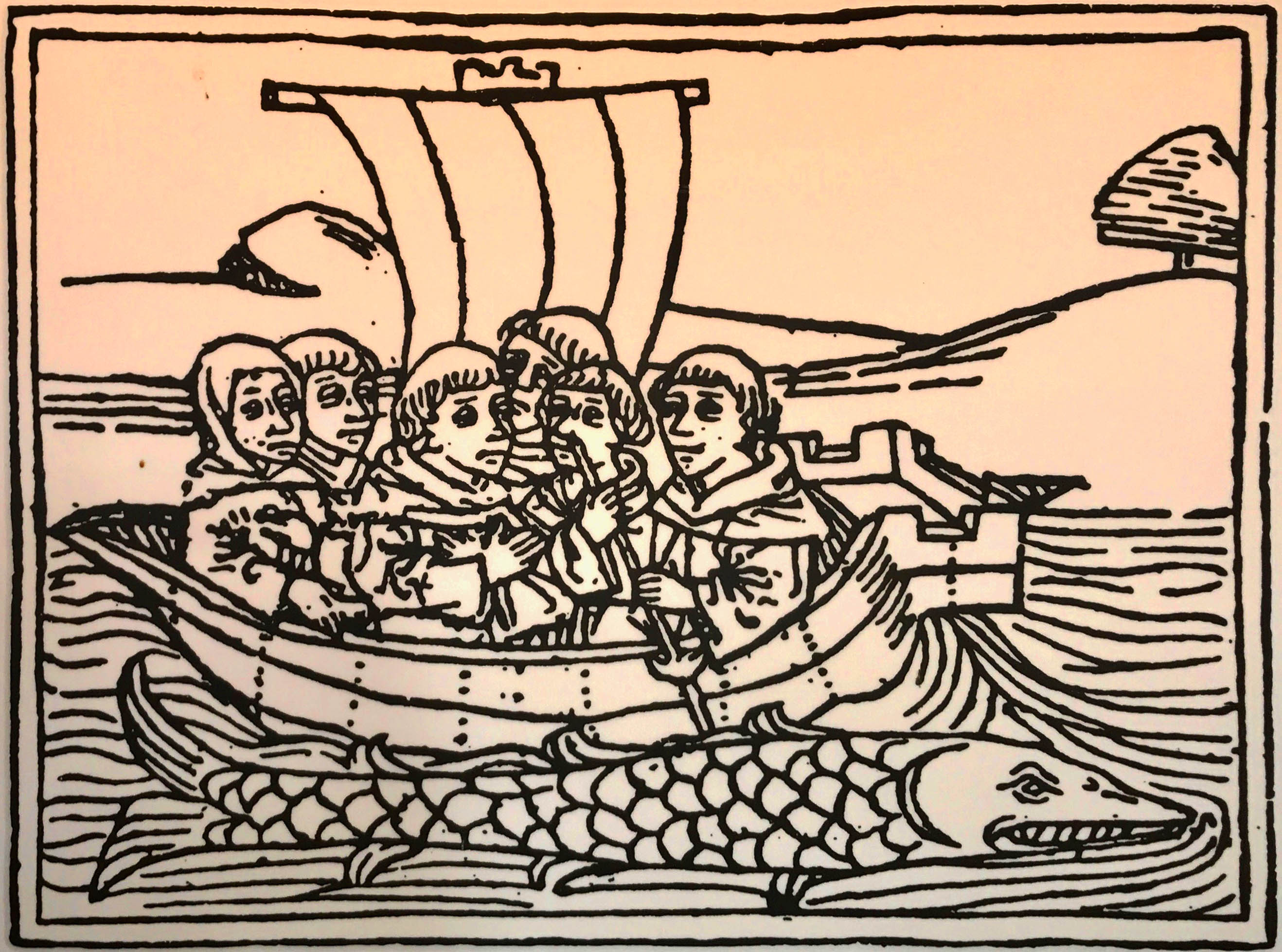
Seen in Ardfert Cathedral, an image of a woodcut dating from 1479: it shows St Brendan and his monks on their epic voyage in search of Paradise. On the way, they discovered the American continent!

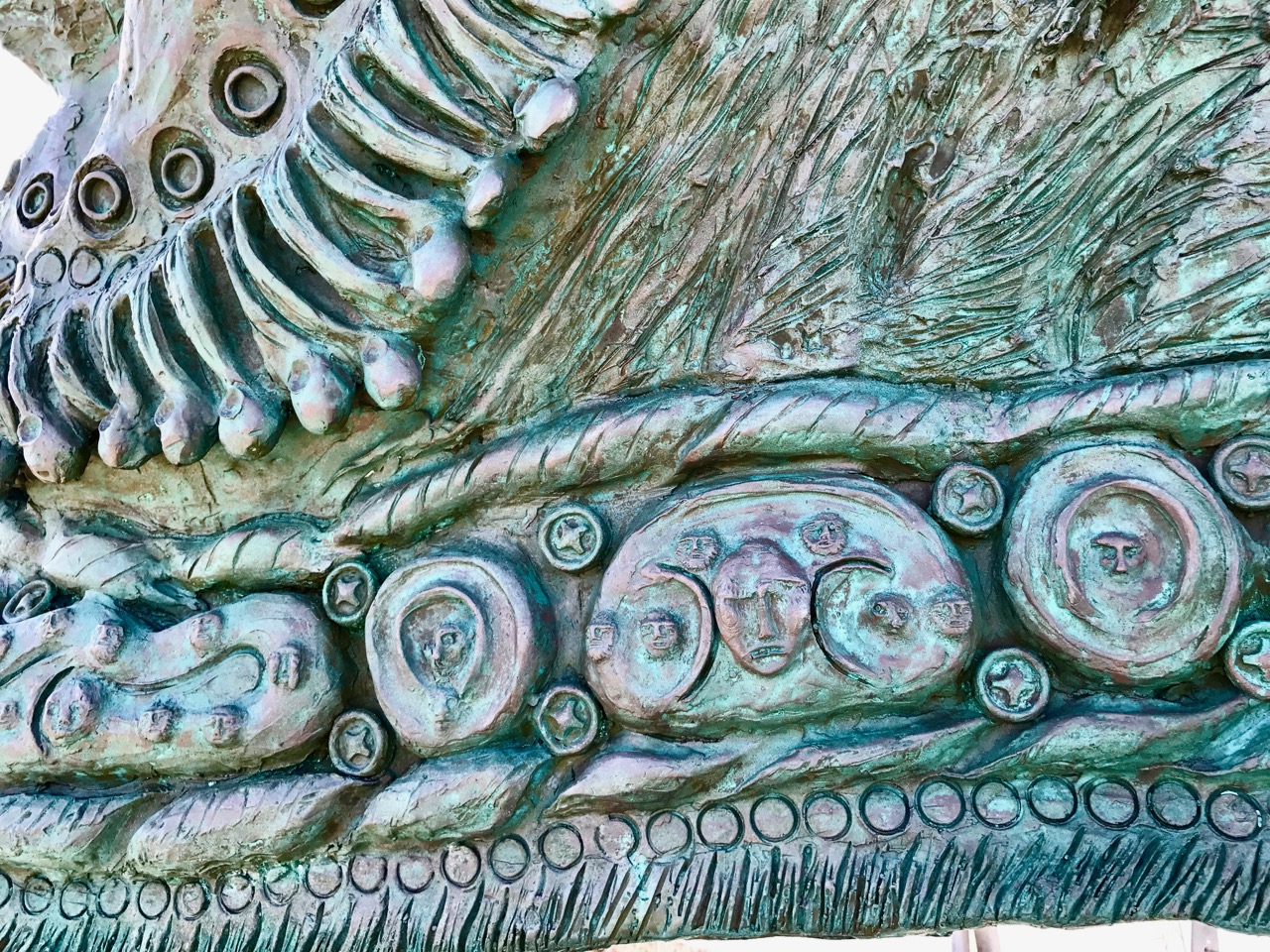
We could not miss a visit to the place of the Saint’s birth in 484 – Fenit, near Tralee – where a monumental bronze sculpture was installed in 2004. It was made by Tighe O Donoghue/Ross of Glenflesk.
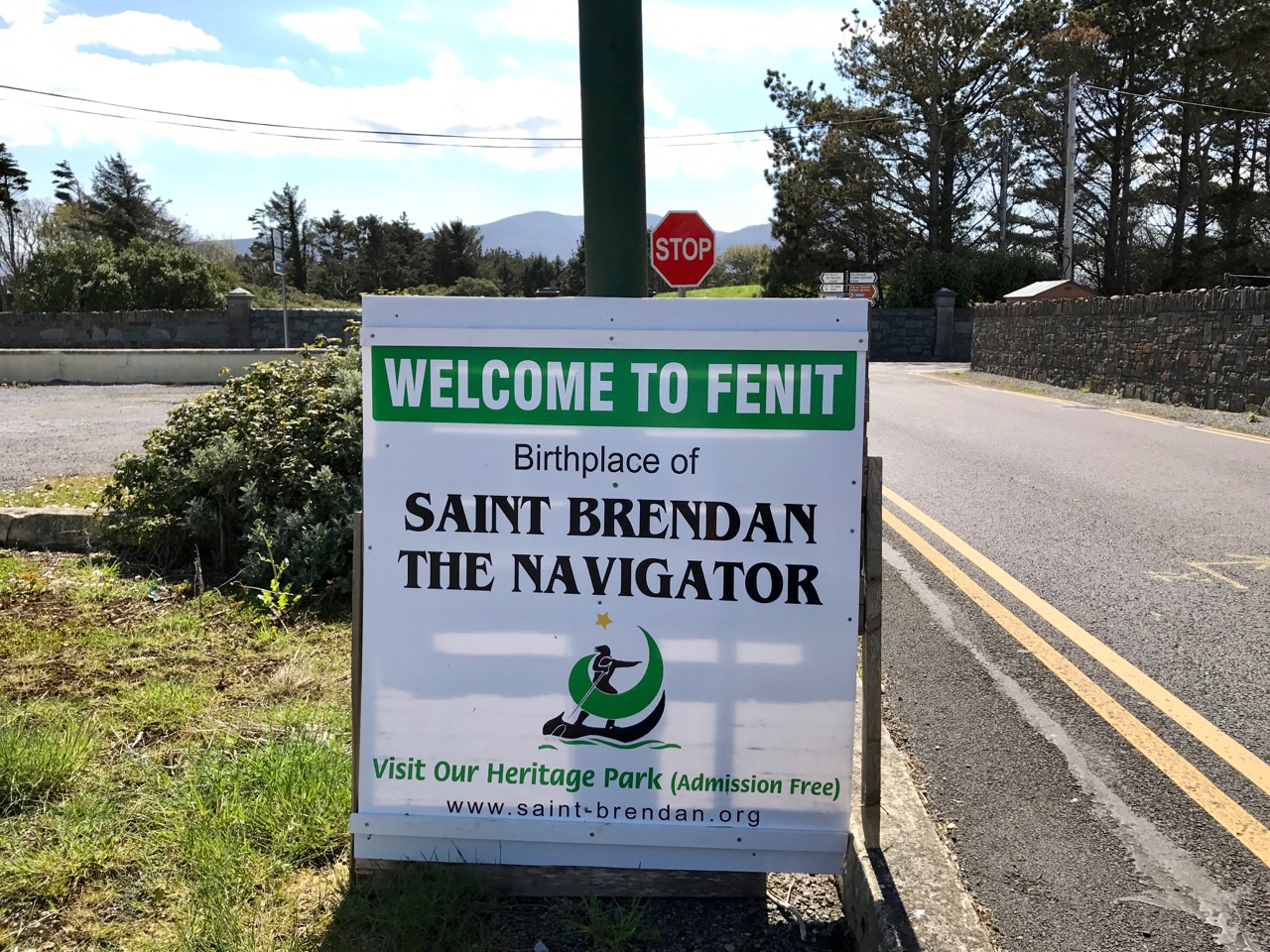
It’s hard to do photographic justice to Tighe O Donoghue/Ross of Glenflesk’s sculpture of Saint Brendan in Fenit: he’s depicted as a ‘warrior saint’ (in the same vein as St Fanahan – or St Fionnchú – of Mitchelstown, Co Cork). Certainly he has a heroic character, necessary for someone who embarked on (and returned from) so many adventures

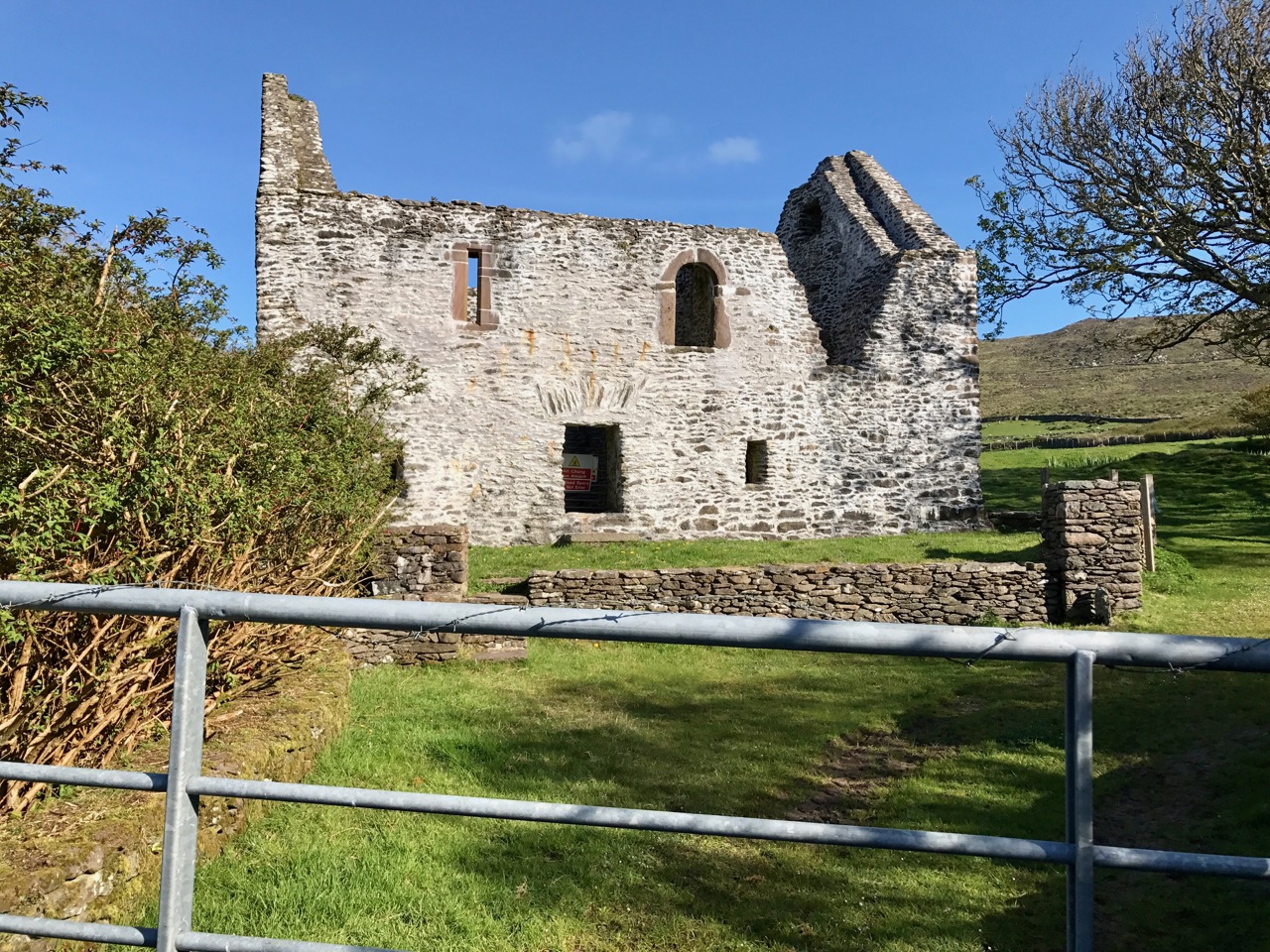
The culmination of our Brendan travels for this trip (there’s so much more yet to be explored) was the medieval site at Kilmalkedar, on the Dingle Peninsula. This monastic settlement is rich in history, and includes St Brendan’s House, and St Brendan’s Oratory. These alone are spectacular monuments, but there are further riches to delight the eye of Irish history enthusiasts. Finola’s post this week concentrates on the wonders of Irish Romanesque architecture, and the ancient stone-roofed church at Kilmalkedar is a prime example.

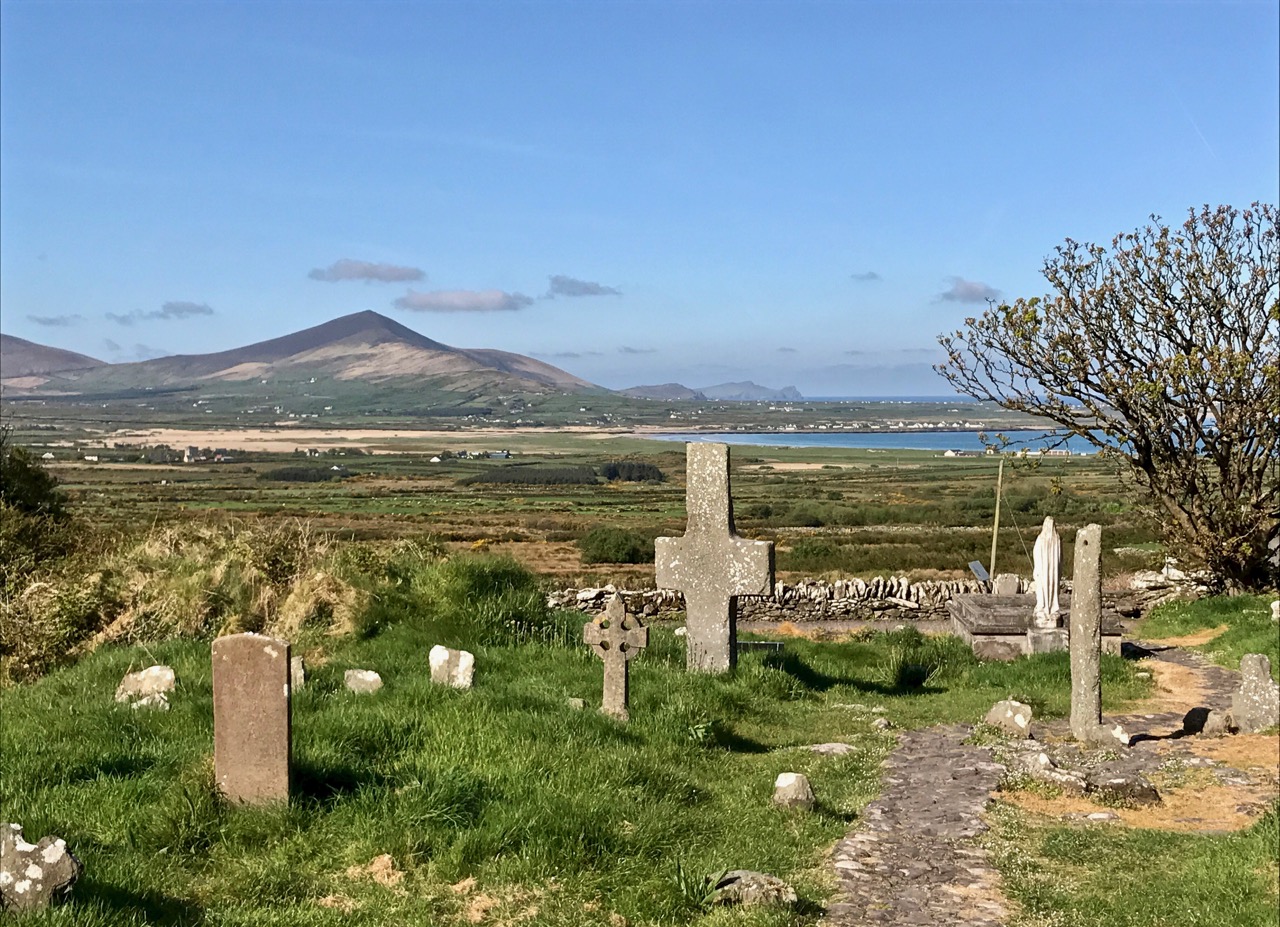
The wonderful Romanesque early Christian church at Kilmalkedar – right – with ‘Brendan’s House’ in the distance. The site is overflowing with medieval history. Below. the setting for the monastic site is stunningly beautiful. Note the large, very ancient cross and the holed ogham stone
A good while ago – in 1845, in fact – our excursion was foreshadowed by Mary Jane Fisher Leadbeater, who writes in her Letters from the Kingdom of Kerry:

…Our object to-day was not entirely to pay homage to Nature, though in the heart of her lovely works, but to visit the ruins of the wonderful church of Kilmelkedar, which we were solemnly assured “was built in one night by holy angels.” One evening, ever so many many ages ago, the sun, when he set in those wilds, saw no place dedicated to the worship of the Creator: he rose the following morning, and smiled upon a perfect chapel, with pillared niche and carved saint, and a holy fount, and massy cross! all ready for the purposes of prayer and sacrifice! A matin-call rang loud and clear over lofty mountain and lonely glen, to summon the devout and arouse the unthinking, where no vesper strain could sound the evening before; all gleamed proud and fair in the glad light, and the heart of man became purified, as the sacred bell called him to prayer! And this was the reward of the unceasing prayers of the holy Saint Brandon! Such is the legend…

St Brendan’s House – behind a locked and barbed gate!

We spent hours at the Kilmalkedar site and didn’t take everything in. We consider ourselves so privileged: we had it completely to ourselves, and the day was perfect. Saint Brendan treated us very kindly – except that his ‘House’ and an associated holy well were not accessible: although an OPW project which has recently undergone significant restoration, the enclosure around it is impenetrable with barbed wire and a firmly locked gate. However, in an adjacent field, a gate and path gave us free access to a large, flat stone which seemed to be covered in giant cup-marks. The National Monuments register describes it as a ‘Ballaun Stone’: it’s very fine, and I was delighted to find that Mary Jane Fisher Leadbeater had unearthed some folklore about it:

…This place contained a colony of monks; and well they knew what they were about when they fixed on this retirement; for, besides its real advantages, it commands a most lovely view of Smerwick Harbour, The Sisters, and Sybil Head. They need not want for fish in the refectory in the days of abstinence. It is situated in a sheltered recess of the mountains, fine springs around, and, another popular legend bearing witness, in the centre of what was once good grazing and tillage ground. A cow is the subject of this legend—a cow of size and breed suited to provide milk for the giant race of those days. We saw the milk vessels, and if she filled them morning and evening, she was indeed a marvellous cow. In a huge flat rock were these milk pans; six large round holes, regular in their distances from each other, and nearly of equal size; they could each contain some gallons of liquid. This said cow gave sufficient milk for one whole parish; and was the property of a widow—her only wealth. Another parish and another clan desired to be possessed of this prize; so a marauder, endued with superior strength and courage, drove her off one moonlight night. The widow followed wailing, and he jeered her and cursed her as he proceeded. The cow suddenly stopped; in vain the thief strove to drive her on; she could neither go on, nor yet return; she stuck fast. At length, aroused by the widow’s cries, her neighbours arrived, and the delinquent endeavoured to escape. In vain—for he too stuck fast in the opposite rock; he was taken and killed. The cow then returned to her own home, and continued to contribute her share towards making the parish like Canaan, “a land flowing with milk and honey.” The prints of her hoofs, where the bees made their nests, are still to be seen in one rock ; and those of the marauder’s foot and hand in another, where he was held fast by a stronger bond than that of conscience…

Kilmalkedar’s giant ballaun – the cups were filled every day by the widow’s marvellous cow, providing milk for St Brendan’s community of monks back in the day

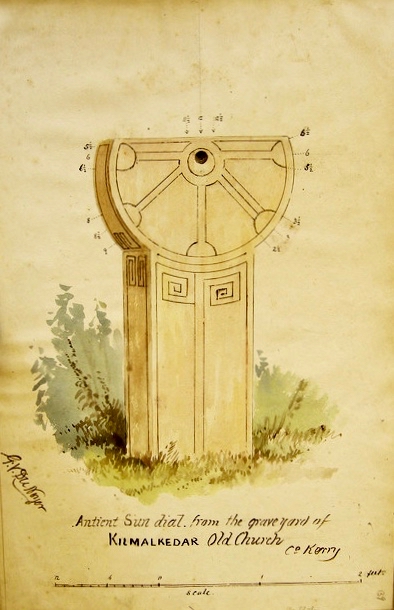
One of the special features of the Kilmalkedar site harks back to its medieval monastic associations – a sundial. The ordered lives of the monks were regulated by divisions of the day (and night) – the Canonical Hours, also known as the Divine Office or Liturgy of the Hours. These were the regular periods of prayer: seven daytime Offices of Lauds (at daybreak), Prime, Terce, Sext, None, Vespers, Compline (at sunset) and a night Office of Vigils. This was the important work of the monastery, of course: constant and regular prayers. In between it the monks had to fit in all the requirements of daily life: sustenance, growing crops, brewing, beekeeping. And, on top of all that, Brendan and his companions undertook their peregrinatio all around the known world. No wonder a timepiece was necessary!

The Kilmalkedar sundial is a particularly elegant example – it’s probably my favourite item on this site: functional and beautiful, as all things wrought by the human hand should be. In such an evocative environment it certainly helps us to cast our minds back to the life and times of the travelling Saint. The antiquarian George Du Noyer visited the place back in the 1860s, and was also drawn to this particular artefact, accurately recording it for us in one of his exquisite watercolour sketches.
Into the Blue…

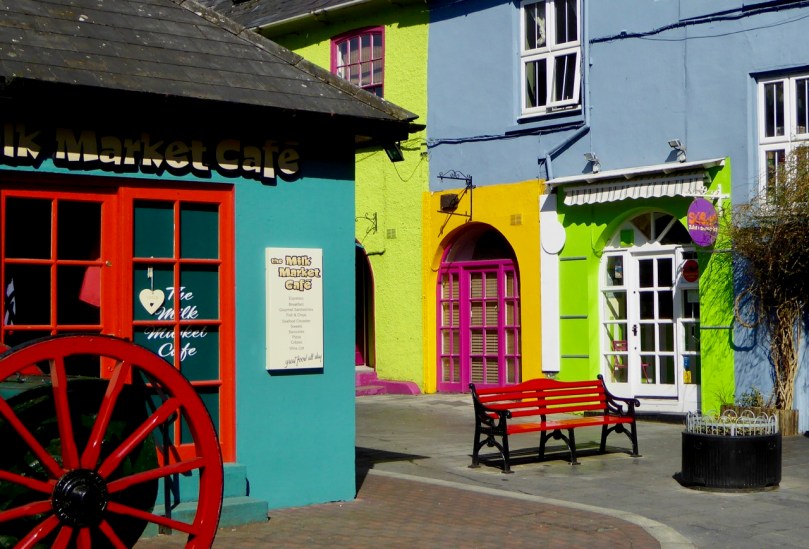
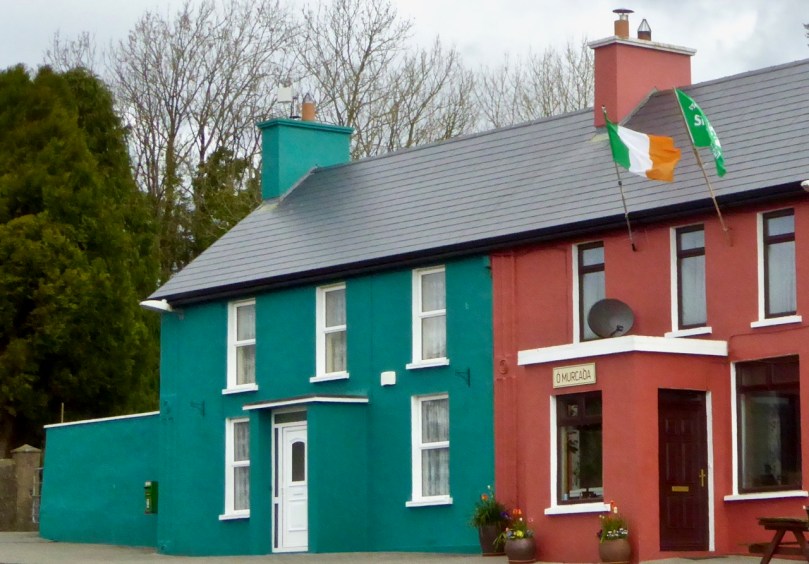
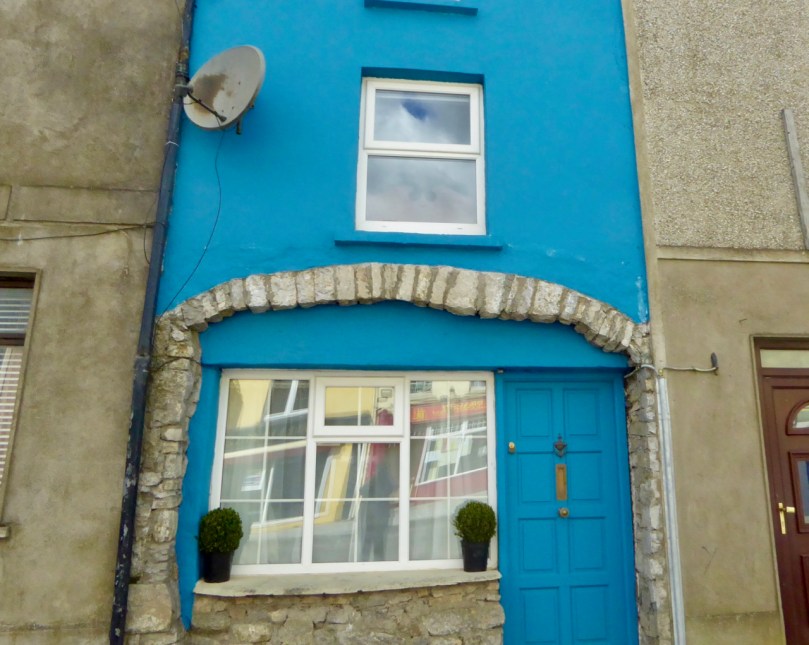
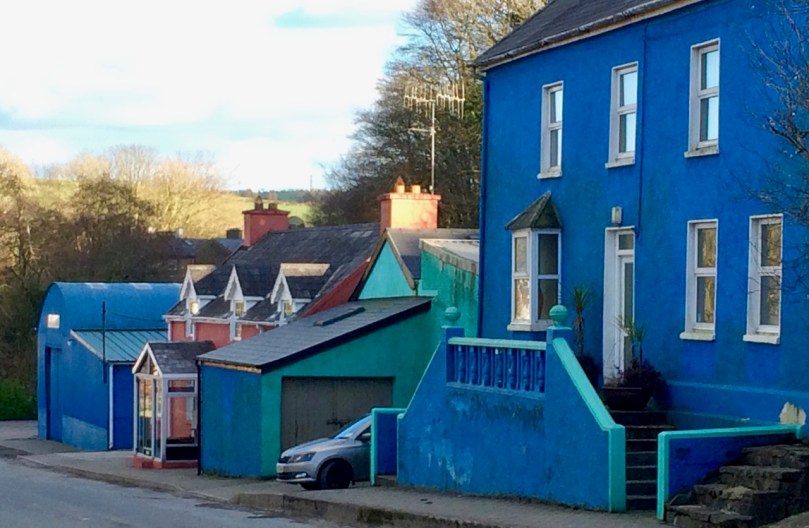
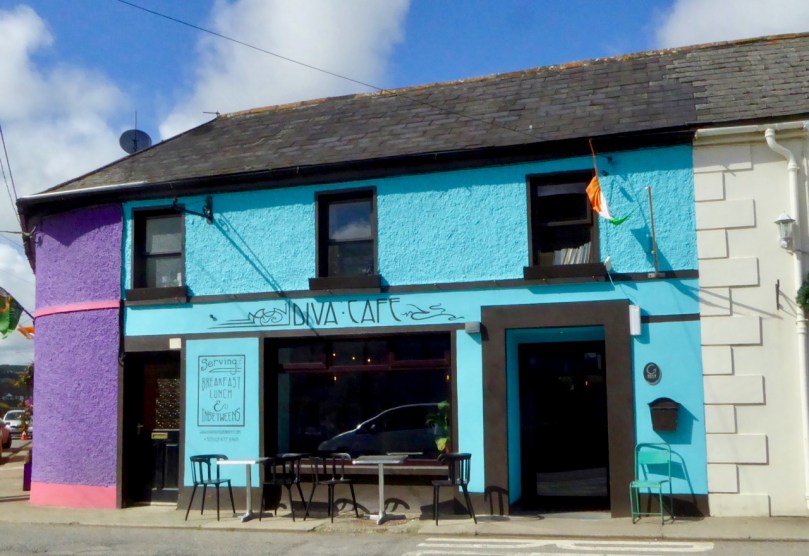
In this series on Ireland’s colourful buildings, we started off with purple and pink and proceeded through the colour wheel to the oranges and yellows and now we have arrived back on the cool side of the spectrum – the blues and greens. The Diva Cafe in Ballinspittle (above) has black trim that does nothing to tone down its exuberance, and it marries beautifully with the purple and pinks beside it, which were highlighted in our first post on this series.

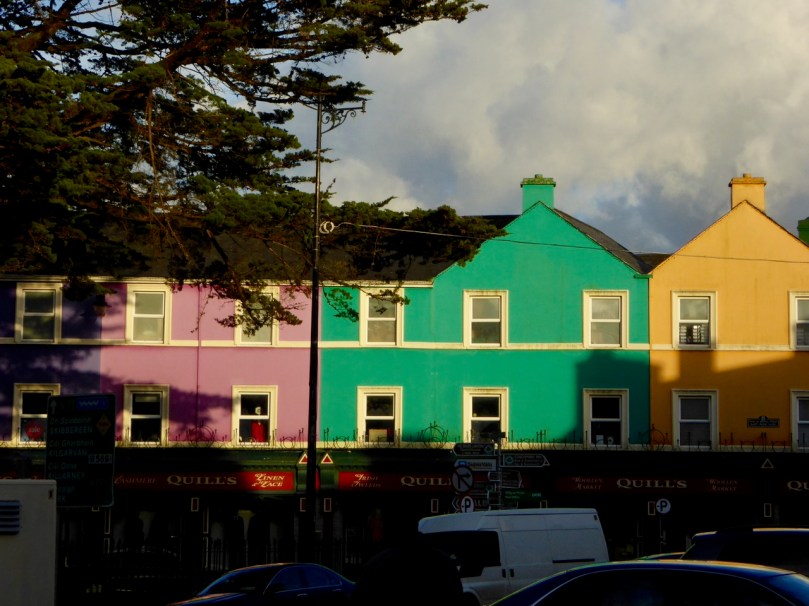
We left off the last post with a couple of lime greens, so here’s another, from Kinsale (above) to get us back in the swing of things.
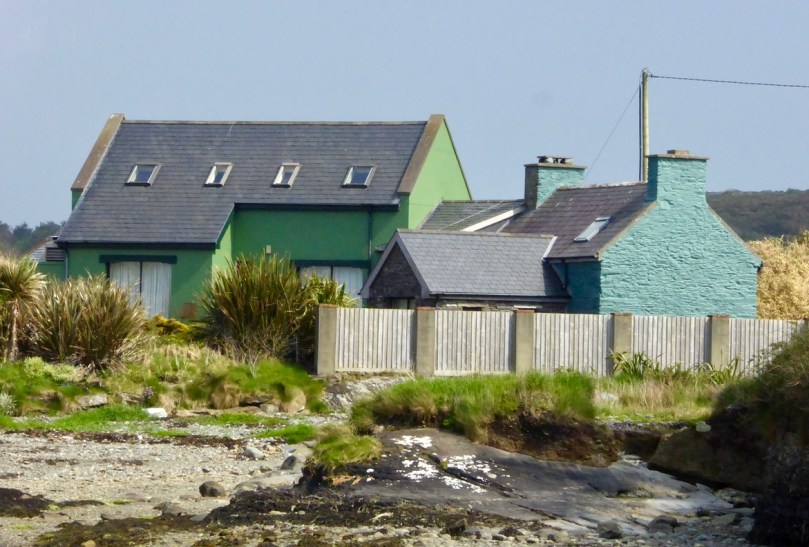
A bright green and a blue green are a great combination beside the sea – this house is at Dunmanus, on The Mizen

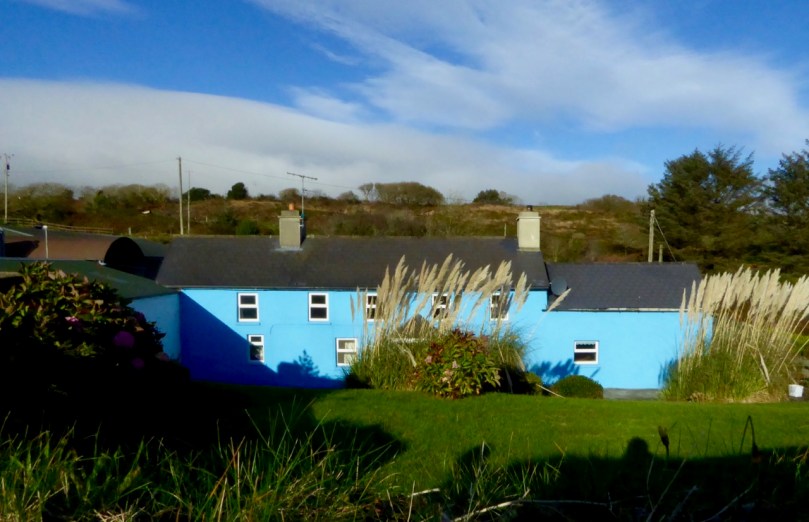
Blues and greens are the colours of the sky and the fields, so they don’t pop as much as the pinks and the oranges. In fact they can be quite subtle, when used in tones that blend in with their surroundings.

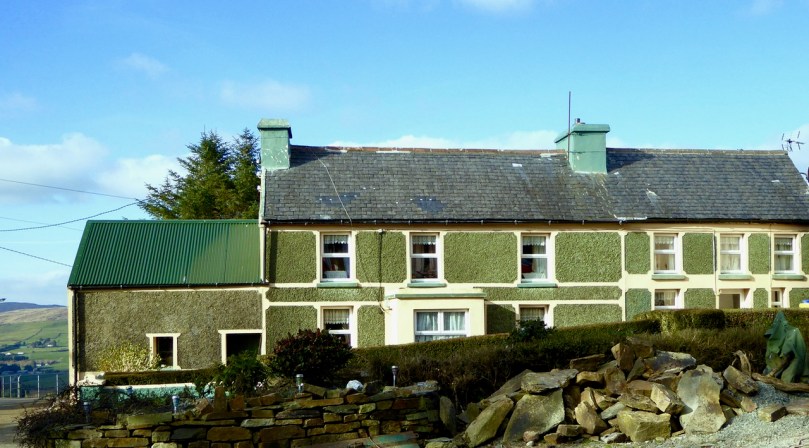
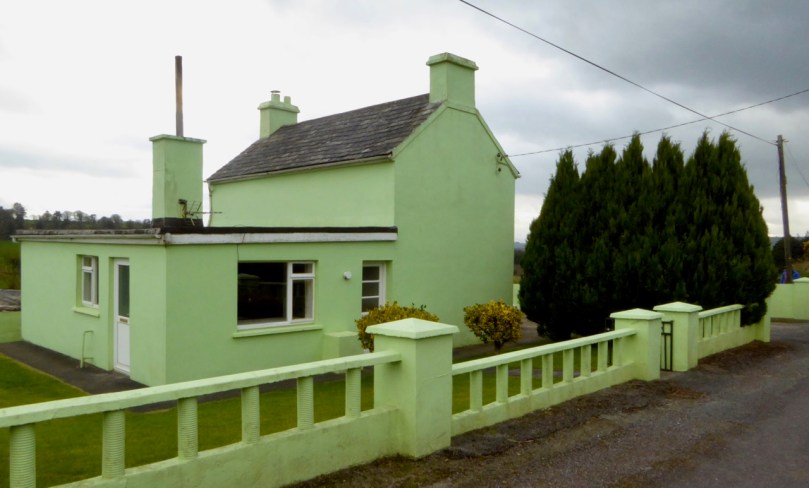
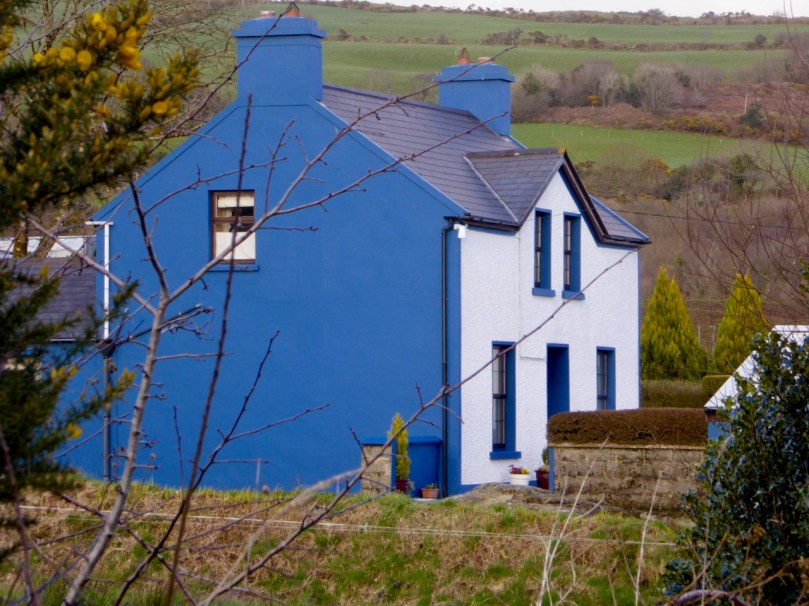
I love these two farmhouses, the first near Mount Kidd and the second near Coppeen

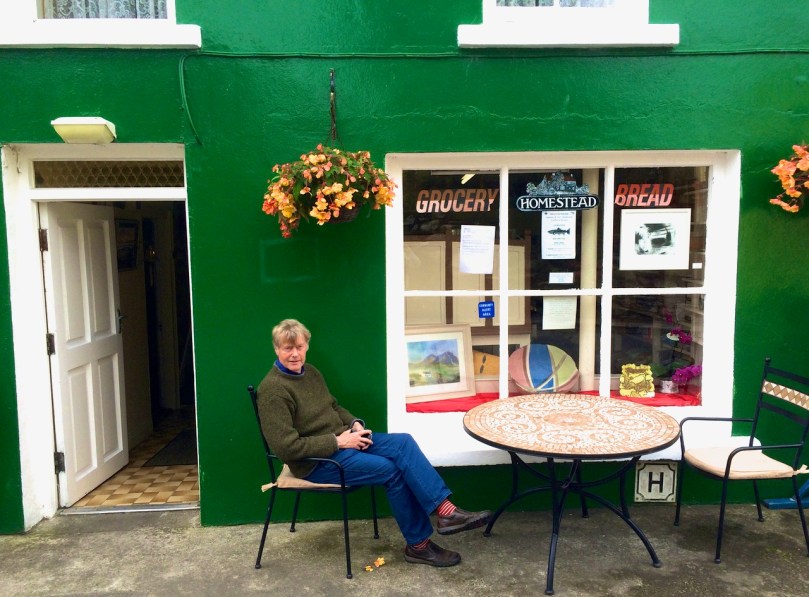
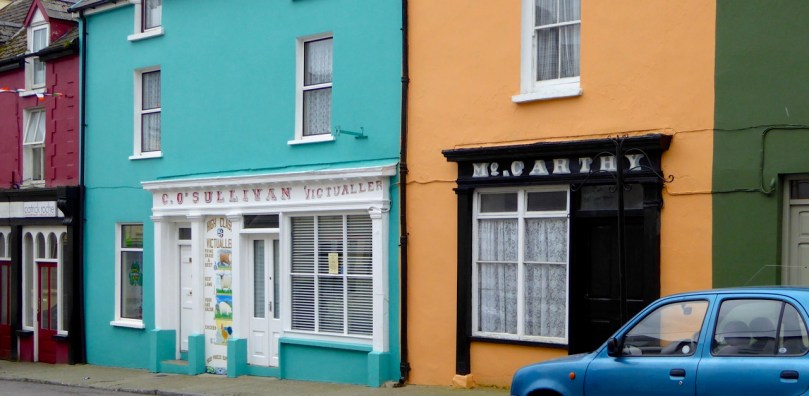
But in village streets, and especially when combined with the other colours of the streetscape, they can be as cheerful and arresting as the stronger hues around them.

Eyeries (top) and Kenmare (bottom)

There are shades of blue and green that people argue over – one will call it blue and another green.

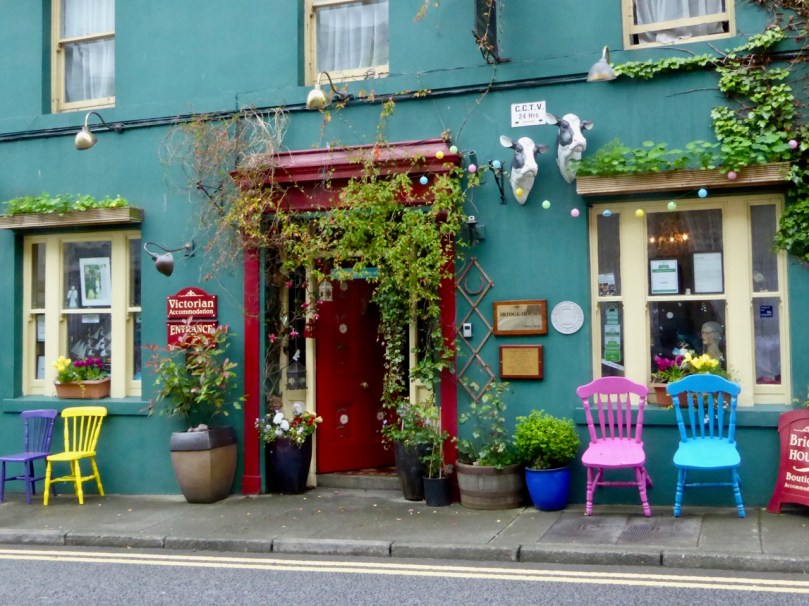
The fabulous Bridge House in Skibbereen – blue or green?

Those are the teals, ceruleans and turquoises, and St Patrick’s Blue, which is the colour of the Aer Lingus uniforms.

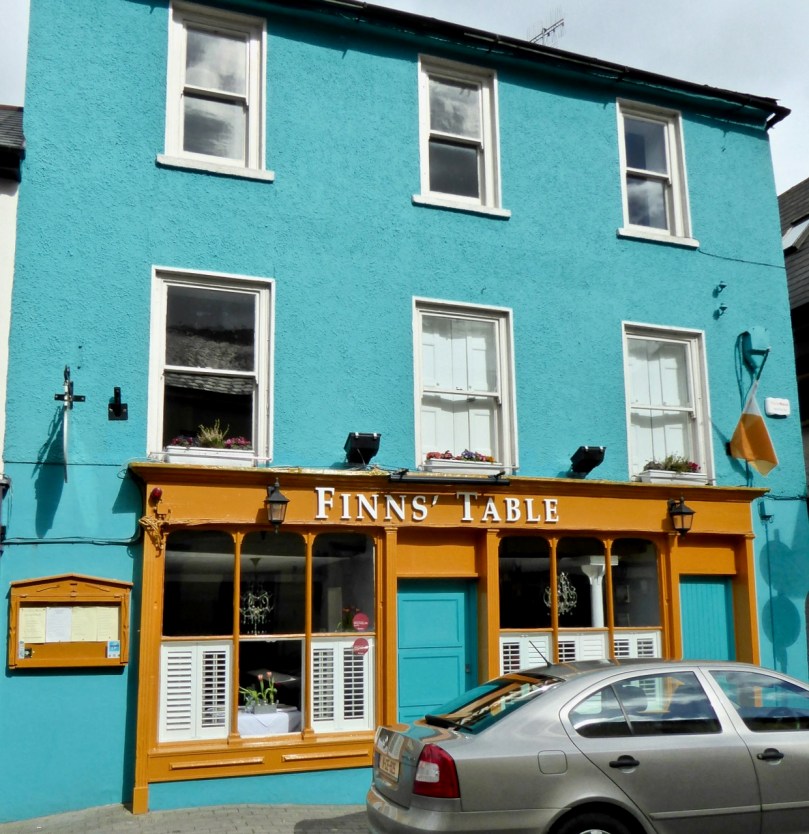
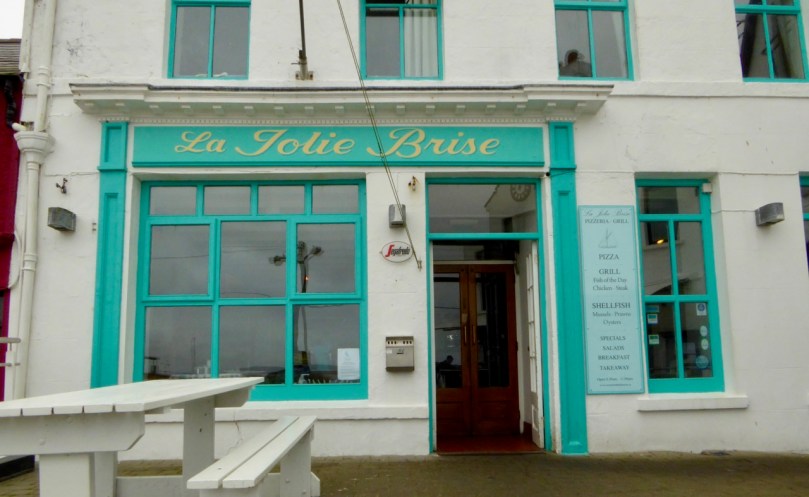
Finn’s Table in Kinsale, La Jolie Brise in Baltimore and a lovely brick and teal combo in North Cork

O’Sullivan’s butcher shop in Ballydehob has been closed for years, but it still retails its welcoming colours and graphics

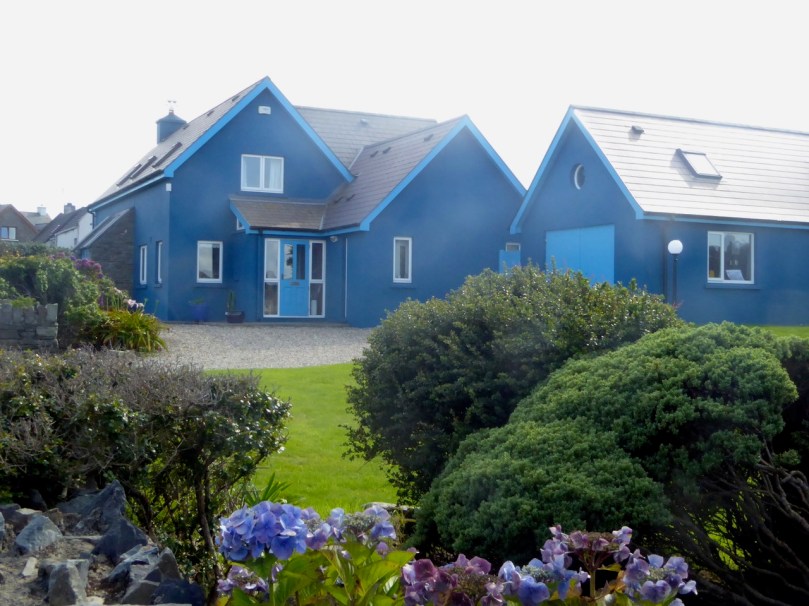
True blues vary from the strong dark ultramarines and navy blues through the denims, duck eggs, periwinkles, sky blues and on to the paler shades and baby blues.

The first house is in Baltimore, the one underneath it was glimpsed somewhere on our travels

Blue matches well with other colours and is often used in combination. Some of the nicest buildings we’ve seen use blue with another colour to great effect.

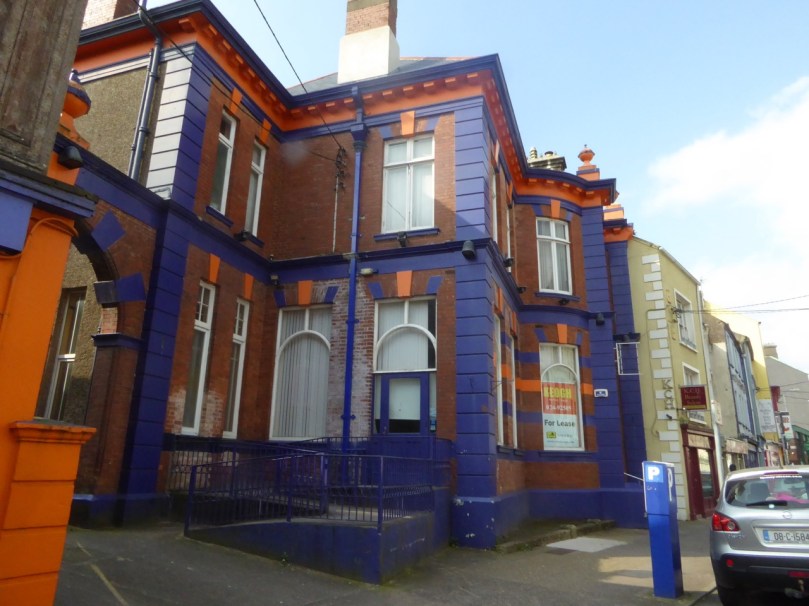
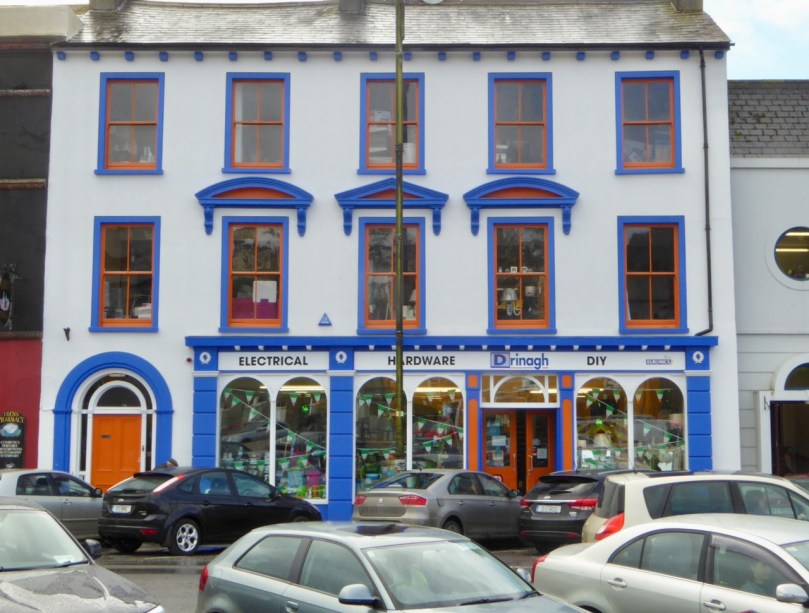
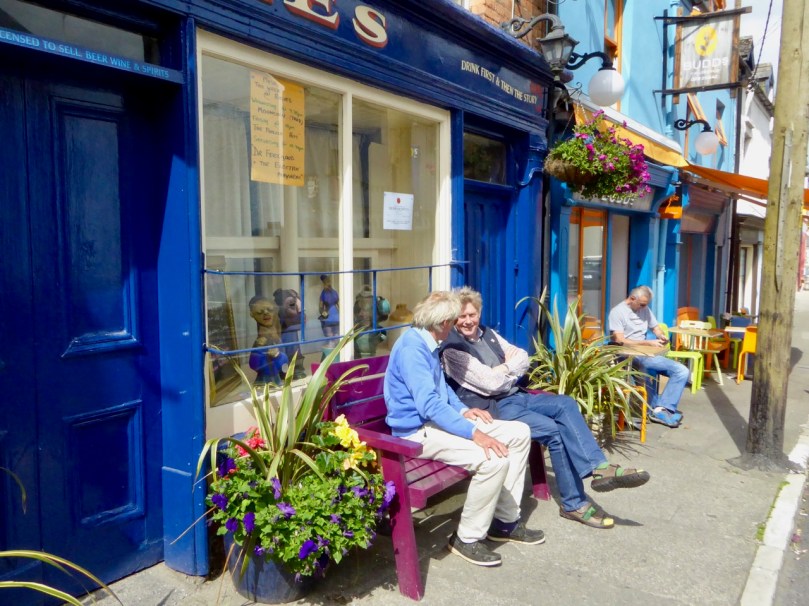
Three wonderful buildings that use blue in combination with orange tones – a bank in Youghal, a hardware store in Bantry and our own Budd’s Restaurant in Ballydehob (with Rosies pub for good measure)

Yellow trim is a tried and true favourite
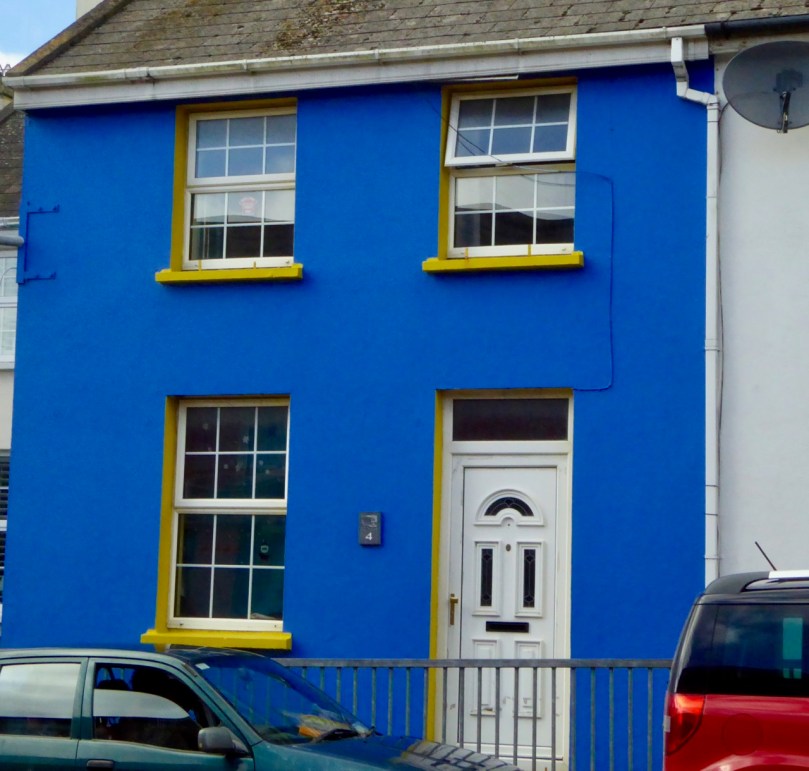
It might be one of the smallest houses I’ve seen, but it stands out when painted in blue
Blues and greens in Kilbrittain 
This one near Castle Donovan uses a strong blue cleverly as both a main and a trim colour

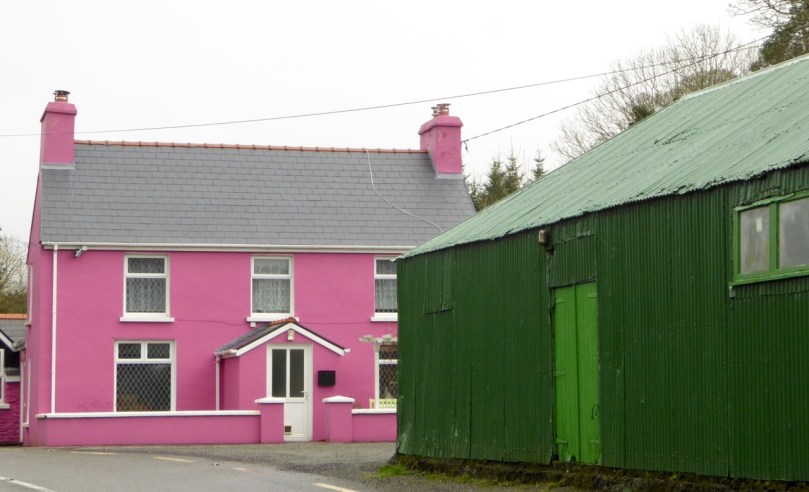
I’ve decided to end this series with this photograph of two side-by-side buildings in Adrigole on the Beara Peninsula.  The juxtaposition of the strong green and the vivid pink proves that when it comes to colour, anything can work!

Wild Atlantic Light – the West Cork Winter Edition

We are a maritime county and that affects our weather. It means that clouds are plentiful at all times of the year and that the weather can be highly variable and unpredictable. But the ocean, and the Gulf Stream it carries all the way from the Gulf of Mexico, also means that we have a slightly milder climate than the rest of Ireland. Beside the sea, the air is full of negative ions. That’s a good thing. Negative ions stimulate our senses and lead to a heightened sense of wellbeing.
Sure, we can have rainy days and bitter winds in the winter, but there are lots of sunny days too. When the sun shines in the winter, it is filtered through those drifting clouds to produce those marvellous effects of light and shade that lend such drama to the landscape.

In winter too, the colours are highly contrasting – the green of the fields change abruptly to the blondes and golds of the higher mountains. The bracken turns the colour of amber and the fionán grasses provide an expansive sea of rippling heath on higher ground. Snow caps the highest ridges, although it rarely descends to us mortals in the valleys.

Under a blue sky the sea in West Cork turns the colour of the Mediterranean or the Caribbean. They tell me that has to do with having a sandy bottom and I am sure there are other scientific explanations, but really, you have to see it yourself to believe it.

Our underlying geology provides the ruggedness, the exposed sandstone ridges, and the deep coastal indentations that characterise the landscape.

The end result of it all – the sunshine, the clouds, the mountains, the sea, the contours and colours of the land – is the kind of light that artists dream of. The sheer clarity of it is startling – you can see from one end of the peninsula to the other in a way that city dwellers have forgotten it’s possible to do. That clarity brings out every hue and allows all the colours to sparkle against each other.

The photographs in this post were all taken in the first three months of 2017 – from the depths of winter to the first glimmerings of spring. We think you’ll agree that our Wild Atlantic Light is pretty special.

Even in the evening…

And especially when there’s a chunk of archaeology from our deep past in the landscape.

‘Twas Early Early All in the Spring

The world around us is starting to wake up from its winter snooze. We are shooing bees and wasps from our house and every day we see new flowers (like these Wood Anemones, above) peeping out at us from the verges and hedges. It’s estimated that this part of Ireland is about two weeks ahead of the more northerly counties, due to our milder and dryer climate. All of the photographs were taken in March, except for a couple on April 1st. But that’s OK, because the first three days of April are The Borrowed Days, according to Irish folklore, and still really March. 

Primroses – indelibly associated with early spring. Most are yellow (top) but a true wild pink variety (as opposed to a hybrid between wild and cultivated flowers) does exist too.  The little one about to open is growing out of a stone wall.

Although not yet in their full spring splendour, the boreens are sporting a plethora of wildflowers. And not just flowers but flowering trees and shrubs. In fact much of the colour and drama of the boreen come from shrubs at this time of year.

Blackthorn 

I set out to document the wildflowers of a West Cork March and found many old friends already showing themselves, as well as a few new acquaintances. Ready for a ramble? Let’s go.

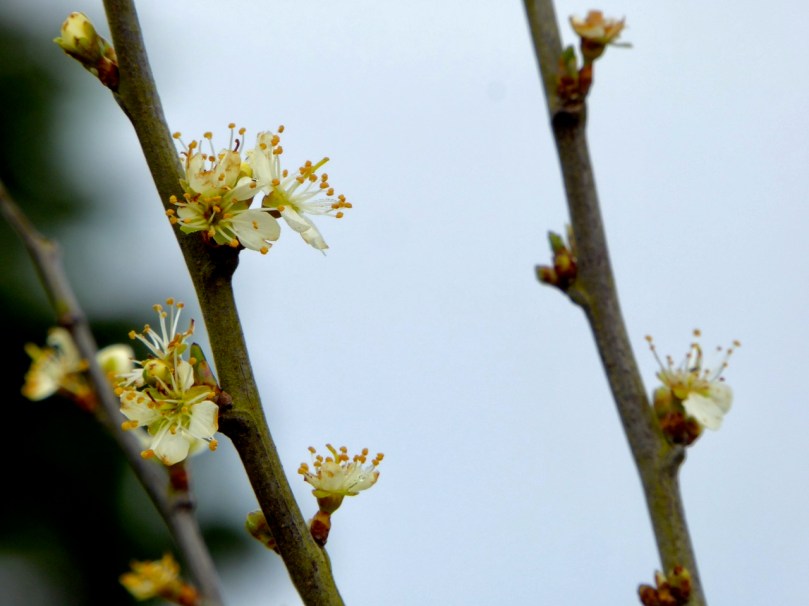
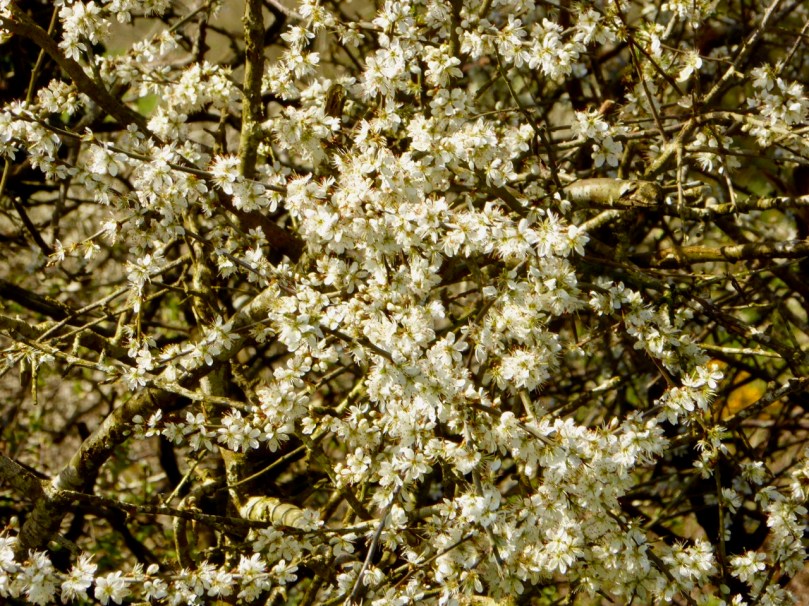
We’ll start up in Stouke and walk back to Rossbrin by way of Kilbronoge. The first things that hits us of course is that heady combination of Gorse and Blackthorn along each side of the boreen. The Blackthorn flowers come before the leaves and they are beautiful when observed close up.

Blackthorn flowers

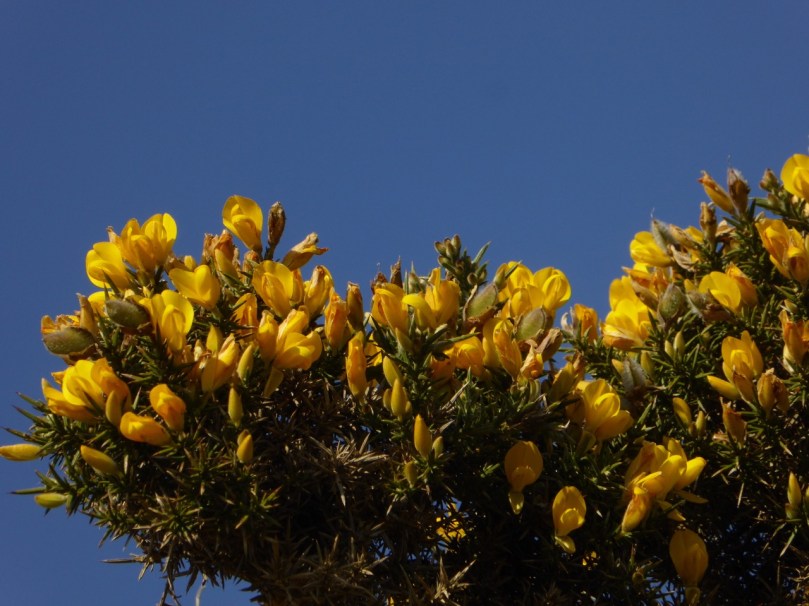
This year the Gorse seems especially vibrant – but I think I say that every year.

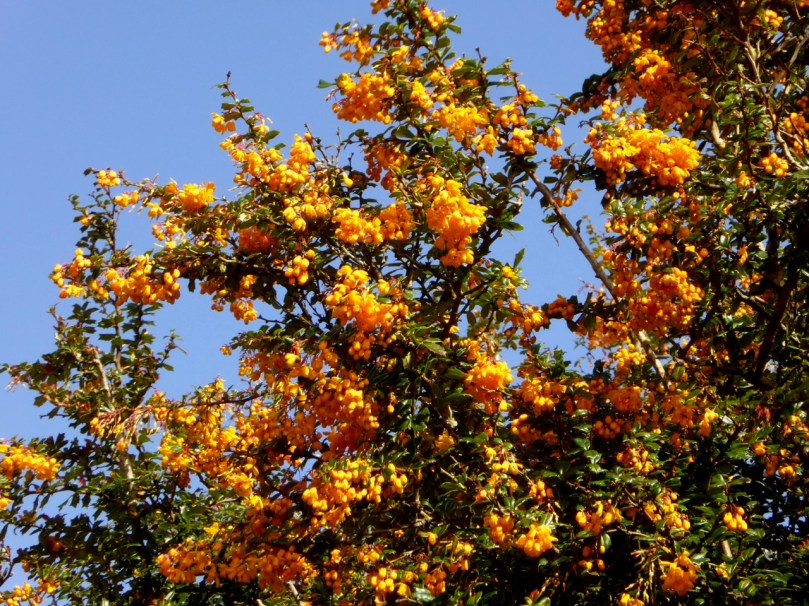
Gorse (upper) and Berberis (lower)

 At some point in the past, somebody planted Berberis as a decorative hedging, perhaps around the Stouke graveyard. It has spread and is still spreading. Although it was only introduced in the mid-19th century from Chile (by none-other than Charles Darwin!) it thrives here, happily lending its rich orangey tones to ensure you keep looking up.

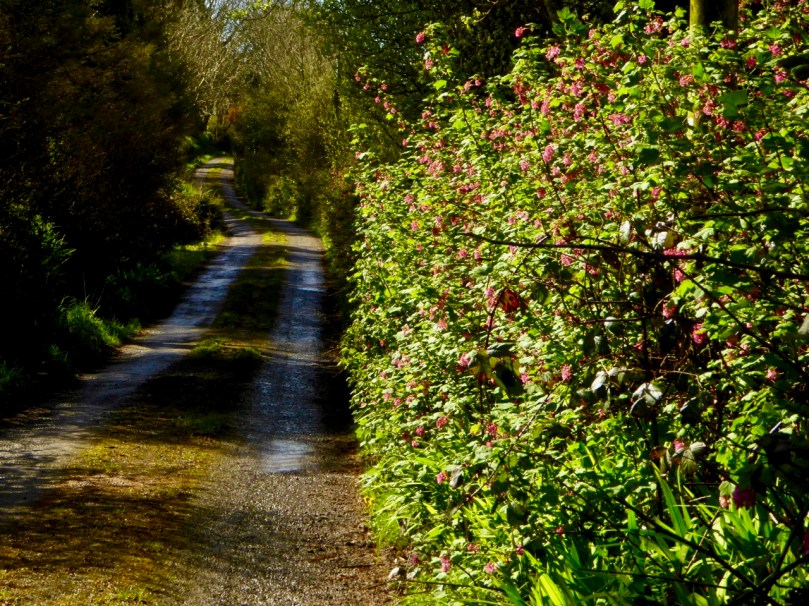
Flowering currant along the boreen

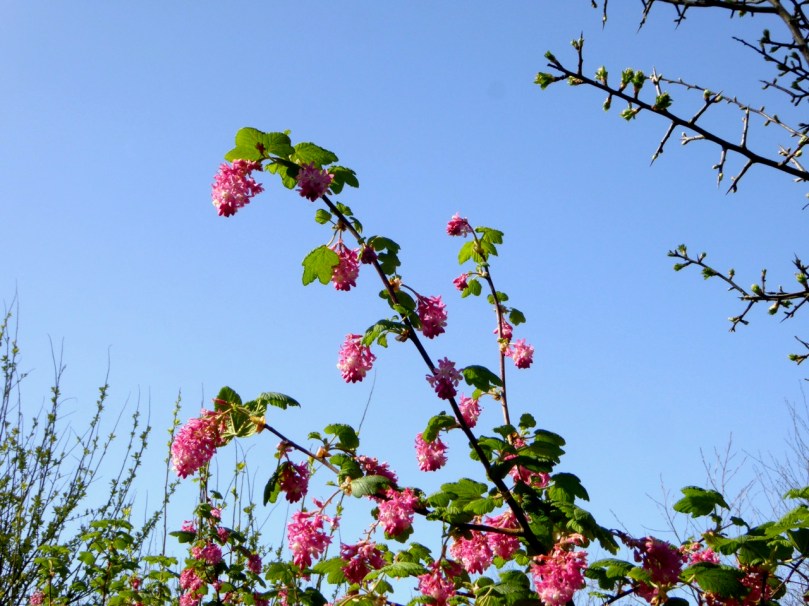
Further along we came across a long stretch of Flowering Currant. You smell it before you see it – all at once you’ll be sniffing and saying mmmm! Flowering Currant came to Europe about the same time as the Berberis and this one was probably originally planted as a hedge, but now the birds have spread it far and wide and it’s naturalised.

Close up, the flowers are spectacular and they have a strong and pleasant curranty aroma. Thank you to my friend Susan for introducing me to the Berberis and Flowering Currant.

As we make our way down to the water we are stopped in our tracks every so often to admire that quintessential early riot of yellow – Celandine. On its own, or mixed with bright pink Herb Robert or with blue Dog Violets, it’s a cheerful sight.

The Daffodils have gone over now, except for a few hardy souls in sheltered spots. I know Daffodils aren’t really wildflowers, but they grow so freely all over the place here, in the middle of fields, along the grassy verges, and especially in old graveyards, that I simply see them as yet another one of the spring flowers. 

Stitchwort is everywhere too, and little blue Speedwells – you have to be alert for that tiny blue pop of colour or you’ll miss them entirely. The first Common Vetch is just beginning to appear as well.

Stitchwort (top), Slender Speedwell (lower left) and Common Vetch (lower right)

Down on the water, we’re on the look out for Thrift, or Sea Pinks. There are none in Rossbrin yet, but I did see some on a sunny sea-cliff the other day. I risked life and limb to get a photo!

I was hanging over the cliff – but look at the other photographer in the background. I was concentrating so hard on the Thrift I never noticed until afterwards that somebody else was taking pictures too. She survived it, but it sure looks risky from this angle

When I was photographing the Thrift I noticed something else, further down the cliff face. I had to dangle over the edge to get a good shot and was convinced I had discovered a rare species! But here it is again along the Rossbrin Cove wall – it turns out to be Common Scurvygrass. And yes, it’s packed with Vitamin C and sailors used it in a tea to prevent scurvy. For something with an unattractive name, it’s rather fetching, don’t you think?

Common Scurvygrass

Along by the water several of the houses are fronted by stone walls. On one of them we found a whole world unto itself – a complete ecosystem.

Declan Doogue and Carsten Krieger in their marvellous book The Wild Flowers of Ireland: The Habitat Guide (brilliant – highly recommended!) describe what happens to old stone walls:

…Grit, sand and dust gradually accumulated in in the spaces between the cut stones and a thin soil began to form. The stones themselves functioned as a sort of storage heater, warming up by day and retaining heat well into the evening. These small areas were very much warmer and dryer than the surrounding wooded or grassy countryside… In these relatively favourable conditions, some species were able to spread much further north and west into cooler and wetter areas. At a local level a number of plants were enabled to grow in areas where there was no suitable ground for rock dwelling species.

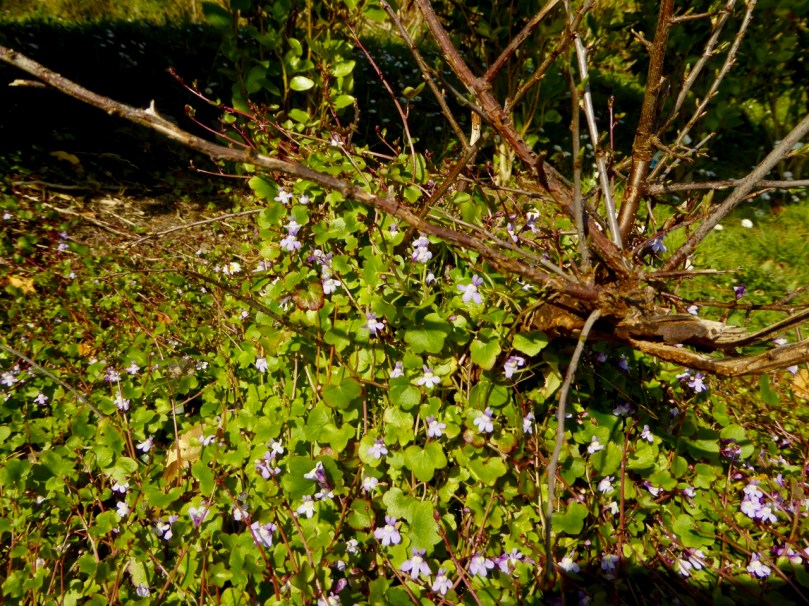
Ivy-leaved Toadflax (an introduced species) loves old walls

Conditions on the top of the wall can be different (drier, for example) than the crevices, or the face or base of the wall, thereby providing a variety of living conditions for different species of plants.

Ramping Fumitory (don’t you love that name!) has rooted well in the south face of the wall

Abundant and beautiful, Ivy-leaved Toadflax clings to the rock face and cascades down the front of the wall. Ramping Fumitory (which seems to be everywhere) had also found a foothold among the stones, and adds lovely flashes of pink.

Wild Strawberries and a little patch of Dandelions occupy space on top of the wall

This wall is south facing, absorbing the maximum amount of heat the sun can provide in West Cork in March. The top hosts Daisies and Dandelions, some newly emerging Scarlet Pimpernel and some Wild Strawberries (duly noted!).

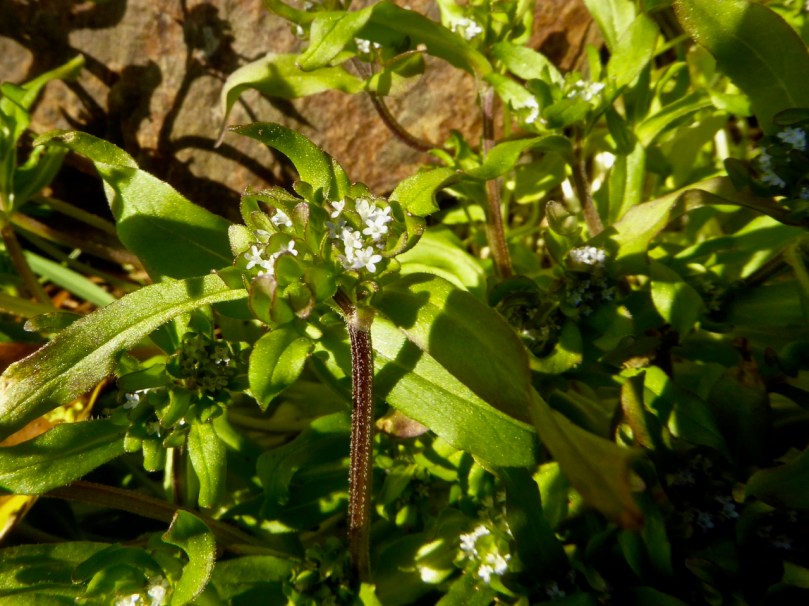
Common Cornsalad or Lamb’s Lettuce

It took me a while to even spot the tiny white flowers hiding among a particular foliage that was growing from spaces between the stones on the front of the wall. Difficult to photograph, as I don’t have a macro lens, this is Common Cornsalad, or Lamb’s Lettuce. As its name suggests, it’s edible, and a popular salad green in several European countries. If you want to get a better idea how tiny these flowers are, check out Zöe Devlin’s listing on her Wildflowers of Ireland site – click on the ‘see more images’ link.

Scarlet Pimpernel on the top of the wall – it’s one of only a very few native flowers in the orangy-red colour range
Nettles, ferns and Navelwort grow on the wall or at the base

This tiny fern is sprouting, in between the stones

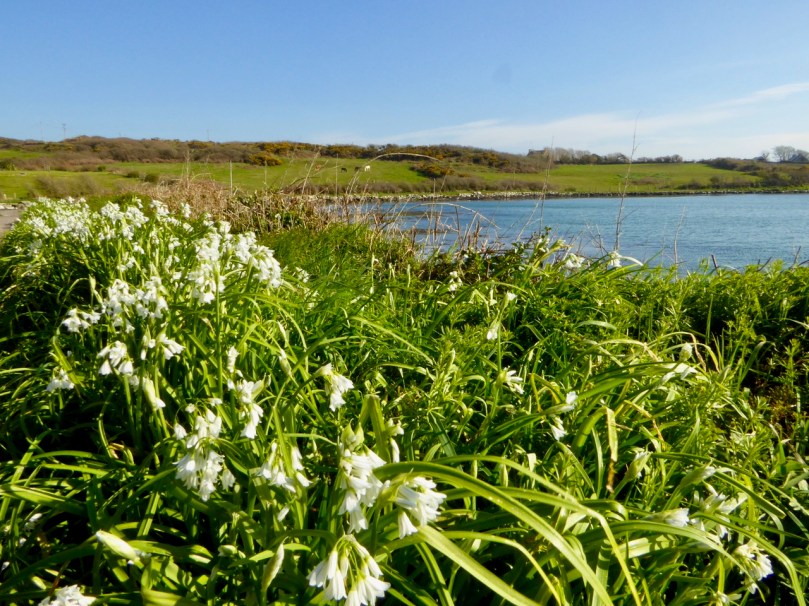
But two of the species we found there speak to the indiscriminate nature in which a microclimate like this provides opportunity for all – both Three-Cornered Garlic and Chilean Iris benefit from this ideal patch of sunlight and warmth.

Three-Cornered Garlic is not our native wild garlic (that’s called Ransoms and is a broad-leaved variety). Tony O’Mahony in his excellent Wildflowers of Cork City and County* refers to it as an ‘ineradicable weed’ and says that ‘it poses a major threat to some West Cork native plant rarities’ (such as the Wild Onion). All parts are edible, and said to taste like a cross between an onion and garlic.

Chilean Iris

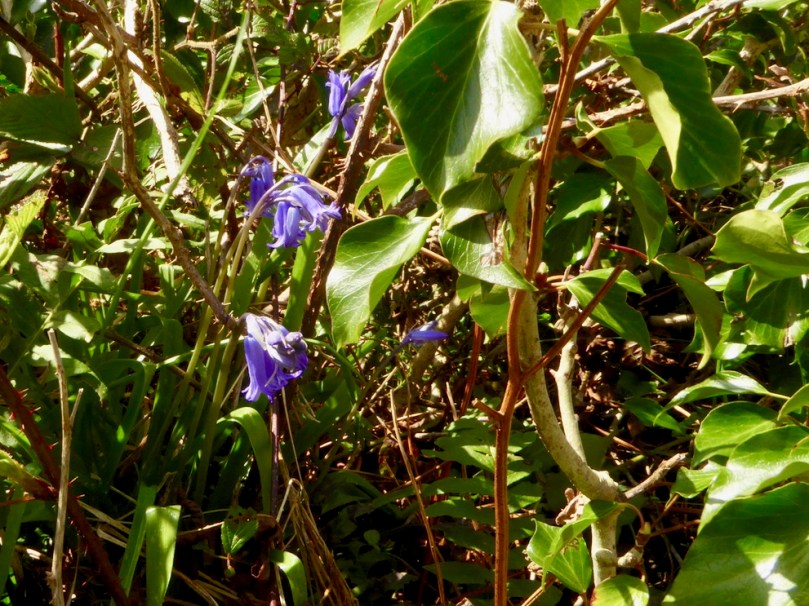
Chilean Iris is another invasive species, although not considered high-impact, possibly because it needs a warmer climate to grow. However, it has the potential to invade habitat preferred by our native plants. From Rossbrin we wend our way back to our own little patch of paradise. But something catches our eye on the way – can it be? Yes – our first Bluebells of the season, almost hidden in the brambles.

We’ve decided to leave part of our lawn unmowed this year, as an experiment in whether or not a wildflower meadow will develop. We have to be careful, as some areas are already full of Montbretia corms, which will be only too delighted to proliferate if left unchecked.

But we’ve identified an area as having potential. It’s south facing and relatively sheltered – and it’s already a haven for little Common Dog Violets, mixing with the Dandelions and Daisies to provide a colourful carpet. We’ll let you know how things progress.

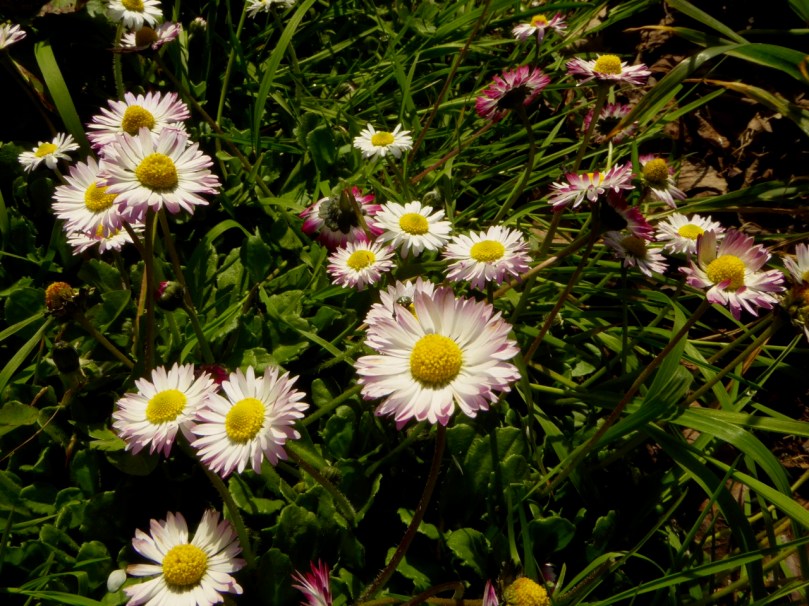
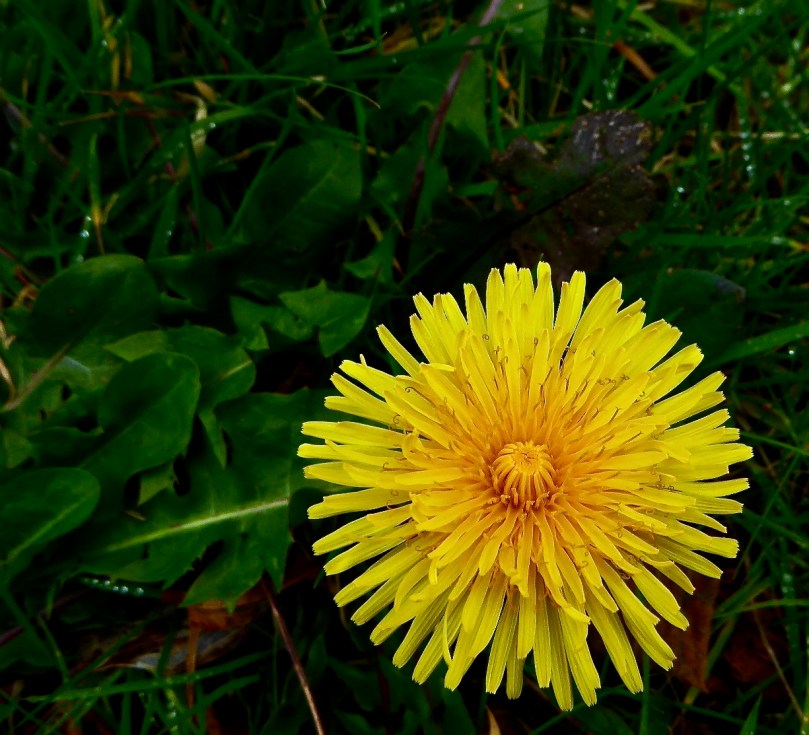
All this early spring wildflower exploration has made me look closer at the humble ones we take for granted – the Lawn Daisies and those pesky Dandelions. How did I never see before how utterly perfect they both are?

I will leave you with one final image – we found more Berberis down on the water, where it was clinging to a stone wall over the water. An astounding testament to the resourcefulness and strength of such a pretty and delicate-looking stem of flowers.

For more wildflower posts, click here.

*The book is out of print and quite hard to get, but worth the hunt.

Stoned

It started on Friday in glorious sunshine and the West Cork Stone Symposium ended today in the same magnificent spring skies. All participants appear to be on a high, and that includes me.

A barbecue pit for the community of Ahakista. Look what we built!

Anyone who lives in or has been to Ireland knows we’re all about stone. Stone walls, stone buildings, stone sculpture, stony landscapes…it’s in our DNA. Wicklow granite, Burren limestone, the basalts of the Giant’s Causeway, Connemara marble, the great slate quarries of Clare and the quartzite peaks of Donegal’s Errigal Mountain. And here, in West Cork, the old red sandstone, in use since prehistoric times to build field boundaries, stone circles and portal tombs, to erect standing stones, and to construct everything from the humble cottage to the big house.

Light on Stone – the theme of the photography workshop led by Ben Russell. 

For us, of course, the old red sandstone is the canvas used for the prehistoric rock art we study. But as one of the organisers of the festival said – everyone who came to the Symposium came with their own experience of stone and their own plans for how they wanted to work with it. Thus, the two main events on the program revolved around stone carving and dry stone wall building, but there was lots more on offer too – guided hikes, a photography day, a whiskey-tasting walk around Whiddy Island, an evening with the Cork Astronomy Club talking about stone circles, a presentation on the dry stone walls of Cork, and more.

The photography workshop group, Ben is second from the left (Photograph by Ben Russell). Ben, camera close-ups

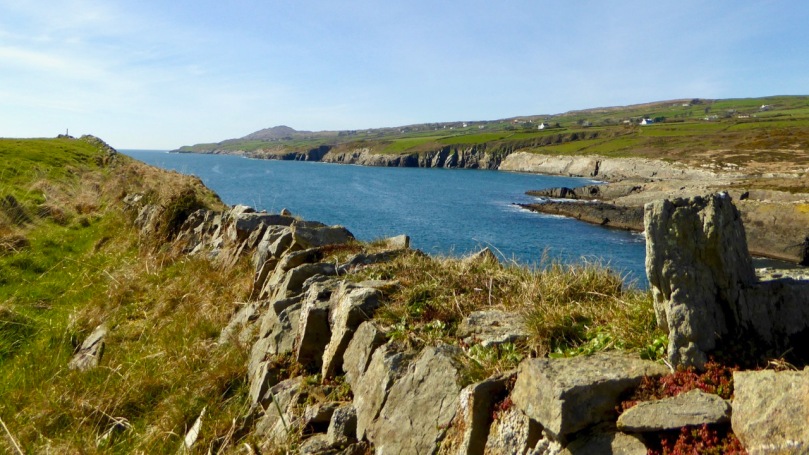
Robert and I participated in several ways: we mounted a pop-up version of our Rock Art Exhibition in Bantry, we gave a talk on rock art, and I enrolled in the all-day photography workshop, Light on Stone, with Ben Russell. This was a great learning experience, half in the classroom and half in the field. The morning outdoors session was spent at Dooneen on dramatic cliffs with the Caribbean blue sea below us.

Practising composition: top, rule of thirds. Bottom, leading line

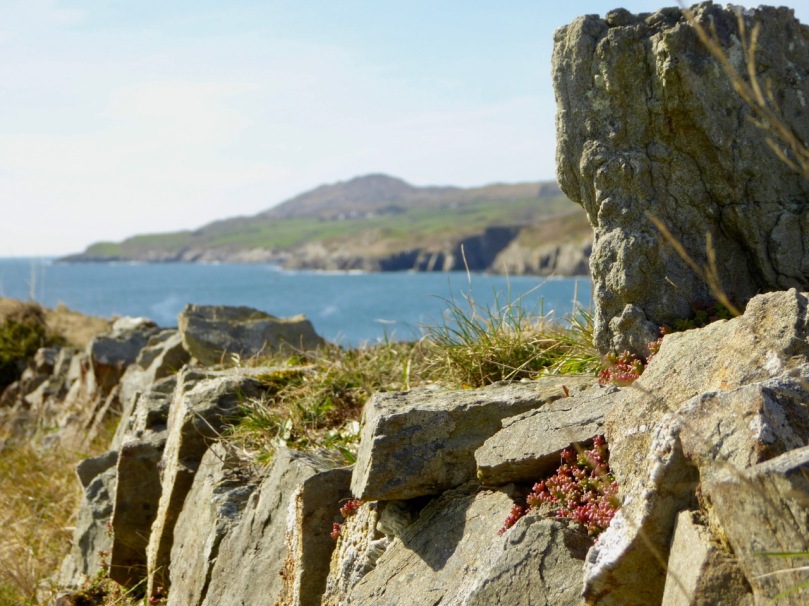
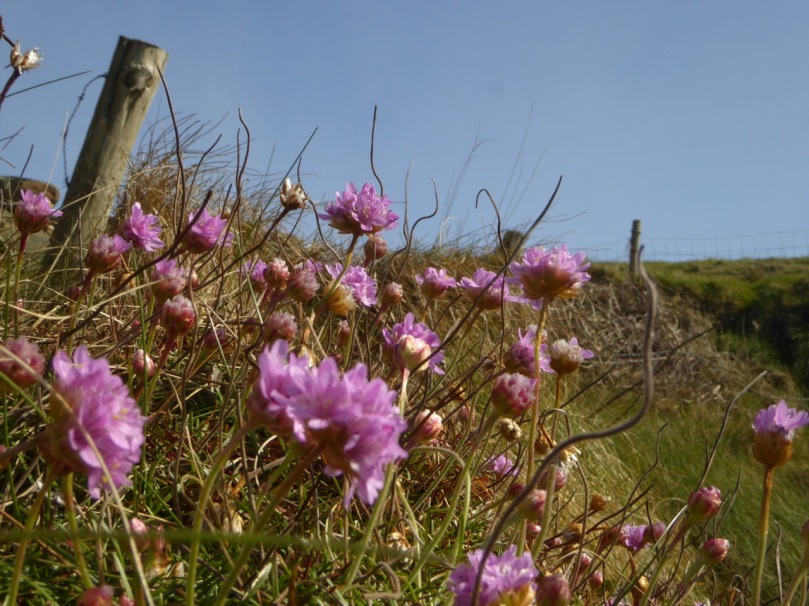
Working with depth of field – and with the first Sea Pinks of the season

In the afternoon Ben led us through taking close-ups and macro shots and then we headed off for the symposium site to photograph whatever we wanted.

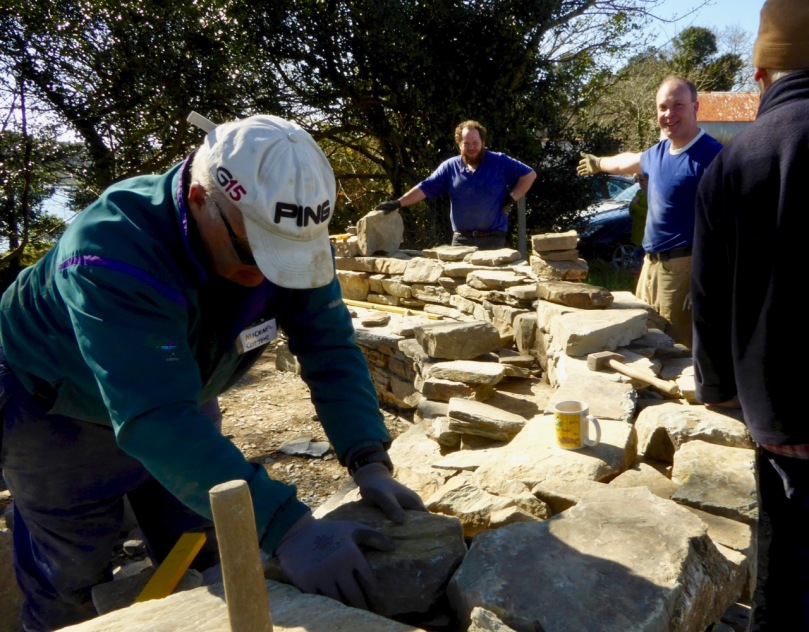
Watching and talking to both the carvers and the wall-builders was marvellous. Of all ages and stages, the students were a study in concentration, discovery, and pride in achievement.

The wall-builders had undertaken a long dry-stone wall and a barbecue pit, both of complex and attractive design. Covered in dust, sweat, and broad smiles, they were delighted to talk to me about what they had learned and about their respect for the tutors and their skill.

Rita and her friend had worked on the wall. By the end of day three they were exhausted – but look at those grins!

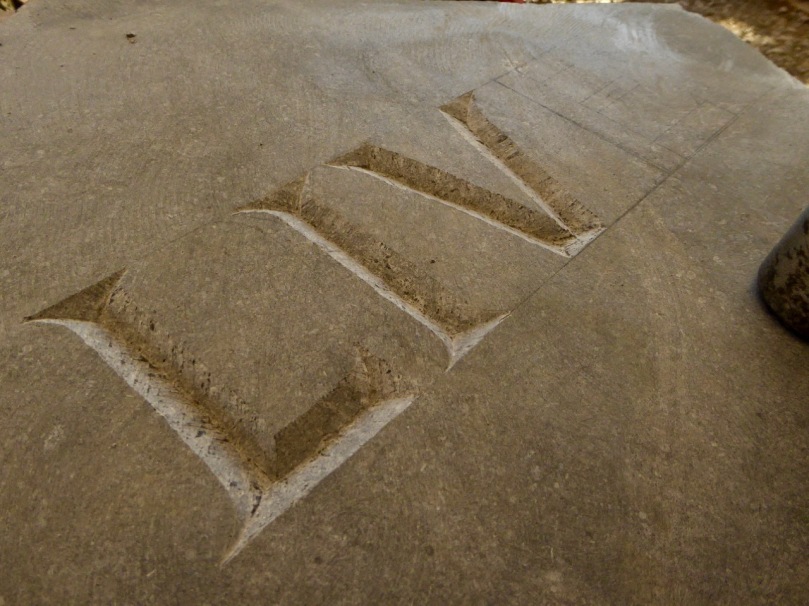
The carvers were all working on individually chosen pieces – words, animals, geometric designs. Few of them had done anything like this before and all were delighted with what they had accomplished. “I never thought I could actually do something like this” was a common refrain.

I was delighted to run into Cliodhna Ní Lionáin again – last time was at a talk she gave on rock art in Dublin. Here she is carving a deer from a Spanish rock art panel

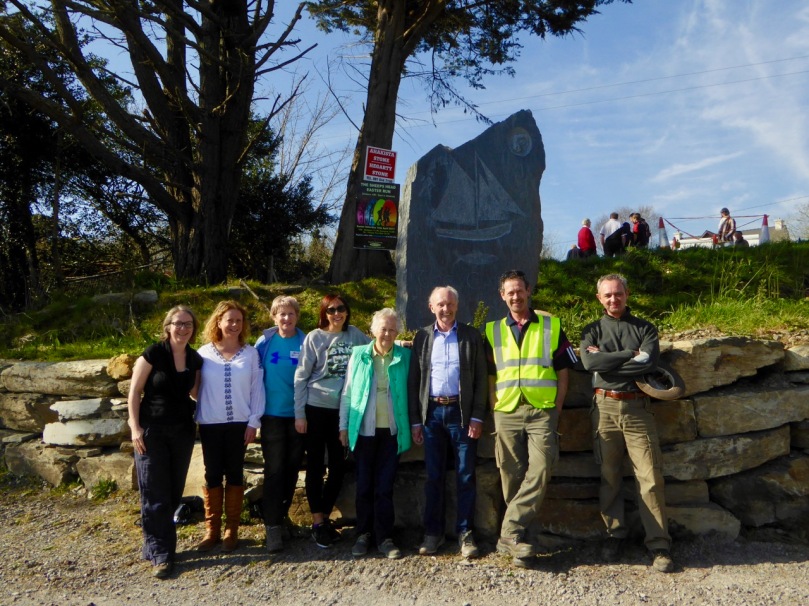
Today we were back to the Sheep’s Head – the Symposium was centred in Ahakista – to give our talk and watch the erection of the standing stone carved by participants.

Members of the organising committee. Second from the right is Victor Daly, our local stone carver and one of the Symposium’s tutors.

This is the inaugural symposium and it’s been an incredible success. There are plans for it to be annual. Have you ever wanted to carve something? Just want to know more about working with stone? Keep an eye on the website and next year come along and experience it for yourself – it will be one of the most unique and rewarding things you will have ever done.

Back to the Beara

Mizen, Sheep’s Head, Beara, Iveragh and Dingle: these are the five peninsulas which make up the south-western coast of the island of Ireland. We live on the Mizen and, for that reason, we are always trumpeting the qualities of the place, historical and scenic. However – to be fair – the other peninsulas have much to offer. The Sheep’s Head is a mere stone’s throw from us – just over the waters of Dumnanus Bay – and our visits there are frequent. The Beara has been calling us recently: we tend to think of it (unfairly) as somewhere quite distant but we can be on it in less than an hour. In the last two weeks we have taken two day trips out there (with our holy-well hunting friends Amanda and Peter), in contrasting weather conditions, and we can report back that the landscape is stunning whatever the weather, and the visible history is palpable. We have visited before – a while ago now: see our posts here and here.

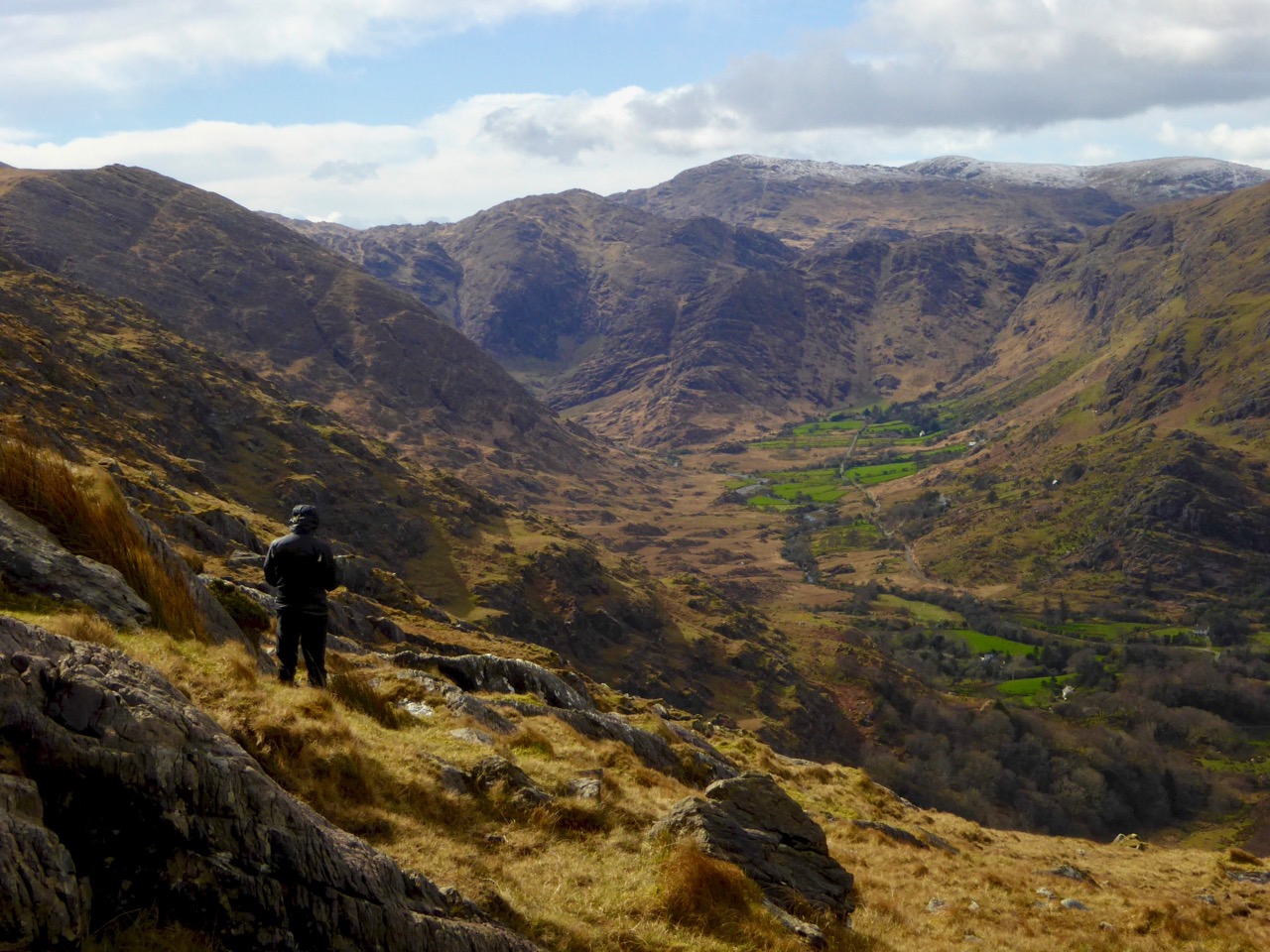
Header picture – I titled this photograph ‘unbelievable’ in our file: look at the tiny house and the monumental stone walls heading up the mountain above it, dividing up the land into enormous fields. Above – a typical view of mountain, meadow and wild scenery to be found on the Beara

The Beara comprises around 58,000 hectares, or 228 square miles, and covers 330 townlands. The larger, southern portion of the peninsula lies in County Cork, while the northern area is in County Kerry.

We were searching for – and found – some of the Beara’s holy wells. Head over to Amanda’s blog Holy Wells of Cork for more information on these (and hundreds more Cork wells!)

A significant and comprehensive study of the history of the Beara has been carried out by Cornelius J Murphy (more popularly known as Connie Murphy). In all he has examined and documented some twelve hundred archaeological and historical sites, some half of which had been known and recorded previously, but as many had not. Our little expeditions pale into insignificance compared to Connie’s work, but they will inspire us to spend more time ‘on the ground’ in the area, while also simply taking in the spectacular views of the wildly variable topography.

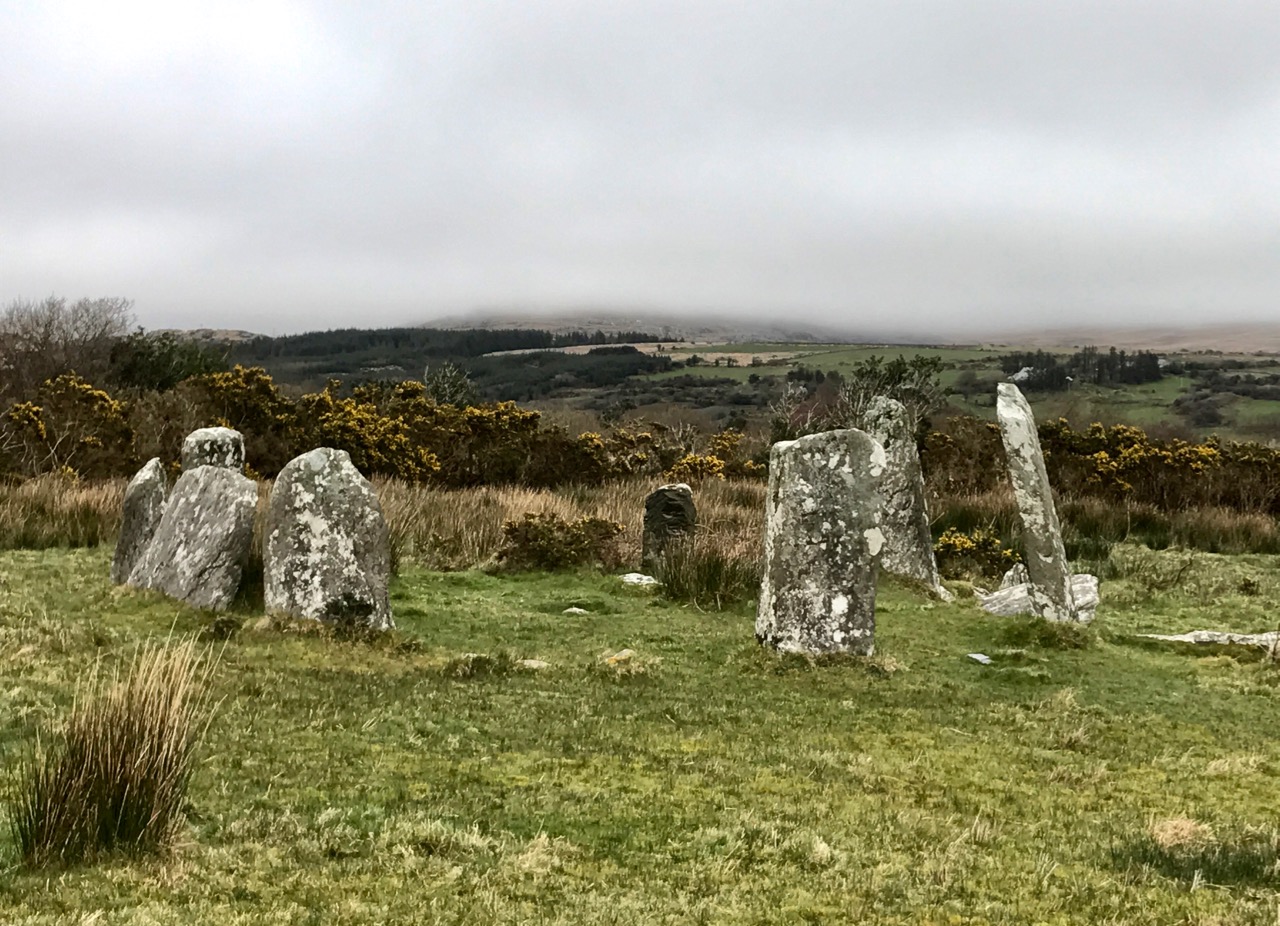
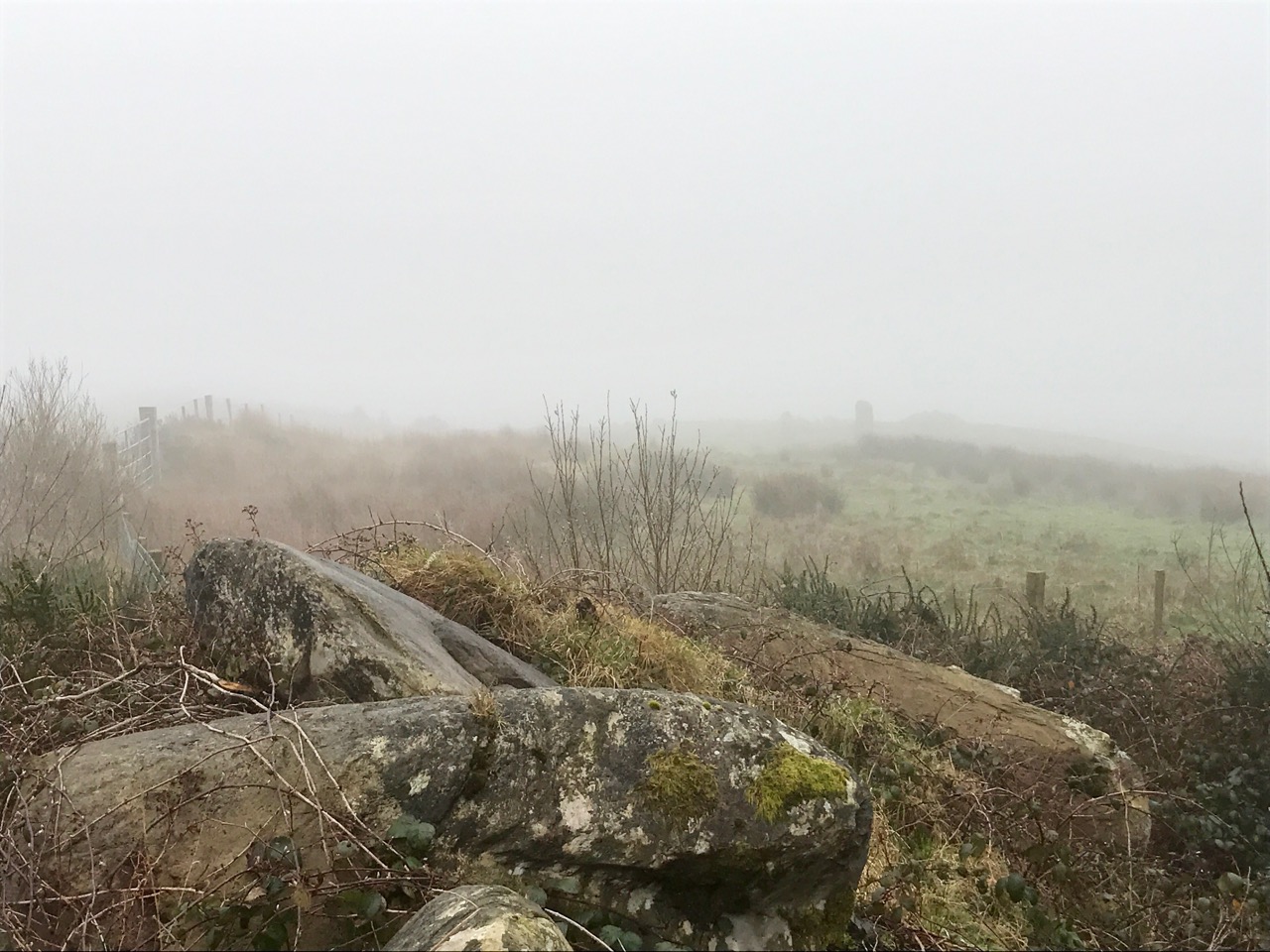
Top – Day 1, in the mist: standing stones can just be made out in the distance. Lower – same stones, different day! On our second trip we were most fortunate with the weather

Tradition has it that, in around 120 AD, Conn Céad Cathach (Con of the hundred battles) fought a fierce battle against Owen Mór, King of Ireland at Cloch Barraige – these are the words of Connie Murphy:

…Owen was badly injured in the battle. Those of his followers who survived took him to Inis Greaghraighe (now known as Bere Island) as a safe place for him to recover. There, the fairy Eadaoin took him to her grianán (bower) where she nursed him back to full health. Nowadays, this place is known as Greenane…

…Owen and his followers then sailed southwards until they reached Spain. There he met and married Beara, daughter of the King of Castille…

…Later Owen, Beara and a large army sailed from Spain and landed in Greenane. Owen took his wife to the highest hill on the island and looking across the harbour he named the island and the whole peninsula Beara in honour of his wife. Rossmacowen, Kilmacowen and Buaile Owen most likely are named after Owen Mór and his son. Owen’s wife, Princess Beara, died and was buried in Ballard Commons in the remote and peaceful valley between Maulin and Knocknagree Mountains….

Top – down by the water, a tiny settlement by the pier, and – lower – Derrenataggart Stone Circle, Day 1

Our first day’s expedition took in the southern side of the peninsula, from Glengariff to Castletownbere. The mist was down and we went off the beaten track to search for holy wells, standing stones and stone circles, and were rewarded with some good finds. I was particularly intrigued by the ‘raised ring fort’ at Teernahillane: I could not trace anything in the archaeological records to describe or explain it. Our conclusion was that it could be a natural phenomenon that has been mistaken for an unusual (and rather unlikely) form of defensible structure. There is no sign of any retaining stonework, although this might have been robbed but, other than being more or less circular, it bears no resemblance to any ring fort we have seen elsewhere. If anyone has any more knowledge or ideas about this site, please let us know.

On our travels this week we were rewarded with brilliant weather which cast a whole different hue over the Beara – and opened up the incredible views which are everywhere, but nowhere more spectacular than the journey over the mountains on the Healey Pass. This road was constructed as a famine relief project in 1847 on the line of an ancient trackway that connected Cork and Kerry and was first known as Bealach Scairt – the way of the sheltered caves. It was renamed after Timothy Michael Healey (who lived from 1855 to 1931) – a Bantry man, deserving of a future blog post, who achieved notoriety in the Irish Parliamentary Party under Charles Stewart Parnell. The two fell out – and came to blows – when Parnell was involved in a sensational divorce case. After the 1916 rising, Tim Healy declared his sympathy with Arthur Griffith’s Sinn Féin movement, but was opposed to the use of physical violence. Healy returned to prominence in 1922 when he was appointed the first ‘Governor General of the Irish Free State’. In that post he pursued the improvement of the road between the Kerry side and the Cork side of the Beara Peninsula and, shortly after his death in 1931, the restored pass was dedicated to him.

At the top of the Tim Healey Pass we were treated to the most incredible views of our entire journey: our photographs hardly do them justice, but we hope they give you a sufficient taster to inspire you to journey that same way.

Top pictures – Christ looks down, on the summit of the Tim Healy Pass; middle – one of the views from the top: snowy peaks seen on the sunniest of days! Lower – another view from the summit, with the Iveragh Peninsula (and the Kerry mountains) in the distance

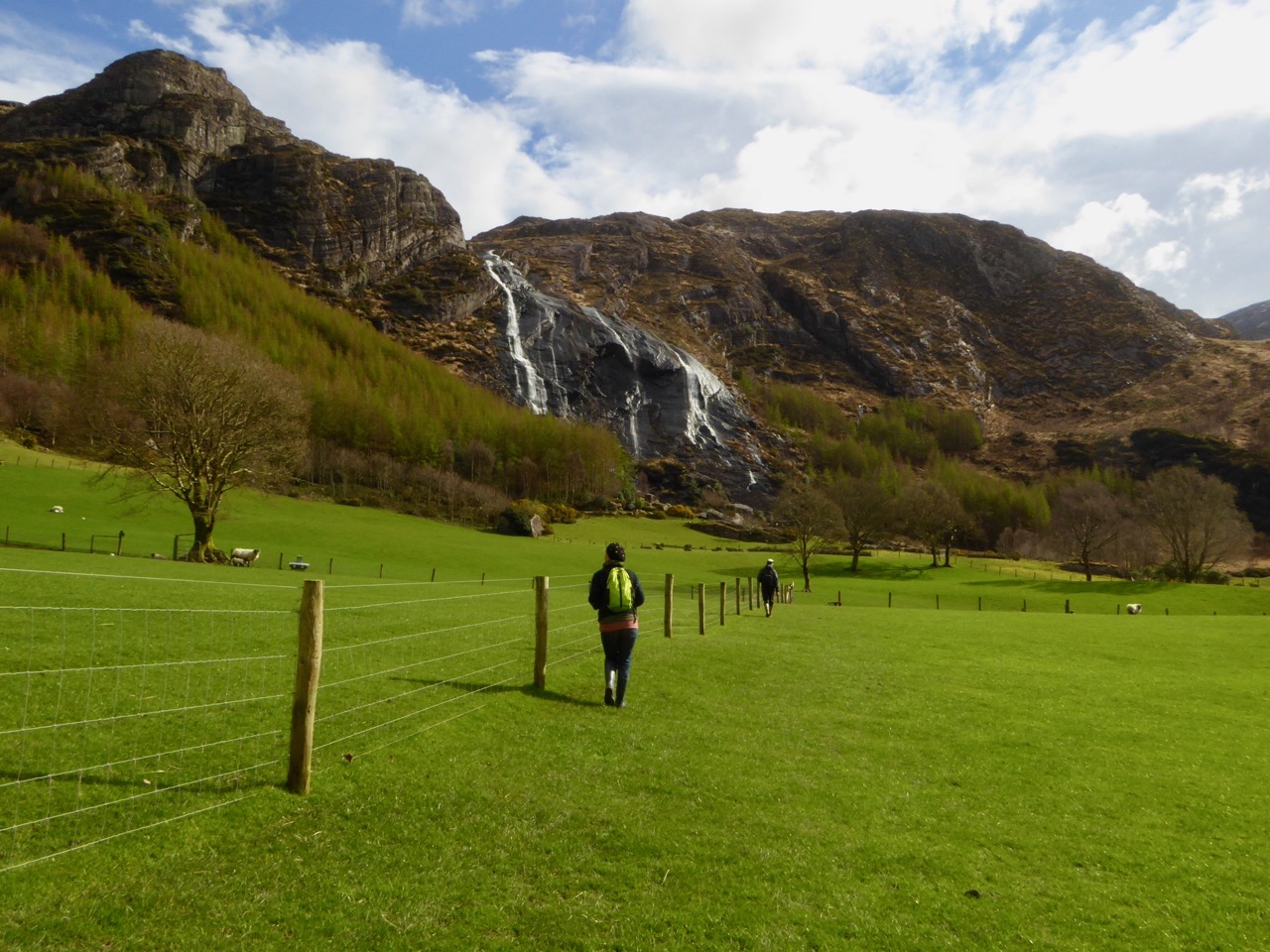
Other highlights of our second day trip included the Uragh Stone Circle – surely the most dramatic situation for any megalithic monument? Beyond that site – through serpentine narrow boreens – lie the Gleninchaquin Lakes, Woods and Waterfalls, on a privately owned and run park covering 700 hectares. The very modest entrance fee allows you to freely use all the walking trails, the longest of which – around the perimeter – will take you six hours! We chose a shorter route through unbelievably green meadows, passing the enormous waterfall and being treated to glimpses of newly born lambs, all in hot March sunshine worthy of the middle of summer.

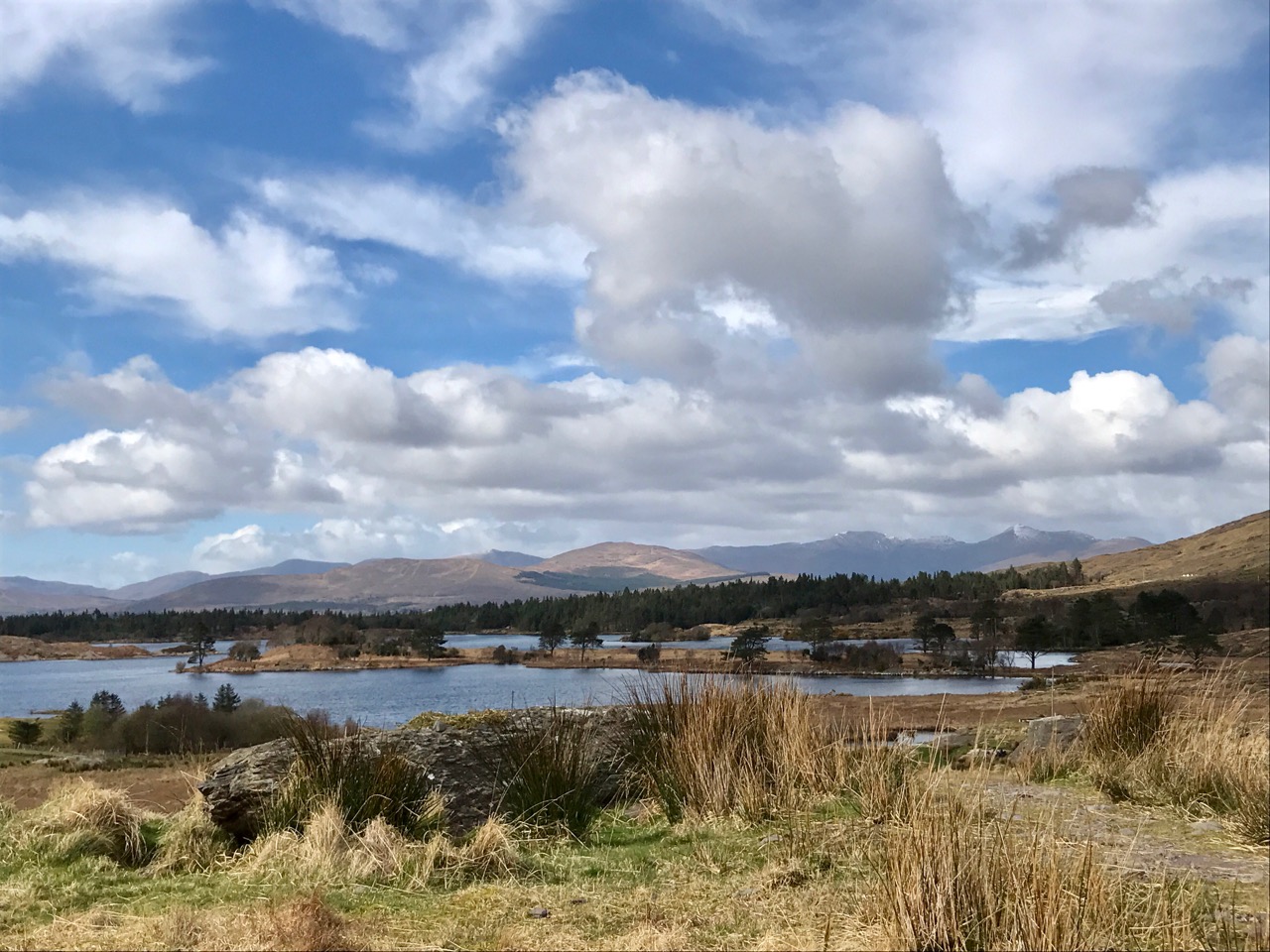
Views of the Uragh Stone Circle in its magnificent mountain and lake setting and – lower picture – looking from the circle back towards the landscape

Ancient cottage in an ancient land; the green glens of Gleninchaquin

All roads lead to home and we found ourselves eventually in Kenmare – where we suppered and visited another rather special holy well – before travelling over the mountains to Bantry on another high road – spectacular also – the Caha Pass – which finds itself tunnelling through the rocks in places.

Saint Finian’s Holy Well, on the shores of the river at Kenmare – still visited, and still effective!

We hope these little descriptions, and the photographs, will stimulate you to explore the Beara. We are looking forward to many more visits there, and to the discovery of yet more of Ireland’s fascinating history.