Were You at the Rock?

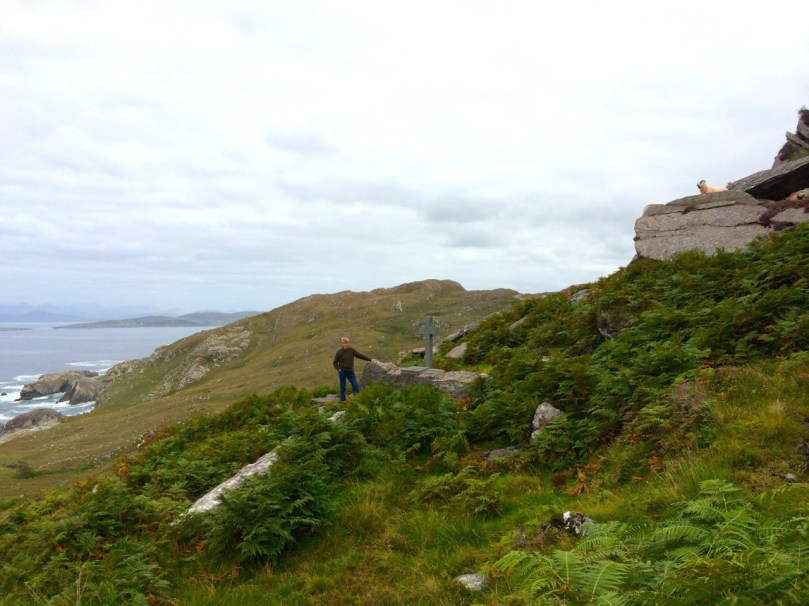
Mass rock along the Beara Way (see the look out above)

Mass rock along the Beara Way (see the lookout above)

An raibh tú ag an gCarraig? / Were You at the Rock?

nó a’ bhfaca tú féin mó grá / Or did you yourself see my love,

nó a’ bhfaca tú gile, / Or did you see a brightness,

finne agus scéimh na mná? / The fairness and the beauty of the woman?

This beautiful song speaks to a revered tradition in Irish history and folk custom – the mass rock. During the period of the Penal Laws (late 17th and first half of 18th Century) when the practice of Catholicism was outlawed, parishioners would gather at a secret location to attend mass. The priest travelled from community to community in disguise, a lookout was posted, and mass was celebrated on a lonely rock far from the reach of the law. The song encodes the message that the people still find ways to attend mass, despite the harsh prohibition against it.
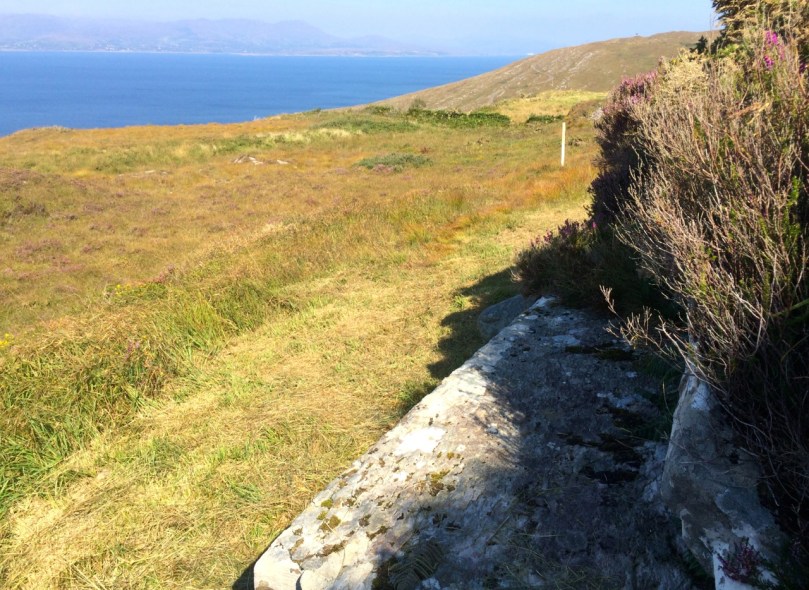
Mass rocks are often in remote locations

Mass rocks are often in remote locations

Dr. Hilary Bishop, in her excellent website Find a Mass Rock says, “As locations of a distinctively Catholic faith, Mass Rocks are important religious and historical monuments that provide a tangible and experiential link to Irish heritage and tradition.” She also points out that, because of the imperative for secrecy, mass rocks are difficult to find. We certainly experienced this when we set out for a day of mass rock hunting recently. Working from a list generated from the National Monuments Service database we spent a day on the Sheep’s Head and the Mizen and had trouble finding all the rocks on the list. One, if it was still there, had disappeared under impenetrable layers of gorse. A second rock was last recorded in the 1980s: residents were no longer familiar with it.
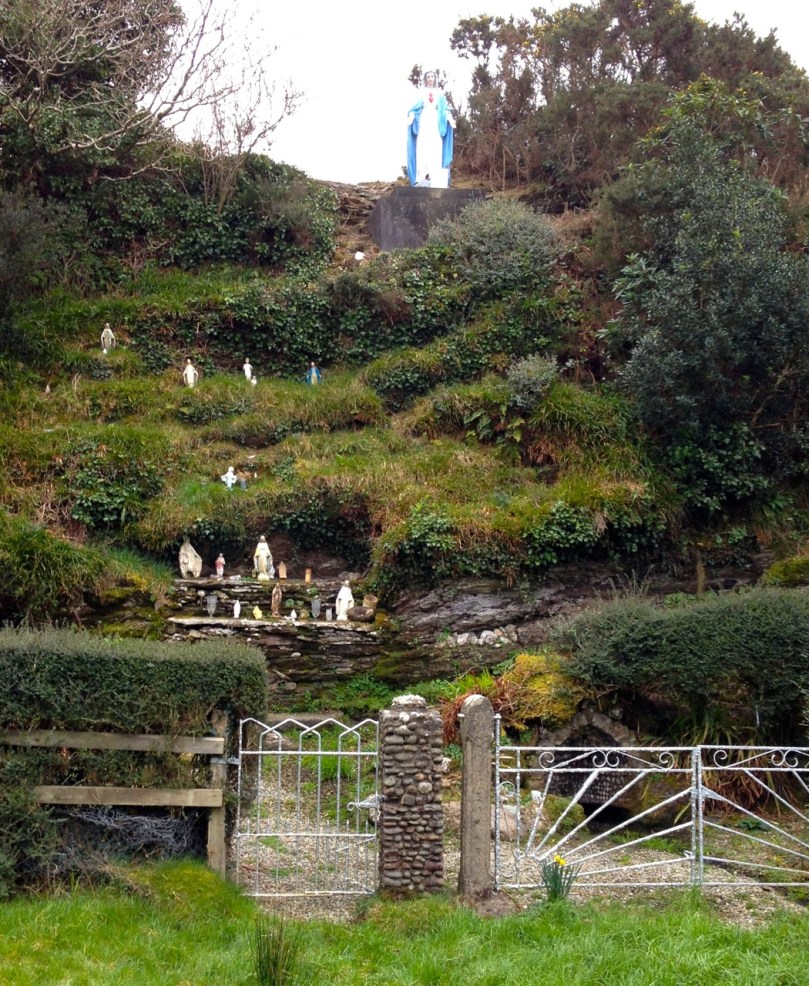
Beach Holy Well and mass rock

Beach holy well and mass rock

Knowledge of mass rocks has passed down from generation to generation. In the deep countryside, the sites maintain a mystique and a sense of the sacred. Last year we wrote about the mass rock and holy well at Beach, where Mary conjured up a blanket of fog to confuse the English soldiers and allow the priest to escape. At Beach and at our first stop, the mass rock at Glanalin on the Sheep’s Head Way, mass is still celebrated occasionally.

The Glanalin rock, and the one we visited on the Beara Peninsula, are good examples of the remote locations typical of many mass rocks, high on a hillside or hidden in an isolated valley. You can picture the procession of worshippers, in ones and twos, slipping silently through the bracken, pausing to make sure they are not being watched, climbing higher, following an overgrown trail, arriving at the meeting place where the hushed crowd awaits the arrival of the priest.
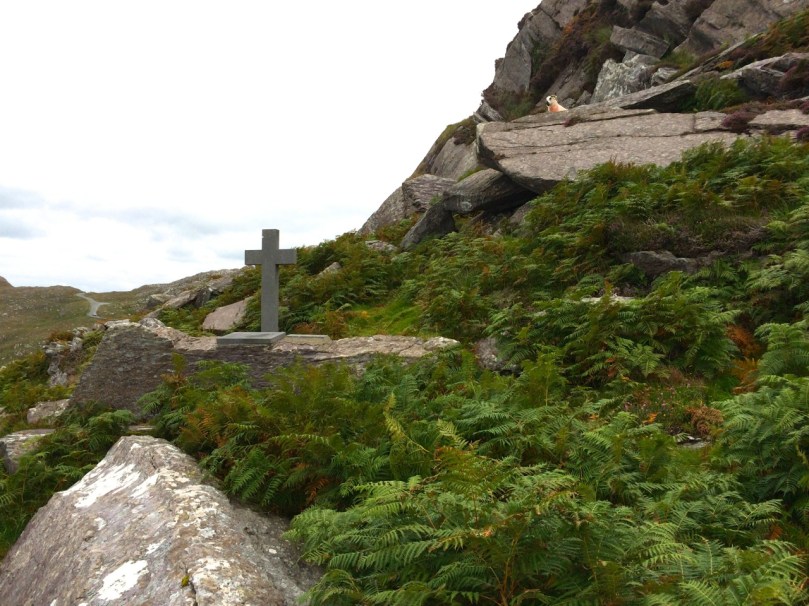
Beara mass rock

Beara mass rock

One of the rocks we found looked for all the world like a fallen standing stone – and that’s probably what it was. (I wonder if I should go to confession, though – I’m sure that sitting on a mass rock would qualify as at least a venial sin.)
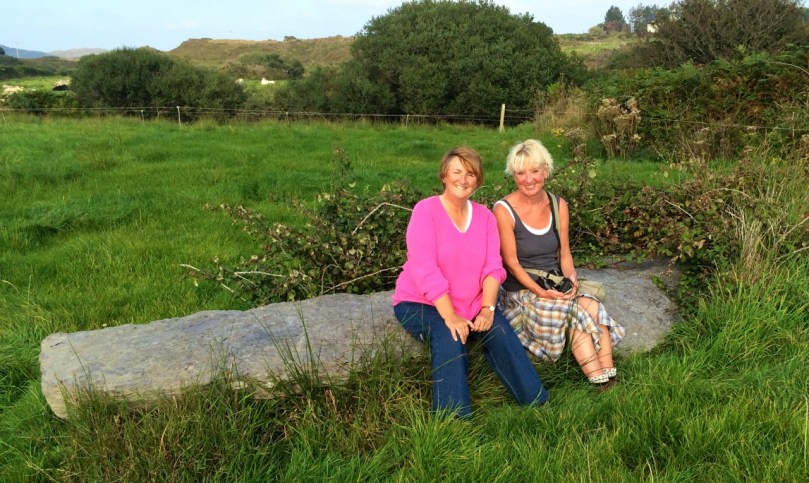
Fallen standing stone?  Mass rock? Both?

Fallen standing stone? Mass rock? Both?

A mass rock that is easily visited is the one at Cononagh Village, right at the side of the main road into West Cork, the N71. This site is beautifully maintained – Cononagh is obviously proud of its heritage: signage and flowers invite the passerby to take a closer look.

Another easily accessible site is Altar, at Toormore. This is a wedge tomb, probably over 4,000 years old and excavated in 1989. It remained in use through the Bronze Age and into the Iron Age. Dr. William O’Brien, in his book on the archaeology of County Cork, Iverni, says of this site: “…over time this tomb came to be regarded as a sacred place, housing important ancestral remains in what was a type of community shrine.” How fitting, then, that the flat capstone of the Altar wedge tomb became, in the Penal Days, a mass rock. And how intriguing to think of the continuation of this sacred space over the course of thousands of years.
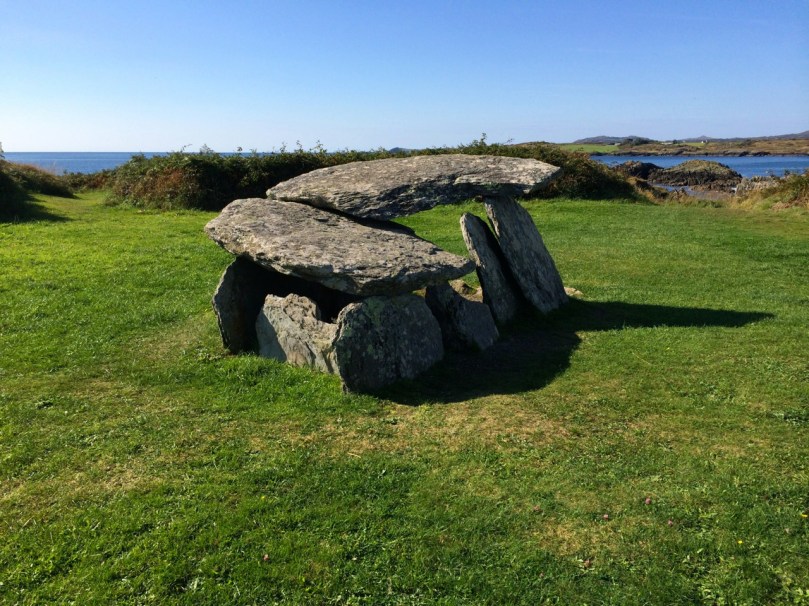
Altar Wedge Tomb, later used as a mass rock

Altar Wedge Tomb, later used as a mass rock
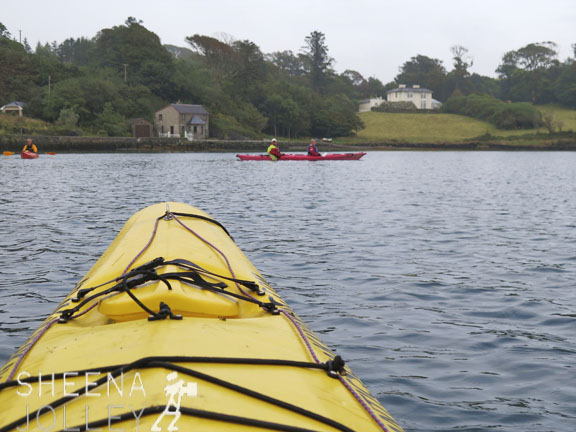
Starlight Bliss

Lough Hyne twilight

Lough Hyne twilight

Have you ever had one of those experiences where you float home afterwards, totally blissed out, knowing that something very special just happened to lucky you? Yes, I suppose the day you meet The One would qualify, but here’s another one – kayaking under the stars on a West Cork lake to the strains of baroque music. Let me explain…

Lough Hyne is a unique ecosystem. A partially landlocked seawater lake, it is filled by the incoming tide and then empties twice a day, through a stretch of water called The Rapids. Aquatic marine plants and animals flourish in the warm protected waters – many not found elsewhere in Ireland. It’s also a beautiful and peaceful place, steeped in archaeology and history.

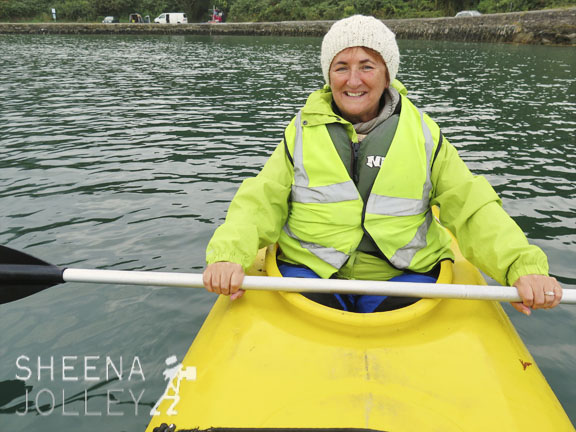
In a kayak for the first time in years!

In a kayak for the first time in years!

Jim Kennedy and his family run Atlantic Sea Kayaking and a couple of times a year, to coincide with local festivals, they offer a special kayaking trip on Lough Hyne called the Starlight Serenade. I was disappointed to have missed the first offering earlier in the summer so as soon as they announced a second one, during the Taste of West Cork Festival, I signed up to go with my friend Sheena Jolley.

We're off!

We’re off!

After a brief introduction to basic paddling techniques we were off, a group of about 20 of us, mostly local. Jim led us first to The Rapids, pointing out the birdlife along the way. It was an unusually high tide and the water was thundering in. We rafted up in a sheltering eddy, trying not to be too intimidated by the tidal surge. Jim explained the ecology of the constant filling and draining of the lake and then he pushed us out into the rushing water. Hanging  on to each other’s kayaks, we swirled giddily in the torrent, gradually swinging back into the calmer waters of the lake.

Loght Hyne with the islands. The Rapids are at the top right. Photo by 'Riekeshieldmaiden' at en.wikipedia

Lough Hyne with the islands. The Rapids are at the top left. (Photo by ‘Riekeshieldmaiden’ at en.wikipedia)

As dusk closed in the next stop was the island, and stories of an O’Driscoll warlord who once ruled supreme in Baltimore but who lived out his final days in this remote place. Then Jim told us to head ‘towards the light’ and pointed to the far shore. As we got closer the ‘light’ began to resolve itself. Several steps led down to a tiny quay and on each step and all over the quay were candles – dozens of them. Then we heard the music. Two violinists were playing Bach. One by one we drifted in, rafted up as silently as we could, and then lay back in the kayak seat and just listened. The Milky Way arced across the sky, the music floated to us from the little quay, we dangled fingers in the warm water and each of us felt in our own way that surely heaven couldn’t hold much better than this.

The Serenade

The Serenade

The concert continued – some Telemann, a song composed by Jessie (these were two members of the Vespertine Quintet I reported on at the beginning of August), something gentle and minimalistic, more Bach – and then it was ‘follow the light’ again: this time the light was on the helmet of the lead guide. But before we started, Jim asked us to look down into the water and to dip our hands in. Suddenly, the stars were beneath us: bioluminesence shimmered and shook from our fingers. As we paddled back every stroke of the blade struck sparks from the water: flash on the right, flash on the left, flash, flash, flash, flash.

Starlight repast

Starlight repast

It was hard to leave the magic that was happening on the water. Sheena and I walked back to where the cars were parked, breathless with the wonder of what we had just experienced. But wait…here were more candles and luminarias, and a table groaning with wonderful food, and grinning guides handing out cups of tea and glasses of wine, and Maria Kennedy presiding over a homemade feast of organic goodies: smoked salmon, seaweed scones (delicious!), salads from her garden, cheeses and biscuits and cake and chocolates. We sat or stood in the warm night air, munching contentedly, unable to utter much more than superlative heaped on superlative.

luminarios

Words are inadequate tools to fully convey the essence of an evening like this. I can’t tell you. You have to do it too.

Sail Away, Sail Away

Merlin heads for The Mizen

Merlin heads for The Mizen

Many years ago I did a lot of sailing in Vancouver but for various reasons I haven’t been sailing for years. This week I was thrilled to have the opportunity to take to the water again!

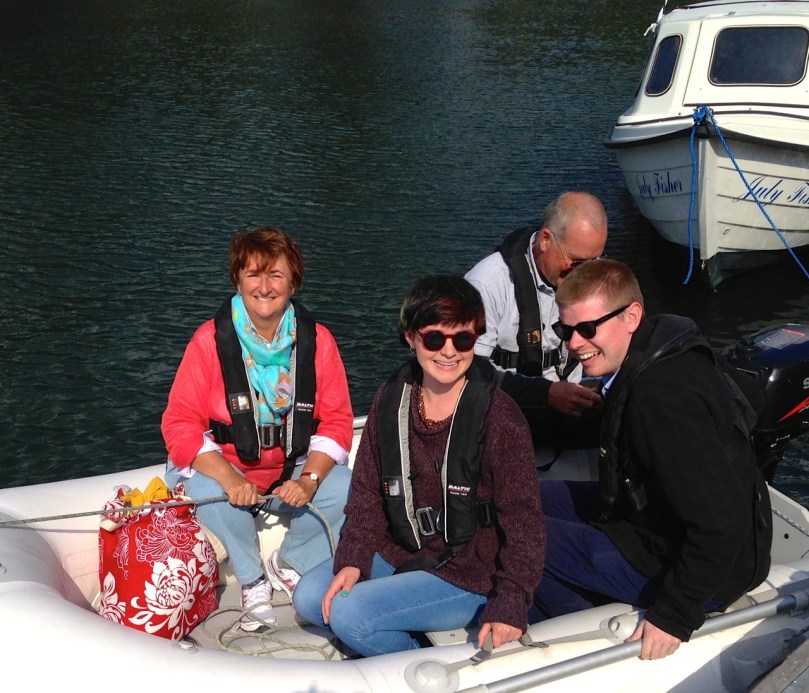
I went with Chris Forker of Carbery Sailing out of Ahakista. Chris has a beautiful yacht, Merlin, a 42 footer with room for eight. There were five of us – Chris, his wife Aideen, a young couple Conor and Ellie, and I. Robert decided that the better part of valour that day was dry land, but he took photos of us as we left and arrived and even drove up the Sheep’s Head mountains to capture us in full sail.

Ferrying out to Merlin

Ferrying out to Merlin

It was a fabulous day (but then, it always is, around here) and we got underway quickly after Chris had given us a tour of the boat and showed us on the charts where we would be going. He was an amazingly relaxed captain: once the safety instructions were over he invited us to do as much or as little hands-on as we liked.

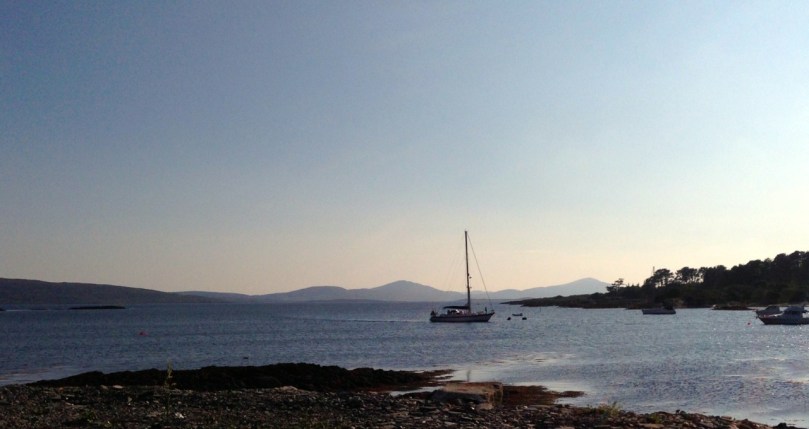
Merlin on Dunmanus Bay

Merlin on Dunmanus Bay

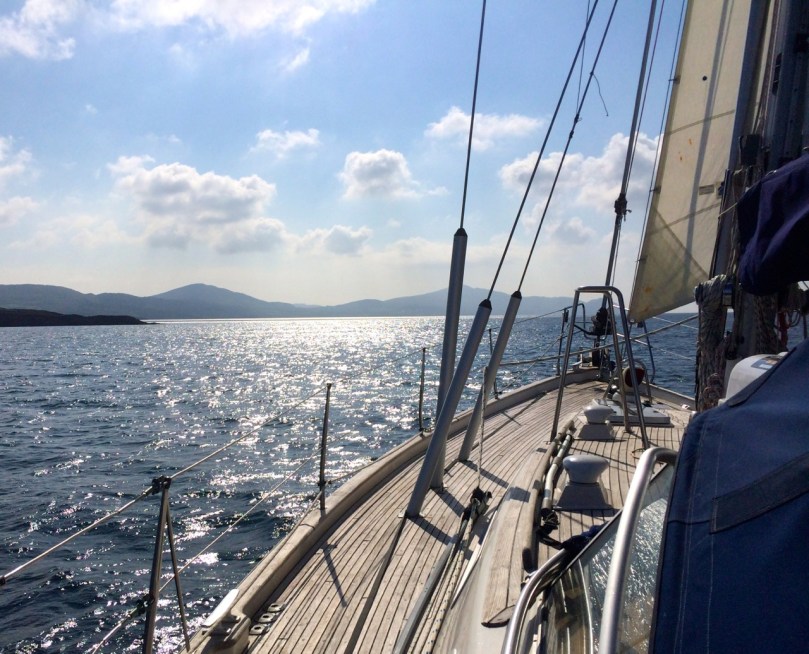
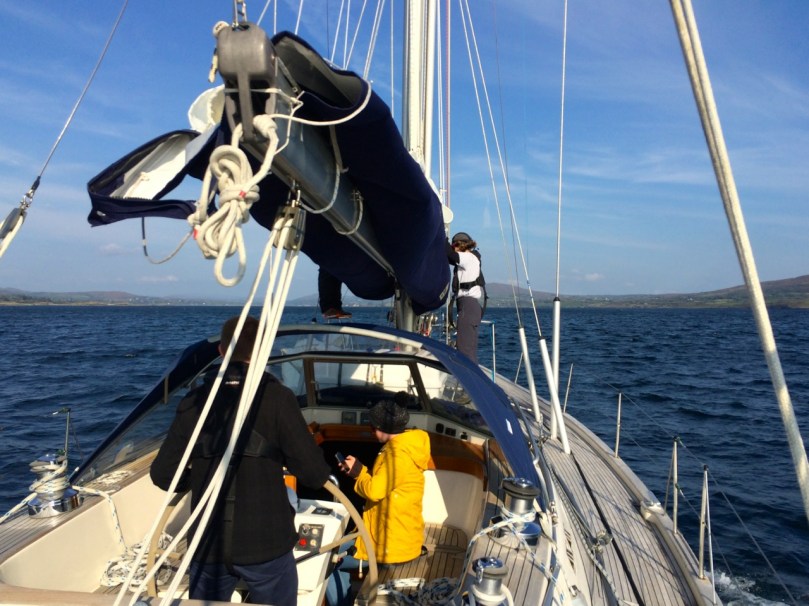
We sailed almost to the mouth of Dunmanus Bay and back to Ahakista. There was a brisk little breeze, so the conditions were excellent and as soon as the main and the foresail were up the boat settled into a close haul, heeled over, and bowled along at a merry pace. Chris pointed out all the points of interest, introduced us to Henry the friendly seal and recounted the history of the bay. 

Great day for a sail!

Great day for a sail!

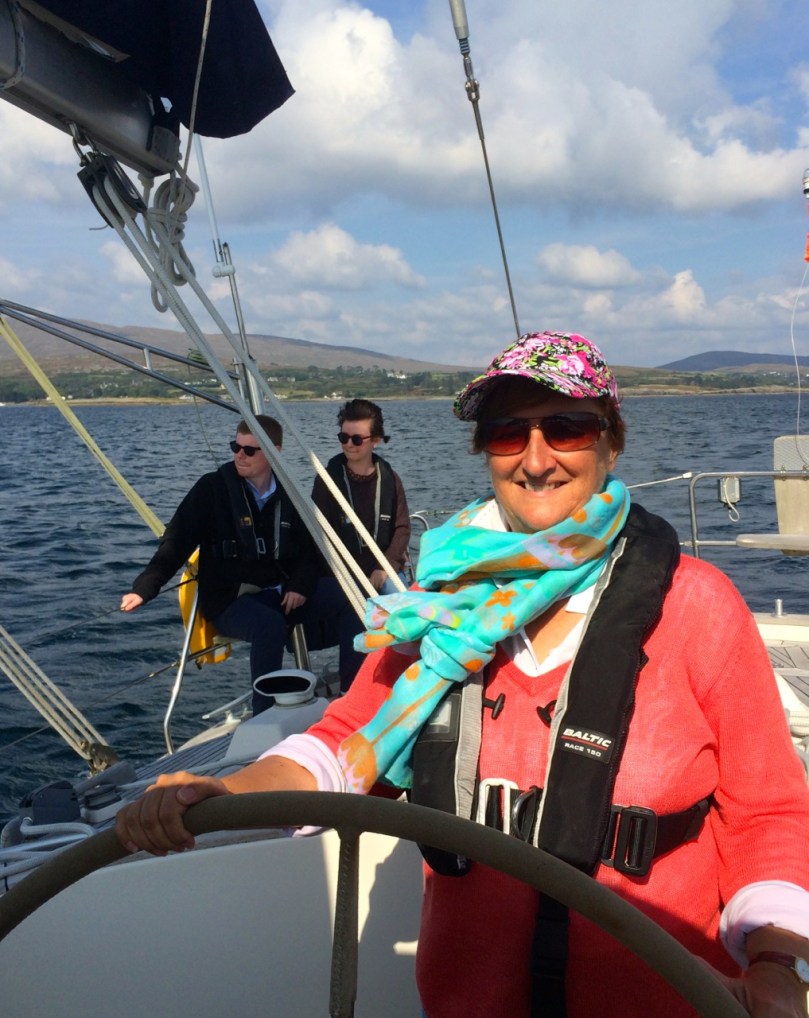
Chris is a born teacher (he does RYA training courses aboard Merlin) but in the most unobtrusive way, so I felt comfortable asking all the basic questions – stuff I had learned but forgotten. There’s so much vocabulary to sailing! Within an hour I felt emboldened enough to offer to take the helm – and there I was sailing a 42 foot yacht, calling the change of tack, adjusting the course to catch the wind. It was, in a word, heaven. The Sheep’s Head to the north, the Mizen Peninsula to the south,  incredible scenery, sunshine and a Caribbean blue sea skimming past our bow – what more can life hold on a warm September afternoon?

At the helm!

At the helm!

And just when I though it couldn’t possibly get any better, Aideen appeared with a cup of tea and a plate of Ummera smoked salmon on thinly sliced brown soda bread.

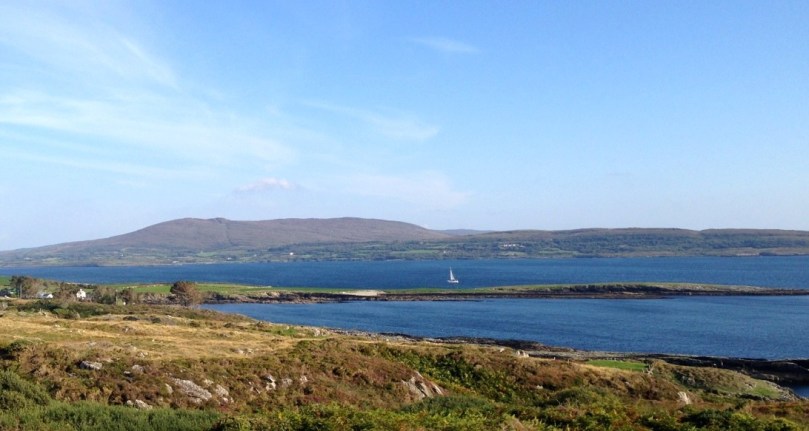
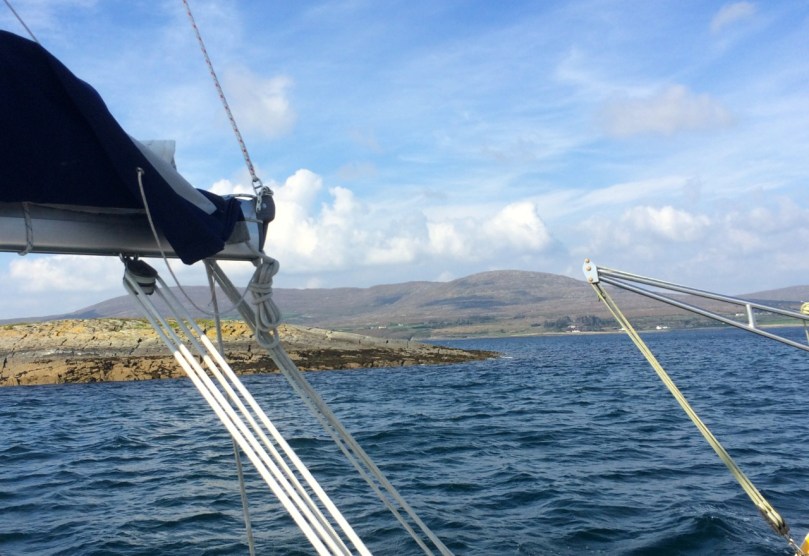
Robert and I have explored the Sheep’s Head and the Mizen extensively, but seeing it from this angle brings a new perspective. We were unaware, for example, that there are sea arches along the Mizen coast – dramatic bridges reaching out over the ocean, with the sea thundering underneath. There are several islands in the Bay. We sailed between Carbery and Furze Island. Rumour has it that the house on Carbery is owned by a wealthy Sultan who visits with his wives occasionally. Gannets plummeted into the water around us and, although we didn’t see any that day, dolphins often swim and play around the boat.

Conor, who had never sailed in his life, took the helm as we headed home, while Chris and Aideen dropped and stowed the sails.

Connor takes charge

Conor takes charge

As a re-introduction to sailing I couldn’t have had a more perfect experience. But even just lounging around the deck, soaking up the sunshine and the scenery, feeling the wind on my face and the gentle swell beneath, chatting in that companionable way that seems to happen like magic with shipmates – well, it all added up to a marvellous and memorable day that will ensure that I get out on the water again soon.

End of a perfect day

End of a perfect day

Beara – the Lie of the Land

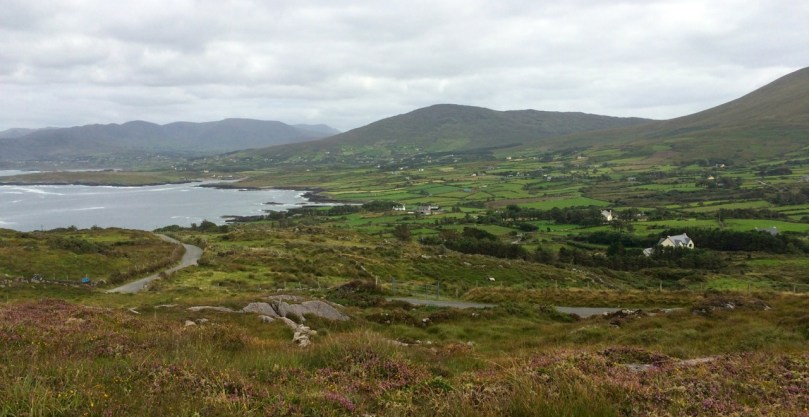
On the north side of the Beara, looking across to the Kerry Mountains.

On the north side of the Beara, looking across to the Kerry Mountains

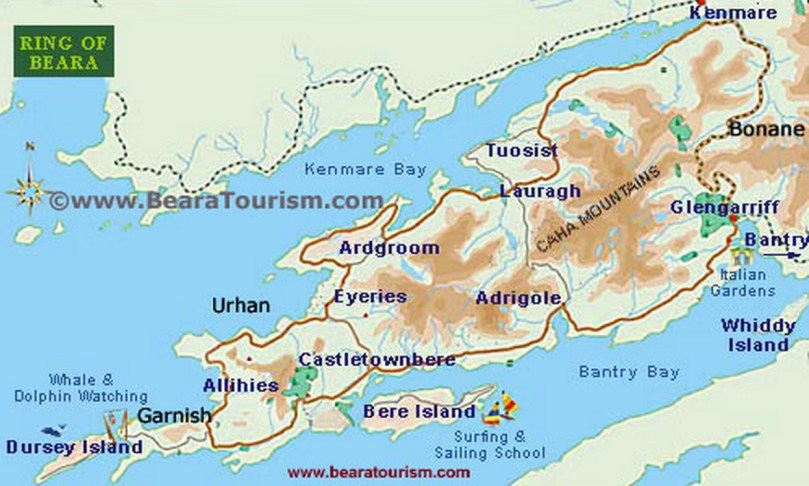
The Beara Peninsula is the largest and perhaps the wildest of the three West Cork Peninsulas. (See last week’s post for the map.) Two mountain chains, the Caha Mountains and the Slieve Miskish Mountains make up the spine of the Peninsula. You can traverse it via the spectacular Healy Pass, which runs from Adrigole north to Lauragh. On this occasion, because we had limited time, we confined ourselves to driving the main coastal route and to getting the general lie of the land. This meant we missed out on several landmarks – Bere Island, for example, and Dursey Island, besides the Healy Pass – so of course we must go back soon!

Near Cod's Head

Near Cod’s Head

After the inspiring piano recital by David Syme, described last week, we stayed overnight in Allihies and enjoyed an excellent dinner in O’Neill’s pub. The local Gaelic Football team had won a championship match that afternoon and the town was celebrating well into the night. Our first stop the next day was the Allihies Mining Museum. Housed in an impressively converted old Methodist Chapel, it tells the story of copper mining on the Beara, evidence of which can still be seen in the vicinity.

Note the green copper veins on the cliff face

Note the green copper veins on the cliff face

From there we carried on to the Cod’s Head, through a small pass which brought us out to a jaw-dropping vista across Coulagh Bay to Kilcatherine Point, and beyond to the Mountains of the Iveragh Peninsula in Kerry. We took the time here to hike up a waymarked trail that brought us up to breathtaking views high into the mountain slopes, home of purple heather, enormous boulders and curious sheep.

The sentinel

The sentinel

Eyries village is a pure delight: a riot of colourful houses and sleepy streets. We stopped at Ms Murphy’s traditional shop for tea and delicious sandwiches, strolled along the main street taking pictures and chatting to friendly residents, and finally by chance dropping into the startlingly beautiful St Kentigern’s church.

The north side of the Peninsula offers glorious vistas across the Kenmare River (an enormous sea inlet but called, oddly, a river). We took the coastal route from Kilcatherine to Dog’s Point and back to Ardgroom and on to Lauragh – lovely villages with seaside settings.

Mountain and sea

Mountain and sea

We stopped to visit the Cailleach Beara, the Hag of Beara. A powerfully symbolic site from Irish mythology, this rock is associated with many legends. People leave votive offerings – coins, rosary beads, a set of old glasses, shells and ribbons in honour of the spirit of the ancient goddess. Our next stop was the Ballycrovane Ogham Stone – the tallest in the world, and still in the wild, as Robert was glad to note.

Alright – so we have our bearings now and we’ve scratched the surface of this fascinating part of West Cork. Look out for future posts on the Beara – we can’t wait to return!

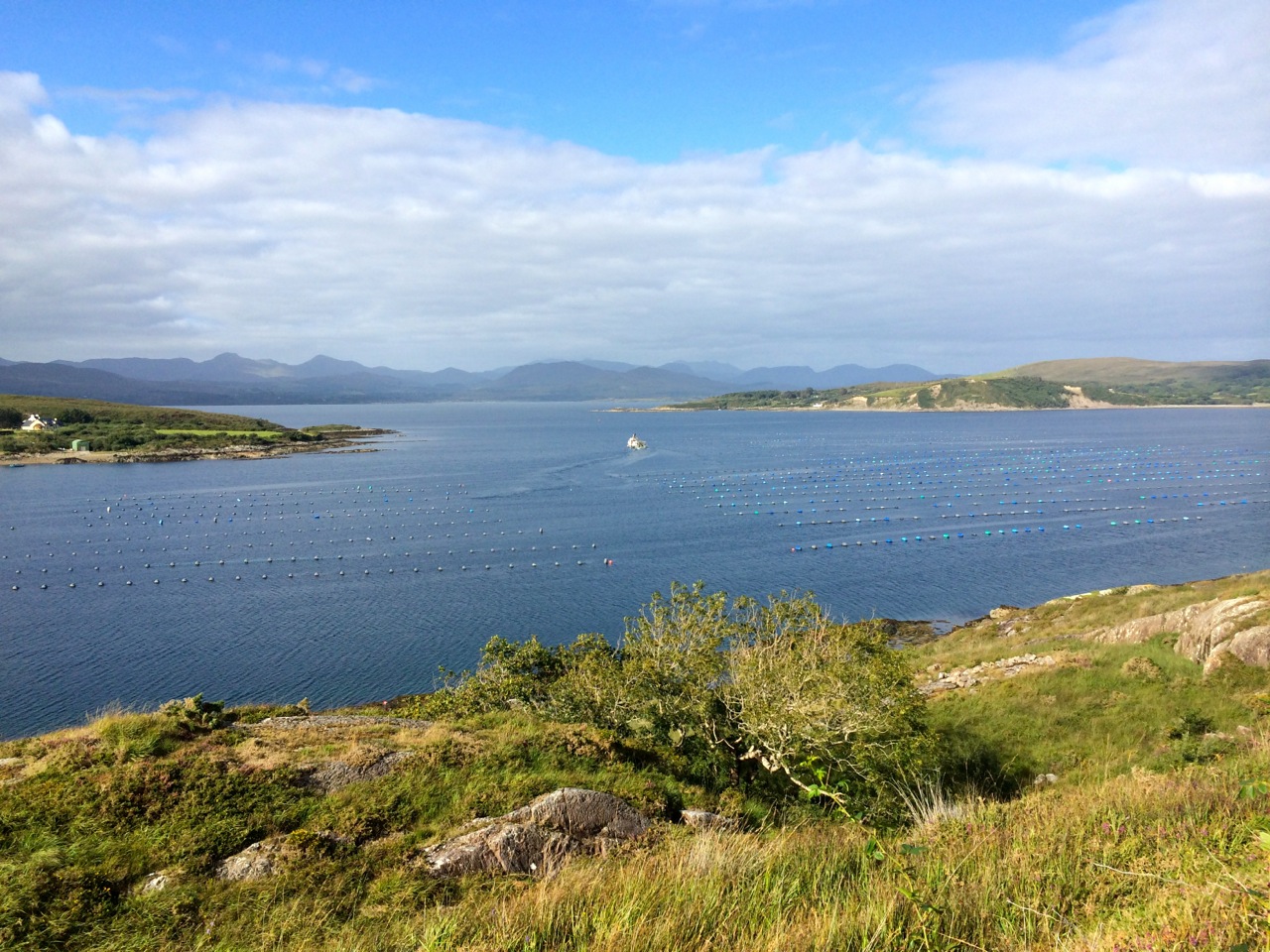
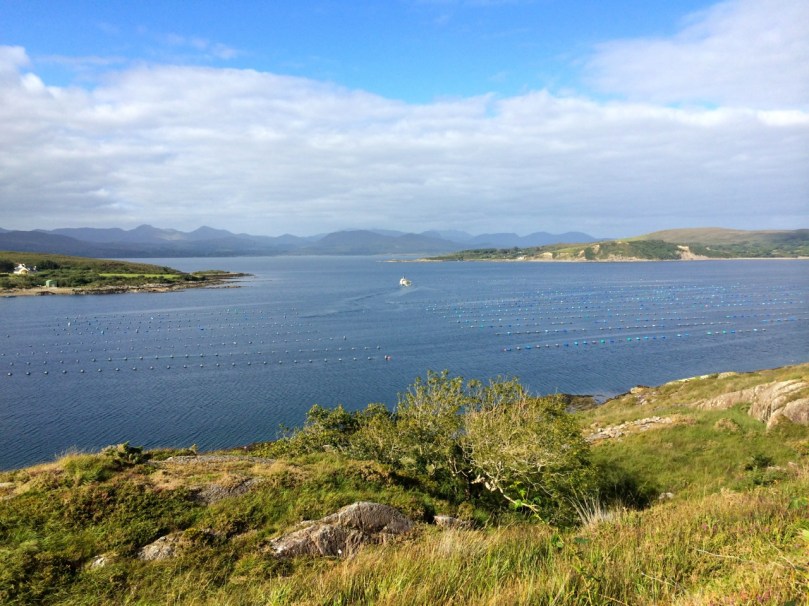
Beara mussel beds

Mussel beds, looking out to the Kenmare River

Body and Soul

The Beara Peninsula

The Beara Peninsula

Last week I promised you an account of our time on the Beara Peninsula – it’s the third of the West Cork Peninsulas (shared with County Kerry) and the most remote. To the north is the Iveragh Peninsula, better known as the Ring of Kerry, and to the south is the Sheep’s Head.

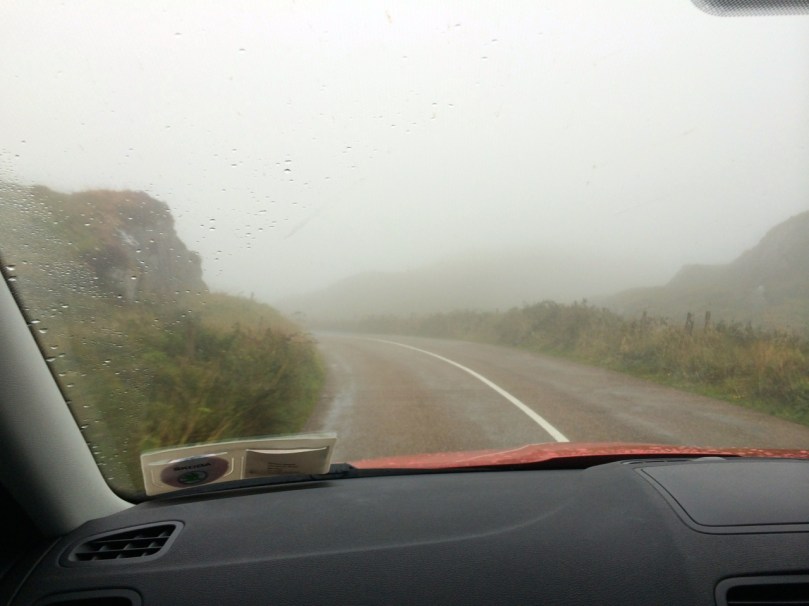
OK, so it does rain occasionally

OK, so it does rain occasionally

Readers have teased me in the past about doctoring my photographs or carefully choosing only those that show blue sky. After all, everyone knows that it rains all the time in Ireland. While I haven’t done any doctoring, or over-careful selecting (honest!) – even I have to admit that yes, it does rain in Ireland and the first day of our trip was pretty much a washout. (In fairness, like, we have devoted much bandwidth to talk of the variable weather we encounter here – cast an eye back over here, here and here.)
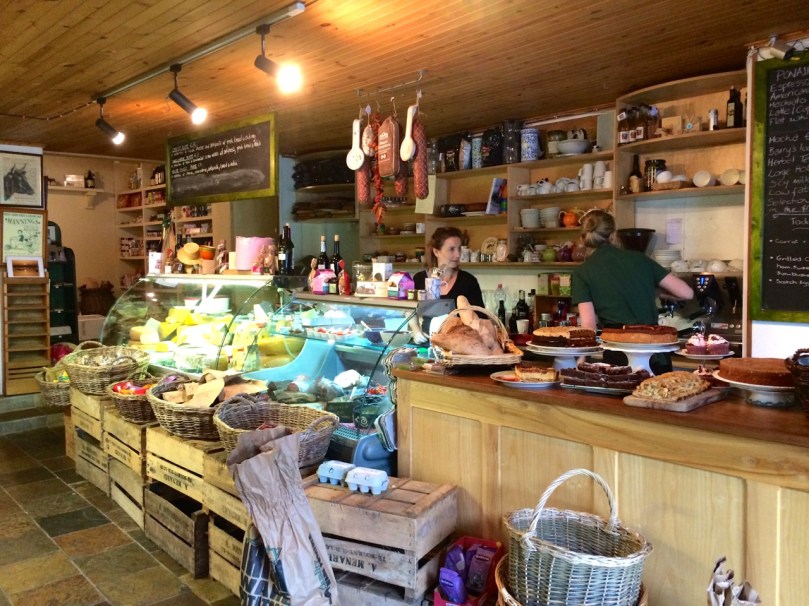
Manning's Emporium - the counter

Manning’s Emporium – the counter

Despite the weather, we managed to have a truly marvellous first day on our mini-break: it was a delight for the body and for the soul. First the body part – a stop in the famous Manning’s Emporium in Ballylickey. In the Manning family for 70 years and under the guidance of Val Manning, this little shop turned from a post office and grocery store into a mecca for food lovers, with wines, cheeses, meats and baked goods to die for. Val’s niece and her husband, Laura and Andrew Heath, have joined the business, introduced a new hot menu and expanded the range of foodie items. I’ve never yet left empty handed and, after a cappuccino and scone, we browsed the shelves and chose some excellent aged cheddar, a jar of their own chutney, and some locally made and heavenly-scented soap. The place was heaving, and Val himself was chatting sociably with everyone – always a bonus to enjoy a laugh with him.

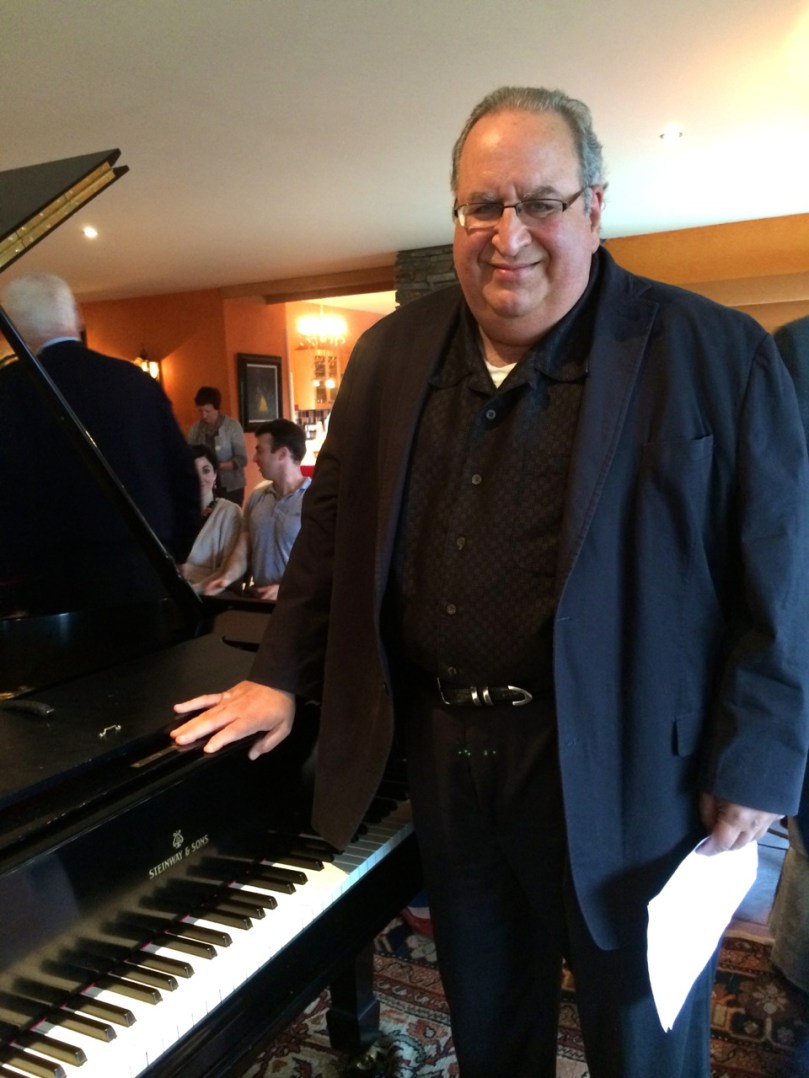
Now for the soul! We had booked two tickets for that afternoon to the Ahabeg Vista Concert Series, on the advice of a friend. We weren’t quite sure what to expect, but what we experienced took our breath away. David Syme, a Juilliard-trained and internationally acclaimed American concert pianist has made his home on the Beara, between Adrigole and Castletownbere, and every Sunday afternoon in the summer he gives a concert in his living room.

David Syme

David Syme

With Bantry Bay as the backdrop (except we couldn’t see it on this occasion), he played first a long and complex piece, Schumann’s Carnaval. Although I am no pianist even I could see the technical prowess demanded by the 22 short movements. David explained it to us, and even identified some of the motifs as he was playing. He took requests from the audience (ours was Clair de Lune) and played pieces by Beethoven, Liszt, Gershwin and Ravel. But then he delighted us with Carolan’s Concerto, Elton John’s Candle in the Wind and finally Danny Boy, in honour of Maureen O’Hara. We learned that Maureen, a long-time resident of Glengarriff, is to be honoured with a special Oscar next year – so watch out for that next February 22nd! David’s wife, Suzanne, puts on an amazing spread during the interval. To get a sense of what we encountered, watch the RTE Nationwide program devoted to this concert series.

This was only our first day and we encountered fog and drizzle everywhere. But it didn’t matter – when you find such nourishment for the body and the soul, who cares about the weather! I will write more about the Beara in a future post: meanwhile, check out Robert’s account of an unexpected discovery in Eyries.