Book of Lismore

This is a topical post, as only this week we heard the news that the Book of Lismore has been donated to University College, Cork to become the centrepiece of the library there. It will be accessible to students and will contribute to the knowledge and study of Gaelic manuscripts dating from the 15th century.

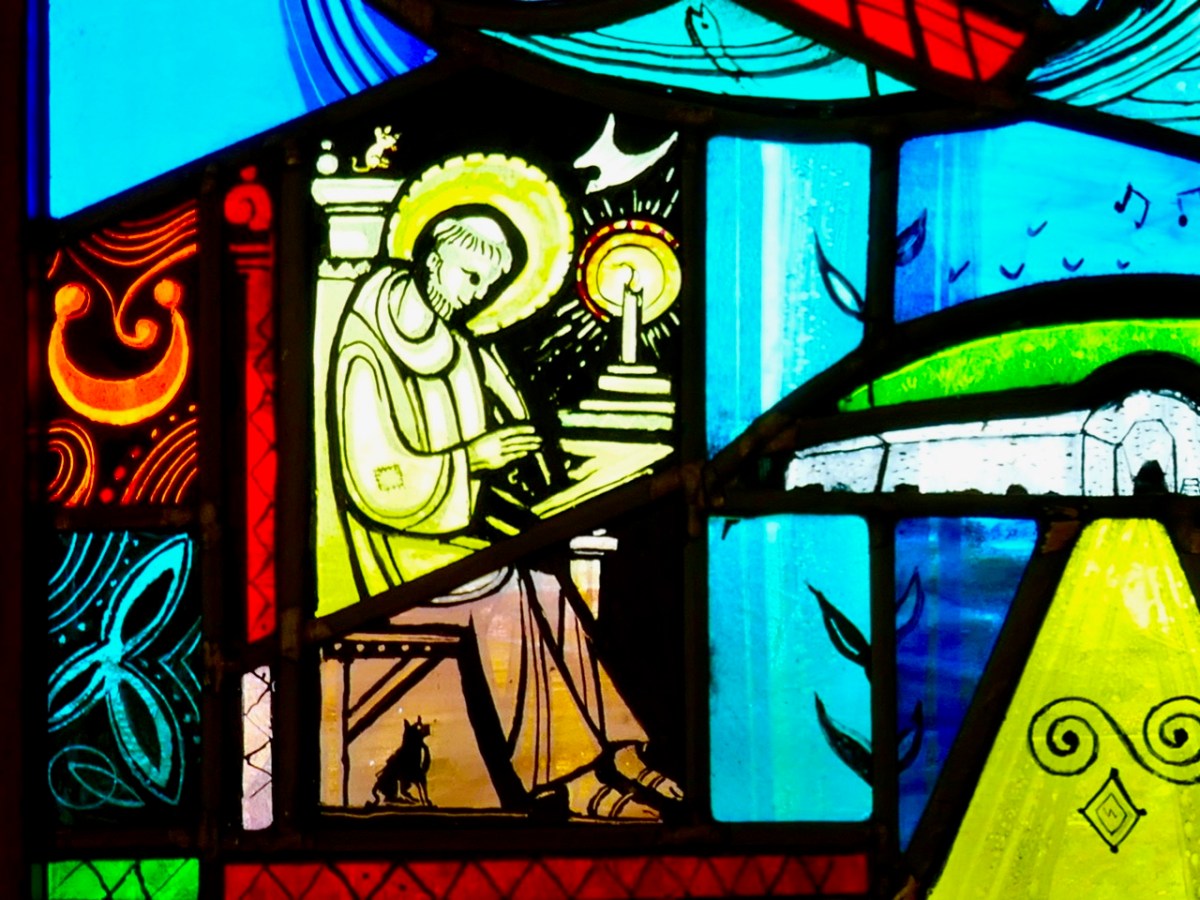
When we think of ancient Irish manuscripts we might visualise the Book of Kells, which is on display in Trinity College, Dublin. It’s remarkable to think that the Book of Lismore is over 500 years old, but that the Kells manuscript predates it by 600 years: it was created around 800AD. Here’s a scribe (from Finola’s window by George Walsh) who could be from any of those medieval periods when monks and lay brothers worked away in their scriptoriums making, copying and illuminating beautiful works which have become our most precious historical documents:
The Book of Lismore is written on vellum, and was compiled for Fínghin Mac Carthaigh, Lord of Carbery (1478–1505) and his wife Caitlín. It became known as Leabhar Mhic Cárthaigh Riabhaigh. It is entirely in Irish. What has really excited us is that, in introducing the installation of the book at Cork, UCC Professor of Modern Irish Pádraig Ó Macháin mentioned our own locality:

[The book] belongs to a period of creativity which was centred on the coastline of Cork. It is difficult to imagine those seats of learning and literature today when you look at the remote rural landscapes . . . In Rossbrin Castle – the O’Mahony stronghold – translations, treatise and journals were being made using contemporary European resources: it was a proto-university in pre-urban Ireland, paralleled by the vibrant poetic tradition of the O’Daly family in nearby Mhuintir Bháire [The Sheep’s Head] . . .

Pádraig Ó Macháin, 2020 (paraphrased)
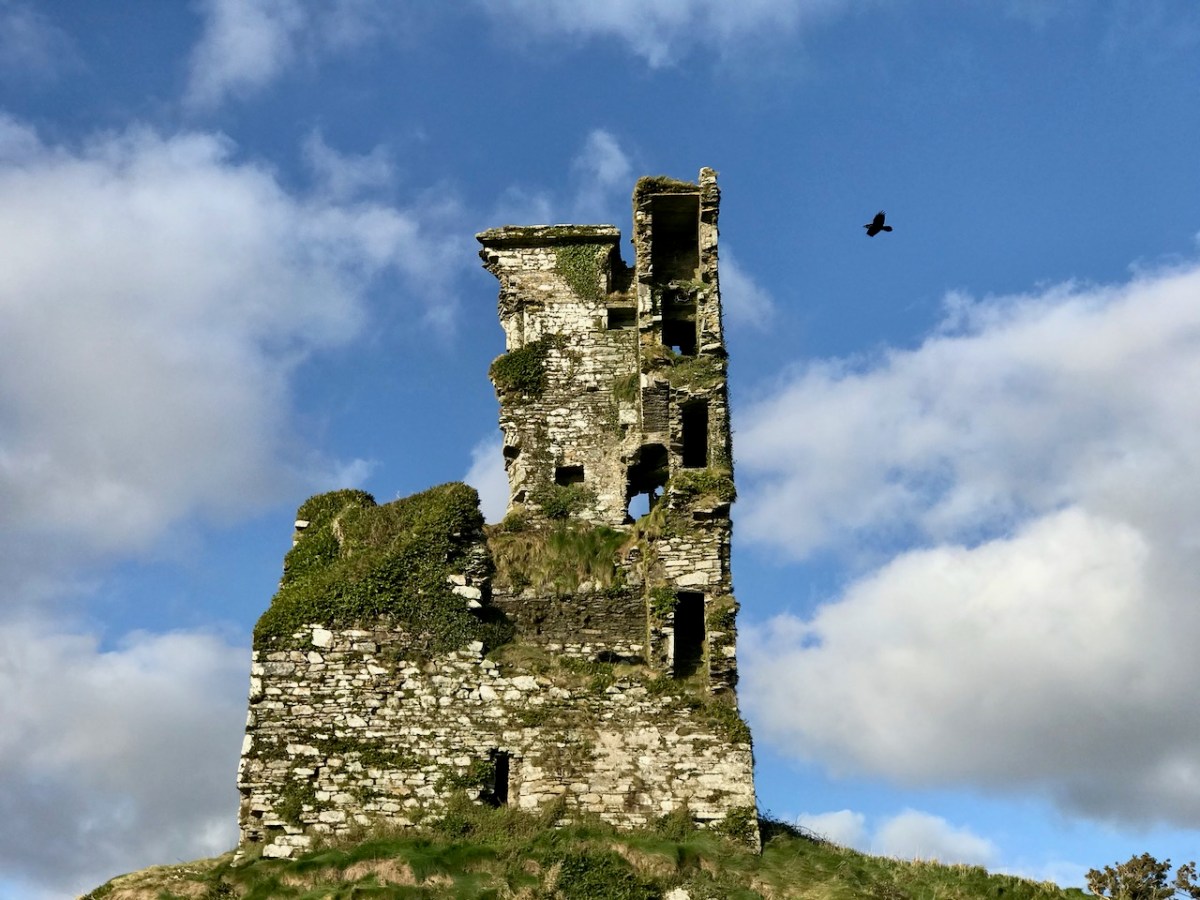
Rossbrin (above) was only one of many castles occupied by the Gaelic nobility along the coastline here in the 15th century and beyond: this ties in with my post of last week when I explored a 1612 map and identified many centres of occupation and scholarship which surely made West Cork so vibrant and cosmopolitan in earlier times. Books are known to have originated here – including the first to be written in Ireland on paper – and some of them survive to this day.

All the page illustrations in this post come from the Book of Lismore. It has a complex history and is likely to be by many hands. One – Aonghus Ó Callanáin – is certainly identified within its pages, and another – a friar named O’Buagachain is suggested. Tradition has it originating from the lost Book of Monasterboice and associates it with Kilbrittain Castle, Cork – reportedly the oldest inhabited castle in Ireland, dating from as early as 1035 and possibly built by the O’Mahonys – but also with the Franciscan Friary at Timoleague.
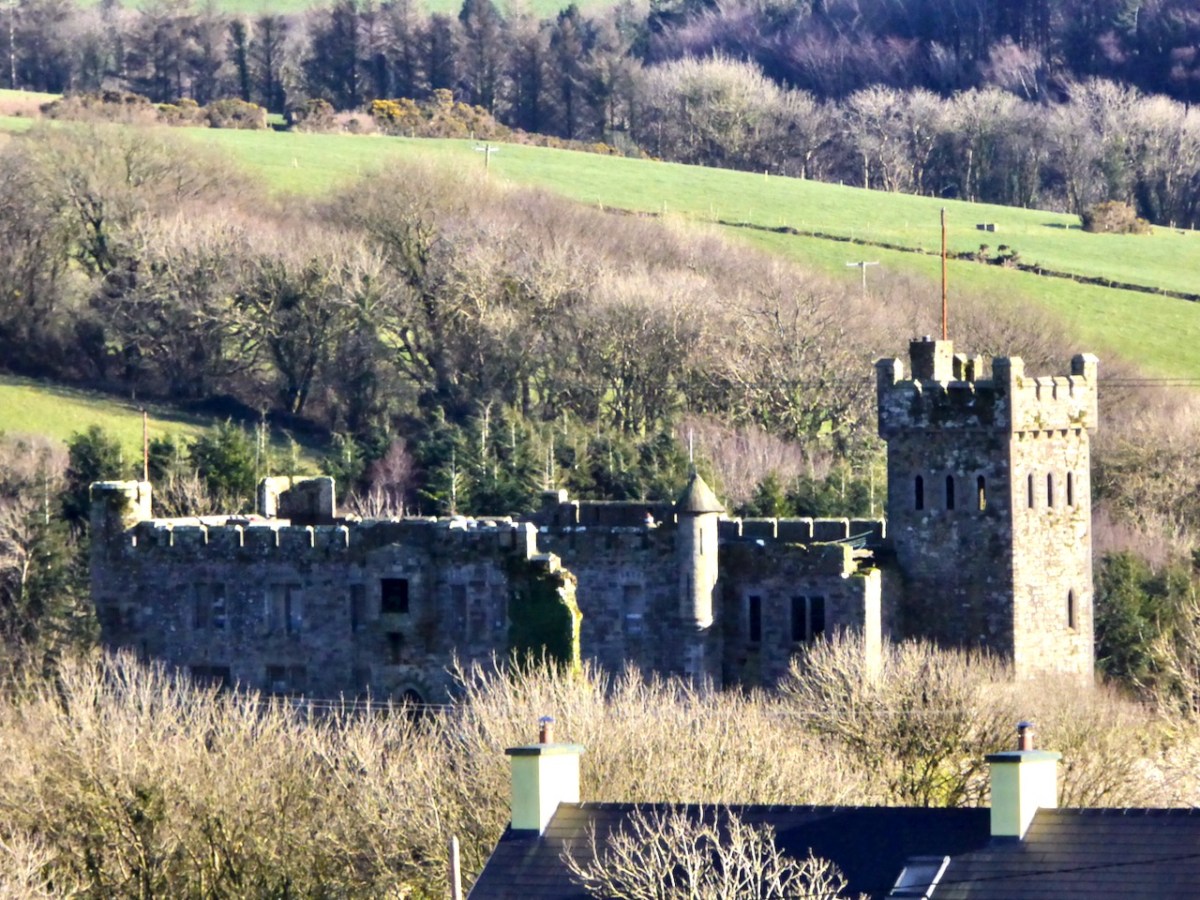
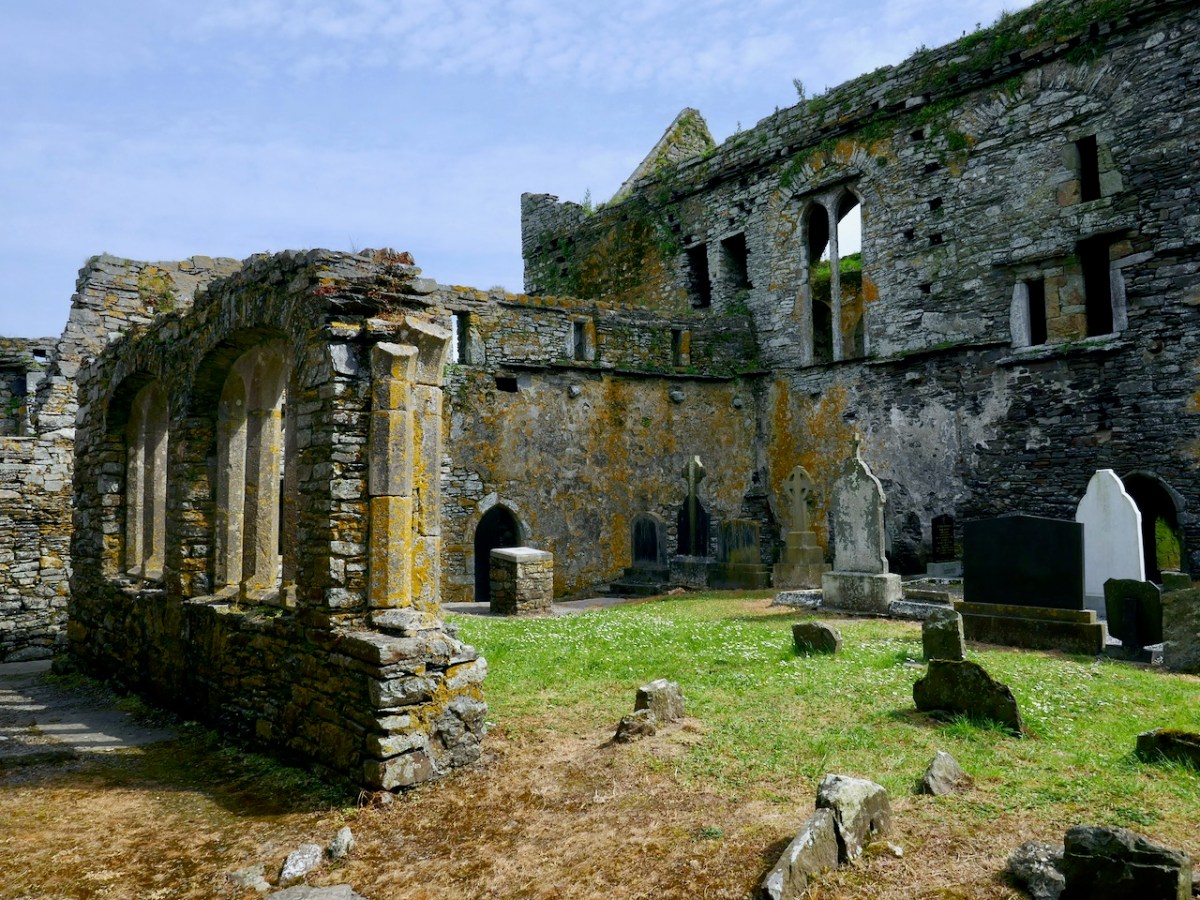
Upper – Kilbrittain castle in the present day: the original building is a thousand years old. Lower – the Friary at Timoleague, a foundation attributed to the MacCarthys in 1240, and plundered in the 17th century

The book fell into the hands of Richard Boyle, First Earl of Cork, during the Irish civil war in June 1642 and ‘vanished’ until its rediscovery in Lismore Castle in 1814. Apparently it was walled up together with the Lismore Crozier. By then the castle was owned by the Cavendishes, Dukes of Devonshire. It is this family that has donated the book to Cork and the nation, through the Chatsworth Settlement Trust.

Upper – Lismore Castle by TS Roberts, Aquatint and etching 1795 print by Samuel Alken. LowerThe Book of Lismore and the Lismore Crozier celebrated in this Celtic Revival stained glass window of St Carthage in Lismore Cathedral. The window is by Watsons of Youghal, and you can read more about them in Finola’s post here

One further thought: today is ‘All Saint’s’ – November 1st. The contents of the Book of Lismore include a section on the lives of the Irish Saints: these lives were translated by Whitley Stokes in 1890 and are available to read online. Finola has used this source in her post about Saint Fanahan, or Fionnchú. We look down on Rossbrin Cove and the ruins of the medieval O’Mahony castle – sometimes described as the greatest centre of learning in Europe! We feel excitement and gratitude that here in West Cork we are linked to this treasure from that age, now in the responsible hands of UCC.

Roaringwater Bay in 1612

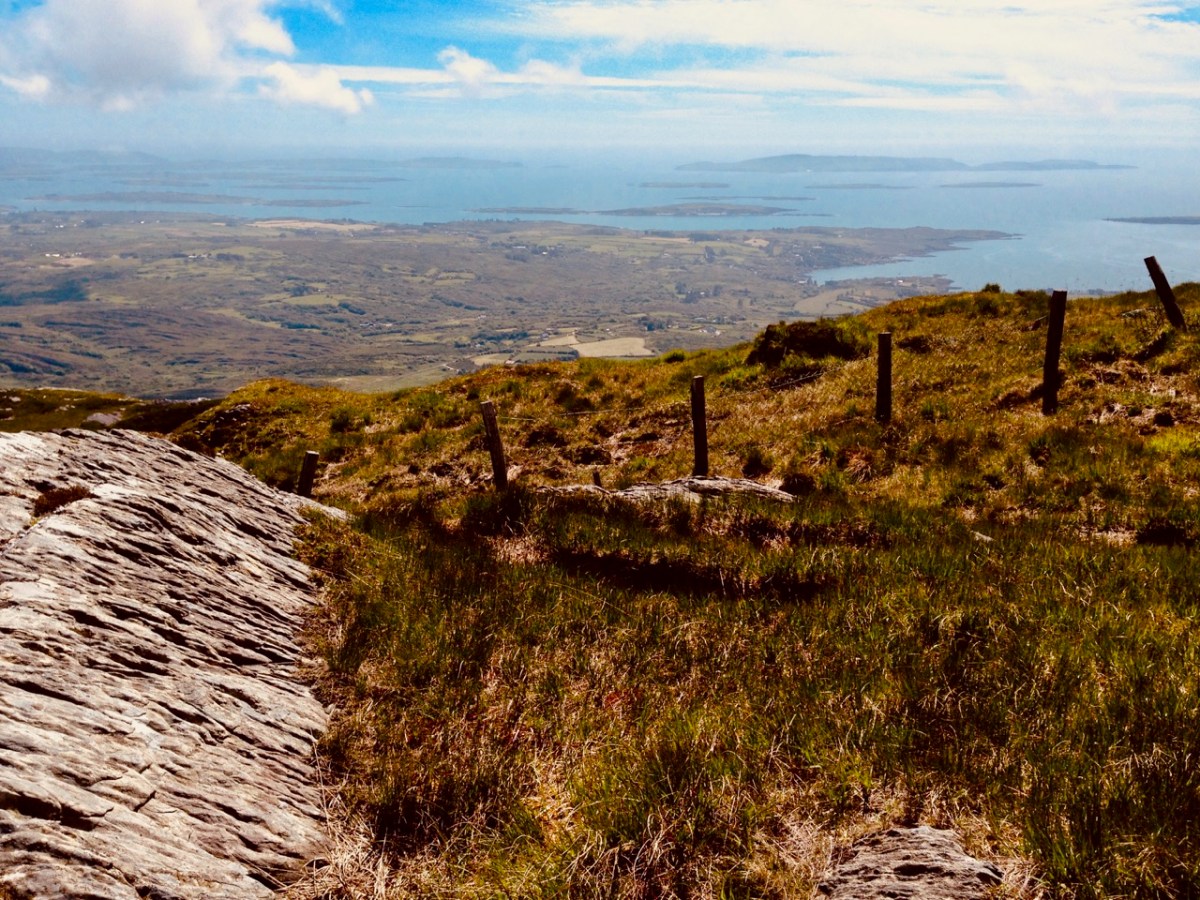
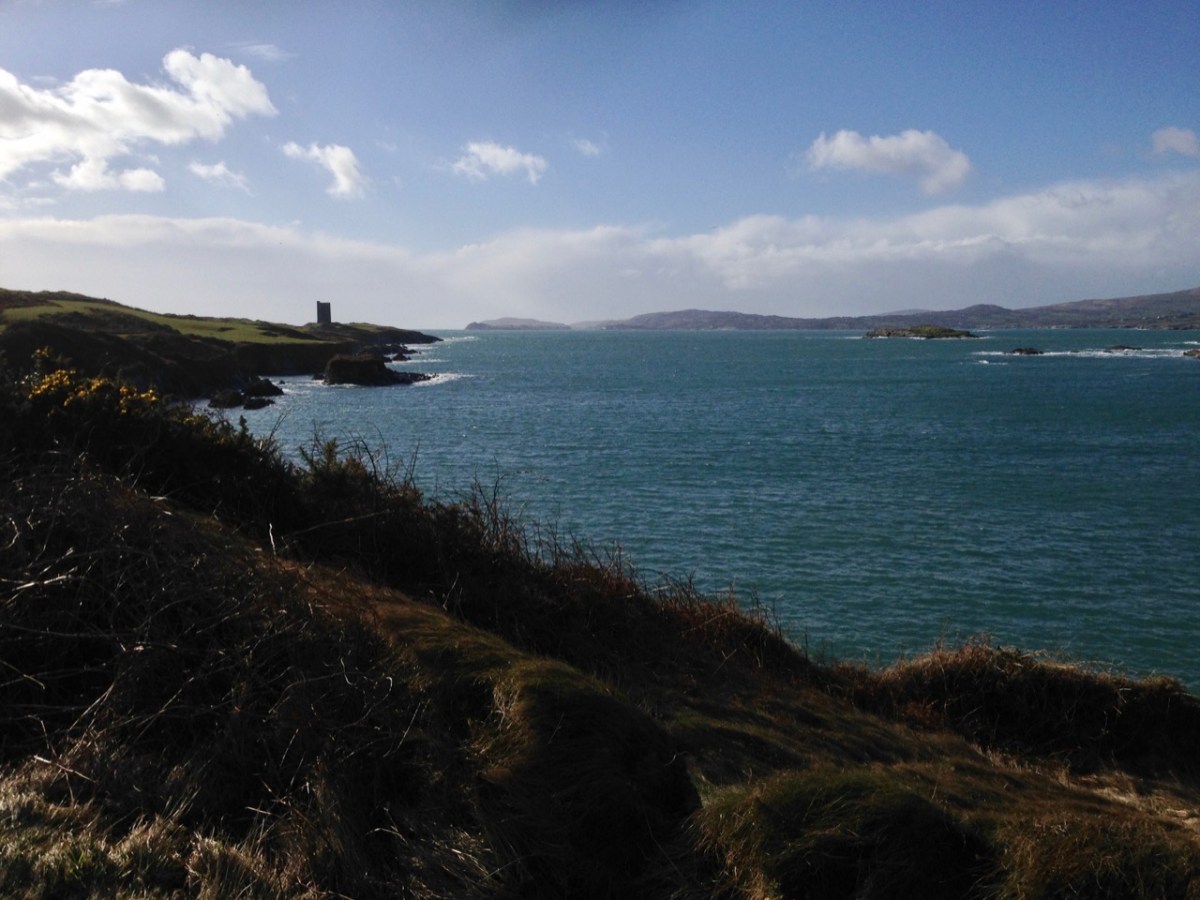
Roaringwater Bay must be so familiar to you, if you are a regular reader of this Journal. It’s a land- and sea-scape of hidden coves, inlets, islands, mountains and castles: a treasure trove for explorers and historians. That’s Black Castle at Castlepoint, Leamcon, above – said to have been built by Connor O’Mahony in the mid fifteenth century. Probably the best place to get an overview of the coastline is to climb to the top of Mount Gabriel (407m) and have a look down. You will see stretched out the archipelago of ‘Carbery’s Hundred Isles’ – seen here in autumnal hue – Cape Clear is the distant remote landfall over on the right:
We always have a sizeable pile of books waiting to be pored over. Currently at the top is this study, The Alliance of Pirates, written by Connie Kelleher and just published (2020) by Cork University Press. We have yet to consume every detail, but we do assure you that it’s full of fascinating historical information – not just about pirates, but about life and culture in the west of Ireland in the late sixteenth and early seventeenth centuries. Connie is an ‘underwater archaeologist’ and we have followed her over many years, lecturing and presenting original information which she has gathered together on her subject. We couldn’t fail to be hooked on everything she says, illustrates and writes about, as the focus is on our own doorstep. One linchpin of this book is a map which is dated to 1612. This article from Atlas Obscura explains the map and Kelleher’s approach. It’s worth reading: note that you may be required to register on the Atlas Obscura website (it’s free) in order to access it.

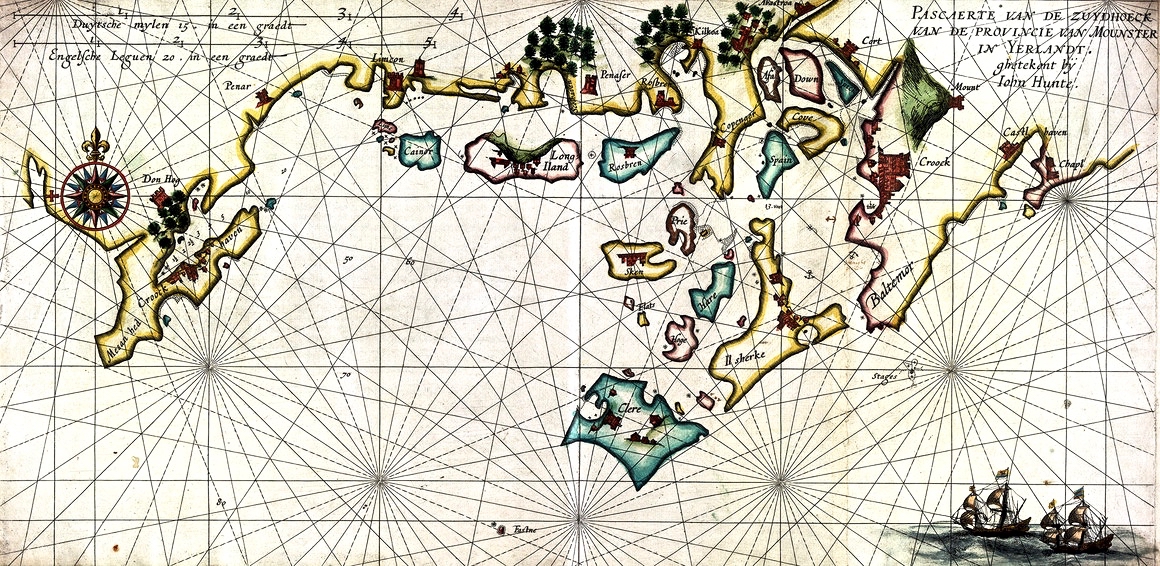
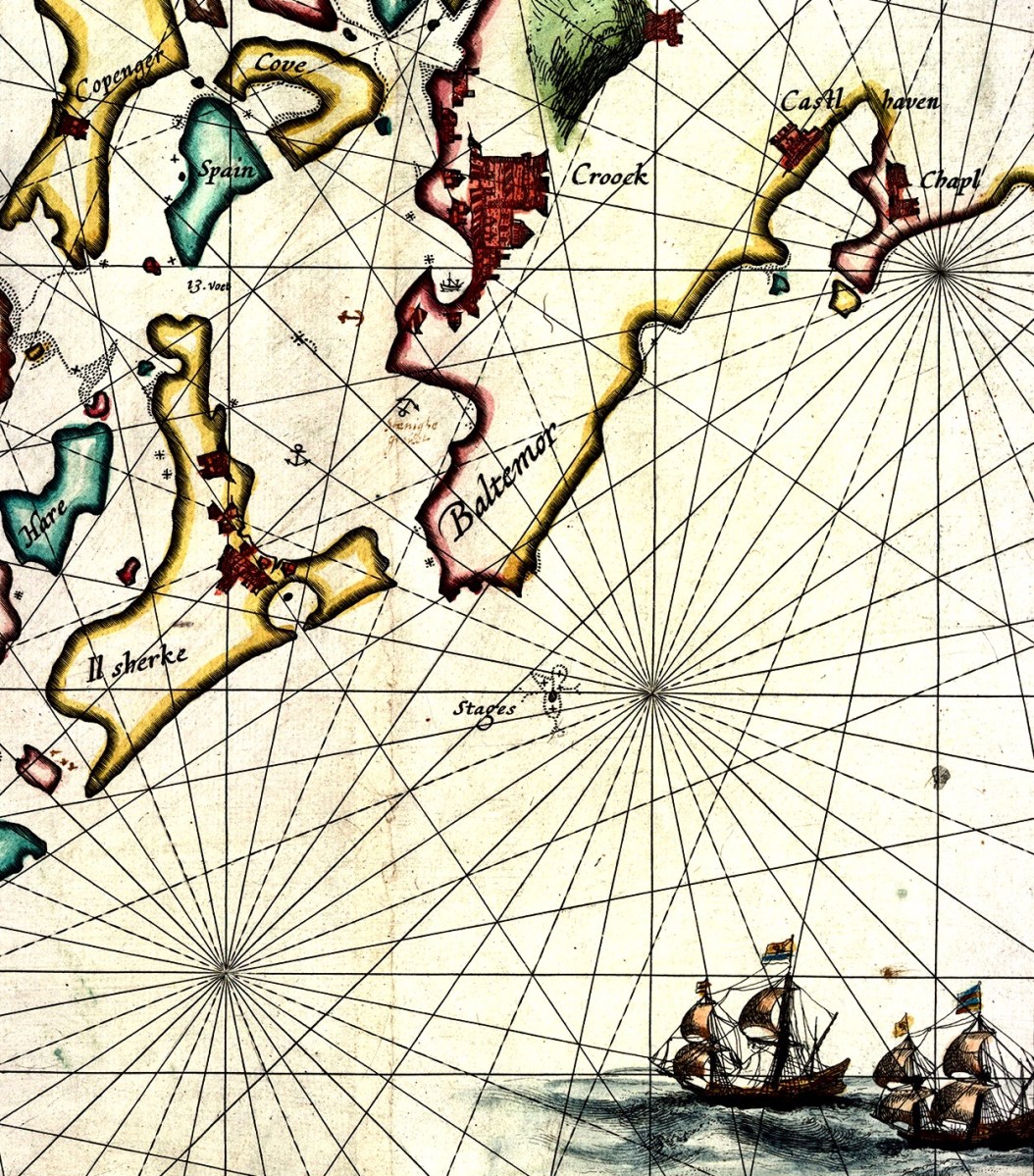
The 1612 chart of the “Pirate Harbours” of southwest Munster which became a valuable source of information for Connie Kelleher‘s studies © SUB GÖTTINGEN 4 H BRIT P III, 6 RARA UNIVERSITÄT BIBLIOTHEK GÖTTINGEN LIBRARY ARCHIVES, GERMANY

The purpose of today’s post is to examine the 1612 map in detail and attempt to identify and relate to many of the places which are named and illustrated. Before that, though – let’s consider how such a chart came to be made. Finola has written previously about how West Cork as a whole was being mapped in the sixteenth and seventeenth centuries here and here. The thing that sets the 1612 map apart, however, is that it was made in secret, and largely from surveys only carried out at sea. Also, it was specifically intended to enable a Dutch fleet to assail the pirate strongholds which became numerous around the area from Baltimore to Crookhaven, centred on Roaringwater Bay and ideal for forays into the wider Atlantic trade routes.

The sheltered waters of Crook Haven – an important recognised centre for careening and victualling ships operating legitimately on the Atlantic trade routes: ships that would become prime targets for the pirates based in secret ‘nests’ along the same coastline

. . . In 1612, having grown tired of the ongoing pirate harassment, the Dutch government lobbied James I for permission to enter the harbours of southwest Ireland to attack the pirates themselves. James I agreed, but only under the conditions that the pirates would be captured alive and handed over, along with captured goods, to the Kings’ ships to be transported for trial by the Admiralty in England.

To prepare their ships for the attacks, Dutch hydrographer Hessel Gerritszoon was tasked with mapping the Irish coastline with a special focus on the “pirate coast” of southwestern Ireland. A large task in front of him, Gerritszoon engaged English cartographer John Hunt to assist. . .

Atlas Obscura

The leeskarte which the hydrographers produced still exists, and has been housed since the mid 1700s in the library at the University of Göttingen in Germany, which acquired it in the mid 1700s. During her researches, Connie Kelleher travelled to Göttingen to examine and document the map, which is a wonderful resource for enlightening us on some aspects of our local history.

. . . It is a type of ‘treasure map’ informing on the heritage within the landscape at the time, which could potentially help us identify other pirate-related locations, including archaeological sites . . .

Connie Kelleher

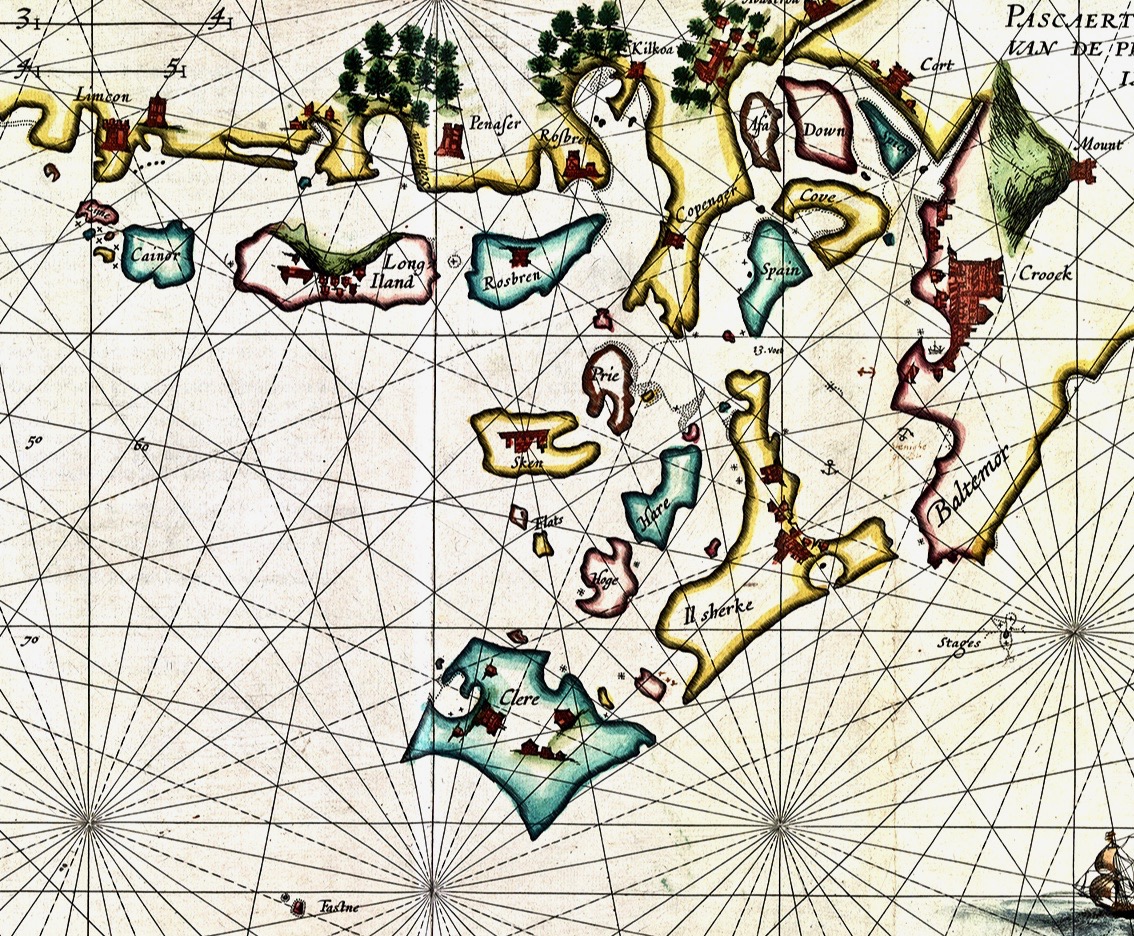
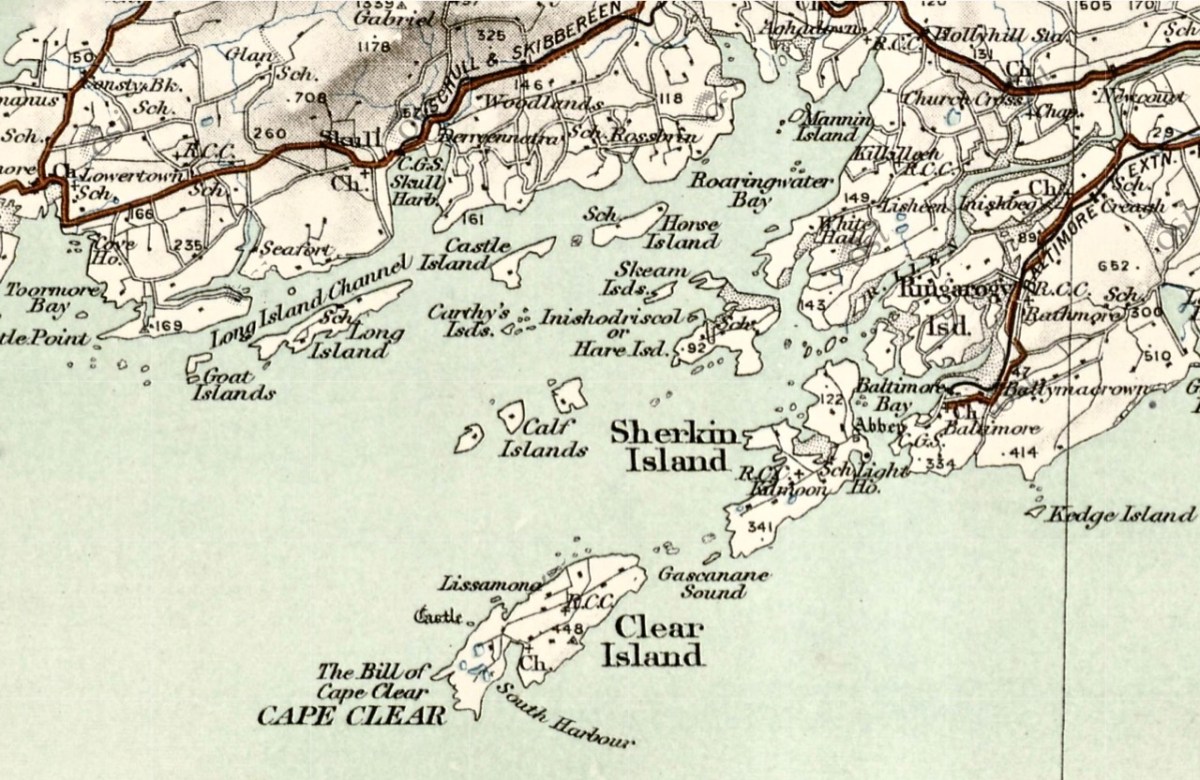
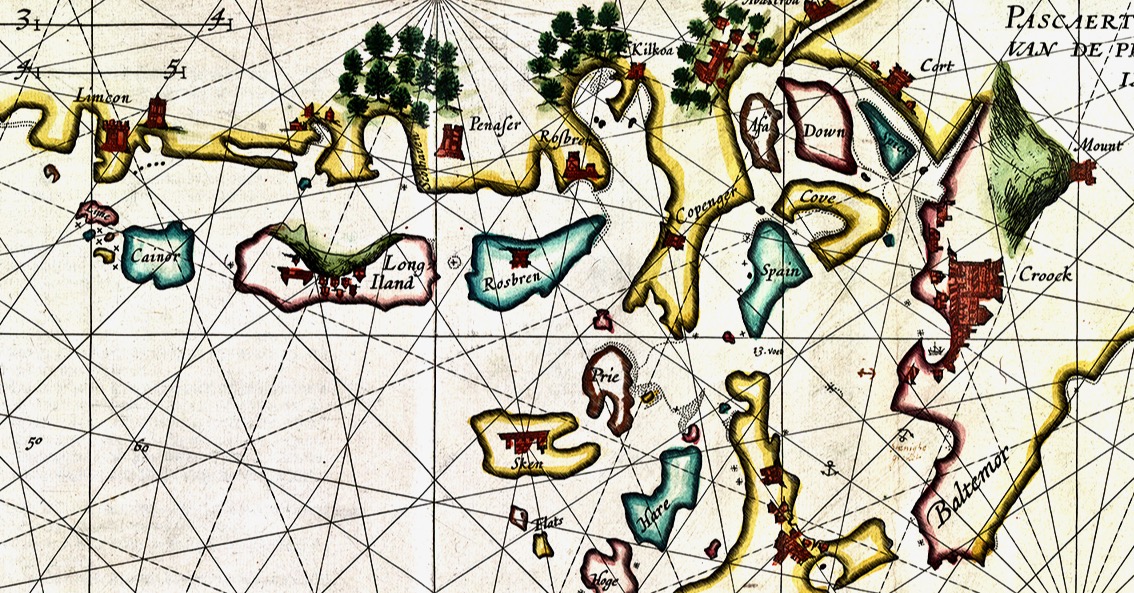
In this extract from the 1612 map I have focussed on our immediate area – the environs of Roaringwater Bay itself. Many names will ring bells with us (Clere, Baltemor, Rossbren for example); others won’t. For a simple comparison I have chosen a version of the historical 6″ Ordnance Survey map, dating from the late nineteenth century – it’s probably the clearest and best annotated example of what we would recognise around us today in terms of place-names:

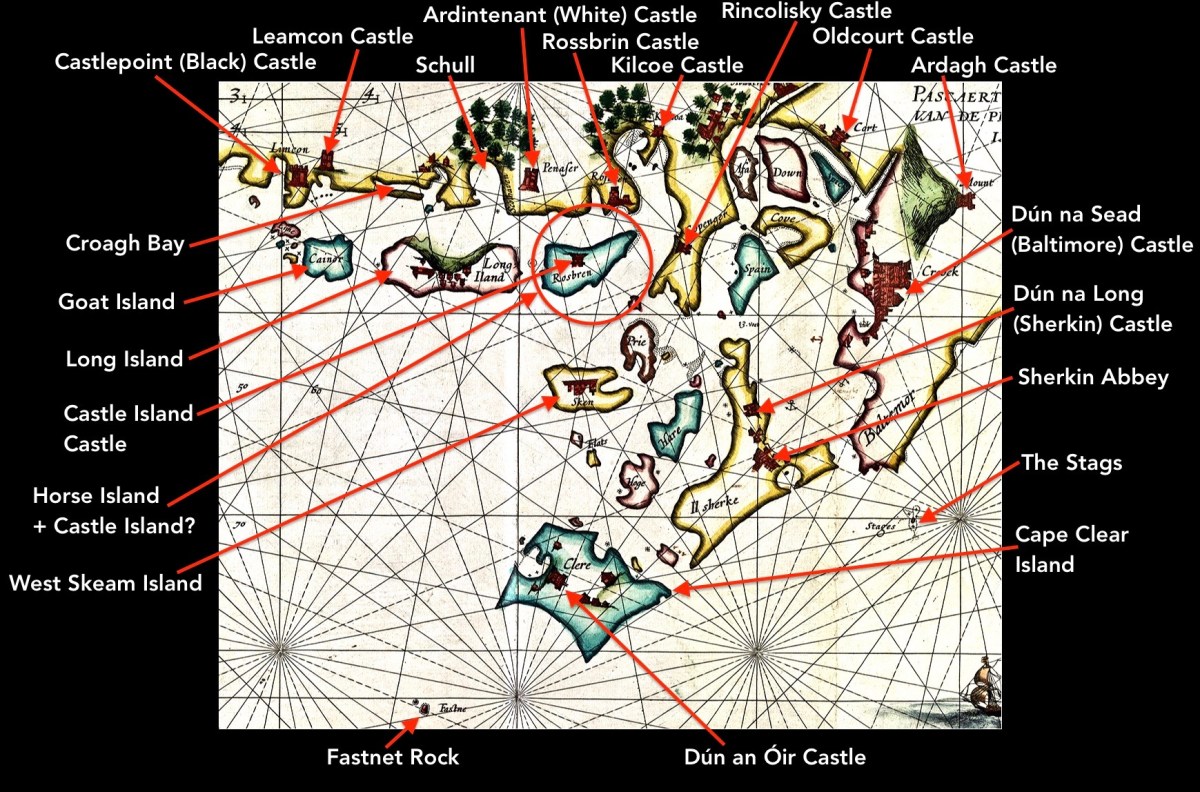
Here I have located and labelled our environs, as shown in 1612. It is remarkable that every castle and many significant features are clearly shown. Now, have a look at my red circle around ‘Horse Island + Castle Island’.

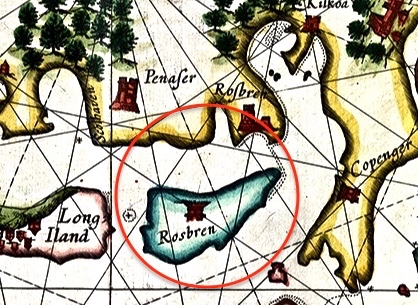
There’s an island missing! Opposite ‘Rossbren’ on the mainland is shown a single island: Rosbren. Next to it is Long Island. In fact, there are two islands here – Horse Island and Castle Island. On the 1612 map there is a castle shown on the Rosbren island, but the castle is actually on Castle Island. Somehow, the surveyors have missed this detail: perhaps the visual information which could be got offshore was confusing. What is interesting, though, is that the dotted lines at the east end of Rosbren on the 1612 map seem to mark the line of a causeway, the vestiges of which do appear today at very low tides and the feature exists in local folk memory. That level of detail on a chart, produced in the limited circumstances of its, time is remarkable! You can read more about Castle Island here.

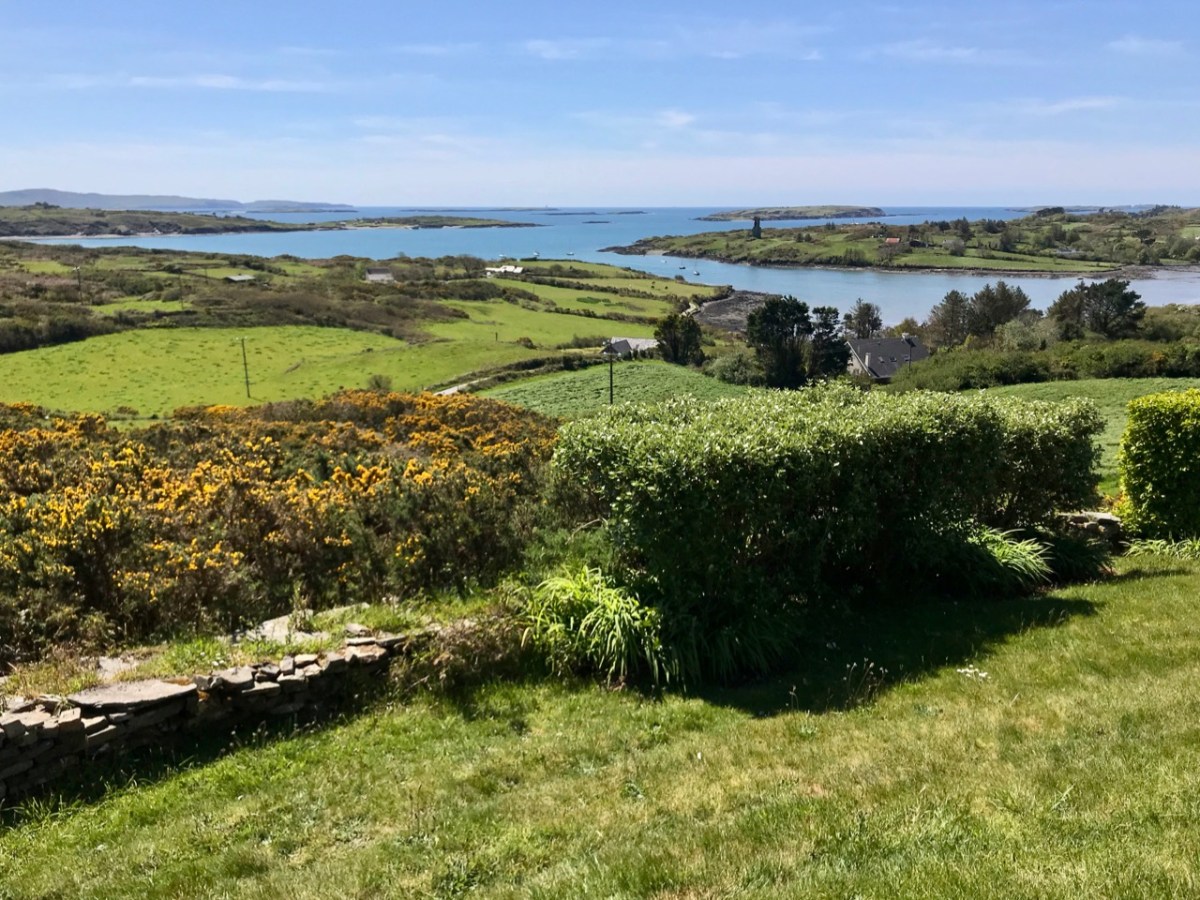
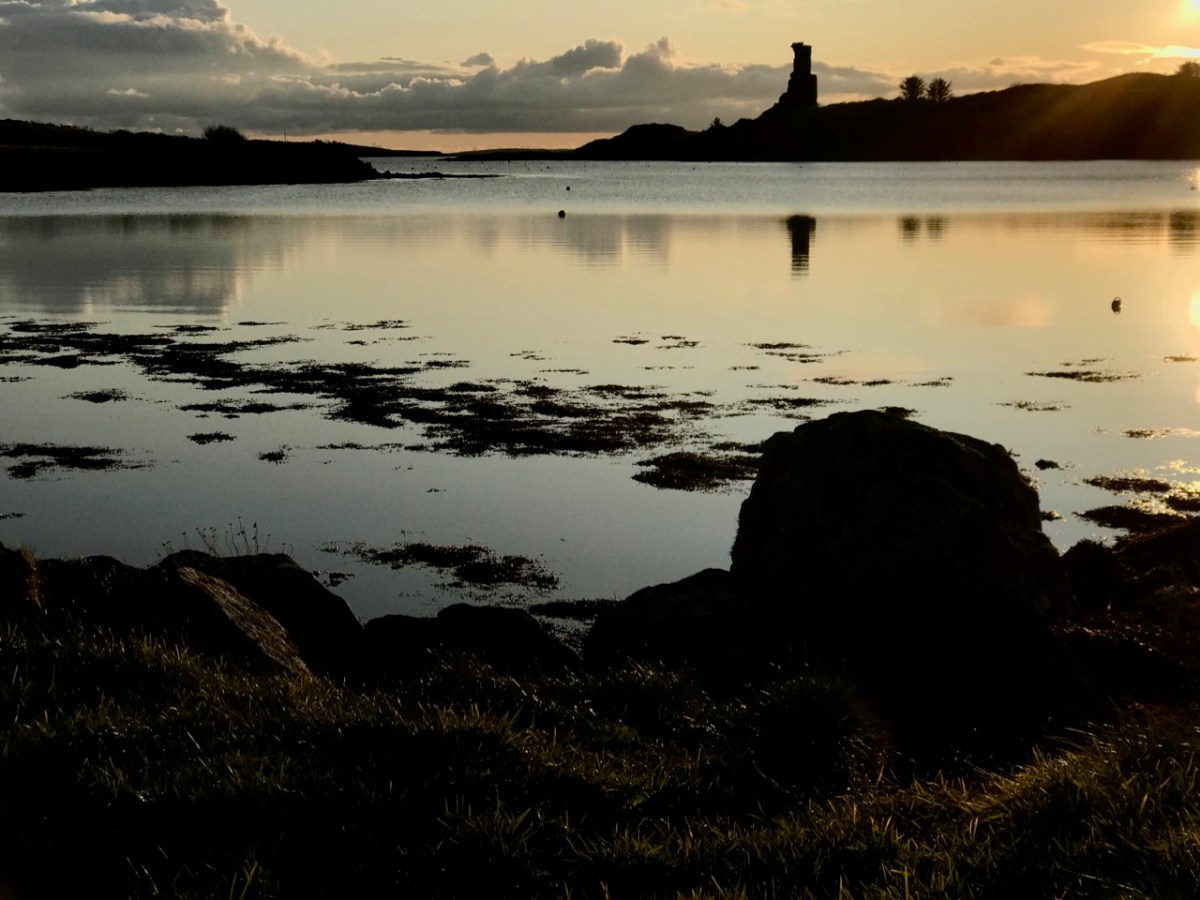
Our view across Rossbrin Cove with its O’Mahony castle and, beyond Rossbrin Castle, Castle Island. On the left of the picture is Horse Island

I want to show you some further details from the 1612 leeskarte. Firstly, here’s a close-up of Crookhaven (Croock haven on the map). Note the scales in Dutch miles and English leagues, and ‘Limcon’ – in fact Leamcon – which was one of the major pirate centres and also the territory of Sir William Hull, a Vice Admiral of Munster from 1609. His job description involved rooting out the plague of pirates in Roaringwater Bay but in fact entailing a lot of profitable collaboration with them. Also of interest here is the depiction of Goat Island – named ‘Cainor’ and a castle – ‘Penar’ which is likely to be Ballydevlin, at the mouth of Goleen harbour; also ‘Don Hog’, which we believe refers to Castlemehigan. There is no trace remaining of either of these two.

Another detail from the map (above) shows Spain Island, Sherkin and ‘Baltemore’. the depiction of galleons in full sail is a fine ornamental ‘illumination’. Also, note the small anchor symbols. In some places on the whole map, anchorage depths are shown: another remarkable factor highlighting the observation skills of the surveyors. Additionally on this detail, note the name ‘Croock’ – Thomas Crook, an Englishman, took a lease on Baltimore Castle in 1605. The ‘Chapl’ below Castlehaven is probably the now ruined church at Myross, detailed in my post here.

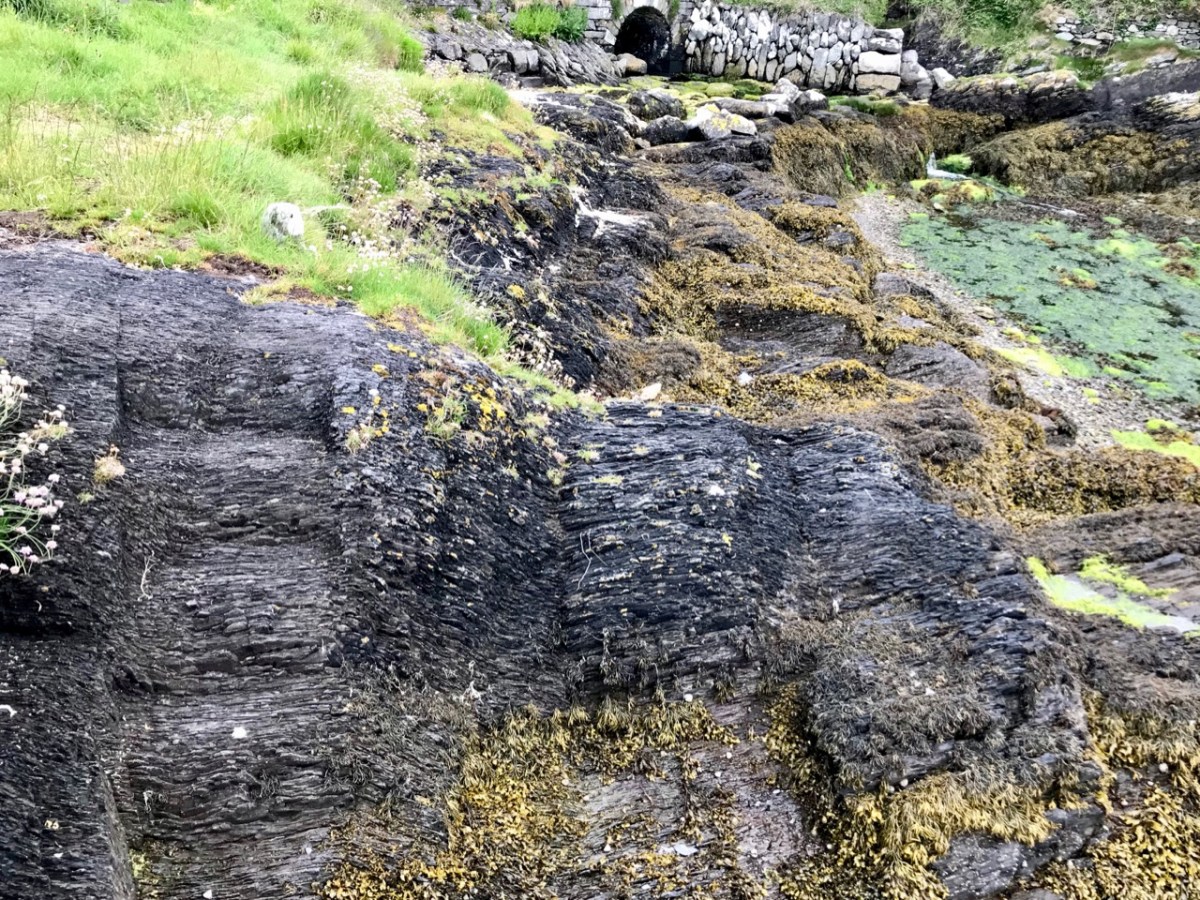
Our photograph of old (possibly ancient) steps carved into the rocks at Dereenatra. Connie Kelleher highlights the physical remains that can be found today in many of the former pirate strongholds around the coast of West Cork. Several are in the form of frequently hidden away steps and tying-up points in remote locations. I have included references to ‘pirate steps’ in a previous post. For the full picture, don’t forget to get hold of Connie’s book: it will make an ideal Christmas present for the archaeologists and pirate enthusiasts among you!

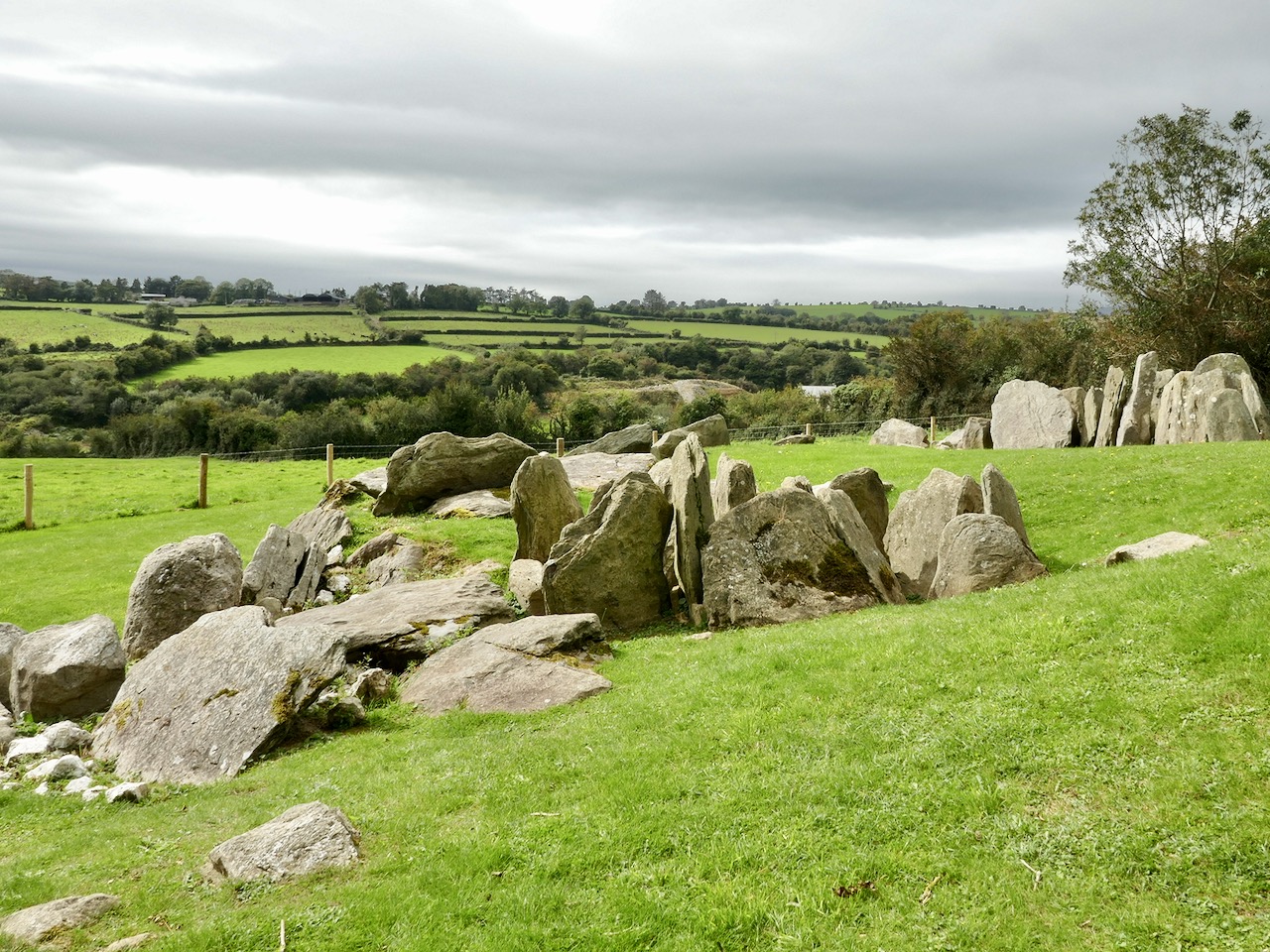
Off the M8 – Knockroe Passage Tomb or ‘Giant’s Grave’

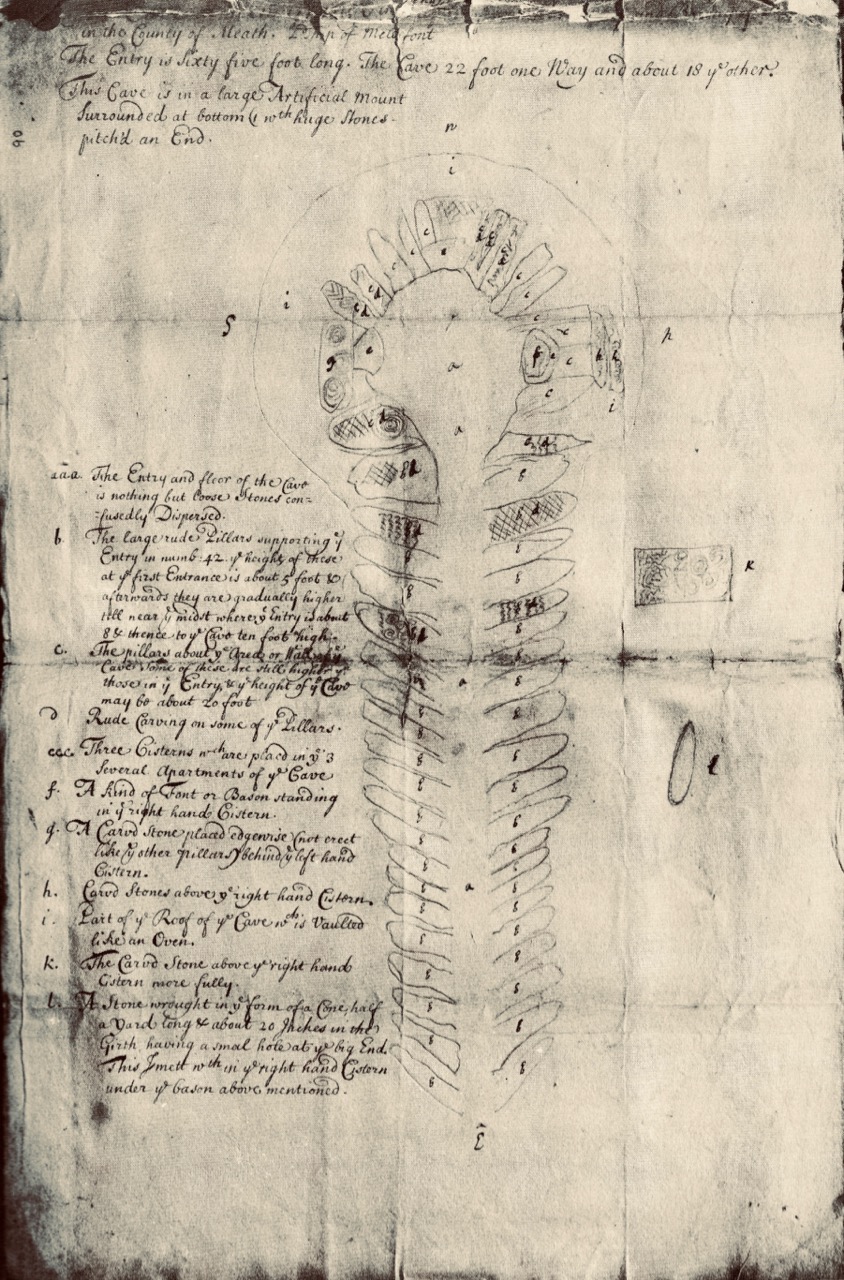
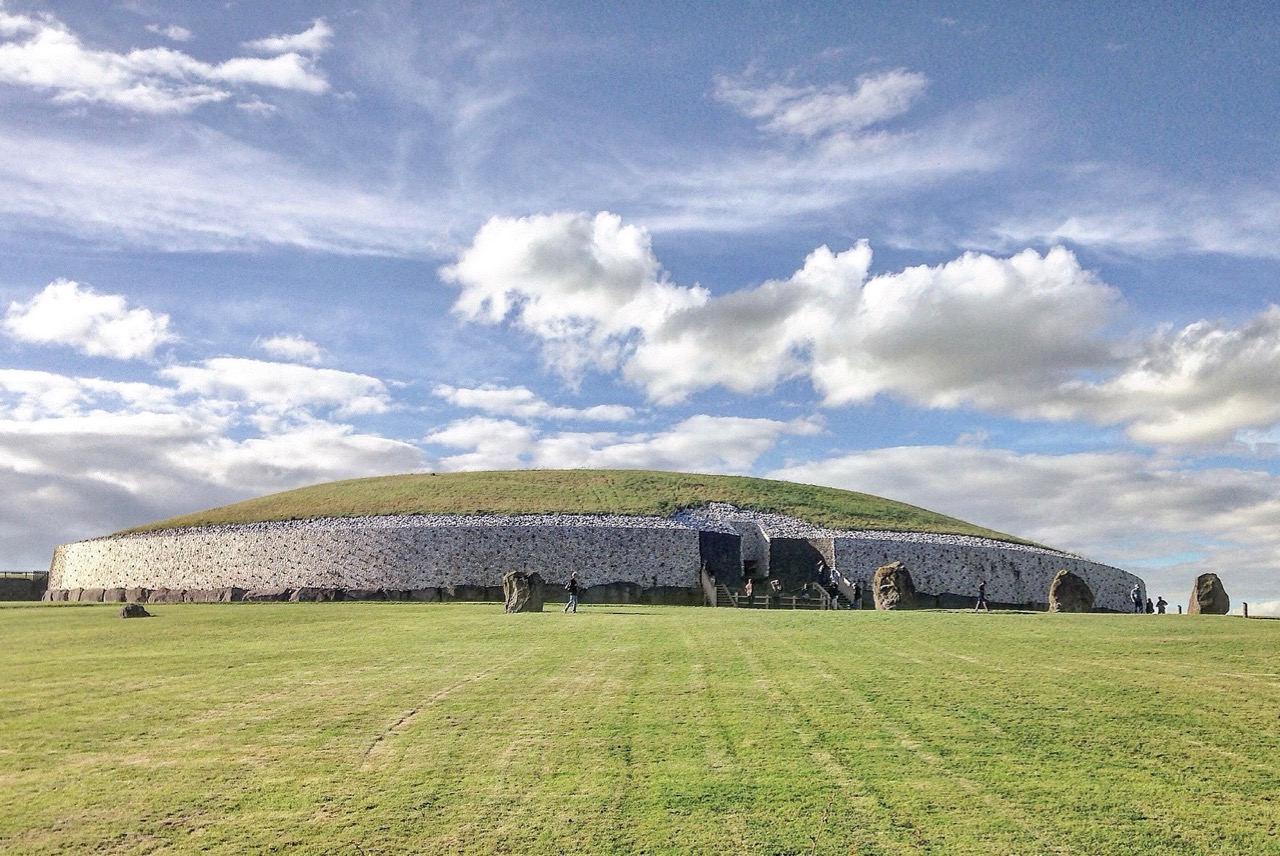
The great passage tombs of the Boyne Valley complex in Co Meath – Newgrange, Knowth and Dowth – have been known and celebrated (although not necessarily understood) by antiquarians over many centuries. Here’s an early survey plan of Newgrange drawn by Thomas Molyneux of Dublin in 1700:

The Boyne Valley monuments are famous for their megalithic art – inscribed stones which are integral to the structures, carved some 5,000 years ago. The drawing above shows the carved stones in the great passage which we now know is aligned to the sunrise at the winter solstice. Although quite crudely depicted, these are the earliest representational images we have of passage tomb art in Ireland. A century and a half later the surveyor and antiquarian George Victor du Noyer worked with the newly established Geological Survey of Ireland and became fascinated with the megalithic art of the Loughcrew Passage Tombs in Co Meath. His recording of this, using watercolour sketches, is remarkably accurate:

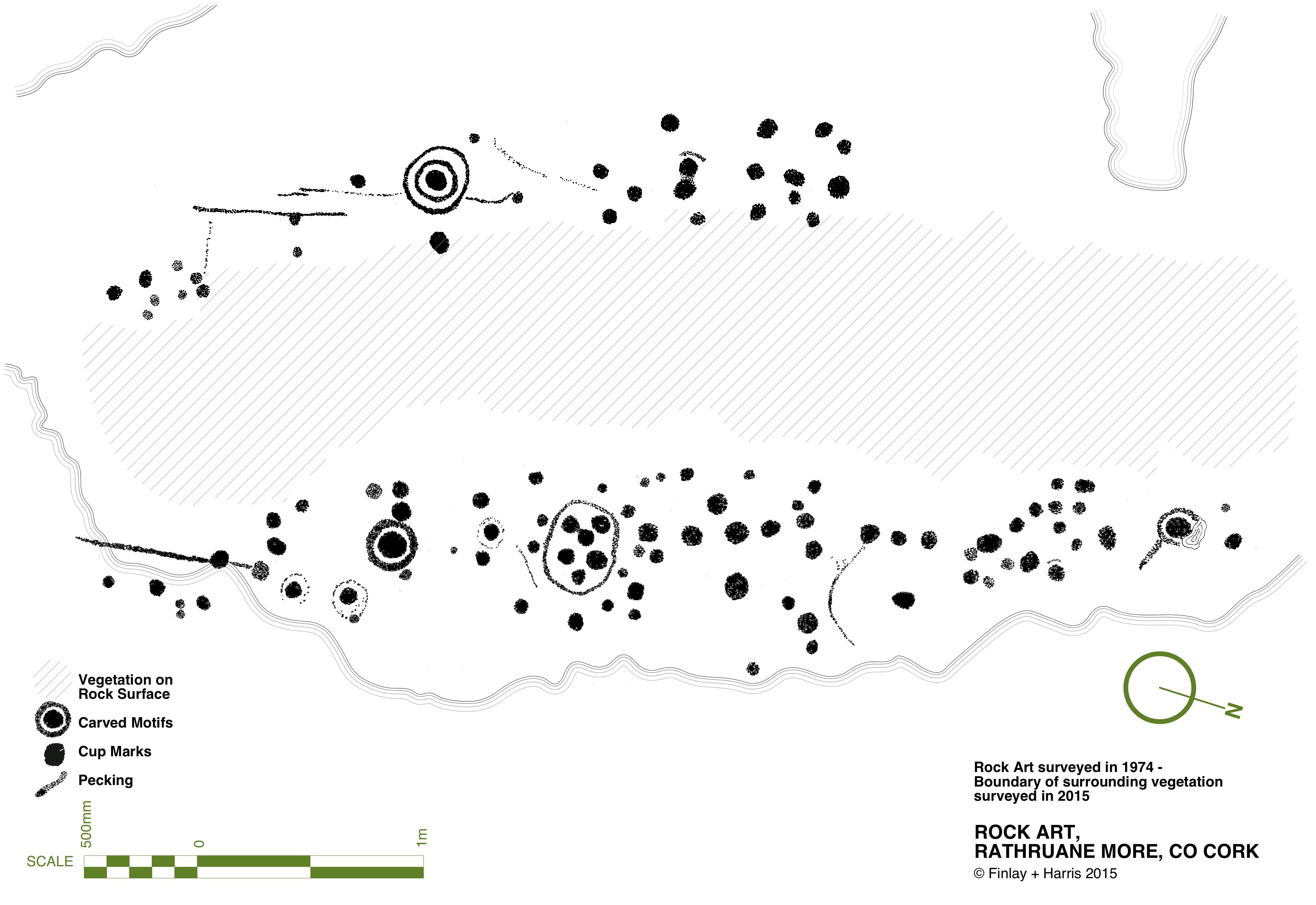
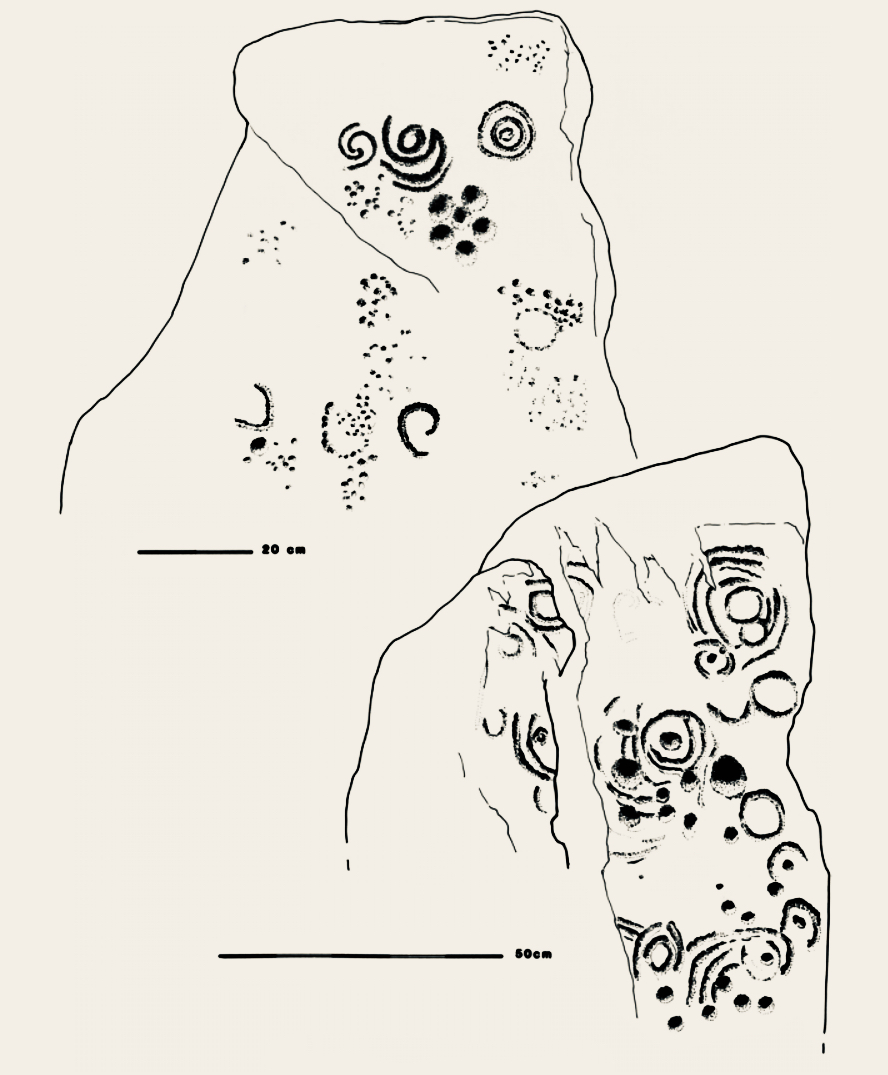
Another century on, and archaeology – and the recording of ‘ancient’ art – had increased in sophistication. Finola’s work in the 1970s used a combination of direct tracing and photography, and her opus is still one of the most comprehensive and striking collections of images of Prehistoric Rock Art. These differ from Passage Grave Art both in the motifs and the overall design of panels, but are thought to be of comparable age. Here is one of her images, of rock art at Rathruane More in West Cork:

Today’s post focusses on a site which was first noted in 1905 but not categorised or fully explored until the 1980s, when Professor Muiris O’Sullivan of UCD led a detailed excavation, over many years. The report in excavations.ie states:

. . . Knockroe is one of a small number of decorated sites outside of County Meath, and in the overall context of Irish passage tombs its megalithic art is very important. Only a few of the kerbstones are visible but they bear a profusion of kerb ornament which is matched only at the three great tumuli in the Boyne Valley. One of the decorated stones in the western chamber bears a remarkable likeness to the designs at Gavrinis in Brittany, France . . .

To find this gem (known locally as The Giant’s Grave – Finola’s post today describes another one!), you have to turn off the M8 at Cahir, and follow the N24 and N76 towards Ninemilehouse. If this sounds familiar, it’s because we also followed this route when we visited the Killamery High Cross, but this time turn before Ninemilehouse, at Garranbeg, and cross over the River Linguan, then follow the river to the County border (Tipperary / Kilkenny) where you will see signs to Knockroe Passage Tomb and Knockroe Slate Quarries. After your visit it’s easy to join the M9 at Knocktopher and carry on up to Dublin. It will add a little more than half an hour to the journey (plus the many hours you might want to spend exploring the fascinating passage tomb).

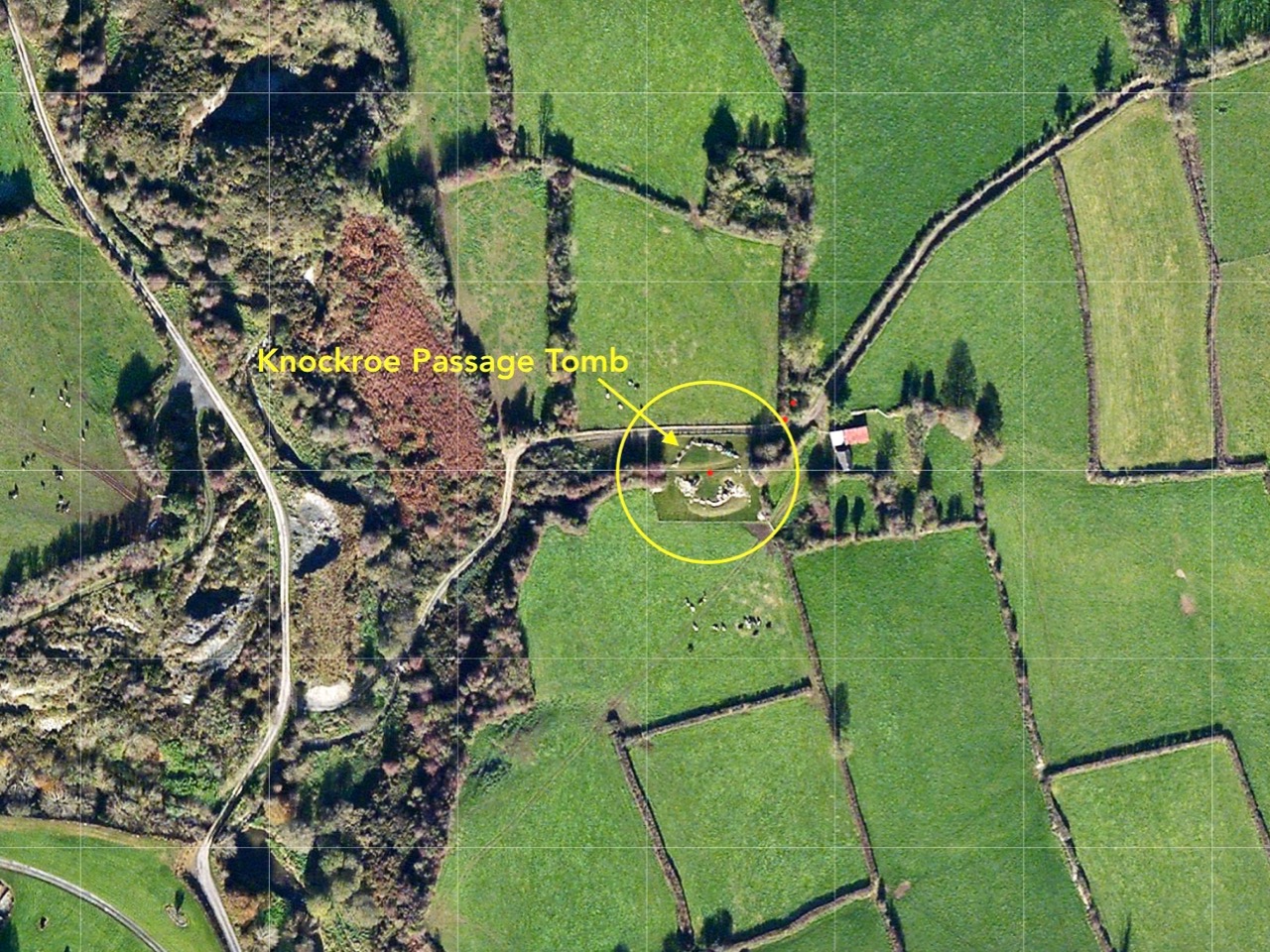
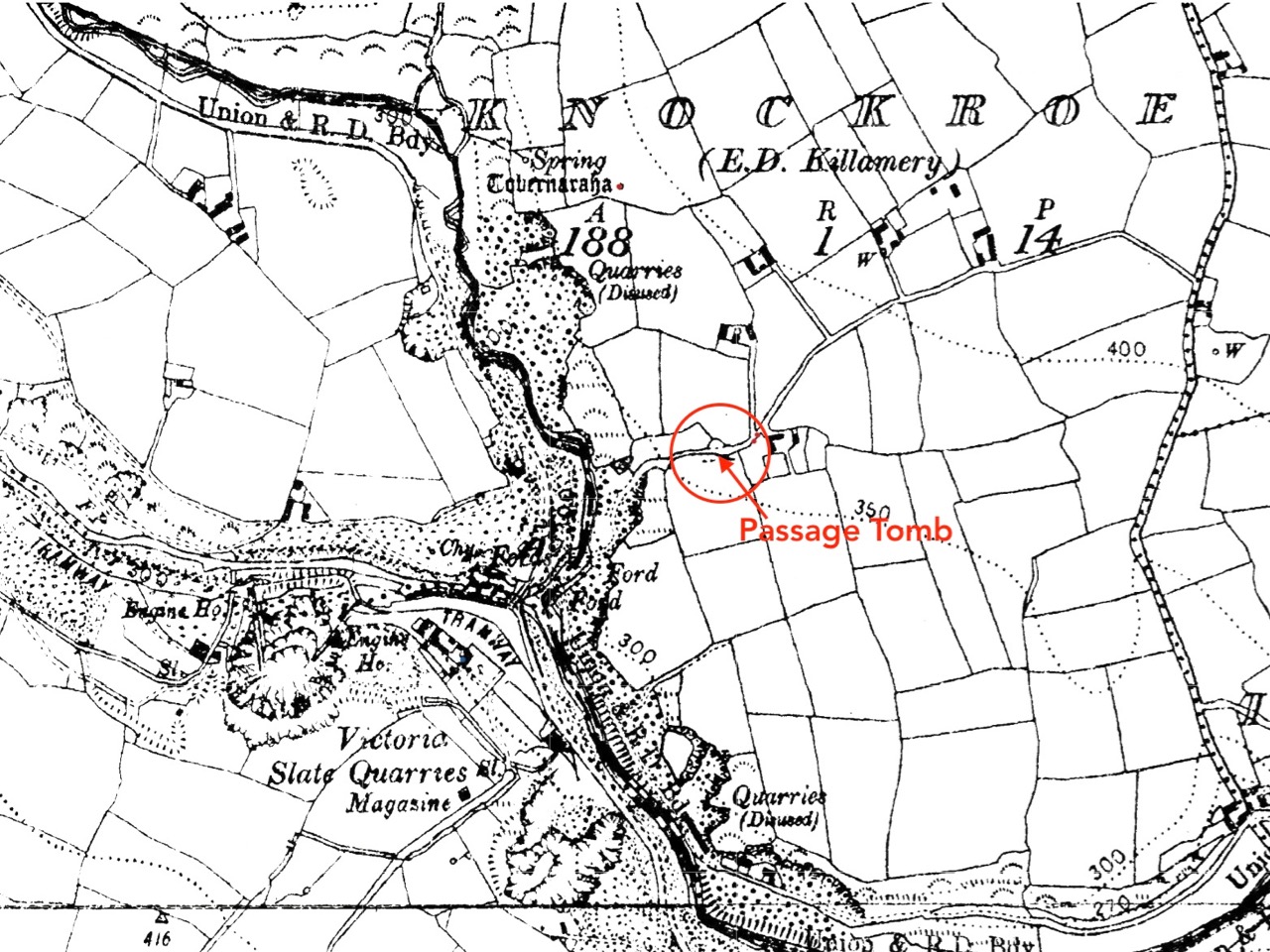
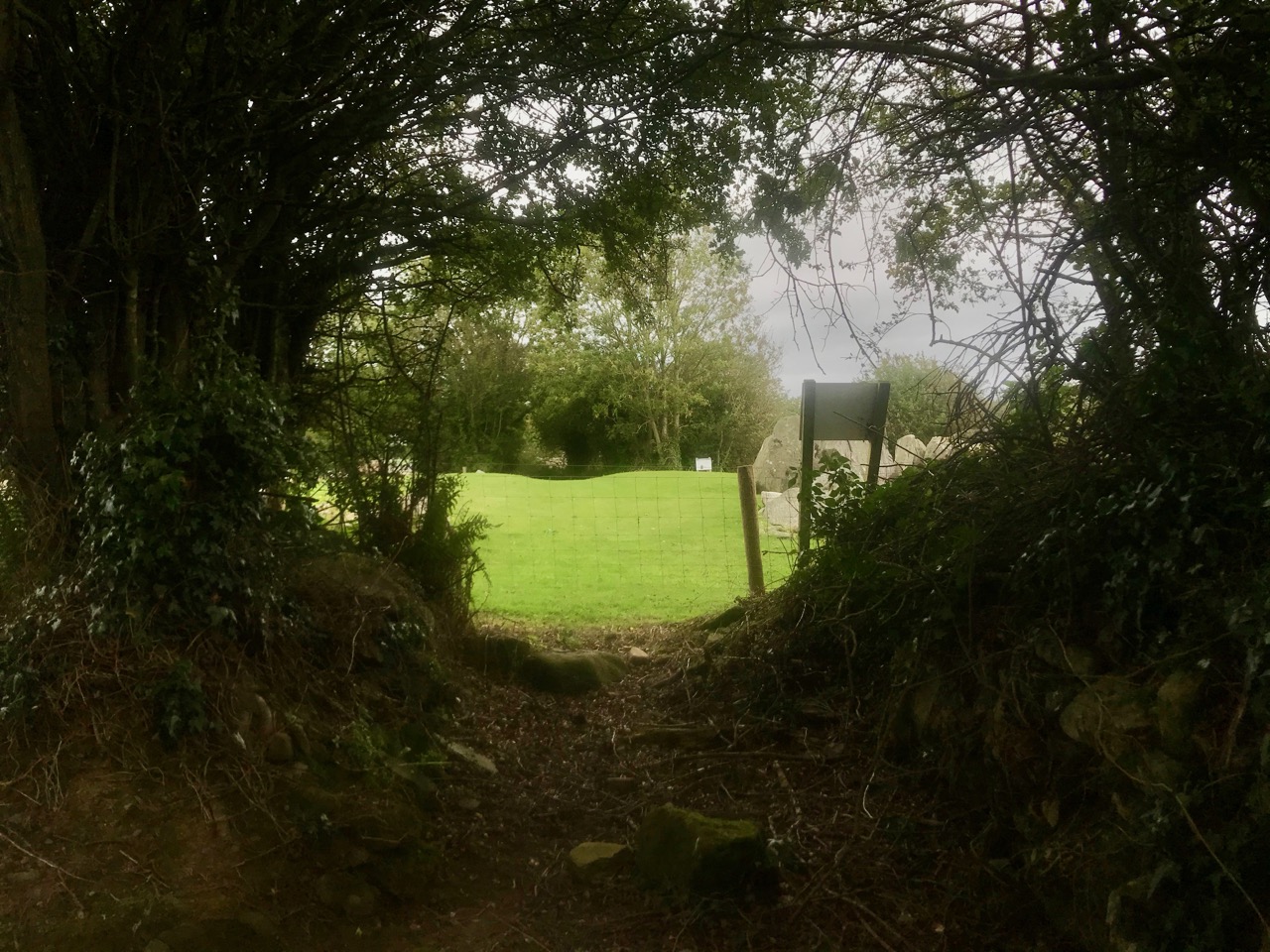
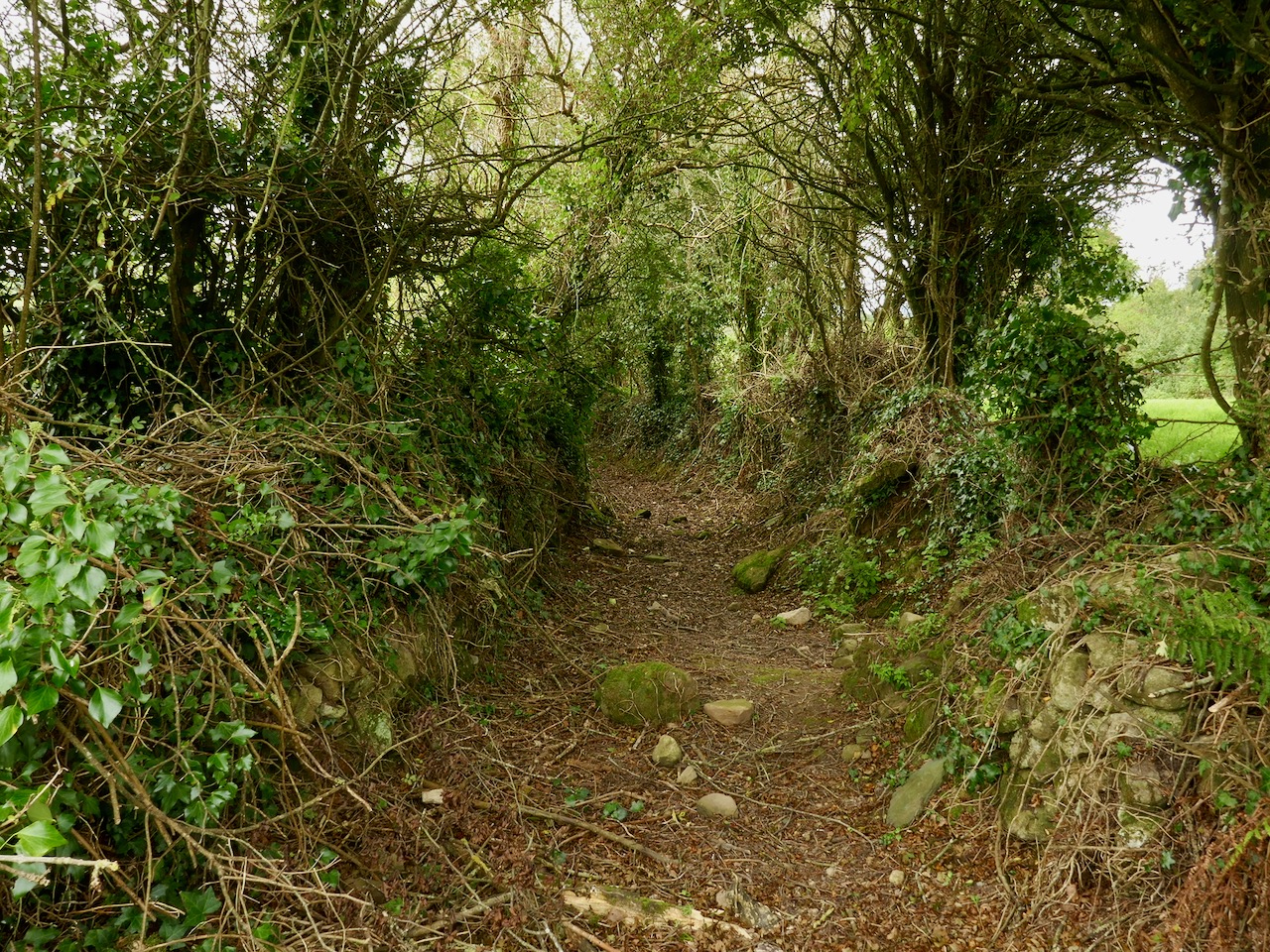
The aerial view might help to orientate you, while the 25″ OS map extract (above) dates from the late 1800s and shows the extent of the nearby Victoria Slate Quarry workings then. Slate was evidently taken from this site as early as the 14th century. In the aerial view it is possible to make out a distinct trackway which passes over the centre of the now identified passage tomb. This is clear to see on the site, and at either end the track continues, and is defined by ancient-seeming hedgebanks and established trees :

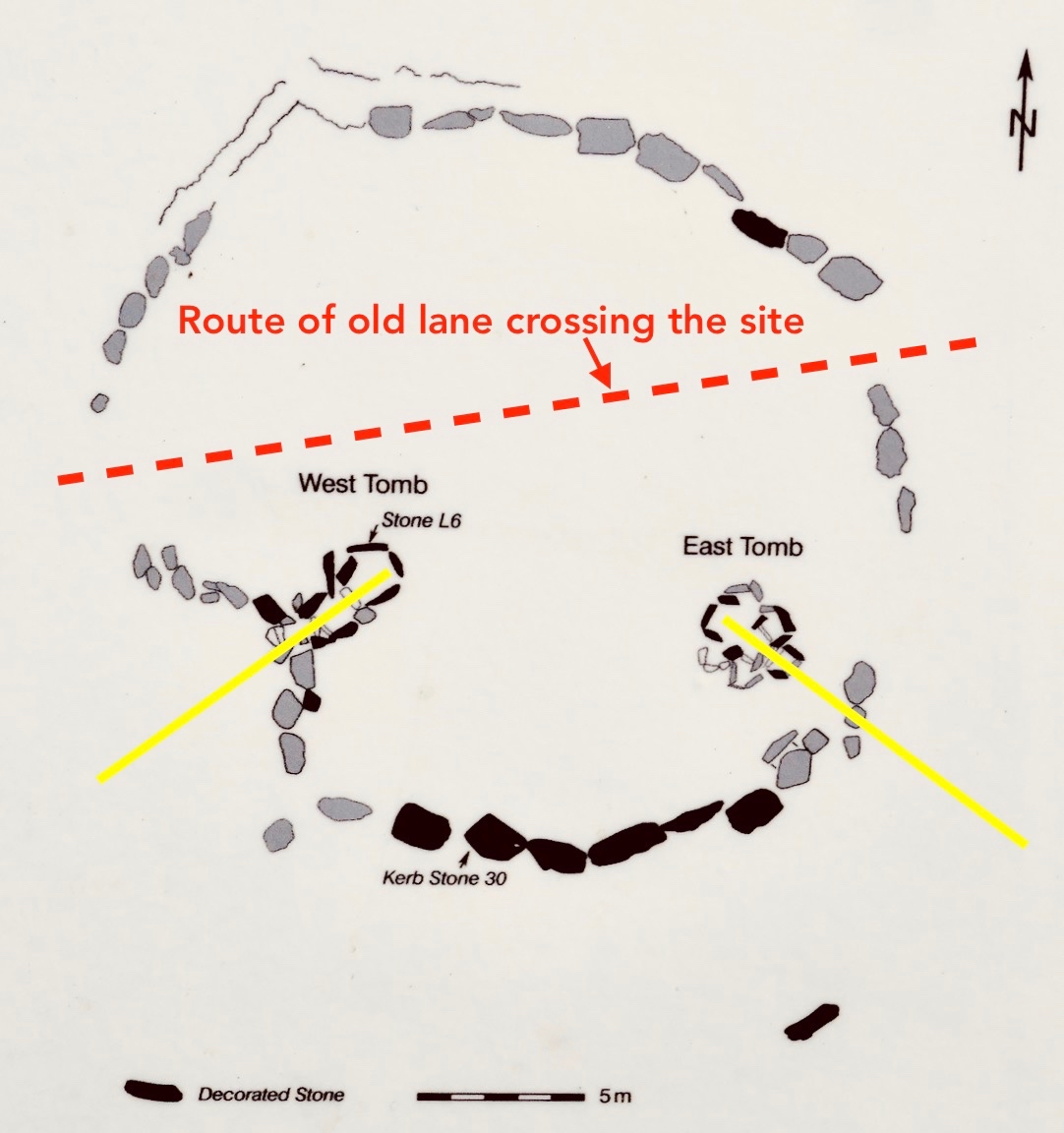
Tradition has it that the trackway was provided in the nineteenth century by the owners of the nearby Victoria Quarry to allow cattle to access the river when the quarry workings encroached on previous routes. A plan of the passage tomb is shown on the site notice board, and I have marked on it the laneway. This clearly shows the layout of the Neolithic monument, which would have been covered with an artificial mound, enclosing the two chambers. As with the larger monuments in the Boyne Valley – Newgrange, Knowth and Dowth – stones in the passage chambers and some of the kerbs are decorated, and the chambers themselves have solar alignments, reportedly with sunrise (east) and sunset (west) on the winter solstice.

As yet we have not been to Knockroe at the winter solstice – it’s something we would like to do. We have attended the solstice celebration at our own West Cork site, Drombeg Stone Circle, and that is a great community experience. But Pete Smith has provided this fascinating visual record of the Knockroe Solstice recorded in 2016. Thank you, Pete!

But let’s turn our attention to the art at Knockroe. It’s what makes it so special. It’s not as spectacular as the larger examples in the Boyne Valley or Loughcrew (you might think of Knockroe as a ‘country cousin’) – but it is their equal in its scope and variety. And – what we really liked – you can have the place all to yourself! There is no visitor centre, no queueing or paying – nothing to spoil the ambience. It is always freely accessible, and we didn’t see a soul while we were there. It is, of course, merely a skeleton of what it once was – five thousand years ago – but that doesn’t detract from its allure. It’s a place imbued with things we don’t understand, or can only guess at – left behind for us by our distant ancestors. And, hopefully, we will keep it safe for the future.

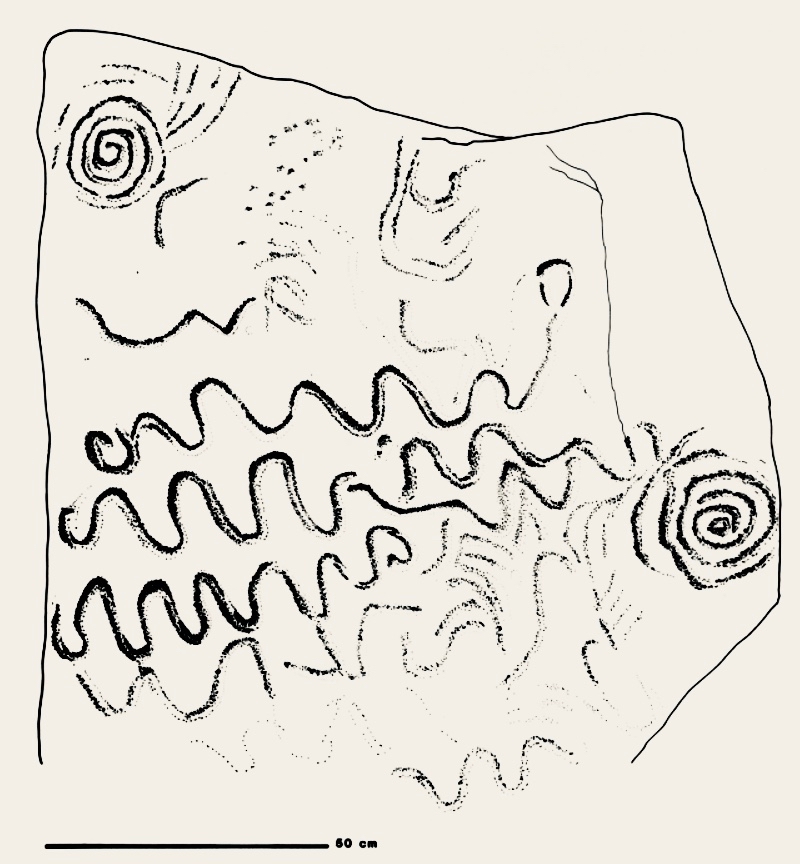
Muiris O’Sullivan penned a comprehensive article in The Journal of the Royal Society of Antiquaries of Ireland Vol 117, 1987 – The Art of the Passage Tomb at Knockroe, County Kilkenny. This is well illustrated with drawings by Ursula Mattenberger based on rubbings taken directly from the stones. Here is her impression of Stone 8 (numbering from the excavation report), which is directly facing us in the photograph above:

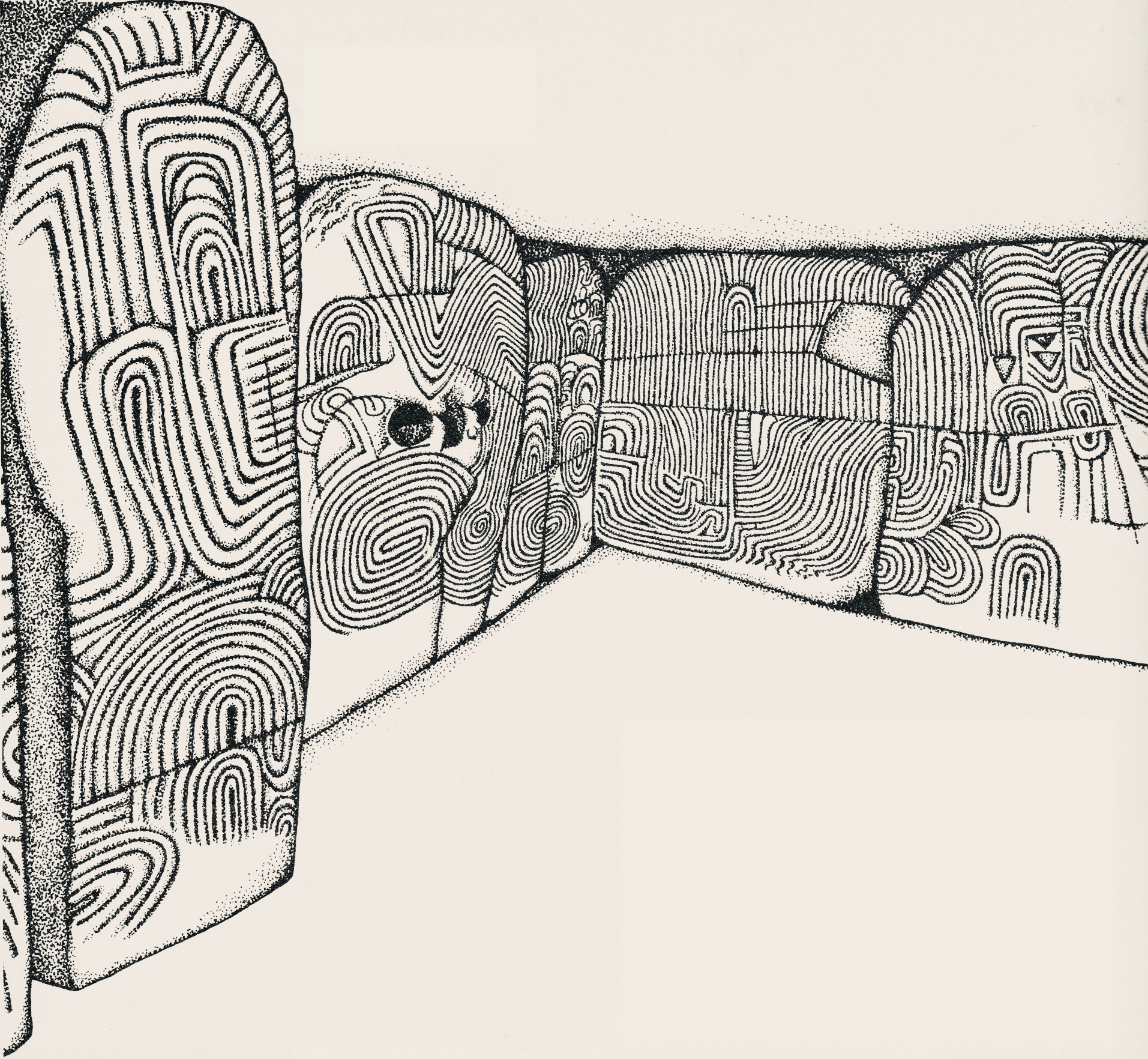
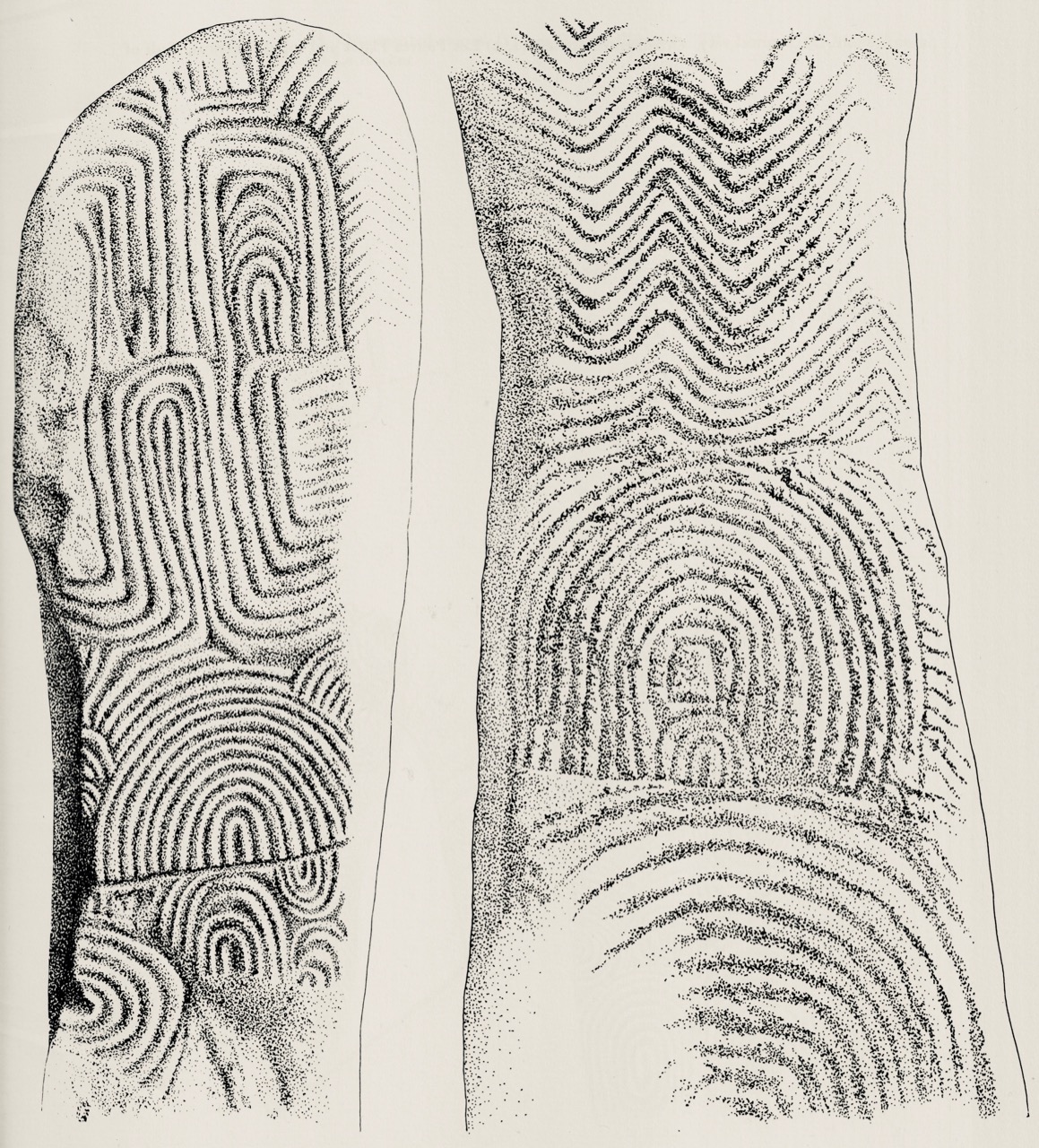
This example is very unusual in the corpus of passage grave art in Ireland. But it bears a resemblance to examples on the island of Gavrinis, in the Gulf of Morbihan, on the southern coast of Brittany, France. This has been noted by several commentators, including Muiris O’Sullivan, and the suggestion has been made that the tomb builders at Knockroe could have been directly influenced by the Gavrinis examples (which are generally thought to be earlier than the Irish parallels). It has even been suggested that passage tomb builders travelled from one site to another (like the medieval cathedral builders), and that this comparison demonstrates this. Have a look at these images from Gavrinis and see what you think (the first is courtesy of Martin Brennan, taken from his The Stars and The Stones, Ancient Art and Astronomy in Ireland, Thames and Hudson 1983):

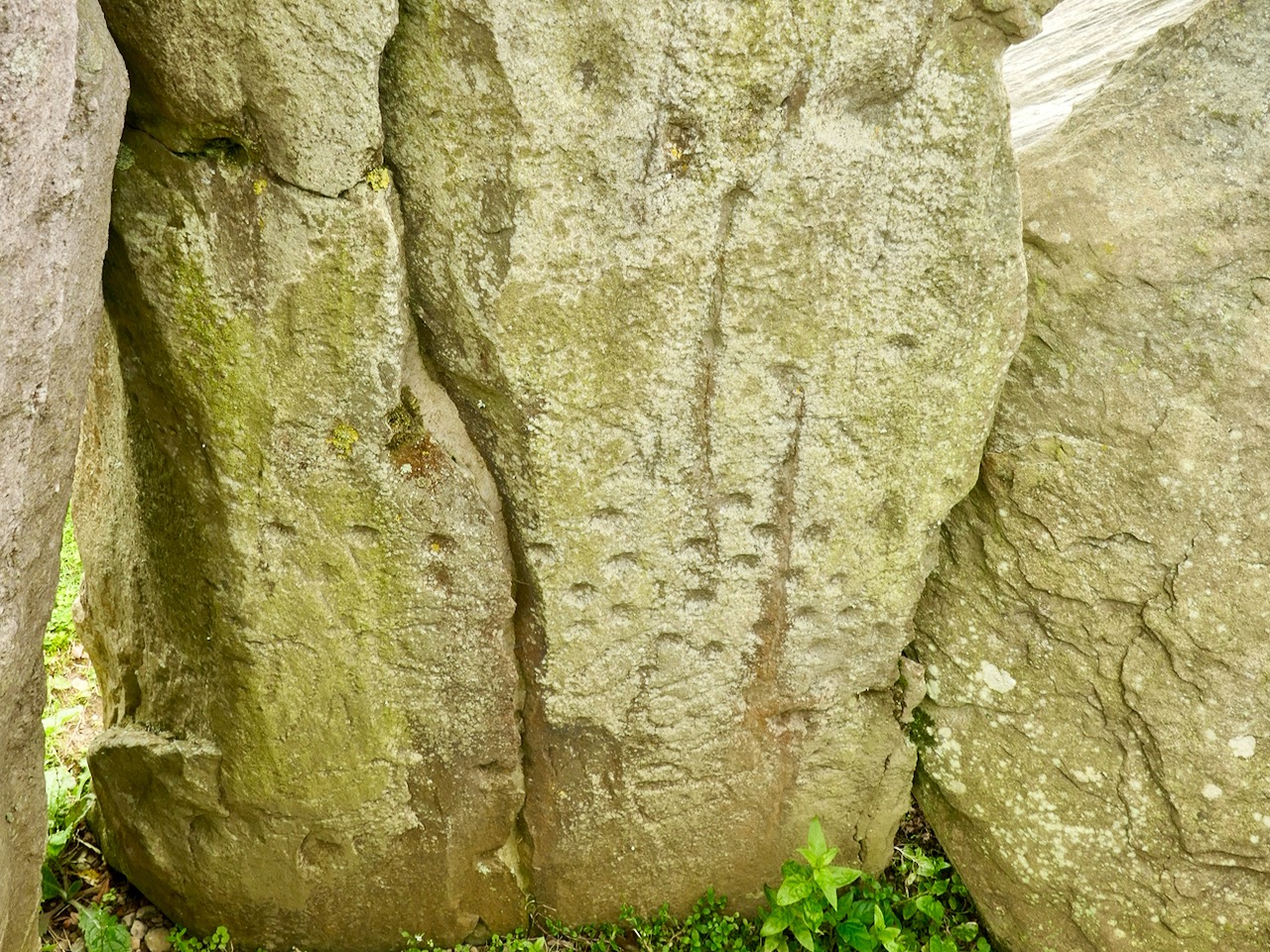
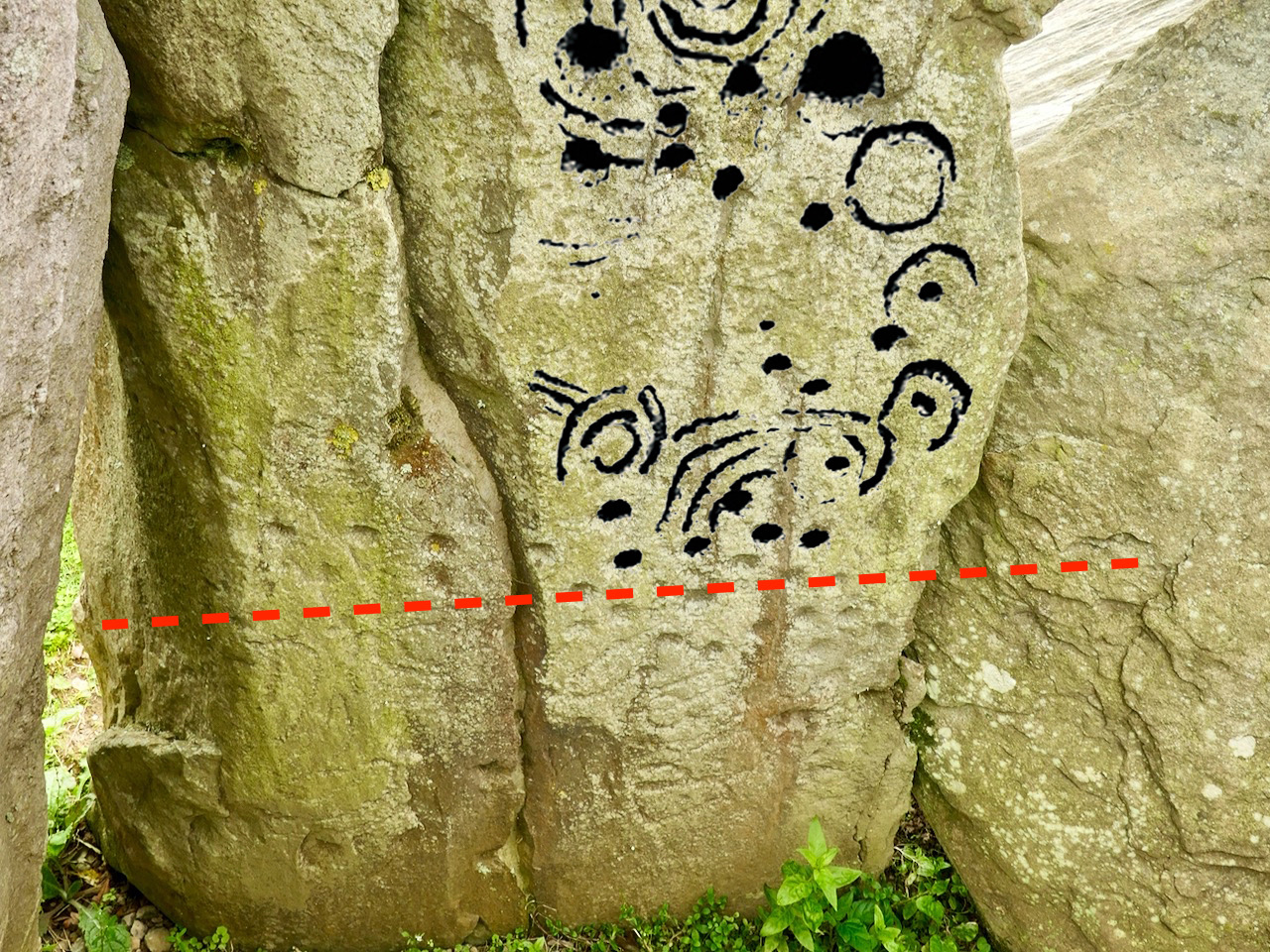
The excavation of Knockroe involved the removal of earth and debris from the collapsed mound which would have covered the tomb originally. This clearance revealed more of the art and here is an interesting comparison which shows the evolving history of the site. Firstly, our recent photograph of Stone 12, followed by the excavation record of this stone (lower right of the drawing) from the 1980s:

Here is our photograph again, with some of the art from the drawing above superimposed. It’s clear that the full extent of the artwork on Stone 12 was not visible below the red line when the drawing was made: Muiris O’Sullivan notes in his reports that he was aware that some of the art was hidden below what was then ground level.

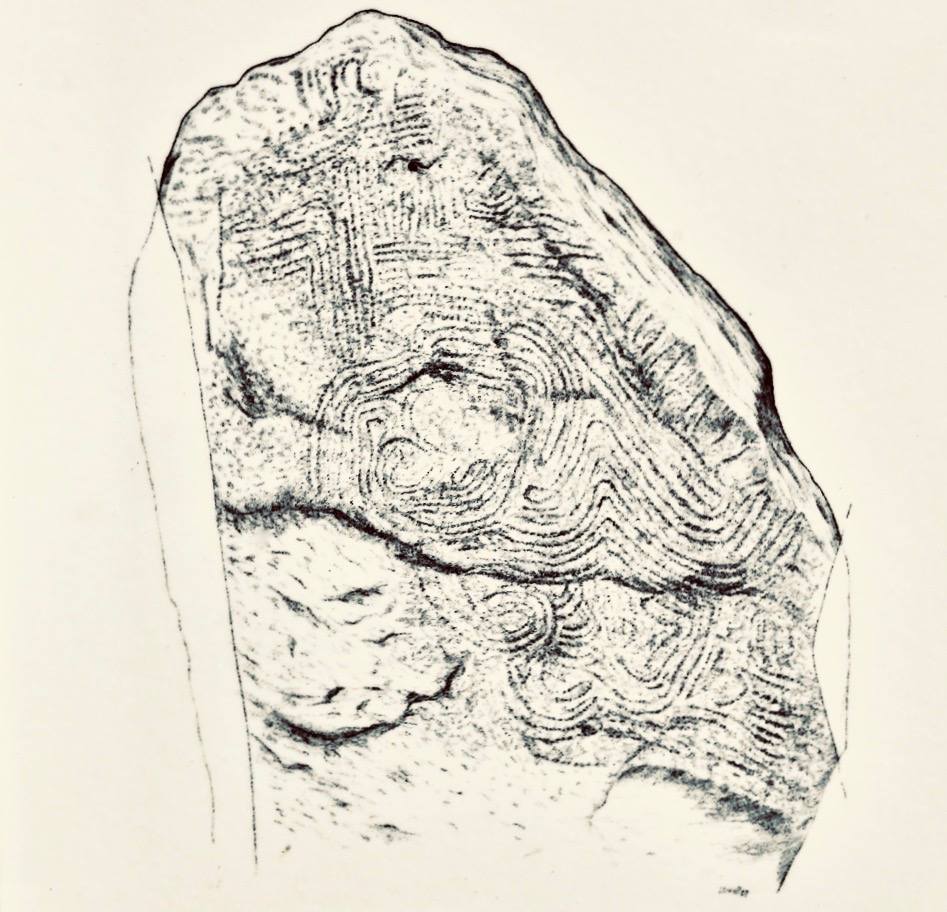
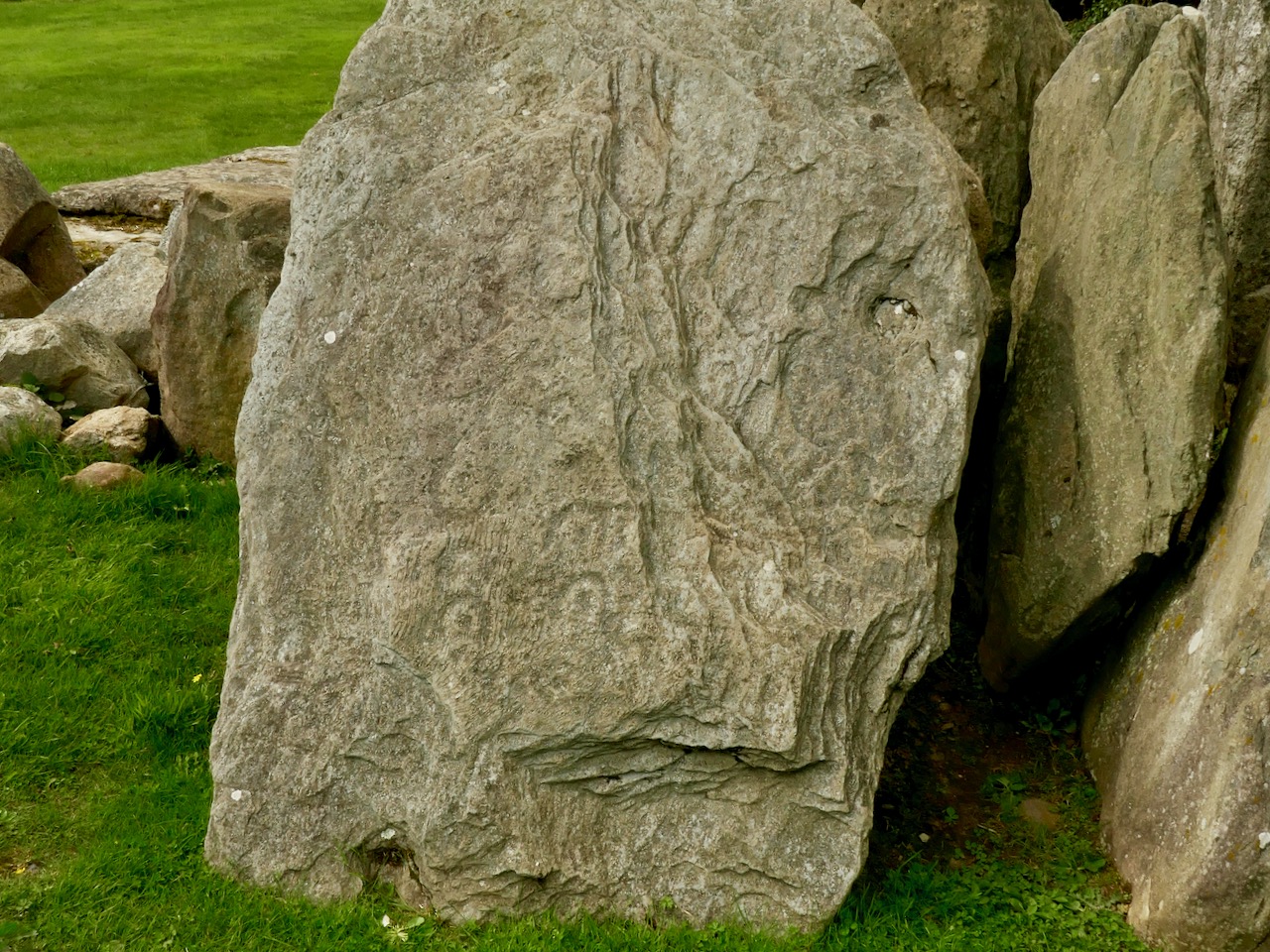
Ursula Mattenberger’s drawing above also illustrates Rock 5 (upper left) and shows the very distinctive ‘rosette’ motif of six cup-marks. Examples of this motif have been found at rock art sites – including the one on Finola’s drawing of Rathruane More, nearer the top of this post. Here’s a photograph of the Knockroe example:

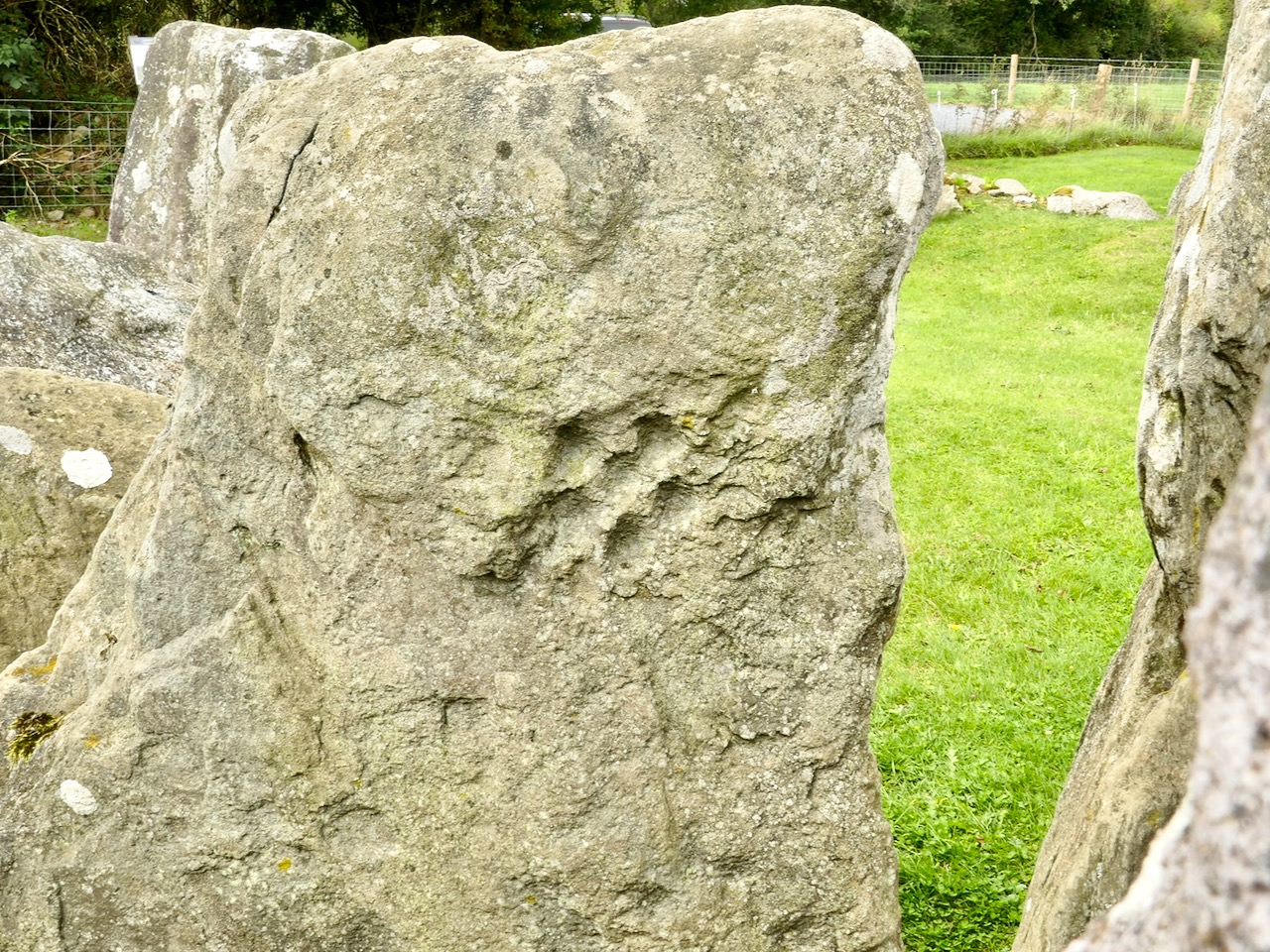
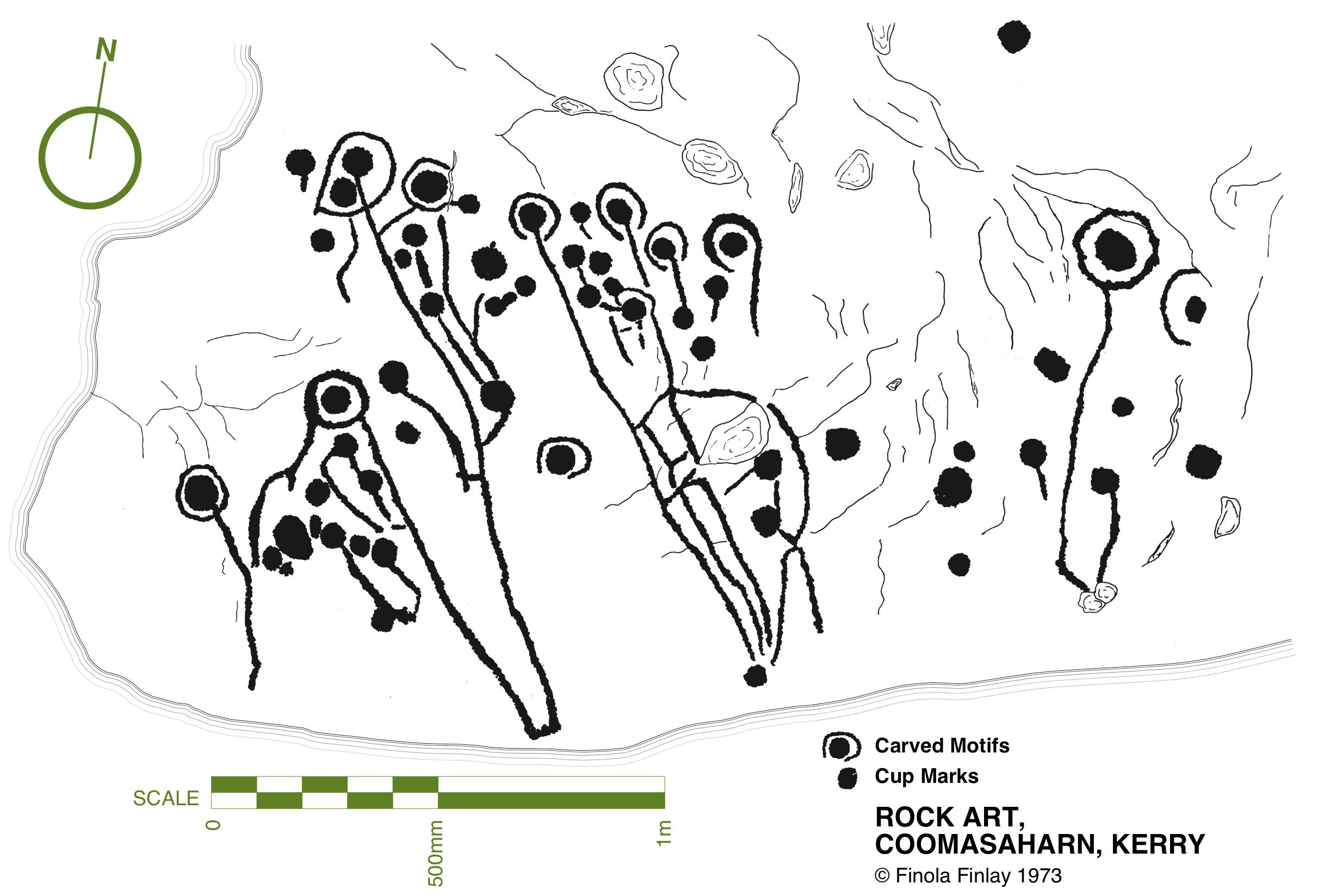
While making comparisons with rock art (and remembering that passage grave art and rock art are distinctive categories), here’s another decorated slab at Knockroe, not entirely legible in its weathered state. It seems to show a number of incomplete cup-and-ring motifs but in its own right this is known as a horseshoe motif. Below it is another of Finola’s drawings from 1973, perhaps showing something similar at Coomasaharn, Co Kerry:

The Knockroe site is endlessly fascinating. O’Sullivan’s excavations revealed a quantity of smaller quartz boulders which appear to have collapsed from a possible quartz facing reminiscent of Professor O’Kelly’s reconstruction of the Newgrange mound (image below by Tjp Finn via Creative Commons):

Hopefully I have given you enough here to whet your appetite and lead you off the motorway to explore the exceptional remains at Knockroe, Co Kilkenny and, in particular, its remarkable examples of passage grave art.

Mizen Magic 18: The Prehistoric Landscape of Arduslough

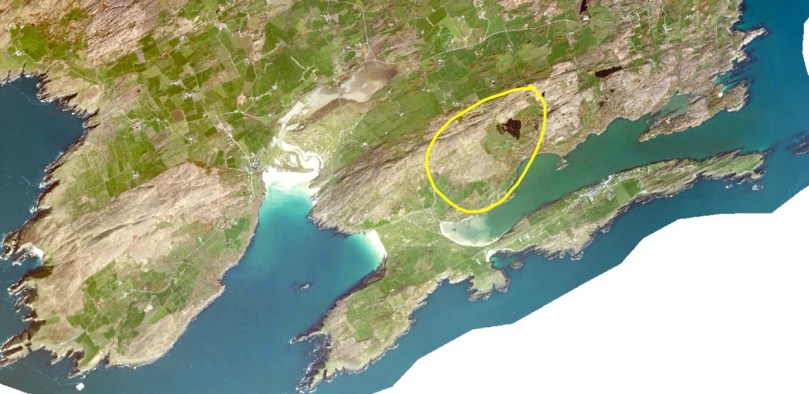
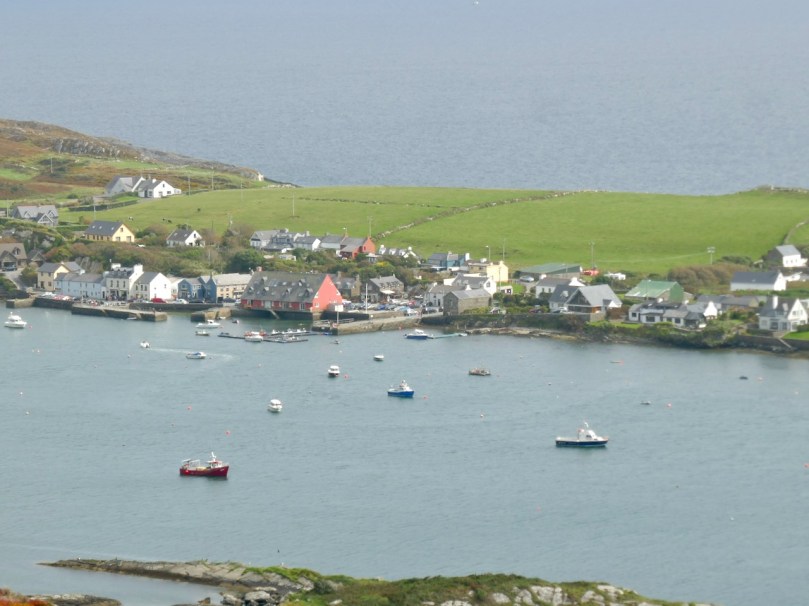
There are parts of West Cork that seem to hold within them all the memories and markers of eons. Such a place is Arduslough, on the high ground across from Crookhaven (below, map and photo) and west of Rock Island (above).

Technically, the places we explored are in three different townlands – Tooreen, Arduslough and Leenane, but mostly they fall within the boundaries of Arduslough. The name has been variously translated – Árd means high place and Lough means lake, both of which seem appropriate, but in fact the placename authority, Logainm, renders it as Árd na Saileach meaning High Place of the Sallies, or Willow Trees. Not much in the way of willows is obvious now, but the lake is certainly central to your view in the townland.

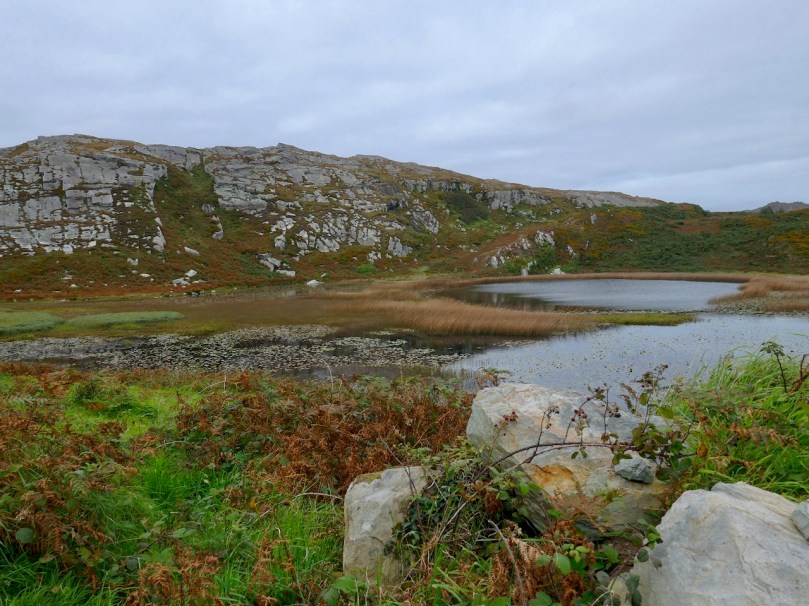
The Lake is the source of drinking water for Crookhaven and is the home, according to a story collected in the late 1930’s, of. . .

. . . an imprisoned demon of the pagan times. He is permitted to come to the surface every seven years on May morning and addresses St. Patrick, who is supposed to have banished him, in the following words “It is a long Monday, Patrick”. The demon does not speak in the English but in the vernacular. The long Monday refers to the day of General Judgement. Having expressed these words his chain is again tightened, and perforce he sinks to the bottom of the lake for another period of seven year His imprisonment will not expire till the last day.

We saw no sign of the demon and the lake looked remarkably untroubled, with its floating islands of water-lilies.

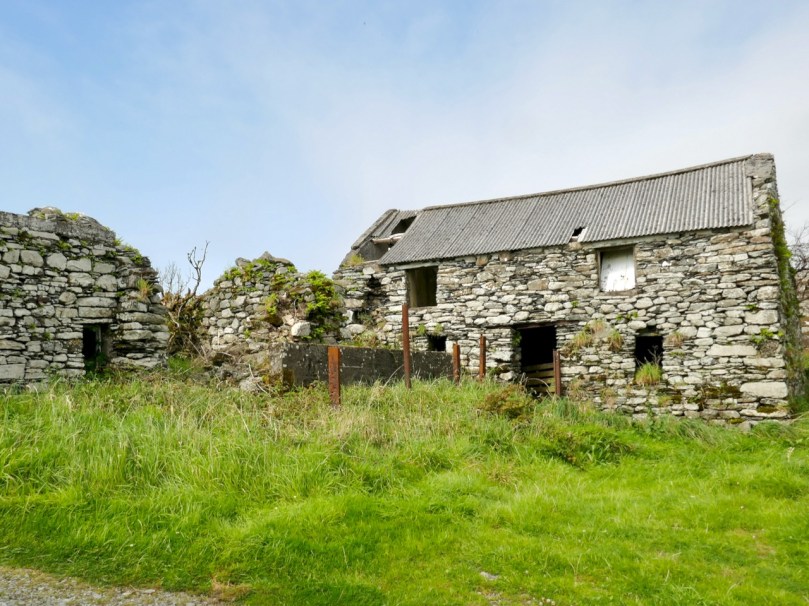
For a relatively small area, Arduslough abounds in archaeological monuments – there are four wedge tombs, three cupmarked stones, a standing stone and a piece described as either an Ogham Stone or Rock Scribings, depending on what you read. The remains of old cabins dot the landscape too, reminding us that this was a much more populous place before famine and emigration decimated the population.

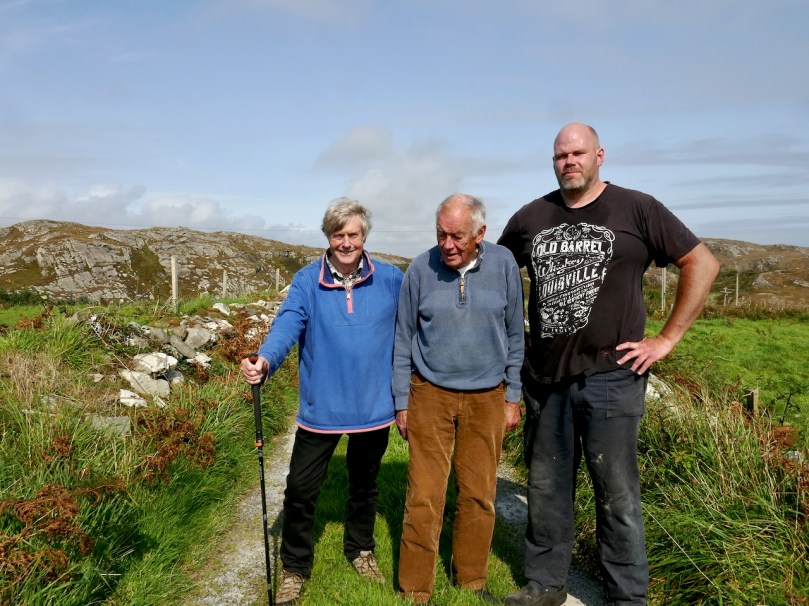
The standing stone, and Robert with Jim and Ciarán O’Meara

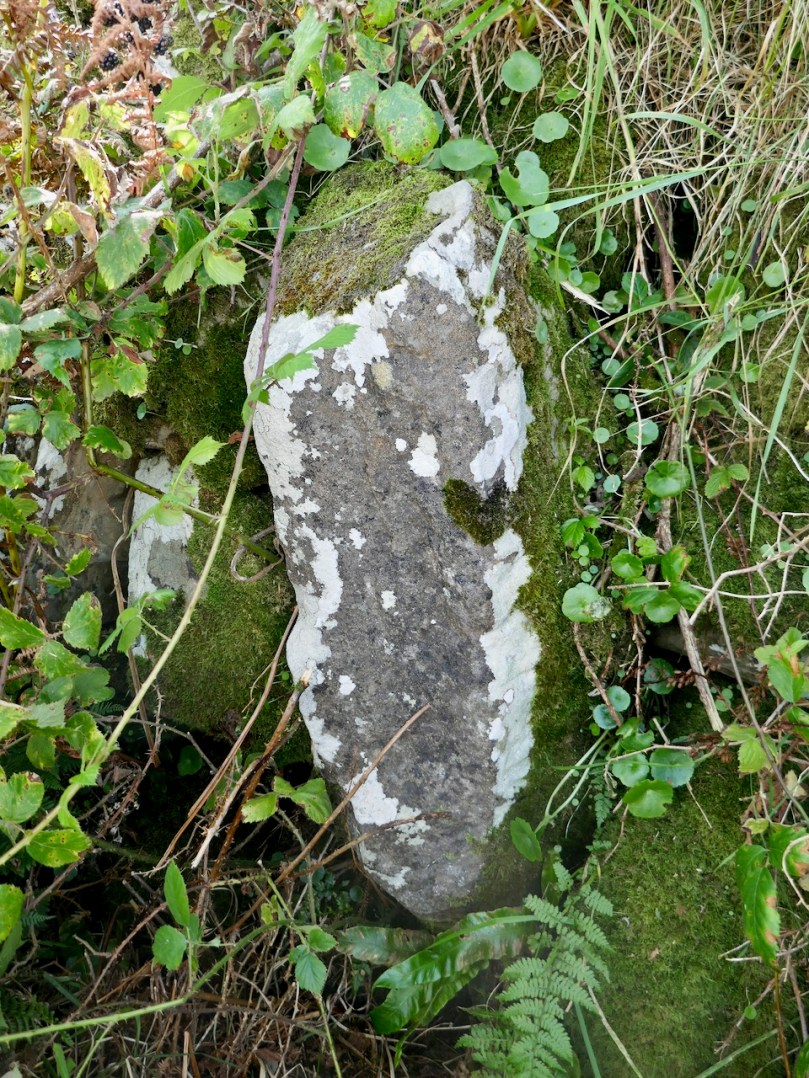
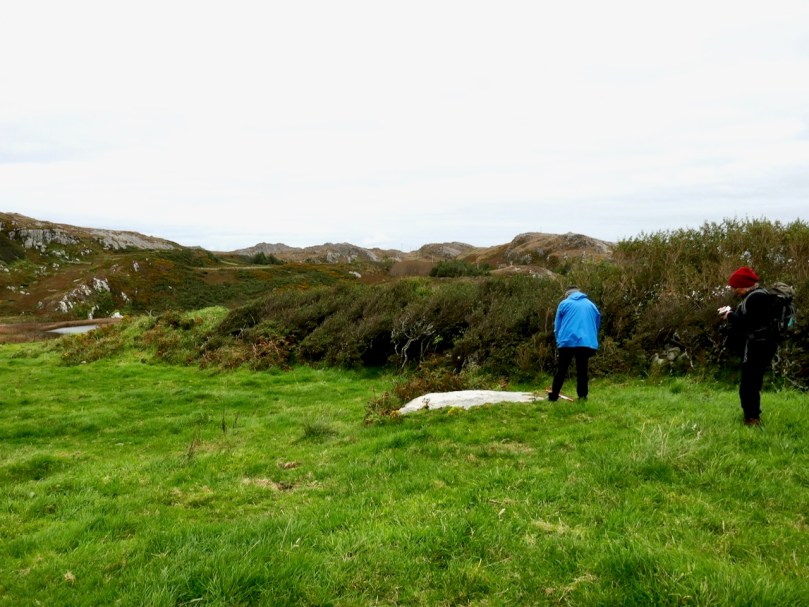
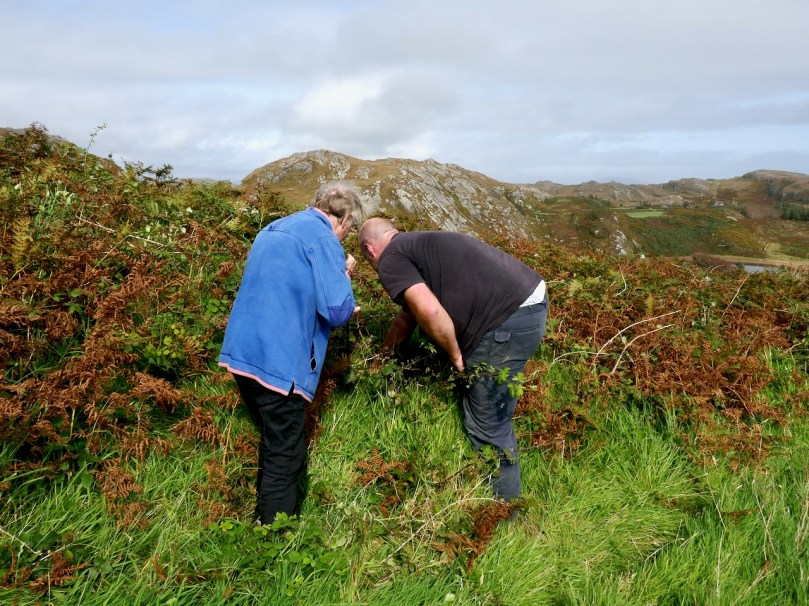
Arduslough is the home of esteemed local historian Jim O’Meara, who grew  up in Goleen but spent most of his adult life teaching in Belfast. We met up with Jim and his son Ciarán, who very kindly offered to show us the Ogham stone. It was so well hidden under layers of brambles and bracken, and built into a field fence, we would never have found it on our own.

It is impossible to say if it is real, or even false Ogham, as it is heavily weathered and lichened, but if we turn again to the School’s Folklore Collection, we find this entertaining account of it:

There is a stone in Arduslough, a townland on the hill to the north of Crookhaven, on which are very old characters or ancient writing. It is very difficult to discern these markings now as the centuries during which they were exposed to the weather have obliterated them. The following story explains the origin of them.

In ancient times there lived in Toureen a man named Pilib. He informed on some party of Irish soldiers who were hiding in the heather there. The enemy came on them and burned the heather round them in which the soldiers perished. The stone was erected in this spot and the event was recorded on the stone. Years passed and the language underwent a change. In later years the people did not understand what was recorded on the stone, and went to the Parish priest asking him to interpret it. He translated it as follows – ‘that every sin will be forgiven but the sin of the informer Pilib an Fhraoich [Philip of the Heather].

We had previously located one of the three cup-marked stones, including a visit a couple of days earlier with Aoibheann Lambe of Rock Art Kerry (below). Ciarán thought he might be able to find another one, but extensive searching and bracken-bashing failed to turn it up.

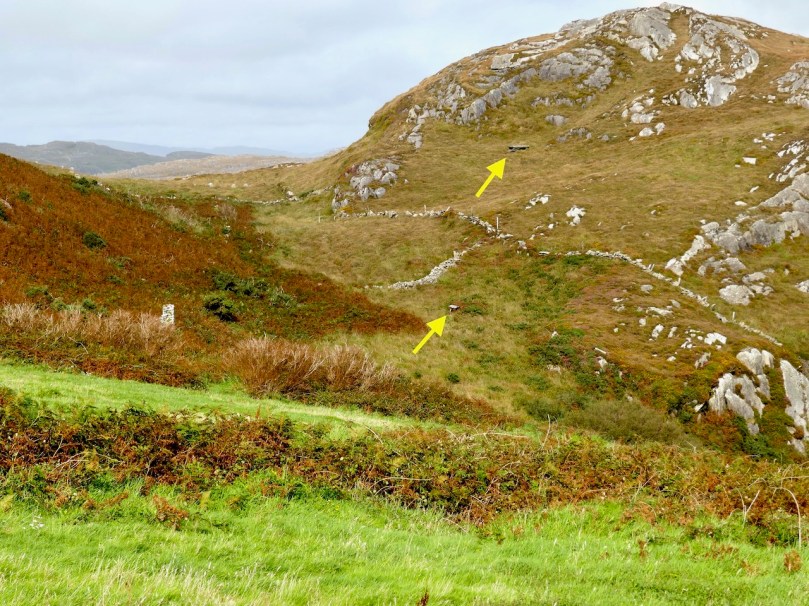
The folklore collection is full of references to mass rocks, druid’s altars, and giant’s graves, as you would expect from the number of Bronze Age wedge tombs recorded in this area. (For more on Wedge Tombs, see my post Wedge Tombs: Last of the Megaliths.) Two of them are situated on the slope above the lake (below) and we left them for another day. A third is hard to spot and indeed we didn’t.

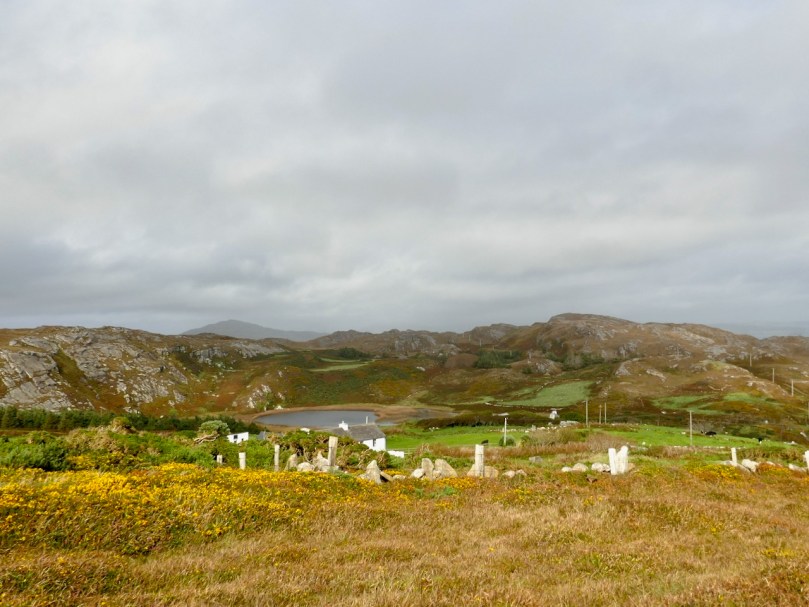
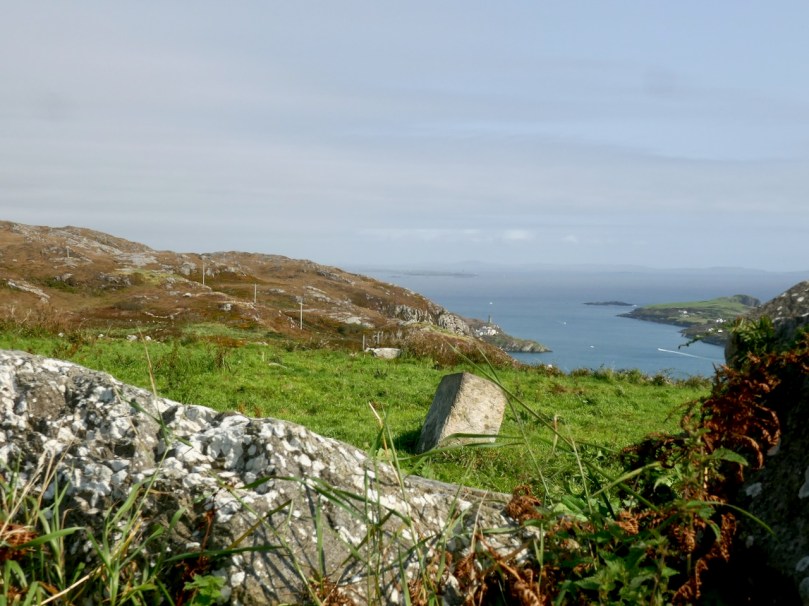
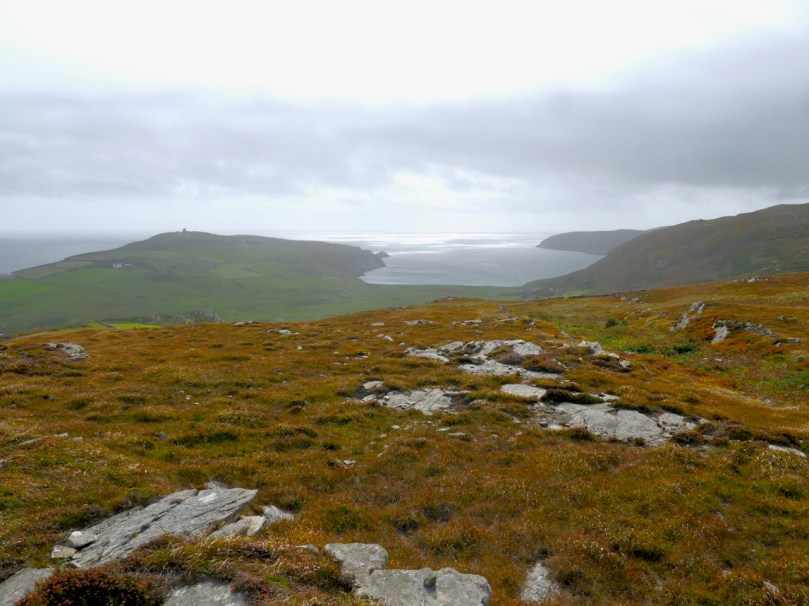
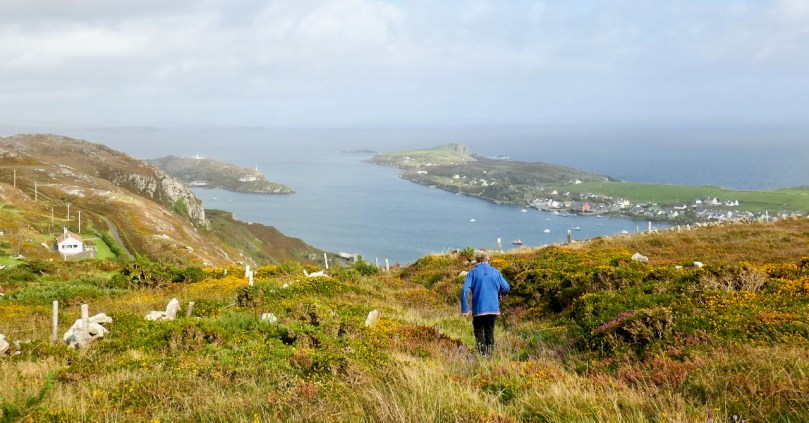
We headed up to the high ground west of the lake to find the one that local people still call the Giant’s Grave. What a spectacular setting this is! First of all, you are now on a plateau with panoramic views in all directions. West lie the two peninsulas of Brow Head and Mizen Head and the boundless sea beyond.

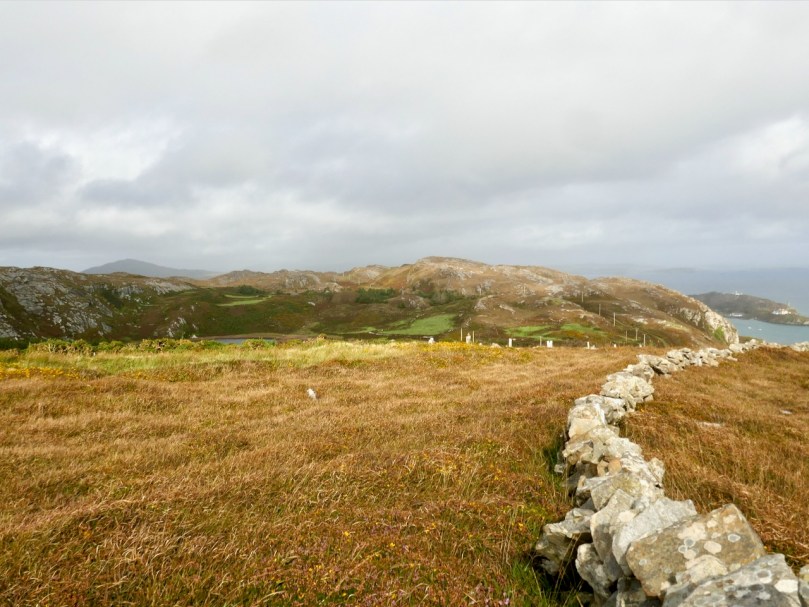
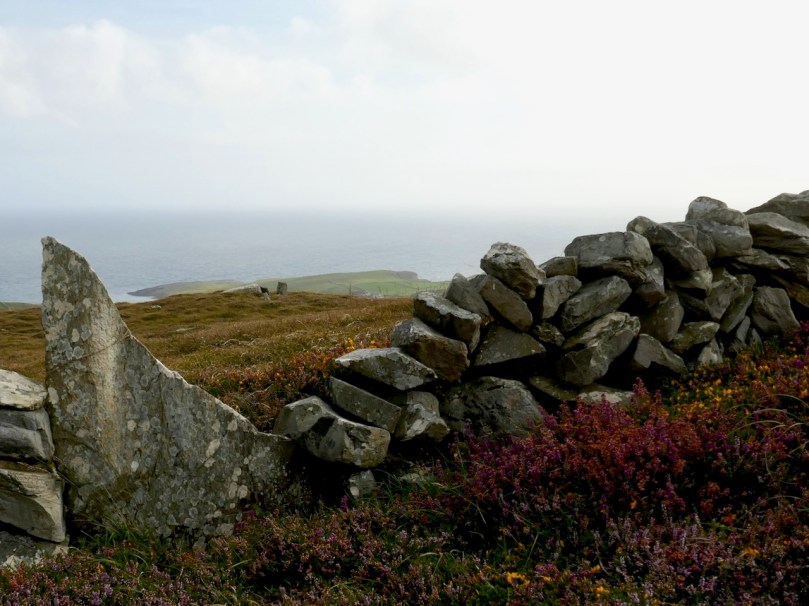
This is heathland, covered in heather and Western Gorse – a colour combination that has the power to stop you in your tracks – and traversed by old stone walls.

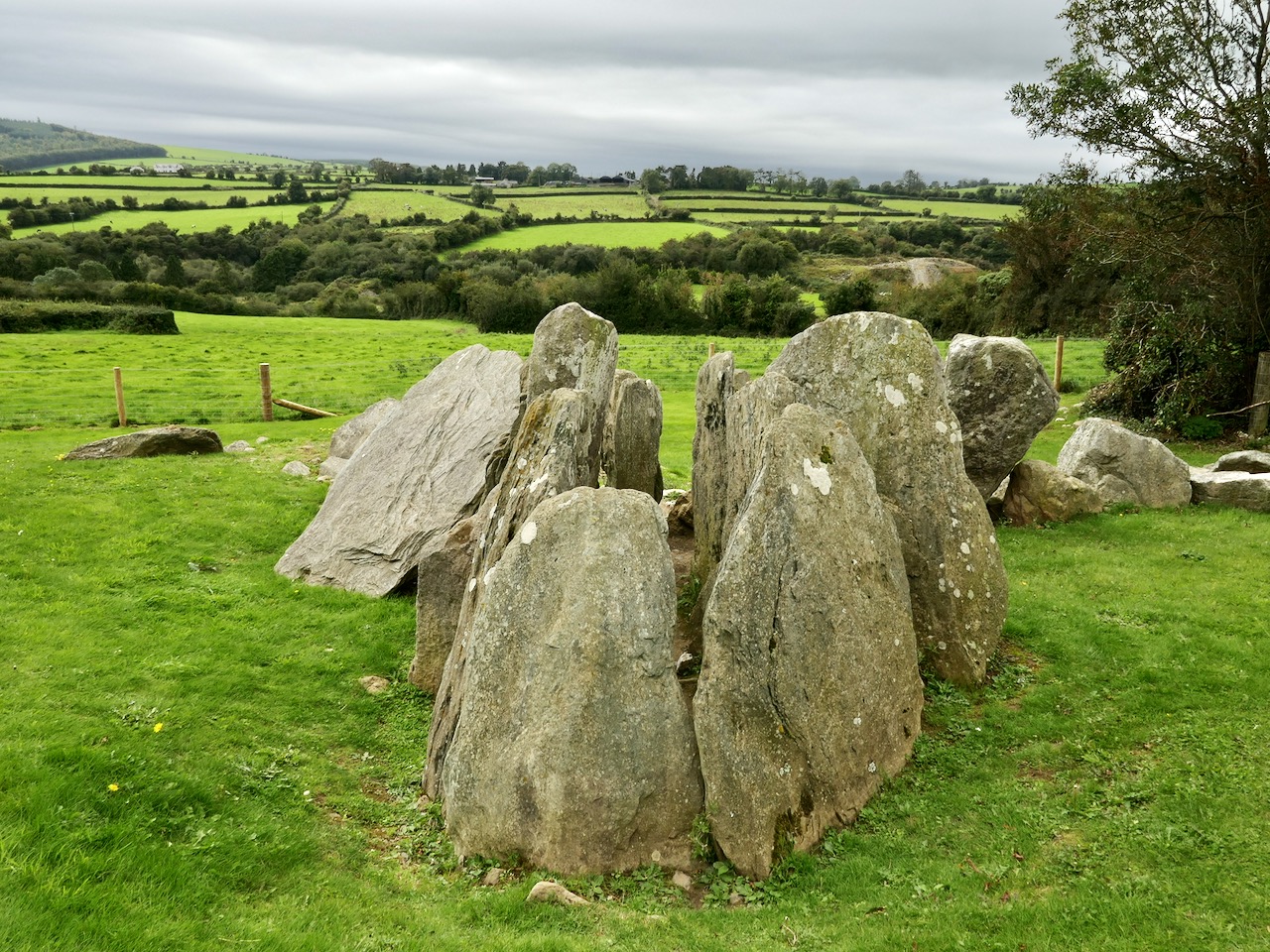
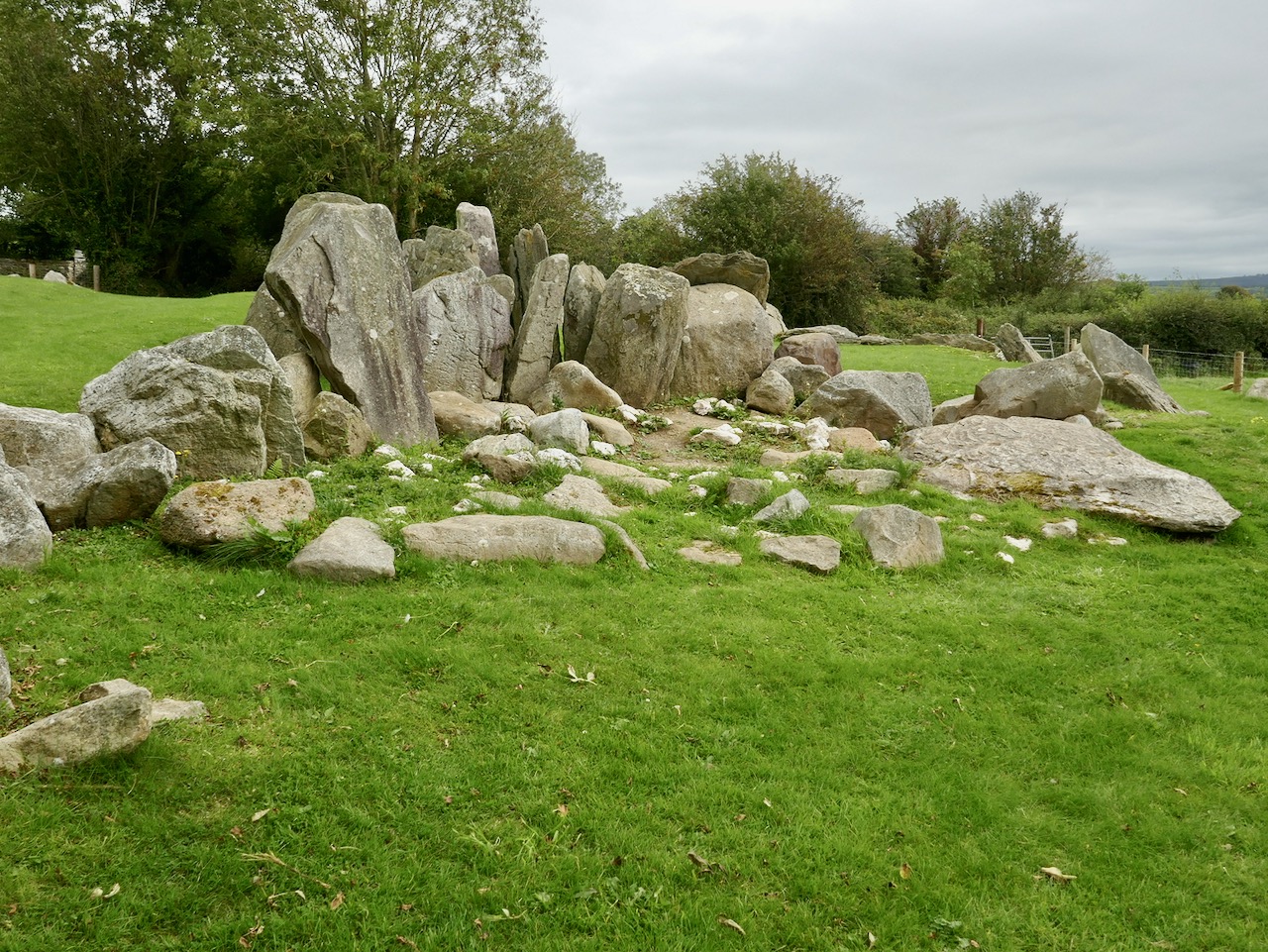
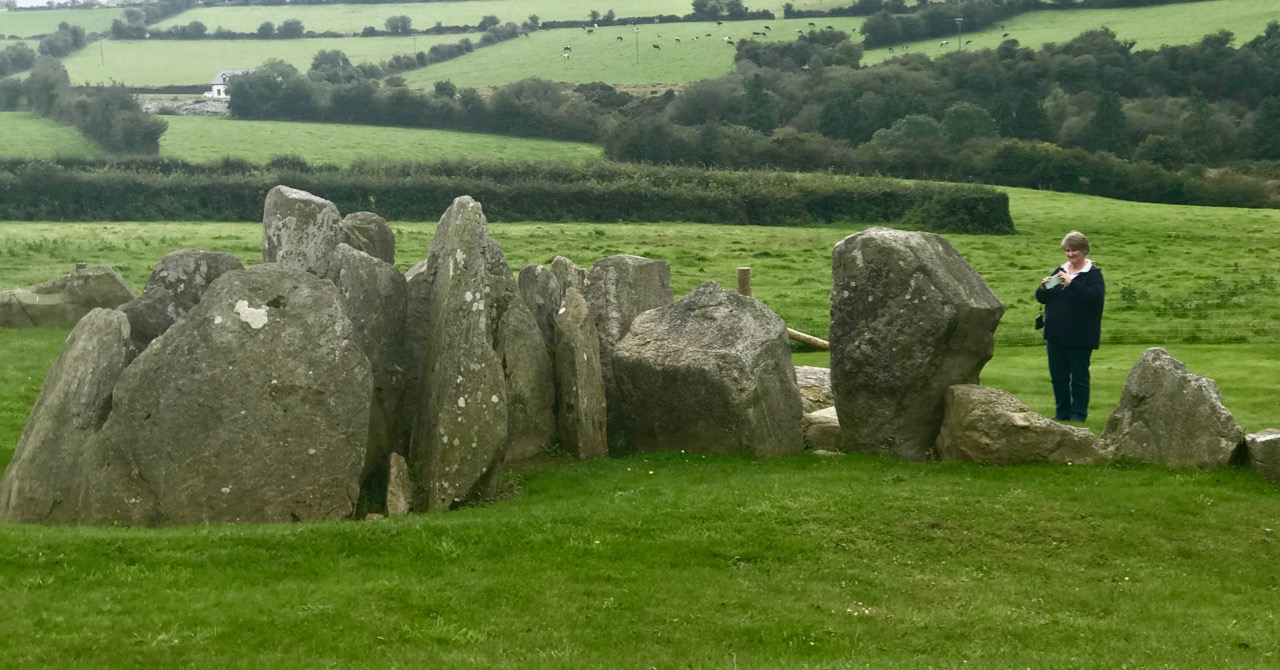
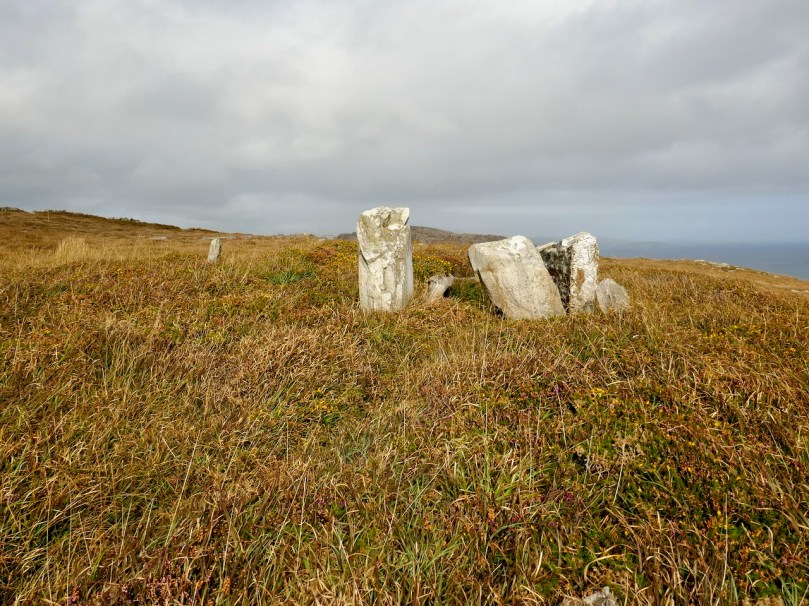
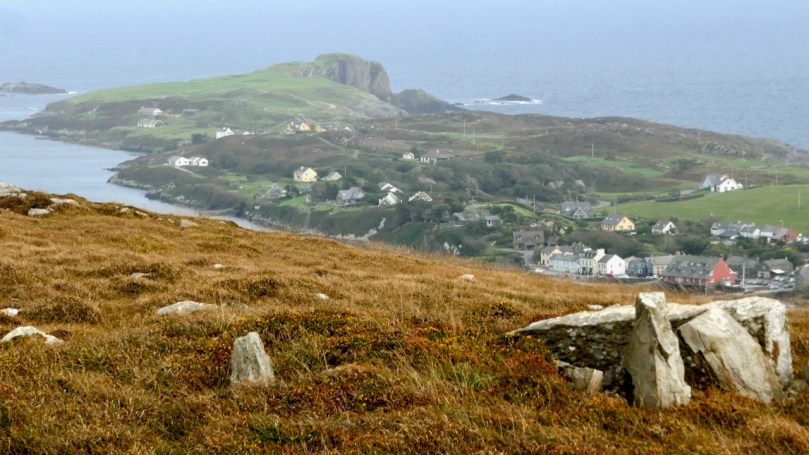
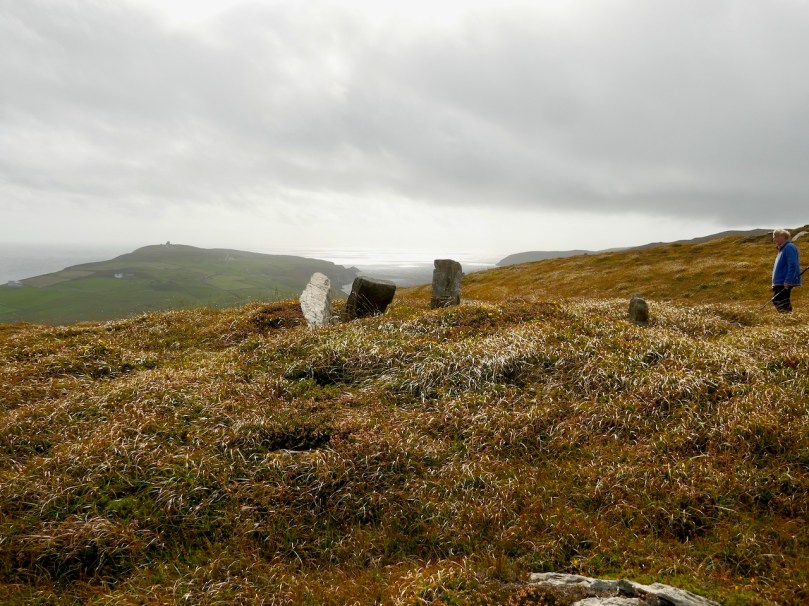
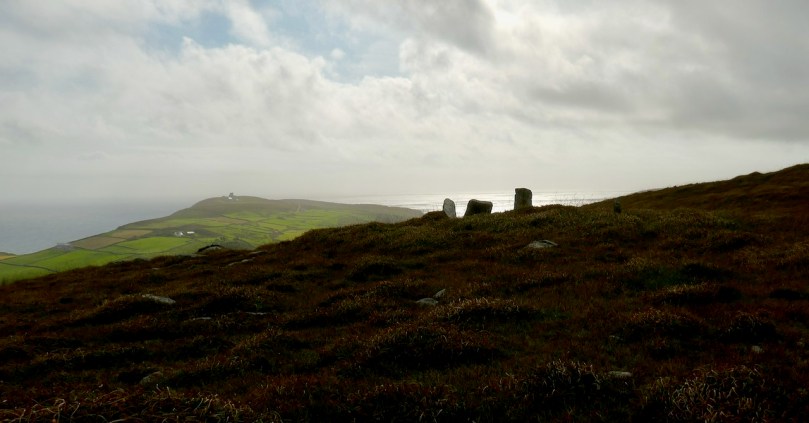
From this colourful bed the stones of the Giant’s Grave arose, pillars silhouetted against the sky. It’s actually in the townland of Leenane, just outside the boundary of Arduslough. When Ruaidhrí de Valera and Seán Ó’Núalláin conducted their Megalithic Survey in the 1970s they commented that the tomb was ‘fairly well preserved’ and  ‘commands a broad outlook to the south and east across the sea to Cape Clear and Roaringwater Bay.’ They interpreted what was there as a wedge tomb, although with some uncommon features.

First of all, they said the tomb was ‘incorporated’ within an oval mound. While mounds are known for wedge tombs, they are unusual and most of the Cork examples, included excavated ones, show no trace of a mound. Stones sticking up here and there, protruding from the mound, they interpreted as cairn stones.

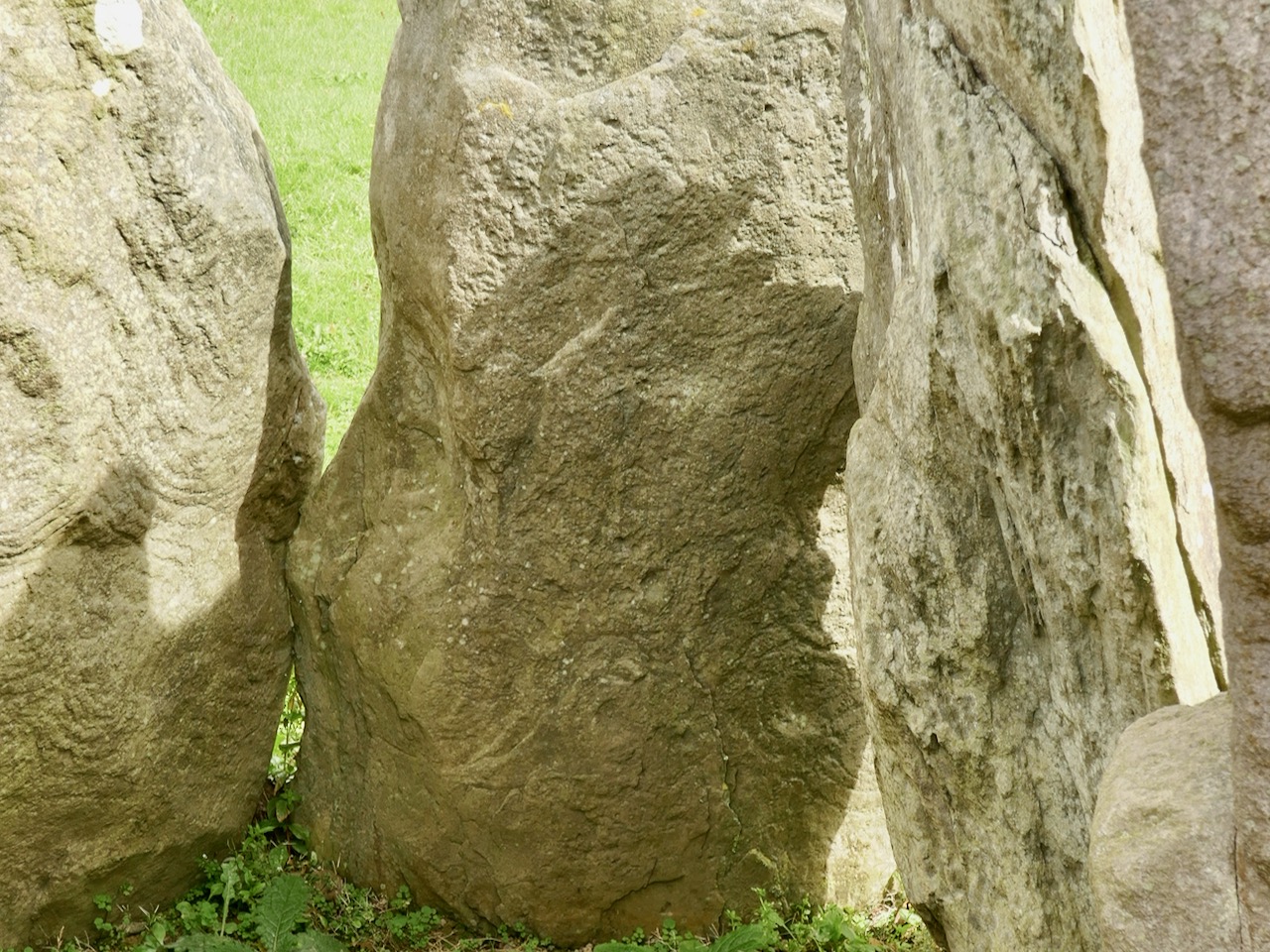
Secondly they noted two tall stones on the north side of the tomb – one is still standing and clearly visible (above and below) – whose function was ‘uncertain.’

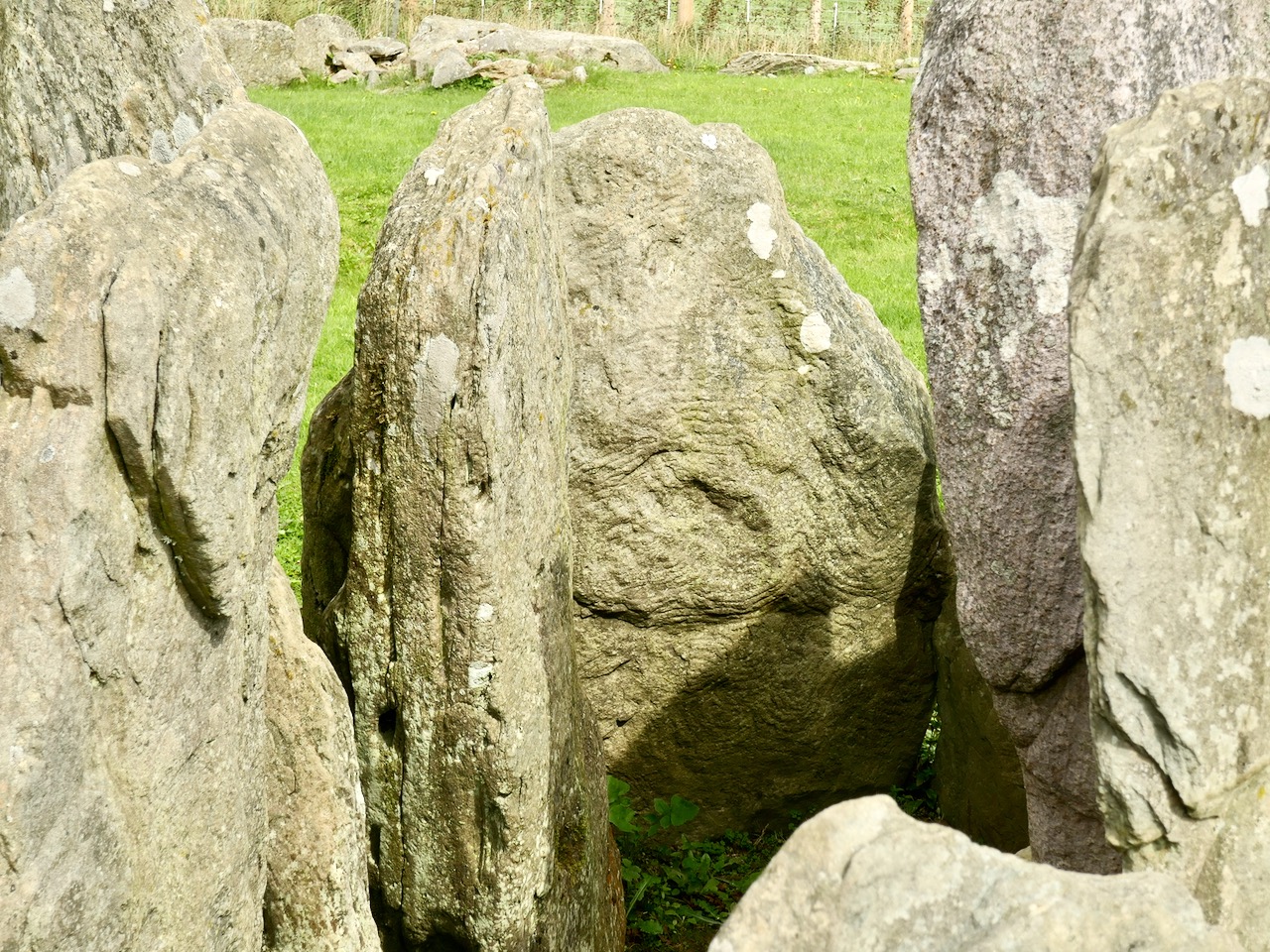
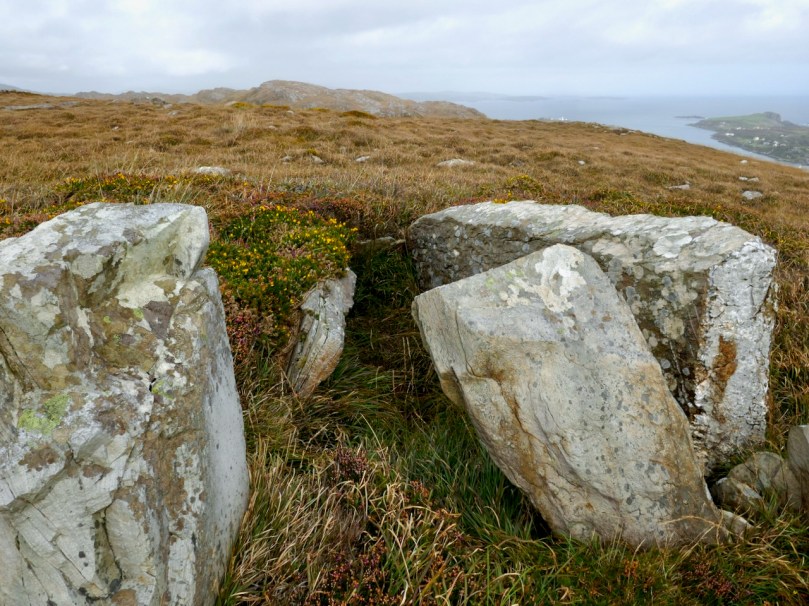
Two tall stones at the south west end (above) seemed like an ‘entrance feature.’ Our own readings at the site indicated that the orientation was to the setting sun at the winter solstice, a highly significant direction to where the sun sets into the sea.

So – an unusual wedge tomb. Elsewhere in their report de Valera and Ó’Núalláin state repeatedly that a hilltop setting and a rounded mound are consistent with passage graves. However, at the time no passage grave had been identified this far south and they were thought to have a more northerly distribution. Since then, two have been identified in County Cork – one at the highest point on Cape Clear, which is visible from this site, and one in an inter-tidal zone between Ringarogy Island and the mainland. Perhaps it is worth considering whether, rather than a wedge tomb, this site may be a passage grave, like the one that Robert writes about this week in Off the M8 – Knockroe Passage Tomb or ‘Giant’s Grave’.

Whatever we label it, this Giant’s Grave is a spectacular site. It’s not hard to imagine, up there, that Neolithic and Bronze Age farmers were just as awe-stricken as we were with the magnificence of the surroundings. Tending their herds, they marked the seasons with the great movements of the sun and moon, and commemorated their dead with enduring stone monuments. More recently, people invested the landscape with myth and stories. Walking the hilltops, you know you are in the footsteps of all who went before.

A Signal Success in Irish Engineering – Part 6: Dunnycove

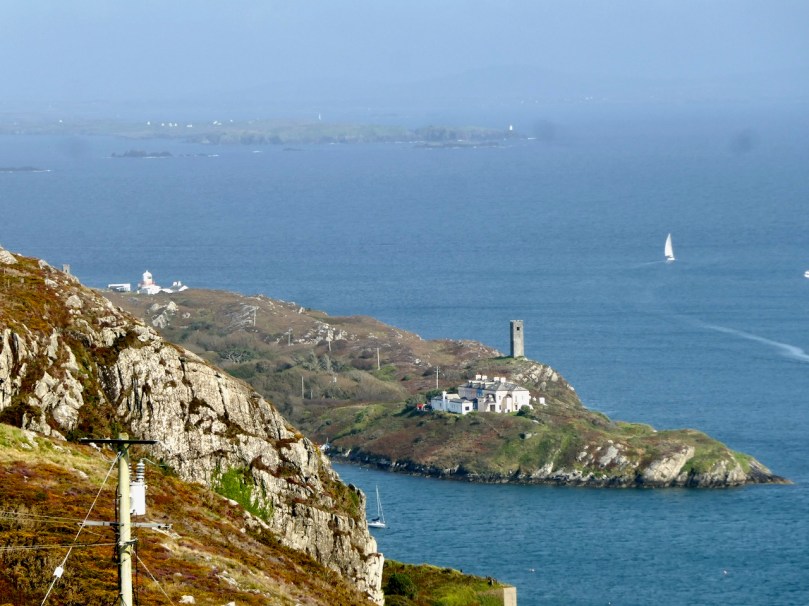
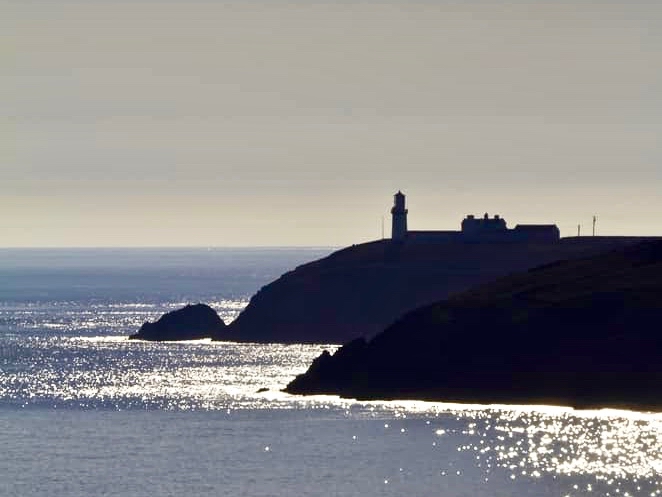
Galley Head, in West Cork, is one of those wild and exposed headlands where you get exceptional views in all directions. In our hunt for Napoleonic-era signal towers on the Irish coast you would fully expect to find one of the towers here – but no! A lighthouse and lightkeepers’ cottages – yes. These date from around 1875 but, in the early years of the nineteenth century, the strategically important signal tower was built inland, in the nearby townland of Dunnycove.

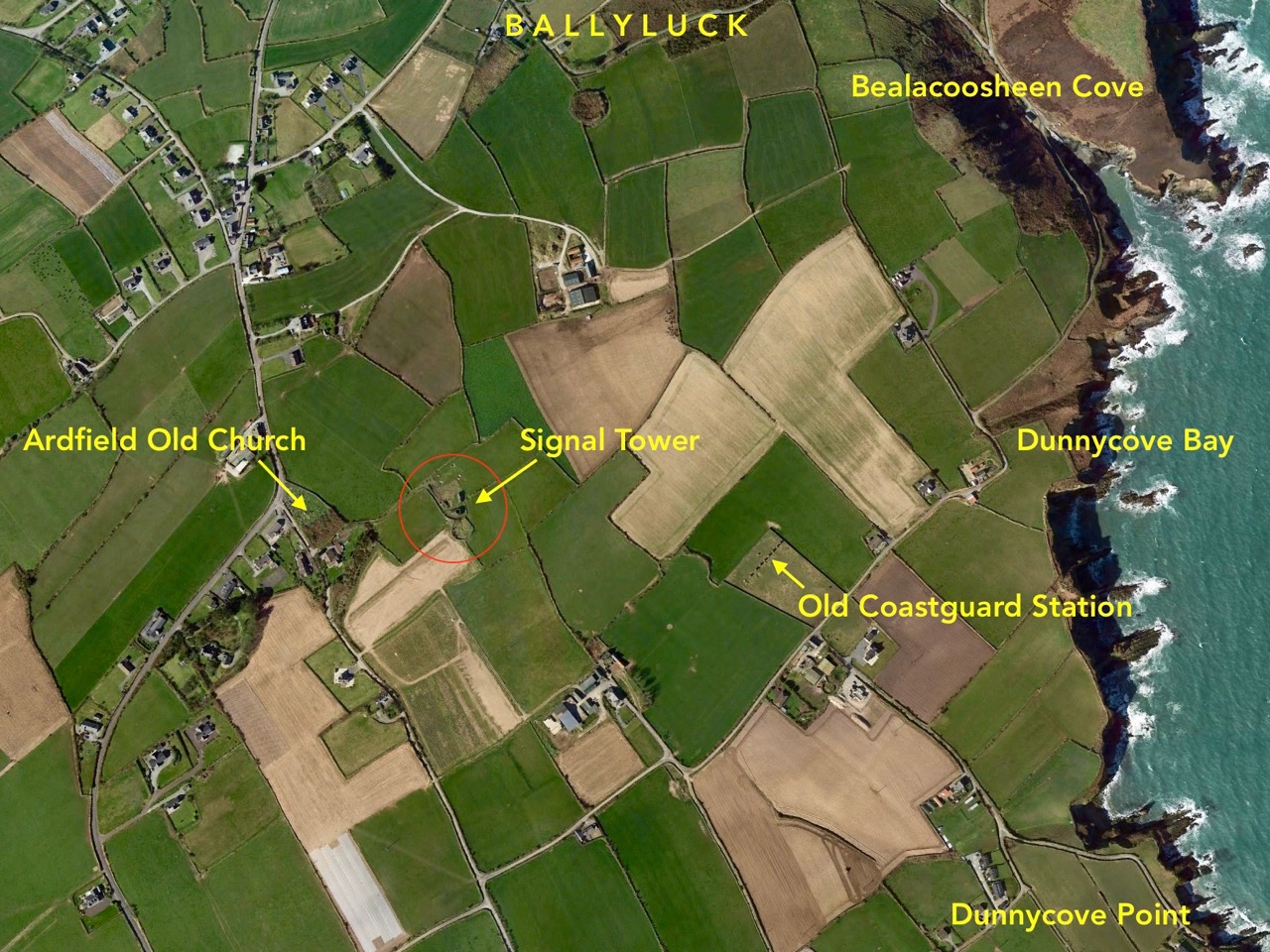
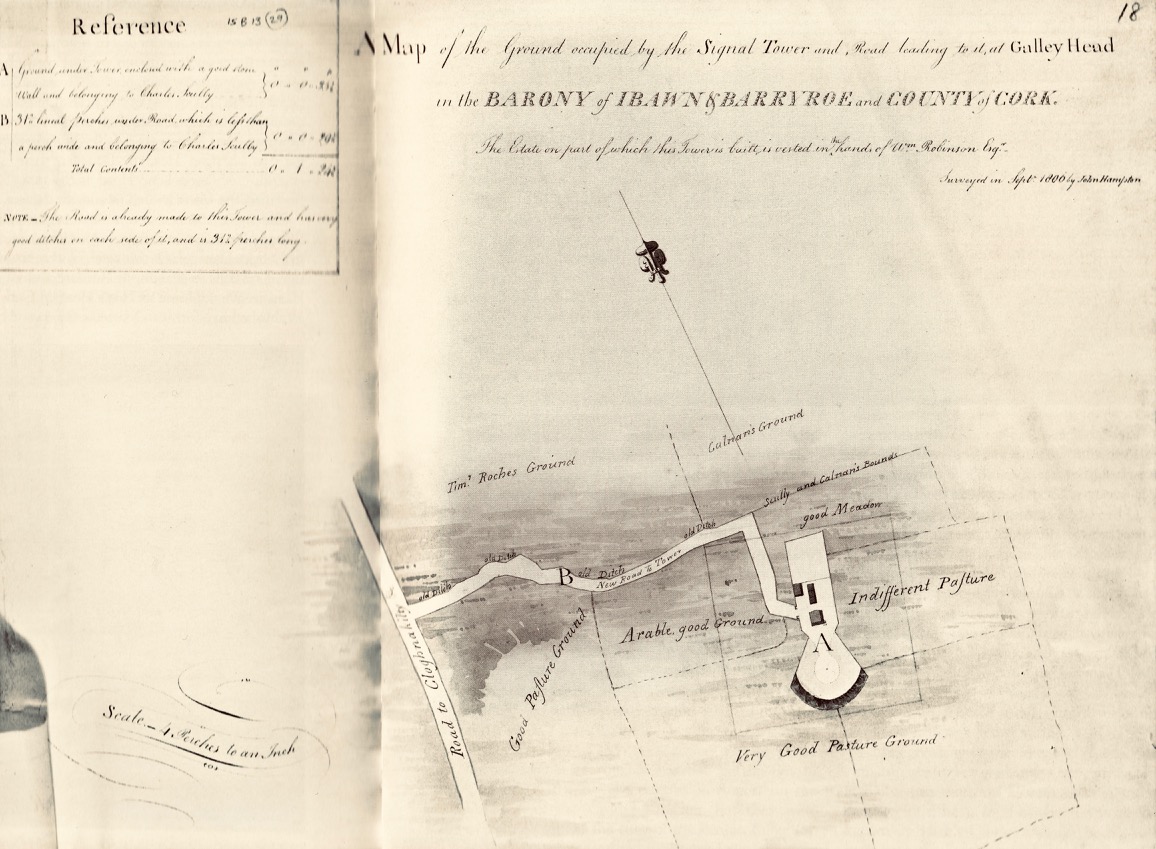
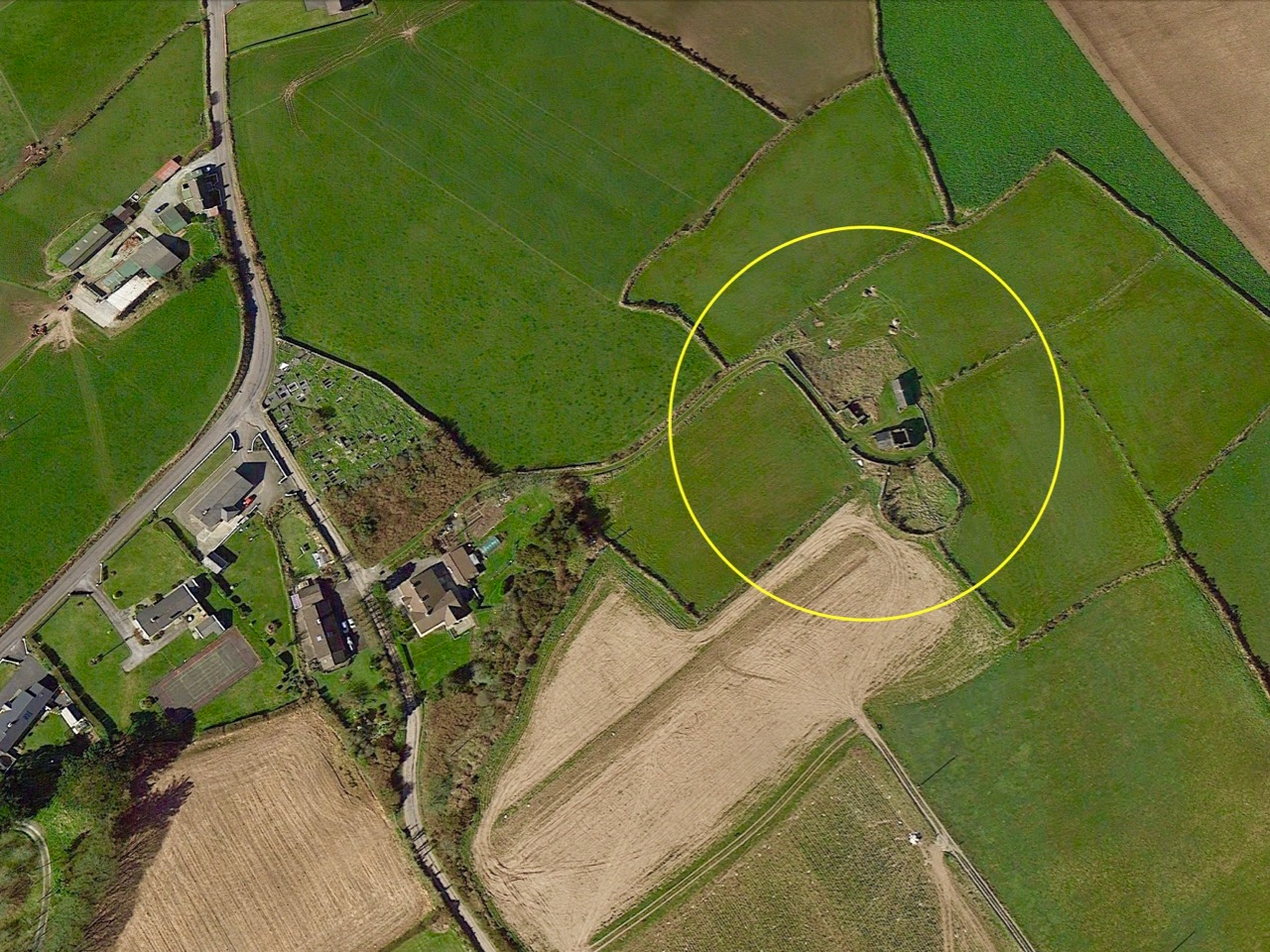
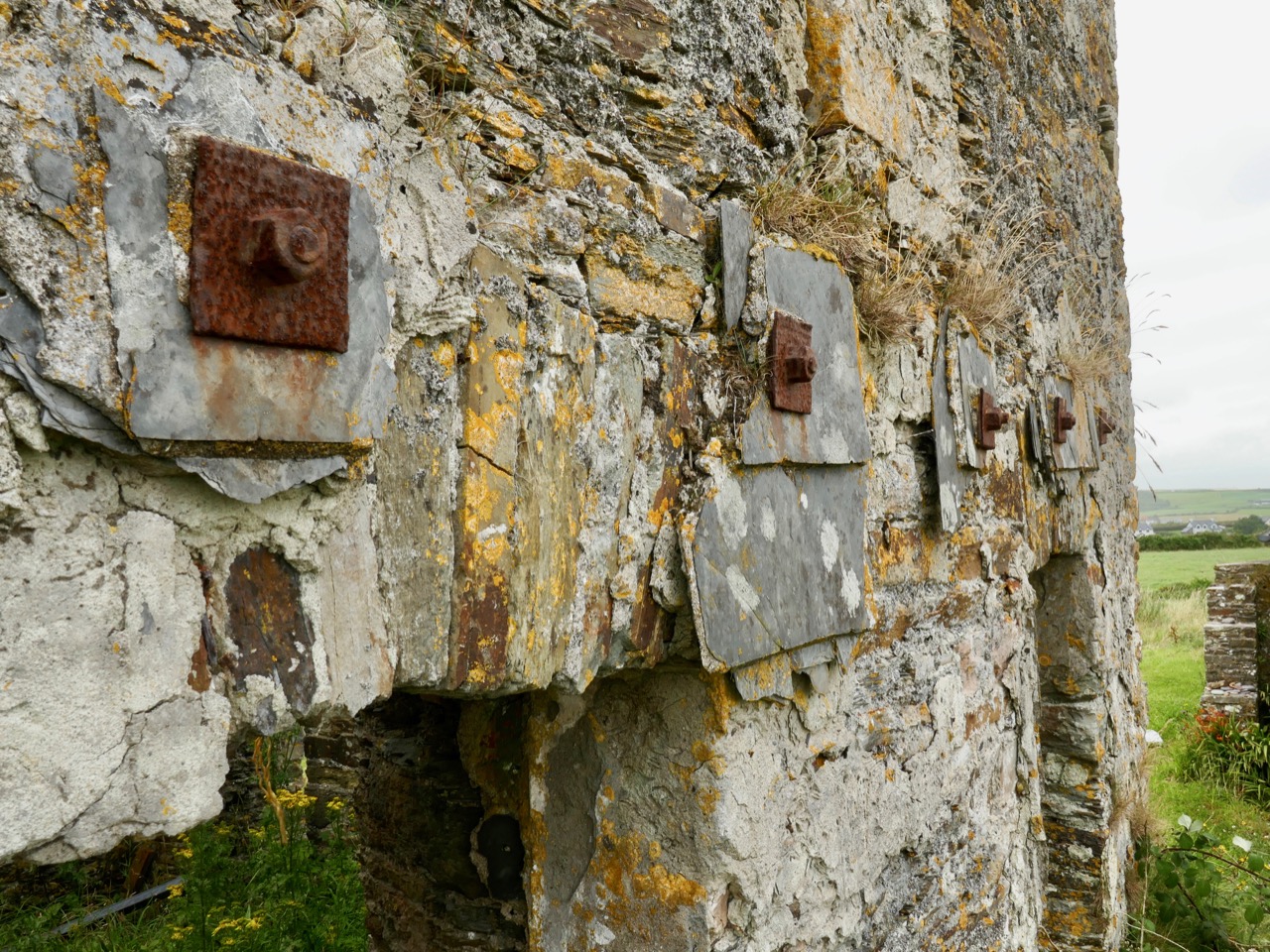
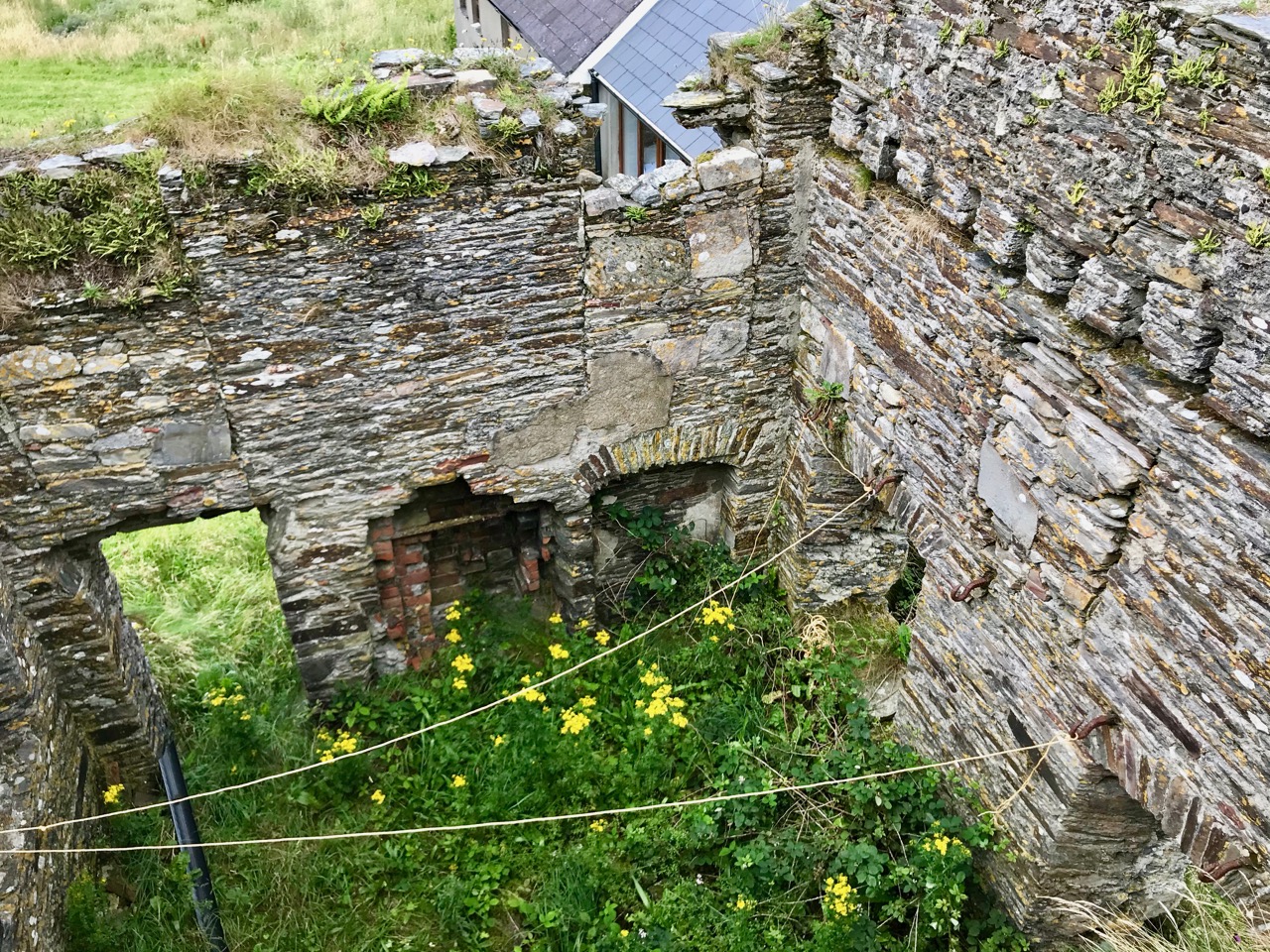
The header picture shows what remains of the tower itself today. This has in fact been adapted over the years, and the original building conformed to the square tower pattern that we have investigated elsewhere (a good example is at the old Head of Kinsale). The upper picture (above) shows the lighthouse at Galley Head seen from high ground to the east, while the lower picture is an aerial view of the Dunnycove signal tower site in its wider surroundings. Below is an 1806 map of the ‘. . . Ground occupied by the Signal Tower and Road leading to it at Galley Head . . .’ This tower is often referred to as the Galley Head Tower, even though it is some distance inland from the Head. But it is well placed to command views to the towers in the communication chain immediately to the west (Glandore) and east (Seven Heads).

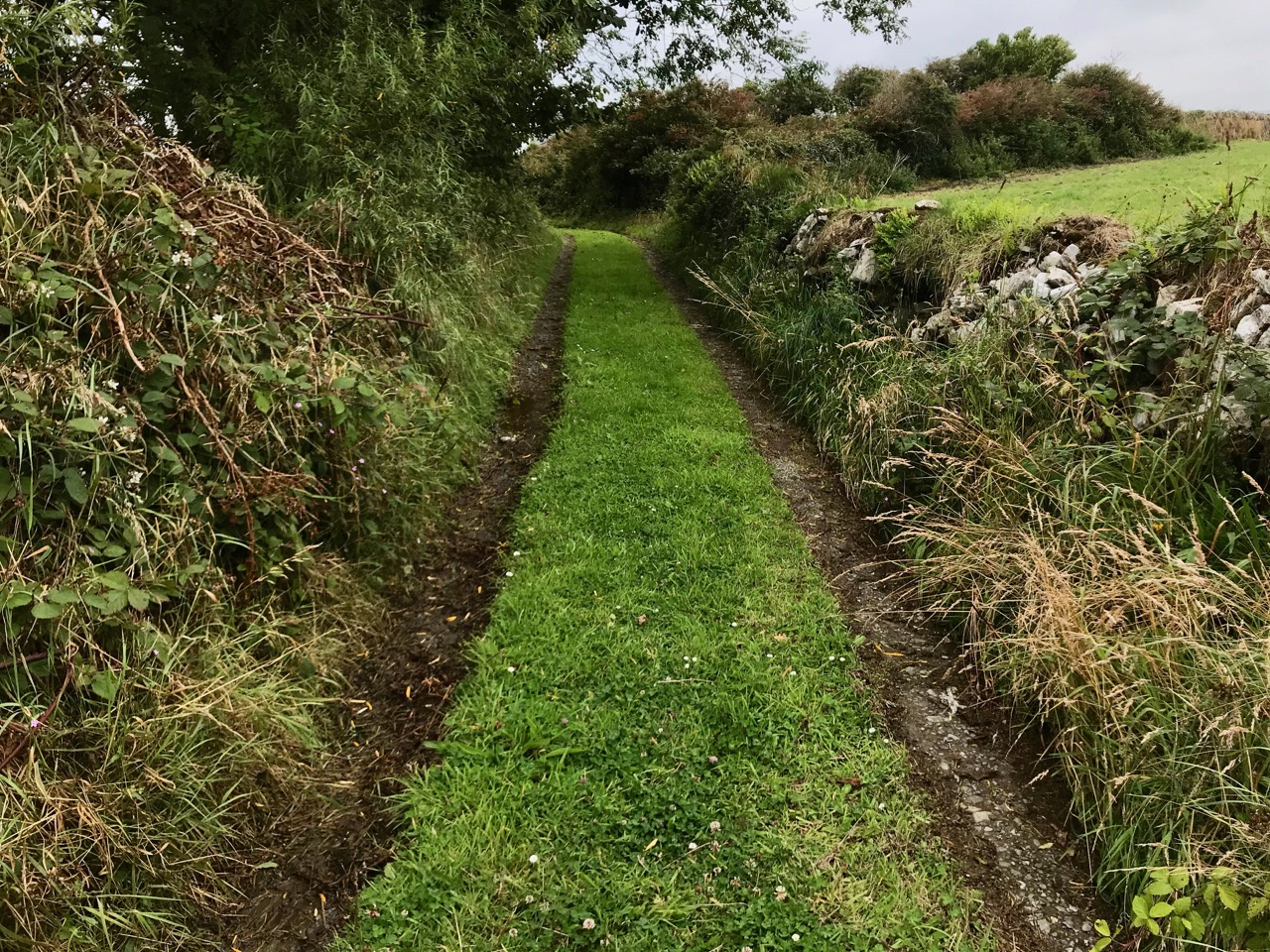
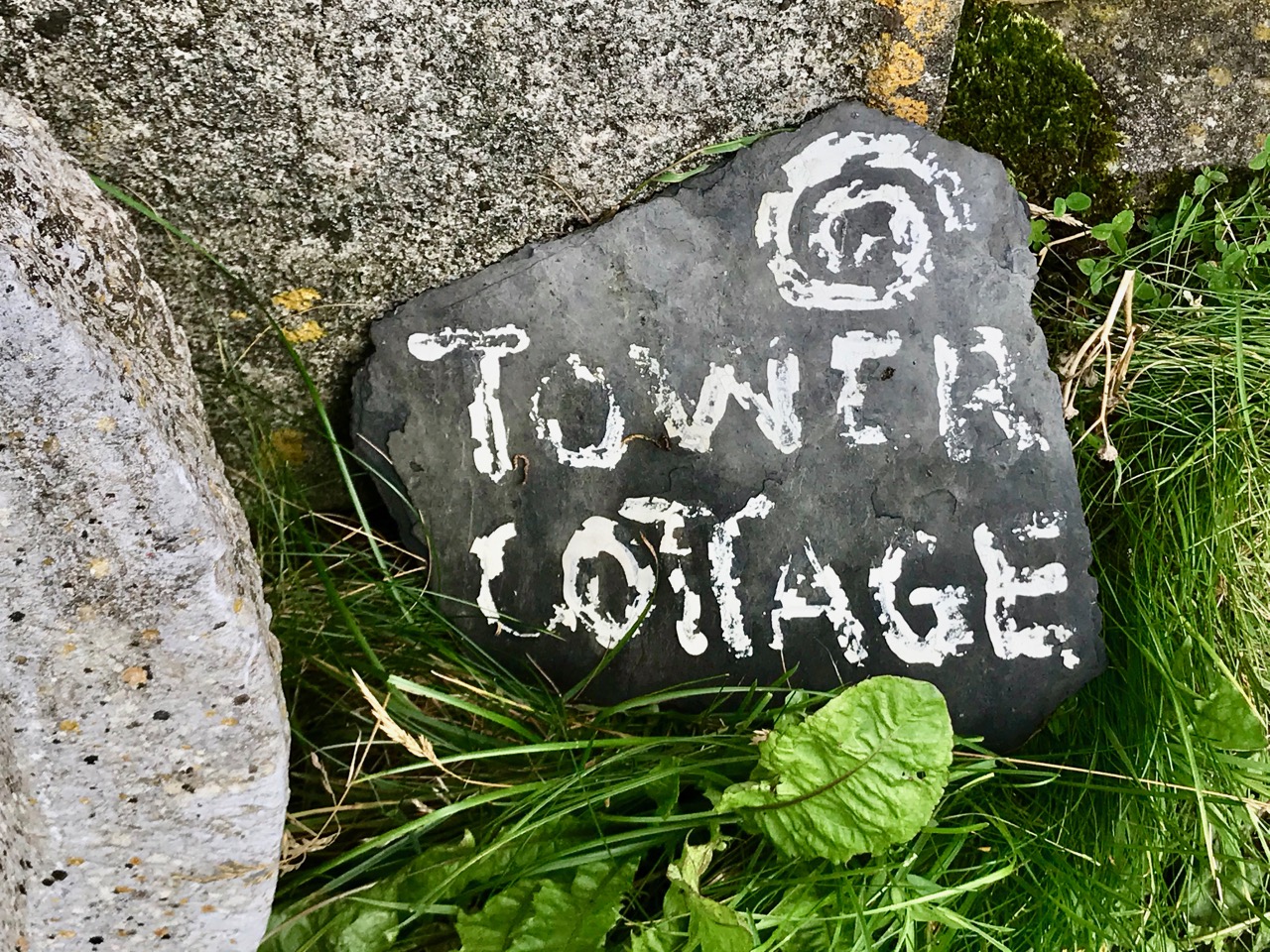
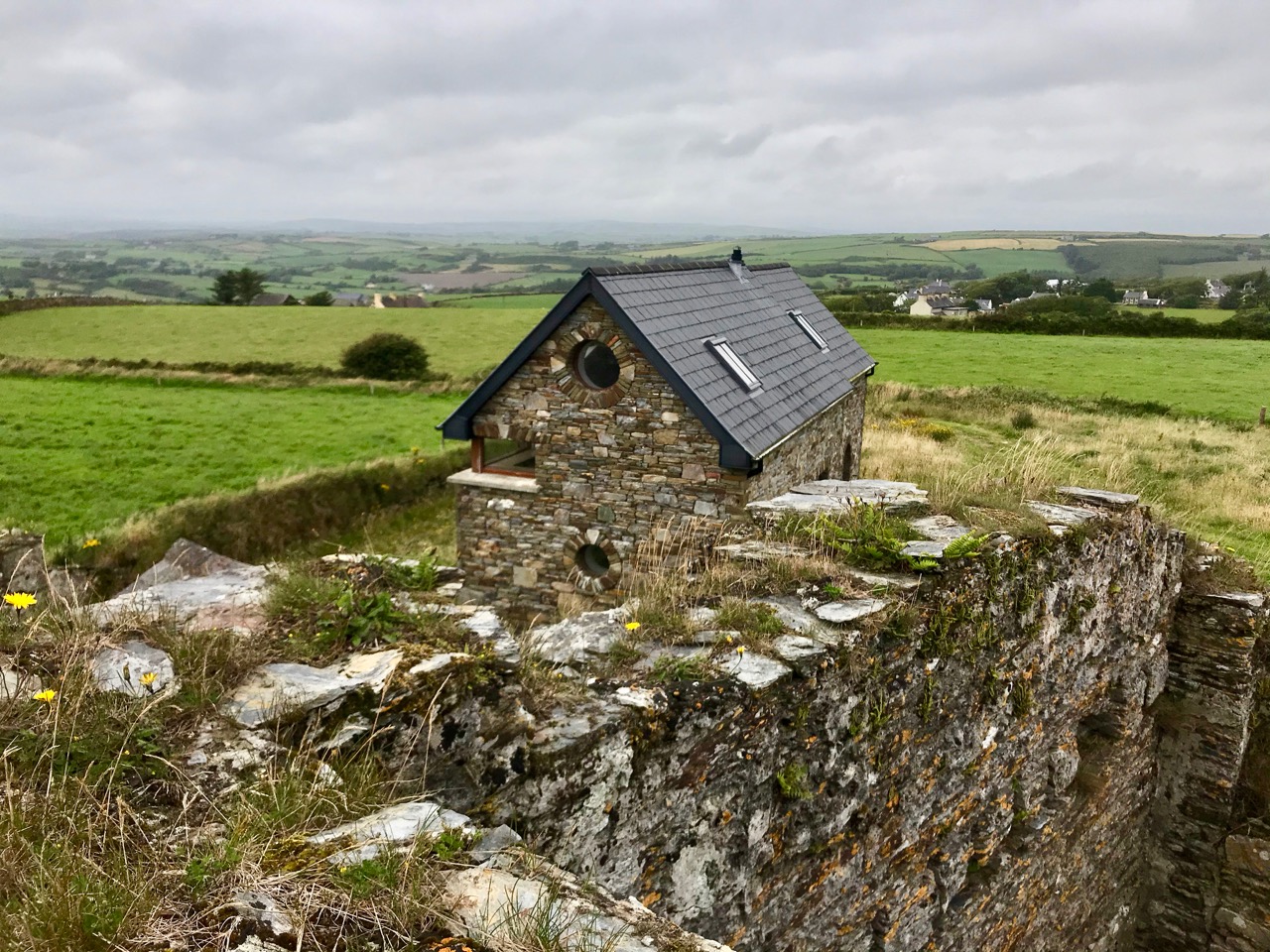
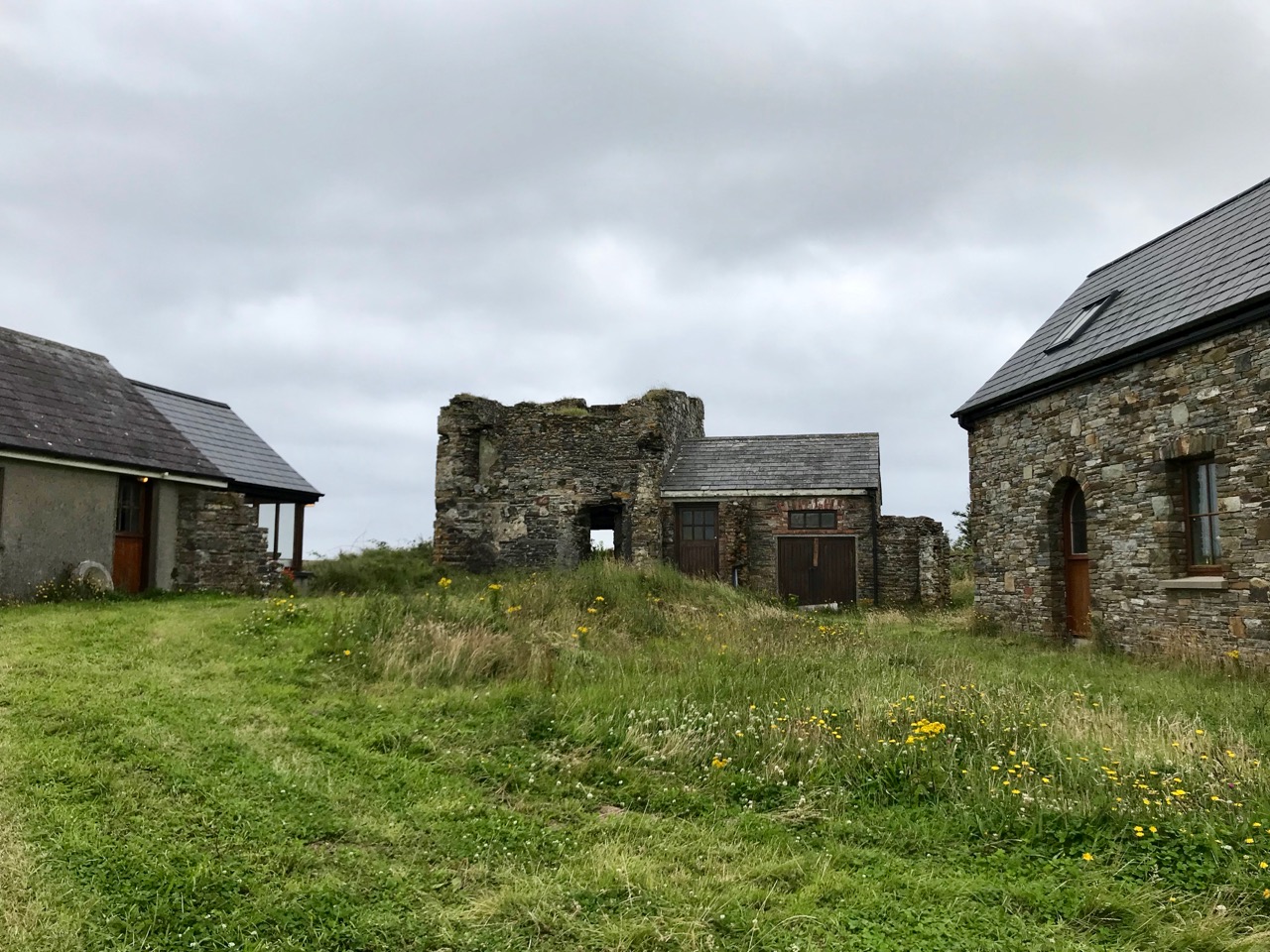
The curious profile of the site as marked out on this early map shows a segmental shaped area to the south of the tower. It is likely that this was where the signal mast itself was situated. I am intrigued by the descriptions of the surrounding land: ‘good Meadow’, ‘Indifferent Pasture’, ‘Very Good Pasture Ground’ and ‘Arable good Ground’. Also, on the left of the survey drawing appears to be a table of land values, and the statement that ‘The Road is already made to this Tower and has very good ditches on each side of it, and is 312 perches long’. The road is in good condition today, as the site has been developed with a cottage and modern studio:

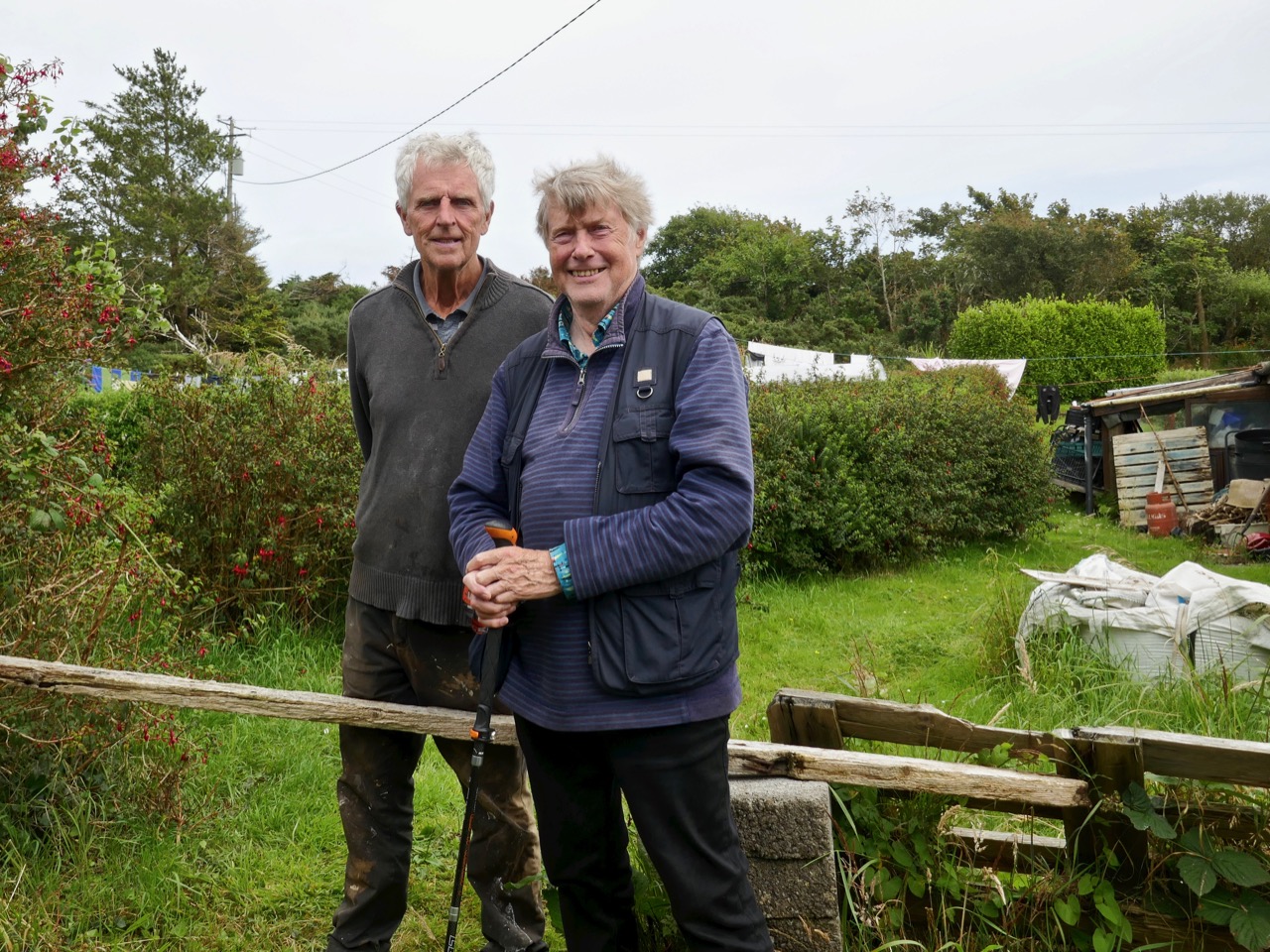
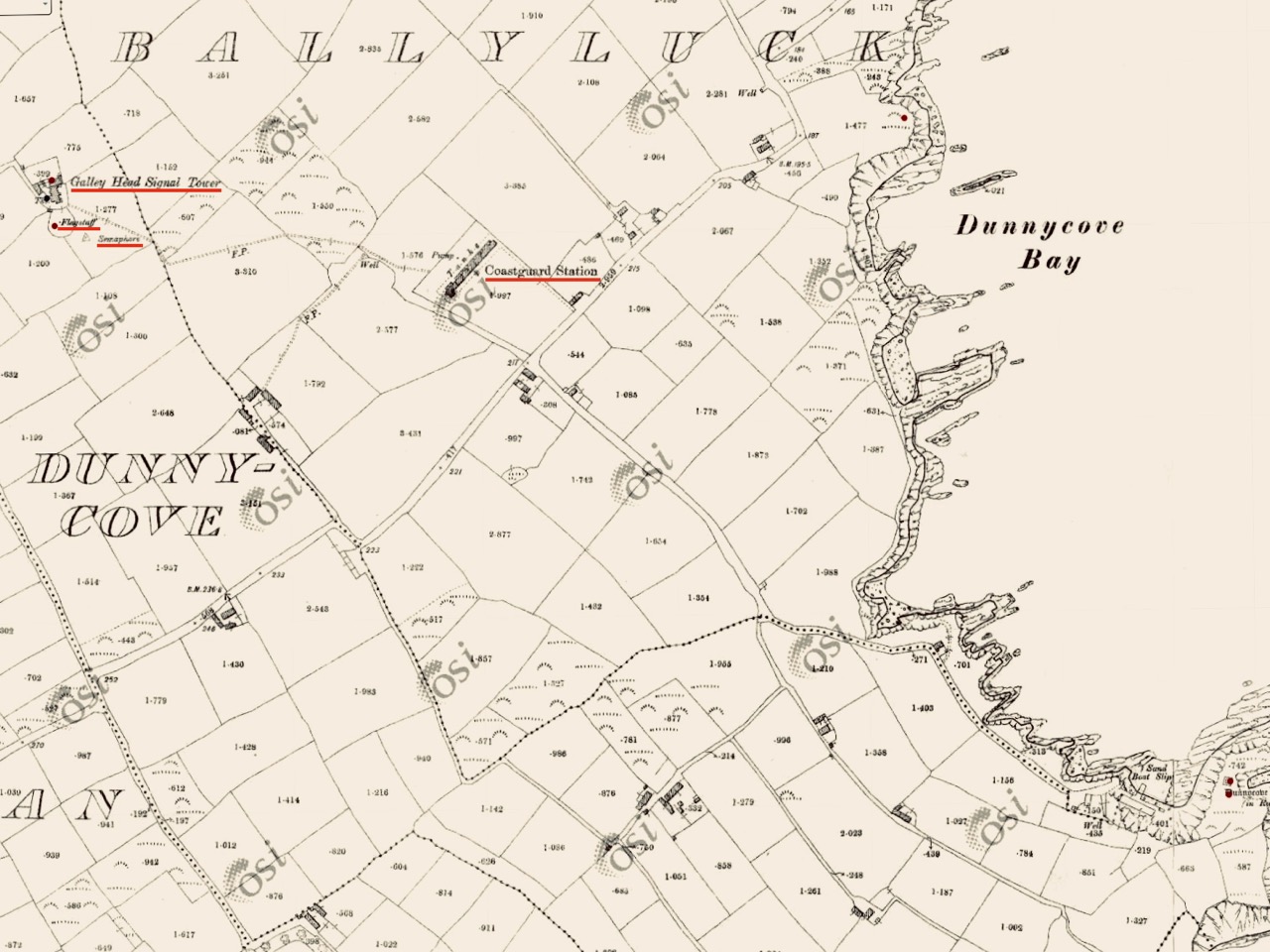
There’s nothing better than good local knowledge when you are trying to piece together a historic jigsaw puzzle. We were delighted to run into Billy Sheehan working in his neighbouring garden: it didn’t take long to establish that his own family had been involved in the signal tower site for generations, and had been connected to the local Coast Guard which had used the tower as a lookout point after the original building had fallen into disuse. Here’s Billy and myself, below. Under us is an extract from the 25″ Ordnance Survey map, drawn between 1888 and 1913. Note how on this map the signal tower site itself has changed since 1806, with many more buildings, a ‘flagstaff’ and a ‘semaphore’ indicated. These all undoubtedly date from the Coast Guard use of the site – you can also see the Coast Guard Station indicated below the tower: there are just a few masonry pillars left at that location today.

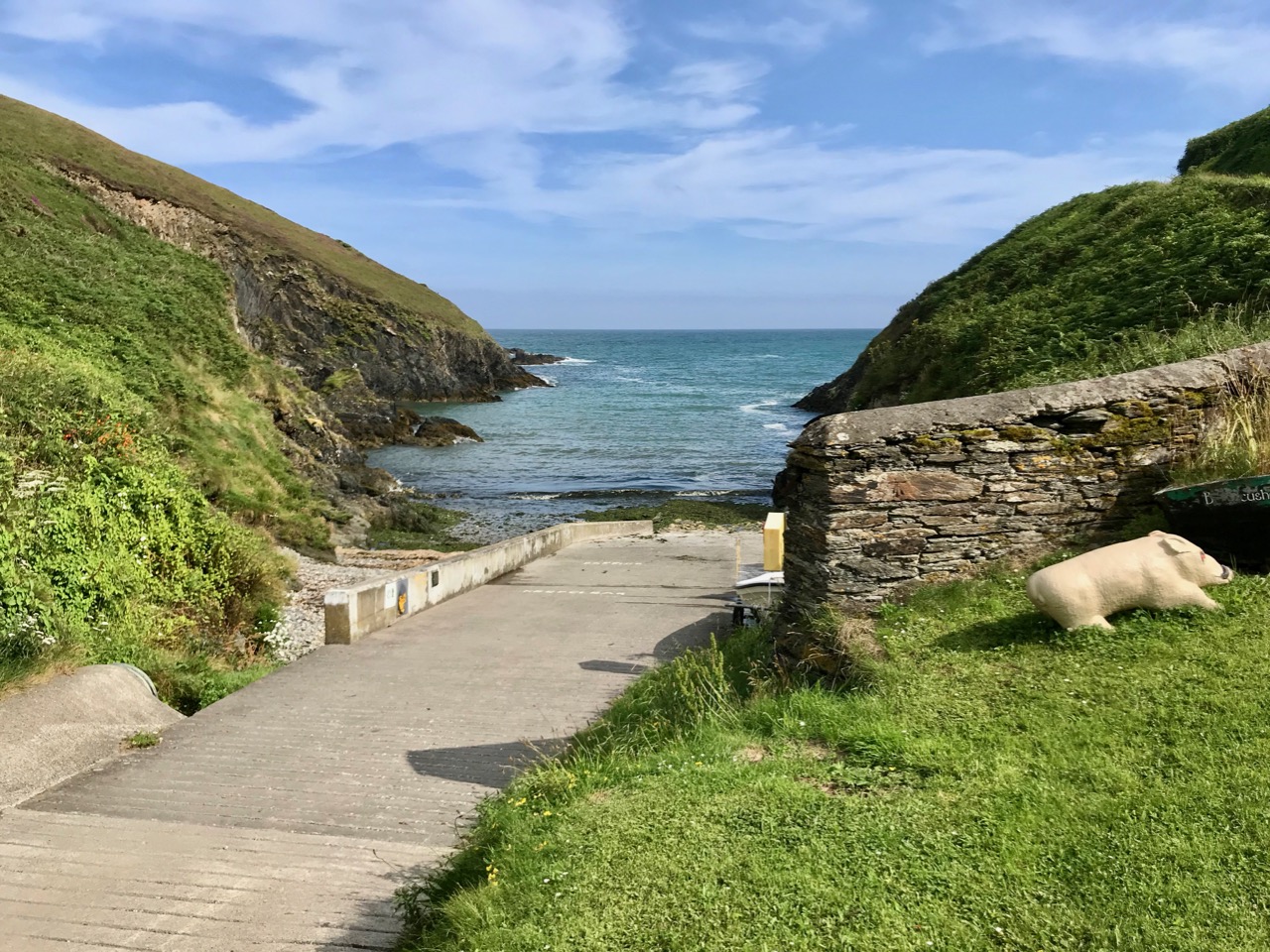
This is the ramp leading down to the water at Ballycusheen Strand, not far from Dunnycove. The pig is a well-known local landmark! I was interested to see the reference to ‘semaphore’ on the OS map, outside the original signal tower enclosure. This word recurs frequently in discussions about signal towers. Theoretically, any visual signalling system is an ‘optical semaphore’, but the term is likely to be more specific here and probably refers to an updated mechanical system rather than the ‘flag and ball’ method generally used in the early 19th century, when the signal stations were run by sailors or retired naval men who were well used to reading flag signals through high quality telescopes. There’s a volume to be written on how long-distance signalling evolved over many centuries – not just in Ireland but across Europe and beyond, beginning, perhaps, with The Scottish Parliament passing an Act in 1455 that said:

One bale, or faggot, shall be warning of the approach of the English. Two bales that they were actually coming and four bales, blazing side by side, shall note that the enemy is in great force.

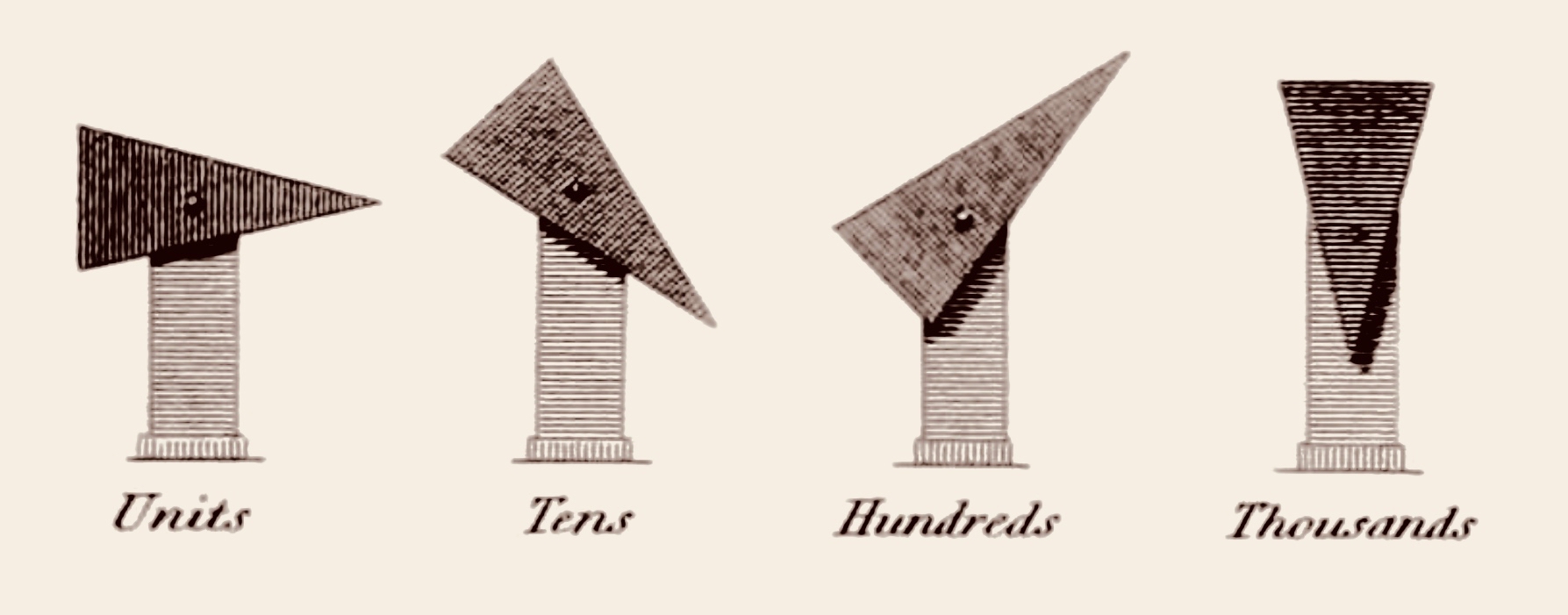
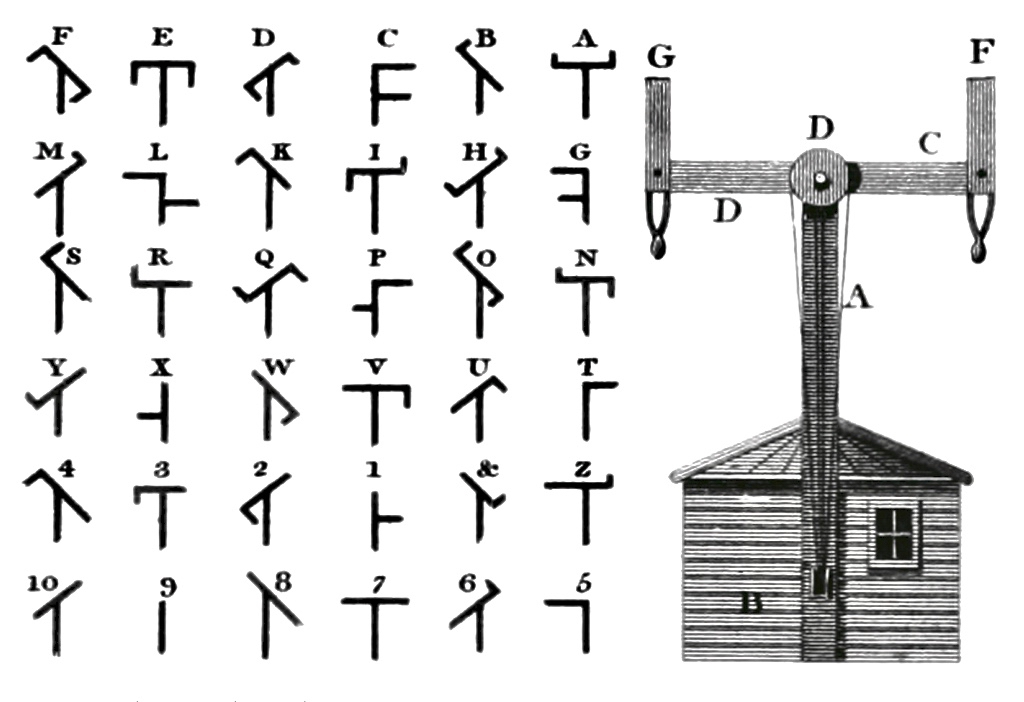
There is a record of Robert Hooke, ‘curator of experiments’ at the Royal Society, proposing a system that combined a telescope and signalling in 1684. One of the important names that surfaces here in Ireland is Richard Lovell Edgeworth (1744 – 1817).  An inventor and writer, Edgeworth was the son of an Anglo-Irish landlord whose family gave their name to the town of Edgeworthstown, Co Longford; he studied at Trinity College, Dublin. In 1767 he placed a bet with his friend, the horse racing gambler Lord March, that he could transmit knowledge of the outcome of a race in just one hour. Using a network of signalling sections erected on high ground, the signal would be observed from one station to the next by means of a telescope. The signal itself consisted of a large pointer that could be placed into eight possible positions in 45 degree increments. A series of two such signals gave a total 64 code elements and a third signal took it up to 512.

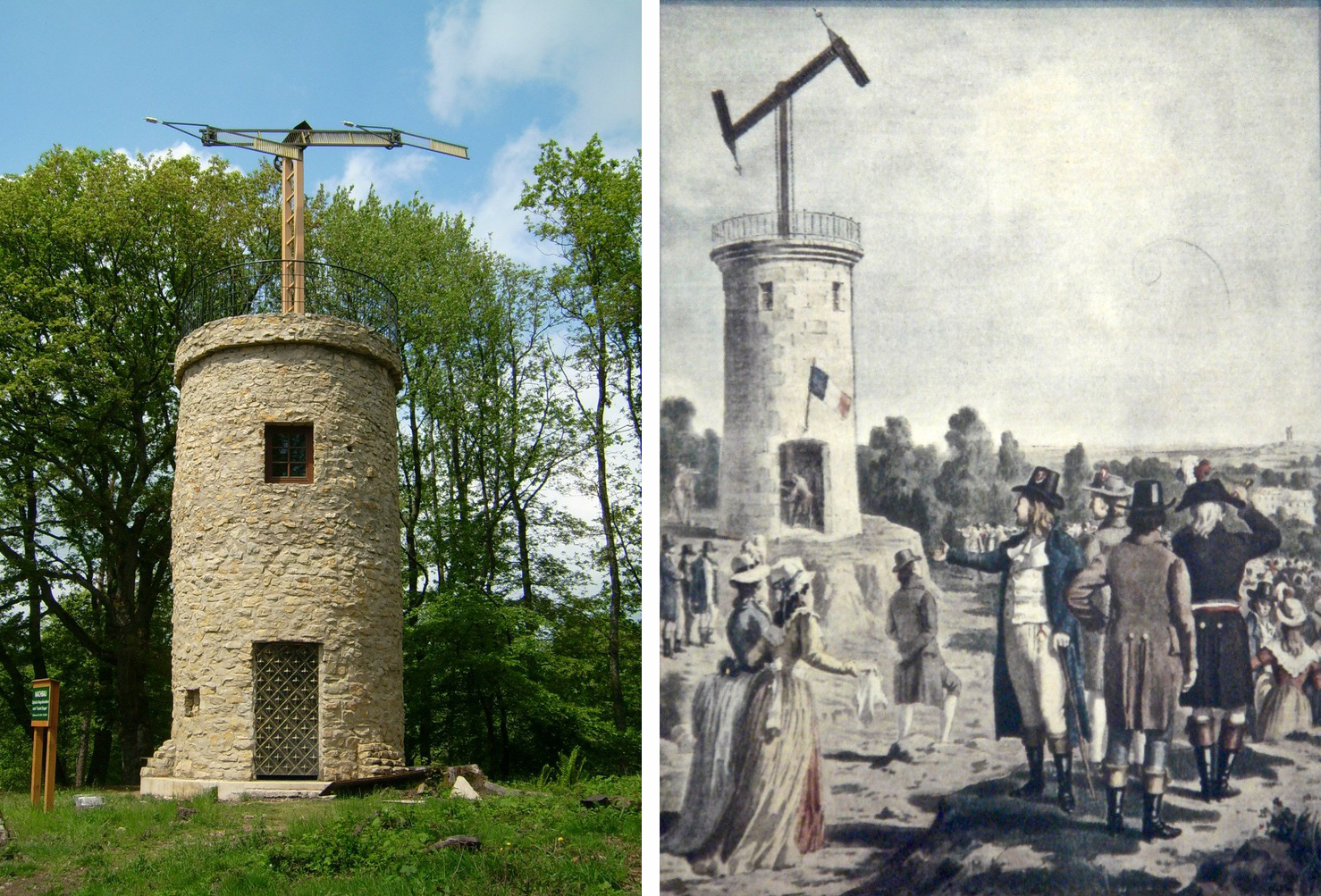
Edgeworth (perhaps best known for fathering the writer Maria Edgeworth (1768 – 1849) – one of his 22 children) termed his device a ‘Tellograph’. In November 1794 the most impressive demonstration of his invention used 30-foot-high Tellographs to communicate between Donaghadee, Ireland and Port Patrick, Scotland (about 40 miles). In France at the same time the Chappe brothers succeeded in covering that country with a network of 556 stations stretching a total distance of 4,800 kilometres (3,000 miles). Le système Chappe was used for military and national communications until the 1850s.

Le système Chappe (above). French technology is demonstrated in the 1790s – the very time the First French Republic was threatening the least defensible part of the British Isles – Ireland – and emphasised by the attempts of Wolfe Tone to land a French fleet in Bantry Bay in December 1796. That landing was a failure – due to atrocious weather – but it did, perhaps, wake the British authorities to the wisdom of guarding the Irish coastline. The signal tower system was a hastily devised result of this.

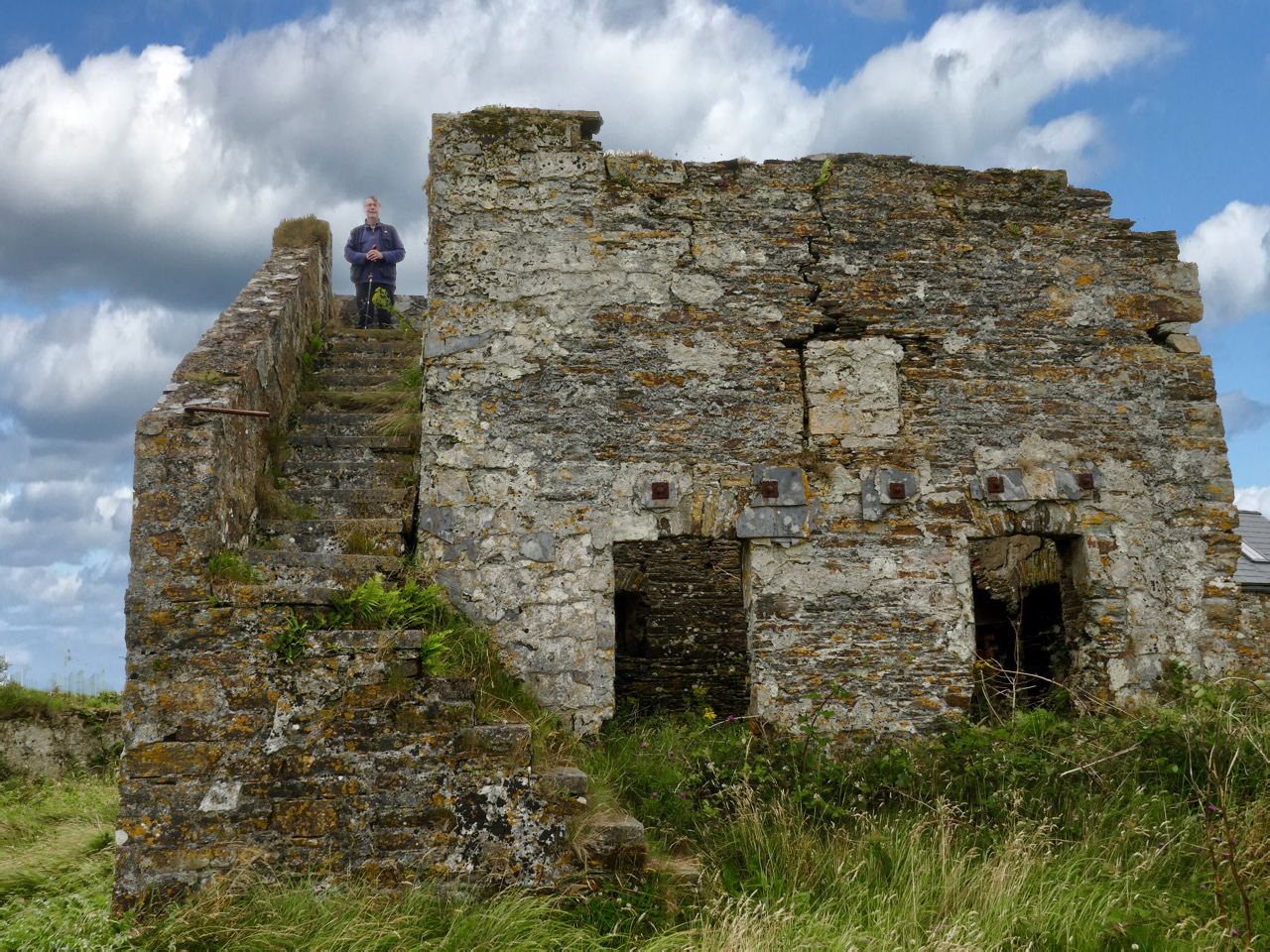
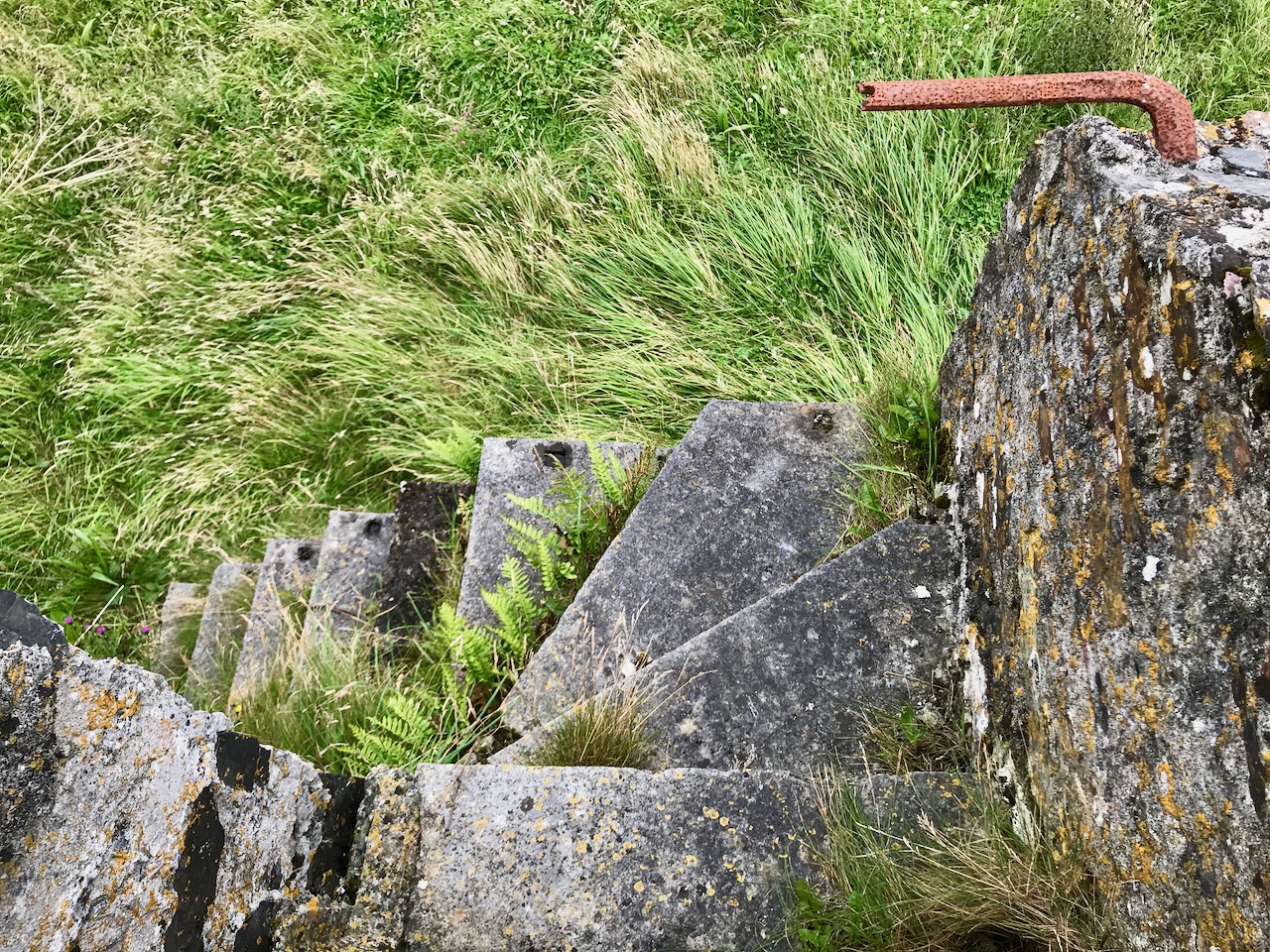
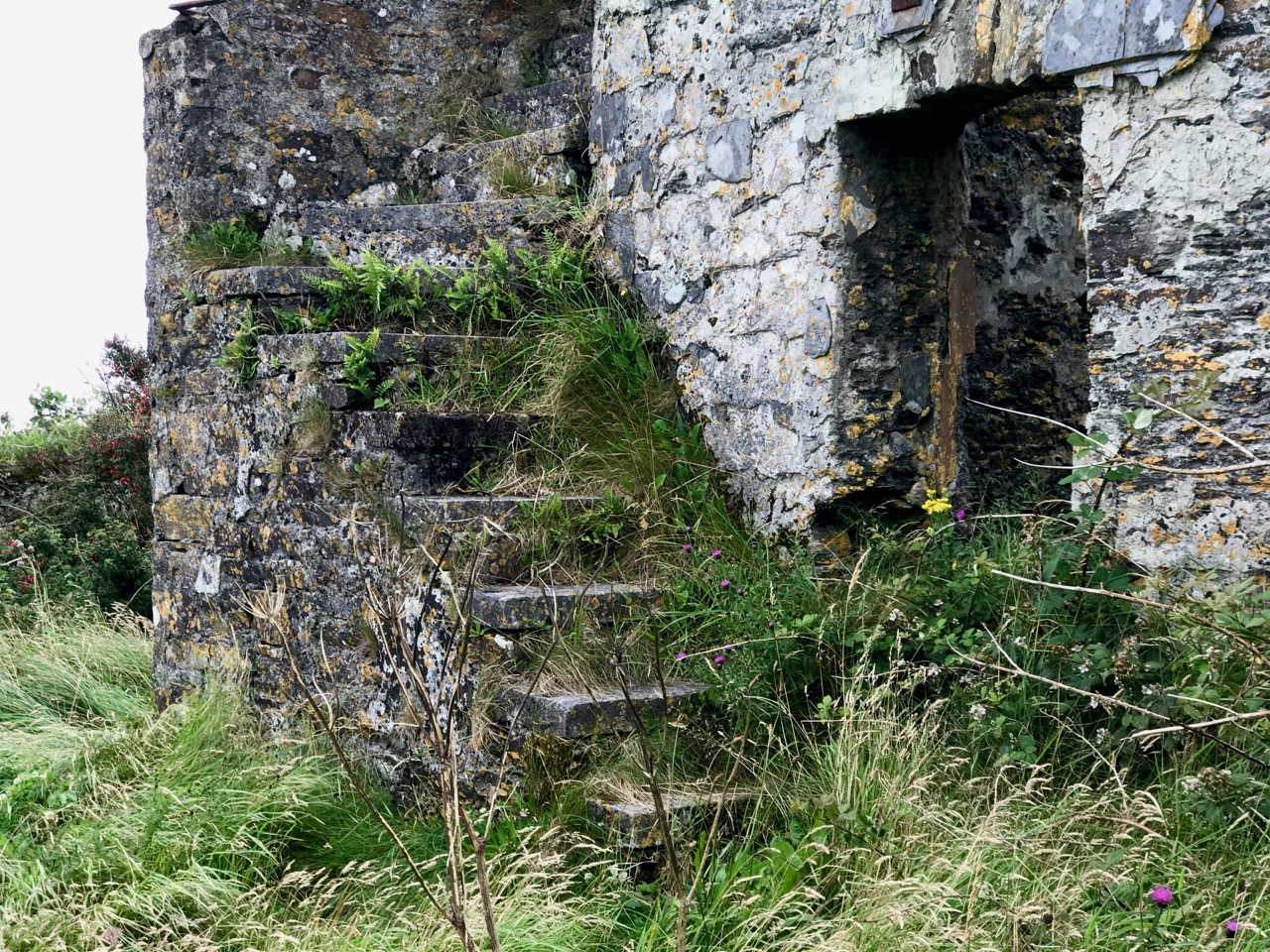
There’s a lot going on at the Dunnycove Signal Station site: the setting remains clearly laid out based on the 1806 plan, and the dominating view is due south. Parts of the original building remain although much has been altered including an external staircase and the surrounding structures.

The upper picture shows a distant view towards the signal station complex: it is on the highest point in the immediate landscape. Next is the view from the present top of the old tower, looking across the segment-shaped land which once held the signal mast and – later – the ‘semaphore’, most likely used to communicate with the Coast Guards below: beyond is the ocean. In 1837 Lewis’s Topographical Dictionary of Ireland had this to say about the area:

. . . In the R C divisions this parish is the head of a union or district, comprising the parishes of Ardfield and Rathbarry, in each of which is a chapel; that of Ardfield is a low, plain, but commodious edifice, situated on the commons. There are schools in which 140 boys and 170 girls are taught, also a school at Dunny Cove, a Sunday school under the superintendence of the vicar, and one or two hedge schools. The ruins of the old church are situated on the highest point of land in the parish; and near them is a building which during the war was used as a signal tower, but is now the residence of Lieut. Speck, who commands the coast-guard at Dunny Cove. Close to the Cove are the ruins of a castle . . .

It seems to me that this site, in particular, has so many stories to tell us. Not just about the one period in history that caused the building of the original tower, but also about how a community has developed and adapted around that building. After the close of the Napoleonic era, when the threat of invasion receded, the tower retained its significance as a high place from which observations can be made. The Water Guard (which became the Coast Guard) took it over and it has remained a dwelling place for families ever since. Billy Sheehan is testament to this ‘living’ history, and the old stonework survives to tell where meals were cooked – where sleeping, waking and working became the rhythm of life for generations on this West Cork hilltop.

Please note that Dunnycove Signal Station is a private property and permission to access it must be sought from the owner

The previous posts in this series can be found through these links:

Part 1: Kedge Point, Co Cork

Part 2: Ballyroon Mountain, Co Cork

Part 3: Old Head of Kinsale, Co Cork

Part 4: Robert’s Head, Co Cork

Part 5: Downeen, Co Cork

Off the M8 – A High Cross and a Complex Saint

We haven’t had an ‘Off the M8’ for quite some time. You remember that, on our journeys from West Cork to Dublin, we would go (literally) off the beaten track to find new places of interest to visit – making a ‘grand day out’ of every trip. However, the unexpected arrival of the Covid19 pandemic severely curtailed our travelling – and everyone else’s – for many months. Covid is by no means over, even now, but we are slowly venturing further afield and, last week, made the trip up to the Dublin area, following all the guidelines. Nevertheless, we couldn’t resist trying out a fresh route which adds about 40 minutes to the overall journey but which takes in a new (for us) medieval stone cross and a historic site with thought-provoking associations. It is situated with fine views of the Slieveardagh Hills to the west.

We followed the normal route as far as Cahir, on the M8, then headed off east on the N24 and N76 towards Callan. Just after Ninemilehouse (Ireland has some wonderful place names!) you cross from County Tipperary into County Kilkenny and, within a few minutes (watch carefully), you’ll see a small signpost directing you off to the right down a tiny boreen to Killamery High Cross.

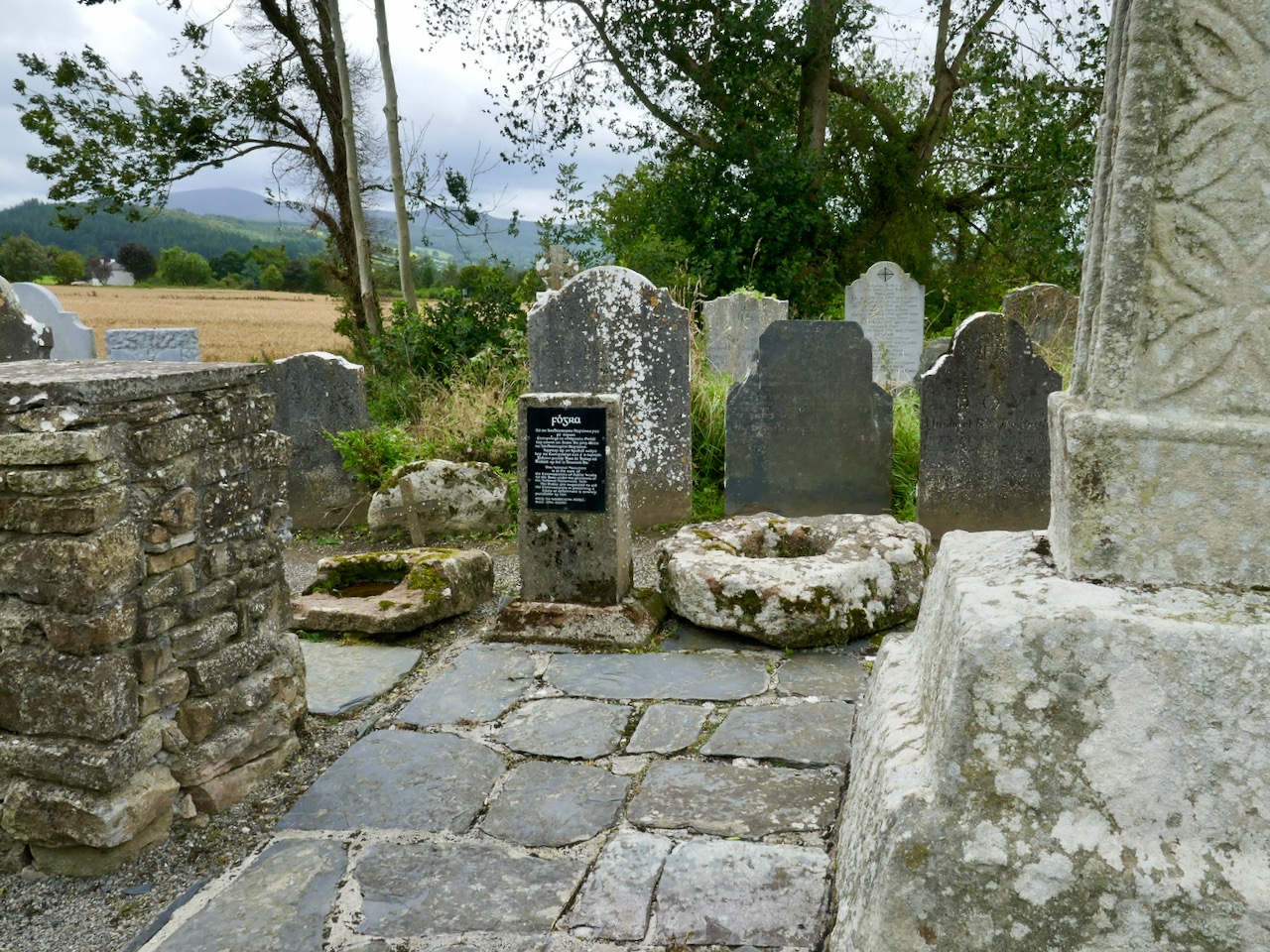
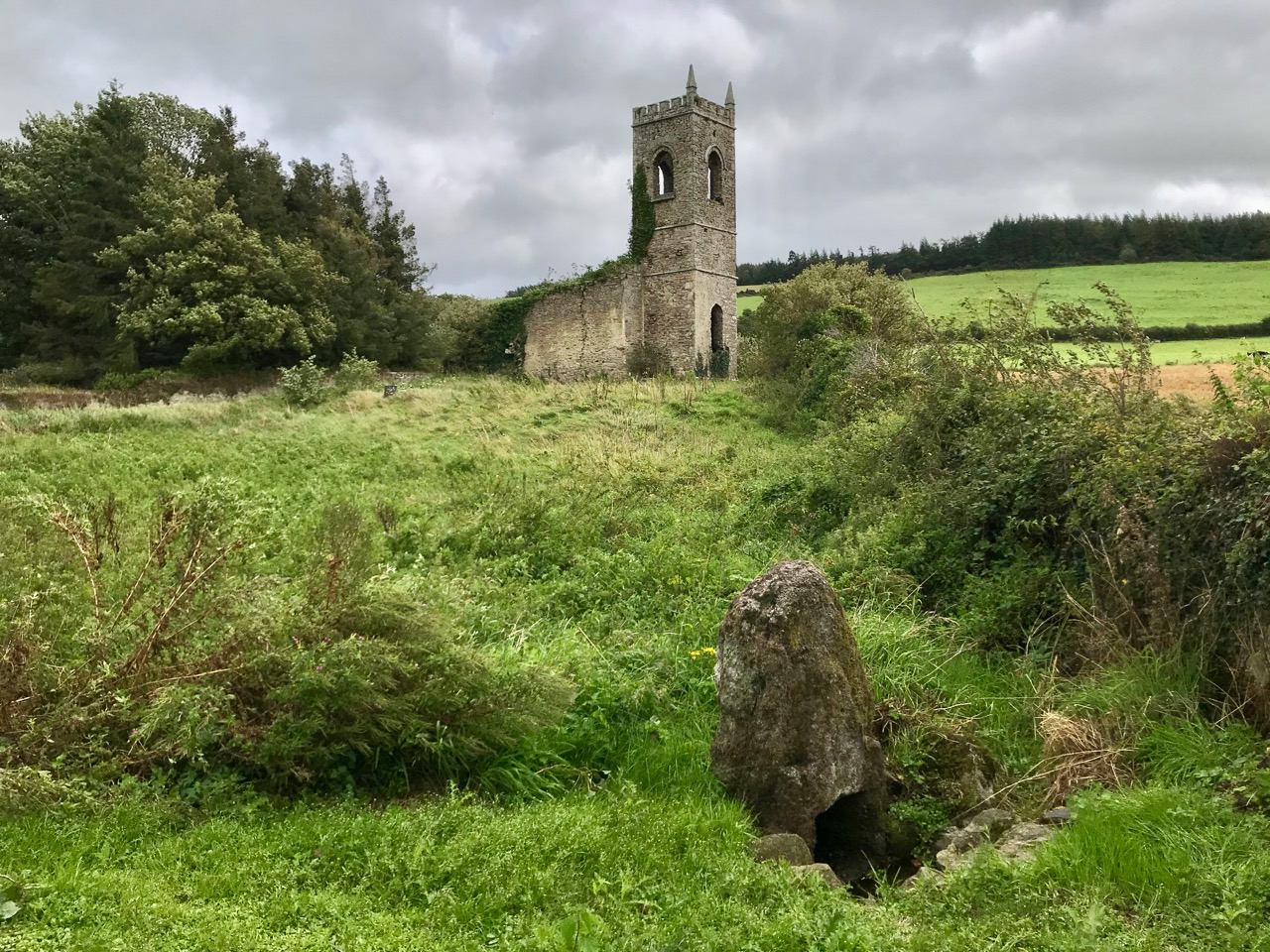
The first thing you’ll see, at the end of this lane, is the ruin of a significant church. Some distance beyond it you’ll make out the distinctive shape of the large, carved stone cross but also many other treasures including old grave slabs, bullaun stones and a very fine holy well dedicated to Saint Nicholas.

The site is associated with an Irish holy man, as you would expect: Saint Gobhan, Gobán Fionn, Gobban – or even Gobanus – who lived from c560 to c639AD. Foundations associated with this saint were many, including Portadown, Co Armagh, in the north; also as Abbot to the monastery of Old Leighlin, County Carlow, where in 633AD he presided over a great Synod held to debate the timing of Easter (we seem to remember only the later Synod of Whitby – 664AD – which also set out to regularise the date but which led to irreconcilable disagreement between the Irish and Roman factions). Latterly, Gobhan was linked to the Kingdom of Kerry – near Tralee, but we are interested today in the monastery he set up by a holy well in Killamery. He had a thousand monks with him and it is said that an army of angels helped build the walls.

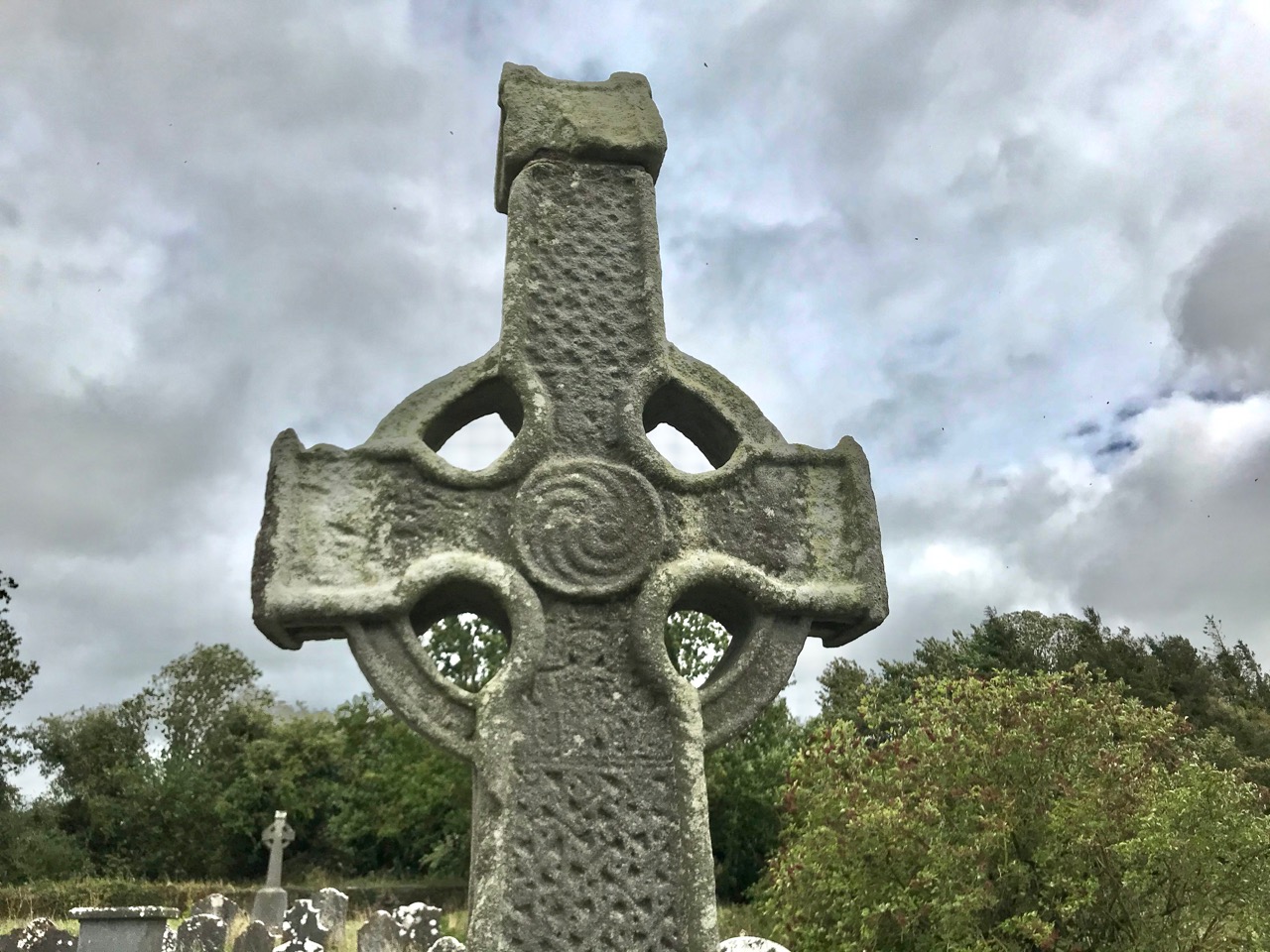
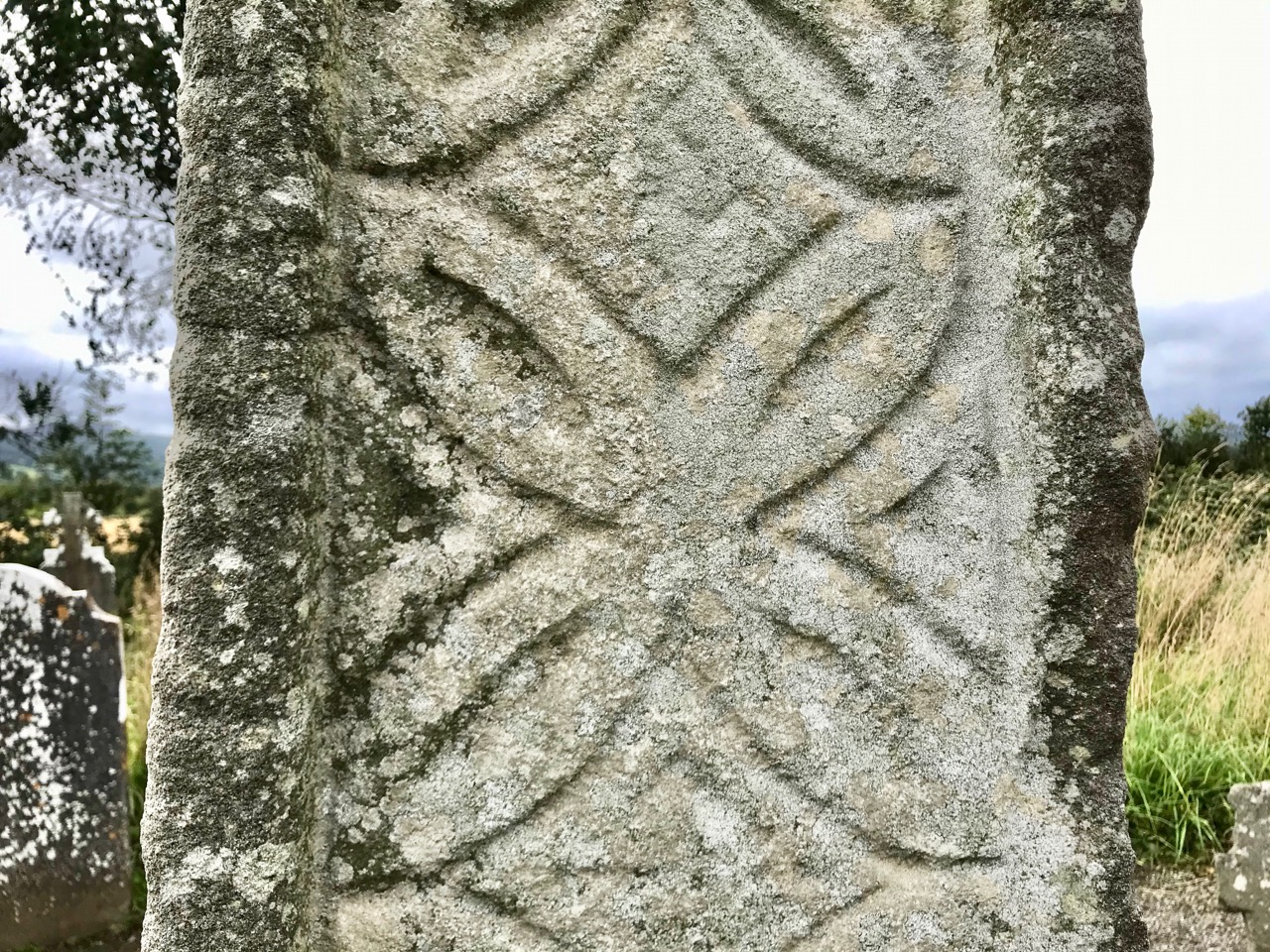
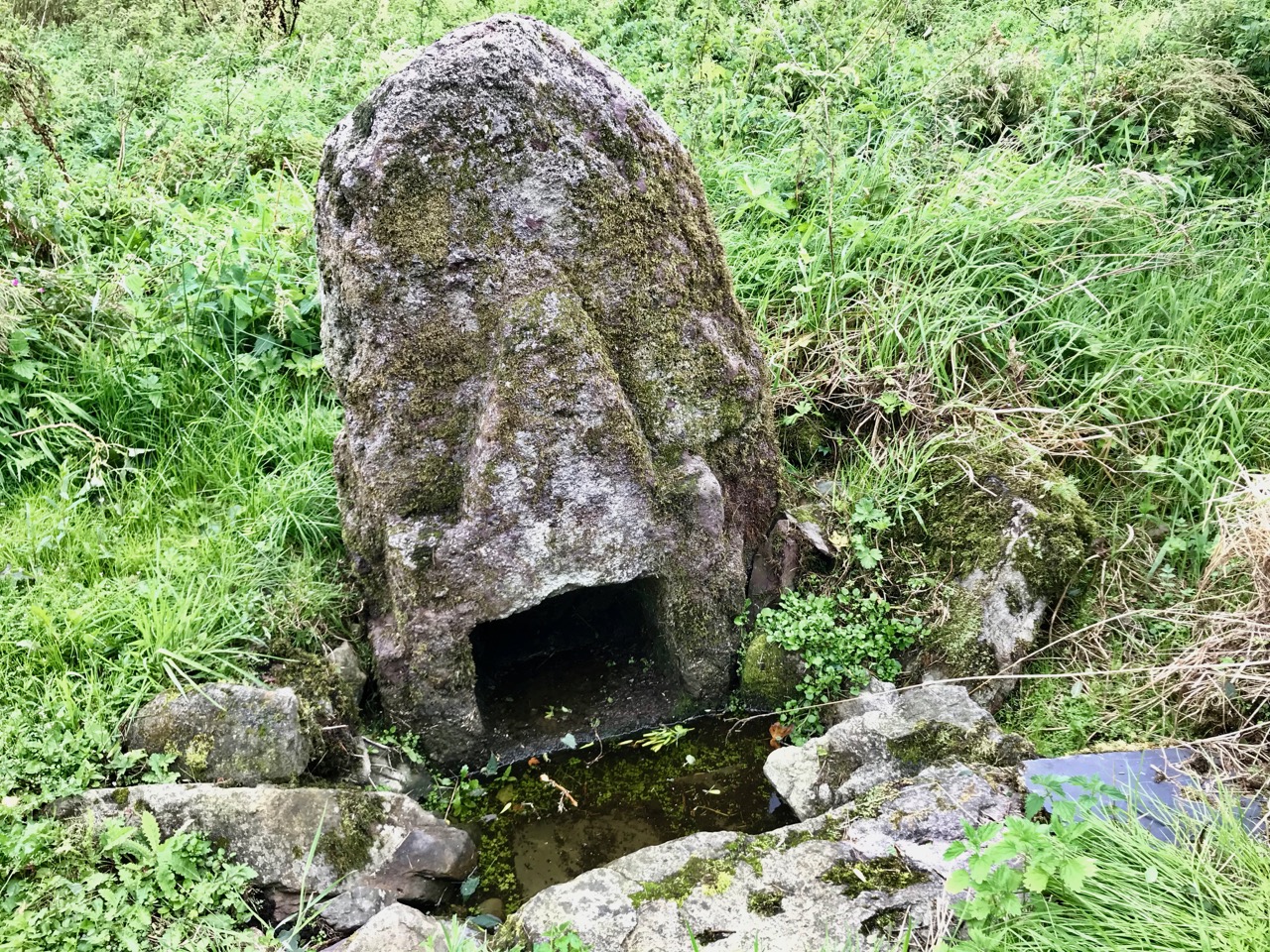
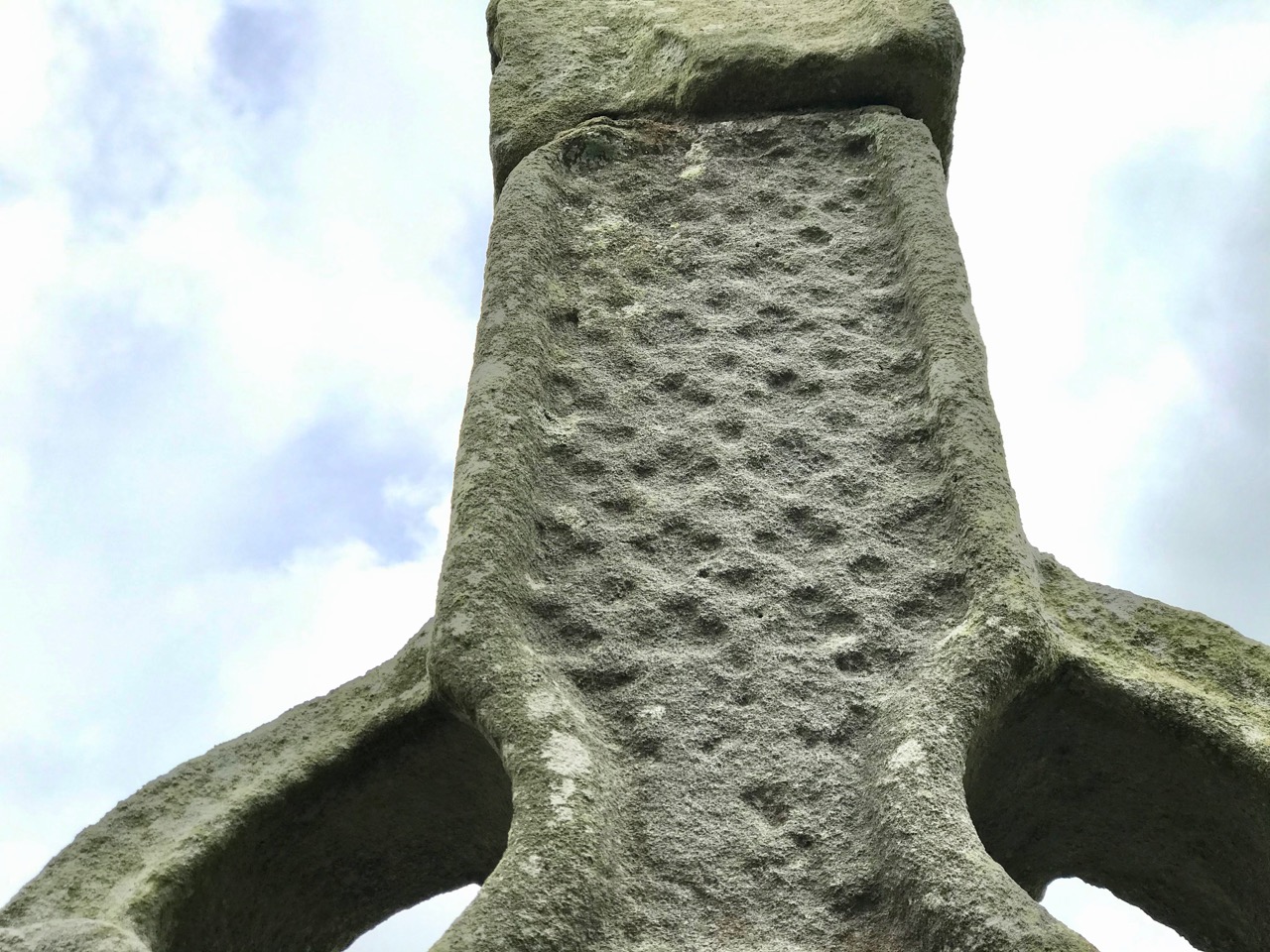
The angels must also have helped to eradicate that monastery as there is now no trace of Gobhan’s foundation in County Kilkenny, just a lonely 19th century church, the well (pictured above), a burial ground and this very fine High Cross. The cross is well worth a visit: some say it’s the oldest of the Western Ossory high crosses, which are themselves considered to be a distinct group. I have looked previously at the Kilkieran examples. Here at Killamery there is just the one cross and, perhaps for that reason, it stands out in the memory. Some scholars reckon it could be 8th century, but most attribute it to the 9th. It’s ancient by any standard, certainly, and it’s probably unavoidable that the carving is so weathered.

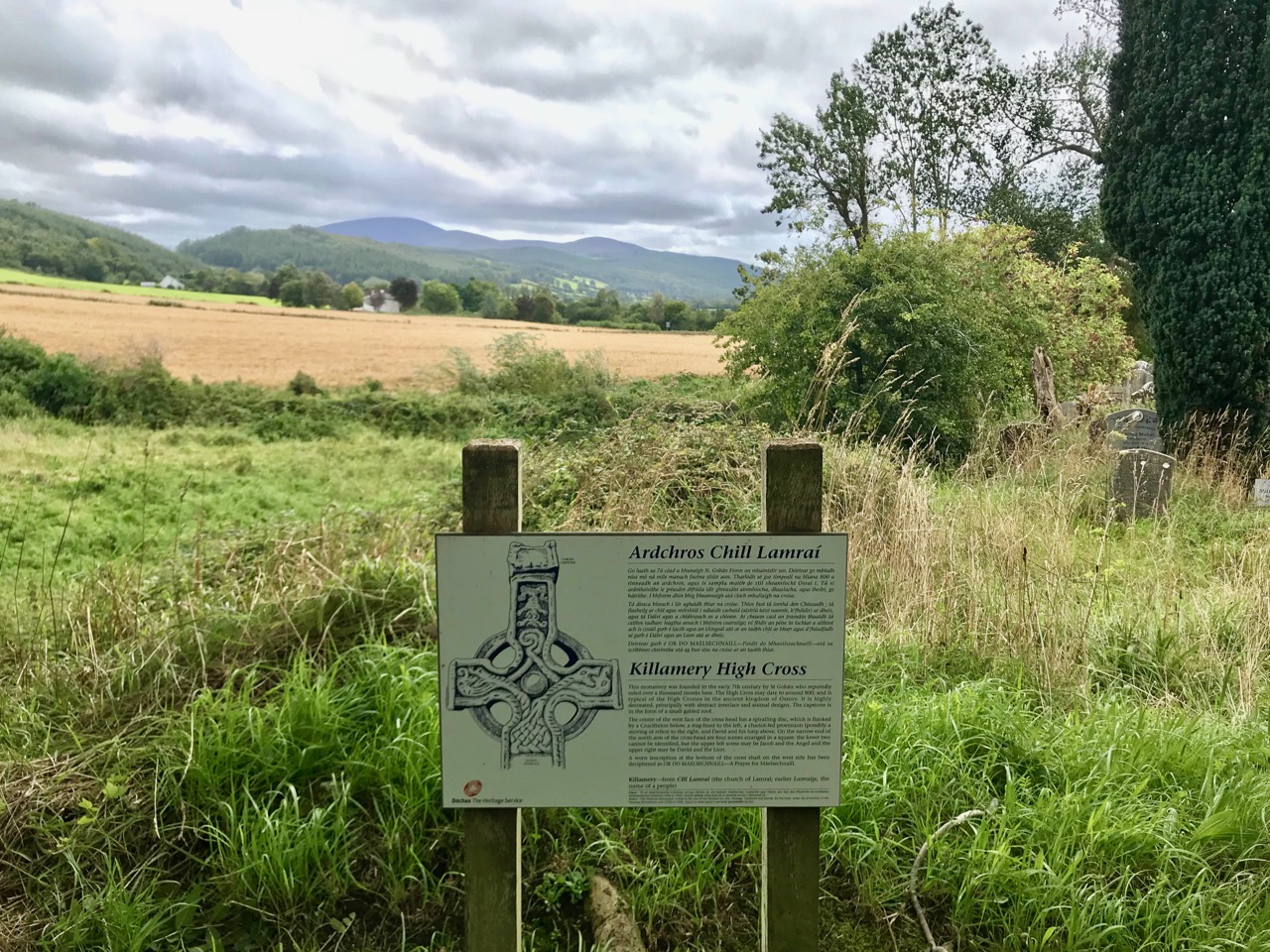
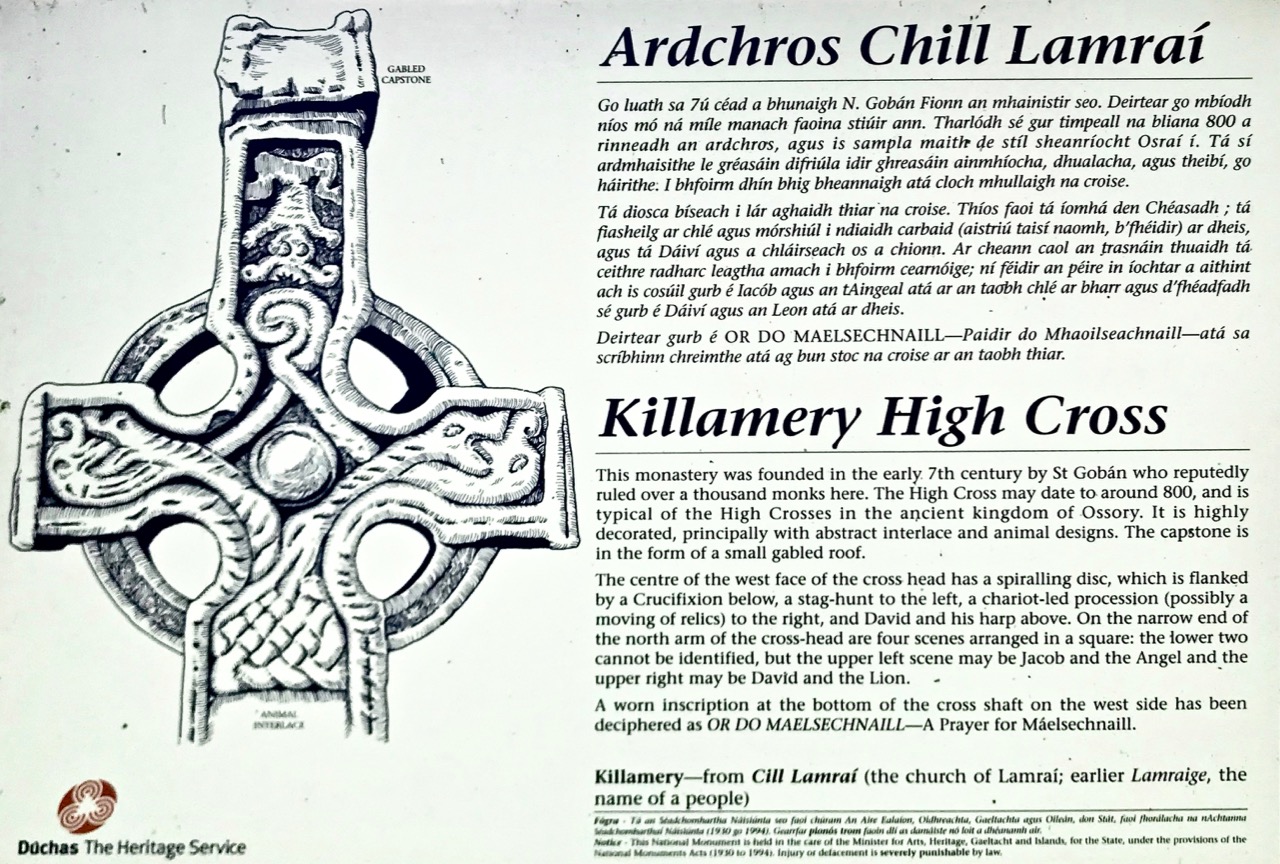
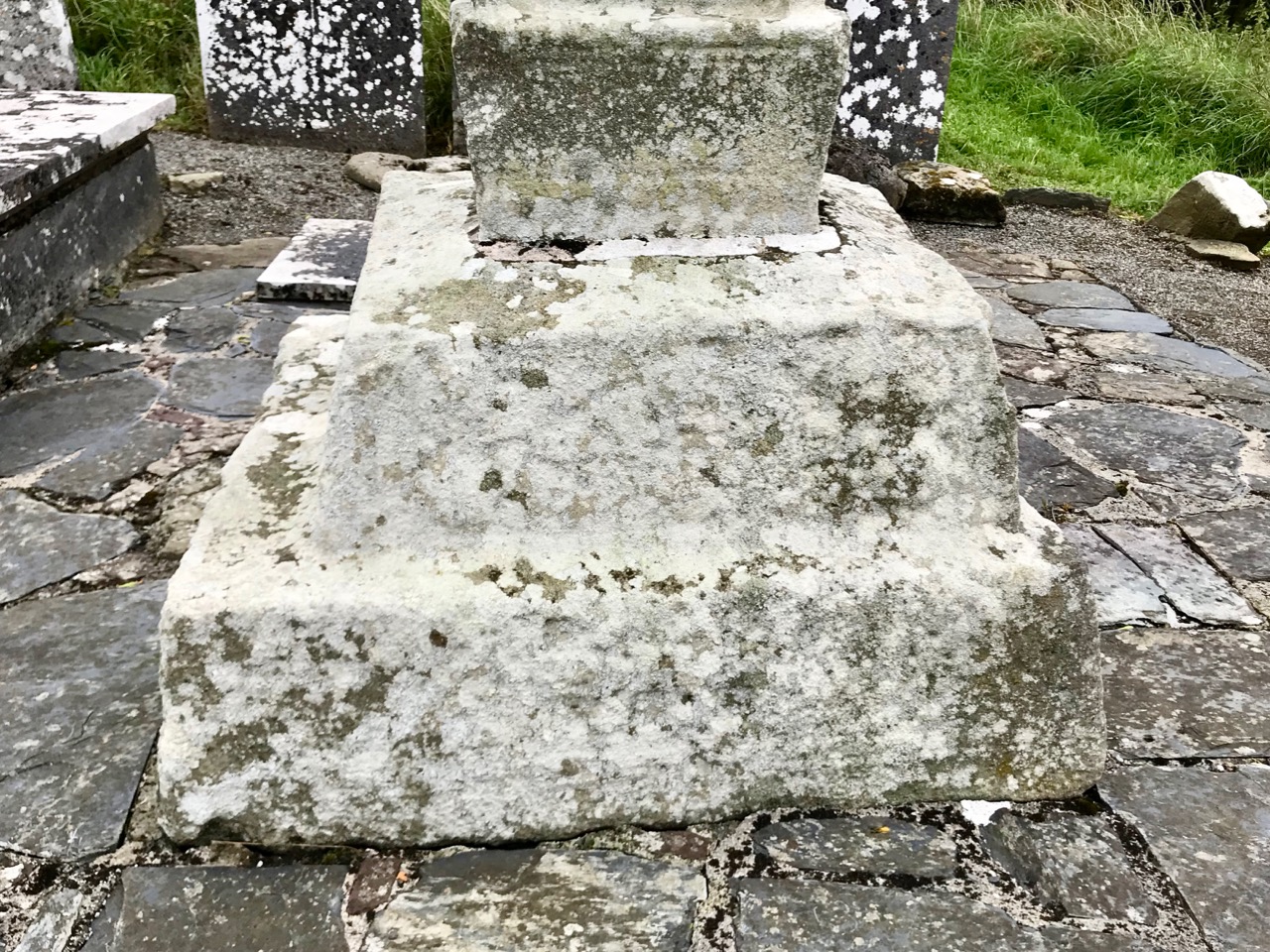
The Duchas signboard (above) describes the scenes depicted on the various elements of the cross,  but most of what we can decipher today is limited to geometrical patterns – very much in the ‘Celtic’ tradition. There may have once been other visible motifs: the large plinth stone is completely worn on all surfaces.

The cross certainly predates any of the other artefacts, bullauns and stone markers which surround it today, but it is likely that the adjacent holy well is even more ancient: it is dominated by an intriguing, large shaped monolith.

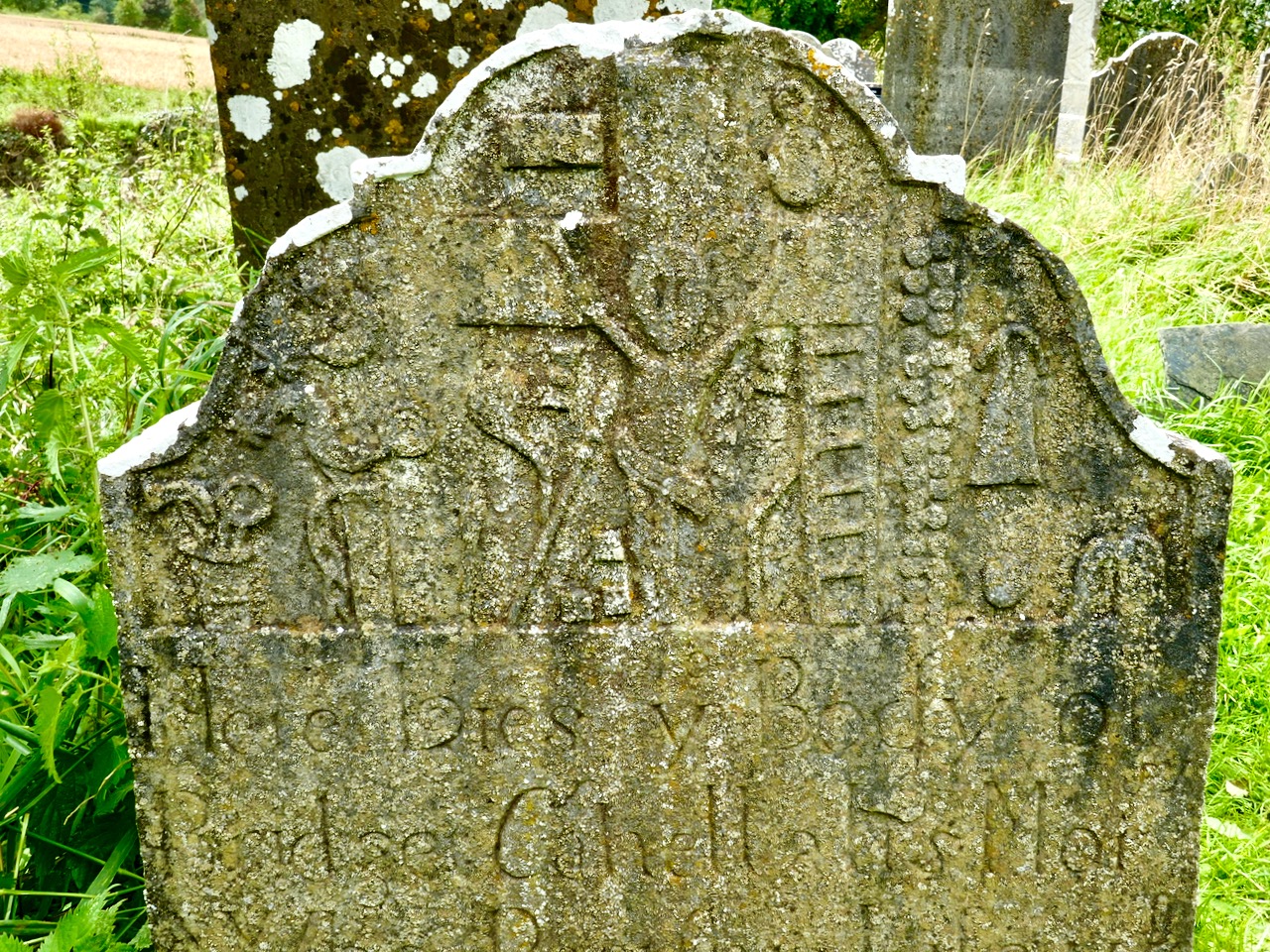
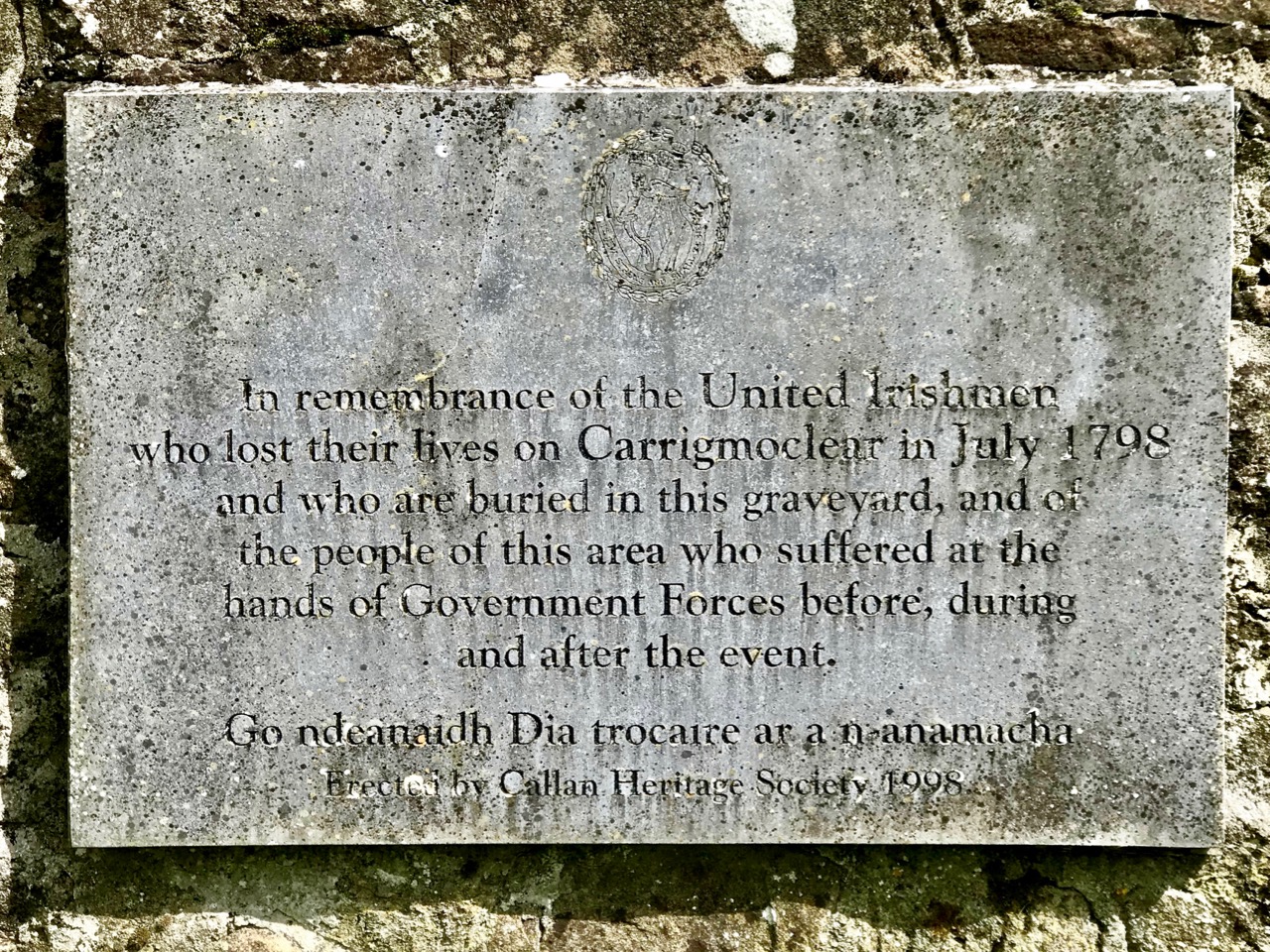
Among the artefacts which have arrived at this site is a fine 17th century (probably) cross slab and a memorial to the United Irishmen who lost their lives at nearby Carrigmoclear in 1798 – both shown below.

The origins of Gobhan himself merit some consideration. He has associations with metalworkers and, of course, we know that Saint Gobnait was their patron saint. Could there be some fusion of names in folk history and oral tradition? Like Gobhan, Gobnait is revered at many sites around Ireland and undertook diverse travels around the island in search of the nine white deer which set her destiny.

There’s nothing more Irish than the experience of finding references to hundreds of years of history hiding down a lonely boreen to nowhere in the rural heart of this land. More than anything, it makes us want to know more. What is real? What is myth – although made to seem logical and credible through stories which are still told? Of course, we can never know the reality, but we can share in the spirit of the stories, and wonder at a piece of stone beautifully carved, perhaps, thirteen hundred years ago . . .

Once you have visited this fascinating site, find your way across to the M9 (it’s straightforward enough) and you’ll be up to the big city in a jiffy!