Queen of the May

May Eve activity: setting up the May Bush

May Eve activity: setting up the May Bush

I was excited to learn – from one of my favourite and most faithful volumes on folklore: The Year in Ireland by Kevin Danaher (Mercier Press 1972) – that on May Day the Fastnet Rock weighs anchor, casts off her moorings and goes sailing about in Roaringwater Bay! I spent May Eve in a whirl of anticipation – and hot spring sunshine – awaiting the morrow which would present this wonderful spectacle to add to the feast to be seen from our window. The morrow that came, ostensibly the first day of summer, was a disappointment: the wind was in the east – and biting – and the whole bay was encased in damp, grey fog. The perambulations of the rock remained out of sight until nightfall, by which time the sweeping light had smugly returned to its rightful place twelve miles off shore.
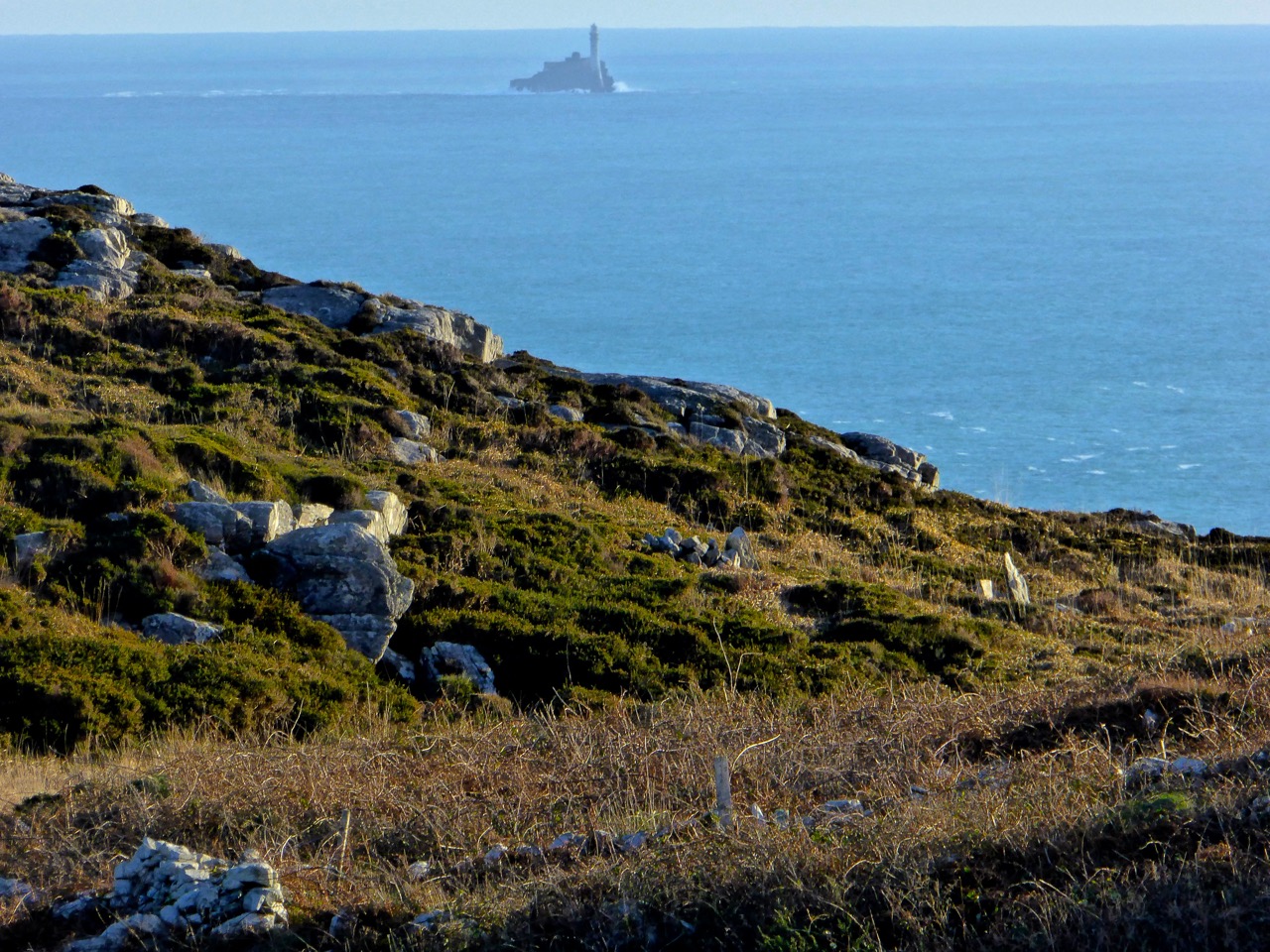
Dancing Rock...

Dancing Rock…

My only consolation – again, according to Danaher – is that a cold, wet May morning heralds an excellent summer (and this certainly came about last year). I could write all day about Danaher’s observations on the subject of Mary’s month – in his book 42 pages are devoted to it: the longest section by far, indicating the importance given to this part of the year in the traditional calendar. But I’ll leave that for another time and concentrate on our own activity: putting up our May Bush.

When I lived in the west of England it was a toss-up between going to Minehead or Padstow on May Day – occasionally both. They were contrasting experiences: in Minehead, on the north coast of Somerset, you had to take pot luck – there was no fixed itinerary to the day and you never quite knew what you were going to see, or where or when. What you wanted to see was the Hobby Horse, sometimes known as the Ship-horse, or the Sailor’s Oss. I’ll refer you to another classic book – by chance also dating from 1972: A Year of Festivals – A Guide to British Calendar Customs by Geoffrey Palmer + Noel Lloyd (Frederick Warne):

…The head of the horse (or the mast and sails of the ship) is in the centre; and a long rope tail, once a real cow’s tail, is fastened to the ‘stern’. The man inside the contraption glides and sways through the streets, and sometimes swings his tail around anybody who refuses to contribute to the collecting-box… The ship form of the horse is said to date from 1772 when, on the evening before May Day, a ship sank in a storm off Dunster, three miles from Minehead. The only object to be washed ashore was a dead cow, the tail of which was used to decorate the horse…

Now, the early photograph below is one of my all-time favourites as an illustration of a folk custom: it’s optimistically captioned Hobby-horse Festival, Minehead, Somerset and says to me that such traditions will continue forever because ‘they have to be done’ – even if the rest of the world has lost all interest…

The First of May at Padstow is another matter altogether. It’s a huge gathering: all the roads are closed to traffic and at times it seems impossible that any more people could be fitted in to this modest Cornish fishing community. Here there are two ‘Obby Osses’: the Red Oss, sometimes known as the Original or Old Oss, is stabled in the Golden Lion, while the Blue Oss – or Temperance Oss has its headquarters in the (perhaps more temperance friendly) Public Library. Both horses come out in the morning of May Day, led by a ‘Teaser’ and accompanied by numerous dancers, drums and accordions, perambulate all around the town, and well beyond it, finally meeting in the evening at The Square, in the shadow of an elaborate and colourful May Pole.

Padstow taster… Photos from the 1960s and 2006:

Preparing the Maypole in Bavaria

Preparing the Maypole in Bavaria (Florian Schott, Ellbach)

While I was experiencing my first Padstow May Day in the 1960s, our Cappaghglass neighbour Dietrich was in Bavaria, watching the construction of an enormous Maypole: he also remembers all the children dancing around it holding up May Bushes. For our own May Bush we took our inspiration from Danaher:

…The children set up their May Bush in the same spirit in which we hang out our flags on a national holiday, to celebrate an occasion, but some – at least – of their parents were glad of the feeling of protection against unseen forces which the May Bush gave…

Oh yes! We have to be aware that…

…So powerful were the preternatural forces abroad in the night between sunset on May Eve and sunrise on May Day that almost anything might be expected to happen… (Danaher) while …The powers of evil, always on the alert to entangle and destroy souls, being most dangerous and powerful on May-Eve, on that day the maids were apt to be uneasy and rather sullen, watching us suspiciously lest we might, through our unbelief, frustrate their precautions against danger. They strewed primroses on the threshold of the front and back doors – no fairy can get over this defence – and in the cow-byres they hung branches of rowan while the head dairy-woman sprinkled holy water in mangers and stalls. The milkmaids, at the end of the evening milking, stood to make the sign of the cross with froth from the pails, signing themselves and making a cross in the air towards the cows… from The Farm by Lough Gur by Mary Carbery (Longmans, 1937).

Burning the land

Burning the land

We have had a long, dry spell and there have been a number of gorse fires recently in our neighbourhood: this one occurred on May Eve – traditionally a time in Ireland when bonfires were lit – although the gorse fires have nothing to do with that tradition. Here are the observations of William Wilde (father of Oscar) in Irish Popular Superstitions, Dublin, 1853
…Turf, coals, old bones, particularly slugs of cows’ horns from the tan-yards, and horses’ heads from the knackers, logs of wood etc were also collected, to which some of the merchants generally added a few pitch and tar-barrels. The ignitable materials were formed in depots, in back-yards, and cellars of old houses, long before the approaching festival; and several sorties were made by opposing factions to gain possession of these hoards, and lives have been lost in the skirmishes which ensued… With the exception of one ancient rite, that of throwing into it the May bush, there were but few Pagan ceremonies observed at the metropolitan fires. A vast crowd collected, whiskey was distributed galore… The entire population collected round the bush and the fire; the elder portion, men and women, bringing with them chairs or stools, to sit out the wake of the winter and spring, according to the olden usage… Fiddlers and pipers plied their fingers and elbows; and dancing, shouting, revelry and debauchery of every description succeeded, till, at an advanced hour of the night, the scene partook more of the nature of the ancient Saturnalia, than anything we can presently liken it to…

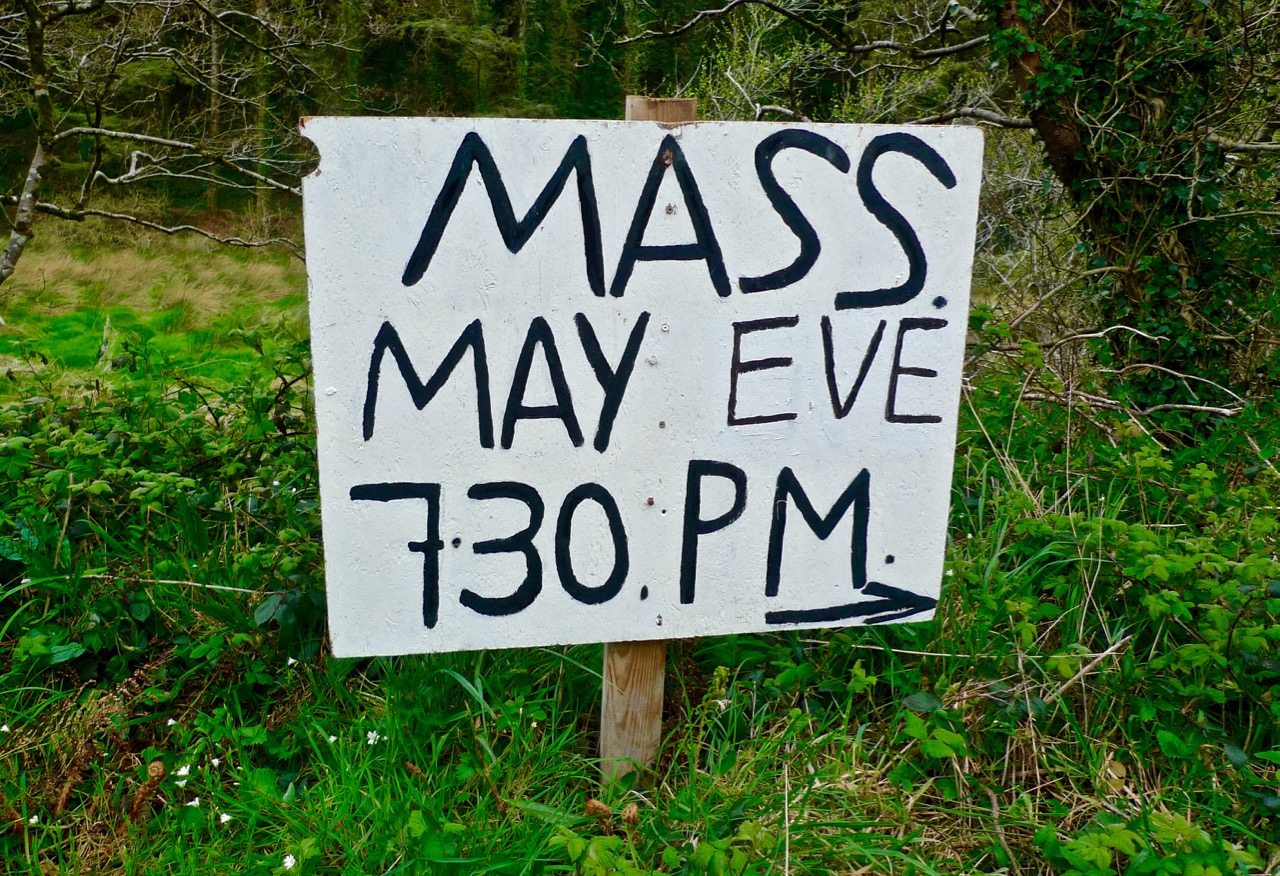
mass sign

By contrast, our own rural activities were much more calm and constrained. I couldn’t miss out on an outdoor Mass celebrated at one of Lough Hyne’s Holy Wells – the Skour Well. On a beautiful evening – attractive to the midges – it felt the most natural thing in the world to be at a site which has been considered sacred for hundreds, if not for thousands of years, and to take part in a ceremony which is also ancient. I counted over eighty people, including a gentleman of 97, at this event – presided over by two priests and centred on a portable altar with cloth and candles, the revered well being the backdrop. Prayers were said and hymns were sung in English, Irish and Latin.

There’s a continuity here which defies any twenty first century rationale. I was very conscious that this was the way that faith was practiced in Ireland in the penal times (requiring that a watchful eye be kept out for the Redcoats) – but also it was an honouring of nature and a respect for the elements: earth, water, sun and rain – old ways carrying on regardless of new technologies.

A May garland – Hatherleigh, Devon:

Finola’s memory of May Day in her schooldays was of all the girls wearing veils and processing down to the grotto saying the Rosary; and, every day throughout Mary’s month, singing the refrain that was sung at the close of the Mass at Skour Well:

O Mary! we crown thee with blossoms today,
Queen of the Angels, Queen of the May.
9074db7eb01031a082d064758b8b18ba

Showing Off West Cork

This is how you sightsee in West Cork!

This is how you sightsee in West Cork!

Ladies and Gentlemen, meet Susan Byron! Susan is the face behind Ireland’s Hidden Gems, a custom travel service for visitors to Ireland, and she and I met last year when Robert and I spent a week in Clare. Susan loves nothing better than to hop in her car and take off for a few days to some part of Ireland she wants to explore or re-explore. There are very few places she hasn’t seen, but I soon discovered that the Sheep’s Head was one of them. She has been to the Mizen before but hadn’t seen some our OUR hidden gems. In short order we decided that a visit must be organised, and a couple of weeks ago she arrived, bearing Burren lamb, bottles of wine, and an infectious enthusiasm to see everything.

The 17th century Bardic School

The 17th century Bardic School on The Farranamagh Loop walk

Now if someone who runs a bespoke travel agency wants to see your piece of paradise, well, you’re going to put your best foot forward. Fortunately, this isn’t a problem in West Cork – it’s pretty well a fail-safe place to show off. Susan spent her first day whale watching (something we promise ourselves to do soon) and exploring the area east of Skibbereen. On day two and three she was all ours and we spent the first day on the Sheep’s Head and the second on the Mizen.

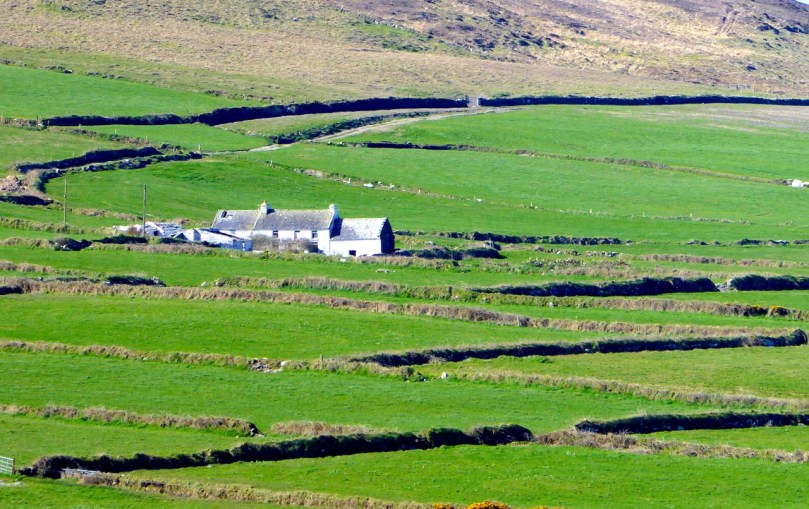
Mizen farm

Mizen farm

First of all, travelling with Susan is a hoot. She’s got a hot car, a ready laugh, an inexhaustible supply of stories, insatiable curiosity, and a real passion for Ireland. She is amazingly well-read – she knew the dates of the castles before I could tell her and was already familiar with what most tourists want to to see and do in West Cork. So this was a cheerful, companionable time of exploration, chatting, coffee and scones, hiking and sightseeing.

Our Sheep’s Head day took in two loop walks – the Farranamanagh loop and the lighthouse loop. We started off in drifting mist but the sun came out in the afternoon and soon we were shedding coats and applying the sunscreen. After a stroll around the lovely Farranamanagh walk (famous for its 17th century Bardic School) we had lunch in The Creamery in Kilcrohane and browsed in the Sheep’s Head Producers Market. We bought eggs from a farmyard, said hello to contented alpacas, and took innumerable photos of the killer views.

The Lighthouse Loop offers unparalleled vistas at the end of Sheep’s Head – south to Mizen Head and the sweep of the West Cork coastline, and then, as you round the end, north to the Beara and to the Iveragh Peninsula (Ring of Kerry) beyond it. The trail has some steep sections and clings to a cliff edge for part of the northern stretch. It, and the Farranamanagh Loop are but two of the many waymarked trails that crisscross the Sheep’s Head. Each is as rewarding as the next and you could easily spend several days exploring this one Peninsula.

Lake Farranamanagh

Lake Farranamanagh

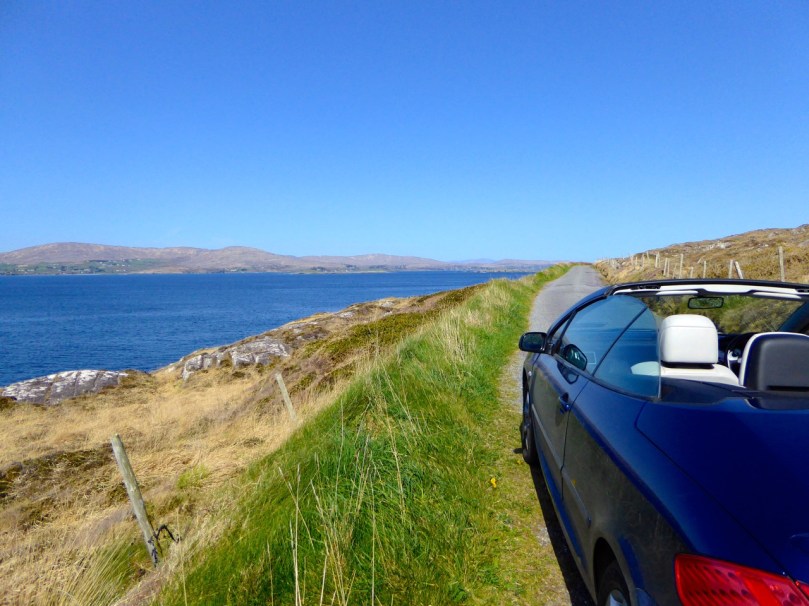
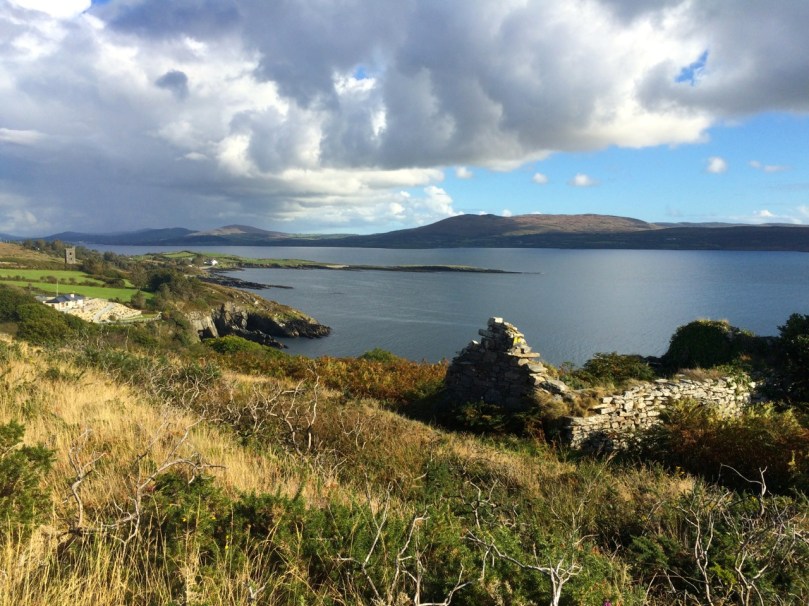
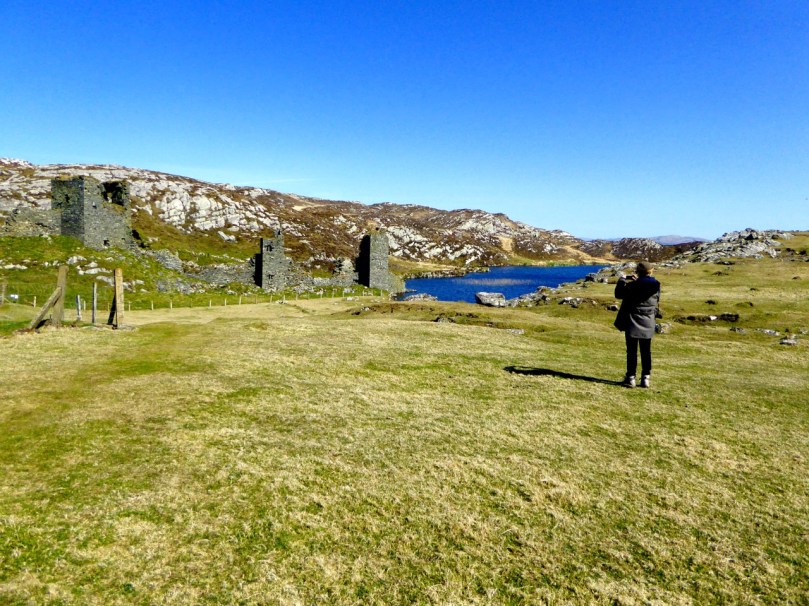
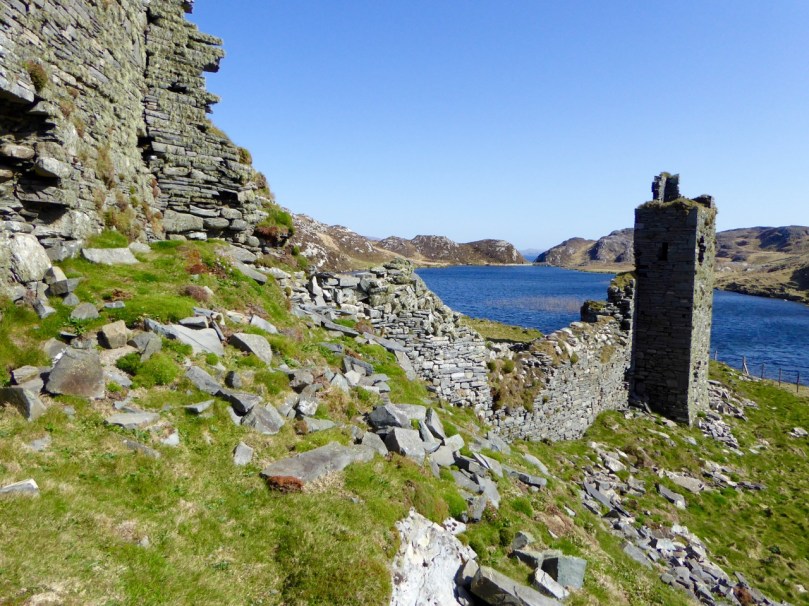
The Mizen, of course is OUR peninsula and we are always delighted to introduce it to friends. The weather was brilliant so we were able to drive in Susan’s cool car with the top down. (In my next life I want to come back as a blonde with a convertible.) Three Castle Head was at its most spectacular, with the water that deep azure blue that people who don’t live here have a hard time believing is real.

The Three Castles: it's love at first sight for Susan

The Three Castles: it’s love at first sight for Susan

The curtain wall and the lake

The curtain wall and the lake

Spring was bustin’ out all over so the air was heady with wildflowers and the fields full of newborn lambs. The drive on the north side of the Mizen is as jaw-droppingly gorgeous as any stretch of road in Ireland – the only difference is that it’s empty. We met not a single car, which enabled us to stop where we pleased to survey the scenery or take photos.

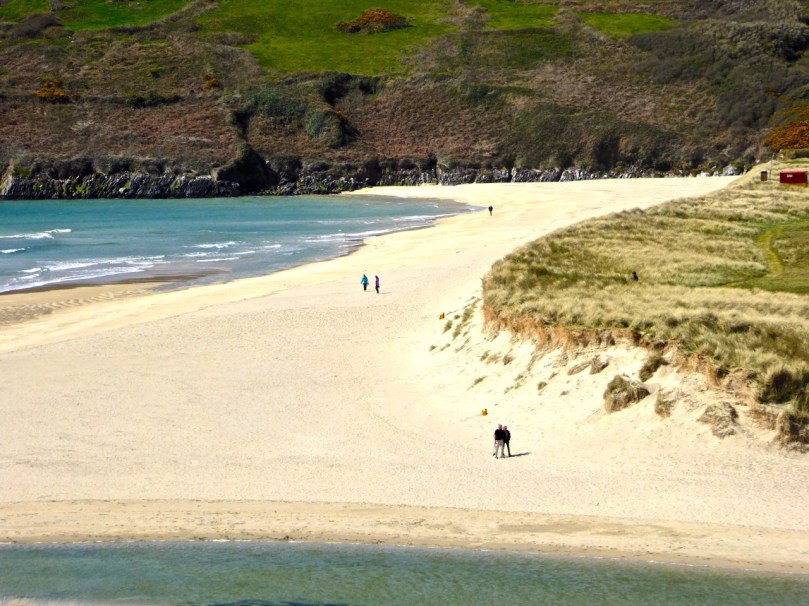
Barley Cove Beach

Barley Cove Beach

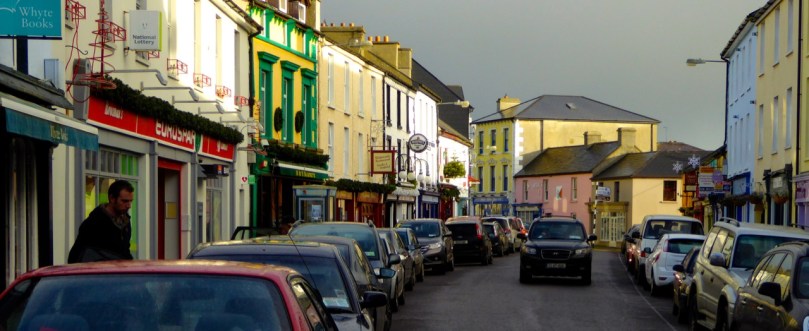
Susan wound up her time by conducting some retail therapy in Schull. No better place!

Schull, colourful village with great shopping

Schull, colourful village with great shopping

She has posted numerous photographs on her Facebook page and even used the phrase “possibly the most beautiful place I have ever been….” about Three Castle Head. That’s how I feel about that magical place – but when someone who has seen everything Ireland has to offer says it, maybe, just maybe, I’m not delusional after all.

Susan at the cairn. Three Castle Head on the Mizen

Susan at the cairn. Three Castle Head on the Mizen

An Extra Lick of Paint

Old vet clinic, Schull

Old vet clinic, Schull

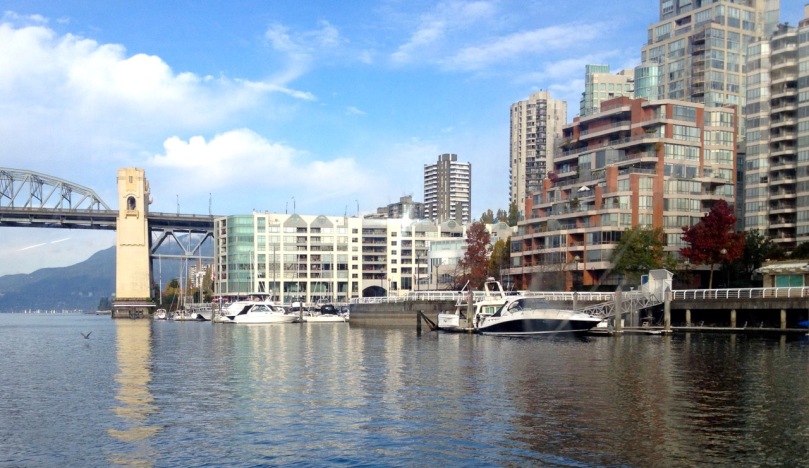
I used to live in Vancouver, on Canada’s west coast. It’s a beautiful city by any standards: gleaming high-rises, miles of seaside walkway, and snow-capped mountains lending a dramatic backdrop. I loved it, but when I looked through my window mostly what I saw was concrete and steel – and no colour! I had to escape up into the mountains or out to the Fraser Valley to get in contact with nature and feed my soul.

Where I used to live

Where I used to live

Where I live now

Where I live now

In West Cork, my soul is fed every day, every time I look out the window of our house, every time I stroll through our village of Ballydehob. That’s down to our rural setting, of course, and the magnificent scenery, but a huge part of it is about colour. I’m a colour person, I guess: I respond to it and crave it. I can certainly appreciate a quiet tasteful palate of greys or beiges, or any of the million variations of off-white when I see them. But left to my own devices I’d quickly have a chunk of candy apple red in there, or chairs the colour of daffodils, or a wall in a vivid pink. As Lady Gaga says, I was born that way.
Why is that woman taking my picture?

Why is that woman taking my picture?

And so I find living in rural Ireland a constant source of delight and inspiration. No country was ever this green, surely! Now the gorse is starting to bloom, turning the hillsides into a blaze of yellow. And every few kilometres along the road is another village or town full of colourful houses competing with each other for my attention. But before we get to the villages, here are some glimpses of houses just off the main roads as you drive those kilometres.

A Lick of Paint mainly featured houses out in the countryside, but for this post I wanted to show you some of my favourite houses in our nearby towns and villages: Ballydehob, Bantry, Skibbereen and Schull.

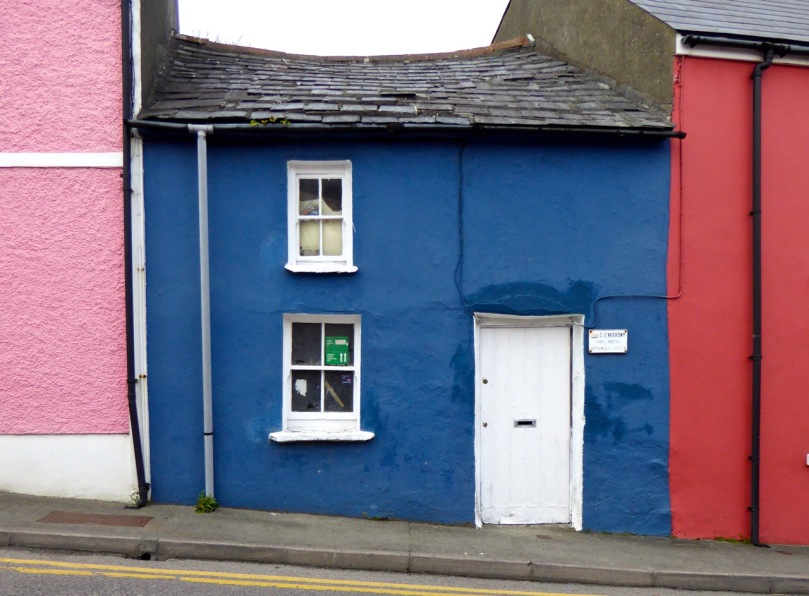
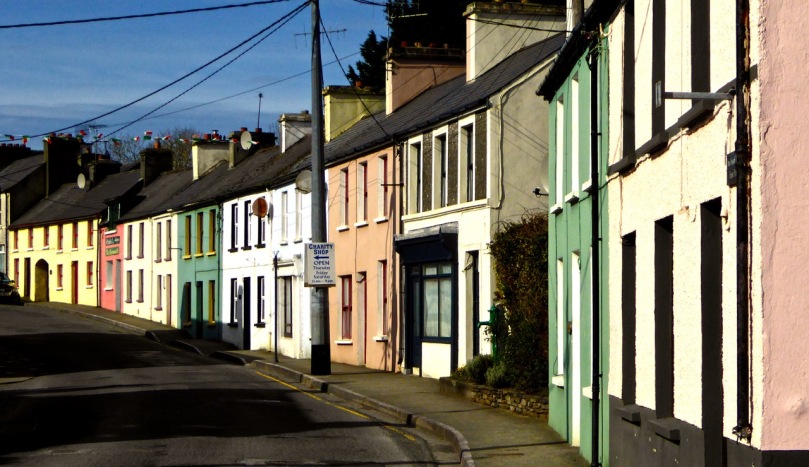
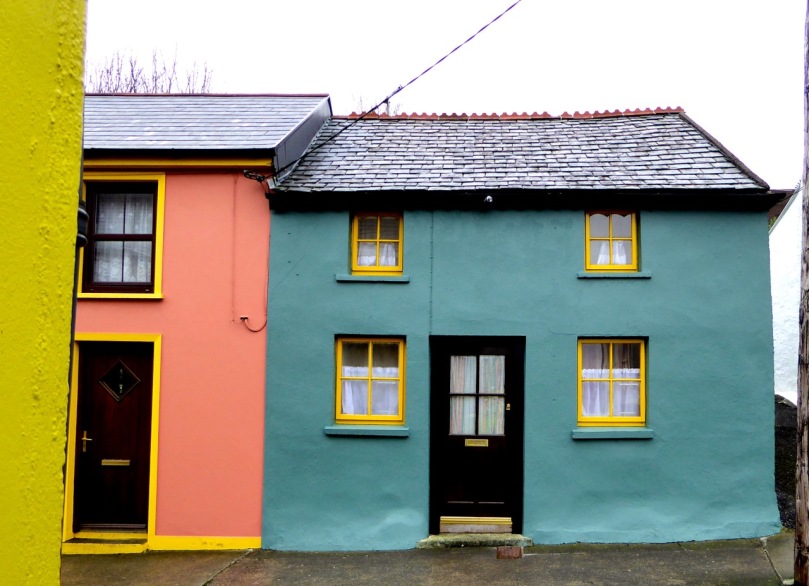
On the outskirts there are new estates of identical houses, of course, all painted in identical shades of cream. But in the steep and windy streets behind the shops you find little old terraced houses lovingly done up, the walls, doors and windows all in contrasting hues and with knife-edge divisions of colour between neighbours.

Skibb town house 2

Skibbereen townhouse

It can be like walking through a giant Rubik’s Cube (ok, that dates me) or one of those kaleidoscope tubes.

In his book, West of West, published in 1990, Brian Lalor captures my own experience growing up in a sea of grey. He says:
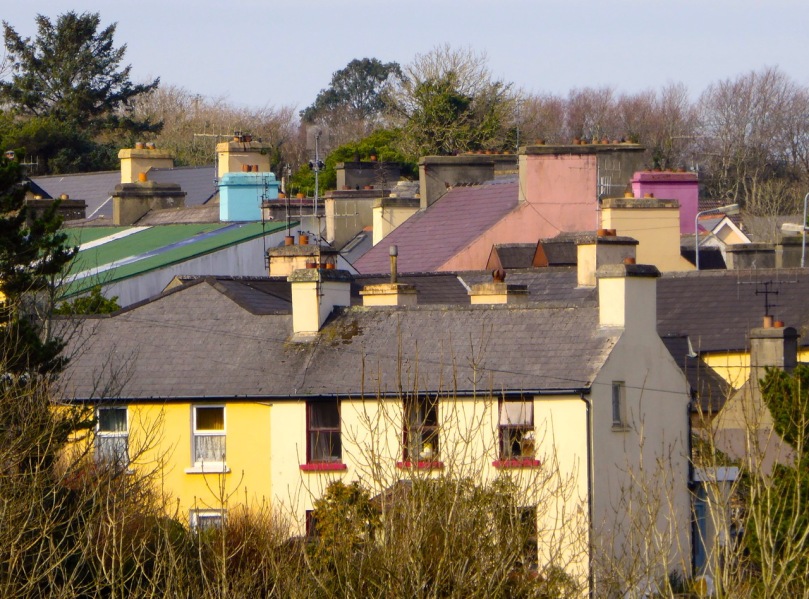
The nineteenth-century photographs of villages and farms show an unrelieved grimness of stone, cement and clay. Whitewash relieves this picture, though frequently this rendering has degenerated into a leprous greyness indicative of neither hope no prosperity. Colour has a symbolic relationship with the state of economics in rural Ireland. The last 20 years have seen the introduction of modern synthetics, bringing vivid tones not previously to be found here. Affluence and the EC have brought, as to the Aegean, a flight from the spartan virtues of white and cream…
Whatever the reason – prosperity, a sense of fun, a wish to lighten the spirits, the influence of the Tidy Towns Competition, an affinity with the colours of the wildflowers in the hedgerows, competition with the neighbours, the need to describe how to identify a house when street numbers are confusing or absent – I am grateful for it. It’s one of the things that makes rural Ireland unique and charming – and it feeds my soul.

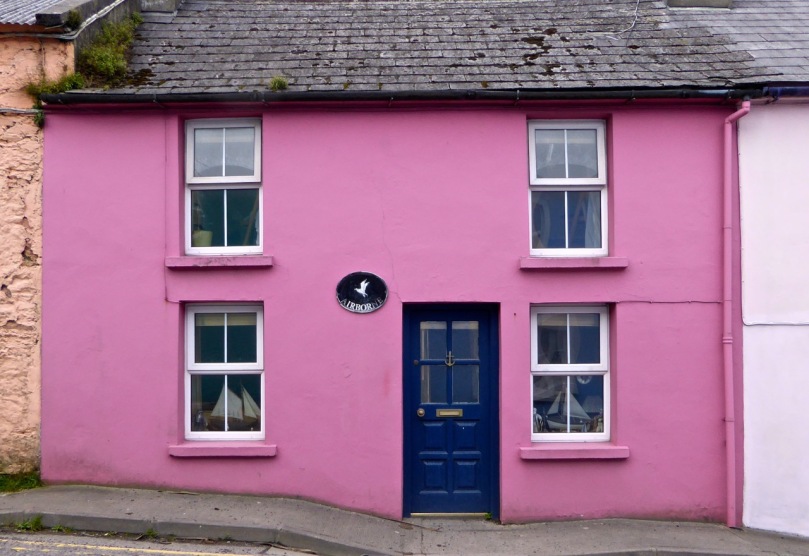
Airborne, Schull

Airborne, Schull

The Gables of Ballydehob

The Gables of Ballydehob


New Archaeology

Unexpected Discovery...

Unexpected Discovery…

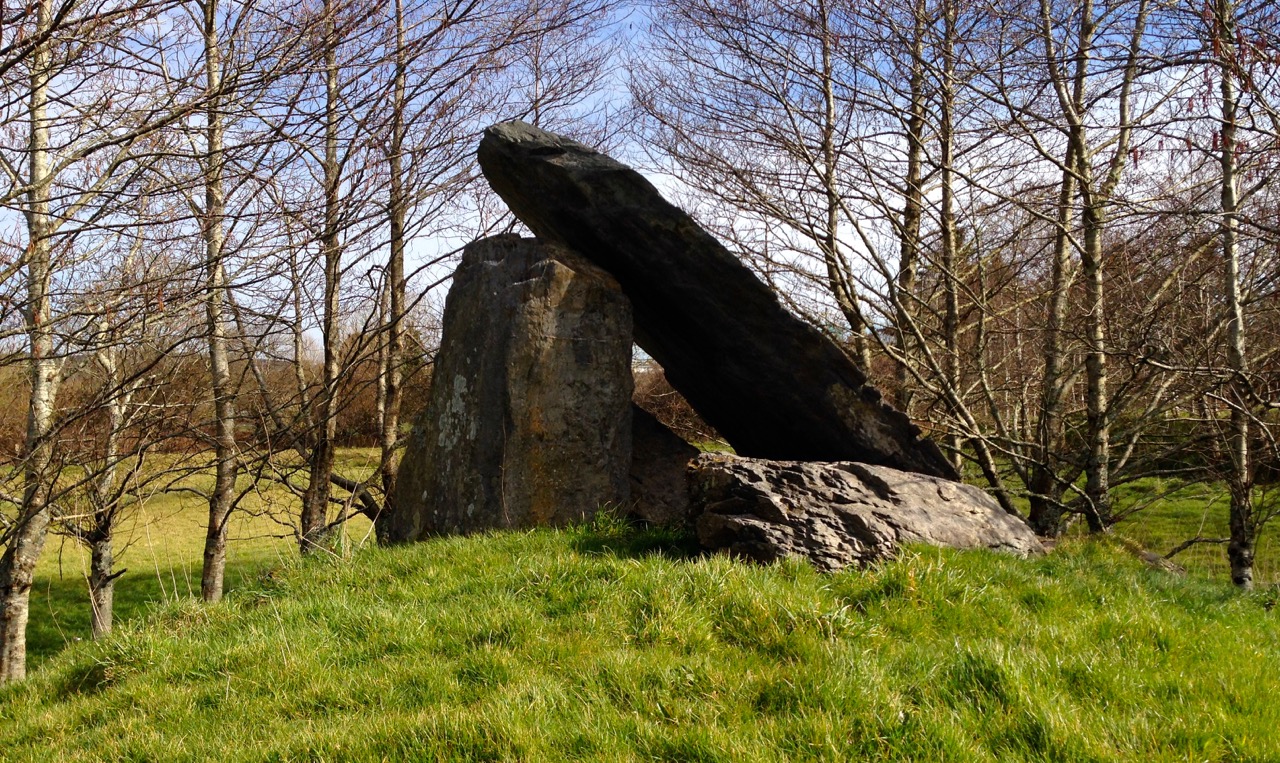
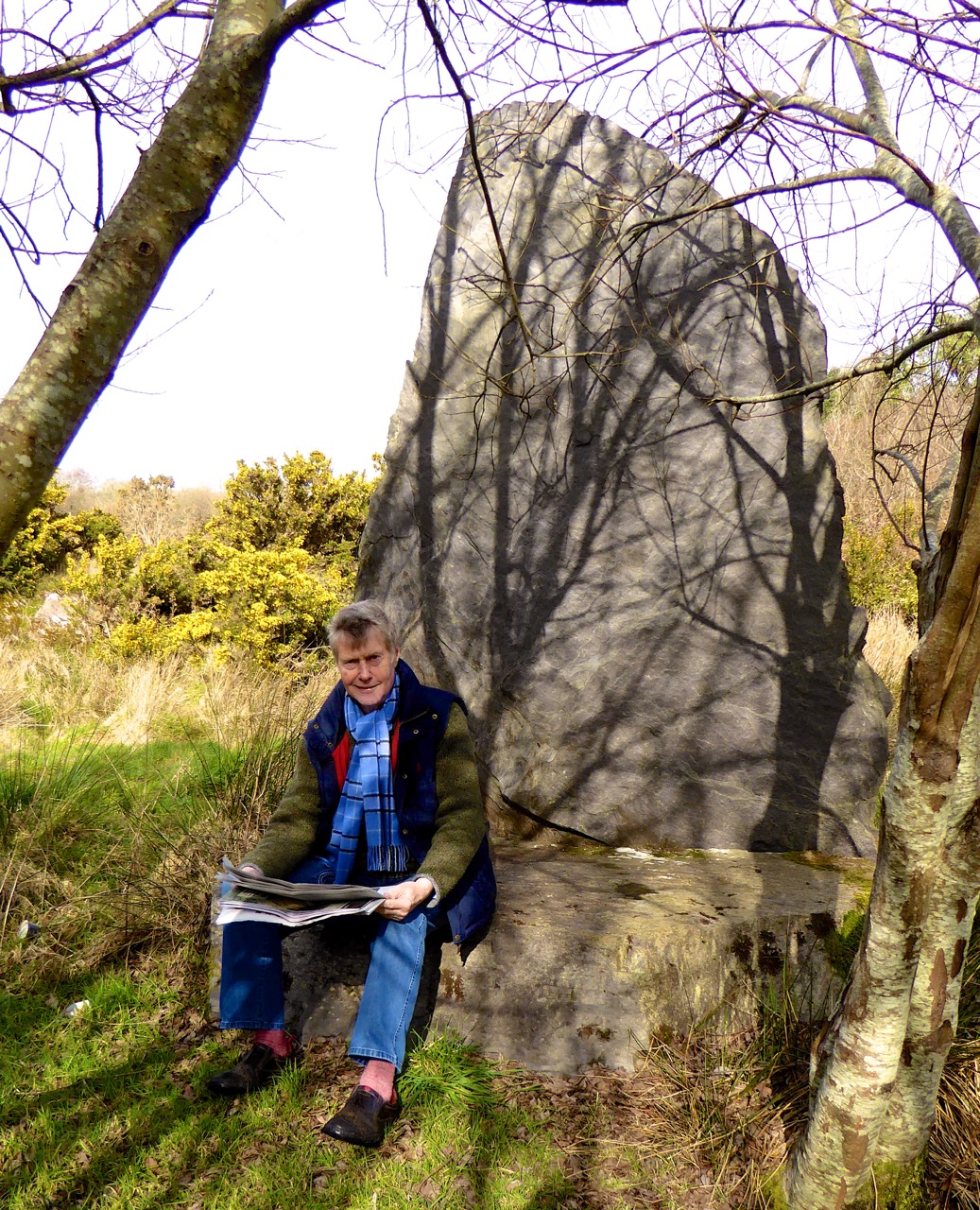
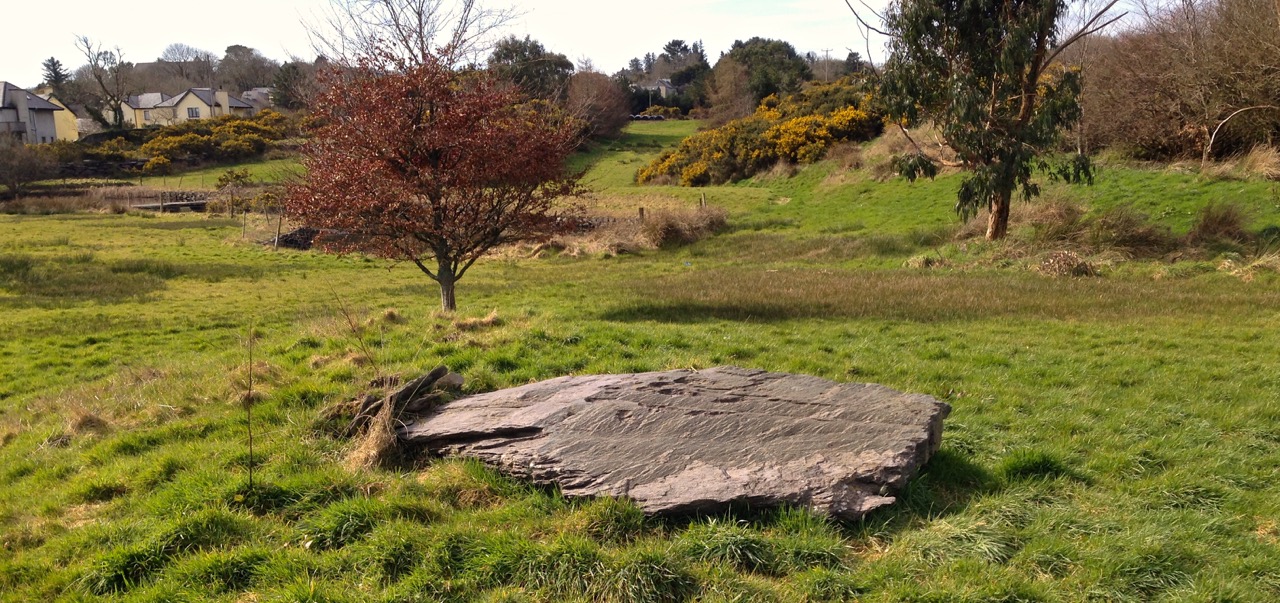
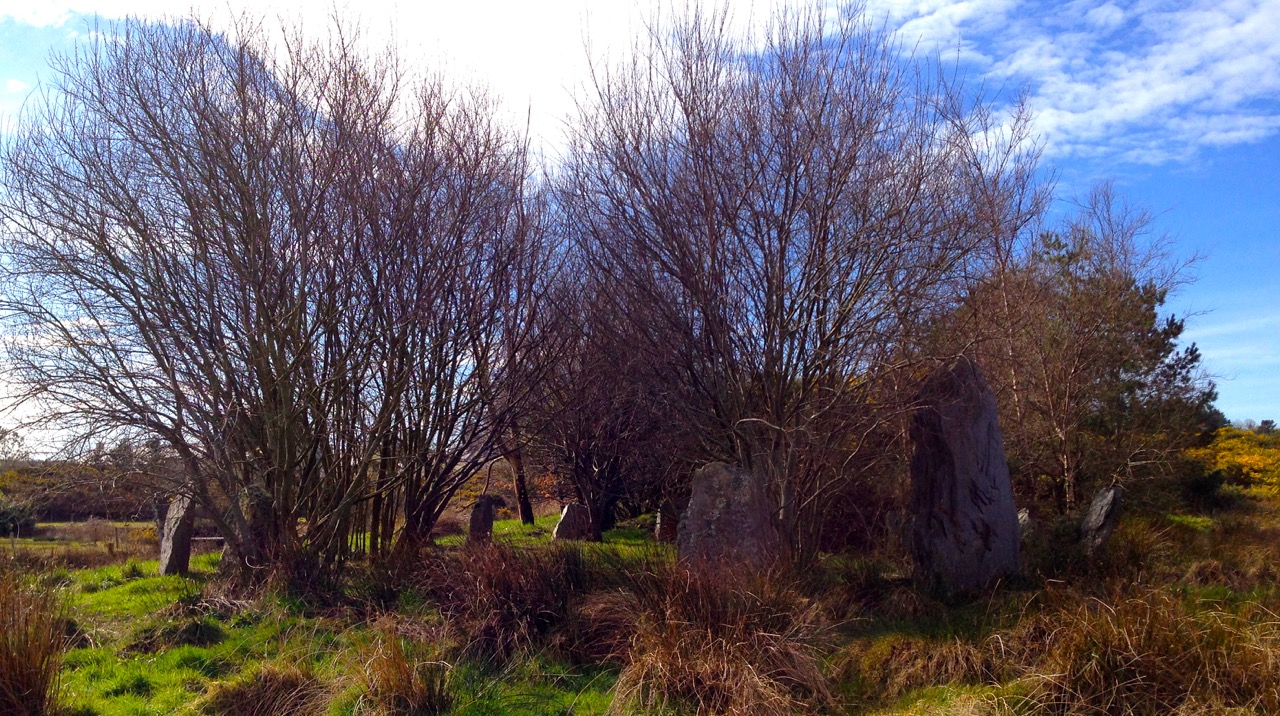
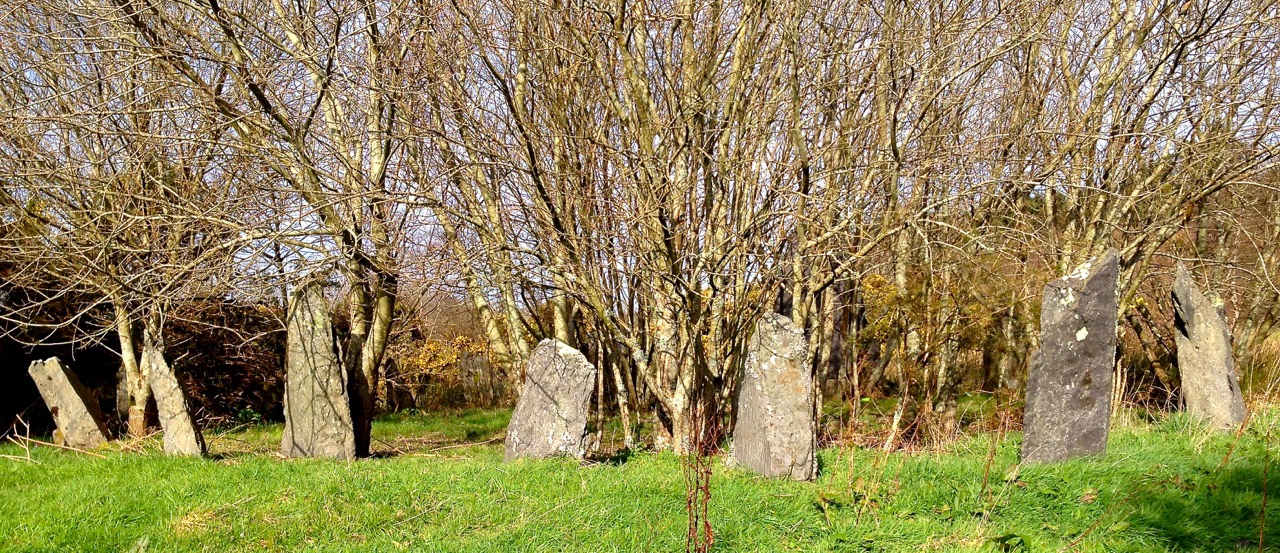
Wow! A hitherto unrecorded stone circle, a boulder burial, a gigantic standing stone and a dolmen… all found on a Saturday morning walk.

Ballydehob's Dolmen

Ballydehob’s Dolmen

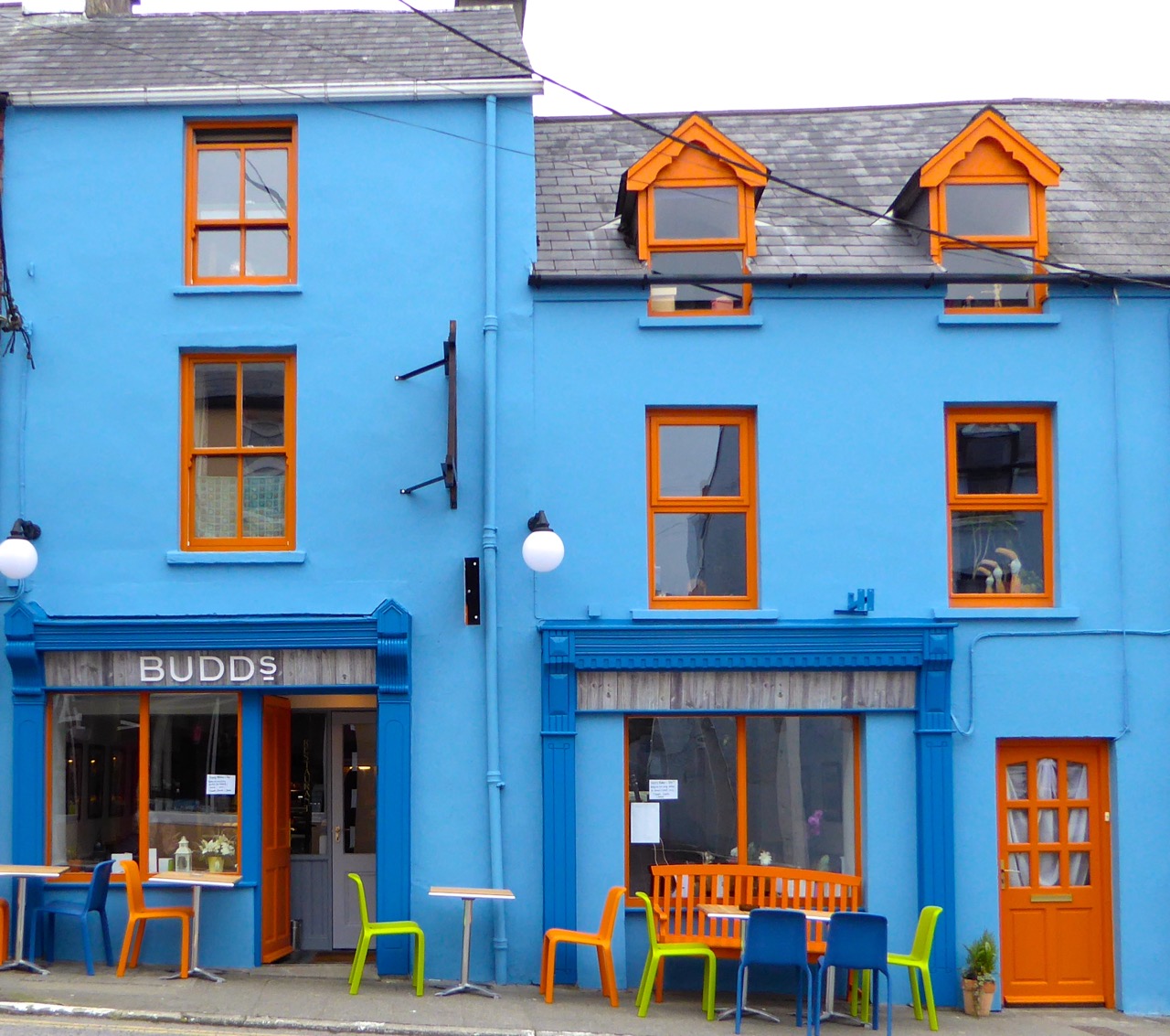
Budds

Our expedition began after a great breakfast in Budds – Ballydehob’s newest eating venue: try it out – it has an attractive cheerful atmosphere and the food is excellent. After this sustenance we set out to explore – for us – uncharted territory. Did we travel miles out into the wild hills of West Cork to find these remarkable pieces of archaeology? No, we walked a few metres down the road…

Time for the weekend paper - Robert takes to the Druid's Chair

Time for the weekend paper – Robert takes to the Druid’s Chair

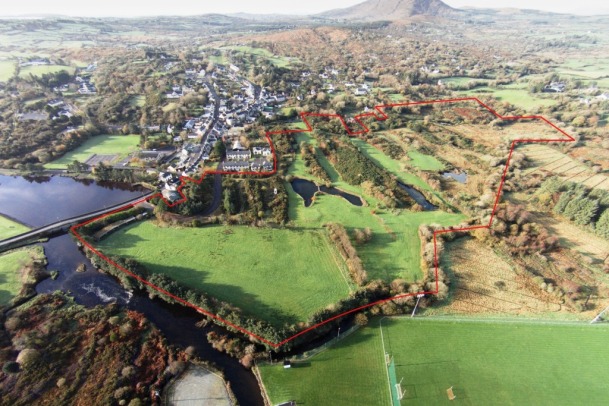
Right behind the main village street in Ballydehob is a spectacular example of twentieth century Irish history: a golf driving range with a prehistoric theme!

Aerial view of the site

Aerial view of the site

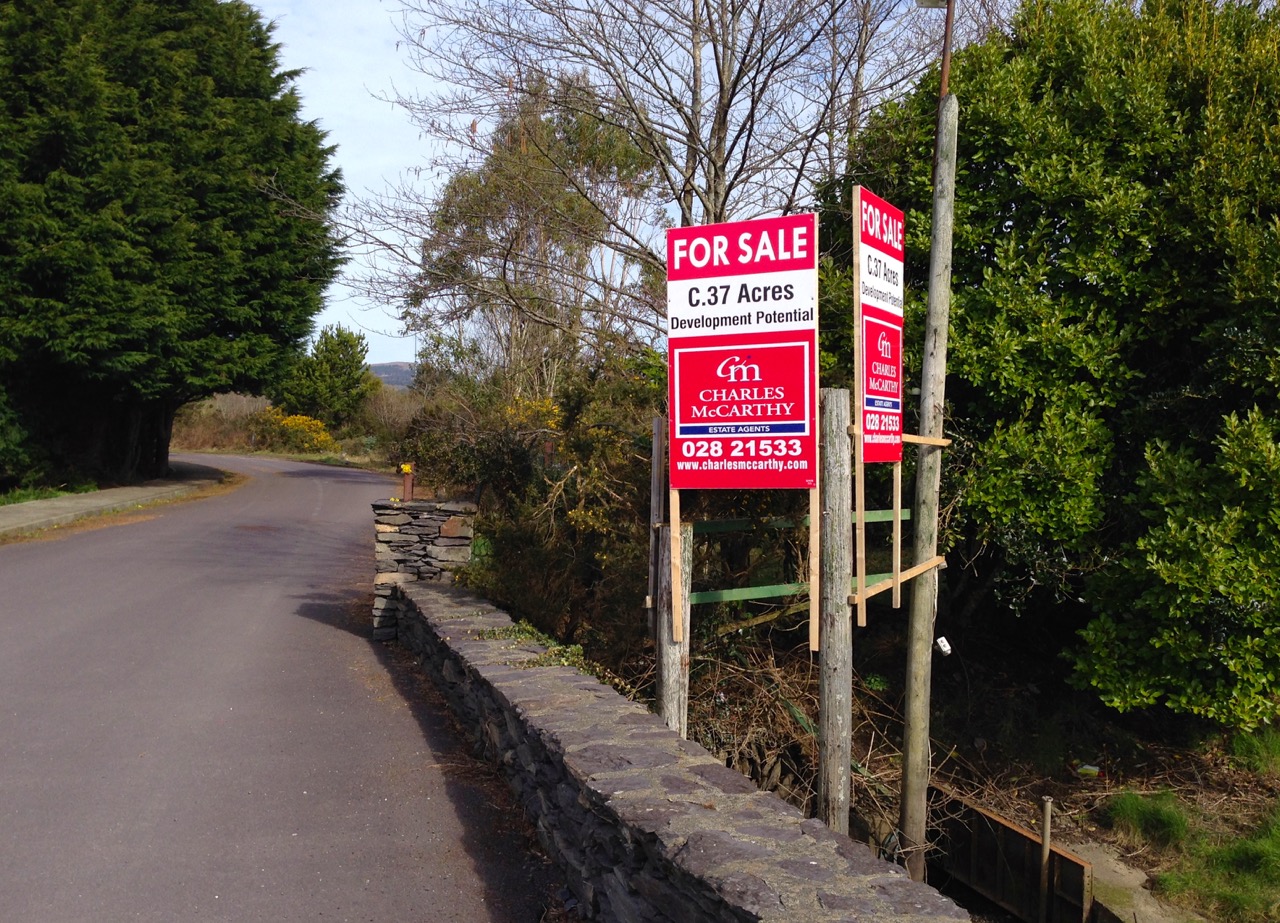
Ballydehob’s Golf enterprise came with the Celtic Tiger – and went when the Tiger collapsed. It’s now a site looking for a buyer – you could have it!

for sale

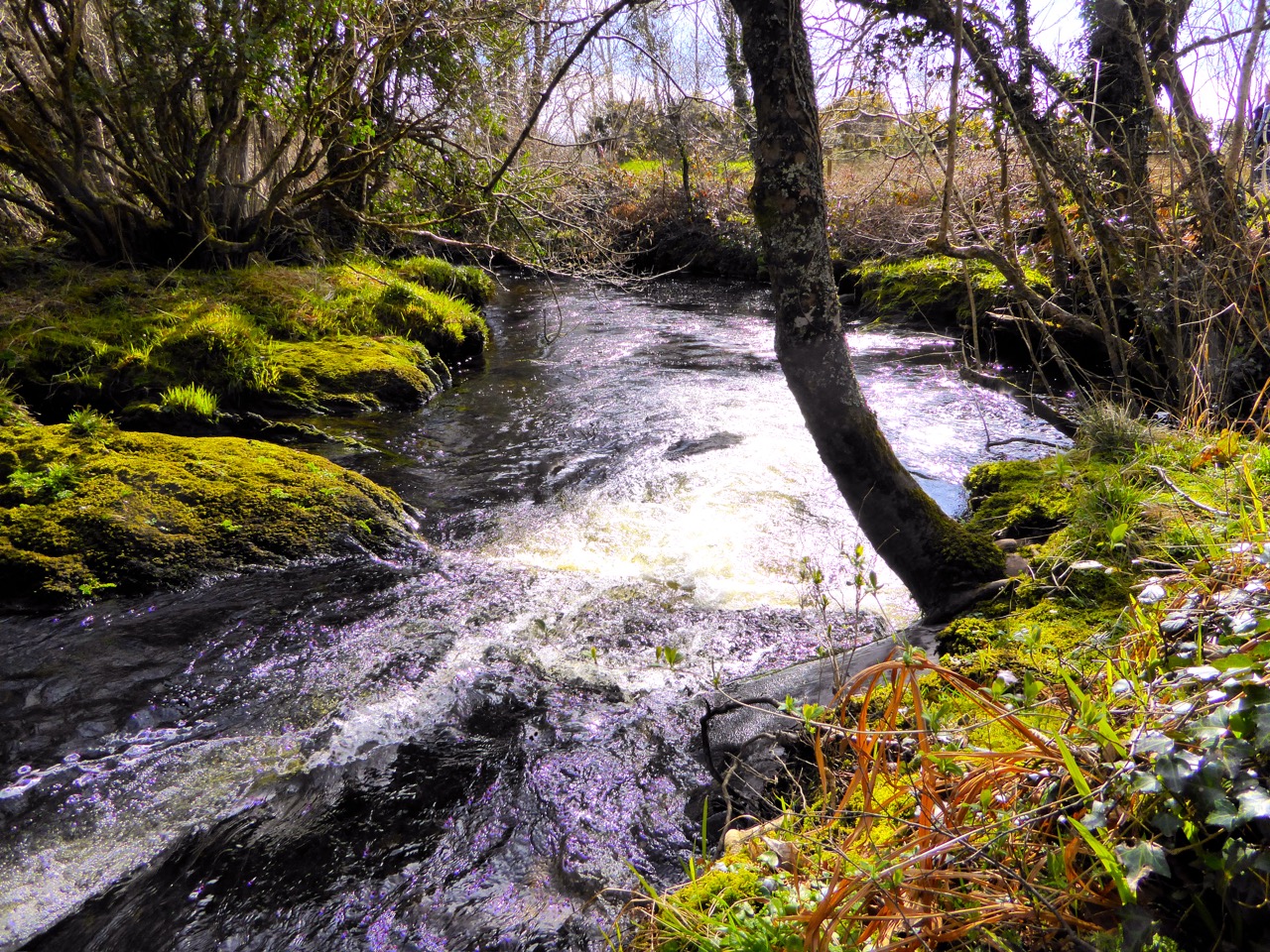
But we do hope that if someone does buy the site, then they keep all the features: the winding paths by the river, the parkland which feels so rural and secluded, yet is within a stone’s throw of the main N71 highway – and all the New Archaeology...

Riverside Walk...

Riverside Walk…

Boulder Burial...

Boulder Burial…

Circle within an 'ancient grove'...

Circle within an ‘ancient grove’…

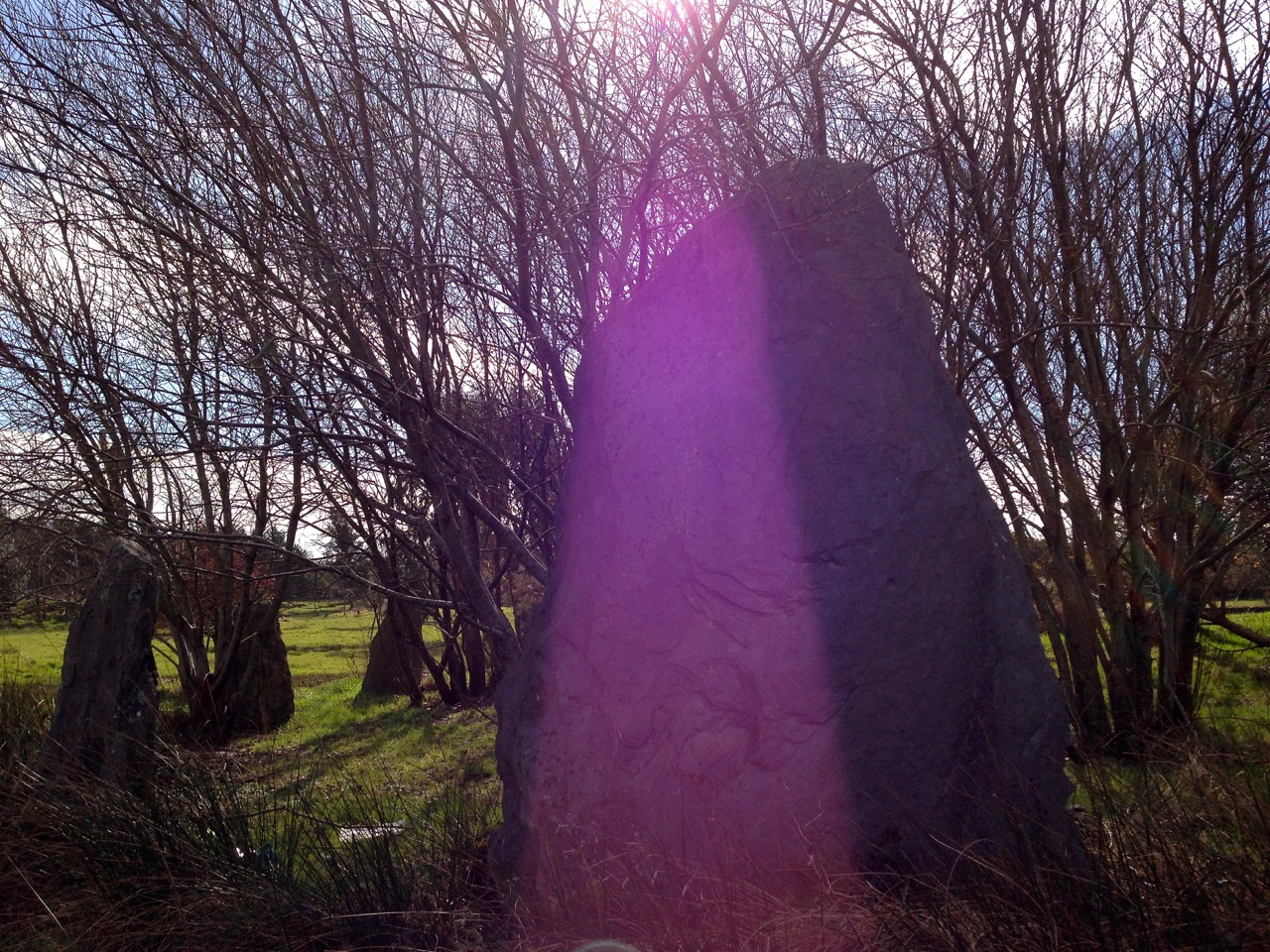
Megalith, enjoying a trick of the sun...

Megalith, enjoying a trick of the sun…

The unfortunate demise of the West Cork Golf Academy has left Ballydehob with an unofficial ‘town park’ – a very pleasant place to walk on a balmy spring morning. If only there was a way that this could become a permanent amenity for the community. But the land has a value and – presumably – potential for some worthwhile development. Who knows what the future holds? Meanwhile, we enjoyed our chance discovery of New Archaeology right on our doorstep!

PS – since publishing this post earlier today, I realise from comments received that some readers have been puzzled by it: rest assured that all this ‘new’ archaeology dates from the twentieth century – and was constructed as part of the golf project! They made such a good job of it that it could just prove very confusing for archaeologists of the future…

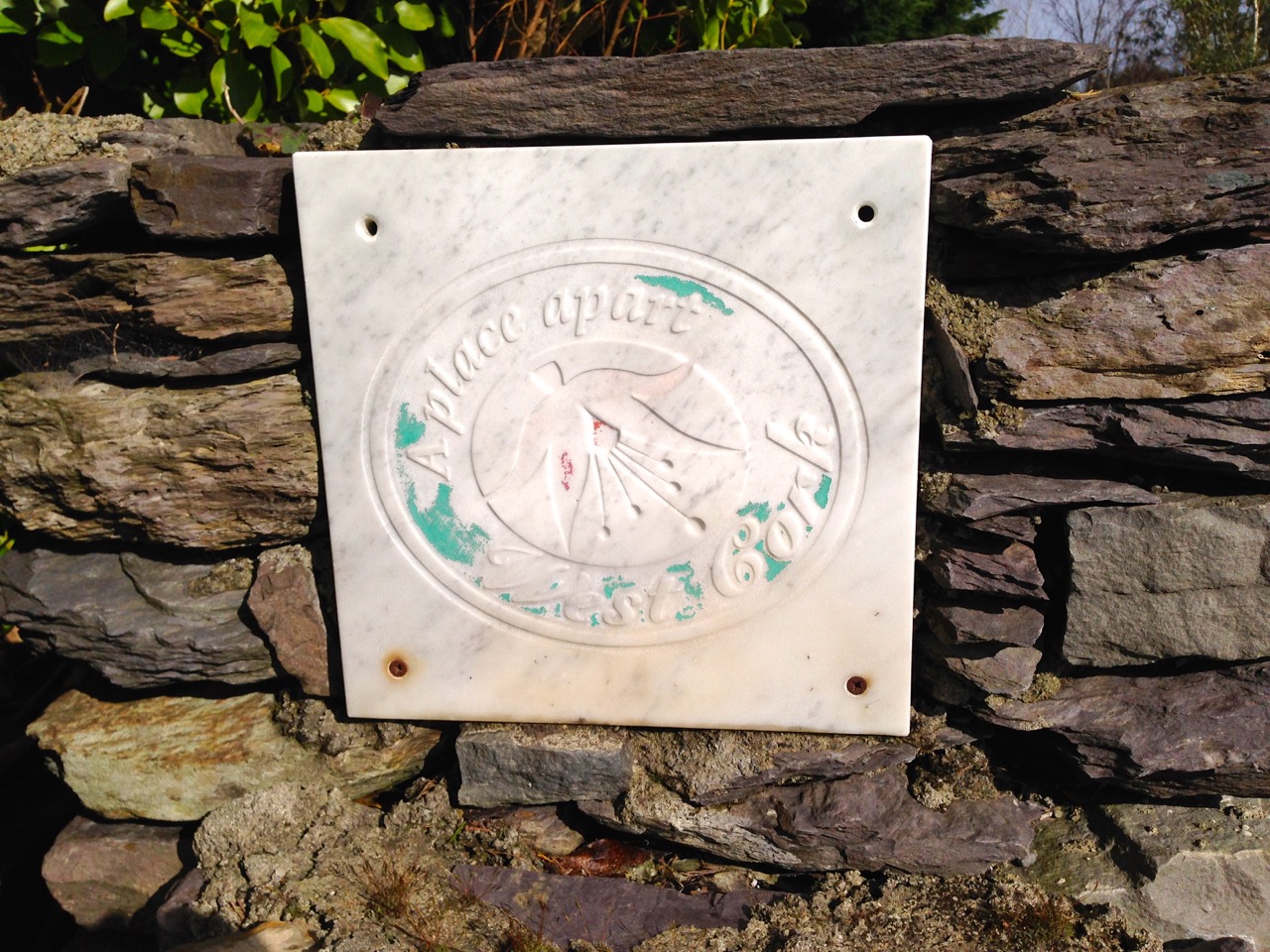
A Place Apart certainly - the Fuscia Brand labelling dating from better times

A Place Apart certainly – the Fuschia Brand labelling dating from vanished times

Finola enjoys the spirit of 'A Place Apart'

Finola enjoys the spirit of ‘A Place Apart’


When is a castle..?

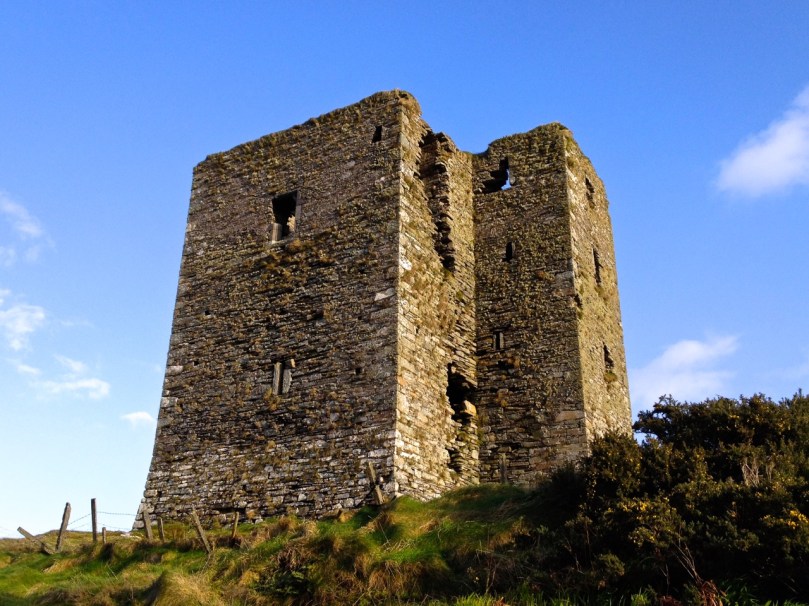
Leamcon Castle

Leamcon Castle (Black Castle)

…not a castle?

Answer: When it’s a Tower House. Maybe.

Harold Leask first published his classic Irish Castles in 1941, and it was subsequently revised and reprinted several times. My own copy was bought in the late 60s and accompanied me to Canada and back. Leask’s book was the first comprehensive work on the subject – a work of erudition but thoroughly readable with charming pen-and-ink illustrations. 

Leask insisted on the use of the term tower houses for small simple castles and described them thus:

They are simple oblongs with four walls, subtly battered, rising sheerly from a bold base-batter, to parapets which are crenellated in the Irish fashion. A small turret, at one corner, generally above the staircase, rises to a greater height than the rest of the building, while within the parapets are the two gables of the roof. Very often a small machicolation projects from the parapet and commands the entrance doorway below…

Ardintenant Castle

Ardintenant Castle (White Castle). It sits on top of an earlier ring fort.

In researching for this post the other main source I consulted was a doctoral thesis by Mark Wycliffe Samuel, The Tower Houses of West Cork. More recent (1998), it concentrated on the castles of this area and is packed with detail about the ones we see around us here in Roaringwater Bay and on the Mizen Peninsula, from Baltimore (Dún na Séad) in the east, to Cape Clear Island (Dún an Óir) to the south and Three Castle Head (Dunlough) to the west.

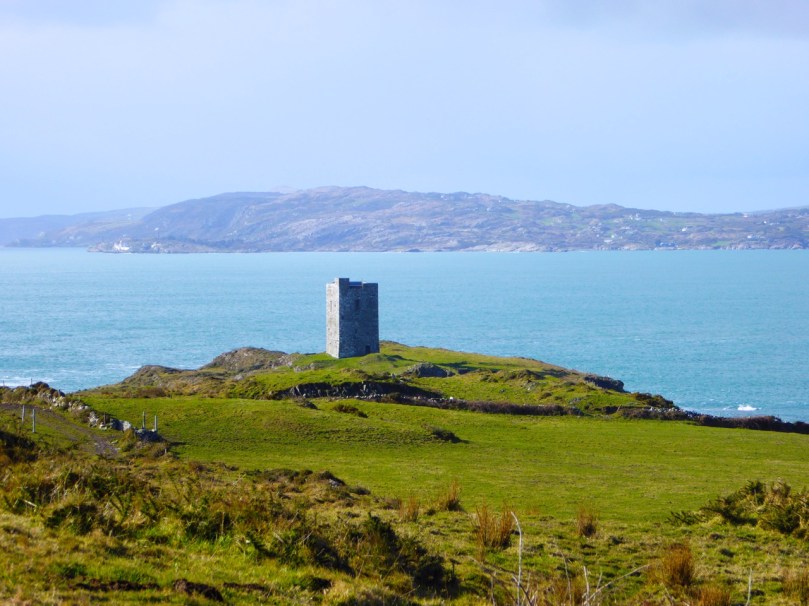
Dunlough Castle, known as Three Castle Head

Dunlough Castle, at Three Castle Head

These simple towers were quite different from the enormous and elaborate military castles that cemented Anglo-Norman power all over Ireland after the invasion of 1169, such as Trim in County Meath, or Cahir in Tipperary. Tower houses were built in what Leask calls a ‘great building revival’ from about 1440 into the 1600s. In what may be the forerunner of the European Grants system, Leask says many of the earliest ones were built as ‘£10 Castles’. A statute of 1429 offered every liege man of our Lord the King…who chooses to build a castle or tower sufficiently embattled or fortified..to wit twenty feet in length sixteen feet in width and forty feet in height or more, that the Commons of the said counties shall pay to the said person to build the said castle or tower ten pounds by way of subsidy. Although this statute seems to have been applicable only in certain counties (mainly around the Pale) it established a pattern for tower building which was adopted, with variations, all over Ireland.

Dunmanus Castle

Dunmanus Castle

The Roaringwater Bay and Mizen towers fit this pattern very well. They were not, however, built by the Anglo-Normans – West Cork was too remote and beyond their reach. They were built by the great Irish chiefs of the O’Mahoney, the McCarthy and the O’Driscoll clans and probably replaced earlier strongholds such as promontory forts (as at Dunlough), large ring forts (Ardintenant) and stone forts/cashels (such as the one at Knockdrum). These chiefs became wealthy through their control of the fisheries, through piracy, and through tribute exacted from those who occupied their traditional territory. At least one of them (Rossbrin) became famous as a centre of learning and scholarship during this time. Of the ones I will describe in this post, all are situated at the sea. or close to it, with commanding views over their territory and sometimes within sight of each other.

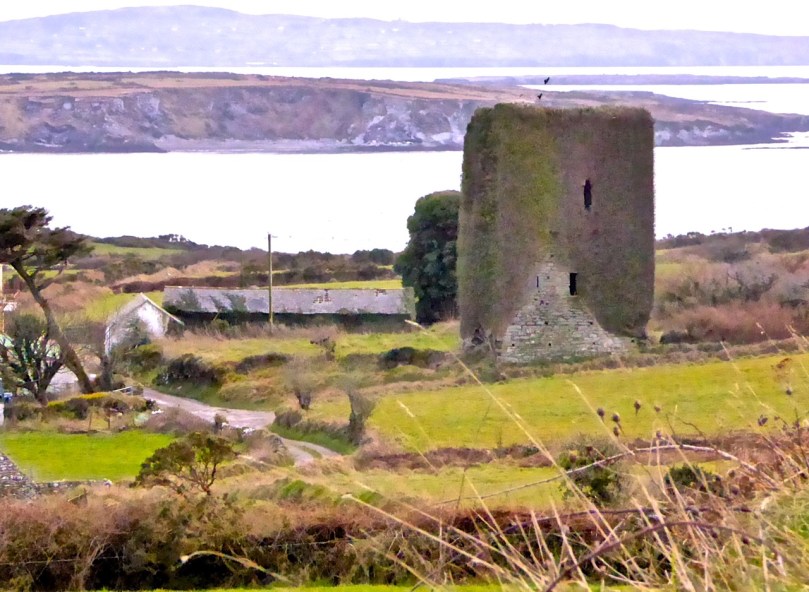
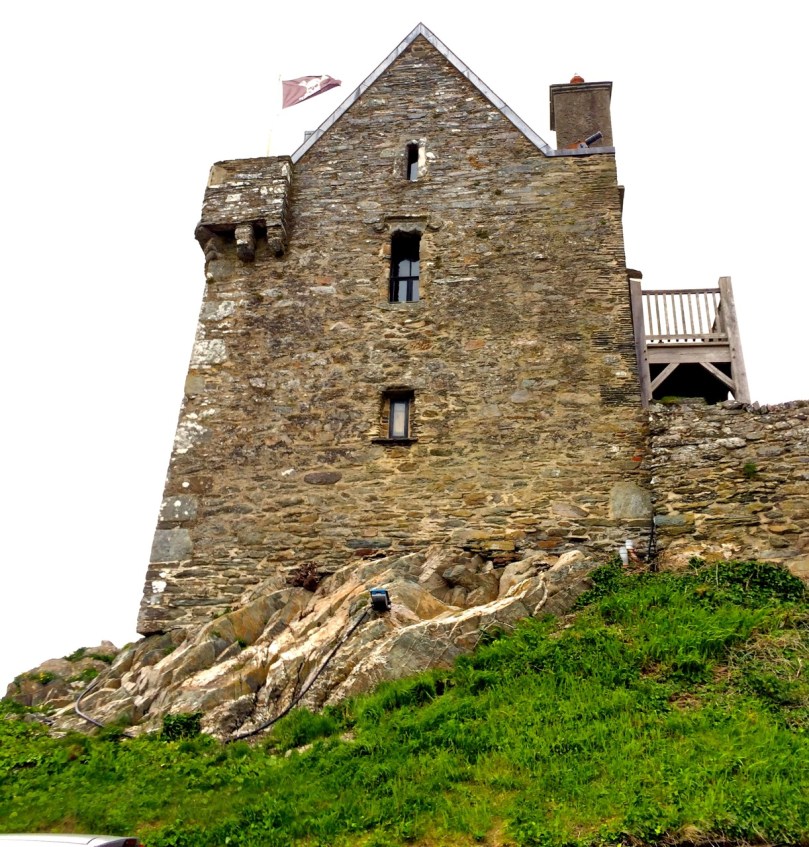
Leamcon, known as Black Castle

Leamcon, known as Black Castle. Notice the base-batter in this picture and the first one below.  The lowest level is the widest (battered) with the walls sloping in above this base

The power of these great Irish households lasted until the 1601 battle of Kinsale when the Irish forces under Hugh O’Donnel and Hugh O’Neill (with Spanish help) were defeated and an enormous re-conquest and re-colonisation began under Elizabeth and continued unabated under the Stuarts and, most disastrously, under Cromwell.

Each tower in this area was built in the same manner, which Samuel refers to as the Raised Entrance type of tower. There were two entrances, one on the ground floor and one on the first floor. The ground floor room was for cattle and the doorway was therefore as wide as would admit a cow.

A glimpse inside the raised entrance at Ardintenant

A glimpse inside the raised entrance at Ardintenant

The raised entrance (directly above it, or staggered to the left or right) was only wide enough to admit one person at a time – a defensive feature. This entrance either led into the first floor room or (since the ground floor room could have a lofty ceiling) onto a landing where a staircase led up to this room and then continued up through the wall (usually the thickest wall of the tower) to the upper floors. The first floor room was mainly used for storage and had either no windows or very small slits.

Dunmanus, with its additional turret. The top windows were always the largest.

Dunmanus, with its base-batter and additional turret. The top windows were always the largest

The second floor room was often the principle chamber, where all the main activities of the family took place – living, eating, meeting, administrating, celebrating (music and poetry were highly prized by these chieftains). If there was a third floor it contained the solar, or private chambers for the women of the household.

Barrel vaulted ground floor room at Dunmanus. Note access to stairwell.

Barrel vaulted ground floor room at Dunmanus. Note access to stairwell.

Construction techniques varied – some were superbly constructed of cut stone while others used a lot of rubble to build up the insides of walls. Putlogs, or holes where scaffolding timbers were insert, are clearly visible in several of the towers. The lowest floors were of course the thickest – the base-batter provided a solid foundation and the walls sloped inwards from it. The top of the tower allowed for thinner walls, and therefore also bigger windows (although none were large).

A garderobe (toilet) was a feature of the top two floors, with a chute out to the outer walls. In towers with additional turrets (Kilcoe, Dunmanus, Leamcon) the garderobe and sleeping chambers were sometimes contained in that turret, or the spiral stairs wound up through it. While most towers had stone spiral or straight staircase, some appeared to access each floor by means of ladders – there is no evidence for permanent wooden staircases.

The ground floor room (the byre) was often vaulted and this feature is still clearly visible in the most intact towers. Above that, the floors were of timber, sometimes with trapdoors for lifting up supplies. Presses (cupboards) consisting of niches in the walls may have contained lanterns or have been used to store valuable items.

There were no fireplaces in these towers. Fires were lit on flagstones laid on the wooden floors and the smoke rose to the tall ceilings and escaped out the small windows. In addition to this level of discomfort there is a contemporary account (quoted by Leask) which describe the primitive living arrangements in some of the towers: They have little furniture, and cover their rooms with rushes, of which they make their beds in summer and straw in winter. They put rushes a foot deep on their floors and on their windows [embrasure floors?], and many of them ornament their ceilings with branches.

But not all chieftains lived in a primitive way. Samuel uses the available evidence to construct a picture of life at Togher, one of the towers he studied, and it’s not hard to picture Fineen O’Mahoney, Scholar Prince of Rossbrin, in such a setting.
We can form a picture of the principal chamber in use: Tadhg an dúna or Togher’s principal chamber was probably furnished with imported furniture, pewter plate and cutlery and was panelled with ornately carved timber. His family, his bard, …clerk, lawyer, priest and physician, as well as members of the derbfine [extended clan] such as cavalrymen could eat there. They could sit with the chieftain to one side of the principal salt cellar, while others sat ‘below’ it… Servants prepared food out of sight ‘below stairs’. Bardic musicians, soothsayers, gamblers and others would be admitted as honoured guests, but the household ward and servants ate in the kitchen/ward room.

Although its name means Fort of Gold, today Dún an Óir on Cape Clear Island looks remote and forbidding

Although its name means Fort of Gold, today Dún an Óir on Cape Clear Island looks remote and forbidding

Similarly, Dún na Séad (Fort of the Jewels) Castle in Baltimore, seat of the wealthy O’Driscolls (they also had Dún an Óir (Fort of Gold) on Cape Clear Island), was

a centre of administration for trading activities and collection of taxes from foreign traders frequenting the port. In the middle and later-middle ages therefore, the O’Driscolls enjoyed a prosperous lifestyle. Lavish gatherings took place in the ‘great hall’ of Dún na Séad castle and a well-documented feast in 1413 is said to be one of the earliest records of people dancing in Ireland. This documentary evidence is supported by archaeological finds from recent excavations of the Dún na Séad site, which reveal the presence of late twelfth to fourteenth century pottery from the Saintonge region of France, and reflect the lucrative trade links between Baltimore and Europe at this time.

Dún na Séad Castle, Baltimore

Dún na Séad Castle, Baltimore. Note corner machicolation.

Defensive features were built into all the towers. Besides raised and restricted doorways and hard-to-manoeuvre narrow or spiral staircases, all had a roof ‘wall walk’. Three of the towers (Dún an Oir, Kilcoe and Leamcon) are either inaccessible or accessible by a bridge and there is evidence that connecting ground was deliberately demolished to accomplish this. Windows were small and could be boarded up. Projecting machicolations, especially above entrances or at corners were used, as can be seen at Dún na Séad Castle in Baltimore. Crenellations (notched or serrated ramparts) look like our traditional ideas of battlements. At Kilcoe they may have helped that castle withstand over a year of attack and siege after the Battle of Kinsale.

Kilcoe Castle. Note crenellated battlements and pitched roof.

Kilcoe Castle. Note crenellated battlements and pitched roof

So, should we call them Tower House, or Castles? How about £10 Castles? Archaeologists and historians prefer the more exact phrase tower houses, but castles they are on the maps and in our everyday speech. And if, like us, you are lucky enough to have one in your view, castles they are in our hearts and minds.

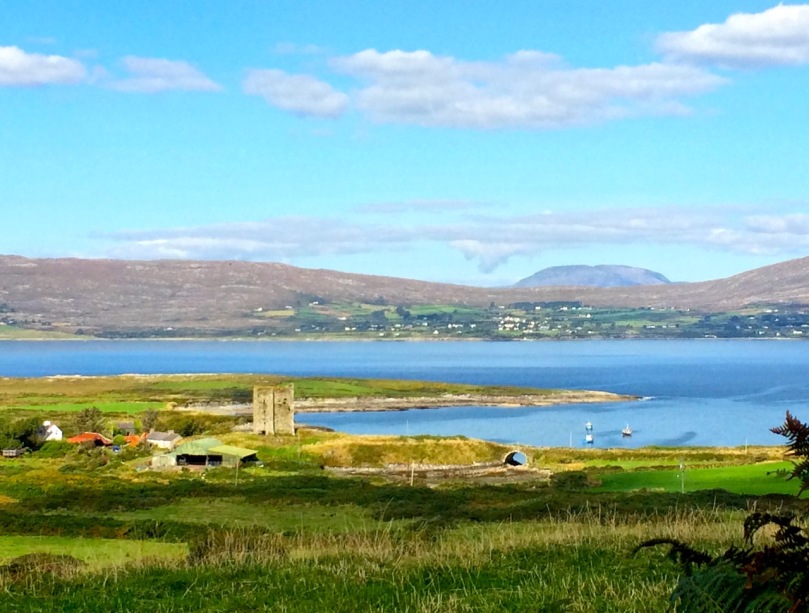
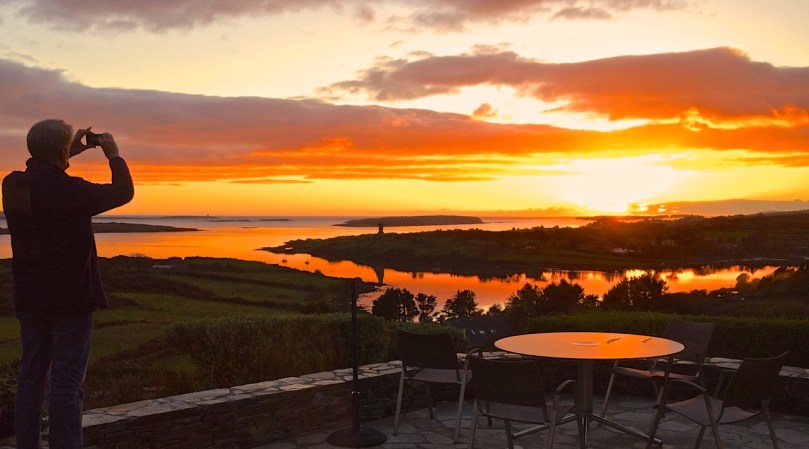
Our view to Rossbrin Castle

Our view to Rossbrin Castle

A Lick of Paint

blue long distance

What does it mean to say that a house is “set well into the landcape?” On the West Coast of Canada, where I used to live, it usually meant that a house was invisible, often made of wood and blending into the trees. But here in rural West Cork, buildings are more assertive – we ARE the landscape, they seem to say, or at least an important part of it. Therefore we should stand out and be seen. Part of being seen, for many houses in the countryside, is choosing a bright colour. Ah sure, they say, all it needs is a lick of paint.

Crookhaven

Crookhaven


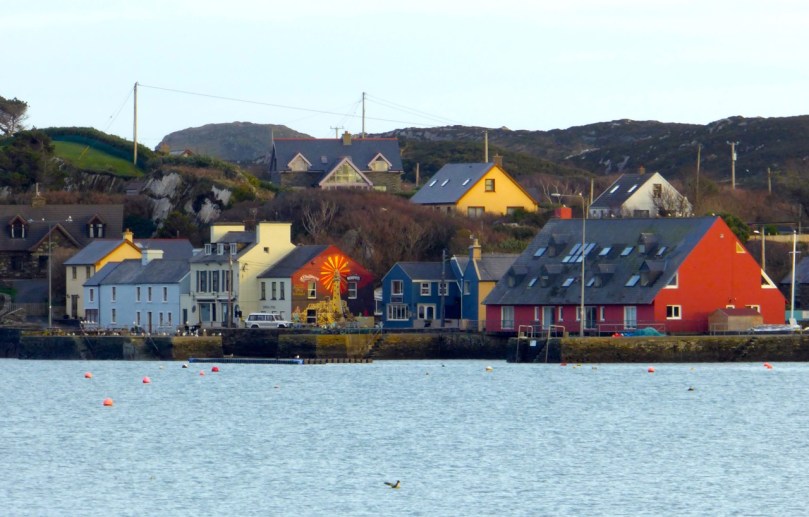
I’ve written before about the colourful towns and villages dotted all over Ireland. Coming around a bend in the road and catching sight of a village is a cheering experience: flashes of colour spread in a line across a backdrop of green fields or rugged mountains. But colour isn’t confined to towns – farmhouses in the deep countryside can suddenly demand attention – pops of colour in a predominantly green terrain. 

Blue seems to be a favourite – and we are not talking here about a pale blue or grey blue. No – duck egg or cobalt blues predominate. The blue is weathering and fading a bit in the house below but it still packs a punch in its isolated setting.

Sometimes blue is used on one side of the house only, or on selective aspects – a gate post or a shutter.

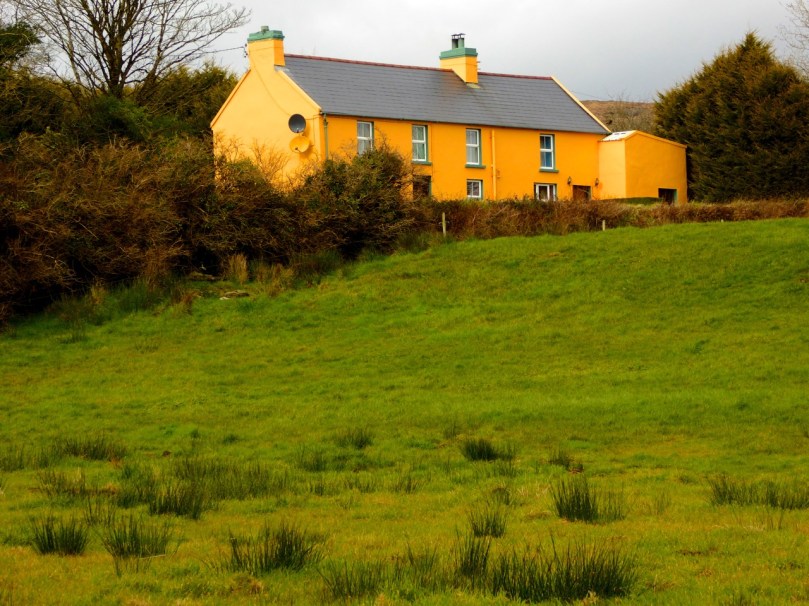
One of my favourites is this house, the colour of a ripe apricot. It is visible from a long way off and always seems to be incandescent on its hillside, as if permanently lit by a setting sun. Close up, I found it has jade green trim, making it even more handsome than it appears from a distance.

apricot distant

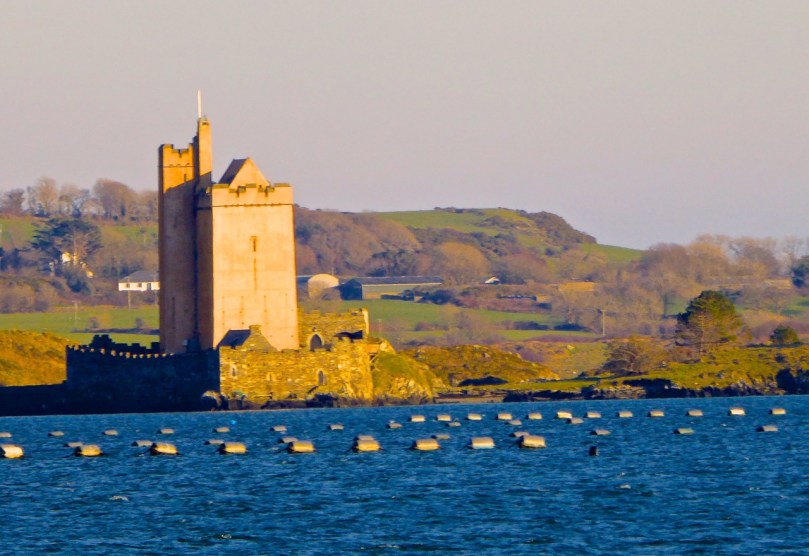
That colour is also one of the most recognisable in West Cork because it’s the colour of Jeremy Irons’ Kilcoe Castle. When the castle was being rendered, Irons used a lime mortar in order to waterproof the masonry: the mortar has a distinctive peach tone. Although controversial at the time, it is fair to say that West Cork folk have come to enjoy the sight of this wonderful restored 13th Century castle permanently glowing on its tiny island.

Kilcoe Castle

Kilcoe Castle

Pinks range from soft and pastel to the colour of fuchsia.

I particularly like the pink-on-pink trim of the farmhouse below left, and the candy-coloured house with its blue trim.

Yellow shows up well against a green hill. The first house below belongs to our friends the Camiers, who run the marvellous Gortnagrough Folk Museum. The second one is on the Sheep’s Head (photo by Amanda Clarke).

There are shades of salmon and coral that seem to suit old houses very well. Left, below, is the old school house in Rossbrin, now a private residence, and right is the Ballydehob Rectory, particularly attractive with its green trim.

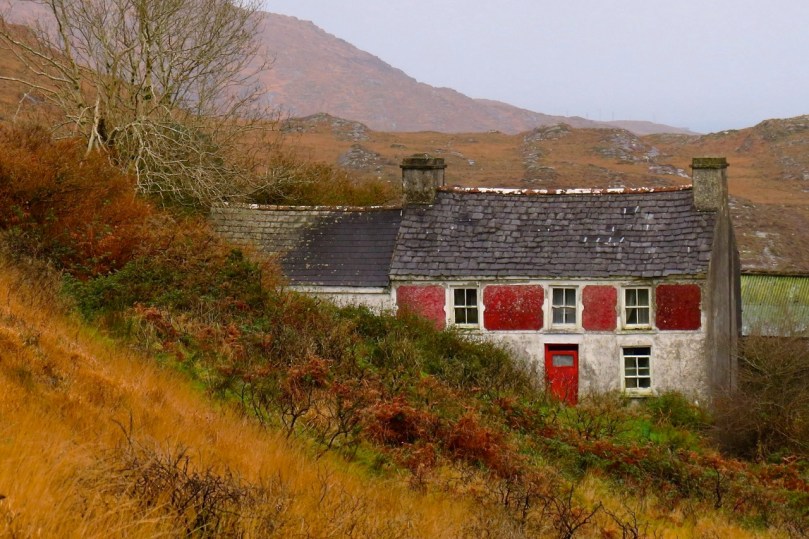
I’ve found red to be reserved mostly for doors, trim and spot colour, but my friend Amanda Clarke found this old farmhouse on the Sheep’s Head. Take a look at her site, Sheep’s Head Places for examples of vernacular farm buildings. 

Old farmhouse, Sheep's Head

Old farmhouse, Sheep’s Head*

Renovations never stop – I did wonder what colour this one would end up. Now I know!

Going through the spectrum

Going through the spectrum

But this one, unless miracles happen, will see no more paint. Then again, it’s right beside a holy well, so maybe…

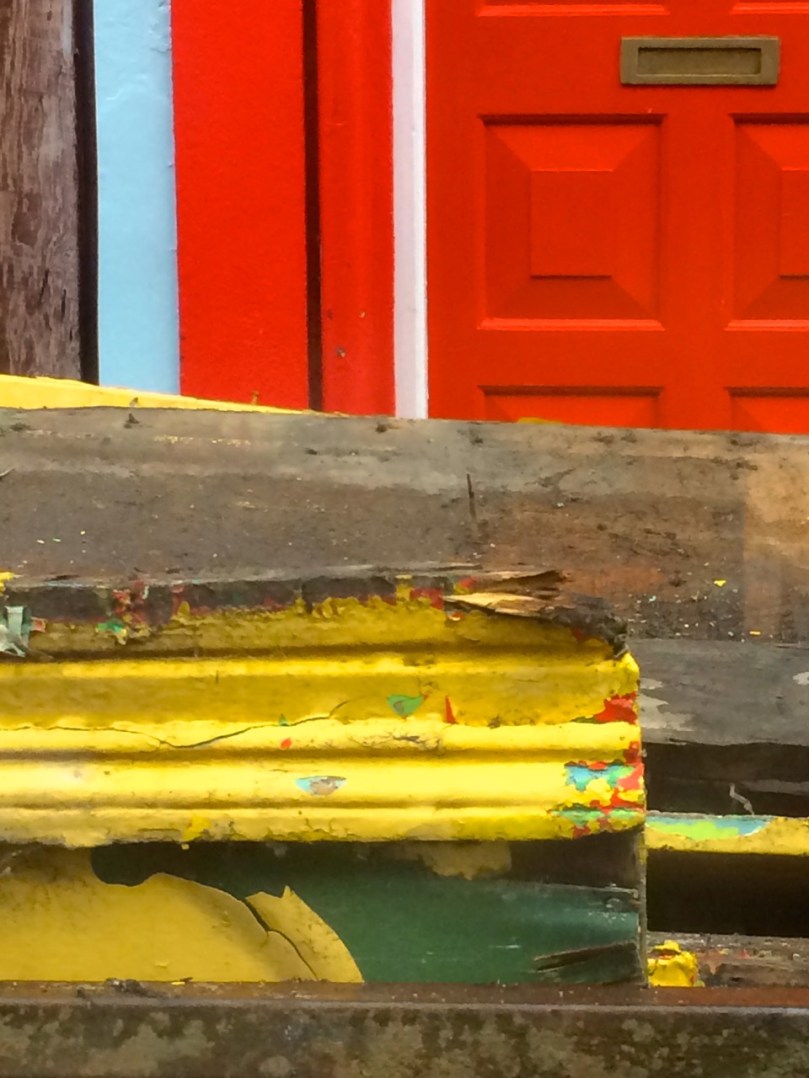
Generations of colour

Generations of colour

 *Many thanks to Amanda Clarke for the use of the asterisked photographs