The Seven Whistlers

curlew title

While researching for this post I picked up the excellent book by Niall Mac Coitir, Ireland’s Birds – Myths, Legends and Folklore and got diverted by a section on Eagles: why wouldn’t I, as we live up here in Nead an Iolair, Eagle’s Nest? I was delighted to discover from this book that Adam and Eve are reincarnated as Eagles and live on the island of Inishbofin, at the mouth of Killary Harbour in Galway. This adds to the list of important people of the world who have ended up in Ireland, including St Valentine in Dublin and Santa Claus (St Nicholas) who rests in Jerpoint Abbey. I’m hoping to discover many more…

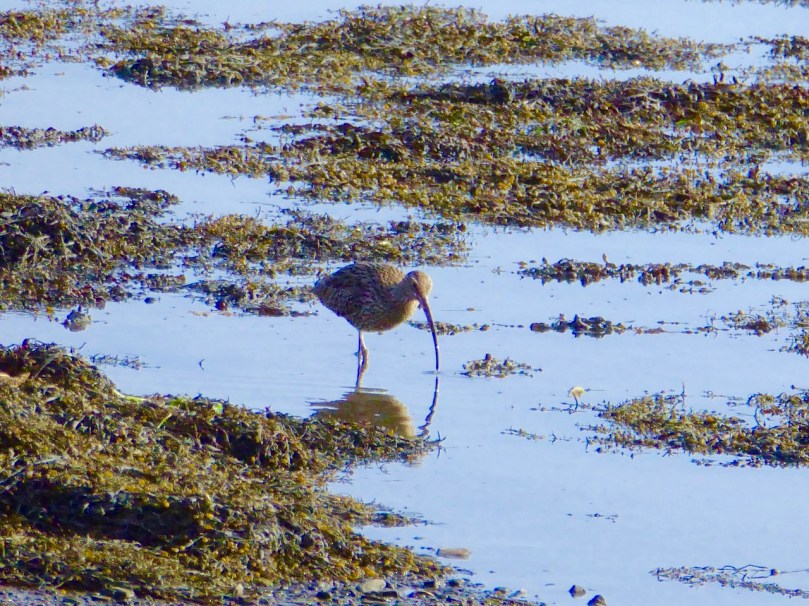
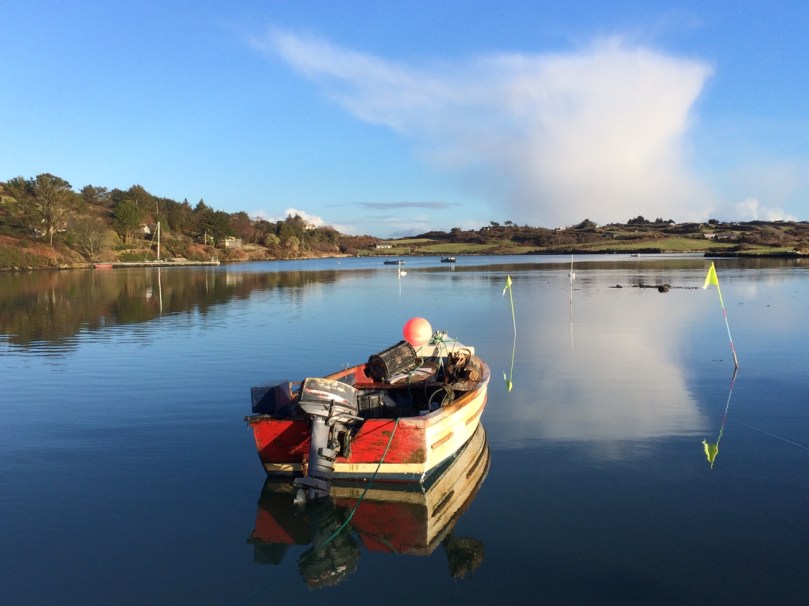
My real subject today is the Curlew: we have seen a few of them lately below us in Rossbrin Cove. They are winter visitors from Scandinavia. There is a small breeding population in Ireland, mainly centred in Galway and Mayo, but this has declined catastrophically in recent times, and the bird is now red-listed as a globally threatened species, according to Birdwatch Ireland. Every Curlew sighting, therefore, is an important one.

In Irish bird folklore, the Curlew does not come over in a good light. It has a very distinctive and haunting call, and this has probably contributed to associations with the Otherworld.

Mac Coitor says: …The Curlew was famous for its whistling and screeching calls, which were believed to foretell the arrival of rain or stormy weather… while Scottish poet Norman Alexander MacCaig (1910 – 1996) describes the Curlew’s voice:

Trailing bubbles of music over the squelchy hillside… music as desolate, as beautiful as your loved places, mountainy marshes and glistening mudflats by the stealthy sea…

Curlews fly at dusk, sometimes in groups: this has given rise to accounts of The Seven Whistlers in both Britain and Ireland. One of the earliest collectors of folkore in these islands, Jabez Allies (1787 – 1856), wrote:

…I have been informed that the country people used to talk a good deal about the ‘Seven Whistlers’ and the late John Pressdee, who lived at Cuckold’s Knoll, in Suckley, said that oftentimes, at night, when he happened to be upon the hill by his house, heard six out of the ‘Seven Whistlers’ pass over his head, but that no more than six of them were ever heard by him, or by any one else to whistle at one time, and that should the seven whistle together the world would be at an end…

Another account, from William Henderson, Folk-Lore of the Northern Counties of England and the Borders:

‘I heard ’em one dark night last winter,’ said an old Folkestone fisherman. ‘They come over our heads all of a sudden, singing “ewe, ewe,” and the men in the boat wanted to go back. It came on to rain and blow soon afterwards, and was an awful night, Sir; and sure enough before morning a boat was upset, and seven poor fellows drowned. I know what makes the noise, Sir; it’s them long-billed curlews, but I never likes to hear them.’

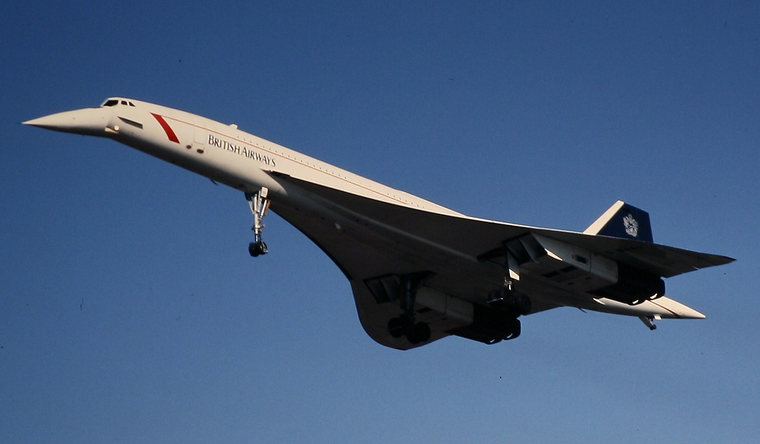
It’s that long, curved bill that makes the Curlew so distinct a figure down on the mud flats at low tide. The slim, pliable beak is used to probe in mud and shallow water for worms, crustaceans, and insects, and for exploring stones and shells. In flight the bird has a wonderful aerodynamism and reminds me of that beautiful aircraft – now extinct – Concorde. In my younger days, growing up in Hampshire, I watched the test flights of that plane at Farnborough, and always admired its drooping ‘Curlew’ nose.

JgxBY6H

Irish poetry has been enriched by images of the Curlew. Seamus Heaney’s From the Republic of Conscience:

When I landed in the republic of conscience
it was so noiseless when the engines stopped
I could hear a curlew high above the runway.
At immigration, the clerk was an old man
who produced a wallet from his homespun coat
and showed me a photograph of my grandfather.
The woman in customs asked me to declare
the words of our traditional cures and charms
to heal dumbness and avert the evil eye.
No porters. No interpreter. No taxi.
You carried your own burden and very soon
your symptoms of creeping privilege disappeared…

We can’t leave out W B Yeats – He reproves the Curlew:

O, CURLEW, cry no more in the air,
Or only to the water in the West;
Because your crying brings to my mind
Passion-dimmed eyes and long heavy hair
That was shaken out over my breast:
There is enough evil in the crying of wind.

Four of Yeats’ poems, including Curlew, were set to music by the eccentric English composer Philip Heseltine, who took the name Peter Warlock. The Curlew is a chamber song-cycle setting written for tenor voice, flute, cor anglais and string quartet. Heseltine spent some time in Ireland, including a period on a ‘Gaeltacht island’ (perhaps Cape Clear?) where he sought to learn the Irish language.

Heseltine / Warlock’s The Curlew brings us full circle, as the composer also spent time in Cornwall under the shadow of another Eagle’s Nest – near St Ives – in an area frequented by artists, writers and mystics including D H Lawrence, Aleister Crowley, Virginia Woolf and Patrick Heron. From Eagle’s Nest in West Cork to Eagle’s Nest in West Cornwall… The Curlew is a much-travelled bird… Be careful of the Seven Whistlers!

view from Eagle's Nest

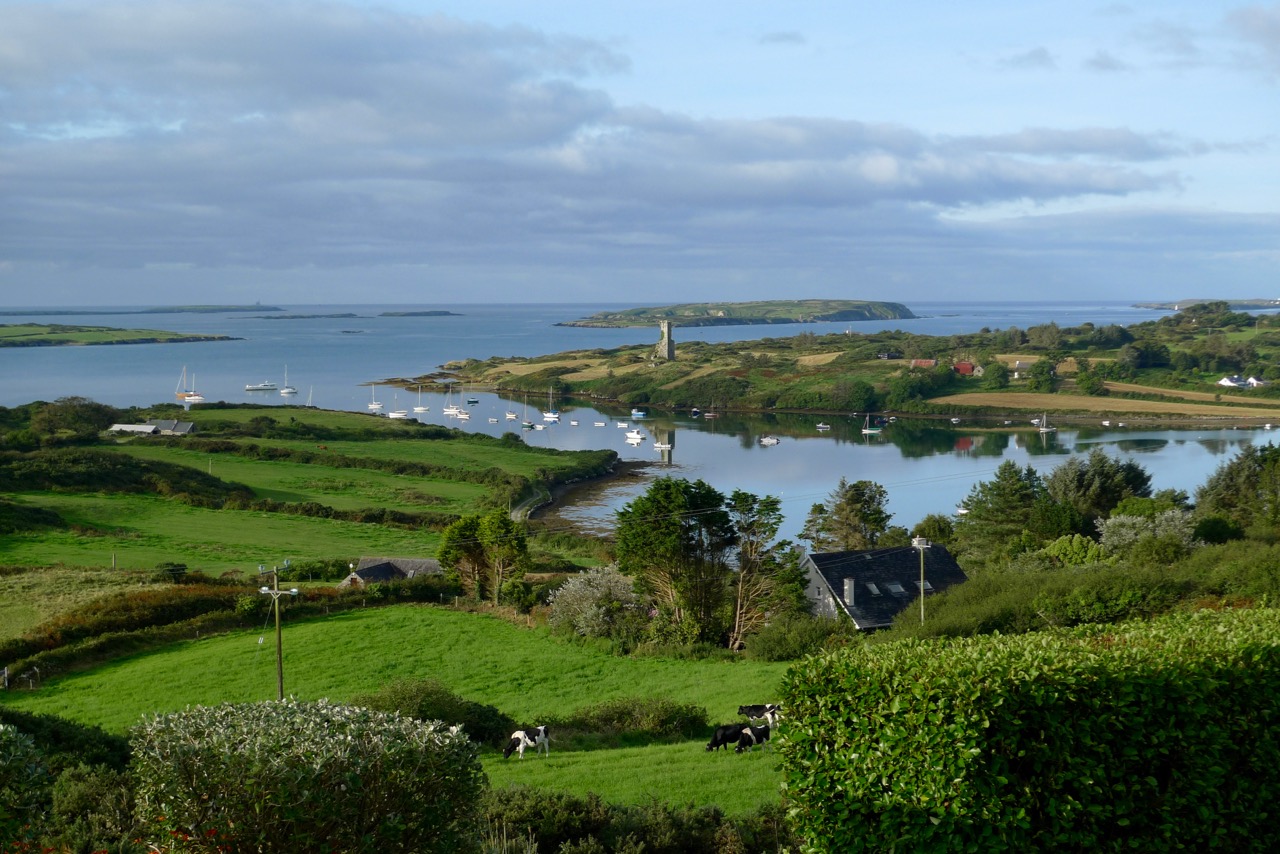
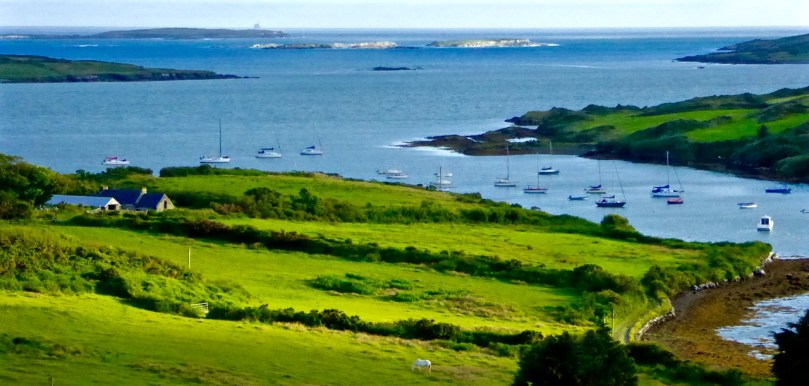
Curlews be here… view of Rossbrin Cove from Eagle’s Nest, West Cork

Irish Poldarks

black hole

Derrycarhoon Mine

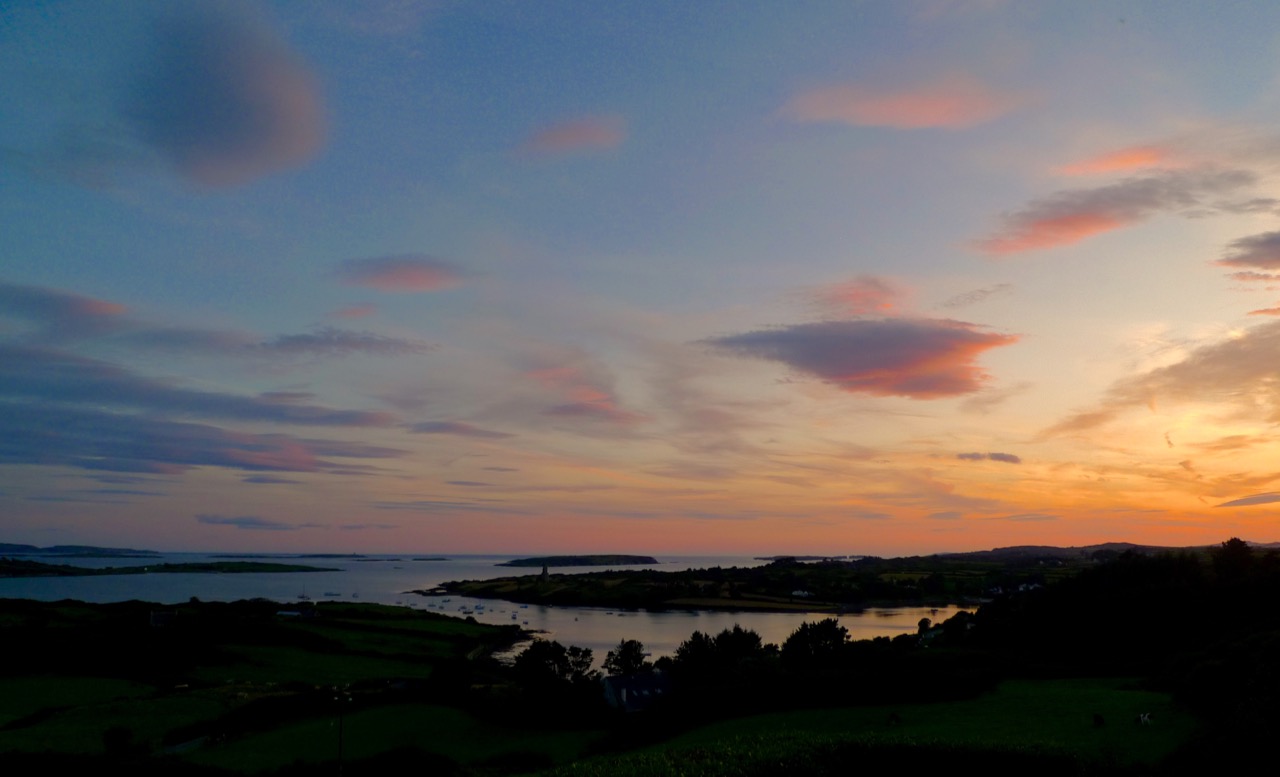
Schools are back; fields are being cut; the shutters are going down on the holiday houses around the Cove. And – the good weather has arrived! Hot days and red sunsets: West Cork is the place to spend autumn…

Full Sky

Autumn comes to Rossbrin Cove

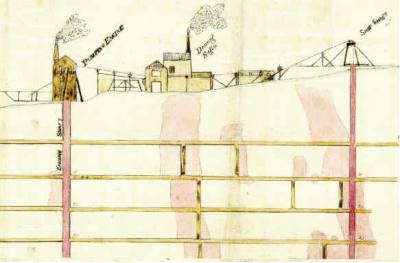
It was just such a golden autumnal-feeling day when our friend (and Fastnet Trails mastermind) Eugene McSweeney called us to see if we would like a trip out to the old metal mine north of Ballydehob, in the townland of Derrycarhoon. Of course we would! Local farmer William Swanton led the expedition: William’s family had connections with mining – he told us that his grandmother’s father had been a Captain of the mine.

William

William Swanton at the South Shaft, Derrycarhoon

You will know that we live in the townland of Cappaghglass, and this has a mining history, as does the neighbouring townland of Ballycummisk. Also, there are ancient mines on the slopes of Mount Gabriel, not far away, and more mining activity in other parts of the Mizen, Sheep’s Head and Beara Peninsulas.

Allihies19571957 scene at Allihies Mine, Beara Peninsula

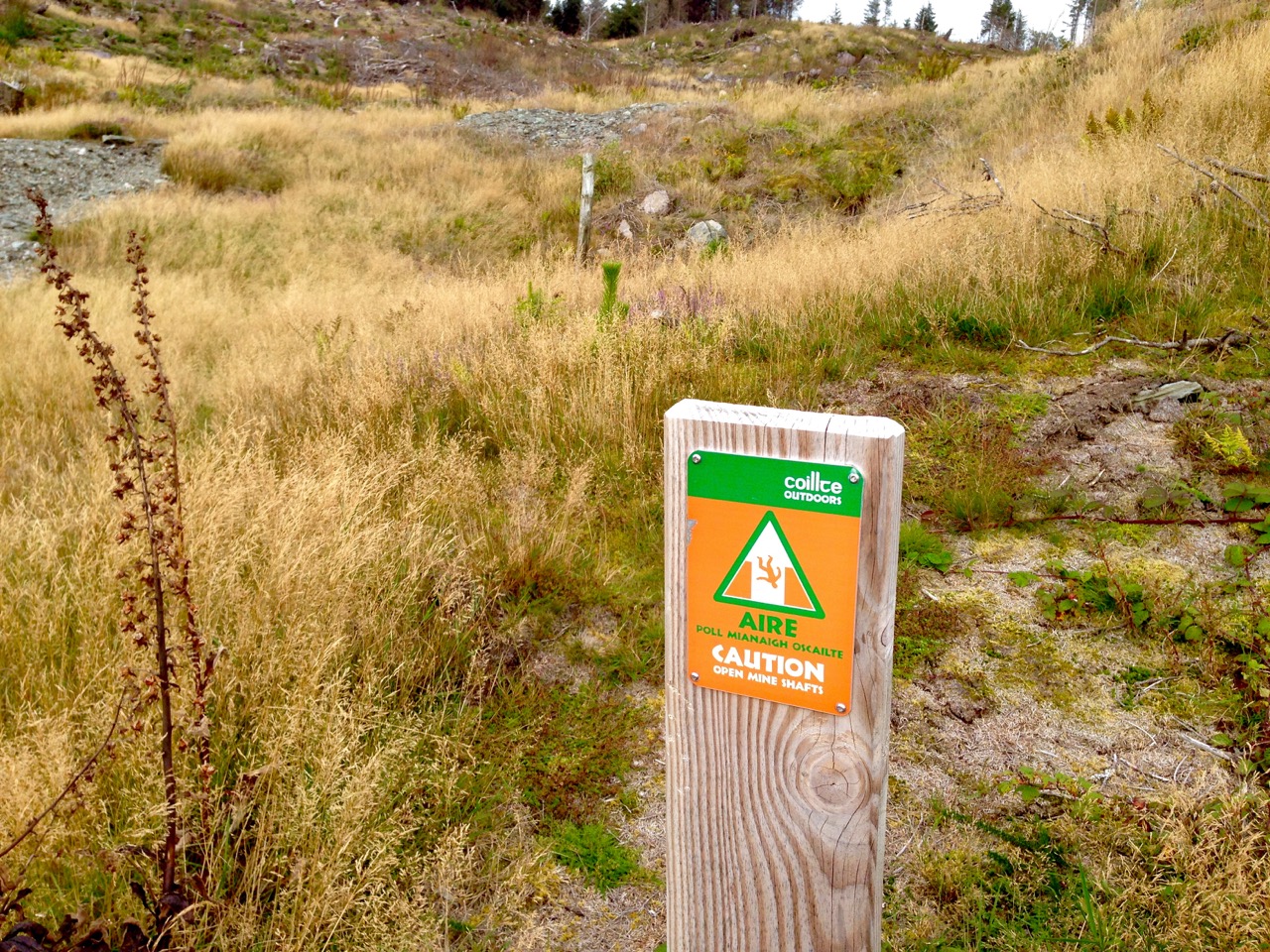
hodnett bookWhile many aspects of the 19th century history of the old mine at Derrycarhoon have been well recorded (I am indebted to The Metal Mines of West Cork by Diane Hodnett, The Trevithick Society, 2012), the site itself had for some time been difficult to reach and interpret as it was in a dense forestry plantation established in the 1960s and 70s. Now, however, much of the matured forest has been cleared (albeit leaving a devastated landscape) and it is possible to piece together the layout of the workings. Please remember that the mine is on land managed by Coillte and is subject to Coillte’s policies on access – permission must be sought from the landowner before visiting; also, a guide is essential – there is very rough ground and open and unguarded shafts and trenches.

danger

What is so special about this mine is that it has apparently been exploited firstly in prehistoric times, and then again in historic times – prior to its most recent incarnation in the 19th century. Professor William O’Brien of UCC recognises ‘…the recently-adduced evidence for early medieval operations at this site, which is quite unique in the history of Irish metal mining…’ (A Primitive Mining Complex at Derrycarhoon, County Cork – Journal of Cork Historical and Archaeological Society vol 94). While other mines on the Mizen Peninsula have shown evidence of being worked initially in the Bronze Age and then subsequently in modern times, Derrycarhoon is the only one to date which can confidently claim to have also been in use in between those times.

finola at the shaft

interior

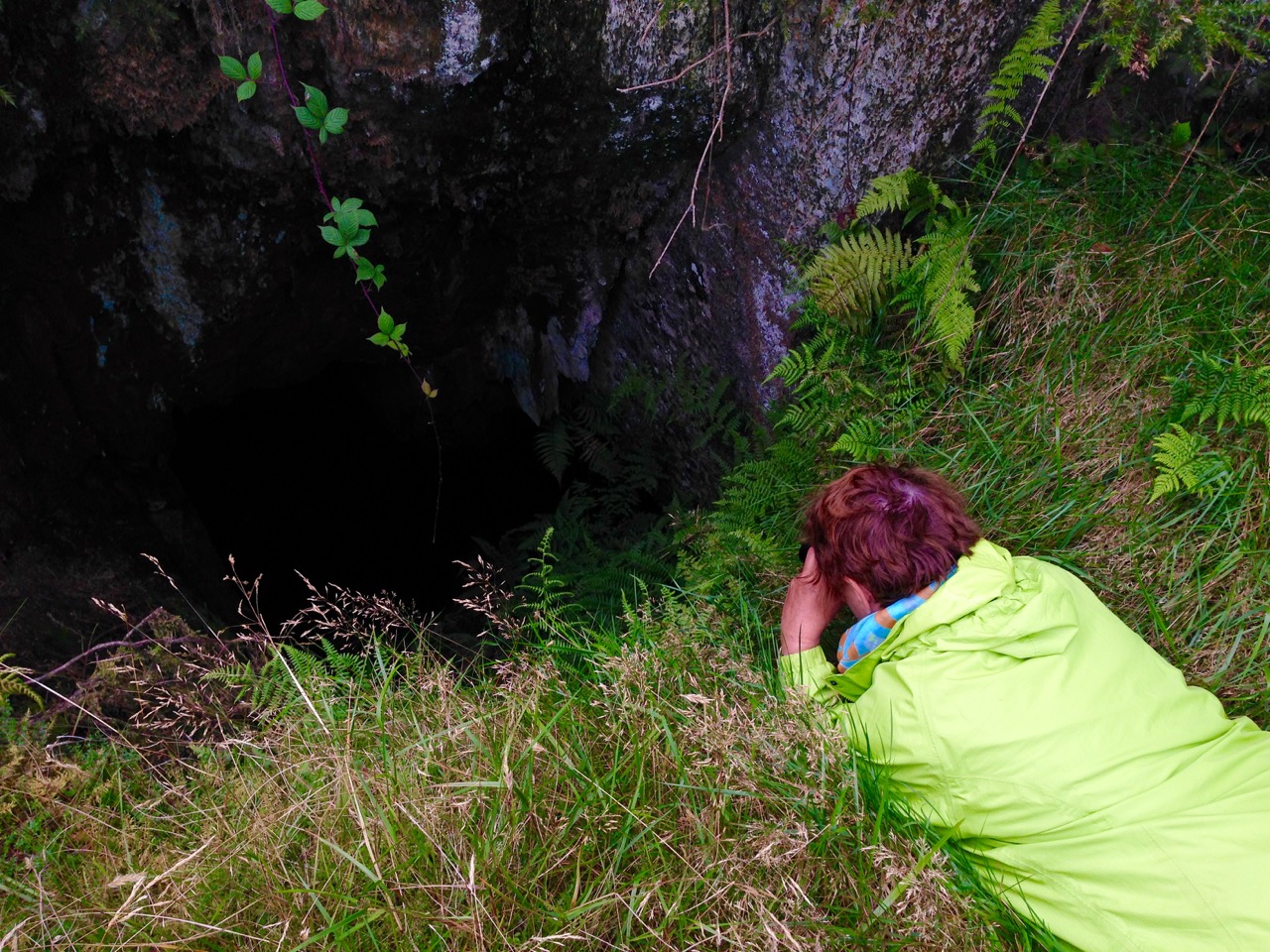
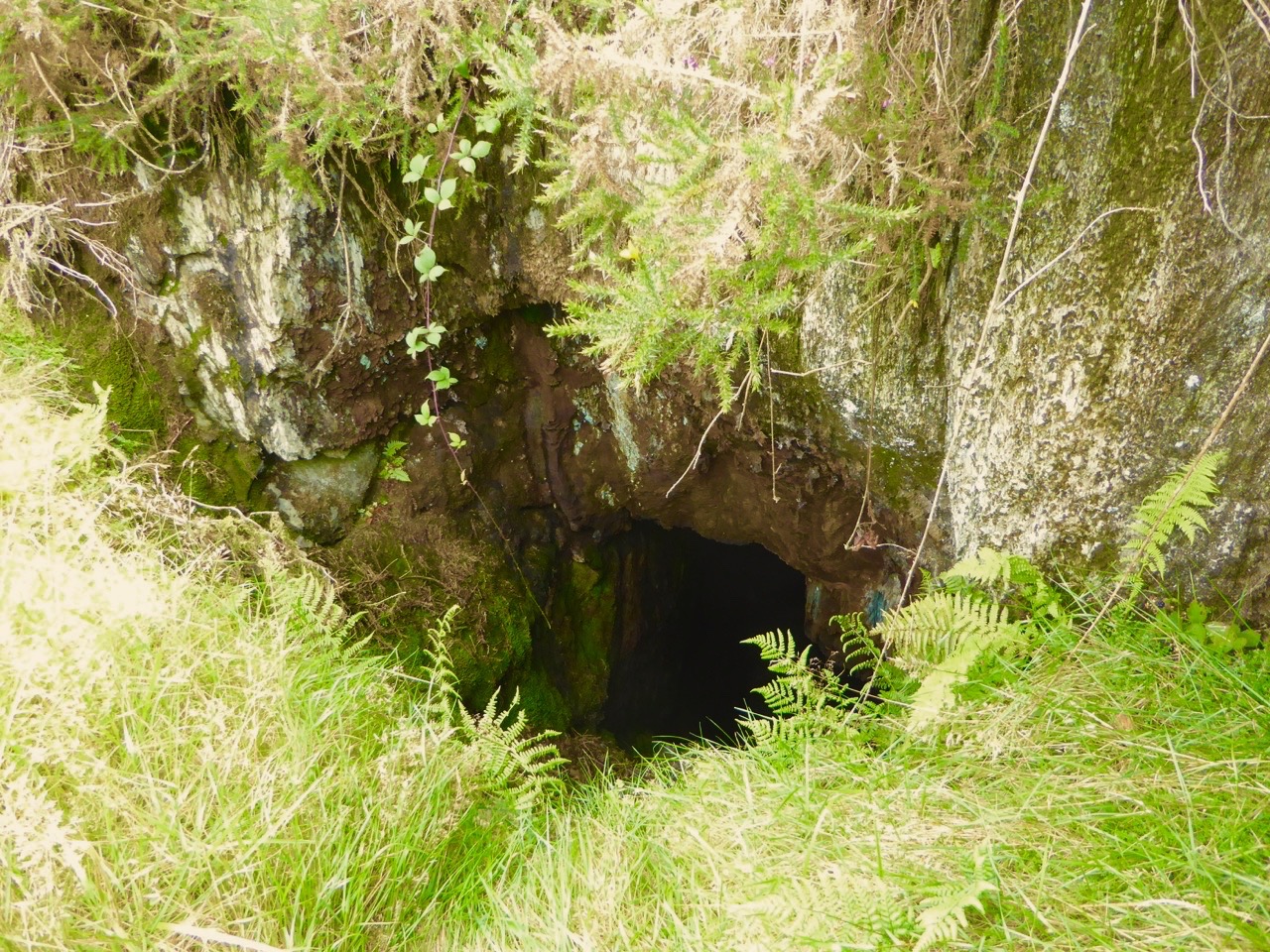
Intrepid Finola inspecting the deep shaft at Derrycarhoon, top, and her photo, below – note the copper staining

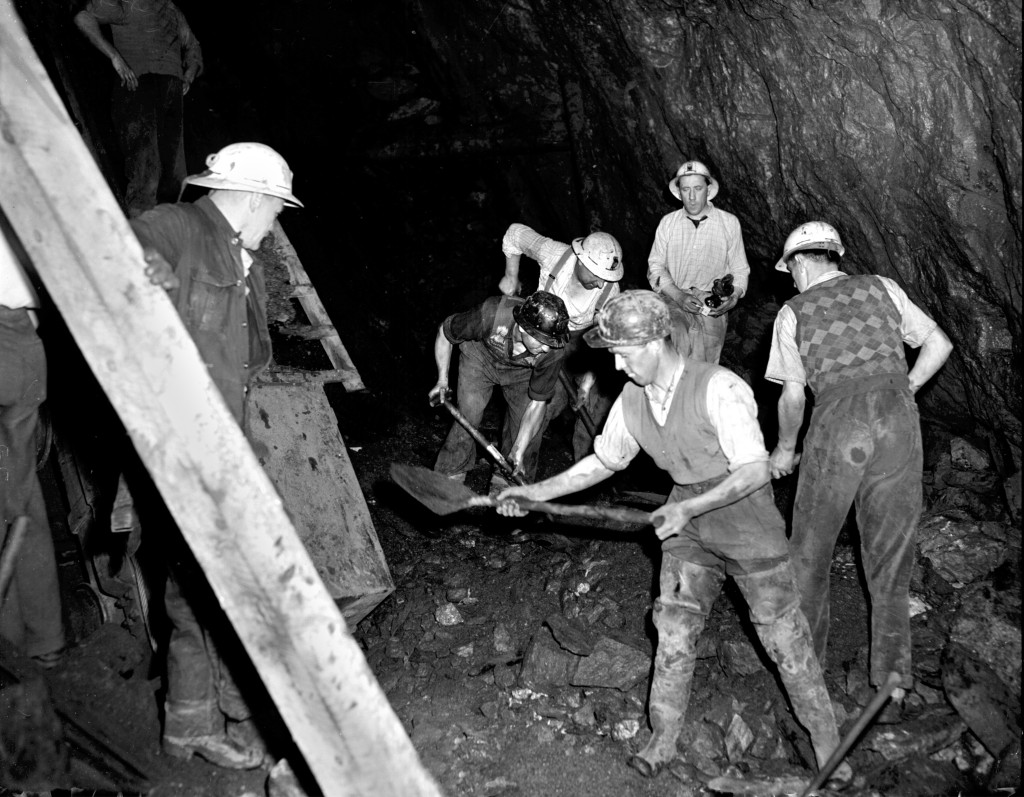
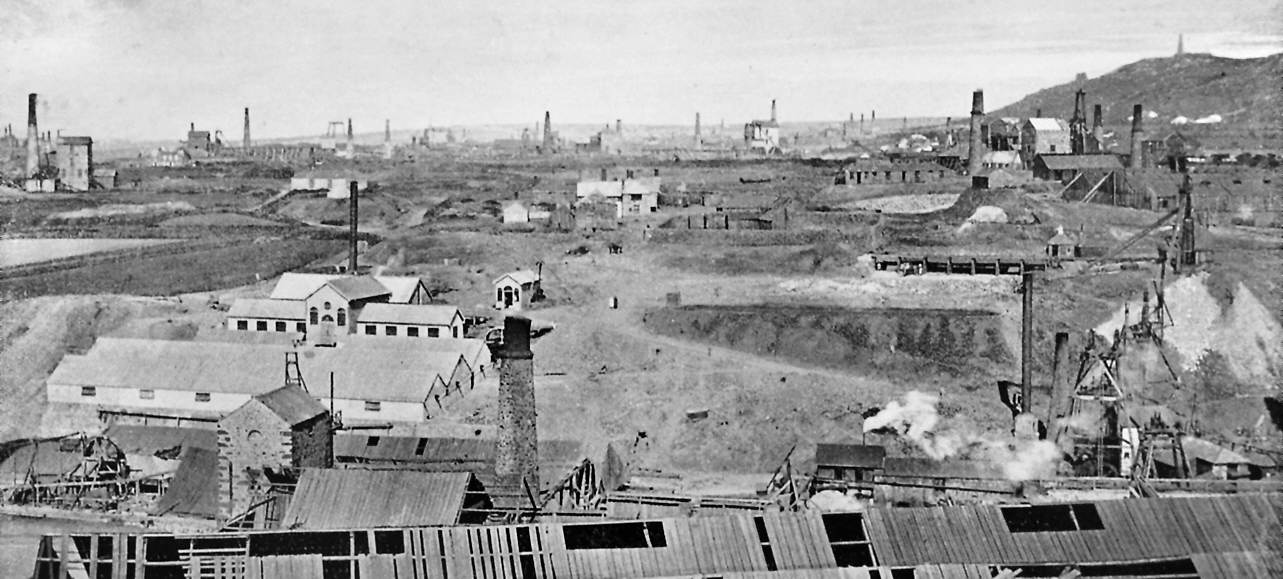
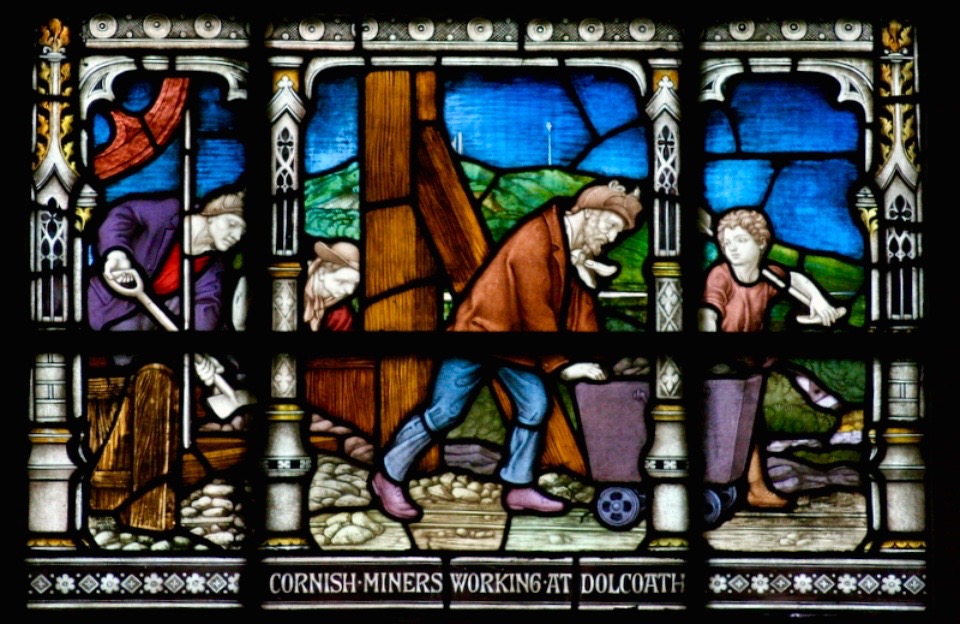
We have explored links between West Cork and Cornwall in previous blog posts (here, herehere and here). When it comes to metal mining anywhere in the world there’s usually a Cornishman involved and here is no exception to that rule. The mine agents – whose job it was to prospect and direct operations – were always known as ‘Captains’. A dynasty of Mine Captains was founded by Charles Thomas (1794-1868), a mining agent and share dealer in Camborne, Cornwall – responsible for the very successful development of the Dolcoath Mine in Camborne. Mineral rights here were established in 1588 and copper was being produced in some quantity by 1720. Thomas (who had started work in the seams of Dolcoath at the age of twelve) stepped in as Captain in 1844 after a period of considerable decline in metal production. Charles was a real-life Poldark – insisting that the apparently dwindling seams of copper be followed to the bitter or fruitful end – and his skills saw Dolcoath (known as the Queen of Mines) become the largest, deepest and most productive mine in Cornwall, with its principal shaft eventually reaching a depth of 3,300 feet (1,000 m) below the surface – and incidentally taking the miners between 2 to 3 hours to descend and ascend, significantly reducing their working shifts below ground. Thomas was succeeded at Dolcoath by his son Josiah and then his grandson Arthur, taking the mine well into the twentieth century. (Its successor, the South Crofty Mining Company went into administration in 2013).

Dolcoath 1893

Dolcoath, Cornwall – Queen of Mines – 1893

The point of this digression into Cornish mining history is simply that three more sons of Charles Thomas, Captain of Dolcoath, came to the west of Ireland in the mid nineteenth century and were instrumental in the development of many of the mining activities here, including those on the Mizen. The brothers, Charles, Henry and William arrived by 1841 with their own families – yet more sons – who proceeded to populate, at one period or another, the Captaincies of most of the West Cork activities, including our own Cappaghglass workings and the Derrycarhoon venture.

West Cork Mine Captains: Henry Thomas (left) with his niece and William Thomas (right) with his daughter

The modern age of mining commenced at Derrycarhoon in 1846, under the management of Captain Charles Thomas. Charles discovered no less than six old mines during his preliminary explorations, and recognised similarities between them and the shallow workings of medieval tinners which he knew from his childhood home on the moors of Bolenowe, near Camborne, where such workings were extensive and visible. That’s how we know that this mine had been active in those times. But also, as his brother Captain William records in an article dated 1853:

…In the Derrycarhoon Mountain some excavations have been found, which no doubt were made at a very remote period, as they are invariably designated by the country people ‘Danes’ or ‘Danish Works’, but whether these ancient works were carried on or not by the Danes is not easy to determine: it is, however, an historical fact that the Danes visited Ireland many hundreds of years ago…

1843 drawing danish implements

Nineteenth Century Archaeology: Excavated ‘Danish Implements’, 1843 – in fact these finds are likely to be Bronze Age or Iron Age – have a look at  Umha Aois, a Roaringwater Journal post about early metalworking

(Thomas 1853) …One of these singular excavations at Derrycarhoon was a few years ago cleared of water and rubbish; it was found to be 60 feet deep and about 120 feet in length… the lode or vein appears to have been literally pounded away by stone hammers, a great many of which were found in the old works and which were evidently brought from a considerable distance, there being no rock of the same character within some miles…

Hand-held stone maul used at Derrycarhoon in prehistoric times

We found evidence at Derrycarhoon of these stone tools, generally known as ‘cobble stone hammers’ and probably originating on the beaches below us: their presence almost certainly confirms that the earliest workings here were Bronze Age, as confirmed by Timberlake and Craddock in a paper of 2013: …The distribution of known occurrences of this type of cobble stone hammer at or near to mining sites in the British Isles correlates with some (but not all) of the areas of near-surface copper deposits, particularly along the west coast of Britain… Recent fieldwork suggests good survival of tools at mine sites, even where these have become dispersed as a result of redeposition by later mining… Hammer stones, or fragments of hammer stones, are more or less indestructible, surviving any amount of later reworking. In most cases the fragments of these tools never disperse far from source, even when redeposited several times. Experience has shown that if a range of these can be found, then the approximate site(s) of prehistoric mining can usually be identified…

derrycarhoon trumpet

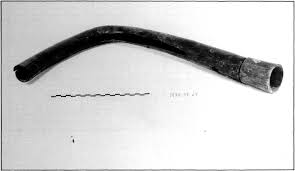
Further intriguing finds were made at Derrycarhoon in the nineteenth century, including a ‘notched pole’, a ladder and a trumpet-like wooden tube 75cm in length. Whether these artefacts were medieval or earlier we do not know but, remarkably, the tube still exists and is kept in the spectacular Pitt-Rivers Museum in Oxford (why not here in Ireland?). I could only find a poor quality early photograph of this.

Pitt Rivers Museum, Oxford, UK

Pitt-Rivers Museum, Oxford – where the Derrycarhoon Trumpet (above) is stored

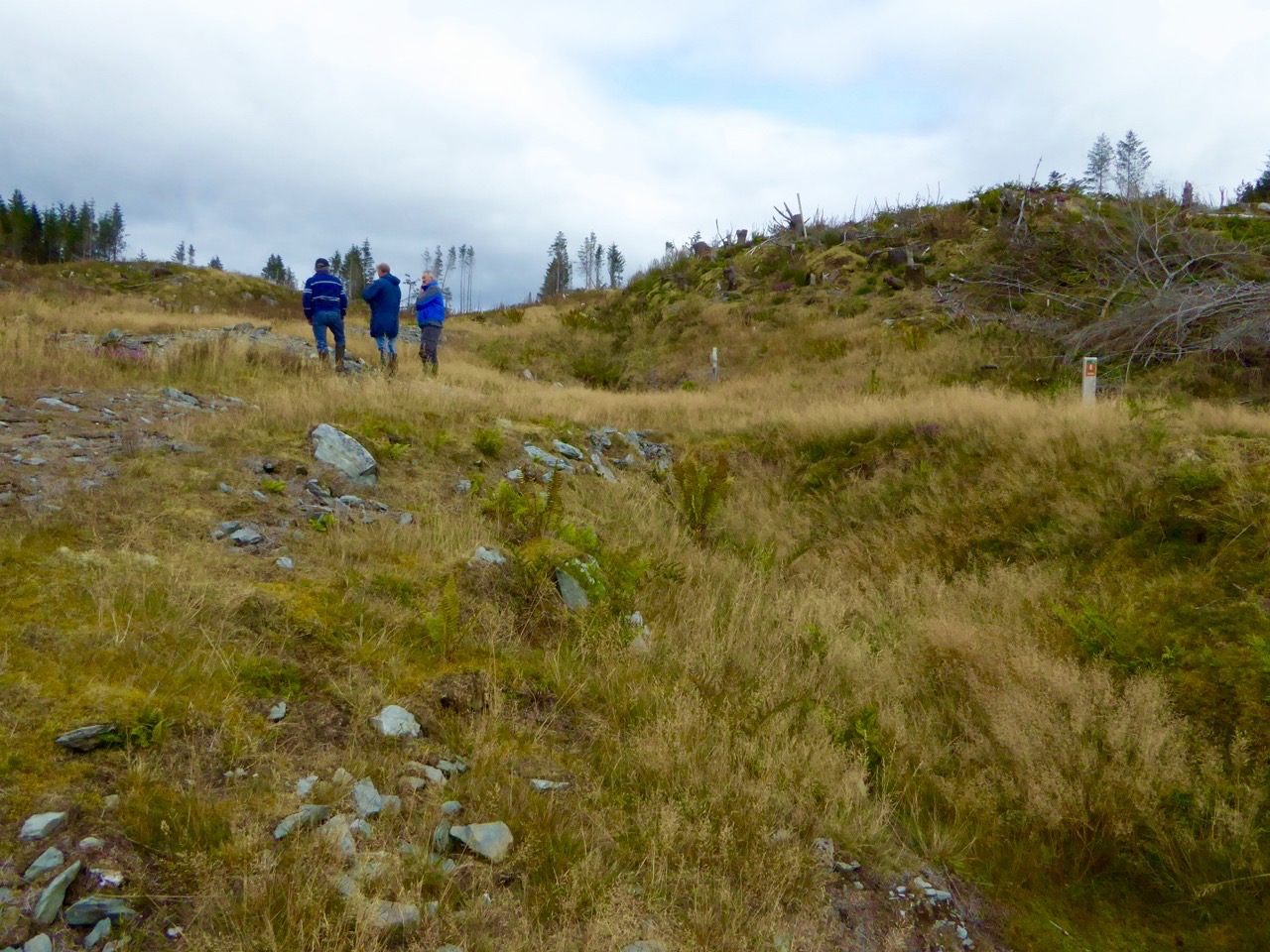
The topography at Derrycarhoon – which is reappearing now that the forestry plantation has been cleared – is very similar to the Bronze Age mining sites on Mount Gabriel: long, shallow trenches interspersed with pits and shafts. However, the superimposition of medieval and modern interventions clouds the issue. William Swanton pointed out to us a drainage adit driven horizontally for some distance through the bedrock. We assume this is probably the work of the Victorian speculators.

three figures

portal

Mine explorers (top) and portal (below)

Captain Charles Thomas evidently raised some 30 to 40 tons of ‘rich grey copper ore’ after the ‘old workings’ had been cleared during the 1850s. Derrycarhoon Mine was listed from 1862 to 1873 under the ownership of Swanton and Company but there is no record of any production at this time nor afterwards, although prospecting trials were made in 1912 by a John McArthur of Glasgow and again in 1965 by the Toronto Mining Company. We found part of a core sample on site, presumably dating from that trial. Then the trees took over…

Landscape of spoil: copper traces in the discarded rubble; baryte – and views west to other Mizen mining sites, Mount Gabriel and Mount Corrin

Today, the rough landscape is marked only by green-stained spoil heaps, earthwork undulations and a few recognisable pits and shafts. The litter includes traces of barytes, sometimes a by-product of copper production. If you are not interested in mines or the history of them you will be pretty unimpressed. But, as a microcosm of our own local history, we were fascinated by our exploration of Derrycarhoon and are very grateful to William and his ancestors (were they the Thomases – our own Irish Poldarks?).

Cornish Miners Window

Fastnet Trails: Rossbrin Loop, Part 2

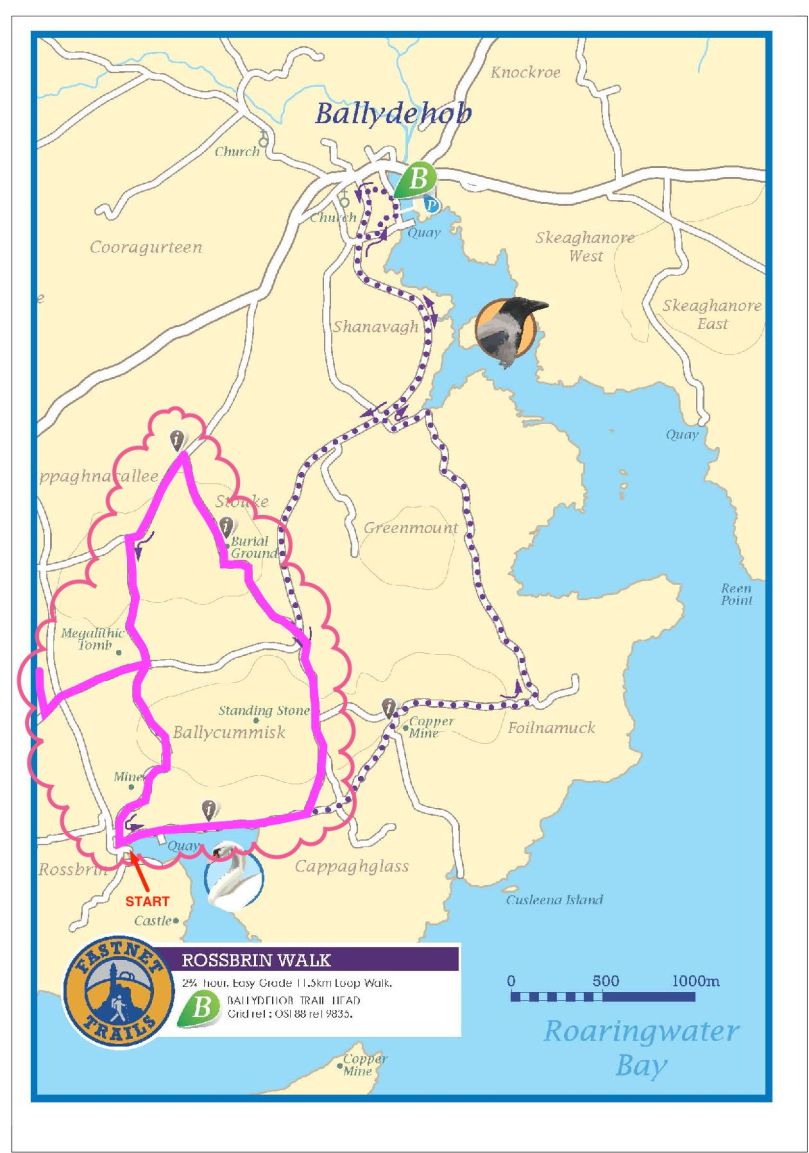
Start this walk at the Rossbrin boat slip

Start this walk at the Rossbrin boat slip

A joint post by Finola and Robert

In Part 1 of this trail post, we took you around the first leg of the Rossbrin Loop trail, which we have broken into two shorter rambles.

This one is steeper and climbs higher, but it’s full of interest and you can take it as easy as you like. For this walk, you park at the Rossbrin boat slip, at the eastern end of Rossbrin Cove.

Rossbrin trails route revised Export

You won’t need off-road boots and you can take the dog. Give yourself two to three hours, depending on whether you decide to do the detour to see the wedge tomb. This is a nice, rambling pace, with lots of time to stop and chat to anybody you meet, admire the wonderful views, take lots of photographs, and maybe indulge in a picnic along the way. 

The first hill affords lovely views back to Rossbrin Castle

The first hill affords lovely views back to Rossbrin Castle

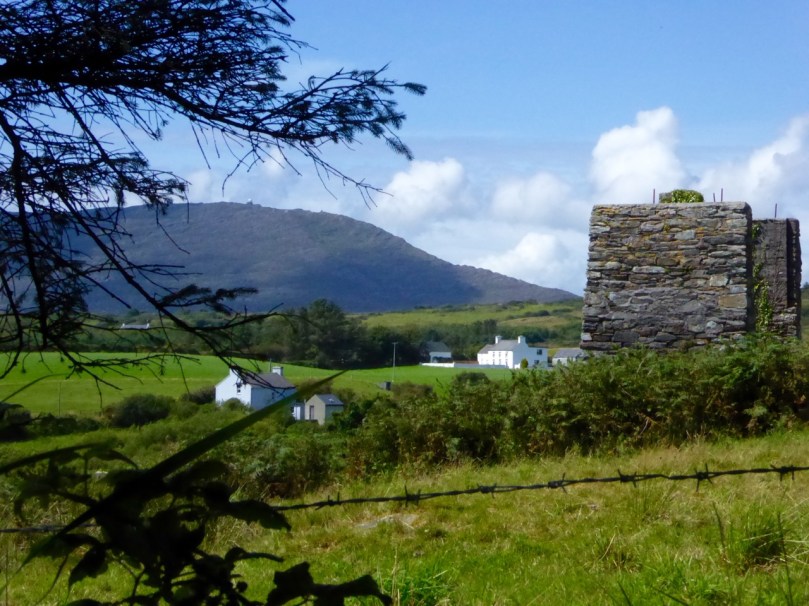
Set off north and turn right after the boat yard and then left up the hill. As you ascend you will see the remains of old mine workings to your left. The earliest records of mining at Ballycummisk refer to 16 tons of ore raised in 1814 and 42 tons in 1815. In 1838 a shaft was sunk 20 fathoms, mainly through barytes and shale. In 1857, 174 tons of ore were sold, mainly copper. By 1861 the mine was recorded as being ‘one of the best developed and very satisfactorily worked.’ The ‘Lady’s Vein shafts’ are marked on the OS 6” map. The Ballycummisk Mining Company worked the mine from 1872. In 1878 a section down to 228 fathoms was noted, but in the same year the mine was recorded as ‘abandoned’. Nowadays some concrete pillars and the slag heap are the most visible remains of the once thriving mine-site.

Old Mine site

There are extensive views over the countryside beyond the old mines

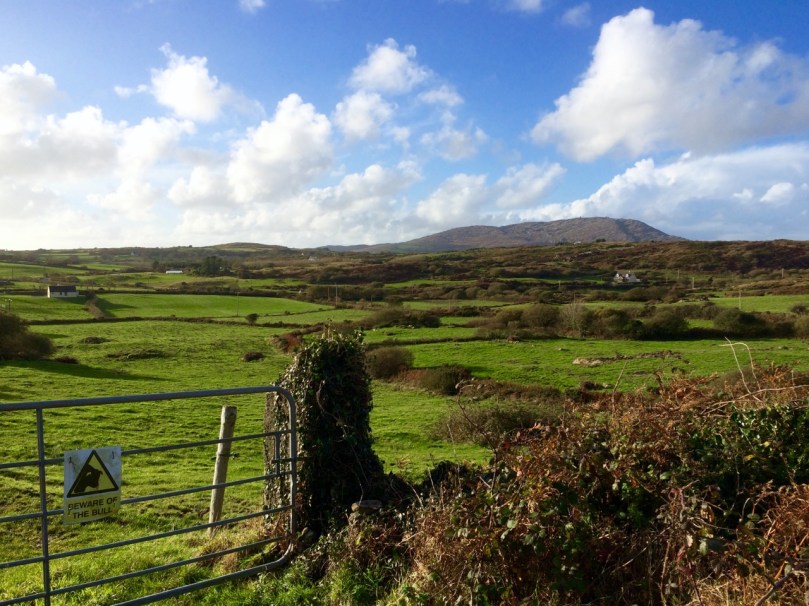
At the top of the hill, where you will find a sign to the riding stables, turn left and head through the townland of Ballycummisk with pleasant country views to the west. Once you get to the crossroads you may see a little wayside stall selling vegetables on the honour system. If you’ve brought a backpack, this would be a good place to stock up on carrots, potatoes, or yellow tomatoes.

Beware of the bull

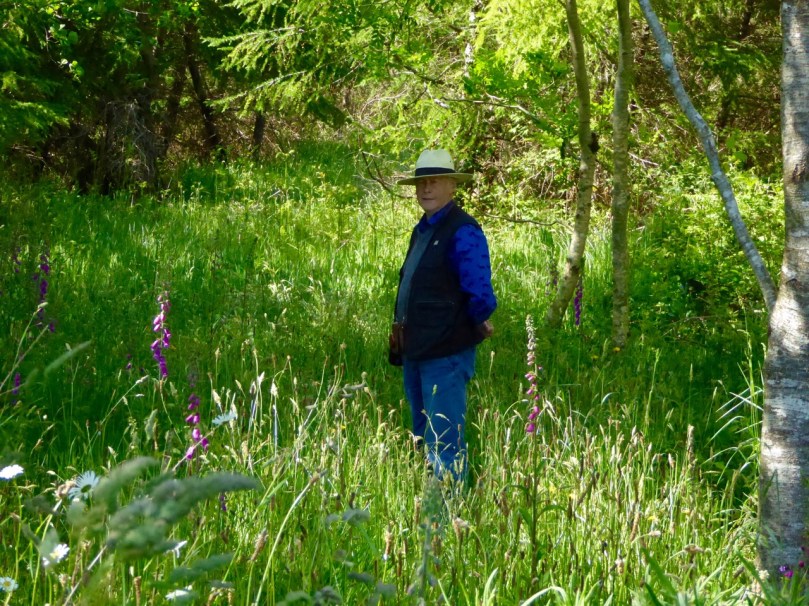
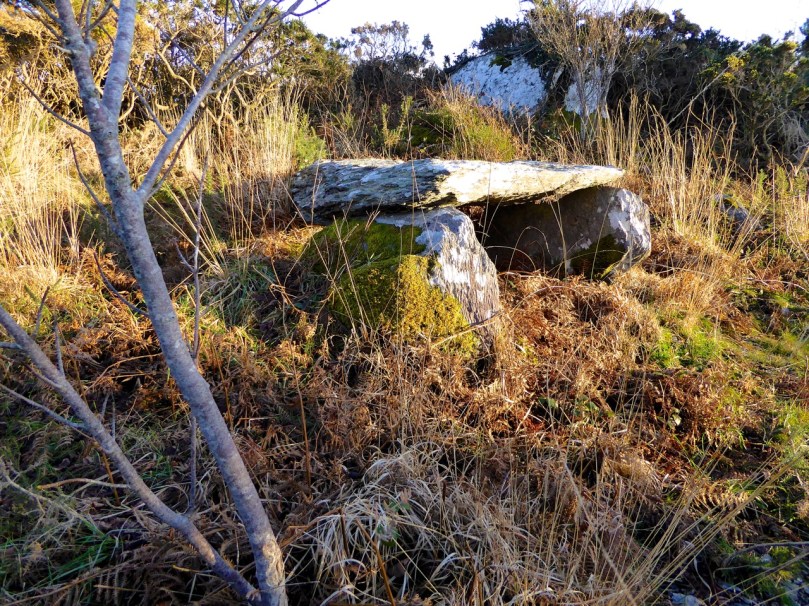
Wayside StallAt this point, we recommend a detour to see the Kilbronogue wedge tomb. Turn left and walk until you reach the next crossroads. Go straight through the crossroads and a short distance on you will see a lay-by on the right side of the road. Step over the wire and find your way up the path that has been generously maintained by the landowner. In early summer this path is awash with ox-eye daisies. It meanders up through a birch plantation until you emerge in a small clearing to find the wedge tomb.

Path to wedge tomb, Kilbronogue

Like most wedge tombs, this one is orientated to the west – take a look at our post Wedge Tombs: Last of the Megaliths for lots of information on this class of Bronze Age monuments. This is a lovely example, and we are grateful to Stephen Lynch for ensuring its wellbeing and providing access to it.

Kilbronogue Wedge tomb

Retrace your steps to the second cross roads and turn left up the hill, turning right when your reach a T junction, and then take the left fork at the Y. This is a pleasant country road – farmland stretches on either side, with ruined or abandoned houses dotted here and there among the neat modern farmhouses with their colourful paint and bowery entrances.

In spring and summer the hedgerows are heady with wild flowers of every variety.

Turn right again at the next junction and you will come shortly to the beautiful and atmospheric Stouke burial ground. Although we have read that there are the ruins of an old church in this graveyard, we have never found it. But there are other items of great interest here, the traditional burial place of many island dwellers. In the centre you will find the grave of two priests, Fathers James and John Barry, who were parish priests here during the time of the famine. According to the Historic Graves listing for Stouke  “Sarah Roberts who is buried here in this tomb, died at an early age… worked as a housekeeper for the parish priest… When his sister died and was also buried here, Sarah’s coffin was in perfect condition. She was reburied with the parish priest even though she was not a Catholic. People of the parish come to pray at this tomb on the 24th June at John’s Feast Day.”

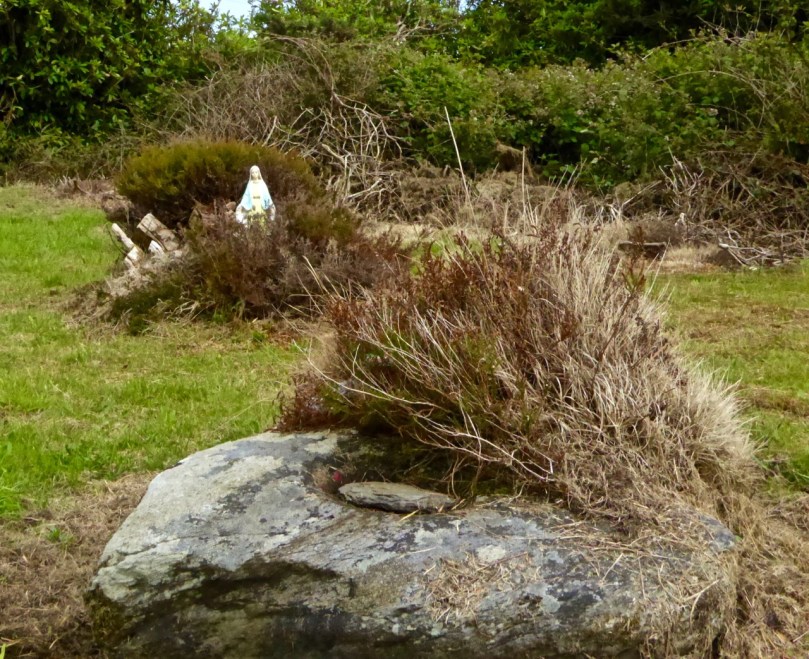
A little way to the right of this grave is a rock, partially covered by heather, that contains a bullaun stone, known locally as the Bishop’s Head. Once again, according to the Historic Graves entry, “The bishop was confirming children in a nearby church. Red coats came in and beheaded the bishop.”

Amanda photographs the bullaun stone

Amanda photographs the bullaun stone

There are offerings of coins in jars at the bullaun stones, and at the priests’ grave. Leave one too, along with a prayer or wish for a loved one.

Bishops Head bullaun stone, Stouke Graveyard

Bishop’s Head bullaun stone, Stouke Graveyard

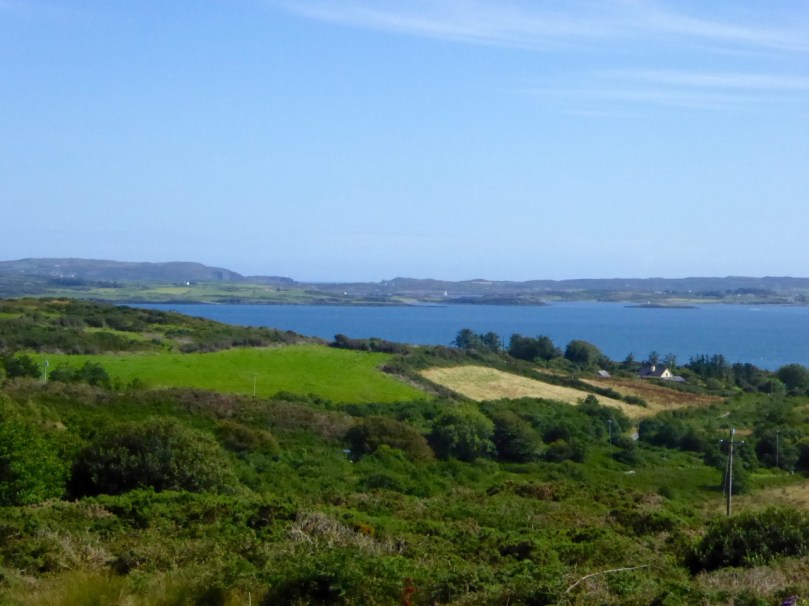
From Stouke the road drops down to a cross roads. Go straight through and start to climb again up to Cappaghglass. Ignore the left turn and carry on until you reach a Y junction. Take the right fork, pass all the ripe blackberries (if you’re able) and as you crest the hill the whole of Roaringwater Bay is laid out before you. Few views in the country can equal this one for sheer scope: all the islands in Carbery’s Hundred Isles come into view, The Baltimore Beacon gleams on its rocky outcrop to the east, while the Fastnet Rock sits sturdily on the horizon, and the Mizen Peninsula stretches away to the west.

Roaringwater Bay from Cappaghglass

Descend the steep hill, turning right at the T junction, and meander down to Rossbrin Cove.

Shaft of Sun

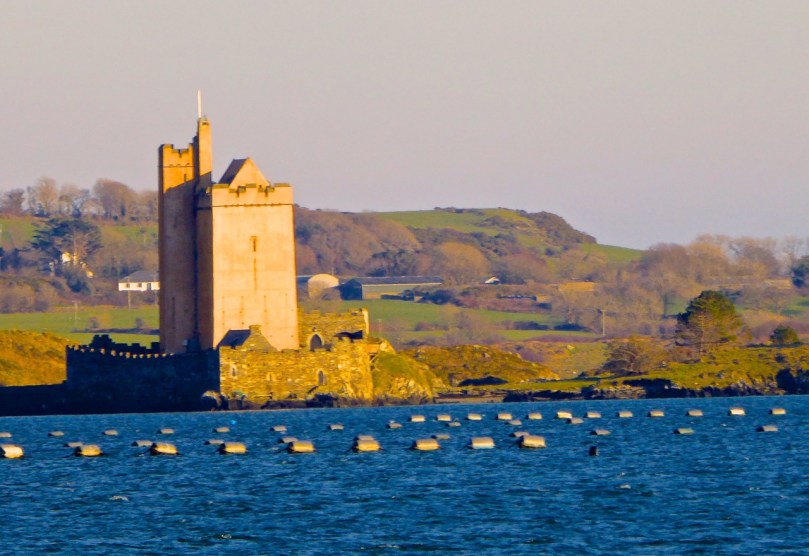
Now a peaceful boat harbour, Rossbrin in the 15th Century was the domain of Finghín O’Mahony, the Scholar Prince of Rossbrin, a man who used the riches extracted from taxes paid by Spanish and French fishermen to fund a centre of learning here in Rossbrin where scribes and learned men wrote and translated books which still exist today. The ruined section of the castle still standing gives little evidence of the erudite court that was once respected throughout Europe. A fish ‘palace’ for processing pilchards once provided employment to the people of Rossbrin, but little trace remains of it, or the holy well at the shore that once attracted those seeking cures for their ailments.

Kayaks at Rossbrin Cove

If the weather’s warm and the tide’s in, this is a good spot for a dip. No? Well, a photograph, then. 

We hope you’ve enjoyed the two Rossbrin Loop walks – do let us know how you got on.

Ballycummisk Mine

Ballycummisk Mine

Window on our World…

Our View to the Islands

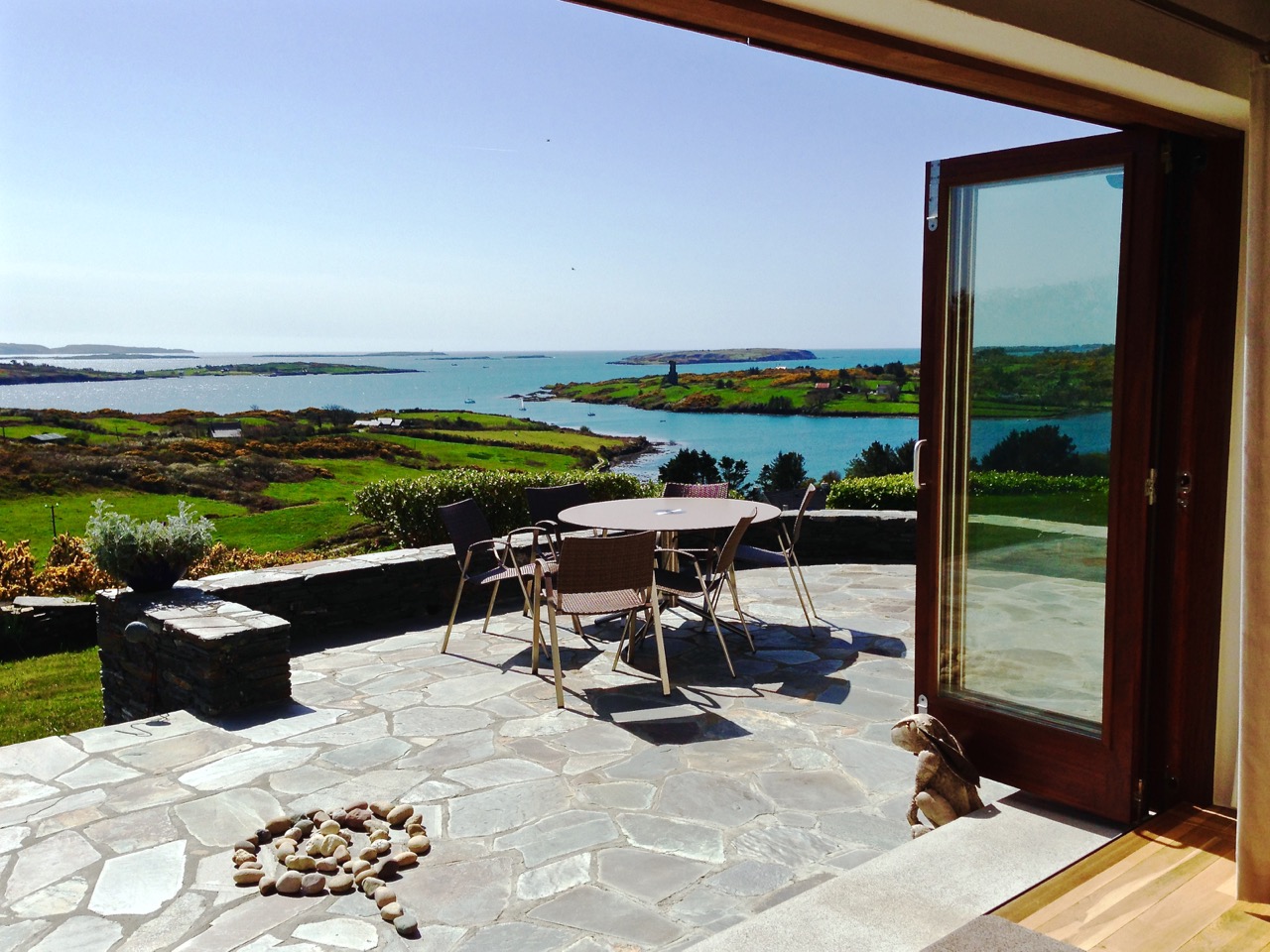
Our view to the Islands

Sunlight and drama have been the key elements of the view from Nead an Iolair this week. The drama began at coffe time on Monday: whenever we are sitting having breakfast, lunch, tea, supper – or maybe just sitting – we are looking out over the scene you see above. Central in that prospect is our bird feeder, where we keep a constant eye on the comings and goings.

Suddenly, a bomb dropped out of the sky! It scattered the birds and there was such a twittering and chattering – squawks and alarm calls. The ‘bomb’ was a Kestrel – who had singled out a juicy victim from among the avian throng… I’m pleased to say that it missed its target and crashed ignominiously into the adjacent gorse bush. Seconds later it extricated itself and sloped off, trying not to look too foolish. I have to say I admire birds of prey, although I’d rather not see them lunching on our garden friends. In the past we have also had sight of a Sparrowhawk on our stone boundary wall.

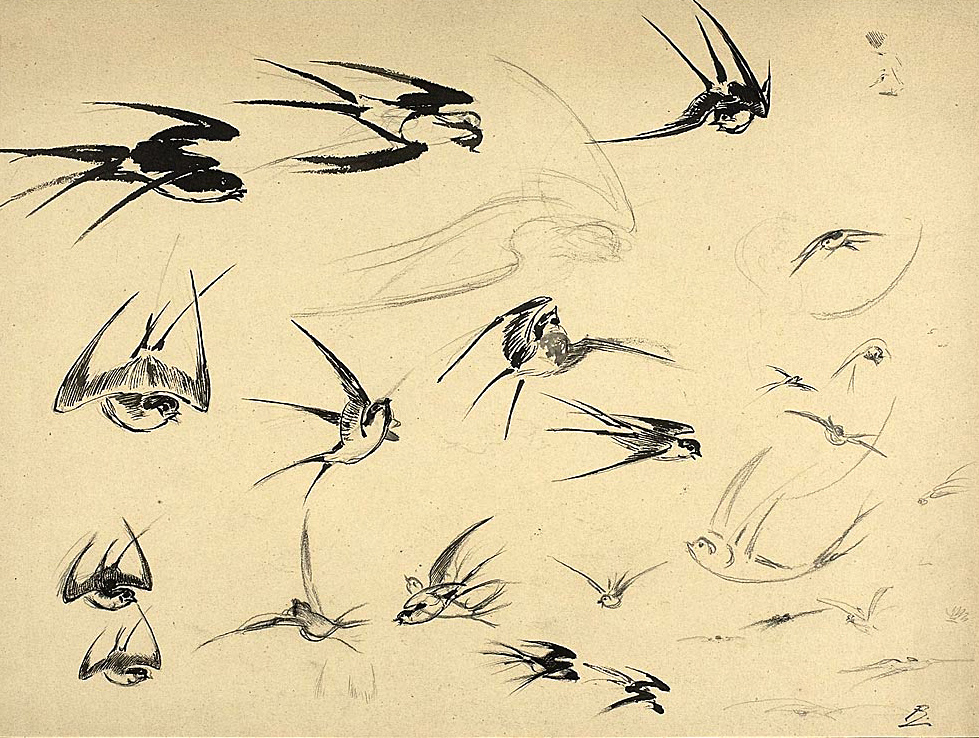
The Swallows: Felix Bracquemond, 1881

The Swallows: Felix Bracquemond, 1881

As I write this there are Swallows wheeling in the air above us: although we have had cloudless skies for several days the wind is in the east and it’s pretty chilly – however these harbingers of the Summer seem happy enough to have arrived on our shores in late April.

The Choughs are always with us!

The Choughs are always with us!

The Choughs are good friends of ours – they sit on the roof or tumble about in front of us, showing off their bright red bills and claws. At the moment they are foraging in the rocky land behind the house, pulling out roots and twigs for nest building. Another nester is the Starling family which inhabits the space in our eaves, creating a lot of noise and mess.

rabb

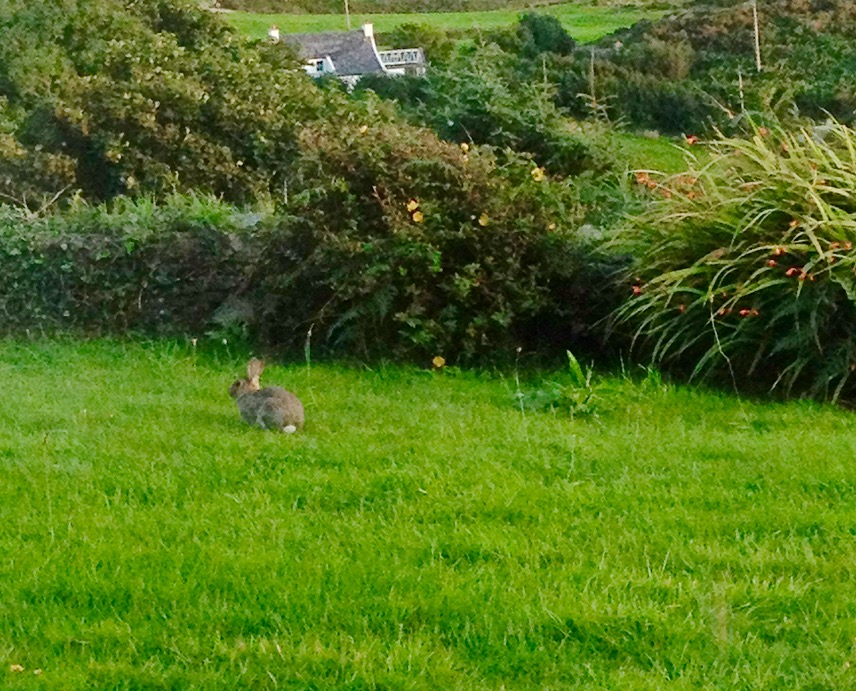
I was pleased to see a Rabbit in the garden: there has been an outbreak of mixomatosis in the surrounding countryside in recent times and over the last year we have hardly come across any of these mammals in the fields locally. Mixomatosis was introduced into the UK in the 1950s – apparently by accident – and then was used as a deliberate Rabbit control measure, by placing sick animals in burrows (then and now an illegal practice). By 1955 95% of Rabbits in the UK had been wiped out. I remember those days: seeing dead and dying animals every time I went out as a sensitive nine year old made me sickened and appalled, especially when I learned that we humans had initiated such cruelty. The virus recurs cyclically every few years, as has happened around here: I am still sickened and angered by it.

The next visitor was a female Pheasant. Although less colourful than her male counterpart she is nevertheless a handsome addition to our menagerie. The good weather has enabled us to have our doors open every day, but this does mean an influx of smaller guests, which have to be carefully rounded up and ejected before we go to sleep. They include spiders and flies, but also Native Irish Honeybees from our neighbour’s hives. Apis Mellifera Mellifera has evolved over thousands of years with a large body and long dark abdominal hairs which make it uniquely suited to survive in a harsh Irish climate. It will be found foraging early and late in the season and will fly in dull, drizzly and cold weather. I gleaned this information from the comprehensive website of the Native Irish Honeybee Society.

Castle in the Mist

Castle in the Mist

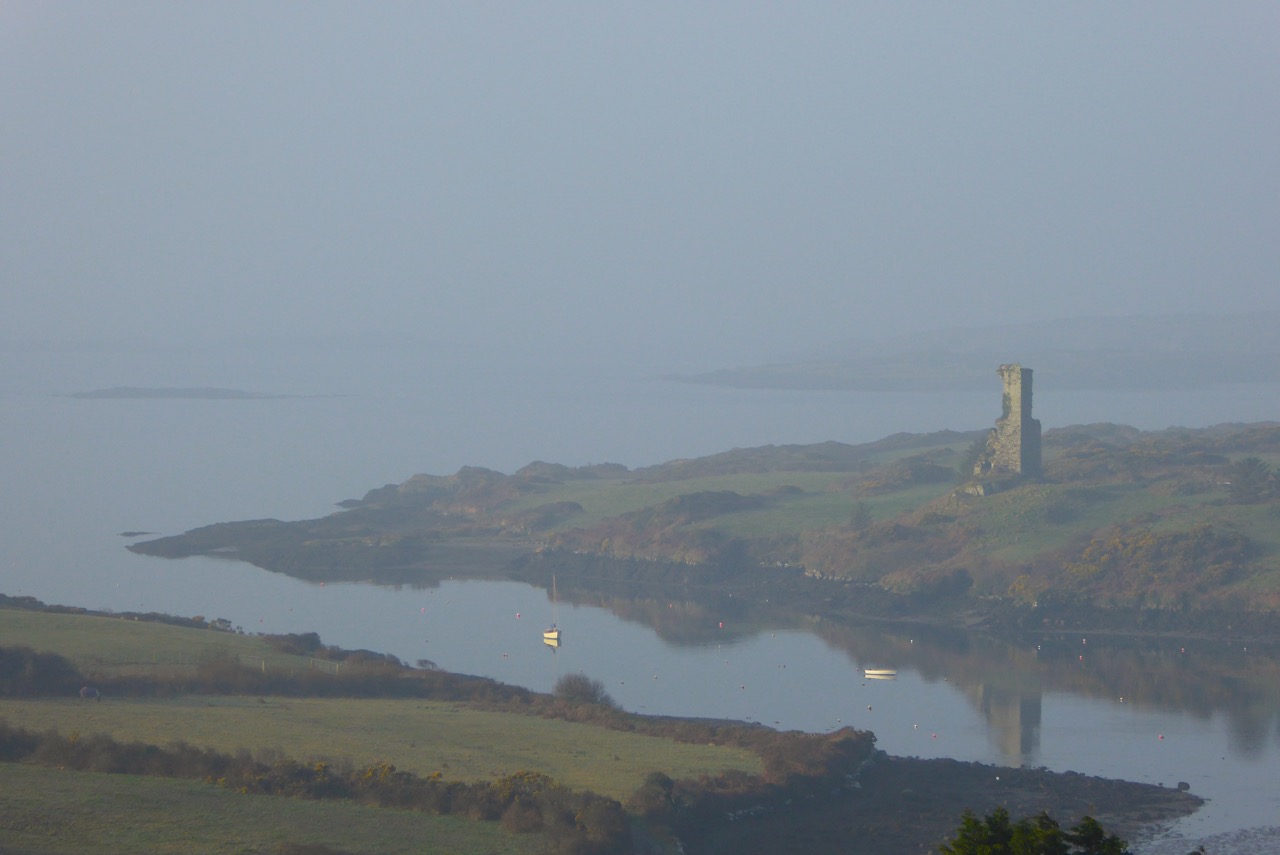
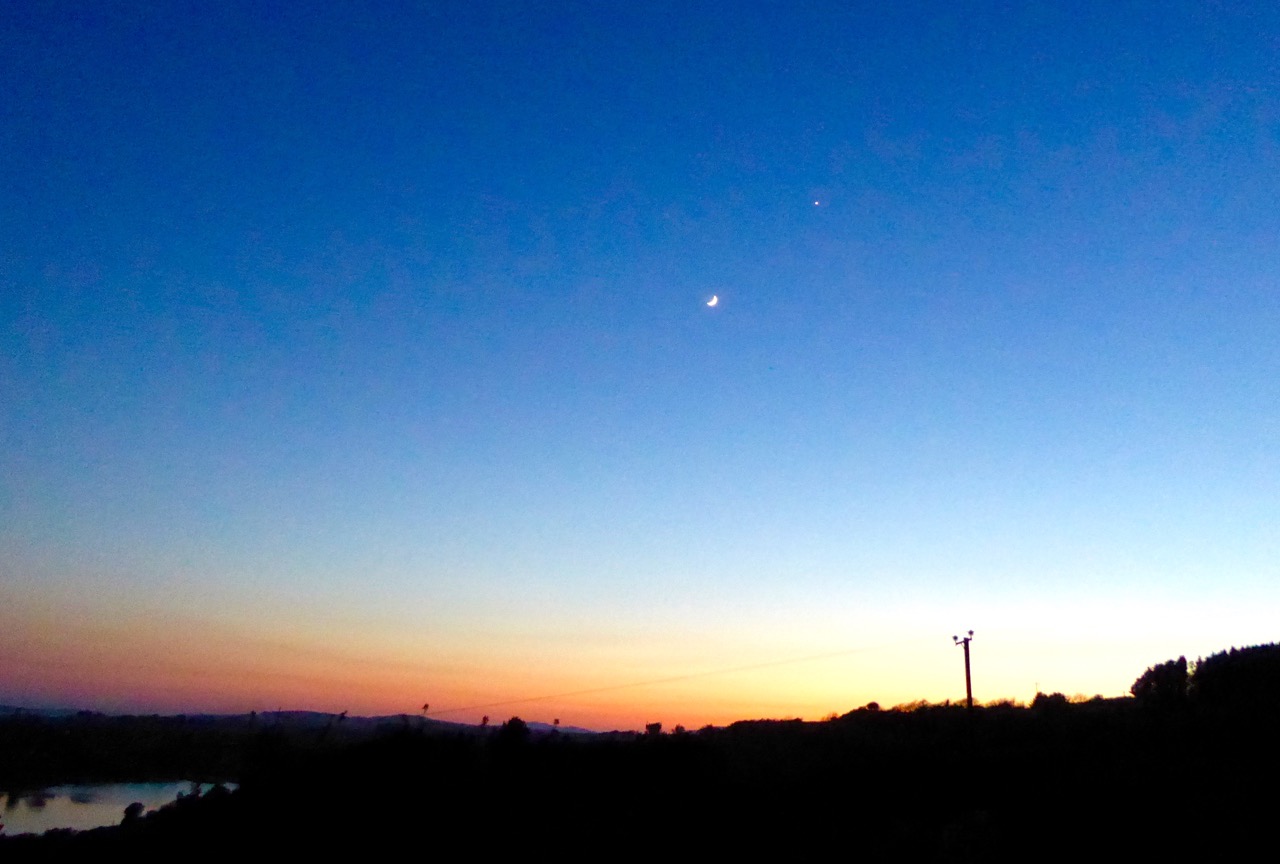
These wonderful spring days have been heralded by misty mornings. Evenings have been clear, with the crescent moon and Venus prominent over the western horizon. This is the time when we see our Bats. They might be either Common Pipistrelles or Soprano Pipistrelles: I’m sure you know that the former echolocates at a peak frequency of 45kHz while the latter echolocates at a higher frequency peaking at 55kHz. I keep listening out but can’t quite decide which is which… Anyway, they are both indigenous – and are probably sharing our eaves spaces with the Starlings.

crescent moon

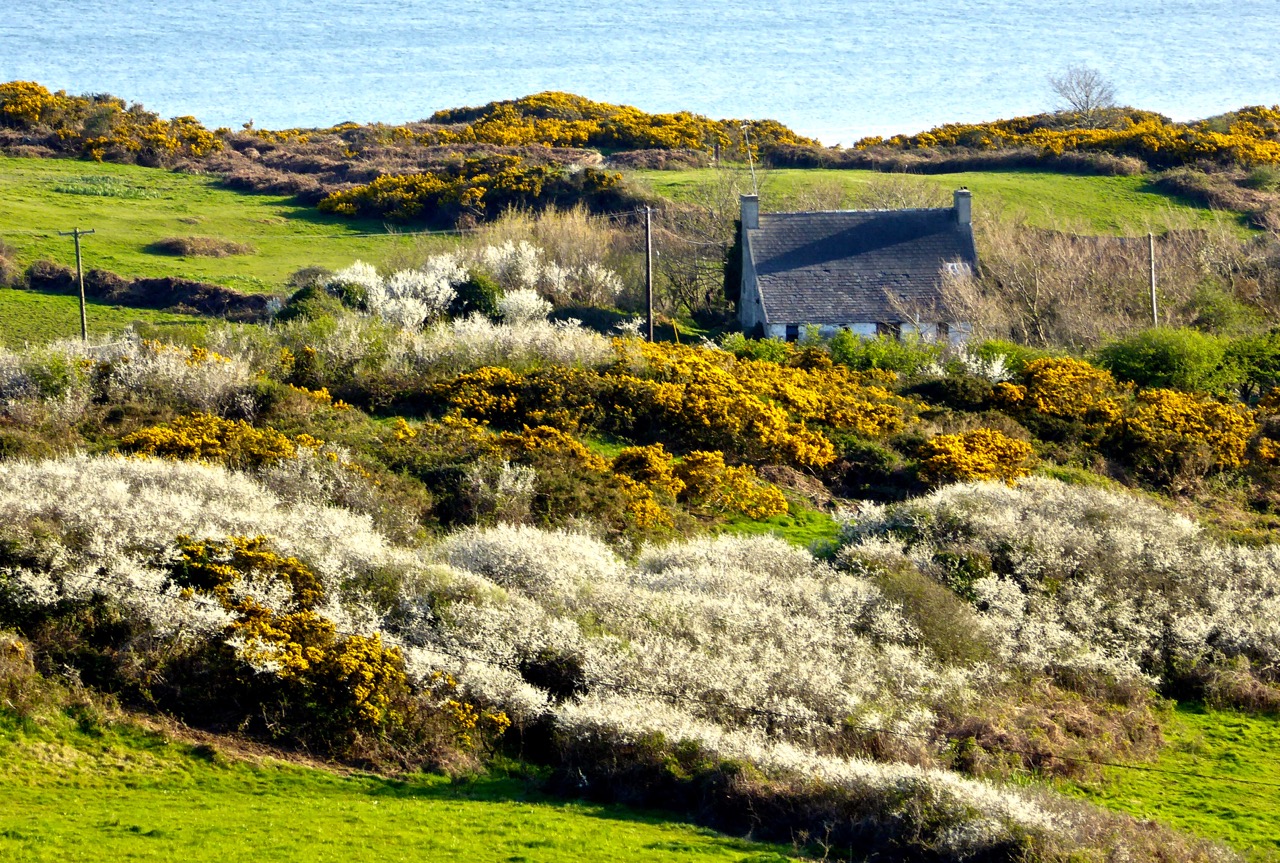
The gorse is in full bloom, as are the blackthorn hedges. Any picture of our surroundings at this time of the year has to show off the yellow and white – and, of course, the emerald green and azure blue.

looking out

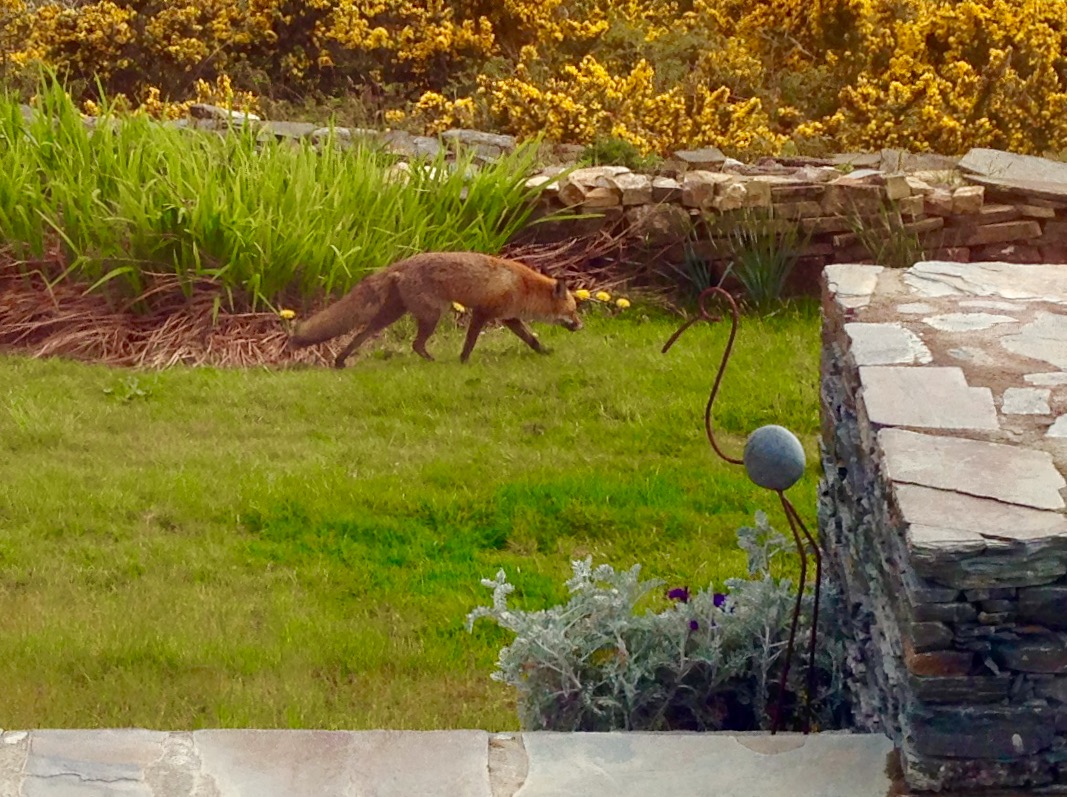
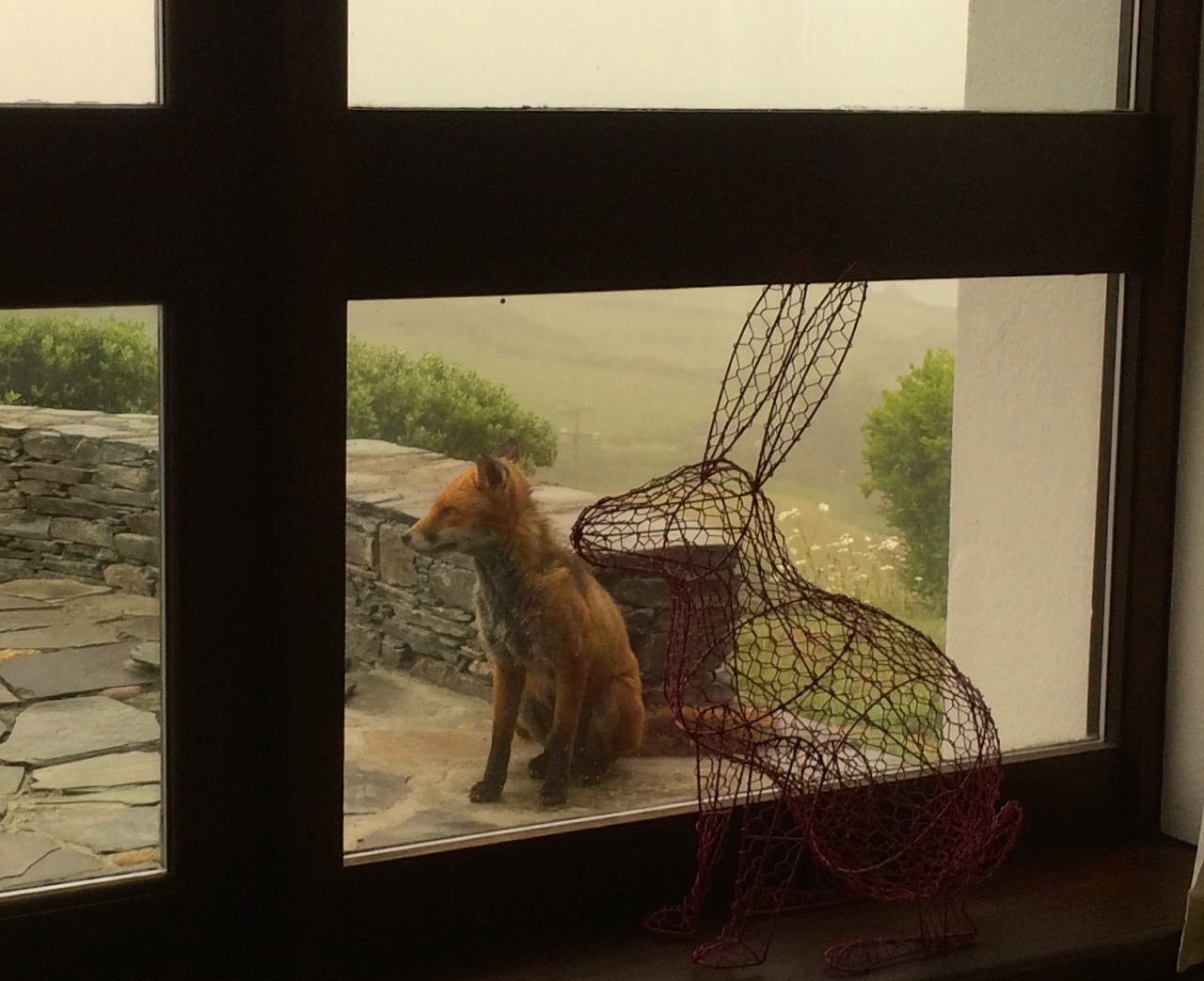
No ‘nature post’ here would be complete without mention of our own Red Fox, Ferdia. In fact, part of the drama of the week was the appearance of another Fox! As we hadn’t seen Ferdia for quite some time we worried that he might have gone the way of all Foxes: the average life of a Red Fox in the wild is only around five years – and our neighbours claim to have been hosting Ferdia for more like ten… The new Fox only made the briefest of appearances, just enough to be photographed. I think it is a Vixen – smaller and thinner – and very nervous. We couldn’t help thinking that she had come on to the scene because of Ferdia’s demise – but no! Yesterday evening, there was Ferdia knocking on the window, cocky as ever – although he does look a bit bedraggled at the moment, possibly because he’s beginning to lose his fine thick winter coat. Perhaps now we will have to find scraps for two foxes…

Fresh on the scene: a female Red Fox

Fresh on the scene: a female Red Fox

Seen through the window: a bedraggled Ferdia posing with one of our many household Hares!

Seen through the window: a bedraggled Ferdia posing with one of our many household Hares!

Finally, I was fascinated by another visitor to Nead an Iolair this week: a female Emperor Moth took up residence on our bedroom window cill. As you can see, her appearance is very striking. I wish I had been able to observe her all day, as evidently these Moths stretch themselves out in the sun waiting for a mate to arrive. The males are even more spectacular, but alas I didn’t see one. You’ll find this lady in an Irish folk tale: The Children of Lir.

Female Emperor Moth

Female Emperor Moth

I have to give a special word of thanks to Finola, who expertly took most of the photographs in this post with her excellent Leica-lensed camera

When is a castle..?

Leamcon Castle

Leamcon Castle (Black Castle)

…not a castle?

Answer: When it’s a Tower House. Maybe.

Harold Leask first published his classic Irish Castles in 1941, and it was subsequently revised and reprinted several times. My own copy was bought in the late 60s and accompanied me to Canada and back. Leask’s book was the first comprehensive work on the subject – a work of erudition but thoroughly readable with charming pen-and-ink illustrations. 

Leask insisted on the use of the term tower houses for small simple castles and described them thus:

They are simple oblongs with four walls, subtly battered, rising sheerly from a bold base-batter, to parapets which are crenellated in the Irish fashion. A small turret, at one corner, generally above the staircase, rises to a greater height than the rest of the building, while within the parapets are the two gables of the roof. Very often a small machicolation projects from the parapet and commands the entrance doorway below…
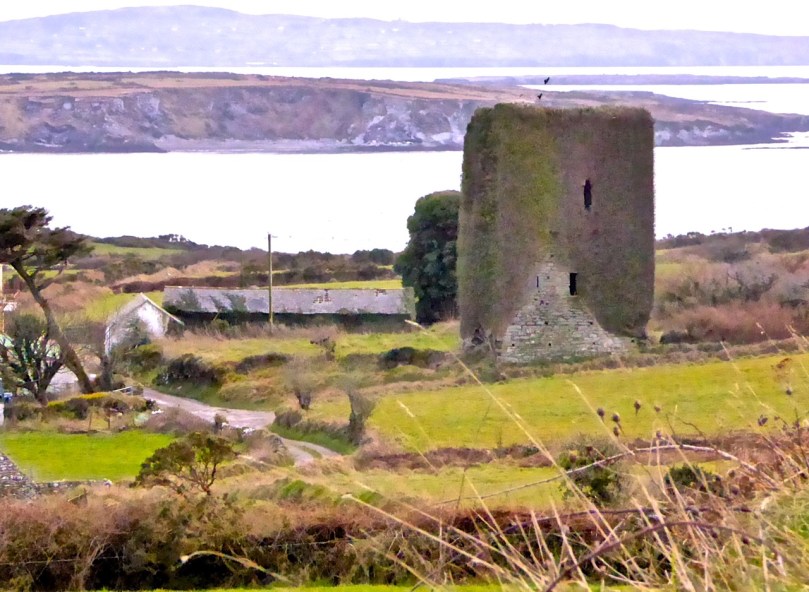
Ardintenant Castle

Ardintenant Castle (White Castle). It sits on top of an earlier ring fort.

In researching for this post the other main source I consulted was a doctoral thesis by Mark Wycliffe Samuel, The Tower Houses of West Cork. More recent (1998), it concentrated on the castles of this area and is packed with detail about the ones we see around us here in Roaringwater Bay and on the Mizen Peninsula, from Baltimore (Dún na Séad) in the east, to Cape Clear Island (Dún an Óir) to the south and Three Castle Head (Dunlough) to the west.

Dunlough Castle, known as Three Castle Head

Dunlough Castle, at Three Castle Head

These simple towers were quite different from the enormous and elaborate military castles that cemented Anglo-Norman power all over Ireland after the invasion of 1169, such as Trim in County Meath, or Cahir in Tipperary. Tower houses were built in what Leask calls a ‘great building revival’ from about 1440 into the 1600s. In what may be the forerunner of the European Grants system, Leask says many of the earliest ones were built as ‘£10 Castles’. A statute of 1429 offered every liege man of our Lord the King…who chooses to build a castle or tower sufficiently embattled or fortified..to wit twenty feet in length sixteen feet in width and forty feet in height or more, that the Commons of the said counties shall pay to the said person to build the said castle or tower ten pounds by way of subsidy. Although this statute seems to have been applicable only in certain counties (mainly around the Pale) it established a pattern for tower building which was adopted, with variations, all over Ireland.
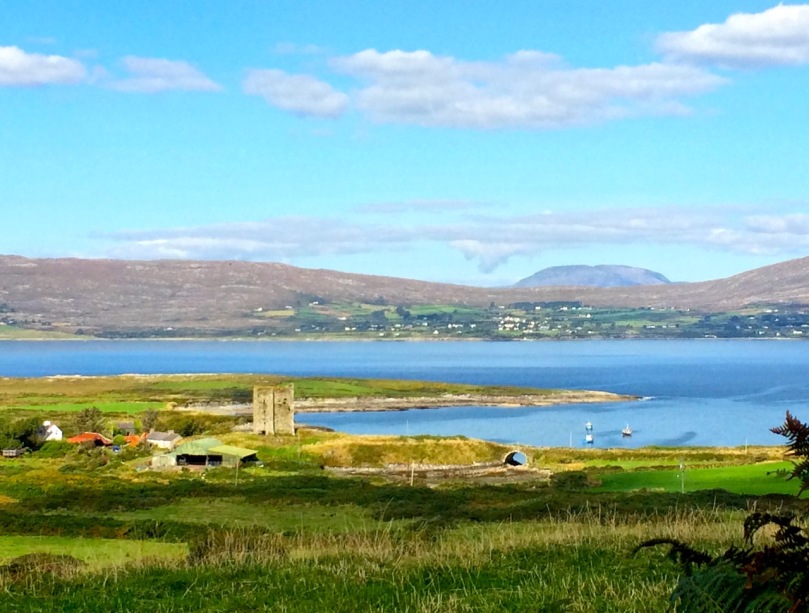
Dunmanus Castle

Dunmanus Castle

The Roaringwater Bay and Mizen towers fit this pattern very well. They were not, however, built by the Anglo-Normans – West Cork was too remote and beyond their reach. They were built by the great Irish chiefs of the O’Mahoney, the McCarthy and the O’Driscoll clans and probably replaced earlier strongholds such as promontory forts (as at Dunlough), large ring forts (Ardintenant) and stone forts/cashels (such as the one at Knockdrum). These chiefs became wealthy through their control of the fisheries, through piracy, and through tribute exacted from those who occupied their traditional territory. At least one of them (Rossbrin) became famous as a centre of learning and scholarship during this time. Of the ones I will describe in this post, all are situated at the sea. or close to it, with commanding views over their territory and sometimes within sight of each other.
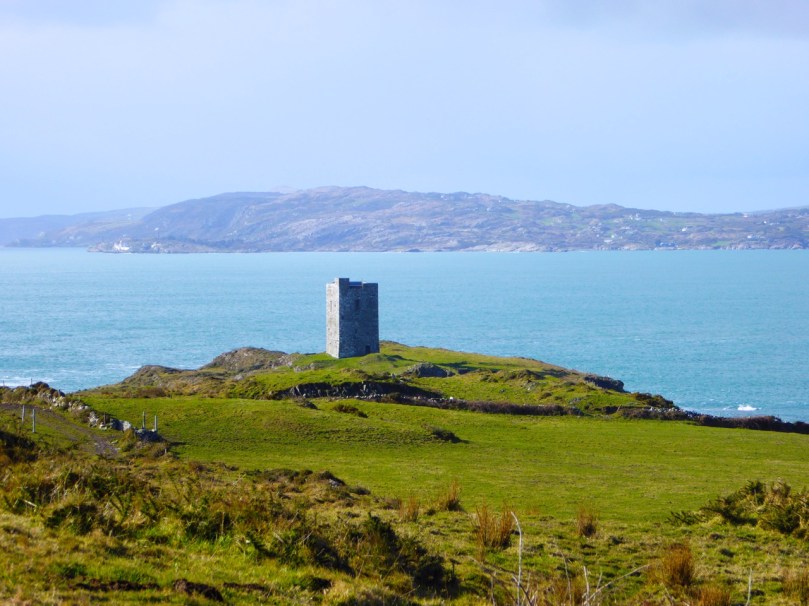
Leamcon, known as Black Castle

Leamcon, known as Black Castle. Notice the base-batter in this picture and the first one below.  The lowest level is the widest (battered) with the walls sloping in above this base

The power of these great Irish households lasted until the 1601 battle of Kinsale when the Irish forces under Hugh O’Donnel and Hugh O’Neill (with Spanish help) were defeated and an enormous re-conquest and re-colonisation began under Elizabeth and continued unabated under the Stuarts and, most disastrously, under Cromwell.

Each tower in this area was built in the same manner, which Samuel refers to as the Raised Entrance type of tower. There were two entrances, one on the ground floor and one on the first floor. The ground floor room was for cattle and the doorway was therefore as wide as would admit a cow.

A glimpse inside the raised entrance at Ardintenant

A glimpse inside the raised entrance at Ardintenant

The raised entrance (directly above it, or staggered to the left or right) was only wide enough to admit one person at a time – a defensive feature. This entrance either led into the first floor room or (since the ground floor room could have a lofty ceiling) onto a landing where a staircase led up to this room and then continued up through the wall (usually the thickest wall of the tower) to the upper floors. The first floor room was mainly used for storage and had either no windows or very small slits.
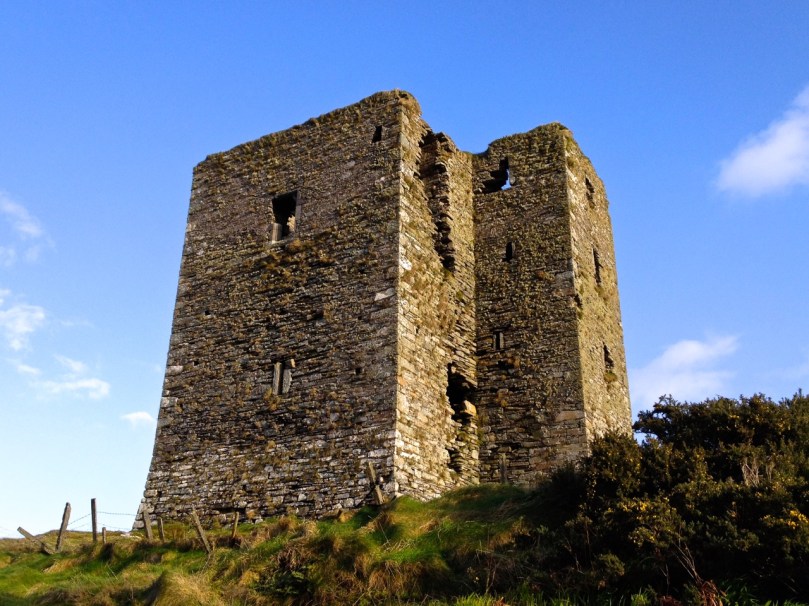
Dunmanus, with its additional turret. The top windows were always the largest.

Dunmanus, with its base-batter and additional turret. The top windows were always the largest

The second floor room was often the principle chamber, where all the main activities of the family took place – living, eating, meeting, administrating, celebrating (music and poetry were highly prized by these chieftains). If there was a third floor it contained the solar, or private chambers for the women of the household.

Barrel vaulted ground floor room at Dunmanus. Note access to stairwell.

Barrel vaulted ground floor room at Dunmanus. Note access to stairwell.

Construction techniques varied – some were superbly constructed of cut stone while others used a lot of rubble to build up the insides of walls. Putlogs, or holes where scaffolding timbers were insert, are clearly visible in several of the towers. The lowest floors were of course the thickest – the base-batter provided a solid foundation and the walls sloped inwards from it. The top of the tower allowed for thinner walls, and therefore also bigger windows (although none were large).

A garderobe (toilet) was a feature of the top two floors, with a chute out to the outer walls. In towers with additional turrets (Kilcoe, Dunmanus, Leamcon) the garderobe and sleeping chambers were sometimes contained in that turret, or the spiral stairs wound up through it. While most towers had stone spiral or straight staircase, some appeared to access each floor by means of ladders – there is no evidence for permanent wooden staircases.

The ground floor room (the byre) was often vaulted and this feature is still clearly visible in the most intact towers. Above that, the floors were of timber, sometimes with trapdoors for lifting up supplies. Presses (cupboards) consisting of niches in the walls may have contained lanterns or have been used to store valuable items.

There were no fireplaces in these towers. Fires were lit on flagstones laid on the wooden floors and the smoke rose to the tall ceilings and escaped out the small windows. In addition to this level of discomfort there is a contemporary account (quoted by Leask) which describe the primitive living arrangements in some of the towers: They have little furniture, and cover their rooms with rushes, of which they make their beds in summer and straw in winter. They put rushes a foot deep on their floors and on their windows [embrasure floors?], and many of them ornament their ceilings with branches.

But not all chieftains lived in a primitive way. Samuel uses the available evidence to construct a picture of life at Togher, one of the towers he studied, and it’s not hard to picture Fineen O’Mahoney, Scholar Prince of Rossbrin, in such a setting.

We can form a picture of the principal chamber in use: Tadhg an dúna or Togher’s principal chamber was probably furnished with imported furniture, pewter plate and cutlery and was panelled with ornately carved timber. His family, his bard, …clerk, lawyer, priest and physician, as well as members of the derbfine [extended clan] such as cavalrymen could eat there. They could sit with the chieftain to one side of the principal salt cellar, while others sat ‘below’ it… Servants prepared food out of sight ‘below stairs’. Bardic musicians, soothsayers, gamblers and others would be admitted as honoured guests, but the household ward and servants ate in the kitchen/ward room.

Although its name means Fort of Gold, today Dún an Óir on Cape Clear Island looks remote and forbidding

Although its name means Fort of Gold, today Dún an Óir on Cape Clear Island looks remote and forbidding

Similarly, Dún na Séad (Fort of the Jewels) Castle in Baltimore, seat of the wealthy O’Driscolls (they also had Dún an Óir (Fort of Gold) on Cape Clear Island), was

a centre of administration for trading activities and collection of taxes from foreign traders frequenting the port. In the middle and later-middle ages therefore, the O’Driscolls enjoyed a prosperous lifestyle. Lavish gatherings took place in the ‘great hall’ of Dún na Séad castle and a well-documented feast in 1413 is said to be one of the earliest records of people dancing in Ireland. This documentary evidence is supported by archaeological finds from recent excavations of the Dún na Séad site, which reveal the presence of late twelfth to fourteenth century pottery from the Saintonge region of France, and reflect the lucrative trade links between Baltimore and Europe at this time.
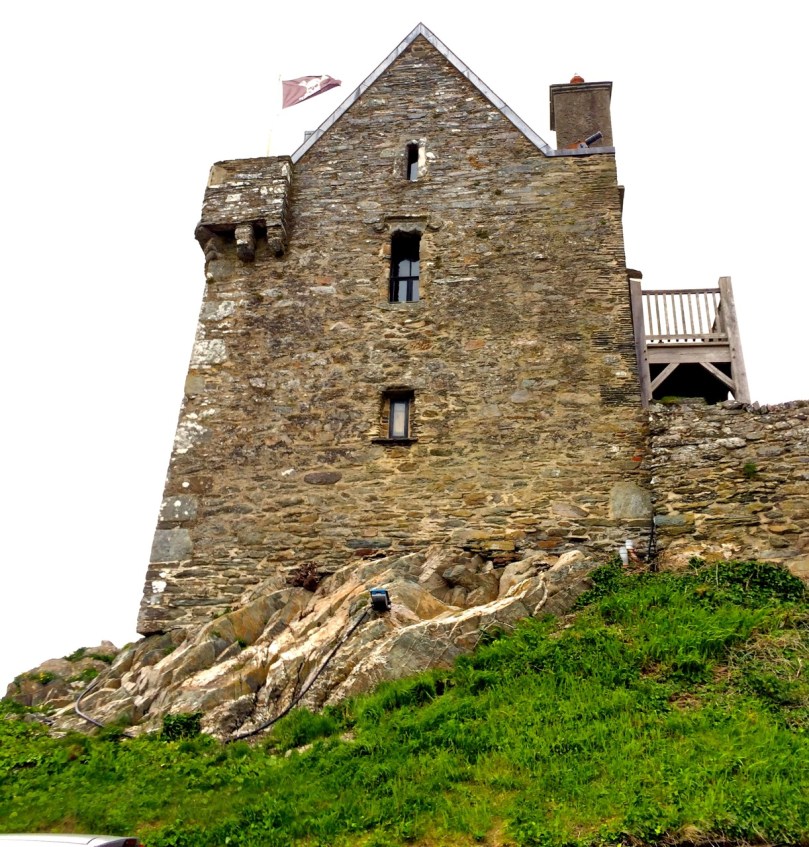
Dún na Séad Castle, Baltimore

Dún na Séad Castle, Baltimore. Note corner machicolation.

Defensive features were built into all the towers. Besides raised and restricted doorways and hard-to-manoeuvre narrow or spiral staircases, all had a roof ‘wall walk’. Three of the towers (Dún an Oir, Kilcoe and Leamcon) are either inaccessible or accessible by a bridge and there is evidence that connecting ground was deliberately demolished to accomplish this. Windows were small and could be boarded up. Projecting machicolations, especially above entrances or at corners were used, as can be seen at Dún na Séad Castle in Baltimore. Crenellations (notched or serrated ramparts) look like our traditional ideas of battlements. At Kilcoe they may have helped that castle withstand over a year of attack and siege after the Battle of Kinsale.

Kilcoe Castle. Note crenellated battlements and pitched roof.

Kilcoe Castle. Note crenellated battlements and pitched roof

So, should we call them Tower House, or Castles? How about £10 Castles? Archaeologists and historians prefer the more exact phrase tower houses, but castles they are on the maps and in our everyday speech. And if, like us, you are lucky enough to have one in your view, castles they are in our hearts and minds.
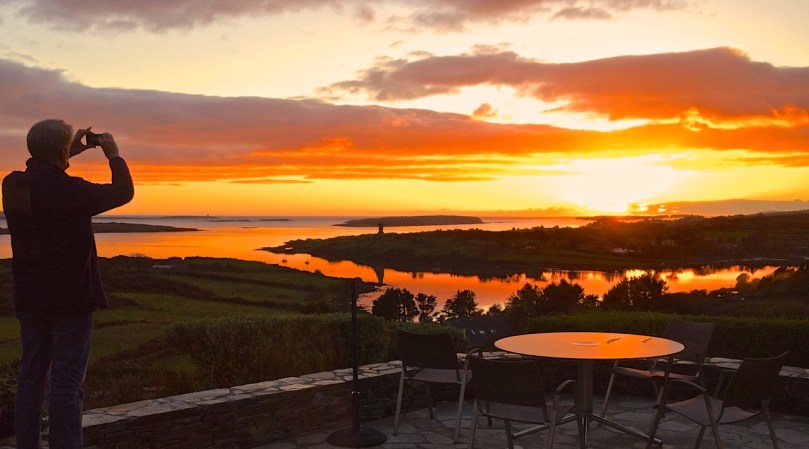
Our view to Rossbrin Castle

Our view to Rossbrin Castle

A Lick of Paint

blue long distance

What does it mean to say that a house is “set well into the landcape?” On the West Coast of Canada, where I used to live, it usually meant that a house was invisible, often made of wood and blending into the trees. But here in rural West Cork, buildings are more assertive – we ARE the landscape, they seem to say, or at least an important part of it. Therefore we should stand out and be seen. Part of being seen, for many houses in the countryside, is choosing a bright colour. Ah sure, they say, all it needs is a lick of paint.

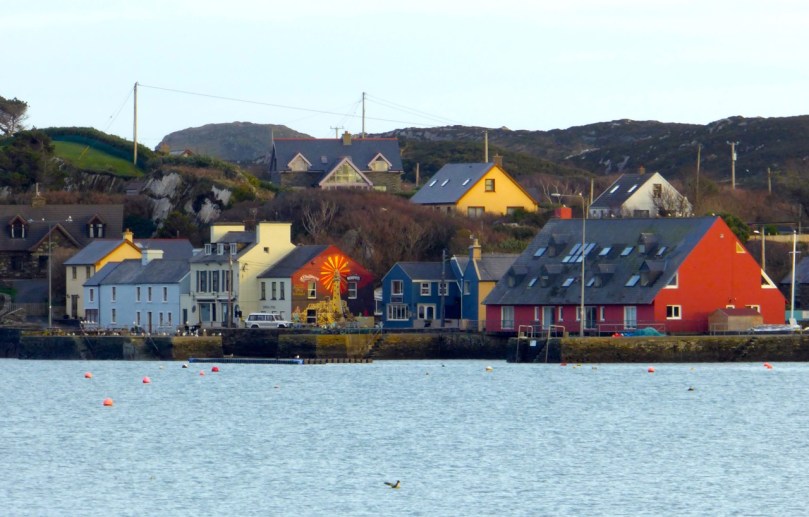
Crookhaven

Crookhaven


I’ve written before about the colourful towns and villages dotted all over Ireland. Coming around a bend in the road and catching sight of a village is a cheering experience: flashes of colour spread in a line across a backdrop of green fields or rugged mountains. But colour isn’t confined to towns – farmhouses in the deep countryside can suddenly demand attention – pops of colour in a predominantly green terrain. 

Blue seems to be a favourite – and we are not talking here about a pale blue or grey blue. No – duck egg or cobalt blues predominate. The blue is weathering and fading a bit in the house below but it still packs a punch in its isolated setting.

Sometimes blue is used on one side of the house only, or on selective aspects – a gate post or a shutter.

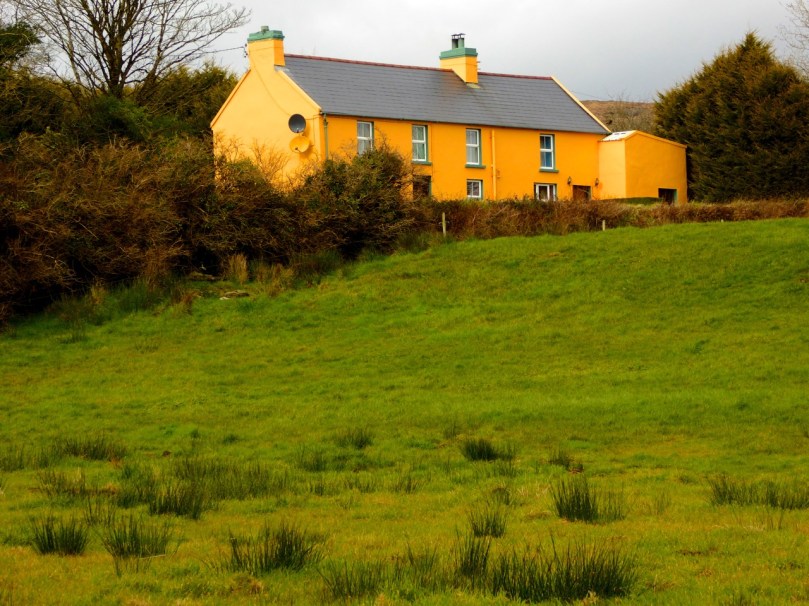
One of my favourites is this house, the colour of a ripe apricot. It is visible from a long way off and always seems to be incandescent on its hillside, as if permanently lit by a setting sun. Close up, I found it has jade green trim, making it even more handsome than it appears from a distance.

apricot distant

That colour is also one of the most recognisable in West Cork because it’s the colour of Jeremy Irons’ Kilcoe Castle. When the castle was being rendered, Irons used a lime mortar in order to waterproof the masonry: the mortar has a distinctive peach tone. Although controversial at the time, it is fair to say that West Cork folk have come to enjoy the sight of this wonderful restored 13th Century castle permanently glowing on its tiny island.

Kilcoe Castle

Kilcoe Castle

Pinks range from soft and pastel to the colour of fuchsia.

I particularly like the pink-on-pink trim of the farmhouse below left, and the candy-coloured house with its blue trim.

Yellow shows up well against a green hill. The first house below belongs to our friends the Camiers, who run the marvellous Gortnagrough Folk Museum. The second one is on the Sheep’s Head (photo by Amanda Clarke).

There are shades of salmon and coral that seem to suit old houses very well. Left, below, is the old school house in Rossbrin, now a private residence, and right is the Ballydehob Rectory, particularly attractive with its green trim.

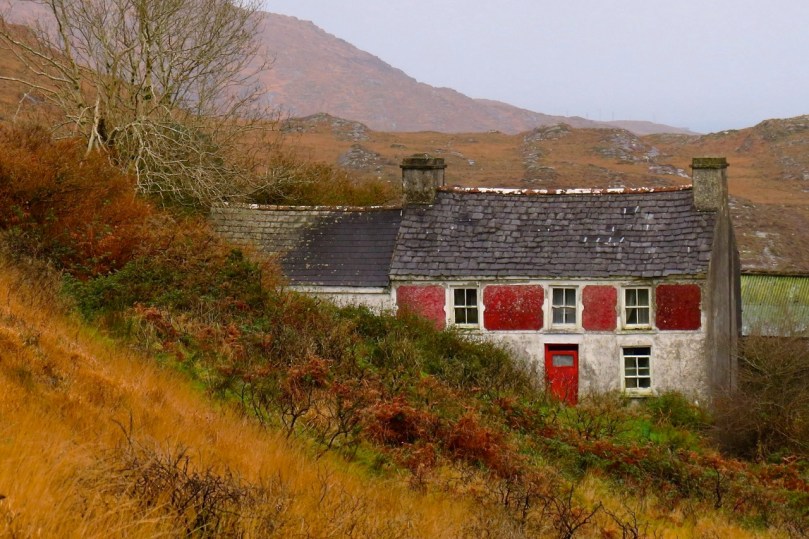
I’ve found red to be reserved mostly for doors, trim and spot colour, but my friend Amanda Clarke found this old farmhouse on the Sheep’s Head. Take a look at her site, Sheep’s Head Places for examples of vernacular farm buildings. 

Old farmhouse, Sheep's Head

Old farmhouse, Sheep’s Head*

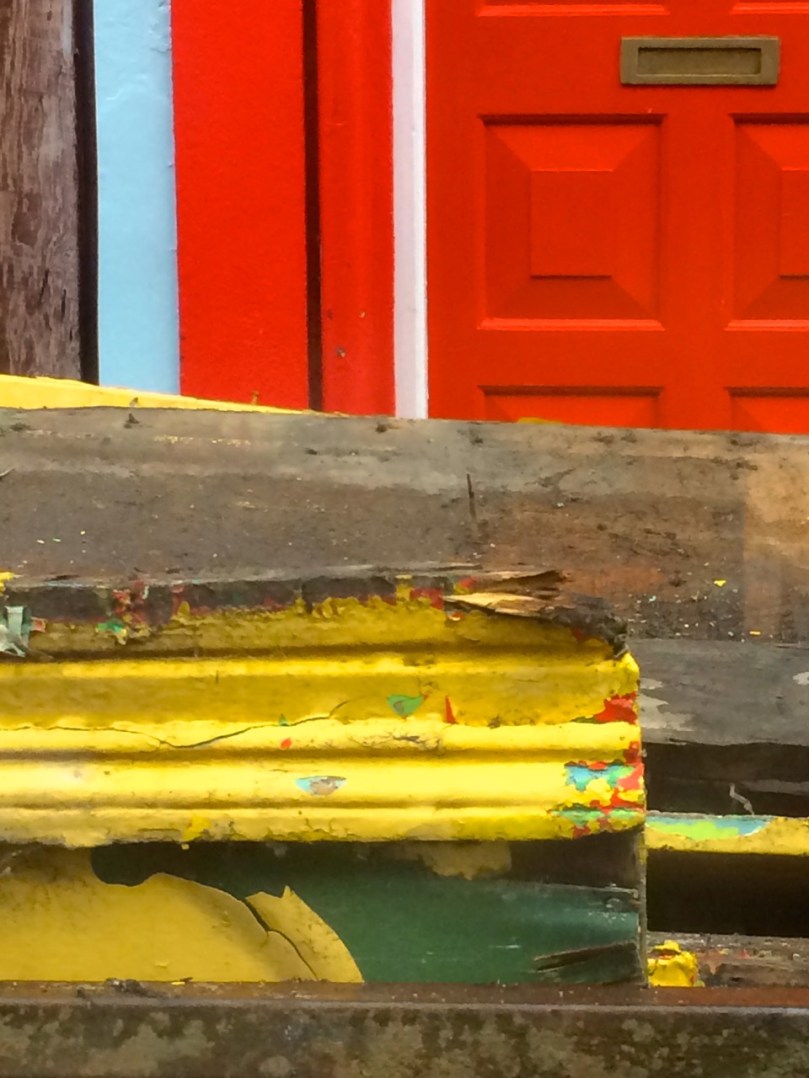
Renovations never stop – I did wonder what colour this one would end up. Now I know!

Going through the spectrum

Going through the spectrum

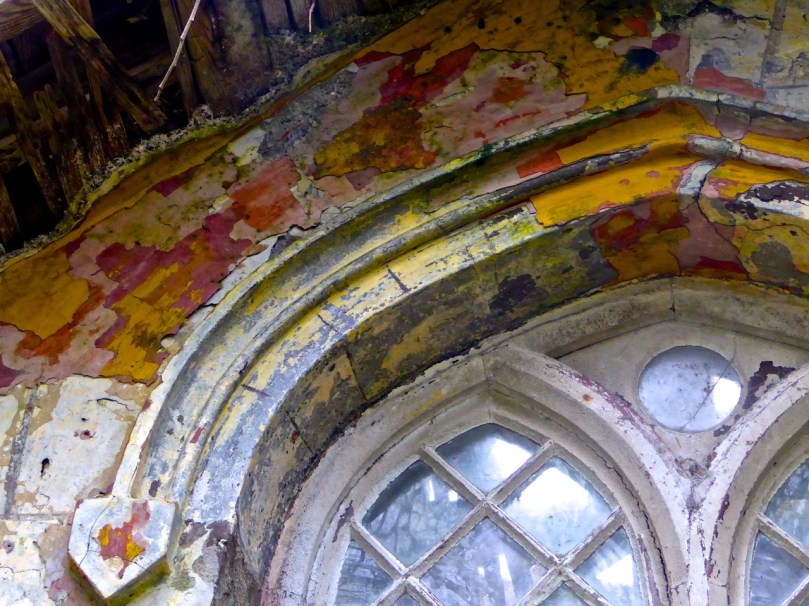
But this one, unless miracles happen, will see no more paint. Then again, it’s right beside a holy well, so maybe…

Generations of colour

Generations of colour

 *Many thanks to Amanda Clarke for the use of the asterisked photographs