Mizen Magic Miscellany: The Far End Part 1

The Mizen is slightly over 35 kms long, and the last five km or so contain a wealth of sites and places that beg to be explored and experienced. These include our signature tourist attraction, Mizen Head Signal Station, our spectacular white sand beach, Barley Cove, and picturesque Crookhaven, but also some lesser known spots that are equally worthy of inclusion in our Mizen Magic list.

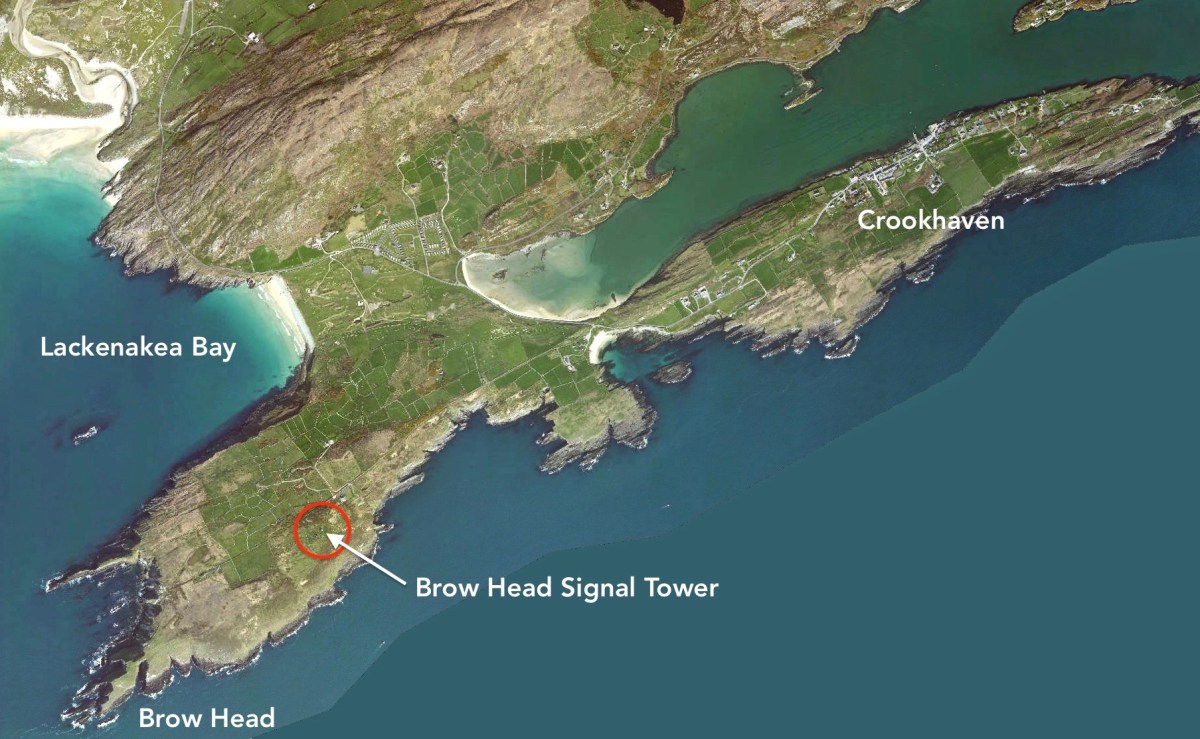
Despite the hype about Mizen Head, the actual southernmost tip of Ireland is Brow Head. In our post about it we said: Brow Head doesn’t have the same profile as Mizen Head: many people have never heard of it. But it’s magnificent, steeped in history, wonderfully scenic and best of all, totally walkable.

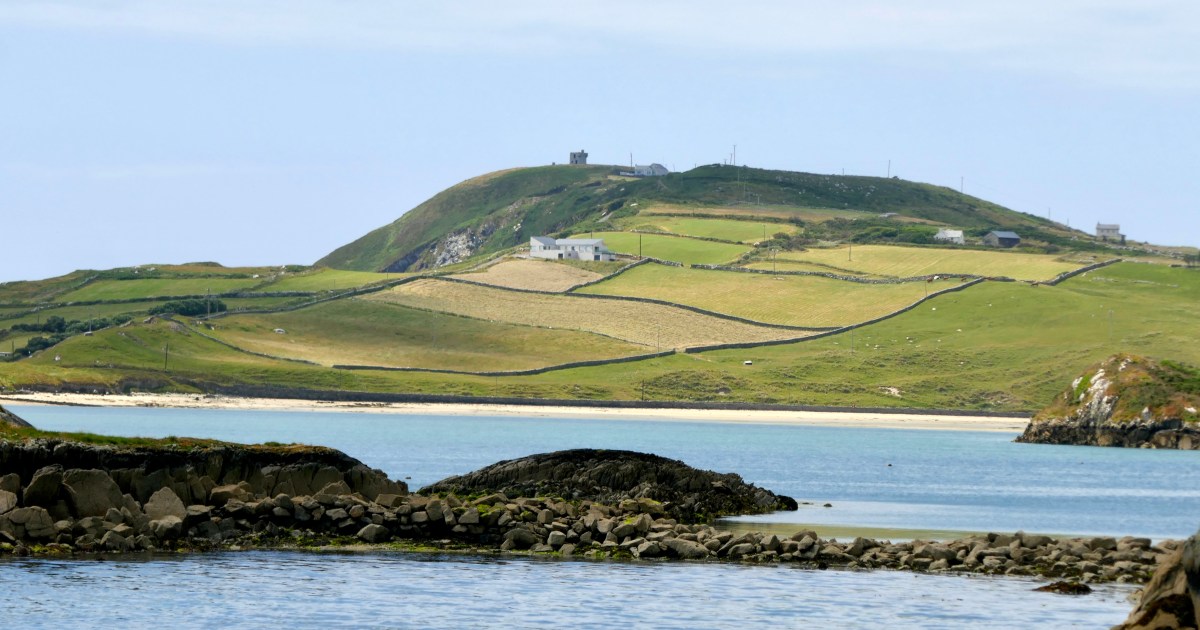
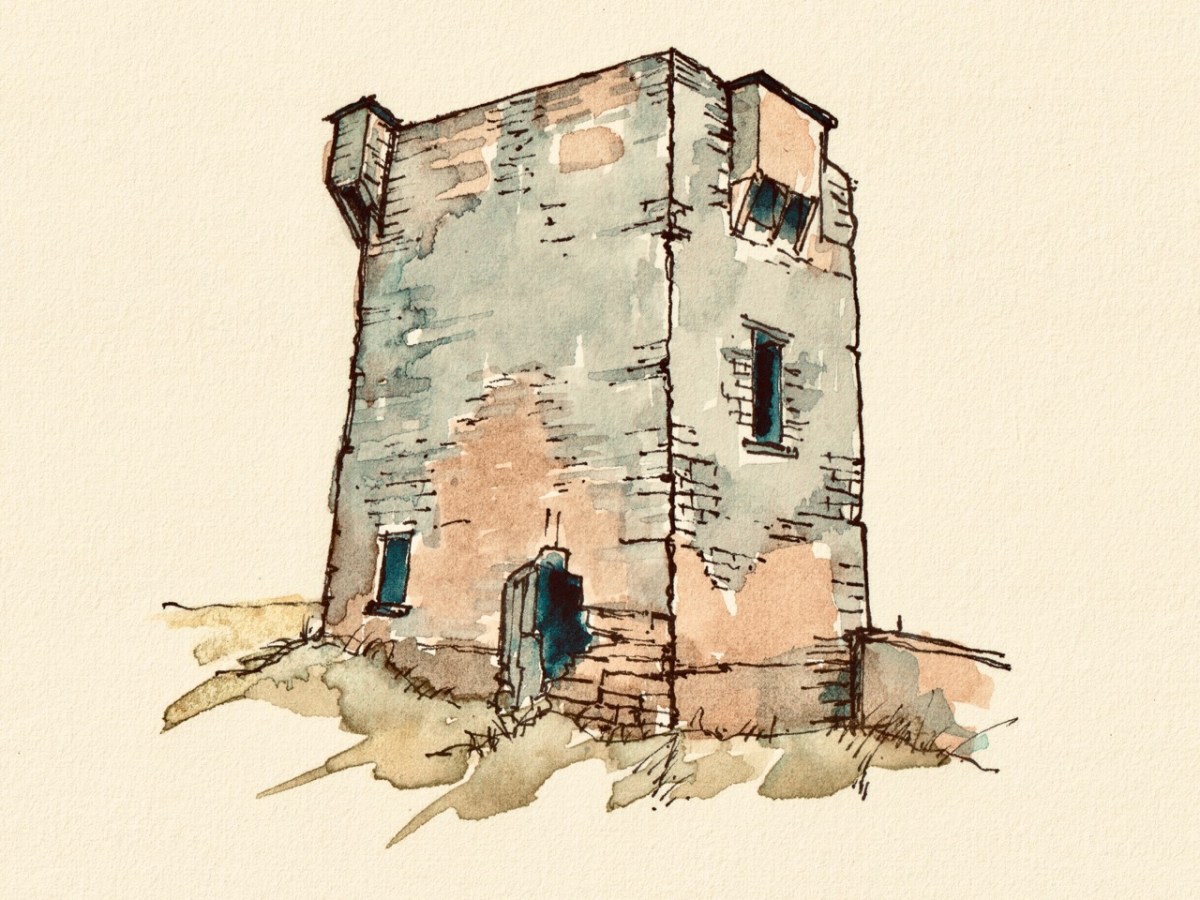
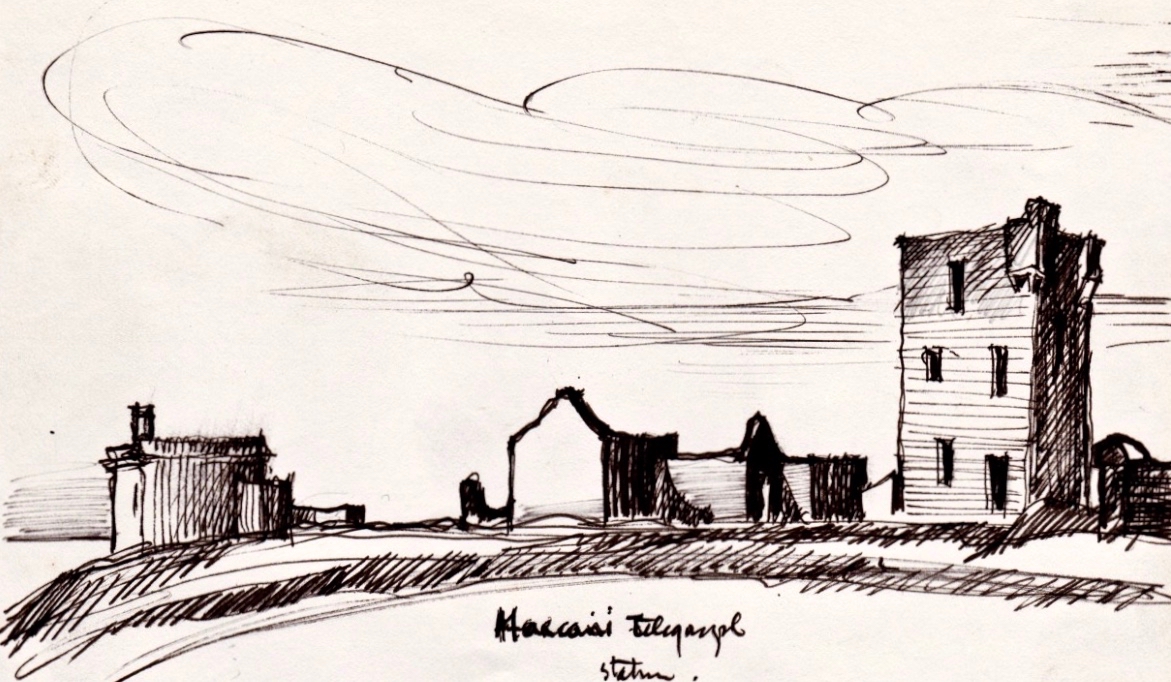
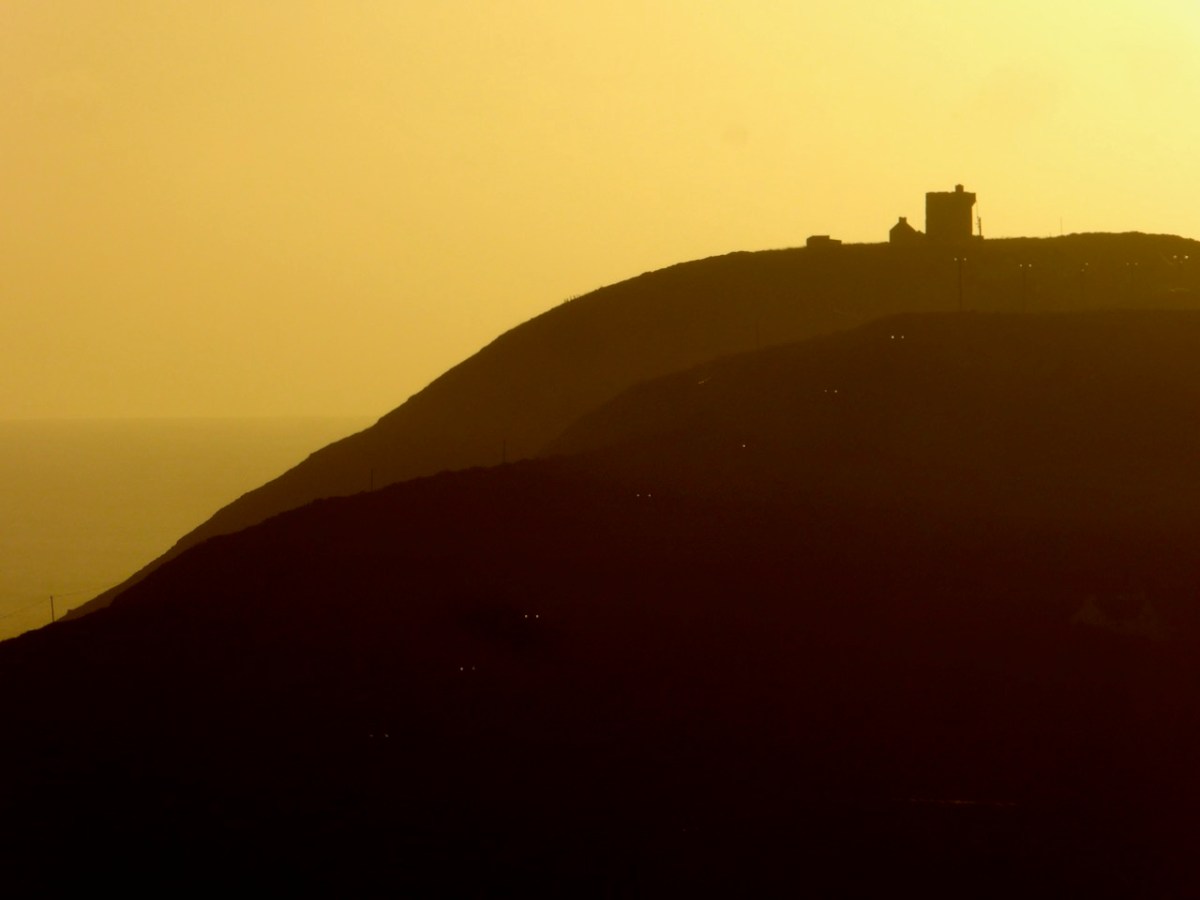
Brow head boasts not only a Marconi Telegraph Station, but also a Napoleonic-era Signal Tower. For a good overview read Mizen Magic 3: Brow Head, but we know you will want to know a lot more about Marconi, the telegraph pioneer, so take a look at In Search of Ghosts for more abut him and his operations on Brow Head. And for two takes on Marconi’s station, there is Peter Clarke’s drawing above and Brian Lalor’s below.

But there’s also that signal tower, and what was that? Robert wrote a series of 11 posts about the signal towers of West Cork, built between 1804 and 1806, to use all the latest signalling technology in case of the French invasion that never came. He finally got around to dealing with Brow Head in A Signal Success in Irish Engineering – Part 8: Brow Head.

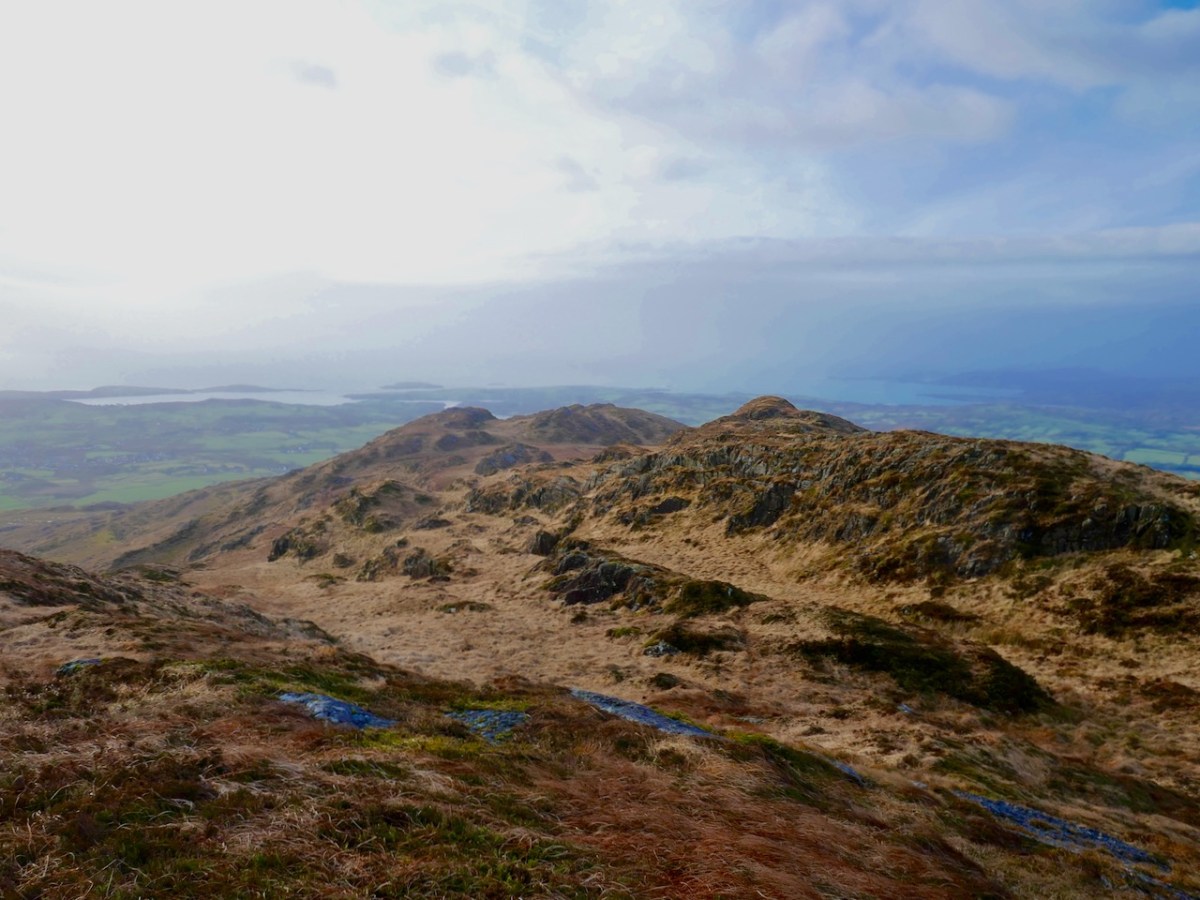
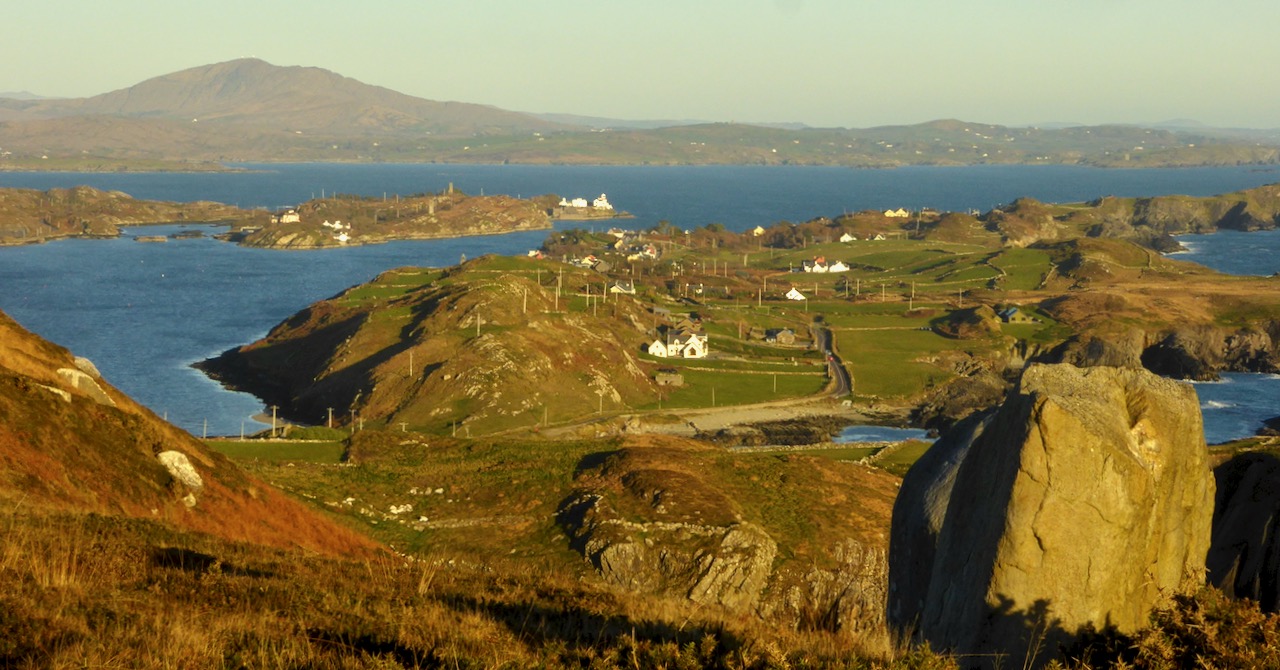
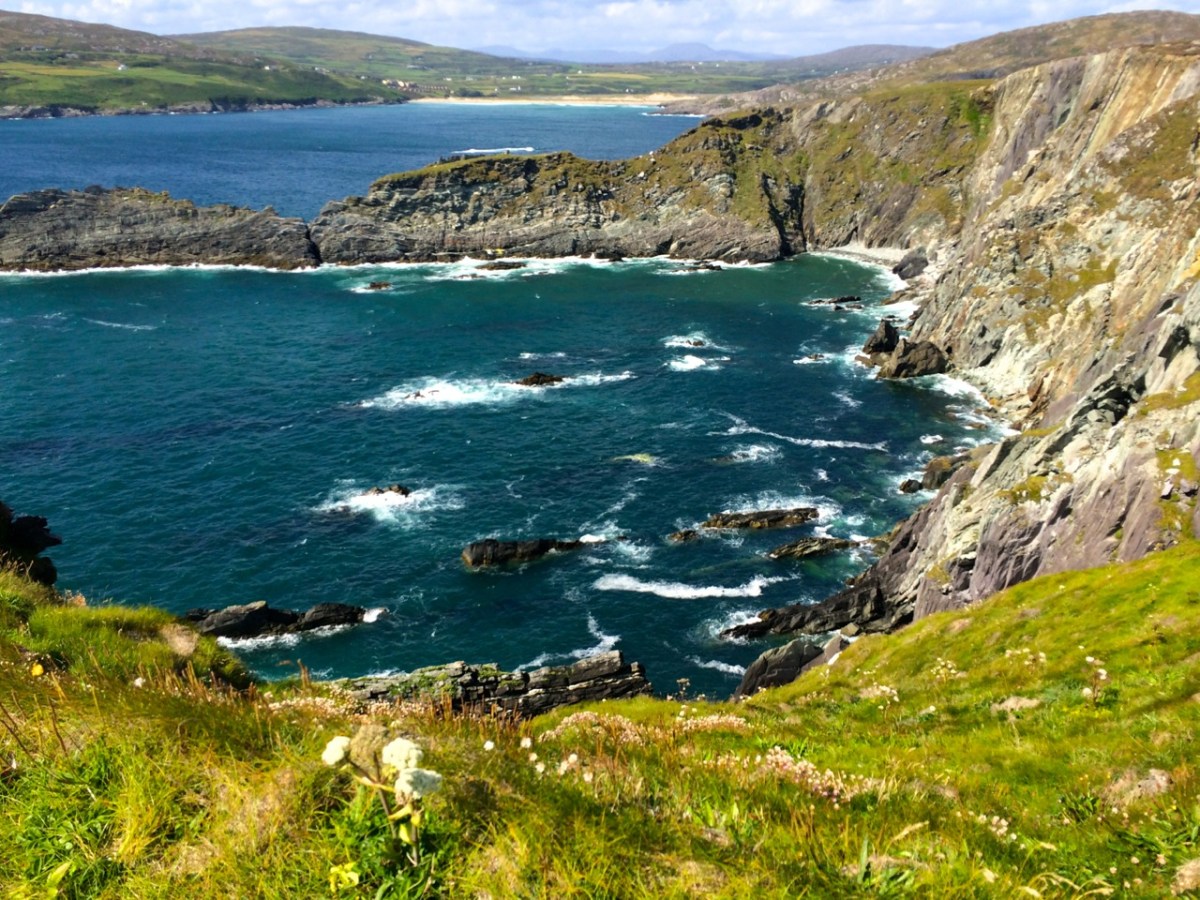
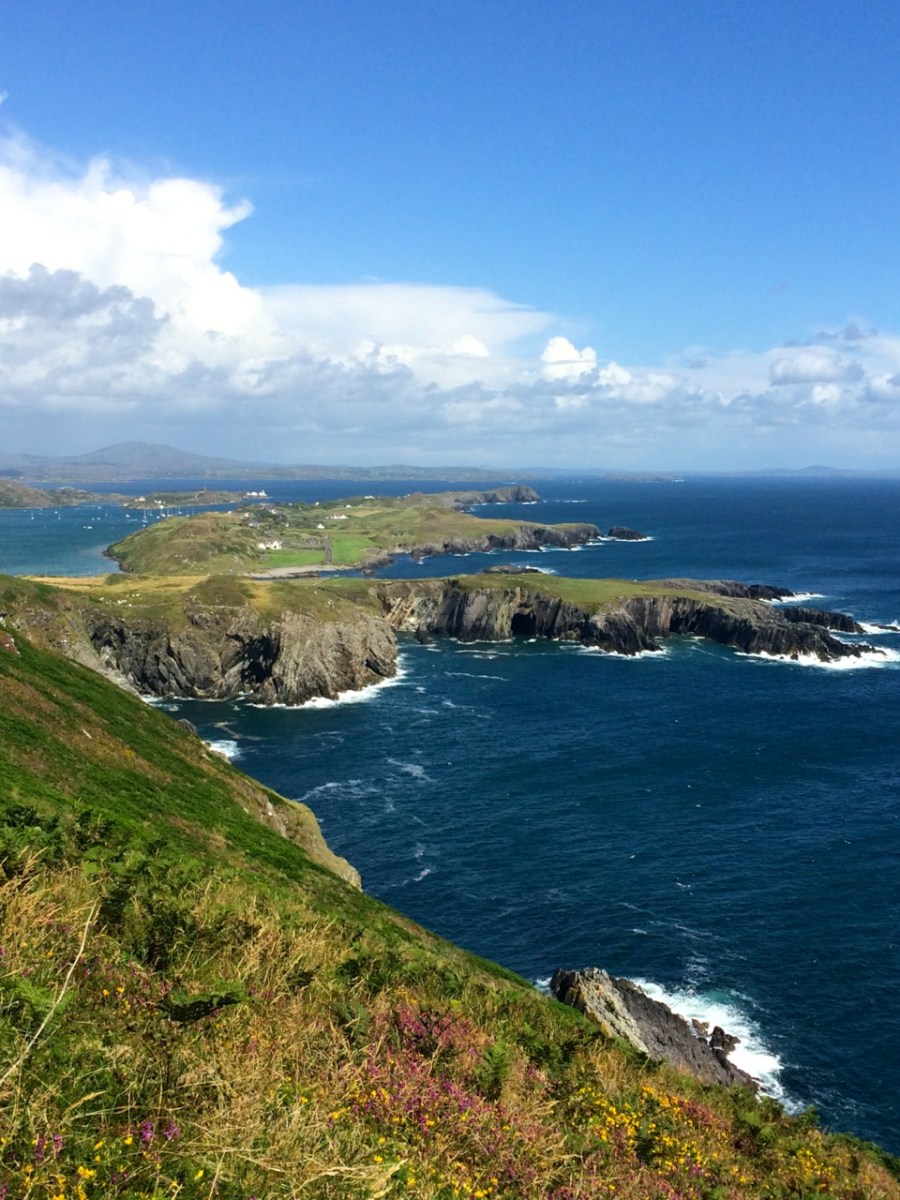
Brow Head looks back to Barley Cove (above) and Crookhaven (below) – some of the most spectacular views on the Mizen are seen descending from the head.

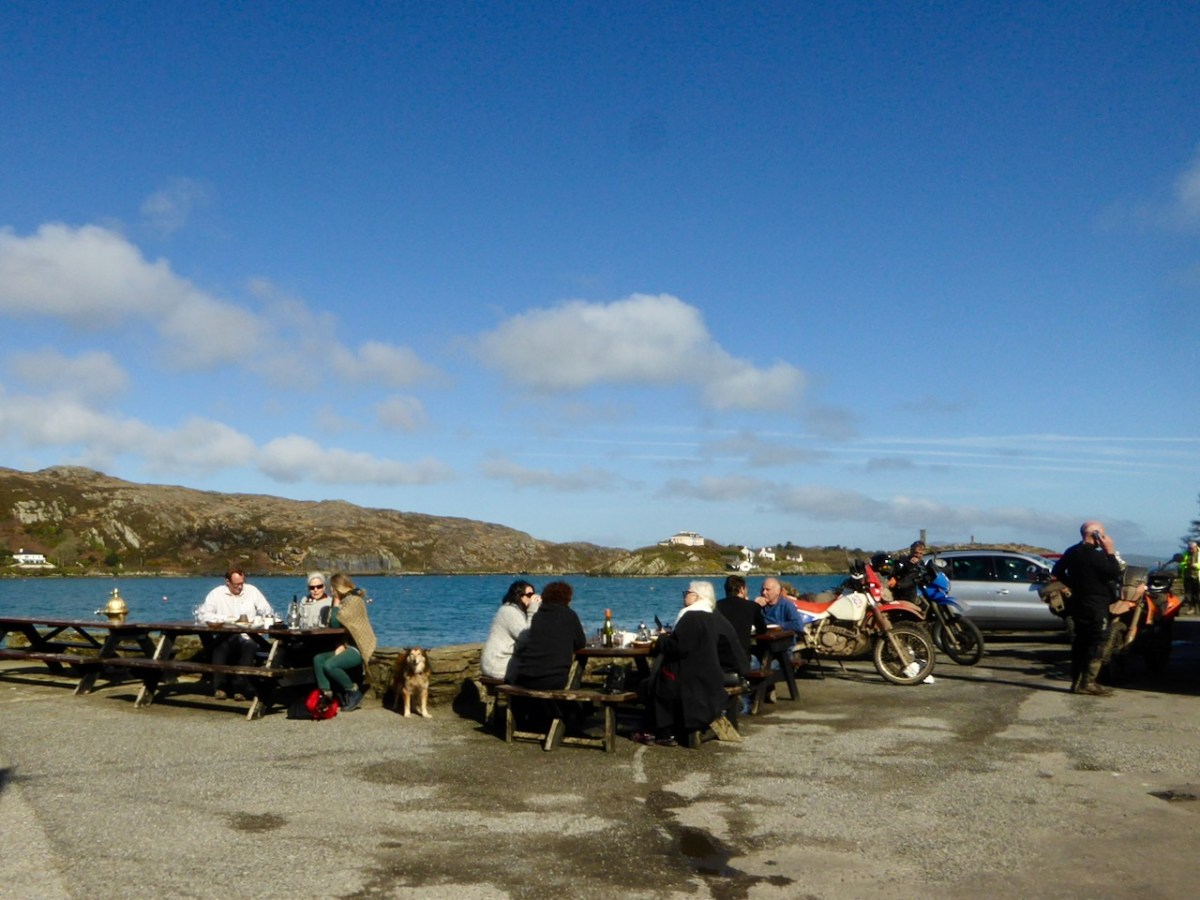
We took a dander around the Harbour and wrote about it in Mizen Magic 22: Crookhaven Harbour. Do the same, and don’t forget to stop at O’Sullivan’s for their excellent chowder and famous crab sandwich.

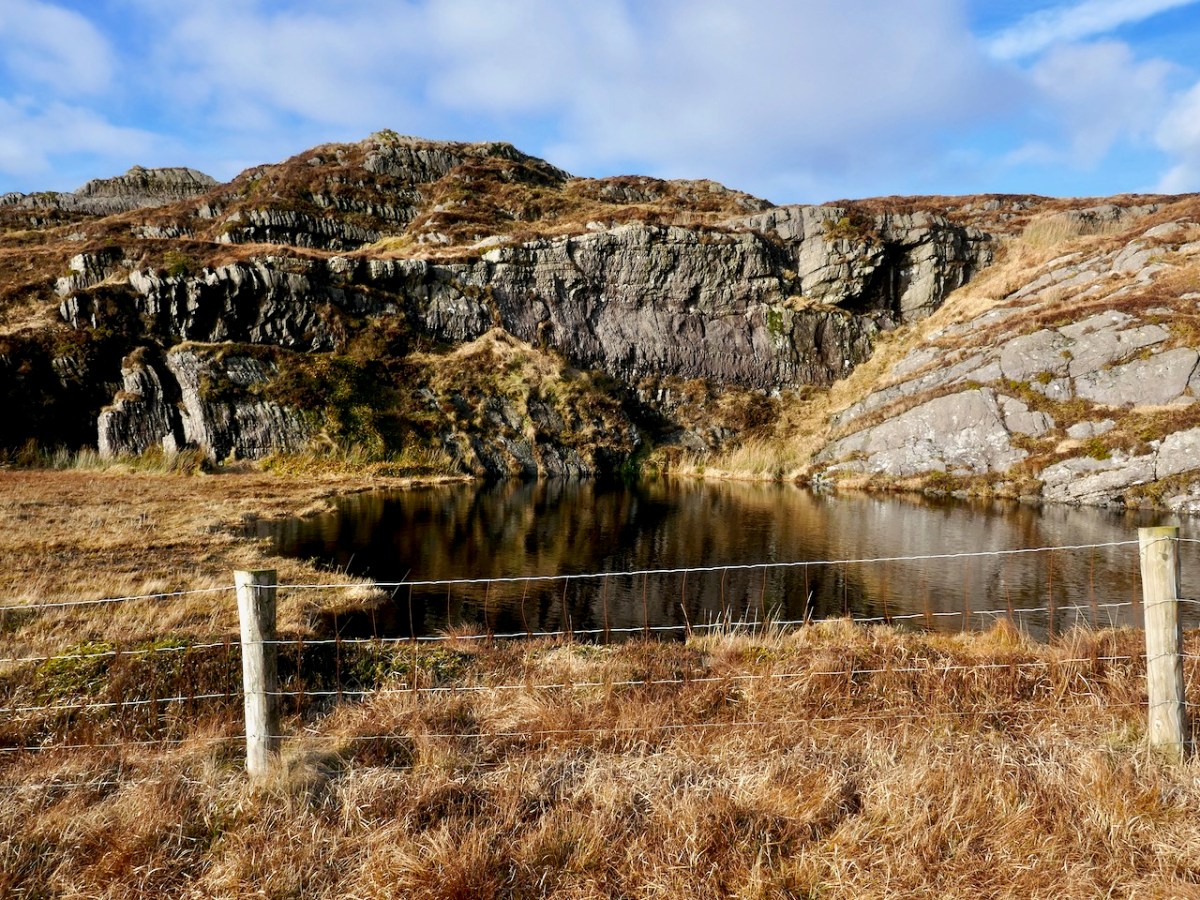
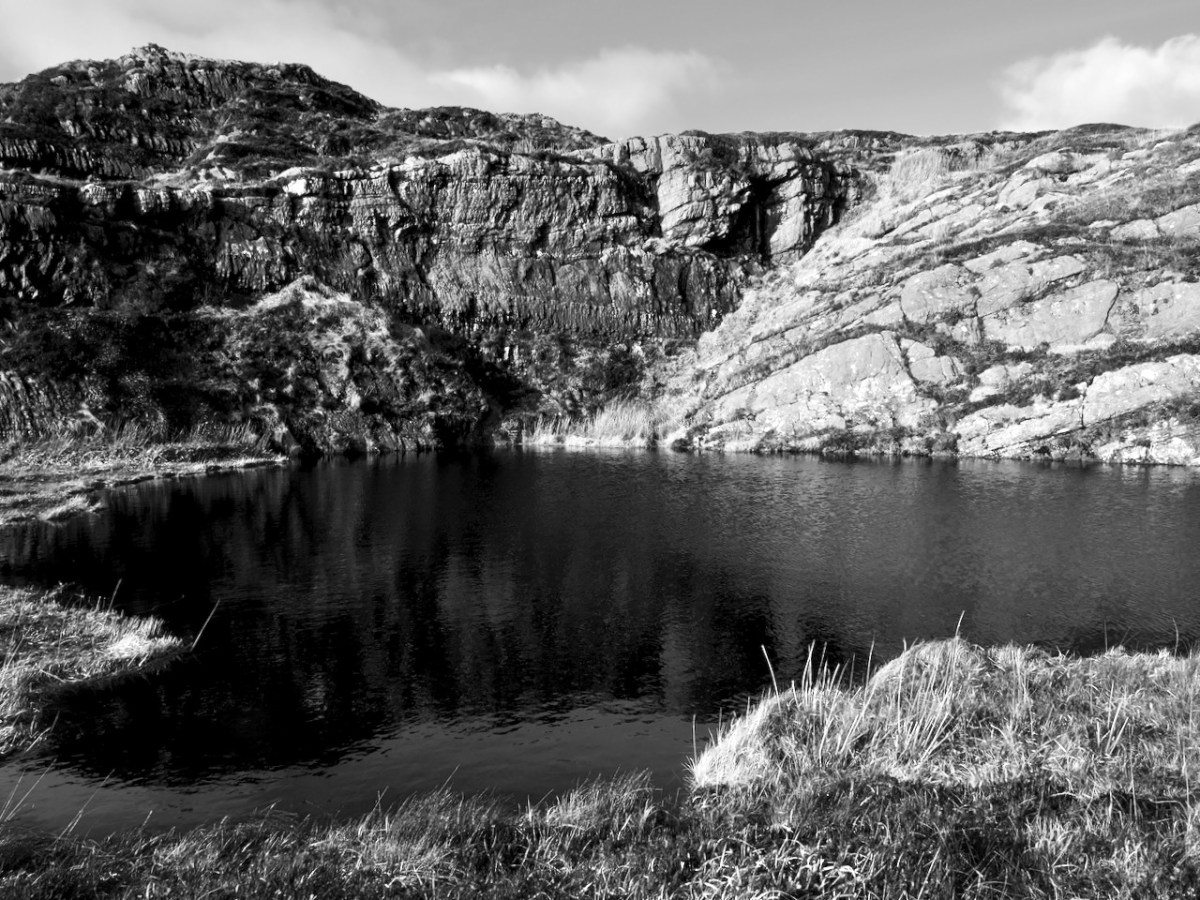
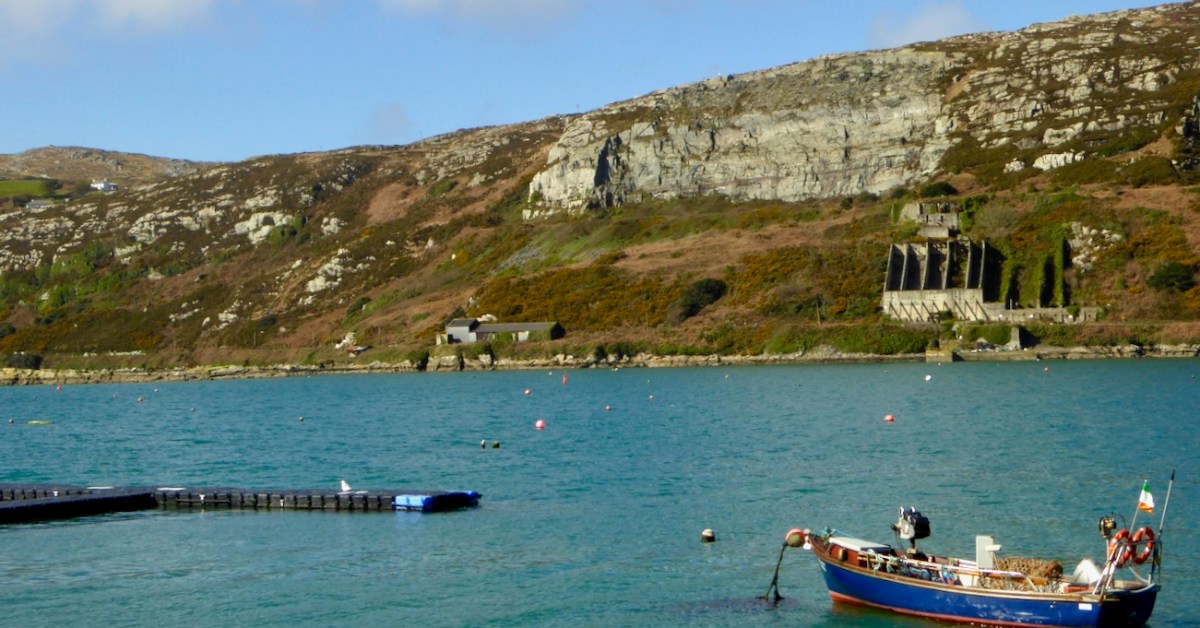
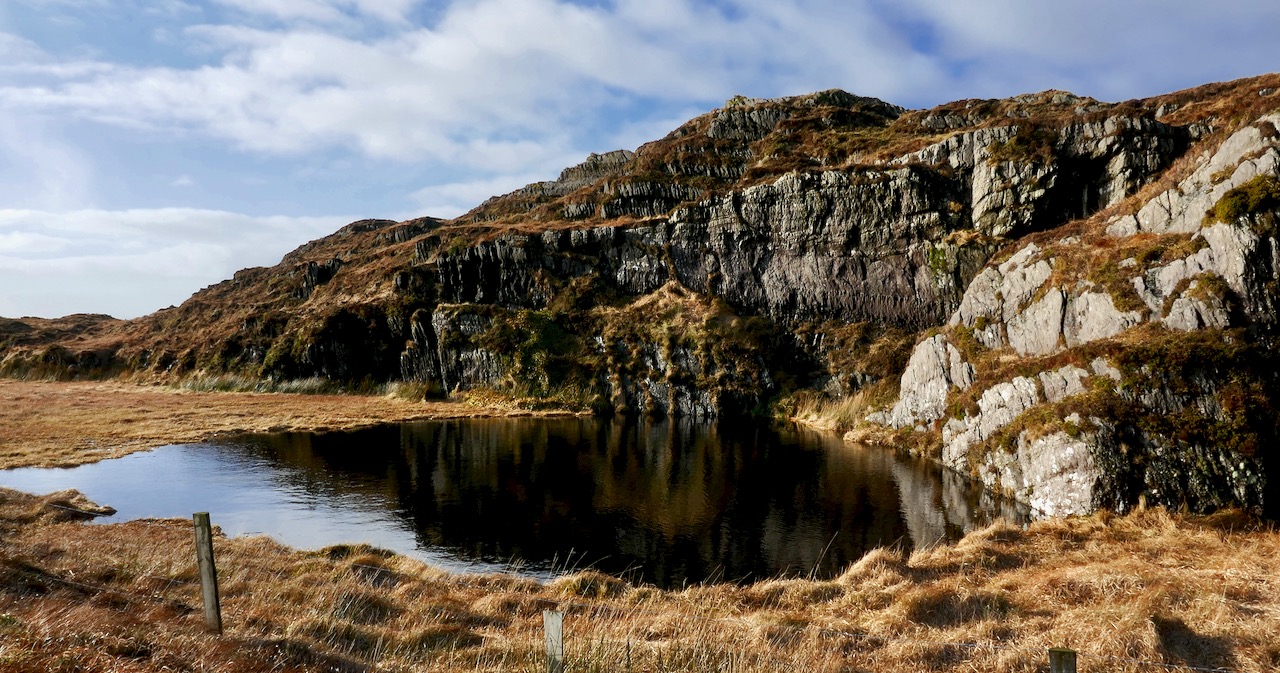
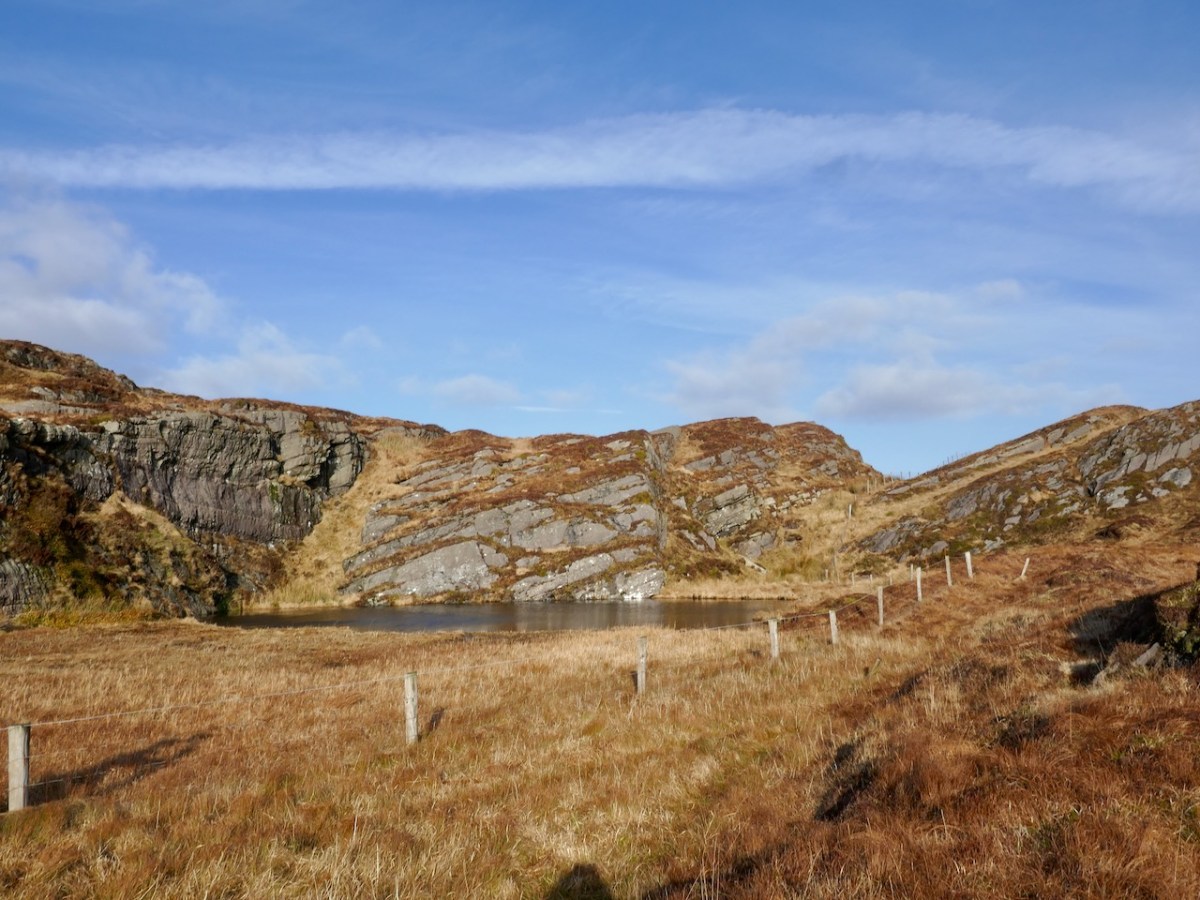
And while you’re sitting outside, savouring your chowder, look across at some Industrial Archaeology in Crookhaven. These imposing remains are all that’s left of a once-thriving stone quarry supplying road material until the late 1930s.

Of course there is much more to the Far End of the Mizen – I’ll continue this in the next post.

Rossbrin Review

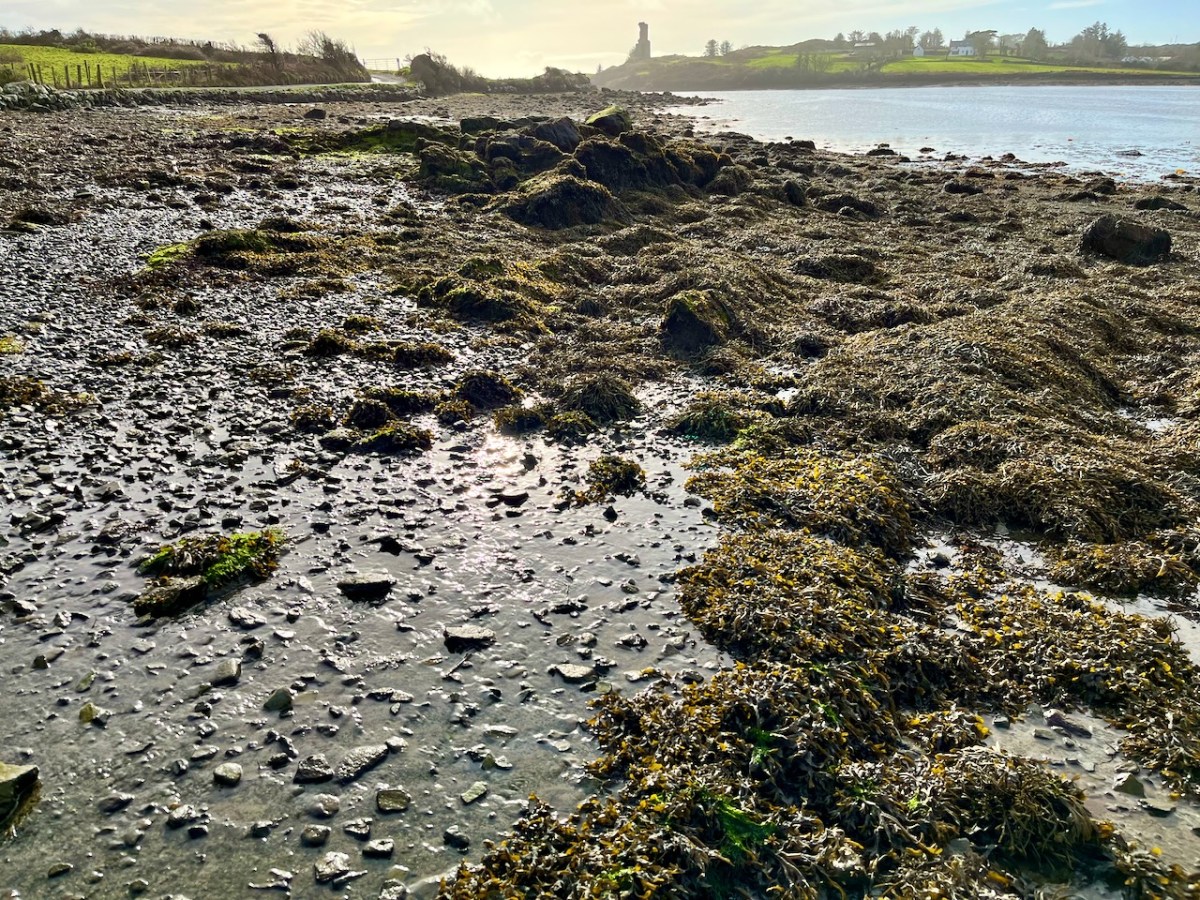
The weather so far this year is breaking records for coldness, wetness and evapotranspiration – while Earth as a whole continues to get warmer. In simple terms that means it’s not pleasant to wander too far from home. I decided to walk down to the shoreline of Rossbrin Cove – all of ten minutes – and see what the winter storms may have washed up: often an interesting diversion.

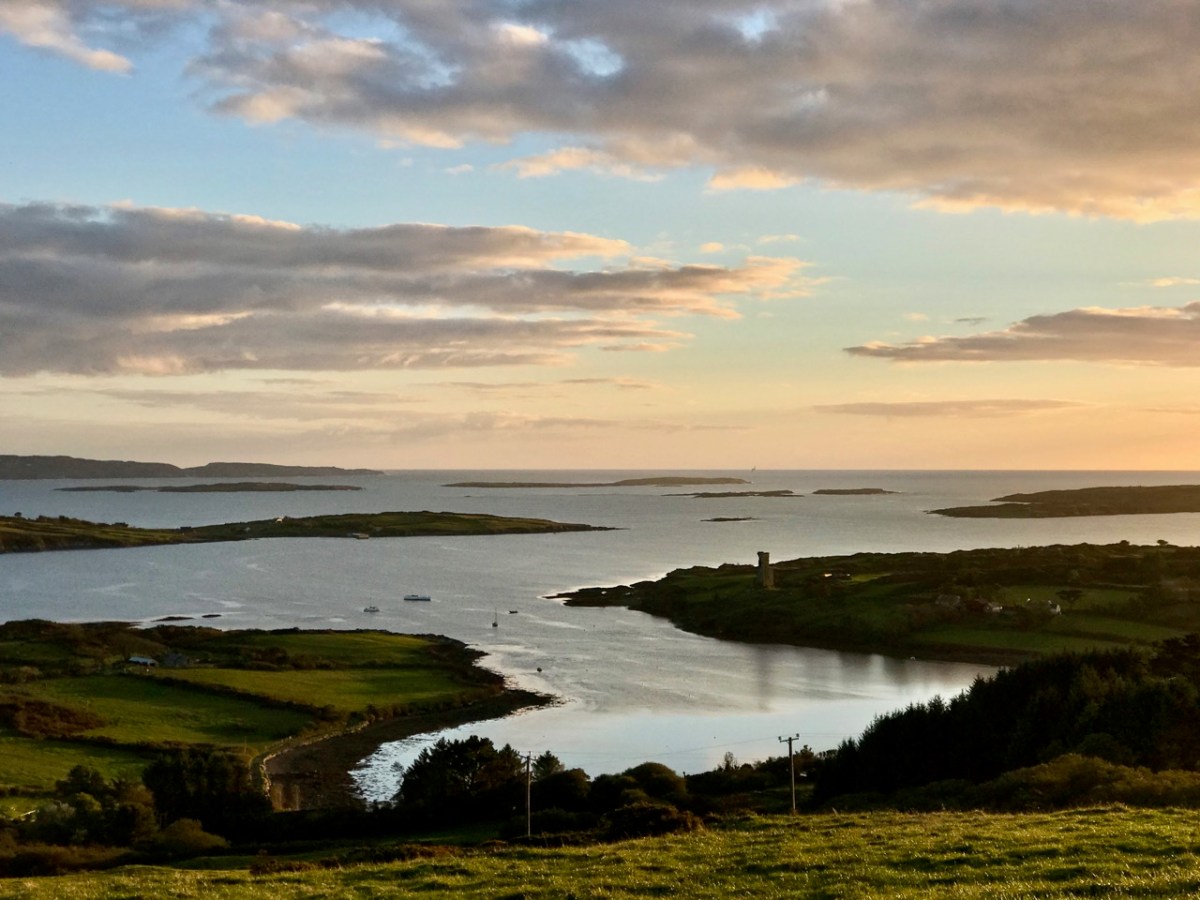
Above: looking down on Rossbrin Cove with some of the islands of Roaringwater Bay beyond. It is a natural harbour, and there is a thriving boatyard at the western end of it. The difference between low and high tides is around 2.5 metres on average, and much of the inlet dries out when it is at an extreme low. I timed my walk to arrive when the tide was fully down, as I wanted to explore the exposed mud-flats, with hopes of finding intriguing detritus.

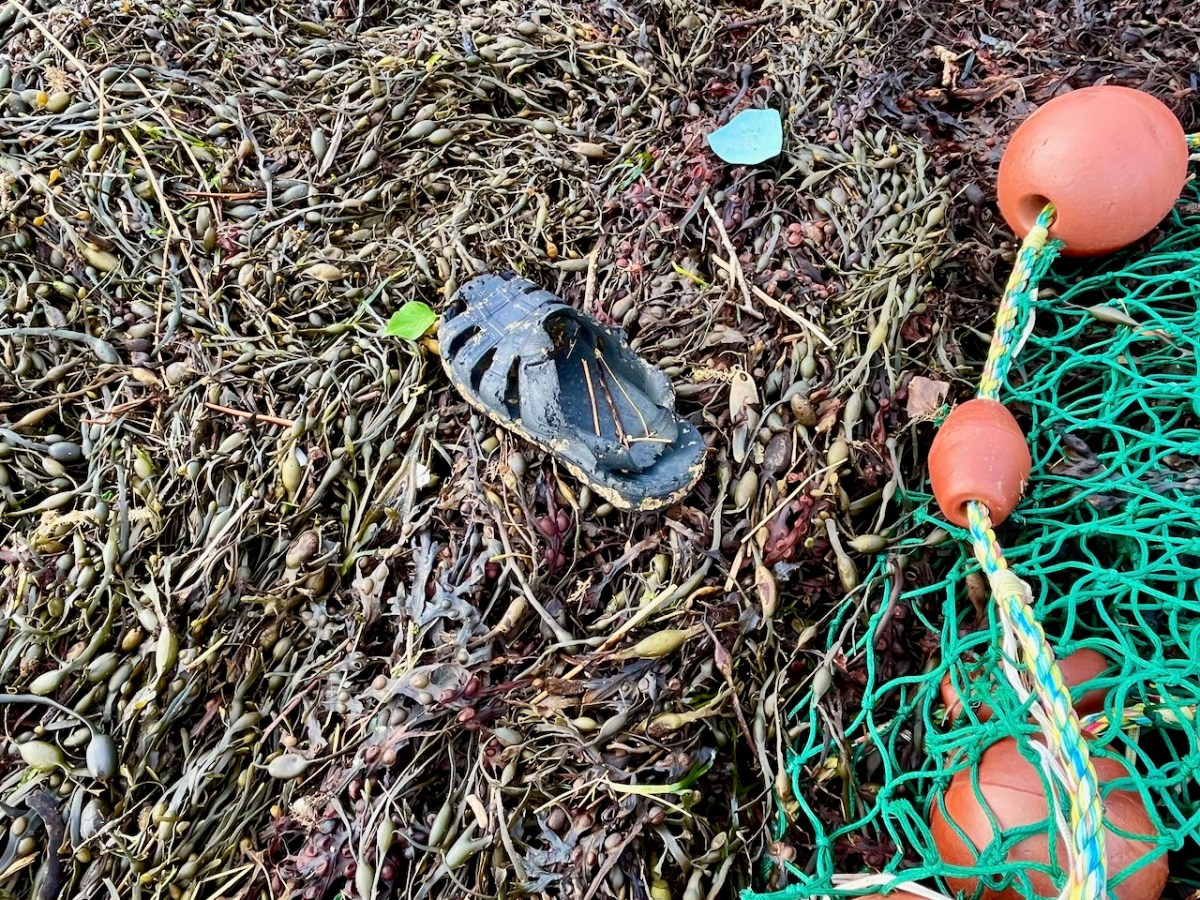
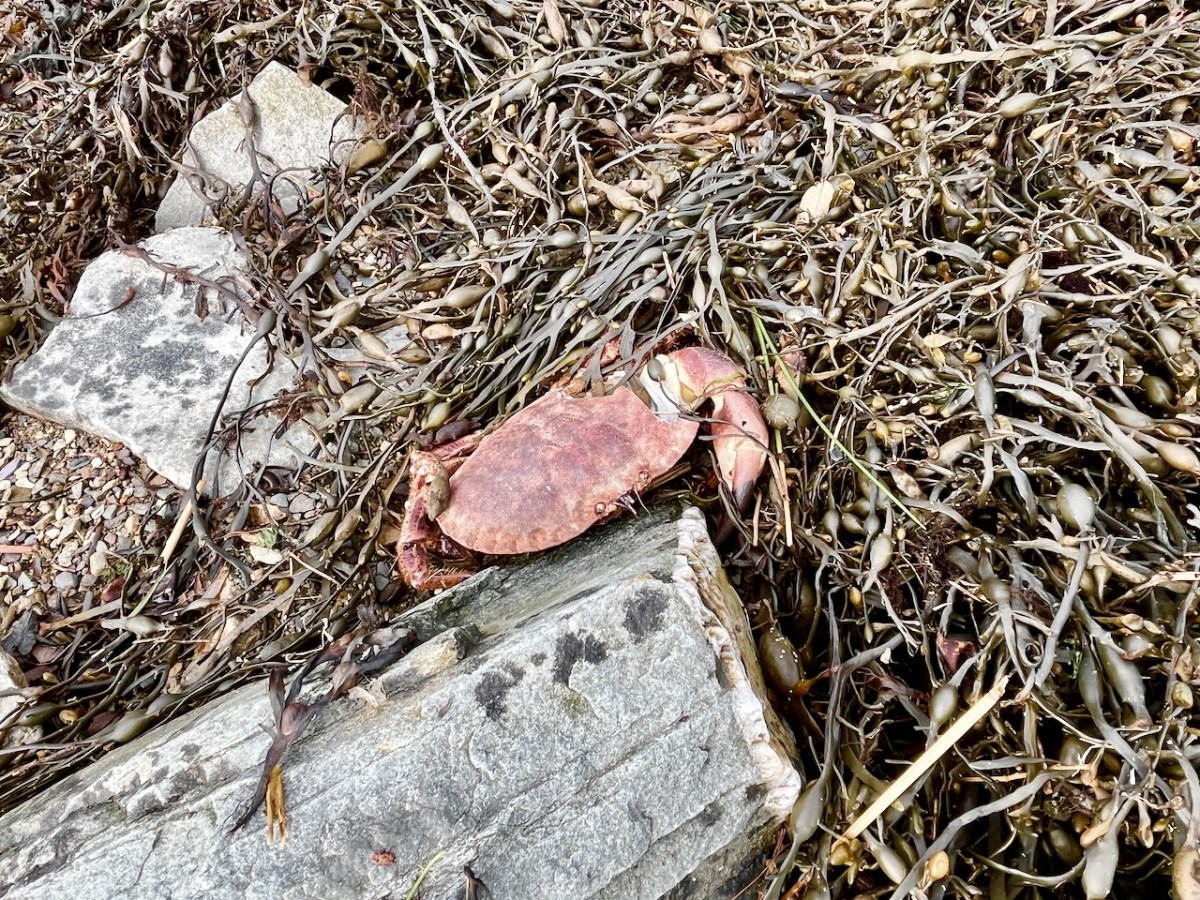
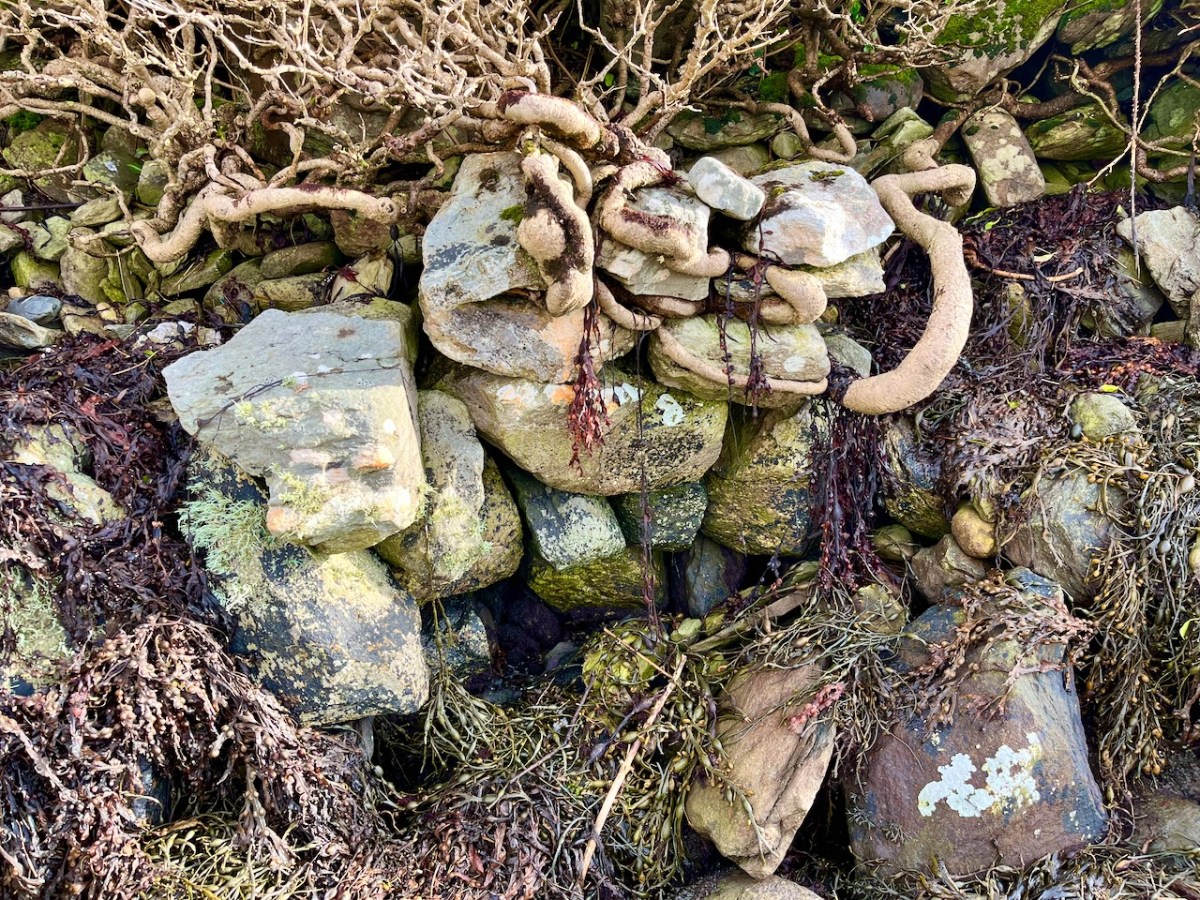
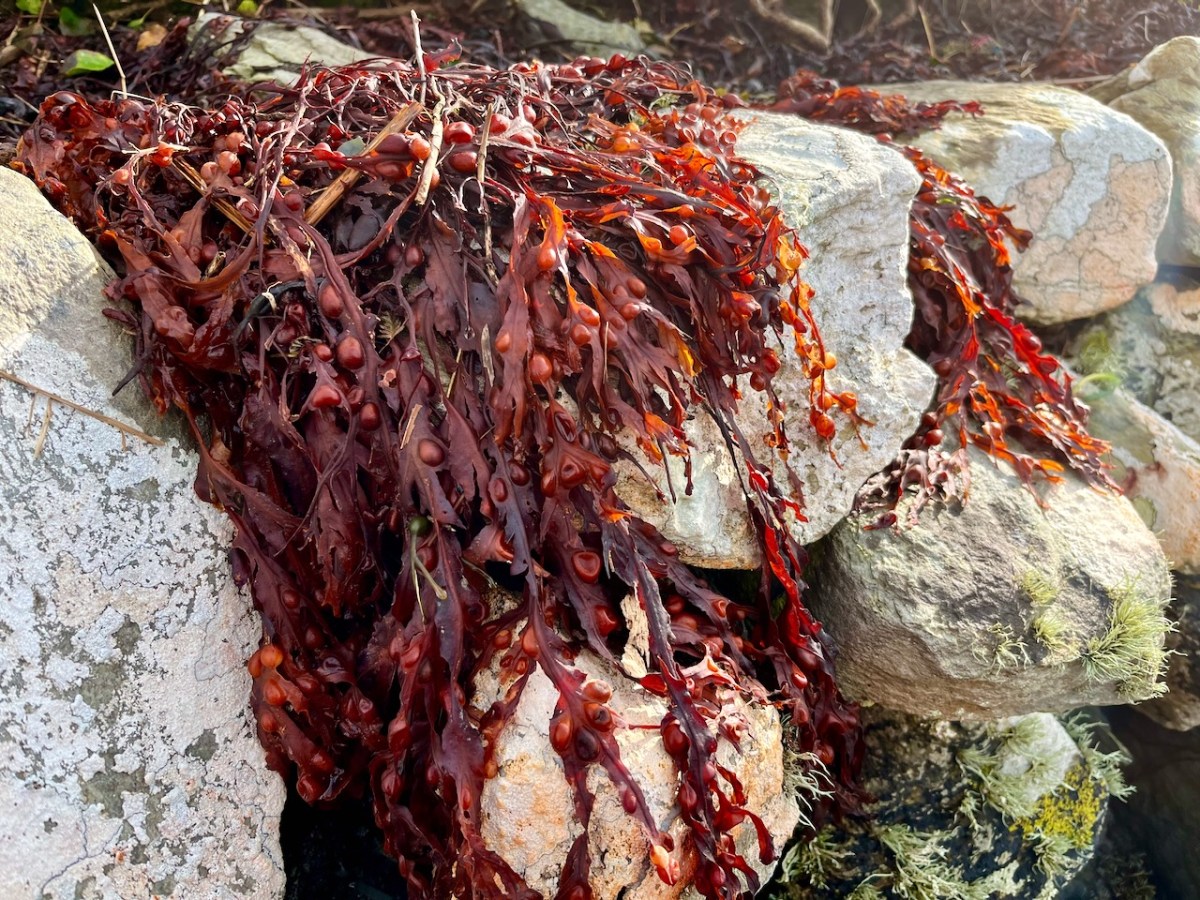
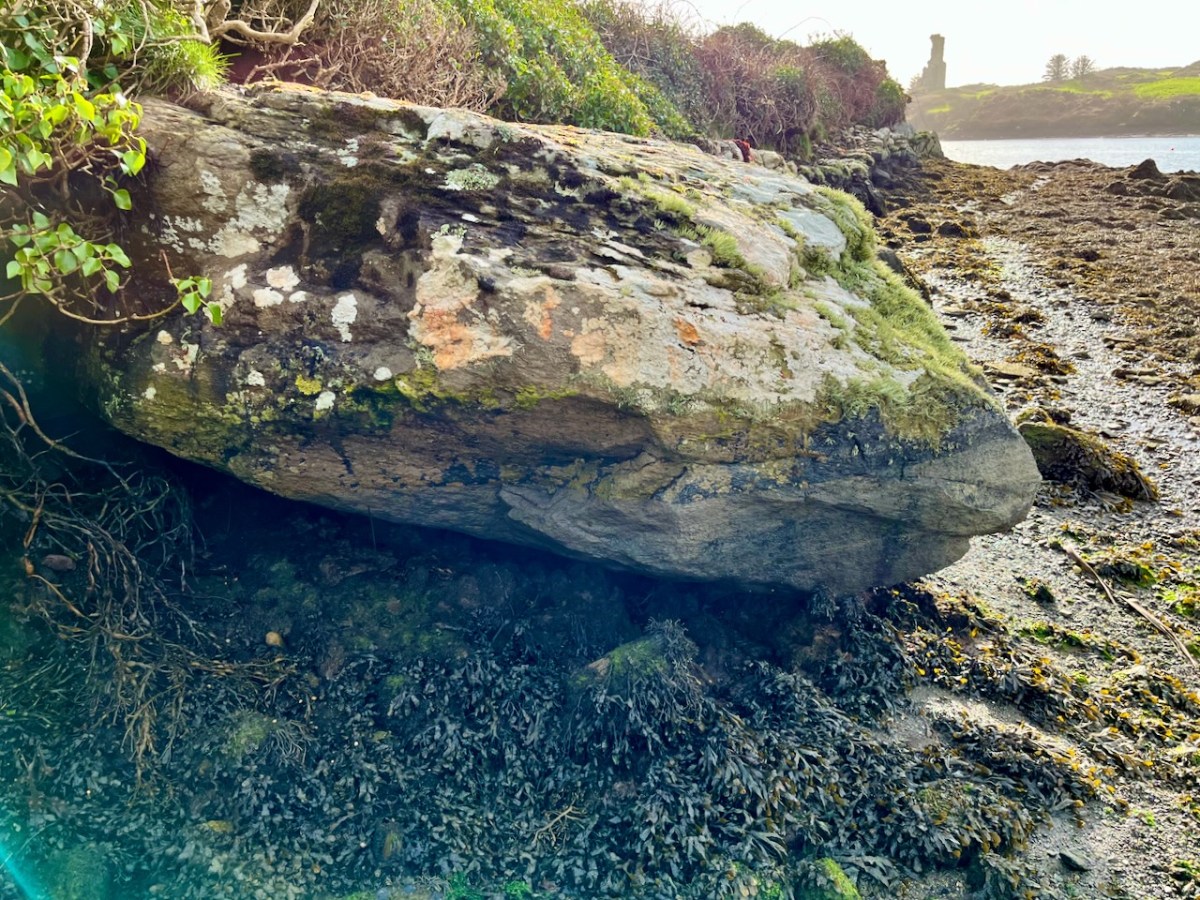
Not an inspiring start! In fact, as I continued my review, I noted that there was very little other than the natural environment – weather-worn boulders, skeletal shells and masses of seaweed – to disturb the order of things in Rossbrin on this February day. If our harsh storms had been of some positive effect it was perhaps to flush out any washed-up debris that might have accumulated in the winter – being now past St Brigid’s Day I consider it appropriate to call the season spring.

No matter that the exploration was superficially disappointing, the magic of this little bit of West Cork soon took over, and my mind was filled with the enormity of its history. There was a university here in medieval times: manuscripts were written here in the castle that has become a crumbling pile. Ravens and seabirds now rule over the stronghold. I walked on.

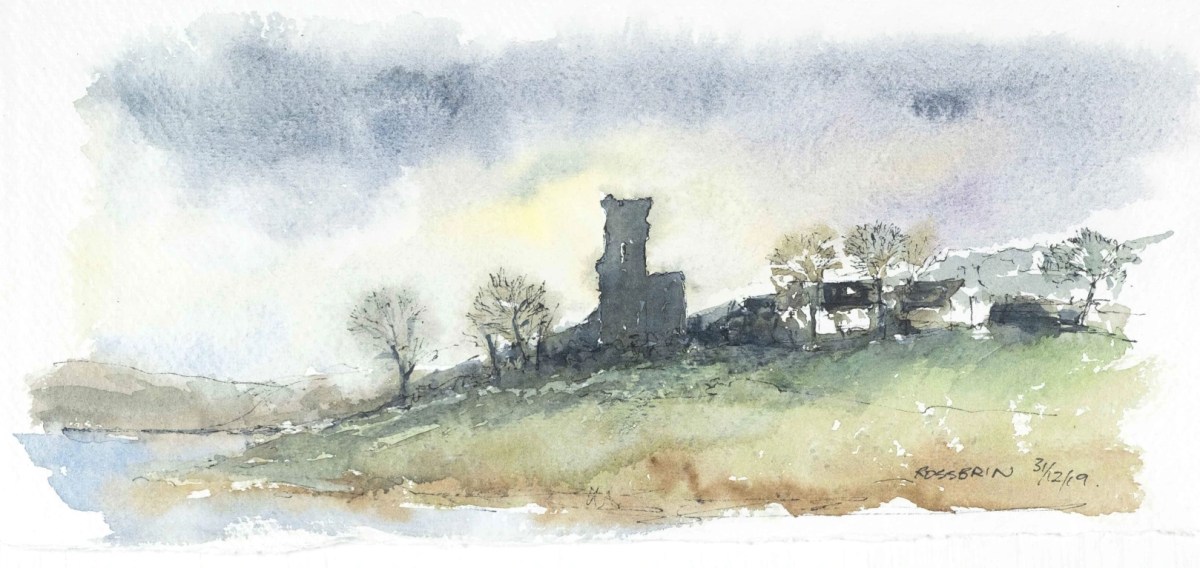
The margins of the cove are lined with ancient banks. At every turn there is a composition which a maestro could frame: I make do with a camera. Rossbrin inspired our artist friend Peter Clarke . . . Thank you, Peter!

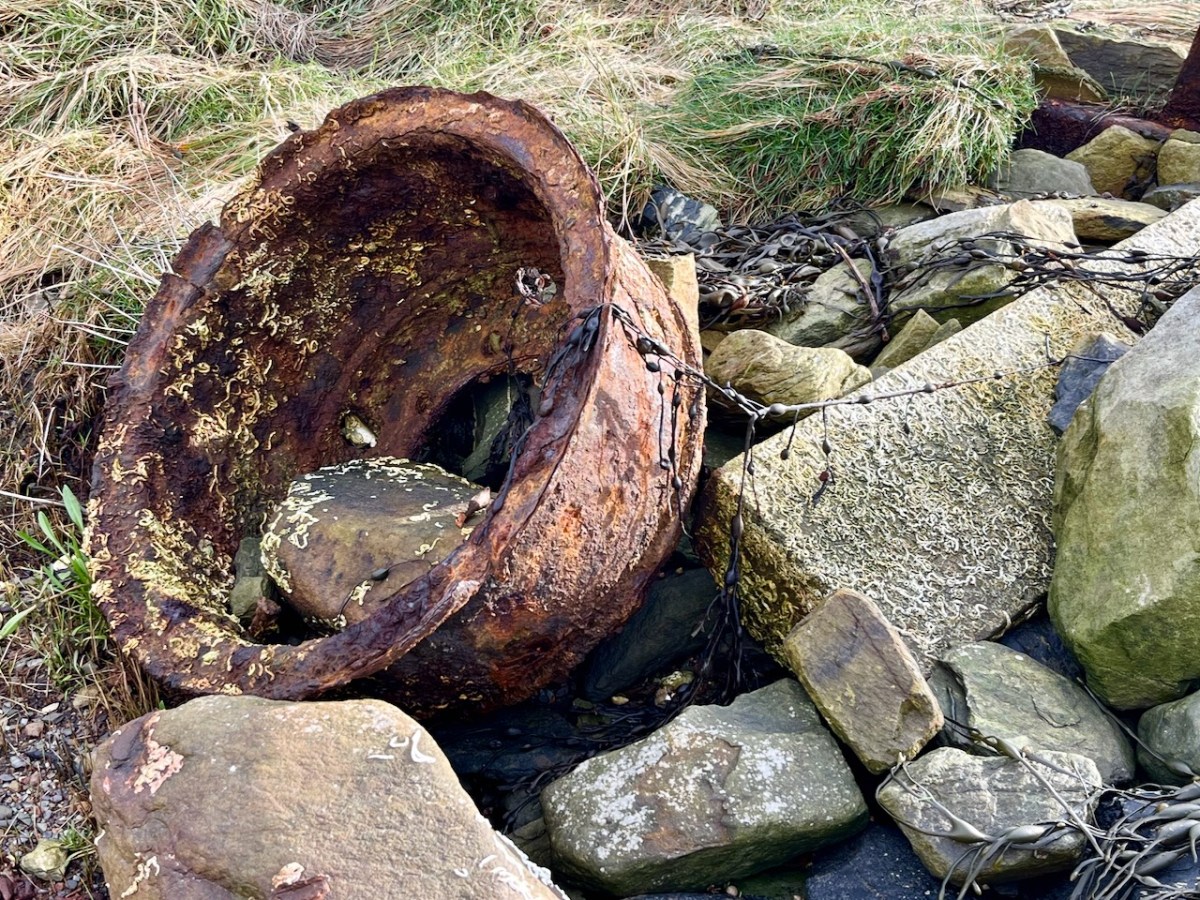
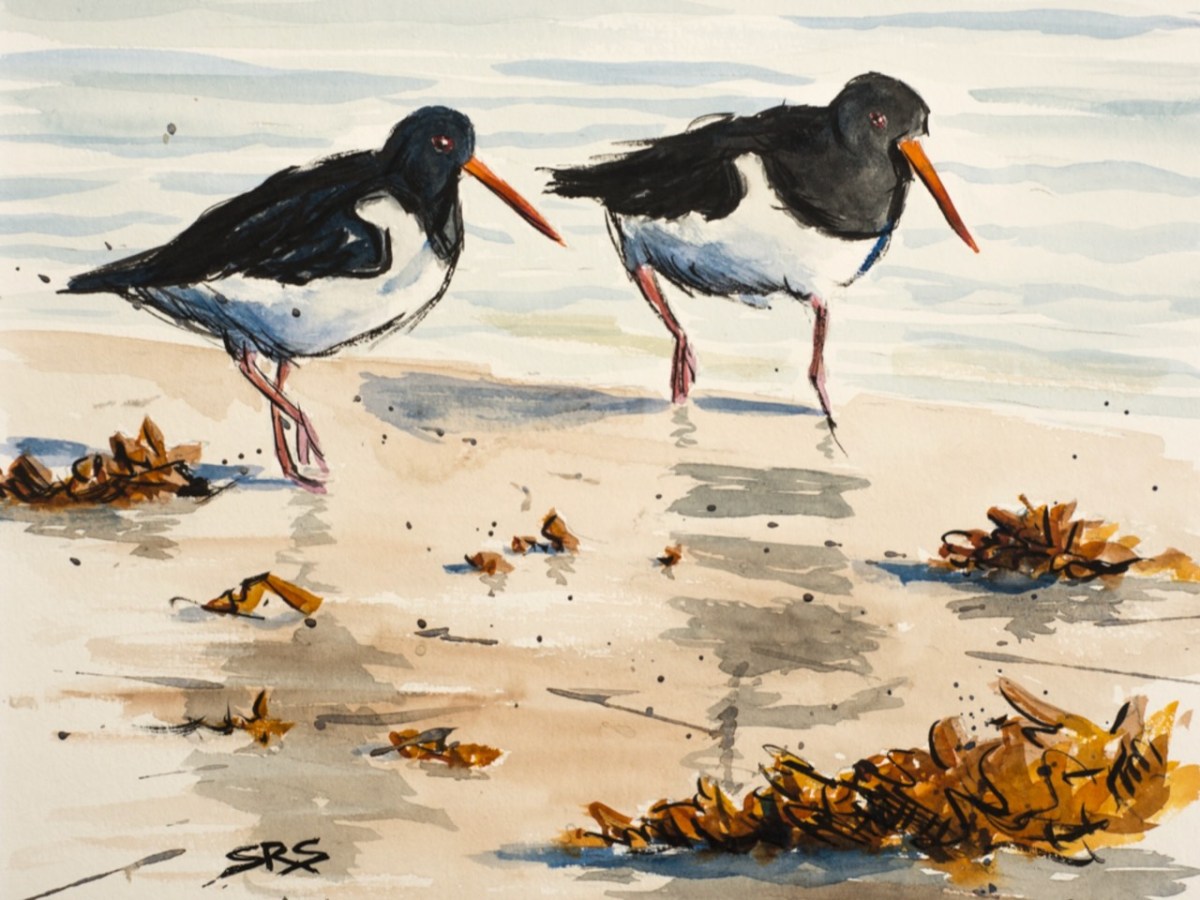
Evidence of more recent history: possibly a pot which was used in the process of tarring a clinker boat hull. No doubt vessels were built on these shores – and used to make basic livings. There is still fishing activity in and around the cove; mussel beds thrive in Roaringwater Bay; seaweed collection happens also. In summer months the deeper waters of Rossbrin are occupied by leisure orientated sailing craft. I enjoy the calm days of winter when there is hardly anything on the water. I watched a small flock of oystercatchers scurrying and foraging with their brilliant beaks, and then I turned for home.

The Rossbrin oystercatchers were uncooperative, and wouldn’t let me photograph them. Instead I have imported this wonderfully atmospheric painting by Cornish based artist Steve Sherris. Thank you, Steve

We have posted extensively about Rossbrin Cove, its history and its people. Have a look at these:

The Down Survey – Closer to Home

Looking at Rossbrin

Rossbrin Calendar

Fastnet Trails: Rossbrin Loop 2

A Dander on The Sheep’s Head

it’s not just for long walks – the Sheep’s Head is also perfect for wandering with intent, having, as my father used to say, a dander. Our trip there this week, in the excellent company of Amanda and Peter, was that sort of day, where we drove around and dropped in and out of interesting places. Amanda and Peter Clarke, our regular readers will know, are the couple behind Walking the Sheep’s Head Way, so who better to have as companions and guides for a day of exploring. Amazingly, given all the time we’ve spent there, only one of our stops was familiar.

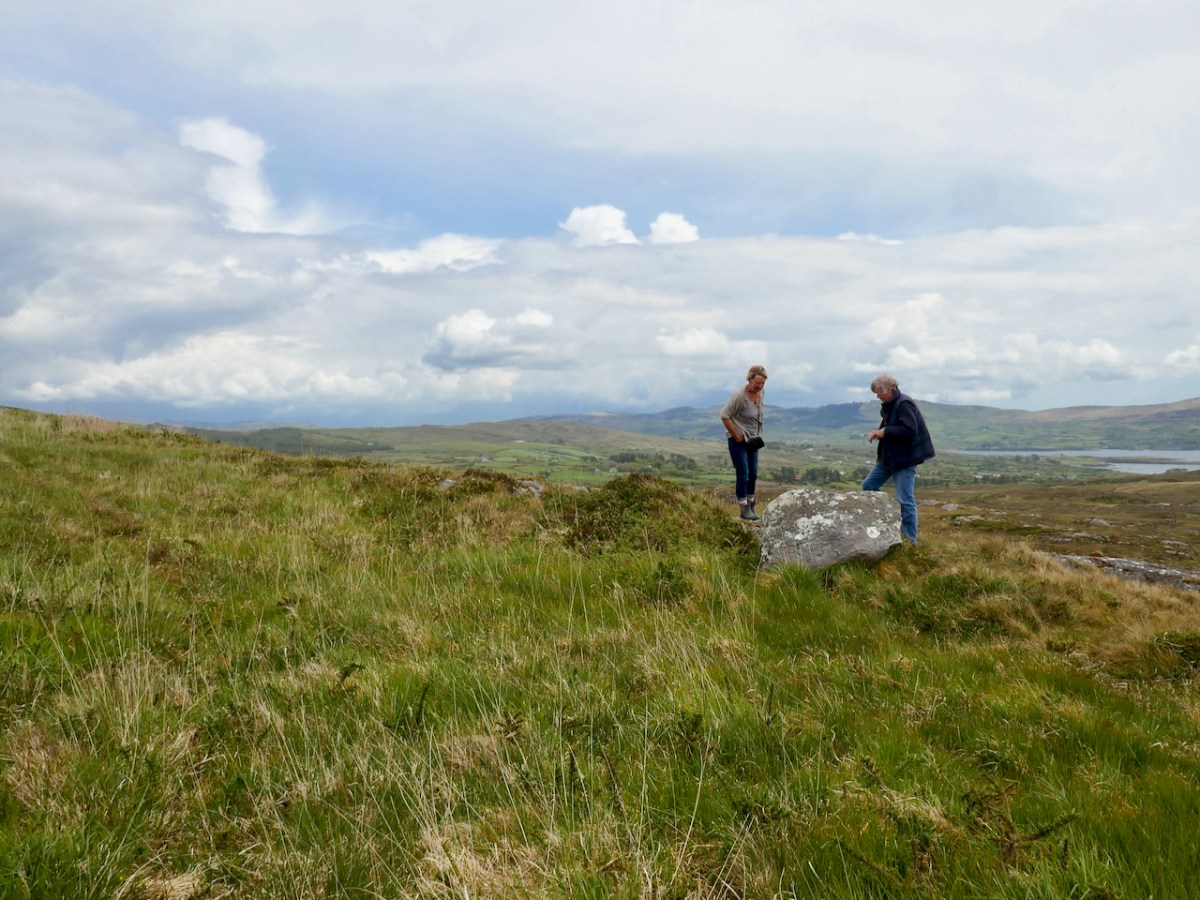
Our first stop was a curious stone overlooking Dunmanus Bay. Known as the Giant’s Footprint, the local legend tells a familiar story about two giants throwing rocks at each other. This must have been a mere pebble, because one of the missiles became the Fastnet Rock. Footprint stones are also associated with inauguration sites, where kings were acclaimed in early medieval society. (See the comments section below for a link to an amazing piece of art from our friend, the acclaimed photographer EJ Carr, who used this stone in his fantasy photography piece on the Arthurian legend – follow the link in the comment to view his images.)

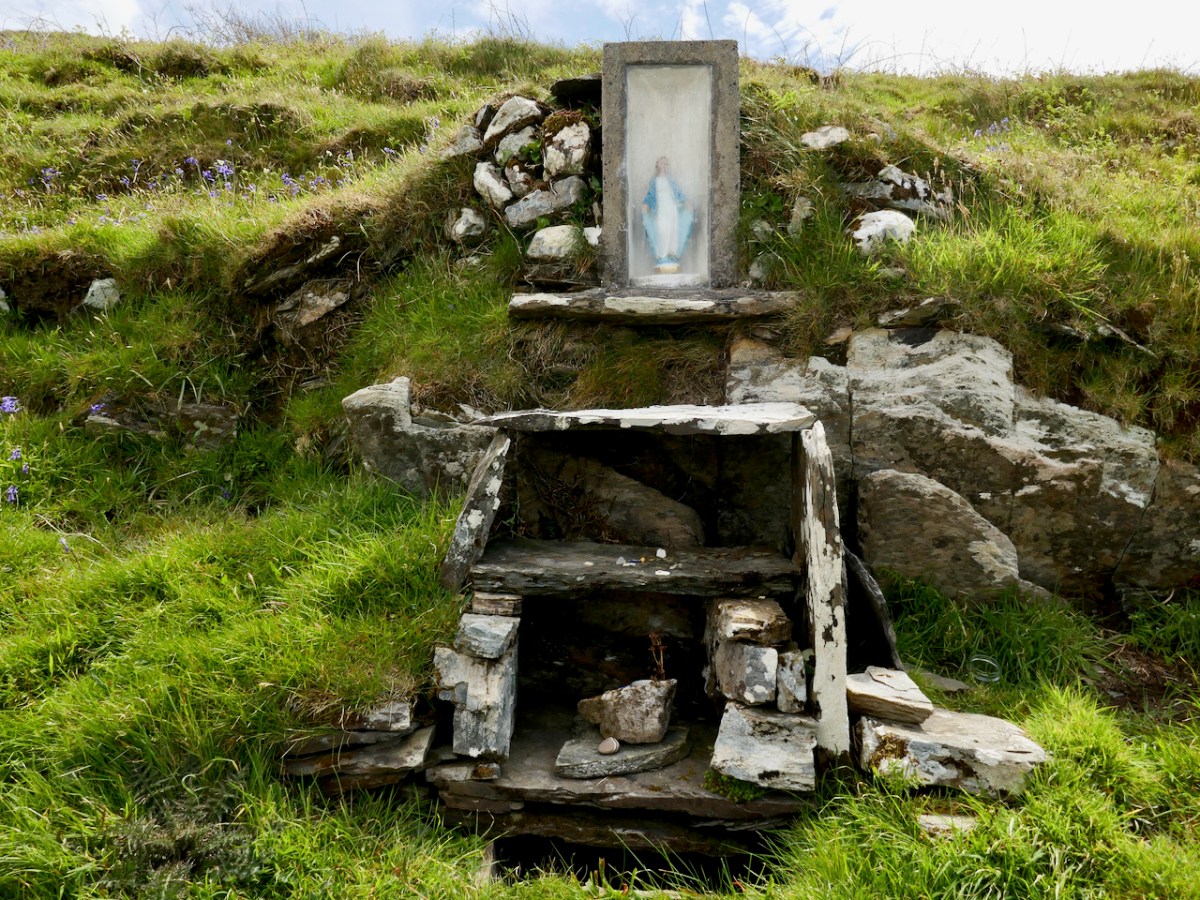
Being with Amanda is always a great opportunity to visit a holy well and we had never been to Gouladoo. It also ticked a box for me as I’ve been wanting to visit promontory forts. The holy well first – it’s a Tobar Beannaithe, a Blessed Well, not associated with any particular saints. Amanda’s research revealed that it did have a particular purpose, though – girls would visit to pray for a husband. Read Amanda’s comprehensive account here

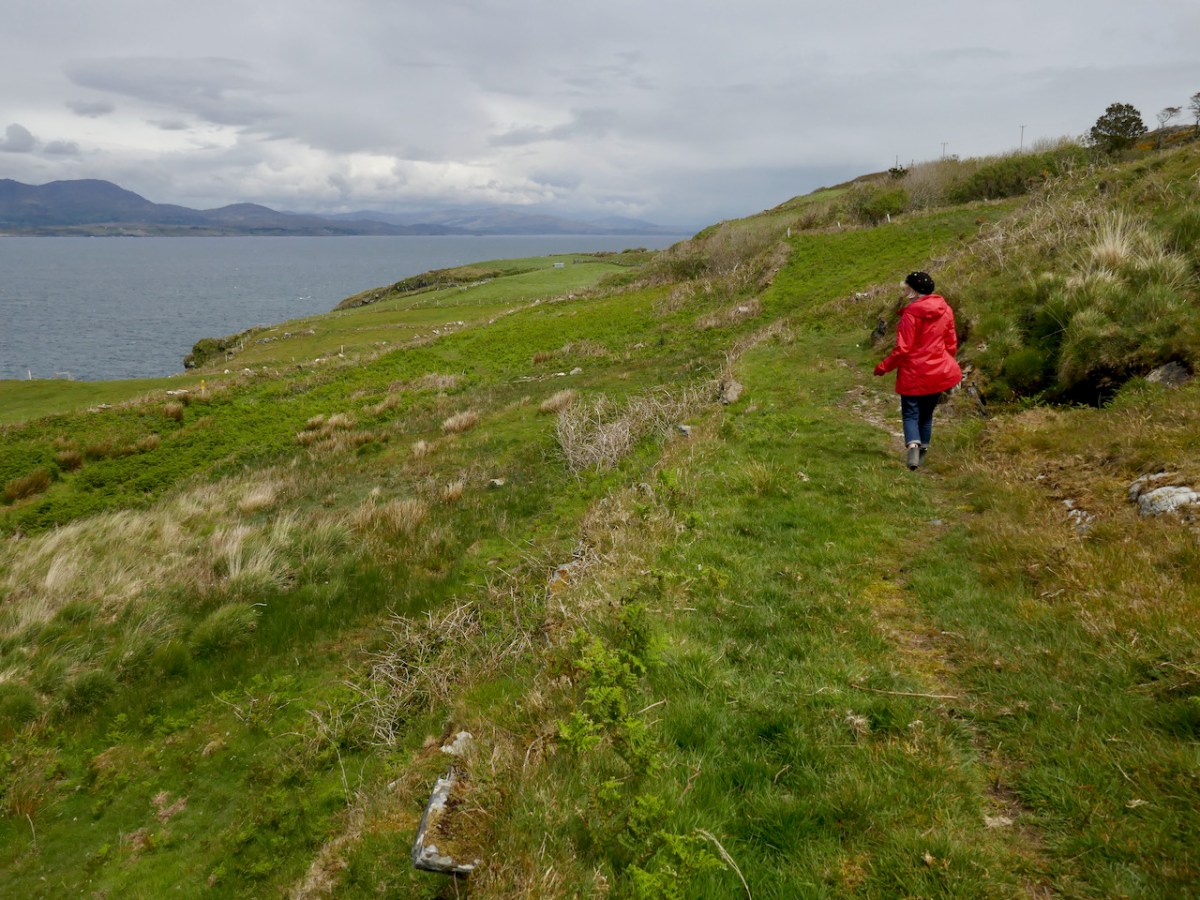
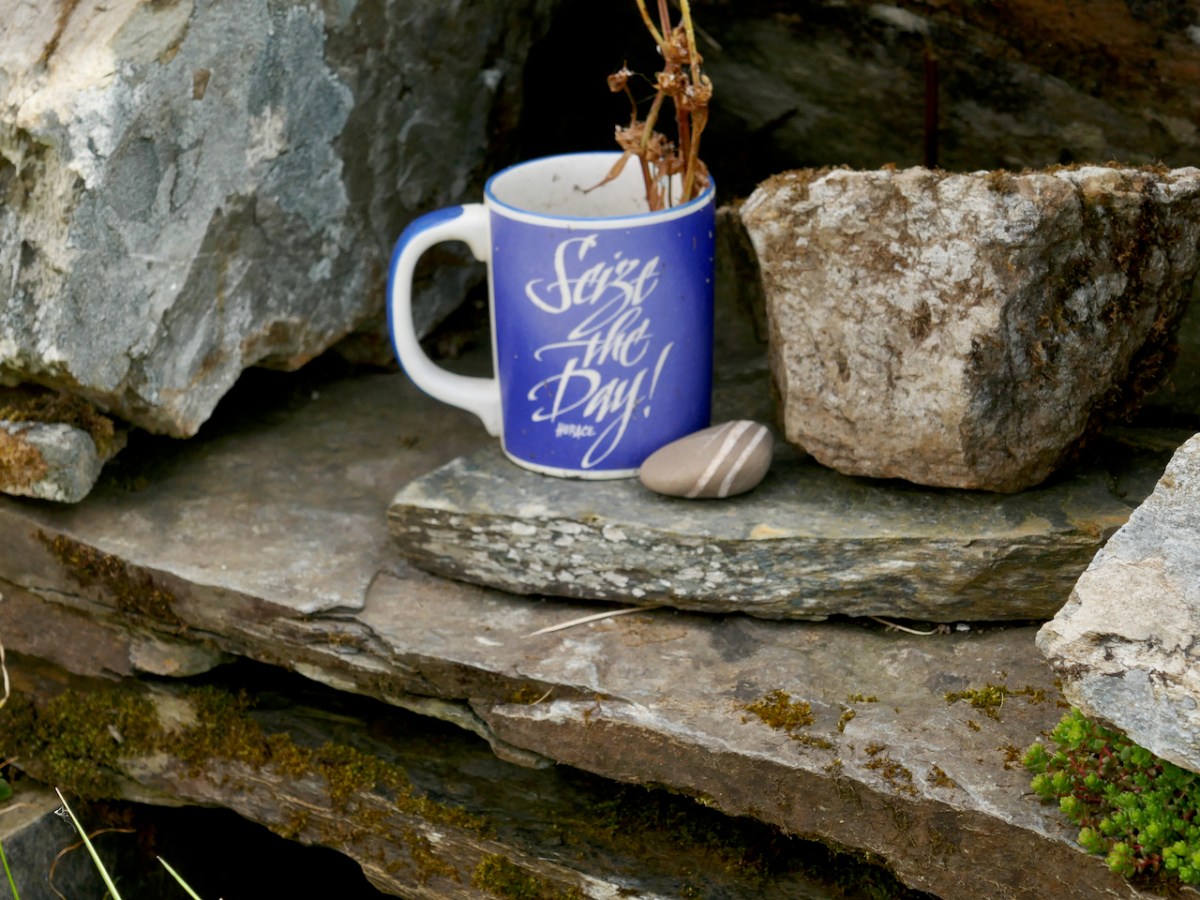
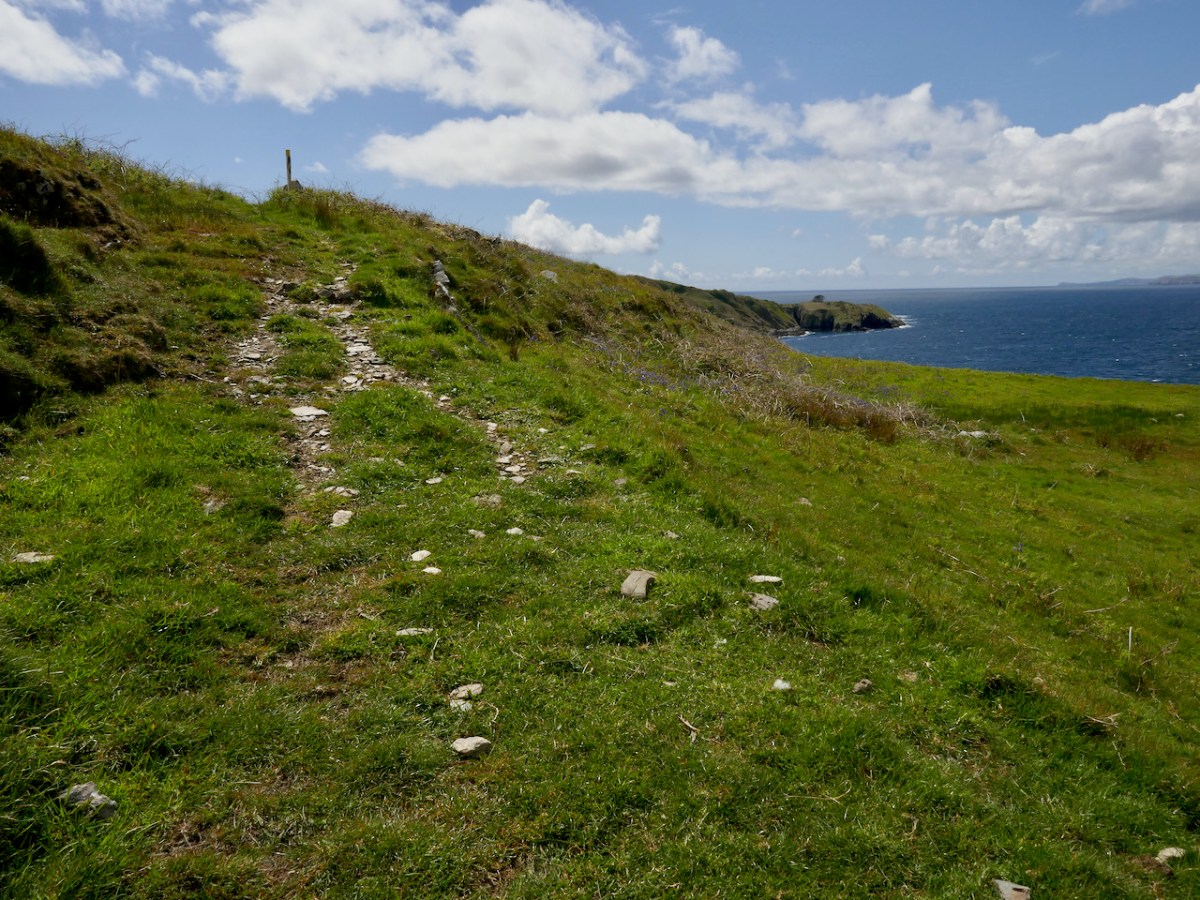
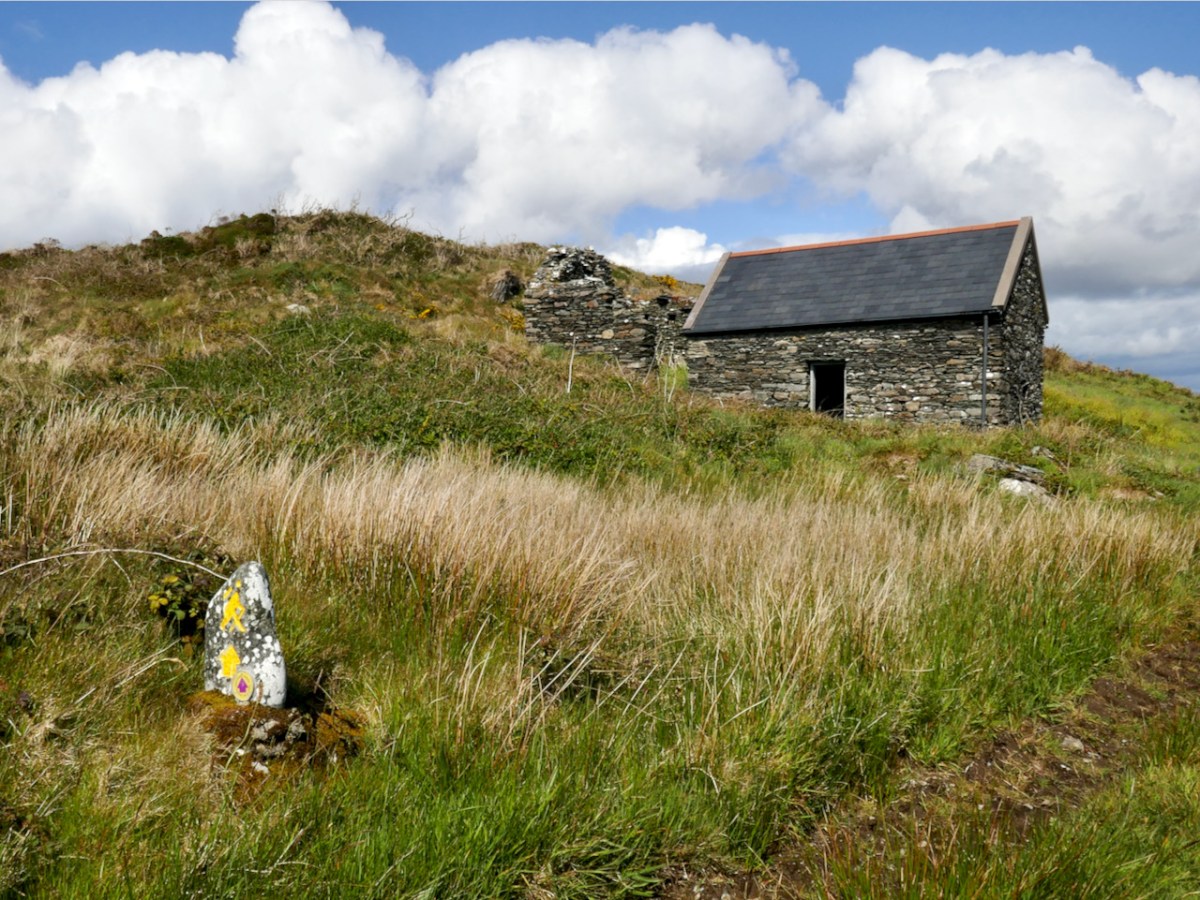
Because this is on the Sheep’s Head Way, the route is signposted and maintained. The well itself has a cup thoughtfully provided so you can have a drink if you dare. The path down to it has been carved out of the hillside and roughly paved, indicating that this was a site to which many people once came.

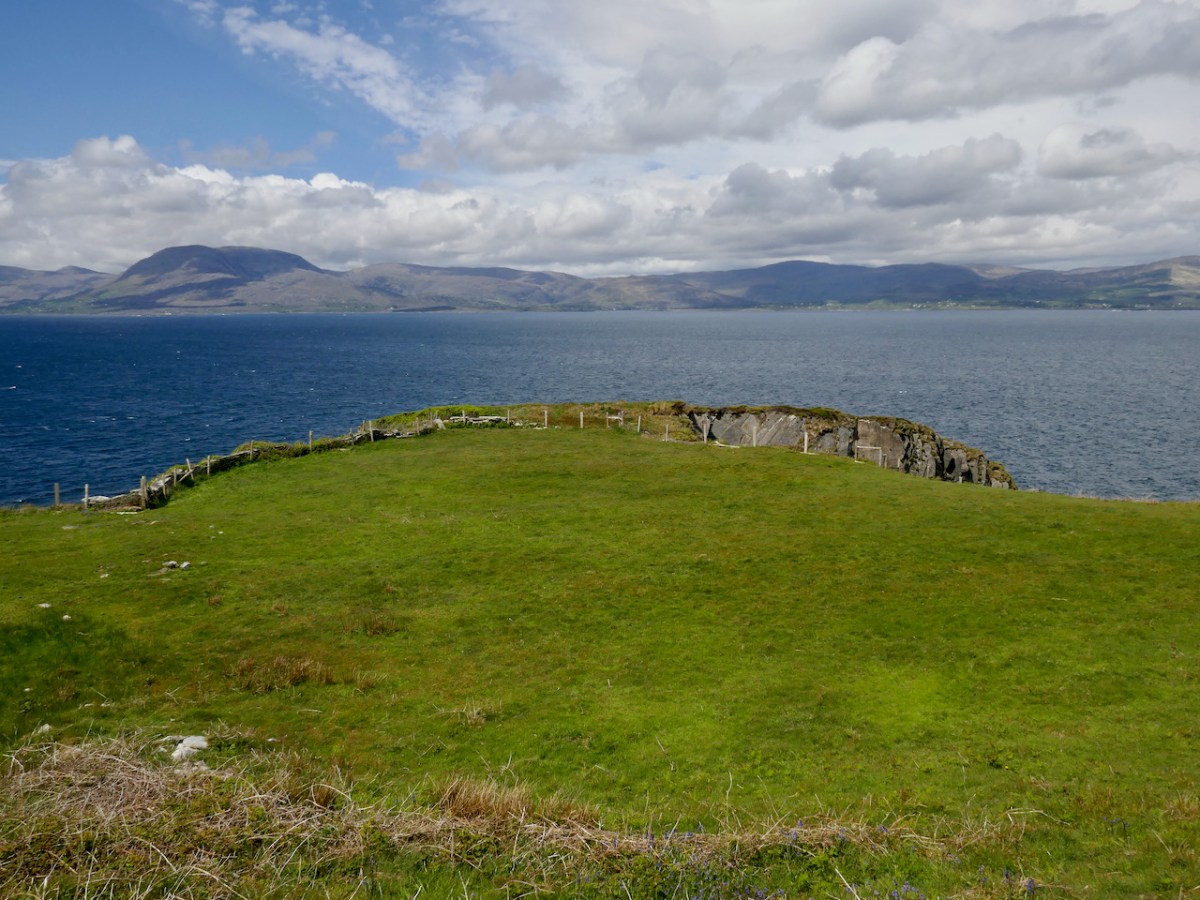
If you turn your back to the holy well, the promontory fort is straight ahead of you.

Where you have a promontory jutting out into the sea it’s easily fortified by building banks and ditches at the neck. Promontories with narrow necks were usually chosen, as being easiest to defend, and archaeological evidence suggests that some were in use as early as the Bronze Age but most evidence of occupation dates to the Early and Later Medieval Period (400 -1500AD). 

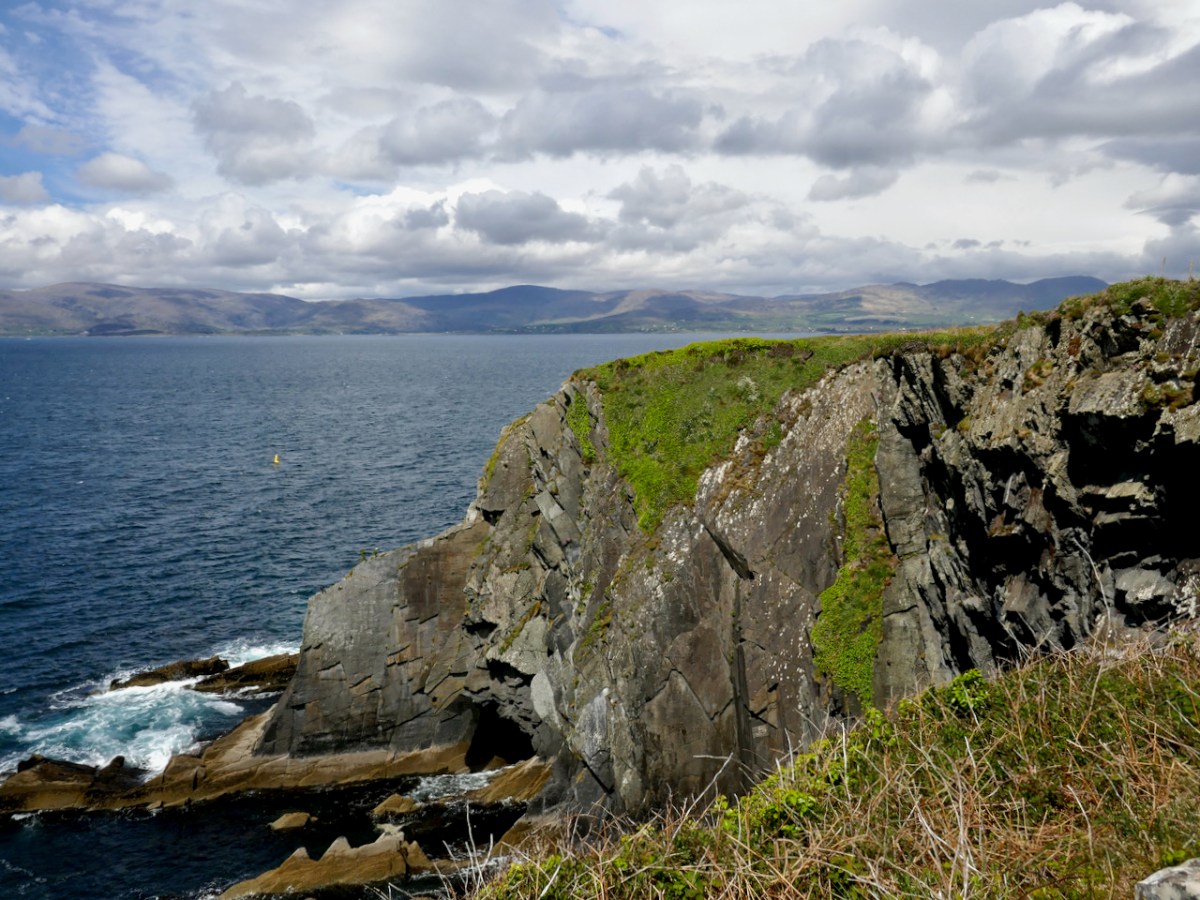
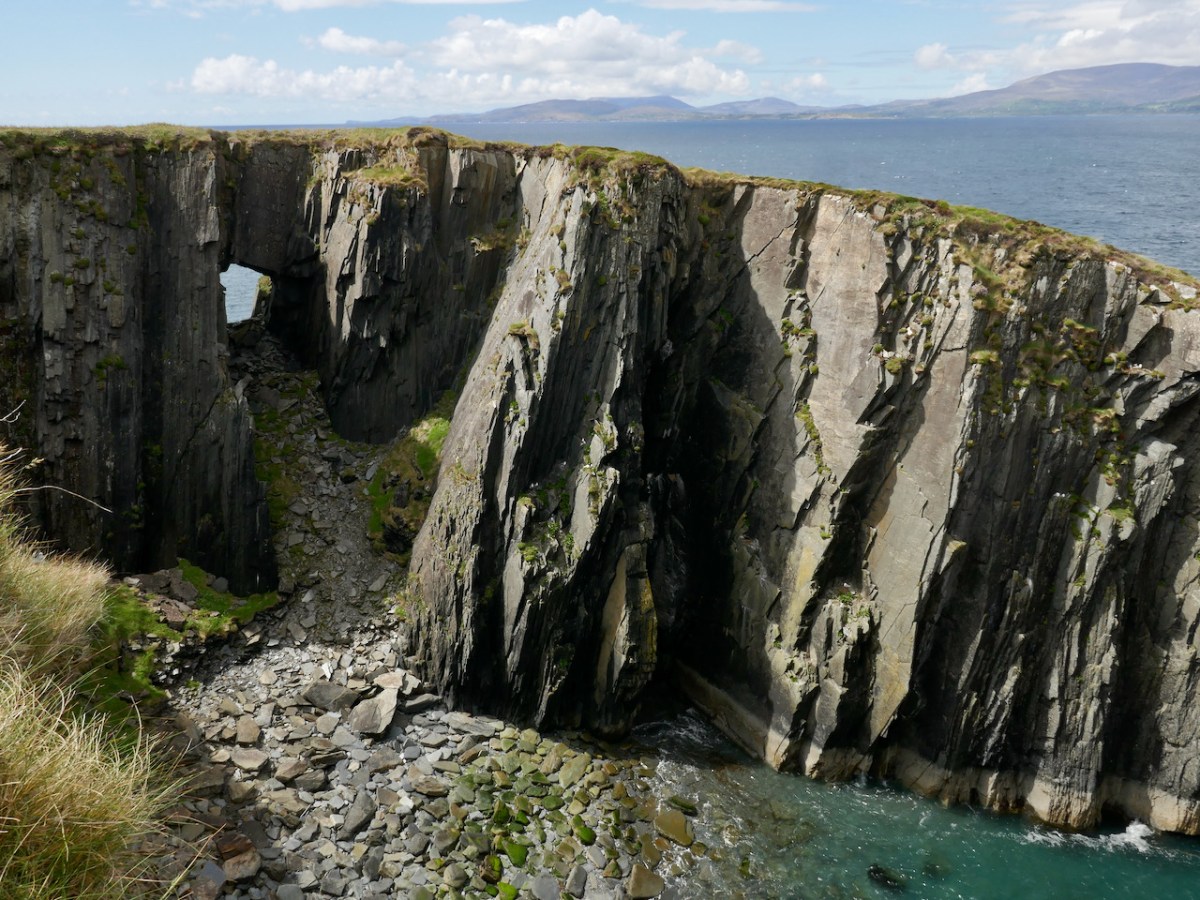
As promontory forts go, this is a classic – a narrow neck with evidence of walls across it, steep cliffs on all sides, and a flat and verdant area in the middle for houses and cattle. This one has an added feature – sea arches underneath! The sea arches mean that this may eventually become an island.

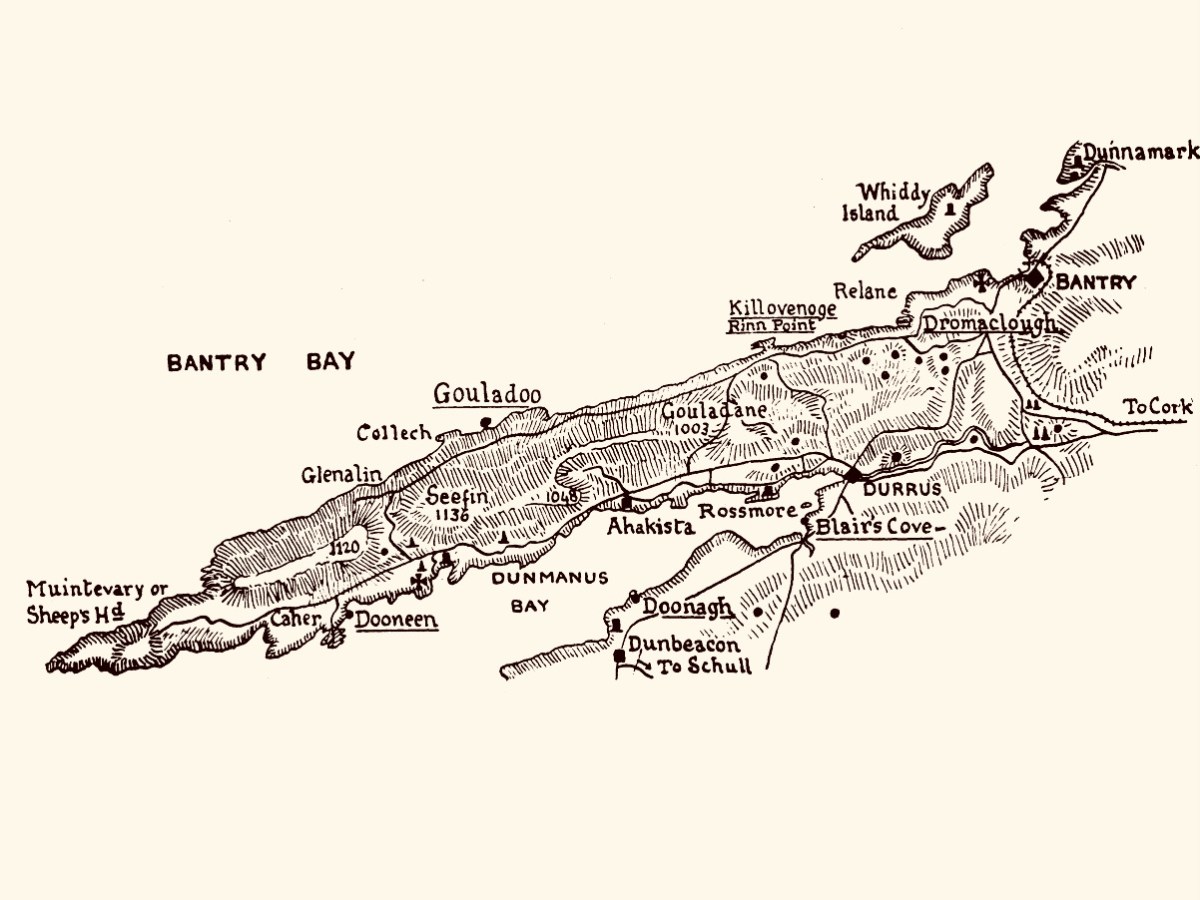
The antiquarian Thomas J Westropp set out to visit all the promontory forts along the Beara and Sheep’s Head in or around 1920 and has left us his account, written over three articles in the Journal of the Royal Society of Antiquaries of Ireland. Gouladoo, as his map shows, was one of his destinations.

Here is his description of the fort as he found it then.

Far to the west of Rinn, in Kilcrohane, is a remarkable fortified headland of dark grey slate, up tilted and separated from the mainland by a gully. This is spanned (like those at Doonagh and Dursey) by a natural arch. The adjoining townland is called Dunoure, but no fort is known to have existed near this, so perhaps that name refers to Gouladoo. The arch is lintelled, like a great Egyptian pylon, and is 15 ft. or 16 ft. wide at the gully. The neck is wider to the landward, and was strongly defended. First we find a trace of a hollow or fosse; then the foundation of a drystone wall 82 ft. long (E. and W.); behind, a natural abrupt ridge forms a banquette over 4 ft. high; the wall is about 12 ft. thick, the terrace 12 ft. to 15 ft. wide. Beyond this the neck was enclosed all round by a fence about 6 ft. thick. The whole work measures about 80 ft. each way. As at Doonagh, I think that the line of debris on the peninsula along the edge of the chasm is a trace of a wall, and that the bare slope behind it was stripped by a landslip. The whole is tufted with luxuriant masses of rich crimson heather.


The Promontory Forts of Beare and Bantry: Part III, Thomas J Westropp
The Journal of the Royal Society of Antiquaries of Ireland, 1921

It’s quite difficult to see those features now, although there is a piece of the wall remaining, and what must be his ‘terrace.’

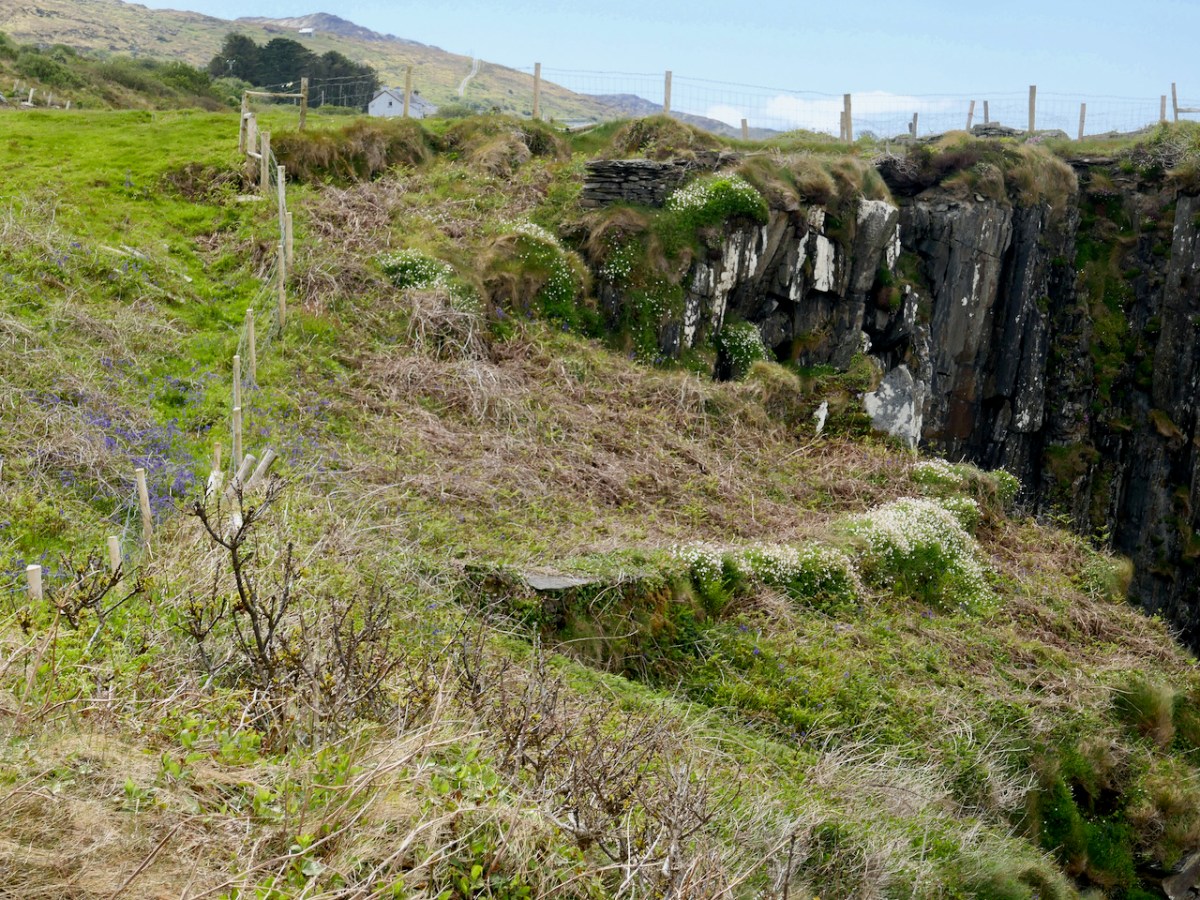
There are other compensations to visiting a site like this – those sheer cliffs which provide such an impregnable defence for the fort, also host many gulls in nesting season. The Bluebells and Sea Campion were abundant there too.

Westropp wrote his article, The Promontory Forts of Beare and Bantry, over several issues of the Journal of the Royal Society of Antiquaries of Ireland, and maybe it would be fun to retrace his steps a hundred years later to see what’s on the ground now – what do you think? 

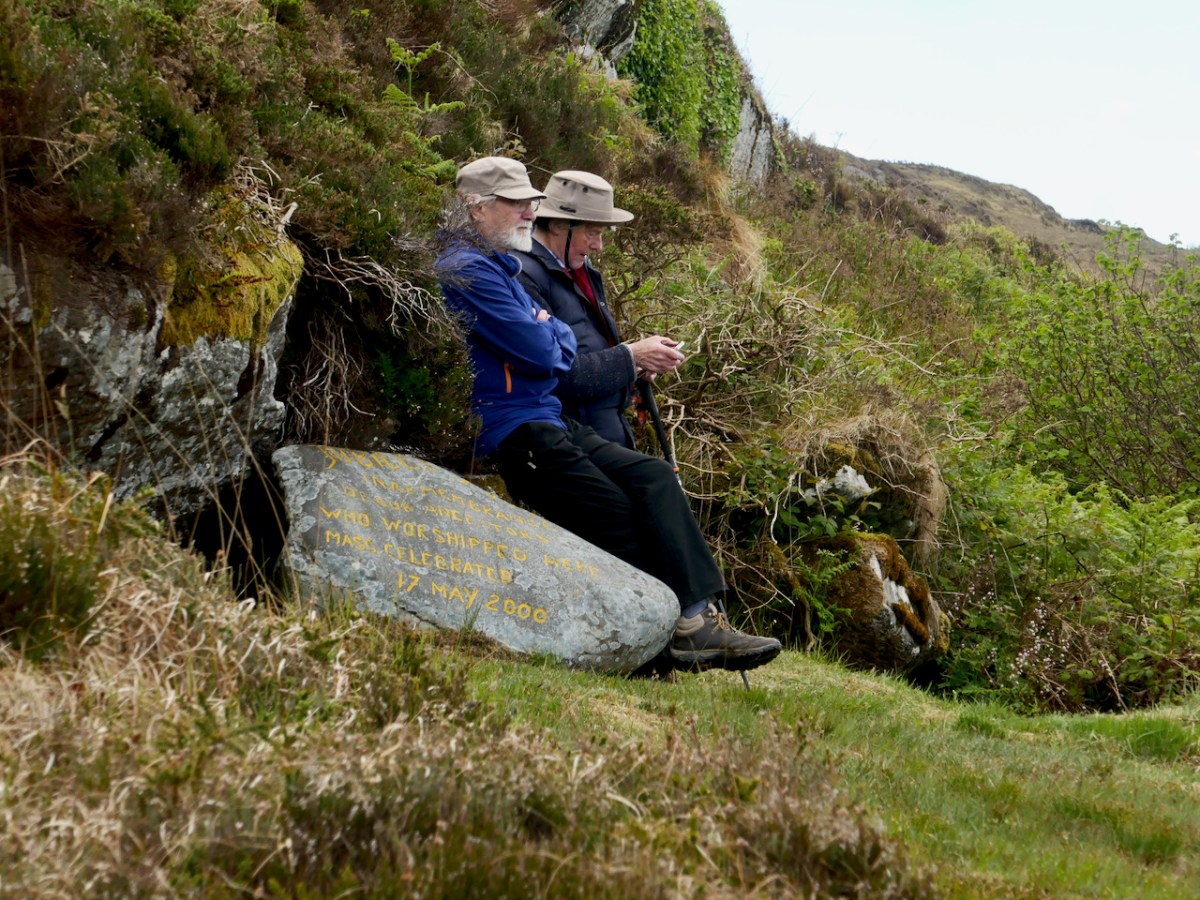
From there it was off to the Mass Rock at Glanalin, an easy walk down from the Pietà in the pass above Kilcrohane. It’s a particularly lovely walk to this mass rock (above), and in May the spring flowers are everywhere, especially St Patrick’s Cabbage, one of the group of plants known as the Lusitanian Flora, that only grows here and in Iberia.

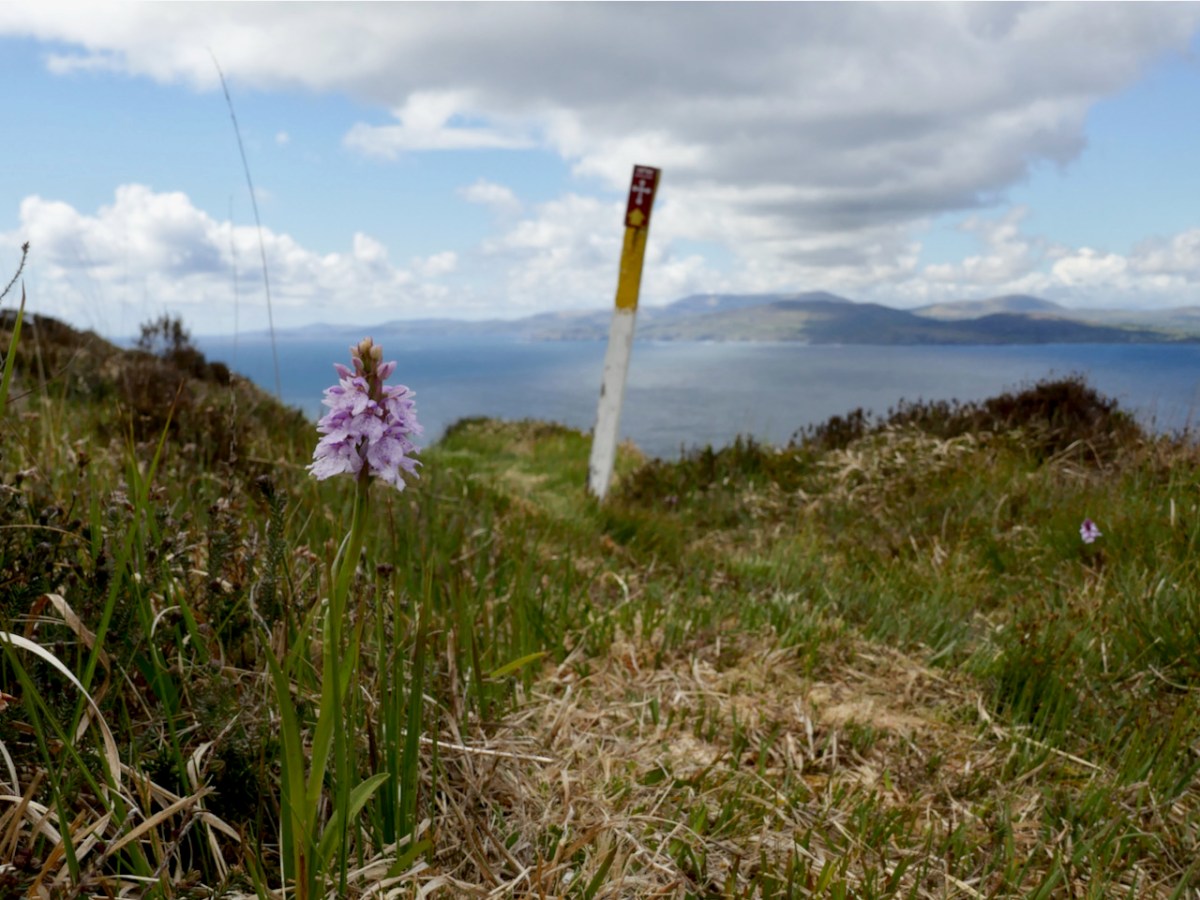
And finding a lone Heath Spotted Orchid (above) was a real bonus too!

By sheer coincidence we were there on the same day, May 17th, when Mass was celebrated here in 2000 in remembrance of the ancestors who worshipped here.

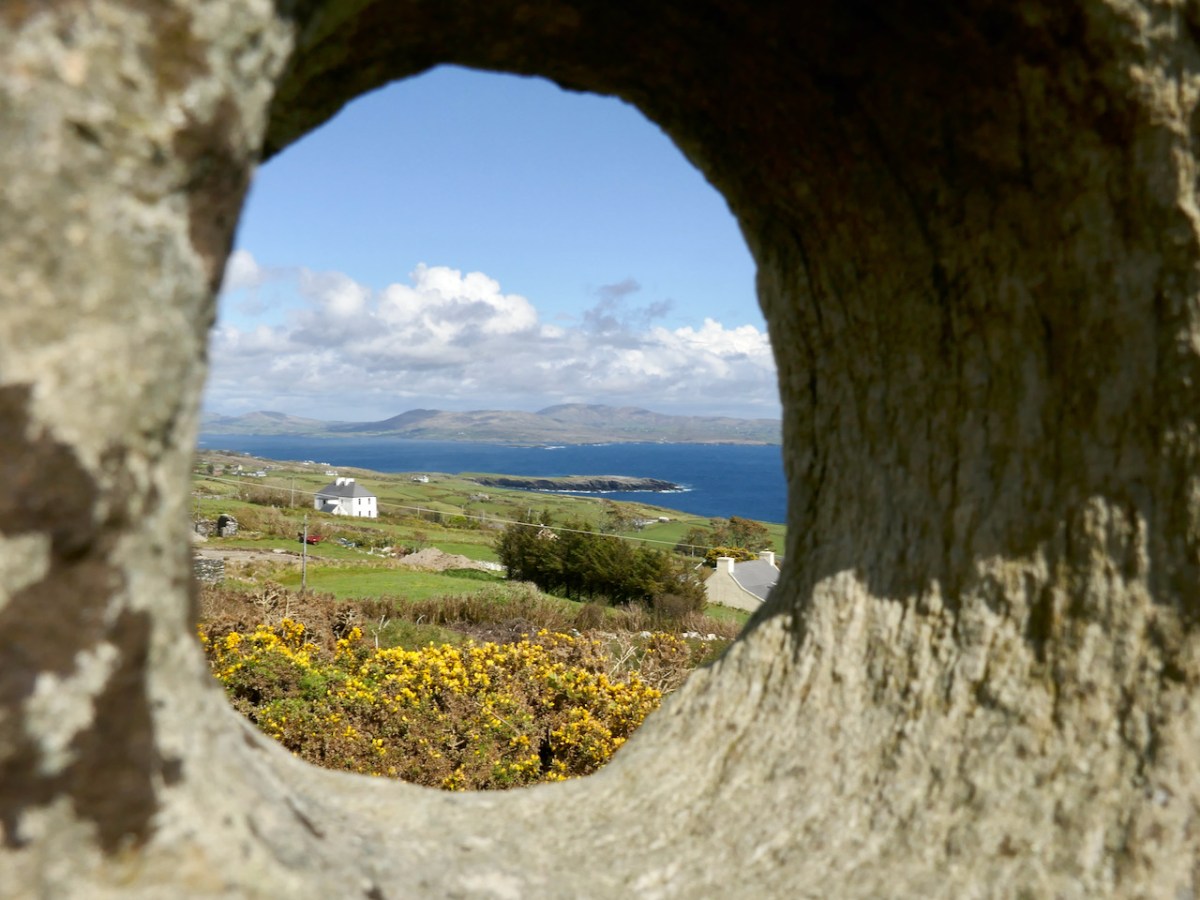
Our final stop of the day was another site new to us, the Marriage Stone! That’s Peter’s sketch of it above, from his Hikelines Blog. Tradition has it that people would get married here, as described by local farmer Jack Sheehan:

The hole in the stone is narrow on one side and wide at the other. The man had a bigger hand and he put his hand through the big side and the woman put her hand through the narrow side. They made their promises when they put their hands through the stone

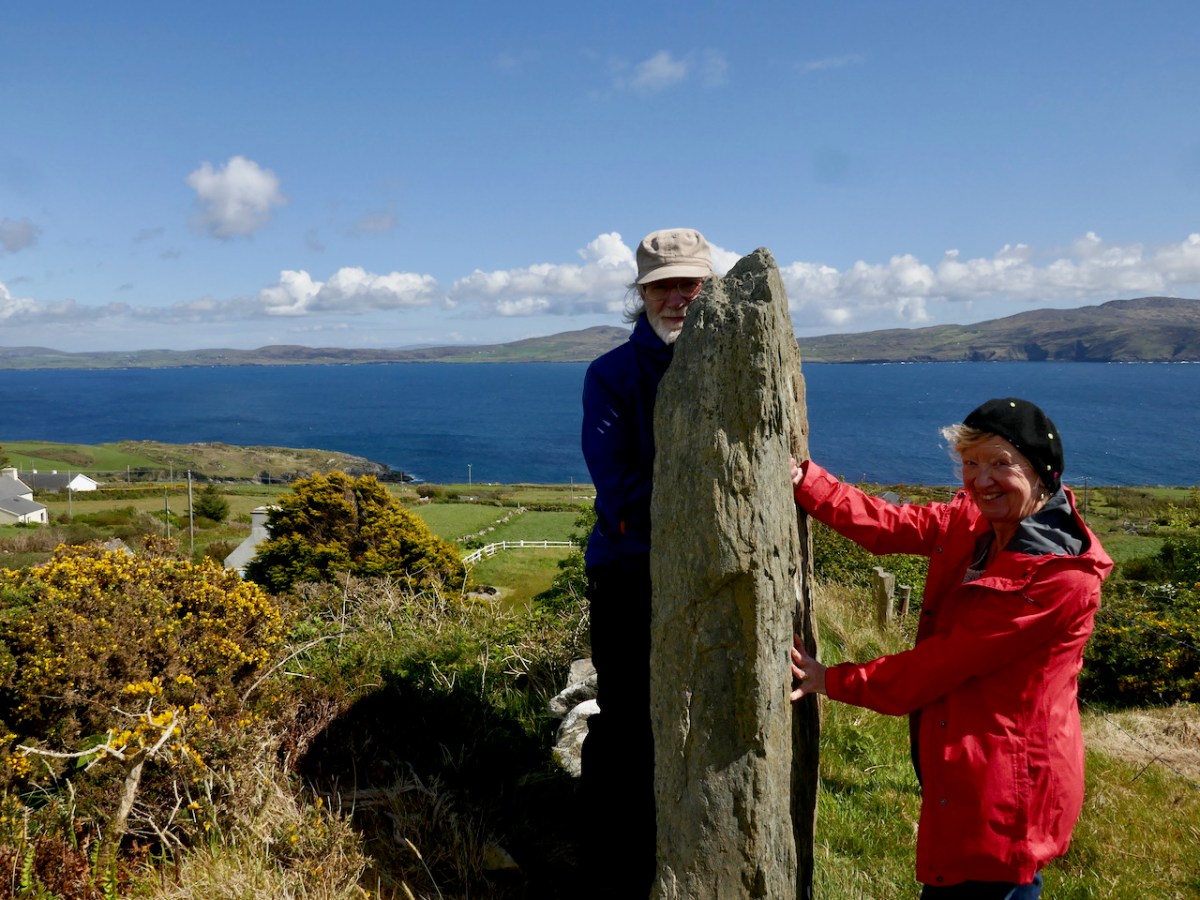
Of course we all had to do it!

There was a ring fort nearby –  actually described as an enclosure in the National Monuments records – but over the years it has been disturbed to the point where it is hardly recognisable. Perhaps it is this site that gave its name to the townland, Caherurlagh. A caher is a stone fort and so the townland name means Fort of the Slaughter. Perhaps there are some aspects to the history of this area into which we should not delve too closely.

I highly recommend a day like this on the Sheep’s Head, with Walking the Sheep’s Head Way as your travelling companion, and channeling the spirit of old Thomas Westropp. I will leave you with what he had to say about the views north to the Beara as he journeyed along the north side towards Gouladoo

We pass beneath the beautiful woods of Bantry House and the picturesque old graveyard, where the Franciscan Friary once stood erected by O Sullivan in 1330. We reach the shore out of a maze of low green hills, several with ring forts on their summits, near Dromclough. Thence on past Rinn Point and up the lofty road, often unfenced and narrow, along the edge of cuttings and precipices to Gouladoo and Collack. The sweep of the high mountains in Beare and those inland heights towards Muskerry is magnificent as seen across the great bay. From Black Ball Head and Dunbeg past flat-topped Slieve Miskish and the great domes of Hungry Hill and the Sugarloaf, on to the shapely cone of Mullach Maisha, the stately range extends. 

Back to The Bealick

Yesterday we went back to the Bealick – back to the valley of Cooleenlemane that so entranced Robert and me that both of us wrote about the experience last year. I concentrated on the Bealick (pronounced Bay-lick) – the ‘caves’ containing ancient rock scribings and my post was called Witches’ Marks and Lovelorn Shepherds: Inscribed Rock Art in a Remote Valley. Robert wrote about the valley itself, through geological and historical time in his post, Cooleenlemane – A Walk Into History. What more could we have to say about this impossibly beautiful place? Lots, it turns out.

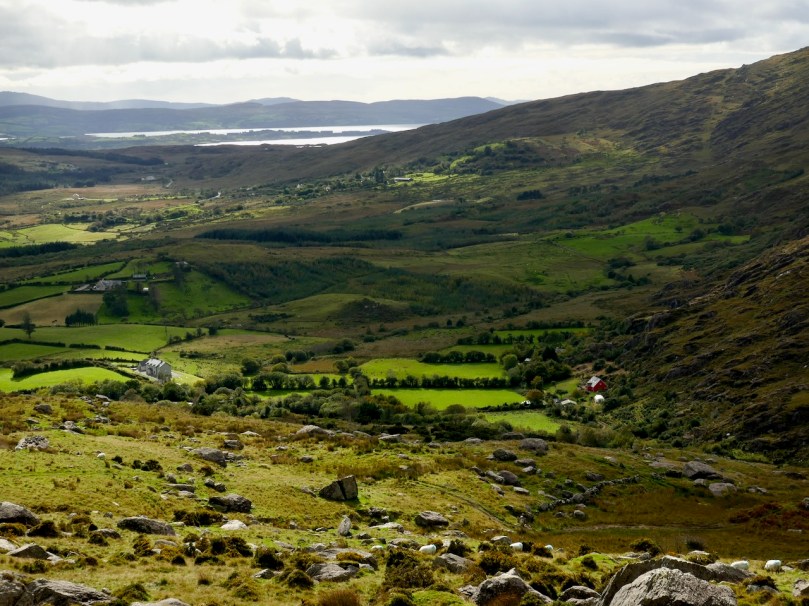
The red house at the bottom right marks our starting off point. In the distance is Bantry Bay and Whiddy Island

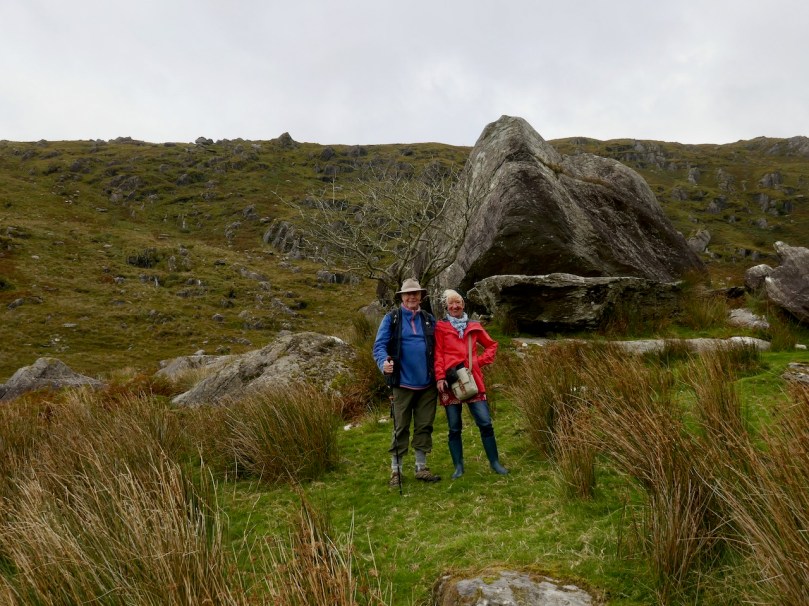
We took the walk in the company of our favourite travelling companions, Peter (of the Hikelines Blog) and Amanda (Holy Wells of Cork and Kerry). We had been missing them badly as they had been in New Zealand when the pandemic struck, unable to get home for six months. It felt really good to be out and about with them again.

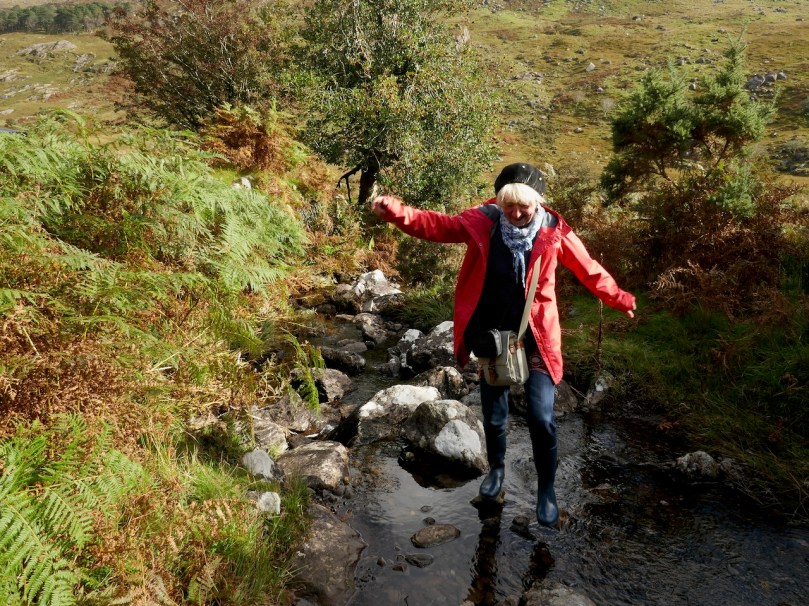
Amanda fords one of the many streams (it was a wet walk!) and Peter points out some of the scribings in the Bealick

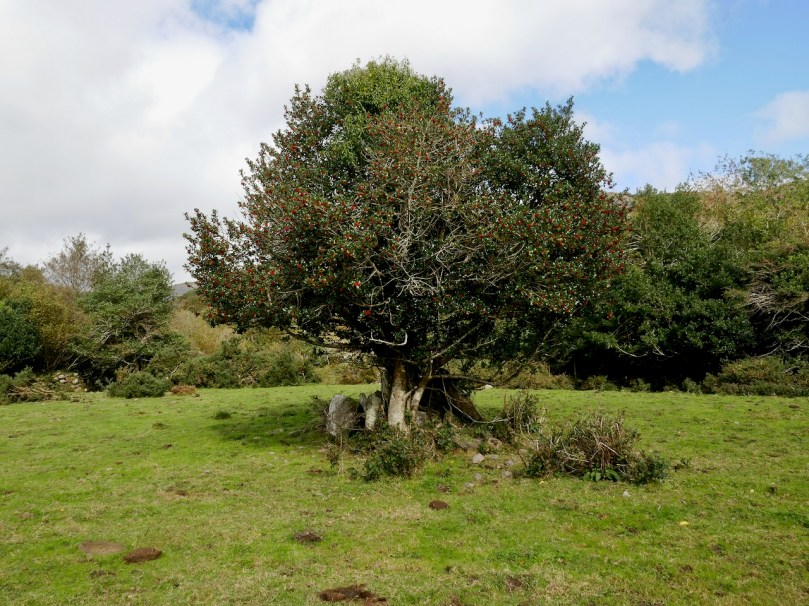
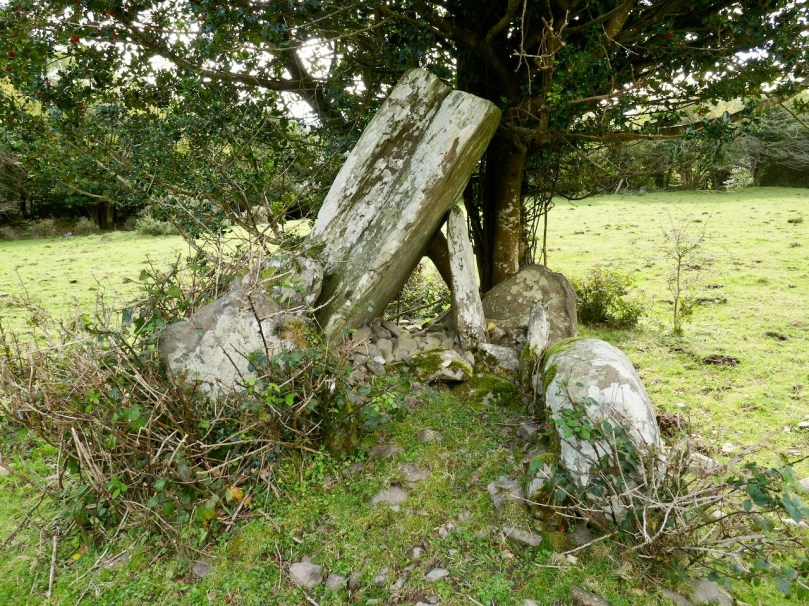
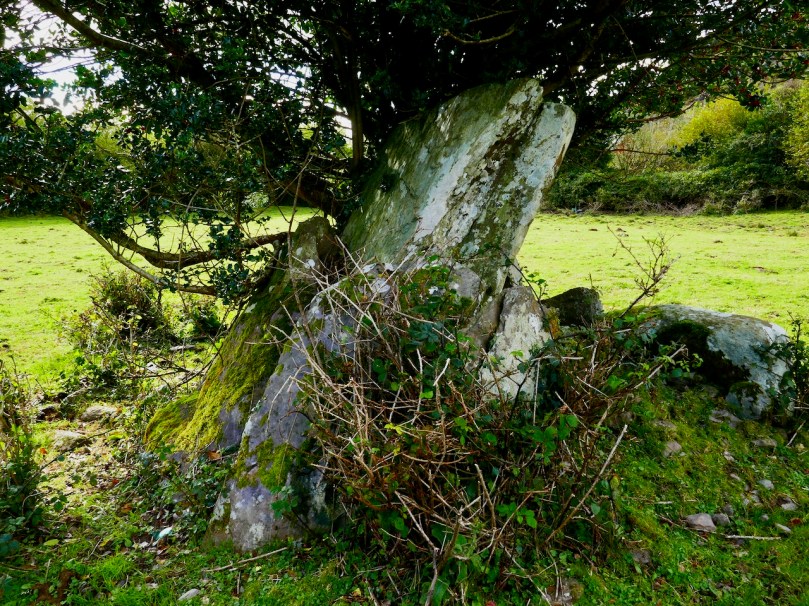
Apart from the jaw-dropping scenery and the sheer pleasure of a hike into a relatively untouched valley, this time I found myself drawn to the evidence of occupation over time, starting in the Bronze Age. At the entrance to the valley and right beside a ford across the river stands what is described in the National Monuments inventory as a ‘Megalithic Structure. . .the exact nature of which is unknown.”

It’s in the middle of a small clearing, with a Hawthorn tree growing out of it – altogether a magical sight. It could be what remains of a wedge tomb – see my post Wedge Tombs: Last of the Megaliths to learn more about this type of monument. 

I wondered how ancient the ford might be. For most of the length of the Cooleenlemane River as it runs down the valley it is easy to cross with the help of a stone or two, but in this spot it widens. Although no longer in use now, this type of crossing place is often of considerable antiquity – indeed one of the most common place names in Ireland contain the word áth (pronounced awe) which means ‘ford.’

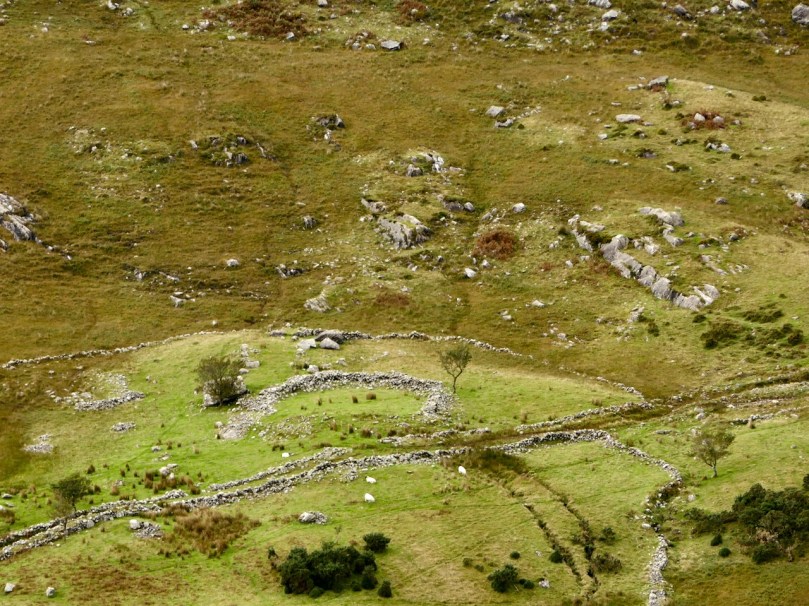
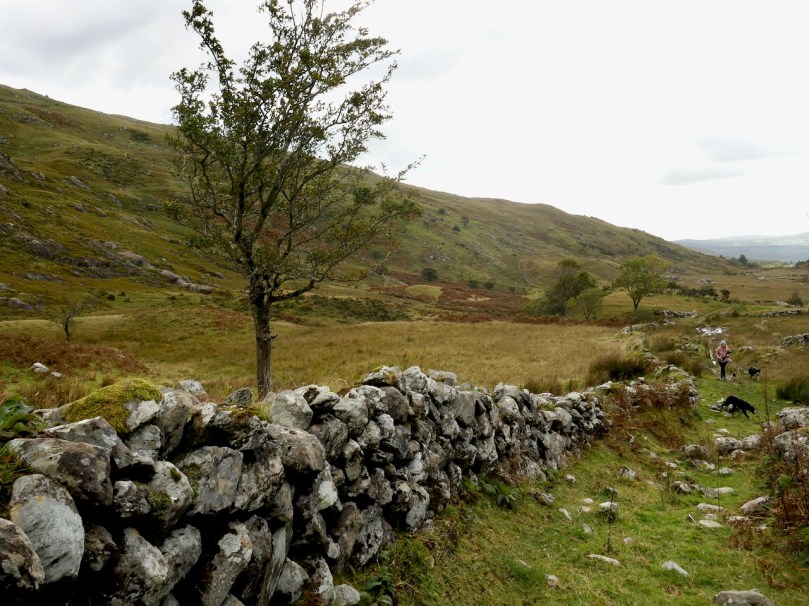
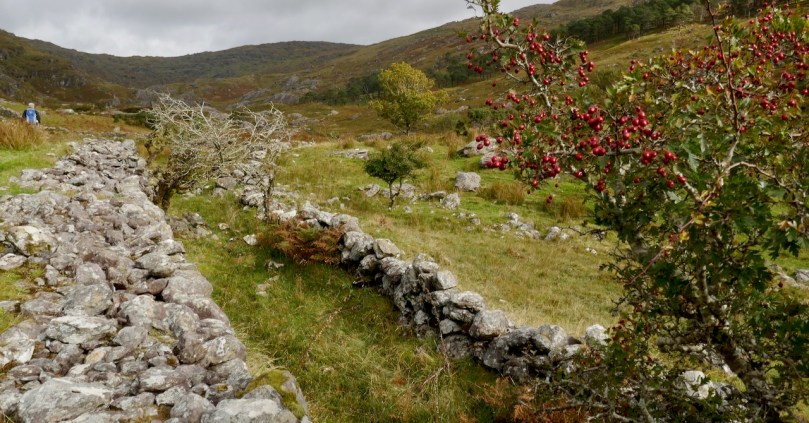
Leaving the megalith, we followed the course of the stream up the valley, mostly trying to select higher and slightly dryer ground, and trying not to get too distracted by the oh-so-photographical scenery all around us. Ruins of small stone cottages dotted the landscape, and a tiny cart track runs the length of the valley almost to the Bealick.

The National Monuments inventory also lists a cashel, two enclosures, and two hut sites in the valley. We passed the Cashel half way between Furze Hill and the Bealick, although we actually obtained the best views of it from the Priests Leap Road afterwards.

The upper photograph shows Furze Hill, the dark patch on the left, and the Bealick just above the bend in the river. The cashel is half way between them. The lower photograph is a closer look at the cashel

Cashels are ring forts made of stone rather than earthen banks. They are considered to be the farmhouse enclosures of high-status individuals (you can see an exceptionally good example at Knockdrum – see Robert’s post Knockdrum Stone Fort to understand how they functioned). This one is clear but very ruined, circular in plan, about 17m across.

It probably dates either to the late Iron Age or the Early Medieval Period – anywhere in the first millennium AD. Like other cashels, it has clear sight-lines down the valley and was built to be visible and a statement of status and power.

We didn’t hike up to the enclosures or hut sites further up the valley – a walk for another day. I think Peter (above) is already plotting his course up there. The most southerly of the enclosures sounds interesting, with an entrance marked by upright stones and a levelled interior. There is no way of knowing how old these are, of course, but taken with the megalithic structure and the cashel, they do indicate that this valley has been lived in and worked for thousands of years. 

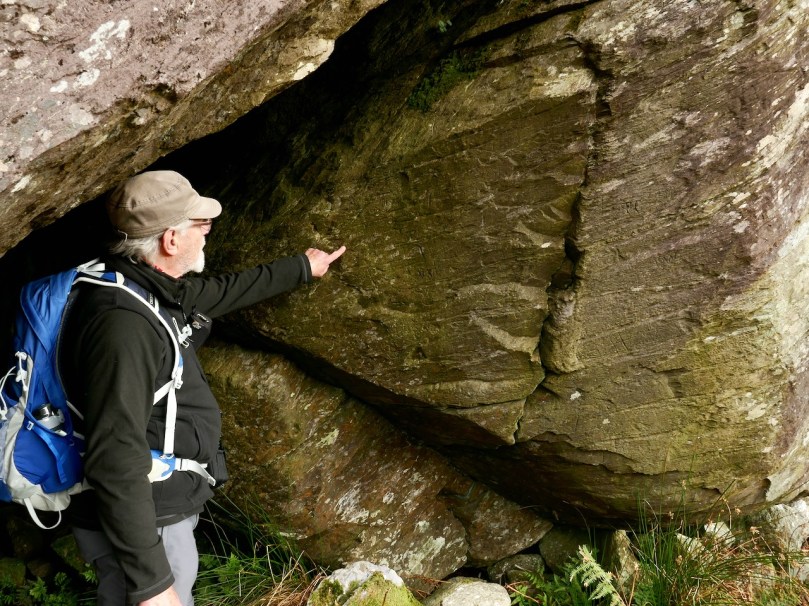
And then there’s the Bealick itself – the three ‘caves’ formed by massive rocks leaning against each other, two of which contain the rock scribings. In the way of such unique places they become special features of the landscape and take on a mantle of history. In this case, the Bealick was a Mass Rock, a home, a sheep-shelter, and a mysterious repository of enigmatic markings. 

On our walk yesterday we became aware that we were not the only ones in the valley. Along came Mary, with four very well-behaved dogs, on the look-out, she told us, for her brother’s cattle.

From the top: a field enclosed with stone walls runs up the steep slope; lazy beds in an old field; a ruined cottage surrounded by tiny haggards (a haggard is a small enclosure beside a house)

She explained that the land was commonage and that it hadn’t been lived in, in living memory – probably abandoned not long after the Famine, she thought. She pointed out locations of what she called ‘cowlocks’ or small homestead here and there, with their associated potato patches recognisable by the lazy bed ridges still visible in the small fields. She told us the prominent knoll we had passed was called Furze Hill. 

She pointed to a cliff above the Bealick (both images above) and named it as `Carrignasprogue’. A direct transliteration from Irish, this is Carraig na Spioróg, or Rock of the Sparrowhawks. It’s a particularly dangerous place for sheep, she said, as they tend to get trapped at the bottom of the sheer part and have to be rescued. Every field, every bend on the river and every prominent rock would have had its own name, enabling those who lived in the valley to know exactly what part was being referred to. 

Nowadays, several families share the valley, grazing sheep and cattle in it and for the most part leaving them to their own devices. The grazing has kept the valley relatively clear – we saw little evidence of overgrowth of gorse or bracken and none of the rhododendron invasions that plague the Killarney National Park not so far away. One hesitates to use the word pristine nowadays, but the sense I have is of a remote place that hasn’t changed much in hundreds of years. Long may it remain so.

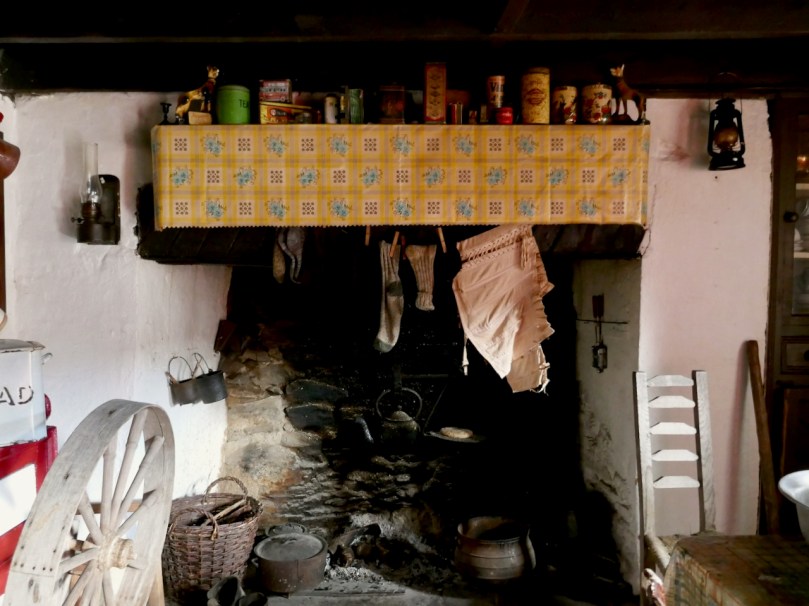
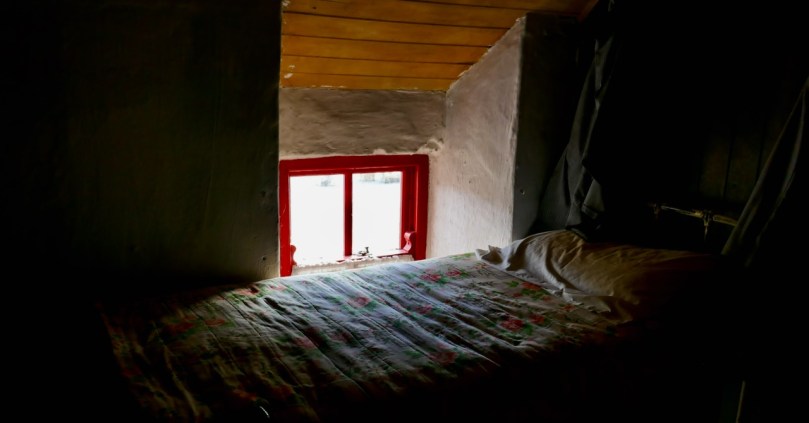
We drove home a circuitous route, up over the Priests Leap Road into Kerry and back over the Caha Pass into Cork. We were delighted to find Molly Gallivan’s open and serving tea and scones. There’s a tiny cottage attached, reconstructed in the style of the traditional Irish farmhouse and I was especially struck by this bedroom – it could have been in one of those tiny Cowlocks we passed by in the valley earlier.

A Signal Success in Irish Engineering – Part 2: Ballyroon Mountain

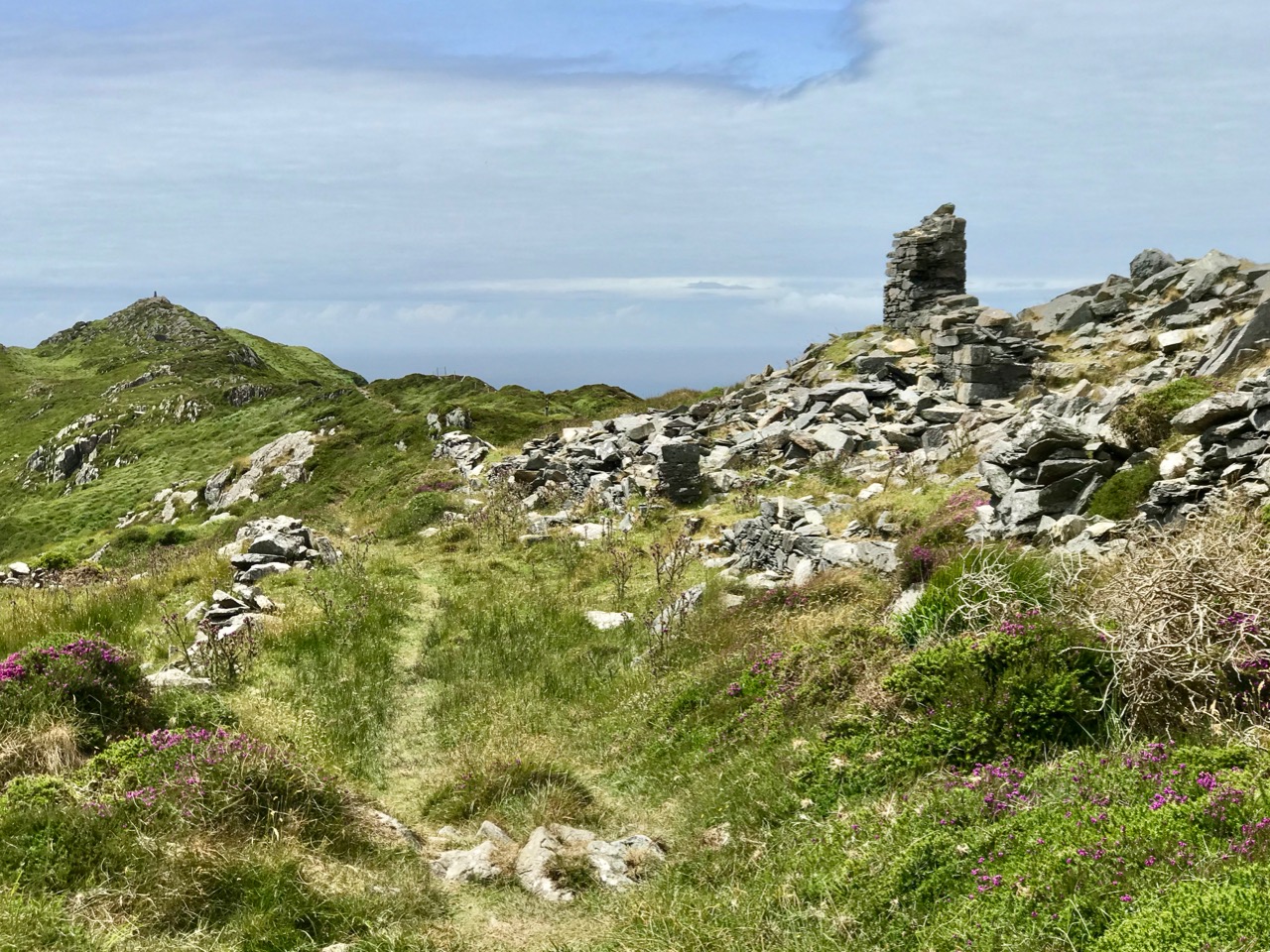
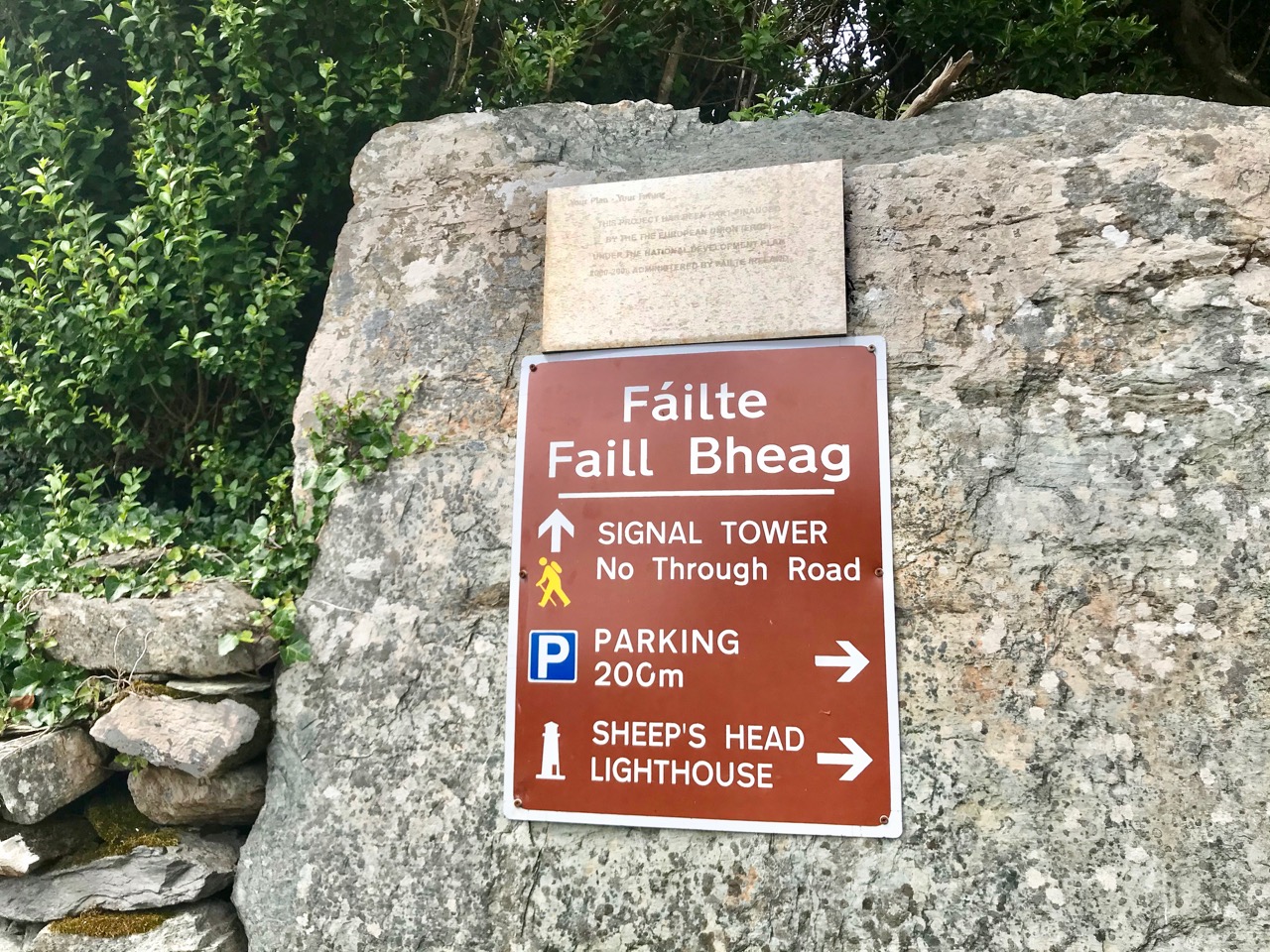
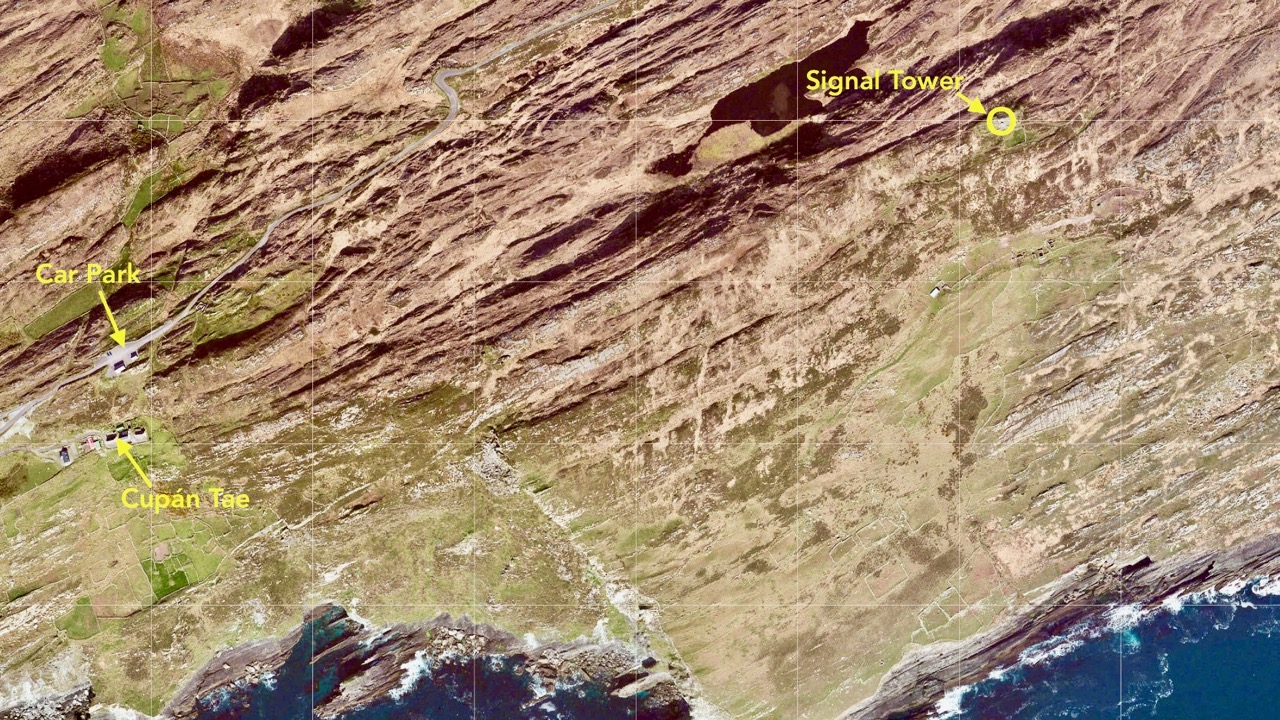
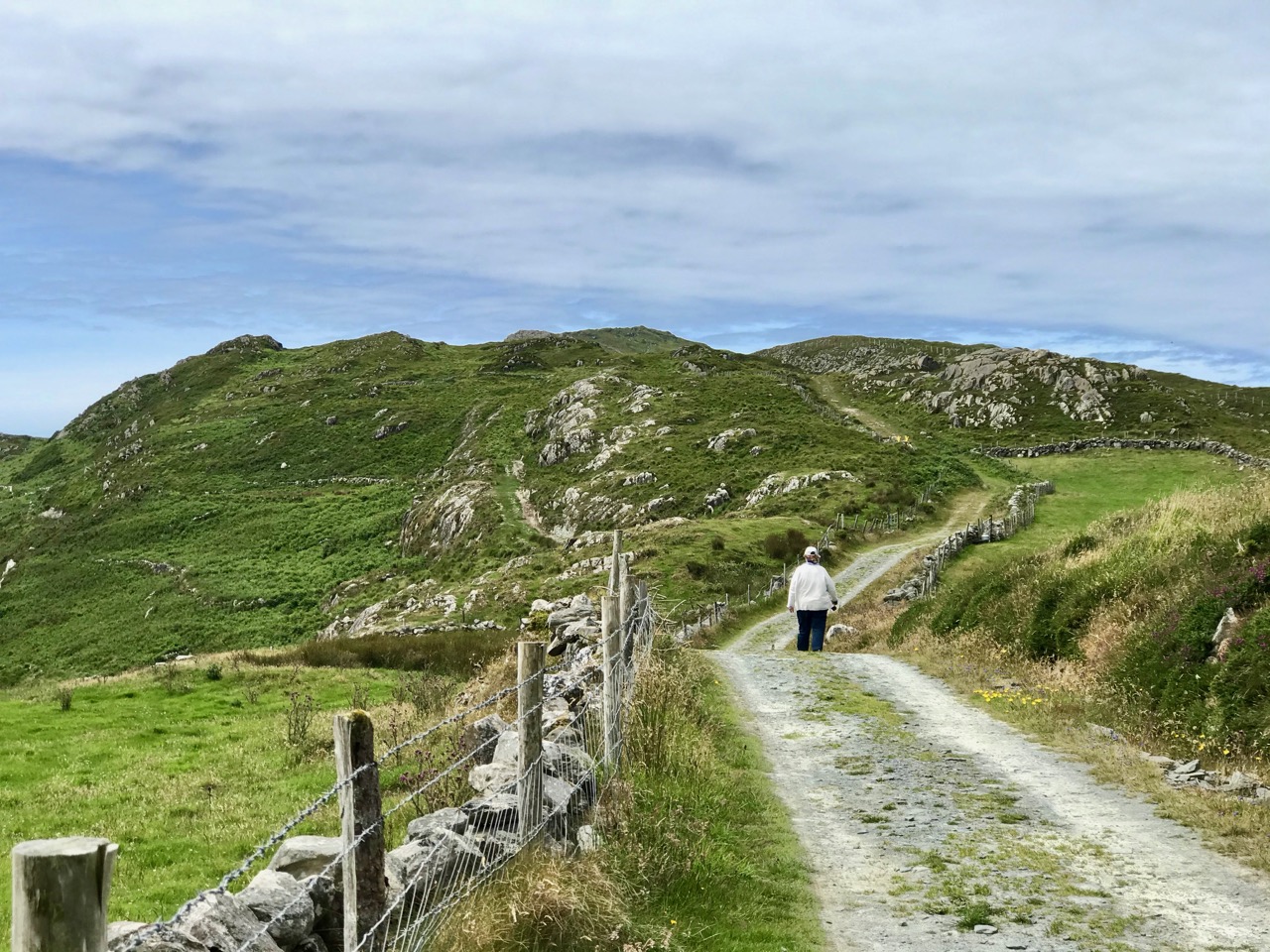
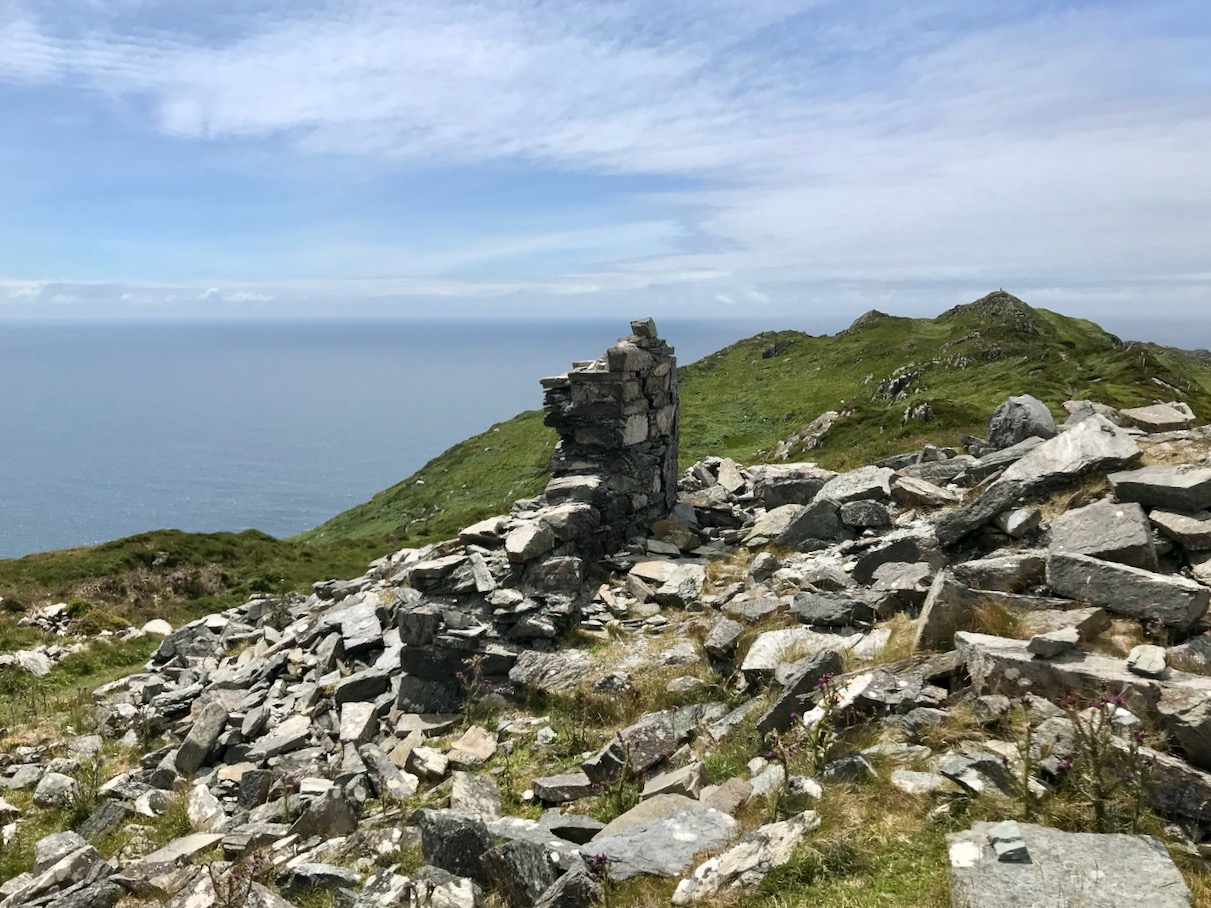
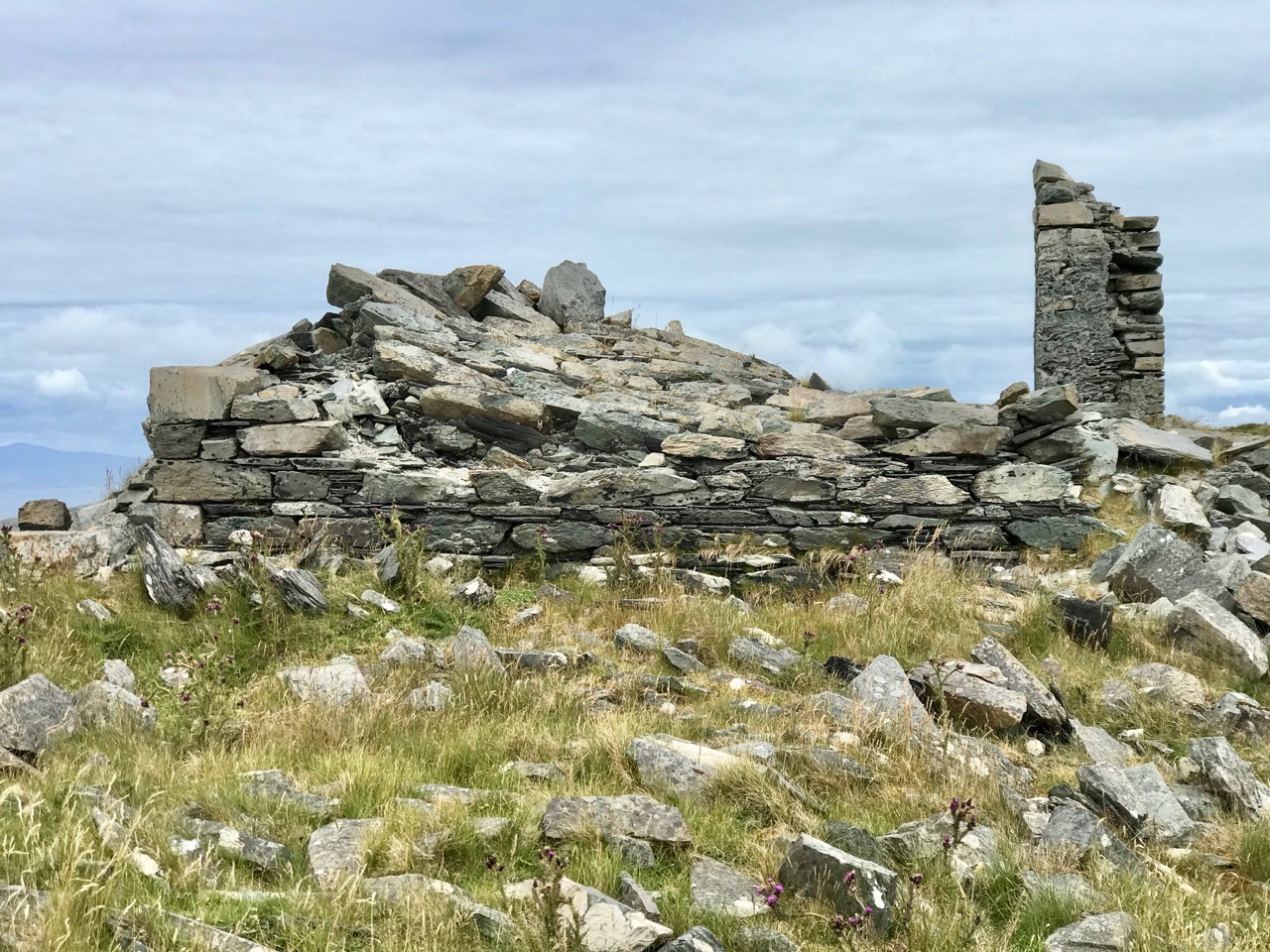
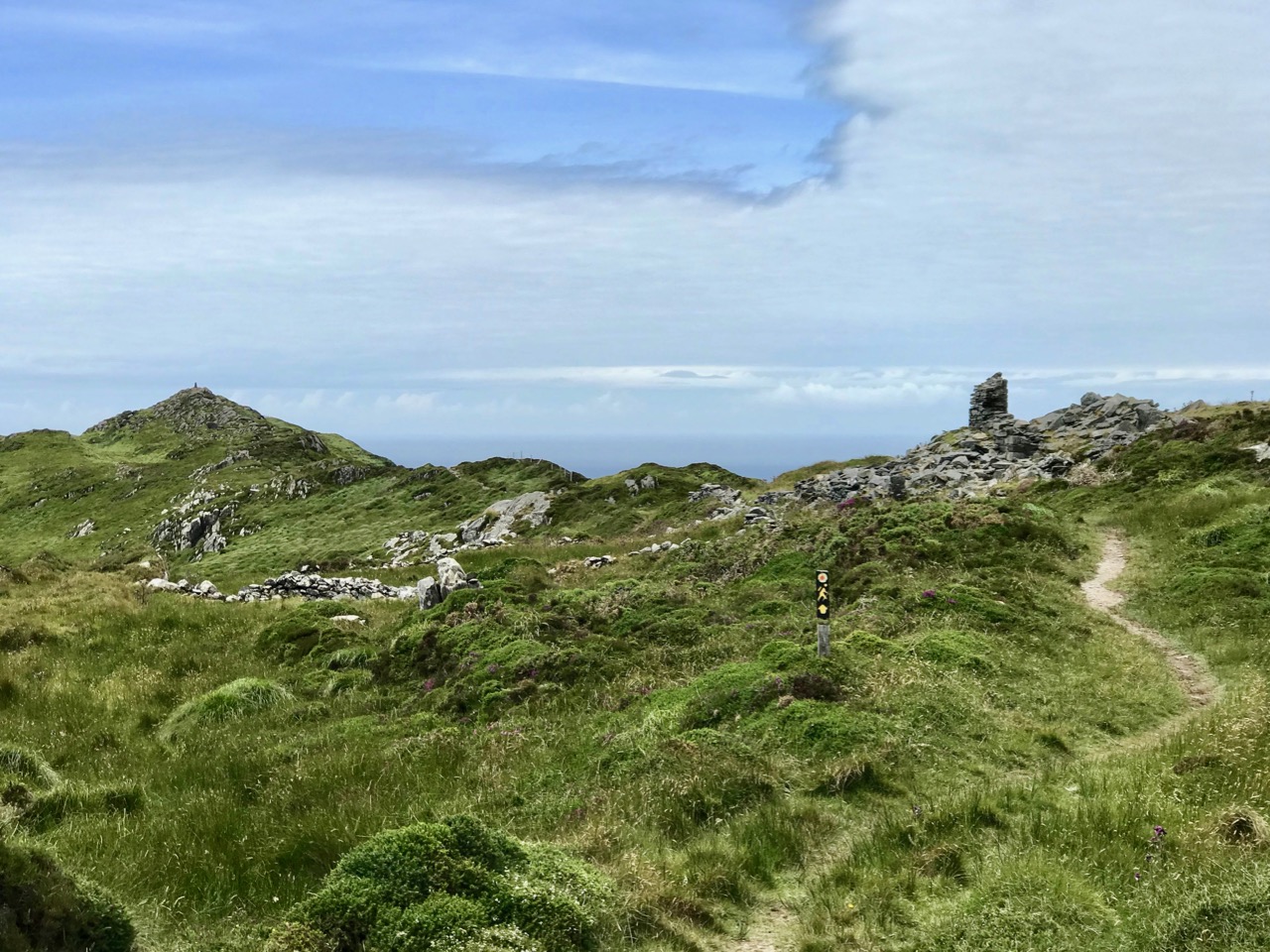
Following on from last week’s account of Kedge Point signal tower, our second foray in search of Ireland’s coastal communication stations dating from the early years of the nineteenth century takes us to the Sheep’s Head Peninsula in West Cork. The waymarked trail that passes the now ruined Ballyroon Mountain signal tower is on the Sheep’s Head Way and is fully accessible from the parking area at Fáilte Faill Bheag (if walking from east to west), or from the Cupán Tae tea-room parking area at the very end of the road (if walking from west to east). Although there is very little of this signal tower left standing – it was largely destroyed by a storm in 1990 – the walk itself is a visually stimulating experience, not to be missed! As with the majority of the remaining signal station sites, the location here is on high ground with prominent panoramic views in all directions.

When walking the off-road Sheep’s Head Way trails, please remember that dogs are not allowed: this is one of the conditions that have been agreed with landowners when the trail routes were negotiated, so it must be respected by all users.

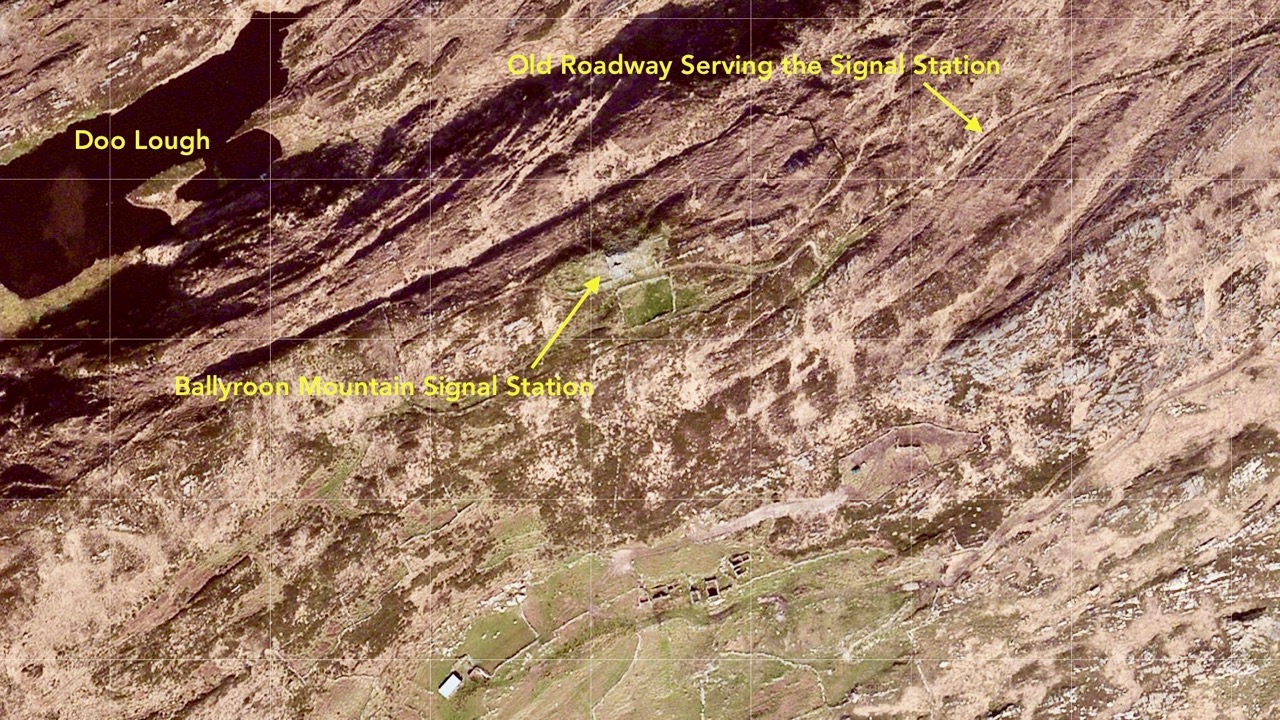
These two aerial images show the remote setting of this signal station. The site was developed a little over two hundred years ago, and one of the necessities was providing a firm trackway along which to bring building materials, and also to provide efficient access to and from the signal tower when in use. In the top image, also, you can make out a substantial walled field to the south of the tower: this would have been used to pen ponies or donkeys and – possibly – a goat for milk.

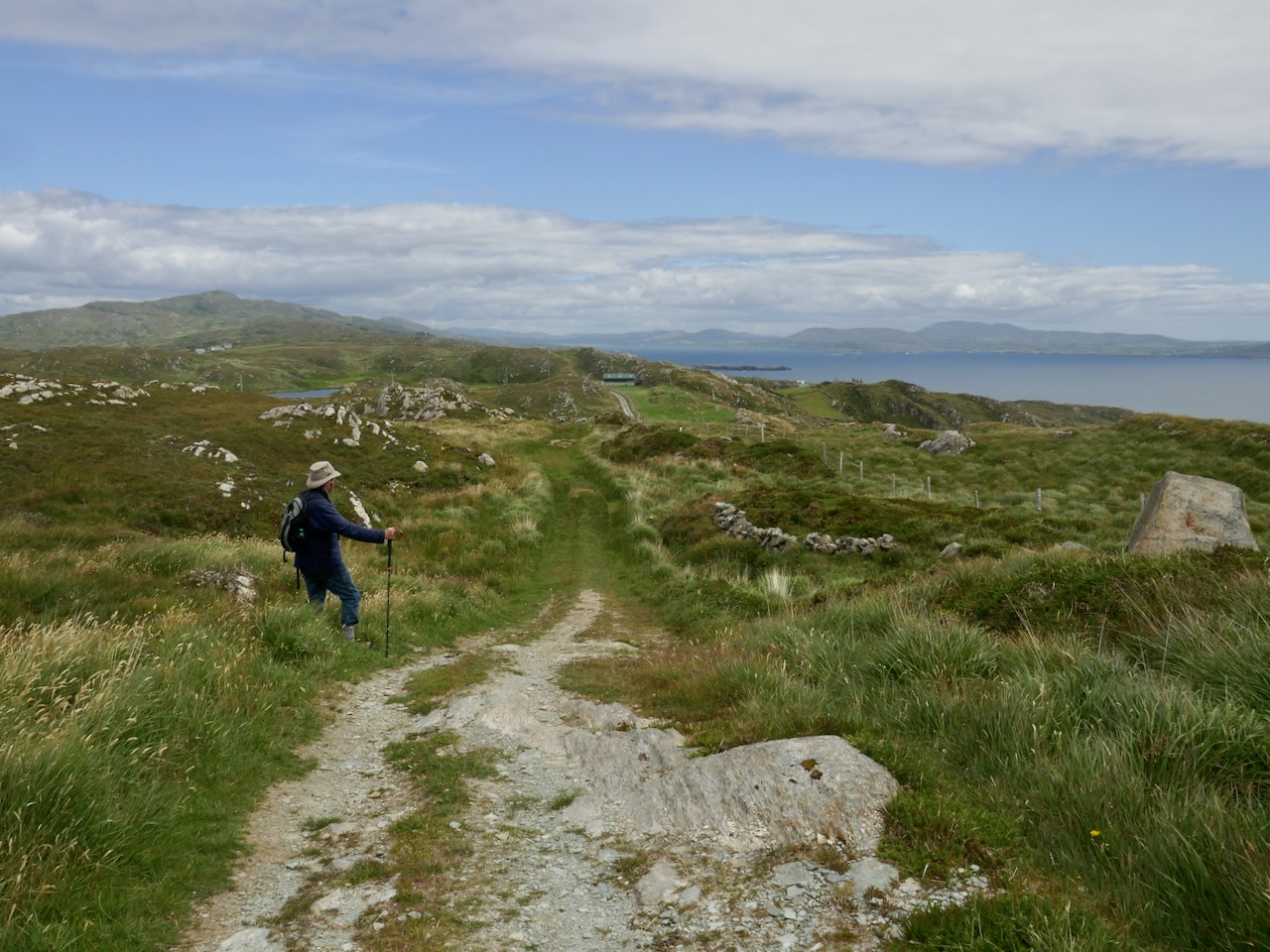
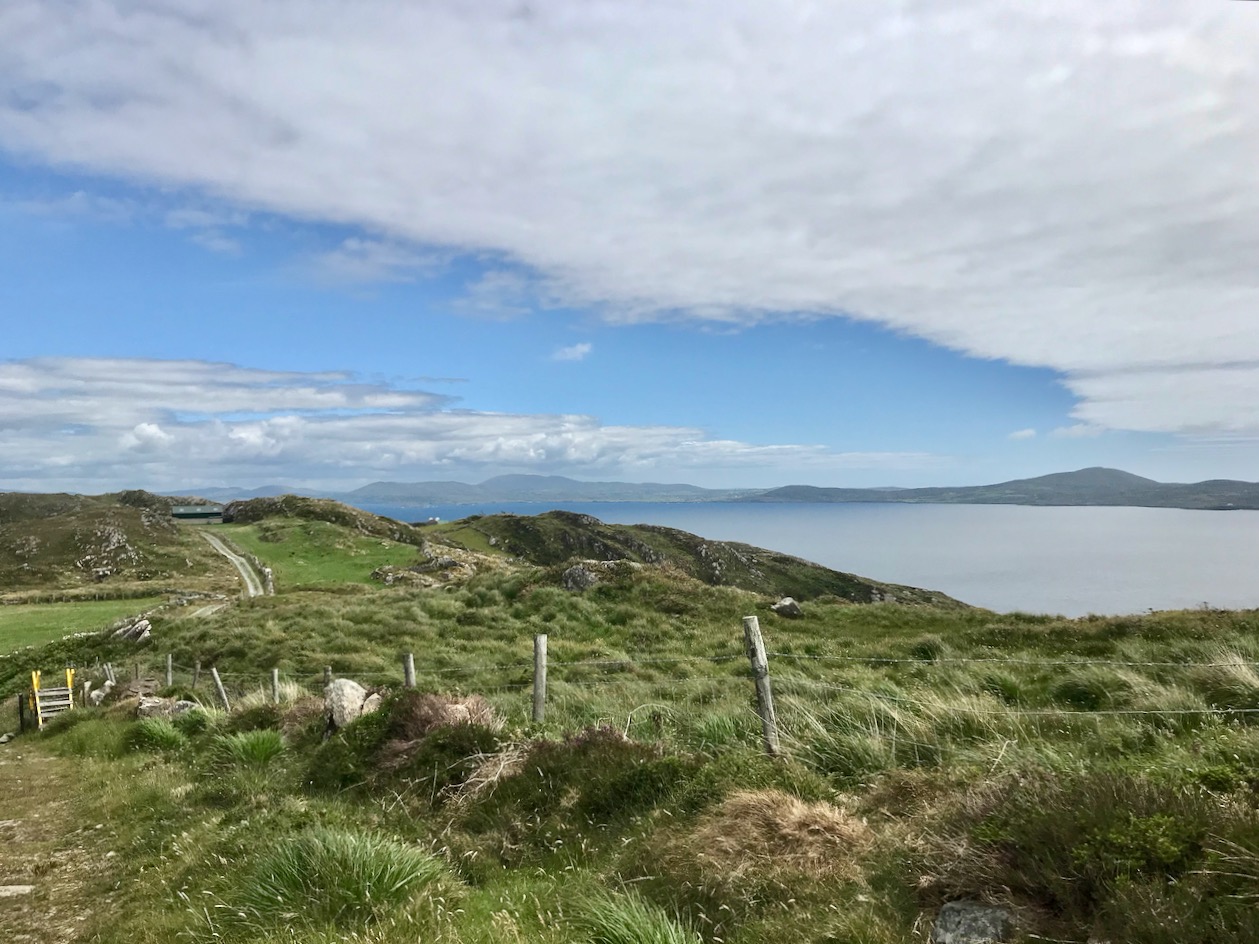
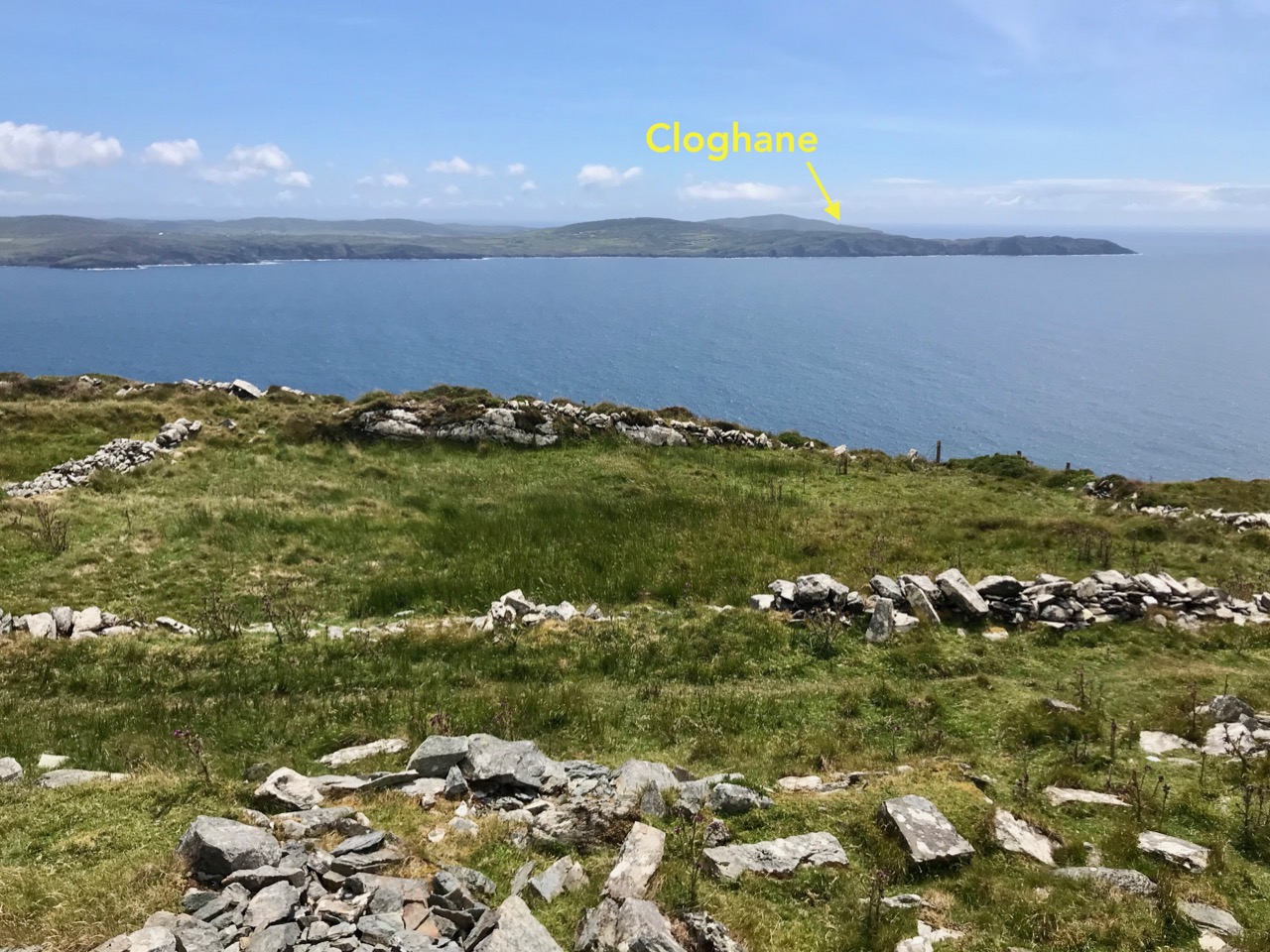
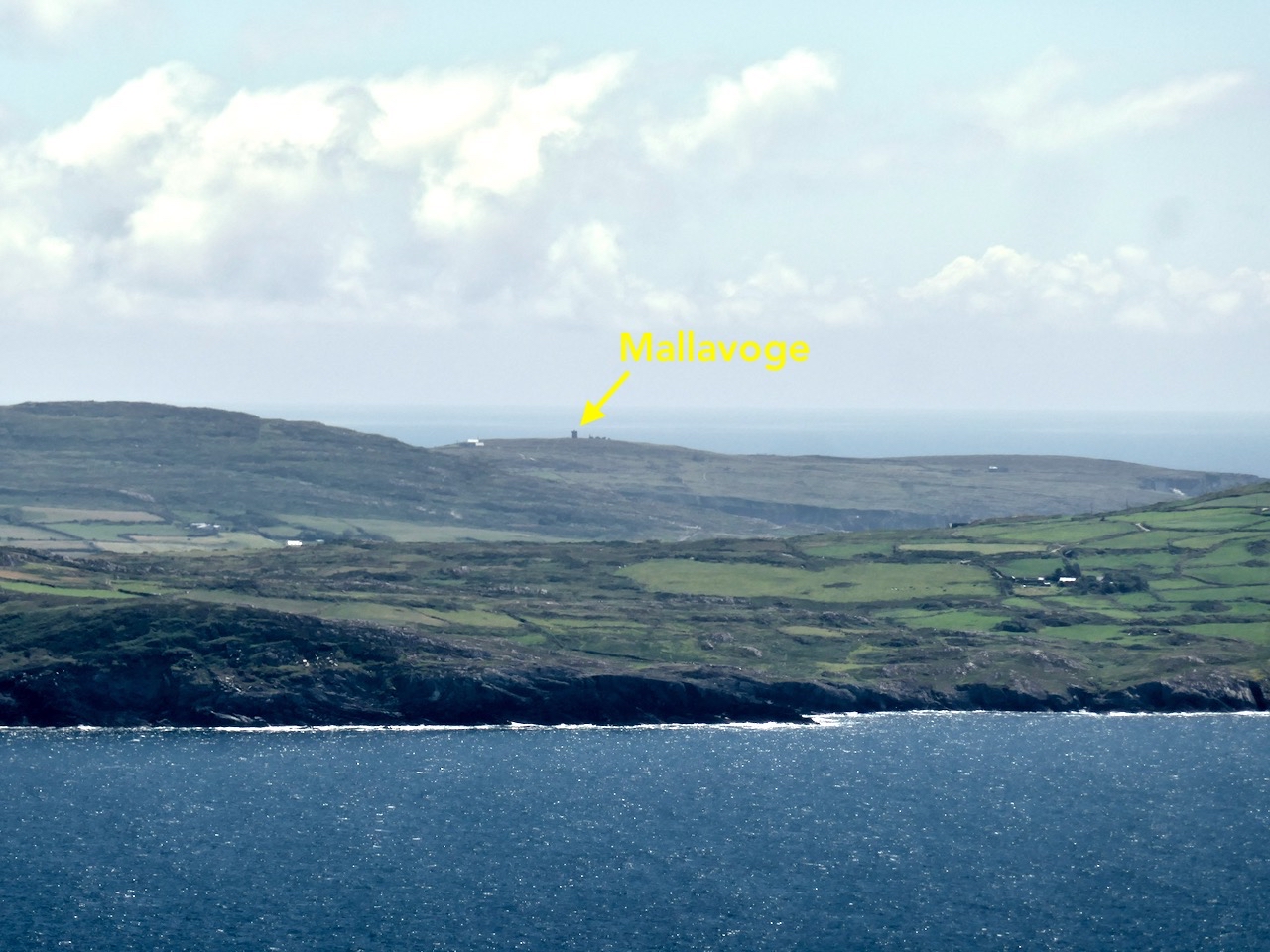
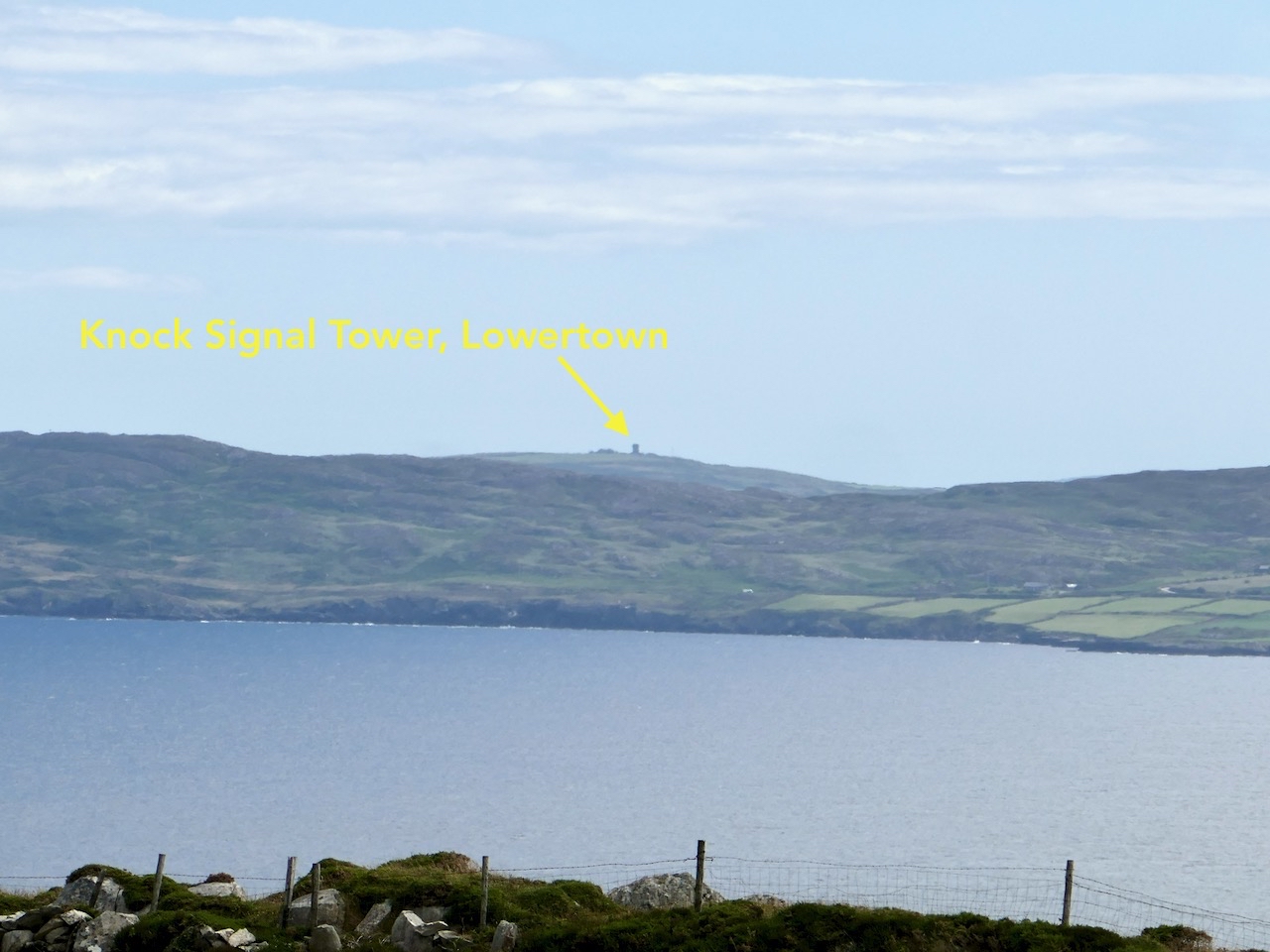
The track that served the signal station in its heyday has become the ‘green road’ that takes you there today. In bad weather it’s a bit wet underfoot in places, but otherwise it is a joy to walk and, on a good clear day, provides spectacular views in all directions. Look out for the other signal towers that can be seen from this site: Cloghane on Mizen Head, Mallavoge on Brow Head, Derrycreeveen on the Beara Peninsula, and Knock, which is an inland site near Lowertown, Schull.

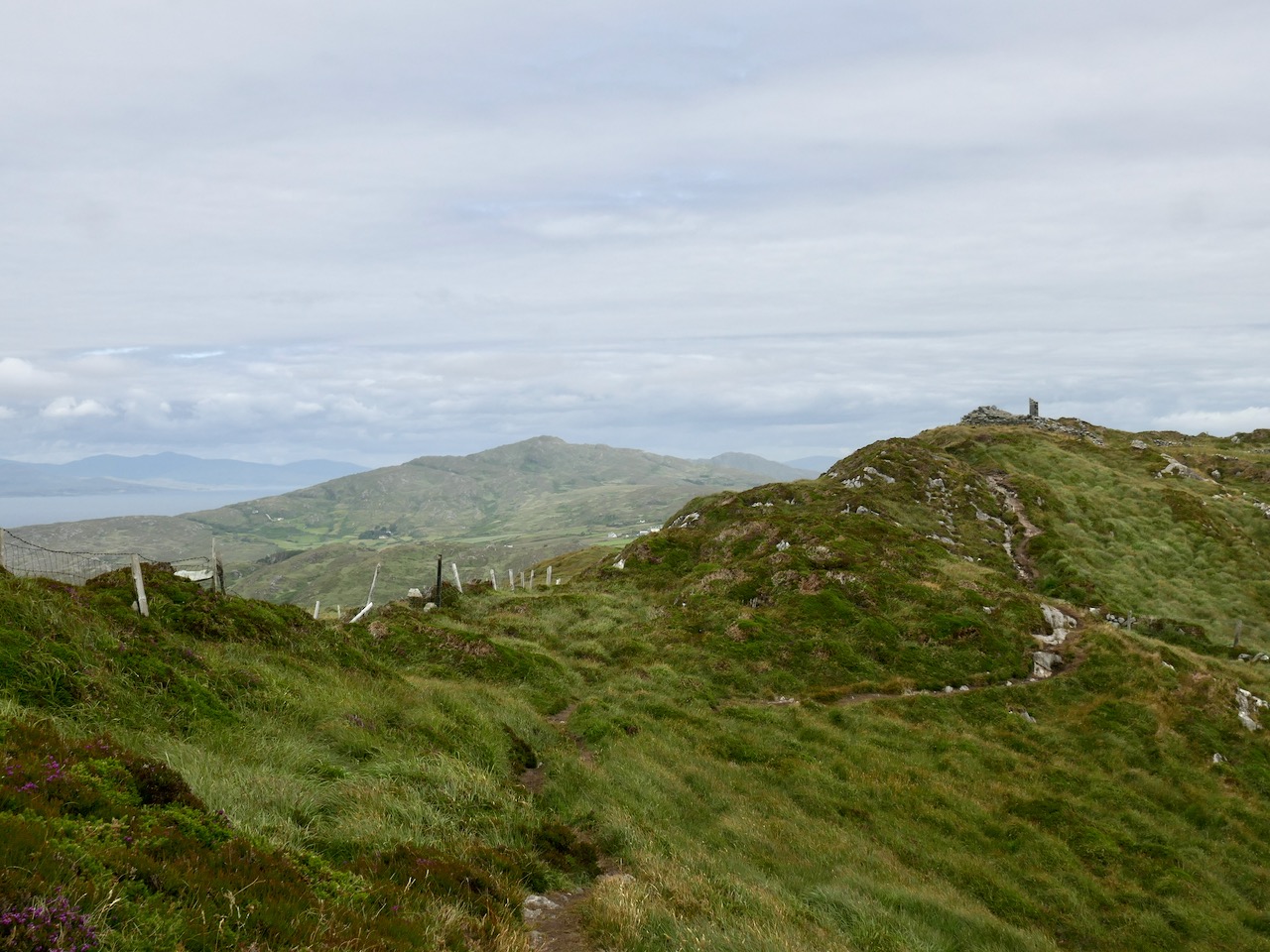
In the upper picture here you are looking back towards the vestigial Ballyroon signal tower from the higher ground on the footpath from the Cupán Tae tea-room, while the lower picture shows the ‘pimple’ on the horizon which is the Cloghane signal tower at Mizen Head seen from Ballyroon.

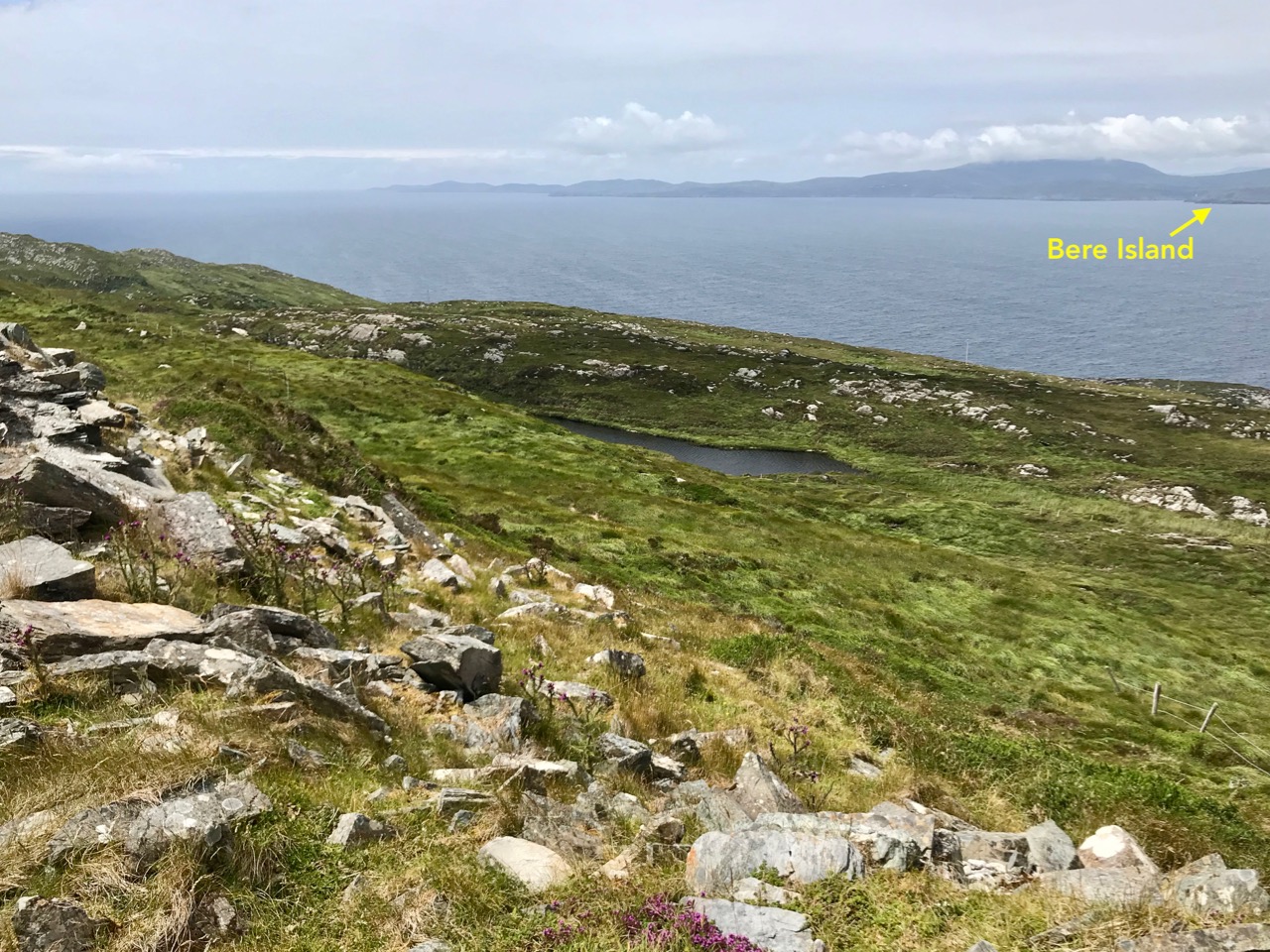
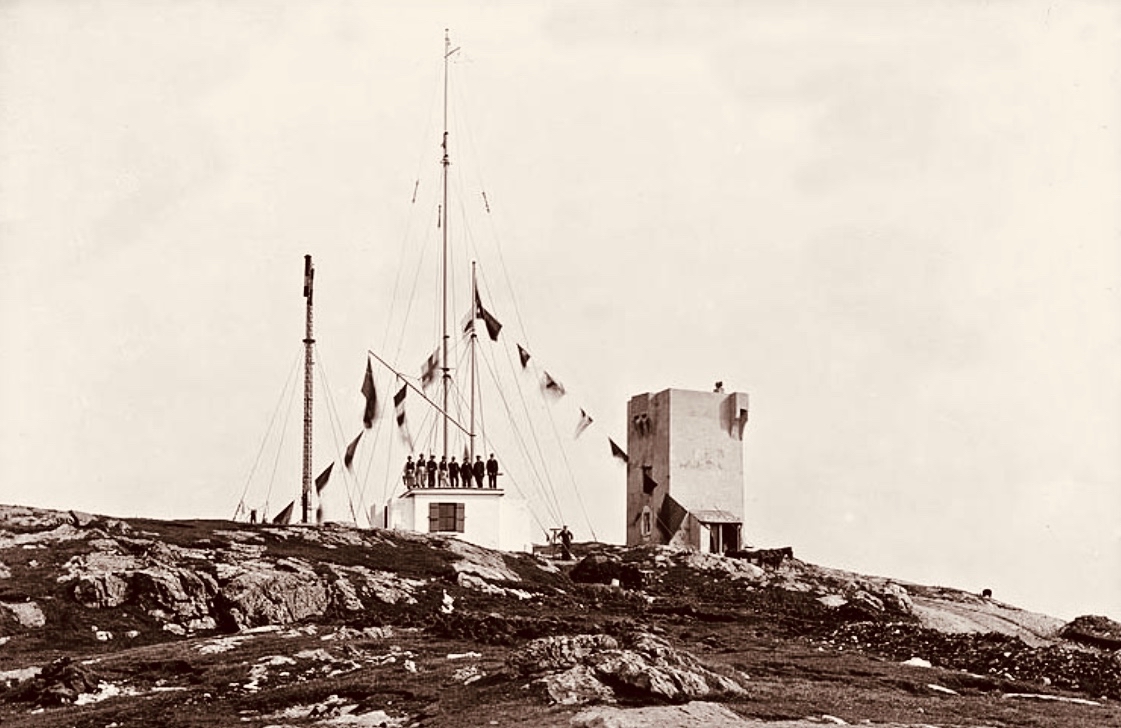
The upper picture shows the Mallavoge signal tower at Brow Head (more about that site here), while the Knock signal tower is seen in the middle picture, which was taken close to the start of the Ballyroon Mountain trail. Both these photographs have the benefit of a modern zoom camera lens, but imagine how good the optics of the telescopes needed to be for those who manned the towers in the early 1800s. Not only did these silhouettes have to be clearly defined, but the flag and ball signals that were put up on the associated masts had to be readable. The lower picture looks north across Doo Lough towards Bere Island, where there were extensive fortifications in Napoleonic times, including a signal tower. Below is a photo of the Malin Head signal station, Co Donegal, dating from 1902 (National Library of Ireland Collection). There the station was kept in use for strategic purposes long after the Napoleonic era and became the site for one of Marconi’s telegraph stations. While the flags in this picture are not from the earlier times, it gives you some idea of what had to be picked out from a great distance. By eye, put the scale of the tower in this photo to the scale of the distant towers in the images  above: it’s hard to fathom how accuracy was possible yet messages were dispatched and received successfully. It evidently took about four minutes to put up a message on the mast: allowing for reading and deciphering, I would expect a message to be sent from Sheep’s Head to Cork via 11 towers in about an hour, or all the way to Dublin via 33 towers in three hours. This would depend on daylight and good visibility at all times.

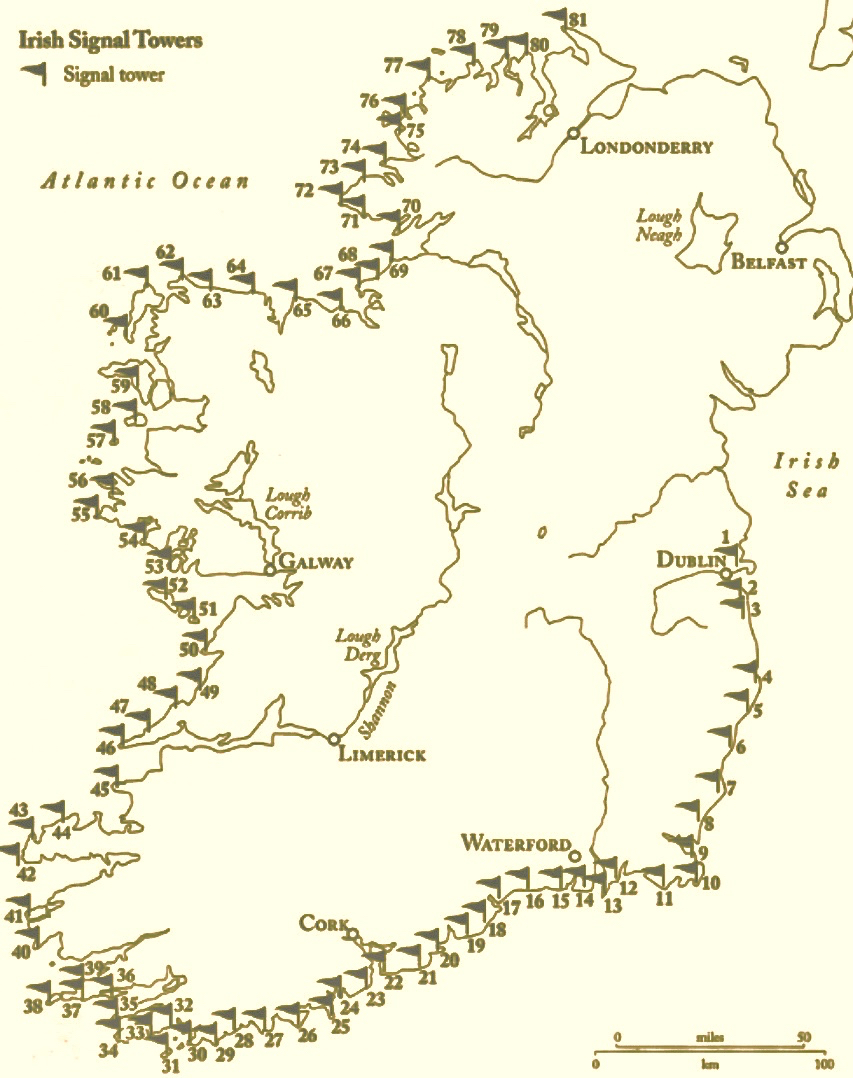
The most comprehensive map of Ireland’s signal tower distrIbution that I have found so far is this one drawn for the authoritative book on the subject Billy Pitt had them built: Napoleonic towers in Ireland by Bill Clements, The Holliwell Press 2013. This clearly shows that invasion was expected to come from the west or south, rather than from the more naturally protected north-east coast.

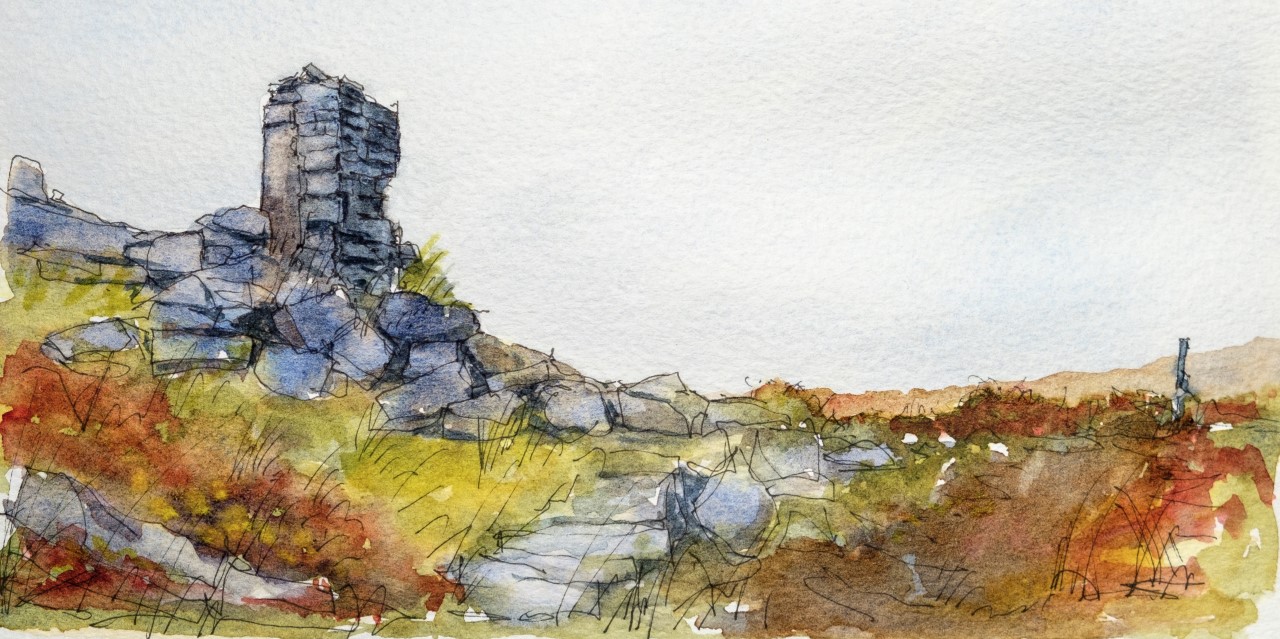
The selection of photographs above shows the state of the ruined tower at Ballyroon Mountain today (2020). Although there’s not much of a structure left it’s still a poignant memorial to those who built and operated this and all the other links in the communication chain that substantially encircles the coastline of Ireland. It’s a legacy well worth celebrating, and we are fortunate in Cork County that we have so many examples of the building type, some of which, like this one, are accessible to visitors. We will be exploring more of them in due course. To neatly finish off this post, here is an exquisite drawing of the Ballyroon tower executed by our friend Peter Clarke who writes the Hikelines series. It’s a lovely sketch which, for me, captures the slightly edgy romanticism of this beguiling location. Thank you, Peter.

Next time: Signal Towers Part 3 – Walking into history!

The Stone Circles of West Cork: Five-Stone Circles

About half of the stone circles in the Cork-Kerry complex consist of only five stones, and constitute a sub-group know as Five-stone Circles. While they share many similarities with the Multiple-stone Circles, they are a unique class of monument. I’ve described the Multiples in detail here, so if you need to refresh your memory about that group, you can do it now and then come back and read on. While most of the photographs in this post are my own, I gratefully acknowledge the generosity of Ej Carr in allowing me to use two images (above and the last one in the post) of the Uragh Five-stone Circle and Standing Stone and of Peter Clarke for his drawing of the circle at Cashelkeelty (below).

Most strikingly, the Five-stone Circles follow the pattern of the larger ones in having two portal stones, usually the tallest orthostat of the circle, across from a recumbent, or axial stone which is usually the shortest. In describing them here, I am following the work of Seán Ó Núalláin, who surveyed and described all the Cork-Kerry Stone Circles in 1975. While his comprehensive paper is  45 years old, it is still the most complete work on the Stone Circles of Cork and Kerry (The Journal of the Royal Society of Antiquaries of Ireland, Vol. 105 (1975), pp. 83-131). 

Lettergorman, with its large block of sparkling quartz

Most of the Five-stone Circles I have seen now are complete or almost complete, although some of the orthostats have fallen. They are actually in remarkably good condition – perhaps their small size has offered them some protection against the need to ‘improve’ farmland. some have been filled in with field stones but most are simply marooned in little islands of grass in the middle of a field, occasionally with a protective fence to keep cattle away.

Glanbrack, at the top of a small hill with views to all sides. This is one of the ones that Ó Núalláin thinks may have only ever had three stones. Note the two outliers

Two of the Five-stone Circles may in fact, according to Ó Núalláin, be actually Three-stone – it is assumed that both Cashelkeelty and Glanbrack had two more stones originally, but he muses that a setting of three stones could be seen as representing the ultimate degeneration of the “circle” concept.

This is Clodagh Five-stone Circle, also with two outliers immediately outside the circle. There is another standing stone pair nearby

Neither are they truly circular – in fact they are mostly D-shaped, with the axial stone being the straight edge of the D. This is a function of their size – the axial stone, with its straight edge, represents a much bigger proportion of the circle that it would in a large Multiple-stone Circle, but it also brings up the issue of whether the circle shape is truly essential to the functions of this type of monument.

Hard to make out exactly what’s what at Inchybegga Five-stone Circle, since the stones are small and the circle is disturbed and filled with field stones

The axis of the Five-stone Circles, that is, the direction of a line drawn between the portal stones across the recumbent, is generally NE/SW. This orientation is not exact, but most fall within a few degrees of it. Ó Núalláin agrees with Aubrey Burl in his analysis of the Scottish circles (and our own observations at the circles confirm this) when he says

Thus the circles are so aligned that the entrances face the side of the heavens on which the sun rises and the axial stones face the setting sun. The broad splay present, 107 degrees, suggests that a general alignment on the side of the heavens on which the sun rises or sets was what was required, and that precise alignments on specific celestial events were not in question. It is worth noting however that the axial stones tend to group in a sector indicating a winter rather than a summer position.


This intriguing site is Derryarkane Five-stone Circle. It is dominated by a Whitethorn Tree, traditionally never cut or interfered with. Under the tree the circle is complete although one of the portals has fallen. Robert is standing at an outlier about 35 metres away
As with the Multiple-stone Circles, there are peripheral monuments associated with Five-stone Circles – standing stones, stone pairs, stone alignments, quartz blocks, radial cairns, and in once case (Mill Little) boulder burials. None of these are inside the circle so are referred to as outliers.

One of the most complex of the Five-stone Circle sites is Kealkill (above), which includes two large standing stones (one of them is truly enormous) and a radial stone cairn.

Another complicated site is Cashelkeelty. Here (above) we see the Five-Stone Circle (although it may be the second of Ó Núalláin’s Three-stone Circles), a row of three stones to the left, and in the distance orthostats of what may have been a Multiple-stone Circle

There are two Five-stone Circles in the townland of Baurgorm. This one (above), the more northerly of the the two, has two outliers but only one is visible in this photo as the other has fallen. There are two other standing stone recorded nearby but we could not find them. The portal stones are unusually far apart in this circle.

This is the second of the Baurgorm circles and from it are visible this group of stones – a standing stone row (three stones of which only two are visible from where we were and of which one of the stones is split) and a single standing stone.

This is the Mill Little Complex which comprises a Five-stone Circle (visible to the right of and behind Simon Tuite of Monumental Ireland), a standing stone pair (foreground, with field stones around them) and three Boulder Burials. While there are many example of Multiple-stone Circles in association with Boulder Burials, it’s unusual to see them alongside the Five-stone Circles.

Ó Núalláin finds the morphology (size and shape) of the stones unremarkable, apart from noting that the stones in individual monuments are roughly similar in size and shape. However, there is a little more to say about it than that. While the recumbent is invariably flat-topped, the flanking stones can vary from a gently rounded curve, to a slant, to what looks like a deliberately shaped angular peak. Have they been chosen, or shaped, with some purpose in mind? Two examples (above and below) are shown here where the right flanking stone (to the right of the recumbent) appears to have been chosen for its pointed shape. The first is Cappaboy Beg, the smallest of the Five-stone Circles and the second is Inchireagh.
Even though the recumbent is usually the lowest stone in the circle, it’s not always the case. At Kealkill (below), for example, the recumbent is easily the largest and most dominant of the five stones.
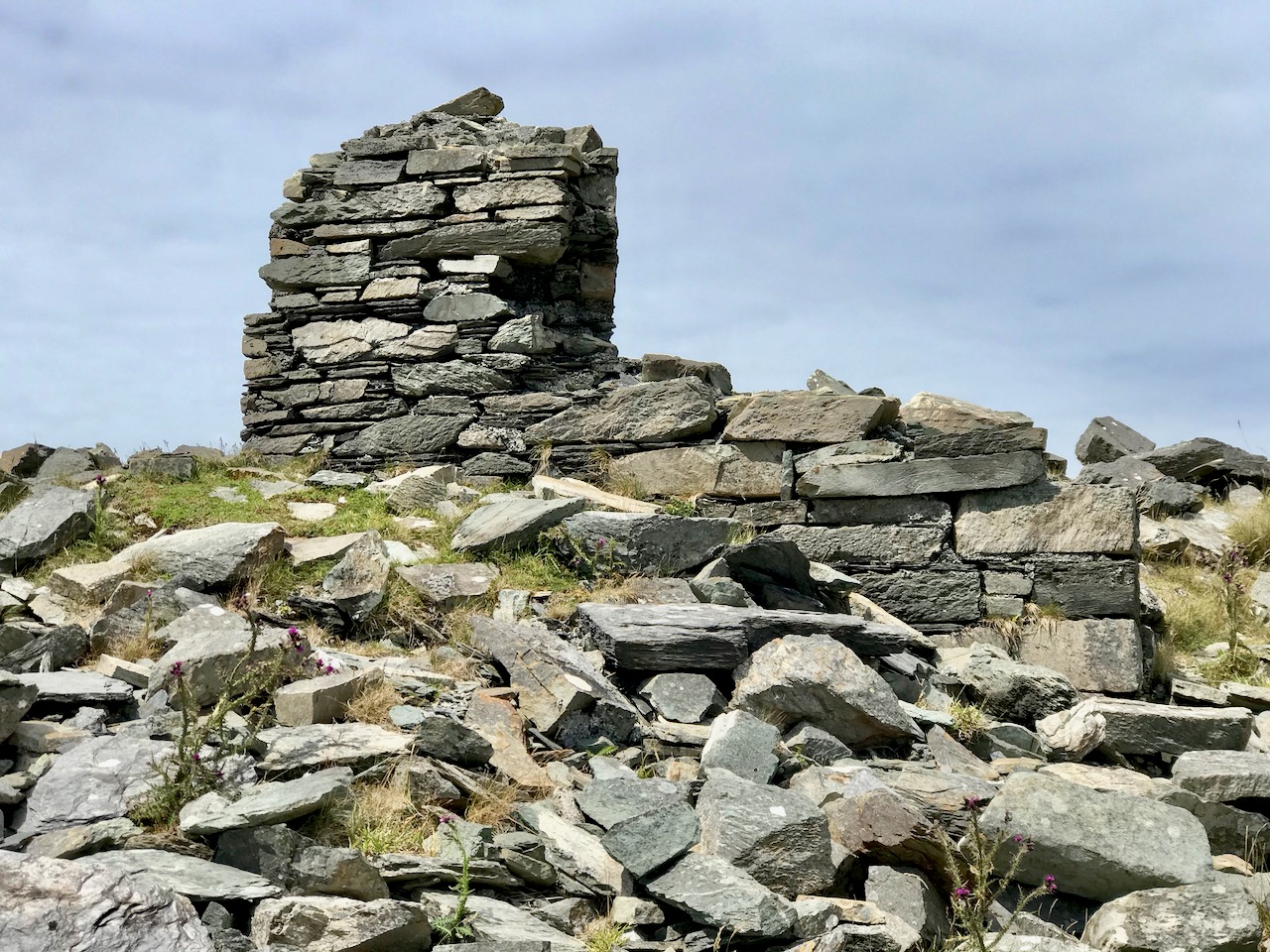
We cannot rely on archaeological evidence to reveal more about the nature and purpose of the Five-stone Circles. Only one has been scientifically excavated – the one that is part of the Kealkill complex. No burials or deposits were found. A one-day dig in the 1930’s at another site, Knocknakilla, revealed a sort of flat-stoned pavement in the interior, with lots of quartz fragments. Obviously this will be a fertile field for some future researcher.

Glanbrack (above) has cupmarks on the top surface of the recumbent. Our second photograph, taken from the further of the two outliers, reminded us that on the day we visited the field had been half-spread with slurry (we held our noses). While we were engrossed in our photographing and observing, we suddenly became aware that the tractor had arrived at the gate (can you see it?) to do the second half. We hot-footed it out of there!

One thing we have noticed from our visits is that the Five-stone circles are differently situated from the Multiple-stone circles. Whereas Multiple-stone Circles are often on a bench on a hillside, with wide views in one direction and rising ground in the other directions (Drombeg is typical), Five-stone circles are often on flat ground in a valley or at the top of slight eminences (like Cullomane, above, and Cappaboy Beg and Inchireagh below) but usually with panoramic views all around. While we have noted this casually, we would need to go back and check these observations more carefully before being too categorical about them.

In my next post in this series I will get started on the Discussion – what conclusions can be drawn about the nature and purpose of Stone Circles? What do we know about who built them and why? And once again, thank you to Ej Carr for this superb shot of Uragh.