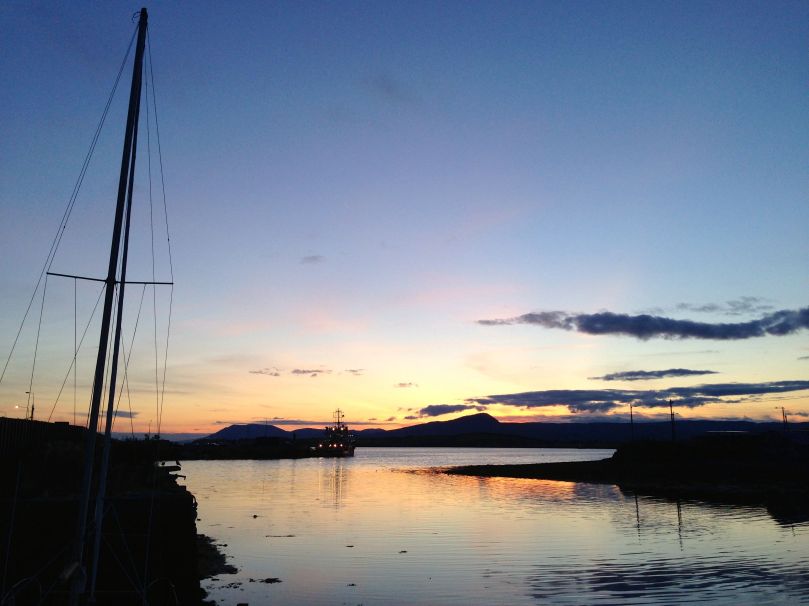
Martinmas

St Martin's Summer: late November on the Sheep's Head

St Martin’s Summer: late November on the Sheep’s Head

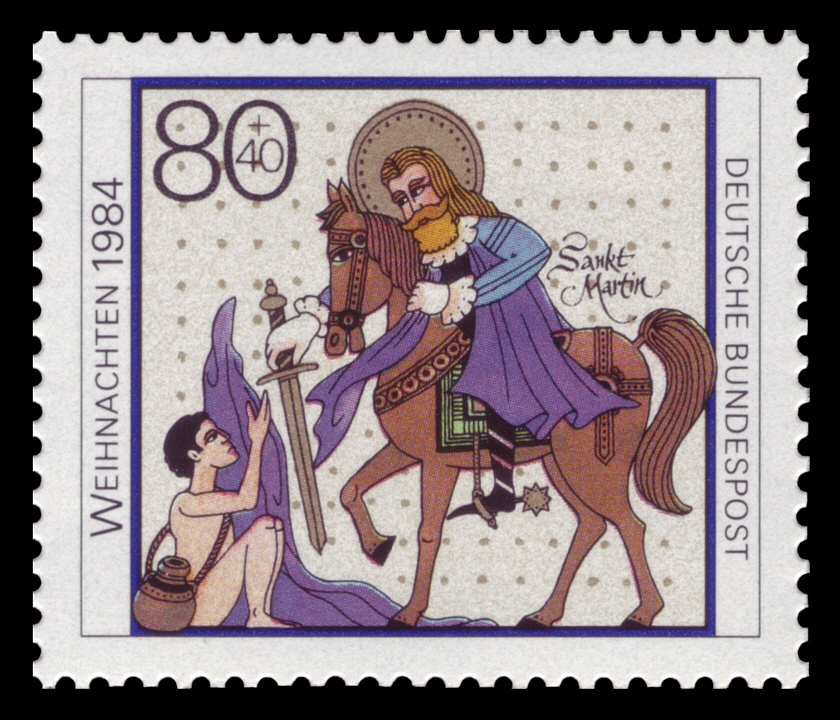
I’m used to pursuing the lives of the Irish Saints – often obscure, always fascinating – their legends tied up with folk tales and seasonal customs. But here we are, in Ireland, with a strong tradition of celebrating a continental Saint – St Martin of Tours.

St Martin of Tours adorns a German postage stamp

St Martin of Tours adorns a German postage stamp

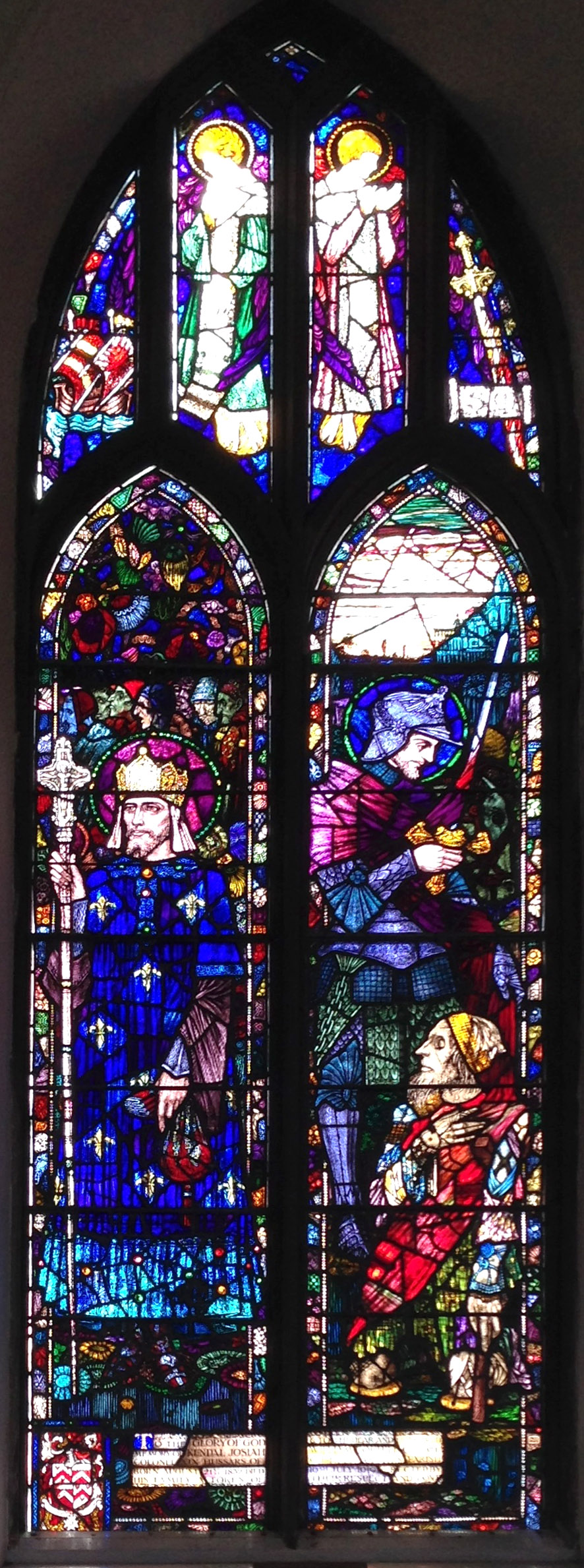
St Martin doesn’t appear to have any connection with Ireland at all – yet everyone here seems to know the one element of his story that is always told: in the winter storms he met a naked beggar and cut his own cloak in two, giving half to the beggar. There is a twist to the story – that same night Martin had a dream: he saw Jesus wrapped in the piece of cloak he had given away and Jesus said to him, “Martin has covered me with this garment.” Even though Martin was at that time a soldier in the Roman Army he sought to be baptised and then refused to fight as this was against Christian principles. In fact, he was the first recorded ‘Conscientious Objector’.

Harry Clarke's window in Castletownshend, showing St Martin and the Beggar in the right hand panel

Harry Clarke’s window in Castletownshend, showing St Martin and the Beggar in the right hand panel

St Martin’s Day is on 11 November and the season is known in Ireland as Martinmas. There are customs surrounding this time – still remembered in some rural districts. There is a whole chapter devoted to Martinmas in Kevin Danagher’s book The Year in Ireland (Mercier Press 1972). From this we learn that every family is to kill an animal of some kind “…and sprinkle the threshold with the blood, and do the same in the four corners of the house to exclude every kind of evil spirit from the dwelling where this sacrifice is made…”

In 1828 Amhlaoibh Ó Súilleabháin of Kilkenny recorded in his diary: “…The eleventh day, Tuesday. St Martin’s Day. No miller sets a wheel in motion today; no more than a spinning woman would set a spinning wheel going; nor does the farmer put his plough-team to plough. No work is done in which turning is necessary…” This might be because of a story that Martin was martyred when thrown into a mill stream and killed by the mill wheel. In fact the hagiography states that he died of old age.

Another Irish legend (from Wexford) relates that the fishing fleet was out one St Martin’s Day, when the Saint himself was observed walking on the waves towards the boats. He proceeded to tell them to put into harbour as fast as possible, despite the good weather and fishing conditions. All the fishermen who ignored the Saint’s warning drowned during a freak afternoon storm. Traditionally, Wexford fishermen will not go out to sea on Saint Martin’s Day.

St Martin is the patron saint of Geese. In England there are two ‘Goose Fairs’ held in the autumn, one at Tavistock near my old home on Dartmoor. I have been to that fair: geese and poultry are still in evidence, but I don’t know whether there is any direct link to our Saint. In the not-too-far-away Exeter Cathedral Close there is a Holy Well dedicated to St Martin.

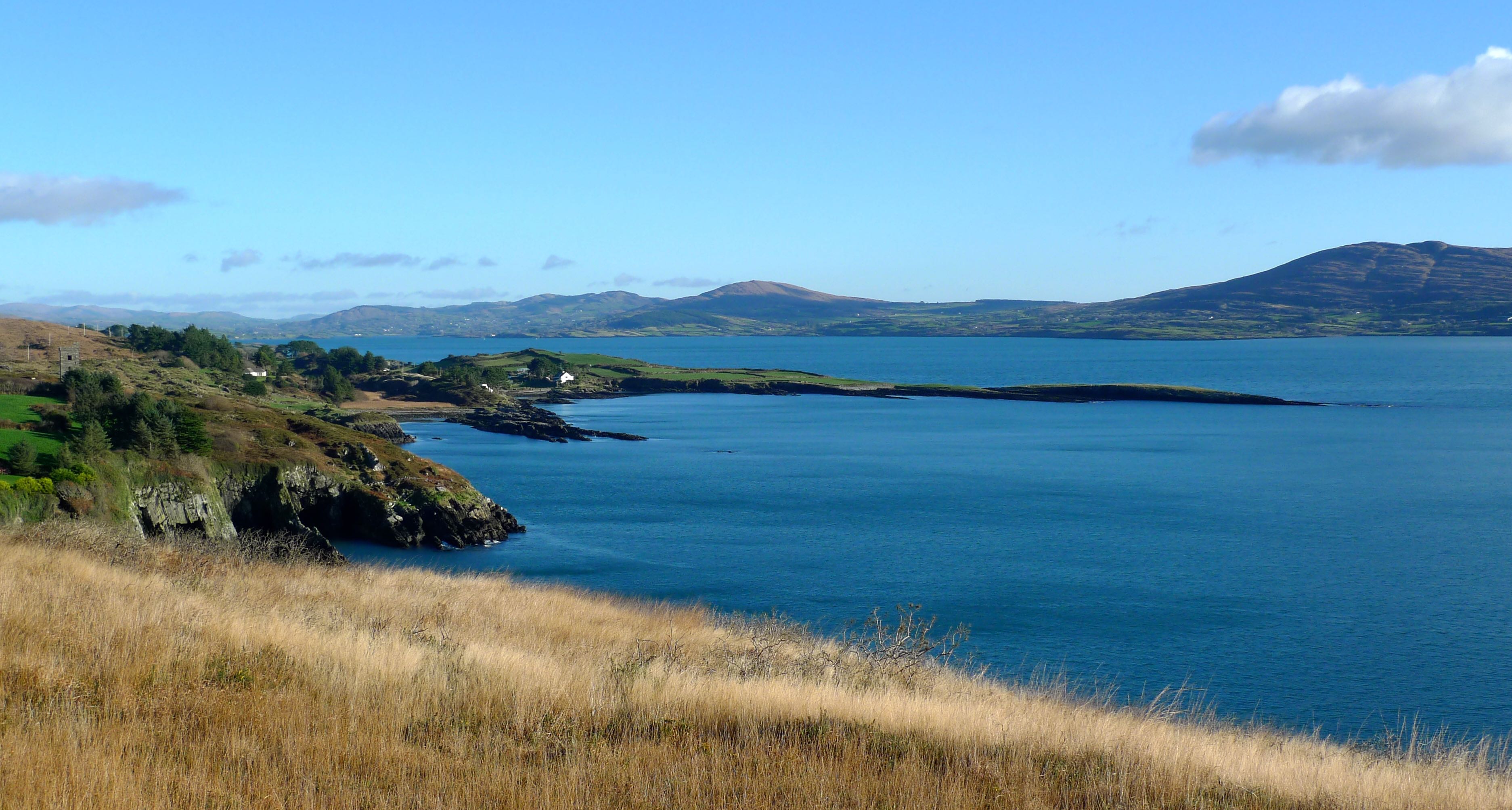
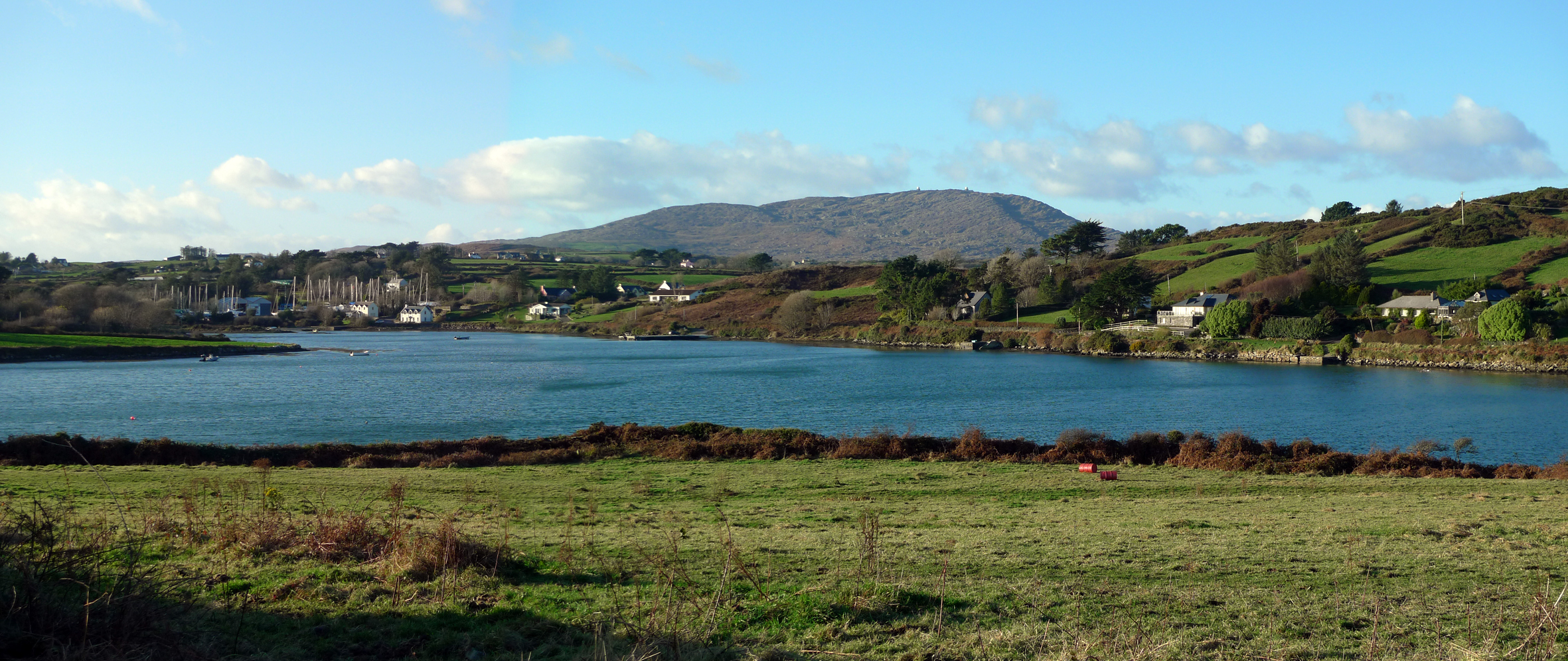
In England and Ireland they call any spell of good weather which occurs after 11th November ‘St Martin’s Summer’. We are having one of those at the moment.

We are also now at the ‘November Dark’ – the days just before a new moon when there is no moon at all visible in the night sky. Traditionally, this was the time to cut willow rods to store for basket making in the spring, as then “…they would have the most bend in them…” (according to Northside of the Mizen).

St Martin's Summer at Rossbrin Cove

St Martin’s Summer at Rossbrin Cove

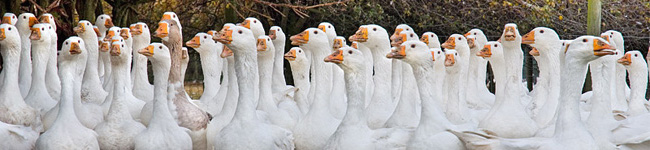
St Martin’s Goose was traditional fare on Martinmas in some cultures, so I’m feeling a little worried about this gaggle…

Goosey Fair, Tavistock, Devon

Goosey Fair, Tavistock, Devon


Snap-Apple Night

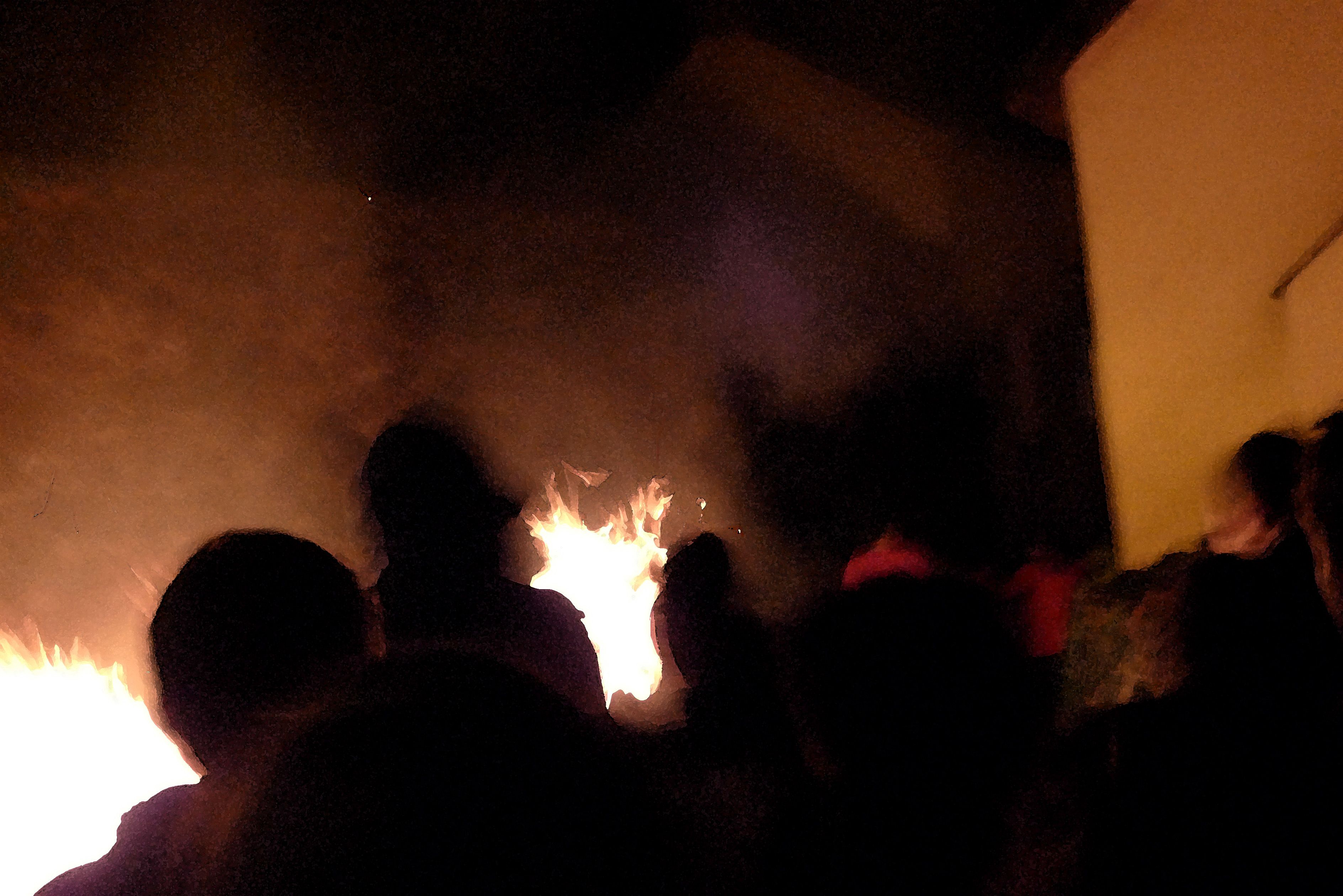
November - a time for Fire Festivals

November – a time for Fire Festivals

Hallowe’en is big in Ireland. It has always been celebrated and is, of course, an opportunity for children in wonderful spooky disguises to go out collecting sweets and treats. But this – the ‘Day of the Dead’, and traditionally the beginning of the winter – has generated far more elaborate customs than any I have encountered before. Have a look at this parade which takes place in Shandon, Co Cork.

The origins of Samhain (Oiche Shamhna in Irish) seem to be an old Irish festival marking the first day of winter and the ending of the farming year. All crops had to be in and safely stored – hay, potatoes, turnips, apples – and cattle and sheep were moved from mountain and moorland pastures and brought closer to the farmstead; milking cows were brought inside for the winter and feeding with stored fodder began. Turf and wood for the winter fires must have been gathered and dried. If fires were lit year-round – for cooking – they had to be allowed to go out for the one night and were then lighted again in the morning: this custom still survives in some Irish households.

Fire is an essential element in the festival. The word ‘bonfire’ is supposed to be derived from ‘bone fire’ – the burning of the bones of the animals slaughtered before the onset of winter once the meat had been prepared and preserved to keep the larder full through the cold bleak months to come. It’s no coincidence that in England bonfires are lit in early November to ‘remember’ Guy Fawkes and his plot to blow up the House of Lords in 1605: this was just a continuation of fire festivals that already happened then – and are still happening now. When I lived in Devon I came across (and took part in) traditions of pulling burning barrels through the streets (Hatherleigh) or carrying burning barrels through crowds of spectators (Ottery St Mary). West Country carnivals were common at this time of the year, and many were accompanied by flaming torches and fireworks. It has always seemed necessary to ‘lighten’ and warm the darkening year with fire.

Tar Barrels in Hatherleigh, Devon, 2012

Tar Barrels in Hatherleigh, Devon, 2012

November, from Northside of the Mizen by Patrick McCarthy and Richard Hawkes 1999:

‘…The Month opened with Snap-Apple Night and tales of púcas and little folk. From the rising of the moon on November Dark the mackerel would make their way to deeper water; it was the end of the seine season. With the crops all in and hill grazing finished, fires were set on the hills and preparations made for the winter. There was little employment for the months ahead…’

Snap-Apple Night by Irish painter Daniel Maclise, 1833

Snap-Apple Night by Irish painter Daniel Maclise, 1833

Continuing tradition - a modern Snap-Apple, by Coca Cola

Continuing tradition – a modern Snap-Apple, by Coca Cola

‘…The first game of the night was always ‘Snap-apple’ when an apple was hung from a beam in the kitchen and all the children took turns to ‘snap’ the apple. Sometimes the apples were put in a half barrel of water and you had to take one out with just your teeth, with your hands behind your back…’

Two Hallowe’en tales from Northside of the Mizen:

…One fine Halloween, Neddy Hodnett (Gurthdove) was crossing the land on the way back from scoriachting (visiting friends and neighbours), when he came across a Narry the Bog (a heron) at Hodnett’s Sleabh. He caught it and put it under his coat. Neddy knew that Dan Thade Coughlan was out scoriachting and he also knew what route across the fields Dan would take, so he hid in a beillic. It wasn’t long before Dan came from the east, and as he passed the beillic, Neddy knocked a screech out of the Narry. Dan leapt out of his skin with fright and with a roar he leapt over the ditch and away out of sight. Dan didn’t take long to arrive home and he told everyone he had met the devil himself, coming agin him! Dan did not leave the house, day or night, for a week…

The Púca of Knocnaphuca  …The old people would feed the Púca of Knocnaphuca on ‘Snap-apple Night’, or indeed, whenever one had a call to travel up the hill. It was the wise person that fed the Púca the night before going up. Milk and cake would be put on a plate and left outside the house and by the next morning the food had always gone!

The Púca of Knocnaphuca was half horse and half human. One late Snap-apple night there was a young lad out walking the road when he heard a strange, sweet music coming from the hill. He went up and saw the Púca playing on a whistle. As soon as the lad had put eyes on it, it stopped playing and caught him. Away the Púca went to the top of the hill, where a crack opened up in the rock. In they went. They went twisting and turning down through tunnels until the entered a chamber full of gold. “Now,” said the Púca, “you are mine!”…

The next morning the boy was found on the road by the Long Bog. His hair had turned white and he could not speak a word ever after…

I like Finola’s tradition for Samhain: making (and tasting) a Hallowe’en barm brack… Delicious!

barm brack

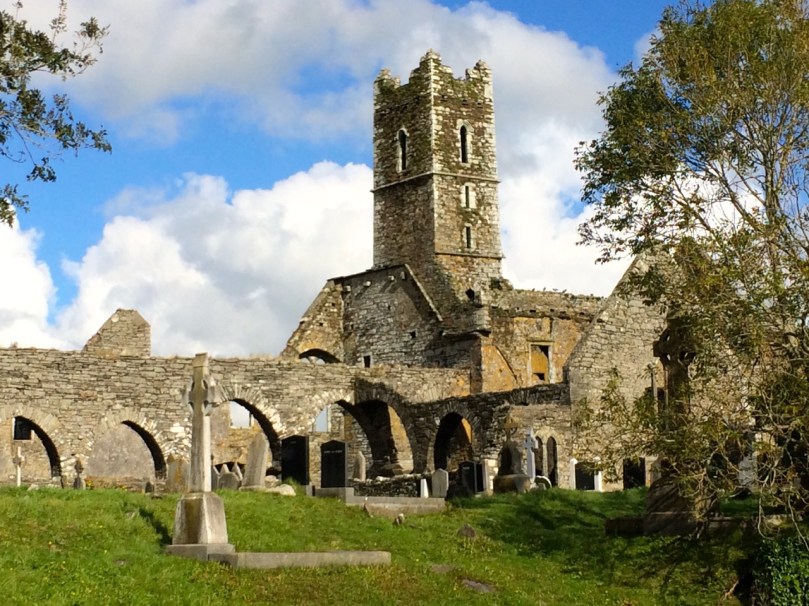
Timoleague Friary

Timoleague Friary

If you take the coast road from West Cork to Cork City, you go through Timoleague, a beautiful village at the top of Courtmacsherry Bay. This little town has a main street of colourful houses and shops, a large and imposing Catholic church with notable stained glass windows, a medieval bridge spanning the inlet, and lovely walkways by the Arigideen River.

Looking across the river to the Friary

Looking across the river to the Friary

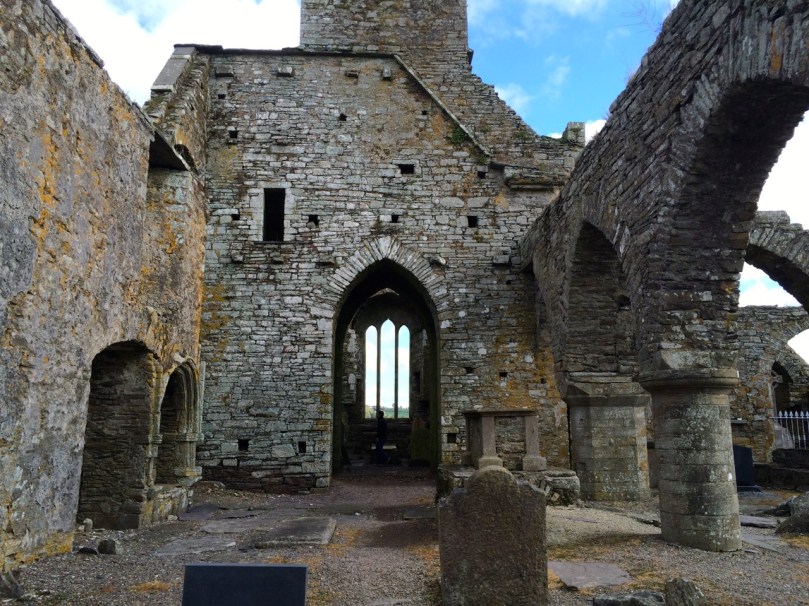
What makes us stop, though, no matter how often we have visited it before, is the Friary. Perched on a knoll overlooking the river, this Franciscan establishment was built in the 13th or 14th Century, and subsequently enlarged and extended. It somehow managed to survive the reformation but was finally abandoned when it was burned in 1642.

The Franciscans first arrived in Ireland about 1230. The order spread quickly and in time there were many Franciscan houses in Ireland. Followers of the Rule of St. Francis, they lived in fellowship in the friary, but went out every day to work among the people. Unlike monks in abbeys or monasteries, they did not shut themselves away to follow a strict regimen of prayer and work. Instead, the friars depended upon their parishioners for sustenance, devoted themselves to their flock during the day and returned to the friary for their simple meals and prayers.

The Cloisters

The Cloisters

Despite this avowed simplicity, the friary is large and imposing. The remains of the cloisters give evidence of the daily meditation and recitation of the Divine Office. Their living quarters included a chapter room, refectory and infirmary.

Nave and choir

Nave and choir

The church would have been impressive in its day, with large and elaborate windows, a long nave and a sizeable transept. The columns between the nave and the transept are massive: the cut stone demonstrates the high quality of masonry that went into the building of the Friary.

A wander through the ruins is a delight. There is a wart well, old gravestones (while away half an hour deciphering some inscriptions!) and niches that would have held the tombstones of dignitaries. Lichen of every colour clings to the stones while low archways appear around every corner, with inviting vistas of further corners to explore.

Timoleague is named for St Molaga, who is also associated with other locations in Ireland. Many stories are told of St Molaga. Here is one, recorded by Colonel James Grove White and provided online by Cork City Librarians.

Close to Temple Molaga is a copious spring well, which was always held sacred by the people and should be used only for drinking and curative purposes; but on one occasion, the lady of the manor, an unbeliever, would insist on cooking her husband’s dinner in the water of the sacred spring. When the water had time to boil, the cook remarked it was icy cold; more logs were placed on the fire, still to no effect. The logs were still being piled on, the fire blazed, but when the dinner hour arrived, the water was still as cold as ever. The lord waxed hungry, and, like other mortals, became angry; he rushed into the kitchen to ascertain for himself the cause of the delay, had the cover lifted off the huge pot, and, although the fire was crackling and blazing high about it, he felt the water was quite cold; but what astonished him more was to behold a beautiful trout swimming about in it, without apparently suffering the least inconvenience. He became wonder-stricken, and had his advisers called in. They told him to take the water back to the well without delay and pour it in. This being done, the trout again became invisible, and is since rarely seen, except by certain votaries.

In the district it is a common saying when water is slow to boil, “perhaps the Molaga trout is in it.”

Timoleague Friary, as the largest medieval religious ruin in West Cork, is a unique and special part of the West Cork landscape.

friary silhouette

Were You at the Rock?

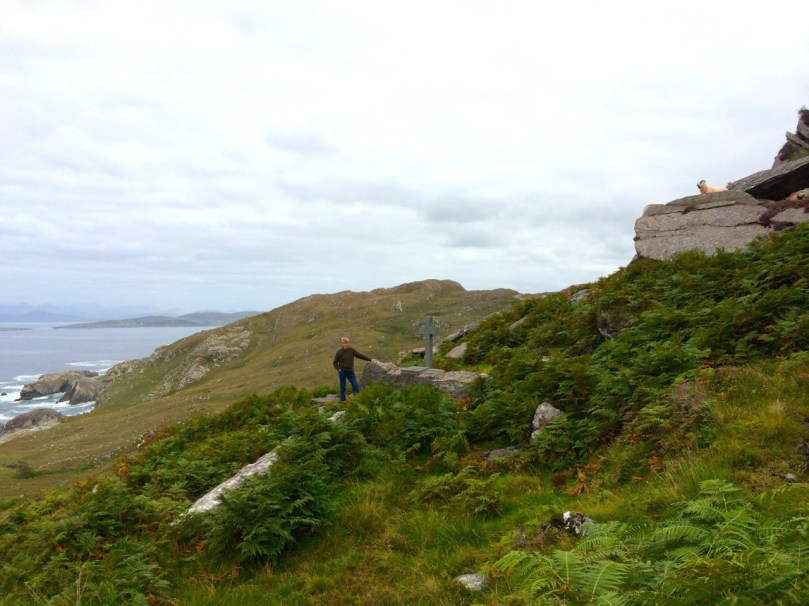
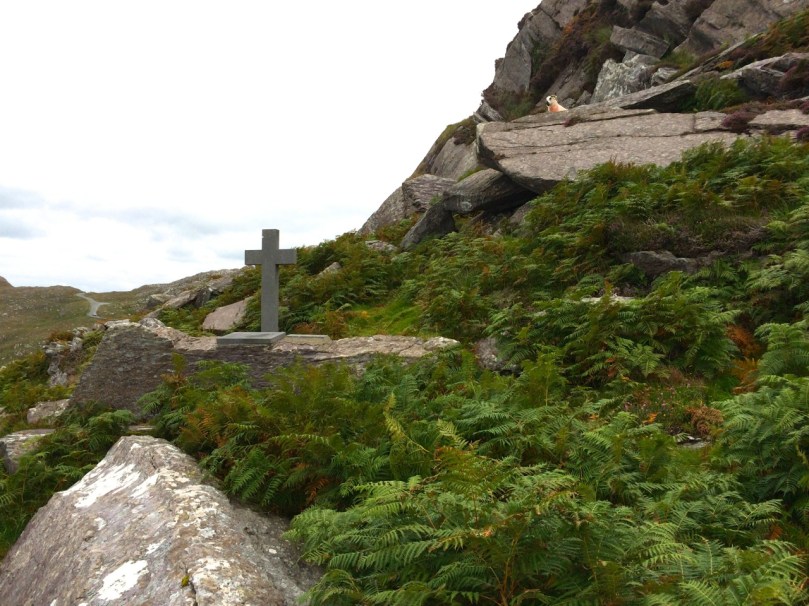
Mass rock along the Beara Way (see the look out above)

Mass rock along the Beara Way (see the lookout above)

An raibh tú ag an gCarraig? / Were You at the Rock?

nó a’ bhfaca tú féin mó grá / Or did you yourself see my love,

nó a’ bhfaca tú gile, / Or did you see a brightness,

finne agus scéimh na mná? / The fairness and the beauty of the woman?

This beautiful song speaks to a revered tradition in Irish history and folk custom – the mass rock. During the period of the Penal Laws (late 17th and first half of 18th Century) when the practice of Catholicism was outlawed, parishioners would gather at a secret location to attend mass. The priest travelled from community to community in disguise, a lookout was posted, and mass was celebrated on a lonely rock far from the reach of the law. The song encodes the message that the people still find ways to attend mass, despite the harsh prohibition against it.

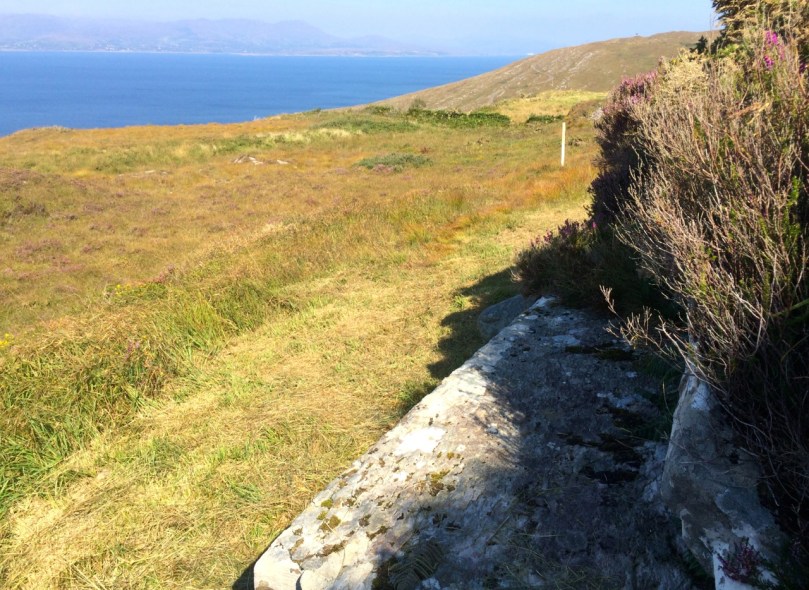
Mass rocks are often in remote locations

Mass rocks are often in remote locations

Dr. Hilary Bishop, in her excellent website Find a Mass Rock says, “As locations of a distinctively Catholic faith, Mass Rocks are important religious and historical monuments that provide a tangible and experiential link to Irish heritage and tradition.” She also points out that, because of the imperative for secrecy, mass rocks are difficult to find. We certainly experienced this when we set out for a day of mass rock hunting recently. Working from a list generated from the National Monuments Service database we spent a day on the Sheep’s Head and the Mizen and had trouble finding all the rocks on the list. One, if it was still there, had disappeared under impenetrable layers of gorse. A second rock was last recorded in the 1980s: residents were no longer familiar with it.

Beach Holy Well and mass rock

Beach holy well and mass rock

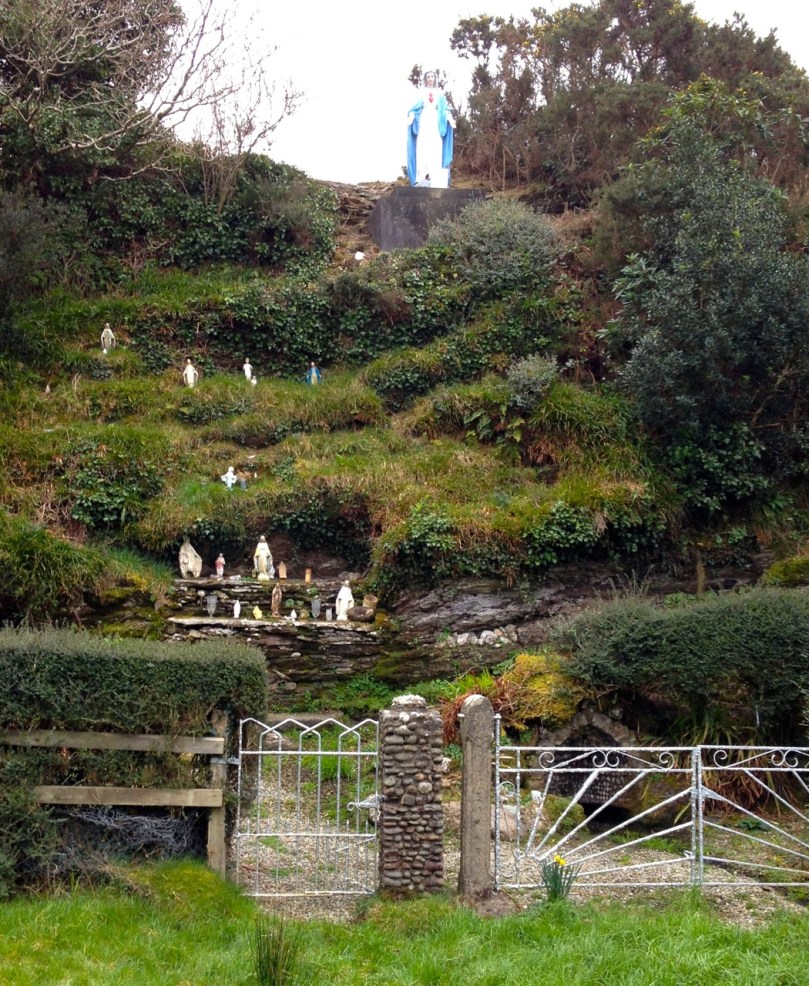
Knowledge of mass rocks has passed down from generation to generation. In the deep countryside, the sites maintain a mystique and a sense of the sacred. Last year we wrote about the mass rock and holy well at Beach, where Mary conjured up a blanket of fog to confuse the English soldiers and allow the priest to escape. At Beach and at our first stop, the mass rock at Glanalin on the Sheep’s Head Way, mass is still celebrated occasionally.

The Glanalin rock, and the one we visited on the Beara Peninsula, are good examples of the remote locations typical of many mass rocks, high on a hillside or hidden in an isolated valley. You can picture the procession of worshippers, in ones and twos, slipping silently through the bracken, pausing to make sure they are not being watched, climbing higher, following an overgrown trail, arriving at the meeting place where the hushed crowd awaits the arrival of the priest.

Beara mass rock

Beara mass rock

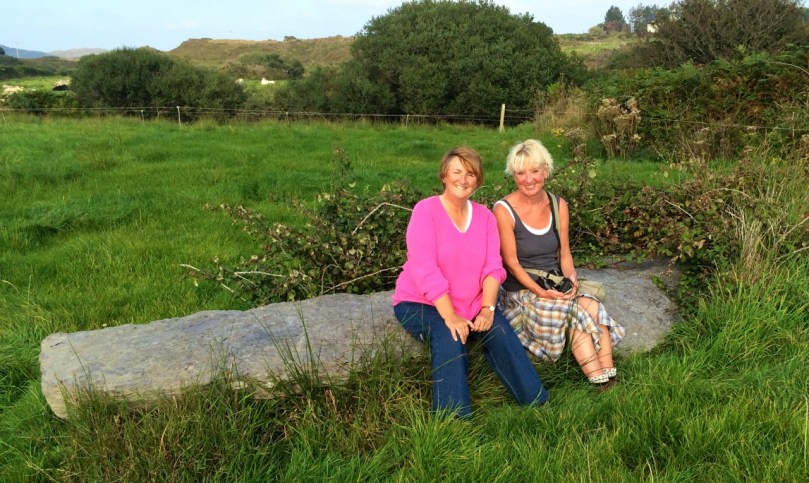
One of the rocks we found looked for all the world like a fallen standing stone – and that’s probably what it was. (I wonder if I should go to confession, though – I’m sure that sitting on a mass rock would qualify as at least a venial sin.)

Fallen standing stone?  Mass rock? Both?

Fallen standing stone? Mass rock? Both?

A mass rock that is easily visited is the one at Cononagh Village, right at the side of the main road into West Cork, the N71. This site is beautifully maintained – Cononagh is obviously proud of its heritage: signage and flowers invite the passerby to take a closer look.

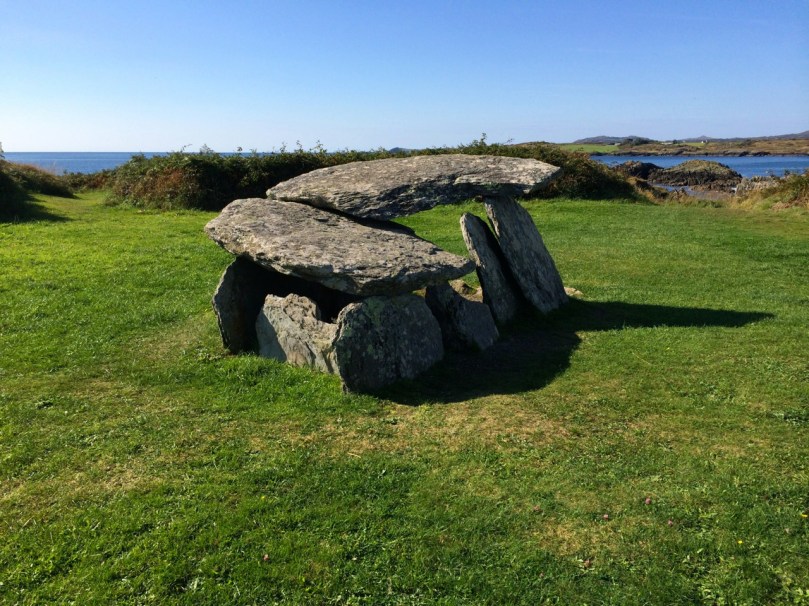
Another easily accessible site is Altar, at Toormore. This is a wedge tomb, probably over 4,000 years old and excavated in 1989. It remained in use through the Bronze Age and into the Iron Age. Dr. William O’Brien, in his book on the archaeology of County Cork, Iverni, says of this site: “…over time this tomb came to be regarded as a sacred place, housing important ancestral remains in what was a type of community shrine.” How fitting, then, that the flat capstone of the Altar wedge tomb became, in the Penal Days, a mass rock. And how intriguing to think of the continuation of this sacred space over the course of thousands of years.

Altar Wedge Tomb, later used as a mass rock

Altar Wedge Tomb, later used as a mass rock

The Children of Lir

Artist Warren Osborne's depiction of the enchanted Swans

Artist Warren Osborne‘s depiction of the enchanted Swans

It was the mission of the Bards and the Seanchaí to keep alive the ancient stories of Ireland: I am always eager to hear these wonder tales: if they are well told, they will make the hairs stand up on the back of your neck. Your storyteller is being watched and listened to by a generation gone before, who in turn carried that story forward from their ancestors – a chain of continuity which for all we know could go back to the time of the Bronze Age rock carvers and Megalith builders – or even before that. History books are mere speculation and short lived; stories encompass the spirit of the people, and last forever.

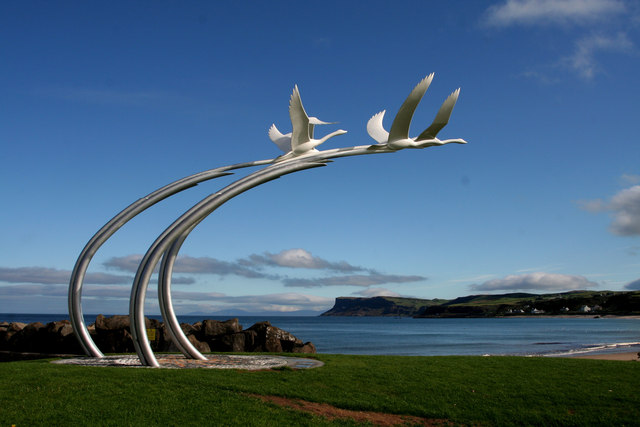
The story captured in sculpture at Ballycastle, County Mayo

A story captured in sculpture at Ballycastle, County Antrim

Have you ever wondered why Swans are such special birds? Did you know that in Ireland no-one can harm the Swan? Some say that law was made by the Milesians, who are said to have arrived in Ireland from Galicia (northern Spain) around four thousand years ago, and heard about The Children of Lir.

It’s a Wicked Step-Mother Tale. Finola is a Step-Mother and is sensitive to such stories, but interestingly she herself appears in this story – in fact she is its heroine! The twins Finola (…as beautiful as sunshine in blossomed branches…) and Hugo and the twins Fiachra and Conn were the children of King Lir and Queen Aoibh.

l_1069ca_20121008_1587912131

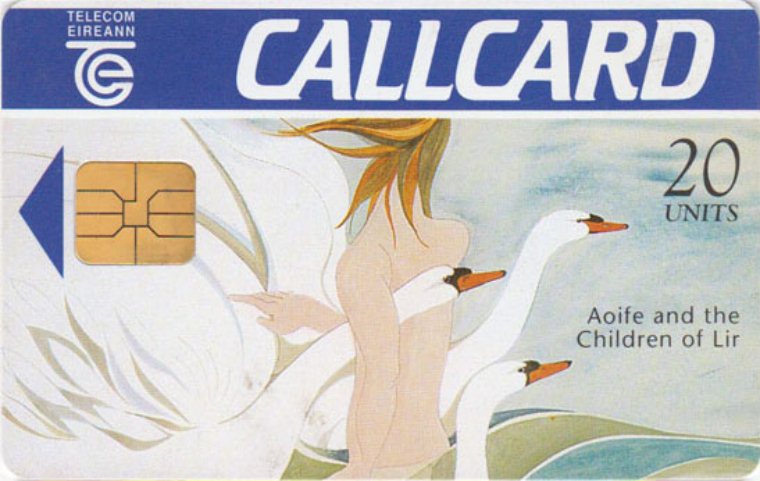
When the children were very young their mother died, and the King married Aoifa, a sister of Aoibh. All was well until Aoifa noticed that Lir was spoiling his children: each one of them was given a beautiful white horse and a pair of white hounds and the King spent most of his time in their company. In true step-mother fashion, Aoifa became jealous and determined to intervene. Just as in the story of Snow White, she planned a dire end for them: she took them off to the wild shores of Lake Derryvaragh and threw them into the waters. But her magical powers were not strong enough: Finola gathered her brothers around her and, as Aoifa looked on, the children were transformed into beautiful Swans. In a final curse their step-mother said that they would live out three hundred years on the lake, then three hundred years more in the Sea of Moyle (the narrowest part of the Atlantic Ocean between Ireland and Scotland), then a final three hundred years on Sruth Fada Conn or Irrus Domnann – Stream of the Long Hound – in County Mayo. The spell could only be broken when the sound of the first Christian bell was heard by the Swans.

Sruwaddacon Bay - also known as Sruth Fada Conn

Sruwaddacon Bay – also known as Sruth Fada Conn

Aoifa might have suffered some last minutes pangs of guilt, for she allowed the Swans to retain their human voices. They also had the gift of music and while they were on Lake Derryvaragh people flocked to hear them singing. In fact, it is said that all of Ireland’s great musical tradition originated from the Children of Lir.

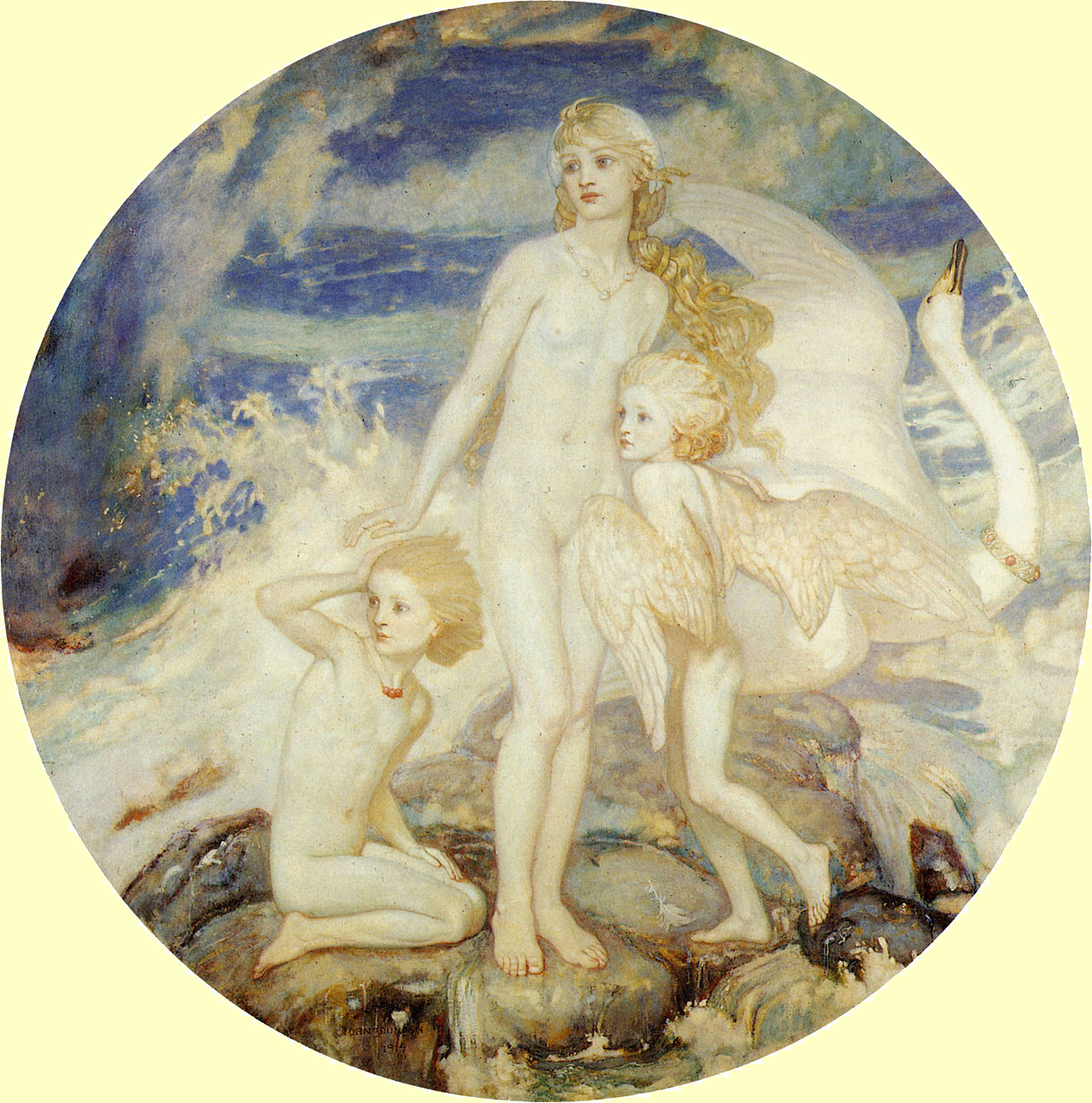
Children of Lir by John Duncan, 1914

Children of Lir by John Duncan, 1914

When the King found out about Aoifa’s treachery he turned her into a ‘night demon’ – a Moth, and she’s still around: we see her frequently down here in Nead an Iolair.

Aoifa - the Emperor Moth

Aoifa – the Emperor Moth

One of the most poignant parts of the story (and I am telling only the briefest of versions here) pictures the Swan children revisiting their father’s tower house on their journey to the Sea of Moyle – only to find grass covered ruins and no traces of the family’s heritage:

…when they looked down they saw no light in the house, they heard no music, no sound of voices. The many-coloured house was desolate and all the beauty was gone from it; the white hounds and the brightmaned horses were gone, and all the beautiful glad-hearted folk of the Sidhe… (http://www.sacred-texts.com)

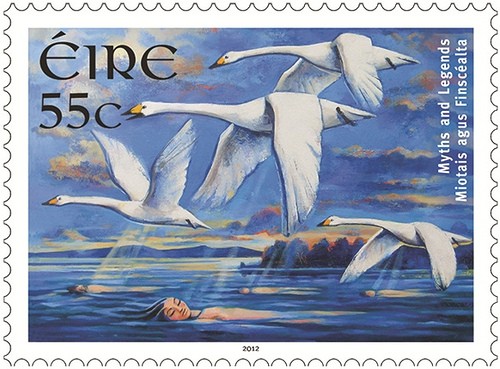
stamp children of lir

We watch the Swans in Rossbrin Cove. On occasion we are fortunate enough to see them taking off from or landing on the water – a noisy and energetic affair: it’s hard to believe that such large and heavy birds can actually take to the air, and migrate over huge distances. Swans appear in folktales all over the world: usually they are associated with light and beauty. A tradition that the Swan only sings when dying has been captured in a madrigal by Orlando Gibbons:

The Silver Swan who, living, had no note,
When death approach’d, unlock’d her silent throat.
Leaning her breast against the reedy shore,
Thus sung her first and last, And sung no more:
“Farewell all joys, O death come close mine eyes.
More geese than swans now live, more fools than wise”

children of lir

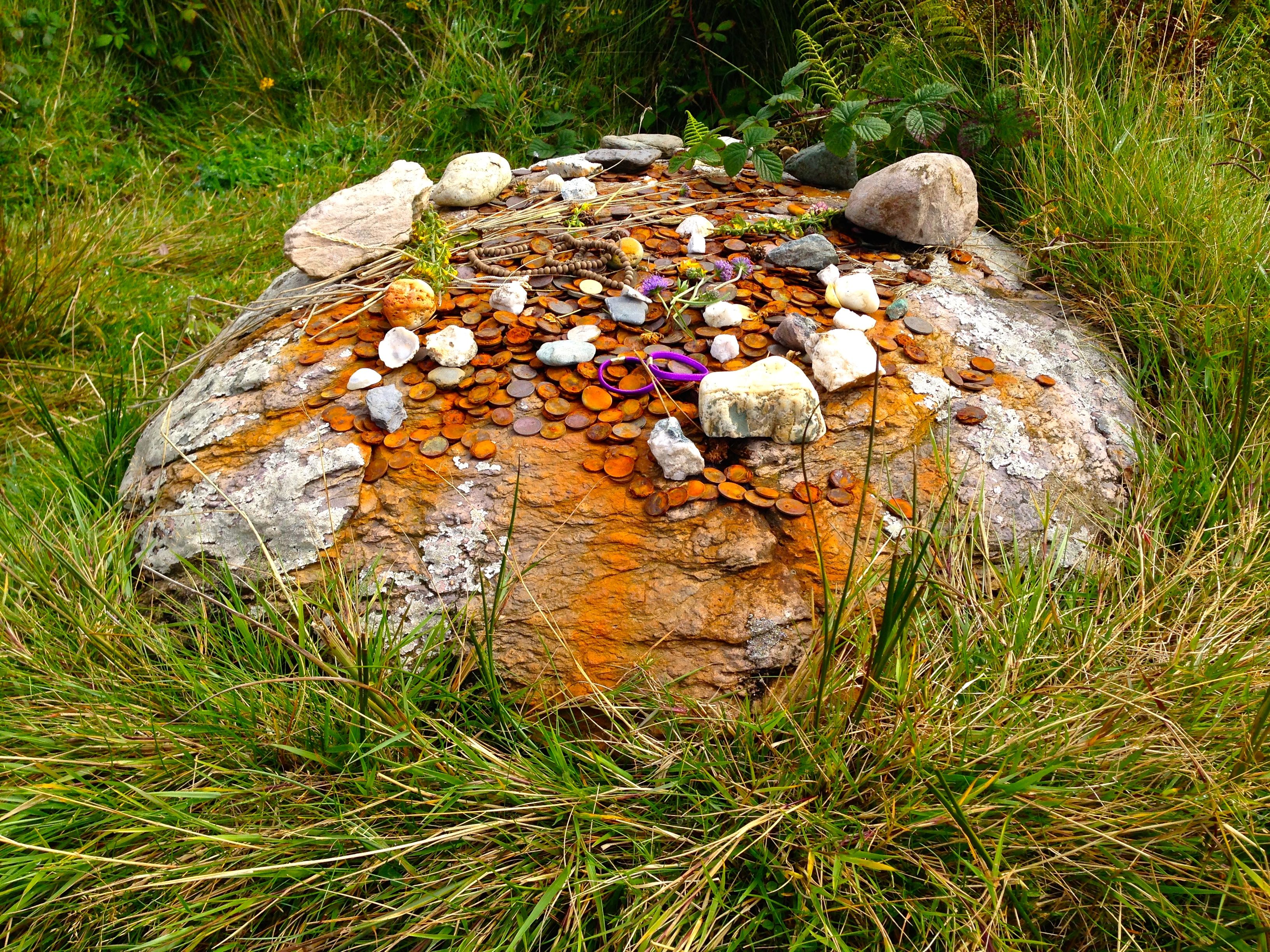
To return to our tale – the Children of Lir took their final journey to the far west of Ireland: to the Beara peninsula in West Cork. There they heard St Patrick’s bell and were transformed to human shape again. A hermit – Saint Kemoc – found them, four ancient, withered people. He baptised them just before they crumbled to dust. This place is marked now by a stone where offerings are made: their story is alive today.

The Lir Stone, near Allihies on the Beara

The Lir Stone, near Allihies on the Beara

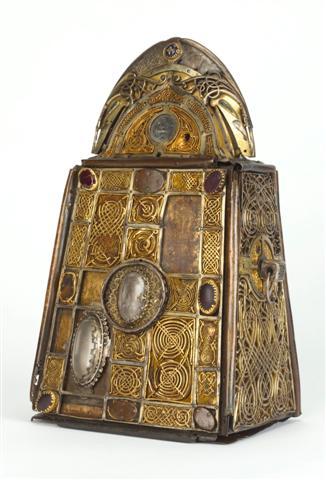
patricks bell

St Patrick’s Bell

Ancient Tones – New Directions

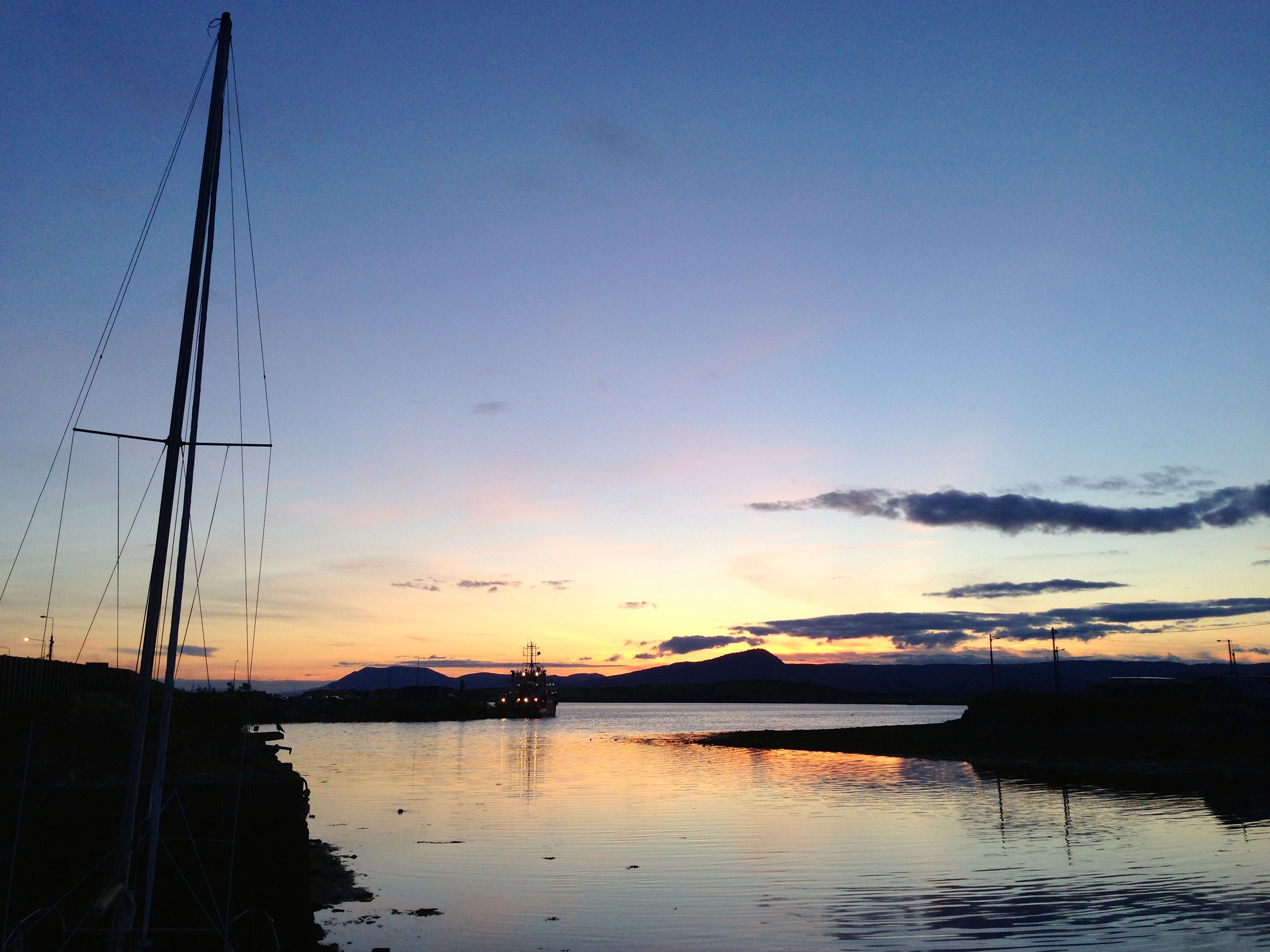
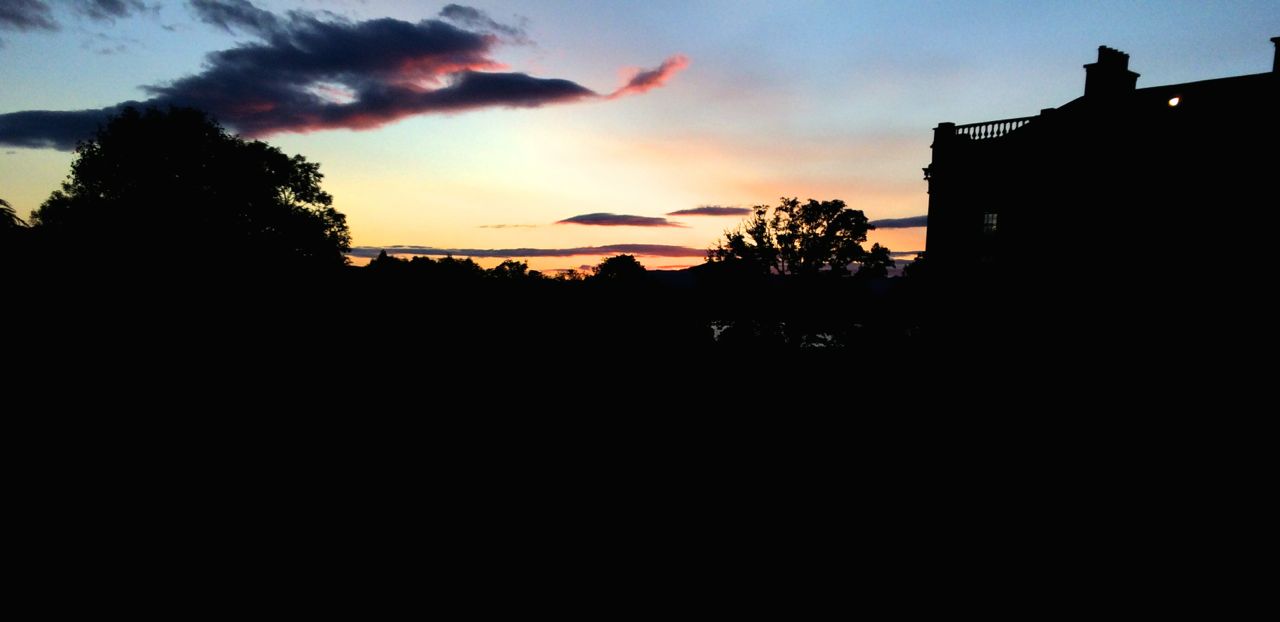
After the opening concert... Sunset over Bantry Bay

After the opening concert… Sunset over Bantry Bay

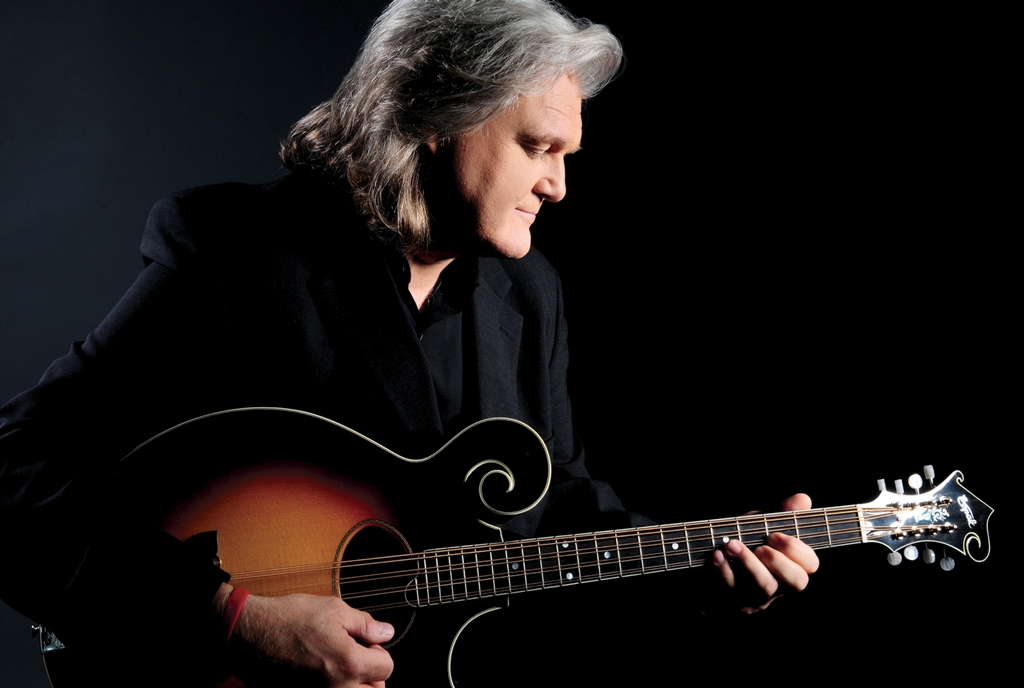
This year’s Masters of Tradition Festival (which closes tonight) had an unusual headline act – Ricky Skaggs – at its opening gig.. This giant of ‘country’, ‘bluegrass’ or ‘old timey’ music flew over from Nashville at his own expense to join Festival Director Martin Hayes and a host of traditional musicians on stage in the Maritime Hotel, Bantry. Why? Because there are big adventures going on in the world of Irish music today, and this Festival is at the leading edge of all this. Here’s a snatch of Ricky Skaggs: regardless of the film quality it’s well worth watching…
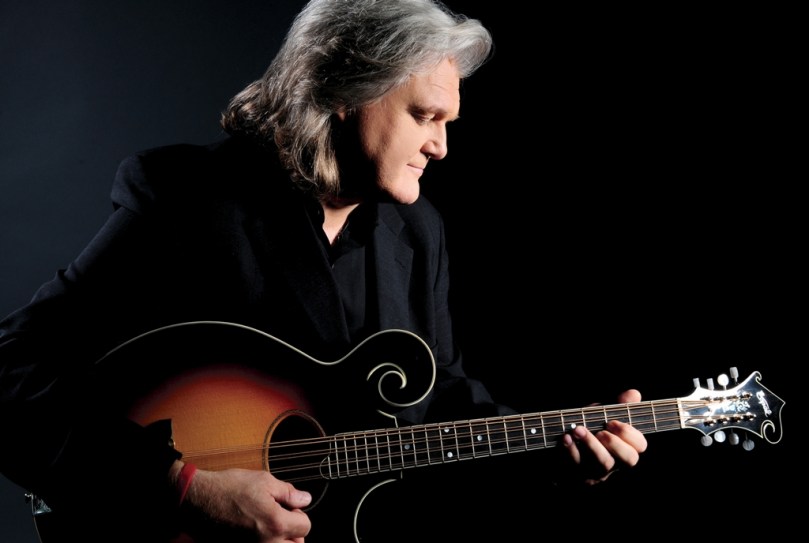
Ricky Skaggs
Ricky Skaggs

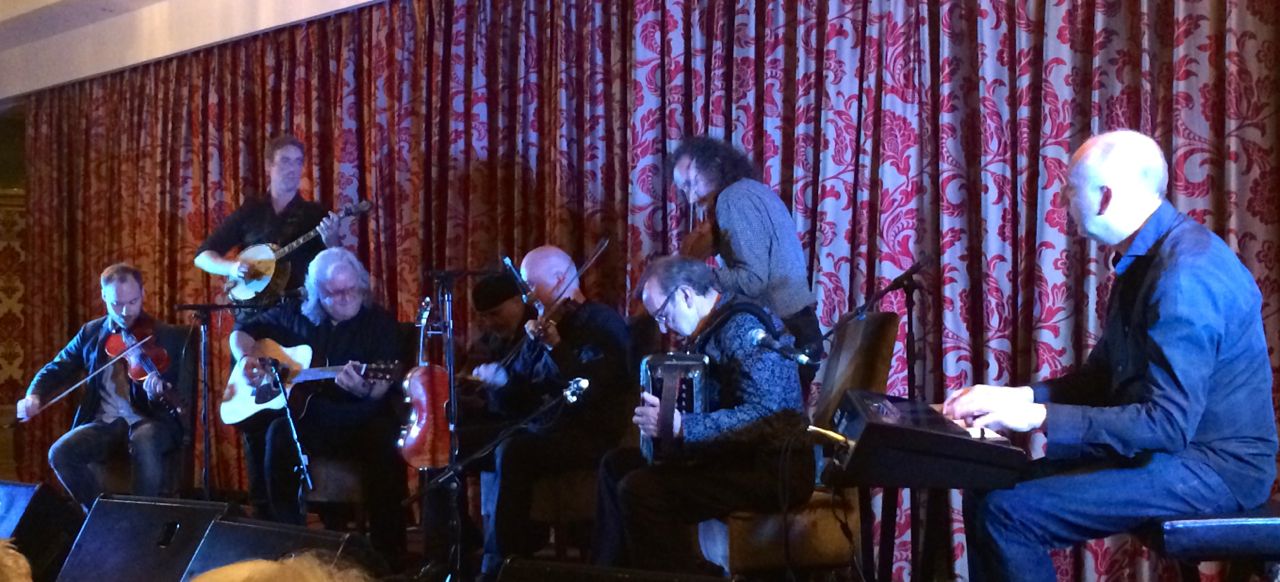
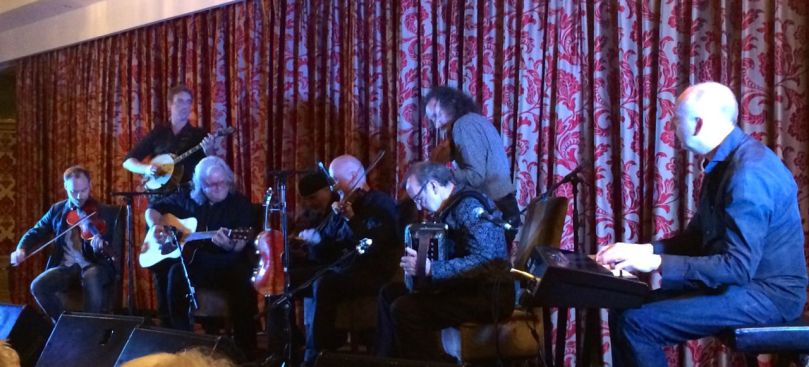
Skaggs, Hayes, Cahill,  Schrey and the Brock McGuire Band bring the house down in Bantry

Skaggs, Hayes, Cahill, Schrey and the Brock McGuire Band bring the house down in the opening concert

So, Ricky Skaggs got a good start in life, playing on the stage with the likes of Bill Monroe and the Foggy Mountain Boys (aka guitarist Lester Flatt and banjo player Earl Scruggs) at the age of seven! But at last Wednesday’s concert the biggest chord that was struck for me was Skaggs talking about Ancient Tones – his words for the the common roots of the music that they were all playing together:

“I’ve told people for years Celtic music is the foundation stone for bluegrass, even country music generally — though it is admittedly hard to hear the Irish influence in ‘new’ country today. Certainly, you can detect it in the old country ballads — it’s in the heart of the songs.” Bill Monroe was in agreement, he recalls. Without Irish music, there would never have been a bluegrass movement. “Mr Monroe talked about the old sounds and the ancient tones. He was referring to the sounds from Scotland and Ireland — he believed very much his music was a hybrid of that. He’s right of course — you hear bluegrass and you know the Irish influence is there. It’s in the fiddle and the mandolin, the harmonies and the guitar. In all of it, really.”
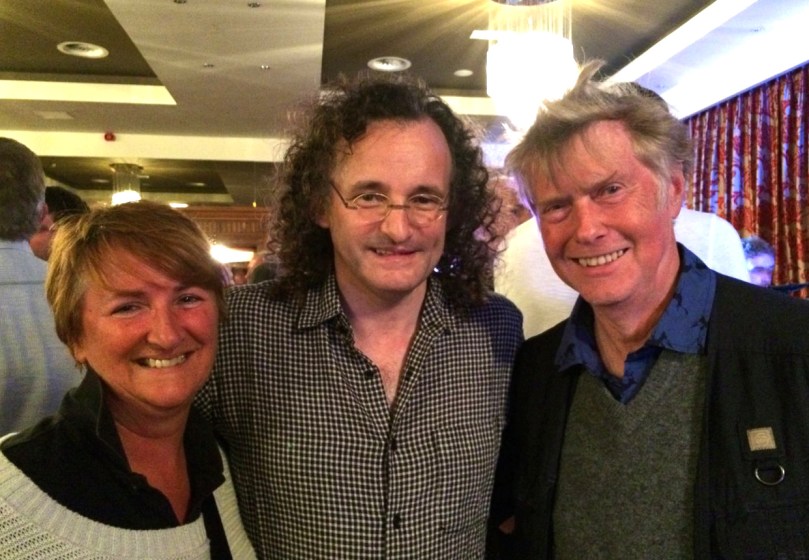
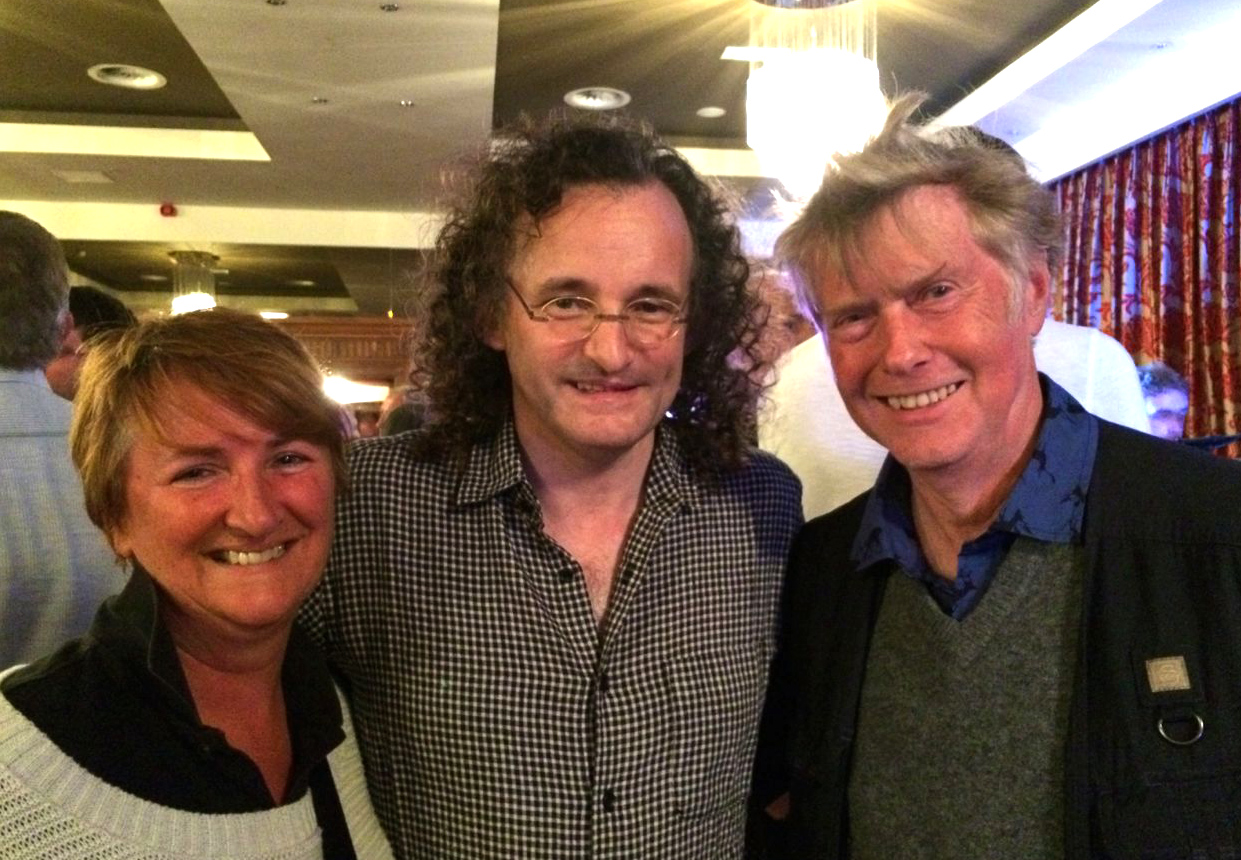
Festival Director Martin Hayes with groupies...

Festival Director Martin Hayes with groupies…

That first concert blew us away. We thought that it couldn’t get any better. It probably didn’t, but the energy, enthusiasm and innovation continued through the events of the week. Innovation in Irish Traditional Music? Oh, yes: we didn’t know what was in store for us, but we did know Martin Hayes’ philosophy:

“The main aim of this festival is to expose the unique artistic craft of various musicians. It’s also a kind of response to the fact that the country is full of festivals. I feel it’s important to highlight individual artistry in music rather than putting on a lot of bands that we’re all familiar with. International musicians have been a feature of the festival in the last few years.The festival is called Masters of Tradition rather than masters of Irish music or Irish traditional music because the idea is to have at least one act from abroad to see how other traditions stand in relation to our own. I want to offer something really different. I’m not saying that what I’m doing is better. It’s just a different way of approaching a festival. I certainly don’t see the point in replicating other festivals.There’s only a percentage of the population that gets seriously involved and connected with this festival. I think that’s fine. The festival is about highlighting the uniqueness of each musician’s voice. We try to choose musicians that have found their unique voice. I’m not looking for the latest blazing hot craze. Some of what the musicians express can be quite humble but effective and very touching as well.”
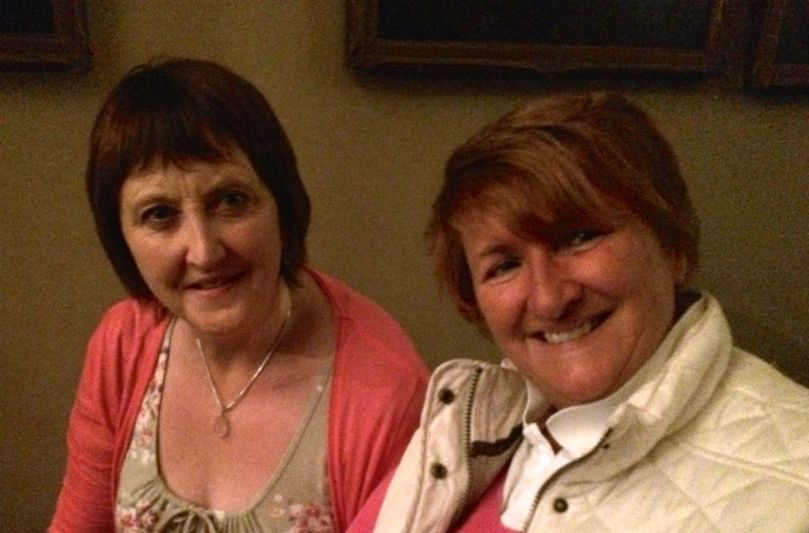
Máire Ni Cheileachair, Sean Nós singer

Máire Ni Cheileachair, Sean Nós singer

Among the – perhaps – ‘humble, effective and very touching’ performances were Sean Nós singers: carrying the tradition forward from its most ancient roots and presenting it in the simplest form – the unaccompanied human voice, a continuity of cultural expression which has passed through countless generations. We enjoyed the contribution of Máire Ni Cheileachair from West Cork and were impressed, as always, with critically acclaimed Iarla Ó Lionáird who grew up in the musical heartland of Cúil Aodha in the West Cork Gaeltacht. Like Ricky Skaggs, his fame came early: here’s his performance of Aisling Gheal dating from 1978 – when he was 14.

Finola has a link to another of Iarla’s iconic renderings on her post here – The Lament of the Three Marys. Throughout Ireland sacred songs such as this one were felt to function both as prayers and as direct substitutes for the caoineadh (‘keening’, women’s funeral lament) which was suppressed by the Church.
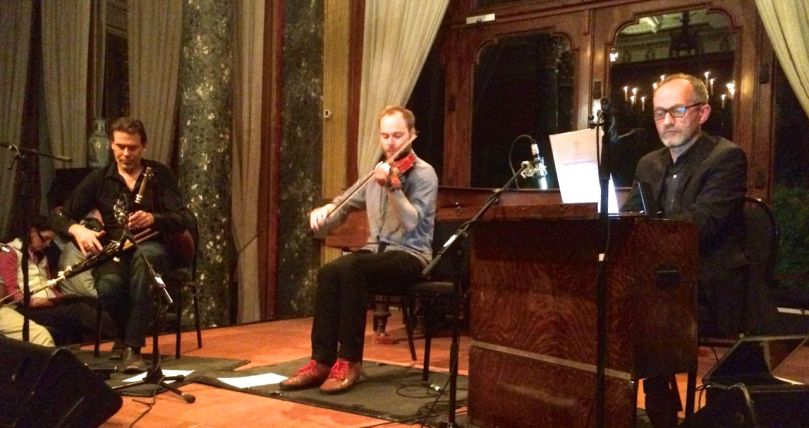
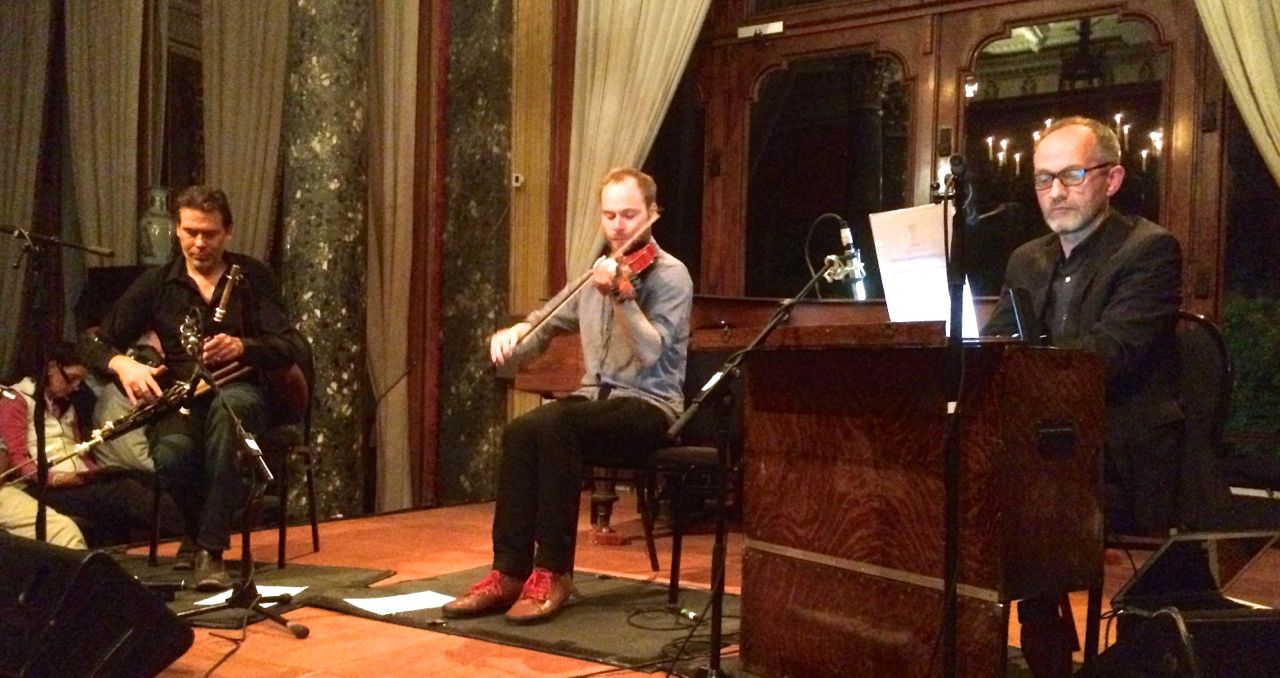
Ivan Goff, Cleek Schrey and Iarla Ó Lionáird - The Ghost Trio

Ivan Goff, Cleek Schrey and Iarla Ó Lionáird – The Ghost Trio

Finola says that I should have called this post ‘Ancient Tones – and Drones’. Iarla Ó Lionáird also heads up The Ghost Trio – which gave us Friday’s late night candlelit concert in Bantry House – Siobhan Long of the Irish Times described her impressions:

…”Drone City” is how Iarla O’Lionaird describes the antics of Ghost Trio, and he isn’t far off. Pipes, Hardanger Fiddle and harmonium coalesce to shape an atmospheric set that speaks more of the space and time inherent in traditional music than it does momentum. And what a welcome alternative take that is.This is a fine reminder of what atmosphere lurks within and without our tunes and songs

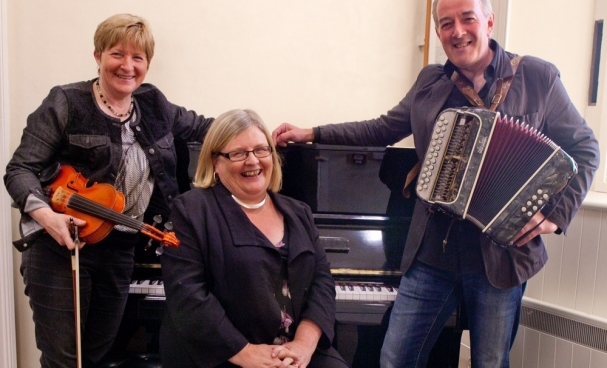
Boruma Trio

Boruma Trio – Eileen O’Brien, Geraldine Cotter and Andrew MacNamara

In a sharp swing back to pure tradition we were impressed by The Boruma Trio in Saturday night’s first concert. Straight music played on accordion, fiddle and piano, directly descended from the years when legendary Ceilidh bands such as the Tulla reigned supreme: Martin Hayes himself was reared on this kind of irish music as his own father – P Joe Hayes – led that band for 50 years. Martin wrote of his upbringing in Maghera, County Clare:
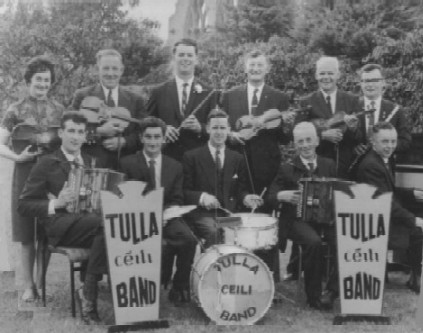
Tulla Ceilidh Band 1952

Tulla Ceilidh Band 1952

…However difficult it is to imagine my own life without music it is impossible for me to even know my father without his music. Music is part of his life in the same way that the land is part of him or in the way that we are Irish. It is inevitable and unalterable, we can never identify ourselves apart from our past as he could never identify himself apart from his music. His music fits comfortably into his life, there has always been balance, he never saw music as being anything other than normal and ordinary, a part of life that fits comfortably with his family, farm, religion and politics. He has a strong passion for music that has been tempered and maintained by equal and loyal devotion to the other interests in his life…

Martin’s earliest memories are of his father getting dressed up and being picked up to go and play somewhere, and in his child’s imagination it was always somewhere far away, exciting and important. On other nights the band practiced in the kitchen and when he had to go to bed Martin would leave the bedroom door open, a little bit, and listen to them play until he fell asleep.

I haven’t room on this post to list all the concerts (the full programme is here) – and we still have one to go! The standard of performances throughout has been consistently high. Perhaps the Harris/Finlay award for the most memorable experience – so far – has to go to Ensemble Ériu. In his introduction of this 7-strong group, Martin Hayes reminded us that we now have generations of young musicians who are very aware of their traditional heritage, but who are also being exposed to mainstream influences such as jazz and minimalism. Degrees, Masters and PhDs are offered in no less than 14 universities and colleges in Ireland at present in traditional music, song, dance, Ethnomusicology and Ethnochoreology. Students with backgrounds or deep interests in the folk traditions are exploring other contemporary voices and this ensemble – or ‘Project’ as its progenitors Jack Talty and Neil O’Loghlen prefer to call it – is a step in the New Directions so keenly being watched by Martin Hayes:

…The septet draws on a wealth of creative sources to perform arrangements of Irish traditional music rooted in the styles of West and North County Clare. This group brings together a chamber ensemble of some of Ireland’s most exciting young musicians from a range of performance backgrounds. The result is a unique combination of the fresh and familiar, a soundscape that is creatively progressive, yet rooted in tradition… (from the group’s website)

It’s hard to describe the musical experience that Ériu gave us last night. You’ll get some impressions from this film.

It brought to my mind the works of Steve Reich and Philip Glass, but was nevertheless unique. Who would have thought that such creative things could happen in this quiet West Cork backwater? It was stimulating, energetic – dynamic. I wonder what Martin has in store for us next year?
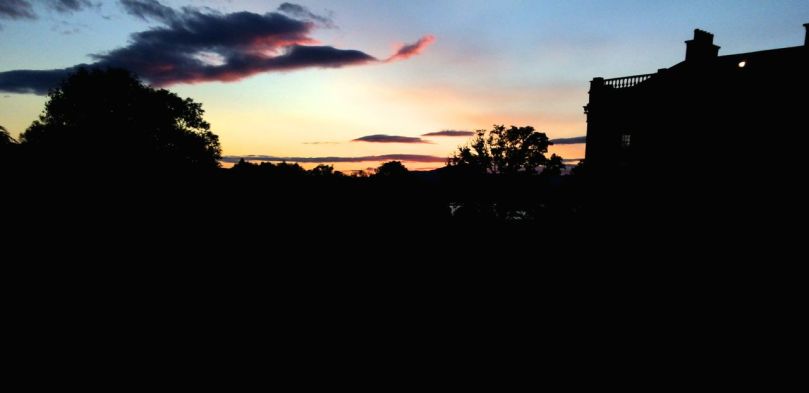
Quiet West Cork backwater? Bantry House - Festival venue

Quiet West Cork backwater? Bantry House – Festival venue
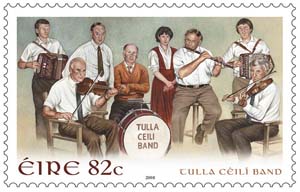
tulla stamp