The Splendour of Cobh

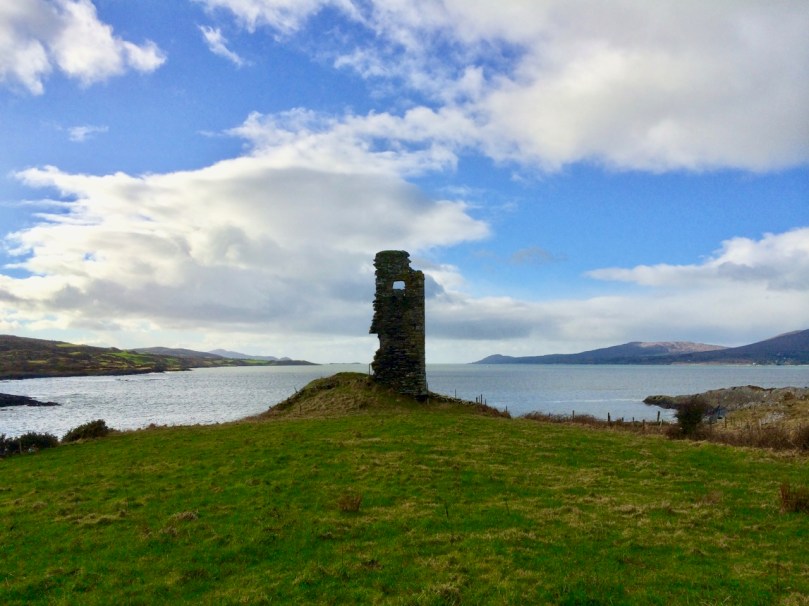
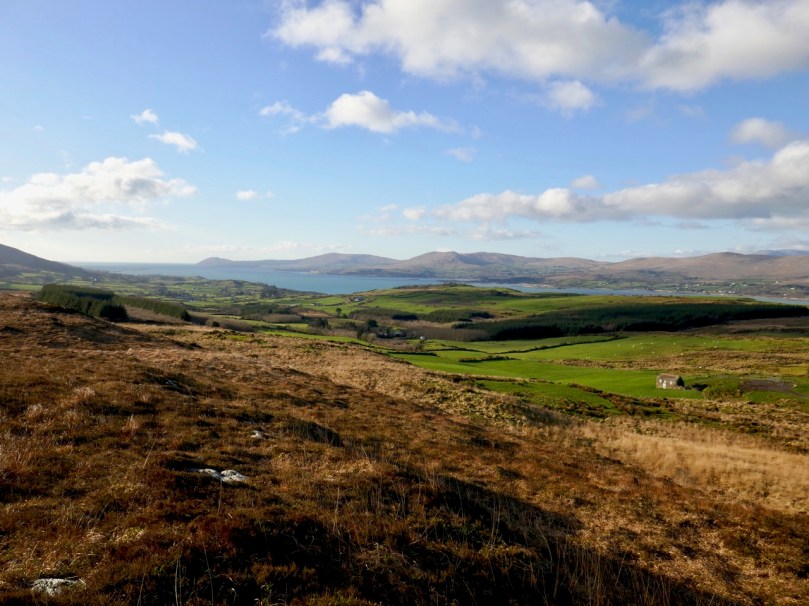
My favourite sea voyage was on the (alas now defunct) Swansea to Cork Ferry. I travelled this route very many times while living in Devon and Cornwall, and most enjoyed the last leg of the journey to Ireland, when the ship entered the Lee estuary and made its way upriver to Ringaskiddy. In all weathers I was out on deck to watch the slowly changing scenery that welcomed my arrival in to Cork, knowing that it was surely the best place in all the world to be going!
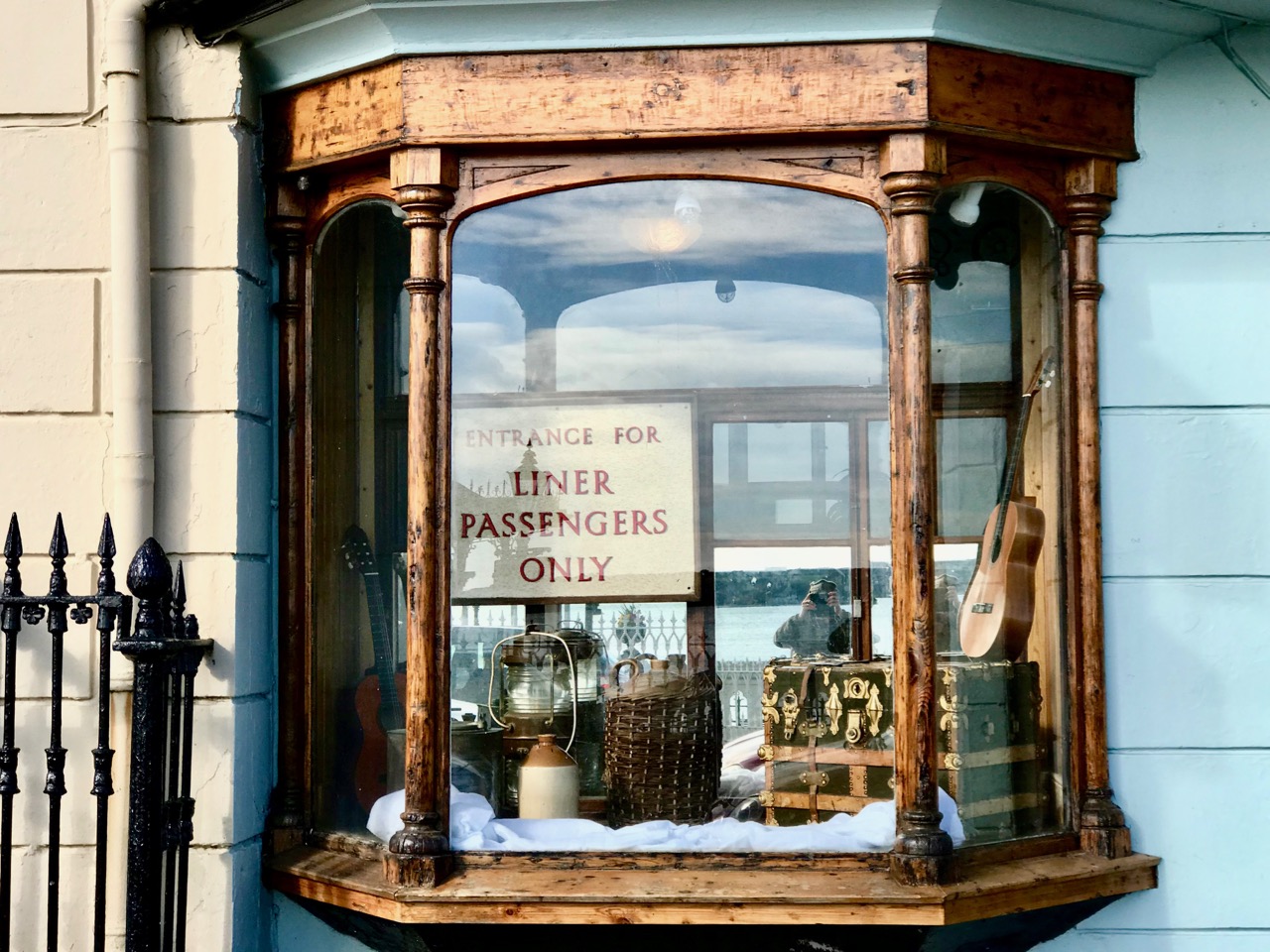
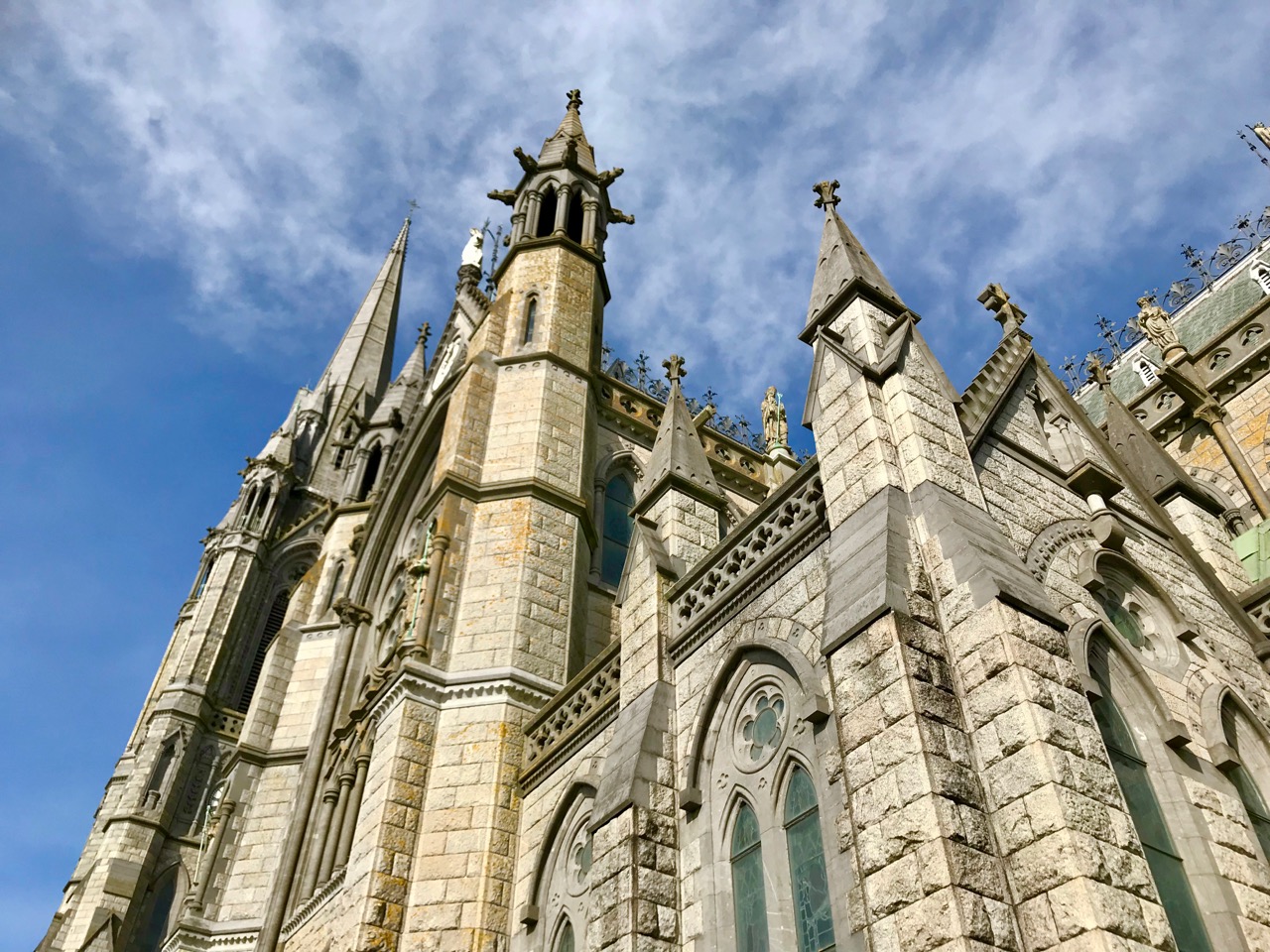
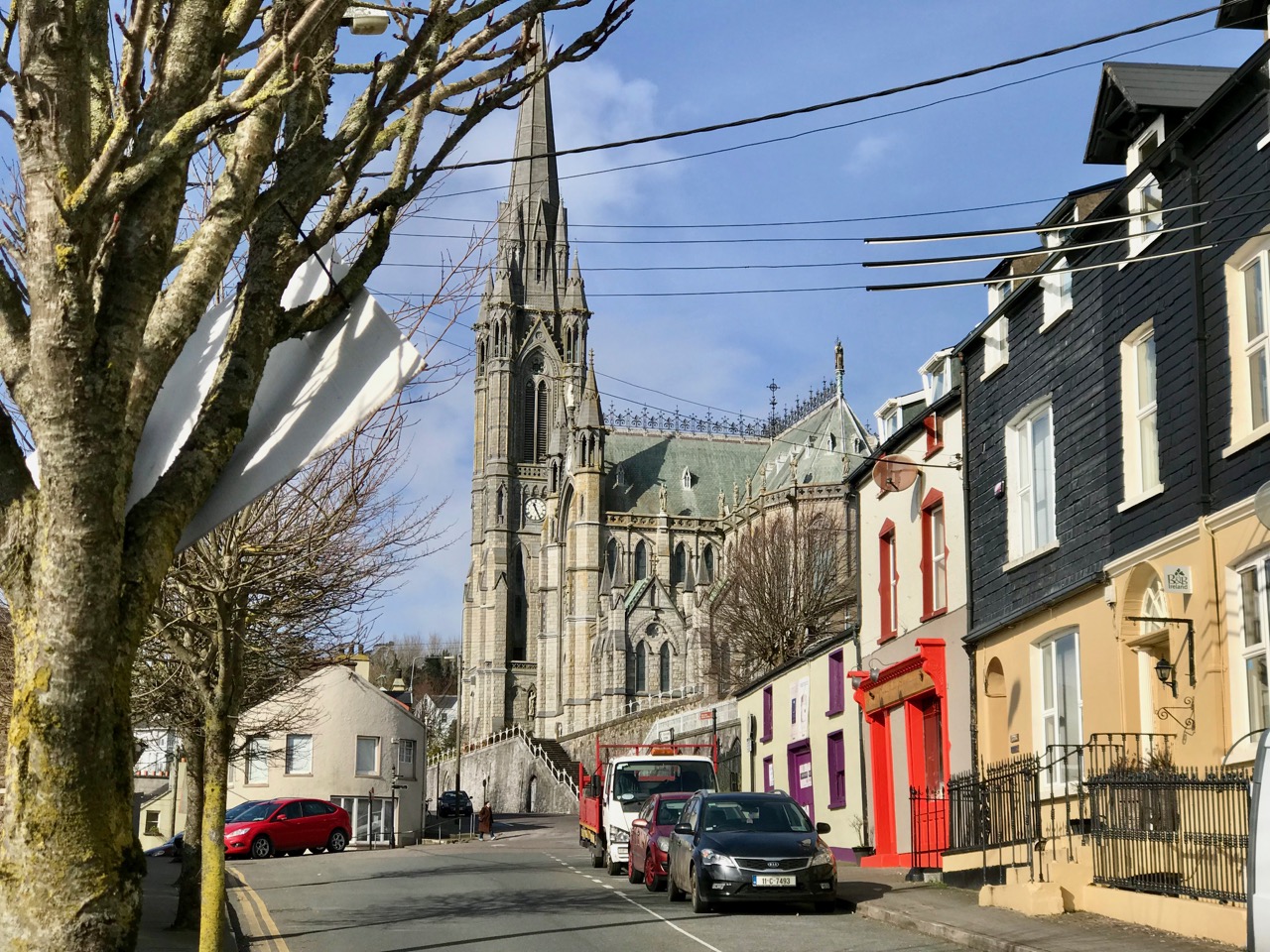
The excitement mounted when we steamed past the port town of Cobh, as the ferry terminal was then just around the corner. From afar I admired the way this settlement embraced the water with its long, colourful terraces lined up the steep hillside on which it was built, crowned atop by the magnificent Victorian edifice which I now know to be probably the finest architectural work of Edward Welby Pugin in Ireland: St Colman’s Cathedral.
I am almost ashamed to confess, then, that I had never called in on Cobh until last week – and the visit was a relevation. First, let me clear up some possible confusions: the name is pronounced ‘Cove’ – and the word in fact comes from the English, but has been Gaelicised to Cobh, (Irish An Cóbh), the location having allegedly been known since around 1750 as ‘The Cove of Cork’. The name was changed to ‘Queenstown’ after a visit from Queen Victoria in 1849, and was then changed back to Cobh after the founding of the Irish Free State in 1922. Or – have I just contributed to the confusion? One thing is for sure: the strategic waterside location in the great natural harbour of Cork is the raison d’être of this grand town.
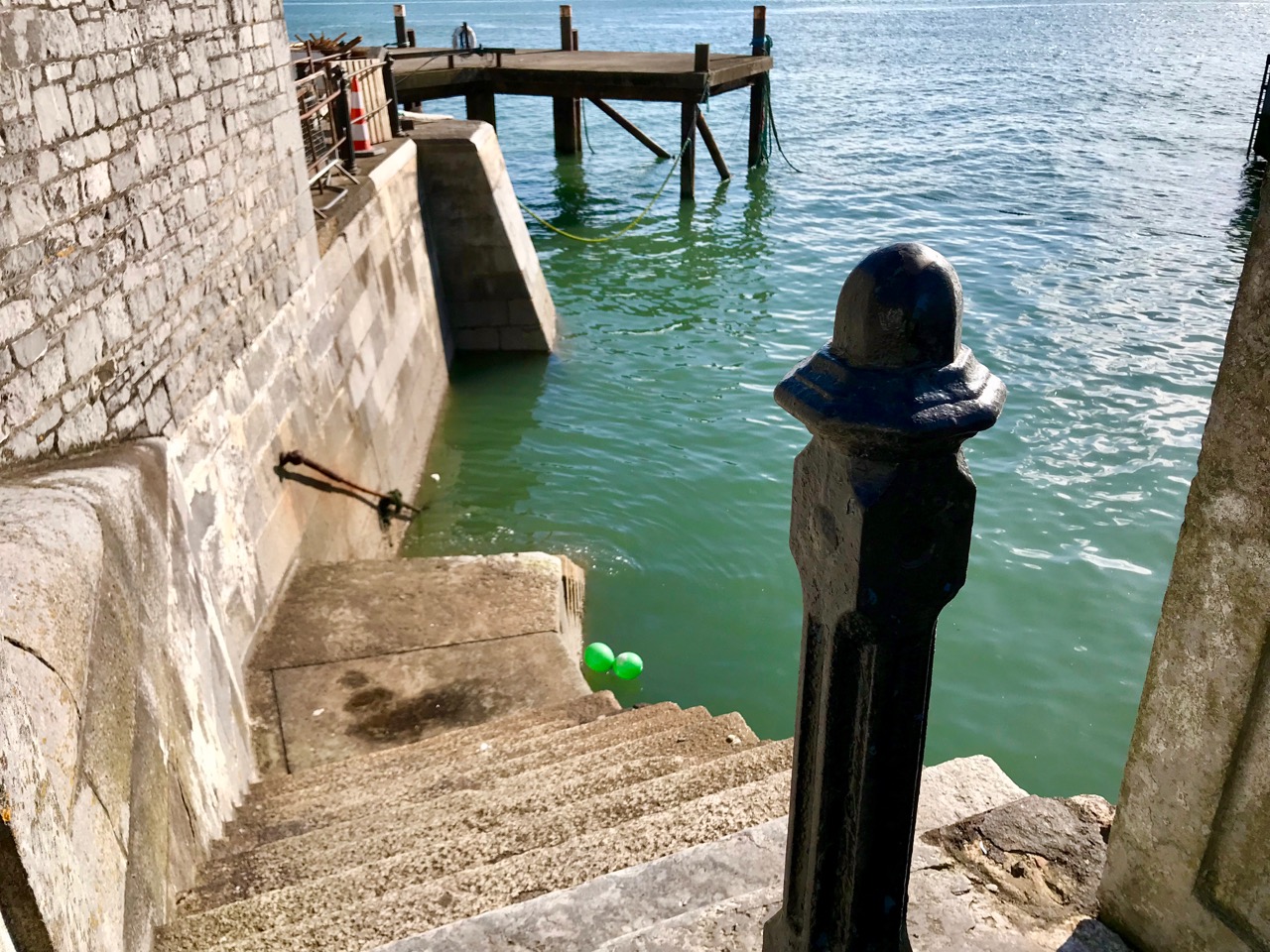
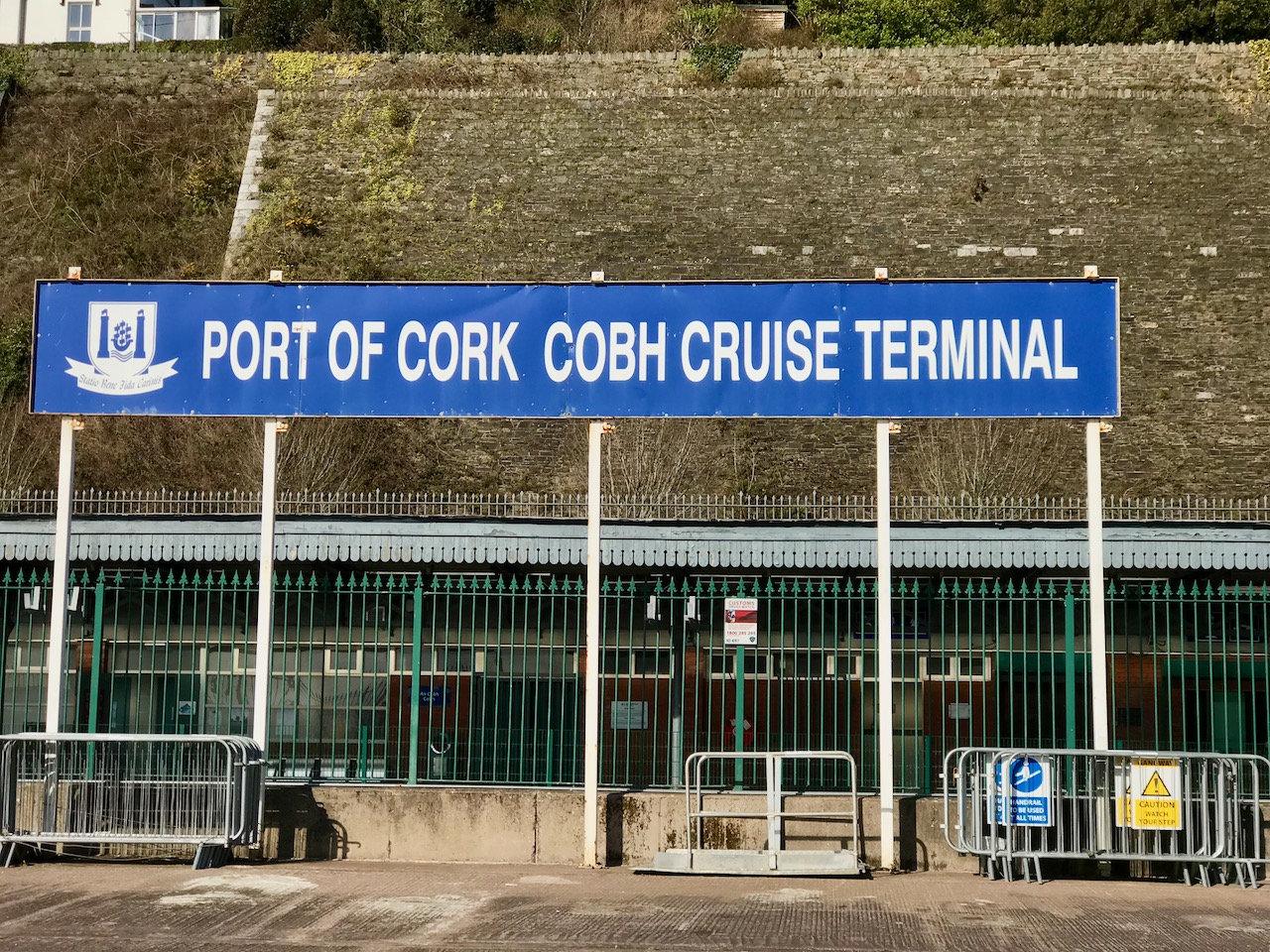
Yes, it’s all about the water, and the fact that it is located beside the “second largest natural harbour in the world by navigational area” (a claim also made, incidentally, by Halifax Harbour in Canada and Poole Harbour in the UK – the undisputed nomination for largest harbour is Port Jackson, Sydney, Australia). Cobh faces the wonderfully named Haulbowline Island and Spike Island, both of which have been established as defensive fortifications, and the former as an important naval dockyard since before Napoleonic times. Today, Cobh has the only dedicated cruise ship berth in Ireland.
Do you remember my telling of the story of Cessair and the first human footsteps on Irish soil in our own Bantry Bay? The story is recounted in the 11th century Lebor Gabála Érenn (The Book of the Invasions of Ireland). The same book tells us about Neimheadh and his followers the Muintir Neimhidh  – People of Nemed – who arrived soon after Cessair around 2000 BC, but in Cork Harbour and settled the islands there: Neimheadh, like Cessair, shared his genealogy with Noah and is said to be buried in a mound on Great Island, overlooking present-day Cobh.

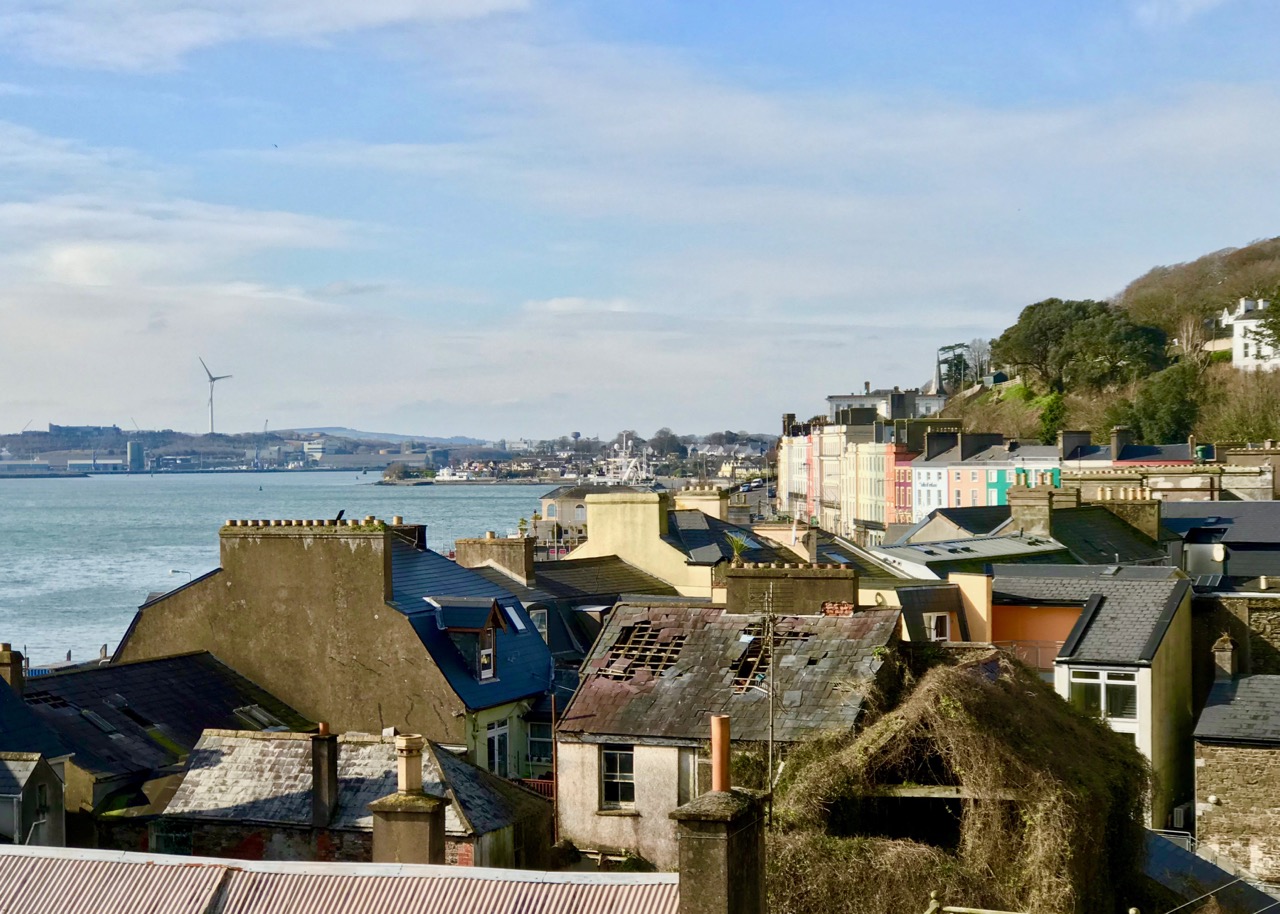
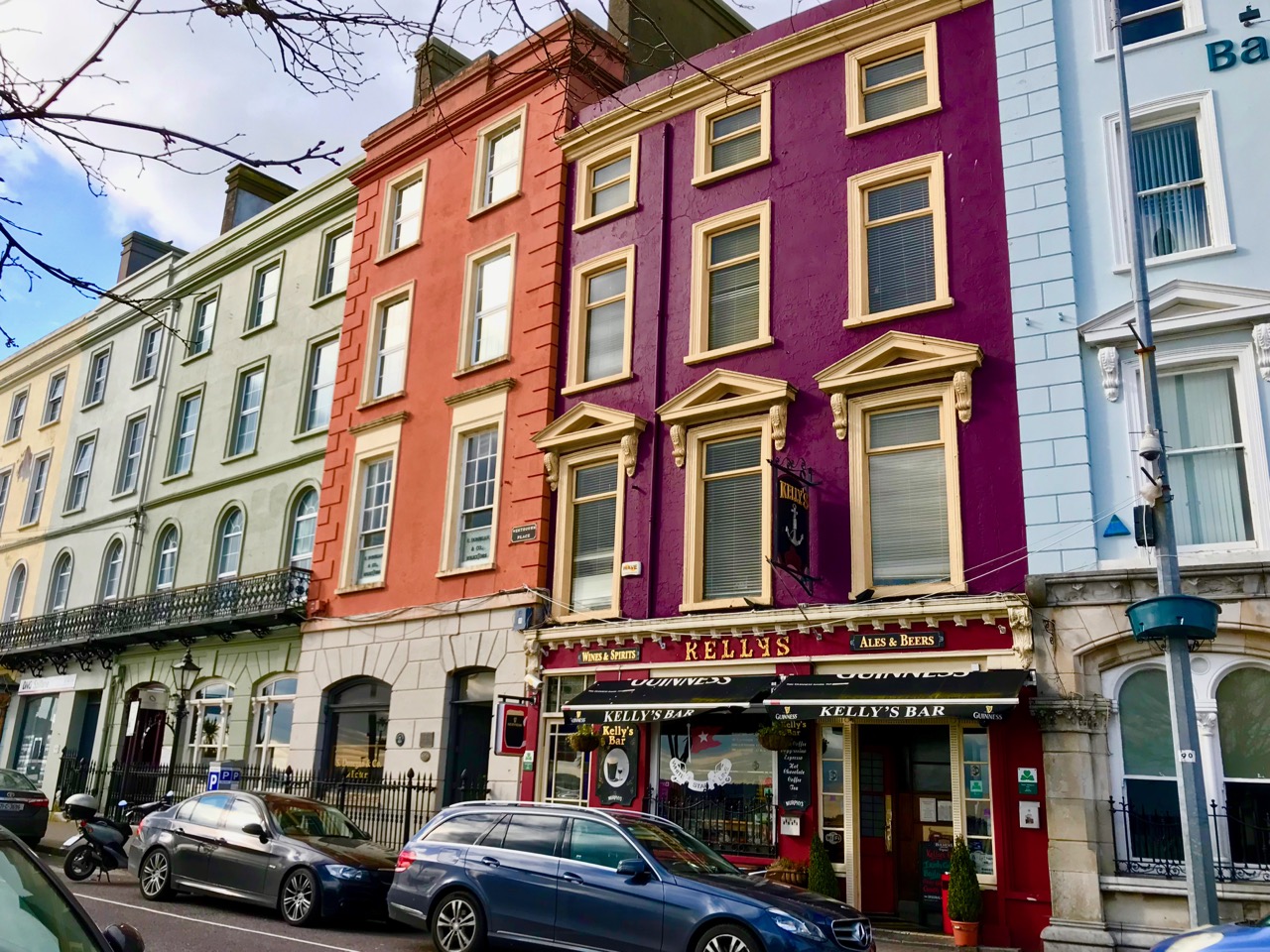
So why am I so impressed by Cobh? Perhaps it’s because – as an architect – I find the streetscapes so elegant, and quirky. For me it’s a cross between the horizontal graceful manners of Georgian Bath and the higgledy-piggledy uphill habitation of the steep lanes of Newlyn in Cornwall, where I lived for many years.
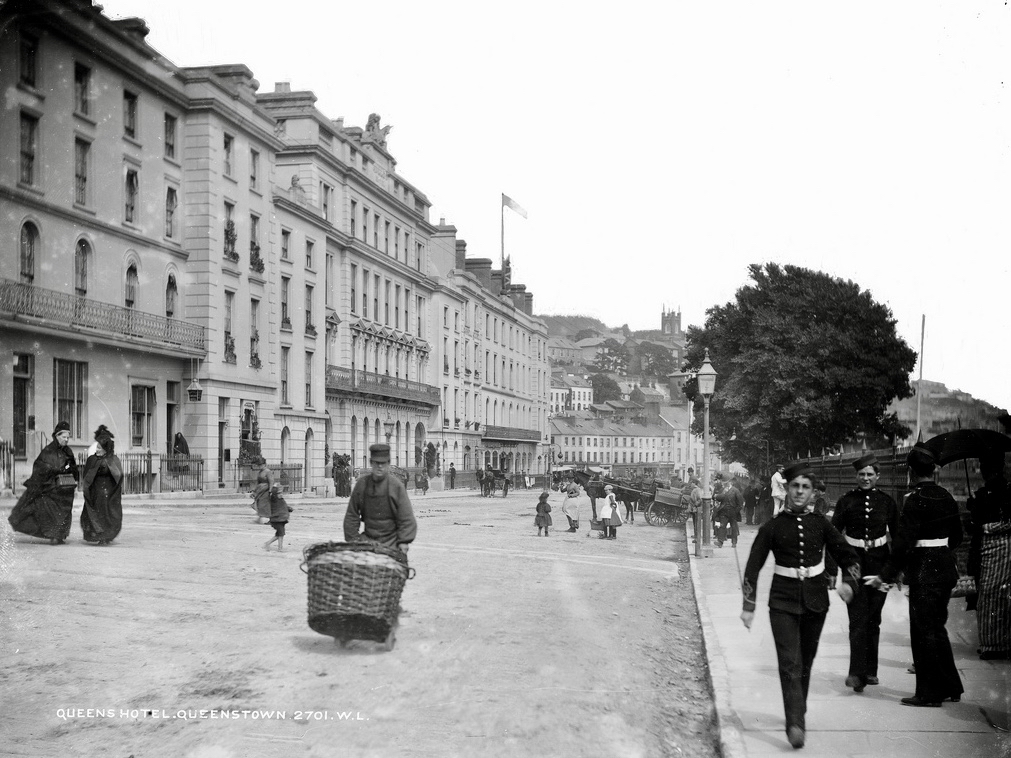
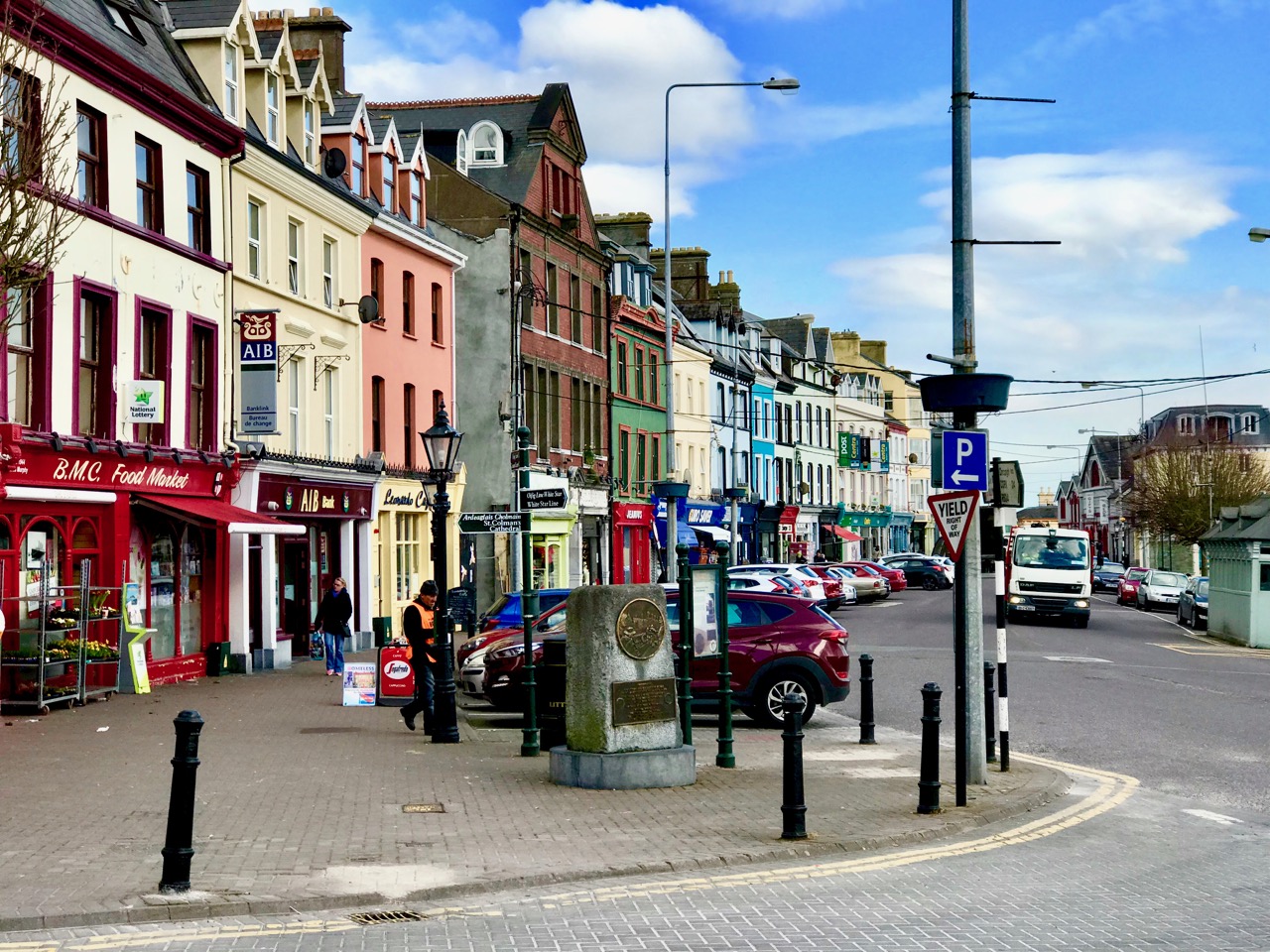
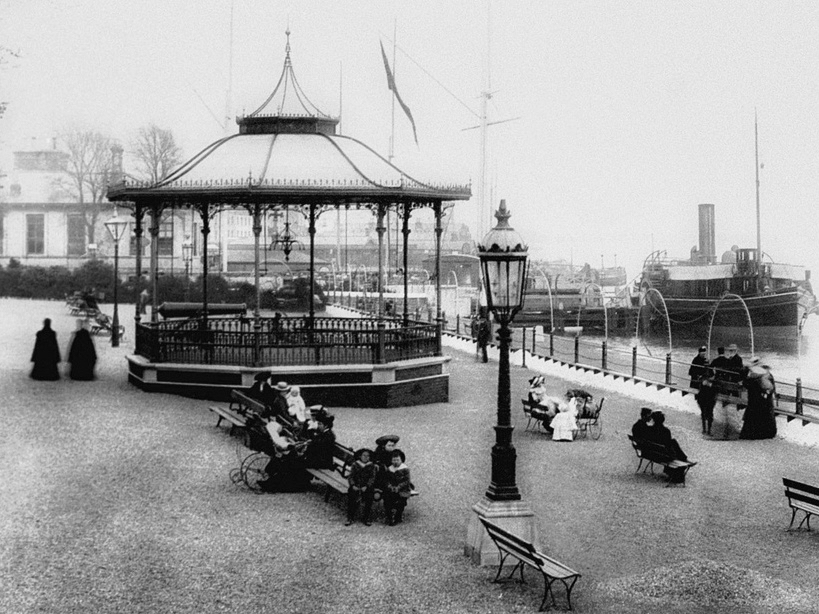
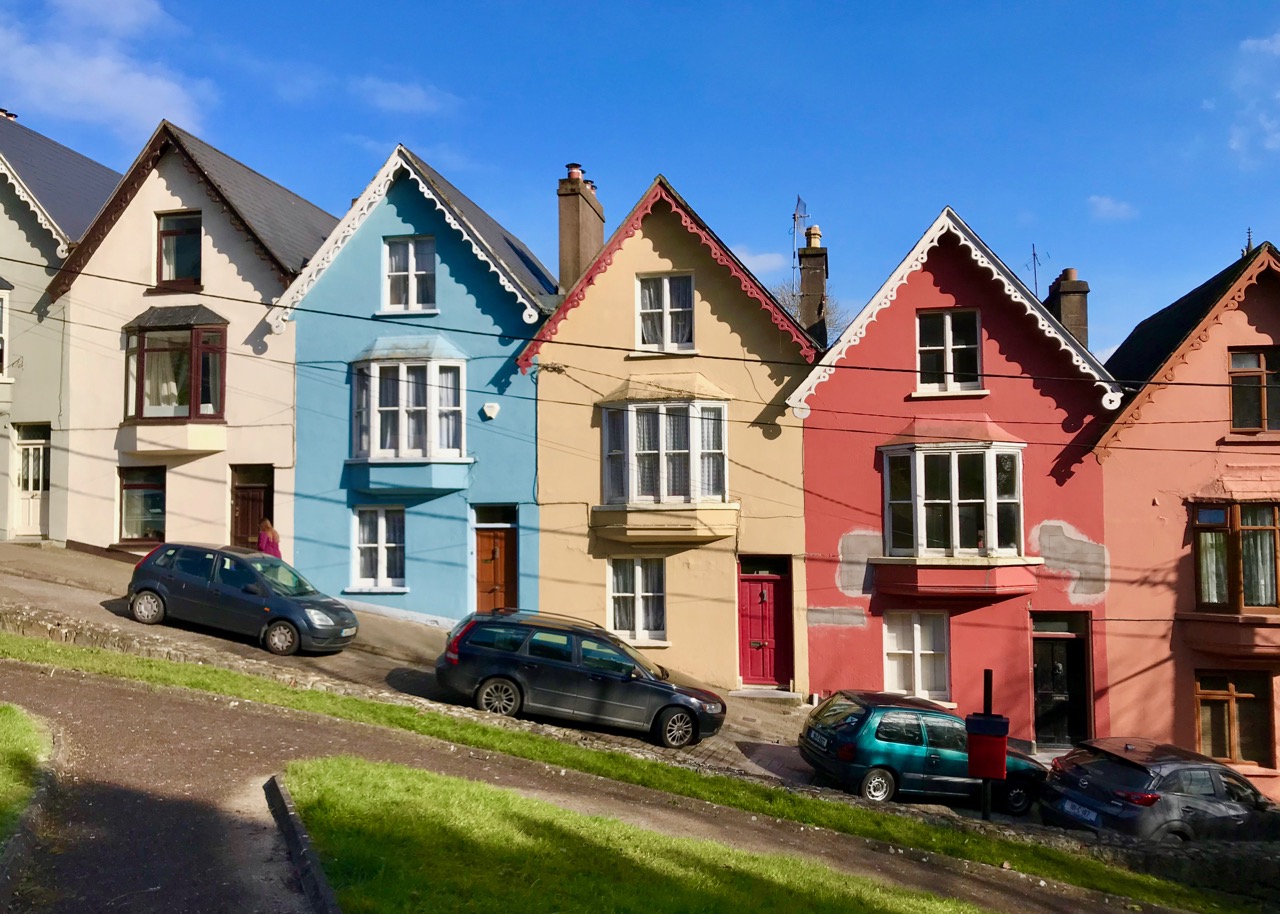
Above – Cobh yesterday and today, showing the elegance of the development of the town in the nineteenth century. Below – another side of Cobh: the steeply descending streets with some remarkable and picturesque terraces, crowned always by the glory of the Cathedral, which took half a century to build. Construction began in 1867.

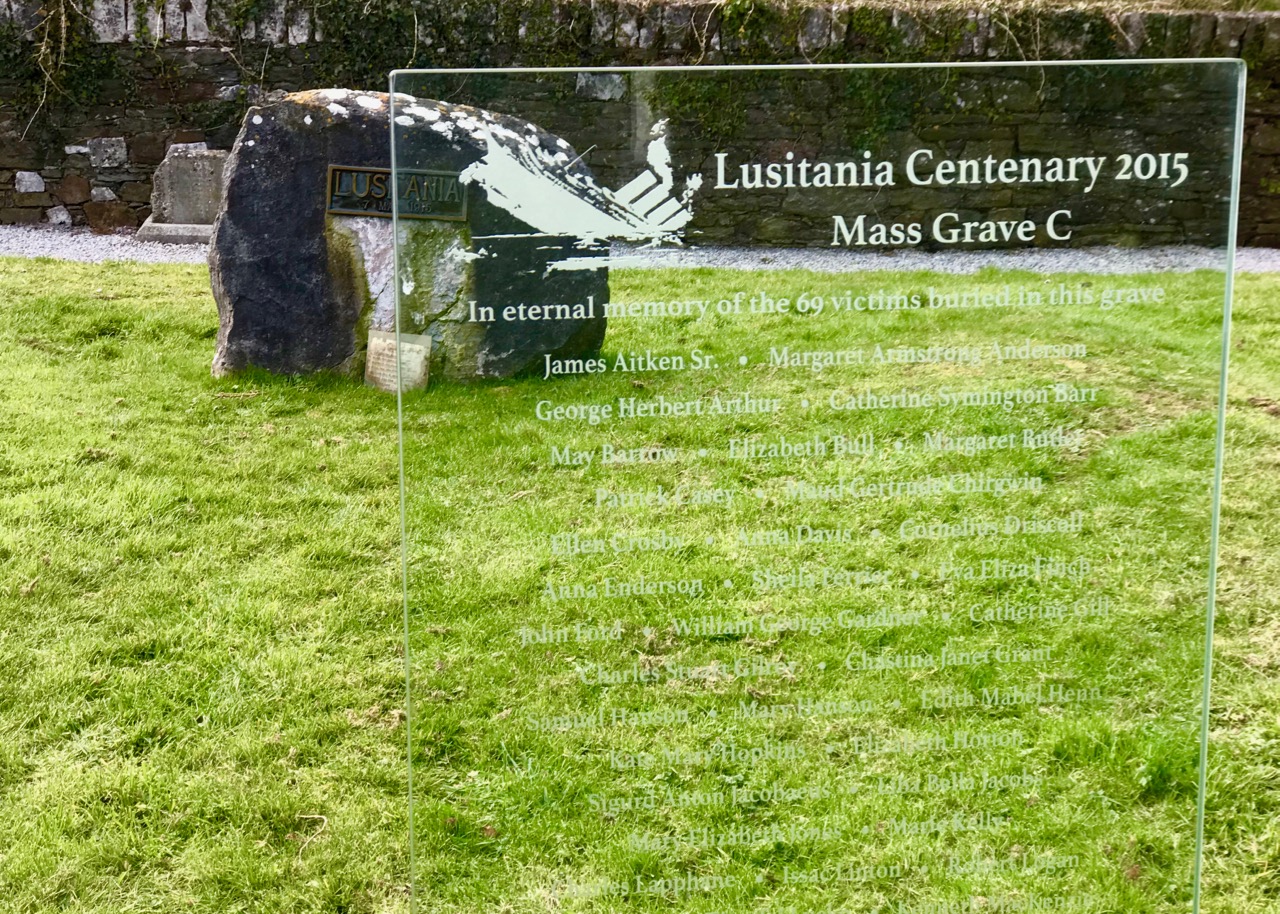
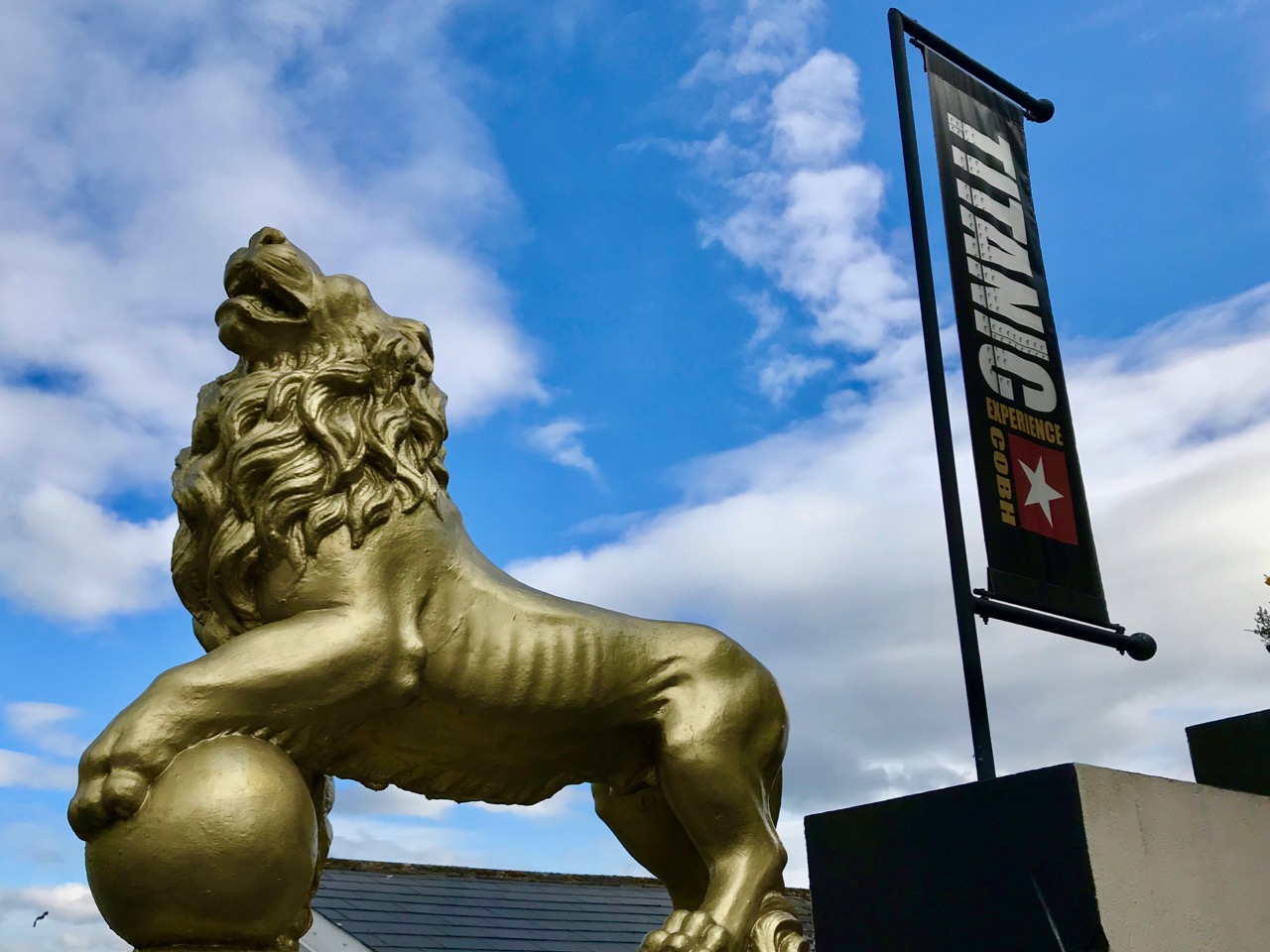
Cobh is such an attractive town to walk around: it should be the jewel on County Cork’s tourist trail. This post is a fairly minimalist photographic essay of what caught my eye on the day we visited. There is a lot more to explore: we never made it to the Heritage Centre, nor to the Titanic Experience, which has brought particular fame to the place in recent times: it was the final embarkation point on the ship’s fateful maiden voyage. All for another day. But we did get up to Cobh’s Old Church Cemetery, high on the hill, where the victims of the Lusitania sinking were buried in mass graves in 1915: a poignant place.

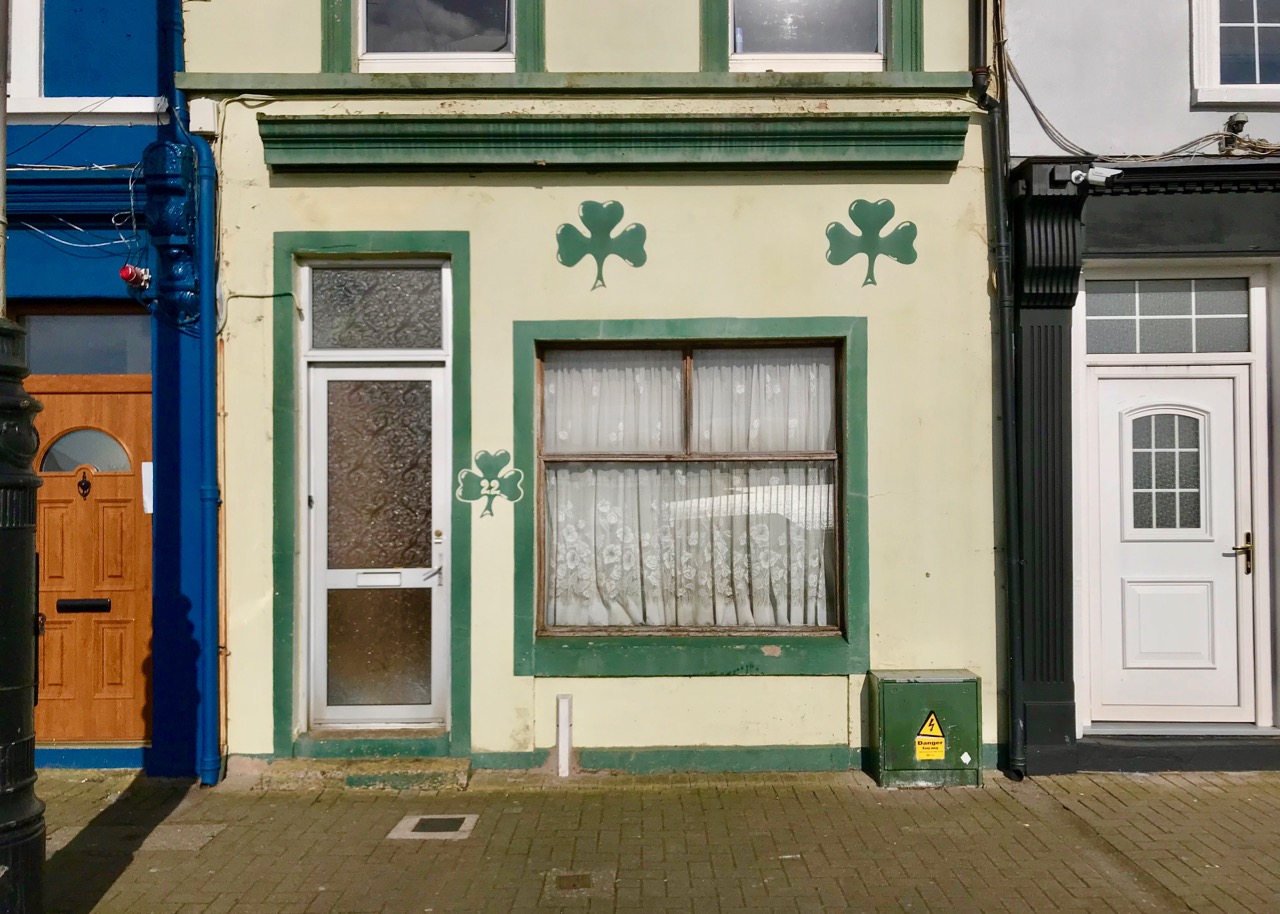
But it was the architecture that had me absorbed: well proportioned and detailed buildings – often simple – that may be overlooked except for the way in which they come together into such a dignified whole. And – such an exploration of colour!

There’s much more to tell of the story of Cobh, and – certainly – so much more to see. I will follow up this post in the coming weeks; the magnificent Cathedral can justify an article on its own. Hopefully you will visit yourself if you have not already done so: your eyes will be opened . . . Look out for the small details!


Mizen Magic 9: Rossbrin to Schull

There’s a main road between Ballydehob and Schull, and then there’s a back road – a road that meanders through farmland and down half-forgotten boreens, a road lined with wildflowers and dotted with the remains of past history, a road that looks over once-inhabited islands. South of this road lies Mizen Magic 9.

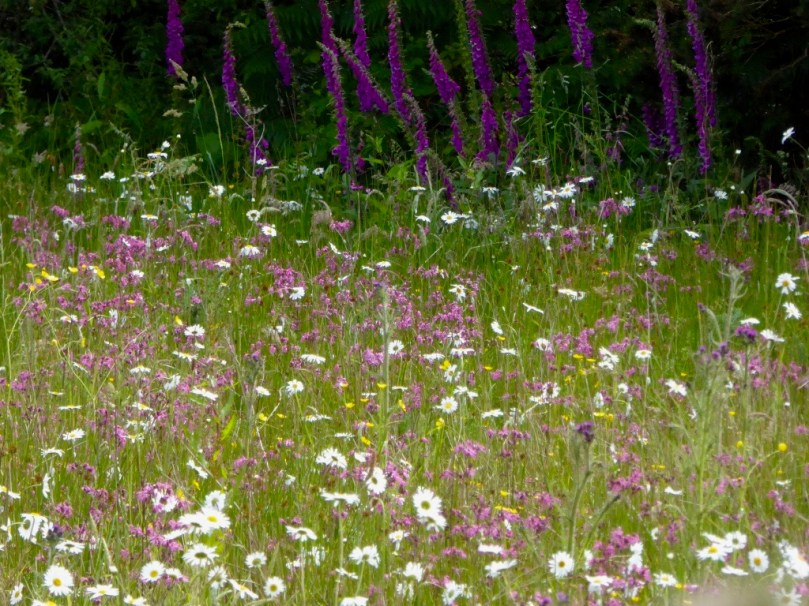
Along the back road in early summer

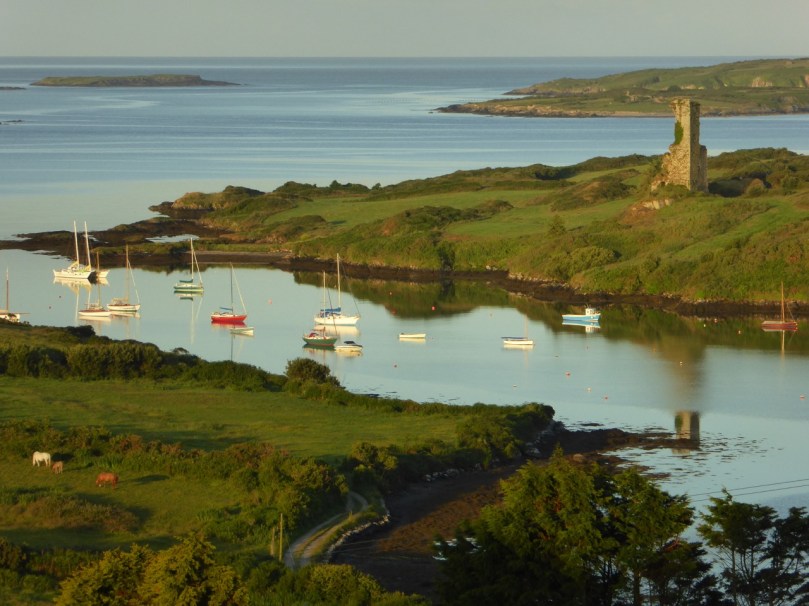
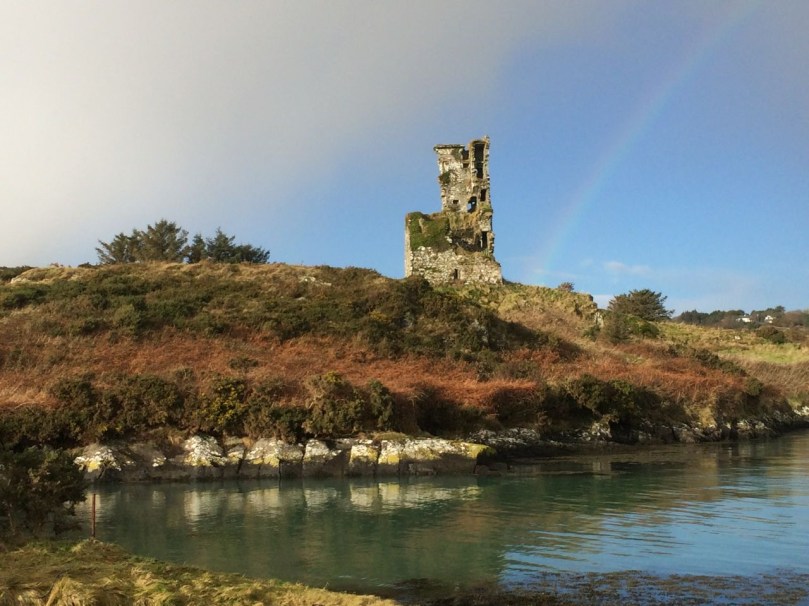
We’ll start at Rossbrin Cove – a place that Robert has written about over and over, like any writer with his own ‘territory.’ This was the home, in the 15th century, of Fineen O’Mahony, the Scholar Prince of Rossbrin.

Looking down now on what’s left of his castle, it’s hard to imagine that this was a place teeming with life and learning – a mini-university where scribes and poets and translators transcribed to vellum (and to paper – a first in Ireland) psalters, medical tracts and even the travels of Sir John Mandeville. The castle has been in ruins since the 1600s, and we live in fear that the next storm will bring the last of it down.

Rossbrin Castle from the sea

The road runs through the townlands of Rossbrin, Ballycummisk, Kilbronogue, Derreennatra and Coosheen. Ballycummisk has a wedge tomb from the Bronze Age and a ring fort from the Early Medieval period – just to remind you that you are far from the first to want to settle in this place. In more recent times, and like Horse Island, it was once the centre of a thriving mining industry, but a spoil heap and stone pillars are all that remain.

Large ring fort, and the remains of mining activity, in Ballycummisk

Two islands dominate the views of Roaringwater Bay along this road. The first is Horse Island, owned now by one family, with its industrial past a distant memory. There have been various plans for Horse Island in recent years – a resort, a distillery – but so far it has resisted development.

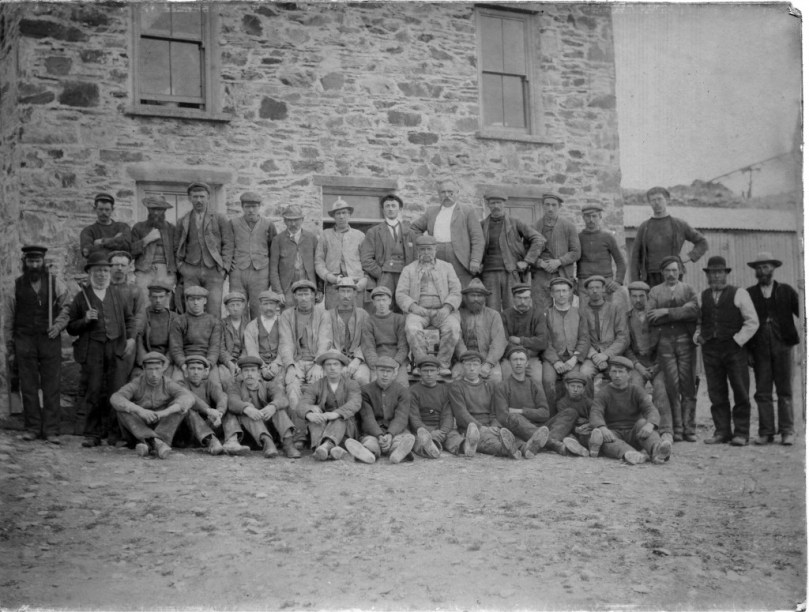
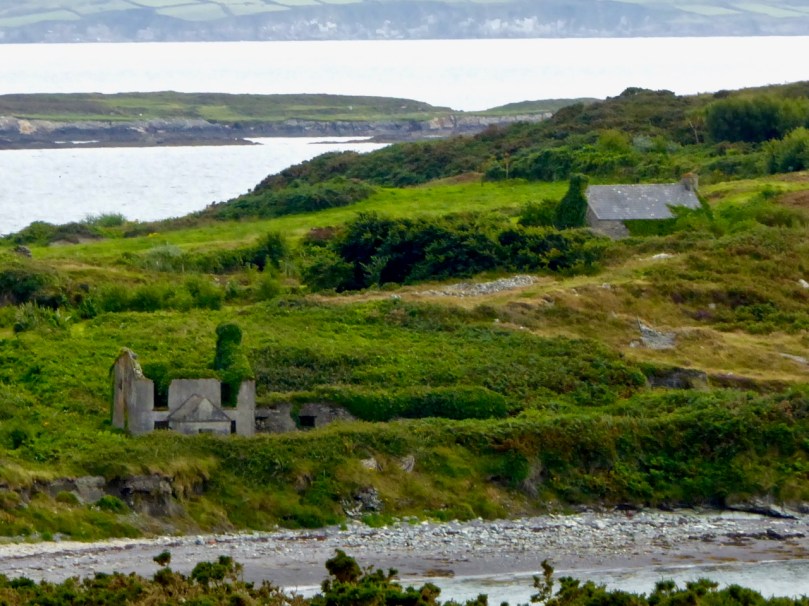
Horse Island Miners in 1898 and the ruins of miners’ dwellings

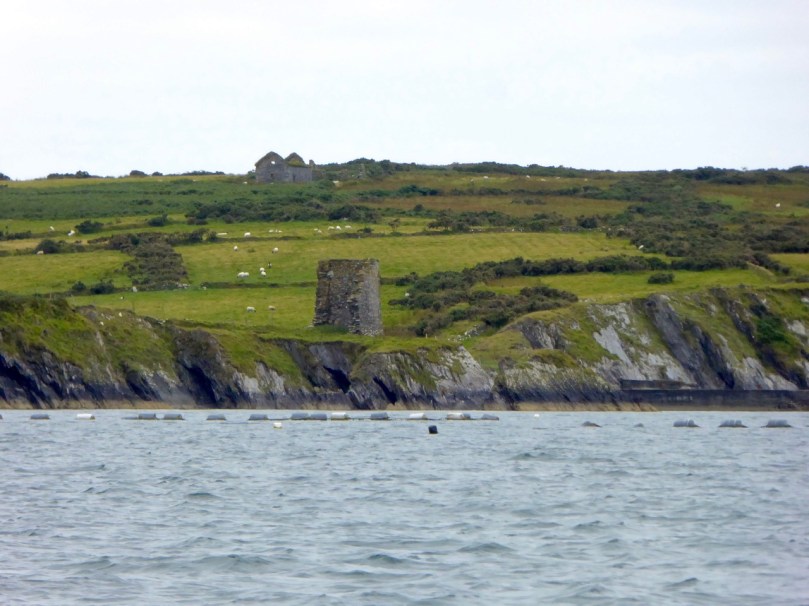
The other is Castle Island, home to yet another vestigial O’Mahony Castle – one of a string along the coastline, all within sight of each other and sited strategically to control the waters of Roaringwater Bay and their abundant resources.

There’s not much left of the castle on Castle Island

The O’Mahonys became fabulously wealthy in their day, charging for access to fishing and fish processing facilities and for supplies and fresh water. They also forged strong alliances with the Spanish and French fishermen and visitors who plied those waters – a friendship that was to cause great concern to the English crown and that was to spell, in part, their eventual downfall.

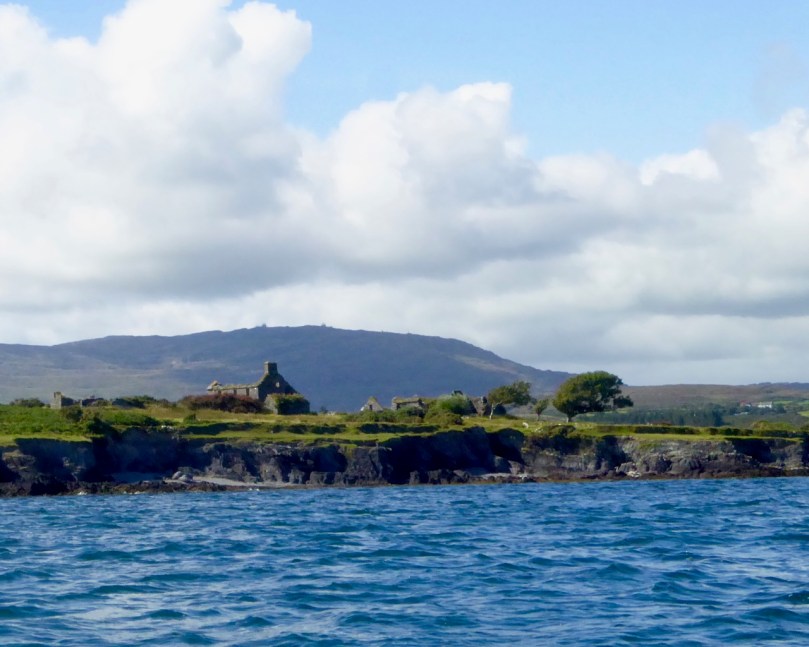
Ruined farm houses on Castle Island. The photograph was taken from a boat – that’s Mount Gabriel in the background

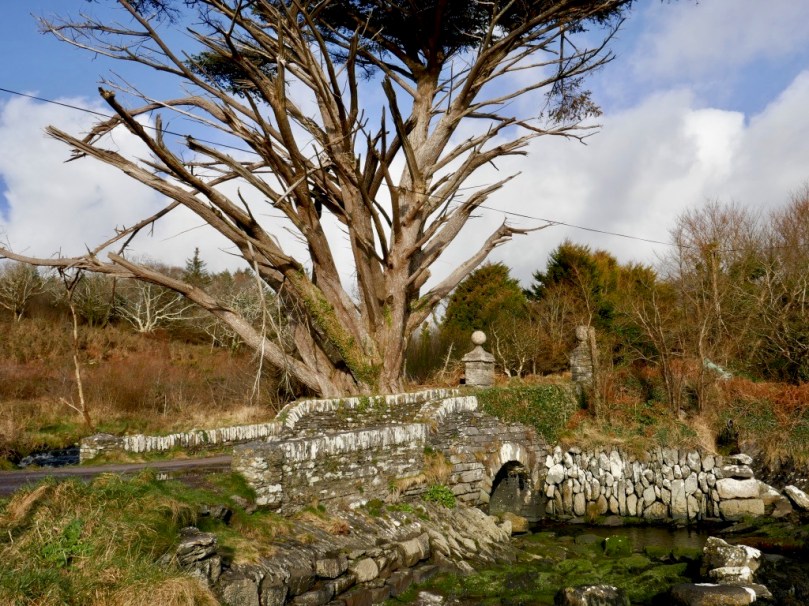
The closest spot to Castle Island (also uninhabited) is the beautiful little pier at Derreennatra. There is a large house up behind the pier, now inaccessible but once run as a guest house and famous for its hospitality. A curious bridge once gave access to the demesne and it remains a striking landscape feature, with its pillars and giant Macrocarpa tree.

Derreennatra Bridge

Continuing towards Schull we come to the last of the O’Mahony castles and the best preserved in this area. This is Ardintenant (probably Árd an Tinnean – Height of the Beacon – possibly referring to a function of the castle to alert others to the presence of foreign vessels) and it was the home of the Taoiseach, or Chief, of this O’Mahony sept.

Two ‘beacons,’ ancient and modern – Ardintenant or White Castle below and above it the signal stations on Mount Gabriel

The castle, or tower house, still has a discernible bawn with stretches of the wall and a corner tower still standing. If you want to learn more about our West Cork tower houses, see the posts When is a Castle..?; Illustrating the Tower House; and Tower House Tutorial, Part 1 and Part 2.

Ardintenant is also known as White Castle, a reference to the fact that it was once lime-washed and stood out (like a beacon!) to be visible for miles around. It appears to have been built on top of an earlier large ring-fort which in its own day was the Taoiseach’s residence before the fashion for tower house building.

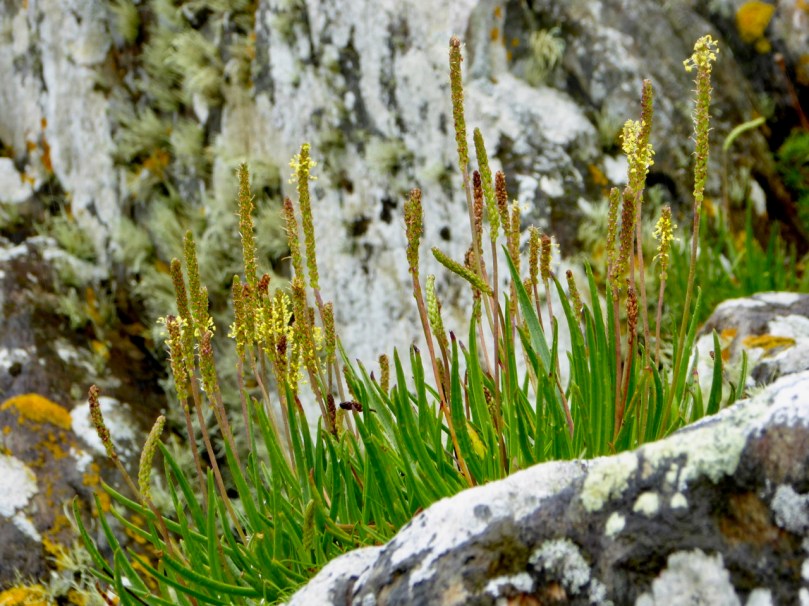
Sea Plantain at Coosheen

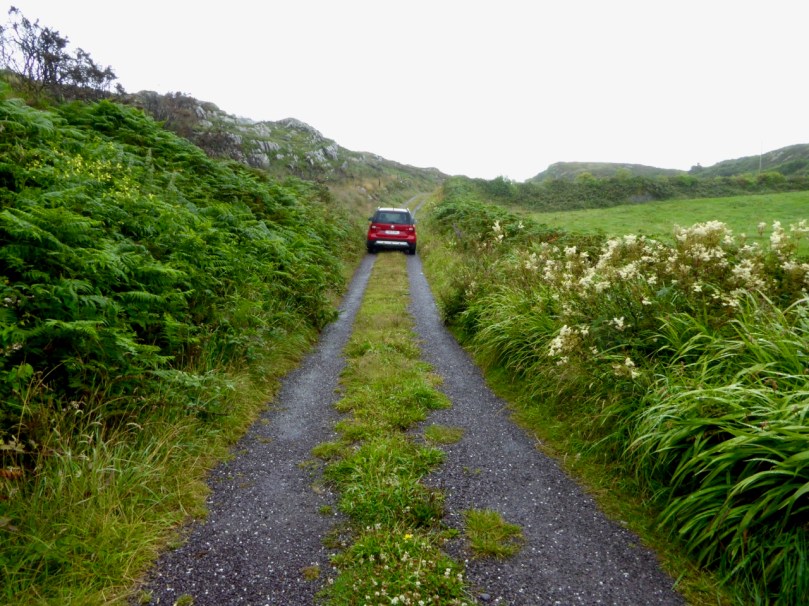
From Ardintenant we head south to Coosheen, a picturesque pebble beach known only to locals. It’s one of my favourite places to go to look for marine-adapted wildflowers. On a rainy day last August I saw Sea-kale, Sea-holly, Sea Plantain and Thrift, and drove back on a boreen lined with Meadowsweet and Wood Sage and past a standing stone whose purpose has been long-forgotten but that continues its vigil through the centuries.

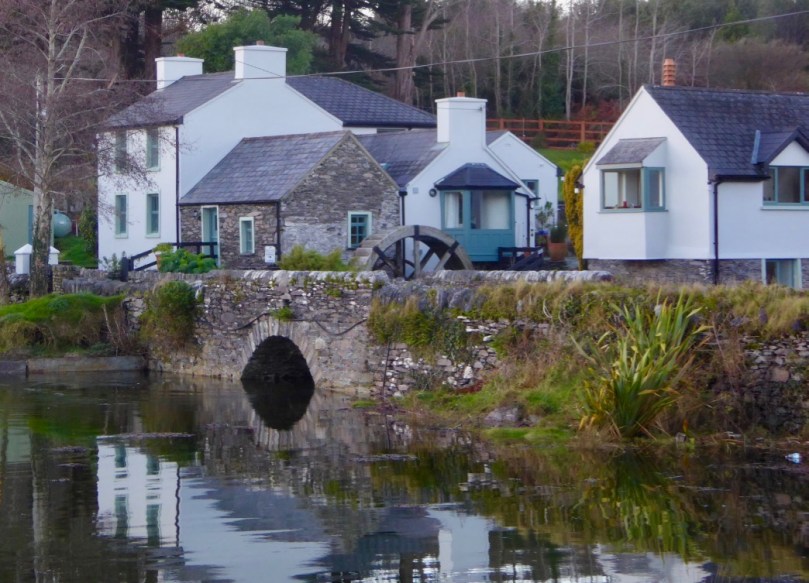
Our final spot in Coosheen is Sheena Jolley’s mill house, now the gallery of this award-winning wildlife photographer. She has restored it beautifully and the gardens are a work-in-progress that manage to capitalise on, rather than overwhelm, the mill stream and the rocky site. This is also the starting point for the Butter Road walk – but that deserves a new post one of these days, a post in the Mizen Magic series. We have written one but it was a long time ago.

Take a walk, or a drive, down any part of this road – do it in summer when the boreens are heady with wildflowers, or do it in winter when the colours of the countryside are at their most vivid. Heck, do it any time!


Finn McCool’s Causeway

In a recent post this year I said how much we liked to go off the beaten track and find Ireland’s gems hidden away among the narrow boreens of West Cork and elsewhere. But sometimes it’s also worth going to the better known hotspots around the country – and being prepared to regard them objectively in spite of the sometimes intrusive crowds that you might meet along the way.

Last summer our trip around the coast of Northern Ireland took us past the Giant’s Causeway in County Antrim. I had never been there before (Finola had) so I was keen to see what all the fuss is about. After all, I knew the causeway had been built by one of Ireland’s greatest heroes – Finn McCool – and that it once extended all the way to Scotland: the other end of it can be seen at Fingal’s Cave on the Scottish island of Staffa (Staffa is a Norse word meaning ‘Pillars’ and is named from the rock formations there): the Gaelic name for the cave is An Uaimh Bhinn, meaning ‘the melodious cave.’ It has been suggested that the name ‘Fingal’  is linked to the name ‘Finn McCool’ possibly after an 18th century Scots poet, James Macpherson, wrote an epic poem loosely based around the Finn story. Later, the composer Felix Mendelssohn visited the cave and celebrated it in his Hebrides Overture. It’s worth looking at this Youtube video of the piece as it is well illustrated with dramatic views of the Scottish end of things:

Before leaving Scotland – and this atmospheric music – I was intrigued to find mention of a tradition that the Staffa cave is fully illuminated by the sun on only one day of the year: on or around the 16th of December (quite close to the winter solstice), and the teller of this tale will point out that it was exactly on that day – 16 December – in 1830 that Mendelssohn completed his overture . . .

Ireland’s Giant’s Causeway has been a popular tourist destination for as long as there has been tourism in Ireland. I hadn’t realised that it had been served by a dedicated tramway since the 1880s (the photo above dates from that time). The line, running from the mainline railway at Bushmills, was the world’s first to be powered by hydro-electricity – fed by a generating station at Walkmill Falls near Bushmills via 104 horsepower 78 kW Alcott water turbines providing 250 volts at 100 amps. Sadly, the line closed down in 1949 but has been revamped over the final 3.2 km of the original tramway during the main tourist season, carrying its first passengers at Easter 2002.

Another modern development is the tourism and visitor centre, which opened in 2012: the previous building was burned down in 2000. As an architect (happily retired!) I always take an interest in large public buildings and their design. This one was very controversial when it was mooted, partly because there was concern about the way it was being commissioned – initially it was to have been privately financed and run. In the end funding was raised from the National Trust (who own the site), the Northern Ireland Tourist Board, the UK Heritage Lottery Fund and public donations. I think it is a successful building: it has gravitas while also being quite playful with the references to the hexagonal basalt formations of the Causeway. It has to achieve a difficult job: handling thousands of tourists (in 2016 there were 851,000!)  as efficiently as possible while providing a good informed experience.

Top – the Giant’s Causeway Visitor Centre has a well designed interactive information area. Above – Fare on offer at the Visitor Centre includes basalt column-shaped chips, and souvenir travel sweets!
The popularity of the causeway has ensured that it has been well recorded by artists, topographers and postcard publishers. Here are a few examples, beginning with one of our favourite antiquarians, George Victor Du Noyer.

Top to bottom – George Victor Du Noyer c1850; Thomas Rowlandson c1812; Susanna Drury, c1740; tourist postcard from 1907

The Giant’s Causeway was supposedly discovered by the Bishop of Derry in 1692, and announced to the world the following year when Sir Richard Bulkeley, a fellow of Trinity College Dublin, presented a paper on it to the Royal Society . . . I wonder if he mentioned Finn McCool? Just in case you don’t know this story yourself, here’s a good version of it, narrated by Tom Purves and beautifully accompanied on the Uillinn pipes:

We went fairly late in the season (October) and on a wet and windy day. It was a worthwhile visit and I do recommend it: the Antrim coastline is spectacular enough to warrant the journey, even if the causeway wasn’t there – but what a legend! It links one of Ireland’s best known heroes with the nearby Scottish coastline, and credits him with the creation of both Lough Neagh (Ireland’s largest inland mass of water) and the Isle of Man. Today it’s a Unesco World Heritage Site – in fact the only one in Northern Ireland.

Mizen Magic 8: The Altar

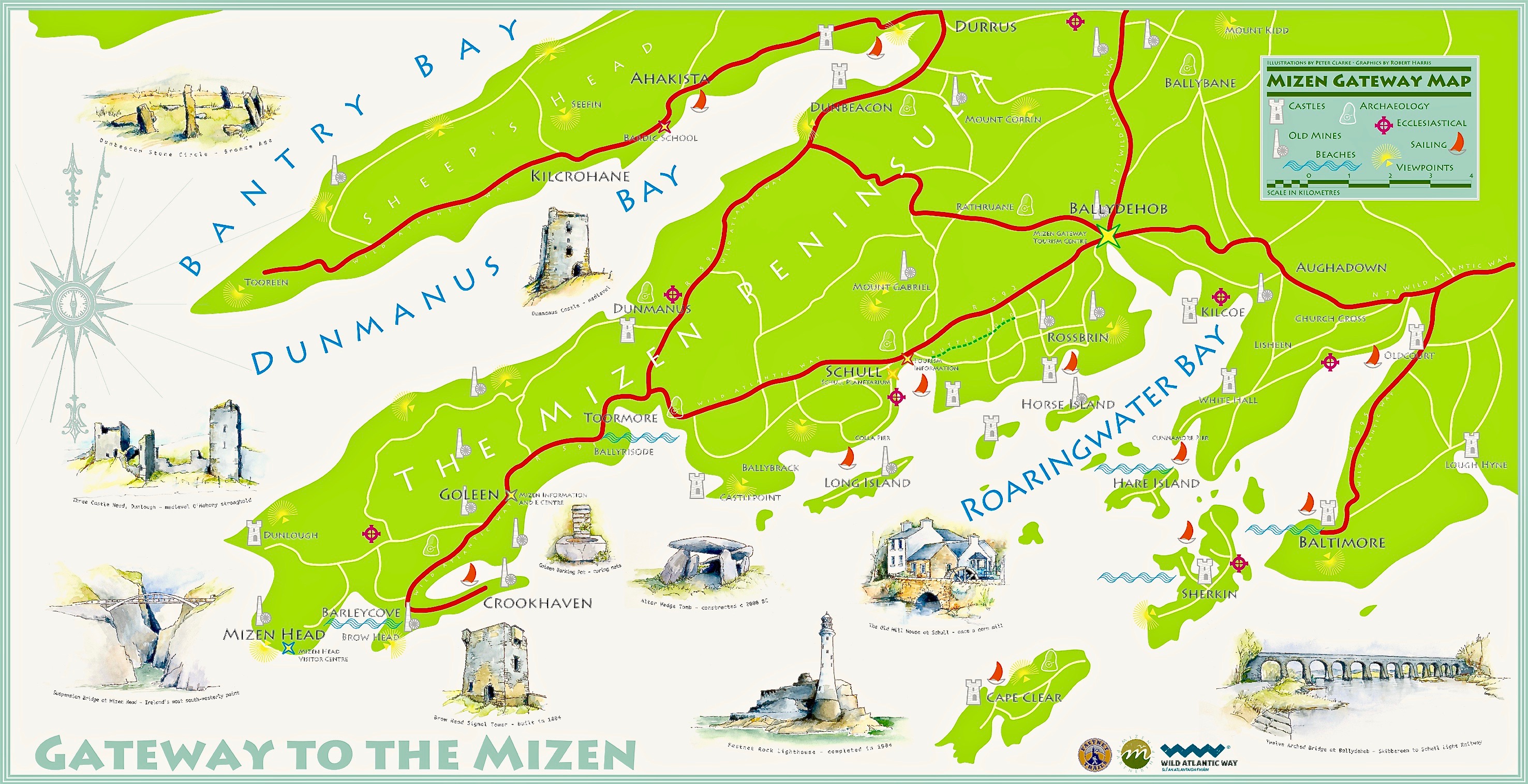
Here’s the Mizen Peninsula shown on a map drawn by Robert for the Bank House tourism centre in Ballydehob and embellished with Peter Clarke‘s exquisite watercolour sketches of just some of the places that should not be missed by visitors to West Cork . . .

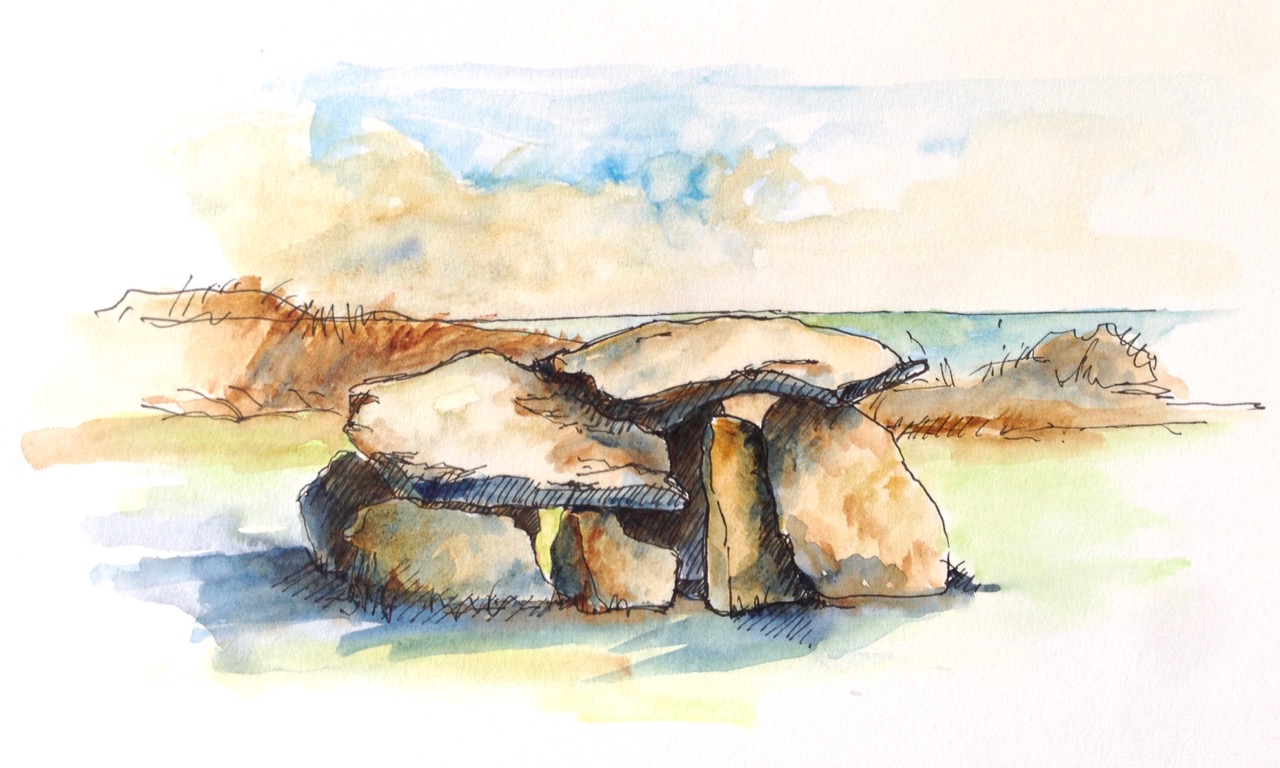
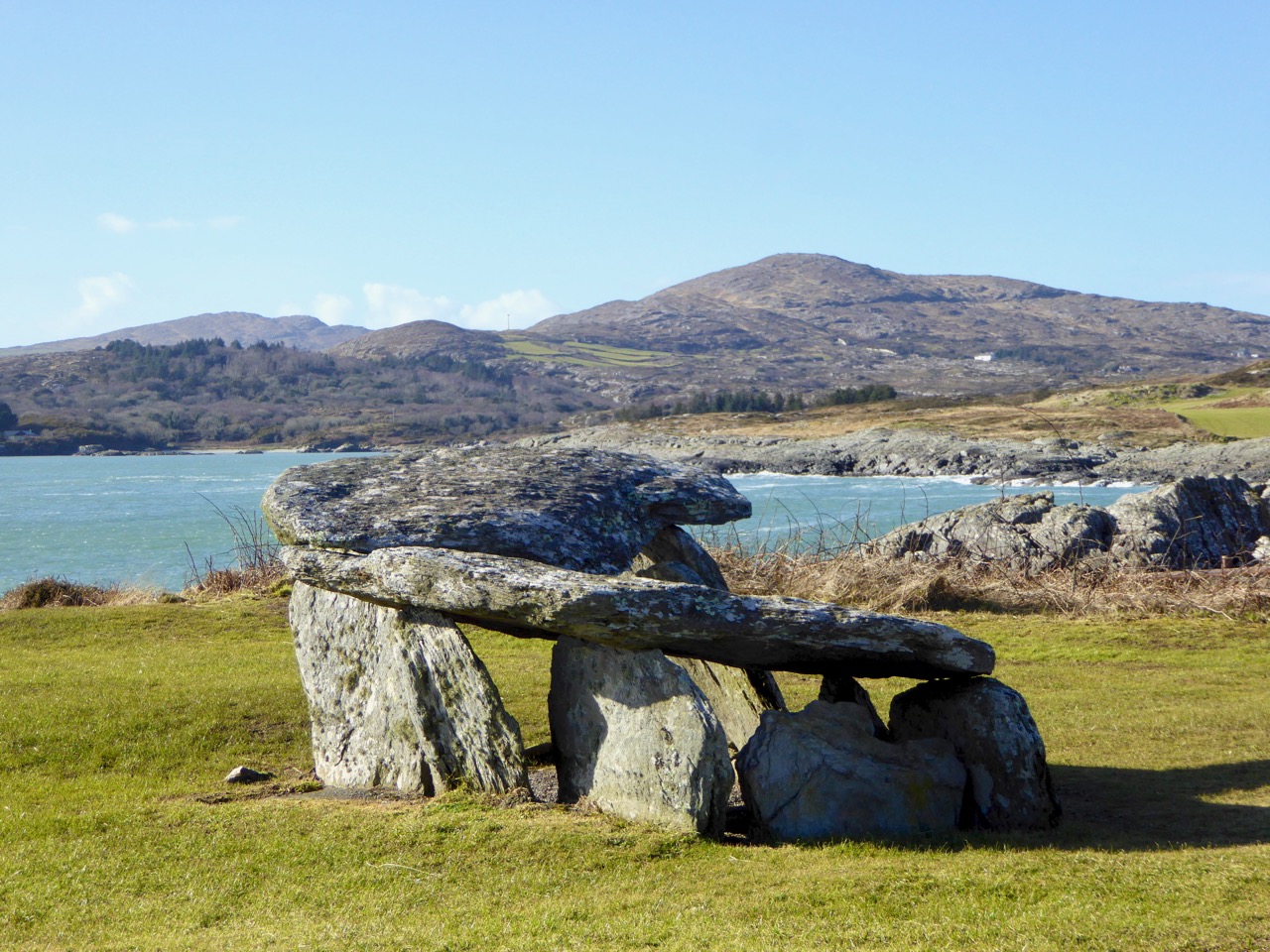
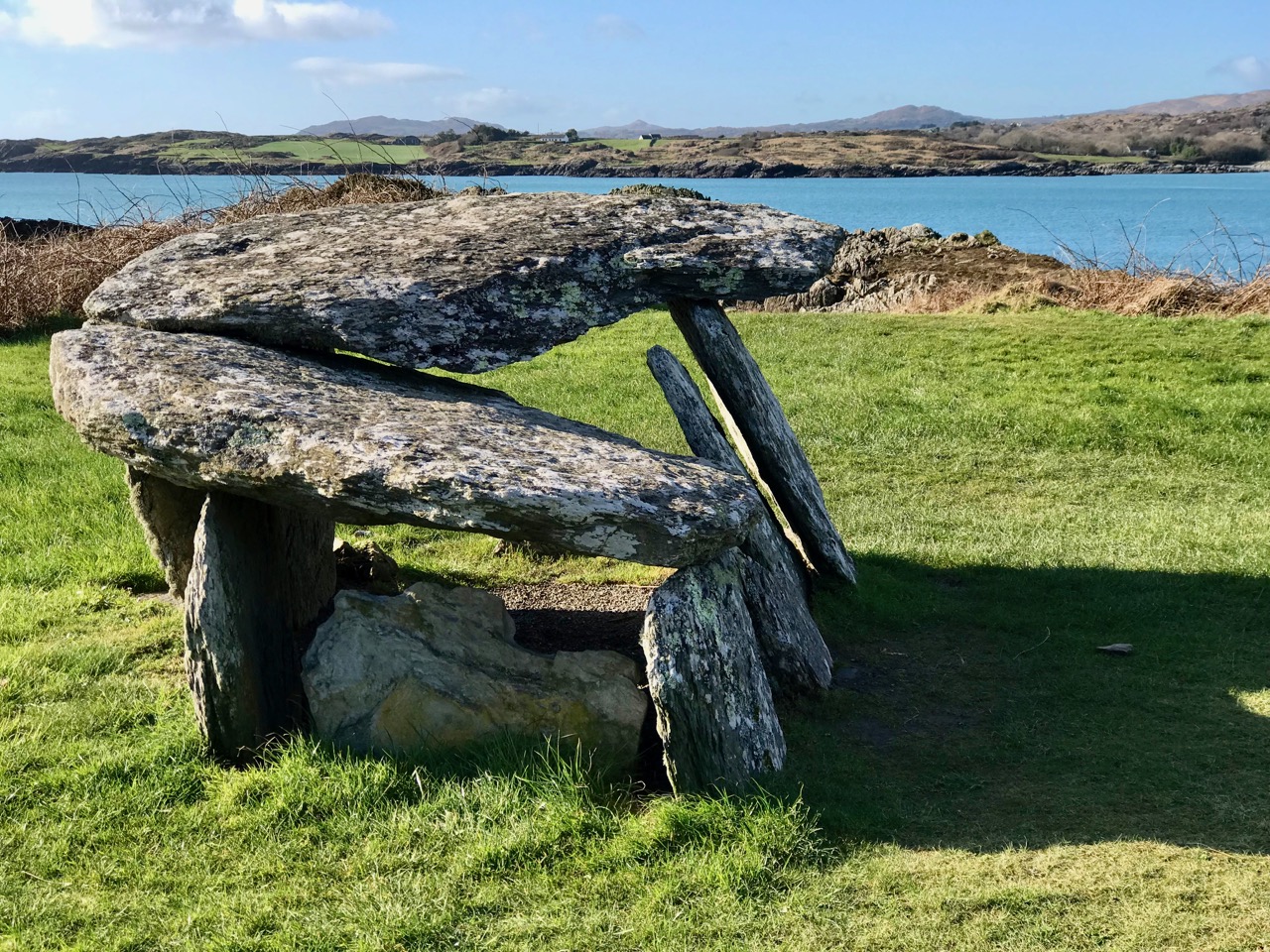
. . . And here is another rendering from Peter of one of the ancient sites that everyone goes past when travelling to the far west: possibly one of the most accessible pieces of archaeology on this section of the Wild Atlantic Way. It’s the Altar Wedge Tomb at Toormore Bay.

It’s early February, and Imbolc has passed. That means that Springtime has officially started here in Ireland. Sure enough, we looked out over a sunlit Roaringwater Bay this morning: soon we were heading out towards Goleen, Barley Cove and all points west. We stopped at The Altar and had it all to ourselves. You can see here that it’s orientated towards the Mizen Peak – that sharp little pyramid which is right on the centre of the picture – and lies to the west. For me, there’s a perfectly natural symbolism about placing the dead in a tomb that is aligned on the rising and the setting of the sun: that’s something we still do, several thousand years on!

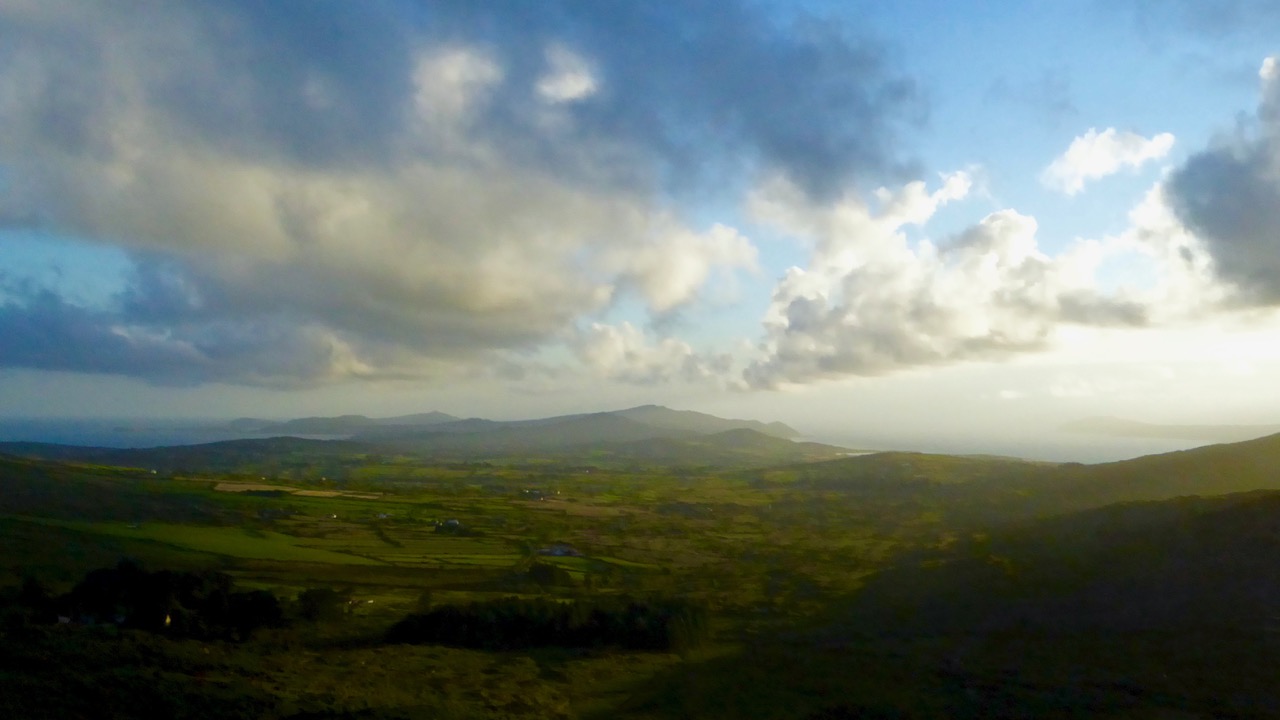
The upper picture, taken on the Winter Solstice, shows the Mizen stretching away from the heights of Mount Gabriel: the Mizen Peak is the little pointed blip just left of centre. The lower picture looks across the wetlands behind the sand dunes at Barley Cove, and was taken today in the Spring sunlight: the Peak is clearly visible as the highest point. I believe that our forebears attached great importance to high places, as many stone monuments and Rock Art often seem to be placed in the landscape with commanding views towards hilltops. Mike Wilson’s site Mega-What sets out his detailed studies of the orientation of ancient sites within the natural landscape. Here is his analysis of the setting of the Altar Wedge Tomb.

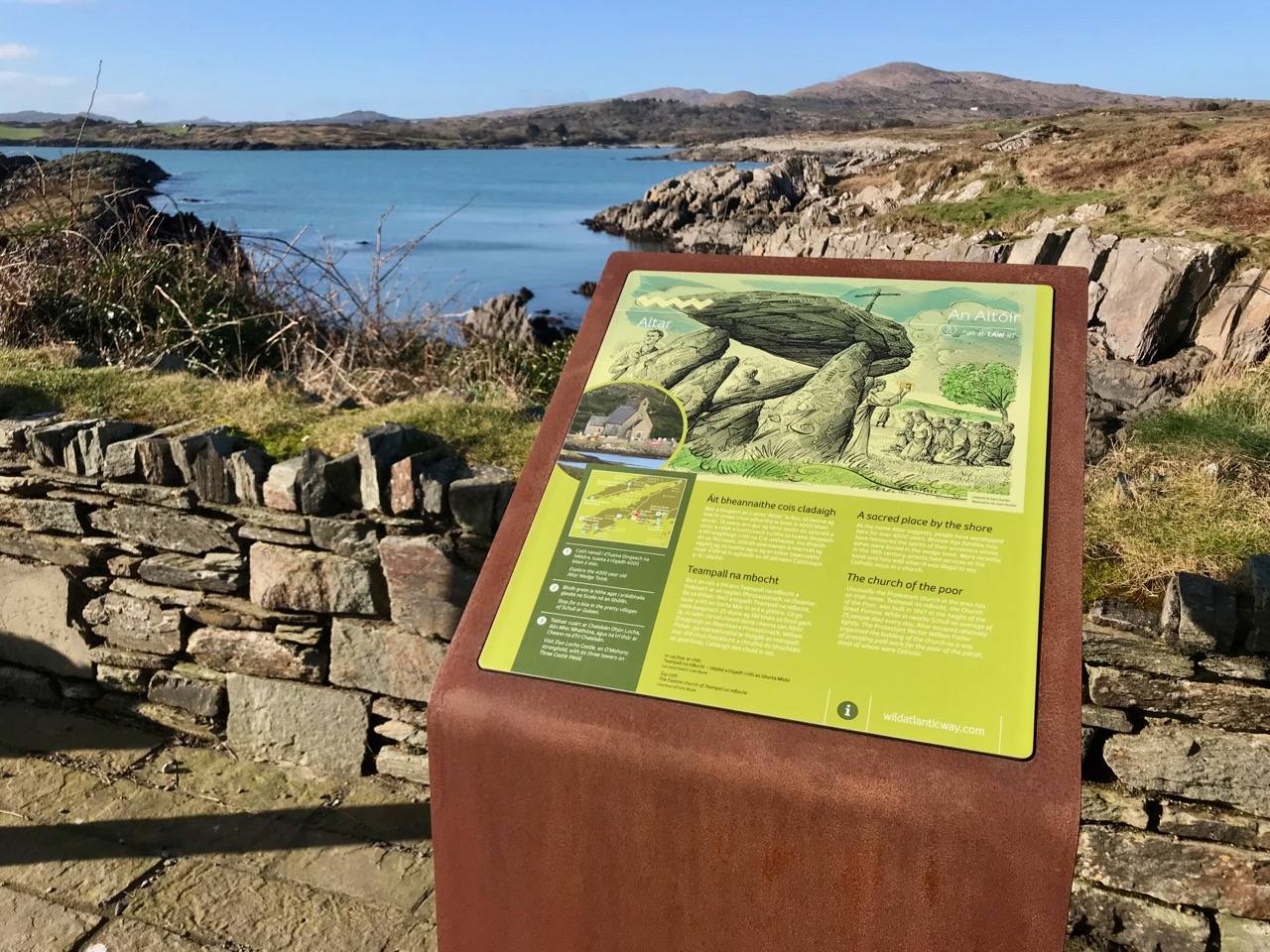
I am always alert for the ways in which our special sites are interpreted for us. I created a bit of a storm a while back when I commended the signage which has been put in place along the Wild Atlantic Way using visually strong corten steel elements (above left) supplemented more recently by (in my opinion) very well designed information boards. The image on the right above is from an earlier OPW board which explains the possible early use of the wedge tomb, while the images below show the new signage, which features the later use of the tomb as a Christian altar during the Penal times (hence the name: The Altar), with a drawing by Sam Hunter. I am struck by the way this monument has been a focal point for differing rituals spanning countless generations.

When writing about archaeological subjects I am always on the lookout for the way that antiquarians saw the sites which we are familiar with today. I had hoped that George Victor du Noyer – the subject of an excellent recent exhibition in Cork’s Crawford Gallery – might have drawn this wedge tomb when he travelled the country for the Ordnance Survey during the early nineteenth century: he may well have done, but the annotation and cataloguing of his vast legacy of work has yet to be completed and I have not found such a record. His drawings below are not of The Altar, but a portal tomb, Ballybrittas in County Wexford. Portal tombs (sometimes known as dolmens) share similarities with wedge tombs, but are earlier, dating from between 3000 BC to 2000 BC, while wedge tombs tend to be associated with the Bronze Age, which followed this period.

Cremated remains were found in Altar Wedge Tomb when it was excavated in 1989 by Dr William O’Brien, now Professor of Archaeology at UCC. We can never know exactly what the significance of these impressive structures was to those who built them. For me, I’m pretty sure that it was connected with their relationships to, and respect of, the landscapes which they inhabited, and which they invested with meaning. They must certainly have paid heed to the passing of the seasons and the continual cycles of nature, and their closeness to all of this must have given them an inherent knowledge of the paths of the sun, moon and stars. Above all, our ancestors had to understand and appreciate the environment around them, and make it work for them. In a practical sense, certainly, but also in terms of the stories they might pass on about the meaning of places.

Above – the magical landscape of the Mizen: we will never tire of it

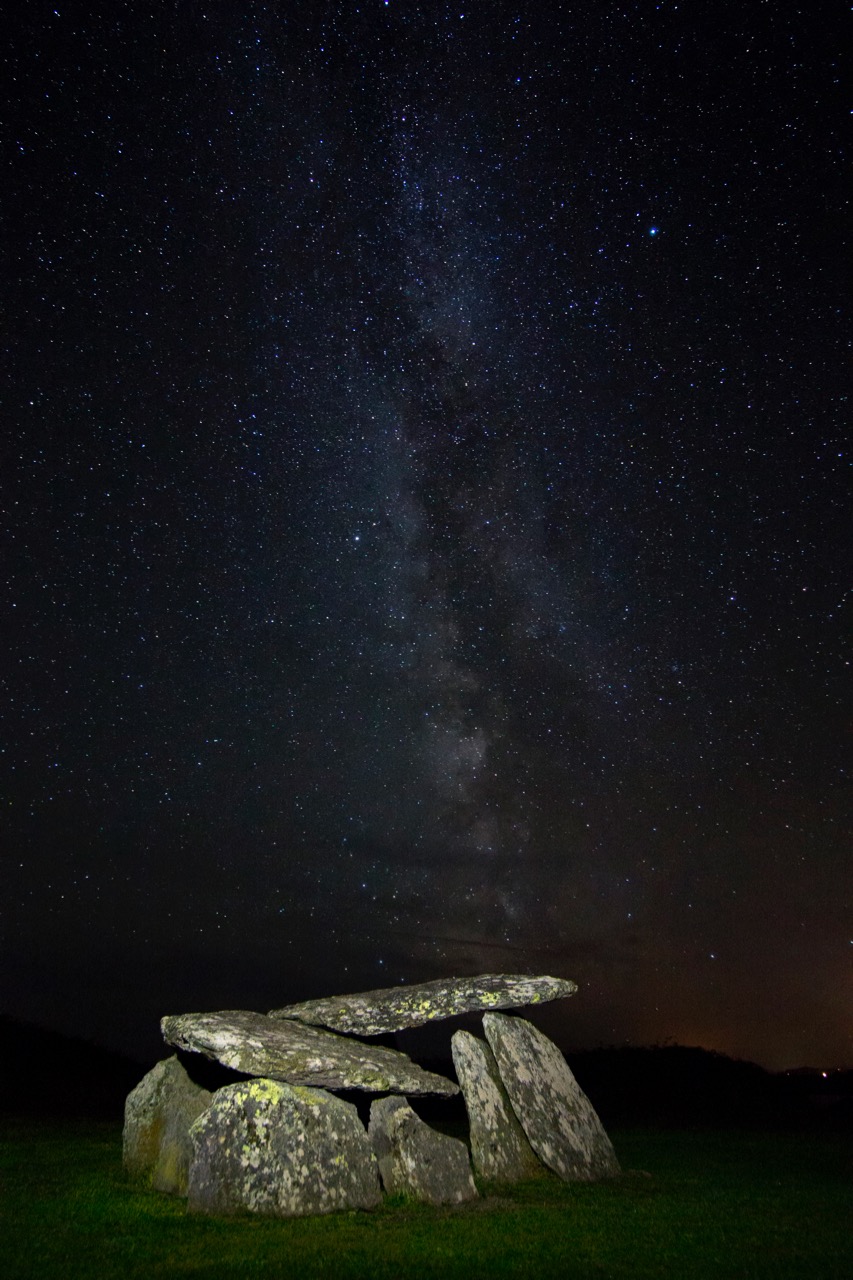
The tailpiece picture, which is from Wikimedia Commons, attributed to Lukeoc88, is a remarkable timeless view of a human construction in the setting of our Universe: Altar Wedge Tomb under the Milky Way.

Northside

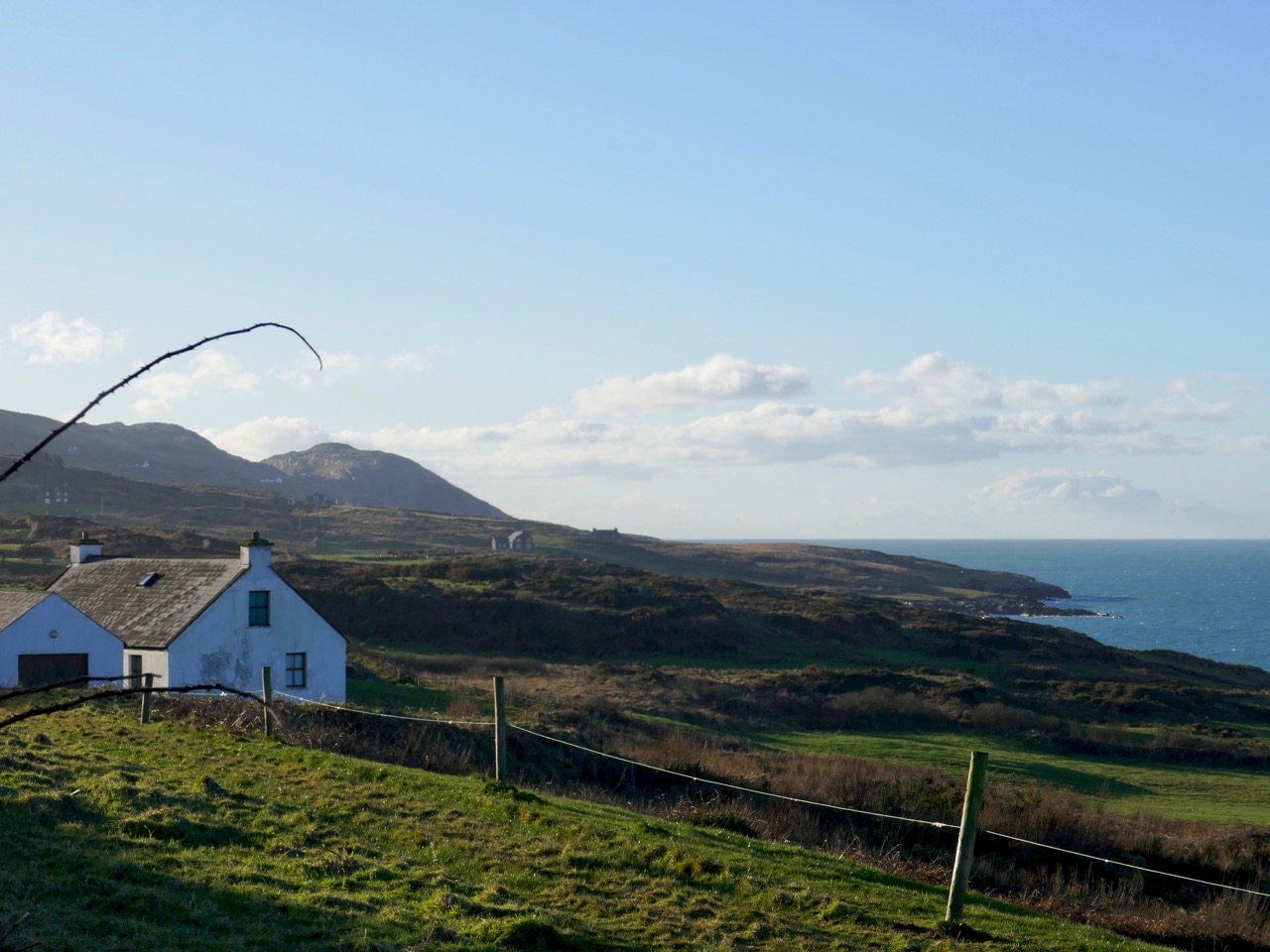
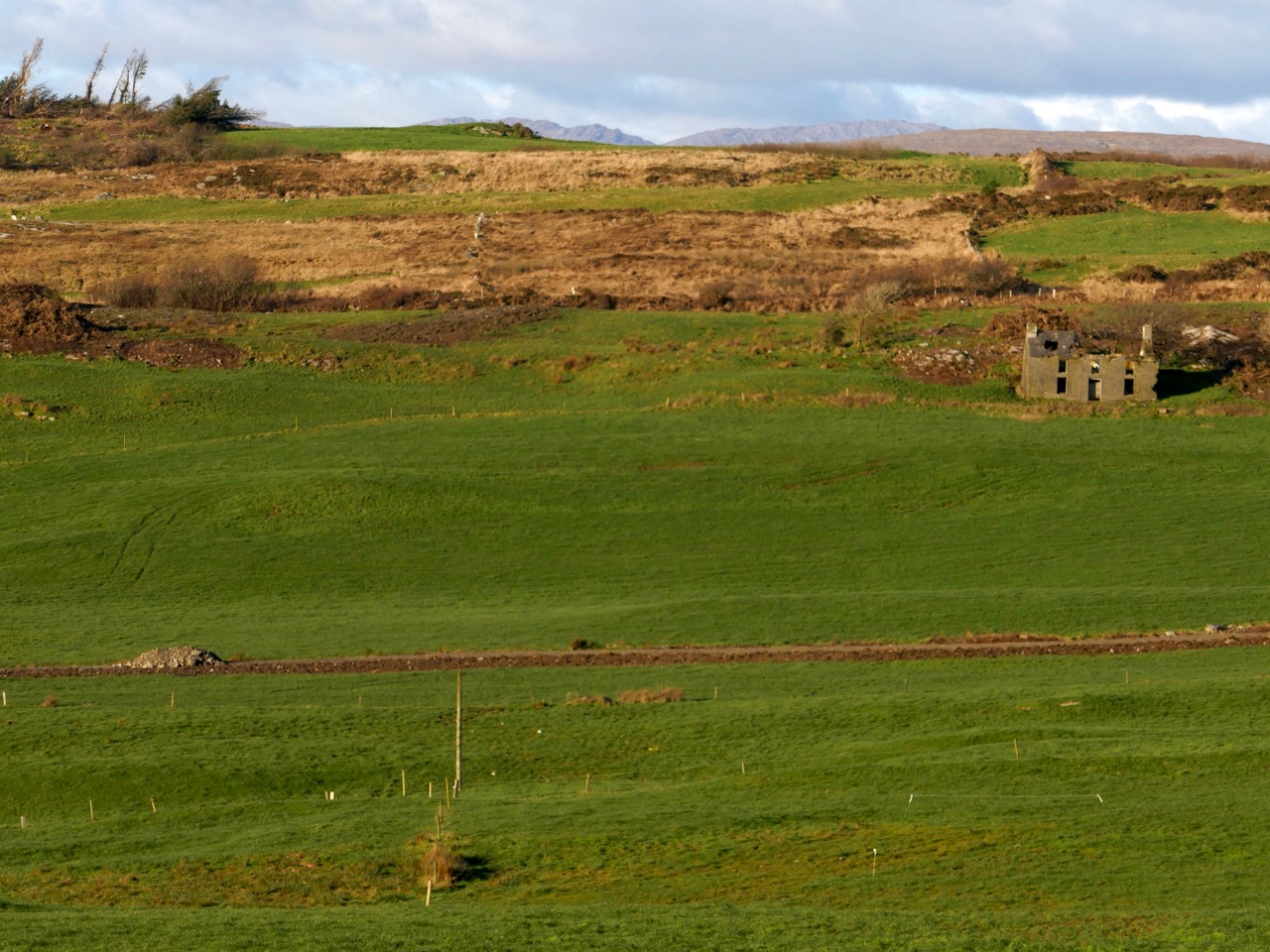
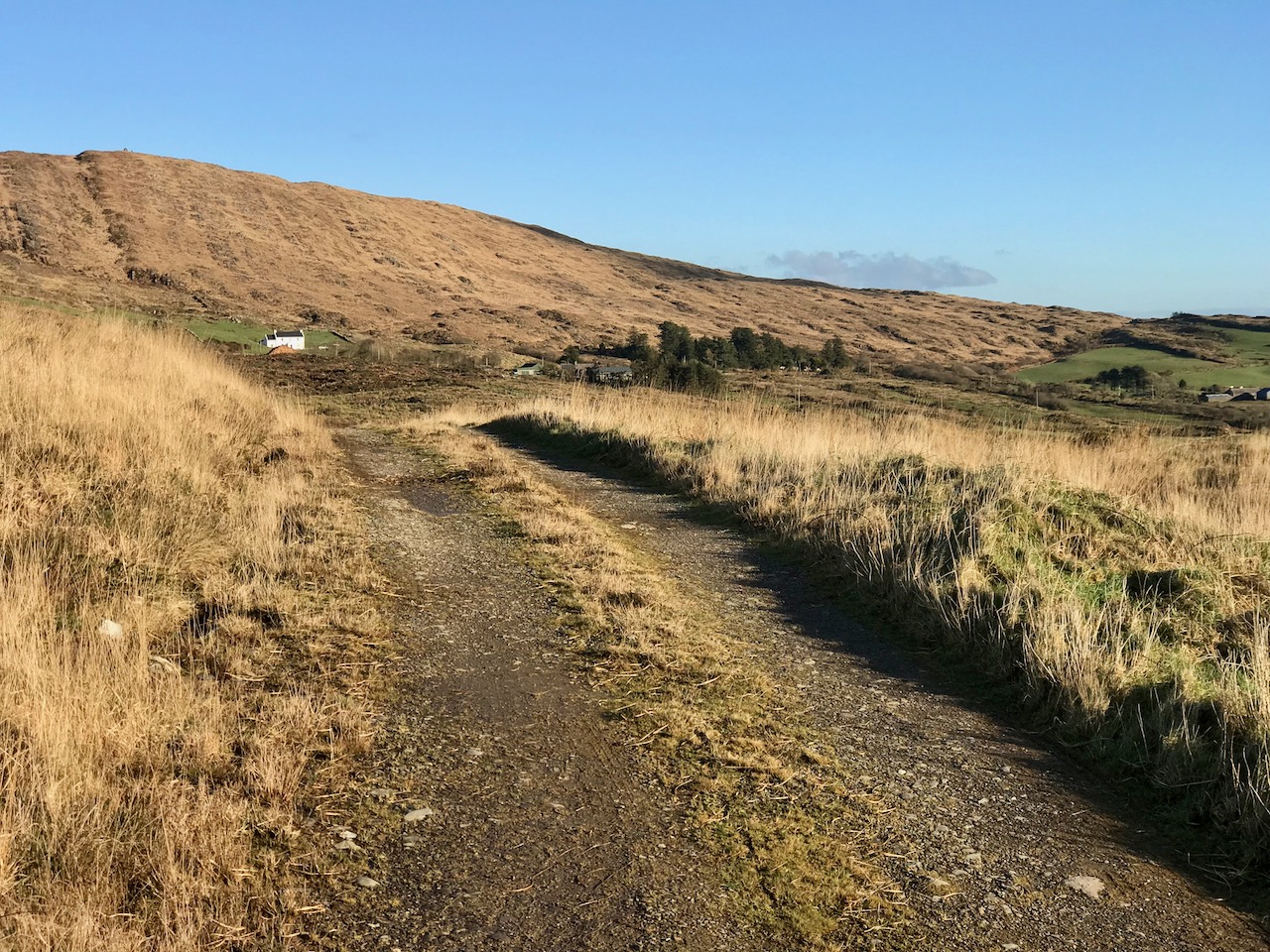
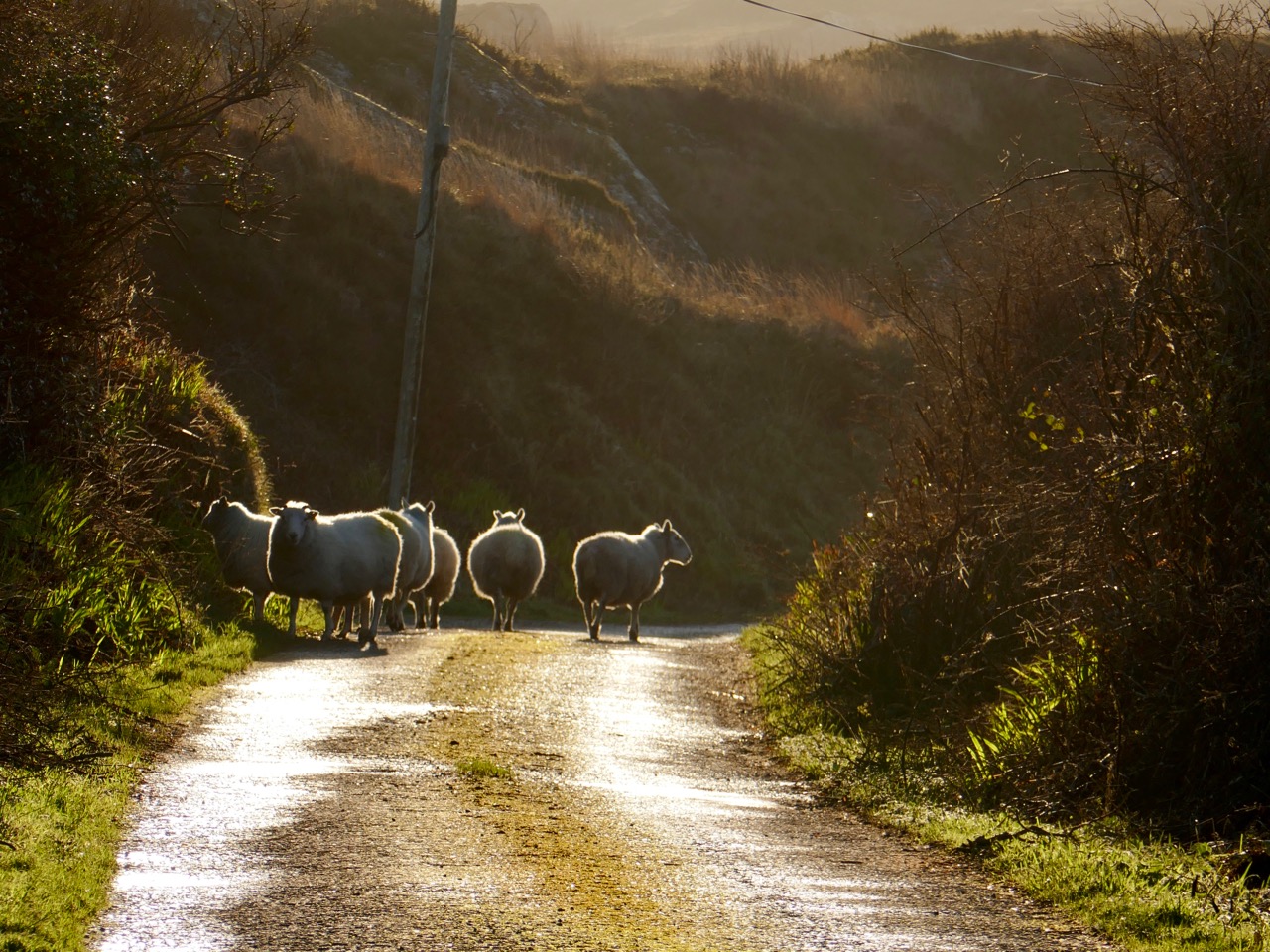
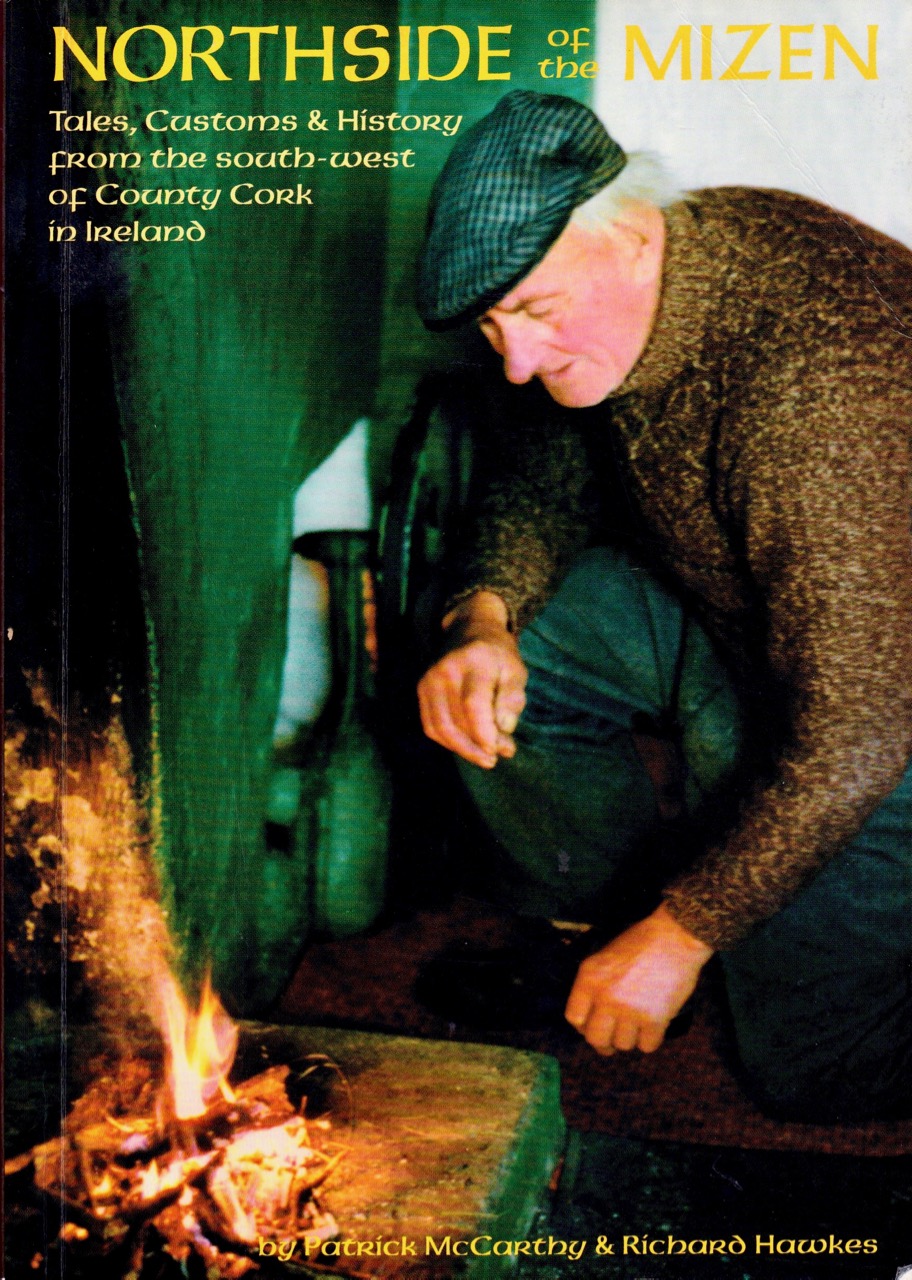
It was a perfect start to the year – a crisp, transparent January day when the whole landscape was set out before us in meticulous sunlit detail. We determined that our own Mizen terrain would begin our 2018 posts. Finola reached for her camera; I took down from the bookshelves an old stalwart: Northside of the Mizen by Patrick McCarthy & Richard Hawkes, 1999, and we headed out for Dunbeacon and all points west!

. . . Welcome to the Northside ‘The Northside’ is tucked away in the remote and most south-westerly point of Ireland. It is a place of wild beauty, with hills to the back, overlooking Dunmanus Bay. In the past it offered a harsh living. where man has protected himself from the elements blown in from the Atlantic and where one person often relied on another for survival. It gave a camaraderie that can rarely be found today.

(all quotations are taken from Northside of the Mizen)

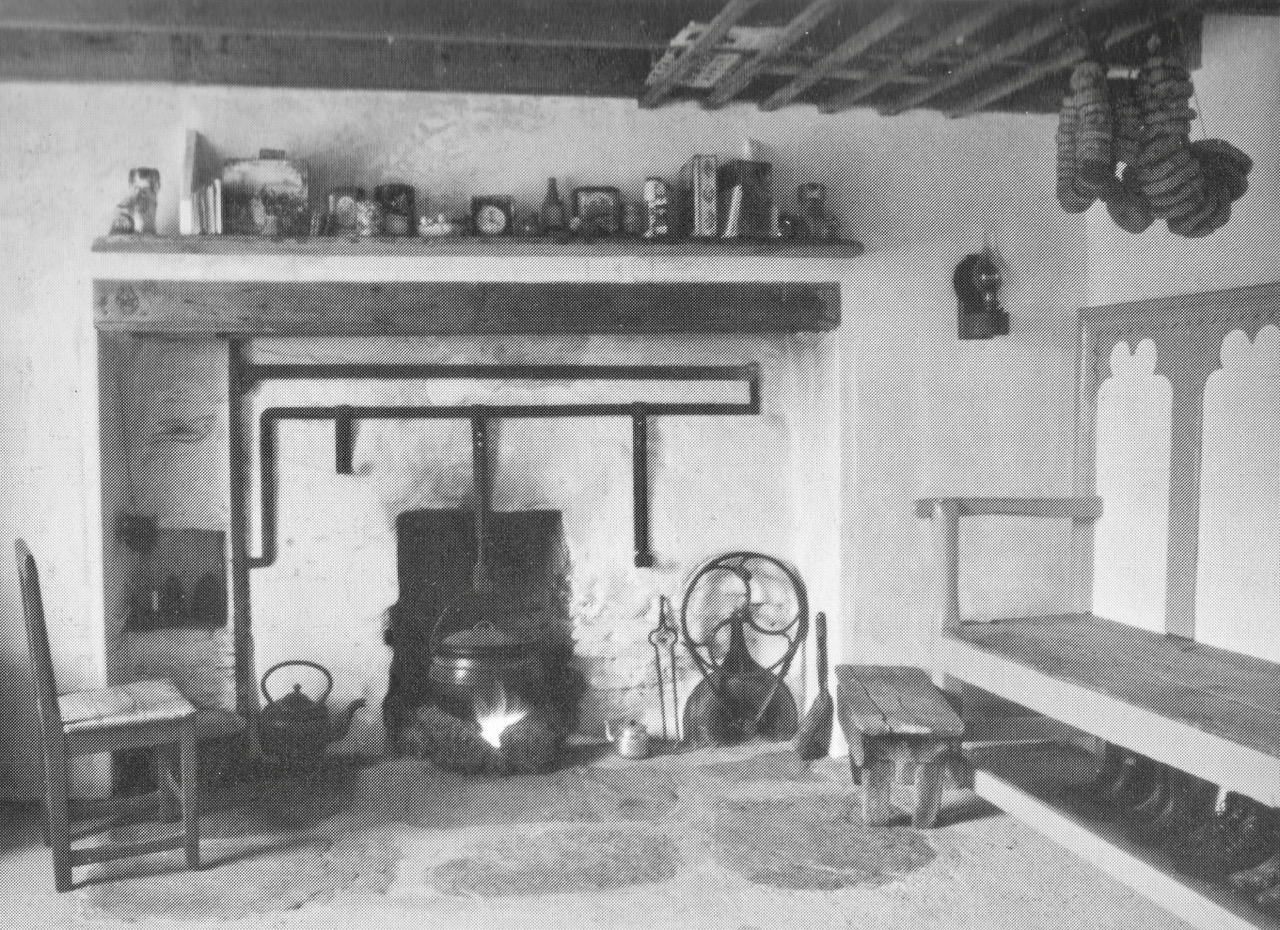
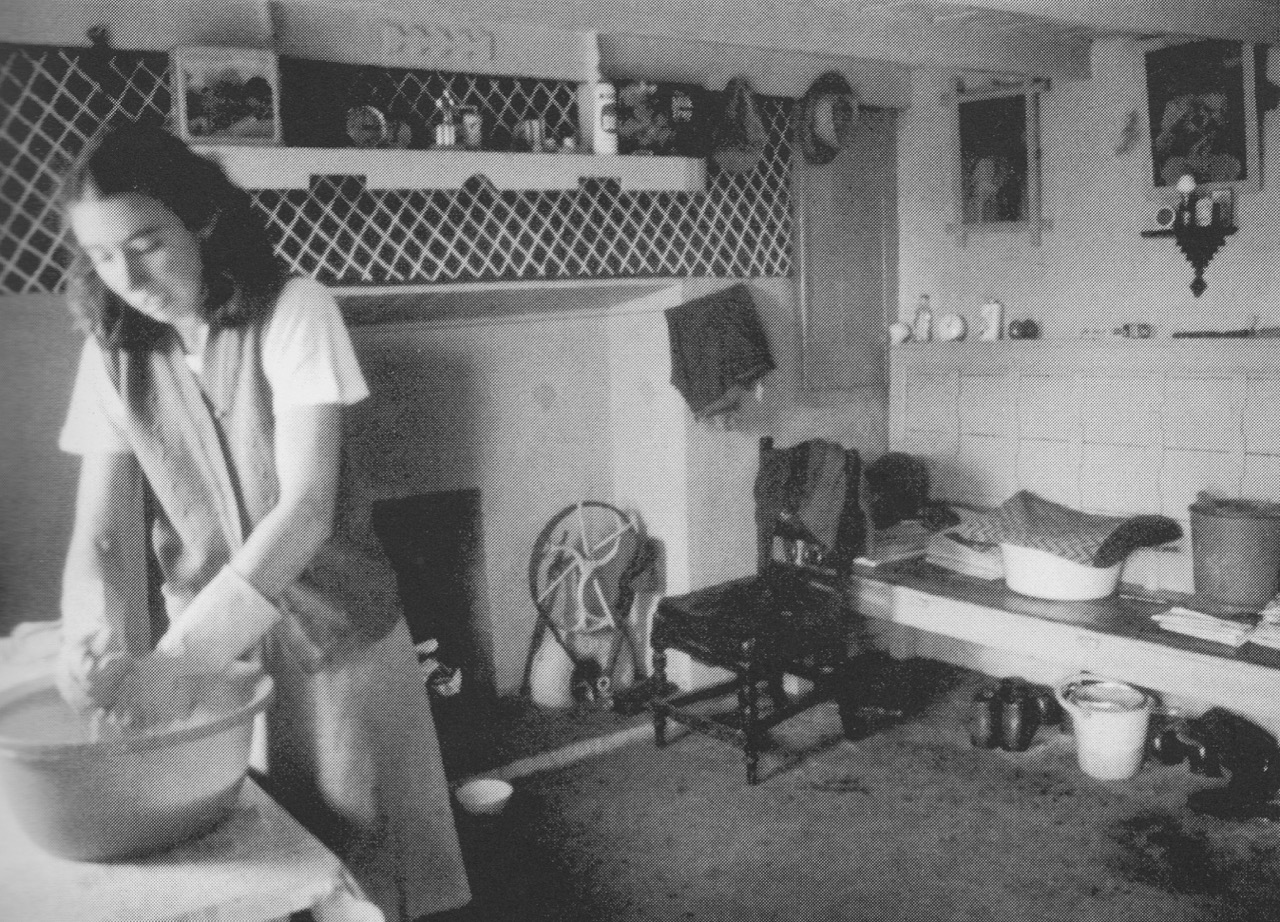
. . . January A new year and the cycle of passing months began again. With the weather at its worst, there was little to do on land or sea. Jobs around the home and haggard, or repairs to ditches and gaps on the farm were carried out. The house provided shelter and it was a time to be by the warmth of the turf fire for the long nights, whether at home or out scoriachting.

The heart of the home – Northside kitchens. Lower picture, Bridget McCarthy 1977. All early photos are taken from Northside of the Mizen

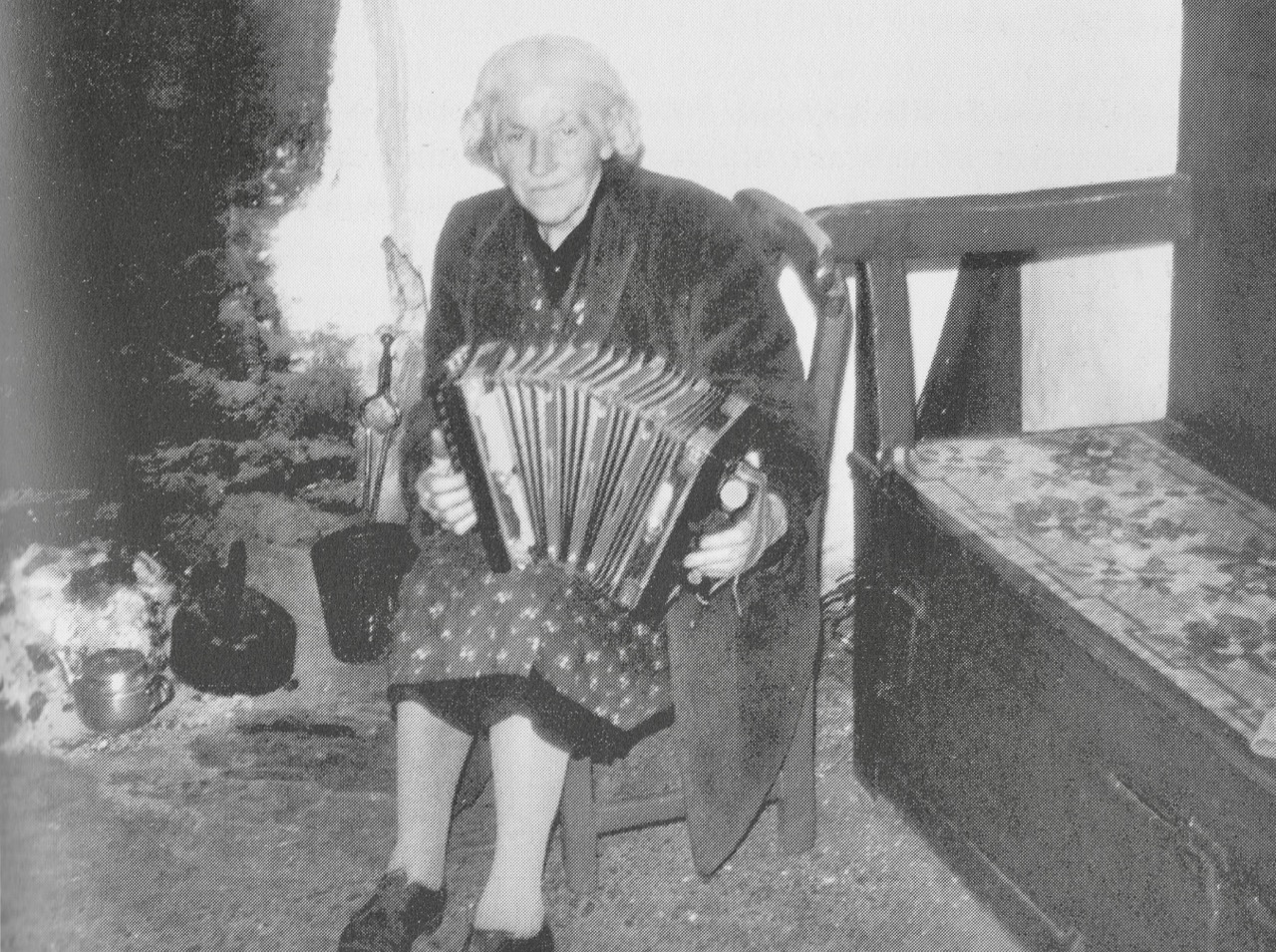
. . . Scoriachting Throughout the year, scoriachting (visiting neighbours) at night was the custom and in the winter the warmth of the open fire was the focus for games, songs and stories… Only Saturday night was not a night for calling to friends, as you would have to get ready for Mass early next morning. Different houses in the townlands would be known for their own form of entertainment; for example, the Coughlan’s (the Kit’s) for talk of people and who was related to whom, the Courcey’s and the Scully’s for cards, the Hodnett’s for games and tricks to test your wits and for a bit of harem scarem.

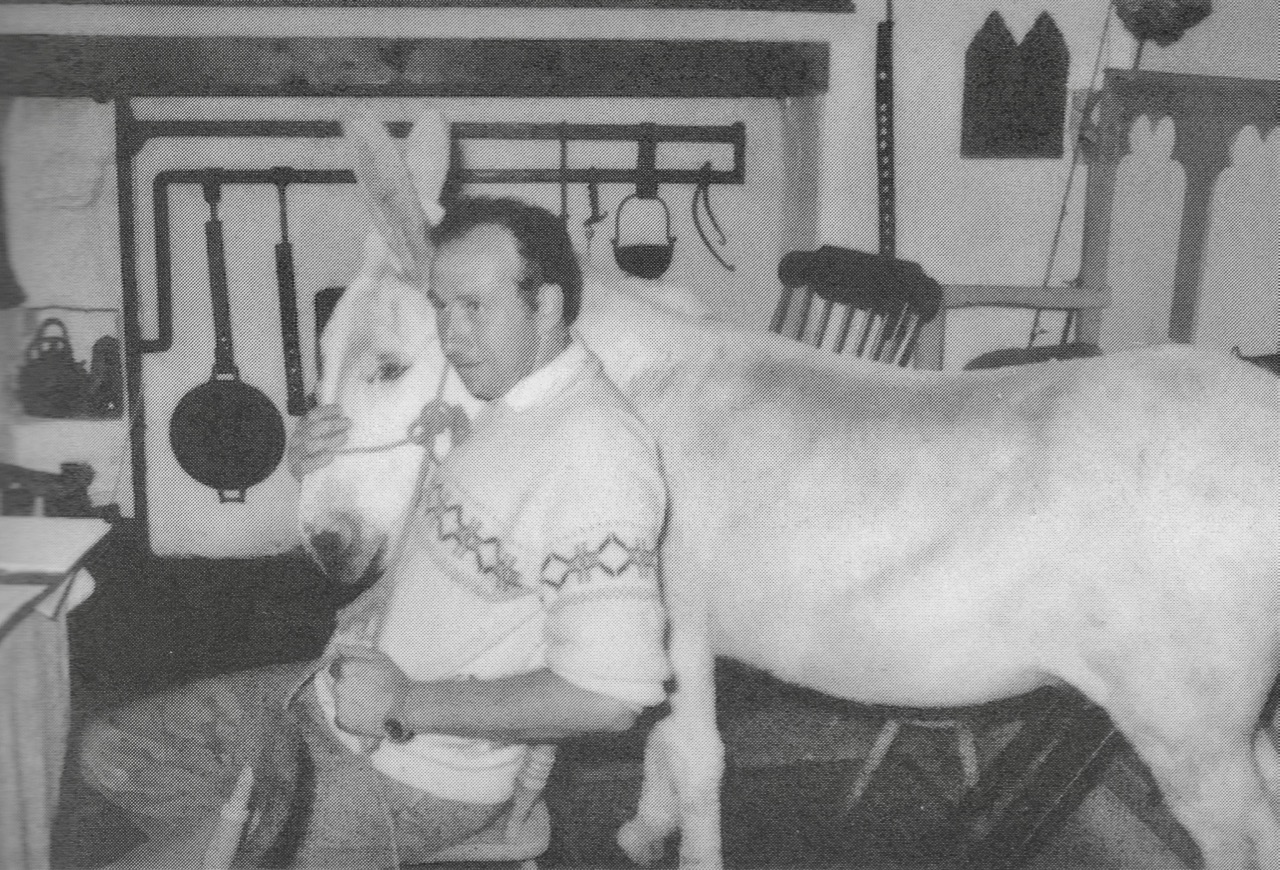
Harem Scarem? Upper – ‘Agnes O’Donovan at her fireside, 1969’ and lower – ‘Michael and Tom McCarthy out scoriachting’

. . . If you were a pipe smoker and you walked into a house where a man was smoking, he would offer you the pipe for a few pulls. When handing the pipe back you’d say, “The Lord have mercy on the dead.” Women would occasionally smoke a pipe but preferred snuff. Often the night’s scoriachting would start with the Rosary and two candles would be lit. One Sunday night in the nineteen-thirties, at the O’Donovans in Dunkelly a lad pegged (threw) a cap at one of the candles and quenched it. Danny O’Donovan said that it was a queer thing to happen in the house of God, to which the reply came, – “There’s a great deal of difference between you and God!” That was the end of the Rosary that night!

. . . A night would start with games, blackguarding (horseplay) and sometimes dancing, then progress on to songs and poems. Storytelling was the preserve of an evening by the fire. With the flames flickering and the wind and rain howling like the Banshee, the imagination of the storyteller and his forebears was let loose on a delighted and spellbound audience of children and adults alike. this, in turn, would lead to stories of a more superstitious nature, into a world of small folk, púcas (sprites), mermaids and of people’s misfortune when they interfered with the fairy ways.

. . . If the night was black as you made your way home and you couldn’t see where you were going, it was a good idea to call on the little people to help you. To do this you took a piece of clothing off, turned it inside out and put it back on. That gave you the sight back and you would find your way. It was also wise to carry a twig of hazel as it would protect you from the not-so-good little folk and get you back home safely!

. . . The last job of the night was to build the fire up and cover it with ash, so as to keep it red for the next morning. It was bad luck to let a fire go out, and it was said that many of the hearths had the same fire for generations.

Mizen Magic 7: Dunbeacon – History, Prehistory and Questions of Access

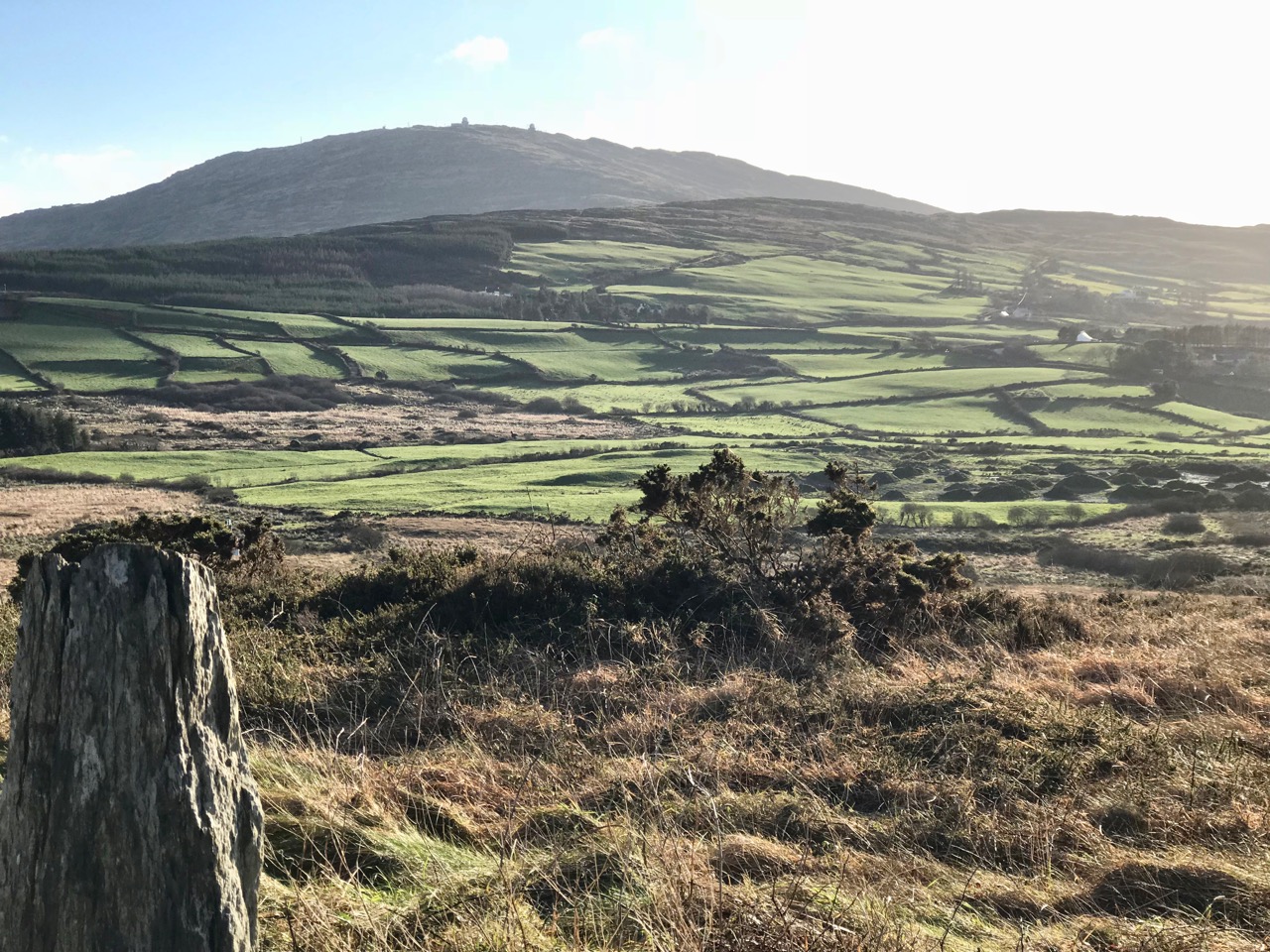
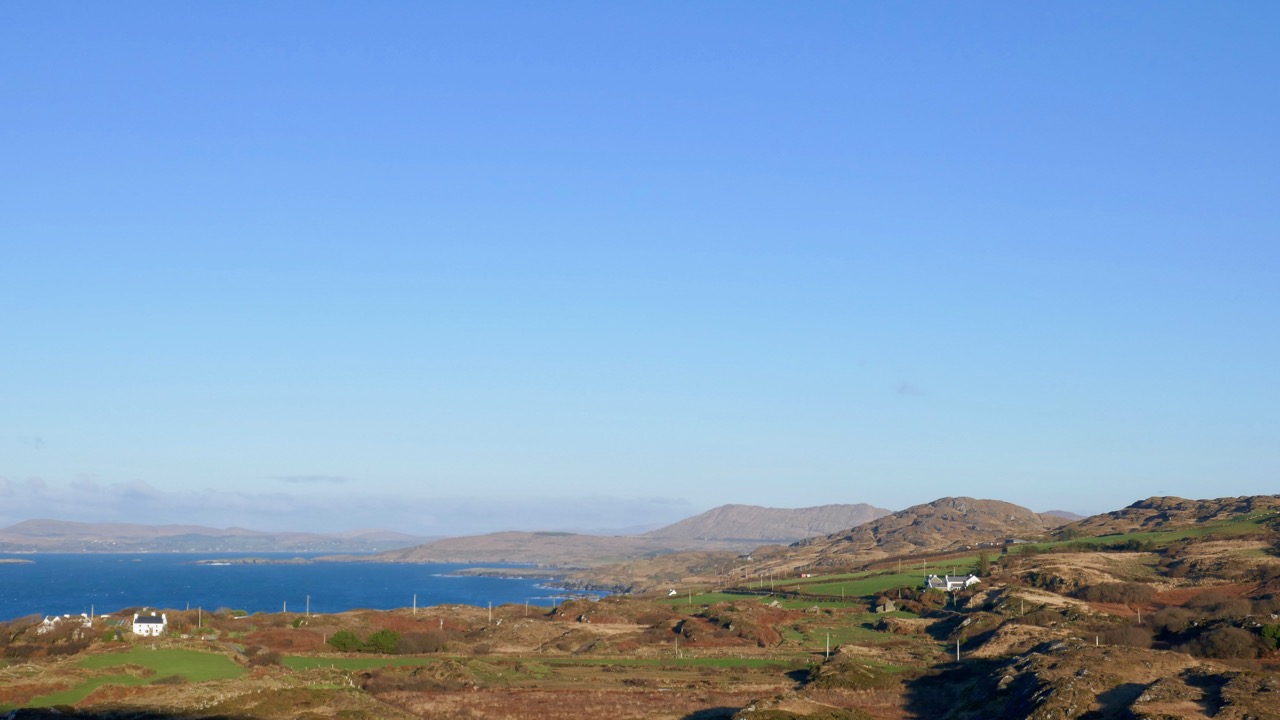
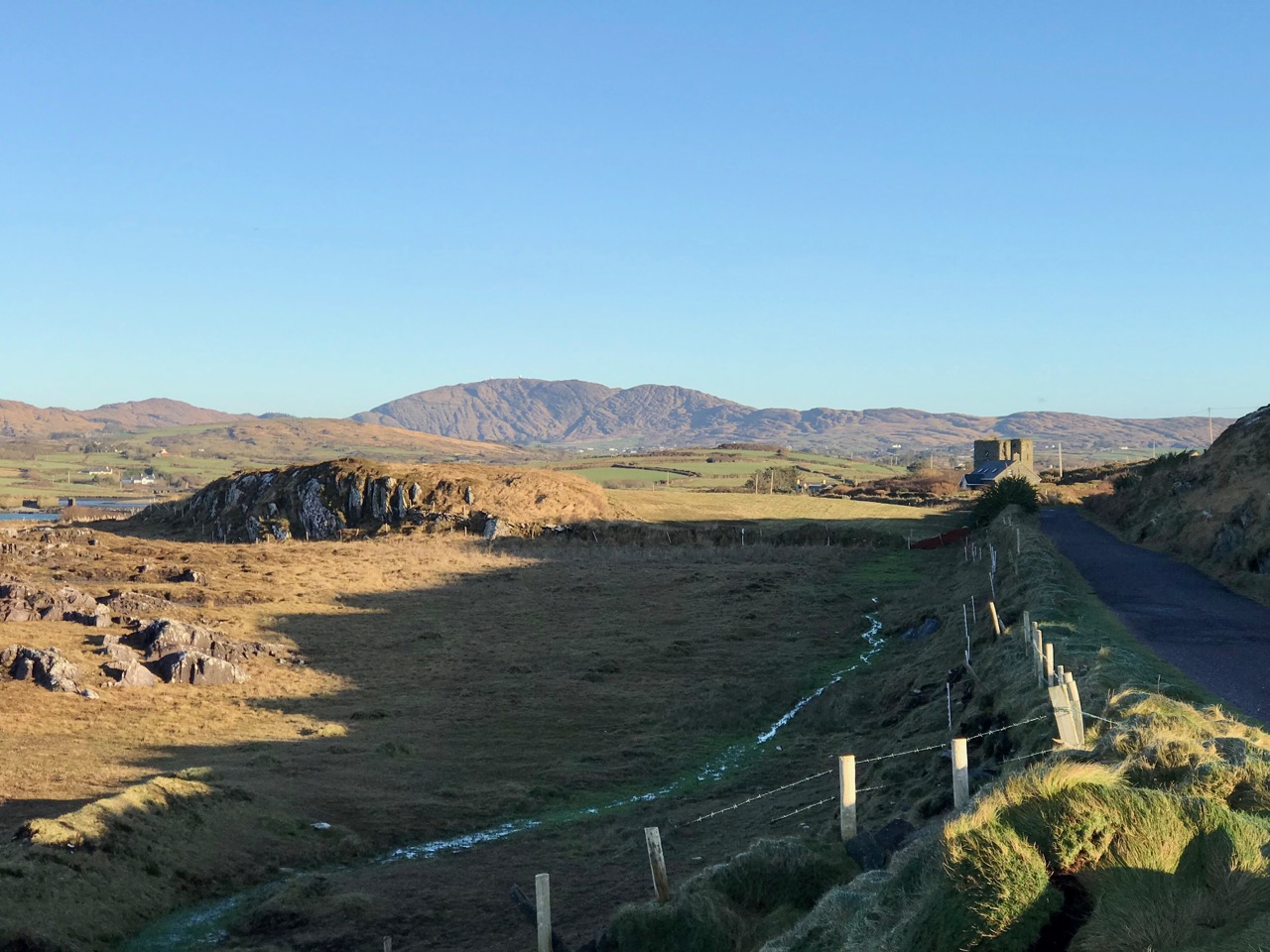
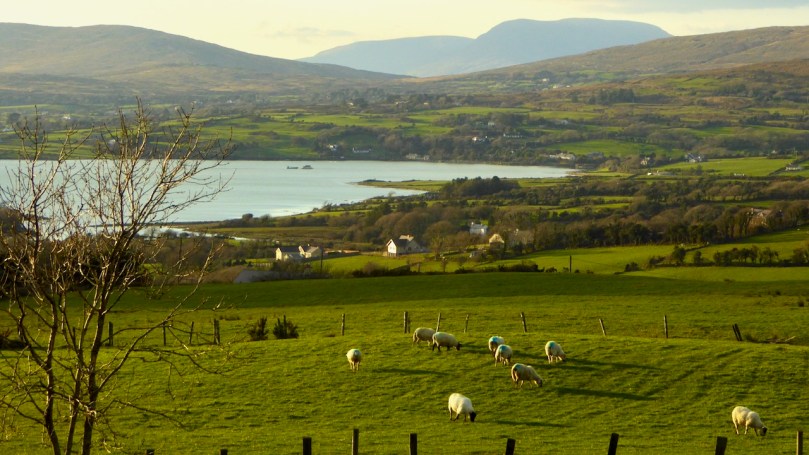
A cold and clear January day is just the ticket for a trip to the Northside of the Mizen. While Robert writes about the life of Northsiders, I want to look specifically at the area known as Dunbeacon. On rising ground that ascends to Mount Corrin and overlooks Dunmanus Bay West of Durrus, Dunbeacon offers spectacular views and lots to explore.

Looking across to The Sheep’s Head at the head of Dunmanus Bay, near Durrus

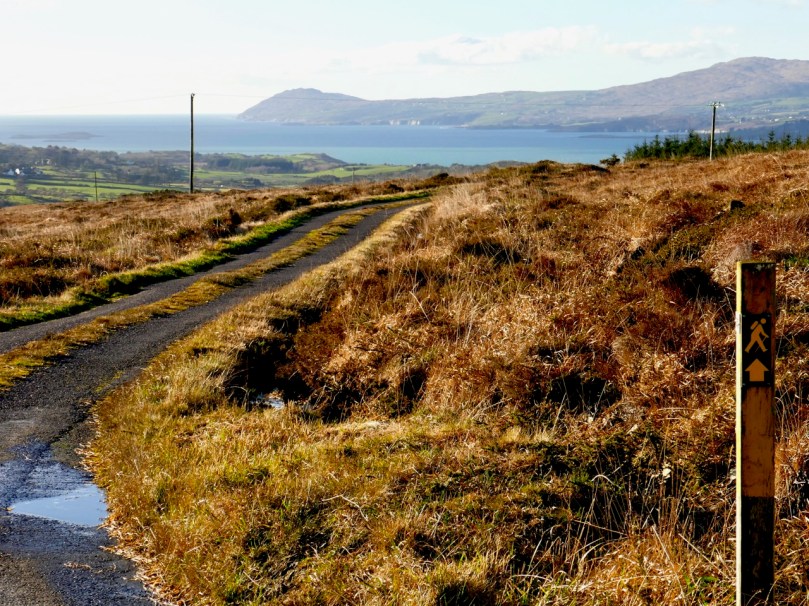
In the last few years the Sheep’s Head Way has expanded into parts of the Mizen Peninsula. This is a very welcome move and the SHW committee is to be commended on taking this initiative. Today we followed part of this new trail through Dunbeacon townland and were rewarded with glimpses of the past, lovely vistas, Caribbean blue seas – and biting cold!

This section of the trail runs along a scenic boreen

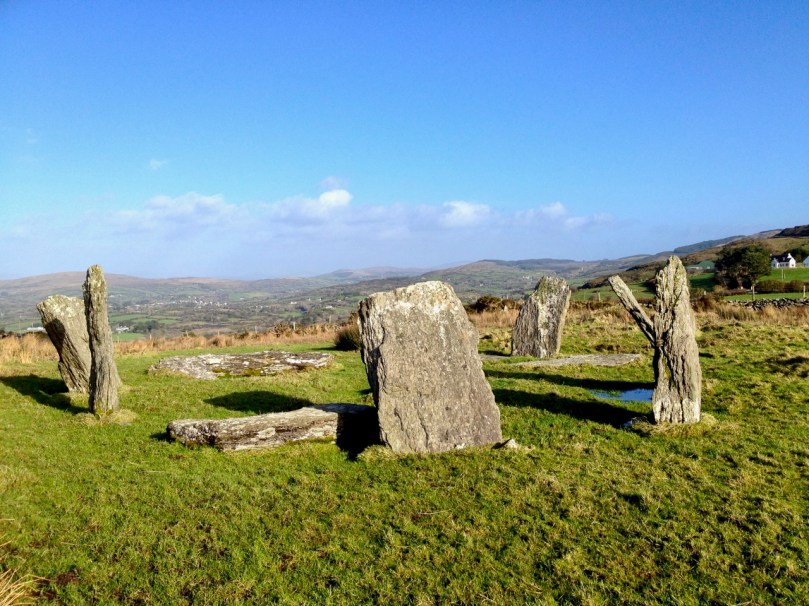
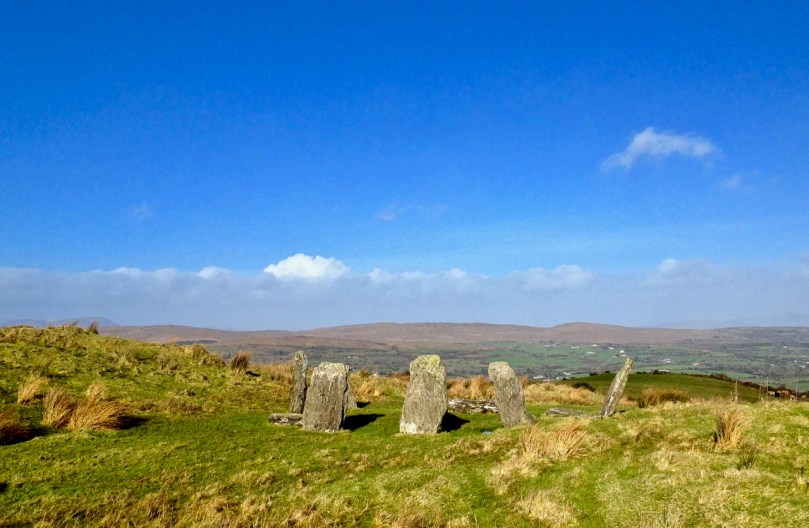
Dunbeacon is synonymous with the Stone Circle that carries its name. Robert and I have visited it on a couple of occasions in the past. We have knocked on the farmhouse door for permission to cross the land to get to it and never found anyone home. We proceeded anyway, albeit slightly nervously as it was an obvious trespass on a working farm. The stone circle is sited on a small plateau with views east and south to Mount Corrin and Mount Gabriel, although rising ground to the northwest obscures Dunmanus Bay.

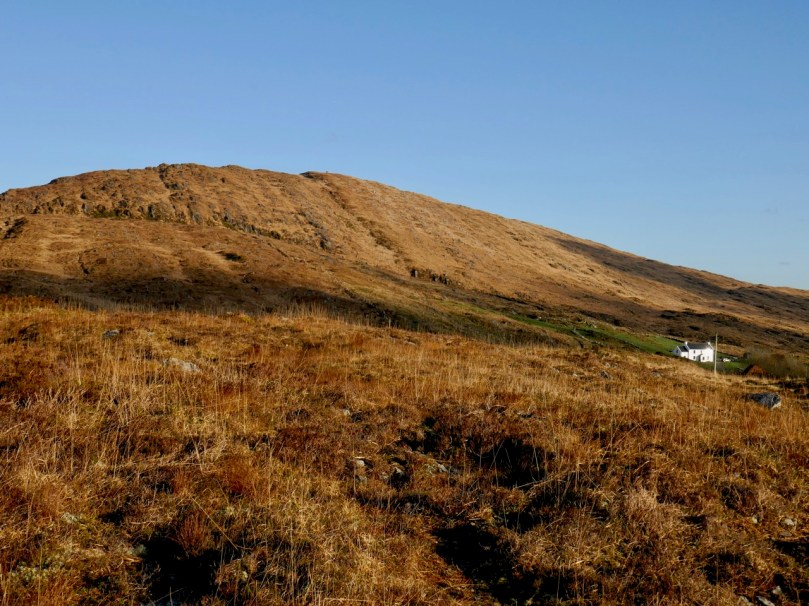
Mount Corrin: a large cairn on top can be seen from many miles away. We have walked up to this cairn – see our account of it here

The circle is incomplete so it is difficult to know exactly how the builders intended its orientation as the portal stones and recumbent are missing. It may have had a central monolith. (For a complete explanation of Stone Circles see our post Ancient Calendars.) However, the clear view to the east and south horizons are design features that link it to sunrise and moonrise at certain times of year.

This photograph of Dunbeacon Stone Circle, and the one that heads up this post, were taken before the access trail (described below) was built 

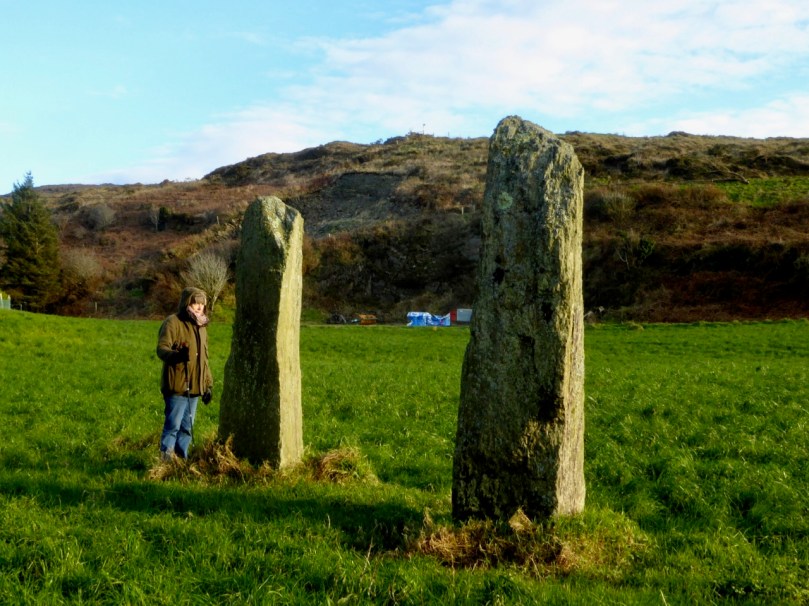
Intriguingly, Michael Wilson, of the Mega-What Website, says that practically the stone circle is really half a monument: what it takes to complete it for calendrical purposes are two other elements across the valley in Coolcoulaghta, a standing stone (now gone, but its position is known) and a standing stone pair.

The Coolcoulaghta standing stone pair, with Robert for scale. These stones were knocked down in the past but re-erected following a local outcry. Access and parking are now provided

Having studied the area carefully, Mike saysThis site [the standing stone] combines with the Stone Circle 400m away at Dunbeacon to enable observations of the lunar nodal cycle in all four quadrants as well as giving complete all year round solar coverage. It thus seems likely that the Standing Stone was an original outlier to the Stone Circle and that the Stone Pair was added later, probably by a different group of people, in such a way as to make a minor technical improvement.

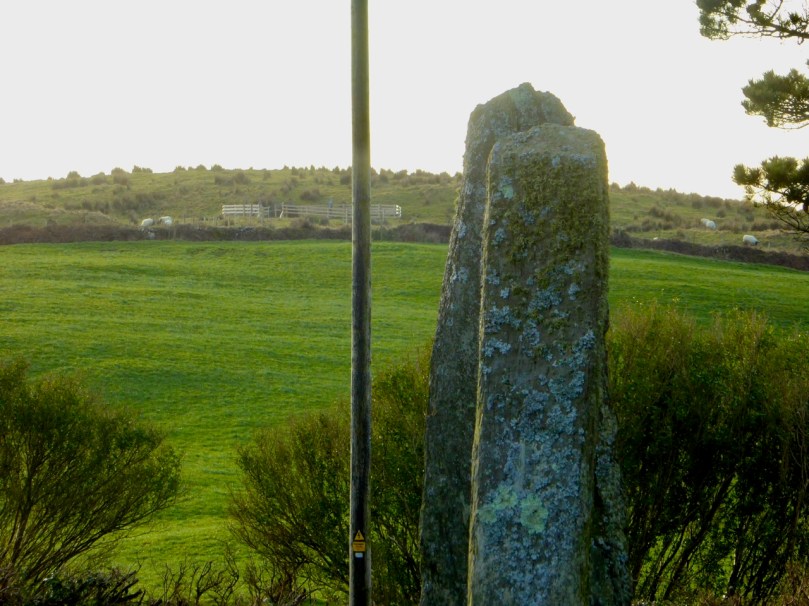
It’s further than it looks in this picture, but there is a clear view to the stone circle from the standing stone pair. In between is the most annoyingly positioned electricity pole in Ireland

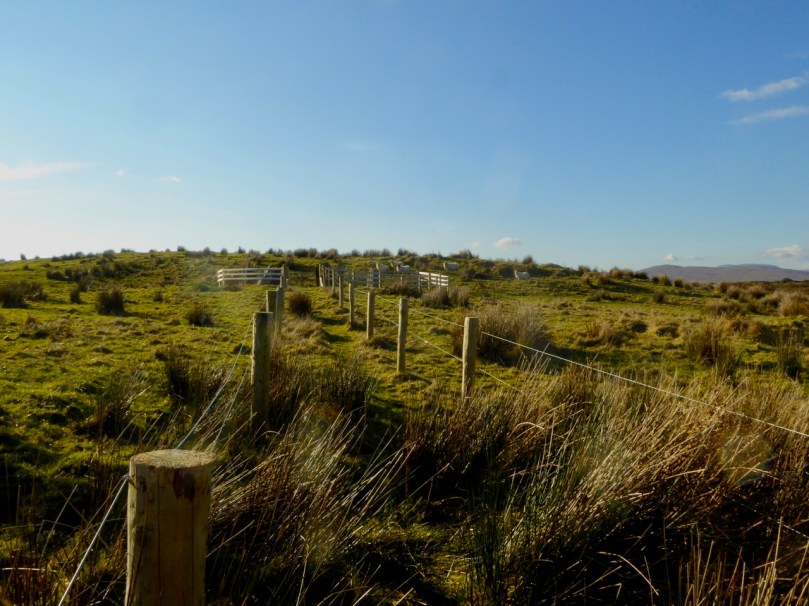
As part of the development of the new walking route, the SHW group has negotiated access to the Stone Circle, and has, in fact, built a fenced trail across the fields and up to the circle. This, of course, is excellent in that it finally provides open access to this wonderful site. There is, however, a problem: the stone circle is now surrounded by a wooden fence on all sides that severely impacts on the appearance and atmosphere of the site. While it will keep cattle away from the stones (cattle can do a lot of damage to sites like this) and provide a safe zone for walkers if there are animals in the field, it has become impossible to relate to the site in the same way as we used to.

The last section of the fenced trail. The fence around the stone circle can be clearly seen now

The author of the Facebook Page Walking to the Stones expressed himself thus when he saw the new enclosure: “The wire fenced avenue turns into a wooden fenced coral. The stones, imprisoned in a begrudgingly small pen. The wildness has gone, the mystery has gone. You might just as well be standing in a sterile museum environment. What have they done?” His comments generated a chorus of agreement.

Indeed, it is hard not to look in dismay at a fence like this. It makes taking photographs of the whole circle well-nigh impossible. It creates an overwhelming visual barrier between the circle and its surroundings. As an erstwhile archaeologist, I also have to wonder what was disturbed as the post holes were dug. And yet, all of this was done with the best of intentions, and it has succeeded in providing public access to the site. I would be interested in our readers’ thoughts.

It is quite difficult now to get a photograph of the entire circle. This one is partial, and shows a clear sightline to Mount Gabriel

Before we leave Dunbeacon, I can’t resist a quick trip down to what’s left of Dunbeacon Castle. One of a string of O’Mahony Castles on the Mizen, this tower house once guarded the head of Dunmanus Bay. Its siting is strategic – no ship was going to penetrate to the head of this bay without being in clear view of this stronghold. The O’Mahonys controlled fishing and trade in this area from the 12th to the 16th centuries and became fabulously wealthy in the process.

What’s left of Dunbeacon Castle

This castle would once have been the dwelling place and administrative centre of a powerful chief. He would have hosted banquets where his poets and musicians entertained the guests with stories and song. Alas, after the Battle of Kinsale all the O’Mahony tower houses in this area were taken by the British and many that were left standing were dealt a final blow by Cromwell’s cannon.

Not much left – but what an incredible position!

The centuries pass. The old Mount Corrin mines are no more. The sizeable population sustained by potatoes was devastated by the Famine. Now the land is grazed by cattle and sheep and a few farm houses dot the landscape. It is a peaceful and beautiful place. Do the walk – you will be in the footsteps of farmers and chieftains, of herders and megalith builders and astronomers, of miners and fisherfolk who have called this place home for thousands of years.