The Turning Year in Rossbrin

We are fortunate to live in a rural idyll: our immediate environment is immersed in the natural world. In fact, I suppose it is ‘Nature tamed’ – as we have pasture all around us as well as banks of gorse and rock: even a few trees which manage to cling on to the shallow soil all through the winter gales and (occasional) summer droughts. As the years go by we feel we become more closely entwined with the cycle of everything around us – we get to know personally the fox, pheasants and rabbits that pass by our window, and the myriad of birds that feed here, forage in the Cove or just show themselves to us on memorable occasions – Spioróg the Sparrowhawk is so handsome when she is resting on our terrace wall while on her deadly missions, and our choughs frequently perform wild dances in the air to entertain us. This year was special for me because, for the first time, I saw a hare amble around the house, alert with erect ears, before loping off into the next door field.

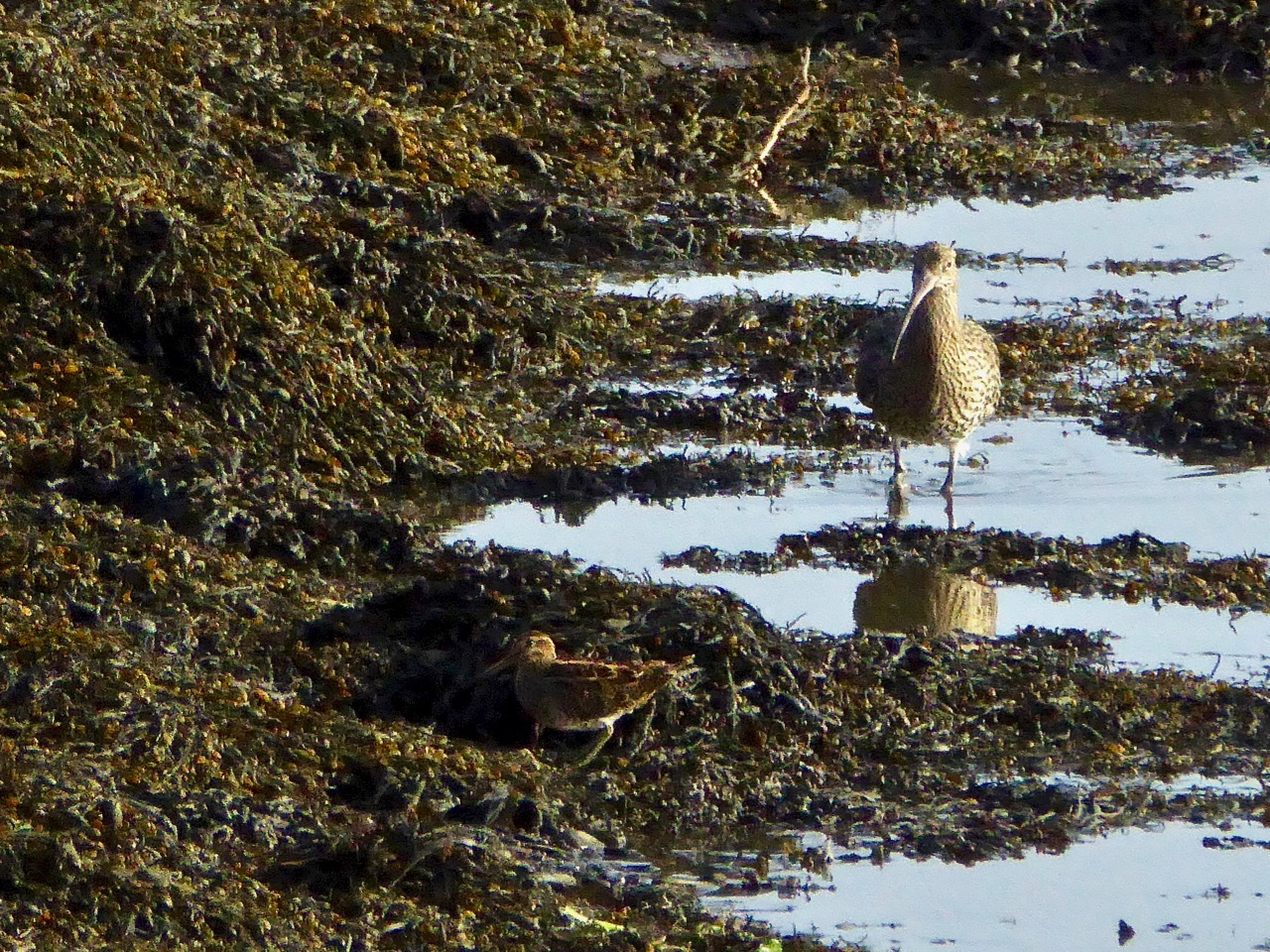
I have written about Rossbrin Cove many times before: look at A Moment in Time, Tide’s Out and Words on Roaring Water, for example. That sheltered natural harbour and the old mine road up on the hill above probably give us the most pleasure because we visibly see the year change and turn every time we walk there. Just now the days are rapidly shortening, and the autumnal influx of wading birds is returning. One we keep a particular eye out for is the curlew – a threatened breeding species here in Ireland. We see many on and close to the water, particularly at low tide, but these are probably migrants rather than resident breeders.
The year is turning – from late summer into early autumn, and the colours are changing from rich reds and purples – fuschia and heathers – to the more sombre yet equally attractive yellows and browns of furze and fern. Finola has closely followed the wildflowers right through from the spring – she is still finding and identifying every imaginable species – it’s a complete world of its own!
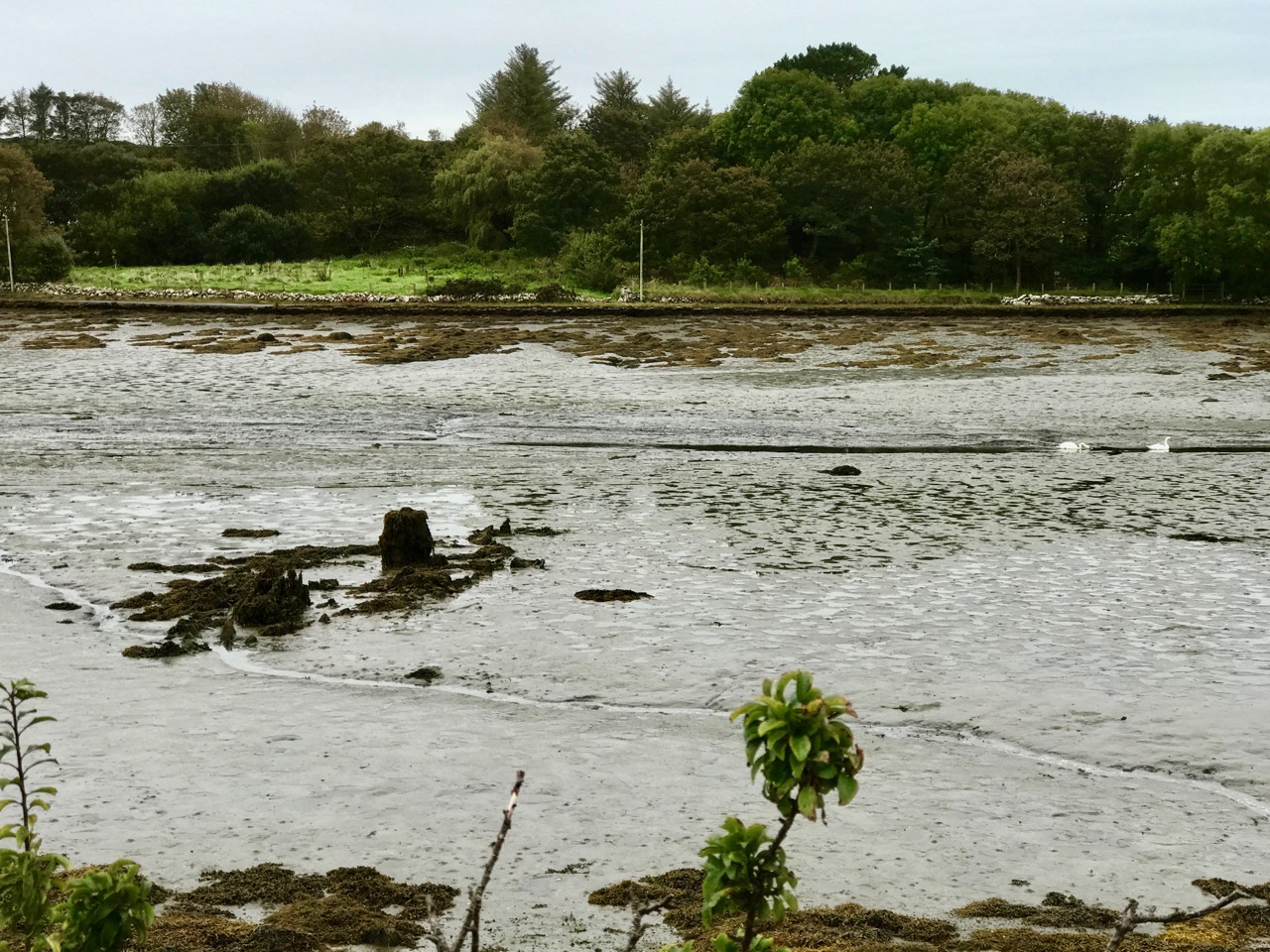
We have been seeing some exceptionally high and low tides here in Rossbrin. I’m always fascinated to see the mud-flats revealing bits of discarded history, while I am convinced that the huge remnants of dressed stonework on the north-east shore are the vestiges of once-busy quays, dating either from the medieval period, when Sir William Hull and the Great Earl of Cork owned the lands around here and set up thriving fish-processing ‘palaces’, or – at the latest – when the copper mines were active up on our hills and on Horse Island in the nineteenth century.
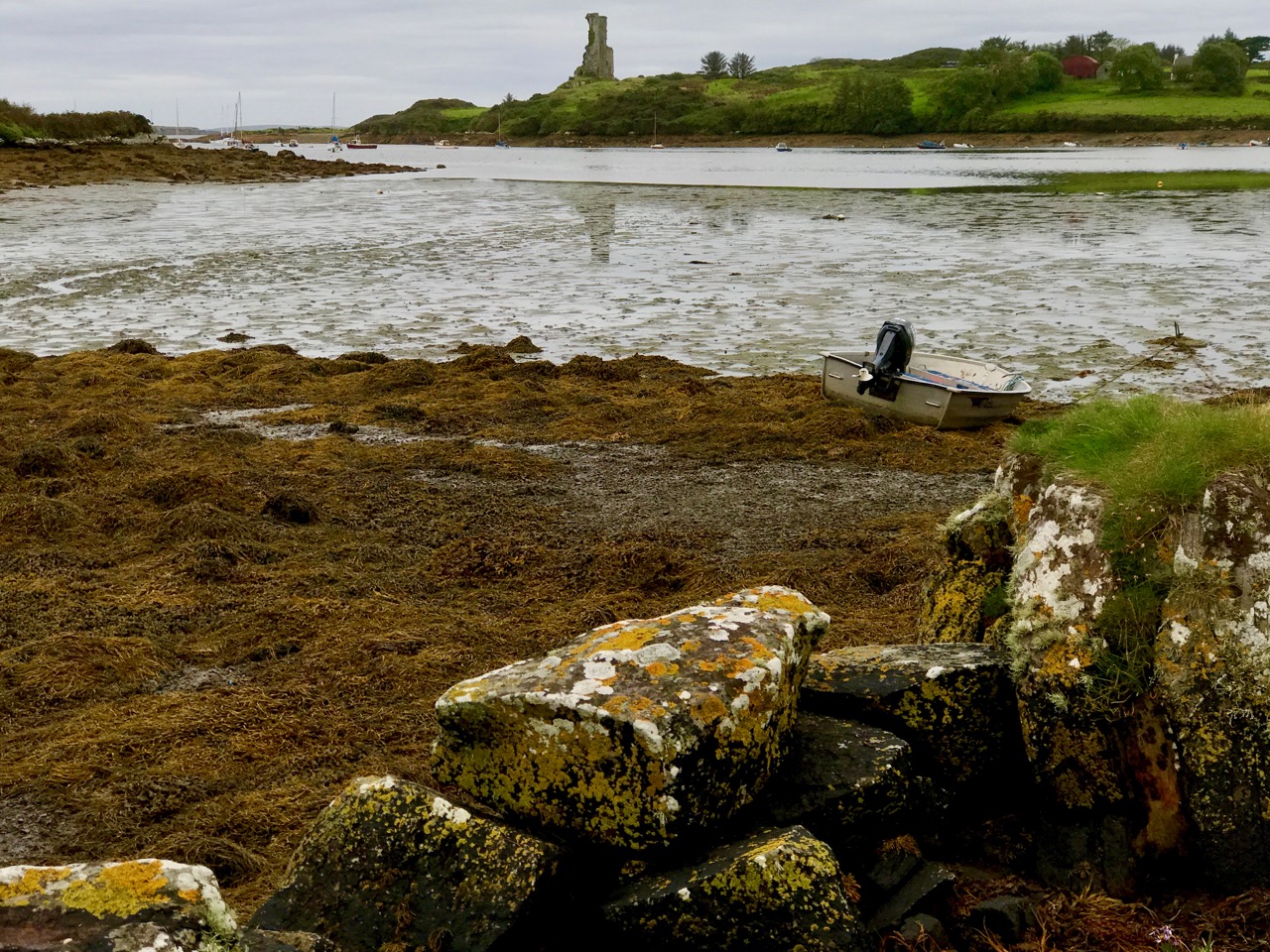
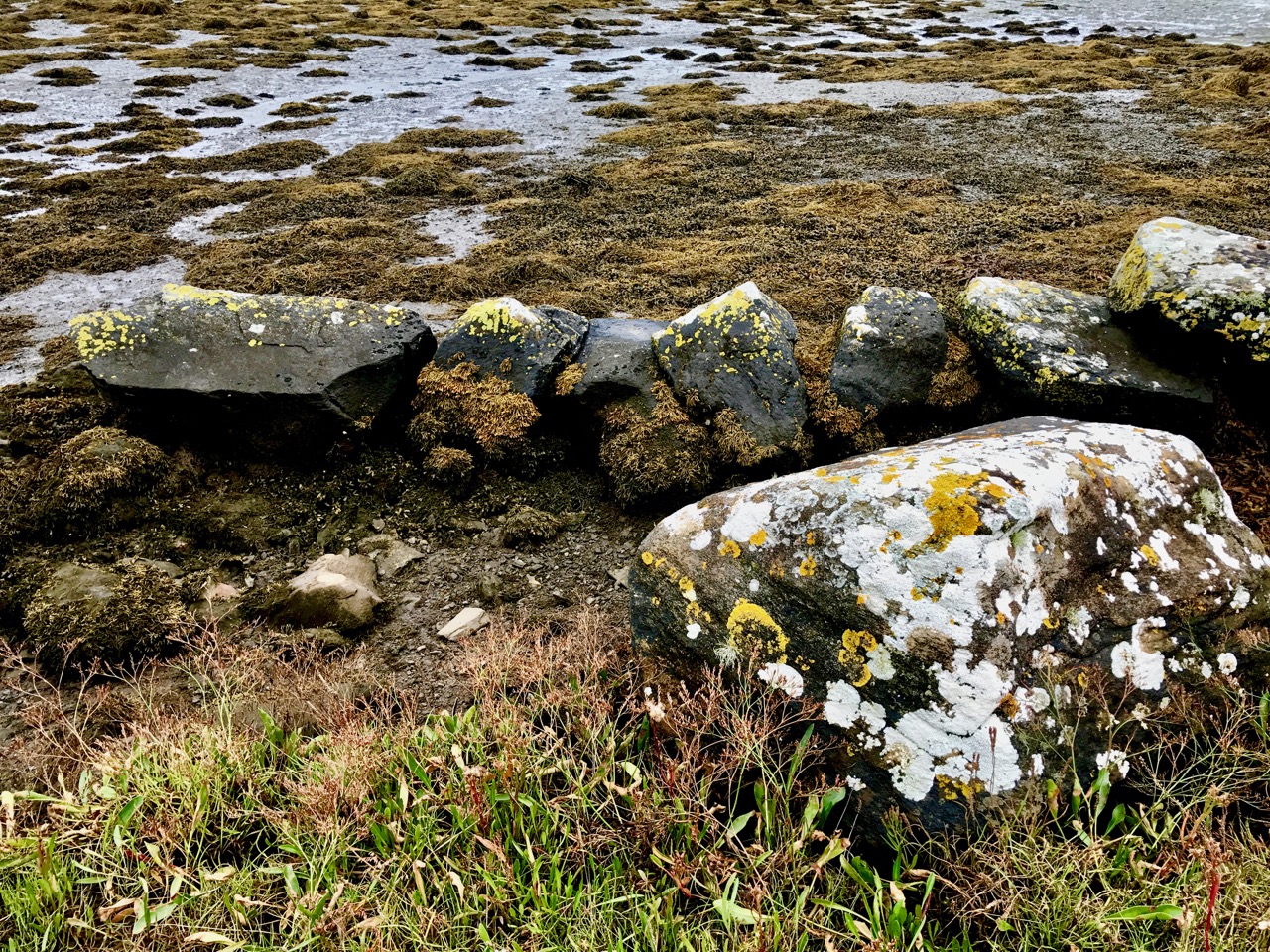
The real turning point comes at the end of October – Samhain – when the old calendar enters the ‘dark year’ (the ‘light year’ begins on May 1st –  Bealtaine). We know we have long, dark nights to come – time to huddle down by the stove – but there will be bright days as good as any in the year for walking, exploring and breathing in the Atlantic breezes. And the Rossbrin sunsets will be magnificent!

Richard King in Mayo

Scenes from The Old Testament by Richard King

In my post Discovering Richard King, I introduced you to the stained glass artist and the extraordinary windows in Athlone. If you haven’t read that post, pop back now and read it for an overview of King’s career, before continuing. Ever since then, I have been trying to track down Richard King’s art – he was active in several media and also exported windows to the US, UK and Australia. In Mayo recently, I was finally able to photograph more of his stained glass.

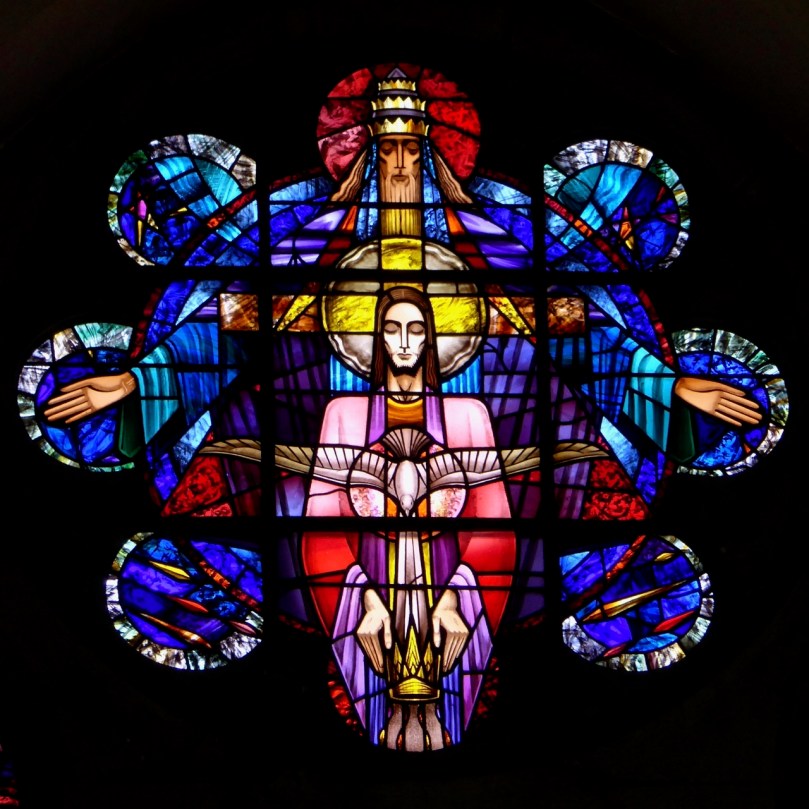
The Assumption window in Swinford

King was greatly influenced by Harry Clarke in his time at the studio, and when he took over as chief designer upon Harry’s death in 1931 he carried on very much in Harry’s style. After all, that was the style the clients wanted, and he excelled in producing it. I think I have tracked down several windows produced in the decade from 1930 to 1940 (when he left to open his own studio) that bear his hallmarks, but since Studio windows were never signed by individual artists after Harry died (with a few notable exceptions) it is impossible to verify whether or not I am correct. That’s why it was a thrill, on a recent visit to Mayo, to be able to view and photograph three Richard King windows, all of which date to the period after he left the Harry Clarke Studio. Richard came from Mayo (from Castlebar) so no doubt was a popular choice when stained glass was needed. Together, these three windows illustrate the evolution of his style over time.

The earliest, and largest, window dates to 1952 and is in the Church of Our Lady Help of Christians in Swinford. It consists of three lights and a rose window above them and the theme is the Assumption of Mary into heaven. The rose window above the depiction of Mary rising shows the Trinity – Father, Son and Holy Spirit – with the Son holding the crown with which he will declare his mother to be Queen of Heaven. I can’t help thinking that the Father looks a little like a depiction of one of the ancient Irish chieftains from the Athlone Patrick windows.

Mary is flanked by John the Evangelist and by Patrick – unusual choices and one wonders who dreamed them up. We know it’s John since he holds a quill pen with which to write the gospel, and is accompanied by an eagle, his symbol as one of the four evangelists. Patrick is always recognisable in green, with a crozier on his arm and a snake underfoot, and is accompanied by geese. I’m not sure of the symbolism of the geese – perhaps they were to balance the eagle [EDIT: see Niall McAuley’s comment below]. He’s wearing fetching green gloves and slippers. Take a close look at the church he carries – the windows are the same configuration as these windows – a little visual pun that Richard must have enjoyed making.

The lingering influence of the Clarke style is still visible in the extraordinary detail of every part of the window, in the glowing colours, the symmetry of the matched angels and in the cherubim faces below Mary. However, in every respect this is the work of an artist who is his own man – it could never be mistaken for a Clarke, or even a Clarke Studio, window.

But the Swinford church has a surprise – a second Richard King window, dating from 1964 and radically different from the Assumption. This is a two-light window depicting the Old and the New Testaments. The style is suddenly modernist, bold, faux-naïf and reflects his own study of the modern styles of the time and his experimentation with new ways of capturing religious themes. The windows are also delightful – strong colours and carefully placed figures create an attractive whole.

Pentecost – the Holy Spirit descends on Mary and the apostles

I think my favourite image is the one in which Pope Paul VI steers a boat full of bishops – a reference, apparently, to the ‘barque of Peter’. Paul was pope from 1963 to 1978, much of my young life, and his likeness was instantly recognisable. It brought a smile to my face.

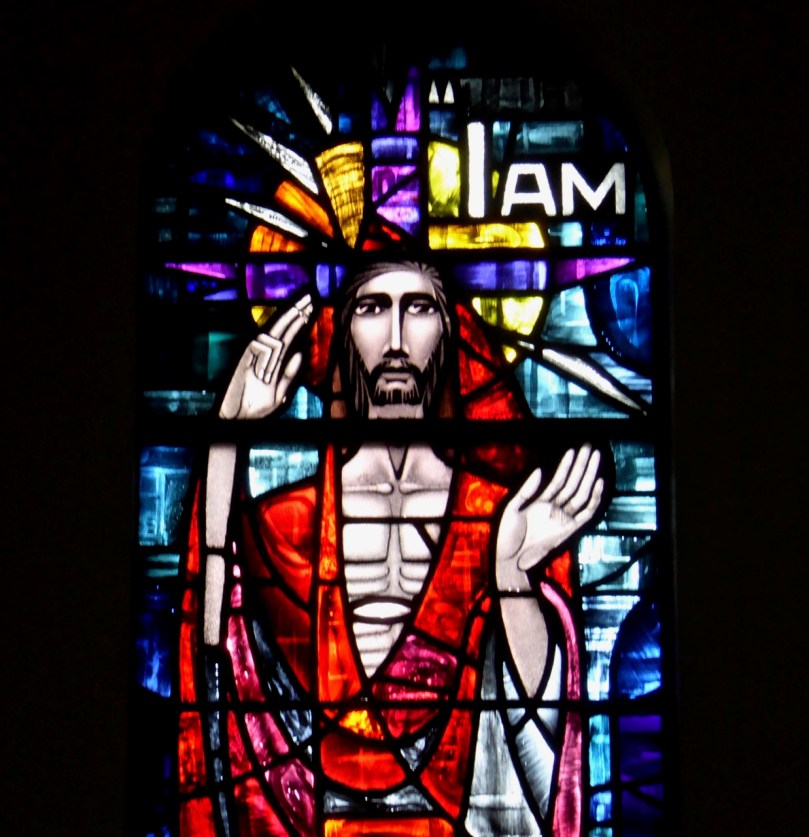
The last Richard King window is a two light window in the St Patrick’s Church in Newport. The theme is I Am The Resurrection And The Light. This one dates from 1973, the year before he died and what is striking is how far now he has moved towards a fully modern style with elements of cubism and abstraction.

The glowing colours are still there, the strong reds and blues, but there is no attempt at realism in the figures (note for example his treatment of Christ’s ribs as a series of rectangles) and a strong geometric arrangement is obvious throughout the composition.

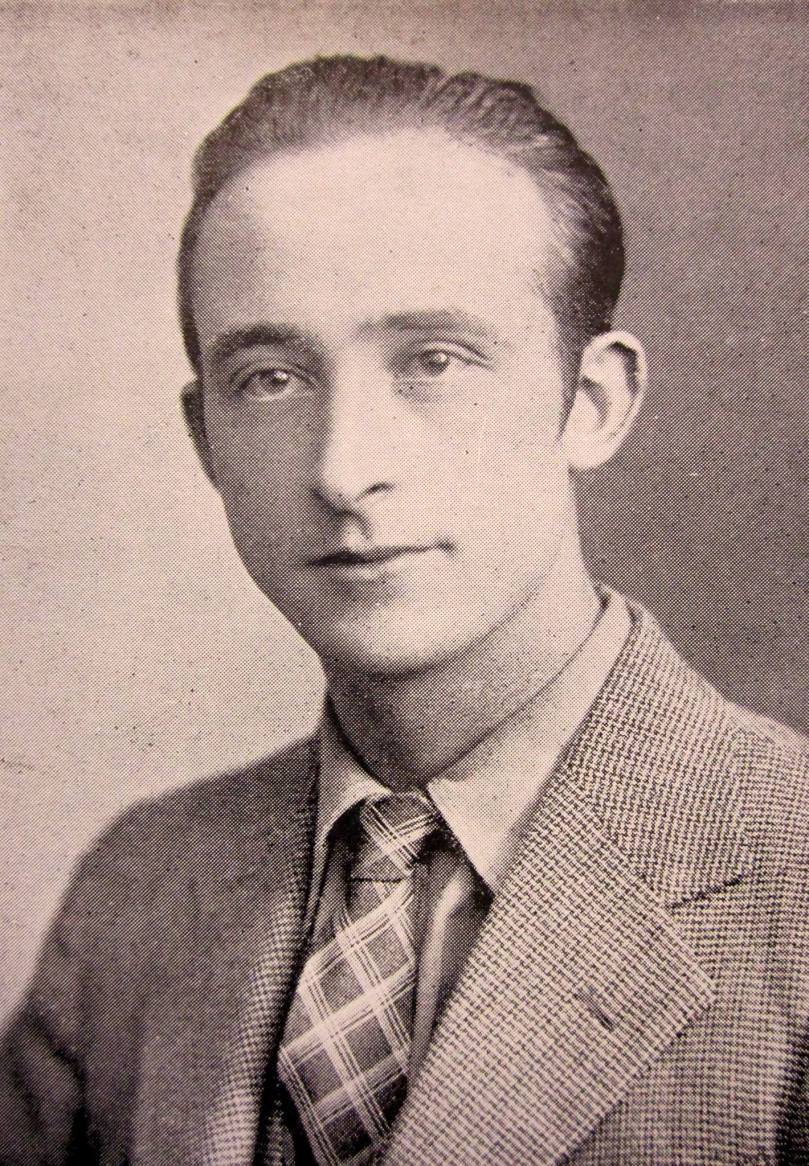
So far I have only written about Richard King as a stained glass artist, but there was more, much more, to him than glass. In future posts I will endeavour to expand on that statement. Meanwhile, I will leave you with a photograph of the young Richard King, courtesy of the Capuchin Archives.

A Taste of West Cork 2017

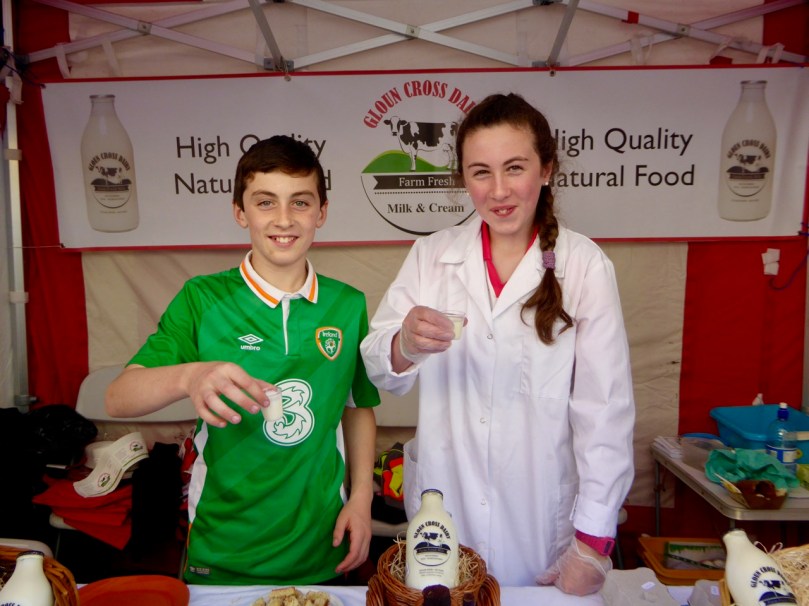
Young Ambassadors for Gloun Cross Dairy

We have this incredible food festival down here – A Taste of West Cork. I wrote about it in 2014 in this post and in this one. This year it was bigger and better than ever, with an astounding variety of events to choose from. We signed up for something every day and we are now in recovery.

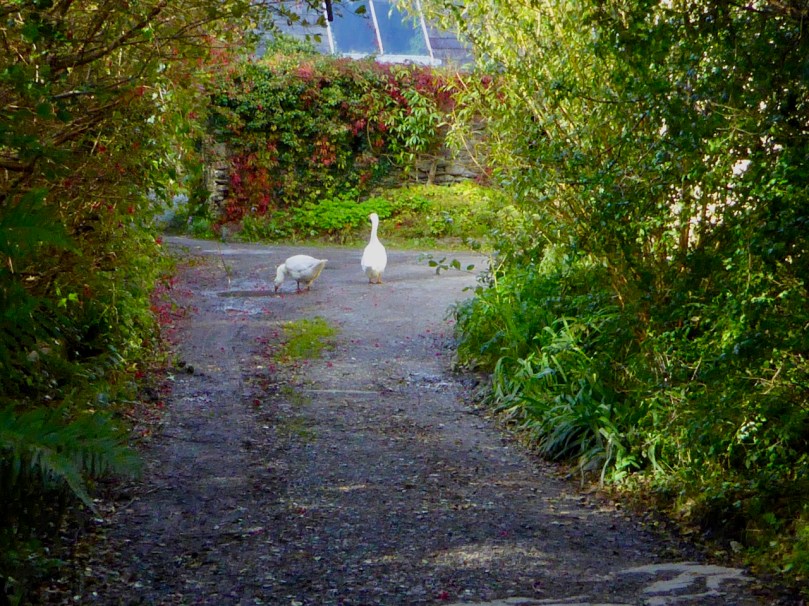
We started off with a Sunday brunch in Glansallagh Gardens, cooked by Chef Bob, in the tractor loft of our old friend Richard, who supplies fresh and delicious vegetables to many local restaurants. Five courses, long harvest tables, strangers from all over chatting amiably, swapping stories and laughter, and then weaving home past the guard geese to snooze away the rest of Sunday.

We love Durrus Cheese and jumped at the chance to attend a demonstration of how it’s made and a tasting. Everything is local, everything is done by hand, the taste comes from years of making and a passion for quality. It felt like a privilege to glimpse behind the scenes.

Sarah, second-generation cheese maker, explains the different processes that produce the Durrus cheeses

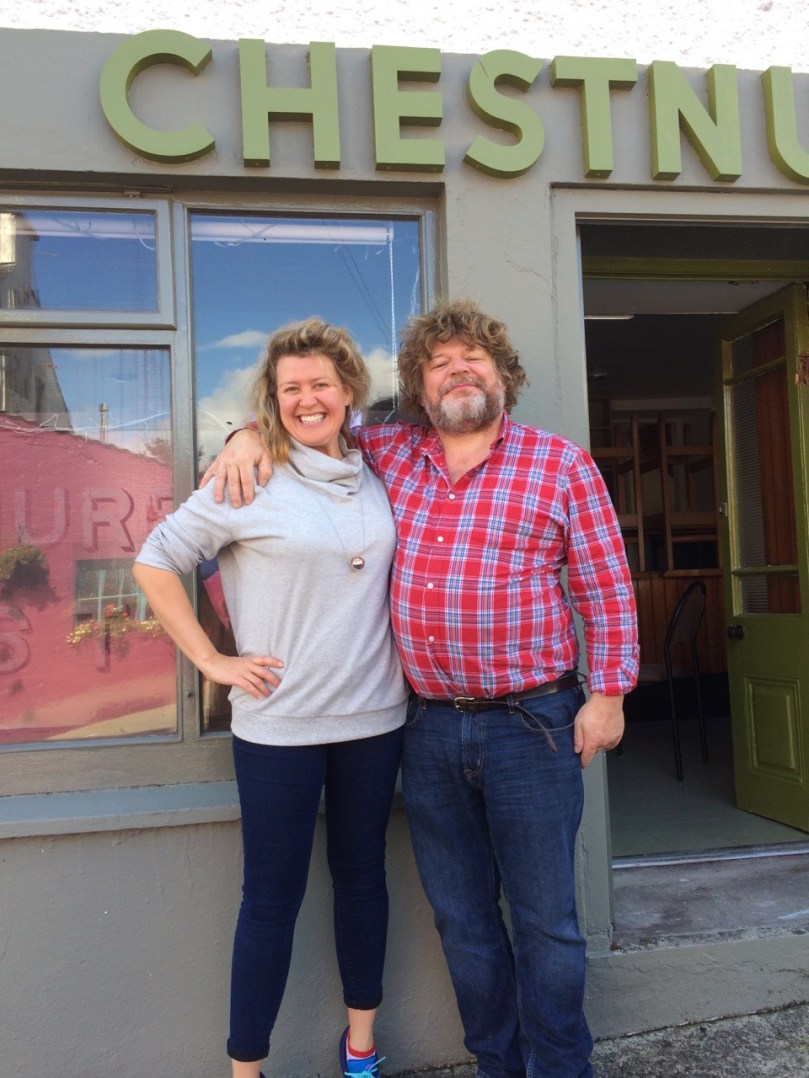
The Chestnut Tree was a beloved Ballydehob pub, but it’s been closed for years. Recently, however, it was revived as an Airbnb and during the Festival was re-purposed once again as a restaurant. It worked wonderfully well as a convivial space.

French chef, Antony Cointre, was a popular choice at the Chestnut Tree

We signed up for a Ramen Bowl menu and were not disappointed. Chef Brian from Belfast makes everything – everything – from scratch and showed us how he makes the noodles. To taste his broth is to truly understand the concept of umami.

Our dining partners were Jack and Julia Zagar. Julia is the genius behind the dynamic e-presence of Discover Schull – website, Facebook Page and Instagram account. Jack generously lends his own images to local initiatives

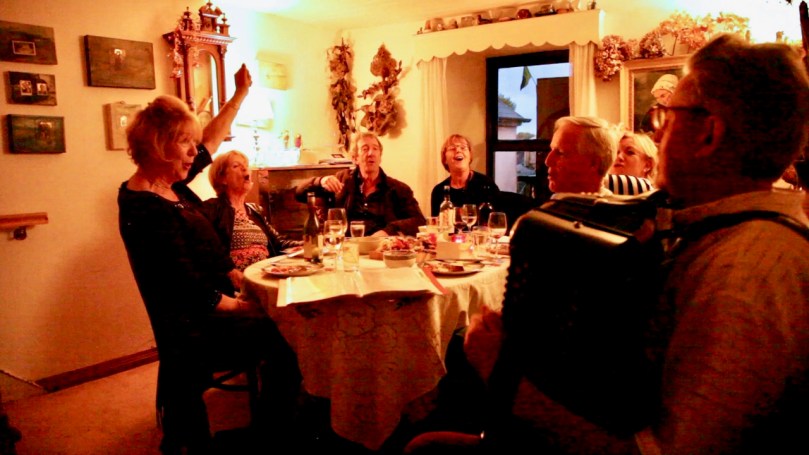
From the Casual, we graduated to the Gracious: dinner at Drishane House was sumptuous. Drishane is the ancestral home of Edith Somerville, now the residence of Tom and Jane Somerville. Jane is a wonderful cook and Tom a genial host, and our fellow guests were a lovely mix of local and from-away. We dined by candlelight surrounded by portraits of Somervilles, wine and conversation flowed, delicious courses kept appearing (all locally sourced as is the ethic of this Festival), and the port and cheese arrived just as we felt that truly an evening could hold no more enjoyment.

Drishane House in the spring, and a portrait of Edith Somerville in her role of Master of the Fox Hounds

By no means is this Festival only about dinners and chefs. We were attracted into Levis’s pub in the early afternoon by the sound of music and found a lively session in full swing – the end of a walking tour of Ballydehob that promised soup (made from vegetables from that morning’s tiny local market) and music as a restorative after the exertions of the walk. Soup was pressed upon us and we didn’t object.

Bob, Liam and Joe entertain the walkers, while Robert has fun with Johanna

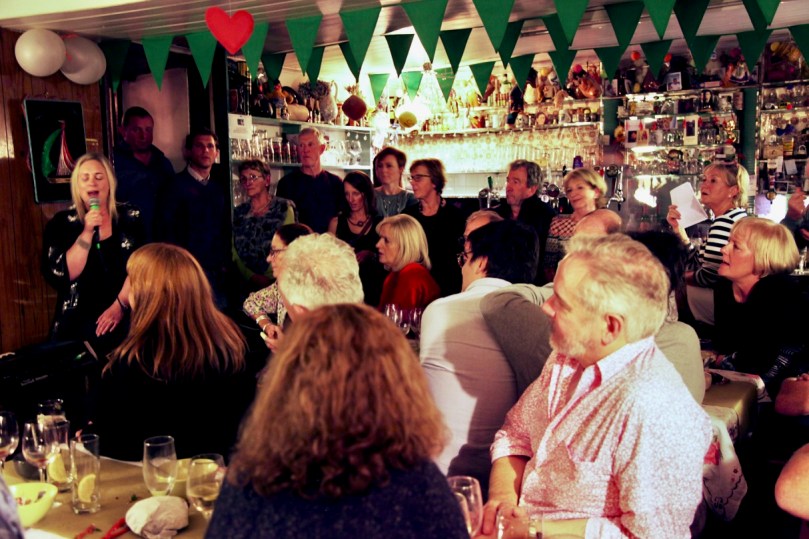
Perhaps the most fun we had was also at Levis’s – it was called Sing for your Supper and the idea was to eat and sing, and whoever was judged to be the best singer would win their supper. It was an absolute hoot, with lots of good sports belting out old favourites (I personally led a version of Satisfaction that would curdle milk) and several excellent singers enthralling us all. The food was superb, prepared by an acknowledged top Irish chef, and local man, Rob Krawczyk

Thanks to Colm Rooney of the wonderful local web design agency Cruthu Creative for the photos of Sing for Your Supper. Ah sure, you can’t belt out the numbers and be snapping at the same time, now can you?

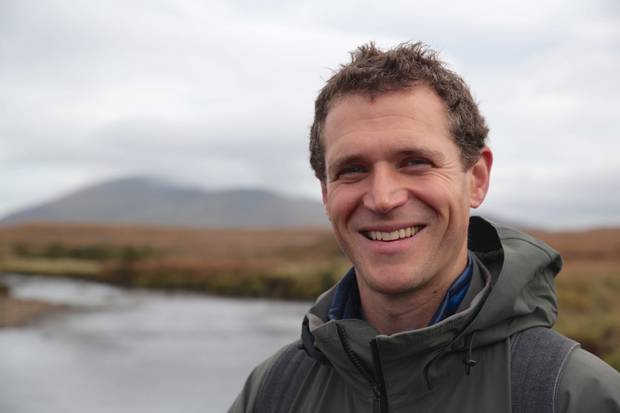
We bonded as a table – there were six of us, and we were thrilled to discover the identity of the youngest member. It was Eoin Warner, and if that name means nothing to you, it will one day. Eoin narrated the Irish version of Wild Ireland, Eire Fhiáin, shown to rapturous acclaim on the Irish TV channel. The photography was extraordinary and opened many of our eyes to the wildlife we have here. Forget David Attenborough and the Amazon Jungles – to see a humpback whale bubble-netting up close is to realise how rich the oceans around Ireland are. Here’s an extract from Eire Fhiáin, with Eoin’s lovely, natural, narration and his deep sense of wonder. And – he has a great voice and won the competition!

The photo is from an Independent article that nicely sums up audience reaction to the program

Yesterday we went on a Cultural Taste Tour of Bere Island. It was our first time and it’s no exaggeration to say that we fell in love with it. I won’t say much about it because Robert’s post will fill you in, but I CAN say that we’re already planning our next trip back there.

One of our favourite stalls in the regular Saturday market had also set up in the Street Market – Olives West Cork is our source for excellent olive oil and the best parmesan cheese, as well as an amazing variety of nibbles

The week finished, as it always does, with the Skibbereen Street Market, and I will leave you with a slideshow of this colourful extravaganza.

This slideshow requires JavaScript.

Start planning now for next year! Everything books up quite quickly when the program is announced and if you leave it too late there may be no place to stay and no tables left unclaimed. It will be the among the best few days you’ve ever spent!

The Red Line – Bere Island

As part of the excellent Taste of West Cork food festival, we signed up for the Bere Island Cultural Taste Tour, and on a grey Saturday morning we drove off along the south side of the Beara Peninsula to Castletownbere. The Islands of West Cork are all fascinating to explore, in our experience, and each one is very different. This was my first visit to Bere Island, and I immediately want to go back there: this was, of necessity, a ‘whistlestop tour’, ably led by Ted O’Sullivan, probably a direct descendant of the famed O’Sullivan Bere (who deserves – and will get – a post of his own!) You may remember that the island – and the peninsula – has taken its name from the Spanish wife of Owen Mór, King of Ireland around 120AD.

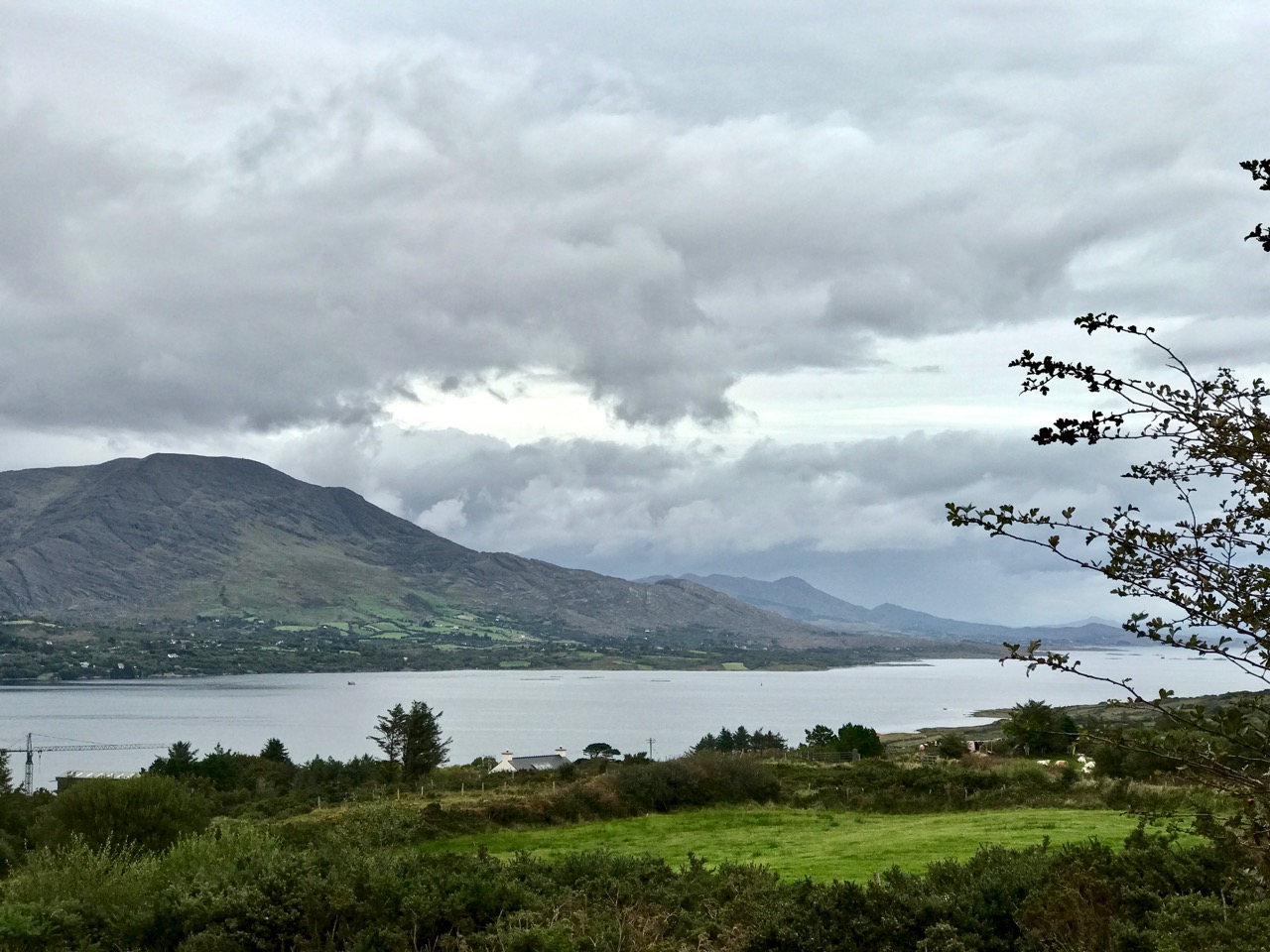
Bere Island lies off the coast of the Beara Peninsula, which was in constant view as our bus took us to the eastern end on the narrow island roads – towards the ‘Red Line’

While the history of the island takes us back to the Bronze Age and beyond, more recent events have been left behind on the landscape – and in the memories of the islanders.

Upper – ancient history: Ardaragh Bronze Age wedge tomb beside the road to the east of the island with Hungry Hill beyond. In 1926 the tomb collapsed, and this was seen by some islanders as a ‘sign’ that the British might leave the occupied part of the island. Lower – modern history: looking from the island towards the Beara – British warships stationed in the bay circa 1914

Did you know that part of Bere Island remained in British hands well beyond the establishment of the Irish Free State in 1921? This was one of the three Treaty Ports that were retained by the United Kingdom following the First World War, when there were fears that there might be a recurring naval threat to the islands of Britain and Ireland. The other two ports were Spike Island, in Cork Harbour, and Lough Swilly in the far north of the Irish state. Relationships between Ireland and Britain remained uneasy for many years but finally, in 1938, it was agreed that these deepwater ports should be handed over to the Irish Republic. Winston Churchill was appalled by the decision, and in an address to Parliament in that year he called it a ‘folly’:

…When the Irish Treaty was being shaped in 1922 I was instructed by the Cabinet to prepare that part of the Agreement which dealt with strategic reservations. I negotiated with Mr Michael Collins, and I was advised by Admiral Beatty who assured me that without the use of these ports it would be very difficult, perhaps almost impossible, to feed this Island in time of war. Queenstown and Berehaven shelter the flotillas which keep clear the approaches to the Bristol and English Channels, and Lough Swilly is the base from which the access to the Mersey and the Clyde is covered… These ports are, in fact, the sentinel towers of the western approaches, by which the 45,000,000 people in this Island so enormously depend on foreign food for their daily bread, and by which they can carry on their trade, which is equally important to their existence…

Until the handover in 1938 the eastern end of the island lay beyond ‘The Red Line’. The position of this line was pointed out to us on the tour, although we couldn’t see a ‘line’. In fact, no physical line did ever exist but there was a point beyond which Irish people could not proceed, and British forces stationed over the ‘line’ could not cross. Ted, our tour guide, recounted some amusing stories of those strange times. With typical Irish inventiveness, there were many instances of how the difficulties created by the ‘line’ were overcome. For a short while there was a prison on the British sector, right beside the ‘line’. It was used to incarcerate mainly political prisoners. Every weekend there would be a party held on the Irish side of the line which always included singing, dancing and drinking, and the prisoners joined in! Many politically important prisoners managed to escape, and the prison was known as a ‘leaky bucket’ because of this. A number of the British governors of the prison were removed during its short life because of their inability to contain their charges.

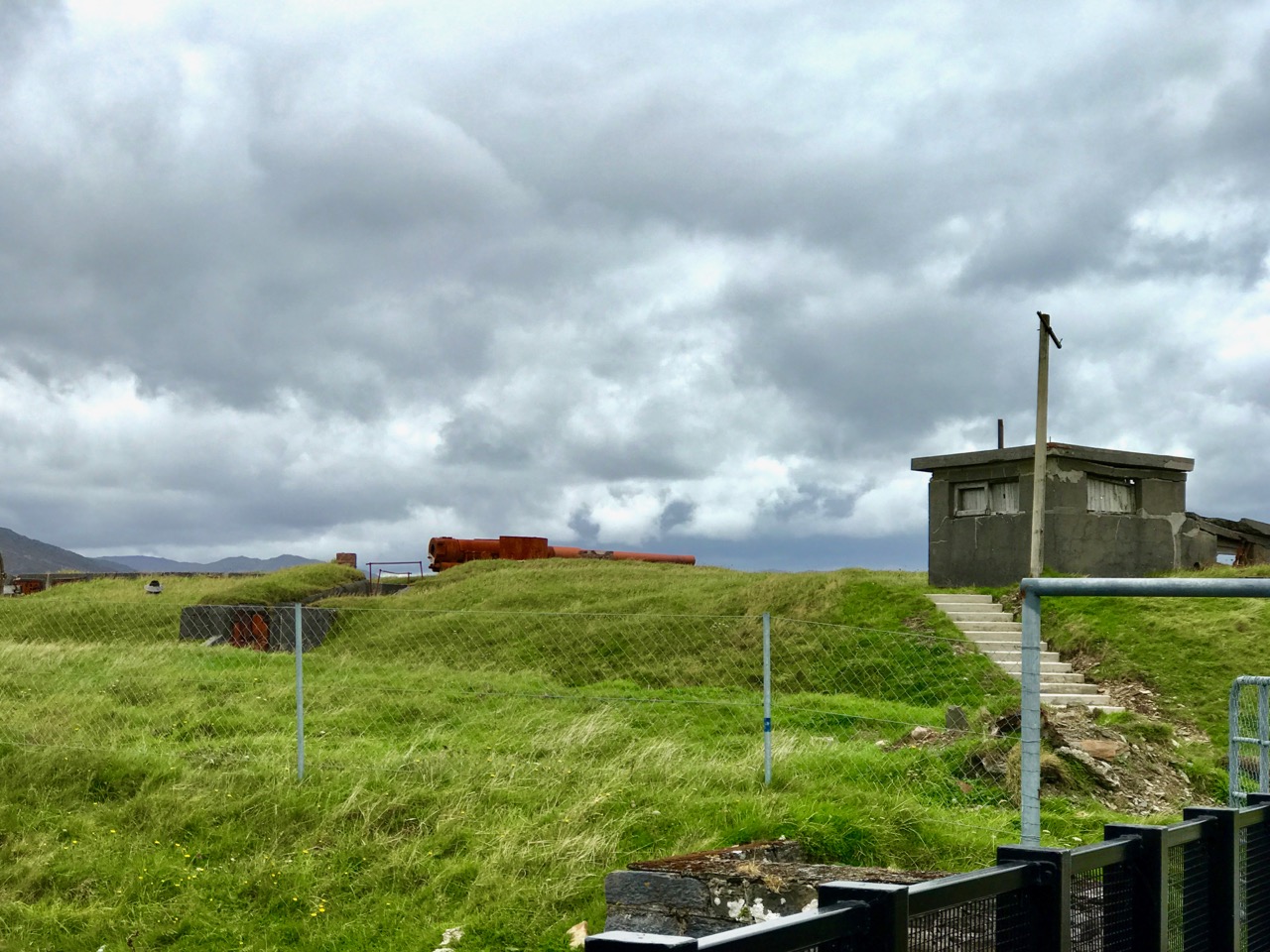
Lonehort Battery – built in 1899 by the Royal Engineers of the English army – housed two enormous 6-inch guns (still in place but very rusty) and is surrounded by a deep moat. There are plans to re-open the site as a historic monument

Lonehort is a natural harbour, believed to have been used by the Vikings. Archaeological excavations were carried out there in 1995 and confirmed the artificial breakwater as being Norse: there were also signs of a Viking shipyard here.

Lonehort – a Viking harbour and shipyard. The word means ‘Long Phort’, and is used to indicate Norse associations

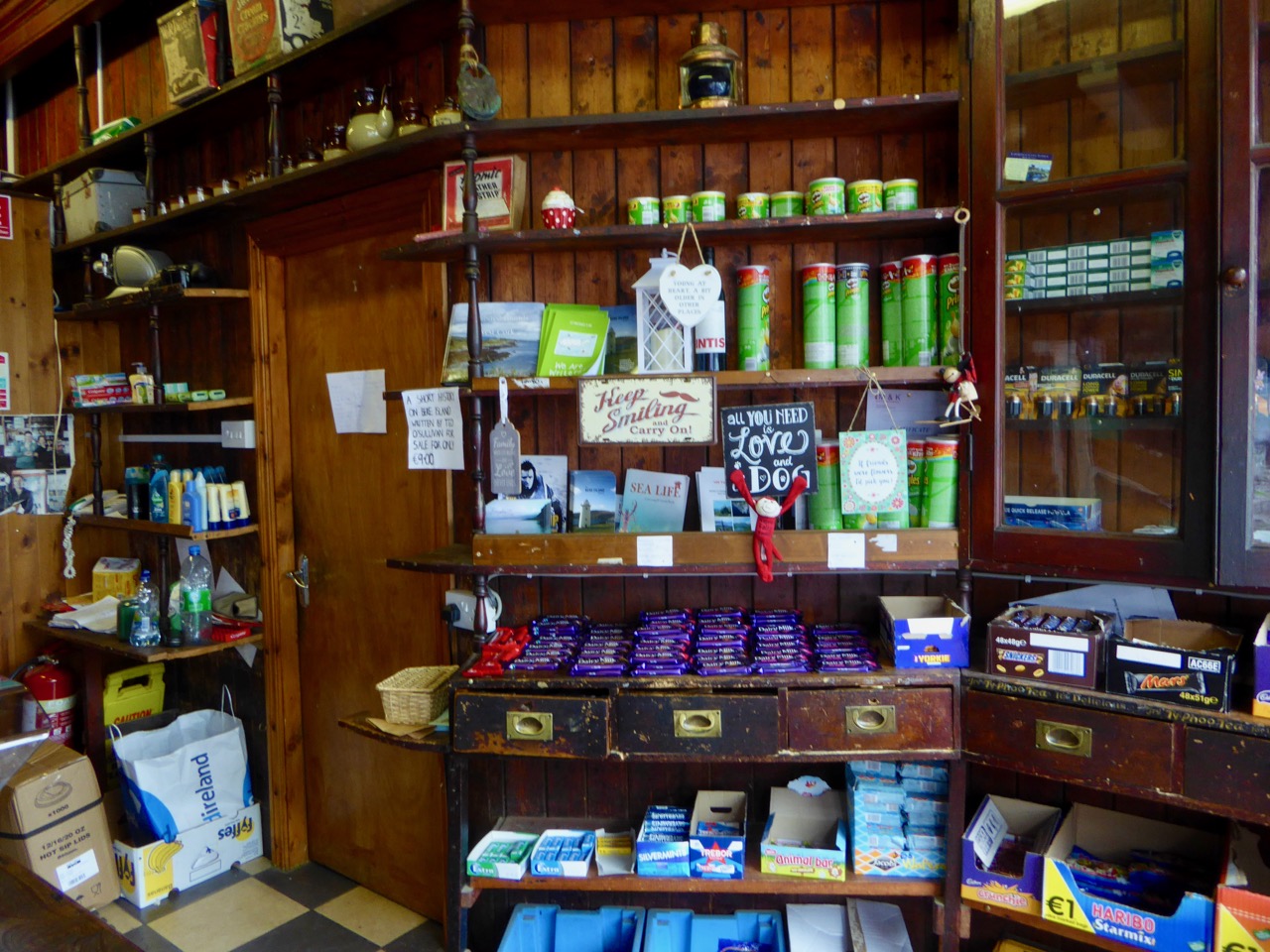
One of the purposes of our tour was to introduce us to food produced on the island, and we ate in three establishments: The Shop and Cafe in Rerrin for soup, The Hotel for a fishcake lunch, and the Heritage Centre for a dessert and coffee. All provided good, delicious fare.

Our three food destinations. Top – the wonderful Shop at Rerrin; centre – The Hotel, open all year round (it looks as though it has interesting fare!) and lower – the modern Heritage Centre which has a gallery displaying the island’s history and culture as well as a good eatery

All too soon our short tour came to an end: we had to get back to catch the ferry. We missed several things: St Michael’s Holy Well and Church; views from Knockanallig (the highest point) and several standing stones including Gallán, which is exactly in the centre of the island. And it’s a great place for walking! We will return, perhaps for a few days in the winter, and complete our explorations. But many thanks to Ted and the Bere Island Projects Group for giving us such a comprehensive introduction to an intriguing community and its history.

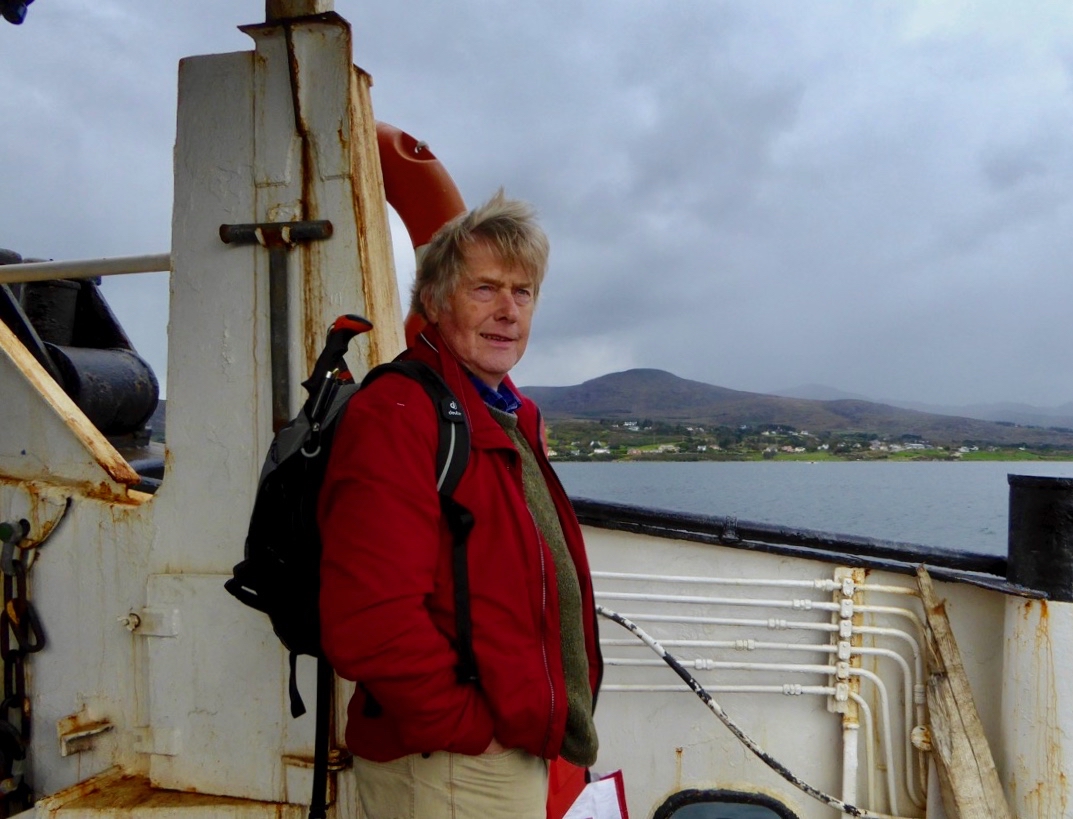
Robert heading home after a grand day out!
The Significant Rock Art of Clonfinlough

Whenever we stray from our home territory of West Cork, we are always on the lookout for archaeological wonders. When we set our course for Clonmacnoise, in County Offaly, last week (I like the possible translation of the Irish Cluain Muccu Nóis: Meadow of the Pigs of Nós, but there is an alternative Cluain Mhic Nóis: Meadow of the Sons of Nós), we were looking for Ireland’s most important medieval monastic site, but we were diverted only a stone’s throw from our destination by a sign that we couldn’t ignore…

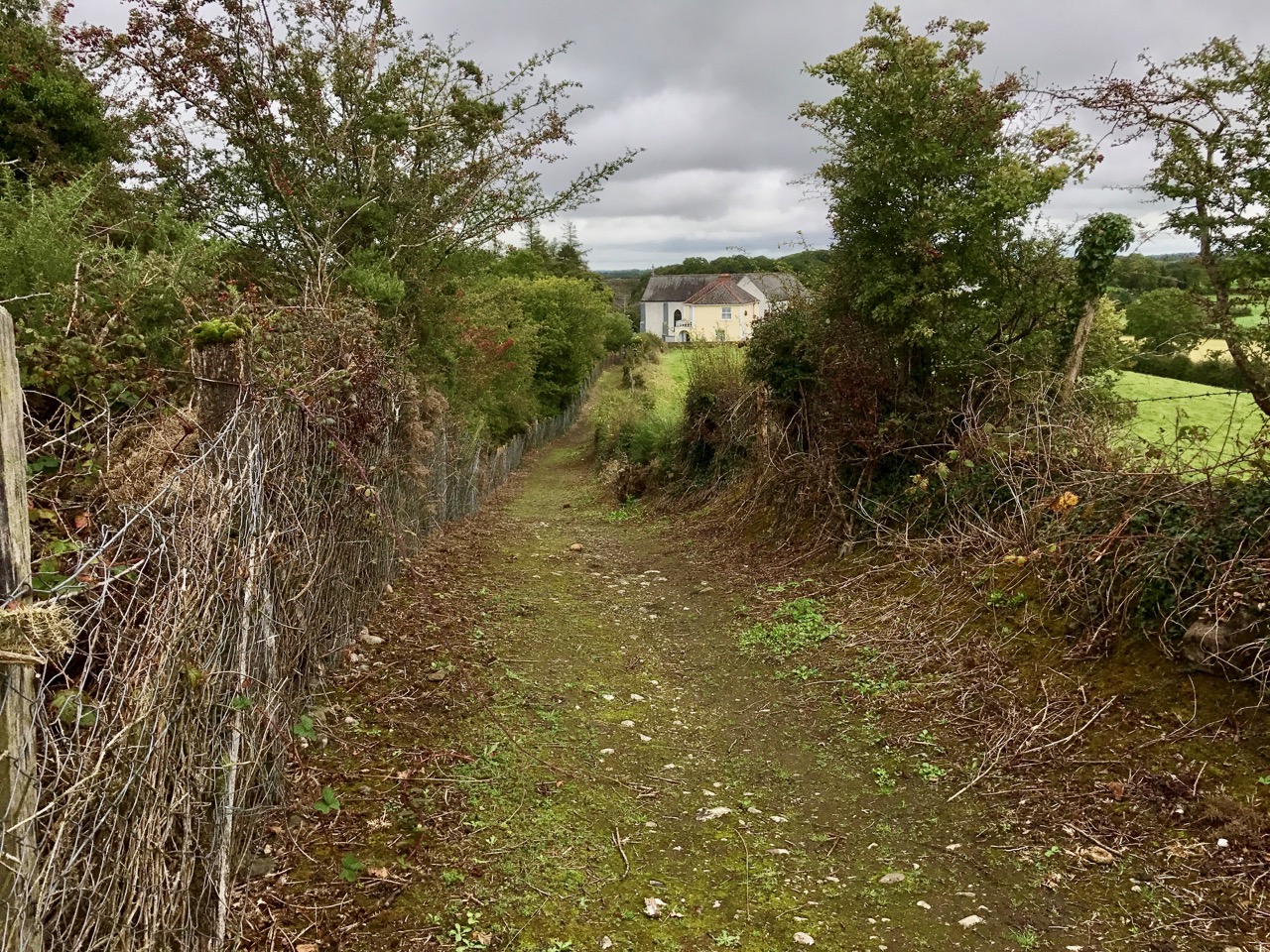
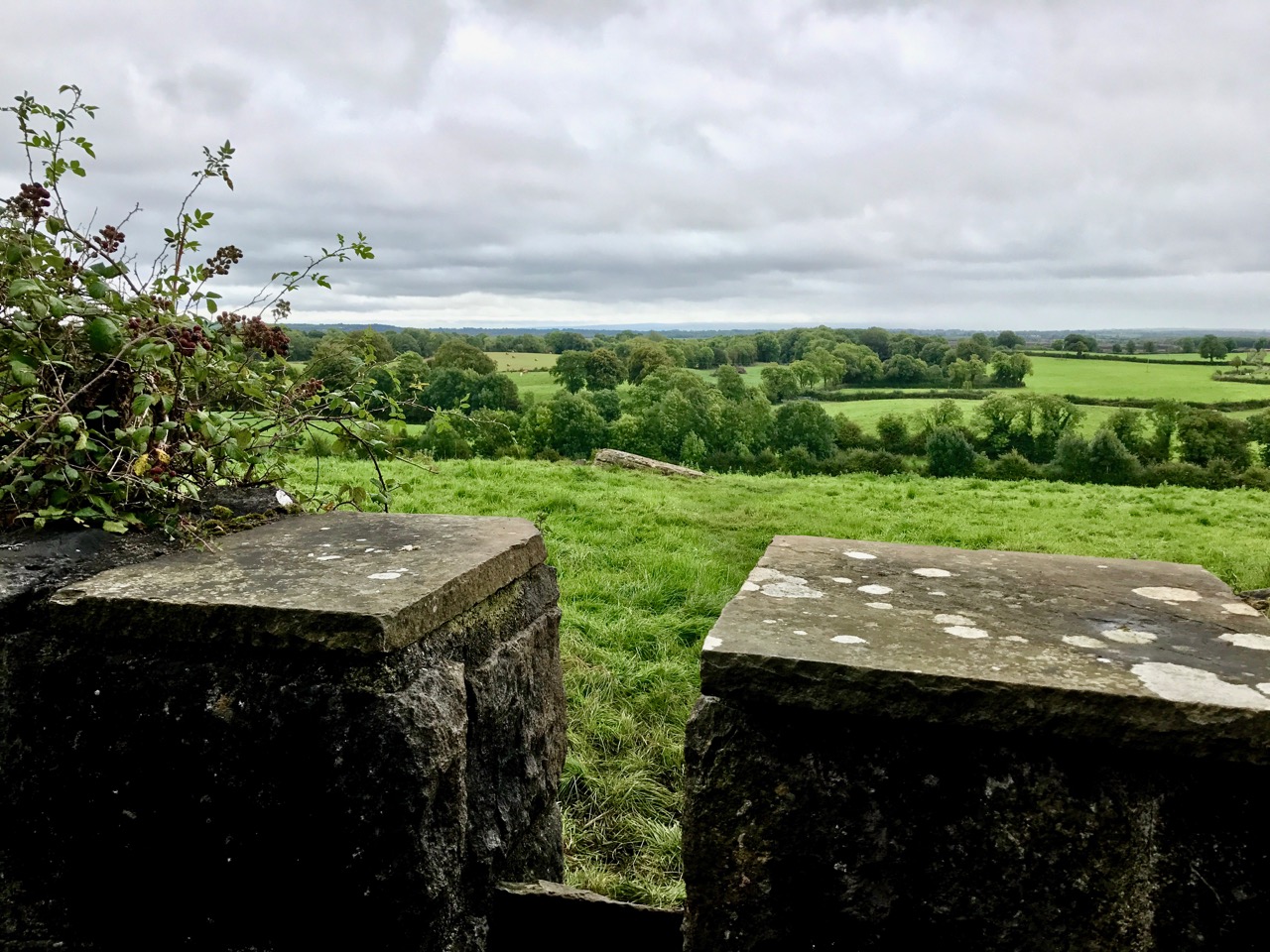
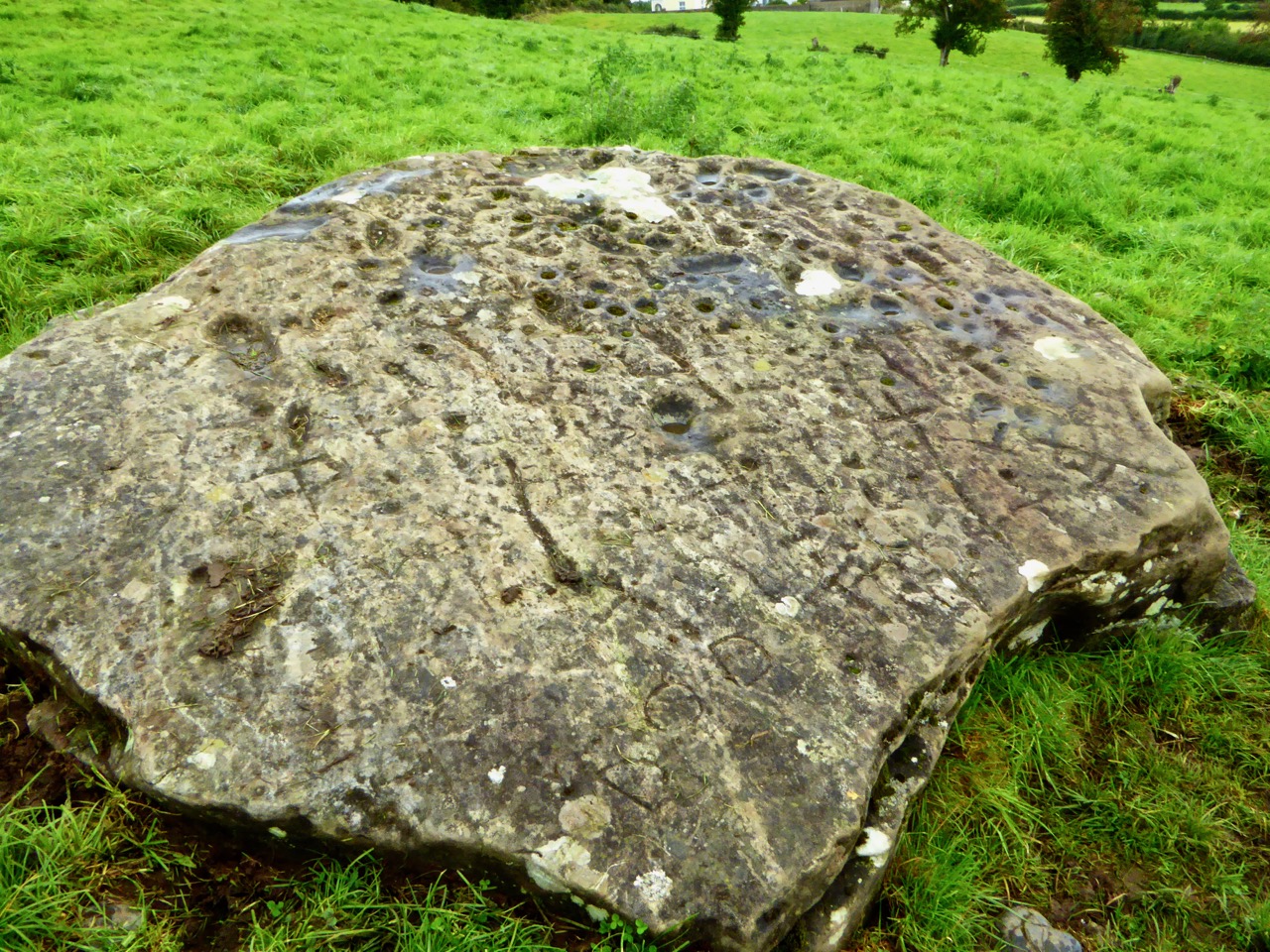
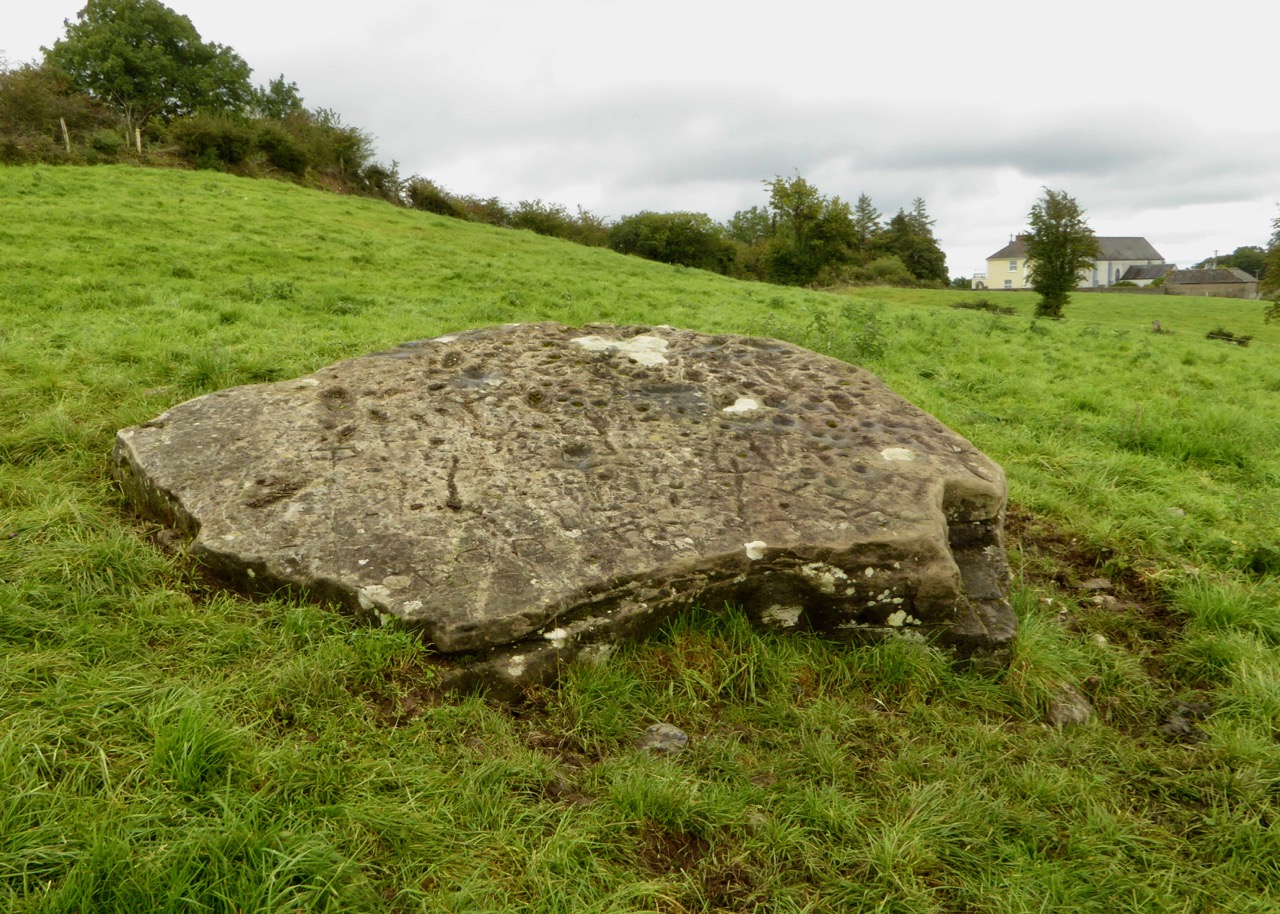
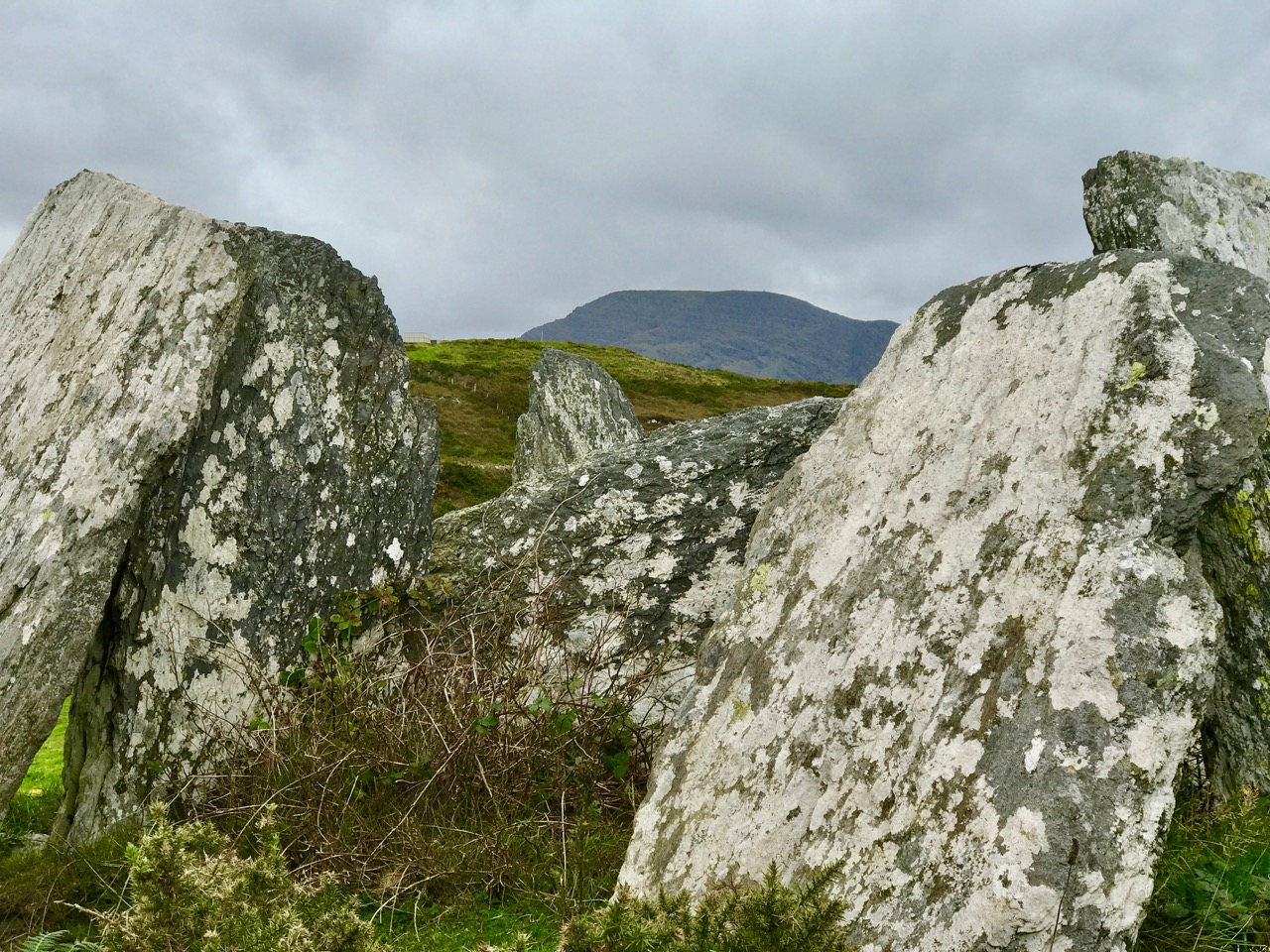
Tucked away to the south east of Clonmacnoise, on a by-road, sits an isolated church in front of which is a well defined and fenced pathway leading past the Priest’s house, through fields, over a stile and into a pasture where cows grazed and barely gave us a glance. There – open to the ravages of weather and cattle – is a large, earthfast slab of limestone bearing a remarkable array of markings.

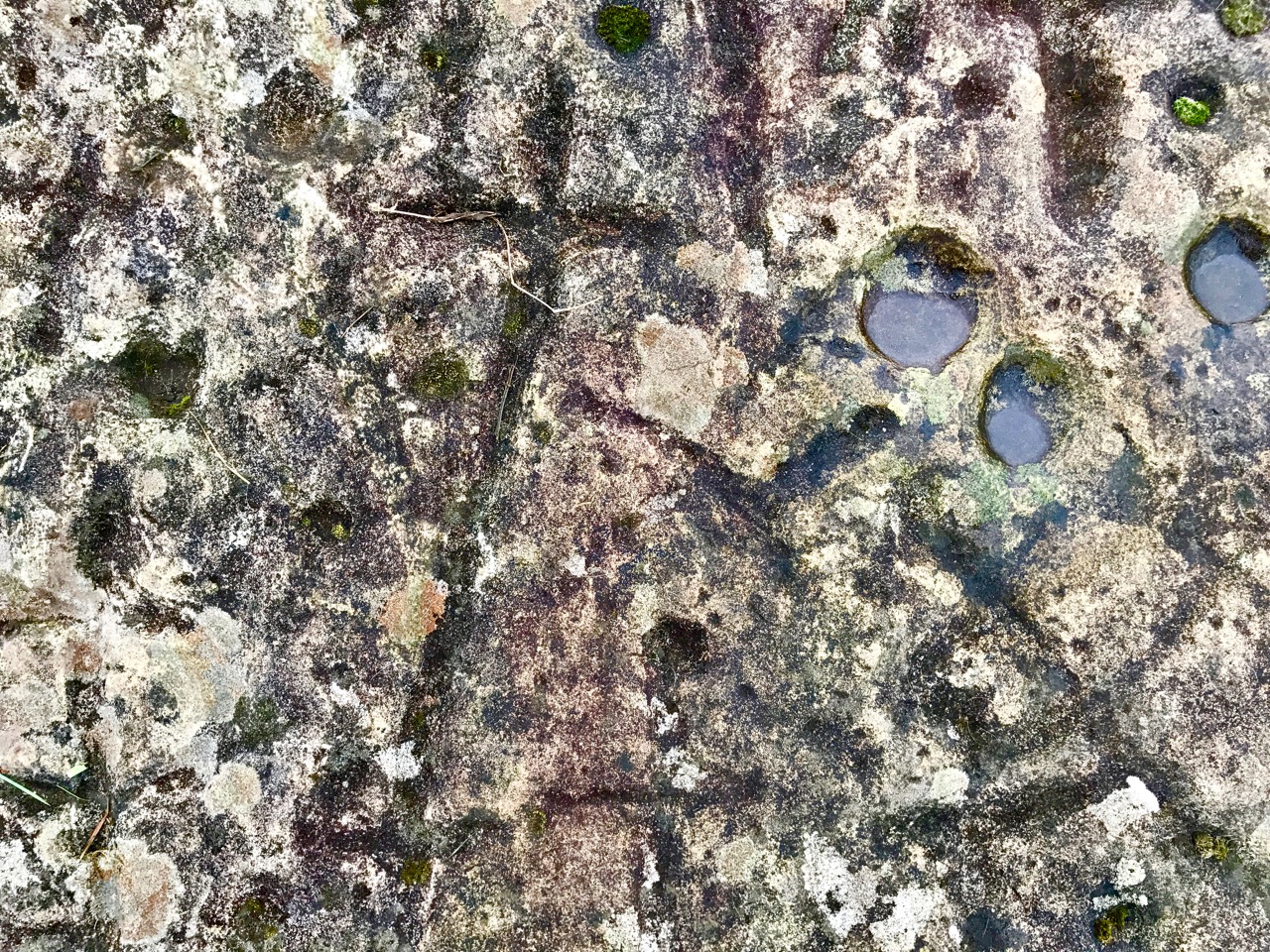
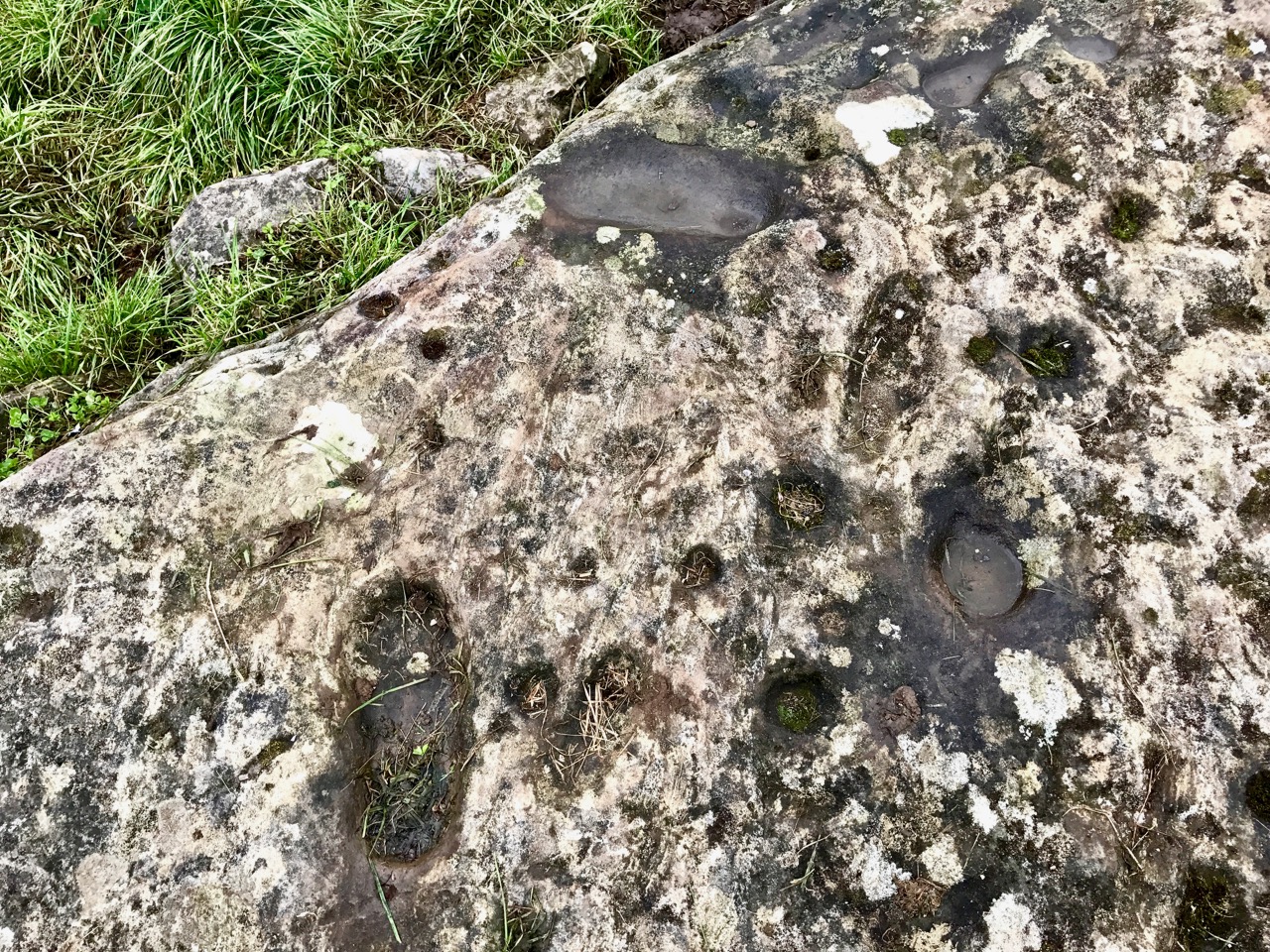
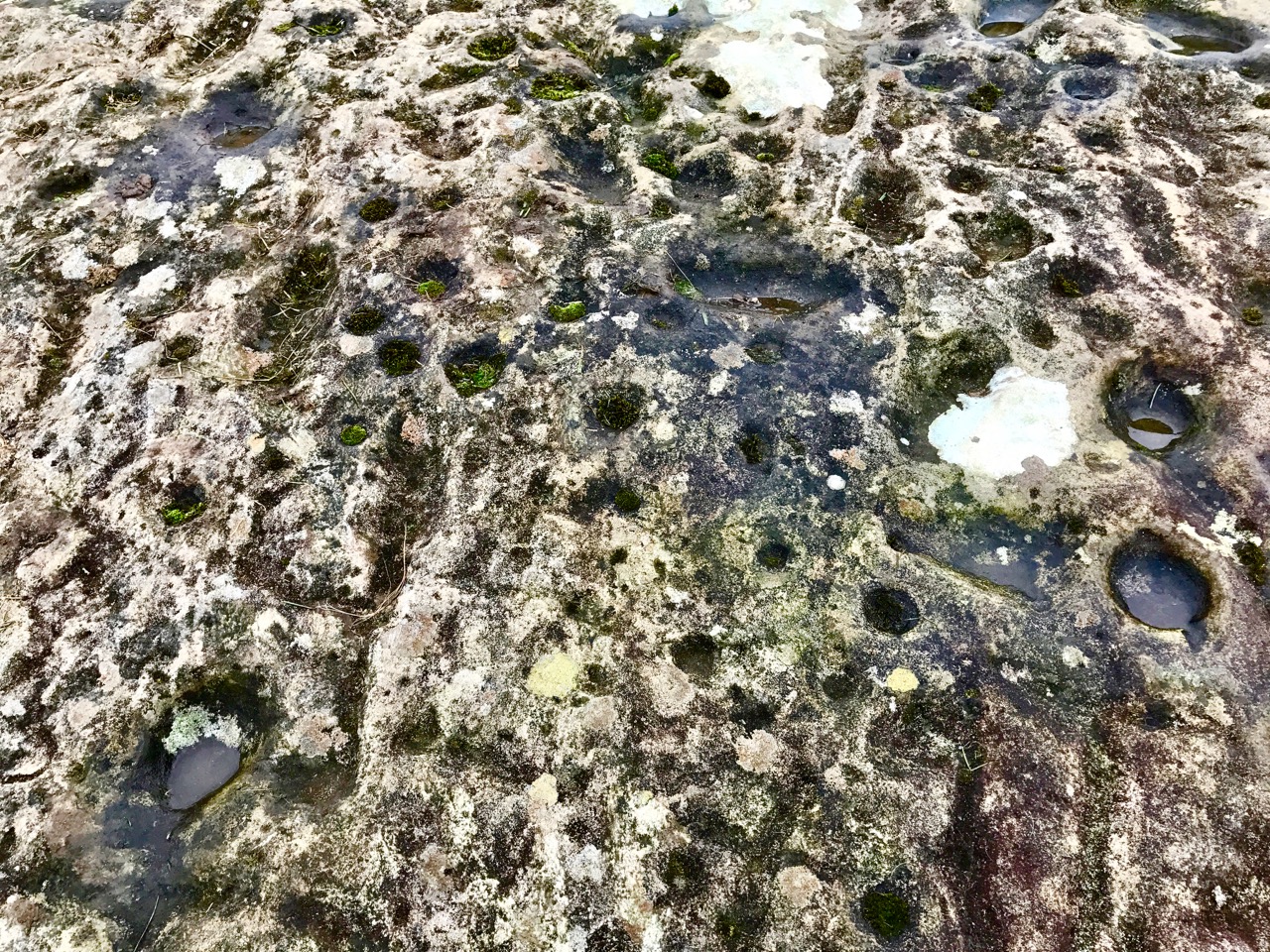
Header – a detail from the stone’s crowded surface. Upper – the well-defined path leading from St Kieran’s Church to the stone (don’t confuse this St Kieran with the one from Cape Clear). Lower – the limestone slab situated beyond the stile

For Rock Art enthusiasts like us the stone was a wonderful find. The surface is teeming with rings, lines, shapes – and even lettering. In spite of the weathering, everything was deeply defined and easy to see. And the more we looked, the more we did see, and the more perplexed we became. I even noted footprints! Remember my search last week for the footprint left by Archangel Gabriel on his visit to his eponymous mountain in West Cork? Here I counted six, and my size nine feet fitted perfectly in them all.

Upper – two of the ‘footprints’ scattered on the stone’s marked surface. Lower – the stone in its landscape context: ‘footprints’ are also visible

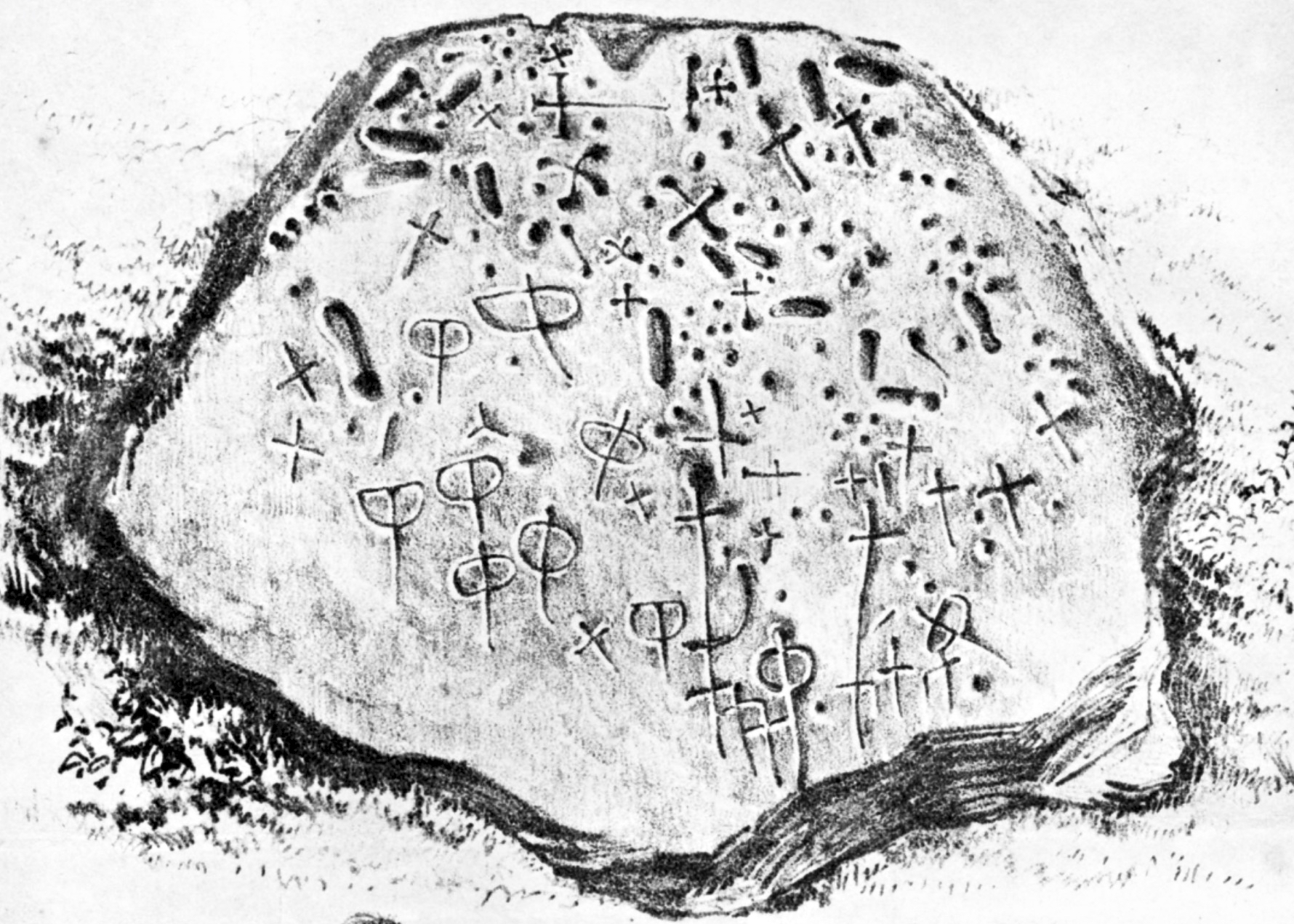
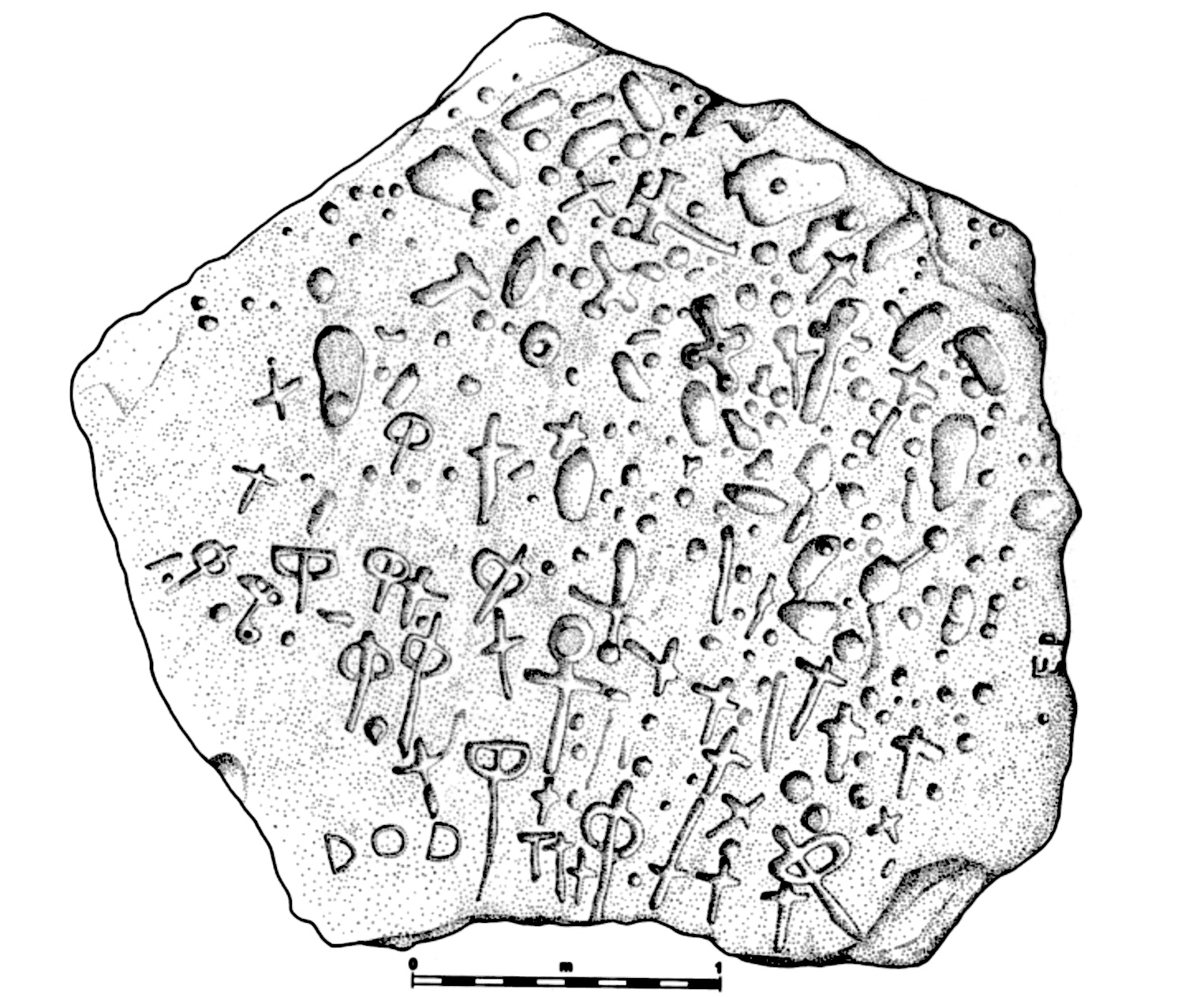
When we returned from our visit to Offaly I was able to research the available information on the Clonfinlough Stone and was delighted to find a very comprehensive study of it written by Finola’s old friend and Rock Art expert from UCC, Elizabeth Shee Twohig. The piece – Context and Chronology of the Carved Stone at Clonfinlough, County Offaly – was published in 2002 in The Journal of The Royal Society of Antiquaries of Ireland, Volume 132 pp 99-113. It makes the most enlightening read, outlining the ways in which the stone was regarded and drawn by early antiquarians and then opening up discussion on how much of the stone’s markings might in fact be natural formations, or natural forms which have influenced and been enhanced by ‘artists’ working with motifs which have become familiar to Rock Art researchers today, including cupmarks.

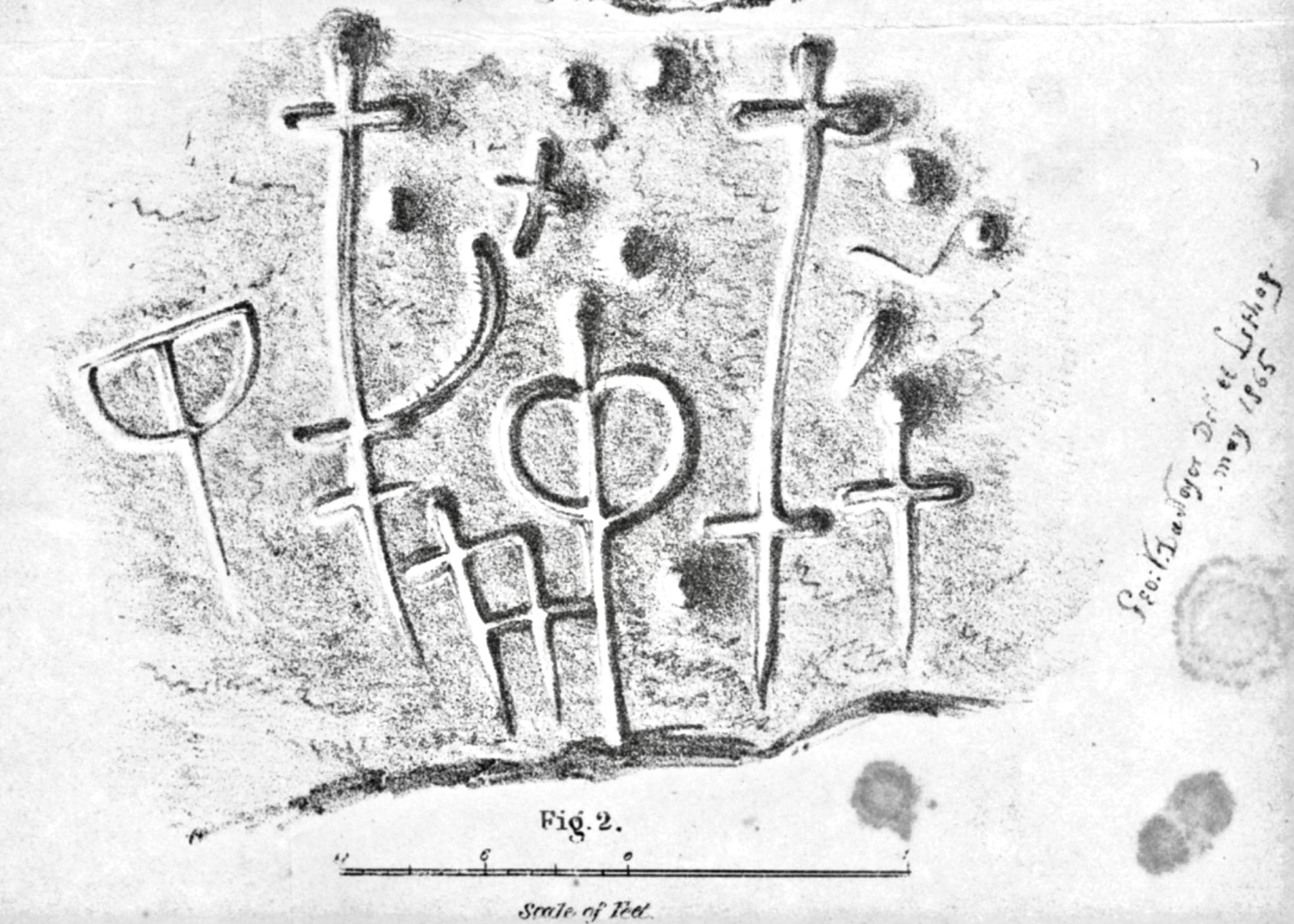
Engravings by George Victor du Noyer illustrating a paper published by James Grave in 1865. Note the emphasis that du Noyer has placed on recognisable ‘Greek’ style lettering (termed phi by Shee Twohig)

Elizabeth Shee Twohig quotes theories by RAS Macalister which evolved between 1921 and 1949, and which include the idea that the phi markings represent ‘…a possible depiction of a battle between the ‘loop men’ and the ‘cross men’ and suggested that the cupmarks …may even indicate the number of severed heads!…’ In his 1928 book The Archaeology of Ireland Macalister (quoted by Shee Twohig) suggests ‘…the carvings as showing a battle or pre-battle scene, the medicine men having prepared for their occult purposes a picture of the consummation desired…’ while in 1949 he saw it as a sign-manual of a hostile expedition from Spain which sailed up the Shannon: ‘…the battlefield, printed with the footmarks of the flying foe, strewn with weapons cast away in their flight and with missile stones…’

These are but brief extracts from the Shee Twohig account and discussions, which are essential reading – not just for possible enlightenment on the markings on this stone, but also for a well defined background on how ideas about Rock Art generally have developed since the time of the earliest antiquarians.

Elizabeth Shee Twohig has amplified her study of the Clonfinlough Stone with the first truly accurate drawing of the markings on it (above). It is certainly interesting to compare this with the 1865 engravings by du Noyer

Elizabeth Shee Twohig brings in to her study the possible significance of the stone’s positioning close to the great monastic centre of Clonmacnoise, which in medieval times was the prime pilgrimage destination in Ireland. There is evidence that one of the paved pilgrim routes passed close by the Clonfinlough Stone. It is plausible, therefore, that at least some of the markings on this limestone slab could have dated from those times: Clonmacnoise was active between the 6th and 12th centuries.

Upper – the many enigmatic markings on the stone: natural limestone solution pits, Bronze Age Rock Art, crosses carved by or for medieval pilgrims? Lower – the stone is within sight of the present day church

A trawl through the folklore records proves fertile. One legend says that at certain times of the year a horseman manifests and gallops around the stone. Another has it that a local boy named Michael used to play at the rock and there met another boy who gave him a silver knife. His mother made him take the knife back and leave it on the stone, for she said the boy was a fairy trying to entice him away. It is also said that another Michael will find the knife, and when he does he will find two big pots of gold under the rocks. Whatever the truth is about the rock and its meaning, I am struck by the path we found coming from the little church which is in sight of the Clonfinlough Stone: could there be something pagan in that stone which required the church to be built there – or is it a mutual guardianship?

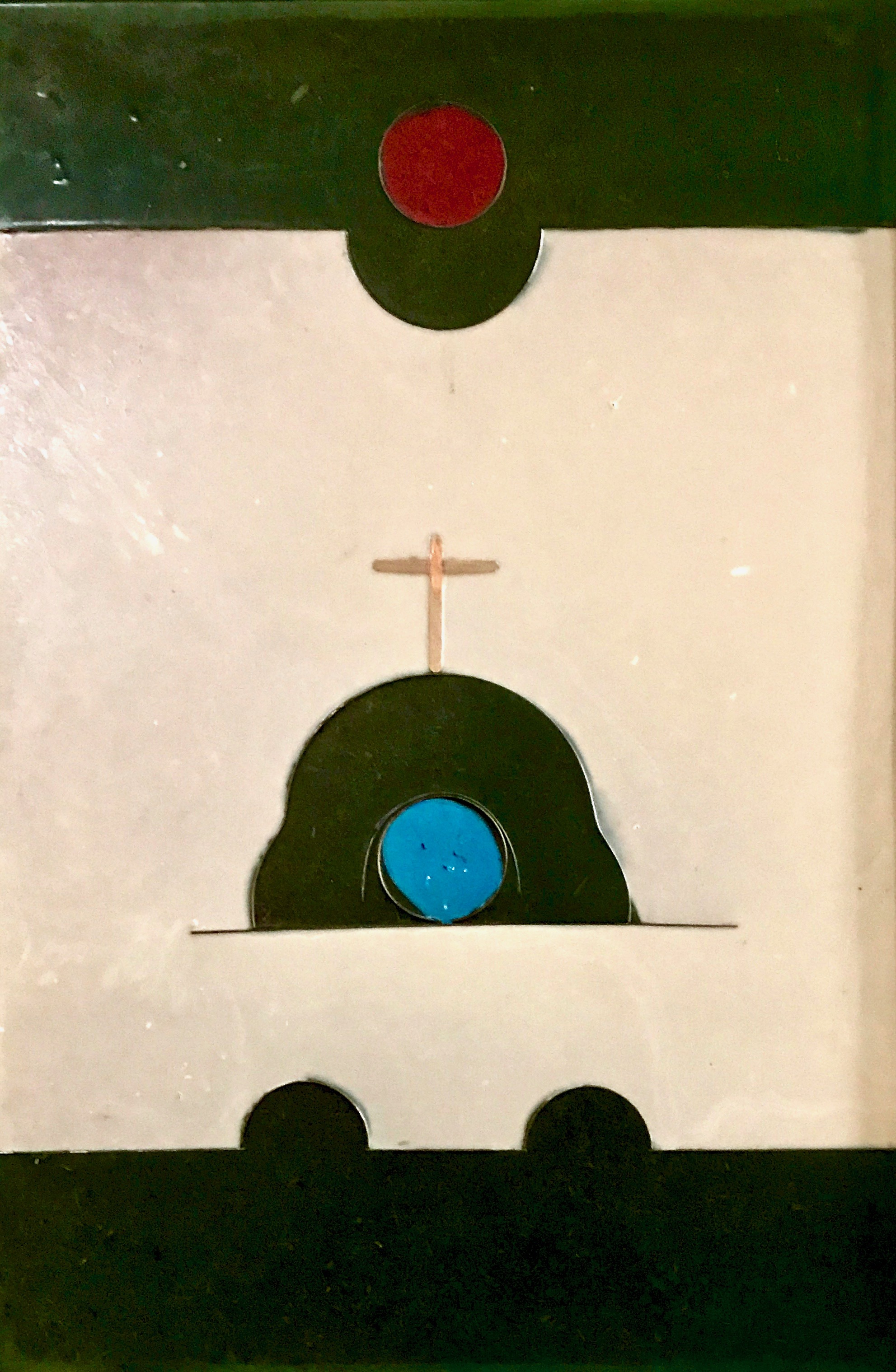
In the church at Clonfinlough is a curious series of Stations: this one showing the ’empty tomb’ can be seen as a rock supplanted by a cross…

Hikelines – a Blog for the Soul

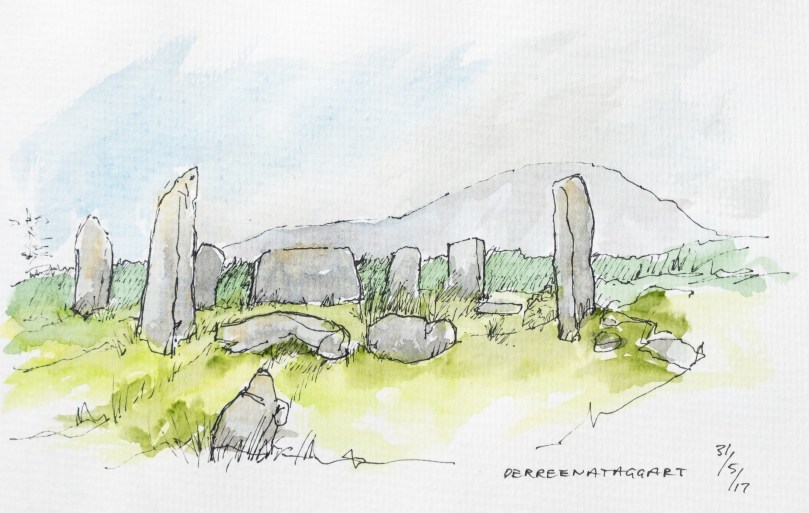
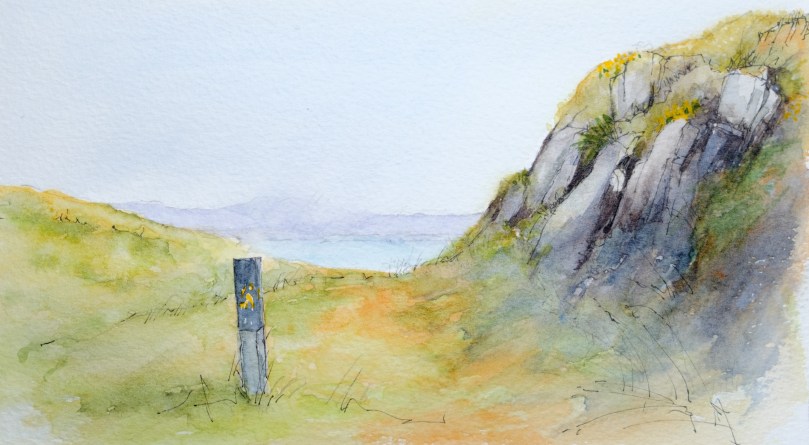
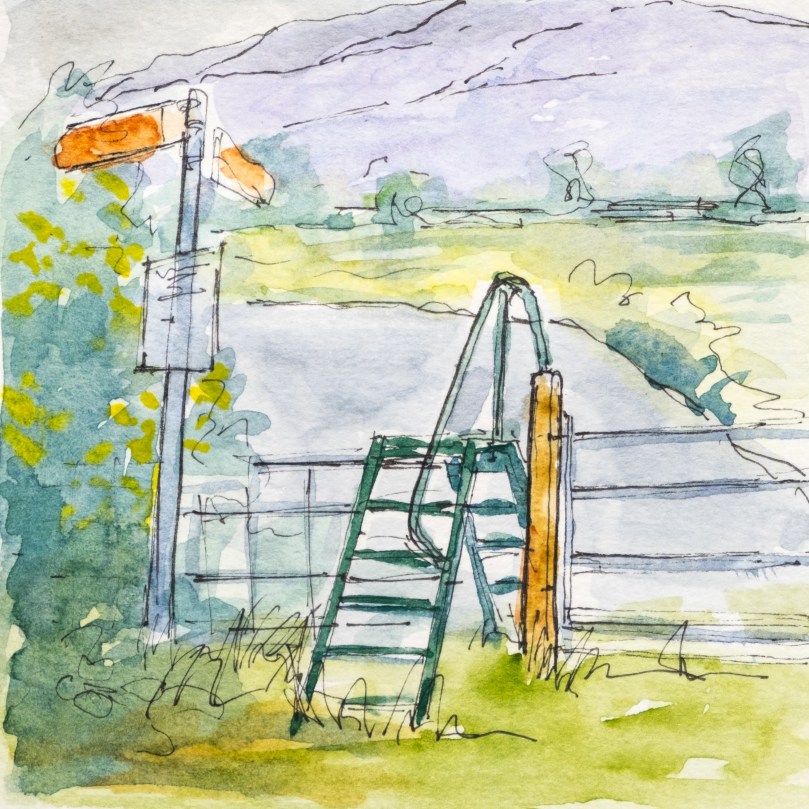
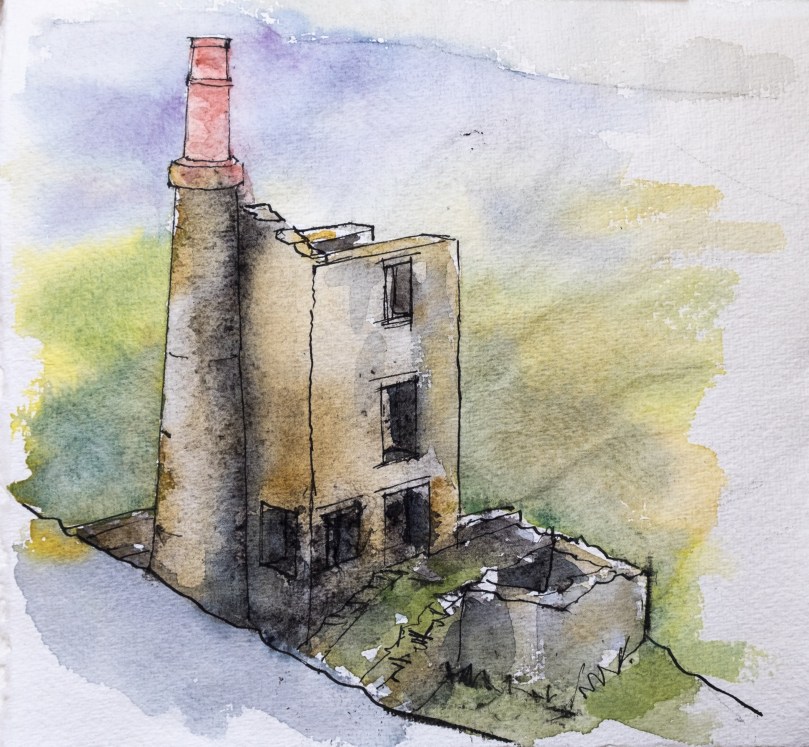
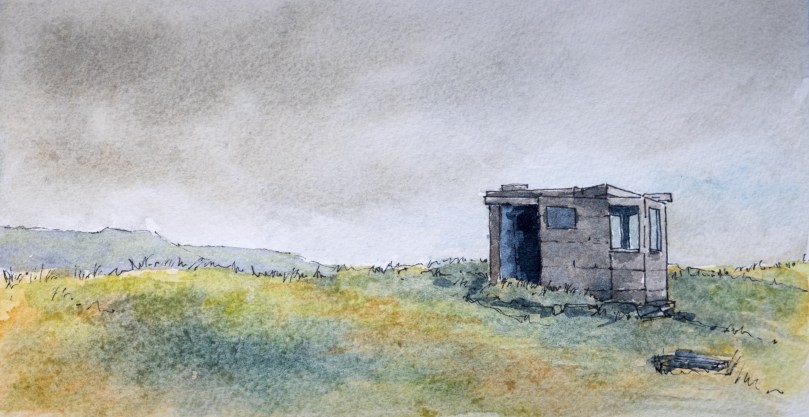
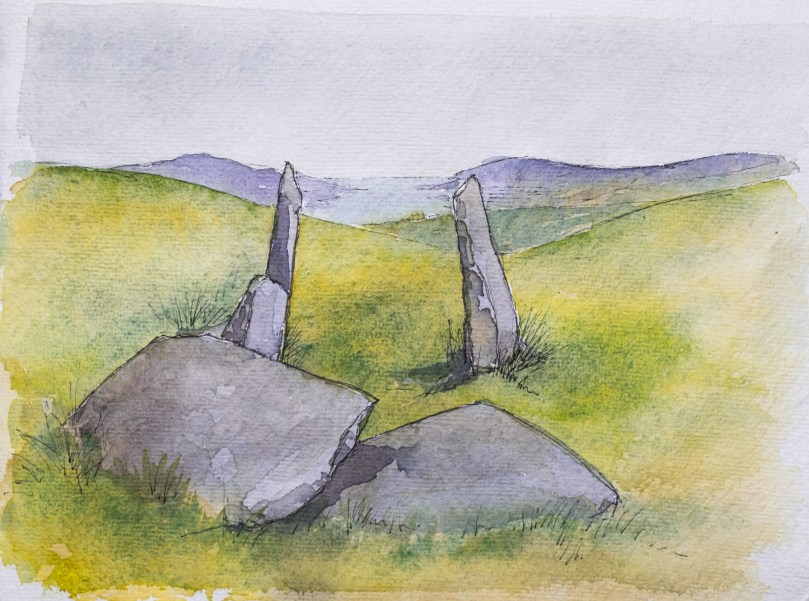
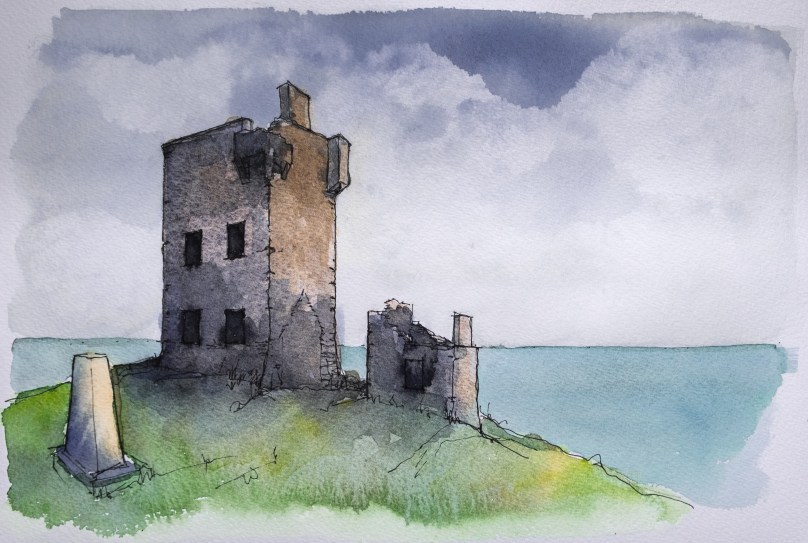
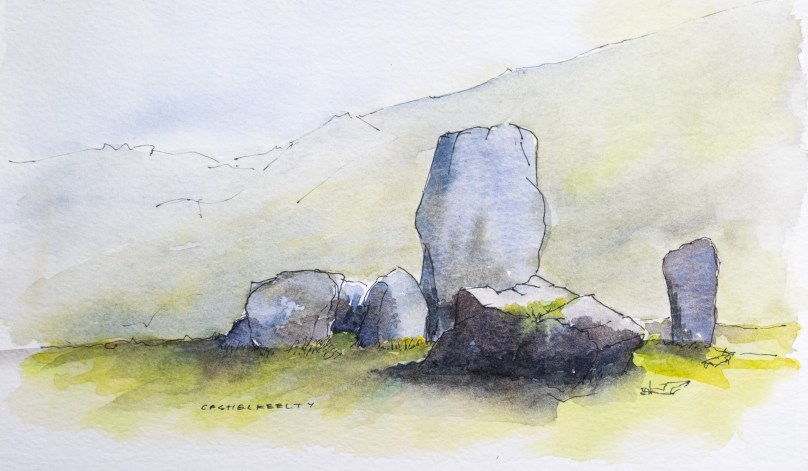
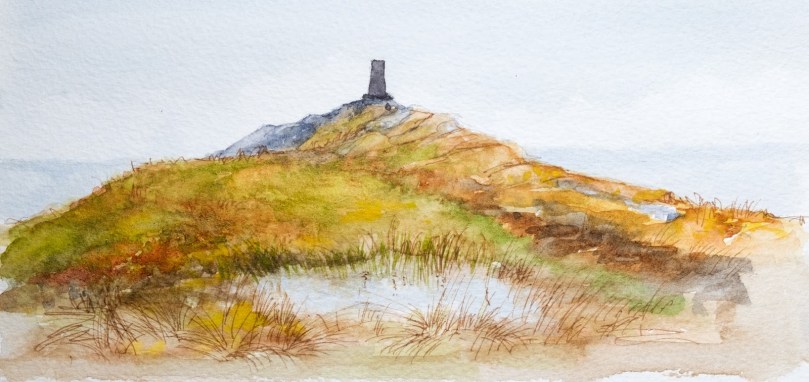
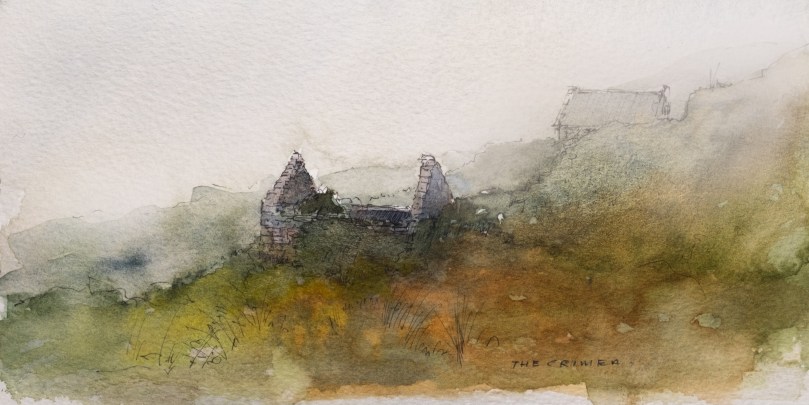
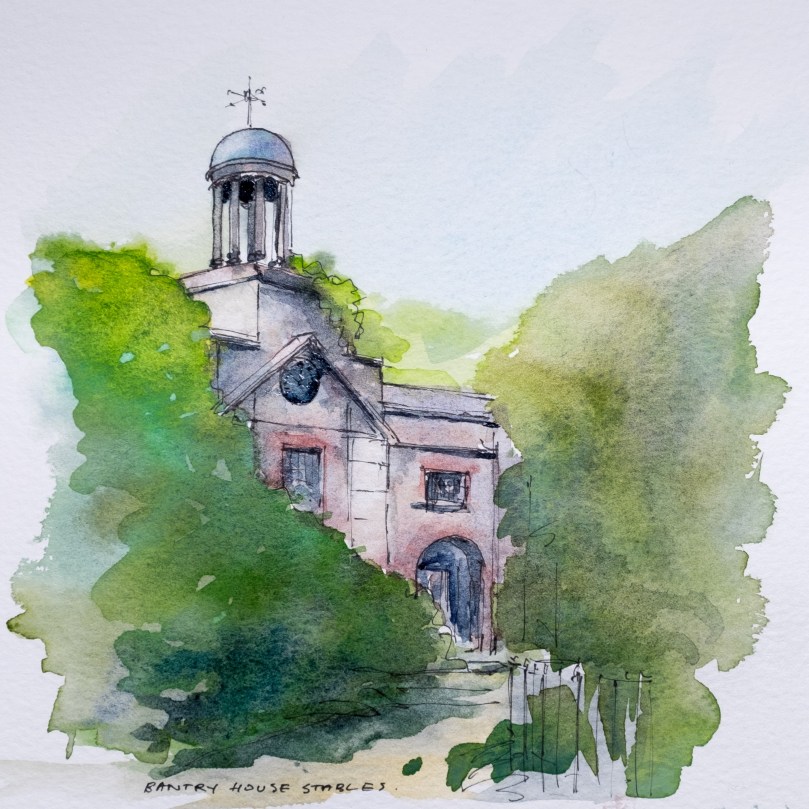
Our talented friend, Peter Clarke, has a marvellous new blog and you HAVE to see this one. It’s called Hikelines and the subheading tells the story – I hike and I sketch.

Peter has done two long walks in England, sketching as he went along – the Cleveland Way and the Tabular Hills Way. People who know those routes will appreciate how he has captured landscape, villages and landmarks in his signature style. But I want to concentrate on his two West Cork routes – The Beara Way and The Sheep’s Head Way.

Several things mark these routes as different from the English ones: they seem wilder, more remote; archaeology is all over the place; the place names are unpronounceable; they’re not as organised (especially the Beara Way) for the walker so there are directional and accommodation challenges. However, they are as rugged and spectacular as any hiker could wish for.

The Beara is the largest of the West Cork Peninsulas and the farthest from population centres. Peter accomplished it in nine stages, spaced out between the end of May and the beginning of August, starting and ending in Glengarriff and travelling clockwise.

Some parts were very rough going and signage was not always reliable, but Peter takes it all in his, er, stride. He writes beautifully in a clear accessible style – here’s a sample from his first day:

I reach the ladder-stile that marks the start of a hard, steep climb up to 550 metres. The red line of the route looks impossibly steep on the map but on the ground I find a stony track that dog-legs its way up the contours to make the going a little gentler: nevertheless, my lungs and legs are soon in the red zone. I take shorter strides on the rough stony surface, the plodding drumbeat of my boots accompanied by the tip-tap rhythm of my walking poles. At each turn where I stop to look back, the small houses in the valley are even smaller, the distant hills begin to show on the horizon, catching patches of sunlight, and soon I can see above the nearby hills across to Bantry Bay, glassy calm with Whiddy Island casting long reflections in the waters.

He stops to sketch what catches his eye – occasionally doing a whole sketch, sometimes colouring it later, sometimes taking a photograph to sketch from when the hike is over. He includes technical details for those who like to know.

He detours to visit prehistoric and historic sites and often includes these in his sketches. Amanda makes an appearance now and then – she’s on pick-up or drop-off duty and is usually combining this with adventures chronicled in her own blog Holy Wells of Cork. (When I told you about the start of Holy Wells of Cork it was only a year and a half ago – she has now recorded over 200 wells!) She is along as they ride the cable car to Dursey Island but Peter strikes out on his own along the trail.

As I set out alone along the only road, I think about how the past seems somehow embedded in the landscape of places like this. Some might say there are ghosts here and I can understand why. A short detour brings me down to the ruined monastery and burial ground sitting just above the shore. It feels lost and forgotten, even in the sunshine.

I climb back up over soft springy grass onto the road which rises and falls around the smoothly rounded hills that make up the island. Purple foxgloves hang on the cliff edges; the peaks of roofless gable-ends rise from the patchwork of fields running down the lower slopes; sheep and cattle graze below and a kestrel hovers overhead. This road must have seen plenty of traffic at one time and there is even an old bus stop: whether real or not I don’t know.

The weather deteriorates as he traverses Beara – you can feel the discomfort of the sodden gear and the squelching mud and it’s a gut feeling of relief when he reaches colourful Eyeries and can dry out. But it finally improves and the next two days brings the compensations of stunning views and stone circles. The final leg back to Glengariff from Kenmare is largely along a busy road – less enjoyable and more arduous.

The Sheep’s Head Way is familar ground – for Peter and for me as a reader. Peter and Amanda (regular readers will remember) are the couple behind the guidebook Walking the Sheep’s Head Way – we highly recommend it for anyone contemplating walking on the Sheep’s Head. For Peter, then, this is a continuing of his long love affair with this wild and magnificent landscape. He knows it intimately, he’s walked every inch of it before, and he brings all that love of place to his sketches.


He’s adding more information now too – distances and links to further information as well as links to detailed route directions. Now is the time to sign up for the blog – it’s easy, just insert your email address in the box in the right margin – and follow along. He’s only done four stages, and there are many more to come.

His last post, at time of writing, was one of my favourite walks, encompassing the route I described in Sheep’s Head: Searching for Cornish Miners. Here’s the start of his walk:

I take the ‘Horseshoe Road’ which is more of a track than a road, and descend into the mist which is thick but too bright to be ‘fog’ perhaps. The filtered light brightens nearby colours and softens shadows and I think how it creates a type of liminality with a veil through which things can only be partially glimpsed.

This is one of those treats you can feel really good about. When the email comes in, telling you there’s a new post, just settle down with a cup of tea and immerse yourself in Hikelines. I have deliberately not captioned the images because I want you to see them for yourself! Now so, enough talk – head on over to Hikelines.