West Cork Obscura – Finola’s Picks

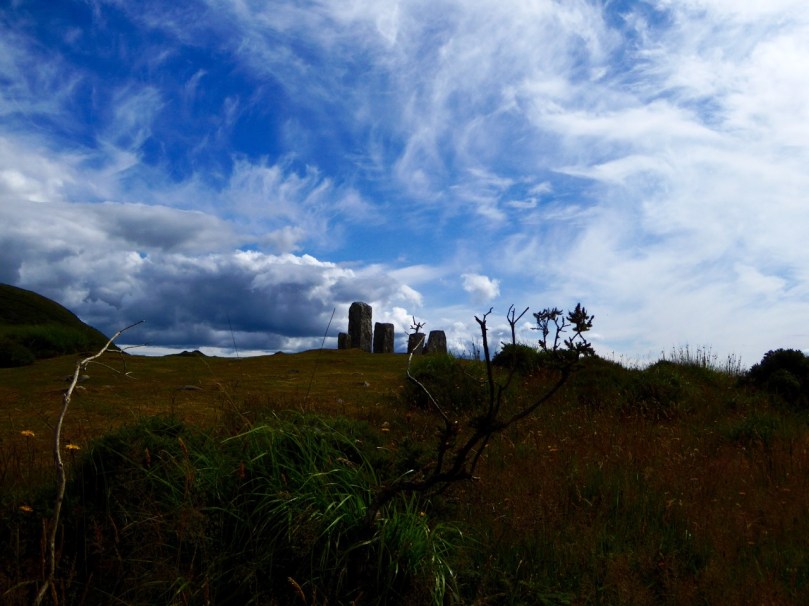
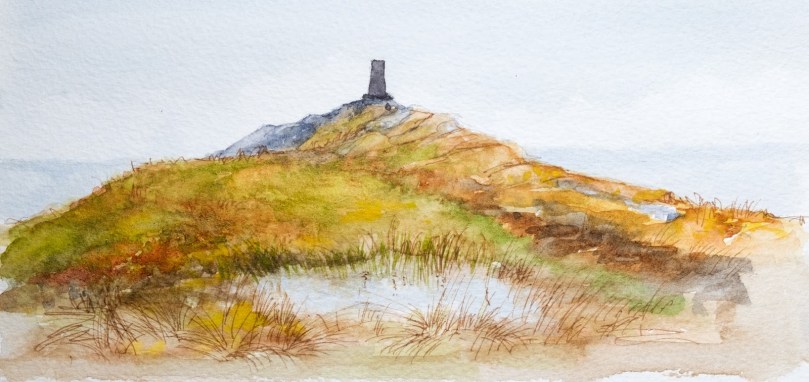
The popular Atlas Obscura defines itself as the definitive guide to off-the-beaten-track and little known wondrous places. So we’ve captured that idea and, as our Christmas present to our readers, bring you our own carefully-curated, slightly eccentric, Roaringwater Journal Guide to West Cork’s Hidden Wonders. Robert’s selection is here. No well-know tourist spots for these posts! No car parks and visitor centres! You may need wellies for some, a good map for others, and, although all are accessible, some may require permission.Each place I recommend will link to a blog post with more information. As an example, Sailor’s Hill, just outside Schull (above) is an easy walk and look what you get at the top! 

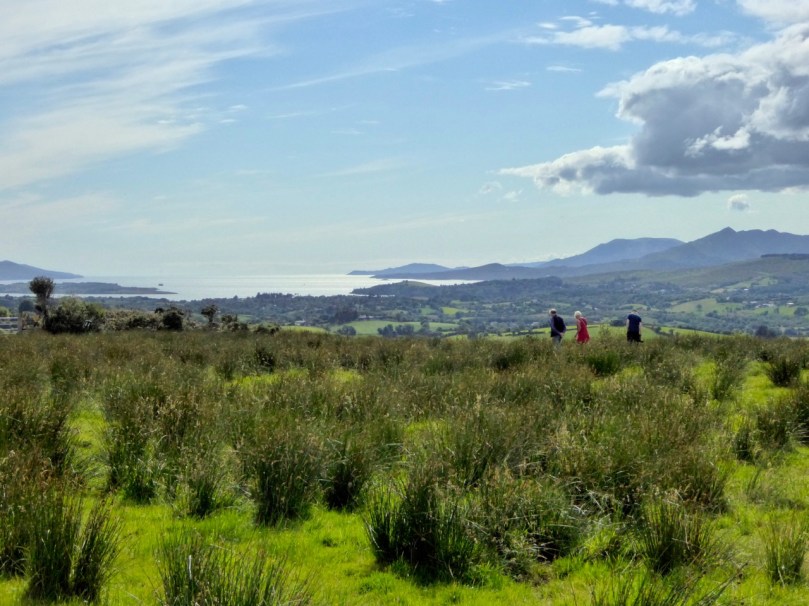
This is the view from Brow Head, looking back towards Crookhaven, and Mount Gabriel in the distance. Brow Head is much less visited than Mizen Head, but just as spectacular

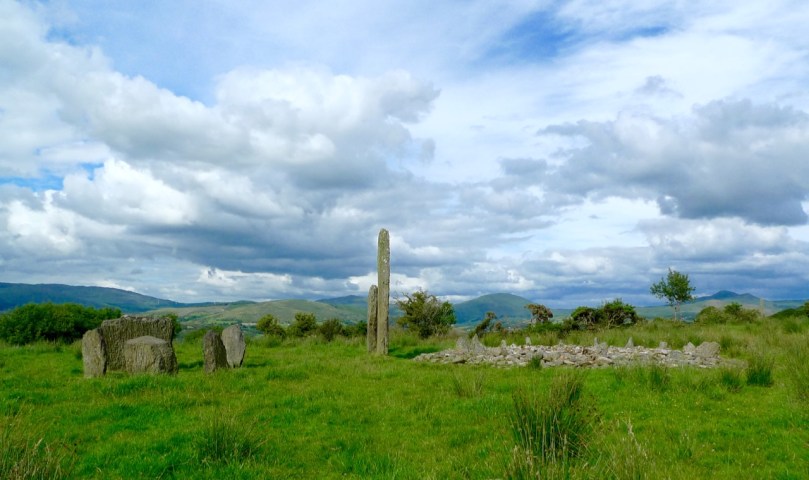
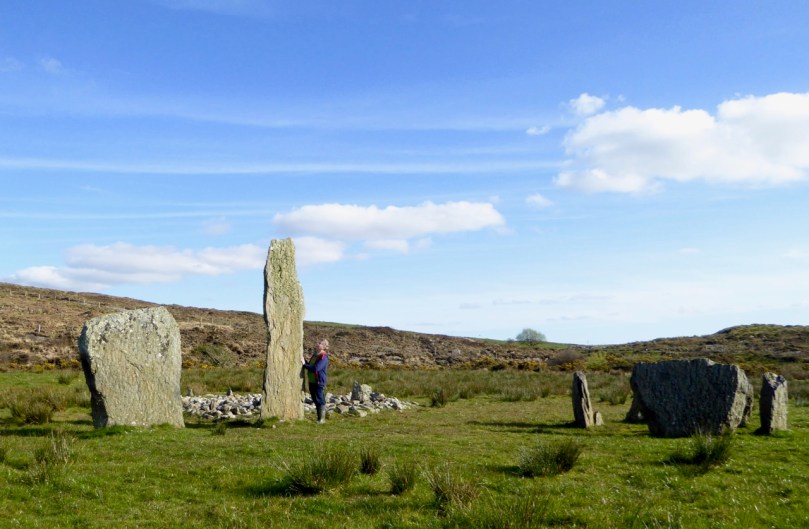
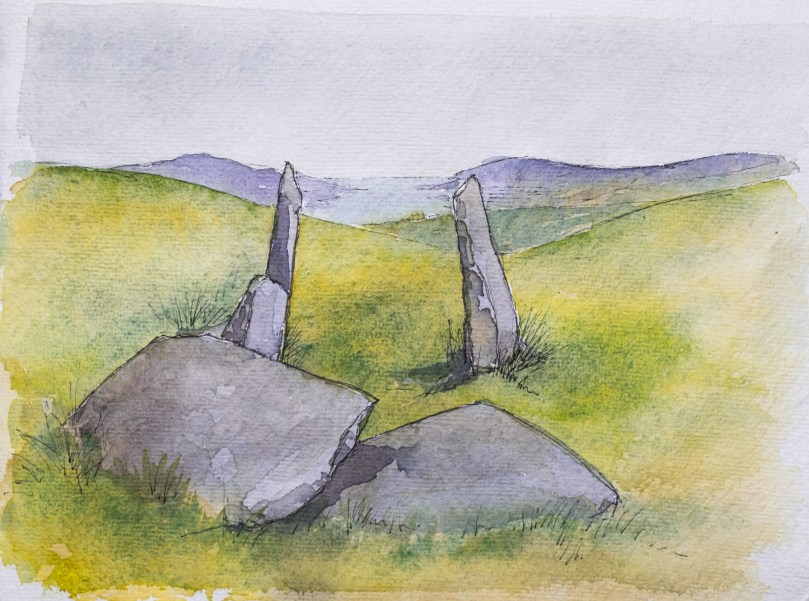
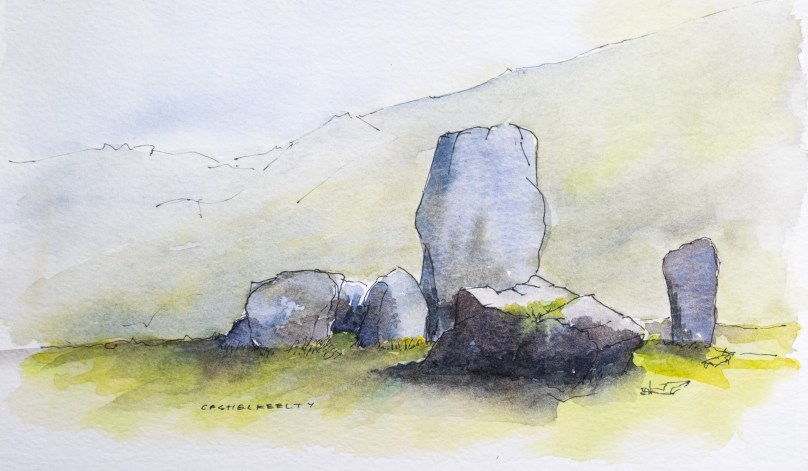
I’m going to start with some archaeology and a couple of spectacular sites. The first is the Kealkill Stone Circle – but this isn’t just a stone circle, it’s a complex of monuments that includes a five-stone circle, a radial cairn (very rare in this part of the world) and two enormous standing stones. The views are immense in every direction, and the site is easy to find.

We all know about Drombeg – and we love it when the sun goes down at the midwinter solstice, and even when it doesn’t. But fewer people know about another stone circle, equally spectacular, with a spring equinox orientation. It’s called Bohonagh and it’s quite a complex. First of all, there’s a boulder burial, with quartz support stones and cupmarks on the boulder. Then there’s a cupmarked stone, partly hidden in the brambles between the boulder burial and the stone circle. Finally, there’s the circle itself, almost complete, with views in all directions.
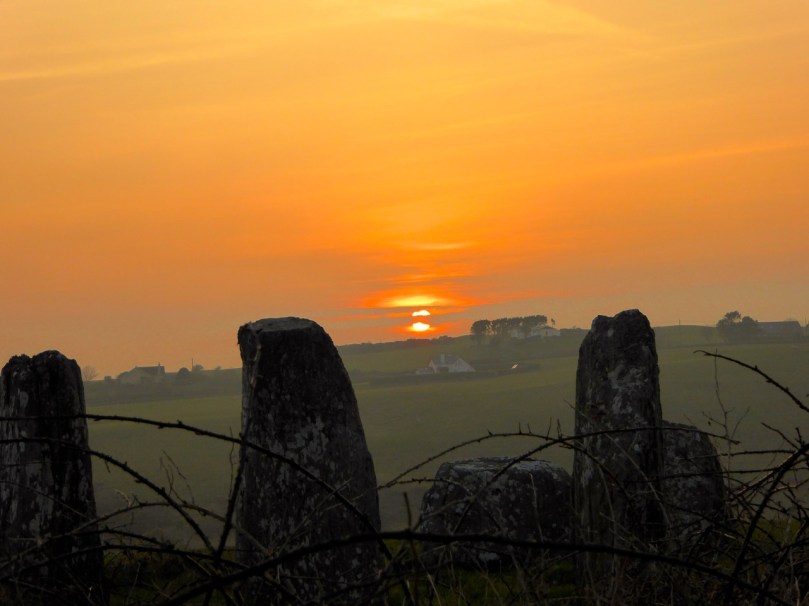
Equinox sunset at Bohonagh

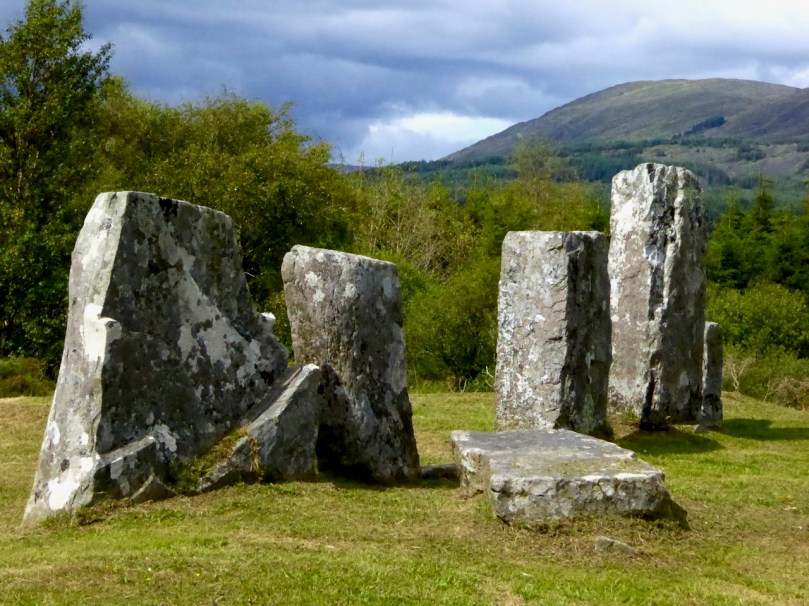
We were lucky to have a session there one equinox, and another one with Ken Williams of Shadows and Stone. For access, park just off the main road, across from the salmon coloured house 4.5km east of Rosscarbery and walk up the farm road to the barns and from there to the top of the hill. This is a working farm – please close all gates and be respectful of animals!

Maughnasilly Stone Row broods on the hilltop

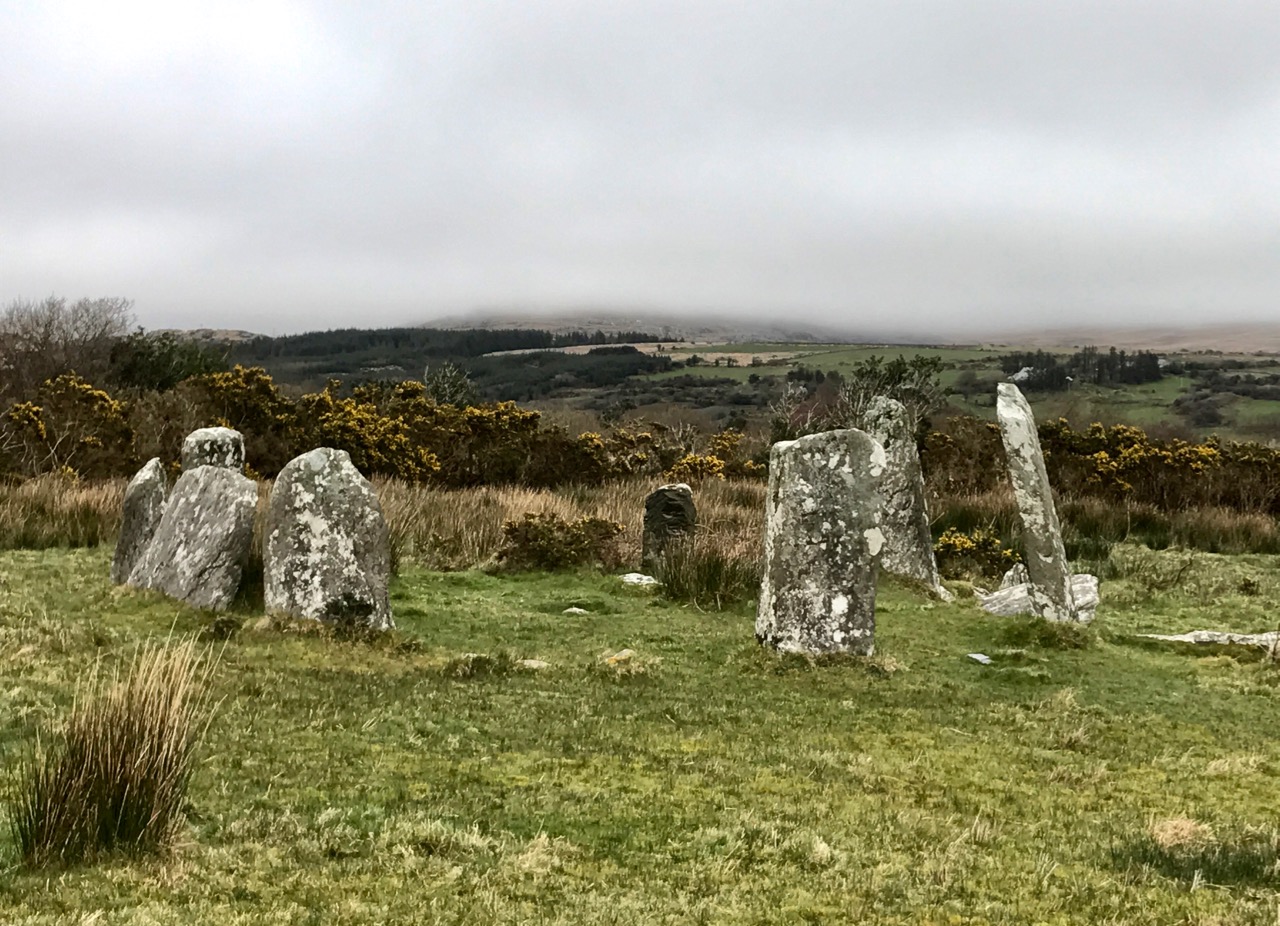
A stone row to round out the archaeology sites – this one is at Maughnasilly and I chose it because it’s been excavated, so there’s an informative sign, access is easy and it’s a beautiful, atmospheric site, overlooking a small lake. The row has been calculated to have both lunar and solar alignments.

And from the ground…

A couple of churches now, beginning with the Church of Ireland Church of the Ascension in Timoleague. This is one of those places that is dripping with unexpected stories. As soon as you go through the door your jaw will drop – the whole church, floor to ceiling, is covered in mosaic, partly paid for by an Indian Maharajah. Read the story here and here – and look carefully at the stained glass windows, some of them are among the oldest stained glass we have in Ireland. The key used to be at the grocery store on the main street, but I’m not sure where it is now, so you may have to ask around. Let us know if you find out.
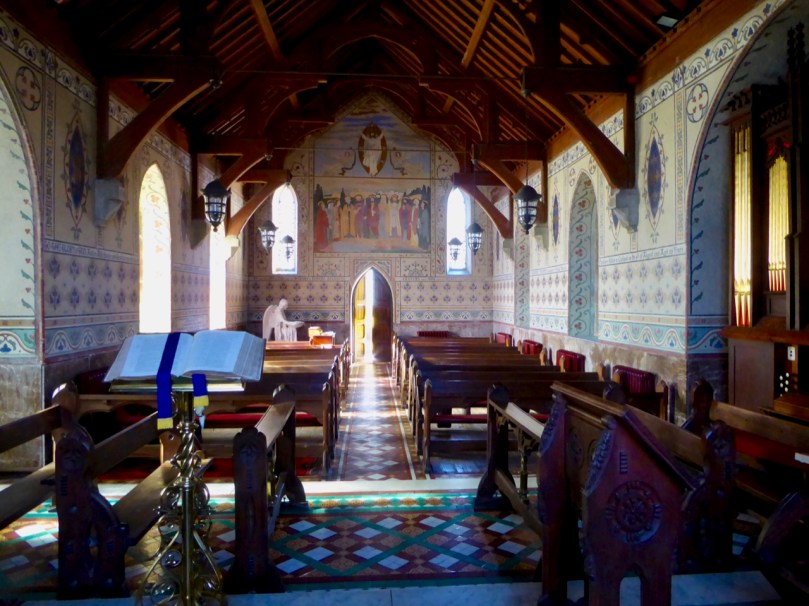
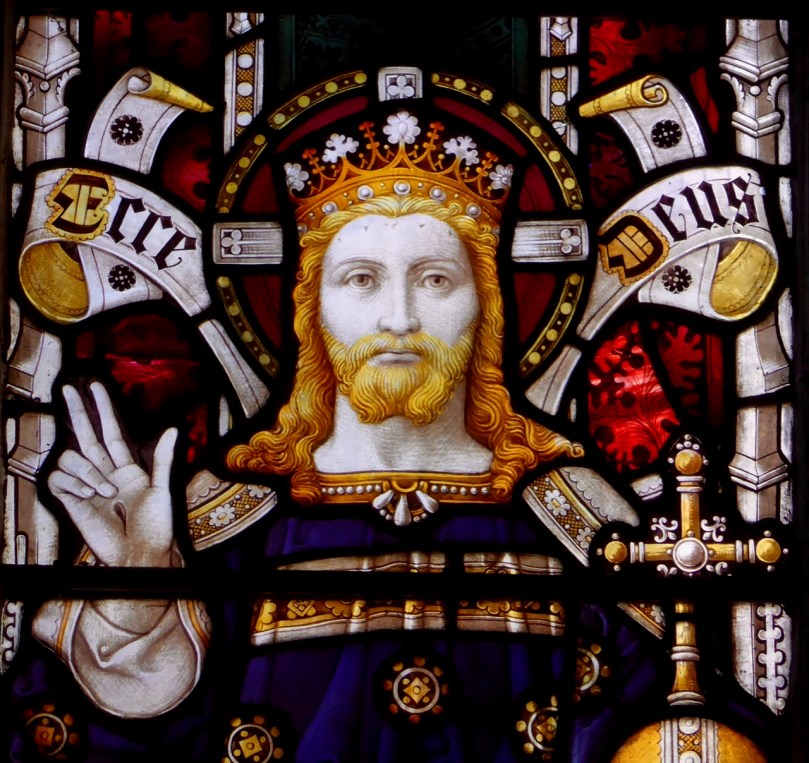
The interior of the church, and one of the beautiful Clayton and Bell windows

You may wonder at my next choice – it’s not everyone’s cup of tea – but the modernist church in Drimoleague is the work of Frank Murphy, the architect hailed as Cork’s ‘Unsung Hero of Modernism’.
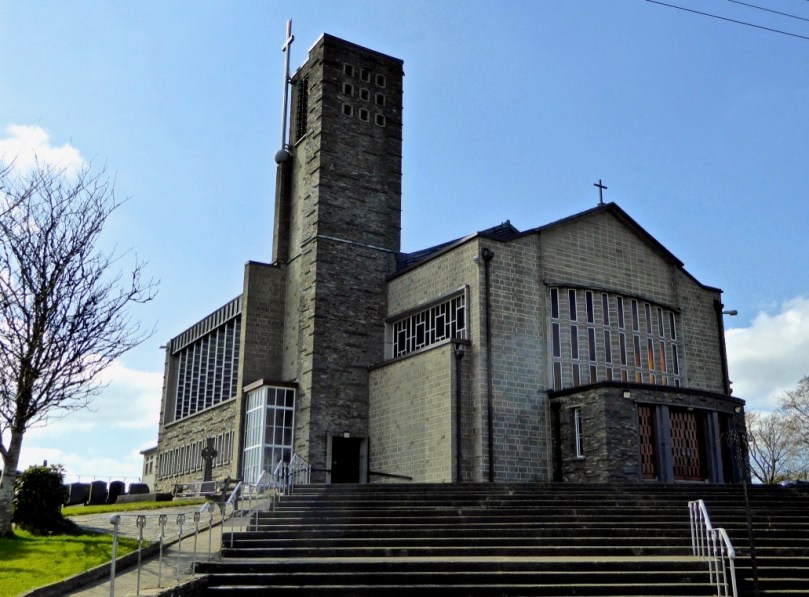
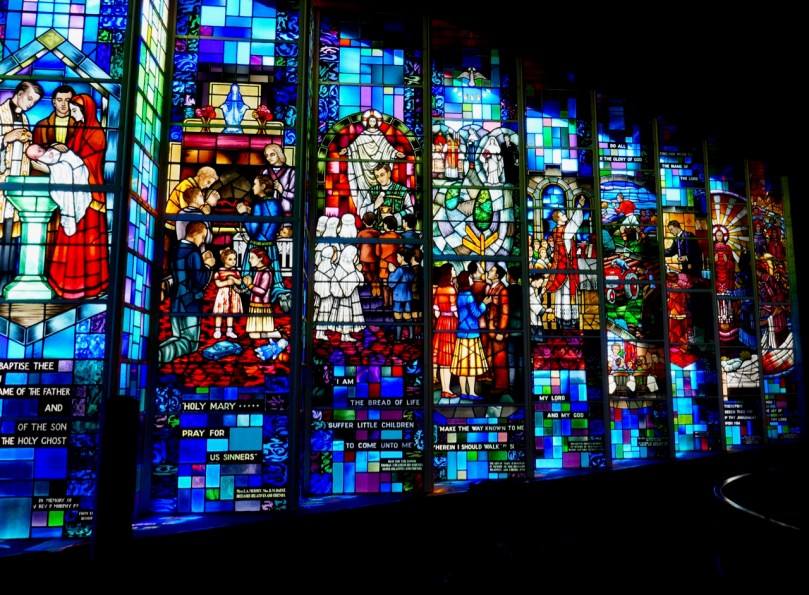
I love the spare minimalist space, very rare in West Cork, but it’s the stained glass windows that drew my attention. It’s not that they are particularly beautiful or skilfully done: they’re by the Harry Clarke Studios long after Harry himself had died. It’s that they fascinate me as a social document – they are, in fact, a prescription for how to live your life as an Irish Catholic in the 1950s. As such, they will resonate with anyone of my vintage. Research by the brilliant young scholar, Richard Butler, has revealed that the design was practically dictated by Archbishop Lucey, still a name to invoke an image of the all-powerful churchman of the 20th century.
And a final church, but this one strictly for the windows. (No – not St Barrahanes in Castletownsend for the Harry Clarkes – everyone knows about them already, and this is a selection of lesser-known wonders.) Do NOT go through Eyeries, on the Beara Peninsula, without stepping into the little church of St Kentigern. Here is where we were first introduced to the work of the stained glass artist, George Walsh.
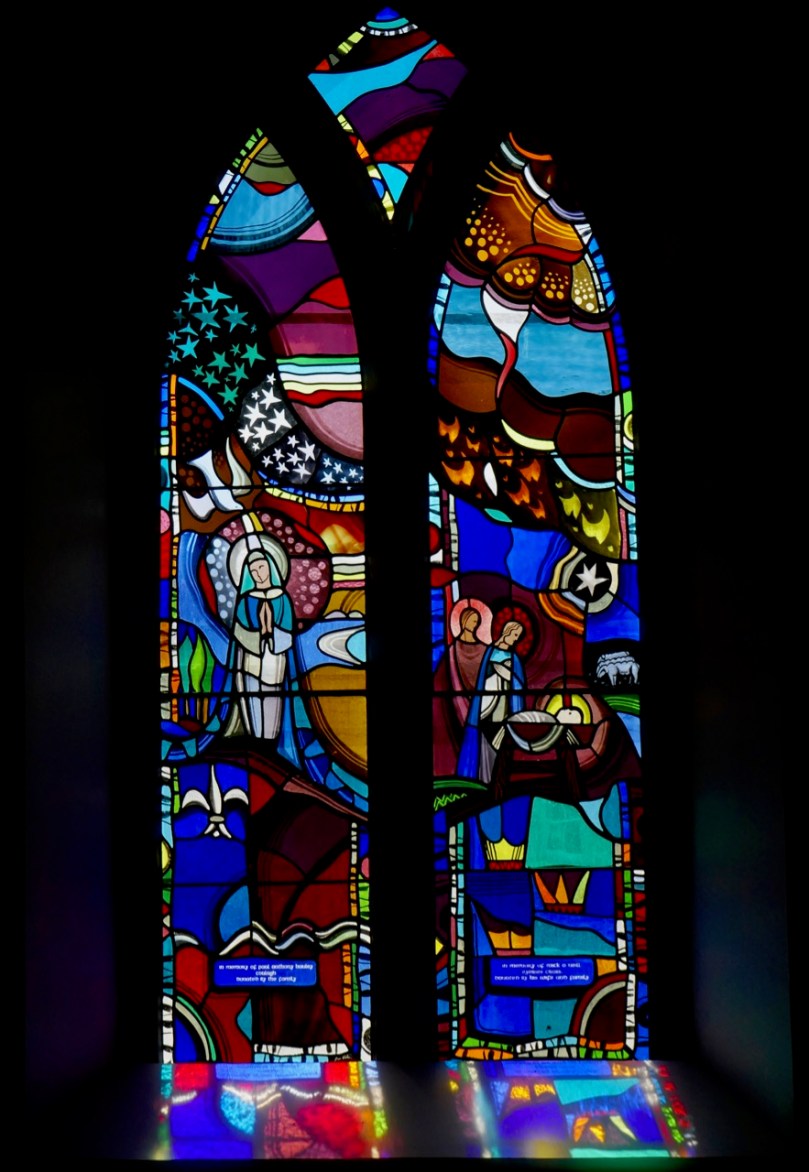
The Annunciation and Nativity window

When Robert wrote his original post, we couldn’t find out much information on George Walsh, but now he has become a friend and I have written about his work for the next issue of the Irish Arts Review (due out in March, 2019) and spent many happy hours photographing his windows and his artwork around Ireland. It’s bold, graphic, modern and incredibly colourful, and the windows in Eyeries, along with the religious themes, tell the story of Ireland and the Beara through time.
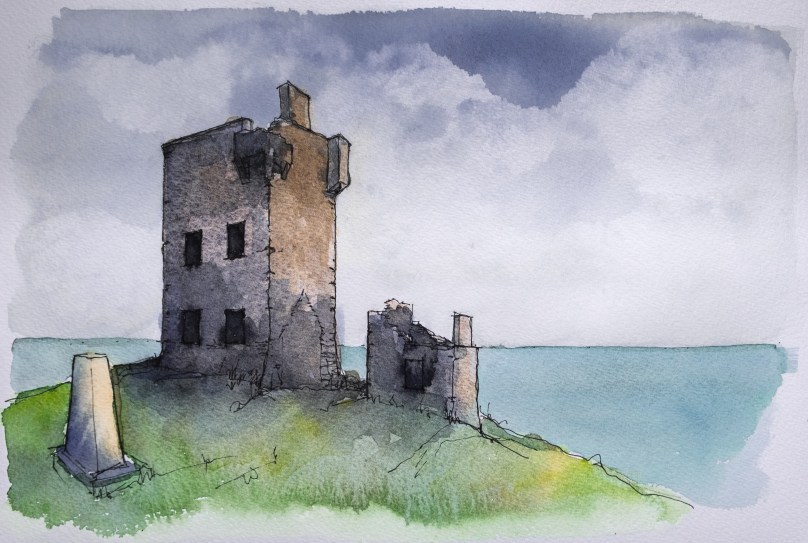
Some places to visit now for a good walk or a swim. First, one of my favourite walks is to hike up to Brow Head, at the end of the Mizen Peninsula (you can drive up too, but pray you don’t meet a tractor coming down) and then walk out to the end of the Head (see the second photo on the post for the view from the top of the road). Stop first to explore the ruins of the old Marconi Station – there’s also a Napoleonic-era  signal station and a WW2 Lookout Post. Then wander through the heather and the low-growing gorse until you get to the part where the sea is crashing below, with vertiginous drops off either side. I will leave it to you how far you go from there!
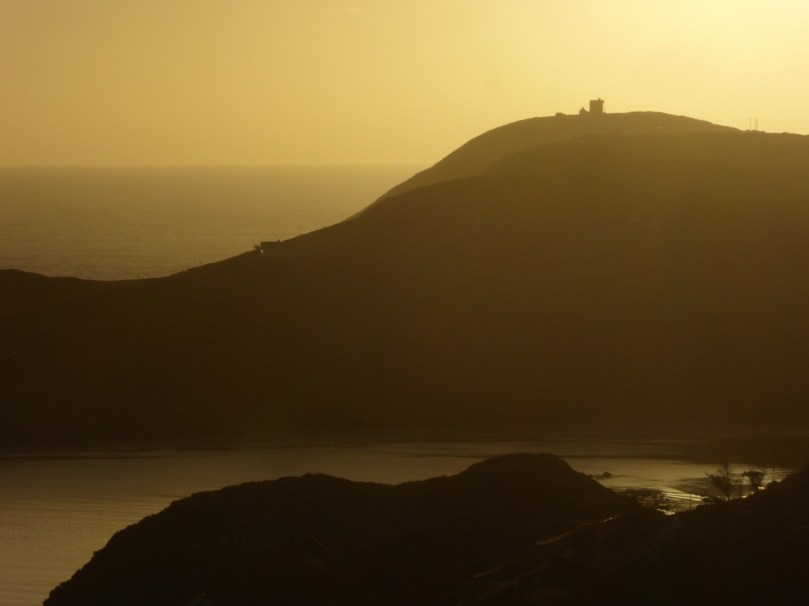
Brow Head showing the signal station and Marconi station silhouetted against the evening sky

Although Barley Cove is well known, Mizen locals love Ballyrisode Beach for a swim or a lounge in the sun. White sand, sheltered bays, and water warmed by running over the shallow bay. The final little beach holds a secret – a Bronze Age Fulacht Fia or Water-Boiling Site, that Robert and I recorded for National Monuments this summer. It was an exciting find, hiding in plain sight. The beach has an association with pirates too!

Ballyrisode Beach – yes, the water really is this colour. The three sided rectangular stone thing is the fulacht fia

The final choice for a walk is Queen Maev’s tomb, a short hike up from Vaughan’s Pass car park, up behind Bantry. For this photograph I am indebted to Peter Clarke, of the wonderful Hikelines blog. He and Amanda (with whom we have explored SO many holy wells)  were our companions that day. When you reach the top there is a small wedge-tomb, but this is one place where the journey is the real story, with the Mizen, the Sheep’s Head and the Beara all spread out before you.

Photograph © Peter Clarke

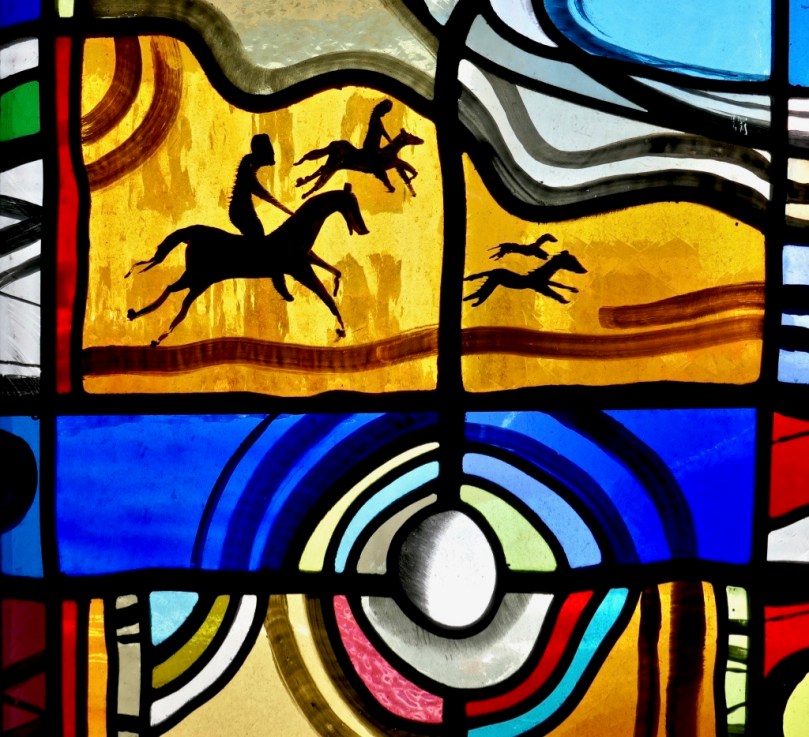
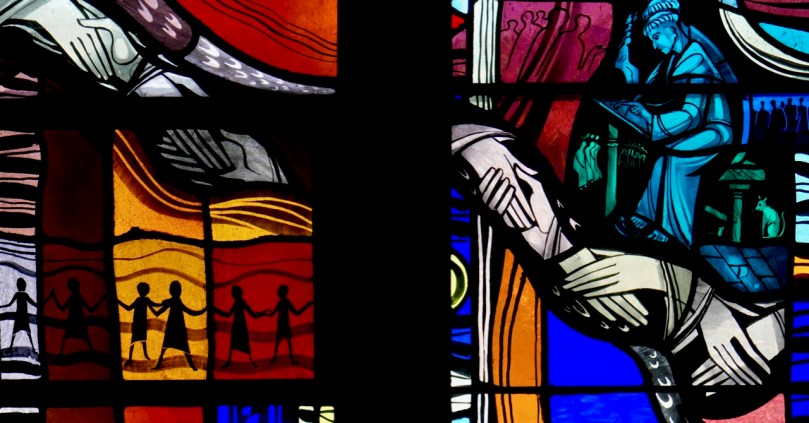
I leave you with a detail from the George Walsh windows in Eyeries, together with the poem the scene is based on, Pangur Bán, written in the 9th century by an Irish  monk labouring away in a scriptorium in Europe. Here is the poem read, at a memorial service for Seamus Heaney, first in the original Old Irish and then in Heaney’s translation.
Merry Christmas from us! If you live here, get out and about this year to some of our picks, and if you don’t, come see us soon!

Family-Friendly Archaeology Day in West Cork (Updated)

This is an update of a post originally published a while back. I’ve added a holy well (to finish your day off right) and some new photographs, and deleted some out-of-date information. I’ve also provided a list of informative posts about the monuments you’ll be seeing at the end.

West Cork is loaded with prehistoric monuments but many are on private land or inaccessible. So we’ve planned a day for you in which you can have a Grand Day Out and a tour through some of the best West Cork archaeology sites. Load the kids into the car, stick Discovery Map 85 in your pocket (or print out the one we’ve provided in this post), bring boots or wellies, and off you go! By the way, we advise leaving the dog at home when on a field trip like this, since you will be visiting private farm land which will likely have cattle on it.

Our starting point is Ballylicky – here’s your opportunity to pick up a picnic at the marvellous Manning’s Emporium, while you fuel up with a pre-trip latte. Ready now? First stop is Mill Little.

1 Mill Little Complex

From Ballylicky, head west along the scenic seaside road towards Glengarriff for a couple of kilometres and take the first turn right at Snave. You’ll be following the Coomhola Rive as it tumbles down between high hills. Once you’ve crossed Snave Bridge continue for a about a km, take the second left and then immediately right. One km on, take a left and then the next right. Park along here and the Mill Little complex is in a field on the left.

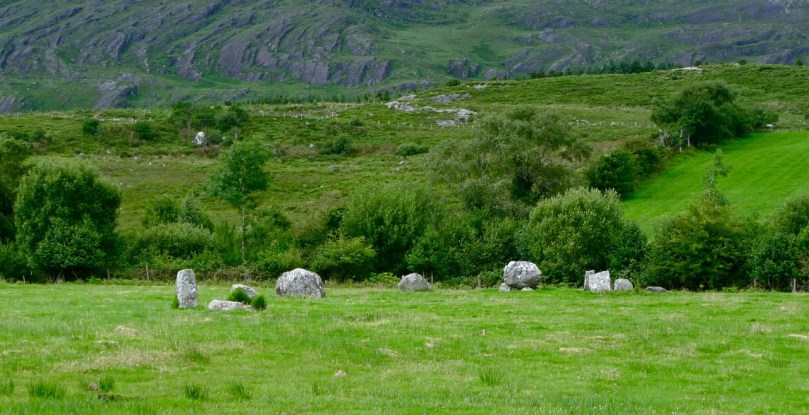
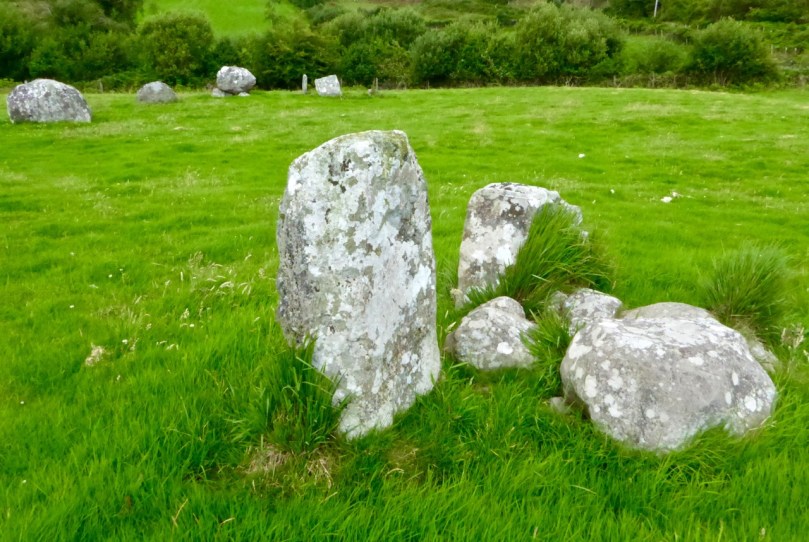
This is a complicated site, comprising a stone pair (don’t be confused by the other stones around the pair, which have been piled here), three boulder burials, and a small five-stone circle. All these monuments probably date from around the same time – the Bronze Age, about three to four thousand years ago. A particular feature of West Cork archaeology is that boulder burials, standing stones (single, in pairs, or in rows) and stone circles are often found together. Stone circles and stone rows are oriented towards significant solar events, such as the rising solstice sun or the setting sun at an equinox. In the Mill Little stone circle the alignment over the recumbent is NE/SW. At a site like this, it is possible that all the features formed a large observational arena, with the stone row, boulder burial and stone circle providing multiple alignment possibilities and marking both solar and lunar events.

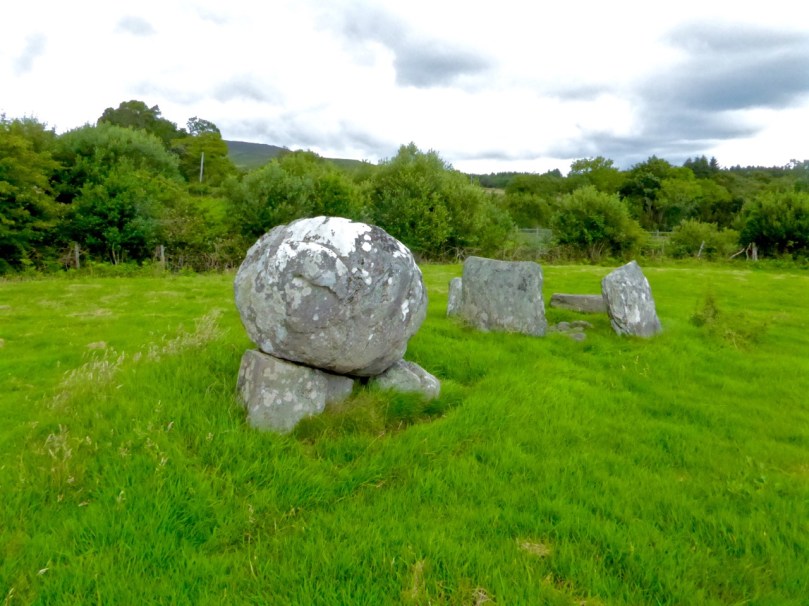
The boulder burial nearest the stone circle is the most classic in appearance – a large glacial erratic sitting on top of three support stones. Excavations at boulder burials in West Cork, however, haven’t really yielded evidence of actual burials – perhaps the term is a misnomer!

2 Carriganass Castle

Retrace your steps back towards Ballylicky and take the road to Kealkill – or try an overland route using the map. At Kealkill take the last fork signposted to Gougane Barra and you will see Carriganass Castle almost right away.

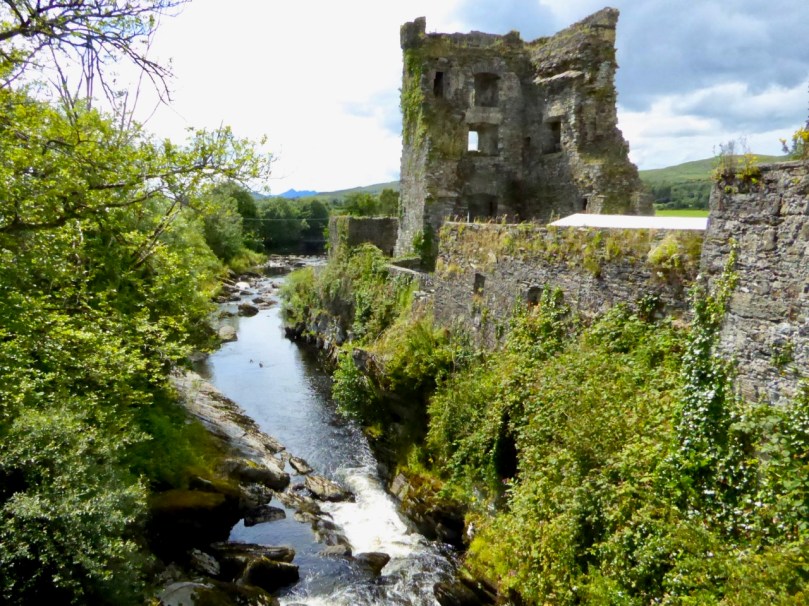
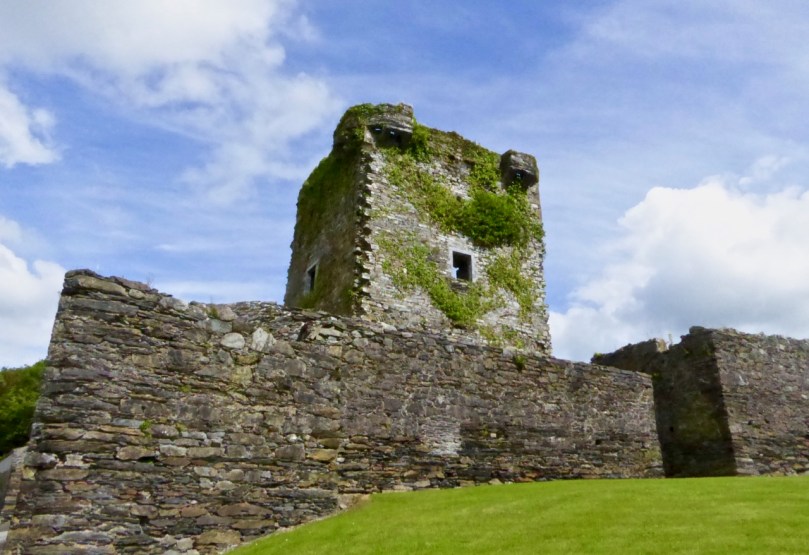
Carriganass is an excellent example of the medieval tower house – take a look at the posts linked below (at the end) for more about these structures in West Cork. There’s easy parking around the back and lots of explanatory signs around the castle. This is a good place for a picnic, or you can wait until after you’ve been to Maughanasilly, since you come back this way. If it’s a hot day, such as we’re experiencing right now in West Cork, the kids will enjoy a dip in the river here.

3 Maughanasilly Stone Row

Continue past the back of the castle. At the first junction take the left fork and continue until you see a small lake on your left. Shortly after you will come to a cross roads. Turn right and park – the stone row is in the field on your right.

This is a good example of a multiple stone row: it occupies a very dramatic setting on a knoll overlooking the lake. There’s a helpful explanatory sign.. Note that, instead of being straight, the stones form a slight arc. This is deliberate, as is the placement of the stone lying flat on the ground According to one expert, this stone is placed so that anyone walking up to it and standing with toes touching its edge is looking straight at the equinox. This stone row also appears to have been an important one for lunar observations. It takes the moon over 18 years to complete its cycle and from this site observations of the lunar maximums (the most extreme northerly and southerly moonrises) were likely made.

Ponder on the sophistication of our Bronze-Age ancestors. Much of the knowledge they built up so that they could keep track of time and seasons had to be re-learned by later people.

4 Kealkill Stone Circle

Back you go to Carriganass (picnic now, if you haven’t done so already) and on to the village of Kealkill – a pretty and well-kept village (and home to a famous St. Patrick’s Day parade). The stone circle is signposted from the village – just follow the steep and winding road that runs up from the church. After a sharp bend to the right, take the first left turn. There’s enough room to park at a small pull-out. The walk across the field to the circle is often muddy and squelchy so make sure to wear your boots here.

This is yet another complicated site. There is a standing stone pair, a five-stone circle and a radial cairn. But perhaps the first thing you will notice is the spectacular view. From this spot you can see all the way down the spine of both the Sheep’s Head and the Beara Peninsula to the South-West, and across the valley to the Shehy Range to the North and East.

One of the stone pair is over 4m high. But it’s broken – and may originally have stood over 6m high.  Imagine the difficulty of erecting this!

The radial cairn is a mysterious monument – nobody is quite sure of its function – and relatively rare. Once again, it is often found in conjunction with other monuments – stone alignments or stone circles. This one was excavated, but nothing conclusive was found to help determine its function. Note the small upright projecting stones that look like the face of a clock among the cairn stones.

5 Breeny More, Ring Fort, Boulder Burials and Stone Circle

This is almost directly south of the Kealkill circle and on the other side of the road. Go back down the hill towards the village of Kealkill, take the first left and it’s around the first bend. There’s a ring fort (Early Medieval farmhouse enclosure, perhaps 1000 years old) right inside the gate. This is a farm field so check there are  no animals or machinery working before venturing across and up it. There’s a multiple stone circle here, with four boulder burials within it. There’s not much left of the stone circle, but the portal stones and recumbent remain, so the alignment can be discerned. The boulder burials are laid out in square formation in the centre – a very unusual occurrence, since boulder burials are normally outside the circle.

The site is on a natural ridge, with similar panoramic views to the Kealkill Stone Circle. One writer has speculated that if trees were removed it would be possible to see the tall standing stone at Kealkill from this site.

6 Kealkill Holy Well

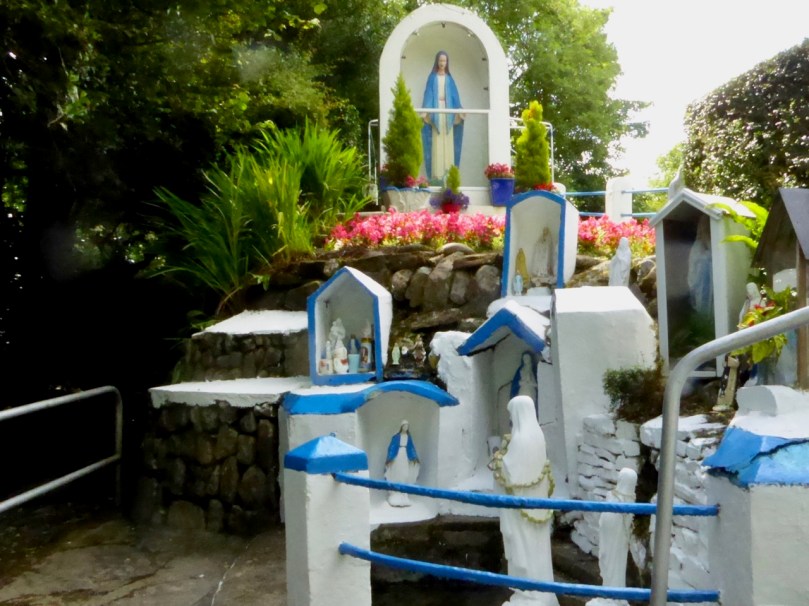
What’s a field trip without a holy well? This one is wonderful. Park at the graveyard about a km from Kealkill on the road towards Ballylicky and walk up through it, then follow the path across a small field to the Marian statue. The holy well is behind the shrine. Known locally as Tobairín Mhuire (Mary’s Little Well), mass was traditionally celebrated here on August 15th. If you’d like to learn more about holy wells, or visit some other West Cork examples, have a good browse around Holy Wells of Cork – it’s the go-to website on this subject (see list below).

Here’s more information about the kinds of monuments you’ll be visiting:

Stone Circles: Ancient Calendars

Standing Stones and Rows: Monoliths, Mysteries and Marriages

Holy Wells: Holy Wells of Cork

Boulder Burials: Boulder Burials: A Misnamed Monument?

Castles: Several posts about tower houses

We hope you enjoy your day! Let us know how you get on.

Rainforest Path

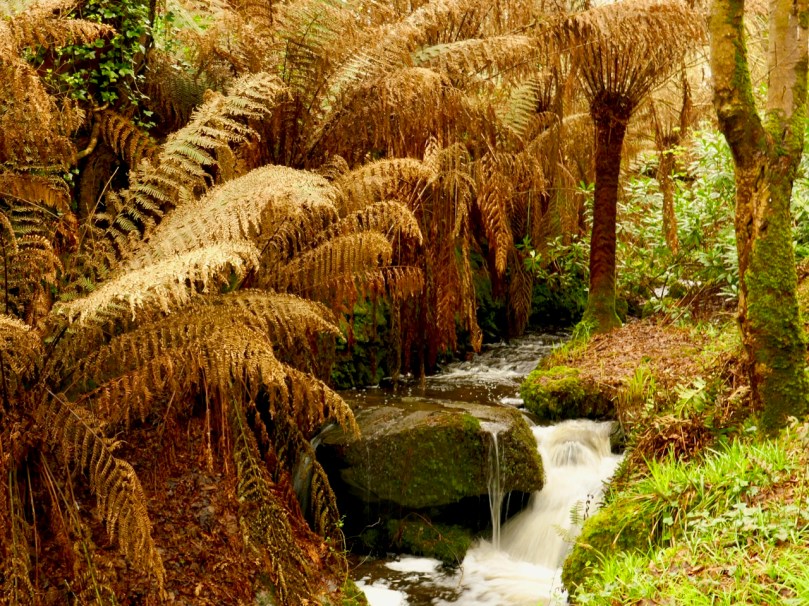
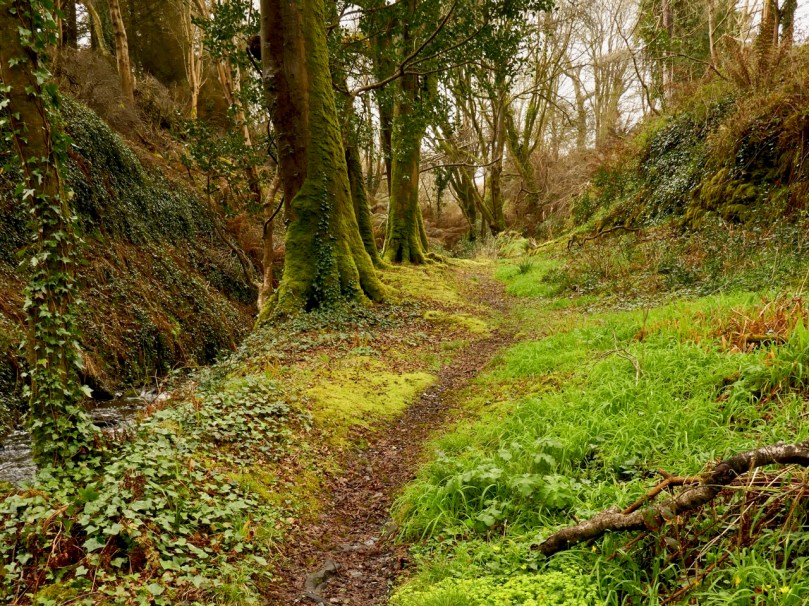
It’s a magical place, running up from an old graveyard by the sea, past a holy well, through a cool overhead canopy and along a tumbling stream. I’ve never met anyone else along the path, although I know the holy well is visited and the footbridge to it was repaired a couple of years ago.

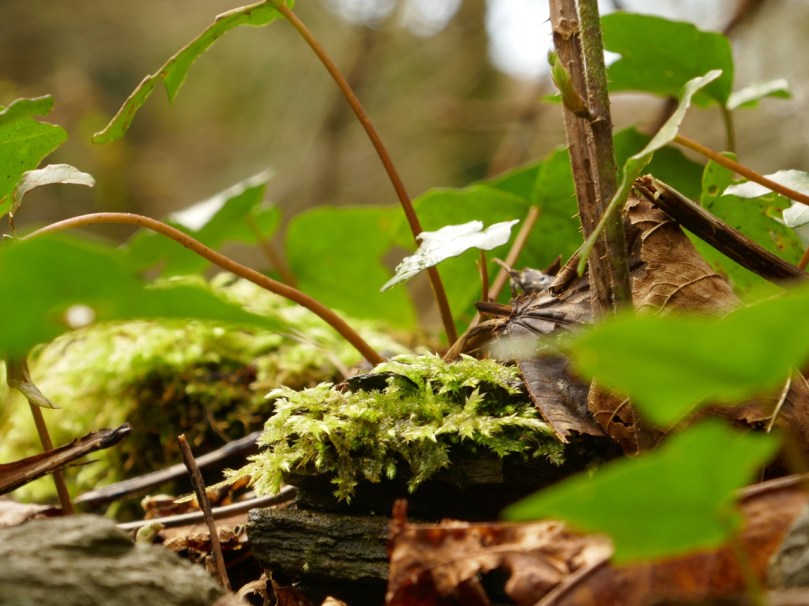
Moss and Navelwort on an old tree

There’s a big house at the top, with steps leading down to the path. Some of the more exotic plants are clearly imports, but mostly it seems that wildness has simply been encouraged, or not interfered with.

A mixture of native and imported ferns along the stream

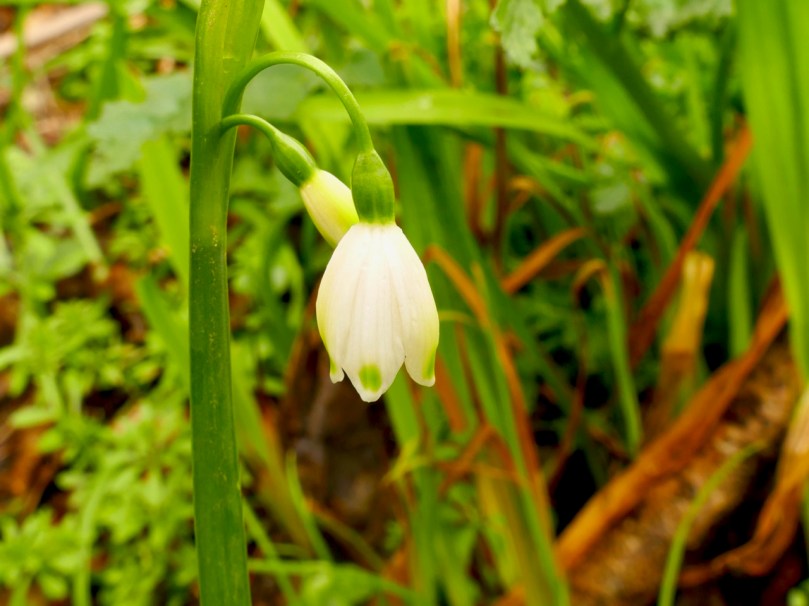
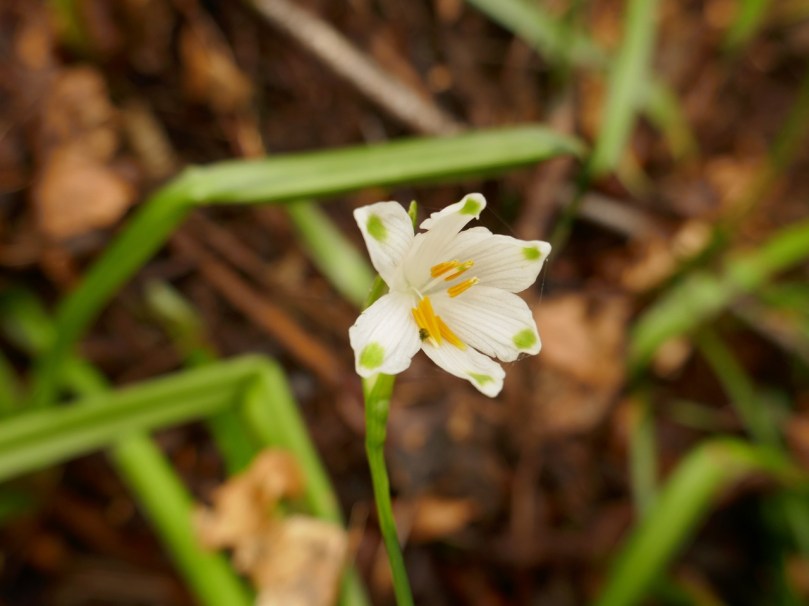
I went there twice this week. The first time was with my daughter-in-law, visiting from Canada, and we thought we spotted an unusual flower.  After a night of heavy rain I went there again on Friday equipped this time with my camera. Found it – and it looks as if it’s a Summer Snowflake, which is rare enough that I will report it to the National Biodiversity Date Centre. (Go on, it’s easy, you can do it too.)

The flower I was after – Summer Snowflake. Rare in Ireland but also widely cultivated – so is this a natural occurrence or part of somebody’s planting scheme?

What follows is a photo essay; my homage to a rainforest path on the brilliant morning after a rainy night. I will try to tell the story with my captions.

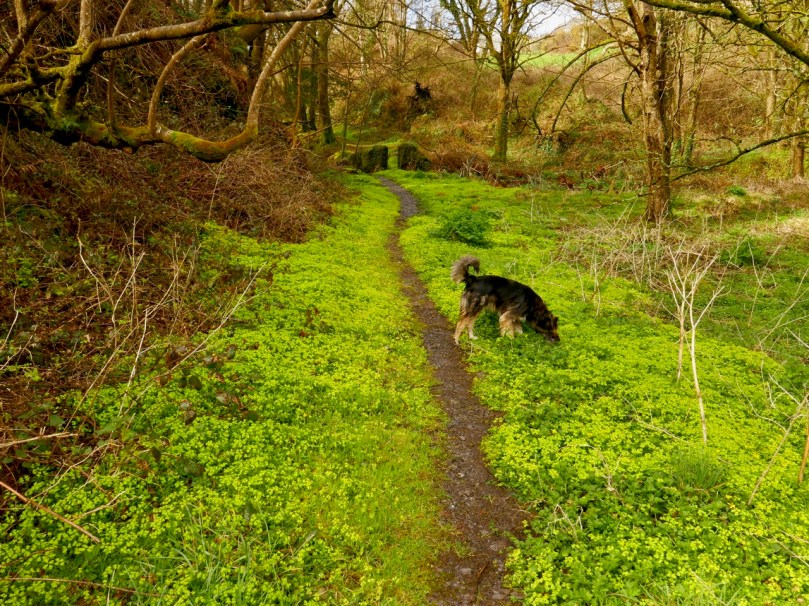
A friendly dog always accompanies me on this trail. The path is lined with Opposite-leaved Golden-saxifrage, providing a soft and bright green carpet. I also found it growing on old fallen logs

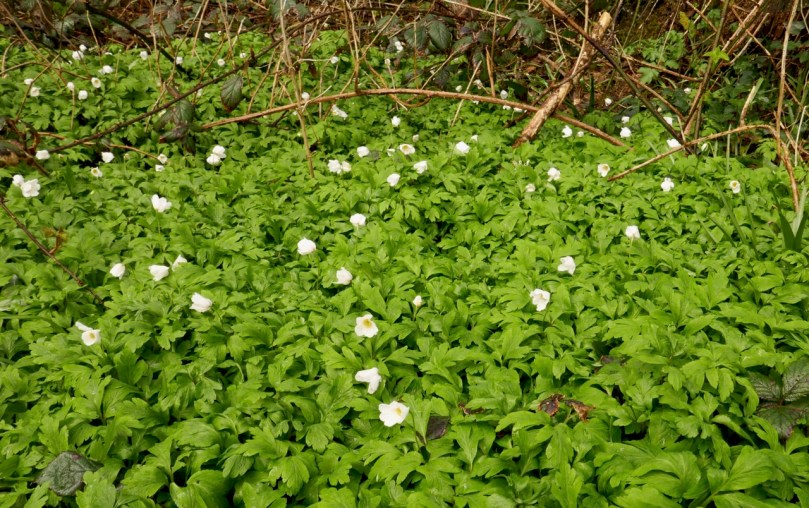
Lovely to find a large patch of Wood Anemone beside the stream

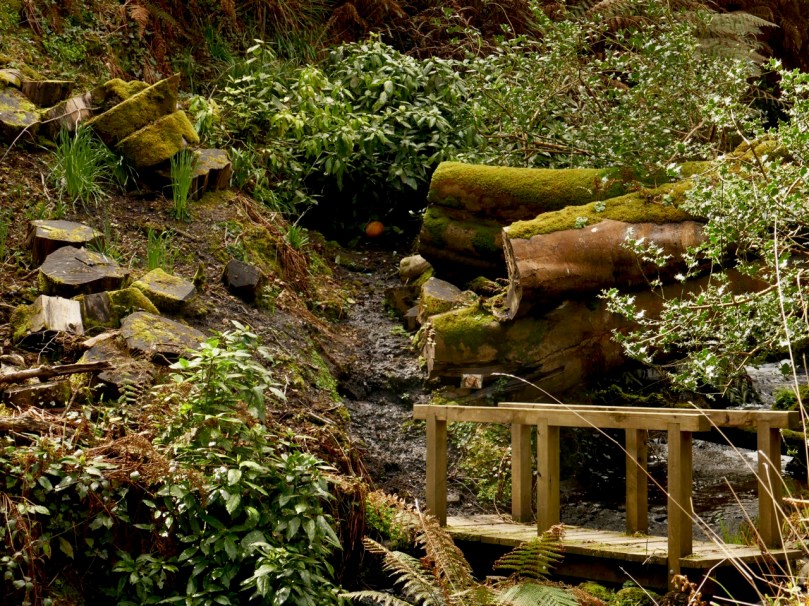
The Holy Well needs attention. The bridge has slipped and the path is too muddy to access the well. Read about this well in Amanda’s Holy Wells of Cork. The dog found her too.

This is Ivy-leaved Speedwell. The flowers are so tiny that it’s easy to miss, especially when it’s all mixed up with the Saxifrage

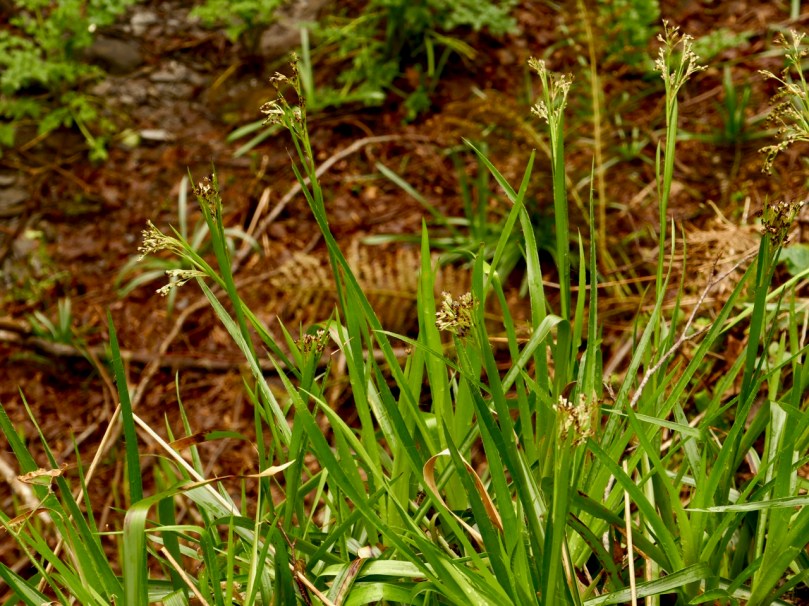
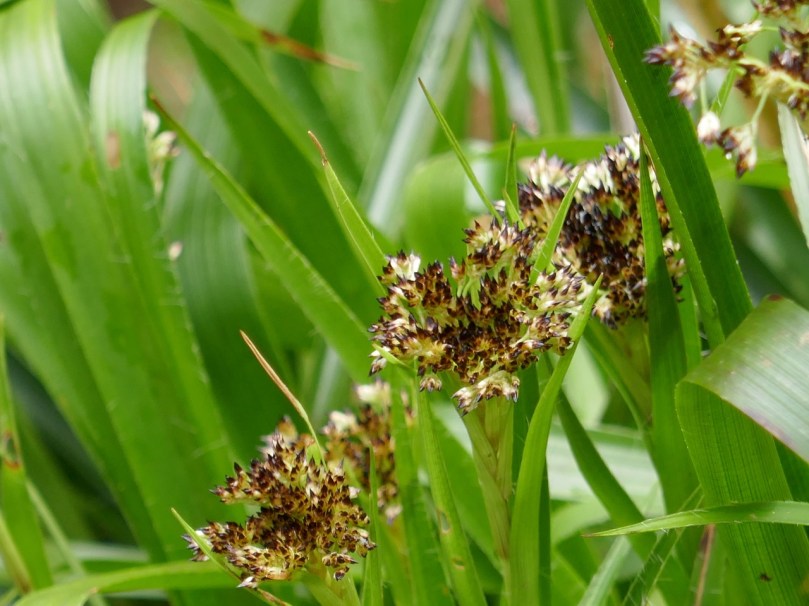
I was taken with this Greater Wood-rush growing along the bank

My first bluebells of the season

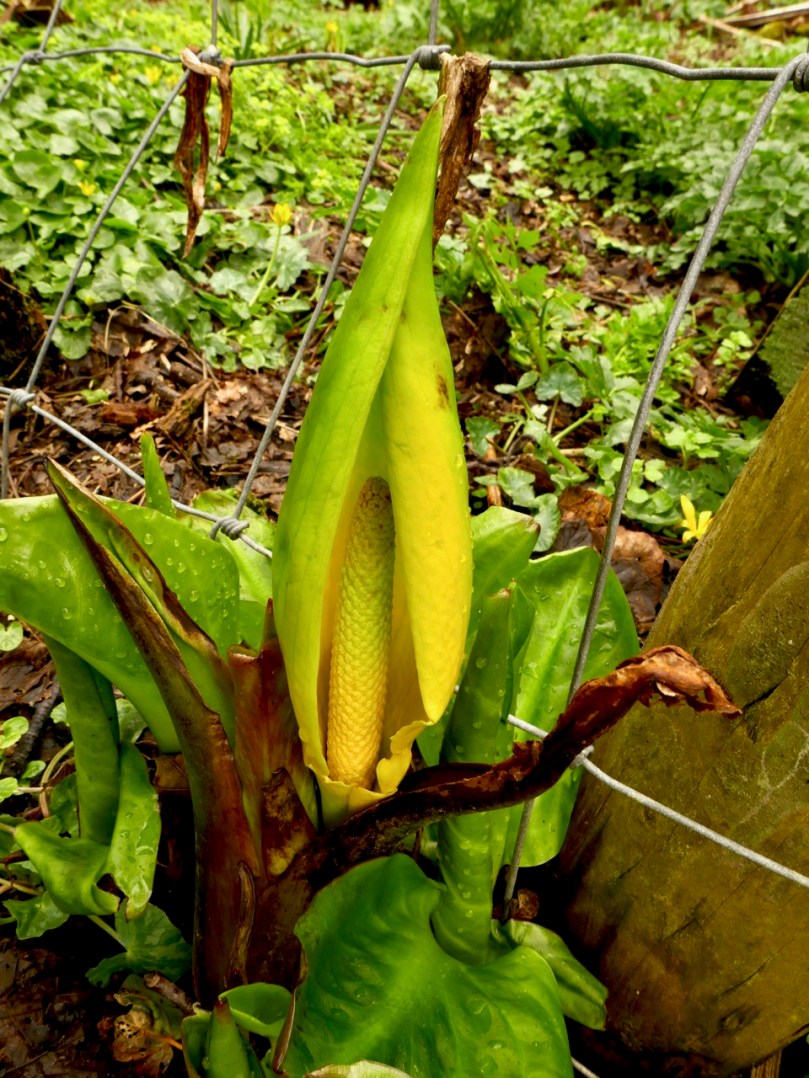
American Skunk-cabbage. Now classed as ‘potentially invasive’ in Ireland. I only saw one but I knew it immediately because they were so familiar to me in Canada. I’ll be reporting this too.

The path climbs upwards

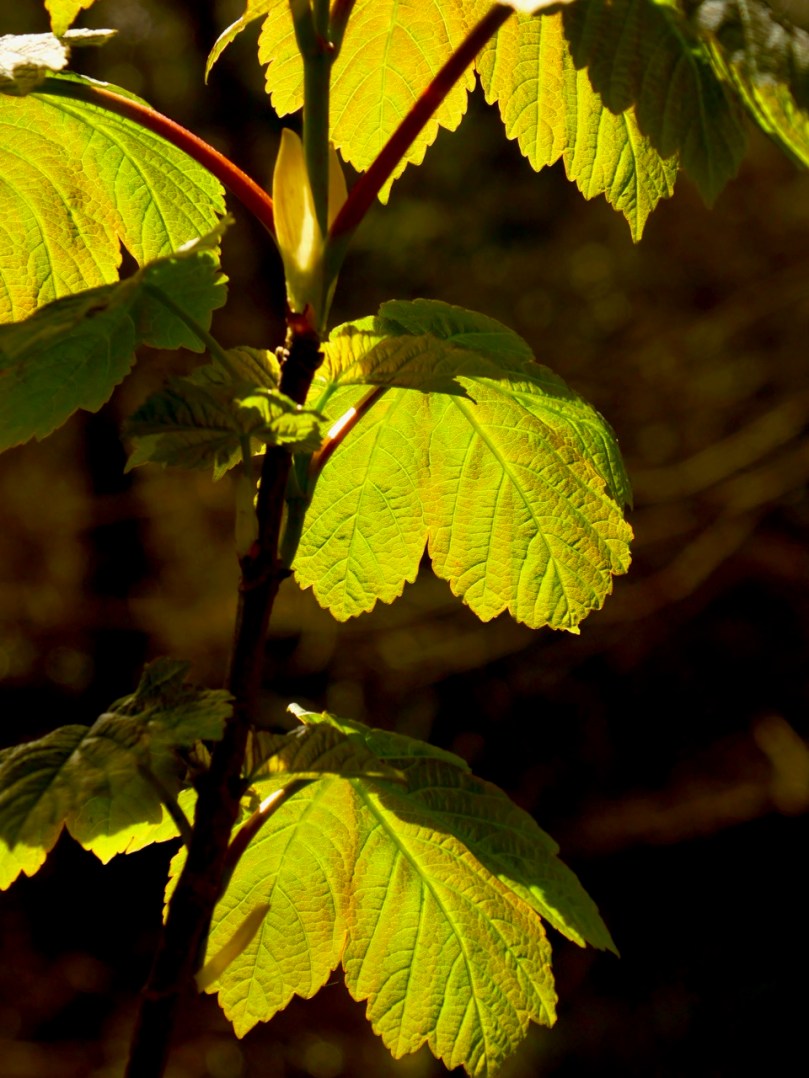
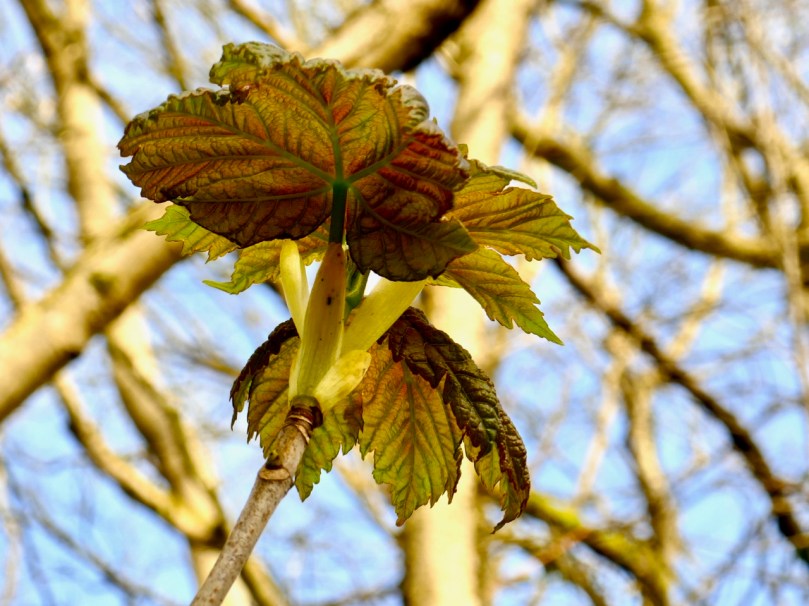
The sycamore are starting to bud and leaf. The intricacy of the underneath of the leaf!

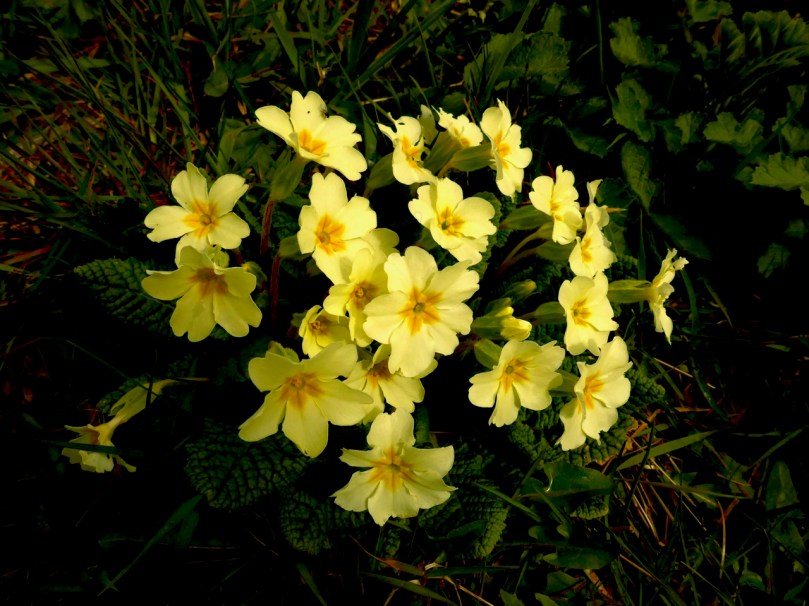
Everyone loves primroses

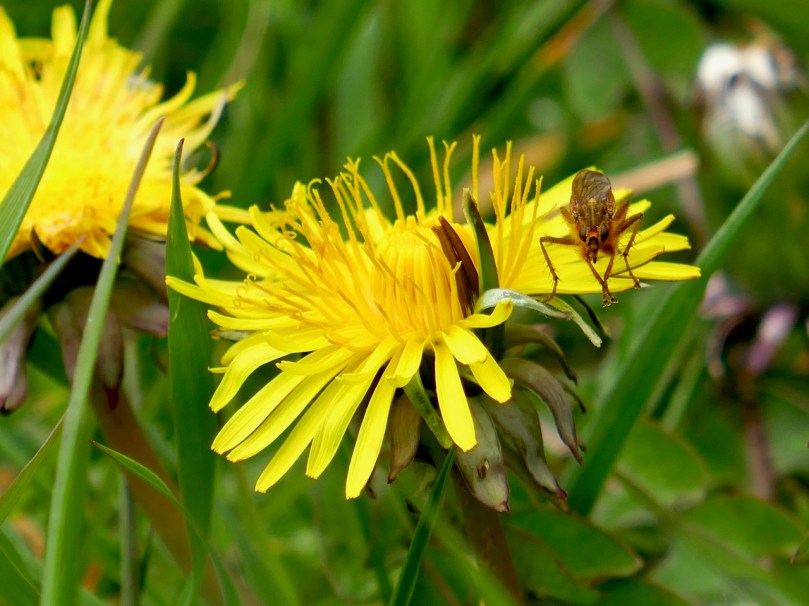
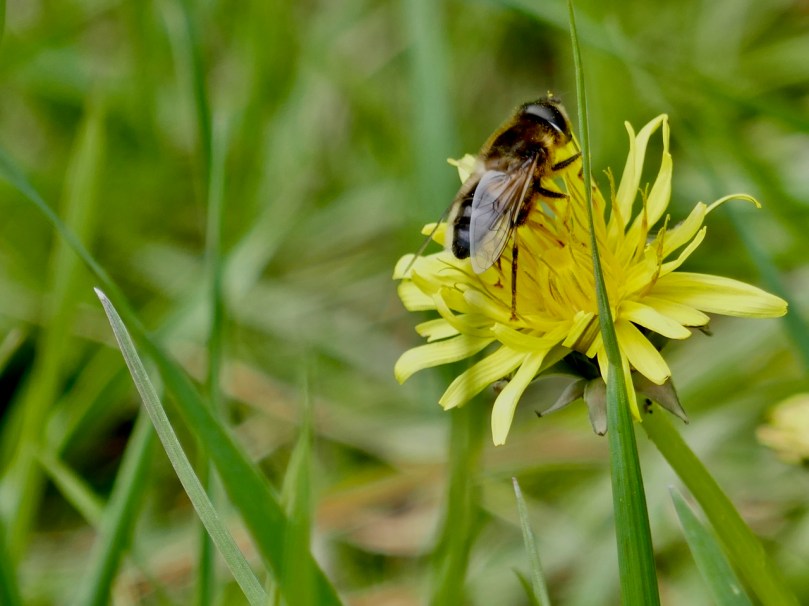
Lots of insects buzzing about the Dandelions – a hoverfly (top) and a bee

Take a walk in the woods and tell us what you’ve seen!
Pagan and Pure

How does a prehistoric calendar mark turn into a pagan feast and then into a Christian saint’s day? This year, the cross-quarter day is Feb 3, yesterday: that is, the day that lies half way between the winter solstice and the spring equinox. Together with the solstices and equinoxes, the cross-quarter days divide the year into eight ‘months’ and they also establish the dates for the ancient festival days of Imbolc ( Feb 2, spring), Bealtaine ( May 1, summer ), Lunasa (Aug 1, harvest), and Samhain (Oct 31, start of winter). In fact, the actual cross-quarters times don’t fall always on those dates but close enough so they have become established as the festival days.

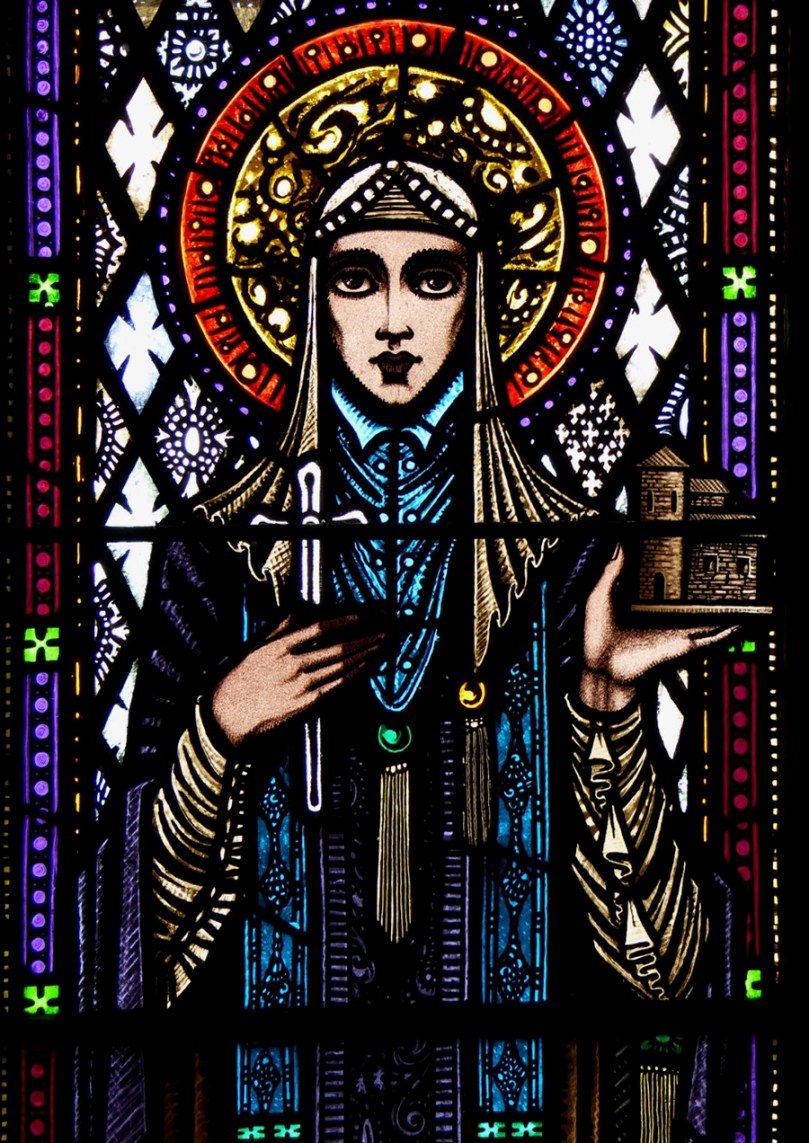
The Brigidine Centre in Kildare, run as retreat and contemplation house. The lead image in this post is a St Brigid stained glass window in Ballinrobe, Co Mayo

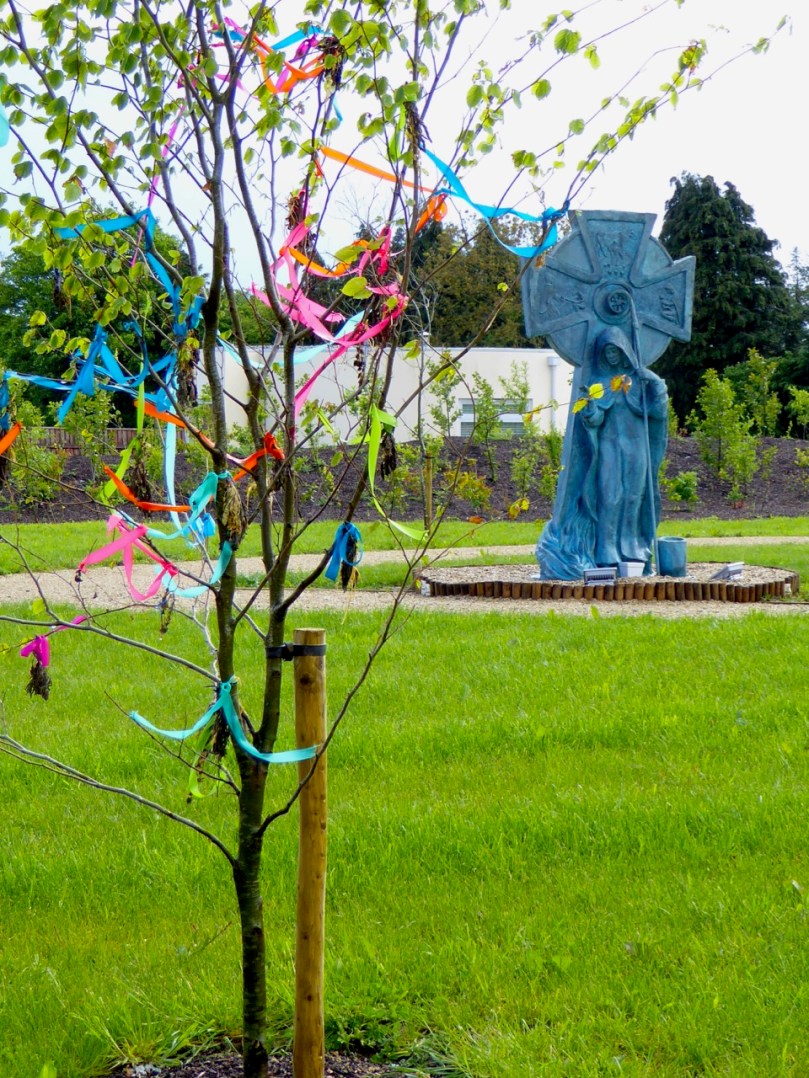
As so often happens when an ancient culture is Christianised, Imbolc became conflated with a saintly feast day, that of our own Saint Brigid, the female patron saint of Ireland. Brigid may have originally been a female deity, also called Brigid, or perhaps Danu. This is all controversial, of course – did the idea of the goddess or the idea of the saint come first, for example? Whatever the origins, the marking of the cross-quarter day turned into Imbolc the pagan festival, and finally into Saint Brigid’s Day, and all over the country we make St Brigid’s Crosses, leave a scarf out at night for her to bless, or, still, in Kerry, dress up as ‘Biddies’ and go from house to house, carrying a Brídeóg doll and singing and dancing in a ritual that must be as old as time.

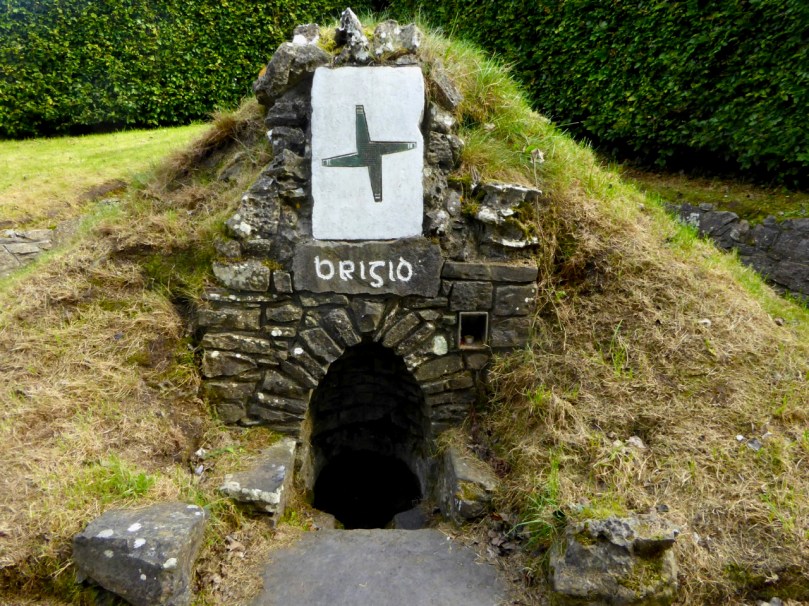
Another custom is to visit those holy wells that are associated with Brigid. Amanda has a special post on that – and is celebrating two years of holy well hunting!
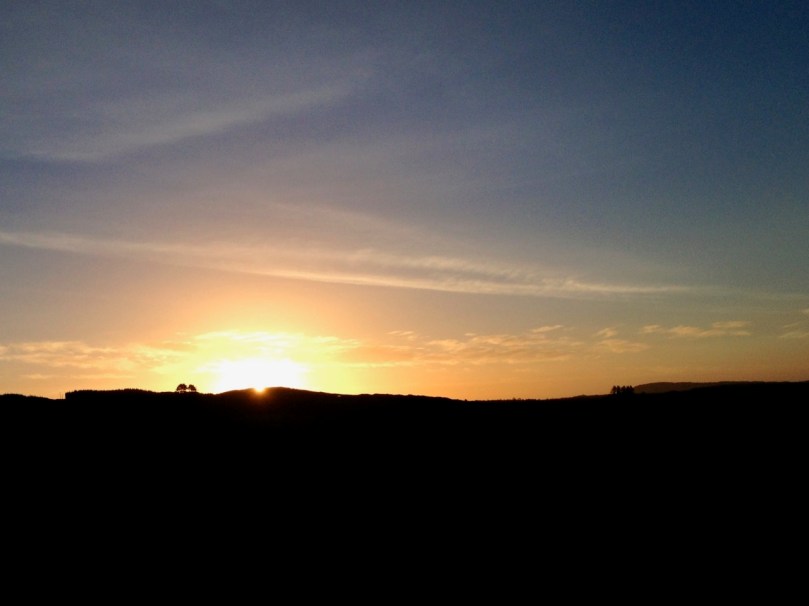
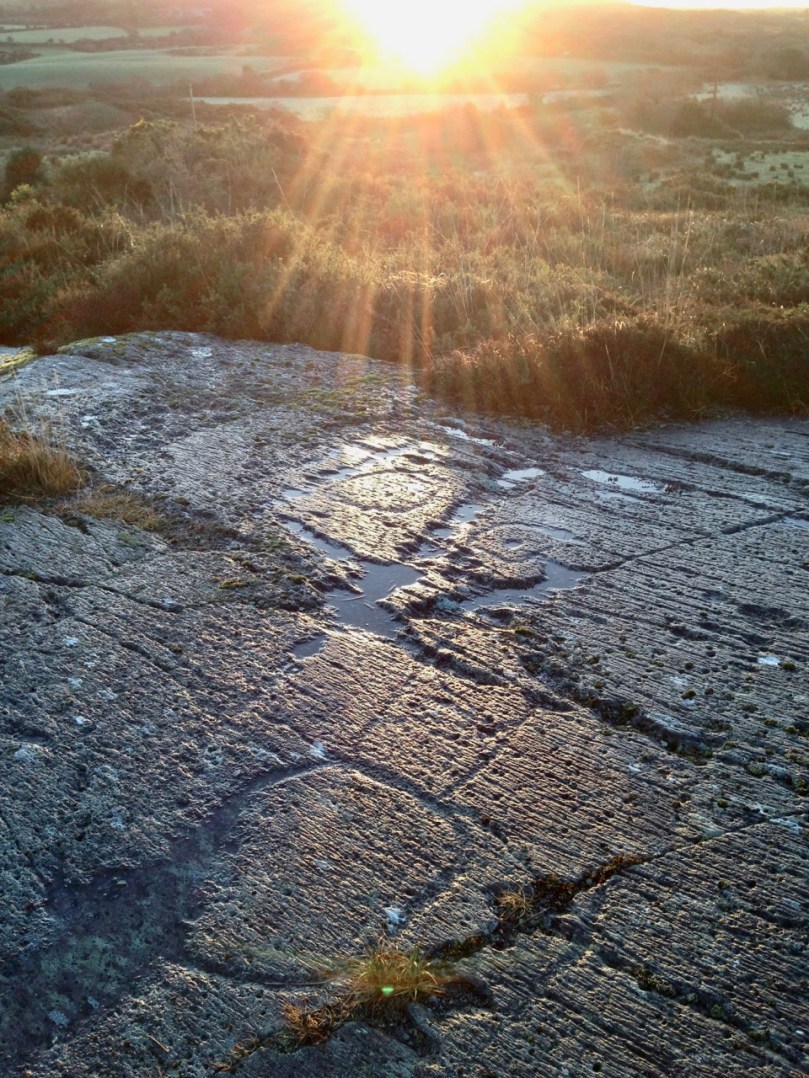
On one Imbolc that lives in our memories Robert and I arose early in the morning and went to watch the sun rise over a small prominence, standing on a piece of 5,000 year old rock art. Our account of that occasion is here, and below is the thrilling moment the sun rose, and lit up the ancient carvings.

Our friend, the poet Paul Ó Colmáin, from whom we take Irish lessons, used one of his own poems as a teachable moment this week, and I was struck by how perfectly it captures that sense of the turning year, the joy of sunrise, the deep embedding in our Irish souls of the ancient and the traditional and the embracing of both. I give the poem first in Irish. For those of you who do not speak it, you can take my word that the language is beautiful and contains nuances that his English version cannot capture, brilliant as it is.

Lá ‘le Bhríde

Dhúisigh an ghrian sinn

an mhaidin úd,

solas órga

ag stealladh

‘is ag scairdeach

isteach ar an urlár,

ag slaparnach

thuas na fallaí,

ag sruthlaíonn

an doras síor-oscailte isteach.

Níor thuigeamar

ar dtús

cad a bhí ag titim amach.

Níor aithníomar

torann buí na Gréine.

Ach chuimhníos

go tobann ar na bhfocail a dúraís,

mar dhraoi:

“Tiocfaidh an Ghrian thar nais ar Lá ‘le Bhríde.”

Agus d’árdaigh dóchas,

ársa, pagánaigh im’ chroí,

inár suí sa leaba,

Bríd nó Danú,

an lámh in uachtar ag an t-earrach,

bhí an geimhreadh, gruama thart.

“Tiocfaidh an Ghrian thar nais ar Lá ‘le Bhríde.”

Paul’s English version of the poem is given below. At the time he wrote it, Paul, his wife, the artist Marie Cullen, and their sons were living on the Great Blasket*, off the Dingle Peninsula, the only inhabitants of the Island.

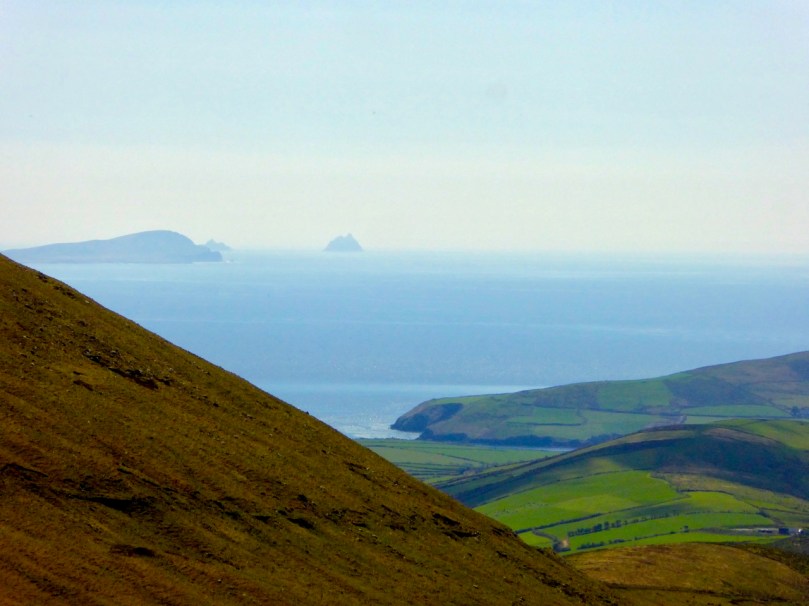
The Blasket Islands lie off the cost of Kerry, near the Dingle Peninsula. An Irish speaking enclave, it is now uninhabited

Winter was long on the Island, made gloomier by the fact that the sun, due to a combination of high ground and orientation, did not shine on their dwelling all winter.

The sun awoke us.

Like a fanfare

or a burst of wild laughter.

Playfully.

Unfamiliar.

Spilling in along the floor.

Splashing up the walls.

Streaming in through the ever-open door.

We didn’t – at first-  know what was happening,

Didn’t recognise the bright clamour of the sun.

Then we remembered the words

That you, druidlike, had spoken:

“The Sun will come back on St. Brigid’s Day.”

And a welling of Hope,

Pagan and Pure,

Came rising inside us,

Sitting in bed,

Brigid or Danú,

The Winter defeated:

“The Sun will come back on St. Brigid’s Day.”

We’ve turned the corner and spring is finally in the air. Today was golden and we spent it on The Mizen (see below). Thank you Brigid/Danu/Imbolc/ancient Calendar Keepers!

*If you’re ever in Kerry, make sure to visit the Blasket Centre

Hikelines – a Blog for the Soul

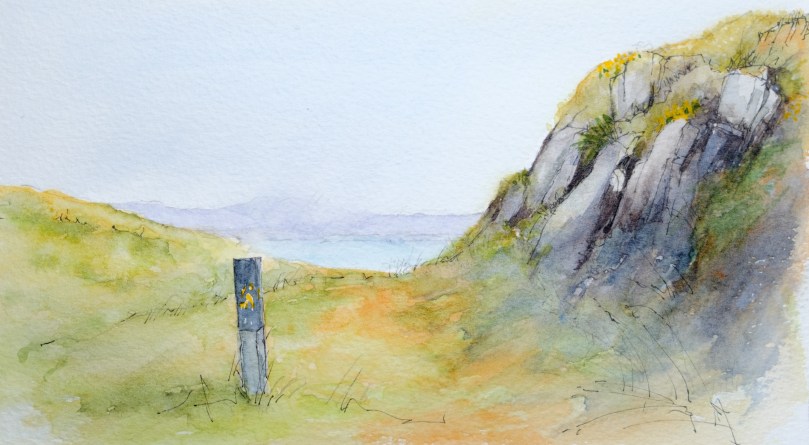
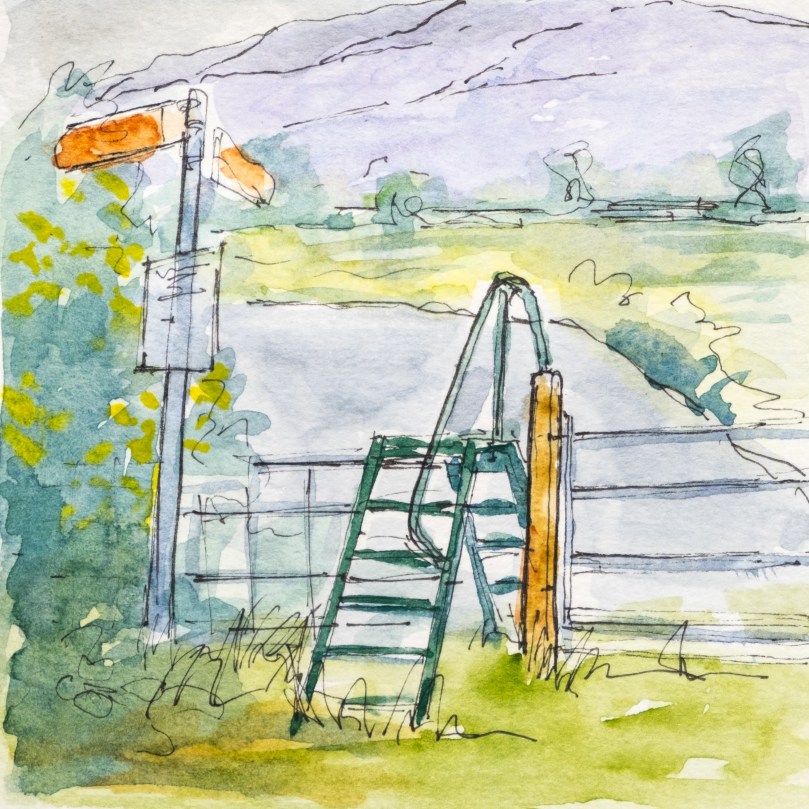
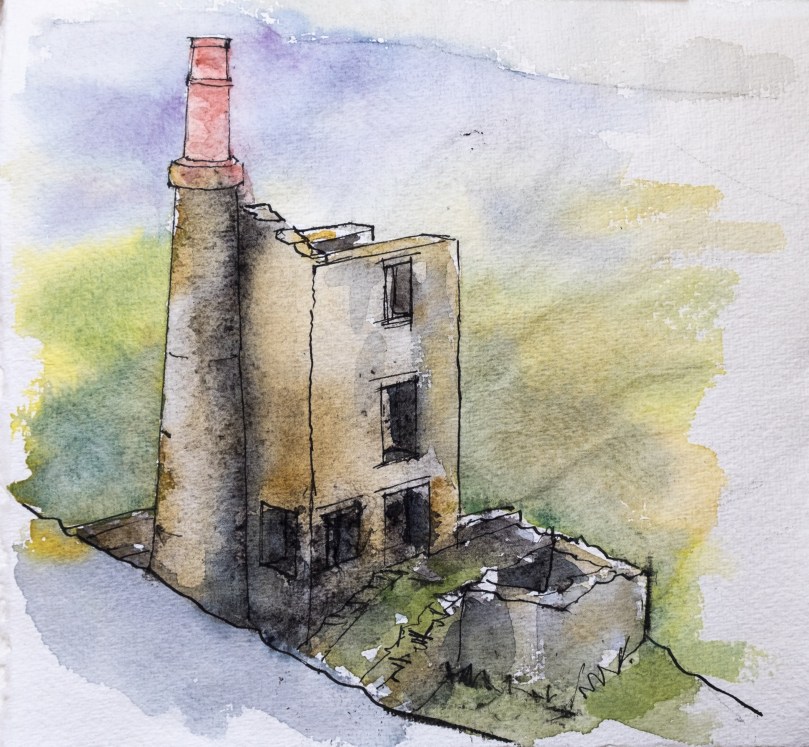
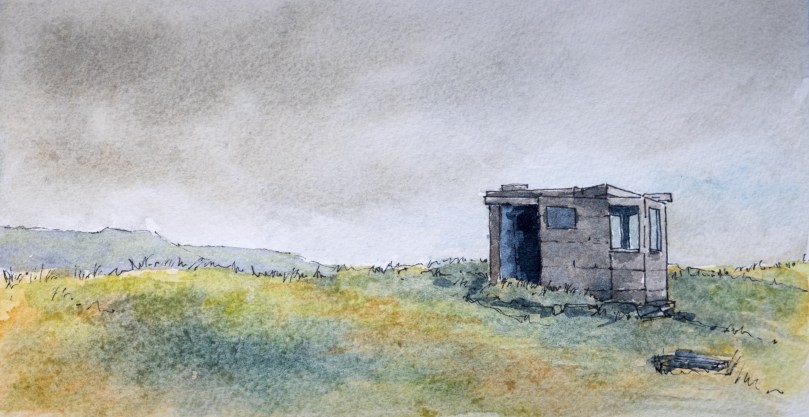
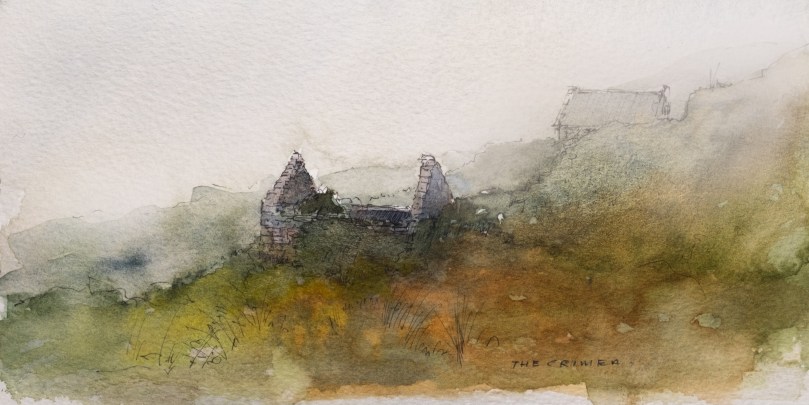
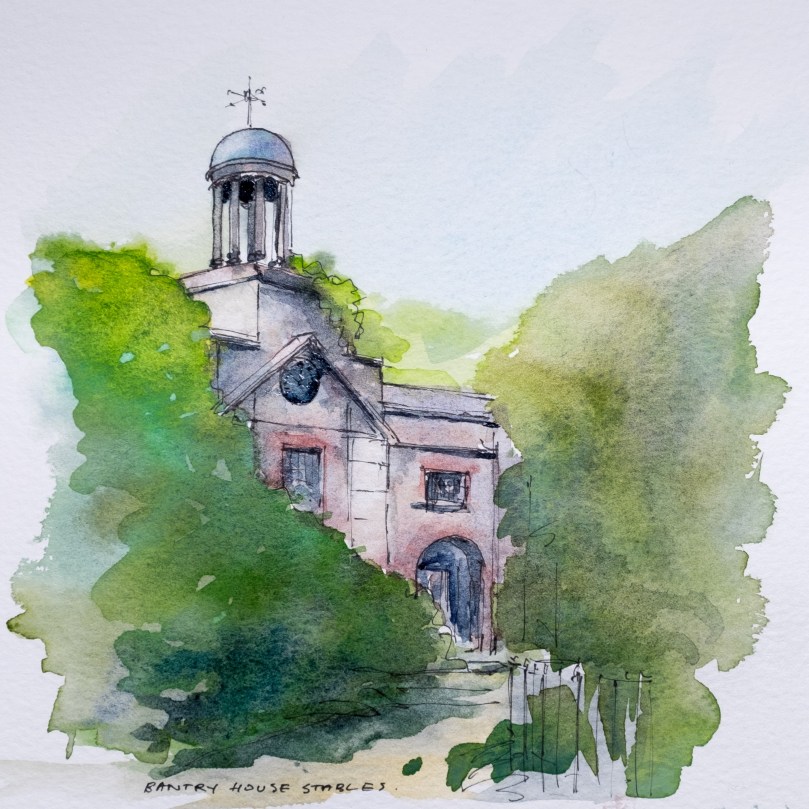
Our talented friend, Peter Clarke, has a marvellous new blog and you HAVE to see this one. It’s called Hikelines and the subheading tells the story – I hike and I sketch.

Peter has done two long walks in England, sketching as he went along – the Cleveland Way and the Tabular Hills Way. People who know those routes will appreciate how he has captured landscape, villages and landmarks in his signature style. But I want to concentrate on his two West Cork routes – The Beara Way and The Sheep’s Head Way.

Several things mark these routes as different from the English ones: they seem wilder, more remote; archaeology is all over the place; the place names are unpronounceable; they’re not as organised (especially the Beara Way) for the walker so there are directional and accommodation challenges. However, they are as rugged and spectacular as any hiker could wish for.

The Beara is the largest of the West Cork Peninsulas and the farthest from population centres. Peter accomplished it in nine stages, spaced out between the end of May and the beginning of August, starting and ending in Glengarriff and travelling clockwise.

Some parts were very rough going and signage was not always reliable, but Peter takes it all in his, er, stride. He writes beautifully in a clear accessible style – here’s a sample from his first day:

I reach the ladder-stile that marks the start of a hard, steep climb up to 550 metres. The red line of the route looks impossibly steep on the map but on the ground I find a stony track that dog-legs its way up the contours to make the going a little gentler: nevertheless, my lungs and legs are soon in the red zone. I take shorter strides on the rough stony surface, the plodding drumbeat of my boots accompanied by the tip-tap rhythm of my walking poles. At each turn where I stop to look back, the small houses in the valley are even smaller, the distant hills begin to show on the horizon, catching patches of sunlight, and soon I can see above the nearby hills across to Bantry Bay, glassy calm with Whiddy Island casting long reflections in the waters.

He stops to sketch what catches his eye – occasionally doing a whole sketch, sometimes colouring it later, sometimes taking a photograph to sketch from when the hike is over. He includes technical details for those who like to know.

He detours to visit prehistoric and historic sites and often includes these in his sketches. Amanda makes an appearance now and then – she’s on pick-up or drop-off duty and is usually combining this with adventures chronicled in her own blog Holy Wells of Cork. (When I told you about the start of Holy Wells of Cork it was only a year and a half ago – she has now recorded over 200 wells!) She is along as they ride the cable car to Dursey Island but Peter strikes out on his own along the trail.

As I set out alone along the only road, I think about how the past seems somehow embedded in the landscape of places like this. Some might say there are ghosts here and I can understand why. A short detour brings me down to the ruined monastery and burial ground sitting just above the shore. It feels lost and forgotten, even in the sunshine.

I climb back up over soft springy grass onto the road which rises and falls around the smoothly rounded hills that make up the island. Purple foxgloves hang on the cliff edges; the peaks of roofless gable-ends rise from the patchwork of fields running down the lower slopes; sheep and cattle graze below and a kestrel hovers overhead. This road must have seen plenty of traffic at one time and there is even an old bus stop: whether real or not I don’t know.

The weather deteriorates as he traverses Beara – you can feel the discomfort of the sodden gear and the squelching mud and it’s a gut feeling of relief when he reaches colourful Eyeries and can dry out. But it finally improves and the next two days brings the compensations of stunning views and stone circles. The final leg back to Glengariff from Kenmare is largely along a busy road – less enjoyable and more arduous.

The Sheep’s Head Way is familar ground – for Peter and for me as a reader. Peter and Amanda (regular readers will remember) are the couple behind the guidebook Walking the Sheep’s Head Way – we highly recommend it for anyone contemplating walking on the Sheep’s Head. For Peter, then, this is a continuing of his long love affair with this wild and magnificent landscape. He knows it intimately, he’s walked every inch of it before, and he brings all that love of place to his sketches.


He’s adding more information now too – distances and links to further information as well as links to detailed route directions. Now is the time to sign up for the blog – it’s easy, just insert your email address in the box in the right margin – and follow along. He’s only done four stages, and there are many more to come.

His last post, at time of writing, was one of my favourite walks, encompassing the route I described in Sheep’s Head: Searching for Cornish Miners. Here’s the start of his walk:

I take the ‘Horseshoe Road’ which is more of a track than a road, and descend into the mist which is thick but too bright to be ‘fog’ perhaps. The filtered light brightens nearby colours and softens shadows and I think how it creates a type of liminality with a veil through which things can only be partially glimpsed.

This is one of those treats you can feel really good about. When the email comes in, telling you there’s a new post, just settle down with a cup of tea and immerse yourself in Hikelines. I have deliberately not captioned the images because I want you to see them for yourself! Now so, enough talk – head on over to Hikelines.


Back to the Beara

Mizen, Sheep’s Head, Beara, Iveragh and Dingle: these are the five peninsulas which make up the south-western coast of the island of Ireland. We live on the Mizen and, for that reason, we are always trumpeting the qualities of the place, historical and scenic. However – to be fair – the other peninsulas have much to offer. The Sheep’s Head is a mere stone’s throw from us – just over the waters of Dumnanus Bay – and our visits there are frequent. The Beara has been calling us recently: we tend to think of it (unfairly) as somewhere quite distant but we can be on it in less than an hour. In the last two weeks we have taken two day trips out there (with our holy-well hunting friends Amanda and Peter), in contrasting weather conditions, and we can report back that the landscape is stunning whatever the weather, and the visible history is palpable. We have visited before – a while ago now: see our posts here and here.

Header picture – I titled this photograph ‘unbelievable’ in our file: look at the tiny house and the monumental stone walls heading up the mountain above it, dividing up the land into enormous fields. Above – a typical view of mountain, meadow and wild scenery to be found on the Beara

The Beara comprises around 58,000 hectares, or 228 square miles, and covers 330 townlands. The larger, southern portion of the peninsula lies in County Cork, while the northern area is in County Kerry.

We were searching for – and found – some of the Beara’s holy wells. Head over to Amanda’s blog Holy Wells of Cork for more information on these (and hundreds more Cork wells!)

A significant and comprehensive study of the history of the Beara has been carried out by Cornelius J Murphy (more popularly known as Connie Murphy). In all he has examined and documented some twelve hundred archaeological and historical sites, some half of which had been known and recorded previously, but as many had not. Our little expeditions pale into insignificance compared to Connie’s work, but they will inspire us to spend more time ‘on the ground’ in the area, while also simply taking in the spectacular views of the wildly variable topography.

Top – Day 1, in the mist: standing stones can just be made out in the distance. Lower – same stones, different day! On our second trip we were most fortunate with the weather

Tradition has it that, in around 120 AD, Conn Céad Cathach (Con of the hundred battles) fought a fierce battle against Owen Mór, King of Ireland at Cloch Barraige – these are the words of Connie Murphy:

…Owen was badly injured in the battle. Those of his followers who survived took him to Inis Greaghraighe (now known as Bere Island) as a safe place for him to recover. There, the fairy Eadaoin took him to her grianán (bower) where she nursed him back to full health. Nowadays, this place is known as Greenane…

…Owen and his followers then sailed southwards until they reached Spain. There he met and married Beara, daughter of the King of Castille…

…Later Owen, Beara and a large army sailed from Spain and landed in Greenane. Owen took his wife to the highest hill on the island and looking across the harbour he named the island and the whole peninsula Beara in honour of his wife. Rossmacowen, Kilmacowen and Buaile Owen most likely are named after Owen Mór and his son. Owen’s wife, Princess Beara, died and was buried in Ballard Commons in the remote and peaceful valley between Maulin and Knocknagree Mountains….

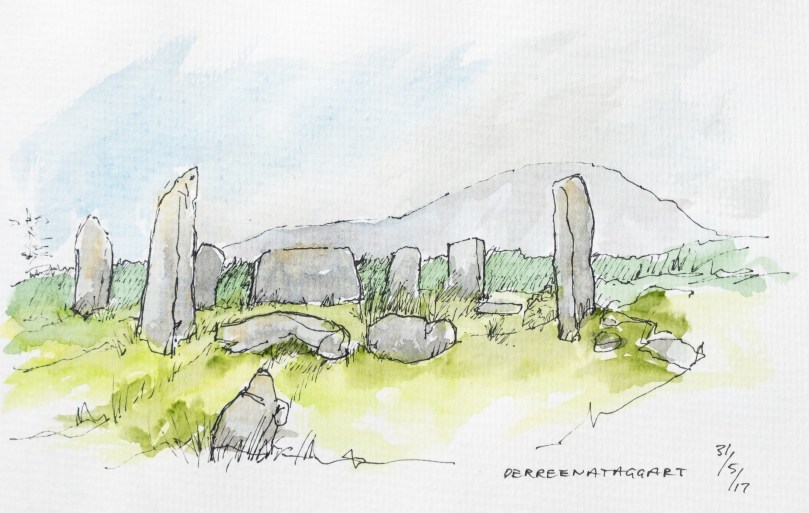
Top – down by the water, a tiny settlement by the pier, and – lower – Derrenataggart Stone Circle, Day 1

Our first day’s expedition took in the southern side of the peninsula, from Glengariff to Castletownbere. The mist was down and we went off the beaten track to search for holy wells, standing stones and stone circles, and were rewarded with some good finds. I was particularly intrigued by the ‘raised ring fort’ at Teernahillane: I could not trace anything in the archaeological records to describe or explain it. Our conclusion was that it could be a natural phenomenon that has been mistaken for an unusual (and rather unlikely) form of defensible structure. There is no sign of any retaining stonework, although this might have been robbed but, other than being more or less circular, it bears no resemblance to any ring fort we have seen elsewhere. If anyone has any more knowledge or ideas about this site, please let us know.

On our travels this week we were rewarded with brilliant weather which cast a whole different hue over the Beara – and opened up the incredible views which are everywhere, but nowhere more spectacular than the journey over the mountains on the Healey Pass. This road was constructed as a famine relief project in 1847 on the line of an ancient trackway that connected Cork and Kerry and was first known as Bealach Scairt – the way of the sheltered caves. It was renamed after Timothy Michael Healey (who lived from 1855 to 1931) – a Bantry man, deserving of a future blog post, who achieved notoriety in the Irish Parliamentary Party under Charles Stewart Parnell. The two fell out – and came to blows – when Parnell was involved in a sensational divorce case. After the 1916 rising, Tim Healy declared his sympathy with Arthur Griffith’s Sinn Féin movement, but was opposed to the use of physical violence. Healy returned to prominence in 1922 when he was appointed the first ‘Governor General of the Irish Free State’. In that post he pursued the improvement of the road between the Kerry side and the Cork side of the Beara Peninsula and, shortly after his death in 1931, the restored pass was dedicated to him.

At the top of the Tim Healey Pass we were treated to the most incredible views of our entire journey: our photographs hardly do them justice, but we hope they give you a sufficient taster to inspire you to journey that same way.

Top pictures – Christ looks down, on the summit of the Tim Healy Pass; middle – one of the views from the top: snowy peaks seen on the sunniest of days! Lower – another view from the summit, with the Iveragh Peninsula (and the Kerry mountains) in the distance

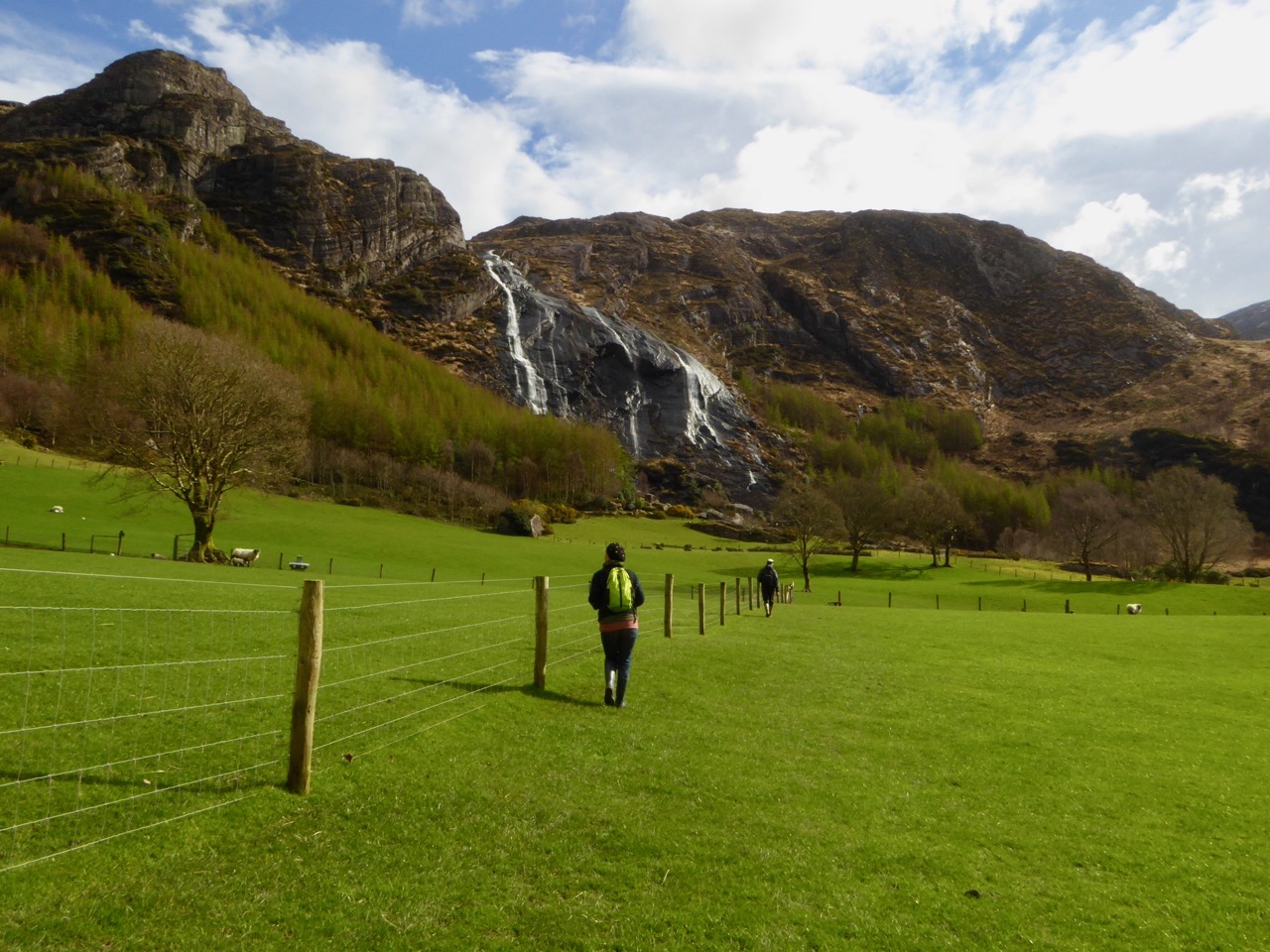
Other highlights of our second day trip included the Uragh Stone Circle – surely the most dramatic situation for any megalithic monument? Beyond that site – through serpentine narrow boreens – lie the Gleninchaquin Lakes, Woods and Waterfalls, on a privately owned and run park covering 700 hectares. The very modest entrance fee allows you to freely use all the walking trails, the longest of which – around the perimeter – will take you six hours! We chose a shorter route through unbelievably green meadows, passing the enormous waterfall and being treated to glimpses of newly born lambs, all in hot March sunshine worthy of the middle of summer.

Views of the Uragh Stone Circle in its magnificent mountain and lake setting and – lower picture – looking from the circle back towards the landscape

Ancient cottage in an ancient land; the green glens of Gleninchaquin

All roads lead to home and we found ourselves eventually in Kenmare – where we suppered and visited another rather special holy well – before travelling over the mountains to Bantry on another high road – spectacular also – the Caha Pass – which finds itself tunnelling through the rocks in places.

Saint Finian’s Holy Well, on the shores of the river at Kenmare – still visited, and still effective!

We hope these little descriptions, and the photographs, will stimulate you to explore the Beara. We are looking forward to many more visits there, and to the discovery of yet more of Ireland’s fascinating history.