Saints and Soupers: the Story of Teampall na mBocht (Part 5, Famine in Kilmoe)

Gorta, by Lilian Lucy Davidson, courtesy Ireland Great Hunger Museum

The potato crop failed first in 1845. Patrick Hickey in Famine in West Cork relates the discussion at the annual Skibbereen Agricultural Show dinner in October. Much congratulatory talk about the progress that had been made in agriculture, was brought to an abrupt end when the inevitable topic of the potato disease raised its ugly head. While several landlords and farmers felt the crisis would pass quickly, and others placed their faith in the new dry pits championed by the Rev Traill of Schull, Dr Daniel Donovan brought them down to earth with a first-hand account of the calamitous conditions all around them. Fr Hickey puts it poetically when he says, As these gentlemen headed home that night the sound of their horses’ hooves on the stony road rang the death knell of pre-famine Ireland.
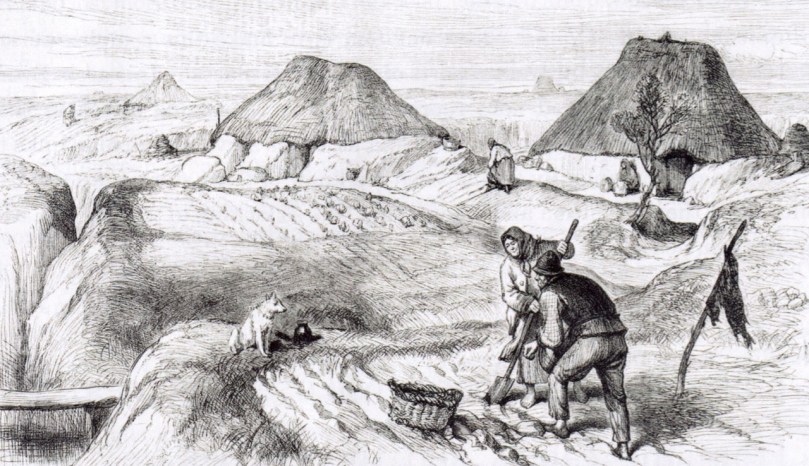
Planting Potatoes – each cottage relied on an acre or so to plant enough for a year

Relief Committees were struck and established food depots. In the Parish of Kilmoe the Rev Fisher and the Parish Priest, Fr Laurence O’Sullivan each contributed £5 as did other members of the committee. The ethos of the time was very much to tie relief with work and soon various schemes were proposed to the Board of Works and although one was initially approved no funding ever materialised. Distress was widespread.

The ‘lazy bed,’ in fact a labour-intensive cultivation method, has left its mark on the landscape all over Ireland

But it was the second failure of the potato crop in 1846 that precipitated a full blown famine environment. The workhouses started to fill, hungry people pawned anything they had and reports of death by starvation and fever started to pour in. The Parish of Kilmoe, which stretched from Schull to Crookhaven, encompassing Toormore and Goleen, was particularly hard hit. The Board of Works, inexplicably declined to fund any road or pier-building schemes. According to Hickey, The only refuge these hungry people had was the Kilmoe Relief Committee but even this was now in dire straits.

A ‘scalp’ was a just a hole dug in the earth. People resorted to living in such troughs when they had been evicted

How dire? I will let the committee speak for themselves – here are the proceedings of their meeting on November 3rd, 1846, sent to newspapers in the hope that it would elicit compassion and aid. It has all the impact of immediacy and desperation in the face of appalling official indifference, made all the more powerful by being sent by normally polite and government-supporting educated men.

Proposed by the Rev W A Fisher, Rector, and seconded by the Rev Laurence O’Sullivan, PP;

1. That this committee having repeatedly tried, but in vain, to arouse the attention of the government to the state of destitution and distress in this remote district, have determined to bring the matter before the public, through the medium of the press.

Proposed by Richard B Hungerford, Esq, JP and seconded by the Rev Henry P Proctor;

2. That the following statement of facts be forwarded: — “The parish of Kilmoe contains 7234 inhabitants, or 1289 families; we calculate that 7000 inhabitants require food, in consequence of the failure of the potato crop;  the parish produces very little corn. Potatoes feed the people, the pigs, the poultry, the cows, the horses; and enabled the fisherman to dispose of his fish, for which he did not this year get as much as paid the expenses of taking and saving it, as the poor, from the destruction of the potato crop, are unable to purchase it. Thus deprived of their only means of support, they are now literally famishing. All this, in substance, we have stated over and over again to the Lord Lieutenant, the Lieutenant of the County, the Commissary-General, and the Commissary at Skibbereen. We asked a depôt – we offered a store free of expense – we entered security – and when we had done all this, at the end of a month we received a letter from the Castle, with a paper on brown bread enclosed, to say we had better purchase wheaten and barley meal.

Proposed by the Rev Thomas Barrett, RCC and seconded by Mr John Coghlan;

3. That this committee feel quite unable to meet the views of the government. There are only two resident gentry in this district – there are no merchants here – there are no mills within twenty-three miles – there is no bakery within that distance – nor is there any way of procuring food, except through the medium of our committee, which, out of our limited funds of 165l., have kept up a small supply of Indian meal and even with our very best exertions, in consequence of our trifling finances, and being obliged to bring our supplies from Cork by water, we have been twice, for a fortnight together, without meal.

Proposed by Mr B Townshend and seconded by Mr J Fleming;

4. That our funds are now exhausted, and we have no means of renewing them, while the demand for food is fearfully increasing. We see no other way left to us but to try, to the medium of the press, to arouse the government to a sense of the fearful state of things which is inevitably impending. Rapine has already commenced and who can wonder? Many are living solely on salt herrings – many more on seaweed; and when our last supply of Indian meal was sold, they offered 3s. a stone – and would not go away without it – for some that was damaged, the very smell from which was so offensive that it was thought unfit and dangerous food for human beings.

Proposed by the Rev Laurence O’Sullivan, PP and seconded by Mr A O’Sullivan

5. That these resolutions be published in all the Cork newspapers, the Dublin Evening Post, Dublin Evening Mail, and the Times London newspaper and a copy be sent to Lord John Russell and Sir Randolph Routh, with a faint hope that something may be done without delay (for the case is urgent) to relieve our misery and want, else the public will soon hear of such tales of woe and wickedness as will harrow the feelings and depress the spirits of the most stout-hearted man.

Signed

Richard Notter, Chairman.

W A Fisher, Rector of Kilmoe, Sec

Upper: Memorial tablet to Richard Notter in the former Church of Ireland in Goleen. Lower: an example of the kind of ‘rapine’ predicted by the letter

Besides a stark description of conditions in Kilmoe, what these minutes show is that the relief committee was composed of both Catholics and Protestants, of clergy and lay men, drawn together in a common cause and working in a cooperative spirit. Perhaps as a result of this letter, a Board of Works road-building project was eventually implemented on the Mizen. These hated schemes were riven with administrative problems of all sorts, the most serious being a delay in paying the labourers.

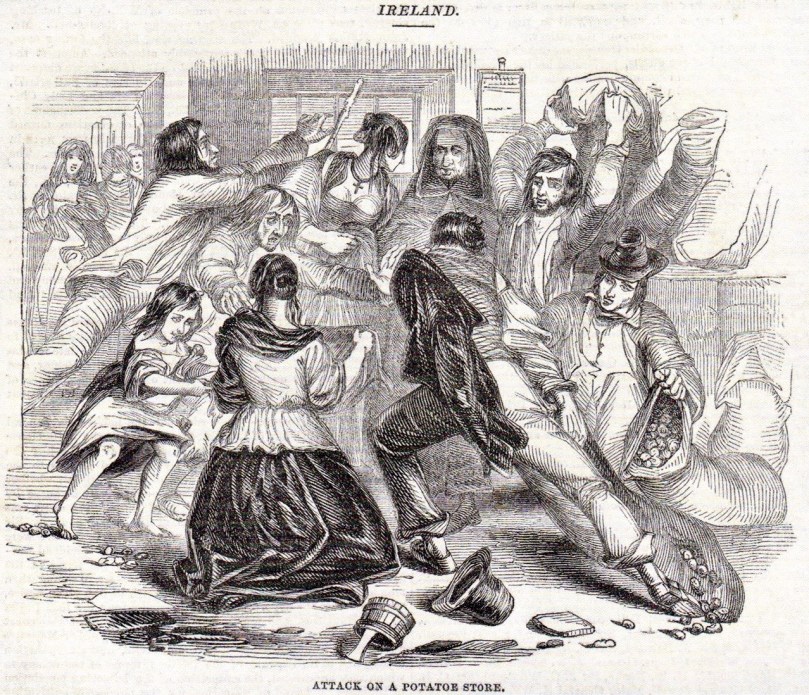
Meal being delivered under armed guard

Because this is the story of Teampall na mBocht and Rev Fisher, I cannot dwell here on a detailed description of the harrowing progression in Kilmoe of the Great Hunger. Much has been written about the famine in West Cork, and I direct the reader to Patrick Hickey’s book, which has been my main resource. (In the final post I will supply a list of the resources I used for this study.) I confess that I find it difficult to write about the famine itself – it’s amazing how raw and emotional it becomes once I immerse myself in the subject. Anger wells up very quickly and I recognise a desire to find culprits to blame (there is no shortage of candidates) and to jump to judgement using a modern mindset and all the benefit of hindsight.
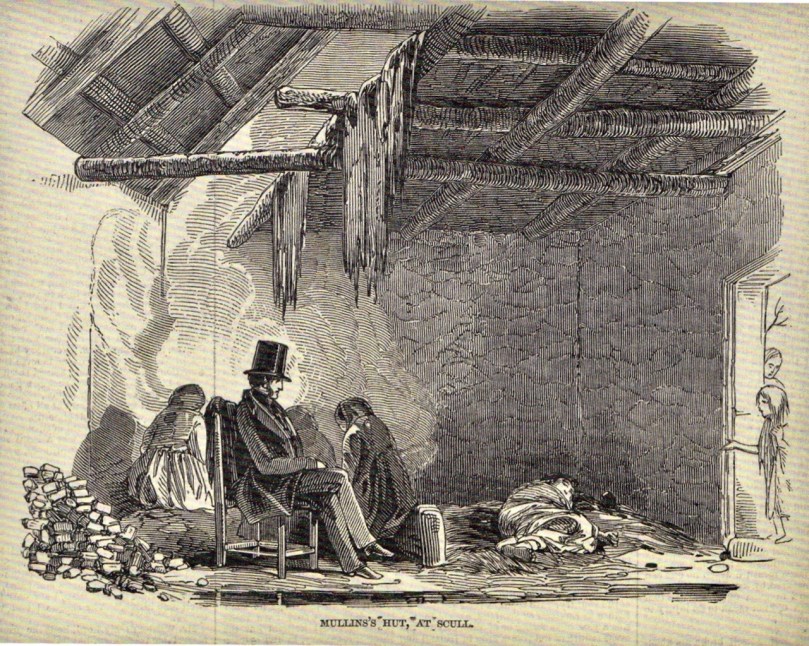
The Rev Traill, drawn by James Mahony for the Illustrated London News, in Mullins hut, while Mullins lies dying on the floor. Mahony stood “ankle deep in filth” to capture the image

For now, then, let’s get back to Kilmoe, William Fisher and Fr Laurence O’Sullivan, central actors in our drama. One digression, though, remember the Rev Robert Traill and how he railed against the wicked priests for opposing his tithes? He was very much part of the relief effort too, setting up ‘eating houses’ in cooperation with Fr Barry of Ballydehob (the regulation ‘soup kitchens’ did not provide food they considered nutritious enough) and travelling throughout his parish indefatigably providing assistance to all, Catholic and Protestant alike. When he came down with famine fever in 1847 he couldn’t fight it off, and died in April, mourned and honoured by everyone for his heroic efforts.

Soyer’s Model Soup Kitchen: Soyer’s soup recipe was recommended on the basis of low cost rather than nutritional value – see this post in the marvellous Come Here to Me blog for more on Soyer and his soup

Rev Fisher had a printing press and used it to great effect, sending requests for aid to everyone he knew. Money arrived, and it enabled him to help a great deal with the relief efforts. Like the Rev Traill, he also contracted famine fever but managed to recover. It was during this period of recovery that he started hearing confessions. He was strongly influenced by the Tractarian Movement, a return to High Church liturgies that came close to Catholic practise. He claimed that he simply made himself available in his vestry and that the people poured in, wishing to unburden themselves of their sins. Soon, his church, in Goleen, was filled with the newly-converted.
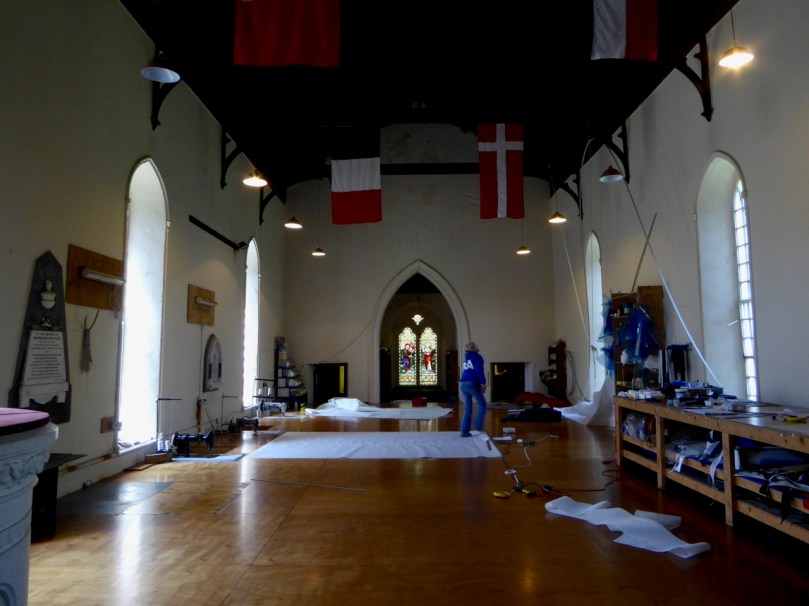
The former Church of Ireland in Goleen, now used for mending sails. Here, Fisher heard confessions and welcomed converts

In his book, The Protestant Crusade in Ireland, Desmond Bowen makes the claim that Catholics in the area were completely demoralised; they quarrelled with their priest who fled the community. However, Hickey points out that Bowen provides no source for that information, whereas Hickey tracked down Fr O’Sullivan’s movements and found that he left for only a short time (possibly ten days) to fund-raise (successfully) in Cork. Tellingly, he had withdrawn from the Kilmoe Committee as a result of dissension between the clergymen. Laurence O’Sullivan, in fact, remained in his parish throughout the famine and worked to raise and disburse funds as well as to feed his parishioners, also contracting famine fever which knocked him out of action for at least two months.
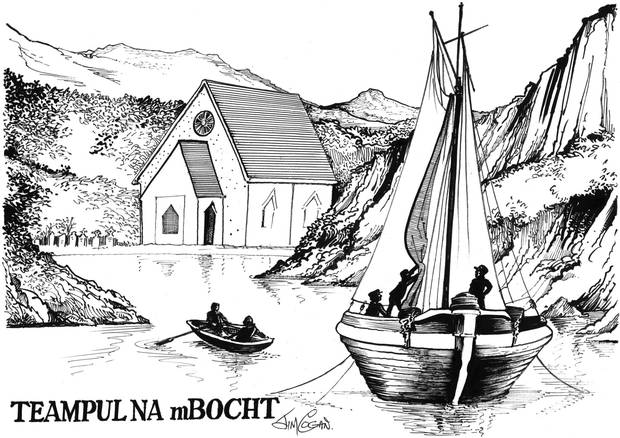
Fisher’s fund-raising efforts eventually enabled him to contemplate a building project. He considered first a school, and then a church. It would be built using only manual labour in order to ensure that the work was done by the poorest, and not farmers with horses and carts, and called Teampall na mBocht, Church of the Poor. At the same time, Fisher was donating money for food to schools (leading to a dramatic increase in enrolment) and trying to encourage a return to fishing by local fishermen. Hickey acknowledges, Whatever about the conditions of aid, implicit or explicit, Fisher organised the distribution of large supplies of food and this saved many lives.
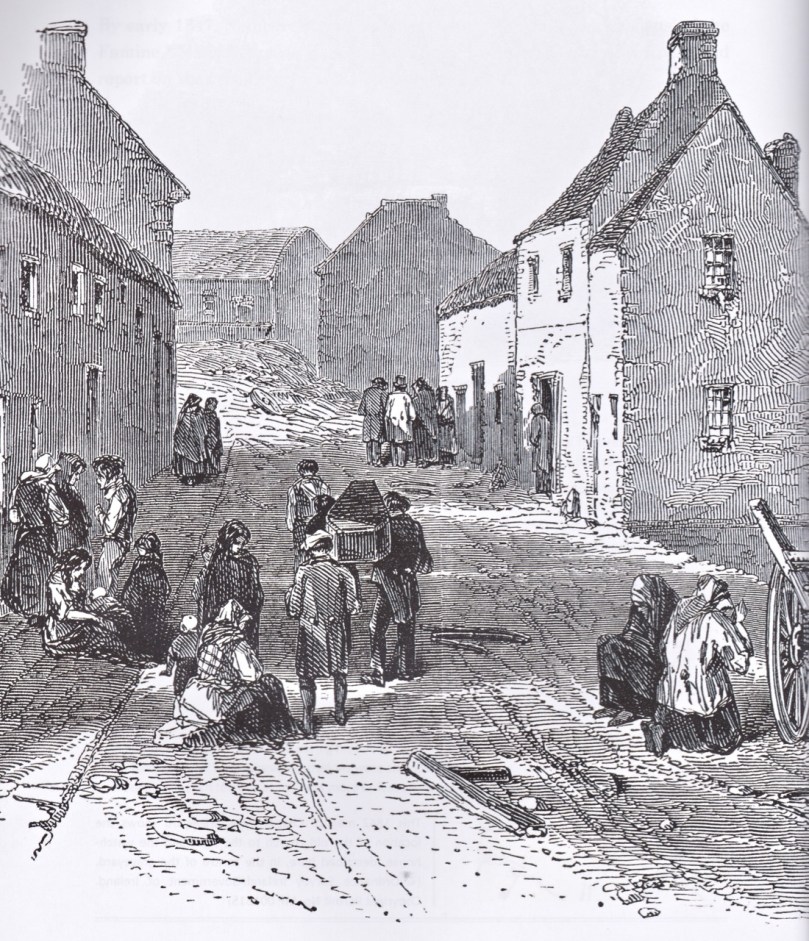
Funeral in Chapel Lane, Skibbereen

However, from the point at which he broke away from the Relief Committee, Fisher seems to have been in conflict with his Catholic clerical counterparts. A typical product of the evangelical movements described in the last post, he was zealously committed to winning souls away from the superstition of Popery. The crux of the matter, of course, is whether or not the aid he provided was conditional on conversion. Many other West Cork Protestant clergymen laboured to alleviate famine suffering, but most remained on good terms with Catholic priests and won praise from them rather than opprobrium.
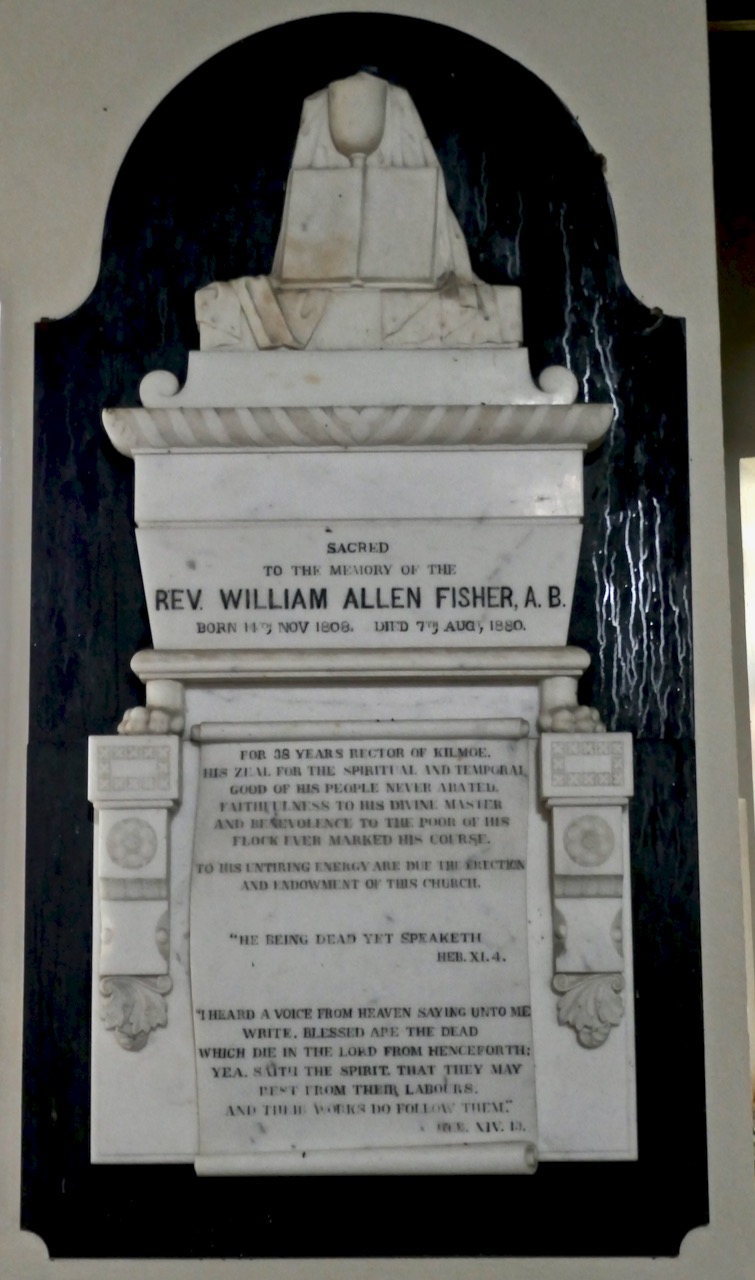
Fisher’s memorial tablet in Teampall na mBocht

Damning accusation were made by Fr Barrett against Fisher, that his zeal led him to confine his bounty to those of his creed, and to famine-constrained proselytes. He went on to state that when he protested to Fisher, that Fisher had said that had English contributors known that a Popish priest sat on the same seat as himself, sooner would they have cast it away than give a single shilling to relieve those whose religion he himself had sworn to be idolatrous, etc, and which he, in common with English contributors, believed to be the sole cause of blight disease, death, etc.

Also in Teampall na mBocht

Fisher, of course saw things very differently. He denied ever coercing anyone into converting. If he gives only a little charity, he wrote of the fate of Protestant clergymen, he is accused of living off the fat of the land, but if he denies himself and his family to relieve the poor he is publicly reprobated as one taking advantage of the misery of the poor in order to bribe them into a hypocritical profession of a religion that they do not believe. But despite his protestations his reputation among Catholics remained that of a Souper. Perhaps there is no smoke without a fire.

Fisher’s son-in-law, Standish O’Grady (above), whose own father had preceded Fisher as Rector of Kilmoe, wrote about him that, if ever a saintly man walked the earth, he was one. I never saw in any countenance an expression, so benignant or which so told of a life so pure and unworthy and a self so obliterated.
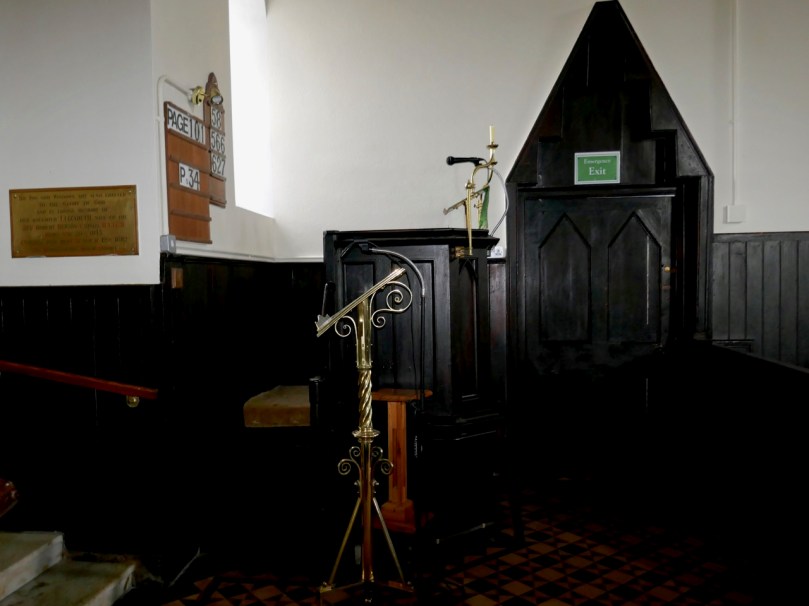
Fisher’s pulpit in Teampaill na mBocht

This is the central dichotomy at the heart of this story. Fisher was a deeply spiritual man, fired up by the desire to do good, as he saw it. The beneficial outcome of this was that, during the worst of the famine, he provided food and employment for hundreds, and saved probably thousands from death. He stayed in Kilmoe until his own death in 1880 – ironically from famine fever contracted during another, although less catastrophic, period of famine – and continued to labour tirelessly for his flock.

Fisher’s memorial window in the former Church of Ireland church in Goleen

If he did indeed administer the bible test as a precondition of aid, he did so in the honest and total conviction that what he was offering was true salvation, an escape from the worst excesses of Popery. In this, he was no different from the zealots who galvanised into action to win back those souls for the Catholic Church. In the next, and final (whew!) post, we will examine the Second Counter-Reformation that swept into West Cork like the cavalry coming over the hill, to set Kilmoe and its converts back on the true path – the path back to Rome, in fact.

St Brendan’s Church of Ireland, Crookhaven. One of the Kilmoe churches, still with no electricity

The black and white line drawings used in this post are from the Illustrated London News, mainly by James Mahony, a Cork artist contracted by the ILN to produce drawings of famine conditions in Ireland.

This link will take you to the complete series, Part 1 to Part 7
Saints and Soupers: the Story of Teampall na mBocht (Part 4, the Protestants – Educators and Evangelists)

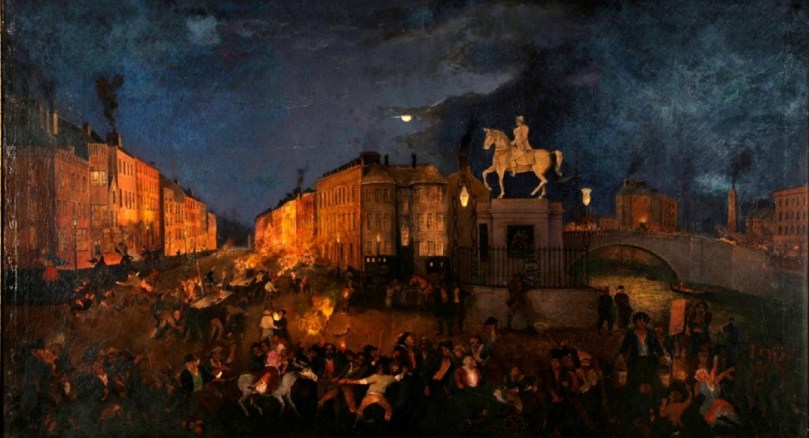
In the previous posts we looked at Catholicism in Ireland in the first half of the 19th century, and the position of the Protestant churches, especially the Church of Ireland. This period was marked by a shift to a more militant and evangelical philosophy in that Church: a determination, in fact, to make one final push to convince Catholics that their earthly and heavenly salvation lay in abandoning the pernicious faith of their forefathers and converting to the biblical-based beliefs of Protestantism. Once Protestant, they would reform their wicked habits of drinking and fighting (as in Skelligs Night in the South Mall above, by James Beale, courtesy of the Crawford Gallery) and would naturally see the errors of nationalistic agitation. 

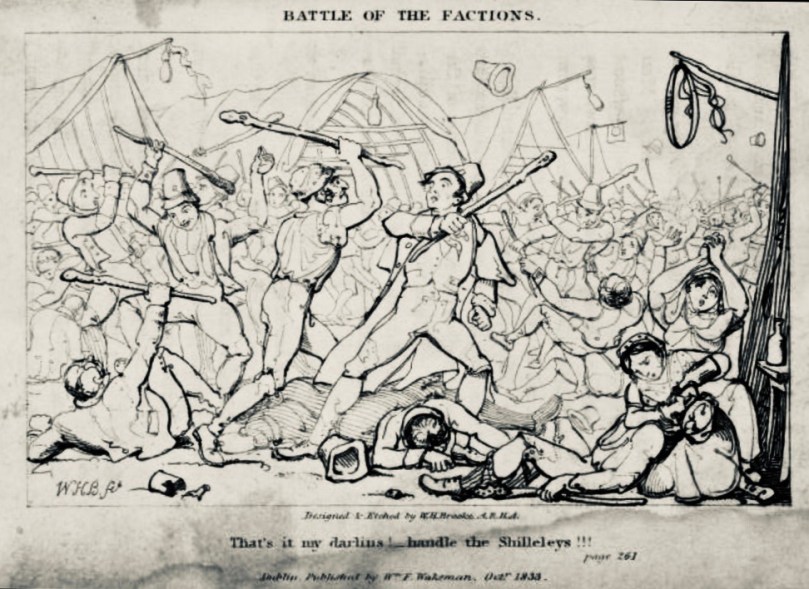
Faction Fighting, one of the evils that both Catholic and Protestants clergy railed against. The illustration, by W H Brooke, is from Traits and Stories of the Irish Peasantry by William Carleton

Irene Whelan, in her essay The Stigma of Souperism in The Great Irish Famine (The RTE Thomas Davis Lecture Series, edited by Cathal Póirtéir) writes about

the vast institutional and ideological machinery that lay behind the drive to make Ireland a Protestant country. This included not only a massive system of private philanthropy. . . but, more importantly, a fully developed political doctrine rooted in the belief that the source of Ireland’s social and political problems was the Catholic religion, and that the country would never be prosperous and developed until Catholicism and all its influences were eradicated.

From John Barrow’s A Tour Round Ireland, 1835

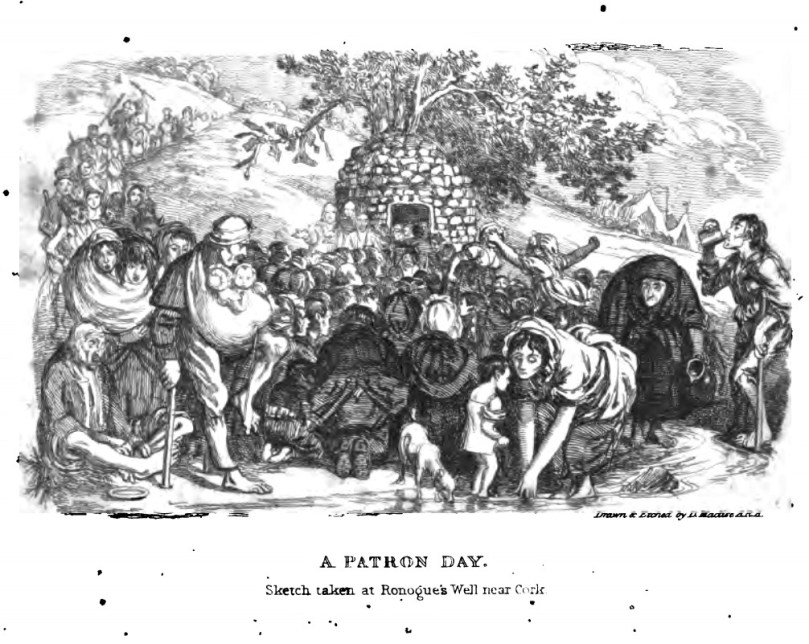
It is ironic that, in fact, major reform efforts were underway within the Catholic Church at the same time, to depress the more exuberant of the old traditions of patterns at holy wells and seasonal celebrations, or to convert them into Marian feast days (Lughnasa, for example, was conflated with the Assumption of the Virgin Mary on August 15). For an excellent description of the goings-on at Patterns, see this post from Holy Wells of Cork. The great scholar John O’Donovan wrote in 1837 the priests, I am sorry to see and say, [are] inclining very much to Protestant notions, and putting an end to all. . . venerable old customs. William Wilde (father of Oscar and a noted antiquarian and folklorist) bemoaned, The tone of society is becoming more and more “Protestant” every year. . . The priests. . . have condemned all the holy wells and resorts of pilgrimage. (Both quotes from K Theodore Hoppen’s Ireland Since 1800: Conflict and Conformity.)

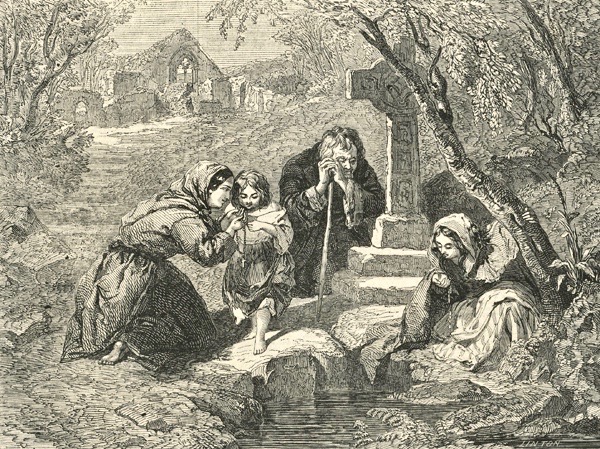
The Holy Well, an engraving of a painting by Frederick Goodall

The recognised authority on the evangelical surge of this period is Desmond Bowen. In his book The Protestant Crusade in Ireland, 1800-70, (published in 1978 but not yet superseded in its detailed examination of the religious environment of this period) he lays out the main factors in the hardening of the sectarian divide and the deepening divisions between what were essentially two separate cultures, looking to the separate education systems and the activities of firebrand preachers supported by both British organisations and committed local landlords. Of British evangelicals he writes:

Although their first desire was the purely religious one of freeing Catholics from the bondage of their sin by bringing them the blessings of biblical Christianity, they soon found it advantageous to combine their religious crusading with English ‘cultural imperialism.’ How could the Irish peasantry read the bible unless they attended schools? And how could they attend Evangelical schools and not be culturally influence by the alien but superior way of life they found there? . . .Proselytising . . . sought to bring them the twofold blessing of a reformed faith and British civilisation.

Education, as we saw in Part 2, became a field of contention with the establishment of the National School System in 1839, vigorously opposed by the Church of Ireland. The Protestant Church Education Society was founded with the object of providing an alternative education system but it struggled financially and was unable to provide enough funding to become a viable alternative to the National Schools.

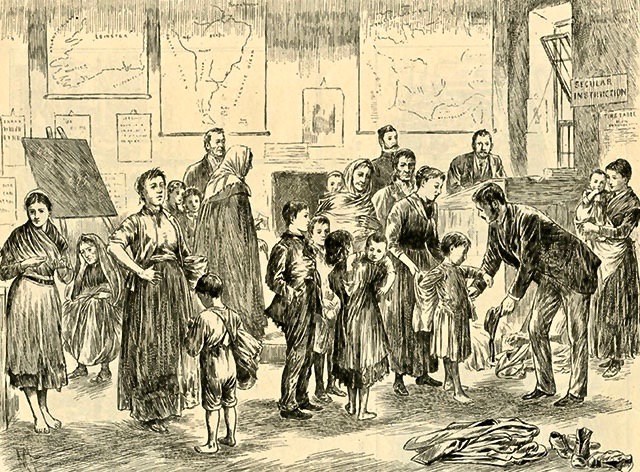
Poor children receiving clothing at a school in the West of Ireland

Up to 1839, schools on the Mizen were mostly miserable affairs with few resources and badly paid teachers. The Kildare Place Society was originally founded to provide non-denominational education to the poor, but after the establishment of the National School System, it affiliated with the Church of Ireland. This Society provided support to several schools on the Mizen Peninsula, including one in Ballydehob, another in Gortnagrough, and another in Rock Island. Other schools were maintained by the local Church of Ireland (e.g. parish schools at Gubbeen and Corravoley) and some received grants and aid from the Hibernian Society – an organisation specifically devoted to offering education with a proselytising ethos.

Now a private residence, part of this house in Durrus was the original school funded by the Association for Discountenancing Vice

Yet another Protestant education society was the charmingly-named Association for Discountenancing Vice and Promoting the Knowledge and Practice of the Christian Religion, while another, The Irish Society, had a similar mission, to provide bibles to schools and to promote Protestant religious education.

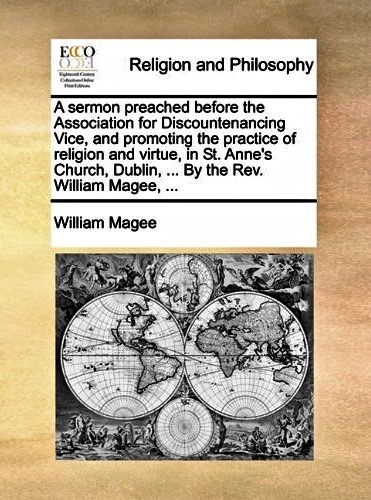
A sermon by our old friend, William Magee (see Part 3)

All of these societies, to a greater or lesser extent, supported schools on the Mizen, most of them educating both Protestants and Catholics and stipulating that the curriculum would include biblical instruction. For those students who did not have access to a National School, these schools provided rudimentary instruction, but were frequently accused of offering that education contingent on conversion. During the famine, the provision of food supplies to children when attending schools became a particularly contentious activity – although it does strike one as a no-win situation – damned if you do and damned if you don’t.

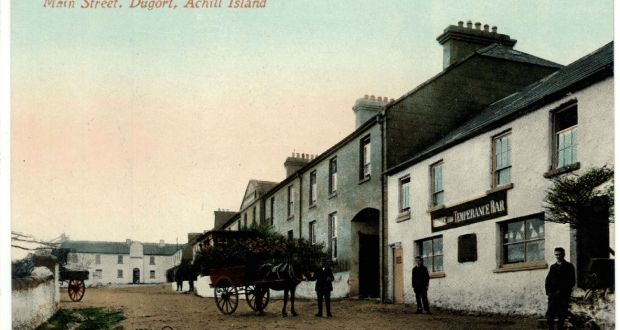
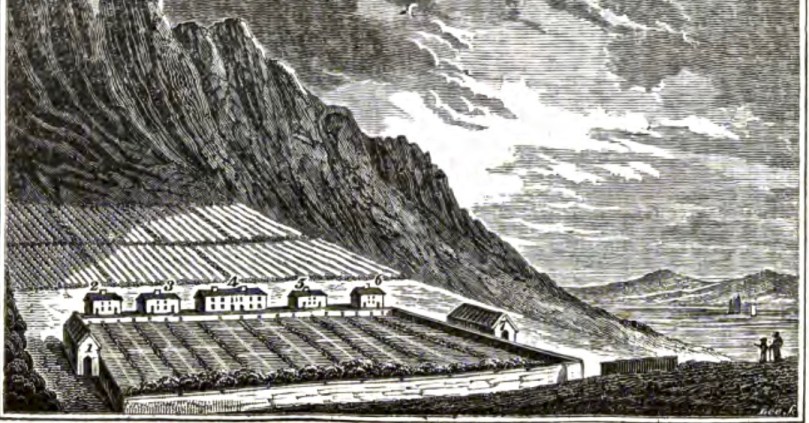
The Achill Colony. What do you think they served in the Temperance Bar?

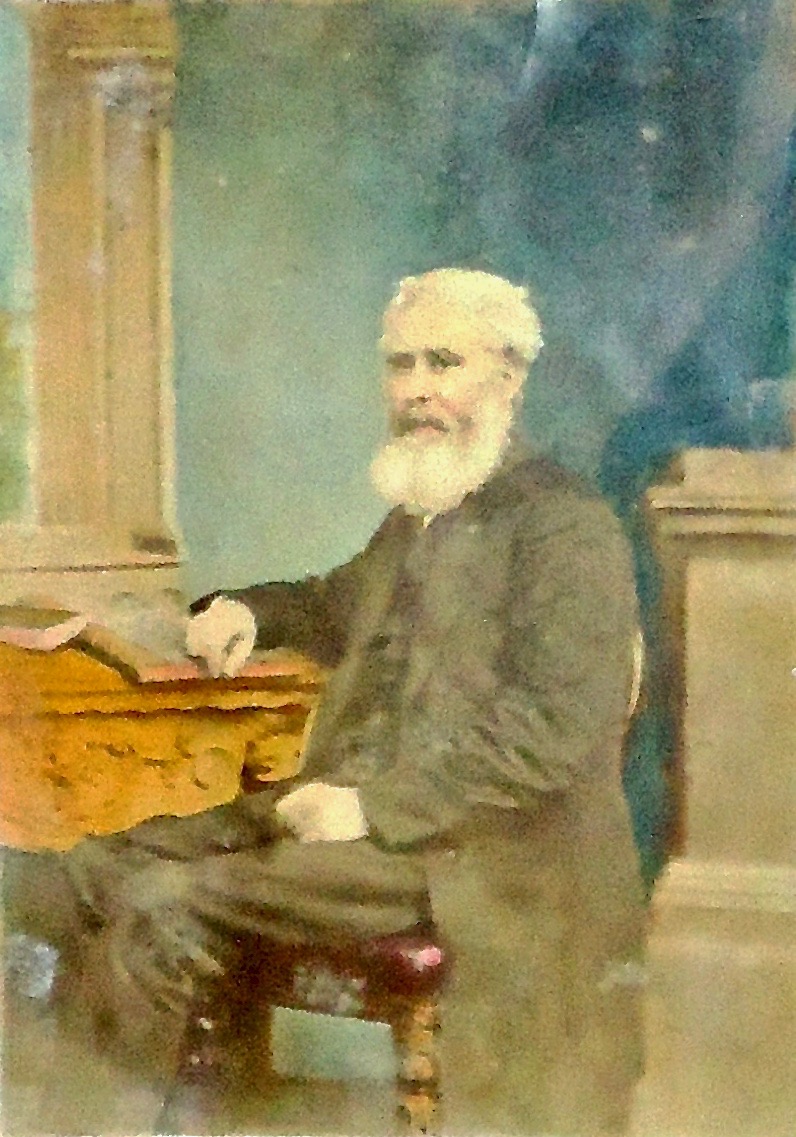
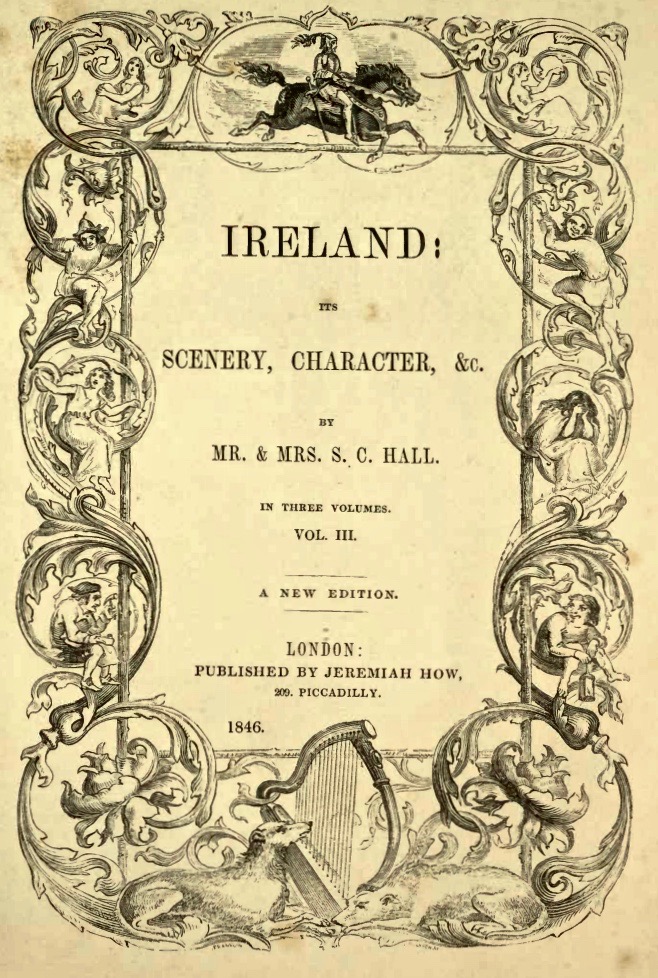
The new spirit of fervent evangelism imbued many of the Protestant clergymen in West Cork Parishes. Protestant ‘colonies’ had been established in Achill in Mayo by the Rev Edmund Nangle and in Dingle by the Rev Charles Gayer. Highly controversial, these settlements provided food, education and employment to Church of Ireland converts and were lauded as model villages by the more enthusiastic of the Protestant missionaries. The Catholic hierarchy, on the other hand, railed against them, accusing them of buying souls with the promise of financial security. There is a wonderful first-hand, and far from favourable, account of the Achill Island colony in Vol 3 of Ireland: Its Scenery, Character, etc  (pages 394 to 401) by the Halls. They describe a harsh and unforgiving Nangle (below) and a struggling colony that is despised by its neighbours.

West Cork was also a centre for Protestant missionary activities, who saw in its poverty and remoteness an ideal recruiting ground. The activities of the Irish-speaking Rev Edmund Spring on Hare Island and Cape Clear came under particular scrutiny due to the large number of conversions he claimed and his association with the Irish Islands and Coast Society, for whom he ran his parish as a ‘missionary station.’ He moved on to Cape Clear from Hare, in turn winning many converts but always under the accusation of offering ‘support’ to those who became his parishioners.

The Halls, Samuel Carter and Anna Maria, produced a superbly illustrated account of their tour of Ireland in three volumes. It’s an indispensable resource

On the Mizen, in Kilmoe Parish, the arrival of the Rev Thomas O’Grady signalled the advent of the spirit of evangelism and of many conversions. Patrick Hickey’s research indicates that there were five Protestant families in Toormore when O’Grady arrived, but by 1849, with O’Grady’s friend and successor, the Rev William Fisher, now as Rector, that number had risen to eighty.

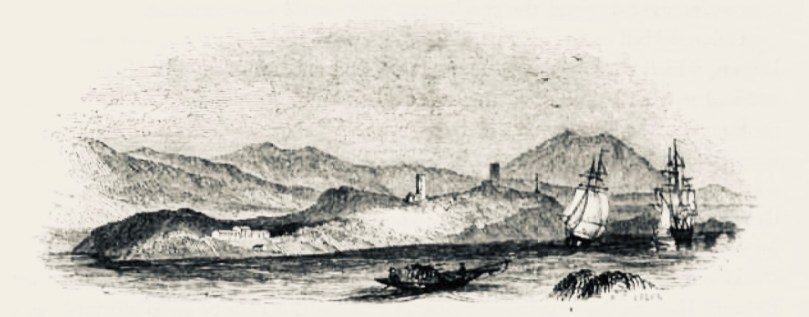
Crookhaven on the eve of the Famine

How were these conversions won? By the example, dedication, hard work and self-sacrifice of these men, or by the souperism of the Rev Fisher? In the next post I will look at the conditions that led to the latter accusation: famine in Toormore and the building of Teampaill na mBocht.

The Achill Colony, a woodcut from John Barrow’s Tour of Ireland

This link will take you to the complete series, Part 1 to Part 7
Favourite Posts of 2018

At this end of the year we reflect with a critical eye on all our 2018 posts – there have been 102 of them – and select just a few which we think stand out in some way. A link is provided for each one, in case you want to have another look yourselves.

Firstly – not just one of our favourites, but the all-time most popular post we have ever published – Ireland’s Newest Stained Glass Window. Finola wrote this in January, and then went on to put together an article in the Irish Arts Review on the same subject later in the year. The window is in St John’s Church in Tralee, a Catholic church, but the project was a joint venture between the Catholic and Anglican congregations. It tells a story of reconciliation, from many angles. The window was designed and made by Tom Denny, one of Britain’s most eminent and respected stained glass artists. Tom is a direct descendant of Sir Edward Denny (1547 to 1599) who was one of the architects and enforcers of the Plantation of Munster. It’s a complex history, and this post is well worth a careful read.

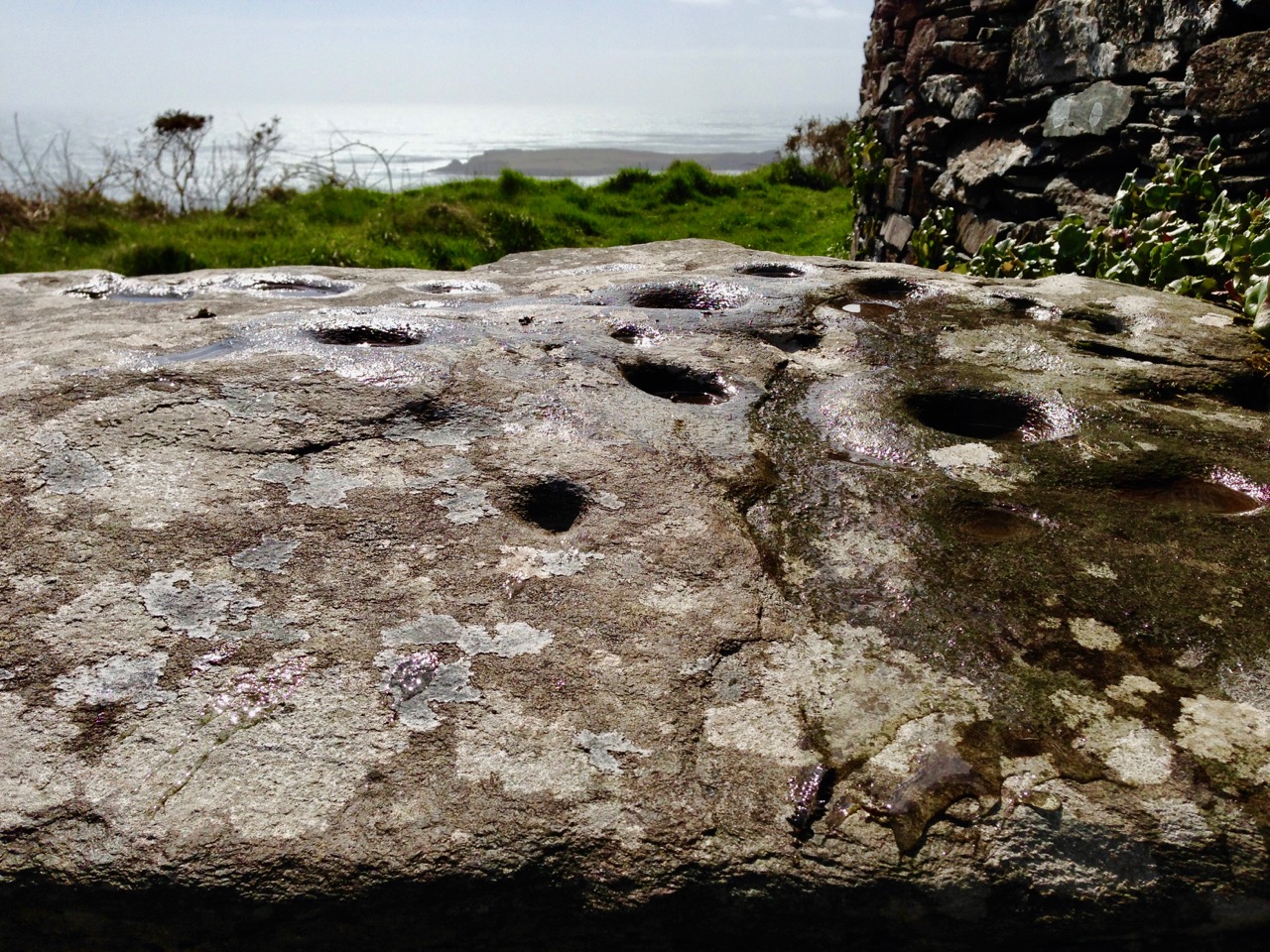
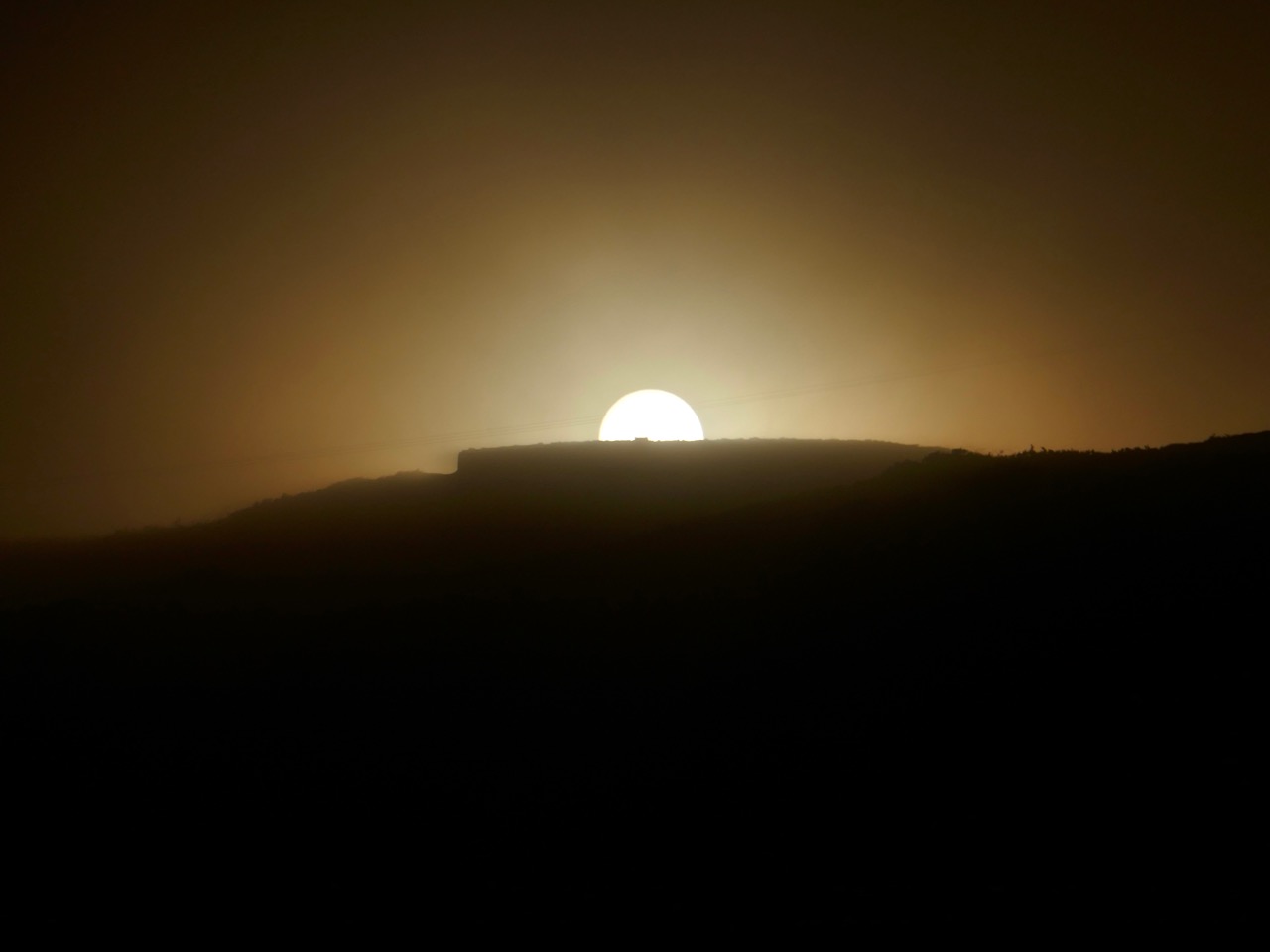
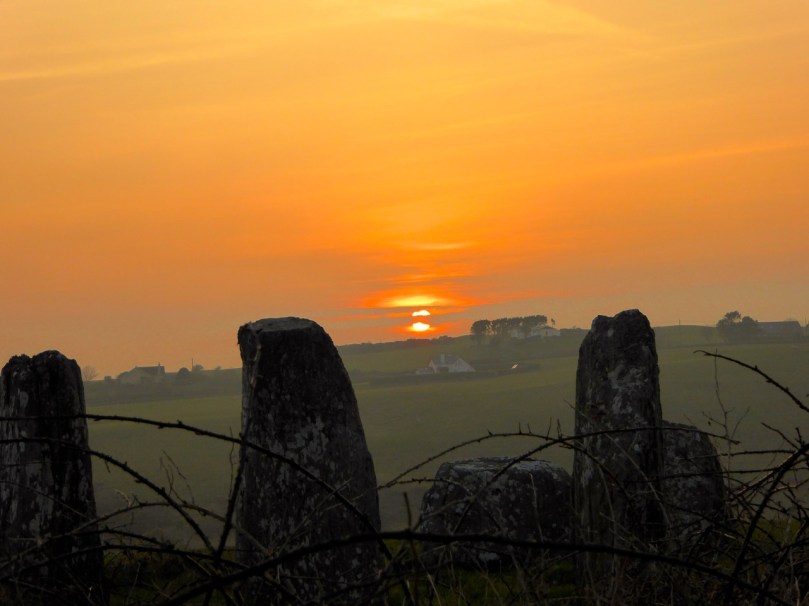
Another post which proved popular was Robert’s detailed account of an archaeological site in West Cork: Knockdrum Stone Fort. This place has everything – a substantial stone structure which probably dates from the first millennium AD; prehistoric Rock Art (one of our favourite subjects – the Knockdrum example is pictured above), likely to be around 5,000 years old; fabulous views (choose a clear day) – and a solar alignment discovered in 1930 by Vice Admiral Henry Boyle Somerville, the younger brother of writer and artist Edith Somerville. In a complementary post, Finola reported on Boyle’s life and tragic death – and gave us insights into the science of archaeoastronomy, expanding on this in a Bealtaine post, following our own experience of Boyle’s discovered alignment at Knockdrum (the sun setting exactly over the fort is pictured below).

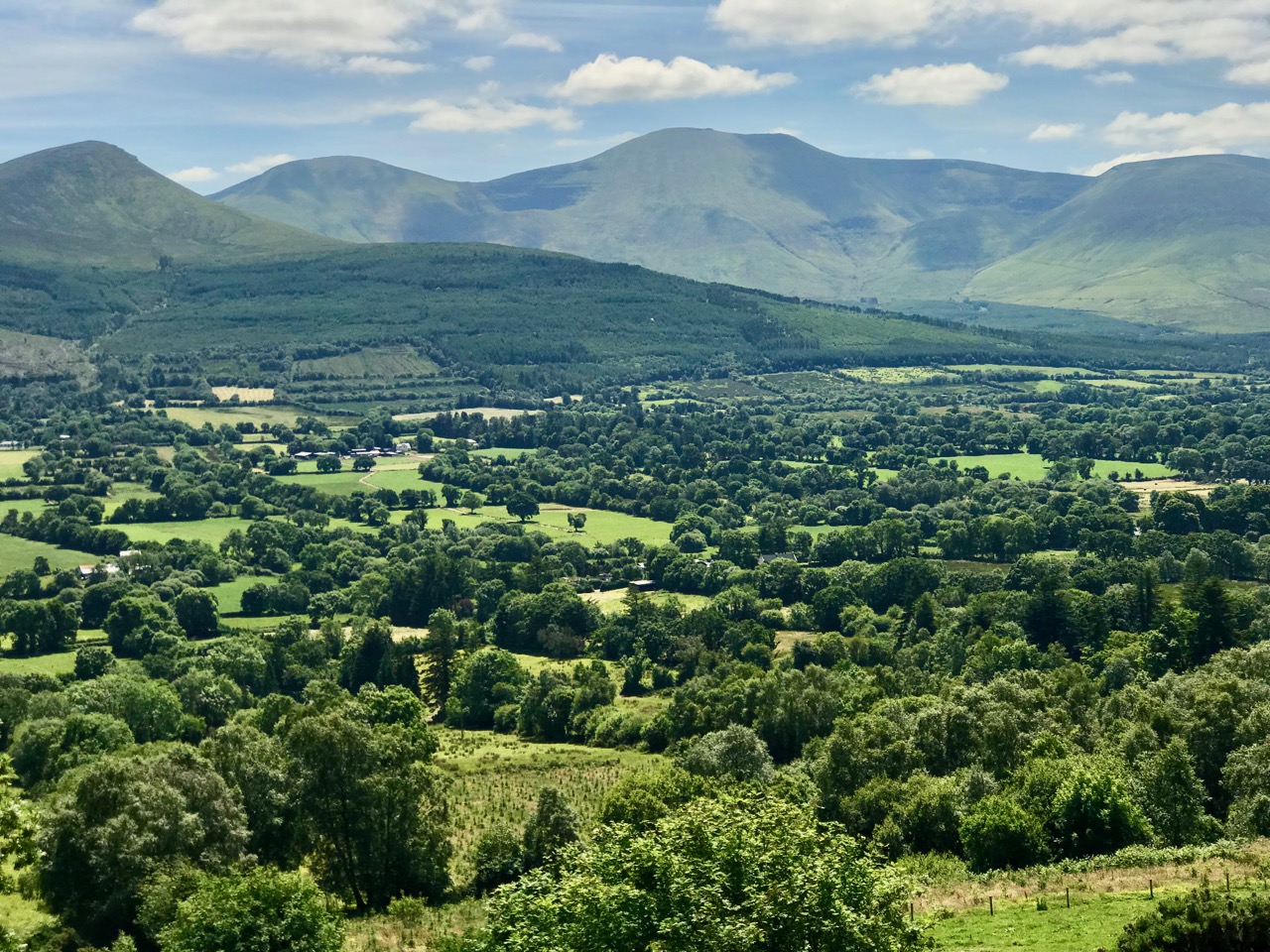
Way back in 2017 we started a series of occasional posts bearing the title . . . Off the M8 . . . We do a lot of travelling throughout Ireland (because it’s such a beautiful and historically rich country) and cover the ground between Cork and Dublin quite frequently. The M8 motorway has made this journey quite straightforward, but it has also provided the jumping off point for many an exploration to enhance the journey. One of my own favourite discovered places this year is the magical Glen of Aherlow (pictured above). We thank our good friends and travelling companions Amanda and Peter – she of Holy Wells of Cork and he of Hikelines  – for pointing us to this entrancing valley located between Slievenamuck and the Galtee Mountains in the western part of County Tipperary. We discovered there secret places and stories relating to obscure Irish Saints: have a look at the haunts of St Berrahert and St Péacáin in these posts from Robert.

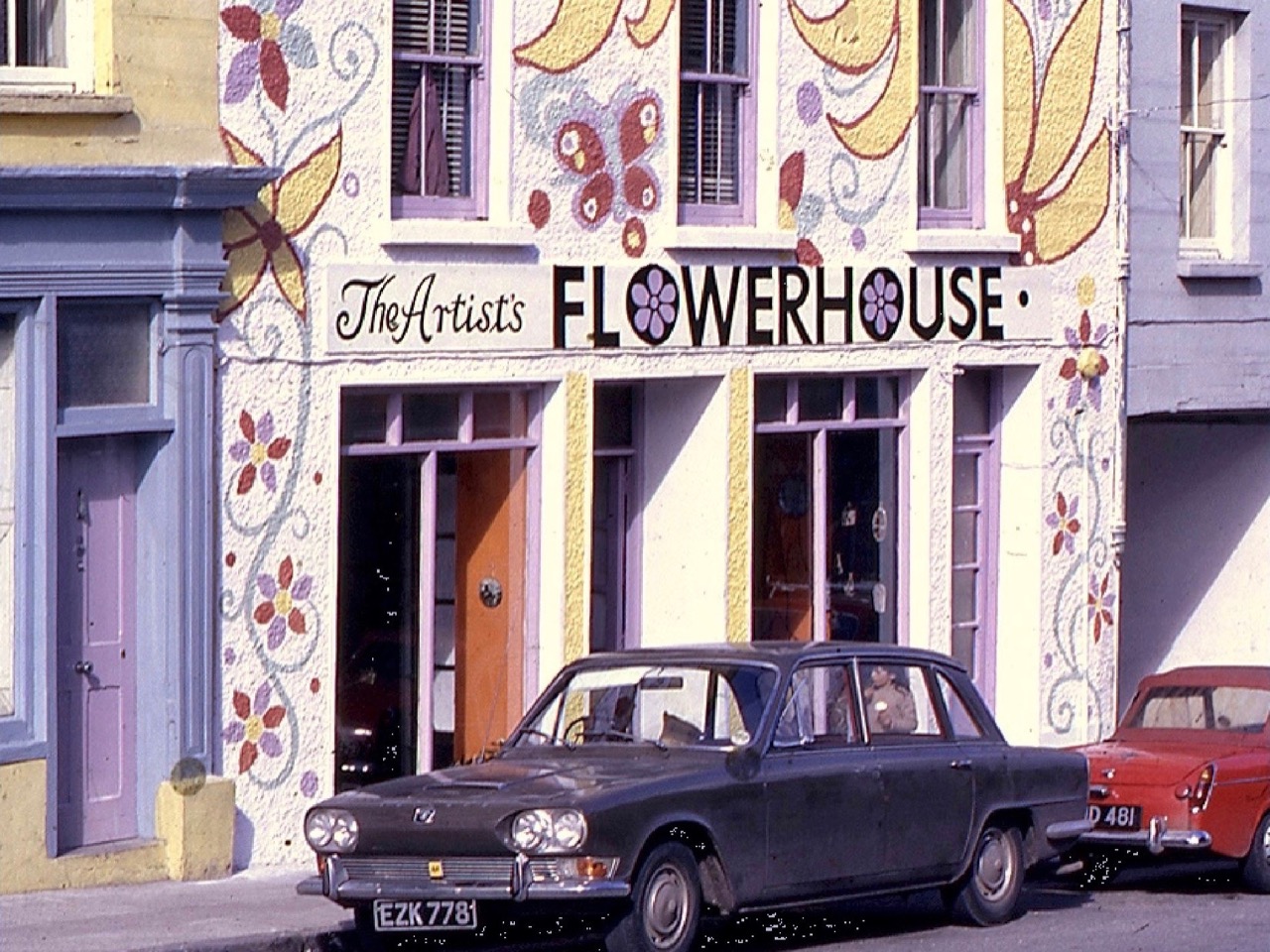
When I moved from Cornwall to West Cork some years ago I was delighted to find out that our lively adopted village of Ballydehob had a great artistic heritage during the second half of the twentieth century, to rival that of Britain’s westernmost county. West Cork became a cosmopolitan centre for artists, writers, craftspeople and musicians, renowned in its day but never properly celebrated – until this year. I was one of a small group locally who decide to rectify this by establishing the Ballydehob Arts Museum (BAM): our first exhibition . . . Bohemians in Ballydehob . . . using donated artworks, ceramics, storyboards and posters, was staged in Ballydehob’s community building, Bank House, and – presided over by Curator Brian Lalor (one of the surviving Bohemians!) – was the first incarnation of the new Museum, which will be followed up by new exhibitions every year. The picture above (courtesy of Andrew Street) from my post, shows the Flower House which, during the 1960s and 70s, became an iconic focus for the town’s artistic colony.

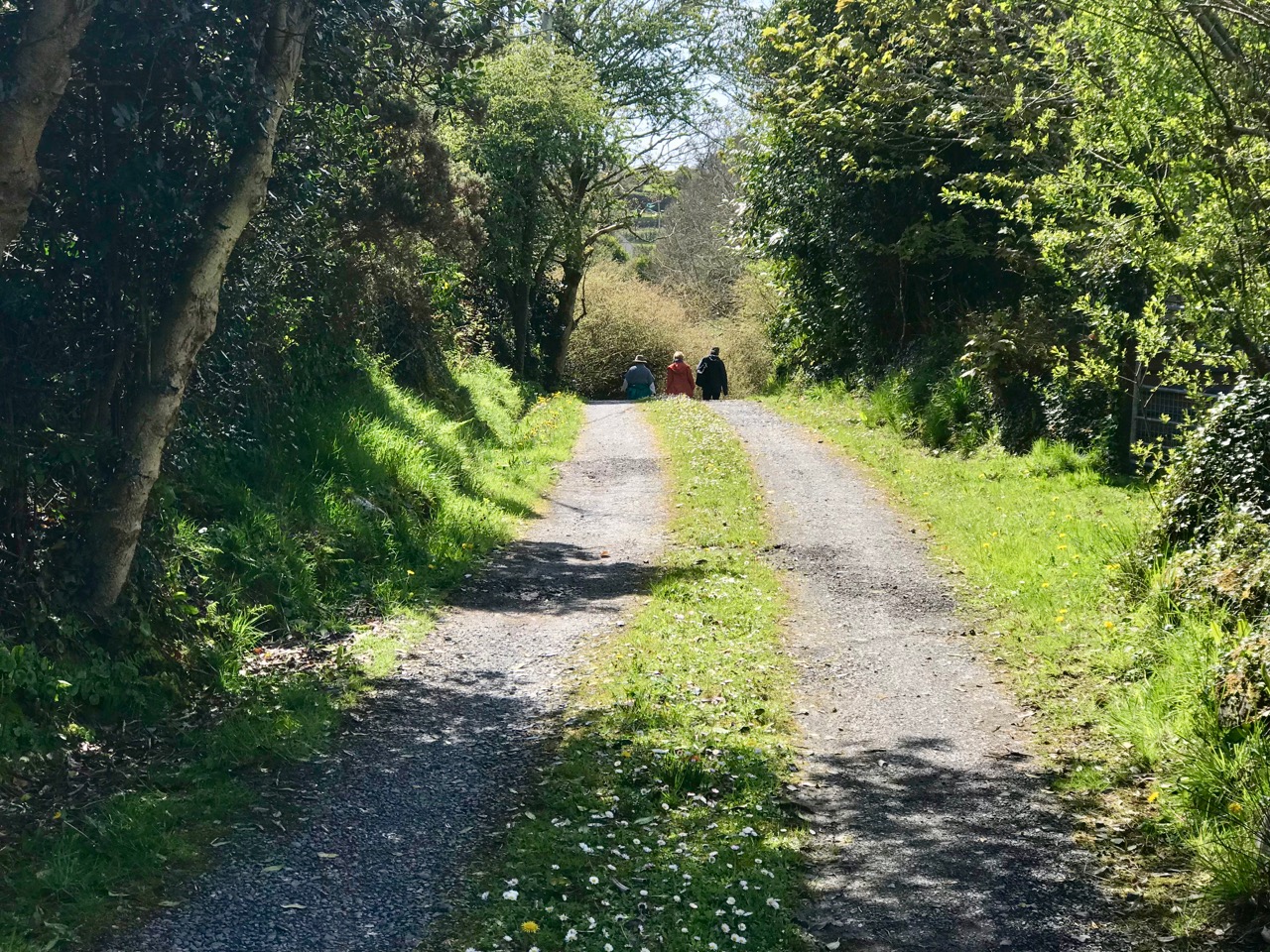
It was a grand summer altogether, and we were out walking the roads and footpaths of West Cork as much as possible. On a fine day in May we set off to explore the Toormore Loop which is only one of an excellent comprehensive system of trails which has been put in place locally in recent years. This post – Another Grand Day Out on the Fastnet Trails – documents that adventure and, hopefully, will encourage all of you to enjoy this wonderful free resource and immerse yourselves in the nature that’s all around us.

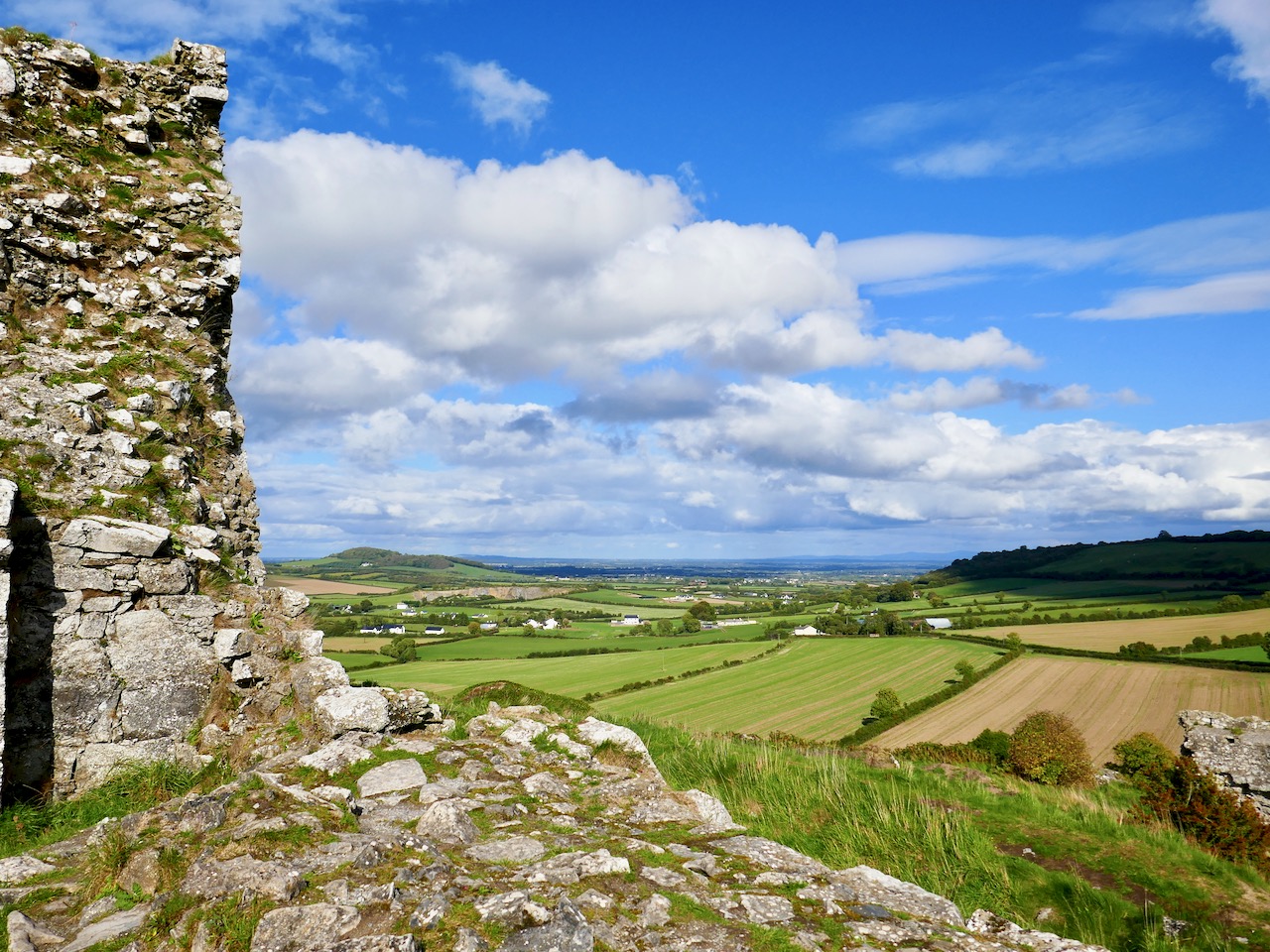
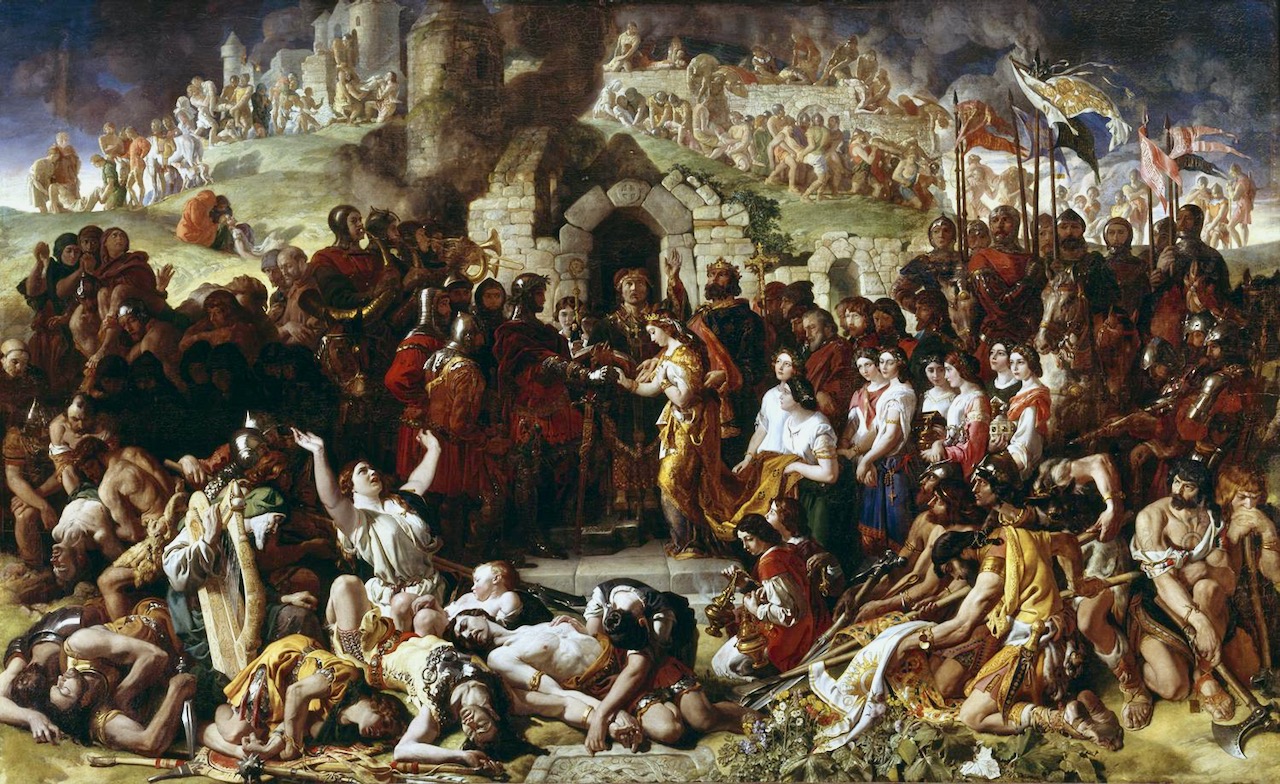
The second most viewed post this year was Finola’s fascinating account of the Rock of Dunamase and the history that it embodies. It’s a place that, for some reason, took us a few years to get to – and it’s Off the M8! But – as you can see from the picture above – climbing the Rock will give you a most rewarding and spectacular view across several counties. The ruin on its summit is inextricably associated with the most turbulent events in Irish History – the coming of the Normans to Ireland in 1169, and the famous marriage of Aiofe (daughter of Diarmuid MacMurrough, King of Leinster) to the Earl of Pembroke, immortalised in the painting by Daniel Maclise (below, courtesy of National Gallery of Ireland). The fortification with its Great Hall on the Rock was a MacMurrough stronghold, and accordingly was part of Aoife’s dowry when she married Strongbow.

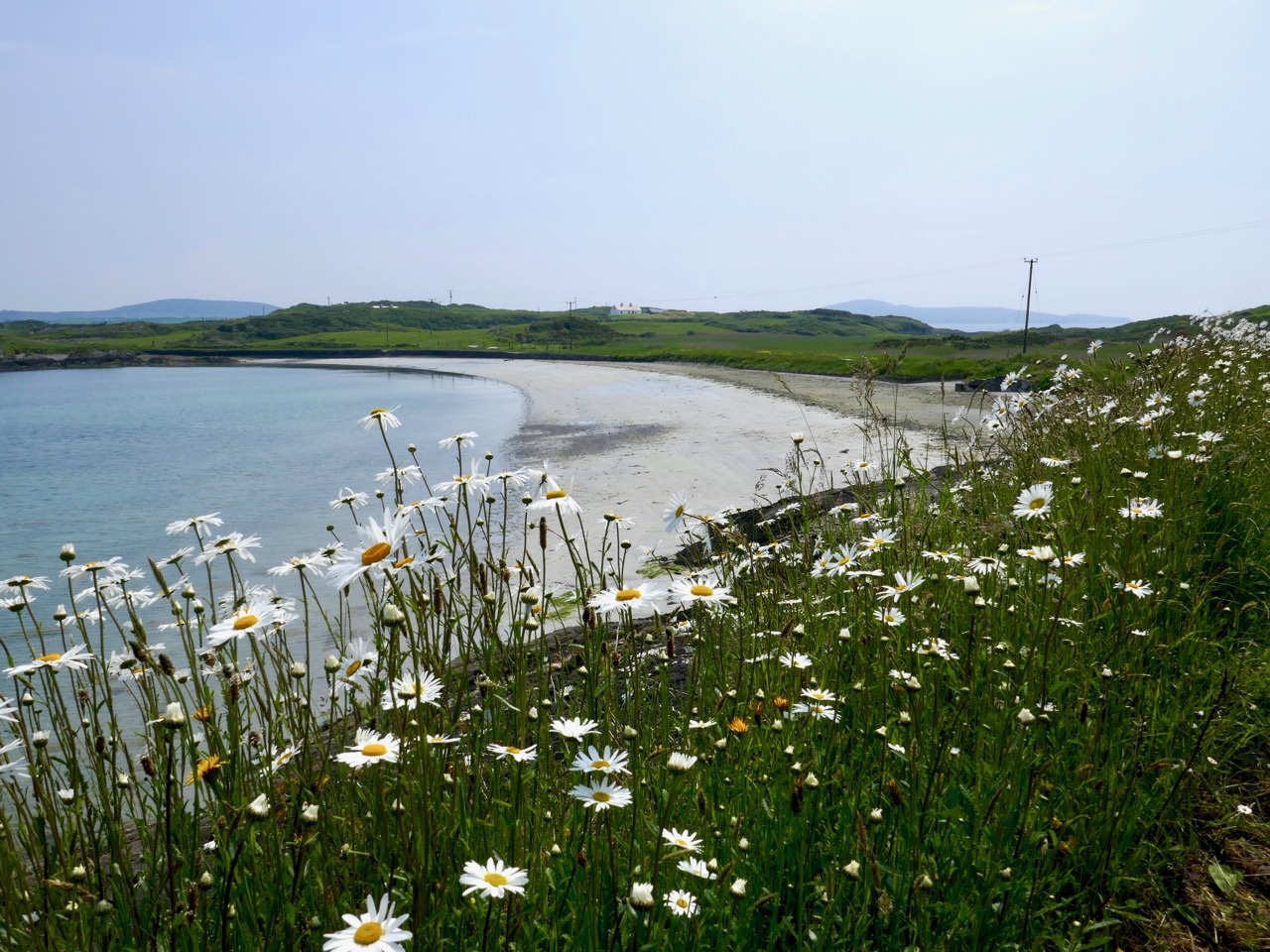
Finally (for today, anyway) we look at Finola’s post which comprehensively explores another West Cork treasure: Heir Island – a Modern Paradise (pictured above and below). West Cork has such a diverse landscape, including the inhabited islands of Roaringwater Bay, each one of which is unique. Finola teamed up with her photographer friend Trish Punch and they were shown around the island by islanders Christine Thery and Sarah Mathews, who run the Heir Island Wildlife Project. This post is a great example of how the diversity of life on the island – and here in West Cork generally – brings together so many disciplines and interests: photography, history, wildflowers, wildlife, colourful houses, and art. Everything that Roaringwater Journal tries to encompass, in fact.

Top Fifteen West Cork Photographs of 2018

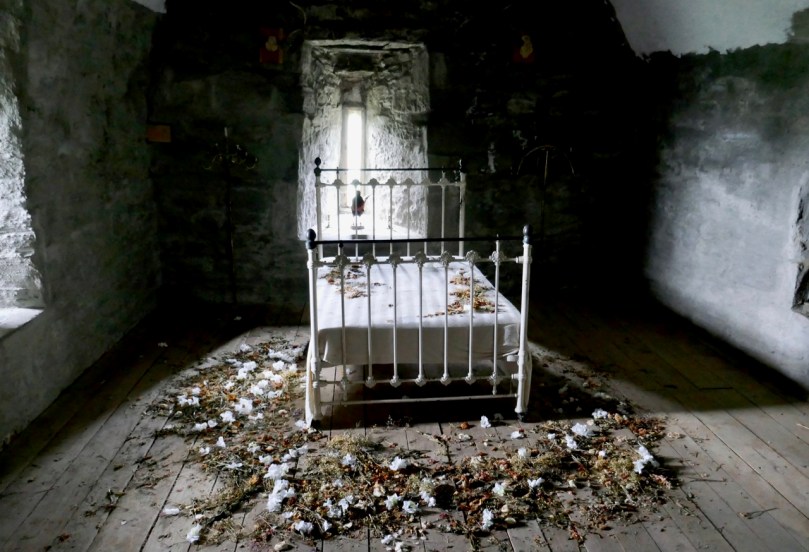
Photographs are vital to this blog, so we are always out and about with our cameras. This is a personal selection of images that pleased us in 2018. Some of these photographs have appeared in our posts, and some on our Facebook pages, but several are appearing here for the first time. Some of them remind us of places we’ve stumbled across, like the one above. It’s a room in the 15th century Castle Salem, all done up for a movie – a wildly romantic one, I bet.

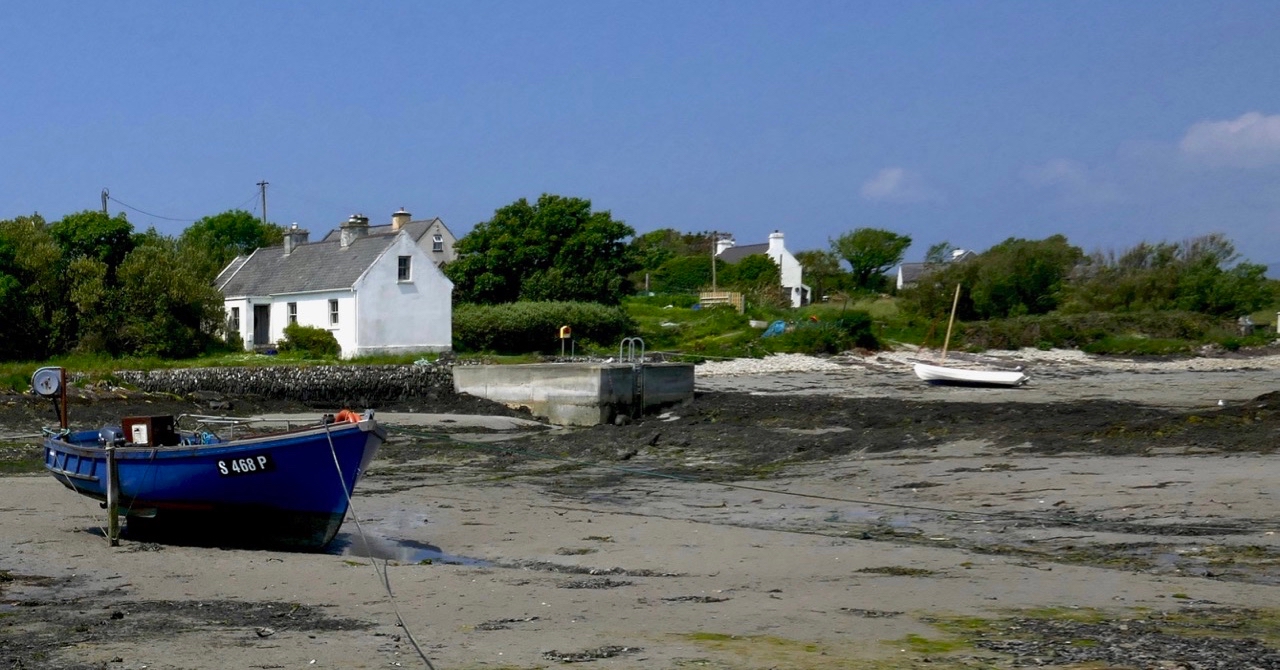
From there to the iconic Fastnet Rock Lighthouse. They changed the bulb this year, to LED. We can still see the light at night, but it doesn’t sweep across the sky like it used to. On this trip, mostly photographed by my nephew, Hugo, the scaffolding was still up for the renovations.

We love the Beara and try to get over there as often as possible. It’s famous for its colourful villages – this one is Ardgroom. And not too far away is a wonderful stone circle – Robert mentioned it in last week’s post. This photograph is of the outlier and shows how it seems to mirror the shape of the landscape on the Iveragh Peninsula.

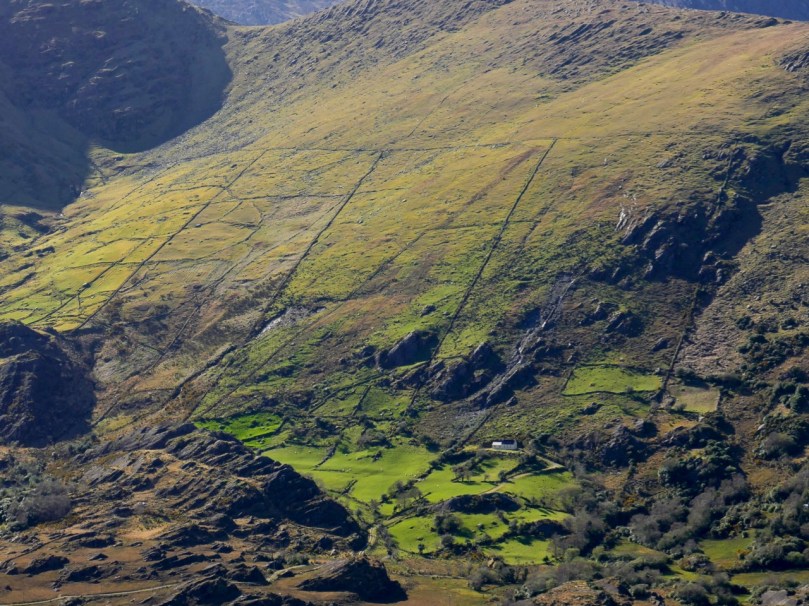
Coming back, or going, our route always takes us over the incredible Healy Pass. I’ve chosen the photograph below because the remoteness of the little farms take my breath away.

But if you look closely, this photograph also shows the old field patterns from tiny holdings long ago, including the lazy beds – ridges left from cultivating potatoes by hand.

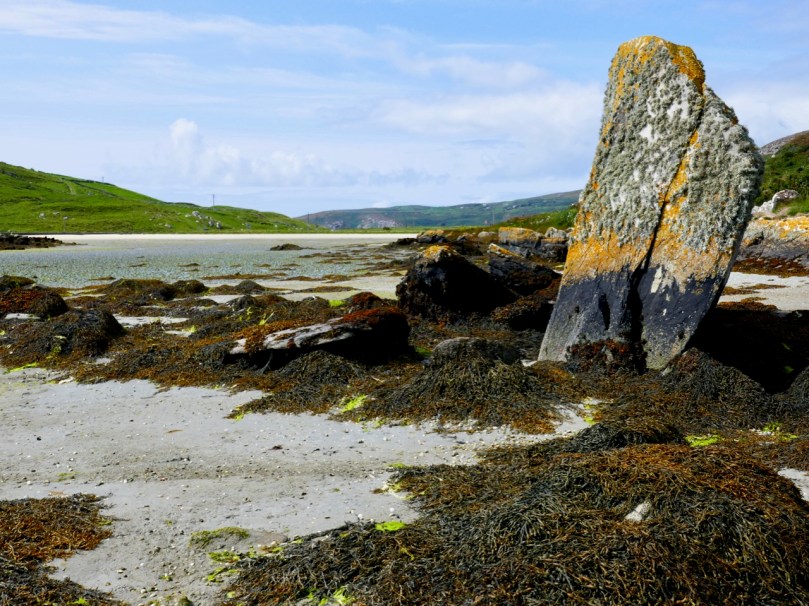
Our own Mizen Peninsula is fertile ground for exploration. This enormous standing stone, for example, can be seen in Crookhaven Bay. But even though it seems to be set in the sand deliberately, some authorities feel it is a natural feature. There’s what looks like an old stone field fence nearby, and lots of archaeology in the area.

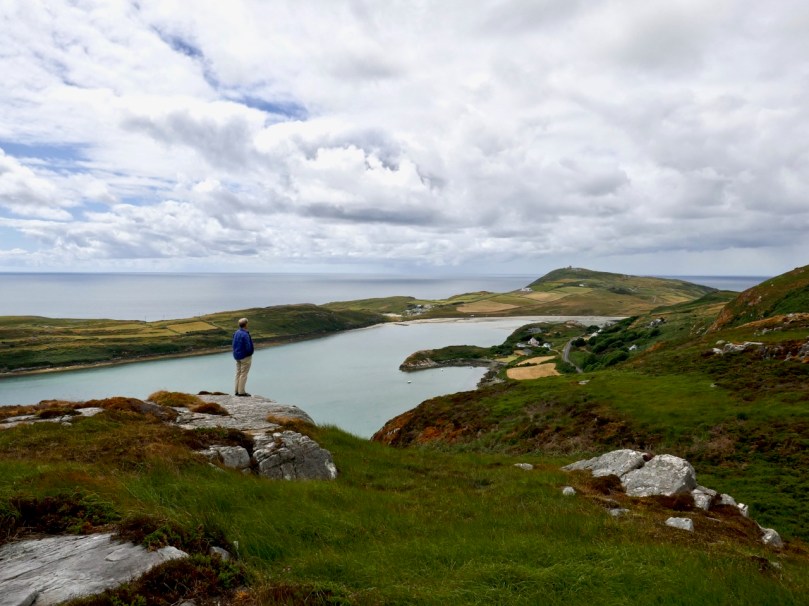
We’re looking down on that area from this vantage point (above), and across to Brow Head, always great for a wander – we included it in our West Cork Obscura list.

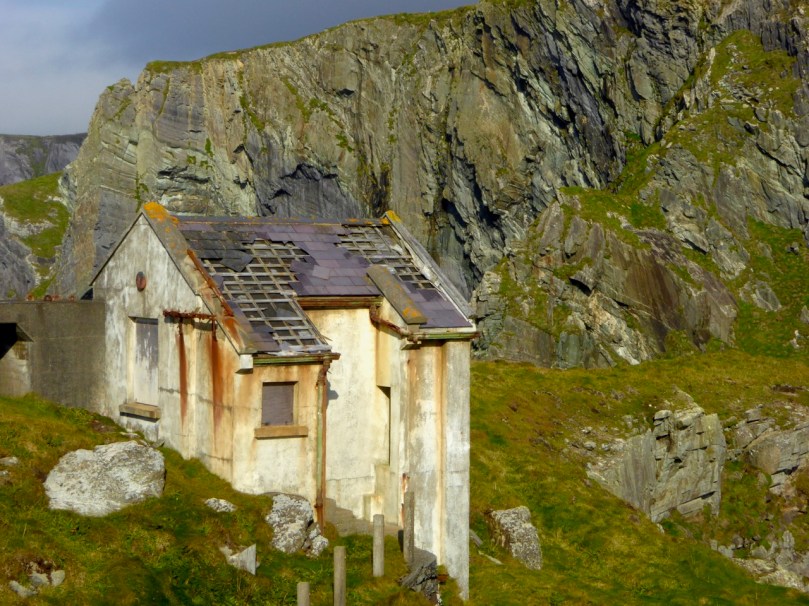
We love to bring our visitors out to the Mizen Head Visitor Centre too. It’s a wonderful experience, with dramatic scenery and vertiginous cliffs. There are lots of remnants still to remind us of the active past of this lighthouse and signal station, including this derelict, if picturesque, shed.

Of course, the weather isn’t always wonderful, even if it seems that way in a set of carefully-chosen images. But even when it’s wild, it’s worth taking the camera along – the photograph above was taken at the Altar in Toormore on a stormy day.

Robert, as our readers know by now, is a hare fanatic, and one of the highlights of his year (next to becoming a citizen!) was when little Berehert, a young hare, showed up on our lawn and hung around for a few days.

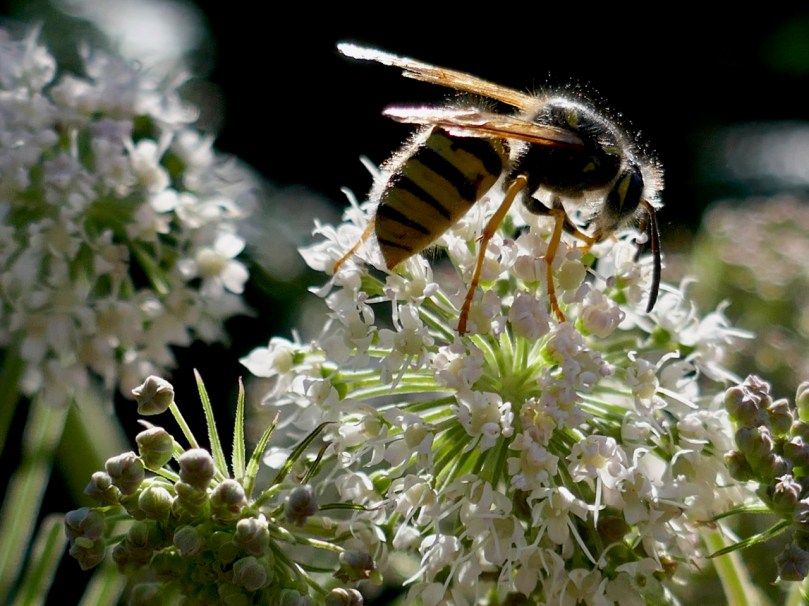
Meanwhile, nothing makes Finola happier than to wander around among the wildflowers. She runs a Facebook page on the Wildflowers of West Cork – so pop over there any time to see the amazing range of flowers that we get to enjoy here.

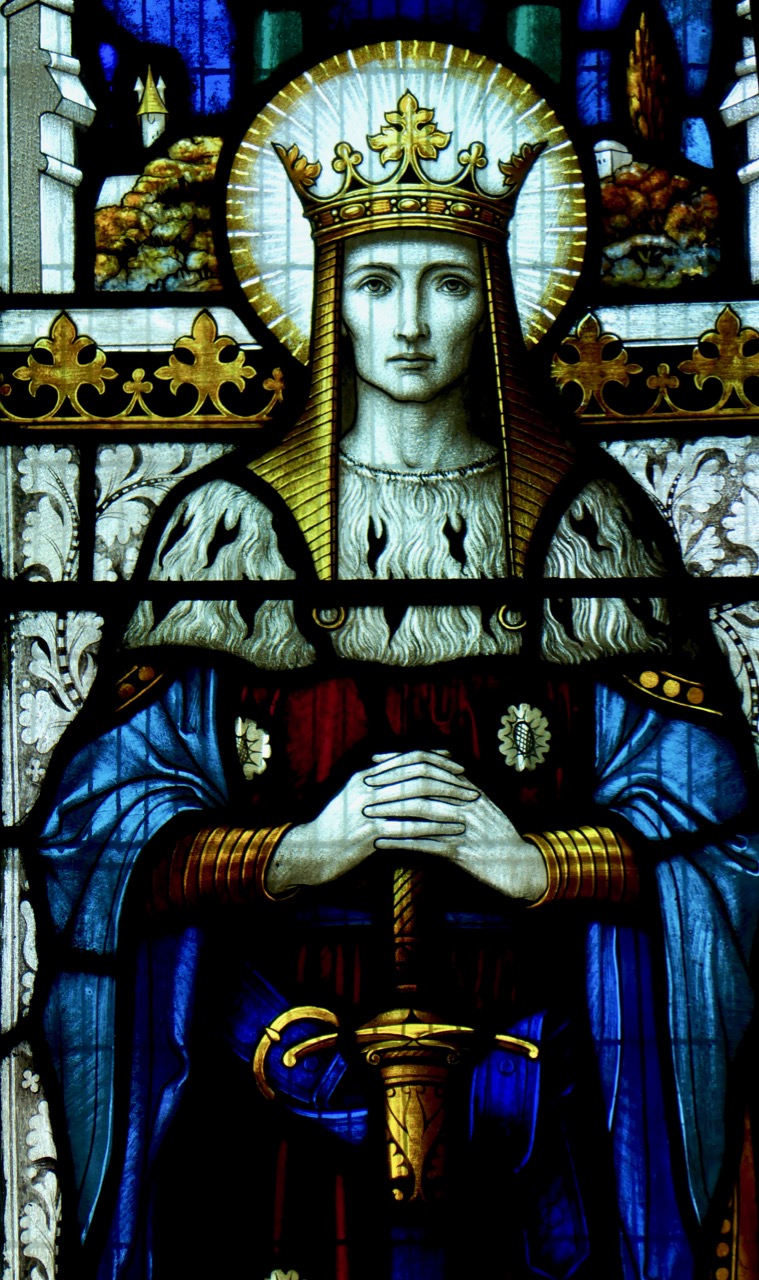
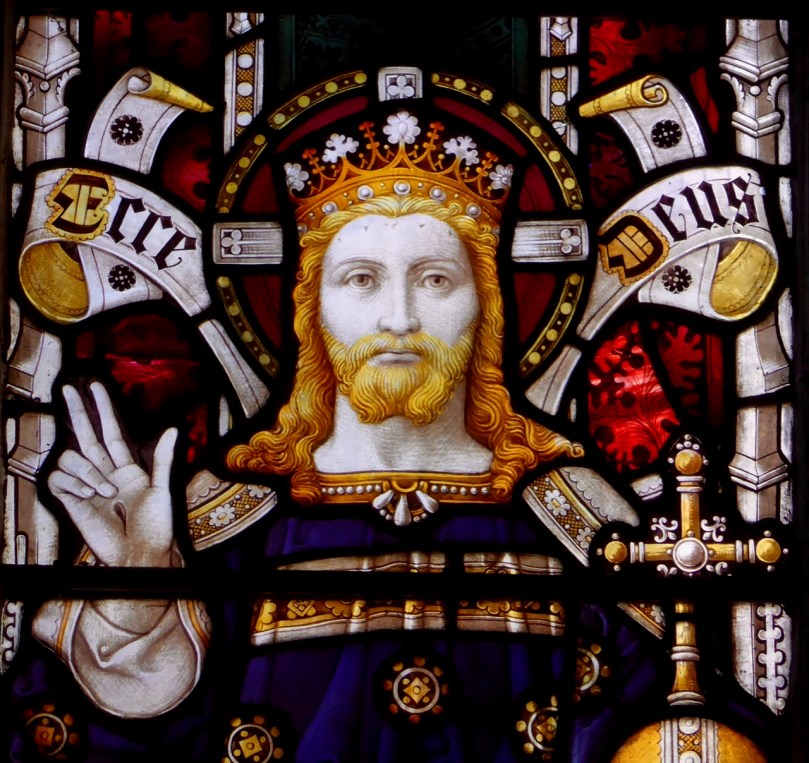
The other thing she loves is to drop into churches to study the stained glass. We’ve written about the fabulous George Walsh windows in Eyeries before, but there are lots of surprises wherever you go. She was quite taken with a wonderful three-light war memorial window in St Peter and Paul Church of Ireland in Bandon. Above is King David from that window, by the firm of Clayton and Bell. Gorgeous, isn’t it?

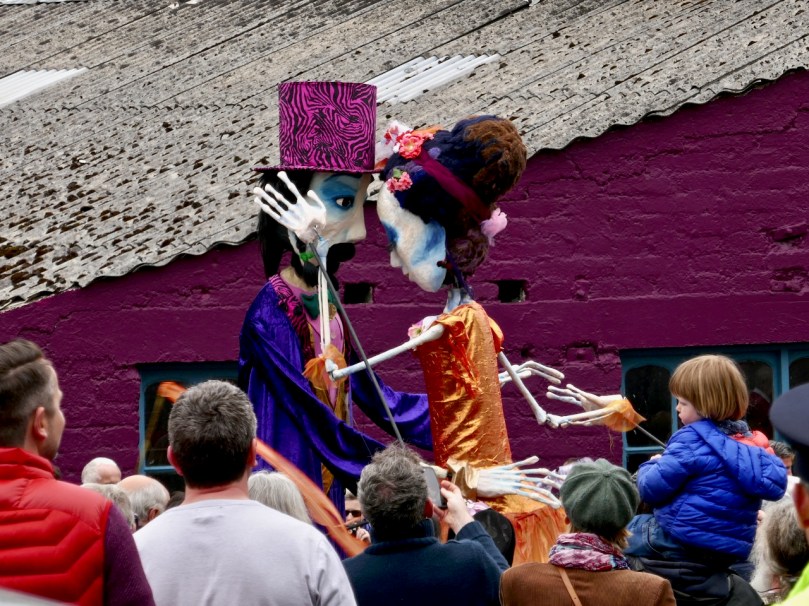
From March to October West Cork hosts a huge number of festivals. Everybody goes to everything – from the Ballydehob Jazz Festival (above), to events celebrating country and traditional music, history, wooden boats, the arts, short films, knitting (really), stone carving, food and more.

Our own view is a never-ending source of delight. This is sunset over the Goat Islands, Greater and Lesser, which lie west of Long Island. There’s a cleft down the middle, which is dangerous to try to navigate, and no place to land. As a result the islands are quite wild, with a herd of feral goats. For us, they have an air of profound mystery.

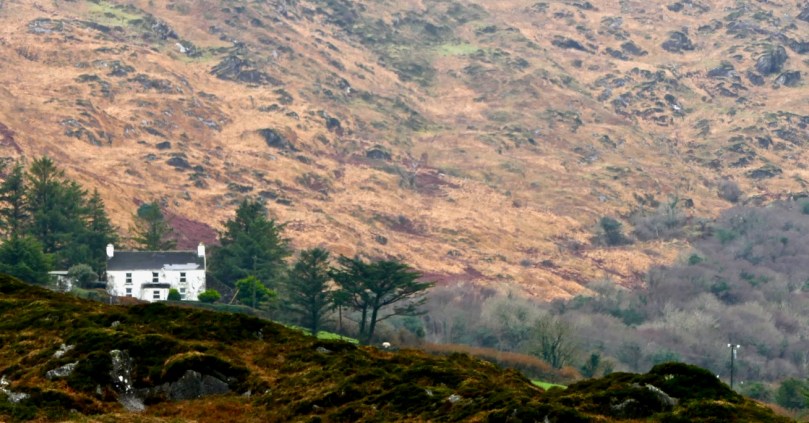
Our final photograph was taken yesterday – a traditional farmhouse on the slopes of Mount Gabriel. Lots more West Cork scenes in the months to come!

West Cork Obscura – Finola’s Picks

The popular Atlas Obscura defines itself as the definitive guide to off-the-beaten-track and little known wondrous places. So we’ve captured that idea and, as our Christmas present to our readers, bring you our own carefully-curated, slightly eccentric, Roaringwater Journal Guide to West Cork’s Hidden Wonders. Robert’s selection is here. No well-know tourist spots for these posts! No car parks and visitor centres! You may need wellies for some, a good map for others, and, although all are accessible, some may require permission.Each place I recommend will link to a blog post with more information. As an example, Sailor’s Hill, just outside Schull (above) is an easy walk and look what you get at the top! 

This is the view from Brow Head, looking back towards Crookhaven, and Mount Gabriel in the distance. Brow Head is much less visited than Mizen Head, but just as spectacular

I’m going to start with some archaeology and a couple of spectacular sites. The first is the Kealkill Stone Circle – but this isn’t just a stone circle, it’s a complex of monuments that includes a five-stone circle, a radial cairn (very rare in this part of the world) and two enormous standing stones. The views are immense in every direction, and the site is easy to find.

We all know about Drombeg – and we love it when the sun goes down at the midwinter solstice, and even when it doesn’t. But fewer people know about another stone circle, equally spectacular, with a spring equinox orientation. It’s called Bohonagh and it’s quite a complex. First of all, there’s a boulder burial, with quartz support stones and cupmarks on the boulder. Then there’s a cupmarked stone, partly hidden in the brambles between the boulder burial and the stone circle. Finally, there’s the circle itself, almost complete, with views in all directions.

Equinox sunset at Bohonagh

We were lucky to have a session there one equinox, and another one with Ken Williams of Shadows and Stone. For access, park just off the main road, across from the salmon coloured house 4.5km east of Rosscarbery and walk up the farm road to the barns and from there to the top of the hill. This is a working farm – please close all gates and be respectful of animals!

Maughnasilly Stone Row broods on the hilltop

A stone row to round out the archaeology sites – this one is at Maughnasilly and I chose it because it’s been excavated, so there’s an informative sign, access is easy and it’s a beautiful, atmospheric site, overlooking a small lake. The row has been calculated to have both lunar and solar alignments.

And from the ground…

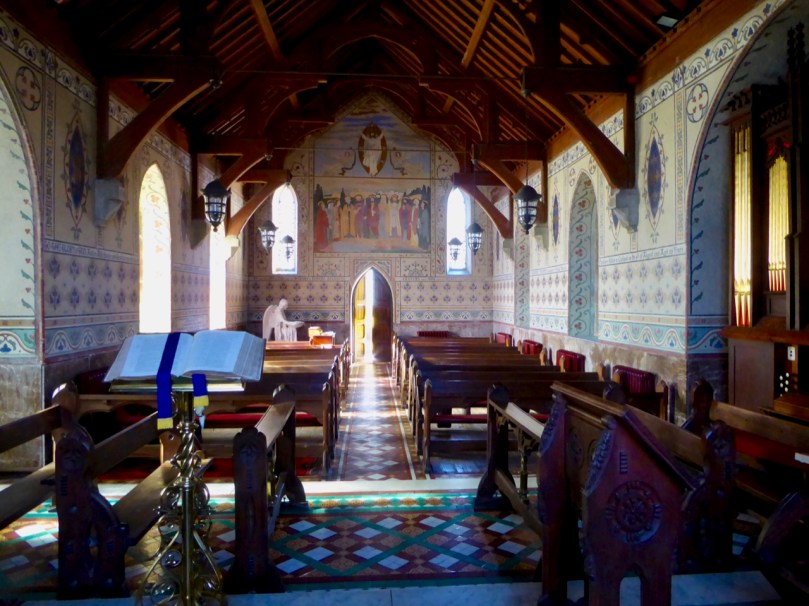
A couple of churches now, beginning with the Church of Ireland Church of the Ascension in Timoleague. This is one of those places that is dripping with unexpected stories. As soon as you go through the door your jaw will drop – the whole church, floor to ceiling, is covered in mosaic, partly paid for by an Indian Maharajah. Read the story here and here – and look carefully at the stained glass windows, some of them are among the oldest stained glass we have in Ireland. The key used to be at the grocery store on the main street, but I’m not sure where it is now, so you may have to ask around. Let us know if you find out.

The interior of the church, and one of the beautiful Clayton and Bell windows

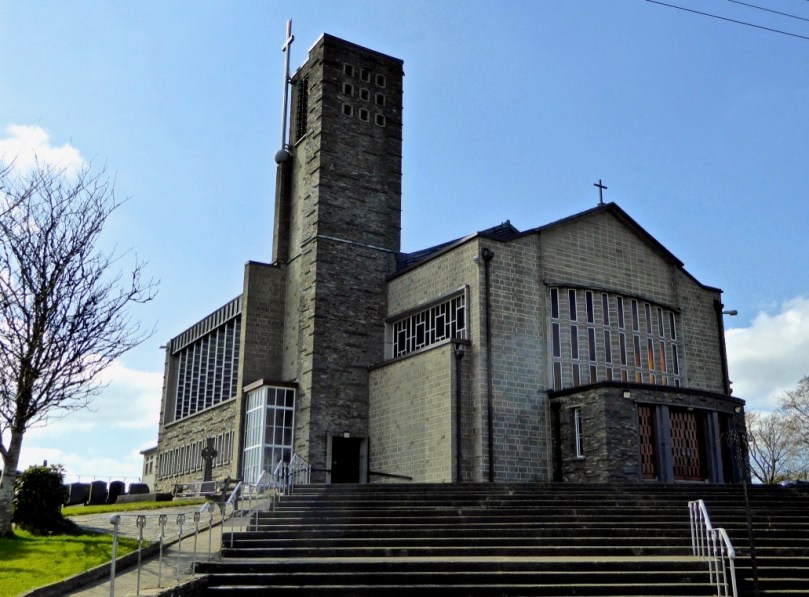
You may wonder at my next choice – it’s not everyone’s cup of tea – but the modernist church in Drimoleague is the work of Frank Murphy, the architect hailed as Cork’s ‘Unsung Hero of Modernism’.

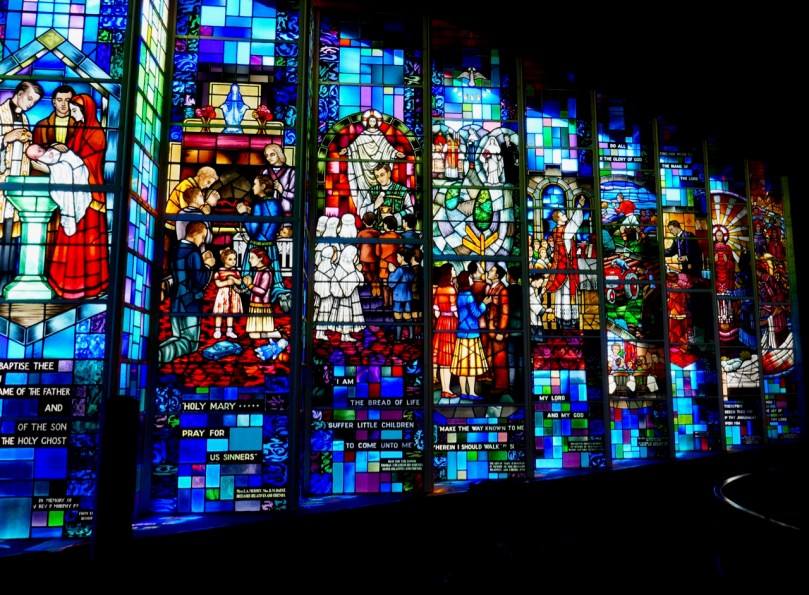
I love the spare minimalist space, very rare in West Cork, but it’s the stained glass windows that drew my attention. It’s not that they are particularly beautiful or skilfully done: they’re by the Harry Clarke Studios long after Harry himself had died. It’s that they fascinate me as a social document – they are, in fact, a prescription for how to live your life as an Irish Catholic in the 1950s. As such, they will resonate with anyone of my vintage. Research by the brilliant young scholar, Richard Butler, has revealed that the design was practically dictated by Archbishop Lucey, still a name to invoke an image of the all-powerful churchman of the 20th century.

And a final church, but this one strictly for the windows. (No – not St Barrahanes in Castletownsend for the Harry Clarkes – everyone knows about them already, and this is a selection of lesser-known wonders.) Do NOT go through Eyeries, on the Beara Peninsula, without stepping into the little church of St Kentigern. Here is where we were first introduced to the work of the stained glass artist, George Walsh.

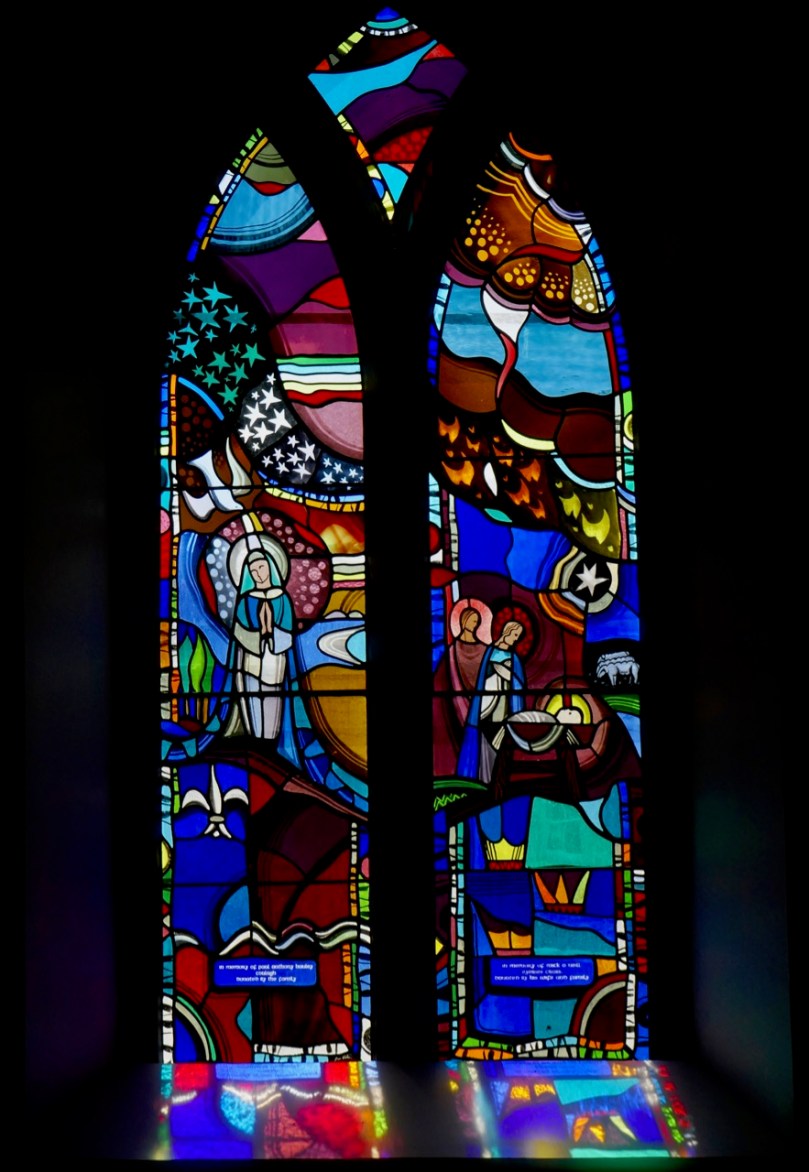
The Annunciation and Nativity window

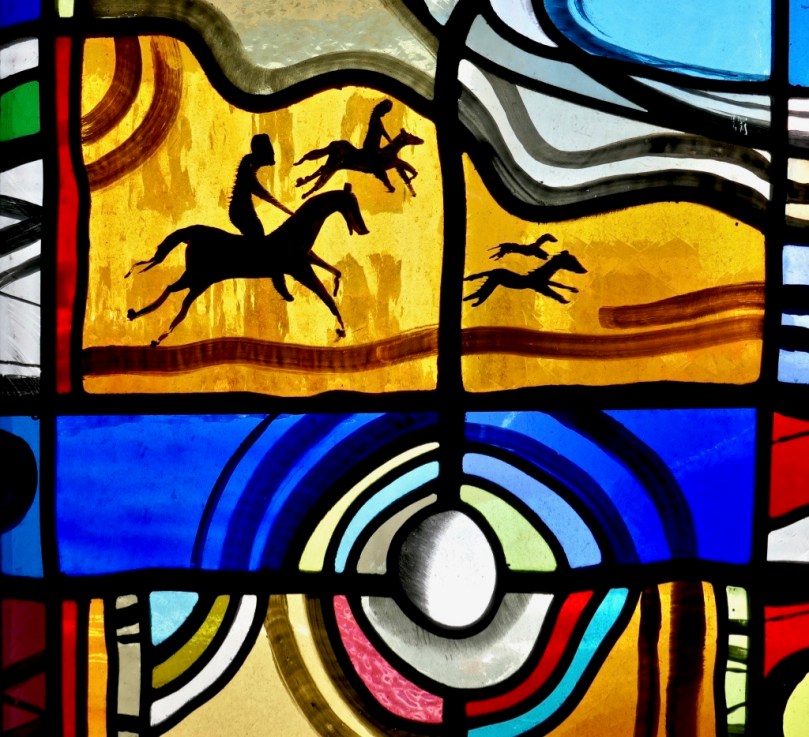
When Robert wrote his original post, we couldn’t find out much information on George Walsh, but now he has become a friend and I have written about his work for the next issue of the Irish Arts Review (due out in March, 2019) and spent many happy hours photographing his windows and his artwork around Ireland. It’s bold, graphic, modern and incredibly colourful, and the windows in Eyeries, along with the religious themes, tell the story of Ireland and the Beara through time.

Some places to visit now for a good walk or a swim. First, one of my favourite walks is to hike up to Brow Head, at the end of the Mizen Peninsula (you can drive up too, but pray you don’t meet a tractor coming down) and then walk out to the end of the Head (see the second photo on the post for the view from the top of the road). Stop first to explore the ruins of the old Marconi Station – there’s also a Napoleonic-era  signal station and a WW2 Lookout Post. Then wander through the heather and the low-growing gorse until you get to the part where the sea is crashing below, with vertiginous drops off either side. I will leave it to you how far you go from there!

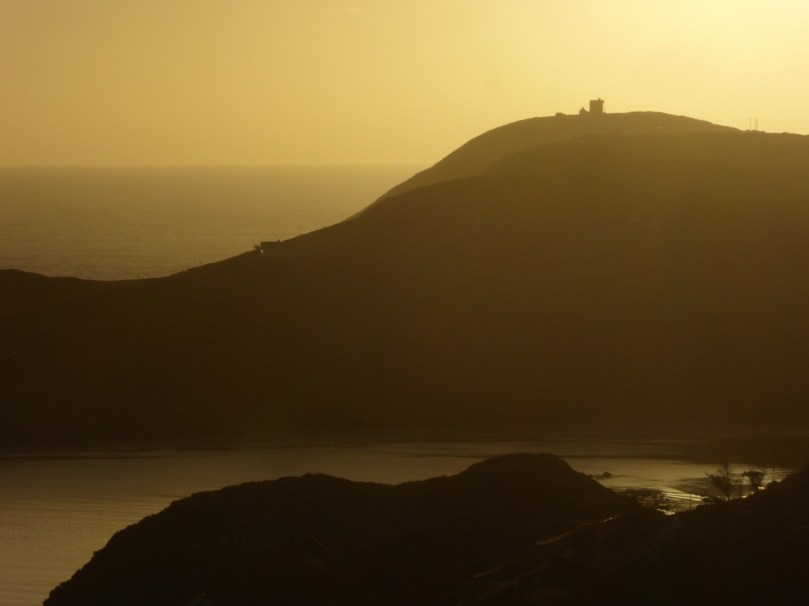
Brow Head showing the signal station and Marconi station silhouetted against the evening sky

Although Barley Cove is well known, Mizen locals love Ballyrisode Beach for a swim or a lounge in the sun. White sand, sheltered bays, and water warmed by running over the shallow bay. The final little beach holds a secret – a Bronze Age Fulacht Fia or Water-Boiling Site, that Robert and I recorded for National Monuments this summer. It was an exciting find, hiding in plain sight. The beach has an association with pirates too!

Ballyrisode Beach – yes, the water really is this colour. The three sided rectangular stone thing is the fulacht fia

The final choice for a walk is Queen Maev’s tomb, a short hike up from Vaughan’s Pass car park, up behind Bantry. For this photograph I am indebted to Peter Clarke, of the wonderful Hikelines blog. He and Amanda (with whom we have explored SO many holy wells)  were our companions that day. When you reach the top there is a small wedge-tomb, but this is one place where the journey is the real story, with the Mizen, the Sheep’s Head and the Beara all spread out before you.

Photograph © Peter Clarke

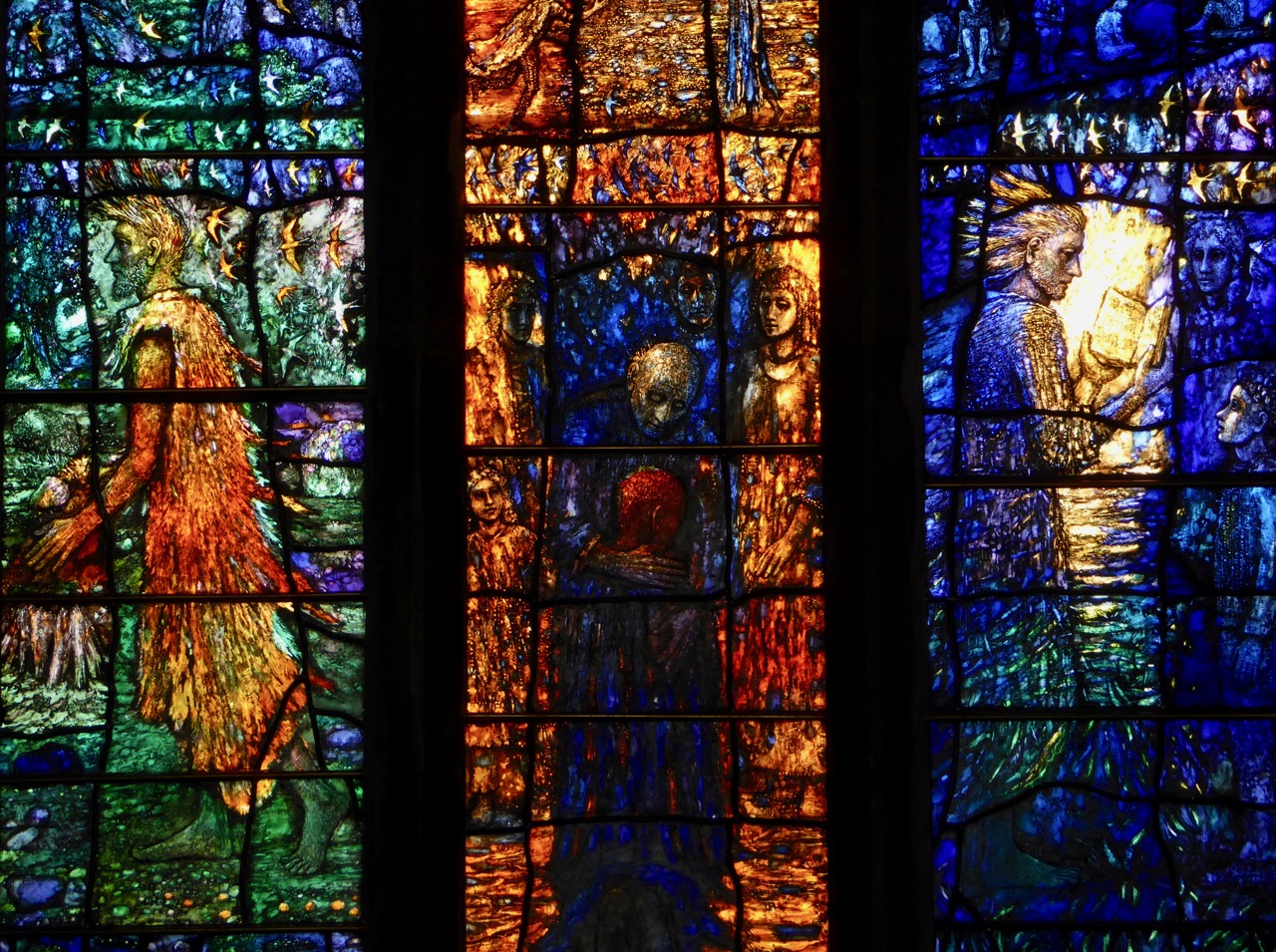
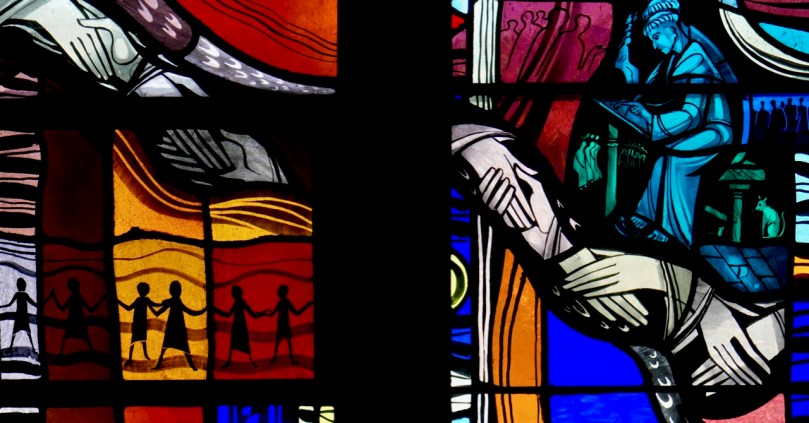
I leave you with a detail from the George Walsh windows in Eyeries, together with the poem the scene is based on, Pangur Bán, written in the 9th century by an Irish  monk labouring away in a scriptorium in Europe. Here is the poem read, at a memorial service for Seamus Heaney, first in the original Old Irish and then in Heaney’s translation.

Merry Christmas from us! If you live here, get out and about this year to some of our picks, and if you don’t, come see us soon!

West Cork Obscura – Robert’s Choices

‘Hidden West Cork’ and ‘off the beaten track’ have been oft-used phrases in our posts – and that’s part of our mission with Roaringwater Journal: exploration of some of the more secret places, and researching and recording their stories. Finola has looked out her own favourites; my current choices are here – although, with 569 posts written to date between us, we could have picked out so many.

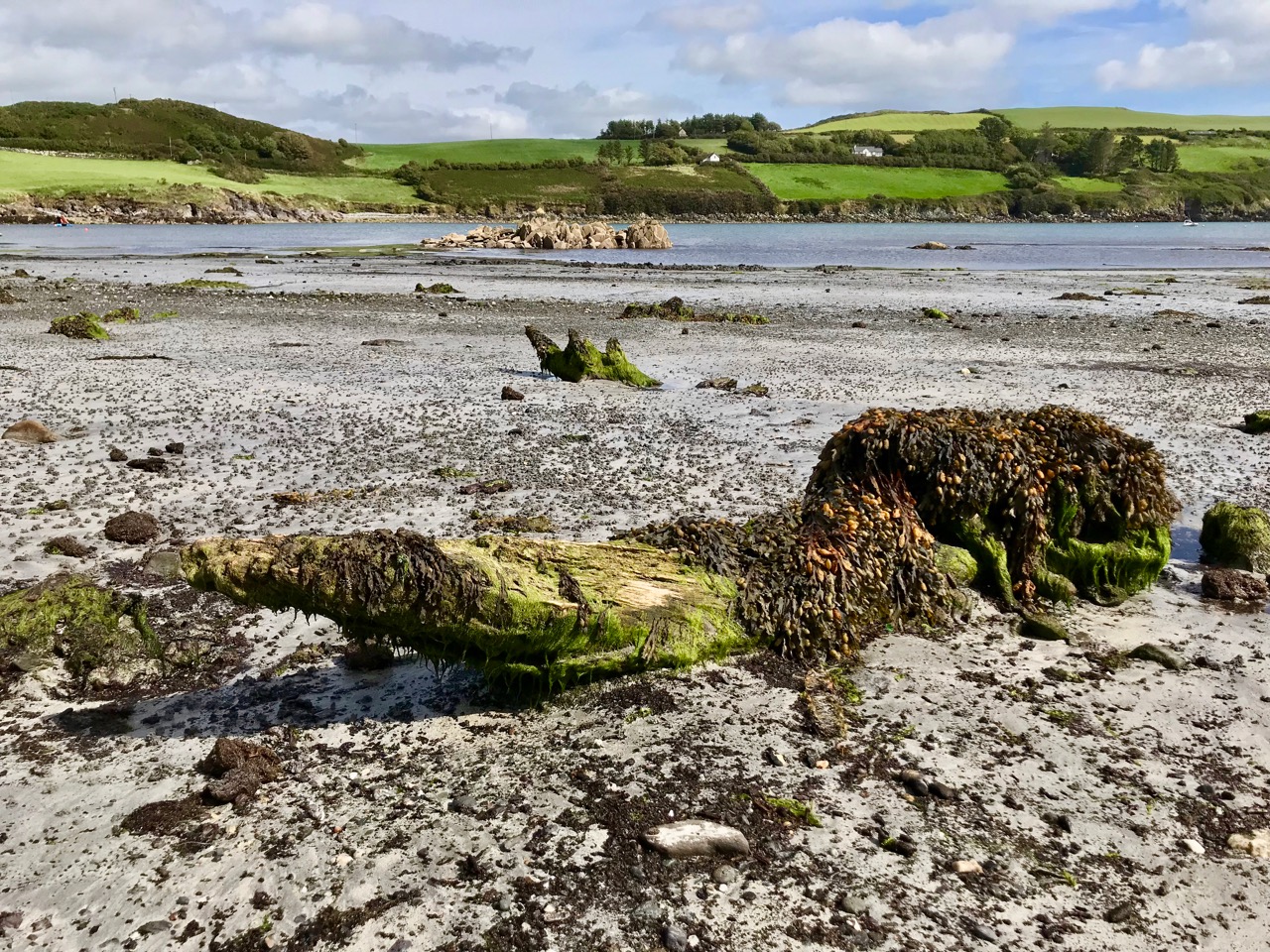
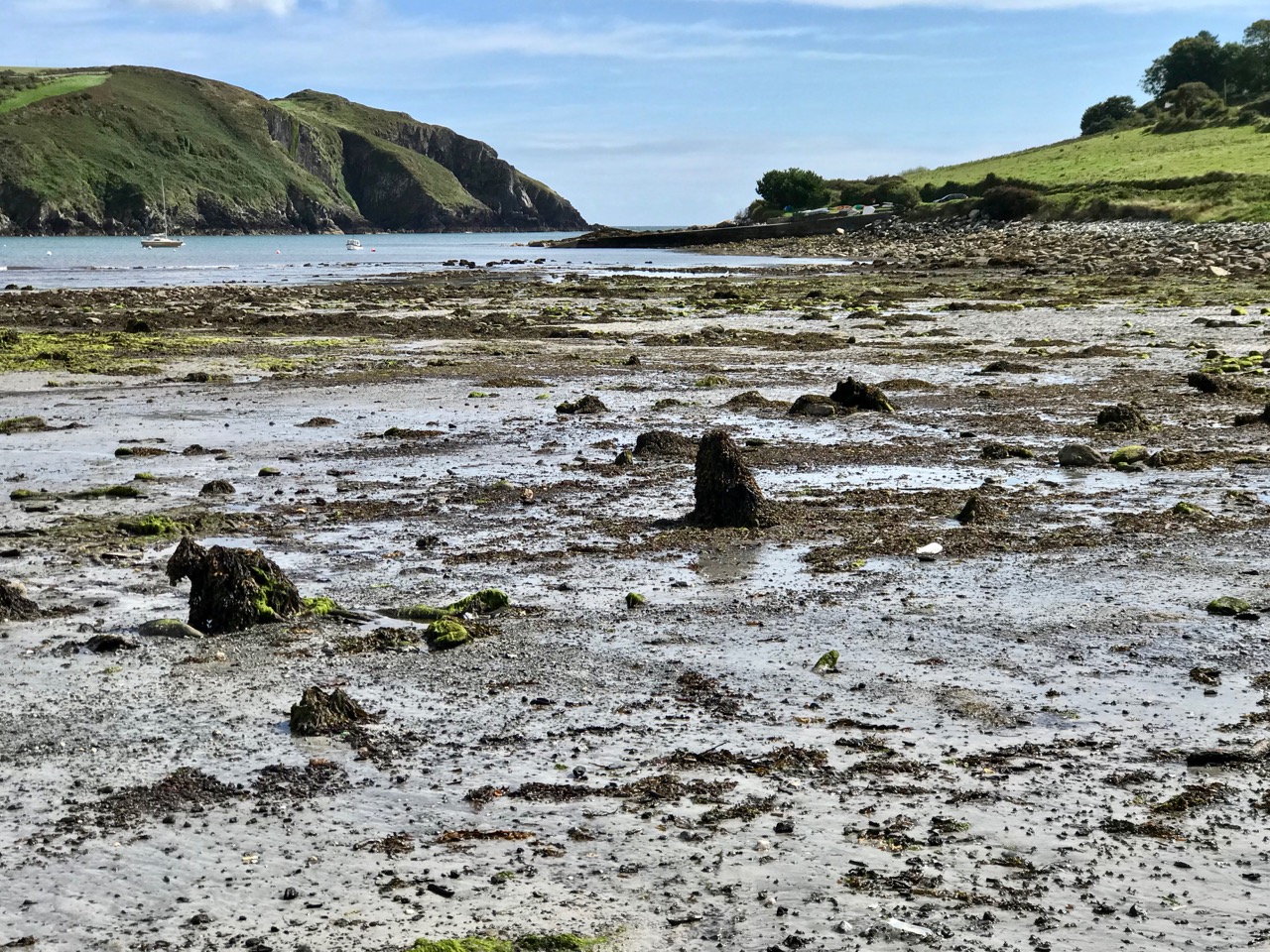
Header and above – one of the discoveries which made a great impression on me during the year was Tralong Bay, out beyond Glandore and Drombeg: it’s a beautiful piece of the coastline, at the end of a cul-de-sac and – it seemed to us – very little visited. But to visit is to transport yourselves back thousands of years as, on the beach and exposed at low tide, are the remains of an ancient forest. Here is the post.

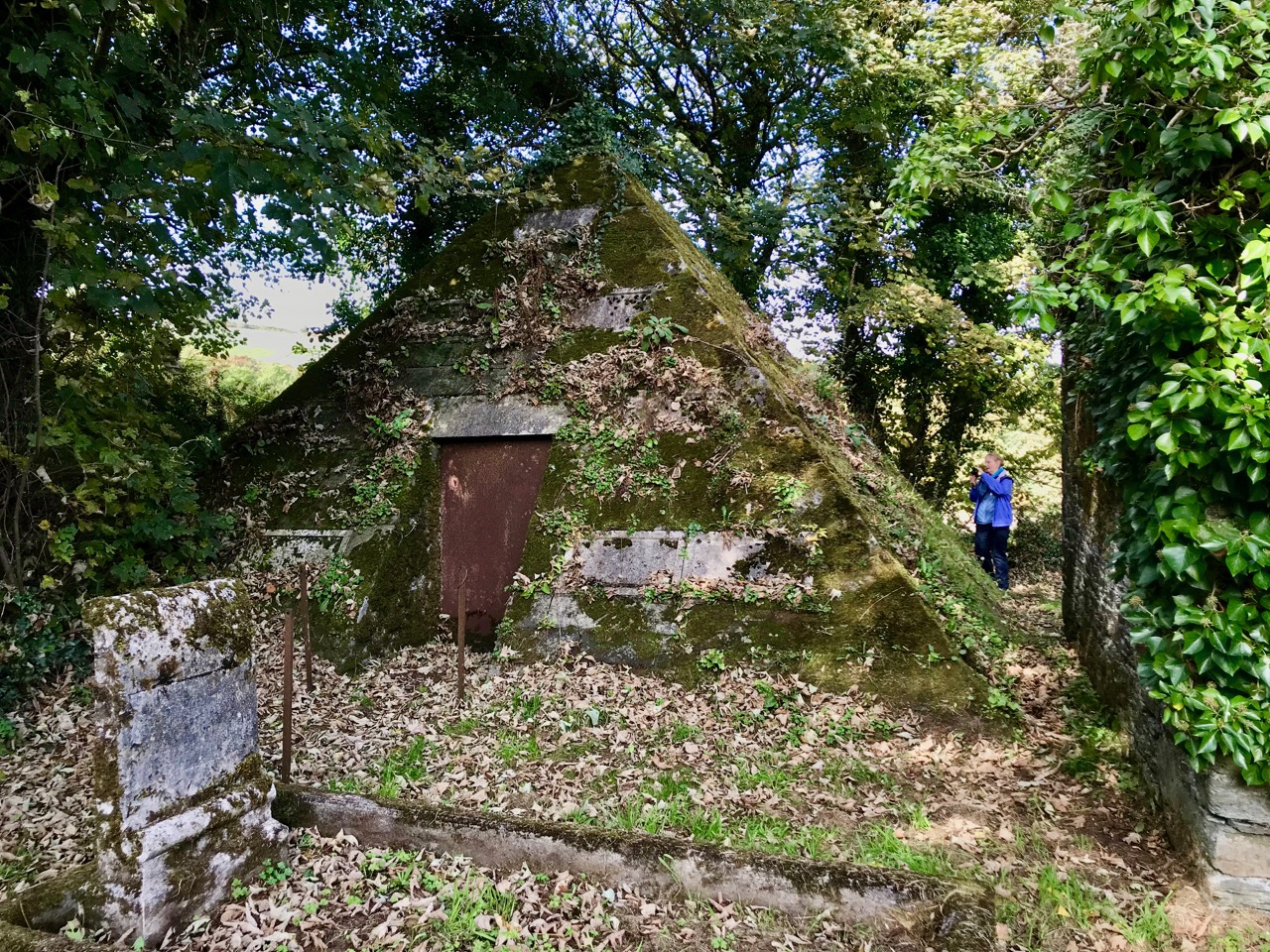
A quirky discovery, not too far away from Tralong, was the pyramid-shaped mausoleum in the old burial ground at Glandore. For us, ancient graveyards are treasure troves of local history. This one – a peaceful and secluded place well worth a visit anyway – conceals an enigma: find the story here.

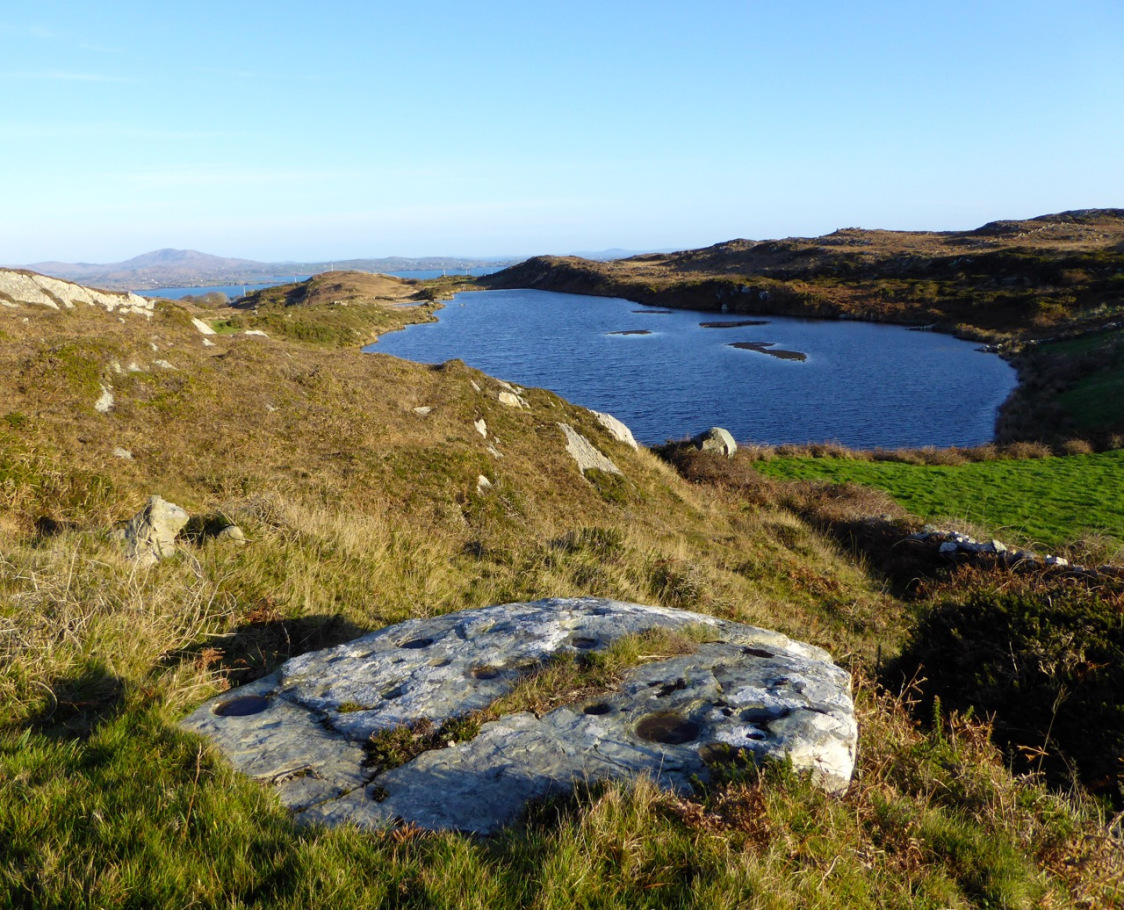
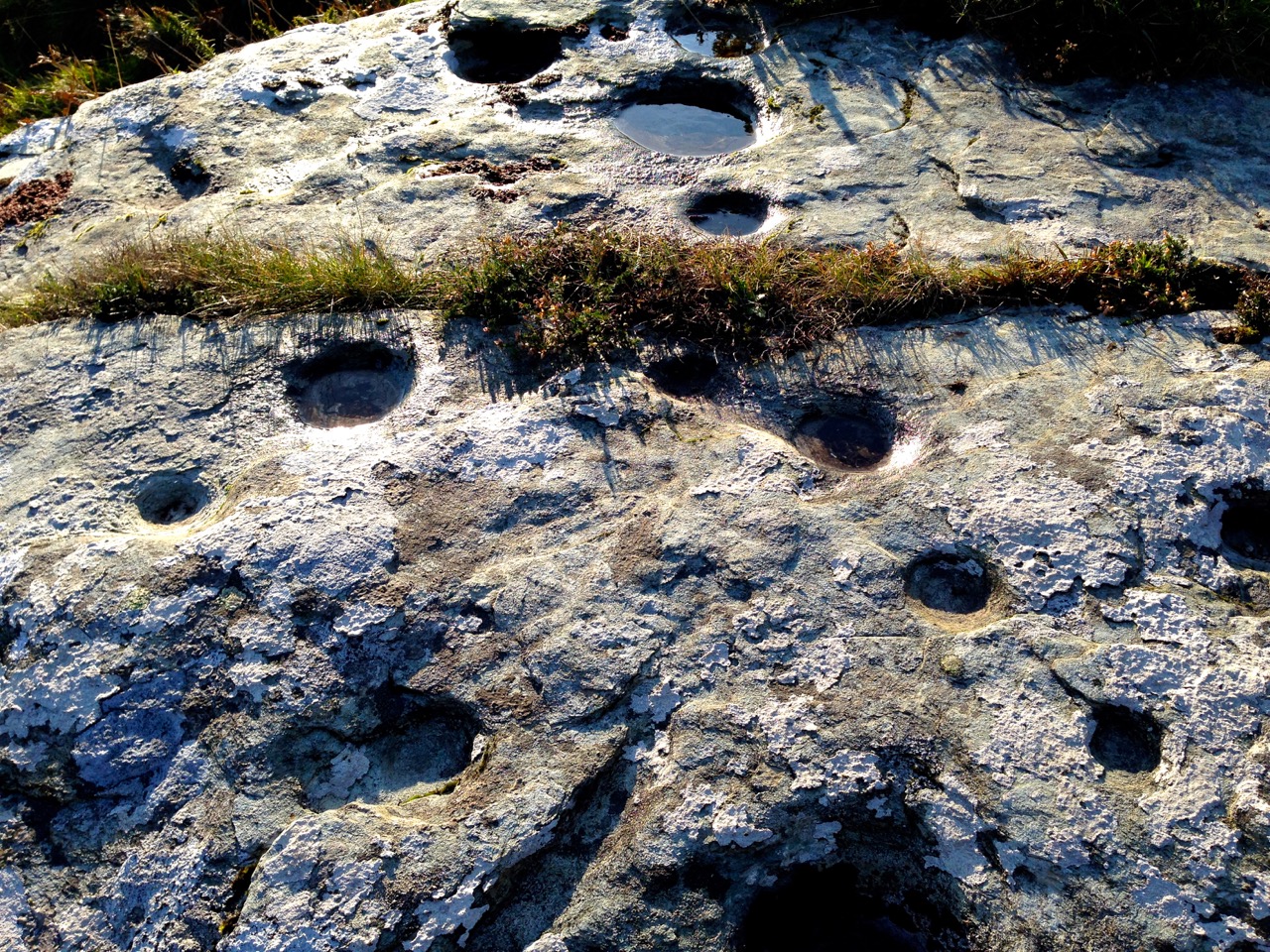
The Rock Art at Castlemehigan in its spectacular setting (above). Below is a close view of some of the markings on the rock

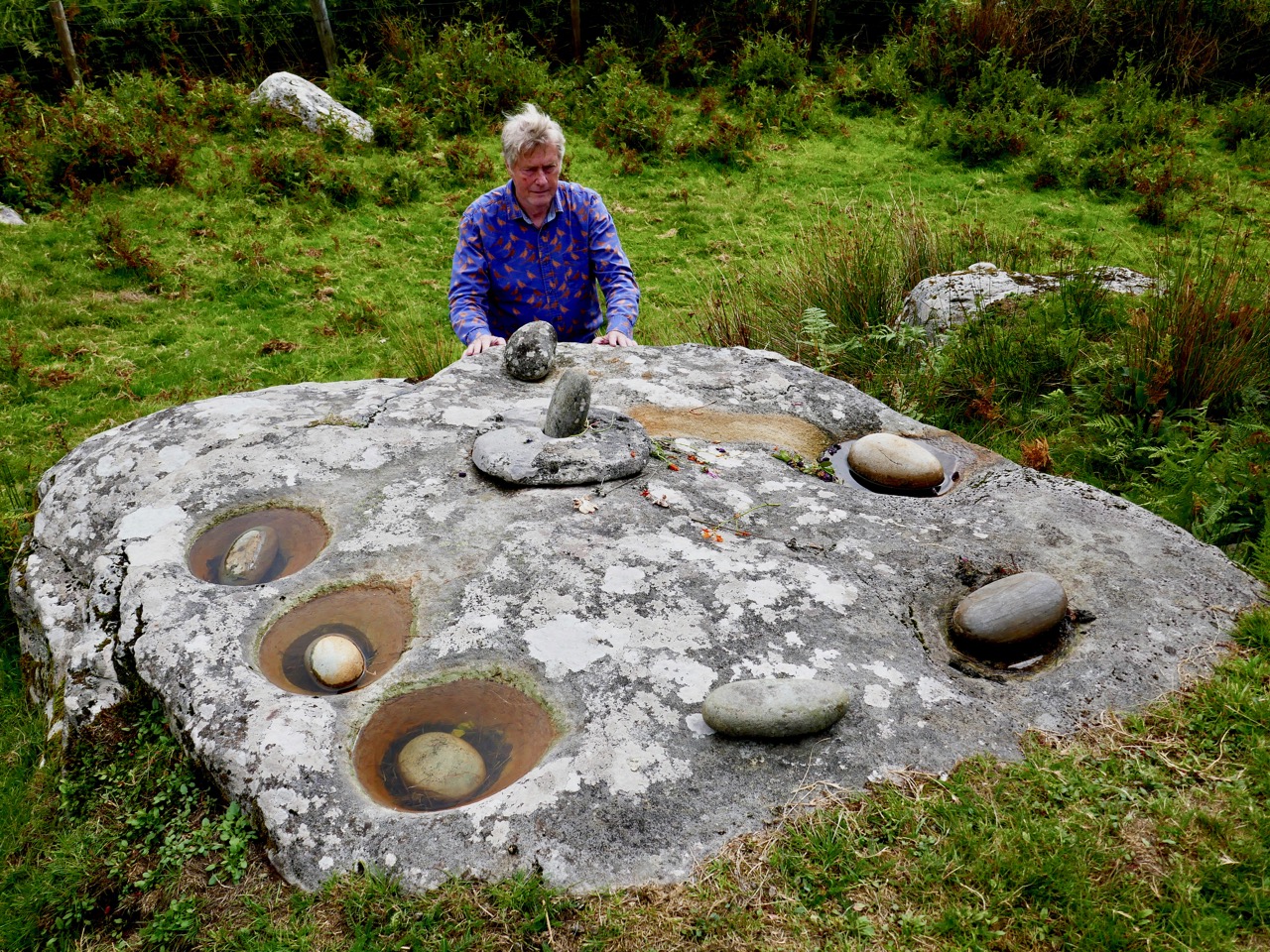
Delving back a few years, I found this December post on a visit to a spectacular example of Rock Art at the far end the Mizen Peninsula: Castlemehigan. The cupmarks on this earthfast boulder are impressive and the view from it is spectacular, especially on the clear winter day that we were blessed with. The rock was also in use as a Mass Rock during penal times, and there is evidence of this on the surface. We were told a story about those times by Florence O’Driscoll, whose land the rock is on. Make sure you have permission to visit if you go!

Finola managed to combine her consuming interest in wildflowers with industrial history and an account of a very special walk on the Sheep’s Head. It’s one of the marked trails on that peninsula – and takes in the deserted settlement of Crimea where a cottage has been partially restored (picture above) – finishing at the abandoned mine workings at Gortavallig, perched precariously on the very edge of a cliff (below). Here is the link to Finola’s post.

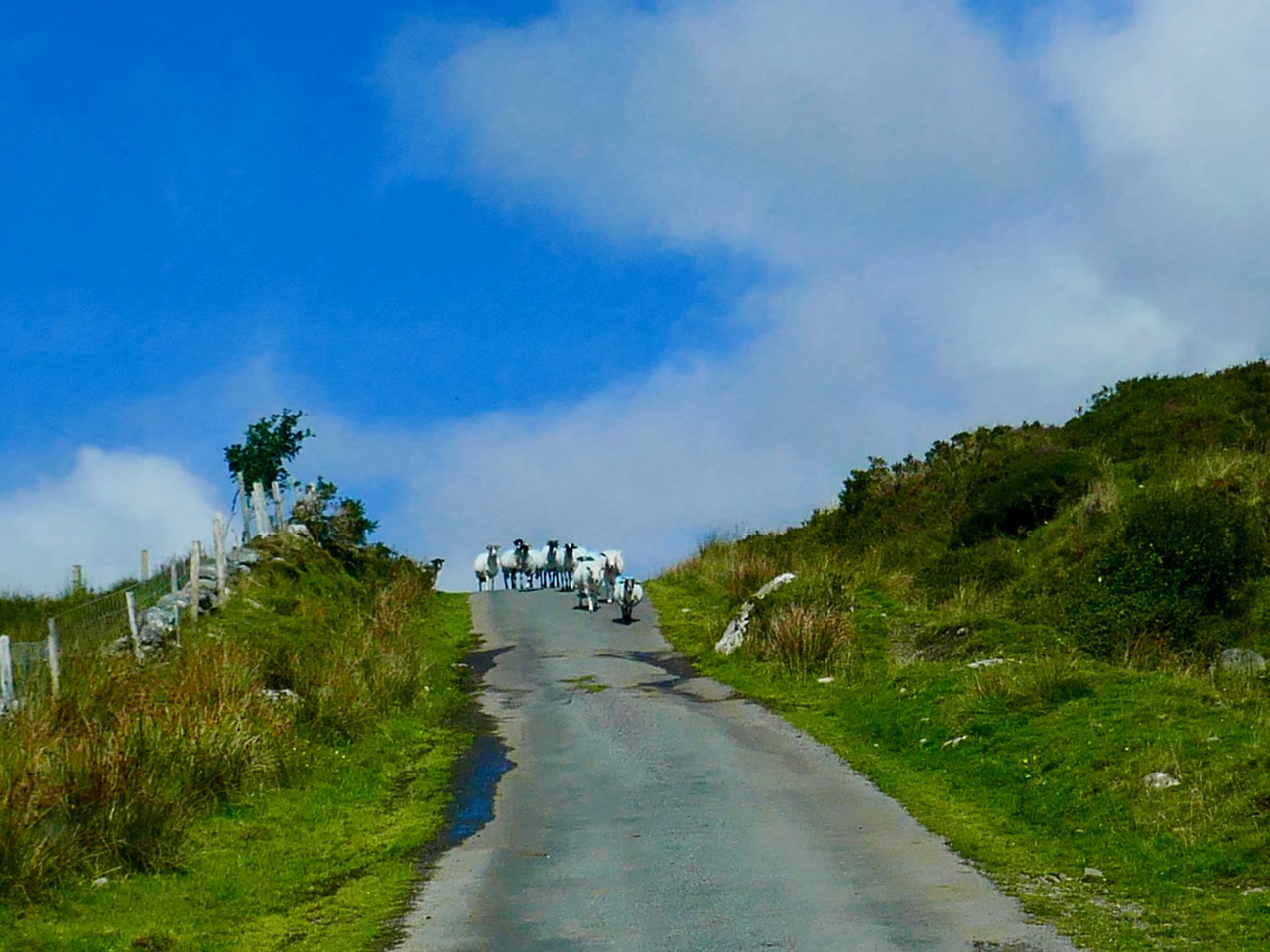
Here am I trying to get my head around the enigmatic ‘Rolls of Butter’ (above). I have to admit they are in Kerry (only just), but involved us travelling one of our all-time favourite roads, much of which is actually in West Cork: that’s the Priest’s Leap Road which runs over the mountains from Bantry (more or less) to Kenmare (more or less). We go out of our way to use this road because of the superb views – and a special piece of folklore – but, if you give it a try, be prepared for a narrow and steep journey (below)! Here is the post.

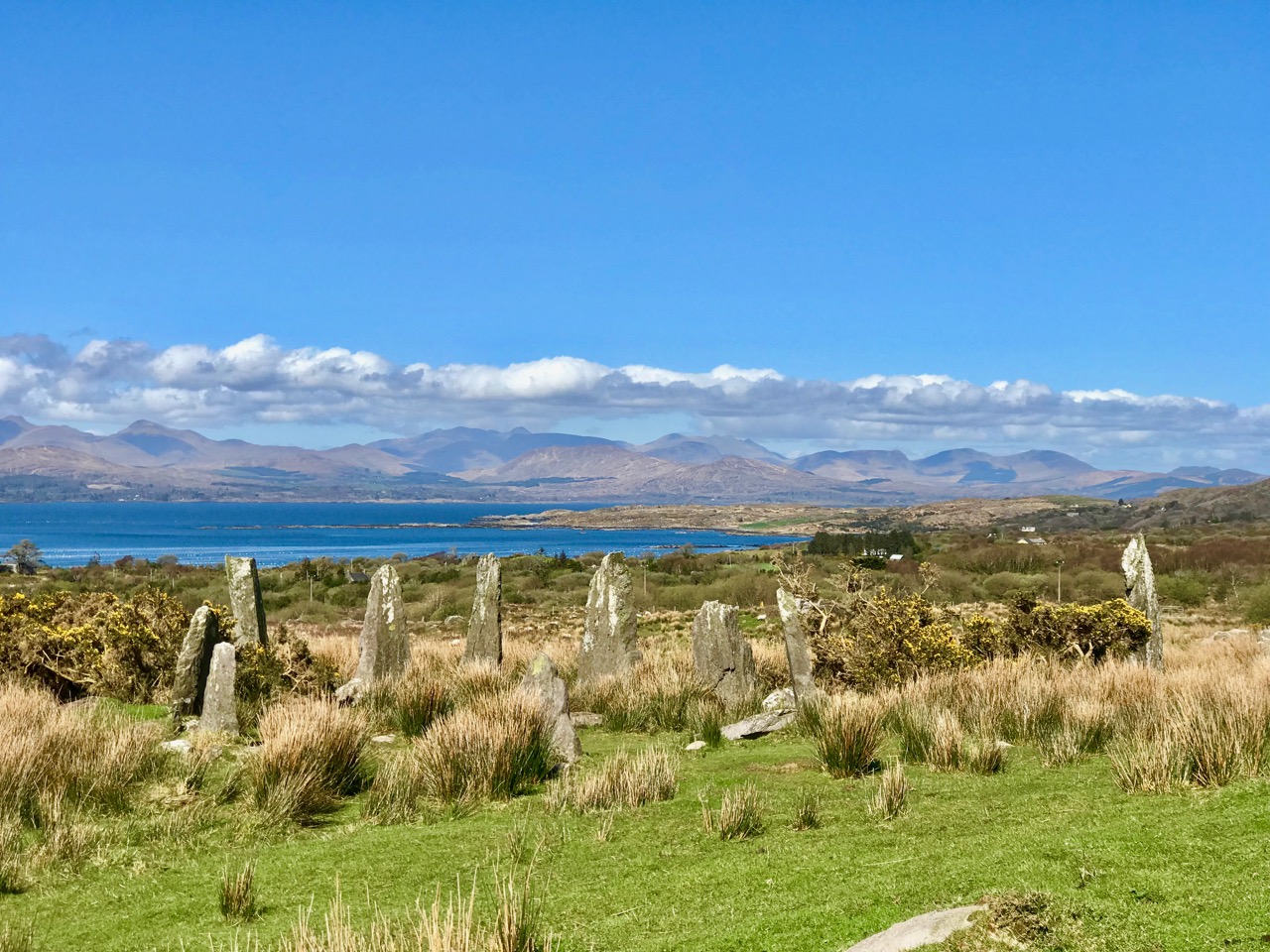
Archaeology dictates many of our outings. One of the less well-known monuments is Ardgroom Outward Stone Circle (pictured above and below) on the Beara Peninsula. This year, following a harsh winter, the weather turned sublime, and we have travelled extensively to make the most of it. We find ourselves often drawn to the Beara (much of which is in West Cork). This post describes an expedition which included stone monuments, colourful villages, stained glass – and ice cream! Have a look.

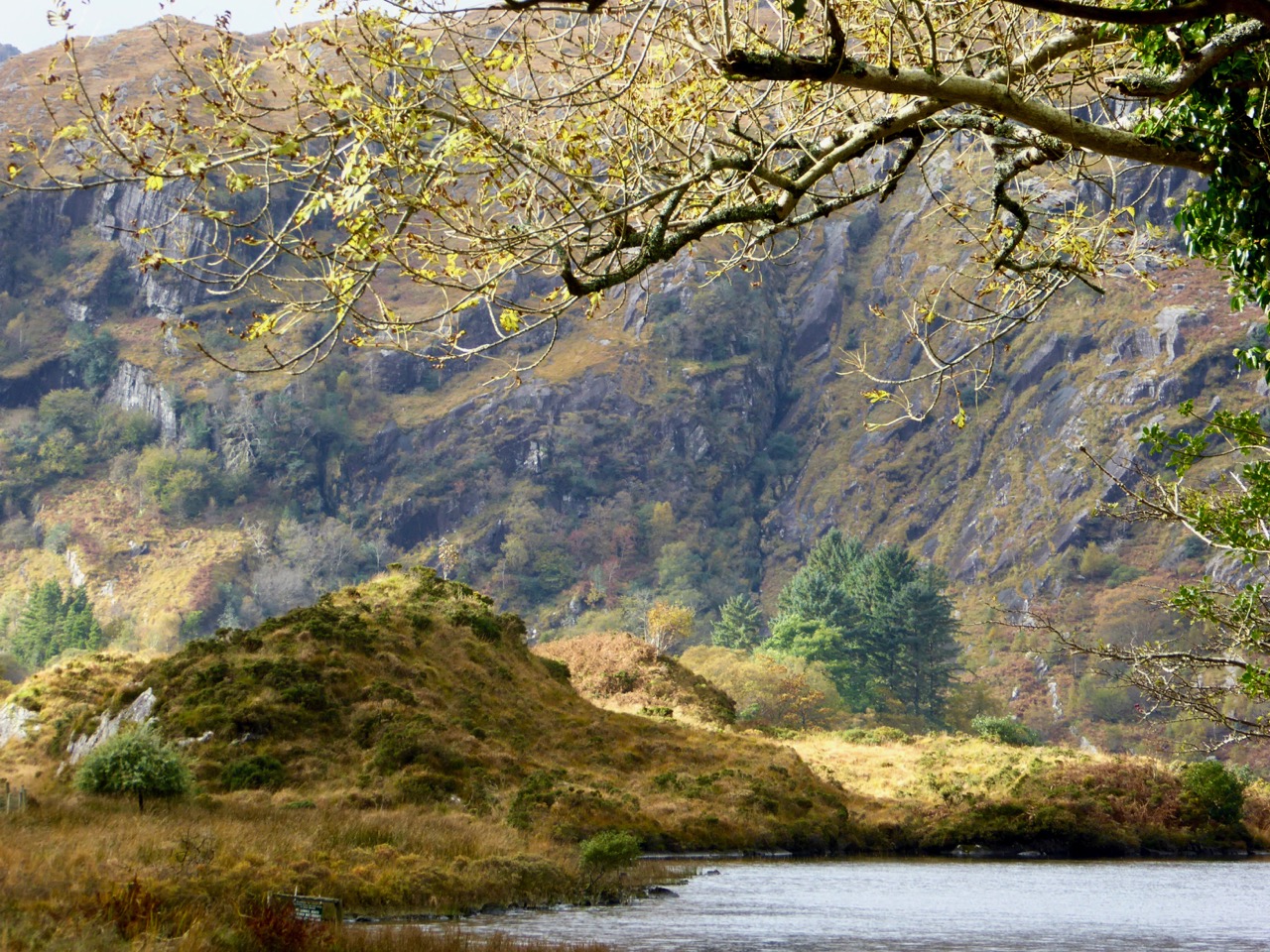
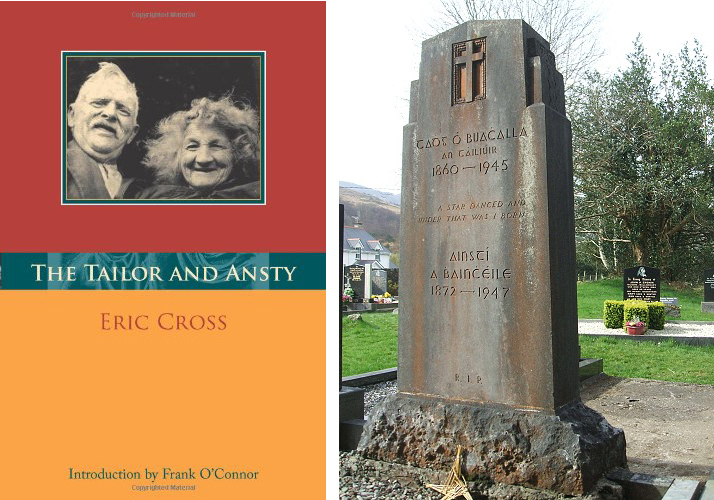
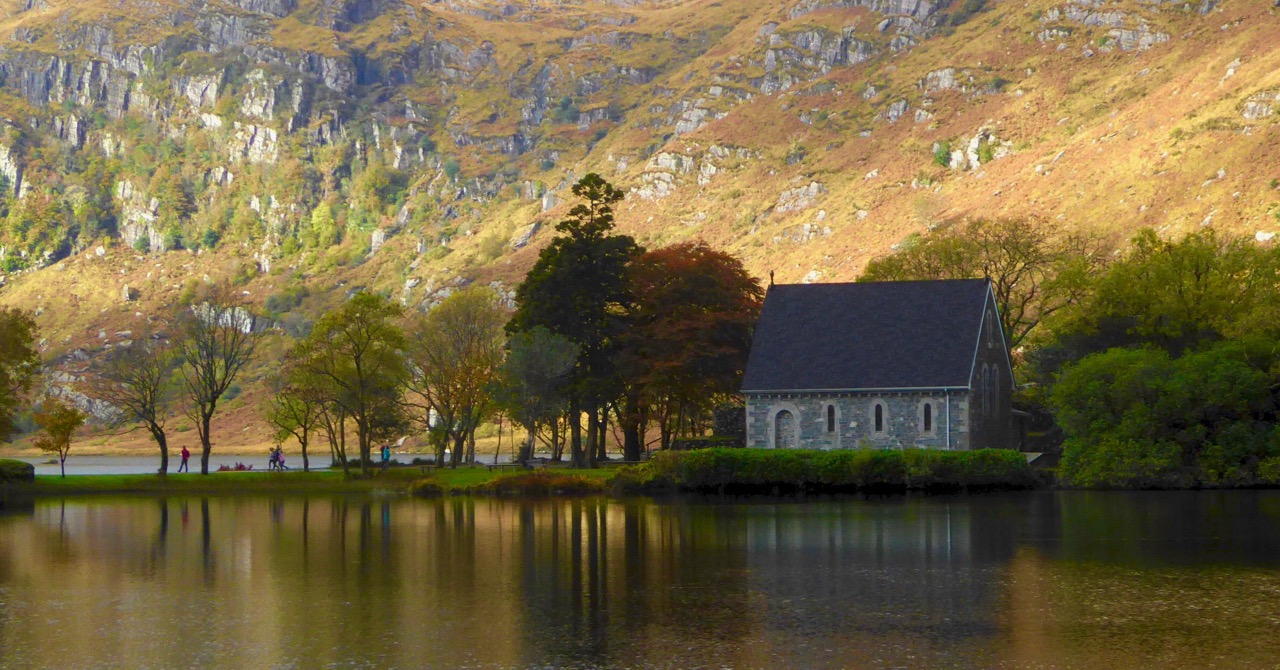
It was almost five years ago that we first reported on one of our perenially favourite West Cork locations: Gougane Barra (above). It’s a holy place – an alluringly beautiful lake sited in the Shehy Mountains, close to the source of Cork’s special River Lee. Here, in the sixth century, Saint Finbarr set up a collection of cells for his monastic community on an island. Here, also, lived the couple ‘The Tailor and Ansty’, immortalised in a book written in 1942 by Eric Cross. It’s a not entirely happy story as the book was banned because of its down-to-earth portrayal of the facts of life, and storyteller Tim Buckley (‘The Tailor’) was forced to burn his copy of it in front of the local priests: the incident led to an abrasive debate in Seanad Éireann on censorship. This story is, perhaps, one of the less well-known historical aspects of West Cork (and Ireland), but visit Gougane Barra for its beauty – and make sure you find the gravestone of ‘The Tailor & Ansty’: it was carved by their friend Seamus Murphy and bears the inscription . . .  A Star Danced And Under That Was I Born . . .

We hope that, between us, we might have given you some good ideas for exploration of our wonderful West Cork landscapes and – perhaps – encourage you off the highways and on to the byways: there are so many adventures to be had, summer or winter. Travel Well!